Category: Movies

  • Frederick Wiseman, documentarian behind the Northeast High-filmed ‘High School,’ dies at 96

    Frederick Wiseman, documentarian behind the Northeast High-filmed ‘High School,’ dies at 96

    Frederick Wiseman, 96, the renowned documentarian who chronicled life at Northeast Philadelphia High School in a 1968 film that caused a yearslong controversy in the city, has died.

    Zipporah Films, a company that has distributed Mr. Wiseman’s films for more than 50 years, confirmed the filmmaker’s death in a statement Monday.

    Known for his direct cinema style, Mr. Wiseman started his career as a law professor at the Boston University Institute of Law and Medicine before turning to film. His lengthy filmography stretches back to 1967 with the release of Titicut Follies, a controversial exposé focused on the treatment of the patient-inmates of Bridgewater State Hospital for the Criminally Insane in Massachusetts.

    That film was banned in Massachusetts for more than two decades.

    His follow-up, 1968’s High School, a foundational cinema verite documentary filmed at Northeast High School in Philly between the assassinations of the Rev. Dr. Martin Luther King Jr. and Sen. Robert F. Kennedy, was similarly controversial. In fact, Northeast High leaders found it so incendiary that it did not receive a local premiere until 2001 — 32 years after its initial release — for Mr. Wiseman’s fear of legal action.

    At 75 minutes, High School depicted what viewers at the time saw as a bleak vision of life at Northeast High. Contemporary reviews agreed, with Variety writing that it showed the school taught “little but the dreary values of conformity, [and] blind respect for authority.” Newsweek noted that the film showed “high schools are prisons where the old beat down the young.”

    In one scene, a guidance counselor tells a student they may not be college material. In another, a teacher tells a girl her legs are too fat for a dress she sewed. Another shows a dean shutting down a student who was complaining about unfairly receiving detention.

    As early as mid-1969, Mr. Wiseman refused to make a copy of the film available locally, citing “legal repercussions,” according to Inquirer reports from the time. The Philadelphia Board of Education, meanwhile, declared the documentary “biased” and demanded it be shown to students and faculty.

    High School, however, would not receive its first official local public showing until August 2001, at the Prince Music Theater. About 400 people attended, The Inquirer reported, most of whom were faculty or alumni of Northeast High.

    Five days later, it aired on the PBS series POV Classic.

    “I took him to the annual press tour the year we aired High School and never had a funnier, more incisive companion to compare notes with on the state of cinema,” said Cara Mertes, who was then the executive producer of POV Classic. “He was perpetually young, incredibly smart, and did not suffer fools, and still he was always generous with his time and immense talent as one of America’s greatest chroniclers, in any medium.”

    Ten years before, in 1991, High School was selected for preservation in the United States National Film Registry by the Library of Congress.

    “It is everything you need to know about 1968 middle-class America in microcosm,” Mertes said. “So many scenes and characters have taken on iconic status. It captures the tectonic social shifts happening in the most ordinary of exchanges in the day-to-day of a touchstone of American life: the high school experience.”

    “Wiseman pulled a fast one on Northeast,” said English department head Irene Reiter after seeing the film. “It was a setup to attack the educational system.”

    Former students, however, largely seemed to disagree. Andrea Korman Shapiro, a student featured in a scene in which a vice principal admonishes her for wearing a minidress to prom, called it “accurate.”

    “[It’s] a chronicle of the inner life of people not permitted to speak,” she said.

    Even others who had more positive experiences at the school argued the film’s strengths outweighed its shortcomings. As Marilyn Kleinberg, a 1978 graduate, put it: “It felt real to me, even though I had an excellent experience.”

    Shapiro, meanwhile, said it would be wise to view High School as a “trauma model.”

    “A trauma, if it doesn’t get resolved, gets replayed and reenacted,” she said. “There needs to be some kind of learning to let it go.”

    The year High School debuted in Philadelphia, Mr. Wiseman told Current, a nonprofit news organization associated with American University’s School of Communication, that his concerns about legal action over the film were perhaps overblown.

    “This was soon after the Titicut Follies case, and I didn’t want another lawsuit on my hands,” he said. Possible legal threats, he added, were merely the “vague talk of no one particular individual.”

    In 2016, Mr. Wiseman received an honorary Oscar at the 89th Academy Awards for his “masterful and distinctive documentaries” that “examine the familiar and reveal the unexpected.” Making films, he said in his acceptance speech, presented opportunities to “learn something about a new subject.”

    “The variety and complexity of the human behavior observed in making one of the films, and cumulatively all of the films, is staggering,” Mr. Wiseman said in the speech. “And I think it is as important to document kindness, civility, and generosity of spirit as it is to show cruelty, banality, and indifference.”

    The article has been updated with quotes from Cara Mertes.
  • They grew up correcting everyone about their last name. Years later, they discovered the deep Philly history behind it.

    They grew up correcting everyone about their last name. Years later, they discovered the deep Philly history behind it.

    Twin brothers Larry and Kelly Ganges grew up outside of Trenton with people constantly mispronouncing their last name. “Grange, Grain, Ganger,” they’ve heard it all.

    So they developed a standard reply: “It’s Ganges like the river [in India].”

    Decades on, they’d find out the deep Philadelphia story behind it.

    When the brothers, now 72, got older and traveled, they’d grab the phone book in whatever town they were in to see if anybody with their last name was listed. Then they’d call and ask if they knew anybody in their family; they often did.

    “So we all thought, no matter where we were,” said Larry, “we were connected with somebody,”

    But they were also connected with something — a ship, a travesty, and a providence.

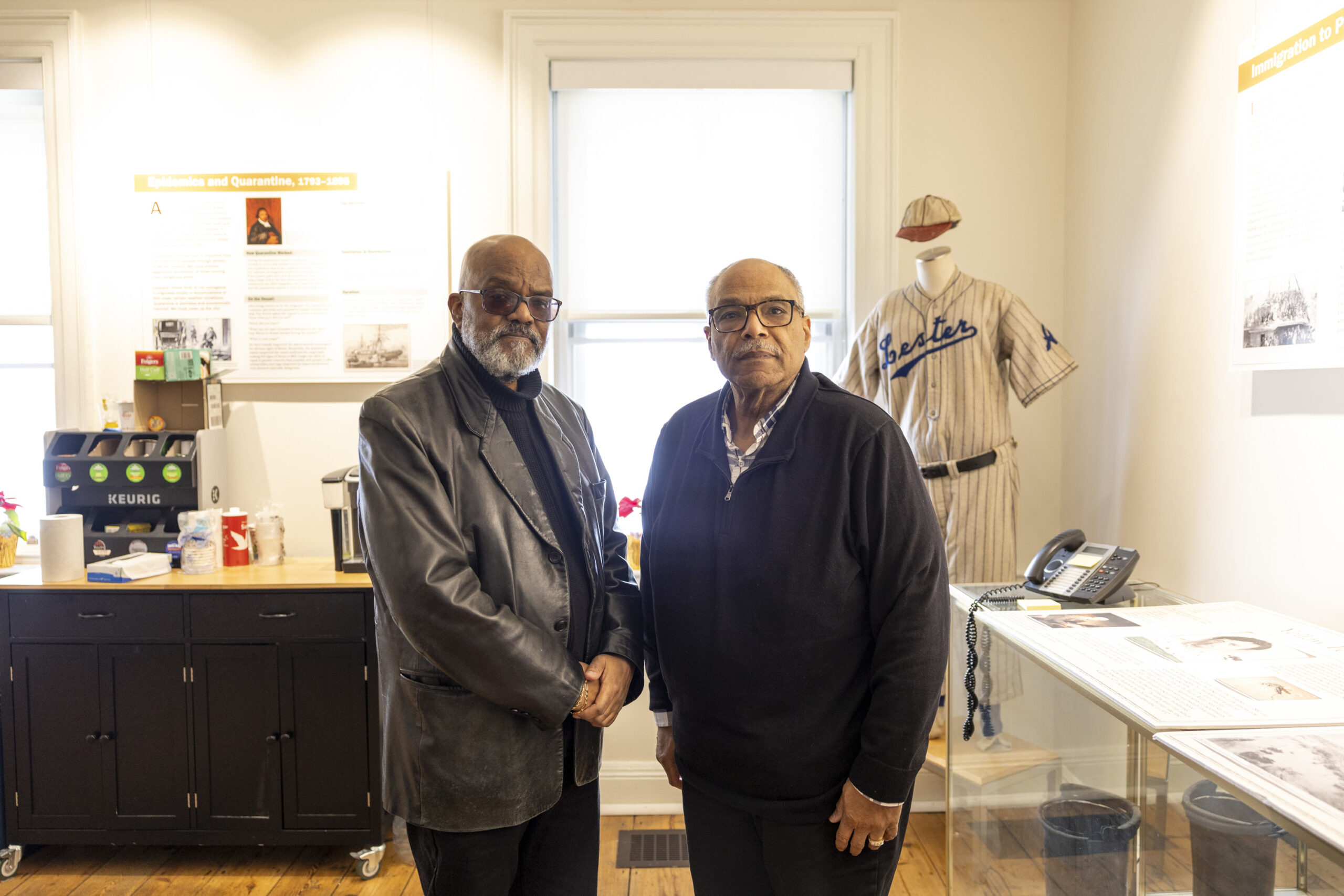
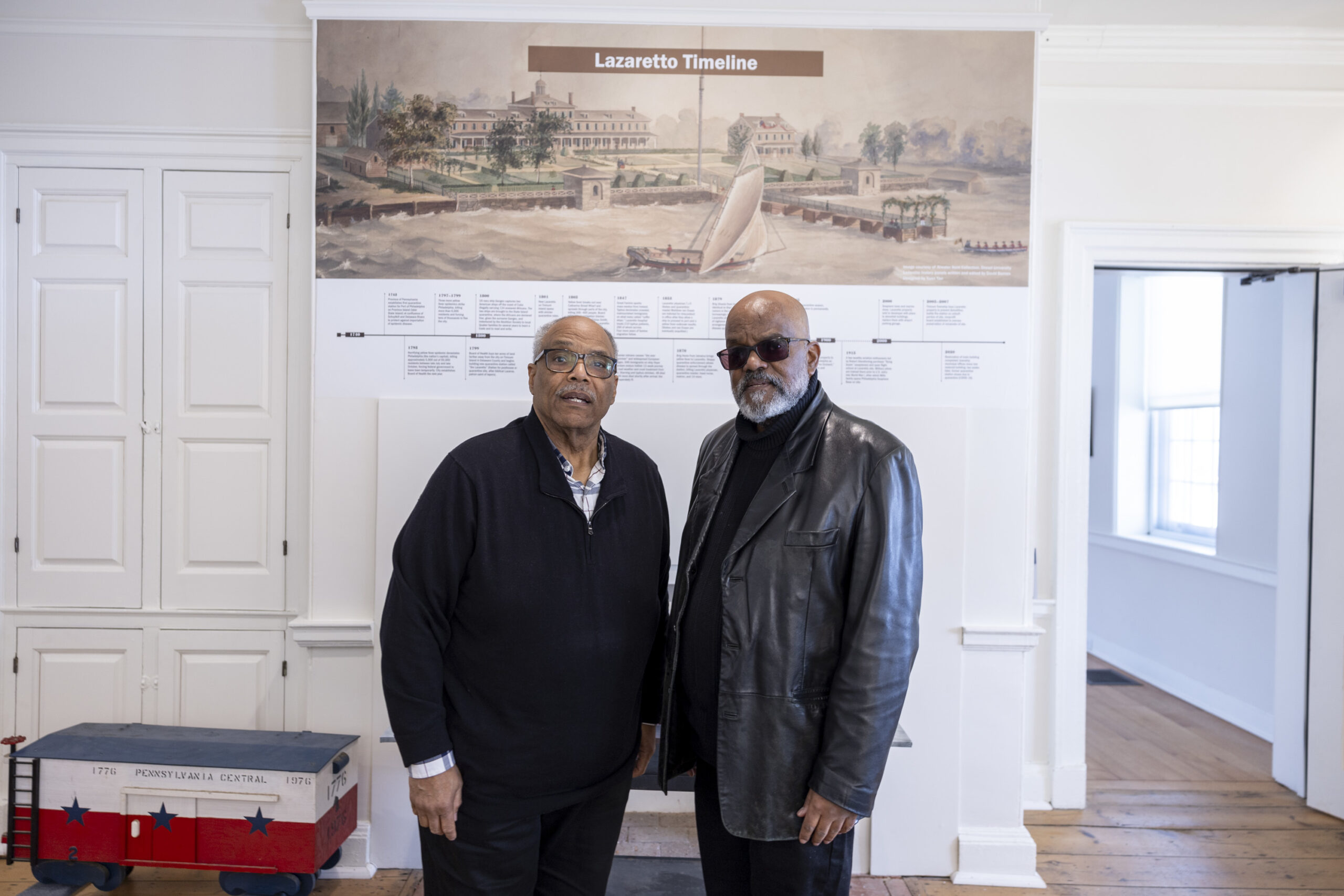
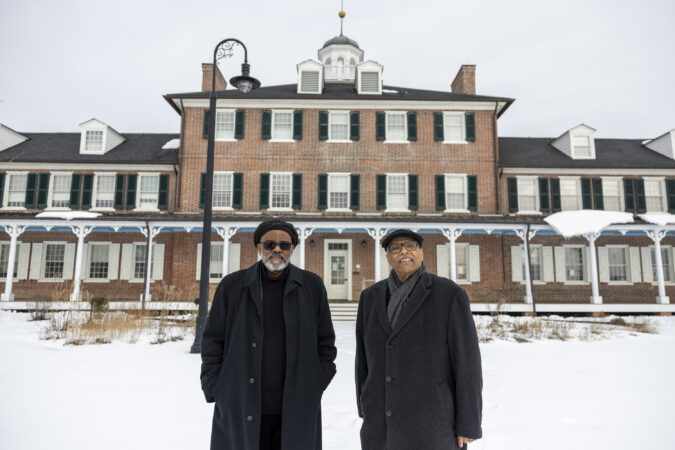
    (From left to right) Twin brothers Larry Ganges, and Kelly Ganges, pose for a portrait at the Lazaretto in Tinicum, Pa., on Friday, Feb. 6, 2026. “It allows us to view and experience Black history,” Kelly said. “Pride in knowing our family was in this journey.”

    The brothers’ first clue of their extended heritage arrived in 1975, when Kelly, was a student at Trenton State College. His journalism teacher, familiar with Bucks County cemeteries, asked if Kelly knew about the gravestones of two soldiers buried there.

    Torbert and William Ganges had fought in the Civil War’s colored regiment, but Kelly couldn’t be sure if they were his relatives.
    Nearly 30 years later, the brothers still don’t know if they are related to the soldiers, but they have discovered that their heritage is, as Kelly describes, “bigger than us, [it] extends beyond the continental United States and involves potentially the world.”

    That information came in a phone call.

    In the early aughts, Larry was working as the New Jersey Department of Health’s assistant commissioner for the HIV/AIDS division. His secretary told him that David Barnes, a University of Pennsylvania professor of history and the sociology of science, was on the line to talk about a different epidemic.

    72-year-old twin brothers Kelly Ganges (left) and Larry Ganges, pose at the Lazaretto in Tinicum, Pa., on Friday, Feb. 6, 2026.

    Barnes, who was seeking anyone with the Ganges name, had found Larry by chance in a New Jersey state employees directory. He wanted to discuss the 135 Africans who arrived in Philadelphia in 1800 and were detained at the old Lazaretto along the Delaware River.

    At the time, every vessel arriving in Philadelphia was required to stop and be inspected at the Lazaretto — a hospital and quarantine station — where patients with yellow fever were treated.

    Later, a brick facility replaced the old Lazaretto. Downriver from the original, the “new” Lazaretto, operational from 1801-1895, stands near present day Tinicum. It is the oldest surviving quarantine station in the Western Hemisphere and one of the 10 oldest in the world.

    By the call’s end, Larry had learned not just the origin of his name but how his ancestors arrived in America.

    “Wow, we had never heard about it. We just didn’t know,” he said.

    The story goes: In 1800, the United States naval ship Ganges intercepted two schooners (the Phoebe and the Prudence) off the coast of Florida, near Cuba. Despite a new federal law banning the carrying of human beings for enslavement, the schooners, which experts believe disembarked from near Sierra Leone, contained 135 people from Africa, imprisoned as slaves, bound for the New World.

    Ganges’ naval officers boarded the schooners — the Phoebe on July 19, 1800, and the Prudence on July 21, 1800 — took the enslaved into custody, and delivered them to the Ganges’ home port: Philadelphia.

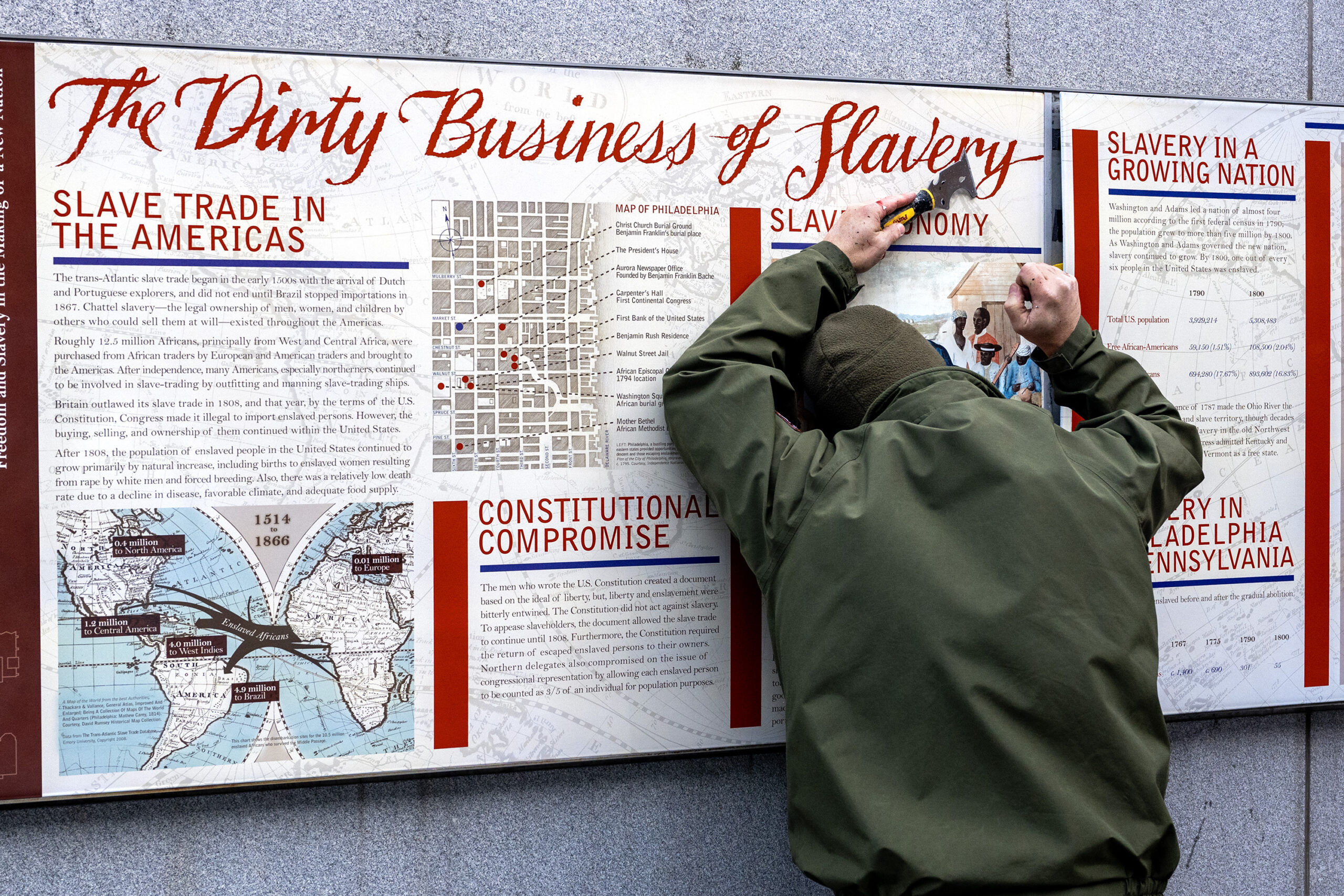
    A NPS worker removes an interpretive panels – “The Dirty Business of Slavery” – at the President’s House site in Independence National Historical Park Thursday, Jan. 22, 2026.

    When the schooners’ owners sued to reclaim their “property,” a Philadelphia judge ruled that the 135 aboard were people (not property) and ordered them freed. The Africans were remanded to the old Lazaretto for quarantine where they remained for up to three months.
    Subsequently Sambo, Milnor, Yelle, and Culico Ganges and the rest of the 123 survivors were indentured to Pennsylvania Abolition Society members and others.
    After Barnes’ phone call, the twins and their (late) older brother, Tendaji Ganges, visited the Lazaretto. At that time, the dilapidated building was locked. But Kelly returned with Barnes and gained access inside.

    “I saw all of the little rooms … it was interesting to touch a piece of history, and know that that’s the genesis of how our family came to the United States,” he said.

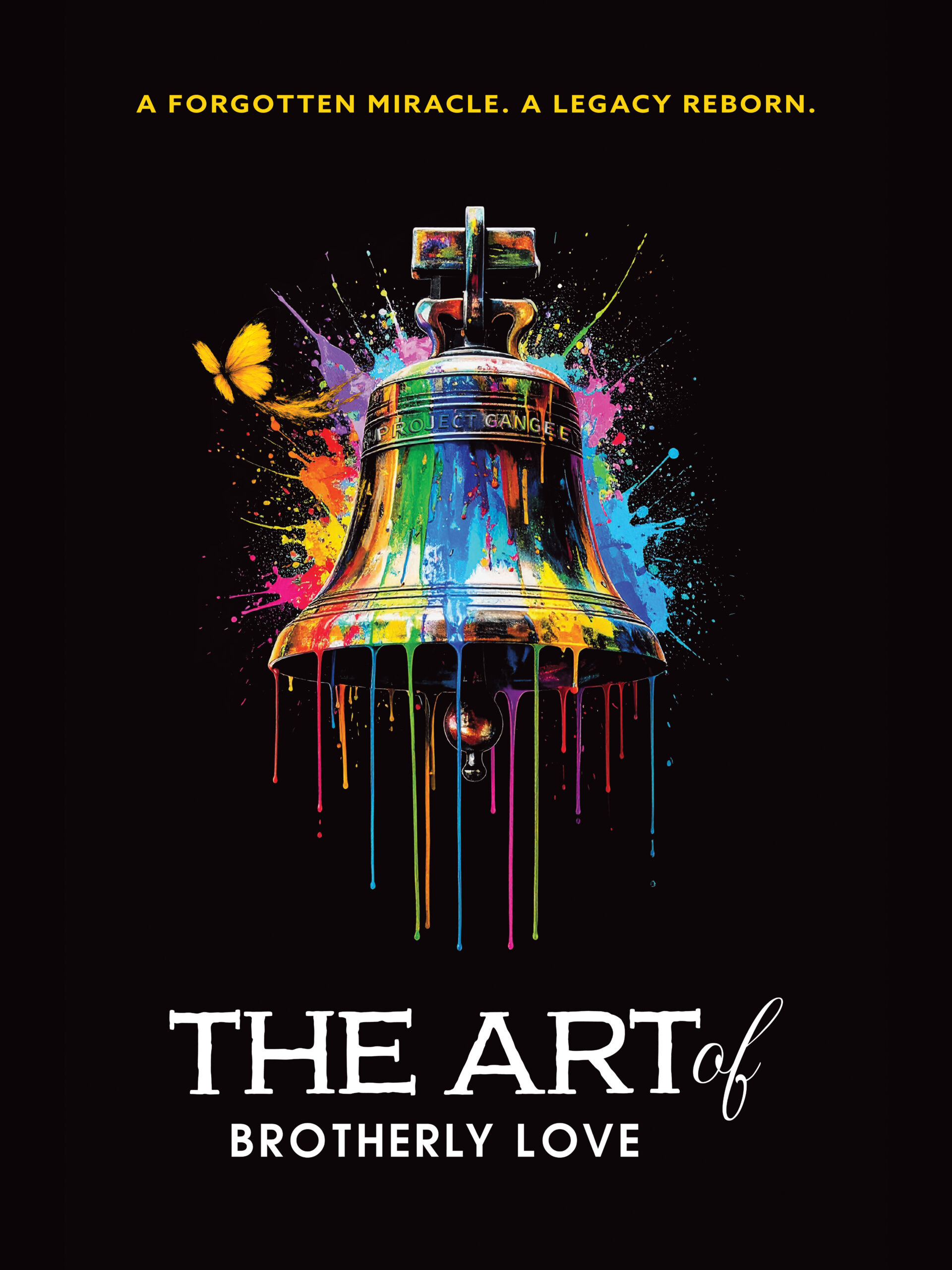
    “These modern-day heirs carry the legacy of resistance and survival into today’s conversations around justice, identity, and belonging,” said filmmaker Rah Crawford, whose documentary The Art of Brotherly Love focuses on the Ganges’ story.

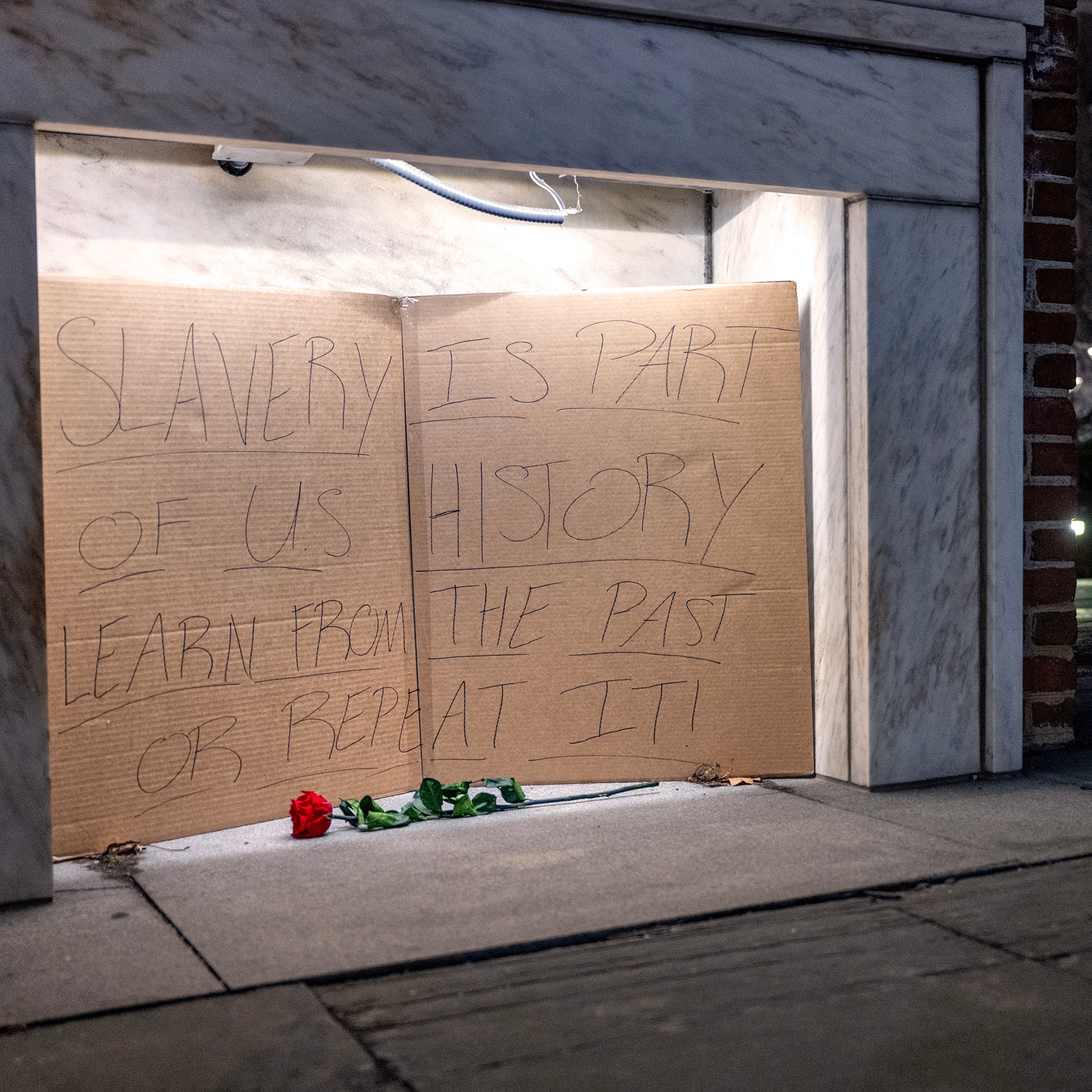
    A single rose and a handwritten cardboard sign (“Slavery is part of U.S. history learn from the past or repeat it”) are inside an empty hearth at the President’s House site in Independence National Historical Park late Thursday, Jan. 22, 2026 after workers removed display panels about slavery.

    When the film premiered in Brooklyn last year, Larry said that as he sat in the audience watching, he was shaking, almost in tears. His wife asked, “Are you OK? Are you cold?”

    He was overcome with emotions: “I was sad, I was happy, I was mad.”

    Although, as the brothers say, “we’ve got the generic connection to the name,” they don’t have a connection to identify individual family members that came through the old Lazaretto; they can’t yet determine how their bloodline was carried to them.

    But thanks to the efforts of family historian Michael Kearney, who is tracking descendants of the Ganges’ survivors, Larry is confident that “my children and my children’s children [are going] to know what the story is, and to know how to access it, and know who the players are …. And hopefully this movie is not the last of what’s going to occur.”

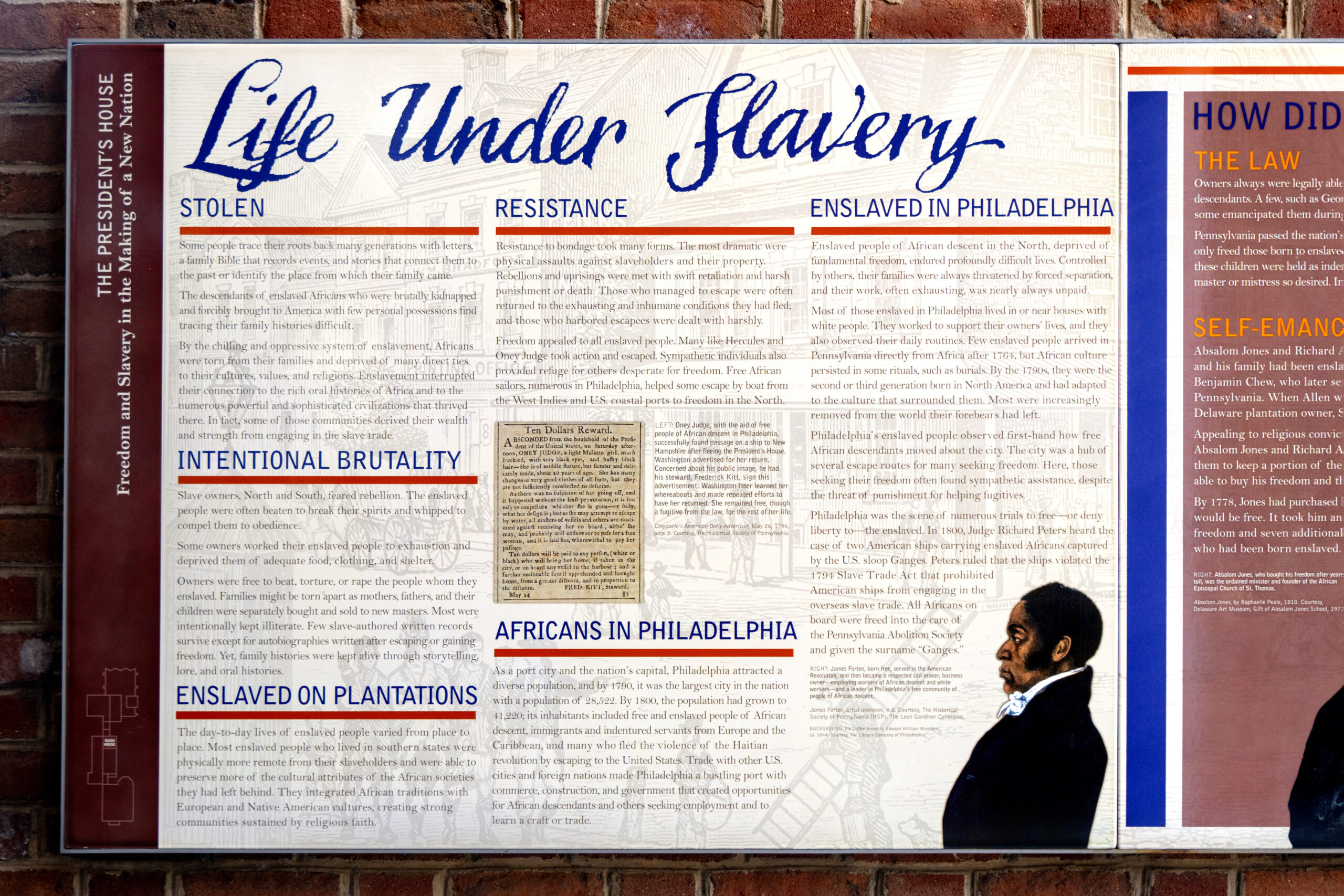
    The “Life Under Slavery” sign at the President’s House in the Independence National Historical Park. The sign has since been removed. Photo from Sunday, Aug. 3, 2025.

    Despite federal efforts to mute the history of enslavement in America — history panels at the President’s House referencing the Ganges story were removed from the site last month — the Ganges brothers know it’s important to share their story.

    “People made it through the troubled journey, the Middle Passage, and landed on American soil and contributed to make America a great nation,” said Kelly, “And nobody can ever deny that, and people can try and whitewash it and try to erase it, but it’s not going to work, because it’s real. Our contribution is documented.”

    Prior to the opening of the President’s House in 2010, filmmaker Crawford was commissioned to create storyboards for a video installation at the site. Through his research, he first learned of the Ganges’ story, launching a 15-plus-year journey to produce the documentary.

    Filmmaker Rah Crawford’s documentary “The Art of Brotherly Love” documents the story of the long-forgotten rescue of 135 enslaved Africans by the “Ganges” in the 1800s,

    The Art of Brotherly Love, presented in partnership with Creative Philadelphia, is both a documentary and a trailer for a forthcoming animated feature. The Philadelphia premiere is slated for Feb. 14 at Ritz Five.

    After the documentary screens, Kelly Ganges hopes that, “it just continues to cascade out — to inspire more genealogists and historians, and to reach more descendants and the next generation.”

    “The Art of Brotherly Love,” Feb. 14, 11:30 a.m., Landmark’s Ritz Five, 214 Walnut St., eventbrite.com

  • An Old City studio has a documentary about comedian Bob Saget’s life in the works

    An Old City studio has a documentary about comedian Bob Saget’s life in the works

    Old City-based 9.14 Pictures is working on an untitled documentary about comedian Bob Saget, the Philly-bred funny man who rose to fame in the 1980s as the affable Danny Tanner on the ABC sitcom Full House.

    Deadline first reported the news.

    The announcement comes on the heels of the studio’s successful projects centering celebrities with local ties including Disney+’s Taylor Swift: The End of an Era and Prime Video’s most-watched documentary, Kelce. Both were directed by the studio’s owners, Don Argott and Sheena M. Joyce.

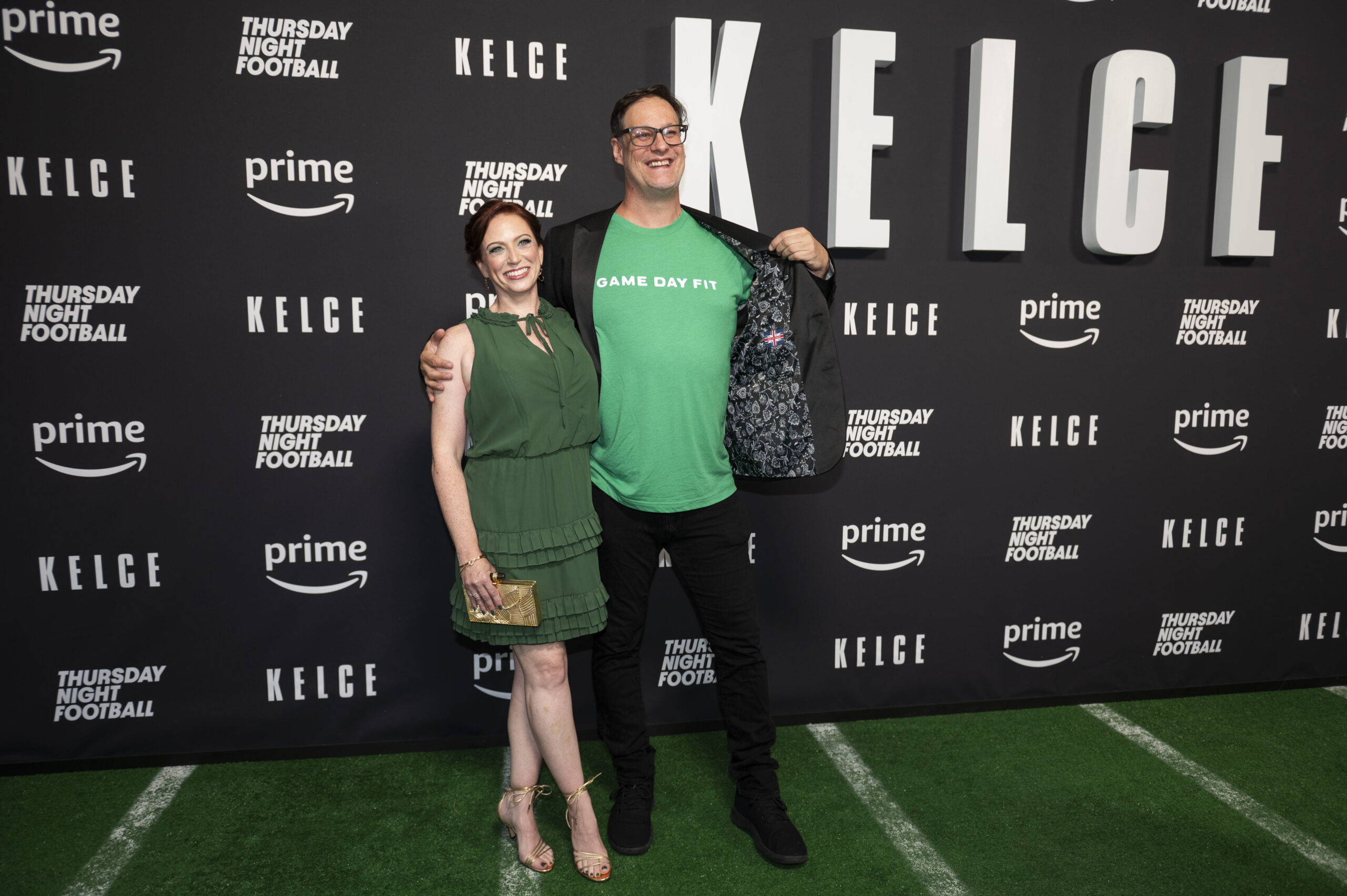
    9.14 Pictures Sheena M. Joyce and Don Argott arrive at the premier of “Kelce” at the Suzanne Roberts Theater in Philadelphia on Friday, Sept. 9, 2023. The film is a feature-length documentary featuring Jason Kelce and the Eagles’ 2022-23 season.

    According to Deadline, Argott and Joyce will direct this piece, too, and were given access to Saget’s rare home videos and never-before-seen footage.

    “The film will reveal the complex life, devastating losses and enduring kindness behind the laughter,” Deadline stated.

    The documentary will ultimately help viewers understand how and why Saget’s comedy turned so dark and raunchy before his untimely death in 2022 at a Ritz-Carlton in Orlando, from what medical examiners said was an accidental blow to the head. He was 65.

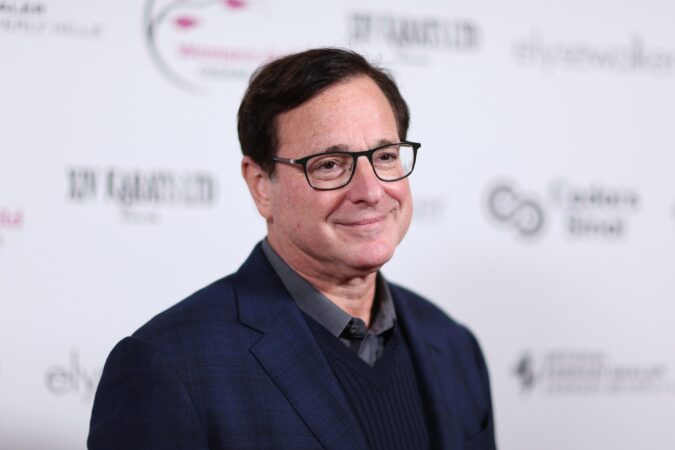
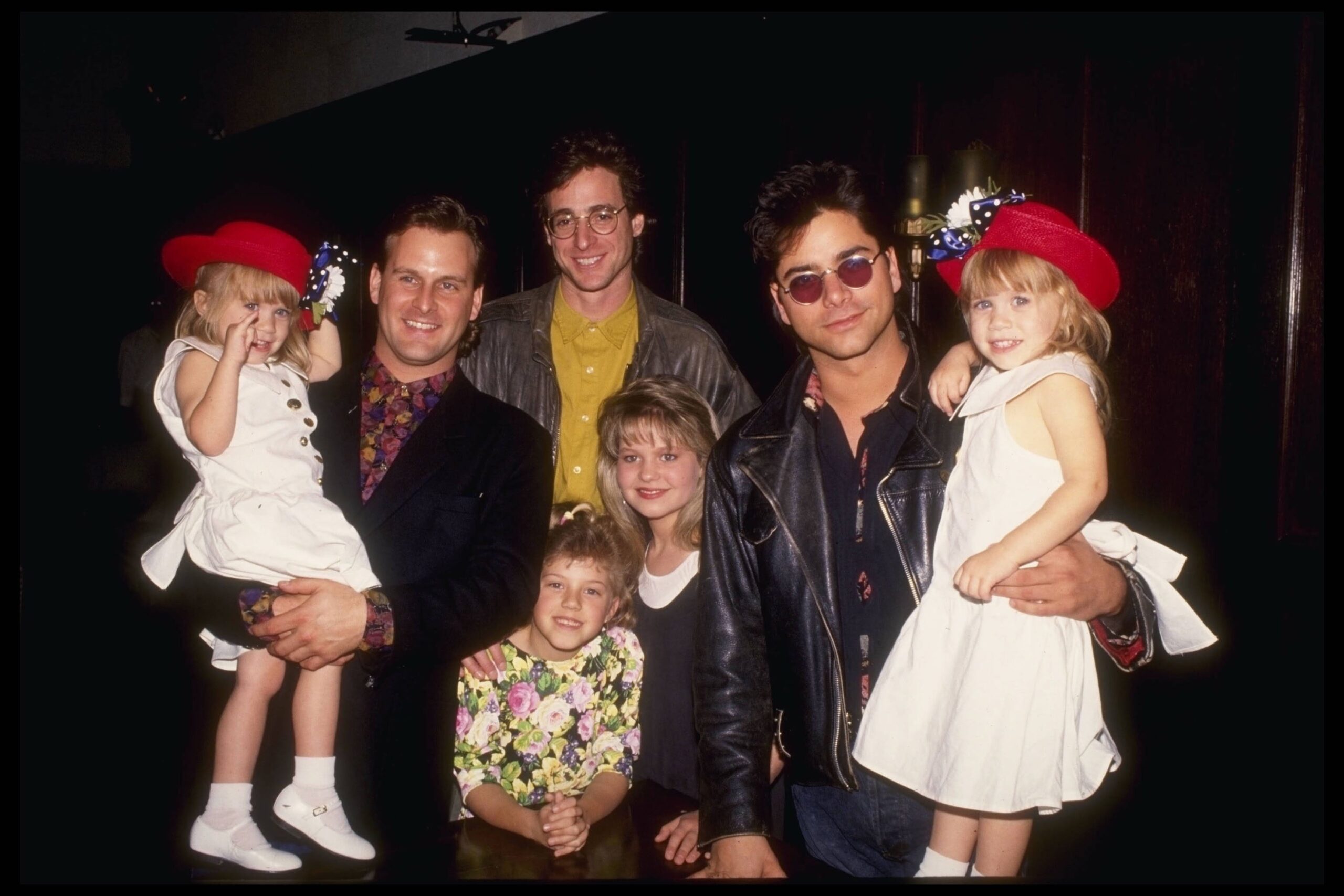
    From left, actors Bob Saget, Dave Coulier, and John Stamos at the People’s Choice Awards 2017 at Microsoft Theater in Los Angeles on Jan. 18, 2017. (Tommaso Boddi/AFP/Getty Images/TNS)

    Saget, who also hosted America’s Funniest Home Videos for eight seasons, was born in Mount Airy, moved to Virginia, and moved back to the area when he was a teenager. He graduated from Abington Senior High and went on to attend Temple University, where he studied film.

    While at Temple University, he practiced his stand-up at Philadelphia restaurateur Stephen Starr’s then-Queen Village nightclub. He also won a student Oscar in 1978 for his 11-minute documentary, Through Adam’s Eyes, the story of an 11-year-old boy who underwent a grueling facial surgery.

    After Temple, he moved to the West Coast and attended the University of Southern California’s film school but dropped out to do stand-up.

    For the next seven years, he was the emcee at the Comedy Store, working among such comedians as David Letterman, Robin Williams, Michael Keaton, Billy Crystal, Jay Leno, Johnny Carson, and Richard Pryor.

    He also warmed up the crowd before tapings of Bosom Buddies, the Tom Hanks-Peter Scolari sitcom. The producer later hired Saget to play Danny Tanner on Full House, on which he portrayed a morning TV host in San Francisco.

    In an undated photo, the cast of the television sitcom “Full House,” from left, Ashley Olsen, Dave Coulier, Jodi Sweetin, Bob Saget, Candace Cameron, John Stamos and Mary-Kate Olsen. (Kathy Hutchins/Zuma Press/TNS)

    Saget lost one sister to a rare autoimmune disease and another to a brain aneurysm, he told The Philadelphia Inquirer in 1994. Those losses, he said, helped him prioritize his life and led to his maudlin sense of humor.

    The Bob Saget documentary will be produced by Story Syndicate, Revue Studios, and 9.14 Pictures.

  • Catherine O’Hara, Emmy-winning comedian of ‘Schitt’s Creek’ and ‘SCTV’ fame, has died at 71

    Catherine O’Hara, Emmy-winning comedian of ‘Schitt’s Creek’ and ‘SCTV’ fame, has died at 71

    LOS ANGELES — Catherine O’Hara, a gifted Canadian-born comic actor and SCTV alum who starred as Macaulay Culkin’s harried mother in two Home Alone movies and won an Emmy as the dramatically ditzy wealthy matriarch Moira Rose in Schitt’s Creek, died Friday. She was 71.

    Ms. O’Hara died at her home in Los Angeles “following a brief illness,” according to a statement from her representatives at Creative Artists Agency. Further details were not immediately available.

    Ms. O’Hara’s career was launched with the Second City comedy group in Toronto in the 1970s. It was there that she first worked with Eugene Levy, who would become a lifelong collaborator — and her Schitt’s Creek costar. The two would be among the original cast of the sketch show SCTV, short for “Second City Television.” The series, which began on Canadian TV in the 1970s and aired on NBC in the U.S., spawned a legendary group of esoteric comedians that Ms. O’Hara would work with often, including Martin Short, John Candy, Andrea Martin, Rick Moranis, and Joe Flaherty.

    Ms. O’Hara would win her first Emmy for her writing on the show.

    Eugene Levy (from left), Annie Murphy, Daniel Levy, and Catherine O’Hara, cast members in the series “Schitt’s Creek,” pose for a 2018 portrait.

    Her second, for best actress in a comedy series, came four decades later, for Schitt’s Creek, a career-capping triumph and the perfect personification of her comic talents. The small CBC series created by Levy and his son, Dan, about a wealthy family forced to live in a tiny town would dominate the Emmys in its sixth and final season. It brought Ms. O’Hara, always a beloved figure, a new generation of fans and put her at the center of cultural attention.

    She told the Associated Press that she pictured Moira, a former soap opera star, as someone who had married rich and wanted to “remind everyone that (she was) special, too.” With an exaggerated Mid-Atlantic accent and obscure vocabulary, Moira spoke unlike anyone else, using words like “frippet,” “pettifogging” and “unasinous,” to show her desire to be different, Ms. O’Hara said. To perfect Moira’s voice, Ms. O’Hara would pore through old vocabulary books, “Moira-izing” the dialogue even further than what was already written.

    Ms. O’Hara also won a Golden Globe and two SAG Awards for the role.

    At first, Hollywood didn’t entirely know what to do with Ms. O’Hara and her scattershot style. She played oddball supporting characters in Martin Scorsese’s 1985 After Hours and Tim Burton’s 1988 Beetlejuice — a role she would reprise in the 2024 sequel.

    She played it mostly straight as a horrified mother who accidentally abandoned her child in the two Home Alone movies. The films were among the biggest box office earners of the early 1990s and their Christmas setting made them TV perennials. They allowed her moments of unironic warmth that she didn’t get often.

    Her co-star Culkin was among those paying her tribute Friday.

    “Mama, I thought we had time,” Culkin said on Instagram alongside an image from Home Alone and a recent recreation of the same pose. “I wanted more. I wanted to sit in a chair next to you. I heard you. But I had so much more to say. I love you.”

    Meryl Streep, who worked with O’Hara in Heartburn, said in a statement that she “brought love and light to our world, through whipsmart compassion for the collection of eccentrics she portrayed.”

    Roles in big Hollywood films didn’t follow Home Alone, but Ms. O’Hara would find her groove with the crew of improv pros brought together by Christopher Guest for a series of mockumentaries that began with 1996’s Waiting for Guffman and continued with 2000’s Best in Show, 2003’s A Mighty Wind, and 2006’s For Your Consideration.

    Best in Show was the biggest hit and best-remembered film of the series. She and Levy play married couple Gerry and Cookie Fleck, who take their Norwich terrier to a dog show and constantly run into Cookie’s former lovers along the way.

    “I am devastated,” Guest said in a statement to the AP. “We have lost one of the comic giants of our age.”

    Born and raised in Toronto, Ms. O’Hara was the sixth of seven children in a Catholic family of Irish descent. She graduated from Burnhamthorpe Collegiate Institute, an alternative high school. She joined Second City in her early 20s, as an understudy to Gilda Radner before Radner left for Saturday Night Live. (Ms. O’Hara would briefly be hired for “SNL” but quit before appearing on air.)

    Nearly 50 years later, her final roles would be as Seth Rogen’s reluctant executive mentor and freelance fixer on The Studio and a dramatic turn as therapist to Pedro Pascal and other dystopia survivors on HBO’s The Last of Us. Both earned her Emmy nominations. She would get 10 in her career.

    “Oh, genius to be near you,” Pascal said on Instagram. “Eternally grateful. There is less light in my world.”

    Earlier this month, Rogen shared a photo on Instagram of him and Ms. O’Hara shooting the second season of “The Studio.”

    She is survived by her husband, Bo Welch, a production designer and director who was born in Yardley; sons Matthew and Luke; and siblings Michael O’Hara, Mary Margaret O’Hara, Maureen Jolley, Marcus O‘Hara, Tom O’Hara, and Patricia Wallice.

  • Grammar nerds and language lovers gather for a sold-out documentary at the Bryn Mawr Film Institute

    Grammar nerds and language lovers gather for a sold-out documentary at the Bryn Mawr Film Institute

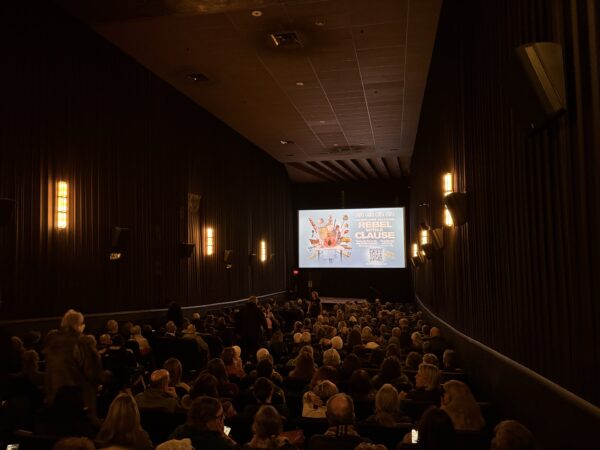
    Despite frigid temperatures and the specter of the Philly area’s largest snowstorm in years, hundreds of language lovers and grammar nerds gathered in Bryn Mawr on Saturday for a screening of Rebel with a Clause, the hottest “road trip, grammar docu-comedy” on the indie movie circuit.

    Rebel with a Clause follows language expert Ellen Jovin as she takes her makeshift “Grammar Table” on a journey across the United States, from Bozeman, Mont., to New York City (and everywhere in between). From behind the table, Jovin asks strangers to divulge their questions, comments, and concerns about the English language, from when it’s best to use a semicolon to how to properly punctuate “y’all.” What starts as an amusing grammar refresher turns into a moving text on Americans’ shared humanity, even in polarizing times.

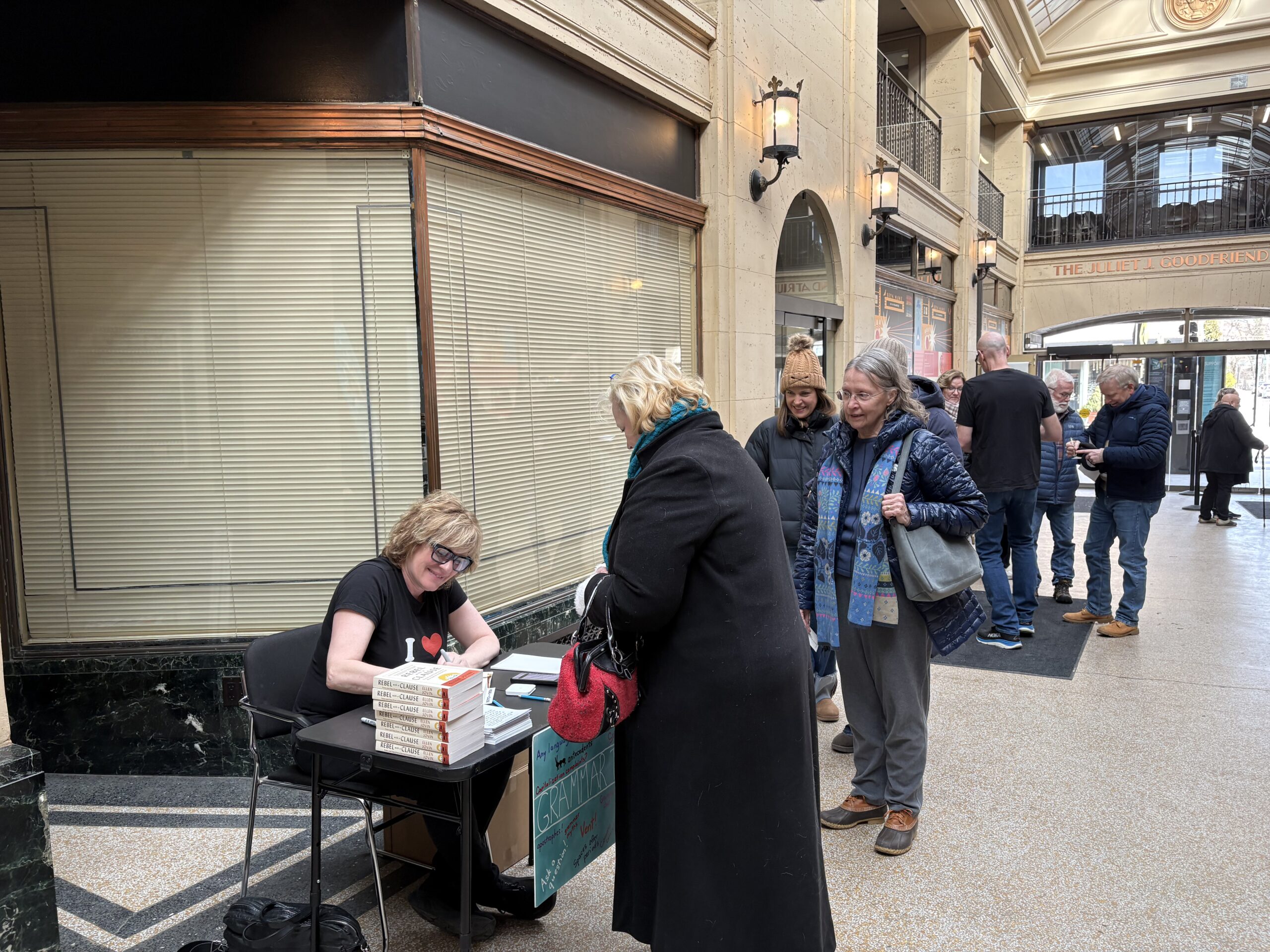
    Ellen Jovin, subject of “Rebel with a Clause,” signs books at a screening at the Bryn Mawr Film Institute on Jan. 24, 2026.

    Jovin, the movie’s star, has written four books on writing and grammar, including Rebel with a Clause: Tales and Tips from a Roving Grammarian, a reflection on her cross-country tour. The movie was directed and produced by Brandt Johnson, a writer and filmmaker who also happens to be Jovin’s husband.

    Jovin and Johnson, who are based in New York, are on a second cross-country tour as the Rebel with a Clause movie graces audiences. The Bryn Mawr screening marked the film’s first public showing in the Philly area.

    As he handed out optional grammar quizzes and grammar-themed chocolates in the Bryn Mawr Film Institute’s foyer, Johnson said the response to the movie has been “extraordinary.”

    “Ellen’s Grammar Table that she started in 2018 was about grammar, for sure, but it turned out to be as much about human connection,” Johnson said.

    “Just as a life experience, oh my gosh,” he added. “It’s been something that I certainly didn’t anticipate.”

    “Rebel with a Clause” producer Brandt Johnson hands out grammar-themed chocolates to moviegoers at the Bryn Mawr Film Institute on Jan. 24, 2026.

    Before the screening, attendees waited for their turn at the table, where Jovin was signing books and answering pressing questions about commas and ellipses.

    Mary Alice Cullinan, 76, said she and her friends are fascinated by grammar and how it seems to be losing ground among younger generations.

    Cullinan, who lives in Blue Bell, spent her career working in the restaurant industry but always read and wrote on the side.

    “I read to live,” she added.

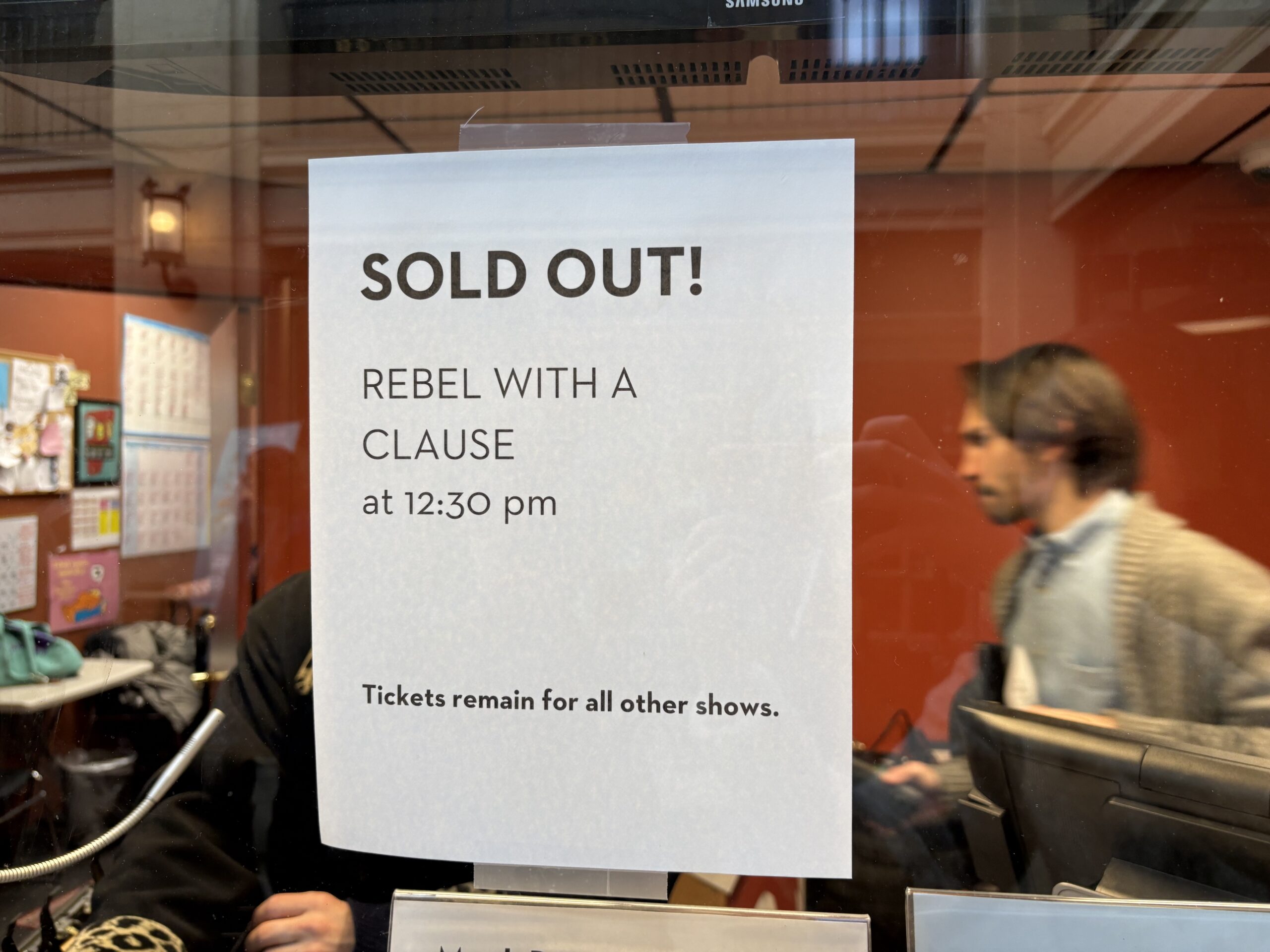
    The Bryn Mawr Film Institute was packed with retired teachers, avid writers, and grammar aficionados who came armed with gripes about commas, parentheses, and quotation marks. At five minutes to showtime, an employee plastered a “SOLD OUT!” sign on the box office window.

    A sign announcing that the Bryn Mawr Film Institute’s screening of “Rebel with a Clause” was sold out. The grammar-themed documentary played at the Main Line movie theater on Jan. 24, 2026.

    Jen Tolnay, 63, a copy editor from Phoenixville, heard about the movie at an editors’ conference. She was so excited that she moved a haircut appointment to be there.

    The 86-minute film provoked regular laughter in the audience (and a line about Philadelphians’ pronunciation of the wet substance that comes out of the sink got a particularly hearty laugh).

    During a post-screening question-and-answer session, moviegoers complained about the poor grammar of sportscasters, praised Jovin and Johnson, and inquired about the colorful interactions Jovin had at the Grammar Table.

    For Katie McGlade, 69, grammar is an art form.

    The retired communications professional from Ardmore described herself as a habitual grammar corrector who would often fight with her editors about proper language usage. Now, as an artist, she makes colorful prints that center the adverb.

    “I love that’s she’s bringing joy to the word,” McGlade said of Jovin. ”We need joy and laughter, and we need to communicate with each other.”

    This suburban content is produced with support from the Leslie Miller and Richard Worley Foundation and The Lenfest Institute for Journalism. Editorial content is created independently of the project donors. Gifts to support The Inquirer’s high-impact journalism can be made at inquirer.com/donate. A list of Lenfest Institute donors can be found at lenfestinstitute.org/supporters.

  • Here’s where you can watch this year’s Oscar-nominated movies, online and in theaters

    Here’s where you can watch this year’s Oscar-nominated movies, online and in theaters

    The 98th Oscar nominations are out. If you are like many of us, you haven’t seen all of the films — yet, any way.

    Not to worry. The Oscars don’t air until March 15, so you have plenty of time to catch up. And with this week’s forecast of more than a foot of snow, why not stay home and get started early.

    Here’s how and where you can check out some of the Oscar nominated films of 2025.

    Best Picture

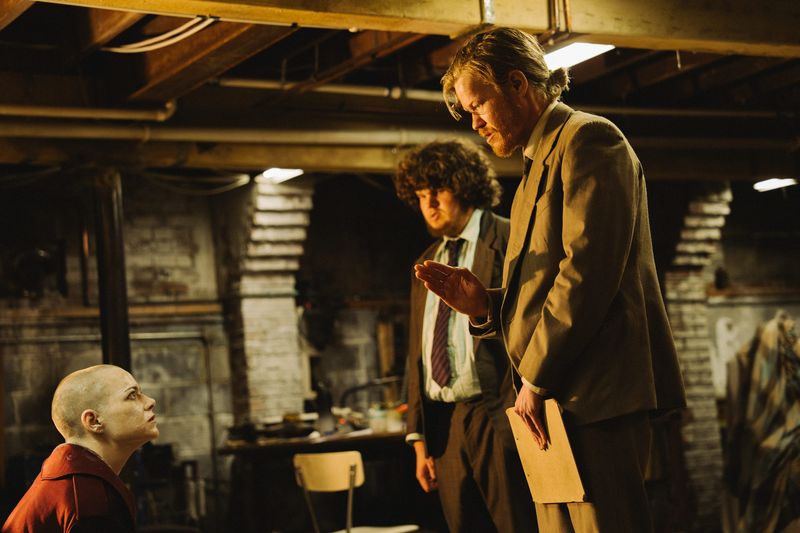
    Michelle (Emma Stone) gets interrogated by cousins Teddy (Jesse Plemons, far right) and Don (Aidan Delbis) in “Bugonia.”

    ‘Bugonia’

    This dark comedy stars Emma Stone as Michelle Fuller, the CEO of the fictional pharmaceutical conglomerate Auxolith. She’s abducted by conspiracy theorist Teddy Gatz (Jesse Plemons) and his cousin, Don (Aidan Delbis) after Teddy starts to believe an Auxolith drug has caused his mother’s comatose state. Adding to the creepiness, Teddy also believes Michelle is an alien. Bugonia received four nominations, including a best actress nod for Stone.

    Available to rent: Peacock, YouTube, Apple TV.

    Damson Idris, left, and Brad Pitt star in “F1.” MUST CREDIT: Warner Bros. Pictures/Apple Original Films

    ‘F1′

    Brad Pitt stars in this fast-paced drama about a star Formula One driver who returns to the game after being gone for 30 years. His mission: to help his friend’s underdog team take it all. F1 received four Academy Award nods.

    Available to rent: Apple TV, YouTube.

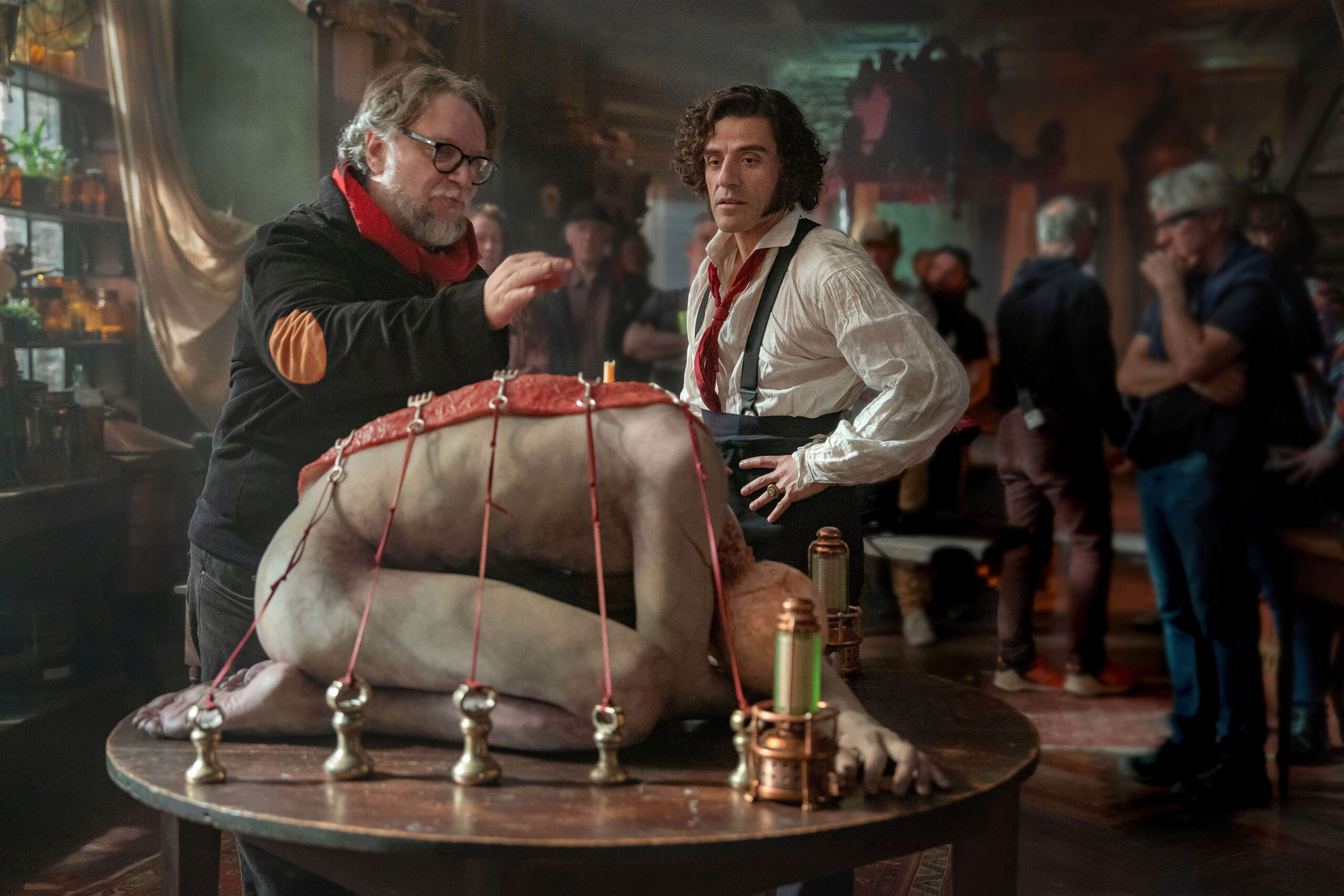
    This image released by Netflix shows director Guillermo del Toro, left, and Oscar Isaac on the set of “Frankenstein.” (Ken Woroner/Netflix via AP)

    ‘Frankenstein’

    A cinematic adaptation of the 1818 Mary Shelley classic features Oscar Isaac as Victor Frankenstein and Jacob Elordi as his ghoulish creation. This 2025 film is director Guillermo del Toro’s attempt to be as faithful to the book as he possibly can. Frankenstein earned nine nominations.

    Streaming: Netflix

    Playing: Landmark’s Ritz 5, 214 Walnut Street.

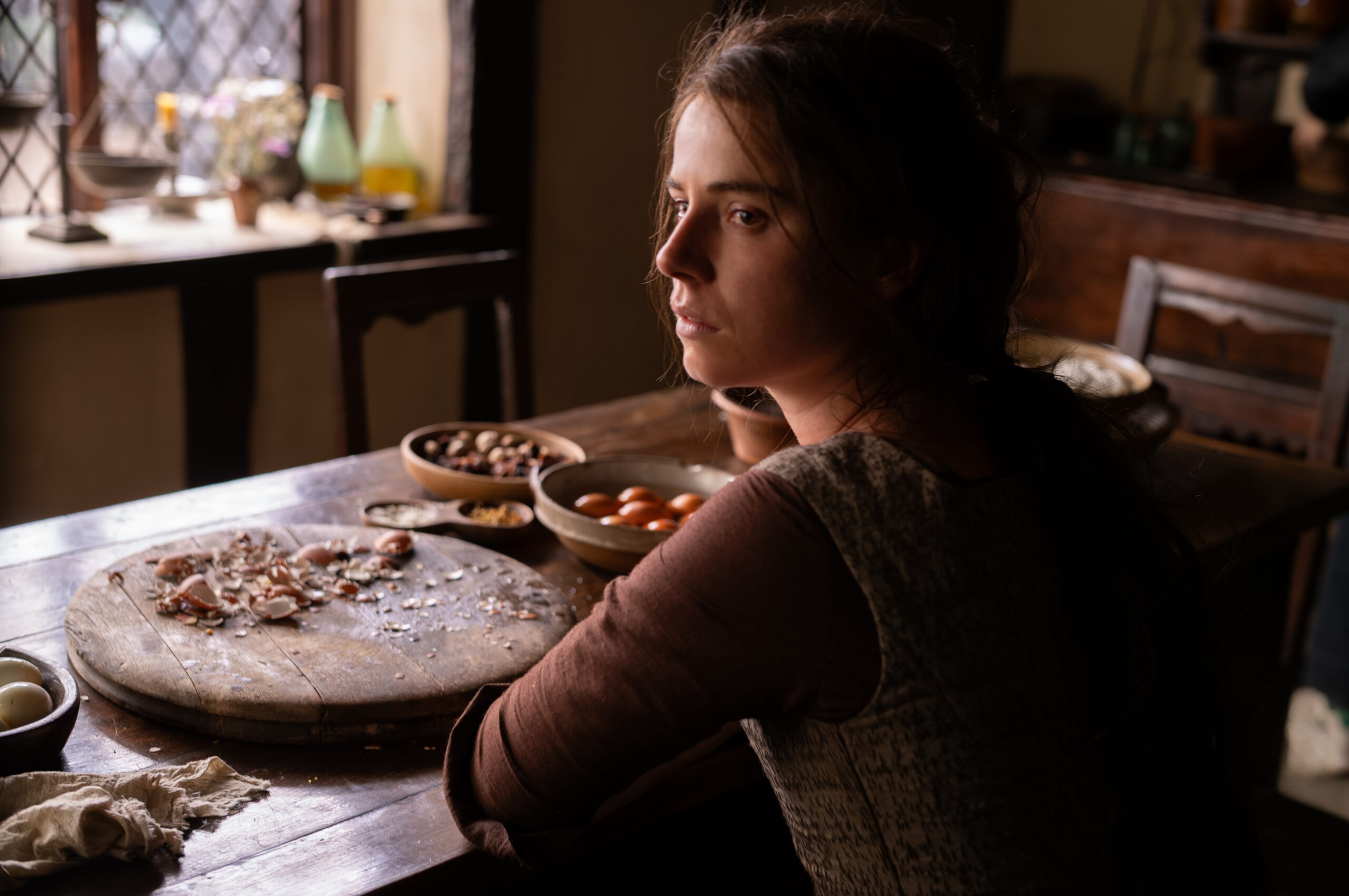
    This image released by Focus Features shows Jessie Buckley in a scene from “Hamnet.” (Agata Grzybowska/Focus Features via AP)

    ‘Hamnet’

    William Shakespeare (Jesse Buckley) and his wife, Agnes, (Anne Hathaway) mourn the death of their son in this film based on Maggie O’Ferrel’s 2020 eponymous historical fiction novel. Hamnet received eight nominations.

    Playing: Film Society Bourse, Landmark’s Ritz Five, Reel Cinemas Narbeth, Bryn Mawr Film Institute, AMC Cherry Hill 24.

    This image released by A24 shows Timothée Chalamet in a scene from “Marty Supreme.” (A24 via AP)

    ‘Marty Supreme’

    Timothée Chalamet is Marty, an ambitious table tennis hustler in 1950s New York whose story is inspired by the real life scammer Marty Reisman. The anxious sports drama follows Marty’s quest for table tennis glory that takes him to Japan. The movie picked up nine nominations including a best actor nod for Chalamet.

    Playing: AMC Broad Street 7, Cinemark University City Penn 6, AMC Dine-in Fashion District 8, Film Society Bourse, Film Society East, Landmark Ritz 5, AMC Deptford 8, Bryn Mawr Film Institute, Cinemark Somerdale 16 and XD, AMC Marple 10, Regal Moorestown Mall, AMC Voorhees 16, Regal Plymouth Meeting, AMC Marlton 8

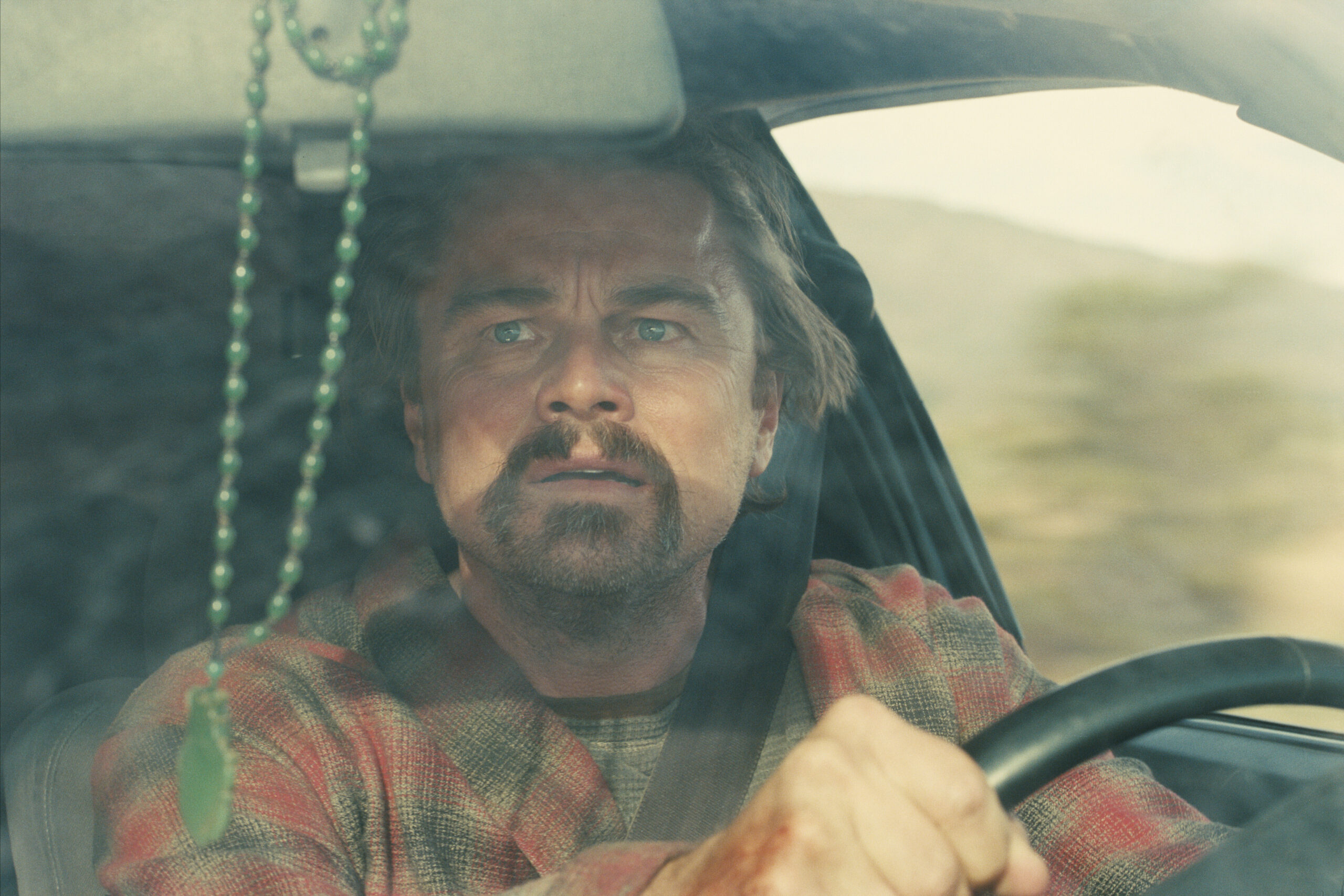
    This image released by Warner Bros. Pictures shows Leonardo DiCaprio in a scene from “One Battle After Another.” (Warner Bros. Pictures via AP)

    ‘One Battle After Another’

    In this dense, action-packed thriller by Paul Thomas Anderson, a has-been revolutionary (Leonardo DiCaprio) has to find his missing daughter whose disappearance is connected to his past association with a radical group. This film has 13 Oscar nominations.

    Available to rent: HBO Max, YouTube

    Playing: Landmark’s Ritz Five, AMC Cherry Hill 24, Hiway Theater in Jenkintown, Regal UA King Of Prussia, Regal Cross Keys, AMC Neshaminy 24, Regal Brandywine Town Center, Regal UA Oxford Valley, Regal Cumberland Mall, Regal Peoples Plaza, and more.

    A person buys a ticket for the Oscar-nominated film, The Secret Agent, at a self-service ticket kiosk, at a movie theater in Sao Paulo, Thursday, Jan. 22, 2026. (AP Photo/Andre Penner)

    ‘The Secret Agent’

    A historical nonfiction follows former professor and political dissident Armando (best actor Oscar nominee Wagner Moura) is on the run from mercenary killers in this 1977 Brazilian thriller from Cannes-winning filmmaker Kleber Mendonça Filho.

    Playing: Film Society Bourse, Bryn Mawr Film Institute, the Colonial Theatre, County Theater in Doylestown, the Princeton Garden Theatre, Montgomery Cinemas in Skillman, NJ, and more.

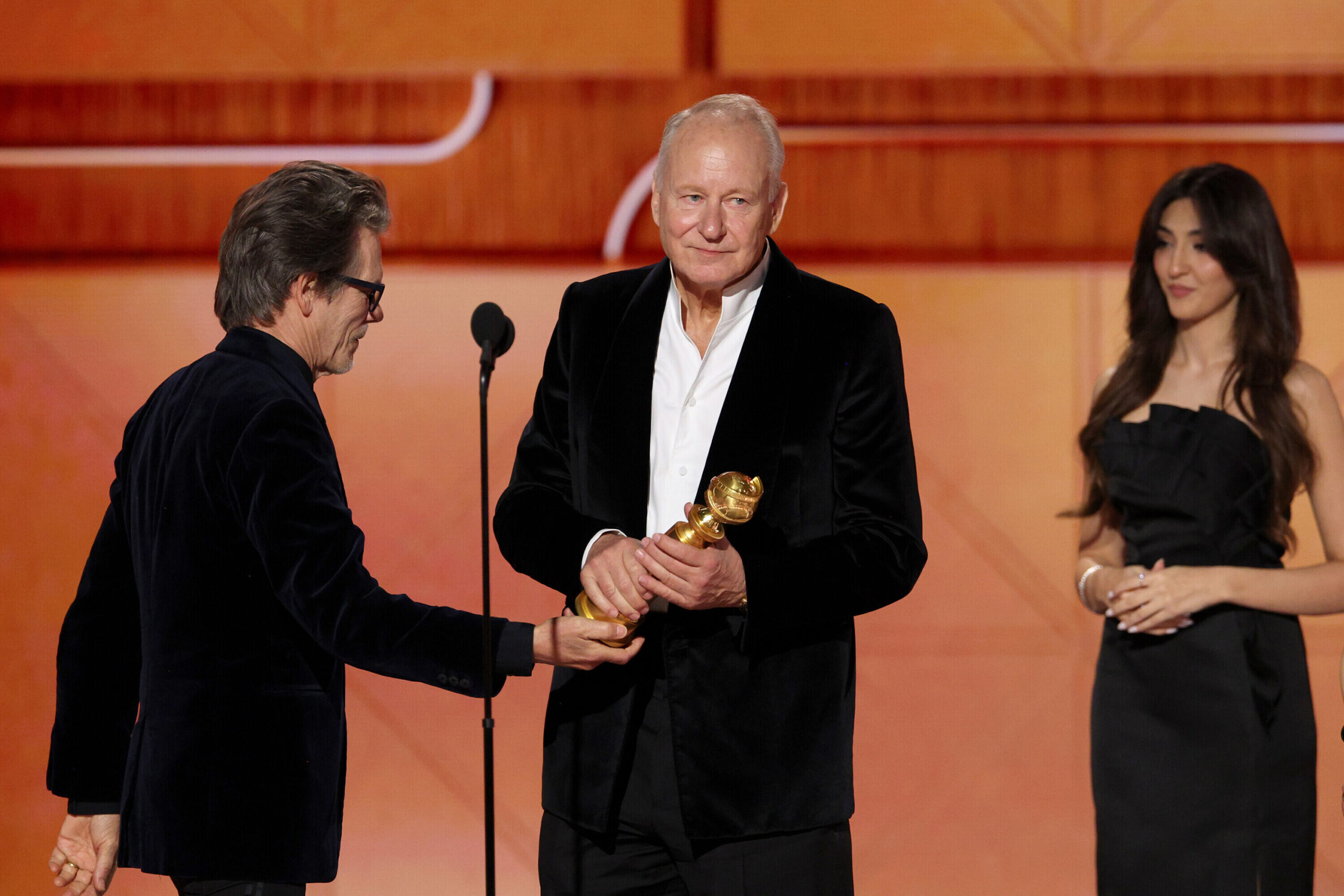
    This image released by CBS Broadcasting shows Stellan Skarsgård accepting the award for best performance by a supporting actor in a motion picture for “Sentimental Value,” from presenter Kevin Bacon, left, during the 83rd Golden Globes on Sunday, Jan. 11, 2026, at the Beverly Hilton in Beverly Hills, Calif. (Kevork Djansezian/CBS Broadcasting via AP)

    ‘Sentimental Value’

    Sisters Nora (Renate Reinsve playing a theater actor) and Agnes (Inga Ibsdotter Lileaas) reunite with their distant father Gustav (Stellan Skarsgard), a famous director. The reunion forces the family to confront past trauma and their shared artistic practice as Gustav works on a film based on his family members.

    Available to rent: YouTube, Google Play, Apple TV

    Playing: Bryn Mawr Film Institute

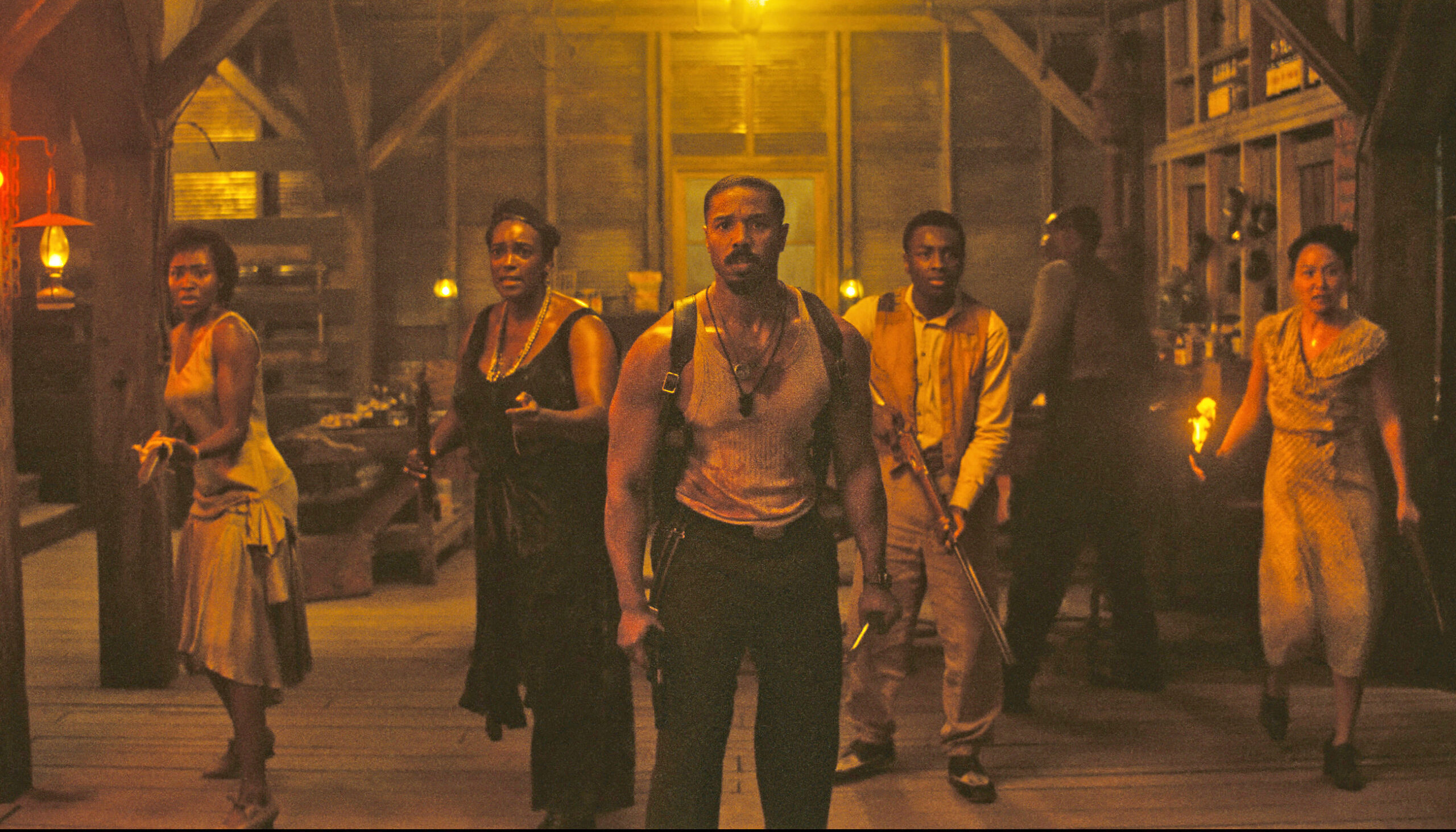
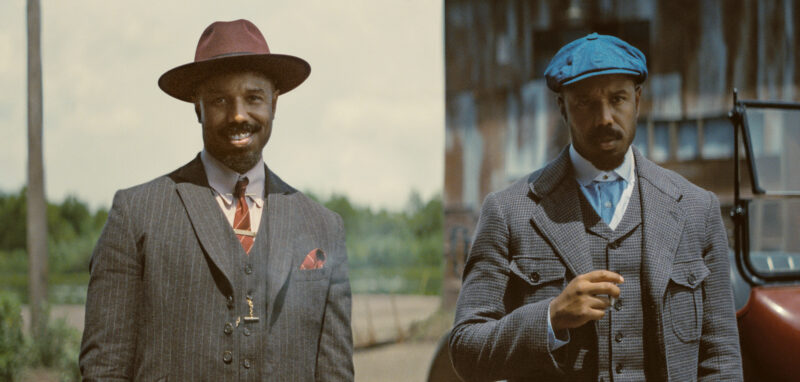
    This image released by Warner Bros Pictures shows Michael B. Jordan, center, in a scene from “Sinners.” (Warner Bros. Pictures via AP)

    ‘Sinners’

    Rich from Chicago bootlegging schemes, twins Smoke and Stack (Michael B. Jordan) return to their home in the Deep South during the 1930s to open a juke joint. Here they come fact-to-face with vampires intent on stealing their souls. The film, directed by Ryan Coogler, received a record-breaking 16 nominations including one for Jordan, who is nominated for best actor.

    Available to rent: HBO Max, Amazon Prime Video

    Playing: Landmark’s Ritz Five, AMC Cherry Hill 24, Cinemark Somerdale 16 and XD, Regal UA King Of Prussia, AMC Neshaminy 24, Regal Warrington Crossing, CAMC Center Valley 16, and more.

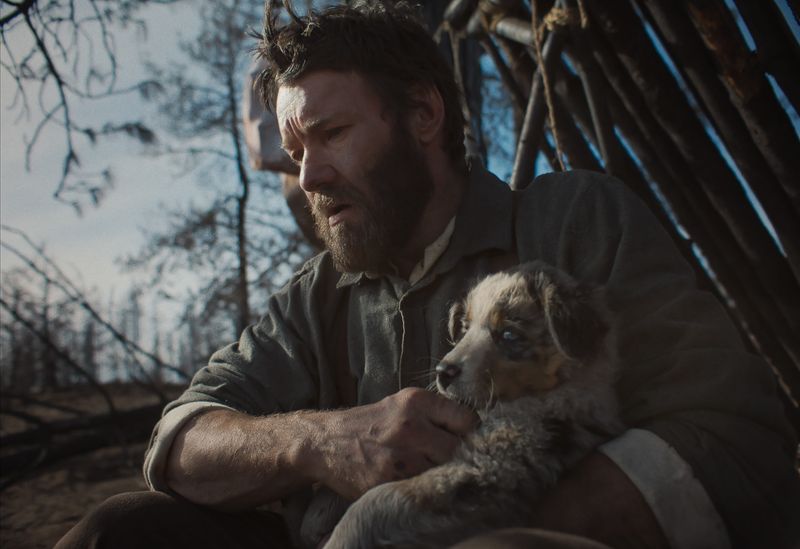
    Joel Edgerton navigates personal tragedy and decades of working on the railroad in the period drama “Train Dreams.”

    ‘Train Dreams’

    Early 20th century logger Robert Grainer (Joel Edgerton) builds a life with his wife Gladys (Felicity Jones) only to lose it all to wildfires, violence, and changing times. The film is based on Denis Johnson’s novella and received four Oscar nominations.

    Streaming: Netflix

    International Feature

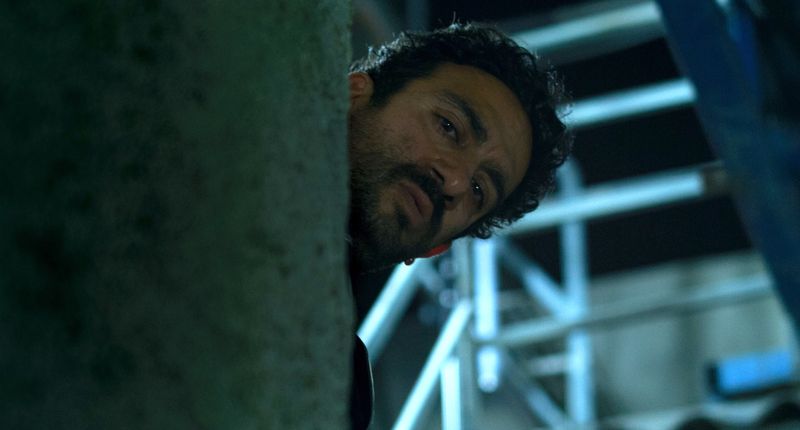
    Vahid Mobasseri plays a mechanic and former Iranian political prisoner who kidnaps his former torturer in the genre-mashing thriller “It Was Just an Accident.”

    ‘It Was Just an Accident’

    This Iranian thriller from legendary filmmaker Jafar Panahi follows a mechanic named Vahid (Vahid Mobasseri) who, along with fellow rebels, encounters their former prison tormentor and vows revenge.

    Available to rent: YouTube, Google Play, Apple TV

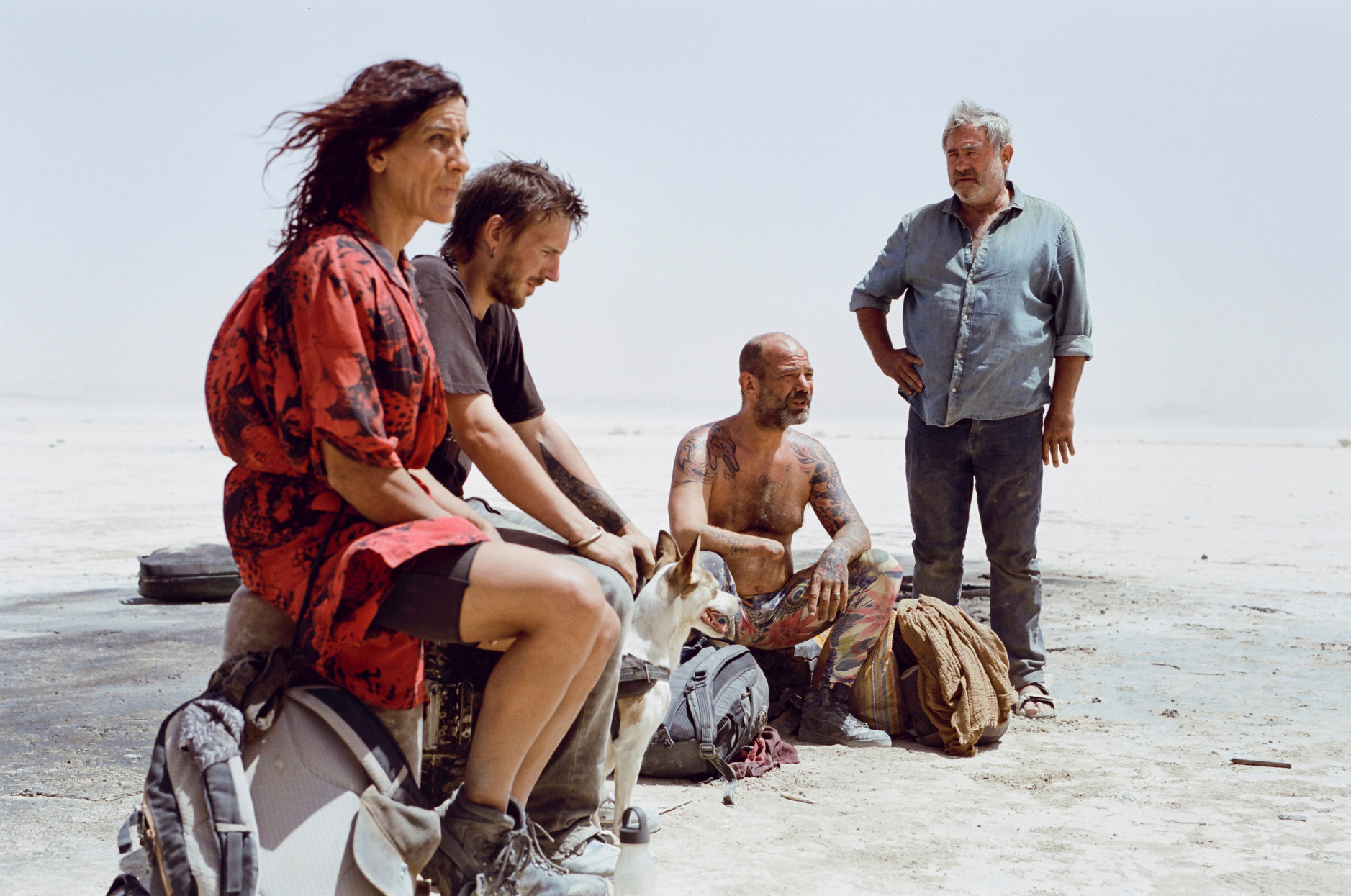
    This image released by Neon shows, from left, Stefania Gadda, Joshua Liam Herderson, Richard Bellamy and Sergi López in a scene from the film “Sirat.” (Neon via AP)

    ‘Sirāt’

    A film in French, Arabic, English, and Spanish about a family searching for their missing daughter during a music rave in a southern Moroccan desert. Add to that an armed conflict that escalates into a World War III-like tussle.

    Streaming: Apple TV

    Motaz Malhees stars in “The Voice of Hind Rajab” as a Palestinian Red Crescent Society worker who receives a distress call from 6-year-old Hind Rajab, seen in the photograph. MUST CREDIT: WILLA

    ‘The Voice of Hind Rajab’

    Tunisian filmmaker Kaouther Ben Hania’s docudrama chronicles the killing of Hind Rajab, a 5-year-old Palestinian girl in Gaza using an emergency call Red Crescent volunteers received on January 29, 2024.

    Available to rent: Apple TV

    And if you’re still looking for more recommendations, here are some best documentary nominees.

    Best feature documentary

    Best short documentary

    • All the Empty Rooms on Netflix
    • Armed Only with a Camera: The Life and Death of Brent Renaud on HBO Max, YouTube
    • Children No More: Were and Are Gone on Kinema
    • The Devil is Busy on HBO Max
  • See costumes from the Oscar-nominated wardrobe of ‘Sinners’ at the African American Museum in Philadelphia

    See costumes from the Oscar-nominated wardrobe of ‘Sinners’ at the African American Museum in Philadelphia

    Sinners, Ryan Coogler’s vampiric period film starring Michael B. Jordan, made Academy Award history on Thursday when it was nominated for 16 Oscars, more than any other film in the history of the award ceremony’s 98-year run.

    It toppled the 14 nominations previously received by All About Eve (1950), Titanic (1997), and La La Land (2016). In addition to Michael B. Jordan’s best actor nomination and Coogler’s best director nod, Sinners Oscar-winning costume designer, Ruth E. Carter, was also nominated for for her work on the film. It’s her fifth overall Oscar nomination.

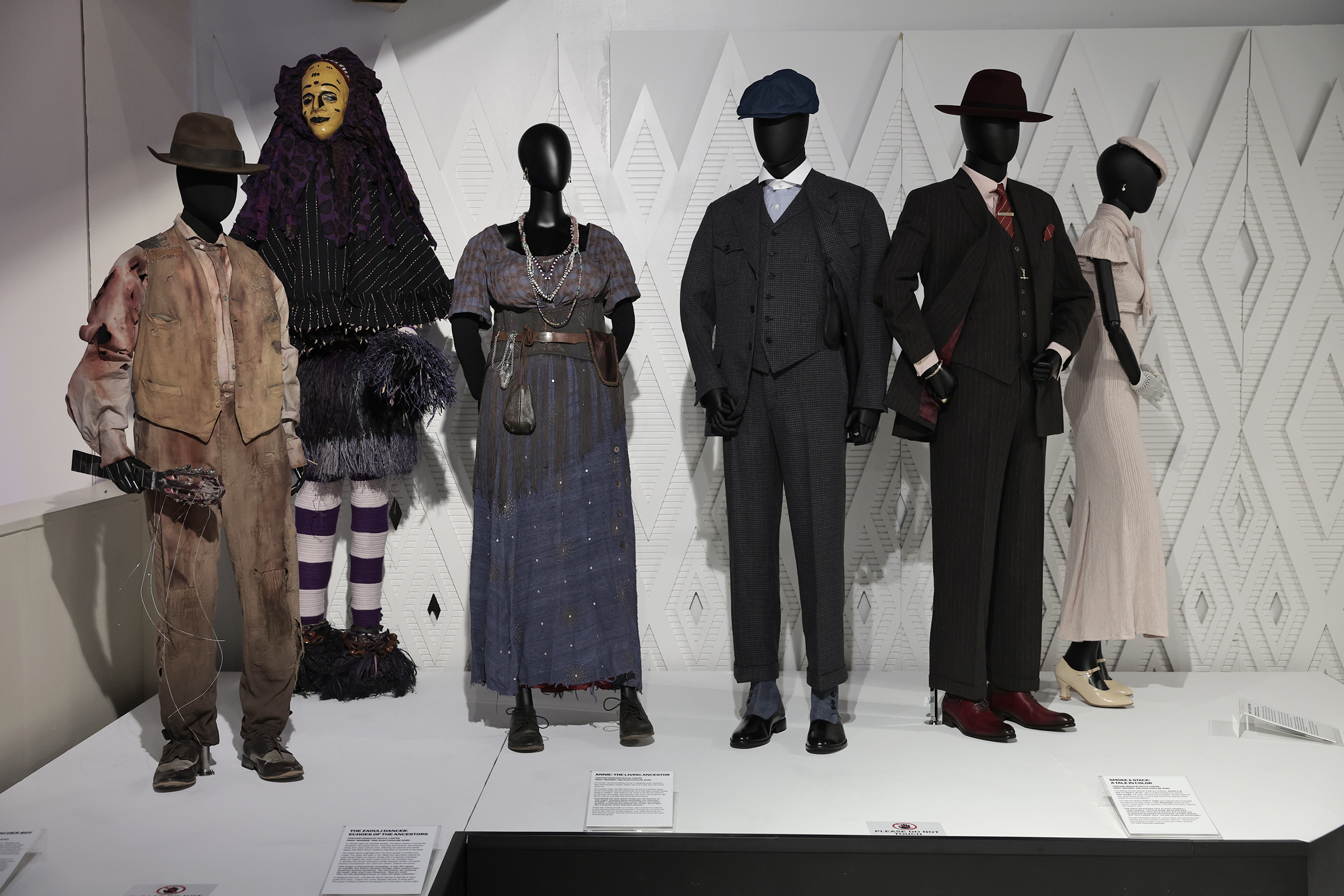
    Six of those costumes are on display at the African American Museum in Philadelphia through September in the traveling “Ruth E. Carter: Afrofuturism and Costume Design Exhibit.”

    That includes Smoke and Stack’s (twins played by Jordan) memorable 1930s-era three-piece suits, with complementary fedora and newsboy cap, timepieces, and tiepins.

    Ruth E. Carter’s Oscar-nominated costumes from “Sinners” starring Michael B. Jordan as twins Smoke and Stack.

    Coogler’s only direction to Carter was to dress Smoke in blue and Stack in red, she told The Inquirer in November.

    Carter, not one to fret long, dove into her arsenal of research. By the time she began the fittings, she’d amassed an array of blue and red looks befitting of the 1930s sharecroppers-turned-bootleggers and juke joint owners.

    “[And] when I put that red fedora on him, Ryan flipped out and said, ‘That’s it!’,” Carter said. “We wanted people to resonate with their clothing and it did.”

    The Smoke and Stack effect went beyond Sinners. This Halloween there were tons of social media posts of revelers dressed as the mysterious twins.

    Ruth E. Carter during the “Ruth E. Carter: Afrofuturism in Costume Design” opening gala at the African American Museum in Philadelphia on Saturday, Nov. 1, 2025.

    Also a part of AAMP’s Sinners display is the flowy earthy dress that best supporting actress nominee Wunmi Mosaku wore in her role as Annie. Annie is Smoke’s lover and a root woman who discovers the vampires in their Clarksdale, Miss., town.

    Cornbread’s (Oscar Miller) tattered sharecropper outfit is on the dais along with Mary’s (Hailee Steinfeld) blush knit dress with its short-sleeved bodice and pussy bow accent. Her matching knit beret and pearls are also on display. In the film, Mary is Stack’s childhood friend, turned girlfriend, turned vampire.

    “I immerse myself in the mind, body, and soul of my characters,” said Carter. “Then I see them in my mind, how they move and with research, I come up with a look that I feel is unique to them.”

    The Sinners pieces are among the more than 80 looks featured in the “Afrofuturism” exhibit, joining outfits from The Butler (Lee Daniels), and from Malcolm X, Coming 2 America, Black Panther, and its sequel, Black Panther: Wakanda Forever.

    The show, headlining the African American Museum’s celebration of the nation’s Semiquincentennial, will be on display through September.

    Lace gloves and knit dress detail of Mary (Hailee Steinfeld) costume from sinners.

    During her five decades in the movie business, Carter has worked on more than 60 big-screen documentations of where Black Americans have been, who they are at the given moment, and who they dream of becoming.

    Her work has shaped how the world sees African Americans.

    In the 2010s, a friend of hers suggested she plan a museum exhibit around her costumes. After Black Panther, she partnered with Marvel, and in 2019, “Afrofuturism in Costume Design” debuted at the Savannah College of Art and Design’s Atlanta Campus.

    The “Ruth E. Carter: Afrofuturism in Costume Design” exhibit at the African American Museum in Philadelphia on Saturday, Nov. 1, 2025.

    Philadelphia is the exhibit’s ninth — and longest — stop. It’s also the first stop for the Sinners costumes.

    “I am a griot,” Carter said. “[Throughout my career,] I’ve developed a knowledge base that embraces our culture and speaks to all of us in a positive way.”

    Ruth E. Carter: Afrofuturism in Costume Design” will be on view through Sept. 6. at the African American Museum in Philadelphia, 701 Arch St., Thursday through Sunday, 10 a.m. to 5 p.m. Tickets are $20 for adults, $10 for children.

  • David Lynch called Philadelphia one of ‘the sickest, most corrupt, fear-ridden’ cities. That’s what makes it Lynchian.

    David Lynch called Philadelphia one of ‘the sickest, most corrupt, fear-ridden’ cities. That’s what makes it Lynchian.

    When filmmaker David Lynch moved to Philadelphia in 1965 to attend the erstwhile Pennsylvania Academy of the Fine Arts, he was instantly moved by the city. Though not exactly charmed.

    The city’s crime, corruption, and urban blight impressed themselves on the young artist’s mind and lent to his uncanny vision combining the sinister and the absurd. The Twin Peaks creator, however, only spent a short time living in the city.

    By 1970, he had decamped to Los Angeles to study at the American Film Institute and work on his first feature, the cult classic Eraserhead.

    But Lynch’s relatively abridged tenure as a Philadelphian has had an outsized impact. Consider him the Terrell Owens of Philly weirdo transplant artists.

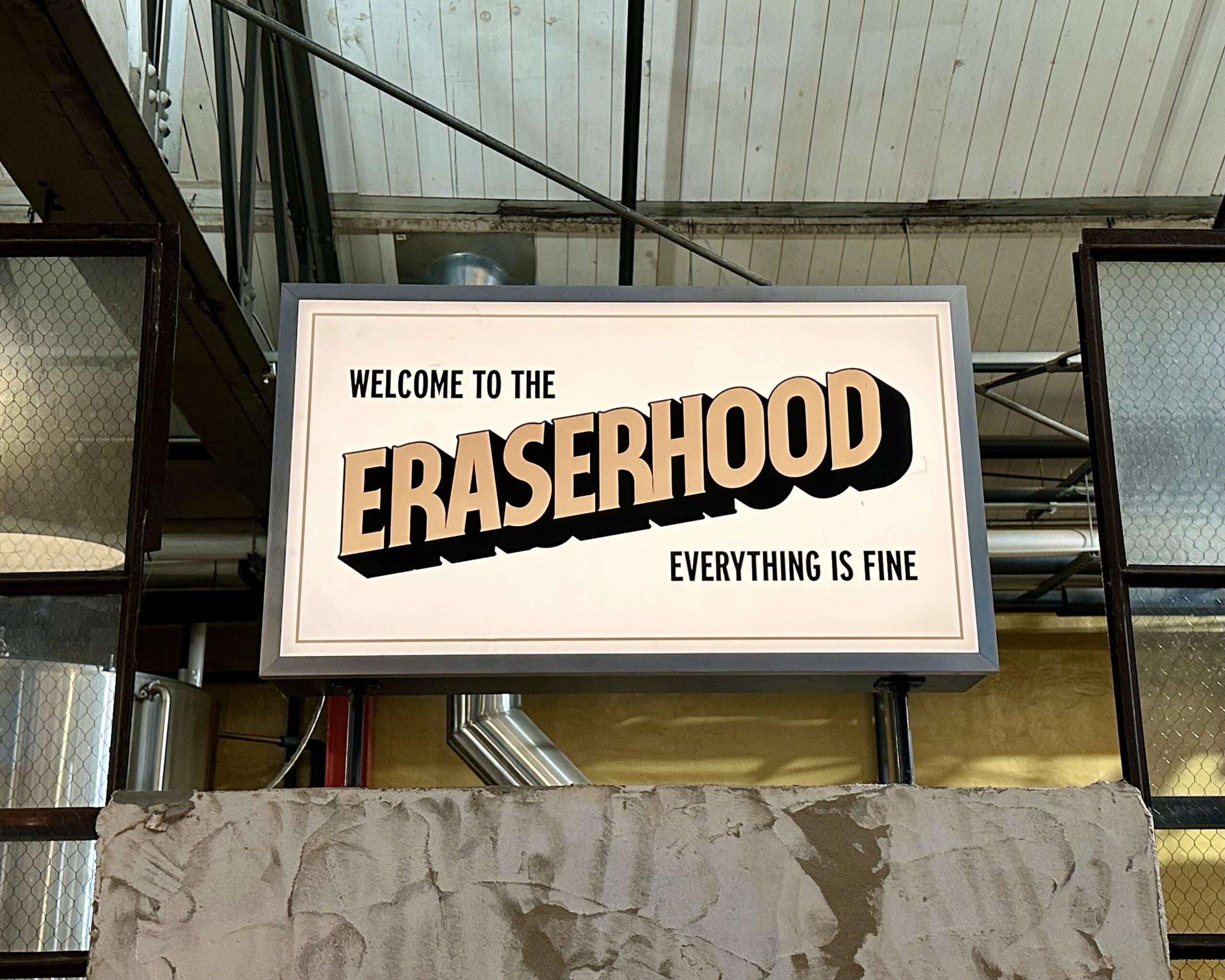
    A sign at Callowhill’s Love City Brewery nods to David Lynch’s film “Eraserhead.”

    In the year since his passing, retrospectives of his films have dominated programming at Philadelphia rep cinemas and art houses, Callowhill (where Lynch used to live and work) got a makeover as “Eraserhood,” and the neighborhood’s Love City Brewing’s hazy “Eraserhood IPA” grew in popularity.

    Now, a new podcast is digging deeper into Lynch’s influence on Philadelphia, exploring the extent to which the city impressed itself upon his life and work — from PAFA to Hollywood to the soapy subterfuges of the Twin Peaks universe.

    Launched Jan. 15 (the first anniversary of the filmmaker’s passing), Song of Lynchadelphia explores, in the words of host Julien Suaudeau, “the encounter of the 1950s American innocence with a place where the dream had already, and very concretely, turned into a nightmare.”

    Hidden City supervising producer Nathaniel Popkin (right) and Julien Suaudeau discuss their podcast investigating how David Lynch invented a “cinematic language of fear and strangeness in Philadelphia” on Monday, December 15, 2025.

    For Suaudeau, a writer and scholar who teaches film at Bryn Mawr College, Philadelphia served as a creative catalyst for Lynch. Many great cities inspire, whether in their beauty, their scale, or deep history. Philadelphia, which Lynch called “one of the sickest, most corrupt, decadent, fear-ridden cities that exists.” The filmmaker was enamored with its crime and filth in the mid-1960s.

    “He was traumatized by Philly,” Suaudeau said, over drinks at Love City Brewing. “And he turned that trauma into art, something both beautiful and strange.”

    A Parisian native who moved to the region to teach, Suaudeau felt drawn to Philadelphia, and to Lynch, early in life. As an adolescent living in France, he responded to the anxious, hysterical, at-times deeply disturbing depiction of teenage life offered by Twin Peaks.

    At the same time, he fell in love with the ‘70s Philly Soul sound, and admired (then) 76er Charles Barkley. (Suaudeau played power forward in high school and, like Barkley, was also considered undersized.)

    “I didn’t know about Lynch’s foundational years in Philly,” he said, “but that convergence feels so meaningful to me today.”

    Song of Lynchadelphia grows out of Song of Philadelphia, a podcast produced by the local public history project Hidden City, which curates the “Eraserhood Tours” in Callowhill.

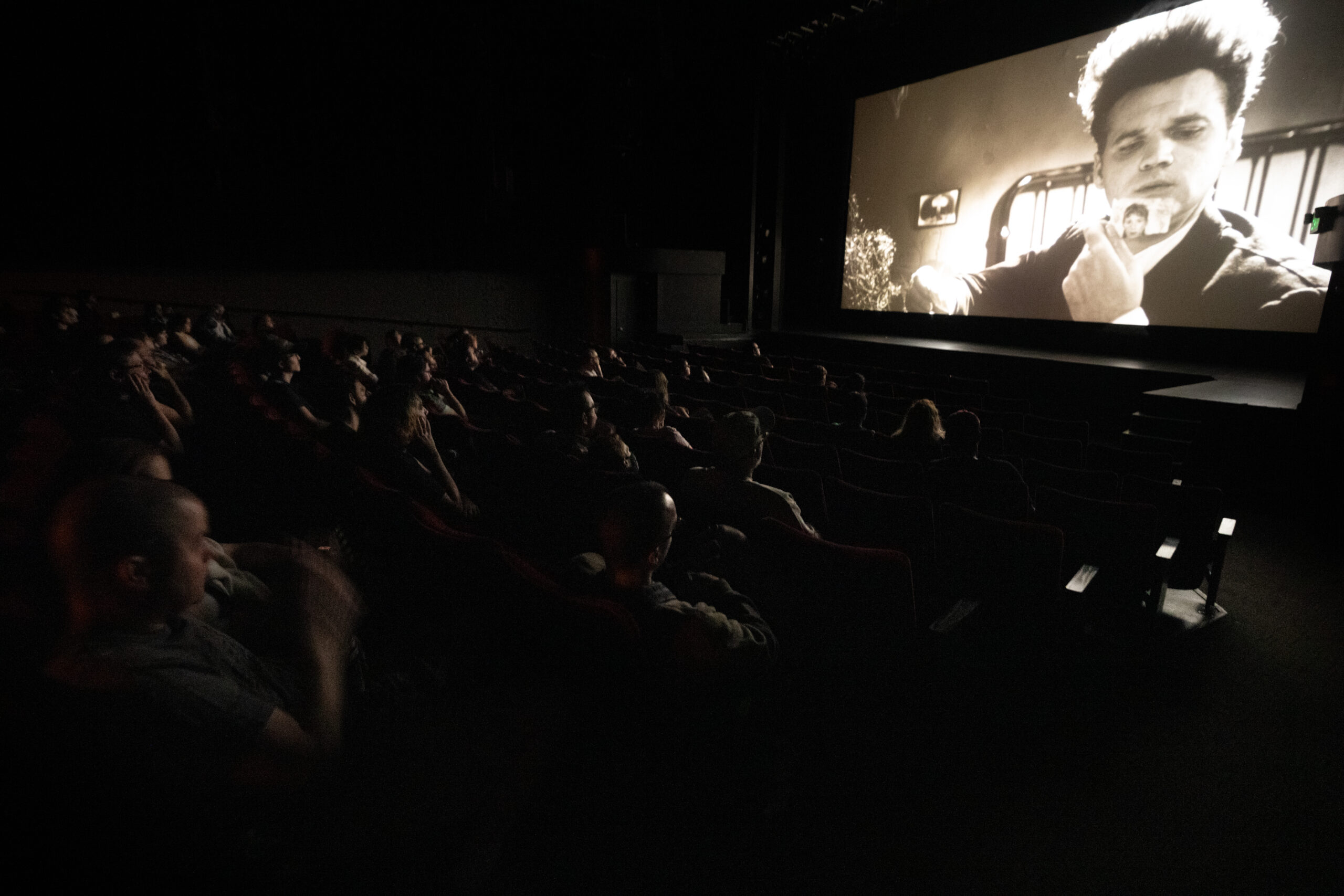
    Audience members watch “Eraserhead” by David Lynch at the Film Society Center, in Philadelphia, Oct. 5, 2025.

    The new series explores the city’s secret stories through a distinctly warped Lynchian lens.

    The first episode looks into Lynch’s rather despairing comments on the Philadelphia of his artistic adolescence, a place of “insanity” possessed by a “beautiful mood.” Through interviews with local fans, historians, and Lynch’s collaborators (including production designer Jack Fisk, one of Lynch’s longtime collaborators and a PAFA classmate), archival clips, and distinctly Lynchian soundscapes, Suaudeau guides the listener through Lynch’s relationship with the city.

    “We’re always interested in origins, especially among creative people,” said author and Hidden City cofounder Nathaniel Popkin, who serves as Song of Lynchadelphia’s supervising producer. “There is a darkness that is particularly important [in Philadelphia]. It was a place imagined to have brought light in the 18th century. And it got dark, real fast.”

    A historian interviewed in the series’ first episode cites deindustrialization, white flight, racism, rioting, and rising crime as sources of that creeping darkness.

    This curdling of the so-called American dream, so key to Lynch’s filmography, also defines Philadelphia in the period of the director’s artistic awakening. Popkin notes Lynch was living in Philly around the same time as Ira Einhorn, the rabble-rousing environmental activist who was arrested after his former girlfriend’s remains were found decomposing in a suitcase in his closet.

    In this Jan. 9, 2017, file photo, filmmaker David Lynch attends the “Twin Peaks” panel at the Showtime portion of the 2017 Winter Television Critics Association press tour in Pasadena, Calif. (Photo by Richard Shotwell/Invision/AP, File)

    Einhorn would claim he was set up by the CIA, because he knew too much about their top secret paranormal mind-control experiments, a defense that could be ripped from a Twin Peaks episode.

    This very “Philly” feeling of weirdness and unease, Suaudeau said, permeates Lynch’s work, well beyond the early shorts he made here.

    A character in Twin Peaks calling a cadaver a “smiling bag” dates back to a late-night tour a young Lynch took of a Philadelphia morgue. Visions of soot-covered buildings reveal themselves, decades later, in a particularly nightmarish encounter in Mulholland Drive. Laura Dern’s hard-drinking, no-nonsense character Dianne in The Return lives in Philly and, as Suaudeau puts it, “is the kind of person you would meet in a Philadelphia bar.”

    In Twin Peaks, Suaudeau believes that Lynch reveals the city as a kind of dreamscape. In the series and accompanying 1992 feature film, Lynch casts himself as a good-natured (and doornail-deaf) FBI director, operating out of the bureau’s Philadelphia offices.

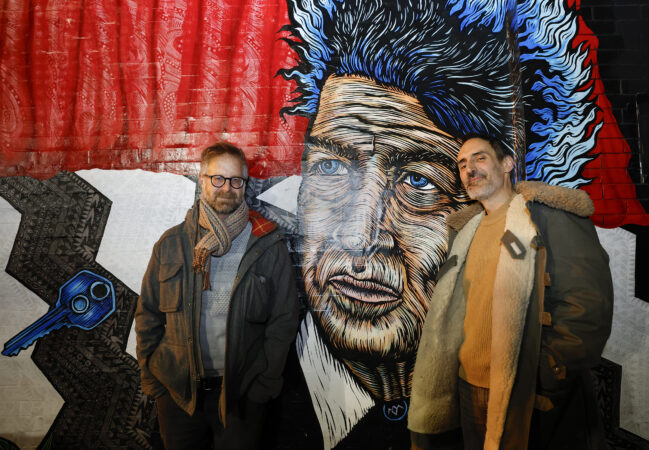
    Julien Suaudeau (left) takes a selfie with Hidden City supervising producer Nathaniel Popkin at the David Lynch mural outside of Love City Brewing on Monday, December 15, 2025.

    “Philadelphia is the head space of the director,” Suaudeau said. “It’s the room to dream.”

    The idea of Philadelphia as a great American city, once shining like a beacon-on-the-hill, that had gone to seed by the time of Lynch’s arrival, is itself Lynchian, as a metropolis perched on the porous boundary between dream and nightmare.

    “He’s interested in crawling beneath the veneer, beneath the surface,” Suaudeau said. “It’s a mood, it’s an atmosphere, it’s an aura in his work.”

    “Song of Lynchadelphia” launched Jan. 15. “Dreams & Nightmares: A David Lynch Marathon,” an eight-hour Lynch marathon will take place in Phoenixville’s Colonial Theatre on Jan. 18, 11 a.m., thecolonialtheatre.com. A screening of “Eraserhead” followed by a talk-back with Julien Suaudeau is Feb. 21 at the Bryn Mawr Film Institute, 824 W. Lancaster Ave., Bryn Mawr. brynmawrfilm.org

  • Jeffrey A. Woodley, internationally celebrated celebrity hairstylist, has died at 71

    Jeffrey A. Woodley, internationally celebrated celebrity hairstylist, has died at 71

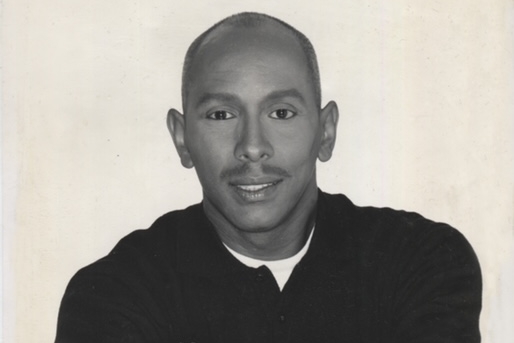
    Jeffrey A. Woodley, 71, formerly of Philadelphia, internationally celebrated celebrity hairstylist, scholar, youth track and field star, mentor, and favorite uncle, died Wednesday, Dec. 10, of complications from acute respiratory distress syndrome at Mount Sinai West Hospital in Manhattan.

    Reared in West Philadelphia, Mr. Woodley knew early that he was interested and talented in hairstyling, beauty culture, and fashion. He experimented with cutting and curling on his younger sister Aminta at home, left Abington High School before his senior year to attend the old Wilfred Beauty Academy on Chestnut Street, and quickly earned a chair at Wanamakers’ popular Glemby Salon at 13th and Chestnut Streets.

    He went to New York in the mid-1970s after being recruited by famed stylist Walter Fontaine and spent the next 30 years doing hair for hundreds of actors, entertainers, models, athletes, and celebrities. He styled Diahann Carroll, Whitney Houston, Aretha Franklin, Anita Baker, Angela Bassett, Halle Berry, and Tyra Banks.

    He worked with Denzel and Pauletta Washington, Eddie Murphy, Jasmine Guy, Lynn Whitfield, Pam Grier, Melba Moore, Jody Watley, and Karyn White. His hairstyles were featured in GQ, Vanity Fair, Ebony, Jet, Essence, Vibe, Vogue Italia, and other publications, and in advertising campaigns for L’Oréal and other products.

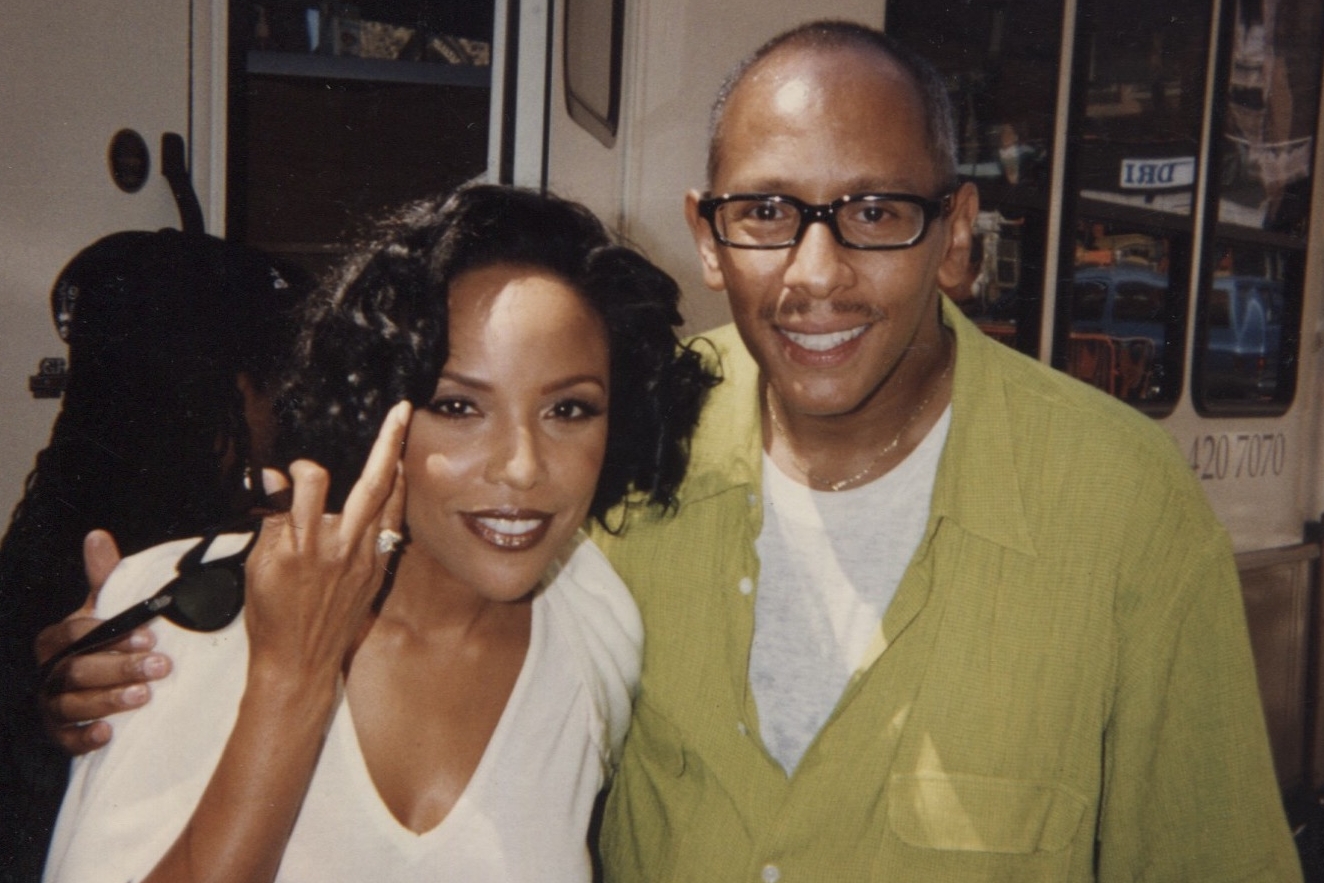
    Mr. Woodley poses with actor Lynn Whitfield.

    For years, actor Terry Burrell said, “He was the go-to hair stylist for every Black diva in New York City.” Pauletta Washington said: “He was responsible for so much of who I became as an artist and a friend.”

    Mr. Woodley worked for Zoli Illusions in New York, Europe, Africa, and elsewhere around the world, and collaborated often with noted makeup artists Reggie Wells and Eric Spearman. Model Marica Fingal called Mr. Woodley “uber talented” on Instagram and said: “He was one of the most skilled artists, creating stunning, innovative styles for models and celebs alike.”

    Friendly and curious, Mr. Woodley told Images magazine in 2000 that learning about the people in his chair was important. “A woman’s hairstyle should take into account the type of work she does, her likes, her dislikes, and her fantasies,” he said. “I’m a stylist, but I never impose hair styles on any client. When we arrive at our finished style, it’s always a collaboration.”

    His hairstyles appeared on record albums and at exhibitions at the Philadelphia Art Museum and elsewhere. He was quoted often as an expert in coiffure and a fashion forecaster. In 1989, he told a writer for North Carolina’s Charlotte Post: “Texture is the key. … Cut will still be important, but the lines will be more softened and much less severe.”

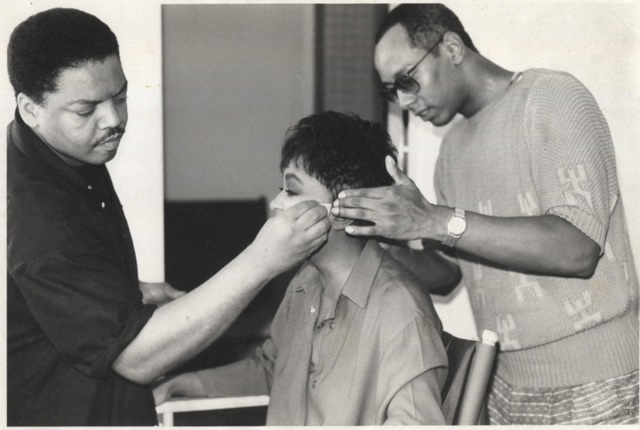
    Mr. Woodley (right) handles hair styling for singer Anita Baker while makeup artist Reggie Wells attends to her face.

    In 2000, he told Images that “low maintenance is the way of the future.” He said: “Today’s woman is going back to school. She has the corporate job. She has children that she needs to send off to school. She doesn’t have time anymore to get up and spend 35 to 40 minutes on her hair. She wants something she can get up and go with.”

    He retired in 2005 after losing his sight to glaucoma. So he earned his General Educational Development diploma, attended classes at the Borough of Manhattan Community College, and studied literature, Black history, and spiritual writing.

    “The entirety of his life was inspired by an insatiable thirst for knowledge,” said his friend Khadija Kamara.

    He was working on his memoir and still taking classes when he died. “He lived life on his own terms,” Burrell said, “and my respect and admiration for his determination will forever be inspiring.”

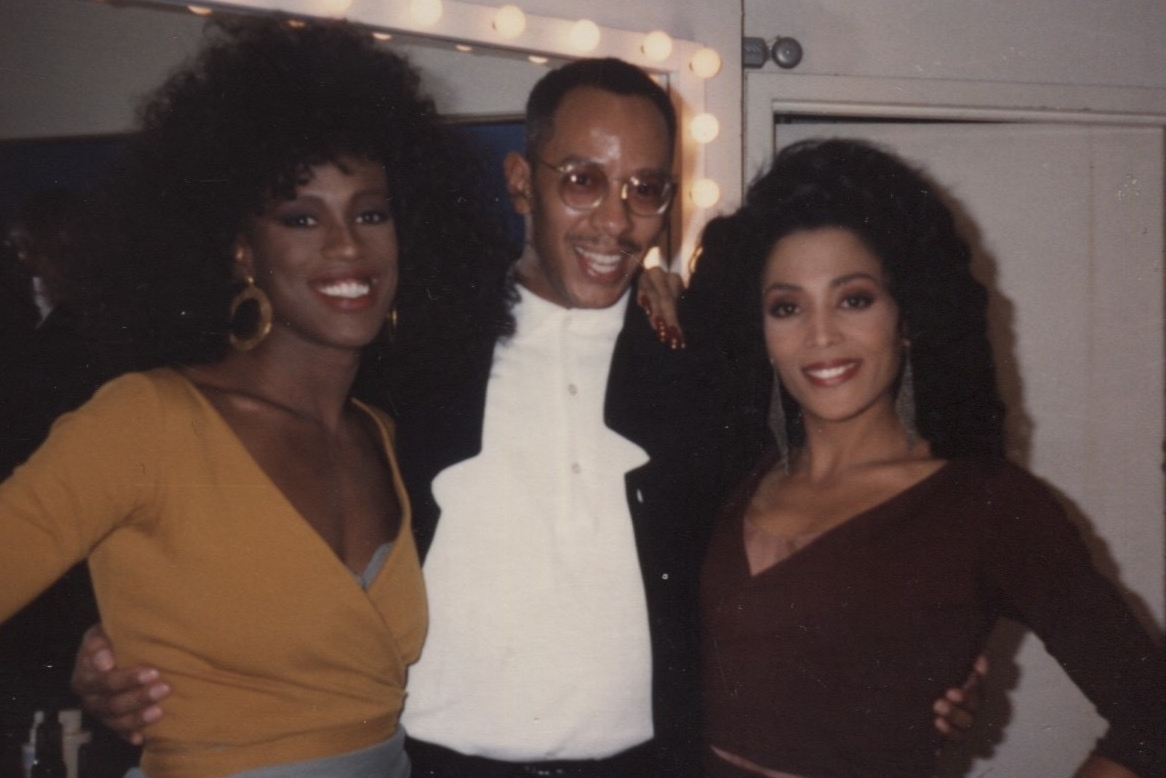
    Mr. Woodley smiles with track stars and celebrities Jackie Joyner-Kersee (left) and Florence Griffith Joyner.

    As a youth, Mr. Woodley excelled in sprints, relays, and the high jump at St. Rose of Lima Catholic School and Abington High School, and for the Philadelphia Pioneers and other local track and field teams. He ran on Abington’s 440-yard relay team that won the PIAA District 1 championship race at the 1970 Penn Relays and helped set a meet record in the four-lap relay at a 1971 Greater Philadelphia Track and Field Coaches Association indoor meet.

    Family and friends called him authentic, generous, and proud of his Philadelphia roots. He mentored his nieces and nephews and hosted them on long visits to his home in New York.

    “He was one of the most talented people around and always a lot of fun,” a friend said on Facebook. “A beautiful soul and spirit who made others beautiful.”

    Jeffrey Alan Woodley was born May 30, 1954, in Philadelphia. He had an older brother, Alex, and two younger sisters, Aminta and Alicia, and ran cross-country as well as track in high school.

    Mr. Woodley (left) worked with actor and musician Pauletta Washington and makeup stylist Eric Spearman.

    He was always an avid reader and loved dogs, especially his guide dog Polly. He was a foodie and longtime member of the Abyssinian Baptist Church choir in Harlem. His close family and friends called him Uncle Jeff.

    “He was a fun-loving, spirited, and passionate individual,” his brother said. “Uncle Jeff loved the Lord and poured his heart into his work as well as family.”

    His sister Aminta said: “He had a wonderful spirit. He knew the Lord, lived life to the fullest, and was a joy to be with.”

    In addition to his mother, Anna, brother, and sisters, Mr. Woodley is survived by nieces, nephews, and other relatives.

    Mr. Woodley doted on his nieces and nephews.

    A celebration of his life was held Dec. 22.

    Donations in his name may be made to Abyssinian Baptist Church, 132 W. 138th St., New York, N.Y. 10030; and the Anna E. Woodley Music Appreciation Fund at Bowie State University, 14000 Jericho Park Rd., Bowie, Md. 20715.

  • Once a precocious theater kid from West Philly, Hollywood production designer Wynn Thomas has won an overdue Oscar at 72

    Once a precocious theater kid from West Philly, Hollywood production designer Wynn Thomas has won an overdue Oscar at 72

    When famed production designer Wynn Thomas prepared an acceptance speech for his long-awaited Oscar at the age of 72, he wanted to highlight his own Philadelphia story.

    “My journey to storytelling began as a poor Black kid in one of the worst slums in Philadelphia. There were street gangs and poverty everywhere. And to escape that world, I immersed myself in books,” Thomas told the Hollywood audience at the Governor’s Awards ceremony in November. “I would sit on my front stoop and I would travel around the world. Now, the local gangs looked down on me and called me ‘sissy.’ But that sissy grew up to work with some great filmmakers and great storytellers.”

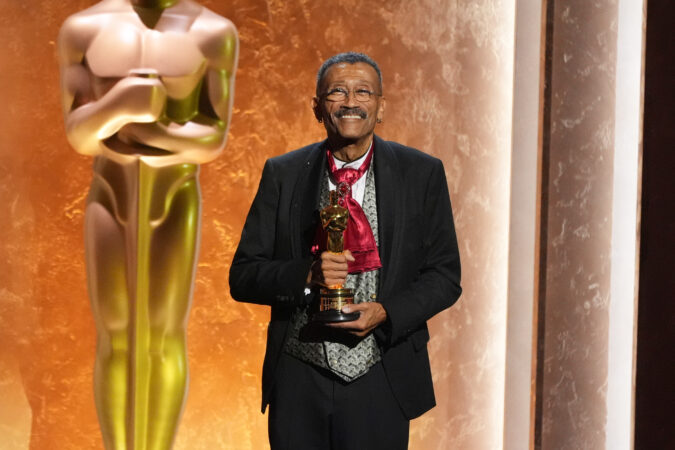
    It was a significant moment for an artist who has spent nearly 50 years behind the camera to finally step into the spotlight himself. The honorary Oscar — which also went to Tom Cruise and Debbie Allen — recognizes “legendary individuals whose extraordinary careers and commitment to our filmmaking community continue to leave a lasting impact.”

    During his extensive film career, Thomas has designed epic, comedic, and dramatic worlds for filmmakers like Spike Lee (Do The Right Thing, Malcolm X), Ron Howard (A Beautiful Mind, Cinderella Man), Robert DeNiro (A Bronx Tale), Tim Burton (Mars Attacks), and Peter Segal (Get Smart).

    And while at it, he broke several barriers along the way: Thomas is considered the first Black production designer in Hollywood history.

    No matter how far his work took him, though, he was always proud to discuss his Philadelphia roots.

    The theater kid from West Philly

    Long before he worked on major feature films, Thomas grew up as one of six kids in West Philadelphia, living primarily near 35th and Spring Garden Streets. Avid reading kept him out of trouble. His mother, Ethel Thomas, wrote a permission letter to the local library so he could access the adult section, and he immersed himself in the worlds of Harper Lee, James Baldwin, William Shakespeare, and Lillian Hellman.

    The young Thomas always looked forward to Saturdays, when he could spend nearly all day at a movie theater on Haverford Avenue. Occasionally, he took classes at Fleisher Art Memorial, too.

    The 1961 movie Summer and Smoke, written by Tennessee Williams, he said, inspired him to pursue theater.

    “I absolutely said, ‘My God, what is this?’ I think it was just the nature of the story that really affected me,” Thomas, who now lives in New York, said in a recent interview. “I couldn’t believe what I had just seen, what I had just experienced. So I went to my library and got as many Tennessee Williams plays as I could.”

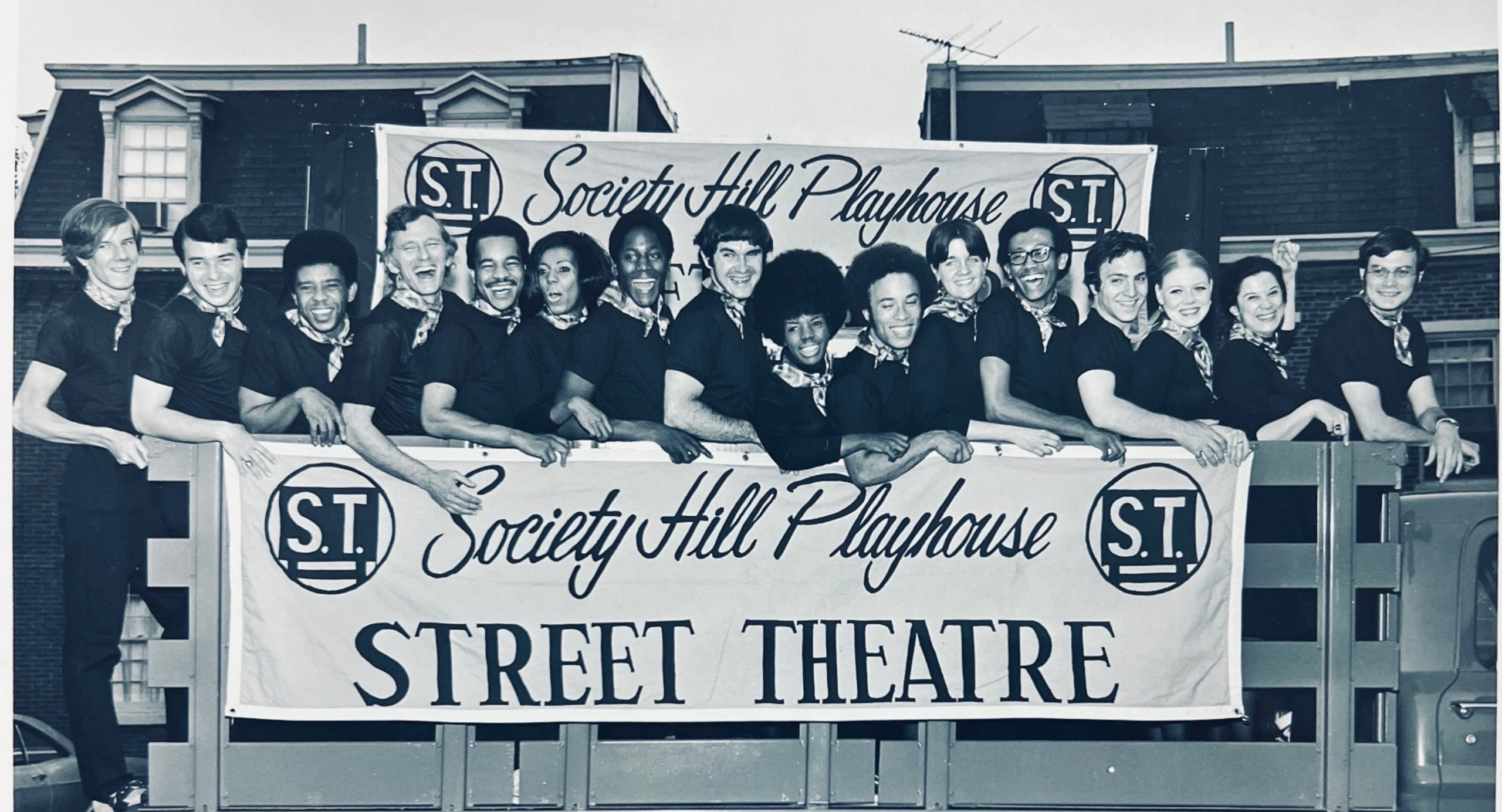
    Wynn Thomas (fifth from right) at the Society Hill Playhouse as a teen in the late 1960s.

    A couple of years later, Thomas heard that Society Hill Playhouse was holding open auditions. He was too young to audition himself, so he persuaded his older sister Monica to try out.

    “I remember saying to her, ‘You need to do a scene from Who’s Afraid of Virginia Woolf,’” he recalled, chuckling. “Now, can you imagine being a 14-year-old kid who knows Who’s Afraid of Virginia Woolf? That’s a geek!”

    She earned a spot in the company for a season and Thomas frequently tagged along, volunteering as an usher and eventually forming a close relationship with the owners, legendary Philadelphia theater couple Jay and Deen Kogan.

    Throughout high school, the Overbrook High art student spent most of his after-school time across town at the playhouse. He acted, painted scenery, and served as a stage manager.

    One of the final productions he stage-managed was The Great White Hope, loosely based on boxing champion Jack Johnson, who was played by Richard Roundtree — the soon-to-be Hollywood star who went on to lead the 1971 classic Shaft. While he was performing at Society Hill Playhouse, Roundtree was auditioning for the life-changing role.

    Shaft was a very important and very pivotal film for that time period,” said Thomas. “It was about a strong Black male who lived in the world under his own terms. That was not a character that was portrayed often in films.”

    It was a glimpse into the worlds Thomas would help create in the future — with Black characters who had agency at the center.

    Some four decades later, he worked with Roundtree once more for the 2019 remake of Shaft and they had an “incredible reunion.”

    From Philly to Boston to New York

    Thomas received his bachelor of fine arts in theater design from Boston University. After graduating in 1975, he returned to Philadelphia and worked as a window dresser at the Strawbridge & Clothier department store on Market Street for a few months before landing his next theater job.

    For about four years, Thomas was a painter for the Philadelphia Drama Guild, operating out of the Walnut Street Theatre. He also returned to Society Hill Playhouse as a production designer.

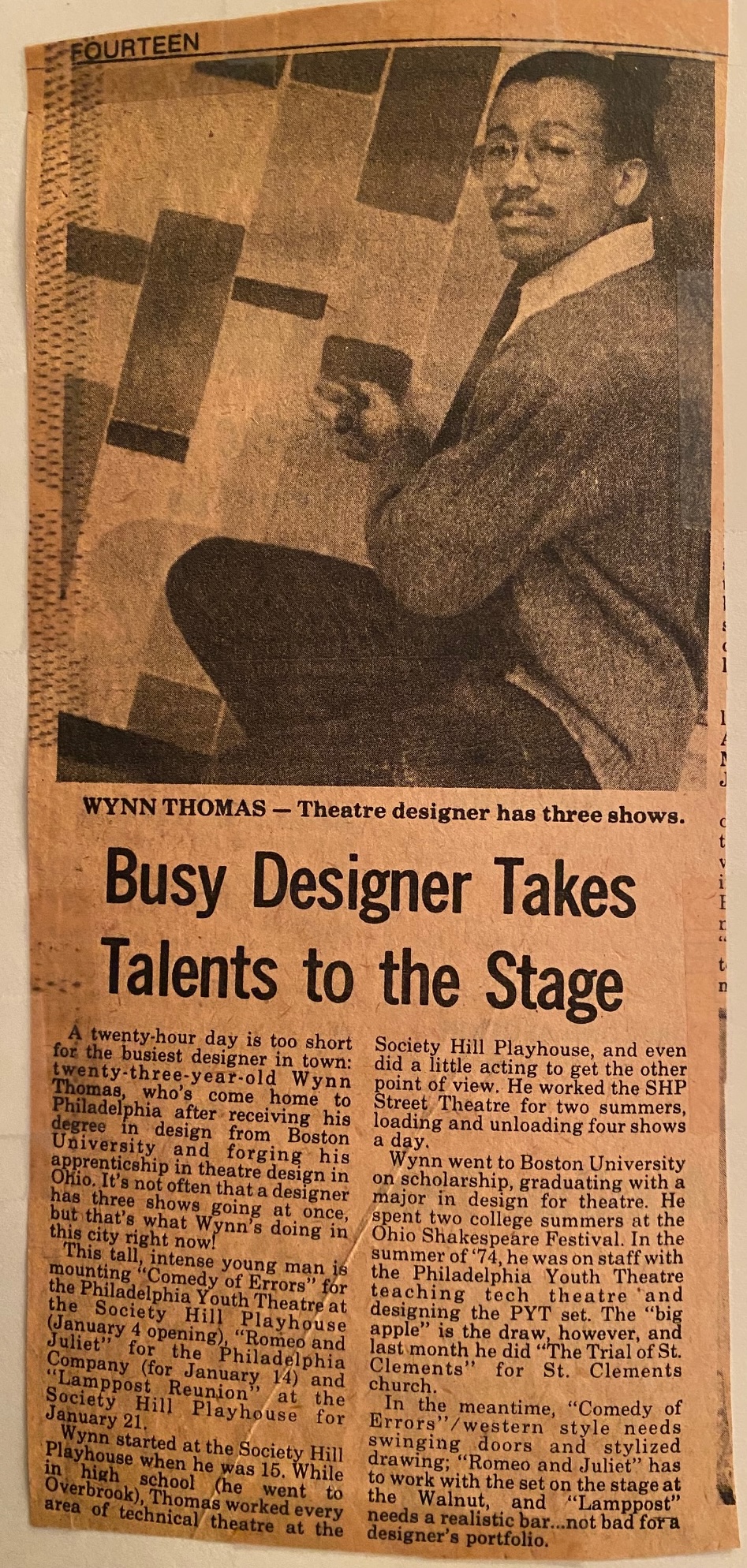
    An article about Wynn Thomas when he was 23 years old and working as a theater designer in Philadelphia in the mid 1970s.

    “It was a huge learning phase for my career, because I was painting all these different kinds of shows,” Thomas said.

    By his mid-20s, Thomas had moved to New York and soon became the resident set designer for the legendary Negro Ensemble Company, where he worked with not-yet-famous actors from Denzel Washington to Phylicia Rashad.

    “There was an actor who had auditioned for the company but did not get in. He was looking for a job and it turns out that he had carpentry skills, so I ended up hiring this actor who built my sets for my very first season at NEC,” Thomas recalled.

    “That actor was Samuel L. Jackson.”

    Breaking into film

    Thomas loved theater but sought higher-paying work in film. After multiple job rejections, he joined the United Scenic Artists Local 829.

    In an event the union organized with renowned production designer Richard Sylbert, who was working on Francis Ford Coppola’s The Cotton Club, Thomas was the sole Black person in attendance.

    The next day, he called Sylbert and introduced himself: “I’m the Black guy that was in the room last night. Do you remember seeing me?”

    He convinced Sylbert to hire him to build model sets, and Sylbert became a crucial reference that helped Thomas secure art director jobs, like on 1984’s Beat Street (directed by fellow Philly native Stan Lathan). That’s where he met Spike Lee, who interviewed “for the coffee-fetching position of assistant to the director,” Thomas recalled. When Lee stopped by the art department to greet a friend, the aspiring filmmaker was surprised to see Thomas.

    “He said he didn’t know there were any Black people doing this [work],” Thomas said.

    Filmmaker Spike Lee, center right, appears with his brother David Lee, center left, with castmembers, including Halle Berry, left, and Wesley Snipes, right, on the set of the 1991 film, “Jungle Fever.” Wynn Thomas served as production designer.

    A storied career of firsts

    That Beat Street encounter led to one of the most fruitful collaborative relationships of Thomas’ career: He went on to make 11 films with Lee, from She’s Gotta Have It to School Daze to Jungle Fever. Lee regularly worked with the same collaborators (“the family”) including Thomas, costume designer Ruth Carter, and cinematographer Ernest Dickerson.

    “We wanted to present images of Black and brown folks that had not been seen before on the screen. We did not want to present any negative images. If you look at those films, there’s no drugs, there’s no alcohol, there’s no domestic abuse — none of that trauma that people used to associate with our communities,” said Thomas. “That was the artistic link, the journey for all of us …[and] that has been a criteria for me.”

    Meanwhile, he continued to find mainstream success on commercial films, fueled by a relentless work ethic and a commitment to hiring a diverse crew of artists on his team. Later in his career, he was elected to the Academy’s Board of Governors where he pushed for expanding educational programs nationwide.

    Thomas’ films showcase a breadth of world-building talent across genres like comedy (To Wong Foo, Thanks for Everything! Julie Newmar, Get Smart), romance (The Sun Is Also a Star), and dramas about other Black barrier-breakers, like King Richard (starring fellow Overbrook alum Will Smith), Hidden Figures, and the miniseries Lawmen: Bass Reeves.

    It’s rare that he returns to his hometown for a job, but in 2014, he was thrilled to work on the pilot of the Philadelphia-set show How to Get Away with Murder.

    Thomas believes the city holds countless rich, untold stories that he hopes will one day receive a bigger spotlight.

    For now, he’s enjoying seeing the Oscar statue grace his living room.

    “It really means a great deal to me, after 40-plus years of working in the business, to have my work recognized by this organization,” said Thomas. “I’ve worked on a lot of films that should have been recognized by the Academy, [for which] I should have been nominated, and it never happened. So I think this was a way for the Academy to correct that oversight.”