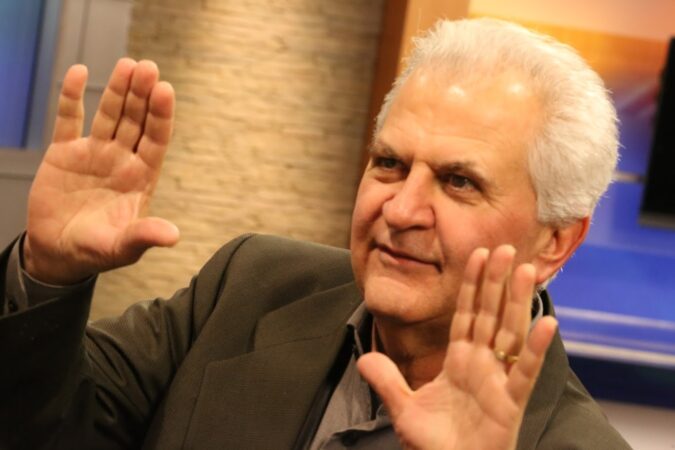
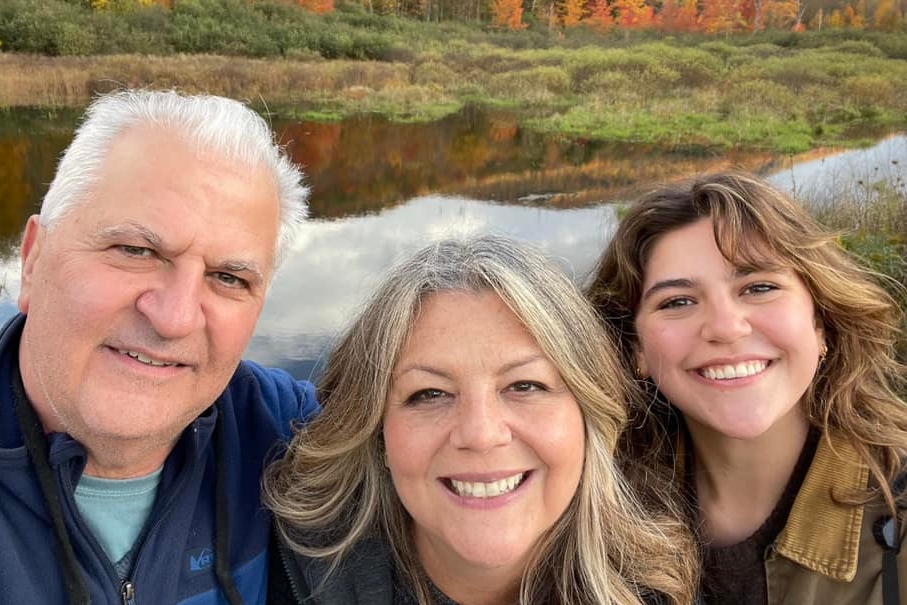
Chris Emmanouilides, 63, of Rutledge, Delaware County, digital media director, award-winning filmmaker, TV executive producer, cameraman, teacher, and mentor, died Saturday, April 26, of a heart attack at his home.
Born in Philadelphia and reared in Los Angeles, Mr. Emmanouilides followed his then-girlfriend back to the city in the 1980s, earned a master’s degree in radio, TV, and film at Temple University, and crafted a 36-year career as an independent filmmaker, vice president of programming for Banyan Productions, cofounder and chief content officer of the VuNeex video marketing platform, and director of digital media at the King of Prussia-based American College of Financial Services.
He specialized in independent documentary films, commercials, and early forms of reality TV, and cofounded Parallax Pictures in the 1990s. His films were screened at the Philadelphia Festival of World Cinema, the Sundance Film Festival, and elsewhere around the world.
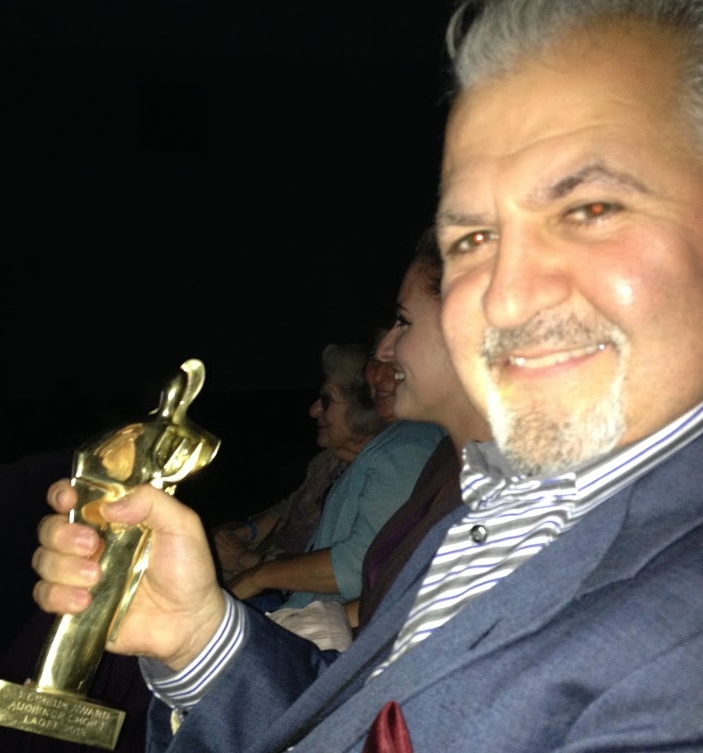
His 40-minute film Archive premiered at the Los Angeles Greek Film Festival in 2013 and earned the Audience Choice Orpheus Award. His 1989 film Suelto! earned first prize at the 1990 Sundance Slice of Life Film Festival.
In 1994, Inquirer movie critic Desmond Ryan called Mr. Emmanouilides’ film Remains “especially noteworthy.” In 1997, The Ad and the Egoearned the top prize at the San Francisco International Film Festival.
In 2001, critic Damon C. Williams reviewed TalkFast for the Daily News. Mr. Emmanouilides was the film’s director of photography. Williams said: “It does an incredible job in detailing the desire, dedication and heartbreak that go with pursuing a dream. It also shows that some do indeed find success in chasing their dreams.”
From 1997 to 2014, Mr. Emmanouilides was an executive producer, director of special projects, and vice president of programing at Philadelphia-based Banyan Productions. Working with the Discovery Channel, the Travel Channel, the Food Network, TLC, Lifetime, and other TV outlets, he and his colleagues created thousands of hours of popular award-winning programming. Among his series credits are Travelers, Reunion, Trading Spaces, Deliver Me, Cruises We Love, and A Wedding Story.
“What we pull off in four days — the emotions and the intimacy — is extremely rare on television,” he told The Inquirer in a 1998 story about the Reunion series. “It’s a constant push, trying to make a high-quality show on a limited budget, with limited time. And the question is, will it find an audience?”
He worked with Reader’s Digest and Hope Paige Designs on video marketing projects at VuNeex in 2015, and spent the last 10 years as a senior producer and director of digital media at the American College of Financial Services. “Chris was relentless in the pursuit of quality,” Jared Trexler, senior vice president at American College, said in an online tribute. “He was inquisitive, introspective, and always learning. Most importantly, he was kind, caring, and funny.”
Mr. Emmanouilides won the 2013 Audience Choice Orpheus Award in Los Angeles.
In tributes, colleagues called him “an amazing man and incredible coworker” and “very passionate about our field.” One said: “He always brought genuine fun and energy to whatever we were doing.”
Gregarious and energetic, Mr. Emmanouilides taught film and production courses at Temple, the University of Toledo, the Scribe Video Center, and the old University of the Arts. He lectured at Drexel and Villanova Universities, spoke at conferences and seminars, and taught English-language classes in Greece and Spain.
He was a longtime member and onetime board president of the Philadelphia Independent Film and Video Association, and he mentored production novices at Scribe Video in Center City and elsewhere. “These newcomers don’t respect the conventions of film that much,” he told The Inquirer in 1993. “They’re trying to find their own voice. So they’re finding new ways to tell stories.”
Christopher George Emmanouilides was born Aug. 31, 1961. His family moved from Philadelphia to Los Angeles when he was young, and he earned a bachelor’s degree in philosophy at Colorado College in 1983 and a master’s degree at Temple in 1992.
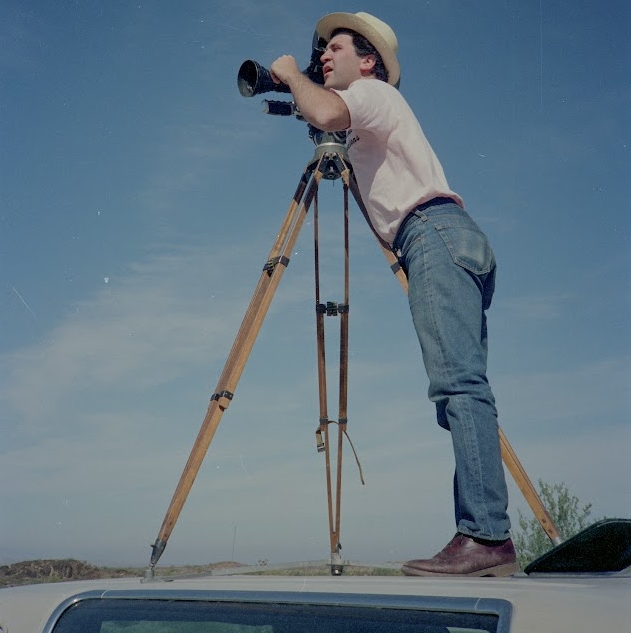
Mr. Emmanouilides was a talented cameraman and photographer.
He met Sandra Enck at an independent film event in Philadelphia, and they married in 2004 and had a daughter, Isabella. He doted on his family, and especially enjoyed seeing films with his wife and decorating his daughter’s breakfast pancakes with eyes, nose, and mouth cut from fresh fruit.
“We took their pictures, and we eventually had hundreds of faces from countless mornings together,” his daughter said on her website facethemorning.com. “None were the same, and each seemed to have something to say.”
His wife said: “We’d see a film and then talk about it for three days.”
Mr. Emmanouilides was an avid reader and photographer. He liked to fly-fish, ski, hike, and cook.
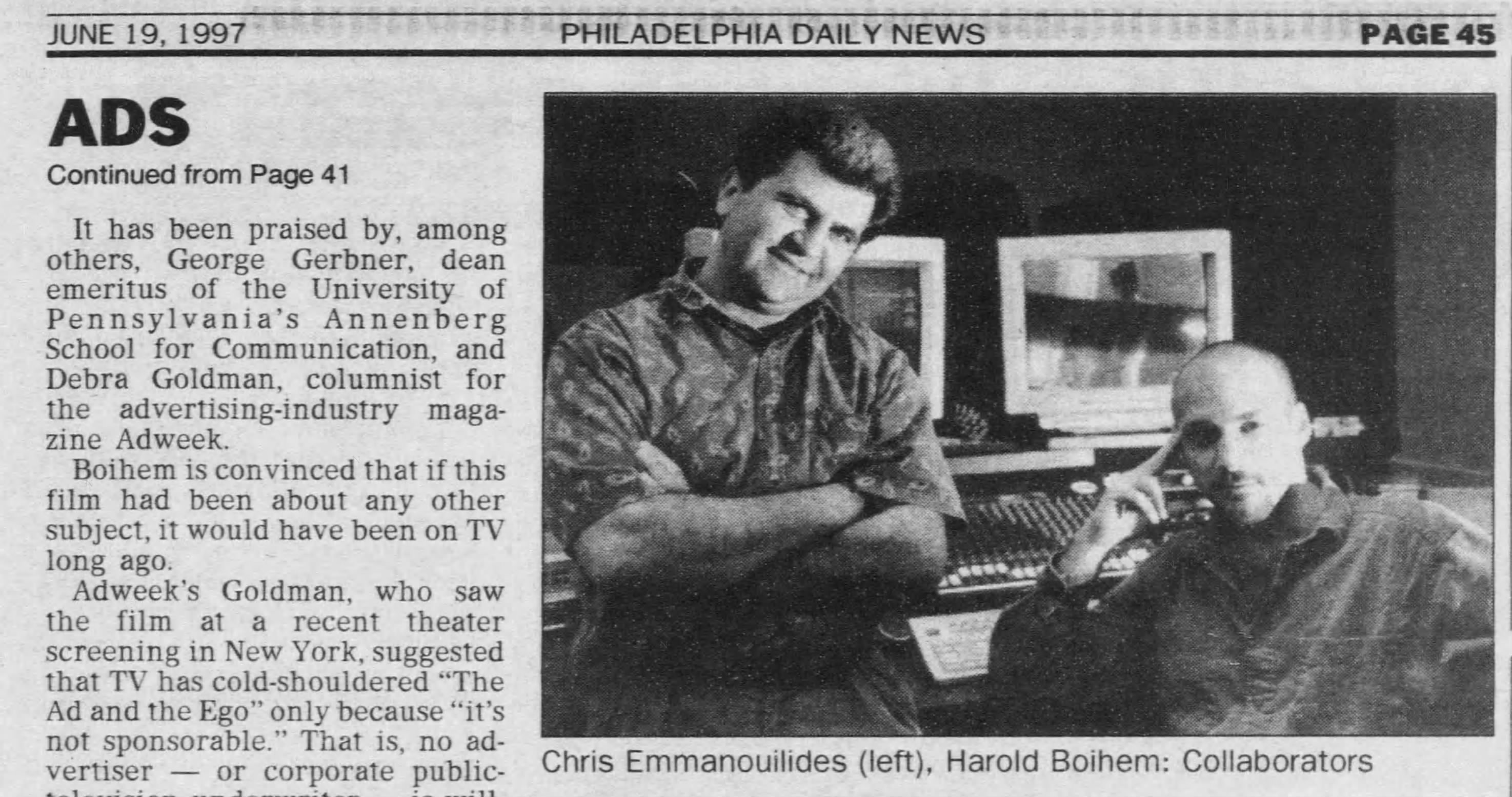
This article about Mr. Emmanouilides (left) appeared in the Daily News in 1997.
He had an infectious laugh, performed magic tricks, listened to the Grateful Dead, and followed the Eagles and Phillies. “He was a big thinker,” his wife said. “He was buoyant and a powerful life force. You never forgot that you met him.”
In addition to his wife and daughter, Mr. Emmanouilides is survived by three sisters, a brother, and other relatives.
Celebrations of his life were held earlier.
Donations in his name may be made to the Bryn Mawr Film Institute, 824 W. Lancaster Ave., Bryn Mawr, Pa. 19010.
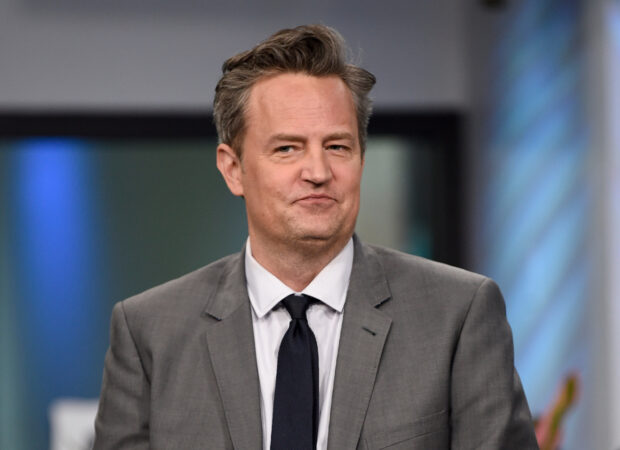
LOS ANGELES — A doctor who pleaded guilty to selling ketamine to Matthew Perry in the weeks before the Friends star’s overdose death was sentenced to 2 1/2 years in prison on Wednesday.
Judge Sherilyn Peace Garnett handed down the sentence plus two years of probation to 44-year-old Dr. Salvador Plasencia in a federal courtroom in Los Angeles.
The judge emphasized that Plasencia didn’t provide the ketamine that killed Perry, but told him, “You and others helped Mr. Perry on the road to such an ending by continuing to feed his ketamine addiction.”
“You exploited Mr. Perry’s addiction for your own profit,” she said.
Plasencia was led from the courtroom in handcuffs as his mother cried loudly in the audience. He might have arranged a date to surrender, but his lawyers said he was prepared to do it today.
Perry’s mother and two half sisters gave tearful victim impact statements before the sentencing.
“The world mourns my brother,” Madeleine Morrison said. “He was everyone’s favorite friend.”
“My brother’s death turned my world upside down,” Morrison said, crying. “It punched a crater in my life. His absence is everywhere.”
Plasencia was the first to be sentenced of the five defendants who have pleaded guilty in connection with Perry’s death at age 54 in 2023.
The doctor admitted to taking advantage of Perry, knowing he was a struggling addict. Plasencia texted another doctor that Perry was a “moron” who could be exploited for money, according to court filings.
Prosecutors had asked for three years in prison, while the defense sought just a day in prison plus probation.
Perry’s mother talked about the things he overcame in life and the strength he showed.
“I used to think he couldn’t die,” Suzanne Perry said as her husband, Dateline journalist Keith Morrison, stood at the podium with her.
“You called him a ‘moron,’” she said. “There is nothing moronic about that man. He was even a successful drug addict.”
She spoke eloquently and apologized for rambling before getting tearful at the end, saying, “this was a bad thing you did!” as she cried.
Plasencia also spoke before the sentencing, breaking into tears as he imagined the day he would have to tell his now 2-year-old son “about the time I didn’t protect another mother’s son. It hurts me so much. I can’t believe I’m here.”
He apologized directly to Perry’s family. “I should have protected him,” he said.
Perry had been taking the surgical anesthetic ketamine legally as a treatment for depression. But when his regular doctor wouldn’t provide it in the amounts he wanted, he turned to Plasencia, who admitted to illegally selling to Perry and knowing he was a struggling addict.
Plasencia’s lawyers tried to give a sympathetic portrait of him as a man who rose out of poverty to become a doctor beloved by his patients, some of whom provided testimonials about him for the court.
The attorneys called his selling to Perry “reckless” and “the biggest mistake of his life.”
Plasencia pleaded guilty in July to four counts of distribution of ketamine. Prosecutors agreed to drop five different counts. The agreement came with no sentencing guarantees, and legally Garnett can give him up to 40 years.
The other four defendants who reached deals to plead guilty will be sentenced at their own hearings in the coming months.
Perry died at age 54 in 2023 after struggling with addiction for years, dating back to his time on Friends, when he became one of the biggest stars of his generation as Chandler Bing. He starred alongside Jennifer Aniston, Courteney Cox, Lisa Kudrow, Matt LeBlanc and David Schwimmer for 10 seasons from 1994 to 2004 on NBC’s megahit.
The Philadelphia Art Museum steps closed temporarily on Wednesday for the filming of I Play Rocky.
The forthcoming Sylvester Stallone biopic has been filming in Philadelphia and New Jersey in recent weeks. Of course, no film about the making of Rocky could be complete without the legendary running shot up the museum stairs.
Star Anthony Ippolito, who plays Stallone, donned the signature black beanie and gray tracksuit as he bounced around, arms in midair, on the chilly fall afternoon.
The Rocky statue atop the steps — a duplicate of the one at the base from sculptor A. Thomas Schomberg — was moved to accommodate the filming.
(Yes, there are two Rocky statues on view. Yet another will be installed at Philadelphia International Airport, a fact that’s been hotly debated among Philadelphians who find the fixation on the fictional boxer tiring, particularly given Stallone’s support of President Donald Trump.)
Some tourists on Wednesday were disappointed that they couldn’t re-create the moment themselves on their trip to the city. But they did get to see behind-the-scenes of the film, which is expected to hit theaters in 2026, marking the film’s 50-year anniversary.
It follows the real-life journey of Stallone in the 1970s, then a struggling actor, as he pitched the script he wrote about a boxing underdog — but only on the condition that he play the star himself.
Peter Farrelly (Green Book) directs the Amazon MGM film, which also features Matt Dillon as the actor’s father, Frank Stallone; If Beale Street Could Talk’s Stephan James as Carl Weathers, the legend behind Apollo Creed; and AnnaSophia Robb (Little Fires Everywhere) playing Stallone’s first wife, Sasha Czack.
Those watching the Eagles’ winning matchup against the Detroit Lions on Sunday may have caught a glimpse of something absolutely “thrillifying.”
As the NBC Sunday Night Football broadcast headed to a commercial break, hosts pointed out a flyover view of Philadelphia’s iconic Boathouse Row. Only this time, the boathouses along the Schuylkill were lit up in pink and green.
Announcers said the special color treatment was brought to viewers by Wicked: For Good, the anticipated musical-to-film finale starring Cynthia Erivo and Ariana Grande (plus West Philly’s own Colman Domingo as the Cowardly Lion).
On social media, viewers were surprised and delighted by the marketing play.
“What do you mean ‘Wicked: For Good’ sponsored by Boathouse Row?” one X user wrote. “Boathouse Row being lit up in Wicked colors is HUGE for my brand,” said another.
It marks the latest effort in the film’s megamarketing campaign, which has ranged from Wicked dolls, to deodorant, to laundry detergent, to make up kits, to Swiffers, to cereal, and everything in between. Truly, no stone has been left un-greenified. And now that approach appears to extend to extremely hyperlocal stops, like Boathouse Row.
It also appears to be Boathouse Row’s first foray into paid movie promotions.
So how did this all pan out? And does it mean Wicked has paid the Fairmount Park Conservatory and Boathouse Row a boatload of sponsorship dollars?
Here’s what we know.
How do the Boathouse Row lights work?
The Boathouse Row lights debuted in 1979 and quickly became a beloved feature along the stretch of 19th-century historic homes. The strip is listed on the National Register of Historic Places.
In 2005, the homes transitioned to LED lights, according to the Fairmount Park Conservancy, which manages Boathouse Row. In 2023, the homes temporarily went dark as part of a $2 million refurbishing project. They were re-lit in March 2024.
According to the conservancy’s website, 6,400 individual LED lights are installed along 10 of the historic boathouses. The light configurations, which were installed by Philly-based firm The Lighting Practice can make 16 million color combinations.
Can anyone make a Boathouse Row light change request?
Surprisingly, yes.
After the homes’ lighting upgrades, Boathouse Row announced that seemingly anyone could become a “Boathouse Row Lighting Partner,” and make a special request in exchange for payment to the Fairmount Park Conservancy.
Of course, the conservancy gets first right of refusal, and there are some exceptions. According to its website, political events and observances, campaigns that conflict with City of Philadelphia laws, religious figures or organizations, and campaigns or events deemed “inappropriate” will not be considered.
You can also check on Boathouse Row’s website to see what color the lights are each day.
How much does a special lighting request cost?
It depends on the level of razzle-dazzle and its duration.
According to Boathouse Row’s website, prices range from $750 to $2,500 per day, depending on the display’s complexity. Fees go directly to the Boathouse Row’s ongoing maintenance. The limit for a display is one week.
How much did Wicked pay Boathouse Row to go green and pink?
It’s unclear exactly how much the Wicked display costs. The lighting scheme aired during Sunday’s broadcast. In reality, that B-roll was filmed in advance on Friday evening, a spokesperson with the Fairmount Park Conservancy said. It lasted about 20 minutes.
The conservancy declined to disclose the exact amount NBC paid. Wicked is a Universal film, which is under the NBC and Comcast umbrella. NBC also broadcasts Sunday Night Football.
Have other movies or marketing campaigns worked with Boathouse Row before?
It looks like this is the first movie campaign.
“We don’t think it’s ever been done before,” conservancy spokesperson Cari Feiler Bender said.
But there are no other mentions of entertainment-related tributes. (This week’s Wicked tribute did not make the row’s Instagram feed, which posts light color updates.)
Boathouse Row has traditionally lit up in color schemes to celebrate local teams or to observe special causes like breast cancer, Alzheimer’s awareness, and Pride months.
The spokesperson added that Boathouse Row would welcome future marketing partnerships to “help keep the lights on.”
Prime Video’s Allen Iv3rson follows the journey of 11-time NBA All-Star Allen Iverson from Newport News, Va., to his career in the NBA, covering his life both on and off the court.
The three-part docuseries gives a behind-the-scenes look at some of the most iconic moments from his Hall of Fame career — from the legendary “practice” press conference to his relationship with former Sixers coach Larry Brown.
But the project goes beyond the court, covering the life of Bubba Chuck and his roots in Stuart Gardens Apartments. The series, produced and directed by One9, is a story of sacrifice, perseverance, and staying true to oneself.
“I think the truth comes out in their memories and it’s very unfiltered,” One9 said. “No one’s ever sat with him to get the raw honest truth. And I felt that if he was able to give me what he left on the court, what he gave to the game. If he was able to give me that in this film — that same raw, relentless, authentic heart — then we’re going to have something epic.
“You can find moments in this film that will inspire you, give you reason to reflect on how things in his life may resonate with what’s happening in anyone’s life. A lot of it deals with sacrifice. It deals with discipline, resilience, just speaking your uncompromising truth, and being true to who you are.”
The series features appearances from his family, former players, former Sixers president Pat Croce, and Brown. Here’s what we learned from Allen Iv3rson, which premieres Tuesday night at the Philadelphia Film Festival and is set to release on Prime Video on Thursday …
Bubba Chuck from Newport News
Most of Iverson’s friends won’t call him by his government name. Instead, they call him by his nickname “Bubba Chuck,” which is a combination of his uncles’ names. Growing up in Newport News, his uncles Stephen and Gregory Iverson were important male role models.
“From the time he was walking, he was always with us, and 90% of the time we’re at the basketball court,” Greg said. “He used to sit there and cry and want to get in the game. He was so small. I called him a crybaby because he would always cry all the time because he wanted to play, he wanted to come with us.”
Iverson added: “I wanted to be like my uncles because they were my heroes. I saw excellence in both of them. They were the rocks of our family.”
A good portion of the series covers Iverson’s relationship with his family as he grew up in the area’s low-income housing. The docuseries shows how Iverson went from hustling on the streets as a young kid to support his family to becoming a neighborhood icon with a street named after him.
“My heart is always going to be here,” Iverson said. “This is who I am. This is what made me who I am, you know what I mean? When I look at this, I think of the people from here. My life in these streets prepared me for the rest of the world. To me, this was my only world right here. Wherever I‘m at in life, I carry y’all with me. I come from the trenches. I come from where you can’t survive being weak.”
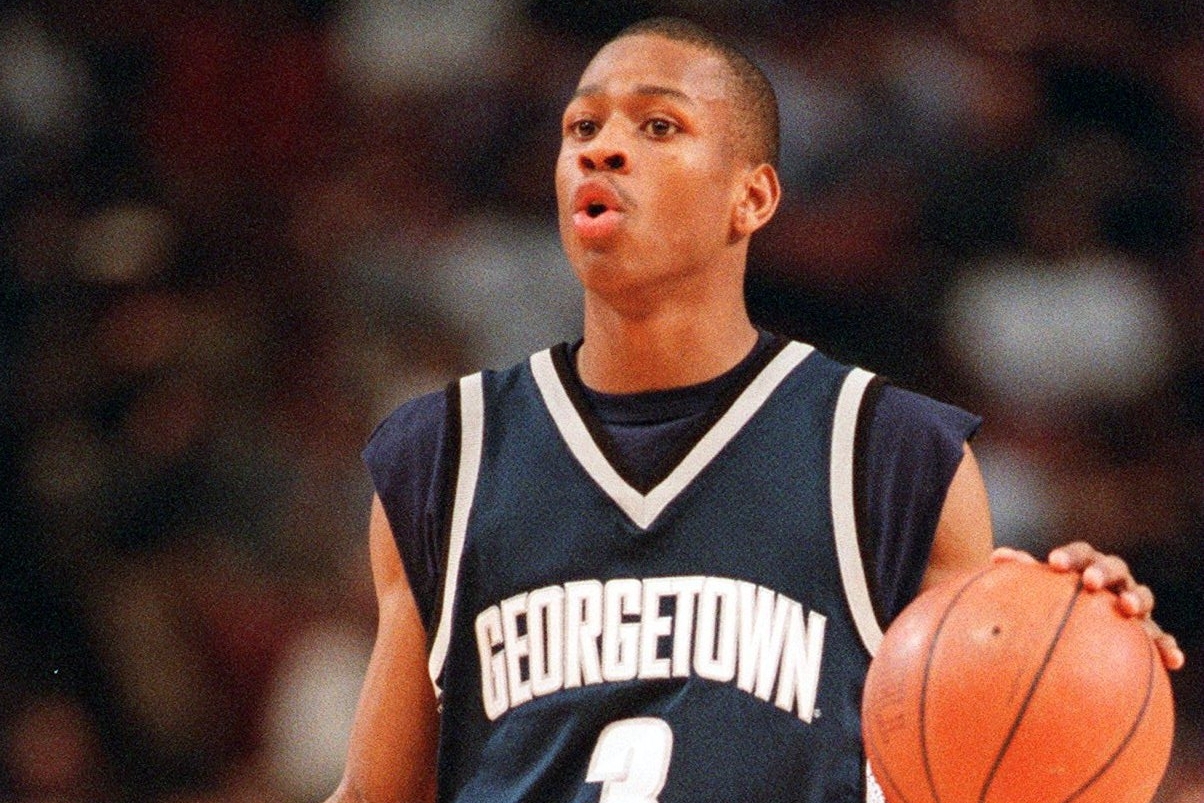
Allen Iverson plays against Villanova at The Spectrum as a freshman in January of 1995.
From City Farm to Georgetown
Iverson found success in football and basketball when he was younger, leading Bethel High School to state titles in both sports within the same year. He was highly sought by different colleges until an incident at a bowling alley changed his trajectory.
On Valentine’s Day in 1993, a 17-year-old Iverson went to a local bowling alley where things escalated quickly. A brawl eventually broke out, which allegedly stemmed from racial epithets said by white men in the alley.
“An argument started, all hell broke loose,” Iverson said. “First, when it was going on, I was watching. And then I saw somebody get beat real bad. And that’s when it clicked in my head like, ‘Yo, it’s time to go.’”
Iverson was arrested and sentenced to 15 years in prison for his role in the incident — which resulted in no serious injuries. The case led to heightened racial tensions in Virginia.
“It was crazy because Virginia was divided because of me,” Iverson said. “It was tough seeing it on the news every day, the chaos of it all. I had this one [guard], man, this dude used to [expletive] with me so bad all the time. He just would not stop. Tawanna would come up to me … We would be holding hands and he would separate our hands, push us back.
“And then they used to have the scarecrow outside the jail with my jersey on, hanging from a noose. The mail that came in for me every day was hate mail. And then I had death threats every single day.”
Iverson’s sentencing received plenty of national attention. His mother, Ann, held a number of marches and boycotts to help get her son out of jail. Eventually, the 18-year-old was granted clemency by Gov. Douglas Wilder and was released after four months in prison.
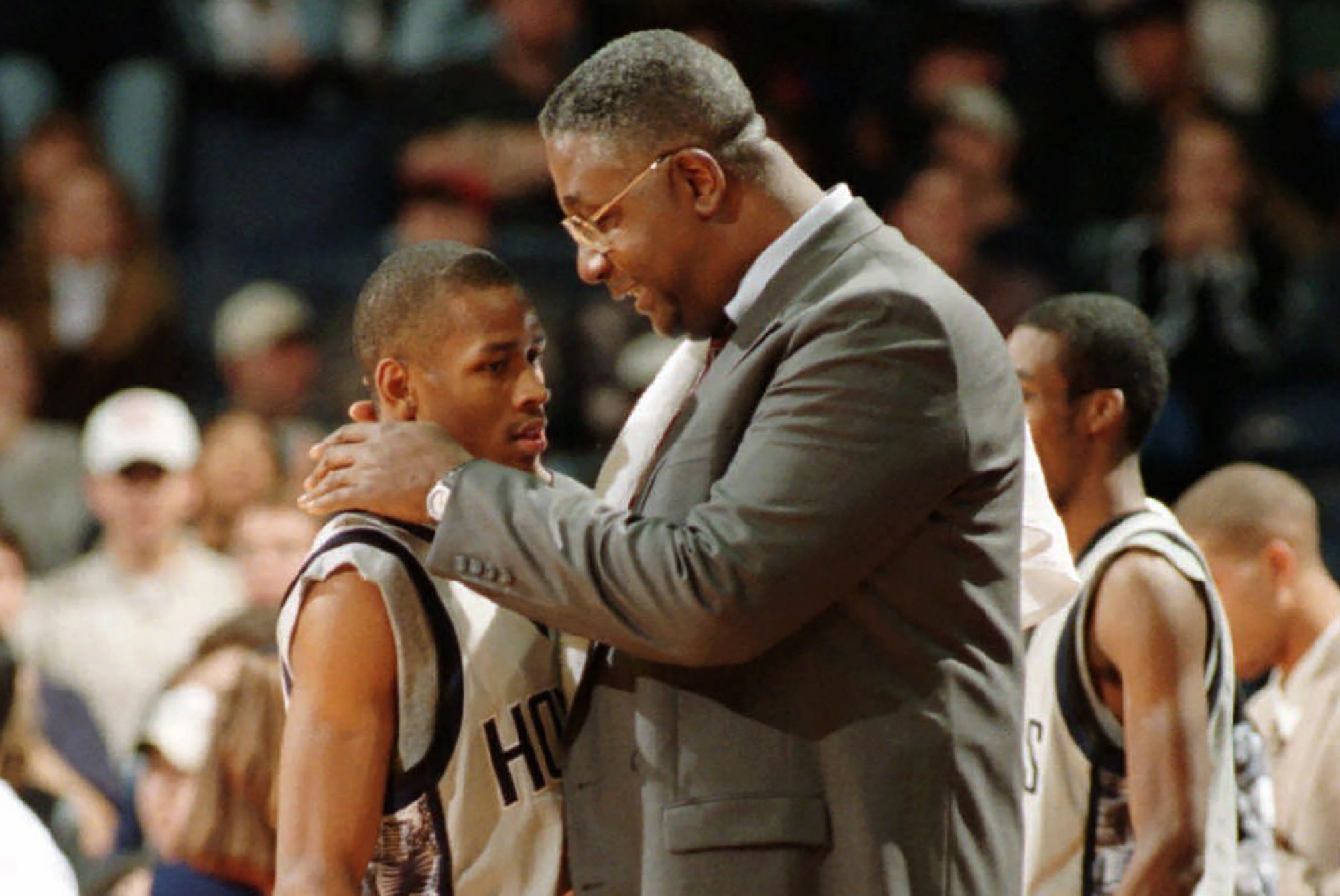
Georgetown’s head coach John Thompson talks to Allen Iverson during a game against St. John’s on Jan. 24, 1996.
But Ann’s job wasn’t done.
Before Iverson was released she went to Georgetown coach John Thompson to beg him to bring her son to the Hoyas.
”I went to John Thompson,” Ann said. “He said, ‘Well, I’m not going to take Allen because I’m not recruiting Allen.’ And I just broke down. I broke down. I said, ‘If you don’t take him, somebody is going to hurt him because he lives in an environment that is not good. I’m scared.’ I asked him to put my son under his wing. He hugged me and he said, ‘I got you, baby girl, I got you.’ He said, ‘Because you’re the only Black momma that ever came up in here and said what they said about their son. And I got him. If he gets out of jail, I’ll take him.’”
Iverson had it rough from fans in other arenas during his first year at Georgetown, including during a game at the Spectrum in Philadelphia.
“Every time I went to shoot a free throw they’re screaming, ‘Jailbird! Jailbird!’” Iverson recalled. “I remember when we went to Villanova there were four guys with orange jumpsuits on and they had chains on. Coach [Thompson] took us off the floor and said we’re not going to play if they don’t get them out of there.
“[Thompson] protected me. I didn’t talk to the media. He didn’t let people attack me like they wanted to. He taught me everything. He would call me throughout my career and we never would talk about basketball. We always talked about life.”
In his first season at Georgetown, Iverson won Big East Rookie of the Year, and was named to the All Rookie Tournament First Team. His second year, he led the team to a Big East championship and into the Elite Eight of the NCAA Tournament. After that season, he declared for the NBA draft.
“When I made the decision to leave Georgetown, it was a lot of hoopla because no player ever left Georgetown early,” Iverson said. “I knew after the season that I could be in the top five. When I found out that Philly was getting the first pick, I knew I had a real chance, a good chance at being the No. 1 pick. I just wanted to be an NBA basketball player. That’s the only thing that mattered to me. I was going to play every game like it was my last.”
Iverson was drafted with the first overall pick in 1996, a stacked draft that included Ray Allen, Kobe Bryant, and Steve Nash. Despite a 22-60 record, he found quick success, earning Rookie of the Year and making highlight reel plays — including crossing over Michael Jordan.
After his rookie year, Larry Brown was hired as the Sixers coach; he didn’t completely see eye-to-eye with Iverson.
“We butted heads,” Iverson said. “I was immature, somewhat high-strung, didn’t see the big picture. … I had him all wrong. He had the blueprint already.
“He was able to make everyone else better by making me better. He just was a masterful coach. Billy King, and Pat [Croce], they put them guys around me that were willing to let me dominate. It was basically, you kill like you kill. And your deficiencies, the things you can’t do, we’re going to do all of those things.”
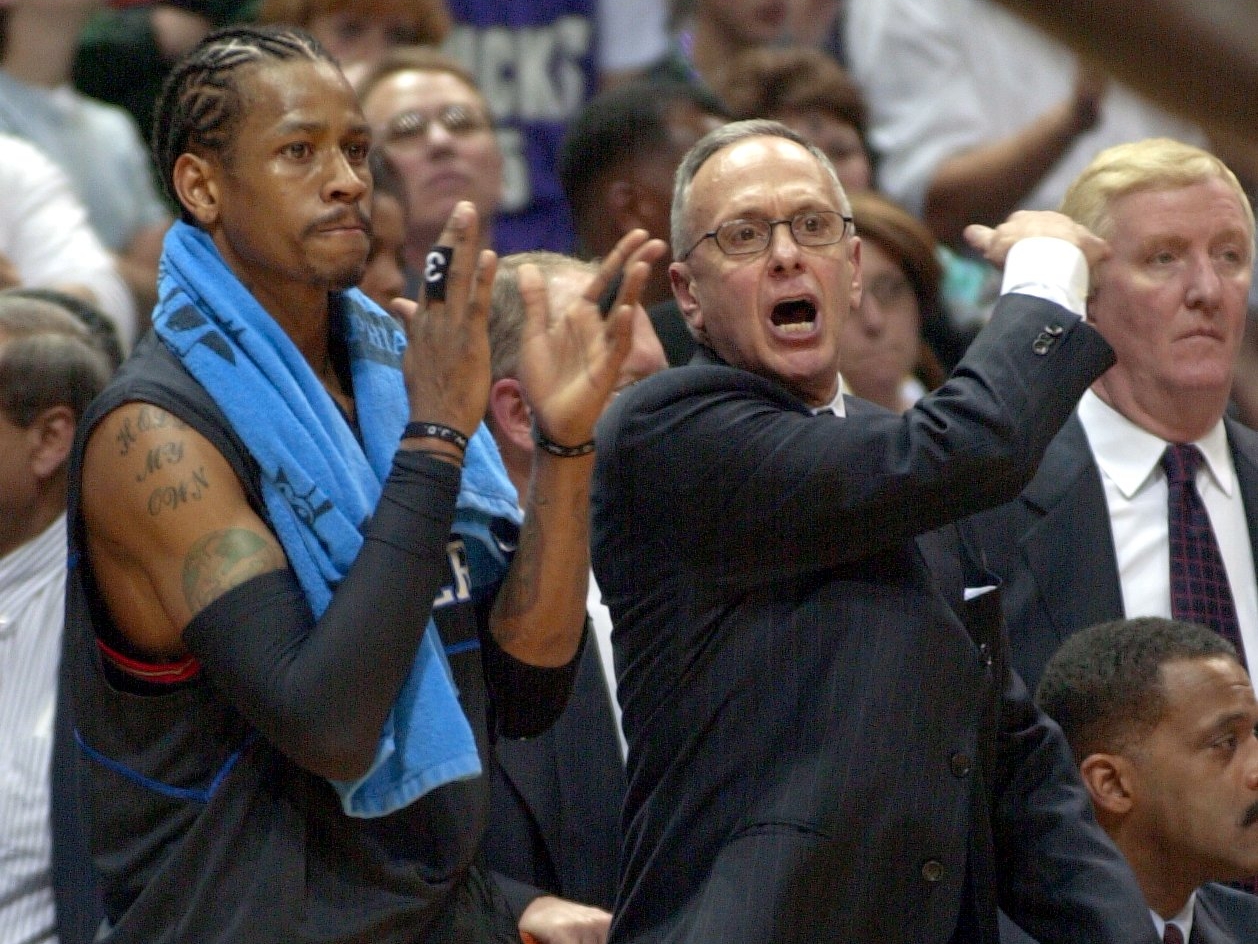
Sixers guard Allen Iverson and head coach Larry Brown during the team’s 110-100 loss to the Milwaukee Bucks in Game 6 of the 2001 Eastern Conference Finals. The Sixers would win Game 7 to advance to the NBA Finals.
At first, Brown and Iverson had a complicated relationship. It boiled over when Iverson didn’t show up to practice in 2002, leading to the legendary “practice” press conference.
“[Iverson] called me that night, late at night,” said Croce. “[He said], ‘I want Larry Brown fired.’ Larry Brown calls me, ‘You trade [Iverson] tomorrow. … Get rid of him.’ I said, ‘We’ll meet tomorrow. We’ll meet at the training facility.’ We went into this board room and it was ugly.
“Larry didn’t want to be called to the same level as his player. I didn’t care. ‘You’re not getting traded. And you’re not getting fired. I’ve never told either one of you what to do but I’m telling you right now. You’re both staying.’ … I said, ‘Both of you have the same love of basketball. Both of you have the intention and desire to win.’ I said, ‘You’re both looking in the mirror. Drop it.’ Allen got up, walked around the table, Larry stood up and he hugged and hugged for, it seemed like an eternity.”
Iverson led the Sixers to an appearance in the 2001 NBA Finals before falling to a Los Angeles Lakers team led by Shaquille O’Neal and Kobe Bryant.
“As a player, he’s one of the greatest players to ever play the game,” O’Neal said. “When it comes to a championship, you have to be on a great team. No disrespect to the Philadelphia 76ers team, Allen Iverson was by himself. So, when it comes to status and recognition, there’s a lot of champions that we don’t even know who they are. But I guarantee you, you know who Allen Iverson is.”
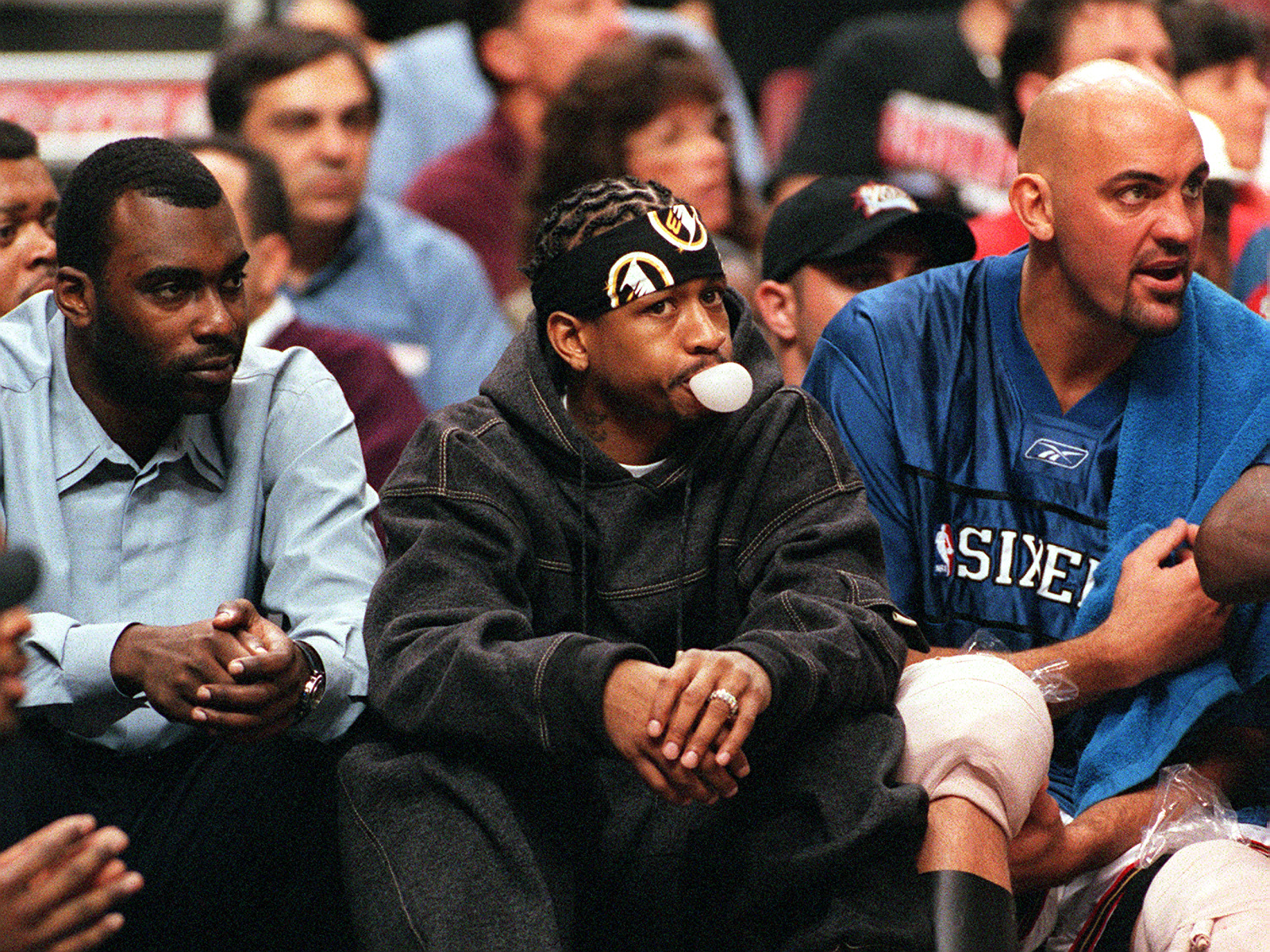
Allen Iverson sits with Aaron McKie and Matt Geiger in the 4th period.dnphoto/Reynolds
Culture changer
When Iverson was a kid, he didn’t have the best clothes in the neighborhood. Instead, he would wear his sister’s pants for three days of the week, and when he went to prom with Tawanna, who became his wife and the mother of his children, he wore a pair of shoes that were two and a half sizes too small.
“I think he had on sweat socks actually, with his too-small shoes,” Tawanna said. “He complained about it. He didn’t dance at all at prom. After prom, it was like at a sports facility, and he couldn’t wait to get out of his dress shoes and play basketball.”
A few years later, Iverson would never have to worry about wearing shoes two sizes too small again. The young player signed a lifetime contract with Reebok in 1996. Iverson’s impact on the league was transcendent. As a small guard, he revolutionized the way players dressed and carried themselves, inspiring an entire generation to want to be like him.
“I didn’t know I was doing it,” Iverson said. “I did it. But I didn’t know I was doing it. I didn’t know I was securing a way for these guys today to be themselves. I didn’t know I was doing it because I was stuck on, ‘I ain’t doing nothing wrong. I’m being myself.’
“This many years later, taking an a— whooping for it is a blessing. Because now you see you can do your [stuff]. But, Chuck took that a— whooping for it. I just thought it was unfair. And the best part about my God, I just knew I was going to get through it all without folding.”