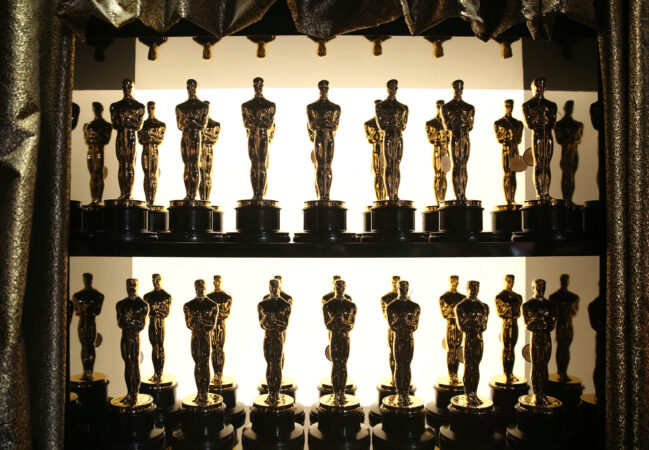
Sinners, Ryan Coogler’s vampiric period film starring Michael B. Jordan, made Academy Award history on Thursday when it was nominated for 16 Oscars, more than any other film in the history of the award ceremony’s 98-year run.
It toppled the 14 nominations previously received by All About Eve (1950), Titanic (1997), and La La Land (2016). In addition to Michael B. Jordan’s best actor nomination and Coogler’s best director nod, Sinners Oscar-winning costume designer, Ruth E. Carter, was also nominated for for her work on the film. It’s her fifth overall Oscar nomination.
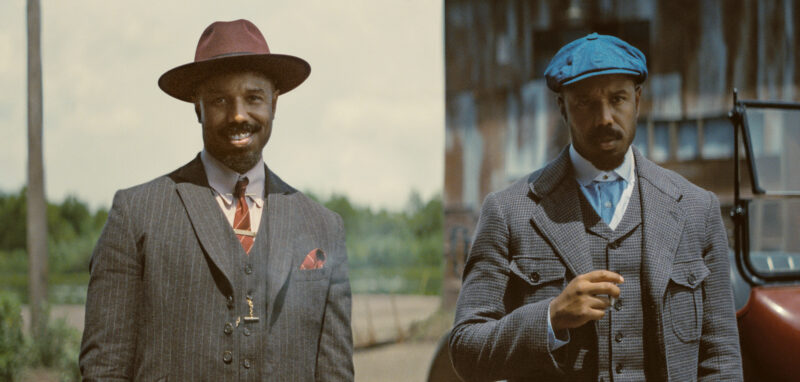
That includes Smoke and Stack’s (twins played by Jordan) memorable 1930s-era three-piece suits, with complementary fedora and newsboy cap, timepieces, and tiepins.
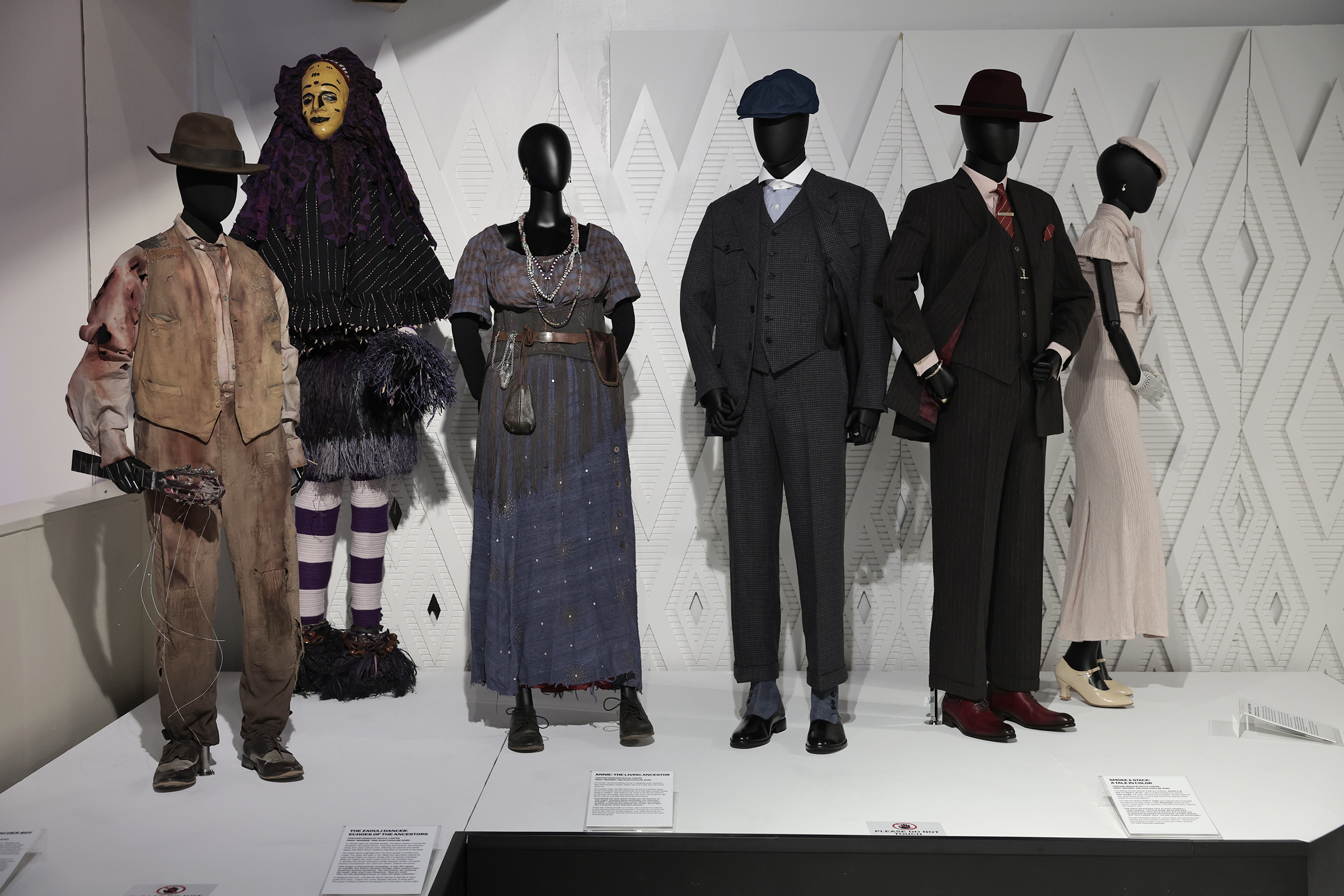
Ruth E. Carter’s Oscar-nominated costumes from “Sinners” starring Michael B. Jordan as twins Smoke and Stack.
Coogler’s only direction to Carter was to dress Smoke in blue and Stack in red, she told The Inquirer in November.
Carter, not one to fret long, dove into her arsenal of research. By the time she began the fittings, she’d amassed an array of blue and red looks befitting of the 1930s sharecroppers-turned-bootleggers and juke joint owners.
“[And] when I put that red fedora on him, Ryan flipped out and said, ‘That’s it!’,” Carter said. “We wanted people to resonate with their clothing and it did.”
The Smoke and Stack effect went beyond Sinners. This Halloween there were tons of social media posts of revelers dressed as the mysterious twins.
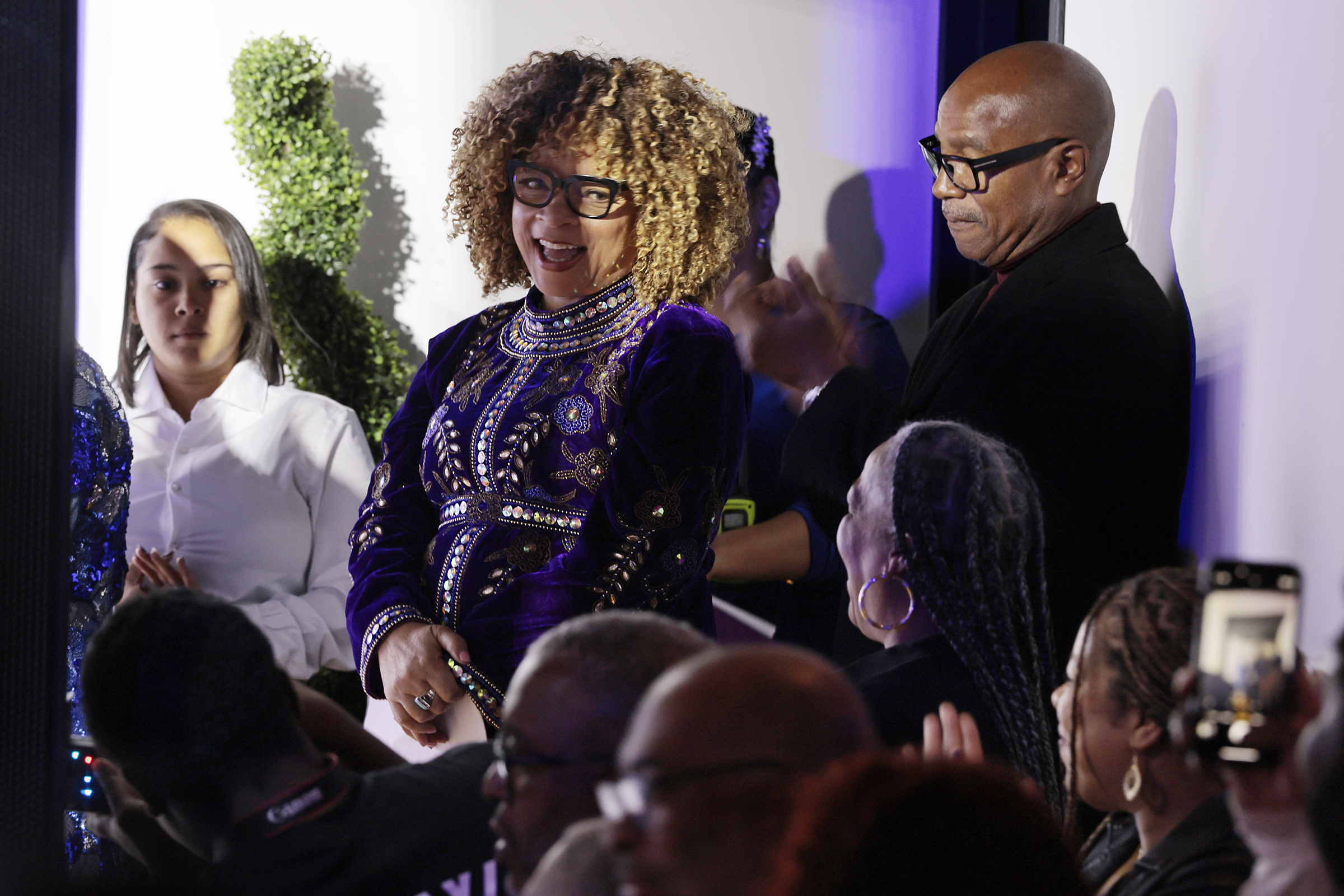
Ruth E. Carter during the “Ruth E. Carter: Afrofuturism in Costume Design” opening gala at the African American Museum in Philadelphia on Saturday, Nov. 1, 2025.
Also a part of AAMP’s Sinners display is the flowy earthy dress that best supporting actress nominee Wunmi Mosaku wore in her role as Annie. Annie is Smoke’s lover and a root woman who discovers the vampires in their Clarksdale, Miss., town.
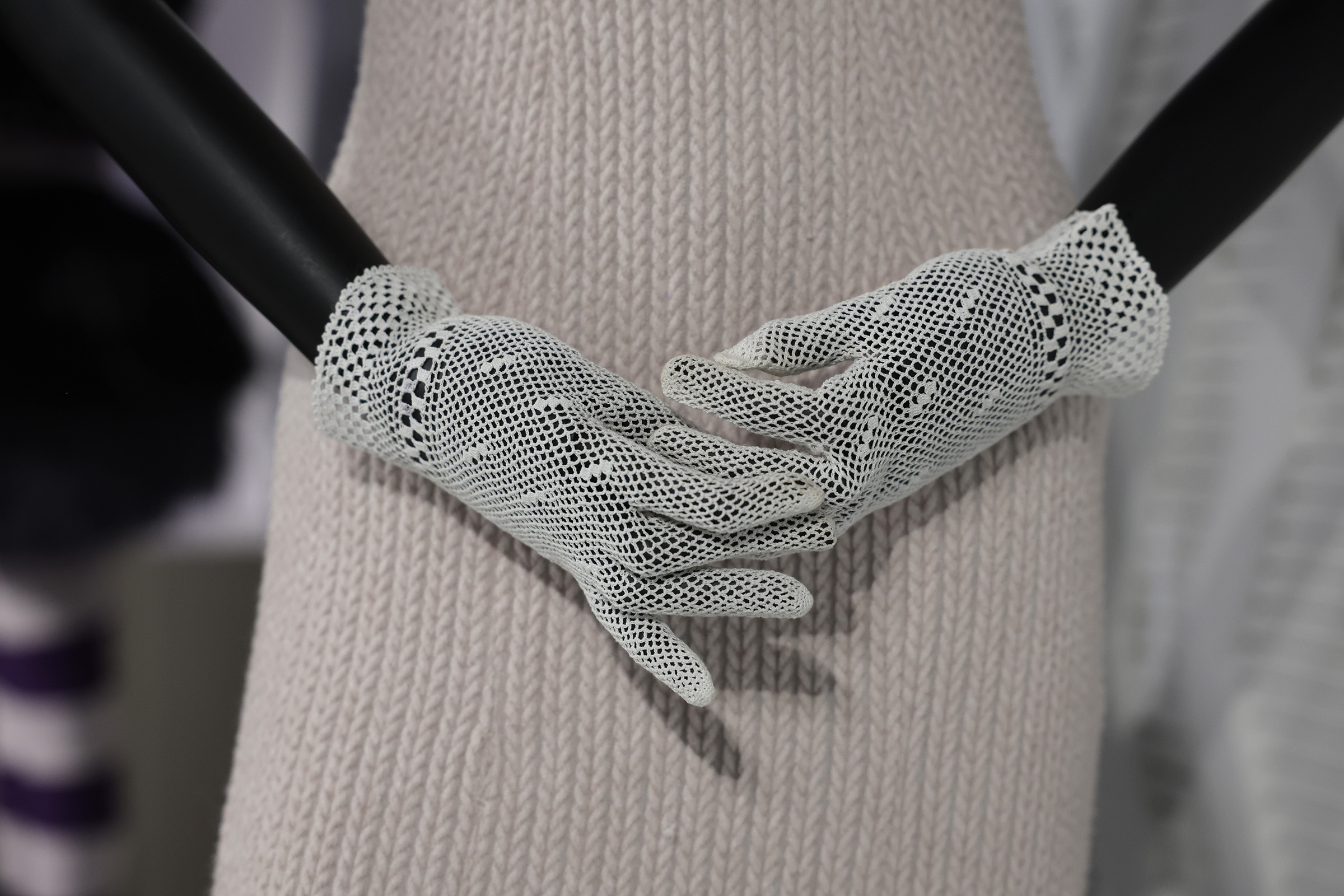
Cornbread’s (Oscar Miller) tattered sharecropper outfit is on the dais along with Mary’s (Hailee Steinfeld) blush knit dress with its short-sleeved bodice and pussy bow accent. Her matching knit beret and pearls are also on display. In the film, Mary is Stack’s childhood friend, turned girlfriend, turned vampire.
“I immerse myself in the mind, body, and soul of my characters,” said Carter. “Then I see them in my mind, how they move and with research, I come up with a look that I feel is unique to them.”
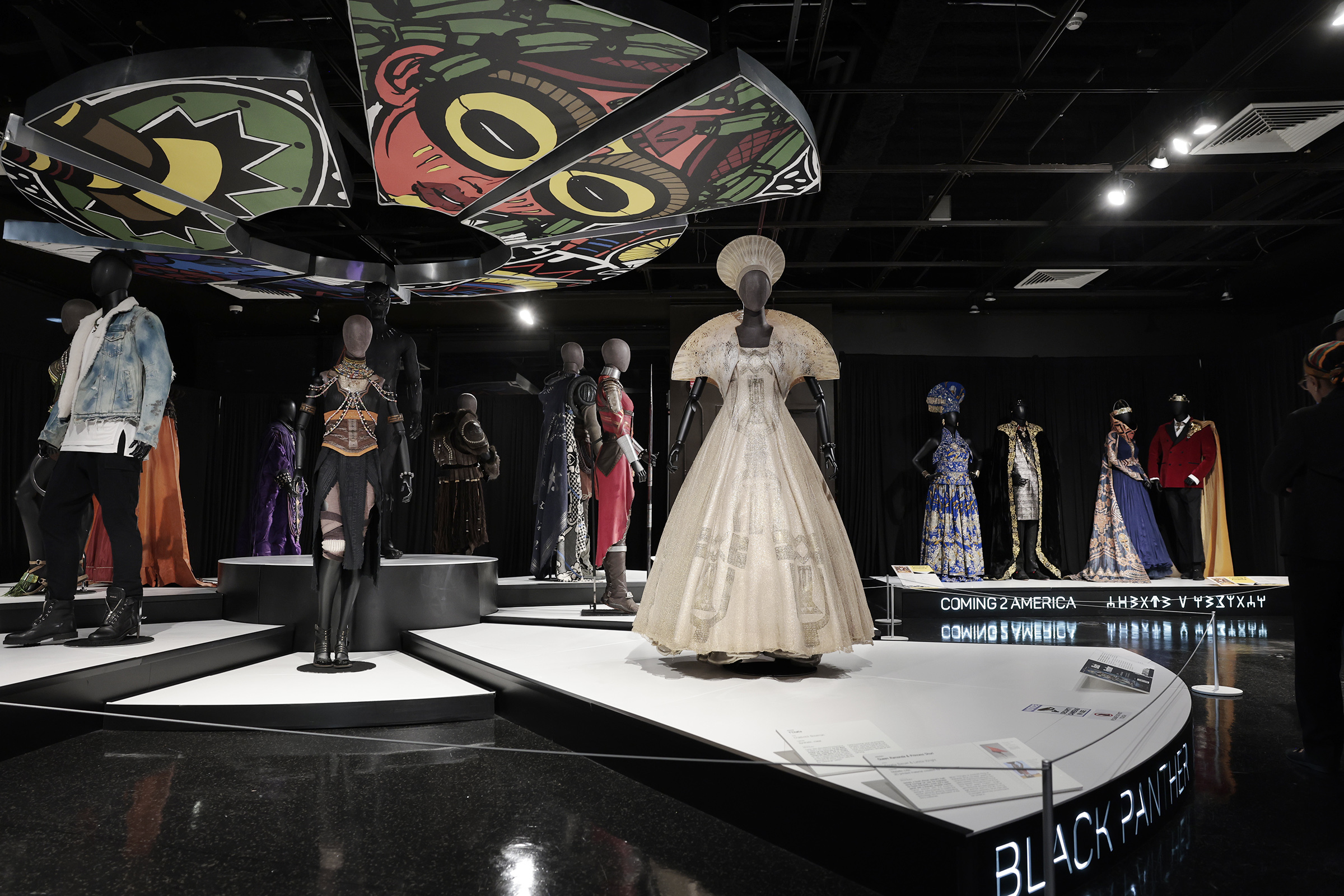
The Sinners pieces are among the more than 80 looks featured in the “Afrofuturism” exhibit, joining outfits from The Butler (Lee Daniels), and from Malcolm X, Coming 2 America, Black Panther, and its sequel, Black Panther: Wakanda Forever.
The show, headlining the African American Museum’s celebration of the nation’s Semiquincentennial, will be on display through September.
Lace gloves and knit dress detail of Mary (Hailee Steinfeld) costume from sinners.
During her five decades in the movie business, Carter has worked on more than 60 big-screen documentations of where Black Americans have been, who they are at the given moment, and who they dream of becoming.
Her work has shaped how the world sees African Americans.
In the 2010s, a friend of hers suggested she plan a museum exhibit around her costumes. After Black Panther, she partnered with Marvel, and in 2019, “Afrofuturism in Costume Design” debuted at the Savannah College of Art and Design’s Atlanta Campus.
The “Ruth E. Carter: Afrofuturism in Costume Design” exhibit at the African American Museum in Philadelphia on Saturday, Nov. 1, 2025.
Philadelphia is the exhibit’s ninth — and longest — stop. It’s also the first stop for the Sinners costumes.
“I am a griot,” Carter said. “[Throughout my career,] I’ve developed a knowledge base that embraces our culture and speaks to all of us in a positive way.”
“Ruth E. Carter: Afrofuturism in Costume Design” will be on view through Sept. 6. at the African American Museum in Philadelphia, 701 Arch St., Thursday through Sunday, 10 a.m. to 5 p.m. Tickets are $20 for adults, $10 for children.
The city’s crime, corruption, and urban blight impressed themselves on the young artist’s mind and lent to his uncanny vision combining the sinister and the absurd. The Twin Peaks creator, however, only spent a short time living in the city.
By 1970, he had decamped to Los Angeles to study at the American Film Institute and work on his first feature, the cult classic Eraserhead.
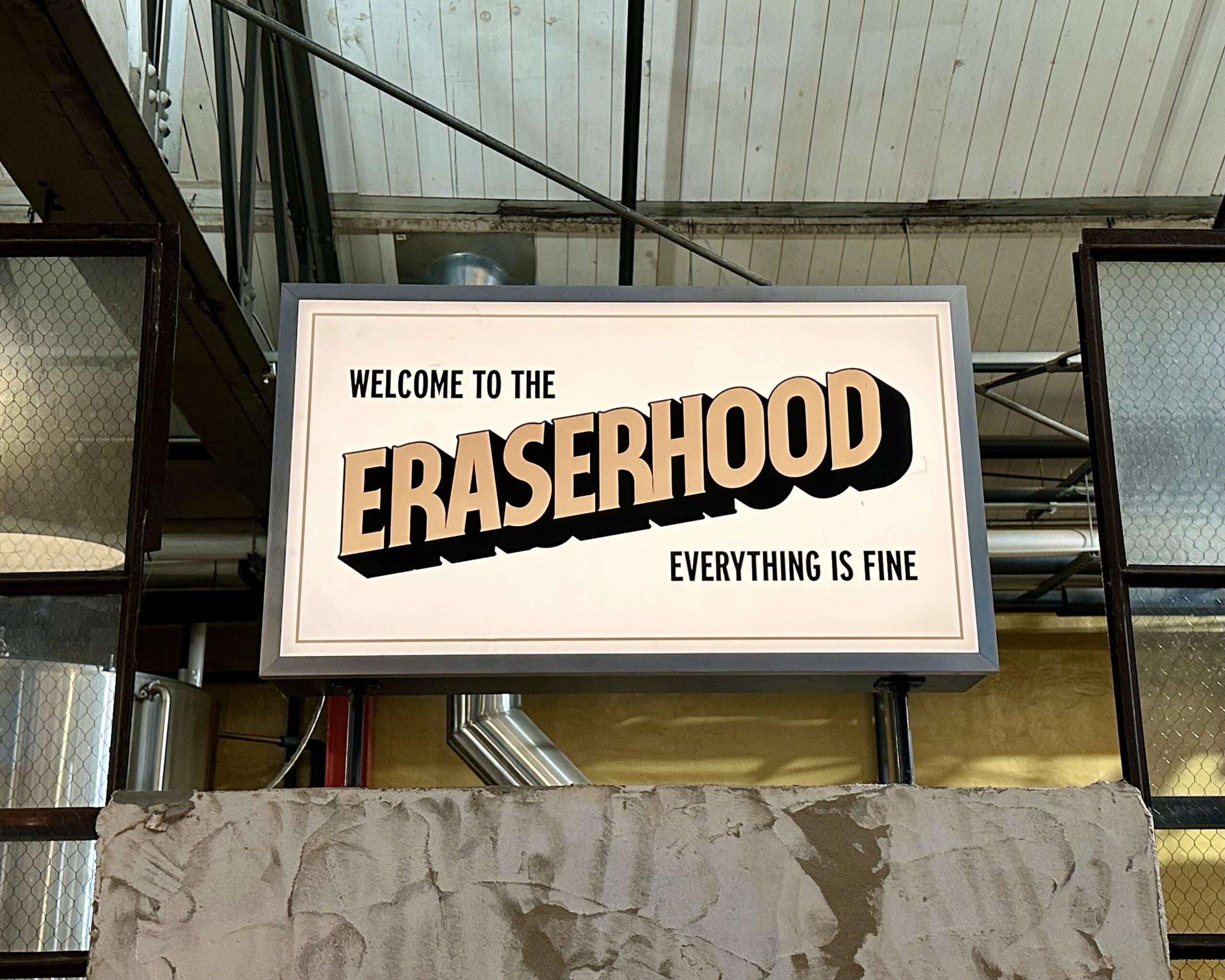
A sign at Callowhill’s Love City Brewery nods to David Lynch’s film “Eraserhead.”
In the year since his passing, retrospectives of his films have dominated programming at Philadelphia rep cinemas and art houses, Callowhill (where Lynch used to live and work) got a makeover as “Eraserhood,” and the neighborhood’s Love City Brewing’s hazy “Eraserhood IPA” grew in popularity.
Now, a new podcast is digging deeper into Lynch’s influence on Philadelphia, exploring the extent to which the city impressed itself upon his life and work — from PAFA to Hollywood to the soapy subterfuges of the Twin Peaks universe.
Launched Jan. 15 (the first anniversary of the filmmaker’s passing), Song of Lynchadelphia explores, in the words of host Julien Suaudeau, “the encounter of the 1950s American innocence with a place where the dream had already, and very concretely, turned into a nightmare.”
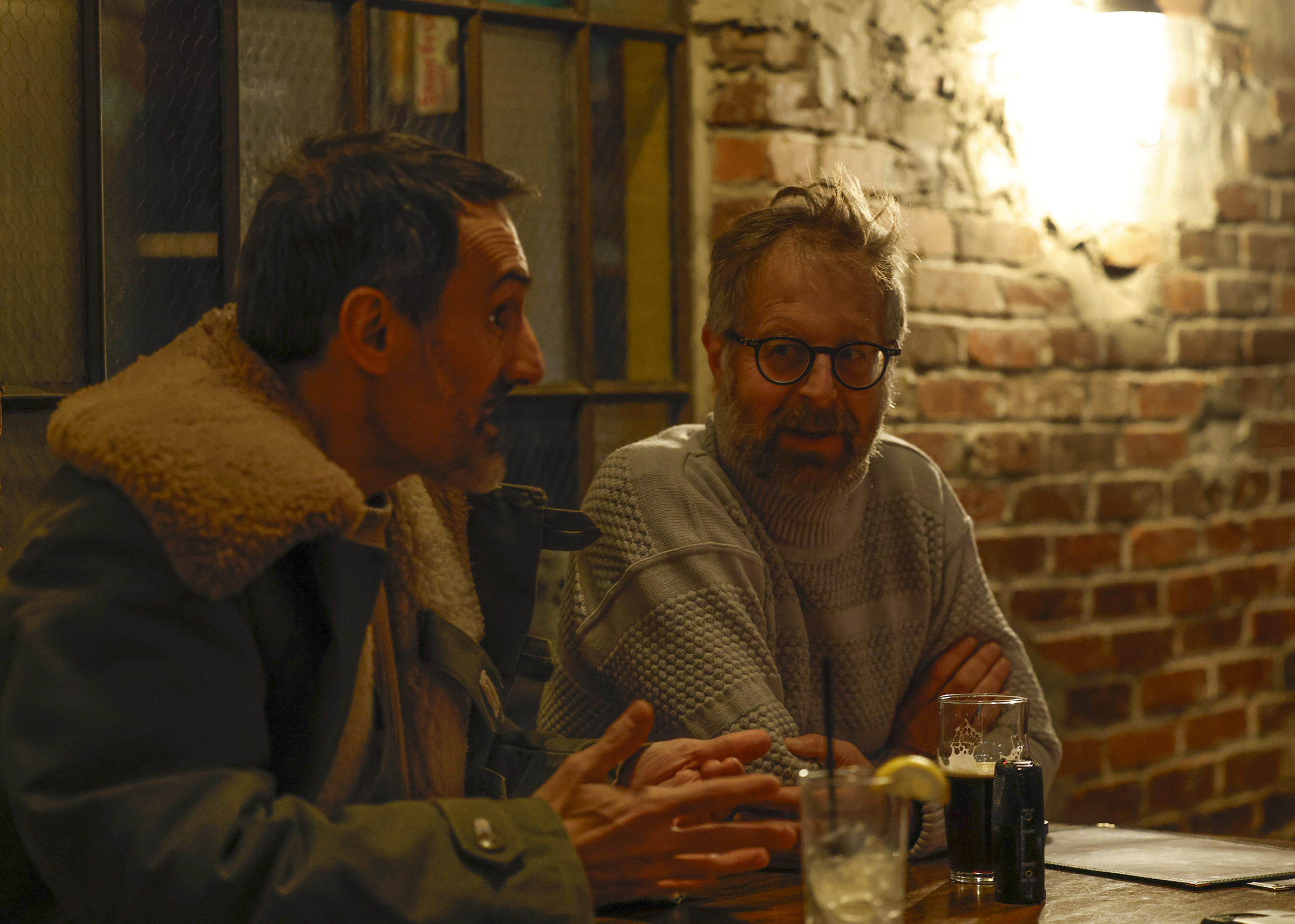
Hidden City supervising producer Nathaniel Popkin (right) and Julien Suaudeau discuss their podcast investigating how David Lynch invented a “cinematic language of fear and strangeness in Philadelphia” on Monday, December 15, 2025.
For Suaudeau, a writer and scholar who teaches film at Bryn Mawr College, Philadelphia served as a creative catalyst for Lynch. Many great cities inspire, whether in their beauty, their scale, or deep history. Philadelphia, which Lynch called “one of the sickest, most corrupt, decadent, fear-ridden cities that exists.” The filmmaker was enamored with its crime and filth in the mid-1960s.
“He was traumatized by Philly,” Suaudeau said, over drinks at Love City Brewing. “And he turned that trauma into art, something both beautiful and strange.”
A Parisian native who moved to the region to teach, Suaudeau felt drawn to Philadelphia, and to Lynch, early in life. As an adolescent living in France, he responded to the anxious, hysterical, at-times deeply disturbing depiction of teenage life offered by Twin Peaks.
At the same time, he fell in love with the ‘70s Philly Soul sound, and admired (then) 76er Charles Barkley. (Suaudeau played power forward in high school and, like Barkley, was also considered undersized.)
“I didn’t know about Lynch’s foundational years in Philly,” he said, “but that convergence feels so meaningful to me today.”
Song of Lynchadelphia grows out of Song of Philadelphia, a podcast produced by the local public history project Hidden City, which curates the “Eraserhood Tours” in Callowhill.
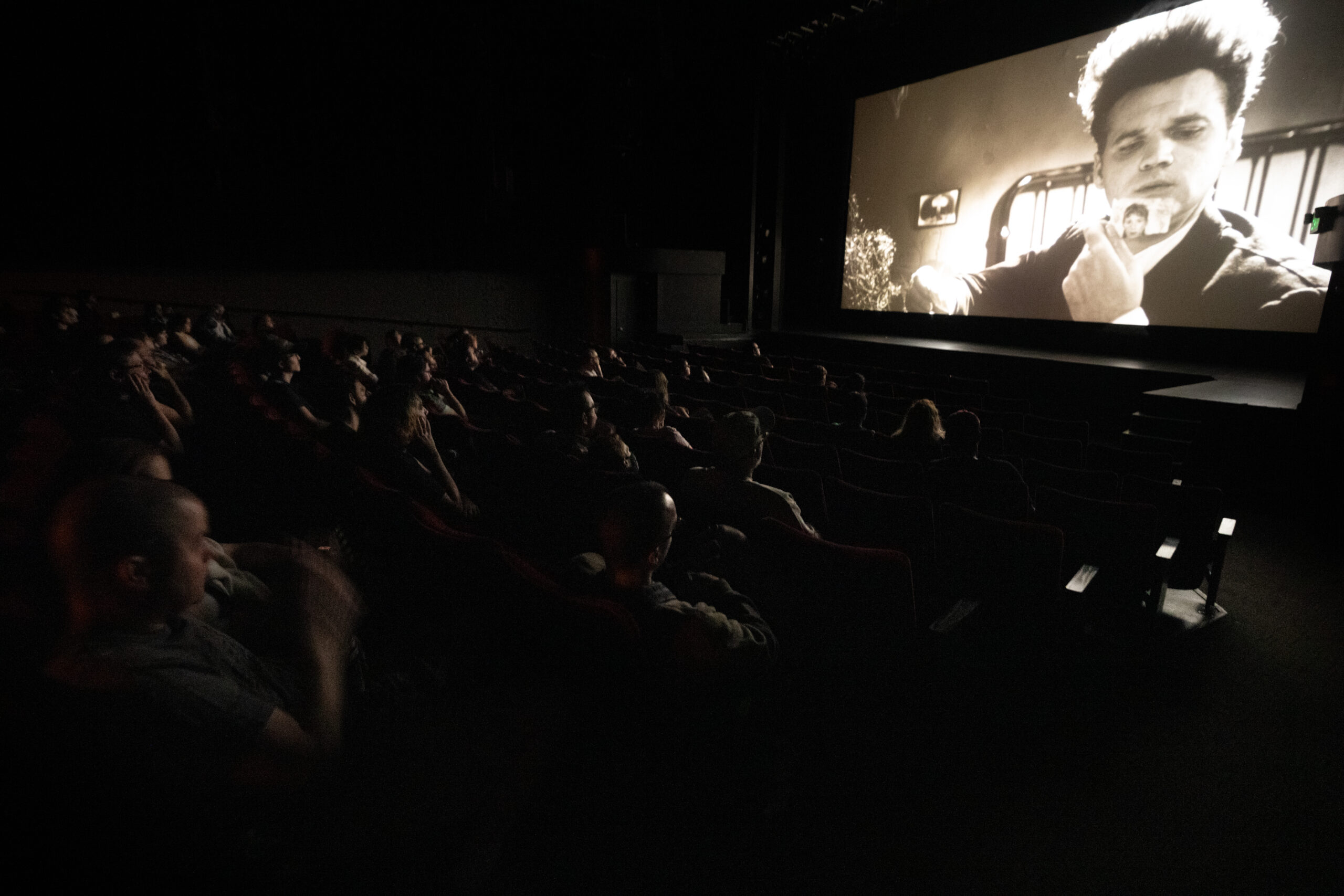
Audience members watch “Eraserhead” by David Lynch at the Film Society Center, in Philadelphia, Oct. 5, 2025.
The new series explores the city’s secret stories through a distinctly warped Lynchian lens.
The first episode looks into Lynch’s rather despairing comments on the Philadelphia of his artistic adolescence, a place of “insanity” possessed by a “beautiful mood.” Through interviews with local fans, historians, and Lynch’s collaborators (including production designer Jack Fisk, one of Lynch’s longtime collaborators and a PAFA classmate), archival clips, and distinctly Lynchian soundscapes, Suaudeau guides the listener through Lynch’s relationship with the city.
“We’re always interested in origins, especially among creative people,” said author and Hidden City cofounder Nathaniel Popkin, who serves as Song of Lynchadelphia’s supervising producer. “There is a darkness that is particularly important [in Philadelphia]. It was a place imagined to have brought light in the 18th century. And it got dark, real fast.”
A historian interviewed in the series’ first episode cites deindustrialization, white flight, racism, rioting, and rising crime as sources of that creeping darkness.
This curdling of the so-called American dream, so key to Lynch’s filmography, also defines Philadelphia in the period of the director’s artistic awakening. Popkin notes Lynch was living in Philly around the same time as Ira Einhorn, the rabble-rousing environmental activist who was arrested after his former girlfriend’s remains were found decomposing in a suitcase in his closet.
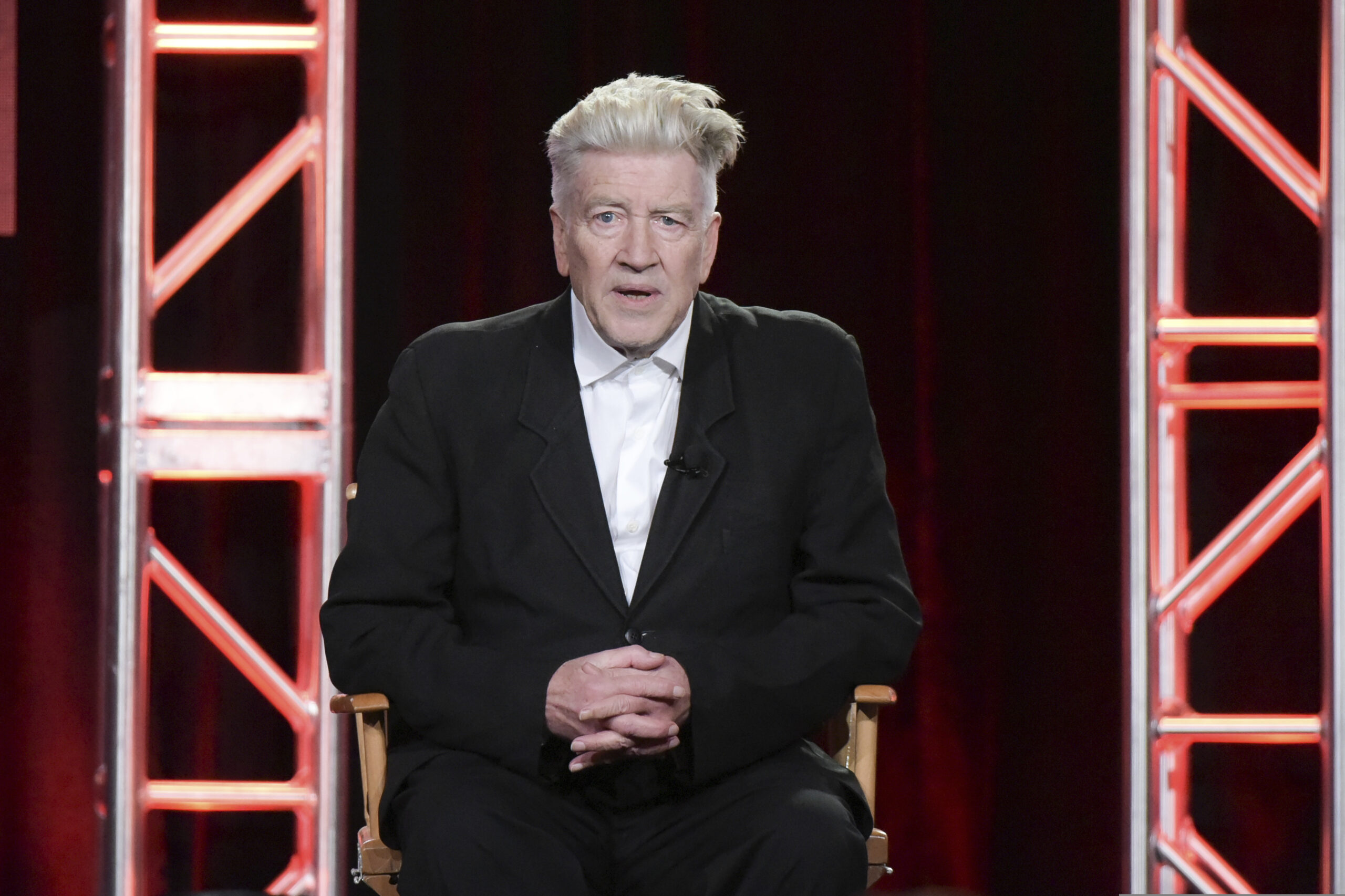
In this Jan. 9, 2017, file photo, filmmaker David Lynch attends the “Twin Peaks” panel at the Showtime portion of the 2017 Winter Television Critics Association press tour in Pasadena, Calif. (Photo by Richard Shotwell/Invision/AP, File)
Einhorn would claim he was set up by the CIA, because he knew too much about their top secret paranormal mind-control experiments, a defense that could be ripped from a Twin Peaks episode.
This very “Philly” feeling of weirdness and unease, Suaudeau said, permeates Lynch’s work, well beyond the early shorts he made here.
A character in Twin Peaks calling a cadaver a “smiling bag” dates back to a late-night tour a young Lynch took of a Philadelphia morgue. Visions of soot-covered buildings reveal themselves, decades later, in a particularly nightmarish encounter in Mulholland Drive. Laura Dern’s hard-drinking, no-nonsense character Dianne in The Return lives in Philly and, as Suaudeau puts it, “is the kind of person you would meet in a Philadelphia bar.”
In Twin Peaks, Suaudeau believes that Lynch reveals the city as a kind of dreamscape. In the series and accompanying 1992 feature film, Lynch casts himself as a good-natured (and doornail-deaf) FBI director, operating out of the bureau’s Philadelphia offices.
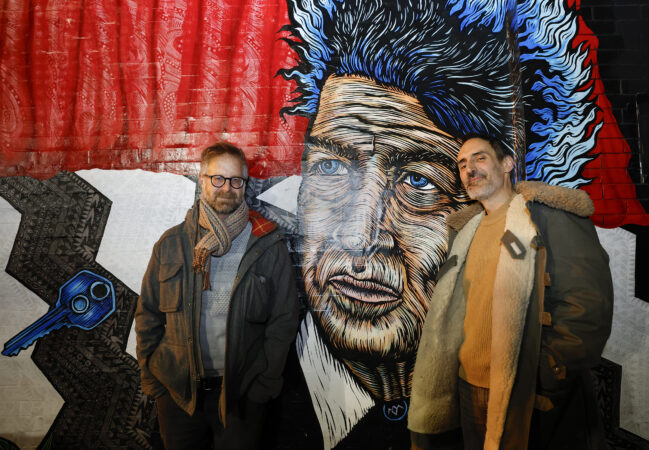
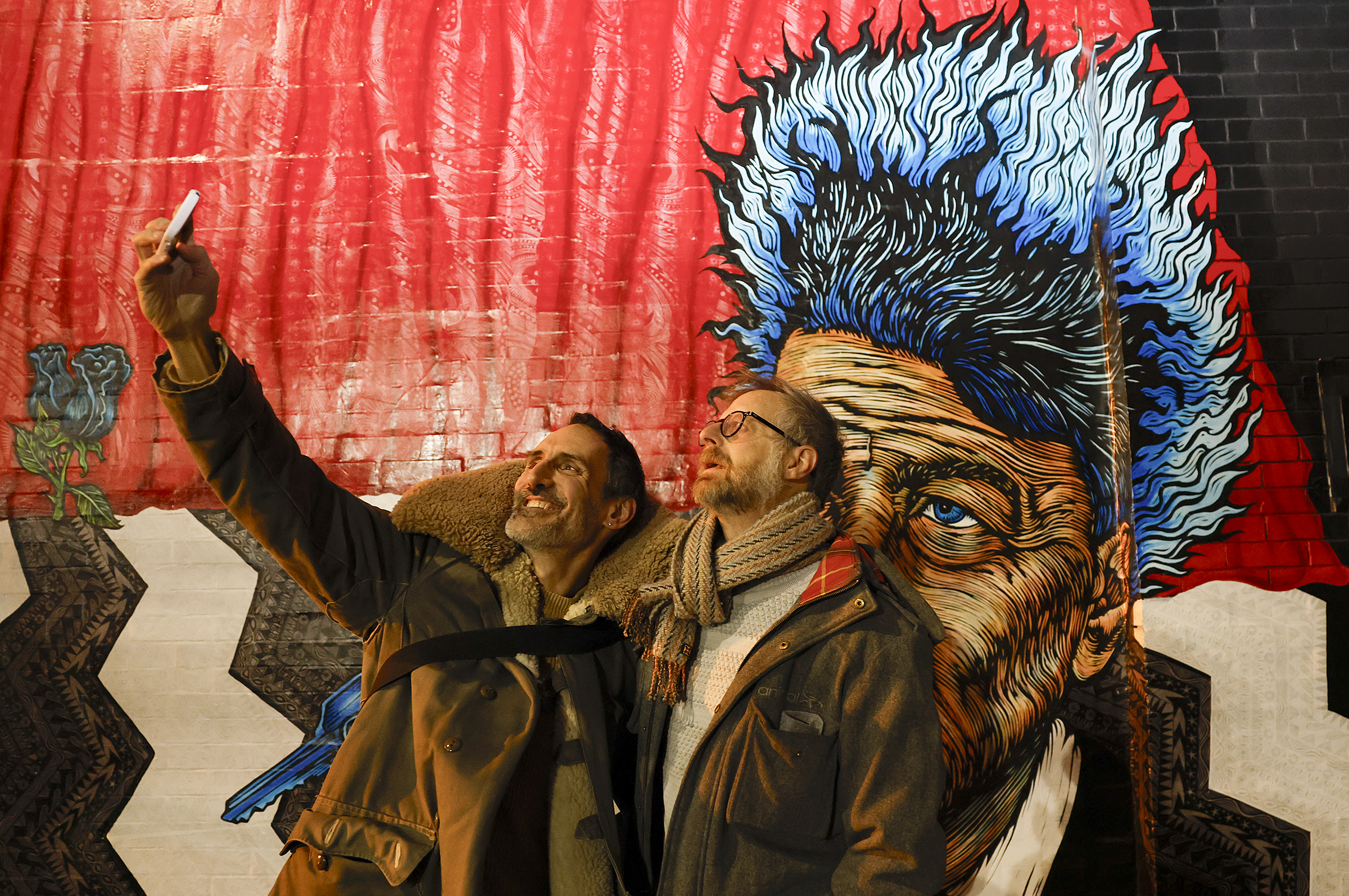
Julien Suaudeau (left) takes a selfie with Hidden City supervising producer Nathaniel Popkin at the David Lynch mural outside of Love City Brewing on Monday, December 15, 2025.
“Philadelphia is the head space of the director,” Suaudeau said. “It’s the room to dream.”
The idea of Philadelphia as a great American city, once shining like a beacon-on-the-hill, that had gone to seed by the time of Lynch’s arrival, is itself Lynchian, as a metropolis perched on the porous boundary between dream and nightmare.
“He’s interested in crawling beneath the veneer, beneath the surface,” Suaudeau said. “It’s a mood, it’s an atmosphere, it’s an aura in his work.”
“Song of Lynchadelphia” launched Jan. 15. “Dreams & Nightmares: A David Lynch Marathon,” an eight-hour Lynch marathon will take place in Phoenixville’s Colonial Theatre on Jan. 18, 11 a.m., thecolonialtheatre.com. A screening of “Eraserhead” followed by a talk-back with Julien Suaudeau is Feb. 21 at the Bryn Mawr Film Institute, 824 W. Lancaster Ave., Bryn Mawr. brynmawrfilm.org
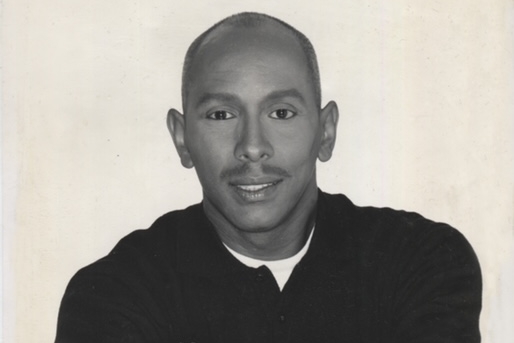
Jeffrey A. Woodley, 71, formerly of Philadelphia, internationally celebrated celebrity hairstylist, scholar, youth track and field star, mentor, and favorite uncle, died Wednesday, Dec. 10, of complications from acute respiratory distress syndrome at Mount Sinai West Hospital in Manhattan.
Reared in West Philadelphia, Mr. Woodley knew early that he was interested and talented in hairstyling, beauty culture, and fashion. He experimented with cutting and curling on his younger sister Aminta at home, left Abington High School before his senior year to attend the old Wilfred Beauty Academy on Chestnut Street, and quickly earned a chair at Wanamakers’ popular Glemby Salon at 13th and Chestnut Streets.
He went to New York in the mid-1970s after being recruited by famed stylist Walter Fontaine and spent the next 30 years doing hair for hundreds of actors, entertainers, models, athletes, and celebrities. He styled Diahann Carroll, Whitney Houston, Aretha Franklin, Anita Baker, Angela Bassett, Halle Berry, and Tyra Banks.
He worked with Denzel and Pauletta Washington, Eddie Murphy, Jasmine Guy, Lynn Whitfield, Pam Grier, Melba Moore, Jody Watley, and Karyn White. His hairstyles were featured in GQ, Vanity Fair, Ebony, Jet, Essence, Vibe, Vogue Italia, and other publications, and in advertising campaigns for L’Oréal and other products.
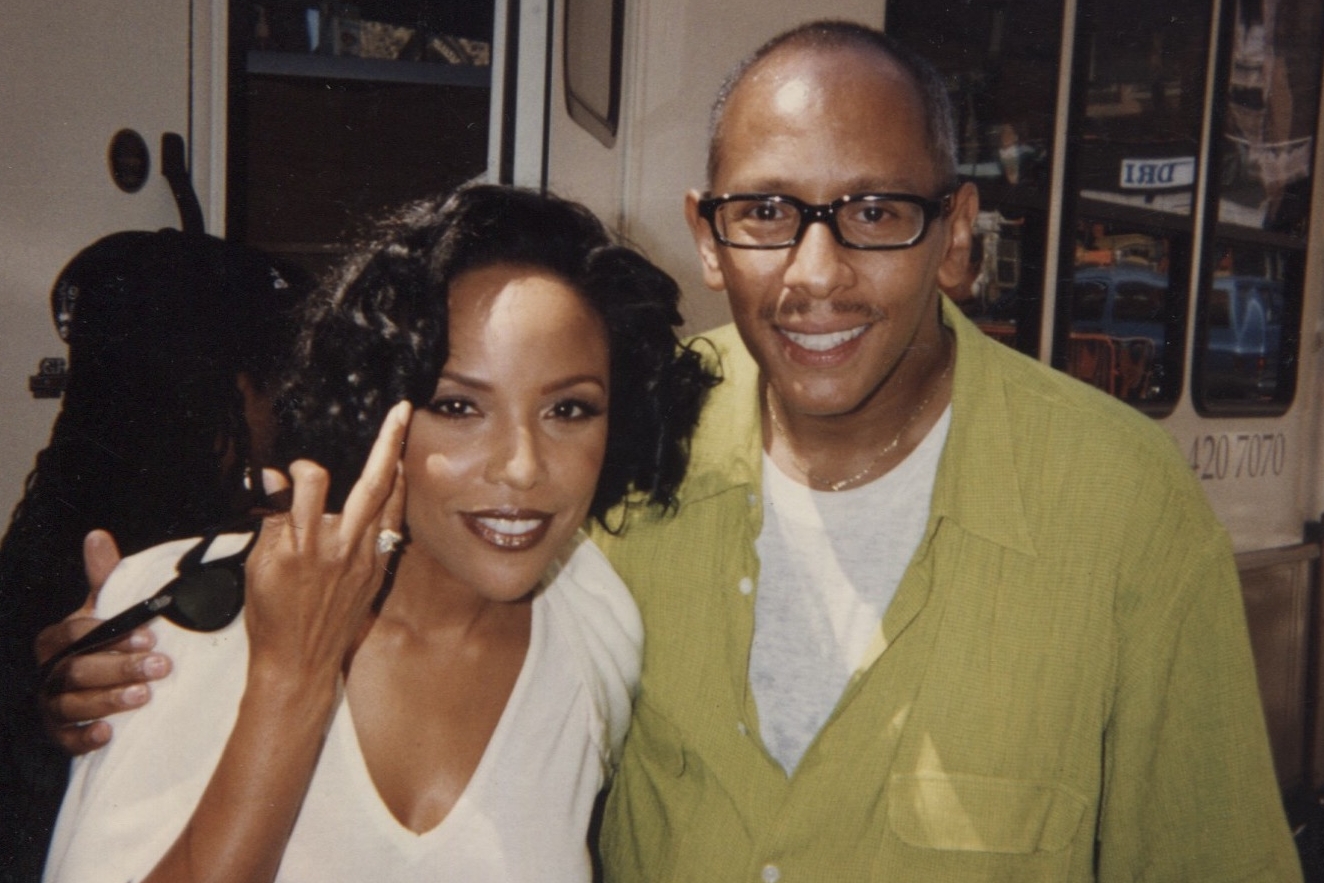
Mr. Woodley poses with actor Lynn Whitfield.
For years, actor Terry Burrell said, “He was the go-to hair stylist for every Black diva in New York City.” Pauletta Washington said: “He was responsible for so much of who I became as an artist and a friend.”
Mr. Woodley worked for Zoli Illusions in New York, Europe, Africa, and elsewhere around the world, and collaborated often with noted makeup artists Reggie Wells and Eric Spearman. Model Marica Fingal called Mr. Woodley “uber talented” on Instagram and said: “He was one of the most skilled artists, creating stunning, innovative styles for models and celebs alike.”
Friendly and curious, Mr. Woodley told Images magazine in 2000 that learning about the people in his chair was important. “A woman’s hairstyle should take into account the type of work she does, her likes, her dislikes, and her fantasies,” he said. “I’m a stylist, but I never impose hair styles on any client. When we arrive at our finished style, it’s always a collaboration.”
His hairstyles appeared on record albums and at exhibitions at the Philadelphia Art Museum and elsewhere. He was quoted often as an expert in coiffure and a fashion forecaster. In 1989, he told a writer for North Carolina’s Charlotte Post: “Texture is the key. … Cut will still be important, but the lines will be more softened and much less severe.”
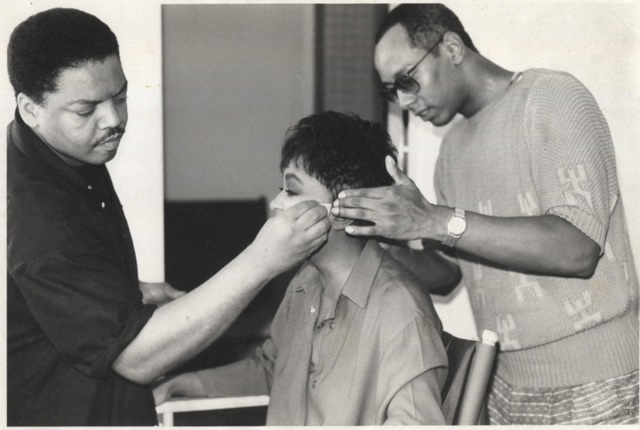
Mr. Woodley (right) handles hair styling for singer Anita Baker while makeup artist Reggie Wells attends to her face.
In 2000, he told Images that “low maintenance is the way of the future.” He said: “Today’s woman is going back to school. She has the corporate job. She has children that she needs to send off to school. She doesn’t have time anymore to get up and spend 35 to 40 minutes on her hair. She wants something she can get up and go with.”
He retired in 2005 after losing his sight to glaucoma. So he earned his General Educational Development diploma, attended classes at the Borough of Manhattan Community College, and studied literature, Black history, and spiritual writing.
“The entirety of his life was inspired by an insatiable thirst for knowledge,” said his friend Khadija Kamara.
He was working on his memoir and still taking classes when he died. “He lived life on his own terms,” Burrell said, “and my respect and admiration for his determination will forever be inspiring.”
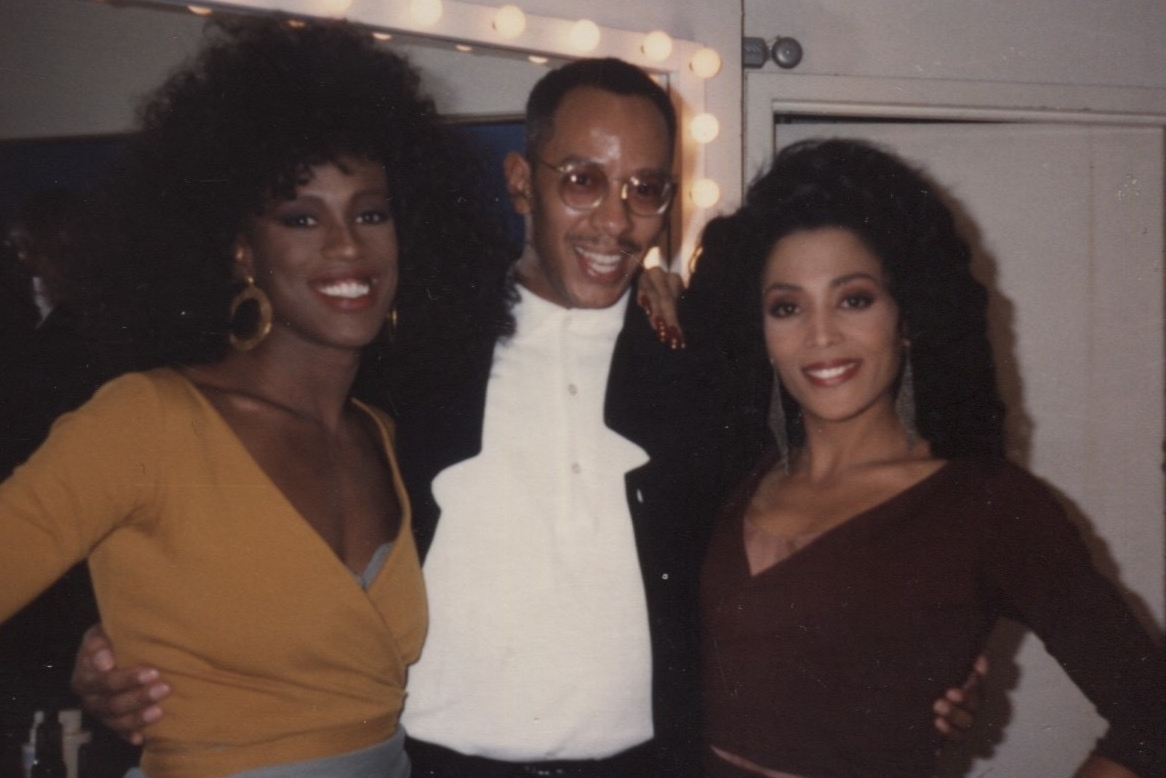
Mr. Woodley smiles with track stars and celebrities Jackie Joyner-Kersee (left) and Florence Griffith Joyner.
As a youth, Mr. Woodley excelled in sprints, relays, and the high jump at St. Rose of Lima Catholic School and Abington High School, and for the Philadelphia Pioneers and other local track and field teams. He ran on Abington’s 440-yard relay team that won the PIAA District 1 championship race at the 1970 Penn Relays and helped set a meet record in the four-lap relay at a 1971 Greater Philadelphia Track and Field Coaches Association indoor meet.
Family and friends called him authentic, generous, and proud of his Philadelphia roots. He mentored his nieces and nephews and hosted them on long visits to his home in New York.
“He was one of the most talented people around and always a lot of fun,” a friend said on Facebook. “A beautiful soul and spirit who made others beautiful.”
Jeffrey Alan Woodley was born May 30, 1954, in Philadelphia. He had an older brother, Alex, and two younger sisters, Aminta and Alicia, and ran cross-country as well as track in high school.
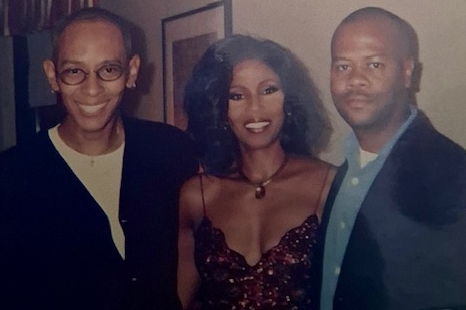
Mr. Woodley (left) worked with actor and musician Pauletta Washington and makeup stylist Eric Spearman.
He was always an avid reader and loved dogs, especially his guide dog Polly. He was a foodie and longtime member of the Abyssinian Baptist Church choir in Harlem. His close family and friends called him Uncle Jeff.
“He was a fun-loving, spirited, and passionate individual,” his brother said. “Uncle Jeff loved the Lord and poured his heart into his work as well as family.”
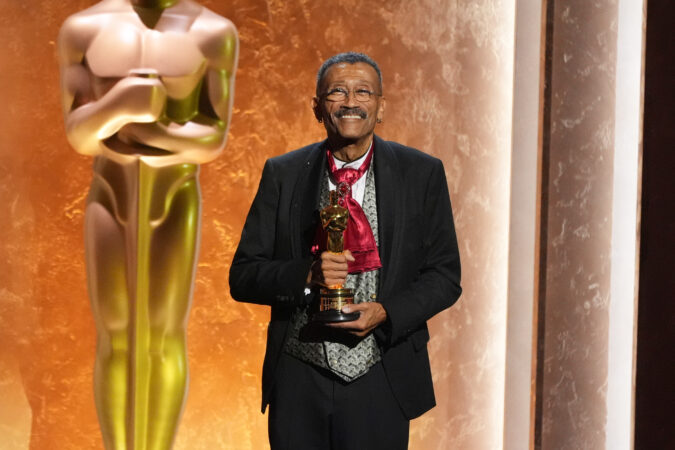
When famed production designer Wynn Thomas prepared an acceptance speech for his long-awaited Oscar at the age of 72, he wanted to highlight his own Philadelphia story.
“My journey to storytelling began as a poor Black kid in one of the worst slums in Philadelphia. There were street gangs and poverty everywhere. And to escape that world, I immersed myself in books,” Thomas told the Hollywood audience at the Governor’s Awards ceremony in November. “I would sit on my front stoop and I would travel around the world. Now, the local gangs looked down on me and called me ‘sissy.’ But that sissy grew up to work with some great filmmakers and great storytellers.”
It was a significant moment for an artist who has spent nearly 50 years behind the camera to finally step into the spotlight himself. The honorary Oscar — which also went to Tom Cruise and Debbie Allen — recognizes “legendary individuals whose extraordinary careers and commitment to our filmmaking community continue to leave a lasting impact.”
During his extensive film career, Thomas has designed epic, comedic, and dramatic worlds for filmmakers like Spike Lee (Do The Right Thing, Malcolm X), Ron Howard (A Beautiful Mind, Cinderella Man), Robert DeNiro (A Bronx Tale), Tim Burton (Mars Attacks), and Peter Segal (Get Smart).
And while at it, he broke several barriers along the way: Thomas is considered the first Black production designer in Hollywood history.
No matter how far his work took him, though, he was always proud to discuss his Philadelphia roots.
The theater kid from West Philly
Long before he worked on major feature films, Thomas grew up as one of six kids in West Philadelphia, living primarily near 35th and Spring Garden Streets. Avid reading kept him out of trouble. His mother, Ethel Thomas, wrote a permission letter to the local library so he could access the adult section, and he immersed himself in the worlds of Harper Lee, James Baldwin, William Shakespeare, and Lillian Hellman.
The young Thomas always looked forward to Saturdays, when he could spend nearly all day at a movie theater on Haverford Avenue. Occasionally, he took classes at Fleisher Art Memorial, too.
The 1961 movie Summer and Smoke, written by Tennessee Williams, he said, inspired him to pursue theater.
“I absolutely said, ‘My God, what is this?’ I think it was just the nature of the story that really affected me,” Thomas, who now lives in New York, said in a recent interview. “I couldn’t believe what I had just seen, what I had just experienced. So I went to my library and got as many Tennessee Williams plays as I could.”
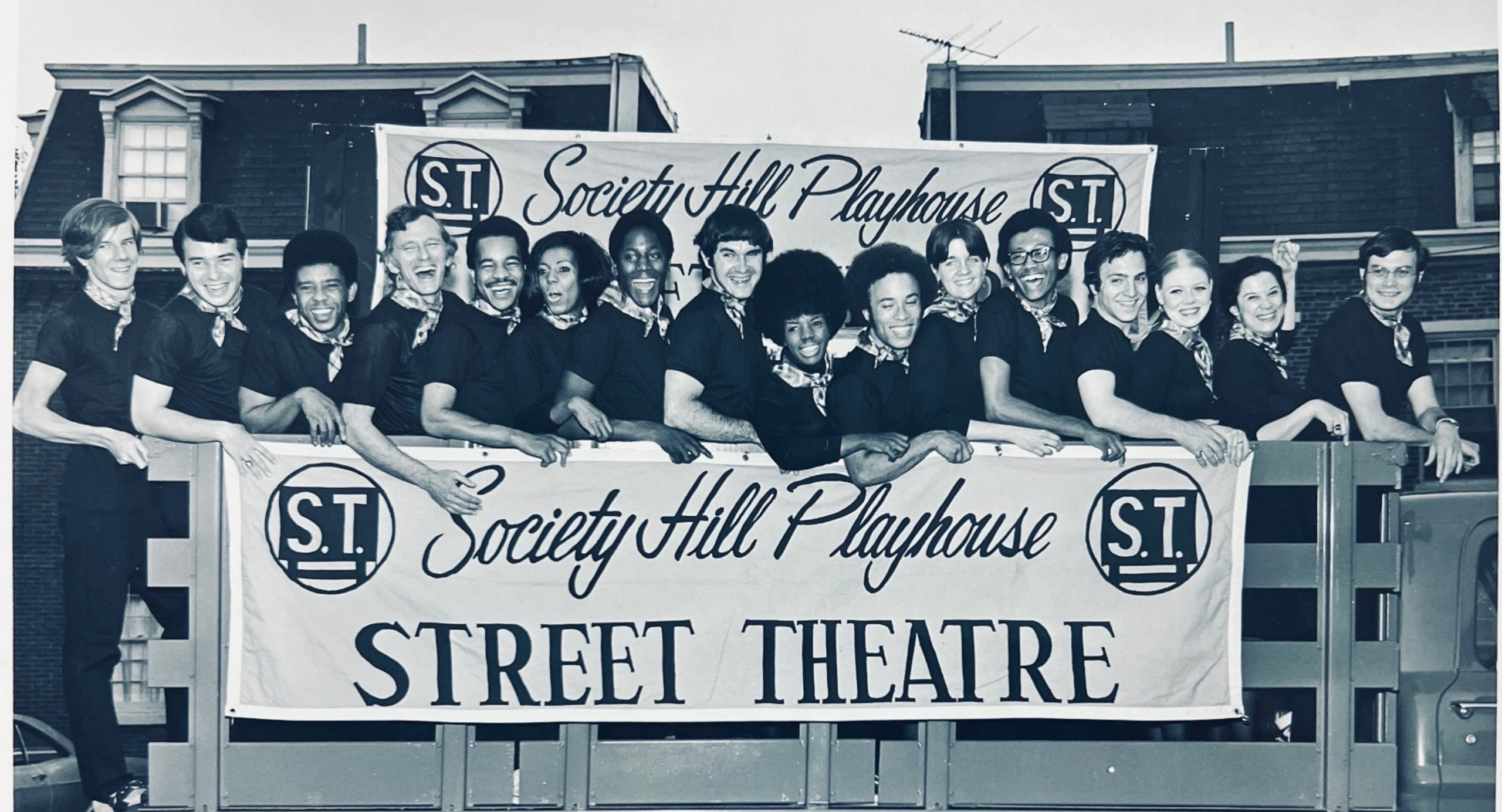
Wynn Thomas (fifth from right) at the Society Hill Playhouse as a teen in the late 1960s.
A couple of years later, Thomas heard that Society Hill Playhouse was holding open auditions. He was too young to audition himself, so he persuaded his older sister Monica to try out.
“I remember saying to her, ‘You need to do a scene from Who’s Afraid of Virginia Woolf,’” he recalled, chuckling. “Now, can you imagine being a 14-year-old kid who knows Who’s Afraid of Virginia Woolf? That’s a geek!”
She earned a spot in the company for a season and Thomas frequently tagged along, volunteering as an usher and eventually forming a close relationship with the owners, legendary Philadelphia theater couple Jay and Deen Kogan.
Throughout high school, the Overbrook High art student spent most of his after-school time across town at the playhouse. He acted, painted scenery, and served as a stage manager.
One of the final productions he stage-managed was The Great White Hope, loosely based on boxing champion Jack Johnson, who was played by Richard Roundtree — the soon-to-be Hollywood star who went on to lead the 1971 classic Shaft. While he was performing at Society Hill Playhouse, Roundtree was auditioning for the life-changing role.
“Shaft was a very important and very pivotal film for that time period,” said Thomas. “It was about a strong Black male who lived in the world under his own terms. That was not a character that was portrayed often in films.”
It was a glimpse into the worlds Thomas would help create in the future — with Black characters who had agency at the center.
Some four decades later, he worked with Roundtree once more for the 2019 remake of Shaft and they had an “incredible reunion.”
From Philly to Boston to New York
Thomas received his bachelor of fine arts in theater design from Boston University. After graduating in 1975, he returned to Philadelphia and worked as a window dresser at the Strawbridge & Clothier department store on Market Street for a few months before landing his next theater job.
For about four years, Thomas was a painter for the Philadelphia Drama Guild, operating out of the Walnut Street Theatre. He also returned to Society Hill Playhouse as a production designer.
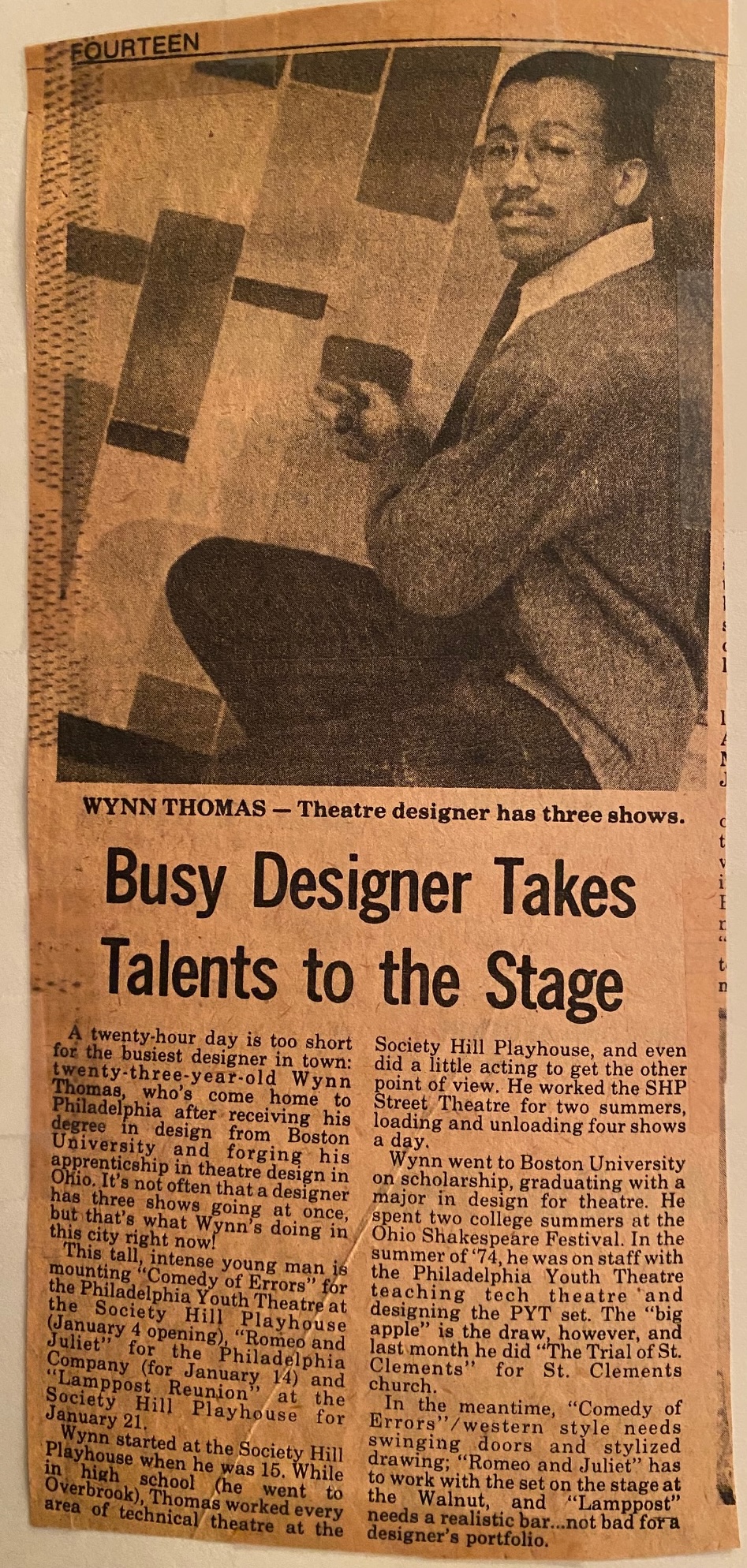
An article about Wynn Thomas when he was 23 years old and working as a theater designer in Philadelphia in the mid 1970s.
“It was a huge learning phase for my career, because I was painting all these different kinds of shows,” Thomas said.
By his mid-20s, Thomas had moved to New York and soon became the resident set designer for the legendary Negro Ensemble Company, where he worked with not-yet-famous actors from Denzel Washington to Phylicia Rashad.
“There was an actor who had auditioned for the company but did not get in. He was looking for a job and it turns out that he had carpentry skills, so I ended up hiring this actor who built my sets for my very first season at NEC,” Thomas recalled.
“That actor was Samuel L. Jackson.”
Breaking into film
Thomas loved theater but sought higher-paying work in film. After multiple job rejections, he joined the United Scenic Artists Local 829.
In an event the union organized with renowned production designer Richard Sylbert, who was working on Francis Ford Coppola’s The Cotton Club, Thomas was the sole Black person in attendance.
The next day, he called Sylbert and introduced himself: “I’m the Black guy that was in the room last night. Do you remember seeing me?”
He convinced Sylbert to hire him to build model sets, and Sylbert became a crucial reference that helped Thomas secure art director jobs, like on 1984’s Beat Street (directed by fellow Philly native Stan Lathan). That’s where he met Spike Lee, who interviewed “for the coffee-fetching position of assistant to the director,” Thomas recalled. When Lee stopped by the art department to greet a friend, the aspiring filmmaker was surprised to see Thomas.
“He said he didn’t know there were any Black people doing this [work],” Thomas said.
Filmmaker Spike Lee, center right, appears with his brother David Lee, center left, with castmembers, including Halle Berry, left, and Wesley Snipes, right, on the set of the 1991 film, “Jungle Fever.” Wynn Thomas served as production designer.
A storied career of firsts
That Beat Street encounter led to one of the most fruitful collaborative relationships of Thomas’ career: He went on to make 11 films with Lee, from She’s Gotta Have It to School Daze to Jungle Fever. Lee regularly worked with the same collaborators (“the family”) including Thomas, costume designer Ruth Carter, and cinematographer Ernest Dickerson.
“We wanted to present images of Black and brown folks that had not been seen before on the screen. We did not want to present any negative images. If you look at those films, there’s no drugs, there’s no alcohol, there’s no domestic abuse — none of that trauma that people used to associate with our communities,” said Thomas. “That was the artistic link, the journey for all of us …[and] that has been a criteria for me.”
Meanwhile, he continued to find mainstream success on commercial films, fueled by a relentless work ethic and a commitment to hiring a diverse crew of artists on his team. Later in his career, he was elected to the Academy’s Board of Governors where he pushed for expanding educational programs nationwide.
Thomas’ films showcase a breadth of world-building talent across genres like comedy (To Wong Foo, Thanks for Everything! Julie Newmar, Get Smart), romance (The Sun Is Also a Star), and dramas about other Black barrier-breakers, like King Richard (starring fellow Overbrook alum Will Smith), Hidden Figures, and the miniseries Lawmen: Bass Reeves.
It’s rare that he returns to his hometown for a job, but in 2014, he was thrilled to work on the pilot of the Philadelphia-set show How to Get Away with Murder.
Thomas believes the city holds countless rich, untold stories that he hopes will one day receive a bigger spotlight.
For now, he’s enjoying seeing the Oscar statue grace his living room.
“It really means a great deal to me, after 40-plus years of working in the business, to have my work recognized by this organization,” said Thomas. “I’ve worked on a lot of films that should have been recognized by the Academy, [for which] I should have been nominated, and it never happened. So I think this was a way for the Academy to correct that oversight.”
Locally filmed crime shows were everywhere, theaters opened but didn’t (thankfully) close, and Colman Domingo was (rightfully) ubiquitous. All that and more, in our roundup of movies in Philadelphia in 2025.
The year was lighter on Hollywood movie productions shooting in town, but among them was a basketball movie with Mark Wahlberg, at various times given the titles Cheesesteak and Weekend Warriors.I Play Rocky, a movie about the making of the original 1976 Rocky, also filmed in the city.
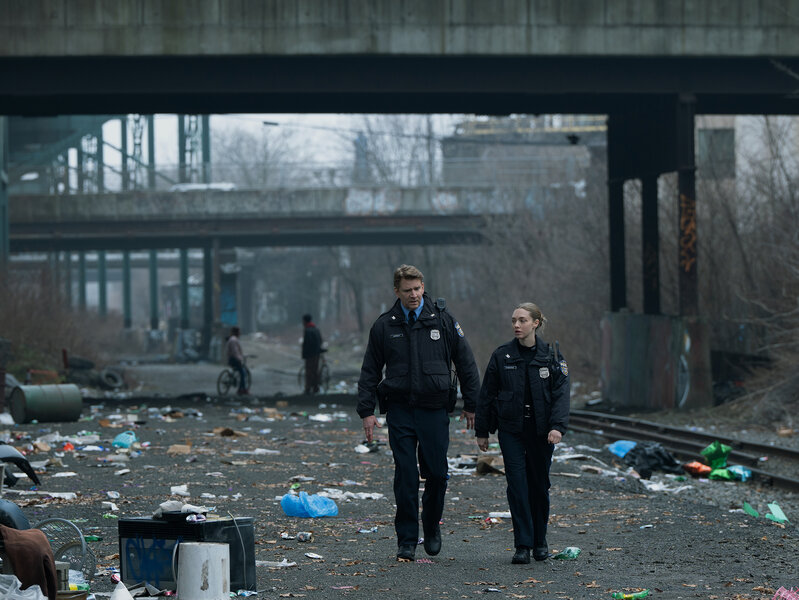
In Peacock’s “Long Bright River,” Allentown native Amanda Seyfried plays Michaela “Mickey” Fitzpatrick, a Kensington patrol police officer who discovers a string of murders in the neighborhood’s drug market.
Gearing up for Rocky 50
It wouldn’t be a year in Philly film without Rocky making its way in.
I Play Rocky is expected to arrive in theaters in 2026, in what will likely serve as one of many commemorations of the 50th anniversary of Rocky.
Also, Rocky was among the many movies and area film institutions included in Films Shaped by a City, a new mural by Marian Bailey, that debuted in October on Sansom Street, on the back of the Film Society Center. Mural Arts Philadelphia, BlackStar Projects, and the Philadelphia Film Society had worked on the project for more than two years.
Outside the filming of “Eraserhead” by David Lynch at the Film Society Center, in Philadelphia, Oct. 5, 2025.
The Film Society’s big year
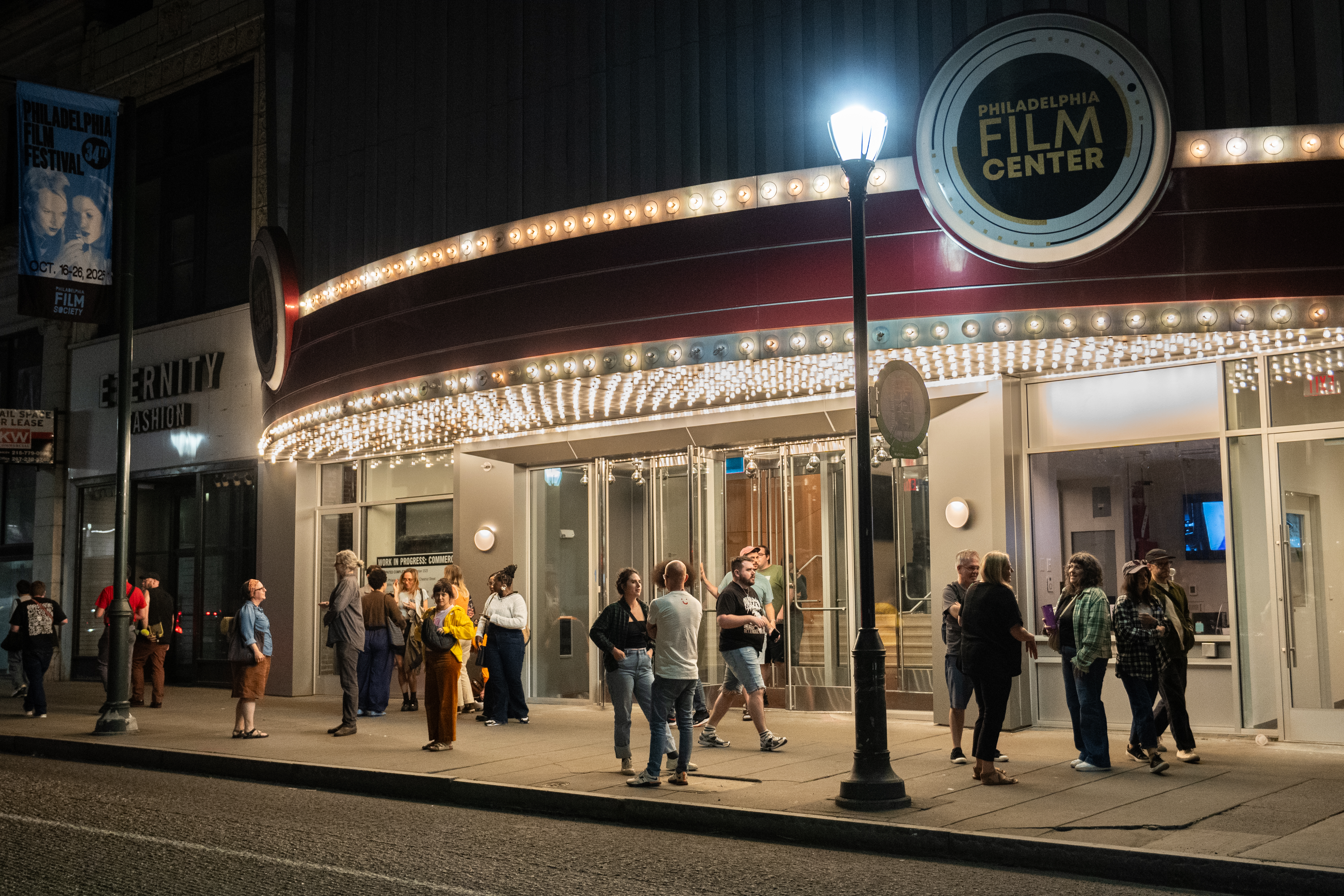
The new mural on the back of its building was part of an eventful year for the Philadelphia Film Society, which completed a big new entrance and lobby renovation of the Film Society Center.
The Philadelphia Film Festival, in October, welcomed 33,000 attendees, which PFS calls its highest turnout ever, while the three theaters welcomed 200,000 customers throughout the year, also a record.
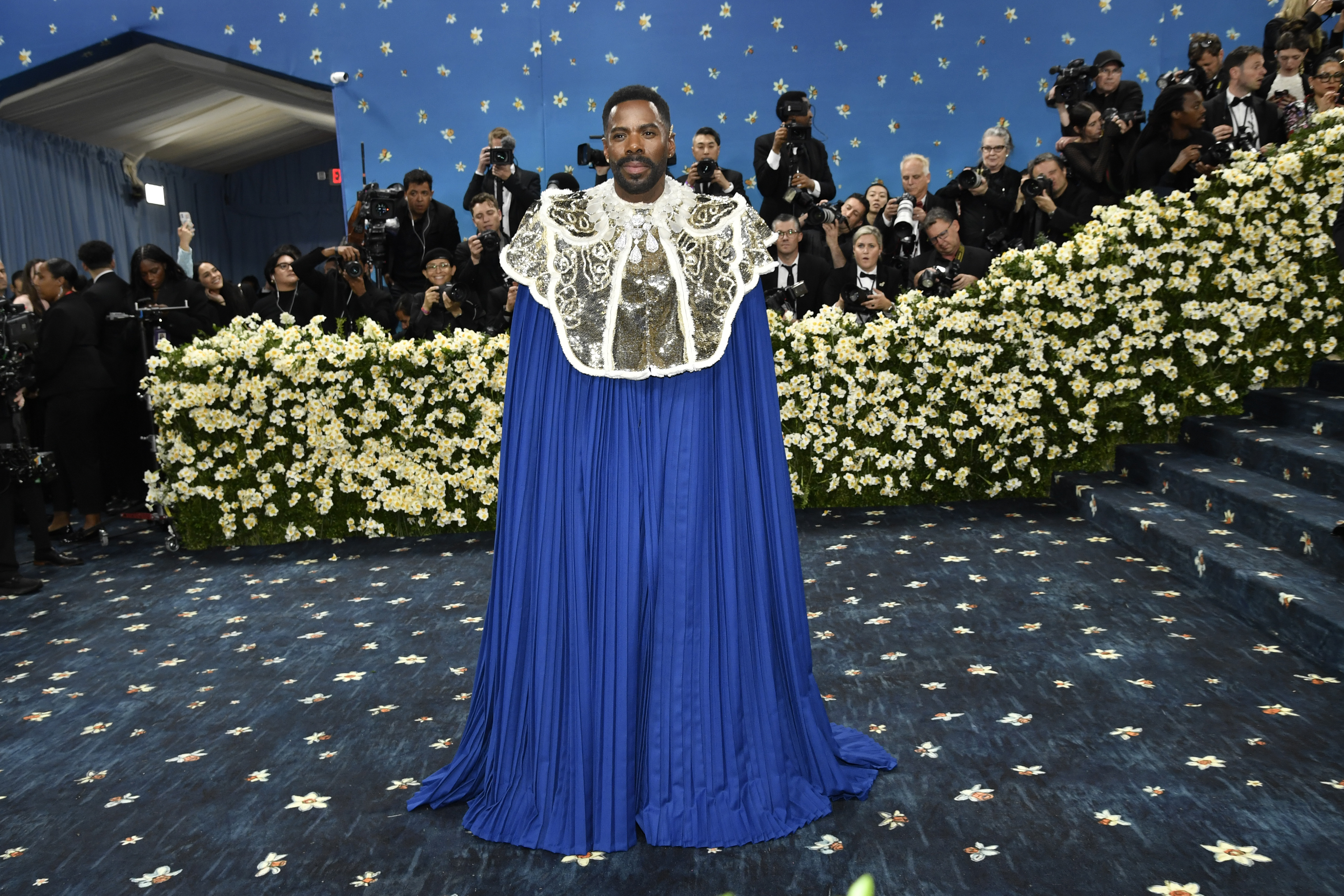
Colman Domingo attends the Metropolitan Museum of Art’s Costume Institute benefit gala celebrating the opening of the “Superfine: Tailoring Black Style” exhibition on Monday, May 5, 2025, in New York.
The very busy Colman Domingo
It was another eventful year for the Temple alum and West Philly native, who was nominated for the best actor Oscar for the second straight year, for last year’s Sing Sing. In 2025, he was in four movies — Dead Man’s Wire, The Running Man, and voice roles in The Electric State and Wicked: For Good. He also appeared in the TV series The Four Seasons — created by and costarring Upper Darby’s Tina Fey — and Your Friendly Neighborhood Spider-Man. He even guest-judged on RuPaul’s Drag Race and cochaired the Met Gala.
In 2026, Domingo is set to appear in both the Michael Jackson biopic Michael and Steven Spielberg’s new sci-fi film, Disclosure Day. He’s also at work on his feature directorial debut, Scandalous!, and said at PFF that he hopes to finish the film in time to bring it to next year’s festival.
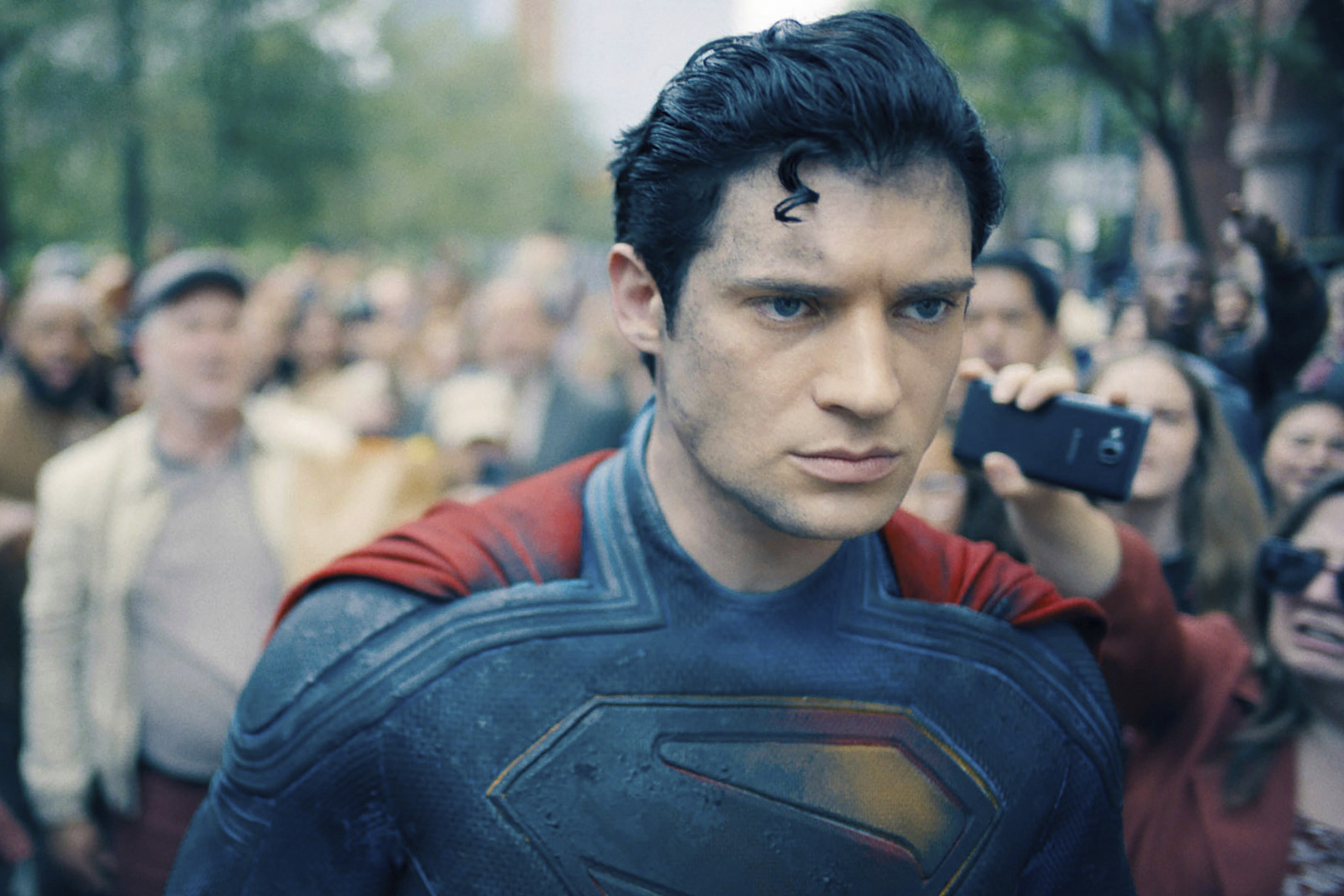
This image released by Warner Bros. Pictures shows David Corenswet in a scene from “Superman.” (Warner Bros. Pictures via AP)
Local actors and filmmakers shine
The Philadelphia-born Penn alum David Corenswet debuted as Superman this summer, a film that also featured a small appearance by Jenkintown’s Bradley Cooper. Cooper directed and played a supporting role in In This Thing On?
Mount Airy native and Temple alum Da’Vine Joy Randolph followed up her Oscar win by appearing in three movies, Shadow Force, Bride Hard, and Eternity — the latter of which also starred Downingtown’s Miles Teller — and continuing on Only Murders in the Building.
Willow Grove’s Dan Trachtenberg directed not one but two films in the Predator franchise, the animated Predator: Killer of Killers and the live-action Predator: Badlands. Penn alum Gavin O’Connor directed The Accountant 2. In addition to creating Task, Berwyn’s Brad Ingelsby wrote the movies Echo Valley and The Lost Bus, both for Apple TV.
West Philadelphia’s Quinta Brunson continued to star in Abbott Elementary, which had her filming in Citizens Bank Park the night of Kyle Schwarber’s historic four home runs. She also played a voice role in Zootopia 2.
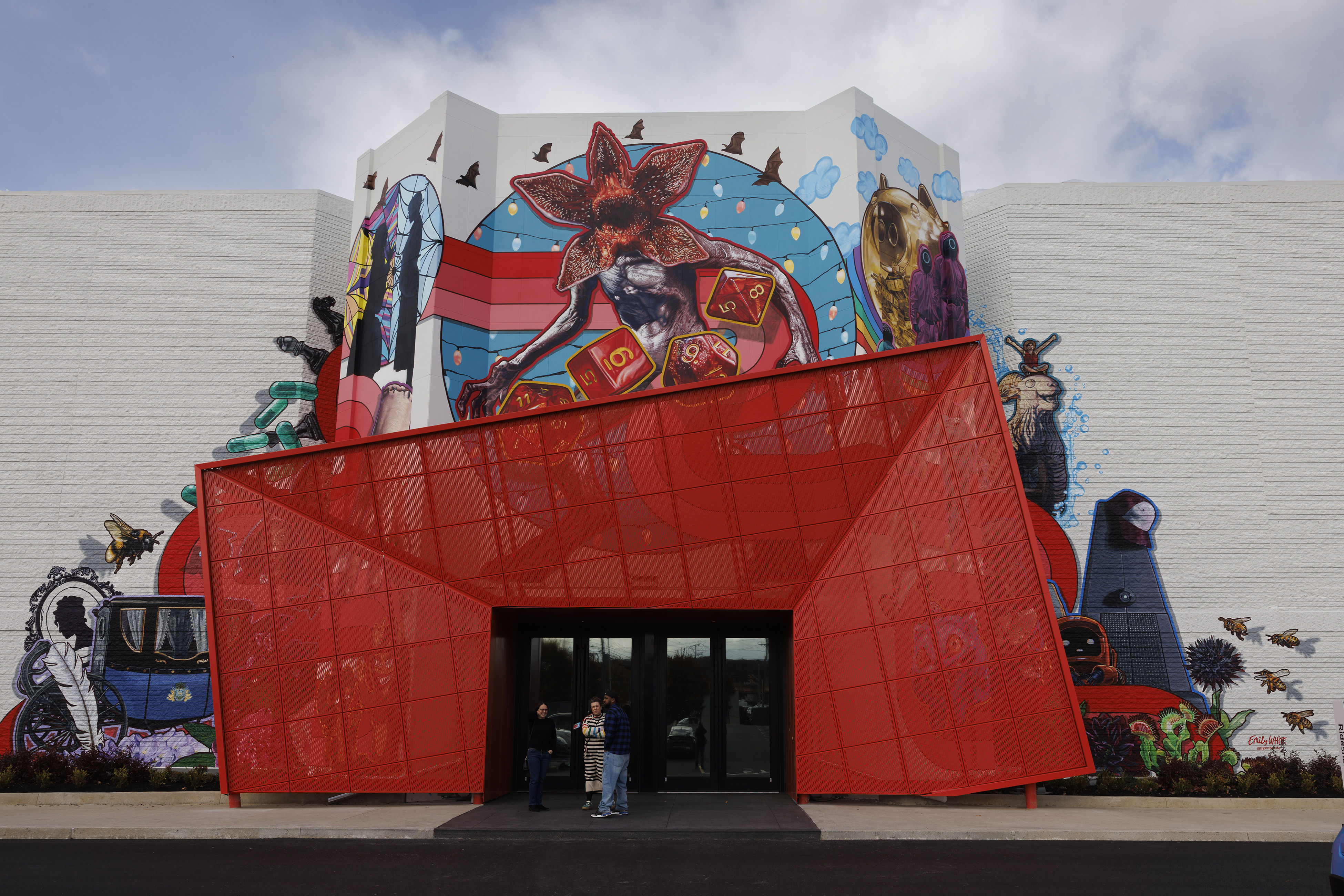
Exterior entrance to Netflix House, King of Prussia Mall, Tuesday, November 11, 2025.
No theater loss
Philadelphia, in a rarity, did not lose any movie screens in 2025.
Then, in August, it was announced that the Riverview movie theater on Columbus Boulevard, which has sat empty since 2020, would reopen in 2026 under the auspices of Apple Cinemas, with the city’s only IMAX screen. However, recently it didn’t appear that any construction work had begun there yet, and the Riverview’s impending return had also been announced in 2024.
In February, an effort was announced to revive the Anthony Wayne Theater in Wayne. Ishana Night Shyamalan, the film director and daughter of M. Night, is a member of the board seeking to bring the theater back.
In November, the first-ever Netflix House “fan destination” opened in King of Prussia, and it includes a theater that will feature such special events as Netflix’s NFL games on Christmas Day and the Stranger Things series finale on New Year’s Day.
And about two hours north of the city, in the town of Wind Gap, the Gap Theatre reopened in March after it was closed for five years. The theater shows more than 50 films a month, mostly sourced from the collection of Exhumed Films.
A still from Mike Macera’s “Alice-Heart,” part of the 2025 Philadelphia Film Festival’s “Filmadelphia” section.
Indie-delphia
It was also an eventful year for local independent film.
Delco: The Movie, which was in the works for several years, had its premiere in January. Two other films, both of which premiered at the 2022 Philadelphia Film Festival, finally saw their release this year: The Golden Voice, directed by Brandon Eric Kamin, and Not For Nothing, from Tim Dowlin and Frank Tartaglia, who died in 2022.
Mike Macera’s Alice-Heart, featuring a cast and crew full of Drexel and Temple alumni, premiered at PFF and won the Filmadelphia Best Local Feature Film Award.
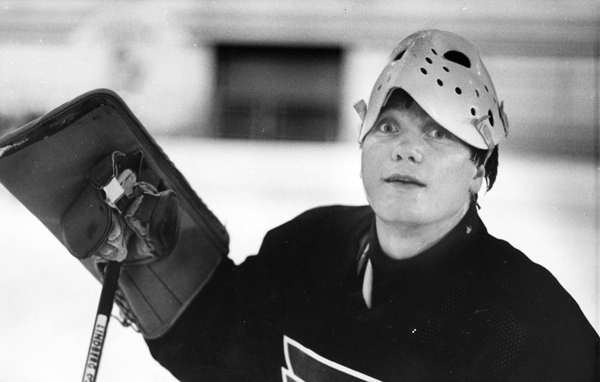
To mark the 40th anniversary of the 1985 death of Flyers goalie Pelle Lindbergh, the documentary “The Swede of Philadelphia” opened in area theaters in November.
Documenting sports stars
There were, once again, several prominent sports documentaries about Philadelphia athletes of the past and present. CNN aired Kobe: The Making of a Legend, about Lower Merion’s Kobe Bryant, to coincide with the fifth anniversary of his death. To mark the 40th anniversary of the 1985 death of Flyers goalie Pelle Lindbergh, the documentaryThe Swede of Philadelphia opened in area theaters in November.
Amazon’s Prime Video premiered Saquon, which followed the Eagles’ Saquon Barkley for several years, in October. This year’s Eagles team is featured on HBO’s Hard Knocks for the first time as part of the currently-airing Hard Knocks: In Season with the NFC East.
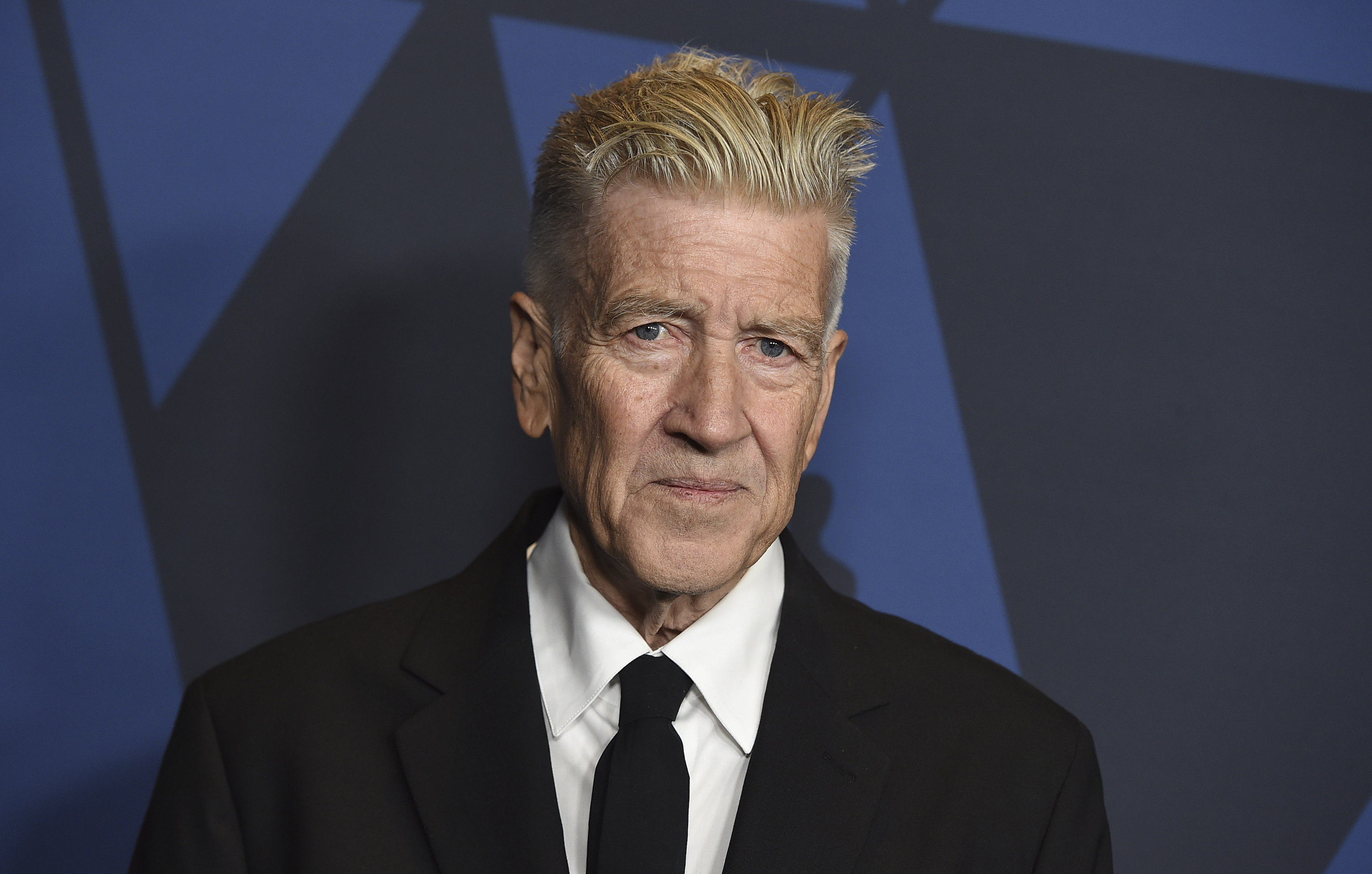
David Lynch appears at the Governors Awards in Los Angeles on Oct. 27, 2019.
Remembering David Lynch
The January death of David Lynch, who lived in Philadelphia as a young art student and was inspired by the city in his work, was commemorated locally with everything from a new mural in the “Eraserhood” to showings of his movies at most area theaters that feature repertory fare.
When the Film Society Center reopened after the renovation, the first showing was a 35mm screening of Lynch’s Callowhill-inspired Eraserhead.
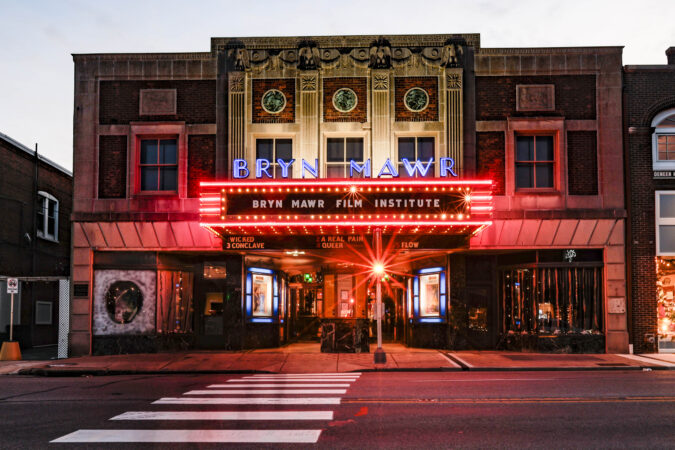
There are few facades more iconic in Bryn Mawr than the marquee of the Bryn Mawr Film Institute (BMFI), an enduring Main Line institution and watering hole for cinephiles from across the region.
BMFI has turned 20, marking two decades of the nonprofit community theater founded by Juliet Goodfriend in 2005. In the early 2000s, Goodfriend found herself dismayed when a historic movie theater in neighboring Ardmore was converted into a short-lived gym. To protect Bryn Mawr’s historic Seville Theatre from the same fate, Goodfriend rallied a team of local stakeholders around the theater. In December 2004, BMFI purchased the Seville, and in March 2005, the film institute opened its doors. Today, BMFI screens new and historic films, hosts lectures, teaches courses for children and adults, and celebrates the art of the film.
“It means a lot … to see what this place has become through the generous support and engagement of the community,” said Andrew J. Douglas, deputy director of the film institute who has worked at BMFI since it first opened.
To celebrate BMFI’s 20th anniversary, its staff compiled a list of 20 of the most iconic films the theater has screened, from Philly-based flicks to beloved musicals:
‘Blue Velvet’
If there’s an iconic filmmaker with a Philadelphia connection, it’s the late David Lynch, said Jacob Mazer, BMFI’s director of programs and education.
Blue Velvet is Lynch’s 1986 mystery thriller. It follows college student Jeffrey Beaumont after he discovers a severed ear in a vacant lot in his suburban hometown and is drawn into a dark world of crime.
“When we look at this arc of [Lynch’s] career, it’s really the film where he finds his way,” Mazer said.
Lynch began his filmmaking career in Philadelphia at the Pennsylvania Academy of the Fine Arts and regularly discussed basing his landmark debut Eraserhead on the city in the 1970s. When Lynch returned to Philly for a retrospective of his work at PAFA in 2014, he visited BMFI for a screening of his films and a Q&A session with the audience. Blue Velvet was the first film BMFI played to commemorate Lynch after his death in January.
‘The Philadelphia Story’
There’s a lot of local love for The Philadelphia Story, George Cukor’s 1940 romantic comedy set on the Main Line and based on the life of socialite Helen Hope Montgomery Scott, said Gina Izzo, BMFI’s communications director.
Plus, Izzo added, “It’s funny. It holds up.”
‘Lawrence of Arabia’
The annual summer screening of David Lean’s 1962 film Lawrence of Arabia is the oldest-running BMFI tradition. It’s a movie that is just “not done justice on a small screen,” said Mazer.
‘The Sound of Music’
Each December, lovers of The Sound of Music descend on BMFI for what Izzo describes as an “interactive screening” of the 1965 musical directed by Robert Wise. Over the course of three hours and many songs, The Sound of Music tells the World War II-era story of Maria (Julie Andrews), a young woman who becomes a governess for the von Trapps, an aristocratic Austrian family.
At the annual Christmastime screening at BMFI, moviegoers sing along from their seats and, each year, wear increasingly elaborate costumes. Last year, there were nuns, goats, and “brown paper packages tied up with strings” (a la the song “My Favorite Things”). The showings sell out months in advance.
As Izzo put it, “It’s sort of our Rocky Horror Picture Show equivalent.”
‘Harold and Maude’
Hal Ashby’s Harold and Maude has been a mainstay at the Seville Theatre since it was released in 1971. It was the last movie shown on the Seville’s single screen before the theater was twinned (split into two screening rooms) in the 1980s.
“Harold and Maude just comes back again and again and again” in the theater’s history, said Mazer. “It’s one of the quintessential cult movies.”
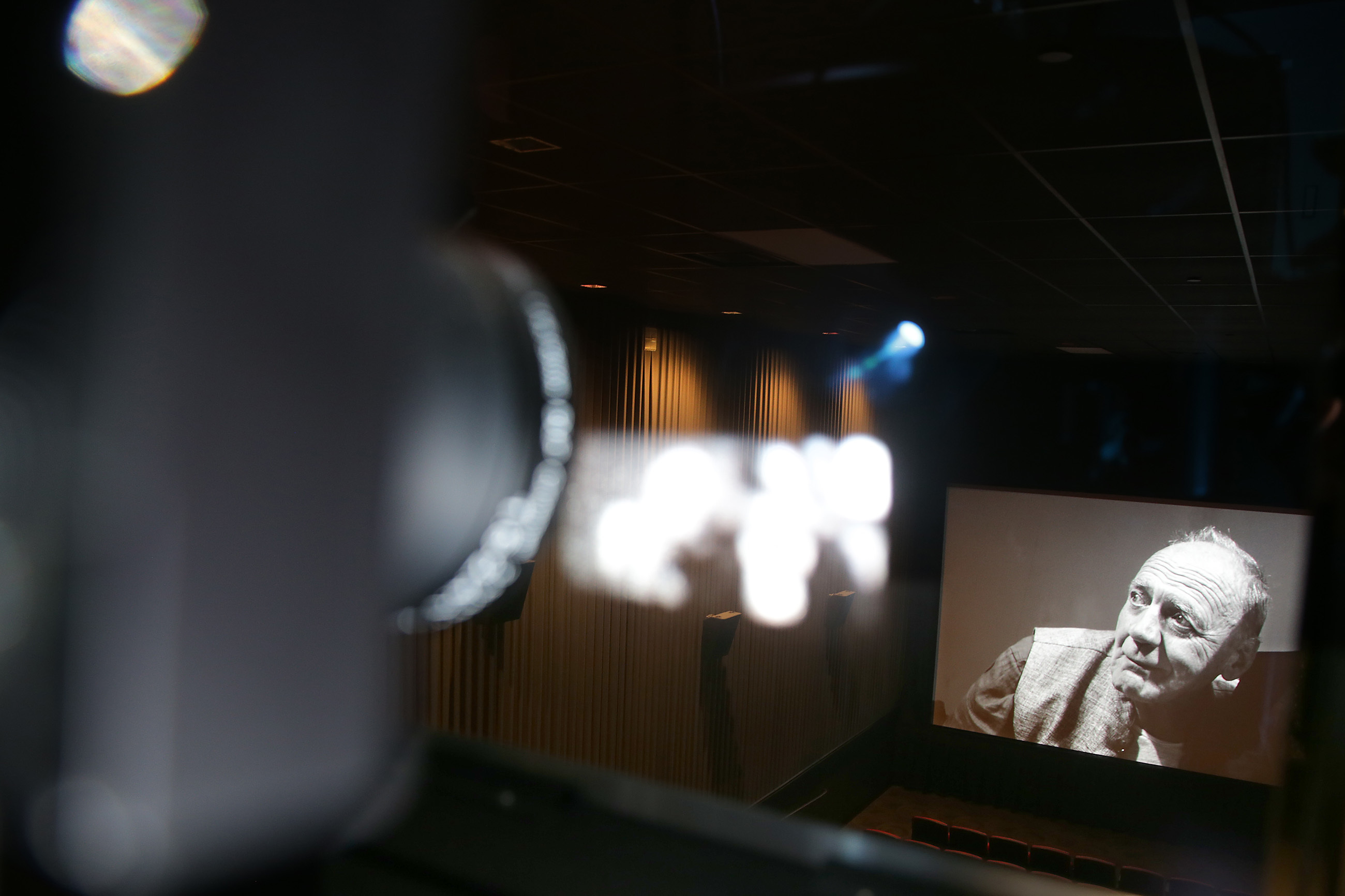
A view from one of the projection booths inside the Bryn Mawr Film Institute in Bryn Mawr on March 8, 2018.
‘Casablanca’
Michael Curtiz’s 1942 romantic-drama Casablanca is “one of the great examples of the difference [between] seeing a movie in a theater with other people versus by yourself at home,” said Douglas.
BMFI screens Casablanca every summer, and Douglas teaches an annual lecture on the film. When he watches Casablanca at BMFI, Douglas says he regularly hears people sniffling at sad moments or guffawing at funny ones, a stark comparison to the muted reactions one often has from the comfort of their own couch.
“You’re reminded how funny it is, you’re reminded how moving it is, and you’re reminded, in a sense, how human it is,” he said.
‘The Grand Budapest Hotel’
Why include Wes Anderson’s 2014 film The Grand Budapest Hotel? Put simply, people just love Wes Anderson, Izzo said.
‘2001: A Space Odyssey’
Stanley Kubrick’s 2001: A Space Odyssey was the first film shown at the theater after it developed the capacity to screen 70 mm film. Mazer called the 1968 movie an “iconic film” in cinematic history.
‘Silver Linings Playbook’
In a way, Silver Linings Playbook is a “modern-day Philadelphia Story,” said Douglas. The 2012 film, directed by David O. Russell, follows Pat Solitano Jr. (Bradley Cooper), recently released from a psychiatric hospital who works to win back his estranged wife, and Tiffany Maxwell (Jennifer Lawrence), a young widow also struggling with mental illness, as she prepares for an upcoming dance competition.
Philadelphia’s favorite rom-com is an homage to Delco, Eagles fans, and the Montgomery County-born-and-raised Cooper. It’s a “local guy makes good” story, Douglas said, referring to Cooper. It’s also the highest grossing main attraction in BMFI history.
“For our community, it was an enormously meaningful movie‚” Douglas said.
‘La La Land’
Benj Pasek and Justin Paul, known as Pasek and Paul, are a composing and songwriting duo responsible for the lyrics in La La Land, the acclaimed 2016 musical directed by Damien Chazelle.
Pasek is “Bryn Mawr’s son,” Izzo said. The composer graduated from Friends Central, the Wynnewood Quaker school, and is a longtime supporter of BMFI. When Pasek and Paul won an Oscar for the movie, everybody at home “had a little piece,” said Izzo.
‘Barbie’
Greta Gerwig’s 2023 Barbie felt like the “big wave back after the pandemic,” Izzo said. People dressed in pink and flocked to the movies after months of isolation and uncertainty.
Parasite, Bong Joon Ho’s 2019 South Korean Oscar winner, was the third-longest running main attraction in BMFI history with a 16-week run.
“We were proud to show that one,” Izzo said. “It was very popular here.”
‘Rocky’
Rocky, the 1976 film directed by John G. Avildsen about boxer Rocky Balboa (Sylvester Stallone), may seem like an obvious addition to any Philly-area iconic movies list. But the local history behind the movie is deeper than meets the eye, Mazer said.
Rocky was one of the first to be filmed with the Steadicam, a revolutionary invention of Garrett Brown, a Haverford High School graduate and prolific Philadelphia inventor. The Steadicam, created by Brown in 1975, is a camera stabilizing device that revolutionized the movie industry, allowing filmmakers to shoot scenes without having to mount cameras onto cranes or dollies.
In testing out his new invention, Brown shot various scenes around Philadelphia, including one of his future wife running up the steps of the Philadelphia Art Museum. That scene would later become an iconic motif of Rocky, shot by Brown.
“It’s this place where film history and Philadelphia history really connect,” Mazer said.
Brown is a friend of BMFI and has given numerous lectures at the theater, including for the 40th anniversary of Rocky.
‘Superman’
James Gunn’s 2025 Superman is another story of a local hero. David Cornswet, who played Superman, was raised in Lower Merion and graduated from the Shipley School, a Bryn Mawr private school. Cornswet hosted a friends and family debut of Superman at BMFI.
‘Brooklyn’
Brooklyn, John Crowley’s 2015 period drama, stars Saoirse Ronan as Ellis Lace, a young Irish immigrant to New York City. The movie was immensely popular at BMFI, said Izzo.
‘On the Waterfront’
Elia Kazan’s 1954 crime drama On the Waterfront helped revolutionize BMFI’s educational programming. The film was the first of the theater’s one-night seminars, during which moviegoers listen to a short lecture, sit for a screening, and then stay for a discussion. Now, they’re a popular part of the theater’s educational menu.
‘RBG’
RBG, Julie Cohen and Betsy West’s 2018 documentary about late Supreme Court Justice Ruth Bader Ginsburg, was the highest-grossing documentary screening in BMFI history. It’s also in the top 20 of the highest-grossing screenings in the theater’s history (including movies and documentaries).
National Theatre Live: ‘The Audience’
Though movies are at the core of BMFI’s work, the theater has expanded its repertoire to include cinematic presentations of ballet, theater, opera, and behind-the-scenes tours of art museums, all filmed and fit for the movie screen. BMFI’s most popular alternative program to date was a screening of The Audience, a 2013 play starring Helen Mirren as Queen Elizabeth II. BMFI sold out 13 showings of the show.
Izzo and Douglas said the screenings help transport locals to places that can be difficult to get to — New York City’s Broadway, London’s West End, or European museums.
“Even at current prices, it’s still a tremendous bargain for access to the arts,” said Douglas.
‘Metropolitan’
To commemorate the 30th anniversary of Whit Stillman’s 1990 movie Metropolitan, the director visited BMFI in 2022 for a screening of the film and Q&A with the audience. Metropolitan follows the Sally Fowler Rat Pack, a group of young Manhattan socialites in the throes of debutante season.
Stillman’s visit to BMFI “was the beginning of a really nice friendship,” Mazer said.
This suburban content is produced with support from the Leslie Miller and Richard Worley Foundation and The Lenfest Institute for Journalism. Editorial content is created independently of the project donors. Gifts to support The Inquirer’s high-impact journalism can be made at inquirer.com/donate. A list of Lenfest Institute donors can be found at lenfestinstitute.org/supporters.
In a seismic shift for one of television’s marquee events, the Academy Awards will depart ABC and begin streaming on YouTube beginning in 2029, the Academy of Motion Picture Arts and Sciences announced Wednesday.
ABC will continue to broadcast the annual ceremony through 2028. That year will mark the 100th Oscars.
But starting in 2029, YouTube will retain global rights to streaming the Oscars through 2033. YouTube will effectively be the home to all things Oscars, including red-carpet coverage, the Governors Awards, and the Oscar nominations announcement.
“We are thrilled to enter into a multifaceted global partnership with YouTube to be the future home of the Oscars and our year-round Academy programming,” said academy chief executive Bill Kramer and academy president Lynette Howell Taylor. “The Academy is an international organization, and this partnership will allow us to expand access to the work of the Academy to the largest worldwide audience possible — which will be beneficial for our Academy members and the film community.”
While major award shows have added streaming partnerships, the YouTube deal marks the first of the big four — the Oscars, Grammys, Emmys, and Tonys — to completely jettison broadcast television. It puts one of the most watched non-NFL broadcasts in the hands of Google. YouTube boasts some 2 billion viewers.
The Academy Awards will stream for free worldwide on YouTube, in addition to YouTube TV subscribers. It will be available with audio tracks in many languages, in addition to closed captioning.
Financial terms were not disclosed.
“The Oscars are one of our essential cultural institutions, honoring excellence in storytelling and artistry,” said Neal Mohan, chief executive of YouTube. “Partnering with the academy to bring this celebration of art and entertainment to viewers all over the world will inspire a new generation of creativity and film lovers while staying true to the Oscars’ storied legacy.”
The Walt Disney Co.-owned ABC has been the broadcast home to the Oscars for almost its entire history. NBC first televised the Oscars in 1953, but ABC picked up the rights in 1961. Aside from a period between 1971 and 1975, when NBC again aired the show, the Oscars have been on ABC.
“ABC has been the proud home to The Oscars for more than half a century,” the network said in a statement. ”We look forward to the next three telecasts, including the show’s centennial celebration in 2028, and wish the Academy of Motion Picture Arts and Sciences continued success.”
The 2025 Academy Awards were watched by 19.7 million viewers on ABC, a slight increase from the year before. That remains one of the biggest TV broadcasts of the year, though less than half of Oscar ratings at their peak. In 1999, more than 55 million watched James Cameron’s Titanic win best picture.
The film academy, in choosing YouTube over other options such as Netflix or NBC Universal/Peacock, selected a platform with a wide-ranging and massive audience but one without as much of an established production infrastructure.
Still, more people — especially young people — watch YouTube than any other streaming platform. According to Nielsen, YouTube accounted for 12.9% of all television and streaming content consumed in November. Netflix ranked second with an 8.3% market share.
Steven Spielberg wanted New Jersey drivers this year — now they’ll get to see the fruits of their labor on the big screen.
The first trailer for Disclosure Day, the lauded filmmaker’s new UFO movie starring Emily Blunt, Josh O’Connor, and West Philly’s own Colman Domingo, is out. The production was filmed in parts of South Jersey and Middlesex County earlier this year.
The premise: “If you found out we weren’t alone, if someone showed you, proved it to you, would that frighten you? This summer, the truth belongs to seven billion people. We are coming close to … Disclosure Day.”
The trailer shows Blunt as a meteorologist who shudders as she experiences some sort of encounter live on air. It includes all the other good stuff: crop circles, deer who are absolutely shook by whatever extraterrestrial activity they’re dealing with, car chases, you know the deal.
“They tell me the movie is primarily about UFOs and some railroad scenes and car chases,” Woodbine Mayor William Pikolycky told 6abc during filming this spring.
The film worked under the code name Non-Viewwhile filming around Jersey. The original Spielberg sci-fi film has a screenplay penned by his longtime collaborator David Koepp (Jurassic Park, War of the Worlds).
Disclosure Day was spotted filming scenes in multiple locations, including Tuckahoe, Woodbine, Buena Vista, and Upper Township. Some scenes took place near railroad tracks in Tuckahoe, with state troopers shutting down roads near production sites at the time. Spielberg was also spotted directing a scene with stunt doubles. Locals observed production crews setting up with a large blue screen, likely for special effects work.
Producers sought locals to work as paid extras, working as background actors in their own cars in Middlesex County in March. The production brought a reported economic boost to the area, with over 150 crew members in town, some who visited local businesses. The New Jersey Motion Picture and Television Commission told 6abc at the time that major film productions are increasingly choosing the state as a location, citing its diverse scenery and financial incentives.
Just last month, Pennsylvania Gov. Josh Shapiro announced HBO’s Task was awarded a $49.8 million tax credit for filming locally.
Universal will release Disclosure Day on June 12. It’ll mark Spielberg’s 37th directed film.
Before he came to be a beloved actor on All in the Family or celebrated for directing hits like The Princess Bride and When Harry Met Sally, Rob Reiner was just a teenager training in New Hope, Pa.
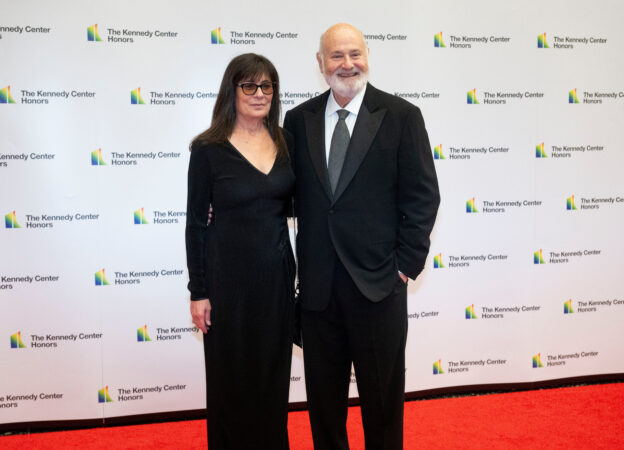
The late filmmaker — who was found dead alongside his wife, Michele Singer Reiner, on Sunday in their Los Angeles home — got his start at the Bucks County Playhouse.
In a 2016 interview with the Hollywood Reporter, Reiner said his senior year at Beverly Hills High School sparked a career path in acting because drama class felt “familiar and comfortable.”
After graduating at 17, he apprenticed at the Playhouse in 1964. As noted by Philadelphia Magazine, the Playhouse was one of a short list of regional theaters where Broadway plays would be workshopped. In turn, a lot of famous — or in Reiner’s case, soon-to-be famous — people came to New Hope, including Liza Minnelli and Robert Redford.
Reiner’s time working on shows as a Playhouse Apprentice meant he rubbed elbows with Alan Alda, Merv Griffin, and Shelly Berman, a spokesperson said. It was the same year Minelli appeared at the Playhouse and Arthur Godfrey was in Our Town.
“Reiner mentioned often his gratitude for the training he received on our stage, and his fondness for his time in New Hope,” Bucks County Playhouse producing director Alexander Fraser said. “He joins Grace Kelly, Jessica Walter, Robert Redford, Richard Kind and many others in using their experience as an apprentice in launching remarkable careers.”
Here’s what else we know about the deaths of the Reiners.
The Reiners were celebrated within the film industry and beyond
Reiner was long considered one of the most prolific directors in Hollywood, and his work included some of the most memorable movies of the 1980s and 90s, including This is Spinal Tap, A Few Good Men, When Harry Met Sally, and The Princess Bride.
His role as Meathead in Norman Lear’s 1970s TV classic All in the Family, alongside Carol O’Connor’s Archie Bunker, catapulted him to fame and won him two Emmy Awards.
The son of comedy legend Carl Reiner, Rob Reiner was married to photographer Michele Singer Reiner since 1989. The two met while he was directing When Harry Met Sally and had three children together.
The couple continued to collaborate on both film and advocacy projects. In 1997, they founded the I Am Your Child Foundation for early childhood development. In 2004, they established the Parents’ Action for Children nonprofit focused on public policy and early learning initiatives.
Reiner was regarded as a liberal activist and praised for his work as a cofounder of the American Foundation for Equal Rights, which initiated the court challenge against California Proposition 8, which banned same-sex marriage in the state.
The couple was found dead in their home and a homicide investigation is underway
A spokesperson for the couple confirmed the Reiners’ death to reporters.
Police said they were investigating the case as an apparent homicide after a family member discovered them dead. The couple had stab wounds.
As of Monday morning, the couple’s son, Nick Reiner, 32, was in custody on unspecified felony charges. His bail is set at $4 million, records show.
Tributes are pouring in for the Reiners
Tributes for the Reiners have been pouring in across Hollywood and beyond.
Relatives of Norman Lear, the legendary producer who died in 2023, released a statement about Lear’s relationship with Rob Reiner.
“Norman often referred to Rob as a son, and their close relationship was extraordinary, to us and the world,” the statement said. “Norman would have wanted to remind us that Rob and Michele spent every breath trying to make this country a better place, and they pursued that through their art, their activism, their philanthropy, and their love for family and friends.”
The Obama family released a tribute praising the couple’s art and advocacy work.
Michelle and I are heartbroken by the tragic passing of Rob Reiner and his beloved wife, Michele. Rob’s achievements in film and television gave us some of our most cherished stories on screen. But beneath all of the stories he produced was a deep belief in the goodness of…
“Together, he and his wife lived lives defined by purpose,” Barack Obama’s statement said. “They will be remembered for the values they championed and the countless people they inspired.”
Kathy Bates, who starred in Misery, the thriller directed by Rob Reiner and based on Stephen King’s writing, released a statement.
She praised the late director as “brilliant and kind” and someone who “fought courageously for his political beliefs.” She also highlighted Singer Reiner‘s photography work, including promotional photographs for Misery.
King posted a tribute on X, calling Reiner a “brilliant filmmaker.”
President Donald Trump criticized for his remarks about Reiner’s death
President Donald Trump wrote a statement about Reiner’s death in a post on Truth Social that has been classified as “incendiary,” “deranged,” and “inappropriate” by reports and critics — including GOP members.
The long-winded statement suggested Reiner and Singer Reiner’s death arose from “Trump derangement syndrome.”
Rep. Don Bacon, R-NE, tells me, regarding the president‘s truth social post about the Reiners being murdered,”I’d expect to hear something like this from a drunk guy at a bar, not the President of the United States. Can the President be presidential?”
Frank Joseph Tartaglia and his older brother, Joseph Frank Tartaglia, long dreamed of leaving the family fruit stand for Hollywood stardom.
Back in 2006, when they first opened a live music venue on Ninth Street, Connie’s Ric Rac, Frankie and Joe Tartaglia — and their best friend and business partner, Peter Pelullo — would sit for hours after closing, spitballing script ideas. The brothers wanted to tell a South Philly story that captured the neighborhood they knew and that could make their dreams real.
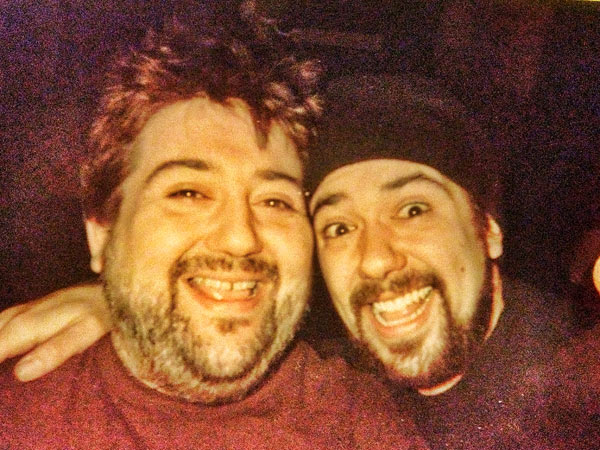
Frank Tartaglia, 45, South Philly writer, director, artist and musician, died suddenly at home on Thanksgiving Day.
Then they were gone.
First, Joe, a filmmaker, a musician, and a father of three, died in 2013 at age 44 of brain cancer. Then, Frankie, a comedian, a writer, an actor, and a true South Philly original, died in his sleep of heart failure in 2022, just a month after his first feature film, Not for Nothing, headlined the Philadelphia Film Festival to positive reviews.
Now, Frankie and Joe Tartaglia’s big-screen dreams are finally becoming a reality.
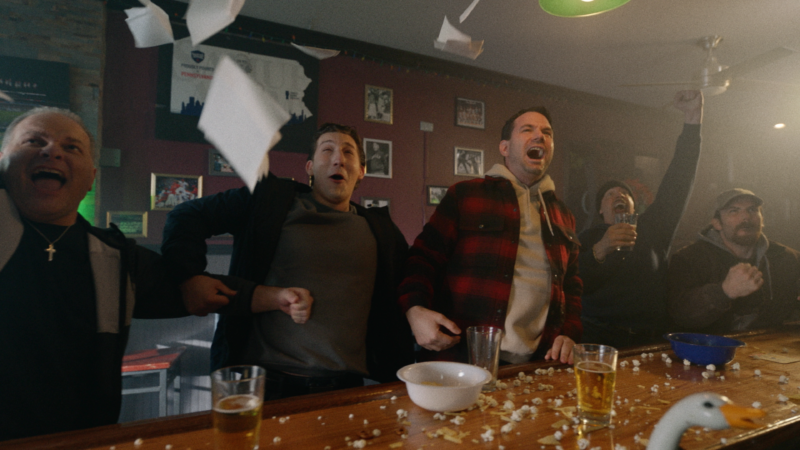
On Thursday, Not for Nothing, a gritty crime drama set in the heart of South Philly and written by Frankie Tartaglia and Philly-born filmmaker Tim Dowlin, debuted at the Film Society Bourse in Old City. On Friday, the movie, acquired for worldwide distribution last year by the independent film studio Buffalo 8, premiered on Amazon Prime and other major streaming services. It will be available on other cable platforms later this month.
“It’s emotional,” said Pelullo, executive producer on the film. “It’s very rewarding for everyone involved to see it reach this place and get across the finish line. But it’s bittersweet. Joe would have been really proud of Frankie, and Frankie would have been excited for what was next.”
He added, “That’s the painful part. This wasn’t supposed to be the end. It was supposed to be the beginning.”
Family photo of Joseph and Frank Tartaglia
The film has been a journey.
Starring actor Mark Webber and praised by critics as a gripping tale infused with heart and humor, Not for Nothing follows a group of neighborhood friends who set out to uncover the truth behind a young woman’s mysterious overdose. The search for justice soon unravels into a confrontation with the ghosts of South Philly’s past.
It’s just the type of authentic South Philly tale Frankie and Joe Tartaglia long strove to share. One that found its first roots in an independent film Joe and Frankie filmed in South Philly in 1998, called Punctuality (a quirky neighborhood film they described as Clerks meets A Bronx Tale). And one that continued to take shape during those long-ago, late-night brainstorming sessions at the Ric Rac, a grungy, glorious haven for South Philly artists and musicians that closed permanently during the pandemic.
Carrying on the dream after Joe Tartaglia’s death, Frankie Tartaglia had reconnected with Dowlin by 2017. The pair had first become friends at the Philadelphia High School for Creative and Performing Arts. Dowlin, who had already made films with Webber, another high school friend, approached Frankie Tartaglia about making a modern-day South Philly mob flick.
From the start, Dowlin recalled, Frankie wanted to tell something more.
“He immediately was like, ‘I don’t think that’s real,’” Dowlin recalled. “He wanted to explore something more authentic to the world he grew up in on Ninth Street, and at the bar at Connie’s Ric Rac.”
Their script became less about the neighborhood goodfellas and more about an exploration of South Philly corner bar culture — and the friendships formed there.
Still in the process of selling the film at the time of Frankie Tartaglia’s death, Dowlin and Pelullo worked for three years to make sure that his vision reached audiences.
This summer, Connie Tartaglia, 76, an artist who ceaselessly encouraged her sons — and was the namesake of their old club — died from an illness. She had hoped to live long enough to see the film released, Dowlin said.
Before Thursday’s packed premiere, Dowlin told the crowd about the friend and collaborator he had lost — and that Philly had lost, too.
“He was an unstoppable force of love and art,” he said of Frankie Tartaglia. “He embodied every artist everywhere. He was a champion for the unseen and unheard.”
Frankie had planned on dedicating the film to the older brother he looked up to, Dowlin said.
Now, he hoped the film would live in both of their memories.
“I would like to dedicate this film to both of the Tartaglia brothers,” he said.