Category: Entertainment

Entertainment news and reviews

  • The Art Commission is weighing the fate of the Rocky statue. It’s been controversial for decades.

    The Art Commission is weighing the fate of the Rocky statue. It’s been controversial for decades.

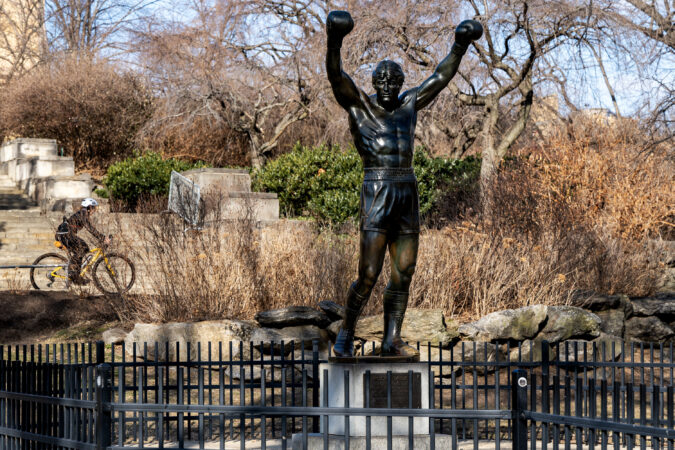
    Our famed Rocky statue could soon be a permanent fixture atop the steps of the Philadelphia Art Museum — again.

    The Philadelphia Art Commission on Wednesday is slated to vote on a plan that, if approved, would affix the original statue — commissioned by Sylvester Stallone for 1982’s Rocky III — at the top of the museum’s East entrance steps later this year. Recently proposed by Creative Philadelphia, the city’s office for the creative sector, the move stands to place the iconic statue in one of the city’s most prominent locations for the umpteenth time since it arrived here more than 40 years ago.

    In fact, Philly’s original Rocky statue has been shuttled back and forth between the museum and the stadium complex in South Philly — another site that was pitched as its permanent home — at least six times, according to Inquirer and Daily News reports. But since 2006, it has sat at the base of the museum’s famed stair set, its most permanent location to date.

    Somehow, though, it always seems to end up overlooking the Benjamin Franklin Parkway from on high, however temporarily. And every so often, debate over the statue seems to reignite, regardless of where the statue sits — a cycle that has been repeating itself since the dawn of the 1980s.

    Here is how The Inquirer and Daily News covered the early days of Philly’s famed Rocky statue:

    https://www.newspapers.com/article/philadelphia-daily-news/188853911/

    Article from Dec 11, 1980 Philadelphia Daily News (Philadelphia, Pennsylvania) <!— –>

    An ‘unnecessarily strident’ monument

    The statue’s roots can be traced back to December 1980, when Stallone proposed the temporary installation of his own bronze visage atop the museum steps for the filming of Rocky III. From the start, the star proposed giving the statue to the city following filming as a “way of reaching the common man and perhaps beginning an interest in fine art,” production manager Jim Brubaker told the Daily News.

    In Budapest, you don’t always see generals and politicians,” Brubaker said. “You see working men with picks and shovels and that relates to the working class.”

    That month, Brubaker and sculptor A. Thomas Schomberg presented a model of the proposed statue to the Art Commission, the Fairmount Park Commission, and the museum’s board. The commission voted 6-2 in favor of letting the statue stay at the museum for the duration of filming, with the two “no” votes indicating that they didn’t want the statue near the museum ever, for any reason, The Inquirer reported.

    “There is a difference between size and greatness,” said local artist and commission member Joseph Brown. “This is unnecessarily strident. I appreciated Rocky, but I don’t think it put our museum and our city on the map.”

    https://www.newspapers.com/article/philadelphia-daily-news/188853847/

    Article from May 9, 1981 Philadelphia Daily News (Philadelphia, Pennsylvania) <!— –>

    Rocky arrives

    The Rocky statue that Philly knows today officially arrived on May 8, 1981, and was unveiled in front of the Philadelphia Art Museum that afternoon — three hours later than expected because the truck that was carrying it got stuck in traffic on the way from West Philly, according to a Daily News report.

    The plan was for the statue to return to California following filming, but Stallone himself was already admittedly embarrassed by the controversy that had quickly cropped up.

    “I’m sorry that got blown out of proportion,” Stallone said, according to a Daily News report. “It’s essentially a prop for the movie. I really don’t want to ruffle anyone’s feathers.”

    After a few days, the Rocky statue was dismantled with the conclusion of filming, and was set to be on its way back to the Golden State. City Representative Dick Doran, however, urged Stallone to reconsider the statue’s relocation, noting that it could be relocated to the Spectrum in South Philly, or placed outside the Philadelphia Tourist Center on JFK Plaza.

    https://www.newspapers.com/article/the-philadelphia-inquirer/188854136/

    Article from May 25, 1982 The Philadelphia Inquirer (Philadelphia, Pennsylvania) <!— –>

    Philly’s ‘Rocky III’ premiere

    In May 1982, Rocky III made its premiere in Philadelphia with a screening at the Sameric Theater at 19th and Chestnut in a star-studded affair that began with a reception at the Art Museum in which Stallone himself presented the Rocky statue to Philadelphia, almost exactly a year to the day that it first arrived in town. It was, The Inquirer reported, a 300th birthday gift to the city.

    On May 24, 1982, the statue was officially unveiled to the city, with Stallone himself pulling the cord on a canvas cover to reveal the sculpture at the top of the museum’s steps as the Lincoln High School band played the Rocky theme, The Inquirer reported. Stallone had “done more for this city than anyone since Benjamin Franklin,” said Doran, then the city’s commerce director.

    “I owe everything to the city of Philadelphia,” Stallone said at the unveiling. “If you could cut up the character of Rocky into a million pieces, each of you would be a part of it.”

    https://www.newspapers.com/article/the-philadelphia-inquirer/188854084/

    Article from May 24, 1982 The Philadelphia Inquirer (Philadelphia, Pennsylvania) <!— –>

    ‘Schlock, chutzpah, and mediocrity’

    Though the statue was displayed prominently, it was not exactly well-received. The Daily News’ Kitty Caparella, for example, called it “only a movie prop.”

    Inquirer columnist Tom Fox, meanwhile, called the statue a “monument to schlock, chutzpah, and mediocrity.” Art Commission member Joe Brown, a local painter, meanwhile, told Fox the statue “violates the spirit of the museum and its environment,” and that the city would be better served by the creation of a statue depicting Tug McGraw, Pete Rose, or Dr. J instead.

    Still, a museum spokesperson said, attendance had increased since the statue’s installation, though they believed it was because of a new exhibit featuring the work of artist Thomas Eakins. Those arriving at the museum to see Rocky, the spokesperson told the Daily News, “don’t even come inside.”

    https://www.newspapers.com/article/philadelphia-daily-news/188854219/

    Article from Aug 3, 1982 Philadelphia Daily News (Philadelphia, Pennsylvania) <!— –>

    Goodbye, Rocky

    Though the statue was only supposed to initially be installed at the Art Museum through mid-July 1982, it remained there through early August that year, Daily News reports from the time indicate. In fact, it wasn’t moved to the Spectrum until Aug. 3, 1982.

    At the time, no one was willing to foot a reported $25,000 bill to get the statue to the Spectrum, and the issue was only settled after negotiations led to splitting the cost between the Spectrum and distributor United Artists, according to a Daily News report from the time. The city, a Commerce Department staffer told The Inquirer, flatly refused to pay.

    But on a hot day, the statue’s run atop the Art Museum’s steps came to an end. Despite encountering difficulties with removal due to the concrete base upon which it had been installed, workers were ultimately able to send the statue on its way to the Spectrum — the spot where it would largely remain until it saw a high-profile move back to the Art Museum for the filming of Rocky V.

    “People are going to miss him,” said onlooker Marcy Landesburg, of Wyncote, amid the statue’s 1982 removal. “They’re having a hard time dislodging him. He doesn’t want to go.”
  • Actor-director Timothy Busfield turns himself in to face child sex abuse charges in New Mexico

    Actor-director Timothy Busfield turns himself in to face child sex abuse charges in New Mexico

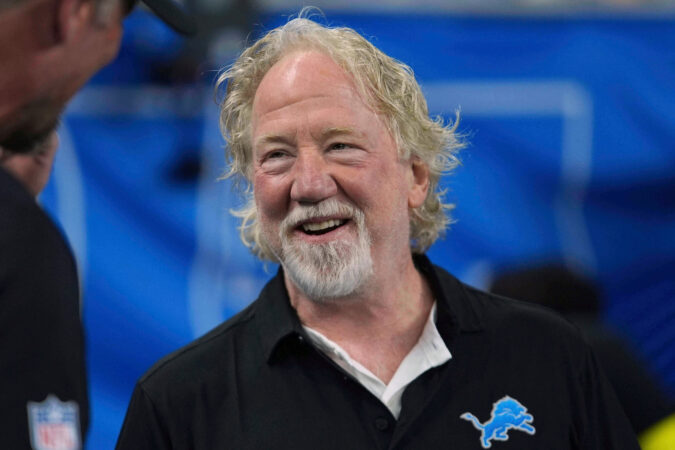
    ALBUQUERQUE, N.M. — Director and Emmy Award-winning actor Timothy Busfield turned himself to authorities on Tuesday to face child sex abuse charges in New Mexico.

    His apprehension comes after authorities in Albuquerque issued a warrant for his arrest on Jan. 9 on two counts of criminal sexual contact of a minor and one count of child abuse. The charges stem from allegations that Busfield inappropriately touched a young boy on the set of the TV series The Cleaning Lady that he was directing.

    Busfield was being booked by Albuquerque police on the charges, said Gilbert Gallegos, spokesperson for the city police department.

    A criminal complaint filed by an investigator with the Albuquerque Police Department says the boy reported that he was 7 years old when Busfield touched him three or four times on private areas over his clothing. Busfield allegedly touched him five or six times on another occasion when he was 8, the complaint said.

    The child was reportedly afraid to tell anyone because Busfield was the director and he feared he would get mad at him, the complaint said.

    The boy’s twin brother told authorities he was touched by Busfield but did not specify where. He said he didn’t say anything because he didn’t want to get in trouble.

    Busfield denied the allegations last fall when interviewed by authorities as part of the investigation, the complaint said. He suggested that the boys’ mother was seeking revenge for her children being replaced on the series. He also said he likely would have picked up and tickled the boys, saying the set was a playful environment.

    Busfield’s attorney did not immediately return a message seeking comment Tuesday. A video obtained by TMZ showed Busfield in front of a window with the Albuquerque skyline in the backdrop. He said he arrived in the city after driving 2,000 miles.

    “I’m going to confront these lies. They’re horrible. They’re all lies,” Busfield said.

    The mother of the twins — who are identified only by their initials in court records — reported to Child Protective Services that the abuse occurred between November 2022 and spring 2024, the complaint said.

    The investigation began in November 2024, when the investigator responded to a call from a doctor at the University of New Mexico Hospital in Albuquerque. The boys’ parents had gone there at the recommendation of a law firm, the complaint said.

    According to the complaint, one of the boys has been diagnosed with post-traumatic stress disorder and anxiety. A social worker documented him saying he has had nightmares about Busfield touching him.

    The Cleaning Lady aired for four seasons on Fox, ending in 2025. The show was produced by Warner Bros., which according to the complaint conducted its own investigation into the abuse allegations but was unable to corroborate them.

    Busfield, who is married to actor Melissa Gilbert, is known for appearances in The West Wing, Field of Dreams, and Thirtysomething, the latter of which won him an Emmy for outstanding supporting actor in a drama series in 1991.

  • Scott Adams, the ‘Dilbert’ creator who poked fun at bad bosses, dies at 68

    Scott Adams, the ‘Dilbert’ creator who poked fun at bad bosses, dies at 68

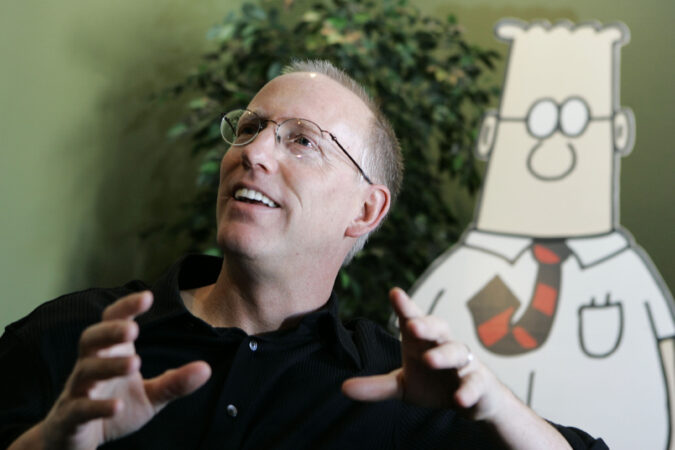
    Scott Adams, who became a hero to millions of cubicle-dwelling office workers as the creator of the satirical comic strip Dilbert, only to rebrand himself as a digital provocateur — at home in the Trump era’s right-wing mediasphere — with inflammatory comments about race, politics, and identity, died Jan. 13. He was 68.

    His former wife Shelly Miles Adams announced his death in a live stream Tuesday morning, reading a statement she said Mr. Adams had prepared before his death. “I had an amazing life,” the statement said in part. “I gave it everything I had.”

    Mr. Adams announced in May 2025 that he had metastatic prostate cancer, with only months to live. In a YouTube live stream, he said he had tried to avoid discussing his diagnosis (“once you go public, you’re just the dying cancer guy”) but decided to speak up after President Joe Biden revealed he had the same illness.

    “I’d like to extend my respect and compassion for the ex-president and his family because they’re going through an especially tough time,” he said. “It’s a terrible disease.”

    Mr. Adams was working as an engineer for the Pacific Bell telephone company when he began doodling on his cubicle whiteboard in the 1980s, dreaming of a new, more creatively fulfilling career as a cartoonist. Before long, he was amusing colleagues with his drawings of a mouthless, potato-shaped office worker: an anonymous-looking man with a bulbous nose, furrowed pate, and upturned red-and-white striped tie.

    His doodles evolved into Dilbert, a syndicated comic strip that debuted in 1989 and eventually appeared in more than 2,000 newspapers around the world, rivaling Peanuts and Garfield in popularity.

    Years before the film comedy Office Space and TV series The Office satirized the workplace on-screen, Dilbert poked fun at corporate jargon, managerial ineptitude, and the indignities of life in the cubicle farm.

    In one strip, the title character is awarded a promotion “with no extra pay, just more responsibility,” because “it’s how we recognize our best people.” In another, he’s presented with an “employee location device” — a dog collar.

    Other Dilbert cartoons could be crassly funny. Seeking to improve the company’s image, Dilbert’s pointy-haired boss hires an ad agency that uses a computer program to come up with a new “high-tech name” for the firm, using random words from astronomy and electronics. Their suggestion: “Uranus-Hertz.”

    Mr. Adams proved adept at growing his audience during the tech boom of the 1990s, creating a Dilbert website long before most other cartoonists took to the internet. He also became the first major syndicated cartoonist to include his email address in his comic strip, an innovation that allowed readers to contact him directly with ideas. Their feedback convinced him to focus the cartoon entirely on the workplace, after some of the strip’s early installments explored Dilbert’s home life.

    Interviewed by the Wall Street Journal in 1994, Mr. Adams observed that “the universal thread” uniting the strip’s readers “is powerlessness. Dilbert has no power over anything.”

    By the end of the decade, Dilbert seemed to be everywhere, appearing on the cover of business magazines and in book-length compendiums. Mr. Adams signed off on the creation of a Dilbert Visa card and a Ben & Jerry’s ice cream flavor, branded as Totally Nuts; licensed his cartoon characters for commercials; and partnered with Seinfeld writer Larry Charles to develop an animated Dilbert television series, which aired for two seasons on the now-defunct UPN network.

    Capitalizing on the cartoon’s success, he also put out a shelfful of satirical business books, beginning with the 1996 bestseller The Dilbert Principle. Inspired by the Peter Principle, a management concept in which employees are said to be promoted to their level of incompetence, Mr. Adams argued that “the most ineffective workers are systematically moved to the place where they can do the least damage: management.”

    He wasn’t entirely joking. As he saw it, the people who spouted inane ideas, sucked up to management and pretended they knew more than they did were the ones who got promoted. The workplace was a mess, he suggested, but by calling out bosses’ bad behavior, Dilbert could be a force for good.

    “I heard from lots of people who told me, ‘My boss started to say something that was ridiculous — management fad talk, buzzwords — but he stopped himself and said, “OK, this sounds like it came out of a Dilbert comic,’ and then started speaking in English again.’

    “There is a fear of being the target of humor,” Mr. Adams told the Harvard Business Review.

    Companies such as Xerox incorporated the character into communications and training programs. But some critics found the cartoon’s sarcasm more corrosive than entertaining. Author and progressive activist Norman Solomon, who wrote a book-length critique of the comic, argued that Dilbert was hardly subversive, saying that it offered more for bosses than workers.

    Dilbert does not suggest that we do much other than roll our eyes, find a suitably acid quip, and continue to smolder while avoiding deeper questions about corporate power in our society,” Solomon wrote.

    Mr. Adams scoffed at the criticism, lampooning Solomon by name in his books and comic strips. “My goal is not to change the world,” he told the Associated Press in 1997. “My goal is to make a few bucks and hope you laugh in the process.”

    In interviews, he was often self-deprecating, declaring that his comic strip was “poorly drawn” and noting that long before he made Dilbert he “failed at many things,” including computer games he attempted to program and sell. His other failures included the Dilberito, a line of vitamin-filled veggie wraps that ended up making people “very gassy,” and his short-lived attempt at managing an unprofitable restaurant, Stacey’s at Waterford, that he owned in the Bay Area.

    “Certainly I’m an example of the Dilbert Principle,” he told the New York Times in 2007, a few months into his stint as a restaurant boss. “I can’t cook. I can’t remember customers’ orders. I can’t do most of the jobs I pay people to do.” (Employees told the newspaper that Mr. Adams was loyal and kind, yet totally clueless. “I’ve been in this business 23 years, and I’ve seen a lot of things,” the head chef said. “He truly has no idea what he’s doing.”)

    On the side, Mr. Adams blogged about fitness, politics, and the art of seduction — drawing, he said, on his training as a certified hypnotist, which he learned before becoming a cartoonist. He also wrote about his struggles with focal dystonia, a neurological disorder, which caused spasms in his pinkie finger that made it difficult to draw. Mr. Adams said he developed tricks to get around the issue, holding his pen or pencil to the paper for just a few seconds at a time, and underwent experimental surgery to treat a related condition, spasmodic dysphonia, that hindered his ability to speak.

    Politically, he cast himself as an independent, saying he didn’t vote and was not a member of any party. But he also veered into far-right political terrain on his blog, including in a 2006 post in which he questioned “how the Holocaust death total of 6 million was determined.” A few years later, writing about “men’s rights,” he compared society’s treatment of women to its treatment of children and people with mental disabilities.

    “You don’t argue with a 4-year old about why he shouldn’t eat candy for dinner. You don’t punch a mentally handicapped guy even if he punches you first. And you don’t argue when a woman tells you she’s only making 80 cents to your dollar. It’s the path of least resistance,” he wrote.

    Mr. Adams made headlines with his prediction that Donald Trump, whom he considered a master of persuasion, would win the 2016 presidential election. He was later invited to the White House after publishing the 2017 nonfiction book Win Bigly: Persuasion in a World Where Facts Don’t Matter. (The book’s cover art featured an orange-hued drawing of Dogbert, Dilbert’s megalomaniacal pet dog, with a Trumplike swoosh of hair.)

    “He was a fantastic guy, who liked and respected me when it wasn’t fashionable to do so,” Trump said Tuesday in a Truth Social post, referring to Mr. Adams as “the Great Influencer.” “My condolences go out to his family, and all of his many friends and listeners.”

    Amid a national reckoning on race in the 2020s, Mr. Adams sparked a backlash for his criticisms of diversity, equity, and inclusion programs, and for social media posts in which he joked that he was “going to self-identify as a Black woman” after President Joe Biden vowed to nominate an African American woman to the Supreme Court. In 2022, he introduced Dilbert’s first Black character, an engineer named Dave who announces to colleagues that he identifies “as white,” ruining management’s plan to “add some diversity to the engineering team.”

    The following year, Dilbert was dropped by hundreds of newspapers, including The Philadelphia Inquirer and Daily News, after Mr. Adams delivered a rant that was widely decried as hateful and racist. Appearing on his YouTube live-stream show, Real Coffee With Scott Adams, he discussed a controversial Rasmussen poll asking people if they agreed with the statement “It’s OK to be white,” a slogan associated with the white supremacist movement. About a quarter of Black respondents said “no.”

    Mr. Adams was appalled by the results. He declared that African Americans were “a hate group,” adding: “I don’t want to have anything to do with them. And I would say, based on the current way things are going, the best advice I would give to white people is to get the hell away from Black people.”

    Within a week his syndicate and publisher, Andrews McMeel Universal, cut ties with the cartoonist. Mr. Adams defended his comments, saying he had meant the remarks as hyperbole, and found support from conservative political activists as well as billionaire Tesla executive Elon Musk.

    In a follow-up show on YouTube, he disavowed racism against “individuals” while also telling viewers that “you should absolutely be racist whenever it’s to your advantage.” Weeks later, he relaunched Dilbert on the subscription website Locals, vowing that the comic would be “spicier” — less “PC” — “than the original.”

    “Only the dying leftist Fake News industry canceled me (for out-of-context news of course),” he tweeted in March 2023. “Social media and banking unaffected. Personal life improved. Never been more popular in my life.”

    From bank teller to cartoonist

    Scott Raymond Adams was born in Windham, N.Y., a ski town in the Catskills, on June 8, 1957. His father was a postal clerk, and his mother was a real estate agent who later worked on a speaker-factory assembly line.

    Growing up, Mr. Adams copied characters out of his favorite comic strips, Charles M. Schulz’s Peanuts and Russell Myers’ Broom-Hilda. He applied for a correspondence course at the Famous Artists School but was rejected, he said, because he was only 11. The minimum age was 12.

    Mr. Adams eventually took a drawing course at Hartwick College in Oneonta, an hour’s drive from his hometown. He received the lowest grade in the class and decided to focus instead on economics, receiving a bachelor’s degree in 1979. He moved to San Francisco, got a job as a bank teller at Crocker National Bank and, in his telling, was twice robbed at gunpoint while working behind the counter.

    At night, he took business classes at the University of California at Berkeley. He earned an MBA in 1986 and joined PacBell as an applications engineer, though he found himself deeply unhappy. “About 60 percent of my job at Pacific Bell involved trying to look busy,” he wrote in a 2013 book, How to Fail at Almost Everything and Still Win Big: Kind of the Story of My Life.

    After watching a public television series, Funny Business: The Art in Cartooning, he decided he had found his calling. Mr. Adams struck up a correspondence with the show’s host, cartoonist John “Jack” Cassady, who encouraged him to submit to major magazines like Playboy and the New Yorker.

    All his cartoons were rejected. But with Cassady’s encouragement, Mr. Adams continued to draw, waking up at 4 a.m. and sitting down with a cup of coffee to work on doodles of Dilbert and other characters. He stayed motivated in part by writing an affirmation: “I, Scott Adams, will become a famous cartoonist.”

    Even after he signed a contract to publish Dilbert through United Feature Syndicate, Mr. Adams continued to work at his day job, making $70,000 a year and gathering ideas for his strip while sitting at cubicle No. 4S700R. He left the company in 1995, and two years later he won the National Cartoonists Society’s highest honor, the Reuben Award for cartoonist of the year.

    Mr. Adams was twice married and divorced, to Shelly Miles and Kristina Basham. Information on survivors was not immediately available.

    Looking back on his career, Mr. Adams said he was especially proud of two novellas he had written, God’s Debris (2001) and the sequel The Religion War (2004). The latter was set in 2040 and revolved around a civilizational clash between the West and a fundamentalist Muslim society in the Middle East.

    Discussing the plot in a 2017 interview with Bloomberg Businessweek, Mr. Adams said that the Muslim extremists are defeated after the hero builds a wall around them and “essentially kills everybody there.”

    “I have to be careful, because I’m talking about something pretty close to genocide, so I’m not saying I prefer it, I’m saying I predict it,” he added.

    The magazine reported that Mr. Adams believed the novellas, not Dilbert, would be his ultimate legacy.

  • Don Was will celebrate Bob Weir and play the Grateful Dead’s ‘Blues for Allah’ with his new band in Ardmore

    Don Was will celebrate Bob Weir and play the Grateful Dead’s ‘Blues for Allah’ with his new band in Ardmore

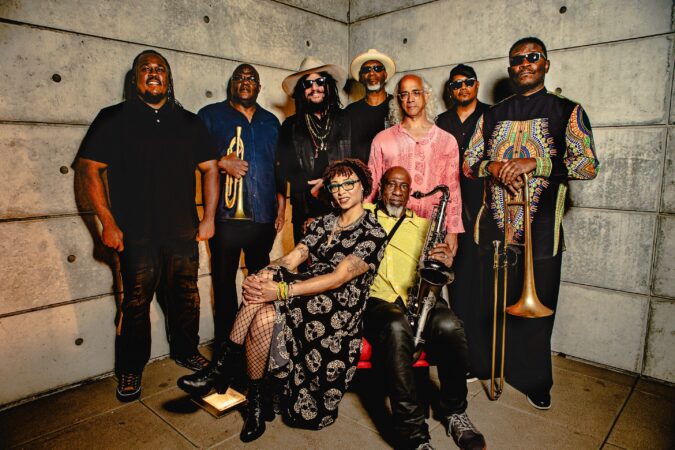
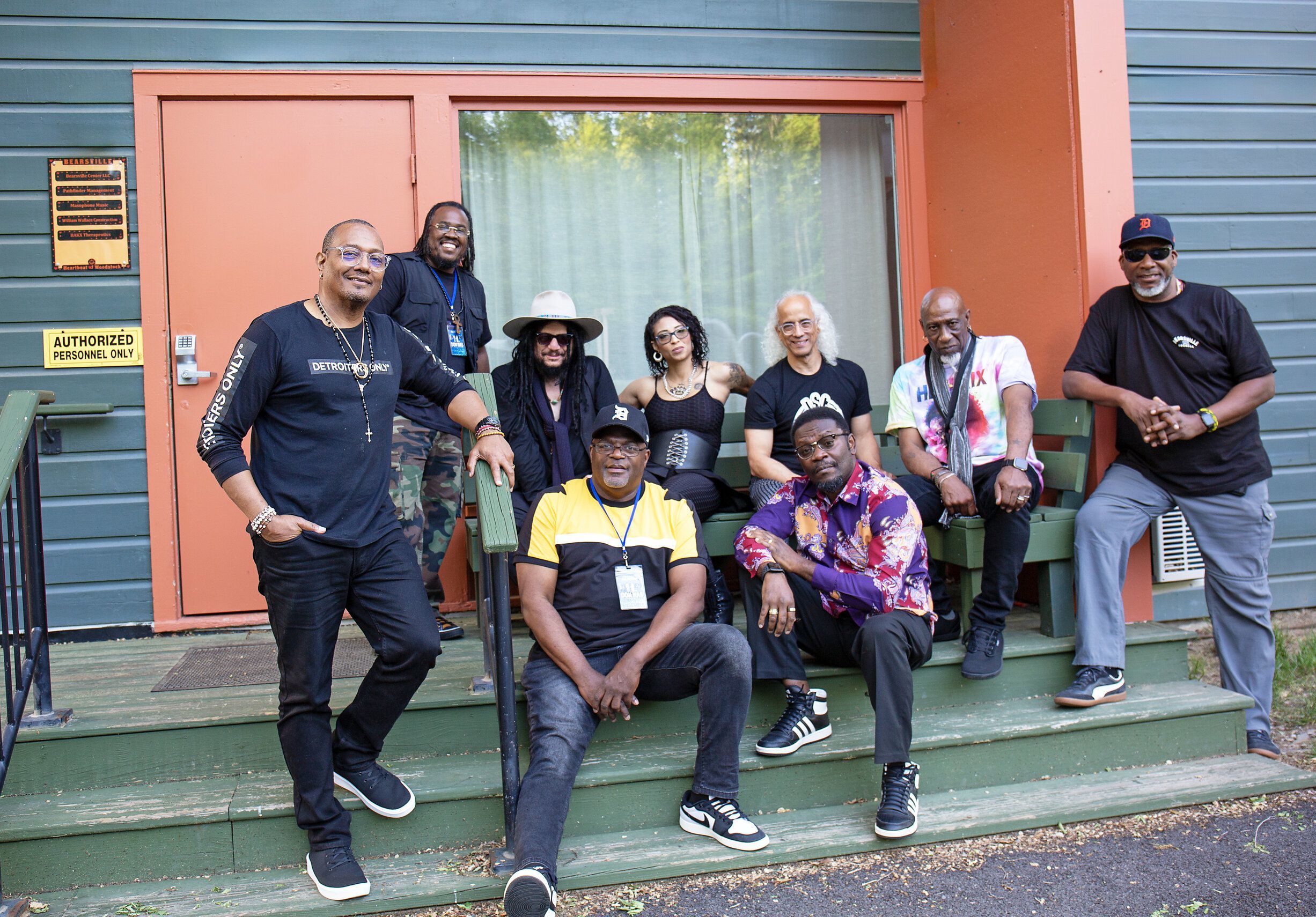
    Don Was’ show with the Pan-Detroit Ensemble at Ardmore Music Hall on Wednesday was always going to be, in part, a tribute to the music of the Grateful Dead.

    Along with digging deep into the rugged, funky sounds of their hometown — as the bassist and Grammy-winning producer and his bandmates do on their new album, Groove in the Face of Adversity — the date will also include a performance of the Dead’s 1975 album, Blues for Allah, in its entirety.

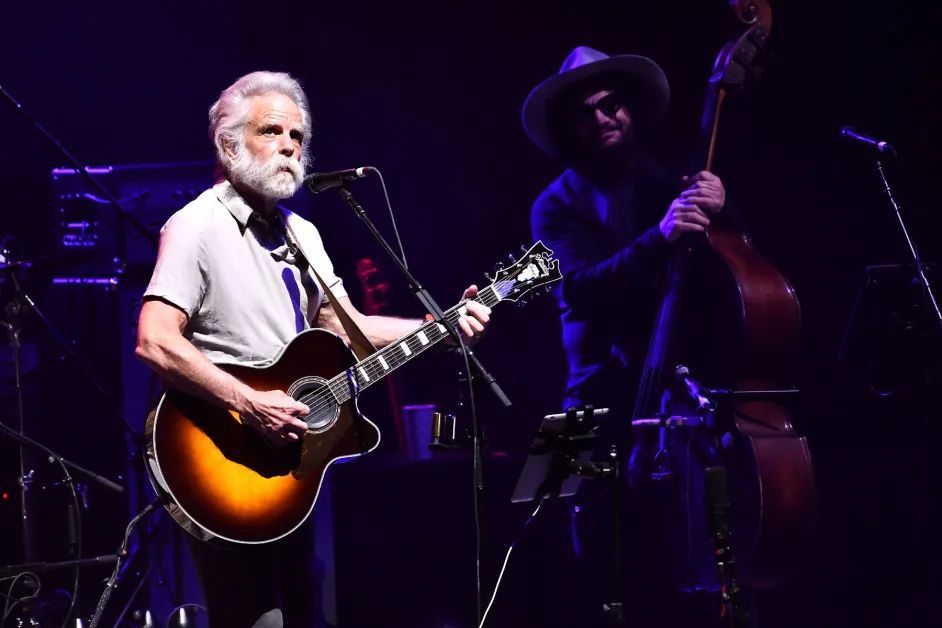
    But now the Dead community is reeling from the loss of Bob Weir, the singer-guitarist who cofounded the Dead in 1965 and became a torch bearer for the band’s music in the decades since Jerry Garcia died in 1995.

    So when Was and his eight-piece band return to the Main Line venue where they played in June at the Music Hall’s annual “Unlimited Devotion” Dead celebration, the show will be an opportunity for Philly Dead fans to mourn Weir, who died Saturday at 78.

    It will also serve as a celebration of the short-shorts-wearing rhythm guitarist and vocalist who sang many of the psychedelic rock band’s most beloved songs, including “Sugar Magnolia,” “Truckin’,” and Blues for Allah’s “The Music Never Stopped.”

    Was is president of the esteemed Blue Note Records jazz label and the former coleader of art-pop band Was (Not Was), best known for the hit “Walk the Dinosaur.” His long list of production credits includes Bonnie Raitt, the Rolling Stones, Willie Nelson, Bob Dylan, and many others.

    He also toured extensively with Weir, playing double bass with Wolf Bros, the band formed in 2018 whose repertoire mixed country and jazz with the Dead’s mystical roots-music blend.

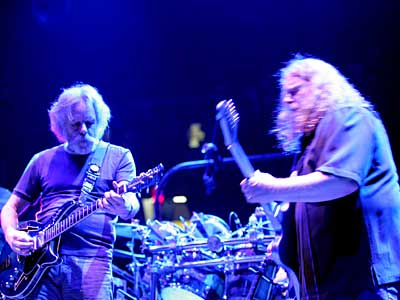
    Don Was (at right) with Bob Weir performing together as Wolf Bros in 2018.

    Weir played Philadelphia stages with the Dead or one of their many offshoots over 70 times — including a record 57 concerts at the Spectrum in South Philly before it closed in 2009. His last Philly show was a Wolf Bros gig at the Met in September 2023.

    Was learned of Weir’s death shortly before going on stage in Ann Arbor, Michigan, on Saturday, and broke the news to a crowd full of Deadheads.

    “I told them the story Bobby told me about the night Jerry died,” Was said, talking on Monday from New York, where he and the stellar Pan-Detroit Ensemble, which includes saxophonist David McMurray and powerhouse vocalist Steffanie Christi’an, were set to play the Blue Note before heading to Philly.

    “Bobby was in New Hampshire with [his side project] Ratdog [in 1995]. He told me, ’You go up there and play, man. The way you deal with grief is you go up there and make some good music for everybody.’

    “So that’s what we’re going to do for Bobby. We’re going to play a soulful show, as soulful as we can. [In Ann Arbor] I hung out with the audience afterwards, and everybody had their story about some encounter with Bob over the last 60 years. It was almost like a wake. It might just be that this tour is about bringing some comfort to people who suffered a loss. Even if you’re just a fan. Bobby is like a family member to people.”

    Was first saw the Dead in Detroit in 1972. “I always dug them,” he says, “and being a jazz head, I understood the method of improvisation. But I never got in a car and followed them around, so I don’t think you could have called me a Deadhead then.”

    You could now, as well as a key player in the enduring band’s long, strange post-Garcia afterlife. In 2015, while producing guitarist John Mayer in Los Angeles, Was introduced Weir and Dead drummer Mickey Hart to Mayer, who was boundlessly enthusiastic about Garcia and the band.

    “John waxed eloquent about his love of the Grateful Dead,” recalls Was, 73. “And those guys were just kind of bowled over by it. … And that turned into Dead & Company.”

    Wolf Bros was inspired by a dream of Weir’s. The singer and guitarist was a frequent collaborator with bassist Rob Wasserman, who had introduced Weir to Was in the 1990s.

    After Wasserman died in 2016, Weir called Was. “He said he had a dream where Wasserman said the reason he had introduced Bobby to me,” said Was, “was so I could take Rob’s place after he was gone. So he asked me if I wanted to start a trio with him and [drummer] Jay Lane. And I said, ‘Yeah, of course.’”

    Playing with Wolf Bros “changed everything for me,” Was says. Weir was “utterly fearless about suspending self-consciousness and playing freely in the moment without regret.”

    “There’s a tremendous allure to those songs, and to play them the way Bobby wanted to, which was with a beginner’s mind every night and just have a completely different adventure with a song every time you play it.”

    Don Was and the Pan Detroit Ensemble play Ardmore Music Hall on Wednesday, performing music from their album “Groove in the Face of Adversity” and also playing the Grateful Dead’s 1975 album “Blues for Allah” in its entirety.

    As head of Blue Note, Was is excited about the young artists on the storied home of Herbie Hancock and Wayne Shorter. He name-checks Joel Ross, Melissa Aldana, Paul Cornish, and Upper Darby native saxophonist Immanuel Wilkins.

    “They all have records coming out this year, and they’re all blowing my mind,” Was said. “People who see Immanuel Wilkins will be talking about seeing him the way they talk about seeing Coltrane. They still be listening 60 or 70 years from now.”

    On Groove in the Face of Adversity, Was and the PDE bring a loose, expansive sensibility to a wide range of material, from Hank Williams’ honky-tonk “I Ain’t Got Nuthin’ But Time“ to Cameo’s 1978 funk workout “Insane.”

    Most powerful is “This Is My Country,” the Curtis Mayfield title track from a 1968 album by the Impressions that stands as a statement of defiant patriotism in the face of oppression. “I realized it’s tragically more relevant now than it was in 1968,” Was said.

    “I feel an urgency” about playing with the PDE, “especially after Saturday night,” Was said. “I feel like I’m just starting to crack the code about playing bass. I want to play while I can” — he laughs — “while my fingers still work.”

    The PDE sound is more muscular and R&B-powered than the acoustic-based style he played with Weir in Wolf Bros. But Was says they’re connected in not-obvious ways.

    “When I first started to play with Bobby, I was haunted by Phil,” he said, speaking of bassist Phil Lesh, who died in 2024. “But I can’t play like Phil. Nobody can play like Phil. It was putting me in stylistic limbo. And then I quickly realized the most Grateful Dead thing you can do with a song is be yourself. Be who you are.

    “So that’s what our band does. We play like us. In the music business, we tend to think of anything that’s different as a marketing problem. But in fact, being different is your superpower. I’ve tried to impart that to artists on Blue Note and people I’ve produced. To be as different as you can be: That’s the only chance you’ve got!”

    Don Was and the Pan-Detroit Ensemble at Ardmore Music Hall, 23 E. Lancaster Ave., Ardmore, at 8 p.m. Wednesday. ardmoremusichall.com.

  • Meet the local producer taking you behind the scenes of the Eagles season on HBO’s ‘Hard Knocks’

    Meet the local producer taking you behind the scenes of the Eagles season on HBO’s ‘Hard Knocks’

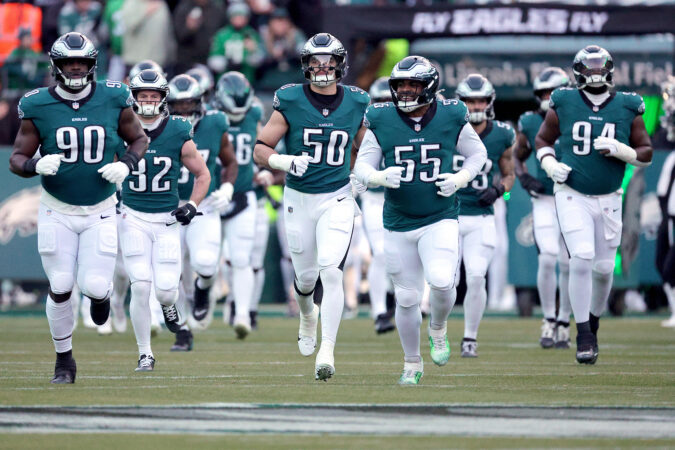
    On Tuesday, the final episode of HBO’s in-season Hard Knocks show following the NFC East will debut, which will encompass the Eagles’ season-ending loss to the San Francisco 49ers in the wild-card round.

    The season didn’t end the way that Eagles producer Shannon Furman may have hoped, but the final episode is a 50-minute look inside the Birds’ final game.

    Furman is the mastermind behind the Eagles’ segments of the show. Because the in-season Hard Knocks is released on the Tuesday the following week, Furman said it’s important for the film crew to come in with a plan each week on which players to spotlight.

    Unlike the training camp edition, this year’s in-season Hard Knocks covered the entire division, leaving the Eagles with approximately 12 minutes to fill on the show every week, edited down from several dozen hours of footage per week.

    “It’s so tough with the Eagles, because there’s so many guys and there are so many choices,” Furman said. “It ends up happening, like, ‘Who has an event this week? Who’s doing something?’ Week 1, it was like, ‘Let’s follow the quarterback,’ and then we had heard everybody saying Jordan Davis was a big personality.”

    The team filming the footage sent it in batches to the editing team in Mount Laurel each day leading up to Tuesday’s release date, flagging segments it particularly liked or thought would be good to include. Sometimes, like after the Monday Night Football loss to the Chargers in November, the filming crew submitted the last of the footage after midnight, less than 24 hours before the episode aired.

    There’s so much footage that often gets cut for time or is reused later. Furman said the Hard Knocks team shot a lot of footage of Davis for the first episode, which was released on Dec. 2, that got cut because of time restraints. But she loved the segment so much that they eventually worked him into a later episode.

    Hard Knocks also mics up players during games, and the game footage caps the episode. Furman quickly learned that some players were much better mic’d up than in an interview setting, like DeVonta Smith.

    “He’s a quiet guy off the field, and then he gets on the field and he turns into a completely different person,” Furman said. “Everybody is a little bit different. Some people stay completely the same. Some people get more quiet when they’re on the field than they are when they’re off, so you just get to see all different sides of people.”

    Furman hoped that the show provided a new look into the team beyond what spreads on social media. She was struck most by the passion the players had for coach Nick Sirianni, and how much they respected and related to him personally.

    “As a person who grew up in Philadelphia, learning about Nick, he is Philadelphia,” Furman said. “Everyone should love this guy, because he is the definition of our city, the fiery, where maybe it comes across as arrogance at times, but at the same time you still love him. It’s like a lovable arrogance. He’s perfect for this city.”

  • Mummers string band competition will duke it out at the Linc

    Mummers string band competition will duke it out at the Linc

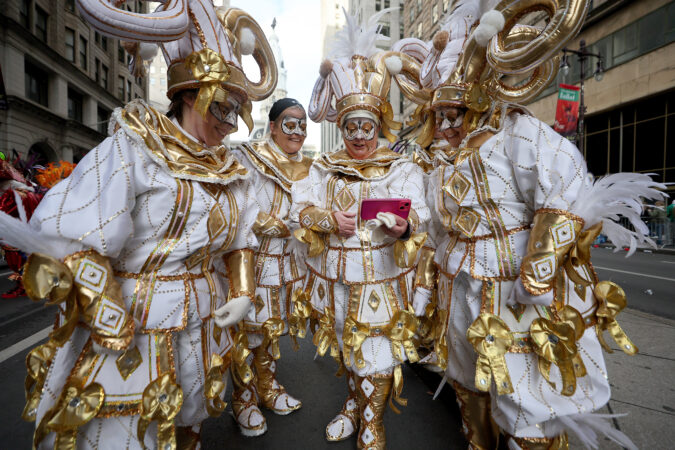
    While the postponement of the Mummers’ string band competition could have put a damper on an otherwise joyous New Year’s Day in Philadelphia, the string bands may have gotten a sweeter prize out of the ordeal.

    The judged string band competition will now take place at Lincoln Financial Field on Jan. 31 at 2 p.m., after 30 to 60 mph winds on Jan. 1. forced organizers to reschedule, parade officials announced on Sunday.

    The annual competition is still open to the public, with tickets available on Ticketmaster for $12 to $25, and will be broadcast on the same channel as the parade, on WFMZ-TV. WFMZ has not announced a time for the television broadcast but said it will be later in the day on Jan. 31.

    City officials and parade organizers decided to postpone the competition once extreme wind and unexpected snow damaged several performance props and contributed to a few minor injuries, according to the Philadelphia Mummers String Band Association (PMSBA).

    Despite the postponement of the competition, string bands continued to perform for paradegoers in full costume and makeup, honoring the parade’s historic milestone of 125 years, said Sam Regalbuto, PMSBA president, in a statement.

    How to watch

    The Mummers’ rescheduled string band competition can be watched in person, online, or on television.

  • Grateful Dead founding member Bob Weir has died at 78

    Grateful Dead founding member Bob Weir has died at 78

    LOS ANGELES — Bob Weir, the guitarist and singer who as an essential member of the Grateful Dead helped found the sound of the San Francisco counterculture of the 1960s and kept it alive through decades of endless tours and marathon jams, has died. He was 78.

    Mr. Weir’s death was announced Saturday in a statement on his Instagram page.

    “It is with profound sadness that we share the passing of Bobby Weir,” a statement on his Instagram posted Saturday said. “He transitioned peacefully, surrounded by loved ones, after courageously beating cancer as only Bobby could. Unfortunately, he succumbed to underlying lung issues.”

    The statement did not say where or when Mr. Weir died, but he lived in the San Francisco Bay Area for most of his life.

    Mr. Weir joined the Grateful Dead — originally the Warlocks — in 1965 in San Francisco at just 17 years old. He would spend the next 30 years playing on endless tours with the Grateful Dead alongside fellow singer and guitarist Jerry Garcia, who died in 1995.

    Mr. Weir wrote or co-wrote and sang lead vocals on Dead classics including “Sugar Magnolia,” “One More Saturday Night,” and “Mexicali Blues.”

    After Garcia’s death, he would be the Dead’s most recognizable face. In the decades since, he kept playing with other projects that kept alive the band’s music and legendary fan base, including Dead & Company.

    The Dead were beloved in Philadelphia. “Only sports teams have played the Spectrum more than the Grateful Dead,” Inquirer music critic Dan DeLuca wrote when the band played its last concert at the now-demolished arena on May 2, 2009. DeLuca wrote that the Dead had sold out the arena more than 50 times.

    “For over sixty years, Bobby took to the road,” the Instagram statement said. “A guitarist, vocalist, storyteller, and founding member of the Grateful Dead. Bobby will forever be a guiding force whose unique artistry reshaped American music.”

    Mr. Weir’s death leaves drummer Bill Kreutzmann as the only surviving original member. Founding bassist Phil Lesh died in 2024. The band’s other drummer, Mickey Hart, practically an original member since joining in 1967, is also alive at 82. The fifth founding member, Ron “Pigpen” McKernan, died in 1973.

    Dead and Company played a series of concerts for the Grateful Dead’s 60th anniversary in July at Golden Gate Park in San Francisco, drawing some 60,000 fans a day for three days.

    Born in San Francisco and raised in nearby Atherton, Mr. Weir was the Dead’s youngest member and looked like a fresh-faced high schooler in its early years. He was generally less shaggy than the rest of the band, but he had a long beard like Garcia’s in later years.

    The band would survive long past the hippie moment of its birth, with its ultra-devoted fans known as Deadheads often following them on the road in a virtually nonstop tour that persisted despite decades of music and culture shifting around them.

    “Longevity was never a major concern of ours,” Mr. Weir said when the Dead got the Grammys’ MusiCares Person of the Year honor last year. “Spreading joy through the music was all we ever really had in mind, and we got plenty of that done.”

    Ubiquitous bumper stickers and T-shirts showed the band’s skull logo, the dancing, colored bears that served as their other symbol, and signature phrases like “ain’t no time to hate” and “not all who wander are lost.”

    The Dead won few actual Grammys during their career — they were always a little too esoteric — getting only a lifetime achievement award in 2007 and the best music film award in 2018.

    Just as rare were hit pop singles. “Touch of Grey,” the 1987 song that brought a big surge in the aging band’s popularity, was their only Billboard Top 10 hit.

    But in 2024, they set a record for all artists with their 59th album in Billboard’s Top 40. Forty-one of those came since 2012, thanks to the popularity of the series of archival albums compiled by David Lemieux.

    Their music — called acid rock at its inception — would pull in blues, jazz, country, folk, and psychedelia in long improvisational jams at their concerts.

    “I venture to say they are the great American band,” TV personality and devoted Deadhead Andy Cohen said as host of the MusiCares event. “What a wonder they are.”

  • The New York Times agrees Philly is the place to be (locals still skeptical) | Weekly Report Card

    The New York Times agrees Philly is the place to be (locals still skeptical) | Weekly Report Card

    The New York Times also names Philly the top place to visit in 2026: A- (yet again)

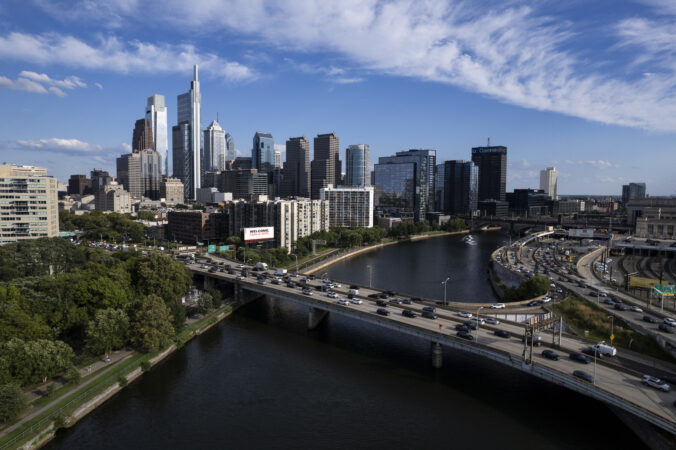
    Well, here we go again. Philadelphia has once more been crowned the world’s best place to visit in 2026 — this time by the New York Times, which means we are now in the extremely Philly position of being right twice and still deeply suspicious about it.

    Yes, the reasons are familiar. The Semiquincentennial. The World Cup. The All-Star Game. Fireworks, parades, exhibitions, concerts, TED talks, themed balls, and a calendar so packed it feels like someone dared the city to see what would break first. It’s a lot. Enough, apparently, to push Philly to the top of the Times’ “52 Places to Go” list.

    But at this point, the events are almost beside the point. Big moments don’t explain why people want to be here, they just give them an excuse.

    Philly keeps landing on these lists because it’s a place that feels alive even when nothing “special” is happening. It’s opinionated without being curated. Historic without being precious. Welcoming in a way that involves some yelling, a little side-eye, and eventually someone telling you where to eat. You don’t visit Philly to be impressed. You visit to be absorbed.

    So why not an A+? Because every time the outside world decides Philly is the place to be, the city pays for it in very real ways. Hotel prices climb. SEPTA gets stress-tested. Streets designed for horse traffic brace for global crowds. And locals are once again asked to host a massive party while still making it to work, daycare pickup, and whatever delayed train they’re already standing on.

    There’s also the small matter of validation fatigue. Philly didn’t suddenly get good because the New York Times said so — just like it didn’t when the Wall Street Journal said it. The city’s been doing this for a long time, whether or not anyone was paying attention.

    Why?
    byu/UnionAdAgency inphilly

    ‘Avoid Philadelphia’ road sign goes viral: A

    Nothing says Philadelphia quite like being named the top travel destination in the world for 2026 and, at the exact same time, going viral for a road sign that simply reads: “Avoid Philadelphia.” No explanation. No branding. Just a warning.

    The photo resurfaced on r/philly and immediately became a public forum for collective truth-telling. When one user asked, “Why?” the answers poured in: “The usual reasons.” “Mental health reasons. Financial reasons.” “SEPTA.” Another went full blunt-force: “Bad things happen in Philly.”

    Of course, the Eagles entered the chat. “Eagles lost yesterday,” one commenter offered. Another countered, “Or Eagles won yesterday… Could be Eagles just did a thing. Go Birds.” Honestly, both feel correct.

    Then came the traffic trauma. “Spend a day on the Blue Route,” someone wrote — a sentence that should probably be included in driver’s ed. One person proposed Google Maps should add a new setting: “avoid highways, avoid toll roads, avoid Philadelphia.”

    But buried in the comments was the buzzkill reality check: This sign is almost certainly old. Several users pointed out it likely dates back to the I-95 bridge collapse in 2023, when avoiding Philadelphia was not a vibe, but a Department of Transportation directive. “Why are you posting a 5+ year old pic?” one top commenter asked, ruining the mystery but improving the accuracy.

    But the timing is what makes this perfect. As the Wall Street Journal and the New York Times roll out the red carpet for 2026, locals are standing off to the side holding a faded road sign like, just so you know. It’s not anti-tourism. It’s informed consent.

    An A for honesty, context, and a comment section that somehow functions as a city guide, traffic alert, sports recap, and warning label… even when the photo is old.

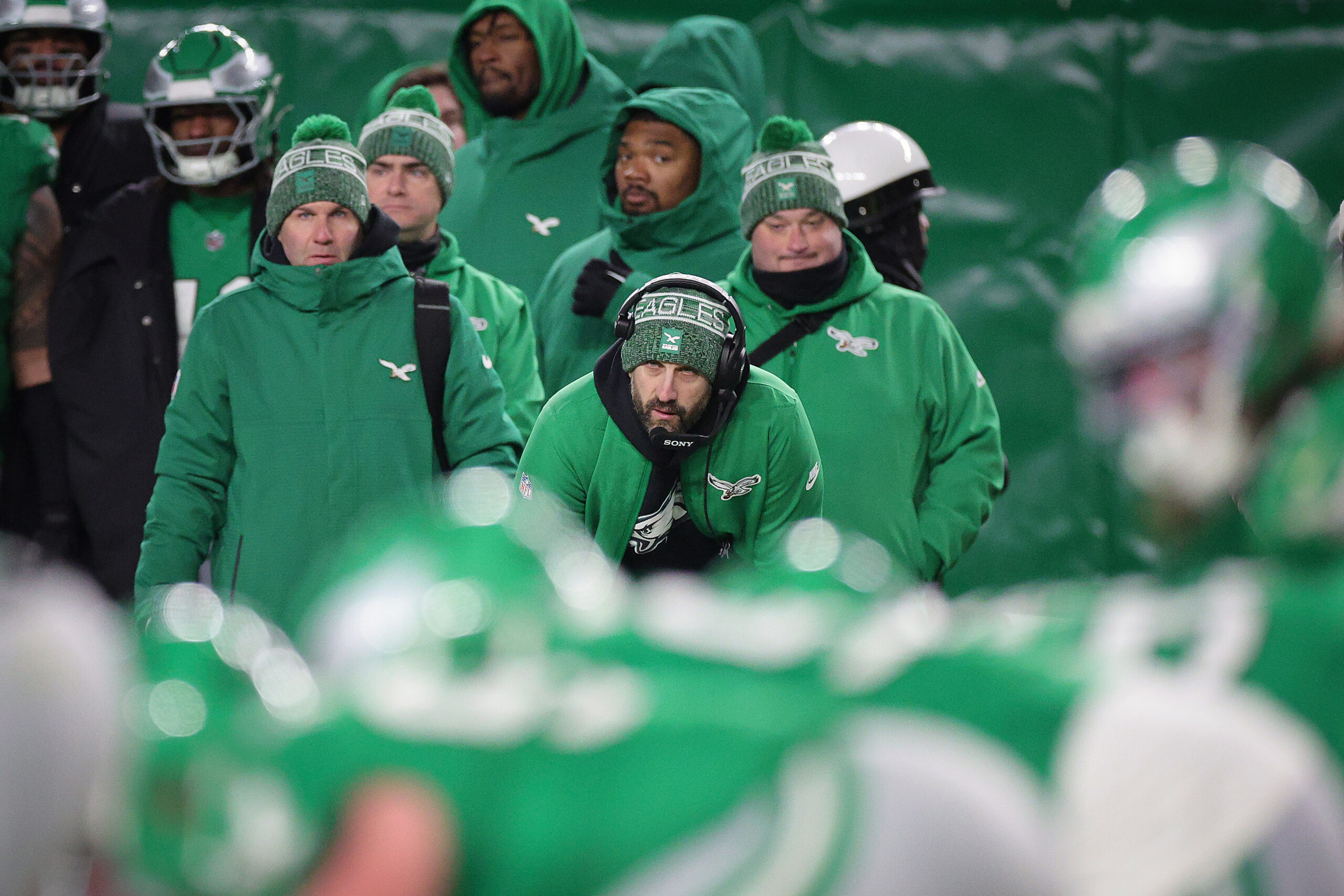
    Philadelphia Eagles head coach Nick Sirianni (center bottom) watches his team play the Washington Commanders at Lincoln Financial Field in Philadelphia on Sunday, Jan. 4, 2026.

    Eagles start the playoffs as the No. 3 seed: B-

    The Eagles enter the playoffs as a No. 3 seed, a position that history treats like a warning label. The math is rude: Few No. 3 seeds make the Super Bowl, and most of them don’t even sniff it. The Eagles themselves have tried this route before and usually wound up packing up by the divisional round. Not great.

    And yes, this is at least partially self-inflicted. Resting the starters in Week 18 cost them a real shot at the No. 2 seed and an objectively easier path. That decision is already being litigated in every bar, group chat, and radio segment. And it will keep getting relitigated until either A) the Eagles lose or B) they win enough that no one wants to admit they were wrong.

    Here’s the thing, though: This specific matchup is not terrifying.

    The 49ers limping into the Linc with injuries, tired legs, and a defense that is no longer the Final Boss version Philly remembers? That’s manageable. The Eagles’ defense has been the most reliable unit all season, and if this game turns into trench warfare, that favors the Birds. Saquon Barkley doesn’t need to be vintage playoff Saquon yet. He just needs to exist long enough to keep the offense functional.

    Still, the unease is earned. This is a team with Super Bowl expectations walking a historically unfriendly path, powered by a defense everyone trusts and an offense no one fully believes in. That’s not nothing. That’s the whole tension.

    So yes, the road is harder than it needed to be. Yes, the margin for error is thin. And yes, if this goes sideways, the No. 3 seed will be Exhibit A in the postmortem.

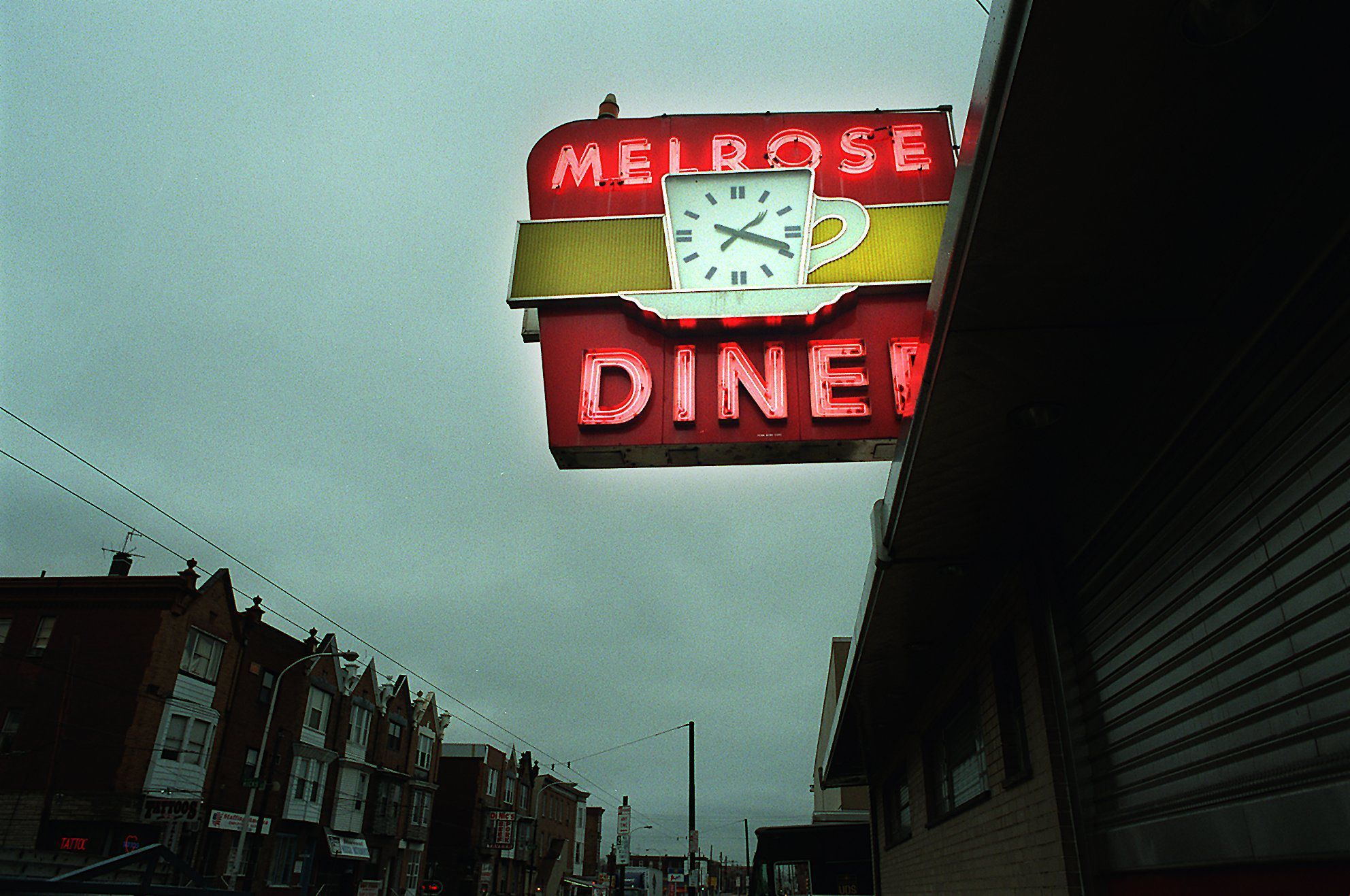
    In this photo from 2000, the Melrose Diner sign shines bright on a gray day.

    The Melrose Diner sign hits Facebook Marketplace: A+

    Nothing says Philadelphia like scrolling Facebook Marketplace and suddenly finding the neon soul of a demolished diner listed as “very heavy and totally cool.”

    Yes, the iconic Melrose Diner sign — red, yellow, stainless steel nostalgia and all — is apparently for sale. Not at auction. Not through a preservation society. Not behind glass in a museum. Just vibes, photos, and the immortal Marketplace closer: “Serious inquiries only.”

    There’s something perfectly on-brand about this. The Melrose didn’t go out quietly. It didn’t get a tasteful plaque or a respectful archival goodbye. It got torn down for apartments, went into “storage,” and has now reemerged like a ghost asking for a sizable offer and a pickup truck.

    The listing itself is doing a lot of work: four pieces, sold as a set, “used — good,” with the helpful reminder that Olga’s Diner once sold signage for $12,000. Philly translation: Don’t lowball me, I know what I’ve got.

    Selling the sign feels a little like selling a family photo album. The Melrose wasn’t just a diner — it was late nights, early mornings, post-bar waffles, post-court appearance coffees, and at least one story involving a mobster, depending on who you ask.

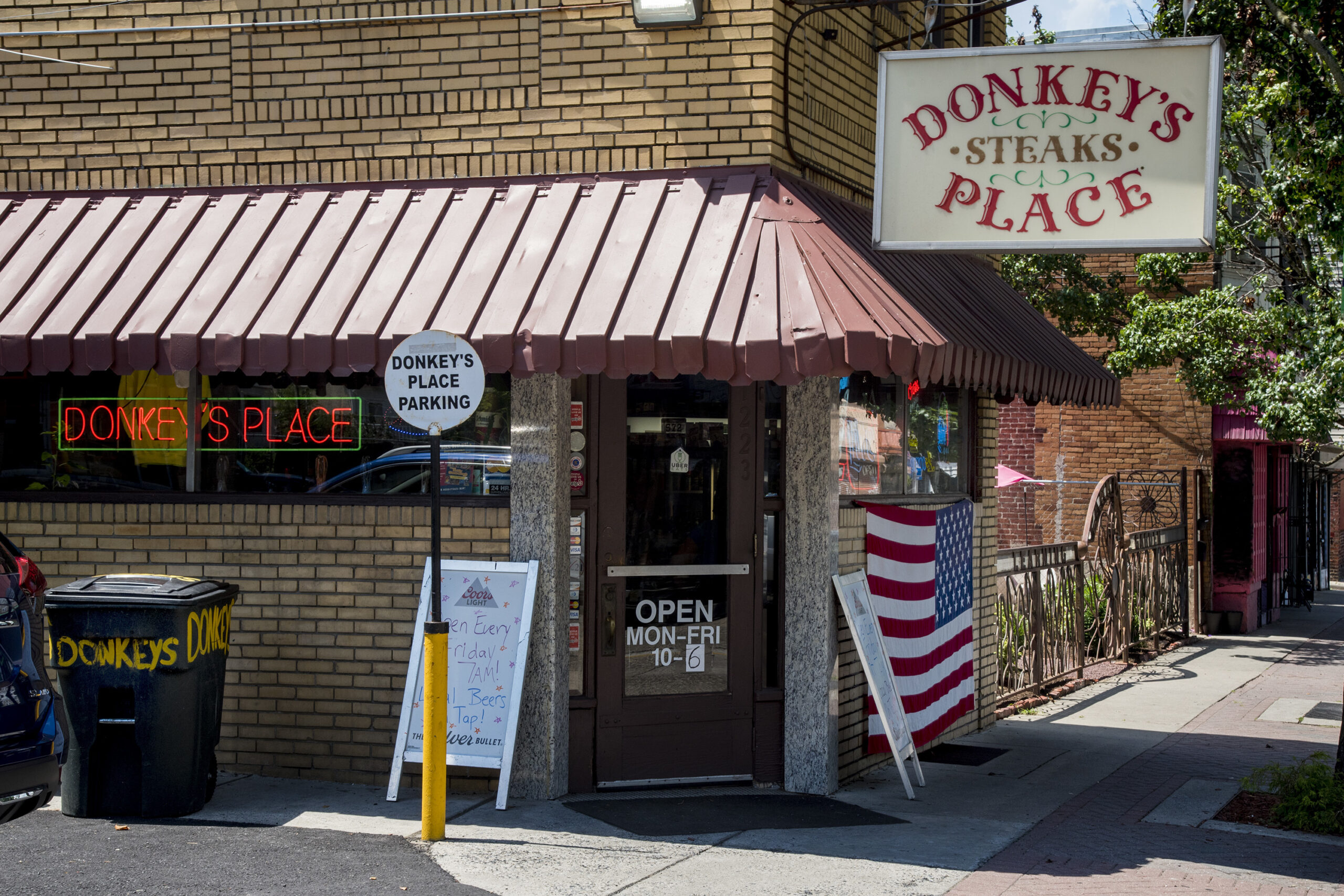
    Donkey’s Place in Camden on July 18, 2018, one of 10 eateries Anthony Bourdain visited in a 2015 episode of his “Parts Unknown” show in New Jersey.

    Donkey’s Place walrus bone theft: D (return it, coward)

    There are lines you don’t cross in this city, and stealing a beloved bar’s decades-old walrus penis bone is absolutely one of them.

    Donkey’s Place didn’t ask questions about the bone for years — it just existed, looming behind the bar like a strange guardian angel of cheesesteaks and beers. It wasn’t sentimental, it wasn’t precious. It was just there. Which somehow makes taking it worse.

    The alleged thief wrapped it in a scarf and walked out like this was Ocean’s Eleven: South Jersey Edition, and now the bar is left explaining to the internet why they’re asking nicely for a walrus baculum to be returned, no police report, no drama, just vibes and decency.

    The deduction from an A is only because this never should’ve happened. Otherwise, this is peak Philly-area energy: a historic bar, an inexplicable artifact, security footage, TikTok pleas, and a collective regional agreement that yes, this matters.

    Mail it back. No questions asked. Everyone will pretend this never happened.

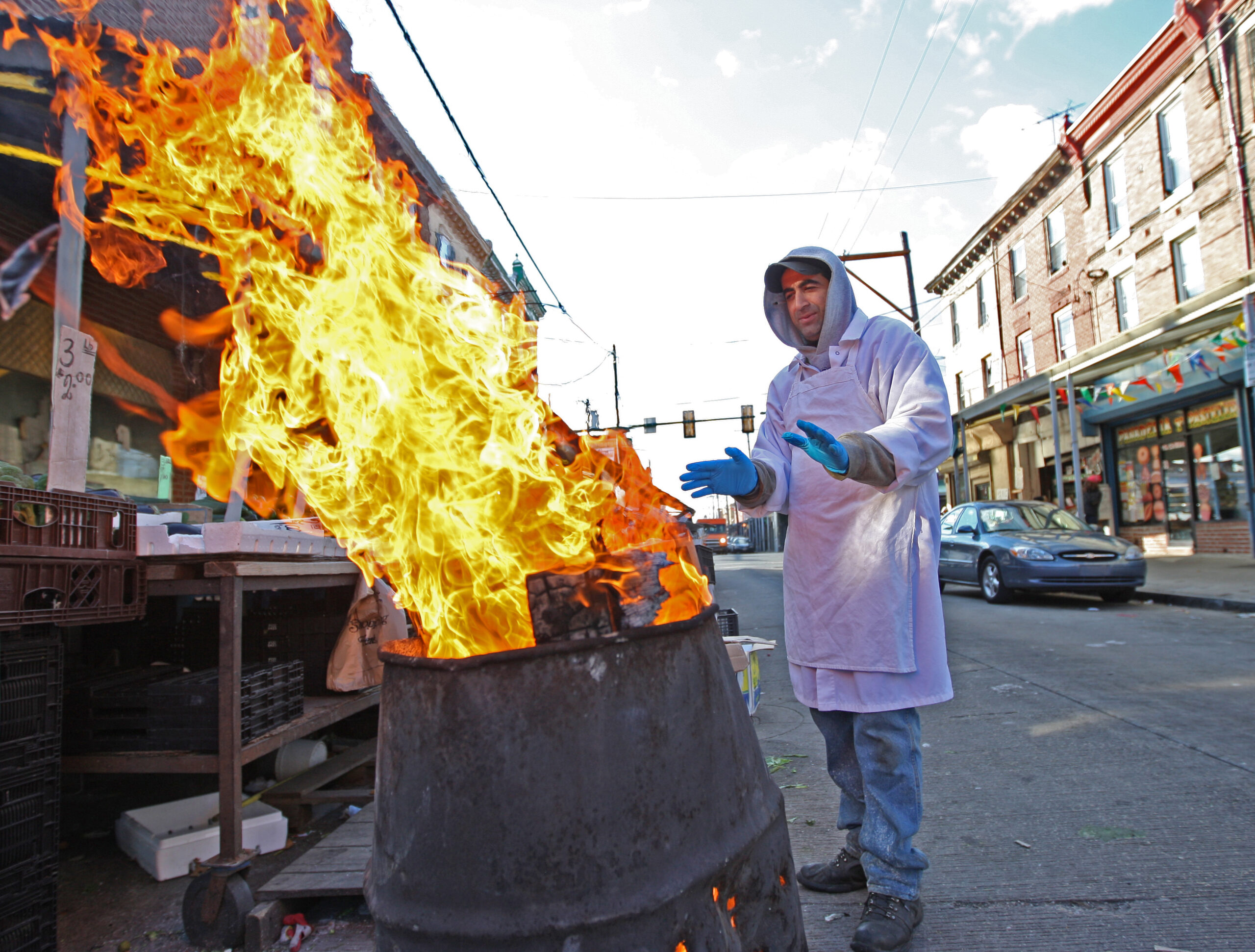
    In this Dec. 4, 2007 Inquirer file photo, Joe Carioti, of Carl’s Poultry, warms his hands on the first really cold day down at the market.

    Trash can fires are back on Ninth Street: A

    You don’t need a calendar to tell you winter has arrived in Philadelphia. You just need to walk down Ninth Street and see a trash can on fire.

    The barrels come back when mornings turn brutal and vendors are out before dawn, unloading boxes, setting up stalls, and bracing against the cold. This isn’t nostalgia or aesthetic — it’s practical. A few minutes of heat for hands that don’t get to stay in pockets, a pause before the work continues.

    They’re regulated, debated, occasionally questioned, and absolutely unmoved by any of that. Every winter, they come back anyway. Not as a statement, but as a fact of life.

    When spring shows up, they’ll disappear again. Until then, the fire’s on.

  • How is this Eagles fan keeping the faith? By churning out Billy Joel parodies

    How is this Eagles fan keeping the faith? By churning out Billy Joel parodies

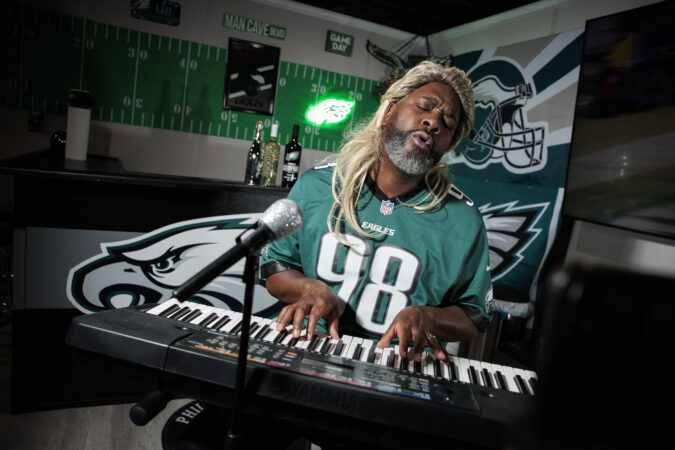
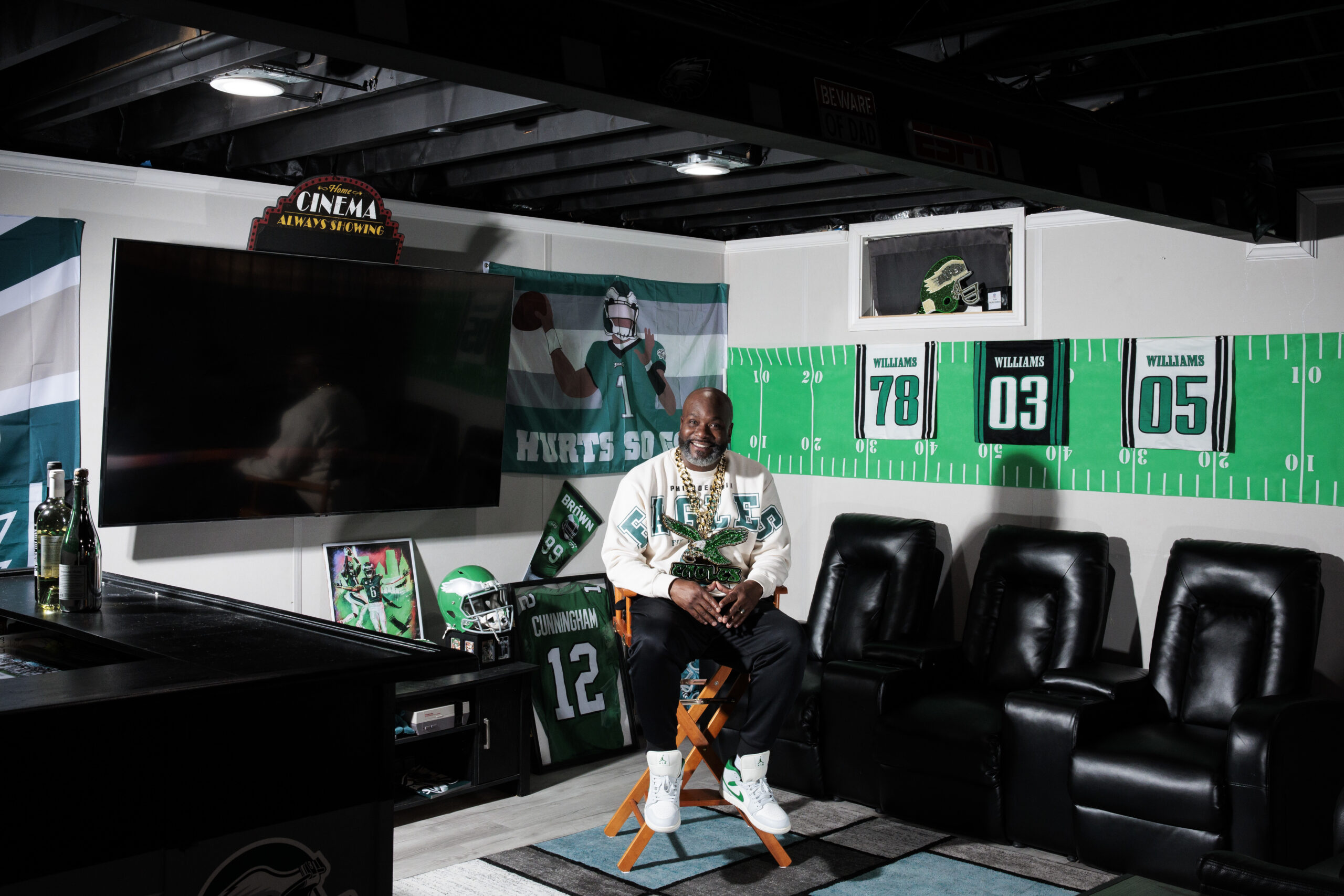
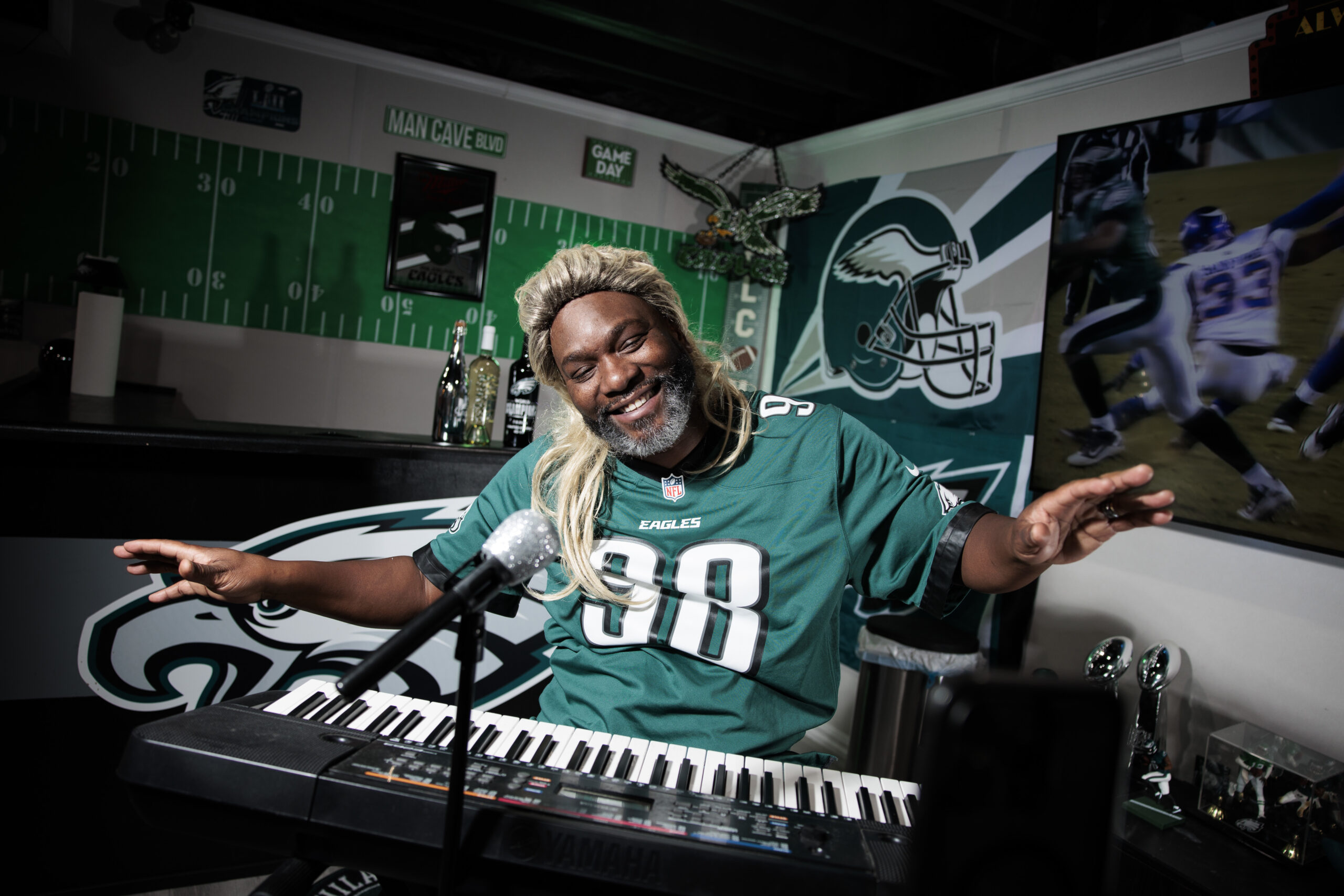
    Robert Williams III never knows which Yacht Rock tune or ’90s hip-hop jam he’ll parody when his beloved Birds take the field.

    But by the top of the fourth quarter, the Philadelphia Eagles fan and social media content creator not only has the song picked (more times than not, it’s a Billy Joel classic), but he has also written most of the lyrics, practiced the hook, the chorus, and the bridge.

    The result looks something like “Allen Down” — a hilarious remix of Joel’s 1982 hit “Allentown.”

    Williams, a retired Army veteran who served in the Afghanistan war, wrote that one as he watched the Birds beat the Buffalo Bills the Sunday after Christmas, clinching their spot in this Sunday’s first round of the NFL playoffs.

    In the video he’s dressed like a giant Eagle while clowning on Buffalo Bills quarterback Josh Allen. The clip has 19,000 likes on Instagram and tens of thousands of likes on TikTok and Facebook.

    “Philadelphia took Allen down

    Every time you looked he was on the ground.

    Vic Fangio did a heck of a job.

    I’m guessing the Bills drank too much eggnog,” the song goes.

    Williams’ cheeky videos, filmed in his Severn, Md., Kelly green man cave, have earned the Hamilton, N.J., native a combined 2 million followers on TikTok, Instagram, and Facebook. And a lot of those followers are from Philly.

    That includes Questlove, Jazzy Jeff, Chill Moody, State Rep. Joanna McClinton (D., Philadelphia), and legendary WDAS announcer Patty Jackson.

    Robert Williams III posed for a portrait at his home on Thursday, Jan. 8, 2026 in Severn, Md. Williams has an Instagram page where he performs parodies of popular songs with lyrics about the Eagles.

    Star social media influencer Gillie Da King, too, is in on the fun.

    Before the 2025 NFL season even started, former NFL player-turned-podcaster Cam Newton ribbed Jalen Hurts, saying he wasn’t one of the league’s elite quarterbacks. Gillie took offense and hazed Newton on social media all season.

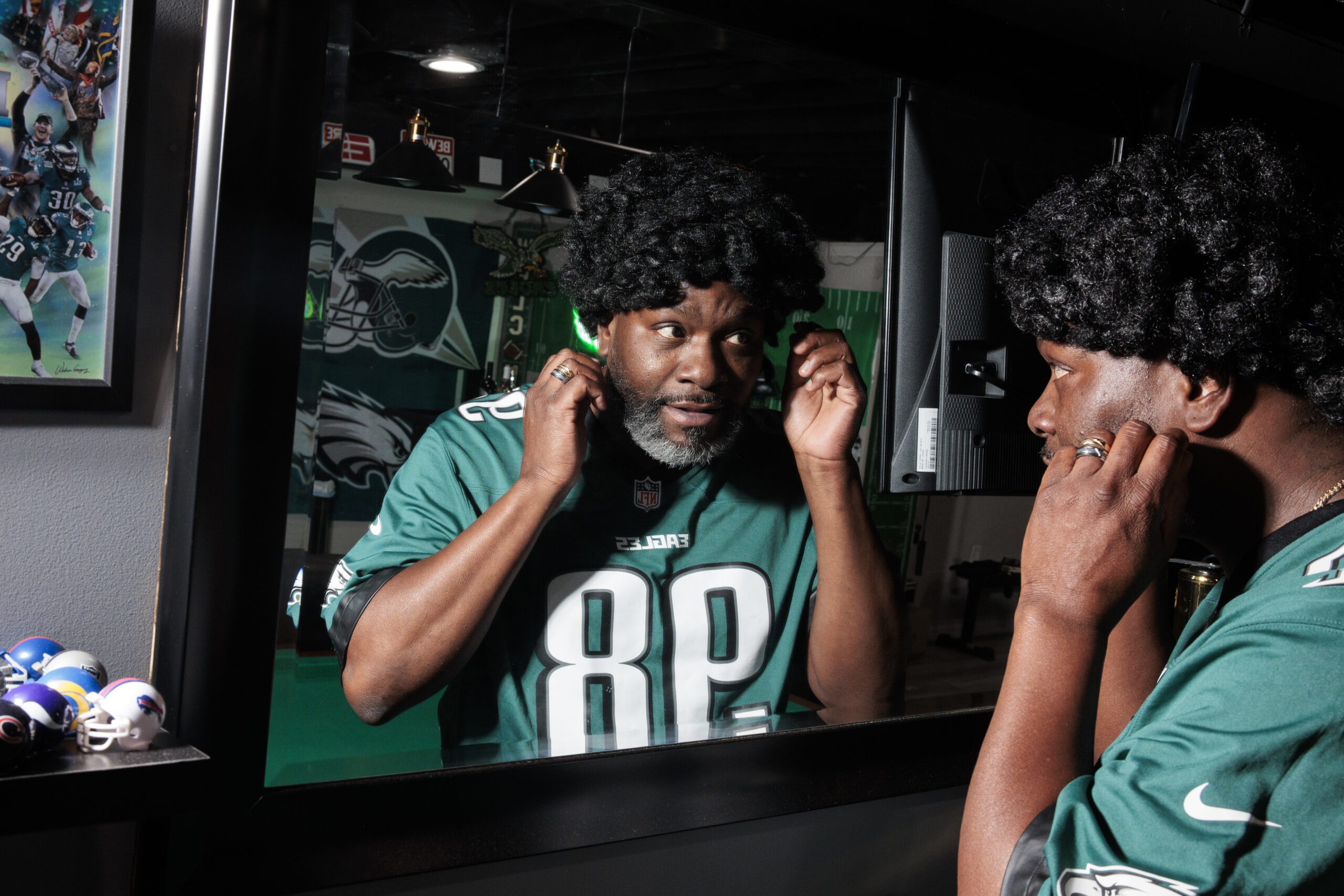
    After Hurts’ stellar game against the New York Giants in Week 8, Williams dropped a video sampling LL Cool J’s 1997 hit “4,3,2,1.” In it, Williams mocks Newton — complete with long hair, wide-brimmed hat, and round glasses offering a fake apology to Gillie through a series of crisp bars.

    Gillie liked and shared it.

    “I was like ‘Wow’,” Williams said. “That right there is a big thing for me.”

    Williams, who is known across social media as @robertwilliamsfilms, is also recognized as being among the influencers who trade in Gen X nostalgia, creators like Maria Ferrer and the Urban Rewind.

    His loyal fans include some of the biggest old-school rappers: Ice Cube, and Wu Tang Clan’s Ghost Face Killah and Inspectah Deck. Common began leaving friendly — albeit slick — comments on Williams’ parodies in Week 13 after the Birds’ devastating loss to the Chicago Bears.

    Williams quickly borrowed the arrangement of Common’s “Go,” changing the lyrics to “No.” That post has 74.3K likes on Instagram.

    Even famously estranged musicians Daryl Hall and John Oates both agree on Williams’ talent. Williams cover of Hall & Oates’ 1975 hit “Sara Smile” after Week 15’s game against the Las Vegas Raiders as ”Jalen Smile” drew likes and comments from each of the musicians.

    Williams’ devotion to the Eagles goes back to the mid-1980s when Buddy Ryan was coach and Randall Cunningham and Reggie White were on the team.

    “I fell in love with the passion they brought to the game,” he said

    Williams, 49, a fan of soft rock groups Tears for Fears, Toto, Air Supply, and Journey, watched a lot of MTV. He enjoyed Weird Al Yankovic’s parodies of ’80s icons Michael Jackson, Madonna, and later, Coolio.

    “I had such an admiration for Weird Al,” Williams said. “Me and my little brothers would walk to school making up our own lyrics … Songs would just pop in my head and I’d rearrange the lyrics.”

    He never stopped.

    Robert Williams III tries on one of his signature wigs for a portrait at his home on Thursday, Jan. 8, 2026 in Severn, Md. Williams has an Instagram page where he performs parodies of popular songs with lyrics about the Eagles.

    While still in the Army, Williams, now a husband and father of two, picked up a side hustle as a videographer, shooting weddings and other special events.

    “I was a student of YouTube University,” he said.

    COVID ended that gig but also marked the beginning of Williams’ social media career.

    He posted his first parody — “It’s Almost Thanksgiving” performed to the melody of The Golden Girls theme “Thank you for Being a Friend” — on social media in 2020.

    His bridge: “It won’t be a party, we’ll be talking to everyone on Zoom.”

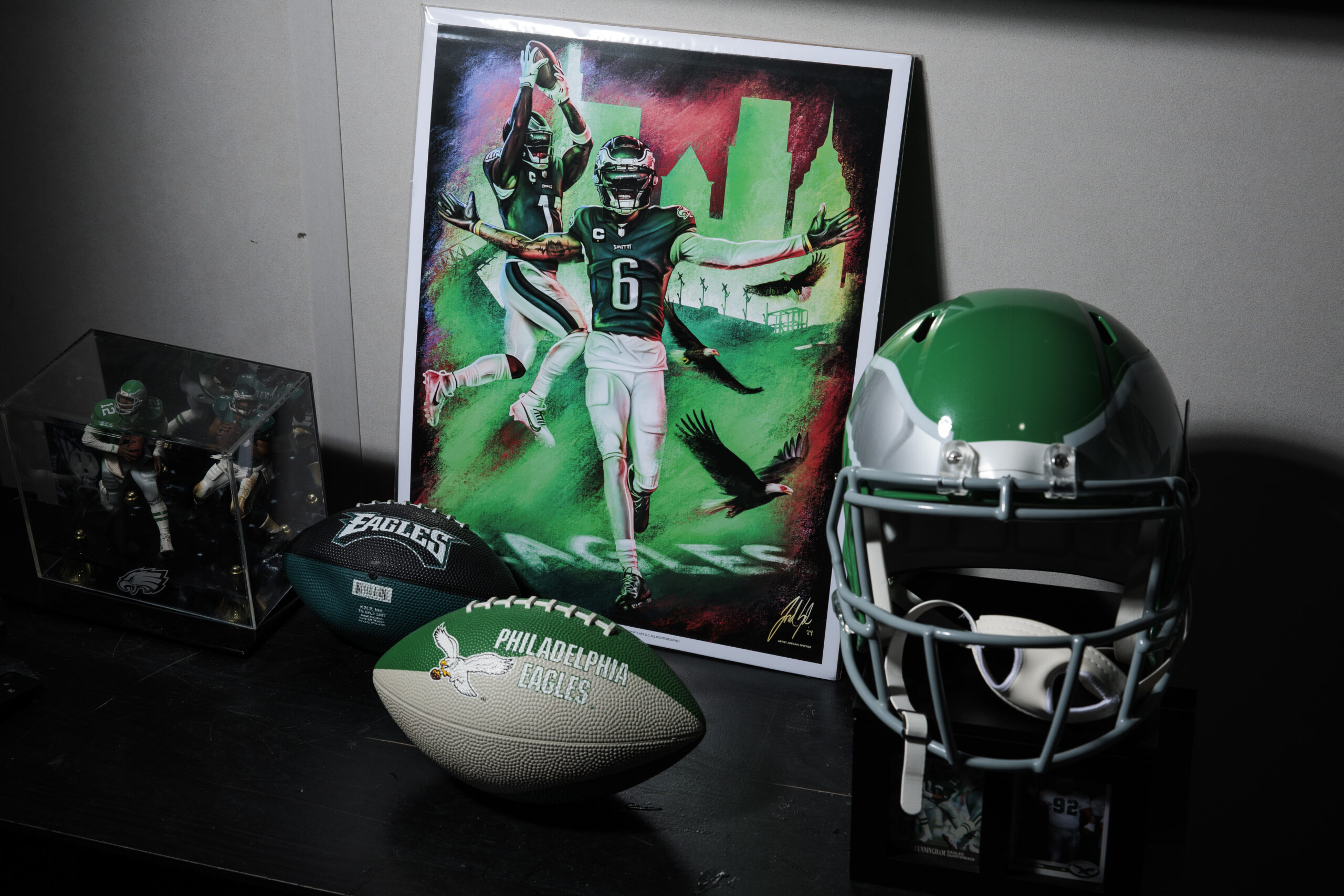
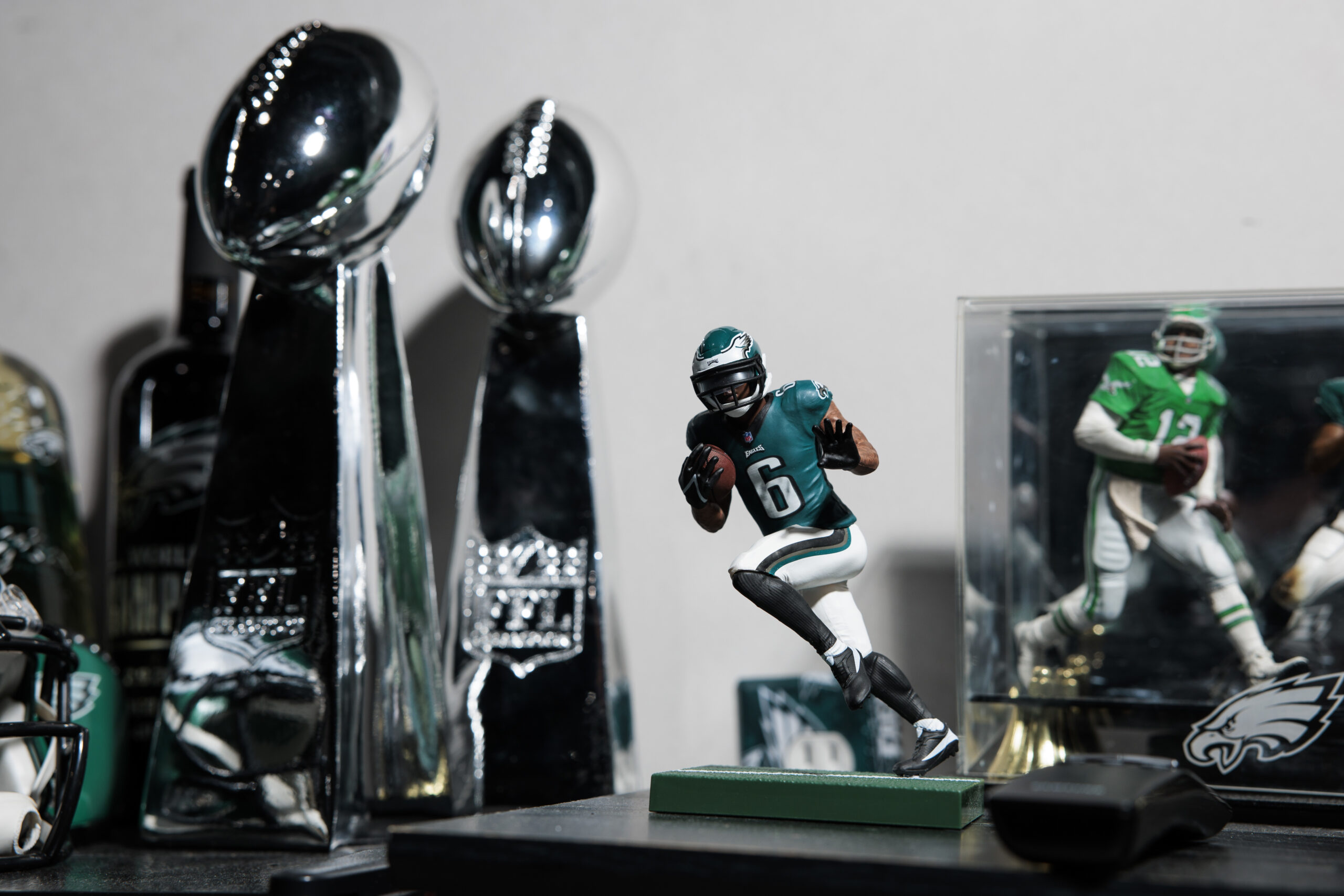
    Some of Robert Williams III’s Eagles collection at his home on Thursday, Jan. 8, 2026 in Severn, Md. Williams has an Instagram page where he performs parodies of popular songs with lyrics about the Eagles.

    He combined his love of sports and parodies during the 2023-24 NFL season. That first post centered on Williams’ disdain for the Dallas Cowboys. In it, his daughter slyly asks, “Daddy, how long has it been since the Cowboys won the Super Bowl?” Williams (also known as Billy Soul) puts on a strawberry blond wig and spoofs a 1984 Billy Joel hit: “For the Longest Time.”

    Some of Robert Williams III’s Eagles collection at his home on Thursday, Jan. 8, 2026 in Severn, Md. Williams has an Instagram page where he performs parodies of popular songs with lyrics about the Eagles.

    That video received 212K likes on Instagram and remains one of his top posts.

    “My Billy Joel parodies seem to do the best and I have a lot of fun doing them,” Williams said. “My favorite genres of music are hip-hop and R&B so those parodies are easy to me. When I’m doing Billy Joel, I’m challenging myself.”

    He is committed to posting an Eagles recap weekly during the 2025-26 season. This year his costumes are more elaborate — he has two boxes of wigs to choose from. His wife, Katrina, and his children, Rakim and Dayla, make regular appearances. He’s also monetized his page, earning a few hundred dollars a month.

    Williams’ videos do well because he’s fast. By the end of the game, not only is the song written but he has also cued up the footage to intersperse between verses. It takes him about a half an hour to record his voice and film the storyline.

    The videos are posted within two hours after the game ends.

    Robert Williams III posed for a portrait wearing his Hall & Oates wig at his home on Thursday, Jan. 8, 2026 in Severn, Md. Williams has an Instagram page where he performs parodies of popular songs with lyrics about the Eagles.

    But sometimes, Williams is scrambling.

    Last Sunday, after the Birds’ surprising fourth-quarter loss to the Washington Commanders, he had to quickly retool his version to Billy Joel’s “Keeping the Faith.”

    In the revamped final verse, he sang: “Some say sitting the starters was a good thing. Now we will play as the No. 3 seed. Now it’s time to be the Broad Street Bullies. ‘Cause the 49ers aren’t all that good and we’ll prove it at the Linc next week …”

    As for Sunday’s game, Williams is keeping the faith.

    “Some people think we can’t turn on a dime and win this whole thing,” Williams said. “But I believe we will.”

  • Washington National Opera bows out of Kennedy Center

    Washington National Opera bows out of Kennedy Center

    WASHINGTON — The Washington National Opera announced Friday that it had decided to end its arrangement with the Kennedy Center in the nation’s capital, though it said it was hoping for an “amicable transition.”

    “To ensure fiscal prudence and fulfill its obligations for a balanced budget, the WNO will reduce its spring season and relocate performances to new venues,” the Opera said in a statement.

    It said the decision stemmed from the Center’s new business model, which “requires productions to be fully funded in advance — a requirement incompatible with opera operations.”

    Kennedy Center spokesperson Roma Daravi told The New York Times, “After careful consideration, we have made the difficult decision to part ways with the WNO due to a financially challenging relationship.”

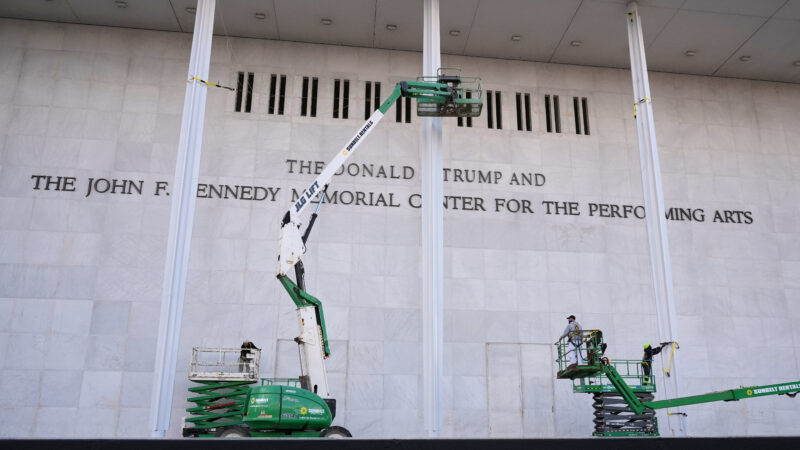
    Artists ranging from Hamilton creator Lin-Manuel Miranda to rock star Peter Wolf have called off events at the Kennedy Center since President Donald Trump ousted the previous leadership early last year and arranged for himself to head the board of trustees. The board’s decision in December to rebrand the venue the Trump-Kennedy Center led to a new wave of cancellations.

    WNO’s announcement did not mention Trump.