Category: Entertainment

Entertainment news and reviews

  • Whiskey history, covered bridges, and mountain luxury in Bedford, Pa. | Field Trip

    Whiskey history, covered bridges, and mountain luxury in Bedford, Pa. | Field Trip

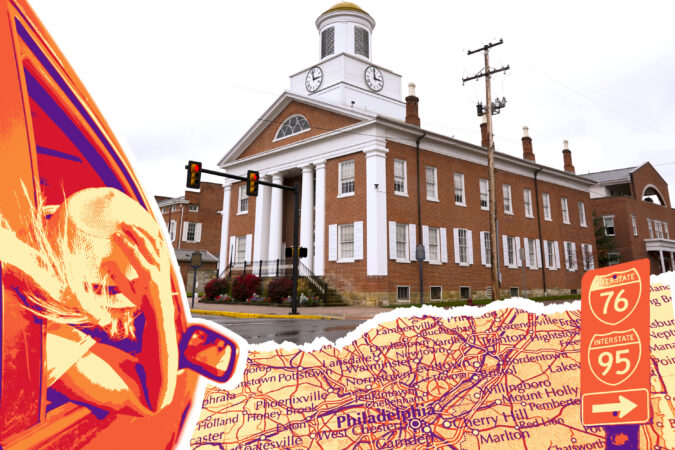
    In the 1790s, a coterie of Western Pennsylvanians rose up against a federal tax on whiskey. Unlike the Boston Tea Party, these protesters had representation in our young nation, but they still didn’t appreciate the taxation on the valuable product made from their excess grain. President George Washington rode in and staged a 13,000-strong militia outside Bedford — a settlement that had already played a vital role in the French and Indian War and was in its infancy as a tourism destination thanks to its salubrious mineral springs — and squashed what became known as the Whiskey Rebellion.

    For such a small town (less than 3,000 residents), Bedford casts an outsize historical shadow in Pennsylvania. Add one of America’s oldest luxury resorts still in operation, robust trout fishing, and pristine wilderness, and you’ve got an ideal spring road trip, about three and a half hours west of Philly.

    Start the car.

    Stay: Omni Bedford Springs Resort & Spa

    Bedford is a one-horse town when it comes to hotels, but that’s no diss on Omni Bedford Springs Resort & Spa. A bucolic compound of Greek Revival and Victorian buildings, this National Historic Landmark got its start in the late 1700s, when local doctor John Anderson bought the land and began building accommodations around its mineral-rich springs. (Thomas Jefferson was a fan.) Today, it’s a sprawling resort with more than 200 rooms, a botanical-inspired spa, two pools — the indoor one ranks among the oldest in the country — and grand lawns studded with firepits where families gather with s’mores and mountain pies.

    📍 2198 Sweet Root Rd., Bedford, Pa. 15522

    Fish: Yellow Creek

    Dozens of streams and creeks slice through the woods of Bedford County, making it a hugely popular fly-fishing spot in the spring. Yellow Creek, a trout-stocked limestone tributary of the Raystown Branch of the Juniata River, runs 10 miles through Loysburg and Hopewell, just northeast of Bedford. If you’ve got your own gear, you can fish independently, but for more of a guided experience, book a tour with local outfitter Trout Yeah.

    📍Yellow Creek, Bedford County, Pa.

    Cross: Hall’s Mill Covered Bridge

    Historic covered bridges crisscross the waterways of Bedford, and you can visit nine of them in the county’s Covered Bridge Driving Tour. Not officially on the tour but near Yellow Creek, the circa-1884 Hall’s Mill Covered Bridge spans the water in a charming white-and-red Burr Truss design that looks like it could’ve taken out the Maitlands in Beetlejuice.

    📍 196 St. Paul’s Church Rd., Hopewell, Pa. 16650

    Explore: Coral Caverns

    Hundreds of millions of years ago, an inland sea covered this land. When the water receded, it left behind the Coral Caverns, a subterranean limestone labyrinth under the town of Manns Choice, just west of Bedford. The fossil-rich complex includes a little museum on the site’s history and artifacts uncovered in the cave. Tours are private and available by appointment only.

    📞 Call or text 814-977-9570 to book.

    📍 Coral Caverns Private Driveway, Manns Choice, Pa. 15550

    Visit: Fort Bedford Museum

    Opened in 1958 and modernized into an impressive institution between 2015 and 2025, the Fort Bedford Museum presents the history of the titular 1758 fortification (a key site in the French and Indian War), and offers context on the area of Bedford and beyond. A quick walk from the museum takes you to the actual footprints of the original fort, tucked between the historic Anderson House and the river.

    📍 110 Fort Bedford Dr., Bedford, Pa. 15522

    Drink: Whiskey River Pub

    Before dinner, cosplay a thirsty member of the Whiskey Rebellion at the Whiskey River Pub, a low-slung, family-owned tavern that sits right on the water. Locals and tourists sit on swiveling barstools at the long bar, and a mural of whiskey barrels covers one wall. There’s a pool table, live music, and a deep cocktail menu that includes the Whiskey Rebellion Smash, Smoked Old Fashioned, and Bedford Blackberry Whiskey Sour. For a snack, don’t miss the house-made potato chips covered in blue cheese and balsamic.

    📍 537 E. Pitt St., Bedford, Pa. 15522

    Dine: Horn O Plenty

    Horn O Plenty calls itself a “freshtaurant,” which would be incredibly concerning if this old-timey, log-and-stone cabin on the outskirts of downtown were not so dedicated to local sourcing and from-scratch cooking. Many of the menu’s items have a “house” in front of them: house-made sodas (Italian vanilla cream, orange rosemary), house-blended teas, house-fermented kimchi. The beef for the burgers and steaks is pasture-raised. The restaurant uses its own eggs, grows stone fruit, and forages for wild goodies.

    📍 220 Wolfsburg Rd., Bedford, PA 15522
  • How to have a Perfect Philly Day, according to Philly rapper Kur

    How to have a Perfect Philly Day, according to Philly rapper Kur

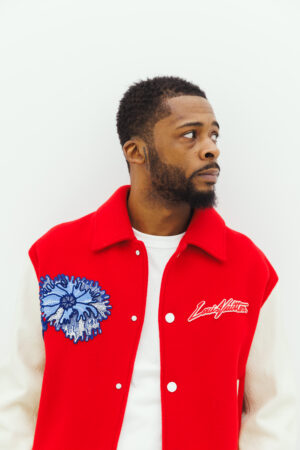
    Philly rapper Kur turns pain into poetry.

    Since his 2012 mixtape, Straight From The Kur, the Mount Airy native has transformed his past experiences into emotionally raw music that has drawn an impassioned fan base.

    Over the years, his fiery lyrics and hard-nosed delivery have become sharper, and his fan base and influence have grown. After striking hot with street anthems like “Peach Snapple” and an acclaimed release with 2024’s THURL, Kur has become a national mainstay.

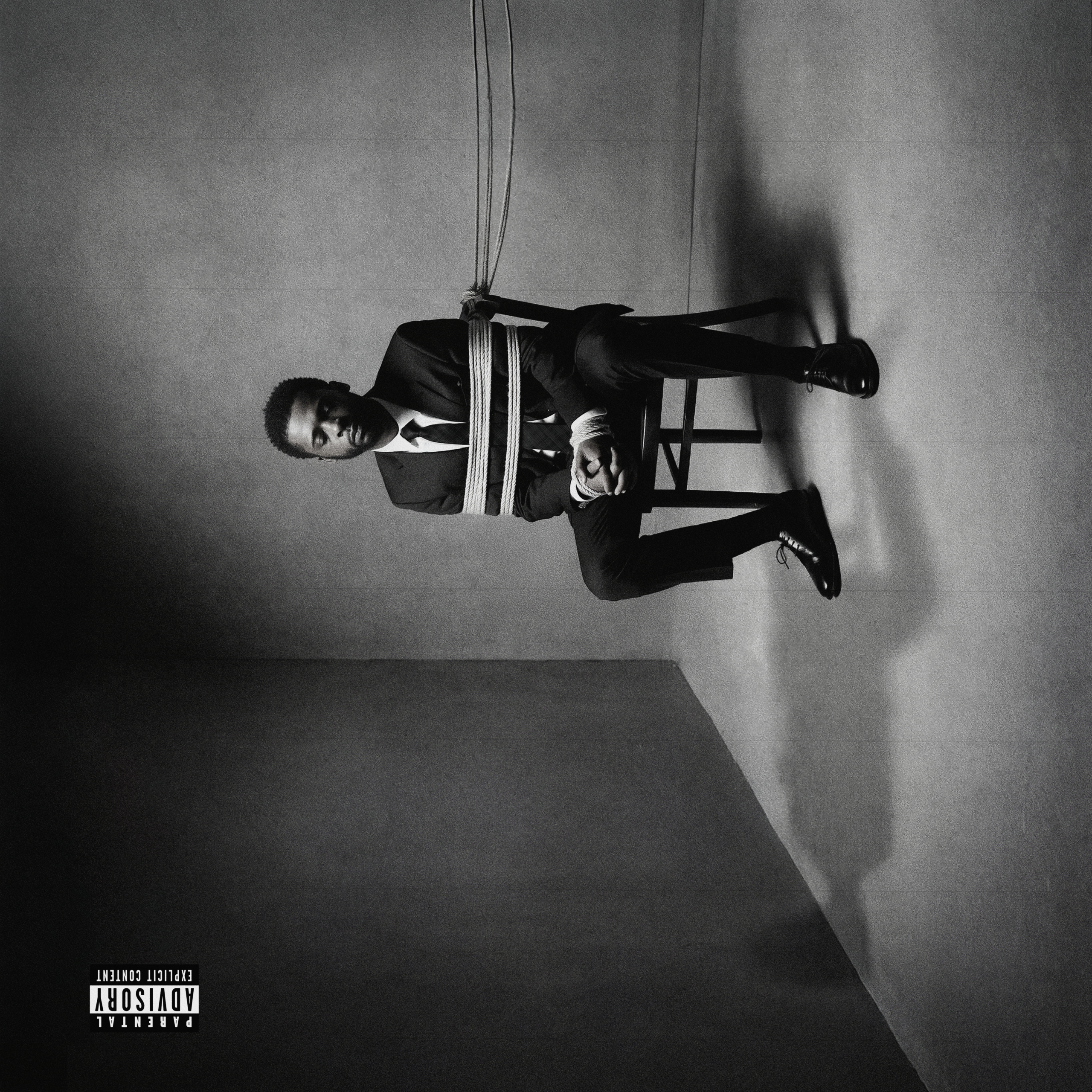
    The 31-year-old rapper, born Chauncey Ellison, continues the momentum with his new album ARD, released in late February.

    Kur said the project, which stands for both the Art of Release and Discipline and a shortened version of alright, marks a return to form.

    After 2025’s “Skip Da 8,” North Phjilly rapper Kur releases his newest album, “ARD.”

    “I was super transparent and vulnerable when I first came out. I think as the years went on, I started to put a filter on and shut [fans] out from certain things,” he said. “I think that was a contradiction because people were actually supporting me because I was transparent. I tried to get back to it as much as I could on ARD.”

    He’s peeling back the layers, letting fans in on his own personal struggles, in hopes that the two parties find a path of self-reclamation and healing.

    “When you dig a little deeper, everybody has built up trauma that they’re not releasing. And I think that people don’t hear, ‘Yo, you will be alright or you will be OK.’ Somebody may not have anybody to tell them that they will be OK. I think just to see it may change their perspective. I’m coming from a healing point.”

    We asked him about his perfect day in Philly. Here’s how he’d spend it.

    10 a.m.

    It’s different in the summer than the winter. If it’s summertime, I’m waking up and going to Kelly Drive, then stopping by Rita’s for a mango water ice. Or, I’m going to get a Philly Pretzel Factory.

    Noon

    I had to fall back on cheesesteaks, so I’m going to go to Bistro SouthEast on South Street. It’s not a heavy Philly staple, but that’s my kind of day in Philly.

    2 p.m.

    Look at clothes at Status and Creme on Second and Race Street. Or go to King of Prussia Mall. There’s also a place called Bullseye on 15th and Walnut Street. They have some good stuff in there. And there’s Common Ground [in Midtown Village] and [Center City’s] Lapstone & Hammer.

    6 p.m.

    I go to a smoothie truck in Fishtown and then I usually go to the studio. I’m telling you what I do, so I don’t want to make nothing up. I can’t lie.

    3 a.m.

    I leave the studio at 2 or 3 a.m. I go to Healthy Picks in Center City because it’s 24 hours. It’s the only place in Philly where you can get fresh fruit at 3 a.m. That changed my whole jawn. Nothing against Wawa, but when you go there and you get fruit, it isn’t really how you want it. To have a jawn where they chop it up and it’s fresh and super icy.

  • Neil Sedaka, the singer-songwriter behind dozens of hits of the 1960s and ’70s, has died at 86

    Neil Sedaka, the singer-songwriter behind dozens of hits of the 1960s and ’70s, has died at 86

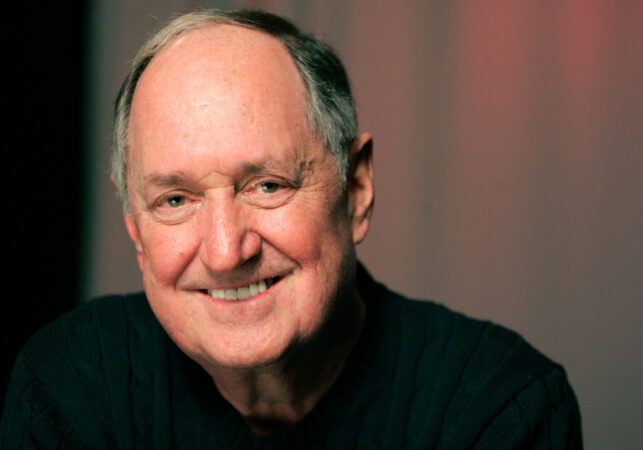
    NEW YORK — Neil Sedaka, the hitmaking singer-songwriter whose boyish soprano and bright melodies made him a top act in the early years of rock and roll and led to a second run of success in the 1970s, has died.

    Mr. Sedaka, whose hits included “Breaking Up Is Hard to Do” and “Laughter in the Rain,” died Friday at age 86.

    “Our family is devastated by the sudden passing of our beloved husband, father and grandfather, Neil Sedaka,” his family said in a statement. “A true rock and roll legend, an inspiration to millions, but most importantly, at least to those of us who were lucky enough to know him, an incredible human being who will be deeply missed.”

    No other details of his death were immediately available.

    A key member of the Brill Building songwriting factory, Mr. Sedaka teamed with lyricist and boyhood neighbor Howard Greenfield on songs that reflected the teen innocence of the post-Elvis, pre-Beatles era of the late 1950 and early 1960s, including “Happy Birthday Sweet Sixteen,” “Calendar Girl,” and “Oh! Carol,” a lament for his high school sweetheart, Carole King.

    After a long dry spell, he reemerged with such smashes as “Laughter in the Rain” and “Bad Blood.” The Captain & Tennille’s cover of his “Love Will Keep Us Together” was a chart-topper in 1975.

    Short and dark-haired, with a big smile and high-pitched voice, he was a Juilliard-trained, Brooklyn-born son of a Jewish taxi driver who began performing as a teen and kept at it for decades.

    Mr. Sedaka still played dozens of concerts a year well into his 80s. He retained the enthusiasm and broad vocal range of his youth and never tired of the standards he had sung hundreds of times.

    “Past 70, Pavarotti told me the vocal cords are not what they used to be. I’m very fortunate that my voice has held,” he told the Associated Press in 2012. “It’s nice to be a legend, but it’s better to be a working legend.”

    Mr. Sedaka’s songs sold millions worldwide and have been covered by a range of performers, from Elvis Presley and Frank Sinatra to The 5th Dimension and Nickelback. Mr. Sedaka helped propel the career of Connie Francis with “Stupid Cupid” and “Where the Boys Are,” the latter for the soundtrack of the movie with the same name. The Captain & Tennille received a best-album Grammy thanks largely to “Love Will Keep Us Together” and included a nod to Mr. Sedaka at the end of the song, when Toni Tennille exclaimed “Sedaka’s back!”

    Growing up in Brooklyn, loving performing

    Mr. Sedaka grew up in Brooklyn’s Brighton Beach neighborhood, pampered by his grandparents, aunts, and mother in a two-bedroom apartment he shared with 11 relatives. He has a street there named in his honor, Neil Sedaka Way.

    But his music compensated for his unpopularity as a kid, he once recalled. His talent was recognized by a second-grade teacher who urged his homemaker mother, Eleanor, to buy him a piano. She went to work in a department store to pay for a secondhand upright and managed his career for years, as did his wife, Leba.

    Mr. Sedaka loved songwriting and never quit, but he craved performing.

    “Once a performer, always a performer. It’s that adrenaline rush. It’s like a natural high when you’re in front of an audience, and if you get that standing ovation, it’s infectious,” he told the AP.

    At 16, Mr. Sedaka was chosen by Arthur Rubenstein in a contest as the city’s best high school piano student and performed on a classical radio station as a prize. It was the same year he discovered rock and roll, when he performed a song, “Mr. Moon,” he had written with Greenfield, his classmate at Abraham Lincoln High School.

    “I sang it in the auditorium for a ballyhoo show and I remember there was a bit of a riot. The kids were jumping and screaming,” Mr. Sedaka said. “After that I was able to go into the sweet shop with the tough kids with the leather jackets.”

    After high school, and then Juilliard, Mr. Sedaka and Greenfield were signed to Don Kirshner’s Aldon Music, where they scored their first hit with Francis, “Stupid Cupid.”

    Sedaka churns out hits, until the Beatles

    In 1958, at age 19, Mr. Sedaka signed with RCA Victor Records and his first single, “The Diary,” enjoyed modest success. He began touring and promoting his songs through regular TV appearances on Dick Clark’s American Bandstand and Shindig!

    At the Brill Building, Mr. Sedaka and Greenfield were joined by other up-and-coming writers and lyricists including King, Neil Diamond, and Paul Simon.

    “Neil Sedaka was so talented, and he inspired me to follow my dream of being a songwriter,” King said on her Facebook page Friday. “With love and gratitude and condolences to his family.”

    Micky Dolenz of the Monkees also paid tribute to Mr. Sedaka, saying on Instagram that he was “one of those rare songwriters who could do it all.”

    From 1959 to 1962, Mr. Sedaka had 10 records in the Top 10, including “Calendar Girl,” “Oh! Carol,” “Happy Birthday Sweet Sixteen,” and “Next Door to an Angel.” But in the mid-1960s, the Brill Building sound, influenced by the doo-wop groups of the New York City streets, was pushed off the charts by the Beatles -led British Invasion and the psychedelic and protest music that followed. Mr. Sedaka would endure 13 years “in the wilderness,” as he described it to the AP.

    Sedaka’s unlikely comeback, with help from Elton John

    Mr. Sedaka was among the lucky, however, enjoying a renaissance that began in the mid-’70s thanks to the patronage of Elton John, whom he met at a party after Mr. Sedaka moved his wife and two kids to England to take advantage of his lingering popularity there. John signed him to his fledgling, U.S.-based Rocket Records label, providing him a chance at more hits with the album Sedaka’s Back.

    At Rocket, Mr. Sedaka and a new writing partner, Philip Cody, topped charts with “Bad Blood” and the joyous “Laughter in the Rain.” He also achieved a rare feat with “Breaking Up Is Hard to Do.” His original up-tempo version went No. 1 in 1962. He rerecorded it as a slow ballad in 1975 and that, too, went No. 1.

    He recorded five albums from 1972 to 1976. They included hits “Standing on the Inside,” “That’s Where the Music Takes Me,” and “Our Last Song Together,” about his breakup with Greenfield, with whom he began writing songs when Mr. Sedaka was only 13 and Greenfield 16.

    He was inducted into the Songwriters Hall of Fame, but the Rock & Roll Hall of Fame eluded him despite a fan petition drive.

    Mr. Sedaka married wife Leba in 1962. They had two children. Daughter Dara recorded a duet with dad in 1980, “Should’ve Never Let You Go.” It was a hit, but she never joined him in the music business. Son Marc is a film and television writer.

  • The Philadelphia Museum of Art will have ‘pay what you wish’ admission on Friday evenings

    The Philadelphia Museum of Art will have ‘pay what you wish’ admission on Friday evenings

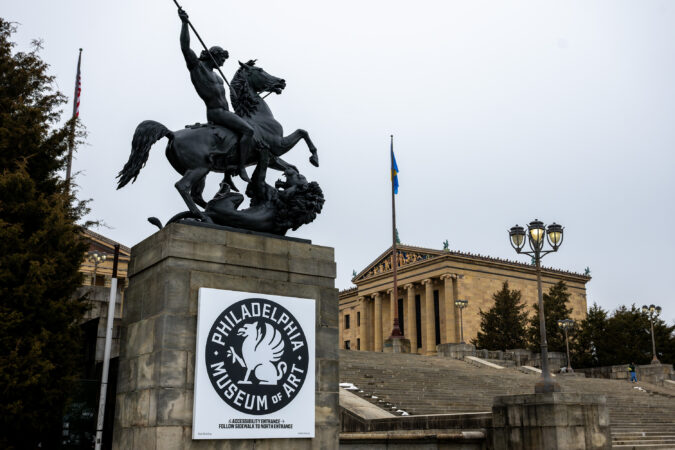
    Philadelphia Museum of Art patrons will once again be able to decide for themselves what to pay at the gate Friday evenings.

    The museum, eager to change the message to a positive one after a season of “drama and conflict,” will offer admission on a pay-what-you-wish basis every Friday evening for five months starting April 10.

    Regular admission to the museum can be as high as $30 per ticket, and the initiative, announced Friday, recognizes that cost excludes or deters some visitors.

    “We wanted to remove the barrier,” said museum director and CEO Daniel H. Weiss.

    The program, dubbed “Independent Fridays,” coincides with the nation’s 250th celebrations and the opening of “A Nation of Artists,” an expansive, two-museum exhibition of American works at the PMA and Pennsylvania Academy of the Fine Arts built around the collection of Phillies managing partner John Middleton and his family.

    The museum previously had pay-what-you-wish Friday evenings, but, because of the expense, canceled the program in summer 2024, when Sasha Suda was director. To underwrite its reinstatement, the museum put in place special funding from board chair Ellen T. Caplan and her husband, Ron, and the William Penn Foundation.

    Caplan said that her own visits to the museum when she was growing up in Philadelphia happened through the pay-what-you-wish program, so to help fund it now “feels like a full-circle moment.”

    Although the current funding underwrites pay-what-you-wish Friday evenings only through the Friday before Labor Day, leaders said it could continue.

    “I’m hoping this will inspire others to underwrite it going forward,” Caplan said.

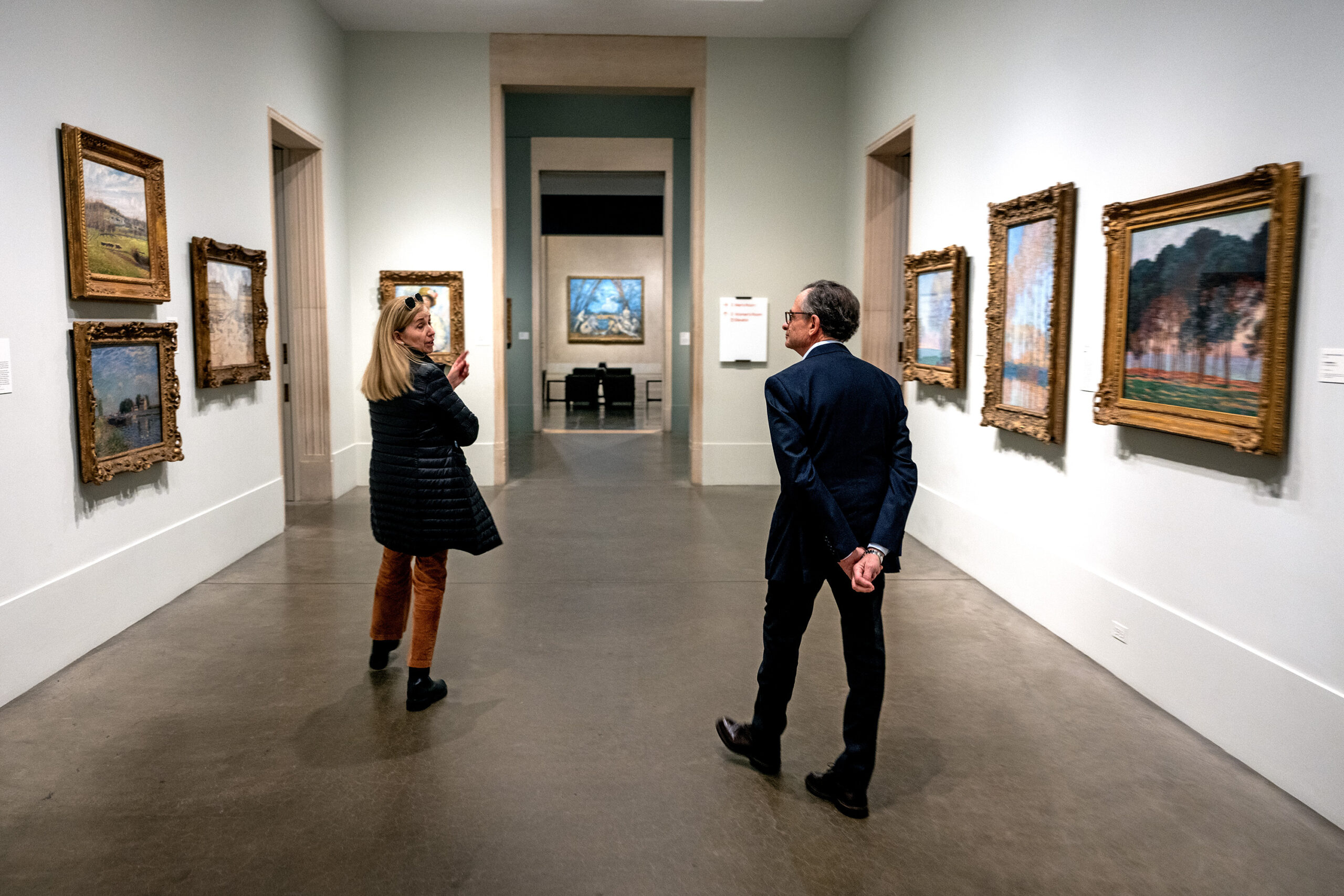
    Daniel H. Weiss, director and CEO of the Art Museum, walks through museum galleries with staffer Laura Coogan (left) Jan. 7, 2026.

    At the moment, the museum is planning to return to its regular half-off discounted rates on Friday evenings ($15 for general admission), after Sept. 4. Admission on the first Sunday of every month continues to be pay-what-you-wish, and anyone 18 years old or under is admitted free any day, any time.

    The public signals coming from Philadelphia’s major, comprehensive art museum in the past several months have mostly been about a controversial name change and rebrand, and the acrimonious dismissal of Suda and the legal wrangling in its aftermath. After several months of calling itself the “Philadelphia Art Museum,” the institution has reverted to its previous, longtime name.

    The museum’s dispute with Suda will be settled through arbitration, not through a trial with jury, a Common Pleas Court judge recently ruled.

    Weiss said that reinstating pay-what-you-wish Friday evenings was partially about “turning the page. We want people to appreciate the museum for what it has been, not for the drama and conflict.”

    Admission income is critical to the museum’s bottom line. In fiscal year 2025, earned revenue accounted for a third of the museum’s income, with the rest covered by contributed revenue, such as donations.

    But it’s not clear that offering more pay-what-you-wish spots on the calendar will result in overall lower ticket income. The museum piloted the return of the Friday evening program for the final three weeks of its recent Surrealism show, and admission revenue came in 20% higher than in the previous three weeks.

    In the same period, attendance received a boost of 128%, according to the museum.

    Of the ultimate net effect of pay-what-you-wish on revenue, “Over the long-term we don’t know,” said Weiss. But, he added: “Having it underwritten allows us to not worry about that.”

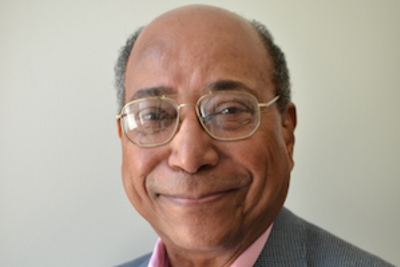
  • Noel Mayo, groundbreaking Black industrial designer and college professor, has died at 88

    Noel Mayo, groundbreaking Black industrial designer and college professor, has died at 88

    Noel Mayo, 88, formerly of Philadelphia, widely recognized as the first Black owner of an American industrial design firm, first Black American college chair of an industrial design department, first Black industrial design graduate of Philadelphia College of Art, award-winning super mentor, and champion of professional diversity, equity, and inclusion, died Thursday, Jan. 29, of a probable heart attack at an assisted living center in Delaware County.

    Rejected for an industrial design job after college because he was Black, Professor Mayo went on to found Noel Mayo Associates Inc. in Philadelphia in 1964. He spent 11 years in the late 1970s and ’80s as a professor and first Black chair of the industrial design department at what became the now-defunct University of the Arts, and 27 years, from 1989 to 2016, as a governor-appointed eminent scholar in art and design technology at Ohio State University.

    “Dr. Mayo leaves behind a transformative legacy,” former colleagues at Ohio State said in a tribute, “whose impact shaped generations of students, elevated the field of design, and advanced diversity and inclusion across the profession.”

    As the trailblazing owner and president of Noel Mayo Associates for decades, he and his staff designed all kinds of products, interiors, exteriors, graphics, mobile exhibits, and signage systems for companies and private clients around the world. He worked with NASA, IBM, Black & Decker, Philadelphia International Airport, museums, government agencies, and public institutions.

    He collaborated with Lutron Electronics for 45 years and is named on hundreds of its design and utility patents. In 1984, he remodeled the mayor’s City Hall office after Wilson Goode replaced Bill Green. In 1988, he advised officials at the old Spectrum on the placement of a Julius Erving statue in South Philadelphia.

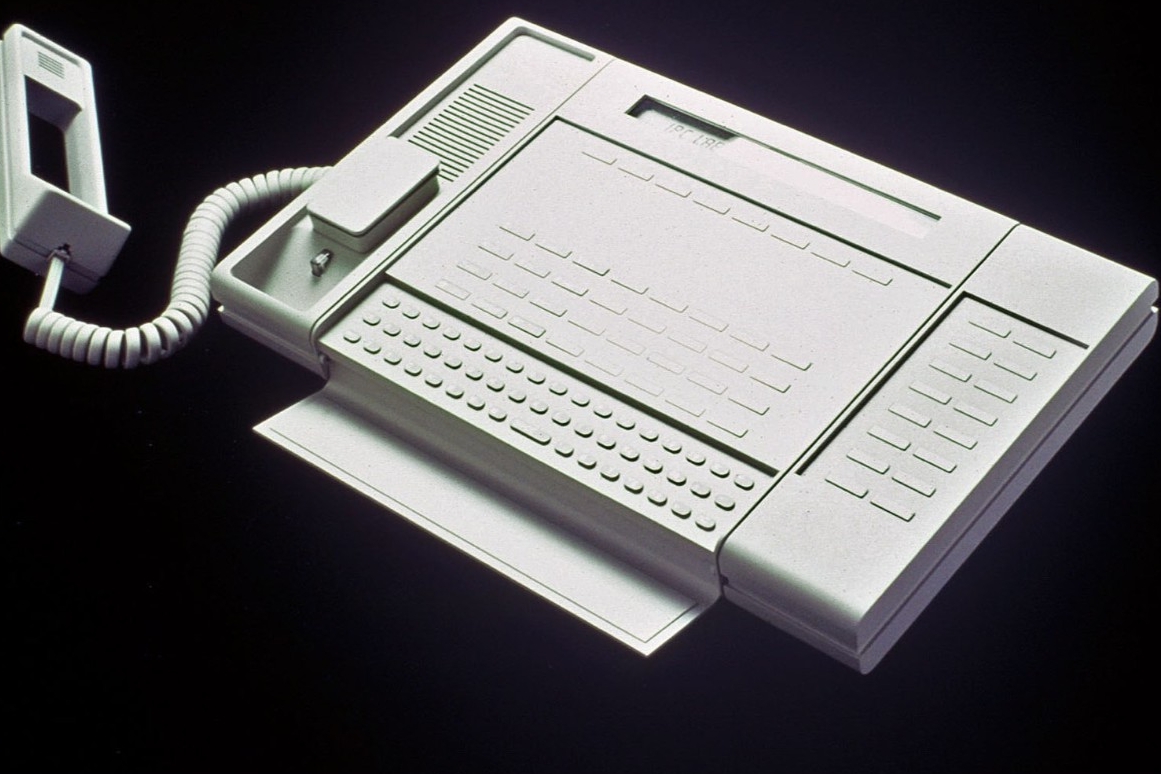
    He designed computer-driven telephones in the 1980s that could dial 96 phone numbers automatically and leave messages. “I realize how pressured this is,” he told the Daily News for a 1984 story about design and technology’s effect on modern life. “But people want it.”

    Professor Mayo was featured in a 1977 story by Inquirer design critic Ellen Kaye, and she praised the “visual fluidity” he created in a refurbished Bala Cynwyd high-rise condo. She wrote about his work again in 1978, and he said design “revolves around problem-solving from a logical point of view.”

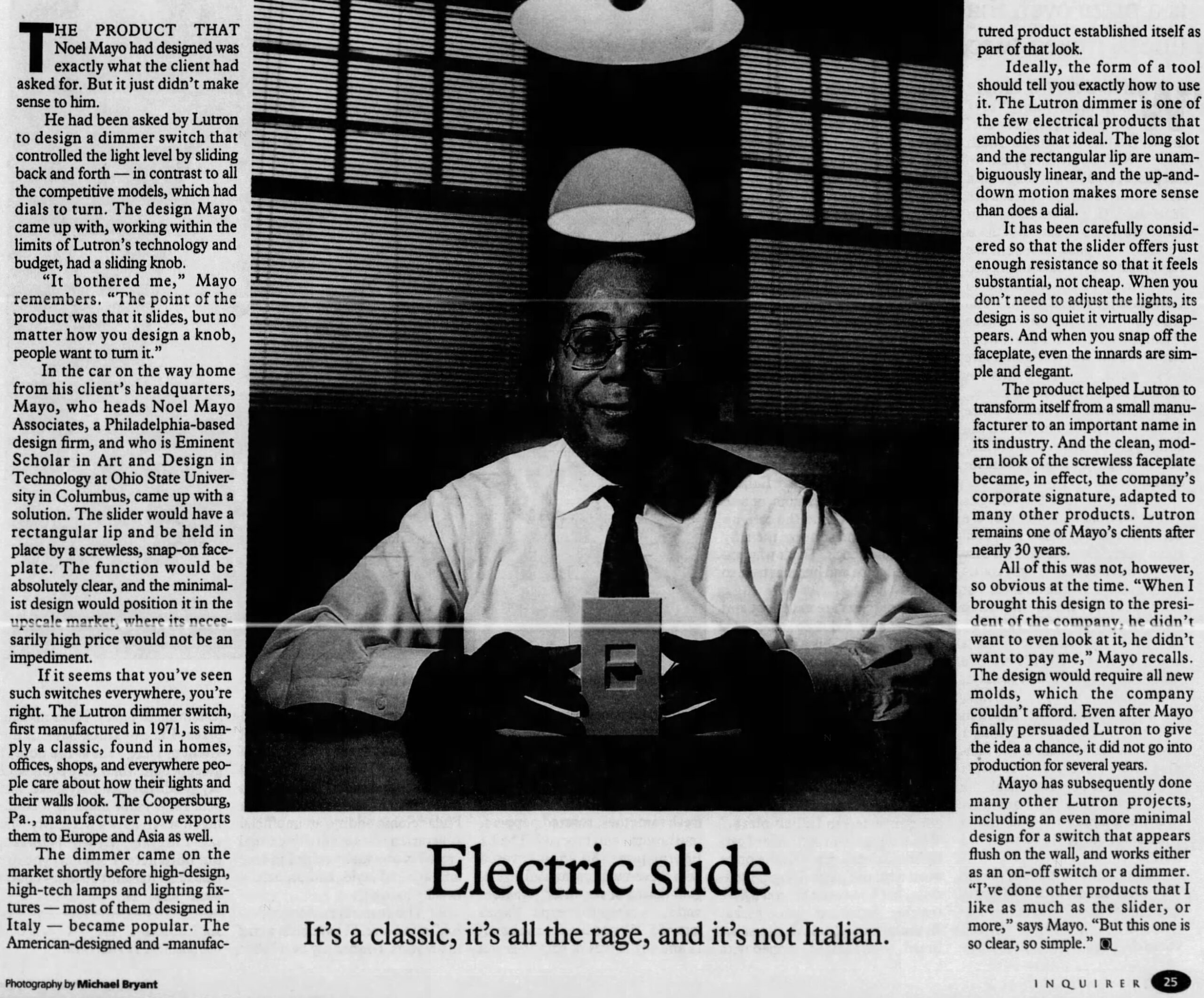
    In a 1995 story, Inquirer design critic Thomas Hine noted his commercial success with early light-dimmer switches and said it “helped Lutron to transform itself from a small manufacturer to an important name in its industry.” In a recent video interview, Professor Mayo said: “I see the problems as kind of opportunities that other people didn’t see. … So I look for opportunities for innovation.”

    Professor Mayo was featured in The Inquirer in 1995.

    As chair at Philadelphia College of Art and its successor, University of the Arts, he grew the industrial design department from the school’s ninth largest to its third largest. In online tributes, former students called him “a true icon” and “a doorway into a world of possibility, dignity, and community.”

    He told The Inquirer in 1978: “Something looks good when it looks rational. That is how I work myself, and that is what I try to teach my students.”

    At Ohio State, Professor Mayo taught product, interior, and graphic design courses, and researched accelerated learning processes using music, color, relaxation techniques, interactive computers, and video. Former colleagues there praised “his blend of rigor, generosity, calmness, and mentorship” in a tribute.

    Professor Mayo worked hard to recruit Black and other minority designers and students to his company and college courses. He created mentoring programs and developed an extensive network of minority business contacts.

    Professor Mayo designed this telephone.

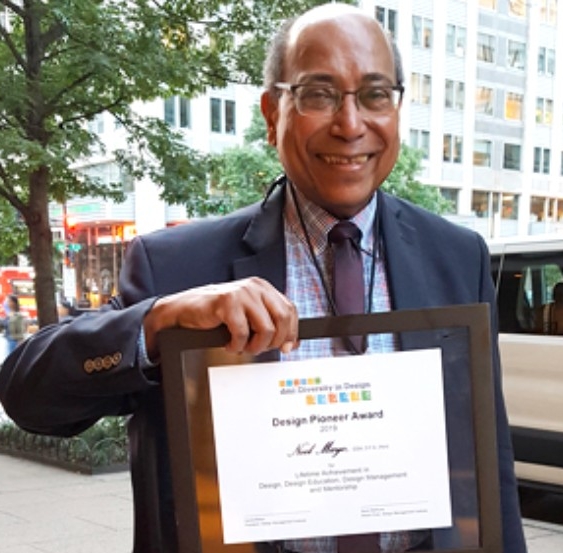
    “He did not treat diversity as a slogan,” a former colleague said in an online tribute. He earned lifetime achievement awards from the Industrial Designers Society of America in 2006 and the Design Management Institute in 2019. In 2021, Ohio State alumni created and funded the Mayo Mentoring Program.

    He was one-time president of the Philadelphia Economic Council and the Greater Philadelphia Community Development Corp. He wrote articles for many publications and served on boards at University of the Arts, the Society for Environmental Graphic Design, and other groups.

    He was a fellow of the Interior Design Council of Philadelphia, a juror for art and design competitions, and a member of the Philadelphia Art Commission. Asked to advise young designers in the recent video interview, he said: “Try to be as innovative as you can. … Ask questions. … Being open is critical.”

    Noel Mayo was born Dec. 30, 1937, in Orange, N.J. He attended a boarding school in Chester County and earned a bachelor’s degree in design in 1960 at what became Philadelphia College of Art and then University of the Arts.

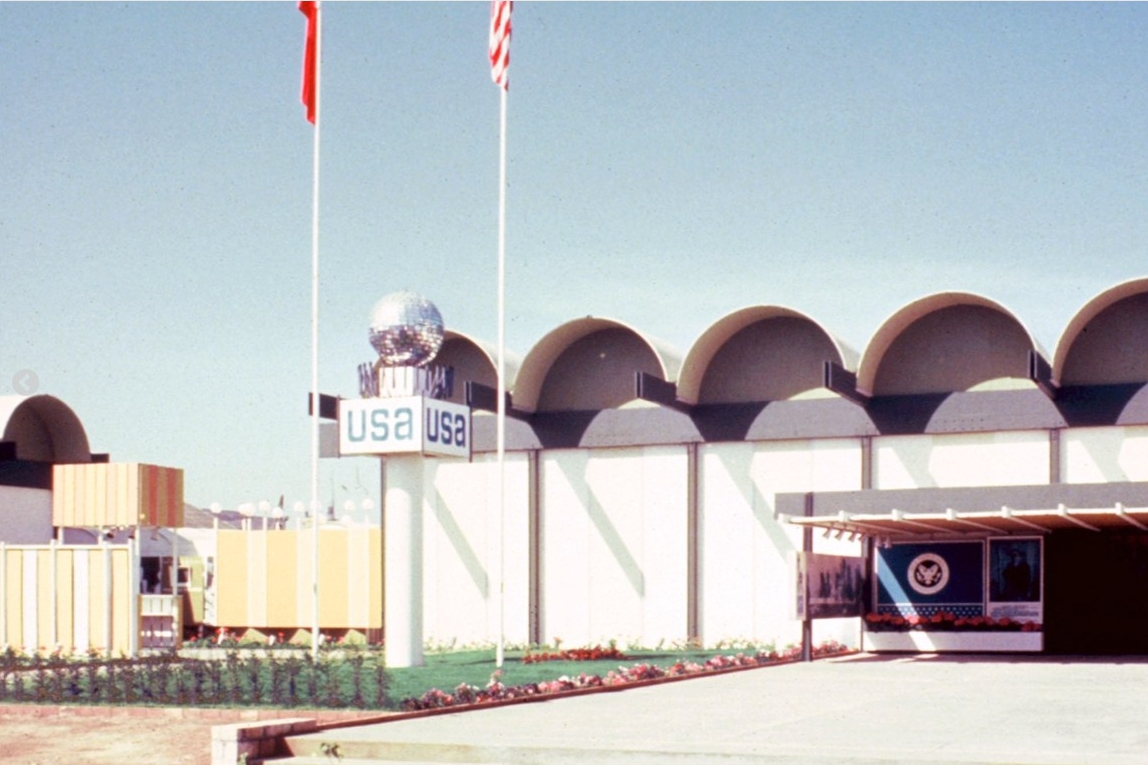
    Professor Mayo designed this exterior.

    He married, divorced, and later married Leslie Butler.

    Professor Mayo enjoyed roller skating, was good at darts, and earned an honorary doctorate from Massachusetts College of Art and Design.

    “He was easygoing with a great sense of humor,” said Virginia Gehshan, a design colleague and longtime friend. “He was really an amazing genius. He was ahead of his time.”

    In addition to his wife, Professor Mayo is survived by other relatives.

    A celebration of his life is to be held later.

    Professor Mayo received the Design Pioneer Award in 2019.
  • What museums do with their items that aren’t on exhibit

    What museums do with their items that aren’t on exhibit

    A person can spend hours at one of Philadelphia’s museums and still walk out feeling like they didn’t get to see it all. But it isn’t just a feeling.

    Most museums don’t put their full collections on display, said Laura Hortz Stanton, director of collections at the Penn Museum.

    Curators decide what objects can best tell what their exhibition is trying to convey.

    That led a reader to ask Curious Philly, The Inquirer’s forum for answering questions, what happens to the items that don’t make the cut?

    » ASK US: Have something you’re wondering about the Philly region? Submit your Curious Philly question here.

    “They are definitely not just sitting there getting dusty in a room,” Hortz Stanton said.

    In storage getting dusty?

    Hortz Stanton said thousands of non-exhibited items in the Penn Museum’s collections found other purposes last year. And, 5,000 college students were able to use them for classes and research.

    “A lot of things happen when objects aren’t on display, everything from conservation to research to documentation,” said Hortz Stanton.

    Museums aim to protect their inventory, while still keeping items available.

    The Museum of the American Revolution has a collection of 5,000 historical objects, such as archaeological material, documents, paintings, prints, and other items. But only about 300 items are on exhibit.

    “They are not buried away and never to be seen again; we store all the collection here at the museum,” said Matthew Skic, director of collections and exhibitions. “Many of our documents are not on display because they are extremely light-sensitive, but we take them on rotations.”

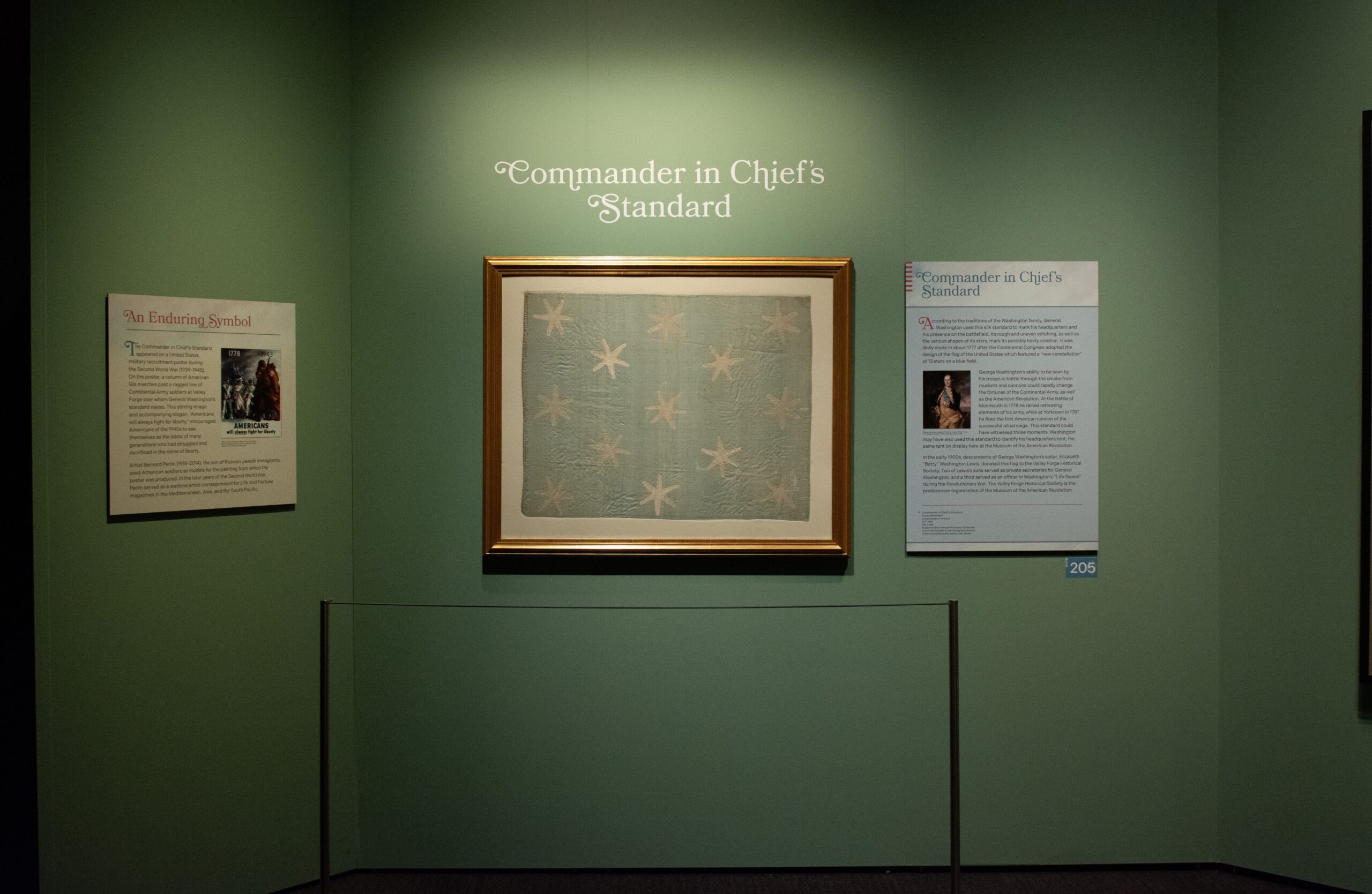
    George Washington’s headquarters flag, for example, was put out for a special exhibition in 2025. The display was short-lived due to the brittleness of the silk. It’s now back in storage.

    George Washington’s Headquarters Flag (also known as the Commander-in-Chief’s Standard). This flag has been on display only twice at the Museum of the American Revolution.

    They are not the only ones keeping a rotation of unexhibited items for preservation. The Independence Seaport Museum keeps 60% to 80% of its 10,000 items in storage throughout the year.

    ”People often will say: Why are you hoarding all this stuff?” said Peter Seibert, the museum’s president and CEO. “That’s not the case; we want to get them out, it’s just that sometimes that is not always possible.”

    His museum has items as small as a thimble and as big as a submarine and the cruiser Olympia. Keeping textiles safe from moths and documents from crumbling requires proper conditions, including acid-free boxes.

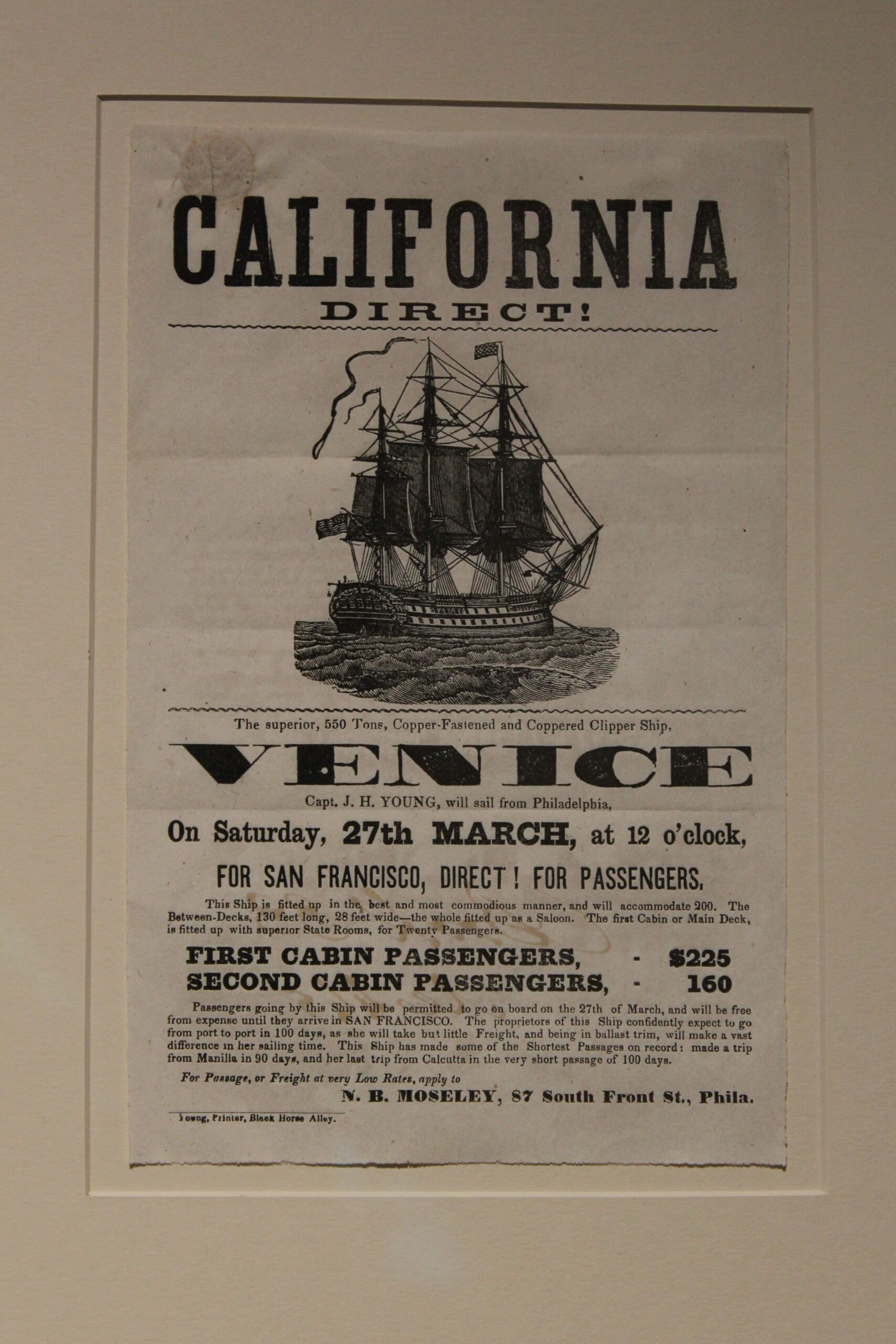
    Broadside advertising for Philadelphians to go to California in 1848. Handout: Independence Seaport Museum.

    For less-fragile items, life can go places.

    Museums often loan storage items to one another. Penn Museum, for example, recently loaned part of its collection to the Zayed National Museum in Abu Dhabi.

    This doesn’t mean Philadelphians have lost the chance of seeing those items. Philly museums have benefited from getting items from other institutions — such as the lunar module, which the Smithsonian lent to the Franklin Institute for 49 years. These days, however, lending contracts are much shorter, typically a year or two, Hortz Stanton said.

    When storage used to be alive

    “Collections are not storage; they are a living resource,” said Paul Callomon, the Academy of Natural Science malacology collections manager.

    He views the 21 million items in the academy’s collection as an active resource to scientists all over the world. His department, in particular, has the third-largest shell collection in the world, he said, as well as a variety of fish, plants, and microscopic algae that are not usually available to everyday visitors.

    Ornithology collection manager Jason Weckstein sees the non-exhibited items being put to use daily.

    ”We make study skins, so we actually skin the bird, and we retain the skin and dissect the body,” he said. “We take tissue samples and take data on the internal organs of the body.”

    Conservation matters

    For years, Penn Museum had two large 14th-century Buddhist murals on display in its rotunda space, but construction forced them to be pulled down for their protection. What began as a precaution turned into a multiyear mural conservation project.

    “Over time, things may crack or materials may weaken; our conservationists are able to stabilize this object so they can be stored safely or eventually reinstalled,” Hortz Stanton said.

    The conservation process involves documenting the condition of the items, looking at what it needs for long-term care, cleaning, and taking measures to stabilize an object, said Skic.

    How to access things in storage

    The Academy of Natural Sciences and Penn Museum have many of their items cataloged in an online database. Researchers and students anywhere can request to see materials.

    For Hortz Stanton, this conserves resources and protects fragile items.

    ”We are just one short part of the history of the things we are taking care of, a blip in time,” Hortz Stanton said. “The hope is that these objects are preserved for future generations.”

    To make the items more available to the public, the academy holds a members’ night once a year. Animals, field books, photographs, and experimental projects not normally on exhibit become available for a night of knowledge.

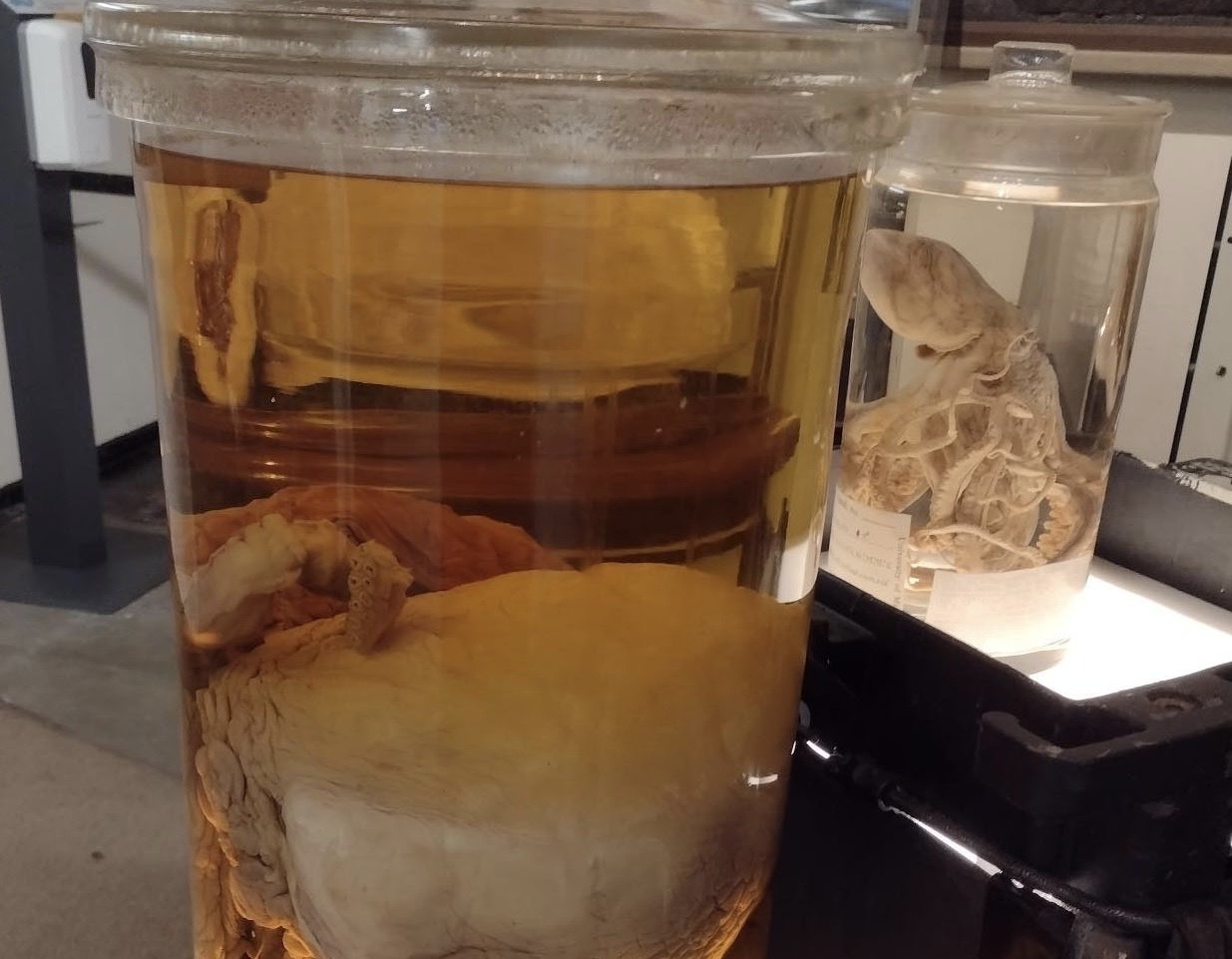
    Octopus not normally exhibited at the Academy of Natural Science. People can see it during members’ night.

    Not a member? Callomon said anyone can tour the collection if they make arrangements.

    “Bird clubs come for behind-the-scenes tours, and artists actually use our collection for bird field guides to study specimens,” Weckstein added.

    The Museum of the American Revolution is also a bit more flexible with its collection, even granting access to descendants of Revolutionary War soldiers and people working on historical projects, Skic said.

    “These items are tangible connections to America’s founding era,” Skic said. “They serve as a way to learn about those events and make sure people know these are real people, real events, and that those events continue to shape our lives today.”

  • 🌸 The insider’s guide to the Flower Show | Things to do

    🌸 The insider’s guide to the Flower Show | Things to do

    I don’t know about you, but I’m counting the days until spring fully blooms in Philadelphia. I can’t wait to enjoy the cherry blossoms along Kelly Drive, take down some Hatfield Franks on BOGO Nights at the Phillies, and hang on the rooftop at Bok Bar.

    For now, I’m offering a list of spring-esque events happening around the region like the Philadelphia Flower Show (more on that below), a new Egyptian exhibition, and the return of our favorite soccer club this weekend.

    Kickstart your weekend plans, Philly style.

    — Earl Hopkins (@earlhopkins_, Email me at thingstodo@inquirer.com)

    If someone forwarded you this email, sign up for free here.

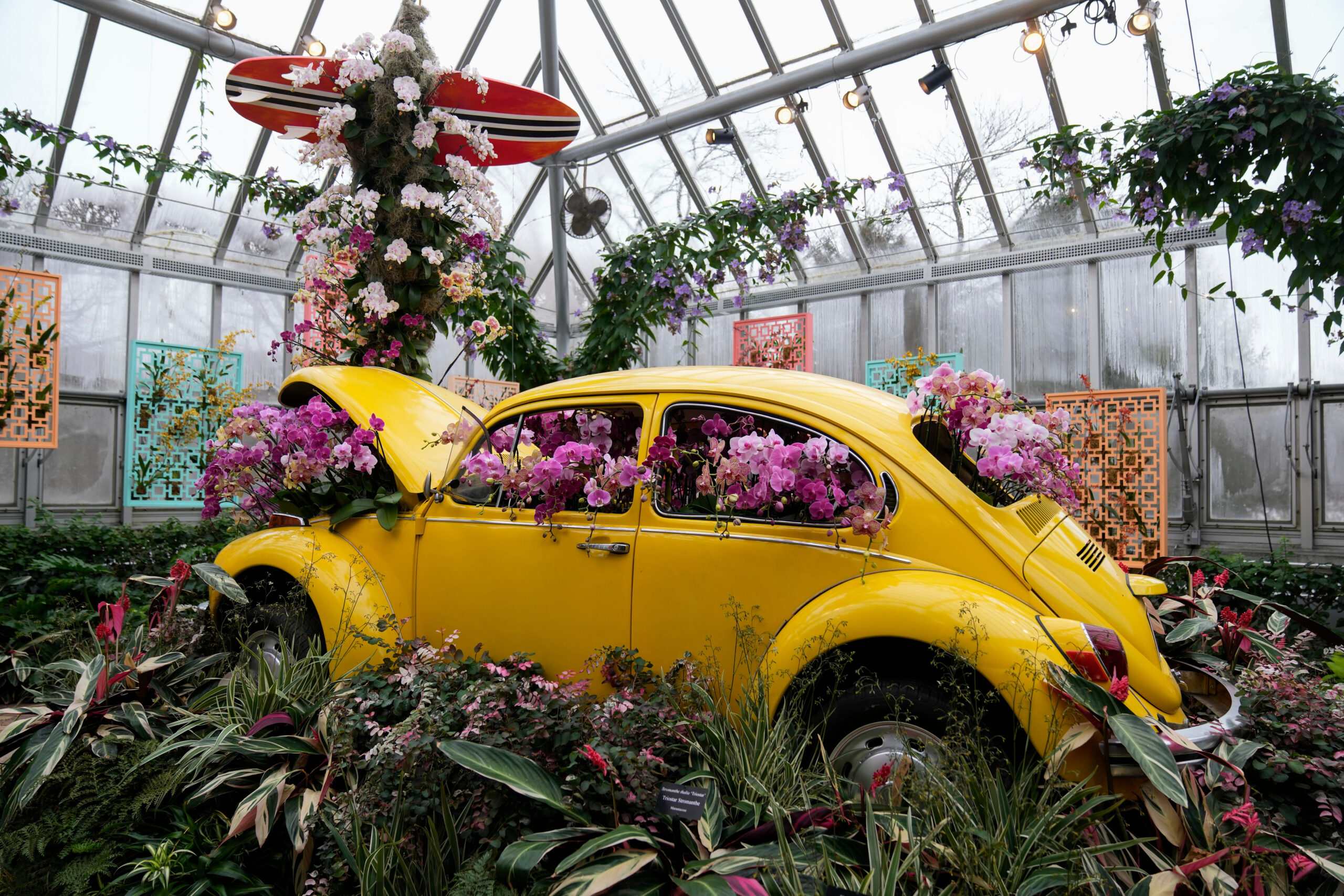
    Orchids adorn a Volkswagon Beetle as finishing touches are placed on the 12th annual Chicago Botanic Garden Orchid Show, Friday, Feb. 6, 2026, in Glencoe, Ill. (AP Photo/Erin Hooley)

    Your guide to the Philadelphia Flower Show

    The annual Pennsylvania Horticultural Society (PHS) Philadelphia Flower Show, which is the oldest and largest horticultural event in the world, returns to the Convention Center on Saturday and runs through March 8.

    This year’s theme is “Rooted: Origins of American Gardening.”

    There will be floral displays, flower competitions, and more than 200 vendors offering a curated selection of live plants, florals, garden tools, decorative wares, and more. We have you covered with everything you need to know about attending, including schedule, tickets, parking, food, exhibits, and more.

    The best things to do this week

    🎭 A scene at-random: InterAct Theatre Company’s latest production, Plantation Black, directed by Kimille Howard, is an explorative Civil War era story with a twist. Each night, a cast member spins a drum bearing names of all the production’s scenes, and then the play begins at a different point in the timeline. The play runs through Sunday.

    🇲🇽 New eats in East Market: In the latest of Center City restaurant openings, East Market welcomes Mi Vida. The upscale Mexican player out of Washington D.C. opened next to Mom’s Organic Market on 1150 Ludlow St.

    🟦 Blue Men in motion: The Blue Man Group returns to Philly with a brand-new show featuring fresh music, immersive visuals, and audience interactions. Experience the Blue Man magic at Miller Theater through Sunday.

    📅 My calendar picks this week: Bella Village Restaurant Week, “No Solace in the Shade” at Brandywine Museum of Art, The Harlem Globetrotters at Xfinity Mobile Arena.

    Cavan Sullivan on the ball during the Philadelphia Union’s Major League Soccer (MLS) game against D.C. United at Audi Field in Washington, D.C. on Saturday, February 21, 2026.

    The thing of the week: Our favorite soccer club is back in the Philly area this week

    The Philadelphia Union returns to Subaru Park for the club’s first two home match-ups of the season.

    First, the Union goes head-to-head with Trinidad & Tobago’s Defence Force SC on Thursday to close out the second leg of the team’s first round series in the Concacaf Champions Cup. The winner of the series will play Liga MX’s Club América in the Round of 16.

    On Sunday, the Union faces New York City FC in the team’s Major League Soccer season home opener. The club will look to regain momentum after losing 0-1 to D.C. United last week.

    For updates on Philly’s premiere soccer club, read here.

    Winter fun this week and beyond

    🍺 Toast to state brews: The Philly Beer Fest will feature 30 of the state’s top breweries, including Triple Bottom Brewing, Urban Village Brewing Company, and Evil Genius Beer Company, at the 23rd Armory this Saturday.

    🎭 Fears, hopes, and secrets: The dark comedy, A Delicate Balance, written by Pulitzer Prize-winning playwright Edward Albee, explores how long-time friends wrestle with an unexplained fear on an equally unexpected night. The production will run through March 29 at Walnut Street Theatre.

    🏳️‍🌈 A new hub for LGBTQ visitors: The Philly Pride Visitor Center is officially open in Midtown Village. The center, located next to Knock Bar & Restaurant, offers souvenirs, attraction ticketing, and itinerary planning with an emphasis on LGBTQ and ally businesses and destinations.

    🎨 Ancient Egypt in color: The new exhibition, “Ancient Egypt in Watercolors at the Penn Museum,” opens on Saturday. Visitors can peek inside the limited-time exhibition to see decorated funerary chapels of high-ranking Egyptian officials and priests, 100-year-old watercolors, 3,500-year-old bread loaves, and nearly 60 other rarely-seen artifacts.

    The take

    We sent two reporters to R&D to find out whether a cocktail menu inspired by Philly lore, from HitchBOT to the Crum Bum, actually works in a glass. The verdict: a lot of these drinks sound weird on paper, but they’re surprisingly balanced, thoughtful, and very Philly.

    What makes the menu land isn’t just the inside jokes or the J-A-W-N ingredient challenge. It’s that the bartenders treated the city’s stories like serious prompts and built drinks that taste good first, gimmick second. Go with friends, split a few, and don’t skip the pretzels.

    Staffer picks

    Pop music critic Dan DeLuca lists the top concerts this weekend.

    🎤 Thursday: Legendary singer and civil rights activist Mavis Staples will take the stage at the Colonial Theatre in Phoenixville. The 86-year-old vocalist, who’s latest output Sad and Beautiful World offers a collection of soulful and deeply moving records, will be joined by Massachusetts singer-guitarist Kimaya Diggs as her opener.

    🎸 Friday: Singer-songwriter Matt Butler conducts two nights of improvised music from a cast of leading musicians from the jam band world, including Dave Matthews’ associate Tim Reynolds, Aron Magner of the Disco Biscuits, Rob Mercurio of Galactic, Camden trumpeter Arnetta Johnson, and others at Ardmore Music Hall starting Friday.

    🎸 Saturday: Sheer Mag, the mighty Philly foursome that recently dropped 2024’s Playing Favoritues, will top a four-band bill at Johnny Brenda’s.

    🎸 Tuesday: A double bill headlined by Ratboys, the Chicago quartet fronted by Julia Steiner, will be well-matched with Philly-bred, loose-limbed collective, Florry. The two bands will join forces at First Unitarian Church on Tuesday.

    Explore the PHS Flower Show’s lush landscapes, grab some Pennsylvania-made brews, or catch the Union score a win at Subaru Park.

    Whatever you do, be sure to take in the early spring air and events happening this weekend. And expect to see more spring-related suggestions in future newsletters, especially as the season fully blooms in the region.

    — Earl Hopkins

    Courtesy of Giphy.com
  • Alvin Ailey American Dance Theater is coming back to Philly, with a new artistic director and a new Neenan ballet

    Alvin Ailey American Dance Theater is coming back to Philly, with a new artistic director and a new Neenan ballet

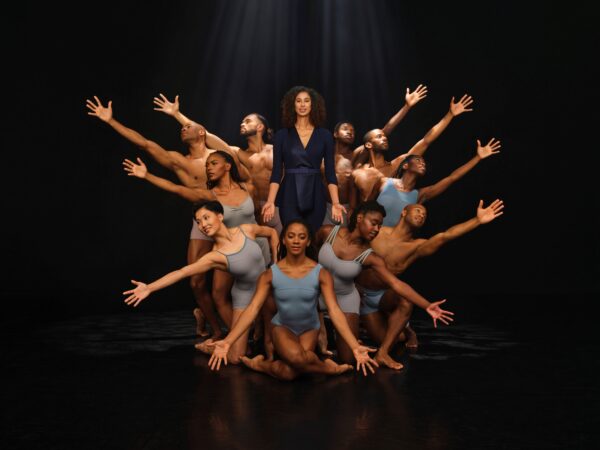
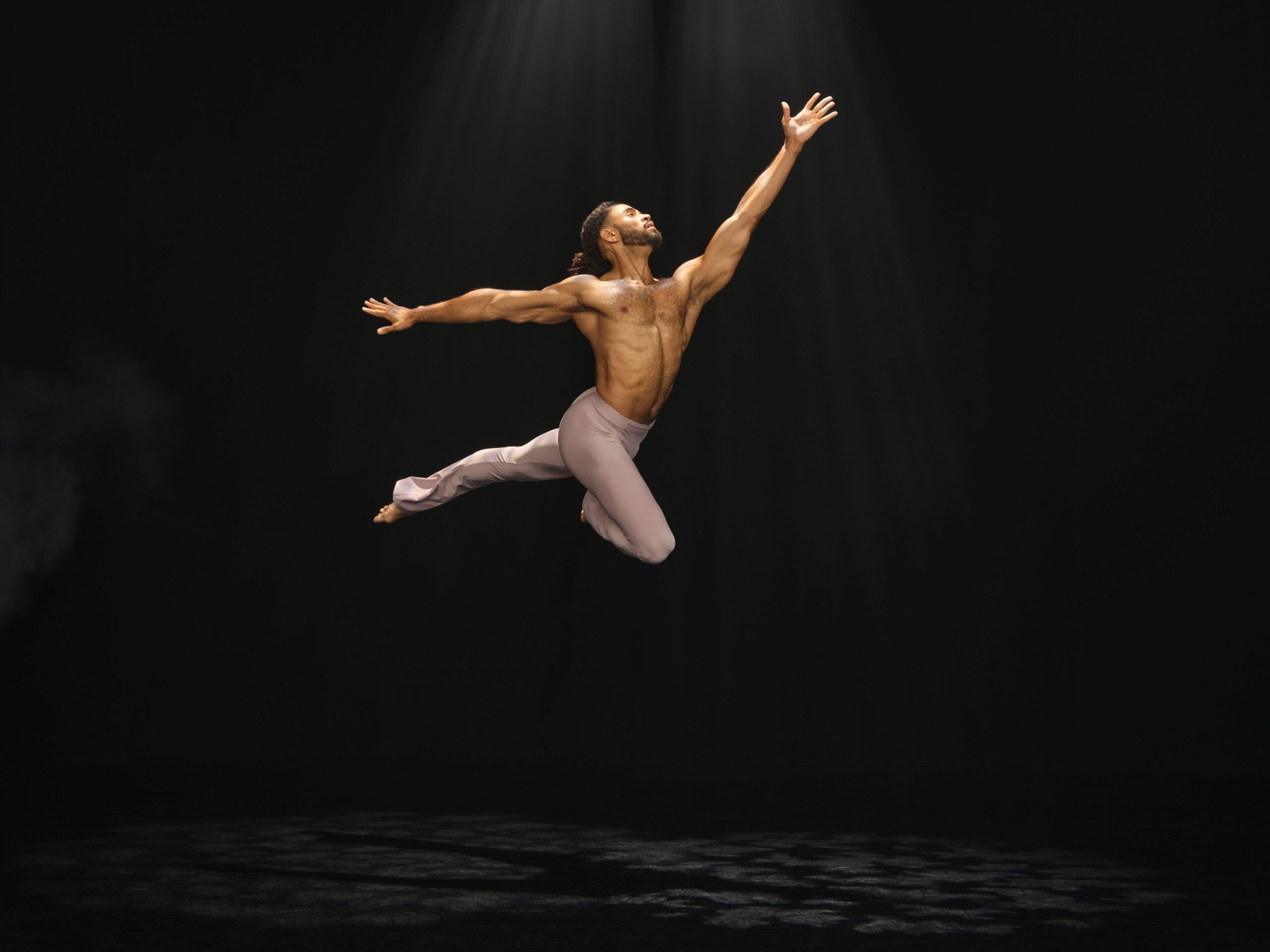
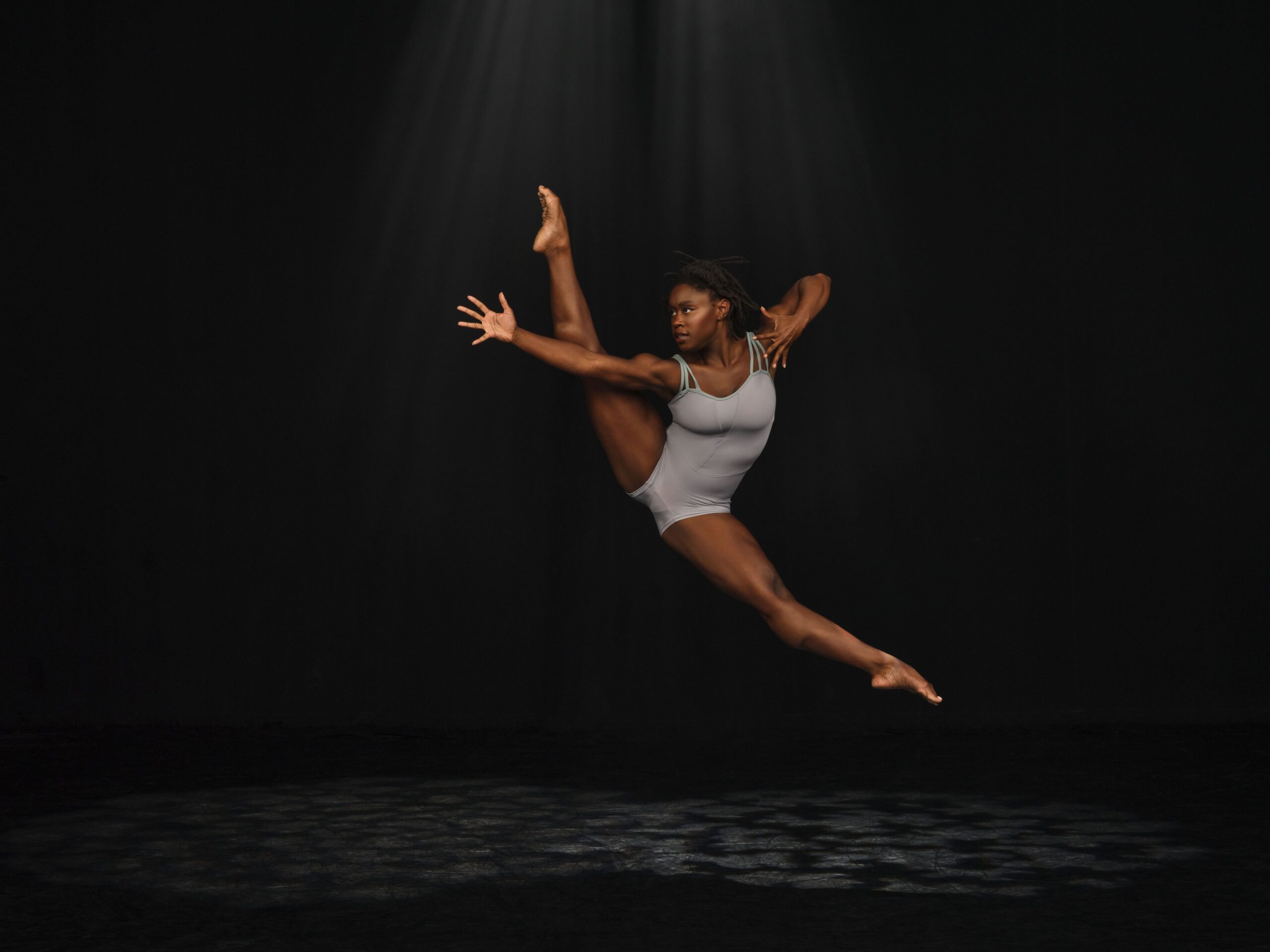
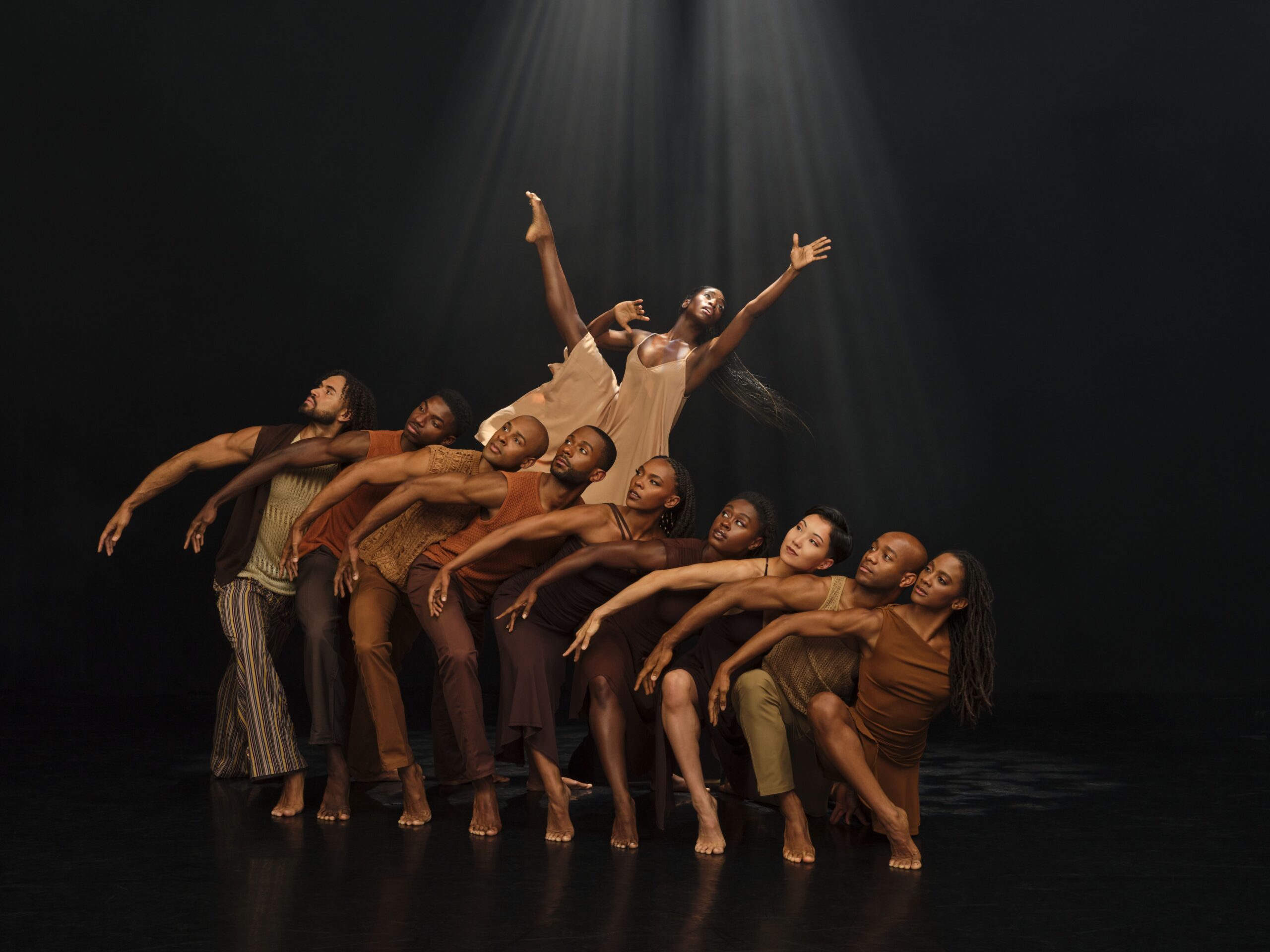
    One of the country’s most popular dance companies, Alvin Ailey American Dance Theater, is coming back to Philly this weekend, early in the company’s 20-city U.S. tour.

    It is bringing an eternal favorite, Revelations, as well as new pieces.

    The biggest change in the company, however, is its artistic director, just the fourth in the company’s 68 years. The first was Ailey himself. Then, for many years, it was run by a Philadelphian, Judith Jamison. More recently, Robert Battle led the company for 12 years.

    As of last summer, Ailey is led by Alicia Graf Mack, 47, who was a big star at Dance Theatre of Harlem and then the company she is now directing.

    “I am very grateful to be back,” she said. “This year has been a very beautiful homecoming to a company that I love very deeply, and this organization has been part of my North Star since I was a child. [It’s been] part of my thought process about what I want to be when I grow up, and how I want to be, and how I want to express myself.”

    Just before this, she was dean and director of the dance division of Juilliard School, where she worked closely with students and commissioned work for them to perform — including pieces by Philadelphia choreographers Rennie Harris and Matthew Neenan.

    The tour coming to Philly this weekend also has a new Neenan piece, Difference Between.

    “Matthew is someone that I’ve really admired for many years, and I know Matthew Rushing (Ailey’s associate artistic director) shares that same sentiment,” Graf Mack said. While working with Neenan at Juilliard, “I knew what a genius he is.”

    Alvin Ailey dancer James Gilmer.

    Neenan’s new piece, set to music by Heather Christian, a recent MacArthur fellow, “is just so heartbreakingly beautiful,” Graf Mack said.

    Ailey is also bringing Jazz Island, a new work choreographed by Maija Garcia.

    “It is a beautiful homage to Geoffrey Holder and Carmen de Lavallade,” both of whom made works for Philadanco. “Carmen basically cofounded this company with her best friend, Alvin Ailey,” Graf Mack said.

    Alvin Ailey dancer Ashley Kaylynn Green.

    Graf Mack was born in San Jose, Calif., and grew up in Columbia, Md., about 120 miles south of Philly. Her mother was a professor at Howard University and also a model.

    “At home she would exercise and move to music to stay in shape,” Graf Mack said. “I would follow her, and she was kind of like, ‘Wow, she really picks up moves very easily.’”

    So at 2 1/2, Graf Mack started dance classes, “and I found my home there.”

    Eventually she and her sister, Daisha (who would become a commercial dancer performing with Rihanna, TLC, and Beyoncé), became serious ballet students.

    In the summers, Graf Mack would study at New York’s School of American Ballet or the American Ballet Theatre.

    “One summer, I participated in international ballet competitions. I went to St. Petersburg, Russia, competed in the Vaganova Prix, and placed in the finals,” she said. “I think I was the only American and certainly the only Black person there.”

    Despite an impressive career, Graf Mack met with some roadblocks. Three years after she joined Dance Theatre of Harlem, she developed ankylosing spondylitis, an autoimmune disease affecting her joints.

    So she looked at new careers. She applied and got into Columbia University.

    Alvin Ailey American Dance Theater.

    She studied history and for three years, interned at JPMorgan, with all intentions of working for a bank. That firm was involved in arts institutions, and Graf Mack said she found her niche.

    “That kind of sparked my love for arts administration. But actually after I graduated, I was moving a little bit more, and I thought I should try to dance [again].

    “It was Carmen de Lavallade who told me, ‘Alicia, you can work at a bank any time in your life, but your time to dance is now.’ So I went back to Dance Theatre of Harlem for a year, and that’s when the company closed. It left 40-some Black ballet dancers without work.”

    For a year, she found freelance work with top companies such as Complexions, Alonzo King LINES Ballet, as well as celebrity gigs with the likes of Beyoncé, John Legend, Andre 3000, Alicia Keys, and Jon Batiste.

    In 2005, she joined Alvin Ailey. Three years into her tenure, her illness flared up again.

    So she went back to school to earn a masters in nonprofit management from Washington University in St. Louis.

    But then Jamison, her former boss and lifelong idol, was retiring from Ailey and asked Graf Mack to dance at her final performance. Battle watched from the wings and wanted her back in the company. She returned for three more years.

    In 2014, a back injury finally ended her performance career and started her arts administration career.

    “I feel like I have a very lived history of the legacy of the company,” Graf Mack said. “I’m very grateful to now keep the legacy moving forward.”

    Alvin Ailey American Dance Theater. Feb. 27-March 1, Academy of Music. $36-$147. 215-893-1999 or ensembleartsphilly.org

  • Delco, apparently, is the place where the country’s best Scrabble players meet and compete

    Delco, apparently, is the place where the country’s best Scrabble players meet and compete

    South Philly’s Mark Abadi has had a way with word games since he was old enough to pick up a Scrabble board.

    By 10, he would complete large-print mini games and crossword puzzles, and started playing Scrabble against his parents.

    He became what he calls a “word nerd,” obsessing over newly-learned words and trying out new strategies in hotly-contested Scrabble battles at home.

    “I could never compete with my parents,” he joked. His parents always matched his competitive spirit.

    Eventually, he lost interest in the game until, at 15, he found his childhood Scrabble board and began playing again. Only this time, he had spent days studying the Scrabble dictionary, which made him better equipped to out-point his parents.

    “I looked through the [dictionary] pages, and was like, ‘Oh my God, that’s a word? You can play ‘A‘ā’ because it’s a kind of lava? What?’”

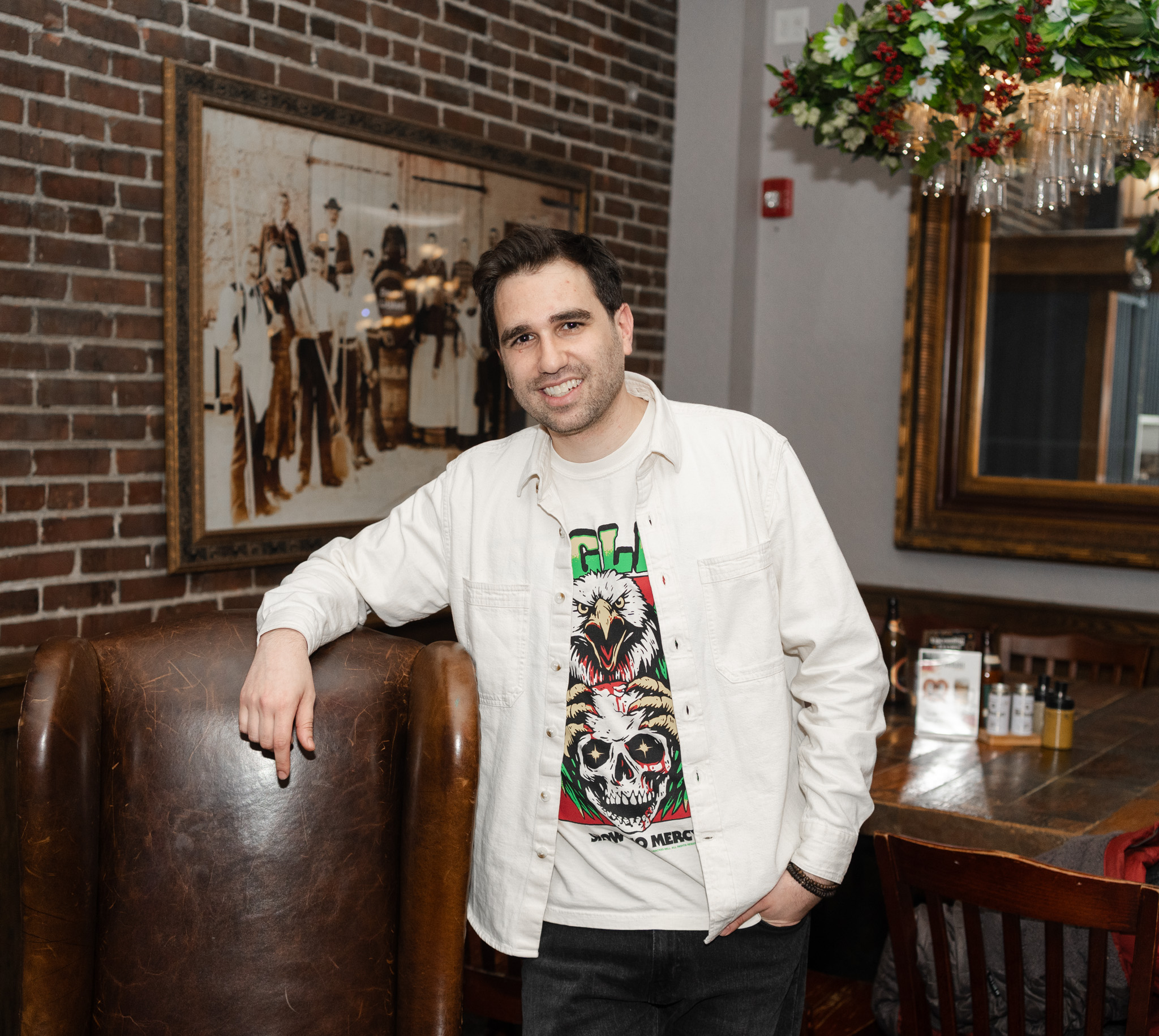
    Mark Abadi is one of several nationally-ranked Scrabble players in the country. He recently struck gold on the CW game show based on the iconic board game.

    Abadi, a copy editor at Business Insider, found immediate inspiration reading the 2001 Word Freak by Stefan Fatsis, a journalist who explored the underground Scrabble community and became an expert-level player. Soon, he’d follow Fatsis’ footsteps and become a nationally-ranked Scrabble player.

    For nearly two decades, Abadi, 35, has competed in tournaments throughout the country. He’s won regional matches and scored top five finishes in world-class competitions, including the North American Scrabble Championship.

    The Montgomery County native has continued to sharpen his skills by rubbing shoulders with other world-class players, many of who (like Abadi) are members of the Delco Scrabble Club.

    “I casually hop on SEPTA and then I’m face-to-face with the best Scrabble players in the country. It’s kind of intimidating,” he said.

    ‘We’re waiting for you’

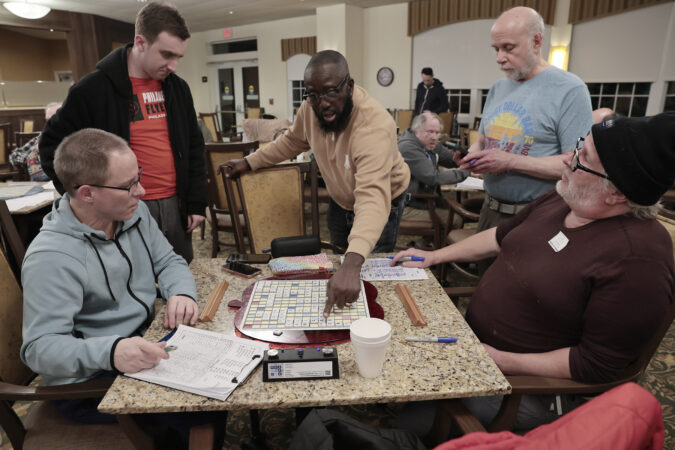
    The Riddle Village dining room was pin-drop quiet on a recent evening, save for the occasional shaking of Scrabble tiles. The Delco Scrabble Club had gathered at the assisted living facility, where one of their oldest members lives, for their weekly meeting.

    When The Inquirer got there, the members were halfway through their first of five 50-minute games.

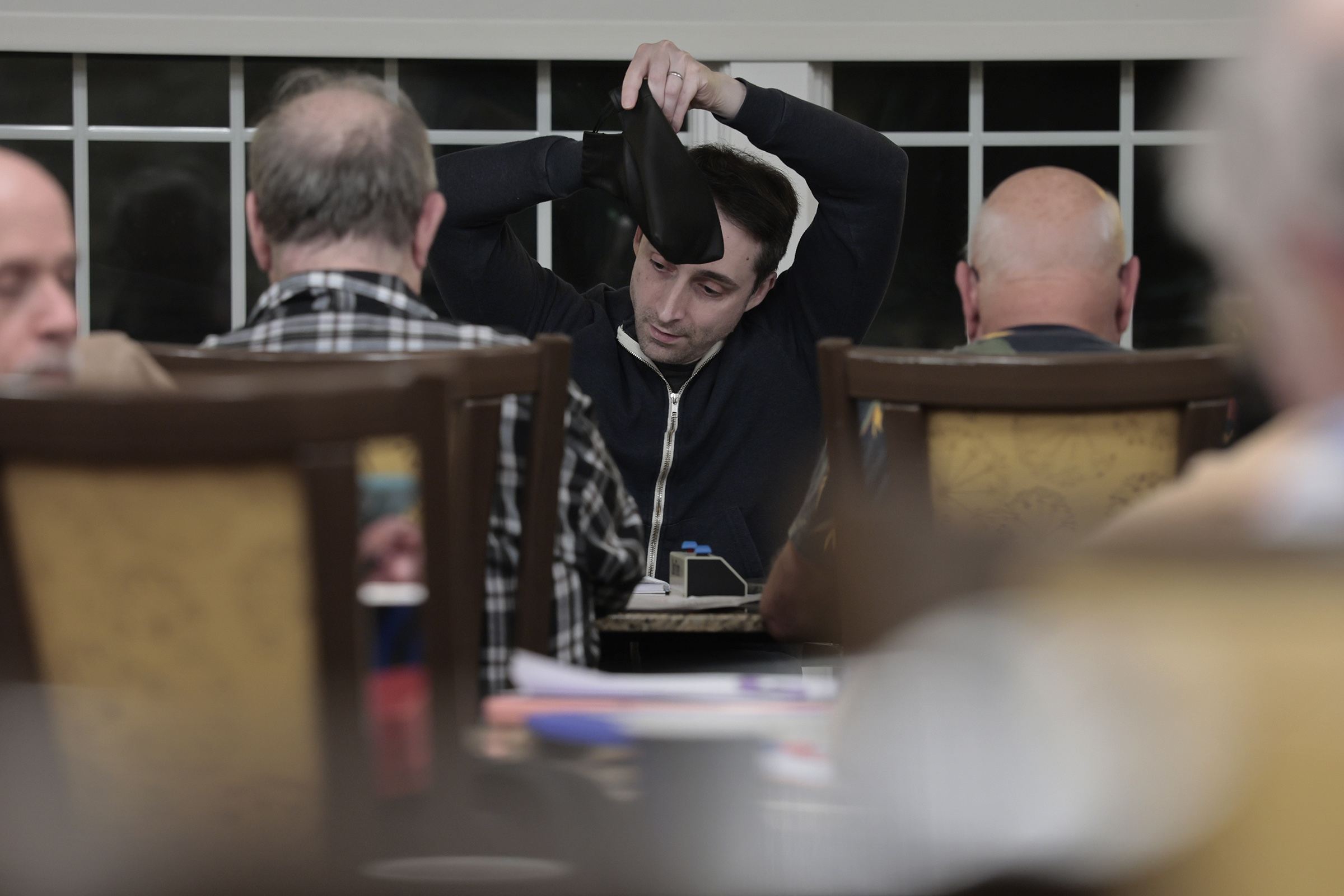
    Will Anderson, a 41-year-old national Scrabble champion, reached into the black drawstring bag suspended above his head and plucked a plastic tile. “We do this as a courtesy to our opponents,” he said, glancing at the bag. “So you aren’t doing any shenanigans when you’re drawing.”

    Will Anderson picks his tiles from the bag while playing Scrabble during a Scrabble group meetup at Riddle Village in Media on Thursday, Feb. 12, 2026.

    Unlike Abadi, Anderson did not grow up playing Scrabble. He started as an adult, partly to break a World of Warcraft addiction. That was in 2009.

    Since then, he’s won multiple tournaments and become an online Scrabble celebrity of sorts. After building an audience on Twitch, he turned to YouTube, where he currently has 70,000 subscribers and regularly posts “Scrabble History” videos detailing legendary games and players.

    “It’s more growth than I ever could have imagined,” Anderson said. His online following even led to his day job as a content producer at Scopely, the mobile gaming company behind the Scrabble app.

    In Riddle Village, Anderson was playing two games at once because the group had an odd number of players. “We call it good Will and evil Will,” said Samuel Moch, a top-10 player in Pennsylvania, also a club member. “And that’s appropriate because I’m playing good Will and I’m beating him.”

    Meanwhile, “Evil Will” was facing Jeff Jacobson, a retired tuxedo salesman and another top player in the state, and winning.

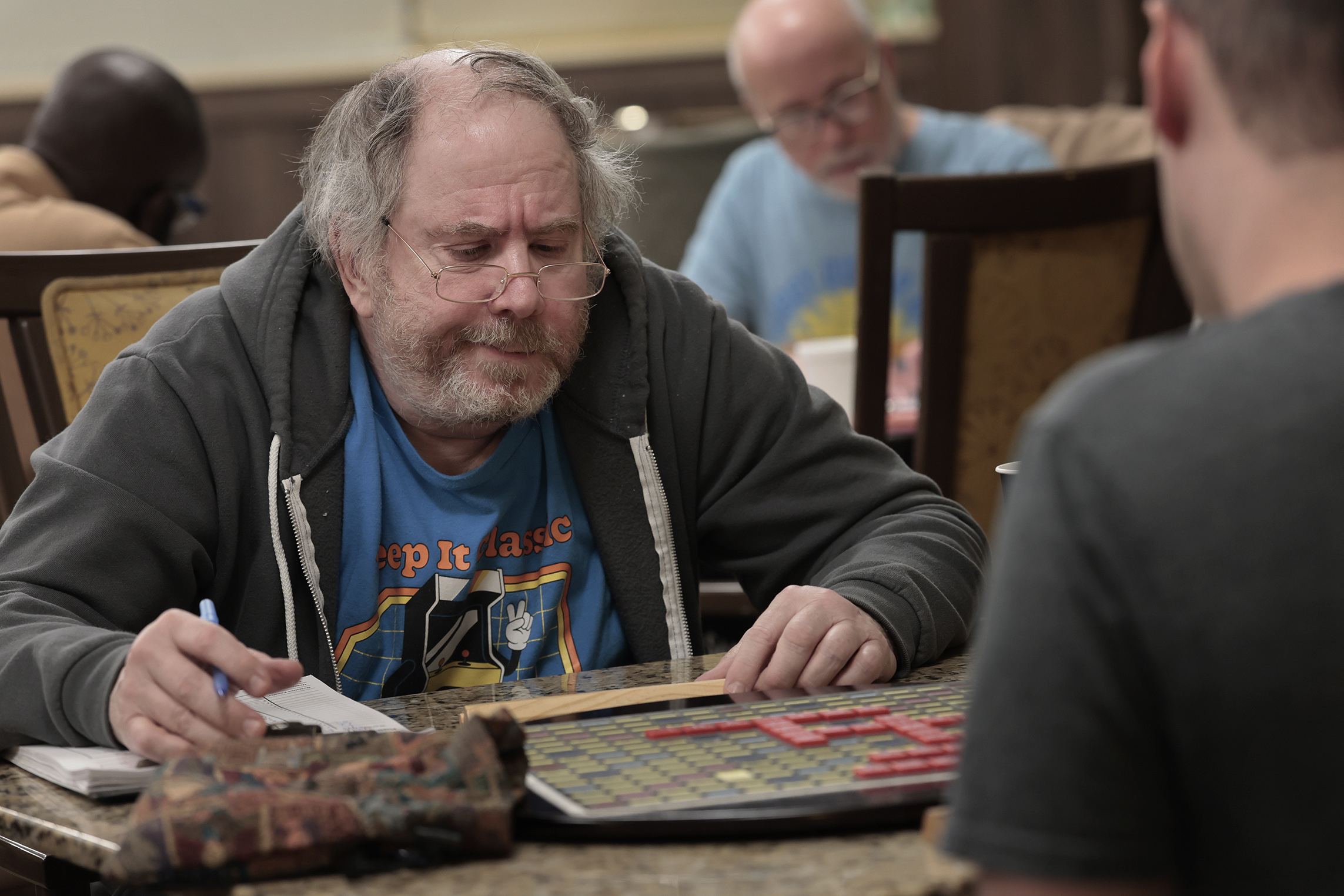
    Jeff Jacobson of Philadelphia (left) ponders his next move while playing Scrabble with Samuel Moch of Philadelphia (right) during a Scrabble group meetup at Riddle Village in Media on Thursday, Feb. 12, 2026.

    Anderson, who lives in Aston, said part of the reason Philadelphia is home to so many strong Scrabble players may simply be its size.

    “You have a higher chance of these unusual hobbies in urban areas,” he said. Or perhaps, he added, the city’s competitive sports culture spills over into word games. “There could be something to that.”

    The competitive scene also benefits from the fact that Scrabble is a universally known game. Almost everyone learns it at home, as did several members of the Delco Scrabble Club.

    They grew up playing with friends and relatives, got so good that nobody around them could beat them, and began looking for tougher opponents.

    “If you’re that person in your family,” Anderson said, “we’re waiting for you with open arms.”

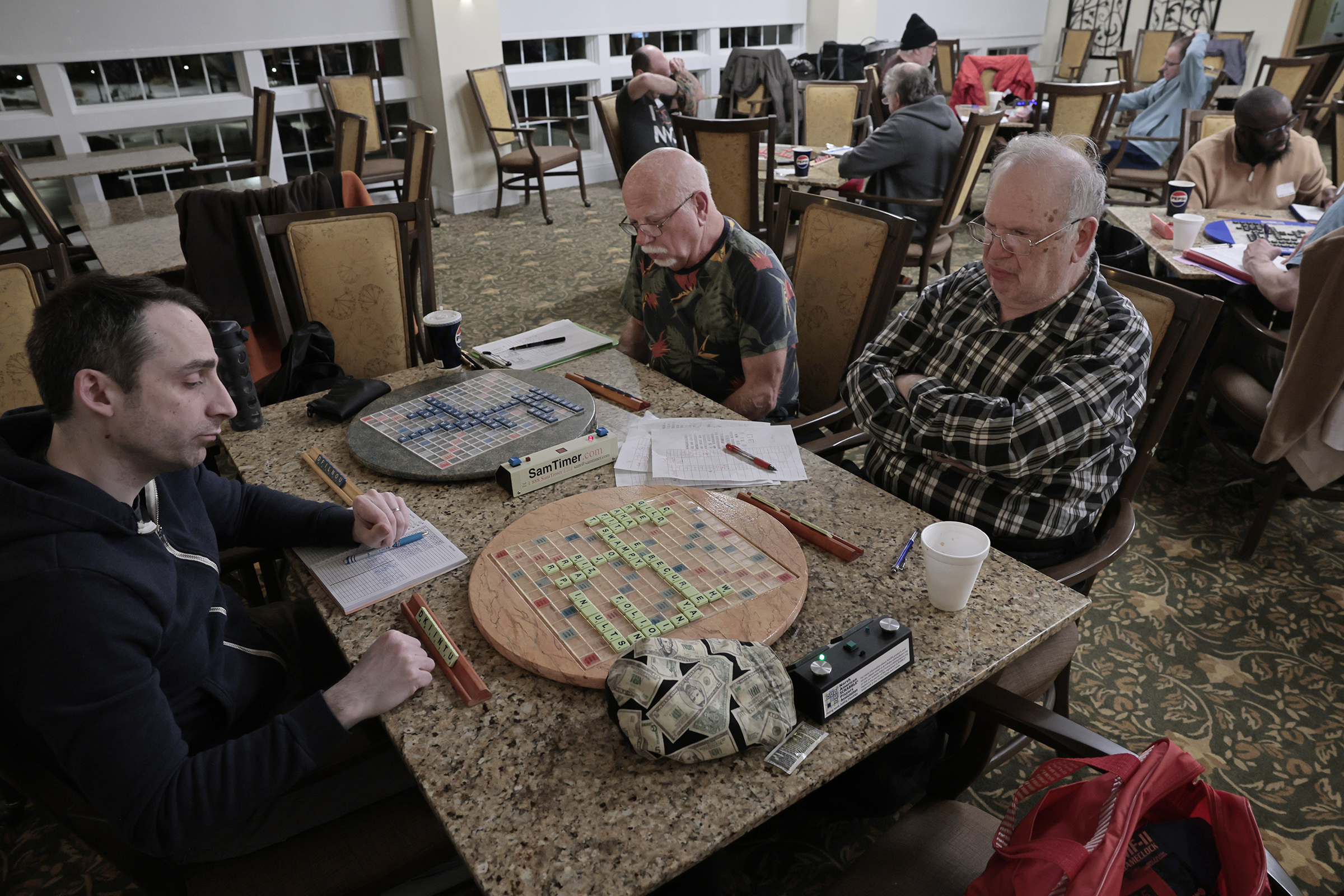
    Will Anderson (left) plays Joe Petree (middle) and Marty Fialkow (right) during a Scrabble group meetup at Riddle Village in Media on Thursday, Feb. 12, 2026.

    At the Delco Scrabble Club, it quickly becomes clear that Scrabble has more in common with chess than it does with word games.

    “As a tournament player, you realize how deep and how beautiful the strategy of Scrabble is,” Anderson explained. “And in your pursuit of playing better and better, you leave the word game part of it behind and embrace it as a strategy game.”

    Often, players don’t even know the definitions of the words they play.

    Evan Chester, the fifth-best player in Pennsylvania and one of the top 50 players in the country, doesn’t know the definition of unaus, the word he had put down in the Riddle Village game. He knows it because he memorized the dictionary.

    “But it’s a very useful and playable word,” said the 22-year-old.

    “It’s a two-toed sloth,” said fellow club member Brendan McClanahan. Other club members, like de facto leader Ed Roth, who has been hosting the club at his house regularly for six years, nodded in agreement.

    “Yup, two-toed sloth,” he said, as he laid down the word decrial.

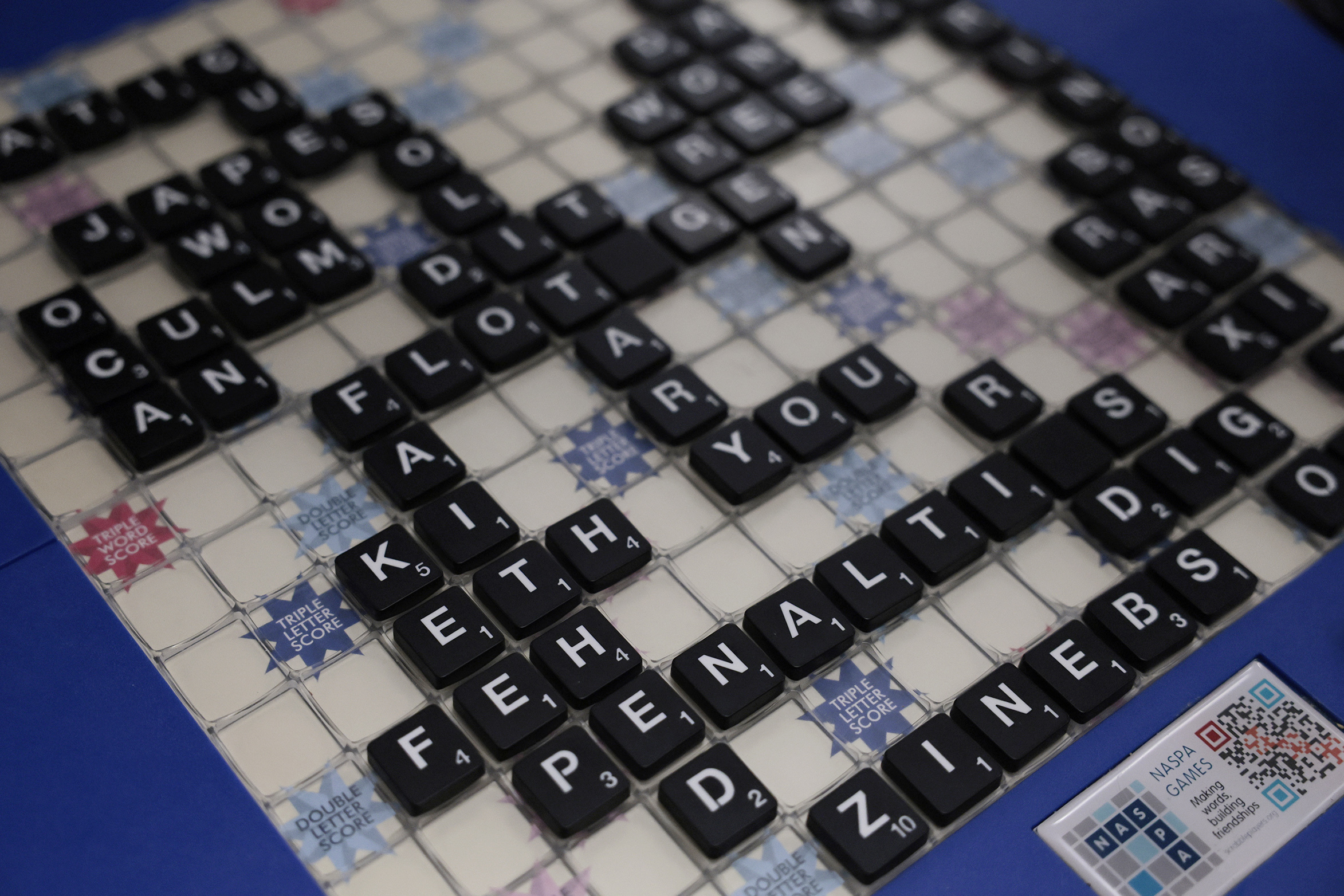
    A completed Scrabble game board during a Scrabble group meetup at Riddle Village in Media on Thursday, Feb. 12, 2026.

    Delco to TV

    The Delco Scrabble Club is drawing the attention of national TV audiences. Abadi and Anderson are competing on CW’s Scrabble game show, hosted by comedian and former late-night show host Craig Ferguson.

    Last summer, Abadi submitted an application to audition for the game show. And after meeting with the casting director, he was invited to compete in London for the show’s $10,000 prize.

    Abadi scored a win last week and will advance to future episodes of the show.

    “I put my fist up and clapped and everything,” he said. “I was way more peppy than I am in real life, to be honest.”

    Anderson, who applied to audition after a show producer reached out to him on YouTube, won’t appear until the tail-end of the season in August. He was equally enthusiastic during his run.

    “I kicked up the hooting and hollering far beyond my norm,” he said. And while he was nervous in the lead-up to the game, “when it came to actually playing Scrabble,” he said, “the muscle memory kicked in, and it just became fun again.”

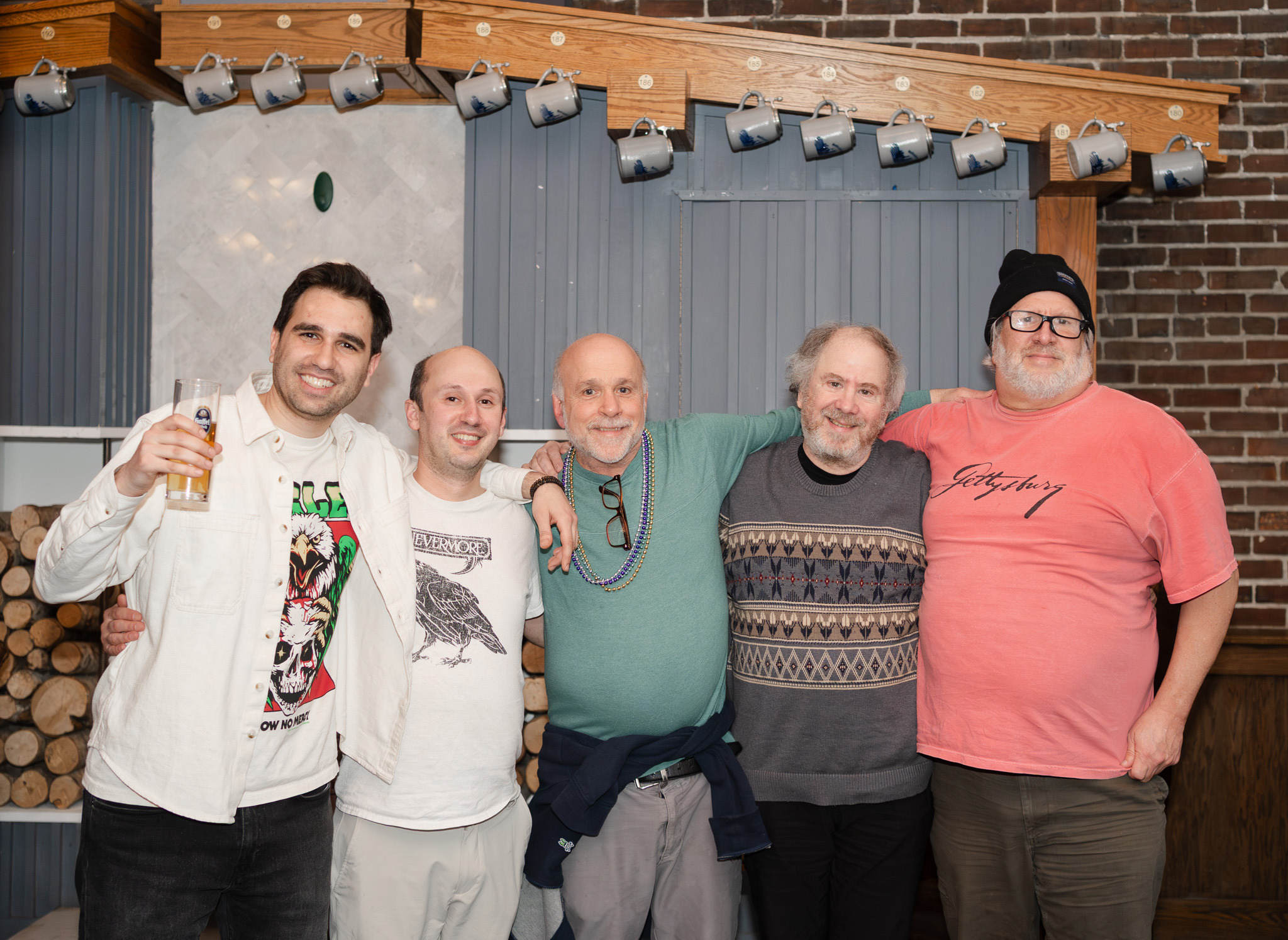
    A group of Mark Abadi’s friends, family, and Scrabble club members celebrate his win on the CW game show, “Scrabble.”

    Anderson and Abadi signed NDAs preventing them from discussing their performance, but both said winning wasn’t their main goal. Abadi wanted to “have fun” and represent the Philly and Scrabble communities well, which he thinks he did. Anderson just hopes his appearance on the show is entertaining for viewers.

    Through the show, Abadi is hopeful more people are drawn to the iconic board game. It’s not just a “vocabulary contest,” or a “game made for grandparents,” he said, adding there’s “something for everyone to appreciate about it.”

  • How Germantown became the building block of the abolitionist movement

    How Germantown became the building block of the abolitionist movement

    In 1683, the Concord arrived in Old City from Krefeld, an artisan community in Germany, with 33 people aboard, many of whom practiced the Mennonite and Quaker faiths.

    America’s newest arrivals took the windy, wooded trail uptown, settling along the Lenape Great Road, what today is called Germantown Avenue, the Northwest’s main thoroughfare.

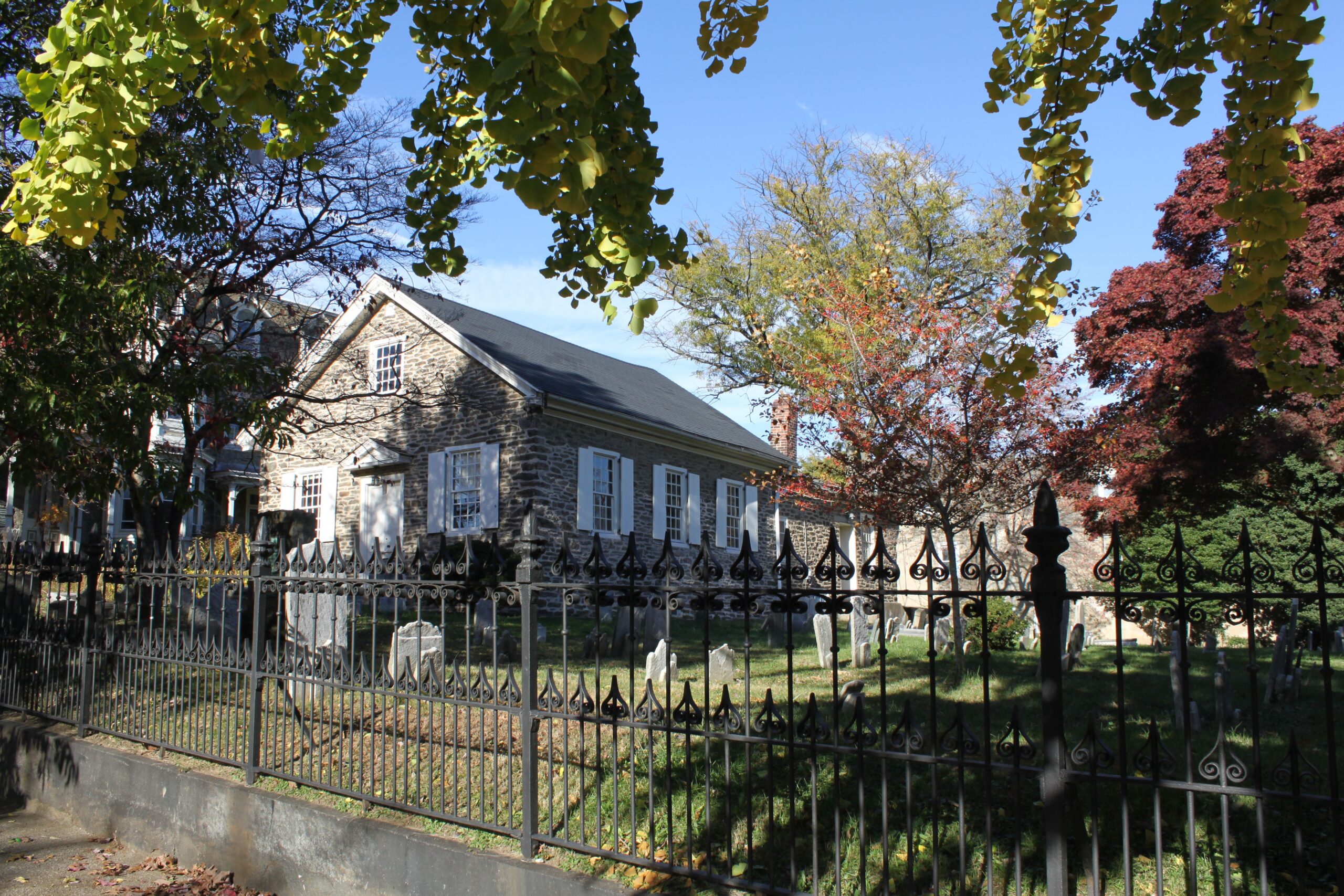
    Mennonites are Anabaptists, Christians who are baptized as adults. And although Quakers aren’t, the two groups worshipped together in the home of settler Thönes Kunders at 5109 Germantown Avenue. Their shared belief in Christian pacificism and non-violence united them.

    Here they drafted a petition that would become the public protest against slavery in British Colonial North America. Germantown’s history is rooted in this incident.

    This historic protest will be remembered at Saturday’s firstival at the Historic Germantown Mennonite Meetinghouse. Each weekend in 2026, the Philadelphia Historic District is throwing a party in honor of America’s 250th birthday. The bashes mark events that happened in Philadelphia before anywhere else in America and often the world.

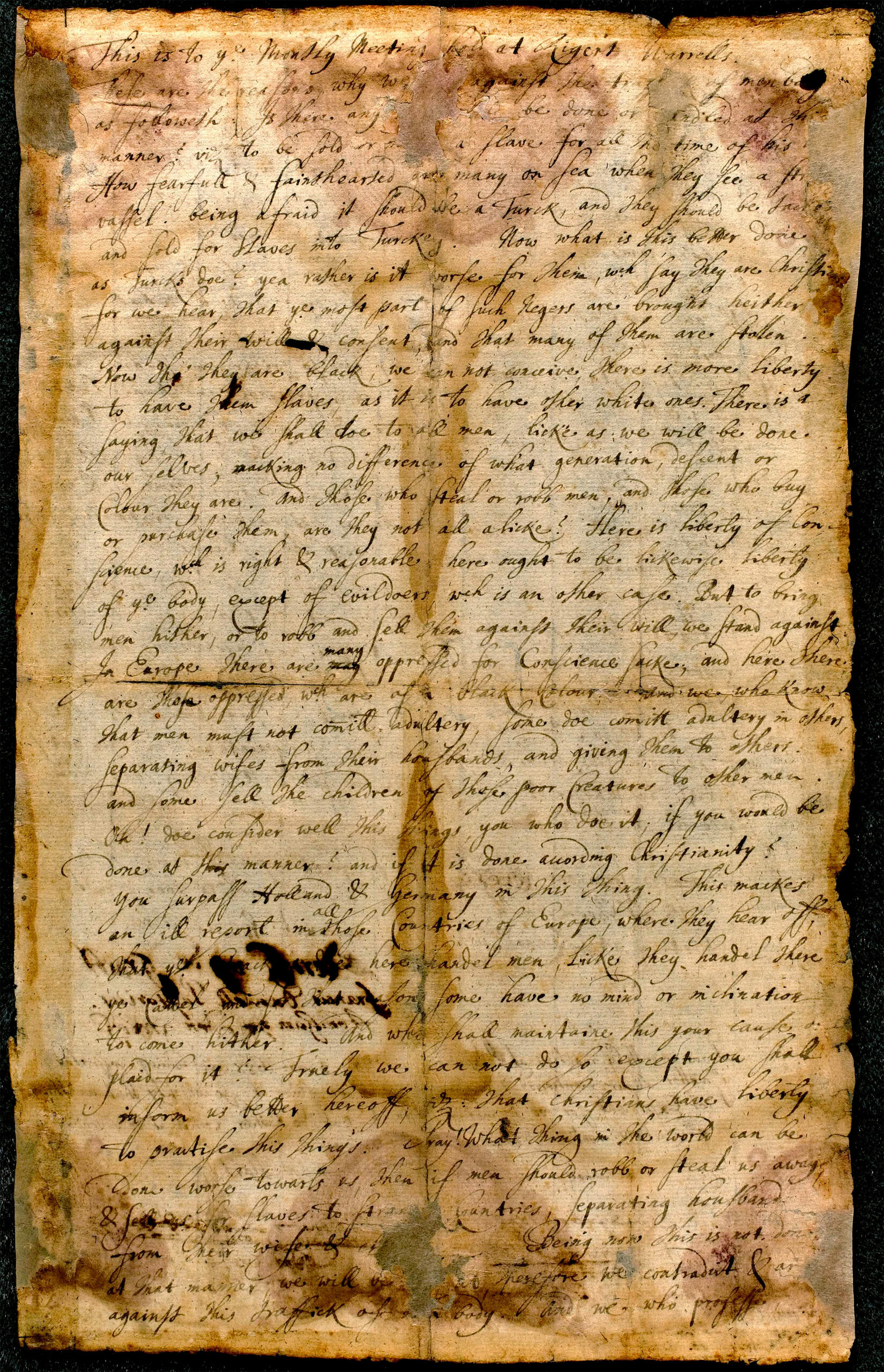
    That is the original, restored 1688 Germantown protest against slavery. It’s on deposit at Haverford Colleges library’s Quaker collection. It had been missing for decades until discovered in a vault at Arch Street meetinghouse

    Early Germantown settlers were familiar with European slavery. However, America’s version of chattel slavery, with its backbreaking labor, cruelty, and separation of families, went against Quaker and Mennonite religious beliefs, said Craig Stutman, a history professor at Delaware Valley University in Doylestown.

    Historians believe this inspired Quaker friends and Mennonites — Garret Henderich, brothers Abraham and Dirck op den Graeff, and Germantown’s founder Francis Daniel Pastorious — to draft a petition‚ stating good Quakers must had to reject the brutal human trafficking. On April 18, 1688, the men signed the protest in Kunder’s home.

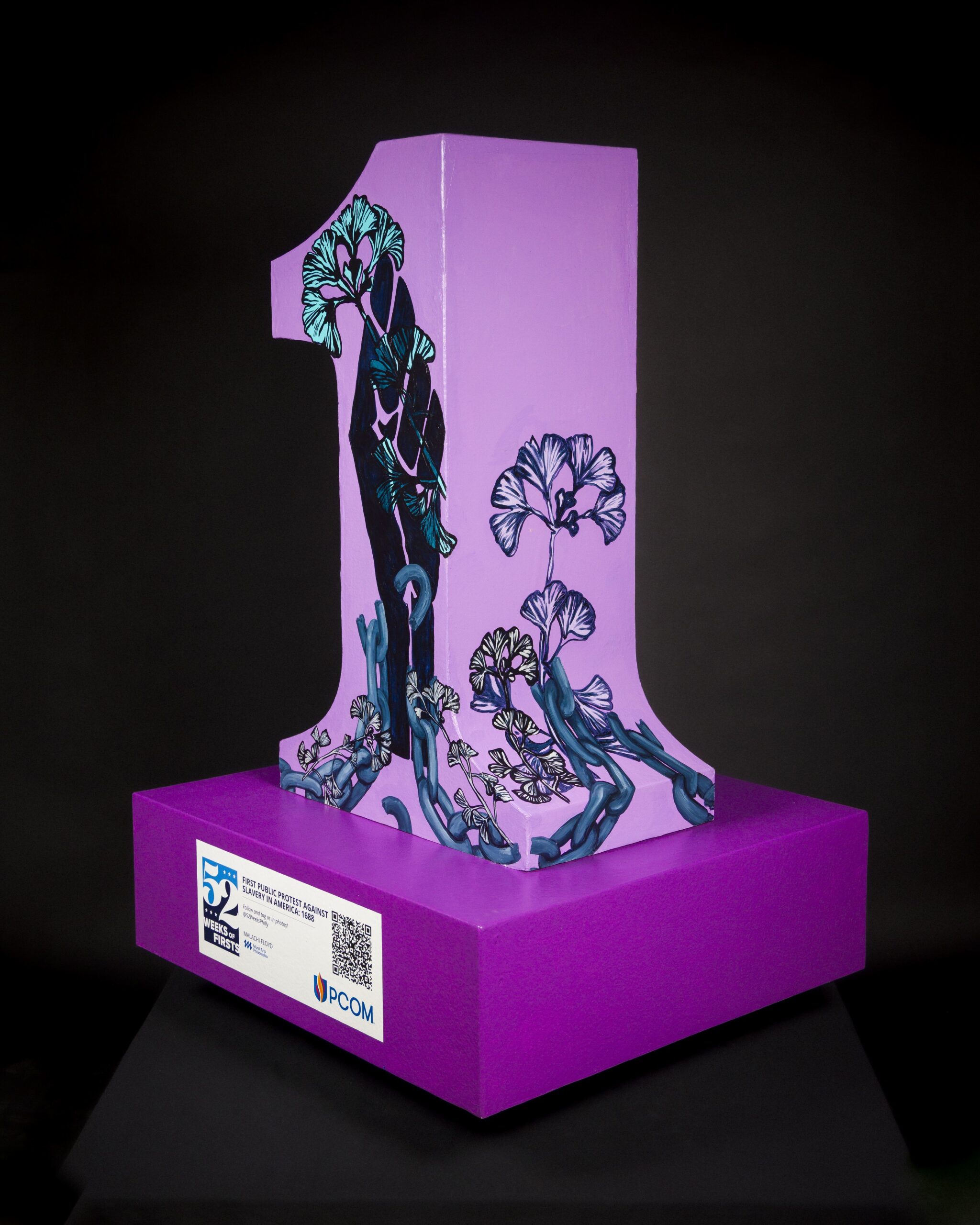
    Artist Malachi Floyd said, “This piece commemorates the first public protest against slavery in America, recognizing the early courage to challenge injustice and advocate for human dignity. “

    Pastorious, Hendricks, and the op den Graeff brothers took their petition to local Quaker meetings in Dublin, today’s Abington Friends; the Philadelphia Quarterly Meeting; and the annual meeting in Burlington, NJ. They wanted the Quaker hierarchy to acknowledge slavery was an evil practice that needed to stop.

    Their pleas were swept under the rug because even in these early American Quaker circles, enslaved people were the backbone of the economy.

    “Even people like Pennsylvania’s founder William Penn owned slaves and didn’t want to touch the political lightening rod,” Stutman said.

    The rejection of the protest petition didn’t stop the fight.

    In 1758, Quakers George Keith, Benjamin Lay, and Anthony Benezet, convinced Quakers to enact a law saying slaveholders could not be members of the Society of Friends.

    Seventeen years later, America’s first antislavery meeting was held at the Rising Sun Tavern.

    “This was a first step in the direction of allyship with free and enslaved Black people who had long been fighting for freedom through slave revolts and cobbling together abolitionist societies,” Stutman said.

    “And it was the foundation. So ultimately by the late 18th and early 19th century, Philadelphia would be a place where Black and white people worked together and fought against the institution of slavery, and where the enslaved came for freedom.”

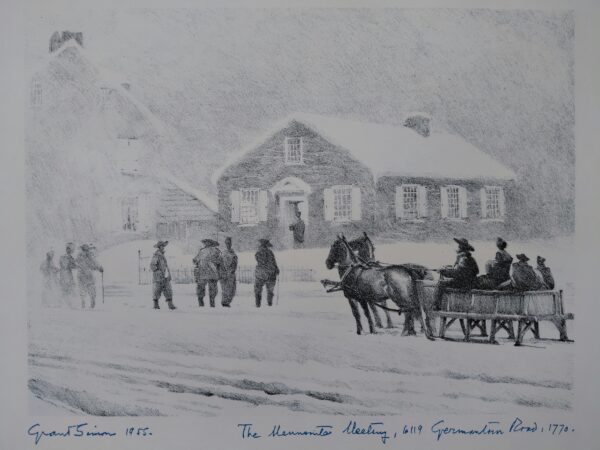
    A recent people of the Mennonite Meetinghouse in Germantown, 6119 Germantown Avenue.

    The protest petition was lost in the Quaker archives sometime in the 1700s. It was rediscovered in 1844, when it was used by abolitionists to inspire a new generation of freedom fighters.

    It currently resides at the Haverford Library Quaker and Special Collections.

    This week’s Firstival is Saturday, Feb. 28, 11 a.m.-1 p.m., Historic Germantown Mennonite Meetinghouse, 6119 Germantown Avenue. The Inquirer will highlight a “first” from the Philadelphia Historic District’s 52 Weeks of Firsts program every week. A “52 Weeks of Firsts” podcast, produced by All That’s Good Productions, drops every Tuesday.