Controversy from the Sixers’ loss Sunday night lingered into Tuesday thanks to a salty message from NBA officials calling out NBC Sports Philadelphia’s Alaa Abdelnaby.
With less than two seconds left and the Atlanta Hawks clinging to a one-point lead, Nickeil Alexander-Walker inbounded a pass in the frontcourt and dribbled it into the backcourt before being fouled by 76ers rookie VJ Edgecombe.
Clearly a backcourt violation and Sixers ball with a chance to win the game, right? Abdelnaby certainly thought so.
“His foot’s in the frontcourt! The ball’s in the frontcourt!” Abdelnaby said during NBC Sports Philadelphia’s telecast.
Can someone explain to me how this was NOT called a backcourt violation by the Hawks?
The officials didn’t see it that way, despite protests from Joel Embiid and Sixers coach Nick Nurse. Their explanation for the no-call after the game was that Alexander-Walker’s “momentum” carried him into the backcourt, which “is legal in the last two minutes of the fourth quarter and overtime.”
Former NBA referee turned ESPN analyst Steve Javie, a Philly native and Temple grad, heard complaints about the no-call from a Sixers fan during a Christmas party Monday night. But after watching the video, Javie thinks the refs made the correct call that Alexander-Walker didn’t establish himself in the frontcourt.
“That’s an easy one. I don’t even think it’s that controversial,” Javie told The Inquirer. “That’s not the one you want to go up the mountain on.”
So instead of it being Sixers ball trailing by just one point, Alexander-Walker made both of his foul shots and increased the Hawks’ lead to three. Quentin Grimes got up a decent shot that would have tied the score as time expired, but it bounced in and out, and the Hawks walked away with the win.
That’s when things got interesting.
On Monday, the National Basketball Referees Association criticized Abdelnaby on social media and defended the officials’ no-call during Sunday’s game.
“For those calling the game, there is a responsibility to know the NBA rules and explain them correctly in order to properly educate the fans,” the association wrote, tagging Abdelnaby’s X account.
This was not a backcourt violation and has never been a backcourt violation.
For those calling the game, there is a responsibility to know the NBA rules and explain them correctly in order to properly educate the fans @alaatweets
The referees’ official X account, with more than 136,000 followers, hasn’t been historically combative and had not called out a single announcer by name this season before going after Abdelnaby.
Why now? That remains unclear. The National Basketball Referees Association did not respond to a request for comment.
“As a ref, you hear so much stuff [from announcers] year after year, game after game, you get kind of frustrated. Like, ‘Dude, this is not the right rule you’re talking about,’” Javie said, especially from hometown announcers openly rooting for their teams. “This is why they’re frustrated and gave him a shot, probably.”
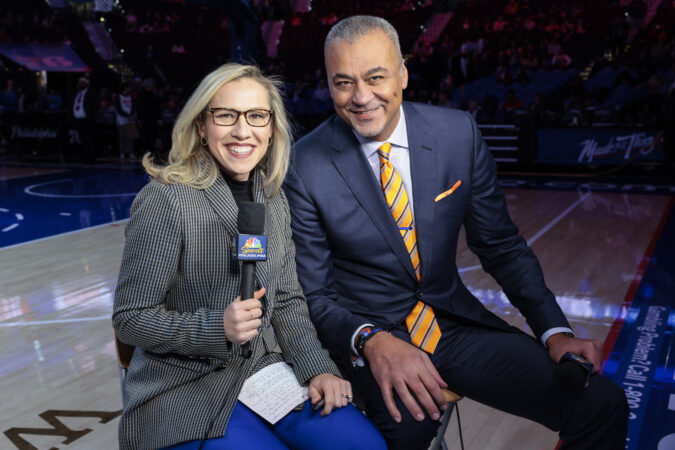
Abdelnaby, a former Duke standout and NBA player in his 10th season calling Sixers games, isn’t afraid to offer strong opinions about the officials during broadcasts. He did so multiple times Sunday night, including after the game from the concourse of State Farm Arena in Atlanta, where he and play-by-play announcer Kate Scott called the game.
“Sometimes you’re told as a player on the road, you have to beat eight instead of just five,” Abdelnaby said, referring to the three officials on the court. “I thought the Sixers got a little shortchanged tonight.”
Abdelnaby declined to comment about the NBA referees’ social media post, but he wasn’t alone in thinking the officials missed a backcourt violation.
“It was a complete blunder by the referees tonight,” NBA Sports Philadelphia studio analyst and former NBA player Marc Jackson said following the game.
What do the NBA rules say?
When in doubt, go to the rule book, where there appear to be two sections invoked Sunday night.
First, the NBA rule book clearly states that the ball “shall be awarded to the opposing team” if a ball in the frontcourt or at the midcourt line passes into the backcourt.
But there is one exception:
And here’s what the rule book says about determining the frontcourt or backcourt status of a player on a throw-in:
The rule basically says a player’s position isn’t determined until he has established a “positive position” on an inbounds pass, as long as it’s under two minutes in the fourth period or in overtime.
So what does “positive position” mean? According to Javie, it basically equates to possession and stopping with the basketball.
“If [Alexander-Walker’s] momentum had stopped from going to the backcourt, and then he took a step into the backcourt, that would then be deemed a backcourt violation,” Javie said. “He didn’t establish position anywhere, really.”
“I thought it was going to be less obvious than that,” Javie added, based on the complaints over the no call.
Fans will certainly have a lot of time to debate the rules, since the Sixers won’t take the court again until Friday night against the New York Knicks at Madison Square Garden on Amazon’s Prime Video.
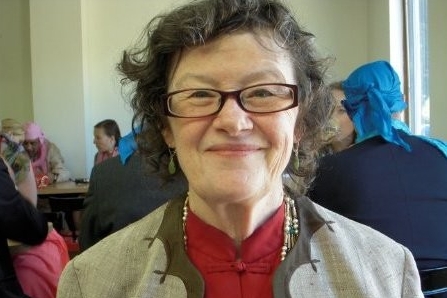
Roberta Fallon, 76, of Bala Cynwyd, cofounder, editor, and longtime executive director of theartblog.org, prolific freelance writer for The Inquirer, Daily News, and other publications, adjunct professor at St. Joseph’s University, artist, sculptor, mentor, and volunteer, died Friday, Dec. 5, at Thomas Jefferson University Hospital of injuries she suffered after being hit by a car on Nov. 24.
Ms. Fallon’s husband, Steven Kimbrough, said the crash remains under investigation by the police.
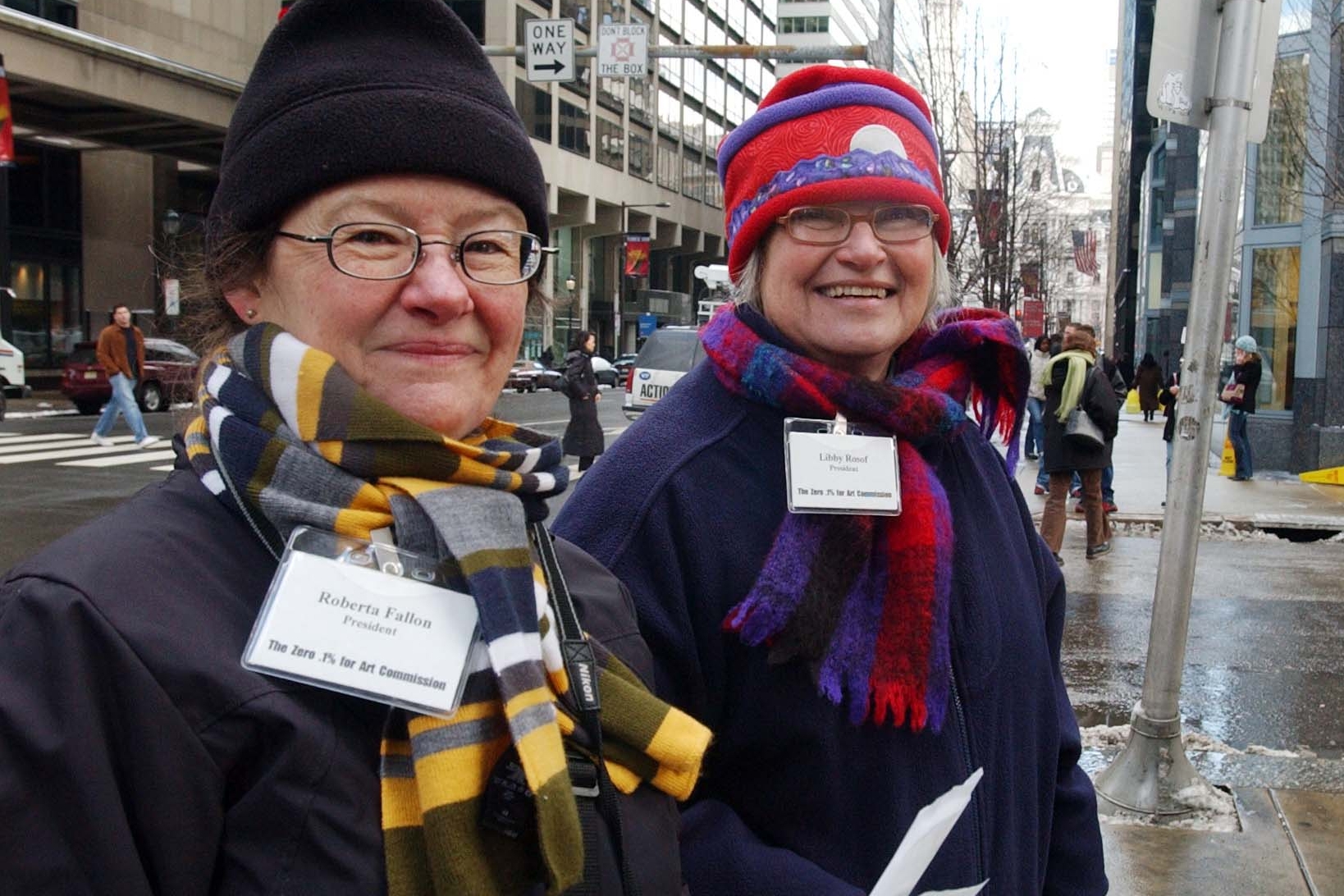
Described by family and friends as empathetic, energetic, and creative, Ms. Fallon and fellow artist Libby Rosof cofounded the online Artblog in 2003. For nearly 22 years, until the blog became inactive in June, Ms. Fallon posted commentary, stories, interviews, reviews, videos, podcasts, and other content that chronicled the eclectic art world in Philadelphia.
The site drew more than 4,500 subscribers and championed galleries and artists of all kinds, especially women, LGBTQ and student artists, and other underrepresented innovators. “I think we have touched base with every major arts organization in Philadelphia at one point or another, and many of the smaller ones,” Ms. Fallon told The Inquirer in May. “We became part of the arts economy.”
She earned grants from the Knight Foundation and other groups to fund her work. She organized artist workshops and guided tours of local studios she called art safaris.
For years, she and Rosof raised art awareness in Center City by handing out miniatures of their artwork to startled passersby. She said in a 2005 Inquirer story: “We think art needs to be for everyone, not just in galleries.”
She mentored other artists and became an expert on the business of art. “She was so generous and curious about people,” Rosof said. “She was innovative and changed the way art reached people.”
Artist Rebecca Rutstein said Ms. Fallon’s “dedicated art journalism filled a vacuum in Philadelphia and beyond. Many of us became known entities because of her artist features, and we are forever grateful.” In a 2008 Inquirer story about the city’s art scene, artist Nike Desis said: “Roberta and Libby are the patron saints of the young.”
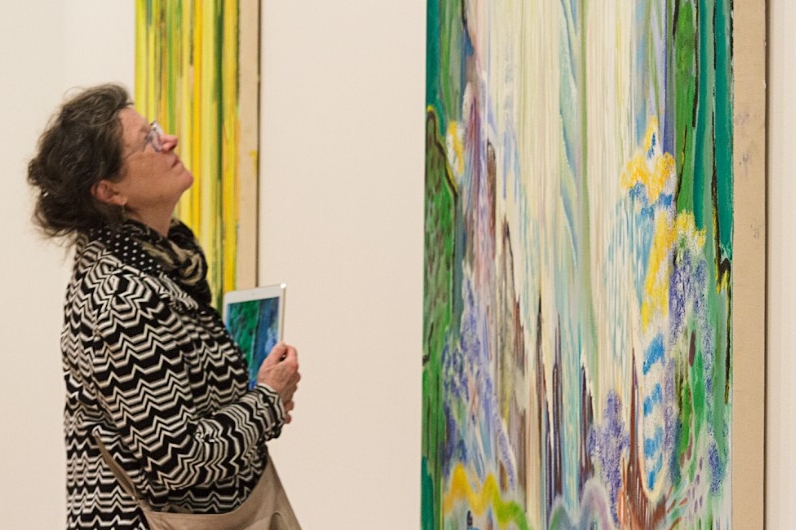
Ms. Fallon never tired of enjoying art.
Colleague and friend Gilda Kramer said: “The Artblog for her was truly a labor of love.”
In November, Ms. Fallon and other art writers created a website called The Philly Occasional. In her Nov. 12 article, she details some of her favorite shows and galleries in Philadelphia and New York, and starts the final paragraph by saying: “P.S. I can’t let you go without telling you about what I just saw at the Barnes Foundation.”
She worked at a small newspaper in Wisconsin before moving to West Philadelphia from Massachusetts in 1984 and wrote many art reviews and freelance articles for The Inquirer, Daily News, Philadelphia Weekly, Philadelphia Citizen, and other publications. In 2012, she wrote more than a dozen art columns for the Daily News called “Art Attack.”
She met Rosof in the 1980s, and together they curated exhibits around the region and displayed their own sculptures, paintings, and installations. Art critic Edith Newhall reviewed their 2008 show “ID” at Projects Gallery for The Inquirer and called it “one of the liveliest, most entertaining shows I’ve seen at this venue.”
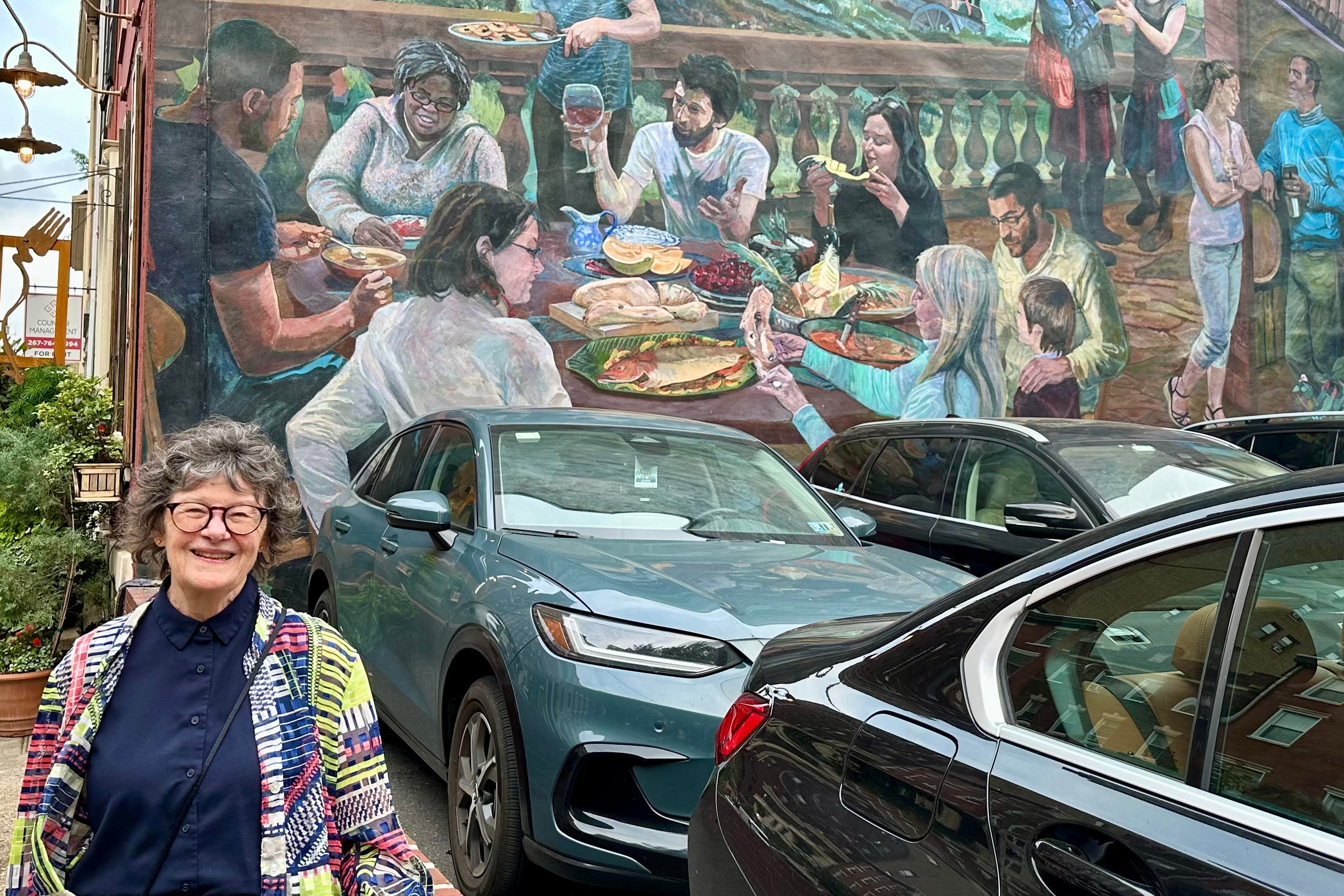
Ms. Fallon stands in front of a mural at 13th and Spruce Streets. She is depicted as the figure profiled in the lower left in the white blouse.
Most often, Ms. Fallon painted objects and sculpted in concrete, wood, metal, textiles, and other material. She was a founding member of the Philadelphia Sculptors and Bala Avenue of the Arts.
She studied at the Pennsylvania Academy of the Fine Arts and Temple University’s Tyler School of Art and Architecture, and later taught professional practice art classes at St. Joseph’s. Moore College of Art and Design, which will archive Artblog, awarded her an honorary doctorate.
“Roberta was an exceptional creative artist” and “a force,” artist Marjorie Grigonis said on LinkedIn. Artist Matthew Rose said: “Robbie was a North Star for many people.”
Her husband said: “Her approach to life was giving. She succeeded by adding value to wherever she was.”
Ms. Fallon (second from right) enjoyed time with her family.
Roberta Ellen Fallon was born Feb. 8, 1949, in Milwaukee. She went to the University of Wisconsin-Madison to study sociology after high school and dropped out to explore Europe and take art classes in Paris. She returned to college, changed her major to English, and earned a bachelor’s degree in 1974.
She met Steven Kimbrough in Wisconsin, and they married in 1980, and had daughters Oona and Stella, and a son, Max. They lived in West Philadelphia for six years before settling in Bala Cynwyd in 1993.
Ms. Fallon was a neighborhood political volunteer. She enjoyed movies and reading, and she and her husband traveled often to museums and art shows in New York and elsewhere.
They had a chance to relocate to Michigan a few years ago, her husband said. But she preferred Philadelphia for its art and culture. “She was like a local celebrity in the art scene,” her daughter Stella said.
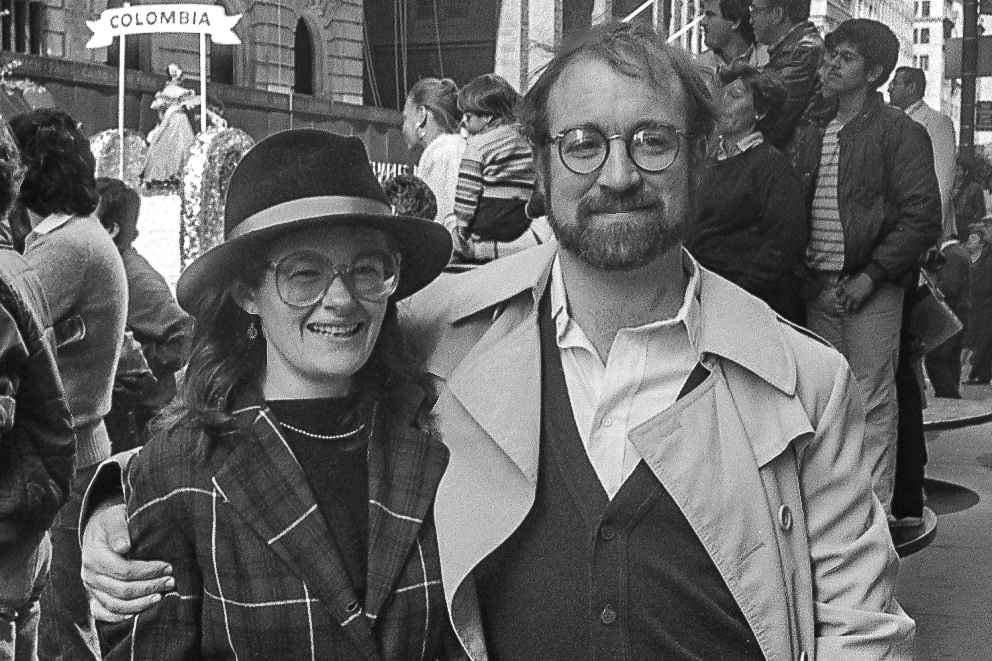
Ms. Fallon and her husband, Steven Kimbrough, visited New York in 1982.
Her husband said: “Everybody likes her. Everybody wants to be around her. She made a difference for a lot of people.”
Her daughter Stella said: “The world would be a better place if we all tried to be like my mom.”
In addition to her husband and children, Ms. Fallon is survived by four grandchildren, a sister, a brother, and other relatives.
Before he came to be a beloved actor on All in the Family or celebrated for directing hits like The Princess Bride and When Harry Met Sally, Rob Reiner was just a teenager training in New Hope, Pa.
The late filmmaker — who was found dead alongside his wife, Michele Singer Reiner, on Sunday in their Los Angeles home — got his start at the Bucks County Playhouse.
In a 2016 interview with the Hollywood Reporter, Reiner said his senior year at Beverly Hills High School sparked a career path in acting because drama class felt “familiar and comfortable.”
After graduating at 17, he apprenticed at the Playhouse in 1964. As noted by Philadelphia Magazine, the Playhouse was one of a short list of regional theaters where Broadway plays would be workshopped. In turn, a lot of famous — or in Reiner’s case, soon-to-be famous — people came to New Hope, including Liza Minnelli and Robert Redford.
Reiner’s time working on shows as a Playhouse Apprentice meant he rubbed elbows with Alan Alda, Merv Griffin, and Shelly Berman, a spokesperson said. It was the same year Minelli appeared at the Playhouse and Arthur Godfrey was in Our Town.
“Reiner mentioned often his gratitude for the training he received on our stage, and his fondness for his time in New Hope,” Bucks County Playhouse producing director Alexander Fraser said. “He joins Grace Kelly, Jessica Walter, Robert Redford, Richard Kind and many others in using their experience as an apprentice in launching remarkable careers.”
Here’s what else we know about the deaths of the Reiners.
The Reiners were celebrated within the film industry and beyond
Reiner was long considered one of the most prolific directors in Hollywood, and his work included some of the most memorable movies of the 1980s and 90s, including This is Spinal Tap, A Few Good Men, When Harry Met Sally, and The Princess Bride.
His role as Meathead in Norman Lear’s 1970s TV classic All in the Family, alongside Carol O’Connor’s Archie Bunker, catapulted him to fame and won him two Emmy Awards.
The son of comedy legend Carl Reiner, Rob Reiner was married to photographer Michele Singer Reiner since 1989. The two met while he was directing When Harry Met Sally and had three children together.
The couple continued to collaborate on both film and advocacy projects. In 1997, they founded the I Am Your Child Foundation for early childhood development. In 2004, they established the Parents’ Action for Children nonprofit focused on public policy and early learning initiatives.
Reiner was regarded as a liberal activist and praised for his work as a cofounder of the American Foundation for Equal Rights, which initiated the court challenge against California Proposition 8, which banned same-sex marriage in the state.
The couple was found dead in their home and a homicide investigation is underway
A spokesperson for the couple confirmed the Reiners’ death to reporters.
Police said they were investigating the case as an apparent homicide after a family member discovered them dead. The couple had stab wounds.
As of Monday morning, the couple’s son, Nick Reiner, 32, was in custody on unspecified felony charges. His bail is set at $4 million, records show.
Tributes are pouring in for the Reiners
Tributes for the Reiners have been pouring in across Hollywood and beyond.
Relatives of Norman Lear, the legendary producer who died in 2023, released a statement about Lear’s relationship with Rob Reiner.
“Norman often referred to Rob as a son, and their close relationship was extraordinary, to us and the world,” the statement said. “Norman would have wanted to remind us that Rob and Michele spent every breath trying to make this country a better place, and they pursued that through their art, their activism, their philanthropy, and their love for family and friends.”
The Obama family released a tribute praising the couple’s art and advocacy work.
Michelle and I are heartbroken by the tragic passing of Rob Reiner and his beloved wife, Michele. Rob’s achievements in film and television gave us some of our most cherished stories on screen. But beneath all of the stories he produced was a deep belief in the goodness of…
“Together, he and his wife lived lives defined by purpose,” Barack Obama’s statement said. “They will be remembered for the values they championed and the countless people they inspired.”
Kathy Bates, who starred in Misery, the thriller directed by Rob Reiner and based on Stephen King’s writing, released a statement.
She praised the late director as “brilliant and kind” and someone who “fought courageously for his political beliefs.” She also highlighted Singer Reiner‘s photography work, including promotional photographs for Misery.
King posted a tribute on X, calling Reiner a “brilliant filmmaker.”
President Donald Trump criticized for his remarks about Reiner’s death
President Donald Trump wrote a statement about Reiner’s death in a post on Truth Social that has been classified as “incendiary,” “deranged,” and “inappropriate” by reports and critics — including GOP members.
The long-winded statement suggested Reiner and Singer Reiner’s death arose from “Trump derangement syndrome.”
Rep. Don Bacon, R-NE, tells me, regarding the president‘s truth social post about the Reiners being murdered,”I’d expect to hear something like this from a drunk guy at a bar, not the President of the United States. Can the President be presidential?”
LOS ANGELES — Rob Reiner’s son, Nick Reiner, was in police custody Monday after deaths of the director-actor and his wife Michele, a law enforcement official told The Associated Press.
Online jail records show Nick Reiner, 32, was booked by Los Angeles police and remained in jail on Monday. It was not immediately clear what charges he would face. The online records showed a $4 million bail had been set.
The law enforcement official, who was briefed on the investigation, confirmed that he was being held, but could not publicly discuss the details and spoke to AP on condition of anonymity.
Representatives for Reiner’s family did not immediately respond to a request for comment and it wasn’t immediately clear if Nick Reiner had an attorney who could speak on his behalf.
Rob and Michele Weiner were found dead Sunday at their home in Los Angeles, and investigators believe they suffered stab wounds, the law enforcement official said.
The Los Angeles Fire Department said it responded to a medical aid request shortly after 3:30 p.m. and found a 78-year-old man and 68-year-old woman dead inside. Reiner turned 78 in March.
Detectives with the Robbery Homicide Division were investigating an “apparent homicide” at Reiner’s home, said Capt. Mike Bland with the Los Angeles Police Department.
Los Angeles authorities have not confirmed the identities of the people found dead at the residence in the upscale Brentwood neighborhood on the city’s west side that’s home to many celebrities.
Reiner was long one of the most prolific directors in Hollywood, and his work included some of the most memorable movies of the 1980s and ’90s, including “This is Spinal Tap,” “A Few Good Men,” “When Harry Met Sally” and “The Princess Bride.”
His role as Meathead in Norman Lear’s 1970s TV classic “All in the Family,” alongside Carol O’Connor’s Archie Bunker, catapulted him to fame and won him two Emmy Awards.
The son of comedy legend Carl Reiner, Rob Reiner was married to photographer Michele Singer Reiner since 1989. The two met while he was directing “When Harry Met Sally” and had three children together: Nick, Jake and Romy.
“Norman often referred to Rob as a son, and their close relationship was extraordinary, to us and the world,” said a Lear family statement. “Norman would have wanted to remind us that Rob and Michele spent every breath trying to make this country a better place, and they pursued that through their art, their activism, their philanthropy, and their love for family and friends.”
Messages to Reiner’s representatives were not immediately returned Sunday night.
Los Angeles Mayor Karen Bass called Reiner’s death a devastating loss for the city.
“Rob Reiner’s contributions reverberate throughout American culture and society, and he has improved countless lives through his creative work and advocacy fighting for social and economic justice,” Bass said in a statement. “An acclaimed actor, director, producer, writer, and engaged political activist, he always used his gifts in service of others.”
Reiner was previously married to actor-director Penny Marshall from 1971 to 1981. He adopted her daughter, Tracy Reiner. Carl Reiner died in 2020 at age 98 and Marshall died in 2018.
Killings are rare in the Brentwood neighborhood. The scene is about a mile from the home where O.J. Simpson’s wife Nicole Brown Simpson and her friend Ron Goldman were killed in 1994.
ATLANTIC CITY — The journey through Atlantic City is bumpy these days, and not only because Atlantic Avenue is desperately in need of paving.
Ducktown Tavern owner John “Johnny X” Exadaktilos has one wish for Atlantic City that has nothing to do with the gut-jarring avenue that runs in front of his bar.
“Just normal,” says Exadaktilos. “I just want things to be normal.”
Atlantic City, a place of historic mayoral misdeeds, multimillionaire overreach, and chronic unwanted attention, has managed in this waning year, even as its workers string up holiday decorations, to come up with a new plot twist: Its newly reelected Democratic Mayor Marty Small Sr. is on trial for alleged physical abuse of his teenage daughter.
The trial has left Small untethered from his cell phone as new casinos have been green lit in New York City, and the state moves to tighten its authority over the town. Another trial, of Small’s wife, La’Quetta Small, who is the superintendent of schools, is set for Jan. 12.
With Small reporting to an Atlantic County courthouse each day to face his daughter, who spent seven hours testifying against him on Tuesday, a bit of a hush has fallen on the city as it awaits the outcome, which could come this week.
The sentiment in City Hall, where many employees owe their jobs to Small, leaned toward the assumption that Small would beat this charge like he’s beaten two previous indictments on voter fraud charges.
But will the city emerge unscathed?
“Every day, people who live in Atlantic City want to know what those of us are elected are doing to make their lives better and respond to their issues and concerns,” said council member Kaleem Shabazz, who was going from a planning board meeting to a mayor-less City Hall last week. “Whatever will happen will happen. The city still has to function. People have to be responsible.”
On Dec. 1, as Small readied for jury selection in Mays Landing, New York City approved three casinos, two for Queens and one for the Bronx, a development long feared in Atlantic City.
On Dec. 5, with the jury picked, the iconic Peanut World on the Boardwalk erupted in flames. On Dec. 9, with the mayor listening to his daughter, legislators in Trentonwere proposing more state oversight of A.C. including a surprise provision that would give the state the power to pick developers for major projects.
The biggest threat may come from the New York casinos, which some in the industry estimate could threaten as much as 30% of A.C.’s business and lead to the shuttering of one casino, if not more.
Small could face jail time and be forced to step down as mayor under New Jersey law, if convicted. He and his wife, who has been attending her husband’s trial, taking notes in the back, have resisted calls to relinquish their powerful roles as mayor and superintendent.
“It’s not ideal obviously,” said Shabazz. “If you had to pick a multiple choice question what would you want to be happening in your public schools, that wouldn’t be something you would pick, if you’re a parent or a taxpayer.”
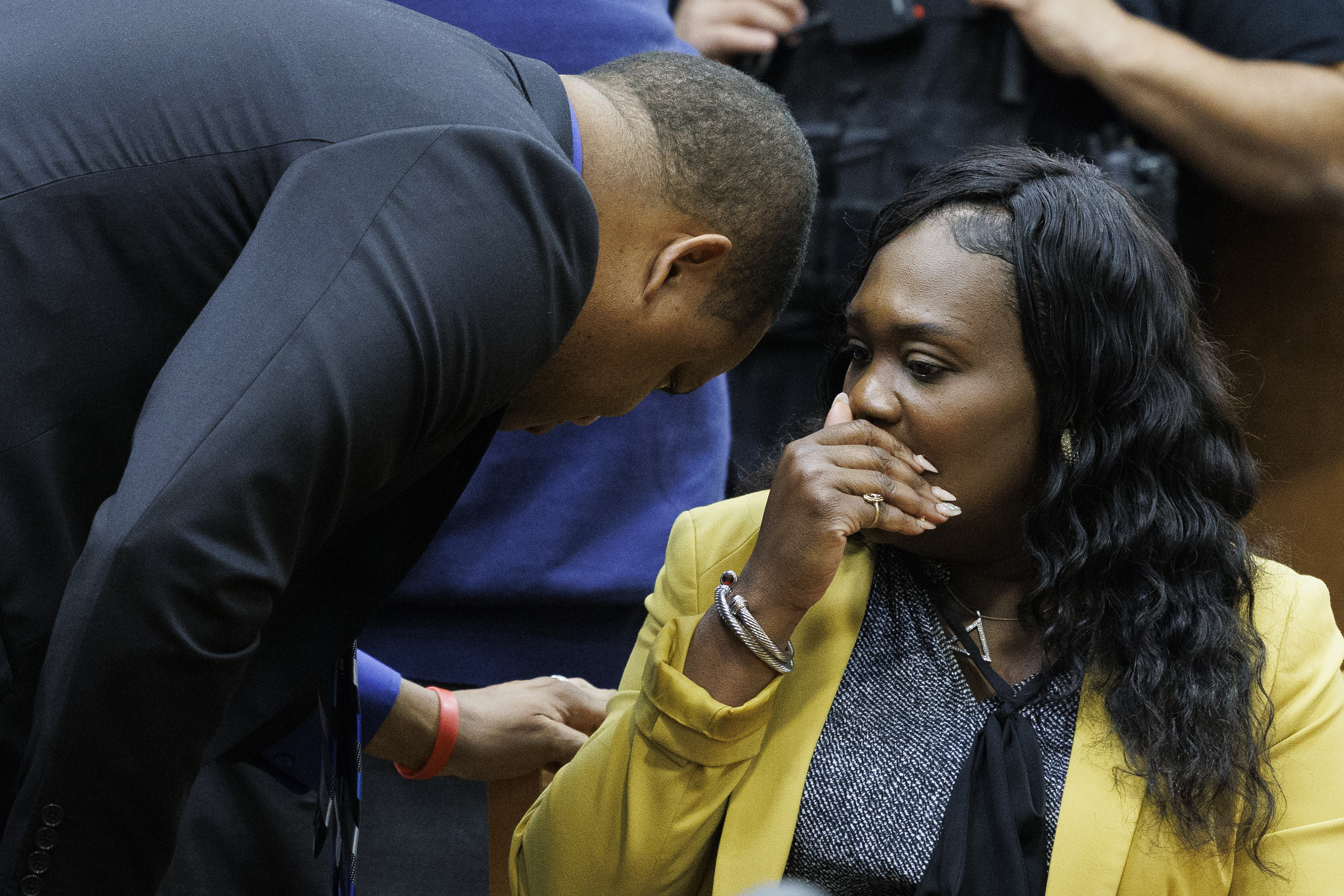
Atlantic City Mayor Marty Small and his wife, Superintendent of Schools La’Quetta Small, chat before the start of arraignment on Oct. 10, 2024. Mayor Small stood trial last week in Mays Landing. Cameras were barred from the courtroom during the trial.
‘A wake-up call’
Early one morning last week, having just come from a planning board meeting, Shabazz said the city was going about its business. “I’m not at the trial, I’m on my way to City Hall,” he said. “The work of government has to go on.”
Shabazz, who’s been focused for years, even decades, on some of the same intractable problems of the resort, remains optimistic. It’s a city where it can be hard to read the scorecard: progress seems to be there, but not there, at the same time.
The city’s only full-size supermarket, the beleaguered Save A Lot is under new management, and the adjacent nuisance liquor store is expected to close. High-profile developers like Jared Kushner and K. Hovnanian appear to be going forward with residential projects in the city’s Inlet section. There are new restaurants, like the Byrdcage in Chelsea and Simpson’s, relocating next month to Atlantic Avenue.
Shabazz is hoping the state will return zoning authority back to the city after years of the Casino Reinvestment Control Authority overseeing planning and zoning in the city’s tourism district.
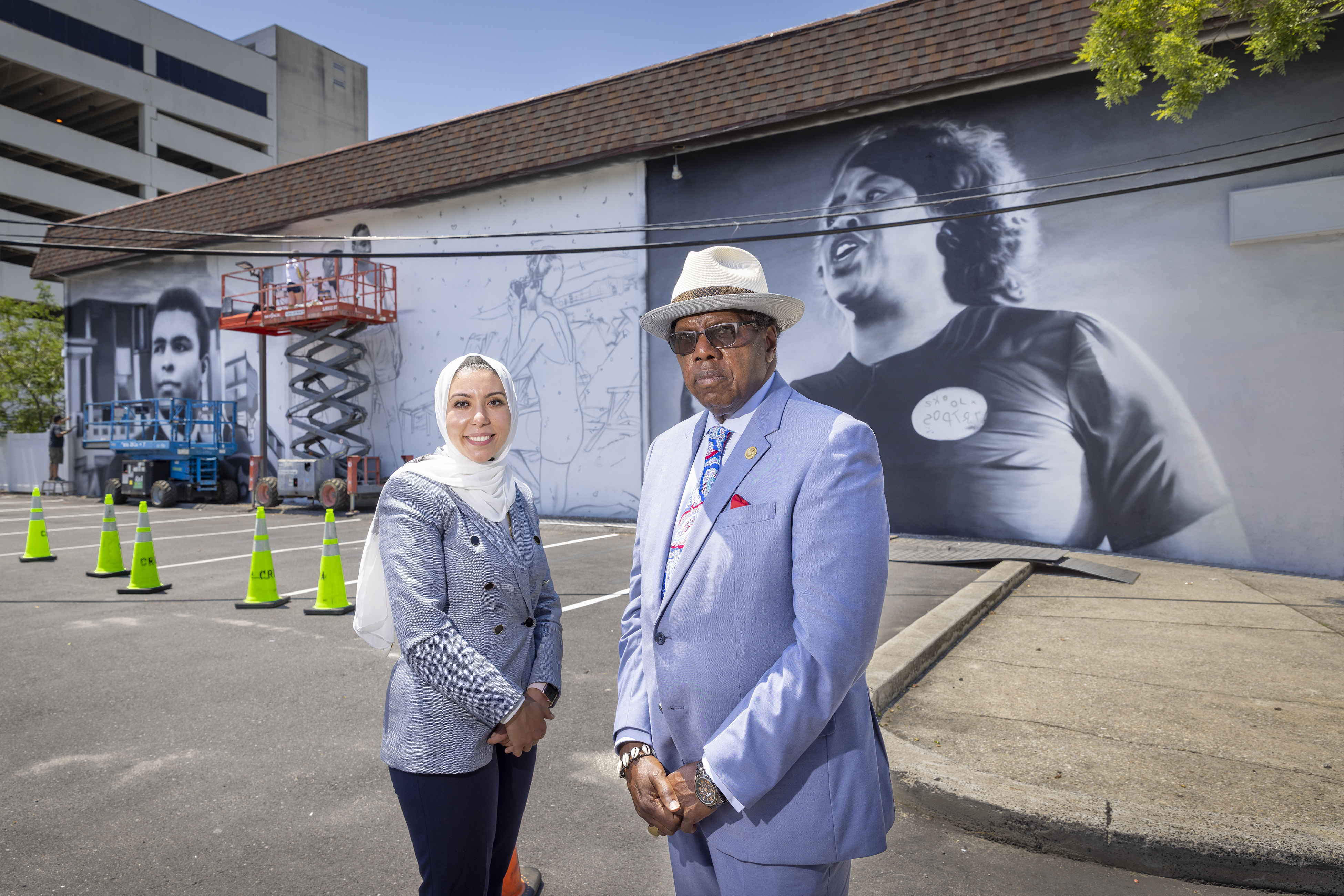
Kaleem Shabazz, president of the local chapter of the NAACP in Atlantic City, and Maryam Sarhan, a community organizer, stand in front of mural honoring civil rights leaders. “The city still has to function,” he said, while its mayor is on trial for alleged child abuse. “People have to be responsible.”
But last week, as the mayor listened to his daughter testifying that he struck her in the head with a broom, after she threw detergent at him and refused to go to a community march, the state went in the opposite direction: a bill to renew the state’s takeover of Atlantic City for another six years that would allow the state to pick a “master developer” to oversee big projects, the Press of Atlantic City reported.
“We have to be competitive,” Shabazz said. “We have to let people know that we’re open for business and we’re safe and secure. Crime is down significantly.”
Like others interviewed, he believes Atlantic City can sell itself as a safe and affordable seaside destination. “We still have a free beach,” he said. “We have to let people know what we have.”
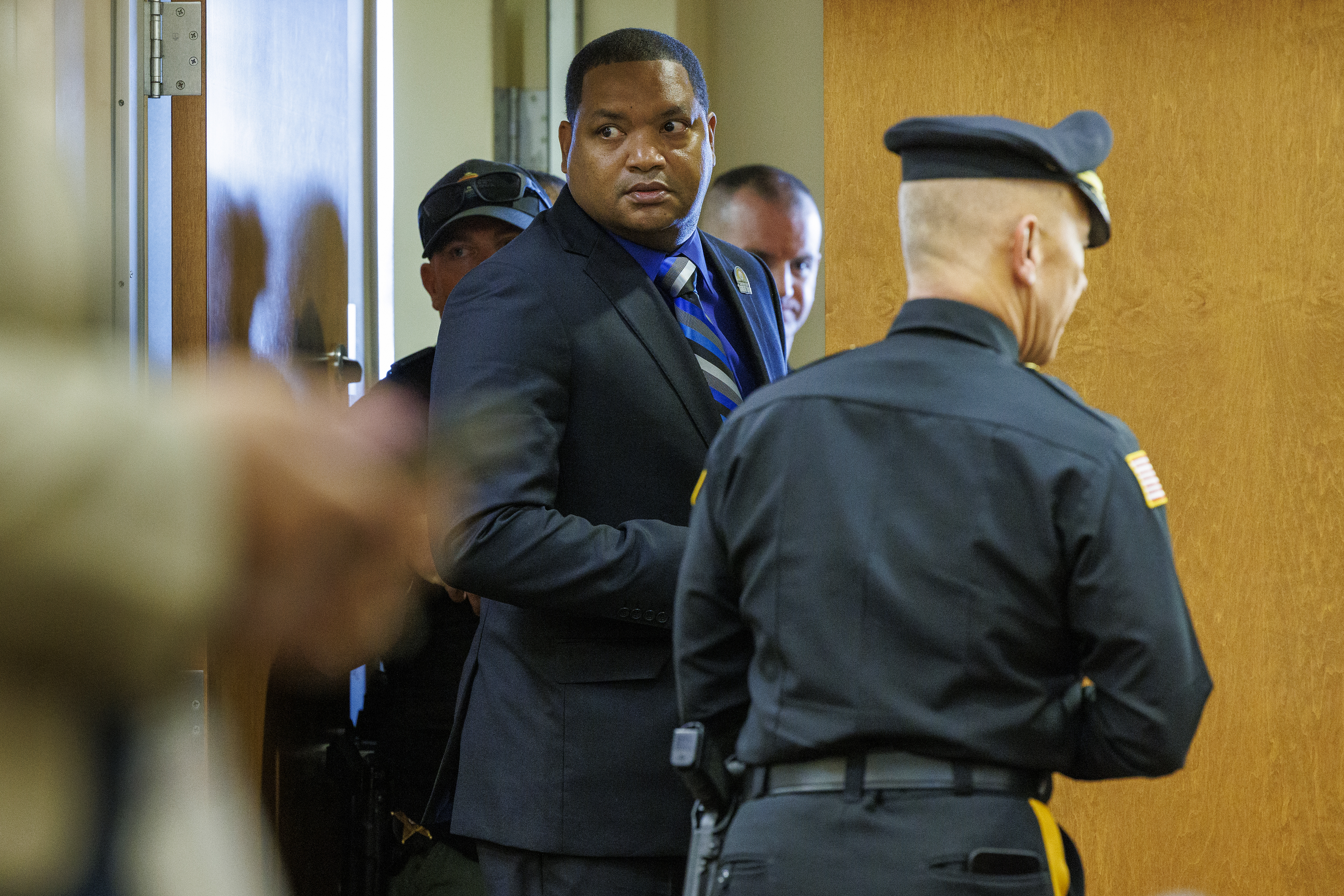
Atlantic City Mayor Marty Small arriving for his arraignment before Judge Bernard DeLury at the Atlantic County Criminal Courthouse in Mays Landing on Oct. 10, 2024. Small testified in his own defense Friday during his trial. Cameras were barred from the courtroom.
Small has defended himself by describing this latest situation as a private family problem, not related to his job performance. He has called the prosecution politically motivated and an overreaction. A jury will now weigh in.
John Boyd Jr., a principal in the Boyd Co., which advises companies on where to locate, said many developers (and homeowners) continue to balk at Atlantic City, despite the upward pressure on Jersey Shore real estate that has left the city as arguably the last affordable seashore town in the entire Northeast.
He called the three New York City casino licenses “a wake-up call” for New Jersey, and advocates a plan where the state allows casinos at the Meadowlands and/or Monmouth Park but shares the revenue with Atlantic City.
“If you ask national developers their opinion of Atlantic City, it wouldn’t be a very positive one for a myriad of reasons,” he said.
“Good governance is fundamental to economic development success. Companies want to minimize risk. It’s more than the mayor being on trial. It’s the uncertainty.”
Meanwhile at the slots
Inside Hard Rock casino during a blustery stretch last week, people were three deep at the holiday-branded Mistletoe Bar in the lobby, and nine guitars had become a menorah in the atrium.
Gamblers were locked in as names were called for a random spin-the-wheel drawing every half hour. A convention of real estate agents brought lines to the check-in desk. The trial was off in the distance, invisible to most.
“I do love coming to Atlantic City,” said Adam Druck, 33, a Realtor from York, Pa. “I hope the trial doesn’t make too much difference to what’s going on here.”
Asked about New York casinos, Joe Pendle, 71, a retired police officer from North Jersey, said he was comfortable with his routines at Hard Rock, where free rooms and meals anchored his pleasant stays. (Hard Rock itself has one of the three licenses in New York City, an $8.1 billion project near Citi Field in Queens, which it projects will result in $1 billion a year in tax revenue.)
“I have a three-room suite upstairs,” noted Pendle. “I like the beach.”
Arthur Austin, 70, of Old Bridge, said he had worked for decades on Wall Street and had no desire to travel to New York for a casino weekend.
“I worked in the city for 20 years,” he said. “I only go into the city if I have to.”
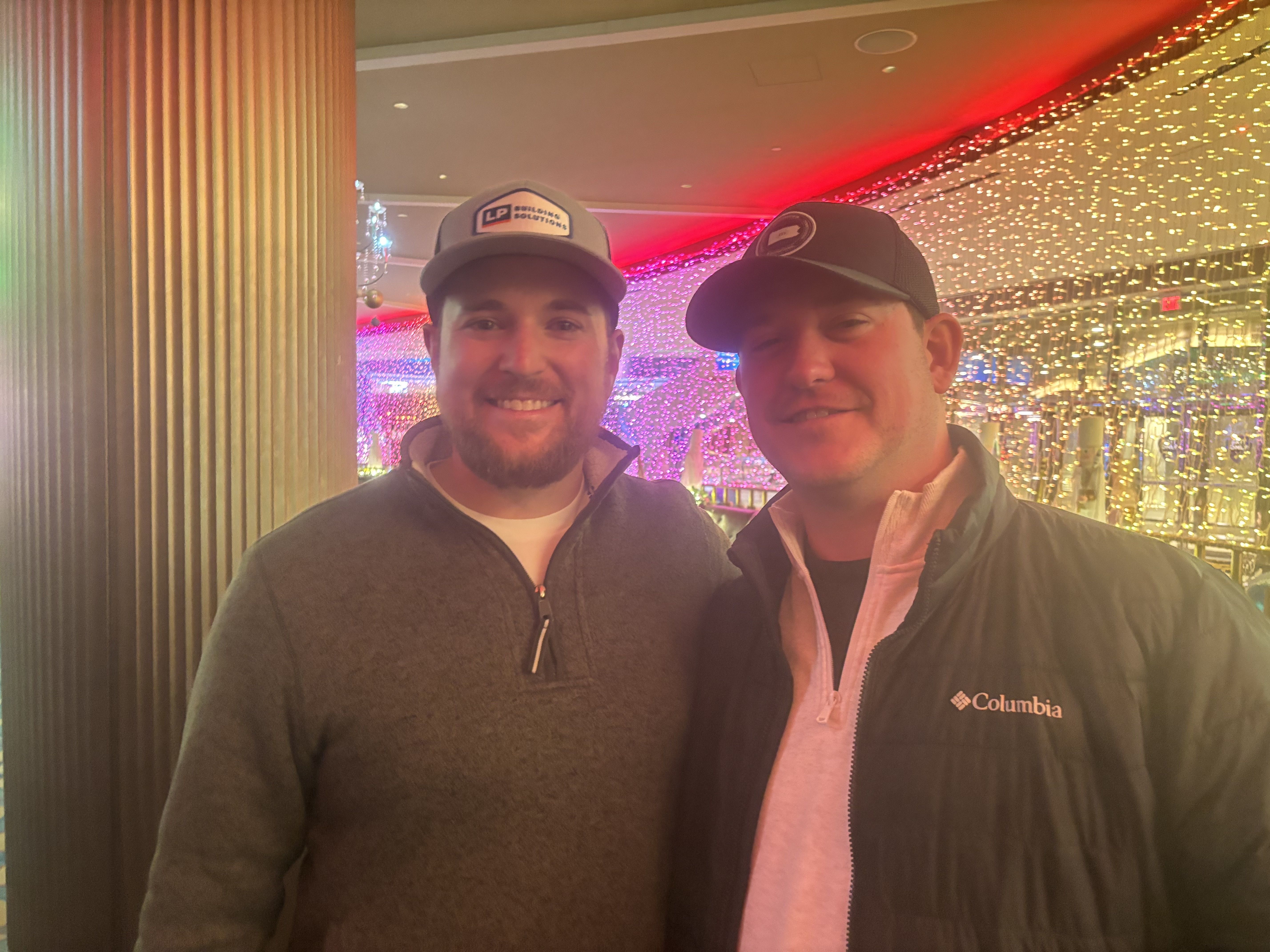
Adam Druck, 33, of York, Pa., and Eric Moeller, 36, of Reading, inside Hard Rock casino on Dec. 9, where they were staying as part of Triple Play Realtor Convention and Trade Expo in Atlantic City.
Out-of-towners like Austin hadn’t heard about Small’s trial, but the local gamblers at Hard Rock sure had.
“Atlantic City is a crooked place, and it’s always gonna be crooked because of what everybody’s into,” said a 57-year-old woman who lives locally and was playing the slots. She did not want her name used so that she could speak her mind in a small town.
“People want their guy to stay in there,” said the woman. “He gives everybody a job. You could flourish, but only if you are with the right people.”
“I don’t think that it hurts Atlantic City,” said Seng Bethia, 40, of Atlantic City, who was at the slots. “His daughter is such a sweet girl. It was bad, just the whole thing.”
‘Are you kidding me right now?’
Exadaktilos, the Ducktown Tavern owner who is Small’s loudest detractor, said he had taken things down a notch of late, putting aside his popular weekly Facebook live rants that he said had started consuming him.
Still, last week, as the prosecution wound up its case, the city sent out a contractor to do some temporary filling in of cracks on Atlantic Avenue in advance of the city’s holiday parade, and Exadaktilos found himself back on Facebook live.
“Are you kidding me right now?” he said over footage of the roadway. “What happened to Atlantic Avenue is going to be paved? Horrible.”
Boyd, the location consultant, points to bright spots. The national developers are a vote of confidence, as is the Septemberopening of the SeaHaus boutique hotel on the Boardwalk, a Marriott property. Showboat and the Sheraton near the Convention Center are converting rooms to residences.
Boyd sees potential for Atlantic City to follow the likes of Coney Island, which has seen a renaissance, to attract film business, to market itself as a live-work-play destination.
Outgoing council member George Tibbitt looks at the Kushner plan, a 180-unit apartment complex, as another missed opportunity. “No vision there,” he said. “That’s desperate development.”
“New York City definitely makes me afraid,” said Tibbitt. “There’s only so many gambling dollars to go around. Adding more casinos is going to be devastating. We have to clean the city up. We have to get the neighborhoods filled back up.”
One industry the city bet heavily on was cannabis: Its midtown quickly filled with 16 dispensaries. But after complaints from the cannabis entrepreneurs themselves, city council capped the number at 16, leaving many that have been approved but have yet to open (including one that necessitated the demolishing of a historic church) in limbo.
Atlantic City is a place where things can seem to be finally coming together, while simultaneously unraveling. Big plans vaporize, like the highly touted gym and nightclub outside Showboat, where last summer, the owner set up couches, DJ booths, and exercise machines, got stalled by permitting issues, and quietly dismantled them.
Miguel Lugo, general manager at AC Leef, which held out for a strategic spot on Albany Avenue, said his cannabis business has been good. He looks forward to the dispensary running financial literacy classes for the community, and getting its cultivation license.
“On this side of the town, everything’s been phenomenal,” Lugo said. “I’m super focused on AC Leef. I don’t know what’s going on with the mayor.”
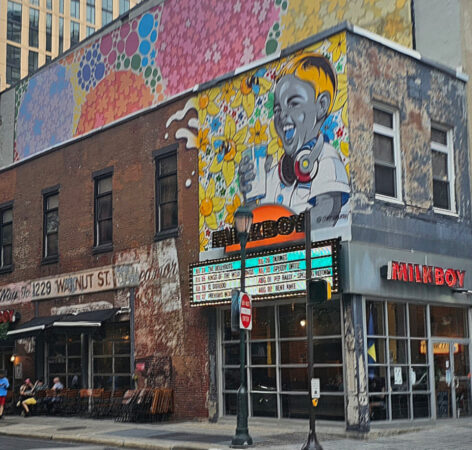
A funk show had just started at MilkBoy Thursday night, when a fan fell near the stage, quickly losing consciousness. That’s when a group of off-duty nurses, relaxing after a shift at nearby Thomas Jefferson University Hospital, did something the hospital staff is becoming famous for during their off-hours at the Market East bar and live music spot: They saved a life.
It was shortly after 8:30 p.m., said MilkBoy owner Jamie Lokoff, when an older man watching a performance by Owls by Day, a New York-based band opening for the funk group Polyrhythmics, suddenly collapsed. Alerted that a fellow customer had gone into cardiac arrest, a trio of nurses at a downstairs table quickly rushed upstairs to help, he said. As the band turned up the lights, the nurses used cell phone flashlights to assess the stricken fan.
“The nurses went to work on the guy,” said Lokoff, who reviewed video of the life-saving incident. “They started doing CPR, pumping his chest. Here they were downstairs having a good time and, boom, they got to run upstairs and you got a guy who has no pulse.”
More off-duty nurses quickly joined to help, said MilkBoy general manager Anna Reed.
“They did chest compressions for eight to 10 minutes,” she said. “They were tagging in and out.”
Eric Lense, who plays drums in Owls By Day, said the man was “in very bad shape.”
“It was scary and intense,” Lense said. “But also amazing to watch these professionals step in so quickly and save this man’s life.”
By the time paramedics soon arrived, the nurses had resuscitated the man, Lokoff and Reed said. Fans and customers cheered as the man, awake and responsive, was carried out to an ambulance. The bar had an emergency response certified staffer working the show, who helped clear room for the ailing patron. The condition of the man, who had been at the show with his wife, is not known.
Remarkably, it’s the third time in recent memory that nurses and doctors from the hospital, located about a block away on 11th Street, helped save a customer’s life at the club, Lokoff said. An off-duty Jefferson doctor used a defibrillator they had in their bag to save the life of a patron who had been drinking Tito’s vodka on the rocks when he went into cardiac arrest about a year ago, Lokoff said. On another occasion, nurses aided an older regular, who fell unconscious and was also revived.
MilkBoy, which opened in 2011 and serves from 7 a.m. to 2 a.m., is a popular hangout for Jefferson staff, who come for postshift drinks and food.
Neither Lokoff nor Reed knew the names of the nurses who helped revive the man. Bar staff comped much of the large group’s bill, they said.
A Jefferson spokesperson could not identify the nurses either. But they said the hospital was proud.
“We are proud of our clinicians and the lifesaving skills they bring in our hospitals as well as the community,” they said in a statement. “These acts of courage and quick thinking are a powerful reminder of the dedication and training that define the Jefferson Nurse and our physicians.”
“It’s pretty remarkable to see these nurses go into action in real time,” Lokoff said. “We just want to express our gratitude to the Jefferson nurses and staff that has been there to step in when needed. They just do what they do, and we want to give them a hug. … I joke that we’re the safest bar around.”
Comedy icon Dick Van Dyke celebrated his 100th birthday on Saturday, hitting the century mark some six decades after he sang and danced with Julie Andrews in Mary Poppins and starred in his self-titled sitcom.
“The funniest thing is, it’s not enough,” Van Dyke said in an interview with ABC News at his Malibu, Calif., home. “A hundred years is not enough. You want to live more, which I plan to.”
As part of the celebration of Van Dyke’s birthday this weekend, theaters around the country are showing a new documentary about his life,Dick Van Dyke: 100th Celebration.
Van Dyke became one of the biggest actors of his era with The Dick Van Dyke Show, which ran from 1961-66 on CBS; appeared with Andrews as a chimney sweep with a Cockney accent in the 1964 Disney classic Mary Poppins; and, in his 70s, played a physician-sleuth on Diagnosis: Murder.
Also a Broadway star, Van Dyke won a Tony Award for Bye Bye Birdie to go with a Grammy and four Primetime Emmys. In 1963, he starred in the film version of Bye Bye Birdie.
In the 1970s, he found sobriety after battling alcoholism and spoke out about it at a time when that was uncommon to do.
Now that he has hit triple digits, Van Dyke said he’s gotten some perspective on how he used to play older characters.
“You know, I played old men a lot, and I always played them as angry and cantankerous,” he told ABC News. “It’s not really that way. I don’t know any other 100-year-olds, but I can speak for myself.”
He recently imparted wisdom about reaching the century mark in his book, 100 Rules for Living to 100: An Optimist’s Guide to a Happy Life. He credited his wife, 54-year-old makeup artist and producer Arlene Silver, with keeping him young.
“She gives me energy. She gives me humor, and all kinds of support,” he told ABC News.
Van Dyke was born in West Plains, Mo., in 1925, and grew up “the class clown” in Danville, Ill., while admiring and imitating the silent film comedians.
He told ABC News he started acting when he was about 4 or 5 years old in a Christmas pageant. He said he was the baby Jesus.
“I made some kind of crack, I don’t know what I said, but it broke the congregation up,” he said. ”And I liked the sound of that laughter.”
And what’s hard about being 100?
“I miss movement,” he told ABC News. “I’ve got one game leg from I don’t know what.”
Making Handel’s Messiah a major occasion — rather than a mere Christmas revisitation — is close to impossible, though not at the Philadelphia Orchestra’s Friday opening of a three-performance Kimmel Center run.
For years, the orchestra imported one guest conductor after another.
Now, Messiah is led by artistic director Yannick Nézet-Séguin, who began as a choral conductor in Montreal and happens to have the inside track on excellent solo singers, thanks to that little old opera company where he also works 80 miles up the road.
It was a highly compelling performance that’s likely to gain more strength on Saturday and Sunday.
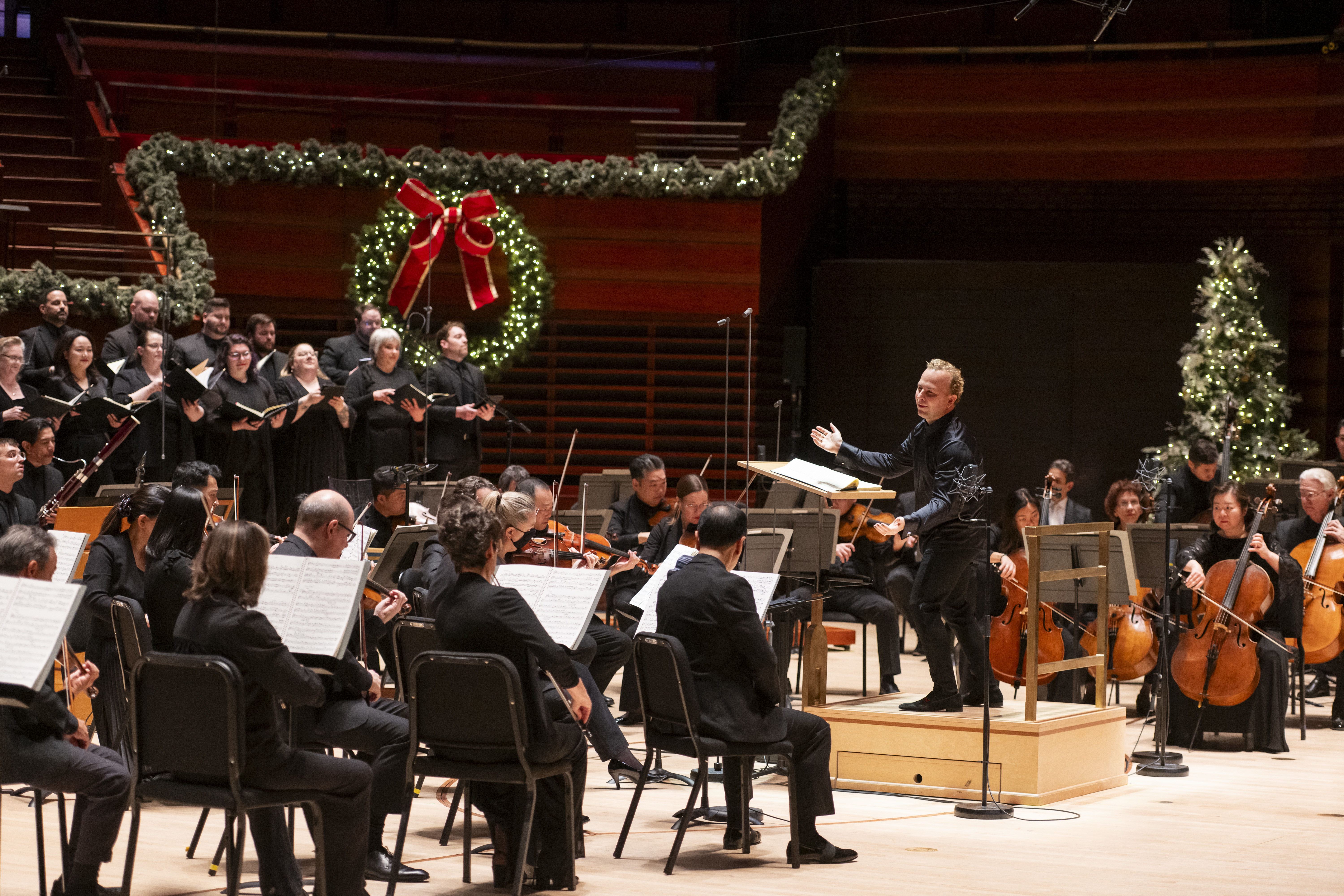
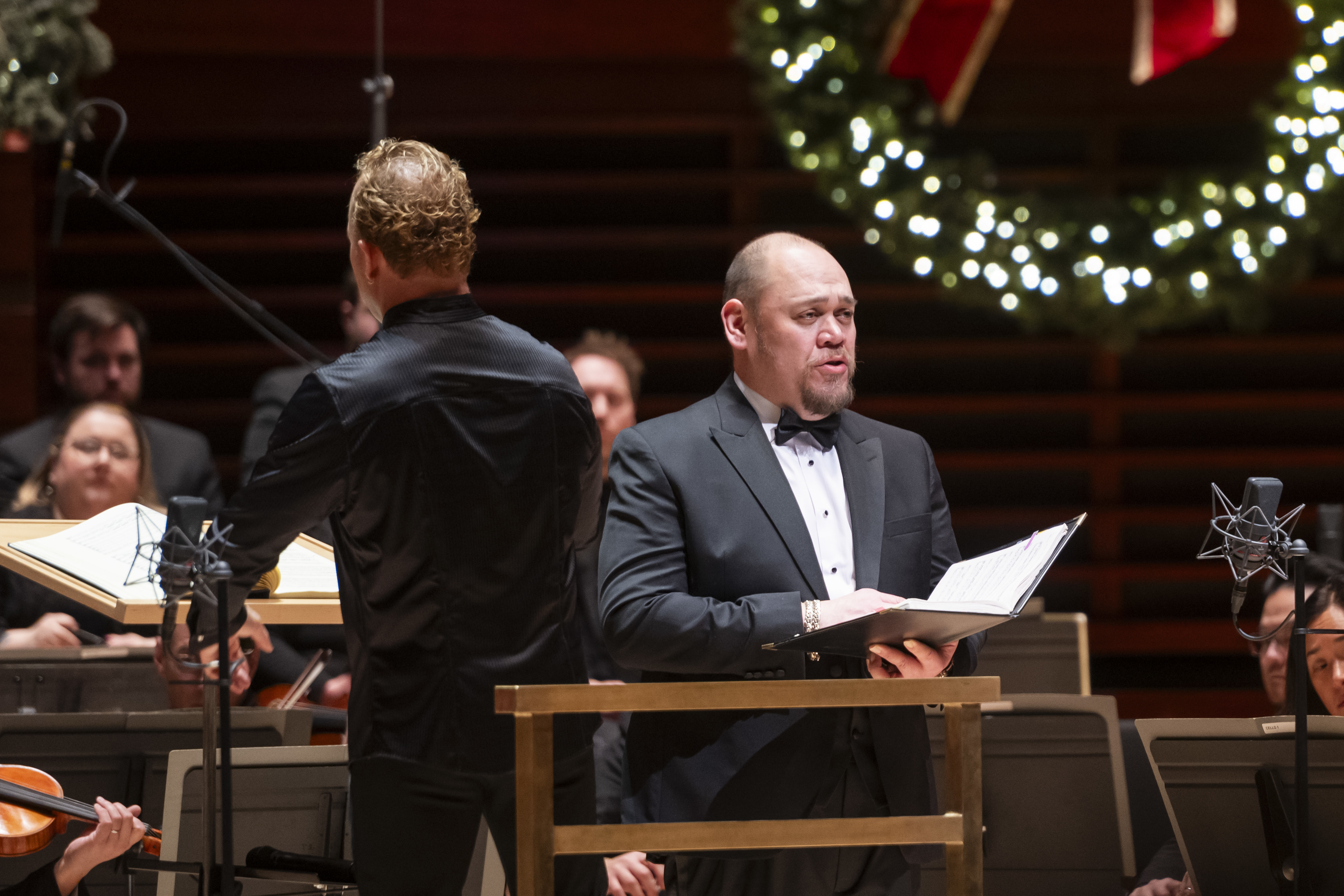
Yannick Nézet-Séguin conducts the Philadelphia Orchestra during a performance of Handel’s “Messiah” at the Kimmel Center for the Performing Arts on Friday.
Handel’s epic mosaic of 52 arias, recitatives, choruses, and instrumental interludes has changed enormously over the years; shape-shifting from Victorian grandeur to lean, faster performances more in keeping with the 18th century in which this masterpiece was born.
With the 40-voice Philadelphia Symphonic Choir rather than the cast-of-hundreds Mormon Tabernacle Choir (which recorded the piece with the Philadelphia Orchestra in 1958), Messiah is now relieved of extraneous sound, and reveals more of its once well-hidden essence.
Nonetheless, well-matched soloists — vocally and stylistically — are too much to hope for in this busy season, though enjoying their differences among them was definitely possible.
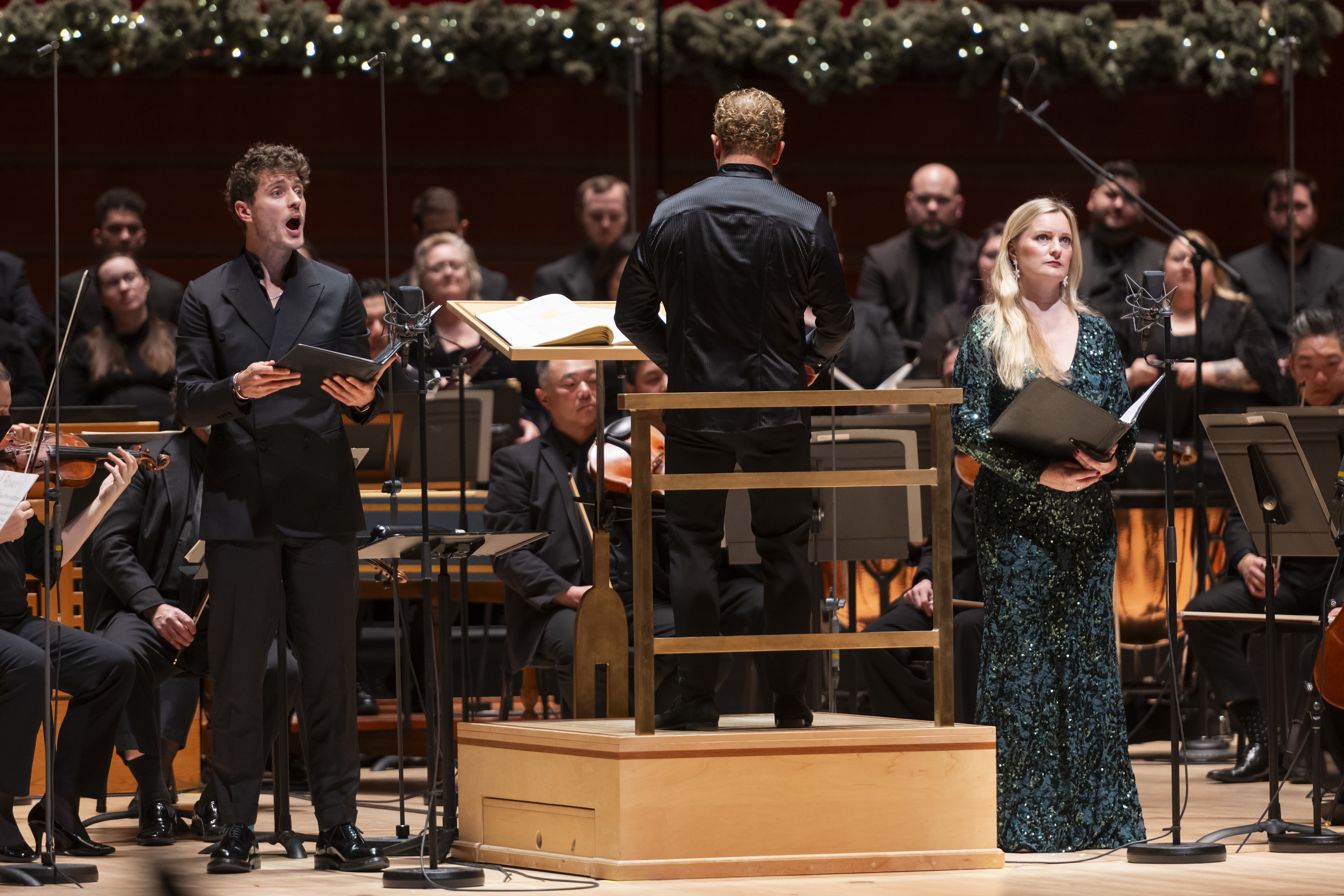
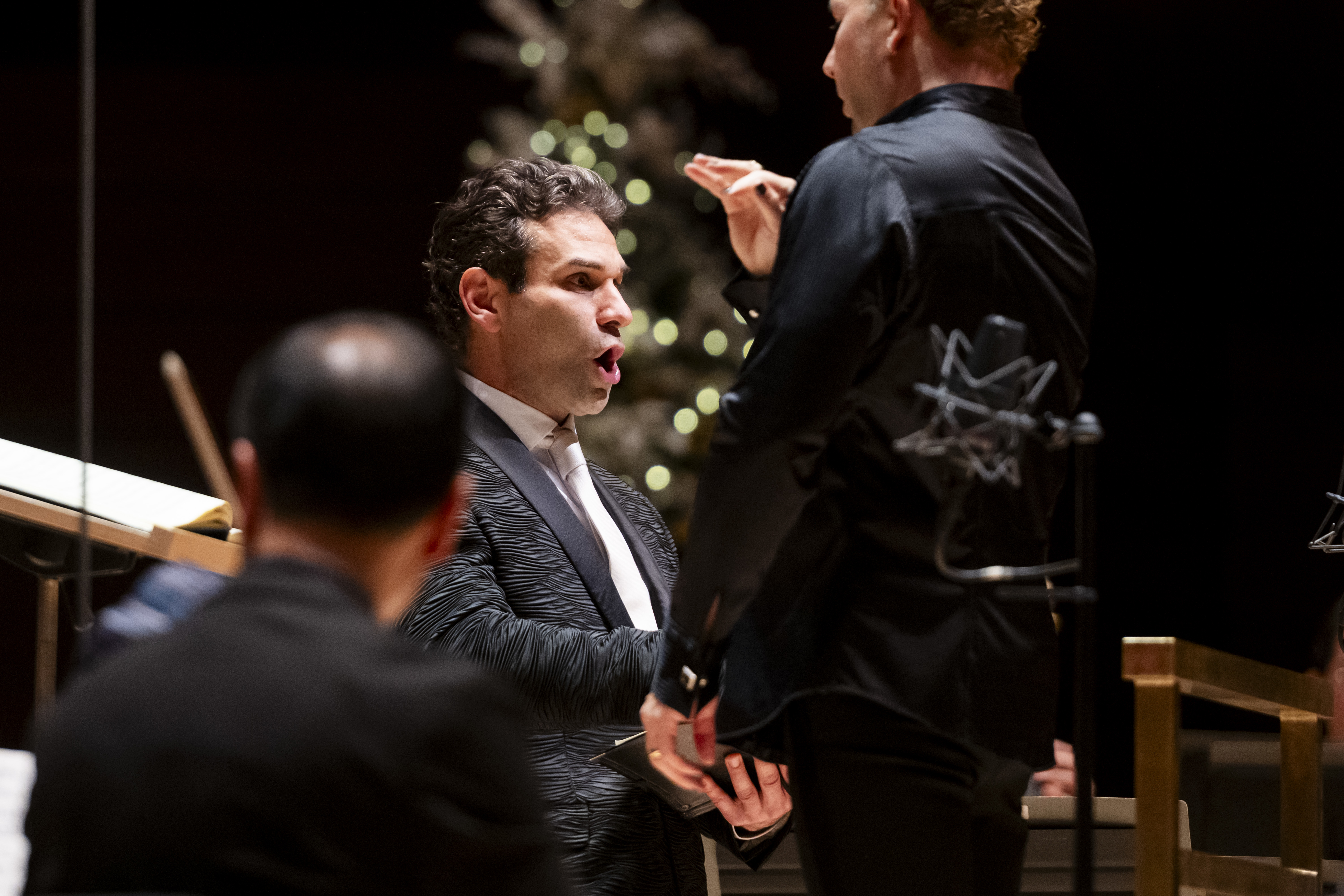
Jakub Józef Orliński (left), countertenor, and Lucy Crowe (right), soprano, sing with the Philadelphia Orchestra during a performance of Handel’s “Messiah” at the Kimmel Center for the Performing Arts on Friday.
Tone, agility, diction, and meaningful vocal ornaments were all of a piece with the much-honored British soprano Lucy Crowe, the most seasoned Handelian among them, which was also evident in the way she made upward vocal leaps (normally just a technical feat) charged with emotion.
The least likely Messiah soloist was also one of the biggest names, baritone Quinn Kelsey, whose every Verdi and Puccini role at the Metropolitan Opera is full of new dimensions. Yet Handel’s vastly different skill requirements were also reasonably well in hand. His distinctive theatrical alchemy came alive in recitatives, and ultimately, in his final aria “The Trumpet Shall Sound” (the trumpet itself being capably played by Travis Peterson). Intricate vocal writing once prompted slowed-down tempos to ease vocal discomfort — which is now heard as a sign of defeat.
Quinn Kelsey, baritone, sings with the Philadelphia Orchestra during a performance of Handel’s “Messiah” at the Kimmel Center for the Performing Arts on Friday.
Instead, Kelsey lightened his voice and maintained both the tempo and the integrity of the music.
Similar moments were heard from the popular Polish countertenor Jakub Józef Orliński, who has plenty of Messiah mileage though his voice is evolving toward a deeper, richer sound ― heard especially in “He Was Despised” ― suggesting his future lies in less athletic repertoire. He also has a way of swaying to the music. Whether it’s calculated stagecraft or the inspiration of the moment, his already-strong stage presence doesn’t need it.
Frédéric Antoun, tenor, sings with the Philadelphia Orchestra during a performance of Handel’s “Messiah” at the Kimmel Center for the Performing Arts on Friday.
Tenor Frédéric Antoun seemed a bit Messiah-weary (it’s a busy season) suggesting that his pitch will be steadier and vocal ornaments more spontaneous in future, more rested performances.
Choral sections — the most beloved parts of Messiah — are often sung for their considerable effect but were treated to detailed coloring of the words, underscored by sympathetic treatment of the accompanying instrumental writing. This element, not often heard in quickly assembled Messiahs, played a major part in giving this performance an air of occasion.
As is sometimes the case in Nézet-Séguin choral outings, his use of light, shade, quietude and force can be puzzling. At such points, the myriad inflections can seem fussy, or more about creating an overall musical contour than making a rhetorical statement.
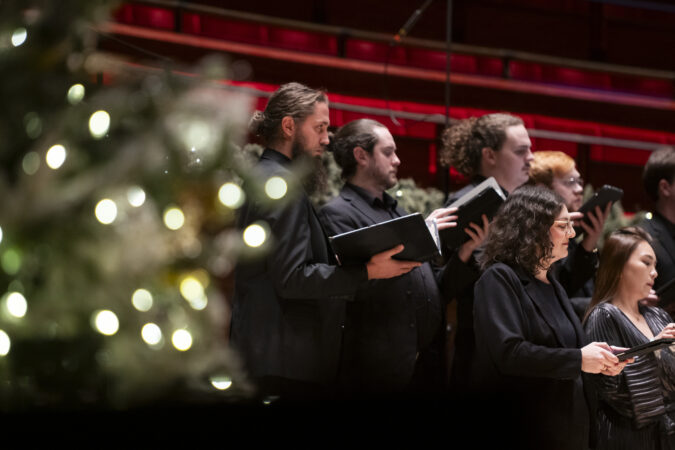
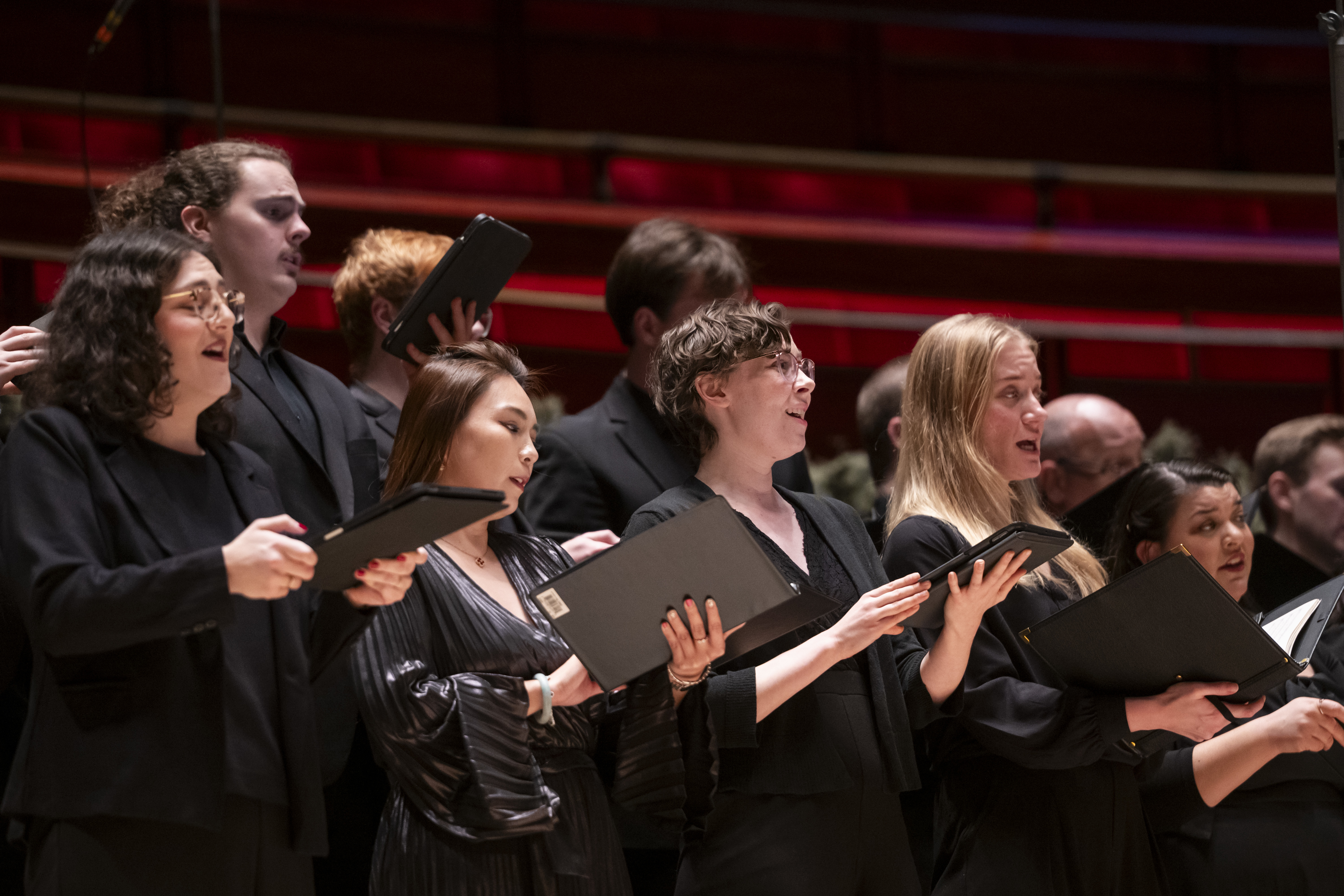
The Philadelphia Symphonic Choir sings with the Philadelphia Orchestra during a performance of Handel’s “Messiah” at the Kimmel Center for the Performing Arts on Friday.
At times, it all becomes clear in the long term.
Example: The “Hallelujah” chorus was more meaningful than bombastic, perhaps to keep the following music from seeming anticlimactic. Then, the final “Amen” chorus at the end of the piece felt suitably conclusive with all of the color and majesty one could hope for.
The fact that the Philadelphia Symphonic Choir (Joe Miller, director) was able to execute many minute details — plus projecting superb vocal blends that concluded several choruses — shows how the group has emerged into a first-class ensemble.
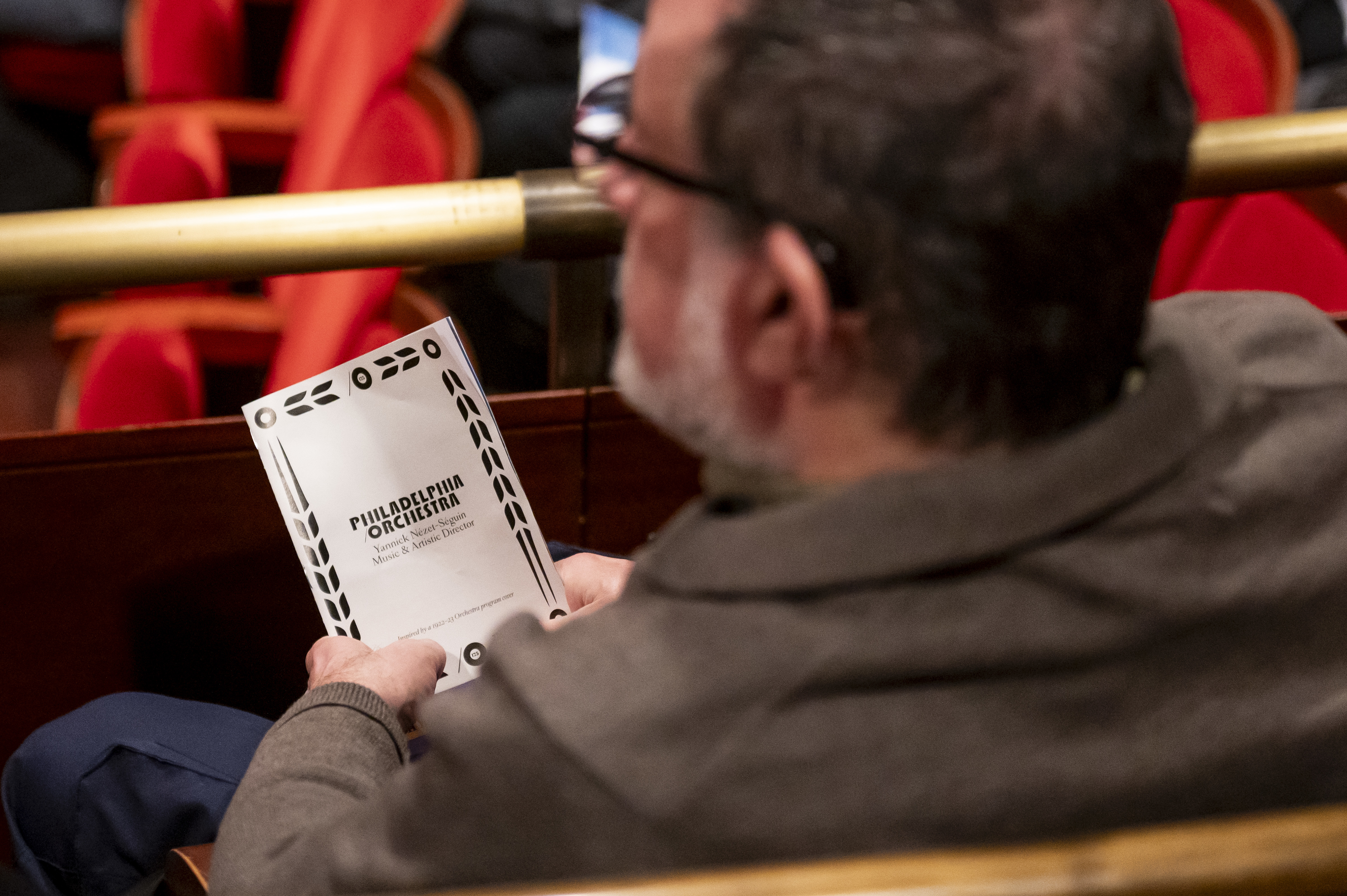
A concertgoer holds a program before the start of the performance of Handel’s “Messiah” by the Philadelphia Orchestra at the Kimmel Center for the Performing Arts on Friday.
Word to the wise: Even longtime Kimmel Center goers are advised to leave extra time to navigate Philadelphia’s holiday traffic and sometimes-delayed public transportation. I emerged from the City Hall subway stop in such a state of lateness that I attempted to hijack an Uber discharging passengers at the Ritz-Carlton. It didn’t work.
Other latecomers and I got to Marian Anderson Hall on foot just as concertmaster David Kim arrived onstage. Whew.
Subsequent performances of Handel’s “Messiah” are Dec. 13, 8 p.m., and Dec. 14, 2 p.m., Marian Anderson Hall, 300 S. Broad St., Philadelphia. Tickets: $29-240. philorch.ensembleartsphilly.org
The Phillies resigning Kyle Schwarber (and extending Rob Thomson): B-
Look, we love Kyle Schwarber. The city loves Kyle Schwarber. Dogs wearing tiny Schwarber jerseys love Kyle Schwarber. The man hits baseballs into orbit, leads the clubhouse, and has basically willed this team to look alive some Septembers when vibes were bleak. Him staying in Philly always felt inevitable.
But here’s the uncomfortable truth we’re all circling: We’ve seen this movie before.
Schwarber is now locked in through age 37. Harper, Turner, Nola — all extended into their late 30s too. The Phillies are doubling (and tripling) down on the same aging core that keeps putting up big regular seasons and then… evaporating in October.
Yes, Schwarber smashed 56 homers in 2025. Yes, he’s historically elite. Yes, Rob Thomson deserved his extension, four straight postseasons don’t grow on trees. But also: This team has repeatedly stalled in the playoffs, and running it back with the same core isn’t exactly a bold correction.
Dombrowski insists they’re “not just bringing the band back,” but right now it feels a lot like the band tuning up the same setlist and we already know how ends: a killer eighth-inning rally in June, a heartbreaking NLDS in October.
If the Phillies really want a different result, they still need a third true power bat behind Schwarber and Harper — the Rhys Hoskins void has been haunting them for three seasons. Until they fill it, this roster is basically an expensive version of “just try that again.”
FanDuel, DraftKings, and other online gambling apps are displayed on a phone in San Francisco, Sept. 26, 2022.
Philly is the No. 1 market for online gambling: D-
Philly finally beat New York and Vegas at something — unfortunately, it’s being the top target for online gambling ads. Companies dropped $37 million this year convincing us that our phones are tiny casinos that fit in our pockets and aren’t ruining our credit scores.
And guess what? It worked! Calls to 1-800-GAMBLER about online betting have nearly tripled since 2021. Penn State says 30% of Pennsylvanians now bet regularly, and about 785,000 people in our commonwealth of 13 millionare estimated to be problem gamblers, which, coincidentally, is also the number of people who think the Sixers will “definitely cover tonight.”
The hotline stories are brutal: drained retirements, missed mortgages, broken marriages, people betting on Russian table tennis at 3 a.m.
Yes, Harrisburg pockets tax money. No, that does not offset the fact that some folks are blowing entire paychecks faster than a Broad Street Line train skips your station.
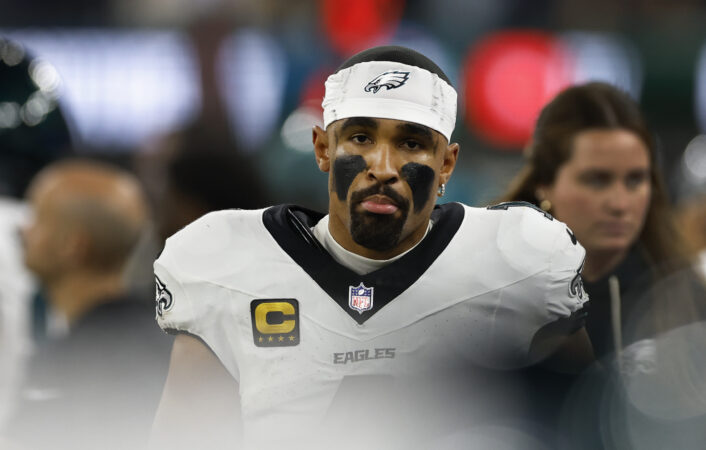
The Eagles have installed the “positivity rabbit” into the locker room
It showed up today and the offensive line stressed to me they are not sad they just wanted a good vibes bunny 👍 pic.twitter.com/zJi0M93SEr
The Eagles’ positivity rabbit: B for bunny (but trending toward D if they keep losing)
Only in Philadelphia could a three-game skid lead to the installation of a giant inflatable “positivity rabbit” in the Eagles’ locker room, the kind of holiday décor your aunt buys at Lowe’s, except this one is supposed to fix the offense.
According to NBC Sports Philly, the O-line wanted “good vibes.” So the Eagles brought in a five-foot inflatable bunny. Reddit immediately turned it into a full-blown prophecy, a meme, and possibly a new religion. Some fans think it’s the 2025 answer to the underdog masks; others think it looks like the guy who egged Patullo’s house finally got caught.
And then Jason Kelce stepped in with the dagger: “To be honest, I don’t really like the rabbit. It’s a little hokey… It didn’t work. You have to ditch the rabbit.”
The vibes bunny now sits at a dangerous crossroads. If the Birds win out: parade float. Philly embraces it forever. Etsy shops explode. If they don’t: that thing gets thrown on I-95 like HitchBOT.
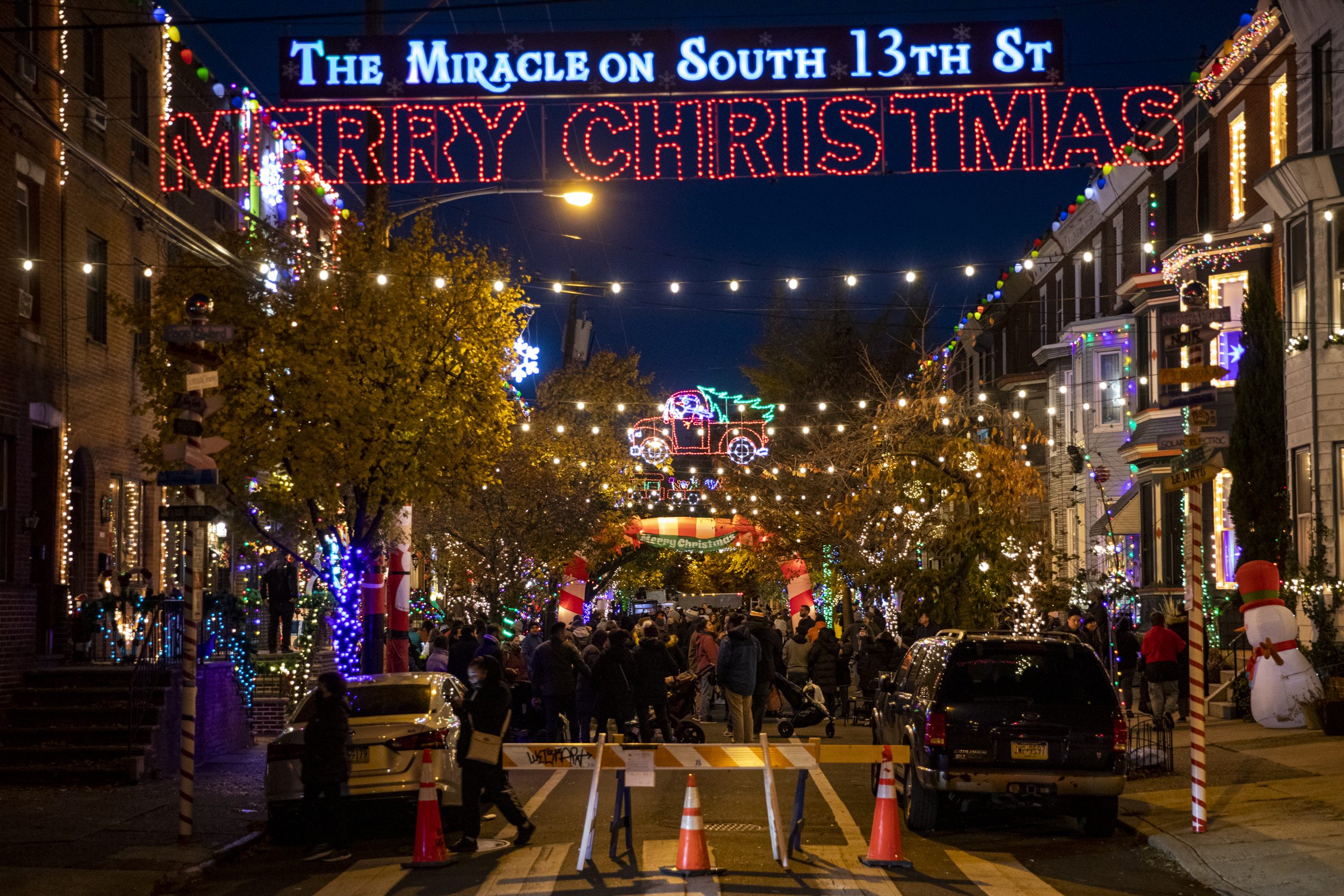
The Miracle on South 13th Street block party is filled with Christmas lights and decorations in 2021.
Miracle on South 13th Street traffic chaos: C+
South Philly’s favorite holiday tradition is back — and so is the gridlock, horn-honking, and pure, uncut neighborhood rage that comes with funneling half the region down a street roughly the width of a rowhouse hallway.
This year, 6abc reported that Morris Street briefly closed and pushed even more cars onto 13th, turning a beloved Christmas display into a live reenactment of Uncle Frank screaming “Look what you did, you little jerk!” Residents are understandably asking the city the obvious South Philly question: How exactly is an ambulance supposed to get through when Karen from Cherry Hill parks her Highlander on a diagonal to get the perfect photo?
Neighbors want more open-street hours, as in let people walk, let cars chill. Councilmember Squilla says he’s willing to talk about it, which is Philly for “maybe… if everyone stops yelling.”
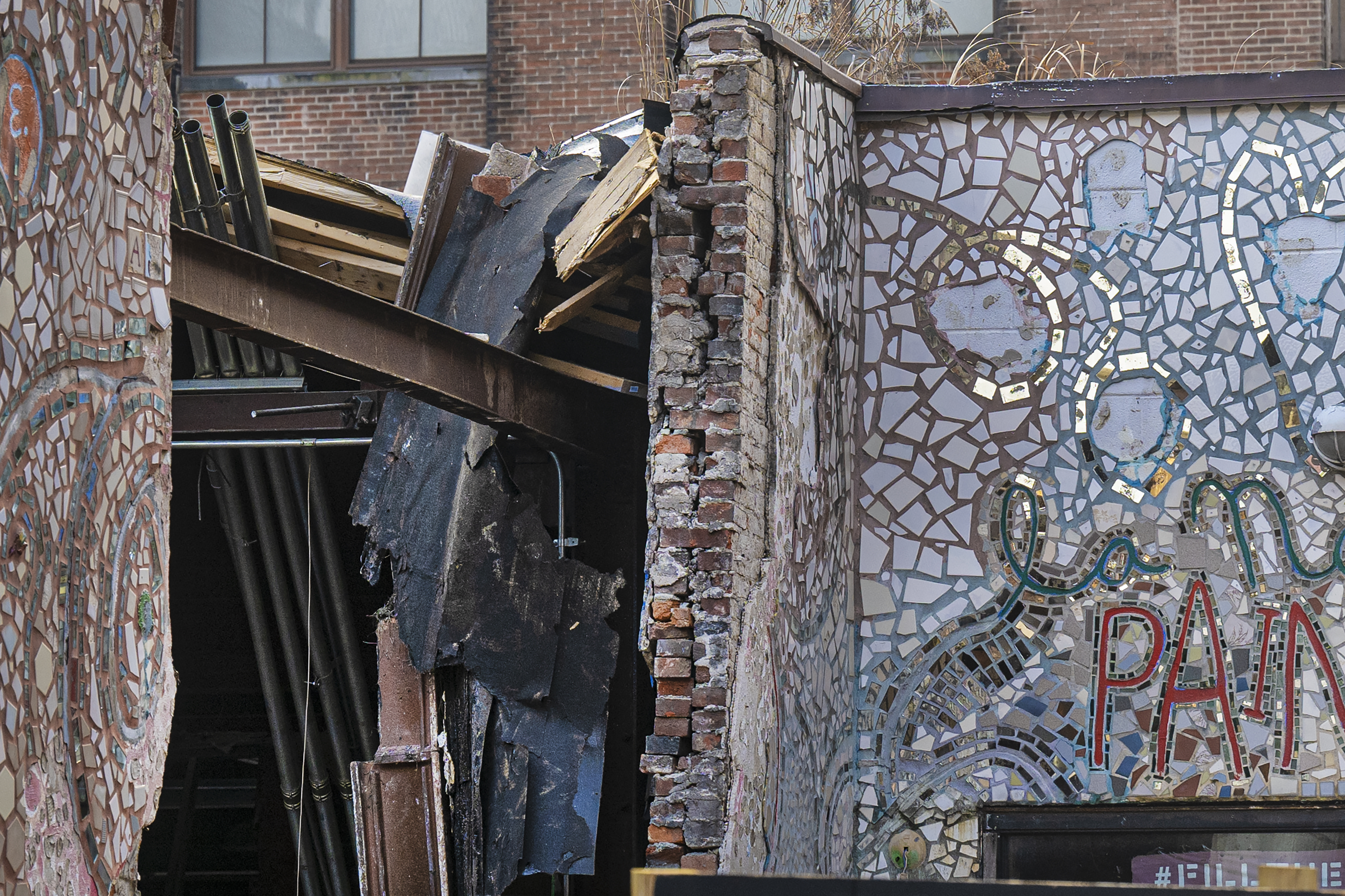
The former Painted Bride Art Center at 230 Vine St. is shown Thursday, Dec. 11, 2025, during demolition to make way for new apartments and commercial space.
The Painted Bride’s long fall: D
The demolition of the Painted Bride isn’t just another development story. It’s the slow, painful end of something that felt uniquely, defiantly Philadelphia. After nearly six years of lawsuits, appeals, zoning wars, neighbor fights, preservation pleas, and enough public testimony to qualify as its own Fringe Festival show, the Old City building that once held Isaiah Zagar’s 7,000-square-foot mosaic is officially coming down.
If you grew up here, walked past it, or just have a pulse, the loss hits hard. The Painted Bride wasn’t a blank canvas waiting for a luxury building. It was already the art. It was the kind of place tourists would stumble upon, go “What is this?” and locals would answer, “Oh, that’s just Philly being weird and beautiful.” Now it’ll be dust, plywood fencing, and a future apartment building trying its best to pretend a few salvaged tiles can replace an entire iconic facade.
Neighbors didn’t want height. The Bride didn’t want the building. The city didn’t want to officially call it historic. The developer wanted to preserve it until a court told him he couldn’t.
This is the kind of loss that feels bigger than one building. Philly’s magic is fragile. Sometimes it’s protected (hello, Wanamaker Organ), and sometimes it’s chipped away, boxed up, and repurposed as lobby decor.
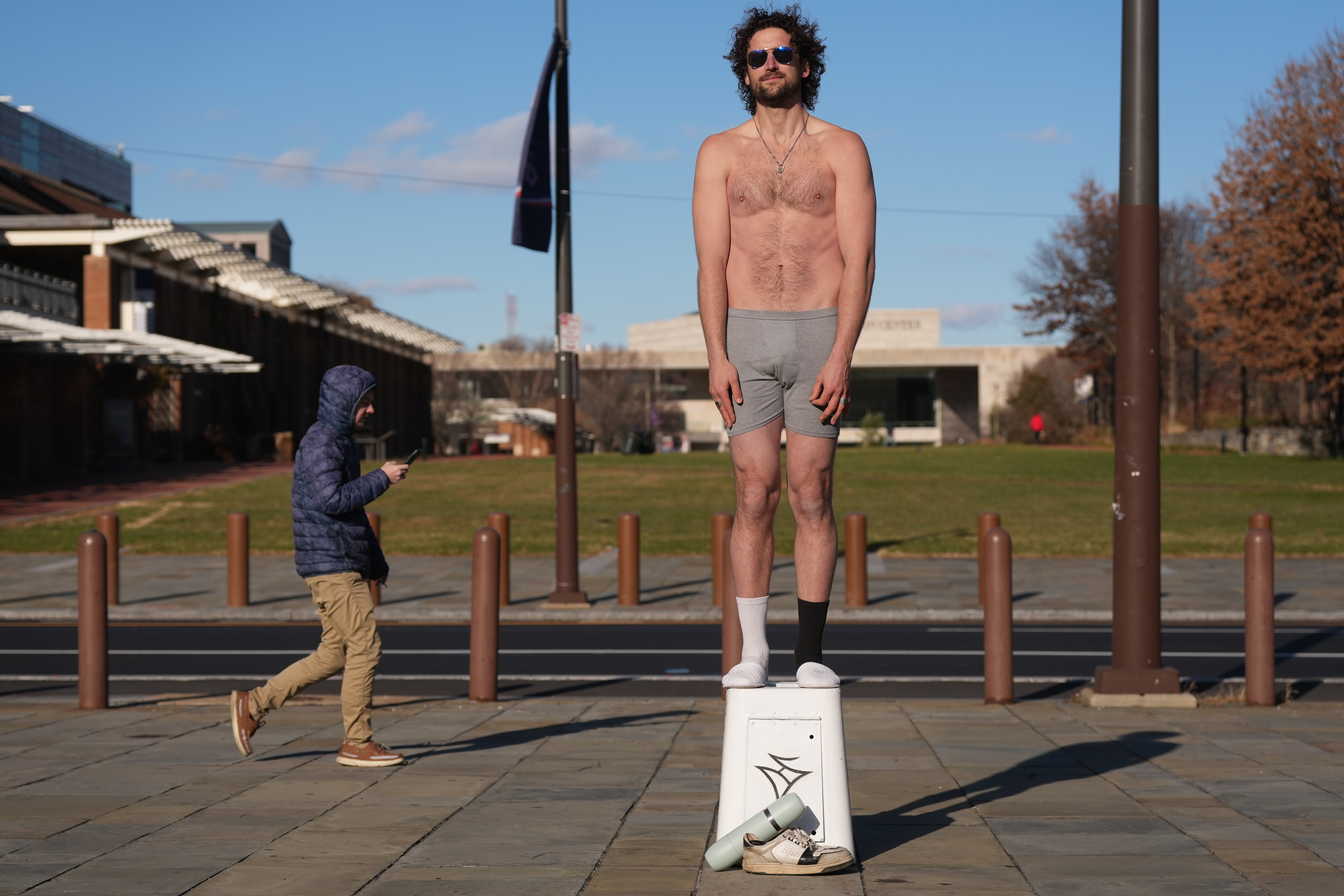
An artist named Ham, the architect of this cold weather performance piece, in Philadelphia, December 11, 2025.
A nearly-naked man standing on a box by the Liberty Bell: A+
Tourists stared. Rangers grew concerned. Locals did what locals always do — tried to figure out if this was art, a bet, or a fantasy-football punishment gone horribly wrong.
Turns out it was art. The man, an artist from Baltimore named Ham (“like the sandwich”), calls the whole thing a commentary on social media. Instead of posting content, he becomes the content.
Ham has done this in New York, Berlin, and even a Norwegian village but claimed Philly gave him the best interactions: confused tourists, National Park rangers offering him clothing, a police officer checking in, and Philadelphians who stopped just long enough to ask, “Buddy… why?”
In a very Philly twist, he’s putting the money people hand him toward an engagement ring, which somehow makes the whole thing feel less like performance art and more like a South Street side quest.
No matter how you interpret it, it’s peak Philadelphia: a nearly naked man shivering by one of America’s most sacred monuments, and the city responding with equal parts curiosity, concern, and “yeah, that tracks.”
Ham planned to stand out there through the weekend — but only until around 4:30 p.m., because even performance artists know better than to be half-naked in Center City after dark.
Hershey is not just chocolate. OK, it’s a lot of chocolate. But beyond its famous namesake and the company Milton Hershey founded in 1894, this sweet little town has all the ingredients for an easygoing, with-or-without-kids winter weekend getaway — and it’s less than two hours from Philly.
There are an iconic hotel, interesting breweries, year-round geological wonders, and a full holiday glow-up courtesy of Big Cocoa. The Hallmark movie basically writes itself.
If you have taken the Pennsylvania Turnpike to Exit 266, just before you hit Hershey, you’ll pass through Palmyra, home to Rising Sun since 2018. Part of the family-owned Funck Restaurant Group (you can’t spell Funck without fun), this historic-inn-turned-holiday-hangout shines at breakfast, when locals and Hersheypark-bound tourists pile in for sourdough French toast, carne asada omelets, and biscuits smothered in sausage gravy.
The grand dame of the city is Hotel Hershey, a Spanish-style confection of apricot brick-and-green terra-cotta dating to 1933 — and really, there was never any question where you were staying. Sure, cheaper chains cluster nearby, but nowhere else gives the sense of history, scale, and capital-P Place than Milton Hershey’s clubhouse, which he commissioned as an employment engine during the Great Depression. (Listen to the Business Movers podcast’s season 30 on the Hershey company for excellent context.) The spa is fantastic (sometimes cocoa-enhanced), and families will love the newer villas with fireplaces, rain showers, and access to a concierge lounge with nightly firepit s’mores.
📍 100 Hotel Rd., Hershey, Pa. 17033
Explore: Indian Echo Caverns
It might be winter, but the temperature remains a steady 52 degrees inside Indian Echo Caverns in nearby Hummelstown. Opened to the public in 1929 — though used for centuries prior by the Susquehannock and other Native Americans — these caves are an all-season attraction. A guided tour takes you 71 steps below the surface to explore ancient stalactites, fantastical drip formations, and impossibly blue underground pools, while learning why preserving this ecosystem matters.
📍 368 Middletown Rd., Hummelstown, Pa. 17036
Shop: Black Swan Antiques
Another Palmyra gem, Black Swan Antiques houses 60 independent dealers across 20,000 square feet. It’s a treasure hunt in the best way: Amish woodwork, collectible comics, fine oil paintings, dainty cocktail glasses — and almost certainly something you never knew you were looking for.
📍 61 W. Front St. (rear entrance), Palmyra, Pa. 17078
Central Pennsylvania’s biggest winter attraction, Hersheypark’sChristmas Candylane, turns the theme park into a veritable North Pole of twinkling lights and merriment. Santa. Reindeer. Music (including a new show at the park’s theater). You know the drill. Come earlier in the evening if you have the kids, later if you’re without. The park stays open till 8 or 9 most nights. Up the road, Hershey Sweet Lights offers a two-mile, drive-through light show arranged through wooded trails. It’s available as an add-on ticket and is worth it.
📍 100 Hersheypark Dr., Hershey, Pa. 17033
Dine: Tröegs Independent Brewing
Tired: Elf on the Shelf. Wired: Mad Elf for yourself. Clocking 11% ABV, this spiced cherry ale is of the most notorious rascals in the Tröegs portfolio, and it can be hard to find in Philly. Going straight to the source guarantees a taste of the yuletide nectar — and maybe a stash for home. The casual, industrial brewpub serves seasonal plates like butternut hummus and pork belly with cheddar-jalapeño grits, and you can splurge on Grand Cru versions of Mad Elf (including bourbon barrel-aged). Pair your meal with a brewery tour ($15), which has been voted best in the country four years running. Booking in advance is recommended.
Proof that not everything sweet in Hershey comes in a wrapper: Desserts Etc. has been the town’s go-to bakery since 2012. After dinner, stop in for a holiday cookie flight paired with miniature lattes and hot chocolates in flavors like gingerbread and white chocolate-cranberry. Keep in mind, the shop close at 9. Don’t let the Mad Elf derail you.