For the last two years, Rose Luardo has been exceedingly generous with her art, installing it for all to see in a vacant triangular lot in South Philly that was once home to Capt. Jesse G’s Crab Shack.
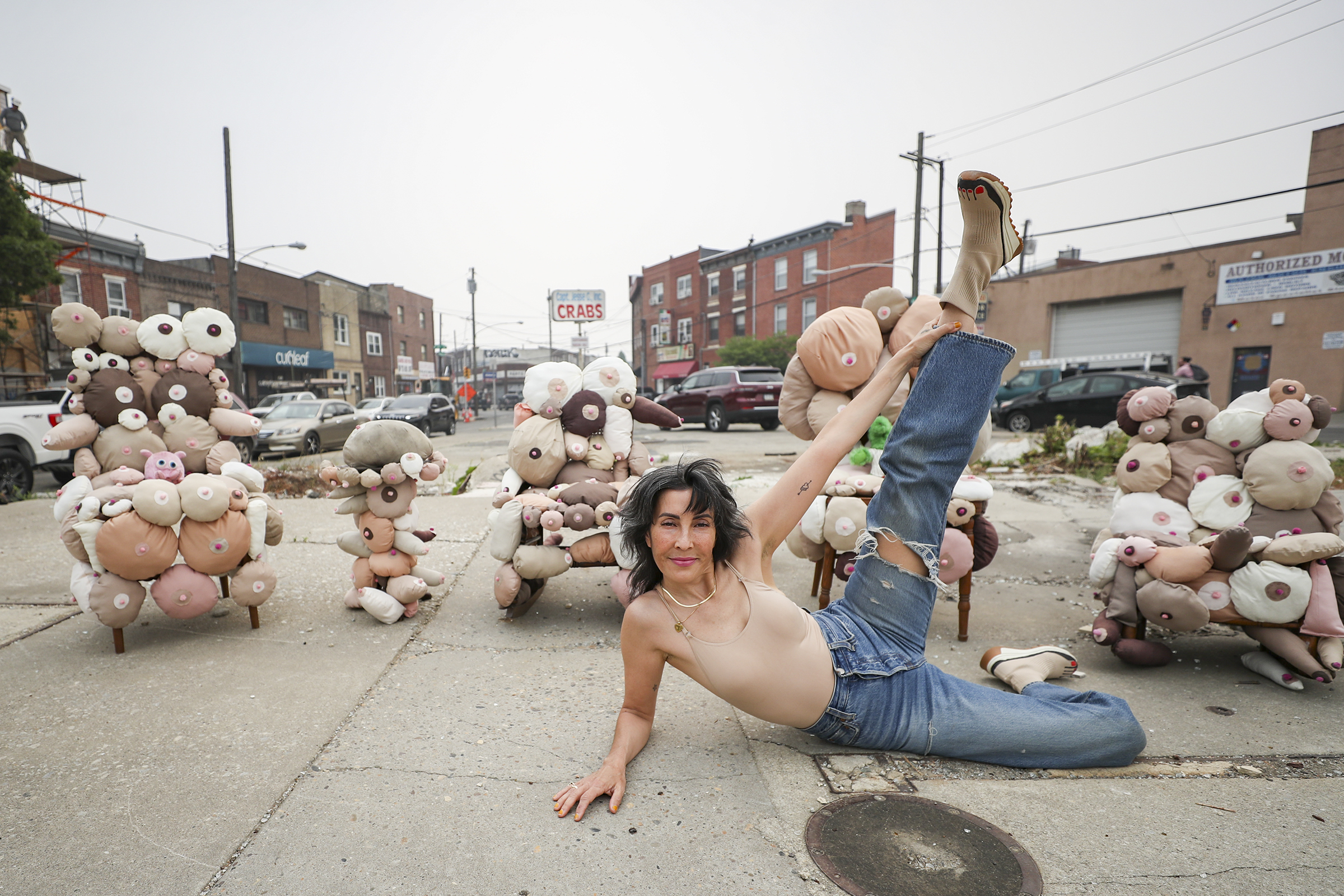
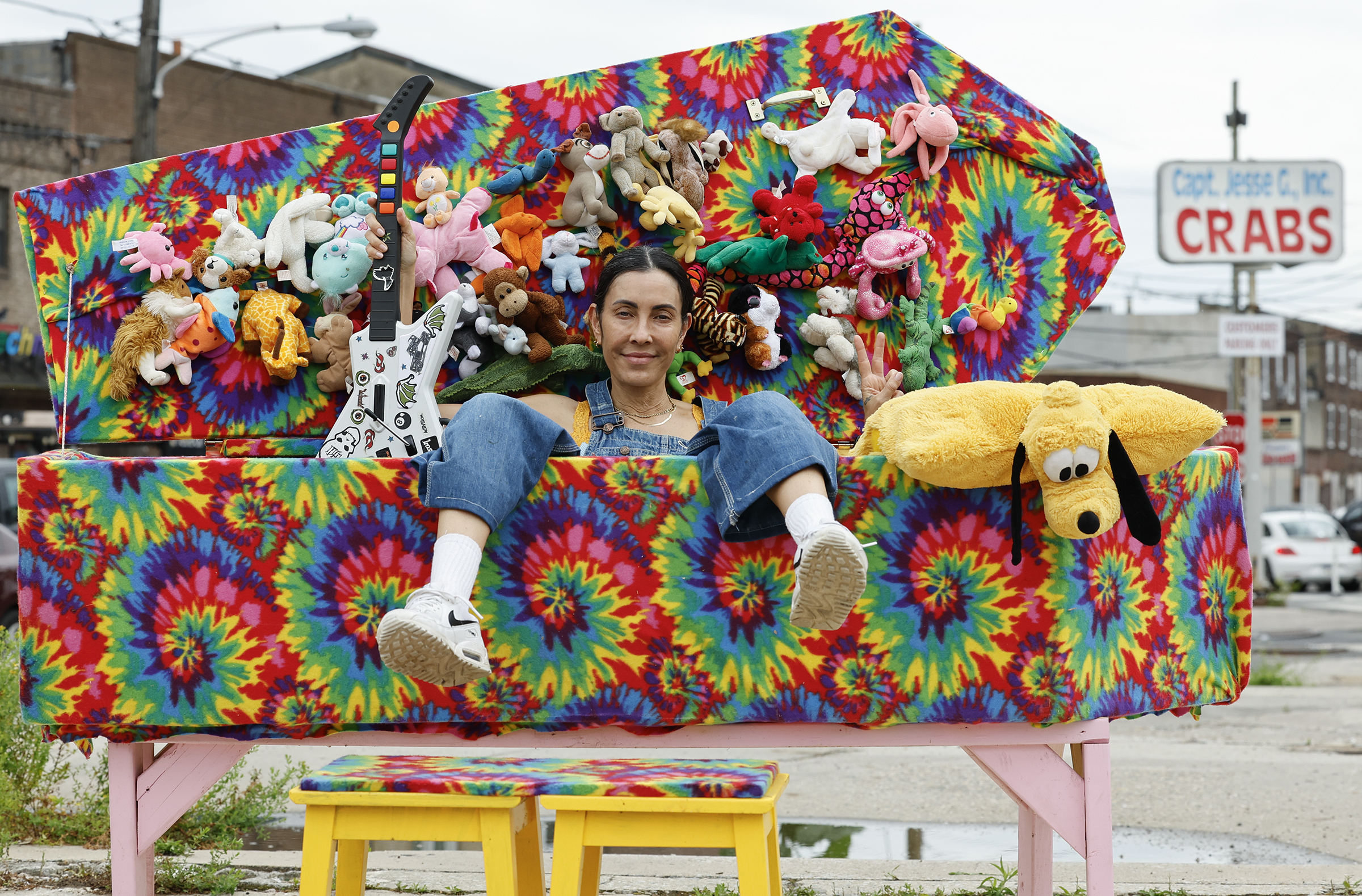
In 2023, she gifted the people of Philadelphia with the Boob Garden, a furniture set covered in handmade breast plushies, and the following year she gave us the Rave Coffin, a casket covered in tie-dyed felt that passersby could lie down inside of.
Rose Luardo strikes a pose at her “Boob Garden” art installation in 2023.
Luardo struck again Sunday night at the cement triangle at the intersection of Washington Avenue, Passyunk Avenue, and Eighth Street, but this time around, her guerrilla art installation was totally shellfish.
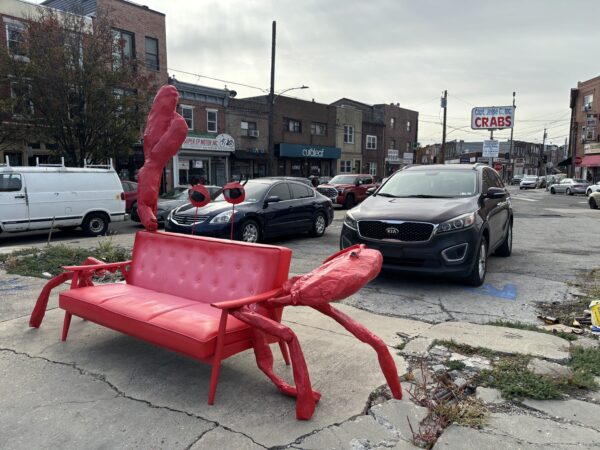
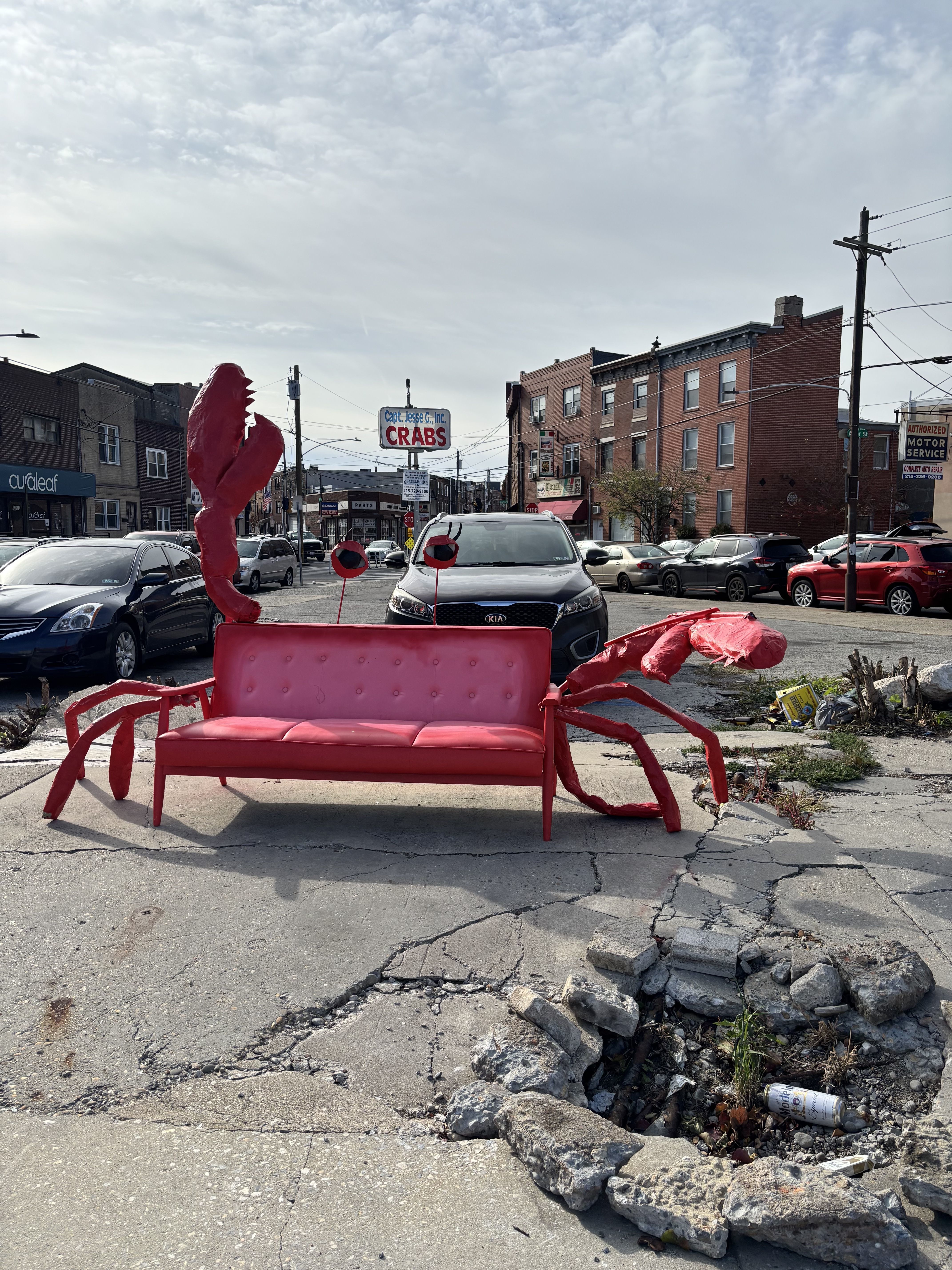
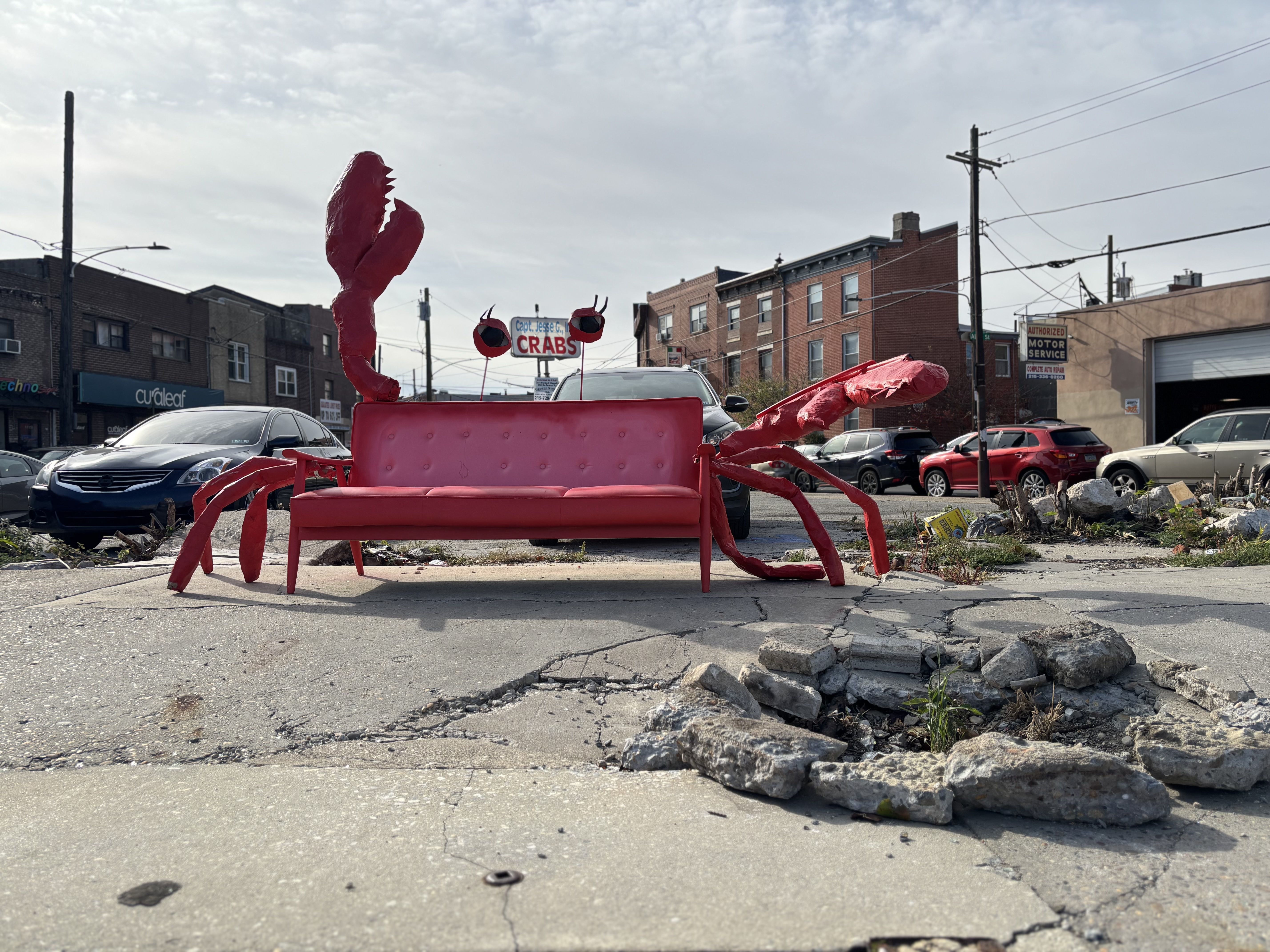
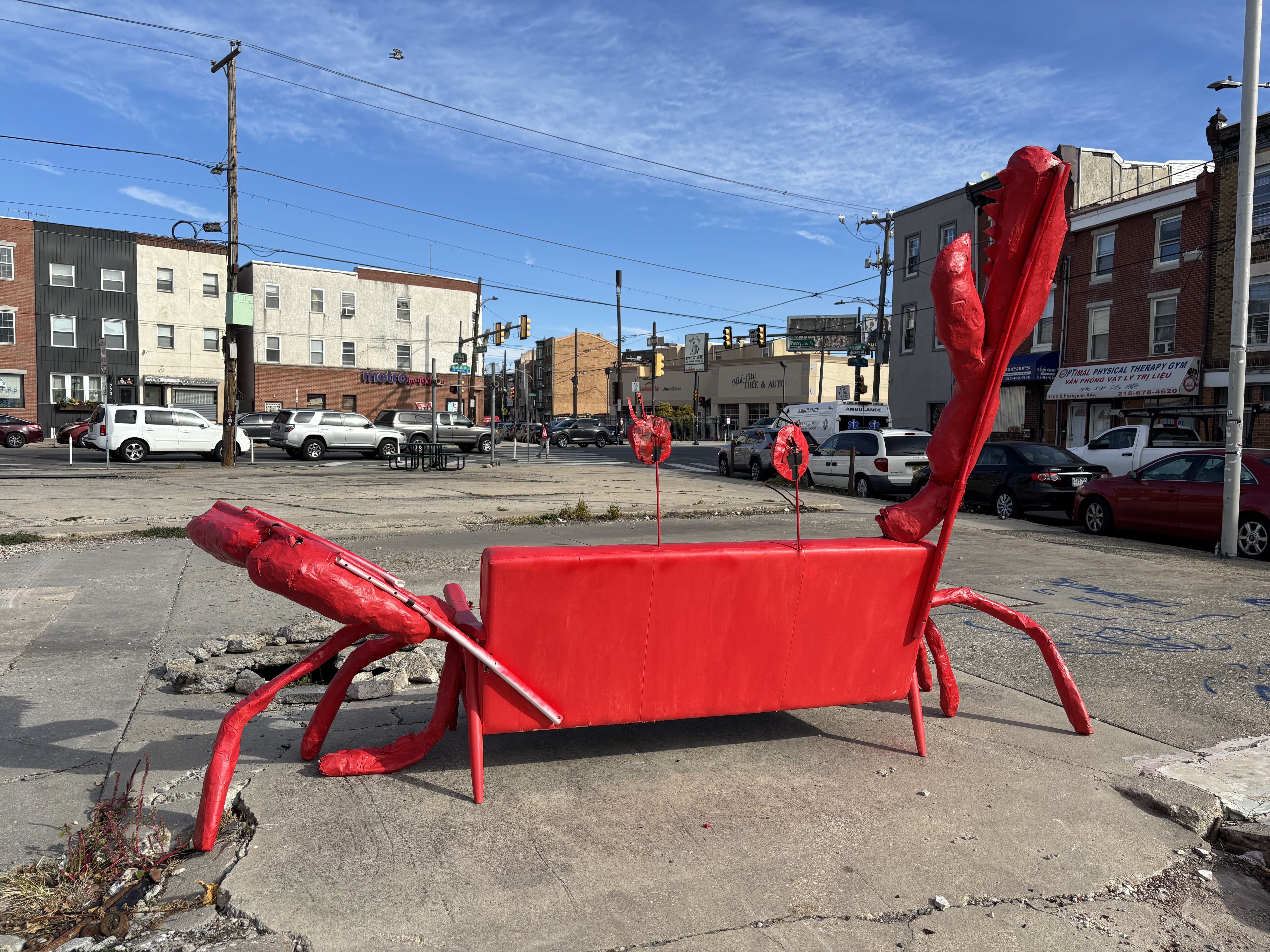
Crab Couch — which is exactly what it sounds like unless you’re thinking of the other kind of crabs, which it is not — is the latest work Luardo set up at what she calls Capt. Jesse G’s Crab Shack Gallery. That’s because the shuttered business’ sign inexplicably remains lording over the lot on a freestanding pole, even though the building was long-ago demolished.
Once just a regular white sofa that was looking for a new home on Facebook Marketplace, Luardo — a provocateur of the peculiar — rescued the couch and Frankenstein-ed that piece of furniture into a comfy crustacean.
With some papier-mâché, red house paint, and the help of her niece, Ingrid Rose Koppisch, and their friend, Simply Val, Luardo gave the couch six legs, a pair of judgey eyes, and two hulking claws, with one clamping down on a giant cigarette.
She first put the crabby patio furniture in a gallery show she had in September.
“I just had a feeling that this was not going to sell, but it would be a fun thing to make and eventually put out in my own personal art gallery at Capt. Jesse G’s,” Luardo said.
On Sunday night, she and her husband put Crab Couch on one of his skateboards and wheeled it up the street to the vacant lot.
Luardo noticed, as did I, that since the time of her installation last year, a taco truck has stationed itself at the edge of the lot and someone has bashed a small hole into the cement and created a modest fire pit, which Luardo placed the Crab Couch in front of. When I stopped by on Tuesday, the pit held an empty can of Modelo and an empty pack of Marlboro Lights.
Artist Rose Lurado placed her latest work, “Crab Couch,” in front of a fire pit someone smashed into the cement at the vacant South Philly triangle she calls “Capt. Jesse G’s Crab Shack Gallery.”
“I was so psyched that was there!” Luardo said of the pit. “This is the dream coming true, which is that the space is becoming activated, people are hopefully hanging out, eating a taco, drinking a Modelo, and sitting on the couch.”
In the days since it was installed, the wind has done some damage to Crab Couch’s claws, which Luardo said neighbors came out to valiantly fix with drills. But its giant cigarette is nowhere to be found. It has become the ultimate Philly loosie.
Otherwise, all is good with Crab Couch.
“Crab Couch” is an old bae but a good one.
I asked Luardo why she continues to put her art in such a hardscrabble lot, where it’s subject not only to weather but to something even more unpredictable — the whims of Philadelphians.
“It was built for this kind of experience and nobody has claimed it,” she said. “It’s just this … s— lot and I know there’s people walking by and it’s so much fun to see something crazy and delightfully weird. It puts a hitch in your giddy-up.”
According to city records, the lot is owned by 1100 Passyunk Partners LLC, which purchased the property for $2.85 million in 2020. A number for the group was not able to be located.
South Philly artist Rose Luardo sits in her “Rave Coffin” at the triangular cement lot between Washington Avenue, Passyunk Avenue, and Eighth Street in 2024.
To whomever owns this eyesore — which has been a vacant lot since at least 2016 — I beseech you to gift it to Luardo, who’s shown more interest in it and has done more to improve it than you ever have.
The world is coming to Philadelphia next year and instead of having an empty, crumbling lot on one of the city’s busiest corridors, why not let Luardo show the world just how weird Philly can be?
I hear she’s been eyeing an inflatable nightclub on Temu.
“Crab Couch” looks out over the vacant triangle lot where it’s currently clawing out its existence next to busy Washington Avenue.
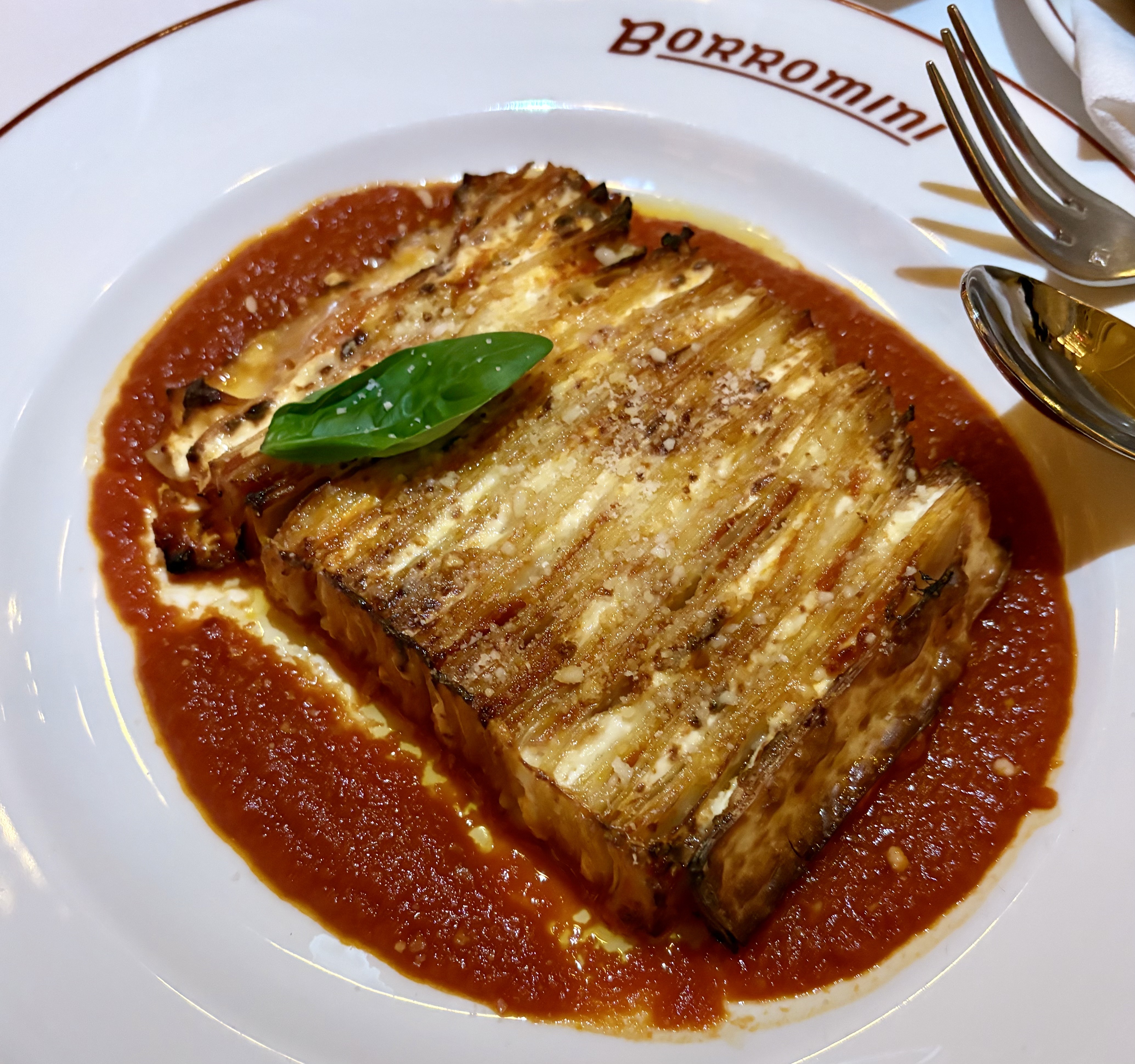
Borromini’s 100-layer lasagna looks like a miracle of noodle engineering. It’s the kind of “more is more” pasta spectacle that commands its own showcase box on the menu, puts curious diners in chairs, and requires a team of three dedicated attendants in Borromini’s vast kitchen to meticulously construct its layers — a tall stack of pasta sheets alternating with microscopic schmears of ricotta, creamy béchamel, and tomato sauce — that get baked, sliced, then crisped on one side, to be served atop a puddle of pomodoro.
Its intricate ridges are beautiful to behold. But to eat, this lasagna is more like a doorstop than a showstopper. The layers are so tightly compressed, it’s closer to a muddled mush than a deck of delicate harmonies, a squidgy blur of cheese and dough whose individual virtues could have been more compellingly conveyed in 10 layers rather than 100. Add a slow-cooked, jammy tomato sauce that leans sweet rather than bright and lively, and the final effect is one-dimensional. It has subtly evolved over the course of my multiple visits, but each time it prompted a disappointed shrug.
The 100-layer lasagna at Borromini has been constantly evolving. This version, eaten in November, three months after opening, has been called “the final version” by owner Stephen Starr.Borromini, 1805 Walnut St., on Aug. 16, 2025.
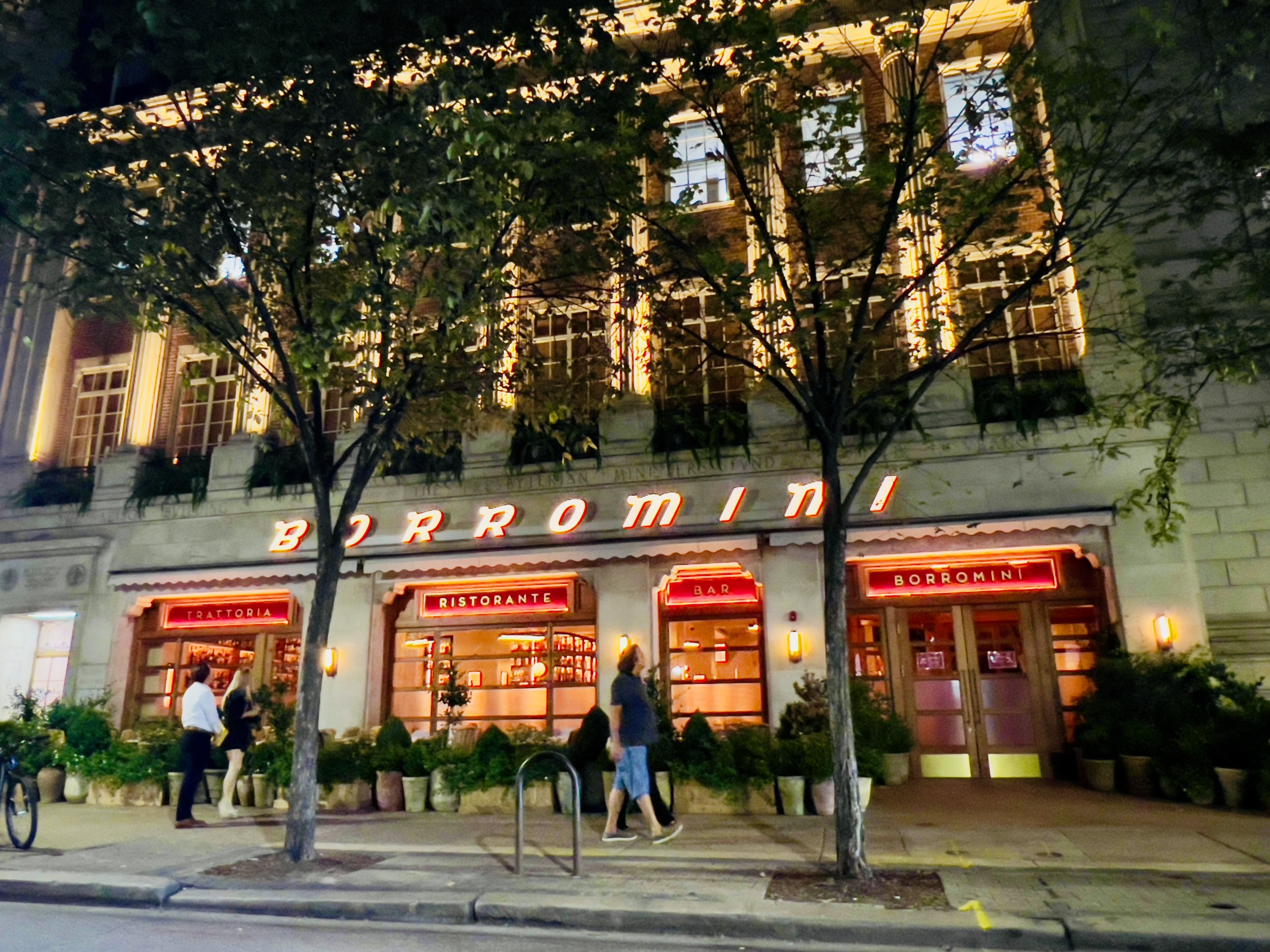
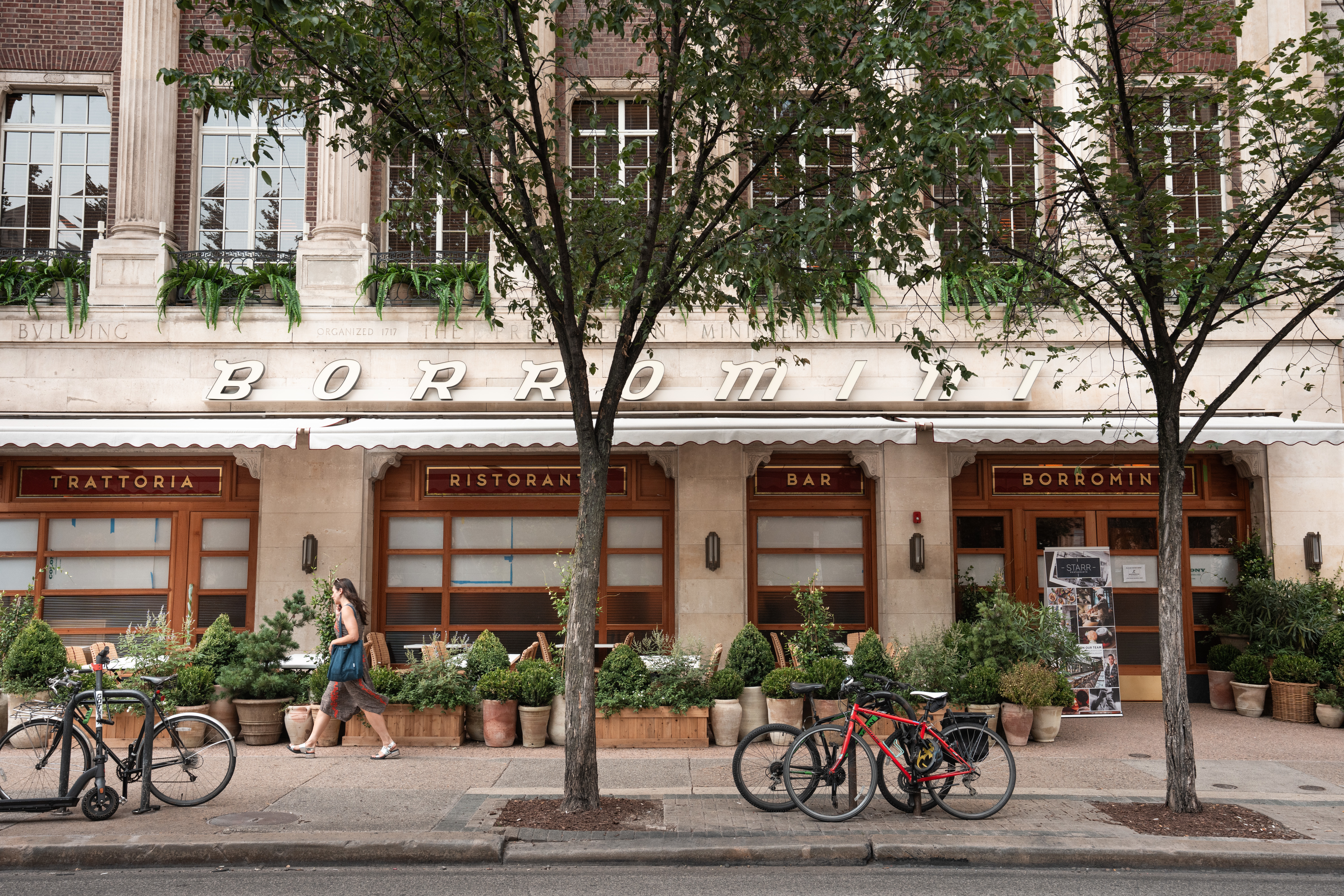
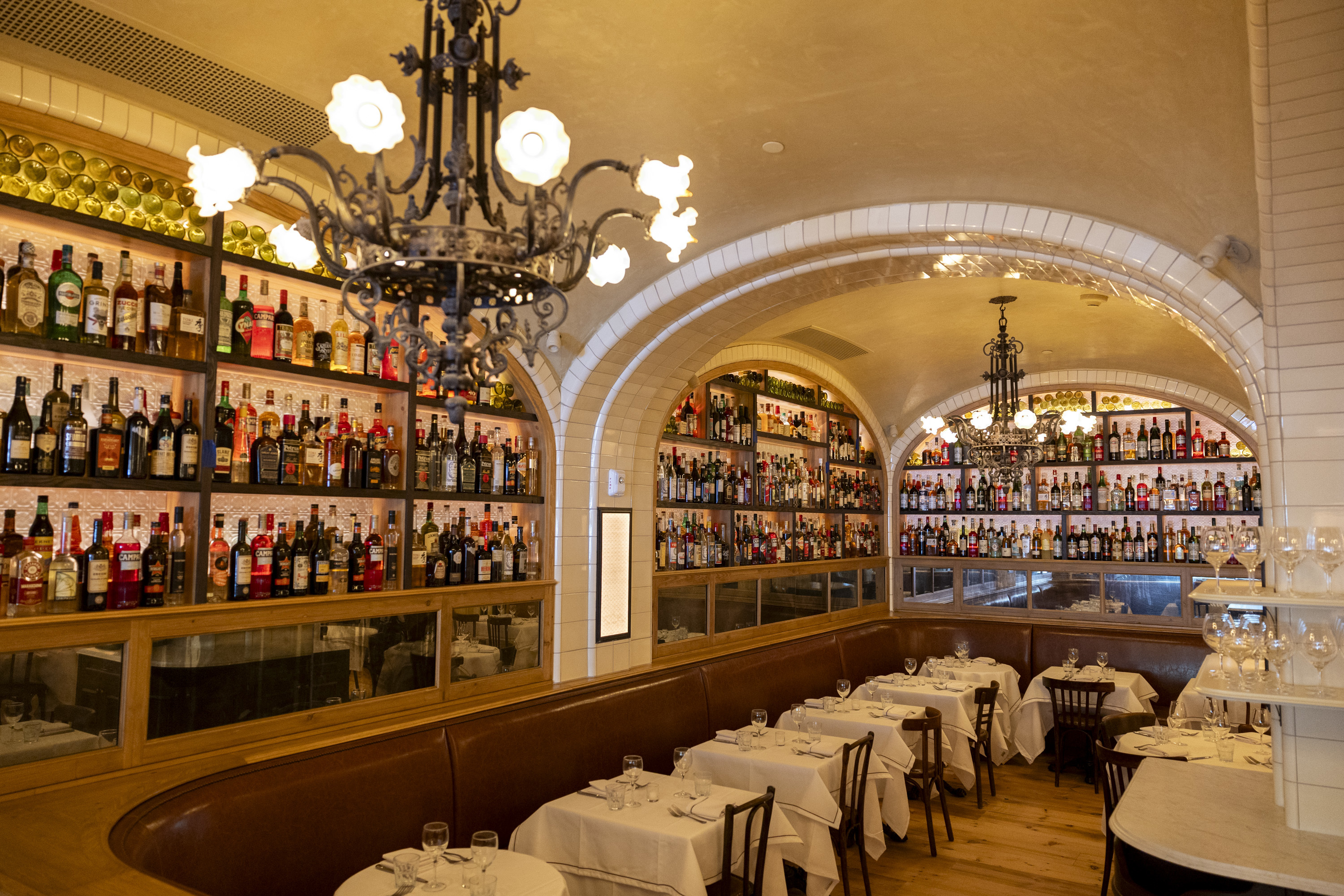
That’s not the thrill I expected from the marquee dish at this glitzy $20 million, 320-seat trattoria, whose dramatically lit column facade glows red over the northern edge of Rittenhouse Square. Stephen Starr’s first major hometown restaurant in years (and his 41st overall) is arguably the biggest opening in Philly in 2025. He went all out transforming the former Barnes & Noble into what many have aspiringly dubbed “the Italian Parc,” a two-story Roman-themed palace with vaulted ceilings, an intricate stone chip floor, and walls lined with 3,000 bottles. Starr brought on legendary New York restaurateur Keith McNally to design the space (Starr has syndicated McNally’s Pastis bistro to multiple cities since they partnered to revive it in 2018).
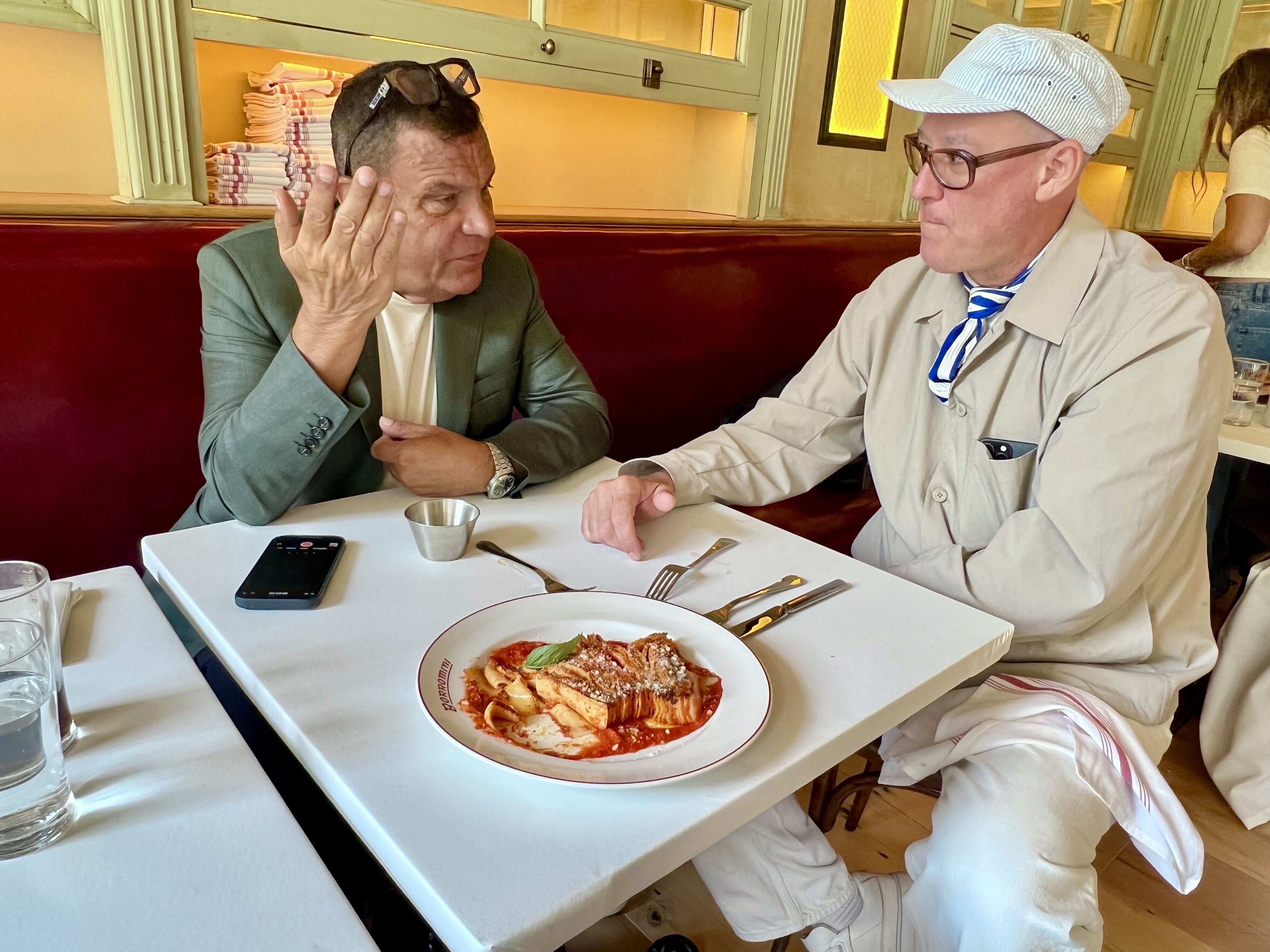
He also enlisted a hive of respectedculinary minds to create the menu over the course of 90-plus tastings, with his corporate food team and Borromini’s executive chef, Julian Alexander Baker, collaborating with Mark Ladner, the former chef of New York’s now-closed Del Posto, where Starr first tasted a magical rendition of that lasagna many years ago.
Stephen Starr (left) and chef Mark Ladner discuss Borromini’s version of Ladner’s signature 100-layer lasagna during a menu tasting at Borromini on July 15, 2025.
Ladner initially declined to recreate that decades-old hit when first asked. Starr should have listened. But Ladner — now the chef at Babbo, which Starr reopened in New York in October (and where a meaty version of that lasagna is also a menu feature) — ultimately gave in.
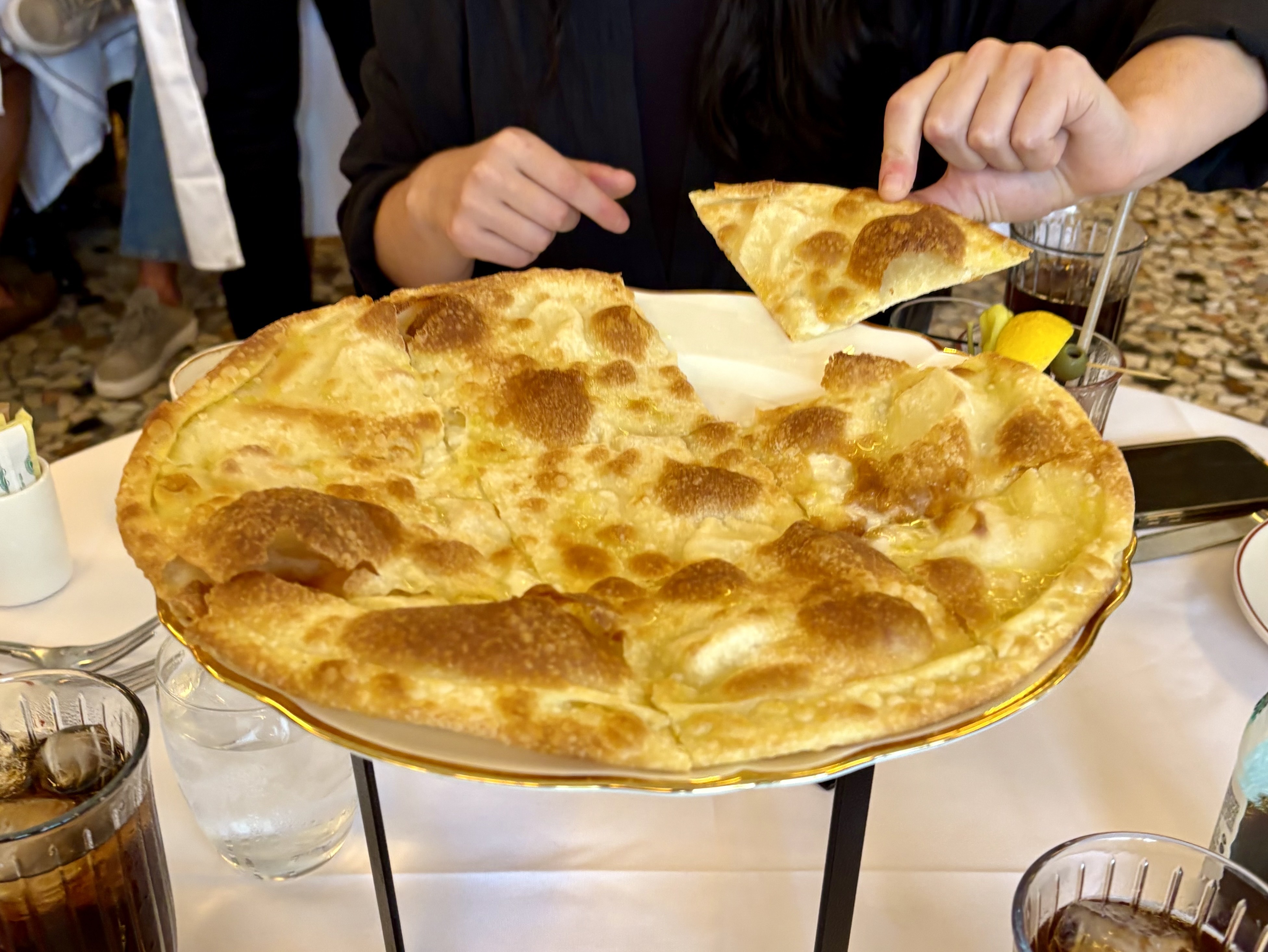
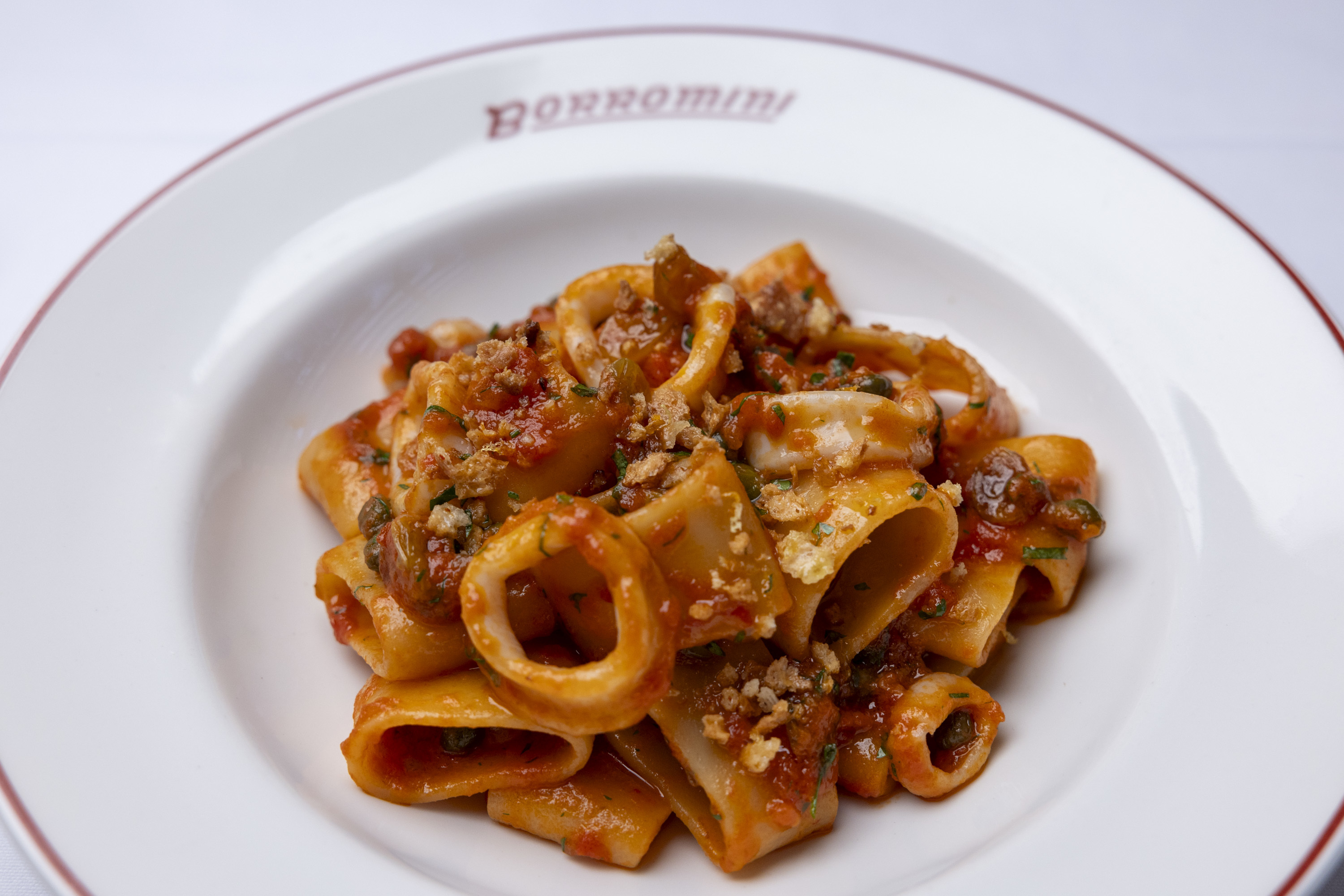
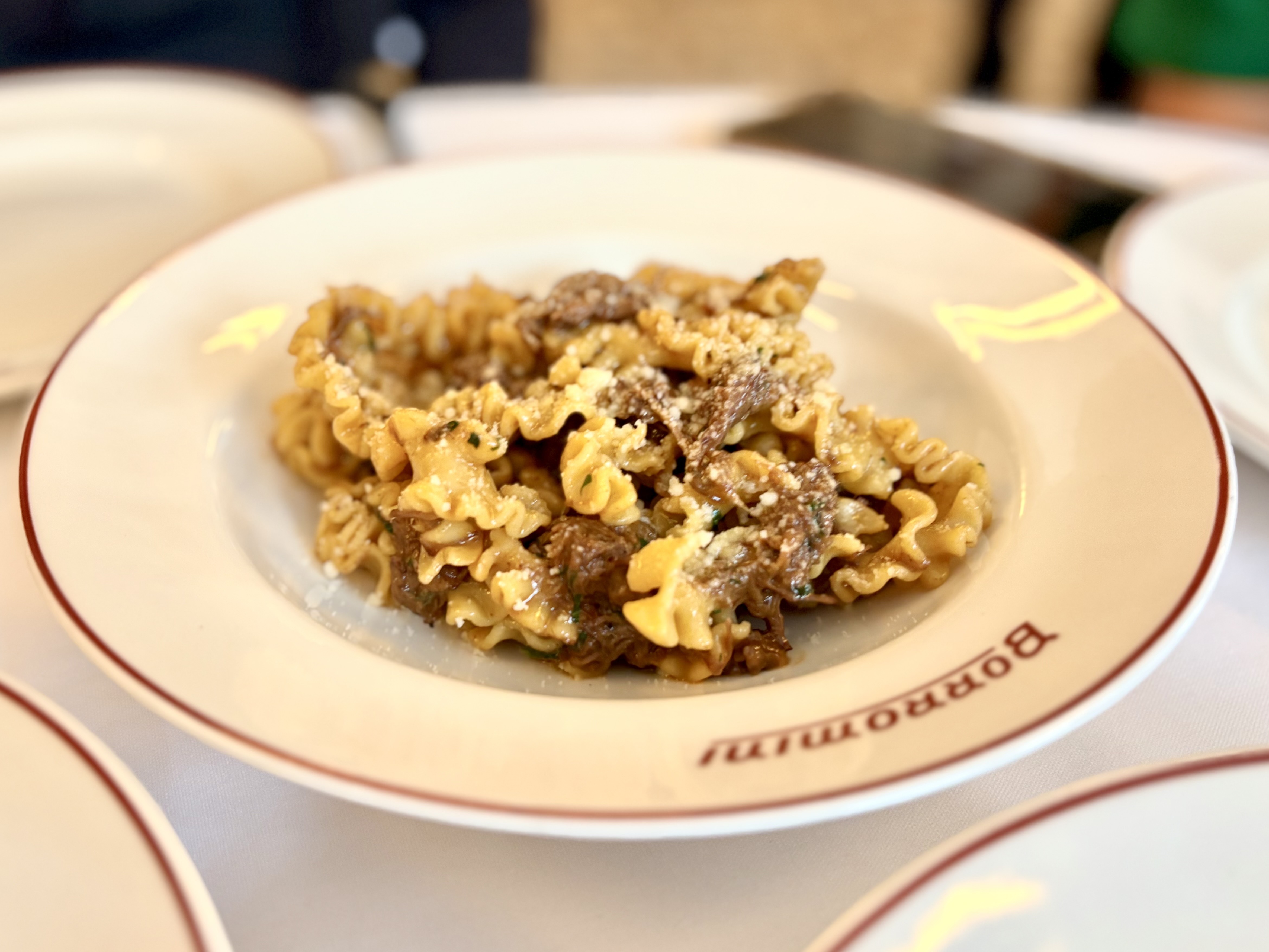
There are plenty of other, more admirable dishes on the menu here, including the focaccia di Recco from another consulting chef, Nancy Silverton, the LA star with whom Starr runs Osteria Mozza in D.C. The hot crisp of her flatbread’s wafer-thin rounds sandwiching tangy stracchino cheese is the one dish I order every time. I loved the contrast of silky braised oxtail that gathered in the frilly-edged ribbons of the house-extruded mafaldine. And the calamarata pasta loops, paired “Sicilian lifeguard”-style with look-alike rings of tender squid, chili spice, and golden raisins, is exactly the kind of delicious, obscure regional dish that shows how infinitely surprising the world of pastas can be.
The focaccia di Recco at Borromini is layered with tangy stracchino cheese.The “Sicilian lifeguard” calaramata with calamari and golden raisins at Borromini in Philadelphia, on Thursday, Nov. 13, 2025.
But Borromini is more about polishing the familiar than unearthing regional quirks. And that big lasagna has become an apt metaphor for why Borromini’s food too often seems off. No matter how grand the ambitions of a dish (or this restaurant in general) may be, stellar Italian food comes down to finesse, touch, and soul — elements that a kitchen-by-committee cannot engineer. In a town with exceptional Italian restaurants in varied styles, not to mention a population with a deep reservoir of red-gravy family nostalgia, the room for error is slim for a dining experience that averages just under $80 per person (before tax and tip).
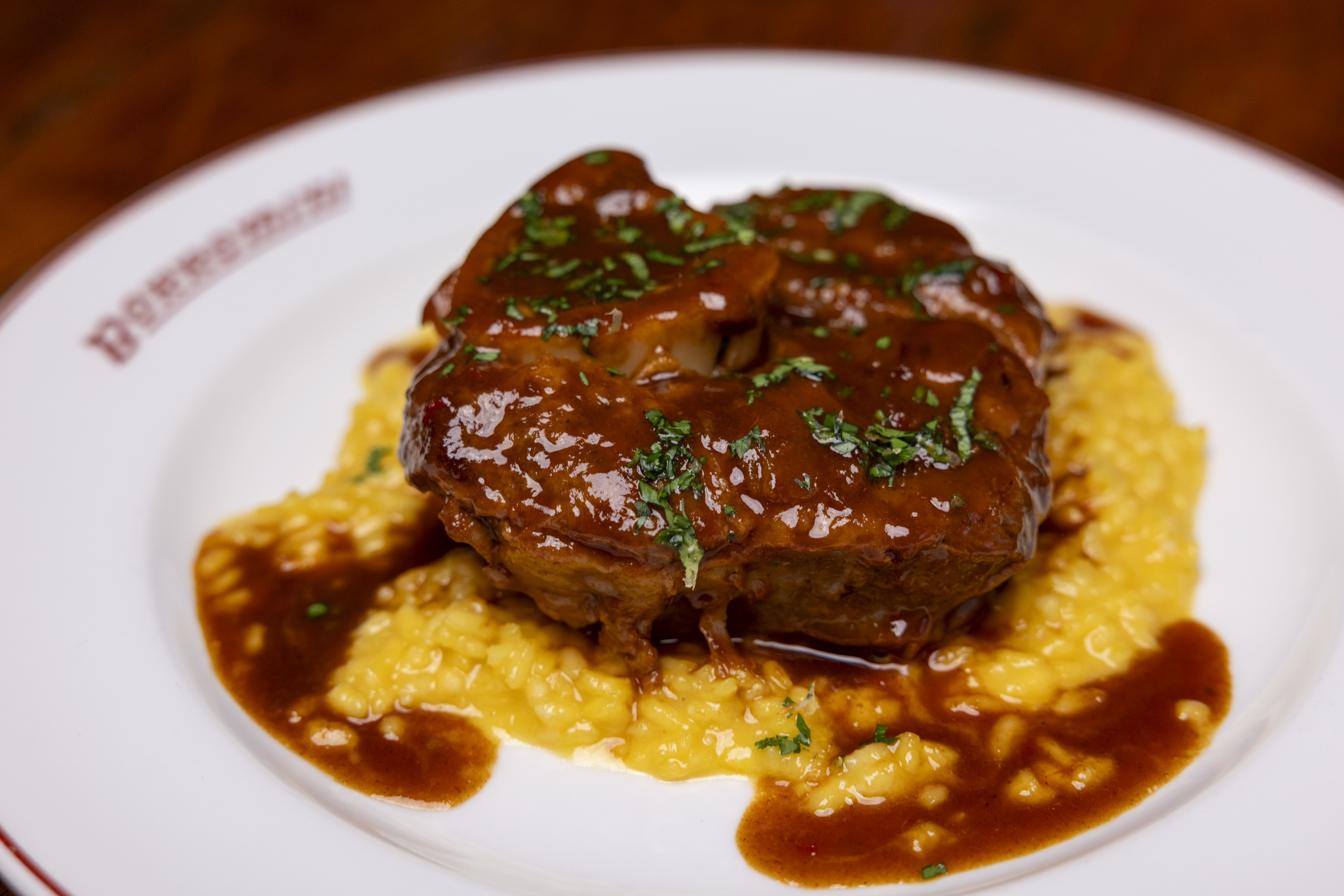
The crisply fried squash blossoms stuffed with lemony ricotta and the hamachi crudo dressed simply with Meyer lemon and olive oil were tasty, if not necessarily distinctive. The arugula with shaved raw artichokes would be my salad pick. The massive, fork-tender osso buco, a 1-pound shank drizzled with brown jus over saffron risotto with a marrow spoon poking skyward from its bone, is as close to textbook Milanese perfection as Borromini gets.
The osso bucco at Borromini in Philadelphia, on Thursday, Nov. 13, 2025.
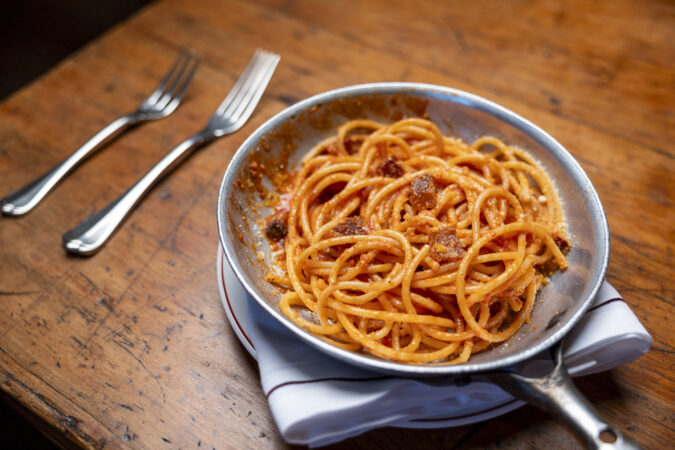
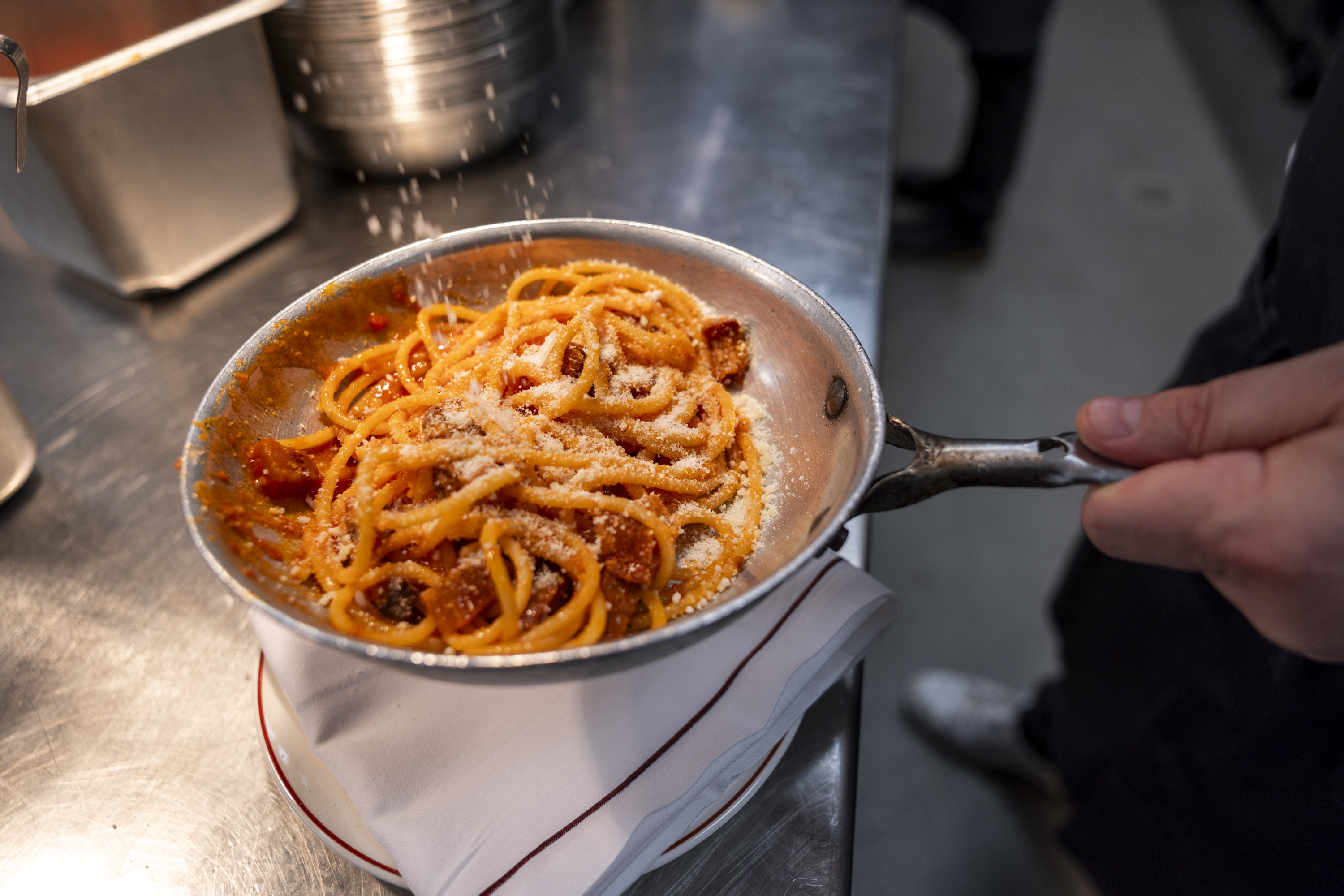
Borromini’s kitchen, however, struggled with consistency on several other traditional dishes. My favorite of the restaurant’s minimalist Roman-style pastas is the bucatini all’Amatriciana that’s brought to the table in the pan. But will you receive the version I tasted most recently, its simple tomato sauce vividly infused with the juniper- and pepper-sparked savor of properly rendered guanciale? Or will it taste bitter from the scorched nubs of cured pork I encountered at a previous meal?
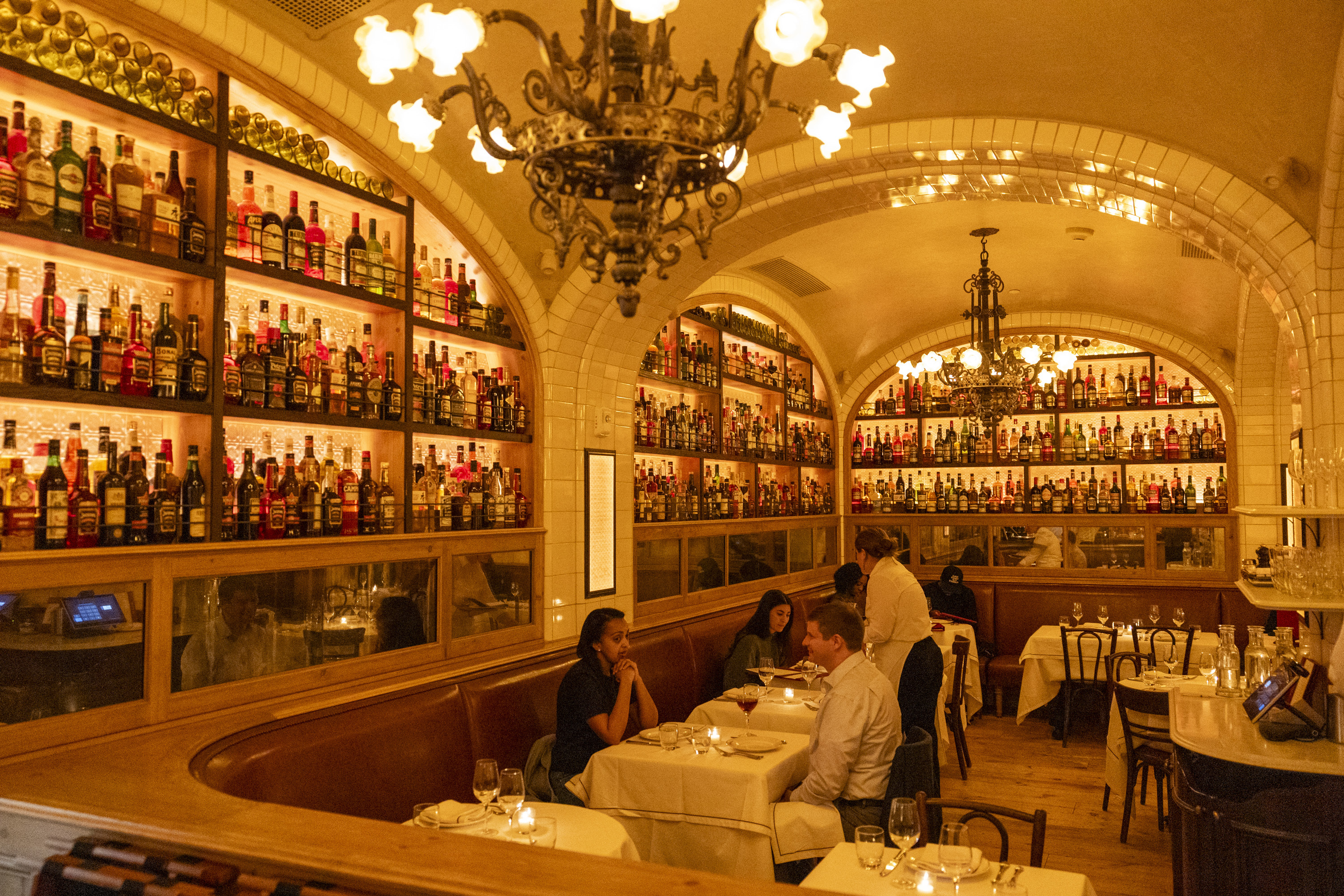
The pasta all’Amatriciana at Borromini in Philadelphia, on Thursday, Nov. 13, 2025.People dining in at Borromini in Philadelphia, on Thursday, Nov. 13, 2025.
I might agree with my Italian server, Thomas, that Borromini’s carbonara is one of the best I’ve tasted in Philly, its mezze rigatoni tubes glazed in a golden shine of well-tempered eggs and guanciale fat. Too bad it was already cold when I took a bite the moment it arrived at my table.
A number of the pastas were notable, including a spaghetti bright with lemon, butter, and pasta water, a deft display of minimalist satisfaction. I was also a fan of the Sardinian gnochetti with blue crab, uni, and tomatoes that brought a burst of seafood savor some other pastas lacked — like the linguine with clams that was virtually brothless, or the lobster spaghetti that was bountiful with crustacean but whose sauce lacked depth. The short rib agnolotti might have been excellent had their dumpling dough not been so thick.
The cacio e pepe has been consistently disappointing. Its peppercorn-speckled noodles were pasty and dry, with no halo of creamy sauce to spare. The clam pizzetta was a floppy round of spongy dough piled high with chopped Italian clams that radiated raw garlic. The $125 bistecca alla Fiorentina, a 2-pound prime porterhouse centerpiece for sharing, was so achingly oversalted, it wasted an otherwise stellar slab of beef that had been lovingly massaged with confit garlic butter.
The kitchen’s other stations turned in mixed results, as well. I much preferred the crispy-skinned dorade with salsa verde to the branzino with white beans, which was also horrendously oversalted. The eggplant parm was stiff with too much breading, though the splurge-worthy bone-in veal parm for $72 was good (unfortunately, they’ve since resorted to a boneless version). The lamb chops with salsa verde were more memorable, as was the rabbit cacciatore served in its metal crock with peppers and Castelvetrano olives, a rustic gem inspired by feedback from yet another consulting voice, the legendary Lidia Bastianich.
The mafaldine with braised oxtail ragu at Borromini.Folks dining in at the bar at Borromini in Philadelphia, on Thursday, Nov. 13, 2025.
It would be wrong to call Borromini a total bomb. Any place with a steady deluge of crowds putting it on target to generate $20 million in annual revenue has to be doing something right, and that would be its La Dolce Vita vibes. These sprawling rooms are a boisterous and glamorous crossroads for a broad swath of Philadelphians out for a night in their finest — fueled by flutes of “mini-tinis” (which my guest gleefully declared “filthy” with salty burrata brine), sweet-side Negronis, and Cynar-spiked espresso martinis.
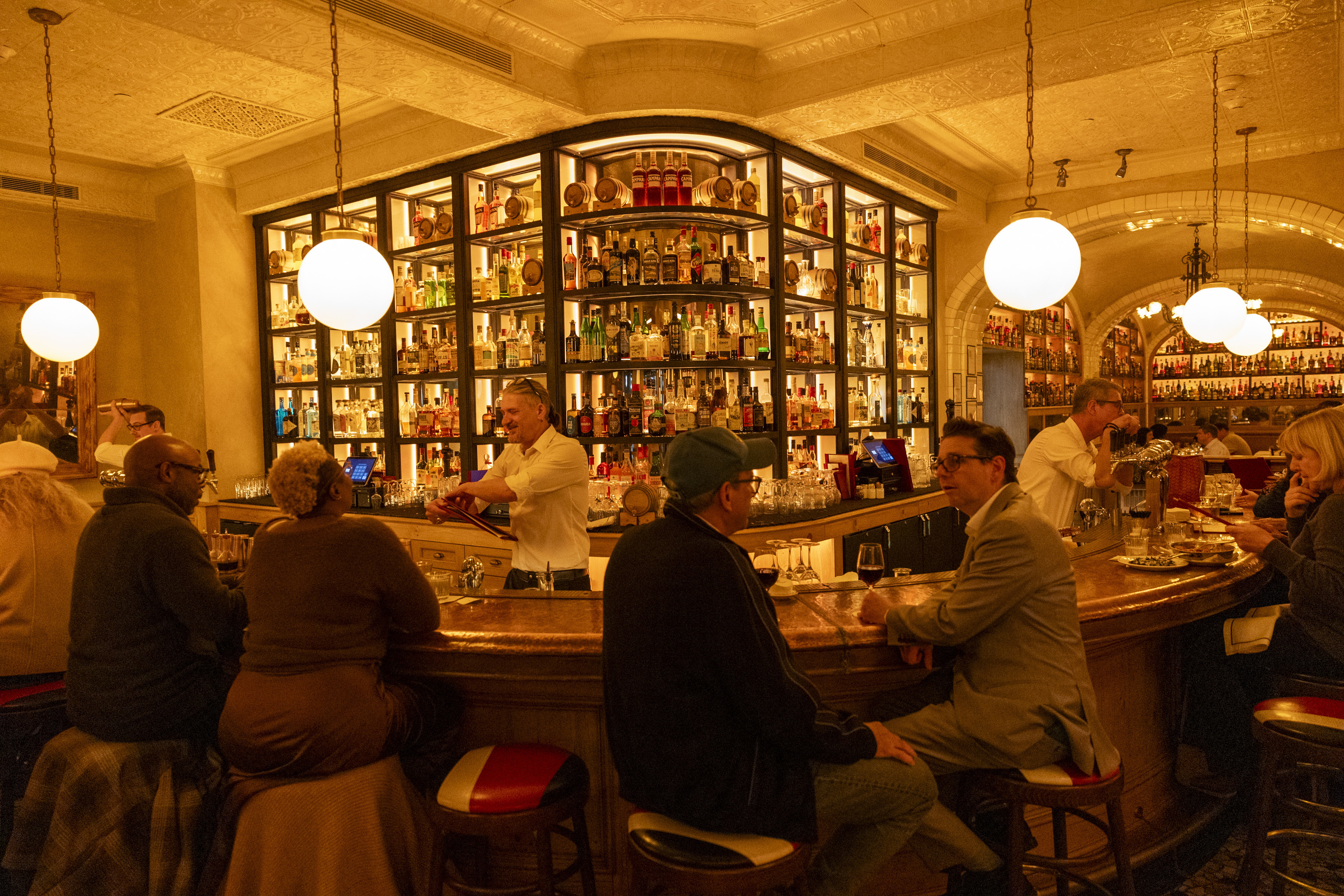
Starr’s greatest talent may be his gift for building energetic public spaces that feel as if they’ve always been there. And while Borromini lacks the corner space and open cafe windows that allow Parc in its al fresco moments to become part of the fabric of Rittenhouse Square, McNally has crafted a Fellini-esque stage set of leather booths, honeyed light, and linen-draped wooden tables that feels magnetic — especially the undulating copper bar on the ground floor, where an intriguing collection of 100-plus amari and digestivi awaits.
All my servers — five different people over the course of my visits — were personable, outgoing, and well-prepared to make smart pairing suggestions.
I should have stuck with their suggestions to indulge those digestivi with desserts. The airy tiramisu here backfired, its lightweight cloud of whipped mascarpone lacking the richness to counter an overzealous cocoa shower and the wickedly acidic twang of ladyfingers soaked in espresso.
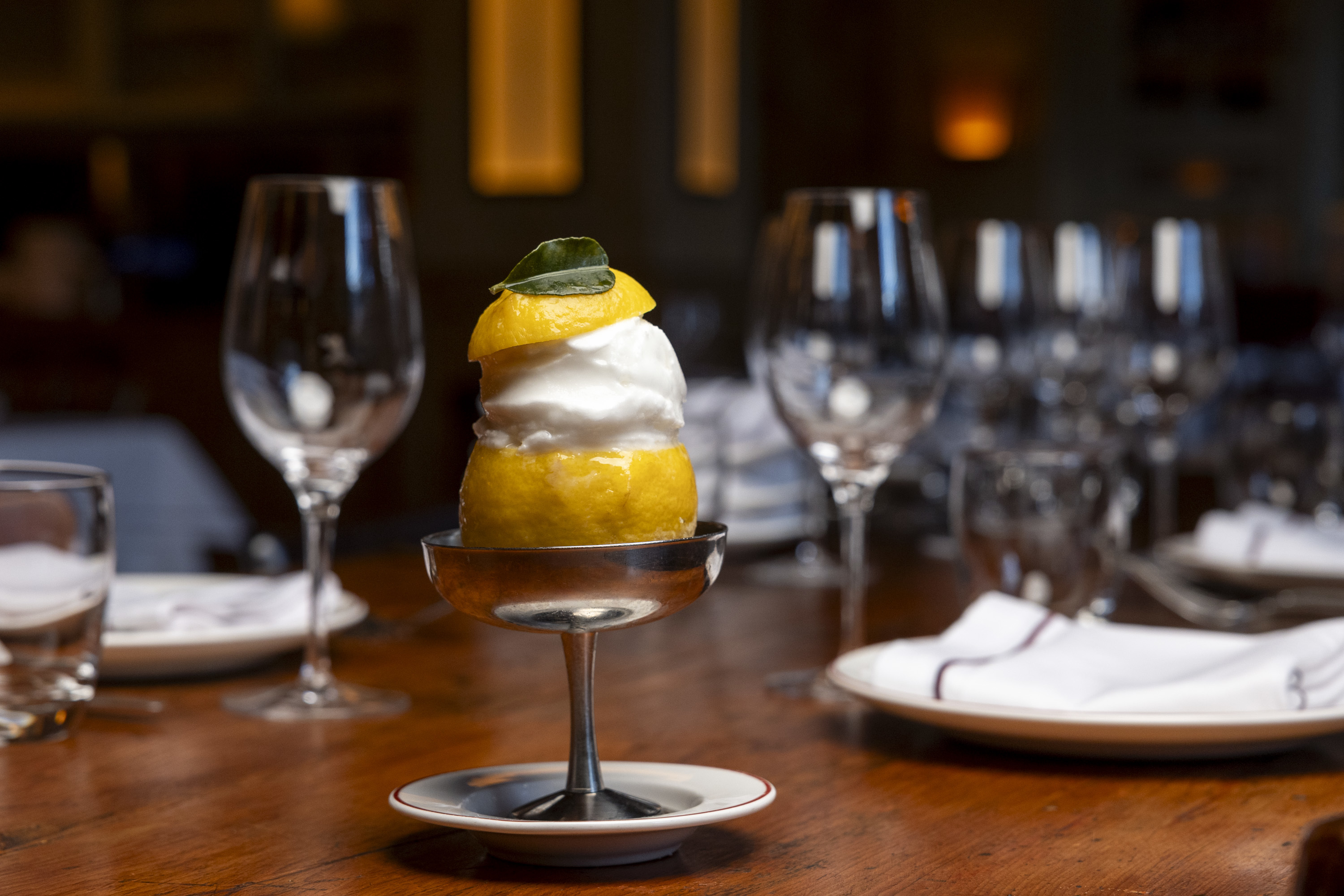
My favorite finish was sour in the best way possible: a hollowed-out lemon stuffed with sweet-tart lemon sorbetto. You’ve maybe seen something just like this in your neighborhood Italian place, brought in from the Italian frozen dessert powerhouse Bindi. But this was Borromini at its best, transforming something familiar into a better, fresher, more elegant version of itself. It will make you smile even as it puts a pucker on your face.
The lemon sorbetto served inside a hollowed-out lemon at Borromini in Philadelphia, on Thursday, Nov. 13, 2025.
Lunch served Monday through Friday, 11 a.m. to 3 p.m. Dinner served Sunday through Wednesday, 5 to 10 p.m.; Thursday through Saturday, until 11 p.m. Brunch Saturday and Sunday, 10 a.m. to 3 p.m.
Dinner pastas and entrees, $19-$72.
Wheelchair accessible.
There are several gluten-free options, including high-quality gluten-free pasta, which can be substituted with most sauces.
Drinks: The bar program offers 19 Italian wines by the glass, ranging from $12 house wines to $27 Franciacorta, a deep bottle list with more prestige options, Italian cocktails heavy on the expected spritzes and Negroni variations, and a list of nearly 100 amari and digestivi.
Menu Highlights: focaccia di Recco, squash blossoms; hamachi crudo; artichoke-arugula salad; pastas (spaghetti al limon, gnochetti sardi with crab, oxtail mafaldine, spaghetti all’Amatriciana, carbonara, “Sicilian lifeguard” calamarata); polpetta; rabbit cacciatore; dorade; osso buco; sorbetto al limon.
Borromini, the new Italian restaurant on Rittenhouse Square, in Philadelphia, July 29, 2025.Some of the first-floor dining area at Borromini in Philadelphia, Pa., on Tuesday, August 12, 2025.
Over the course of three years, Carolyn Harper and DonnaMartorano became fast friends.
The two women, on different sides of Pennsylvania, lived very different lives and shared few similarities. But they bonded over emails, handwritten letters, and virtual visits.
Martorano shared tales of her family, her health issues, her hopes of reconnecting with her two sons, and her growing sense of detachment from the outside world.
They spoke daily, but before they could meet, Martorano died in July 2024 at age 74 at the State Correctional Institution in Cambridge Springs. She was serving a life sentence without parole for first-degree murder for contracting two men to kill her husband in 1992.
The official cause of her death was a heart attack.
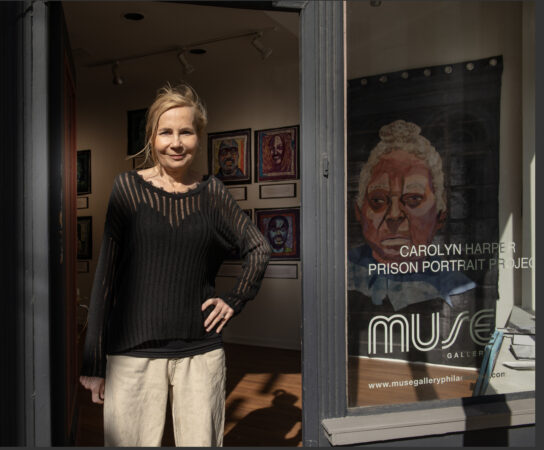
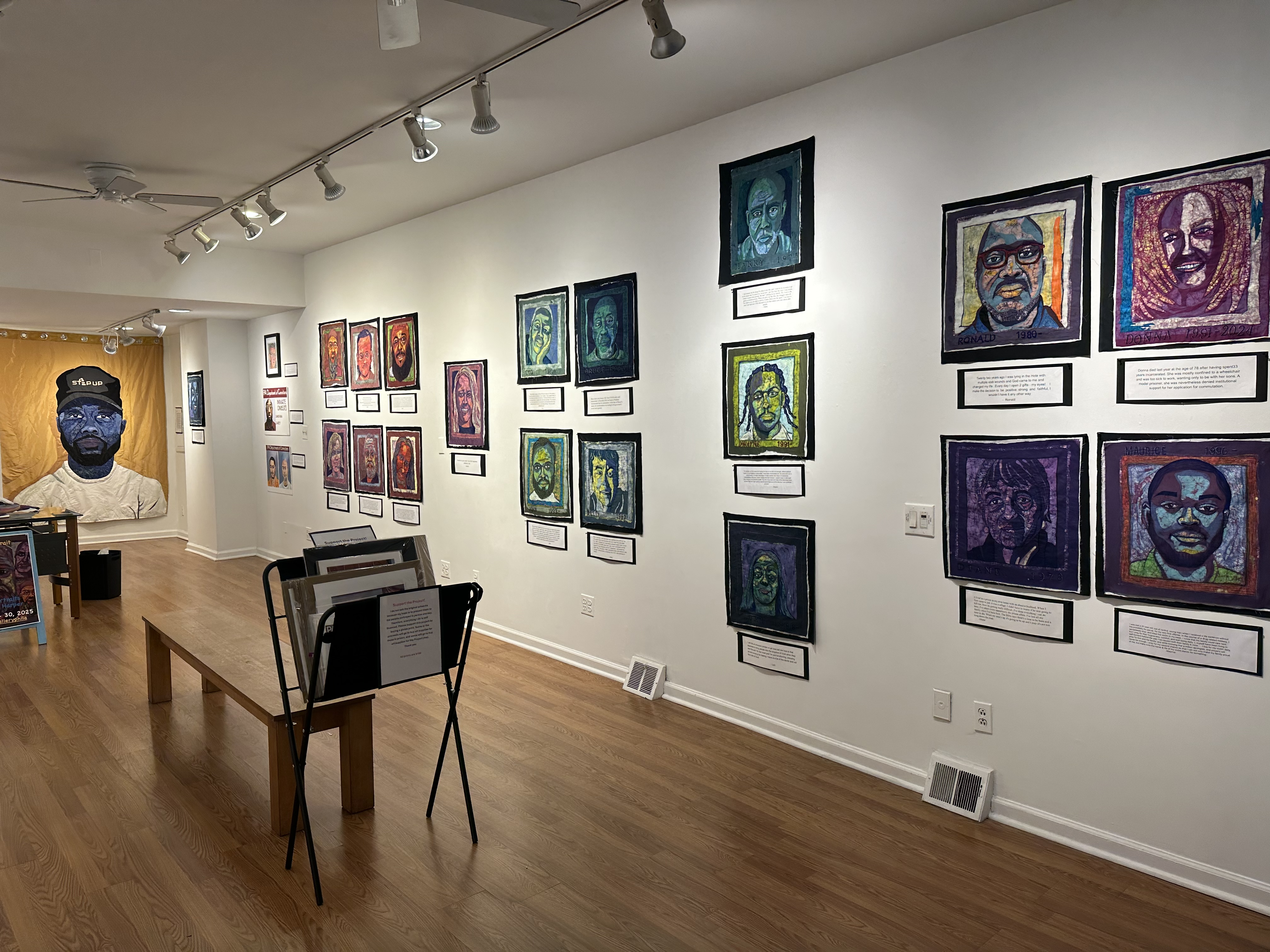
Artist Carolyn Harper’s portrait series, “Prison Portrait Project: Faces of Despair, Hope and Transformation,” is on display at Old City’s Muse Gallery.
Harper said Martorano’s past and conviction weren’t the end of her story. In the 32 years she was incarcerated, Harper said, Martorano became a certified braille transcriber and took violence prevention and mentoring programs.
But in her later years, she grew increasingly “bitter,” Harper said. Martorano was confined to her bed and wheelchair and was often bullied as her health worsened.
“Her spirits were crushed,” Harper said. “I really feel she died of a broken heart because she was not given institutional support. A lot of prison administrators just don’t care. She told me she had nothing left to live for.”
Artist Carolyn Harper’s portrait of her friend, Donna Martorano, who was incarcerated for decades before her death at age 74.
For the past five years, Harper, 60, has connected with dozens of other incarcerated people, some with stories similar to Martorano’s and others with far different lives.
These stories, Harper said, opened her eyes to the emptiness, detachment, and inhumanity people experience in prisons.
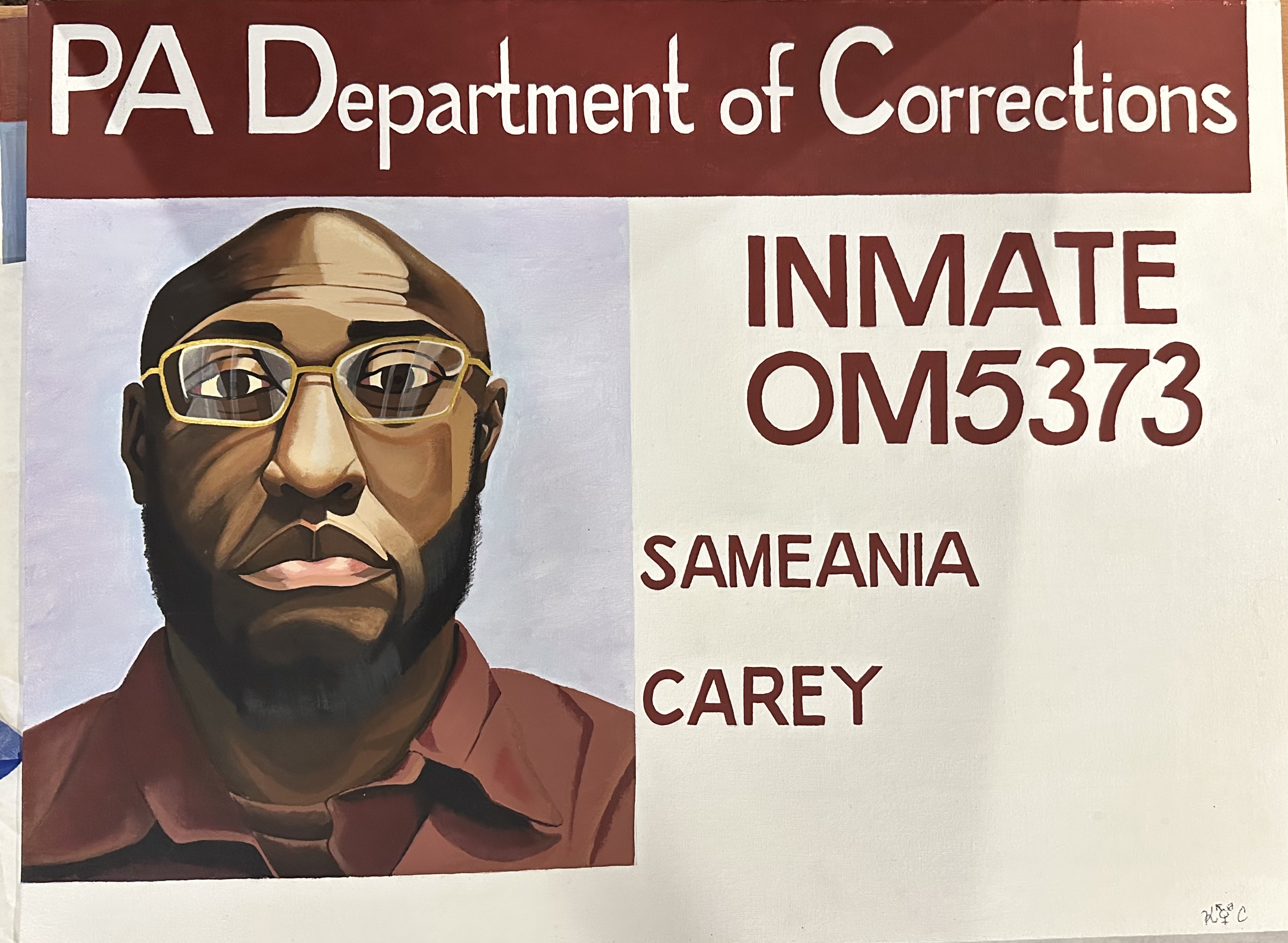
Harper has placed their portraits on hand-sewn quilts and vibrant batiks, transforming the faces of those suffering from the country’s carceral system into artwork.
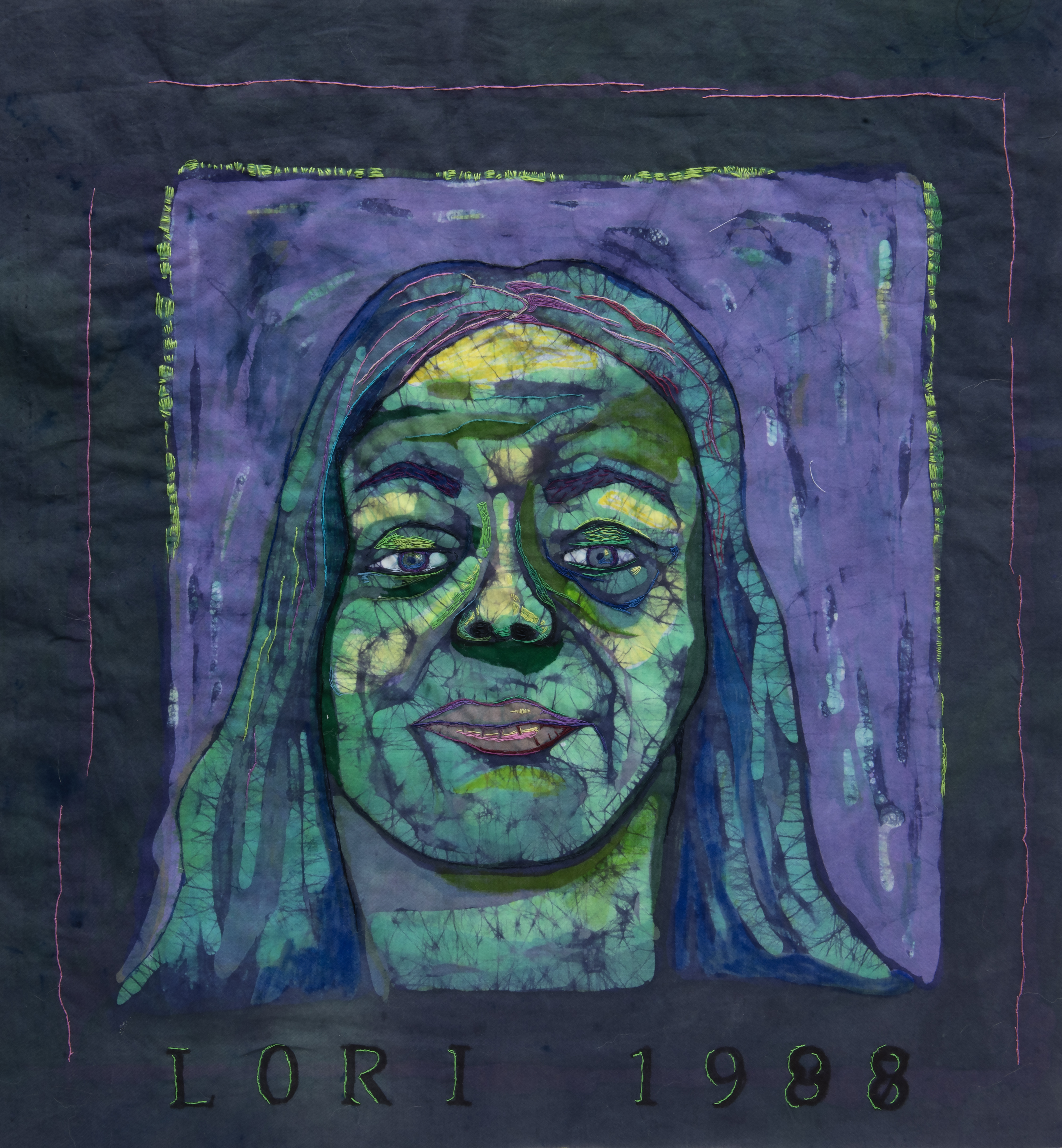
For artist Carolyn Harper’s new exhibition, she highlighted the stories of incarcerated people in the state prison system. Among them is Harper’s friend, Lori, who has been incarcerated since 1988.
Like Martorano, several of Harper’s subjects are serving death sentences, with little to no path for early release or commutation. Harper has never asked specific questions about their pasts, and everything she knows about them is what she has been told voluntarily. But she’s certain about one thing: None of the people she has befriended is the same person they were when they were first incarcerated.
Pennsylvania, she found out, is one of two states in the country that has a mandatory life without parole sentence, known as “death by incarceration,” for both first-degree and second-degree felony murder.
“I have come to see that guilt or innocence, while important, is not the critical thing here,” Harper said. ”It’s the idea of redemption and rehabilitation. This, to me, is the real story — the story of transformation.”
For decades, people suffering from abuse, discrimination, and disenfranchisement have made their way onto Harper’s quilts.
In the mid-1990s, she created panels for the AIDS Memorial Quilt, a visual project that memorializes the hundreds of thousands of Americans who died from AIDS-related causes at the height of the epidemic.
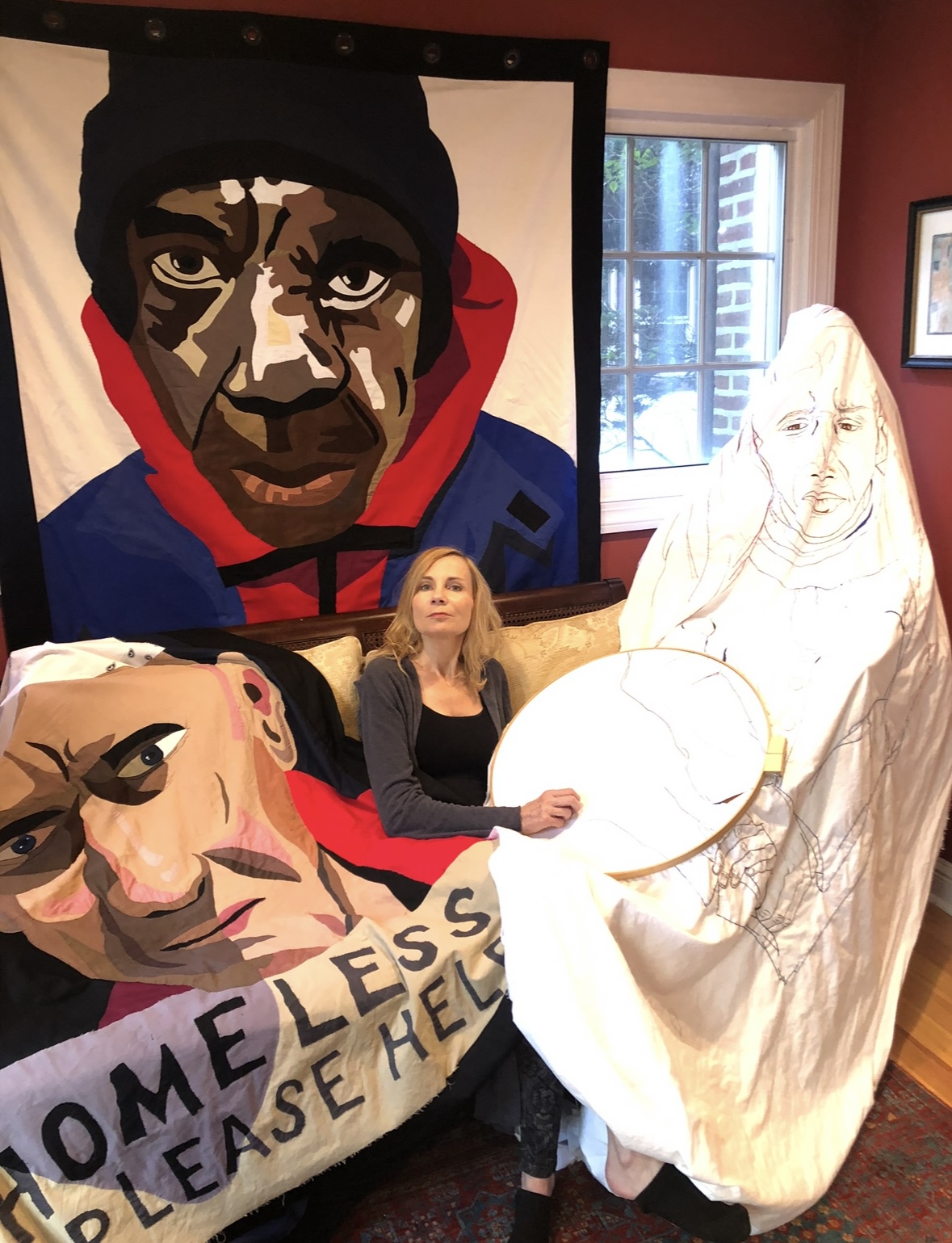
She also developed a series of textile portraits championing queer love stories, and another shedding light on the systemic issues faced by those wrestling with dispossession and homelessness.
“People often come out of prison and don’t have a pathway to find a real job or housing,” Harper said. “I started to see that connection, and I became interested in the issue of incarceration.
“We pay lip service to this idea that prison is reformative, but really it’s punitive.”
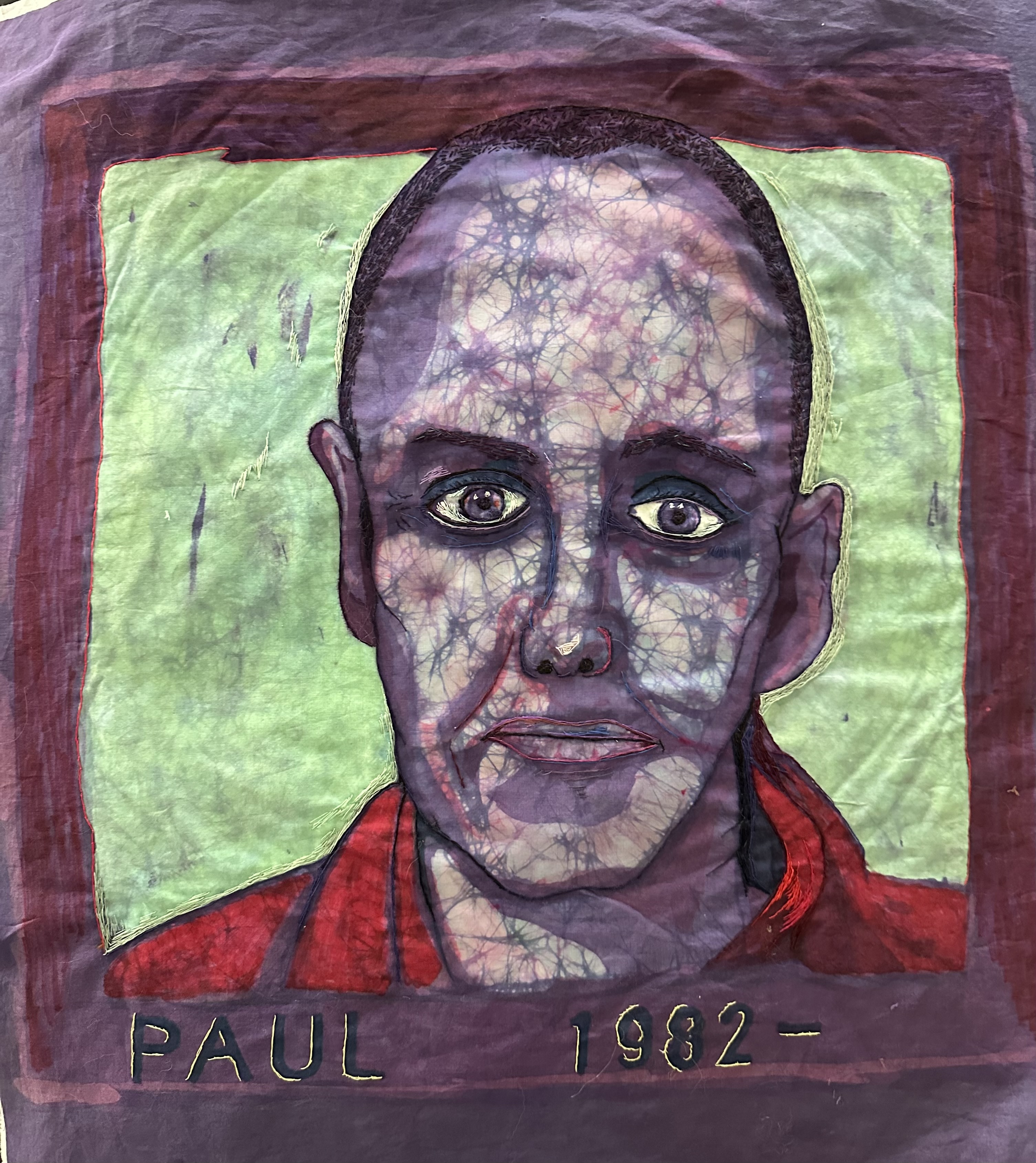
Among the subjects for Harper’s exhibition is Paul. He’s been incarcerated since 1982 for a crime he doesn’t remember committing.
Born in Rochester, N.Y., Harper moved to Philadelphia in 1989 to study art at the University of Pennsylvania. Her days volunteering as an art teacher at local homeless shelters from 2013 to 2020 are what first drew her to the links between homelessness, dispossession, and incarceration. She was driven to learn more about the state’s prison system.
After her best friend was arrested in 2020 for abusing his husband, Harper’s interest became a lived reality. The health of her friend, who struggled with addiction and mental health issues, worsened due to his incarceration. Shortly after his release in 2021, he took his own life.
Before this, a self-described “snowflake,” Harper would veer away from conversations about incarceration. She started out fearing that she wouldn’t be able to emotionally cope with the struggles incarcerated people endure and write to her about in their letters. But she grew to become a listening ear, resource, and friend to people seeking human connection.
Through her hand-sewn and fabric-dyed portraits, she encourages her audience to step outside their worlds and enter the worlds of her subjects. Through her art, she highlights the forgotten humanity of incarcerated people and uses their testimonies to draw attention to Pennsylvania’s “harsh sentencing laws,” and correct the misconceptions people hold of those who are incarcerated.
The “Prison Portrait Project” started off with Harper writing to the people whose names, faces, and stories make up her art. Would they send her a photograph, she asked, and consent to be a part of her exhibition?
Harper’s exhibit also features self-portraits from incarcerated artists.
Most replied with a photo or told Harper where she could find one. Others had family members send photos to her. After she sewed them or transferred them onto quilts, Harper shared images of the final pieces with the subjects of the expressive portraits.
“I think seeing their self-portrait, and knowing it’s going in an exhibition, helps them see themselves in a different light. And that can be empowering,” Harper said.
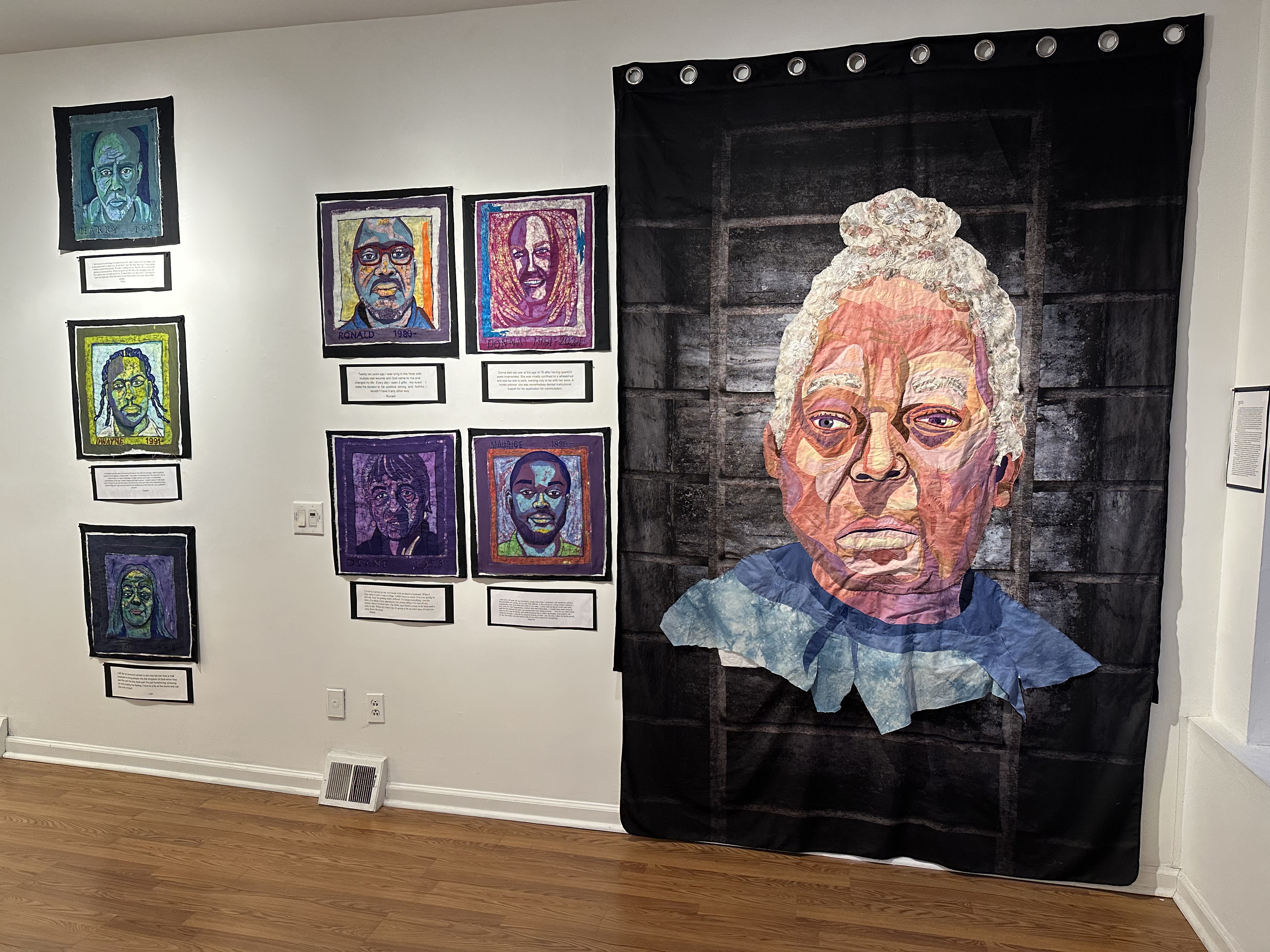
Each quilt and batik-style image features a written statement from the person who inspired the portrait, ensuring their stories (along with their faces) are integral parts of the exhibit.
A binder containing more stories, statements, and poems written by people Harper connected with through the years, sits at the front of the gallery. Three self-portraits of incarcerated artists are also on display.
An image of Carolyn Harper’s new portrait series, titled “Prison Portrait Project: Faces of Despair, Hope and Transformation,” which is on view at Muse Gallery through Nov. 30.
Harper is hopeful the show will inspire audiences to view those who are incarcerated as people, rather than lifeless serial numbers and charge sheets.
“Most of us don’t think about people in prison. If we do, it’s sort of with the feeling, ‘Well, they probably did something and deserve to be there.’”
She wants people to recognize the lack of redemptive pathways for people upon release, and the need for advocates to protect, defend, and humanize Pennsylvania’s incarcerated population.
“Prison Portrait Project: Faces of Despair, Hope and Transformation,” through Nov. 30, Muse Gallery, 52 N. Second St., Wednesday to Sunday, noon to 5 p.m. musegalleryphiladelphia.com
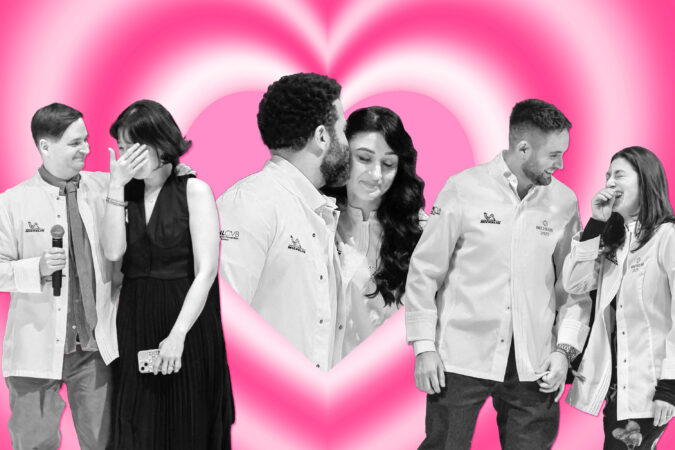
Representatives behind Philly’s three Michelin starred restaurants are lauded for their culinary skills, hospitality, and showmanship. But the men involved with each of them also have this shared trait: They’re all certified Wife Guys.
For those uninitiated, a wife guy is a colloquial way to refer to someone who is all about their marriage and finds ways to talk about their devotion whenever possible. (There are some instances where this phrase is used snarkily, but in this case, we mean it genuinely as a compliment and in earnest.)
When chefs Amanda Shulman and Alex Kemp stepped on stage to receive Her Place Supper Club’s one-star honor, Kemp stepped to the side, opting not to be photographed alongside the Michelin Man.
“Amanda is the hardest working woman in show business,” Kemp told The Inquirer on Wednesday. “She deserves this. I felt super proud of her, but I didn’t want to take her thunder.”
While Kemp is part-owner of Her Place, Shulman founded the restaurant and is the face (and chef) of the project.
Emcee for the night, Java Ingram, remarked on stage how Kemp’s gesture to step aside was “classy.”
He wasn’t the only one paying tribute to his wife that night.
Power couple Chad and Hanna Williams, who are behind star-winning restaurant Friday Saturday Sunday, also displayed their love for each other. Chad Williams could be seen on stage holding his wife and kissing her cheek after they received their award and Michelin jackets.
“Love and partnership is the foundation of this restaurant,” Williams later told The Inquirer of his display. “We got married in the kitchen for God’s sake. To have earned a Michelin star is my greatest accomplishment but to have done it with my wife is a dream come true.”
Finally, there was Provenance, the surprise of the night, pulling off a star within the atelier’s first year of opening.
Michelin international director Gwendal Poullennec asked Nicholas Bazik on stage what his inspiration was. While holding the mic, he pointed to his wife, Eunbin Whang. “She’s right over there,” Bazik said as the crowd erupted in “aws.” Whang demurely approached Bazik on stage, covering her face, tearful and proud as Bazik draped his arm around her.
“There would be no Provenance without my wife,” Bazik told The Inquirer, citing her influence on his “culinary identity,” blending French and Korean culture and cuisine.
So is love a prerequisite to getting a star?
Bazik seems to think so.
“Everybody needs a constant, something that can help center them. This is a hard job that oscillates between insanity and reality checks. Love is that thread.”
Kemp concurs.
“Or maybe it’s being a ‘family guy,’” he quipped when asked by The Inquirer for his take. “Amanda is a very easy person to love. She’s my best friend. We do everything together. We spend every moment of the day talking or working together.”
He added, “I love being a wife guy. It’s cool being a wife guy.”
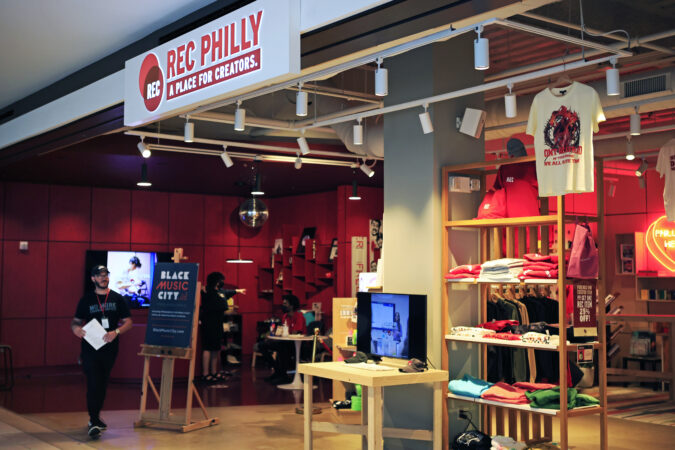
REC Philly, a long-standing space for independent creatives and entrepreneurs to cowork and create in, is closing its Center City headquarters on Dec. 20.
In an email sent to REC Philly members on Monday, the organization announced the shuttering of its Fashion District 10,000-square-foot space, located at Ninth and Market Streets, due to “unforeseen circumstances.”
“We know this news may come as a surprise, and we do apologize for any inconvenience it may have caused. We’ll stay in touch with any updates, but until then, stay creative,” the email stated.
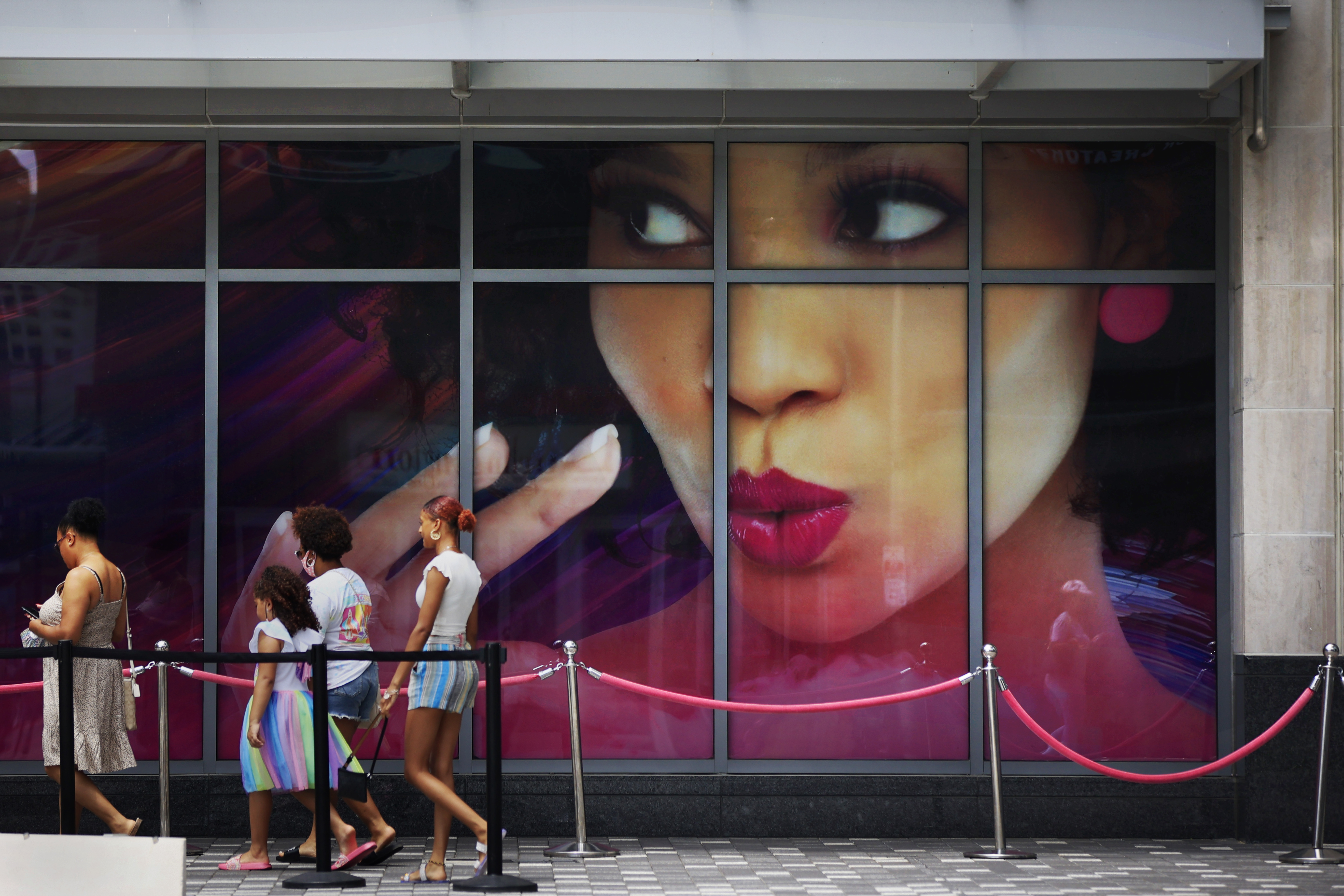
Patrons walk past an advertisement on June 19, 2021 outside the Fashion District.
All active REC Philly members will have access to the space through the closing date, the email stated. After that, all memberships and app access will end and some refund options will be available.
“This decision was made due to circumstances beyond our control related to the long-term sustainability of the space,” the email states. “It was not made lightly, and our team explored every possible option before reaching this point.”
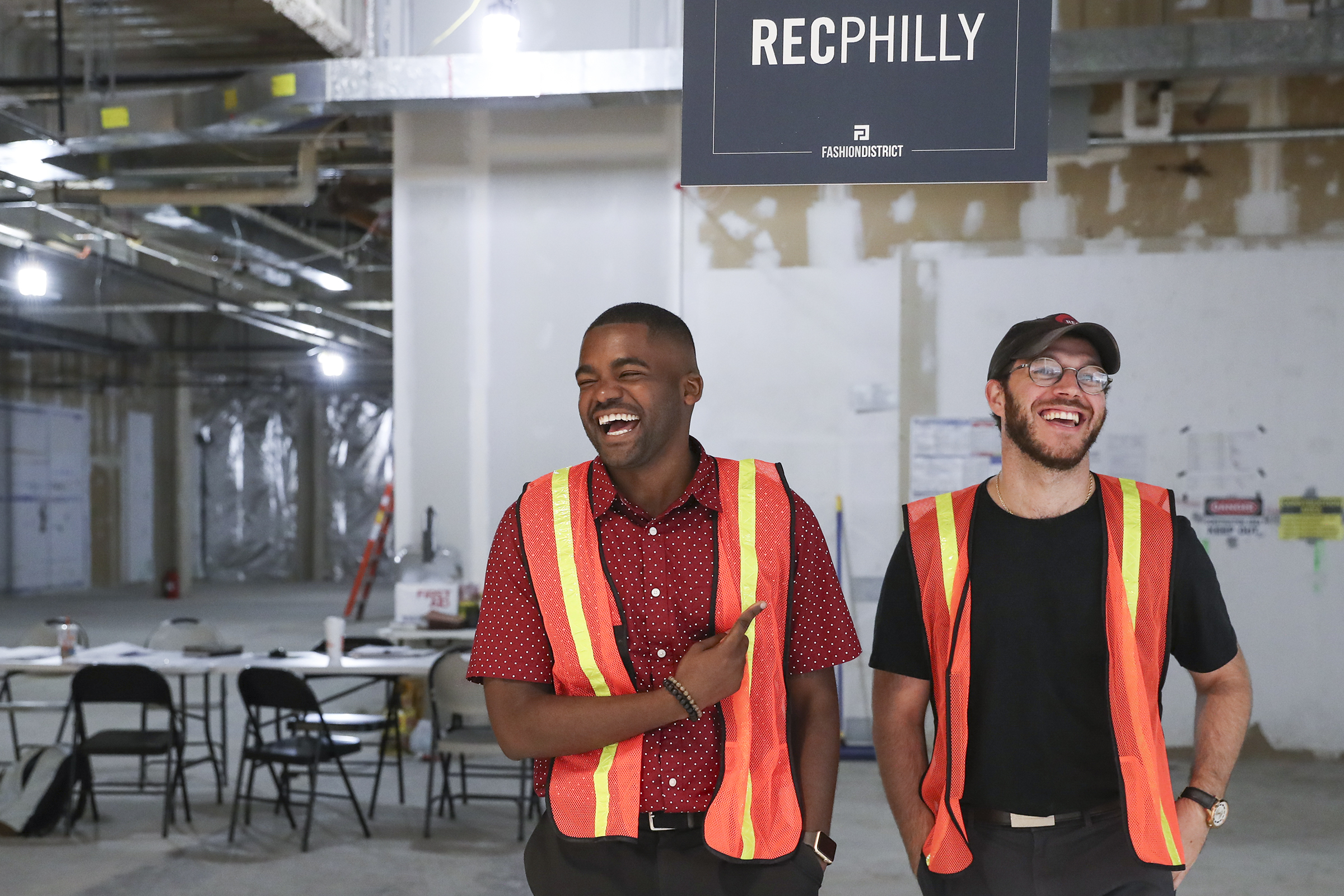
William Toms, left, and David Silver pose for a portrait inside the REC Philly space at Ninth and Market Streets, on July 25, 2019.
The announcement comes six years after cofounders Will Toms and Dave Silver opened the facility. The venture, originally named the Broad Street Music Lounge, started in Silver’s North Philly basement. That’s where the duo — who met as high schoolers at Warminster’s William Tennent High School — held concerts and community events for friends before launching REC in 2014.
They opened a 600-square-foot warehouse, located at Ninth and Dauphin Streets, a year later. And in 2019, they cut the ribbon on the Fashion District location, which housed a recording studio, performance stage, and coworking areas.
REC, an acronym for “resources for every creator,” also offered workshops, educational programs, grants, and networking events.
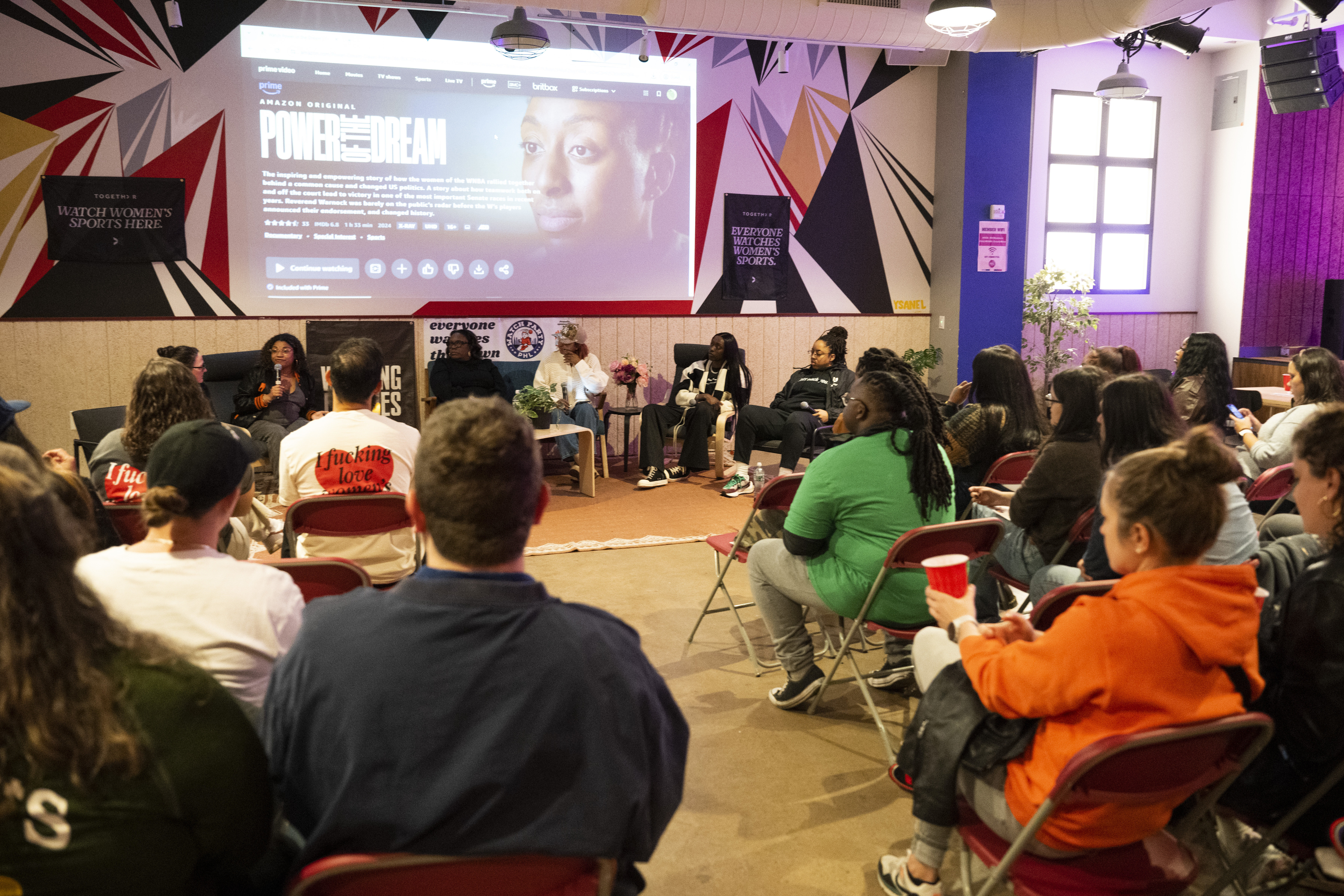
Guests gather as WNBA player and North Philadelphia native Kahleah Copper participates in a Q-and-A at REC Philly on Tuesday, Oct. 29, 2024 in Philadelphia.
While the Center City hub will close its doors at the end of the year, REC Philly will not be completely shutting down operations, just the space.
“REC is not shutting down completely at this time. The space needs to close in order for the business to properly transition,“ the email to members states. Those transitional plans are yet to be announced.
Neither Toms nor Silver responded to media inquiries in time for publication.
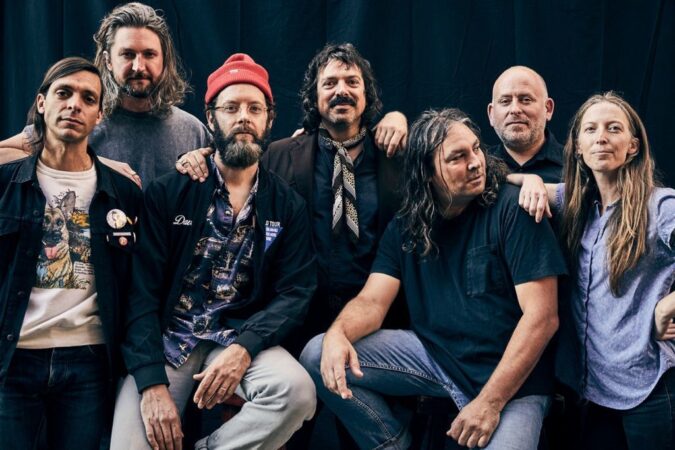
Once again, Philadelphia music fans can look forward to a Drugcember to remember.
Next month, Philly rock band The War On Drugs will renew a tradition that has been on hiatus since 2022. It will perform a trio of fundraising shows to benefit the Fund for the School District of Philadelphia, the nonprofit that raises money and coordinates investments into Philadelphia Schools.
The Adam Granduciel-led seven piece band, that won a best rock album Grammy for A Deeper Understanding in 2018, will play three nights at Johnny Brenda’s in Fishtown, from Dec. 18-20.
The 250 capacity club — which the band first played on the venue’s opening weekend in 2006 — is several magnitudes smaller that the amphitheater, arena, and festival stages the Drugs typically plays in venues around the world.
Drugcember to Remember debuted in 2018 and became an annual Philly three-show tradition through 2022, with the exception of the COVID shutdown year of 2020.
But it hadn’t taken place since 2022, and seemed in danger of being gone for good, with Granduciel now living on Los Angeles and bassist and original members Dave Hartley in North Carolina.
Granduciel said in a statement that the return to the treasured tradition is a way to reaffirm its Philadelphia identity.
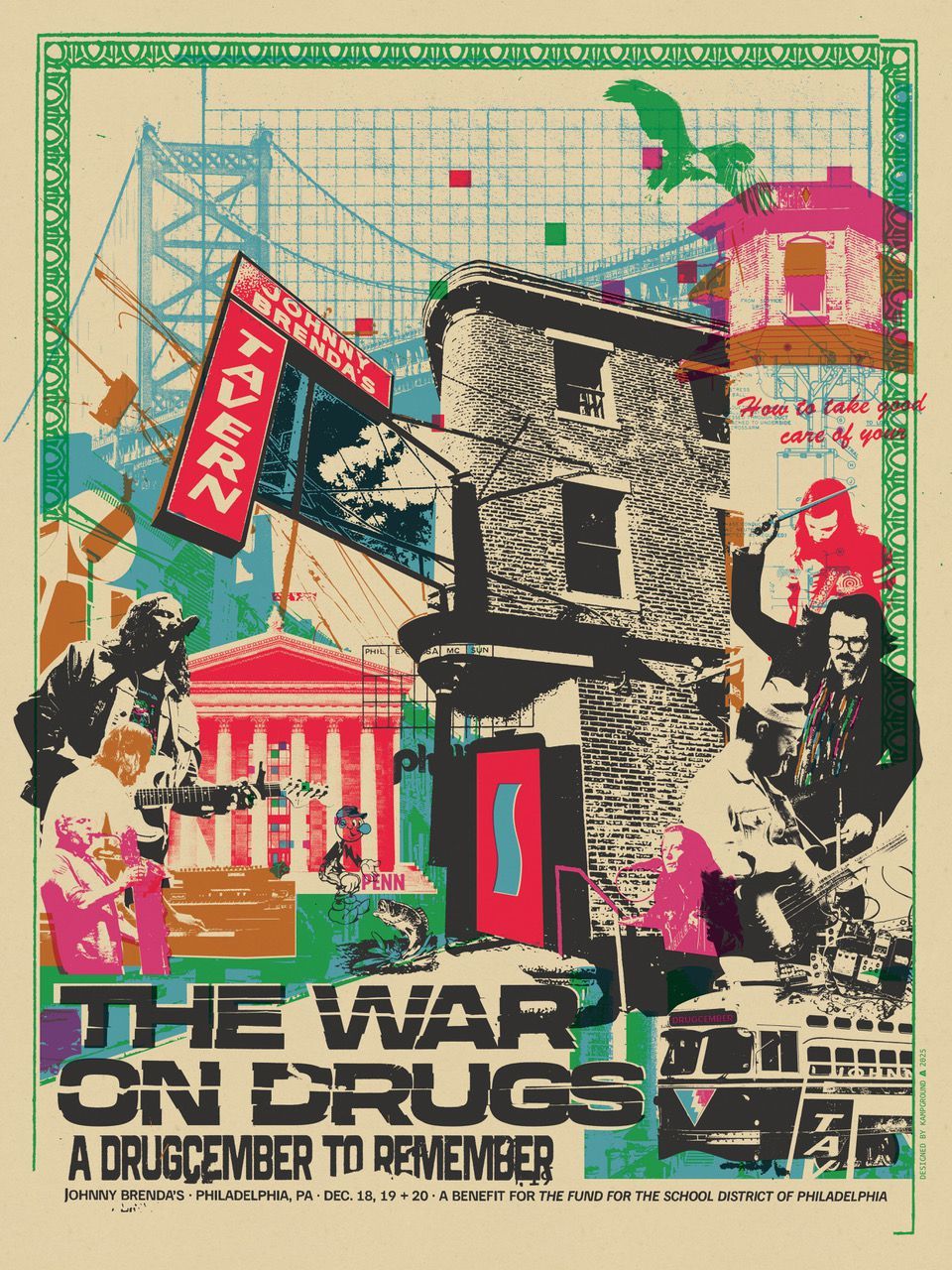
The flyer for The War on Drugs’ 2025 ‘A Drugcember to Remember’ benefit shows at Johnny Brenda’s on Dec. 18-20.
“This has been a year end highlight for me since we started doing it in 2018,” said the guitarist and songwriter who stepped out as a producer in 2025 on Craig Finn’s Always Been and Sam Fender’s People Watching. “Three rock shows at our old local hangout benefiting the Philadelphia School System. This band wouldn’t exist if not for the vibrant Philadelphia music community that has supported us from the beginning and we are very grateful for it.”
The War On Drugs’ most recent studio album, I Don’t Live Here Anymore, came out in 2021. Last year, they released the in-concert recording Live Drugs Again.
Its most recent Philadelphia performance was in the summer of 2024, sharing a bill with the National at the Mann Center in Fairmount Park. Besides the Drugcember shows, the only two dates on the band’s schedule are at festivals in Spain and Portugal in July 2026.
A Drugcember To Remember will raise funds through ticket sales and also the sale of exclusive items though Philadelphia businesses, including Elixr Coffee, Sacred Vice Brewing, Room Shop, Uncle Ron’s Candles, and Kinetic Skateboarding/Nocturnal Skate Shop.
Ticket for the Johnny Brenda’s shows go on sale at 10 a.m. Friday Nov. 21 at thewarondrugs.net/tour.
“We will sing, dance, and celebrate in the way Pierre would have wanted us to,” said Chuck Damico, WMMR’s program director.
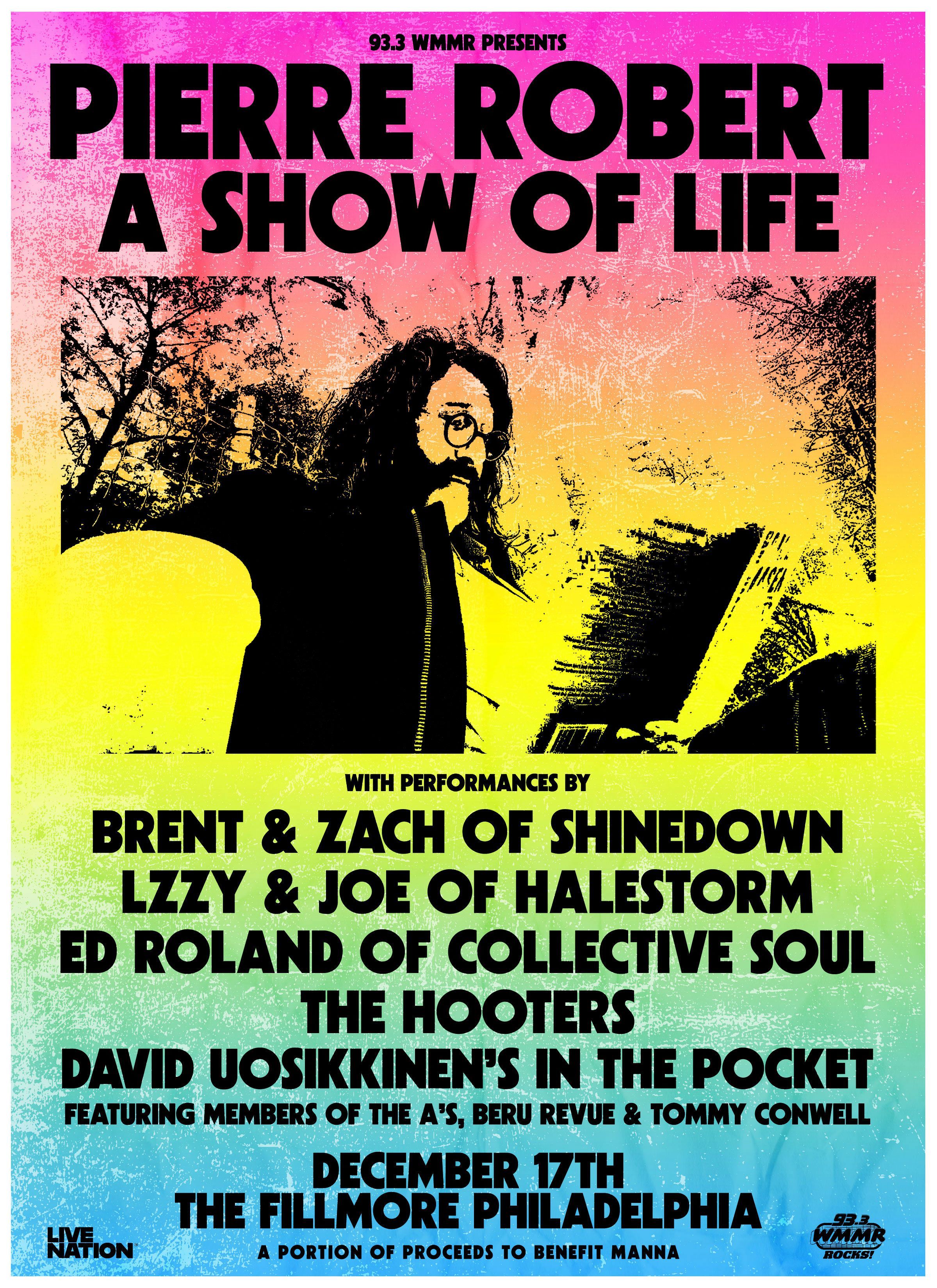
The concert will take place at the Fillmore on Dec. 17. Tickets will cost $50 and go on sale Friday at 10 a.m. through Ticketmaster on the Fillmore’s website. A portion of the proceeds will go to MANNA, the Metropolitan Area Neighborhood Nutrition Alliance.
The show will feature bands and musicians near and dear to the former WMMR host’s heart, including The Hooters, Brent Smith and Zach Meyers of Shinedown, Lizzy Hale and Joe Hottinger of Halestorm, and Ed Roland of Collective Soul.
A poster for a concert honoring former WMMR host Pierre Robert, who died unexpectedly last month.
Robert, 70, was found dead in his Gladwyne home on Oct. 29 after failing to show up for his midday show. The cause of Robert’s death was not disclosed and officials don’t plan to release additional information. Caroline Beasley, the CEO of WMMR’s parent company, Beasley Media Group, said foul play was not suspected.
“Everything seemed to be natural,” Preston Elliot said on air following Robert’s death. “It just appears he passed overnight.”
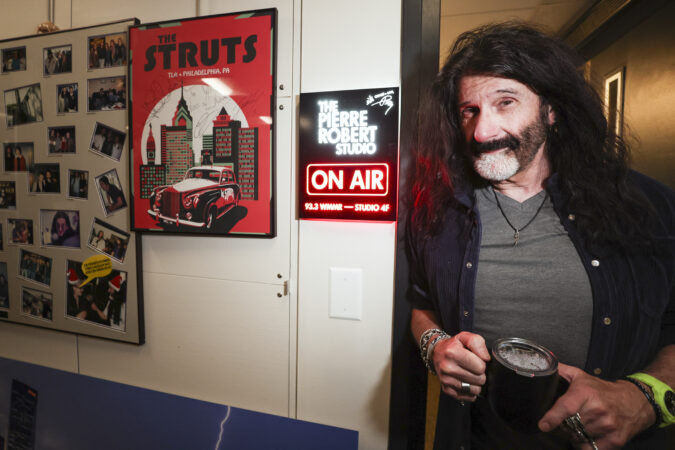
Robert was a musical institution in Philadelphia, where he spent 44 years on the air sharing his deep love of classic rock and expressing a humanity that touched musicians and listeners across the county.
“He was truly irreplaceable and his passing will leave a big hole especially in the local music community,” Hooters singer and cofounder Rob Hyman said. “Pierre was that ‘good citizen’ who will be missed by all.”
Pierre Robert’s annual Thanksgiving Day show will continue this year, hosted by his former producers.
With Thanksgiving approaching, WMMR plans to keep Robert’s annual Turkey Day show alive with a midday show anchored by Ryan Shuttleworth and featuring a collection of the rock host’s former producers — Kevin Gunn, Michael Anthony Thompson, Nick McIlwain, Jason Fehon, and Chris “Pancake” Ashcraft.
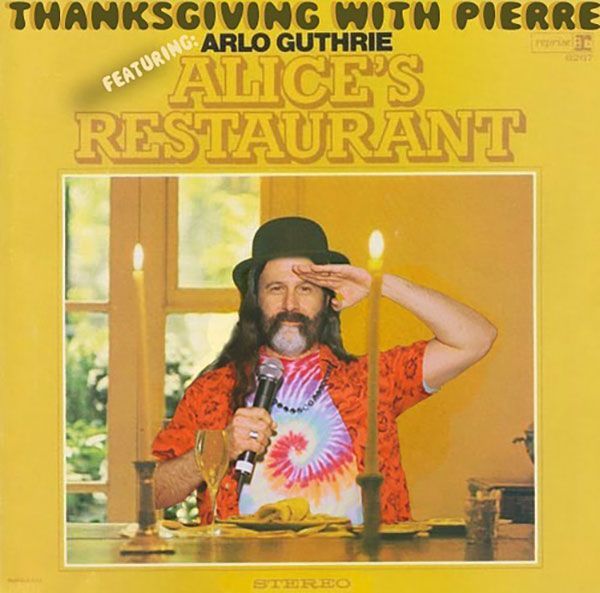
And yes, that means a heaping spoonful of Arlo Guthrie’s “Alice’s Restaurant Massacree,” the folk singer’s 18-minute opus. Expect to hear three versions of the song, including the even-longer 25th anniversary edition, which will be played at noon.
WASHINGTON — National Public Radio will receive approximately $36 million in grant money to operate the nation’s public radio interconnection system under the terms of a court settlement with the federal government’s steward of funding for public broadcasting stations.
The settlement, announced late Monday, partially resolves a legal dispute in which NPR accused the Corporation for Public Broadcasting of bowing to pressure from President Donald Trump to cut off its funding.
On March 25, Trump said at a news conference that he would “love to” defund NPR and PBS because he believes they are biased in favor of Democrats.
NPR accused the CPB of violating its First Amendment free speech rights when it moved to cut off its access to grant money appropriated by Congress. NPR also claims Trump, a Republican, wants to punish it for the content of its journalism.
On April 2, the CPB’s board initially approved a three-year, roughly $36 million extension of a grant for NPR to operate the “interconnection” satellite system for public radio. NPR has been operating and managing the Public Radio Satellite System since 1985.
But corporation officials reversed course and announced that the federal funds would go to a entity called Public Media Infrastructure. NPR claimed the CPB was under mounting pressure from the Trump administration when the agency redirected the money to PMI, a media coalition that didn’t exist and wasn’t statutorily authorized to receive the funds.
CPB attorneys denied that the agency retaliated against NPR to appease Trump. They had argued that NPR’s claims are factually and legally meritless.
On May 1, Trump issued an executive order that called for federal agencies to stop funding for NPR and PBS. The settlement doesn’t end a lawsuit in which NPR seeks to block any implementation or enforcement of Trump’s executive order. U.S. District Judge Randolph Moss is scheduled to preside over another hearing for the case on Dec. 4.
The settlement says NPR and CPB agree that the executive order is unconstitutional and that CPB won’t enforce it unless a court orders it to do so.
NPR, meanwhile, agreed to drop its request for a court order blocking CPB from disbursing funds to PMI under a separate grant agreement.
Katherine Maher, NPR’s president and CEO, said the settlement is “a victory for editorial independence and a step toward upholding the First Amendment rights of NPR and the public media system.”
Patricia Harrison, the corporation’s CEO, said CPB is pleased that the litigation is over “and that our investment in the future through PMI marks an exciting new era for public media.”
On Aug. 1, CPB announced it would take steps toward closing itself down after being defunded by Congress.
This week in Philly music kicks off in Fishtown with six-time Grammy nominee Leon Thomas, continues in Atlantic City with a Brandy and Monica throwback pop double bill, and continues in North Philly with rising R&B singer and Justin Bieber producer Dijon.
Austin, Texas, hard rock band Die Spitz play the First Unitarian Church on Wednesday.
Wednesday, Nov. 19
Die Spitz
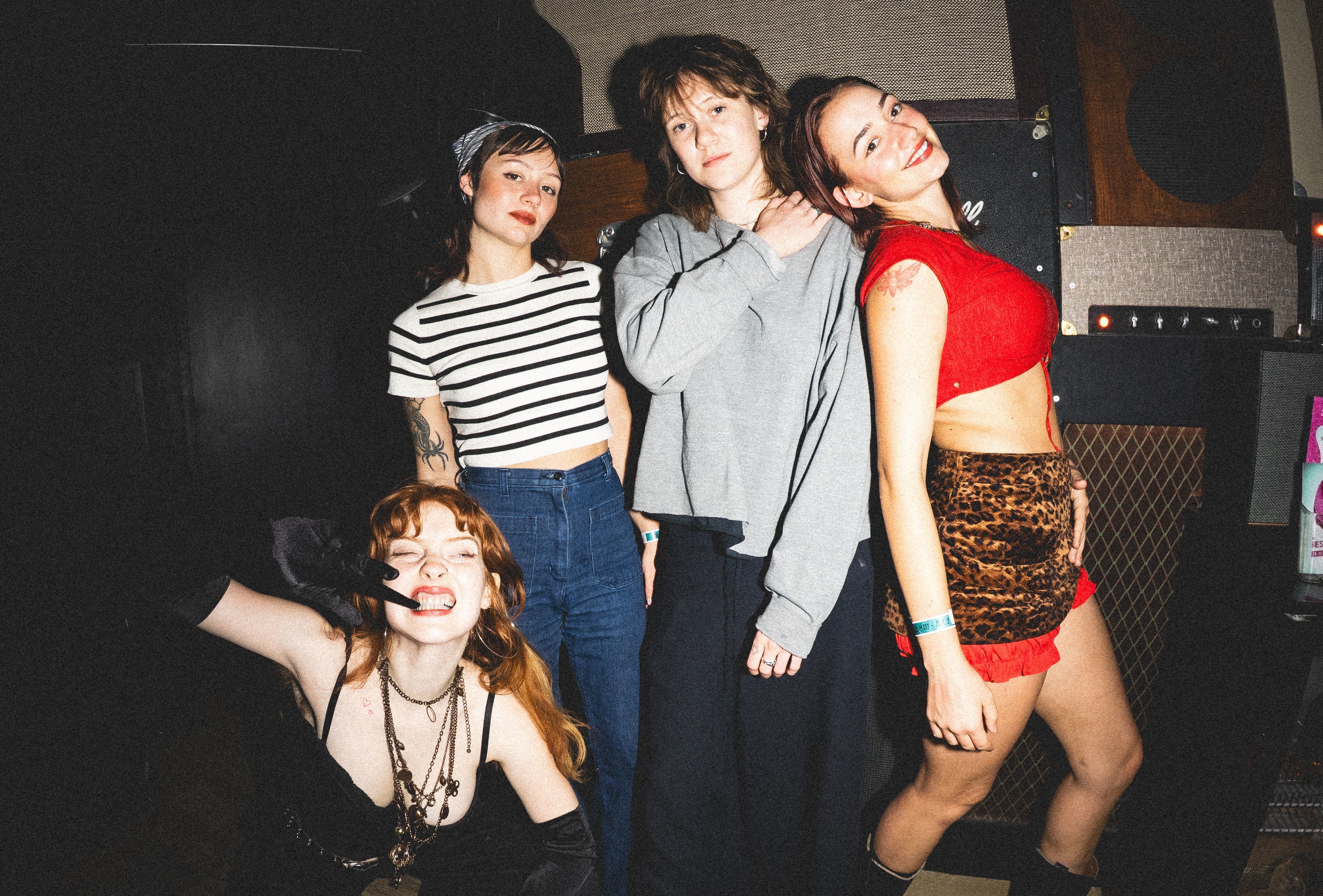
The music gets started on Wednesday with the four women of Austin, Texas. hard rock foursome Die Spitz, who recorded their unrelenting new album Something to Consume at Studio 4 in Conshohocken with producer Will Yip. Boone, N.C., queer punk duo Babe Haven opens. (8 p.m., First Unitarian Church, 2125 Chestnut St., r5productions.com)
Leon Thomas
There weren’t a lot of surprises among the big names with the most nominations when the Grammys were announced this month. Kendrick Lamar and Lady Gaga topped the list, but Leon Thomas, who got six nods along with Bad Bunny and Sabrina Carpenter, was the surprise underdog.
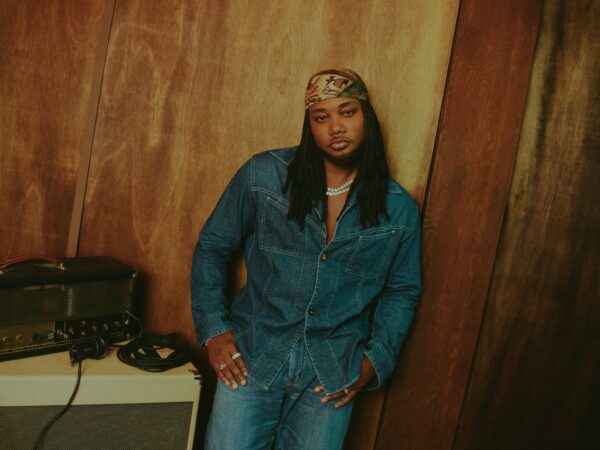
The crooner and producer, who got his start as a Broadway child actor and star of Nickelodeon’s Victorious, is up for album of the year for Mutt, as well as best new artist and R&B performance for his viral NPR Tiny Desk version of the album’s title song — in which he compares himself unfavorably to a dog. His “Mutts Don’t Heel” tour comes to the Fillmore on Wednesday. (8 p.m., the Fillmore, 29 E. Allen St., livenation.com)
Also: There’s live music at Old City vinyl listening room 48 Record Bar. James Everhart of Cosmic Guilt teams with New York songwriter Keenan O’Meara on Wednesday; Hannah Taylor sings and Jake Zubkoff plays keys on Sunday.
Hannah Cohen plays Johnny Brenda’s on Thursday. Her new album is “Earthstar Mountain.”
Thursday, Nov. 20
Hannah Cohen
Hannah Cohen’s Earthstar Mountain is a dreamy, pastoral album that also delivers a sweet kick. She recorded it with producer partner Sam Evian at their studio in a barn in upstate New York. With Sufjan Stevens and Clairo guesting, it’s a 2025 standout releaser. (Salami Rose Joe Louis opens. 8 p.m., Johnny Brenda’s, 1201 Frankford Ave., johnnybrendas.com)
The New Mastersounds
British funkateers the New Mastersounds are saying goodbye — at least for a while. The band whose tight Hammond organ-heavy soul-jazz sound bears the influences of Philly keyboard greats Jimmy Smith and Jimmy McGriff, plays its “Ta-Ta for Now” tour on Thursday. (8 p.m., Ardmore Music Hall, 23 E. Lancaster Ave., Ardmore, tixr.com)
Now, Gallo has a new album that takes him in a more personal direction, called Checkmate, his second on the Kill Rock Stars label. It’s filled with subtly evocative folk-flavored, even jazzy, music that detours from the bruising garage rock he’s become known for. Gallo plays Free at Noon at Ardmore Music Hall. (Noon, Ardmore Music Hall, eventbrite.com)
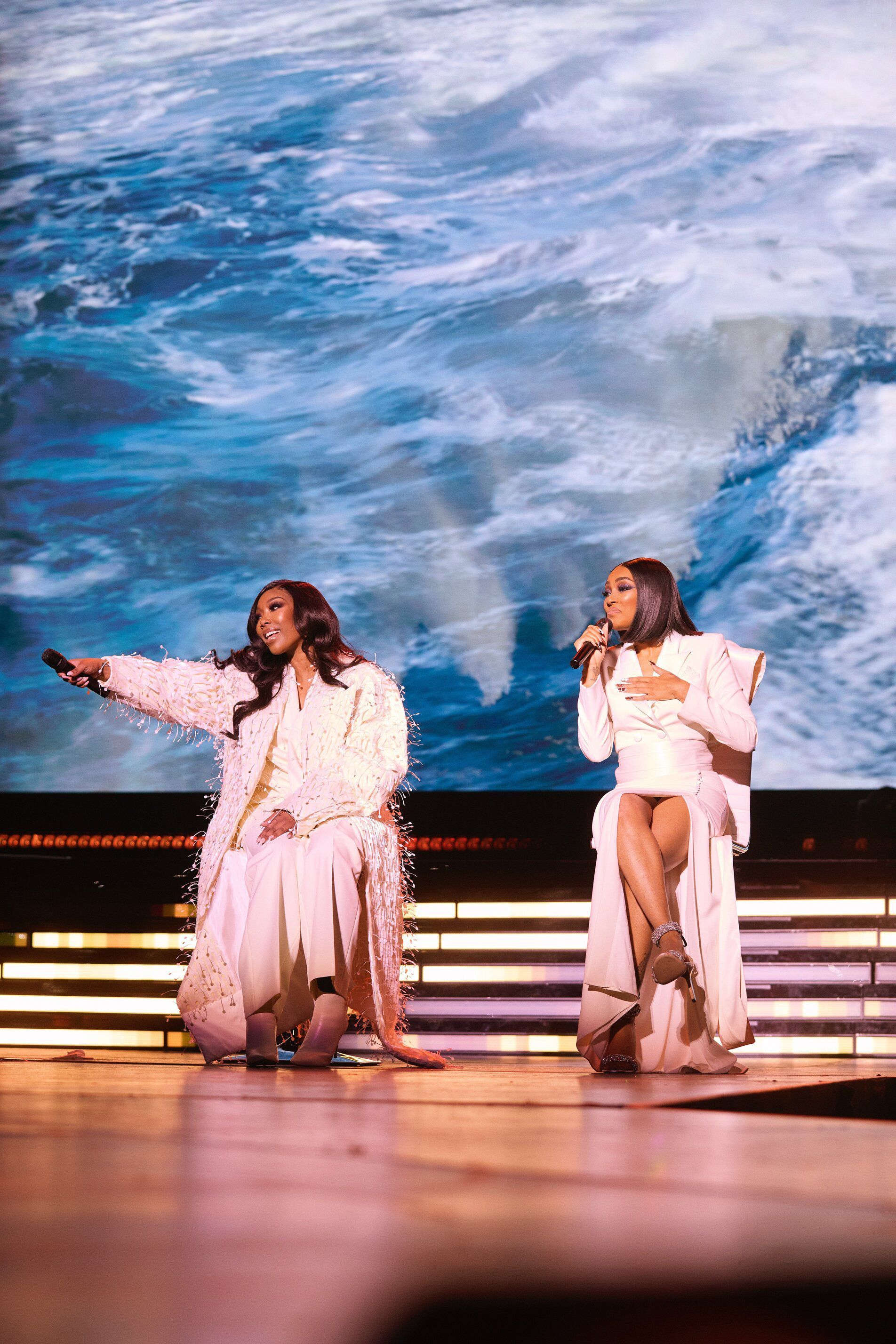
Brandy and Monica performing in Indianapolis in October on “The Boy Is Mine Tour,” which comes to Atlantic City’s Boardwalk Hall on Saturday.
Bar Italia
This month’s edition of David Pianka’s Making Time dance party has an intriguing live band headliner in Bar Italia, the London-based trio named after an iconic Soho coffee bar. The band’s new album, Some Like It Hot, wears the influence of Brit-pop band Pulp on its sleeve. New York rock band Voyeur also plays, along with sets by Dave P., Mario Cotto, Shai FM, and K Wata. (9 p.m., Warehouse on Watts, 923 N. Watts St., wowphilly.com)
Stinking Lizaveta
Longstanding West Philly doom metal trio Stinking Lizaveta‘s name was inspired by a character in Fyodor Dostoevsky’s The Brothers Karamazov. The band released its 1996 album Hopelessness and Shame — recorded by the late Steve Albini — on vinyl for the first time this March. On Friday, they headline Johnny Brenda’s with Deathbird Earth and Channls. (8 p.m., Johnny Brenda’s, 1201 Frankford Ave., johnnybrendas.com)
Tom Morello
Rage Against the Machine guitarist Tom Morello plays the Music Box at the Borgata in Atlantic City. It will be an agit-pop act of resistance in a hotel casino within earshot of chiming slot machines. Morello’s repertoire is made up of roiling Rage songs, Woody Guthrie, MC5, and John Lennon and Yoko Ono covers, plus originals in his rabble-rousing folk singer mode as the Nightwatchman. He’ll have a full band behind him, plus the help of San Diego hip-hop group the Neighborhood Kids as his special guests. (9 p.m., Music Box at the Borgata, 1 Borgata Way, Atlantic City, ticketmaster.com)
Saturday, Nov. 22
Mo Lowda & the Humble
Philly quarter Mo Lowda & the Humble closes out a five-month North American tour for its new album, Tailing the Ghost, with a hometown show. (8 p.m., Union Transfer, 1026 Spring Garden St., utphilly.com)
Brandy and Monica
Back in 1988, Brandy and Monica played out a feud over a dude in the worldwide hit “The Boy Is Mine,” which was cowritten and coproduced by South Jersey’s Rodney “Darkchild” Jerkins. Twenty-seven years later, the pop-R&B singers are on a concert tour together that also features Destiny’s Child’s Kelly Rowland, Muni Long, and 2025 American Idol winner Jamal Roberts. The tour is presented by the Black Promoters Collective. (8 p.m., Jim Whelan Boardwalk Hall, 2301 Boardwalk, Atlantic City, boardwalkhall.com)
Grammy-nominated singer and producer Dijon plays the Met Philly on Sunday.
Sunday, Nov. 23
Dijon
Dijon released his debut Absolutely in 2021 and has quickly made his mark. He regularly works with Mk.gee, the guitarist and songwriter with whom he shares a twitchy, low-fi sensibility. He’s also teamed with Bon Iver and Justin Bieber and is up for producer of the year and album of the year at the Grammys. Sometimes, he sounds like Prince.
His new album Baby! is a joyous, shape-shifting adventure. Two measures of how hip he is at the moment: He’s among the musicians with roles in Paul Thomas Anderson’s One Battle After Another, and on Dec. 6 will be musical guest on Saturday Night Live. He plays the Met Philly on Sunday. (8 p.m., Met Philly, 858 N. Broad St., ticketmaster.com)
Amy LaVere and Will Sexton
Memphis wife-and-husband duo Amy LaVere and Will Sexton are Americana artists who specialize in a brand of smoky Southern noir, perhaps best exemplified by LaVere’s “Killing Him,” about trying to rid oneself of a bad boyfriend only to find that he comes back to haunt you. (8 p.m., 118 North, 118 N. Wayne Ave., Wayne, tixr.com)
Those watching the Eagles’ winning matchup against the Detroit Lions on Sunday may have caught a glimpse of something absolutely “thrillifying.”
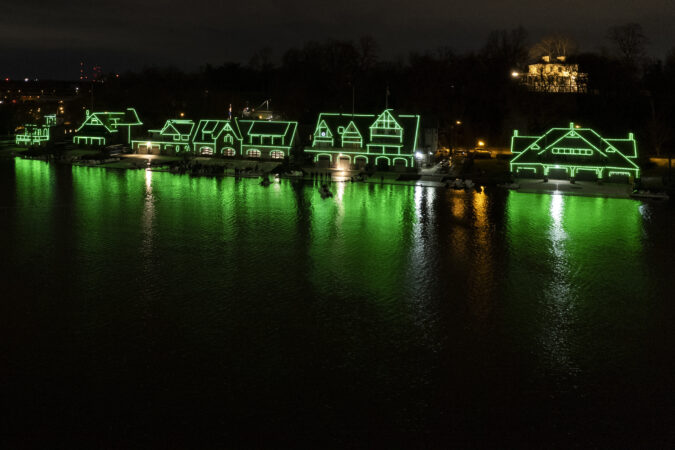
As the NBC Sunday Night Football broadcast headed to a commercial break, hosts pointed out a flyover view of Philadelphia’s iconic Boathouse Row. Only this time, the boathouses along the Schuylkill were lit up in pink and green.
Announcers said the special color treatment was brought to viewers by Wicked: For Good, the anticipated musical-to-film finale starring Cynthia Erivo and Ariana Grande (plus West Philly’s own Colman Domingo as the Cowardly Lion).
On social media, viewers were surprised and delighted by the marketing play.
“What do you mean ‘Wicked: For Good’ sponsored by Boathouse Row?” one X user wrote. “Boathouse Row being lit up in Wicked colors is HUGE for my brand,” said another.
It marks the latest effort in the film’s megamarketing campaign, which has ranged from Wicked dolls, to deodorant, to laundry detergent, to make up kits, to Swiffers, to cereal, and everything in between. Truly, no stone has been left un-greenified. And now that approach appears to extend to extremely hyperlocal stops, like Boathouse Row.
It also appears to be Boathouse Row’s first foray into paid movie promotions.
So how did this all pan out? And does it mean Wicked has paid the Fairmount Park Conservatory and Boathouse Row a boatload of sponsorship dollars?
Here’s what we know.
How do the Boathouse Row lights work?
The Boathouse Row lights debuted in 1979 and quickly became a beloved feature along the stretch of 19th-century historic homes. The strip is listed on the National Register of Historic Places.
In 2005, the homes transitioned to LED lights, according to the Fairmount Park Conservancy, which manages Boathouse Row. In 2023, the homes temporarily went dark as part of a $2 million refurbishing project. They were re-lit in March 2024.
According to the conservancy’s website, 6,400 individual LED lights are installed along 10 of the historic boathouses. The light configurations, which were installed by Philly-based firm The Lighting Practice can make 16 million color combinations.
Can anyone make a Boathouse Row light change request?
Surprisingly, yes.
After the homes’ lighting upgrades, Boathouse Row announced that seemingly anyone could become a “Boathouse Row Lighting Partner,” and make a special request in exchange for payment to the Fairmount Park Conservancy.
Of course, the conservancy gets first right of refusal, and there are some exceptions. According to its website, political events and observances, campaigns that conflict with City of Philadelphia laws, religious figures or organizations, and campaigns or events deemed “inappropriate” will not be considered.
You can also check on Boathouse Row’s website to see what color the lights are each day.
How much does a special lighting request cost?
It depends on the level of razzle-dazzle and its duration.
According to Boathouse Row’s website, prices range from $750 to $2,500 per day, depending on the display’s complexity. Fees go directly to the Boathouse Row’s ongoing maintenance. The limit for a display is one week.
How much did Wicked pay Boathouse Row to go green and pink?
It’s unclear exactly how much the Wicked display costs. The lighting scheme aired during Sunday’s broadcast. In reality, that B-roll was filmed in advance on Friday evening, a spokesperson with the Fairmount Park Conservancy said. It lasted about 20 minutes.
The conservancy declined to disclose the exact amount NBC paid. Wicked is a Universal film, which is under the NBC and Comcast umbrella. NBC also broadcasts Sunday Night Football.
Have other movies or marketing campaigns worked with Boathouse Row before?
It looks like this is the first movie campaign.
“We don’t think it’s ever been done before,” conservancy spokesperson Cari Feiler Bender said.
But there are no other mentions of entertainment-related tributes. (This week’s Wicked tribute did not make the row’s Instagram feed, which posts light color updates.)
Boathouse Row has traditionally lit up in color schemes to celebrate local teams or to observe special causes like breast cancer, Alzheimer’s awareness, and Pride months.
The spokesperson added that Boathouse Row would welcome future marketing partnerships to “help keep the lights on.”