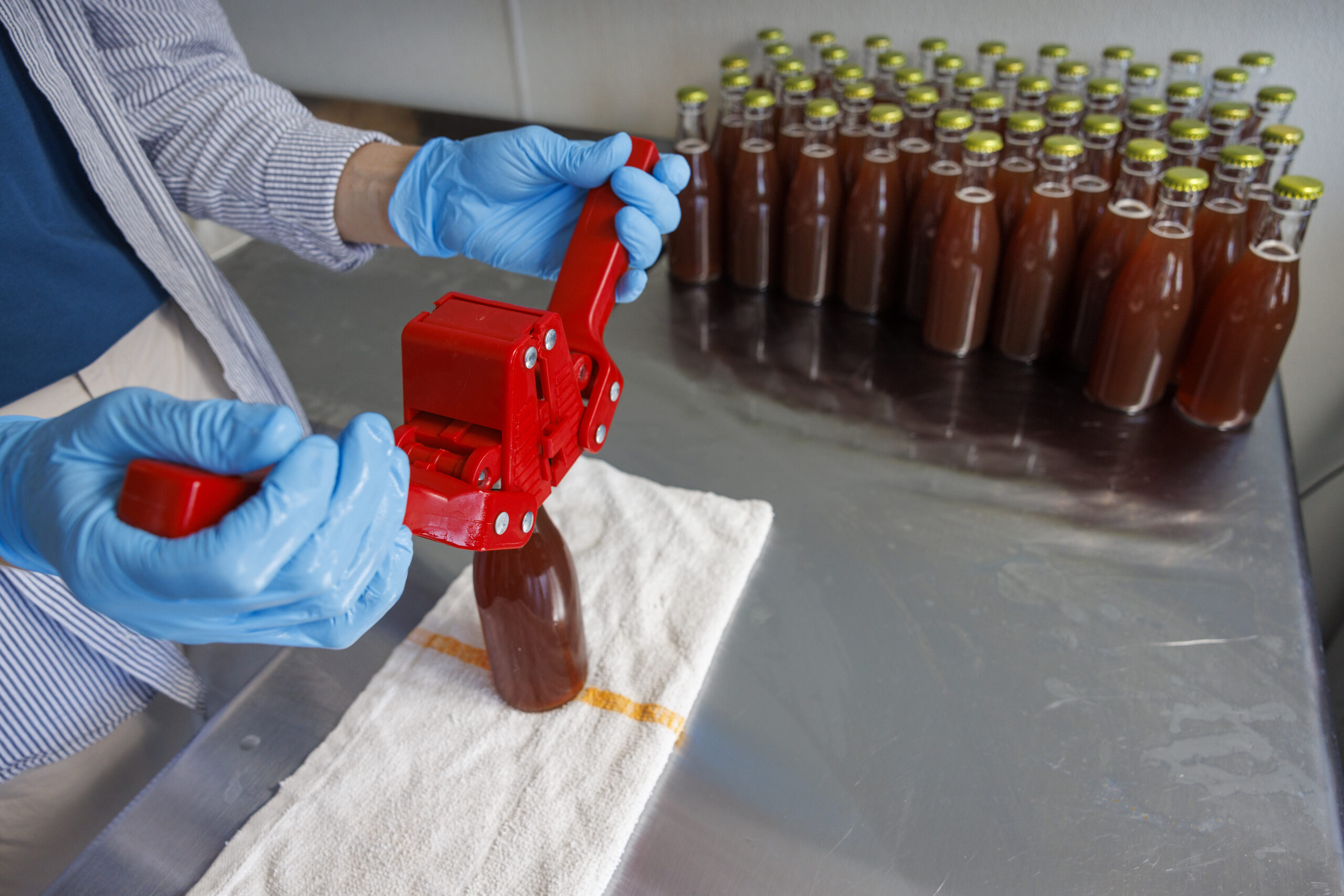
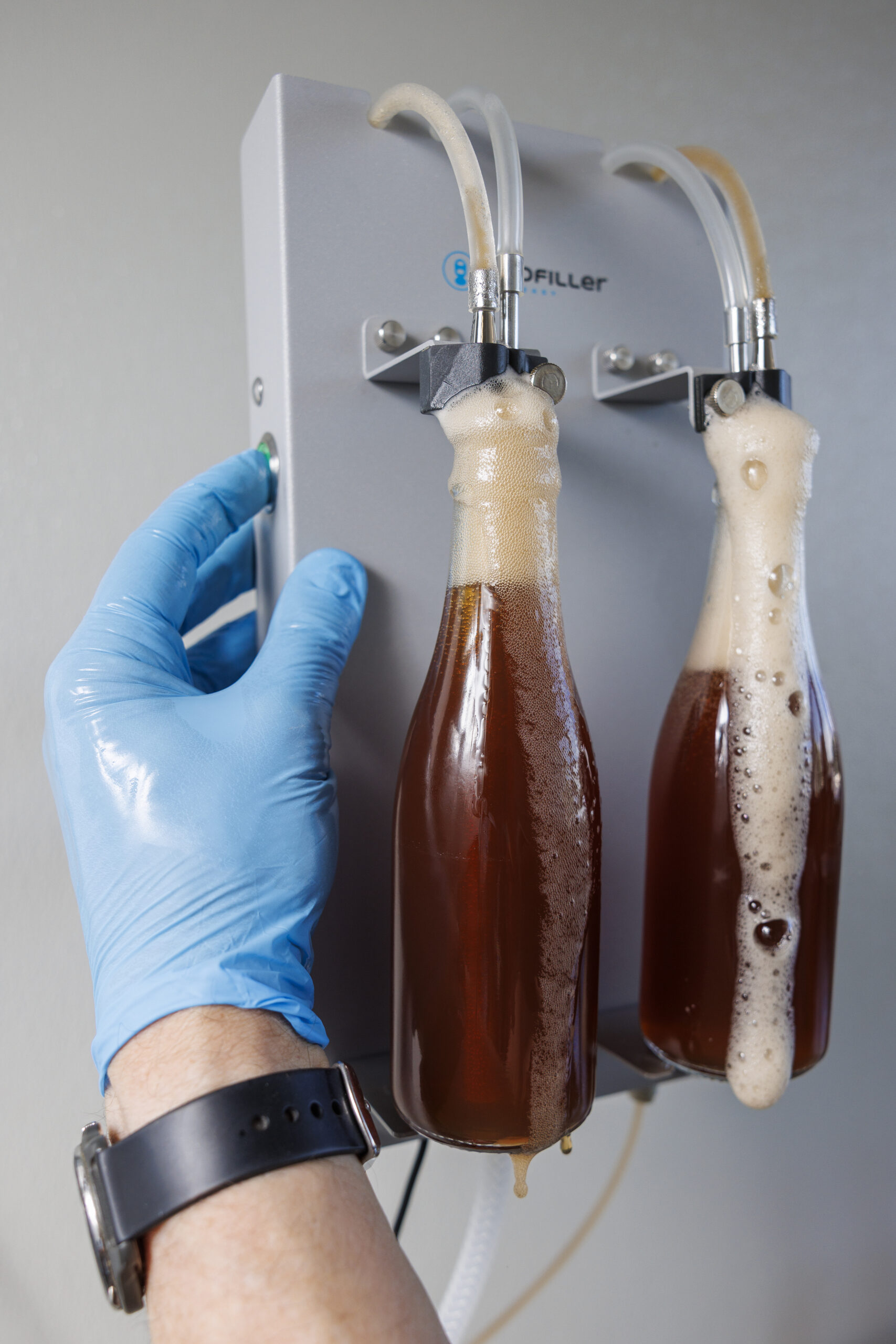
Sparkling wines are having a moment, and it’s hard to beat Spain in this category when it comes to great value. The country may be most commonly associated with red wine, but sparkling, white, and even rosé wines from Spain are all seeing significant growth in total exports. While there are other sparkling wine appellations in Spain, the vast majority — including this example — are labeled as cava.
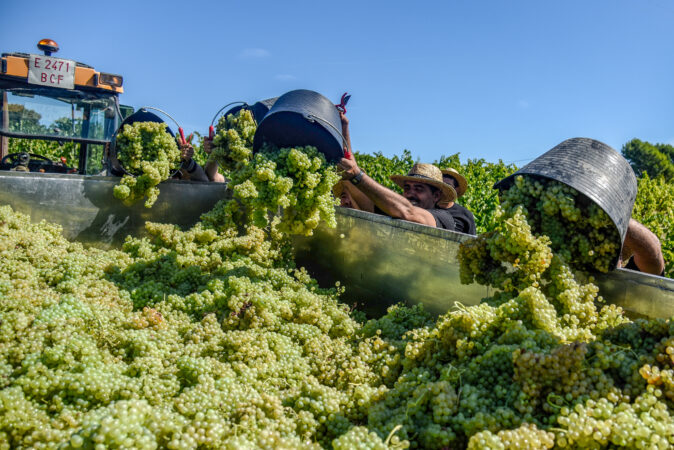
Where most wine appellations take their name from a place — think Champagne from France’s Champagne region — cava is different. The term means “cave” or “cellar,” referring to how it is made. Cava wines must, by law, follow the same traditional method of production as Champagne, which involves a second fermentation that takes place inside each bottle. The mechanism for adding the bubbles and letting the wine patiently age in a cellar is also central to its quality.
Cava’s appellation was first conceived as a means for wineries across Spain to be able to sell a high-quality sparkling wine regardless of their region. In practice, however, most cava is grown and produced in northeastern Catalonia, near Barcelona, using native Spanish grapes such as macabeo, parellada, and xarel-lo. That’s the case for this wine as well, which is labeled under the name of a Rioja-based brand better known for their reds. In Spain, it’s not uncommon for large wineries in one region to extend their range by sourcing wines from partners elsewhere.
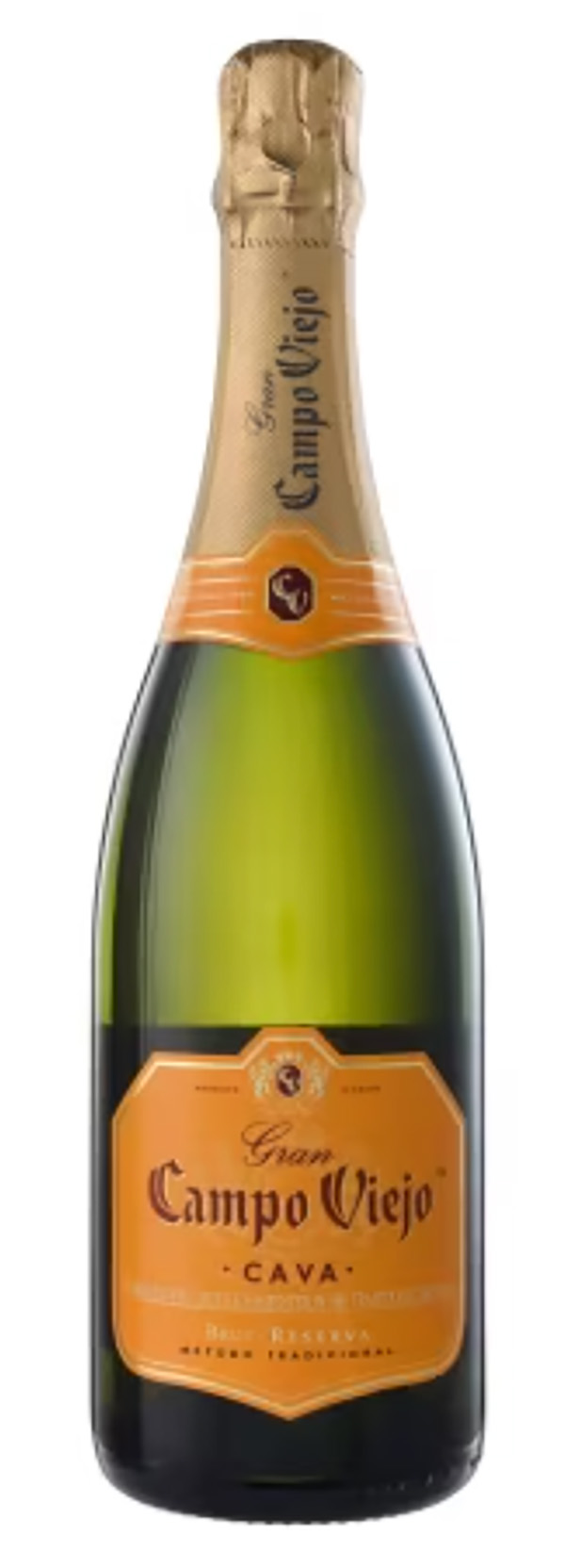
Cava wines can be found at every level of ambition and price, from the cheap and cheerful to the ambitious and gastronomic. This wine falls at the simpler end of the continuum (as the price might suggest), with a delicate mouthfeel and refreshing flavors of apple, lemon, and blanched almond. It’s an ideal choice for relaxed day-drinking — mimosas highly recommended.
Gran Campo Viejo Cava Brut Reserva
Gran Campo Viejo Cava Brut Reserva
Spain; 11.5% ABV
PLCB Item #6563 — $10.49 through July 5 (regularly $13.49)
What are the foods that tourists should try on their trip to North America for the World Cup? Apparently, the Philly cheesesteak is way up there, even higher than tacos in Los Angeles or Cuban sandwiches in Miami.
With the 2026 World Cup spanning 16 host cities across three countries, writer Amy Harris found a tour of 16 “completely different food cultures” for this guide. Canada Sports Betting scored the “hero” dish of every host city based on source frequency, local support, tourist recognition, city-specificity, and cultural significance. The result: a ranking of the most unique city-specific dishes.
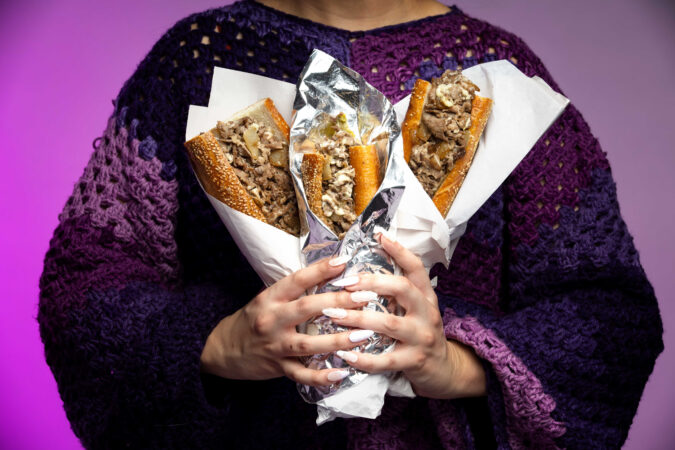
In Philadelphia, “the cheesesteak … defines the city’s entire culinary reputation internationally,” Harris wrote. The iconic sandwich with “shaved rib eye on a hoagie roll with Whiz, provolone, or American was invented by Pat Olivieri in South Philadelphia in 1930,” she continued. “Locals will tell you DiNic’s roast pork at Reading Terminal Market is actually the city’s best sandwich. That internal argument is part of what makes Philadelphia interesting.“
The cheesesteak is, for better or worse, depending on your point of view, No. 3 on The Inquirer’s 76 iconic Philly foods, with only one other sandwich — the hoagie — surpassing it. (Water ice was also rated above cheesesteaks on The Inquirer list.)
“The cheesesteak, much like the city in which it was invented, is a working-class sandwich,“ wrote Inquirer reporter Tommy Rowan. “Its rugged beauty is in its simplicity.“
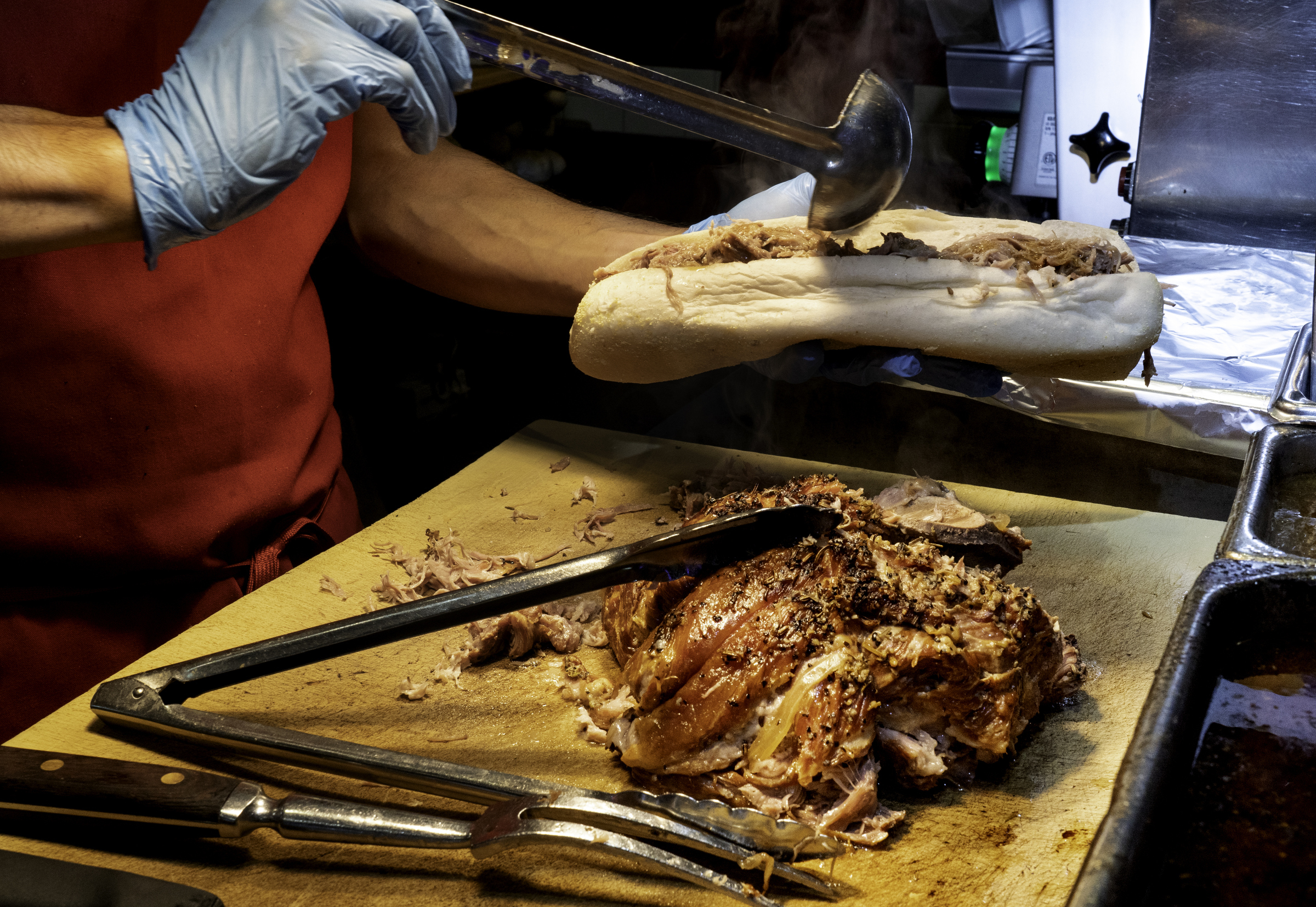
The pulled pork at DiNic’s Roast Pork, Reading Terminal Market, Tuesday, September 26, 2018, in Philadelphia. JESSICA GRIFFIN / Staff Photographer
Guadalajara’s torta ahogada landed in first place, followed by the Viet-Cajun crawfish in Houston. Cabrito al pastor — young goat roasted over live coals — from Monterrey came in third; and the burnt ends — charred tips of a smoked brisket point — from Kansas was fourth.
And all the way in 15th place: New York pizza.
“New York ranks 15th not because its food is unremarkable, but because its most iconic dish has become the world’s most replicated food,” Harris wrote. “New York pizza is made everywhere from Tokyo to Nairobi. That is a consequence of the city’s cultural influence, not a failure of its food.”
But a great cheesesteak? Sorry, you have to come to Philly for that.
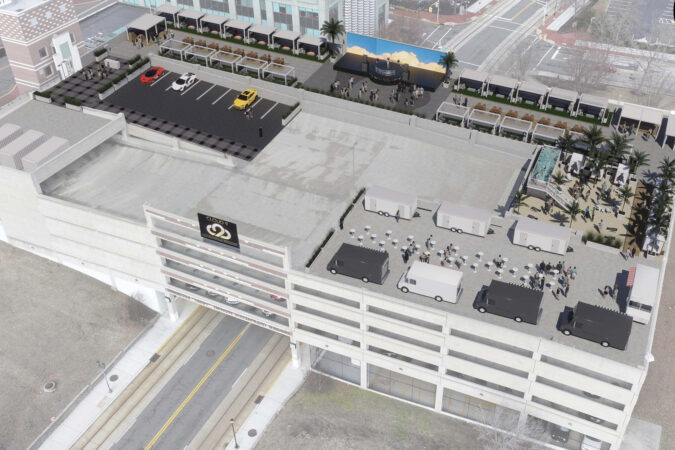
Clubgoers might soon have the chance to take in nighttime views of the Philadelphia skyline at a new rooftop nightclub along the Camden waterfront.
The Cloud 9 SkyLounge is proposed for the rooftop deck of the fourth-floor Hinson Parking Garage next to the Delaware River Port Authority office tower on Delaware Avenue.
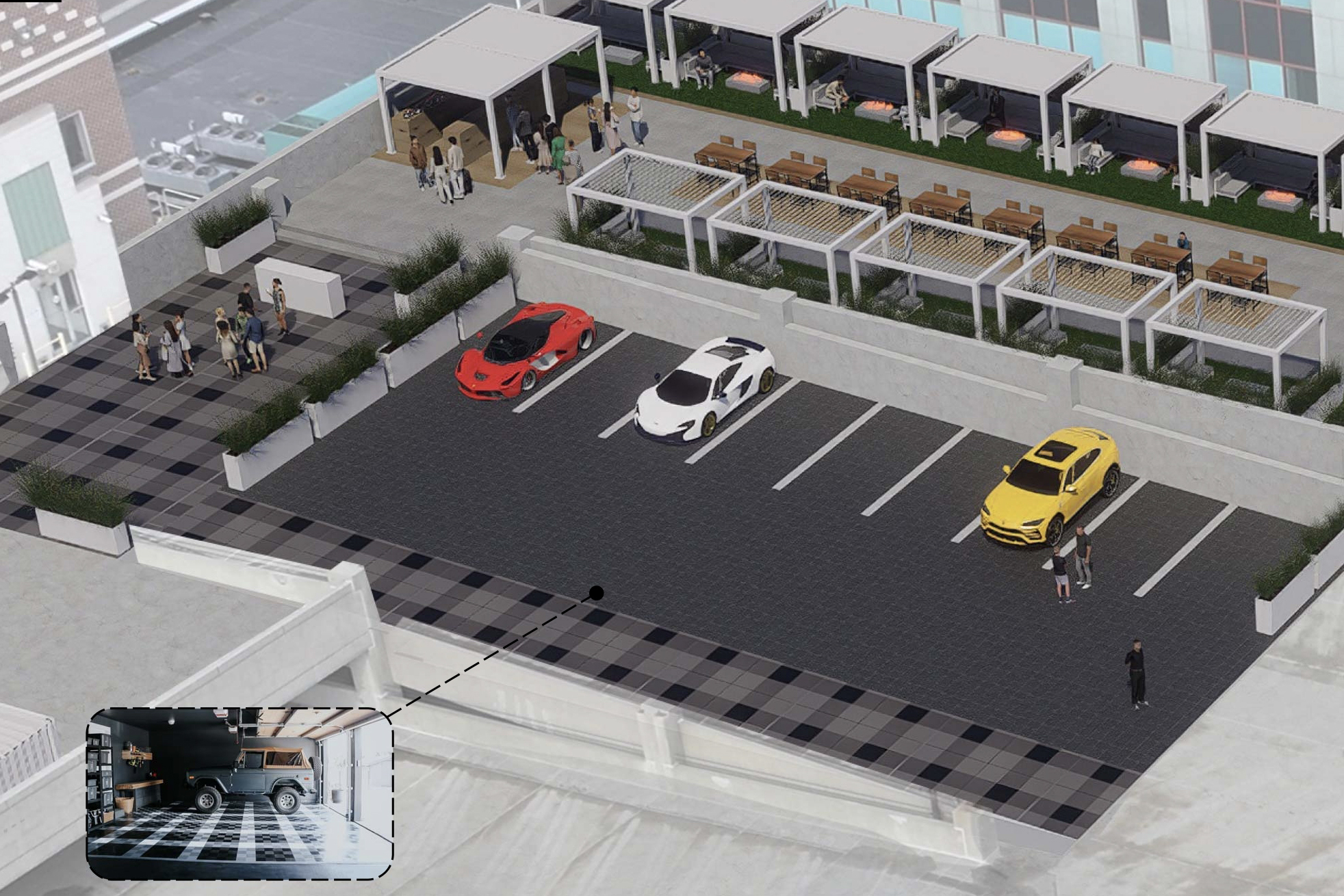
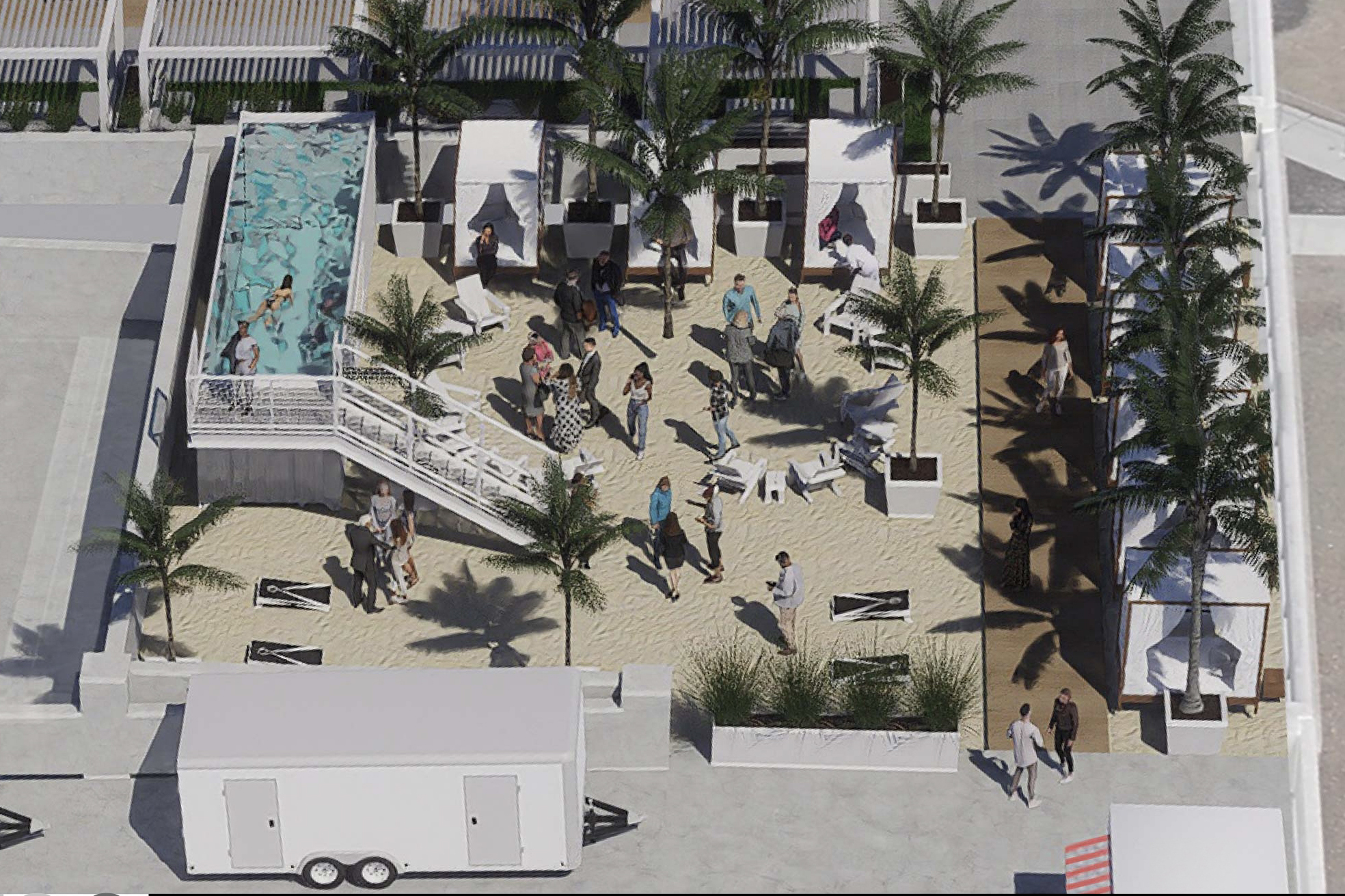
The club would include a stage and dance floor, private cabanas, a pool deck, bar areas, a food truck zone, VIP parking, and more, according to the developer’s application to the city, which is still awaiting final consideration from Camden’s planning board.
So far, city officials have approved the new use for the property, said Joe Console, attorney for the Cloud 9 developers.
Now, the applicant will work on developing more detailed engineering reports, showing that the project complies with local regulations as it relates to traffic, noise, building capacity, and more, Console said. Once complete, the project will eventually be brought back before the planning board for review and final approval.
“Our vision is to create a world-class entertainment and hospitality destination that showcases the beauty of the Camden waterfront, the Philadelphia skyline, and the energy of the entire region,” Cloud 9 founder and CEO Kenneth Walden said. “We want visitors to experience something they would normally expect to find in cities like Miami, Las Vegas, New York, or Los Angeles — right here in Camden.”
As an adaptive reuse project instead of new development, the club would require no changes to the parking garage’s existing footprint, and the rooftop venue would be limited to temporary installations, according to the application.
Parking for the rooftop venue would also be self-contained within the existing parking structure. The developers said they do not anticipate any parking issues extending into the surrounding area.
A rendering shows the entry view of the proposed Cloud 9 SkyLounge rooftop deck of the Hinson Parking Garage on Delaware Avenue in Camden.
The parking garage is currently owned by the city’s parking authority and the rooftop would be rented to Cloud 9 starting at $5,000 per month, per the application documents. The venue would be open Thursday 6 p.m. to 1 a.m., Friday and Saturday 6 p.m. to 2 a.m., and Sunday 5 p.m. to 12 a.m.
“Cloud 9 was born from a simple belief: that Camden deserves extraordinary destinations just as much as any major city in the country,” Walden said. “For years, people have viewed Camden primarily through the lens of its challenges. I believe it is equally important to recognize its potential, its resilience, and the remarkable transformation taking place along the waterfront. Cloud 9 is intended to be part of that continued evolution.”
The property is located within the city’s mixed waterfront zoning district which is designed to help revitalize former industrial or vacant properties into pedestrian-friendly, mixed-use areas along the waterfront.
The venue’s developers included in their application that the project is “consistent with the overall vision of the [mixed waterfront zone] as it promotes: activation of underutilized urban space, enhancement of the waterfront entertainment environment, increased tourism and economic activity and adaptive reuse of existing infrastructure.”
The new nightlife destination would be within walking distance to some of the city’s other waterfront destinations such as Freedom Mortgage Pavilion, Wiggins Waterfront Riverstage, and Adventure Aquarium.
A rendering shows the beach view of the proposed Cloud 9 SkyLounge rooftop deck of the Hinson Parking Garage on Delaware Avenue in Camden.
The office for Camden Mayor Victor Carstarphen said that while they are aware of the proposed rooftop bar and lounge, they declined to comment specifically on the project or its details as it continues to make its way through the land development process.
“Camden is undergoing an unprecedented transformation as investment is taking place citywide. As a result, there is great interest from developers, and a wide variety of projects are being proposed in every part of the city,” said Vincent Basara, director of communications for the mayor’s office. “Camden is always open to new ideas and proposals. The success of this project will ultimately be based on the merit of the application. We are confident in the public process and the various reviews which are required.”
About a mile north on the other side of the Benjamin Franklin Bridge, the New Jersey Economic Development Authority is accepting mixed-use redevelopment proposals for a 16-acre waterfront parcel that was previously home to the former Riverfront Prison and Weeks Marine site in North Camden.
“Beyond the venue itself, I believe Cloud 9 can contribute to the city in several meaningful ways,” Walden said. “The project has the potential to create jobs, attract visitors from throughout New Jersey, Pennsylvania, Delaware, and beyond, generate additional economic activity for nearby businesses, and further strengthen Camden’s reputation as a destination worth visiting and investing in.”
The Cloud 9 SkyLounge was presented to the city’s zoning hearing board for final site plan approval on June 1 and will need to continue through the development process before finally being voted on by the city’s planning board. The exact timeline for this process varies by project, but a final vote on Cloud 9 is likely still weeks or even months away, as the application must go before the city’s planning board, though they will not officially discuss the project until at least the board’s July meeting.
Bolts of lightning from the ceiling, a Ferris wheel behind the bar for top-shelf pours, and the idea of a glamorous night out: Here’s a first look at the new Mr. Edison at the Bellevue.
But first:
😋 Have a fun food day. Take advantage of early-bird pricing right now on tickets to The Inquirer’s Food Fest.
Halal restaurants: Eight can’t-miss spots throughout the region.
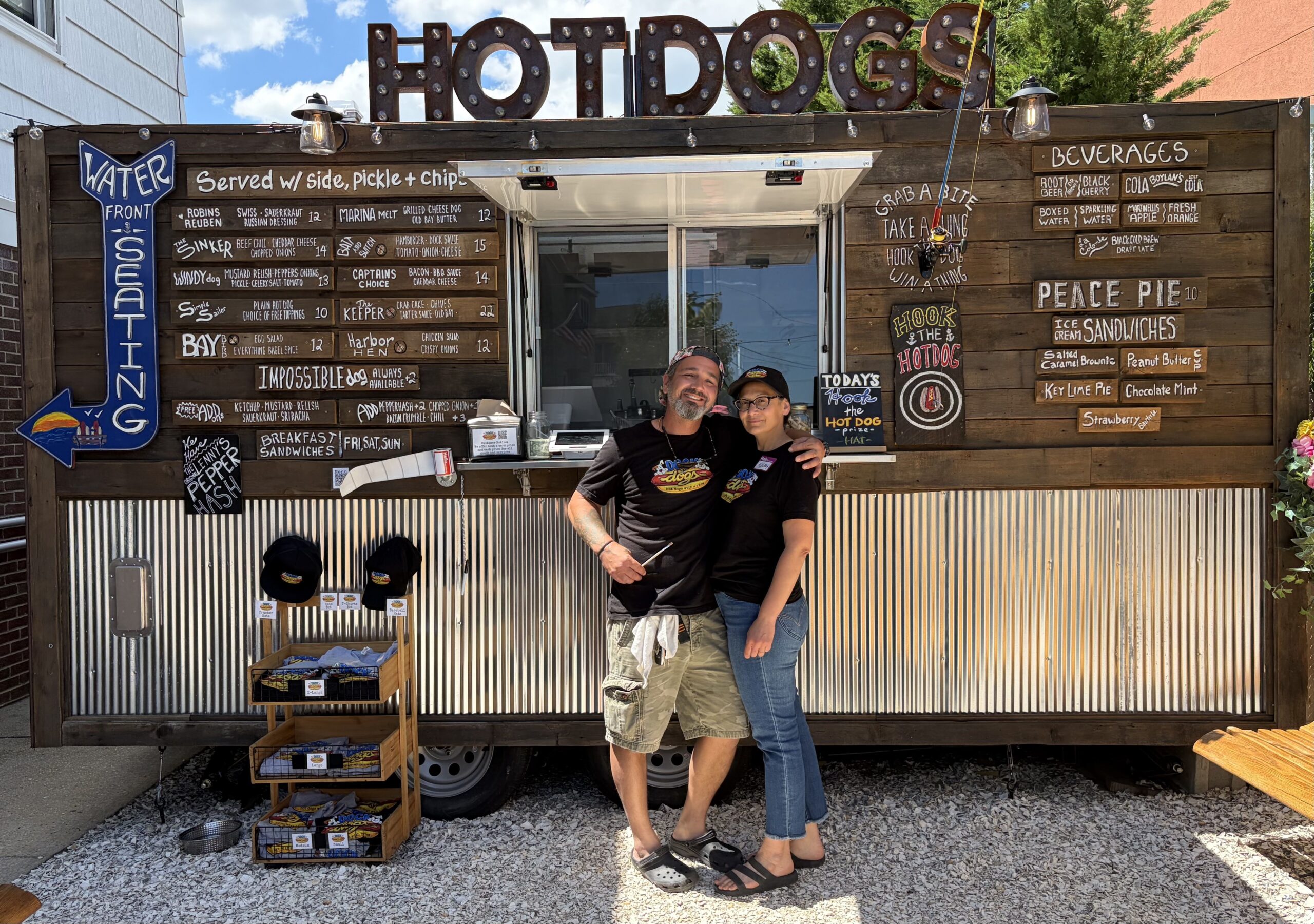
Love and hot dogs:A restaurateur decamps to the Jersey Shore.
News: I have an exclusive preview of Known Associates (the cocktail bar from Forsythia chef Christopher Kearse, opening Friday). Read on for the first word of a luxe Korean restaurant on its way to Center City.
Jeffrey Chodorow has opened splashy restaurants all over the world. Here’s his latest, Mr. Edison, opening Thursday in his hometown. And it’s a dazzler.
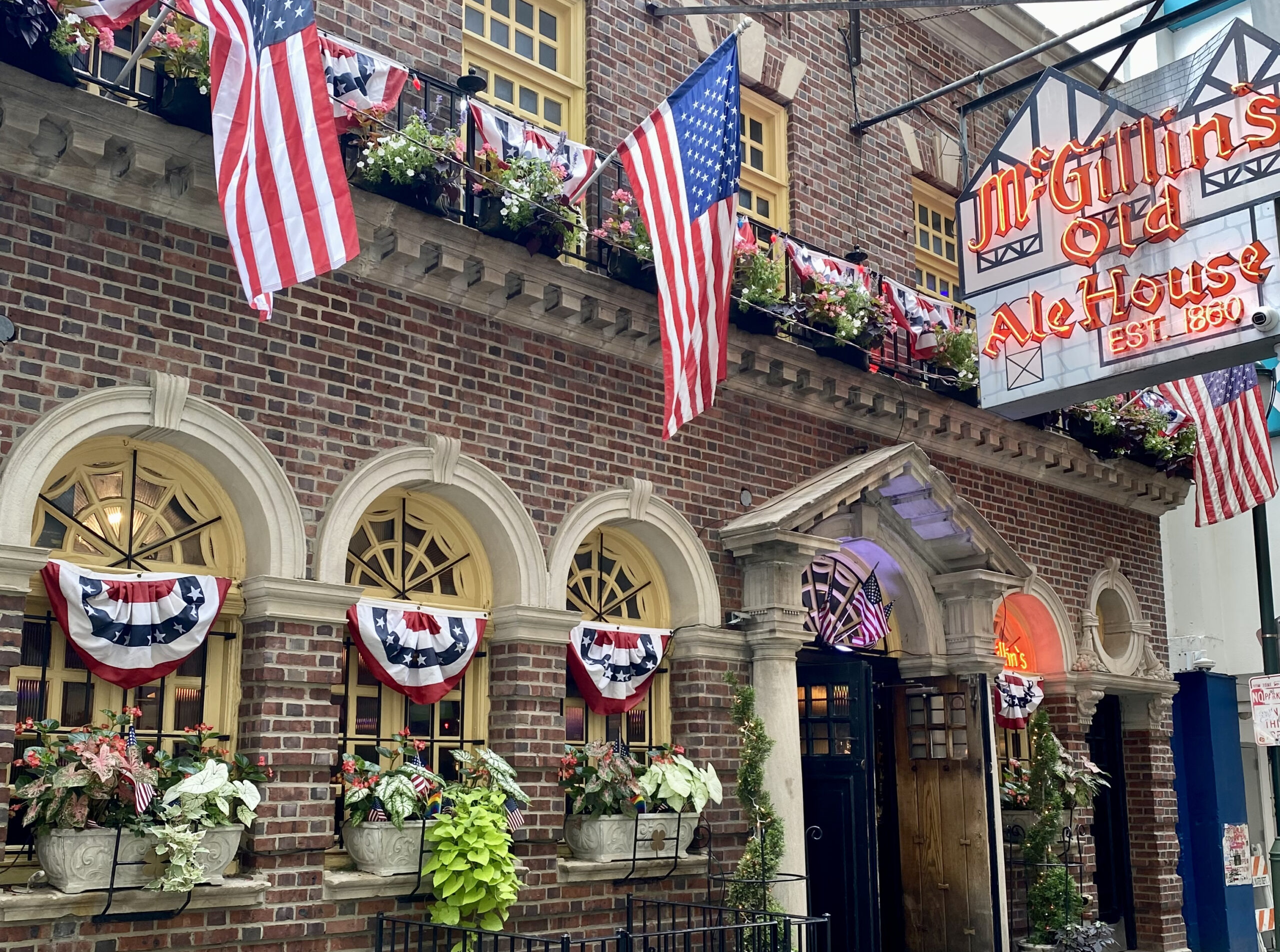
Here’s some McGillin’s lore: If it’s McGillin’s Olde Ale House, why does the sign spell it “Old”? Pub historian Irene Levy Baker explains: It opened in 1860 as Bell in Hand, and the original wooden hand holding a bell still hangs inside. Founder “Pa” McGillin ran it until his death in 1901, when Catherine “Ma” McGillin took over. For the 50th anniversary in 1910, she renamed it McGillin’s Old Ale House — which regulars were calling it anyway (presumably because it was old even back then). The “e”was added in the 1990s for effect, but since the neon sign is a reproduction of the earlier version, it still reads “Old.”
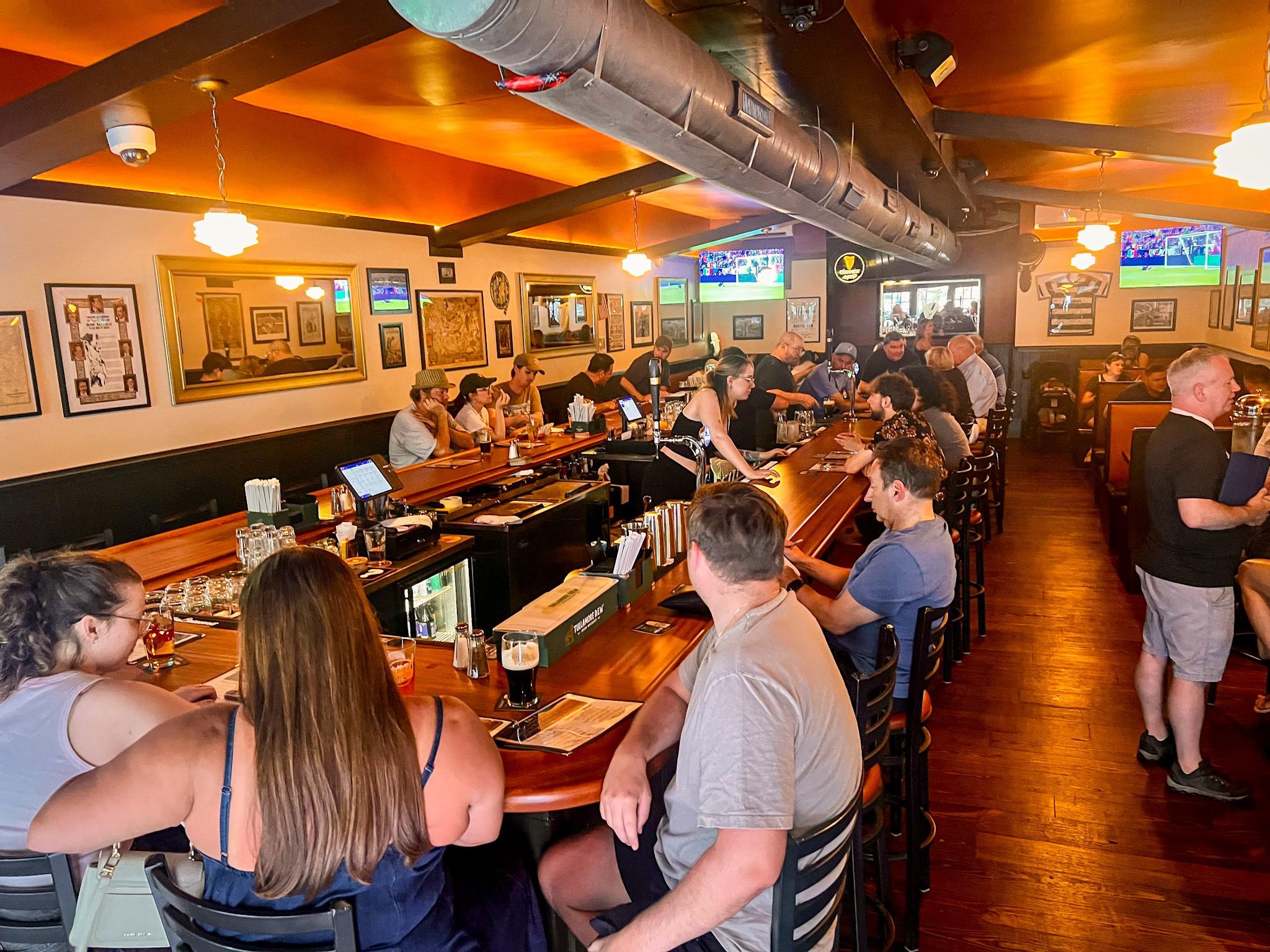
Center City’s newest bar is The Monto (above), which opened Saturday at 226 Market St. in Old City under the stewardship of Fergus “Fergie” Carey and Jim McNamara. Alas, there’s a bit of drama unfolding. N.A. Poe of Poe’s Sandwich Joint, who was attached to the project to meld Philadelphia sandwich culture with Irish pub fare, has apparently bowed out. You’ll see they’ve opened up the old Mac’s Tavern by shifting the bar to the middle of the room. It’s open at noon daily.
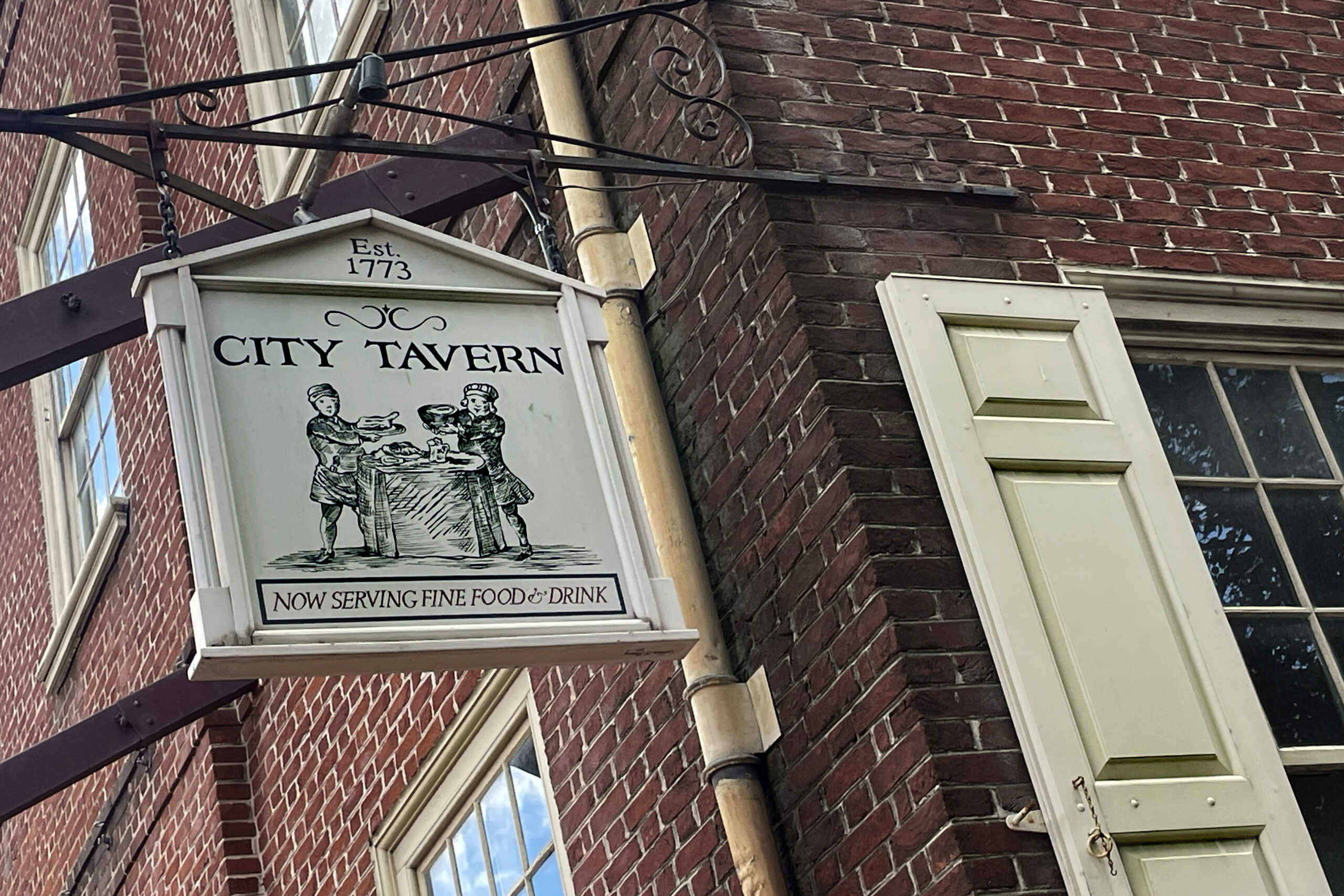
The historic City Tavern, which closed six years ago, is back. Outside, anyway. It’s hosting a summertime pop-up in its garden, including food, drinks, historical interpreters, lawn games, and special events.
Hillary Bor, who co-owned Pumpkin BYOB in Graduate Hospital for two decades, has a new love and a new food business in Margate. Amy Rosenberg says Dock Dogs also has a stellar view.
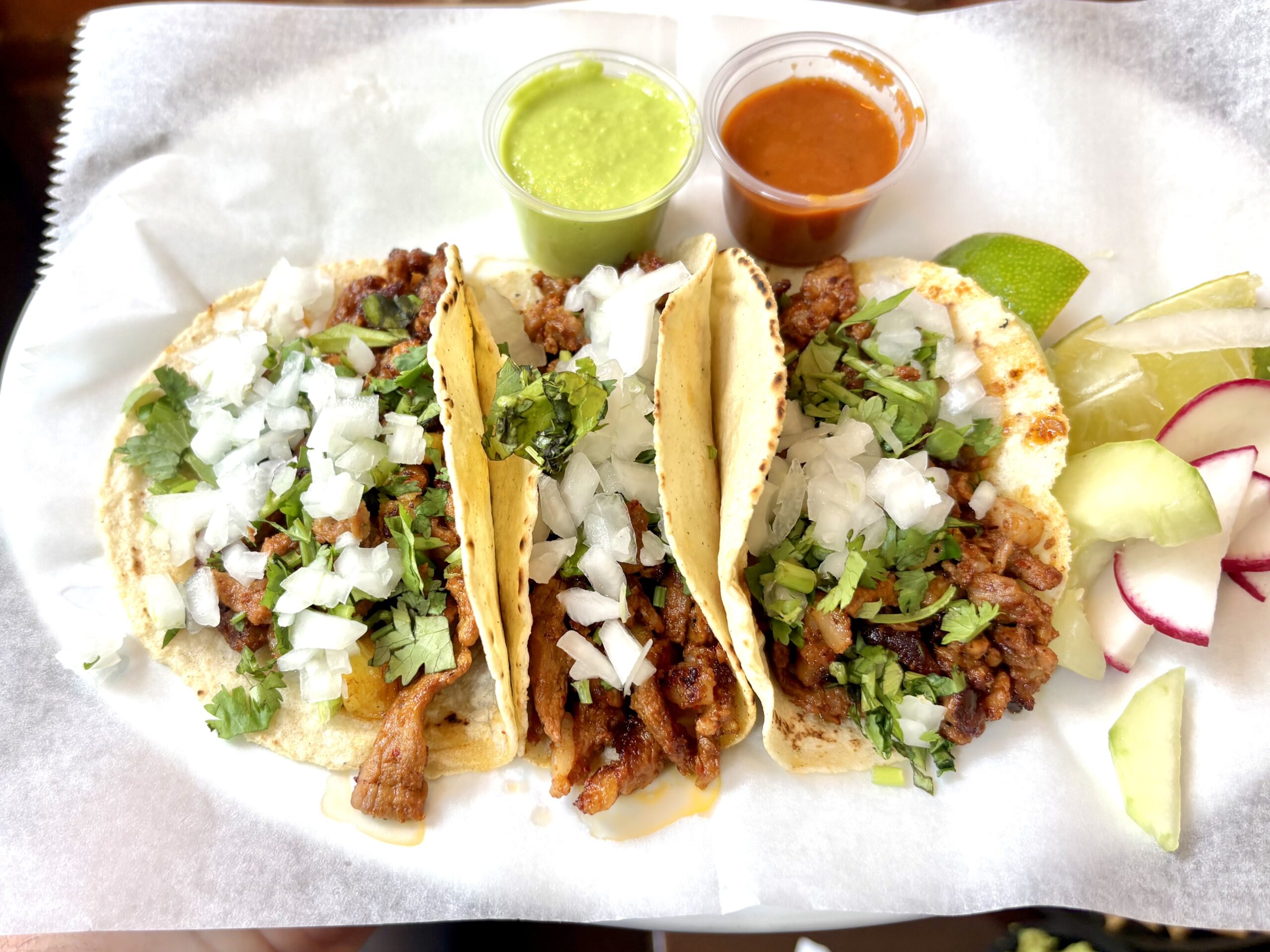
Tacos al pastor at a little corner spot in Old City, a crispy bibingka waffle in the Fairmount area, and a soft-shell crab offered as a ritzy BLT in Rittenhouse were among The Inquirer Food team’s favorite bites last week.
Scoops
Arirang, an upscale Korean restaurant, is in the earliest stages of development at 1219 Locust St., in the former Papery of Philadelphia space next to Vedge in Washington Square West. Linda and Myung Kee Hwang, who own the Old Nelson delis around town as well as the building, are planning a traditional menu, as well as a liquor license to serve Korean spirits. “When we started looking at the Korean restaurant landscape in Center City, we realized there really wasn’t anywhere that, as Koreans ourselves, we would go for a truly authentic Korean meal,” Linda Hwang told me. “Everyone does Korean barbecue, and beyond the fact that it’s overdone, we simply didn’t want the grilling and smoke inside the building. The food will be very traditional. No fusion, no shortcuts.” The name is the folk song that is Korea’s unofficial anthem. There’s no timeline yet.
Take a first look inside Known Associates, the cocktail bar from chef Chris Kearse of Forsythia, opening Friday at the former Varga Bar in Washington Square West. Read on for the details.
Restaurant report
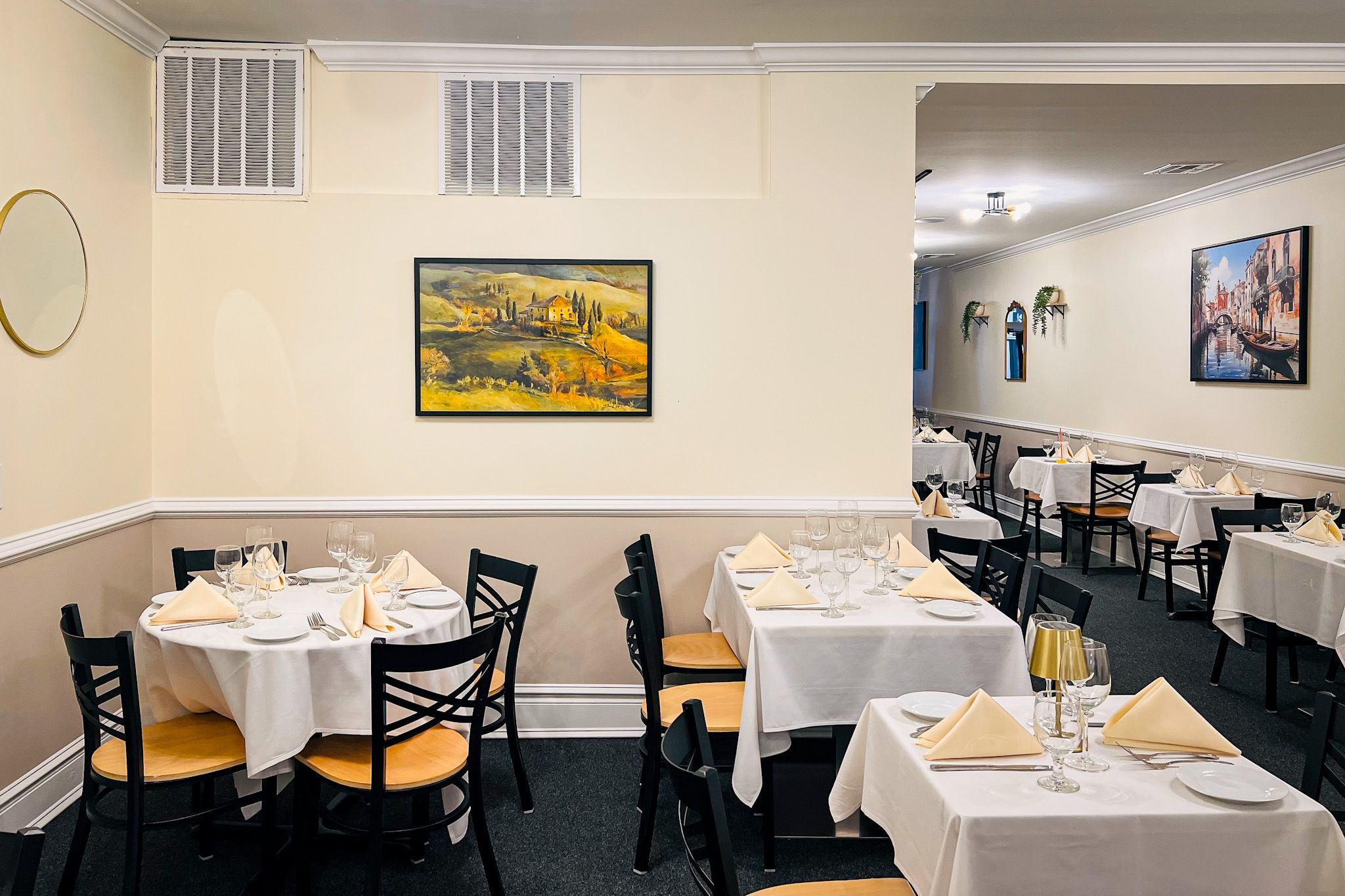
Il Gusto. Now open at 114 Chestnut St., Il Gusto brings a Southern Italian-leaning BYOB menu and white-tablecloth atmosphere to the Old City storefront that previously housed Karma.
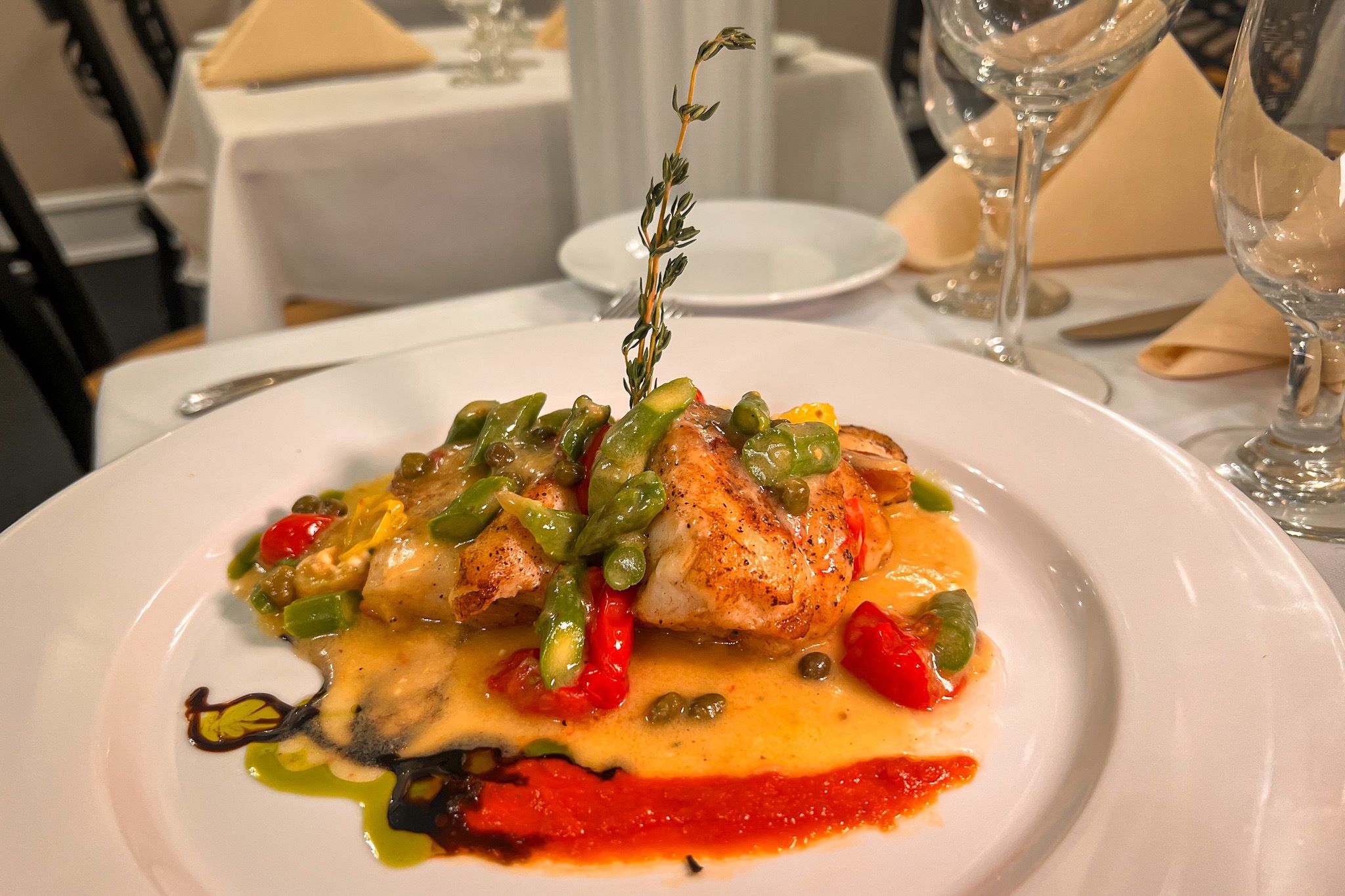
Chef-owner Tony Krupa delivers big-portioned Italian American and Southern Italian standards and, he says, “nothing trendy”: grilled octopus with cannellini beans and artichokes, fried calamari, mussels, clams, and fried mozzarella, along with a full slate of pastas, and chicken, veal, and fish entrees such as salmon Livornese as well as barramundi with shrimp, capers, and cherry tomatoes over capellini (shown above). Entrees are in the $20s.
Il Gusto, 114 Chestnut St., 215-518-9092. Hours: noon-9 p.m. Sunday-Thursday, noon-10 p.m. Friday and Saturday.
Briefly noted
Trattoria Totaro in Conshohocken reopens today, nearly three months after a fire.
The Buttery, the popular Main Line bakery/cafe, opened its third location last weekend in Bryn Mawr. There’s at least one more on the way, the owners told Denali Sagner.
Villa Nuova in Deptford will close soon after 26 years in business, as owner Peppe Scotto announced on Facebook.
Surfside has taken over the U.S. alcohol industry. But its founders told Erin McCarthy that the brand’s base is staying put in Philly.
Aneu Kitchen’s new location at Ardmore Farmers Market in Suburban Square will open at 8:30 a.m. Monday with comp samples of her YEU On-the-Go bites.
South Philly Barbacoa, James Beard-winning chef Cristina Martinez’s business, is now set up inside Triple Bottom on Spring Garden Street, writes Hira Qureshi. That means tacos, chips and guacamole, and sweet tamales on a permanent basis.
The H Mart in Cherry Hill has been expanded, and Hira offers a tour of the emporium, aisle by aisle.
Cult of Trees’ nonalcoholic spirits are packaged by hand in Kensington. Sande Friedman explains that at local bars, they’re already a hit.
❓Pop quiz
Wine writer Marnie Old believes that one country might be on its way to overtaking France as the pinot noir capital of the world. What is it?
Is Angelo’s Pizzeria ever going to open that new place in New Jersey? — Scott P.
Many of my articles are inspired by readers’ questions. Here’s a follow-up to a story I wrote last July, when Angelo’s owner Danny DiGiampietro said he was taking over the shuttered Di’Nics in West Collingswood Heights. Construction has just begun, and DiGiampietro believes that it will open in about two months. Meanwhile, Angelo’s is getting into the wholesale bread business out of its huge bakery in Conshohocken. Here is the update.
📮 Have a question about food in Philly? Email your questions to me at mklein@inquirer.com.
By submitting your written, visual, and/or audio contributions, you agree to The Inquirer’s Terms of Use, including the grant of rights in Section 10.
Veteran restaurateur Jeffrey Chodorow has spent decades in and around Philadelphia without ever opening a restaurant here.
That changes Thursday at the Bellevue, where the mind behind such destinations as China Grill and Asia de Cuba is opening Mr. Edison, a supper club-style restaurant and bar built around dinner, drinks, and live music.
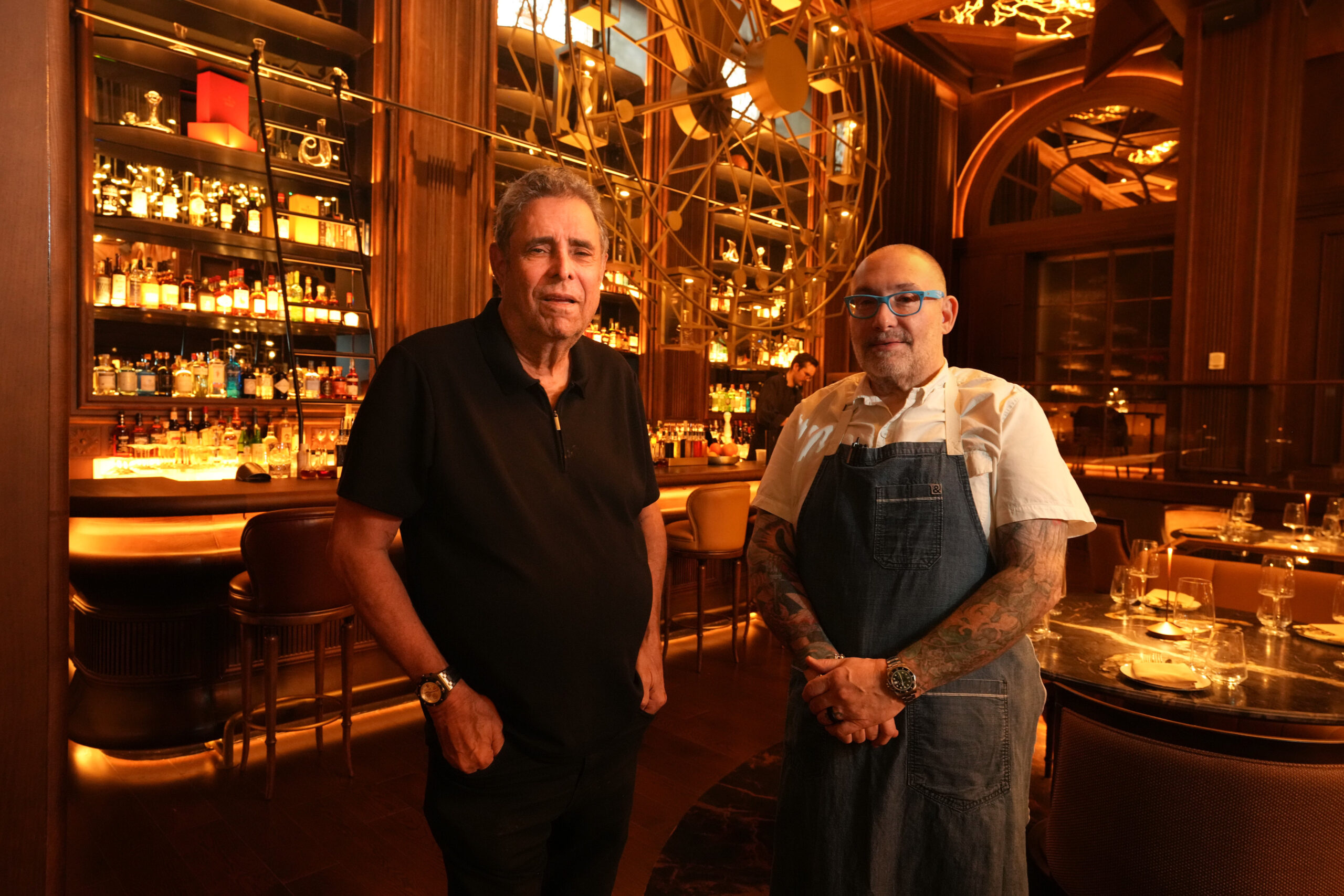
Jeffrey Chodorow (left) with chef Matt Levin at Mr. Edison at the Bellevue.
Mr. Edison is also a throwback: a large, theatrical restaurant built as much for occasion as for dinner.
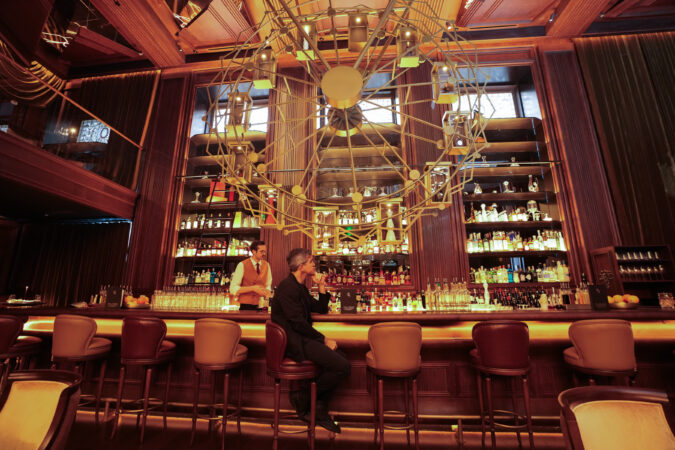
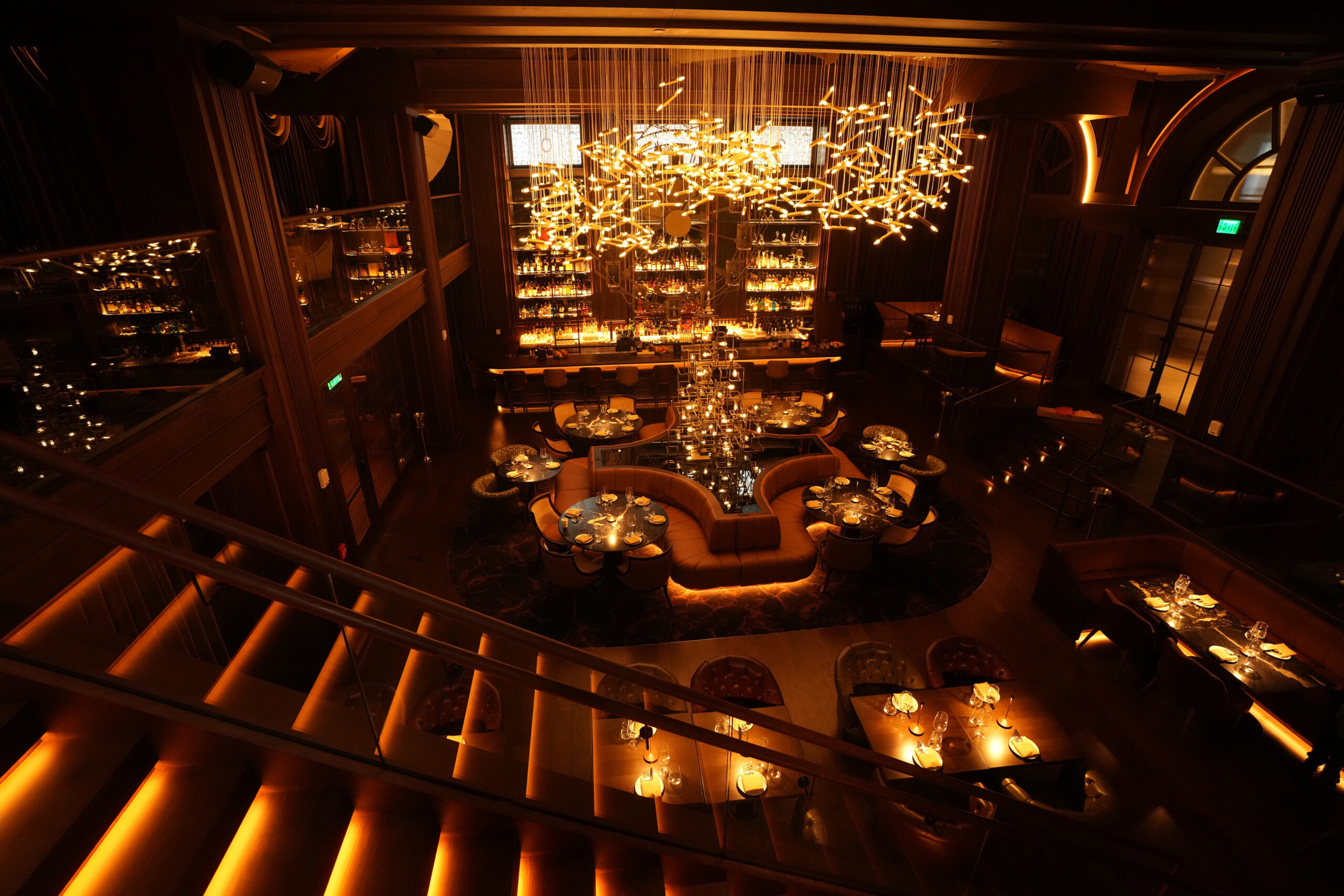
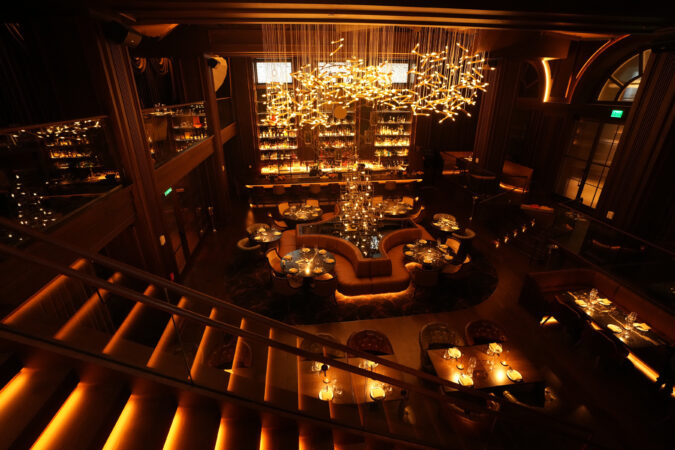
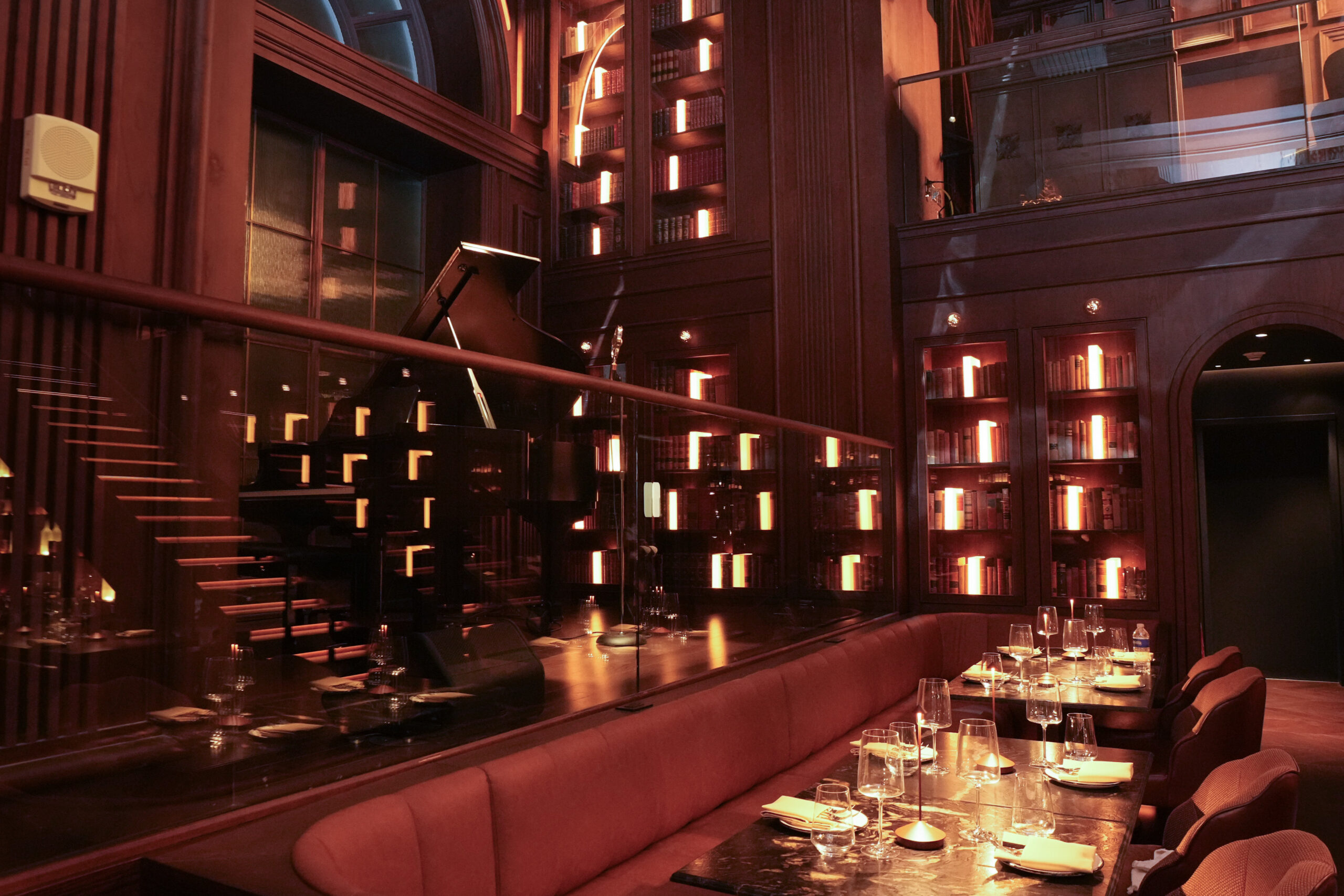
The room, in the former Polo Ralph Lauren store, announces itself immediately from the new Walnut Street entrance just west of Broad Street: a two-story space topped by a dense canopy of suspended Edison bulbs, clustered in branching formations that cast the dining room in a warm amber glow.
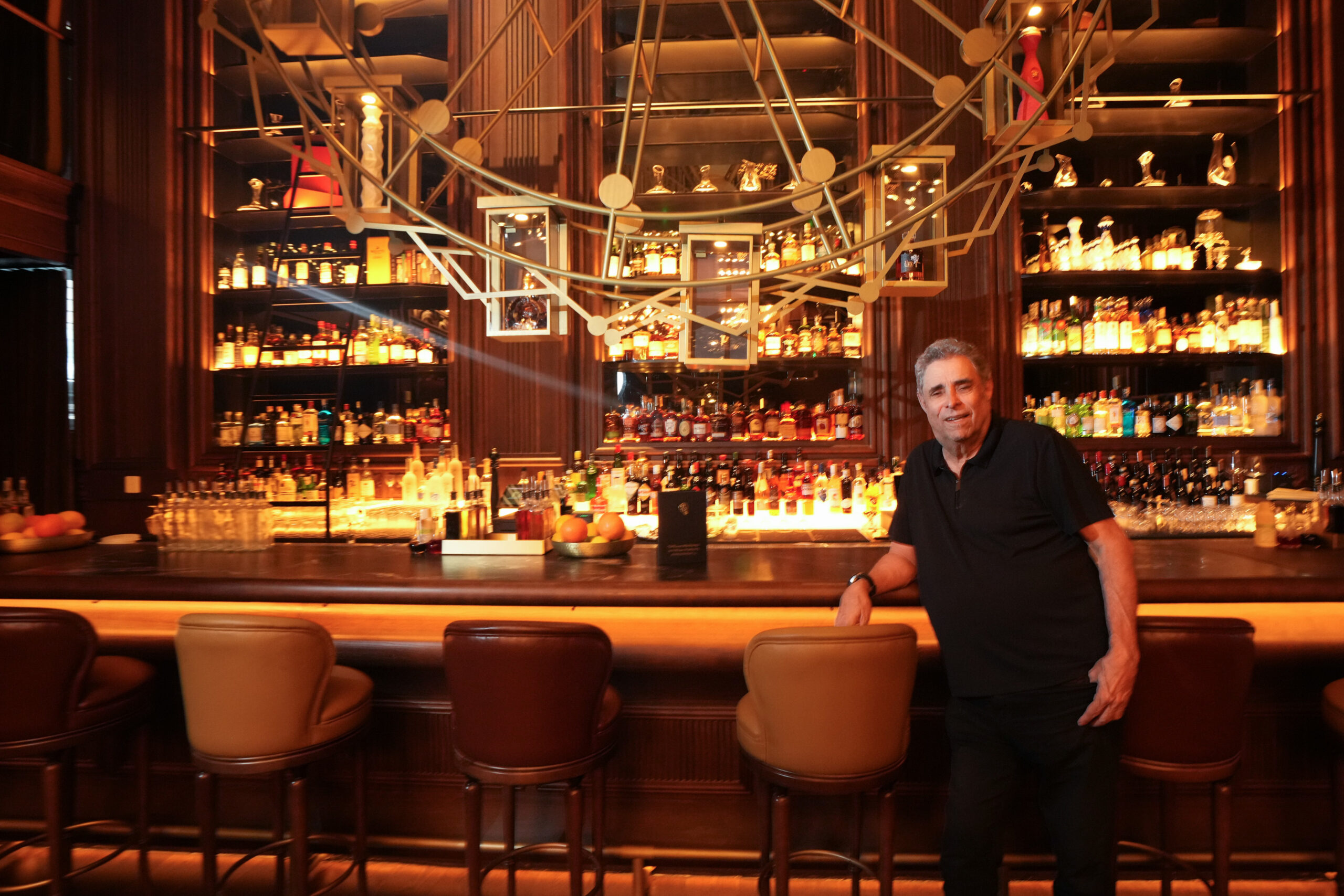
The ceiling seems to split open in places, allowing lightning bolt-like streaks of light through — all the work of Manuel Clavel of Spain’s Clavel Arquitectos. Behind the bar is a 12-foot-tall Ferris wheel, its dozen spokes each carrying a bottle of wine or spirits and turning the backbar into something like a stage set.
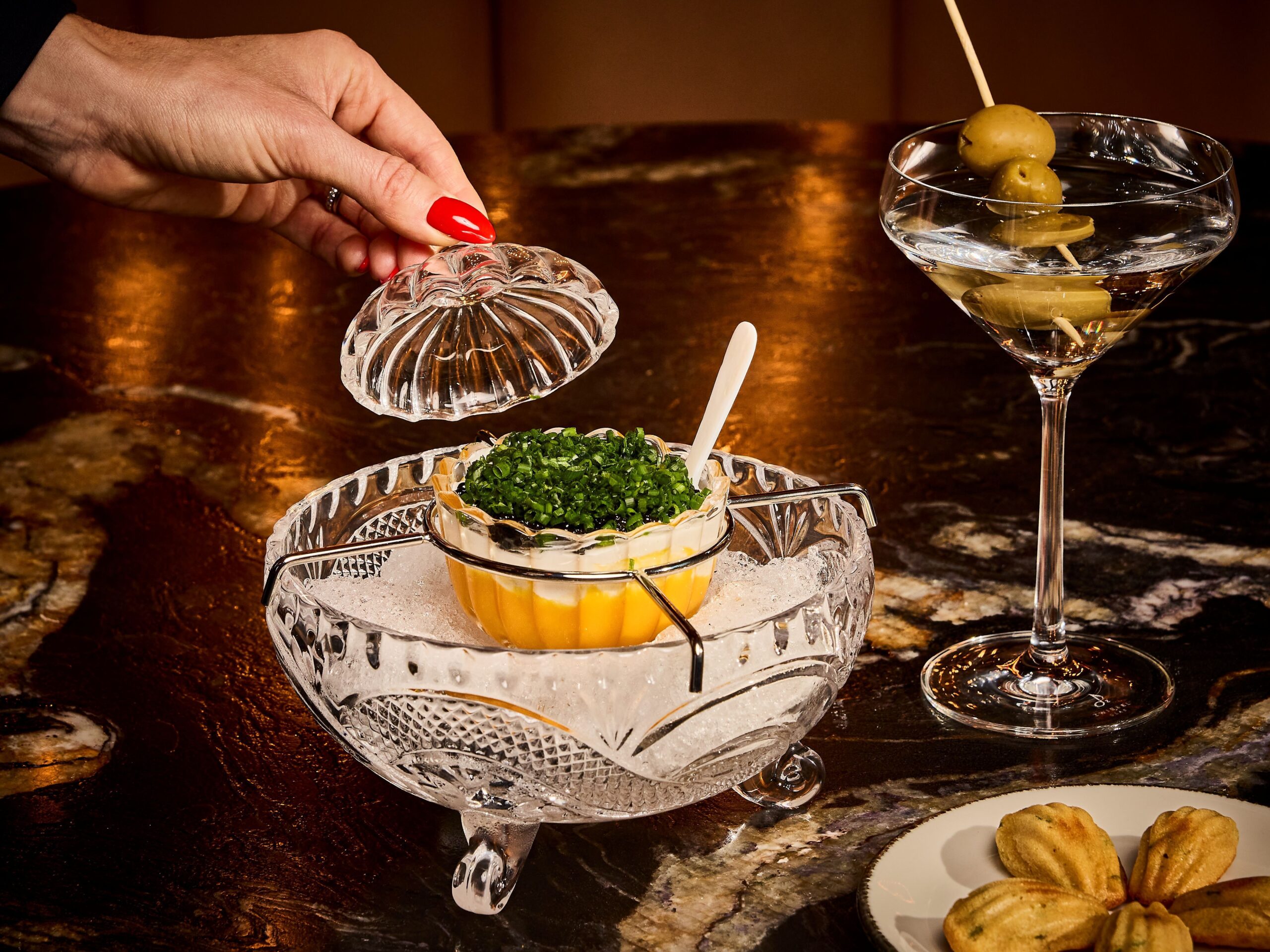
Caviar service at Mr. Edison.
Building owner Dean Adler, who is investing millions in the Bellevue as part of its redevelopment, put the 160-seat restaurant’s price tag at $10 million. “I think I got my money’s worth,” he said Tuesday. Adler also plans to install a library bar off the Bellevue’s lobby on the Broad Street side, where the Palm was before its closing in 2020.
“I love history, so to take a genre — a 1940s-type environment — and bring it into 2026 has been really exciting,” said Chodorow, who of late has been shuttling between his Bucks County home and Miami Beach, where he opened China Grill Bar Harbour two weeks ago.
Mr. Edison — named for Thomas Edison, who helped bring electricity to the Bellevue in 1904 — is calibrated to the building’s long identity as a grand social address. It also carries a personal connection for Chodorow. In 1982, when he was a lawyer at Blank Rome, he rented the roof for his own Rio-themed engagement party to celebrate with his wife, Linda.
“This is not a tiny little neighborhood restaurant,” Chodorow said. “This is a place where you come to have a night.”
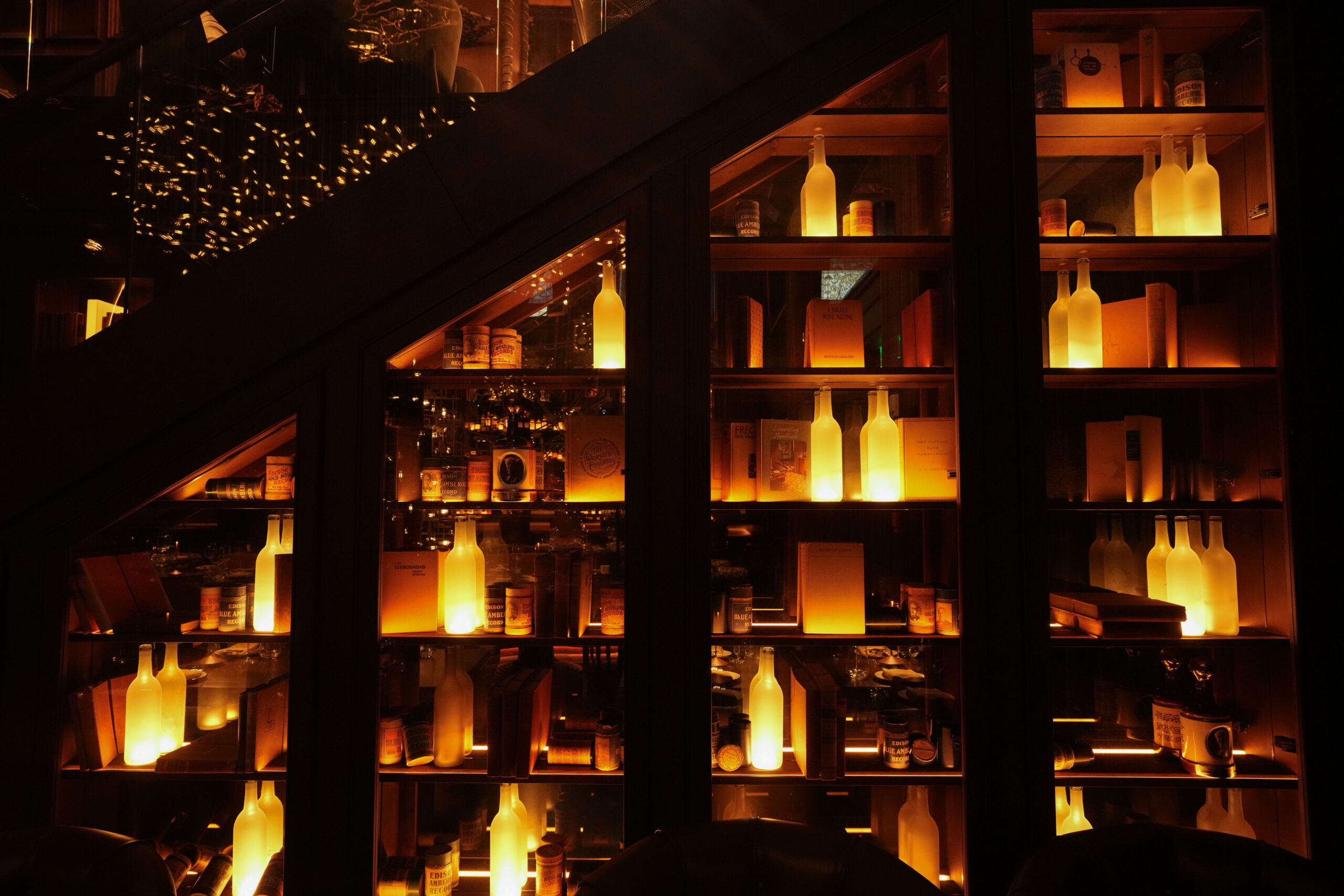
Bottles glow inside niches at Mr. Edison.
Chodorow built his reputation on restaurants that function as entertainment as much as dining. He rose in the business in the 1980s and ’90s with New York hotspots, such as Asia de Cuba, Kobe Club, and Red Square, and said he long avoided opening in the Philadelphia area because he wanted to keep work separate from family life.
With his children grown, that changed. At the Bellevue, Chodorow said, he saw an opportunity to build destination dining — a place where patrons might stop in for cocktails and snacks or settle in for dinner and stay long into the evening. The room is arranged to support both. A large bar runs along one wall; tables and banquettes wrap around in multiple zones and along a mezzanine; and a piano with an old-fashioned microphone sits on a platform to one side.
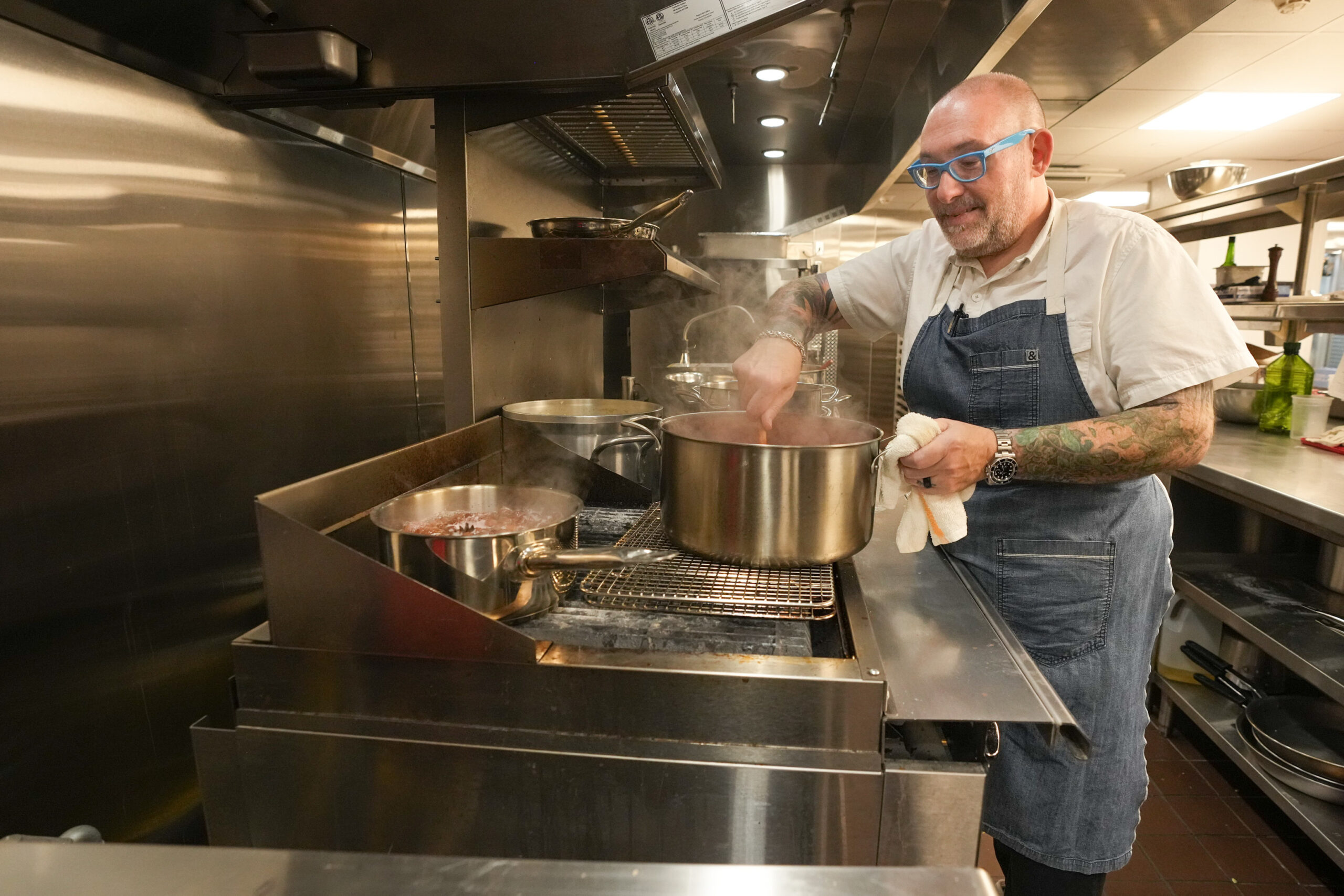
Chef Matt Levin at the stove at Mr. Edison.
“We’re trying to create an experience,” he said. “Not just a restaurant.”
To run the kitchen, Chodorow recruited chef Matt Levin to come back downtown. Levin, who made his name at Lacroix at the Rittenhouse and later at Adsum in Queen Village, has spent much of the last decade in catering, consulting, and Bucks County restaurants. Chodorow found him at Pineville Tavern in central Bucks County, where Levin had been consulting and where owner Andrew Abruzzese is an old friend and neighbor.
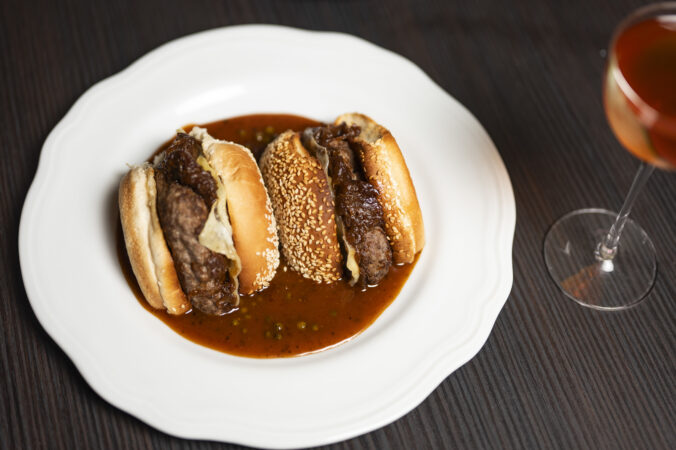
Mr. Edison is more interested in reworking the classics than experimentation. Levin and Chodorow drew on dishes from Philadelphia landmarks, including the crab galette from Le Bec-Fin, where Levin worked for several years, the Milan salad from Jimmy’s Milan, and duck with orange sauce from La Panetière.
Edison bulbs provide the lighting at Mr. Edison.
Levin said the menu is a way of tapping into Philadelphia’s dining memory. “I think Philadelphia has a lot of shared history,” he said. “I think people will remember bits and pieces and say, ‘Oh, I remember that — let me try it.’”
The challenge, Levin said, was to build a menu flexible enough to support several kinds of nights at once. “You want to be able to have people come in and just have a drink and a couple of things,” he said, “but also have the people who are coming in to really have dinner.”
Jeffrey Chodorow in front of the bar and Ferris wheel at Mr. Edison.
Chodorow said average tabs would be $100 to $110 per person for a dinner experience. He said roughly 25 dishes can work as a grazing menu, alongside larger-format entrees, raw-bar offerings, seafood, and steaks. Levin also brought over a foie gras tartlet with cherries and pistachio, adapted from a dish he served at Moonlight.
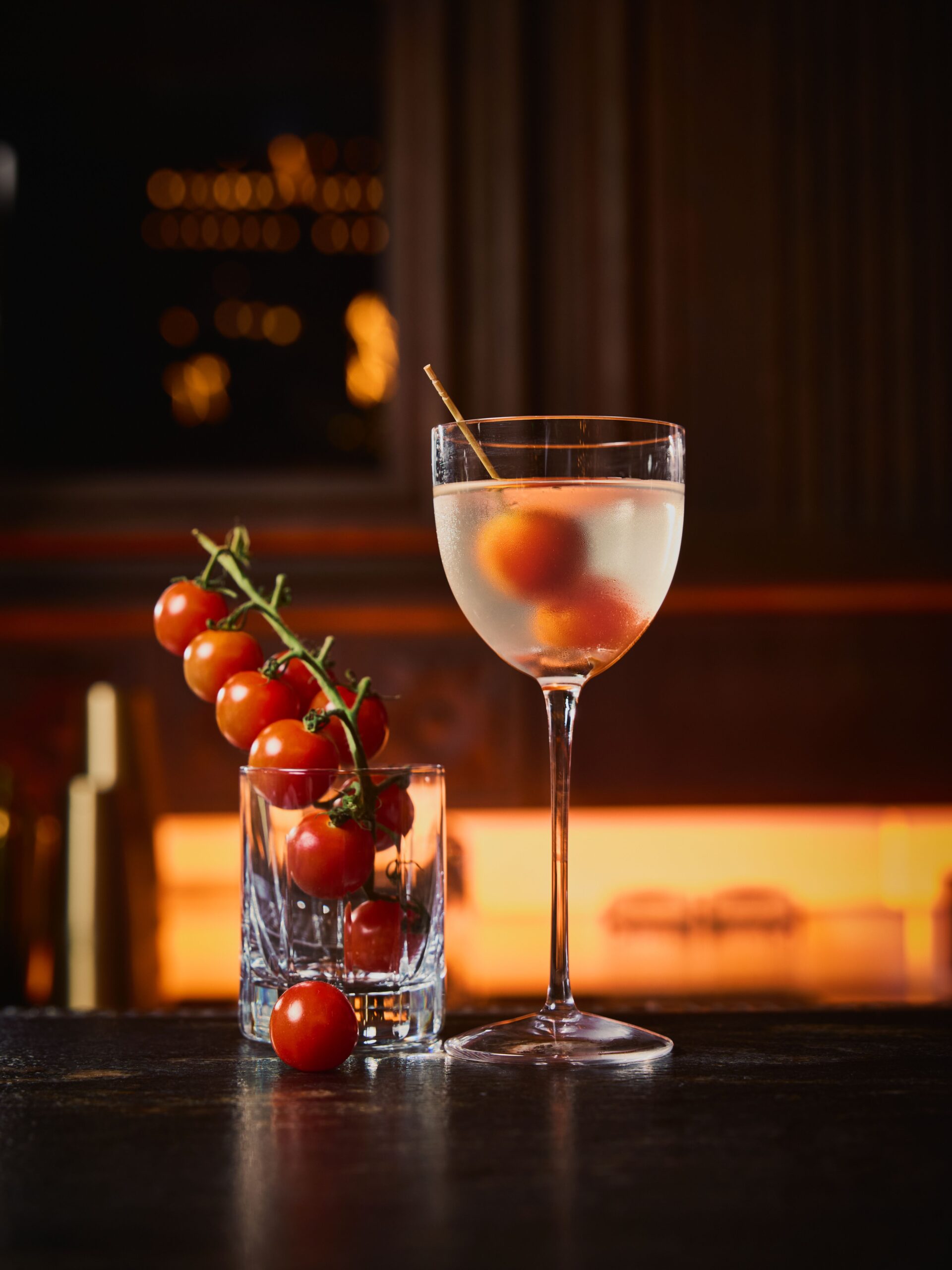
The beverage program leans into the Edison theme with cocktails named for his inventions, including Patent Pending and Filament No. 6.
Filament No. 6 at Mr. Edison.
For Chodorow, the point of Mr. Edison is straightforward: “I wanted something that felt special,” he said.
“I wanted people to walk in and say, ‘Wow.’”
Mr. Edison opens Thursday at the Bellevue, Broad and Walnut Streets. Hours are 4:30 to 10 p.m. Sunday through Thursday and 4:30 to 11 p.m. Friday and Saturday. The bar will remain open later.
When chef Christopher Kearse was planning Forsythia, the French restaurant he opened in Old City in 2019, he had two ideas that could not fit into the same room.
One was Forsythia. The other opens in Washington Square West on Friday, seven years later.
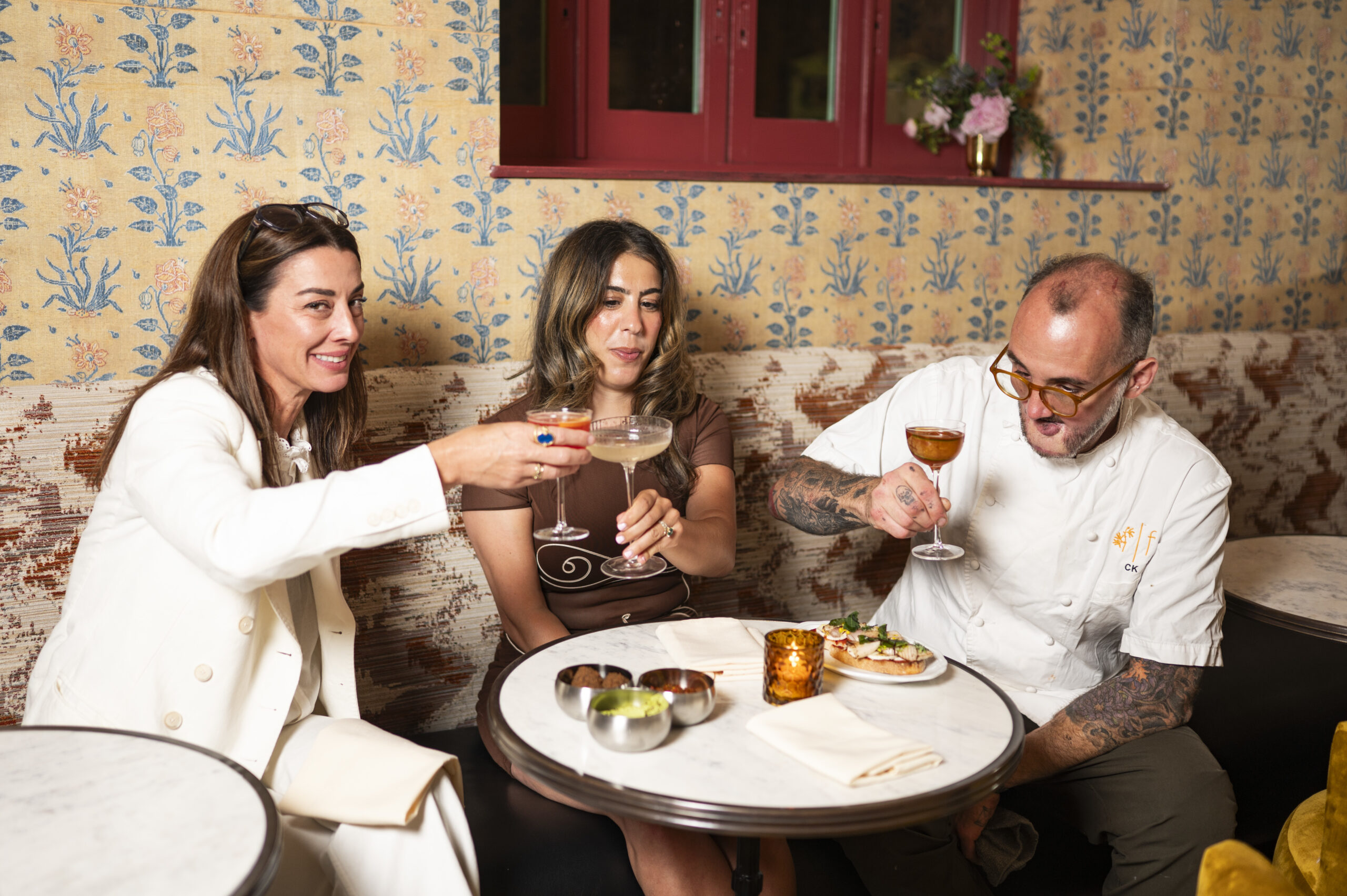
Phoebe Schuh of PS & Daughters (left) with owners Lauren and Christopher Kearse toast on a banquette at Known Associates.
It’s a 40-seat cocktail bar called Known Associates, taking over the corner space at 10th and Spruce Streets that previously housed Varga Bar. The concept is built around cocktails and a compact food menu rather than full dinner service, though the fare is substantial.
For Kearse, the opening is another chapter in a career that began far from cocktail bars and French dining rooms. He grew up in Levittown, one of eight children, and learned to cook while recovering from a serious car crash at 16 that left him with severe facial injuries. During that long recovery, he cooked for his parents and siblings. He later worked in some of the country’s most exacting kitchens — Charlie Trotter’s and Alinea in Chicago, and the French Laundry in California — before returning to the Philadelphia area to become sous chef at Lacroix and Blackfish, followed by 2½ years as chef de cuisine at Pumpkin. In 2012, at 28, he opened Will BYOB on East Passyunk Avenue, closing it to move uptown to open the French restaurant Forsythia in the former Capofitto space in Old City. Forsythia earned a Michelin recommendation last year.
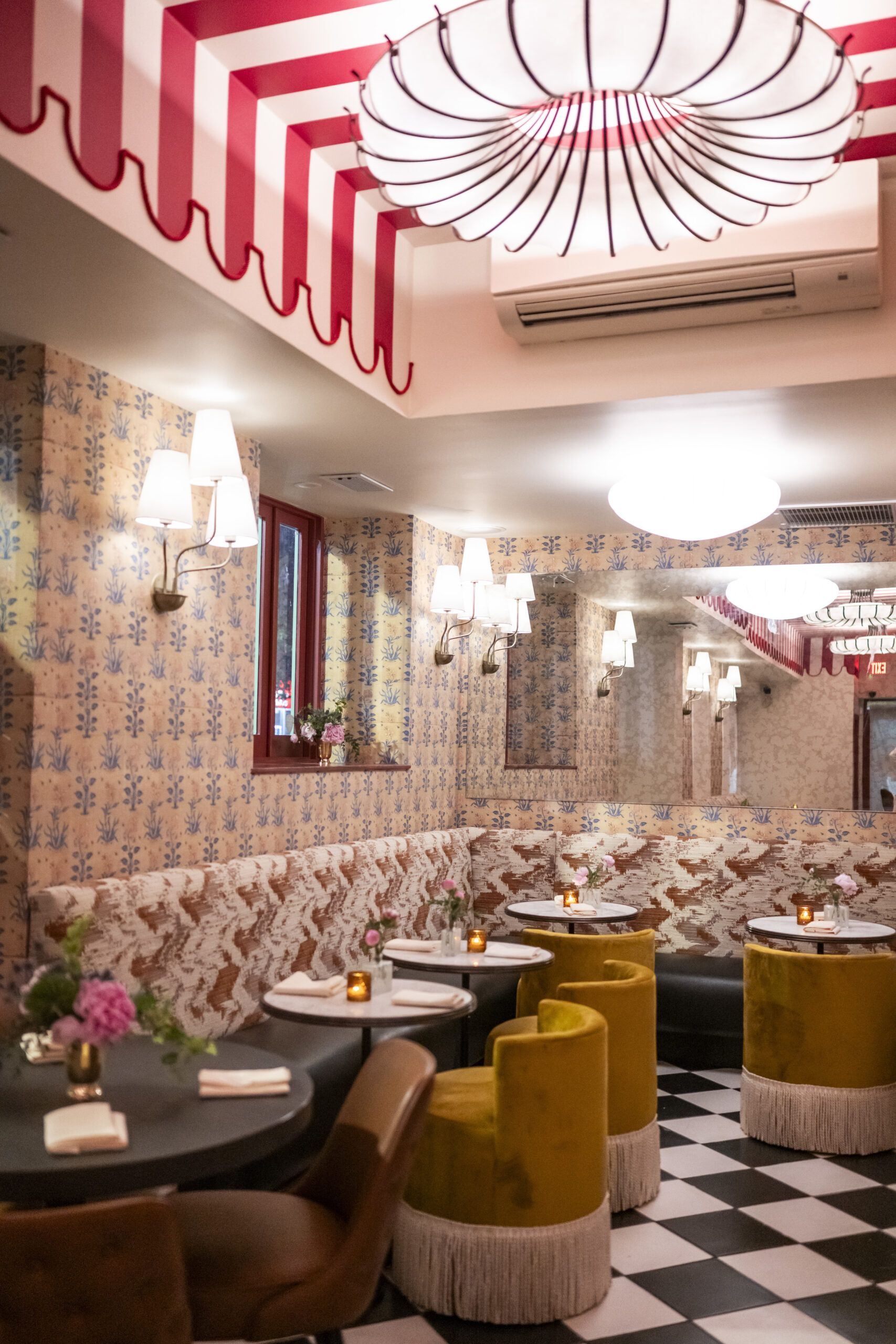
The tile floor is one of the few elements saved from Known Associates’ previous incarnation, Varga Bar.
Known Associates is not intended to be an extension of Forsythia. Kearse and his wife, Lauren, who is also an owner, said the concept came into focus during their honeymoon trip through Europe, traveling by train from Zurich to Florence and spending time in smaller bars and cafés in places like Lake Como and Milan.
Lauren Kearse said one nearly empty bar in Como became the image they kept returning to: quiet, low-key, hospitable, and free of the sort of self-conscious “experience” building that now attaches itself to so many cocktail bars.
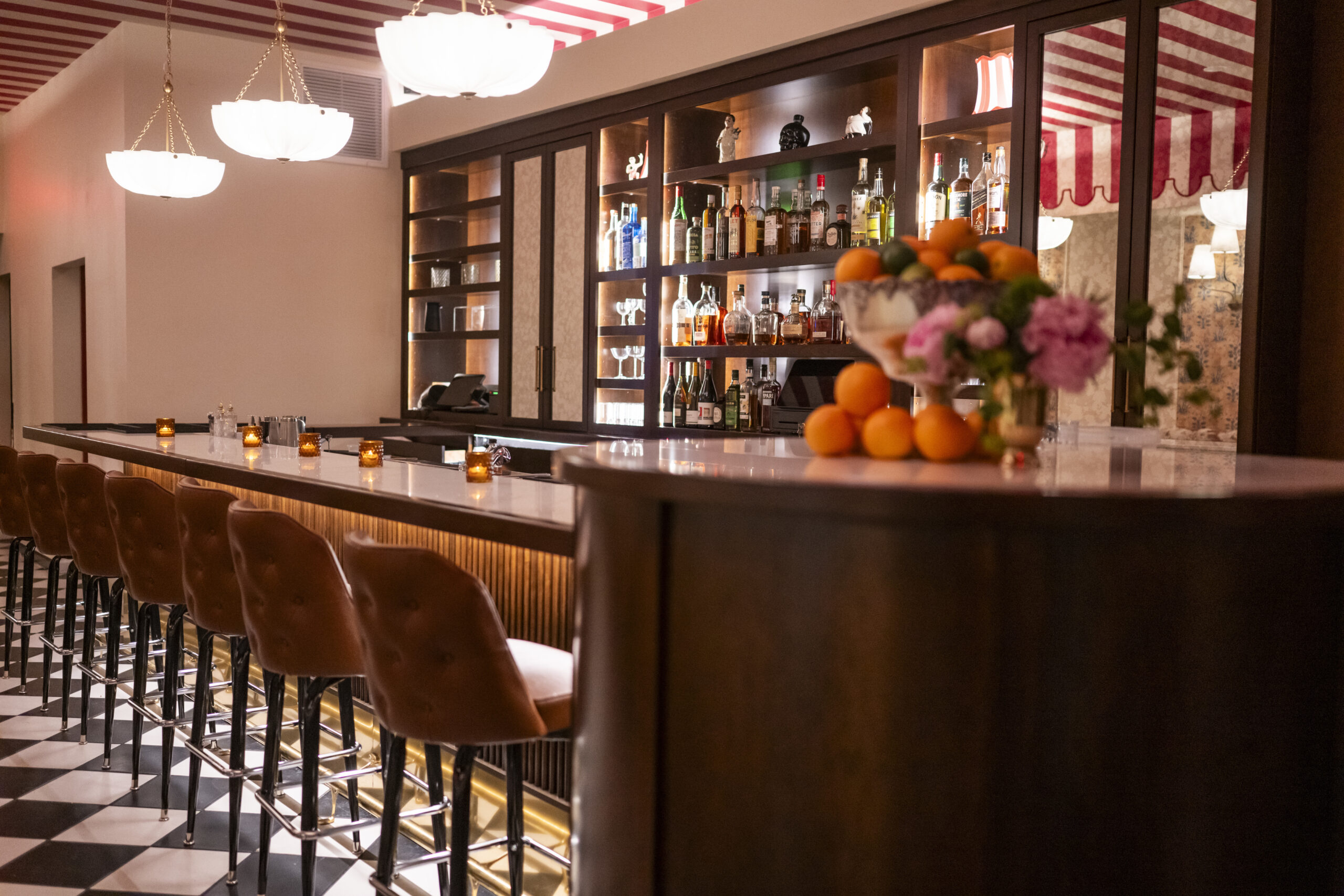
The bar at Known Associates, chef Chris Kearse’s new cocktail bar on 10th and Spruce streets, on Tuesday, June 16, 2026.
That idea is reflected in the room itself, which was rebuilt almost entirely. Phoebe Schuh of PS & Daughters, who also designed Forsythia, said the black-and-white tile floors were among the few elements retained from Varga, an unassuming gastropub with serious beer chops that closed after the unexpected death of owner Rich Colli in February 2025.
The Varga Bar murals painted on the ceiling — the “Varga girls” that were part of the bar’s identity for years — were salvaged and may be auctioned, with proceeds going to a fund in Colli’s memory, Schuh said.
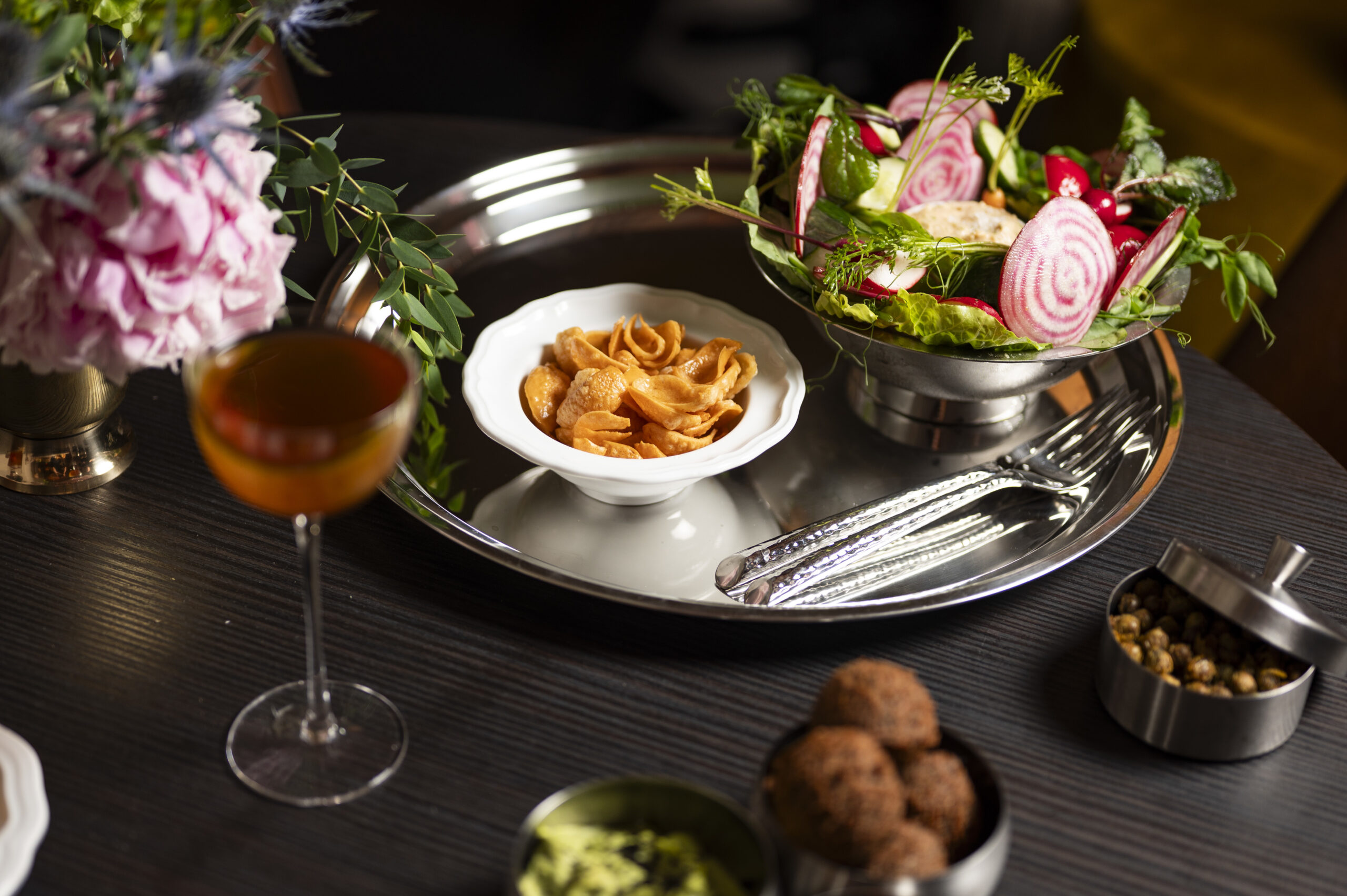
Crudite with potato puffs and caramelized sour cream and onion dip at Known Associates.
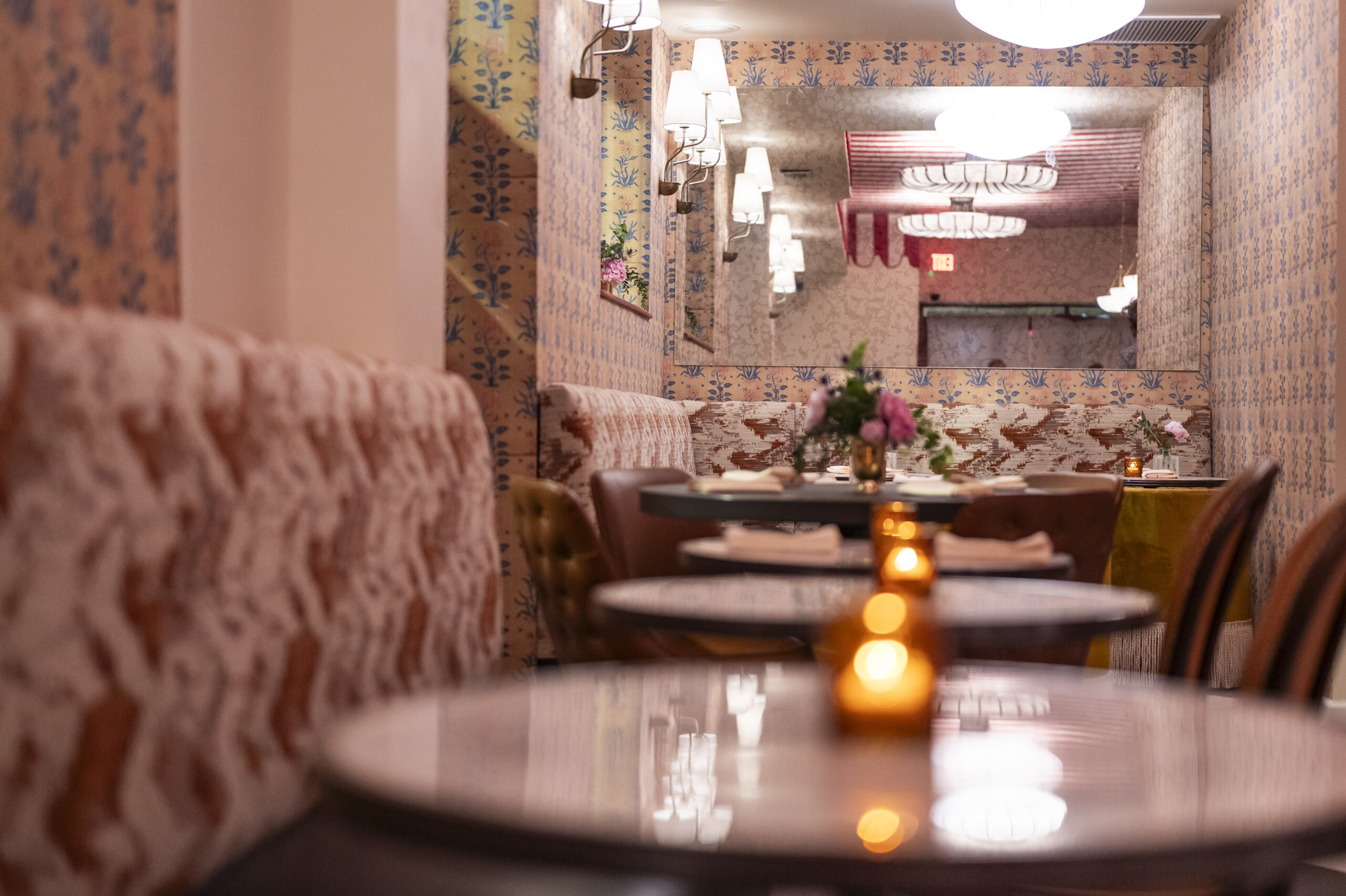
The finished room is emphatically café lounge, not neighborhood drinking den. Floral wallpaper wraps the walls. Patterned banquettes line marble-topped tables. Mustard velvet chairs sit beneath wall sconces, with checkerboard flooring underfoot and a red-and-white striped canopy treatment stretched overhead. The overall effect is layered and slightly theatrical.
Schuh said her working relationship with Kearse is built on familiarity. “Chris and I just kind of speak the same language because we’re both artists,” she said. “We’re not that great at talking about our work, but we’re great at producing our work.”
The location — within blocks of Jefferson, Wills Eye, and Pennsylvania Hospitals — also helped shape the project. Lauren Kearse said they envisioned a room that could work for after-work drinks and dinner-adjacent snacking as much as destination cocktail traffic.
That balance shows up on the food menu, which is limited to 10 savory dishes and two desserts. Kearse said the kitchen’s role is to support the bar rather than turn it into another restaurant. Still, the menu is more ambitious than standard bar snacks and has some of Forsythia’s cheffy feel.
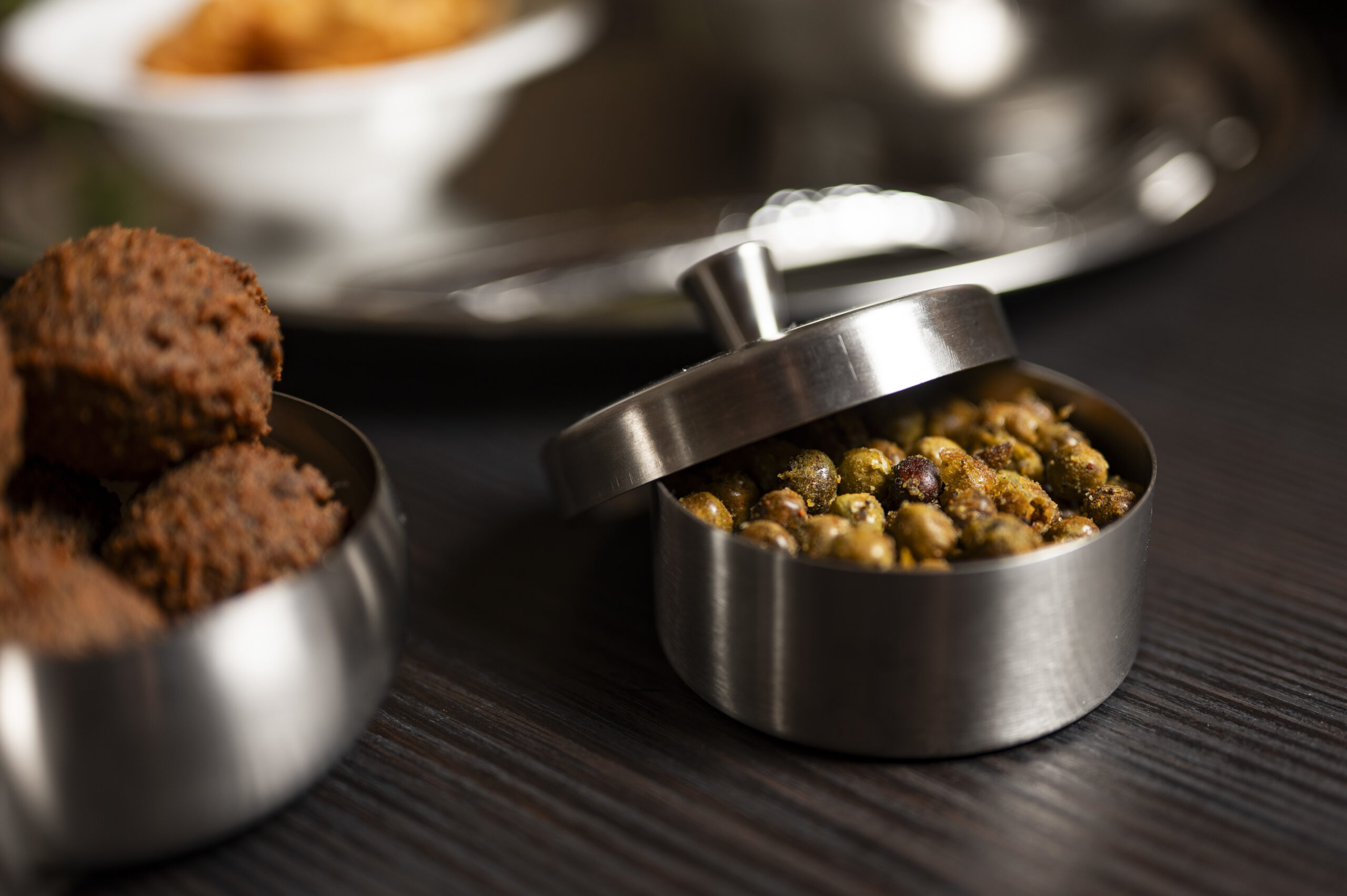
Cool ranch peas at Known Associates.
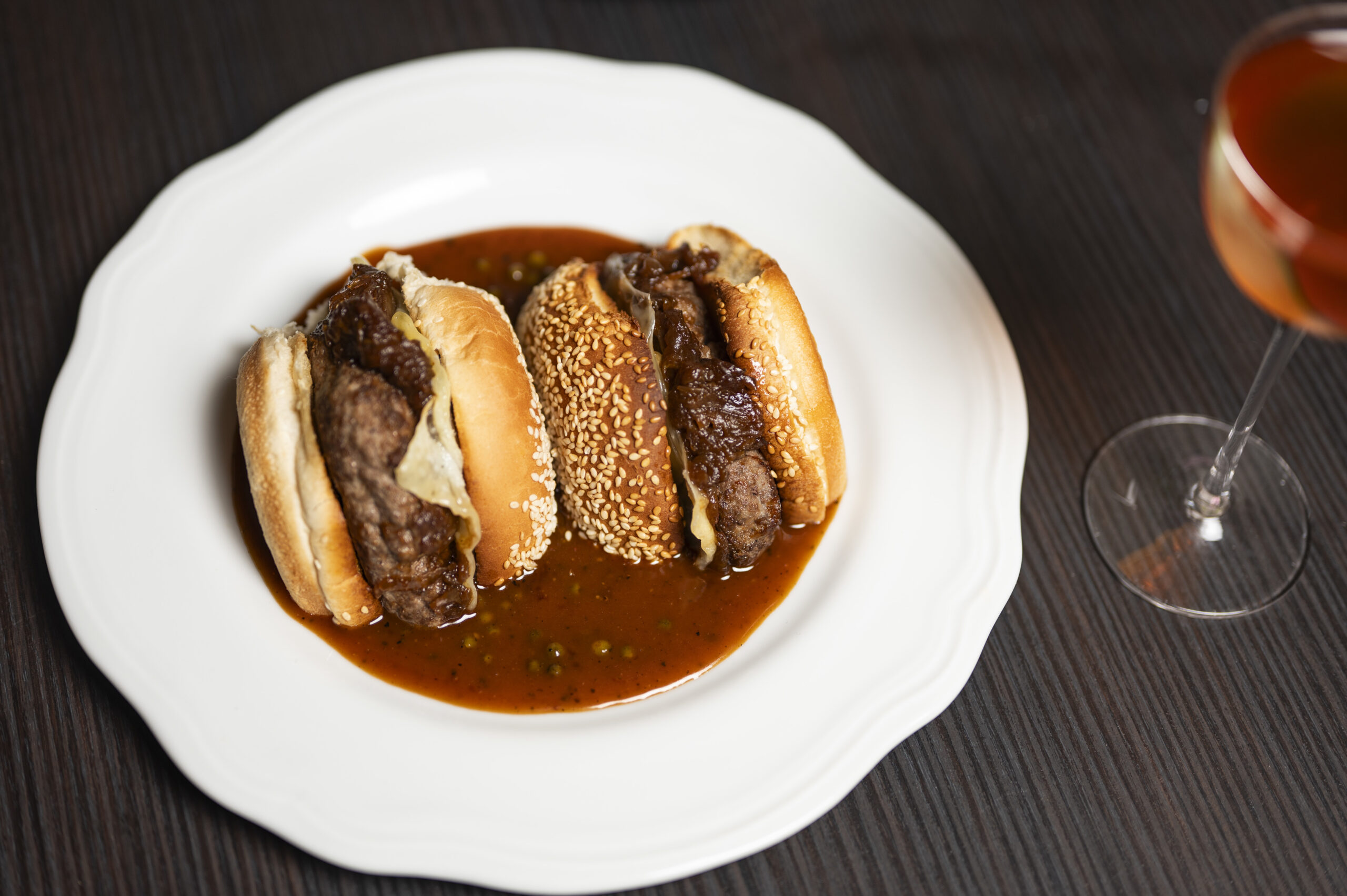
The burger that is a signature at Forsythia appears at Known Associates as burger au poivre, topped with Comté, cut in half, and served cut-side down in a pool of peppercorn reduction ($20). Char siu duck legs ($22) come on a pretzel milk bun with fish sauce and pickles. There’s also a chicken club ($23) with green goddess dressing and Benton’s bacon.
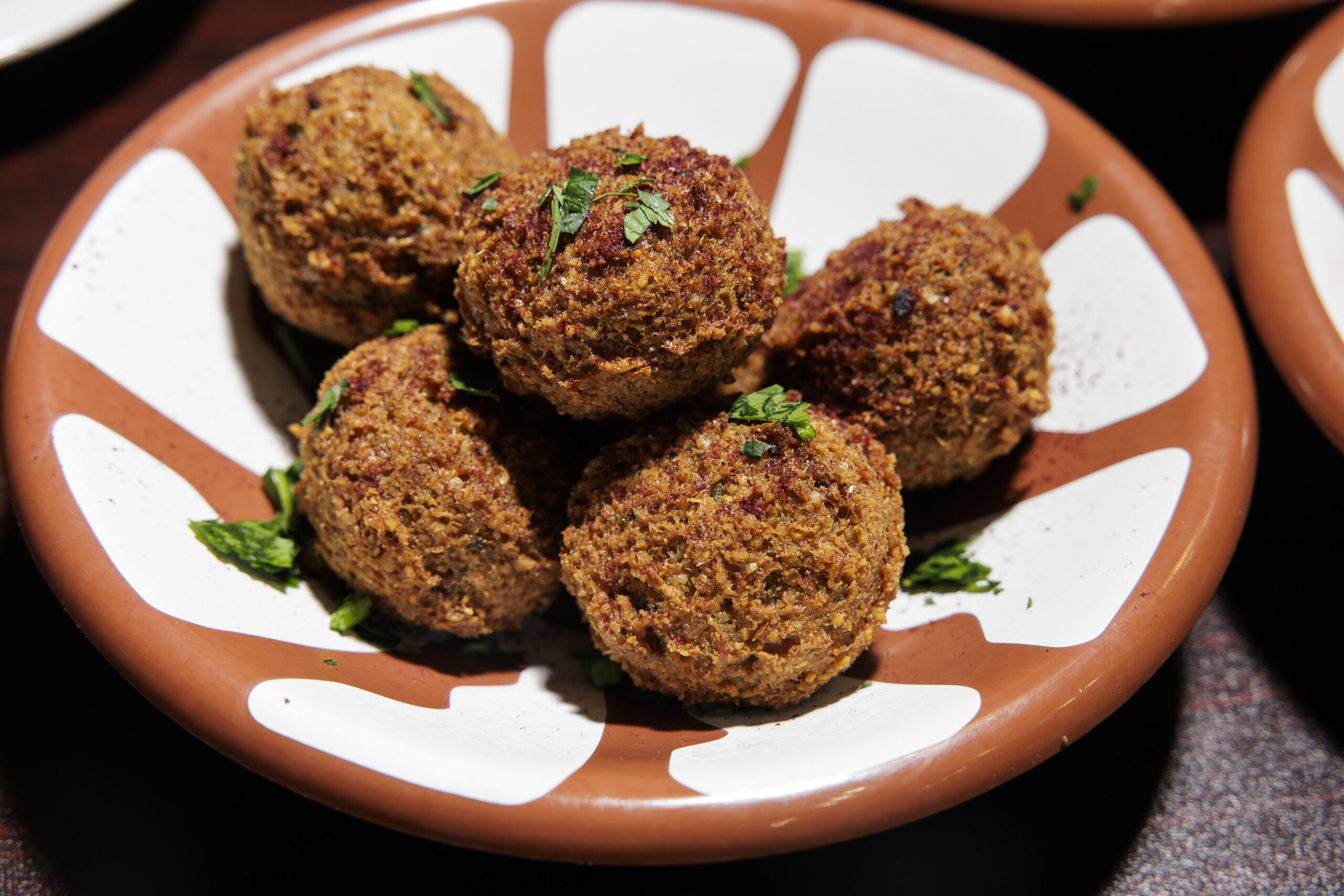
Lighter dishes include black-eye pea falafel with muhammara and green-scallion hummus ($15); hamachi toast with hard-boiled egg and piri piri ($22); pomme frites with Comté cheese foam ($10); and freeze-dried cool ranch peas meant for snacking with drinks. Seasonal crudité ($12) comes with potato puffs and a caramelized sour cream and onion dip. Desserts ($12) are limited to two: toasted rice milk ice cream with sesame and peanut brittle, and triple chocolate mousse with dulce de leche and toasted hazelnut.
The kitchen is led by chef Brandon Brokenbough, formerly of Enswell and Scarpetta.
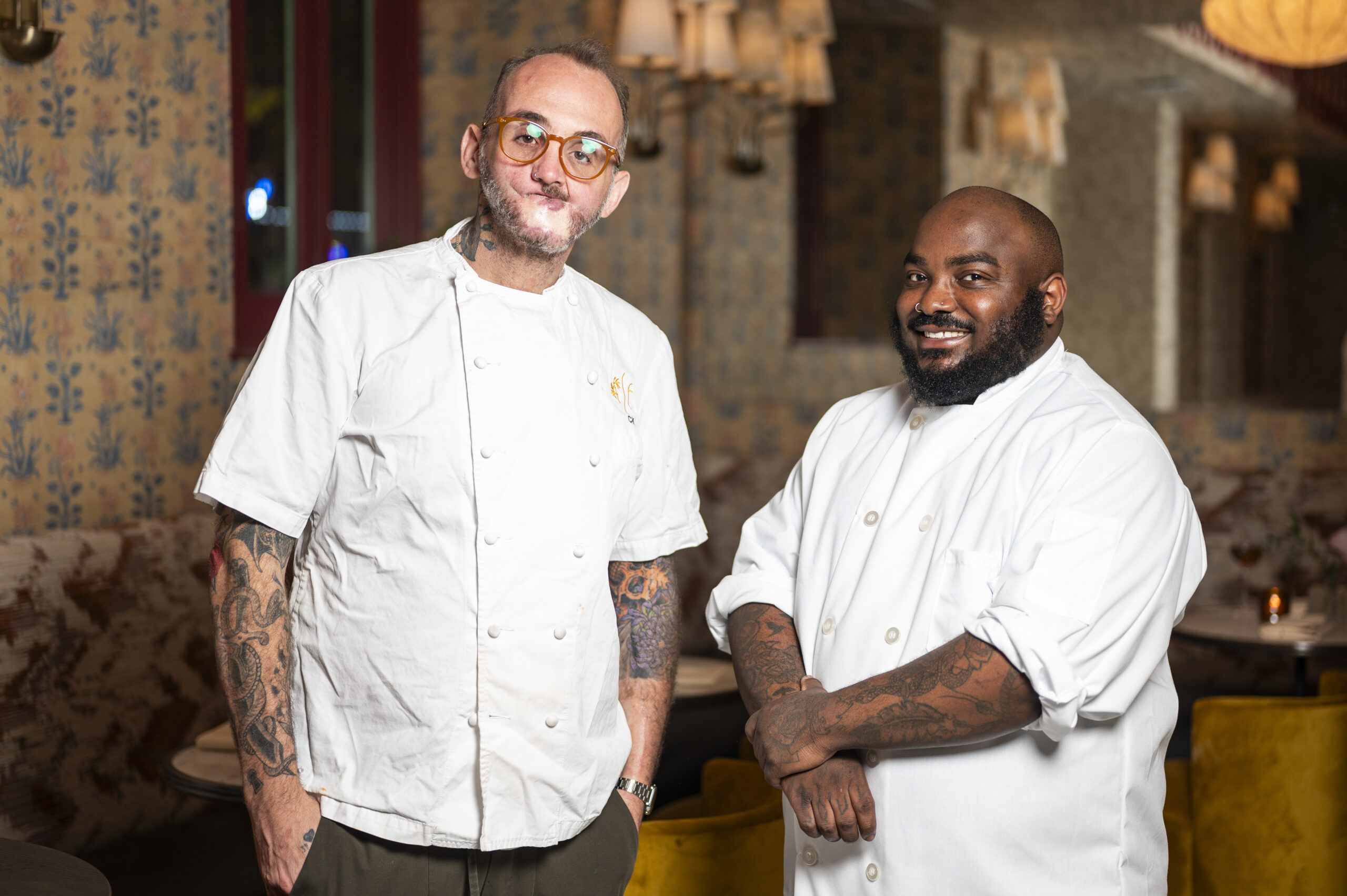
Chefs Christopher Kearse (left) and Brandon Brokenbough at Known Associates.
Beverage director Chris Harrop’s cocktails are built around prep work and technique. The TNT ($18) — tomato and tonic — uses clarified tomato water made from tomato, red bell pepper, shallot, fennel, and cucumber. The solids left behind after clarification are dehydrated and served as chips alongside the drink. Harrop said the same clarified base can also be used as a zero-proof savory soda.
The Bittered in Bond ($20), a Boulevardier variation, is made with a house mezcal amaro, Bonal Gentiane, Cappelletti Aperitivo, Licor 43, and salt. It is bottled in a small flask with a batch number and bottling date and poured tableside, a nod to bottled-in-bond whiskey labeling.
Between Harvest ($19), meanwhile, is a Martinez variation with Hayman’s Old Tom gin, Luxardo Maraschino liqueur, Nardini Rabarbaro, and muddled cucumber. Harrop said the name came from a Forsythia customer’s observation that rhubarb and cucumber almost never overlap in season — one fading as the other begins. For summer, he said, the bar has a frozen zombie ($19) assembled to order, with the rum blend kept separate from the slush machine so each drink can still be measured and built fresh.
The name Known Associates carries a passing wink to spy movies — the Kearses are fans of Bond films — but Lauren Kearse said the bar is not built as a themed concept.
“We have no interest in doing that,” she said. “We wanted something punchy that had a little bit of mystery to it.”
Known Associates, 941 Spruce St., opens June 26 and will be open daily from 3 p.m. to midnight.
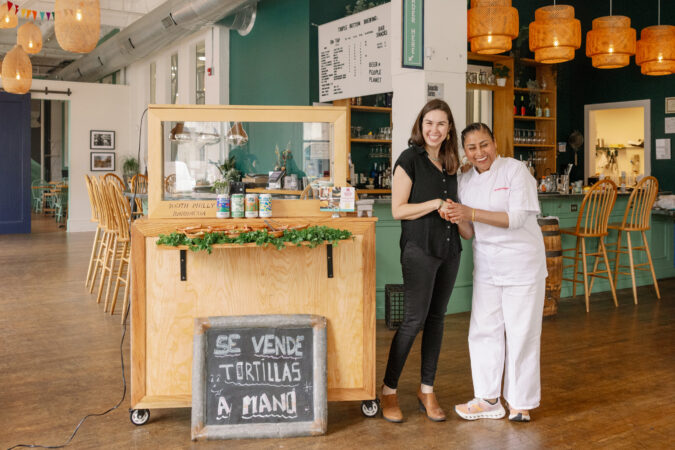
On a recent Saturday inside Triple Bottom Brewing, award-winning chef Cristina Martinez stood behind a wooden taco cart next to the bar making barbacoa tacos for an eager crowd.
At the June 14 event, Triple Bottom owners Tess Hart and her husband, Bill Popwell, announced South Philly Barbacoa as their new permanent food vendor for the Spring Garden brewery.
The brewery was ready to have a permanent food vendor after two years of hosting chef residencies, including La Llamita Vegana and Angie’s Vietnam. In early spring, the CEO of Triple Bottom decided to email the restaurant she felt would be the best fit: South Philly Barbacoa.
“Their team has been in our space a lot, and I’ve been down there,” Hart said. “We introduced the conversation at a moment where they were also thinking about their next steps and what growth could look like for them. It felt very natural, because I think — even though we do such different things in the food and beverage space — both of us are really led by values,” including caring about the supply chain for their respective businesses and supporting the immigrant community of Philadelphia.
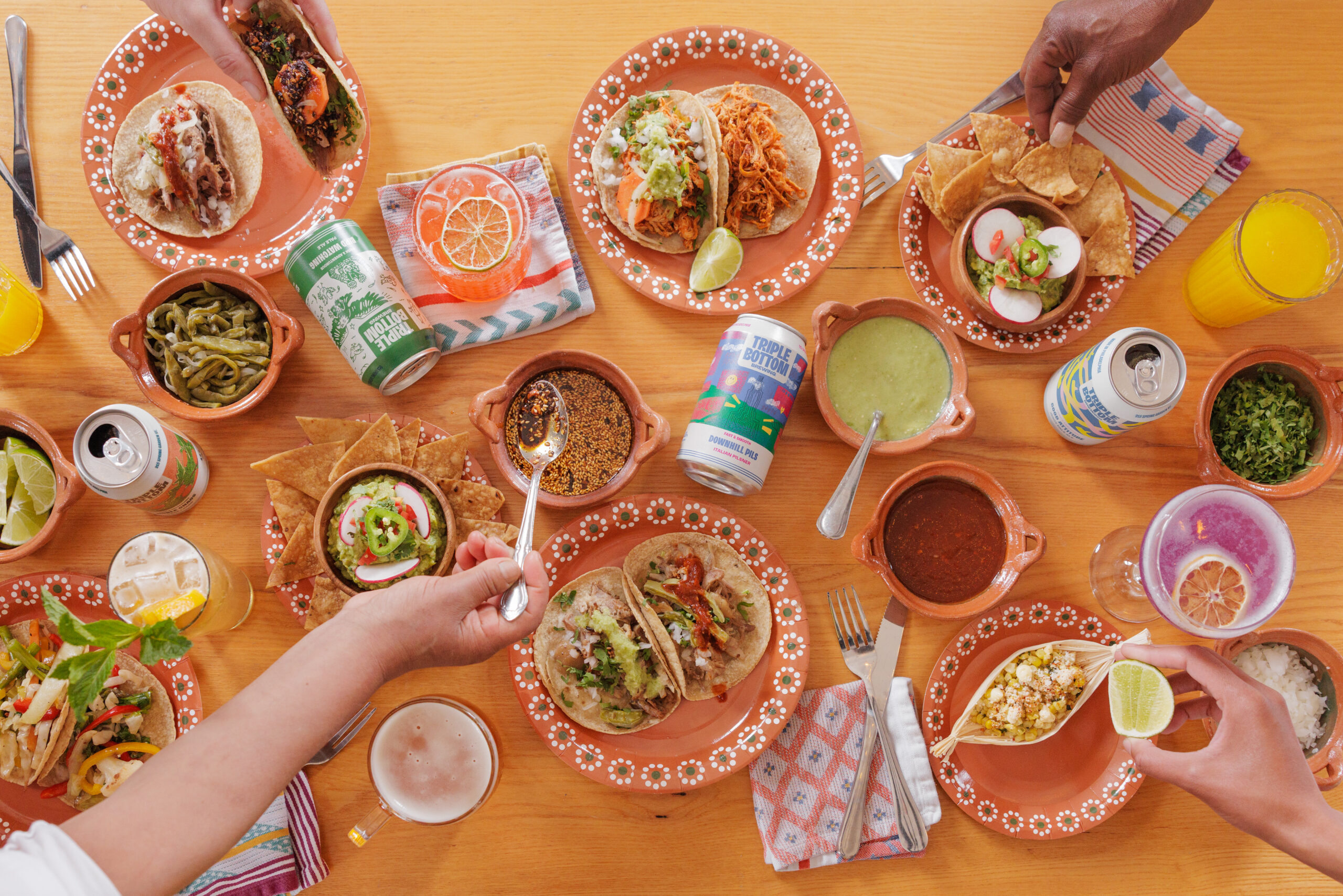
The South Philly Barbacoa menu, attached to Triple Bottom drinks menu, features most of the same items found at its South Philly location inside Casa Mexico, where South Philly Barbacoa still operates.
Find South Philly Barbacoa at Triple Bottom Brewing, 915 Spring Garden St.
“The only thing that is not here is the consommé, which hopefully we’ll have in the wintertime,” Hart said. “But for now,” there are tacos — slow-cooked lamb barbacoa, shredded chicken covered in smoky tomato chipotle sauce, slow-braised pork, spicy lamb offal sausage pancita, and a vegan option with seasonal vegetables — $7 for one or $21 for three, chips and guacamole with crispy corn tortillas for $10, esquites for $10, and handmade sweet tamales made with corn masa for $7.
“Having a very amazing food program that’s reliable is a way to make sure that you can come here even if you don’t want a beer or any kind of drink — this is still a place for you,” Hart said.
“Triple Bottom Brewing is this little oasis on Spring Garden Street with these bright, airy windows,” Hart continued. “And now, barbacoa tacos.”
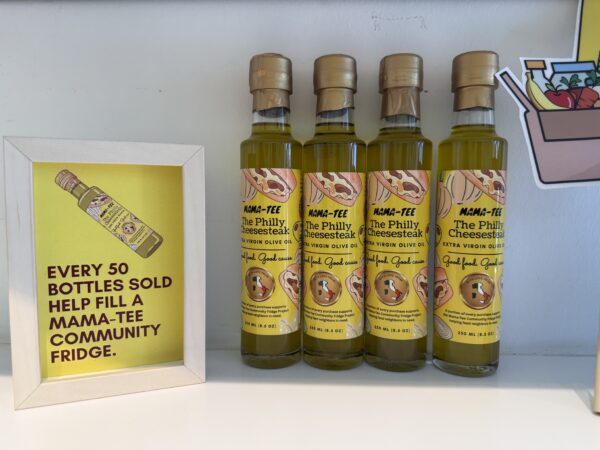
“It tastes like oil from a real cheesesteak wrapper,” proclaims the slogan of Mama-Tee’s Philly cheesesteak-flavored extra virgin olive oil.
Mama-Tees are community fridges, notable for their bright yellow paint jobs, that are scattered around Philadelphia. The cheesesteak oil ($19) is part of a fundraiser to combat food insecurity locally, along with three other flavored oils: Basil Bliss, Truffle Love, and Pepper Pleaser. Proceeds go to helping fill the fridges with food. So if the oil prompts cheesesteak-flavored burps, it would do so in the name of a noble cause.
We at The Inquirer had to do a taste test.
Is this merely a novelty or could it have legitimate culinary applications?
The ingredients of the Philly cheesesteak-flavored oil intriguingly are only “extra virgin olive oil” and “onion flavor.” How could these two ingredients, neither of which involves cheese nor steak, encompass the nuanced experience of consuming an actual cheesesteak? The Inquirer sought to get to the bottom of these questions.
“It smells like a deli case,” said food editor Margaret Eby. “There is a cheesiness to it. It’s like that cheese oil that gets trapped in a charred, upturned pepperoni cup on your pizza.”
“I think it should be called ‘hoagie oil,’” said food reporter Beatrice Forman.
“It is like unwrapping a hoagie,” agreed critic Craig LaBan. “When you get the vinaigrette soaking through the wrapper. And it tastes like French’s fried onions, but burnt.”
“I don’t know what it could be used for,” said food reporter Michael Klein.
“It tastes like old fryer oil,” grimaced reporter Ryan Briggs. “It’s gravitating toward capturing that cheesesteak shop smell when they’re frying all the onions.”
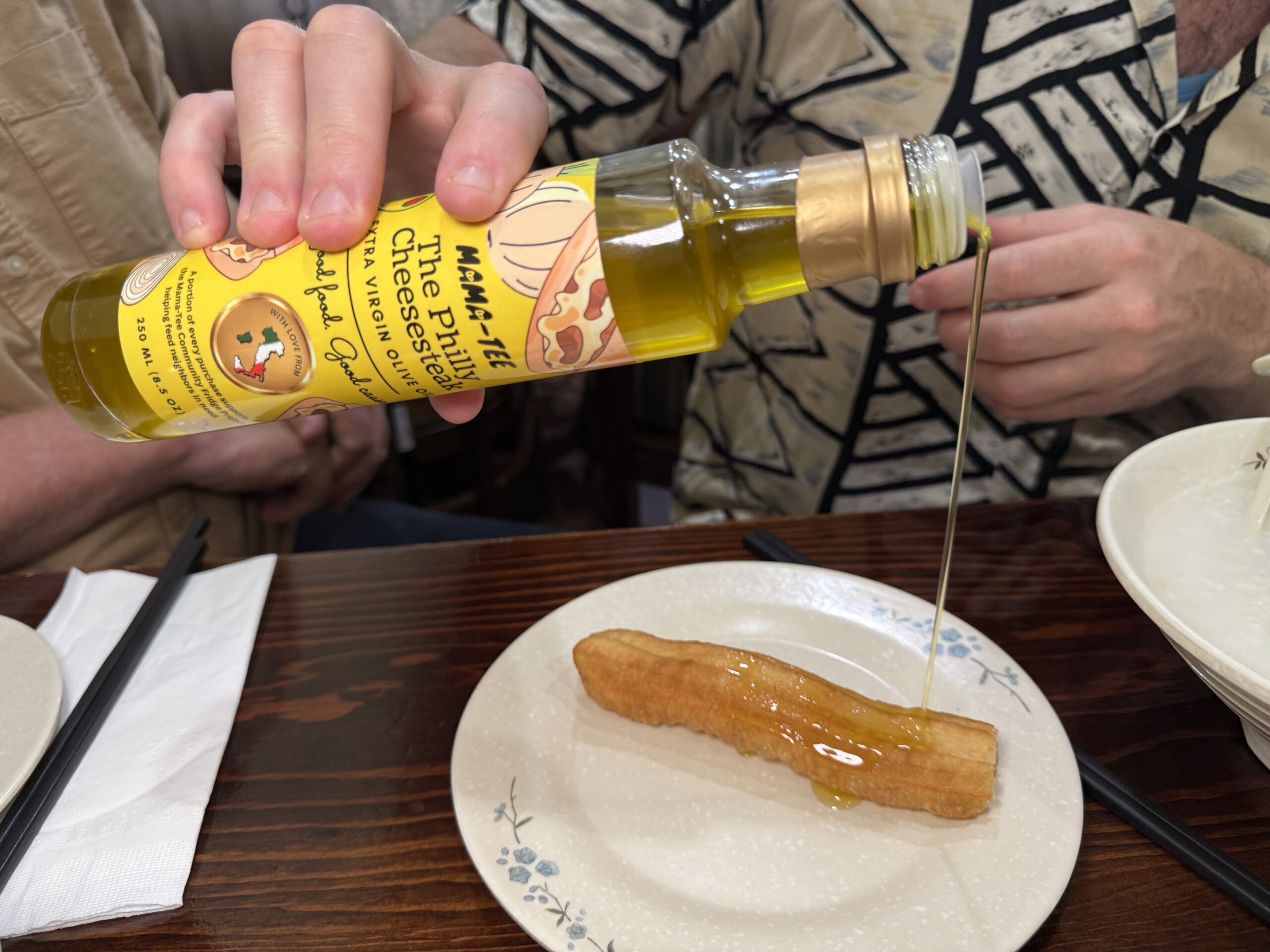
Reporter Max Marin poured the oil over his youtiao, a savory Chinese cruller, while at lunch at Lau Kee in Chinatown. “It’s got a chemical taste that makes me think there’s a number in one of its ingredients.” But does it make the youtiao taste like a cheesesteak? “It does not.”
Inquirer reporter Max Marin pours Mama-Tee’s Philly cheesesteak-flavored oil on his youtiao at Lau Kee.
Various Philly chefs were more open-minded in the cheesesteak oil’s applications.
“I think the flavor is great,” said Juan De Ocampo, sous chef at Fairmount’s Manong, as he poured the oil onto a pile of fried shrimp chips.
“I kind of like the cheesesteak oil,” said dancerobot’s Justin Bacharach. “It’s pungent and although I don’t cook with olive oil, I would use it to add a little funk and fat to a dish, like to dress an antipasto with South Philly vibes like sharp provolone and soppressata, and in the Japanese canon, I think it would be fun drizzled on top of a gyudon (beef and onions over rice) where you’d normally use mayu (a Japanese scorched black garlic oil).”
“It feels really heavy,” said Melissa Fernando, the chef behind long-running pop-up Sri’s Company. “In Sri Lankan food, we mostly use coconut oil to cook, but I suppose I’d use this to sauté onions and garlic.”
That perceived “heaviness” is easily addressed, according to 637 Sushi Club’s Kevin Yanaga, no stranger to unusual pairings. “I just need a lemon or something acidic with it. I could then use it on a fluke crudo. It’s rough and funky on its own, but salt and acid would help.”
After careful consideration of these diverse opinions, the Mama-Tee cheesesteak oil had only one test remaining to undergo: a side-by-side comparison between it and the oil from an actual cheesesteak wrapper.
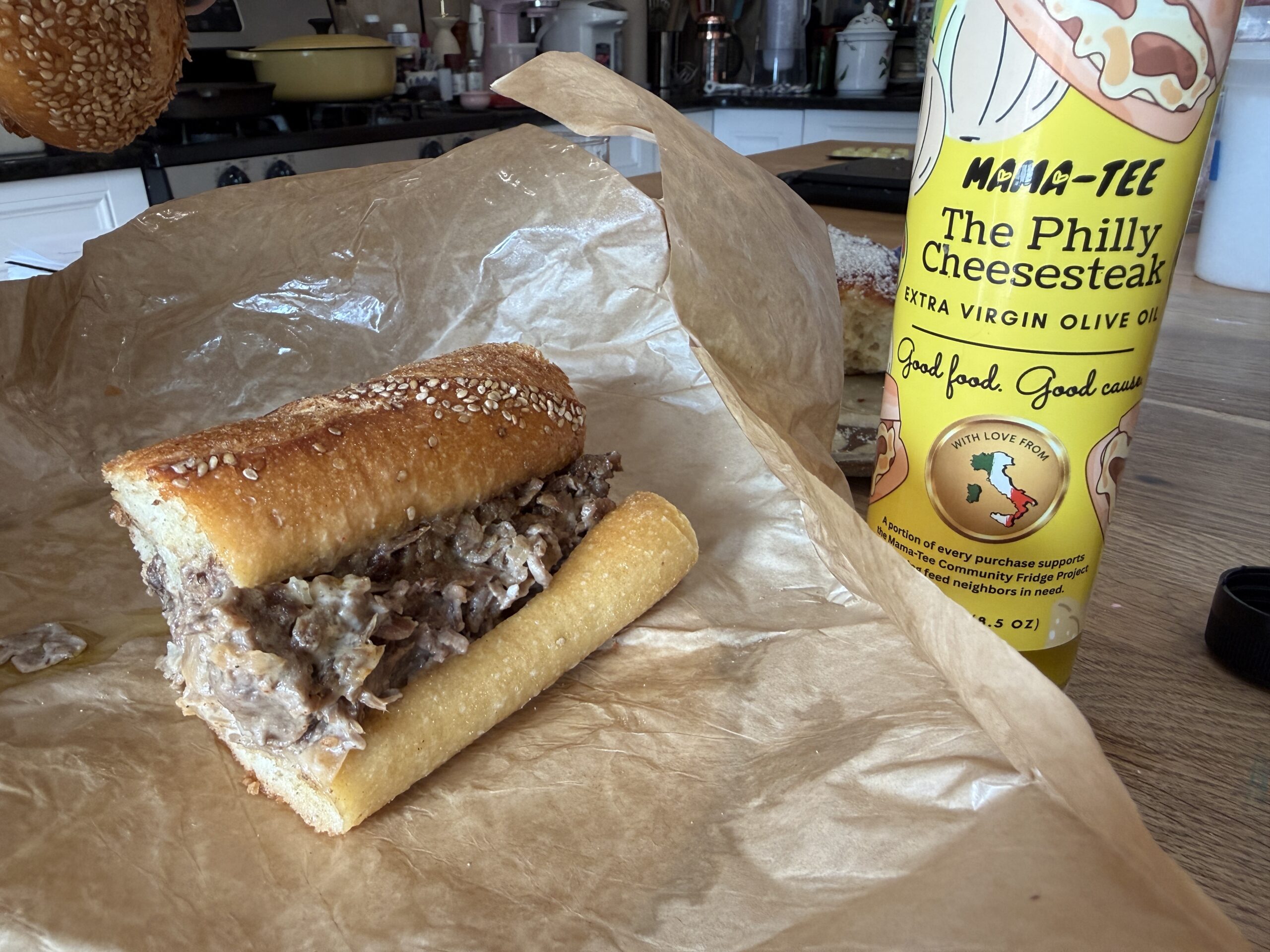
A Del Rossi’s cheesesteak (wit onions, of course) was summoned. A wrapper was licked. A shot of cheesesteak oil was taken. The wrapper had the distinct advantage of beefiness. When applied directly to the cheesesteak, the oil oddly enhanced the cheesesteak’s flavor. And another thing the oil had in common with a real cheesesteak? Real cheesy, oniony burps after consumption.
A Del Rossi’s cheesesteak and Mama-Tee’s cheesesteak oil, consumed in unison.
Mama-Tee’s Philly cheesesteak oil ($19) can be purchased at Wegmans in King of Prussia, though more locations may be added soon.
A non-alcoholic Philly spirits brand is finding early success by doing everything — from blending to bottling — by hand.
Cult of Trees is a new line of alcohol-free aperitifs produced at Maken Studios in Kensington. Inside the sunny production space, founder Meredith Sheehy spends hours each week distilling homemade herb blends into a line of zero-proof cocktails that taste like fizzy spritzes.
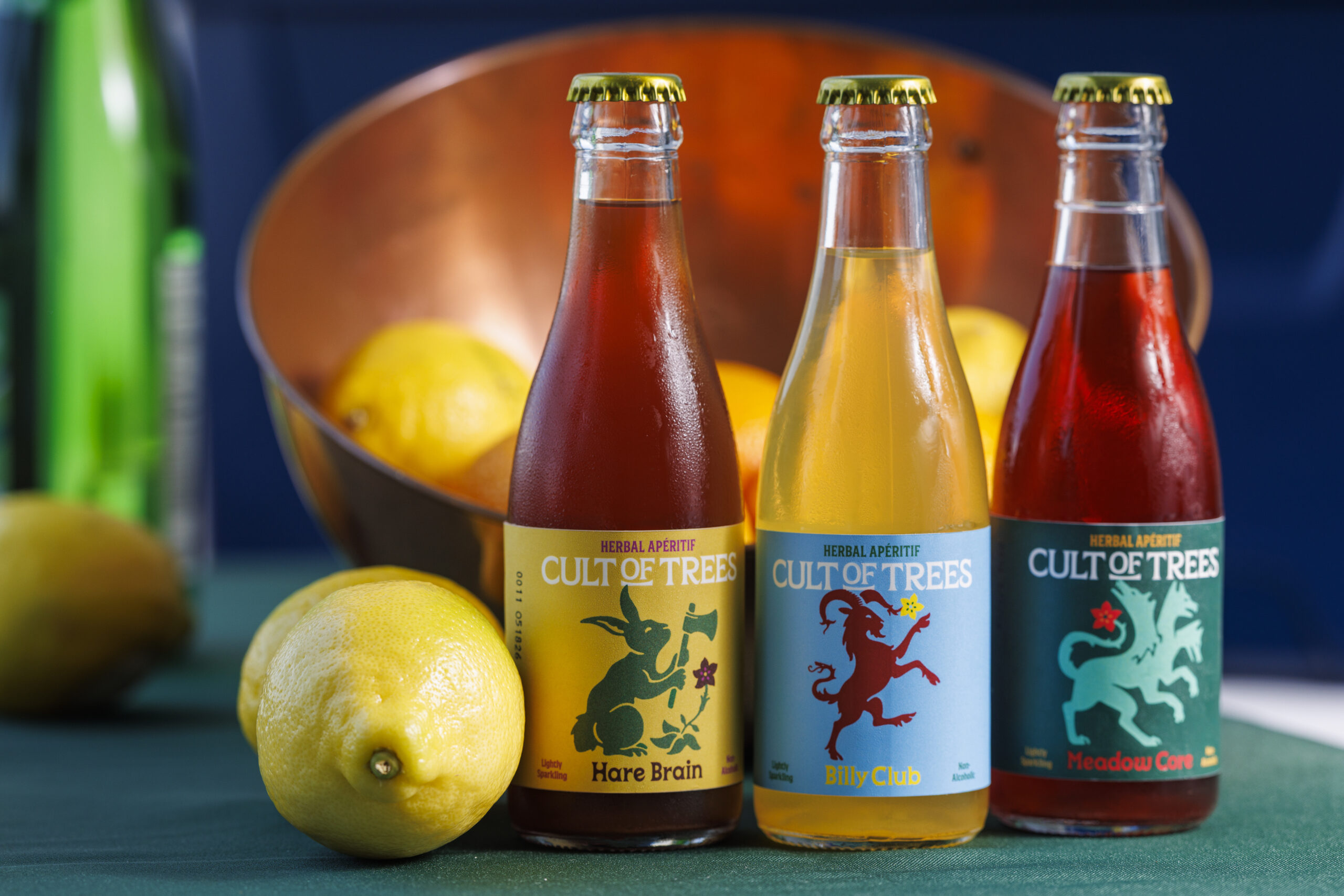
The brand’s three flavors include Hare Brain, which is akin to a cola-spiked negroni; Meadow Core, a citrusy and floral blend of red fruits; and Billy Goat, which tastes like rolling in a field of wildflowers thanks to a mixture of herbs, honey, and elderflower. Since sales began in January, Cult of Trees has been selling well at local grocery stores and bars, such as Solar Myth and Enswell, where the drinks are served straight or floated with sparkling water or cold brew.
For Sheehy, who moved to Philly in 2022, the city is as much an inspiration for the brand as the ingredients themselves. After closing her Brooklyn-based Mezcal bar La Loba Cantina due to the pandemic, Sheehy began bartending at Philadelphia Distilling. Philly, she said, had a refreshing scene.
“People will answer questions and pour tastes of curiosities on their back bars, with genuine excitement to share,” said Sheehy. “It’s a beautifully welcoming culture here.”
From left: Hare Brain, Billy Club, and Meadow Core, Cult of Trees’s three flavors of non-alcoholic aperitifs. Bottles are sold at Riverwards Produce in Old City and Herman’s Coffee in Pennsport.
Fascinated by distilling alcohol, yet increasingly conscious of her own dwindling consumption, Sheehy was inspired by the growing sober curious movement to start her own non-alcoholic cocktail brand.
Sheehy wanted to create something that wasn’t just about emulating the experience of drinking alcohol. Abstaining “shouldn’t mean that you need to take away flavor or an interesting story,” she said.
At Cult of Trees, each aperitif is made with ingredients sourced from Pennsylvania farms and requires a multiday routine of distillation, carbonation, and bottling. It’s an analog process that contrasts with that of large scale brands, which Sheehy said often rely on commercial flavor extracts — as opposed to dried botanicals or herbs — to quicken production and lower costs.
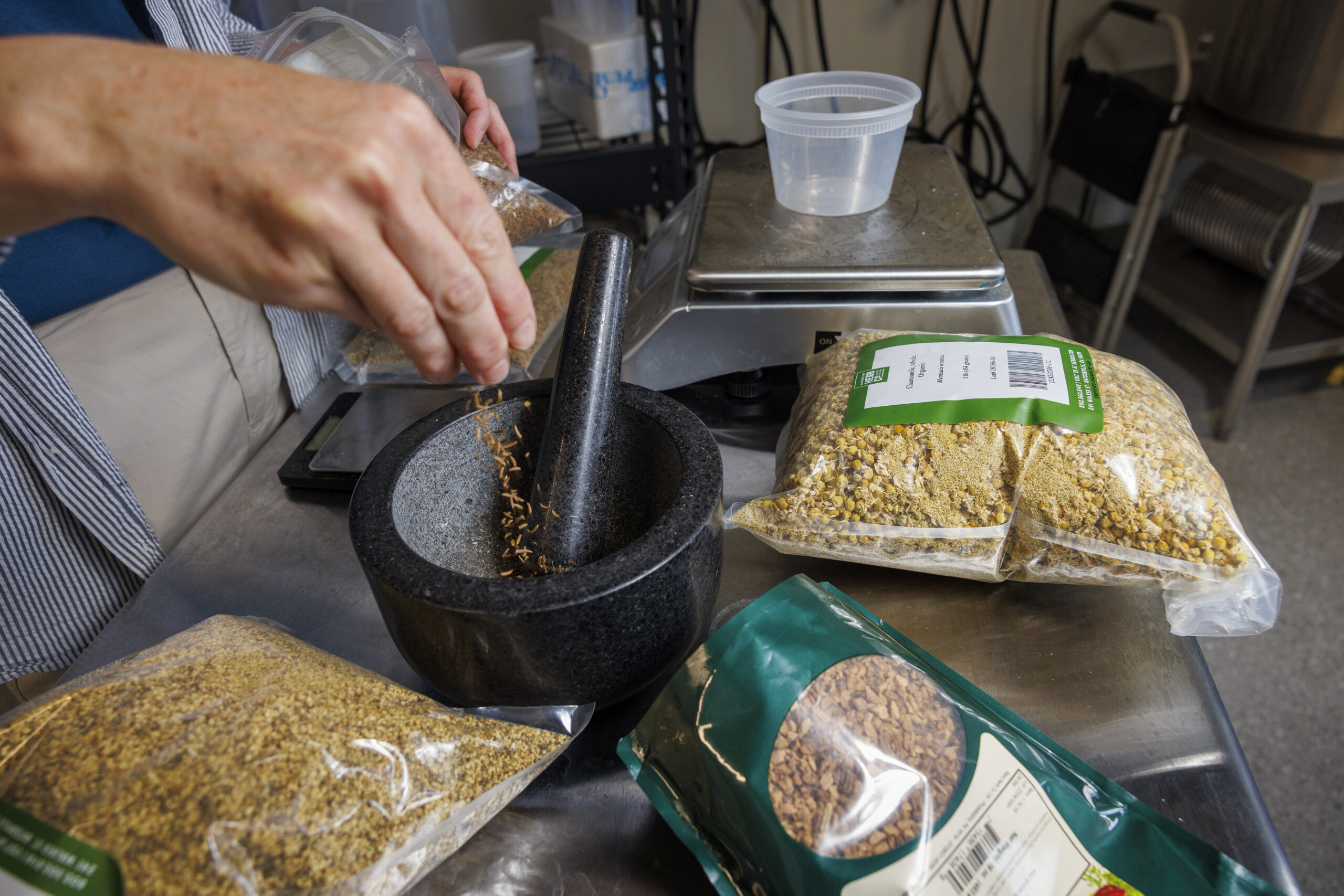
Meredith Sheehy, owner of Cult of Trees, sprinkles caraway seed into a mortar and pestle to make one of the herb blends for her line of zero-proof spirits.
Getting started, then getting set back
While at Philadelphia Distilling, Sheehy became close with Jack Falkenbach, the expert distiller and legendary Philly bartender that died last year at 44. Falkenbach, she said, was always “willing to explain specialized process details at the distillery. We both liked deep-diving on things like acid phosphate,” she said. “I deeply trusted his style of drink making and technical know-how.”
Falkenbach was among Cult of Tree’s earliest supporters, Sheehy said, and one of the first people she involved in building the company. Around this time last year, the pair was making test batches together; Falkenbach was focused on nailing the carbonation as Sheehy refined the packaging.
Then the first real workday arrived. Falkenbach did not.
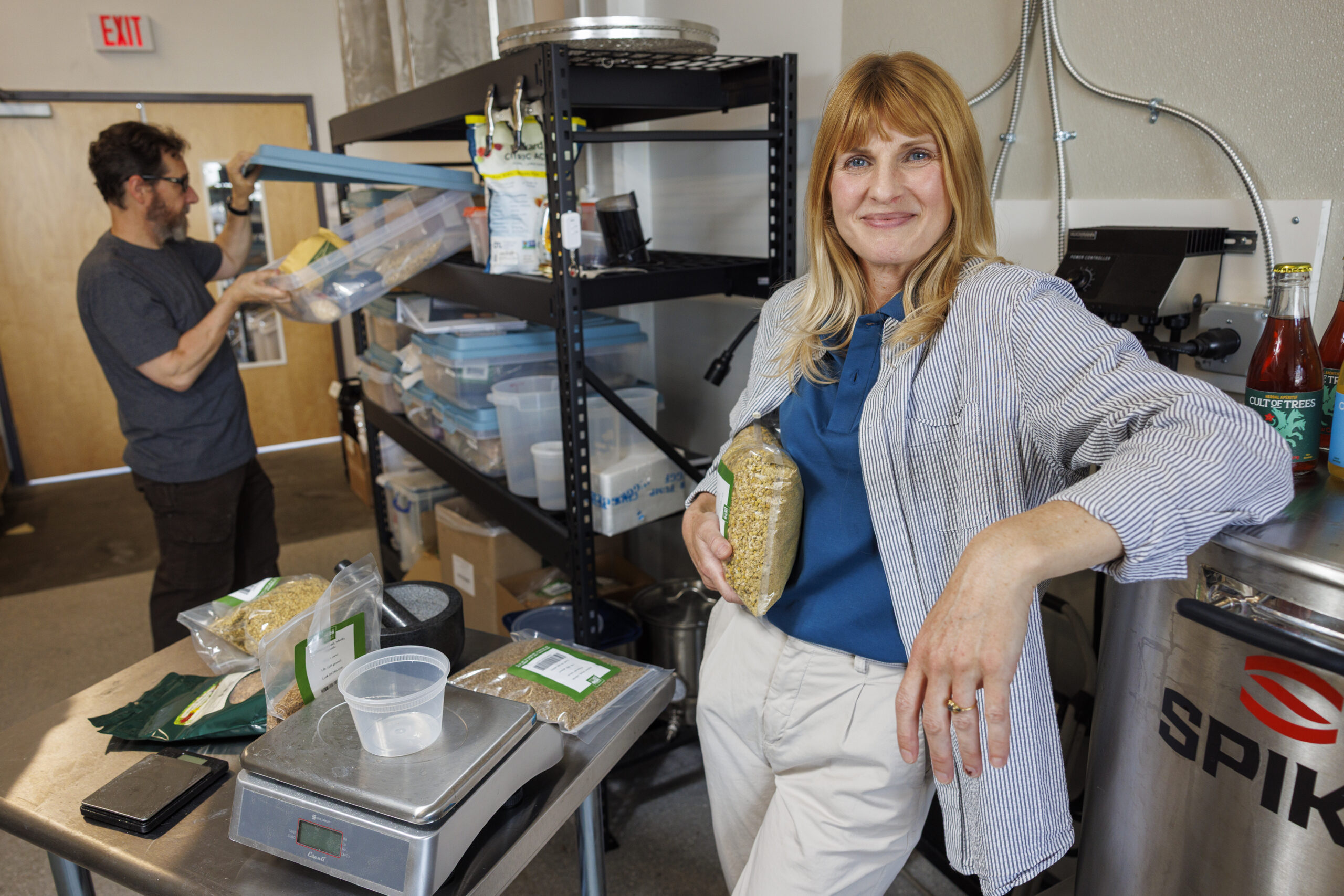
Meredith Sheehy, owner of Cult of Trees, poses for a photo while preparing one of the herb bases for her line of zero-proof spirts, which is based at Maken Studios in Kensington.
His passing, Sheehy said, was doubly “heartbreaking,” but launching Cult of Trees left little time to grieve. “I did what all business owners have to do,” she said. “You recover and pivot, or you don’t and you lose the idea.”
Sheehy went on to launch the business with a single employee: Gordon Grubb, a veteran brewer who had been put out of work by Iron Hill’s sudden closures. Together, they make each batch of aperitifs.
Hand-bottled and hand-carbonated
Zero-proof spirits still require distillation to get the right flavors and mouthfeel, which is why many come with a higher price tag.
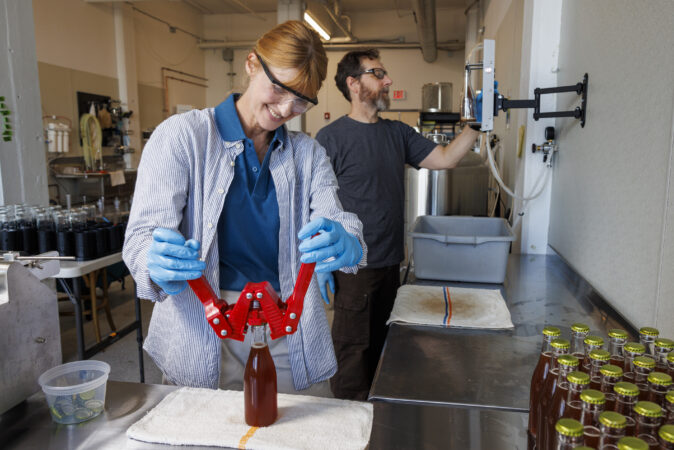
Each batch of aperitifs takes at least three days to produce, Sheehy said, and begins with her macerating and boiling the original herb blends that serve as the base for each beverage. Distillation is the longest part of the make process and can take upwards of several hours. After, Sheehy andGrubb carbonate and bottle each beverage by hand.
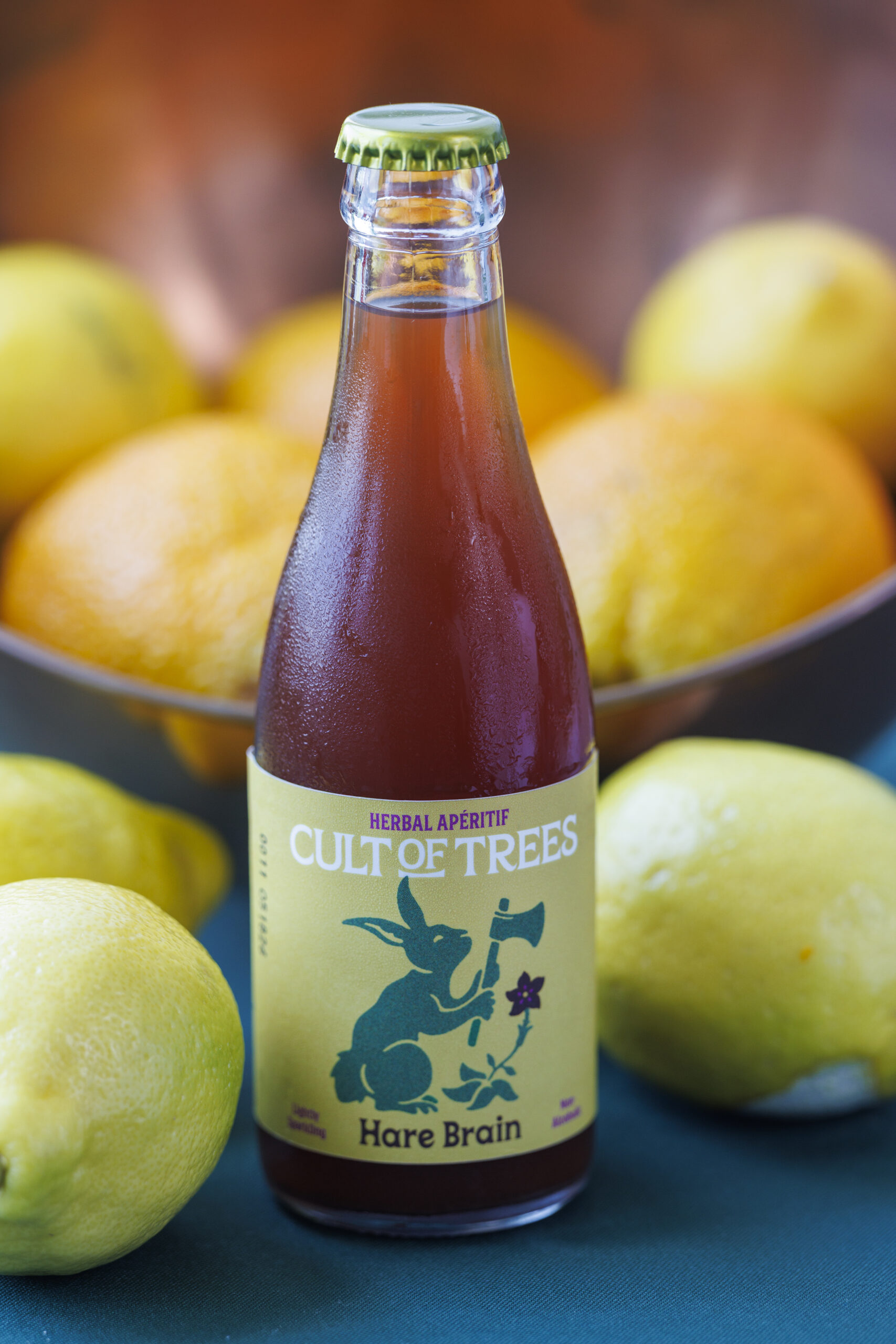
Hare Brain from Cult of Trees, a zero-proof aperitif that tastes like cola.
A single batch yields only 18 to 20 cases, according to Sheehy. “It’s labor intensive right now,” she said, “but will start to get more turnkey as we grow and are able to incorporate more equipment.”
“It’s a popular suggestion from our entire team when guests are looking for a unique and local NA option,” said Enswell manager Chelsea Boyer, who often pairs Hare Brain with Rival Bro’s Whistle & Cuss espresso. “The bitter nature and gentle carbonation of the Hare Brain pairs perfectly with the candied nuttiness of the espresso.”
Meredith Sheehy, owner of Cult of Trees, caps a bottle of Hare Brain at her Kensington production facility. Each bottle of the non-alcoholic spirit is packaged by hand.
The drinks have been selling well at Riverwards’ Old City location, said CEO Dan Morgan, buoyed by an April pop-up where Sheehy poured samples for guests. “I think their great flavors and beautiful packaging will really help them stand out,” Morgan said.
Cult of Trees production manager Gordon Grubb fills bottles of Hare Brain during the carbonation process at the brand’s Kensington studio.
Sheehy is betting on the same. “In my opinion, consumers increasingly want transparency, local sourcing, and a story behind what they drink,” she said. “That’s what we’re trying to do.”
What makes Philly’s halal dining unlike any other city is the diversity of cuisines available. It’s what made dining so exciting for me when I moved to Philly in 2020. As a Muslim growing up in Tennessee, halal options — aside from chicken and rice and one barbecue hotspot — were hard to come by. From the moment I began eating my way through my new home, it was clear Philly’s robust dining scene offered a grander landscape of halal eats.
Halal meat follows the tradition of zabihah, defining whether the animal has been fed and treated humanely before and during slaughter, blessed in the name of Allah, and drained of blood. The literal meaning of halal is “permissible,” which can be used to describe various parts of Muslims’ lifestyle, including dining habits. For example, rice and bread are halal, but alcohol and pork are haram — or prohibited.
Most halal-serving restaurants will identify themselves as such on their website or menus but a simple ask also helps verify. Similar to kosher meat, halal certifications are available, but “if it’s a Muslim-owned restaurant and they are guaranteeing and promising you that it’s halal, then that’s really the only research that’s required,” said Toba Hoda, who runs the Instagram account @phillyhalalspots.
Over the years, I’ve compiled a list of my favorite halal spots, from crispy Ethiopian fried chicken in West Philly to slow-cooked beef rendang in South Philly. Here are a handful of them that show the breadth of cuisines to try in Philly. — Hira Qureshi
Al-Baik Shawarma
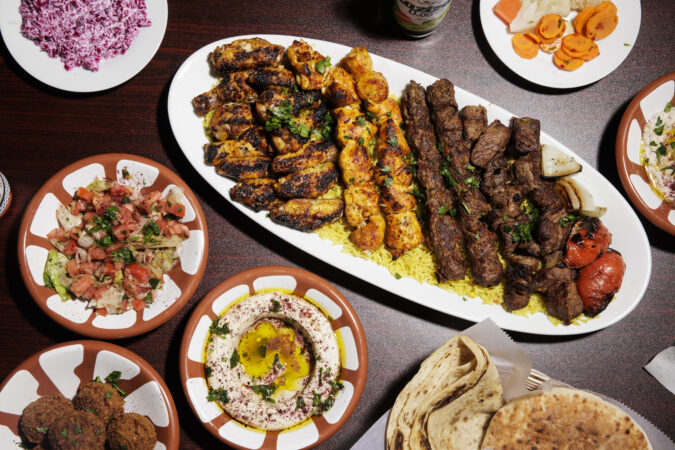
Tucked into a commercial strip on the ever-busy Willits Road, Al-Baik Shawarma is one of the best Palestinian restaurants in Philadelphia. Hailing from Ramallah, chef-owner Sohaib Al-Haj and his family serve juicy cuts of chicken, beef, and lamb seasoned with aplomb. Nestle into one of the plush booths and order the mashawi mixed grill platter to savor it all: kufta, chicken and beef kebab skewers, and chicken wings alongside rice, salad, hummus, grilled onions, tomatoes, and fresh laffa bread. The Northeast restaurant also has some of the best falafel in the city. Here, you can sip on Palestine Colas and enjoy sweets like coconut basbousa and pistachio Nutella cookies from local bakers. At least, that’s what I do.
In West Philly, chef Kurt Evans is serving an entire halal menu featuring Black American Chinese takeout. That means I’m walking in ready to order their crispy collard green egg rolls, saucy oxtail “lo-mane,” sweet and spicy General Roscoe’s chicken, sweet potato chili wings, and jerk chicken skewers. With limited seating, it’s best to take your order home — although I usually sneak a bite inside and end up scarfing down the rest while standing on the sidewalk.
What if halal fried chicken was also gluten-free? At Doro Bet, sisters Mebruka Kane and Hayat Ali (who also own the nearby Alif Brew, which offers traditional Ethiopian coffee service with fresh-roasted beans, and Salam Cafe in Germantown) make those dreams a reality. The fast-casual West Philly hotspot — an Inquirer 76 pick two years in a row — serves crispy, teff-coated fried chicken spiced with either berbere or lemon turmeric. It’s just a few blocks west of Clark Park, perfectly located for a savory treat after my farmers’ market visits. The restaurant also has Ethiopian classics like doro wot and tibs, along with vegetarian options like falafel wraps and teff-flour fried mushrooms. And don’t sleep on the tiramisu, made with the richness of that same Ethiopian coffee.
Philly’s new era of Indonesian cafés includes a South Philly spot that’s got a halal, pork-free menu. Griddle & Rice is all about dishes that marry Indonesian traditions with current trends and American breakfast foods. Take the nasi uduk, a breakfast coconut rice platter packed with crispy fried marinated chicken, sweet chili egg and tofu, sweet soy tempe, crunchy veggie fritter, sambal terasi shrimp paste chili, and crackly garlic crackers; or the iga bakar platter with grilled, Indonesian-spiced braised beef ribs, white rice, fried egg, more sambal terasi, and a salad. I would recommend ordering one of the best bowls of congee — with halal curry chicken broth and shredded chicken breast — in the city. And don’t sleep on the drinks — I slurped up the es kopi gula aren, a smoky Indonesian palm sugar latte, and mango matcha with coconut water in one sitting.
The beloved late Ena Widjojo’s family-run restaurant has been feeding South Philly for more than 20 years. These days it’s her daughter Maylia who runs the place, but they’ve stuck to the script — halal Indonesian classics. I love venturing to South Philly for their slow-cooked beef rendang, saté chicken (marinated in sweet soy and makrut lime juice, topped with peanut sauce), and crunchy Krupuk (garlic and tapioca chips). And I’m always reminded why the menu earned a semifinalist nod from the James Beard Foundation in 2018.
Since its inception in 2023, Korea Taqueria has mostly operated with a non-halal menu, with halal chicken offerings on a if-you-know-you-know basis. But as of March, owners Alexander Sherack and Rene Lopez announced their shift to a fully halal menu. “We’d be getting DMs [about halal offerings] just about every month, so there was always this seed planted from day one,” Sherack said. “Once we found local suppliers we made the shift.” The Korean Mexican grub, located in South Philly, Fishtown, and West Philly, includes bulgogi beef birria tacos, gochujang wings, Kimchi cheese fries, Korean fried chicken sandwich, and more. Consider ordering my go-to: the meal sampler, for all of it one order. Wash it down with horchata or watermelon agua fresca.
One of the 76 most vital restaurants in the Philly area sits in the middle of Montgomery County. The hour drive to Madness of Masala becomes a mandatory pilgrimage for those seeking halal goat pepper fry, malai paneer kabab, andhra shrimp curry, and other South Indian classics. The fiery tandoori spices tingle on my tongue as I devour stuffed mirchi bajji, kali mirch paneer, and goat ghee roast. I only need to order their syrupy gulab jamun and a Hyderabadi masala chai to cool down.
What makes this a West Philly institution? It’s owner Saad Alrayes’ chicken shish tawook — best known simply as the chicken maroosh. The first time I took a bite of the sandwich packed with juicy pieces of grilled chicken, tomato slices, sautéed onions, and snappy pickles, generously drizzled with creamy garlic sauce in a long hoagie roll — the namesake “maroosh way” — I understood. This was most definitely the best sandwich in the city.