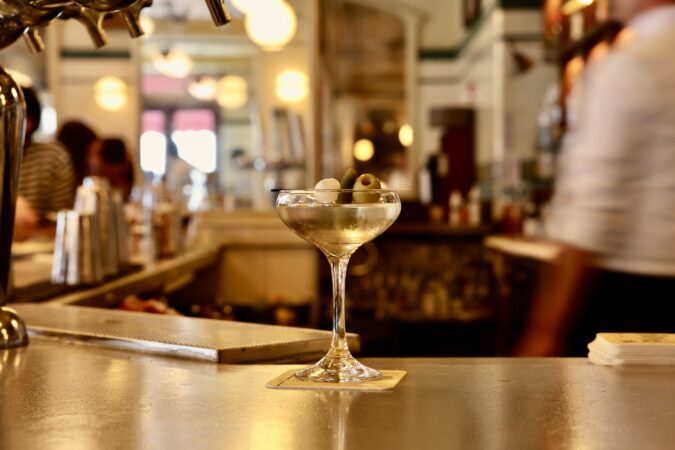
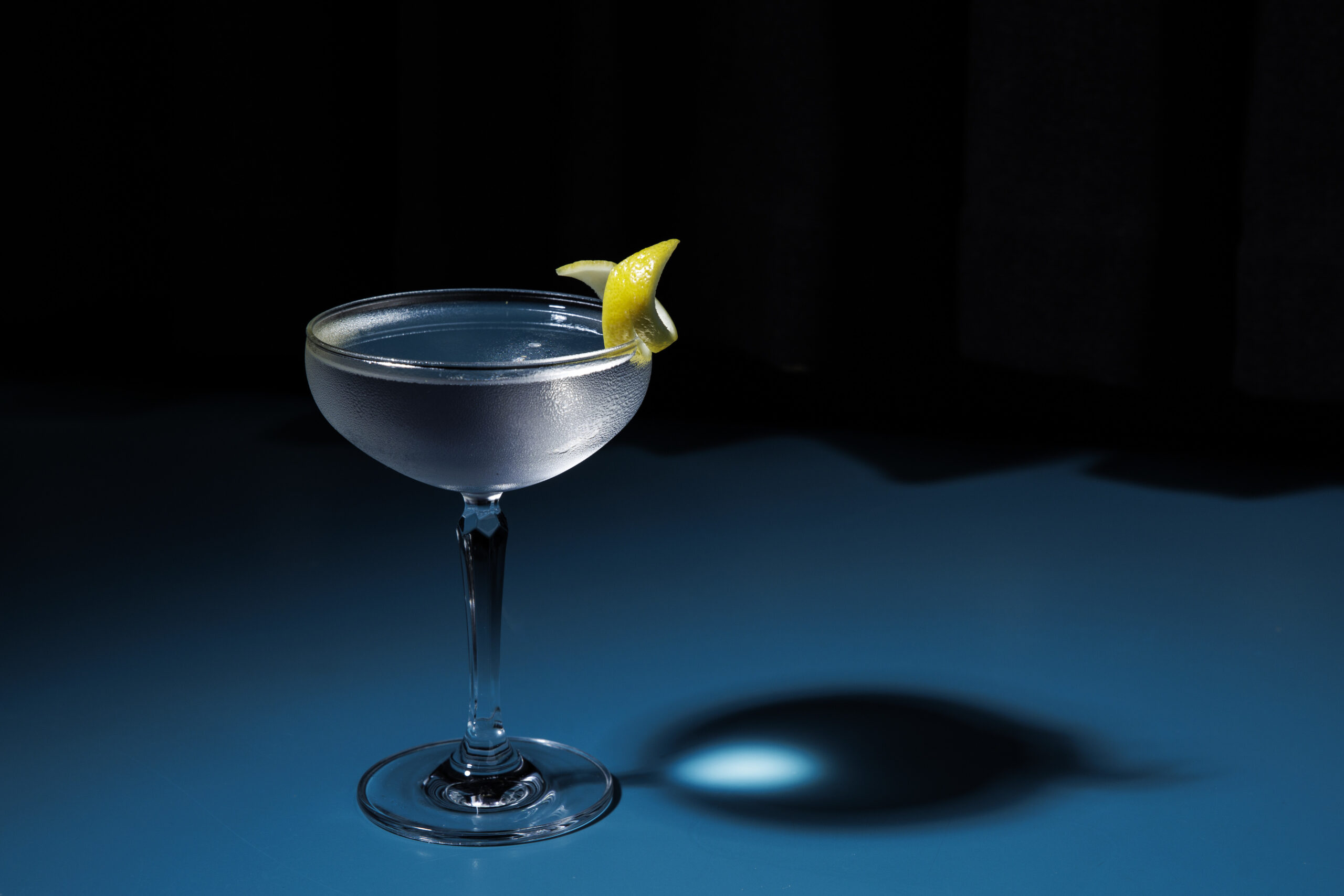
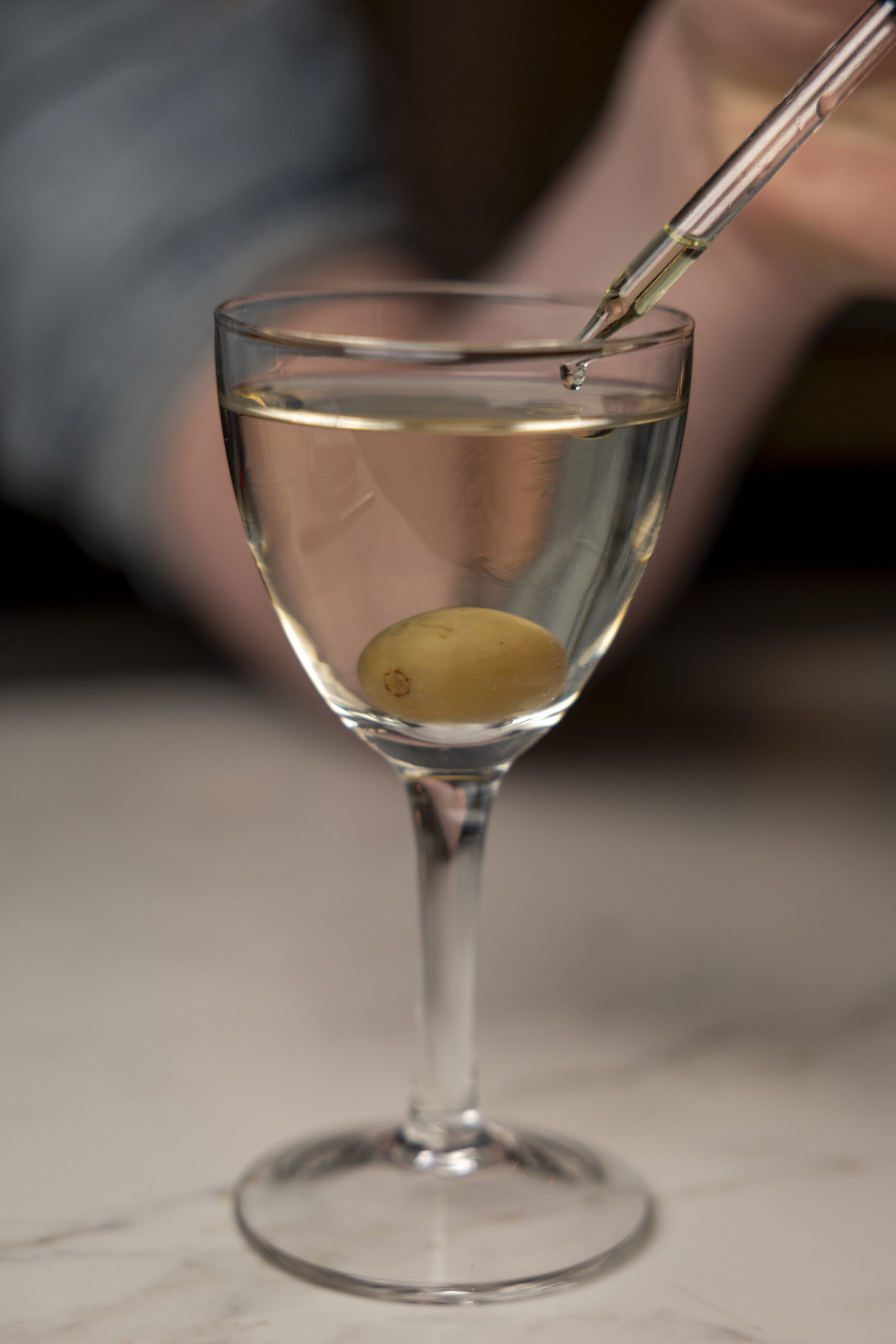
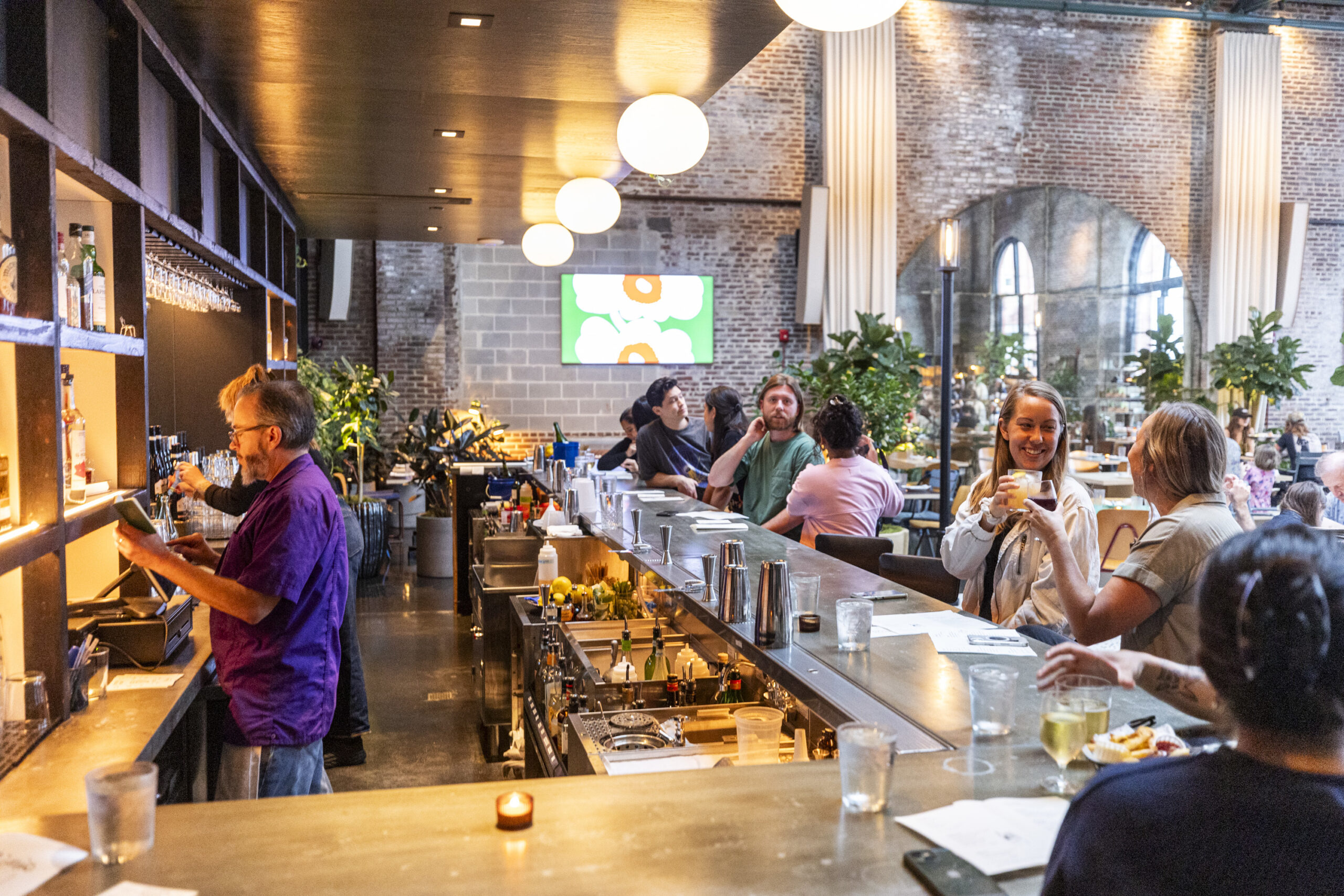
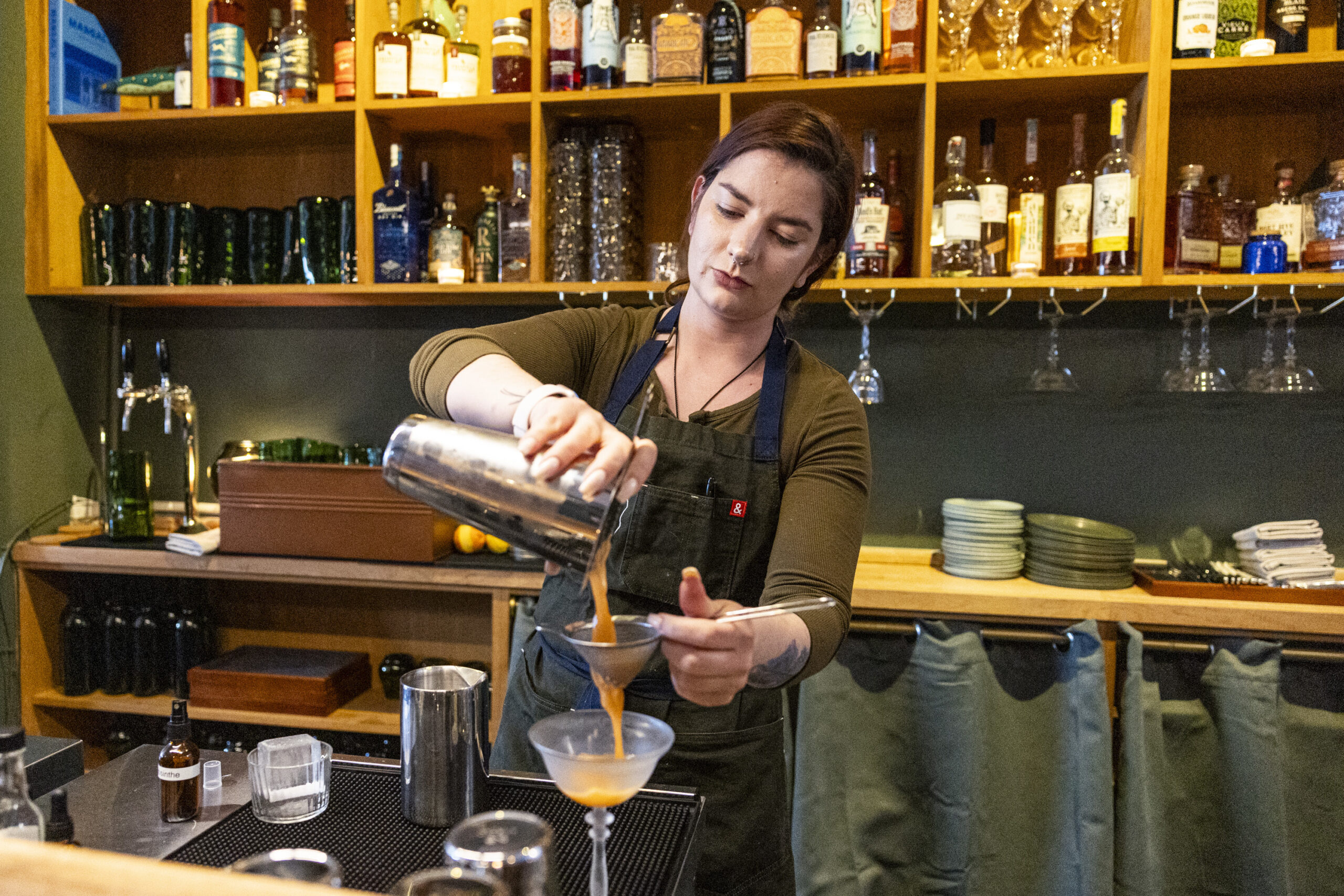
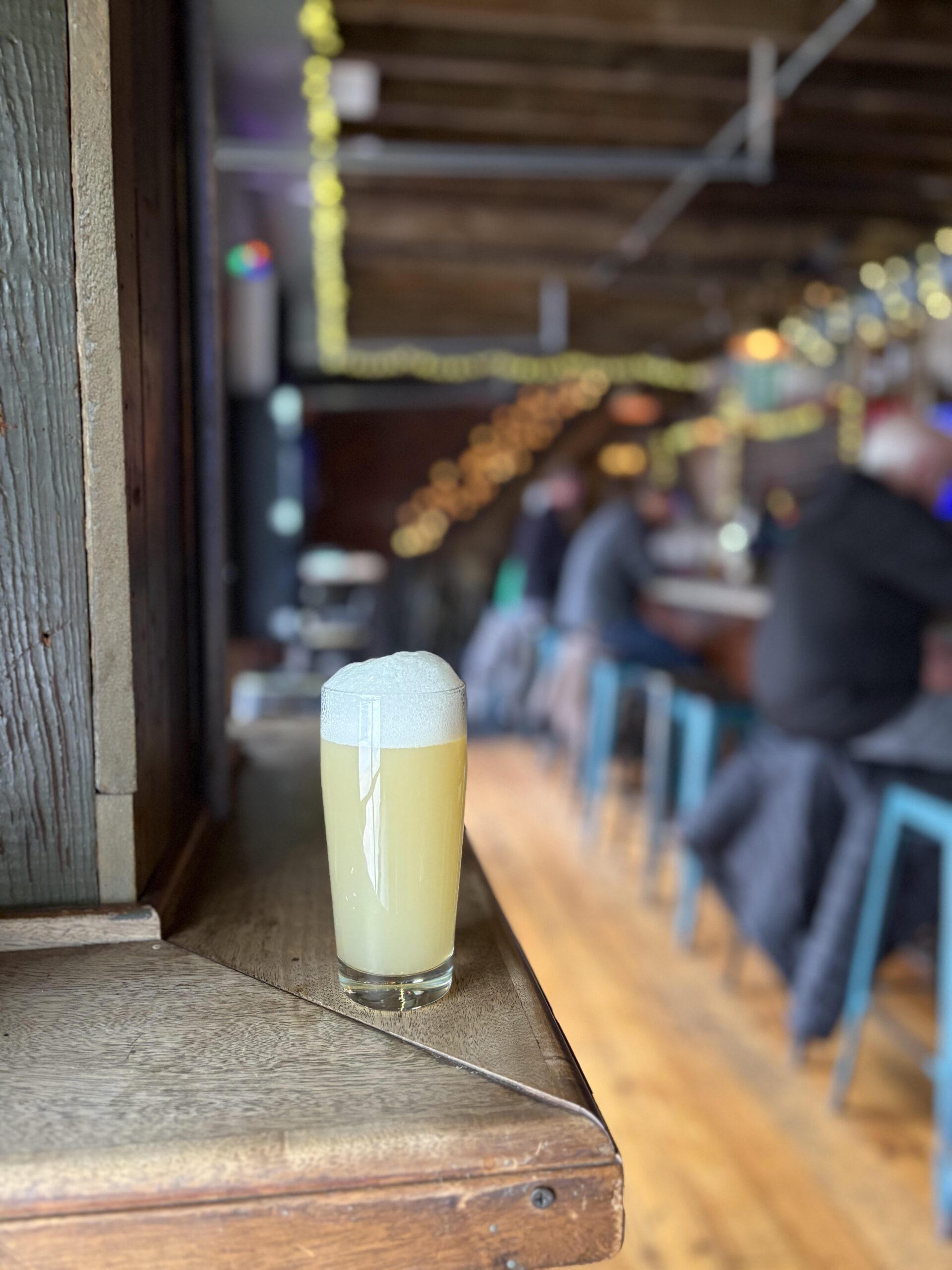
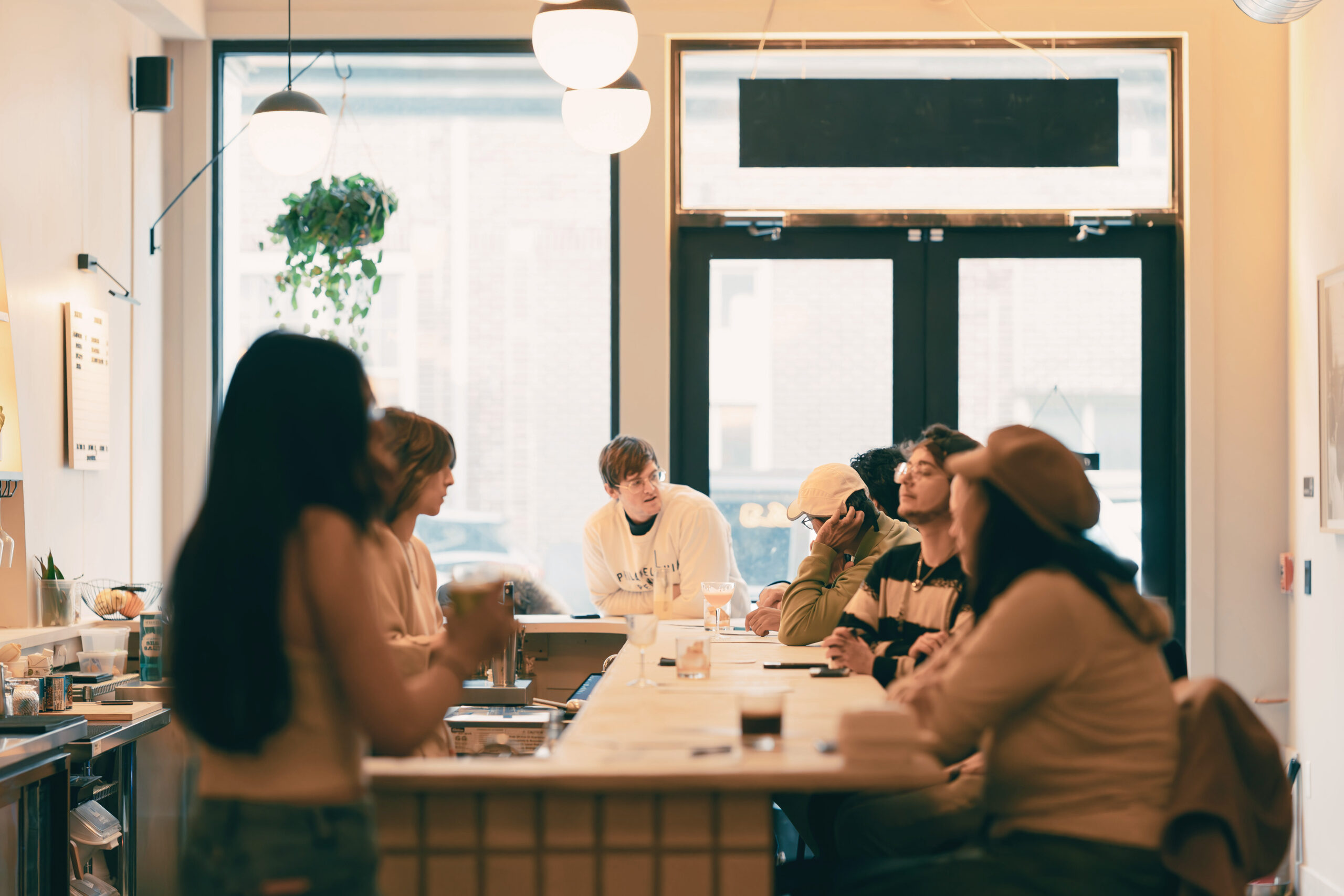
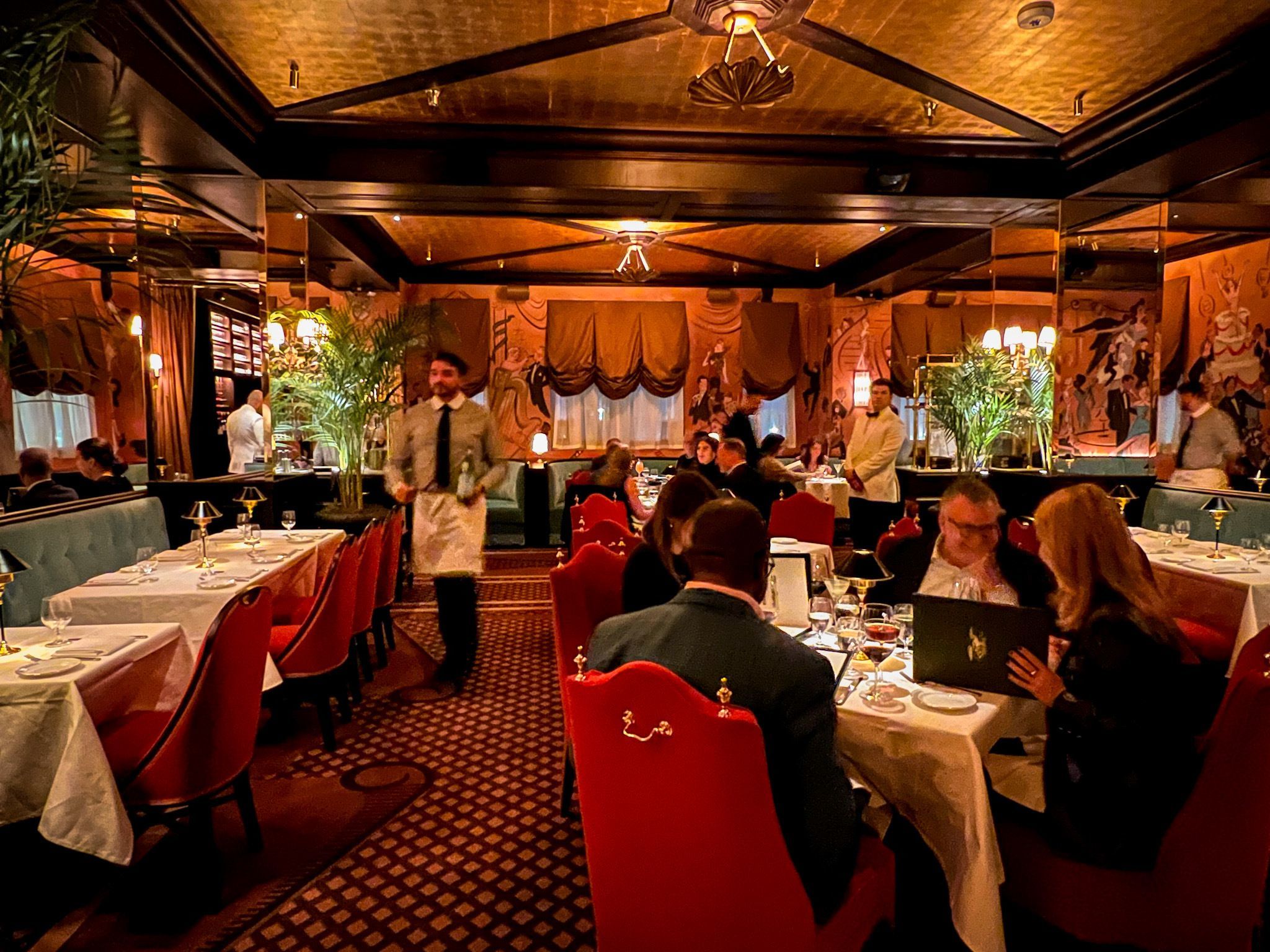
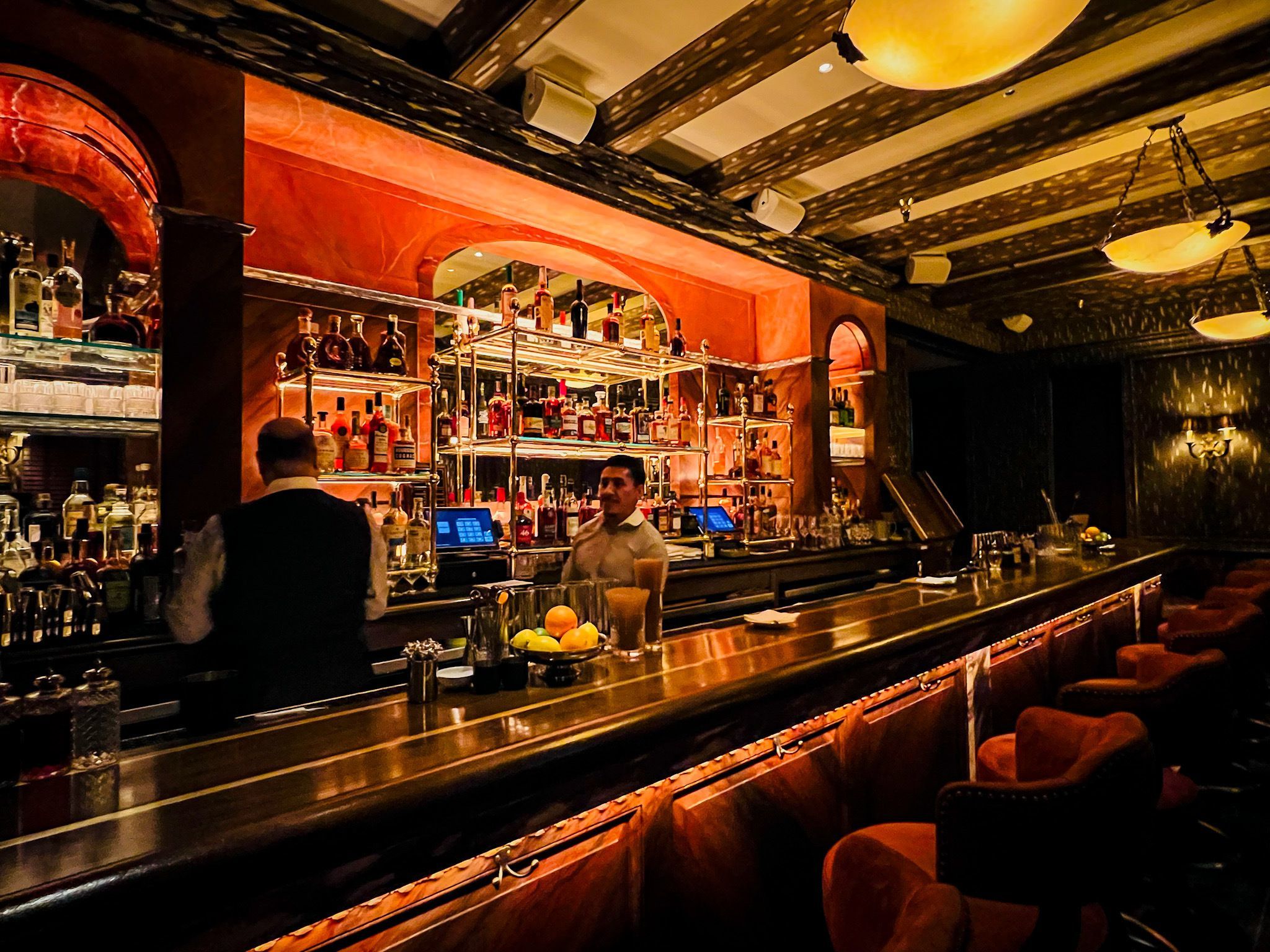
Last November, Parc switched the martini listed on their menu from their Nicoise martini to Le Dirty Martini ($16), a straightforward Wheatley Vodka-based cocktail with a heavy splash of olive brine and garnished with pitted queen olives.
For those of us who were fans of Parc’s pink-hued Nicoise martini, served in a Nick and Nora glass and garnished with a much smaller olive, the switch came as a surprise.
You can still order a Nicoise martini off-menu, which is technically a dirty martini (which uses olive brine), “as I was utilizing crossover [items] from the kitchen,” said Mark Murphy, the director of bar operations for all of Starr Restaurants. “But they may not have it quickly at the ready.”
Now, on an average Friday night, Parc is serving over 80 dirty martinis.
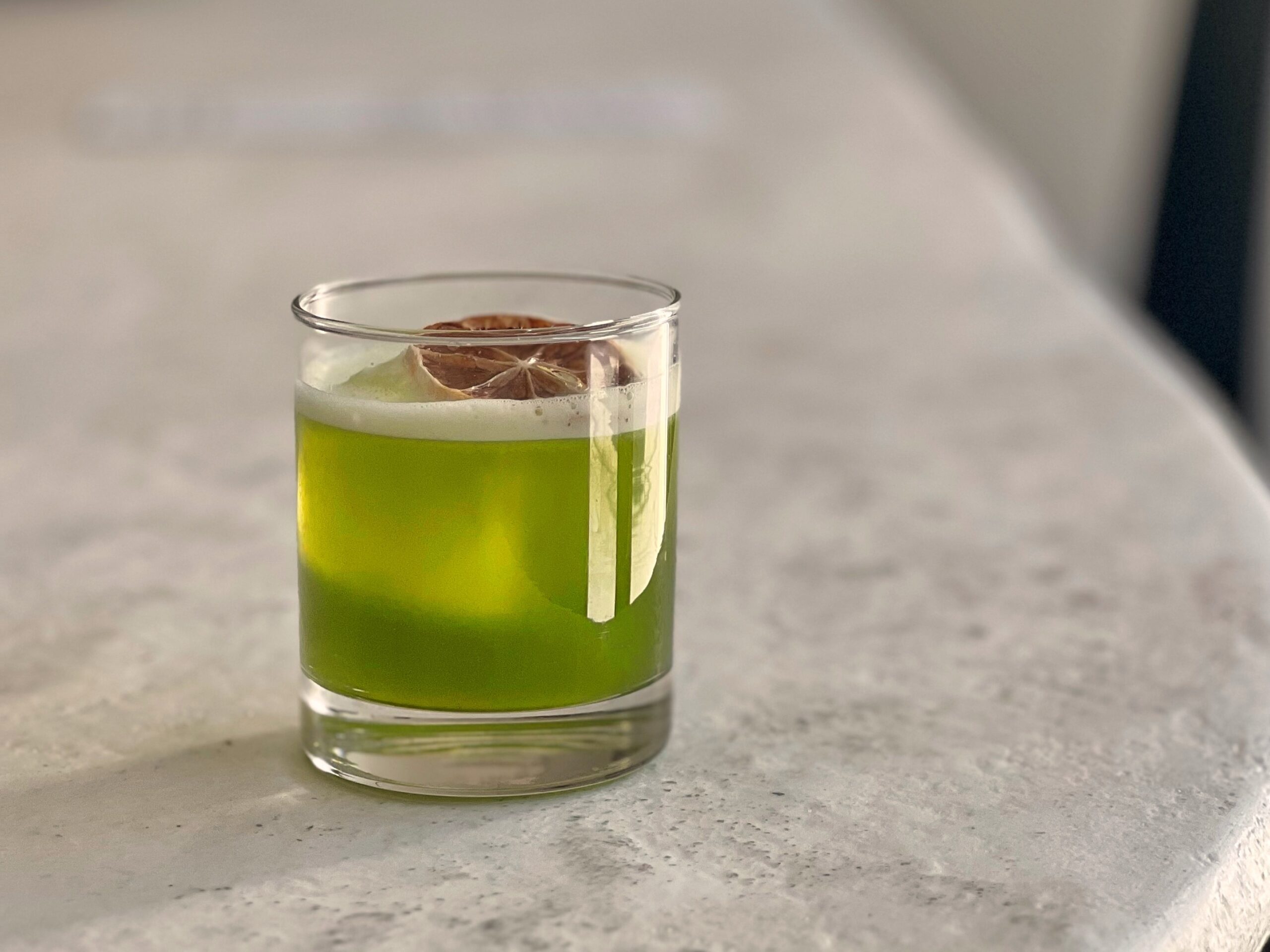
The martini at Andra Hem on July 2, 2025 in Philadelphia.
“Dirty martinis have quickly jumped to our biggest “off-menu” order,” confirmed Murphy.
Readers noted that The Inquirer’s guide to Philly’s best martinis skewed toward dirty martinis, rather than a classic version. But with data in hand, it’s clear that Philly’s martini tastes have actually changed, and that we are getting dirtier.
“Over the last two years there’s about a 33% increase in dirty martinis ordered,” said Murphy, who regularly scans Parc’s off-menu sales and realized that he should probably just put a dirty martini on the regular cocktail menu “to meet guest expectations and help bartenders with their speed of service.”
The Fleur’s martini in Philadelphia on Jan. 2, 2026.
Murphy has noticed customers move away from specialty cocktails. “With a food menu, you can only order what’s on the menu. With a wine menu, you can only order what’s on the wine menu. But with a cocktail menu, you can order what’s on the menu or you can say, ‘I will just have a dirty martini’ or something else.”
Murphy believes that this increase in attention to classic cocktails is a “cost sensitivity thing that has happened with rising prices. If 10 years ago, you or I walked into a bar or restaurant and saw something on the menu that had a good number of ingredients we weren’t sure about, but the cocktail was $12, we’d go ‘yeah, sure, let’s try this $12 drink and see what happens.’ But $12 is no longer the average price of a cocktail, and more often, we’re seeing cocktails around $20.
“So when drinks are not accessible, even in terms of simplicity, I think people are wanting value for what they know they can spend $16 on and get three ounces of vodka in a glass with brine that tastes good,” said Murphy.
Even while Gen Z is drinking less or zebra-striping (alternating alcoholic and nonalcoholic drinks), “according to Parc (and other Starr restaurants) not massive amounts [less] as the articles might indicate,” observed Murphy. “What I notice a bit more is a shift in sales. Some away from wine, and some away from specialty cocktails, and more towards … wait for it … dirty martinis [and other simple standards].”
He also acknowledges that there may be a change in customers’ palates. This trend is the least trendy of trends, but it does align with a propensity toward savory cocktails — a thread that has been winding through more avant garde cocktails, like Almanac’s konbini-inspired ones.
Coupled with the explosion of popularity in Del Frisco’s social media-dubbed “girl dinner,” which features half a dozen oysters, truffle fries, Caesar salad, and a dirty martini (though you have the option to get a different cocktail), dirty martini consumption is truly trending.
Though, admittedly, this is not necessarily the case at every single Philly establishment. I checked in with Fiorella, famous for the dirty pasta water martini ($17) and they reported a wavering in sales over the years (they sold 5,116 of the cocktails in 2023, 4,500 in 2024, and 4,667 last year). Their brown butter old-fashioned remains their most ordered cocktail through the years.
And what cocktail beats out Parc’s Le Dirty Martini in terms of sales? It’s their Cafe Parc or espresso martini ($17) with vanilla-infused Wheatley Vodka, Amaro, and Caffe Borghetti coffee liqueur. Dirty martinis might be on the rise, but espresso martinis aren’t going anywhere.
When done well, cheung fun, or Cantonese steamed rice rolls, are made to order and don’t need fillings or toppings to be delicious. Wrapped around beef and Chinese savory crullers, (youtiao), they’re a popular item at dim sum. But the best cheung fun is typically found at vendors dedicated to the silken, slippery, wide noodles, who specialize in perfecting the cheung fun’s crepe-like layers.
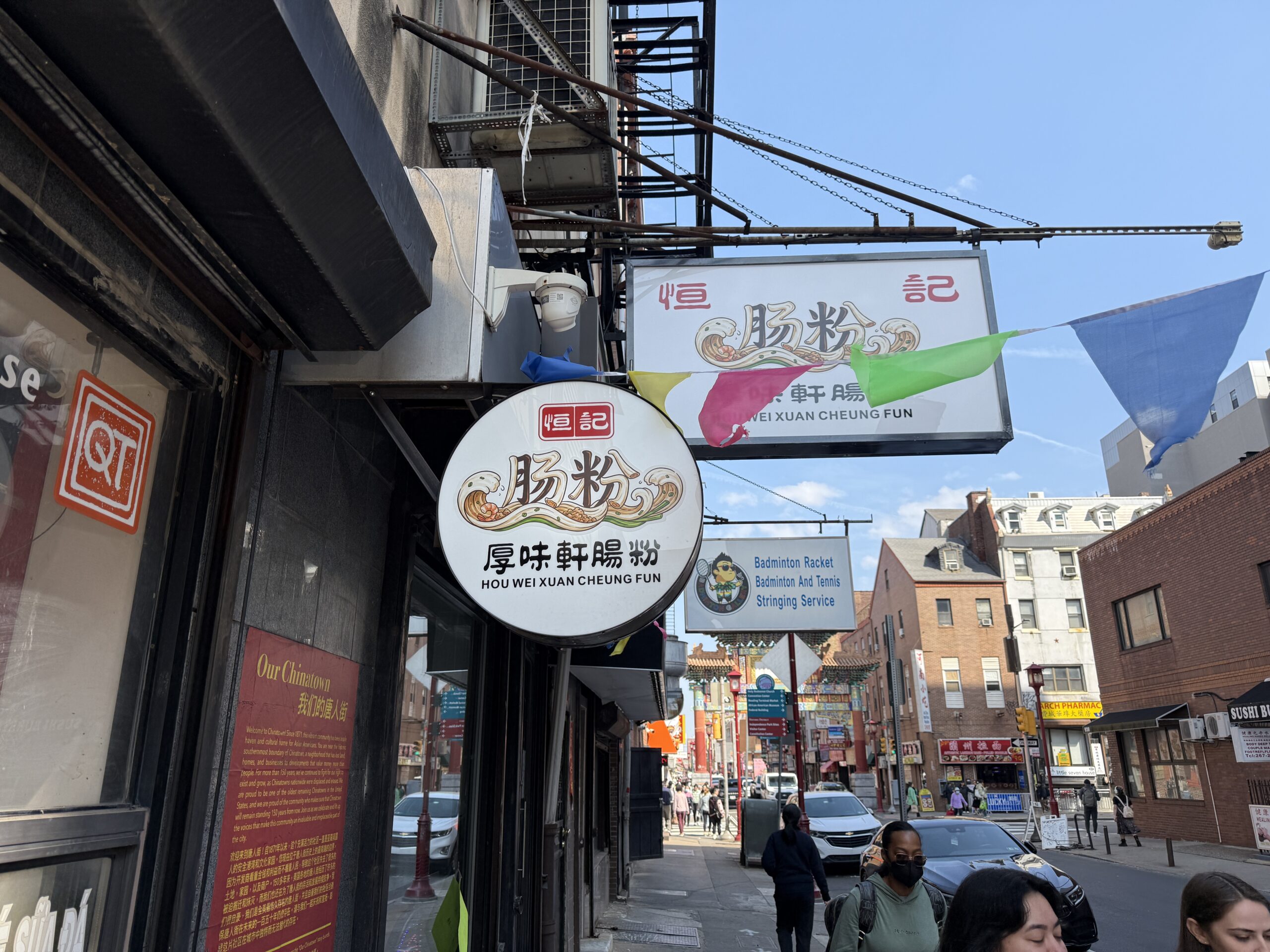
Susie Ruan and her husband, Jackie, opened Hen Ji Hou Wei Xuan Cheung Fun, a cheung fun-dedicated storefront at 50 N. 10th St. at the end of January. They relocated from Lewisburg, where they owned and operated a restaurant by the same name in Chinese (but spelled Heng Ji in English). They served standard Chinese American classics there, like broccoli beef with rice, salt and pepper shrimp, and orange chicken, as well as hot pot.
Hen Ji Hou Wei Xuan Cheung Fun, 50 N. 10th St., in Philadelphia. It opened at the end of January
They closed their Lewisburg location at the end of December and relocated to Philadelphia to devote themselves to the art of the steamed rice roll. “We just love making cheung fun!” said Susie, who is originally from Guangdong.
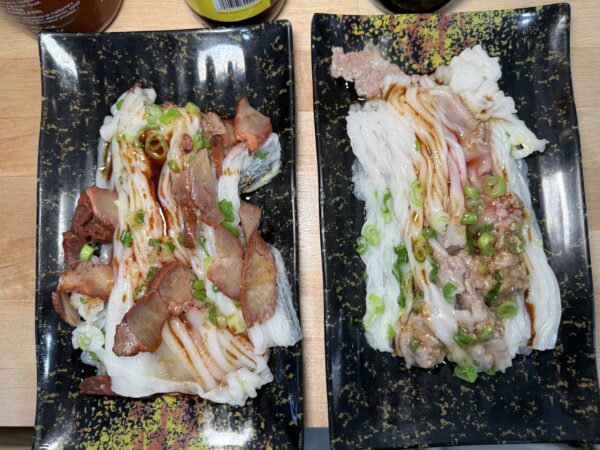
And the Ruans’ are indeed excellent and made fresh to order. Unlike the cheung fun found at most dim sum spots, these are not wrapped around a meat or youtiao filling. Tucked between the gossamer-thin noodle‘s delicate wrinkles are unctuous bits of beef or sliced char siu pork.
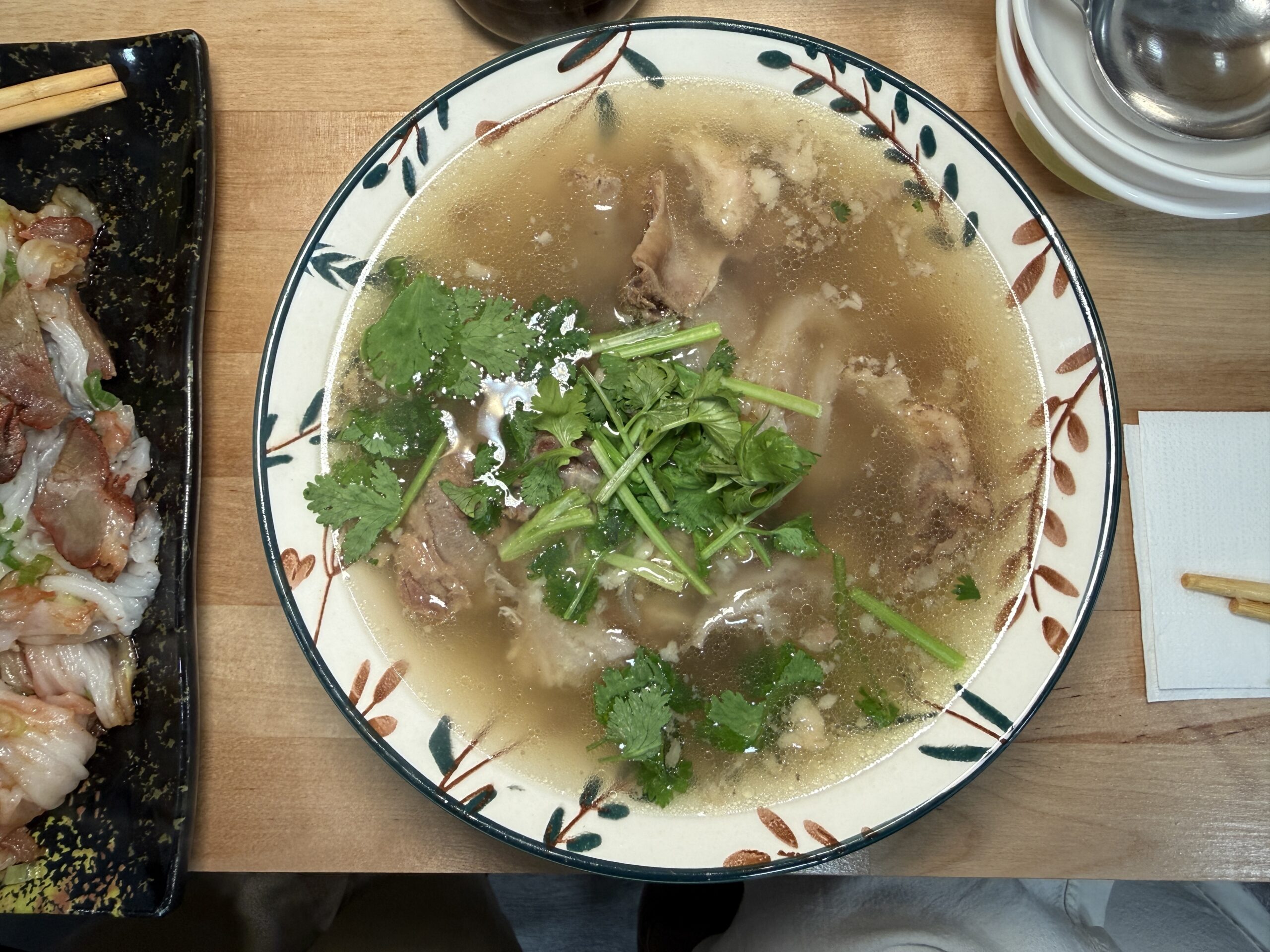
Beef bone soup from Hen Ji Hou Wei Xuan Cheung Fun.
Soy sauce, red wine vinegar, and chili oil, found on its counter, are available (and encouraged) as condiments.
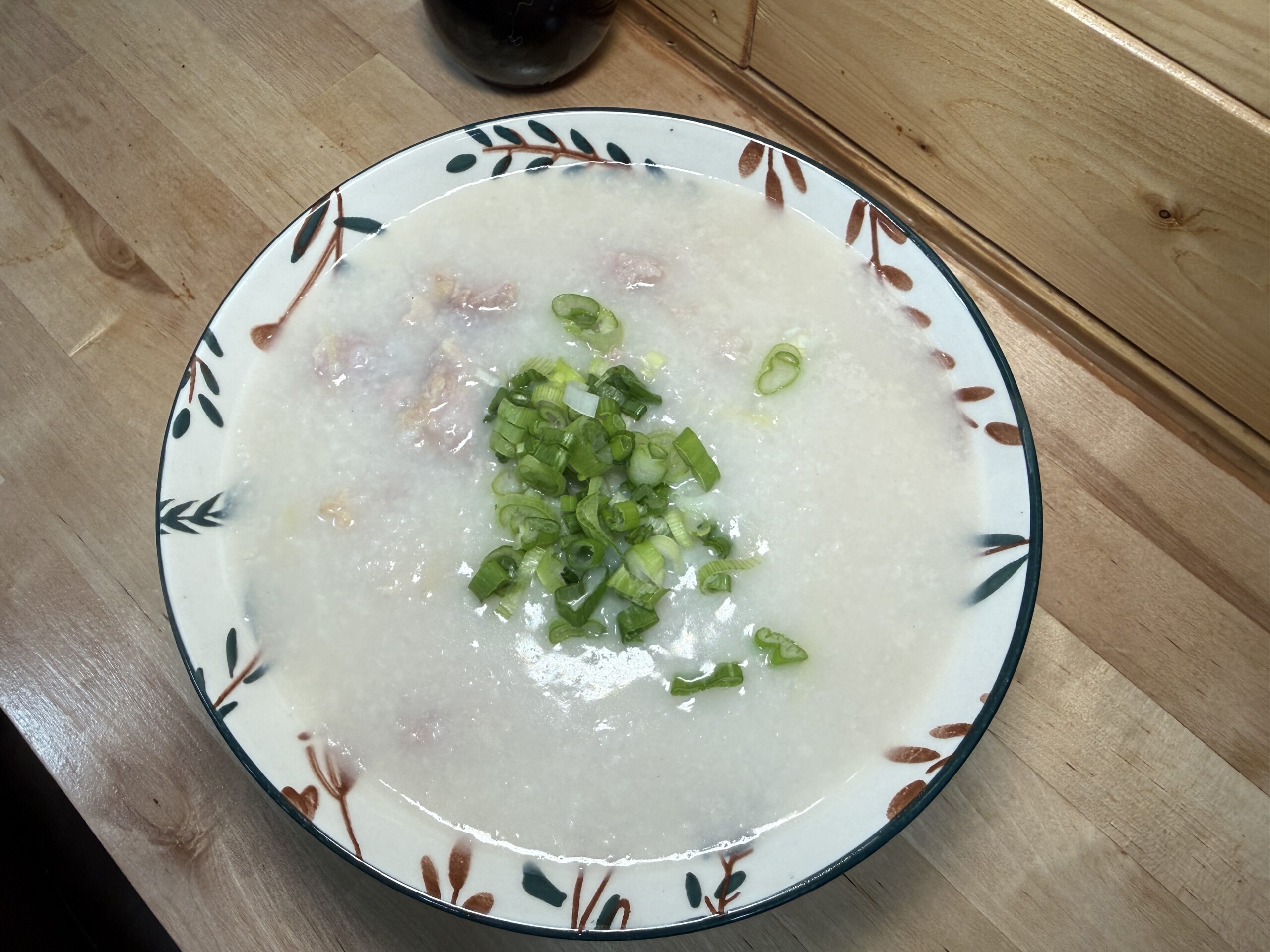
Hen Ji Hou Wei Xuan Cheung Fun also serves hearty beef bone broths, skewers of fish balls, and enormous bowls of thin but hearty congee, topped with slivers of fresh ginger. It joins Yin Ji Rice Roll in Chinatown, which opened a year ago, as a cheung fun-focused establishment.
Pork congee from Hen Ji Hou Wei Xuan Cheung Fun.
Hen Ji Hou Wei Xuan Cheung Fun, 50 N. 10th St., 267-888-3233. Open seven days a week, from 8 a.m. to 8 p.m. Counter seating and take-out only.
South Philly resident Olivia Menta and her partner love exploring Philly’s food scene, often hitting up several spots over the course of an evening. But the couple doesn’t want the literal headache that can sometimes come with such excursions.
“We’re people that love to spend long nights in restaurants together, but I just don’t want to consume a lot of alcohol,” Menta, 34, said. So the pair employs a drinking strategy that strikes a compromise between temperance and indulgence, alternating between alcoholic and non-alcoholic drinks.
To kick off an evening, Menta will order a low-alcohol cocktail — perhaps a spritz, or something vermouth or sherry-based — or a glass of sparkling wine. For her next drink, she’ll move to something non-alcoholic, a menu section that’s been growing by leaps and bounds in area bars and restaurants. She’ll switch back and forth as the night goes on, keeping her consumption (and her buzz) in check.
This increasingly popular strategy for moderating one’s intake occasionally goes by a fanciful new nickname: zebra-striping.
Customers enjoying drinks at the bar at Picnic in Kensington.
“Zebra-striping is the idea of alternating alcoholic and non-alcoholic beverages,” explained Max Glenn, wine buyer for Picnic in East Kensington. “It offers a nice pace to a night out, as opposed to binge drinking and feeling worn out from simply being social.”
Zebra-striping is not a commonly used phrase, but the practice — which itself is not new and arguably a sign of good common sense — is encouraged and widespread. “I’m often the one introducing the term to people,” Glenn said. “But nickname or not, it’s happening. Sometimes it’s water, other times it’s switching to a non-alcoholic beer between drinks.”
Zebra-striping is highly customizable — and it has no hard-and-fast rules. “I’ve seen pubs offer to cut a pint of Guinness with 0.0% Guinness, thus making it a more sessionable 2.2% beer,” Glenn said. “Or you can alternate a regular beer with a [nonalcoholic drink] 0.0%, or water. It’s up to you.” (The Guinness idea recently stirred controversy online for what the right ratio of regular beer to NA beer should be, with 60/40 being the most commonly happy medium.)
For Menta, zebra-striping is at its best when the bar or restaurant has put some thought into its non-alcoholic offerings — something that’s happening more and more.
Bar manager Petra Manchina making a drink at Emmett, in South Kensington. Like many restaurants and bars, Emmett has paid special attention to its non-alcoholic offerings.
“I get excited when there’s something unusual to try, instead of the typical sparkling water and citrus,” she said. “Emmett [chef Evan Snyder’s Mediterranean restaurant in South Kensington] does this well — they had an NA cocktail on the menu last winter that had roasted eggplant in it … I still think about it.”
Even when the mocktails aren’t as creative as that, Menta sticks to the strategy, something she’s been doing consciously for a year and a half, ever since learning the term from her partner. “Zebra-striping is a way for both of us to explore and experience in a way that is perfectly balanced,” she said.
Alcohol and non-alcohol, side by side
A growing majority of Philly’s bars and restaurants have bolstered the mocktail and zero-proof options on their menus, listing them alongside martinis, Manhattans, and beer and wine. It’s the natural evolution of a trend that has its roots in a month-long test of willpower.
“Four years ago, everyone was asking for Dry January options,” said Bonnie Garbinski, director of operations for American Sardine Bar and South Philadelphia Taproom. As time went on and the requests became more frequent, Garbinski added a few NA offerings to the regular menu; the selection has grown from there. “We now keep four to six [NA drinks] year-round.”
Second District’s Anti-Plato , an IPA-inspired soft drink with a green tea base that gets sweetened with pineapple juice; acidified orange, lime, and citric acid; then finished with dry-hopping and carbonation.
Sardine Bar sister establishment Second District Brewing has likewise made its menu more NA-friendly. But rather than bringing in outside NA beers and calling it a day, the Bancroft Street brewery experimented with making its own close-to-beer offering, eventually landing on a pineapple- and lime-fortified tea that’s dry-hopped to mimic the mouthfeel and flavor of a hazy IPA. The Second District team plans to keep an iteration of the beer-inspired NA soft drink on the menu, updating the fruit flavors throughout the year.
Bars aren’t the only alcohol-centered businesses integrating NA options. Local breweries have taken note of customers’ zero-proof inclinations: Ardmore’s Tired Hands debuted non-alcoholic IPA N/Alien Church in 2024, and Callowhill’s Love City Brewing introduced its first NA beer, Lo-Key Lager, last year. Additionally, bottle shops all around Philadelphia are carrying NA wines, beers and cocktails. Options are vast, ranging from imported NA spritzes and spirits to emerging local NA brands, such as Cult of Trees apertifs.
Bar Palmina on Front Street is an alcohol-free space focused on craft cocktails. About half of its customers consume alcohol in other settings, estimates owner Nikki Graziano.
The ever-increasing selection of NA products has allowed for booze-free bottle shops and bars, several of which have opened in the Philly region in recent years. While these spaces can be havens for teetotalers, they also attract customers who are curbing their alcohol consumption.
Nikki Graziano owns Fishtown’s Bar Palmina, a purely non-alcoholic space that’s been open nearly two years, with a focus on craft cocktails. Graziano said while the zebra-striping language isn’t exactly popular among her guests — “people are aware of the term, but (forgive me) in a ‘stop trying to make fetch happen’ type of way,” she said — the concept is a familiar one. About half of her customers, including several Palmina regulars, drink alcohol in other settings, she said.
Bar Palmina’s Union Bird is zero-proof garden margarita with green bell pepper, parsley, celery, cucumber, lime, and honey.
“My customers are more interested in a bigger, larger lifestyle change,” Graziano said. “I think that [overall] people are just more conscious of how much they’re drinking, why, and how often.”
For Menta, the benefits of zebra-striping are obvious. “I want to feel balanced in my mind and body. Having a full dinner with wine and cocktails doesn’t always serve that,” she said. “I’m a curious person and want to try as much of the menu as possible … This is the best way to meet both of my values.
“I don’t even think about it all that much anymore,” she said. “It’s just what I do“
Chance Anies grew up at the tables of America’s chain restaurants. His mom’s career as a manager opening locations for TGI Friday’s, Olive Garden, Dave & Buster’s and others meant he and his siblings spent some of their most important life events in the glow of neon flair illuminating bottomless breadstick bowls and blooming onions.
“There was something magical about growing up there,“ says Anies, 34. “There was always something for everybody, for anyone who walked in the door, including kids. They were also affordable. And what I’ve found over the years is that middle-class dining like that has been dying.”
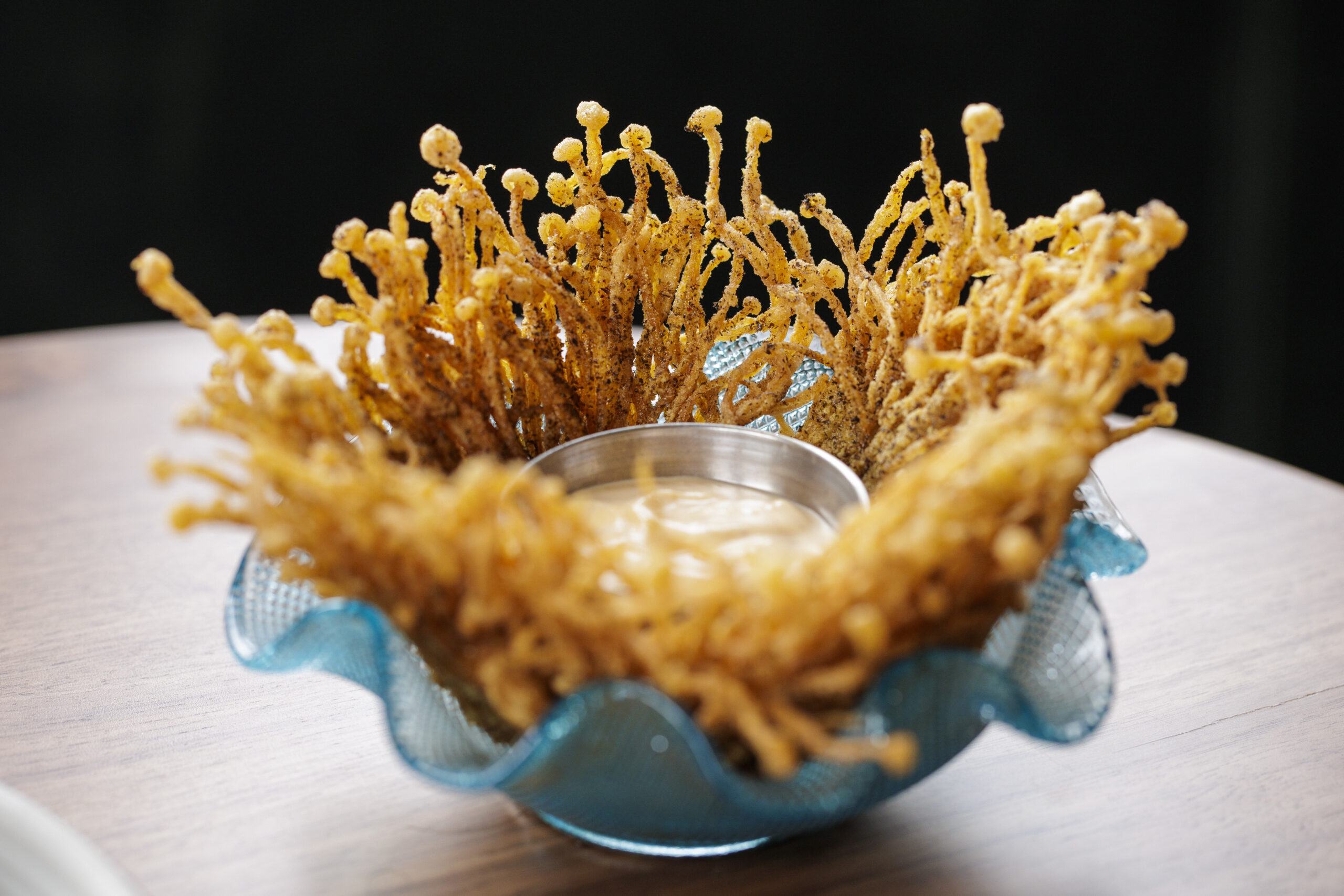
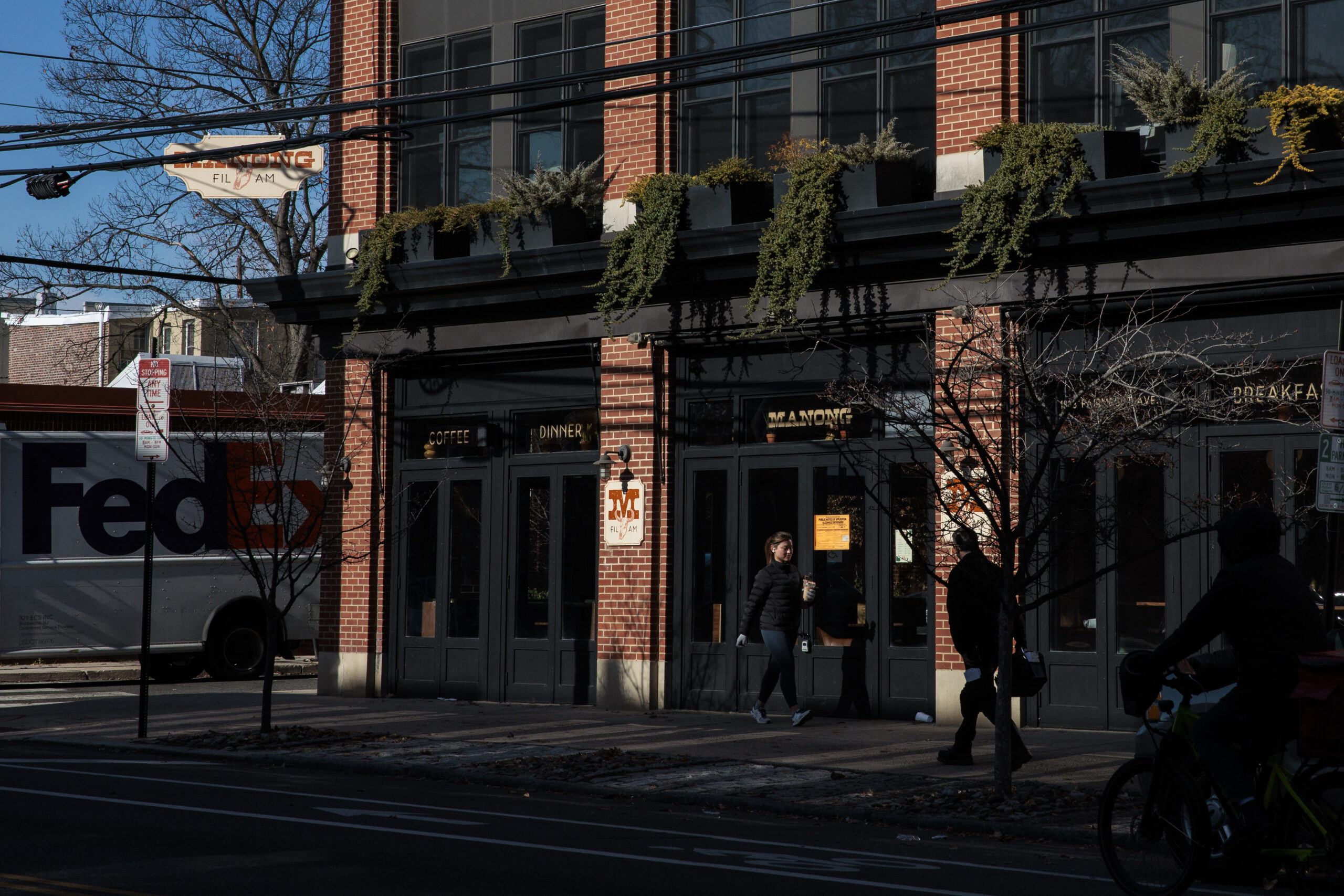
Manong, which opened three months ago in the former Tela’s space at 19th and Fairmount Avenue, is filled with references to the mid-tier chains of his youth. From the longhorn skull emblazoned on the sign at its front door, to the Teenage Mutant Ninja Turtles arcade game being played for free by guests in the corner, to actual neon signs from both Applebee’s and Outback alight in its two bathrooms, the cues are here for what Anies calls his chain-inspired Filipino-American steakhouse. There’s even the signature Bloom Shroom, a fantastic fungi riff on the blooming onion, whose deep-fried thatch of enoki mushrooms is irresistible — at least, when it isn’t overcooked or oversalted, as it was on my first visit.
The Bloom Shroom at Manong on Thursday, Nov. 20, 2025 in Philadelphia.
This kitchen has largely been more reliable than that, and nailed the shroom on a following visit, when its broom-like sweep of crunchy-earthy mushrooms threads lived-up to their potential. It was also clear after my visits here that catchy labels trying to characterize Anies’ sequel restaurant to Tabachoy, his Filipino BYOB hit in Bella Vista, really don’t do its concept justice. For one thing, it’s not a steakhouse, considering Manong didn’t even have a steak on the menu (beyond grilled beef skewers) for its first three months, when an intriguing hanger steak with fish sauce and pickled onions replaced the prime rib.
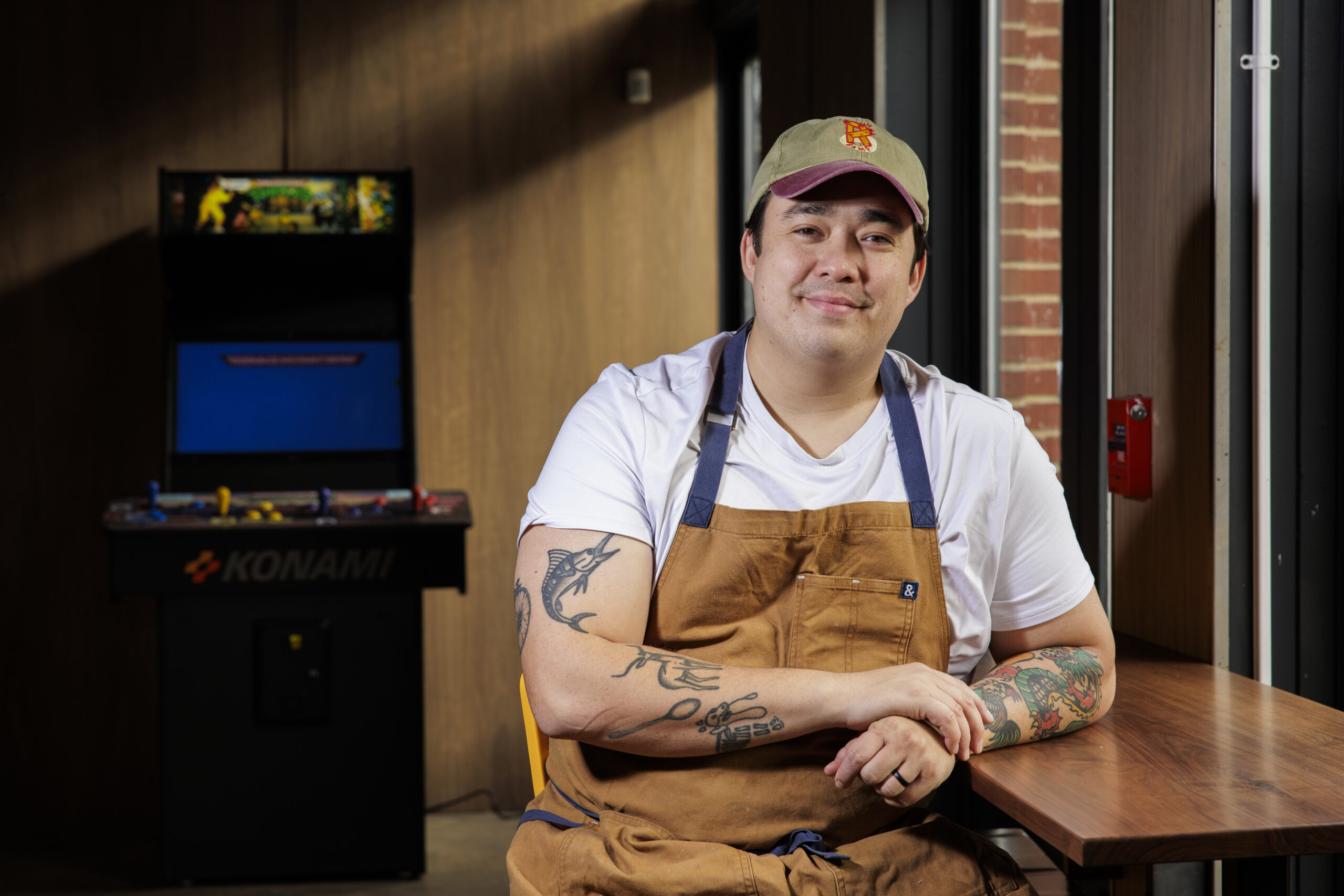
Chef Chance Anies posed for a portrait at Manong on Thursday, Nov. 20, 2025 in Philadelphia.
The swap was a pragmatic concession to keep the menu on the more affordable side, a prime characteristic of chain restaurant culture Anies says inspires him. With check averages around $50 to $60, including drinks, dinner at Manong costs more than going to Longhorn. But it succeeds in hitting a more accessible sweet spot than most of Philly’s pricier destination restaurants without sacrificing the quality of from-scratch food. There’s a balancing act of handcraft and value here most chain restaurants simply can’t touch.
The dynamite lumpia at Manong in Philadelphia, Pa., on Thursday, March. 5, 2026.
There’s also a level of personality, bold flavors, and storytelling to the food at Manong that is the antithesis of the sanitized corporate restaurant. This menu is a unique reflection of Anies’ childhood and life experiences as a Filipino-American — including his previous careers as an English teacher, medical researcher and food truck operator — that also diverges with its whimsy and creativity from the more traditionally-framed Filipino flavors anchoring Tabachoy.
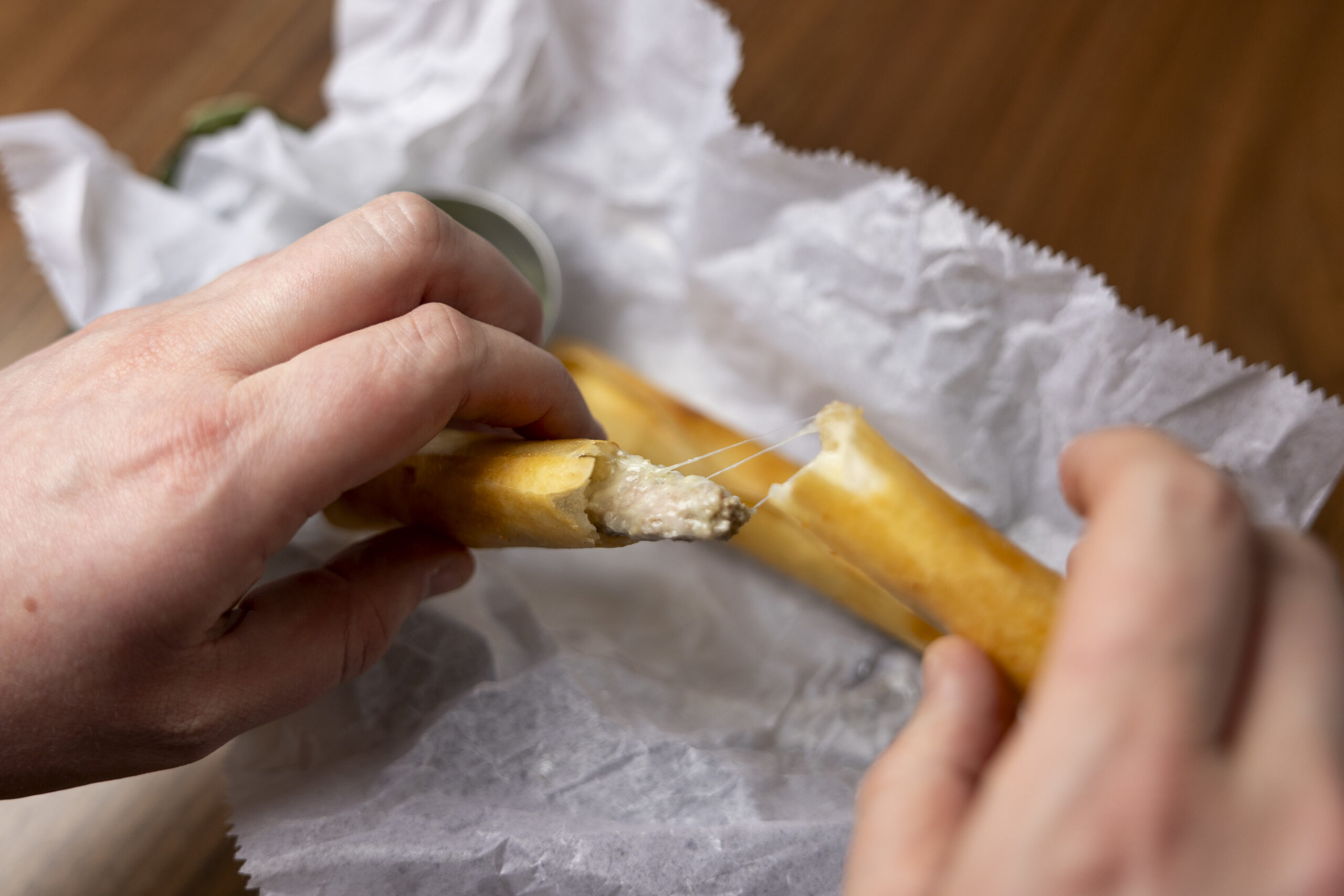
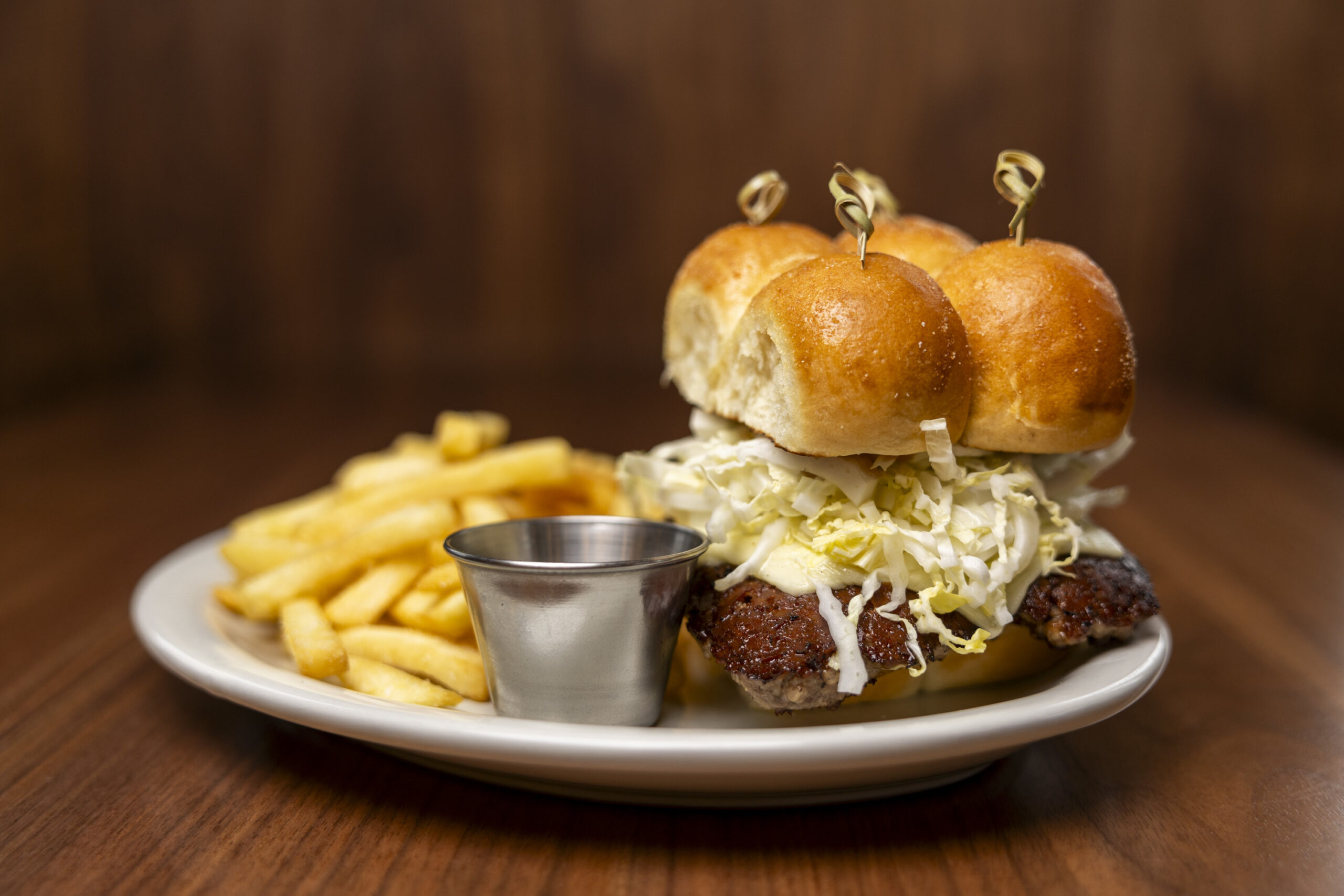
There’s an equivalent to mozzarella sticks at Manong, the dynamite lumpia, but they’re wrapped inside crispy spring roll wrappers and laced with tender pork and minced jalapeños alongside a sweet chili dip. Manong also offers one of the most distinctive new cheeseburgers in the city, a half-pound patty that spans the width of four small pandesal rolls that are still attached, like King’s Hawaiian bread.
The connected rolls can easily be divided into shareable sliders, but avoid the urge to supersize it into a full one-pound of meat because it throws all the proportions off. The standard serving maximizes its many Filipino flourishes, from the light sweetness on the fresh-baked bread to the tropical backnotes of the house banana ketchup, the calamansi-tanged slaw, and a mayo shaded by bangus (tinned milkfish), whose oily fillets are buzzed into an umami-rich spread that Anies says carries a Pinoy schmear of “je ne sais quoi.”
The 1/2lb balong burger at Manong in Philadelphia, Pa., on Thursday, March. 5, 2026.
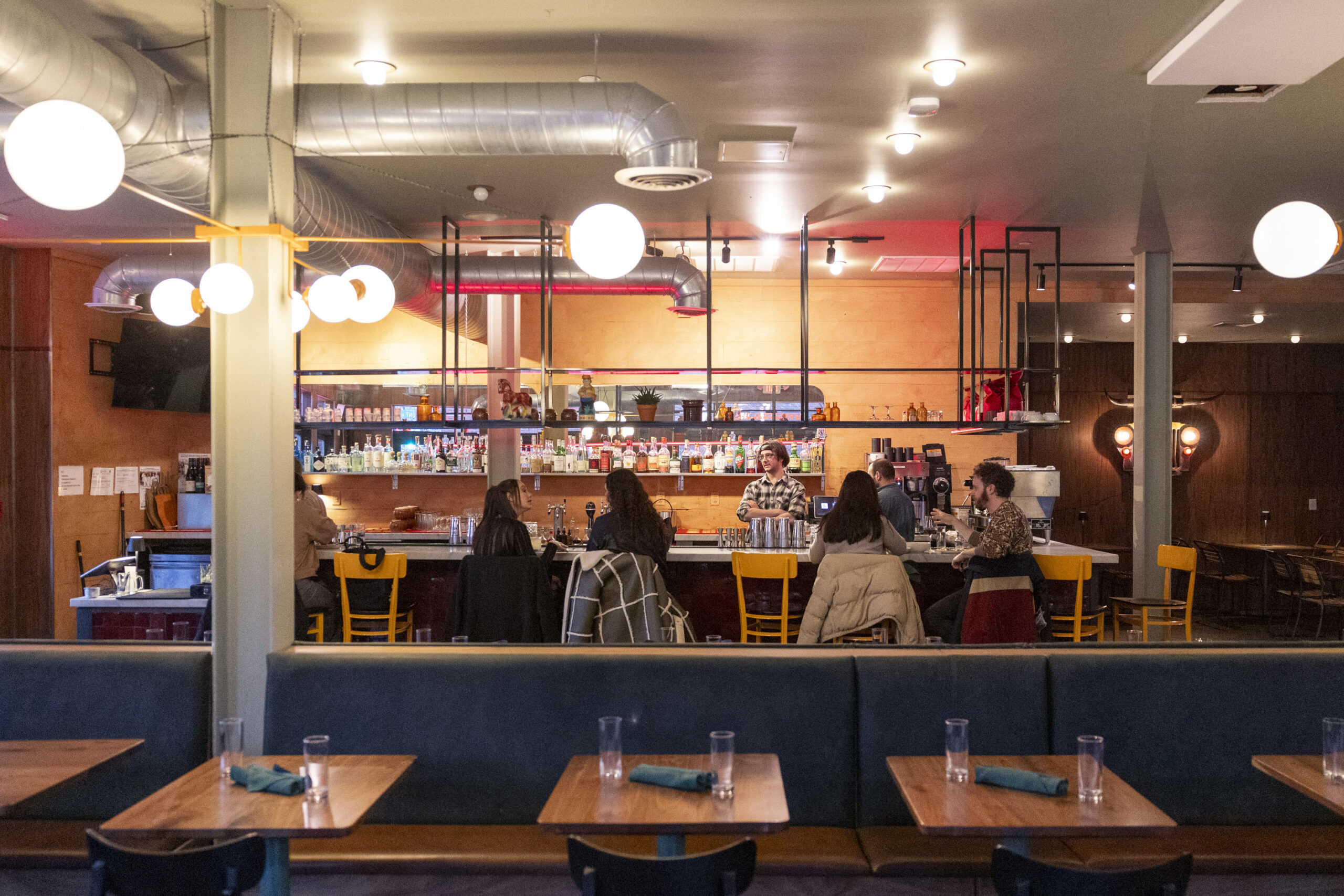
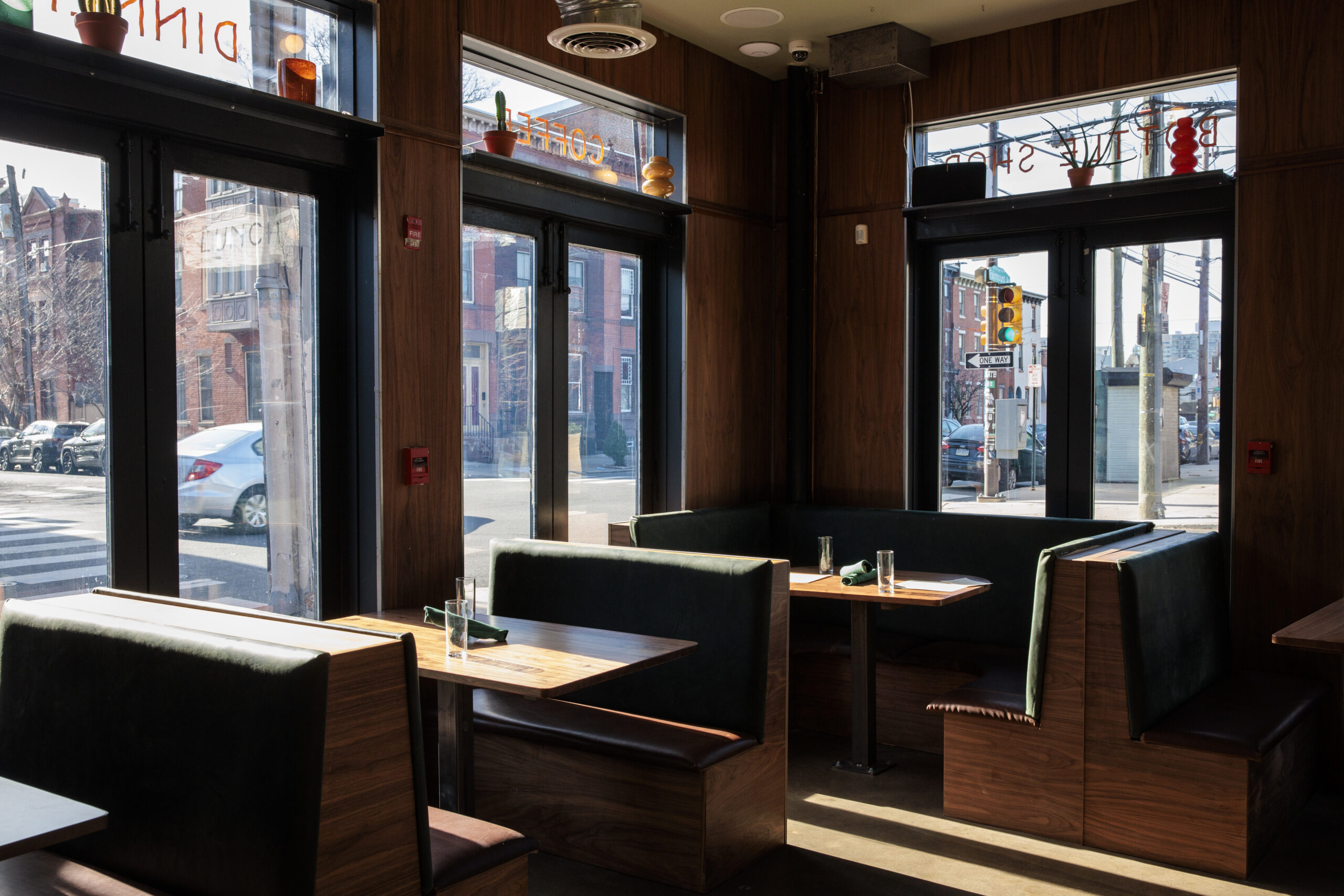
The 75-seat Manong, which means “elder brother” in Ilocano, the Filipino dialect of Anies’ father’s family, is close to three times as big as Tabachoy, a 28-seater in Bella Vista so snug you need to access the bathroom through an alley door at the rear of the building. But Anies has made good use of this sunny, high-ceilinged corner space, warming its interior with rustic walnut accents and adding convivial booth seating to both its window walls and a central banquette.
The exterior of Manong on Tuesday, Dec. 9, 2025 in Philadelphia.
With room for large parties, including a back alcove beneath mounted horns and a vintage truck grill with illuminated headlights, plus 13 seats at the bar, there were more groups of people simultaneously celebrating at Manong than any restaurant I’ve visited in recent memory. Conjuring that kind of joy, and for such a broad cross-section of customers, is one aspect of “everyone’s family” magic that Anies has successfully channeled.
Customers enjoying drinks and food at the bar at Manong in Philadelphia, Pa., on Thursday, March. 5, 2026.The interior of Manong on Tuesday, Dec. 9, 2025 in Philadelphia.
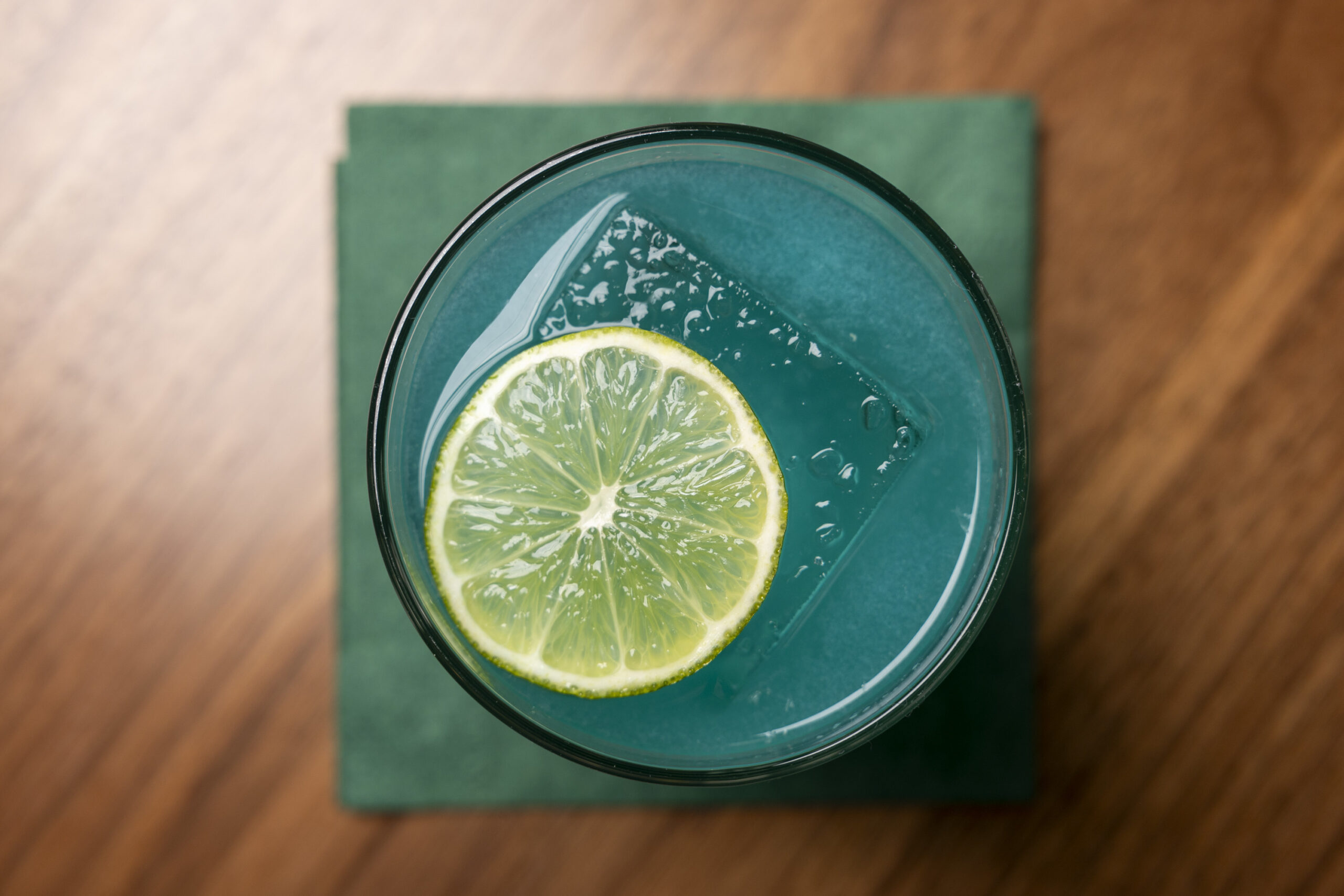
A drink program overseen by beverage manager Eli Ezer helps buoy the festive mood with a variety of fun, colorful drinks that also offer thematic twists, like the sky blue Otso Otso, a riff on a spicy margarita infused with green peppercorn, lemongrass, and calamansi, or an espresso martini with the added taste of sweet corn (a combo with roots in the Philippines), or a Pinoy version of the City Wide, pairing San Miguel Lite with a shot of Kasama rum.
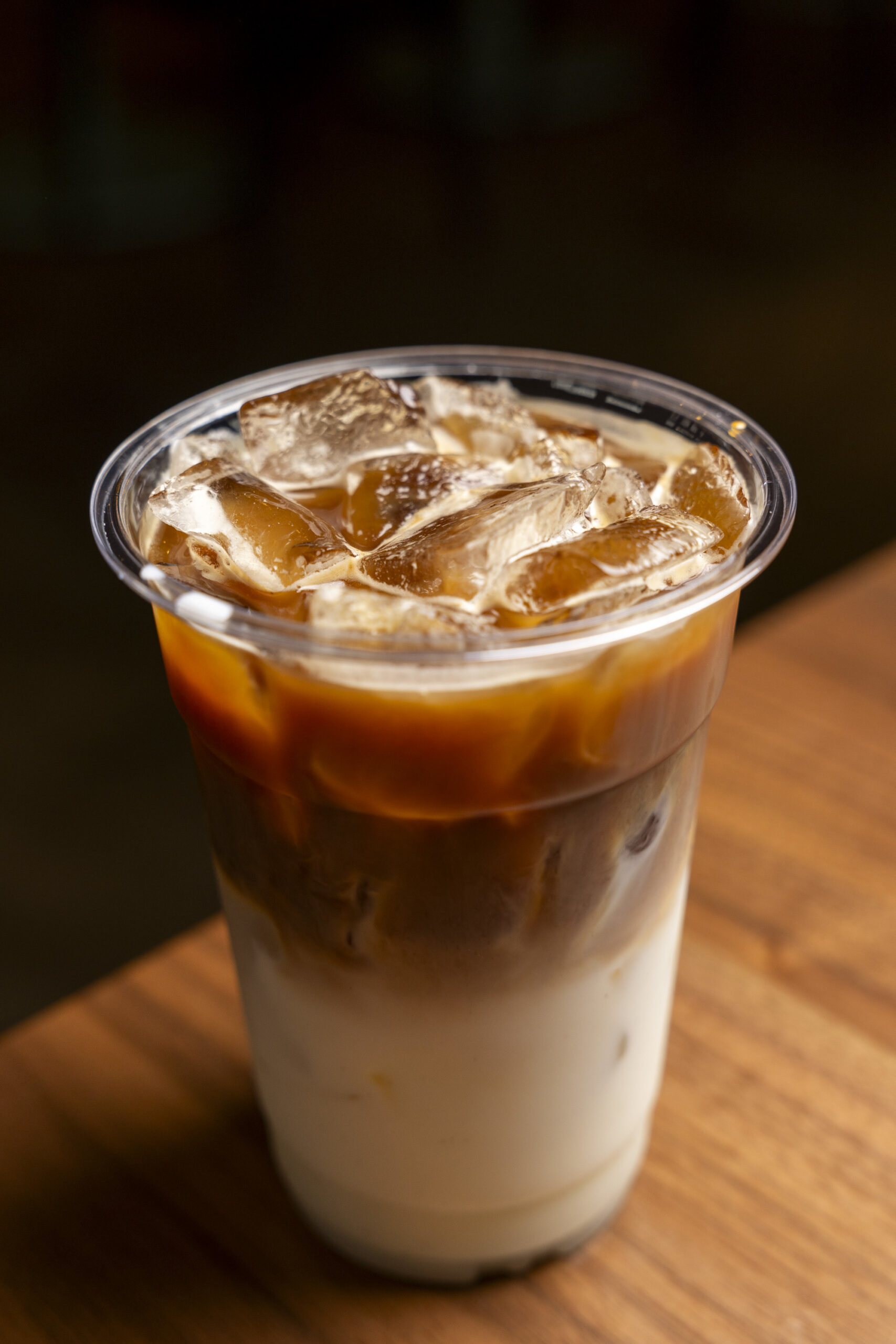
The Otso Otso cocktail at Manong in Philadelphia, Pa., on Thursday, March. 5, 2026.The Pandan latte at Manong in Philadelphia, Pa., on Thursday, March. 5, 2026.
It’s no surprise this room has a serious noise problem, and will eventually require some significant investment to sound-proof its hard surfaces. It recently opened for new daytime cafe hours to pump out purple ube and pandan lattes with Herman’s Coffee, along with a limited selection of pastries, and plans to expand the daytime menu with breakfast sandwiches for a brunch debut this spring. There’s also a retail bottle shop where a fridge case full of Red Horse beer, natural wines, and sakes add yet another reason to visit.
For now, however, Manong’s dinner is more than a worthy enough draw on its own. Aside from the bloom shroom, all of the skewers are winners, including the juicy grilled chicken thighs glazed in Filipino barbeque sauce and tagalog beef sticks that evoke Japanese negamaki with thin-sliced flank steak bundles on the skewer rolled around crunchy scallions in a calamansi soy-garlic glaze.
Anies aims to evoke the rich chain restaurant pastas of his youth with the “creamy pasta” entree, but it’s infinitely more interesting here with basil fettuccine tangled in a sauce creamed with coconut and Parmesan, flavor-boosted with ginger, garlic, and thin slices of pork belly. The “super duper creamy” version may be tempting, but once again, like that burger, the “more” option was less appealing. When we opted for the bonus of trout roe and shrimp on my second visit, it came in an overly thickened cream sauce that bordered on sludge.
The squash at Manong on Thursday, Nov. 20, 2025 in Philadelphia.
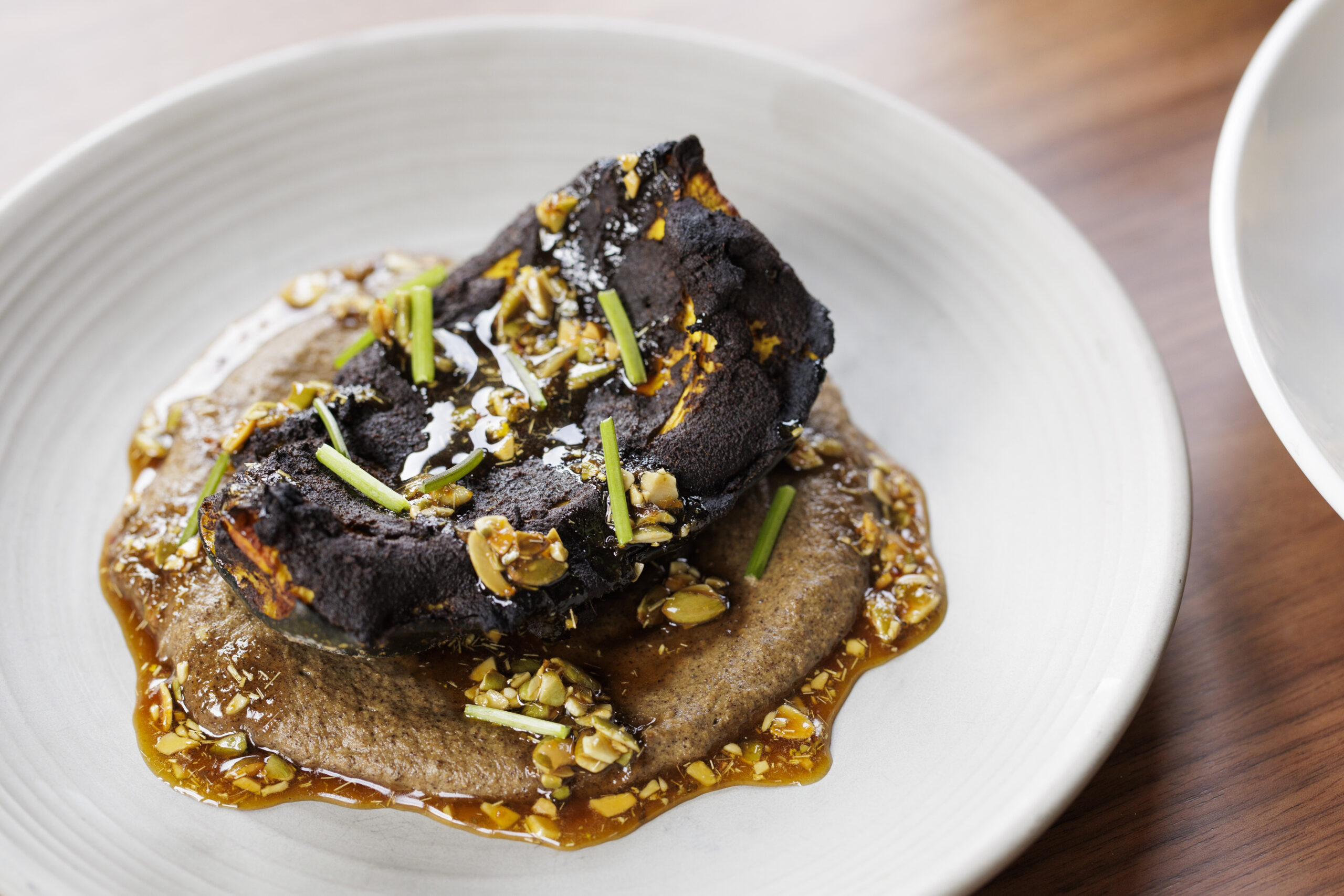
One of Manong’s most creative dishes is its singular option for vegans, kalabasa pyanggang, a koginut squash marinated in a garlicky paste of charred coconut husks that’s served with a sweet vinegar lemongrass drizzle over a rich coconut milk sauce scattered with pepita seeds.
I would have loved the grilled swordfish with green mango-bitter melon salad if it had been fully cooked. That’s one fish I don’t enjoy medium-rare. But Manong has its roasted half-chicken down, a juicy lemongrass-infused bird glazed in tart calamansi vinegar and orange annato butter — at $28, a relative bargain in an era of high-priced chicken entrees
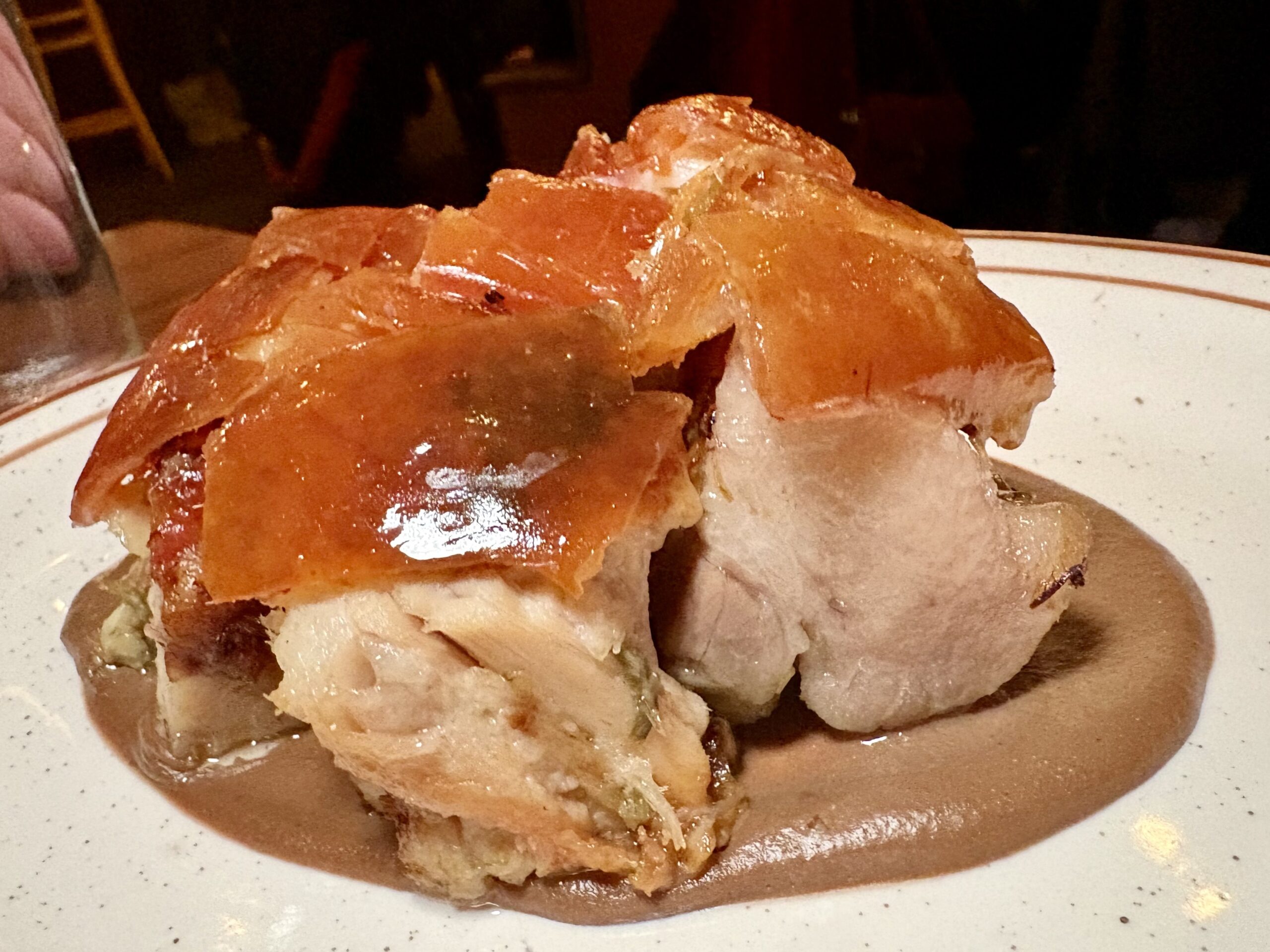
The kitchen’s pork dishes are also exceptional, including a traditional lechon liempo pork belly whose superbly tender chunks of meat are set beneath shattering amber sheets of crispy pig skin, atop a silky swoosh of creamy liver sauce.
The lechon liempo at Manong is slow-roasted pork belly topped with crispy skin over a sauce of pureed chicken liver.The pork & beans at Manong in Philadelphia, Pa., on Thursday, March. 5, 2026.
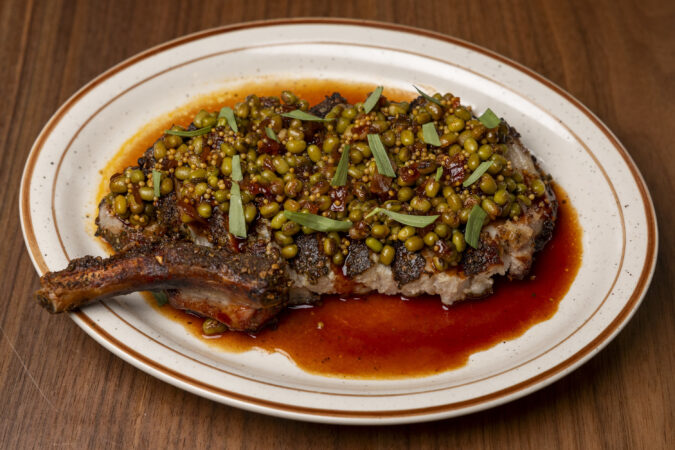
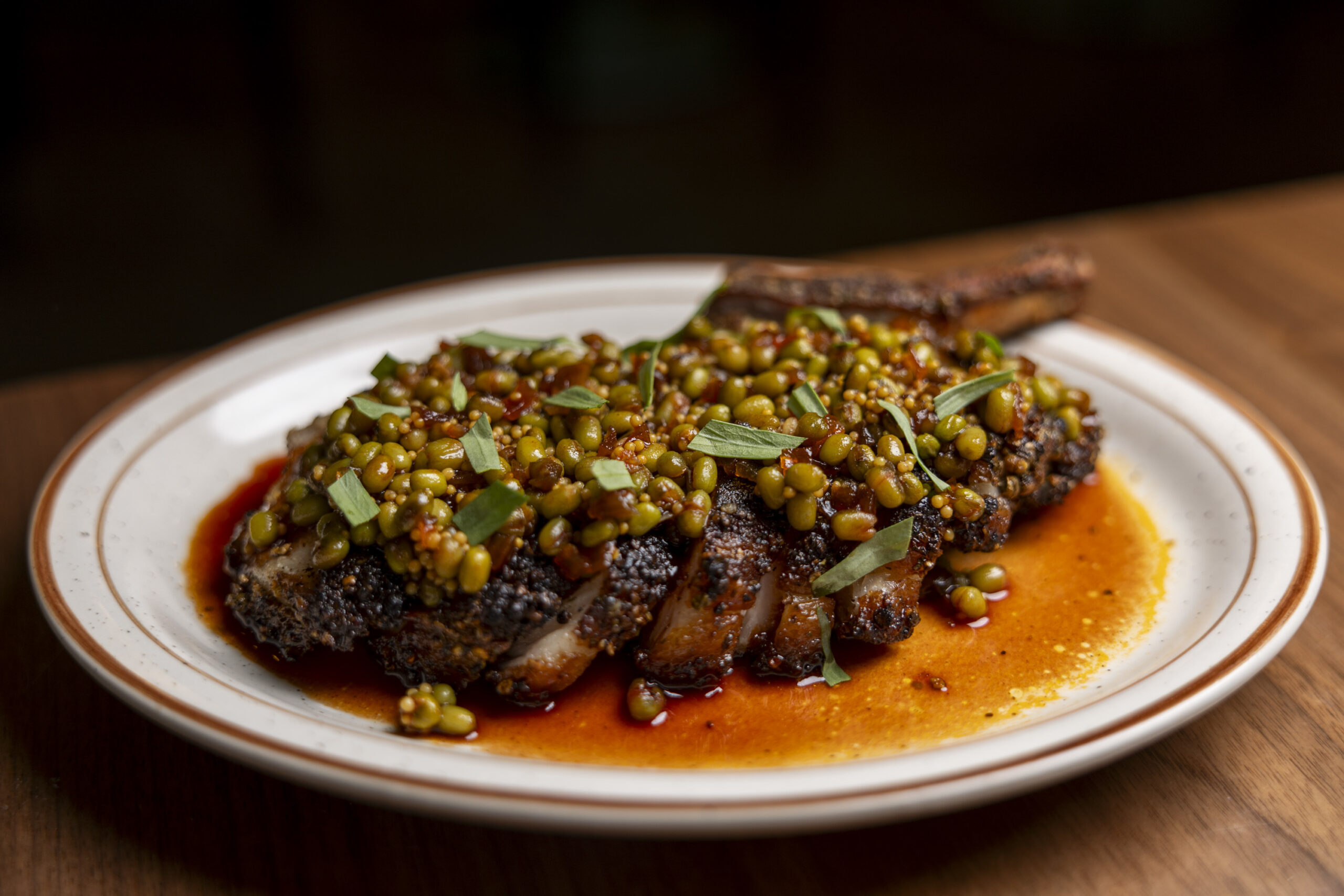
Perhaps my favorite dish at Manong is the “pork & beans”, a multi-cultural mash-up of a juicy grilled pork chop encrusted with green peppercorns and smothered with sweet and zesty mung beans. Think of the canned Heinz baked beans classic, but with a Filipino swagger of cane vinegar, the sweetness of brown sugar, and red yeast rice (typically used in Chinese char siu bbq), and firmer beans that possess a nutty snap of extra texture.
“Is it American? Is it Filipino? It’s neither, but also both,” says Anies, summing up not only this dish, but so much of the menu at Manong, where steaming sides of garlic rice, coconut-creamed spinach, and whipped potato salad studded with more crunchy garlic, corn, and shear potato skin chicharrones create a spirited fusion feast like no other.
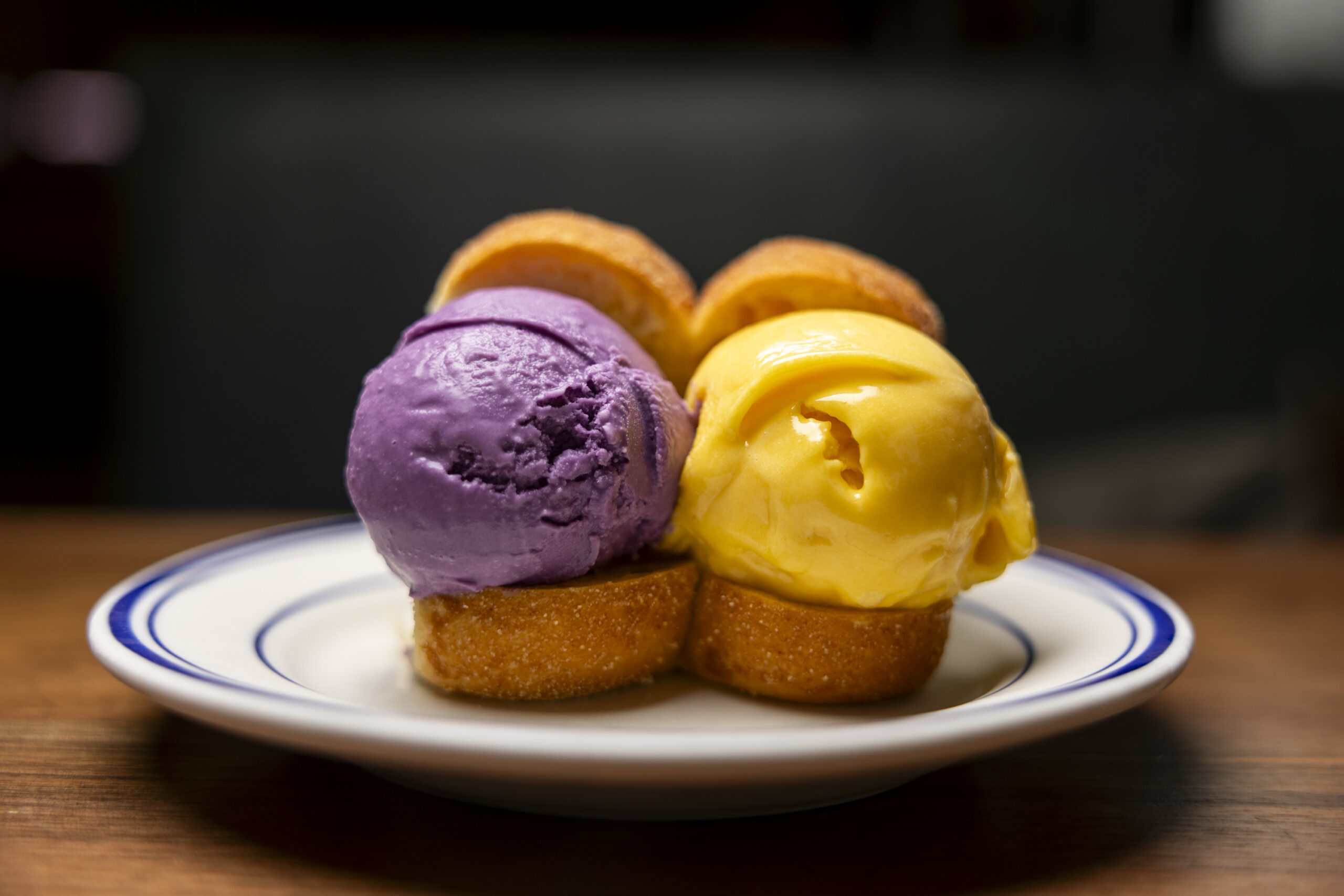
Add some calamansi or mango water ice for dessert sandwiched on those fresh pandesal rolls, or the deep purple richness of its ube ice cream, and Manong’s Filipino fusion takes on a distinctly Philly vibe, too. Anies’ chain restaurant childhood may have been the impetus for the affordable and fun spirit of Manong, but he’s created something here that feels like an original.
The ube and mango ice cream sandwich at Manong in Philadelphia, Pa., on Thursday, March. 5, 2026.
Manong
1833 Fairmount Ave., Philadelphia, PA 19130, 445-223-2141; manongphilly.com
Dinner Wednesday to Sunday, 5-11 p.m. Cafe open for coffee and pastries Wednesday to Sunday, 8 a.m.-2 p.m.
Dinner entrees, $19-$35.
About 30% of the menu is gluten-free, including the bloom shroom, cooked in a gluten-free fryer.
Drinks: The cocktail list delivers affordability and style, with a series of classic templates transformed colorful tropical twists, from the sky blue Otso Otso infused with green peppercorn and lemongrass, to a backnote of corn in the espresso martini and Filipino rum mixed with coconut and purple sweet potato for the Ube Halaya. The beer list features both local brews and Filipino imports, including the smooth but potent Red Horse. There’s also a selection of natural wines by the 6 oz. carafe. In addition, a retail bottle shop has a fine selection of natural wines and sakes to go.
For his fourth restaurant on Rittenhouse Square, Stephen Starr said he wants to evoke the jet-set fantasy of Greece of the Onassis era: yacht-club luxury, island sensuality, cosmopolitan polish.
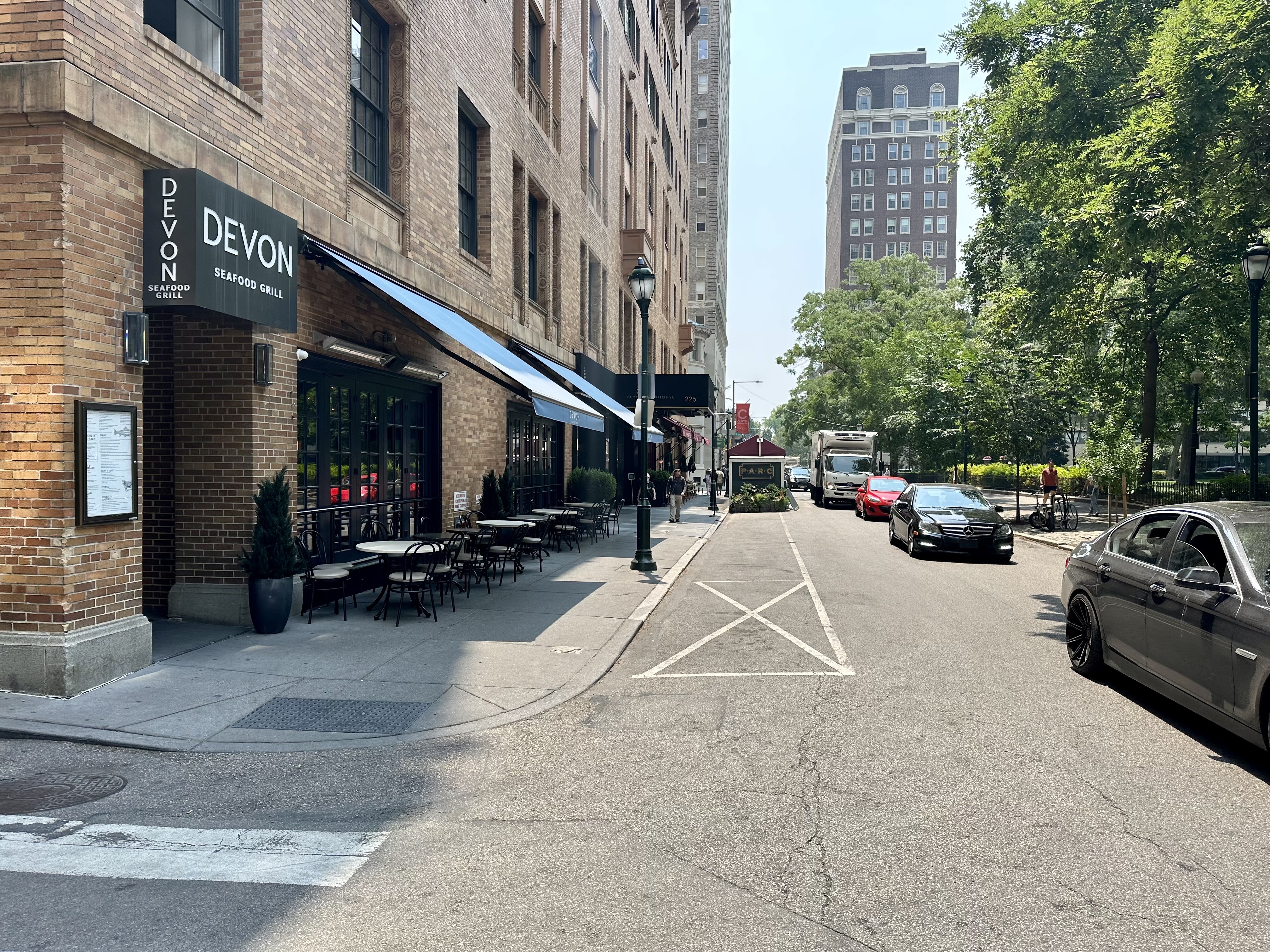
That explains the photos of Jackie O and Aristotle Onassis on the window posters that went up last week on the former Devon Seafood Grill at 18th and Chancellor Streets.
Devon Seafood Grill at 18th and Chancellor Streets, with Stephen Starr’s Parc at rear, on June 8, 2023.
Starr told The Inquirer that the new restaurant, to be called the Pelican Club, is expected to open in October. It will be his ninth restaurant in the neighborhood, his 19th restaurant in Philadelphia, and his 41st in an empire that stretches from New York to Miami.
The Pelican Club will be across the lobby of the Parc Rittenhouse apartment building from his Paris-style brasserie Parc (which opened in 2008), a half-block up the street from steakhouse Barclay Prime (2004), and across the square from Italian powerhouse Borromini (2025). Starr also owns the nearby Continental Mid-town (2004), Butcher & Singer (2008), the Dandelion (2010), El Rey/Ranstead Room (2010), and The Love (2017).
The Pelican Club will occupy nearly 9,000 square feet — slightly smaller than Parc but larger than Barclay Prime. Like its neighbors, it will have outdoor seating facing 18th Street.
The Pelican Club’s concept took shape after Starr reconsidered several possibilities for the high-profile corner space, empty since December 2024 and owned by Starr business partner Allan Domb, the former Council member and mayoral candidate.
“I walked in and started wondering what it should be,” Starr said in a call from Miami Beach, where his steakhouse Slim’s opens Tuesday. “I kicked around several different ideas, but none of them really felt correct for that room. It needed to be something that made sense there.”
Starr said he had considered Middle Eastern and Japanese concepts, but his mind kept returning to Greece. “I know Greek concepts have been done here before, but not in the way I thought it should have been,” Starr said.
To shape the project, he turned to Ken Fulk, who also designed Starr’s old-school revival of the Occidental in Washington, D.C., which opened in March 2025.
A dining room at the Occidental in Washington, D.C., designed by Ken Fulk, as seen in March 2025.
Starr said Fulk “just fell in love with the space and came up with a great idea for how it should look.”
Though Starr wants to keep most details about the Pelican Club close to the vest for now, he said the bar area in front would evoke the living area of a yacht. The back of the restaurant, he added, will feature “very sexy booths.”
The bar at the Occidental in Washington, D.C., designed by Ken Fulk, as seen in March 2025.
Starr said he came across the story of Petros the pelican, long associated with Mykonos, and was drawn to both the image and the symbolism. “It’s this mythical, legendary figure, kind of a protector of the island,” he said. “I thought the name was awesome, and we loved the pelican imagery.”
But he decided against using a plainly Greek name for the restaurant.
“‘Pelican’ kept sticking in my head, and Ken loved the image too,” Starr said. “The Pelican Club gave us the imagery we were looking for, plus something a little more intriguing. You don’t quite know what it is right away.”
Starr said the Pelican Club would be rooted in Greek cooking, with touches extending into the Mediterranean. He said he has been auditioning chefs from Greece — several have already flown in for tastings, and another is due from Athens this week — as he looks for “something authentic” from someone who “really grew up with the food.”
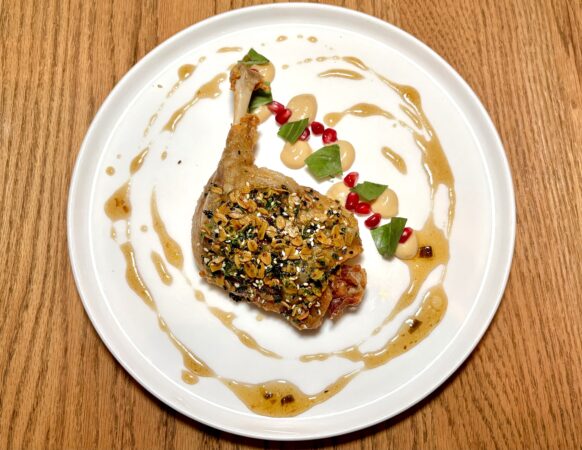
I never thought about eating duck with my granola. But adding granola to a leg of duck confit has turned out to be one of the most enduring ideas executive chef Dwain Kalup has brought to La Fia since arriving at this globally inspired bistro in downtown Wilmington, Del., almost six years ago. Kalup, who was recently named a James Beard semifinalist in the Best Chef, Mid-Atlantic category, has plenty of excellent dishes with diverse inspirations on the ever-changing menu, including a fabulous update of old-school shrimp toast (topped with crunch green papaya salad), kojinut squash-stuffed agnolotti, and irresistible deep-fried brioche beignets with herb butter.
But I can understand why this duck is one dish that never changes. It is a classic preparation at its heart, the meaty Pekin duck legs cure overnight in herbed salt with garlic before slowly simmering to tenderness in a crock of molten duck fat. The finished appetizer is all about contrasting modern flavors and textures: A glaze of yuzu koshu blends sweetness and citrusy spice while dabs of miso-mustard aioli add richness and zing. The crunch of savory granola scattered over top — oats and sesame bound with honey and tahini — lends a toasty snap to each bite of that meltingly soft duck. Add the juicy pop of tart pomegranate seeds along with the minty whiff of freshly torn Thai basil for a final flourish, and this duck has it all. La Fia, 421 N. Market St., Wilmington, Del., 302-543-5574, lafiawilmington.com
— Craig LaBan
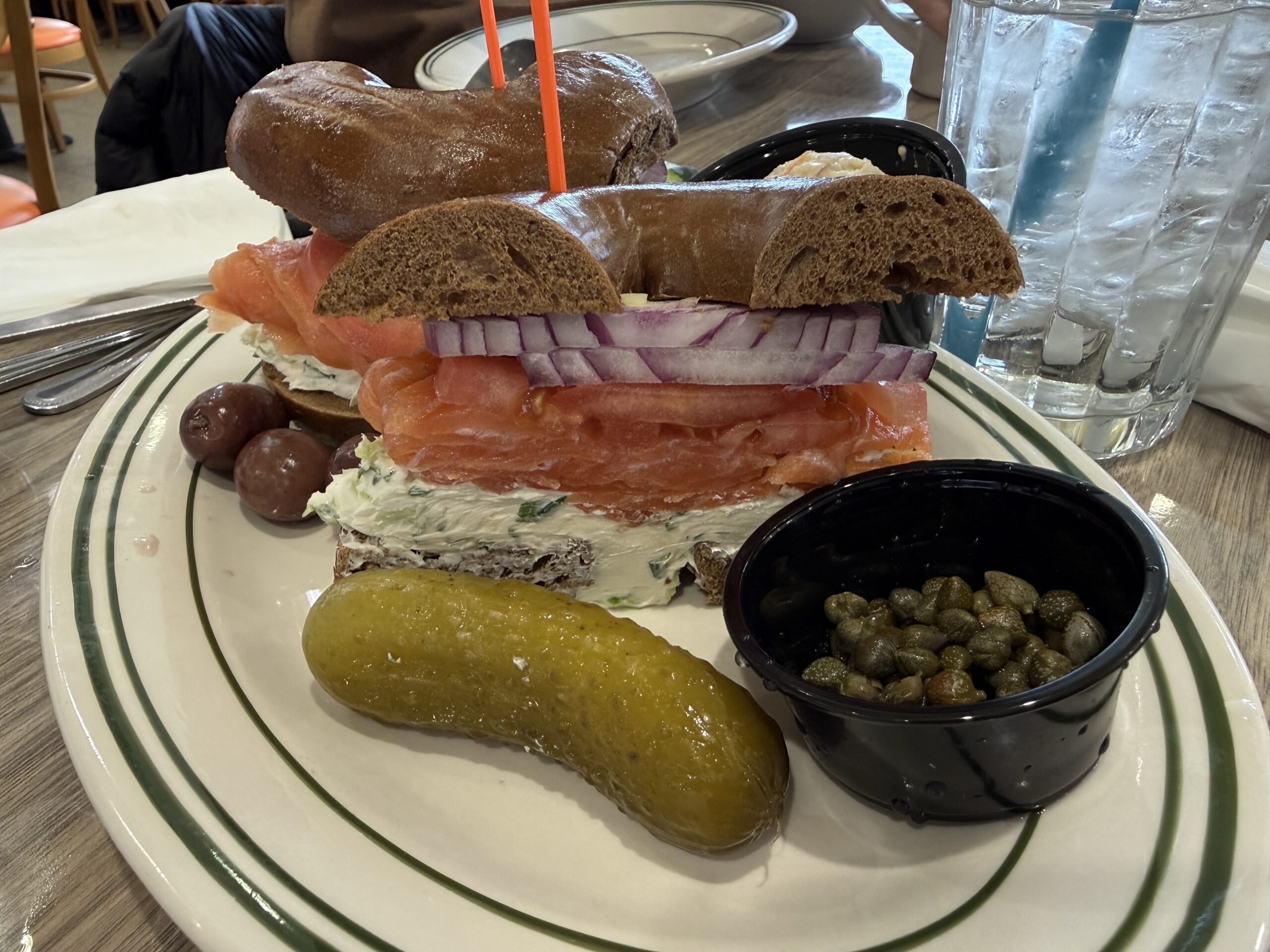
The Nova salmon bagel from Radin’s Delicatessen topped with tomato and red onion.
Nova salmon bagel at Radin’s Delicatessen
Radin’s in Cherry Hillis known (maybe even notorious) for mind-bogglingly enormous portions that make one question their economic viability, but their bagel sandwiches are perfectly portioned and surprisingly easy to tackle. This Nova salmon bagel was no exception. Baked that day, the pumpernickel bagel was warm and springy, with no need for toasting. The red onion and tomatoes — my accoutrements of choice —were crisp and fresh. The salmon was buttery, and the generous layer of chive cream cheese had just the right amount of fluff. I could taste a little bit of everything in each bite, resulting in bagel perfection. Radin’s Delicatessen, 486 Evesham Rd., Cherry Hill, N.J., 856-509-5492, radinsdelicatessen.com
— Kiki Aranita
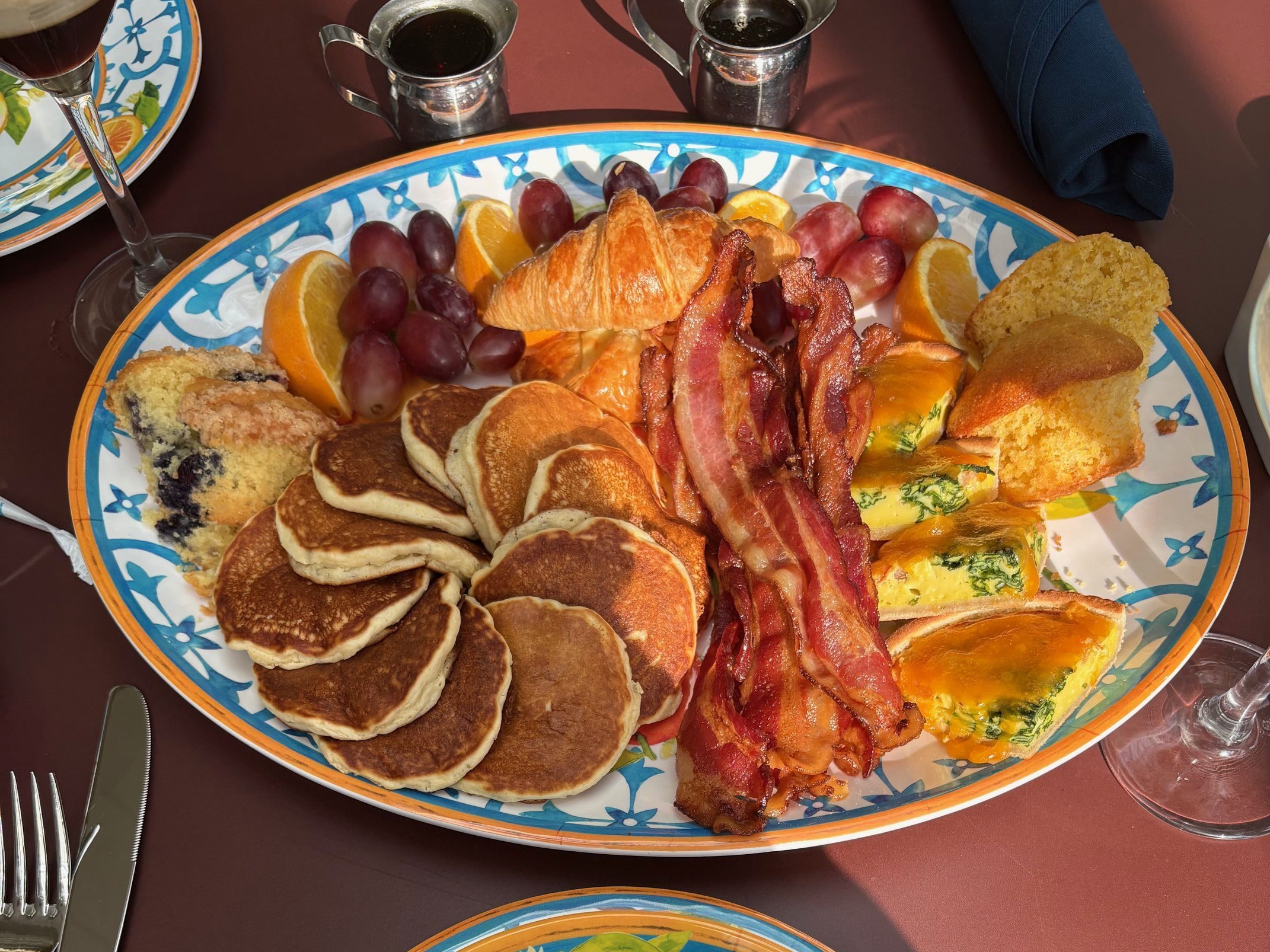
The Breakfast Board at the Sunroom at the Borgata with tasty tater-tots and espresso martinis. A pleasant start to a slow Saturday morning.
Breakfast board for two at the Borgata
A habitual nibbler, uncontrollable snacker, and expert nosher, there are few things I love better than a charcuterie board. Having so many options at my fingertips lights up my tastebuds. Up until recently I thought this rush only came from hard cheeses, jellies, and salty processed pork. Then I visited the Sunroom Lounge in Atlantic City’s Borgata Hotel and discovered its “Breakfast Board For Two.” I waited for it with bated breath.
Arrive it did. There weregenerous portions of bacon, pancakes, croissants, and sugar-topped blueberry muffins. A buttery, cheesy, melt-in-your-mouth quiche was stacked next to a hefty helping of cornbread muffins. A side of golden tater tots made this a totally-worth-the-guilt breakfast experience.
If you are going all in on a totally lazy Saturday morning, wash it down with the Sunroom Lounge’s espresso martini. The splash of vanilla vodka makes it a breakfast-cocktail winner — as in move over, mimosas. Sunroom Lounge in the Borgata Casino Hotel and Spa, 1 Borgata Way, Atlantic City N.J.; 609-317-1000, borgata.mgmresorts.com
— Elizabeth Wellington
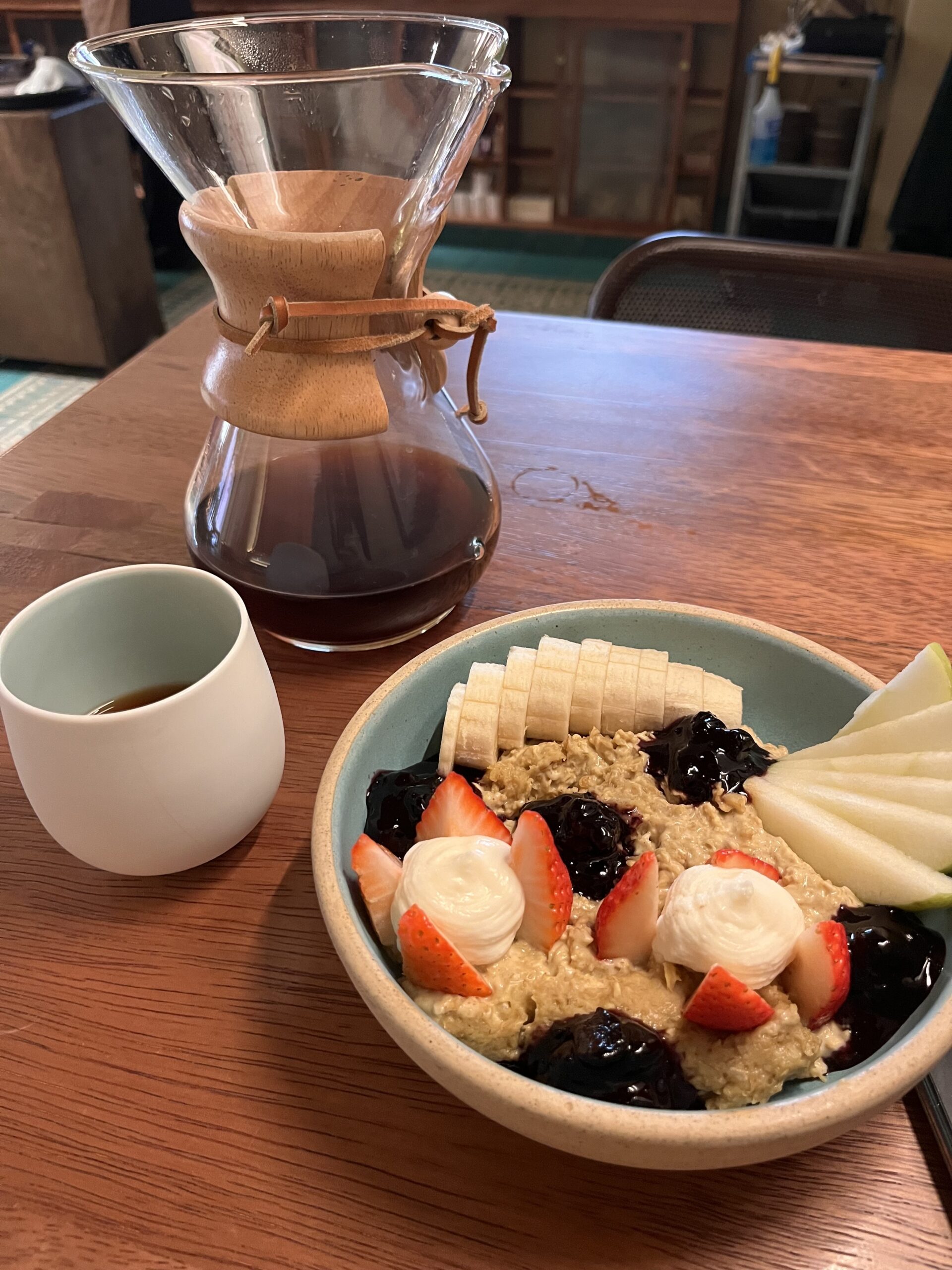
The Bowl de Avena oatmeal at La Jefa.
Bowl de Avena at La Jefa
Mornings at La Jefa are usually reserved for coffee and a little treat, like a hibiscus and raspberry concha or a dulce de leche doughnut dusted with pistachio sugar. But on the first warm Saturday in months, I was feeling alive and craved something heartier. This is where the Bowl de Avena came in, an oatmeal that feels special, much like everything else at the cafe from the family behind the historic Center City Mexican restaurant Tequila’s. The oats are steeped in golden milk, dotted with dollops of ricotta and raspberry jam, and then topped with fresh bananas, green apple, and strawberries. Paired with a natural-process pour-over from Guadalajaran coffee roaster Cafe Estelar, it made for the perfect cozy morning with a book and some sunshine. La Jefa, 1605 Latimer St., 215-475-5500, lajefaphilly.com
Philadelphia’s oldest wine school says a competitor is attempting to erase its existence from the internet through a “cyberbullying” campaign and trademark infringement, according to a federal lawsuit.
In the suit, PhillyWine LLC alleges that Keith Wallace and Alana Zerbe, the husband-and-wife duo behind the Wine School of Philadelphia, took extraordinary steps to confuse customers and piggyback on PhillyWine’s prestige, causing PhillyWine economic and reputational damage. The suit, filed Feb. 26 in the Eastern District of Pennsylvania, also accuses Wallace, the founder of the Wine School of Philadelphia, of fabricating his credentials and using aliases to open businesses that promote his school.
Wallace and Zerbe “have made it their mission to destroy” PhillyWine “by attempting to erase its existence and take over its name,” the suit says. The two schools have coexisted since the early 2000s — “although not always peacefully,” the suit notes — but tensions escalated at the end of 2025, when Wallace secured what the suit calls a “fraudulently obtained trademark” for the name “Philly Wine School.”
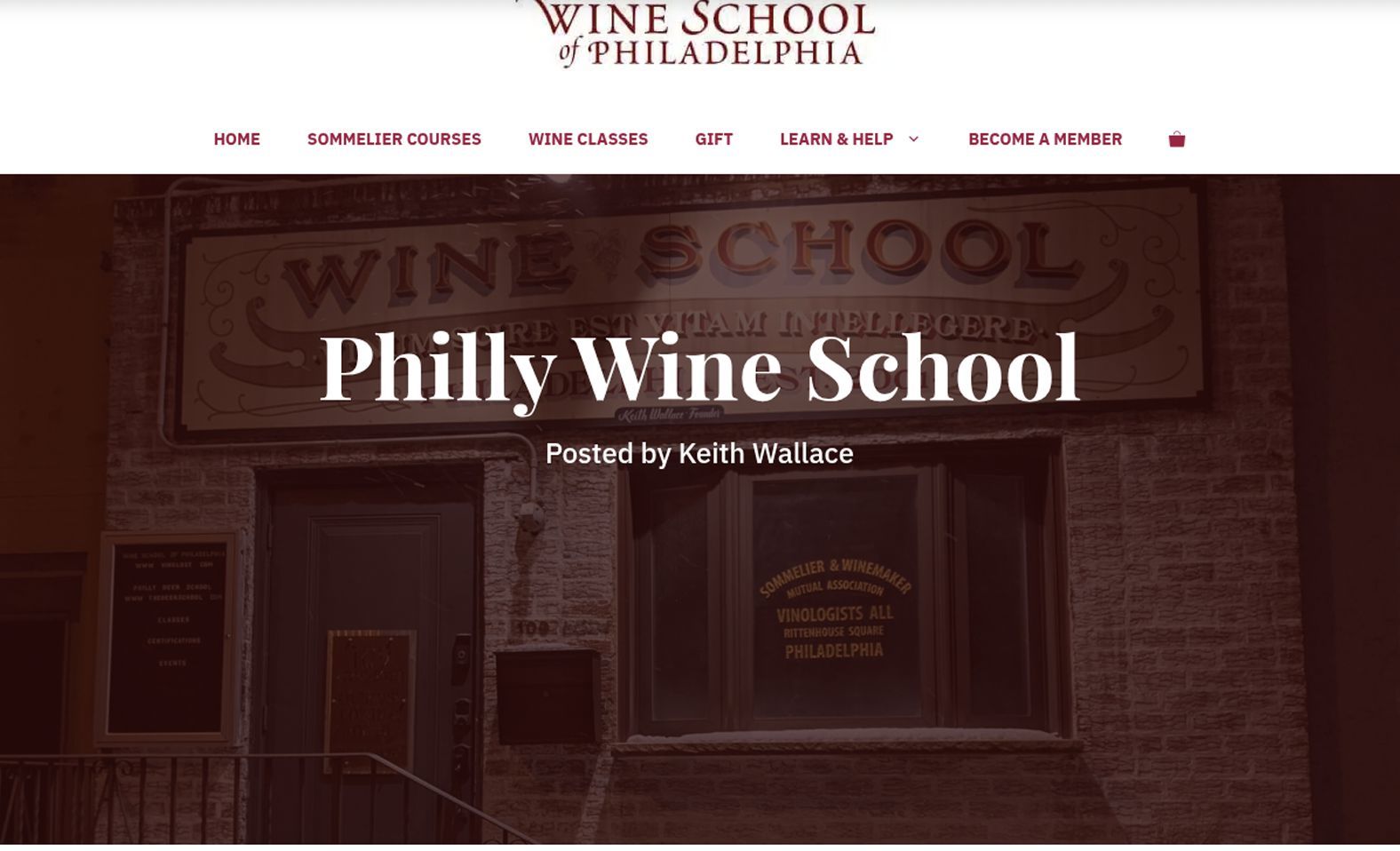
A screenshot from the Philadelphia Wine School’s website using the Philly Wine School name, which PhillyWine alleges infringed on their brand.
Armed with the trademark, Wallace convinced Instagram to suspend PhillyWine’s account in December, according to the complaint, and he has since attempted to take over the school’s Google business listing and shut down its website. Meanwhile, he was propping up his own business through a “self-legitimizing web of deception,” the suit says.
PhillyWine’s enrollment and attendance have been down since December, co-owner Matt Kirkland said in an interview, declining to share specific figures.
“The name confusion has disrupted student registration and appears to be redirecting traffic” to Wallace’s sites, said Kirkland. “I think there needs to be clarity in naming and clarity for students so they sign up for the classes they think they’re signing up for.”
PhillyWine is asking a federal judge to issue an injunction that would prohibit Wallace from using Philly Wine School, or any other confusingly similar name, and from attempting to disable PhillyWine’s online accounts. Without an injunction, the request said, PhillyWine would face an “existential threat.”
“These attacks must end now, and PhillyWine must be allowed to resume its business under normal conditions without further harassment,” the LLC said in court filings.
The lawsuit seeks profits the Wine School of Philadelphia earned from misappropriating PhillyWine’s name through trademark infringement, unfair competition practices, and false advertising. It also asks a judge to nullify the trademark.
Wallace denied the allegations and characterized the complaint as a way for PhillyWine to “bully” him out of the business he spent decades building.
A wine war ferments
Created by former owner Neal Ewing in 1999, PhillyWine is the city’s only wine educator fully accredited by the Wine & Spirits Education Trust, a nonprofit organization which sets international standards for alcoholic beverage education. PhillyWine is one of 47 programs globally — and the only in the tri-state area — approved to teach the trust’s full wine diploma, which PhillyWine has leveraged to host classes with Drexel and James Madison universities.
The Wine School of Philadelphia, founded in 2001 by Wallace,is not accredited by the Wine & Spirits Education Trust. It hosts wine tastings as well as semester-long sommelier courses using curricula from the National Wine School, which Wallace also founded. About 3,000 people attend Wine School of Philadelphia classes annually, according to Wallace.
In 2019, the education trustsent Wallace a letter asking him to cease comparing his school with PhillyWine on his site, the suit says. Wallace said he had “no idea” if he ever received such a letter.
When Ewing retired in 2022, he sold the business to current co-owners Kirkland, a Penn surgeon, and Noelle Allen, a former banking executive andcertified wine educator. Then, a digital wine war began to ferment.
That August, the school learned that Wallace had claimed the Instagram handle @PhillyWine to “antagonize” Ewing, the suit said, and it had to compromise for the now-defunct @PhillyWineSchool. The account @PhillyWine currently has a photo of Wallace as its profile picture and features videos of Wallace and Zerbe filming their wine podcast.
Wallace denied obtaining the Instagram handle togrind an axe, but acknowledged a rift between the two wine schools. “Everyone knows — including my wife and therapist — that I have a sharp tongue, and I have always been critical of certain ways of [teaching] … but I have never said anything nasty or even a little mean” about PhillyWine, he said. “They just do not like me.”
In late 2024, Wallace filed an application with the U.S. Patent and Trademark Office to trademark “Philly Wine School” for use alongside food and wine classes. He obtained the name in December; it had no prior trademarks.
Themove blindsided PhillyWine’s owners. “We frankly saw no reason and anticipated no need for a reason to try to trademark something,” Kirkland said.
The lawsuit alleges Wallace lied in his trademark application by attesting that the Philly Wine School name “has acquired distinctiveness in the marketplace through nearly two decades of continuous use.” But there is no evidence he used that name on his school’s website before filing the application in November 2024, according to the suit.
Wallace chalked the sudden use of “Philly Wine School” on his website up to pride in having the trademark. “When you get something, you show it off,” he said.
Bringing a ‘bazooka’ to a ‘wine fight’
Once the trademark was issued, Wallace “immediately used the document to inflict cyberbullying on PhillyWine,” the suit said.
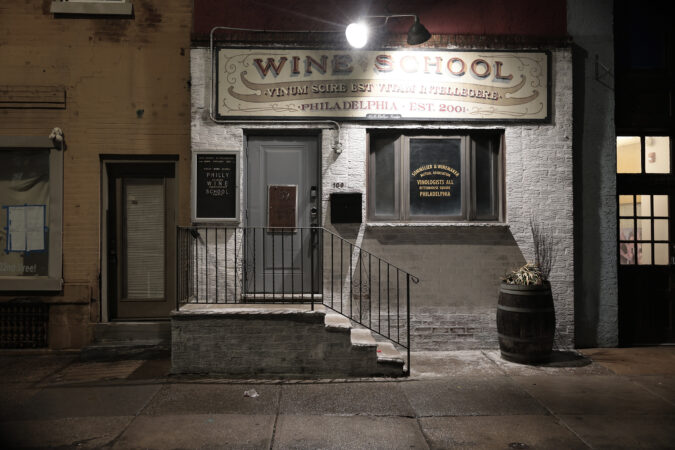
Wallace successfully asked Instagram tosuspend PhillyWine’s account, according to the complaint, and has attempted to claim the school’s Google Business profile. He also filed a takedown request with SquareSpace, the host of PhillyWine’s website, and created a Google Maps listing for a “Philly Wine School” at 109 S. 22nd St., the Wine School of Philadelphia’s address. Kirkland said the latter action has led to PhillyWine, which teaches three blocks away at the Fitler Club, receiving negative reviews for classes taken at Wallace’s Wine School of Philadelphia.
“A review like that — where someone posts about us and they’re not our student and have never taken our classes — is direct reputational damage,” said Kirkland. Lawyers representing PhillyWine sent a cease and desist on Dec. 31, asking Wallace to abandon his trademark and “discontinue his efforts to take over” or remove the school’s online accounts,according to documents reviewed by The Inquirer.
Wallace confirmed receiving the cease and desist, but rejected allegations of using the trademark to bully PhillyWine or its owners. Instead, Wallace said, he’s the true victim.
“If they wanted these things, they could’ve done them too,” Wallace said. “We’re nothing but peace, love, and happiness. They just have this tiny little lawsuit, and they filled it with all this nastiness.”
A negative PhillyWine review on SOMM, a website operated by Keith Wallace, owner of The Wine School of Philadelphia.
The lawsuit also alleges that Wallace has been untruthful about his credentials and used aliases to start businesses such as the National Wine School and the website somm.us in order to promote his school. (Wallace said he founded somm.us in 2015 and maintains a relationship with the website, but doesn’t control its ratings or content.)
Wallace’s biography on the Wine School of Philadelphia website previously stated he graduated from University of California Davis and was a professional winemaker in Napa Valley. Neither are true, according to the suit.
Wallace declined to say when he matriculated at or graduated from UC Davis or elaborate on his stint in Napa Valley. UC Davis has no record of a person with Wallace’s name or date of birth ever attending, a representative for the university said via email.
The lawsuit’s allegations, he said, have him fearful for the future of his school.
“They brought a bazooka to a knife fight,” Wallace said. “This isn’t even a knife fight, it’s a wine fight.”
As we enter the final days of the Philadelphia Flower Show, there’s no better time to break out the rosé. That’s because it’s the only wine category named for a flower, though indirectly.
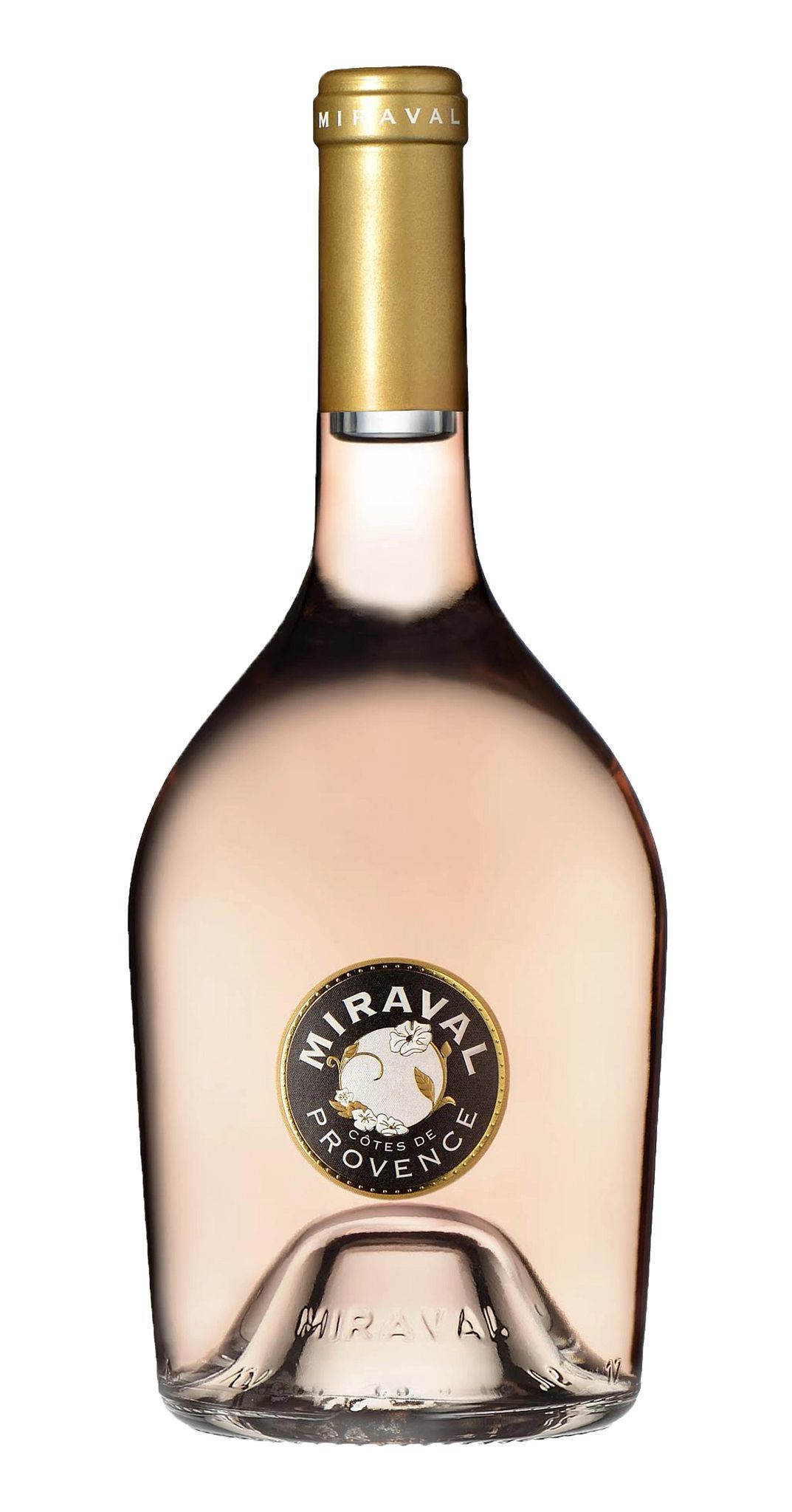
A rose is a rose in both English and French, but that same word is also the term used in French for the color “pink,” since that is the natural color of roses in the wild. When French winemakers describe pink wines (like this delicate beauty from Provence) as rosé, they are not referring to a particular grape, or even to a grape color. They are using their word for pink as a verb to convey that a wine that would normally have been made as a red wine, due to the dark purple color of its grapes, has instead been “pinked” in the winemaking process to yield a wine style that is much paler and lighter in weight.
The Provence region was the first to begin deliberately “pinking” their wines back in the 16th century for reasons that make perfect sense in retrospect. This sun-bathed region of the south of France is too hot and sunny for growing healthy green grapes for white-winemaking, but is ideal for black grapes that don’t scorch as easily.
The cuisine of Provence is famously dominated by seafood, tomatoes, and other vegetables, though, and this lighter Mediterranean fare is not a great match with big, heavy red wines. The elegant Provencal solution was to press their dark grapes immediately — to prevent the transfer of red wine color, flavor, and tannin into the juice — and then to ferment that pale pink juice slowly in their cool cellars as if it were a white wine.
Today’s Provence rosés are always dry and pale, with a focus on refreshment over flavor intensity. They command higher prices than pink wines made elsewhere. The finest examples are more ethereal than ever, with a silky texture, as with this high-profile example from an estate owned by Brad Pitt. This wine’s subtlety and grace make its aromas difficult to describe — a seamless but understated mix of red apple, white tea, and fresh dragonfruit.
On sale for $19.99 through April 5 (regularly $21.99)
Also available at: Moorestown Super Buy Rite in Moorestown ($18.99; moorestownbuyrite.com), Canal’s Liquors in Pennsauken ($19.91; canalsliquors.com), and Total Wine & More in Wilmington and Claymont, Del. ($21.99; totalwine.com)
On a chilly February morning, Mallory Valvano walked up two flights of stairs to a second-floor atrium filled with exotic plants leading her to a salon suite. The baker behind Party Girl Bake Club found herself back inside the Fishtown building to see Alex Furst, also known as Pepper Holidays on Instagram.
But Valvano wasn’t in the neighborhood to deliver one of her whimsical, eye-catching cakes or catering displays. She was there on an equally important task: a manicure.
Valvano is one of many Philly culinary professionals who see their nails as an extension of their brand personality as well as a self-care treat — despite the taboo of chefs cooking with polished nails. (ServSafe, the food and alcohol safety-training and certification organization, discourages the use of nail polish and/or extensions and highly recommends cooking with gloves.)
Valvano is ServSafe-certified, which means she knows the impact of food safety really well. She also believes that shouldn’t stop her from expressing herself — especially when the products Furst uses ensure chip-free, perfectly intact nails for up to four weeks.
“I’m an artist, by trade, in textile manufacturing and design — the food thing came a little later in life,” she said. “So, [getting your nails done] is about, one, taking care of how you look and being presentable. It’s also an extension of your own personal style. I like to have this whole vision of what a party girl is: neon and pastels, colors inspired by art, architecture, and interior design.”
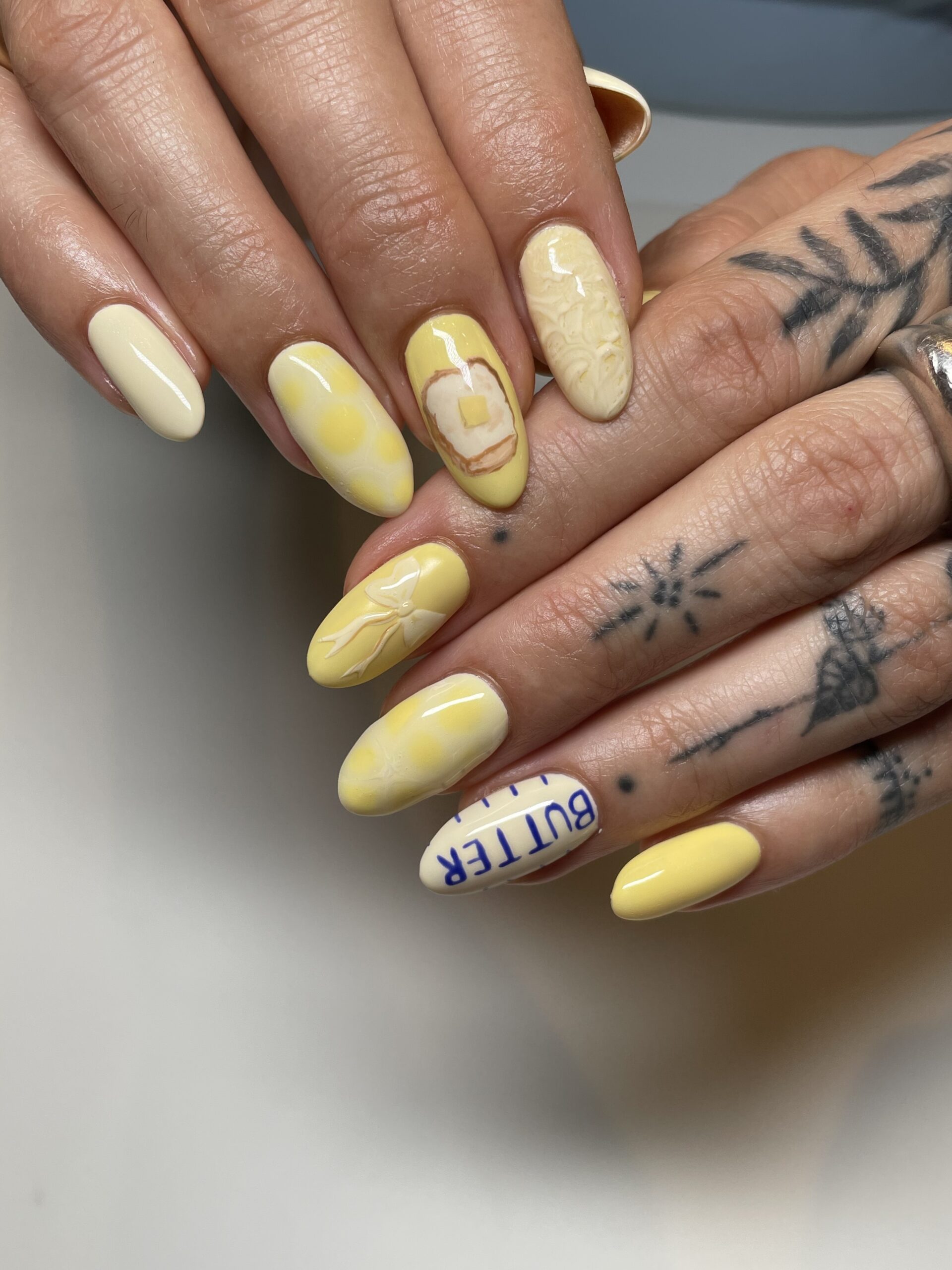
Mallory Valvano with butter-themed nails.
The key to nails that food professionals aren’t worried about working with? Regular sessions with a nail artist who emphasizes prep and uses gel builder, a thick-viscosity, strengthening product that creates a protective, hard shield with LED/UV light. And Furst is the woman to do the job for Valvano and Natalia Lepore Hagan of Midnight Pasta.
The 37-year-old nail artist is in her eighth year as a licensed nail technician. With two chef clients and a few nurse clients under her belt, Furst understands working on labor-intensive nails that exist in industries where unpainted nails are the norm.
“My philosophy for everyone is that the foundation is the most important thing — the prep or the way the product is applied, if that’s missing then you’re not going to have a long-lasting, strong manicure,” Furst said. “Gel body builder is strong enough that it allows the nails to maintain and support its structure so that they’re not going to be chipping or lifting in a three to four week time frame.”
What does a long-lasting manicure entail?
Each session begins with Furst removing old product and chatting with the client about what their month is looking like to determine length of nail. Then it’s prep: shaping and smoothing nails, pushing back the cuticles , and exfoliating, removing any sticky cuticle from the nail plate, and lightly etching the new nail growth.
“Our body naturally produces oil, so that prep is to ensure getting the gel completely adhered to the nail plate,” she said. “No one wants the gel to lift — when it lifts, it damages the nail. So, prep is important.”
Design comes next. Both Valvano and Lepore Hagan love to experiment with colors and incorporate their brands into the nail designs.
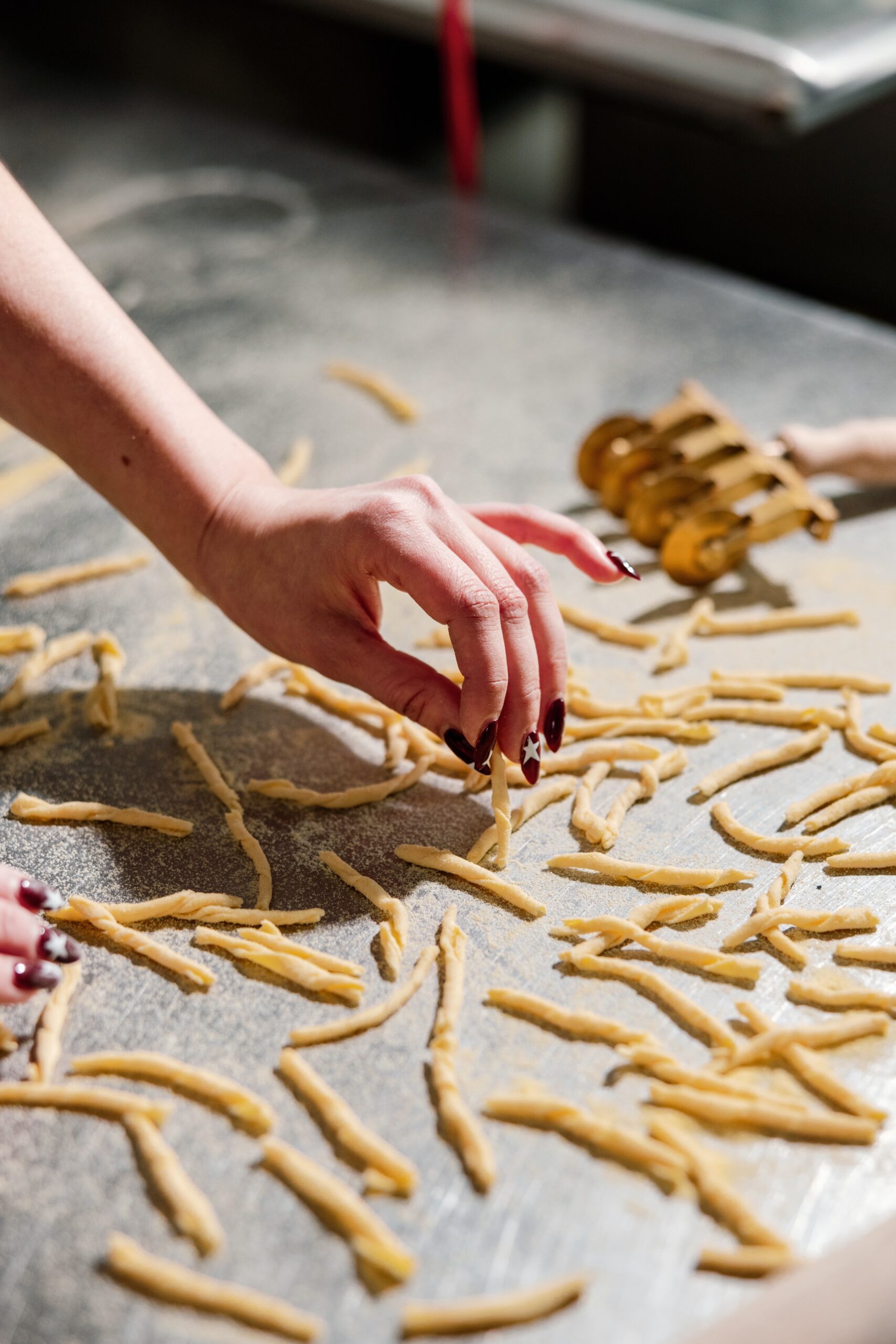
Natalia Lepore Hagan of Midnight Pasta and her nails.
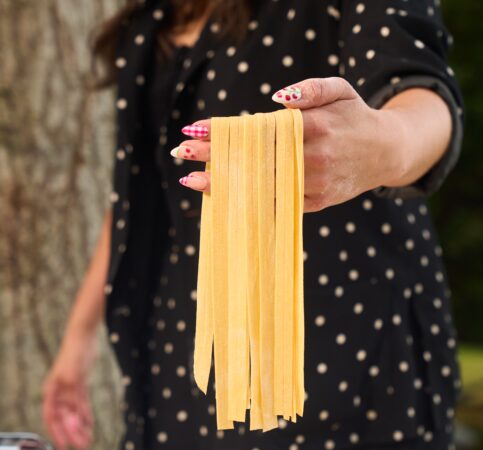
Furst has drawn buttered toast designs for Valvano inspired by an all-butter event and tomatoes for Lepore Hagan inspired by an Italian picnic-themed event.
“I brought her an idea, and she sketched out all 10 nails in front of me,” Lepore Hagan said. “She said, ‘Let’s do tomatoes on this finger. We’ll do the checkers on your middle finger. And another with stripes.’ I love artists more than anything, and it’s so cool to collaborate with her on my nails.”
Gloves stay on while cooking, and nails come out for hosting. “Mallory and I are both really fashion-forward,” she said. “We care a lot about fashion. I am always looking at what she’s wearing and her nails because she’s a representation of her brand.”
But the pasta chef draws the line at gel extensions or acrylic nail tips, opting for only gel builder polish on her natural nails to ensure no attachments fall off when working.
“I want to be professional, and part of that professionalism is having my nails always done perfectly and interestingly,” Lepore Hagan said.
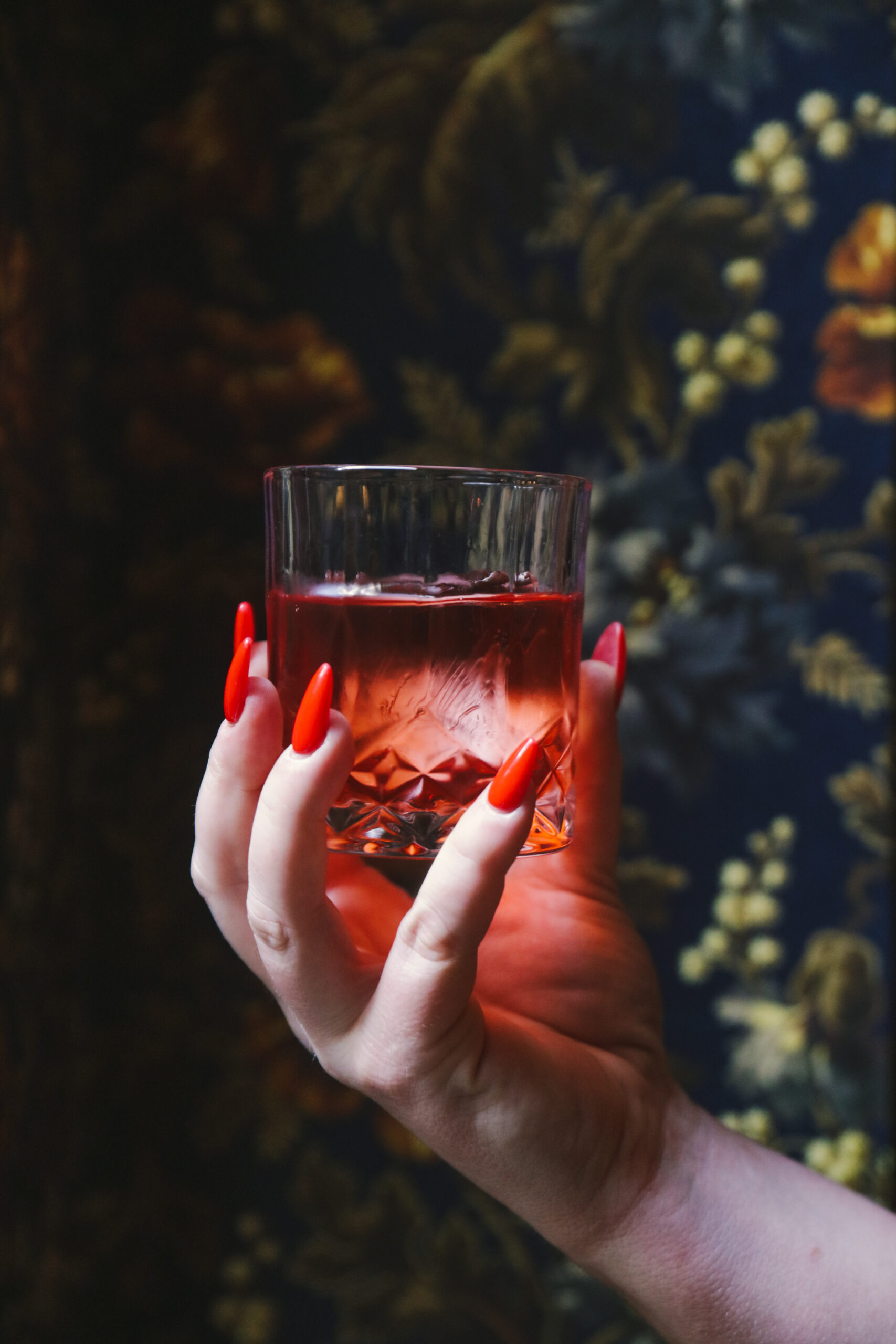
Jillian Moore’s nails with with My Loup’s Montreal cocktail.
Behind the bar with acrylics
Jillian Moore, however, is an acrylic nail queen.
She’s behind the bar at My Loup and Pine Street Grill, where customers will catch her perfectly pointed, brightly colored nails around spoons and cocktail shakers. As bar director at the two hot spots, she’s using her hands differently then chefs Valvano and Lepore Hagan, allowing her to opt for long acrylics decorated with gel polish every two weeks at her nail appointment with @nailsbylinny.
Expressing oneself through nails is similar to wearing makeup to work, Moore said, as long as food safety rules are followed. And following the ServSafe rules isn’t hard with nails, she said. “You still have to make sure your fingernails are clean [and put on gloves for prep work], regardless if you have extensions or not,” she said. “So that’s how I’ve always operated.”
For Moore, getting her nails done is way to share her personality, whether it’s with a specific color or theme — or repping the restaurants she works at. Every year for My Loup’s anniversary, she gets the color of the tiles at the bar with a little “ML” script on top. And when Pine Street opened, her nails were covered in little acorns.
“People are watching my hands all the time — it’s definitely something that people notice [and] we end up talking about it,” Moore said. “It’s just a fun way to express myself, [and] why I like it so much.”
“I make this joke all the time — I say, there are three people that you should never piss off: your bartender, your hairdresser, and your nail tech,” she added. “Maintain those relationships.”
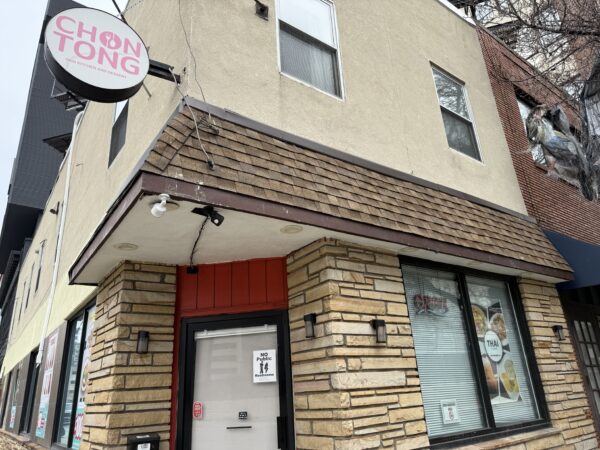
Chon Tong Thai Kitchen, the family-run restaurant that brought a joyful, brightly colored space to an unlikely corner of Vine Street, abruptly closed late last month after its owner returned to Thailand. The Central Thai specialist, which opened in 2022, was a favorite of Thai expats in Philly.
Owner Thidarat “Grace” Teekabud, whose great-great-grandmother had been a chef for the fifth King of Siam in the late 1800s, came to Philadelphia in 2019 to learn English. She noticed a void in Philly’s food scene and missed the desserts and snacks she grew up with. Opening the restaurant was her solution. (“Chon Tong” means “golden spoon” in Thai.)
Teekabud did not respond to requests for comment.
The real estate broker for the space at 1439 Vine St. told The Inquirer that the owners had already moved back to Thailand after a quick sale of the business and transfer of the turnkey space.
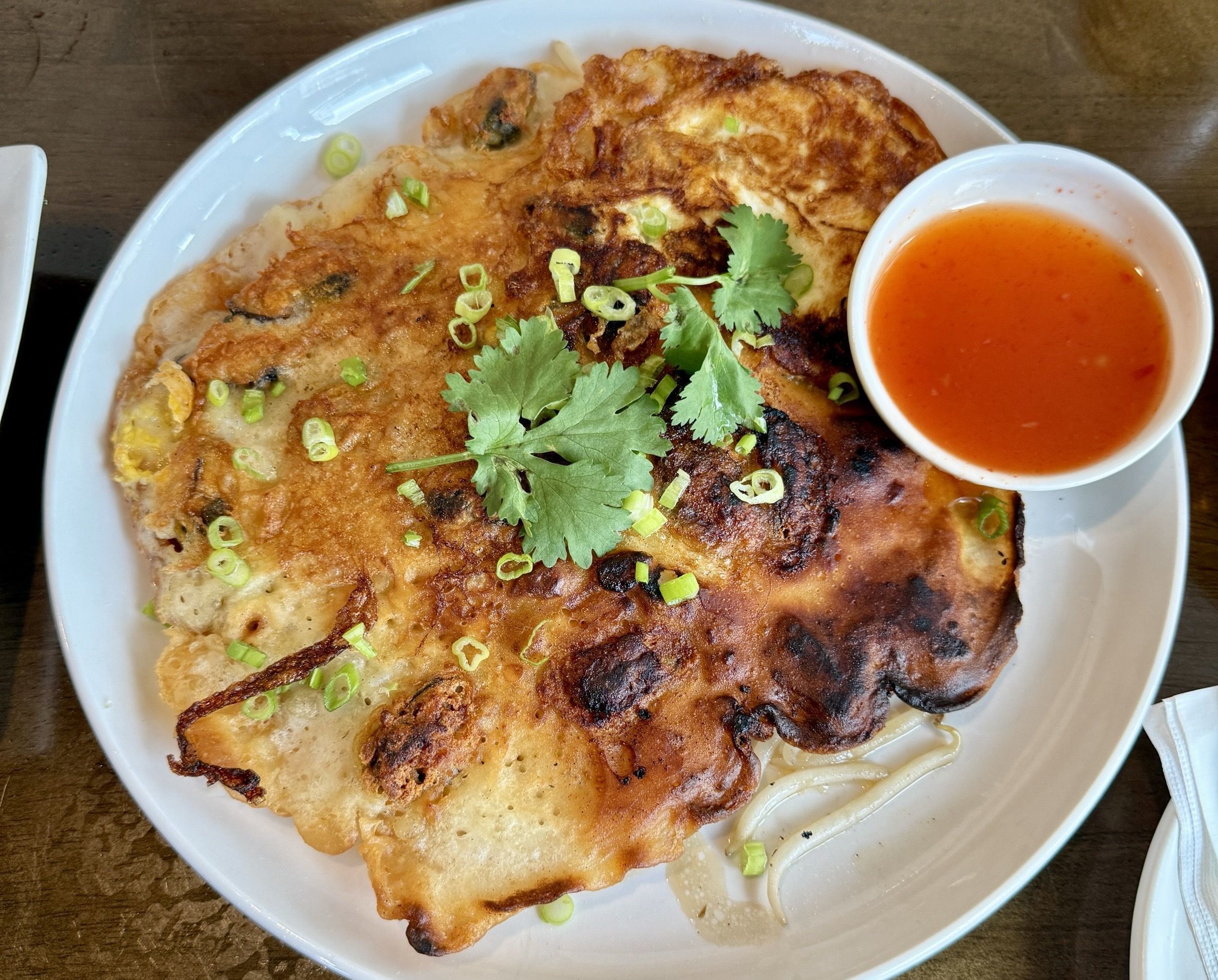
Hoi Tod is a mussel pancake served over gently stir-fried bean sprouts at Chon Tong.
Though the concept initially focused on desserts, Chon Tong became better known among the area’s Thai student community for its boat noodles, fried items like the mussel-studded hoi tod pancake, tum tod (an inventive fried sweet-and-sour papaya salad), and jay tod (speckled with juicy-sweet corn kernels and crunchy tofu), as well as its crispy pork belly (moo tod nam pla).
The property’s broker said that a Chinese-Japanese fusion restaurant will take Chon Tong’s place.