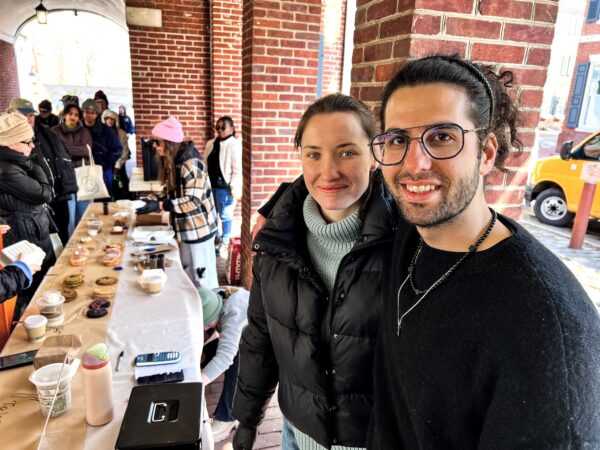
What a year it’s been so far for Saif Manna, one of Philadelphia’s most sought-after pop-up bakers. He’s achieved two longtime goals: He married his college girlfriend, Stefaniya Surikova, and he signed a lease for his first brick-and-mortar location.
Manna Bakery — a farmers market favorite for its Levantine and Palestinian baked goods — is due to open by early April at 110 W. Berks St., Essen Bakery’s shuttered Kensington location. Manna acquired Essen’s equipment and said he must do only light work on the space.
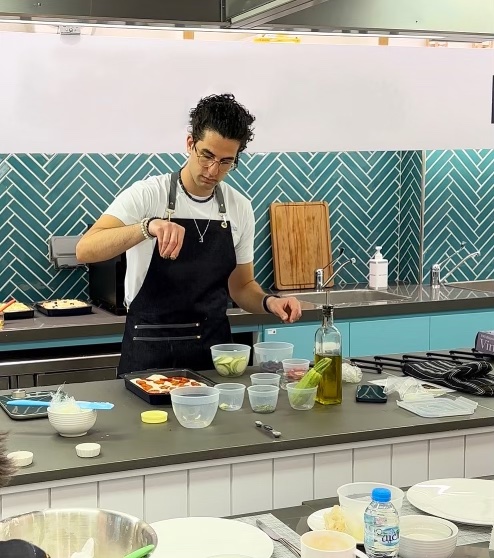
Saif Manna at work before a pop-up.
With seating for about 60, the bakery will be open for counter service Thursday to Sunday from the start, serving such treats as ka’ak al-Quds (Jerusalem bagels), Basque cheesecake, cookies, brioche buns, manakeesh, and sumac-spiced chicken buns.
Manna said he would continue his appearances at the Rittenhouse, Headhouse, and Clark Park farmers markets “because they’re convenient for people in those neighborhoods.”
The long-term goal is for Manna to be a bakery-cafe during the day and a restaurant at night. Manna said the dinner menu would include traditional Palestinian dishes he grew up with, such as stuffed grape leaves, stuffed cabbage, oven-baked kofta, lamb dumplings, roasted lamb, hummus, and other dips, along with breads.
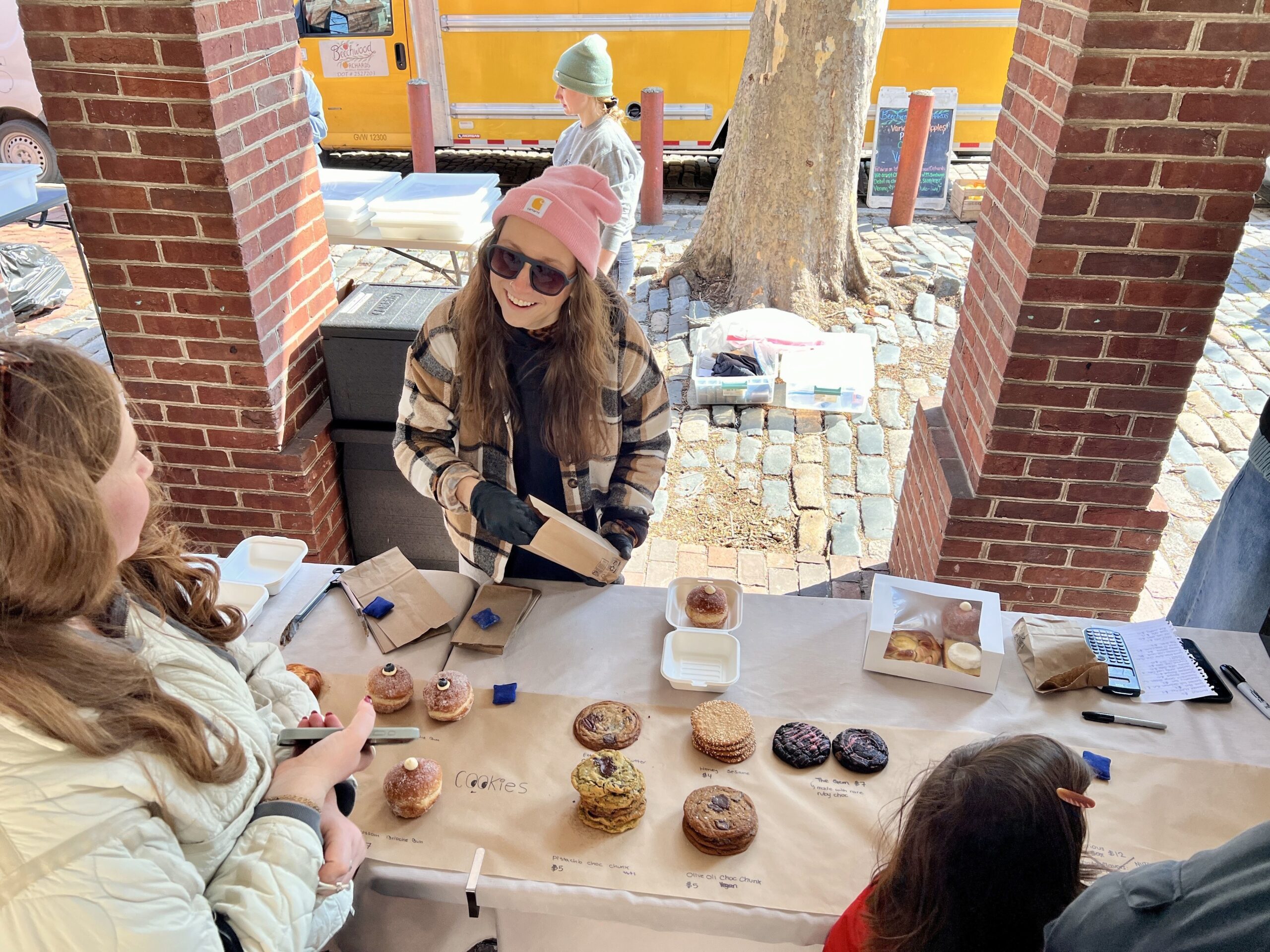
Larry Bodhuin waits on a customer at Manna Bakery’s table at Headhouse Farmers Market on March 1, 2026. At rear is Manna baker Melissa Bensley.
Manna’s path into baking has the familiar contours of a pandemic-era origin story, but with a longer runway.
His grandparents lived in Akka until Palestinians were expelled during the Arab-Israeli war in 1948. Manna, 27, was born in California and raised in Dubai. He moved to the United States in 2018 for college at Texas A&M, where he played on its Division I tennis team. He transferred after freshman year to Temple University, where he majored in political science and played tennis. As a junior during the pandemic, Manna started baking cookies in his dorm.
“Stefaniya [who also played tennis at Temple] encouraged me to sell them,” he said. At first, students lined up for his wares. Then came local TV coverage.
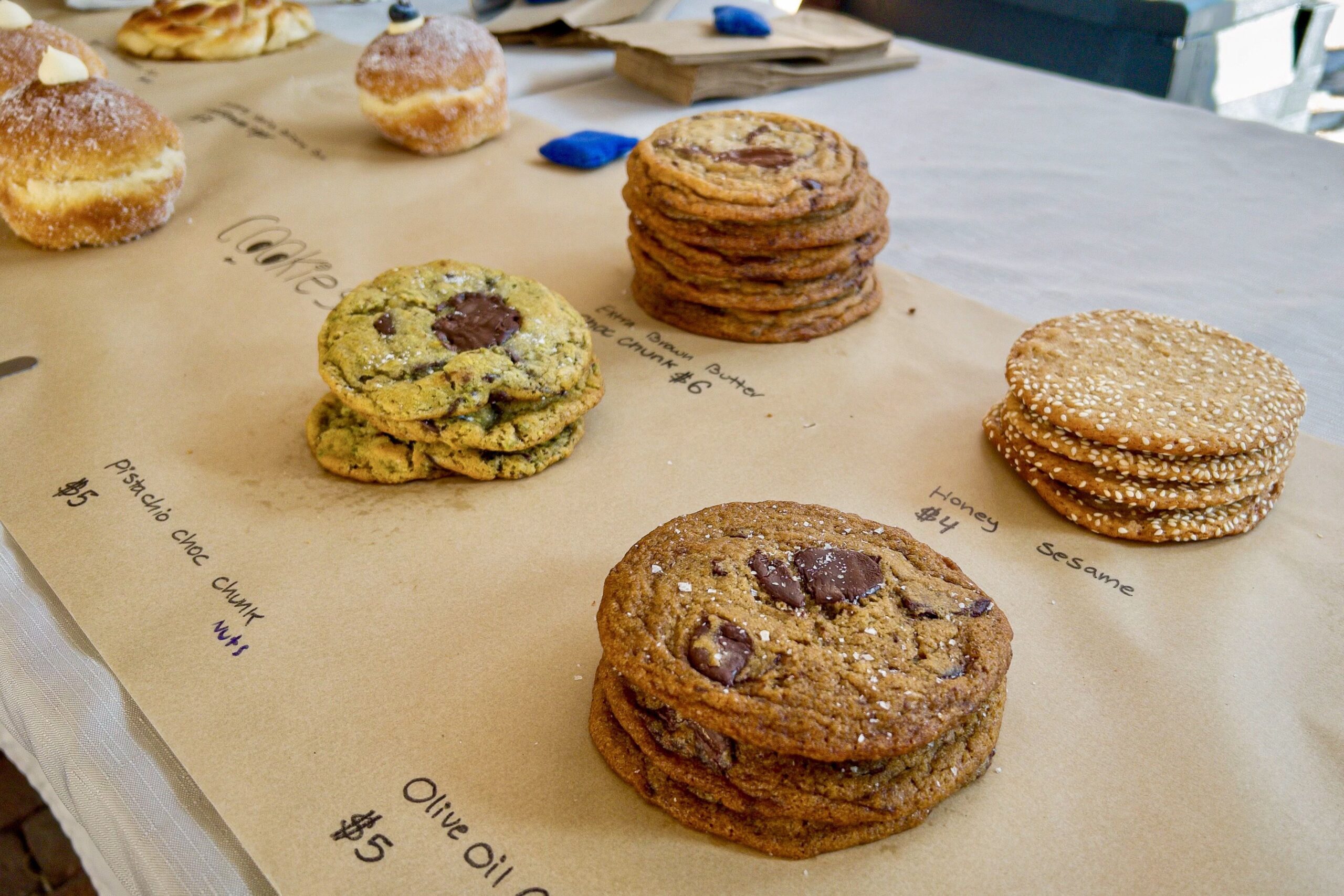
Some of Saif Manna’s baked goods on the Manna Bakery table at Headhouse Farmers Market on March 1, 2026.
After graduation, he committed to baking full-time, expanding into pop-ups and larger markets. He lived in student housing because it was affordable, but eventually moved to the Old Kensington/Fishtown area for more space.
When the Kensington pizzeria Char opened in August 2024, he struck a deal with owner Viraj Thomas to bake there during the off-hours. “As things grew, [the] Char [space] couldn’t keep up with my production needs anymore,” Manna said. “At the same time, I was searching for a brick-and-mortar. Every time I thought I had something, it fell through. It was frustrating, but I kept going.”
The Berks Street space, which became available last November, seemed like another near-miss. Another tenant was on the verge of signing, he said.
Manna decided to hit the real estate company with the equivalent of a drop shot: “I went into the [real estate] office and told them, ‘If you sign that [deal], you’re making a huge mistake. Within a year of opening, I’m going to win a James Beard Award.’
“I needed to get their attention,” he said. “I explained why they should take a chance on me, and they did.”
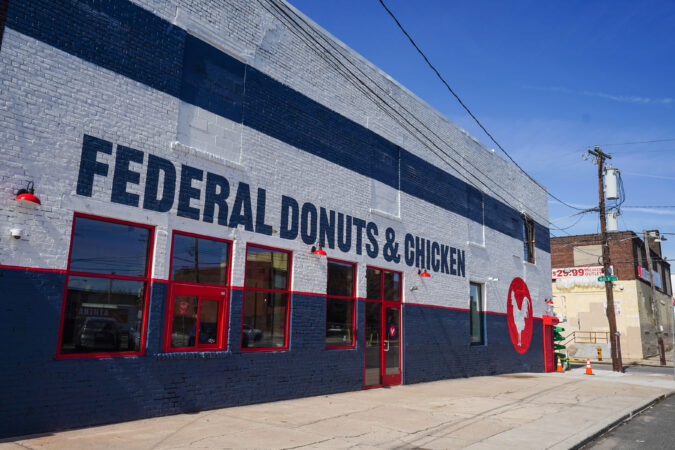
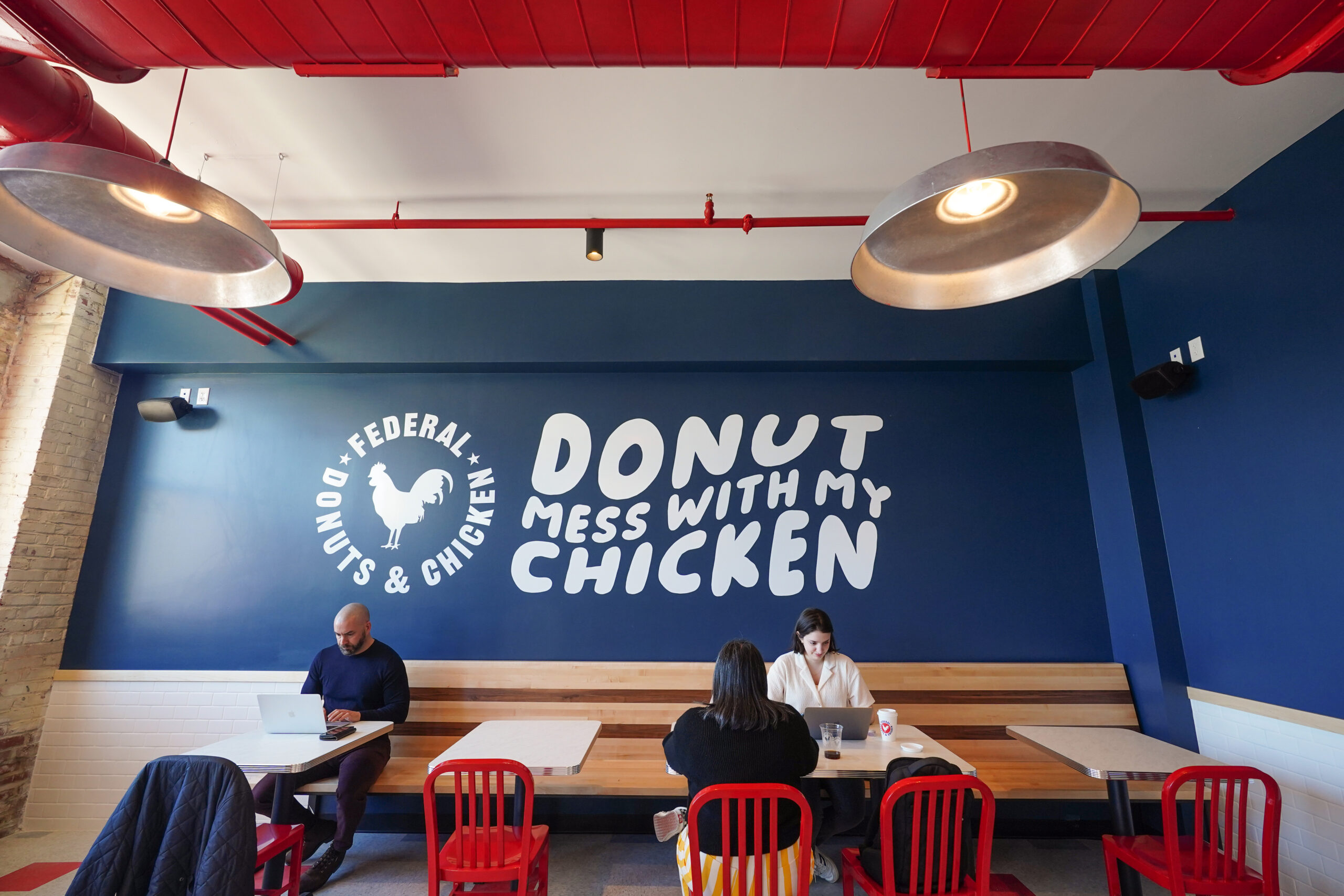
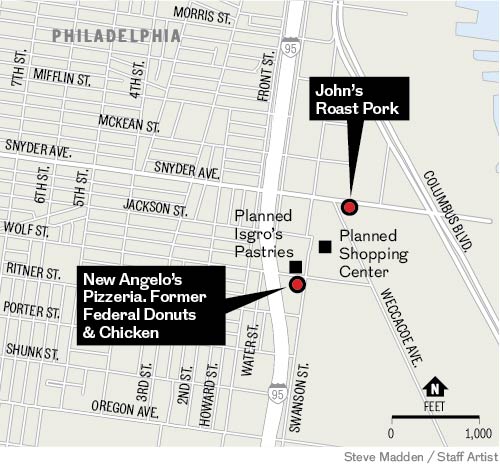
Angelo’s Pizzeria, bursting at the seams at its flagship shop on Ninth Street near the Italian Market, will take over the South Philadelphia location of Federal Donuts & Chicken, converting the chain’s largest outpost into a production hub with delivery, takeout, and limited seating.
The Federal Donuts location at Wolf and Swanson Streets, which opened in March 2024, closed Saturday. Its six employees have been offered jobs elsewhere in the company, cofounder Steve Cook said.
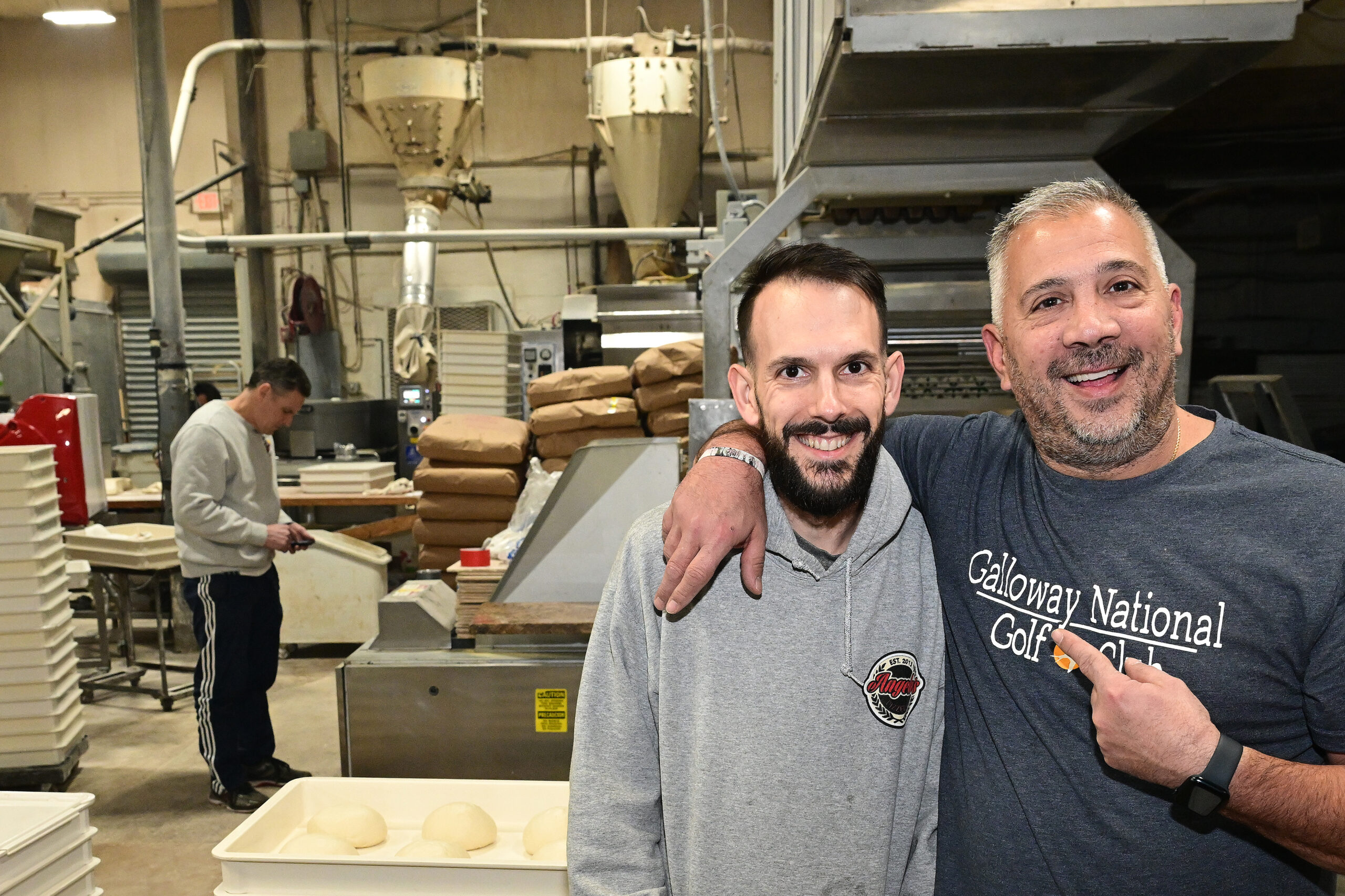
Danny DiGiampietro of Angelo’s Pizzeria (right) with longtime business partner Jared Braunstein at Angelo’s Baking Co. in Conshohocken, Pa., in December 2024.
Angelo’s owner Danny DiGiampietro told The Inquirer that the new location would solve key issues for the Michelin-honored pizza and sandwich business, whose house-baked rolls helped propel its popularity from its opening in 2019 after a move from Haddonfield.
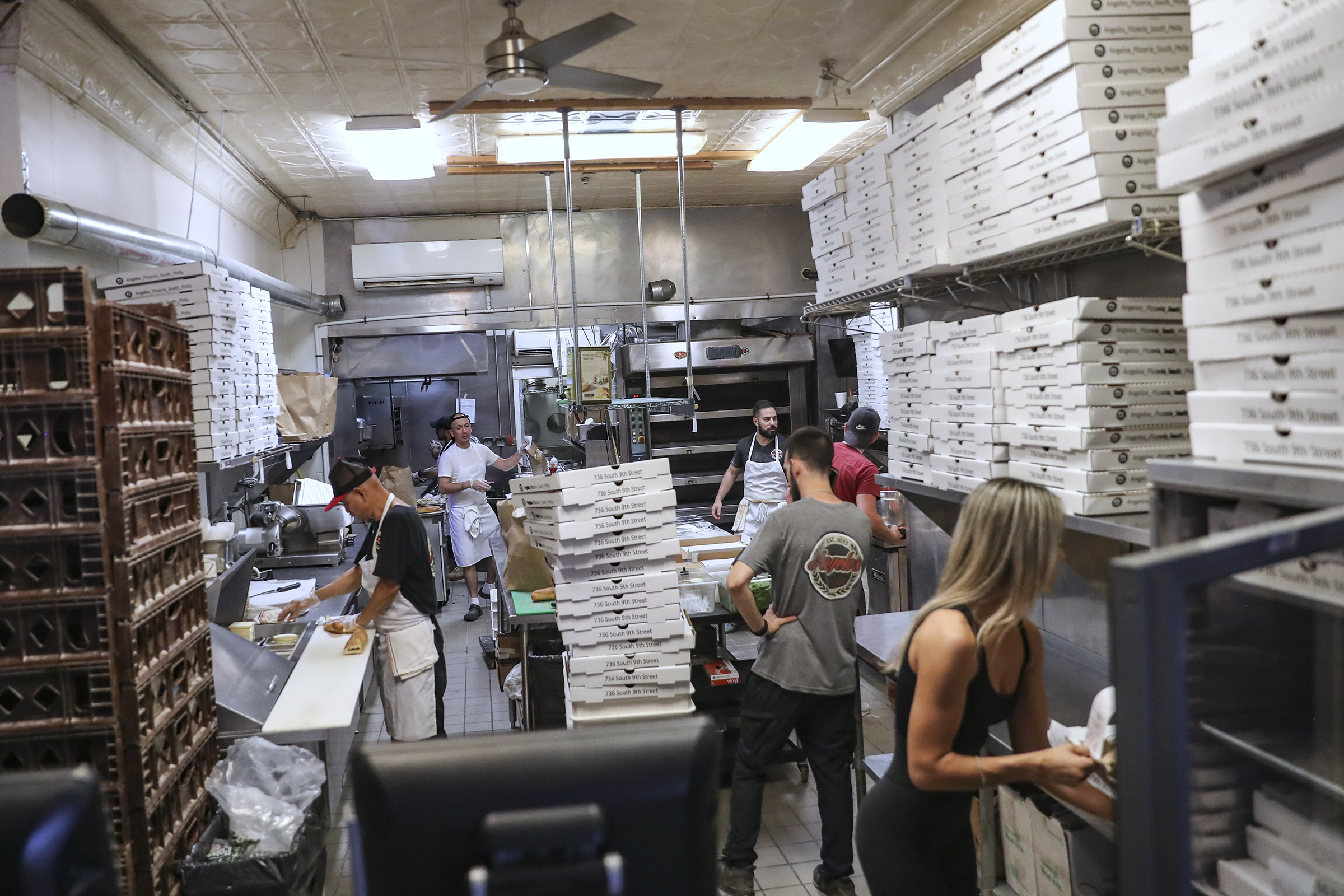
First, it will take the pressure off of the takeout-only Ninth Street storefront, which draws long lines — as well as neighbor complaints. “Ninth Street isn’t going anywhere — we’re not touching that,” he said.
Second, it will allow Angelo’s to move its third-party delivery out of North Philadelphia, where it launched in a ghost kitchen in October 2024. “We like working with them and it helped prove the concept,” he said of the kitchen, on Girard Avenue near 13th Street.
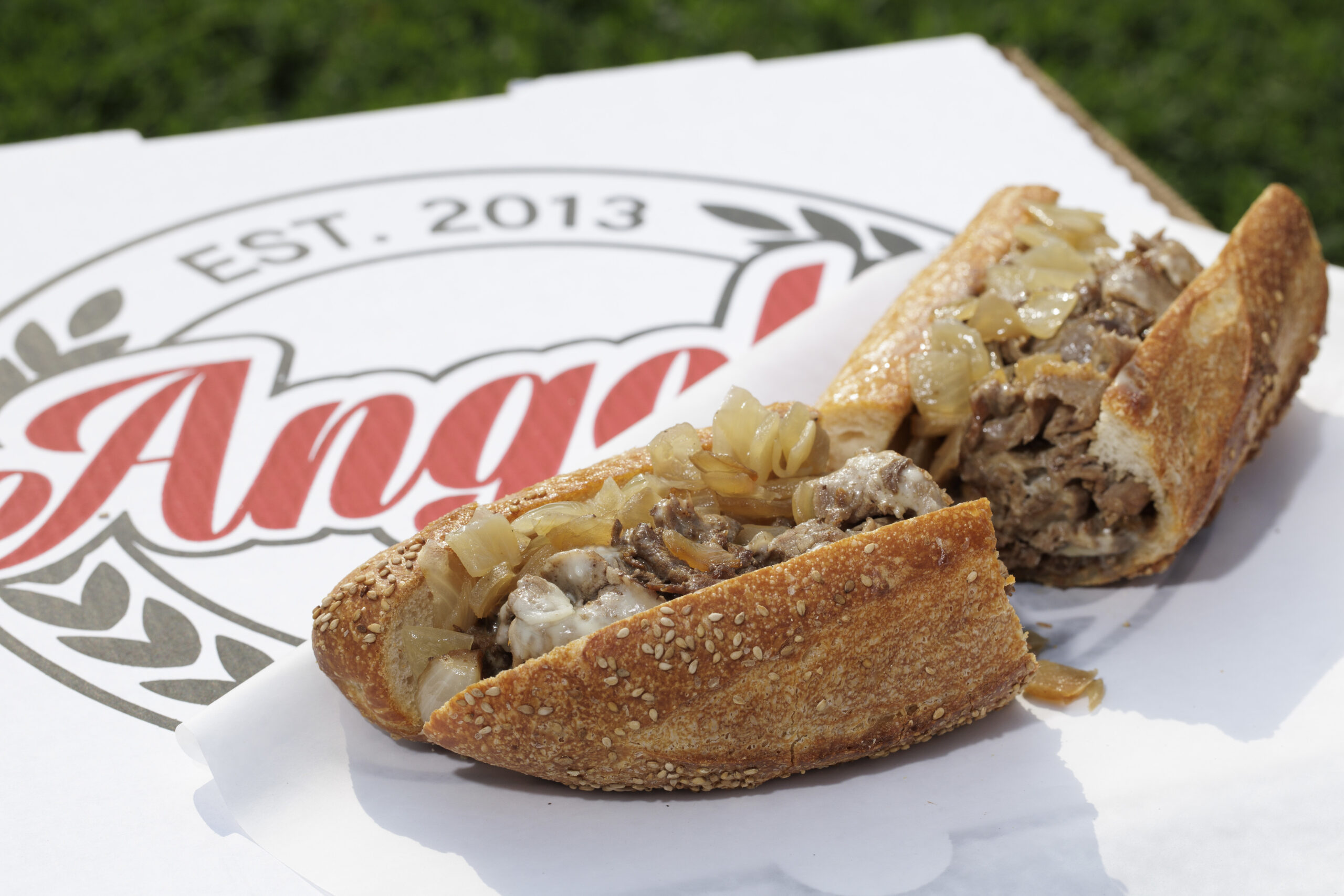
A cheesesteak with onions and Cooper Sharp American from Angelo’s.
Third, with a new kitchen five times the size of Ninth Street’s, “this will bring us back to doing what we used to do,” DiGiampietro said. “We made our bones with specialty sandwiches, like sausage scaloppine and 50 kinds of cutlets. When cheesesteaks and pizza took over, we had to take them off [the full-time menu]. Not knocking the cheesesteaks, but they’re boring. I want to get loose again.”
He said Wolf Street would also serve as a commissary and operate seven days from early in the morning (with house-baked bagels) to late at night.
DiGiampietro said the new building had been on his radar several years ago, before Federal Donuts signed on. “At the time, the build-out cost and the timeline — more than a year — just didn’t work for us,” he said. “The cloud kitchen was faster. But when this came back around, we moved on it fast.”
Angelo’s Pizzeria on Ninth Street during the lunch rush on Aug. 31, 2022.
Asked how many people will be employed at the new location, DiGiampietro replied: “I have no idea. I just come up with the ideas.” Jared Braunstein, his longtime business partner, added: “We’re reactionary here. We just figure it out.”
For Federal Donuts, the Wolf Street closure reflects a broader shift in its operating model. Cook, fellow chef Michael Solomonov, and several friends launched the fried chicken/doughnuts/coffee brand in 2011 as a complement to CookNSolo’s award-winning restaurant, Zahav.
The Federal Donuts & Chicken location at Swanson and Wolf Streets just before its debut in March 2024.
Wolf Street’s kitchen, at 5,000 square feet, was designed for high-volume production. But by the time it opened, that strategy had already evolved, Cook said. “We liked the retail opportunity there. We liked the development story there. But we’re still early on the retail side, and without the commissary to underwrite some of the overhead, it just didn’t really make sense.”
The move fits into Angelo’s broader expansion pipeline.
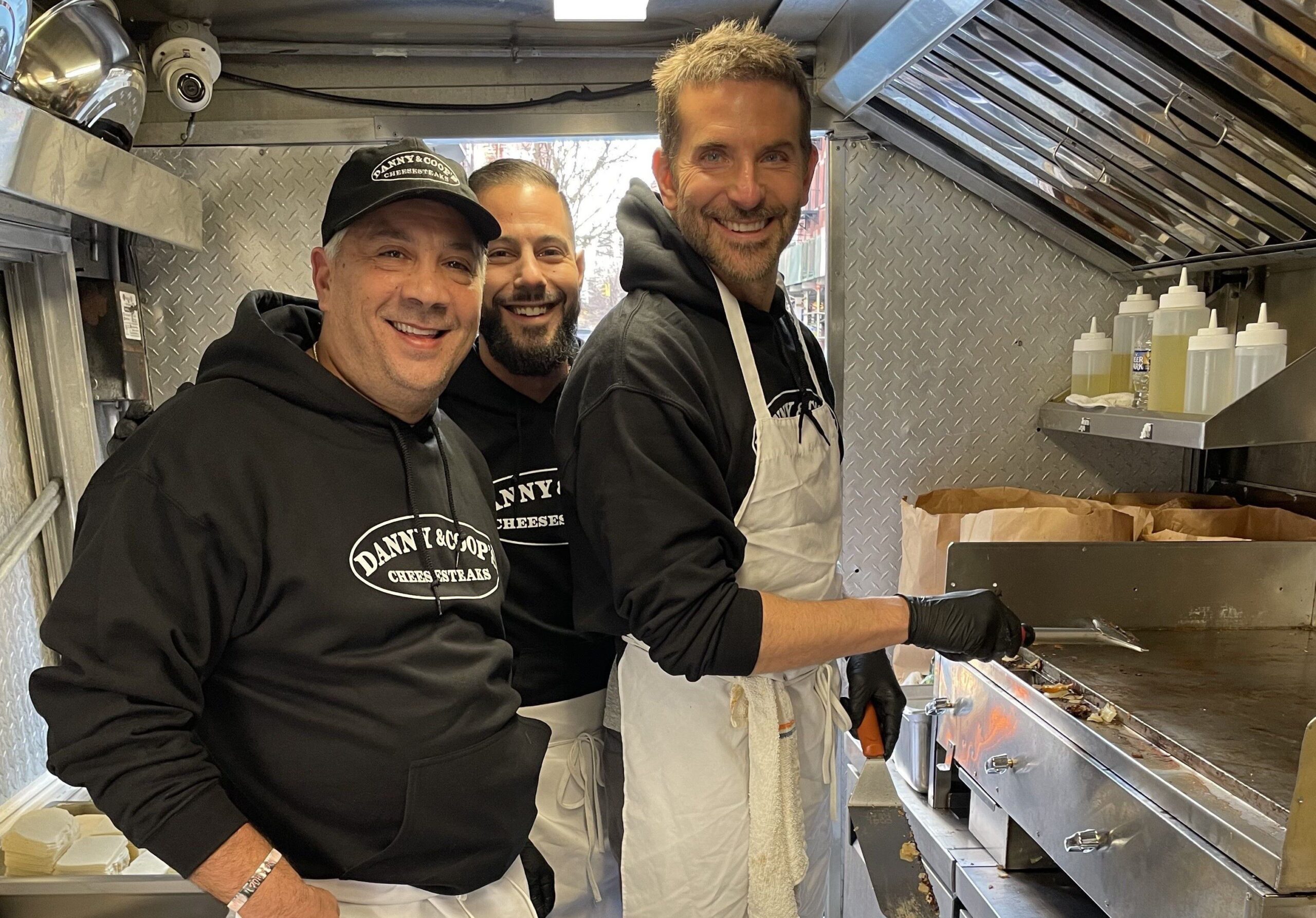
DiGiampietro, with partners, opened Uncle Gus’ Steaks in late 2024 inside Reading Terminal Market. He and the owners of the Wilmington restaurant Bardea opened Angelo’s cheesesteak stand last year in Wilmington’s DE.CO food hall. Actor Bradley Cooper, who walked into Ninth Street anonymously several years ago and bought a sandwich, is DiGiampietro’s business partner in a cheesesteak shop called Danny & Coop’s in Manhattan’s East Village.
Actor Bradley Cooper (right) and Angelo’s Pizzeria owner Danny DiGiampietro (left) work on the Danny & Coop’s cheesesteak truck, a precursor of their shop, with manager Seth Braunstein in New York in December 2023.
A long-delayed bakery project in Conshohocken is nearing completion. DiGiampietro said progress has been slowed by the need to bring the older building — formerly Conshohocken Italian Bakery — up to current code.
He said he hopes to open that retail bakery within a month.
DiGiampietro said a South Jersey location, planned for the former Di’Nics in West Collingswood Heights, is at least six months from opening. Work is expected to begin soon.
For now, DiGiampietro’s focus is on South Philadelphia, where the industrial-scale Wolf Street building offers room to grow without the constraints of a dense residential block.
Angelo’s Pizzeria is setting up at Swanson and Wolf Streets.
“It’s [in an] industrial [area], it makes sense operationally, and it gives us room to grow without bothering anyone nearby,” DiGiampietro said. “For us, it was a no-brainer.”
The surrounding corridor — long defined by warehouses and light industry, as well as big-box stores along Columbus Boulevard and the landmark John’s Roast Pork — is also in flux. Across Wolf Street, Isgro’s Pastries is planning a second location — a large-scale bakery and cafe — to open this summer. Just north on Swanson Street, the six-acre former Inolex Chemical Co. site has been cleared for a retail development whose prospective tenants include Shake Shack, Raising Cane’s, and Lidl.
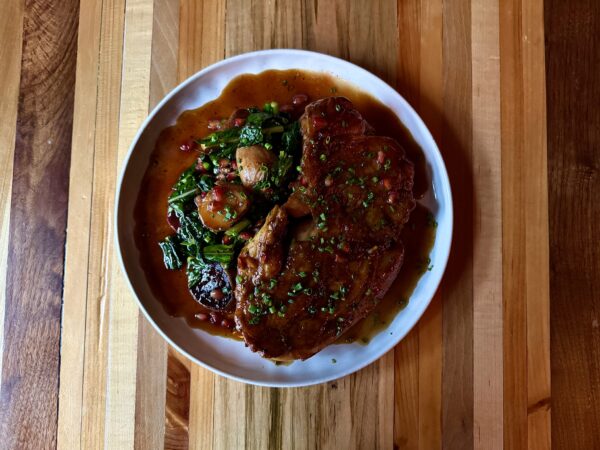
Chef Kenjiro Omori chuckles when asked about his bourbon chicken, a dinner mainstay at Ripplewood Whiskey & Craft in Ardmore. While Omori says he loves the saucy chunks sold at better mall food courts, his bourbon chicken is nothing like that. This rich, homey entree feels ready-made for a cold night.
He breaks down whole birds, deboning them while keeping the breast, thigh, and drum intact, then lightly cures and air-dries the meat for four days. In tribute to Ripplewood’s extensive whiskey collection, Omori sprays the chicken with bourbon before cooking to give it a lacquered finish. Essentially, this is Peking duck meets dry-aged chicken. Executive chef Biff Gottehrer designed the accompanying set, which changes seasonally. The winter mix includes lacinato kale, sweet potato, broccolini, and a sweet-tart mix of apricot and pomegranate, balancing comfort with cheffiness. Ripplewood Whiskey & Craft, 29 E. Lancaster Ave., Ardmore, 610-486-7477, ripplewoodbar.com
— Michael Klein
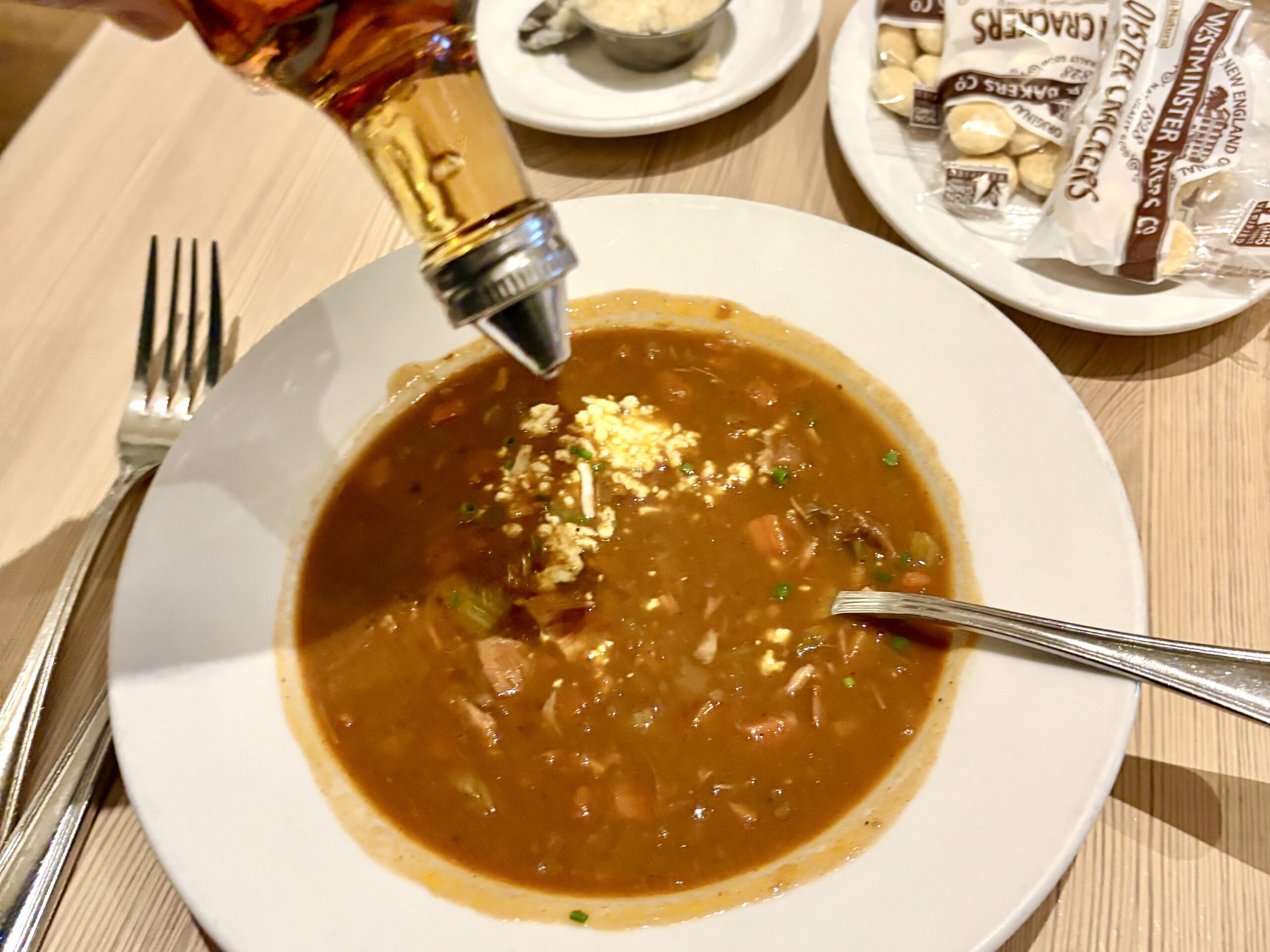
Oyster House’s seasonal snapping turtle soup, a riff on a historical Philadelphia delicacy that once involved cooking whole turtles.
Snapper soup at Oyster House
A friend visiting Philadelphia recently told me she’d never guess that Oyster House has been around for half a century — a feat of longevity celebrated this week by the James Beard Foundation, which named the Mink family’s restaurant an “America’s Classic.” And at first glance, I could understand. The raw bar is alive with diners of all ages, sipping some of the city’s best martinis alongside icy platters of expertly shucked oysters sourced from locales from Cape May to Pemaquid, Maine. There are standard dishes you might find at any tradition-minded fishhouse — a luxurious lobster roll, clam bakes, and creamy chowders. But there are also several modern moves from chef Joe Compoli that would be at home on a creative modern American menu: vibrant crudos, octopus ramen, black garlic-glazed halibut over black rice.
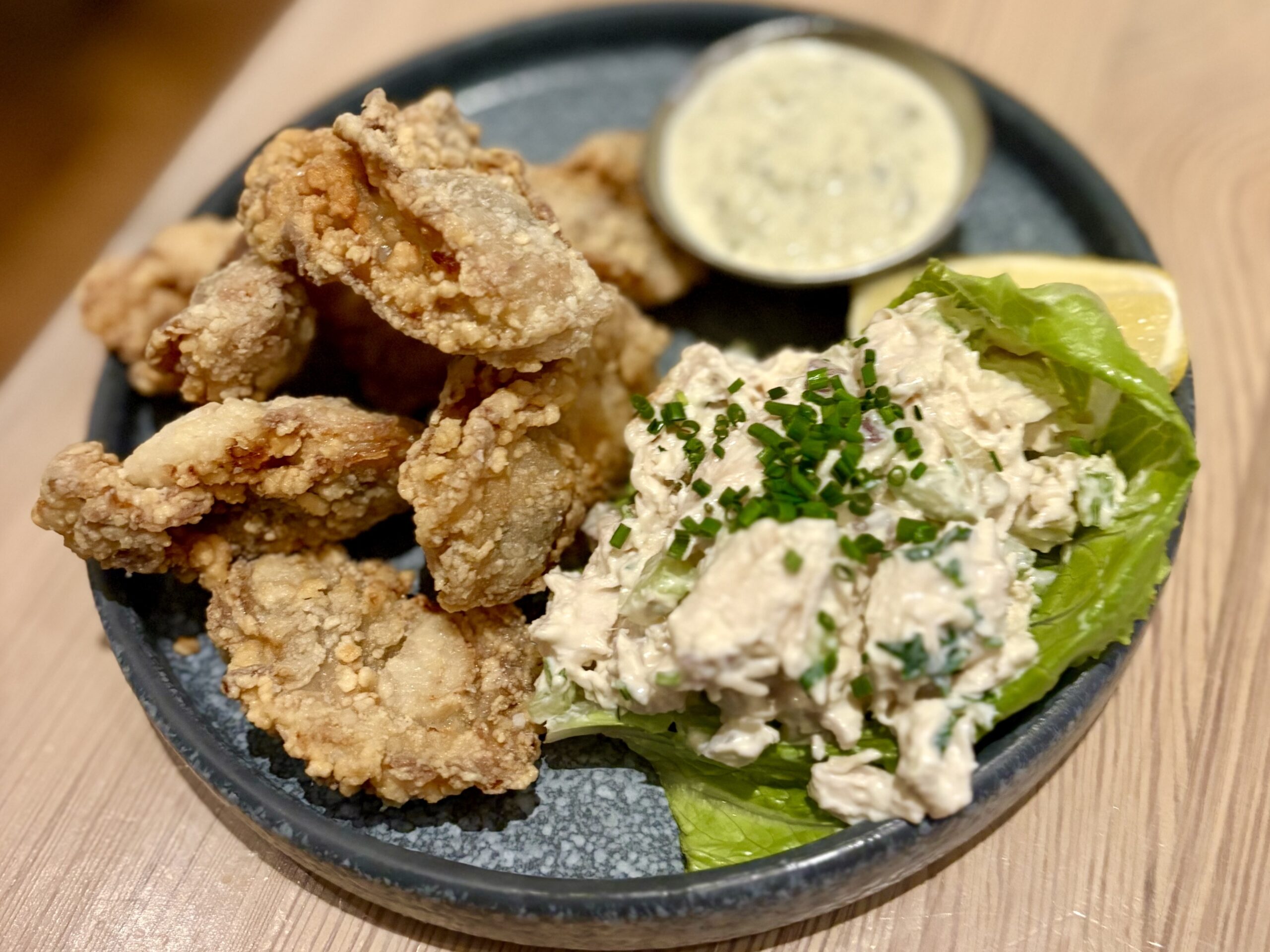
If you look a little closer, however, you can see ties to local history that make Oyster House a Philadelphia classic, like the museum-worthy collection of antique oyster plates scattered like a gilt-edge porcelain constellation across the whitewashed walls. Key standbys on the menu itself function the same way. The fried oysters and chicken salad is one, a seemingly odd but absolutely delicious combo that dates to at least the 19th century, when the city was saturated with oyster houses.
Fried oysters with chicken salad from Oyster House.
But the most iconic (and endangered) of Oyster House’s historical specialties is the snapper turtle soup. This dish has roots in Philadelphia’s colonial past, when 70-pound live green sea turtles would step off ships carrying all manner of tropical produce, just arrivedfrom the West Indies to the city’s docks. Much smaller snapping turtles from the South are the norm now, says third-generation Oyster House owner Sam Mink, but you can still taste the echoes of the Caribbean spice trade — a heady current of allspice and clove — swirling through the mahogany broth the restaurant steeps with whole turtles (shell and all) for nearly four hours.
There are some other differences in Oyster House’s current snapper soup, which is a cold-weather staple here, and the style that was once standard across Philly in places like the (now long-gone) Bookbinder’s restaurants. Oyster House’s version is considerably thinner than the sludgy brown soup of yore. It’s still enriched with buttery brown roux, but missing the extra cornstarch that once thickened it until a spoon could stand up straight. I can taste all the slow-cooked flavors of this soup even more, as well as the velvety softness of the tender meat, thanks to a habitual splash of dry sack sherry, shaken from the tableside cruet. But traditionalists, no doubt, still complain.
“Oh, there were certainly more people that grumbled at first in 2009,” when this modified recipe was first introduced, says Mink. “But if we’d kept things so traditional and didn’t move forward with our recipes, at least a little bit, I don’t think we’d be here today.” Oyster House, 1516 Sansom St., 215-567-7683, oysterhousephilly.com
— Craig LaBan
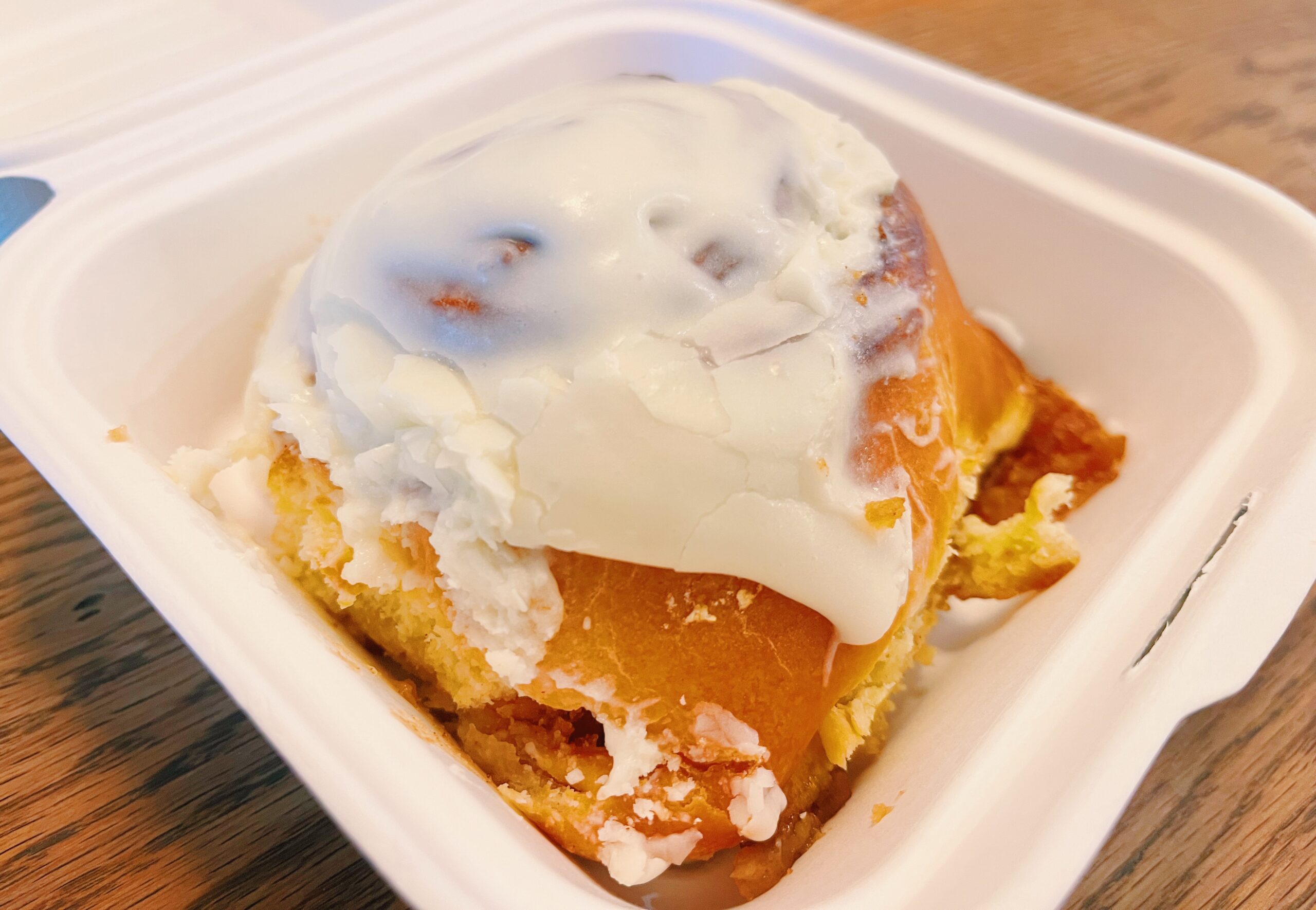
The cinnamon bun from Vibrant Coffee Roasters, which also sold at their sister shop Function Coffee Labs.
Cinnamon bun from Vibrant Coffee Roasters
Sometimes the only thing that can cure the snowstorm blues is a ginormous cinnamon bun slathered in cream cheese frosting.
Vibrant Coffee Roasters’ are pretty hefty. They’re roughly 4 inches in diameter and heaped with so much frosting it drips down the side, just the way I like. The key to creating giant and soft buns, according to Vibrant co-owner Ross Nickerson, is to let them merge together on the tray while they bake. That way, you lock in the moisture and avoid a cardinal sin: a dry cinnamon bun that tastes stale once it cools.
Vibrant uses a hybrid sourdough-brioche dough, and Nickerson said that the staff avoids doing anything too fancy with the filling or frosting. The result is a classic cinnamon bun that’s pillowy, not too sweet, and ultra-comforting. The buns are available at Vibrant’s locations in Rittenhouse and at Sixth and Lombard, plus their sister shop, Function Coffee Labs (1001 S. 10th St.). I’d trek through snow to any of them for chance to get a gooey bun fresh from the oven. Vibrant Coffee Roasters, 222 W. Rittenhouse Square First Floor, 267-534-3608, vibrantcoffeeroasters.com
“Asparagus is nutty, though that’s not how a lot of people would describe it,” said chef Ian Graye of Pietramala in Northern Liberties. “They may say it tastes green, like chlorophyll. But there’s flavor in asparagus. It’s juicy, and it tastes like spring.”
You may assume asparagus is just about its spears. “The spears are just its shoots,” Graye said. “It actually grows into a really big plant. And then it sprouts and flowers. But we’re so used to seeing it in one stage of its life cycle.”
Asparagus is one of springtime’s mystical gifts, though don’t expect it to linger for the entire season.
“It’s a really interesting plant that people don’t really think about,” he said.
Pietramala is vegan, but to simply describe it as a vegan restaurant would be to flatten the experience one can have there. Because it’s not about avoiding certain foods to serve a restrictive menu, Pietramala is a joyous celebration of vegetables, mushrooms, seeds, oils, and ferments.
Each of the dishes from its tight, frequently changing menu is a careful layering of textures and a balance of freshness and preservation, whether it’s a paper-thin fan of shaved cremini mushrooms, or half a doll-sized creamy roasted squash, crusted in seeds and set in a puddle of tahini made from the squash’s seeds.
Chef/owner Ian Graye posed for a portrait at Pietramala on Wednesday, Nov. 27, 2024, in Philadelphia. Pietramala is located at 614 N. Second St.
The road to Pietramala
Named for his mother’s family’s Italian surname and the Tuscan town from which they come from, Pietramala is a bit of a curiosity. The golden-lit temple to vegetables almost didn’t exist. Graye moved to Philly in 2020, hoping to work for chefs around town. But the pandemic ensured nobody was hiring, which forced him to forge his own path — one that eventually led to opening Pietramala.
In 2011, Graye was working as a dishwasher at Champs Diner in Williamsburg, Brooklyn. He worked his way up to line cook, then sous chef, and then, finally, the chef running the kitchen. It involved a lot of “opening packages and reheating things,” according to Graye. “It was pretty easy.”
Then, three years in, came a catalyst for change. “I watched Jiro Dreams of Sushi,” said the chef, who had been vegan throughout his professional kitchen career. “I wanted to work harder and dedicate myself to cooking.”
He quit the diner and swore he would aim higher, seeking out plant-based chef Neal Harden and working for him in two restaurants over the next three years. It was the second time in Graye’s life that he made a promise to himself that would alter the course of his cooking.
“Animal welfare was always part of my life growing up. I was raised not eating any mammals. We ate poultry and eggs and dairy and seafood. I’ve never eaten beef or pork or lamb or game,” he said.
In his 20s, he decided to become a vegetarian, which lasted about a year. He faced a moral conundrum: Why is it OK to eat some animals and not others? He became vegan after realizing that he was still participating in the meat industry by purchasing animal products like eggs and milk.
Tasting food’s real flavors
“With a lot of vegetables and produce, you can eat it your whole life, and then at some point realize what it actually tastes like when you eat a version that’s five times stronger than what you’ve experienced,” Graye said.
He had grown up in Queens drinking orange juice from concentrate and Sunny D. Later in life, he took his first bite of a satsuma mandarin at its in-season peak.
“It was the difference between my experience with orange flavor and the true flavor of orange. It’s a vast, vast difference.”
He had a similar experience with asparagus, which was once to him “flavorless, fibrous — old asparagus that had been sitting on a truck and then a supermarket, already starting to sprout. The head isn’t tight anymore.”
Indeed, you can buy asparagus from any supermarket year-round, but what you’re getting is simply a facsimile of locally grown spring asparagus.
In springtime, the asparagus in supermarkets can be good. As soon as April arrives, chefs may even rush to purchase asparagus grown in California.
“But the second you cut asparagus, it starts to lose its magical qualities. Every second counts. Every hour. So go to the farmers market,” advised Graye. “Cook it immediately, or even just take a bite out of it right there. You can’t walk into a supermarket, grab a stalk of asparagus, take a bite, and have it be delicious.”
Graye gushed about Rineer Family Farms’ asparagus, grown in Pequea in southern Lancaster County (they set up at Rittenhouse Farmers’ Market and the Chestnut Hill Farmers’ Market). “But any farmers market asparagus is going to be great,” he said.
Asparagus takes skill and around three years for farmers to cultivate before they become strong, perennial plants that yield decent harvests. “The work that goes into it is incredible,” Graye said.
Here is Graye’s way of celebrating the beauty of young asparagus.
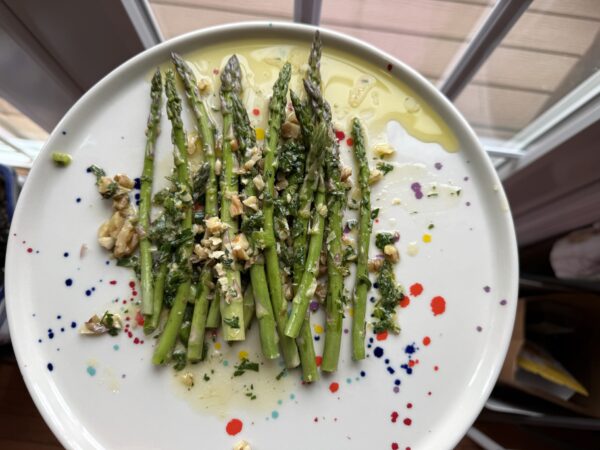
Raw asparagus salad with walnut salmoriglio
Makes enough for 6 people
For the asparagus
2 bunches asparagus (2 pounds)
Slice off the very bottom of the stalks and peel the fibrous skin from the midpoint down to the cut part. Slice on a slight bias up to the tip, leaving the tips whole.
For the salmoriglio
This dressing will begin to homogenize and dull in flavor after a few hours. It is not recommended to be made ahead of time.
136 grams extra virgin olive oil (1/2 cup plus 1 tablespoon)
21 grams white miso (1 tablespoon)
6 grams lemon zest (zest of 2 lemons)
27 grams lemon juice (juice of 2 lemons)
2 grams freshly cracked black pepper (about 12 grinds of a pepper mill)
5 grams sliced scallions, green tops only (2 tablespoons)
3 grams minced fresh serrano chili (1 teaspoon)
5 grams minced fresh parsley (2 tablespoons)
3 grams sliced fresh mint (2 tablespoons)
1.25 grams minced garlic (1 teaspoon)
5 grams kosher salt (1 1/2 teaspoons)
21 grams chopped black walnuts or walnuts (3 tablespoons)
Add the olive oil and miso to a wide bowl. Using a fork or whisk, mash the miso into the oil while stirring until all lumps have been incorporated. Add all remaining ingredients and stir to combine. Allow to marinate for about 10 minutes.
For the garnish
Chopped walnuts
Mint leaves
Parsley leaves
Sliced scallions (green part only)
Pea shoots or baby arugula
To serve
Add the sliced asparagus to the salmoriglio and stir thoroughly. Arrange in a large bowl to serve or individual bowls and garnish with walnuts, mint leaves, parsley leaves, sliced scallion, and pea shoots.
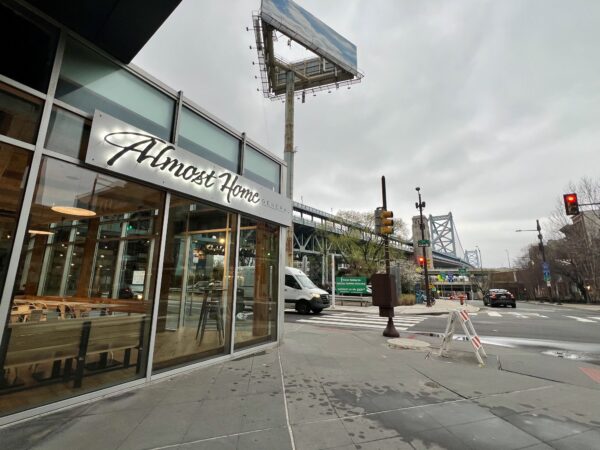
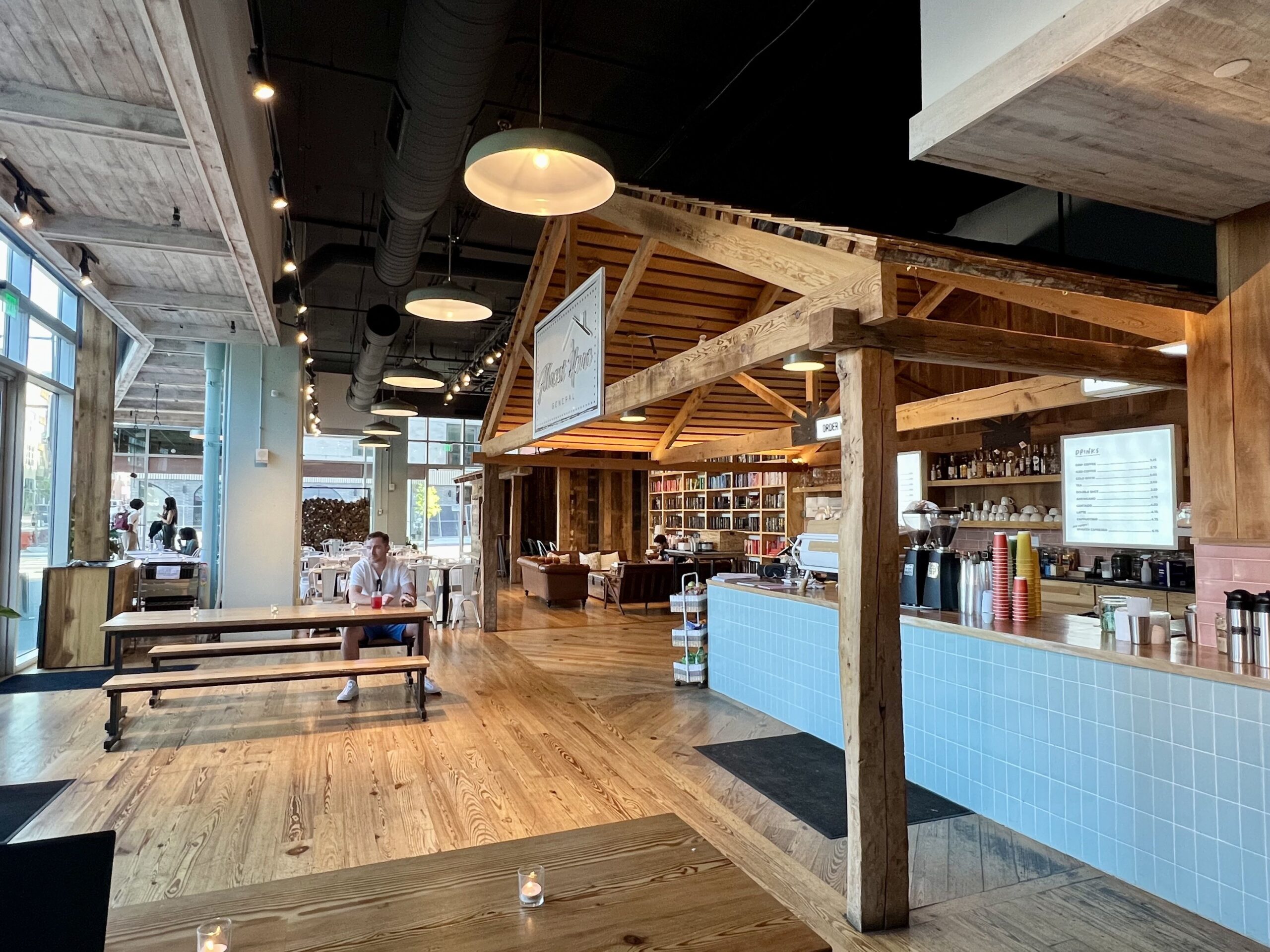
Almost Home General’s Old City coffeehouse closed this week, capping a complicated two-year joint venture between the Jersey Shore-based chain and Glu Hospitality, the now-disbanded restaurant group that operated the location.
Robbie Doran, who founded Almost Home in 2000 in Monmouth County, said his company was moving on and plans to open a coffee shop and grocery store of its own at Beach Street Landing in Northern Liberties. They will join Almost Home’s other Philadelphia location, on the ground floor of the Hagert & York development in East Kensington.
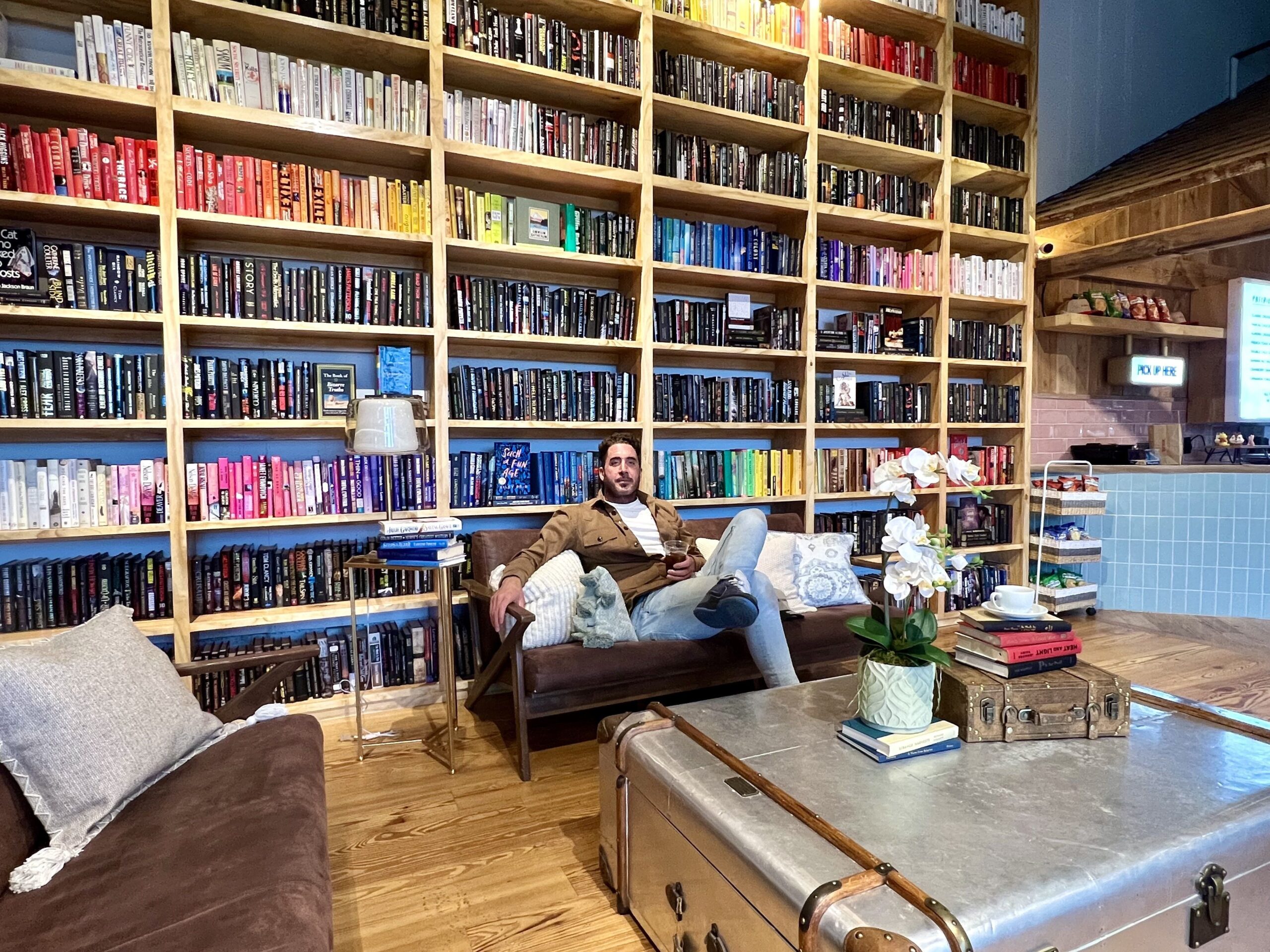
Owner Robbie Doran in the lounge area at Almost Home, 205 Race St.
Almost Home’s relationship with Glu began around 2023, when Glu founders Tim Lu and Derek Gibbons approached Doran, whom they knew from working in the New York City nightlife scene.
“They wanted my brand,” Doran said. “I saw the growth with Glu and assumed they knew what they were doing.”
At the time, Glu was on a tear of openings since its founding in 2019, at one point operating the chain Bagels & Co. alongside seven other vibey restaurants, including Northern Liberties’ Figo and the subterranean Center City ramen bar Chika, both now shuttered.
In April 2024, Glu and Doran opened the Almost Home location at the corner of Second and Race Streets, on the ground floor of the Bridge on Race building beside the Ben Franklin Bridge. The coffee shop offered cocktails alongside full brunch and dinner menus, and was an immediate hit on social media thanks to its over-the-top lattes and photogenic color-coded bookshelves.
Almost Home opened in April 2024, replacing a coffeehouse/retailer called United by Blue.
Doran said the arrangement began to break down early last year after broader issues surfaced at other Glu-owned restaurants. In addition to allegations of wage theft, Glu was running afoul of state liquor laws by using off-premises catering permits, rather than full liquor licenses, to sell alcohol at both Almost Home and Figo. Two other former Glu restaurants — Chika and Izakaya Fishtown — were operating under expired liquor licenses.
“When things started falling apart, it happened fast — within about two weeks, everything came crashing down,” Doran said. “We were finding things out from the news before hearing about them internally, which isn’t how a partnership should work.”
Glu partners Derek Gibbons (left) and Tim Lu at Figo in December 2022.
After Glu shut down, Doran said he dissolved Almost Home’s partnership. From then on, Doran said, Lu ran the Old City cafe.
The shop faced operational challenges. In September 2025, the cafe was shut down by the Philadelphia Department of Health after a failed health inspection found evidence of mouse droppings and uncontained rat poison throughout the kitchen. The report’s findings drew attention on social media that Lu said the business could not bounce back from.
“The report itself wasn’t unusual from an operational standpoint,” Lu said. “But someone on social media amplified it and added commentary that made it seem worse than it was.”
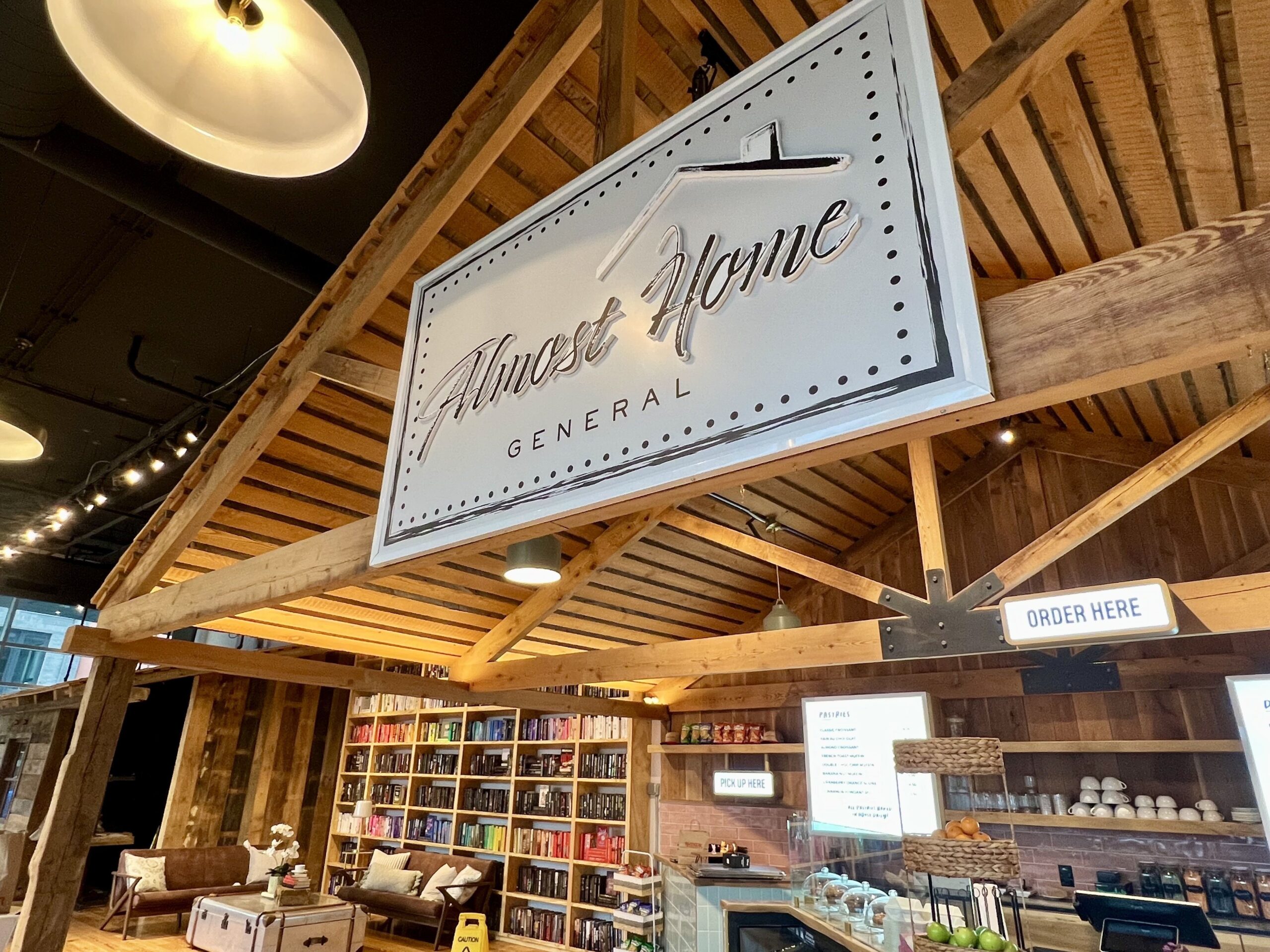
Dining room at Almost Home, 205 Race St.
Other factors contributed to the decline, Lu said, including a harsh winter that caused foot traffic to slow further. “At the end of the day, the business just wasn’t sustainable,” Lu said.
Doran, who operates eight Almost Home General locations in New Jersey in addition to the East Kensington shop, said the experience affected his business beyond Philadelphia.
“A lot of the blame fell on him,” Doran said of Lu. “But ultimately, the decisions that were made had ripple effects. Some of that fallout affected me as well, even though I wasn’t involved in those decisions.”
Doran emphasized that he doesn’t view Lu as solely responsible for the outcome and said he has focused on supporting staff affected by the closure. “I’ve been reaching out to employees to make sure they’re taken care of,” Doran said. “I’m not going to let staff get hurt in the process.”
Aramark will not be the official food, beverage, and hospitality provider at the new South Philadelphia arena where the 76ers, Flyers, and the city’s new WNBA team are expected to play.
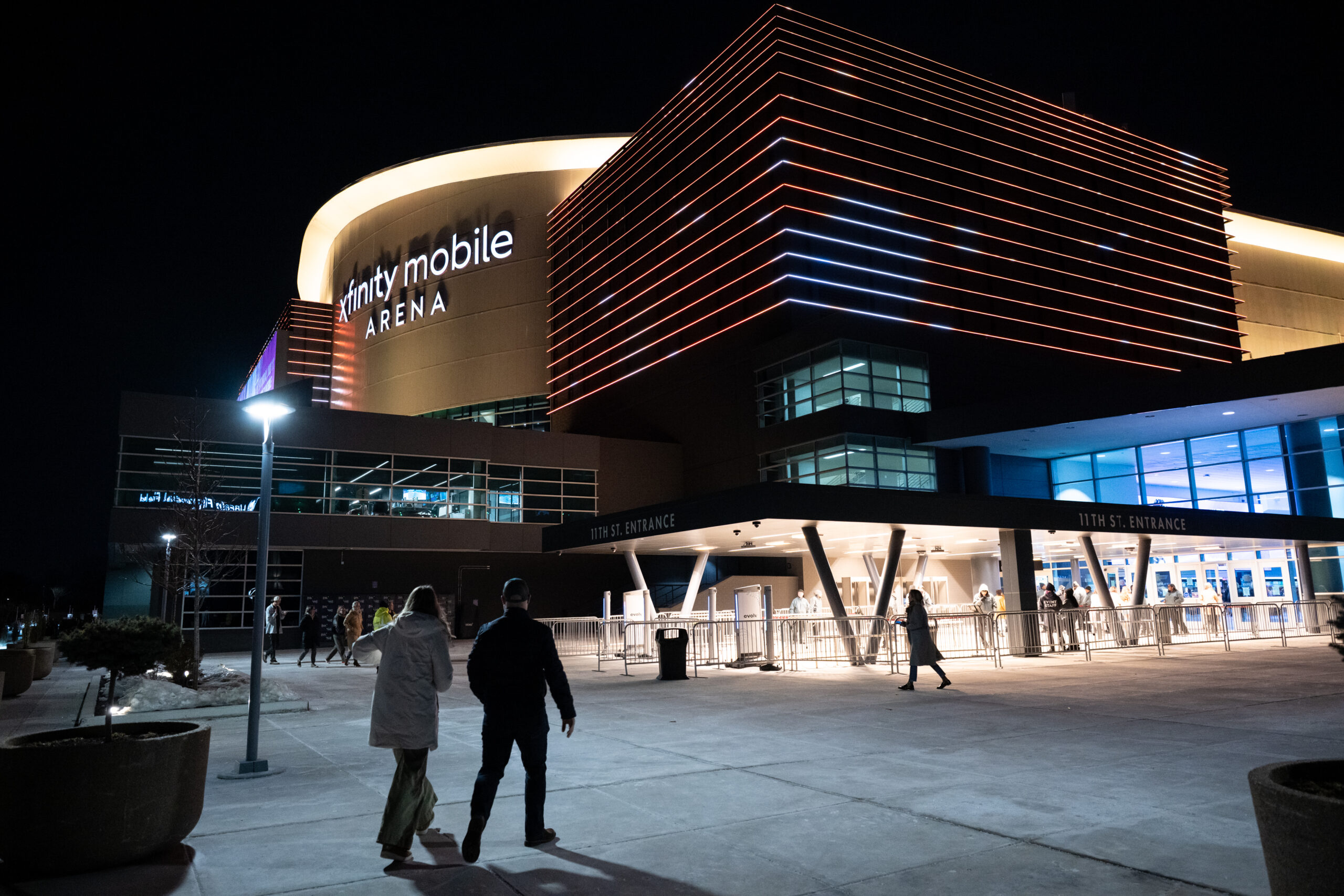
Harris Blitzer Sports & Entertainment, which owns the Sixers, and Comcast Spectacor, which owns the Flyers and Xfinity Mobile Arena, announced that Levy Restaurants will take over food and beverage duties in the new arena, which is slated to open by 2030.
“Very few cities are as devoted to their teams as Philadelphia, the loyalty and passion are part of the DNA that make the community so special. It’s both an honor and an invigorating opportunity to help amplify the best of Philadelphia,” Levy CEO Andy Lansing said in a statement.
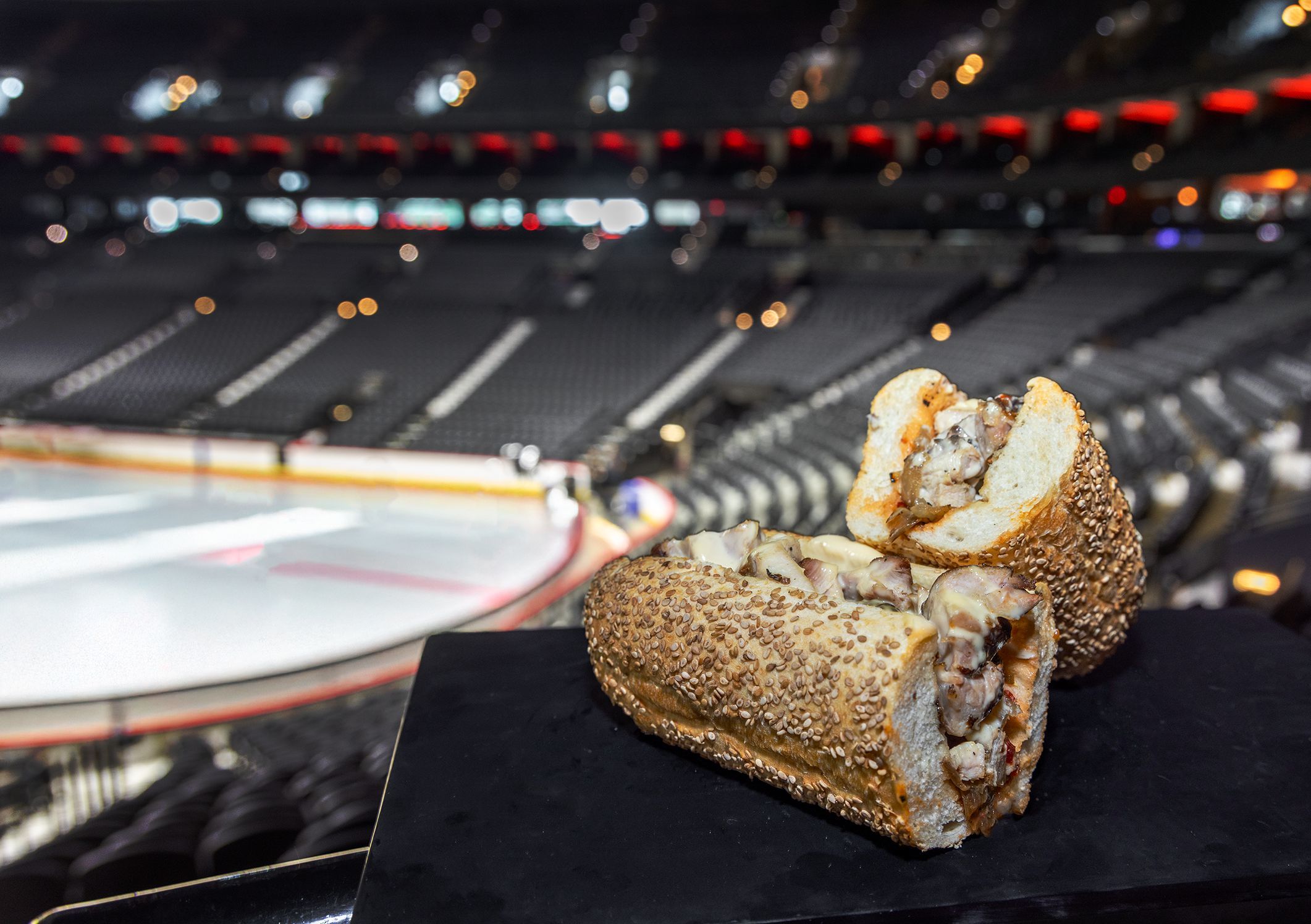
Smoked chicken cheesesteak is on the 2025-26 menu at the Xfinity Mobile Arena.
Aramark has overseen hospitality at the Sixers’ and Flyers’ arena since it opened in 1996. Lincoln Financial Field and Citizens Bank Park hospitality services are still operated by the Philadelphia-based food services provider.
A spokesperson for the arena said that the decision to go with a new provider was not based on Aramark’s performance, but was the result of a standard pitch process.
“We have a great relationship with our friends at Aramark,” Comcast Spectacor chairman and CEO Dan Hilferty told SportsBusinessJournal. “We have, on both sides, committed that while Xfinity Mobile Arena is still in operation, we’re going to deliver the best possible product.”
Aramark will continue its tenure at Xfinity Mobile Arena until the new arena opens. The new arena was announced last year after plans to build a Center City arena for the Sixers were abandoned in favor of a new building at the South Philly sports complex.
Xfinity Mobile Arena used to be known as the Wells Fargo Arena, from 2010 into August 2025.
“Our team is fully committed to delivering memorable game day experiences, and we are grateful for the many decades spent fueling the passion and energy of the fans,” an Aramark spokesperson said in a statement.
The hometown food service provider has come under fire in recent years over labor disputes with the thousands of people who work in the stadiums. Before Unite Here Local 274 won its latest contract, fewer than 100 workers represented by the union had year-round healthcare. The contract, signed last March, increased wages and brought hundreds of workers onto the union healthcare plan.
Levy’s portfolio includes nearly half the NBA/NHL shared arenas, such as Los Angeles’ Crypto.com Arena, according to a Sixers spokesperson. Levy, which has headquarters in Chicago, also provides services for such large events as the Kentucky Derby and the Grammys.
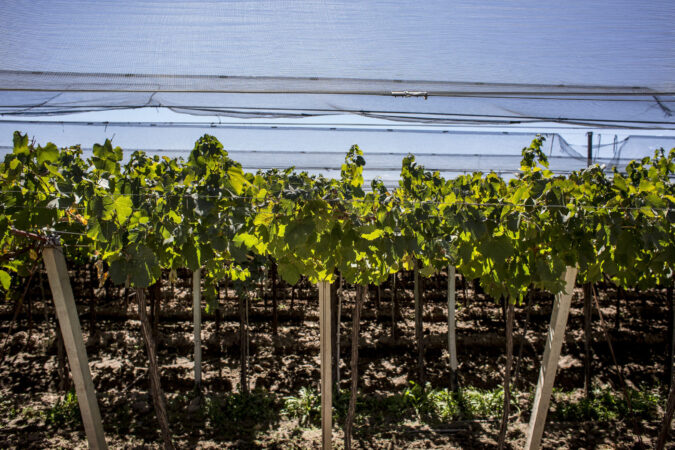
Most of the wine regions located outside of Europe grow the same roster of famous French grapes, because those were in greatest demand when their vineyards first began trying to compete with the classics on quality. That’s why the top grapes of Burgundy and Bordeaux are so ubiquitous; almost every country of the Americas and southern hemisphere offers mostly chardonnay and sauvignon blanc for white wines and cabernet sauvignon, merlot, and pinot noir for reds. However, there are some exceptions, as with the singular case of Argentina, whose signature malbec grape is rarely grown anywhere else, and was chosen for that role the old-fashioned way.
All fine wine grapes belong to one single species and most European regions make wine from their own local “varieties.” These varieties reflect natural genetic variation, but in Europe, those that became dominant in any given place are those that have proven themselves over time to be well-suited to that region’s terrain, climate, and soil types.
While most New World wine regions simply adopted the most successful European varieties, one man in Argentina — a French agronomist — was determined to figure out first what grapes would perform best. Michel Aimé Pouget brought in cuttings of many European vines in the 1850s and established the country’s most influential wine institution. Malbec was then an obscure grape that was in decline in its native France but proved itself in trials to be ideally suited to the sun-drenched slopes of the Mendoza region. From that point forward, malbec was relentlessly promoted to growers as the safest bet for vineyard plantings, resulting in malbec becoming Argentina’s gift to the wine world. Bursting with flavors of black cherries and blackberry jam, this example features malbec’s distinctive purple color, velvety mouthfeel, and faintly floral scent of candied violets.
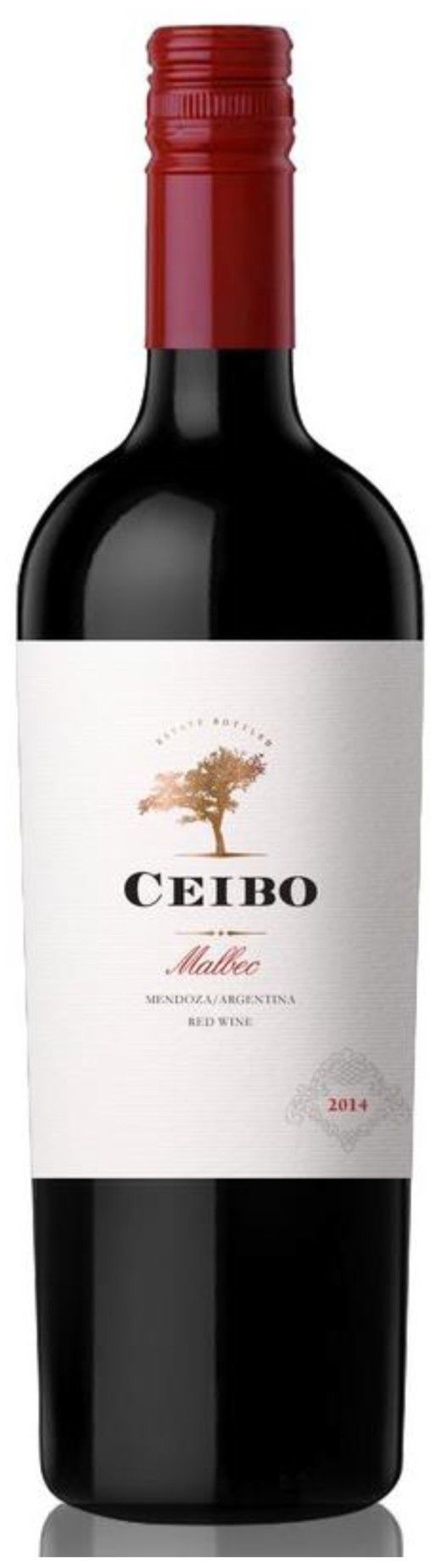
Ceibo Malbec
Ceibo Malbec
Mendoza, Argentina; 14% ABV
PLCB Item #100034251 — on sale for $11.99 through March 1 (regularly $13.99)
No alternate retail locations within 50 miles of Philadelphia according to Wine-Searcher.com.
On Wednesday, the James Beard Foundation announced six recipients of the award in the Restaurant and Chef category. The “America’s Classics” designation is given to local restaurants with “timeless appeal that serve quality food and are beloved by their communities” and “sustain and contribute to American food culture,” according to the foundation’s statement.
For the mid-Atlantic category, Oyster House was selected for its three-generation commitment to serving seafood traditions in Philadelphia. The foundation praised owner Sam Mink and his family for straddling multiple eras of Philadelphia’s restaurant history with specialties like sherried snapper soup and combinations like fried oysters and chicken salad, along with its willingness to evolve with creative modern seafood cookery like executive chef Joe Campoli’s crudos, grilled fish, and halibut glazed in black garlic over dashi.
“Oyster House is not just a venerable ambassador of Philadelphia food history — it remains one of the city’s most rewarding places to eat,” the statement noted.
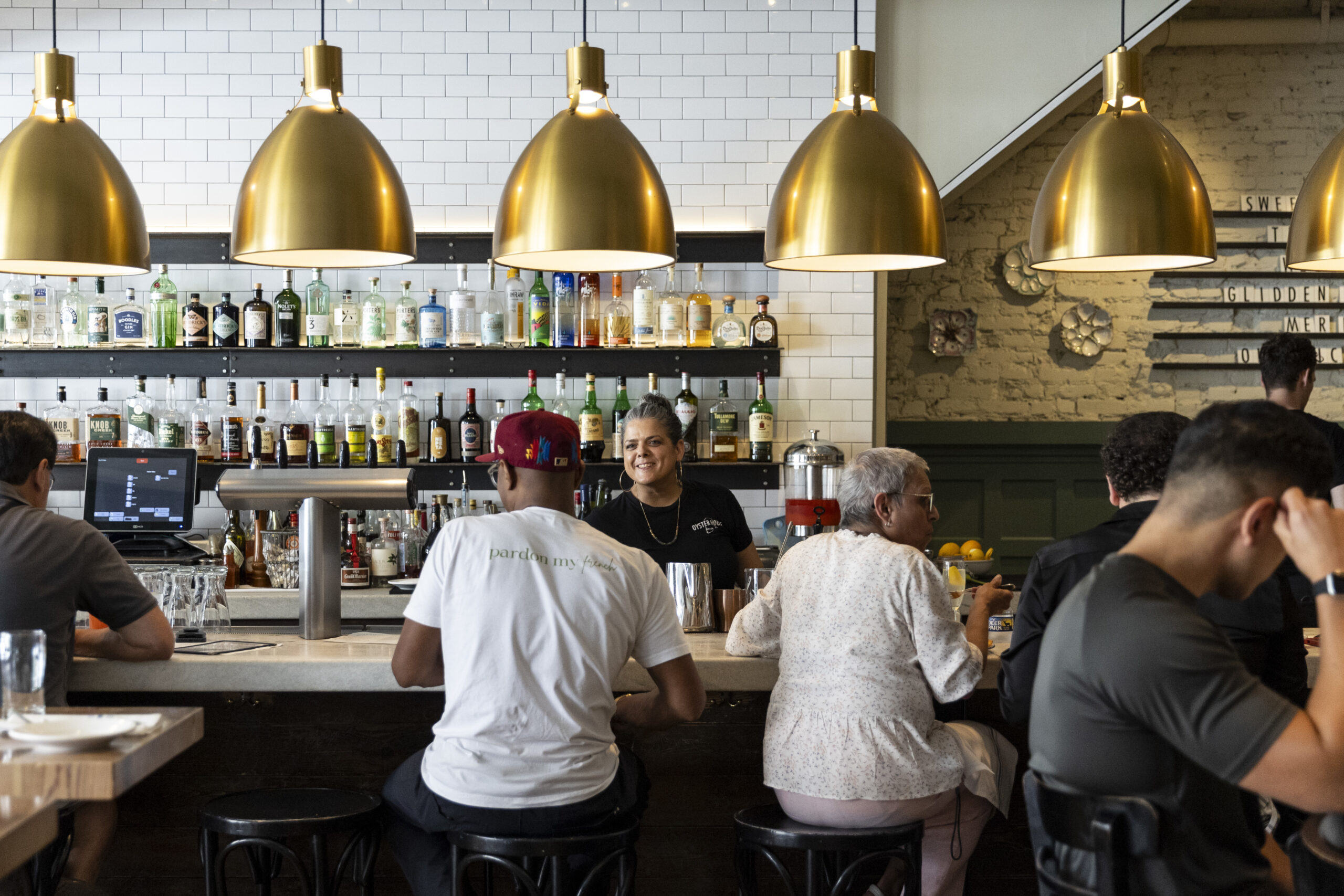
People fill the bar during happy hour at Oyster House in Philadelphia on Thursday, July 11, 2024.
When Mink received the email announcing the restaurant’s win a week ago, he was surprised “because I really wanted this award.”
“I feel like we are such a classic institution for Philadelphia,” he said. “But to be honored on a national level … people in Philly know about us — we’ve been around for 50 years … that recognition means so much [and] just validates what we do day in and day out. We come to work trying to give Philadelphia the best seafood possible.”
The restaurant staff was abuzz with congratulations and excitement Wednesday morning. “I’ve got a great staff here, the managers, the chefs on down to the servers, bartenders, cooks — everyone just has a real smile on their face today and is really excited to be here.”
While Mink hasn’t had time to think about an immediate celebration for the good news, the Center City restaurant will celebrate its 50th anniversary with a big block party in the spring.
The Oyster House is one of The Inquirer’s 76 most vital restaurants in Philadelphia. This year’s other winners are the Serving Spoon in Inglewood, Calif., Johnny’s Cafe in Omaha, Neb., Eng’s in Kingston, N.Y., Figaretti’s Italian Restaurant in Wheeling, W.V., and Bob Taylor’s Ranch House in Las Vegas.
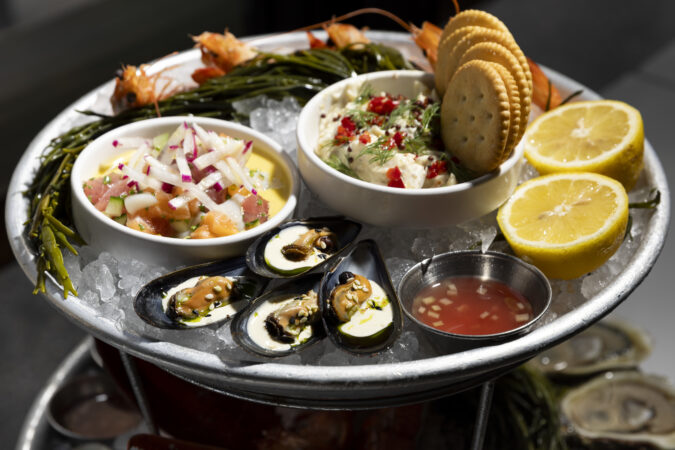
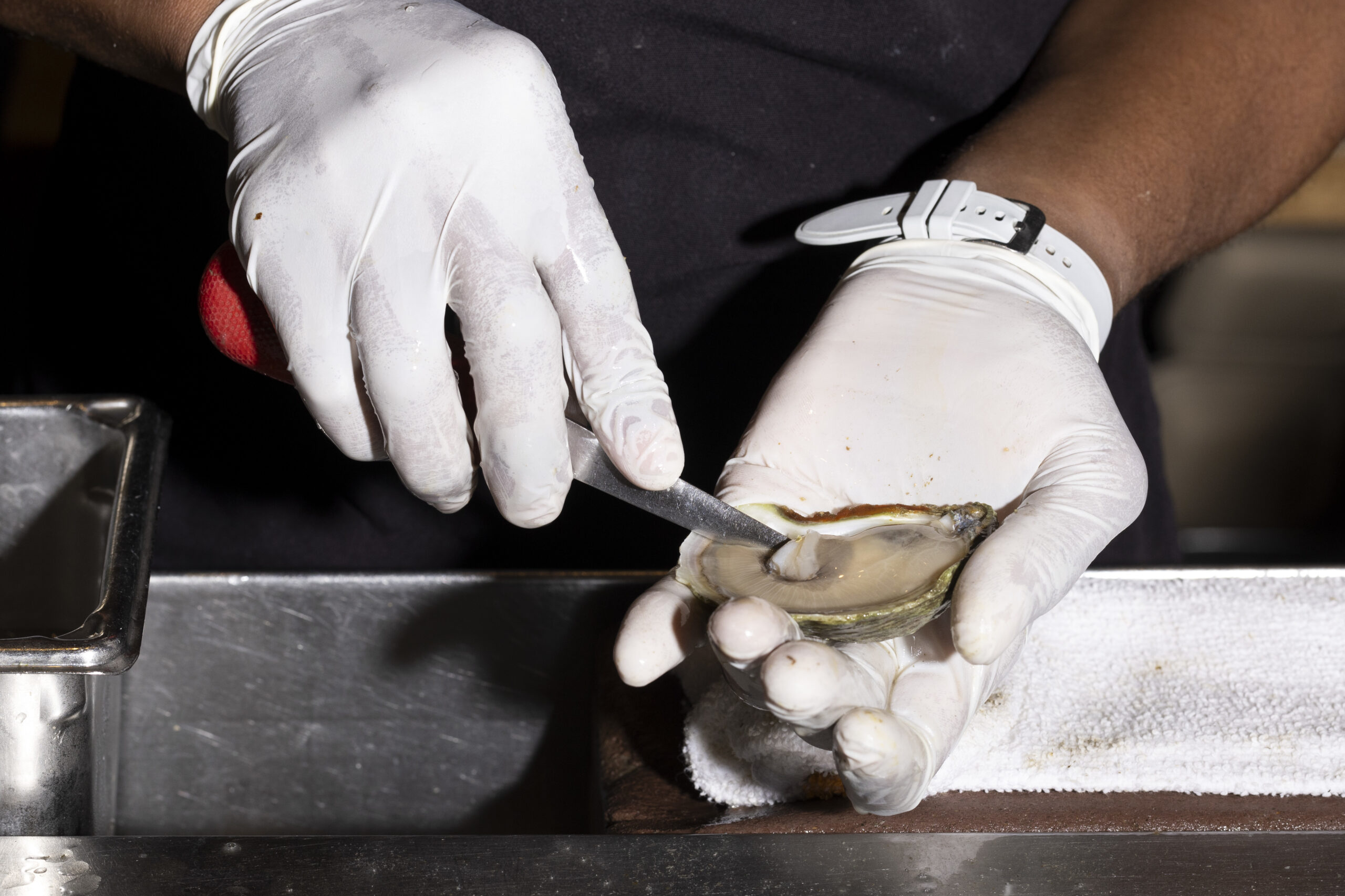
Gary McCready prepares a seafood tower at Oyster House in Philadelphia on Thursday, July 11, 2024.
Restaurants are recommended by the Restaurant and Chef Awards voting body and the public during an open call period from October to November, then considered and selected by the subcommittee. America’s Classics restaurants must be open for at least a decade to be eligible.
The winners will be celebrated at the James Beard Restaurant and Chef Awards ceremony on June 15 at the Lyric Opera of Chicago.
“Behind each of these cherished restaurants are people who show up day after day to nourish their communities — their powerful stories are ones of creativity, resilience, and tradition,” said Lauren Saria and Erinn Tucker-Oluwole, Restaurant and Chef Awards subcommittee cochairs. “On behalf of the Restaurant and Chef Awards subcommittee, we are honored to celebrate these unsung heroes of American food culture. We hope this recognition opens new doors for their continued success.”
At 11 p.m. on a February Friday night, a boisterous line snaked out of a brightly lit cafe a block away from Penn Presbyterian Medical Center. Philadelphians chatted excitedly as they waited to order pistachio lattes, matcha, and Adeni chai at Philly’s newest Yemeni coffee shop, Shibam Coffee Co.
The national chain added Philly to its roster of U.S. locations, soft-opening last weekend, thanks to four friends: Philly native Fahad Azam and his college friend Khurram Ghayas, who looped in brother Waqas Ghayas and Texas-based friend Roshaan Ahmad.
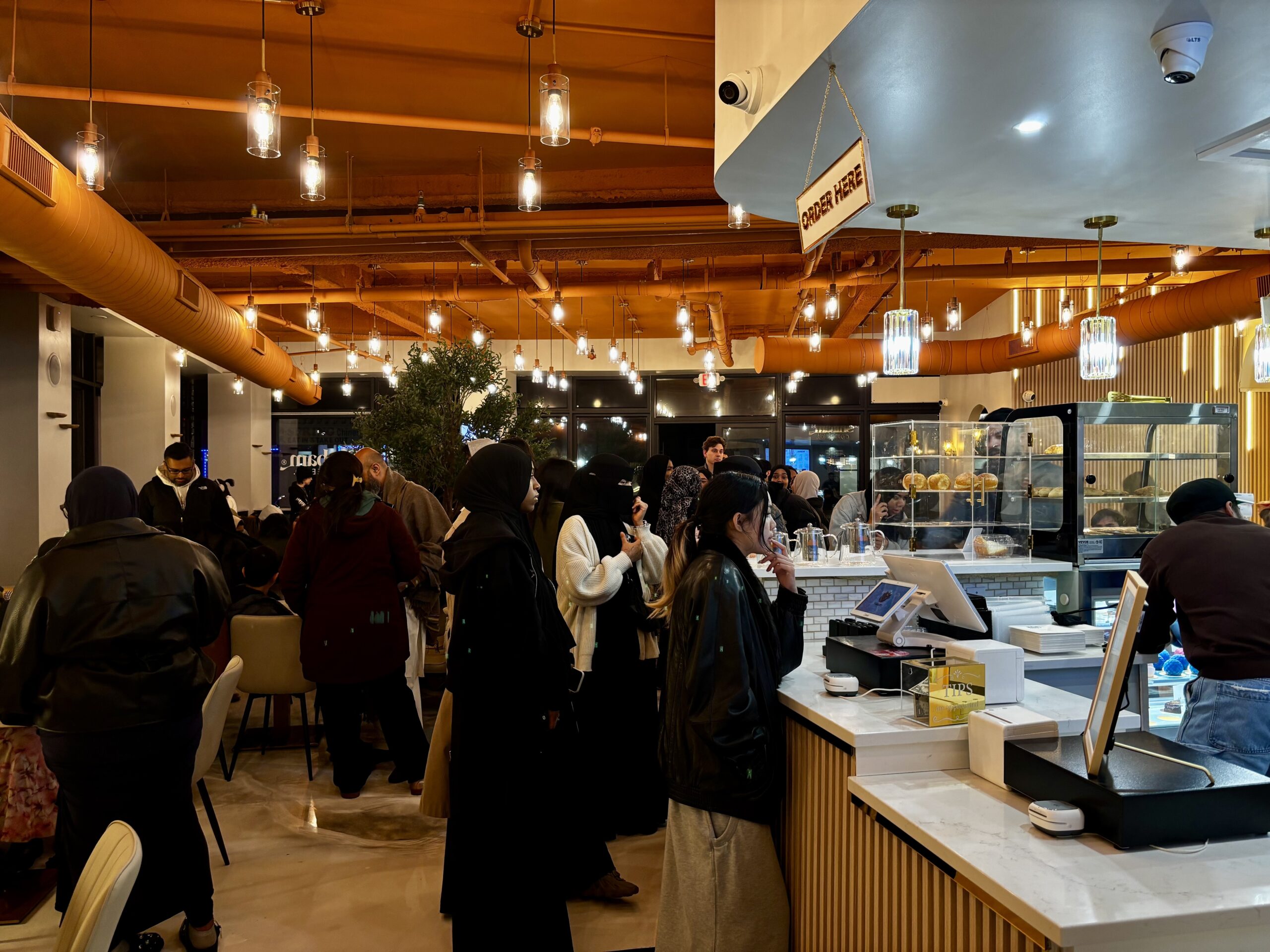
Inside the minimalistic, neutral-toned cafe at 3748 Lancaster Ave., owners Azam, Khurram, and Waqas served order after order of coffee, chai, sandwiches, and desserts from 5 p.m. to midnight on Friday. Customers nestled into plush mid-century modern chairs at white marble tables, high-top chairs at countertops near the big windows, a custom wraparound couch from Pakistan situated around an olive tree, and still more couches in the lounge room, decorated with a Philly skyline mural and fireplace.
Glass-bulb light fixtures hanging from the copper-colored industrial ceiling cast a warm glow on the 2,600-square-foot cafe — open until midnight on Fridays and Saturdays, a rarity in a city where many coffee shops close before sunset.
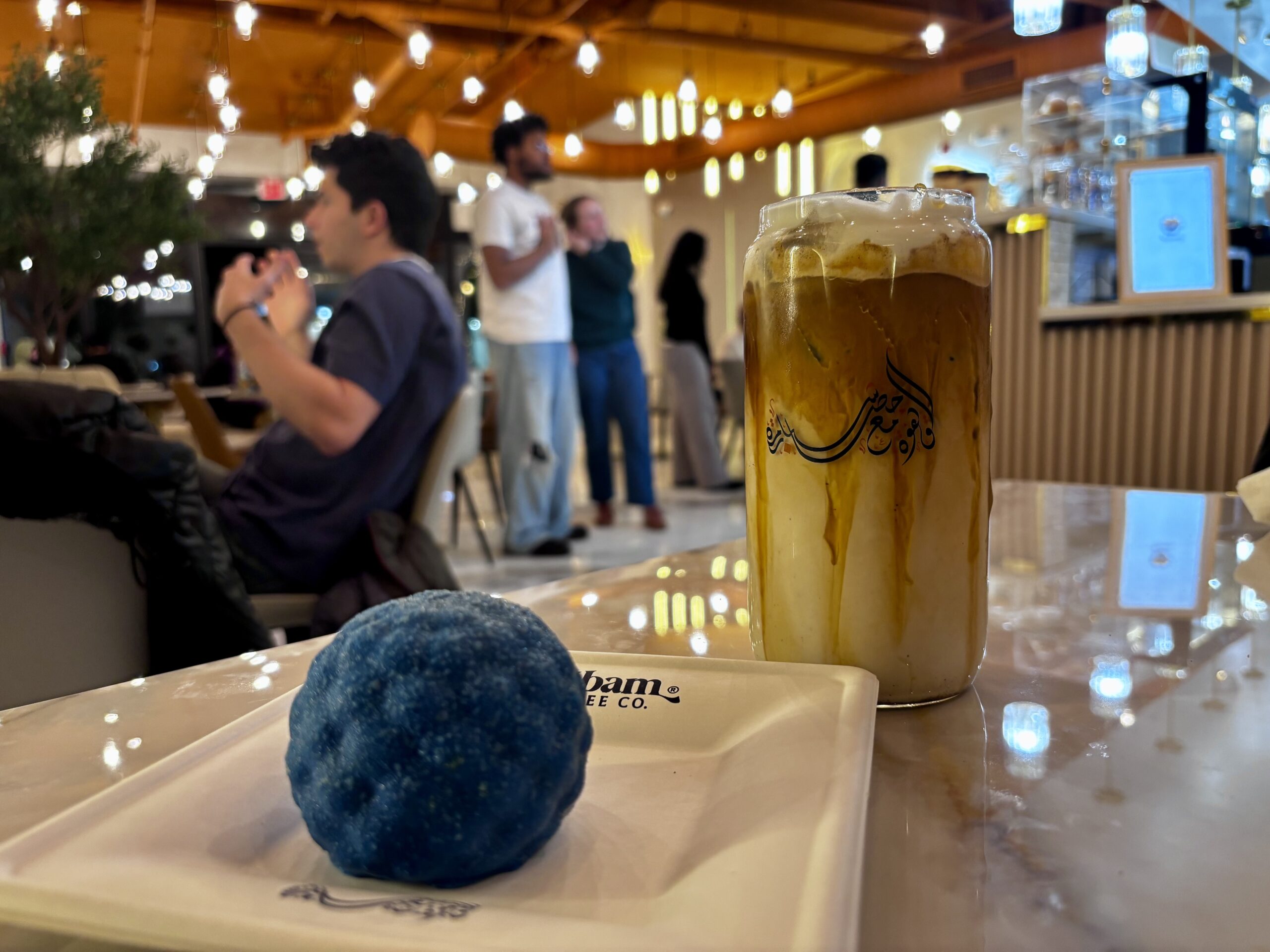
Shibam Coffee Co. in West Philly.
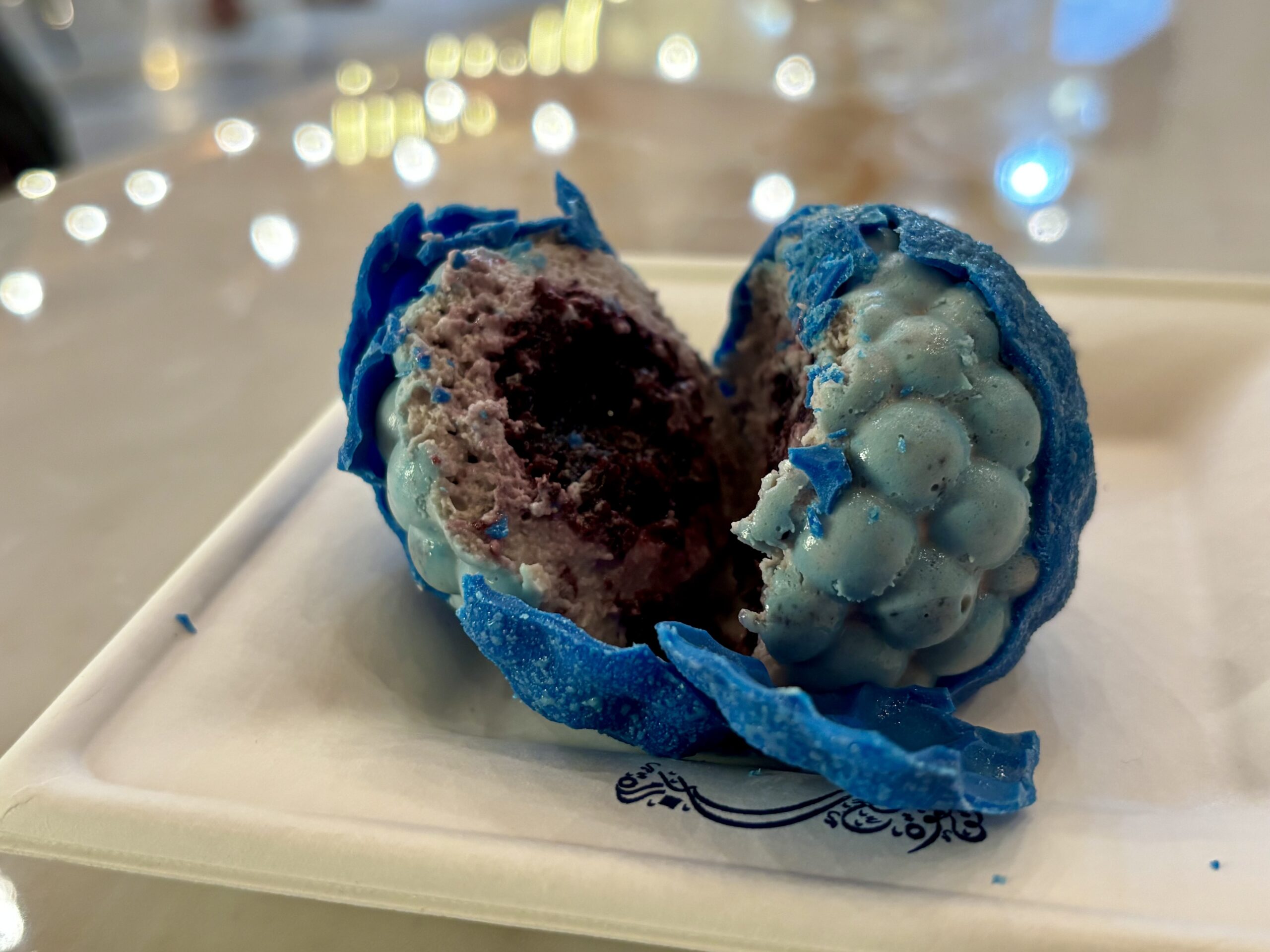
The display case shows off cream tarts perfectly shaped like blueberries, raspberries, and mangoes; sweet cream cheese-filled honeycomb bread; and slices of rich lotus, caramel, and pistachio milk cakes from Aroma Bakery in Old City. The menu also includes house-made halal sandwiches with beef pastrami and turkey from Grad Hospital’s Prime Halal Meat Co. on ciabatta rolls from Chestnut Hill’s Baker Street Bread.
“We wanted to … work with local businesses to bring the Philadelphia vibes into Shibam,” Azam said.
The West Philly location’s coffee menu is standard to the national chain, which has 13 locations, in cities like Pittsburgh; Dearborn, Mich.; and Columbus, Ohio. Customers can sip on Yemeni cafe staples like jubani (made with coffee and the husk of coffee cherries, served with cardamom, ginger, cinnamon), Adeni (Yemeni black tea, cardamom, nutmeg, milk), and mofawar (coffee with cardamom and cream), along with drinks like Shibam coffee (light roast Yemeni coffee with coffee husks, cardamom, ginger, cinnamon, cream) and Saudi coffee (light roast with cardamom and saffron). There are also more usual coffee shop drinks like brown sugar-shaken espressos, pistachio lattes, and matcha.
With the soft opening landing on the first weekend of Ramadan, many patrons came from a nearby mosque for a post-tarweeh (late-night holiday prayer) treat and gathering spot.
Shibam offers pastries from Old City’s Aroma Bakery.
“We had planned to open up in December or January, but it just kept getting delayed,” Azam said. “I see it as a blessing in disguise that we opened on the first Friday of Ramadan, Alhamdulillah.”
“We want to offer a late-night hangout spot for Muslim people, as well serve the healthcare community in the neighborhood,” he added. “I feel like we [Muslims] need a third space year-round — we don’t go to clubs; we don’t go drinking at bars. We might as well have a coffee shop that’s more like a community center, a space that’s comfortable for everyone.”
The four owners initially planned on opening their cafe location in the Philly suburbs but pivoted when they heard the building was available.
“We were like, ‘What the hell are we doing?’ — [Lancaster Avenue] is a marquee location,” Azam said. “You’re right near Drexel University. You’re right next to UPenn Presbyterian building. And there’s a well-established community already there. It was a no-brainer.”
Shibam Coffee Co. in West Philly
Azam and his friends knew they wanted to open a Shibam location together after embarking on a Yemeni cafe crawl in Dearborn. The rich, smooth flavor profile of the Shibam coffee there stood out to the four friends. But it was meeting the “humble, down-to-earth” CEO of Shibam Coffee Co., Mansour Sharha,that led them to open their own location in Philly, said Azam.
While this is the first Shibam franchise in Philly, the city’s Yemeni coffee footprint has been on a steady incline, with four cafes opening in 2025 and several on the horizon.
One of those cafes, Haraz Coffee House, is just a 12-minute walk from Shibam. But Azam doesn’t see the coffeehouse as competition, rather a friendly neighbor with the same goal: expand the Yemeni coffee shop footprint.
For the co-owner, opening weekend of Shibam was a reflection of Philadelphians’ love for the ever-growing Yemeni cafe culture creating cherished cultural spaces for immigrant, Muslim, and diasporic communities.
“It means we are on the right track — we are passionate about [Yemeni coffee] and it shows through the amazing support we’ve been getting,” Azam said. “We want to keep this going and make sure we continue to set high standards for ourselves and our customers.”
Shibam Coffee Co., 3748 Lancaster Ave.; shibamphilly.com; instagram.com/shibam.philly; Ramadan hours (through March 19): 3 to 11 p.m. Monday to Thursday, 3 p.m. to midnight Friday and Saturday, 3 to 11 p.m. Sunday. (Hours will be updated at a later date.)
To Japan, with love: Chef Jesse Ito took his first trip to Japan with his father, Matt. Craig LaBan, with photographer Monica Herndon, describes the remarkable journey and the food they found.
South Philly flair: Get inside the revival of Bomb Bomb Bar and check out the new Piccolina.
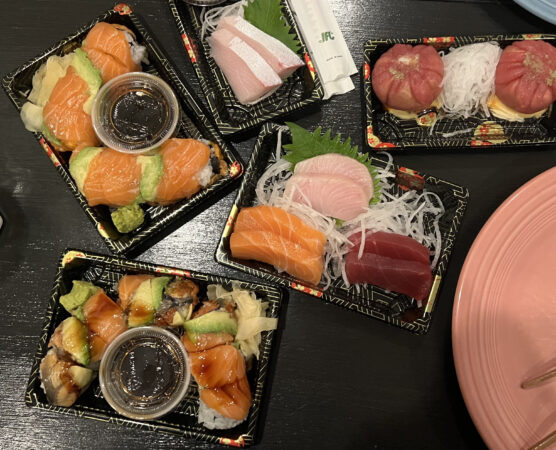
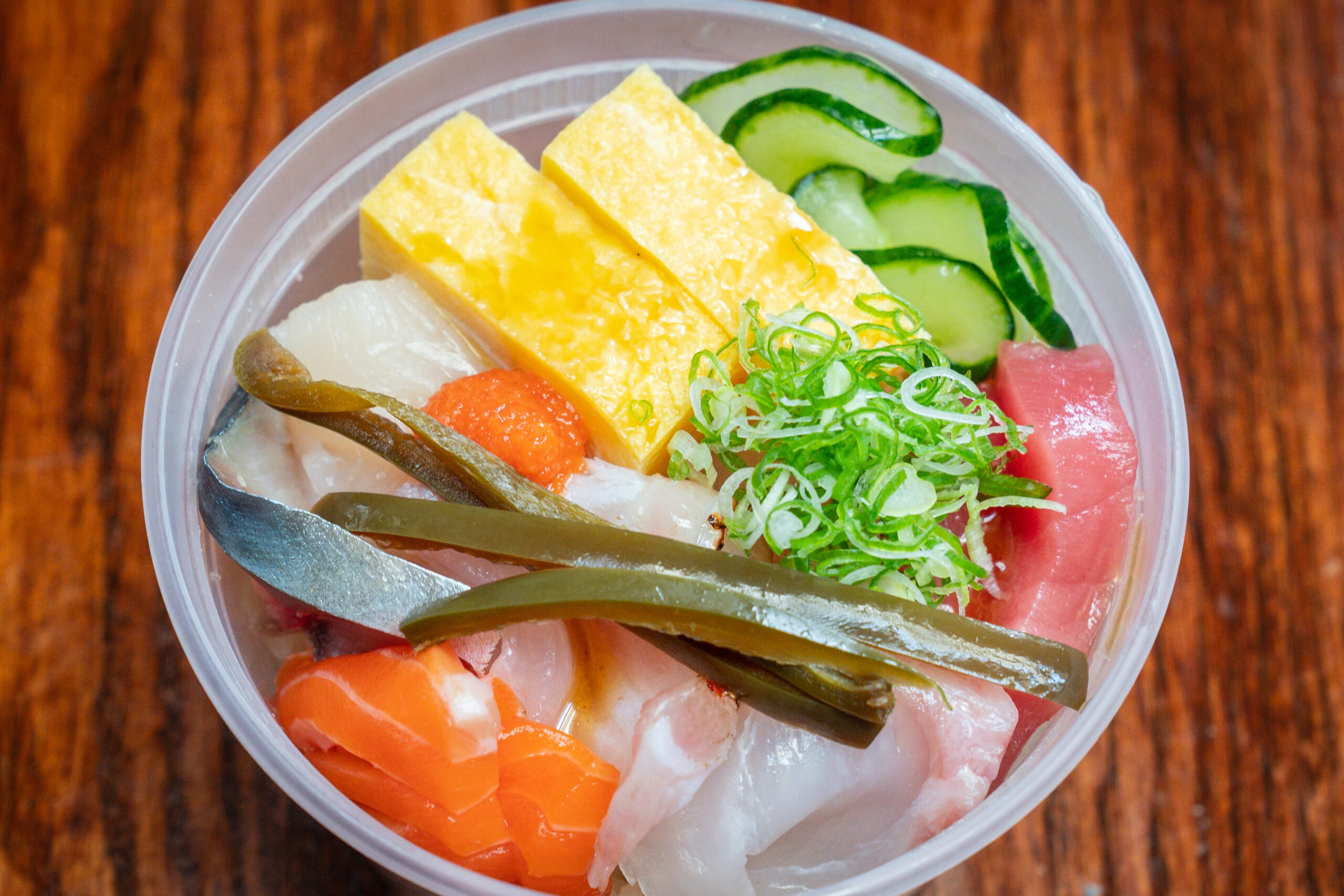
With the gap narrowing between casual sushi joints and upscale omakase, Kiki Aranita set out to find the best delivery sushi in downtown Philly. These nine restaurants are clearly on a roll.
🏯 Chef Jesse Ito and his father, Matt, flew to Japan for a rare bonding trip, exploring markets, family roots, and the traditions that shaped Royal Sushi & Izakaya. Craig LaBan and Monica Herndon tagged along to share an inside look.
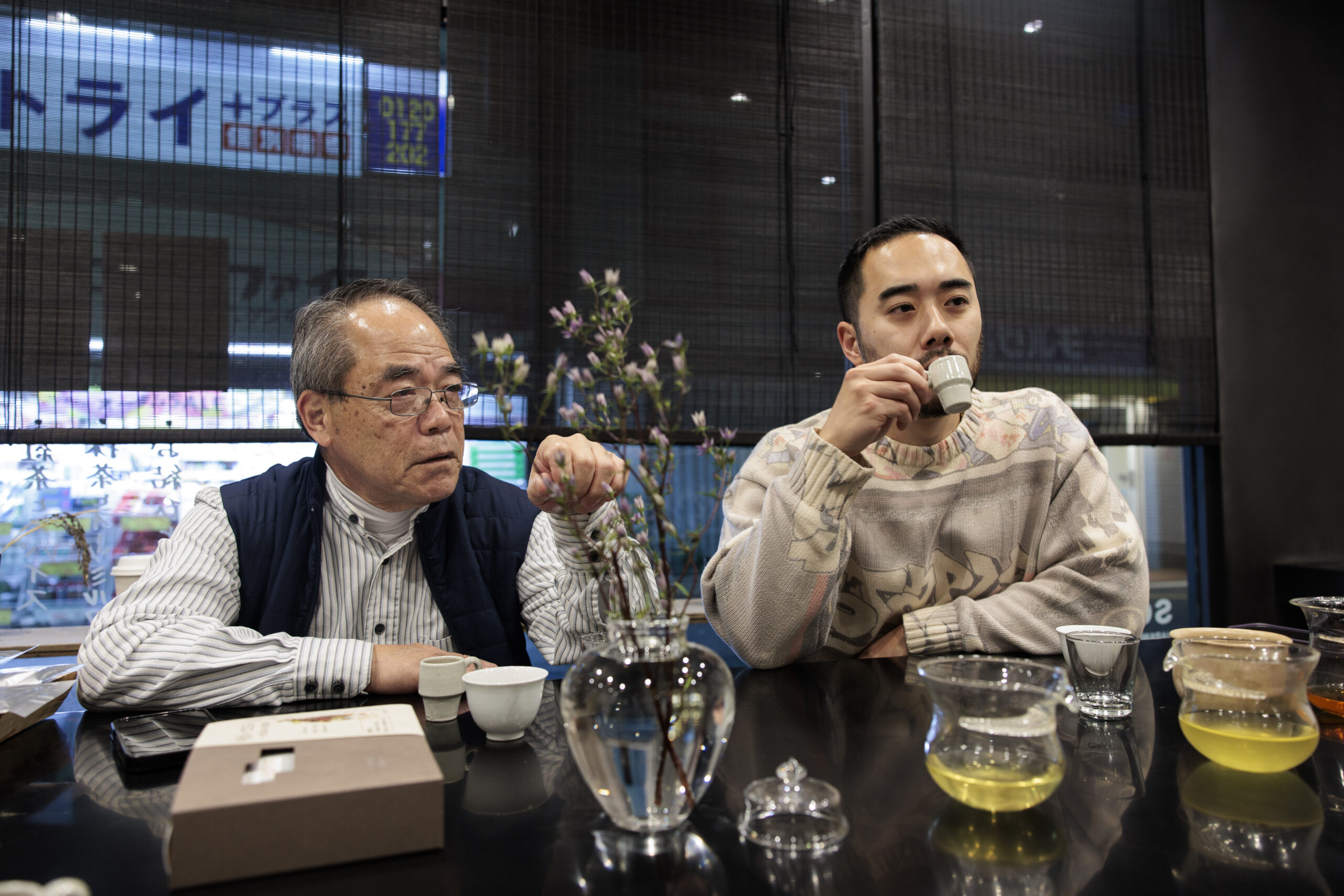
🍜 If you toured Japan for nine days with a chef and a food critic, here’s where you might eat.
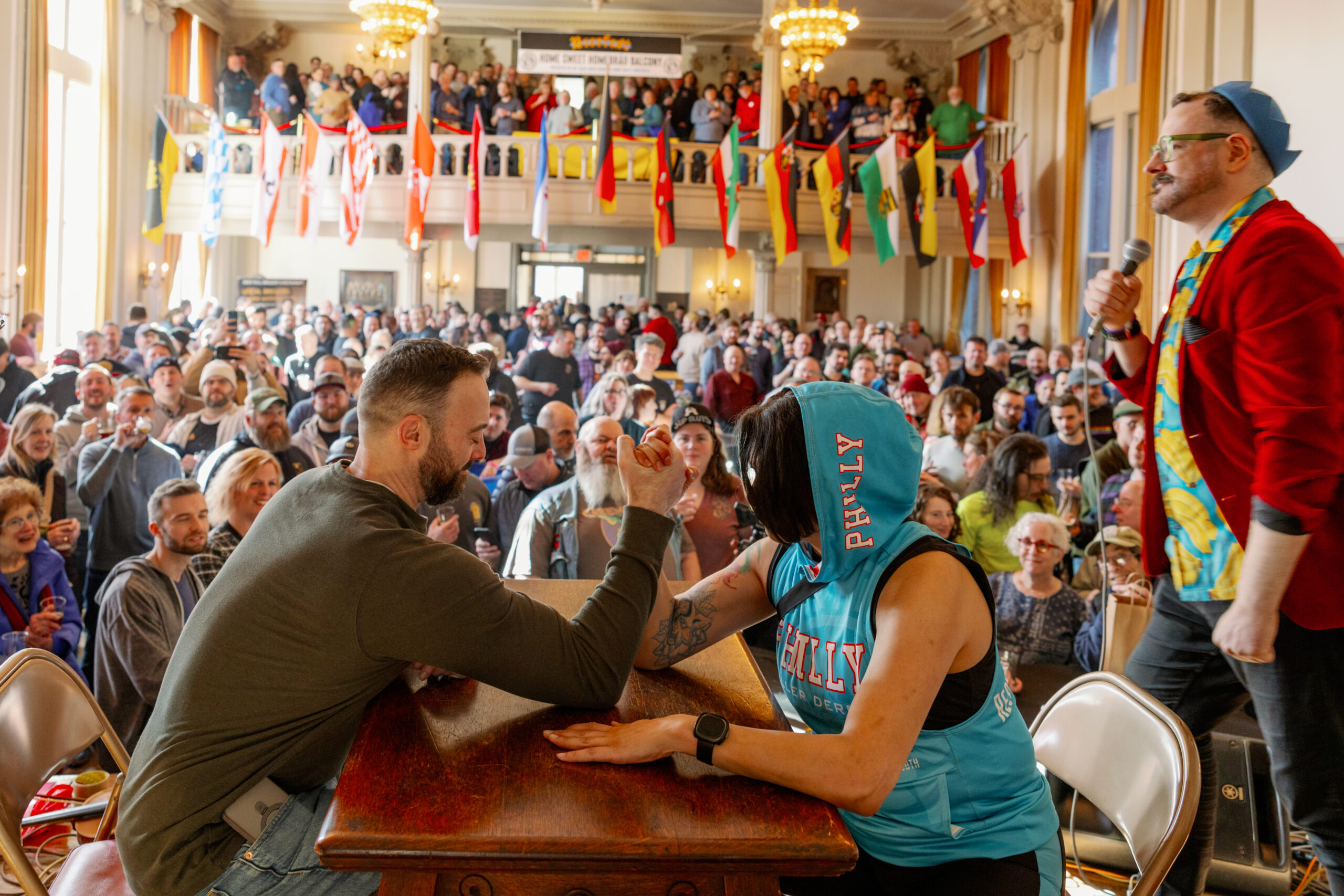
This Saturday, there will be two beer festivals with identical-sounding names. Beatrice Forman reports that Philly Bierfest wants the New York-rooted Philly Beer Fest to stop confusing customers.
Vince Tacconelli opens a cocktail bar Wednesday. Although Bar Tacconelli is not a pizzeria, he figures at least he and his South Jersey neighbors won’t have to cross the bridge to Philly for a fun night out.
Flakely, the gluten-free bakery, has opened a shop in Bryn Mawr, as Denali Sagner reports, bringing its pastries front and center after toiling in a commercial kitchen in Manayunk.
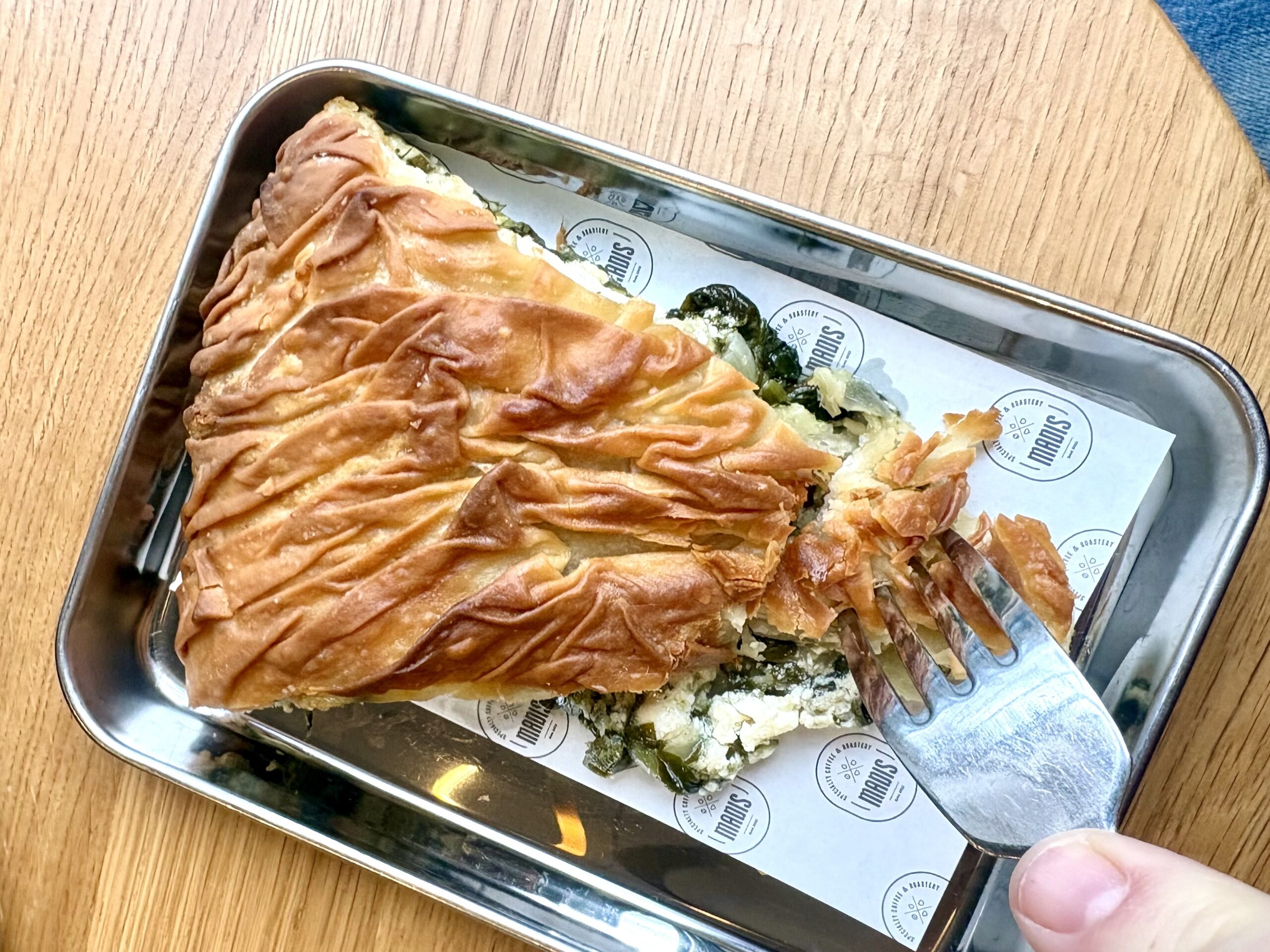
Follow the food team’s travels: tasty spanakopita, scallops and burrata, and a clam pizza that brought beach vibes to Center City.
Scoops
After five years behind the smoked-fish counter at Biederman’s in South Philadelphia, Gene Mopsik has moved on. The food maven and erstwhile commercial photographer known as @phillyloxsmith says he lost most of his hours after three spinal surgeries in 14 months. With retirement not an option at age 77, he has started what he calls a small-batch food project. On the eve of Purim, he’s baking hamentashen — poppy, prune, and apricot. Preorders (six for $22) at phillyloxsmith.com should be available through Thursday for pickup Sunday. “I need to stay busy,” Mopsik said. “There’s something about people enjoying what you create.”
Monto is the name of the pub that the Fergie’s Pub crew is planning to open in Old City this spring. Sandwich meister N.A. Poe is planning a Celtic-Philly menu.
Blue Sunday, an American-Asian restaurant out of Maryland (there’s a location in Bensalem), is planning a September opening in the former Carrabba’s Italian Grill space at Springfield Mall. It’s also headed into the former Famous Dave’s location at Christiana Town Center in Delaware.
Restaurant report
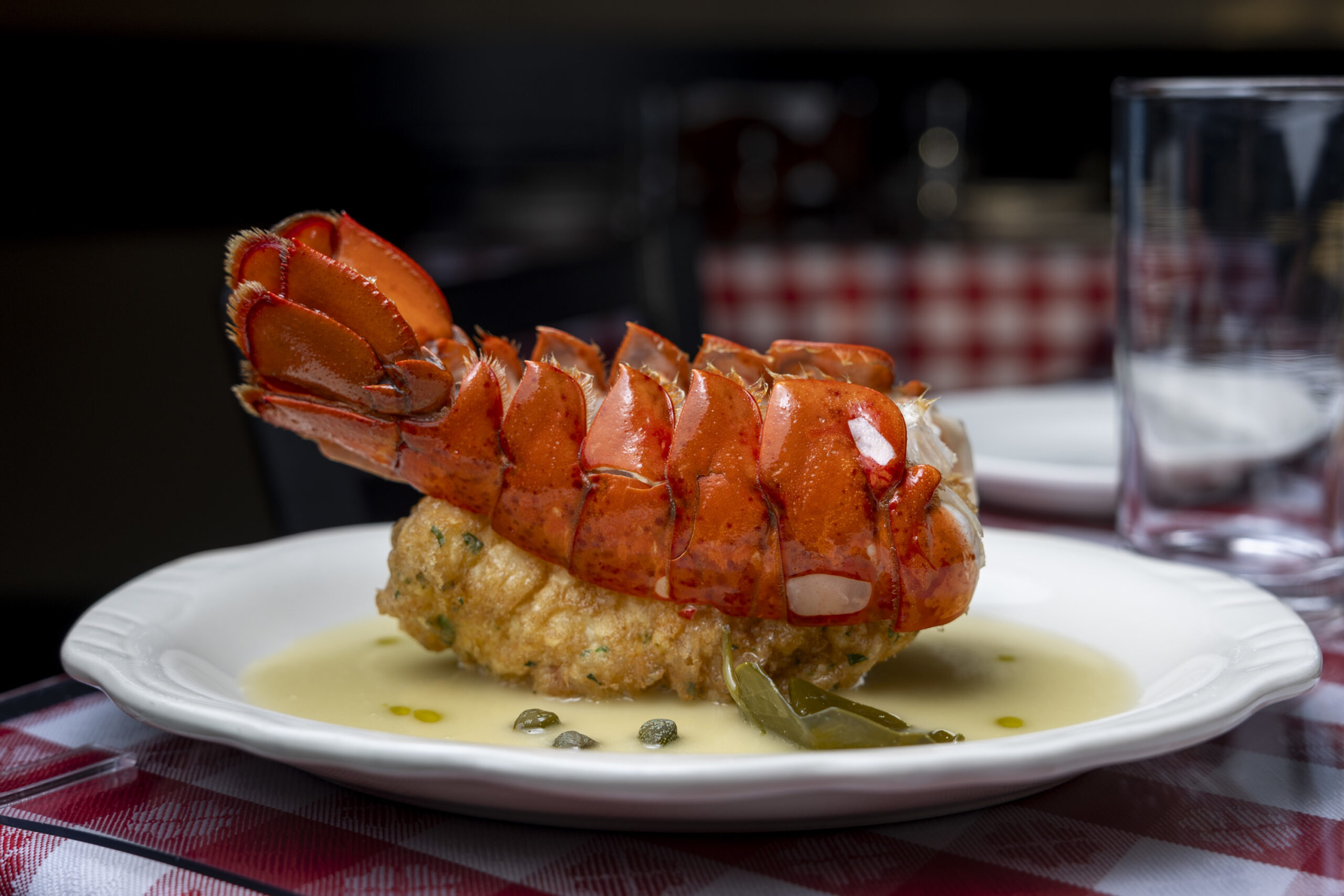
For his latest review, critic Craig LaBan ties on a lobster bib at Bomb Bomb Bar to dig into chef Joey Baldino’s revival of the classic red-gravy bar.
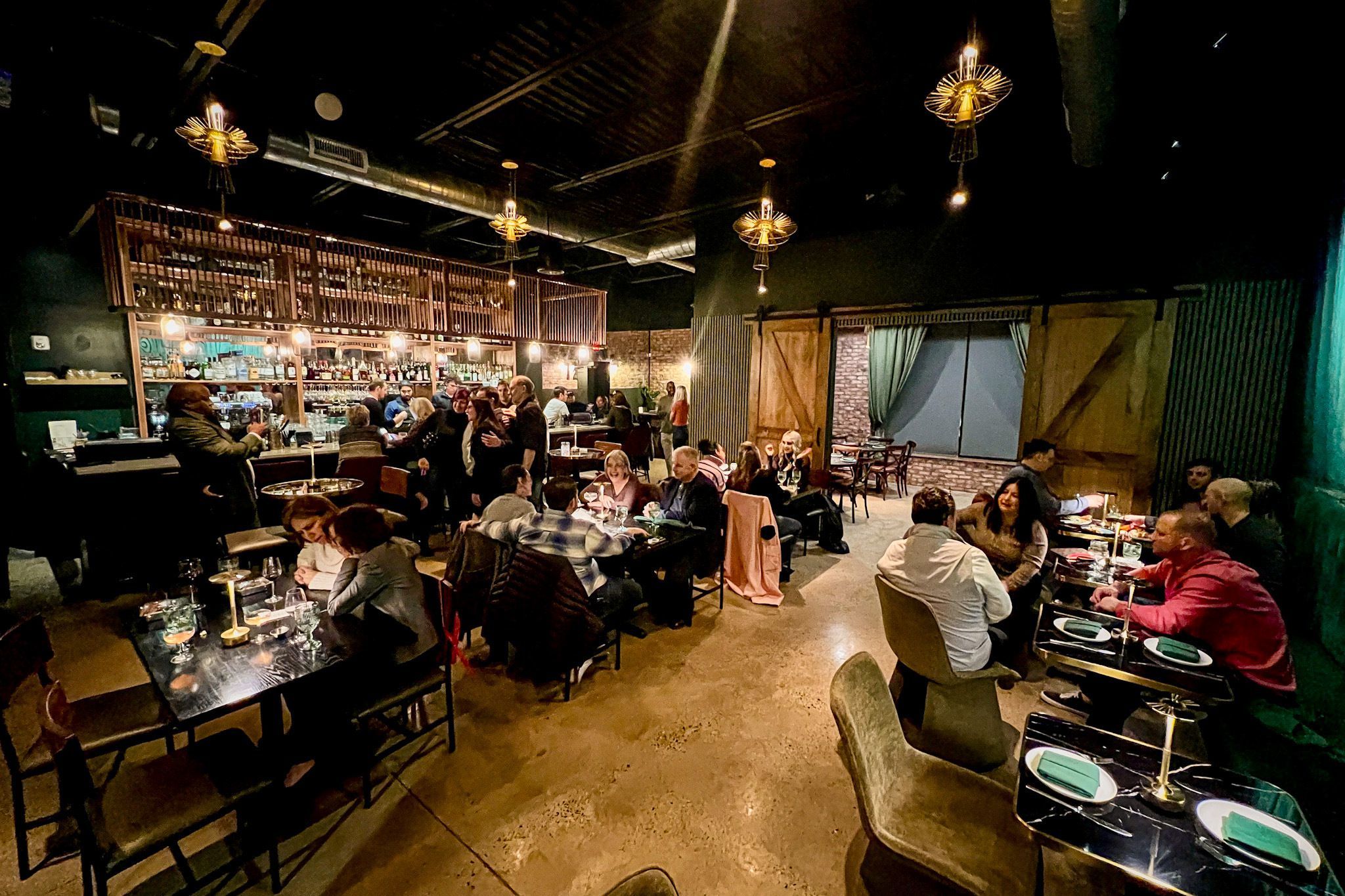
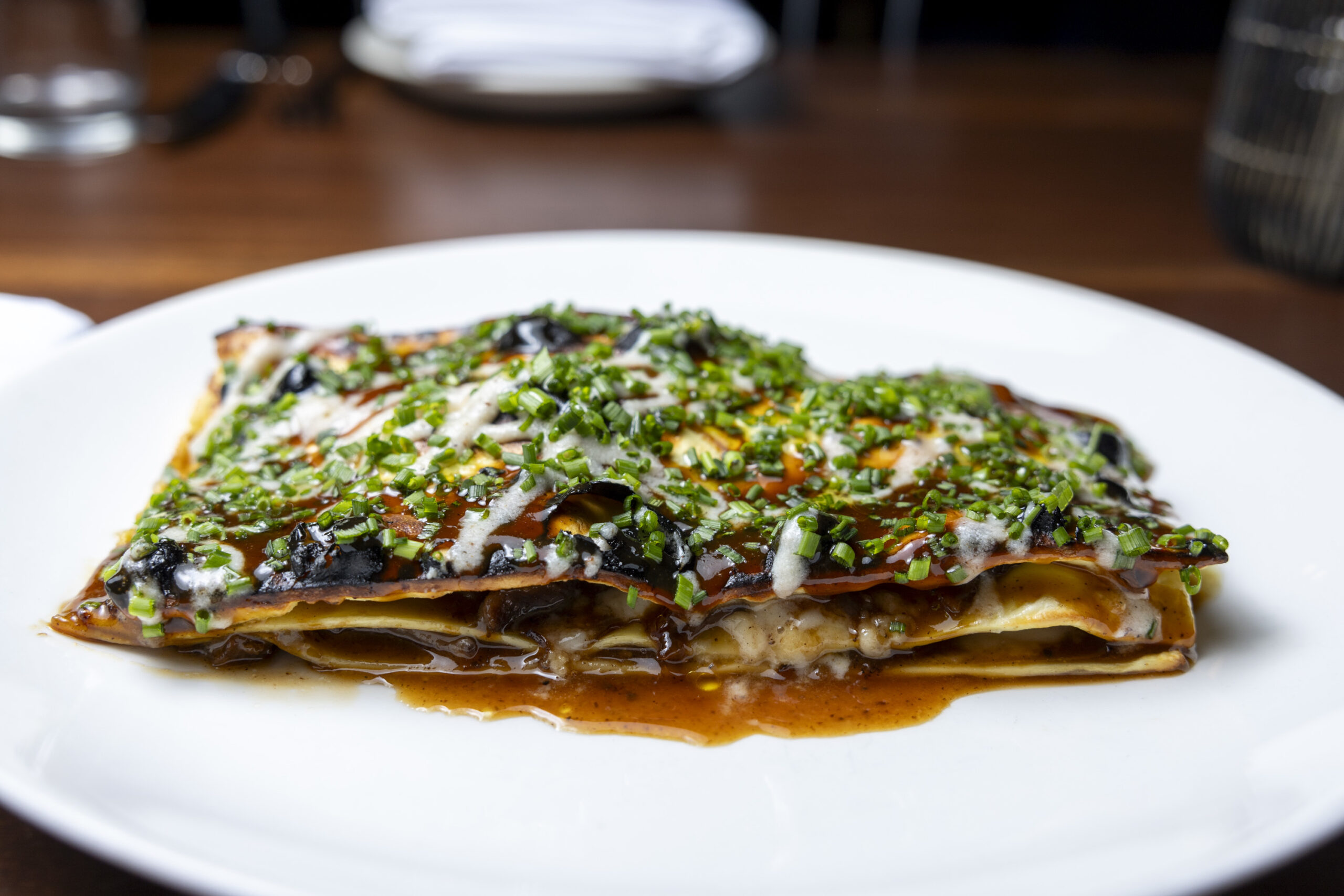
The oxtail lasagna is one of the rustic South Philly-inspired dishes on the menu at Piccolina, a cozy, new bar-restaurant at the Society Hill Hotel in Old City.
Briefly noted
Charlotte Ann Albertson, whose cooking school helped launch many careers (remember Chef Tell?), has died at 90. Here’s her obit.
Philadelphians are annoying, unfriendly, and stressed. But, as Emily Bloch reports, we have the best sandwiches, according to an analysis of how ChatGPT views the city.
Cherry Street Tavern, one of Center City’s oldest bars, is for sale as the owners want to hang up their aprons. “There’s just something sacred about the place,” one bartender told Mike Newall.
The Philly Chef Conference will host restaurateur Drew Nieporent (Nobu, Tribeca Grill) for a talk/book-signing at 5:30 p.m. Monday at Drexel University’s Academic Bistro (101 N. 33rd St.). In convo with Inquirer food writer Kiki Aranita, Nieporent will discuss his new memoir, I’m Not Trying to Be Difficult: Stories From the Restaurant Trenches. Admission ($25) includes a signed copy of the book (free for students); a light reception will follow. Register here.
Pita Chip, the Middle Eastern fast-casual chainlet, will mark its first year at the Concourse at Comcast Center with free chicken shawarma or falafel entrees from 11 a.m.-2 p.m. March 3. Limit one per person.
Panda Fest, the outdoor Asian food and culture festival, is returning to Dilworth Park April 18-19 for its second year. Early-bird ticket sales start Thursday.
Dig Inn, a farm-to-table fast-casual chain, has set March 13 for its opening at 112 S. 11th St. It’s previewing with a food-drive exchange on March 11 and 12; those who donate a canned good or nonperishable food item get a free bowl in return. Reserve a time slot here. All donated items go across the street to Thomas Jefferson U’s Ramily Market Pantry.
❓Pop quiz
A regular crafted a replica of his favorite restaurant out of Lego bricks. Which one?
I saw a restaurant online in the city with a dessert that was a carrot cake combination cheesecake. The cheesecake was on top of the carrot cake. Any idea where it could be? — Alan M.
I’m sure more than a few locals offer this hybrid; the key is finding one on the regular menu. There’s the Cheesecake Lady (in new quarters in Jenkintown, with Cloud Cups’ Kensington location as an outlet); Bredenbeck’s in Chestnut Hill; and the assorted Cheesecake Factory locations. Know of others? Let me know and I’ll include next week.
📮 Have a question about food in Philly? Email your questions to me at mklein@inquirer.com for a chance to be featured in my newsletter.
By submitting your written, visual, and/or audio contributions, you agree to The Inquirer’s Terms of Use, including the grant of rights in Section 10.