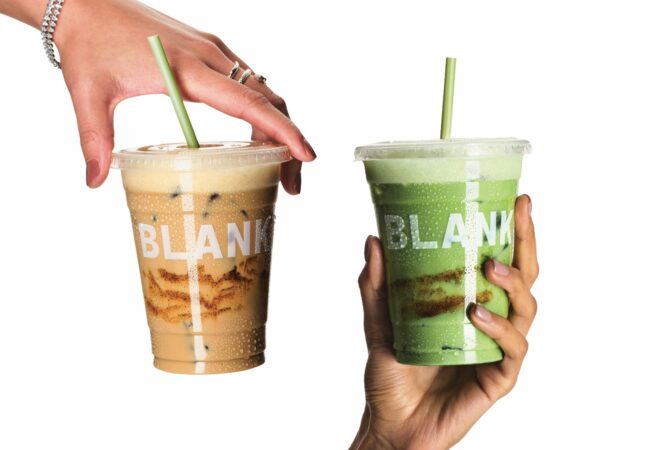
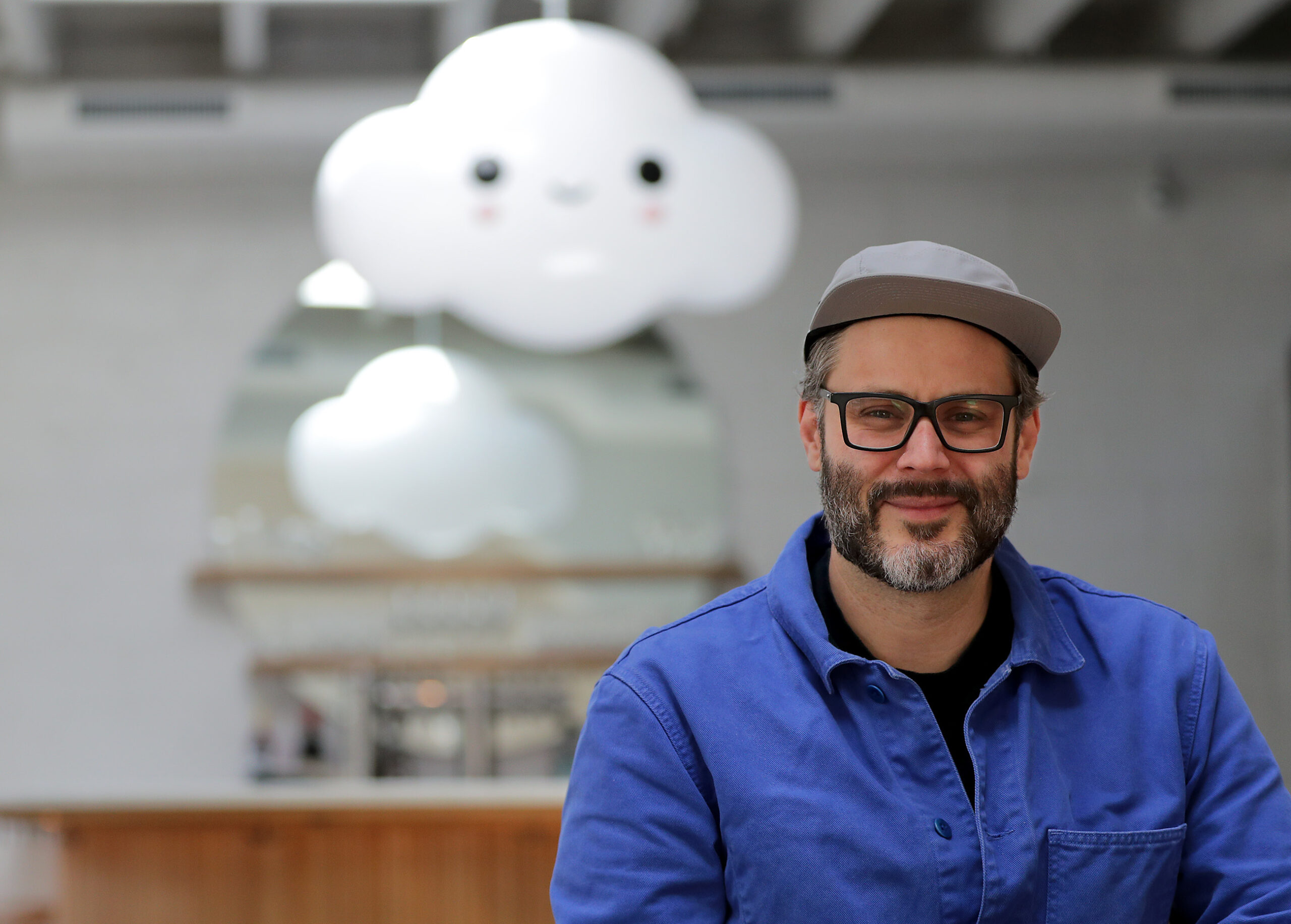
New York’s ubiquitous seafoam-green painted coffee and matcha cafe chain is headed to Philadelphia.
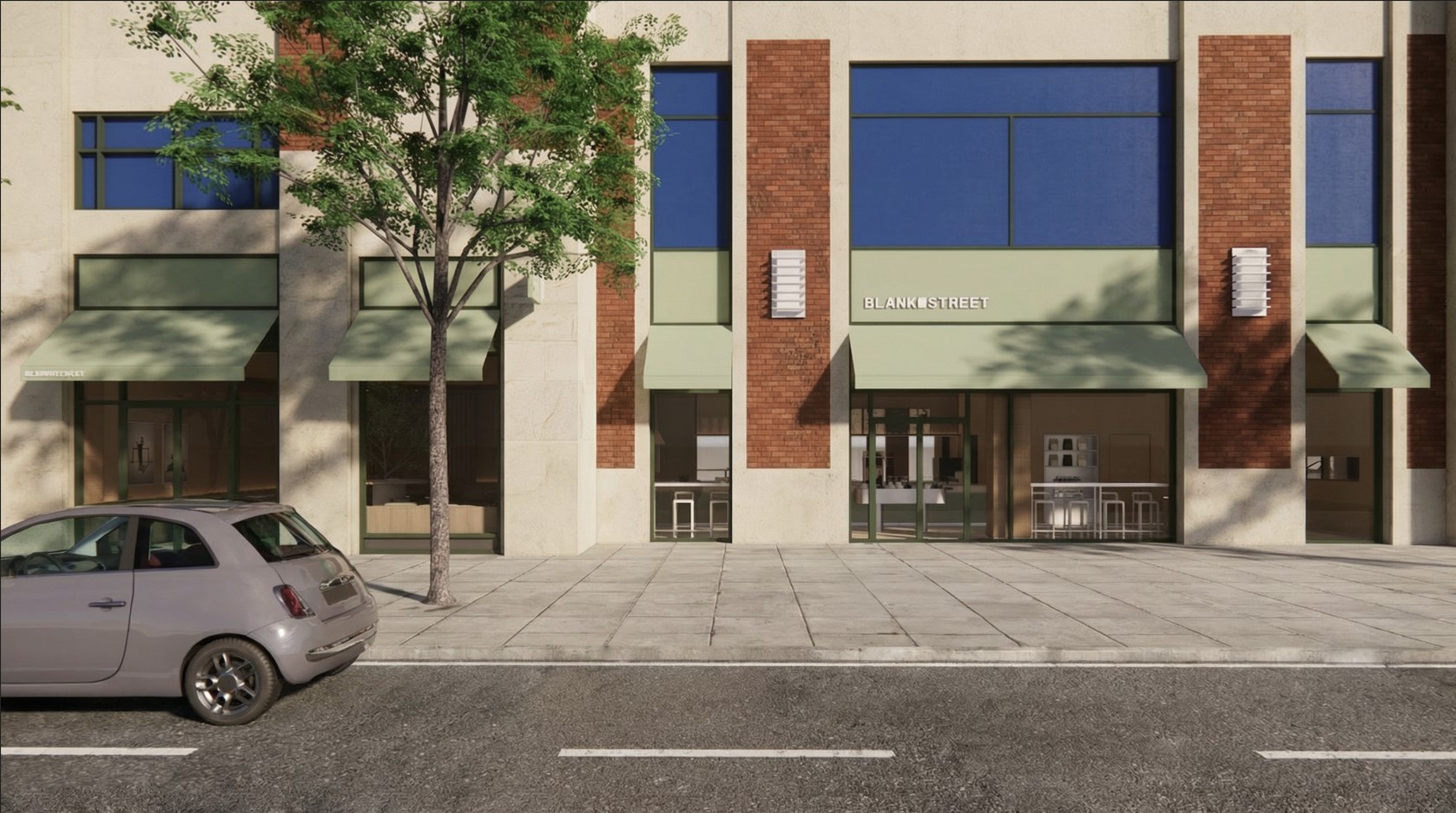
Blank Street will open its first Philly location at 3603 Walnut Street, joining UPenn’s retail district. It’s expected to open in late summer.
The six-year-old chain is known for its micro-cafe look and automated espresso systems for customers to grab matchas and lattes. And soon, Penn students, faculty and surrounding neighbors will experience the quick service inside the 3,500 square foot cafe.
The Philly location will be one of the largest U.S. cafes on Blank Street’s expansive roster, which includes more than 40 locations in the U.S. and the United Kingdom.
“We’re excited to be getting closer than ever to the UPenn community,” said Vinay Menda, Blank Street co-founder and U.S. managing director in a statement. Giving the company, “the opportunity to invest deeply in design and bring an elevated, hospitality-forward experience to the neighborhood.”
The new Blank Street cafe location at 3603 Walnut Street will be their first in Philly.
Founded in 2020 by Menda and Issam Freiha, Blank Street quickly expanded with New York’s pandemic-induced surge of lowered rent storefronts and private equity financing. But soon, the rapid growth raised scrutiny from skeptics, who saw “Blank Street as an avatar of gentrification and automation” resenting “the use of Wall Street money to compete with local businesses,” reported the New York Times. The cafe chain also has its fans, who lean younger and see the trendy matcha drinks as fashionable — even leading the brand to London Fashion Week this year.
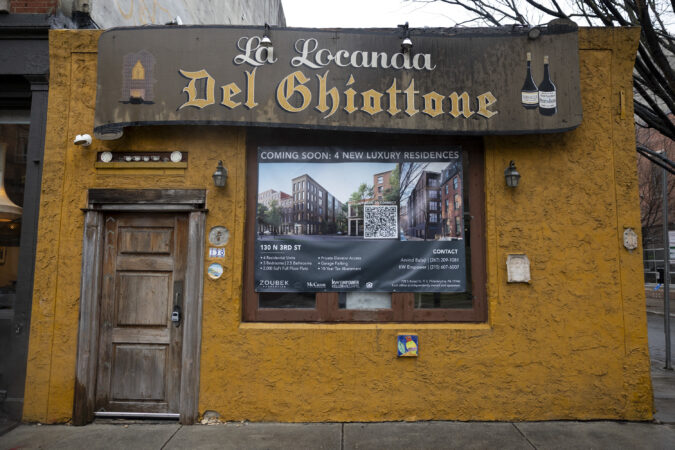
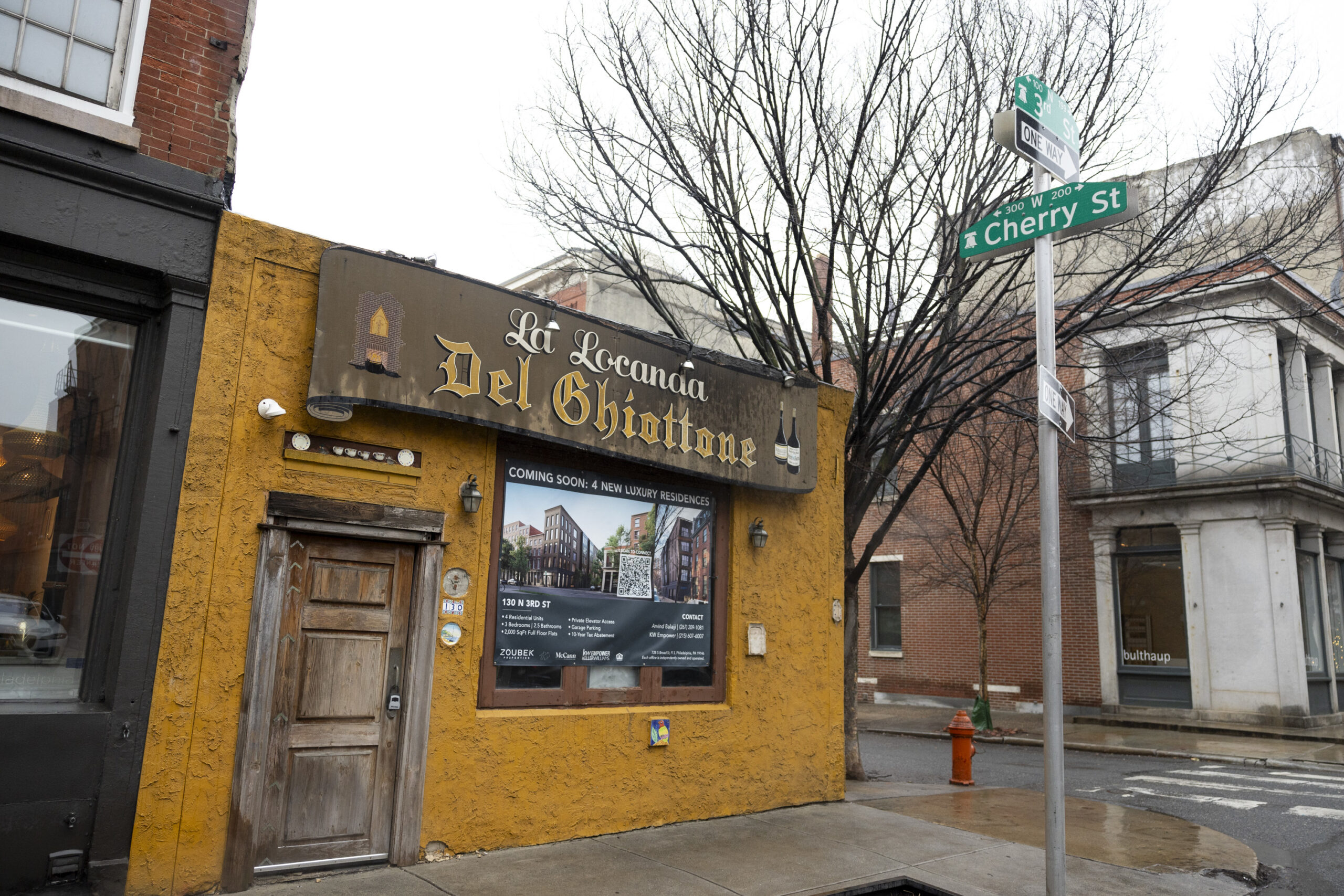
The quaint mustard yellow former home of La Locanda Del Ghiottone, a former Italian restaurant in Old City, is slated for demolition, according to city records.
Brian Zoubek, the developer behind the hotel down the block, Sosuite at the Loxley, plans to turn the lot into luxury condos.
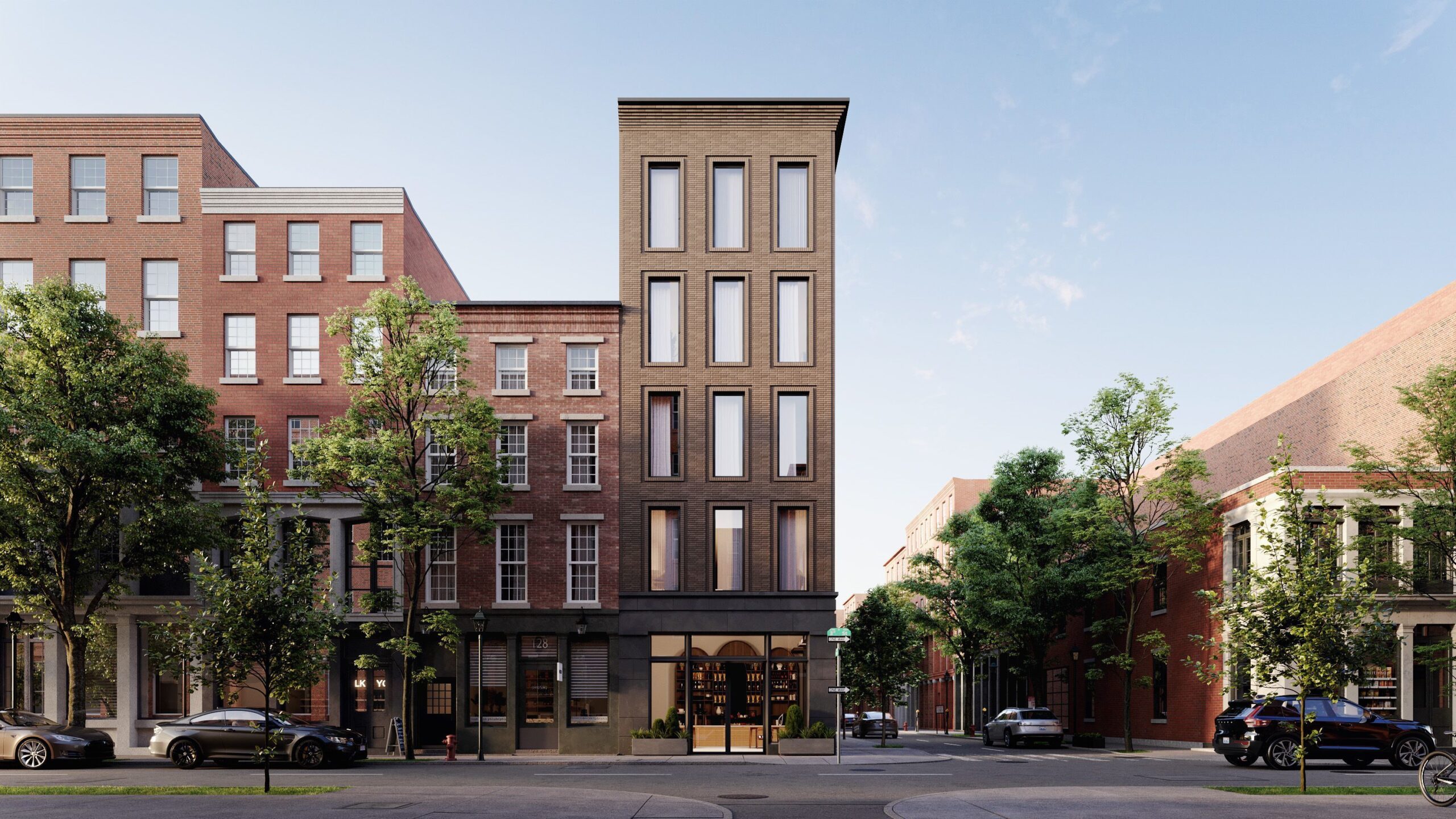
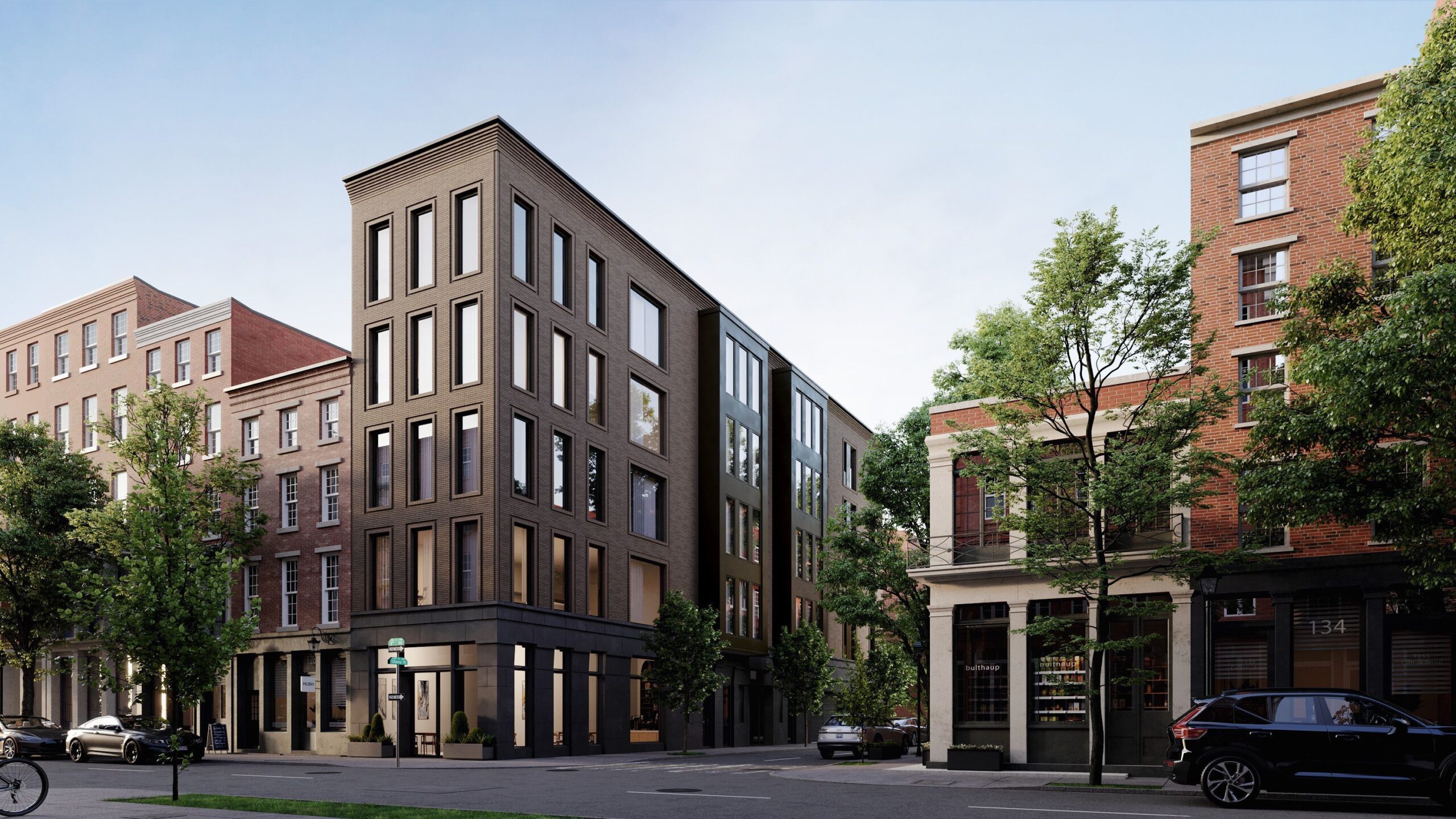
The property will take on a new character, Zoubek said. Gone will be the vibrant, squat structure decorated in colorful plates. In its place will stand a sleek, narrow five-story mixed-use building. The bottom floor will be retail and the four floors above will each feature one condo. Prices will range from around $1.6 million to about $1.95 million per unit, he said.
A rendering of a new five-story building coming to the corner of Third and Cherry Streets in Old City.
Zoubek said he’s expecting demolition to start this month and construction to take about 12 to 14 months. He’s hoping the condos will open next summer. He purchased the building in 2022, according to city property records.
To align the new building with the historic aesthetic of that block, he said the building will be covered in brick with a stone facade on the first floor.
A rendering of a new five-story building coming to the corner of Third and Cherry Streets in Old City.
Residential use is a change for the property anchoring the southwest corner of Third and Cherry Streets. It hit the market in 2020 when La Locanda Del Ghiottone relocated to Port Richmond.
The restaurant’s history at the property dates back to 1989, when Giuseppe Rosselli, an immigrant from northern Italy, took over the building at 130 N. Third St.
Rosselli, a character who used to post screeds outside the restaurant, originally named the 35-seater Trattoria Dell’Artista. In 1992, Rosselli opened L’Osteria dell’Artista down the block at 114 N. Third St., and a year later, renamed his original restaurant Ristorante der Ghiottone (”the glutton”). He later tweaked the name to La Locanda Del Ghiottone. Rosselli died at age 51 in 2000.
Ghiottone was a favorite of Inquirer critic Jim Quinn, who raved about the “rough and ready cuisine moded on the bargain-price restaurants of Italy. Portions are huge, prices extremely low, and all food is rushed directly from the stove to you.”
La Locanda Del Ghiottone’s building, seen on March 3, 2026, will be demolished and replaced with luxury condos.
Reporter Michael Klein contributed to this article.
Jason Berry came up to Philadelphia for a Wharton reunion and wound up leaving with a restaurant.
Berry, a 2002 graduate, runs the Washington, D.C.-based Knead Hospitality & Design, with his husband, Michael Reginbogin, a Starr Restaurants alumnus.
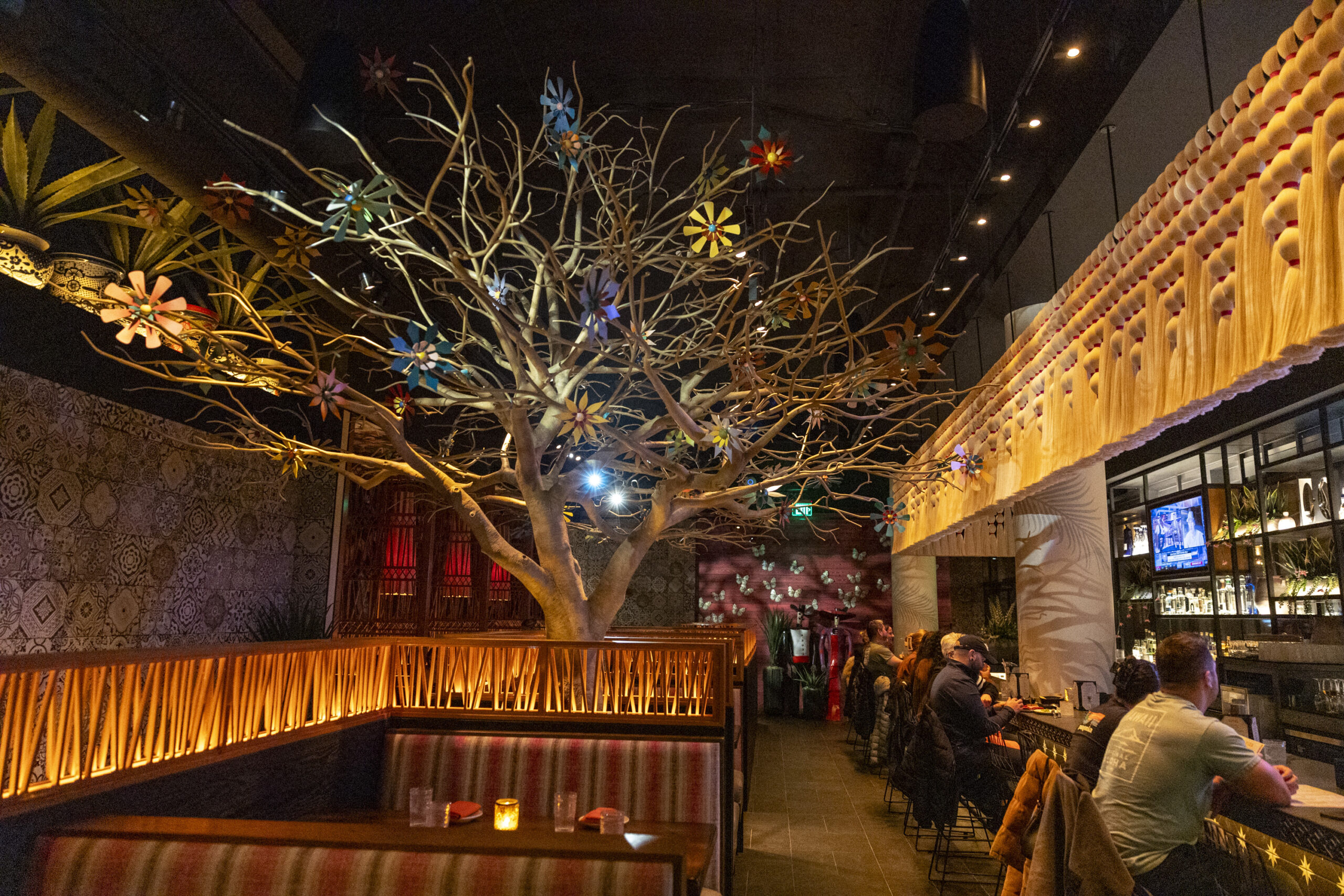
Bar and lounge at Mi Vida.
Berry was staying at the Loews hotel during his 2022 reunion weekend when a real estate broker mentioned an available space across the street at National Real Estate Development’s $400 million East Market project. “I said, ‘It’s literally right there — let me go look,’” Berry said last week.
Nearly four years later, Berry and Reginbogin have opened Mi Vida, a splashy Mexican restaurant with moody lighting and rich pops of color, next to the Canopy by Hilton hotel. It’s tucked behind the shuttered Mulherin’s Pizzeria and Iron Hill Brewery (likely to reopen), just off of 12th and Market Streets.
The Philadelphia outpost is the fourth Mi Vida location and the 16th restaurant from Knead since its founding in 2015; most are in or near the District. It’s also five blocks from the former Starr restaurant Washington Square — the space that later became Talula’s Garden — which Reginbogin helped manage two decades ago.
Mi Vida’s menu, developed with culinary director Roberto Santibañez, balances traditional Mexican cooking with contemporary touches. There are about 130 tequilas and mezcals at its expansive, 23-seat bar.
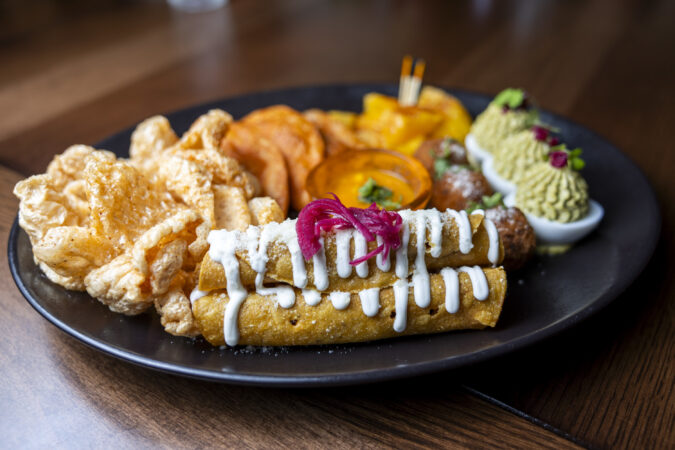
For dinner, especially, Mi Vida seems to be built with groups in mind. A $29 starter called Un Poco de Todo — a platter with huevos rellenos, croquetas de esquites, tacos dorados, empanadas de mariscos, and pork chicharrones — is aimed at three people. There are enchiladas, queso fundido, taquitos, and seafood dishes such as aguachile. Berry said per-person check averages are about $50, plus tax and tip.
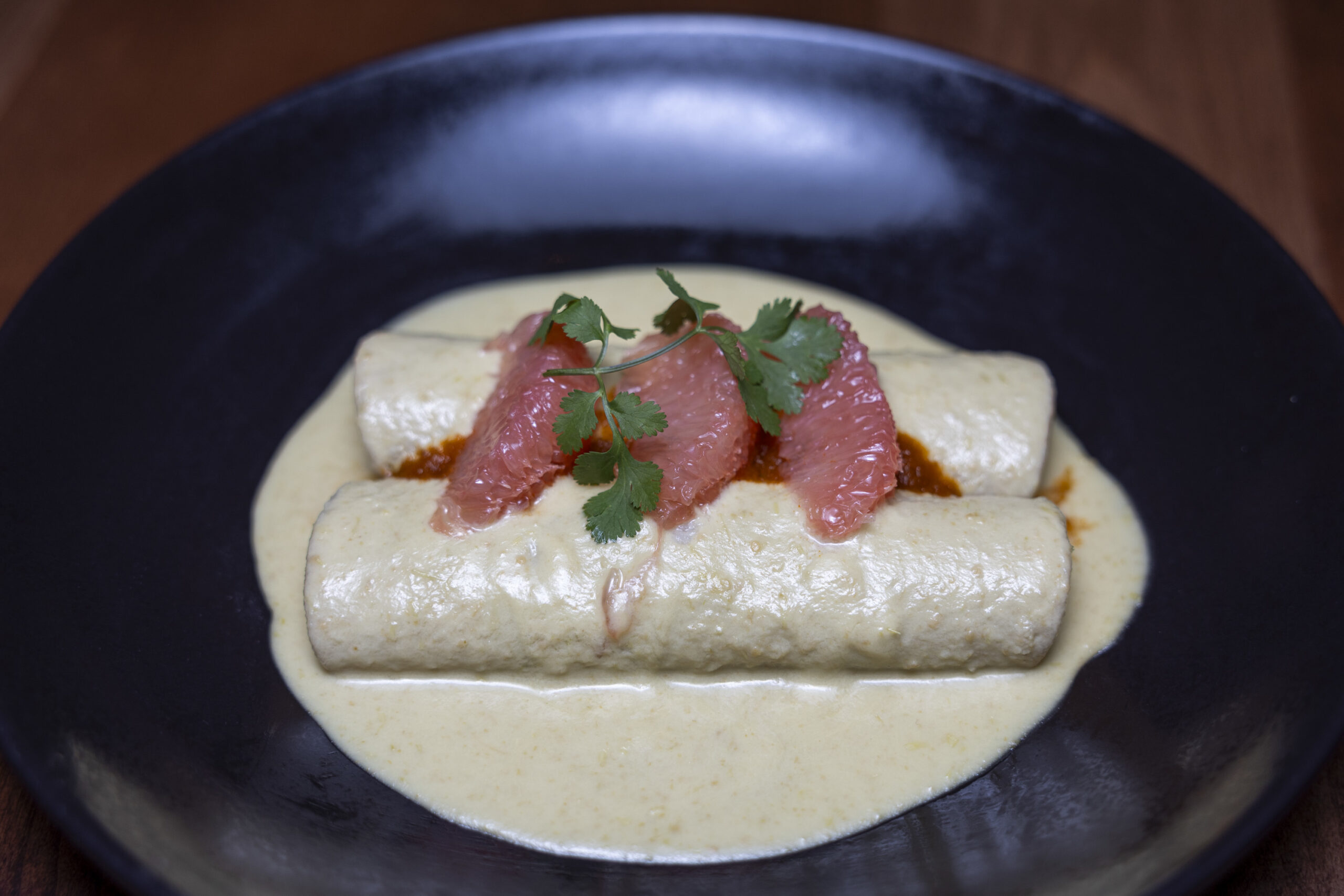
Enchiladas de jaiba at Mi Vida.
There are at least two splurges: the pasilla chili- and coffee-marinated Roseda Farms rib-eye ($69 for two) and a 40-ounce Roseda Farms tomahawk served with charred onions and chiles toreados for $149.
Mi Vida serves lunch, dinner, and weekend brunch, with weekday happy hour from 2 to 6 p.m. Early response has been encouraging, he said.
“We’ve had a lot of nurses coming in from Jefferson [Hospital] after work, which is wonderful to see,” Berry said. (A group of managers from Starr Restaurants was spotted dining there last week — logical, since El Vez is three blocks away.)
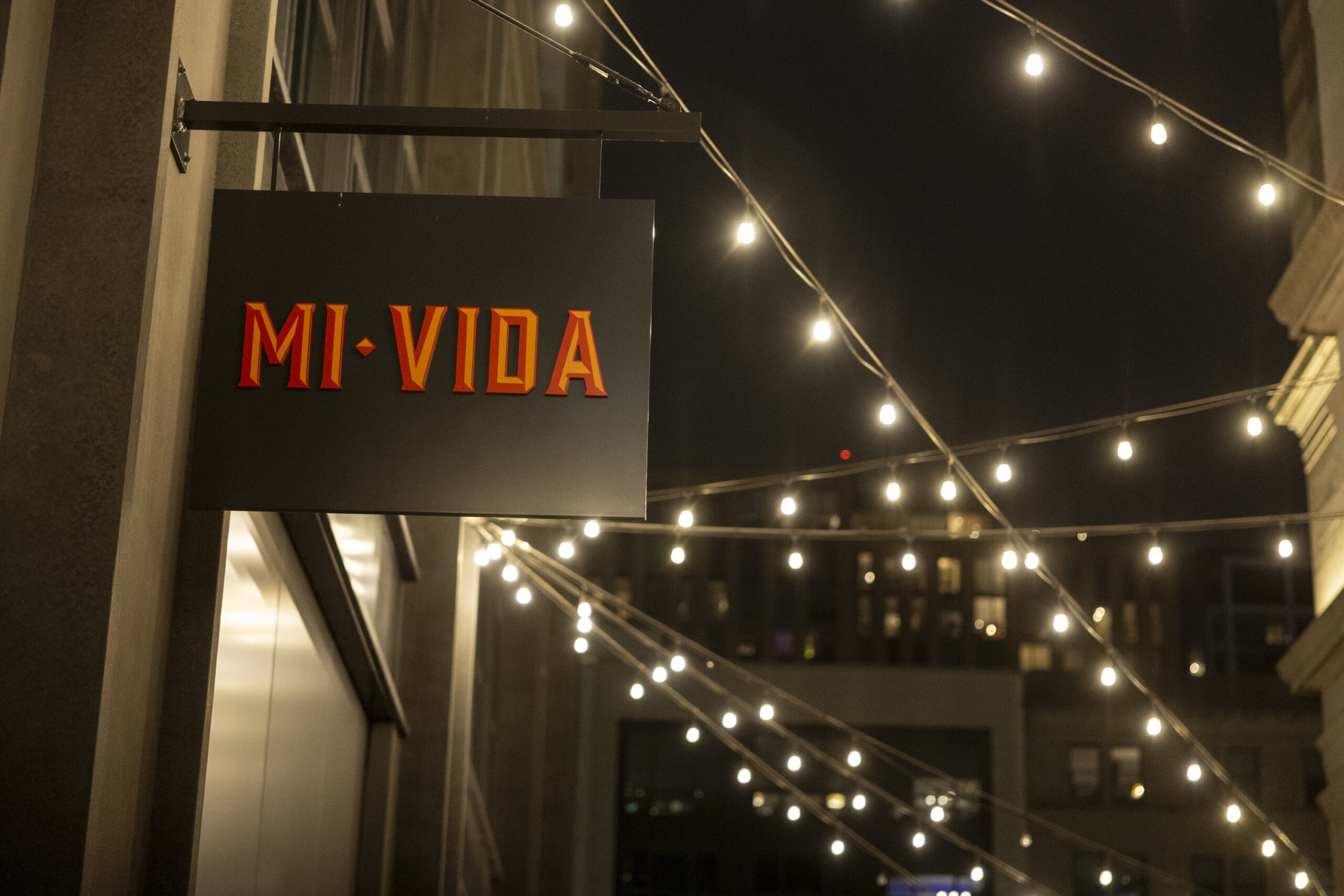
The entrance to Mi Vida in Philadelphia, Pa., on Thursday, Feb. 26, 2026.
Reginbogin oversees Knead’s designs, working with architects. The Philadelphia location includes a private dining room and an enclosed patio-style loggia with seating for about 60 guests, plus heaters, fans, and drop-down curtains to extend the dining season. The dining room also features a live-edge communal table and woven chairs, elements introduced in some of the group’s newer locations.
Berry and Reginbogin have another Philadelphia spot — a casual Tex-Mex restaurant called Mi Casa — due to open toward the end of the year at 3151 Market St., part of a rapidly developing corridor of offices and life-sciences buildings in University City.
Berry said developers were also trying to interest them in the Mulherin’s space, which has been empty since February 2025. Knead’s portfolio includes a variety of concepts, including Succotash (Southern), Bistro du Jour (French), and the Grill (wood-fired American). The Mi Vida concept — which he said is the group’s most scalable — also reflects his own background in Mexican cuisine: Before launching Knead, Berry spent about a decade with “elevated fiesta” chain Rosa Mexicano, where he served as chief operating officer during the brand’s national expansion out of New York.
Berry described an expansion to Philadelphia as “practical — it’s a two-hour drive, easy to get to, and a market we understand and respect,” he said. “And the food scene is fantastic. What doesn’t work for one of our concepts might work for another. It’s a market we’d like to keep growing in.”
Mi Vida, 1150 Ludlow St. Hours: 11:30 a.m. 4 p.m. weekdays (lunch); 4-10 p.m. Sunday to Thursday and 4 to 11 p.m. Friday and Saturday (dinner); and 11 a.m. to 3 p.m. weekends (brunch). Happy hour: 2 to 6 p.m. Monday to Friday. Reservations via OpenTable.
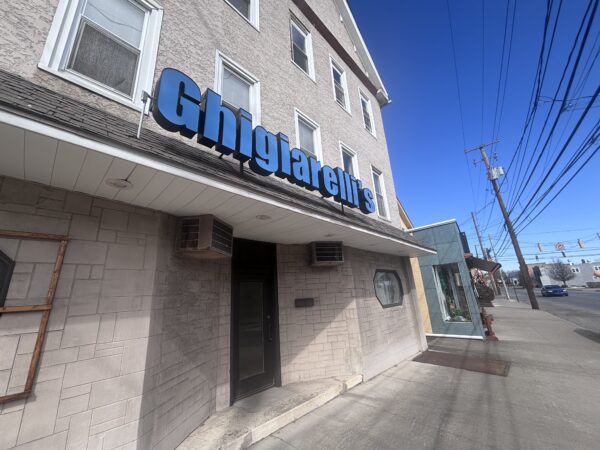
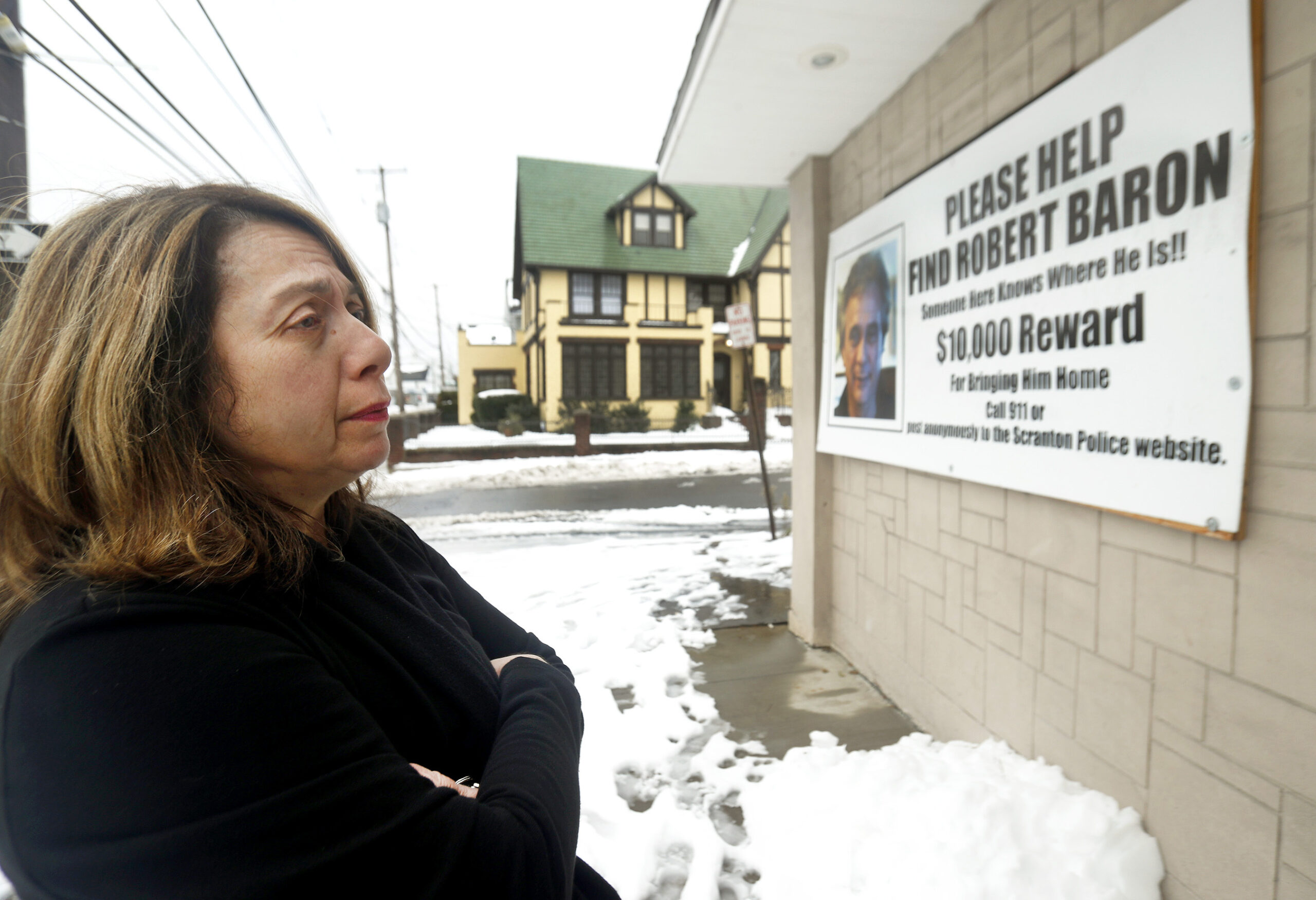
OLD FORGE, Pa. — The ovens went cold at Ghigiarelli’s after owner Robert Baron was killed in 2017, and the longtime Main Street restaurant went into a protracted limbo here in the “Pizza Capital of the World.”
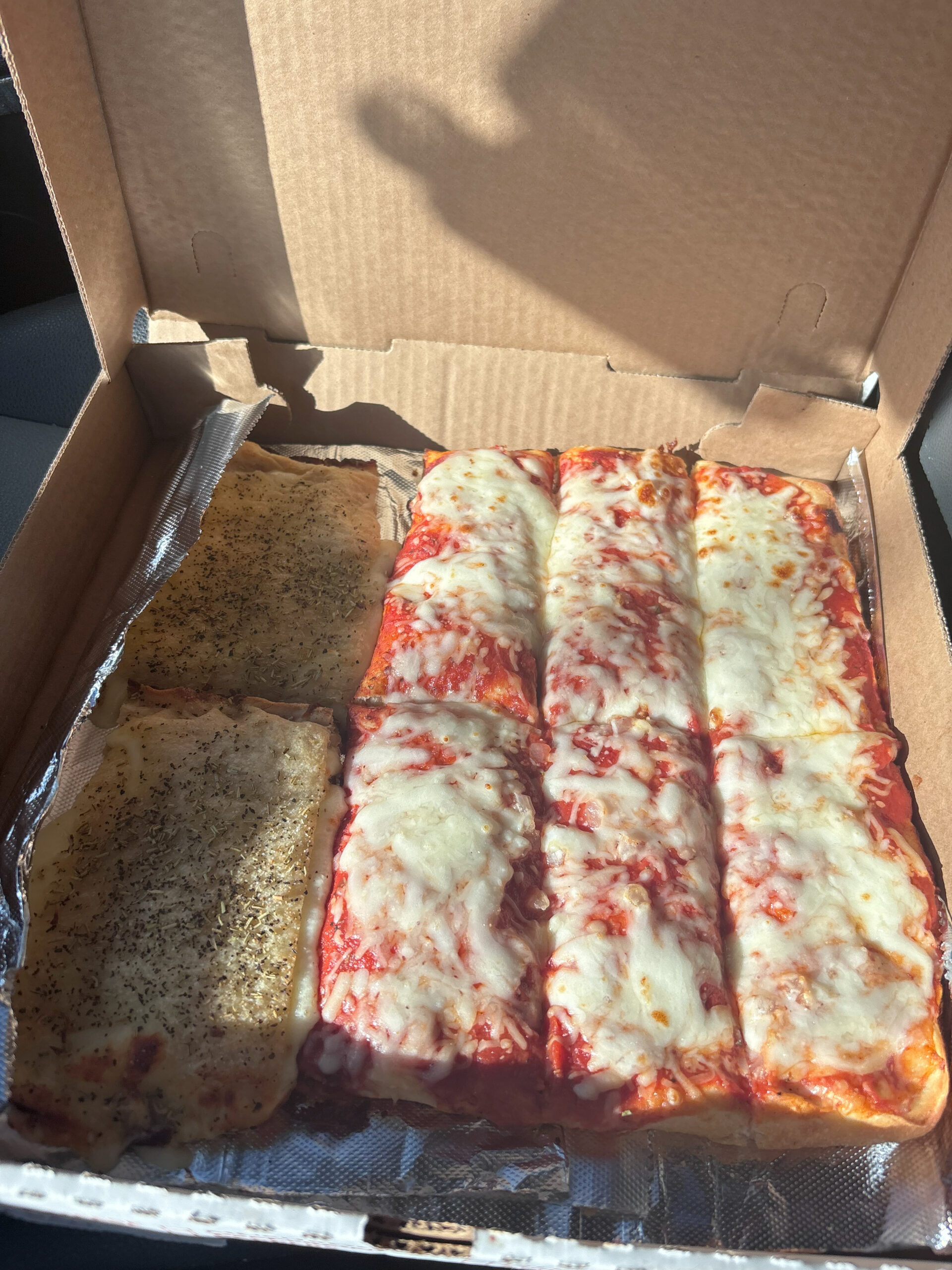
There’s arguably a pizza shop on every block in this blue-collar town about 120 miles north of Philadelphia, in Lackawanna County. It’s a place where presidential hopefuls come for photo opportunities, eating a rectangular “cut” of pizza, not a slice, that’s cooked in a “tray,” not a pie. Everyone has their favorites, whether it’s Revello’s or Arcaro & Genell’s, but shop owners see themselves as a collective, not competitors.
Ghigiarelli’s is, perhaps, the progenitor of this uniquely Northeastern Pennsylvania brand of pizza, opening in 1926. According to a recent social media post and a simple sign in the window, hot cuts may soon return.
“Thank you for your continuous support throughout the years, even while we’ve been closed! Keep an eye out for updates on an opening date for take out. We look forward to seeing everyone,” the restaurant’s official Facebook page announced Feb. 13.
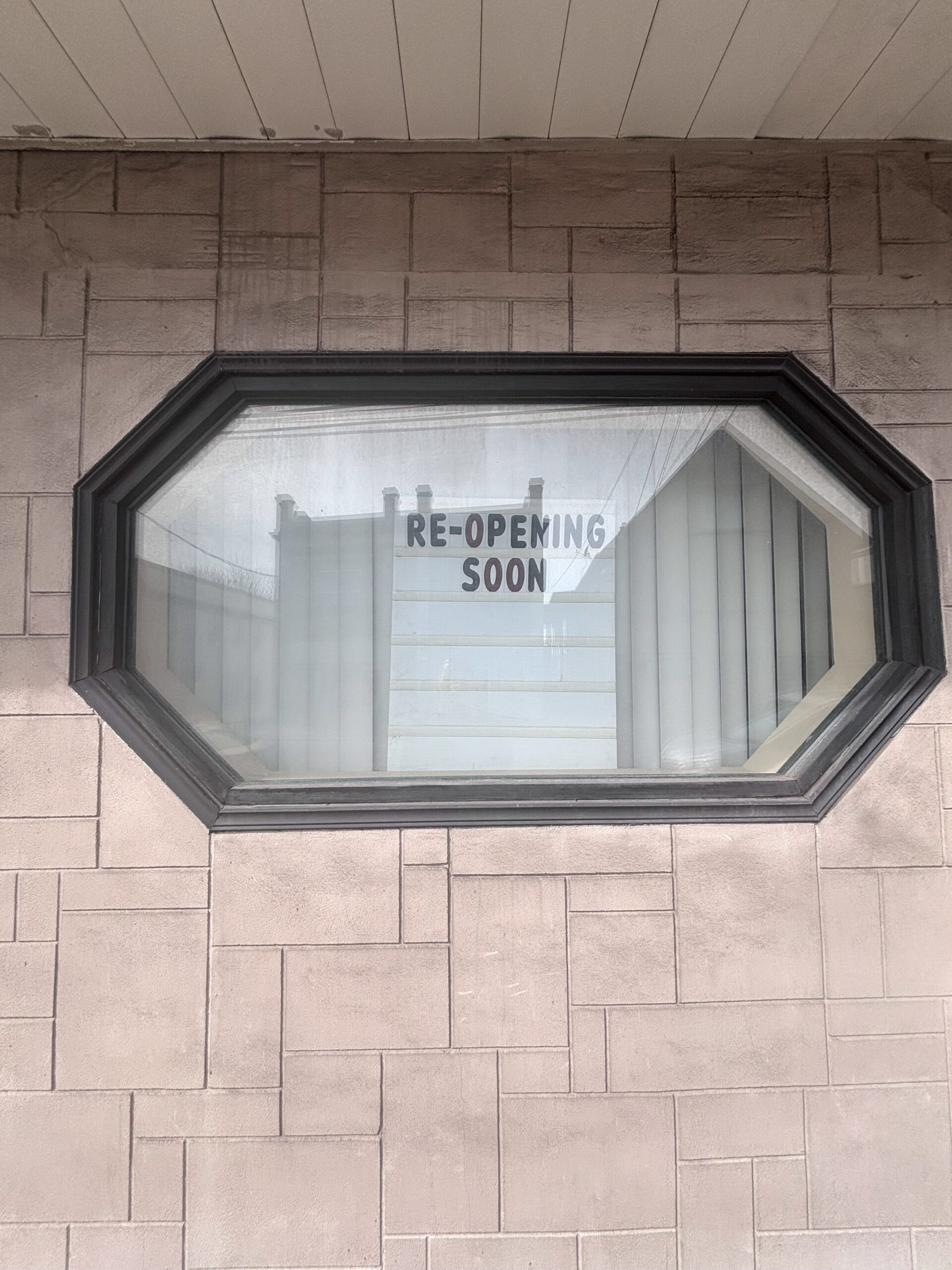
A sign in the window of Ghigiarelli’s Pizza hints at the restaurant’s reopening.
It’s unclear who’s behind the reopening. The building remained closed Monday afternoon, with a small sign in the window announcing the reopening. Robert Baron’s widow, Maria, and daughter Brittany did not return requests for comment, and Old Forge Mayor Robert Legg said he didn’t know who was opening Ghigiarelli’s.
“Ghigiarelli’s has been there for years and years, so we’d love all our establishments open. People loved their pizza, and they’re chomping at the bit,” he said. “They are a really nice family, and they suffered a great tragedy.”
Robert Baron’s death
Robert Baron’s family purchased Ghigiarelli’s in 1961, keeping the name and the pizza. He grew up in Old Forge, an affable workaholic who poured himself into the restaurant. Baron often slept in the apartment above to meet delivery trucks. He was last seen Jan. 25, 2017, when he dropped his son off at his apartment in town at about 11 p.m.
Maria Baron stands in front of Ghigiarelli’s Restaurant in Old Forge, Lackawanna County. She is the wife of Robert Baron who disappeared from there on Jan. 25, 2017, and was later found dead. (FRED ADAMS / For the Inquirer 11-17-18)
Investigators found blood, a tooth, and cleaning supplies scattered at his pizza shop, the daily delivery of dough still outside. Baron’s car was found about a mile away, by the Lackawanna River, not long after. Investigators found blood inside and out of the car, and, in 2023, discovered his remains in a nearby park. Weeks later, a local man was charged with his murder and later convicted.
What’s cooking this month: How about Puerto Rican barbecue, an Italian “kitchen and bar,” a six-course tasting-menu BYOB, and a Center City Mexican destination that is flat-out gorgeous?
Also in this edition:
Hot bakery news: Metropolitan Bakery is changing hands after nearly 33 years, and farmers-market favorite Manna Bakery will take over Essen’s shuttered spot in Kensington.
Two new hit restaurants: Craig LaBan visits Peter Chang’s Chinese offerings in the suburbs.
The March crop of new options is all over: Popup Bagels in Ardmore; Cugini’s in Upper Bucks; Carmen’s Table, Duo Restaurant & Bar, and 1793 in South Jersey; Bengaluru Cafe in Northern Liberties; and Mi Vida in Center City. Read on for the rundown.
Angelo’s Pizzeria, having outgrown its original spot on South Ninth Street, is opening a second location across South Philly. With a kitchen five times the size, owner Danny DiGiampietro calls this one a “fun factory.”
Peter Chang, a onetime chef at the Chinese Embassy in Washington, D.C. with multiple James Beard nominations, has hit the burbs with two new restaurants: one in King of Prussia and another in Colmar, north of Montgomeryville. Be bold and “skip the impulse to order General Tso’s,” urges critic Craig LaBan, who says both spots are “already worthy additions to the suburban dining scene.”
Hot bakery news
.
Metropolitan Bakery, one of the pioneers of Philly’s artisan baking scene, is shutting down its 19th Street shop after nearly 33 years as owners sell the company. The buyer, Merzbacher’s in Germantown, will keep its brand, bread line, and wholesale business. Read on for Jenn Ladd’s exclusive.
Saif Manna, who started his bakery biz several years ago in his Temple dorm, is taking over the former Essen Bakery in Kensington. Manna Bakery specializes in Levantine and Palestinian goods, both sweet and savory.
We chased away the late-winter chill with stops in Ardmore for belly-warming bourbon chicken dish, and in Rittenhouse for a steaming bowl of a Philly classic snapper soup as well as a ginormous, pillowy-soft cinnamon bun.
Scoops
In Rittenhouse dish: Shiroi Hana’s building at 222 S. 15th St., next to Good Dog Bar, has been sold to Simon Atiya, who with his brother owns Giovani’s Bar & Grill, around the corner on Chestnut. Atiya tells me that this will be a solo dining project. There’s no timeline or even concept to discuss, as he wants to install one vibe for the ground floor and another upstairs. “I’ve walked past the building for over 20 years,” said Atiya, whose family had the old Sound of Market and Soundworks stores near the old Gallery. Given McGlinchey’s availability and the new Amma’s South Indian Cuisine, Atiya said he sees 15th Street evolving into a dining destination akin to 13th Street. “I want to be part of that,” he said. Nadia Bilynsky and Veronica Blum of MPN represented the seller, and Wes Deming of KW Commercial represented Atiya.
Blank Street, the fast-growing Brooklyn-born coffee/matcha brand, has signed at the University of Pennsylvania, where its first Philly location will open late this summer at 3603 Walnut St., formerly Bluemercury.
Almost Home General’s location in Old City has closed, and it’s tied into the undoing of Glu Hospitality.
Restaurant report
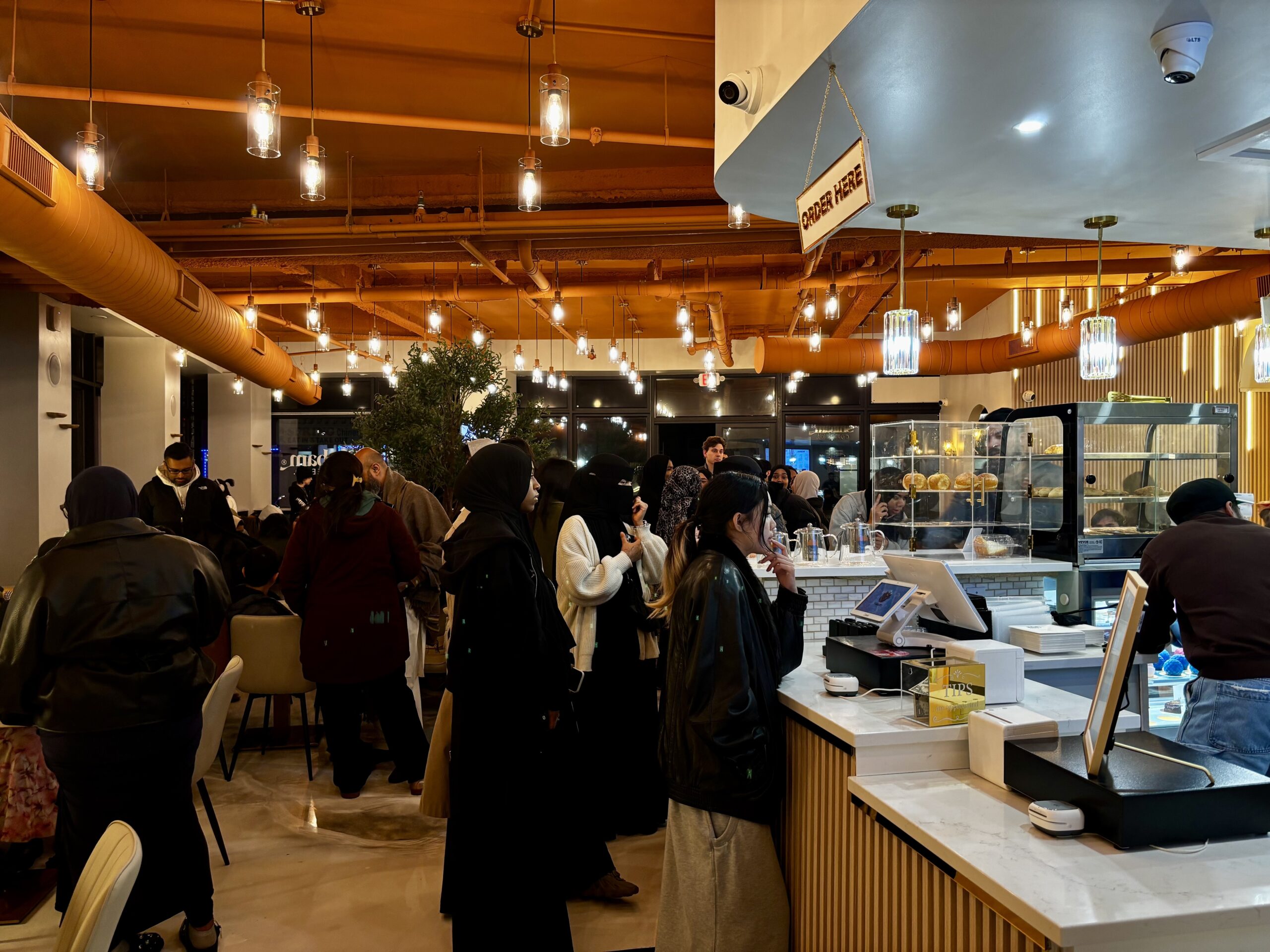
Shibam Coffee, a Yemeni coffeeshop that’s new to West Philadelphia, is a rare one, indeed: It’s open until midnight on Fridays and Saturdays. Hira Qureshi stopped in for a late-night snack and explains it all.
Briefly noted
Fifteen bars and restaurants are participating in a tie-in with the Pennsylvania Horticultural Society with deals surrounding the Philadelphia Flower Show. List is here.
Mount Airy CDC has rounded up 13 businesses for its second annual restaurant week, from March 9-15. Participants includeDoho, offering a family-style five-course dinner for two ($100), including tuna crudo, gnocchi, and short rib, as well as a vegan option that includes sweet potato tostones, pappardelle, and stuffed cabbage tempura. Bar Lizette will offer a three-course menu ($45), including pan-seared pink snapper as well as vegetarian options like chocolate pot de crème. Toska Restaurant & Brewery will have a four-course dinner menu ($40) that features some of their most popular items like shrimp scampi fettucine, wood-fired pizza, Albanian sujuk sausage, and a three-course beer pairing ($18+). Details are here.
The American Vegan Society will name its pick for the Best Vegan Cheesesteak in Philly on April 13 at the Philadelphia Ethical Society. During the finals, competitors also will collaborate on what’s billed as the world’s largest vegan cheesesteak, which (in semiquincentennial spirit) will measure 76 inches. Voting will run March 30 to April 8 at americanvegan.org. The first 76 people who sign up to attend will receive an bite of the sandwich along with a sticker saying they helped to eat it.
Stina in West Passyunk made its bones during the pandemic with the pikilia, a family-style feast of dips, meats, and hot pita served in a pizza box and available only for takeout. (Craig called it a “grazer’s delight.”) Chef Bobby Saritsoglou is now offering it at the table, for $65 per person. Full table, minimum of two people.
Grace Tavern on Grays Ferry Avenue will donate proceeds from this month’s sale of its roast pork sandwiches to help fund capital improvements to Triangle Plaza, across the street. The sandwich features roasted pork, long hots, pork jus, and melted provolone on a grilled Mighty Bread baguette for $12.
Davio’s in King of Prussia will host a Bellemille olive oil dinner at 6 p.m. March 25 ($110pp, optional wine pairing for $55), a multicourse tasting built around Tuscan extra-virgin olive oil from Alexa Dombkoski, the Tuscany-based daughter of Davio’s GM Michael Dombkoski. Each course incorporates Bellemille’s single-estate oil: tuna carpaccio and egg fettuccine with morels, a 55-day prime strip, a semolina-olive oil cake with lemon gelato. Details are here.
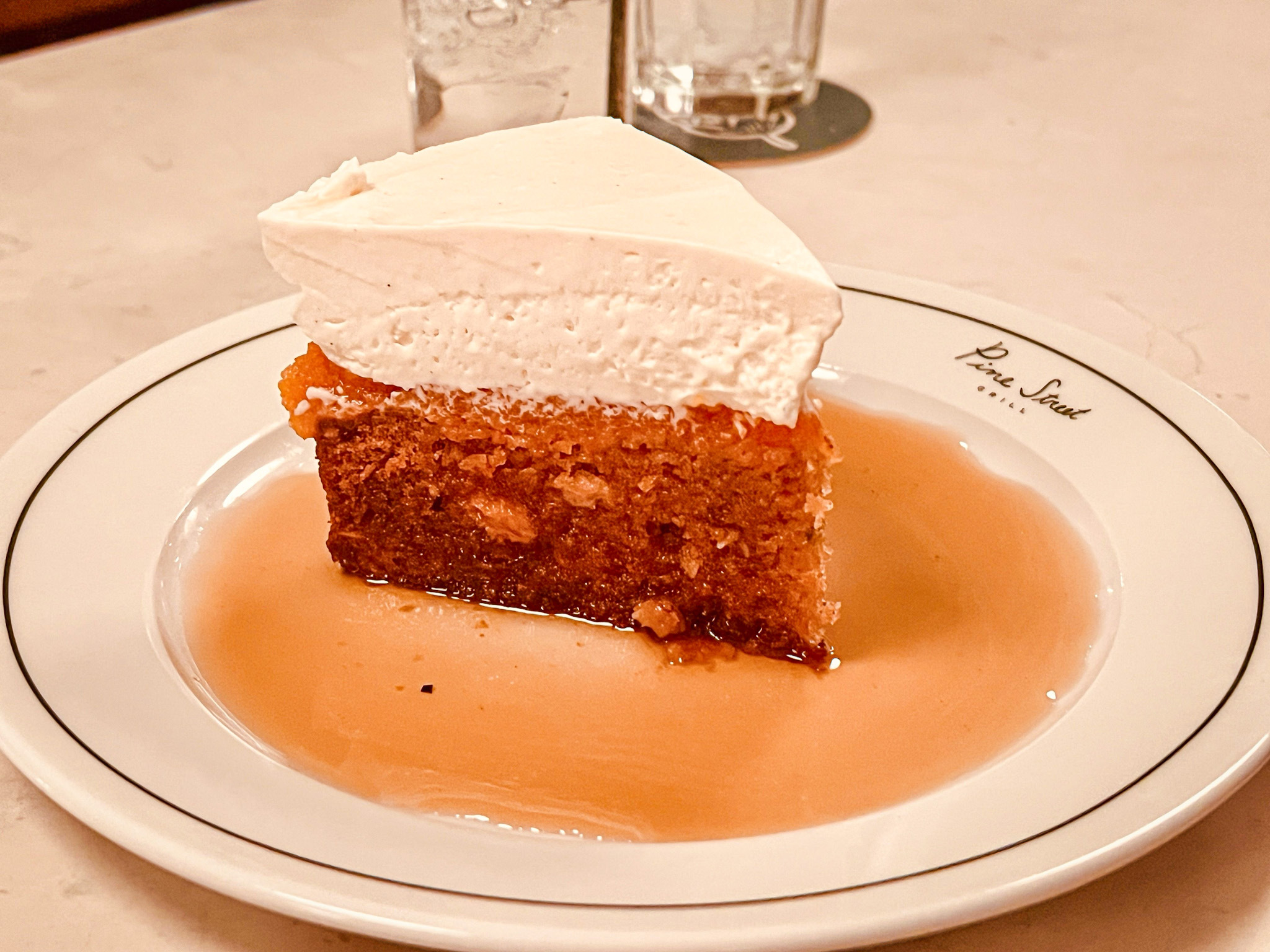
Last week’s newsletter included a callout for carrot cake cheesecake. Alert reader Mitchell H. noticed that Pine Street Grill, the newcomer from chefs Amanda Shulman and Alex Kemp at 23rd and Pine Streets, offers a cake (above), studded with rum raisins and topped with cream cheese mousse. Want a DIY version? Reader Helene A. recommends this recipe from King Arthur Baking.
❓Pop quiz
Where is Joe Beddia, one of Philadelphia’s most acclaimed pizzaioli, opening his next restaurant?
I am hoping that you could recommend quiet restaurants in Philadelphia, particularly in Center City. I know that many people like a lively vibe with loud music, but there seem to be very few options for restaurants with low decibel levels where it is easy to have a conversation without yelling. — Janet W.
“Quiet” can be a loaded concept. Even the most placid restaurant, with wide-spaced tables and fabric-covered walls to soak up noise, can feel like a subway station if a nearby party begins shrieking. BYOBs, which don’t have bars to amp the acoustics, tend to be quieter. Timing matters, too. The simple suggestion is to go early. Estia, the upscale Greek trio in Center City, Radnor, and Marlton, opens for dinner at 3 p.m. You can catch a quiet meal at Bloomsday on Headhouse Square at 4 p.m.; Enswell, the stylish Euro spot in the Touraine, at 4:30; or Talula’s Garden in Washington Square and Little Nonna’s in Washington Square West at 5. Sor Ynez, the Mexican restaurant in the Wheelhouse building in Kensington, and Southwark in Queen Village handle noise well, too. Even for a tiny spot, Little Fish in Bella Vista delivers reasonable volume. Perhaps the quietest of them all is Lacroix at the Rittenhouse, where the food speaks volumes. Any recommendations, readers? Share them!
📮 Have a question about food in Philly? Email your questions to me at mklein@inquirer.com for a chance to be featured in my newsletter.
By submitting your written, visual, and/or audio contributions, you agree to The Inquirer’s Terms of Use, including the grant of rights in Section 10.
The first Philadelphia-area location of a TikTok-famous bagel chain, an Italian kitchen and bar, a Puerto Rican barbecue specialist, and a posh tasting-menu BYOB are among the restaurants on the dining radar for March. As usual, most opening dates are in flux.
Bengaluru Cafe (809 N. Second St.): This vegan/vegetarian South Indian restaurant, due to open March 20 in Northern Liberties, is inspired by Karnataka, a state in India, with a menu focused on street-food staples and shareable plates, including chaats, tomato masala salad, and vada pav — a popular snack of spiced potato fritter tucked into soft bread with chutneys. Owner Sri Saravanan has quite a commute: He opened his first location two years ago in Fairfax, Va.
Carmen’s Table (200 E. Evesham Rd., Glendora): Roselyn Gonzalez, part of Booker’s Restaurant Lounge & Grill in Camden, is opening this Puerto Rican barbecue restaurant with her family in the former Kitchen 519 on March 27. She’s drawing on the recipes of her mother, Carmen, who supported her family by selling plates of food. Expect smoked meats informed by Caribbean flavors, including her mother’s sofrito.
Cugini’s (6522 Lower York Rd., New Hope): Cousins Frank Picone and Anthony Adragna are taking over the former New Hope Star Diner on Route 202 in Solebury Township, Bucks County, for a 135-seat “Italian kitchen and bar” that aims to split the difference between date-night dining and family-friendly fare. Adragna previously owned and operated Cafe Antonio in Morrisville; Picone comes from a restaurant family that founded V&S Pizza in Fairless Hills and Ariana’s Pizza in Levittown.
Dining room of Duo Restaurant & Bar, 90 Haddon Ave., Westmont, N.J.
Duo Restaurant & Bar (90 Haddon Ave., Haddon Township): Brothers Artan and Arber Murtaj and Andi and Tony Lelaj, who own the Old World-style Italian Il Villaggio in Cherry Hill, have soft-opened their pub on the former site of Keg & Kitchen. Bar menu includes burgers, a crab cake sandwich, and raw oysters, while the regular menu covers rib-eye meatballs, crab cakes, and Italian entrees. It’s open for lunch and dinner daily.
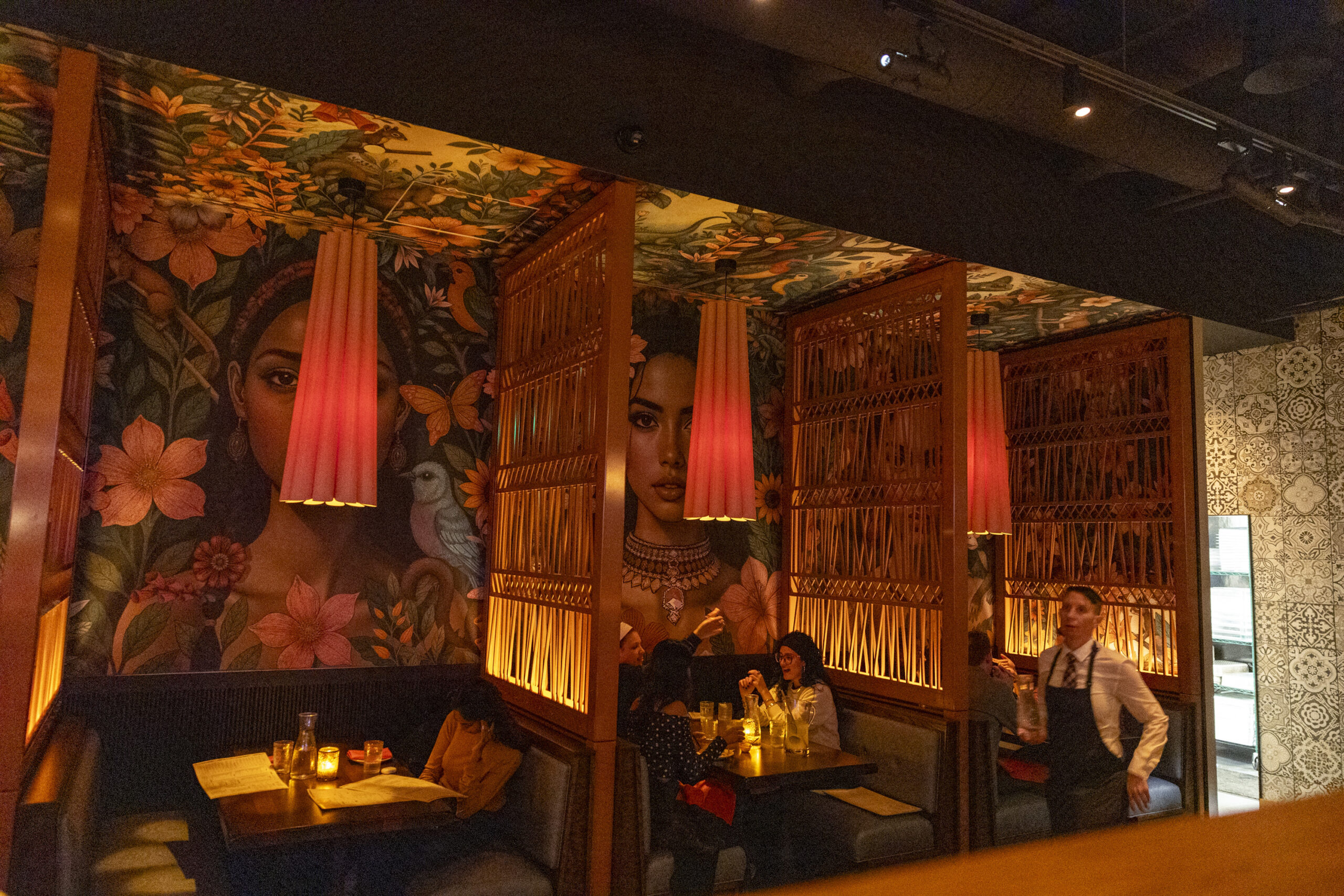
Booth seating with murals at Mi Vida.
Mi Vida (1150 Ludlow St.): Knead Hospitality of Washington, D.C., is in the opening days of its first Philly project: a splashy Mexican restaurant in East Market, open daily for lunch weekdays, weekend brunch, and nightly dinner with a full menu and 23-seat bar stocked with 130 tequilas and mezcals.
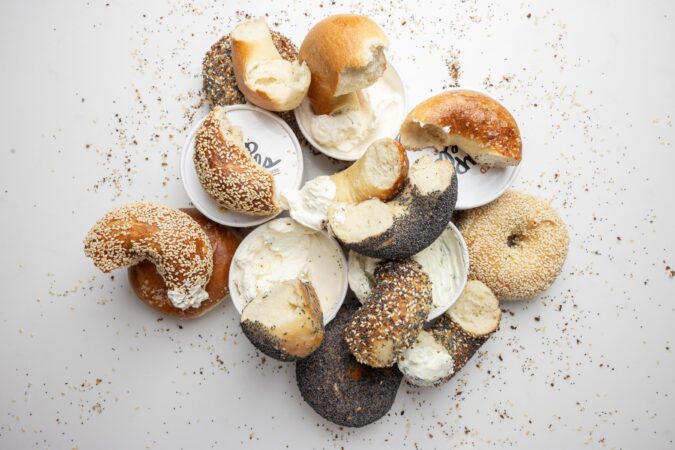
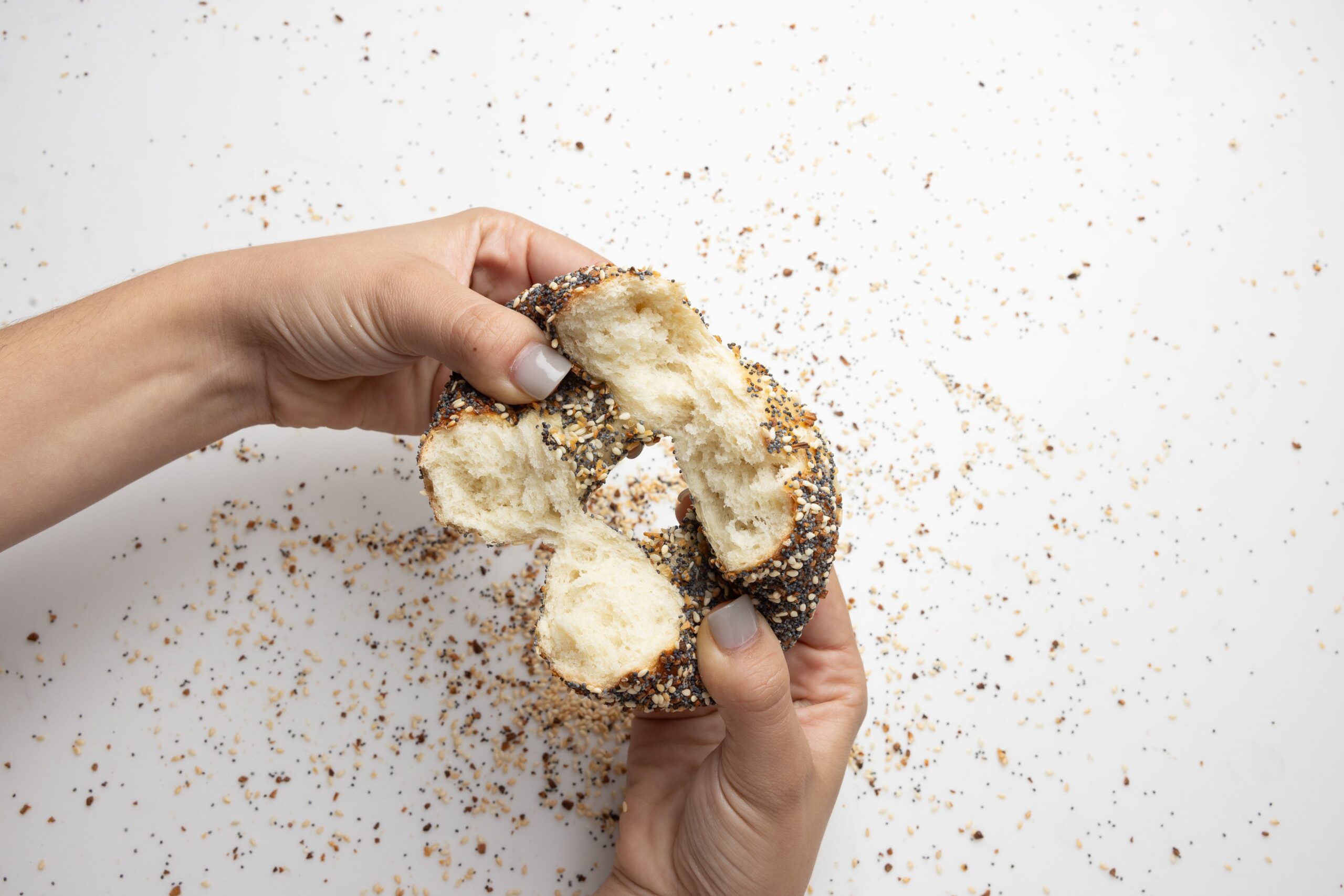
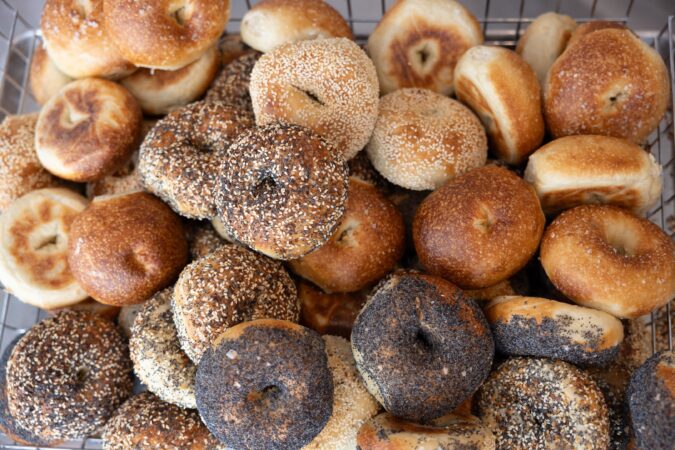
PopUp Bagels (10 Coulter Ave., Ardmore): “Grip, rip, and dip” is the phrase that pays at PopUp, a burgeoning franchise with a social-media following that started in 2021 as a baking enthusiast’s pandemic project in Westport, Conn. The first of 10 Philadelphia-area locations is looking to open later this month at Suburban Square in Ardmore, where it will occupy the former Juice Press space next to Drybar and SoulCycle and across from Shake Shack. (Center City, Marlton, and Princeton/Hamilton locations are being teed up.) Popup sells bagels and coffee, but no sandwiches, and the bagels are served hot and whole, rather than sliced. They’re designed to be torn apart and dipped into cream cheese spreads. The company offers weekly rotating schmear flavors and sells bagels in bundles — three, six, or a dozen — rather than individually.
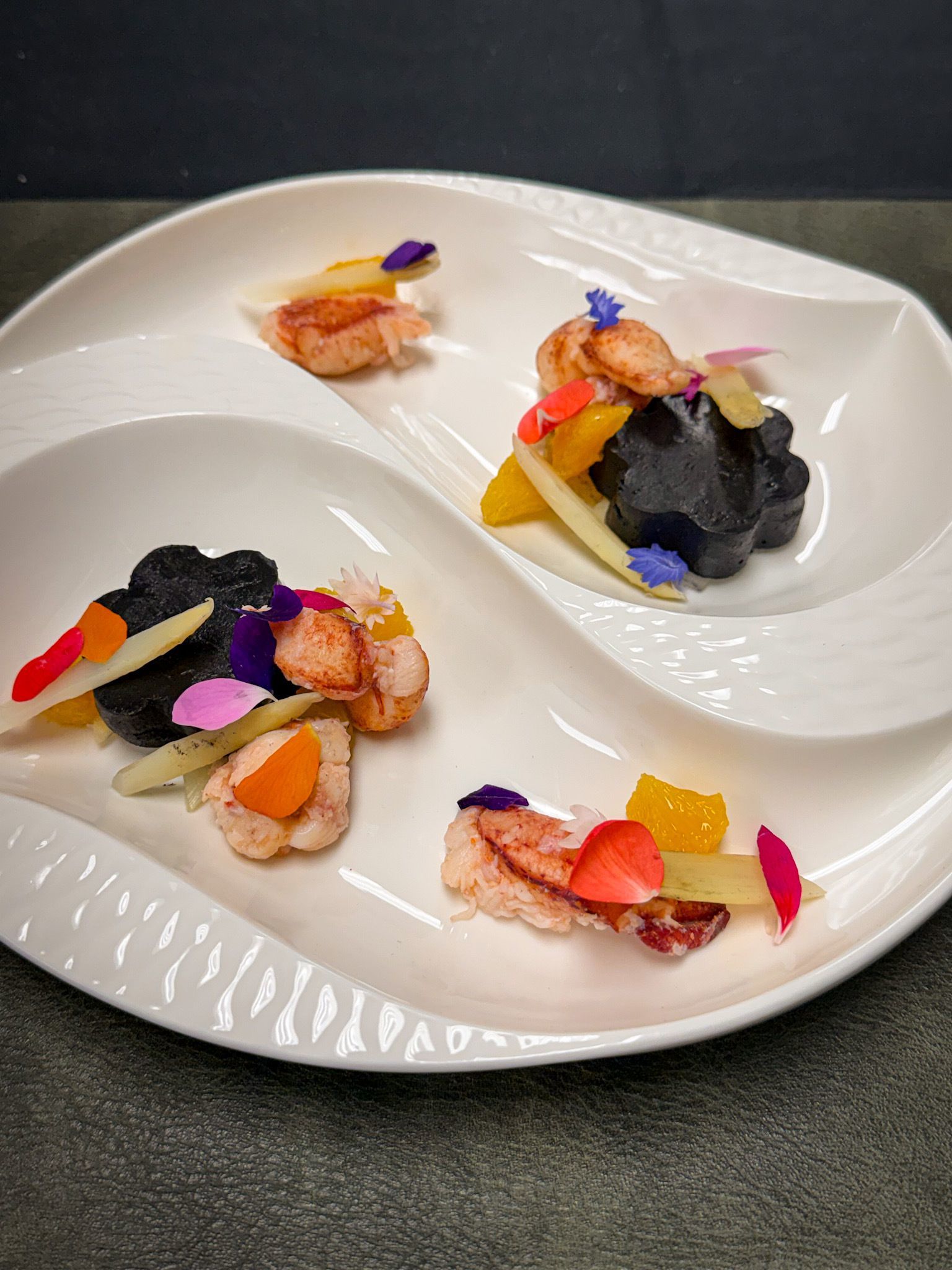
Two works in progress by chef Chris Bennett for the forthcoming Restaurant 1793 in Merchantville: Black truffle panna cotta with poached lobster, compressed orange, and white asparagus, as well as cocoa-lined foie gras with toasted walnut, apple cider puree, and small winter greens,
1793 (7 E. Park Ave., Merchantville): A tasting-menu restaurant at the former Park Place from chef Chris Bennett (formerly of June BYOB), 1793 will offer a six-course contemporary American menu (starting at $115). Bennett will emphasize seafood, pastas, risottos, and a consistent duck entrée. A carpenter in his first career, Bennett is building it out to feel like an upscale library, with dark woods and leather seating. He’s aiming for fine dining without formality.
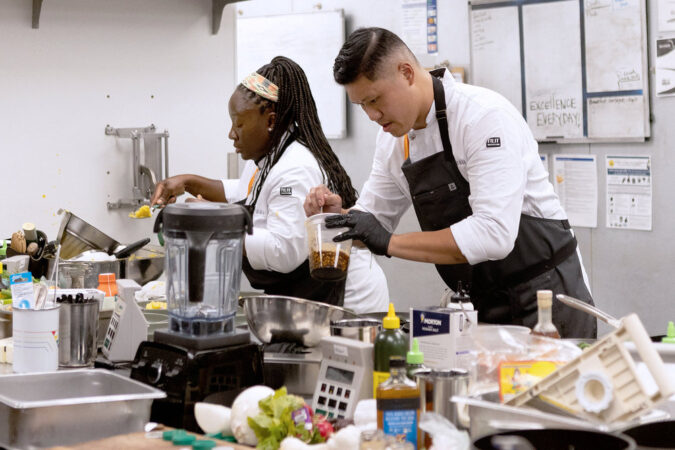
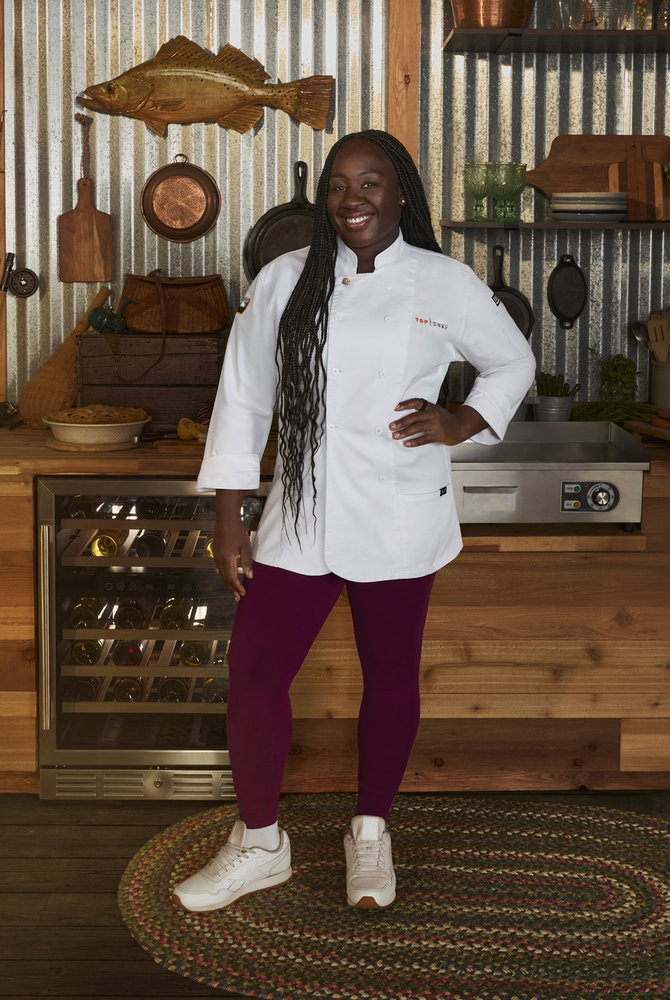
Chef Nana Araba Wilmot’s career has taken her everywhere from top-tier French restaurants in New York City to dinner parties in Accra, Ghana. Now, the Cherry Hill-raised chef is taking her culinary skills to the 23rd season of Top Chef, Bravo’s high-stakes, elimination-style culinary competition.
Wilmot is the owner of Georgina’s Private Chef and Catering Co. and Love That I Knead, a traveling supper club grounded in Ghanaian cuisine. Her love for cooking was forged in her childhood home in Cherry Hill, where her parents and grandmother brought the flavors of their native Ghana into the house, and in kitchens in Philadelphia and New York City, where she learned the craft of restaurant cooking.
Now, Wilmot is a private chef and caterer who wants to put her own story on the plate. She’s taking on the competition in the newest season of Top Chef, which will officially hit screens next week but is available early on streaming.
Chef Nana Araba Wilmot is competing on season 23 of “Top Chef,” which premieres on Bravo on March 9, but early streaming access is available now.
From Cherry Hill to Le Coucou
Wilmot was raised on the east side of Cherry Hill. She attended private school up until fourth grade, then graduated from James F. Cooper Elementary School, Henry C. Beck Middle School, and Cherry Hill High School East. She played lacrosse and joined the dance team and student government.
“Cherry Hill was always good to me,” Wilmot said.
At age 7, she started cooking with her grandmother.
Wilmot’s childhood memories are dotted with warm, lively dinner parties and Ghanaian events where smells of fried fish and Jollof rice mingled with the sounds of hiplife music playing on her dad’s stereo system. Within the walls of her childhood home, and the homes of her friends and family, Ghanaian life was kept alive through time-tested recipes and traditions. Seeing Ghanaian food outside of the home was rare.
“When I would leave the house, that just wasn’t what was outside,” she said.
“For us, it wasn’t like our food is for sale, it was for us.”
After graduating from Cherry Hill East, Wilmot attended the now-shuttered Art Institute of Philadelphia, where she earned degrees in culinary arts and culinary management in 2013.
She worked her way up in the restaurant world, starting with an internship at Time, the restaurant, whiskey bar, and music venue in Midtown Village.
“I really enjoyed being downtown and really just immersing myself in the vibe of the Philly food scene,” Wilmot said, of her first foray into Philadelphia cheffing.
She got her first full-time job at Vintage, a wine bar and bistro near Time, and started catering on the side. Wilmot was working at Jose Garces’ Tinto and Village Whiskey when she accepted an offer tohelpGarces open a New York City outpost of his Spanish restaurant Amada.
“I kind of understood what Jose was doing and his style of food, which is really excellent,” she said. “He was also an ode to his grandmother and mother, so I understood that kind of wanting to see yourself in the food that you’re presenting.”
Amada’s Manhattan location closed after two years, failing to garner the buzz of Garces’ other restaurants. But Wilmot had fallen in love with New York. She moved on to her next job, learning the craft of fine dining under chefs Daniel and Marie-Aude Rose. Her stint at Daniel Rose’s Le Coucou was “incredible,” Wilmot said.
“I’d been in casual fine dining for so long, but this was the epitome of fine dining,” she said.
When Wilmot was hired in 2016, she became the first Black woman to work Le Coucou’s meat-roasting station. The experience was life-changing, but demanding, and Wilmot’s place as one of the few Black women in a white- and male-dominated industry left her self-conscious at times and, once, made her the object of outright hostility from a senior coworker, she told the New York Times in 2021.
Wilmot was preparing to move to Paris to work at one of Daniel Rose’s French restaurants when COVID shut down the world.
Like many millennials, Wilmot found herself stuck in her suburban hometown, career on pause, future uncertain.
To help “bring herself back to life,” Wilmot started cooking with her mom on Sundays. Wilmot would sit in their kitchen, watching her mom make soup or bread or rice, writing down family recipes that had long been passed down through memory.
Around the same time, Wilmot jokes that she enrolled in the “university of the aunties,” visiting with older women in her community to learn their Ghanaian recipes. Like her mother’s dishes, many of the recipes weren’t written down, but rather handed down verbally from generation to generation. Wilmot rose with the sun, watching the women bake bread and fry fish, and documenting it for posterity.
From her mom’s backyard, she hosted a socially-distanced dinner party for restaurant industry friends.
The slowness of the pandemic forced Wilmot to rethink her life in restaurants, which she says are “not for the faint of heart, especially as a woman.” Did she really want to return to the chaos of a white tablecloth kitchen?
Wilmot decided to pour herself into Love That I Knead and Georgina’s. Love That I Knead has popped up everywhere from the Philadelphia Museum of Art to OSTUDIO, a community gathering space in Brooklyn. These days, Wilmot’s traveling supper club operates in New York City, Philadelphia, and Accra, Ghana. She sees herself as part of a new generation of chefs who want to see their own cultures reflected on the plate.
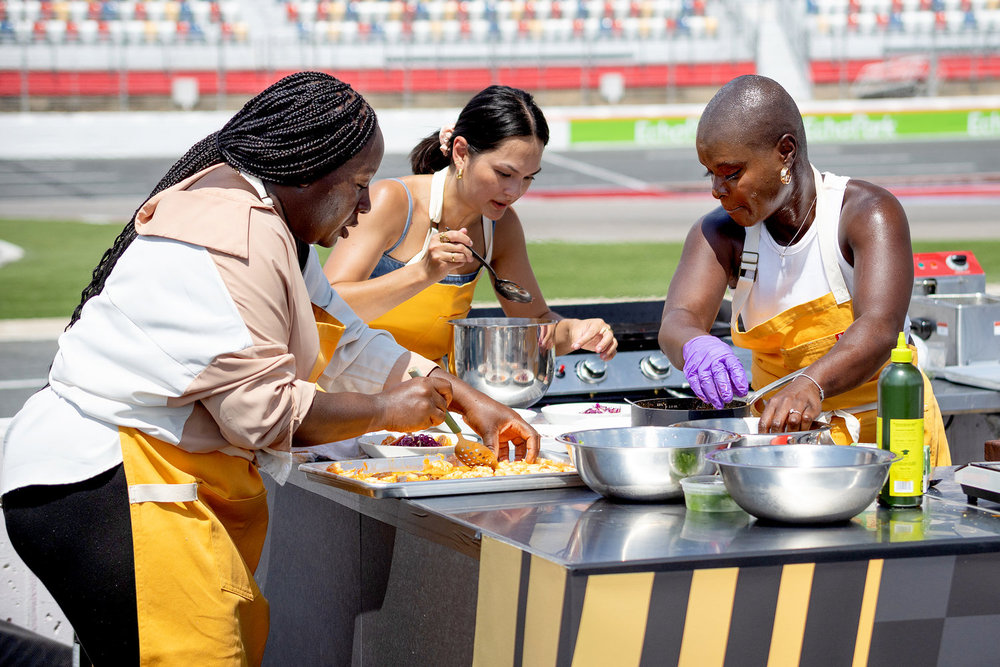
Chefs Nana Araba Wilmot (left), Duyen Ha, and Day Joseph compete on season 23 of Bravo’s “Top Chef.”
Taking Ghanaian cuisine to ‘Top Chef’
When it came to throwing her hat in the ring for Top Chef, Wilmot says she just needed to “shake it up.” It was a real “why not?” moment.
Though she can’t reveal much about the season, which takes place in North and South Carolina, she said her Ghanaian recipes fused beautifully with the flavors of the Carolinas, due in large part to the enduring impact of West Africans on the recipes and culinary techniques of the South.
“There’s still so many traces of African food, of my ancestors, that is here in the South,” Wilmot said.
Wilmot said Top Chef is “just the beginning.” She’s excited to make her family and South Jersey proud, and to “start the conversation” about food in the African Diaspora.
Top Chef returns March 9 from 9 to 10:15 p.m. on Bravo. Early access to the season premiere is currently available on Peacock, Bravo’s YouTube channel, and video on demand. Beginning March 16, the show will move to its regular 9:30 p.m. time slot with episodes available the next day on Peacock.
This suburban content is produced with support from the Leslie Miller and Richard Worley Foundation and The Lenfest Institute for Journalism. Editorial content is created independently of the project donors. Gifts to support The Inquirer’s high-impact journalism can be made at inquirer.com/donate. A list of Lenfest Institute donors can be found at lenfestinstitute.org/supporters.
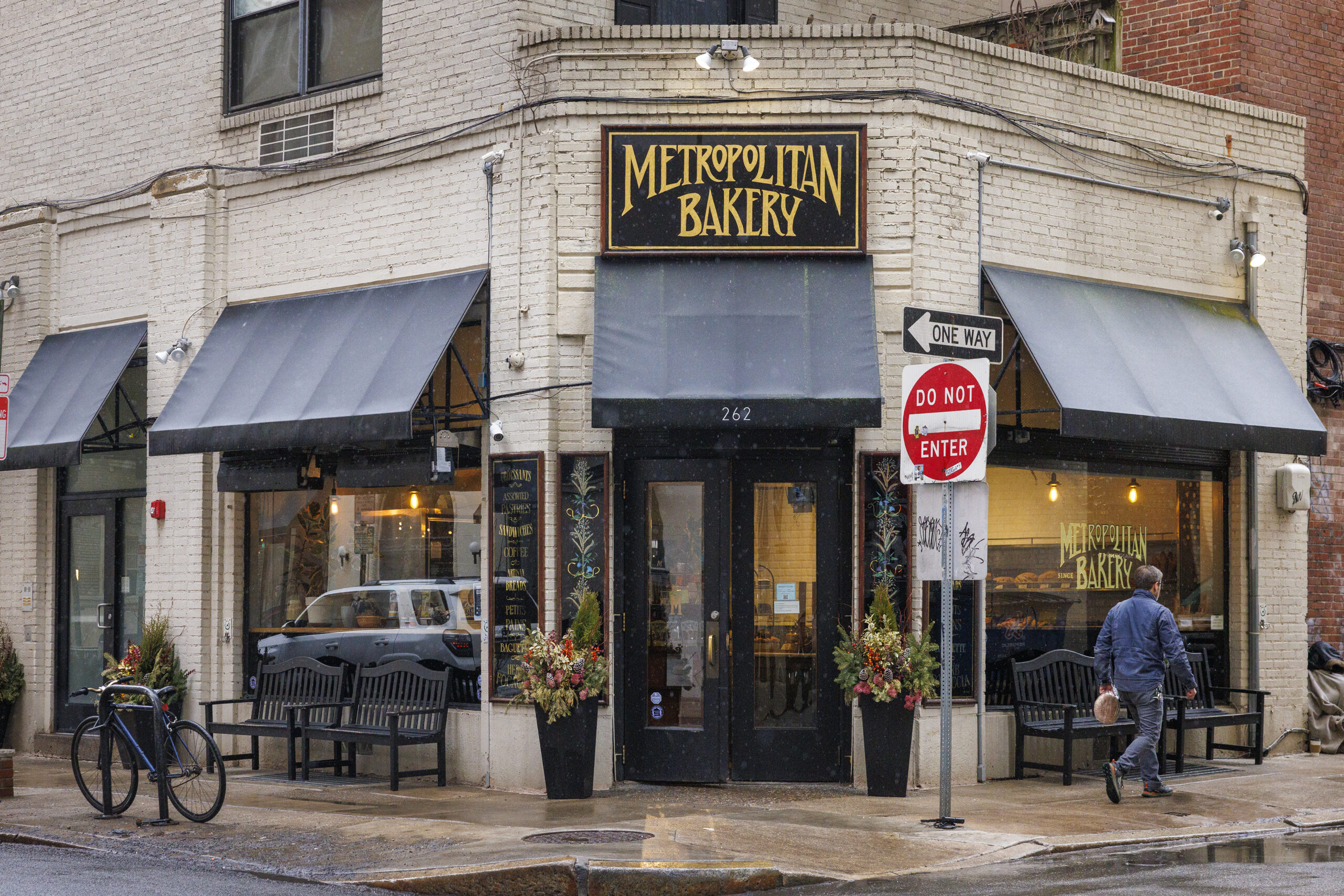
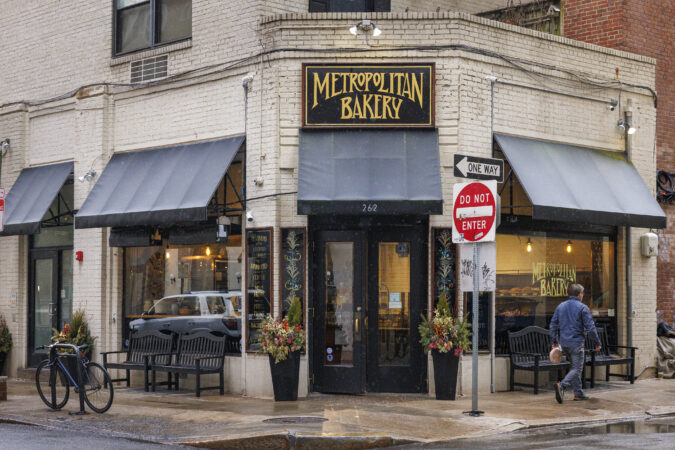
Metropolitan Bakery — one of the city’s foundational bread bakeries, introducing legions of Philadelphians to crusty sourdough boules and other European-style loaves — has been sold. Its 19th Street shop, a nearly 33-year-old icon just south of Rittenhouse Square, will close permanently on March 15.
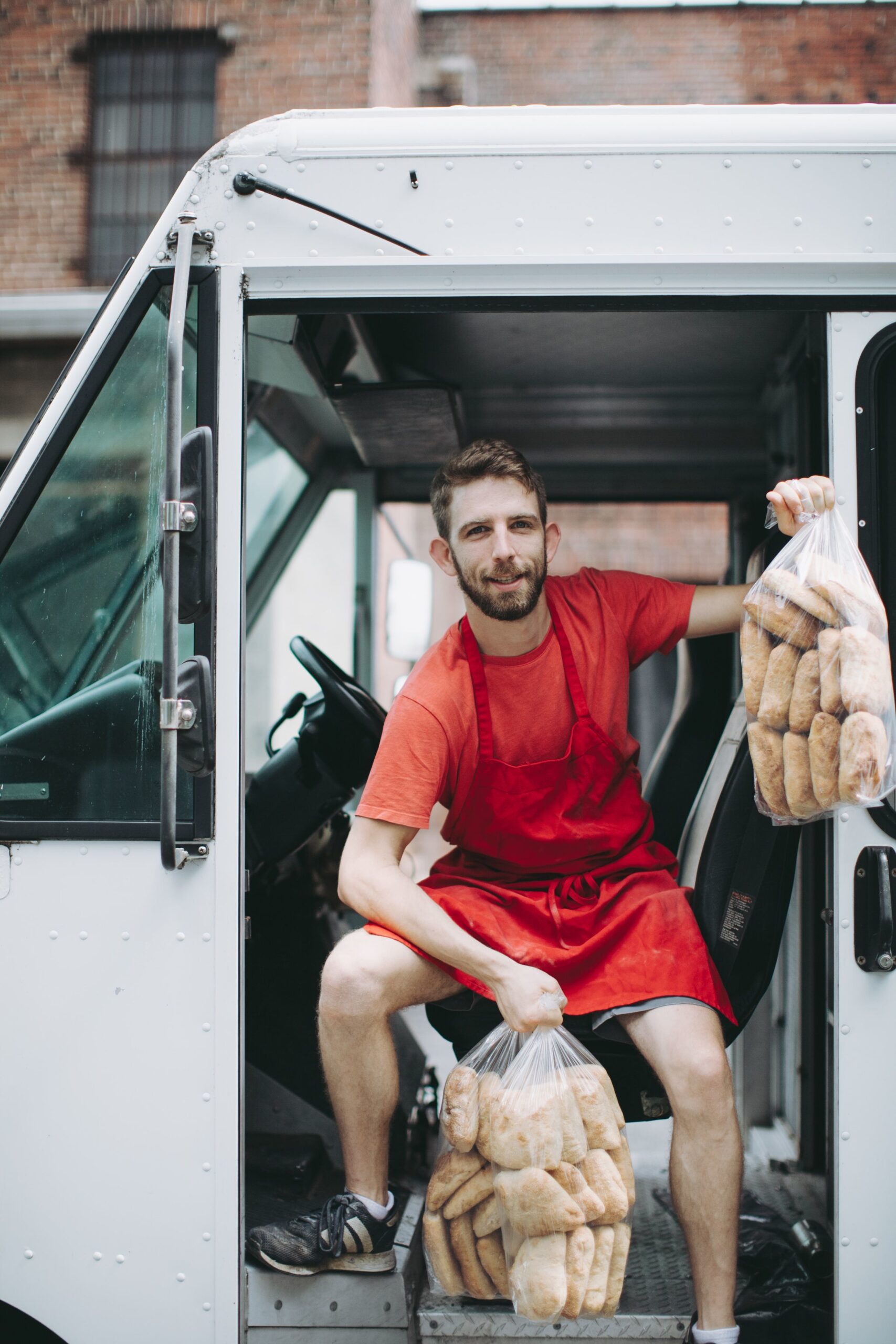
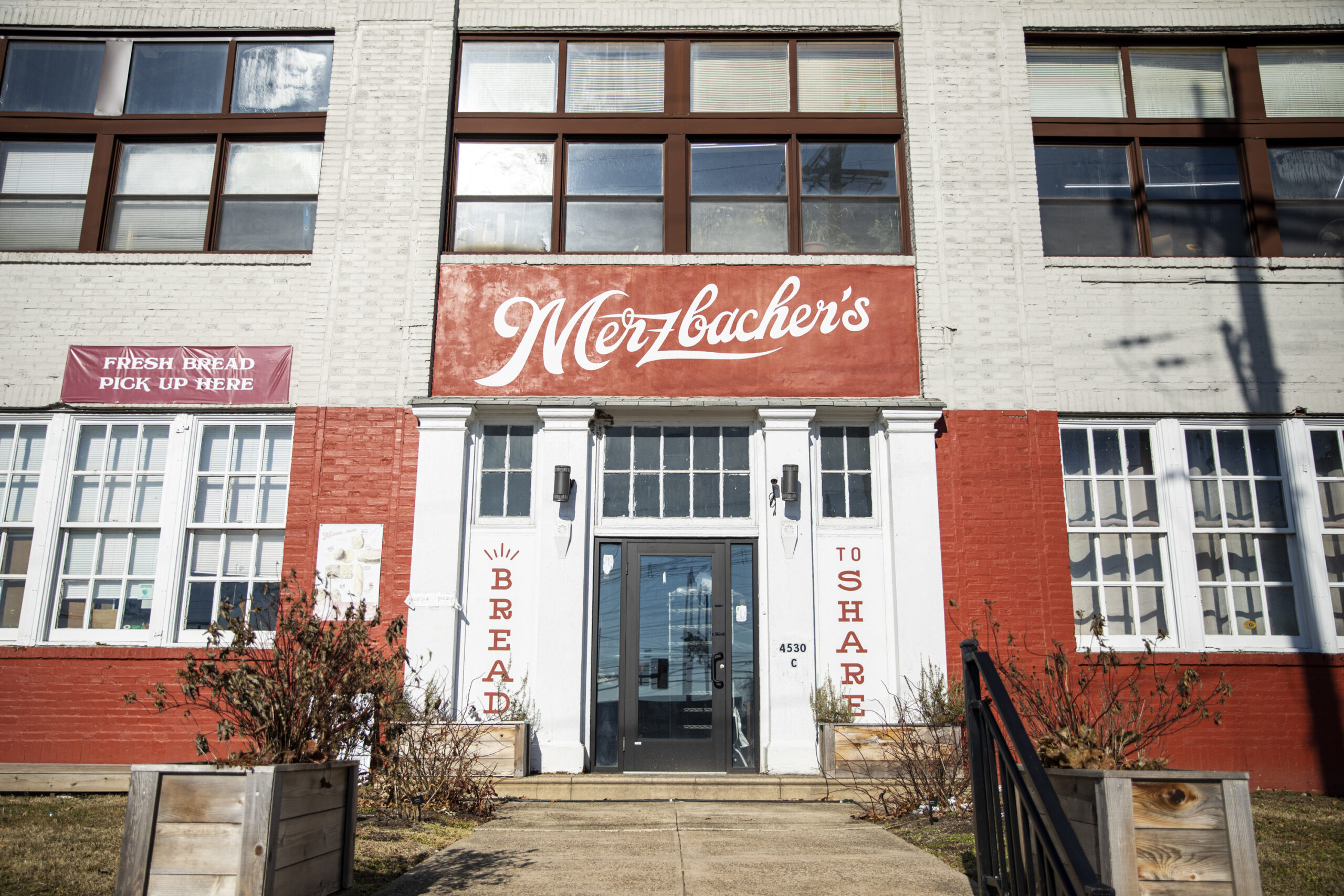
Merzbacher will maintain Metropolitan’s wholesale and mail-order operations, with Merzbacher’s staff first learning the ropes at Metropolitan’s production space in Fishtown, then eventually baking its breads, granola, and many of its pastries out of Merzbacher’s own Germantown facility. Merzbacher’s will also begin selling Metropolitan products to its Rittenhouse farmers market.
Both parties declined to specify the terms of the sale.
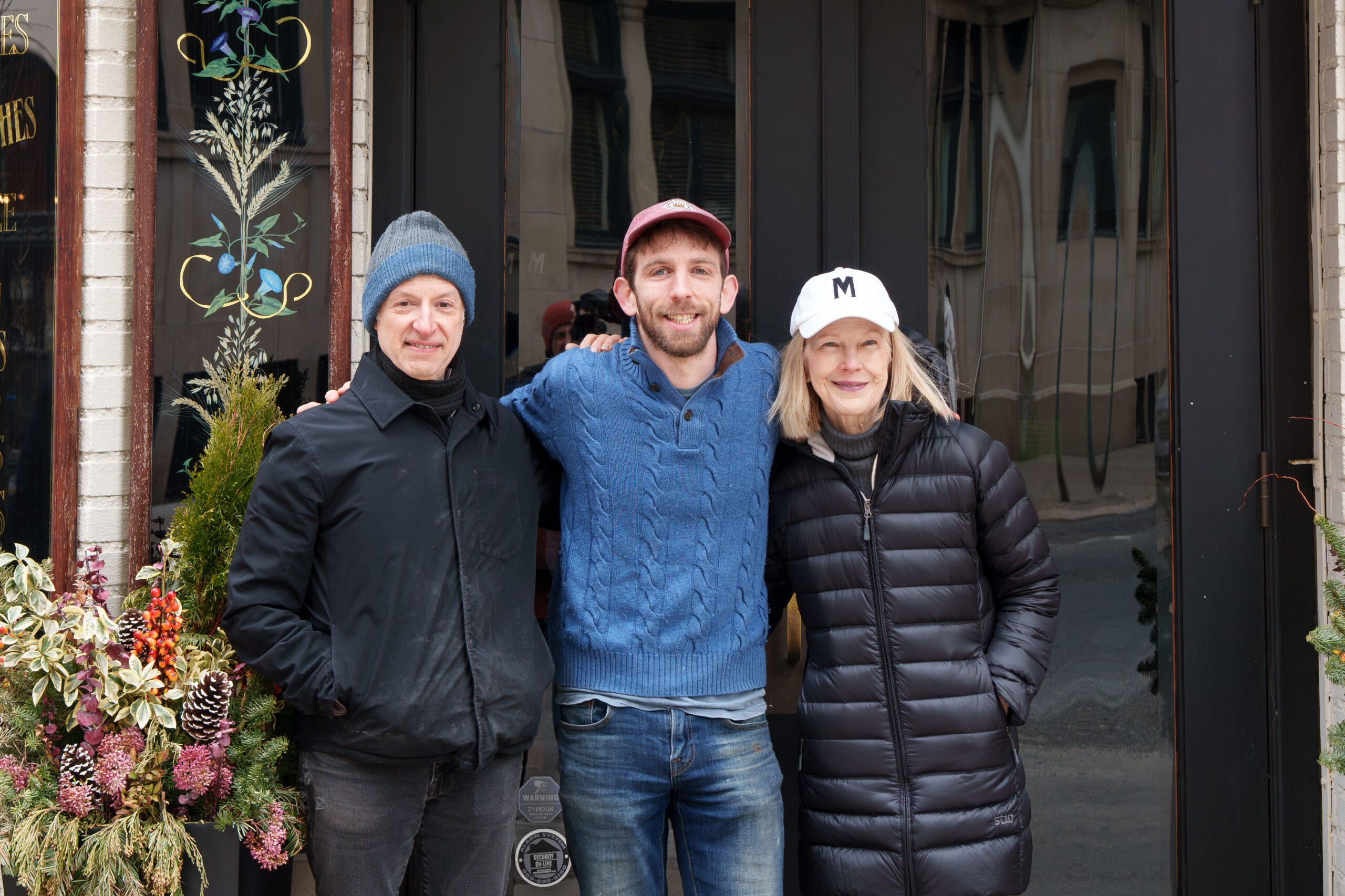
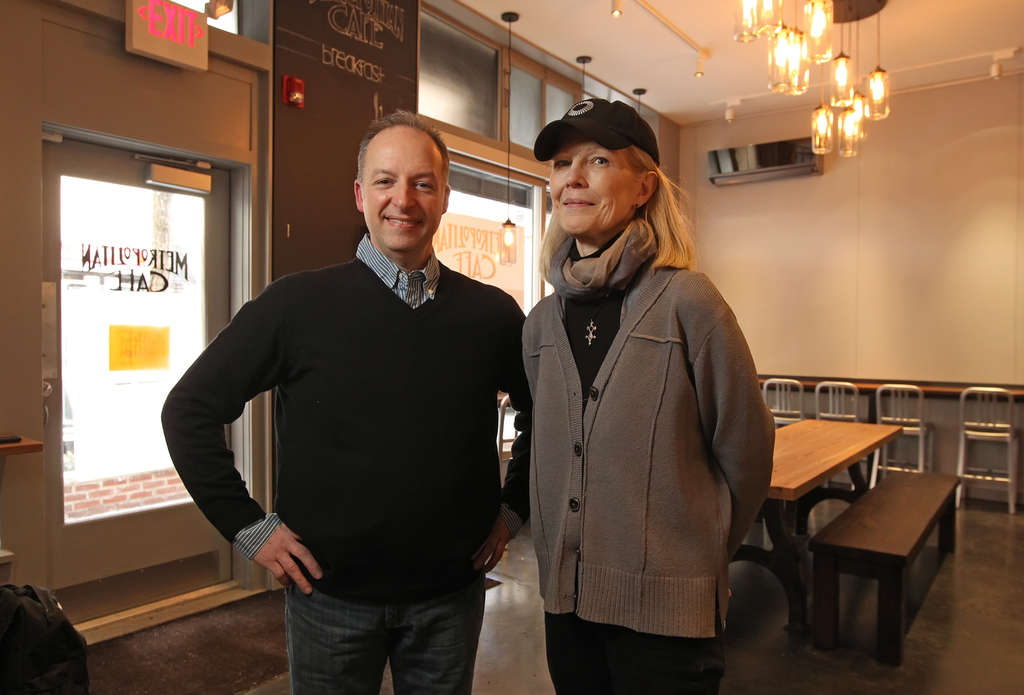
Metropolitan Bakery founders and co-owners James Barrett and Wendy Smith Born sold the nearly 33-year-old bakery to Pete Merzbacher (center) of Merzbacher’s.
Barrett will stay on as a consultant overseeing production during the changeover. Merzbacher hopes to hire as many of Metropolitan’s 40 employees as possible.
“We’re basically doubling our business,” Merzbacher said. “Our goal is to hire as many of their bakers, packers, drivers — I’ve been meeting with them — definitely bringing on their office staff. The idea is to really bring everyone over.”
“I’m 100% committed to help Pete successfully make the transition,” Barrett said.
Barrett and Born had been quietly looking for a buyer for about five years, but the business partners were determined to be selective, looking for a seasoned, Philadelphia-based operator with intention to uphold Metropolitan’s quality and grow the brand.
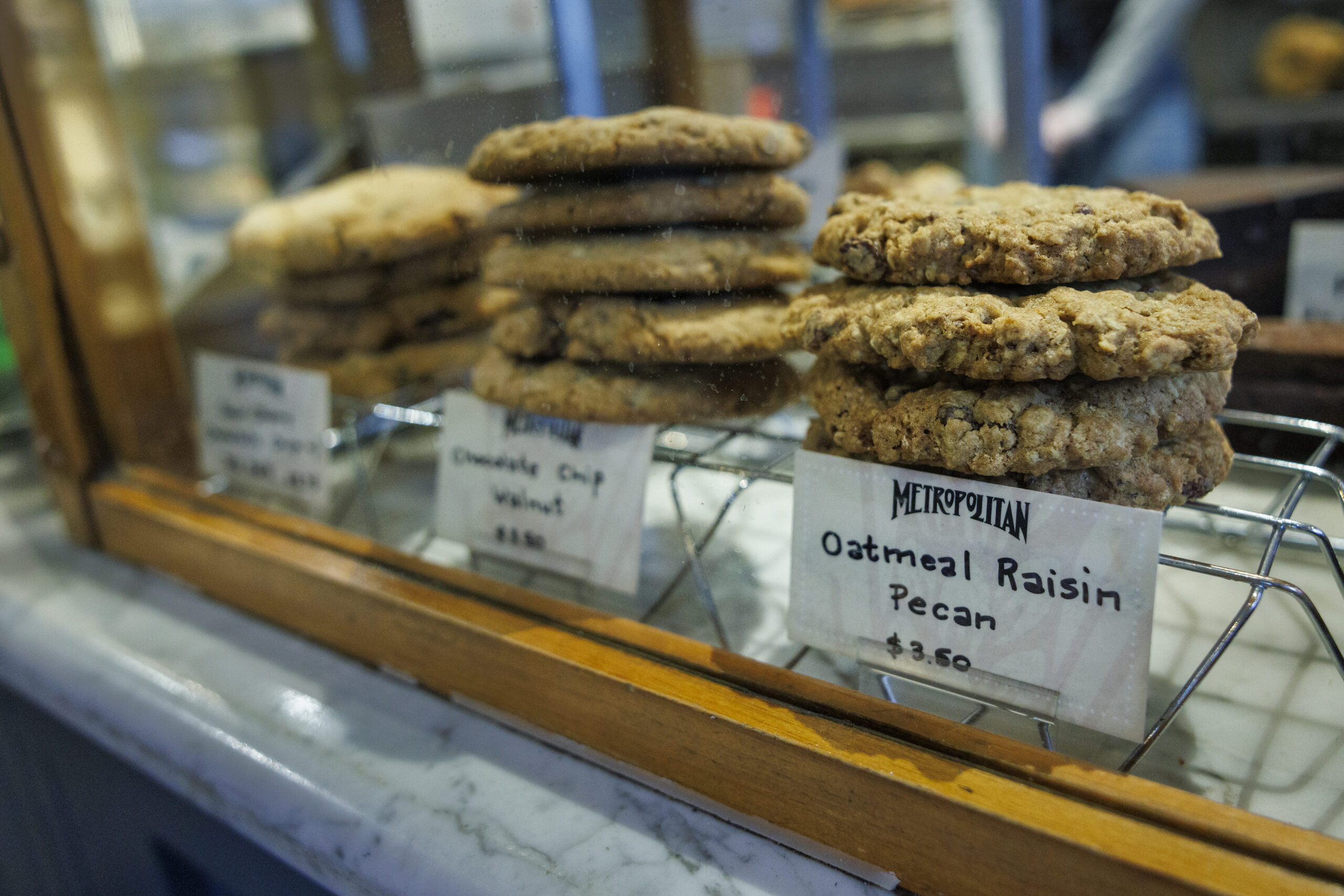
Oatmeal raisin-pecan cookie at Metropolitan Bakery on Tuesday, March 3, 2026.
“At one point we had somebody interested in the real estate, but they didn’t really know too much — or anything — about operating a bakery. [There were] a couple people like that,” Born said in an interview Monday. “We were really interested in trying to have the brand [and] this really wonderful bread not just die in the wind. It wasn’t just about real estate at all for us.”
When Merzbacher expressed interest in buying the bakery last fall, he proved an ideal candidate. Merzbacher’s, itself a 13-year-old bread bakery that scaled up to a 4,800-square-foot warehouse in Germantown in 2020, wholesales to dozens of Philadelphia-area grocery stores and restaurants. Merzbacher’s and Metropolitan have several overlapping clients.
“Honestly, I developed all of my products with Metropolitan being the elephant in the room,” Merzbacher said. “Every account I went to trying to sell a baguette, they were like, ‘I use Metropolitan, we’re happy with it.’ ‘And how about a classic sourdough?’ ‘Yeah, we got it from Metropolitan. We’re pretty happy with it.’ ‘How about a brioche bun?’ ‘Yep, Metropolitan — we’re happy with it.’”
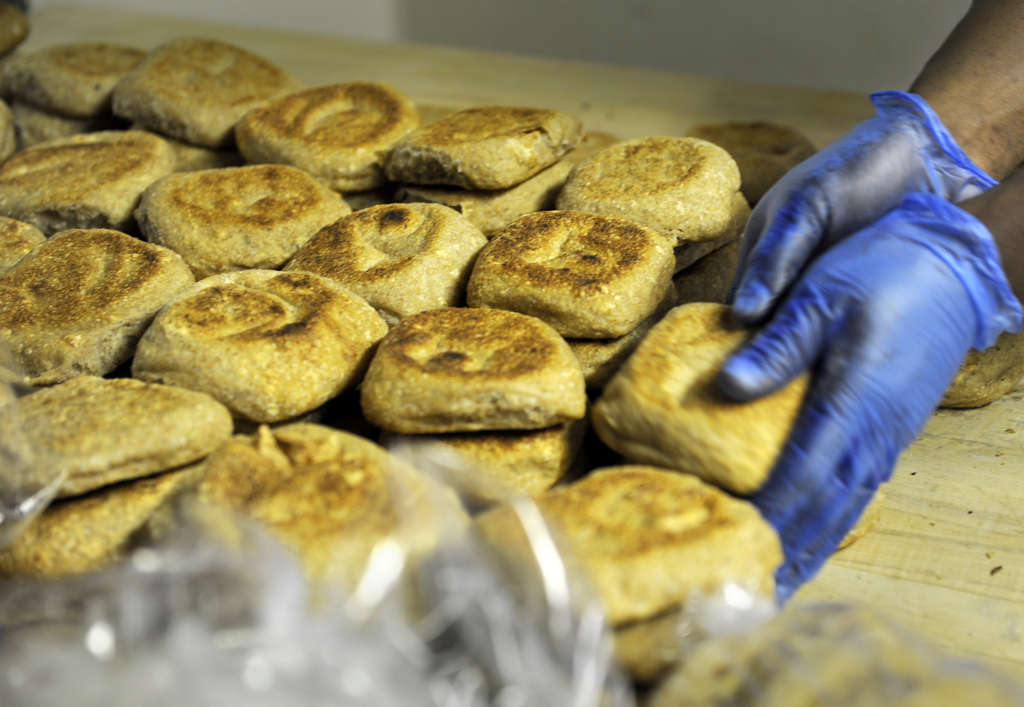
Philly muffins are one of Merzbacher’s calling cards.
Merzbacher intends to keep both bakeries’ brands, breads, and baked goods distinct, even as they live under the same roof. “The brand awareness is amazing,” he said of Metropolitan’s stature.
Inquirer critic Craig LaBan, a longtime Metropolitan regular, called the Rittenhouse bakery “one of the true pioneers of artisan quality for our ambitious food scene,” praising it for bringing a corner bakery to Center City Philadelphians, “just like so many in Paris get to experience,” he said. (He and wife Elizabeth LaBan had an engagement photo shot at the 19th Street shop 30 years ago, before he became the paper’s restaurant critic.)
“Wendy and James’ work has been essential to the growth of so many great restaurants over the years by providing them high-quality French bread,” LaBan said. “They provided neighbors with world-class baguettes and rustic levain boules to elevate our dinners at home. They surely inspired the next generation of local bakers that followed them.”
Metropolitan Bakery’s background
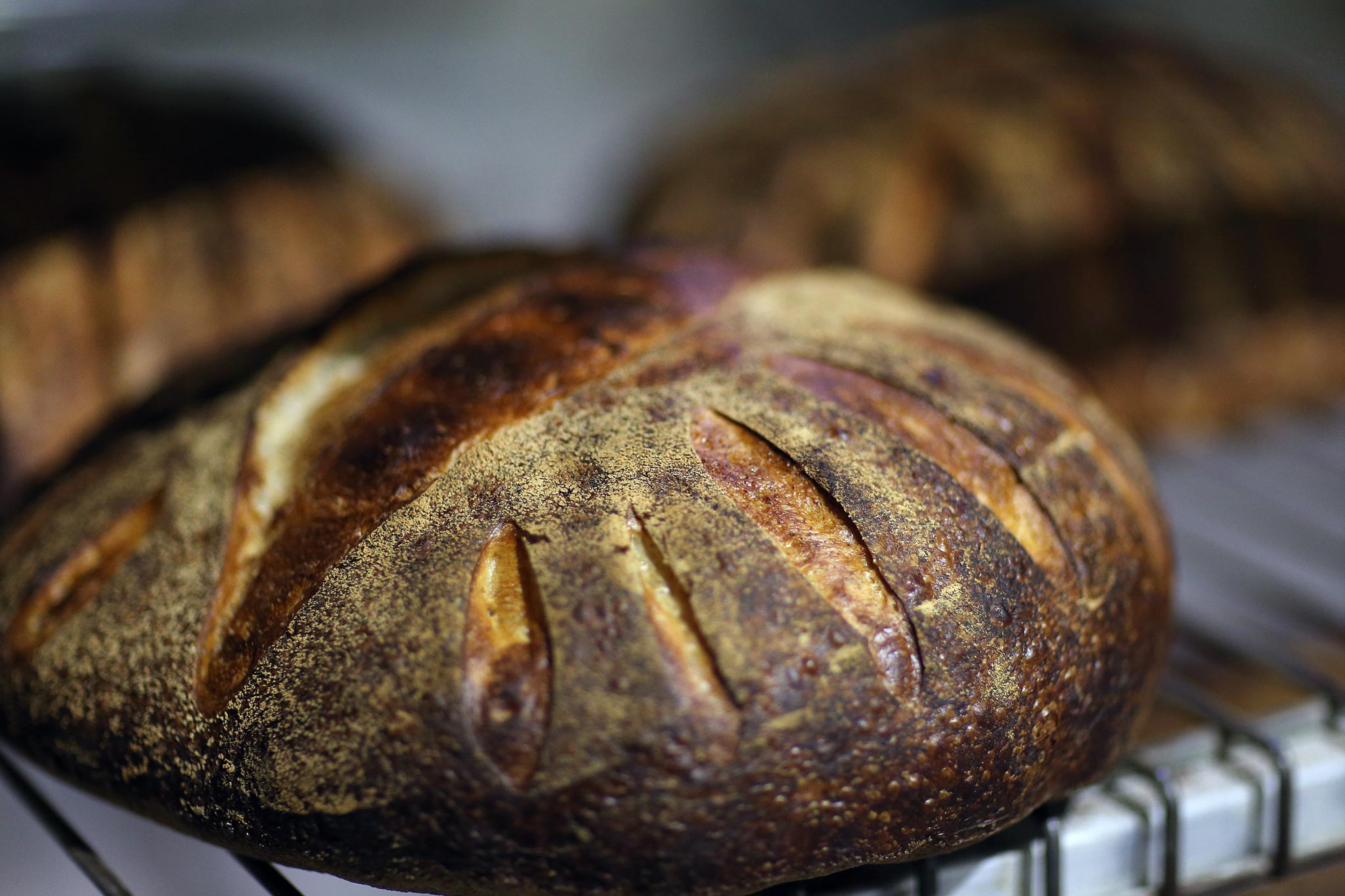
Loaves of miche bread cool inside Metropolitan Bakery in Fishtown.
When Barrett and Born launched Metropolitan in 1993, they were establishing a Parisian-style bakery in a mostly white-bread world. Aside from Le Bus and Chestnut Hill’s Breadsmith (later renamed Baker Street), few bakeries in the area offered the sturdy, naturally fermented baguettes and loaves they dealt in, leavened with wild-yeast starters Barrett had cultivated and fed for years. (The starter is included in the sale.)
The pair met in 1987 while working at White Dog Cafe, where Barrett was pastry chef and Born was managing partner. Years later, Barrett approached Born about opening a bakery together — they were both friends and “extreme perfectionists,” according to what Barrett told Inquirer writer Elaine Tait in 1993. A business plan was born.
Outfitted with a brick oven from France, a proofing room, and a fleet of willow baskets for shaping loaves, Metropolitan’s original production facility opened on the ground floor of a Delaware Avenue office building in October 1993. The retail storefront at 262 S. 19th St. followed weeks after. The blistered, flour-dusted goods that emanated from both locations made an immediate impression on Philadelphians, drawing keen wholesale and restaurant clients along with everyday crowds that would be familiar to today’s social-media set.
Metropolitan Bakery owners James Barrett and Wendy Smith Born at the cafe at 264 S. 19th St., next door to their flagship bakery, in 2013.
“If you like bread with chewy crusts, moist and just-slightly tooth-resistant interiors, clean fresh mildly sour flavors — try this bread,” wrote Inquirer columnist Jim Quinn in 1994, advising would-be buyers to arrive early. Metropolitan’s 19th Street shop “is already mobbed with Center City West neighbors; all loaves often sell out hours before closing.”
By 2007, Metropolitan had added five retail stores — in Washington Square West, Reading Terminal Market, Chestnut Hill, Old City, and University City — supplying them and a vast network of clients out of a 10,000-square-foot production space on Marlborough Street in Fishtown. But as Philadelphia rents rose along with the cost of labor, the owners realized they had to contract. “We couldn’t manage all those locations in a way and connect with our public properly,” Born said. As leases came to end, Born and Barrett let them go, preserving the 19th Street original.
“The Rittenhouse location was exceedingly, exceedingly busy,” Born said. “It was always the busiest of our locations, by quite a long shot.”
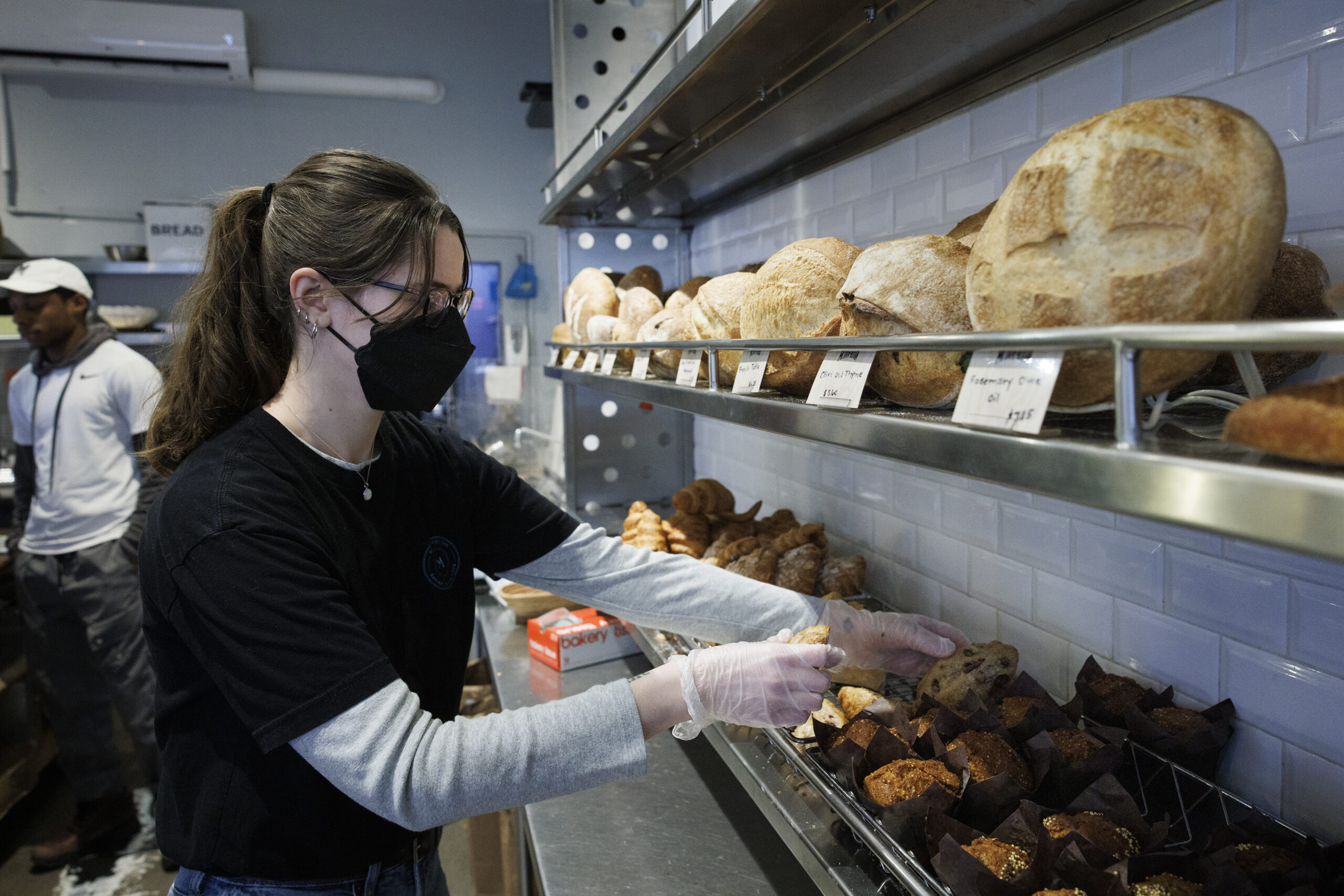
Jacquelyn Littlefield, shift leader at Metropolitan Bakery, displays scones and rolls at the store at South 19th Street on March 3, 2026.
Looking back on more than three decades in business, the owners expressed gratitude to have been so entrenched in Philly’s community, and to have been “such a part of people’s lives,” Barrett said. “Now we are servicing grandchildren of our original customers and folks that have moved cross country [who] mail-order our products.”
“People just keep coming back,” Born said. “At the end of the day, after being beaten up at work, they come in and get a beautiful sour cherry-chocolate chip cookie or something. Those are the memories that stay with me.”
Two brands, one bakery
Merzbacher, Metropolitan’s new owner, said he considered keeping the 19th Street store open. “I still fantasize about it,” he said, but “I didn’t want to overpromise and underdeliver.” While Merzbacher’s has its own takeout window, open five days a week, “retail is a whole different animal — staffing, lease, front-of-house ops,” Merzbacher said. “Gotta be disciplined about what we say yes to.”
Pete Merzbacher started Philly Bread in a rowhouse in Olney in 2013.
Instead, the 36-year-old baker said he was focused “at this moment, [on] learning, paying homage to the systems that they built, and not breaking anything that isn’t broken — which is a very stable customer base and a lot of employees who have been with them for a long time.”
Merzbacher’s may seem an unlikely successor to Metropolitan. The 23-employee bakery’s lineup is imminently approachable, American-inspired, even “kid friendly,” Merzbacher said. Think sweet potato buns (deployed in many of the area’s best burgers), tender-crumbed hoagie rolls, and soft loaves of white, wheat, rye, multigrain, and more.
But Merzbacher’s also exclusively uses locally milled grains and natural leavening (i.e., no commercial yeast). Like Metropolitan, it ferments its bread doughs over a long period of time; Merzbacher’s loaves proof over a 24-hour period to develop their flavor, texture, and “digestibility,” Merzbacher said. “And a lot of our recipes feature whole-food ingredients like cooked red lentils, toasted corn, polenta, and roasted sweet potatoes.”
A Boston-area native who moved to Philly when he was 22, Merzbacher started his bakery — initially named Philly Bread — as a “gypsy baker,” working out of a pizzeria in West Philadelphia before moving production to a former Tunisian bakery in Olney. (His square “Philly muffin” impressed LaBan off the bat.) The move to Germantown in 2020 has allowed for steady growth, and Merzbacher said he has the ability to expand to the second floor of the bakery, at the intersection of Germantown Avenue and Berkley Street.
That may well be necessary, as Merzbacher’s will be moving over Metropolitan’s American-made stone flour mill, deck oven, sheeter, and mixers. In addition to all of Metropolitan’s breads — including best-sellers like pain au levain, miche, multigrain, and French berry rolls — Merzbacher’s will continue to make the bakery’s granola, scones, muffins, cookies, brownies, and lemon and raspberry bars. (Eventually, both bakeries’ product lines will be available for preordered pickup at Merzbacher’s retail window, open 4 to 8 p.m. every day except Tuesdays and Saturdays.)
Merzbacher’s bakery is one of the buildings in the Wayne Junction neighborhood that was redeveloped by Philly Office Retail in Philadelphia, on Wednesday Feb. 9, 2022.
Merzbacher is excited for various prospects that acquiring a storied Philadelphia brand might lead to: “Expanding in Germantown, doing more pizza, doing some retail, could be growing into some other product categories — to be determined,” he said. “But one foot in front of the other.”
For now, besides learning all things Metropolitan, from its bread-baking to its bookkeeping, Merzbacher is hoping to hear from fans of the downtown bakery.
“I’d love to hear ideas for growth,” he said. “I’d just love to have a conversation with people about bread, about their experiences with Metro.”
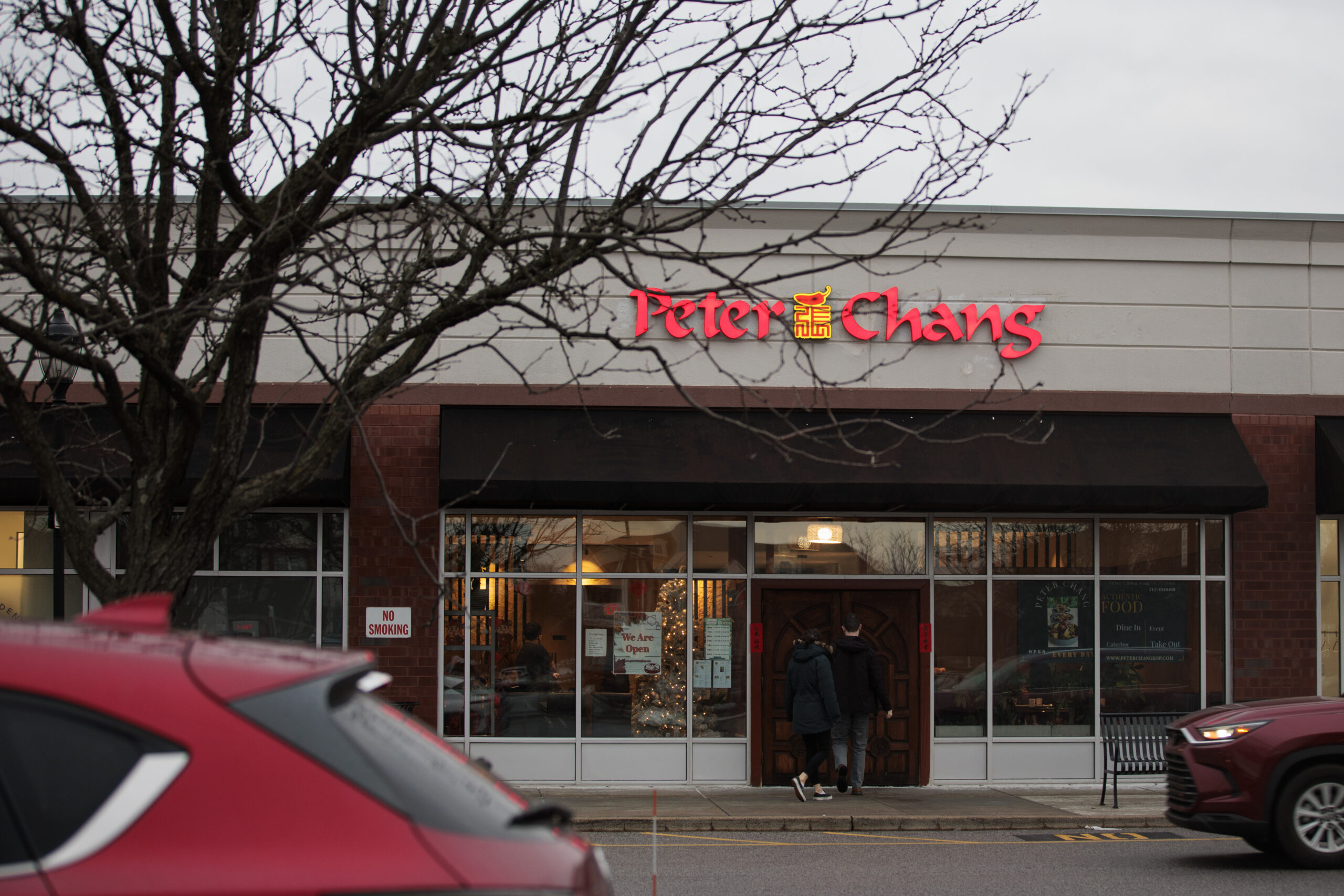
If you weren’t paying attention, you could easily drive past the nondescript storefront beside the Giant supermarket in King of Prussia’s Henderson Square. But there, glowing red from the strip-mall space wedged between a yoga studio and a dental office, is a sign with a name that caused me to hit the brakes: Peter Chang.
Chang is something of a legend in the Washington, D.C. area, especially after being profiled in 2010 by the New Yorker’s Calvin Trillin in an article — “Where’s Chang?” — that detailed a local cult following for the talented Chinese chef, despite (or perhaps because of) his perpetual moves from one Sichuan kitchen to the next. By 2011, however, Chang finally put down roots with his name attached to a restaurant inthe DMV, starting in Charlottesville, Va. It became the first of a rapidly growing family empire that has since expanded to 20 restaurants of varying concepts across the Mid-Atlantic, from Chang Chang in Dupont Circle to Baltimore’s Nihao. The run that has earned this onetime chef at the Chinese Embassy multiple nominations from the James Beard Foundation, including a finalist nod for national Outstanding Chef in 2022.
Now, having debuted in the Philadelphia region withnot one but two new restaurants — Peter Chang in KOP and Mama Chang in Colmar — the once-elusive Chang is virtually everywhere.
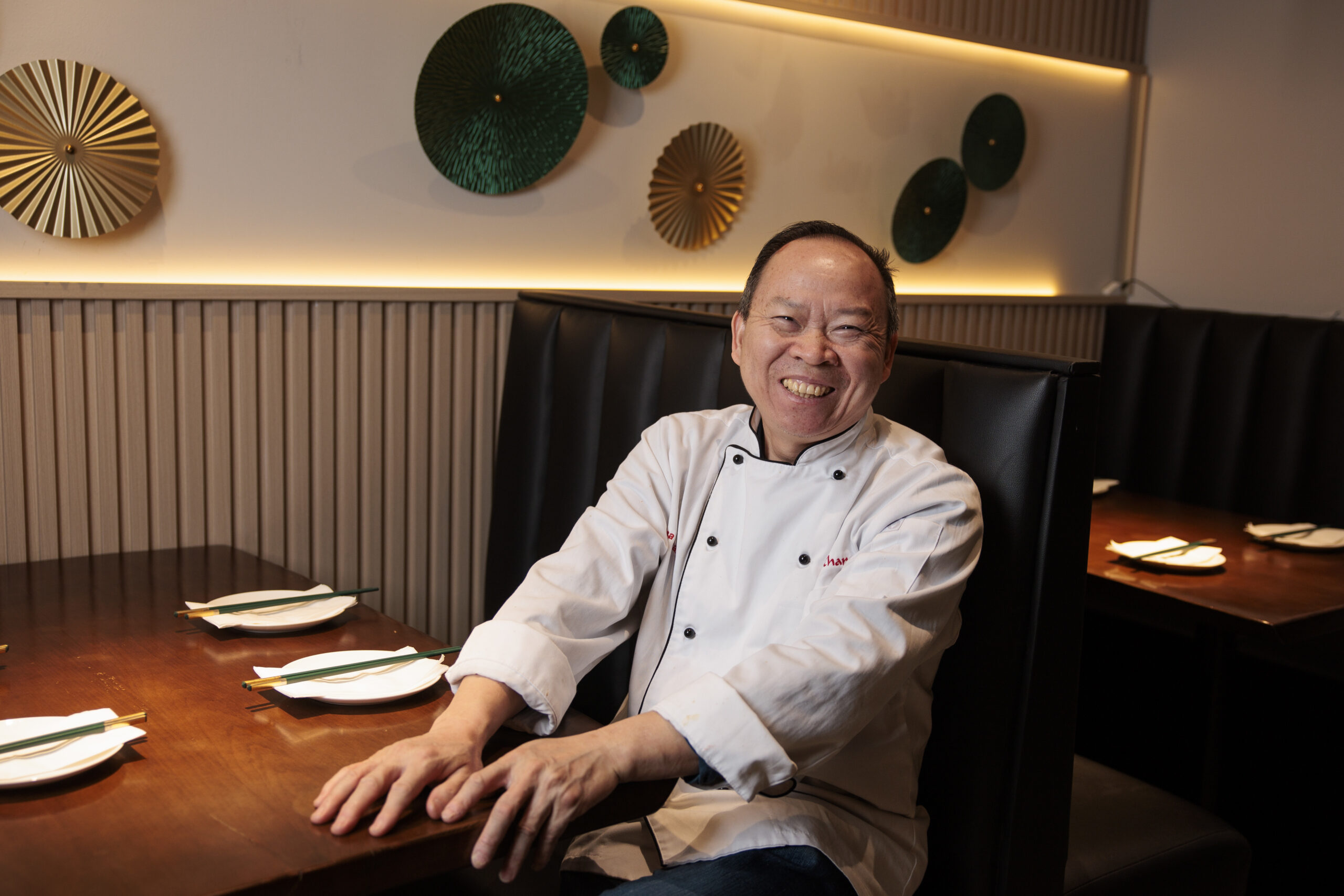
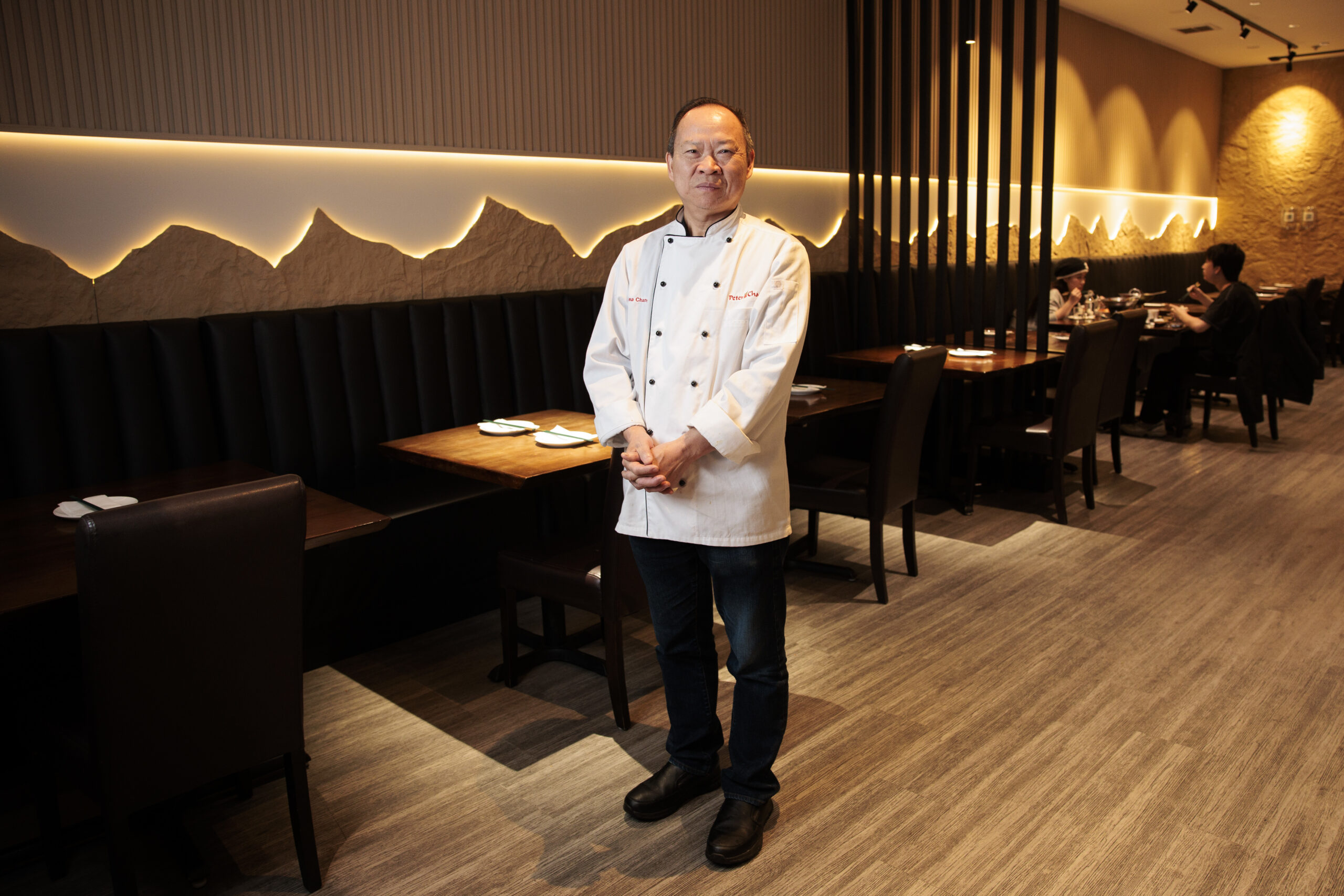
Peter Chang posed for a portrait at Peter Chang King of Prussia on Thursday, Feb. 19, 2026 in King of Prussia, Pa The exterior of Peter Chang King of Prussia on Thursday, Feb. 19, 2026 in King of Prussia, Pa
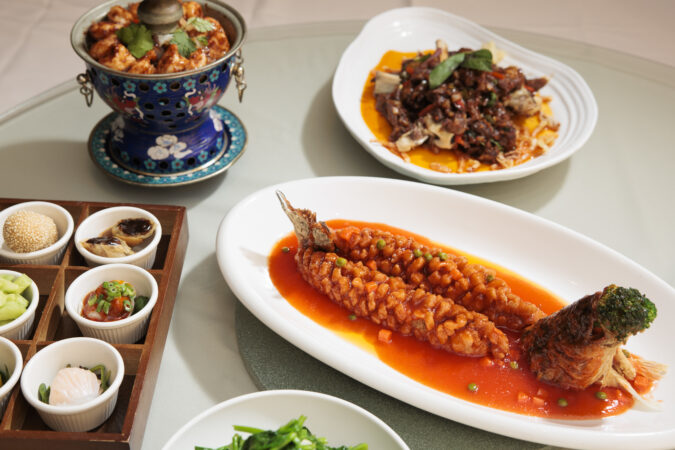
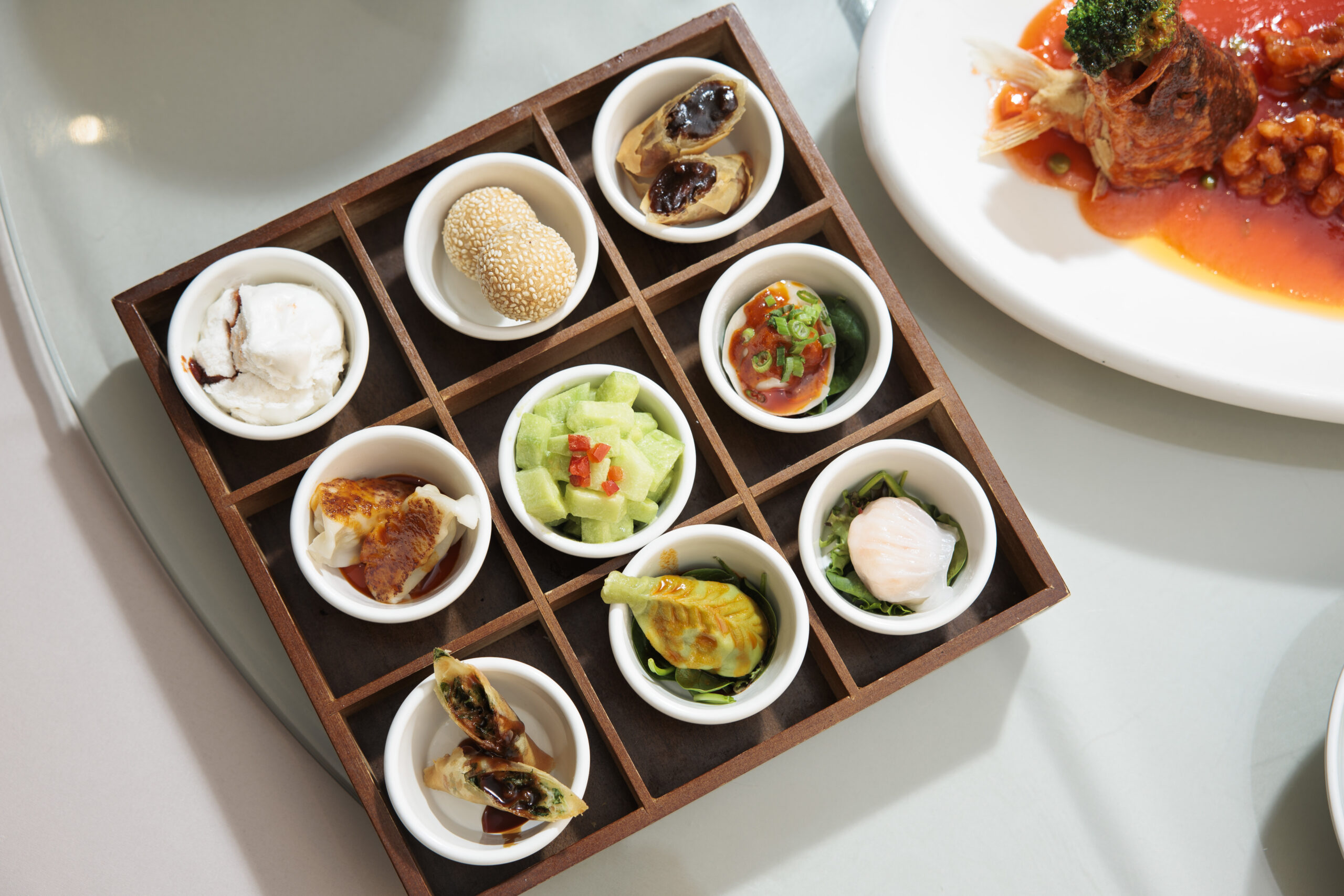
I popped the steaming hot balloon of his wife Lisa Chang’s signature bubble scallion pancake, then hungrily grazed across the nine cubbies of the dim-sum sampler box, savoring the clean white snap of a crystal shrimp dumpling, the hoisin-dabbed crunch of a meaty Peking duck spring roll, and the fragrant spice of a wonton swirled with the house chili oil. I immediately concluded Chang’s arrival to Philly is a very good thing.
Figuring out where, exactly, these new restaurants sit within the context of the Philadelphia region’s already rich Chinese dining landscape is separate question.
The dim sum platter box at Peter Chang King of Prussia on Thursday, Feb. 19, 2026 in King of Prussia, Pa.
Chang has long been referred to by fans (and even the company’s own website) as a Sichuan chef since many of his dishes buzz with the lip-numbing “málà” hum of Sichuan peppercorns and earthy cumin perfume typical of Sichuan cooking. But he is, in fact, from the province of Hubei, a Central Chinese crossroads threaded by train lines and the Yangtze River, where the cuisines of neighboring provinces like Sichuan and Hunan have been influential, but where the flavors of those traditional dishes are also interpreted in distinct ways.
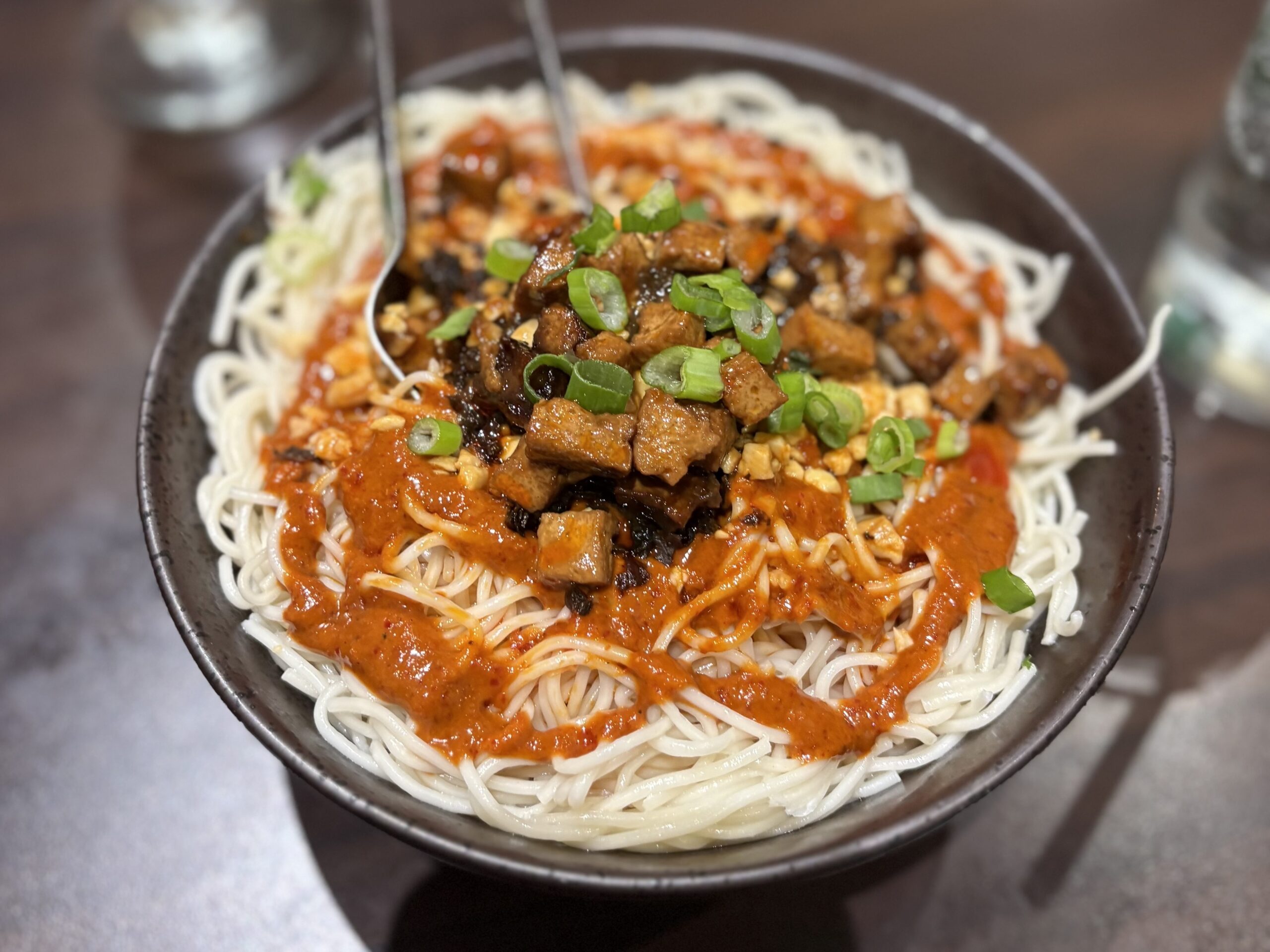
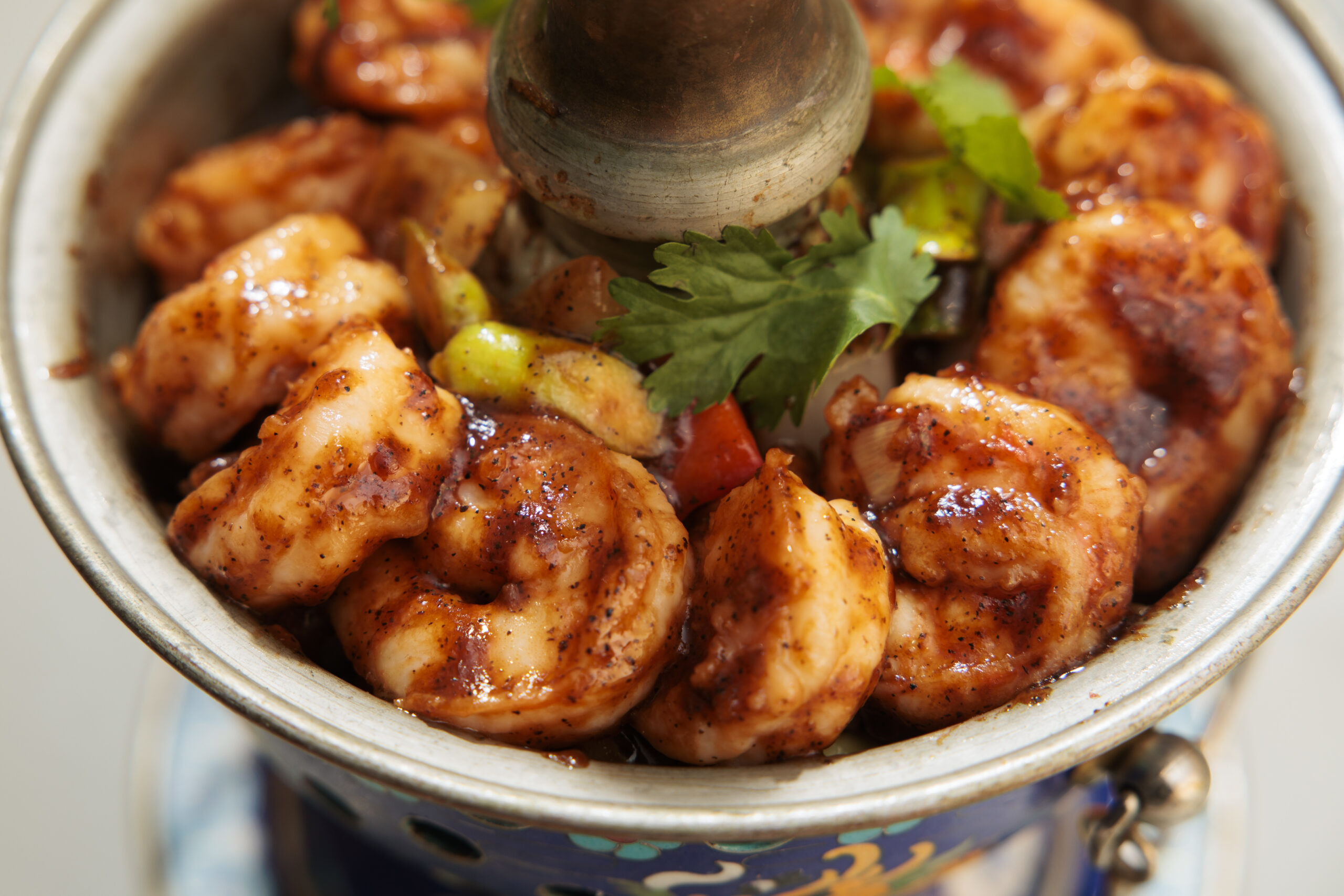
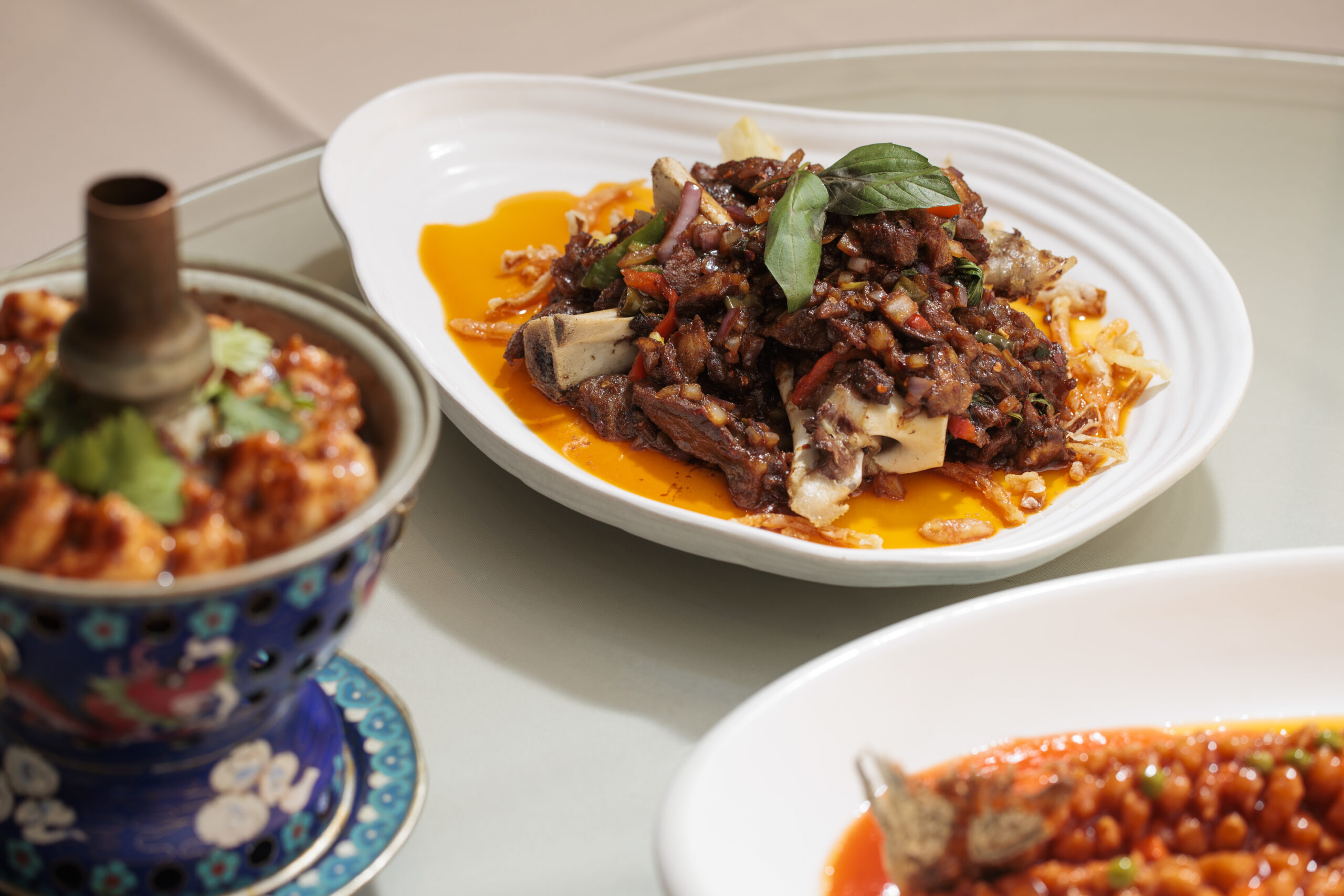
Chang’s take on dan dan noodles, for example, is simultaneously lighter, brighter, and more potently spiced than others I’ve tried in other local Sichuan restaurants — the usual ground meat subbed out for vegetarian diced tofu, then scattered with crushed peanuts and umami sparks of preserved olives and mustard greens. His black pepper shrimp, dramatically presented in a beautiful blue and yellow hot pot, is a delicious personal fusion of multiple regional styles; the bold-yet-balanced sauce blends Sichuan kung pao with the pungent tingle of Hunan black pepper and splashes of Maggi and Worcestershire sauces, which Chang’s daughter and business partner, Lydia Chang, says is a typical move in Cantonese kitchens.
The Szechuan dan dan noodles with tofu is a spicy vegetarian offering at both Peter Chang and Mama Chang.The black pepper shrimp at Peter Chang King of Prussia on Thursday, Feb. 19, 2026 in King of Prussia, Pa
The group’s flagship concept, Peter Chang, of which there are currently 15 locations, opened in a modest King of Prussia BYOB last summer, while the much larger Mama Chang debuted in October with a liquor license in a 400-seat Colmar space previously occupied by Golden City, a Chinese standby for 39 years.
In theory, the two are different concepts, with Peter Chang presenting a broad array of classic Chinese dishes, many of them presented in tapas-style small dishes, while Mama Chang, originally opened in Fairfax, Va., was created to showcase the Hubei-style home cooking and larger family-style portions inspired by Chang’s mother, Ronger Wang. In practice, the two Philadelphia-area restaurants share almost identical menus while the company figures out what each audience will respond to most.
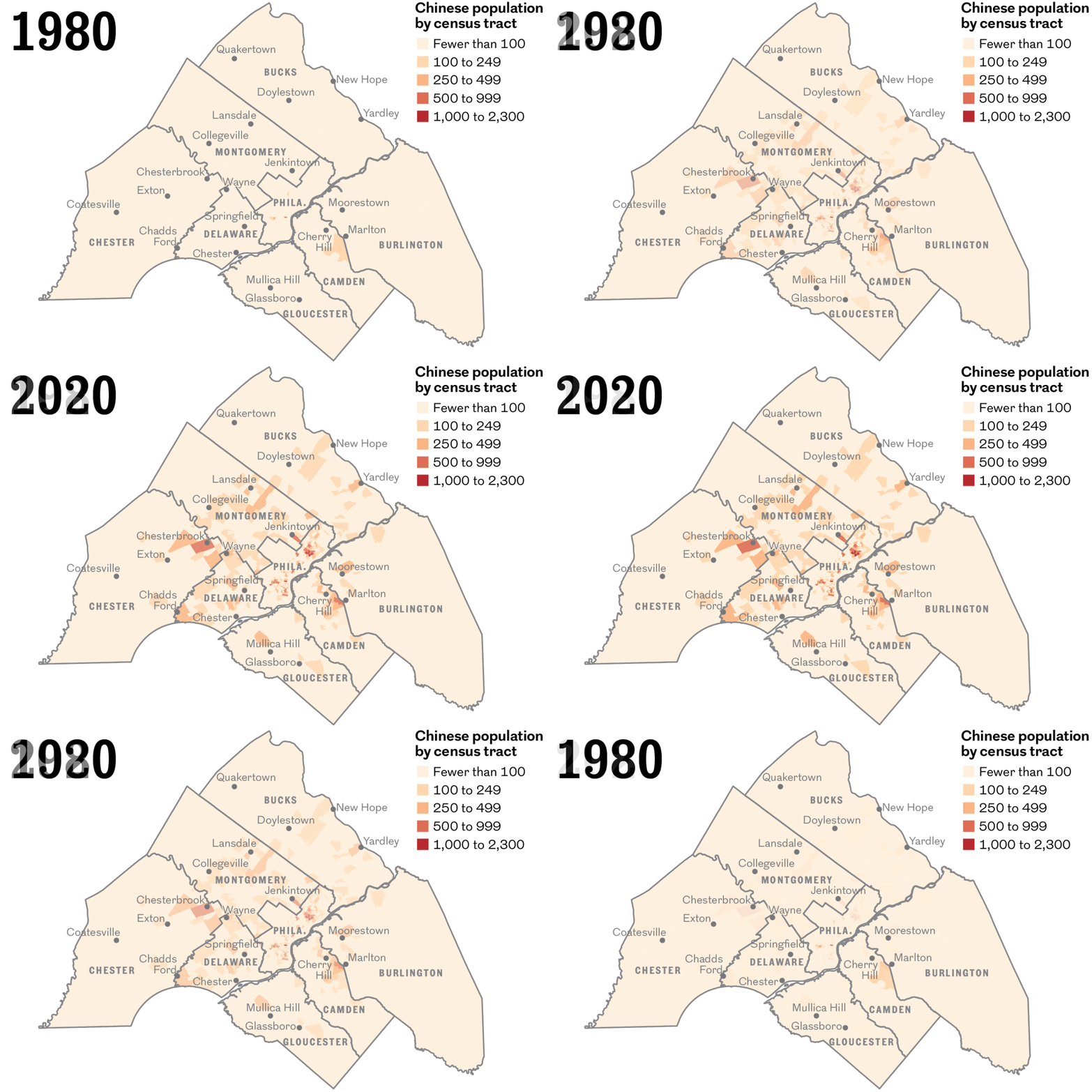
The restaurant group has typically favored suburban locations in part because of their access to easy parking, but also for the opportunity to offer diverse communities unfamiliar with traditional Chinese cooking a taste of something different, says Lydia. In the case of this region, however, there’s already been a major demographic shift of Chinese families moving to Philly’s northern and western suburbs over the past two decades. Restaurants like Mama Wong, the original locations for Han Dynasty in Exton and Royersford, and Margaret Kuo’s Kitchen have successfully found their audiences without having to make too many compromises.
See how the area’s Chinese population grew between 1980 and 2021.
About 40% of Peter Chang’s King of Prussia customers are of Chinese descent, Lydia says. But in Colmar, that number drops to 20%, she says, and preferences for Americanized Chinese food remain strong. (“We try to be flexible,” she says, noting some Americanized standards like chicken lo mein and shrimp fried rice are still available.) The value of Peking duck combo meals and a $33 all-you-can-eat brunch and dim sum on weekends have been a draw.
There are so many distinctive dishes at both locations, however, I‘d encourage diners to skip the impulse to order General Tso’s and try the Wuxi sweet-and-sour chicken, whose larger chunks and lighter batter feature a sauce with a punchy dose of garlic. The various dim sum here are also a great place to start, whether as the sampler or ordered in individual gems such as the firecracker cilantro fish roll, a shiitake-bok choy dumpling wrapped in a kale-infused dough, or the vibrant take on galicky cucumber salad, which glows pale green with a dressing of pureed jalapeños and scallions.
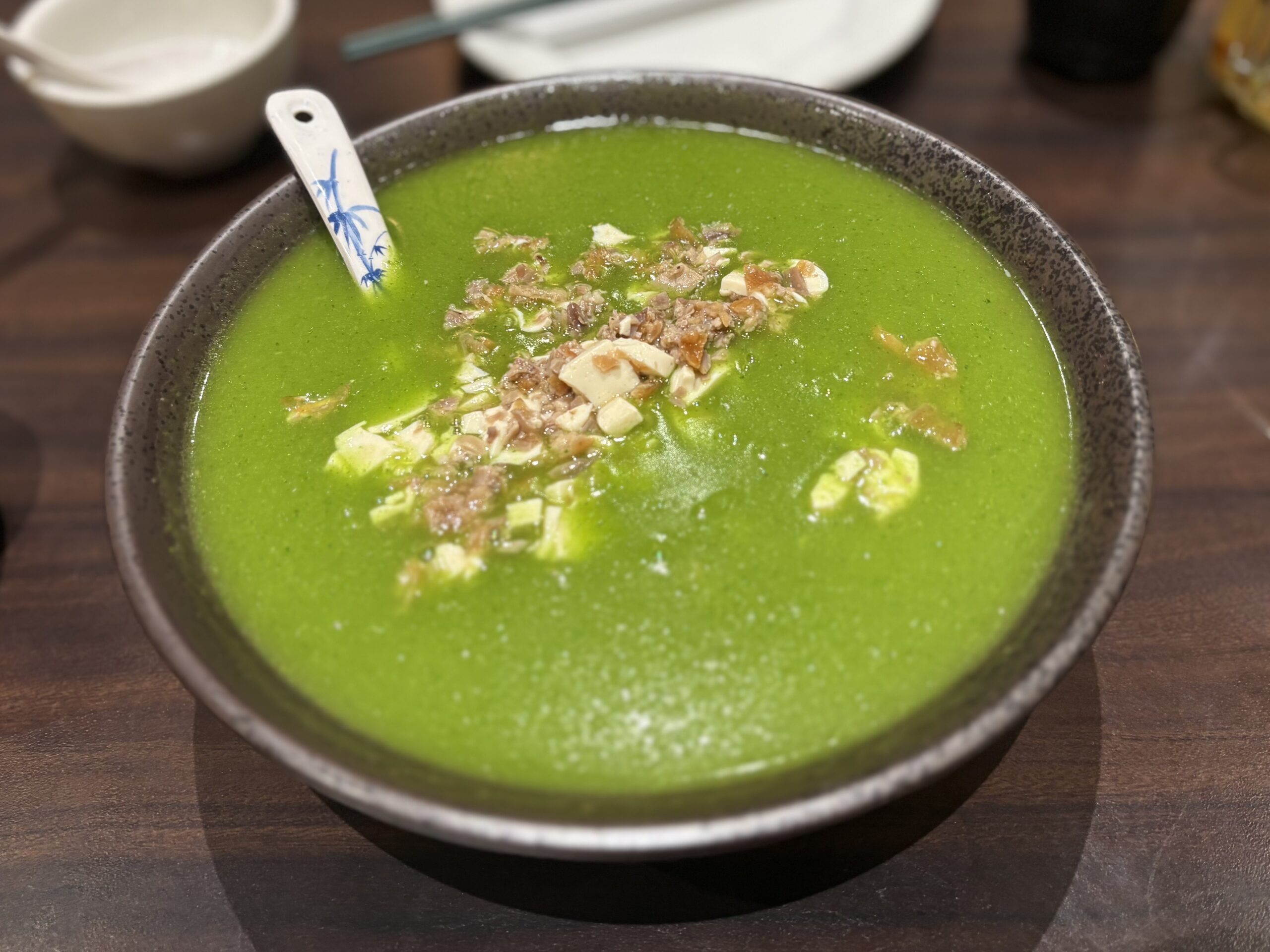
The jade tofu soup with duck is a signature dish at both Peter Chang and Mama Chang.The fried branzino at Peter Chang King of Prussia on Thursday, Feb. 19, 2026 in King of Prussia, Pa.
Sticking with Chang’s green trend, try the jade tofu duck soup, whose verdant broth is tinted with kale puree but also meaty with duck stock thanks to all the carcasses left over from the restaurant’s brisk Peking duck trade. Chang’s birds are cooked the classic way: inflated twice with a pump to separate the skin from the flesh, massaged with five-spice salt, scalded in a bath of baking soda, then roasted with a vinegar-and-corn syrup glaze until the tawny skin snaps like a candied cracker, to be wrapped tableside in pliant house-steamed pancakes with shaved scallion and a sweet dab of hoisin.
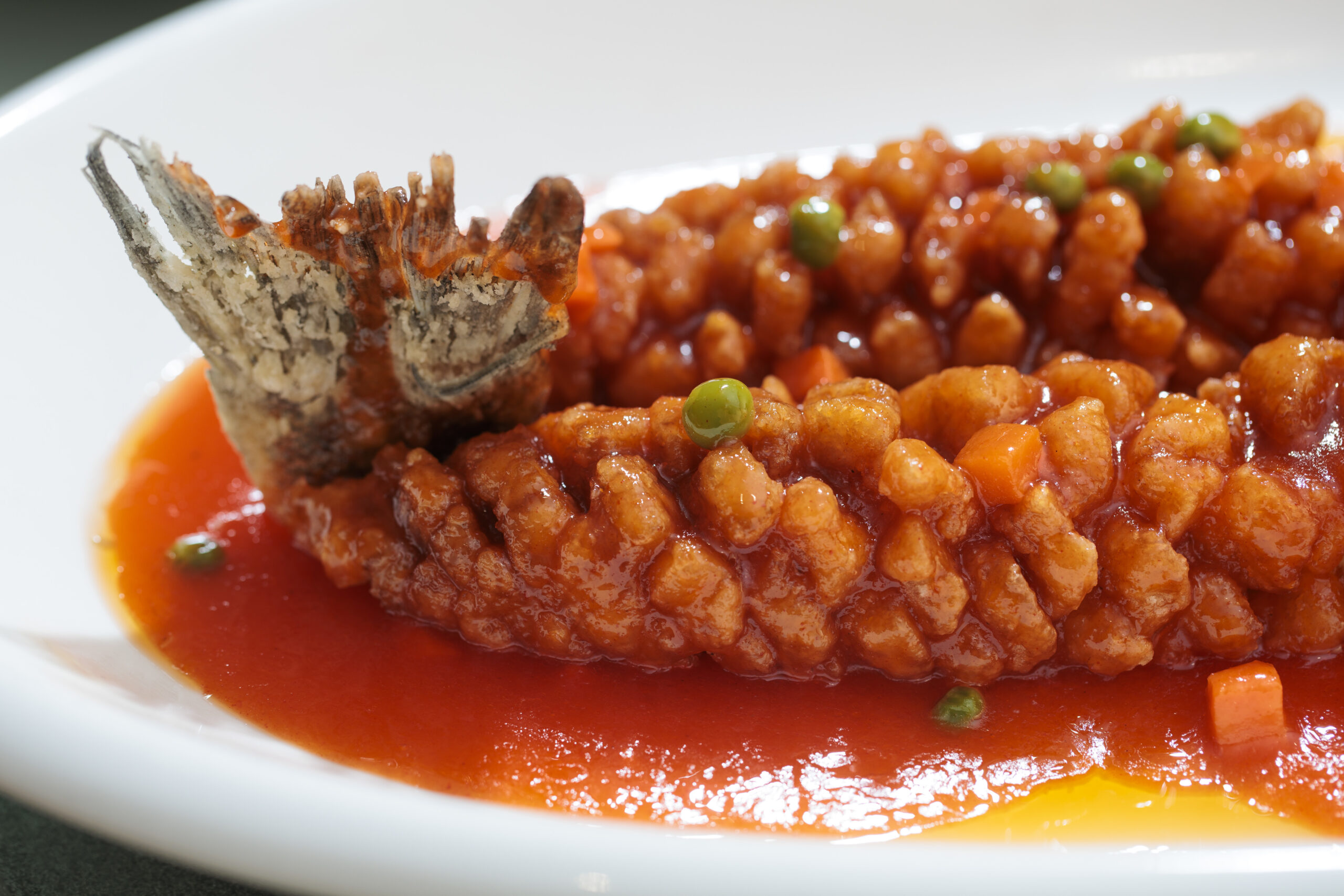
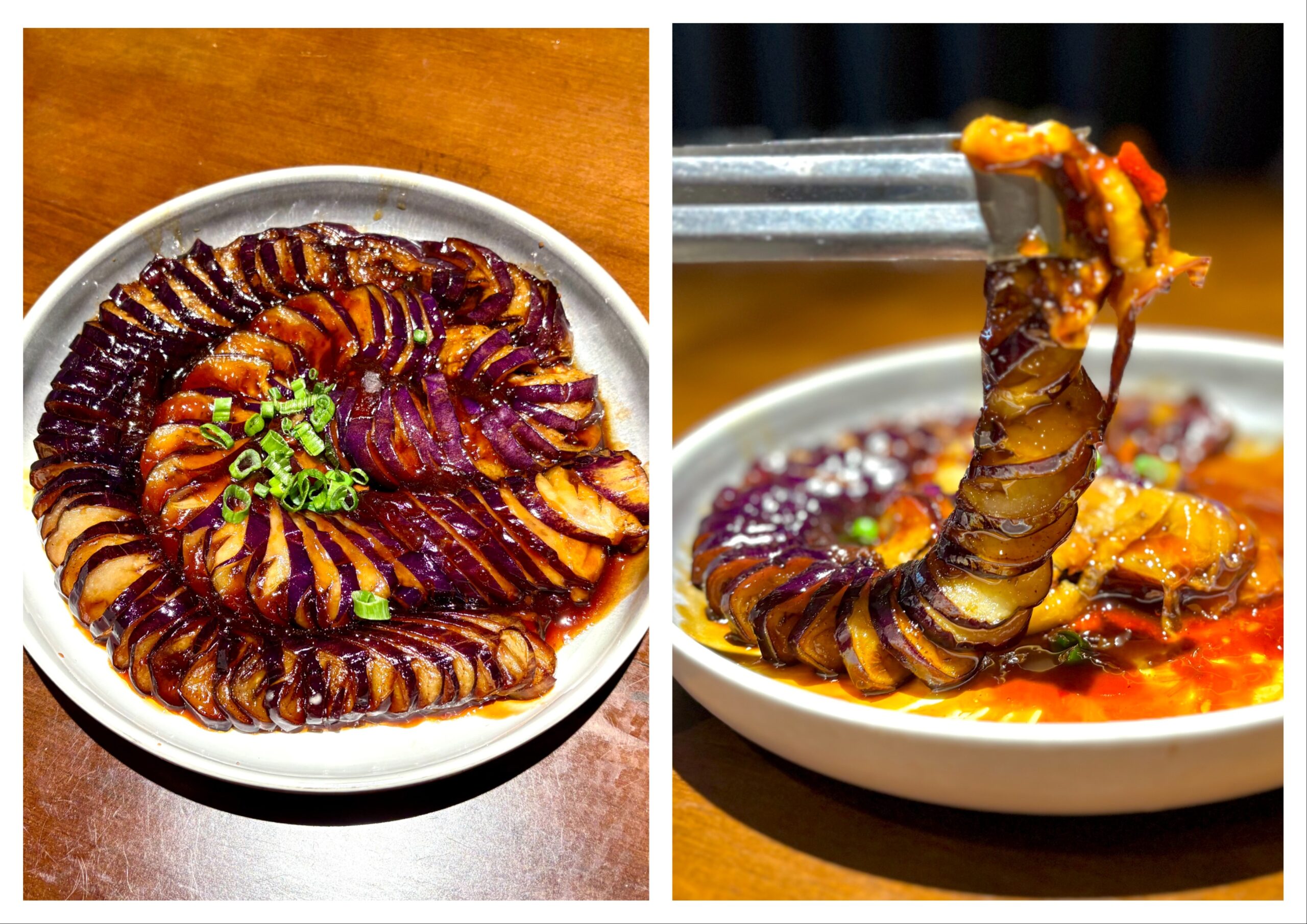
The duck is a sure crowd-pleaser, as is the meaty branzino in sweet-and-sour sauce, whose deep-fried fillets are crosshatched like a pine cone in a show of the kitchen’s technical proficiency with classic dishes. Another personal favorite, the dragon eggplant in garlic sauce, showcases more impressive knifework, using a series of angular cuts in thesuoyi style that lets it expand, Slinky-like, through a saucy glaze that balances sweetness, tang, and spice.
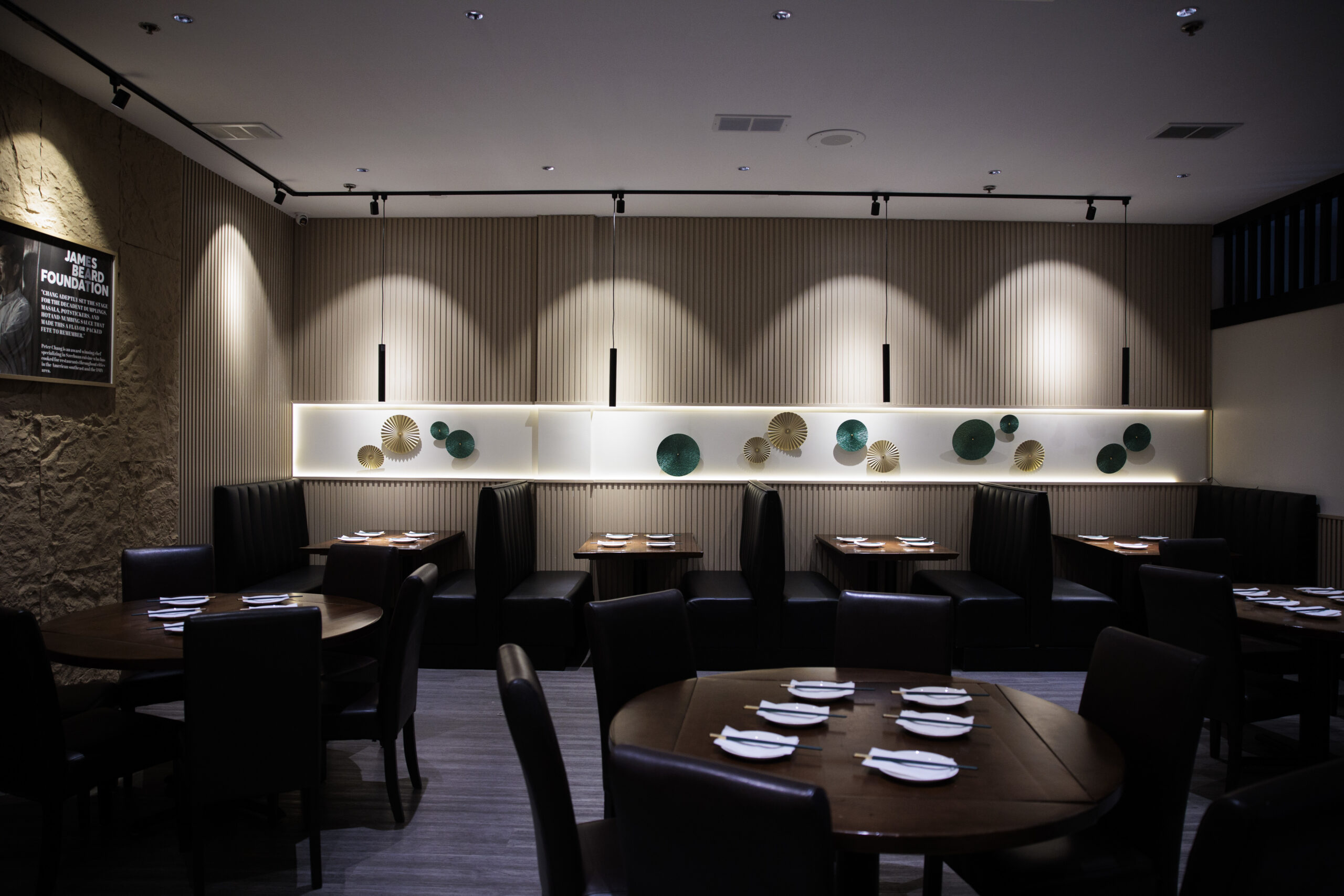
Dragon eggplant with garlic sauce at Peter Chang in King of Prussia showcases an intricate knife-cutting technique that allows the eggplant to remain in tact.The dining room at Peter Chang King of Prussia on Thursday, Feb. 19, 2026 in King of Prussia, Pa
Chang has a special fondness for spice, says his daughter, and that’s particularly evident in dishes that employ a double-cooked “dry fry” method, in which ingredients are pre-cooked or crisped in batter, then refried in the wok with shimmering aromatic spice. The eggplant fries are one delicious example, but so is the bamboo fish: crispy flounder fingers seared inside a crust that crackles from the addition of cooking wine and cornstarch, and radiates the heat of chilies and herbal fresh cilantro. House-steeped chili oil infused with cardamom and star anise, which takes days to make, transforms shredded tofu skin salad into irresistibly snappy noodles. Pickled fresh chilies are key to the soybean beef pot, a rarely seen rustic specialty that arrives simmering in a clay vessel. The hand-pulled noodles on Mama Chang’s menu employ chewy, hand-pulled Xi’an “belt” noodles as a springboard for garlic, ground Sichuan peppercorn powder, and coarse pepper flake garnishes that actually sizzle with aromatic steam when hot chili oil is drizzled over the base sauce of vinegar and soy.
But no dish brings a wallop of earthy flavor quite like the massive serving of double lamb shanks, an Uyghur-style dish I could not get enough of, whose tender meat comes falling off the bone, absolutely encrusted in cumin and pickled chilies.
The cumin spicy lamb shank at Peter Chang King of Prussia on Thursday, Feb. 19, 2026 in King of Prussia, Pa
It’s not all spice bombs. Some of the best offerings at both places reflect subtler flavors. One is the “farmer’s stir-fry,” which incorporates rough-chopped celery, bell peppers, and tofu skin scrambled into eggs, a nod to what Peter’s mom used to whip together from their family farm.
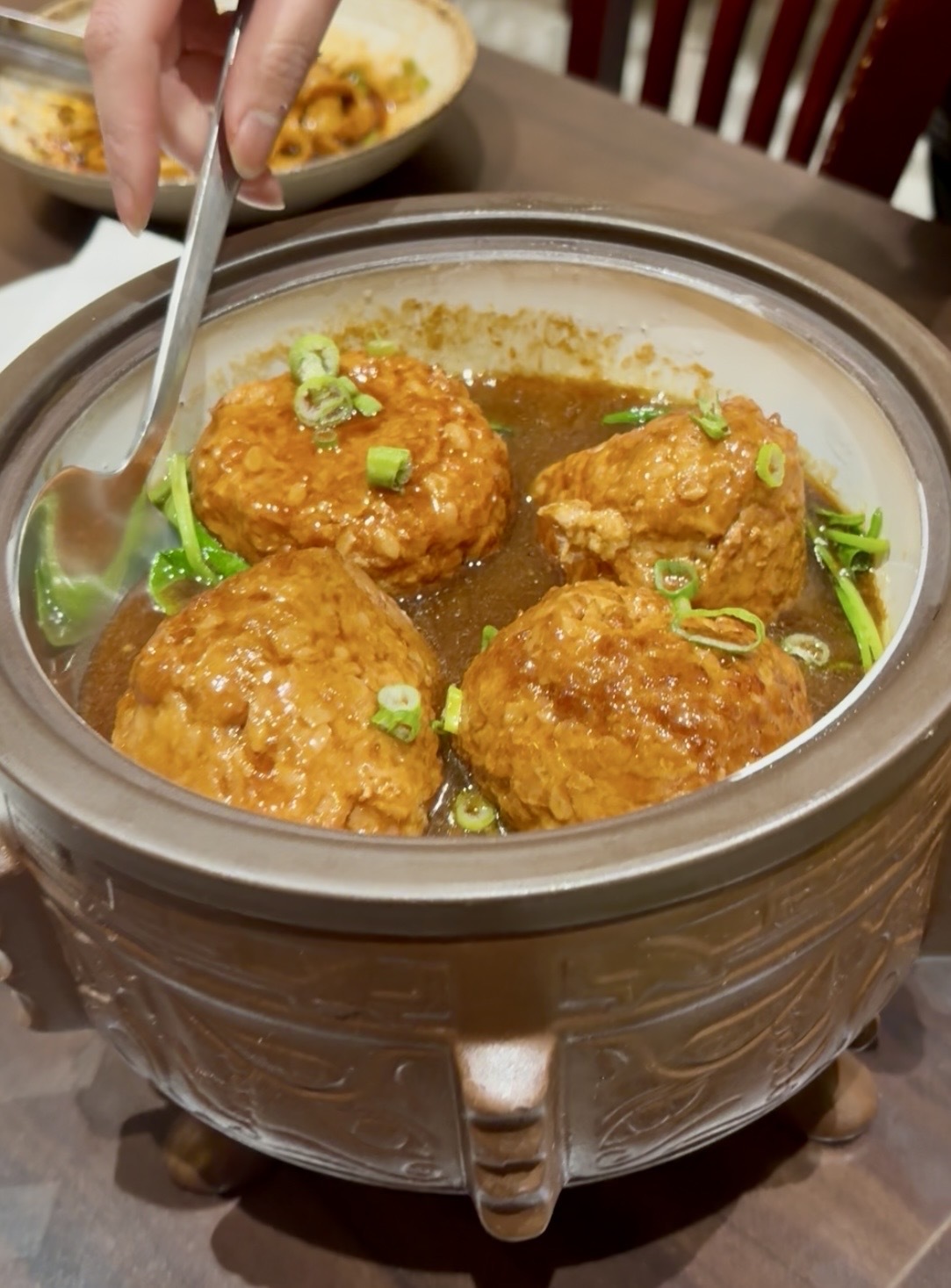
Another classic, the Yangzhou-style Lion’s Head meatballs are the height of comfort perfected through a knowing touch. These massive, cloud-like orbs of pork, impossibly fluffy in mild brown gravy, are the result of careful handiwork — both on the mince and the whipping, incorporating the meat into a high percentage of fat that simply melts away over the course of a slow braise in rich sauce scented with sesame oil and soy. I’ve had this dish multiple times in Chinatown, but never such an airy rendition. Served in a hot pot topped with a ceramic Buddha, it’s the kind of nostalgic dish that bridges the elegance, say, of an embassy banquet with the homespun feeling the restaurant group would like Mama Chang to eventually embrace more fully in Colmar.
I’ll be curious to observe as these two locations evolve, especially once the wider public realizes one of America’s most decorated Chinese chefs has finally landed in our region. As is, they’re both already worthy additions to the suburban dining scene. Once Chang and his family find their footing and dive deeper into their culinary mission, there’s potential for the pair of restaurants to become a wider draw.
Fluffy pork Lions Head meatballs are typical of the home-style Chinese cooking featured at Mama Chang in Colmar, Pa.
Peter Chang KOP
Henderson Square, 314 S. Henderson Rd., Suite C, King of Prussia, 717-431-0488, peterchangkop.com
Open 11 a.m. to 9 p.m. Sunday through Thursday, until 10 p.m. Friday and Saturday.
Larger plates, $16-$40.
Wheelchair accessible.
Not ideal for gluten-free dining.
BYOB
Menu highlights: Dim sum box platter (firecracker cilantro fish roll; Peking duck roll; chili oil pork and shrimp wonton; garlic cucumber salad); scallion bubble pancake; tofu skin salad with chili oil; dan dan noodles with tofu; spicy dry fried eggplant; farmer’s stir fry; dry fried bamboo fish; twice-cooked pork belly; dragon eggplant with garlic sauce; Peking duck; soy bean beef pot; cumin lamb shank; fried branzino with sweet and sour sauce.
Joe Beddia, one of Philadelphia’s best-known pizzaioli and a partner in Pizzeria Beddia in Fishtown, is heading across the pond to put his stamp on a North London bar set to open this spring.
At Bar Etna, in Newington Green, Beddia is a partner with former Philadelphia designer Mike Stampler, who a decade ago co-owned the craft brand Norman Porter in Kensington (the Philly one), and chef-restaurateur Ed McIlroy of the Four Legs group, which owns the Plimsoll and Tollington’s, both London pubs.
Beddia said the relatively small space will sport “sort of a mid-century Milan vibe.” The menu will include small plates, baked dishes, and pizza. (The British media, quoting a news release about the project, seems amped about the Italian American dishes like “aubergine parmigiana.”) There will be a full bar for classic cocktails and it will have a late-night license, a rarity for London. And so far, Beddia said, they plan to offer soft-serve for dessert, just as he does in Philadelphia.
“I’m not well-versed in the pizza scene in London yet, but will just try and make the best pizza I can,” Beddia said when asked to define the style he would make.
Beddia, who grew up in Lancaster (Pennsylvania, not Lancashire), came to pizza-making after stints in Philadelphia kitchens and bars such as Tria, Osteria, South Philadelphia Tap Room, and Zavino, and an internship at Pizza Brutta in Madison, Wis. In 2012, he won zoning approval to take over a deli at 115 E. Girard Ave. in Fishtown, and in March 2013 opened Pizzeria Beddia with a stripped-down, takeout-only model. Cash only, no phone.
Joe Beddia at Pizzeria Beddia at its opening in March 2019.
The shop’s deliberately limited output — about 40 pies a night, only a few nights a week — fueled long lines and a cult following.
National attention followed in 2015 when Bon Appétit named Beddia’s pizza the best in America, cementing him as a national breakout star. After five years and relentless demand, Beddia closed the Girard Avenue shop at the end of March 2018 — it’s now the slice shop Pizza Shackamaxon — to open a larger restaurant nearby with Defined Hospitality, the group behind Suraya, Kalaya, Condesa, R&D, and Picnic).
In March 2019, “Beddia 2.0” debuted at 1313 N. Lee St. with seating, a bar, and a private hoagie room. A Beddia cookbook followed in 2020.
In 2025, the restaurant was named a Bib Gourmand in the Michelin Guide. The restaurant also placed No. 13 in the world on the 2024 50 Top Pizza global list and ranked No. 3 in the United States on the same group’s national ranking.
Joe Beddia (left), with associates Greg Root, Nick Kennedy (rear), Chutatip “Nok” Suntaranon, and Roland Kassis, joins the Michelin Man at the Michelin Guide announcement event at the Kimmel Center Tuesday, Nov. 18, 2025, in Philadelphia.