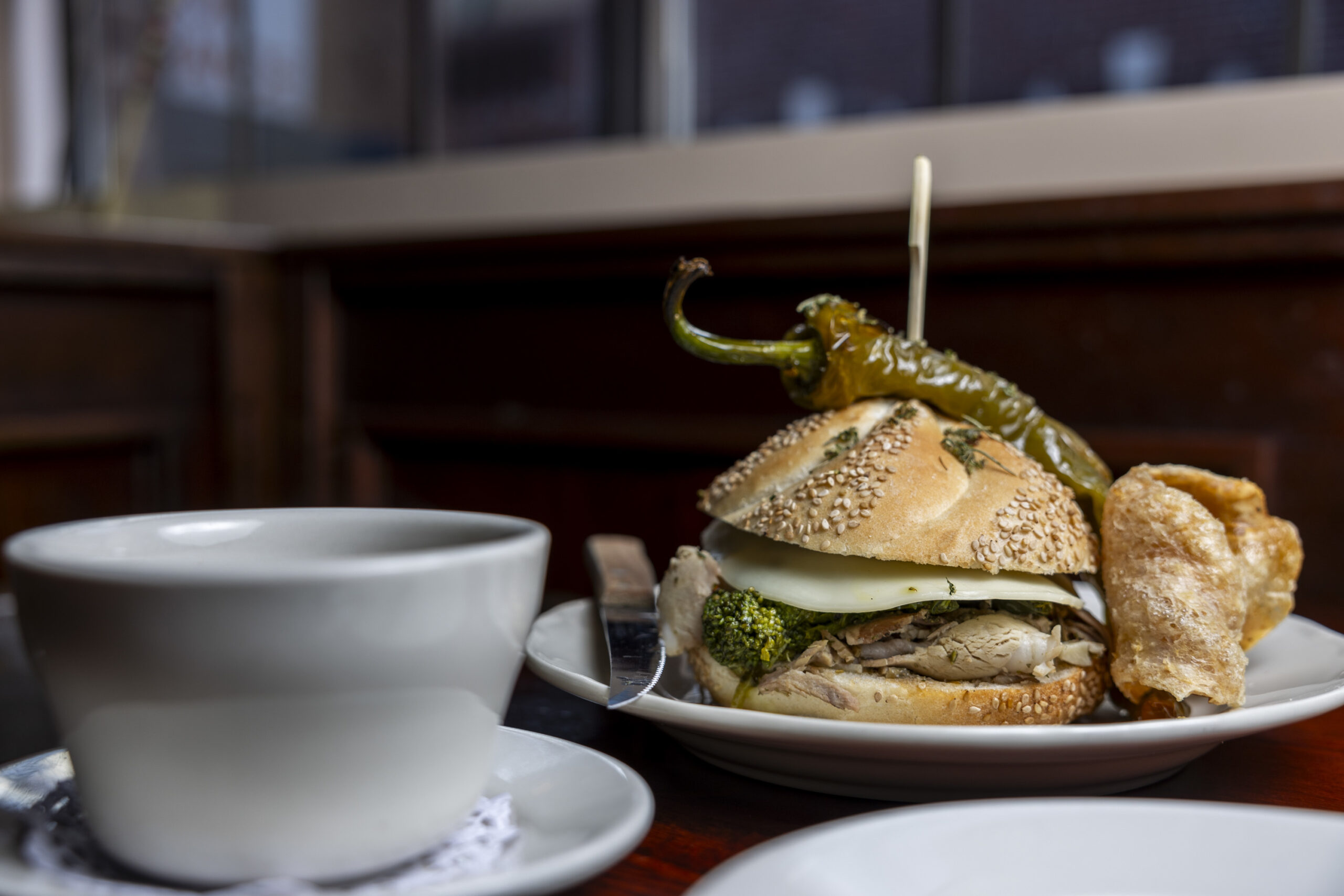
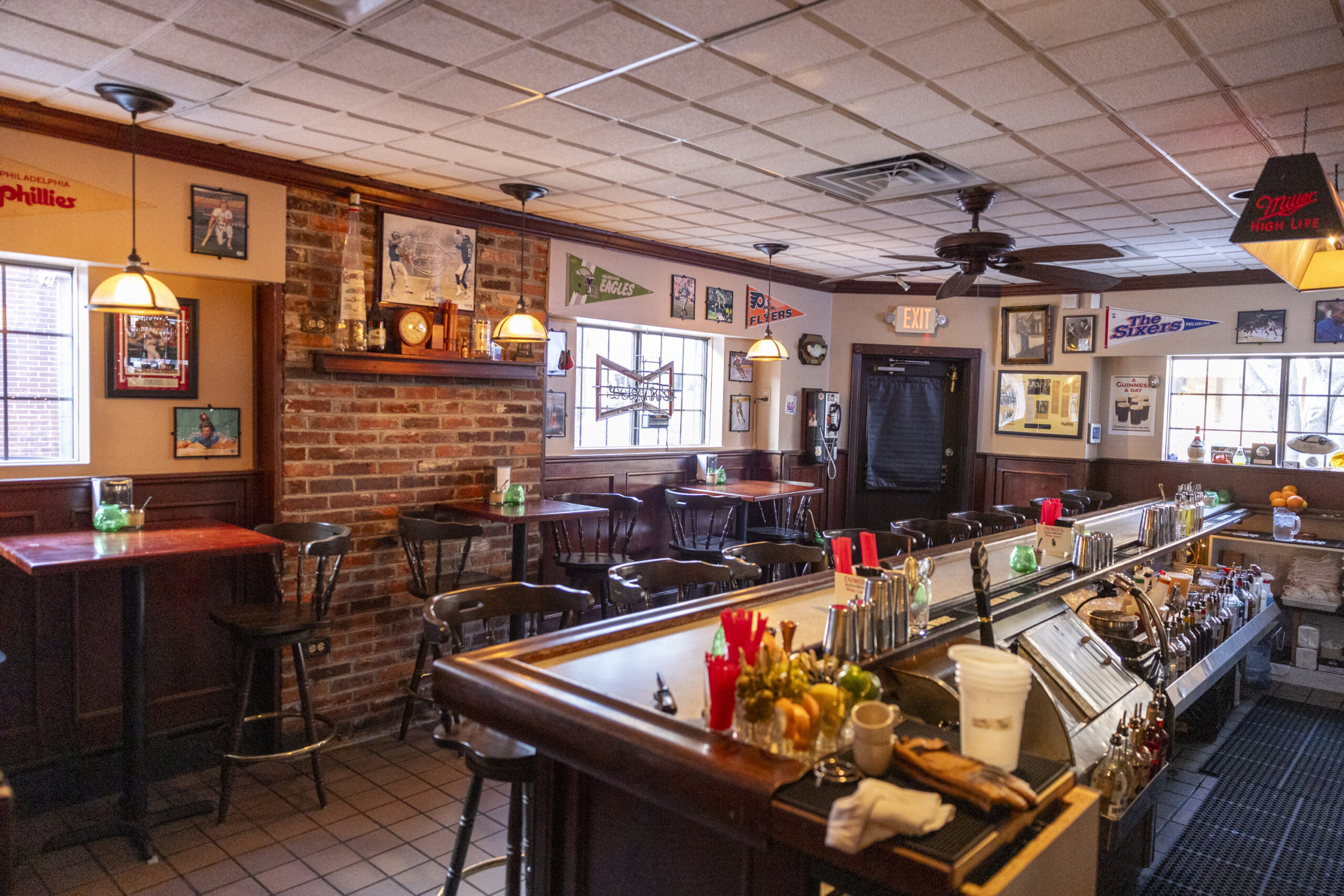
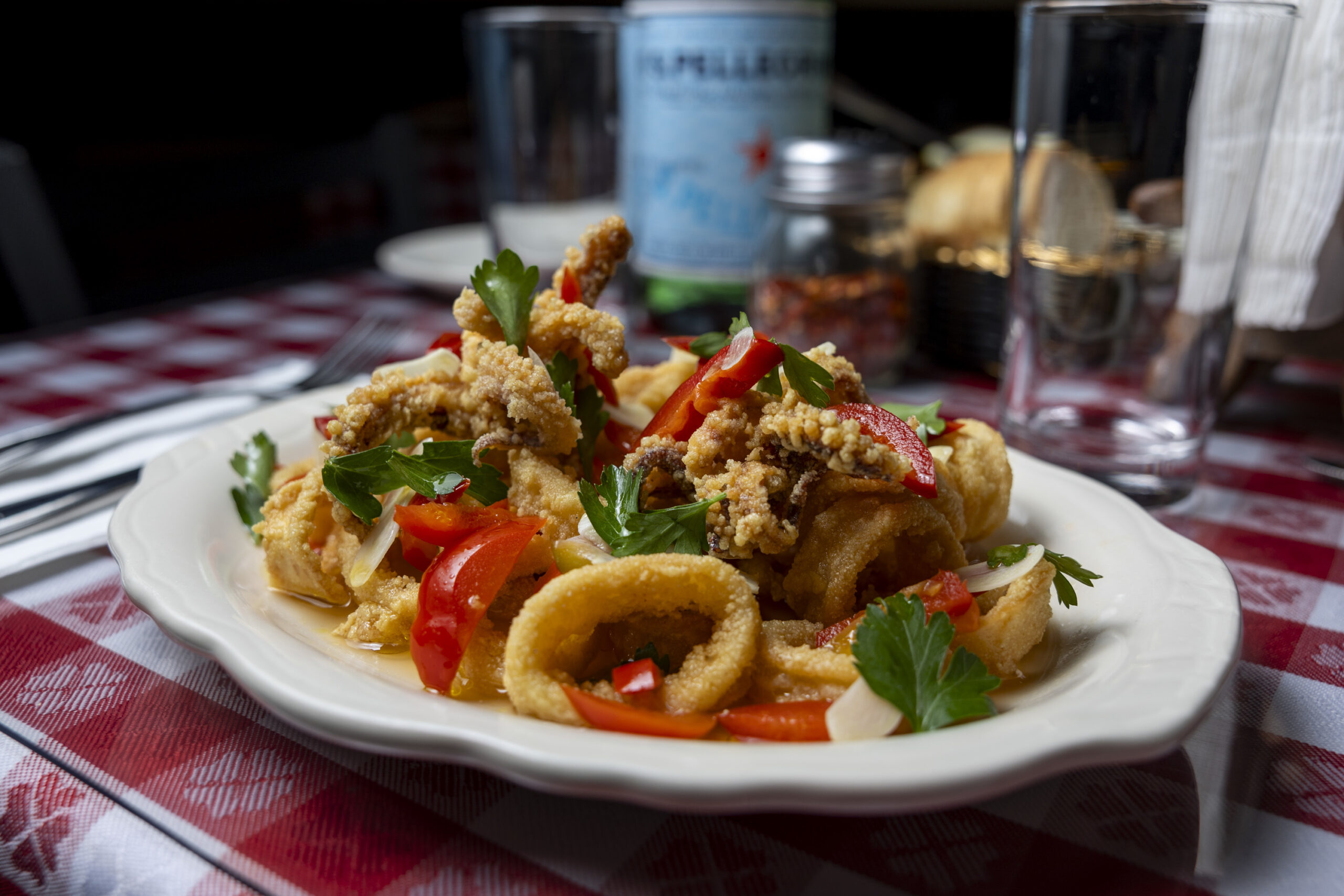
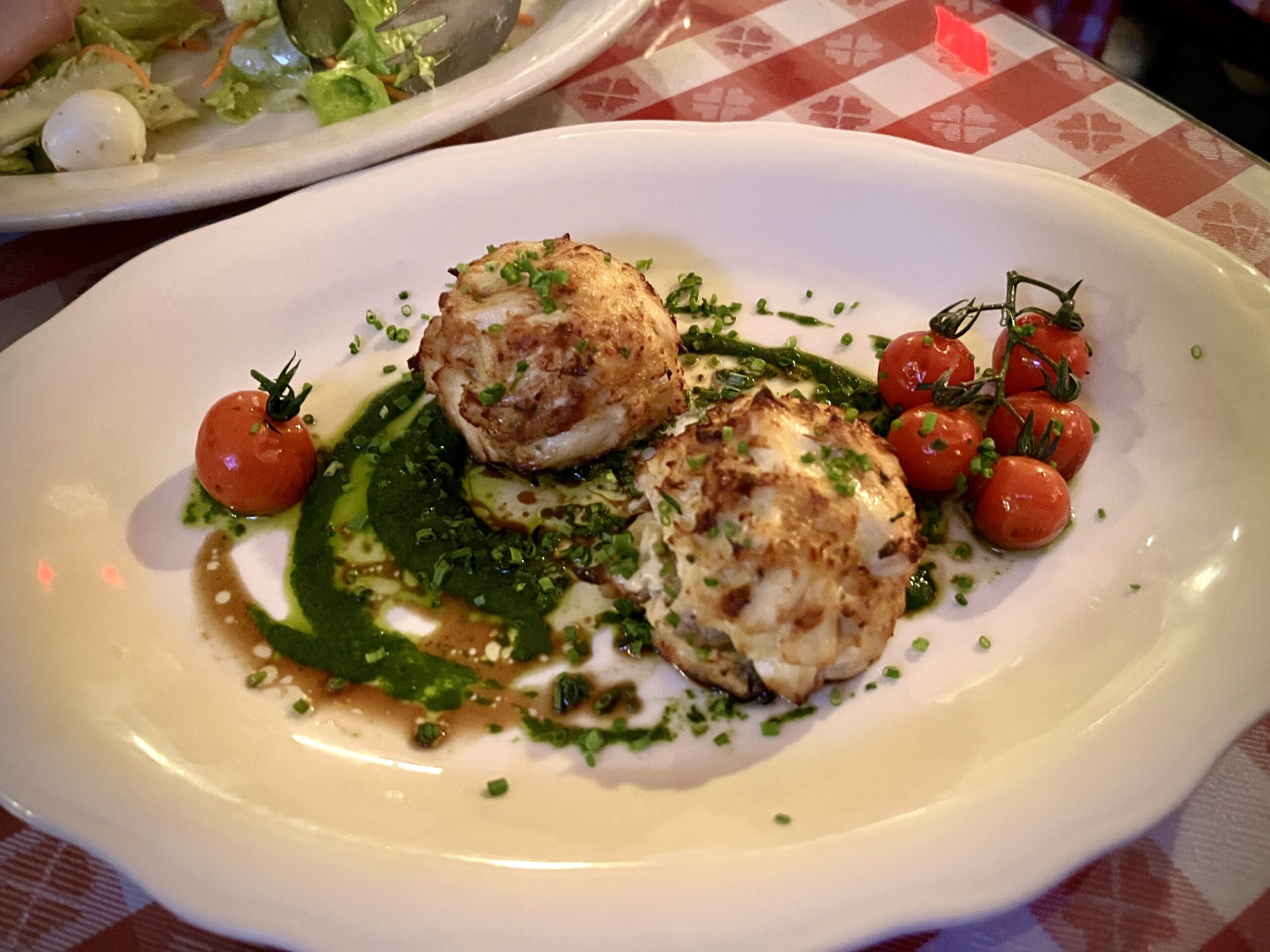
Vince Tacconelli didn’t set out to open another Tacconelli’s — or even a bar — in South Jersey. He saw a gap, and it wasn’t pizza.
“If you’re in the Maple Shade area on a Thursday night at 8 o’clock, there’s nowhere to get a proper cocktail,” said Tacconelli, 33, a fifth-generation member of the pizzeria family. “We always end up going into Philly.”
The repeated frustration has led Tacconelli to a new business venture. “I’m trying to build the cocktail bar I want to go to,”he said.
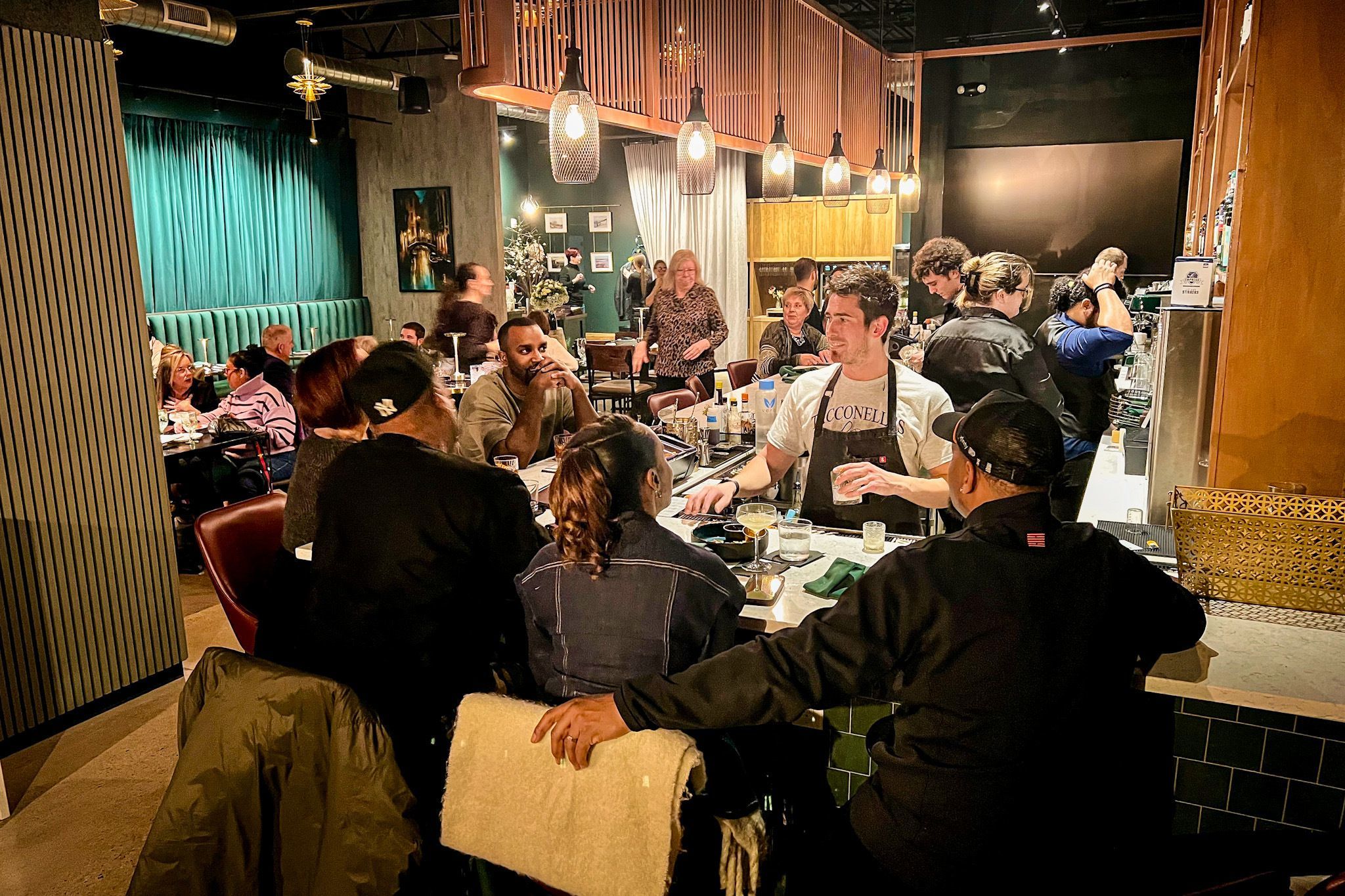
Vince Tacconelli behind the bar at Bar Tacconelli, 461 Route 38, Maple Shade, on Feb. 21, 2026.
Bar Tacconelli — an Italian-leaning cocktail lounge and bottle shop with late-night hours — opened in late February about four minutes from the Maple Shade pizzeria he owns with his father, Vince. The concept is aimed at locals who might otherwise cross the bridge.
The opportunity, he said, came together “pretty organically.” Christine Zubris, a friend who owned Route 38’s Versi Vino, a strip-mall wine bar between the Cherry Hill and Moorestown Malls, told him that she was stepping away after five years.
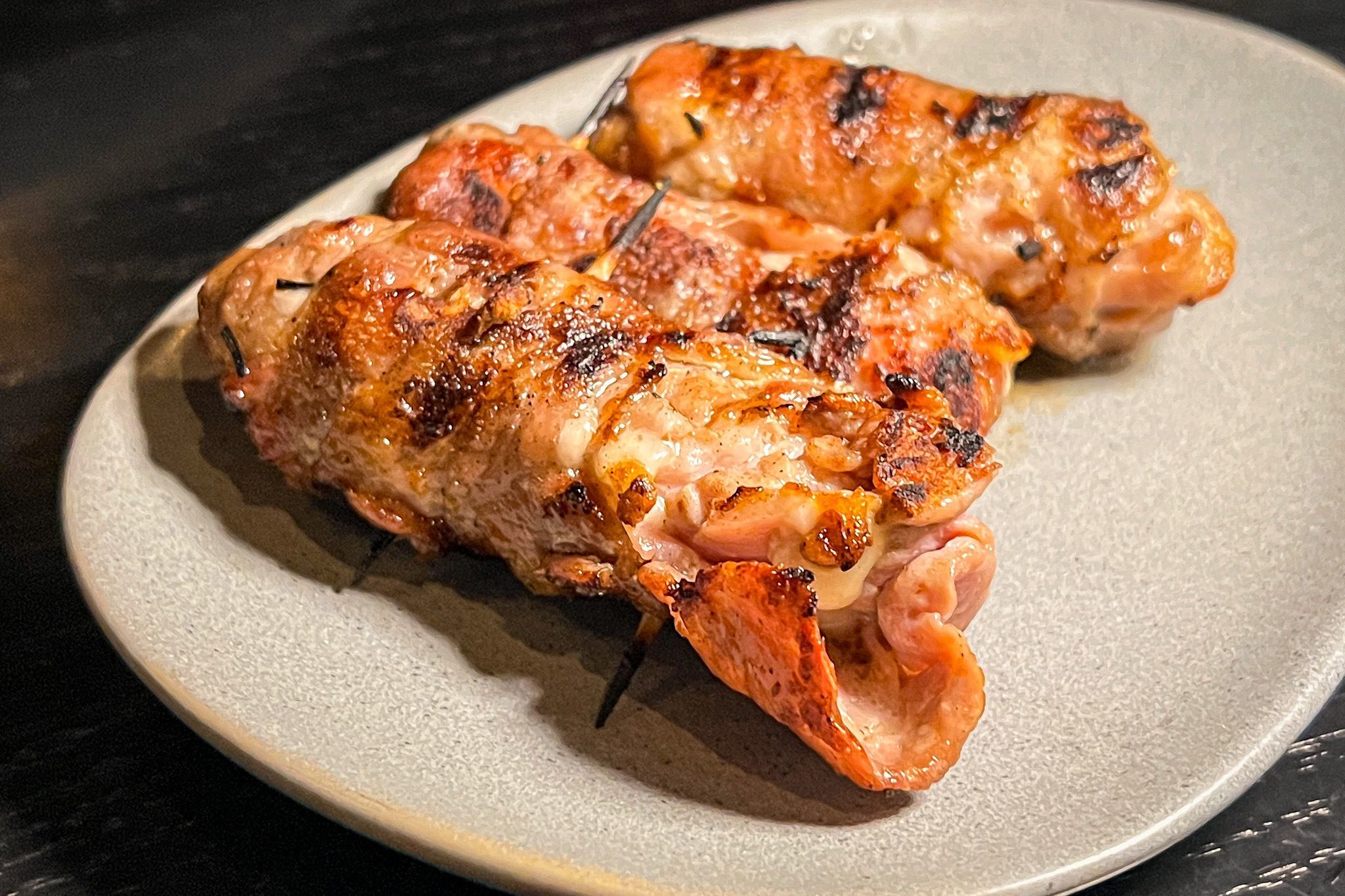
Capocollo bombette at Bar Tacconelli, 461 Route 38, Maple Shade, on Feb. 21, 2026.
“I kind of jokingly said to my father, ‘Let’s take it — let’s get our first liquor license,’” he said. “At first, we laughed. But I kept putting it out there. And sure enough, it fell onto my lap.”
Tacconelli partnered with Greg Listino, whom he met through restaurant-equipment supplier Rosito Bisani, and Listino’s wife, Stacey Lyons, who operates Attico cocktail bar in Center City. The three of them had joked for years about opening a bar, Tacconelli said. “Next thing you know, they’re on board.”
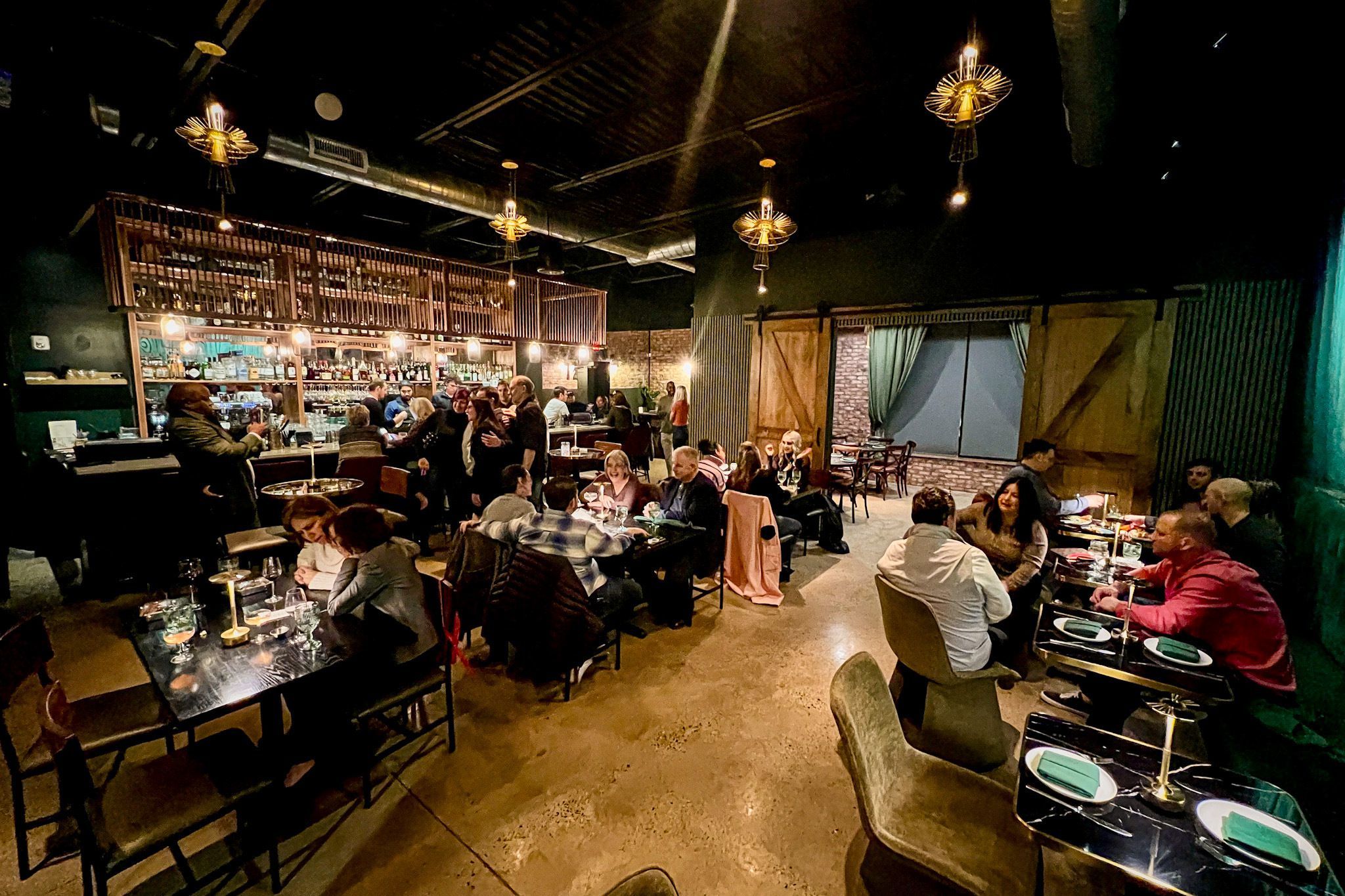
Bar Tacconelli during a preview dinner on Feb. 21, 2026.
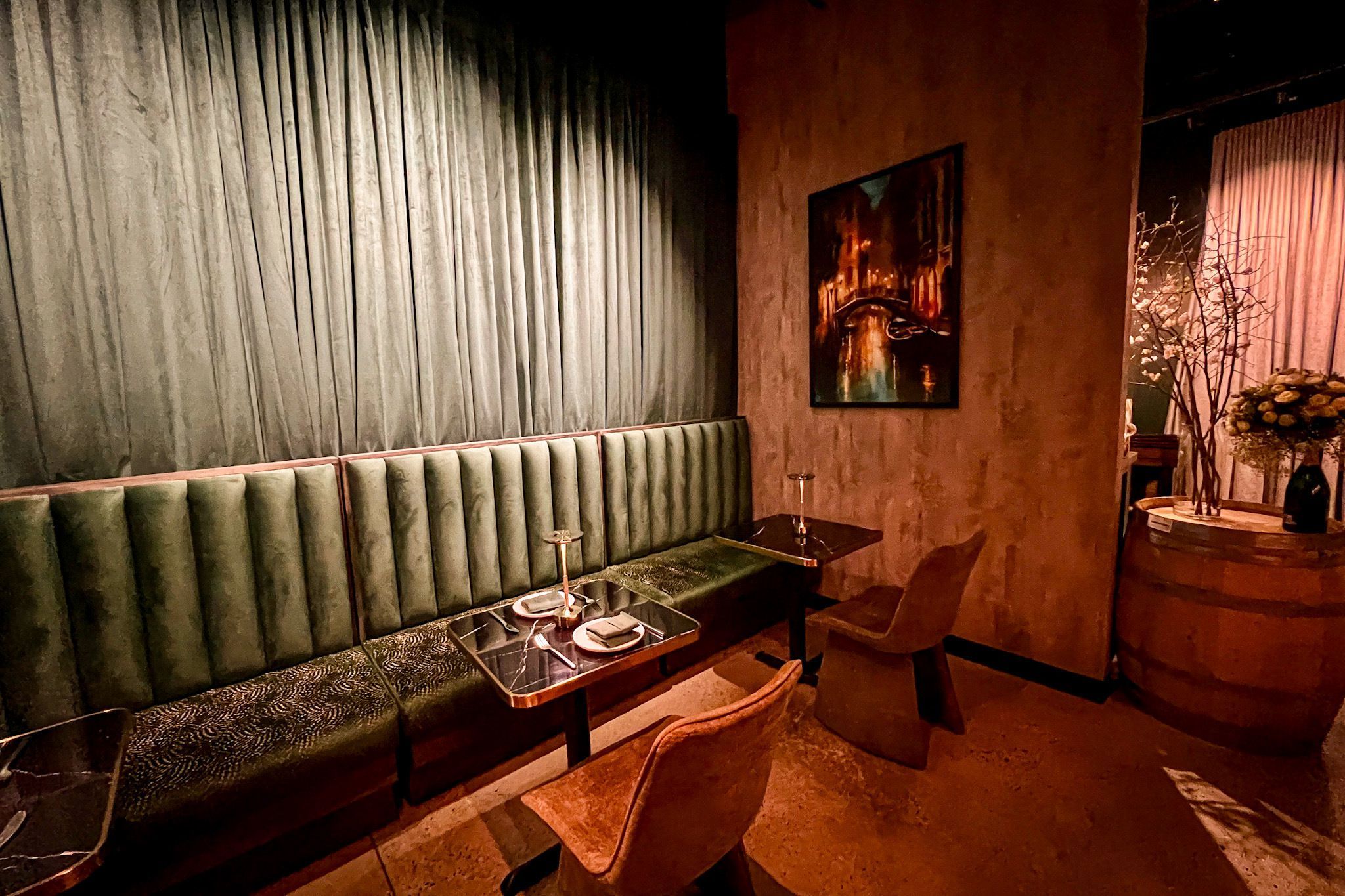
They took over the 60-seat space this spring. Lyons designed it with a soft industrial look: an exposed black ceiling with visible ductwork warmed by sculptural pendant lights casting an amber glow. Along one wall, a run of plush, channel-tufted banquettes in muted green sits beneath heavy drapery, while sliding barn-style wood doors lead to a semiprivate room.
The 12-seat bar has been expanded from the Versa Vino days and now includes a drink rail with room for eight.
Lyons leads the extensive bar program. Italian wines join eight beers (including a pilsner created by Haddonfield’s Kings Road) and a cocktail list organized into four sections: “Essenziale” and “Frizzante” cover classics and easy, bubbly spritzes, while “Dal Giardino” introduces more culinary, Italian-inspired creations and “Rustico” leans into spirit-forward, amaro-driven cocktails. There’s also an eight-bottle wine dispenser next to the racks of wines for sale.
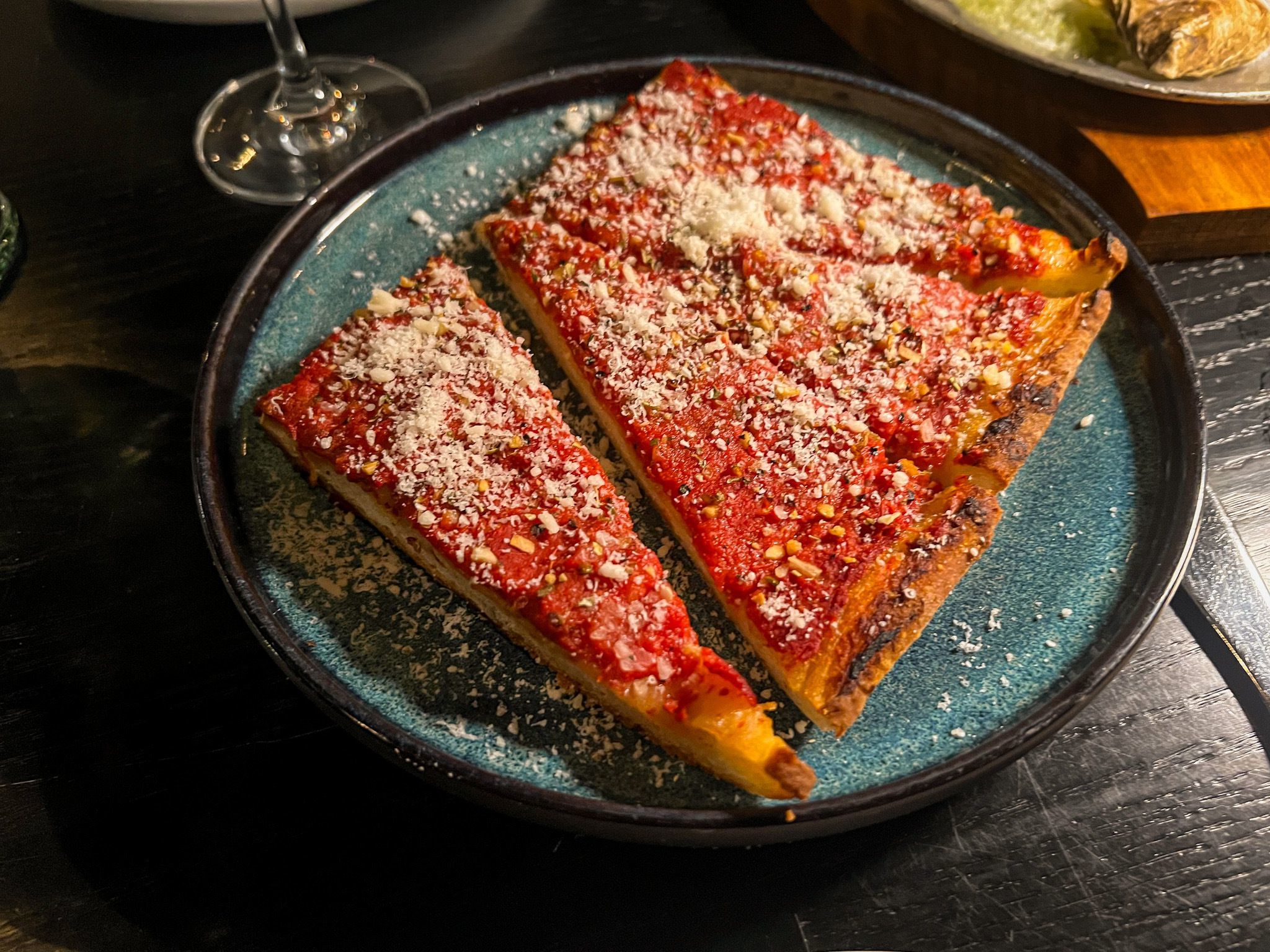
Sicilian tomato pie at Bar Tacconelli, 461 Route 38, Maple Shade, on Feb. 21, 2026.
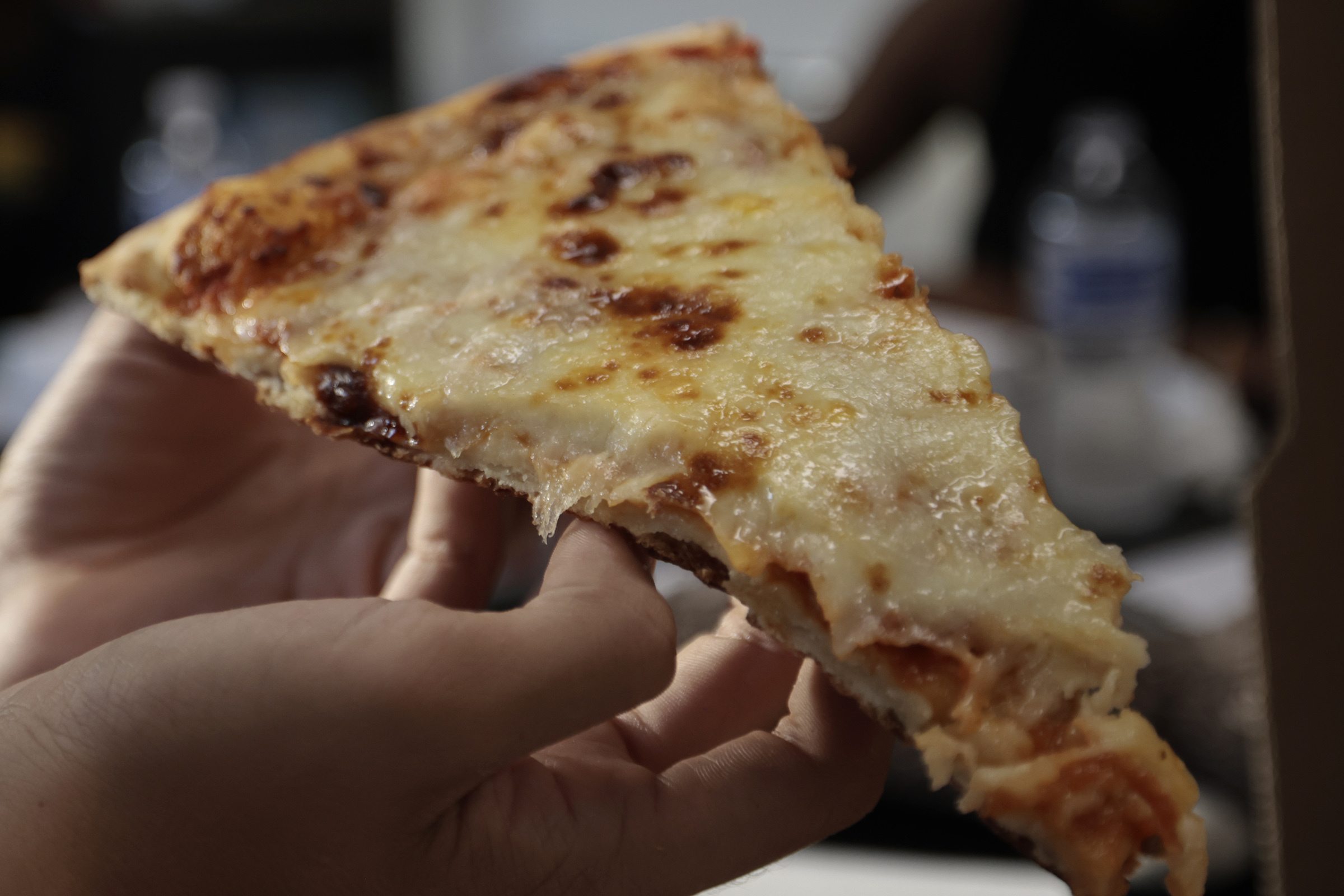
Tacconelli runs the compact kitchen. There is no pizza, aside from wedges of Sicilian tomato pie — a deliberate choice given the proximity to the pizzeria. “I don’t want to take away from that,” he said. “It actually helps us. Instead of rushing people out, we can say, ‘Head over to the bar — we’ll call ahead, get you a drink.’”
Tacconelli’s Maple Shade location opened in 2003 on Lenola Road, across from Moorestown Mall, and moved in 2014 to its current home on Main Street. Father and son — the fourth and fifth generations — opened a Haddon Township location in 2023. Those South Jersey restaurants are owned separately from the landmark Tacconelli’s, which began baking pizzas in 1948 in Philadelphia’s Port Richmond section.
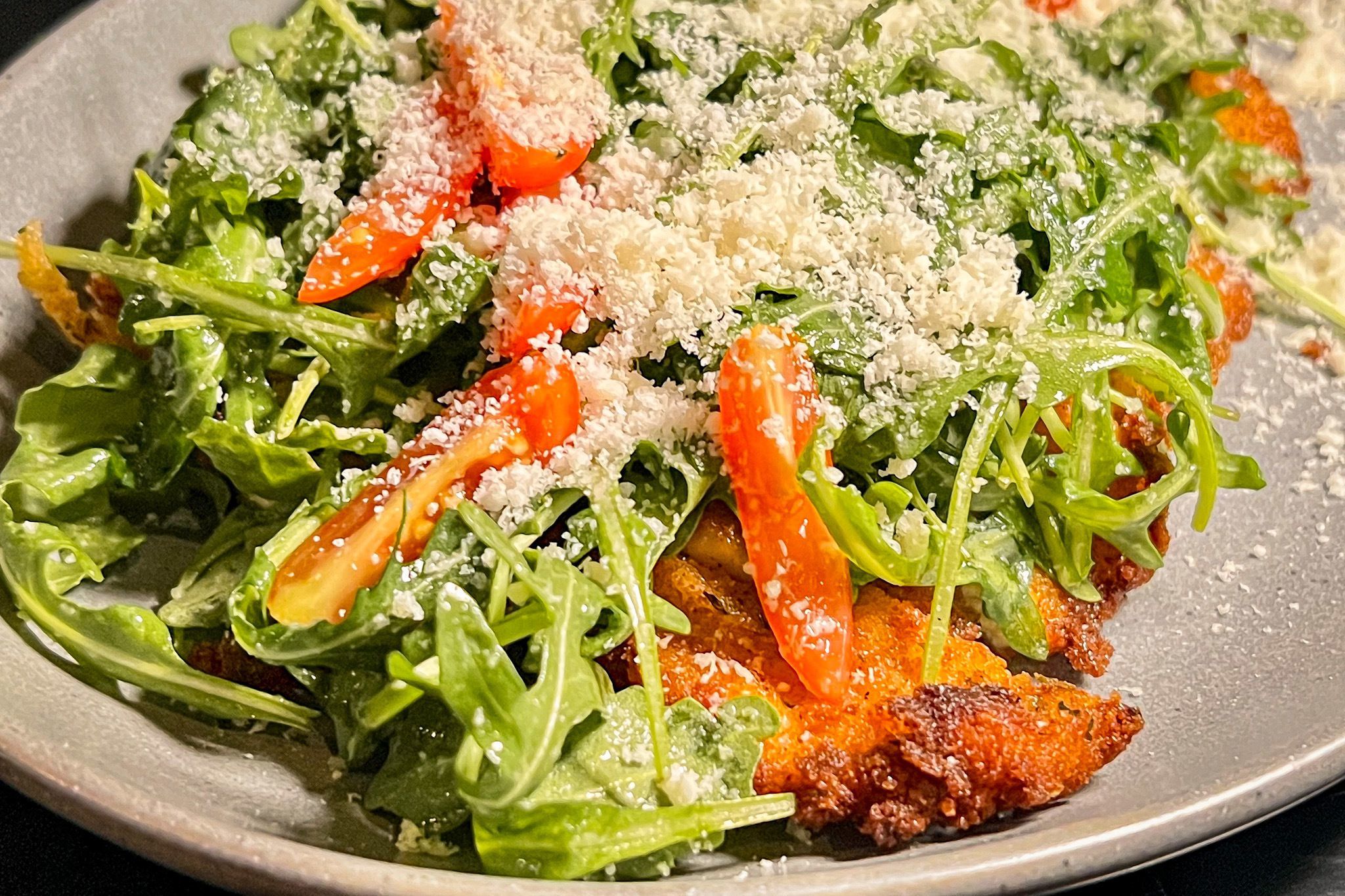
Chicken cutlet under a bed of arugula, roasted cherry tomatoes, and parmesan at Bar Tacconelli, 461 Route 38, Maple Shade, on Feb. 21, 2026.
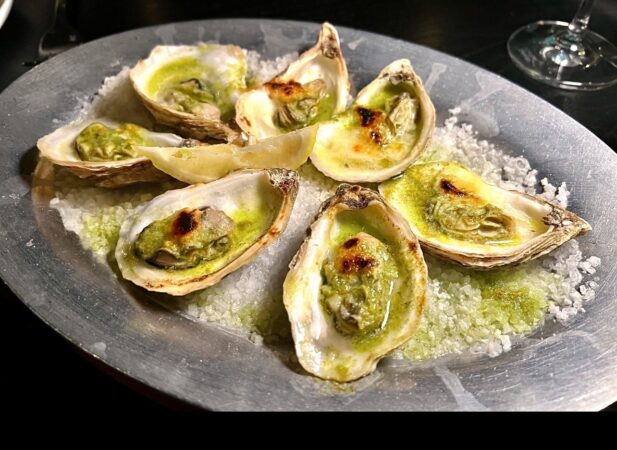
At Bar Tacconelli, the food skews small and shareable: baked oysters, chicken cutlet with lemon-parmesan arugula, meatballs, shrimp cannelloni, grilled prawns in salmoriglio, and capocollo bombette — the Pugliese fried meat roll stuffed with caciocavallo and pancetta. Most dishes land in the $14-to-$18 range; lamb chops, four for $24, are an outlier.
The pricing is intentional. “I don’t want this to be an occasion place,” he said.
Lounge seating at Bar Tacconelli, 461 Route 38, Maple Shade, on Feb. 21, 2026.
It’s open from Wednesday through Sunday, with late-night service — potentially until 1:30 or 2 a.m. — aimed at another local shortfall.
“When I get out of work at 9:30, I have nowhere to eat,” Tacconelli said. “I want a place you can come, hang out, have a Negroni, get something real to eat.”
Live music, DJs, happy hour, and late-night menus are planned. Tacconelli also saw the liquor license as strategic — keeping it out of a chain’s hands — but the broader goal is to give South Jersey diners a reason to stay put.
“There are a lot of young professionals around here who don’t want to go into Philly every time,” he said. “I want to be a destination for them.”
Bar Tacconelli, 461 Route 38, Maple Shade. Hours: 4 to 11 p.m. Wednesday and Thursday, 4 p.m. to 2 a.m. Friday and Saturday, 2 to 10 p.m. Sunday.
You won’t find chef Joey Baldino flexing tweezers with microgreens or dotting plates with fluid gels at the Bomb Bomb Bar and Grill.
That’s because Baldino, who also owns the popular Palizzi Social Club near 12th and Reed and Collingswood’s Zeppoli, occupies a unique place in Philadelphia’s pantheon of chefs as the preservationist-in-chief for the classic-but-fading flavors of Italian South Philly.
Baldino has managed one of the trickiest tasks possible — to retainthe essential character of a down-to-earth neighborhood bar while also making it his own, giving more depth to the seafood and drinks, and infusing it with sustainable new appeal for newcomers and longstanding regulars alike.
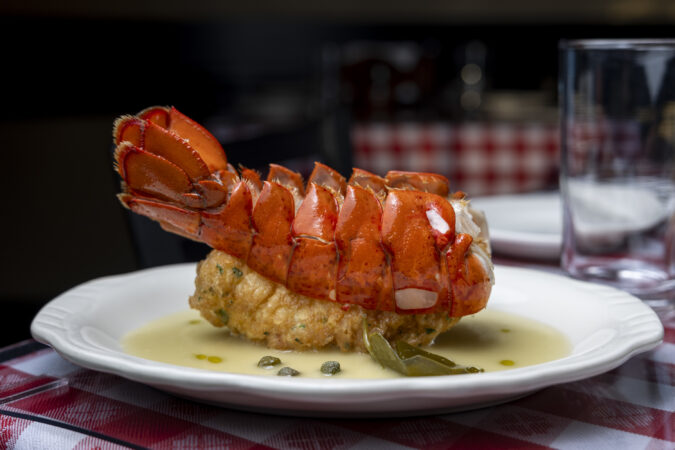
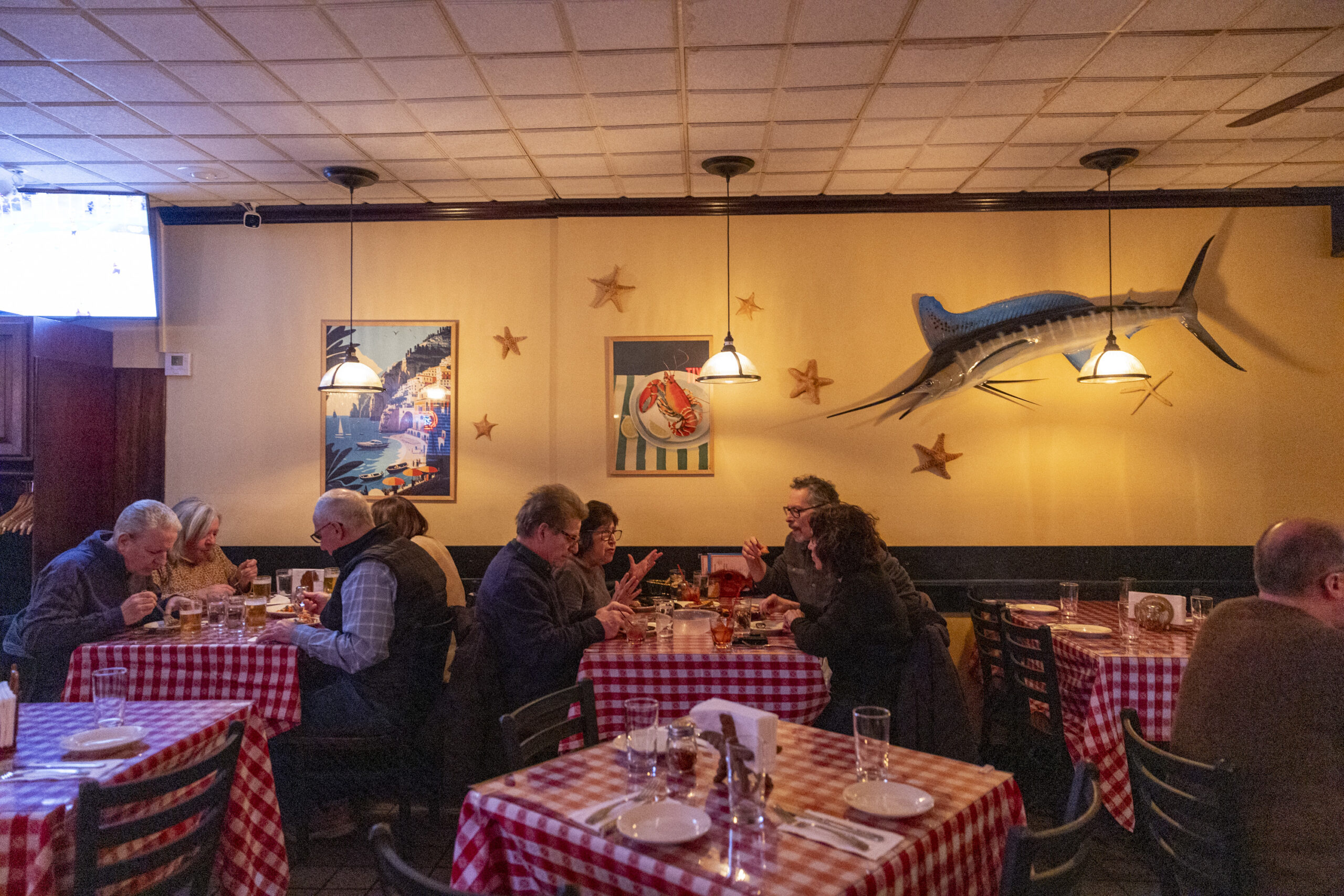
At the Bomb Bomb, where the tiny back dining room is draped with red-checked tablecloths, a plastic marlin hangs on the wall, and Louis Prima tunes fill the air (along with Nina Simone, the Ramones, and vintage Herb Alpert brass), this humble son of East Passyunk is at his best in summoning his ancestors with, among other things, one of the best “mussels red” I’ve ever had. A shot of Calabrian chile paste and white wine give his fra diavolo sauce an irresistibly zesty ba-da-boom. His reinterpration of a venerable standby like lobster francese is even more proof of his golden old-soul touch: He infuses the meat with the zing of Goodfellas-style thin-shaved garlic before crisping it inside a delicate egg-wash crust, then floating it atop a lemony puddle of butter sauce laced with the briny crunch of caper leaves beneath the bright orange lid of its shell.
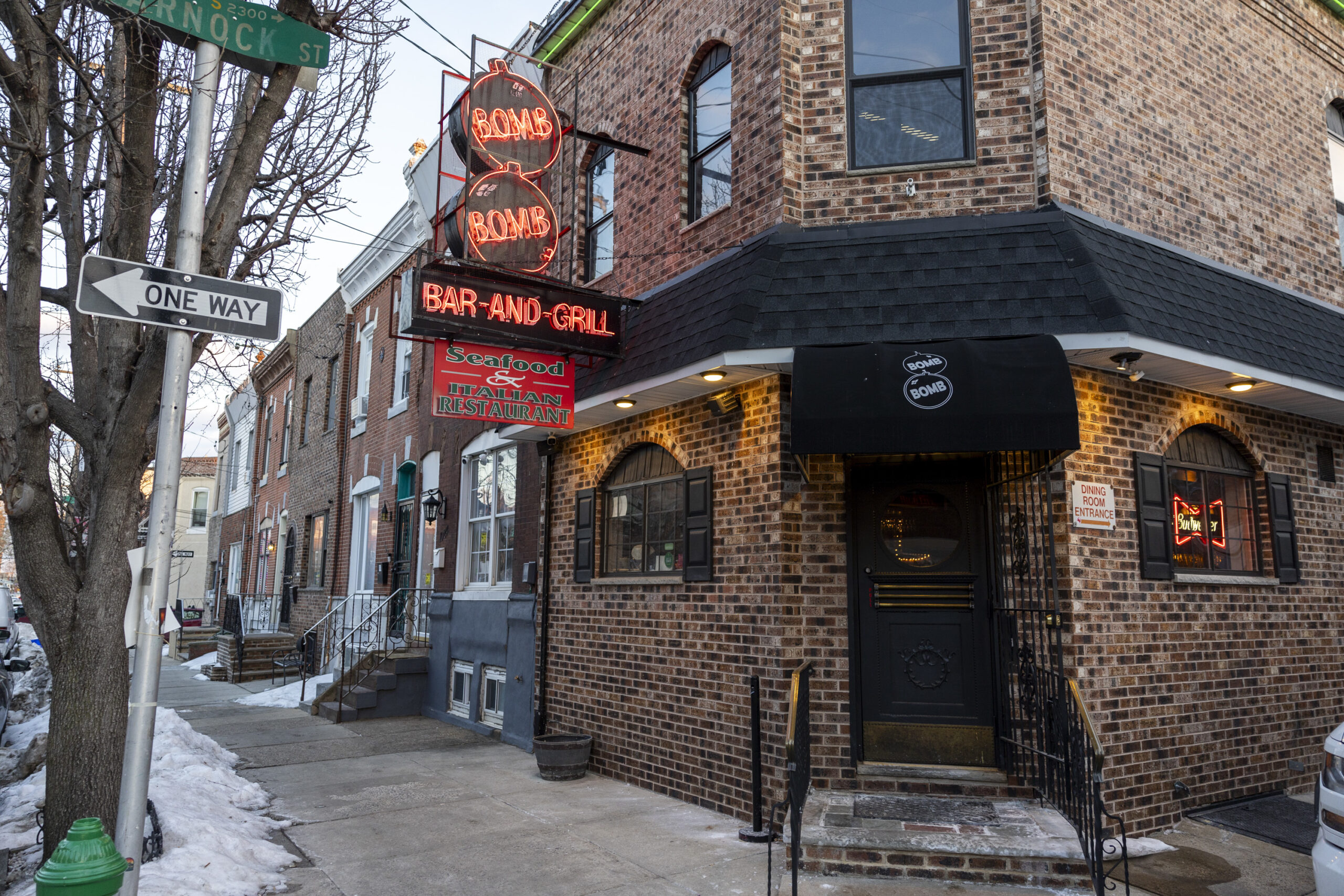
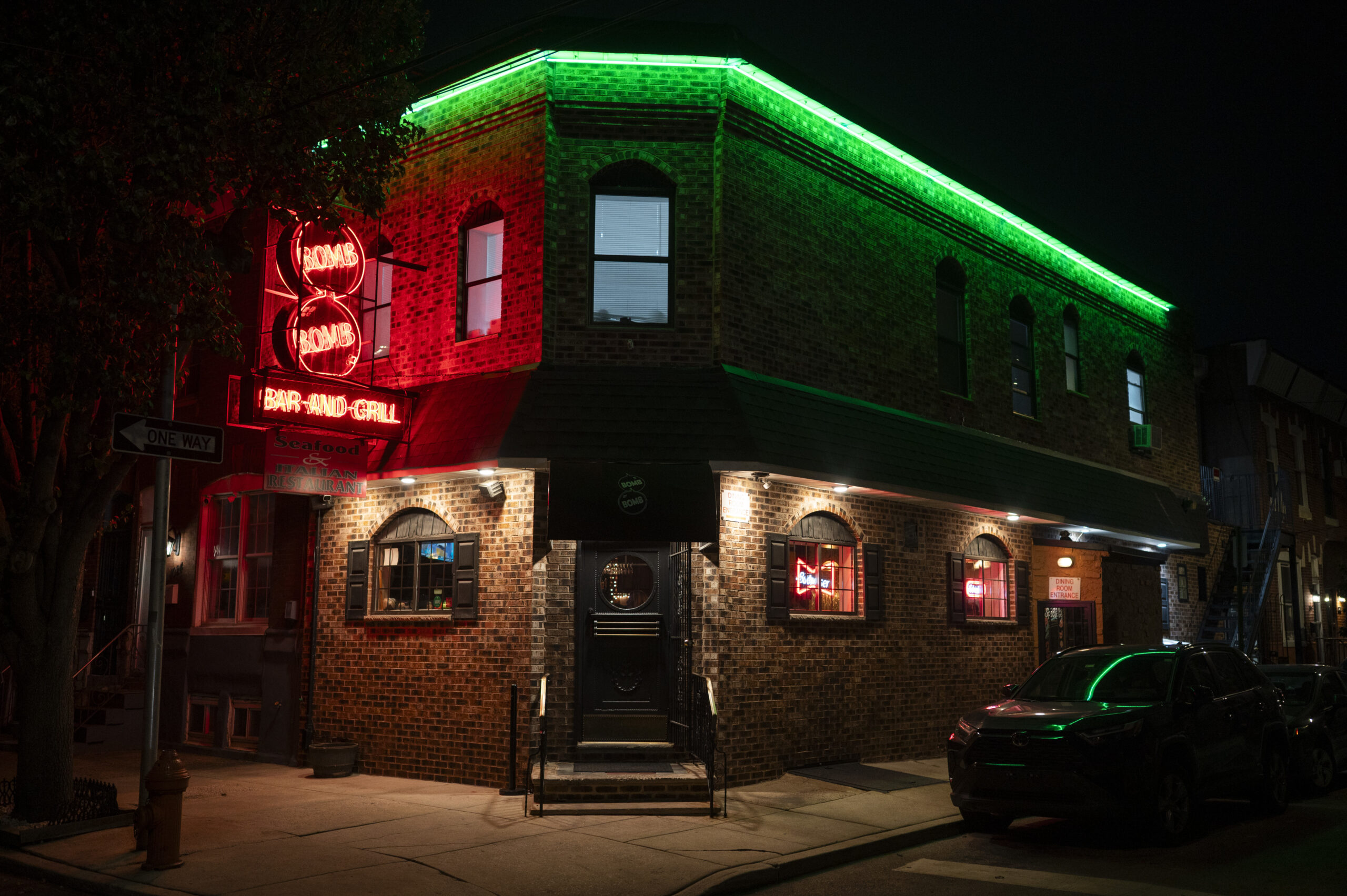
The outside of Bomb Bomb Bar in Philadelphia, Pa., on Thursday, Feb. 12, 2026. .Joey Baldino has managed to retain the character of a down-to-earth neighborhood bar while also making it his own.
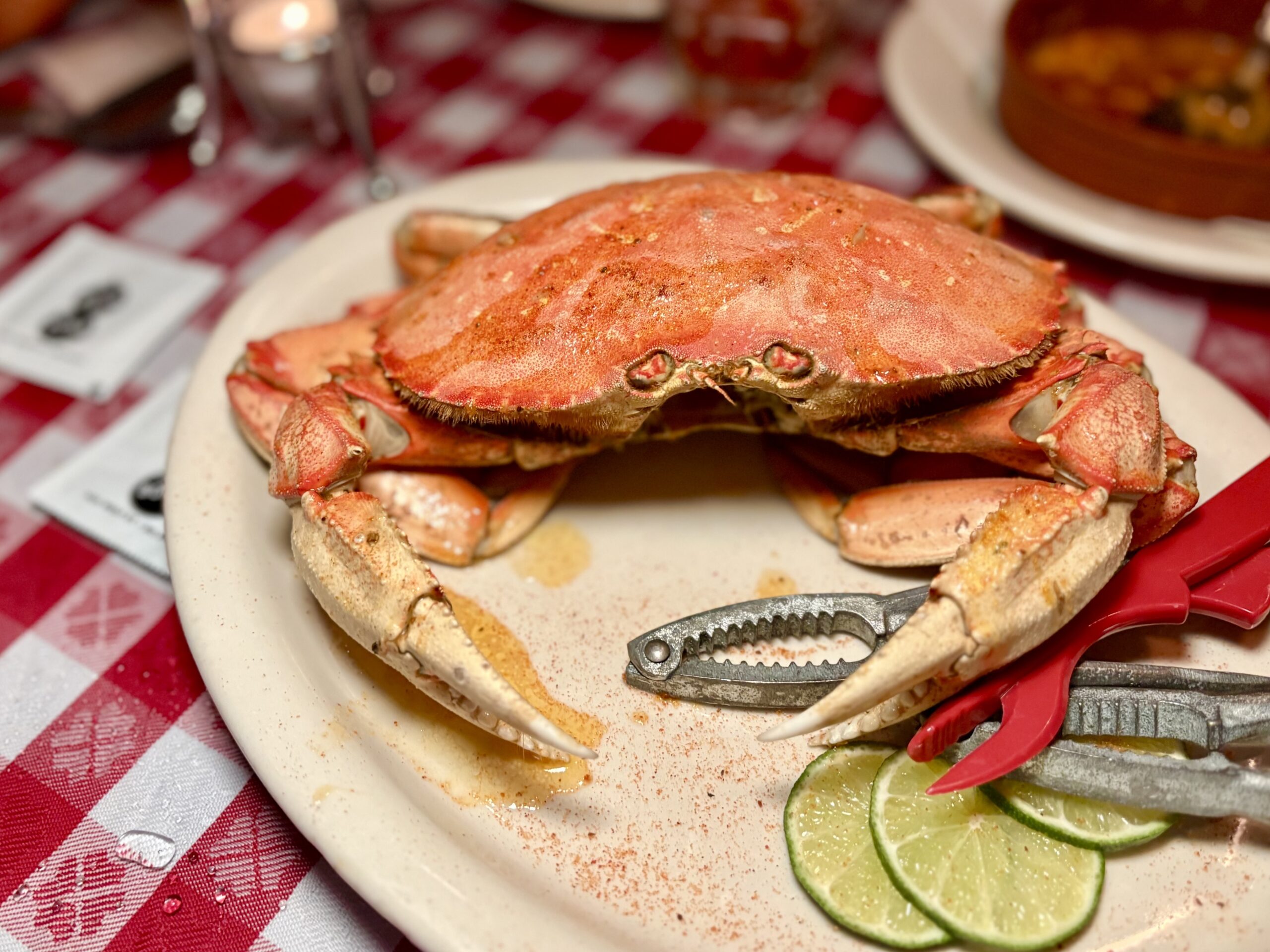
“It’s time to bib up now!’” says longtime Bomb Bomb server Linda DeCero, sidling up behind us to tie on the disposable plastic bibs for our seafood feast to come, a plump and meaty steamed Dungeness crab for two scented with juniper, orange, and bay beside a votive-warmed basin of drawn butter.
As one of several options for the prix fixe menu here, it’s a different kind of crustacean indulgence than the homey spaghetti with crab gravy the Bomb Bomb was originally known for. That was when it was owned by the Barbato family, which not only gave this storied corner taproom its name (a nod to a pair of 1936 firebombings allegedly committed by a jealous competitor), but also kept it rolling with baked ribs and “That’s Amore” kitsch for 73 years until it was sold to Baldino in early 2025.
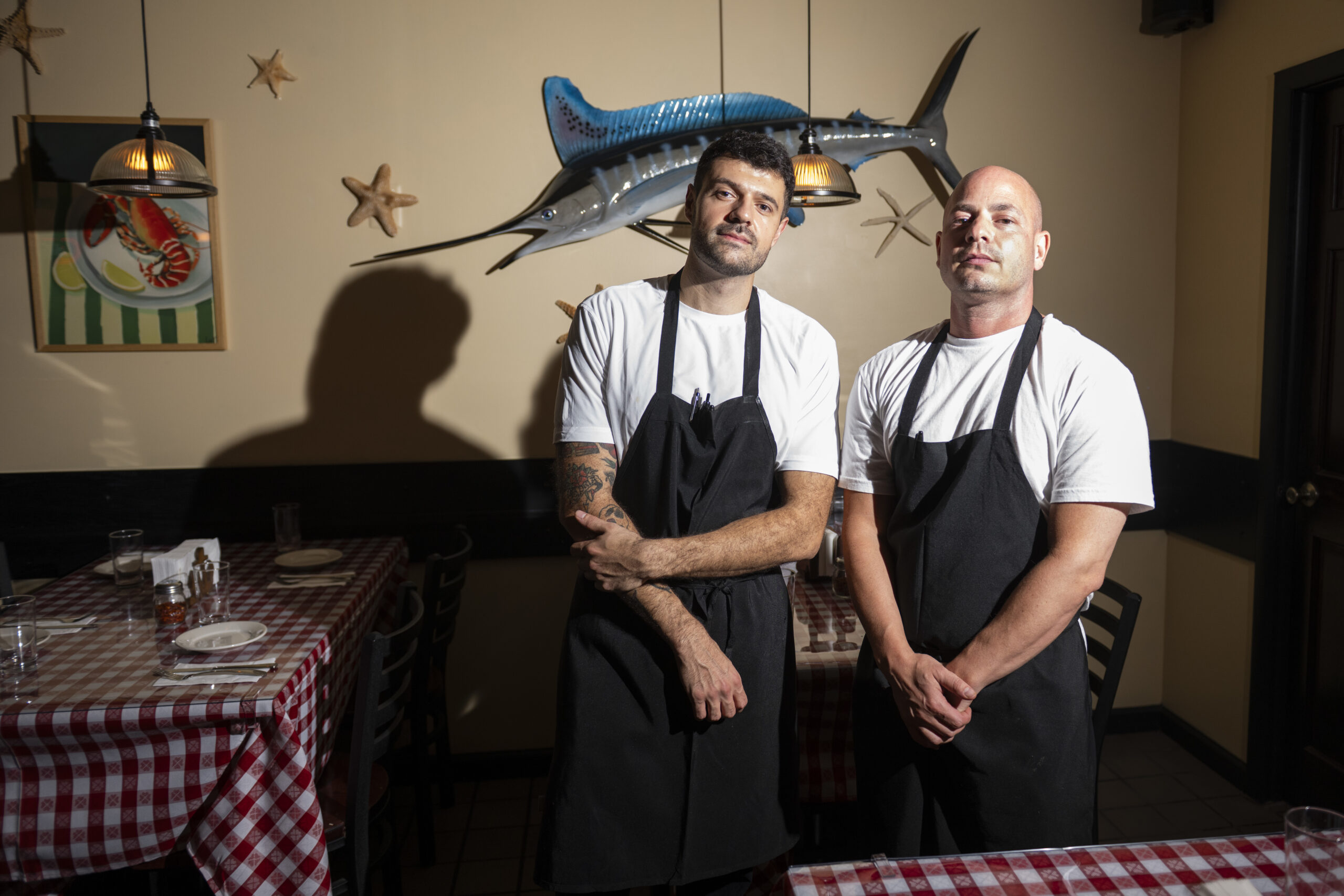
The steamed Dungeness crab for two is one of the highlights of the Italian seafood menu at Bomb Bomb Bar.Bomb Bomb Bar chefs Max Hachey (left) and Joey Baldino in the South Philadelphia landmark during a friends and family dinner on Sept. 29, 2025.
Baldino, who took nine months to open his lightly renovated version of the bar, has managed the transition with aplomb. Just ask the two cheerful sisters at the table beside us, who came from South Jersey to toast their late father’s birthday with a celebratory dinner and sundae at his longtime favorite tavern: “He’d love what they’ve done to the place!” one told me as we waited outside in the rain for our rides after the meal.
Baldino, 47, is uniquely suited for the task, having grown up eating steamed crabs out of a wooden bowl at his grandfather Al Mazza’s very similar bar at 12th and Reed — part of a generation of Italian bars like Strolli’s and South Philly Bar & Grill that have almost all now disappeared. He’s kept the Bomb Bomb’sclassic format of the neighborhood corner tappie intact, with room for 16 walk-ins in the small barroom up front, where you can nibble on sublimely juicy roast pork sandwiches and sip Vespers spiked with peperoncini brine while the Flyers skate across TVs behind the bar.
Meanwhile, the intimate 26-seat rear dining room, accessed through the onetime “Ladies Entrance,” is a boisterous reservation-only hideaway for three seatings nightly of a prix fixe seafood menu meant to evoke the Christmas Eve dinners of Baldino’s youth.
The pork sandwich with long hots at the Bomb Bomb Bar.The inside bar area of Bomb Bomb Bar in Philadelphia, Pa., on Thursday, Feb. 12, 2026. .
At $62 a person — with a choice of five sharing dishes for two people or six items for four people plus a pasta and a side — the price is fair considering the quality and quantity of the cooking. There are plenty of options for add-ons, specials, and drinks to turn dinner here into a splurge.
The antipasto for $18 is one add-on you probably shouldn’t miss for its bounty of house-pickled veggies, salumi, and cheese. And if the bagna cauda special is on offer, that’s another worthy vegetable-centric starter culled from Baldino’s daily shopping rounds through the Italian Market — grilled eggplants and zucchini, blanched cabbage rolls, and imported chicory shoots. They are perfect for dipping in a warm crock of buttery anchovy-garlic cream while your table sips through its first round of cocktail classics with Italian twists.
There’s a Bloody Mary sparked with Calabrian chilies and shredded provolone, a frozen Roman Coke spiked with amaro, a prickly pear riff on a margarita, and a crispy house pilsner made for the Bomb Bomb by Human Robot. I lean more into the affordable Italian wines when it comes to the heart of the prix fixe menu; a fizzy dry Lambrusco, the peachy almond notes of a Grechetto, and some light-hearted reds (a juicy Nebbiolo for $14) won’t overwhelm the seafood.
As for the food itself, you almost can’t lose — unless you have an aversion to an occasional excessive use of breadcrumbs on standbys like the shrimp oreganata or bacony clams casino. I preferred the cockles in brothier “clams white” form, steamed in Carlo Rossi Chablis (the official jug wine of South Philly) over a bowl of toast to finish last, having soaked in all that garlicky juice. The Bomb Bomb’s shrimp cocktail is also exceptionally flavorful from a gentle poach in a white wine court bouillon perfumed with orange and thyme.
The fried calamari at the Bomb Bomb Bar in Philadelphia, Pa., on Thursday, Feb. 12, 2026. .
The fried calamari (also available on the limited tavern menu, like the shrimp cocktail) are the epitome of a bar classic done right, tenderized in cream before they’re crisped in seasoned semolina and tossed in a spicy confetti of red and green cherry peppers. But if you want to taste a deep cut from the Baldino family’s Seven Fishes repertoire, Mom’s stuffed calamari — the toothpick-sealed squid tubes stuffed with ground tentacles and Parmesan breadcrumbs that become incredibly tender after a two-hour simmer in tomato sauce — will absolutely take you there.
The stuffed squid is something of an homage to the Barbatos, who made a different version of the recipe. Similarly, Baldino’s baked St. Louis-cut spare ribs, exclusive to the bar menu, are a slightly cheffier, orange-scented riff on a popular mainstay during the family’s tenure. I appreciated both menu items for the continuity they offered between the two owners.
Two other luxurious seafood dishes shouldn’t be ignored. The baked crab cakes created by chef Max Hachey (last at Friday Saturday Sunday) were a celebration of sweet meat bound up with onion cream, roasted garlic aioli, and crushed crackers — easily one of my new favorites in the city. And the lobster-and-shells genre has also been taken to a clever new level here, inspired by the flavors of a stromboli: Al dente pasta cradles butter-poached lobster in a blush sauce enriched with melted mozz and zingy ground pepperoni.
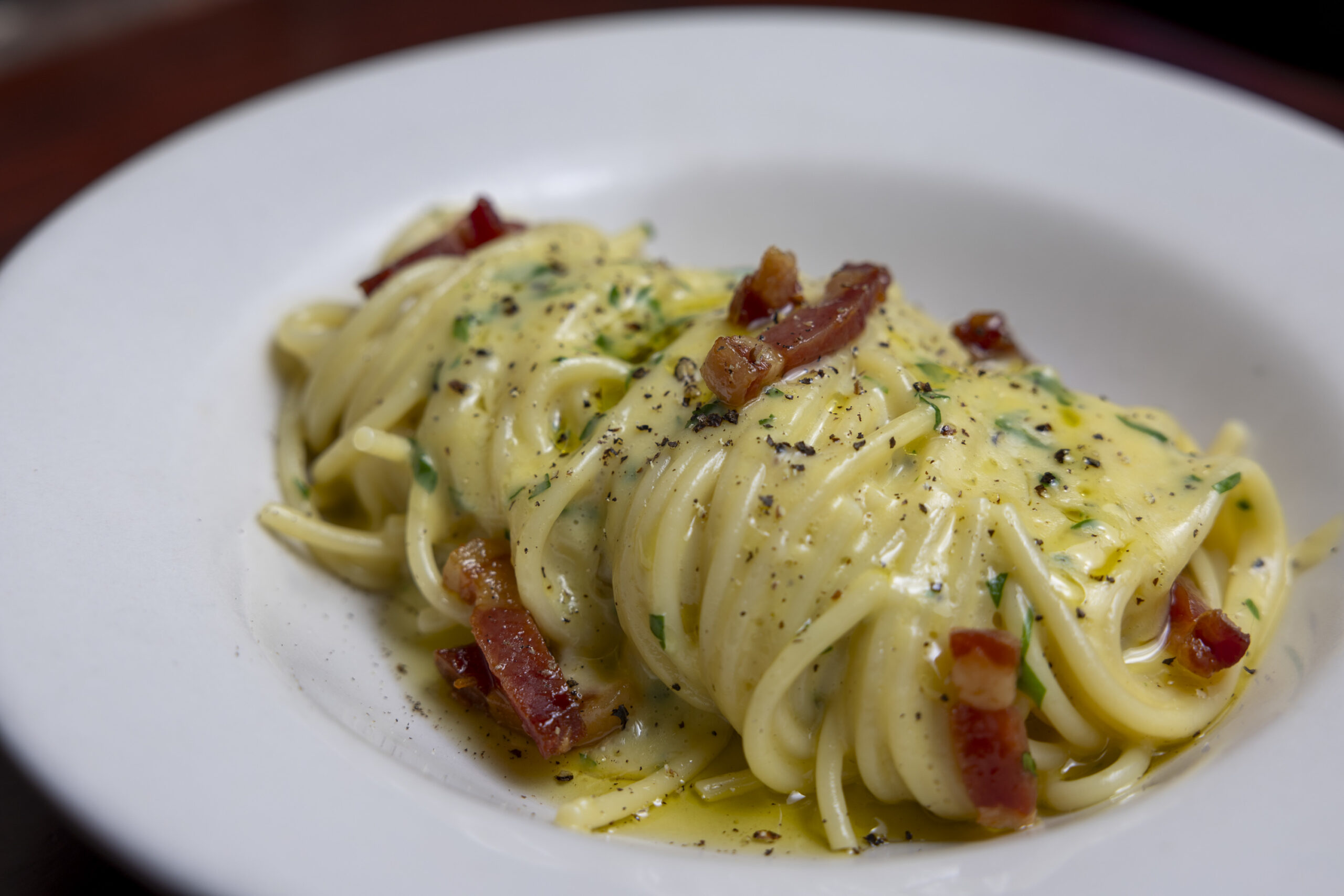
Crab cakes at the Bomb Bomb, the classic Italian seafood joint revived by chef-owner Joey Baldino in deep South Philly.The carbonara at the Bomb Bomb Bar in Philadelphia, Pa., on Thursday, Feb. 12, 2026. .
As a testament to Baldino’s confident grasp of the South Philly Italian canon, he feels no need to resort to any red-gravy meatball clichés on the pasta side of the menu. His carbonara is the stuff of creamy noodle dreams, its egg-and-bacon glaze still frothy even though it’s blended with three kinds of cheese, including an alpine twinge of toma. The black ink spaghetti is a dark-horse noodle champ — quite literally, because its simple, garlicky shine of aglio-e-olio sauce is turned jet black with sepia ink. And Baldino’s Italian tuna pasta might be the most overlooked gem of them all, a comforting yet elegant deconstruction of tuna noodle casserole.
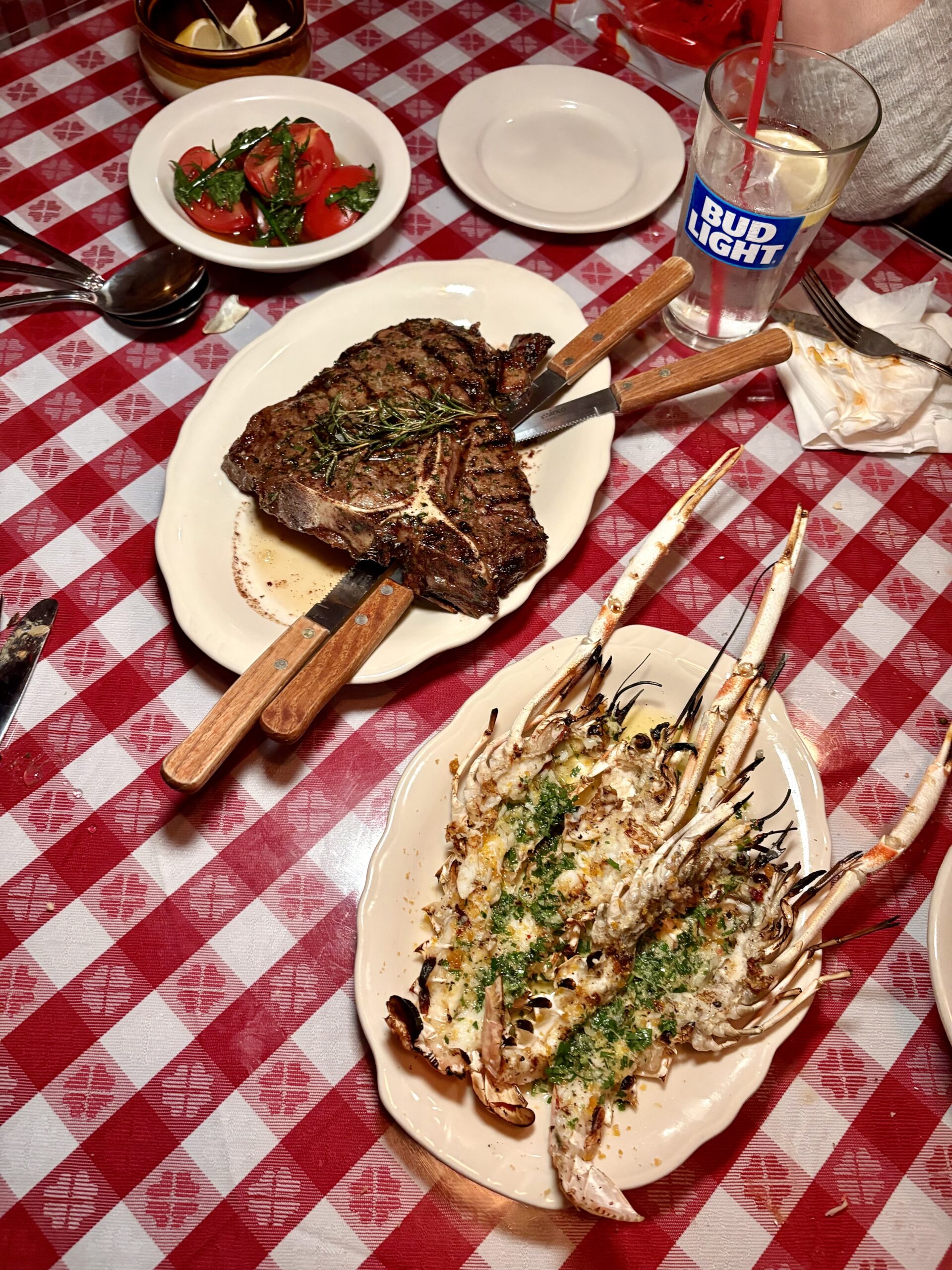
There are always other off-menu treats lingering in back to keep the dinner intriguing, like grilled langostini glistening with bottarga butter in a fragrant nod to the Sicilian flavors of Zeppoli. The frequent special of garlicky T-bone steak basted with olive oil-soaked rosemary branches is so good, I wonder if there’s a retro Italian chophouse lingering in Baldino’s future, too.
Keeping the Bomb Bomb’s distinctive red-neon sign glowing bright over the corner of Warnock and Wolf Streets, now beckoning to an enthusiastic new generation, is more than enough of an achievement. So order yourself a vanilla ice cream sundae drizzled with house chocolate sauce, brown-butter caramel, and a fried banana — a sweet tribute to a long gone shake shop that Baldino also loved — and lift a toast to the ancestors. Italian South Philly’s culinary preservationist-in-chief has scored once again.
A porterhouse steak and grilled langostini with bottarga butter are two notable recent specials at the Bomb Bomb Bar & Grill.
Dinner seatings in rear dining room by reservation only Thursday through Monday, at 5, 7, and 9 p.m. Bar is open to walk-ins only Thursday through Monday, 5 p.m.-1 a.m. Lunch served Saturday and Sunday, noon-3 p.m.
Not wheelchair accessible. There are two steps at the front entrance and bathrooms are not accessible.
Gluten-free pasta is available and much of the menu can be modified to be gluten-free, including the antipasto, lobster francese, streamed seafood, and ribs.
Menu highlights: clams casino; crab cake, lobster francese; shrimp oreganata; mussels fra diavolo; fried calamari; lobster and shells; Dungeness crab; spaghetti alla carbonara; herbed tomatoes; porterhouse special. Bar menu: porchetta sandwich; shrimp agrodolce; vanilla sundae.
Drinks: The full bar showcases simple but booze-forward cocktails with a zesty Italian twist, like the Vesper spiked with peperoncini brine and a Bloody Mary sparked with Calabrian chilies, frozen drinks such as the bubbly limoncello Scroppino.
The exterior of Bomb Bomb Bar in South Philadelphia on Monday, Sept. 29, 2025.
Simply was the hottest word at an annual packaged-food and staples conference in Orlando last week. It’s become the preferred label for a new wave of products containing fewer, more natural ingredients — from beverages to peanut butter.
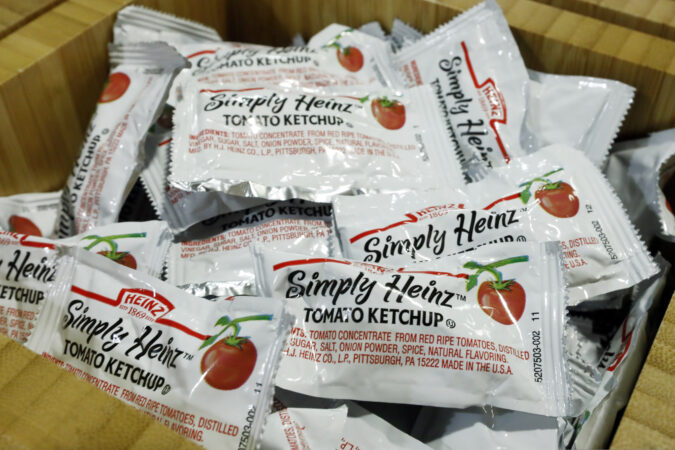
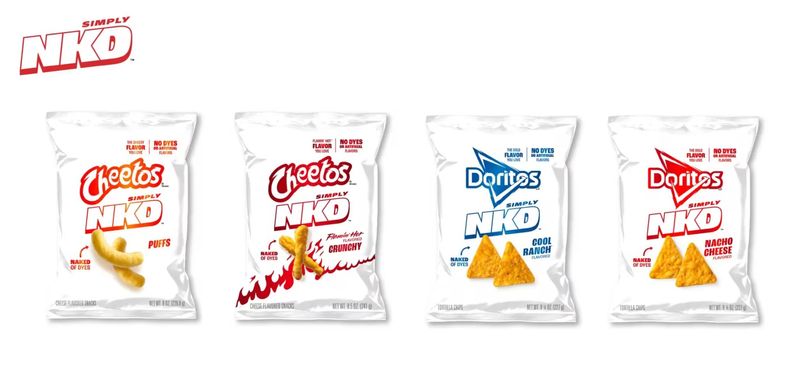
Kraft Heinz Co. is putting a spotlight on its Simply line of ketchup that uses cane sugar instead of high-fructose corn syrup. Coca-Cola Co. now has Simply Pop, a prebiotic soda line with no added sugar, which was added last year to its existing Simply line of fruit juices and drinks. And PepsiCo Inc., which is in the midst of overhauling its snacks and lowering prices, has expanded its own Simply line of products that has no artificial colors or flavors.
PepsiCo has expanded its own Simply line of products that has no artificial colors or flavors, such as Simply NKD Doritos and Cheetos, made by Frito-Lay, a division of PepsiCo.
While simply has long been a popular marketing term in the industry, it’s making a resurgence as companies look to navigate pressure from Washington, which blames processed foods for health problems including obesity and diabetes, and a growing number of consumers who are scrutinizing ingredient lists. An added bonus: Companies can often charge more for “clean label” products.
PepsiCo is updating its packaging to emphasize “simple ingredients based on nature,” chief executive Ramon Laguarta said last week at the Consumer Analyst Group of New York conference. The company updated its Lay’s brand last year and added a “naked” line of Doritos and Cheetos to its Simply portfolio without any artificial colors or flavors. It’s also revamping its Tostitos line of corn chips.
“We’re changing the image. We’re making it more natural,” Laguarta said.
Simply is also playing a key role at Kraft Heinz, as the maker of Jell-0 and Lunchables discards a previous plan to split up the company and instead looks to revitalize its brands. It’s starting with ketchup.
“We’re just really getting started with this Simply platform and this organic platform that I think shows really great promise,” Kraft Heinz chief executive officer Steve Cahillane said Thursday in Orlando. But he noted that Kraft Heinz doesn’t plan to reformulate its entire portfolio.
“Some consumers are willing to pay for that increased cost that comes with Simply and some are not,” he said.
The meaning of “simply” has evolved for food companies over time, prompting the need for rebranding in some cases.
JM Smucker Co. decided to create a new Jif Simply line of peanut butter, which has a shorter list of ingredients. It’s phasing out an earlier iteration, called Simply Jif, that had lower levels of sodium and sugar than regular Jif but still contained ingredients like fully hydrogenated vegetable oils.
Smucker CEO Mark Smucker said the new Jif Simply is a “very basic formula that obviously is responding to consumer trends.”
The new peanut butter still has lower sodium and sugar, and comes in three formulations: unsweetened, sweetened, and crunchy. It’s made from roasted peanuts, palm oil, salt, and sugar in the sweetened version.
The new Jif Simply line “has already received strong retailer acceptance,” he said.
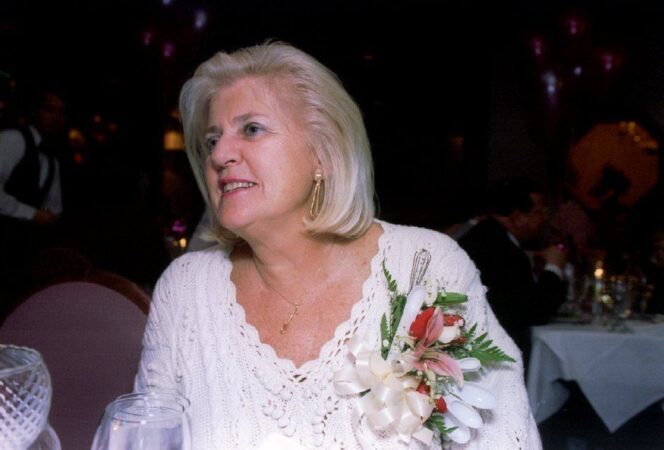
Charlotte Ann Albertson, 90, a pioneer in Philadelphia’s culinary scene through her long-running cooking school, died Sunday, Feb. 15, 2026, at her home in Harveys Lake, PA.
For more than five decades, Mrs. Albertson, a longtime Wynnewood resident, ran Albertson Cooking School, which has introduced generations of home cooks and aspiring professionals to global cuisines, wine, and hospitality. In the years before round-the-clock food television, the school also helped to elevate the profiles of local chefs.
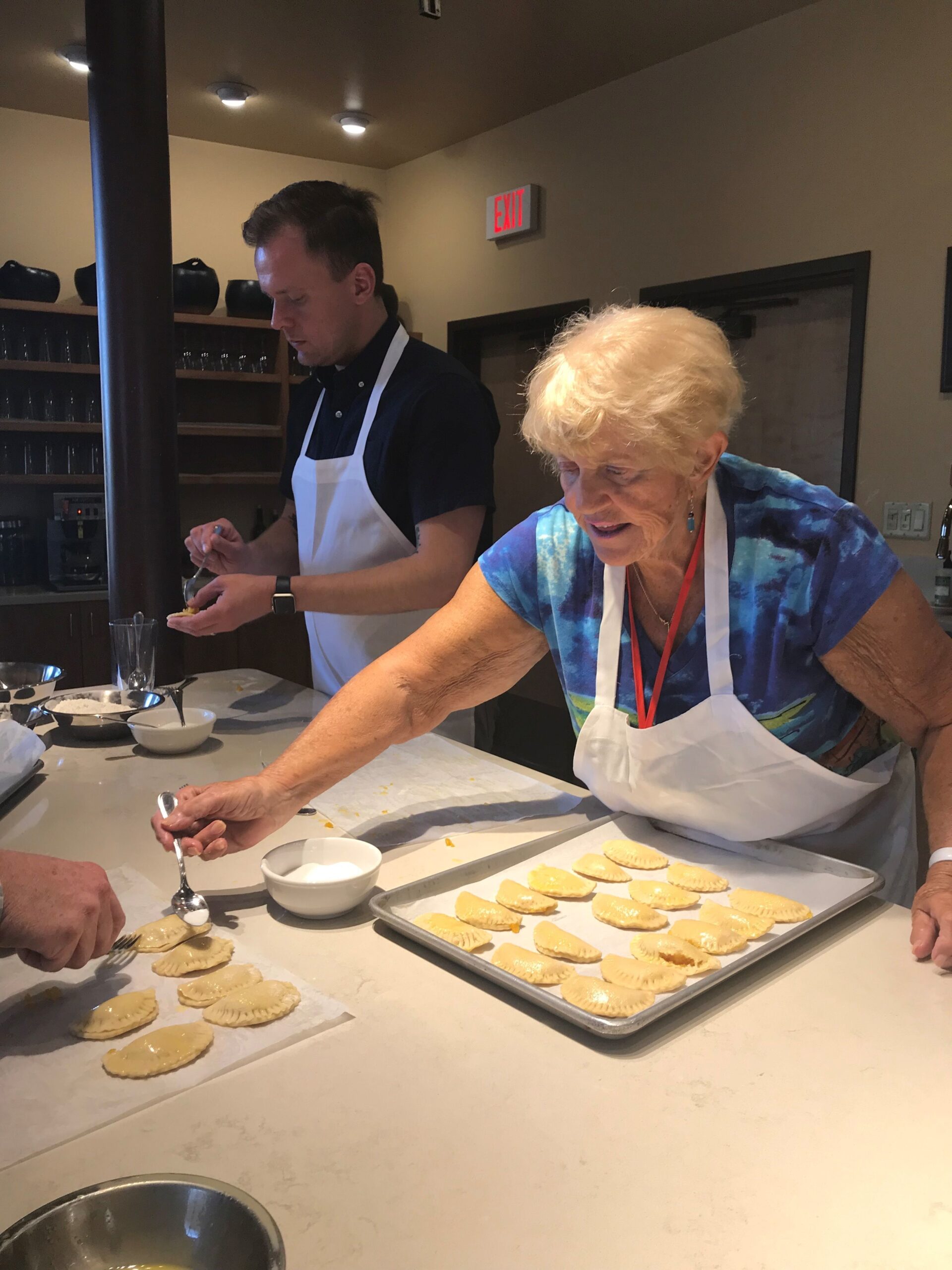
Charlotte Ann Albertson in her element, leading a cooking class.
Born in Chicago to Joseph and Veronica Sutula, she grew up in Scranton and attended Marywood Seminary and Marywood College, graduating in 1957. She earned a master’s degree in education from the University of Pennsylvania, where she met her husband, Dr. Richard P. Albertson, an anesthesiologist and president of the medical staff at Lankenau Hospital; he died in 2024.
After their marriage in 1961, Mrs. Albertson taught fifth- and sixth-grade English at the former Wynnewood Road School in Lower Merion. In 1974, after taking classes with food writer/teacher Ethel Hoffman, she launched L’Epicure,later Albertson Cooking School.
Mrs. Albertson proved adept at recruiting talent for the school, which relies on itinerant faculty. “Her term was always: ‘Be bullheaded — don’t ever take no for an answer,’” said her daughter Ann-Michelle.
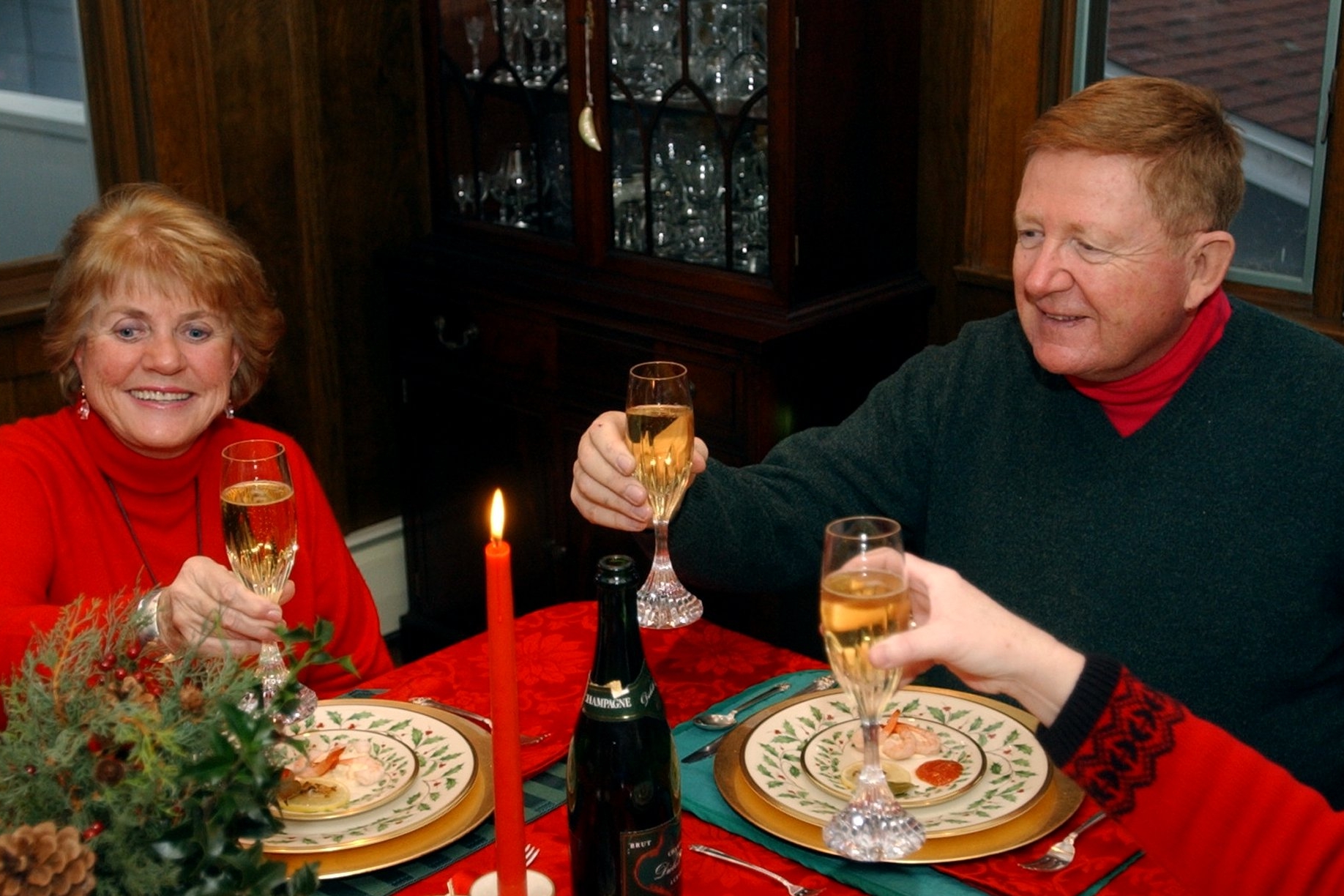
Charlotte Ann Albertson and her husband, Richard, toast at Christmas dinner in 2004.
Mrs. Albertson’s classes, held at first in her condo kitchen and later at a variety of venues, ranged from the sublime to the whimsical. She booked a woman whom she saw teaching cake-decorating at a department store to share the secrets to the butter cookies of her native Scandinavia. She hired a baker from the Commissary (one of the most popular restaurants in town in the late ’70s) to demonstrate desserts, got a Japanese friend to teach sukiyaki and tempura, and landed a cheese artist to teach how to sculpt cheddar into footballs and pine cones.
Lankenau Hospital was a rich recruiting ground. Her early instructors included the hospital’s chef, Bruce Cooper. “She was a tremendous supporter from the start, even investing in Jake’s [the landmark restaurant in Manayunk that opened in 1987] for its initial five years,” Cooper said last week.
In 1977, she met Le Bec-Fin chef Georges Perrier at Lankenau after his teenage stepson required surgery and Dr. Albertson was the anesthesiologist. She persuaded Perrier to teach, and he led classes even as his and his restaurant’s international reputation grew.
That same year, after reading about the impending closure of the Bellevue Stratford Hotel, Mrs. Albertson invited its executive chef to teach. “He said that he was too old, but he recommended a new guy in town, a master chef working at the Marriott,” Mrs. Albertson told The Inquirer for a 1994 profile.
He was Tell Erhardt. Although he had a heavy German accent, she said, he was “a charmer” and led 16 classes for her. Chef Tell parlayed that into spots on local TV and, later, frequent appearances on Regis and Kathie Lee and Saturday Night Live. (Chef Tell also inspired the gibberish-speaking Swedish chef on The Muppet Show.)
Charlotte Ann Albertson (left) with her family (from left): Daughters Ann-Michelle Albertson and Kristin Keifer, grandchildren Caroline and Cole Keifer, and her husband, Richard.
Mrs. Albertson traveled and studied extensively, taking classes at La Varenne and Le Cordon Bleu in Paris. “She showed us the world — Vietnam, South Africa, Brazil, Chile, Argentina, Italy, China,” Ann-Michelle said. “Everywhere she went for culinary work, she took us with her.”
She and her husband were also notably open about their choice to adopt. “I was adopted in 1967, when it was still pretty taboo,” Ann-Michelle said. “But from the beginning, the message was: ‘You were picked out special.’” The family maintained ties to St. Joseph’s Center in Scranton, from which Ann-Michelle and middle child Peter were adopted. Their third child, Kristin, was adopted privately in 1976.
Kristin’s dearest memories of the cooking school were the hands-on birthday party classes for kids; children were taught how to bake and decorate a cake from scratch as well as make pizza using homemade dough. “Getting to meet Julia Child multiple times and dine with countless celebrity chefs are also at the top of the list of my fond memories,” all thanks to her mother, Kristin said.
Beyond the classroom, Mrs. Albertson consulted for food and wine companies, libraries, and cultural institutions. She received the Delaware Valley Restaurant Association’s Panache Award in 1993 for promoting professional growth through education.
Only later did Ann-Michelle — a pediatric speech pathologist who now runs the cooking school — fully grasp her influence. “People would stop me and say, ‘Your mom did so much for me. I wouldn’t be where I am without her,’” she said.
As the business grew, Mrs. Albertson directed its success toward philanthropy, supporting causes including the Ronald McDonald House and Alex’s Lemonade Stand Foundation.
Mrs. Albertson attended Our Lady of Lourdes Roman Catholic Church in Overbrook and Our Lady of Victory at Harveys Lake. “We went to church every Sunday,” Ann-Michelle said. “The perk at the lake was that I could water-ski to church — and ski back.”
Mrs. Albertson was a charter member of the International Association of Culinary Professionals and belonged to the Confrérie de la Chaîne des Rôtisseurs, Les Dames d’Escoffier, Société Mondiale du Vin, the Philadelphia Culinary Guild, and the American Institute of Wine & Food.
She is survived by her children, Ann-Michelle Albertson, Kristin Keifer, and Peter Albertson; seven grandchildren; and a great-grandchild.
A funeral Mass will be celebrated at 11 a.m. Saturday, April 25, at Presentation B.V.M. Church, 204 Haverford Rd., Wynnewood. A celebration of life will follow at 12:30 p.m. at Savona, 100 Old Gulph Rd., Gulph Mills.
In keeping with her spirit, her family asks attendees to wear bright colors in remembrance of her zest for life.
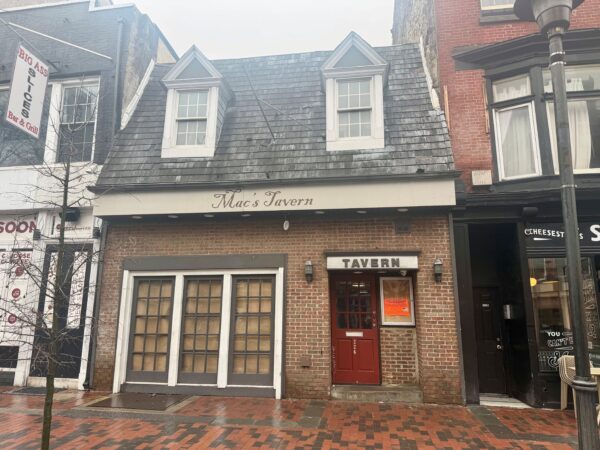
The Monto is the name of the new Celtic bar coming in April from veteran publicans including Fergus Carey and Jim McNamara, who are taking over the former Mac’s Tavern at 226 Market St.
Carey said the kitchen will be overseen by N.A. Poe, the proprietor of Poe’s Sandwich Joint (at the Human Robot in Kensington and Poison Heart in Poplar) and Poe’s Side Piece (at Human Robot in Brewerytown). Poe plans to blend his South Philadelphia sensibility with Irish pub fare — a mashup he calls the “Poe-gues” menu.
Sandwich specialist N.A. Poe (right) with Monto co-owner Fergus Carey.
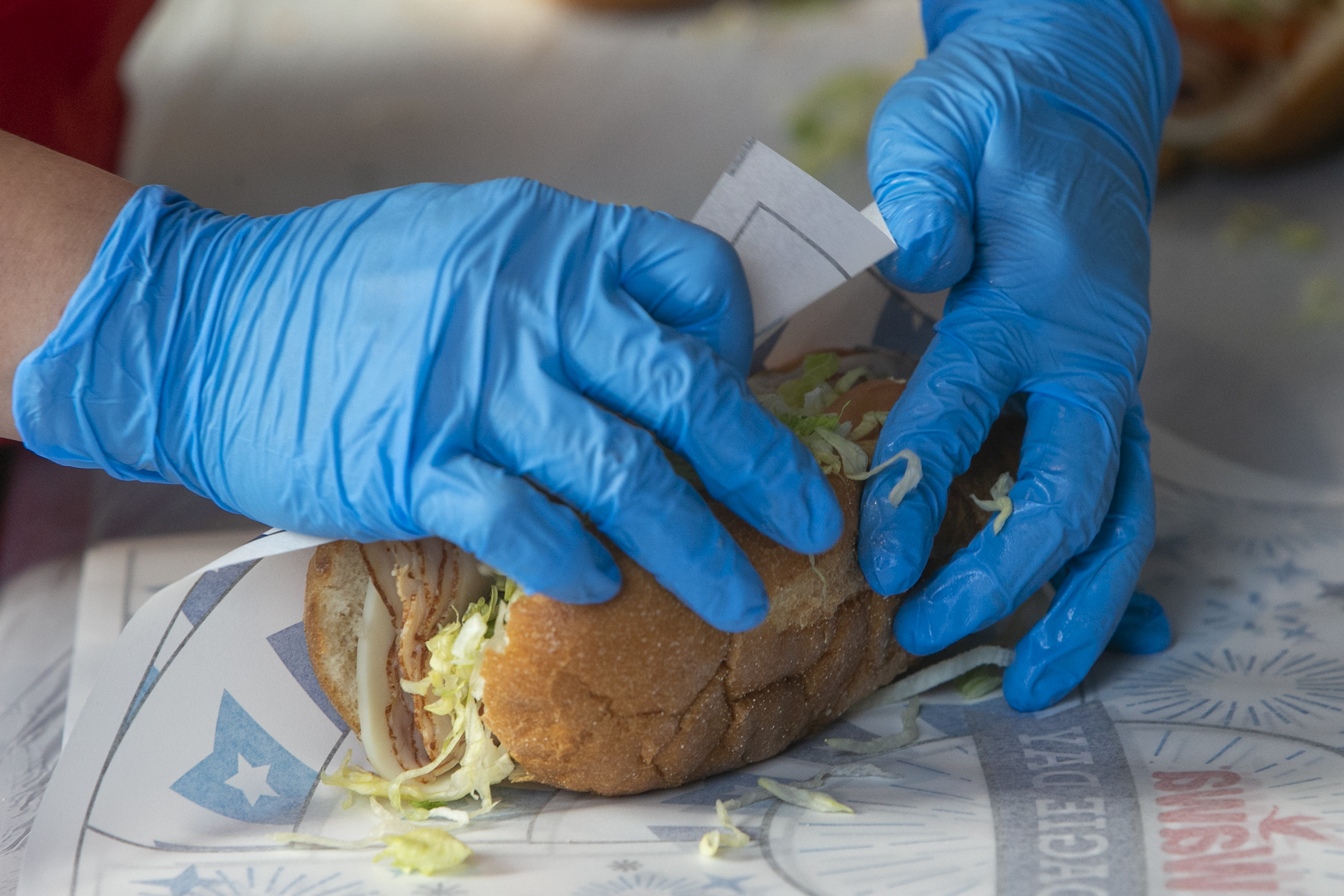
Poe said his existing lineup of cutlet sandwiches, cheesesteaks, and burgers would form the backbone of the Monto’s menu. He said he would twin those offerings with Irish breakfast, sausage rolls, shepherd’s pie, and fish and chips served on Sarcone’s bread with house-made tartar, along with a corned beef cheesesteak and a pub burger that includes blue cheese and crispy prosciutto.
“I’m not trying to be overly precious about it,” Poe said. “At this point, I know what works. Irish food isn’t fine dining. It’s approachable. The goal is to take those classics and put a solid spin on them.”
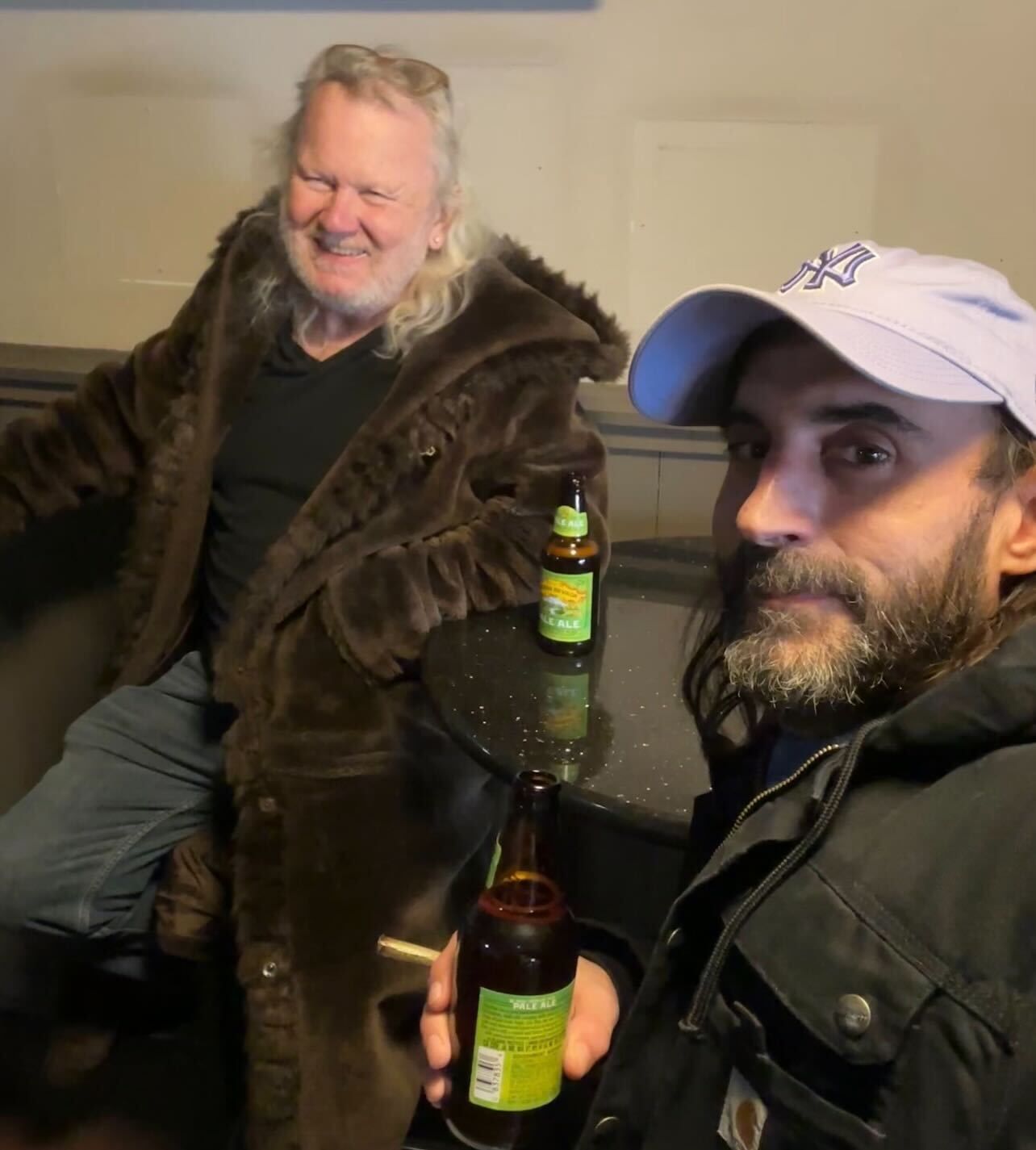
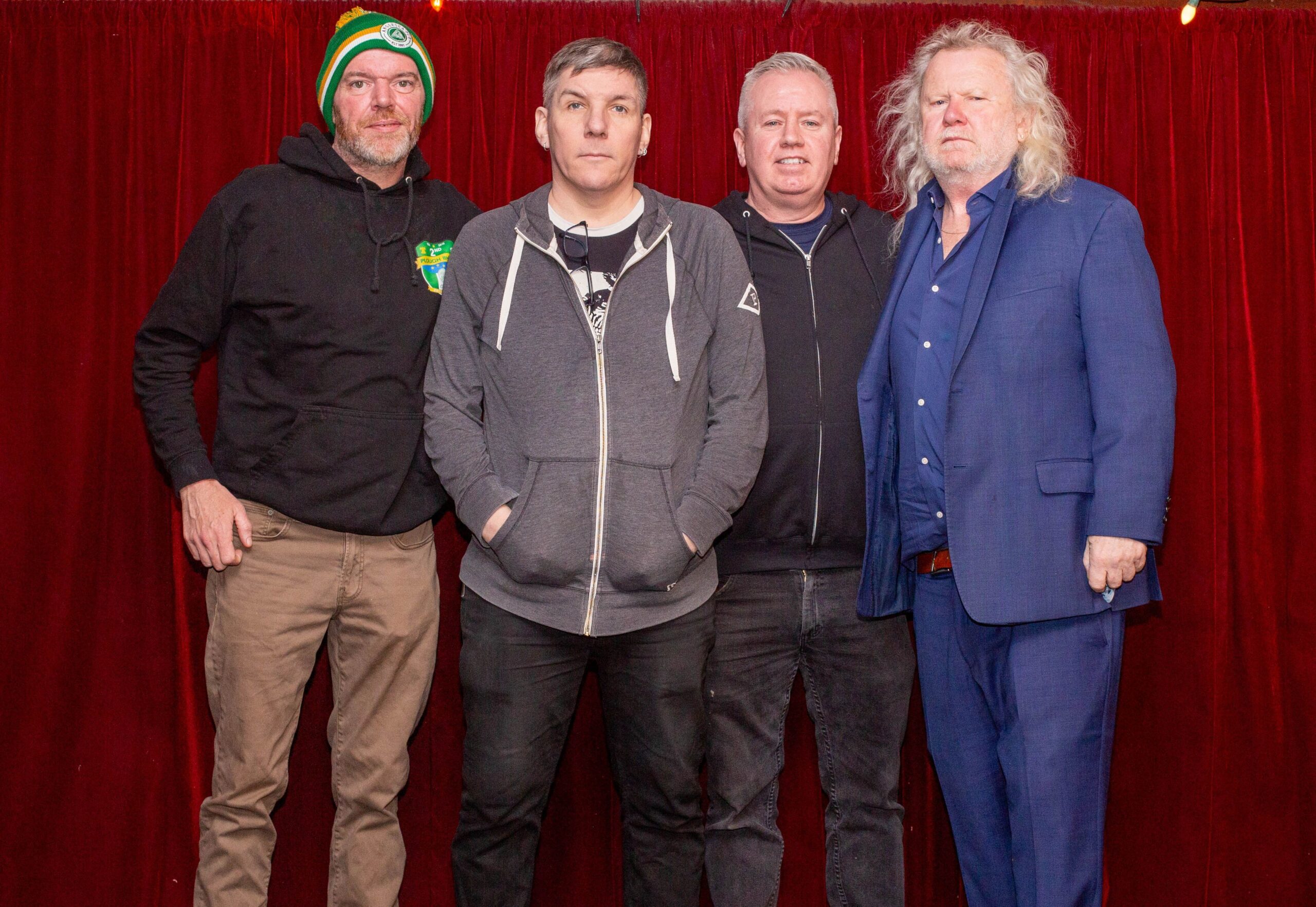
The partners of Monto (from left): Johnjoe Devlin, Jim McNamara, Gary “Swing” McDonald, and Fergus Carey,
Carey and McNamara — whose holdings include Fergie’s Pub in Washington Square West, the Jim in South Philadelphia, and the Goat Rittenhouse — have brought in as partners two well-known figures from Philadelphia’s Irish-bar circuit: Johnjoe Devlin, a Glasgow native and a 17-year bartending veteran at Plough & the Stars; and Gary “Swing” McDonald, from South Armagh, Northern Ireland, who has worked for 25 years at such pubs as the Bards, Tir na Nóg, Brownies, Ten Stone, and Murph’s.
The name “Monto” comes from the bawdy Dubliners mid-1960s song about Dublin’s historic red-light district. “I’ve been singing it for 40-plus years,” Carey said.
Designer John Fetsko, whose recent work includes the Mulberry and projects with Royal Restaurant Group, is handling the build-out.
The Market Street address carries its own legacy. Mac’s Tavern, which closed last summer after 15 years, counted South Philadelphia-raised actor Rob McElhenney — now known professionally as Rob Mac — and Kaitlin Olson of It’s Always Sunny in Philadelphia among its owners.
For Carey, the opening marks both a return to Old City and another chapter in a decades-long run shaping Philadelphia’s bar culture. The Dubliner arrived in Philadelphia in 1987 and landed behind the bar at McGlinchey’s before he and his late business partner, Wajih Abed, opened Fergie’s Pub. He also helped launch such beer destinations as Monk’s Café, the Belgian Café, and Grace Tavern.
As a regular consumer of sushi, I’ve noticed that the gap between casual, delivery-centric sushi joints and upscale omakase in Philly has been narrowing recently — prompting me to go on a quest to identify the true gems of delivery-sushi spots. I scoured DoorDash, UberEats, GrubHub, and Caviar, and saw a lot of spicy mayo and reconstituted wasabi-flavored powder in the process. In the end, I found plenty of solid options for Center City spots serving good-quality sashimi and nigiri, and balanced rolls that weren’t too gimmicky. Here are the places that deliver in every sense.
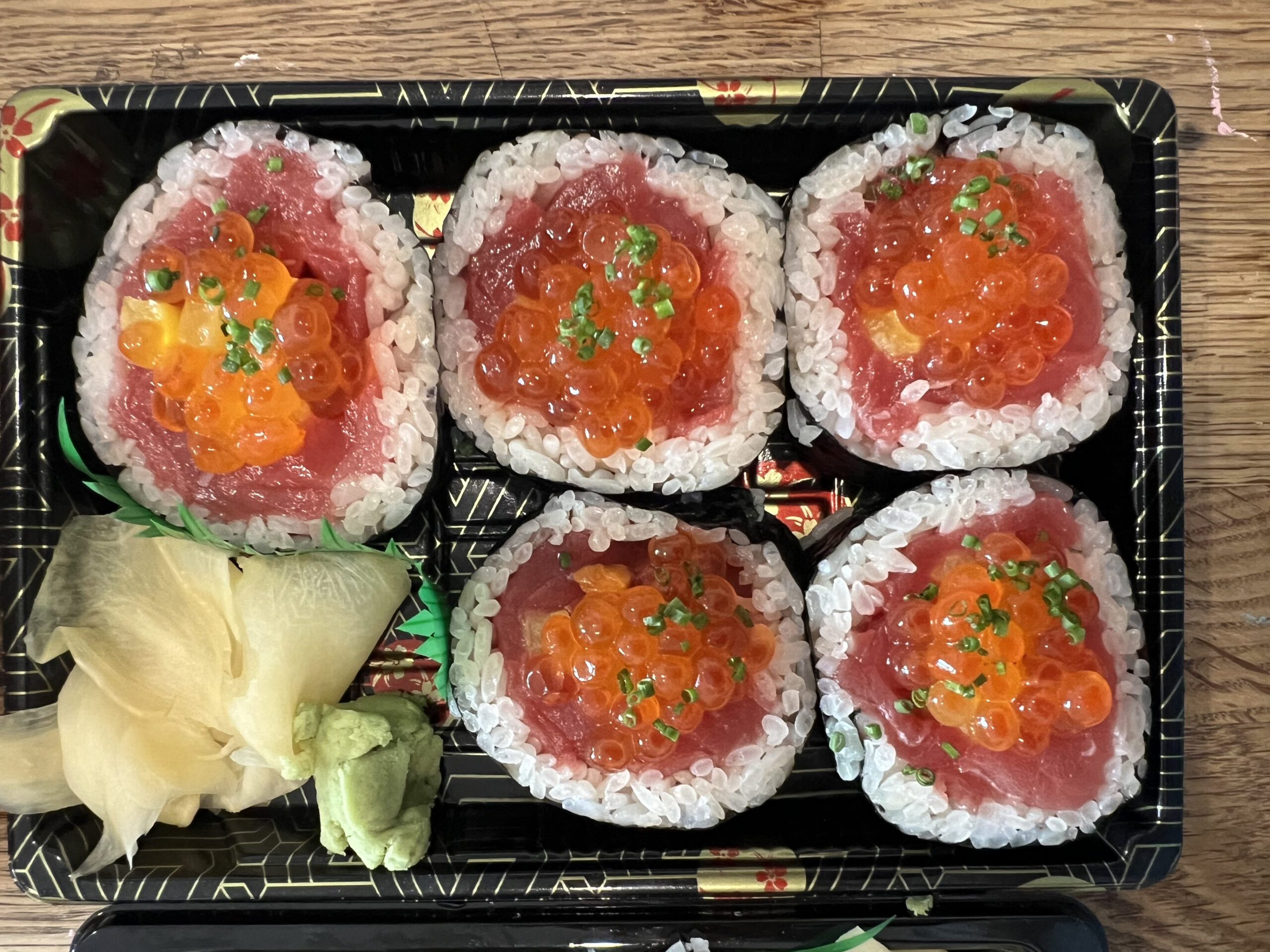
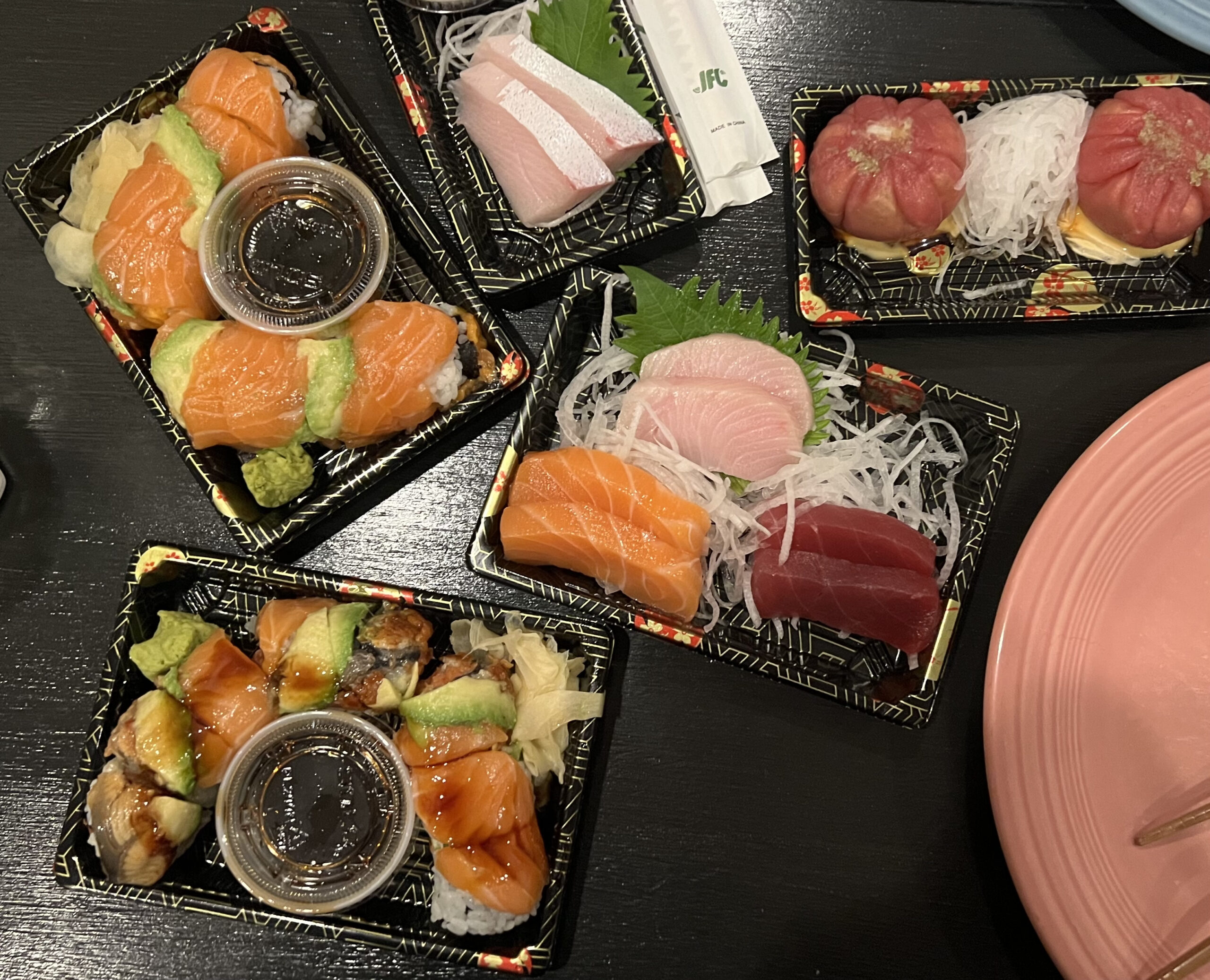
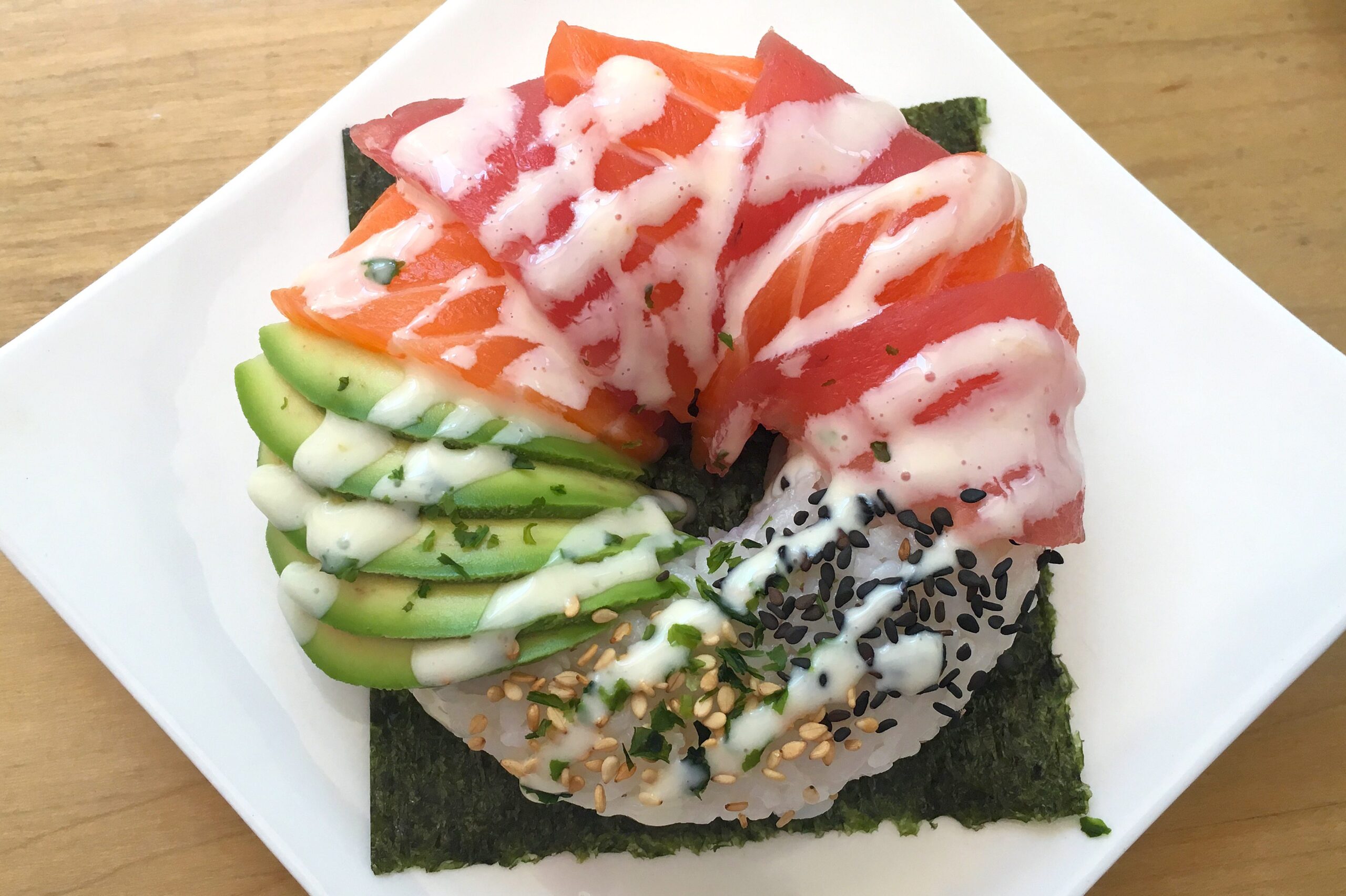
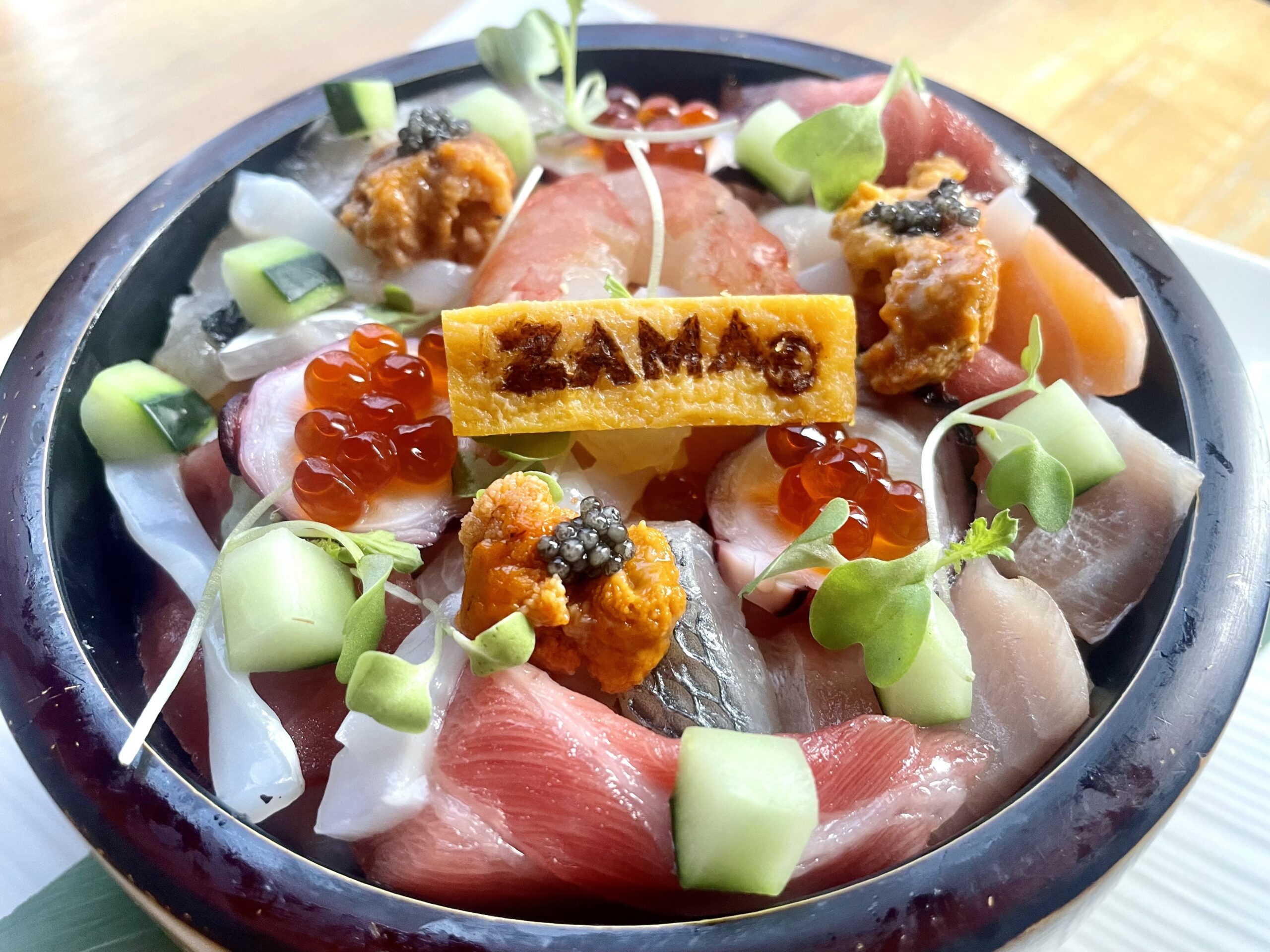
Delivery sushi from Royal Izakaya.Delivery sushi from Vic Sushi in Rittenhouse.The square sushi with tuna shows the influence of Morimoto.Sushi donut at Kai.A gluten-free Zama chirashi bowl.
Vic Sushi Rittenhouse
Open since 2007, this tiny Rittenhouse restaurant is a go-to for reliably good sushi, whether takeout, dine-in, or delivery. They don’t get too creative when it comes to rolls, which is generally a good thing. (I like the ones with spicy tuna.) Their nigiri is solid, and their sashimi offerings are small but intentional. Get the greatest hits: tuna, salmon, yellowtail, sweet shrimp, and mackerel.
When you’re in the mood for omakase-level nigiri in your pajamas, Kichi is an excellent choice. Priced not much higher than most takeout sushi spots, the Washington Square West one-hour omakase counter sends out truly high-quality fish with all the flourishes. Nigiri platters arrive in plywood boxes, and there’s real wasabi pinched into the corner and dotted onto tender slices of fluke, hamachi, tuna, and wagyu. No spicy Sriracha mayo was to be found. Instead, a generous smear of fresh uni came atop an expertly flayed scallop, and tiny dollops of red miso, pickled vegetables, and barley miso adorned an array of rolls and sashimi, including the melt-in-your-mouth toro.
112 S. 12th St., 215-359-6099, instagram.com/kichi_omakase
Morimoto
Morimoto’s DoorDash menu features a selection of a la carte sushi and maki rolls that are refreshingly straightforward. You get one type of fish per roll. It’s dialed back, curated, and, overall, not terribly expensive (despite the Starr restaurant’s reputation as being quite fine dining). There are three sushi packages, delivering varying quantities of maki rolls and nigiri, none of which permit modifications. Expect cooked shrimp, kanpachi, tuna, salmon, spicy salmon rolls sprinkled in white and black sesame seeds, and the fluffiest, cakiest egg tamago. The nigiri are small, delicate, and beautifully formed, and the fish is high-quality across the board. The hoku hoku potato appetizer is simple but shockingly light, airy, and travels well. Ramekins of sauce — black garlic shio koji, aged yuzu ponzu, and wagyu tare — for $4 each (or $8 for fresh Japanese grated wasabi) put other delivery-sushi accompaniments to shame.
A notable gimmick sets this snug Center City sushi bar apart from the others on this list: their sushi donut, a ring of rice stuffed with spicy salmon, layered with slices of avocado, tuna, and salmon, then decorated with a smear of mayonnaise frosting and a sprinkle of bubu arare, or crispy rice balls. It’s possibly the silliest thing I’ve ever eaten for this job. But the rest of Kai’s menu is less gimmicky and mostly very good. You’re not going to find esoteric, difficult-to-source fish on this menu, but rather a list of generously portioned greatest hits. Kai’s sashimi and sushi set for two consists of thick rectangular slabs of tuna, salmon, kanpachi, and “white tuna” (likely escolar). Skip the over-the-top rolls, but get the Japanese-style potato croquette, somewhat of a rarity in Philly.
12 S. 10th St., 267-928-4505, kaiphilly.com
Royal Izakaya
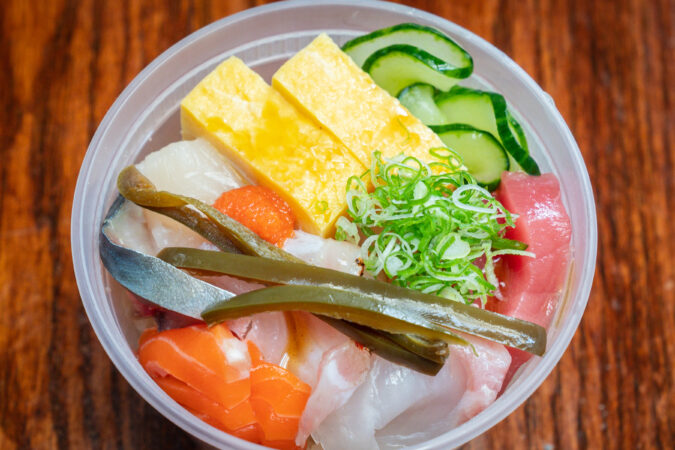
Perhaps unsurprisingly for the sidekick restaurant to the city’s best omakase, Royal Izakaya’s delivery options on Caviar are extensive — far beyond the typical nigiri and sashimi. And you won’t have to wait till the end of the night for one of their legendary industry chirashi bowls, consisting of weirdly shaped leftover cuts of fish crammed into a deli pint with heavily soy-seasoned rice for $20. All of the fish is superb, especially the tuna. Delivery from this Queen Village destination benefits from chef Jesse Ito’s obsession with aging fish, and its sushi rice is perfect. The ikura (salmon roe) on the jumbo Aka-Taka roll gleams, nestled into its marvelous little bed of chopped tuna. Fancy maki rolls range in price from $20 to $27, making date night for two around $160, comparable to every other place on this list.
780 S. Second St. 267-909-9002, royalizakaya.com
Zama
Zama’s delivery menu, also on Caviar, skews heavily toward cooked foods, as well as rolls that you will not find anywhere else in Philadelphia. The Philly Style maki consists of chopped washugyu (American-bred wagyu that is typically less fatty than the Japanese beef) tucked into a red pepper flake-sprinkled soy paper wrapper with Bibb lettuce, rice, provolone, and spicy mayo; it comes with a truly wonderful horseradish aioli for dipping, as well as a pickled whole cherry pepper (the only pepper acceptable on a cheesesteak). Hilariously, you need to select “wit” or “witout” before checkout. Their Bronzizzle roll sparkles with fantastically bitter olive oil, and their tuna usuzukuri — tuna sliced paper-thin — is strange to peel off its takeout paper plate, but nevertheless delicious dipped in ponzu.
128 S. 19th St., 215-568-1027, zamaphilly.com
Qu Japan Bistro & Bar
The sashimi dinner from this tiny downtown sushi bar steps from the Ben Franklin Parkway is composed with expert levels of care. It consists of five different types of fish (salmon, sea bass, tuna, hamachi, and tuna), each sliced into three perfectly sized pieces, gorgeously decorated with edible flowers and specific, artfully arranged garnishes for each fish. At $40, it’s a shockingly good bargain, as are the rest of their thoughtful, beautifully constructed rolls. Qu’s White and Black roll is one of my favorites, consisting of seared black pepper-seasoned white tuna wrapped around a center of spicy, crunchy yellowtail and avocado. It’s inventive and unique without being weird. Qu is on Caviar, but doesn’t bump their presence up with marketing, so you’ll need to do a little searching through the app in order to find their page.
My personal favorite neighborhood delivery and takeout option, Kei delivers rolls are relatively simple but always consistent. I order their Nihon roll (tuna, eel, avocado, yuzu-marinated roe, scallion, and toasted sesame seeds) every time. The Grad Hospital restaurant’s takoyaki is the very best in Philly — blazing-hot little globes of crisped dough encasing nuggets of octopus. Their fried oysters are positively enormous and crisp with fried panko. Their sashimi selection is relatively small but filled with hits like sweet shrimp, salmon, fluke, scallop, yellowtail, and tuna.
This approachable Center City newcomer combines people-pleasing menu items (think deeply flavorful chicken karaage made with thigh meat and parmesan-dusted fries) with excellent, fairly priced sushi sets and chirashi bowls. Its delivery menu, on both UberEats and Doordash, is absolutely massive, so you’ll be spoiled for choice, even when ordering sashimi. Take tuna as an example, which includes three different cuts: akame (lean), chu toro (fatty), otoro (or fatty tuna belly). Be aware that prices are high — the dollar amounts are by the slice. Order by the set; individual pieces of sashimi are much pricier. For $50, their chirashi bowl isn’t massive, but rather than being puffed up with rice, it has generous helpings of diced fluke, salmon, hamachi, and tuna, plus crouton-sized spongy tamago and high-quality caviar and uni.
TOKYO — You have to wake up early in the morning to catch the world’s largest fish market at its peak. You also need to keep your head on a swivel.
“Careful here! These drivers can be crazy!” said our market escort, yanking me back from a warehouse lane wet with fish blood and water as several electric forklifts zoomed past. Piled high with styrofoam boxes bearing some of the most coveted seafood on the planet, these silent-but-speedy carts were designed for Toyosu Fish Market, a state-of-the-art facility built in 2018 on reclaimed land in Tokyo Bay.
The massive refrigerated halls were already humming with activity before dawn on a November morning as Philadelphia chefs Jesse Ito and his father, Masaharu “Matt” Ito, walked through vast aisles of whole fish on ice toward the live-seafood hall, where an acre of ocean creatures bobbed in gurgling tanks flanked by an ike jime station. Thrashing madai red snappers there were deftly dispatched with two strokes of a knife and a wire spike to the brain — a swift death considered both humane and, from a culinary perspective, optimal.
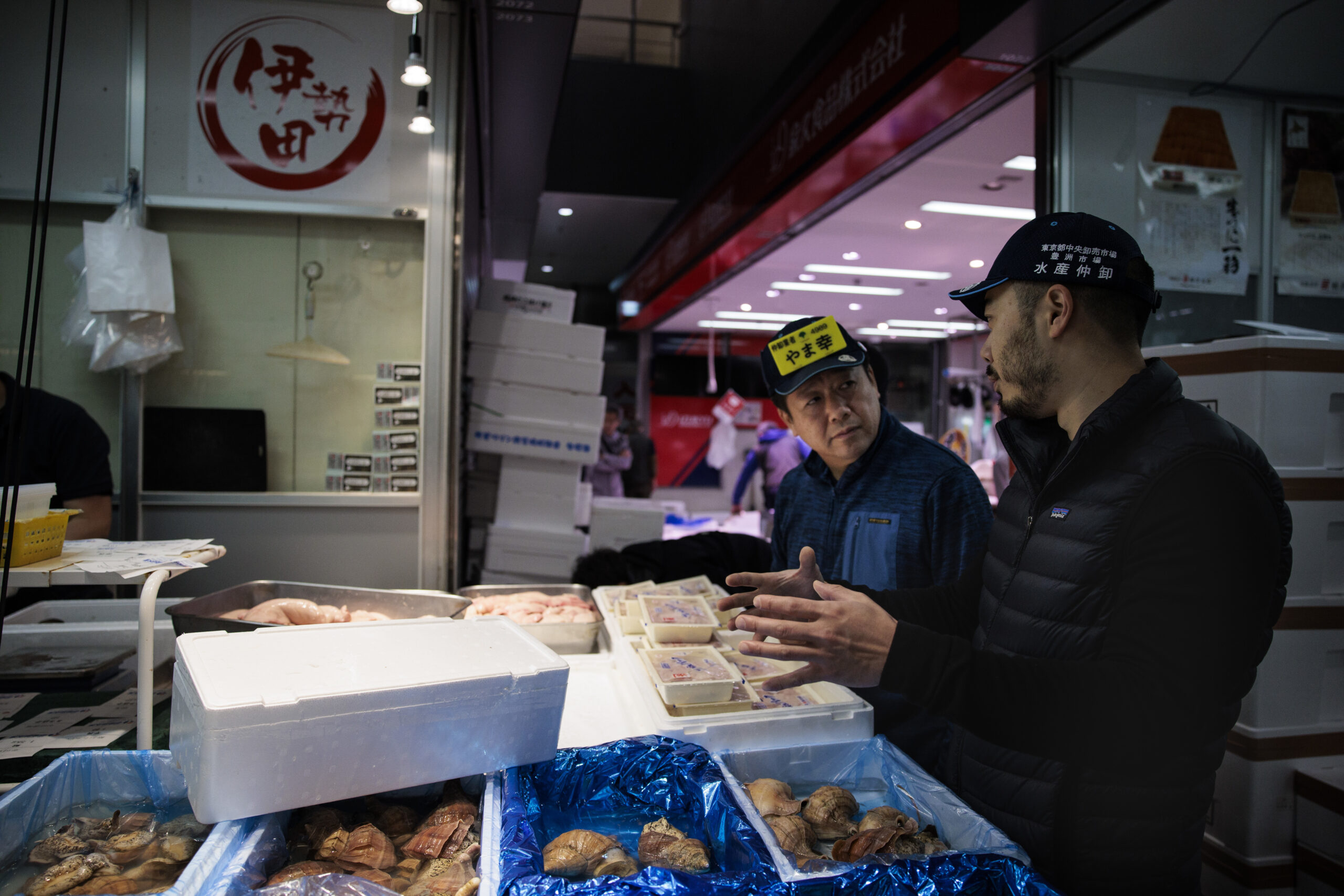
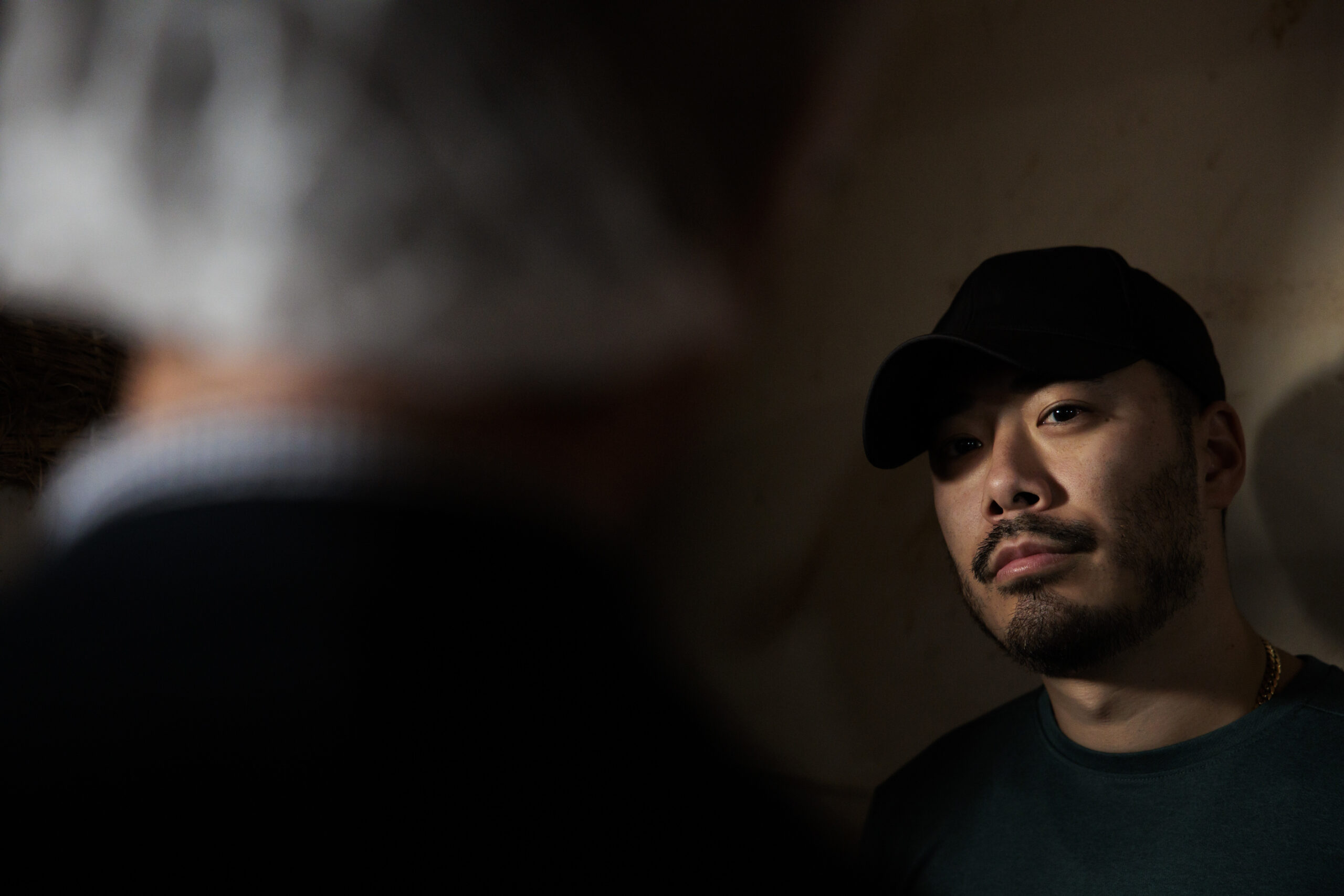
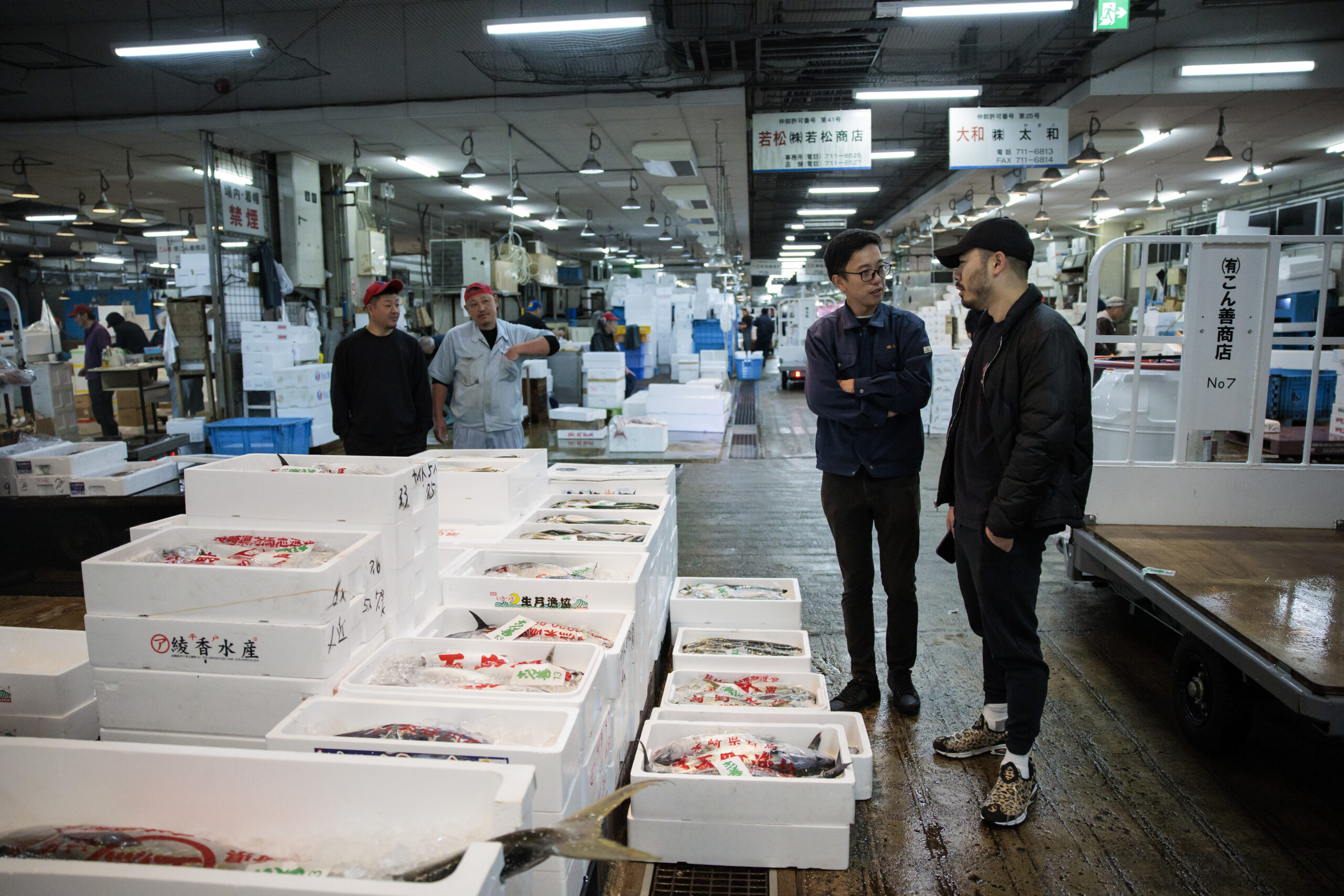
Hirokatsu Takeda talks with Jesse Ito in a stall at Toyosu Market on Tuesday, Nov. 4, 2025, in Tokyo, Japan.
“It instantly disables the nervous system from producing chemicals that degrade the fish and keeps the meat fresh,” said Jesse, of Royal Sushi & Izakaya, whose industry contacts had lent us official hats and white rubber boots to accompany them to areas of this seafood paradise where tourists are not permitted.
At 5:30 a.m. sharp, the hand bells began to chime: Tokyo’s famous tuna auction was underway! We turned into a frigid hall where hundreds of tunas, some as big as couches, were laid atop the jade-green floor. Prospective buyers pried their bellies open with pikes to inspect the fatty pink flesh inside. Auctioneers from five different houses simultaneously launched into a rapid-fire sing-song pattermet with the cries of replying bidders, the chaotic burst of noise transforminginto a haunting, rhythmic chant that resonated in our chests.
“It sounds almost tribal — and you feel it,” said Jesse, 36, who buzzed with excitement from the auction floor. “Japan is so futuristic, and there’s probably a much more efficient way to do this. But this is about culture and preserving tradition. This is part of what it means to be Japanese.”
One of the most respected sushi chefs in the U.S., Jesse was not buying tuna on this day in November, but taking in this time-honored ritual alongside his father.
“I’m so glad we got a chance to experience that together,” Jesse said.
Matt, 72 and Japanese-born, taught a teenage Jesse the fundamentals of making sushi at Fuji, the family’s long-running restaurant in South Jersey. He and Jesse sold it before opening Royal Sushi & Izakaya in Queen Village together with partners in 2016, when Jesse was 26.
Jesse grew up in Cherry Hill and worked at Fuji from childhood. Before age 27, he’d never flown on an airplane, let alone travelled to Japan — a curiosity for a talent who’s risen to national acclaim as an eight-time finalist for the James Beard award, aMichelin-recognized chef, andthe face of the 32nd best restaurant in North America as ranked by World’s 50 Best. He finally made it to Japan in 2024 on a research trip for his new restaurant, dancerobot, with business partner and chef Justin Bacharach. This secondvisit, in late 2025,would also be full of nonstop eating in search of inspiration, found at street stalls, yakitori grills, sushi counters, and world-renowned kaisekis.
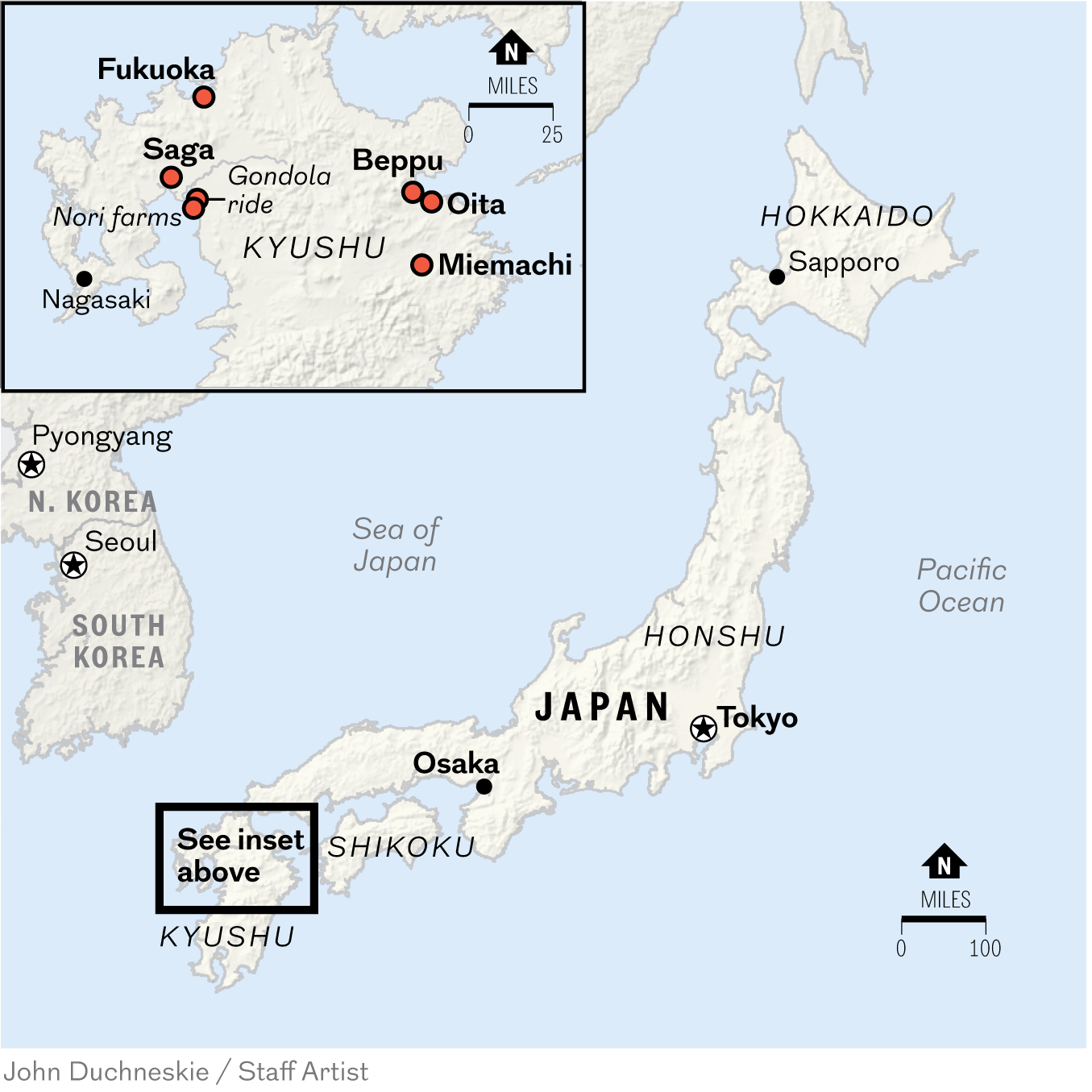
But this journey was especially personal: We were boarding a plane later that morning to the southernmost Japanese island of Kyushu, to visit the village where Matt was born.
Map of Craig LaBan’s travels in Japan with Philadelphia chef Jesse Ito and his father, Matt.
Matt, who lives alone in Pennsauken with his two macaws, Sakura and Ichiro, had not been back to Japan in 25 years and, before last year, had no imminent plans to return. Jesse thought it important for his father to go while he was still physically able, and paid Matt’s way.
“I never thought I’d get a chance to go to Japan with him,” Jesse said.
The prospect of a father-son jaunt was hardly a given. The last time they took a family vacation? “Jesse was 3 years old,” said Matt, recalling a trip to Florida before his world got “caught up in work, work, work … I regret that.”
There were other complications. Matt’s visa needed to be updated. Jesse had also been reluctant in previous years to relinquish two weeks of revenue from his omakase, an expensive experience for 16 diners each night (almost entirely regulars) that’s one of the toughest reservations in America.
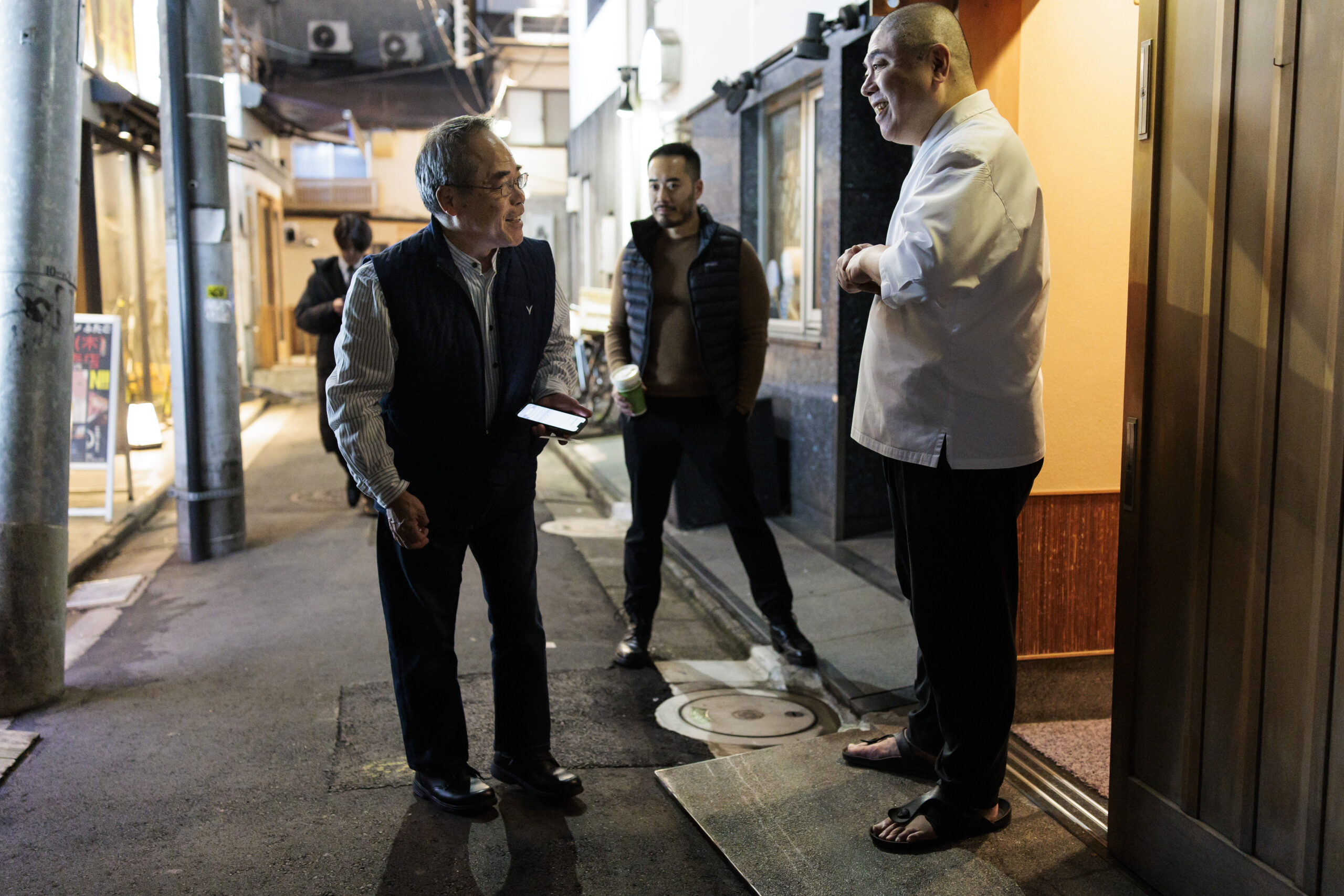
Matt Ito and Jesse Ito talk with Chef Kunihiro Shimizu outside of his restaurant, Shimbashi Shimizu, on Sunday, Nov. 2, 2025, in Tokyo, Japan. No photos or video are allowed during the omakase at Shimbashi Shimizu, and international visitors are only permitted when accompanied by someone who understands Japanese.
Even more daunting was the prospect of so much time together. Despite working in the same restaurants every day for the past 22 years, the two rarely interact. There’s been challenging history between them: Jesse watching his parents’ divorce as a teen, financial struggles at Fuji, and a shifting power dynamic in the kitchen at Royal as Jesse took the lead and became a star — all while publicly grappling with alcoholism.
With Jesse now five years sober, the air between them has been cleared. “I had a sit-down with my dad and there were a lot of raw emotions,” Jesse said. “I apologized, and he spoke, too. We’ve made amends. We’re on good terms now.”
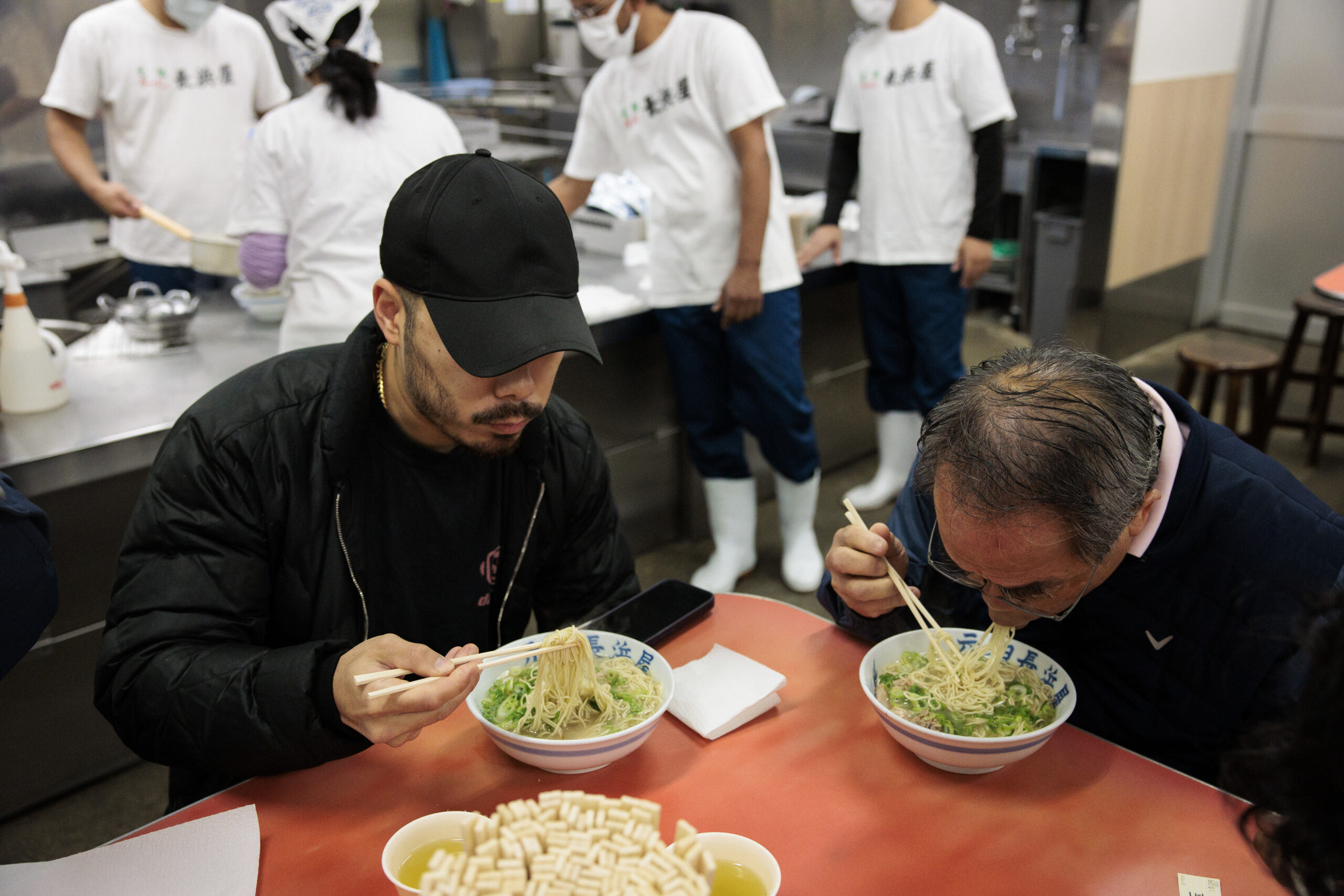
Jesse Ito and Matt Ito eat Tonkotsu ramen at a shop across from the Nagahama Fish Market on Thursday, Nov. 6, 2025, in Fukuoka, Japan.
For Matt, the chance to journey to his homeland for the first time in a quarter-century with his son was an unexpected gift: “This is the first time I’ve spent this much time alone with Jesse since he was in junior high.”
After leaving the tuna auction, Jesse hustled to introduce himself to several suppliers that handle prime ingredients he wanted to bolster his menus.
“Next time I order,” he said as we walked to lunch, “they’ll know who I am and give me the good stuff. ‘That’s Jesse-san, send him the best!’”
Matt trailed behind, reveling in the beauty of all that gorgeous seafood, including live snapping turtles that gave him flashbacks to his teenage years as a fish-market butcher: “Be careful or you’ll lose one of these!” he said, wiggling his fingers.
We were famished by the time we arrived at Iwasa, a small restaurant in the market serving sushi for breakfast. We devoured the freshest pink toro, tender abalone, blood clams carved into snappy pompoms, and the sweetest shrimp over nubs of warm rice. It was just 6 a.m. We still had a late-morning plane to catch. The longest day of Matt and Jesse Ito’s big adventure had only begun.
An inauspicious beginning
Matt Ito arrived in Philadelphia almost exactly 50 years ago, just as an epic snowstorm in February 1976 froze the Schuylkill River solid. The 21-year-old chef was having regrets. The sandwich on the plane — roast beef on dry rye bread — was shocking. “I’d never seen such terrible food,” he said. When the owners of Sagami picked him up at JFK airport, he gazed out the windows of their Datsun with dismay as the wintry New Jersey Turnpike rolled by with “no mountains, just flat land, ice, and snow.”
He’d been recruited through a friend in Kyushu to this still-fledgling restaurant in Collingswood, where he lived upstairs for the first two weeks. He was in charge of making sushi at a moment in American culture when tuna rolls, raw salmon, and even tempura-fried shrimp were still novelties. “A lot of people had never seen this before. I had to teach people how to eat it,” Matt said.
But owners Chizuko and Shigeru Fukuyoshi were wonderful, he said, and Sagami was a fortuitous landing spot. That’s where he met Jesse’s mother, Korean-born Yeonghui Choi, who was a server. When he decided to open Fuji in 1979, she joined him there, building the business while his English was still limited.
Despite its out-of-the-way location in a Cinnaminson strip mall, Fuji became a cult favorite of gourmet societies like La Chaîne de Rotisseurs thanks to Matt’s lyrical kaiseki. By the time I first encountered it in 1999 — writing a rave review about the tuna-wrapped foie gras, curry-spiced squab, and bundles of lobster crisped inside translucent tempura crusts — I could not fathom how such a talent had remained largely unknown to Philadelphia’s wider public for nearly two decades. When the Itos were forced through eminent domain to move their restaurant to Haddonfield in 2007, Matt’s cooking was better than ever. But the restaurant remained under the radar.
Jesse worked his way up from dishwasher to head sushi chef at Fuji by 2008, getting more involved in the business.He graduated Rutgers-Camden with a business marketing degree in 2011. The decision to sell the restaurant after 37 years in 2016 came down to the unforgiving limitations of a family-run BYOB. “It’s not like we were failing. But we worked so hard for so little return, and there was no way for my parents to stop working,” Jesse said.
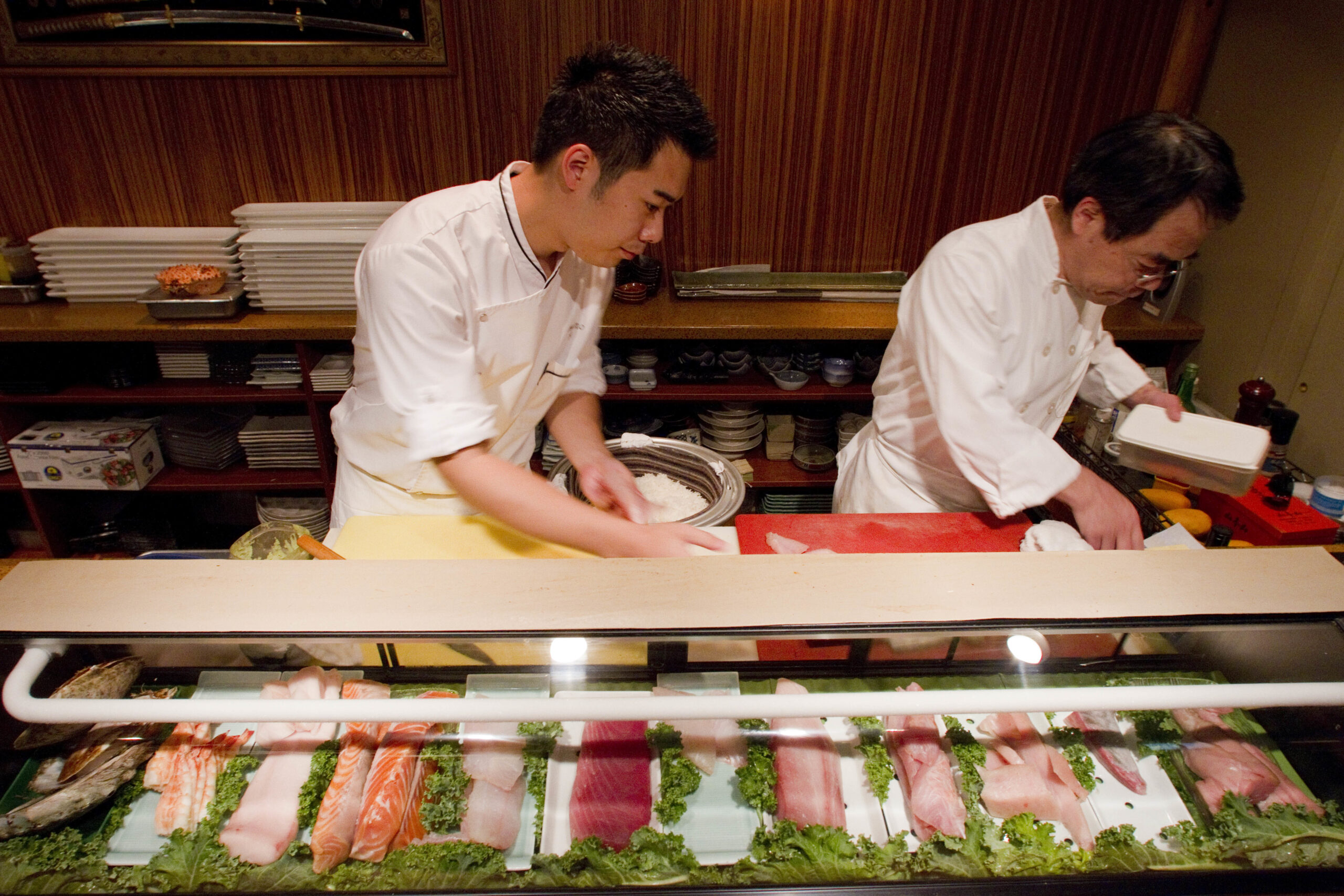
Jesse Ito (left) and his father, Matt Ito work at the raw bar at Fuji, Haddonfield, June 9, 2011.
They leveraged the sale of Fuji to allow his mother to retire, and to build something bigger. He and Matt partnered with restaurateurs Stephen Simons and David Frank — who own Royal Tavern and Cantina Los Caballitos, among severalothers — to open Royal Sushi & Izakaya.
“I wanted to take care of my parents financially and also do something for myself,” Jesse said. “It’s a classic immigrant story: The first generation works hard and lays the groundwork, the second generation either takes it to the next level or goes a different route to become a doctor or go into finance. I grew up in that struggle, and as a teenager, life was not always nice.”
Jesse has clearly taken it to the next level. Half a century after Matt helped usher in the dawn of sushi for Philadelphians, his son is now redefining the genre’s boundaries with his ever-evolving omakase. Bridging and building that legacy is no small feat considering there are now over 17,000 sushi restaurants in America, according to Nobu Yamanashi, of Yama Seafood in Jersey City, which distributes fish to over 800 restaurants around the country, including Royal Sushi.
“All the iconic Japanese chefs with global reach are in their 70s,” says Yamanashi. “The next Nobu [Matsuhisa] or Morimoto doesn’t exist yet. It’s up for grabs. But there are a handful of Japanese chefs right now that have a chance to lay that claim. Jesse has the ability.”
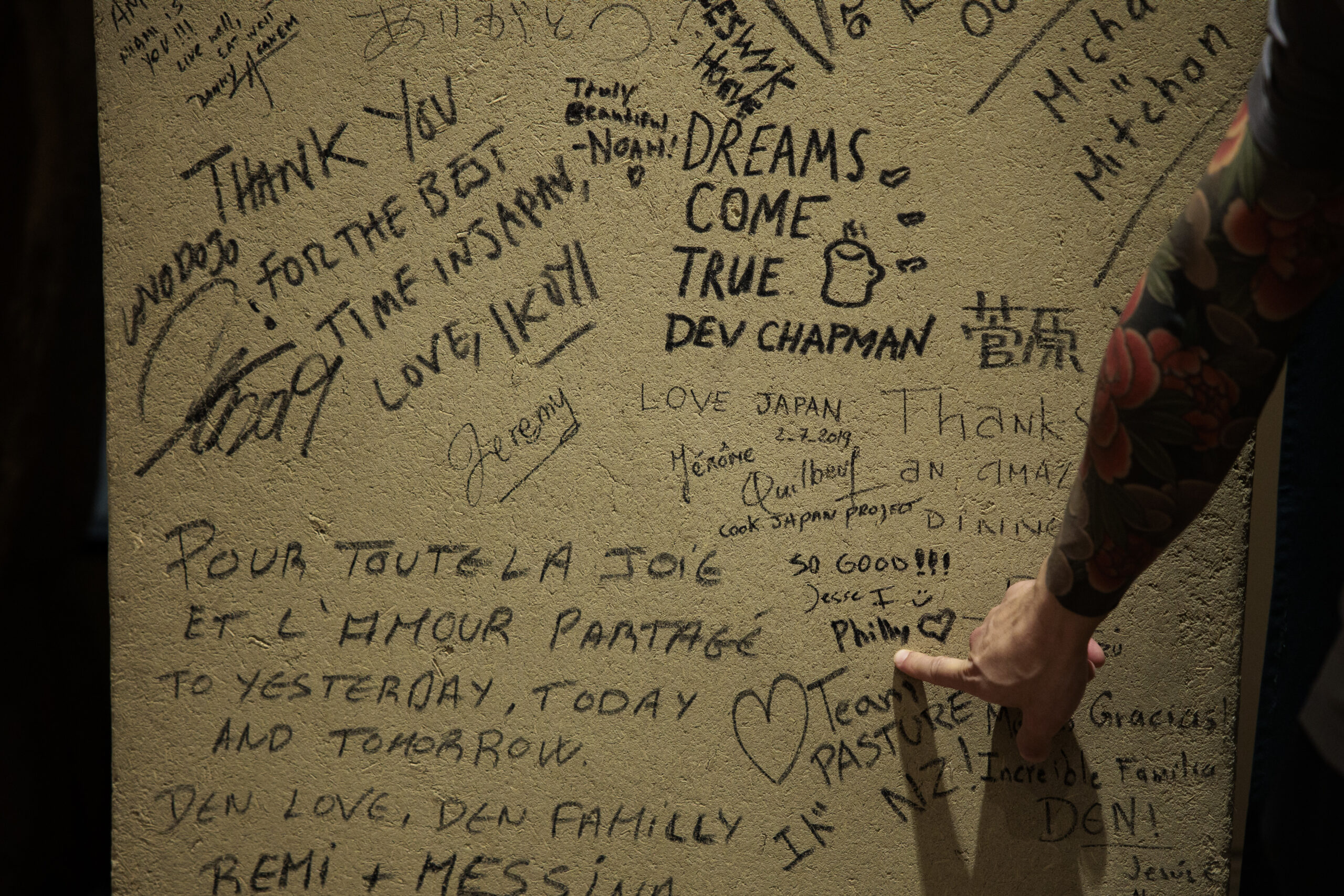
The potential for such recognition was already evident on Matt and Jesse’s trip. In Tokyo, atDen, a renowned kaiseki destination (No. 32 on World’s 50 Best Restaurants), Jesse took pride in signing the wall at the restaurant’s invitation, joining the names of famous chefs who’d visited from around the world. Jesse was also caught completely off-guard at Yohaku in Osaka when chef Yoji Arakawa asked him for a picture after our meal. “I was nervous when you walked in because I follow you on Instagram,” Arakawa told him.
Chef Zaiyu Hasegawa talks with Matt Ito during dinner service at Den on Monday, Nov. 3, 2025, in Tokyo, Japan. Den has two Michelin stars.Jesse Ito points out his message on the wall at Den on Monday, Nov. 3, 2025, in Tokyo, Japan.
That his growing social media profile had somehow reached halfway around the world both stunned and delighted Jesse: “That was super-validating,” he admitted.
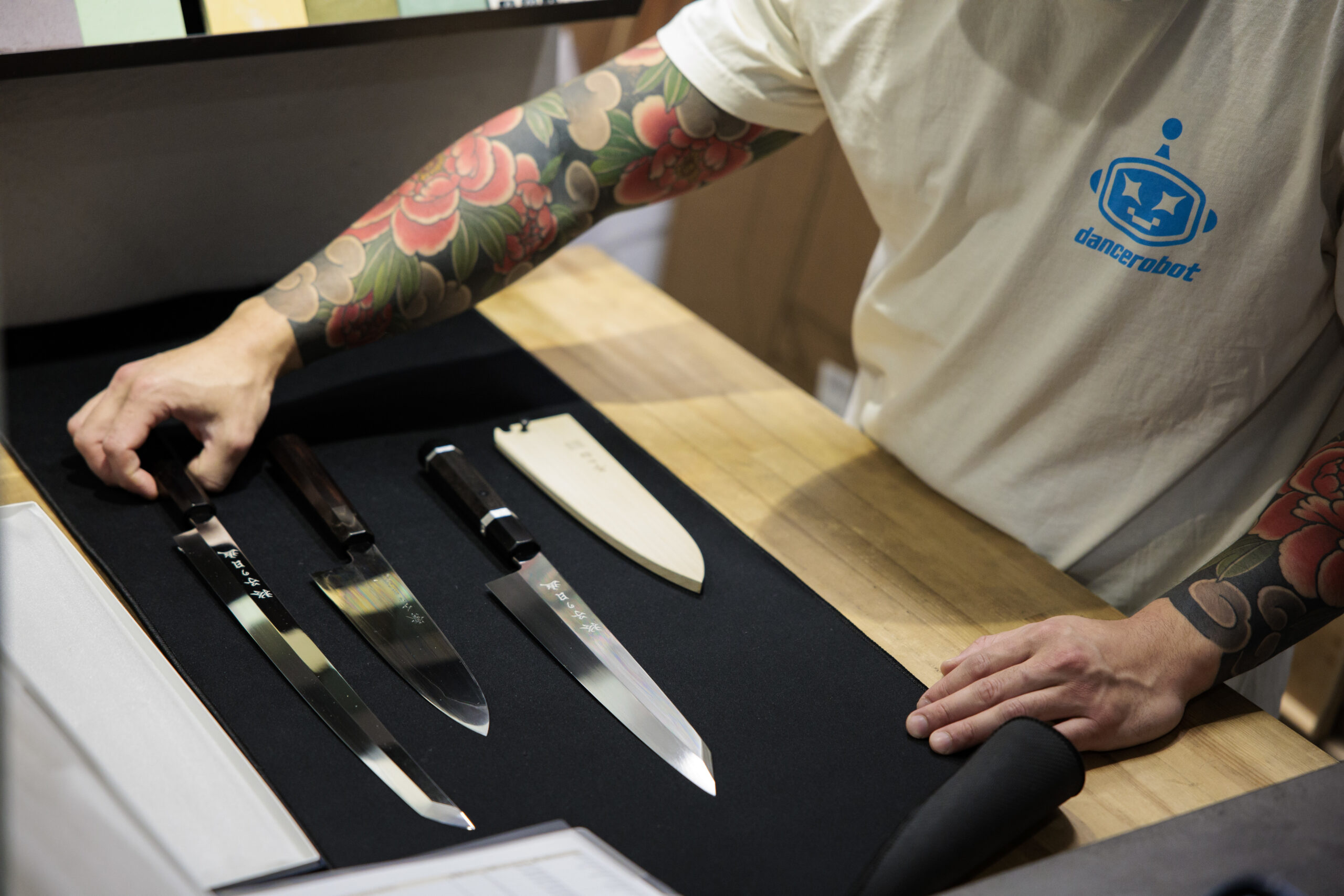
Jesse denies he has ambitions of global renown. But he’s certainly embraced the trappings of superstar chefdom. He has flown to London half a dozen times over the past few years to tattoo his arms with sleeves of colorful peonies and jetted to Los Angeles to tattoo his chest with a coiling dragon. On our field trip to Tokyo’s Kappabashi kitchen-supply district (“It’s Toys ‘R’ Us for chefs!”), he splurged on $1,000 worth of hand-blown sakeware for Royal’s omakase. A visit to the famed Nenohi knife store in Tsukiji Market bolstered his collection of high-end knives, including a gleaming broad blade with an emerald-lacquered scabbard that ran him a cool $2,700.
Jesse Ito checks out the knives at Nenohi Cutlery Co. at the Tsukiji Market on Monday, Nov. 3, 2025 in Tokyo, Japan.
“The omakase is a performance, so it’s nice to have a great knife,” he said as lights danced across his face from the sword-like curve of another sujihiki slicer he was considering.
His father was quietly shaking his head in the corner. Matt, who’s so thrifty he brought his own onigiri rice balls from South Jersey to snack on while in Japan, said he could not relate his son’s knife obsession.
“If a knife cuts well, that’s all I need,” he said. “And don’t tell his mother he spent so much on a knife. She hates this.”
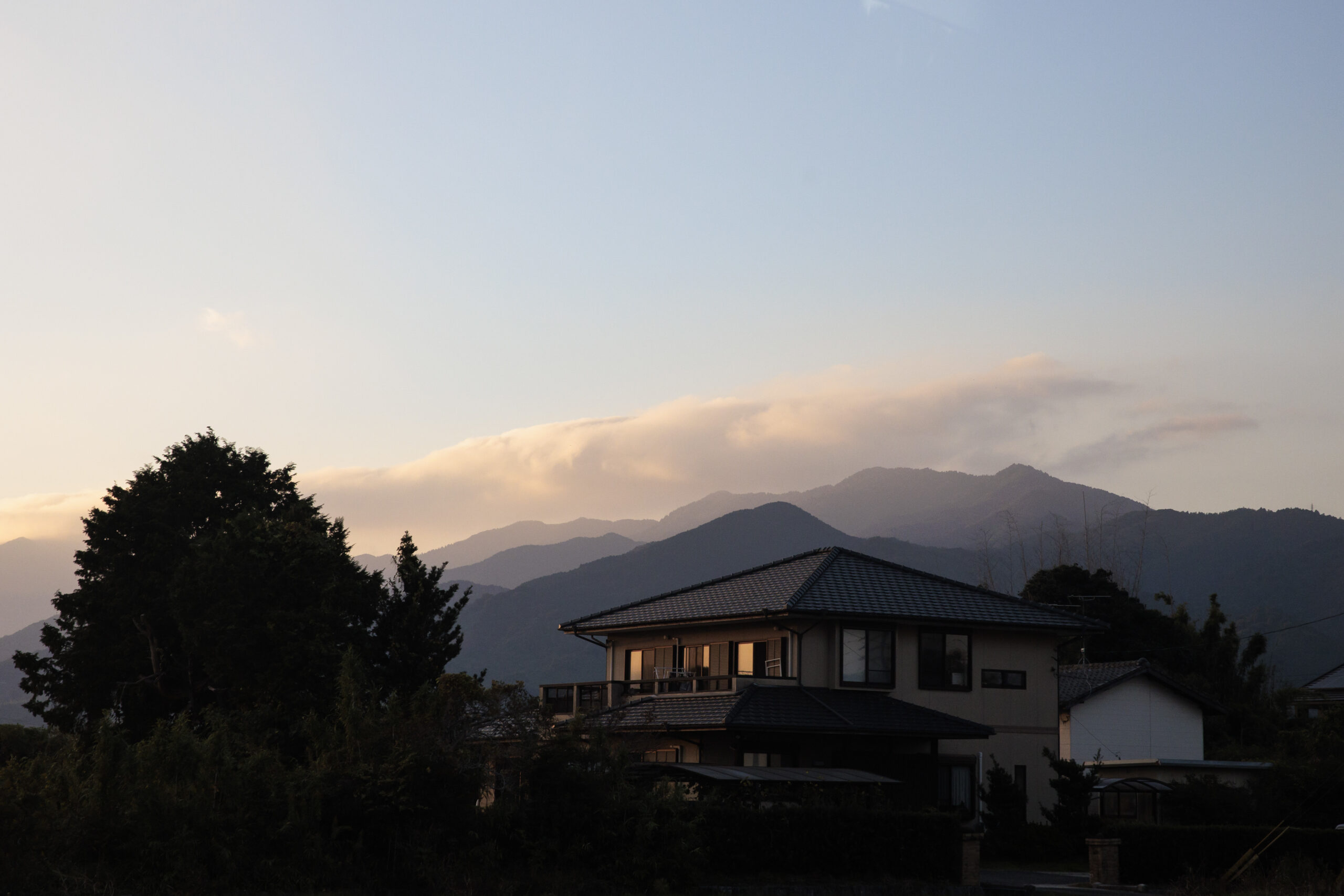
The sun sets during a drive on Wednesday, Nov. 5, 2025 in Japan.
A detour, and then a discovery
We arrived at Oita Hello Kitty Airport around 1 p.m., and when we stepped outside, Matt took a deep breath of the ocean air hugging the rocky coast of Kyushu Island.
“It’s a homecoming!” he said. “I can smell it!”
We’d come to visit Miemachi, Matt’s hometown on the outskirts of Oita. And Jesse was visibly concerned. He’s accustomed to being in control of every logistical detail, both at his restaurants and for the itinerary of this trip, and our time in Kyushu was the only leg of the journey he’d delegated to his father. But he grimaced when he saw his father’s gameplan for transit between the airport and Miemachi. Matt’slegal pad was scrawled with a series of connecting trains and buses that would get us there in three hours if all went smoothly.
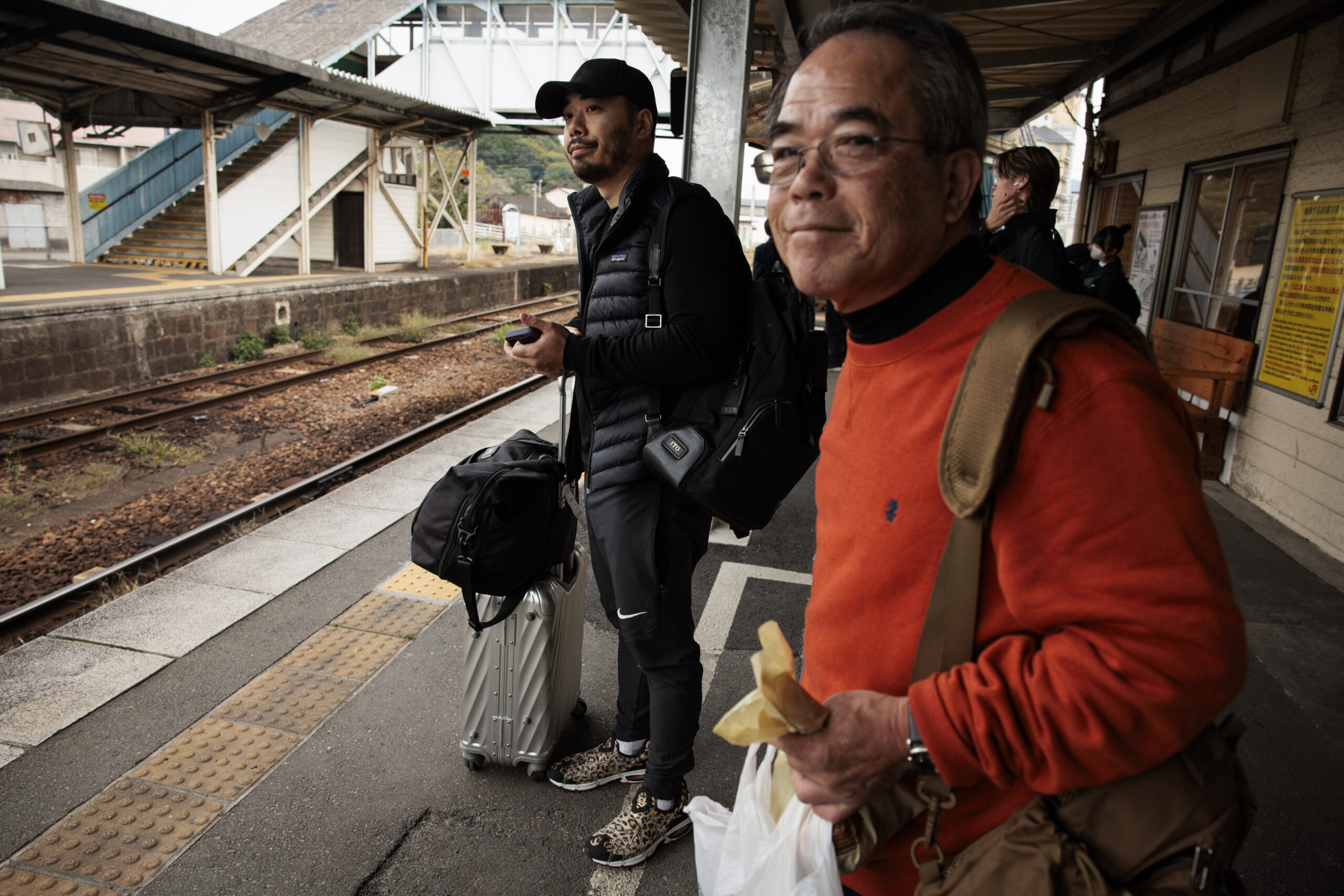
Jesse Ito and Matt Ito wait on the train platform at Miemachi Station on Tuesday, Nov. 4, 2025, in Miemachi, Japan.
“Do we really need to go there?” asked Jesse, clearly drained after waking at 3:30 a.m. for our tour of Toyosu and then rushing to board a flight. “Nothing’s going to be open. What are we even going to see?”
I insisted we follow through: This was one of the main goals of our trip! Matt, sensing Jesse’s unease, surprised his son by hiring a cab to take us there directly.
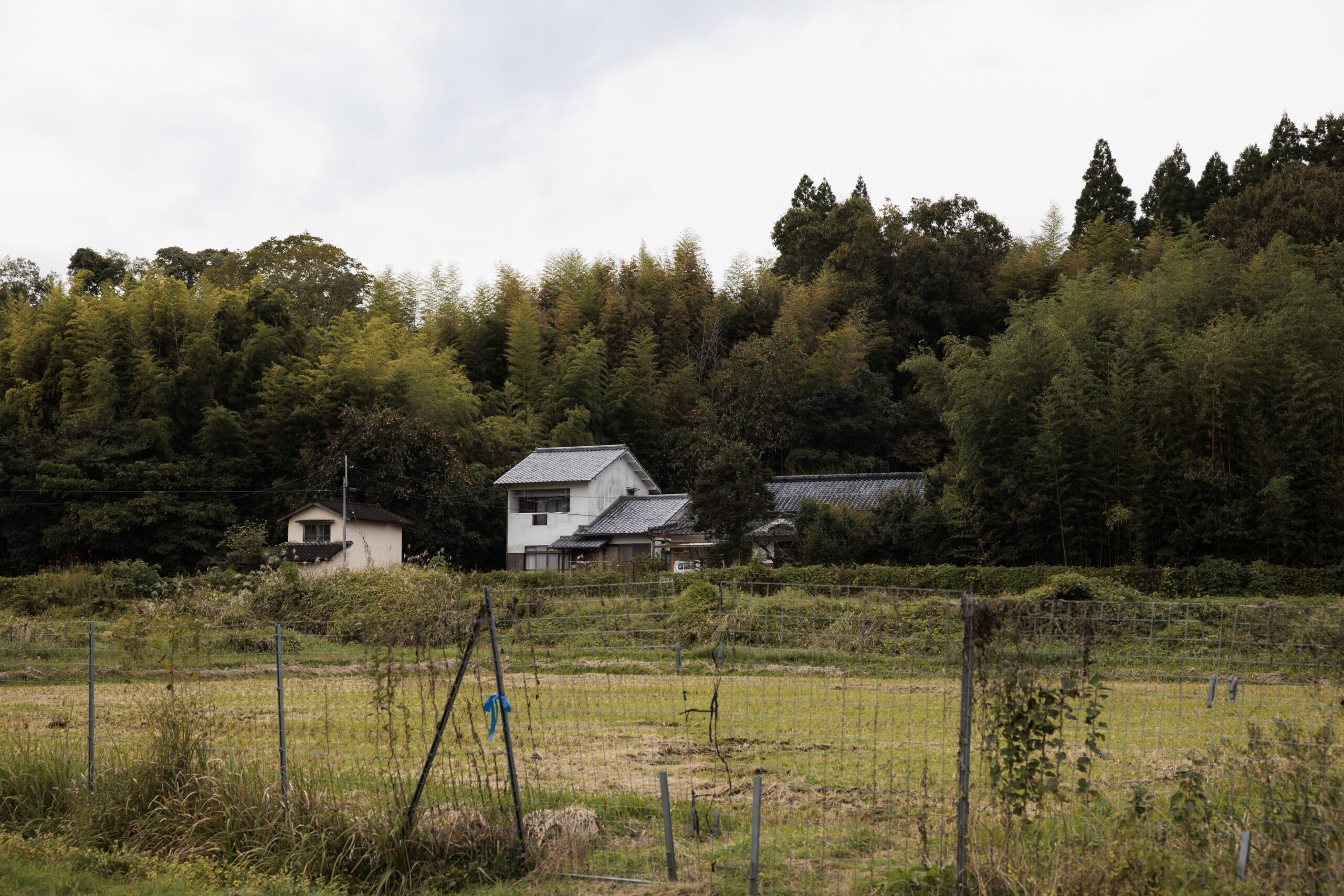
Ninety minutes later, we rolled through the small town of Bungo-Ōno and up into the sparsely populated hills of Miemachi, an agricultural patchwork of rice paddies framed by the jagged triple peaks of Mount Katamuki. The cab moved slowly toward a cluster of houses, then drifted to a stop on Matt’s cue. Jesse was certain we were lost.
“Dad, what’s the plan to get back? They don’t have Uber here.”
Matt did not reply. Instead, he exited the car and walked down the road until he disappeared around the bend. The cab driver got out and smoked a cigarette against the car hood. Minutes ticked by and Jesse began to panic.
“This is why I can’t let my dad plan things. Let’s be proactive, rally my dad and get out of here!” he said, suddenly shaking his phone. “I can’t get a signal. There’s no internet. I can’t use Google Translate to communicate with the driver!”
At that moment, Inquirer photographer Monica Herndon, who had followed Matt, came jogging back to the cab: “He found it!”
Fukiko Ito talks with Matt Ito and Jesse Ito, outside of her home on Tuesday, Nov. 4, 2025, in Miemachi, Japan.The area where Matt Ito used to live on Tuesday, Nov. 4, 2025, in Miemachi, Japan. The home he used to live in is no longer standing.
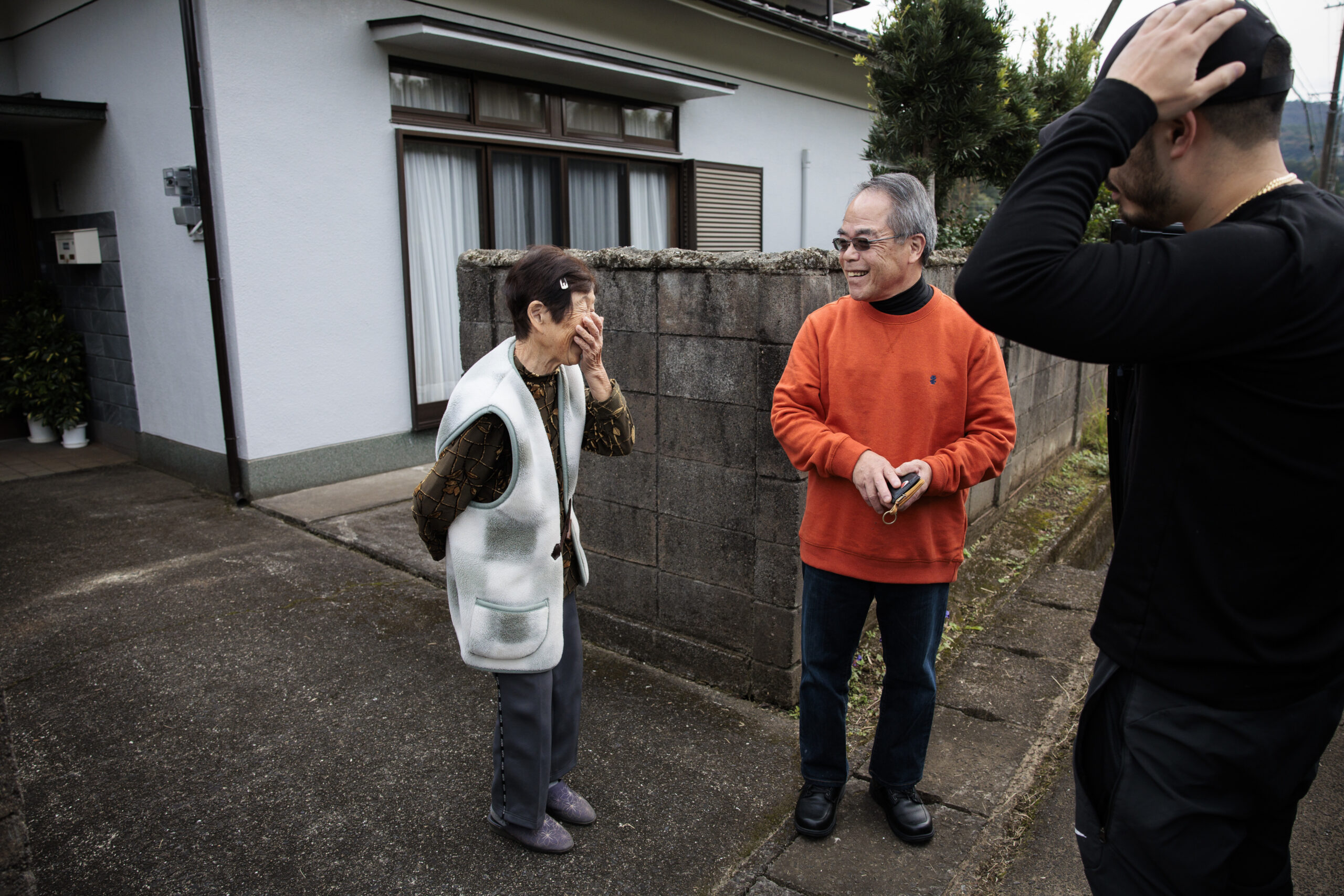
Just over the rise, we found Matt at a low-slung house happily chatting with Fukiko Ito, 84, a cousin he’d not seen in decades who answered the door by pure luck. She was living in the house Matt’s father, Hideo, had built for his grandfather in 1967.
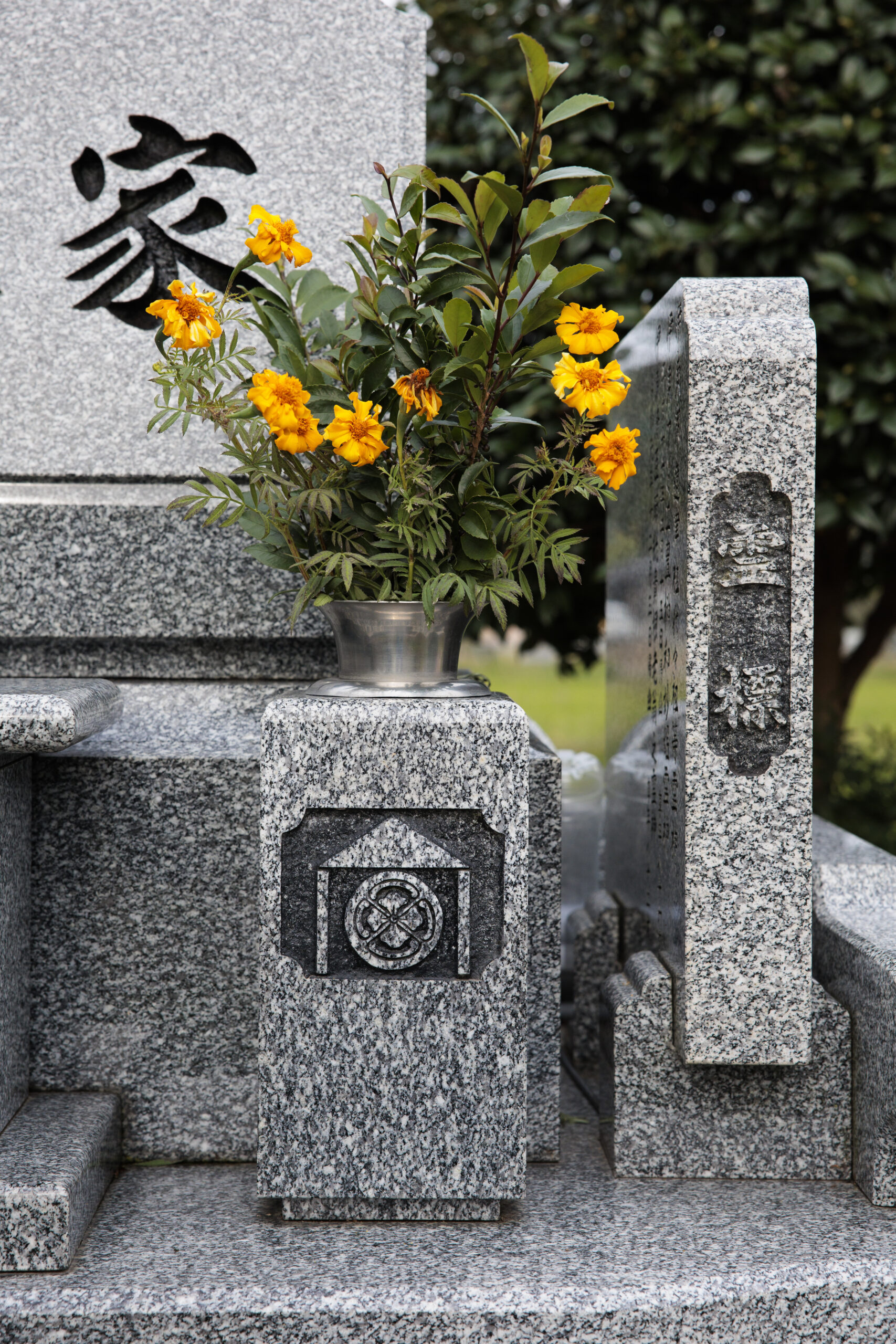
“Wow! Wow! Wow!” Matt said, proudly introducing Fukiko to his son. We followed her into the backyard and discovered another surprise: a granite altar with blooming yellow flowers that marked the family grave.
“My mother and father are buried here,” Matt told Jesse, whose anxious edge had instantly softened into one of quiet awe. “Your great-grandparents are buried here.”
As a falcon circled overhead, Jesse quietly gazed at the monument and spotted his family crest etched into granite. It was the same patterned quince flower, descended from a branch of the Ito samurai clan, that he’d used for Royal’s logo. He now realized that he’d transcribed it incompletely.
The Ito family crest is seen on the family grave in the backyard of Fukiko Ito’s home on Tuesday, Nov. 4, 2025, in Miemachi, Japan. Jesse Ito uses the family crest as the logo for his Royal Sushi omakase in Philadelphia.
“I’m missing the house that goes around the outside of the flower,” he said, noting it for correction.
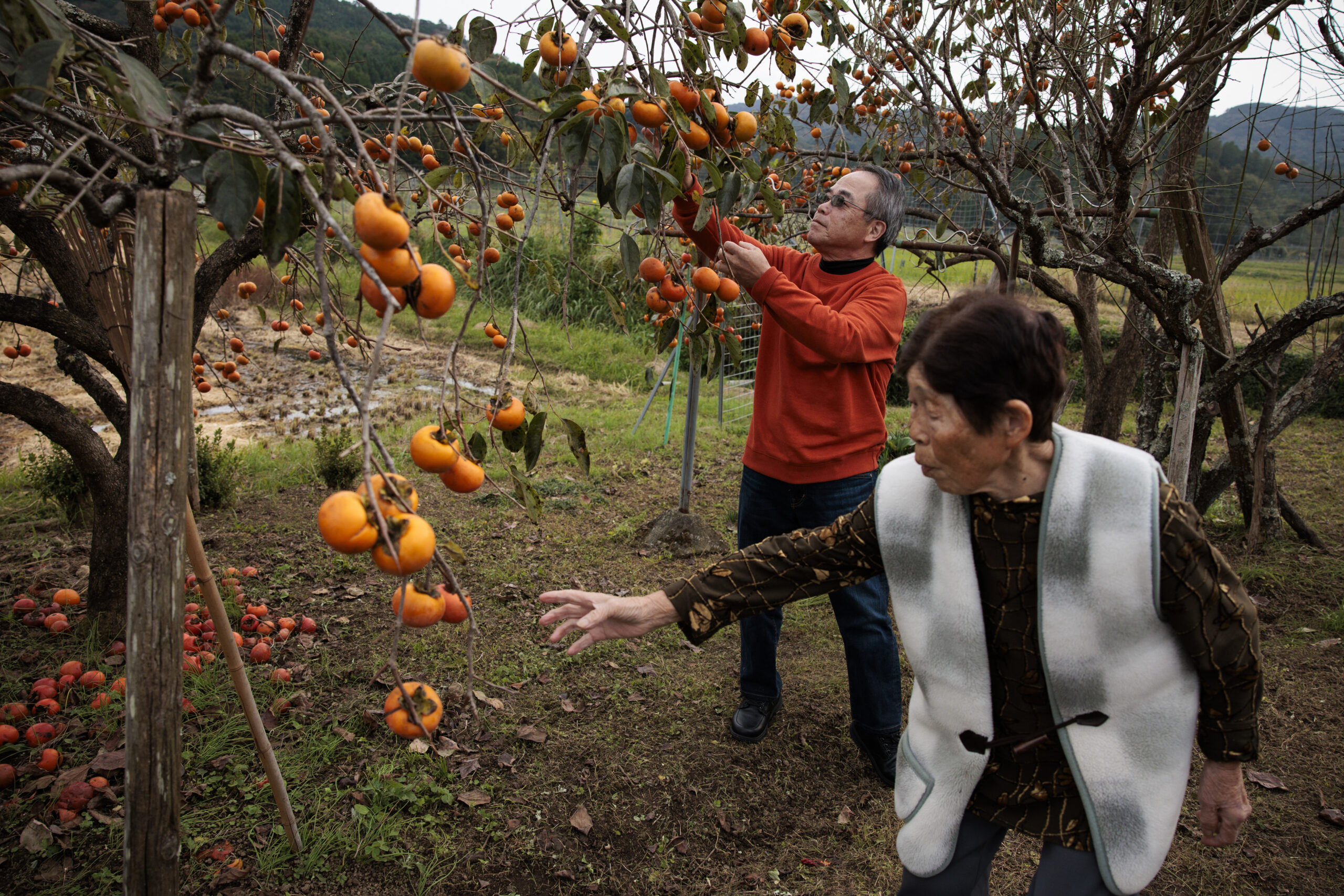
Matt had been giddily wandering the yard’s garden, picking fragrant sudachi citrus and orange persimmons off the trees. He caught Jesse’s eye and then — “here, catch!” — tossed him a piece of the family fruit.
Days later, Jesse would regard this as one of most powerful episodes of the trip, a direct connection to a heritage that rooted him to ancestral land that, since he was young, had felt like a distant concept not only as an American who’d never traveled, but as the product of a mixed-culture marriage who wasconstantly confronting impostor syndrome.
“For most of my life I felt that way, like a misfit — an American-Japanese-Korean kid who was not accepted by either group,” Jesse said.
He took heart in the pure delight that bloomed across his father’s face, an unfamiliar expression: “I’ve never seen him so happy — maybe ever.”
In the moment, though, Jesse later said, when he saw that persimmon arc across the yard, he thought of his childhood in Cherry Hill, a lonely latchkey-kid existence with his parents always at the restaurant. He’d microwave himself a dinner of buttered rice and seaweed. His dad was never around to actually play catch.
Matt Ito and his cousin Fukiko Ito pick persimmons in the backyard of her home on Tuesday, Nov. 4, 2025, in Miemachi, Japan.
Letting Jesse run the show
A flood of parallel emotions was soon to overwhelm Matt, too.
As he and I sat alone togetheron the commuter train to the nearby spa town of Beppu following the unplanned family reunion, he recalled his own childhood. He was an indifferent student who spent time farming at age 14 to help care for the family when his father, a Japanese calligraphy teacher and former Army cook, fell ill. His father only gave Matt his blessing to become a chef on his deathbed one year later: “Under one condition: Just be the best.”
Fifteen-year-old Matt started his careerin a fish market, butchering the local delicacy of fugu blowfish, learning to massage the deadly poison out of its liver underwater. His mother found him a kitchen job at the New Tsaruta Hotel, a resort where, in fact, we were staying that night. It was there Matt learned the art of kaiseki, a multi-course tribute to the seasons that employs different cooking techniques with every course. Matt also befriended a mentor there who gave him words to live by: “You have to make your own life. There are opportunities floating by you in the air. You just have to grab them!”
After two more years training in Osaka, the same mentor presented him with his big shot: the position at Sagami.
“I figured I’d go to America for two years,” Matt said. But he kept grasping at the opportunities. A wife. Their own restaurant. Two children — Jesse and his older sister, Naomi. Devoted customers and a lifetime of work. Too much work.
“I had a plan until I was 45, but then I messed up after that,” Matt said as the train rattled towards Oita. “I should have been a better father. I should have been a better man at the house. Instead I was always working, and as a result I lost my wife. I still feel bad about it, but we’re still friends and I talk to her every day. And every day before this trip, she’s so worried and tells me: ‘Don’t let Jesse eat fugu!’”
Matt’s still a partner at Royal Sushi & Izakaya, but he’s content to watch Jesse run the show, admiring his son’s creativity (“sometimes I think he’s a genius”). He comes in for a couple hours early each day to make the tamagoyaki, the delicate, lightly sweetened rolled omelet customers often order to finish their meal.
“[The cooks] just know me as the grumpy old man there making rolls. I’m Ito-san, that’s all. A funny old man.”
Matt Ito walks towards the New Tsaruta Hotel on Tuesday, Nov. 4, 2025, in Beppu, Japan. Matt once worked in the kitchen at the New Tsaruta Hotel in Beppu.
But he’s also observed closely as Jesse pours himself into the restaurant with a determination and focus he recognizes all too well.
“He works too hard, and I worry about him. I want him to have a life, too. I hope he finds someone to get married to, like any parent would.”
Is he worried his own story is repeating itself with his son?
Matt nods as the train pulls into Beppu station. Finally, 16 hours after rising to watch the morning tuna auction in Tokyo, we shuffled like zombies into the lobby of the New Tsaruta Hotel.
The aging tower overlooking Beppu Bay — known for sixth-floor open-air baths fed by the town’s famous hot springs — had lost some of its grandeur over the past half-century, Matt conceded. But when an exhausted Jesse opened the door to his room, he was not prepared for the culture shock of the spare traditional Japanese accommodations, with little more than a tatami mat visible. “There’s no bed!” he thought to himself, unaware of the futon in the closet. He turned around and, not wanting to offend his father, quietly left New Tsaruta and checked himself into a cushy new hotel nearby.
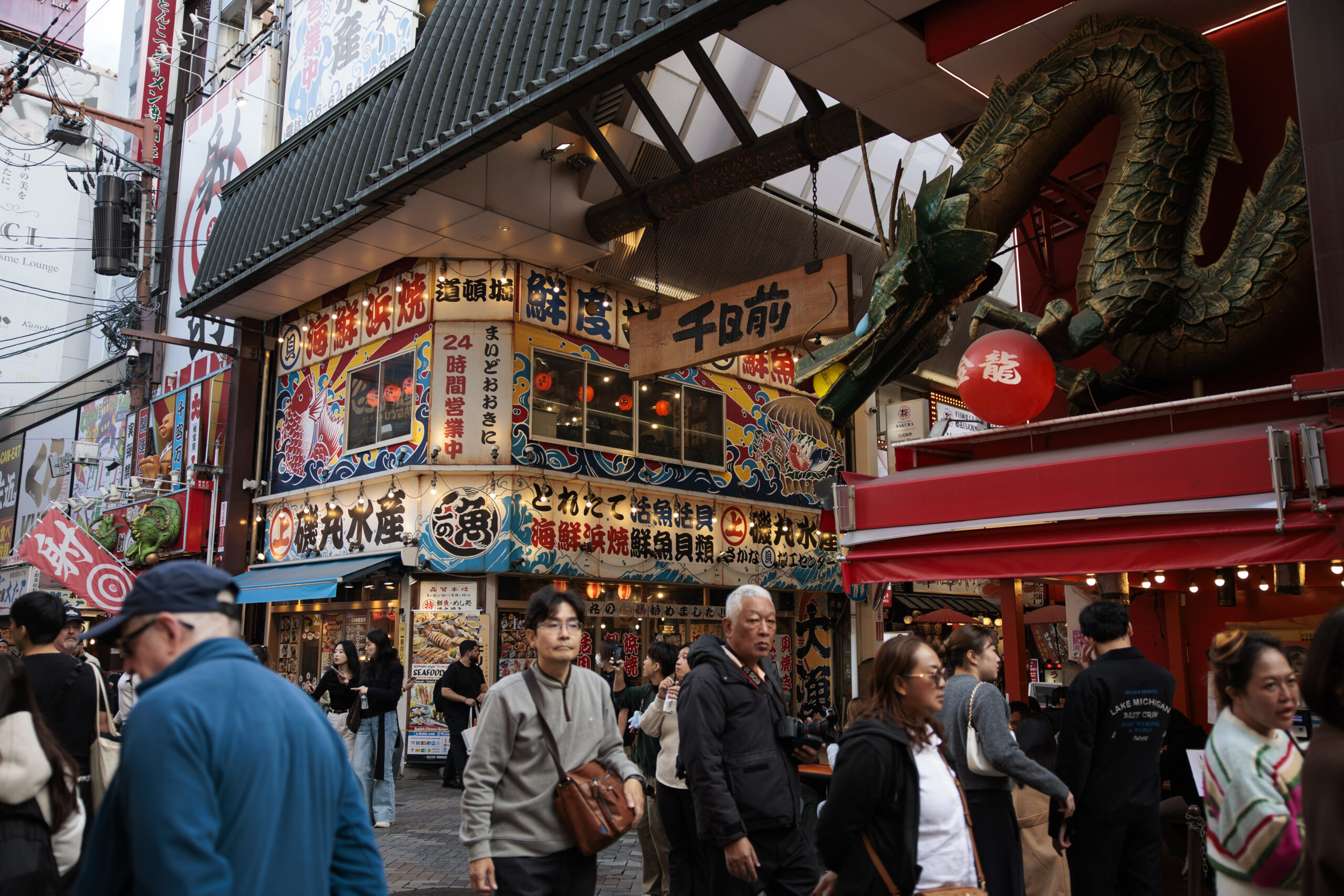
Colorful shops line the street in Dotonbori on Thursday, Nov. 6, 2025, in Osaka, Japan.
Small improvements every day
“I’m sorry if I was cranky last night,” apologized Jesse the next morning as we boarded an early train to Fukuoka. A soft mattress had helped him recover his good spirits. Our previous day had been special. “I saw how happy my dad was and I felt like I’d done my duty as his son,” he said.
But today brought another adventure on Kyushu that we’d all been looking forward to: nori day!
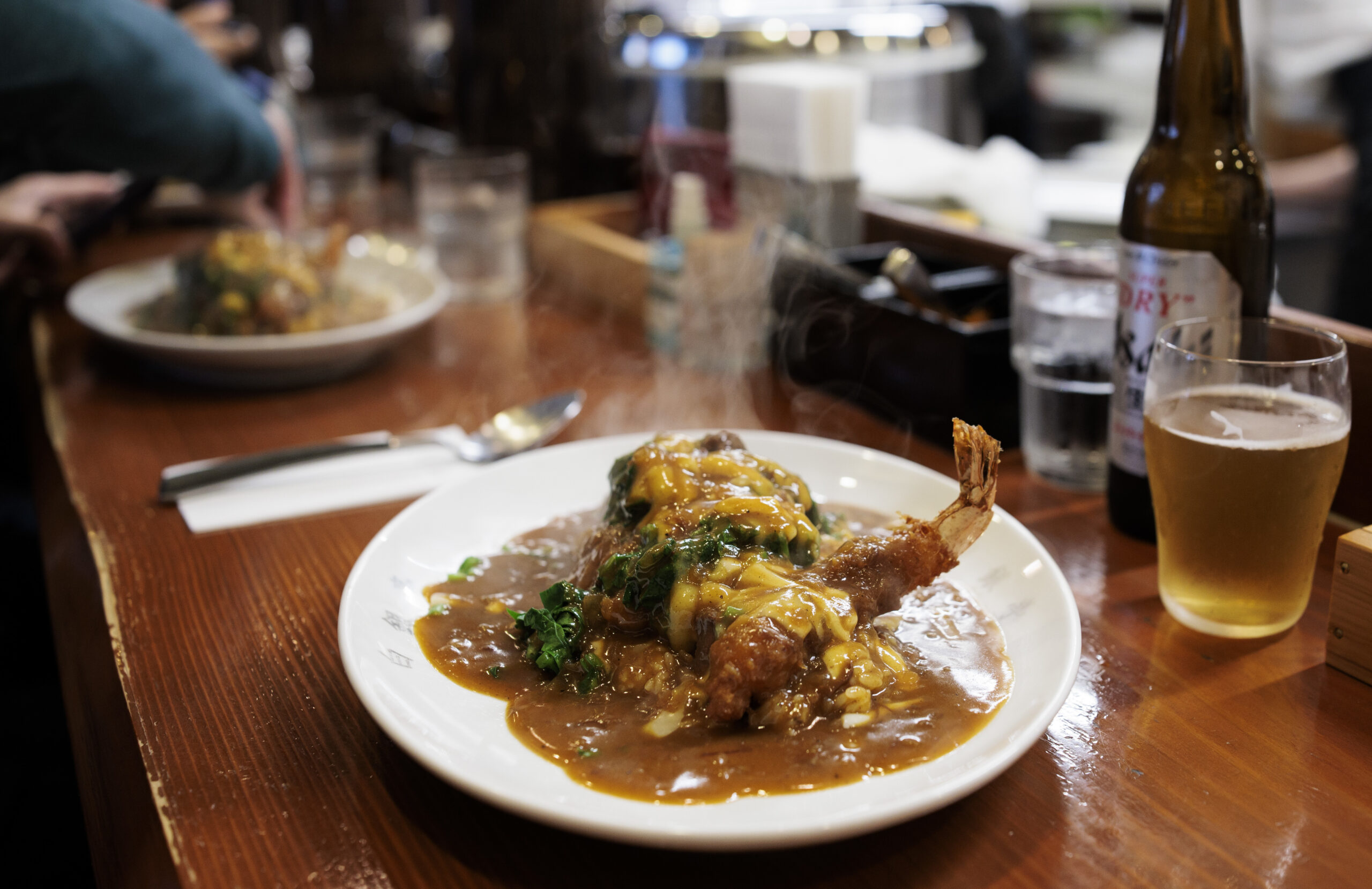
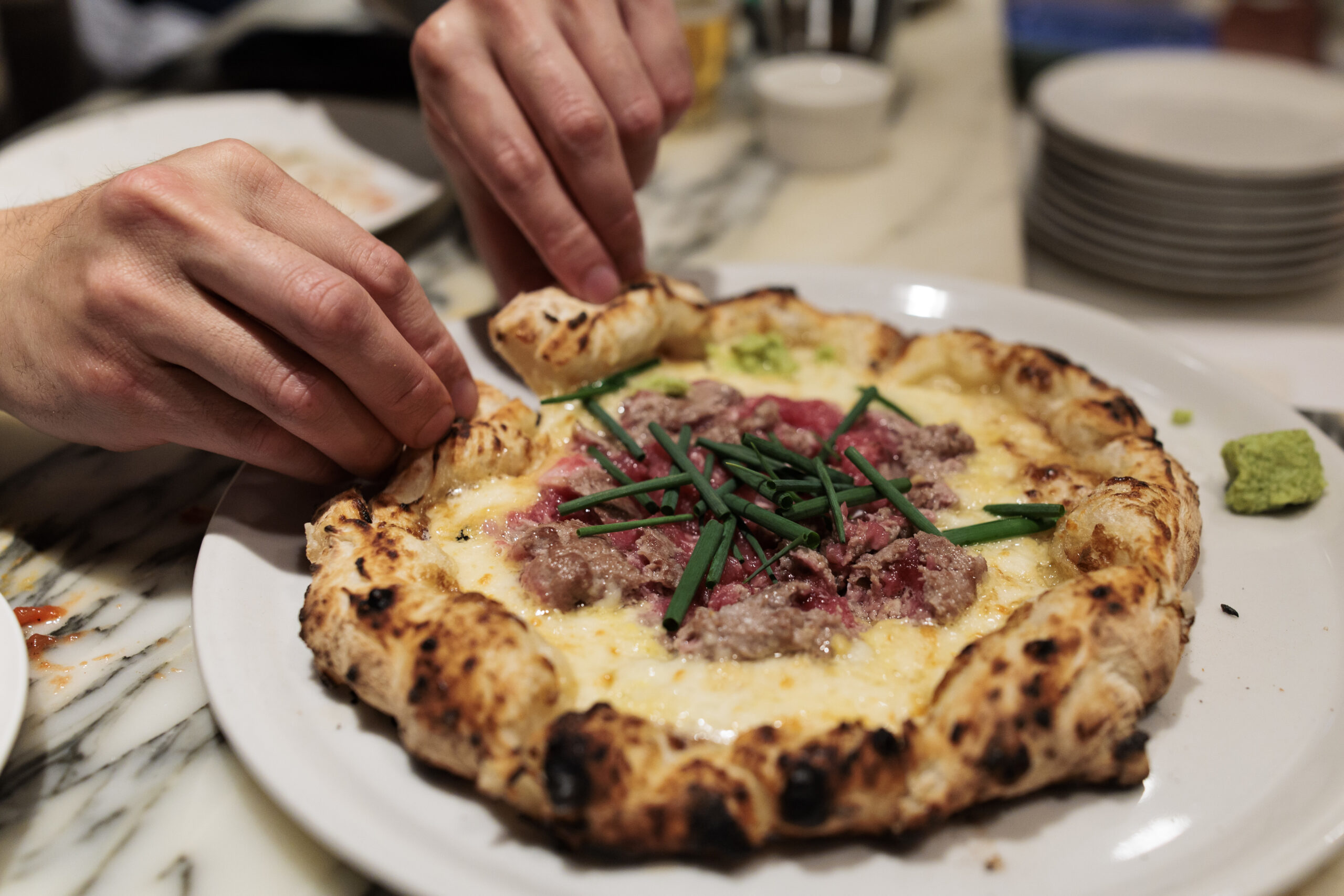
We had come to Japan to eat, of course, and our nine days were filled with extraordinary flavors. We devoured luscious king crab legs for breakfast at Tsukiji Market, soulful curry-drenched pork katsu worth the 90-minute wait in Osaka, and the legendary Pizza Y topped with bluefin tuna and wasabi at Savoy Tomato & Cheese in Tokyo. We marveled at the poetic wonders of the modern kaiseki at Den, where chef Zaiyu Hasegawa’s food married culinary mastery with a sense of humor that resonated with Jesse as a model for his own restaurants.
Curry with shrimp, spinach, and cheese at Hakugintei on Friday, Nov. 7, 2025, in Osaka, Japan.
But Jesse had also come to Japan on a quest to further his pursuit of kaizen, the Japanese philosophy of making small improvements every day. And our field trip for day two in Kyushu — a visit to an artisan nori producer — had the potential to tangibly elevate his food. Quality fish takes center stage at any great sushi restaurant. But the difference between “good” and “extraordinary” can often come down to unsung supporting ingredients like nori and vinegar, whose varying qualities dramatically impact the final bite.
That’s why we found ourselves standing atop the seawall in Yanagawa, peering out at the breezy Ariake Sea, where 50% of Japan’s nori is farmed. The seaweed grows in-season there likemoss-green netting between poles that punctuate the water all the way to Nagasaki across the bay, whose tidal rhythms undulate between the wash of ocean water and the warmth of drying sun, fostering a coveted flavor that’s deep and complex.
Maruho — the manufacturer that hosted our tour — arguably makes the best, according to Nobu Yamanashi, the Jersey City seafood distributor. Jesse was clearly impressed as we tasted myriad varieties, crunching through piles of crispy seaweed snacks speckled with spicy pollock roe (mentaiko), then nibbling through ascending grades of plain nori — the kind commonly used to wrap maki, temaki hand rolls, and onigiri — until he finally landed on the coveted No. 1.
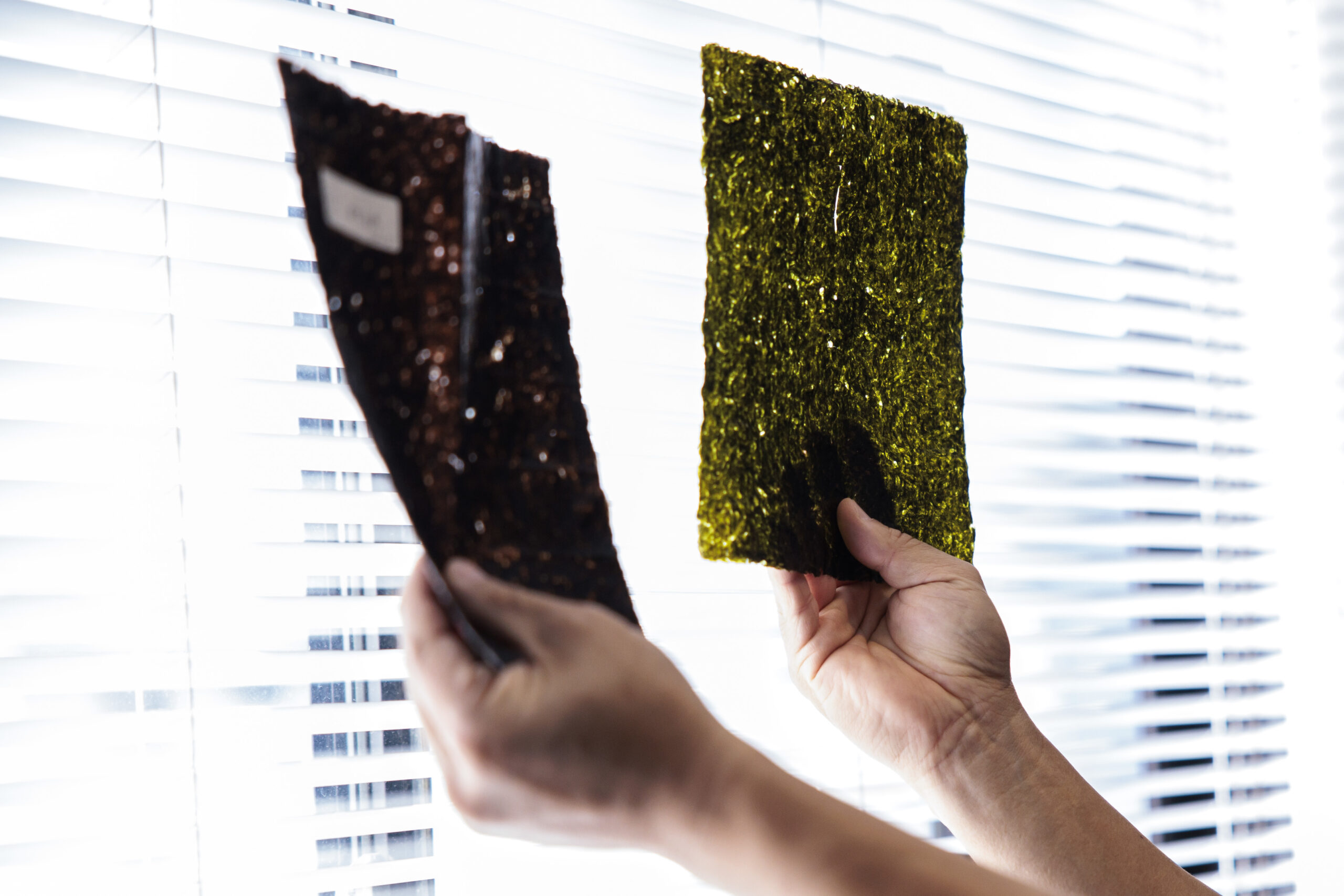
“This is so good!” said Jesse, holding a deep green sheet to the light, its denser weave pressed with flecks of aonori, another seaweed variety known for its color and fragrance. Its flavor was deeply oceanic. Its texture so crisp, it snapped cleanly when Jesse folded it in half, already imagining its effect wrapped around a fatty tuna handroll or a morsel of mackerel pressed over cubes of warm rice back in Philadelphia. “It’s like a cracker … I just hope I can afford it.”
Nori is shown untoasted, left, and after toasting, right, at Maruho on Wednesday, Nov. 5, 2025, in Yanagawa City, Japan.
This is the most expensive nori on the market. At $3.50 per sheet wholesale, it was twice the cost of the already top-market seaweed Jesse was currently using, and exponentially more than common sushi-bar nori. If Yamanashi had his way as Maruho’s exclusive importer, Jesse was about to become the first sushi chef in America to use it — “He’s a top-10 customer and he pays his bills.”
Jesse Ito listens during a tour about the vinegar making process at Saga Vinegar on Wednesday, Nov. 5, 2025, in Saga City, Japan.
Success becomes a balancing act
Indeed, Jesse’s omakase — already one of the priciest dining experiences in Philly at $300 per person as of last October — had been scheduled to rise to $355 by the time we returned home in November, to accommodate all the new treasures he’d found. The top-shelf uni he’d begun buying from Toyosu was $350 a tray. The creamy lobes of plump monkfish liver from Hokkaido he planned to marinate in shoyu before gently steaming them into a silky pâté cost 10 times more than the ankimo he’d previously used. The Maruho nori, he’d later report, “has been a real game-changer. That stuff is amazing.”
As we walked briskly through Fukuoka’s Nagahama Market, a calmer scene than Toyosu but still the second-largest fish market Japan, Jesse gave his Kyushu-based fish buyer, Takahiro Hirota, a wish list. Luminous pink madai sea breams. Silvery shima aji jacks. Translucent yare ika, or spear-tipped squid.
“This is hard to find, can I get one for next week?” he said, gesturing at the squid, which becomes silky-soft and sweet when sliced just right.
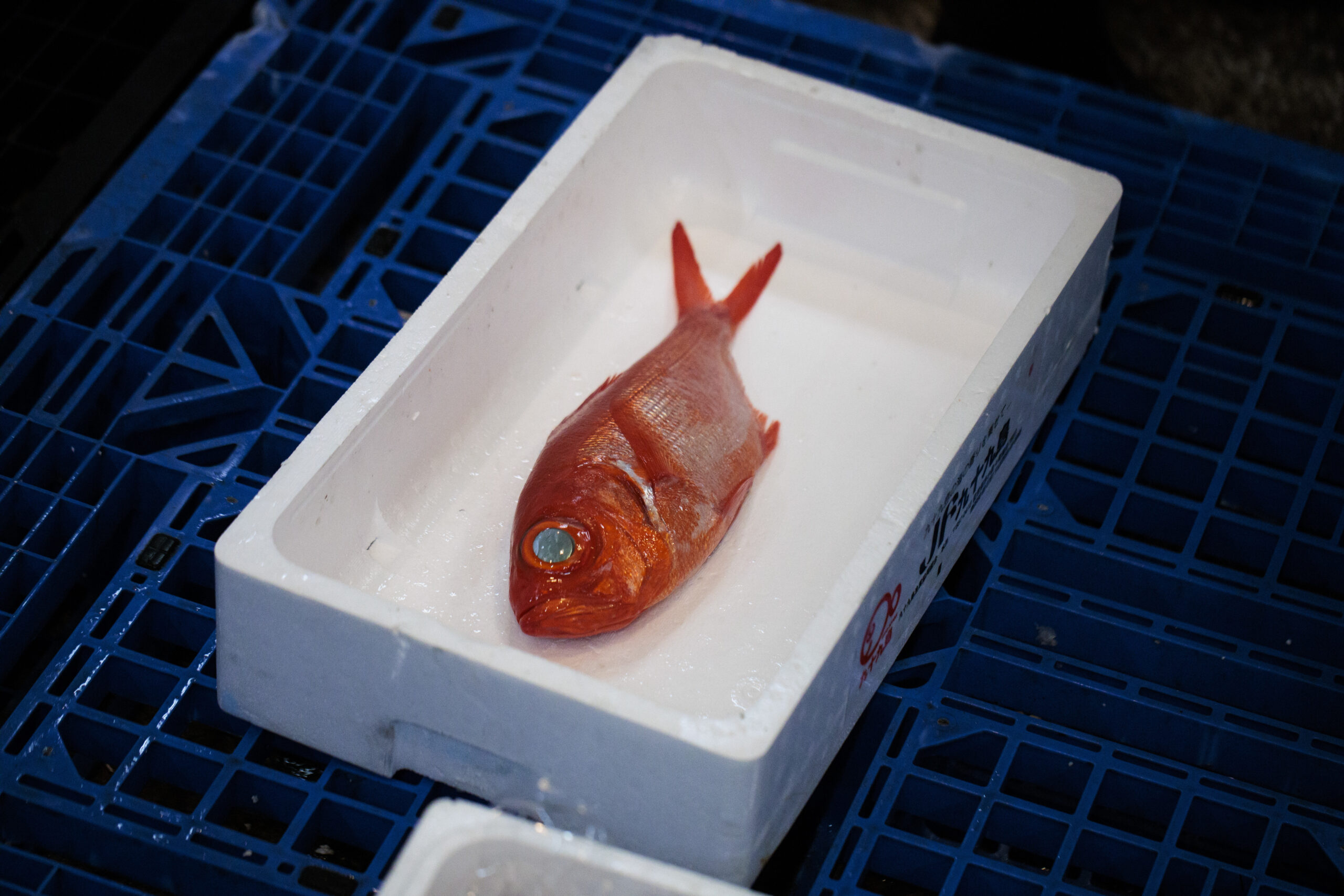
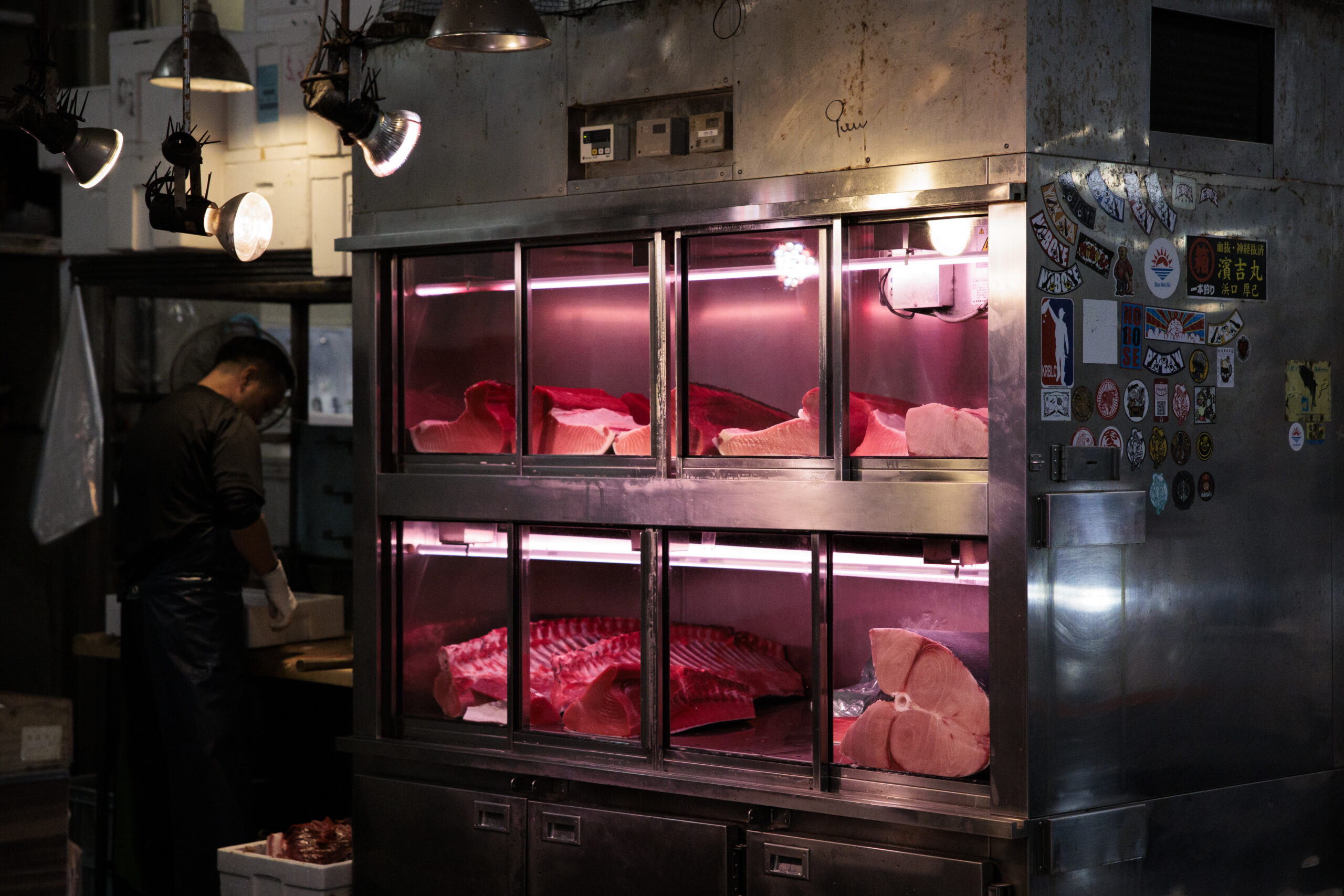
Takahiro Hirota talks with Jesse Ito at Nagahama Market on Thursday, Nov. 6, 2025, in Fukuoka, Japan.A kinmedai or golden eye snapper, at Nagahama Market on Thursday, Nov. 6, 2025, in Fukuoka, Japan.Large cuts of tuna in a refrigerator at Nagahama Market on Thursday, Nov. 6, 2025, in Fukuoka, Japan.
The omakase — and Jesse himself — have come a long way since Royal Sushi & Izakaya first earned four bells from The Inquirer in 2018, when Jesse’s tasting menu was (just!) $130.
The omakase’s ingredients, place settings, and techniques have continuously leveled up. And the storytelling its 18 courses now convey — including the extraordinary bibimbap with uni and toro that’s inspired by Jesse’s Seoul-born mother and composed over buttered seaweed rice (a childhood throwback, albeit now truffled)— has transformed the meal into something deeper than just a luxury splurge. Even as its fee rises, it remains hundreds of dollars less than similar experiences in New York and beyond.
“After eating at multiple sushi omakases in Tokyo and Kyoto, from multiple Michelin stars to none, the best sushi omakase I have ever eaten is from Jesse Ito right here in Philadelphia,” says Marc Vetri, the Spruce Street pasta maestro who also owns a restaurant in Kyoto.
Much of Jesse’s restaurant world is, in fact, accessible and relatively affordable to the wider public, both at dancerobot, where live jazz and karaoke nights keep it lively, as well as the izakaya portion of Royal, a walk-in experience Michelin noted with a Bib Gourmand as a “good value.” But it’s little wonder regulars guard their standing reservations to the omakase like courtside tickets for a Sixers game, ahead ofa 1,000-person Resy waitlist that occasionally shakes a couple seats loose for newcomers. The seemingly impossible scrum shows no signs of abating.
Jesse sympathizes with the notion of trying to make the omakase more accessible, but he simply doesn’t know how to achieve that without sacrificing the valuable personal relationships he’s forged over a decade to the murky forces of the anonymous internet, where valued seats risk becoming little more than a resale-market commodity.
“If I was dumb enough to get rid of all my regulars, people with access to bots would just buy up everything and resell them,” he said.
As with so much in Jesse’s life, hiskeen sense of how to navigate the challenges of success has been shaped by periods of struggle, alongside his parents and on his own.
The pandemic presented an existential threat to Royal’s business and halted the omakase for over a year while the izakaya kept the lights on with takeout and a la carte. On the brink of losing his house, Jesse was also compelled by the crisis to finally confront his relationship with alcohol, which he’d long relied on to numb his anxieties and fears.
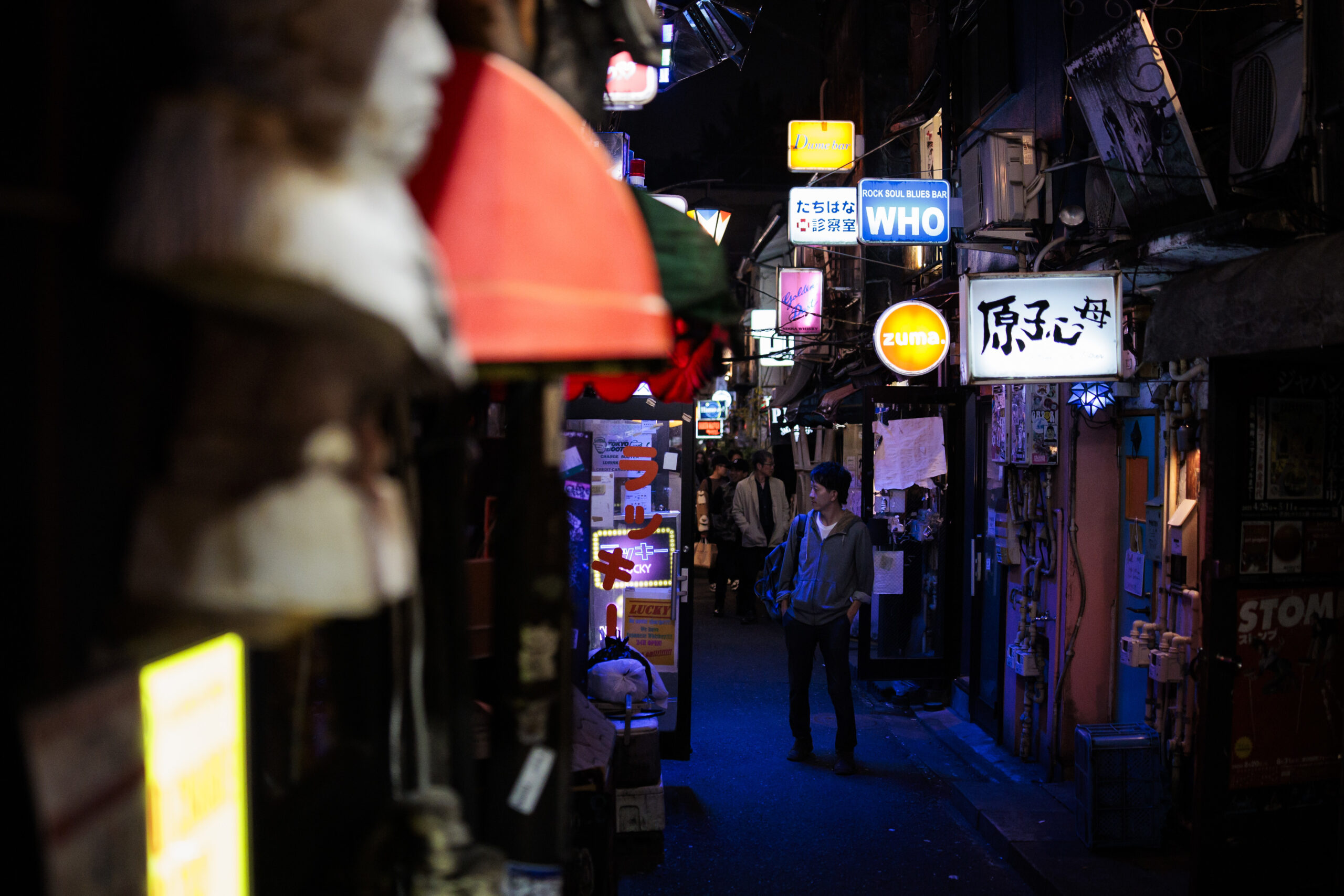
Tiny bars fill the narrow streets in Shinjuku Golden Gai on Saturday, Nov. 8, 2025, in Tokyo, Japan.
He became sober on Dec. 1, 2020, a status he’s maintained since, regularly attending support groups and talking publicly about his recovery. The shift reshaped his workplace, paring Royal’s hours back to five nights a week, closing at 11 p.m. for a more sustainable environment. Sobriety has helped him cope with setbacks. (“Part of losing the Beard award eight times … you come away with the ability to enjoy the moment,” he said.) It has also given him the clarity to build healthier relationships, “to be a better partner, a better friend, and a better son.”
Jesse still gets a rush from the performance of slicing pristine fish and the intimacy of entertaining a handful of customers from behind his counter.
“I’m going to keep it this way for as long as I can because it’s a moment in time when I get to do this,” he said. “It’s like a show every night.”
Over the course of our time in Japan, however, Jesse succeeded in making his biggest impression on an audience of one: his father.
“This was the best trip I’ve ever had and I’m really appreciative,” said Matt, who’s now planning a return trip on his own to travel to Miemachi with his Tokyo-based sister.
Matt could typically be found lingering several paces behind us on our fast-paced visit, soaking in the sights, sounds, and flavors of the land he’d left 50 years ago. But he was also looking forward, enjoying the rare opportunity to observe his son out in the world as he forged new business relationships and soaked in inspiration at every turn: “I’m so proud of the mature person he’s become. He’s made his own life.”
Matt also relished this opportunity to simply be with Jesse, even if conversation between the two was often sparse.
“It’s funny because I don’t have to say more than one word,” Matt said. “I know he understands.”
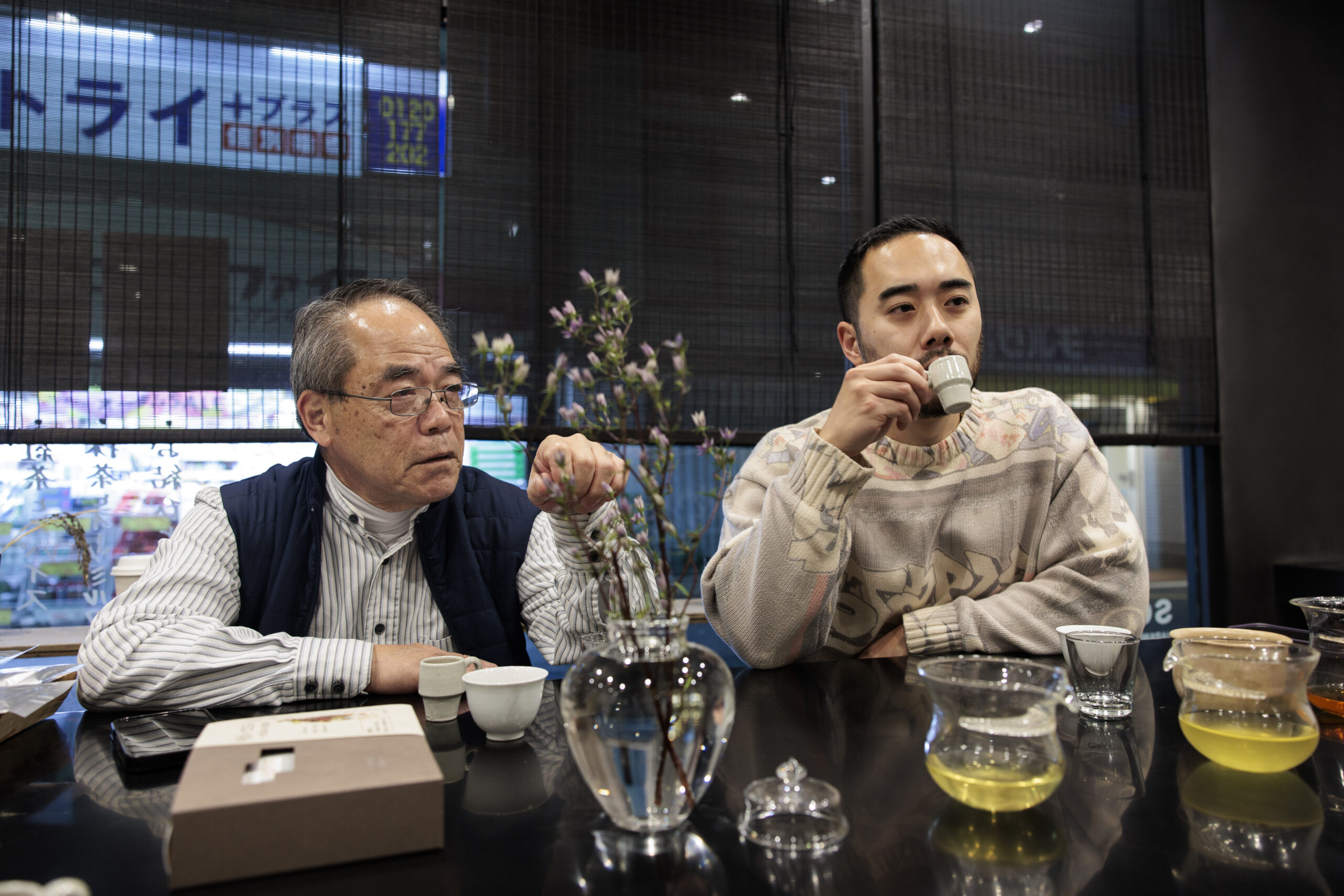
Matt Ito and Jesse Ito enjoy a tea tasting at Souen on Saturday, Nov. 8, 2025, in Tokyo, Japan.
The prospect of following one of America’s best sushi chefs on a food journey across Japan is tantalizing enough. But as I’d learn firsthand, Japanese food culture is about so much more than raw fish. As we traveled with Royal Izakaya & Sushi chef Jesse Ito and his father, chef Matt “Masaharu” Ito, through Tokyo, Osaka, and to the Ito ancestral home on Kyushu island, I found true delight at every level, from rarified tasting menus to the snack aisles of 7-Eleven.
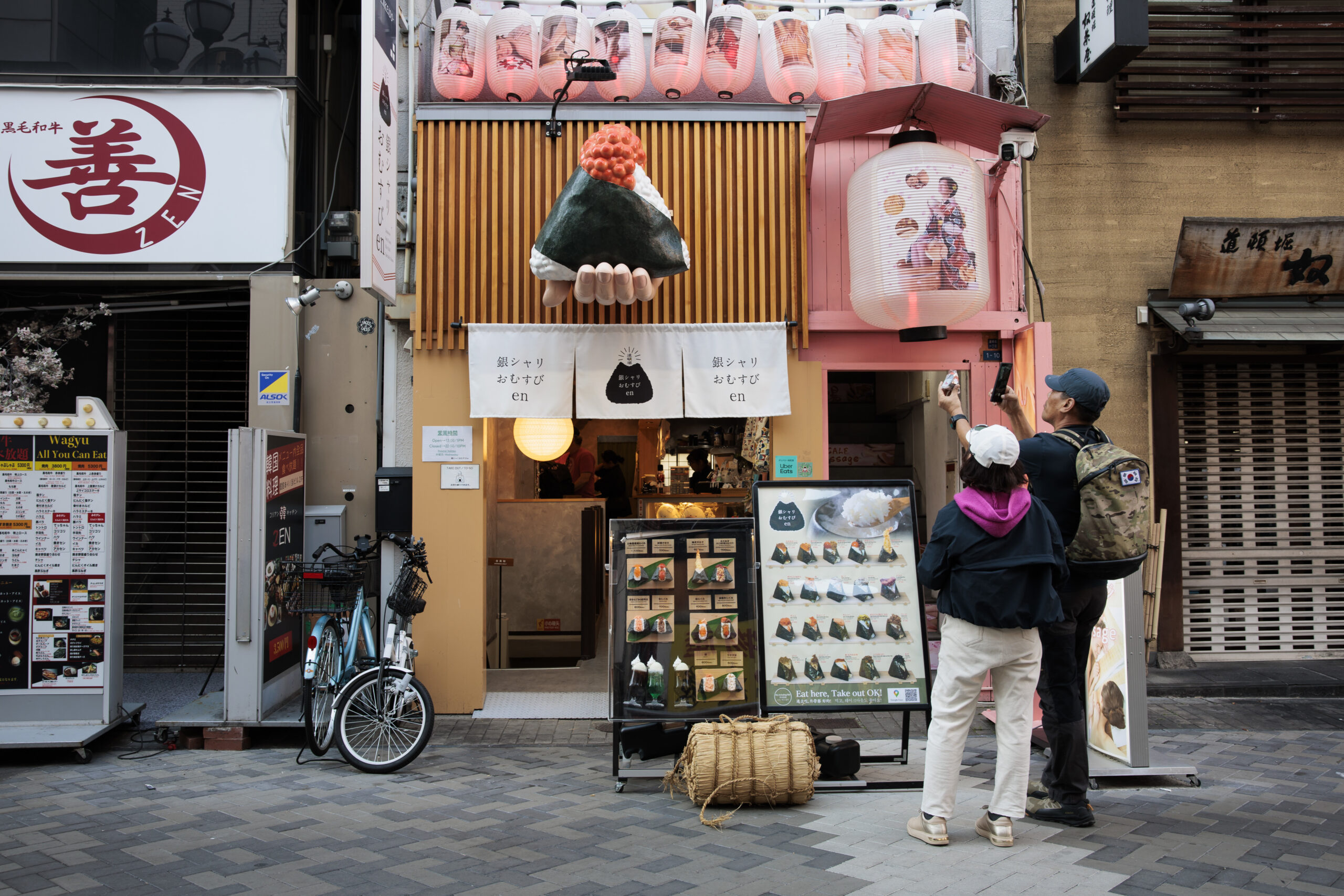
Brightly decorated, colorful shops line the street in Dotombori in Osaka.
Considering there are an estimated 160,000 restaurants in Tokyo alone, this is hardly a “best of” list. I’ve written about an incredible ramen crawl across Tokyo with the owners of Neighborhood Ramen and a visit to Nihonbashi Philly, a Tokyo bar/shrine to Philly culture making its own cheesesteaks and soft pretzels, in separate stories. But there were so many other great flavors along the trip. This is an account of several more highlights from a nine-day journey I’ll never forget.
Map of Craig LaBan’s travels in Japan with Philadelphia chef Jesse Ito and his father, Matt.Matt Ito and Jesse Ito talk with Chef Kunihiro Shimizu outside of his restaurant, Shimbashi Shimizu, on Sunday, Nov. 2, 2025 in Tokyo, Japan. No photos or video are allowed during the omakase at Shimbashi Shimizu, and international visitors are only permitted when accompanied by someone who understands Japanese.
Edomae-style sushi at Shimbashi Shimizu in Tokyo
We’d just touched down at Tokyo’s Haneda airport and it was 5 a.m. Philly time. Jet lag be damned! I was ready for my first omakase in Japan at this eight-seat hideaway off an alley near Shimbashi station. No pictures are allowed. No English is spoken. The only way for a foreigner to get a seat is on the recommendation of a regular. Chef Kunihiro Shimizu is revered as a master of the classic Edomae-style sushi, which means, among other things, the rice is seasoned with a startlingly assertive vinegar tang. Nearly 20 hearty pieces of nigiri and sashimi landed in waves directly on the wooden counter: velvety saltwater eel; red-tipped akagai (blood clam) cut into a pompom that crunched like sweet and briny ocean threads; a silky chawanmushi custard with hairy crab. This was also my first “wow” moment with the winter delicacy of shirako, the crinkly white pouches of cod milt that came doused in warm dashi with grated daikon. Each creamy bite melted away like a cloud.
Onigiri at 7-Eleven (everywhere)
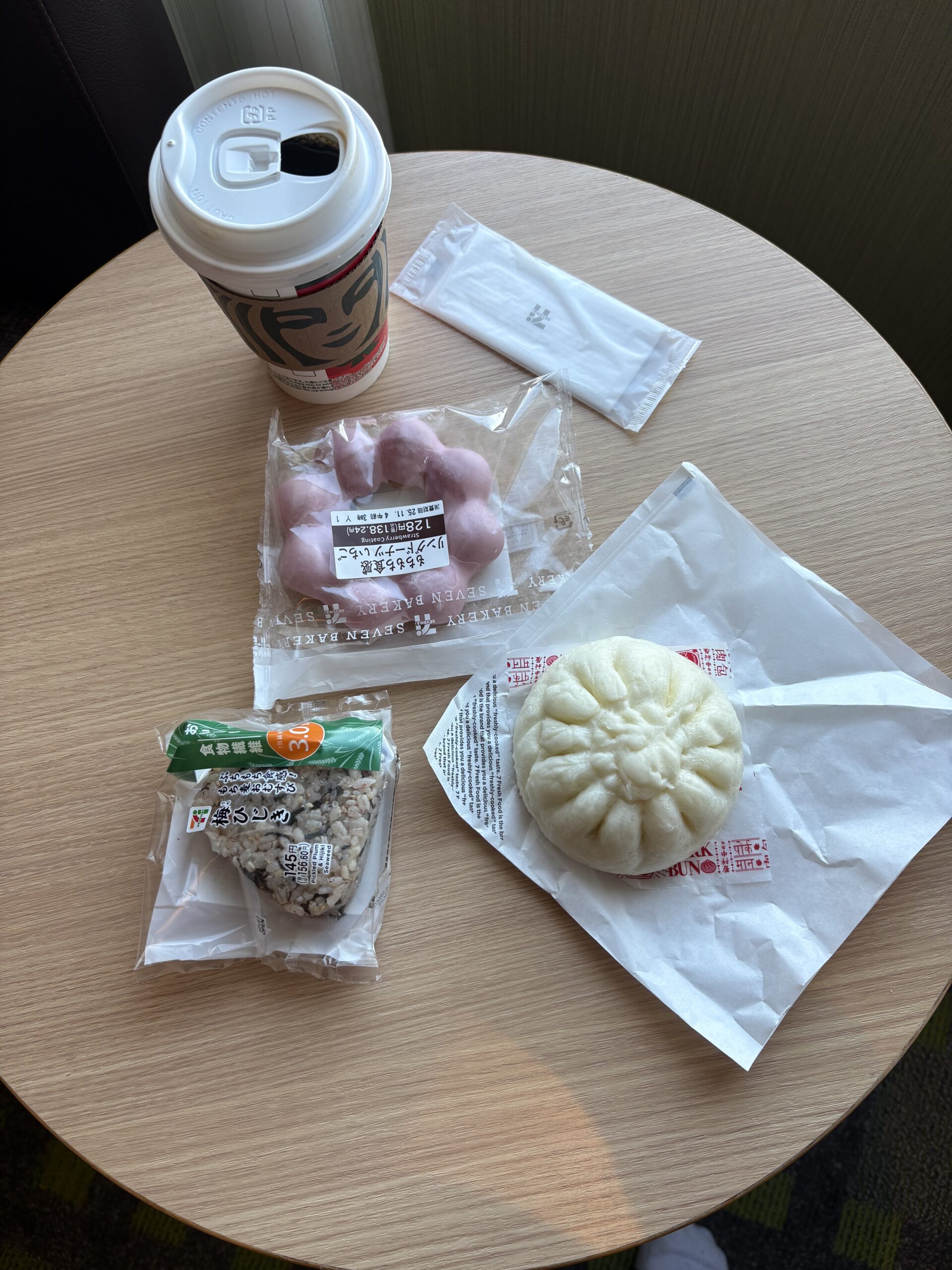
The Japanese version of this iconic convenience store is legendary for a reason. They’re ubiquitous and stocked with fresh-made egg salad sandos, warming cases of fluffy pork buns, multicolored mochi doughnuts, and a dizzying array of onigiri rice balls that make easy snacks, including my first few breakfasts in Japan. Onigiri laced with pickled plum and seaweed and the tuna with mayo were my go-to moves.
Breakfast in Japan may come from chains that are familiar to Americans, like Starbucks or 7-Eleven, but might consist of an onigiri rice ball, a steamed pork bun and a mochi doughnut dipped in pink icing.
King crab legs at Tsukiji Outer Market in Tokyo
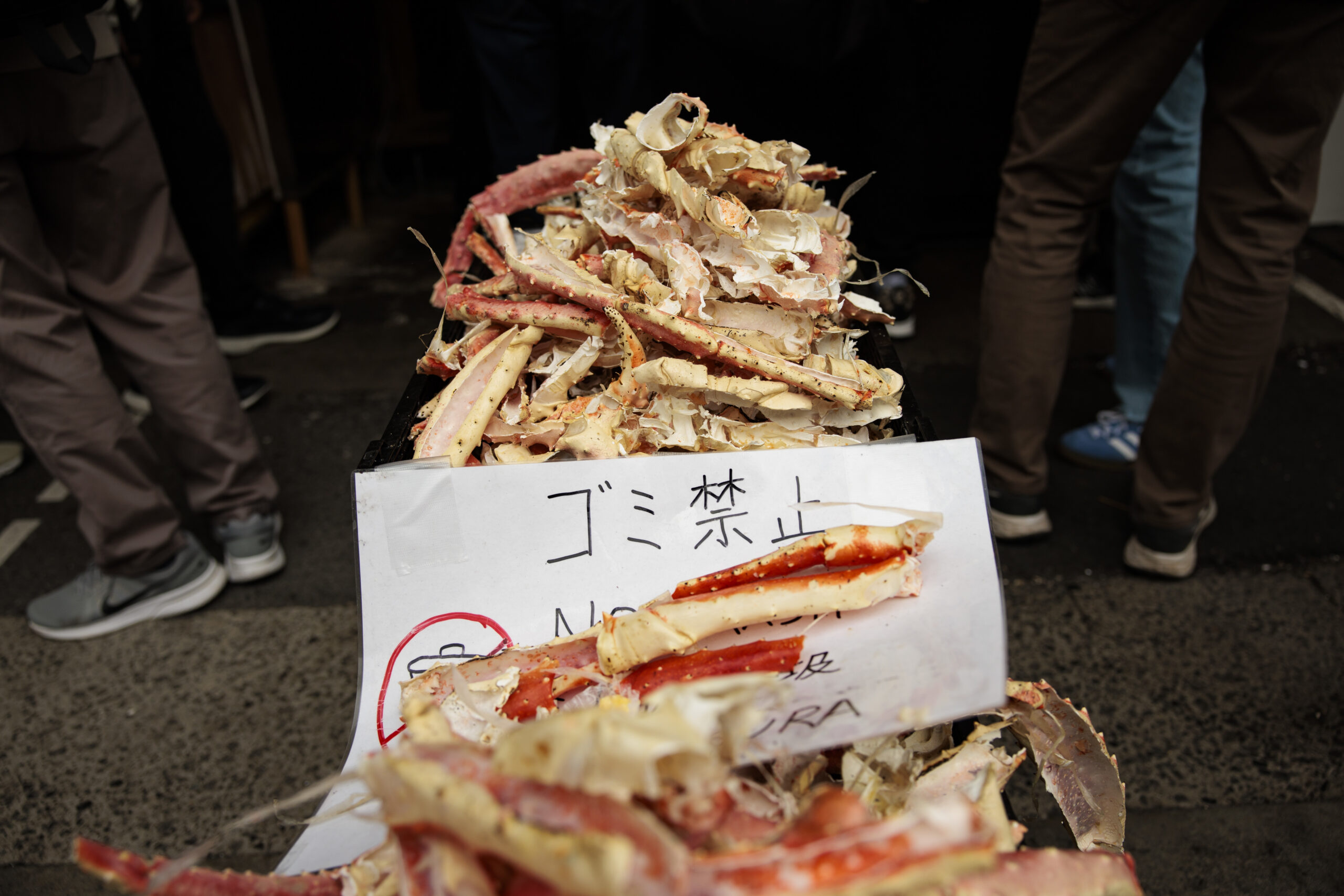
The legendary wholesale fish market at Tsukiji moved to Toyosu in 2018, but the site remains an essential retail destination for tourists to graze the many food stalls. I ate some of richest pink toro of our visit for breakfast here, as well as skewered cubes of buttery grilled A5 Wagyu. The real star was a bucket of steamed king crab legs so sweet and tender, it was pure luxury to swab the moist plumes of white meat through garlic butter sauce laced with spiced pollock roe.
King crab shells in the trash at the Tsukiji Outer Market on Monday, Nov. 3, 2025 in Tokyo, Japan.
Whiskey and hand-carved ice at Abbot’s Choice in Tokyo
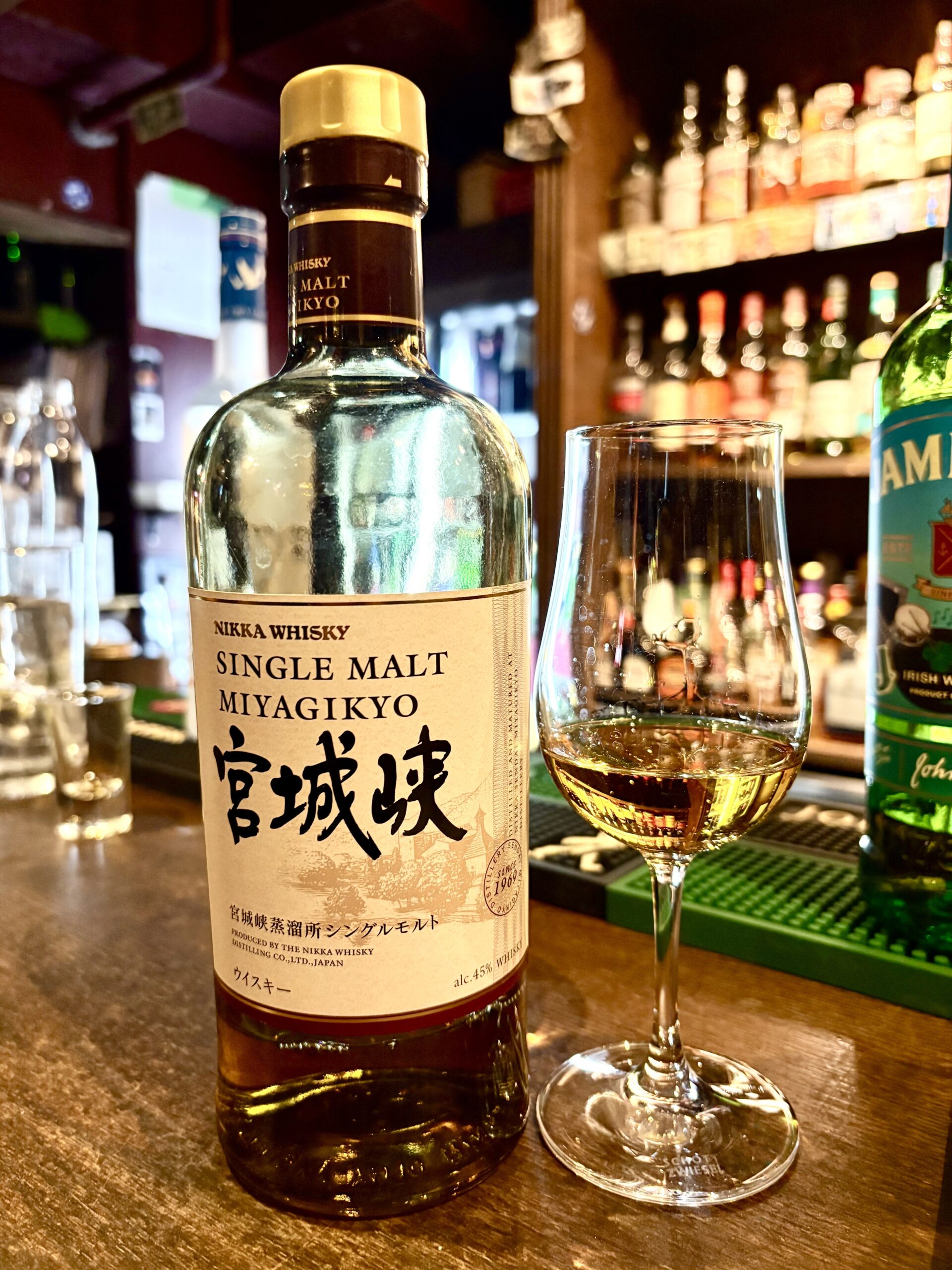
I wandered spontaneously into this corner bar in Shibuya’s entertainment district, looked at the impressive collection of well-priced Japanese whiskeys, and promptly took a seat. My snifter of Nikka single-malt Miyagikyo was outstanding. But the real show was watching the bartender cradle huge blocks of ice in one hand and deftly whack them into tumbler-sized cubes with a swordlike blade.
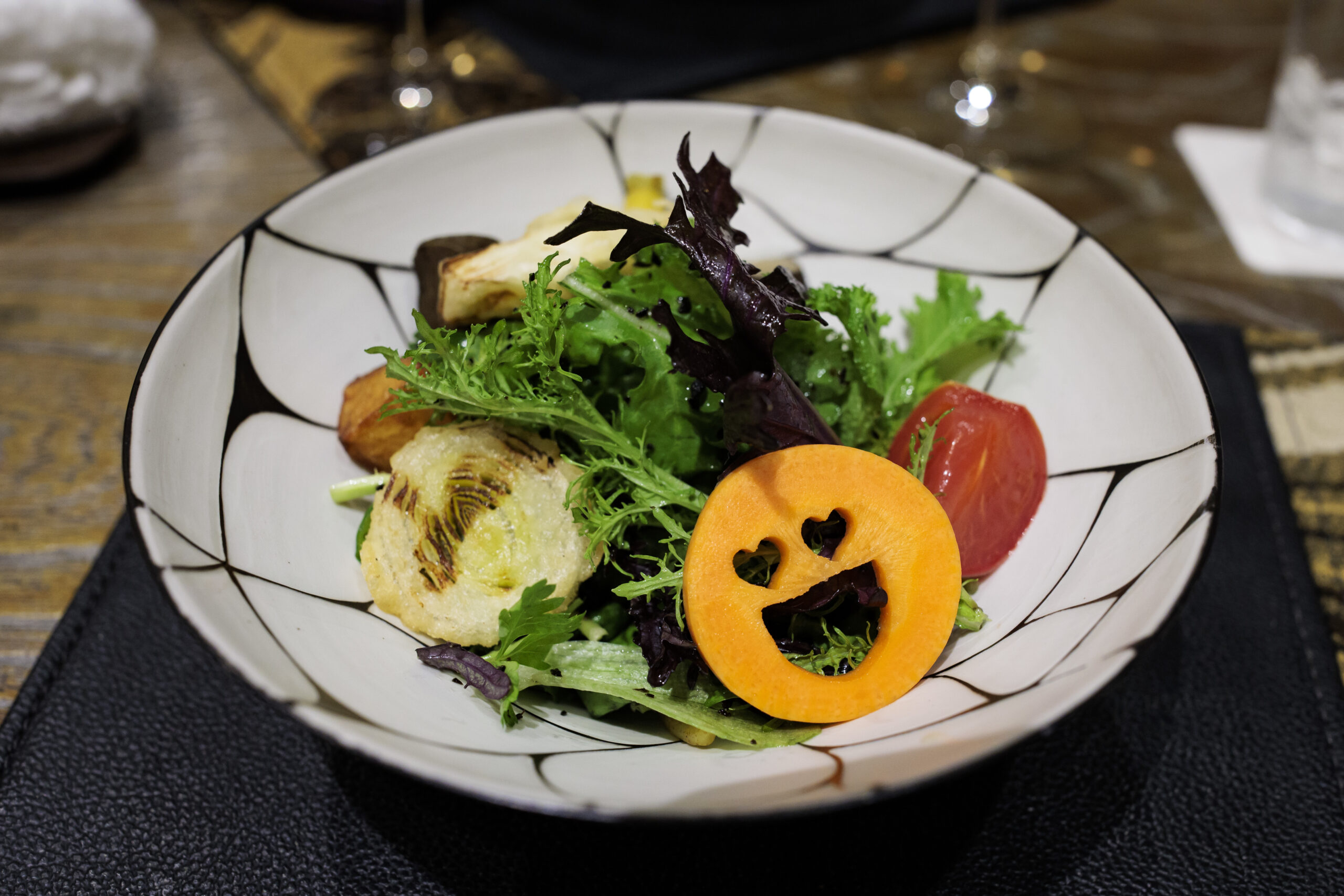
A pour of Nikka single-malt Miyagikyo is one of the many highlights from the extensive list of well-priced Japanese whiskeys at Abbot’s Choice bar in the Shibuya neighborhood of Tokyo.The salad course at Den on Monday, Nov. 3, 2025 in Tokyo, Japan. Den is Chef Zaiyu Hasegawa’s restaurant.
Happy salad at Den in Tokyo
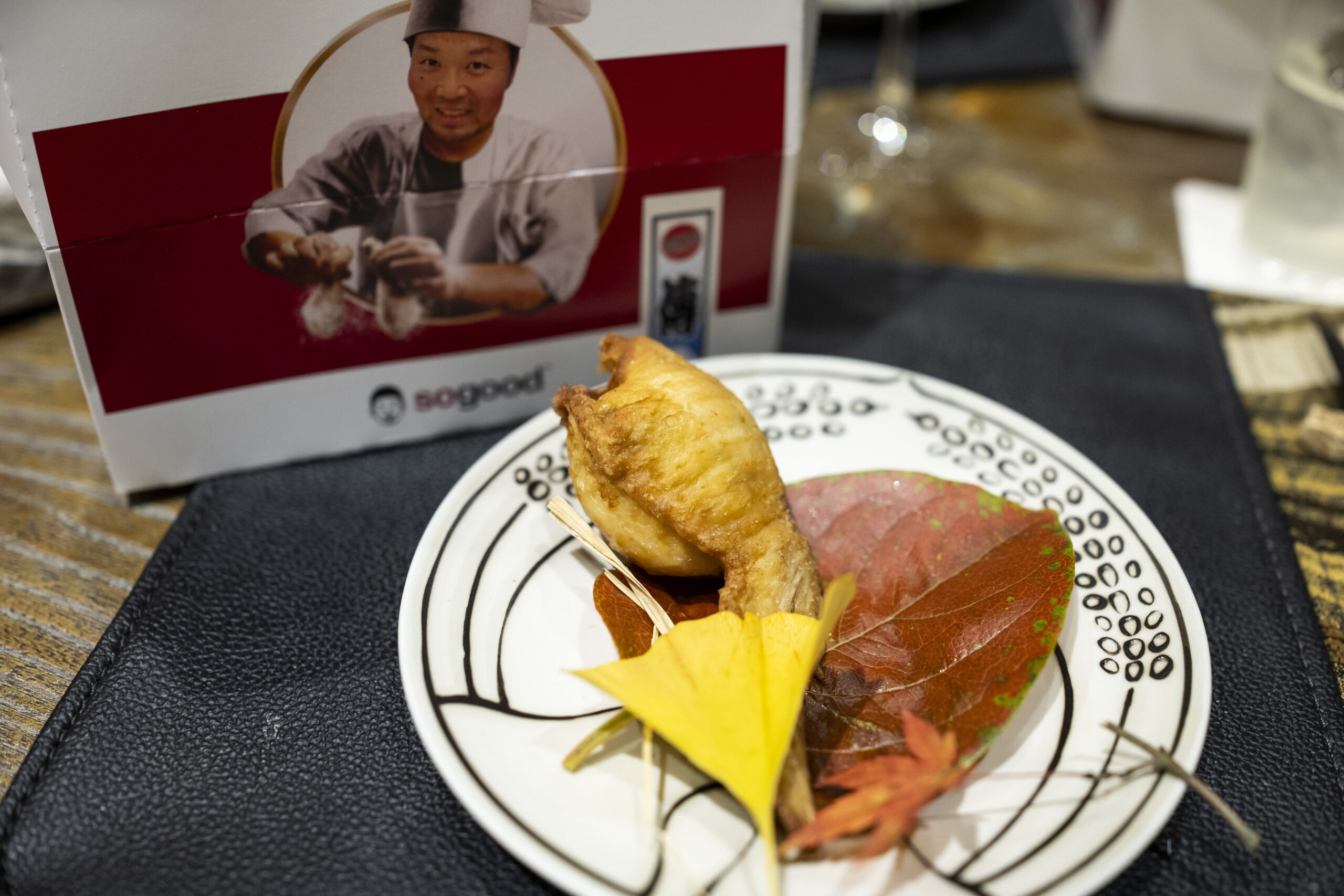
Chef Zaiyu Hasegawa’s modern take on the seasonal kaiseki at Den is one of Jesse Ito’s favorite meals for a reason: It marries total mastery of techniques and traditional dishes with an inventive sense of humor and a relaxed atmosphere. That whimsy threaded throughout our meal, from the monaka rice cracker sandwich stuffed with miso-marinated foie gras and fig jam to the “Den-tucky” fried chicken wing stuffed with gingko nuts and sticky rice in a takeout box emblazoned with Hasegawa’s grinning face. We marveled at a bouncy cube of cashew milk fried like agedashi tofu (inspired by the chef’s trip to the Amazon), while two classics, a duck-and-turnip soup in bonito broth and a crispy-rice donabe bowl topped with warm ikura, radiated understated beauty.
The “Den-tucky” fried chicken at Den on Monday, Nov. 3, 2025 in Tokyo, Japan.
But Den’s masterpiece is an intricate salad with 15 ever-changing ingredients, each cooked by a different technique (steamed, fried, dashi-poached, raw) — essentially a seasonal kaiseki within the larger kaiseki. It always comes topped with pickled carrot coins carved like grinning emojis that could not help but make us smile, too.
Sushi for breakfast at Iwasa, Toyosu Market in Tokyo
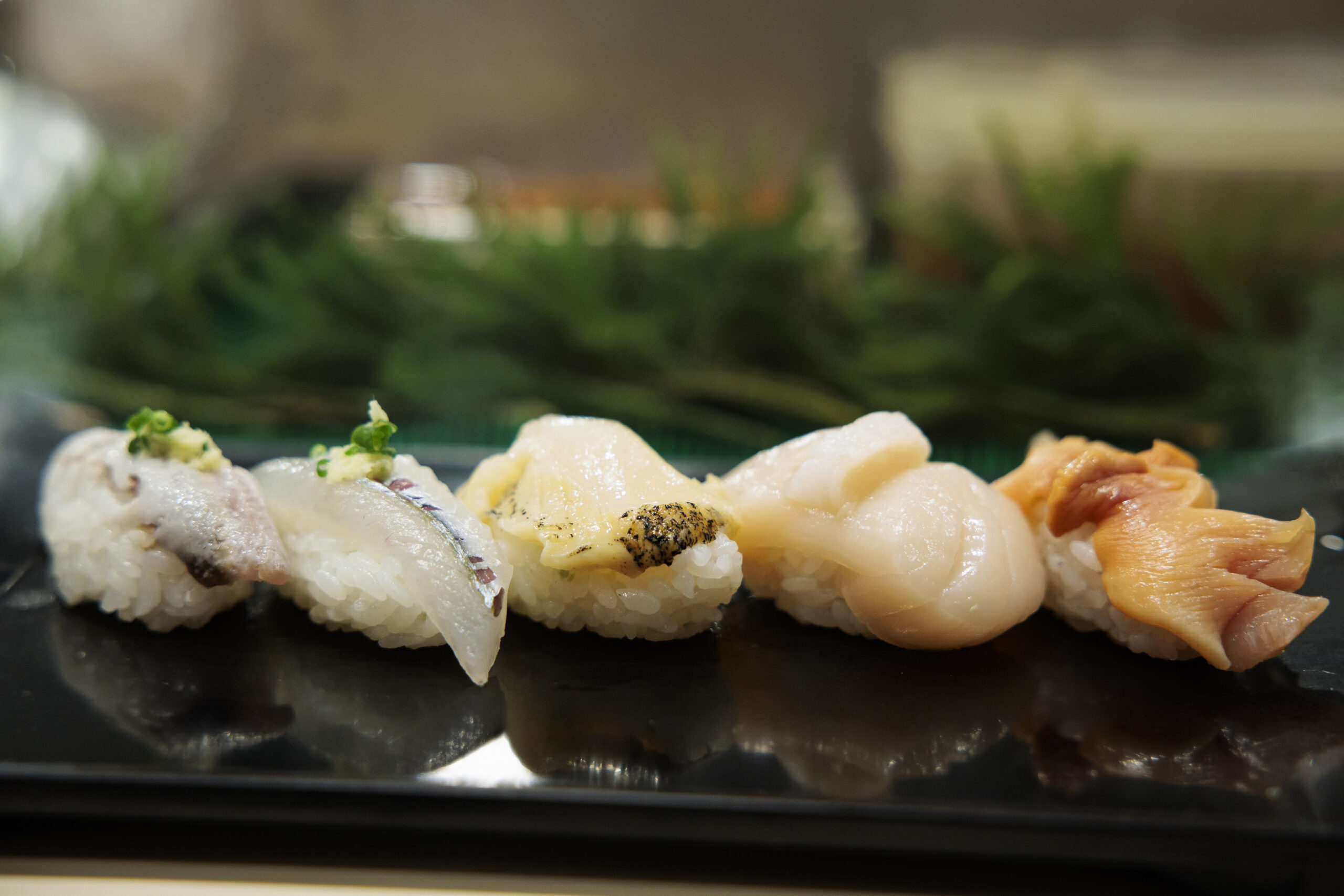
The fish doesn’t get fresher than what’s on display at Iwasa, which has maintained deep connections to market sources since moving to Toyosu from its original location at Tsukiji. Our omakase was meticulously crafted in small batches on still-warm rice seasoned with neutral white vinegar to showcase the fish, and it was especially strong with fatty in-season horse mackerel — whose silver skin was slit and stuffed with grated ginger — as well as sardines, black-speckled whelk, silky squid, and buttery sweet ama ebi (shrimp) that are rarely available live in the U.S. This was also my first taste of sushi abalone, whose tender, cup-shaped flesh cradled a puddle of sweet and savory soy glaze.
Sushi for breakfast at Iwasa at Toyosu Market on Tuesday, Nov. 4, 2025 in Tokyo, Japan.
Tokyo Bananas at Haneda airport
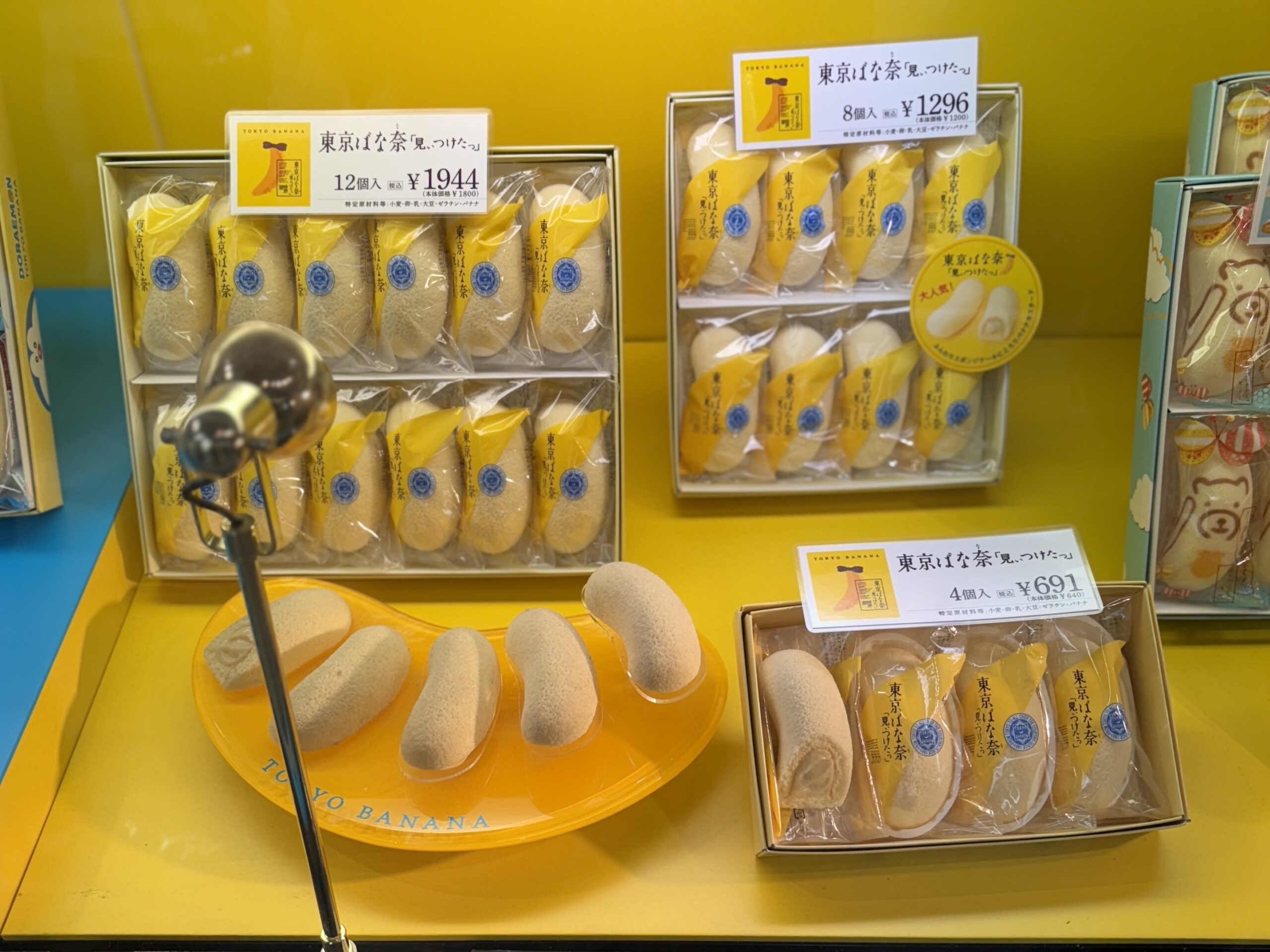
When flying in Japan, there’s no shortage of good things to eat at airport concessions. But the Tokyo Bananas are essential. These are not actual bananas. They are banana-shaped sponge cakes filled with banana-flavored custard (among other variations) that are, essentially, the greatest Twinkie ever made — and shelf-stable souvenirs. My first box, however, never made it to the airport gate.
Tokyo Bananas are popular tourist treats that are banana-shaped sponge cakes filled with rich banana-flavored pastry cream.
Takoyaki at Gindaco in Beppu
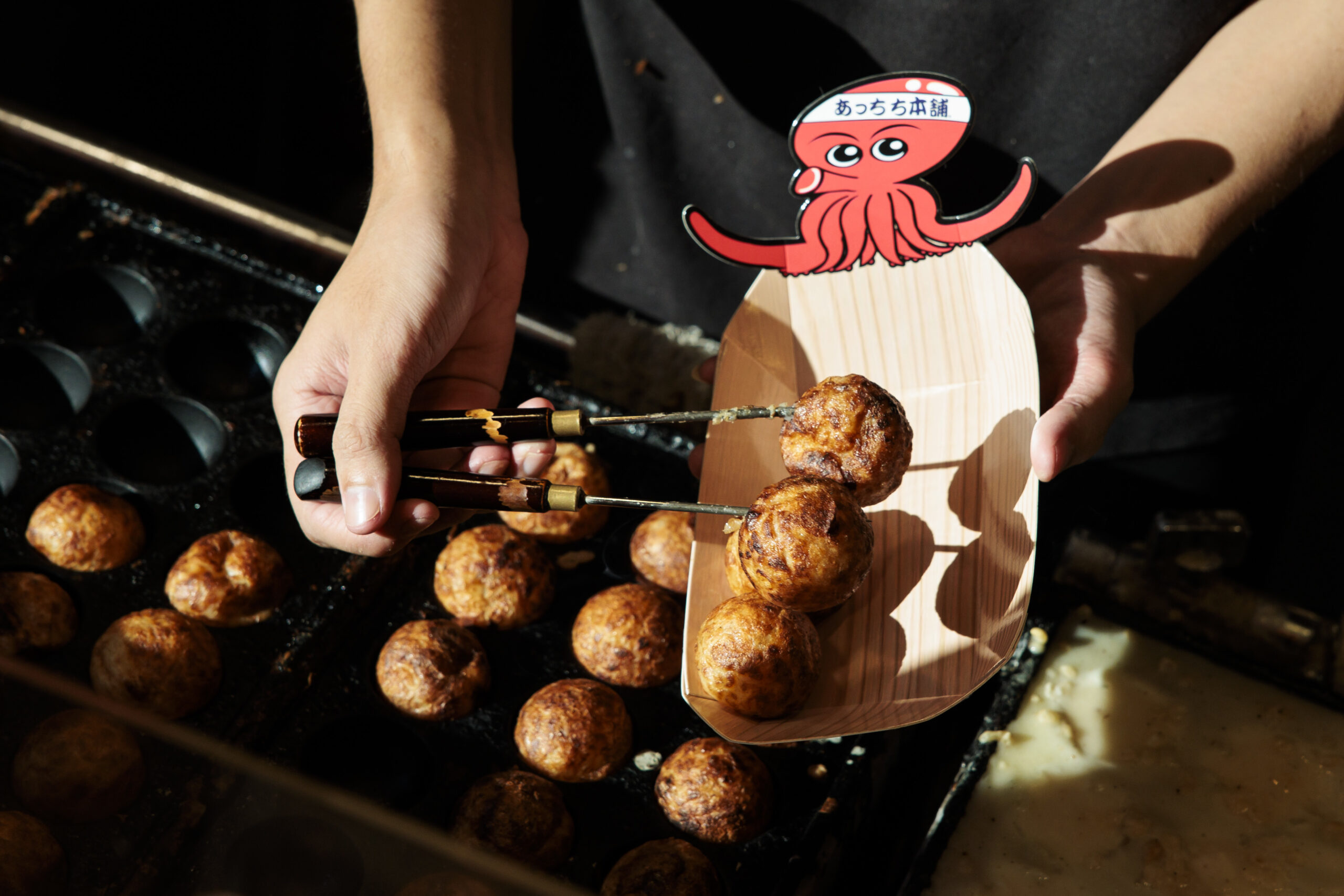
This iconic street food of orb-shaped fritters stuffed with octopus have their origins in Osaka but are ubiquitous across Japan. The best I ate were at a food court stand of the popular Gindaco chain in Beppu on Kyushu island. Every batch was griddled fresh to order so each ball was crisp on the outside, with a red ginger-flecked batter inside that was still molten and gooey. Shower it with all the fixings — Japanese mayo, dark sweet katsu sauce, seaweed powder, wavy bonito flakes, and tempura crunchies — then good luck not finishing an entire snackboat on the spot.
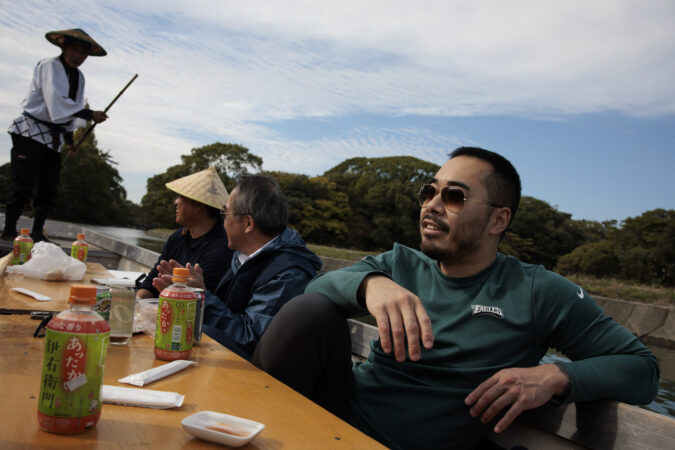
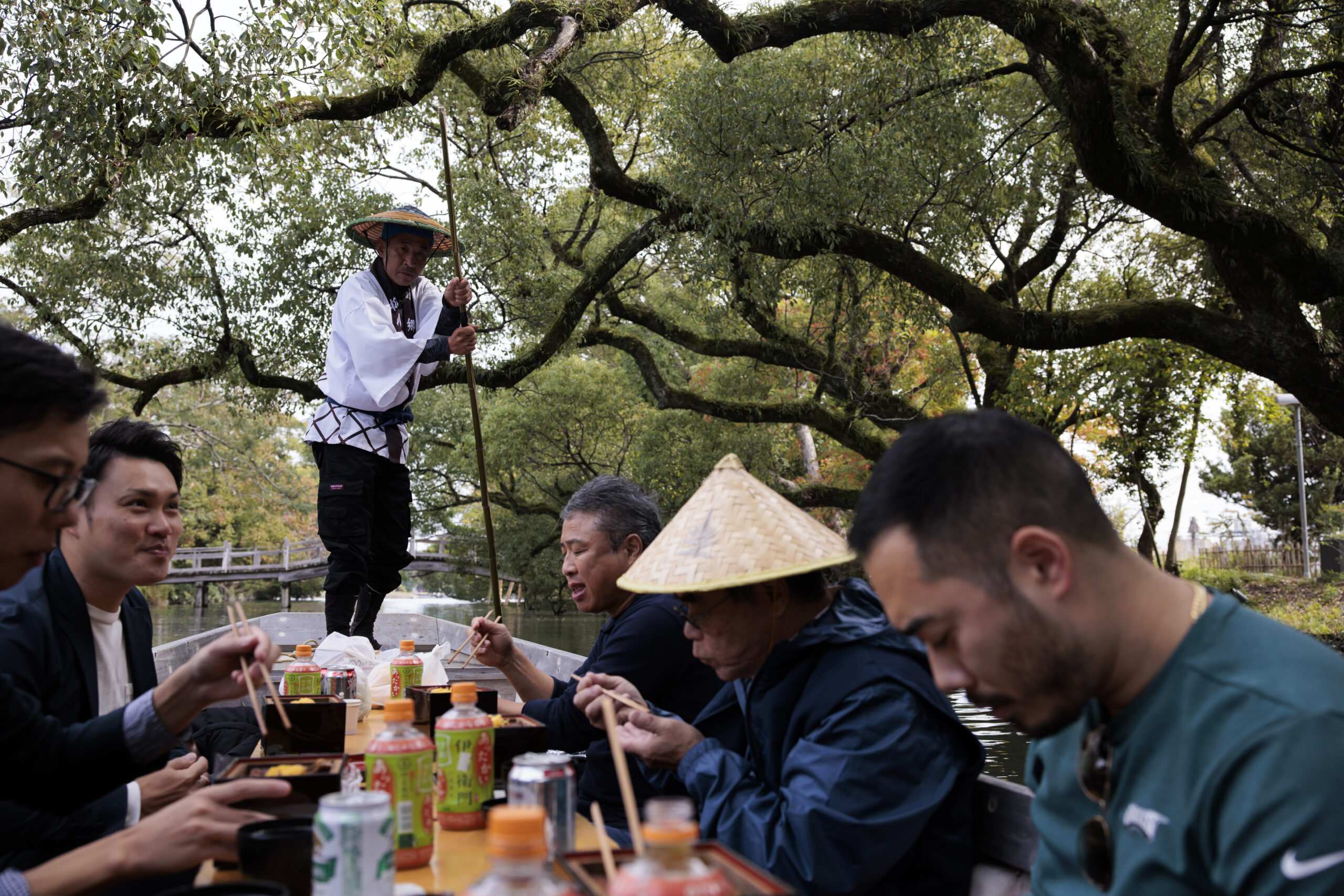
Takoyaki in Dotombori in Osaka.Matt Ito, center, and Jesse Ito, right, eat lunch during a boat ride through the canals of Yanagawa on Wednesday, Nov. 5, 2025 in Yanagawa City, Japan. The boat is called a donko-bune.
Eel box gondola in Yanagawa
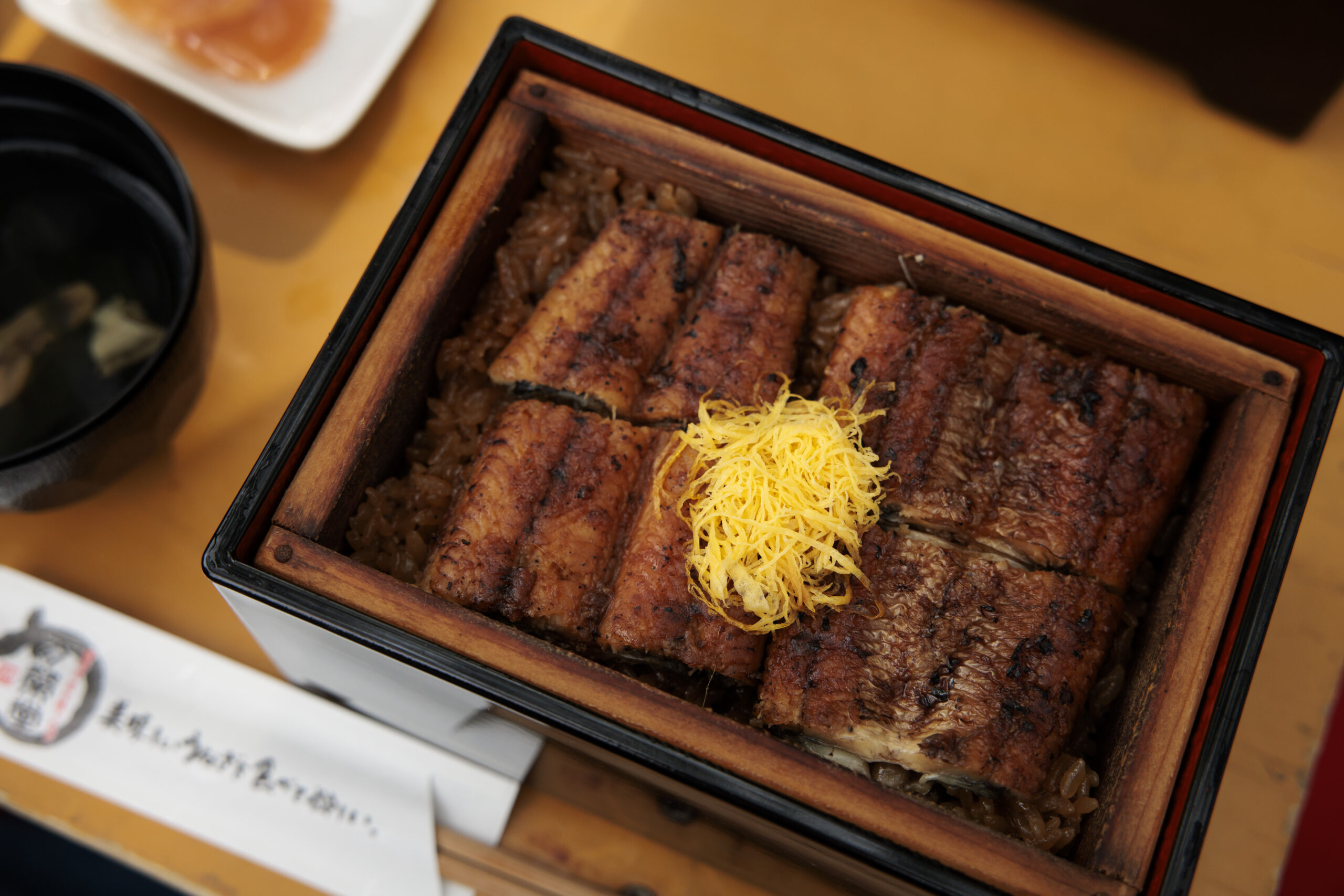
One moment we’re viewing a seaweed farm and the factory of one of Japan’s leading nori producers; the next, our hosts at Maruho have shepherded us onto a donko-bune long boat in the coastal town of Yanagawa, where we glided through canals lined with cherry trees with a gondolier who serenaded us with folk songs by poet Hakushū Kitahara. A box lunch of warm eel over rice and cups of cold sake suddenly appeared from out of nowhere. After candied chips of crispy eel spine for dessert, more serenades, and multiple bridges so low we had to lie flat to slide past, we were thoroughly charmed.
Grilled eel with rice on a gondola ride though the canals of Yanagawa in Yanagawa City.
Vinegar tasting at Ukonsu in Saga
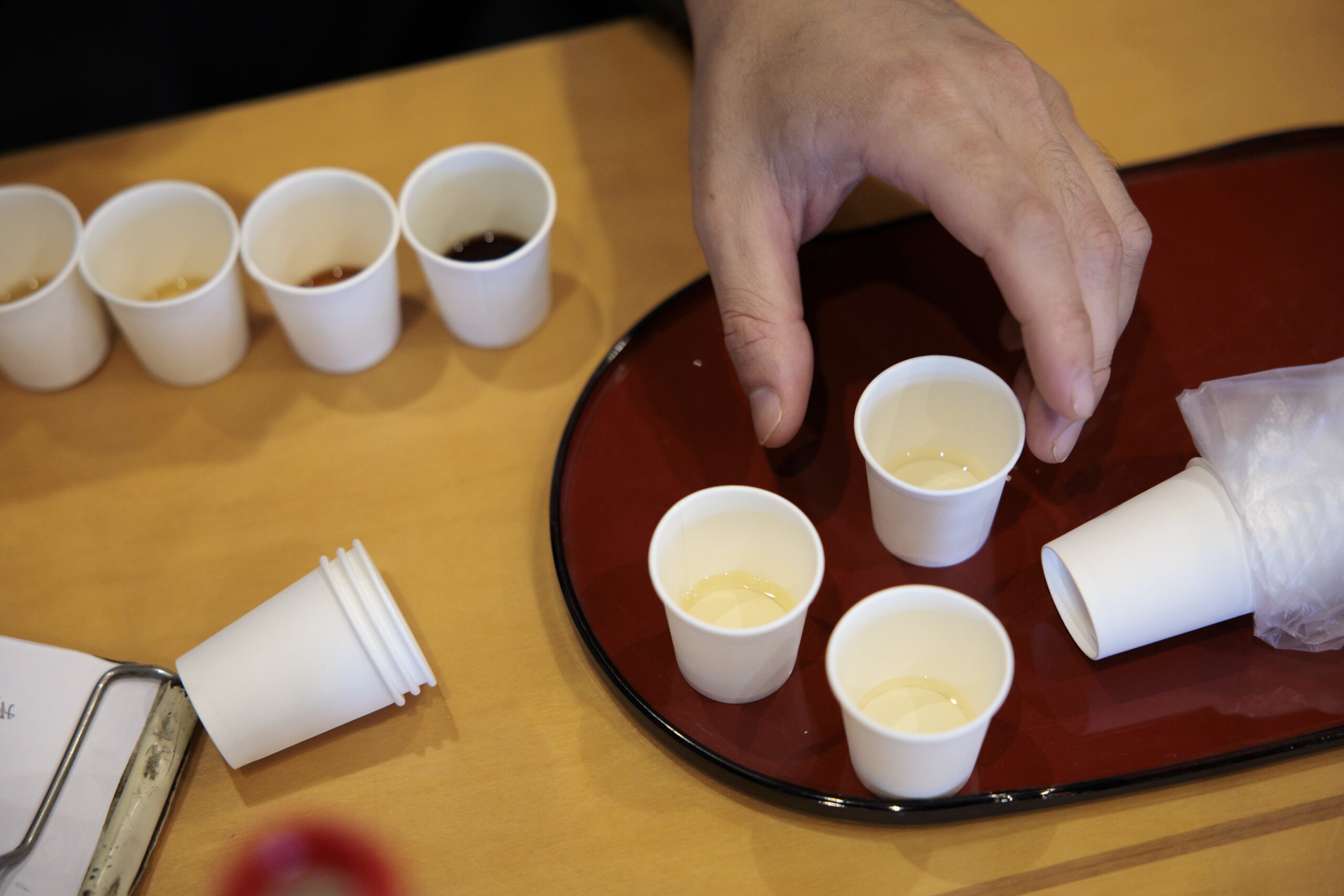
High-quality vinegar is a sushi chef’s secret weapon because of the character it can lend rice when paired with raw fish. Whereas neutral white rice vinegar is most commonly used in American sushi bars, high-end sushi bars in both Japan and the U.S. increasingly prizeakazu, a flavorful red vinegar from sake lees that can lend rice a brownish tint, due to its deep umami and mellow acidity. We tasted exceptional, traditionally made examples at Ukonsu in the city of Saga on Kyushu. At this nearly 200-year-old producer, prayers are offered to the vinegar gods before each batch is aged in massive wooden vats covered in straw mats that can be heard softly bubbling away as wild yeasts work their magic for up to half a year. Aside from the exceptional red rice varieties, Ukonsu steeps vinegars with fruits and vegetables — tomato, persimmon, plum, and especially roasted onion — that were a revelation.
Jesse Ito tastes a variety of vinegars at Ukonsu in Saga on Wednesday, Nov. 5, 2025.
Mentaiko bonanza at Ganso Hakata Mentaiju in Fukuoka
Prior to this trip,I’d mostly had the spicy pollock roe called mentaiko in small dabs as a zesty fish egg garnish for onigiri or creamy pastas. It is a regional specialty in Fukuoka on Kyushu, though, and at Ganso Hakata Mentaiju, it is the main event. Served inside a white box, the tiny, bead-shaped eggs infused with chile, sake, and yuzu citrus came still encased in their snappy membrane, rolled inside a kombu wrapper. Eaten over warm rice covered in ripped nori, it was one of the most intensely marine-flavored combinations I’ve tasted. The full combo set brought a bonus of tsukemen ramen for dipping into a smoky bonito broth soup enriched with, yes, more mentaiko.
The mentaiko at Ganso Hakata Mentaiju on Wednesday, Nov. 5, 2025 in Fukuoka, Japan.
Shochu night in Fukuoka
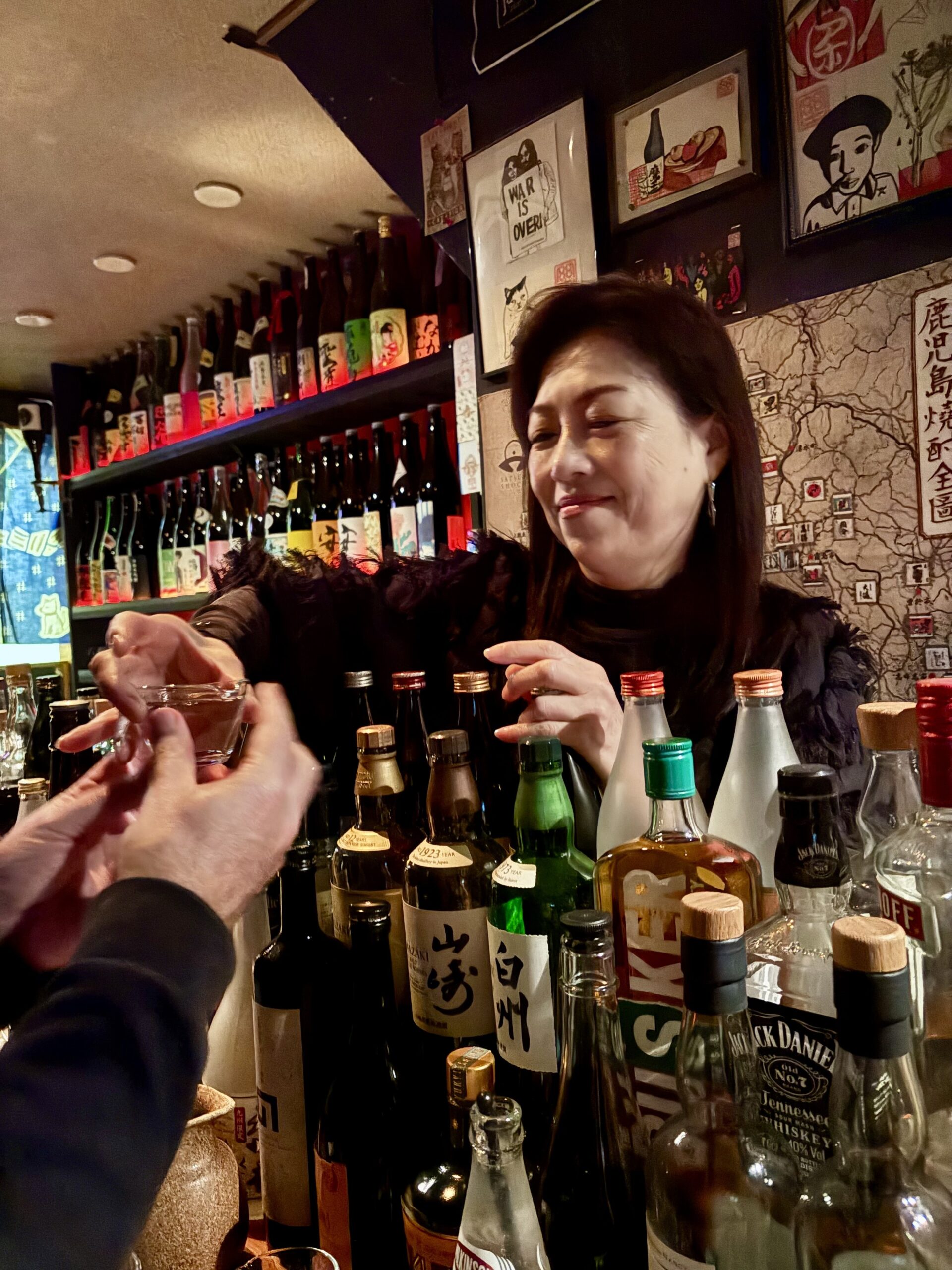
The island of Kyushu is known as the “Shochu Kingdom.” The clear spirit has been distilled there since the 15th century thanks to its agricultural riches in barley, rice, and sweet potatoes, as well as a warm climate that favored distilled alcohol over fermented sake before the advent of refrigeration. There are now 500 distilleries producing 5,000 varieties on Kyushu alone. So I was grateful to have one of the world’s preeminent experts, James Beard-nominated author Stephen Lyman, give me a thirsty crash course and a brief tour of some favorite shochu haunts in Fukuoka, where he currently lives.
Propietor Sayuri Ajisaka, one of just three women to run a shochu bar in Fukuoka, serves a customer a pour from her 200 bottle collection at Bar Untitled, located in the city’s Nakasu entertainment district.
We began with an earthy and tropical purple sweet potato shochu from Yamatozakura that was blended into a refreshingly fizzy highball at Ansic, a brightly lit shochu bar crammed with hundreds of bottles. The evening’s highlight, though, was our jaunt past the riverside food stalls of the Nakasu entertainment district, past a cluster of sumo wrestlers surrounded by entourages, and deep into a warren of narrow, ancient alleyways, where we landed at a snug hideaway called Bar Untitled. Owned by Sayuri Ajisaka, one of just three women to run a shochu bar in Fukuoka, the bar has a single bench for eight drinkers. Perched at the end, I took an abbreviated sipping tour of its 200-bottle collection, savoring the Chiran Tea Chu made in Kagoshima from a blend of sweet potatoes and green tea, and another sweet potato shochu from Yanagita Distillery. Each one was more proof of the elegance of a diverse spirit category too often wrongly compared to vodka. By this point, I was thoroughly transfixed by the bar’s elite-level munchie mix, which came with an ingenious plastic toy that turned shelling sunflower seeds into a Zen-like, shochu-driven trance.
Ramen breakfast at Ganso Nagahamaya in Fukuoka
Hakata ramen is famous for its superrich, cloudy tonkotsu broth and skinny, straight noodles. This legendary shop, founded in 1952, is known for a deliberately lighter version known as Nagahama-style ramen, ideal since it caters to workers getting off early-morning shifts from the Nagahama Fish Market right next door. The broth is thinner but still incredibly flavorful. The ultrathin noodles cooked for just a minute or less before they landed in the bowl with finely shaved pork and scallions, to be topped tableside with sesame and pickled red ginger. The portion is also slightly lighter than usual, so as not to weigh the workers down. But Ganso Nagahamaya also originated the noodle-refill order (known as kaedama) so hungry diners can eat extra helpings of fresh-cooked noodles at peak firmness. A perfect start to our day at 7 a.m.
Jesse and Matt Ito eat tonkotsu ramen at a shop across from the Nagahama Fish Market on Thursday, Nov. 6, 2025 in Fukuoka, Japan.
Ekiben feast on the bullet train
There’s nothing like rocketing across land at 185 miles per hour on a bullet train to stoke my appetite. Japan excels in elaborate meal kits for rail travel that are sold in stations everywhere. Known as ekibens, the options are vast, from plastic bentos shaped like bullet trains to self-heating bentos stuffed with mackerel, stuffed squid, or chicken-shiitake stew. Craving a respite from all the seafood, I went for a double hambāgu feast with patties that were more like a meatloafy Salisbury steak than an American burger. I was drawn to its thick but flavorful brown mushroom gravy. Served with rice, a katsu chicken stick, and a cool scoop of potato salad, it was a much heartier feast than I needed at 11 a.m. Was it my most delicious meal in Japan? No. But it was an essential cultural experience fulfilled.
A double hambāgu “ekiben” is typical of the boxed bento lunches that can be purchased in train stations for a complete meal on the rails.
Coffee tasting at Glitch Coffee in Osaka
Coffee culture thrives in Japan at all levels, from vending machines dispensing heated cans of brisk, milky joe to the most meticulously performed pour-overs at high-end Third Wave haunts like Glitch. Glitch’s Tokyo outlets are famously crowded, but we made several easy visits to a location in Osaka that met the buzzy hype. Friendly but formal baristas hand customers their business cards as they engage in deep-dive conversations to determine personal preferences, offering customers sniffs of beans from 10 different vials with elaborate tasting notes that were spot-on.
A Colombian Huila La Loma billed as “chocolate malt, rum raisin” and an Ethiopian Yirgacheffe Idido described as “jasmine, green tea … long finish, juicy” tasted exactly like that. Yes, it cost 2,700 yen ($17!) for a cup of primo Bolivian beans. But I savored one of the best cups I’d ever sipped.
An espresso from Ethiopian Sidama beans at Glitch is described in minute detail, brewed with precision, and served in polished style.
Dotombori food crawl in Osaka
Strolling along the canal and crowded pedestrian streets of Osaka’s historic Dotombori district is an obligatory activity for tourists, and it was worthwhile if only to take in the colorful lights and massive signs of animatronic king crabs, golden cows, and octopi waving their arms above restaurant facades. As with most tourist hubs, quality varies widely. Our ultimate choice from the dozens of stands making the local specialty of takoyaki octopus fritters was sadly burnt. But there were two genuine highlights: skewers of whole squid ikayaki scissored to frilly ribbons, grilled to order, then glazed in sweet soy and dusted with spice; and tall cups of freshly fried sweet potato chips whose massive, salt-speckled chips were impossible to stop eating.
Grilled squid in Dotombori in Osaka.
Barracuda fillet at Yohaku in Osaka
If Dotombori is a boisterous festival of lights and street-food classics, dinner at Yohaku revealed Osaka’s low-key-creative modern side. This husband-wife atelier in the Shinsaibashi neighborhood is a canelé bakery by day and restaurant by night, where chef Yoji Arakawa works solo behind a counter to produce an elegant 10-course tasting that spins beautiful Japanese ingredients with French techniques. Briny snow crab came in a tartlet with refreshing grapefruit, crunchy radish, and earthy Jerusalem artichokes. Custardy shirako (more cod milt!) was served with fruity cubes of pear beneath a foamy cloud of ricotta that mimicked its creamy fluff. Arakawa paired a fruity Japanese merlot with gorgeous Hokkaido beef alongside a brûléed fig and velvety hunk of taro. Local herbs and grains inspired a memorable duo: a savory churro made from buckwheat smeared with liver pâté and sweet red beans, and a chewy green mochi cake infused with mugwort. Our favorite dish, however, was a barracuda fillet with perfectly pan-roasted skin. It was set over a celery root puree layered with lacto-fermented banana — a funky pulse of tropical sweetness that gave this elegant dish an unexpected shimmer of delight.
Grilled barracuda at Yohaku on Thursday, Nov. 6, 2025 in Osaka, Japan.Jesse Ito holds pastries from le Croissant on Friday, Nov. 7, 2025 in Osaka, Japan.
Katsu curry at Hakugintei in Osaka
Jesse Ito told us to hustle so we could arrive early to this popular lunchtime destination near Honmachi station. We still waited 90 minutes to nab one of the 16 counter seats that ring its diner-like kitchen — but it was absolutely worth it. The rich brown curry is the star, a thick and fragrant sauce that swirls with fruity spice, sneakily building heat as you go. The menu options are simple: a fried tonkatsu pork cutlet, fried shrimp, spinach, or a combination of them all, mounded atop a pedestal of white rice with optional shredded cheese and raw egg yolk. It’s all thoroughly drenched in that gorgeous gravy. Easily one of my top-five favorite plates of the trip.
Curry with shrimp, spinach, and cheese at Hakugintei on Friday, Nov. 7, 2025 in Osaka, Japan.
Yakitori at Matsuri in Osaka
At Matsuri, we feasted part-by-part on a coveted Hinai Jidori chicken, served as a parade of individual cuts on skewers, coal-grilled and basted with tare sauce. The cured “chicken ham” was the most eye-catching course — a pale leg that looked raw on the stand, but was actually cured. The salty translucent flesh, served atop a crispy sheet of nori with spicy micro-herbs, was more novelty than memorably delicious. But there were other rewards to come: tender chicken “oysters,” earthy gizzards and hearts, ground meat kebabs, fluffy dumplings, andthigh meat threaded with scallions. The most delicious bite was a rarely eaten cut from the back, a morsel of tender chicken wrapped in a thick pad of skin that arrived dripping with golden schmaltz, having been roasted over the coals till bubbly and brown.
Chicken prosciutto at Yakitori Matsuri on Friday, Nov. 7, 2025 in Osaka, Japan.
Tea and pastries at Souenin Tokyo
If we’d had more time in Tokyo, I would have spent it at the Sakurei Tea Experience, where a modern tea ceremony pairs rare teas with pastries and tea-infused spirits. Instead, we popped into its more casual and low-key sibling, Souen, a glass-walled cafe in residential Setagaya where manager Ayumi Imamura led us to a world of options beyond the usual matcha. She meticulously prepared sencha blended with freeze-dried persimmons, another with shiso and orange peels, and yet another infused with whole cinnamon and cardamom that she toasted and ground to order then simmered in a copper ibrik pot over hot sand. A platter of exquisite seasonal pastries — griddled black-sesame dumplings, steamed castella cake with chestnuts and roasted tea, mooncakes stufeed with walnuts — completed an experience so soothing it made me wish our itinerary wasn’t quite so busy.
Sweets and tea at Souen on Saturday, Nov. 8, 2025 in Tokyo, Japan.
Pizza Y at Savoy’s Tomato and Cheese in Tokyo
Is Tokyo pizza heaven? It just might be. There are at least a dozen great pizzerias in Tokyo to explore, but we landed at the tiny Tomato and Cheese branch of Savoy, one of the pioneers. Gravel-voiced and jolly, chef Bungo Kaneco cooked our pies in his sunglasses, rocking back and forth at the shaping station to give our crusts an almost wavy edge that lent them peaks of texture that swiftly crisped in the wood-fired hearth. I loved all of the pies, including Pizza O, with braised Ozaki beef. But the true star is the Pizza Y, topped with a fistful of chopped bluefin that, when it emerges from the oven, gets crushed to reveal a tuna tartare that’s been only half-cooked. Spread across the pie along with tangy bufala mozzarella, chopped scallions, and dabs of spicy wasabi, it’s the luscious Tokyo love child of sushi culture and a fanatical pizza scene. Jesse and Matt each told me separately it was among their favorite food memories of Tokyo together.
The tuna pizza at Savoy on Saturday, Nov. 8, 2025 in Tokyo, Japan.
This week’s question is… Has Wawa’s food changed too much?
Stephanie Farr, Features Columnist
In my 19 years here I’ve found that Wawa has remained a consistent standard in my life, both in terms of quality and in terms of how often I eat it. I don’t think anyone would argue that it’s the best food in a very foodie town, but it’s never let me down.
Tommy Rowan, Programming Editor
Wawa lost something when they took out the meat slicers and stopped having bread delivered. In the early 2000s, at least to me, the sandwiches tasted fresher. It still had the spirit of a deli. Now it’s just like Subway. Which, hey, fine in a pinch. But I’m not going out of my way to stop anymore.
Jenn Ladd, Deputy Food Editor
I am a Montco native, so Wawa was a big part of my teenage years. Like most kids in this area, I thought of it as sort of a third space in high school — have many fond memories of sitting in or around my car or a friend’s car in Wawa parking lots in Flourtown, Wynnewood, Ocean City — and then when I went to college in Baltimore, that tether remained.
I’d drive 25 minutes each way from the northern edge of Baltimore City to a Wawa in like Parkville, Md., or something. I’d get gas, coffee, and a breaded chicken sandwich or the protein snack pack (grapes, cheese, crackers). Often, I’d round up the other Philly-area kids and we’d all go together at like 11 p.m. on a weeknight. It was a ritual.
All of that is to say, I once held deep-seated affection for Wawa.
The Wawa at the corner of 34th and Market Street near Drexel University will be closing in Philadelphia, on Tuesday, Jan. 13, 2026.
But it has lost that spot in the past three or four years.
I used to commence each long-distance road trip with a Wawa breakfast hoagie — the scrambled eggs used to be so rich that you really didn’t need cheese because they were that good and plentiful; the sausage was really flavorful; the portion so abundant that you could drive for hours without feeling the need for a snack. The last time I got a breakfast sandwich from Wawa, I gotta tell you, it was sad.
I was sad.
Stephanie Farr
A road trip still doesn’t start for me until I get a Wawa Sizzli — croissant, egg, turkey sausage, and cheese — and I’ve never been disappointed. That being said, I recently got a breakfast sandwich at the flagship Wawa at Sixth and Market and that one came with scrambled eggs and it was a mess! I much prefer the egg mold.
What has gone downhill for you guys?
A worker assembles breakfast Sizzlis during the grand opening on Sept. 19, 2024, of the first Wawa in Central Pennsylvania — solid Sheetz territory — in the Dauphin County borough of Middletown.
Jenn Ladd
I’ve noticed that the portions have gotten kinda puny for the custom-ordered stuff, which was my jam for years. And now I think you’re better off with the grab-and-go things — the Sizzlis.
I think Wawa putting so much focus on the “Super Wawa” format and then constantly “innovating” with the food menu has really been its downfall. Like, just keep it simple.
Tommy Rowan
I still think about the old Buffalo Blue Breaded Chicken Sandwich. It was a robust and crispy chicken patty. And it was slathered in that bright orange buffalo-blue cheese sauce that brought the heat and the tang. It was unmistakable and worth the price of admission. And it came on a fresh kaiser roll, to boot.
They have introduced new lines of chicken sandwiches in recent years, but they’re not the same.
Jenn Ladd
I used to love those chicken sandwiches. They had my heart over a hoagie almost every time.
A worker at the Wawa at Sixth and Chestnut Streets wraps a turkey hoagie with provolone cheese and lettuce and tomato for Wawa Welcome America Hoagie Day in 2020.
Stephanie Farr
I’ve actually never tried one of their chicken sandwiches, but I am mad they took the spicy cherry pepper relish off the menu. That is a GOAT hoagie topping.
Personally, I like Wawa’s soups, particularly the chicken noodle and tomato bisque. I’m sure they come out of a bag, but they taste pretty good, and it’s not something you find at similar places, like Sheetz.
Jenn Ladd
[shudder at the thought of bagged soup]
Stephanie Farr
As I assumed you would, foodie. lol. It doesn’t bother me, but my standards are pretty low.
Evan Weiss, Deputy Features Editor
If you all could tell Wawa to change two things back, what would they be?
Stephanie Farr
Just give me back my spicy cherry pepper relish for the love of all that is holy please! Also, they better never get rid of the garlic aioli. Get that on a hoagie and bring it into a public place and everyone will ask you what smells so good. (It’s happened to me in the newsroom!)
Tommy Rowan
Bring back the slicers and the fresh bread. It would make a huge difference.
Jenn Ladd
I’d have them remember their roots as opposed to coming up with novelties and/or trying to compete with other convenience store chains on selection. (See Wawa pizza, a repeated failure.) They used to have great sandwiches and snacks. I’ll forever cherish the memory of a boss in Baltimore putting a Wawa pretzel on my desk because she had been in the Philly area earlier in the day. It was like a little love note from home. They’ve gotten too corporate, so I basically just treat it like a gas station now.
A slice of Wawa cheese pizza at Science Leadership Academy in Philadelphia in 2023.
Stephanie Farr
I was talking to someone about Wawa last week, after covering the first Sheetz opening in Montco, and they said while Sheetz may have more food offerings, Wawa will still remain supreme in the Philly region because: “We’re loyal and it has nothing to do with quality.”
Honestly, I think that’s one of the reasons I love Philly so much. Tommy and Jenn, are you bucking that trend, have you forsaken your Wawa loyalty?
Jenn Ladd
I don’t believe in blind allegiance.
But also, I don’t think we should just keep giving money to an entity that doesn’t seem to be minding the quality of what it’s putting out to customers.
Just because we are fond of it.
Stephanie Farr
So I take it you’re not a Phillies or Flyers fan, either?
Jenn Ladd
Ahahaha, well I’m not giving them any money, that’s true.
Tommy Rowan
Hahaha. I will always have a special place in my heart for Wawa. And I hope it comes back around. I’m going to be thinking of that chicken sandwich for the rest of the week now.
Jenn Ladd
I won’t even get into how Wawa has betrayed Philadelphia proper, but that’s another reason I’m loathe to be blindly loyal to them.
I’d love for Wawa to make a quality comeback, too, truth be told, but I don’t know that I’d realize that without this conversation.
Have a question of your own? Or an opinion? Email us at eweiss@inquirer.com.
A battle of the beer festivals is brewing in Philadelphia, and it’s set to come to a head next weekend, when Philly Bierfest and Philly Beer Fest — two completely unrelated beer festivals with names that are homophones — take place on the afternoon of Saturday, Feb. 28.
This isn’t a coincidence, according to some members of Pennsylvania’s beer scene who claim the New York City-based organizers of the two-year-old Philly Beer Fest are deliberately trying to capitalize on the good name of Bierfest, a long-standing event with deep local roots.
“It’s a very pointed move,” said Meredith Megan Rebar, the founder of Home Brewed Events, which plans major food and drink festivals in the Philly region. “They’re just doing this intentionally to mess with the event that’s been around longer.”
The 2024 Philly Bierfest, held at the German Society of Pennsylvania at 611 Spring Garden St. The event spans two buildings and includes a food hall, beer classes, and burlesque performances, among other things.
Philly Bierfest was created in 2013 by Northern Liberties-based nonprofit the German Society of Pennsylvania and Marnie Old, a local wine author and longtime freelance columnist for The Inquirer. It began as a way to honor the state’s rich tradition of brewing German-style beers, such as pilsners, kölsches, and lagers.With a deep benchof Pennsylvania- and Germany-based brewers — there are 45 pouring at this year’s event — the festival sells out each year, and was named one of the best beer festivals in the U.S. by USA Today in 2023. The event’s proceeds have gone to the Philly Roller Derby and Brewers of PA since its inception.
Philly Beer Fest, on the other hand, is hosted by by Craft Hospitality, a national events company headquartered in New York City that organizes beverage festivals across the U.S., including the Philadelphia Zoo’s Summer Ale Festival. Craft Hospitality launched Philly Beer Fest at the 23rd Street Armory in 2024. Just over 30 Philadelphia-area beverage makers are featured this year, and proceedspartially benefit the Trauma Survivors Foundation.
In 2024 and 2025, Craft Hospitality scheduled Beer Fest on the weekends immediately before and after Bierfest, which hasbeen held on the last Saturday of February for 13 years (save for a pandemic-induced disruption).
This year’s identical scheduling hasn’t necessarily hurt Bierfest, Old said, noting that tickets sold out this week. But it has caused some headaches. Bierfest’s barbecue vendor accidentally showed up to the wrong venue for a site visit, and Old has spent a great deal of time confirming with vendors that they’re signed up for the right event. In past years, Old has heard from some disappointed Beer Fest attendees who showed up to their event expecting it to be the German-themed Bierfest.
The nonprofit-run festival tried to get ahead of any confusion this year.Prior to Bierfest selling out, it had a pop-up on its website that read: “Friends don’t let friends get the wrong tickets. Share this link to ensure pals get tickets to the original, authentic Philly Bierfest and not the other similarly named event.”
Old isn’t sure if the warnings entirely worked.
“We don’t hear from anyone who got tickets to the wrong festival until after our event,” she said. “I don’t know what their intention is because I’m not on their team, but misleading [the consumer] does seem to be the end effect.”
Craft Hospitality denies scheduling Beer Fest for Feb. 28 as a way to undercut its preexistingcompetitor. In a statement, the company attributed the scheduling snafu to the event being held at a National Guard facility, which limits scheduling.
“Event dates are determined based on venue availability and planning logistics, and are often set by contract approximately 12 months in advance,” the statement read. “Philadelphia has an incredibly active event calendar — this year especially with the World Cup … Overlap between events is not uncommon.”
This isn’t the first time Craft Hospitality’sBeer Fest has been accused of riding Bierfest’s coattails.
After a Craft Hospitality employee emailed Ploughman Cider owner Ben Wenk in Nov. 2023 to gauge interest in vending at the first Philly Beer Fest — then scheduled for Feb. 17, 2024 — Wenk said his cidery would boycott all future Craft Hospitality events over what he felt was the company’s “intentional and malicious” attempt to deceive.
Scheduling a beer festival with an identical-sounding name just a week before its established competitor, Wenk said, went too far.
“Our people and our brand won’t be devoting any further resources towards an organization such as yours that is so brazenly and transparently willing to act in such a predatory way towards an established event like Philly Bierfest, who, by our estimation, have done nothing to deserve it,” Wenk emailed the Craft Hospitality employee in February 2024.
Another Craft Hospitality employee replied to Wenk days later. “No one else has ever mentioned this other beer fest to me personally. Brands have just signed up fairly easily but I do see the conflict you’re pointing out. I will be looking into this,” they wrote.
No one followed up with him, Wenk said, and Craft Hospitality didn’t respond to questions about this interaction.
“Why is this New York events company coming down here to Philadelphia and thinking they can get one over on us?” Wenk said. “It just feels predatory to me.”
Ploughman Ciders, of Adams County, Pa., is boycotting Philly Beer Fest and all other Craft Hospitality events.
Bierfest co-creator Old had also directly flagged issues to Sam Gelin, Craft Hospitality’s founder. Shortly after both beer festivals wrapped in 2024, Old learned Craft Hospitality had scheduled its 2025 Beer Fest on the same day as Bierfest. When she asked Gelin if he would consider moving his event out of concern that it would confuse customers and vendors, Old recalled that Gelin said it would be “desirable” for the events to share the date. Still, Gelin obliged. Philly Beer Fest 2025 took place one week after Bierfest.
“After that conversation and then for this year, I didn’t think I needed to follow up with them. I assumed that they would continue choosing a different date,” Old said.
When she learned in September that this year’s Beer Fest was once again set for same exact date as Bierfest, Old figured it wasn’t worth reaching out to Gelin again.
“If you’re renting your venue, it’s too late to change by that point. Six months is cutting it too close to make any changes,” she said. “And it was clear to me at that stage that [Craft Hospitality] saw having [its] event on the same date as ours as a benefit.”
Craft Hospitality did not respond to questions about whether its founder had been contacted by Old. “Philly Beer Fest is not affiliated with Philly Bierfest,” they said in their statement. “They are separate events with different producers, different names, different socials, different formats, different pricing, different breweries, different cultural focuses, different venues, and overall different experiences.”
Festivals with different aims
The different vibes are part of the problem, according to Rebar,the festival organizer who specializesbeer festivals.
Bierfest typically draws “real beer enthusiasts,” who are there to drink but also to deepen their understanding of German brewing techniques and beer culture. The festival’s format includes beer seminars, a food hall showcasing traditional German eats by local makers, a German Masskrugstemmen (stein-holding) strength competition, and performances from Bavarian folk dancers.
An attendee at the 2024 Philly Bierfest, which has been held on the last weekend of February since its inception in 2023.
Beer Fest, said Rebar, is for people who want to party. The festival is a hodgepodge of beer, hard seltzer, and spiked tea purveyors compared to Bierfest’s lineup of respected German beermakers and Pennsylvania brewers making traditional German beer styles.
“There’s no educational standards to it. It’s just a generic festival, and it’s not [organized] by anybody local,” said Rebar, who attended the first Beer Fest in 2024. “Philly Bierfest has been around for so long, has a really good representation, and has a very clear mission.”
Craft Hospitality did not respond to questions about whether it would provide refunds to attendees who showed up thinking they were at Bierfest and are dissatisfied with their experience.
And while Rebar concedes that it would’ve been difficult for Craft Hospitality to reschedule given the impact on vendors, she said the winter months are typically slow for beer-industry events.
“There’s plenty of other weekends in January, February, [and] March when there’s not a lot going on,” Rebar said.
Not everyone views the festivals as being in competition. Currently three local breweries are participating in both festivals: Norristown’s Von C Brewing, Broad Street Brewing in Bristol, and Triple Bottom Brewing in Spring Garden.
Old said she didn’t force any vendors to choose between the two events. “I hate to put my vendors in an awkward situation … We do not have a problem with anyone being registered for both.”
Triple Bottom Brewing is one three breweries participating in both Philly Bierfest and Philly Beer Fest on Feb, 28, 2026.
Triple Bottom Brewing co-owner Tess Hart has found a silver lining to the fest-on-fest drama. The six-year-old brewery has repeatedly participated in both festivals. The dual events kick off Triple Bottom’s 16-week brewer apprenticeship program for individuals impacted by the justice system and housing insecurity, she said.
This year’s 10-person cohort started last week, Hart said, and they’ll be staffing both festivals concurrently. The challenge, she thinks, will be rewarding.
“We’ll be stretched a little thin on Saturday,” Hart said. “But this will be a good opportunity to get them out of the taproom and really well-practiced about talking about beer in a high-volume situation. For us, that’s a big benefit.”