Category: Health

  • AMA joins effort to launch vaccine science review amid CDC turmoil

    AMA joins effort to launch vaccine science review amid CDC turmoil

    The American Medical Association and a leading public health research group focused on vaccines are teaming up to create a system to review vaccine safety and effectiveness, mirroring a role long played by the Centers for Disease Control and Prevention.

    The groups, which will operate independently from the federal government, say their work is needed because the CDC’s vaccine review process has “effectively collapsed.” The parallel effort will initially focus on reviewing immunizations for influenza, COVID-19 and respiratory syncytial virus, or RSV, ahead of the coming fall respiratory season.

    The groups will not be making vaccine recommendations but will provide the evidence reviews to state health officials, clinicians, and others making vaccine decisions.

    The nation’s largest physician organization and the Vaccine Integrity Project at the University of Minnesota will convene leading medical professional societies, public health groups, and healthcare organizations to “ensure a deliberative, evidence-driven approach to produce the data necessary to understand the risks and benefits of vaccine policy decisions for all populations — the approach traditionally used by the federal government,” according to a joint statement announcing the effort Tuesday.

    The involvement of the AMA is significant because the doctors group has traditionally focused on issues such as physician reimbursement, billing practices and the economics of medical practice — not on broad public health evidence reviews. Its decision to help stand up a parallel vaccine review process reflects how seriously medical leaders view the breakdown of confidence in the federal government’s vaccine system under Health Secretary Robert F. Kennedy Jr.

    “This signals a really important foray for them to come into this space,” said Jeanne Marrazzo, chief executive of the Infectious Diseases Society of America and the former director of the National Institute of Allergy and Infectious Diseases. “It shows the considerable concern around where we are going with evidence-based recommendations.”

    For decades, the CDC’s outside panel of vaccine experts — the Advisory Committee on Immunization Practices — set the standards for which vaccines the agency should recommend and who should get them. Even though the recommendations were guidance, not law, physicians, school systems, health insurers and others broadly adopted them. The vaccine panel, in coordination with CDC staff, conducted extensive data reviews of benefits and risks, and held exhaustive discussions during its public meetings before voting to make new vaccine recommendations or change existing ones.

    But Kennedy fired all 17 members of the vaccine panel in June and replaced them with a handpicked group that included several vaccine skeptics. The Department of Health and Human Services has also disallowed several doctors groups that had long provided input from participating in the panel’s work groups, the teams that do the detailed analysis for the full committee.

    Since then, the panel has made recommendations that have been strongly criticized by public health and medical experts, including voting in December to drop the long-standing recommendation that all newborns be given the hepatitis B vaccine.

    Andrew Nixon, an HHS spokesman, said the “claim that ACIP’s evidence-based process has collapsed is categorically false. ACIP continues to remain the nation’s advisory body for vaccine recommendations driven by gold standard science.” He added, “While outside organizations continue to conduct their own analyses and confuse the American people, those efforts do not replace or supersede the federal process that guides vaccine policy in the United States.”

    The new effort comes after the acting CDC director, a top deputy to Kennedy, took the unprecedented step of reducing the number of vaccines that the United States routinely recommends for every child. Leading public health experts and medical organizations raised alarms, saying the shift, which bypassed vaccine experts at CDC and its vaccine advisory panel, could weaken protections against preventable deadly disease.

    “Everything that has been done since the new ACIP has all been about ideology and not based on science,” said Michael Osterholm, director of the University of Minnesota’s Center for d Research and Policy, which established the Vaccine Integrity Project last year.

    Osterholm said the new initiative is an attempt to fill “a huge black hole in public health and medical practice.”

    “It is our duty as healthcare professionals to work across medicine, science, and public health to make sure the U.S. has a transparent, evidence-based process by which vaccine recommendations are made,” said Sandra Adamson Fryhofer, an AMA trustee and the organization’s liaison to the CDC vaccine panel. “Together, we are committed to ensuring the American public has clear, evidence-based guidance that inspires confidence when making important vaccination decisions.”

    The Vaccine Integrity Project published an evidence review and convened panels that looked at scientific studies on COVID-19, influenza, and RSV vaccines in 2025, and is conducting a review of the HPV vaccine.

  • Philly-area bariatric surgery programs face upheaval amid growing GLP-1 use for weight loss

    Philly-area bariatric surgery programs face upheaval amid growing GLP-1 use for weight loss

    At Roxborough Memorial Hospital in Philadelphia, surgeon Piotr Krecioch has his hands full launching a program offering surgical interventions to treat obesity.

    One in three Philadelphians are living with obesity, putting them at higher risk of chronic conditions like diabetes and heart disease, but these days fewer are seeking the bariatric surgical procedures long considered a leading medical treatment for the condition.

    “I’m trying to start a bariatric program at probably the worst possible time you can ever imagine because everybody’s losing patients, and I don’t even have a patient to begin with,” Krecioch said.

    Tower Health’s Reading Hospital recently closed its bariatric surgery program, and other local health systems have seen declines in weight-loss operations approach 50%.

    Independence Blue Cross, the Philadelphia region’s largest insurer, said the number of bariatric surgeries it paid for dropped by half in the five years ended June 30.

    Those shifts in the bariatric surgery landscape have followed the meteoric national rise in the use of GLP-1s and related drugs for weight loss.

    So far, the drugs have benefited patients by allowing them to avoid an invasive surgery. With bariatric surgery, people lose weight because the procedures restrict the amount of food a person can eat. Drugs in a class known as GLP-1s make people feel full longer.

    For hospitals, the upheaval in treatment options cuts into a profitable business line and adds to the financial pressure health systems have been experiencing since the pandemic.

    Despite the ever-increasing popularity of GLP-1s for weight loss like Novo Nordisk’s Ozempic and Wegovy and Eli Lilly’s Mounjaro and Zepbound, it’s too soon to write off bariatric surgery as an option, some doctors say.

    Insurers are imposing limits on coverage because of the long-term cost of the drugs compared to surgery, and doctors are watching for side effects that may emerge as more people take the drugs for longer periods of time.

    It’s not the first time a new technology has reduced surgical volumes.

    Whenever a less-invasive treatment has come along, “surgical volumes always have taken a beating,” said Prashanth R. Ramachandra, a bariatric and general surgeon at Trinity Health Mid-Atlantic’s Mercy Fitzgerald Hospital. Declines in peptic ulcer and open heart surgeries are past examples of the phenomenon, he said.

    Such industrywide moves away from profitable procedures can create financial challenges for individual clinics or independent hospitals, said Daniel Steingart, who leads the nonprofit healthcare practice at Moody’s, a major credit ratings agency.

    “But I also see it as an opportunity, because there’s other patients out there, there’s other services that can be provided. This is a matter of the management team being nimble,” he said.

    Sharp decline in bariatric surgeries

    National data show a 38% decline in bariatric surgeries from the beginning of 2024 through September, according to data firm Strata Decision Technology. Comparable local data were not available.

    A substantial portion of the drop is from patients who previously had bariatric surgery but regained weight, physicians say. In the past, they would have had a type of surgery called a revision. Now, those patients are more likely to start taking GLP-1s, local doctors said.

    Prashanth R. Ramachandra is a general and bariatric surgeon at Trinity Health Mid-Atlantic’s Mercy Fitzgerald Hospital in Darby.

    Only two Philadelphia-area health systems provided details on changes in bariatric surgery volumes in recent years as GLP-1s for weight loss took off.

    At the University of Pennsylvania Health System’s three Philadelphia hospitals, the annual number of bariatric surgeries has fallen by more than half, from a peak of 850 three or four years ago to around 400 in the year that ended June 30, said Noel Williams, a physician who leads Penn’s bariatric surgery program.

    At Mercy Fitzgerald in Darby, the number fell from an annual peak in the 220-230 range to about 125 last year, Ramachandra said.

    The volume at Mercy Fitzgerald was likely buoyed by the closure of the bariatric surgery program at nearby Crozer-Chester Medical Center in Upland.

    Tower did not provide details on the Reading closure, which was part of cutbacks Tower announced in early November. The program closed last month after a 60-day notice to the state health department.

    Main Line Health, which only offers bariatric surgery at Bryn Mawr Hospital, said surgeries have declined, but provided no details.

    Virtua Health did not provide comparable data but said that its Virtua Complete Weight Management Program, which opened in spring 2024 to expand into medication treatments, experienced a 35% increase in visits last year.

    The number of bariatric procedures is also down at Temple University Health System, but patients with complex conditions and more severe obesity are still coming to Temple for surgery, said David Stein, who is surgeon-in-chief at Temple University Hospital.

    To adapt to this rapid change in medicine, Temple is adopting a multidisciplinary approach to the disease, building on what is done in cancer care, Stein said.

    Jefferson Health did not respond to requests for information about its bariatric surgery program.

    How health systems are responding

    While full-scale closures like Reading’s are unusual, cutbacks are occurring broadly.

    When the bariatric surgeon at Penn Presbyterian Medical Center retired amid declining numbers of surgeries across the entire system, Penn did not replace him, Williams said.

    Penn does the procedures locally at the Hospital of the University of Pennsylvania and at Pennsylvania Hospital.

    “If the numbers were to continue the way they are now,” Williams said, “we may want to consolidate into one of our hospitals in the city.”

    Outside of Philadelphia, Penn has bariatrics programs at Lancaster General Hospital and Penn Princeton Medical Center.

    After Jefferson Health acquired Einstein Healthcare Network in late 2021, it consolidated bariatric procedures at Jefferson Abington Hospital, according an Inquirer analysis of inpatient data through 2024 from the Pennsylvania Health Cost Containment Council.

    Jefferson did not respond to a request for information about the changes.

    Piotr Krecioch is a bariatric and general surgeon at Roxborough Memorial Hospital in Philadelphia.

    Not the end for bariatric surgery

    GLP-1s don’t mean the end of bariatric surgery, even though the procedures are not likely to return to previous peaks, physicians said.

    Some patients don’t respond to GLP-1s and others can’t tolerate them, which means they remain candidates for surgery, Williams said. Surgery is still recommended for patients who are considered severely obese, with body-mass indexes over 50, he added.

    Outcomes cannot yet be compared over the long-term. Ramachandra and other doctors are keeping their eye on the ratio of fat loss and muscle loss in patients taking GLP-1s compared to those who have bariatric surgery. Losing muscle can lead to falls and fractures.

    A study published last month in the Journal of the American Medical Association found that bariatric surgery is associated with a favorable ratio of fat loss.

    At Roxborough Memorial Hospital, Krecioch, who also works as a general surgeon, sounds optimistic as he works on his new program. He became a Roxborough employee in April 2024 after eight years at Mercy Fitzgerald, where he worked with Ramachandra.

    Krecioch’s strategy for years has been to offer weight management services in addition to surgery. Patients come for a GLP-1, giving him a chance to build a long-term relationship.

    “I have a feeling that these people are going to come back to my office,” he said. ”I’m gonna keep seeing them, and that they will actually convert to bariatric surgery at some point.”

    Editor’s note: This article has been updated with information from Temple University Health System.

  • Philadelphia reports two deaths related to intense cold

    Philadelphia reports two deaths related to intense cold

    Philadelphia health officials have reported two deaths related to the city’s extraordinary stretch of freezing temperatures in recent weeks.

    City officials did not provide additional information on the deaths, which took place between Jan. 20, when the city first declared an “enhanced Code Blue,” and Feb. 6.

    An enhanced Code Blue is declared when the wind chill makes it feel like it’s 20 degrees outside or lower for more than three days. In response, officials open up more resources to protect Philadelphians from the cold, including additional shelter beds and warming centers at libraries and rec centers.

    As of Friday, the centers have logged 26,270 stays, said James Garrow, a spokesperson for the city health department.

    Temperatures were in the single digits on Sunday night, and the day’s average temperature of 14 degrees was 20 degrees colder than normal.

    Residents who see someone who appears to be unsheltered outside during Code Blue can call the city’s homeless outreach hotline at 215-232-1984. The city maintains a list of warming centers on its website.

  • 85,000 Pennie customers dropped health plans as tax credits shrank and costs spiked

    85,000 Pennie customers dropped health plans as tax credits shrank and costs spiked

    About 85,000 people who bought Pennie plans in 2025 did not renew for this year following the expiration of expanded tax credits that reduced what consumers had to pay, Pennsylvania’s Affordable Care Act marketplace announced Monday.

    That meant that 18% of previously enrolled Pennsylvania residents dropped their coverage as premiums doubled on average across the state, according to Pennie, the state’s Obamacare marketplace.

    Enrollment for 2026 totaled 486,000, down from 496,661 at the end of last year’s open enrollment period. For this year, roughly 79,500 newcomers to the exchange partially offset the people who dropped coverage.

    The agency warned, however, that the number of enrollees could continue declining for several months. There’s a three-month lag between when consumers stop paying premiums and coverage ends. Open enrollment ended Jan. 31.

    Pennsylvania already had more than 700,000 people without health insurance, according to the latest census data.

    The agency had predicted last summer that as many as 150,000 people would drop coverage if Congress did not renew the expanded tax credits that were adopted in 2021 during the coronavirus pandemic.

    New Jersey has not released final results for its ACA open enrollment period, which also ended Jan. 31.

    As of the start of January, 493,727 residents were signed up for 2026 health coverage with Get Covered New Jersey. That’s up slightly from the 481,151 people who were enrolled last year.

    Soaring costs for consumers

    Average out-of-pocket costs were expected to double on average for people who benefited from the enhanced tax credits, Pennie said last year.

    Under the ACA, people who earn less than 400% of the federal poverty level — about $64,000 for an individual and $132,000 for a family of four — are eligible for tax credits on a sliding scale, based on their income, to help offset the monthly cost of an insurance premium.

    That tax credit is part of the law, and therefore did not expire at the end of December. The change affects an expansion in 2021, when Congress increased financial assistance so that those buying coverage through an Obamacare marketplace do not pay more than 8.5% of their income.

    The expiration of the 8.5% cap means that a 60-year-old couple with household income of about $85,000 could see their premium triple to $22,600 this year from $7,225 last year, according to the nonprofit Bipartisan Policy Center in Washington.

    The tax credits were a key issue in the federal budget debate last year that ultimately led to the longest-ever government shutdown. Democrats wanted to permanently expand the enhanced subsidies, and Republicans refused.

    Weaker coverage

    About 33,000 more Pennie customers enrolled in plans that have lower monthly premiums, but typically come with high out-of-pocket costs in the form of deductibles and copays. That amounted to a 30% increase in the number of consumers choosing so-called Bronze plans, Pennie said.

    “As the costs of groceries, housing, utilities, and other necessities continue to rise, higher healthcare costs mean more people will delay care, skip treatments, or take on medical debt,” Antoinette Krause, executive director of the nonprofit advocacy group Pennsylvania Health Access Network, said in an email.

    Pennie noted that rural counties were particularly hard hit by coverage losses. Fifteen of the top 20 counties with the highest disenrollment on a percentage bases were rural, Pennie said.

    That could put more stress on rural hospitals if people have to resort more often to emergency departments for care and don’t have the means to pay.

    Inquirer staff writer Sarah Gantz contributed to this article.

  • Pink noise, a popular sleep aid, could disrupt sleep quality, Penn study suggests

    Pink noise, a popular sleep aid, could disrupt sleep quality, Penn study suggests

    Marketed as a ticket to deeper sleep, the soft hum of pink noise has become part of millions’ nightly routines.

    However, its use may come at the cost of sleep quality, a University of Pennsylvania study suggests.

    Published this month in the medical journal Sleep, the study found that the presence of pink noise at night reduced REM sleep — the stage when most vivid dreams occur and memory, emotional regulation, and learning are supported. This was based on a sample size of 25 healthy adults assessed over seven days in a sleep lab.

    To Mathias Basner, a Penn professor of psychiatry and lead author on the study, it’s evidence that background noise may not be risk-free.

    “The negative consequences of the pink noise far outweigh the positive ones that we saw,” he said.

    Pink noise vs. white noise

    Pink noise is what’s called a “broadband noise,” meaning sounds made up of a wide range of frequencies. The most well-known example of this, white noise, is considered the sound equivalent of the color white, which contains all colors combined.

    Pink, brown, and other colored noises differ based on the frequencies they boost.

    Pink noise, for example, emphasizes lower frequencies — making it sound similar to steady rainfall or ocean waves. It’s often used for sleep, although uses for focus and tinnitus have also been reported.

    These types of background noise can mask unwanted sounds — an appealing quality in an increasingly noisy world.

    Since the first white noise machine for sleep was released in the 1960s, hundreds of variations have spawned. Today, 10-hour videos of pink noise, which is often preferred over white noise for sleep due to its softer sound, pick up millions of views on YouTube.

    “So many people are using it, and it’s really indiscriminate use,” Basner said.

    Putting pink noise to the test

    Having studied the effects of noise his whole career, Basner was surprised to learn several years ago that some people used it as a sleep aid.

    That led him down a rabbit hole of research, where he found dozens of studies assessing the effects of broadband noise on sleep. However, most of them were considered to be low quality — sample sizes were small and the assessments were usually subjective.

    “We don’t know whether it’s working, whether it’s harmful or not,” he said.

    He designed his study to occur in the hypercontrolled environment of a sleep lab at the Hospital of the University of Pennsylvania, where participants were measured using polysomnography, a test that looks at brain waves, eye movements, and muscle tone.

    This allowed his team to differentiate sleep stages and figure out what was happening biologically as participants were exposed to a variety of conditions: no noise, environmental noise, pink noise, pink noise and environmental noise combined, or environmental noise with ear plugs.

    Each night, the 25 participants, comprised of 18 women and seven men, were given an eight-hour window to sleep. (Lights were out at 11 p.m. and back on at 7 a.m.)

    His team found that environmental noise — which ranged from the sound of a helicopter to a sonic boom — led to a 23.4-minute decrease in stage 3 sleep. This so-called deep sleep phase where recovery occurs is important for physical repair and immune function, as well as memory.

    And while pink noise didn’t affect deep sleep, it was associated with an average decrease of 18.6 minutes in REM sleep.

    “REM sleep is extremely important for a lot of things like memory consolidation, emotion regulation, brain plasticity, and neurodevelopment,” Basner said.

    Though the study didn’t look at children, he cautioned that babies spend around half of their time sleeping in REM, compared to a quarter in adults.

    Based on his findings, he would discourage parents from using broadband noise machines in the bedrooms of newborns.

    For adults who don’t want to forgo the noise, he would recommend using the lowest volume and setting a timer so it eventually turns off.

    However, the best option would be to use foam ear plugs, he said. When paired with environmental noise in the study, they were able to block out noise and recover 72% of the deep sleep time that had been lost — although they did start losing effectiveness at higher noise levels, around 65 decibels.

    “You didn’t get the REM sleep reduction because they didn’t play anything back,” Basner said.

    A limitation of the study is that it had a relatively small sample size comprised of younger, healthy people without sleep disorders or hearing loss. It also only looked at the short-term effects of pink noise, and was conducted in a lab setting, versus the participants’ homes.

    In the future, Basner hopes to study the long-term effects of pink noise on sleep, as well as test other types of broadband noise.

    “We need to do the proper research to make sure that it is actually, at least, not harmful,” he said.

  • Your brain can be trained, much like your muscles | Expert Opinion

    Your brain can be trained, much like your muscles | Expert Opinion

    If you have ever lifted a weight, you know the routine: challenge the muscle, give it rest, feed it, and repeat. Over time, it grows stronger.

    Of course, muscles only grow when the challenge increases over time. Continually lifting the same weight the same way stops working.

    It might come as a surprise to learn that the brain responds to training in much the same way as our muscles, even though most of us never think about it that way. Clear thinking, focus, creativity, and good judgment are built through challenge, when the brain is asked to stretch beyond routine rather than run on autopilot. That slight mental discomfort is often the sign that the brain is actually being trained, a lot like that good workout burn in your muscles.

    Think about walking the same loop through a local park every day. At first, your senses are alert. You notice the hills, the trees, the changing light. But after a few loops, your brain checks out. You start planning dinner, replaying emails, or running through your to-do list. The walk still feels good, but your brain is no longer being challenged.

    Routine feels comfortable, but comfort and familiarity alone do not build new brain connections.

    As a neurologist who studies brain activity, I use electroencephalograms, or EEGs, to record the brain’s electrical patterns.

    Research in humans shows that these rhythms are remarkably dynamic. When someone learns a new skill, EEG rhythms often become more organized and coordinated. This reflects the brain’s attempt to strengthen pathways needed for that skill.

    Your brain trains in zones too

    For decades, scientists believed that the brain’s ability to grow and reorganize, called neuroplasticity, was largely limited to childhood. Once the brain matured, its wiring was thought to be largely fixed.

    But that idea has been overturned. Decades of research show that adult brains can form new connections and reorganize existing networks, under the right conditions, throughout life.

    Some of the most influential work in this field comes from enriched environment studies in animals. Rats housed in stimulating environments filled with toys, running wheels, and social interaction developed larger, more complex brains than rats kept in standard cages. Their brains adapted because they were regularly exposed to novelty and challenge.

    Human studies find similar results. Adults who take on genuinely new challenges, such as learning a language, dancing, or practicing a musical instrument, show measurable increases in brain volume and connectivity on MRI scans.

    The takeaway is simple: Repetition keeps the brain running, but novelty pushes the brain to adapt, forcing it to pay attention, learn, and problem-solve in new ways. Neuroplasticity thrives when the brain is nudged just beyond its comfort zone.

    The reality of neural fatigue

    Just like muscles, the brain has limits. It does not get stronger from endless strain. Real growth comes from the right balance of challenge and recovery.

    When the brain is pushed for too long without a break — whether that means long work hours, staying locked onto the same task, or making nonstop decisions under pressure — performance starts to slip. Focus fades. Mistakes increase. To keep you going, the brain shifts how different regions work together, asking some areas to carry more of the load. But that extra effort can still make the whole network run less smoothly.

    Neural fatigue is more than feeling tired. Brain imaging studies show that during prolonged mental work, the networks responsible for attention and decision-making begin to slow down, while regions that promote rest and reward-seeking take over. This shift helps explain why mental exhaustion often comes with stronger cravings for quick rewards, like sugary snacks, comfort foods, or mindless scrolling. The result is familiar: slower thinking, more mistakes, irritability, and mental fog.

    This is where the muscle analogy becomes especially useful. You wouldn’t do squats for six hours straight, because your leg muscles would eventually give out. As they work, they build up byproducts that make each contraction a little less effective until you finally have to stop. Your brain behaves in a similar way.

    Likewise, in the brain, when the same cognitive circuits are overused, chemical signals build up, communication slows, and learning stalls.

    But rest allows those strained circuits to reset and function more smoothly over time. And taking breaks from a taxing activity does not interrupt learning. In fact, breaks are critical for efficient learning.

    The crucial importance of rest

    Among all forms of rest, sleep is the most powerful.

    Sleep is the brain’s night shift. While you rest, the brain takes out the trash through a special cleanup system called the glymphatic system that clears away waste and harmful proteins. Sleep also restores glycogen, a critical fuel source for brain cells.

    And importantly, sleep is when essential repair work happens. Growth hormone surges during deep sleep, supporting tissue repair. Immune cells regroup and strengthen their activity.

    During REM sleep, the stage of sleep linked to dreaming, the brain replays patterns from the day to consolidate memories. This process is critical not only for cognitive skills like learning an instrument but also for physical skills like mastering a move in sports.

    On the other hand, chronic sleep deprivation impairs attention, disrupts decision-making, and alters the hormones that regulate appetite and metabolism. This is why fatigue drives sugar cravings and late-night snacking.

    Sleep is not an optional wellness practice. It is a biological requirement for brain performance.

    Exercise feeds the brain too

    Exercise strengthens the brain as well as the body.

    Physical activity increases levels of brain-derived neurotrophic factor, or BDNF, a protein that acts like fertilizer for neurons. It promotes the growth of new connections, increases blood flow, reduces inflammation, and helps the brain remain adaptable across one’s life span.

    This is why exercise is one of the strongest lifestyle tools for protecting cognitive health.

    Train, recover, repeat

    The most important lesson from this science is simple. Your brain is not passively wearing down with age. It is constantly remodeling itself in response to how you use it. Every new challenge and skill you try, every real break, every good night of sleep sends a signal that growth is still expected.

    You do not need expensive brain training programs or radical lifestyle changes. Small, consistent habits matter more. Try something unfamiliar. Vary your routines. Take breaks before exhaustion sets in. Move your body. Treat sleep as nonnegotiable.

    So the next time you lace up your shoes for a familiar walk, consider taking a different path. The scenery may change only slightly, but your brain will notice. That small detour is often all it takes to turn routine into training.

    The brain stays adaptable throughout life. Cognitive resilience is not fixed at birth or locked in early adulthood. It is something you can shape.

    If you want a sharper, more creative, more resilient brain, you do not need to wait for a breakthrough drug or a perfect moment. You can start now, with choices that tell your brain that growth is still the plan.

    is an associate professor of neurology at the University of Pittsburgh.

    Reprinted from The Conversation.

  • The cold’s toll: Woodcocks wiped out in Cape May, opossums frostbitten in Philly, robins struck on roads

    The cold’s toll: Woodcocks wiped out in Cape May, opossums frostbitten in Philly, robins struck on roads

    Steve Frates of Ocean View, N.J., was driving along Route 9 in Cape May County on a recent bitter cold day and noticed something strange: dead robins lying by the side of the road.

    Lots of them.

    Frates was even more startled when one flew into his Ford F-150 and died. The 72-year-old retired telecommunications manager wondered what was happening.

    “I noticed when it was really cold that I would see flocks of birds alongside of the road as I was traveling up and down Route 9 and the Garden State Parkway,” Frates said. “I would see a lot of birds that had been hit. I’d never seen anything at that scale. This was at a level I’ve never experienced before.”

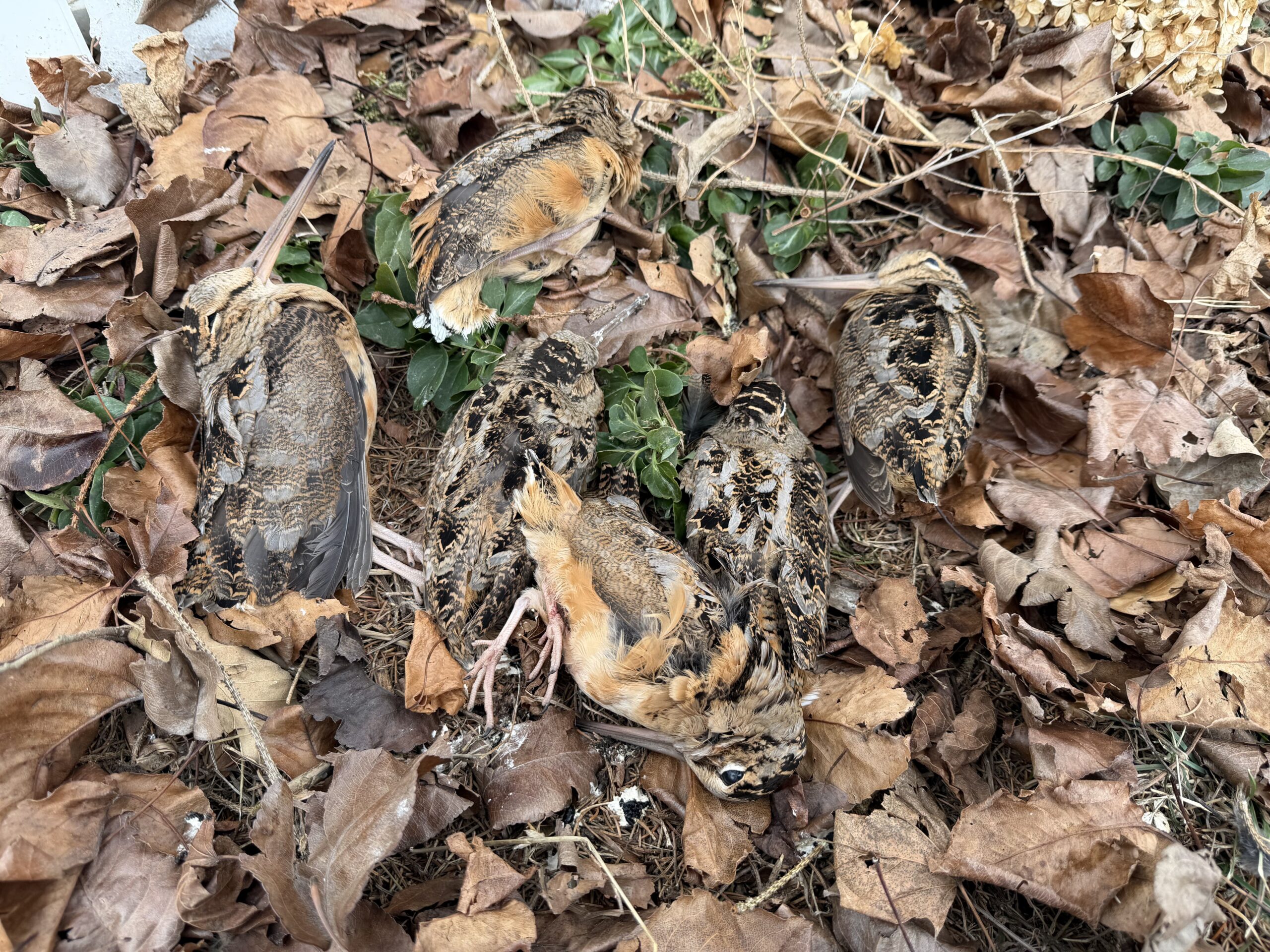
    The winter has been hard on the region’s animals, wiping out 95% of the woodcocks in Cape May Point, fostering frostbite on opossums in Philadelphia, and freezing turtles in place in ponds.

    Experts say the animals are well adapted to survive the cold, but this winter has been especially harsh, producing a frozen snowpack that keeps animals from digging for food, and a prolonged cold that has pushed some to the brink.

    About 200 woodcocks have died in the area of Cape May Point since the Jan. 25 snowfall that froze under a prolonged cold spell. These were found likely seeking food near the edge of homes.

    Woodcocks are starving

    Mike Lanzone, a wildlife biologist and CEO of Cellular Tracking Technologies, has been busy the last two weeks helping to gather hundreds of dead woodcocks in Cape May Point and West Cape May. His company makes products that track birds via GPS and other technology.

    He described a devastating die-off for the woodcocks, which depend on finding food by probing the ground to extract worms and invertebrates. They have been unable to penetrate the snow and ice, causing starvation.

    “They were losing a lot of muscle mass, and they weren’t able to eat anything,” Lanzone said. “We started seeing them die off. First it was just a few. Then 10. Then 15. Then 40. Then almost 100 woodcocks.”

    Lanzone said about 254 woodcocks had died as of Thursday.

    “There was at least a 90-95% die-off,” he said. “That is what we know for sure. At least in Cape May Point and West Cape May.”

    Lanzone said the woodcocks were being taken to the Academy of Natural Sciences of Drexel University in Philadelphia to be examined.

    Jason D. Weckstein, associate curator of ornithology at the academy, said such die-offs have happened before. He will examine the birds and, using chemical signatures in their bodies, determine where they were born.

    “They’re dying because they’re starving,” Weckstein said. “They can’t feed. Most of those birds were super emaciated and just died.”

    Robins are desperate

    Chris Neff, a spokesperson for New Jersey Audubon, said the robins that Frates saw along the side of the road had been driven there in search of food.

    “Birds are congregating along the melted edges of roads searching for bare ground on which to find food and even meltwater to drink,“ Neff said. ”Birds are desperate to consume enough calories each day during this extreme weather, and this makes them bolder, meaning they may not fly off when a car approaches if they have found something to eat.”

    American robins, he said, travel in large flocks. When their food is exhausted, a few will take off in search of the berries of American holly and Eastern red cedar. The rest will follow en masse, following a path that might lead them across a road.

    The chances of collisions with cars become much higher.

    Neff advises that people should slow down if they see birds congregating along a road and keep an eye out for any that might fly across.

    “Like deer,” Neff said, ”if one darts across the road, there are sure to be more following.”

    A grebe that was rescued amid the harsh winter weather and taken to the Wildlife Clinic at the Schuylkill Center for Environmental Education, where it is being fed and cared for until an open water source can be found for it to be released.

    Opossums and other animals

    Sydney Glisan, director of wildlife rehabilitation for the Wildlife Clinic at the Schuylkill Center for Environmental Education in Northwest Philadelphia, characterizes the severe winter conditions as a critical “make it or not” period for local wildlife.

    Some animals, such as deer, are well adapted to the cold and can eat fibrous bark and twigs to survive. Other species, however, struggle.

    She said Virginia opossums found in Philadelphia, despite being a native species, have physical attributes that “do not really work for this type of weather.” She has treated multiple opossums for frostbite. The latest patient arrived Friday.

    They are susceptible, she said, because their ears, tails, and paws have no fur for protection. Often, tails or fingers need to be amputated.

    Residents often find them curled up and immobile, mistakenly believing the animals are dead when they are actually just trying to stay warm or are in a state of shock.

    The weather also affects aquatic birds like grebes, which become stranded on land because they require open water to take off and cannot walk well on ice or ground.

    Even squirrels struggle, as the ice prevents them from digging up cached food, Glisan said.

    Glisan advises the public to be cautious about intervening for wildlife such as birds. She notes that even well-intentioned acts, such as providing heated birdbaths, can result in hypothermia if a bird’s wet feathers subsequently freeze in the air.

    “As much as it might sound rude, I always say doing nothing is the best thing that you can do,” Glisan said. “I recommend helping by not helping.”

    Reptiles and amphibians

    Susan Slawinski, a wildlife biologist at the Schuylkill Center, said the danger for reptiles and amphibians comes as lakes and ponds freeze over. Aquatic species such as green frogs, painted turtles, and snapping turtles overwinter at the bottom of ponds.

    There, the animals survive by slowing their metabolisms enough to eliminate the need to eat or surface for air. However, prolonged cold poses a specific danger as ponds freeze solid to the bottom. Those hibernating will perish.

    The Schuylkill Center uses a bubbler in its Fire Pond to maintain a gap in the ice to let in oxygen.

    Despite the risks, Slawinski emphasizes that native wildlife is historically resilient, though mortality is an unfortunate reality for animals that select poor hibernation spots.

    For example, the gray tree frog uses glucose to create a natural “antifreeze” that prevents its cell walls from bursting in freezing temperatures.

    “Native wildlife is very good at adapting to cold temperatures,” Slawinski said. “There have been colder winters, longer winters before. Unfortunately, there is always going to be a mortality risk.”

  • Reconciling with a difficult parent may seem impossible. Being their caregiver might help. | Expert Opinion

    Reconciling with a difficult parent may seem impossible. Being their caregiver might help. | Expert Opinion

    There are two remarkable scenes of family reconciliation in this past fall’s Bruce Springsteen biopic, Deliver Me from Nowhere. After years of alienation from his alcoholic, physically abusive father, Dutch, a slowly maturing Bruce begins to recognize that his father has struggled with lifelong mental illness. By this stage of his later years, Dutch has been diagnosed with bipolar disorder and is becoming increasingly confused as he ages.

    In the first reconciliation scene, Bruce searches for his father in bars and restaurants all over Los Angeles at the request of his mother after Dutch disappears for several days. Bruce finally finds him sitting at the bar of a Chinese restaurant. Rather than upbraiding him, Bruce sits down next to his father and asks, gently like an old friend, if he would like to go out for breakfast before heading home.

    In the second scene, a disoriented Dutch asks Bruce to sit on his lap — as if his son is 3 years old, not 32. Bruce obliges but feels awkward, telling Dutch that he never asked him to sit on his lap before. “I didn’t?” Dutch asks, appearing shocked and regretful that he hadn’t sought loving contact with Bruce when he was a child.

    These scenes come at the end of a narrative arc illuminating the surprising turnabout that can be achieved through family caregiving for an older adult: A harshly punitive parent can turn into a softer, “toothless tiger” as they become frail. An angry adult child can develop greater empathy for the vulnerability of that hated parent while witnessing their decline. The parent-child relationship is transformed through the giving and receiving of care. Reconciliation is possible, the scenes suggest, by letting go of the past and extending kindness and understanding to a now diminished and needy parent.

    Some viewers may regard this plot line as unrealistic, corny, and overly Hollywood. Our current cultural moment seems to favor alienation and complete estrangement, not reconciling. In our clinical psychology practices, we have also worked with adult children and parents who have decided to cease talking with one another after years of conflict, frustration, and continued emotional pain. These are not bad therapeutic outcomes. They represent hard, courageous work on the part of clients who now refuse to be hurt any longer. We respect their decisions.

    But as clinicians specializing in supporting family caregivers, especially those caring for aging parents, we have also seen ways that alienation can be surmounted and improved relationships formed. It requires adult children to risk getting hurt all over again by deciding to care for an aging parent who previously tormented them. Taking this chance in the hopes of forging something better doesn’t work out well in every case, but it does produce emotionally powerful results for some.

    We saw this happen with one of our patients, Gloria, who at age 43 never expected to find such healing. She had always felt belittled by her mean, narcissistic mother from whom she kept a healthy geographic and emotional distance to protect herself throughout her adult life. But then her aging mother developed diabetic complications, including sensory neuropathy in her feet, and suffered a series of harmful falls. After weighing the pros and cons, Gloria decided to become her mom’s caregiver.

    This could have gone disastrously. Gloria might have allowed herself to hope that she’d finally win her mother’s approval by being there in her hour of need — only to be rejected by her mother yet again. Like Bruce Springsteen in the biopic, Gloria avoided reliving this destructive family dynamic by being her own person, refusing to allow her hurtful parent to loom over her life. The twist here is that she managed this while immersing herself in her mom’s day-to-day care.

    To motivate her caregiving, Gloria drew on her moral convictions, not some old yearning for her mother’s love. Helping others had always provided her with a deep sense of meaning. It underpinned her successful career as a hospital floor nurse and, later, an administrative leader in her health system. She could tend to her mother’s needs because that was consistent with her values and core identity, not simply because her “patient” now would be the woman who gave birth to and raised her.

    Secondly, Gloria made a point of approaching the present as the present, not the past. Certainly, she still craved some measure of justice for the years of mistreatment that she endured as a child. An apology on her mother’s part would be a nice start. But the caregiving was not about winning justice; the current mission was limiting her mother’s falls to help her live out her final years with less suffering. Gloria had the skills and professionalism to achieve this goal.

    Perhaps most importantly, she decided to just accept her mother for the very flawed person she had always been. It no longer made sense to Gloria to wish her mother was kinder or to believe she had the power to make her happy. Mom was a sour person who inflicted her sourness on others, especially her only daughter, a personality that did not grow sweeter with her diabetic complications later in life.

    True to form, Gloria’s mother initially found a dozen ways to criticize Gloria for how she provided care. But Gloria now shrugged off her barbs, keeping her focus on helping a vulnerable older adult. To her great surprise, her mother responded by changing her behavior, too. It was akin to what happens when you steadfastly ignore the taunts of a schoolyard bully. Once her daughter stopped reacting emotionally, Mom began to respect her more. During the last two years of the mother’s life, the dynamic between them slowly shifted from mean mom/hurt child to appreciative mom/competent adult child. For the first time in her life, Gloria didn’t feel that her mother resented her. While not exactly love, it was pretty good.

    Just like there are not many Bruce Springsteens in the world, there aren’t that many Glorias so able to separate their past from present circumstances that they can turn caregiving into a transformative experience of reconciliation. But there is always that possibility. If you are like Gloria or Bruce and decide to provide some care, we have several suggestions to keep in mind:

    • Maintaining rage against a parent takes energy; it can be a relief to let it go.
    • Choosing to be a parent’s caregiver shouldn’t be undertaken with the intent of proving or winning anything; it should be about living your values.
    • You are not offering forgiveness — especially if, as is likely, your parent never expresses remorse. You are gaining pride in who you are, regardless of how your parent was or is.

    Barry J. Jacobs, Psy.D. and Julia L. Mayer, Psy.D. are clinical psychologists based in Media and the co-authors of the 2025 book, “The AARP Caregiver Answer Book.”

  • Trump launches TrumpRx.gov, branding his push to lower prescription prices

    Trump launches TrumpRx.gov, branding his push to lower prescription prices

    NEW YORK — The Trump administration on Thursday launched TrumpRx, a website it says will help patients buy prescription drugs directly at a discounted rate at a time when health care and the cost of living are growing concerns for Americans.

    “You’re going to save a fortune,” President Donald Trump said at the site’s unveiling. “And this is also so good for overall health care.”

    The government-hosted website is not a platform for buying medications. Instead, it’s set up as a facilitator, pointing Americans to drugmakers’ direct-to-consumer websites, where they can make purchases. It also provides coupons to use at pharmacies. The site launches with over 40 medications, including weight-loss drugs such as Ozempic and Wegovy.

    The site is part of a larger effort by the Trump administration to show it’s tacking the challenges of high costs. Affordability has emerged as a political vulnerability for Trump and his Republican allies going into November’s midterm elections, as Americans remain concerned about the cost of housing, groceries, utilities and other staples of middle-class identity.

    Trump stressed that the lower prices were made possible by his pressuring of pharmaceutical companies on prices, saying he demanded that they charge the same costs in the U.S. as in other nations. He said prescription drug costs will increase in foreign countries as a result.

    “We’re tired of subsidizing the world,” Trump said at the event on the White House campus that lasted roughly 20 minutes.

    The president first teased TrumpRx in September while announcing the first of his more than 15 deals with pharmaceutical companies to lower drug prices to match the lowest price offered in other developed nations. He said in December the website would provide “massive discounts to all consumers” — though it’s unclear whether the prices available on drugmakers’ websites will routinely be any lower than what many consumers could get through their insurance coverage.

    The website’s Thursday release came after it faced multiple delays, for reasons the administration hasn’t publicly shared. Last fall, Mehmet Oz, administrator of the Centers for Medicare and Medicaid Services, told Trump the site would share prices for consumers before the end of the year. An expected launch in late January was also pushed back.

    The president has spent the past several months seeking to spotlight his efforts to lower drug prices for Americans. He’s done that through deals with major pharmaceutical companies, including some of the biggest drugmakers like Pfizer, Eli Lilly and Merck, which have agreed to lower prices of their Medicaid drugs to so-called “most favored nations” pricing. As part of the deals, many of the companies’ new drugs are also to be launched at discounted rates for consumer markets through TrumpRx.

    Many of the details of Trump’s deals with manufacturers remain unclear, and drug prices for patients in the U.S. can depend on many factors, including the competition a treatment faces and insurance coverage. Most people have coverage through work, the individual insurance market or government programs like Medicaid and Medicare, which shield them from much of the cost.

    Trump’s administration also has negotiated lower prices for several prescription drugs for Medicare enrollees, through a direct negotiation program created by a 2022 law.

  • Inside the toxic legacy of America’s multibillion-dollar carpet empire

    Inside the toxic legacy of America’s multibillion-dollar carpet empire

    DALTON, Ga. — Bob Shaw glared at the executives from the chemical giant 3M across the table from him. He held up a carpet sample and pointed at the logo for Scotchgard on the back.

    “That’s not a logo,” fumed Shaw, CEO of the world’s largest carpet company, one attendee later recalled. “That’s a target.”

    Weeks earlier, 3M Company announced it would reformulate its signature stain-resistance brand under pressure from the Environmental Protection Agency because of human health and environmental concerns.

    Mills like Shaw’s had been using Scotchgard in carpet production, releasing its chemical ingredients into the environment for decades. And on a massive scale: The shrewd CEO built Shaw Industries from a family firm in Dalton, Georgia, into a globally dominant carpet maker worth billions.

    “I got 15 million of these out in the marketplace,” Shaw told his 3M visitors. “What am I supposed to do about that?”

    A 3M executive replied that he didn’t know. Shaw threw the sample at him and left the room.

    The answer to Shaw’s Scotchgard question from that moment in 2000 would be the same as that of the broader industry. Carpet makers kept using closely related chemical alternatives for years, even after scientific studies and regulators warned of their accumulation in human blood and possible health effects. Customers expected stain resistance; nothing worked better than the family of chemicals known as PFAS.

    A lack of state and federal regulations allowed carpet companies and their suppliers to legally switch among different versions of these stain-and-soil resistant products. Meanwhile, the local public utility in Dalton responsible for ensuring safe drinking water coordinated with carpet executives in private meetings that would effectively shield their companies from oversight.

    Year after year, the chemicals traveled in water discarded during manufacturing from mills across northwest Georgia, eventually reaching a river system that provides drinking water to hundreds of thousands of people in Georgia and eastern Alabama.

    The pollution is so bad some researchers have identified the region as one of the nation’s PFAS hot spots. Today, the consequences can be found everywhere. PFAS, often called forever chemicals because they can take decades or more to break down, are in the water and the soil.

    They’re in the dust on floors where children crawl, the local fish and wildlife, and as ongoing research has shown, the people.

    Doctors have few answers for those like Dolly Baker who live downriver from Dalton’s carpet plants. She recently learned her blood has extraordinarily high PFAS levels.

    “I feel like, I don’t know, almost like there’s a blanket over me, smothering me that I can’t get out from under,” she said. “It’s just, you’re trapped.”

    An investigation by newsrooms including The Atlanta Journal-Constitution, The Associated Press and FRONTLINE (PBS) has revealed how the economic engine that sustained northwest Georgia contaminated the area and neighboring states, too. Downriver from Dalton, AL.com found cities in Alabama are struggling to remove PFAS from drinking water. And in South Carolina, The Post and Courier traced a local watchdog’s discovery of forever chemicals to a river by a Shaw factory.

    The full story of Georgia’s power structures prioritizing a prized industry over public health is only now emerging through dozens of interviews and thousands of pages of court records from lawsuits against the industry and its chemical suppliers. Those records, including testimony from key executives, emails and other internal documents, detail how carpet companies benefited from chemistry and regulatory inaction to keep using forever chemicals.

    All the while, the mills still hummed.

    Pointing fingers in a company town

    A sign welcomes Dalton’s visitors to the “Carpet Capital of the World.”

    Fleets of semitrucks stamped with company logos rumble out of behemoth warehouses. Textiles have employed generations here, propelling the city from 19th-century cotton mills into a manufacturing hub — and the region into a supplier of carpet to the globe.

    The durability that makes PFAS so good at protecting carpets from spilled tomato sauce and muddy boots lets them survive in the environment. It also makes them dangerous for humans. Because they bind to a protein in human blood and absorb into some organs, PFAS linger.

    The blood of nearly all Americans has some amount of the chemicals, which have been used in a variety of consumer products: nonstick cookware, waterproof sunscreen, dental floss, microwave popcorn bags.

    Few industries used them as much as carpet did in northwest Georgia. While huge amounts were needed for stain resistance on an industrial scale, minuscule amounts — the equivalent of less than a drop in an Olympic-sized swimming pool — can make drinking water a health risk. For certain PFAS, U.S. regulators now say no level is safe to drink.

    More than a year before the Scotchgard announcement in 2000, 3M informed Shaw Industries and its biggest competitor, Mohawk Industries Inc., that it was finding Scotchgard’s chemical in human blood and that it stayed in the environment, 3M records show.

    Carpet executives have long insisted they are not to blame. They point out that 3M and fellow chemical manufacturer DuPont assured them their products were safe, for decades hiding internal studies that were finding harm to the environment, animals and people.

    Shaw and Mohawk both said they relied on and complied with regulators and stopped using PFAS in U.S. carpet production in 2019.

    In an interview, a Shaw executive said the company acted in good faith as it worked hard to exit PFAS as quickly as suitable substitutes could be found.

    “Hindsight is 20/20,” said Kellie Ballew, Shaw’s vice president of environmental affairs. “I don’t think that we can call into question our intentions. I think Shaw had every good intention along the way.”

    Shaw in a follow-up statement said it complied with its wastewater permits and took guidance from chemical companies, some of which “instructed Shaw to put spills of product into the public sewer system.”

    Mohawk declined an interview request, instead referring to a 2024 filing in its lawsuit against chemical companies: “For decades, DuPont and 3M sold their carpet treatment products to Mohawk without disclosing the actual or potential presence of PFAS in their products.”

    Later, in response to detailed questions, Mohawk attorney Jason Rottner wrote that, “Any PFAS contamination issues in northwest Georgia are a problem of the chemical manufacturers’ making.”

    Now, uncertainty and feelings of betrayal are boiling across the region. Communities fear their drinking water is unsafe and local governments say the problem is too vast for them to fix alone.

    In Washington, Republicans and Democrats alike have been slow to act. Under President Joe Biden, the Environmental Protection Agency in 2024 established the first PFAS drinking water protections. The Trump administration has announced plans to roll back some and delay enforcement of others.

    The agency declined interview requests but in a statement said it is committed to combating PFAS contamination to protect human health and the environment, without causing undue burden to industry.

    Georgia’s regulatory system has done little to scrutinize PFAS and depends mostly on industry to self-report chemical spills, imposing modest penalties when companies do. The Georgia Environmental Protection Division, which declined an interview request, said it “relies on the expertise of” the EPA.

    Meanwhile, carpet makers still can’t seem to shake PFAS. Just last year, EPA concluded “PFAS have been and continue to be used” by the industry, based on wastewater testing. The agency did not name companies and said it’s unclear whether the chemicals were from current or prior use.

    The mess in northwest Georgia has led to a series of lawsuits over the past decade with hundreds of millions of dollars at stake.

    Buried in this avalanche of litigation, finger-pointing and politics are the people who live here. They have been forced to navigate a public health and economic crisis of a magnitude still not fully understood.

    “They ought to have to clean this land up,” Faye Jackson said, referring to carpet companies. A former industry worker, she raised her family in a house next to a polluted river and has elevated PFAS levels in her blood. “They ought to have to pay for it.”

    The creek ran blood red

    Lisa Martin watched the creek beside the Mohawk Industries mill run red with carpet dye.

    It was one of her first days as a planning manager at Mohawk in 2005, and she tried to hide her unease as the dye runoff turned the water into what looked like blood.

    The red she saw in Drowning Bear Creek had come from the nearby dyehouse, where carpets got their colors. There, machines whirred as workers sloshed around in rubber boots in ankle-deep dyewater, reminding Martin of fishermen. The acrid odor made her eyes tear up.

    A recent California transplant at the time, Martin recalled her initial culture shock.

    “At a gut level, you know it’s not right. And unfortunately, when you try to raise the flag and everybody’s like, ‘Well, that’s just the way it is,’” Martin said in an interview.

    “I became complacent.”

    Like Shaw, Mohawk is based in northwest Georgia and is among the largest carpet companies in the world. The industry supported the entire community, employing someone in what seems like every family. Martin realized carpet was in the region’s DNA.

    Martin said the chemical runoff was routine during her 20 years at Mohawk, which ended with her 2024 retirement. Sometimes, when the company dyed carpets blue, the water in the creek would be blue, too. One spill that turned the creek purple for a mile downstream killed thousands of fish, records show.

    Mohawk’s attorney called such spills “rare instances” that were promptly reported and said there is no evidence any spills directly discharged PFAS.

    In the dyehouse, what neither Martin nor the workers could detect were the colorless, odorless compounds also included in the wastewater: forever chemicals. Machines bathed the carpets in these soil-and-stain blockers, and what didn’t stick washed away.

    For decades, Mohawk’s and Shaw’s mills sent PFAS-polluted wastewater through sewer pipes to the local Dalton Utilities plants for treatment that did not remove the chemicals. Much of the tainted water ended up in the Conasauga River.

    Both Shaw and Mohawk said they operated in accordance with permits issued by Dalton Utilities. The utility said it takes direction from federal and state regulators, who have not prohibited PFAS in industrial wastewater.

    The Conasauga watershed is filled with lush green pastures, creeks and tributaries that help fuel the water-hungry industry. The river’s waters emerge out of Georgia’s Blue Ridge Mountains and eventually flow southwest, past Dalton, Calhoun and Rome, and then into Alabama.

    Residents downriver from the mills didn’t know about the chemicals running through their towns. But the industry’s top leaders did.

    PFAS is a catchall term for a group of thousands of related synthetic compounds also known as fluorochemicals. They have been fundamental to the carpet business since the 1970s, as market demand for stain resistance transformed the industry, and carpet makers began buying millions of pounds. In the mid-1980s, the introduction of DuPont’s Stainmaster, accompanied by a successful marketing blitz, further established these products as essential.

    Neither DuPont nor its related chemical companies that supplied PFAS provided comment for this story.

    The carpet industry used so much PFAS that Dalton’s mills became the largest combined emitters of the chemicals among 3M’s U.S. customers, according to a 1999 internal 3M study that looked at 38 industrial locations.

    Before 3M had pulled Scotchgard, leading to Bob Shaw’s showdown in the spring of 2000, both Shaw Industries and Mohawk had been privy to inside information that PFAS were accumulating in human blood. Bob Shaw did not respond to requests for comment.

    In late 1998 and early 1999, 3M held a series of meetings with carpet executives to disclose its blood-study research, according to 3M’s internal meeting notes from court records.

    “When we started finding the chemical in everybody’s blood, one of the biggest worries was Dalton, because we knew how sloppy they were,” Rich Purdy, a 3M toxicologist who alerted the EPA to his company’s hiding of PFAS’ dangers, said in an interview.

    Notes by a 3M employee from a January 1999 meeting said Mohawk executives did not express grave concerns about the revelations. “No real sense of Mohawk problem/responsibility,” 3M noted. “If it’s good enough for 3M, it’s good enough for Mohawk.” Mohawk’s attorney said of the meetings over two decades ago that 3M assured the company its chemicals were safe.

    At another meeting that January, Shaw executives were “concerned but quiet,” with one executive expressing he “felt plaintiffs’ attorneys would be involved immediately,” according to 3M’s notes. Shaw Industries maintains it learned of the concerns about Scotchgard at the same time everyone else did.

    In follow-up letters to top executives with Shaw and Mohawk later that month, 3M noted the company’s efforts were guided by the idea that reducing exposure “to a persistent chemical is the prudent and responsible thing to do” while emphasizing current evidence did not show human health effects.

    “We trust that you appreciate the delicate nature of this information and its potential for misuse,” the letters said. “We ask that you treat it accordingly.”

    3M then asked for access to Shaw and Mohawk mills to see if they were handling the chemicals safely, records show. Those internal reports, produced in 1999, would fault how carpet companies handled PFAS products, exposing workers and the environment, according to court records.

    The next year, 3M and EPA announced concerns about Scotchgard.

    The day of the announcement, the director of EPA’s Chemical Control Division sent an email to his colleagues and counterparts in other countries calling the key ingredient in Scotchgard an “unacceptable technology” and a “toxic chemical.” The email said the compound should be eliminated “to protect human health and the environment from potentially severe long-term consequences.”

    3M declined an interview request. In a statement, the company said it has stopped all PFAS manufacturing and has invested $1 billion in water treatment at its facilities. “3M has taken, and will continue to take, actions to address PFAS manufactured prior to the phase out,” the company said.

    In 2000, the year 3M announced it was pulling Scotchgard, Mohawk logged more than $3.4 billion in net sales. Shaw Industries reported $4.2 billion.

    EPA would not issue its first provisional health advisories for nearly another decade. Absent federal guidance, the carpet industry could legally continue to use these products.

    Despite accumulating health and environmental concerns, federal law at the time did not let EPA ban any chemical without “enormous evidence” of harm, said Betsy Southerland, a former director of the agency’s water protection division who spent over three decades there.

    “So we were really hamstrung at the time,” said Southerland, who has become a critic of EPA.

    At Mohawk, Lisa Martin was not an executive making decisions about PFAS, she said, but her time at the company weighs on her still.

    “Unfortunately, I later learned that there are more people that I worked with that were aware of it,” she said. “They were aware of it and didn’t do the things they should have done.”

    Years into her tenure, the athletic and inquisitive Martin began getting sick and feeling lethargic. Her doctor said she’d grown nodules on her thyroid, a gland that is a key part of the immune system and which studies have shown forever chemicals can harm.

    She had no family history of thyroid issues. It was a mystery to her.

    Cozy relationship

    Inside the Dalton headquarters of the Carpet and Rug Institute, industry executives and the local water utility conferred in 2004 about EPA’s growing scrutiny.

    For several months, EPA representatives had negotiated with Dalton Utilities and the carpet industry through the institute, its influential trade group, over gaining access to their facilities to test the water. Mohawk and Shaw were using DuPont’s Stainmaster and other products, which also contained forever chemicals akin to Scotchgard’s older formulation.

    Still, federal regulators worried these compounds were exhibiting similar harmful properties. Dalton Utilities and the carpet industry were uneasy about welcoming in government officials. Companies could not be guaranteed confidentiality and feared test results could lead to “inaccurate public perceptions and inappropriate media coverage,” records show.

    The public utility and the carpet industry chose to resist.

    Their close ties went back years. Carpet executives have long sat on Dalton Utilities’ board, appointed by the city’s mayor and city council. Fueled by the growth of the carpet industry, Dalton Utilities’ fortunes rose with the industry’s success.

    At the carpet institute’s 2004 annual meeting, officials with carpet and chemical companies convened to discuss the EPA’s increasingly aggressive posture. Shaw’s director of technical services, Carey Mitchell, addressed his colleagues. He was blunt. No company would allow testing.

    “Dalton Utilities has said not no, but hell no,” Mitchell said, according to notes made by a 3M attendee. Mitchell did not respond to requests for comment.

    In response to questions for this story, Dalton Utilities declined an interview request but said it and the carpet industry “have always operated independently of one another” and that the EPA testing request was informal.

    The carpet institute declined an interview request, sending a written statement instead.

    “The CRI’s conduct was and continues to be appropriate, lawful, and focused on our customers, communities, and the millions of people who rely on our products every day,” institute President Russ DeLozier said, adding: “Today’s carpet products reflect decades of progress, and The CRI members remain committed to moving forward responsibly.”

    The EPA stiff-arm was the latest run-in between Dalton Utilities and federal regulators.

    A public water utility’s obligation, above all else, is to ensure clean drinking water. Dalton’s utility had previously gone to criminal lengths to deceive regulators.

    In the early 1990s, Dalton Utilities’ staff traced a drop in oxygen levels in its wastewater treatment to stain-resistant chemicals from carpet mills, the utility’s top engineer at the time, Richard Belanger, said in an interview. While the utility didn’t know about PFAS then, something in these chemicals was impacting its ability to process the wastewater, he said. Rather than clamping down on industry, according to Belanger, his bosses ordered him to manipulate pollution figures the utility reported to government regulators.

    “I was told, OK, make this work,” Belanger, now retired, said.

    In June 1995, EPA investigators interviewed Belanger. He told them Dalton Utilities’ program to clean industrial pollutants was “a sham.” The treatment was so poor, the smell of carpet chemicals carried throughout the utility’s plant, and local creeks were often “purple and foamy,” according to investigators’ notes from the interview.

    Two months later, agents with the FBI and EPA raided Dalton Utilities’ offices.

    Federal prosecutors charged the utility with violating the Clean Water Act by falsifying wastewater reports, which concealed the full extent of the carpet industry’s pollution. The case did not address PFAS specifically, which was not yet a pollutant of concern for EPA. Dalton Utilities pleaded guilty in 1999 and was fined $1 million. Its CEO was removed.

    The utility was also put under federal monitoring in 2001 to ensure it was making key changes to protect the water supply and agreed to pay a $6 million penalty.

    The era of legal troubles with the federal government was pivotal, the utility said, adding it “has remained committed to avoiding the issues that led to those proceedings” and is transparent with regulators.

    Around the same time, emerging data showed the fluorochemicals used in carpets caused cancer in rats.

    The carpet institute’s then-president, Werner Braun, forwarded the rat study to several carpet and chemical executives in a 2002 email, calling the findings a “troubling issue,” records show. Braun, now in his 90s, was unable to comment for this story due to his health, his wife said.

    In preparing to respond to Braun, a 2002 email shows DuPont officials planned to explain that Stainmaster didn’t contain the type of PFAS that was then EPA’s focus. The next year, DuPont would tell carpet companies the opposite, acknowledging the chemical was indeed in Stainmaster. DuPont maintained in later legal proceedings it wasn’t aware until 2003 that Stainmaster contained the chemical.

    Despite its success in fending off EPA testing, the industry faced a mounting challenge, and the carpet institute focused on shoring up its influence and image.

    At a meeting in the spring of 2004 attended by top executives, the carpet institute decided to solicit donations from company employees for its political action committee “in an effort to submit friendships, gain access, and say thank you to legislators,” according to meeting notes.

    Later that year, PFAS made news in a high-profile legal case involving DuPont. The class-action lawsuit brought by residents in West Virginia claimed their water had been contaminated by a nearby chemical plant that used PFAS. Although DuPont said the settlement did not imply legal liability, it agreed to pay $70 million and to establish a health monitoring panel. Some two decades later, Braun was shown the rat study email during a legal deposition.

    “I wouldn’t necessarily call it a red flag but a flag, you know, that you might want to be aware of,” he said.

    Only years later did people downstream begin to learn the toll.

    The river brought the poison

    When Marie Jackson’s goats started dying about a year ago, nobody could explain why. Jackson saw it as just another sign something was wrong with her land.

    Marie and her mother, Faye Jackson, have lived on their 12 acres near Calhoun for decades. Today they keep mostly to themselves, inseparable, equal parts bickering and loving.

    Most days, Marie makes the short drive down a gravel road, Jackson Drive, to her mother’s house to check on her. She tends to Faye’s chickens, mows her grass and drives her to doctor’s appointments. Behind their homes is a rolling stretch of grassy pasture where their cattle graze — and the goats did as well, she said, until they all died.

    Past a curtain of trees on the far end of the pasture lies the Conasauga.

    Marie, 50, spent her childhood playing and swimming in the muddy river with rocks on the banks that made a good fishing spot. The Jacksons now know the water that sustains their homestead, about 15 miles downstream from Dalton, is contaminated.

    Tests of the river by the AJC found levels of what was once a key ingredient in Scotchgard at more than 30 times the proposed EPA limits for drinking water. Tests of Faye’s drinking water well by the AJC and the city of Calhoun found PFAS just under these federal health limits.

    Calhoun city officials used that health standard to guide a program designed to address contaminated wells. A 2024 legal settlement between the city and the Southern Environmental Law Center included a condition to test local water. As of August, 30% of private wells tested had levels above the health limit.

    Because Faye’s test was just below the cutoff, she does not qualify to receive a filtration system.

    Uncertainty about the chemicals continues to permeate every aspect of the Jacksons’ lives. They fear PFAS are behind their declining health. They fear their drinking water. They fear for the health of the cattle and chickens they raise; and for the health of those who may eat them.

    “I know they’ve got it in their systems,” Faye said.

    Even Marie’s memories are filled with second-guessing. Idyllic scenes of her childhood are now overshadowed by recollections of foam on the river and dead fish. She blames the mills.

    The Jacksons, like generations of northwest Georgians, relied on the carpet industry. Both of Marie’s parents worked in the mills: Faye with yarn machines and her dad in the dyehouse. Marie would end up working in carpet, too.

    Everyone suspected the work was dangerous. Faye said she’d get headaches from the strong chemical smells. The hours were long. But with the risk came a steady wage.

    “Around here, you have to understand the people, that’s all we know, right? That’s all we’ve ever been around,” Marie said, fidgeting with her plastic water bottle. “It’s like you don’t think. It’s routine. You go in, you know your job, you do your job, you go home.”

    Faye’s failing health eventually forced her to stop working. Today she drinks water she buys from the store.

    In 2022, Faye’s husband, Robert, died after struggling with several illnesses. She now wonders whether decades of PFAS exposure was to blame. And Marie has nodules growing on her thyroid.

    The Jacksons long suspected they had forever chemicals in their blood. With their consent, the AJC commissioned testing last fall and the mother and daughter finally learned the truth. Their PFAS levels were above the safety threshold outlined by the National Academies of Sciences, Engineering and Medicine.

    “They’ve poisoned us,” Faye said.

    Among the highest ever recorded

    In 2006, the carpet industry and Dalton Utilities faced a new dilemma.

    University of Georgia researchers were testing the Conasauga for PFAS, and early results seen by carpet companies showed high levels. Shaw Industries began conducting its own tests, which confirmed UGA’s results: PFAS coursed through the river.

    As Georgia’s scientists worked on their PFAS study, the majority of outside experts on an EPA advisory panel determined the PFAS associated with DuPont’s Stainmaster was ” likely to be carcinogenic.” In 2005, the year prior, EPA and DuPont settled a claim that the chemical company failed to report for decades what it knew about the risks. At $10.25 million, it was then the largest penalty ever obtained under a federal environmental law. DuPont did not admit liability.

    The university’s study, eventually published in 2008, made headlines. The UGA researchers reported PFAS levels in the Conasauga were “among the highest ever recorded in surface water” like a river or a lake. Not just in the United States, but worldwide.

    Journalists from a local newspaper also began asking questions about the study and the earlier decision by the utility and the industry to deny regulators access for testing.

    A Chattanooga Times Free Press reporter was “hot on the trail” of a story, wrote Denise Wood, at the time a Mohawk environmental executive and Dalton City Council member, in a February 2008 email to Dalton Utilities CEO Don Cope.

    One of the university researchers told the paper that UGA’s test results were “staggeringly high.” Cope did not respond to requests by the AJC and AP for an interview, and Wood declined to comment.

    At the carpet institute, officials rushed to create a crisis management team, internal records and emails show. The industry downplayed the UGA study and broader concerns about PFAS.

    “In our society today, it is absolutely known that you report the presence of some chemical and everybody gets all up and arms,” the institute’s head, Braun, told reporters.

    UGA’s study had an impact. The EPA returned in 2009. Unlike before, the agency now had provisional health advisory limits for certain PFAS compounds, offering regulators some enforcement authority.

    This new scrutiny would uncover a major source of pollution along the Conasauga.

    On the edge of Dalton, the Loopers Bend “land application system” occupies more than 9,600 acres on the river’s banks. The public utility had long hosted hunts for wildlife at the forested site, which is crisscrossed by a network of 19,000 sprinklers that sprayed PFAS-laden wastewater for decades.

    For years, the site’s design allowed runoff to leak into the river, according to EPA’s former water programs enforcement chief. The wastewater was so poorly filtered the ground felt like walking on “shag carpet” due to all the fibers, the EPA official, Scott Gordon, said in an interview. He noted gullies cut by wastewater led directly to creeks and the river.

    Because Dalton Utilities distributed the treated wastewater over land instead of discharging it into the river directly, it didn’t need a federal Clean Water Act permit. After EPA inspected and saw the conditions, the agency ordered the local utility to apply for one. The state, however, had approval power in Georgia and rejected the application, saying the permit wasn’t necessary.

    Today, Loopers Bend remains a significant source of PFAS in the Conasauga.

    The EPA worked with Dalton Utilities to upgrade the site starting in 1999, but it would be years before the agency would require testing of the Conasauga’s water.

    In 2009, testing reports submitted by Dalton Utilities to EPA confirmed what the UGA research had already shown: Forever chemicals had infiltrated the region. In addition to river and well water, deer and turkey taken from Loopers Bend had PFAS in their muscles and organs.

    Dalton Utilities said that levels of PFAS in its wastewater and the compost it provided to enrich soil for farmers and homeowners were not a health risk. PFAS were everywhere and a “societal problem,” and not one Dalton Utilities could solve, the utility’s lawyer wrote the EPA in 2010.

    Nonetheless, the utility agreed to restrict its compost distribution ​​and test wastewater from a quarter of its industrial customers annually.

    As later testing showed, the chemicals would persist for years.

    A health reckoning

    Why is the doctor calling? Dolly Baker wondered as she rinsed the hair of a client at her salon “Dolled Up” in Calhoun. Dr. Dana Barr’s number had popped up on her cellphone.

    Baker had taken part in a 2025 Emory University study of northwest Georgia, where she was one of 177 people who had their blood tested. Now one of the study’s lead scientists was on the phone.

    Barr, an analytical chemist with epidemiological experience, had been mailing study participants about the results. When she saw Baker’s test data, she dialed her phone.

    Baker, a lifelong Calhoun resident now in her 40s, had PFAS levels hundreds of times above the U.S. average.

    “I don’t want to alarm you, but we’re just trying to figure out what can be causing this,” Barr told her, Baker later recalled. “I suggest you talk to your doctor and let them know that there are certain cancers that can come into play later.”

    Baker was speechless.

    She walked back to her wash station and slowly started rinsing her client’s hair again, quietly processing what this all meant. How did she have such high levels? Her mind raced.

    What was she supposed to do about the forever chemicals in her body?

    “Unfortunately, there is no easy answer,” Baker said Barr told her.

    Emory tested Baker’s water and hair products, but the tests came back low. Almost a year after learning her blood test results, Baker is no closer to knowing why her levels are so high.

    She said she’s frustrated by the lack of action and leadership, especially after years of testing and community meetings to discuss the problem.

    “You know, people go in other countries to help them get clean water,” Baker said, “and do we have clean water?”

    Barr, who spent years at the U.S. Centers for Disease Control and Prevention studying environmental toxicants, realized there was too little data to grasp the problem in northwest Georgia. She helped launch Emory’s study to understand the extent of contamination in human blood.

    Three out of four residents tested by Emory had PFAS levels that warrant medical screening, according to clinical guidelines from the National Academy of Sciences.

    “People in Rome and in Calhoun tended to have higher levels of PFAS than most of the people in the U.S. population,” Barr said.

    Mohawk and Shaw say they stopped using older fluorochemicals around 2008. These were known by chemists as “long-chain” or C8 because each had eight or more carbon atoms on their molecular chains. Scotchgard, Stainmaster and Daikin’s Unidyne have since been reformulated without these C8 compounds.

    Chemical manufacturers made new “short-chain” or C6 versions with six carbon atoms. Daikin U.S. Corp. said in a statement it “is committed, as it always has been, to regulatory compliance, evolving PFAS science, and global standards.”

    Despite the chemical variations, short-chain PFAS had the stain-busting and water-repellant traits of the older chemicals. Scientists in the 2010s also expressed concerns that the newer formulations might carry similar environmental and health risks. Some began calling them “regrettable substitutes.”

    After saying it got out of PFAS completely in 2019, Shaw has struggled to remove the chemicals from its facilities. The company said the compounds have so many applications they appear elsewhere in the machines and processes it takes to produce carpet.

    “You can’t just say you stopped using them and you’re done,” said Ballew, Shaw’s vice president for environmental affairs.

    She said the company installed filters at some mills and sleuthed out PFAS sources from its supply chain to remove them. Shaw developed a testing technology and shared it with suppliers so they could do the same, offering it as an example of strong corporate citizenry from a company with roots in the region.

    “Shaw didn’t quit looking, and that’s what I’m really proud of,” Ballew said. “That’s the story. It’s not how long it took us to get here.”

    Worries, but few answers

    Down the road from Baker’s hair salon, Dr. Katherine Naymick operates a private medical practice. She’s practiced in Calhoun since moving there in 1996.

    Naymick’s office sits in a small strip mall off Calhoun’s main road — a tidy, white-walled office decorated with retro medical equipment. She’s been mystified that many of her young patients’ thyroid glands had just “quit on them.” Similarly, she said her patients also had higher rates of endocrine cancers than the national average.

    Doctors have few tools to address patient concerns, as the understanding of these chemicals’ links to health effects is still evolving. One resource is guidance the National Academy published in 2022 for physicians, which cites the “alarming” pervasiveness of PFAS contamination.

    That guidance recommended doctors offer blood testing to patients who live in high exposure areas. The panel also cautioned the results could raise questions about links to possible health effects that cannot be easily answered.

    People like Dolly Baker are at higher risk of kidney or other cancers, and thyroid problems, research shows.

    When Naymick started in Calhoun, chemical manufacturers knew about the potential dangers of forever chemicals, but the public did not. The doctor said she did her best to treat her patients while feeling powerless to understand why they were so sick.

    Then studies began to emerge in the 2000s showing high levels of forever chemicals in the Conasauga. In the 2010s, the first large health studies tied PFAS to issues with childhood development and the immune system.

    Naymick enrolled in environmental medicine training, which focuses on patients’ exposure to contaminants, among other factors. Through study, Naymick gained tools to investigate the area’s heavy industrial footprint she long suspected. She started looking for clues, including blood tests, that might help explain her patients’ problems. Soon she zeroed in on forever chemicals.

    In 2025, Dr. Barr’s group at Emory used Dr. Naymick’s clinic to draw blood. Naymick now thinks all her patients should get tested because of their high chance of exposure. But insurers rarely cover PFAS tests, and many of her clients can’t afford the hundreds of dollars they cost.

    As they wait, the full extent of the human toll in northwest Georgia remains unknown.

    The pollution continues

    This past June, more than a hundred people crammed into a barn in Chatsworth, about 10 miles east of Dalton.

    Law firms operating under the name PFAS Georgia had been testing properties across northwest Georgia.

    Nick Jackson, one of the attorneys, stood up to address the crowd, which was eager to hear about the contamination in their midst.

    “If you feel compelled to lift up your test results so that your neighbors could see, please feel free to do so at this time,” he said. At once, people raised signs displaying the levels found on their properties, many substantially above EPA health guidelines.

    PFAS Georgia has filed numerous lawsuits against chemical manufacturers and carpet makers since last June. Today the group represents dozens of residents and farmers in northwest Georgia who allege their properties are contaminated with PFAS from the carpet industry. The wave of litigation is the latest development in a legal saga that began a decade ago.

    In 2016, the eastern Alabama town of Gadsden filed the first of a series of municipal drinking water lawsuits against the carpet industry, accusing the mills upriver of contaminating its drinking water more than 100 miles away.

    Three years later, Rome filed its own lawsuit against the carpet industry, chemical companies and Dalton Utilities. The city’s water, drawn downriver from Dalton, had tested at over one-and-a-half times the EPA’s health advisories at the time. Rome estimated a new water treatment plant would cost $100 million, to be paid for by a series of steep rate increases.

    After several years of bitter litigation, Rome reached a series of settlements with carpet and chemical companies and the utility for roughly $280 million. None admitted liability.

    For many, the lack of state and federal PFAS regulations means the courts are their only chance for accountability.

    Georgia environmental officials have done little to regulate forever chemicals beyond drafting drinking water limits on two types of PFAS, deferring to their federal counterparts. The Trump administration’s EPA has said it intends to remove drinking water limits finalized by the Biden administration for some forever chemicals and is delaying limits on others until 2031.

    EPA said it is working on better PFAS detection methods. “EPA is actively working to support water systems who are working to reduce PFAS in drinking water,” an agency spokesperson said in a statement.

    In a statement, Georgia EPD pointed to testing it has done throughout the state. If PFAS is found above health advisory levels, the agency said it works to ensure safe drinking water is available.

    Last year, several northwest Georgia legislators proposed a state bill that would have shielded carpet companies from PFAS lawsuits. The lead sponsor, state Rep. Kasey Carpenter, R-Dalton, said legal action should target chemical makers, not carpet companies. The bill failed.

    Carpenter said he was not aware of the evidence showing the carpet industry knew of PFAS’ potential health risks and will consider it when he reintroduces the bill this year. He said, ultimately, he wants EPA to fix the contamination.

    “There needs to be some kind of federal deal where money’s dumped in for cleanup. That, to me, is a solution,” Carpenter said.

    The pollution continues. Dalton Utilities, in its own recent lawsuit against carpet and chemical companies, said PFAS applied long ago at the sprawling Loopers Bend land application system will continue to spread for the “foreseeable future.” The suit estimated PFAS contamination cleanup would likely exceed hundreds of millions of dollars.

    “The contamination that exists today is the result of the carpet industry’s use and application of PFAS and PFAS-containing products, purchased from chemical suppliers,” the utility said.

    Sludge spread by local municipalities to fertilize farms and yards over decades has pushed the crisis past the banks of the river and has heightened fears among some people over contamination in the local food supply.

    PFAS Georgia said it has collected more than 2,600 samples of dust, soil and water from hundreds of properties. The group said it has detected PFAS at levels exceeding EPA limits in over half of its water samples. No such limits exist for dust or soil, but the sampling has found the compounds at high levels in both, particularly in the dust inside people’s homes.

    “There’s nothing like northwest Georgia,” the group’s testing expert, Bob Bowcock, said. “I don’t know how we’re going to begin to tackle it.”

    Last year, Lisa Martin, the retired Mohawk manager, received her results from the Emory study. Her blood tested higher than most Americans for a type of PFAS used by the carpet industry.

    After she moved to Calhoun decades ago to work in carpet, Martin’s health declined. She has struggled with a suppressed immune system and long COVID. There were the nodules on her thyroid. She began to suspect PFAS.

    “What are the odds with my health that I’m going to live to old age?” said Martin, 64.

    Martin said she struggles with guilt from years of silence when she worked at Mohawk. Like many of her neighbors, she also wrestles with a sense of betrayal.

    “How many people have lost their health,” she asked, “because somebody made a decision not to do anything?”