Category: Health

  • These Philly neighborhoods get the worst of the summer heat

    These Philly neighborhoods get the worst of the summer heat

    A crew working at a Philadelphia warehouse Tuesday was well on its way toward building 120 combination shade stations and planters to be installed this summer on sidewalks in the Kingsessing, Point Breeze, Grays Ferry, and Haddington neighborhoods.

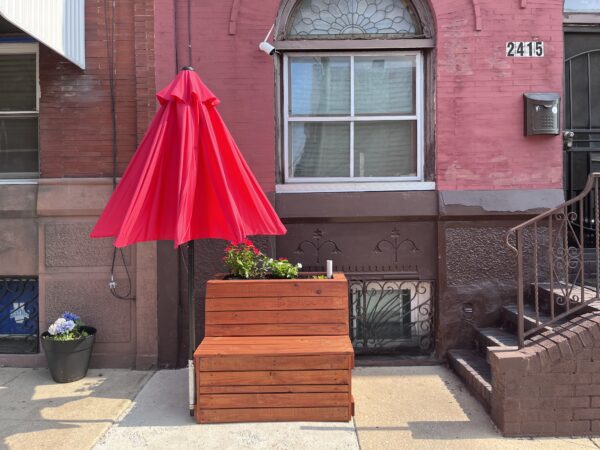
    The stations, many of which have already been installed, are built of pressure-treated lumber and come with a bench, umbrella, and decorative planter.

    “This idea started as a job creation and heat mitigation program but turned into a broader set of things,” said Franco Montalto, a Drexel engineering professor who directs the program. “We found that a lot of people like these planters. They create social opportunities, and they are an aesthetic improvement.”

    The shade can’t come soon enough. Temperatures are forecast to reach 97 on Friday, setting up a dual summer ick for Philadelphians: high heat, high humidity. Together, they’ll combine to make it feel like 106.

    This week’s heat wave comes on the heels of data showing Philadelphia ranks as the sixth highest U.S. city for the number of people experiencing an “urban heat-island effect” of more than 9 degrees compared to those living in nonurban areas. It is also one of the few cities that have neighborhoods exceeding 12 degrees of heat island effect.

    !function(){“use strict”;window.addEventListener(“message”,(function(a){if(void 0!==a.data[“datawrapper-height”]){var e=document.querySelectorAll(“iframe”);for(var t in a.data[“datawrapper-height”])for(var r=0;r<e.length;r++)if(e[r].contentWindow===a.source){var i=a.data["datawrapper-height"][t]+"px";e[r].style.height=i}}}))}();

    Where it’s hottest

    The data from the nonprofit Climate Central provide a model for which city neighborhoods are most vulnerable during heat waves because of the density of sidewalks, streets and buildings, along with the lack of tree cover.

    Parts of Center City rank among the top for a heat island effect of more than 12 degrees. Center City, however, certainly has residents but is mostly a large swath of offices and retail and not representative of the city’s true residential neighborhoods.

    Those highly residential areas, such as Fairmount, Spring Garden, North Philadelphia, East Schuylkill, Southwest Center City, Point Breeze, Kensington, Bella Vista, and Southwark, all bake up to 10 degrees higher than surrounding neighborhoods outside the city, the data suggest.

    City officials have said previously that temperatures in some neighborhoods, such as Hunting Park, can rise even higher, leaving medically vulnerable residents at risk. This year, Mayor Jim Kenney’s administration launched a 10-year Philly Tree Plan that calls for planting thousands of trees to increase the city’s canopy to 30% as a way of tackling the disparity.

    In general, areas of the city near big parks, with more detached homes and more tree canopy fare much better. Pennypack, West Oak Lane, Overbrook, Olney, Frankford, Bustleton, Northeast Philadelphia, East Falls, and Manayunk all experience a heat-island effect of less than 7 degrees.

    (function() {
    var l2 = function() {
    new pym.Parent(‘heatisland26’,
    ‘https://media.inquirer.com/storage/inquirer/projects/innovation/arcgis_iframe/heatisland26.html’);
    };
    if (typeof(pym) === ‘undefined’) {
    var h = document.getElementsByTagName(‘head’)[0],
    s = document.createElement(‘script’);
    s.type = ‘text/javascript’;
    s.src = ‘https://pym.nprapps.org/pym.v1.min.js’;
    s.onload = l2;
    h.appendChild(s);
    } else {
    l2();
    }
    })();

    Philly’s islands of heat

    Climate Central did not base its study on actual temperatures, but rather on modeling that combines data from satellite imagery, impervious land cover, green space, building footprints, transportation, and census tract population data.

    Scientists use the data to model which tracts would likely be warmer than others. For example, buildings, roads, and other infrastructure absorb and reemit the sun’s heat more than forests and rivers. Dark surfaces, such as black asphalt roofs, reflect less light and retain more heat. As a result, certain areas can become hotter during extreme heat relative to suburban and rural areas, according to the U.S. Environmental Protection Agency.

    The heat-island effect strikes a mix of neighborhoods:

    • For example, a neighborhood in the eastern part of North Philadelphia has an urban heat-island effect of more than 11 degrees. The population is 12% Hispanic, 16% Black, 44% white, and 23% Asian.
    • A cluster of streets in Kensington has a heat-island effect of 10 degrees, according to the Climate Central data. The neighborhood is 51% Hispanic, 25% Black, and 19% white. But a cluster in South Philly that’s 73% white, 10% Hispanic, 13% Asian and 2% Black sees the same 10 degree effect.
    • One of the least impacted parts of the city, West Oak Lane, with a 6.6 degree heat-island effect, is 94% Black. And people living in mostly white Bustleton experience the same effect.

    The data, however, differ from Philadelphia’s Heat Vulnerability Index, which is used to indicate neighborhoods most at risk during extreme heat events. The city’s index takes into account more than just temperature. It looks at social, economic and health factors such as age, education, language barriers, percent of people living in poverty, race and ethnicity, and social isolation. It looks at the number of people who have asthma, heart disease, and other health issues.

    For example, the Climate Central data give a census tract in North Philadelphia a heat-island effect of 7.75 degrees, which is not among the highest in the city. But the city assigns the same tract a “very high” score on the Heat Vulnerability Index. The neighborhood is 95% nonwhite, many live below the poverty line and have obesity and hypertension.
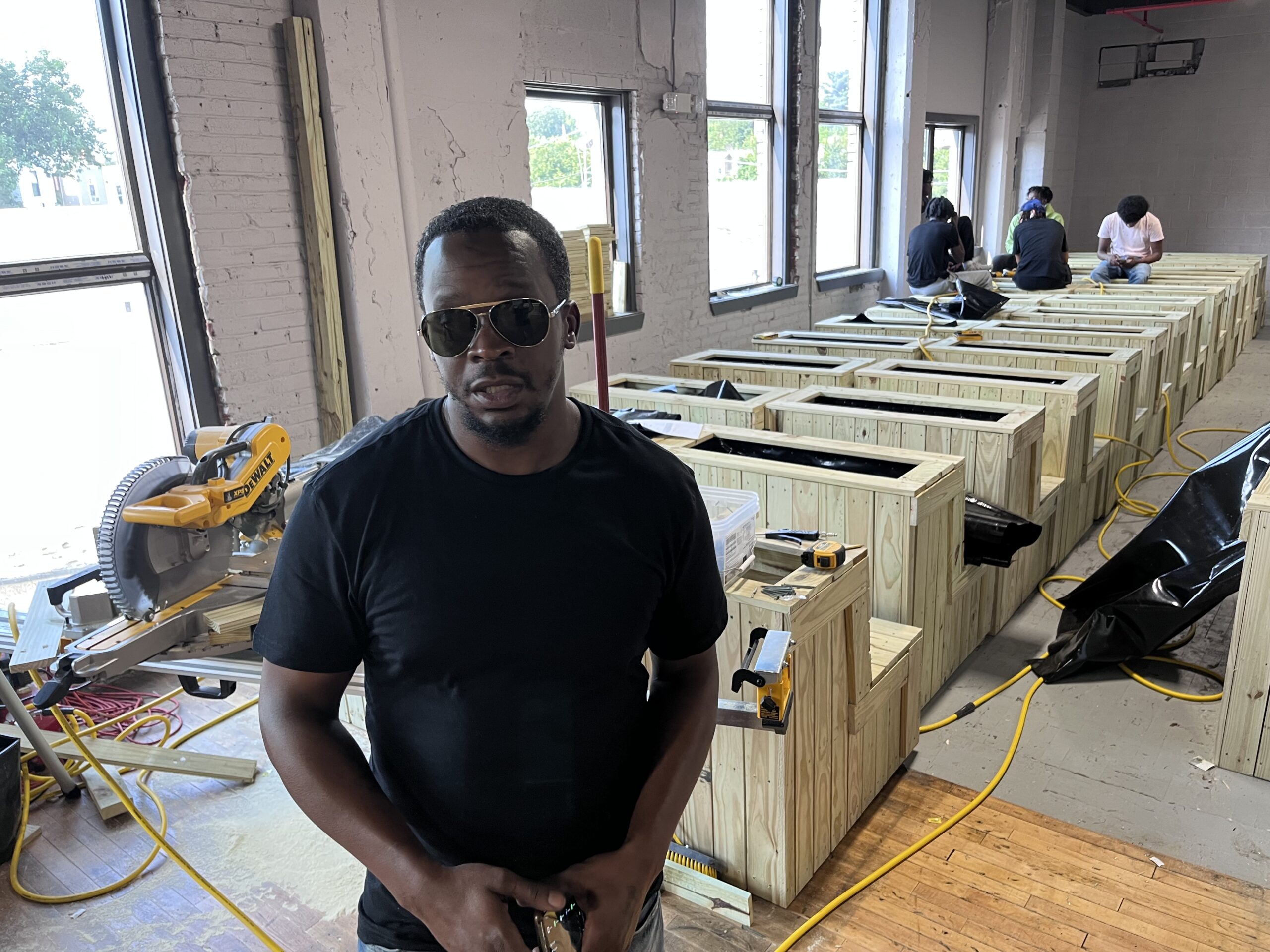
    “Every day is a learning experience,” said Omar Sewell, 42, of South Philadelphia, who is working under a Drexel-led program to build shade stations for city sidewalks. Sewell spoke at the program’s rented warehouse in Kingsessing on Tuesday.

    Finding shade

    Jennifer Brady, a former EPA staffer who conducted the analysis for Climate Central, said it makes sense that Center City would show a high degree of heat-island effect because of the population density, paucity of trees, tall buildings, and infrastructure that absorbs heat and reduces airflow.

    The impact of heat on people in Center City might be much less than in other neighborhoods, Brady said. That’s because people in Center City tend to be wealthier with the means to escape or have easy access to air-conditioned apartments, offices, stores, or shaded square.

    “There are other neighborhoods that are not only high risk, but you can’t walk three or four blocks to find any kind of cover or shaded area,” Brady said. “That’s not accounted for in the data. That’s something not explicitly in these numbers, but is an important consideration when you’re thinking about people being able to escape from the heat.”

    So, lower-income residents of color tend to bear the brunt of extreme heat’s impact. In 2020, for example, the Hunting Park Neighborhood Advisory Committee surveyed residents about how they cope with heat and asked how many had air-conditioning. Out of 563 who answered, only 100 had air-conditioning.

    To help residents cope, the city operates scores of cooling centers, which can include air conditioned buses.

    ‘A learning experience’

    Back at the Drexel program, Oman Sewell, 42, of South Philly was working in a warehouse in Kingessing that Montalto’s program rents to build the shade-giving planters. The planters are placed with guidance from of local community organizations. It’s the fourth year of the program, which is funded by the William Penn Foundation and started with planter installations in Hunting Park.

    Sewell started working in June under the tutelage of architect Angelo Zaharatos, founder of Arxis League, a New York-based design group. Sewell was busy Tuesday helping assemble the planters after having made many of the cuts on a miter saw.

    Sewell is enthusiastic about the program and credits Zaharatos with daily uplifting readings that might come from, say, Marcus Aurelius, a Roman emperor and philosopher.

    “Every day is a learning experience,” Sewell said. “It opens your mind, showing you can actually uses these building blocks and turn the skills into something you can use the rest of your life.”
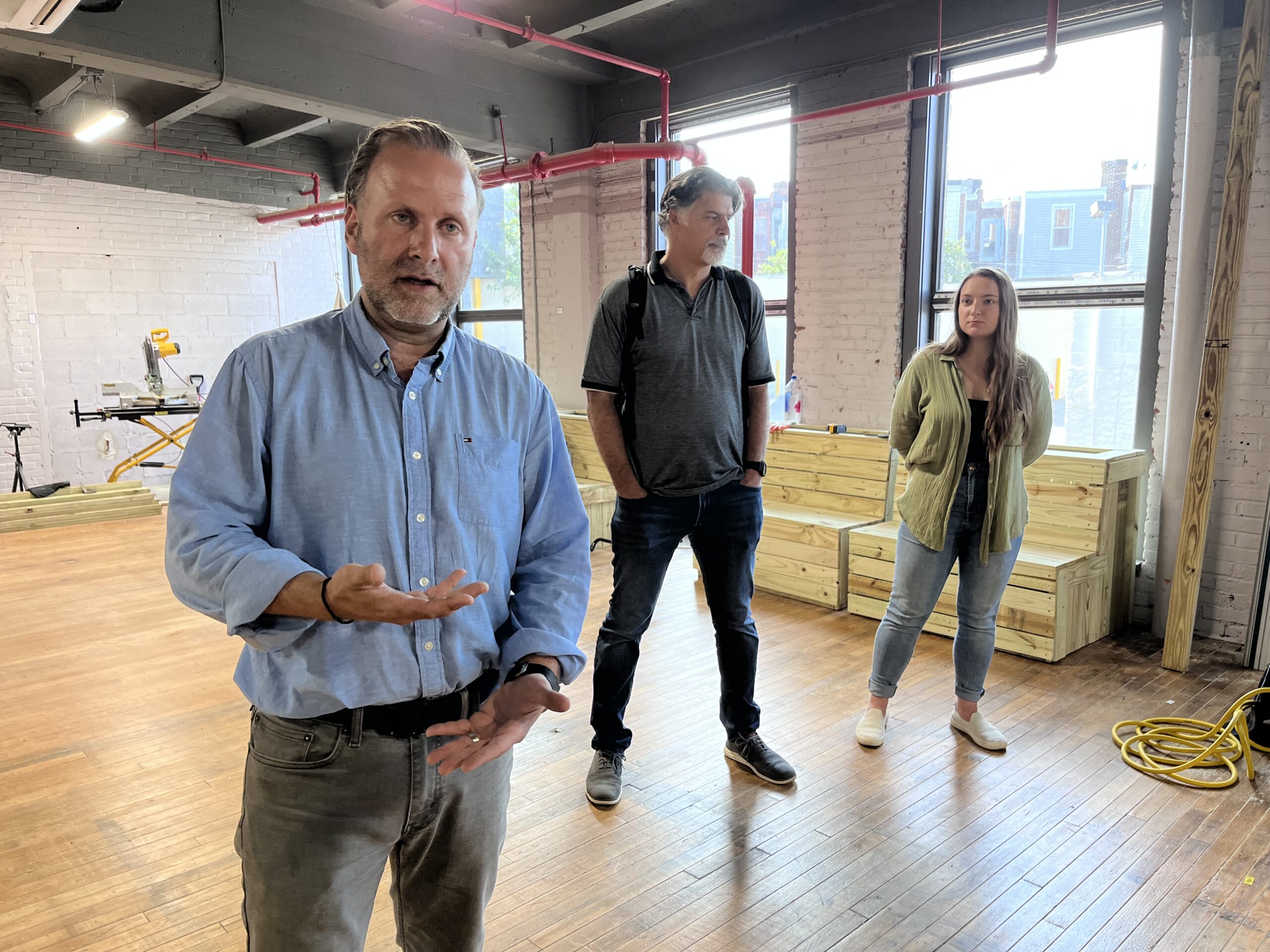

    Architect Angelo Zaharatos explains how shade-giving planters are built at a warehouse in Philadelphia’s Kingsessing neighborhood. Drexel professor Franco Montalto (middle) oversees the program. Nikki Pearl (right) manages it.
  • How to stay hydrated this summer

    How to stay hydrated this summer

    I love Philadelphia summers. I especially love our incredible street festivals, charitable walks and runs, and just exercising outdoors in our gorgeous green spaces.

    However, in recent years, I noticed something peculiar during the summer: an increasing number of people seem to be passing out.

    I couldn’t help but think that maybe many people are coming out for summer fun, walks, and exercise, without proper hydration. Did you know that losing just 2 percent of your normal hydration levels could put your body in a tailspin?

    Water is the one nutrient we can’t survive without for more than a few days. So, if you’ve been skimping on your water consumption, here are a few do’s and don’ts on staying properly hydrated in the summer.

    How do you know you’re properly hydrated?

    For most people, the biggest telltale sign of proper hydration is the color of your urine. If your urine is clear, you are over-hydrated and can cut back. If your urine is the color of lemonade, you’re in the optimal range, but if it’s looking like apple juice or darker, you are getting or are dehydrated.

    What are the signs of mild dehydration?

    Mild dehydration is nothing to play with: It will make you feel extremely tired, may give you a headache, can cause confusion, difficulty concentrating, and negatively change your mood. To possibly avoid mild dehydration, drink plenty of cool refreshing water, especially on those hot summer days.

    How much water should I drink?

    While hydration levels vary from person to person, you should still stick with the minimum recommended eight cups of water a day, but you probably need a little more in summer. Naturally, if you’re an athlete, you may have much higher needs, especially if you’re exercising outdoors in hot and humid weather. If you’re a super fitness fanatic, you’ll likely need even more.

    Stay away from caffeine

    Although caffeinated beverages do not cause dehydration, caffeinated beverages do have a diuretic effect, which increases the amount of urine you produce and excrete. Just in case, you may want to cut back or stay away from caffeine in the summer.

    Ditch alcohol

    Sorry, that delicious pina colada, ice cold beer, and white wine are all dehydrating, and it’s especially true in hot and humid summer conditions. I know it sucks but alcohol and the summer sun combination can be dangerous, and even deadly. It’s a no-brainer, right? Alcohol is dehydrating, and the sun causes you to sweat. Heat stroke is another potential risk, when combining the hot summer sun with alcohol. Heat strokes can be extremely dangerous and can potentially lead to shock or even organ failure.

    With that said, be sure to have lots of fitness, fun, and friendship this summer, but do drink plenty of water, especially on those hot and humid days.

  • How to not get frostbite or hypothermia when the weather is freezing

    How to not get frostbite or hypothermia when the weather is freezing

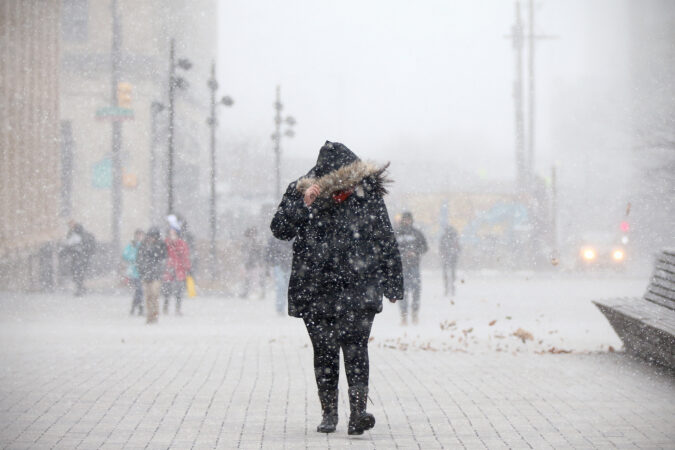
    With an onslaught of freezing winter weather, doctors have one message for Philadelphians: Stay inside as much as possible.

    “In order to get frostbite, you have to be out in freezing temperatures,” said Bob McNamara, chair of emergency medicine at Temple University’s Lewis Katz School of Medicine. “So the number-one thing would be to stay inside.”

    People should also be concerned about hypothermia, McNamara said, which can occur indoors too, if people don’t have proper heating. “Roughly half the cases of severe hypothermia we see happen indoors,” he said.

    But fear not! There is plenty you can do to prepare for the winter not-so-wonderland.

    While curling up under a fuzzy blanket is always a good call, here are some tips from experts, including one who’s been to Antarctica.

    Frostbite

    When the body gets cold, it restricts blood flow to the extremities, prioritizing major organs instead. So the first signs of frostbite include tingling or pain in the fingers, toes, ears, nose, and elsewhere on the face. Numbness and graying patches of skin are more serious indicators that frostbite is setting in.

    Older people and young children are at high risk, as is anyone with a medical condition that might affect their circulation.

    How to prevent frostbite

    Nothing beats staying indoors, but if you have to venture out, try to spend as little time outside as possible, McNamara said. And go prepared.

    Ted Daeschler, a scientist at the Academy of Natural Sciences of Drexel University, has gone on a research expedition in Antarctica, where he and colleagues camped in 5- to 15-degree temperatures.

    He said he often wore two pairs of socks, hooded long underwear, a second layer of long underwear, shirt and pants, a fleece jacket, insulated wind pants, a wind jacket, a neck gator, and wool hat and gloves.

    “Still there were times when the wind made it too cold to work outside and we remained in our camp,” he wrote in an email.

    While you may not need to go to Antarctic levels of preparedness, it’s a good idea to follow the advice your parents gave you as a kid: warm hat, gloves, snow boots, a wind-resistant jacket, and layers of clothing. The air between layers retains heat, McNamara said.

    When to get help for frostbite

    “If you catch frostbite early, it can be reversed,” McNamara said.

    Mild cases of frostnip, in which the skin feels cold and is just starting to tingle, can be reversed by getting indoors or using a warm bath, he said.

    But if the skin becomes pale, waxy, or hard, people should seek medical attention. Those are signs of tissue loss and may require amputation.

    “Every winter we see people who lose body parts from frostbite in the city of Philadelphia,” McNamara said.

    Hypothermia

    When the body is exposed to the cold for long periods of time, it can lose heat faster than it can produce it, causing a dangerously low body temperature, according to the Centers for Disease Control and Prevention. Wet conditions are especially dangerous, even when temperatures are above freezing.

    “Hypothermia is a life-threatening condition,” McNamara said. Major organs can stop functioning properly when body temperature drops.

    It can be difficult to spot, though. People may have slurred speech, stumble or trip over themselves, and seem confused. “A mistake people can make is to think they just had too much to drink,” McNamara said.

    How to prevent hypothermia

    Stay inside and stay dry, the CDC recommends. People should check on neighbors and the elderly to make sure everyone has functioning heat. “Not just a space heater,” McNamara said.

    When to get help for hypothermia

    If you think someone has hypothermia, call 911 and get medical attention, McNamara said.

    If you’re stranded or waiting for emergency responders, try to get the person dry, wrap them up in blankets, and get them as warm as possible.

    And a warning on alcohol: While some people believe drinking can stave off the cold, it’s actually very dangerous, McNamara said. Alcohol dilates the blood vessels on the skin, making you feel warm. But this process increases heat loss. So you won’t know you’re cold and you’ll be getting colder by the minute, McNamara said.

    Another concern doctors in the emergency room see during cold snaps: people with broken bones and head injuries from slipping and falling on ice.

    “All the more reason to stay indoors,” McNamara said.

  • Starting a gym was one scary workout for City Fitness’ Ken Davies

    Starting a gym was one scary workout for City Fitness’ Ken Davies

    Think your gym time is killer? That hour on the elliptical machine? That muscle-taxing combination of burpees, lunges, and side planks that make you want to collapse in a pile of sweat and tears?

    Try owning the gym.

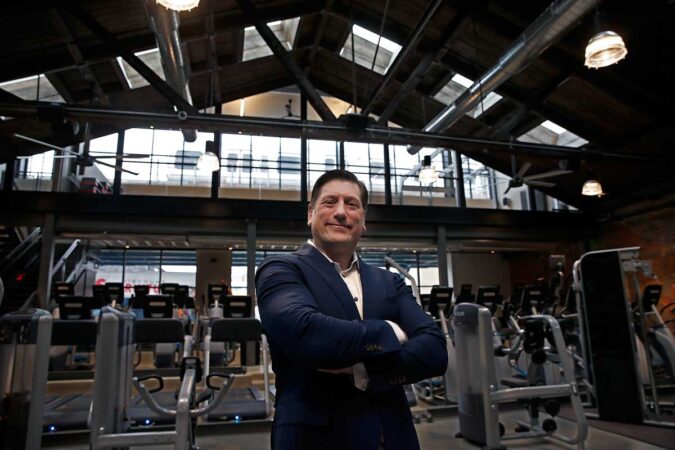
    With his fifth City Fitness location recently opened in Fishtown, and No. 6, the biggest and swankiest of them all, planned for 44,000 square feet in the Sterling apartment building at 18th  Street and JFK Boulevard late this year or early next, founder and CEO Ken Davies is in a good place. But it wasn’t that long ago just the opposite was true.

    The financial hole Davies was in was the ultimate cardio challenge.

    He hit bottom in 2008, a year after opening the first City Fitness on the edge of Northern Liberties, at Second and Spring Garden Streets, just as a recession was bearing down. He reached the precipice of bankruptcy before pulling back.

    “I was beat up,” Davies, 44, a standout wide receiver at Radnor High School and Millersville University, recalled recently. “I didn’t even enjoy it anymore. I wasn’t even working out.”

    It’s a wonder he was making it out of bed those days.

    Davies, who is divorced, had drained the $175,000 he had accumulated in a 401(k) from earlier lucrative jobs in risk management and commercial real estate. He was missing mortgage payments on a house in Stratford, which he had remortgaged for $125,000 and then for an additional $25,000, to help meet his capital needs. He also was delinquent on repayment of a $1.25 million loan from the U.S. Small Business Administration, owed $75,000 on credit cards, had an unsecured loan for $50,000, and needed to repay $70,000 he had borrowed from two friends.

    Plus, he had lost his primary job in information, analytics, and marketing for the commercial real estate industry because he didn’t disclose his gym business.

    One of the worst times, Davies said, was “when I basically slept in a van for a week because I was locked out of my house because I couldn’t pay my mortgage.” The other was when his debit card was declined at Wawa for a $1 purchase.

    “That was the lowest point in my life,” he said.

    City Fitness is now profitable, with gross revenues of $7.5 million, 100 employees, and national growth aspirations, Davies said.

    “I believe he is someone to watch in the fitness industry,” said Wes Deming, principal of All Commercial Capital L.L.C., who was a member of City Fitness before agreeing three years ago to serve as its financial adviser. As such, he is helping Davies locate expansion financing.

    “It can be tough,” Deming said.

    That’s true for many reasons, said Mike Trimble, a vice president in commercial lending at TD Bank. Lack of collateral is one, because most gym owners lease facilities. Another is uncertainty of membership duration.

    Which explains the lack of enthusiasm Davies encountered early on:

    “One banker said, ‘If you were Walt Disney, we wouldn’t lend to you if it was a gym.’ They hated gyms. Even to this day, even with my success, it’s still difficult.”

    Incorporating in May 2005, Davies started paying $20,000 a month to rent the Second and Spring Garden location, which he expected to have open for business in 2006. He was selling memberships for $29.99 a month based on poster-board depictions of what he planned for the site.

    About 300 memberships were sold. Buyers turned against Davies when no gym materialized, accusing him on at least one blog site of stealing their money, he said.

    It took five months to secure the Small Business Administration loan. Build-out  took  an additional six or seven. The first City Fitness gym opened in August 2007. By then, about 10 percent of the presale members had asked for refunds, Davies said.

    Then “things turned from bad to worse,” as can be expected when expenses — equipment leases, instructors, software, office and cleaning supplies, rent — exceed income. Membership sales were slow and revenue from personal training virtually nonexistent, which Davies largely attributed to the recession. Debt mounted.

    To help turn things around, he borrowed the low-cost strategy of a competitor, Planet Fitness. City Fitness memberships dropped to $19.99 a month, quickly attracting 1,000 sign-ups.

    “They have a great model,” Davies said of Planet Fitness, where memberships are currently offered for $10 a month. “But you can’t provide the gym I wanted.”

    That’s a place where equipment is replaced every three years, a robust schedule of group exercise is offered along with top-notch training programs, and where service with a smile and fastidious cleaning are priorities, said Tom Wingert, marketing director for City Fitness. Memberships now start at $49.99 a month.

    “City Fitness’ costs are a direct result of how expensive it is to maintain the level of quality seen in our clubs,” said Wingert, who last year created the city wellness initiative, My City Moves, to achieve another City Fitness objective: community-building.

    “Fitness is a moving target,” said Tracy Shannon, an owner of competitor Sweat, which has been in business since 1997 and plans to open its eighth gym in March at 1 South Broad Street.

    Success is “about staying ahead of the game” and keeping members happy, Shannon said. “If you think you have it figured out, it changes.”

    It wasn’t until 2012 that Davies could open a second location, in the city’s Graduate Hospital section. A smaller “express gym” opened in South Philadelphia in November 2014, followed in April 2015 by what Davies said has been the only failure so far, a personal-training studio in Society Hill at Fourth and Walnut Streets. It reopened Feb. 6 as an express gym.

    Opening in December in Fishtown was a full-scale gym that will offer 25,000 square feet of workout space when fully built out. TD Bank is sold on what Trimble said is “a model that works.”

    Integral, he said, is “an unbelievably strong brand particularly driven by the quality of the offering and Ken’s commitment to building a culture there.” TD has provided $1 million in financing for Fishtown, and a $100,000 letter of credit to support the Sterling lease.

    These days, Davies said, he functions in a state of  “productive paranoia”  because “things can always change.”

    “It’s something that keeps me driven but grounded at the same time.”