Category: Health

  • The clash between the federal government and states over vaccine policy is ‘unprecedented,’ Villanova health law professor says

    The clash between the federal government and states over vaccine policy is ‘unprecedented,’ Villanova health law professor says

    Villanova professor Ana Santos Rutschman would describe the current state of vaccine policy as a game of chess.

    When the federal government does something, some states — primarily Democratic-led states including Pennsylvania respond immediately to counter.

    A prime example followed the federal government’s move, through the Food and Drug Administration, in August to limit eligibility for the updated COVID-19 vaccine. Previously, the annual shot was recommended for all Americans 6 months and older. The new guidance was for people 65 or older and those at high risk of complications from COVID-19.

    Pennsylvania’s regulatory body for pharmacists opened up access by allowing pharmacists to follow the broader recommendations of professional medical societies.

    “It’s kind of [like] ‘Harry Potter’ chess. Remember when they climb on the gigantic pieces and then try to kill one another?” Rutschman said, referring to the fictional scene where chess pieces violently smash the opposing side’s pieces.

    “There’s a certain violence to this from a political perspective,” she added.

    States are allowed to diverge from the federal government on vaccine policy because our system of government, known as federalism, divides power between the federal government and the states.

    With vaccines, states historically have chosen to align in large part with the federal government’s recommendations.

    Rutschman says recent actions by Health and Human Services Secretary Robert F. Kennedy Jr. have ushered in a new era of what’s being called “vaccine federalism.” Kennedy is a longtime anti-vaccine activist now serving as President Donald Trump’s top health official.

    Many states, especially those with Democratic governors, including Pennsylvania and New Jersey, saw recent changes under his leadership as a sign that they “need to do something in direct opposition to the federal government,” Rutschman said.

    Now it’s a “head-on collision,” she added.

    The Inquirer spoke with Rutschman, who researches vaccine federalism as a health law professor and director of the Health Innovation Lab at Villanova University, to learn more about this new era and its possible consequences in a conversation lightly edited for length and clarity.

    What is vaccine federalism?

    For vaccination and everything else, our system is split in two. You have the states and then you have the federal government.

    There is room for tension between the federal level and the state level. Historically, that tension has been, I would argue, limited. It has existed, but it’s not been the defining feature. Now, particularly in the context of vaccines, it has become probably the most salient feature.

    How are states allowed to differ from the federal government as far as vaccine policy?

    States don’t have the power to authorize a new vaccine to come to market.

    But then you have a lot of things that the Centers for Disease Control have done that are more informational. The federal government recommends which shots children or adults should get, and the time frame for most children to get these shots.

    The federal government offers this kind of informational support, and then states set their own policy.

    How has vaccine federalism played out in the past?

    Examples from the past are not as salient or blatant as the ones you’re seeing right now.

    There was a lot of variability around the country, but the overall message was harmonious. Everybody was trying to get, by and large, most of the population vaccinated past herd immunity.

    What is happening now?

    Now it’s a head-on collision.

    States are saying, ‘We’re not going to implement requirements to restrict access to these vaccines.’ The Board of Pharmacy in Pennsylvania decided not to be bound by the CDC’s recommendations. This is a direct clash. We hadn’t had this before between the federal government and the states in the field of vaccines.

    What are examples of this new era of vaccine federalism?

    One example would be the formation of state clusters. These are a lot of neighboring states in agreement. They’re trying to share data and think of best practices, which is almost that informational function that traditionally fell to the [federal health agencies].

    The states are saying, ‘Well, you’re not doing that, so we will.’

    ‘We will pull resources and information to come up with our own advisory role.’ That’s unprecedented.

    You have sort of two speeds in the country. Some states are collaborating and very active in setting regional vaccine policy. And then you have a bunch of states that go completely the other way. You have the, for now, isolated case of Florida saying, ‘We’re going to just basically do away with all vaccination mandates,’ which is going further than the federal government.

    Now it’s a much messier situation, legally, philosophically, politically, etc.

    How effective are these regional coalitions?

    They are accomplishing something. You see fewer restrictions in access to vaccines in a place like Pennsylvania than other states.

    Whereas states who are not part of these kinds of coalitions — typically excluding the likes of Florida — a lot of them are waiting to see what happens, because this has never happened in the history of vaccination in the United States.

    In the meantime, there are a lot of people falling through the cracks who would have been indicated for a vaccine last year. Now they’re wondering what to do, and their providers are not entirely sure.

    There’s a lot of confusion about what happens now that federal policy has taken a completely different direction.

    What impacts do you see coming from this new era of vaccine federalism?

    People hearing one thing out of the CDC and another one out of the state of Pennsylvania may think, ‘Who’s correct? Who should I listen to?’ You start aggregating all the people who might forgo vaccination just because they don’t understand what’s going on.

    I think it continues to accelerate the overall phenomenon of vaccine mistrust, and we’re already seeing levels of herd immunity come down for many vaccine-preventable diseases.

    If I were a provider, I would be similarly confused and concerned, because nobody takes lightly the idea that from now on, ‘I’ll be doing something that’s in direct opposition to what the federal regulators are suggesting I should be doing.’ So I think there’s a fear factor and confusion.

    Lastly, I think there’s an overall chilling effect with regard to vaccines. Yes, some vaccines make money, but they don’t make a whole lot of money to begin with. They’ve never been one of the preferred products for manufacturers. These are not the most profitable things they can be doing.

    I think that we will see much less focus on vaccine development in years to come, because that’s the logical position for pharmaceutical companies, and for some funders even to take, which is unfortunate.

    What do you think of Pennsylvania’s response?

    I think it’s to Pennsylvania’s credit, and I think it’s to some degree reassuring for Pennsylvanians. Although it obviously makes me sad that we have sort of this two-speed mode in the country. Some part of this national fabric has ruptured.

    For now, Pennsylvania has protected itself as it can, but states alone don’t control everything. You have Pennsylvanians going to other states where you may have an outbreak of a vaccine-preventable disease. We don’t have real borders. We cross them all the time.

  • Health insurance sticker shock begins as shutdown battle over subsidies rages

    Health insurance sticker shock begins as shutdown battle over subsidies rages

    Millions of Americans are already seeing their health insurance costs soar for 2026 as Congress remains deadlocked over extending covid-era subsidies for premiums.

    The bitter fight sparked a government shutdown at the start of October. Democrats refuse to vote on government-funding legislation unless it extends the subsidies, while Republicans insist on separate negotiations after reopening the government. Now lawmakers face greater pressure to act as Americans who buy insurance through the Affordable Care Act are seeing, or about to see, the consequences of enhanced subsidies expiring at the end of the year.

    Healthcare.gov — the federal website used by 28 states — is expected to post plan offerings early next week ahead of the start of open enrollment in November. But window shopping has already begun in most of the 22 states that run their own marketplaces, offering a preview of the sticker shock to come.

    Premiums nationwide are set to rise by 18 percent on average, according to an analysis of preliminary rate filings by the nonpartisan health policy group KFF. That, combined with the loss of extra subsidies, have left Americans with the worst year-over-year price hikes in the 12 years since the marketplaces launched.

    Nationally, the average marketplace consumer will pay $1,904 in annual premiums next year, up from $888 in 2025, according to KFF.

    The situation is particularly acute in Georgia, which recorded the second-highest enrollment of any state-run marketplace this year and posted prices for 2026 earlier in October. About 96 percent of marketplace enrollees in Georgia received subsidies this year, according to the Center on Budget and Policy Priorities, a liberal think tank that supports extending the subsidies.

    Now Georgians browsing the state website are seeing estimated monthly costs double or even triple, depending on their incomes, as lower subsidy thresholds resume.

    “We have people saying they will have to choose between their monthly premiums and mortgage,” said Natasha Taylor, deputy director of Georgia Watch, a consumer advocacy group.

    For example, a family of four earning $82,000 a year in Georgia could see their annual premium double to around $7,000 for a plan with midrange coverage, according to a CBPP analysis. If that family earned at least $130,000, they would have to pay the full cost of the annual premium, about $24,000 instead of $11,000.

    It’s a similar story in other states, where people in higher income tiers will see especially big premium increases as they become ineligible for subsidies. A 60-year-old couple earning $85,000 may have to pay $31,000 for a plan in Kentucky, $28,000 for a plan in Oregon and $44,000 for a plan in Vermont, according to CBPP.

    If Congress doesn’t extend the extra subsidies, Georgia could lose around 340,000 people from its 1.5 million-person marketplace, according to an estimate by nonpartisan advocacy group Georgians for a Healthy Future.

    The enhanced subsidies had fully covered monthly premiums for millions of lower-income people in the marketplaces. Many of them will have to start kicking in some of their own money starting Jan. 1, while people with higher incomes will see their monthly subsidies shrink. People earning more than 400 percent of the federal poverty line will no longer be eligible for subsidies at all.

    The political fallout in Georgia has already begun to reverberate. Rep. Marjorie Taylor Greene (R-Georgia) broke with her party to demand an extension of subsidies, noting her adult children’s premiums are set to double. Greene’s office didn’t respond to a request for comment.

    Sen. Jon Ossoff, considered the most vulnerable Democratic incumbent in next year’s midterms, has seized on the issue of rising premiums. An Ossoff spokesman said the senator wants the subsidies extended, pointing to polling showing a majority of Georgians feel the same.

    Republican Gov. Brian Kemp, who championed the state’s marketplace, didn’t respond to a request for comment.

    Atlanta resident Jody Fieulleteau, 31, said she has been paying $160 a month for a subsidized plan on Georgia’s marketplace. She makes about $40,000 a year styling hair and providing behavioral therapy. She has yet to complete an application to see quotes for plans next year, but her monthly premium is likely to nearly double based on her age, income and Zip code.

    Fieulleteau said she rushed to schedule a surgery next week for a problem related to menstruation because she’s concerned about having insurance.

    “I’m feeling like I need to get everything done this year because I don’t know what next year is going to look like,” she said in a phone interview.

    Taylor, of Georgia Watch, said she finds that consumers often don’t understand that their plans are subsidized, which makes it difficult to explain that the pricey plans they see now could become cheaper if Congress votes to extend the subsidies.

    “For your average consumer, they look at the bottom line. What’s my out-of-pocket max,” Taylor said. “I don’t think they’re looking at the minutiae of why their premium is what it is.”

    The rising insurance costs highlight the political difficulties faced by Washington lawmakers.

    The Congressional Budget Office, the legislature’s nonpartisan bookkeeper, has estimated nearly 4 million fewer people will have marketplace plans a decade from now if the extra subsidies expire.

    Republicans say the premium assistance — intended to help people be insured during the coronavirus pandemic — are just a Band-Aid for a failure of the Affordable Care Act to rein in the costs of plans. They also say the subsidies were so generous they incentivized fraud, pointing to a CBO estimate that 2.3 million enrollees improperly claimed a subsidy this year.

    But 13 House Republicans who face competitive reelection campaigns next year wrote to House Speaker Mike Johnson (R-Louisiana) on Tuesday asking him to consider extending premium assistance.

    “Millions of Americans are facing drastic premium increases due to shortsighted Democratic policymaking,” they wrote. “While we did not create this crisis, we now have both the responsibility and the opportunity to address it.”

    Sen. Patty Murray (D-Washington) said in a news conference that she heard from families whose premiums are doubling as window shopping started in her state Tuesday. She said she heard similar stories from Idaho and Montana, noting most people who rely on premium assistance live in red states.

    “Families are logging on, looking for health coverage for next year, and coming face to face with massive price hikes because Republicans downright refuse to work with us to do something about it,” Murray said.

    Insurers have partially blamed the premium hikes on the expiration of the subsidies, saying they’ll cause healthy people to drop coverage, leaving a sicker, more expensive pool of customers behind. Insurers have also cited higher drug and hospital prices, expensive weight-loss drugs and medical inflation as reasons for raising premiums.

    But if Congress acts to extend the subsidies, even after open enrollment begins Nov. 1, some plans may be willing to lower premiums, said David Merritt, senior vice president of external affairs at the Blue Cross Blue Shield Association, whose member plans are sold in all marketplaces. Adjusting rates lower would get more complicated after Dec. 31, he said.

    Even if Congress does extend the subsidies, consumer advocates say damage has already been done.

    Many people will visit the insurance marketplaces and decide to forgo coverage after seeing pricey 2026 plans, they said, and not revisit their decision even if subsidies are restored.

  • How three Philadelphia-area health systems changed accounting practices and boosted profits

    How three Philadelphia-area health systems changed accounting practices and boosted profits

    Amid persistently higher costs, three Philadelphia-area health systems have cut expenses over the last two years by changing how they account for investments in facilities and equipment. The change significantly boosted operating income in all three cases.

    ChristianaCare and Main Line Health are now spreading the cost of buildings and building improvements over as many as 80 years, they said in their fiscal 2025 audited financial statements. That is double the maximum number of years they previously used to calculate what accountants call depreciation expense. Thomas Jefferson University made a similar change last year.

    All three health systems use PricewaterhouseCoopers LLP as their auditor. The firm, which did not respond to a request for comment, also has Philadelphia health-system clients that have not extended their depreciation schedules.

    The term depreciation expense refers to the way hospitals and other businesses allocate the cost of a building, a piece of equipment such as an MRI machine, or even software to manage patient records across the number of years the asset is likely to be used.

    It’s a noncash expense because the money used to make the purchase is recorded elsewhere in the financial statements. Several financial and accounting experts said the change could be seen as cosmetic.

    “It’s not affecting operations. It’s not increasing their revenues. It’s not decreasing their cash expenditures. It is purely a bookkeeping entry,” said Steven Balsam, a professor of accounting at Temple University’s Fox School of Business.

    Main Line Health

    At Main Line, the extended depreciation schedule reduced the expense by an estimated $37.5 million. That helped the system achieve a small, $4 million operating profit for the first time since fiscal 2021, when federal COVID-19 aid buoyed hospitals.

    Without the depreciation savings, Main Line would have had an operating loss of $33.5 million in the year that ended June 30, compared to a $61 million operating loss in fiscal 2024.

    Asked for comment, Main Line’s chief financial officer Leigh Ehrlich noted that the system’s financial performance had improved, thanks to “increased patient volumes and continued focus on expense management.”

    Excluding noncash depreciation and amortization in each of the last two years, Main Line’s operating income improved to $127.8 million from $96.7 million.

    ChristianaCare

    ChristianaCare reviewed the depreciation schedules of fixed assets “as part of our ongoing commitment to maintain accurate and reliable financial reporting,” the nonprofit’s chief financial officer Rob McMurray said in an email. The result was a $24.4 million reduction in depreciation expense.

    The review also resulted in a $9 million write-off of unspecified assets, which meant that in fiscal 2025 the benefit to operating income was $15 million, McMurray said.

    ChristianaCare’s operating income in the year that ended June 30 was $35.5 million, or $20.5 million without the accounting change. The organization had $126.2 million in operating income in fiscal 2024.

    Thomas Jefferson University

    Last year, Thomas Jefferson University opened its $762 million Honickman Center in Philadelphia. Normally, taking a building like that into service would increase depreciation expense.

    Instead, Jefferson’s depreciation expense fell by $68 million, according to its audited financial statement for the year that ended June 30, 2024. The decline happened after Jefferson opted to spread the cost of all buildings and building improvements over as many as 70 years, according to the depreciation schedule in its financial statement.

    Even with the depreciation change, Jefferson’s operating income in fiscal 2024 was extremely narrow, at $1.34 million on nearly $10 billion in revenue that year.

    The benefit of lower depreciation expense continued in fiscal 2025, as it will in future years for ChristianaCare and Main Line.

    Depreciation expense at other local systems

    Most Philadelphia-area health systems use a schedule for depreciating buildings and building improvements that maxes out at 40 years, an Inquirer review of financial statements found.

    “You’re constantly modernizing your facilities to allow for the delivery of medicine based on current times,” Temple University Health System chief financial officer Jerry Oetzel said in an interview. “Who knows 15 years from now? We don’t have clear insight, but it’s probably going to be more home care.”

    That’s why Temple hasn’t adopted a longer depreciation schedule. “It’s just a savings in operating expenses without the benefit of any cash behind it,” Oetzel said.

    Editor’s note: This article has been updated to remove a reference to American Hospital Association guidelines.

  • CHOP lawyers defend transgender care in blistering response to Trump administration seeking patient information

    CHOP lawyers defend transgender care in blistering response to Trump administration seeking patient information

    The Children’s Hospital of Philadelphia called new evidence presented by President Donald Trump’s administration weak and untrustworthy in a blistering legal response to federal efforts to investigate its doctors providing gender-affirming care.

    CHOP’s response, filed late Monday in federal court in Philadelphia, came in defense of accusations by the U.S. Department of Justice that it’s investigating “fraudulent billing practices“ at the hospital. Federal officials say they’re looking into whether CHOP doctors were fudging or lying about diagnoses to get private and public health insurance companies to cover off-label drug prescriptions used to treat patients with gender dysphoria — a medical condition in which a person’s body does not match their gender identity.

    In its filing, CHOP lawyers called the DOJ’s allegations “unreliable,” and urged U.S. District Court Judge Mark A. Kearney to disregard claims that are “threadbare, of dubious origin, and so heavily qualified and caveated as to offer the court no meaningful information.”

    CHOP and the DOJ are locked in a legal battle over a sweeping federal subpoena sent to the hospital in June. The subpoena seeks patient names, Social Security numbers, addresses, diagnoses, and treatment notes, in addition to doctor emails and encrypted text messages.

    In July, CHOP filed a motion to limit the scope of the subpoena to protect patient privacy. Judge Kearney is now weighing CHOP’s motion.

    In the latest filing, CHOP’s lawyers argued the DOJ’s “new evidence” against the hospital was unfairly “shoehorned” into a separate but related case filed last month by a group of CHOP patients and their families who also want Kearney to block the release of private medical records to the DOJ.

    “That new evidence should not be considered because it is not before the Court in this case and is unreliable in any event,” CHOP lawyers wrote in the filing. “The government (still) cannot establish that its need for extraordinarily sensitive and personal patient information outweighs the highest-order privacy interests on the other side of the ledger.”

    The DOJ did not immediately respond Tuesday to a request for comment.

    Feds seek patient information from CHOP

    In April, U.S. Attorney General Pam Bondi issued a memo, entitled “Preventing the Mutilation of American Children,” in which she tasked the DOJ with enforcing measures targeting gender-affirming care for youth.

    About two months later, the DOJ sent subpoenas to CHOP and at least 19 other hospitals nationally that are under scrutiny for treating transgender youth. The subpoenas sparked legal opposition playing out in federal courts in Pennsylvania and across the nation.

    The DOJ’s key focus is how doctors are prescribing puberty blockers and hormones “off-label,” meaning for a condition not specifically approved by the U.S. Food and Drug Administration.

    Once a drug is approved by the FDA, it is legal for doctors to prescribe it to treat other conditions that could benefit from the medication. Off-label prescribing is a common and widely accepted medical practice, especially in pediatrics.

    Gender-affirming care for children and adolescents has been deemed medically appropriate by the American Academy of Pediatrics and other major medical and mental health organizations. Research shows young people with gender dysphoria suffer higher rates of suicide, self-harm, depression, and anxiety.

    CHOP’s Gender and Sexuality Development Program, created in 2014, is one of the nation’s largest such clinics and provides medical care and mental health support to hundreds of new families each year.

    CHOP’s legal fight for patient privacy

    Late last month, families and patients joined in CHOP’s fight against the federal subpoena by filing a separate motion to protect their privacy rights. That motion was filed on behalf of five parents with transgender children and one adult who received care at CHOP.

    In response to that case, the DOJ filed a “Declaration,” or sworn statement, from Lisa Hsiao, acting director of the DOJ’s Enforcement and Affirmative Litigation Branch, formerly known as the Consumer Protection Branch. In it, Hsiao said the government has new evidence “particular to CHOP that raises concern that federal healthcare offenses may be occurring there.”

    Hsiao said the government analyzed CHOP’s insurance claims and found that between 2017 and 2024, CHOP providers diagnosed 250 minors with central precocious puberty at age 10 or older, “including numerous teenagers aged 14 to 18.”

    “This is well beyond the age at which children are typically diagnosed with precocious puberty,” Hsiao stated. The government, she said, suspects doctors are improperly using the precocious puberty diagnosis to get insurance coverage for treatment of gender dysphoria.

    In Monday’s court filing, CHOP lawyers accused the DOJ of attempting to “shoehorn its new evidence into CHOP’s case” through the other case.

    CHOP also argued Hsiao’s declaration provides nothing to support its contentions surrounding precocious puberty diagnosis.

    “Moreover, the government fails to contextualize the findings of its rudimentary analysis, offering no comparator for the use of the code for precocious puberty at peer hospitals, let alone hospitals that, like CHOP, have providers who specialize in treating endocrine disorders,” CHOP lawyers wrote.

    The source of “the data set is entirely unknown,” CHOP’s lawyers noted, adding the declaration never says how many patients were treated for gender dysphoria during that time frame.

    The CHOP lawyers also criticized Hsiao for writing in her sworn declaration that the government was aware of a lawsuit filed against CHOP that alleges doctors hastily prescribed puberty blockers and hormones to a minor who later regretted it.

    Hsiao later refiled the declaration to remove any reference to a lawsuit after learning that it hadn’t been filed.

    CHOP lawyers wrote they believe the lawsuit reference came from a news article about a former CHOP patient. The article said the patient “was suing the hospital.” However, CHOP was unaware of any such lawsuit.

    “The similarities between the report and the allegations in the Hsiao Declaration — including the reference to a lawsuit — raise suspicions that, in looking to justify its investigative interest in CHOP, the government simply searched the internet for stories fitting its narrative and presented the one it found as fact without adequately scrutinizing its veracity.”

  • Penn is expanding its research in immunology — a field just honored with a Nobel Prize

    Penn is expanding its research in immunology — a field just honored with a Nobel Prize

    University of Pennsylvania professor E. John Wherry is good friends with Fred Ramsdell, who was recognized earlier this month with a Nobel Prize for his research in immunology.

    Wherry recalled sitting with Ramsdell, a scientific adviser for the California-based biotech company Sonoma Biotherapeutics, in a meeting two months ago and picking his brain about the future of autoimmunity research.

    “What are the opportunities? Where is the field going?” Wherry recalled asking.

    He said Ramsdell’s advice — to stay focused on supporting the foundational academic research — is helping to inform the scientific direction and programming at Penn’s Colton Center for Autoimmunity, which Wherry directs.

    The center opened in 2021 and is now the centerpiece of Penn’s recently launched $376 million research facility focused on immune health, autoimmunity, and infectious diseases.

    Wherry was happy to see Ramsdell awarded a 2025 Nobel Prize in Physiology or Medicine, shared among three scientists, for his research into peripheral immune tolerance, a process that prevents the immune system from attacking the body.

    “It could not have happened to a nicer guy,” he said.

    The Nobel Prize-winning discovery is especially important for understanding autoimmunity, he emphasized, and could be leveraged to treat autoimmune diseases.

    “We now have the power to push the immune system in different directions, not only to treat those diseases, but also to tell us about where the diseases are going,” Wherry said.

    Penn’s new research facility, which will span seven floors of an office building at 3600 Civic Center Blvd. in University City, is focused on using immunology to diagnose, treat, and prevent diseases.

    Wherry’s lab is moving into the space this month.

    “We are in the most exciting time in my lifetime for immunology,” he said.

    The Inquirer spoke with Wherry to learn more about the future of immunology research at Penn in a conversation lightly edited for length and clarity.

    How will this new center change how immunology research is carried out at Penn?

    We have the Colton Center for Autoimmunity, with really wonderful philanthropic support from Judy and Stewart Colton. They’re giving us resources to make bets on high-risk, high-reward science, and to do that at a pretty good scale. We made some big bets on CAR-T cells and autoimmunity, on mRNA therapeutics, on high-throughput screening, and on AI drug discovery.

    We have this Immune Health Platform lab. The idea is that we should be capturing samples theoretically from every patient we treat, ideally around the time they get a new treatment or there’s some change in their disease.

    Once we’ve built a model using this data and understand the rules by which the immune system functions, we can separate the model from the primary data. You can fine-tune the model and make predictions about other diseases, clinical trials that a company might want to do, and other health systems data.

    Our large database contains about 3,000 patients’ worth of data. We hope to get to 10 or 20,000 patients’ worth.

    Who will be part of this new research facility?

    There are about 25 immunology labs moving in. They include disproportionately younger labs, people who have just arrived at Penn in the last two to three years. We have enough space for probably around 35 to 37 labs, so we would like to recruit and bring new ideas in.

    The way things happen in science is because people talk. We’ve created a physical workspace that’s going to force people to interact in new and different ways and just create more opportunities for serendipity.

    The University of Pennsylvania opened a $376 million, 217,000-square-foot wet lab, office, and research facility at 3600 Civic Center Blvd. The seven-story facility was built on top of an active 250,000 square-foot office tower that opened in 2019.
    What are some of the new projects that have been funded?

    We have someone funded to work on the way the immune system recognizes our own DNA or RNA. lf the DNA in the nucleus of any cell in your body gets out of the nucleus, it’s a really bad thing, because that looks like a bacteria or a virus [to your immune system]. It triggers massive inflammation. The sensors for that can get miswired, and when they do, it can often lead to really devastating autoimmune disease, sometimes a fatal autoimmune disease within just a few years.

    We have a great researcher named Jonathan Miner who’s identified what happens when those proteins get mutated, and has also developed drugs that basically adapt the mutation to not be as pathogenic.

    We have some other really interesting studies on being able to regulate the way our bodies make antibodies, since that can be the pathogenic event in autoimmunity. If you make an antibody against proteins in your nerve ending, you can have diseases that end up causing muscle weakness. We’re starting to identify the way the immune system gets triggered to make antibodies against the wrong things.

    And then we have some really cool projects on CAR-T cells and autoimmunity, where we’re using standard CAR-T cells from cancer to get rid of B cells, which are cells that make antibodies in autoimmune diseases. We also have people inventing new kinds of CAR-T cells to help address other challenges in autoimmunity.

    What is the focus of your lab’s research?

    In the late 1990s and early 2000s, I became very interested in how the immune system deals with chronic infections. When you can’t fully eradicate an infection, what does the immune system do? Why doesn’t the immune system clear things like HIV or hepatitis B, and what are the mechanisms behind that failure?

    During our studies, we identified a process called T cell exhaustion. T cells are the part of the immune system that fights viruses and also tumors.

    Our core is always to understand this idea of immune exhaustion. It plays a role in infectious disease, it plays a role in cancer, and it definitely plays a role in autoimmunity.

    What are some of your current projects?

    We’re trying to understand the heterogeneity in different autoimmune diseases.

    To give an example, one is a really challenging kind of blistering inflammatory skin disease called Hidradenitis suppurativa, where there’s just massive inflammation of immune cells in your skin, and it causes really hard-to-treat skin lesions. We now are profiling all of the immune cells in the tissue in the skin and identifying new targets for therapeutics.

    We’re also interested in this idea that the immune system sees everything that’s happening in your tissues, meaning it acts like a biosensor. If we understand the things the immune system is seeing, we can start to predict trajectories of disease. The inspiration for our study on infant health [not yet published] came from a neonatologist who came to the lab and said, ‘These really premature infants have this kind of lung inflammation that we don’t understand.’

    We realized that somewhere around 10 or 20% of those really premature infants get infected while they’re in the ICU. And we were able to identify what those infections look like early in life.

    We think we can start to piece together ways that we might be able to use the immune system more effectively, or at least treat the damaging inflammation that might come from an early-life infection.

    What bets are you making on AI drug discovery?

    We’re very excited about an AI-based approach for drug discovery and drug repurposing that is being led by David Fajgenbaum, the physician who had Castleman disease and essentially cured himself.

    He has a big infrastructure to basically look at all FDA-approved drugs and identify ways to repurpose them for diseases they weren’t originally intended for. We can do AI predictions, take the top list of drugs from that, and then put that into a high throughput screening facility where Sara Cherry, who is brilliant and amazing, can now screen to identify which of those drugs might be able to provoke the effect we want from cells involved in autoimmunity.

  • Medicare coverage for telehealth suspended as result of government shutdown

    Medicare coverage for telehealth suspended as result of government shutdown

    Steve Hirst relies on virtual visits with his urologist, whose office is an hour away from his Broomall home, to stay on top of his treatment plan and renew medications.

    But earlier this month Hirst, 70, got a notice from his doctor’s office informing him that it could no longer schedule telemedicine visits for patients like him who have Medicare because of new federal policy changes.

    Medicare began covering telemedicine services during the COVID-19 pandemic and has maintained the popular offering through temporary waivers approved by Congress since. But the most recent of those waivers expired at the end of September when Congress failed to reach a budget deal and the government shut down.

    The change specifically affects traditional Medicare, which is administered by the government for people 65 and older and some with disabilities. People with Medicare Advantage plans, which are administered by private insurers, should check with their plan.

    Medicare coverage for virtual visits for mental health was made permanent after the pandemic and are not affected by the shutdown.

    Some of the Philadelphia area’s leading health systems, including Temple Health and Penn Medicine, have said they are continuing to provide telehealth services to people with Medicare and temporarily suspending billing for those services, with hope that coverage will be reinstated when a budget deal is eventually reached.

    But smaller provider practices may not have the luxury of delaying payment for thousands of dollars in services for an indefinite period of time.

    With the government shutdown in its third week, Republicans and Democrats seem no closer to reaching a deal. The next vote is scheduled for Monday evening, though no deal is expected.

    Another health policy issue — tax credits for people who buy insurance through Affordable Care Act marketplaces, including Pennie in Pennsylvania — has been a major sticking point in the ongoing federal budget debate. Democrats want the enhanced subsidies extended permanently as part of the budget deal, and Republicans have refused, arguing that lawmakers could address the issue separately, before the subsidies expire at the end of the year.

    Meanwhile, the waiver’s expiration has left Hirst and others who are covered by Medicare unsure how they will access needed health services.

    Telehealth’s rise

    Telehealth rose in popularity during the COVID-19 pandemic, when people were urged to avoid hospitals unless they were having an emergency and when most routine procedures were canceled.

    The approach was especially helpful to older adults and people with disabilities, who needed to stay in contact with doctors for ongoing treatment and who were considered particularly vulnerable to severe illness from COVID-19.

    After the pandemic ended, many private insurers, Medicaid, and Medicare permanently adopted telehealth coverage for certain services, such as mental health, because of its popularity during the pandemic.

    Medicare has used temporary waivers to continue telehealth coverage for other types of doctors’ visits.

    Beyond patient popularity, research has found that telehealth visits can be as effective as in-person visits for certain types of care, such as palliative care for cancer patients, while improving access to patients with transportation challenges.

    Philadelphia health systems respond

    Philadelphia’s largest health systems said they are optimistic that coverage will be reinstated — either by a new temporary waiver or a permanent change — when Congress reaches a new budget agreement and the shutdown ends.

    Temple Health will continue to provide telehealth services to Medicare patients for the next three weeks, in anticipation of Congress reaching a deal.

    Penn Medicine has not billed Medicare patients for telehealth visits since the shutdown began and has paused its process for filing claims until the government reopens, a spokesperson said.

    “Congress has been vocal in its support of telehealth and its value, and we are hopeful that legislation will be passed to ensure permanent Medicare telehealth coverage and flexibilities once the government reopens,” Penn said in a statement.

    Main Line Health has been reaching out to affected patients to help them change previously scheduled virtual visits into in-person appointments or reschedule virtual visits that can be put off.

    Jefferson Health did not respond to a request for comment in time for publication.

    Patients in limbo

    Hirst drives into Philadelphia to see his urologist in person once a year. Every three months, he has a virtual visit to check in and renew prescriptions.

    Driving to Philadelphia for every appointment would be inconvenient, but Hirst will probably do it “for now,” he said.

    But he worries about older adults and people with disabilities who can’t safely drive to the doctor’s office, and for whom virtual care is a lifeline. They could end up putting themselves or others at risk being on the road when they shouldn’t be. Or they may end up skipping needed care because they don’t have a ride.

    “It makes no sense,” Hirst said.

  • Penn Medicine is investing more than $500 million in new cancer facilities

    Penn Medicine is investing more than $500 million in new cancer facilities

    The University of Pennsylvania Health System, the Philadelphia region’s biggest provider of cancer care and a national leader in developing new treatments, is spending more than $500 million on two new cancer facilities in Philadelphia and central New Jersey to keep growing.

    Those big projects — a fourth proton center at Presbyterian Medical Center in University City and a large cancer center at Princeton Medical Center in Plainsboro — follow years of expansion through outpatient centers in communities like Cherry Hill and Radnor. Its newest is a relocated, $18.5 million infusion center in Yardley that opened in June.

    “What we’ve seen pretty consistently is that demand is there to meet any capacity increases,” Julia Puchtler, the health system’s chief financial officer, said in an interview about fiscal 2025 financial results.

    Penn is not alone in its push to expand cancer services. Jefferson’s Sidney Kimmel Cancer Center, Temple’s Fox Chase Cancer Center, and the MD Anderson Cancer Center at Cooper are pushing into the suburbs to reach more patients.

    The same thing is happening nationally as financially pressured health systems are looking for ways to increase revenue in a growing and lucrative market for cancer care.

    Penn stands out locally for the scale of its investment in a strategy to deliver cancer care seamlessly across its seven hospitals and a growing network of outpatient clinics, with the expectation that patients will keep coming back for their ongoing health needs.

    Penn sees an opportunity to expand its market share even more, as cancer diagnoses rise. The U.S. is expected to see a nearly 40% increase in cancer diagnoses between 2025 and 2050, according to the Philadelphia-based American Association of Cancer Research.

    Experts attribute the rise to a wide variety of factors, from better early detection, to longer life spans, and to environmental exposures that are poorly understood.

    Much of Penn’s investment is in outpatient facilities, including a $270 million center being built in Montgomeryville that will have radiation oncology and an infusion center. “More and more patients want to receive care closer to home,” according to Lisa Martin, a senior vice president at Moody’s Rating. “All of that is really what’s behind all of this investment.”

    Cancer treatment overall is profitable. At Penn, cancer services account for up to 60% of the system’s operating margin by one simple measure that subtracts direct costs from direct revenue and excludes back-office expenses and other centralized costs.

    Puchtler attributed the profitability of cancer care to the prevalence of drugs, such as chemotherapy, that Penn can buy at a discount, while getting the full price from insurers, and the higher percentage of younger cancer patients with better-paying private insurance than is typical for many healthcare services.

    The expansion efforts are expensive in an industry where the consumers both benefit from advances and pay ever-rising healthcare costs. Proton therapy, in particular, costs more, but has not yet been proven to have better outcomes across a wide range of cancers.

    The intensifying competitive landscape

    Penn treats about one-third of adults with cancer in its market area, which stretches from central New Jersey to the Susquehanna, according to Robert Vonderheide, who is director of Penn’s Abramson Cancer Center and leads all of Penn’s efforts in oncology treatment and research.

    Penn counted 47,053 new cancer patients in the 12 months that ended June 30, up 40% from five years ago, according to Penn. The system has 14 locations where patients can receive chemotherapy and even more radiation oncology sites.

    Competitors are also trying to expand their reach, and Temple’s Fox Chase Cancer Center is succeeding.

    window.addEventListener(“message”,function(a){if(void 0!==a.data[“datawrapper-height”]){var e=document.querySelectorAll(“iframe”);for(var t in a.data[“datawrapper-height”])for(var r,i=0;r=e[i];i++)if(r.contentWindow===a.source){var d=a.data[“datawrapper-height”][t]+”px”;r.style.height=d}}});

    Fox Chase had 21,442 new patients in fiscal 2025, up 148% from 2020, the nonprofit said. Fox Chase has added suburban offices in Voorhees and Buckingham, Bucks County, and is expanding its infusion capacity at its main campus on Cottman Avenue. Fox Chase has a significantly smaller footprint than Penn, with six locations for infusions and four for radiation.

    The MD Anderson Cancer Center at Cooper said it had 4,326 new patients last year, up 27% over the last five years. Cooper has taken the MD Anderson Cancer Center brand to the former Cape Regional Medical Center, which it acquired last year and which used to be part of the Penn Cancer Network. Cooper also offers cancer services at its new Moorestown location.

    Jefferson Health’s Sidney Kimmel Cancer Center did not respond to requests for patient data, but has in recent years opened cancer center locations at its Torresdale and Bucks County Hospitals. Jefferson’s cancer center also attained the highest designation from the National Cancer Institute last year — the Philadelphia region’s third comprehensive cancer center, matching Penn and Fox Chase.

    Virtua Health, Penn’s partner in a proton therapy center in Voorhees, is exploring a merger with ChristianaCare, which has already been expanding from its Delaware base into Chester and Delaware Counties. Another South Jersey system, AtlantiCare, has signed a contract with the Cleveland Clinic to boost its competitiveness in cancer care.

    How Penn is trying to build a ‘cancer system’

    Lancaster County resident Susan Reese, 56, said she experienced smooth cooperation between her doctor at Penn’s Lancaster General Hospital and the team at HUP during her treatment for non-Hodgkin lymphoma.

    “I never had any question in my mind that one doctor didn’t know what the other doctor was doing,” said Reese, who received CAR-T therapy at HUP in September 2022. Penn has since started offering CAR-T at Lancaster General.

    After she relapsed in early 2023, she came back to HUP for a stem cell transplant. She could have gone to Penn State Health’s Hershey Medical Center for that. It’s significantly closer to her home in Willow Street, but she wanted to stay within the Penn system.

    Reese’s experience of integration of services at HUP and Lancaster General is what Penn is aiming for in a territory that stretches from central New Jersey to central Pennsylvania.

    Oncologist Robert Vonderheide, director of Penn Medicine’s Abramson Cancer Center, oversees all Penn’s cancer services and research.

    Electronic medical records help with the integration needed to ensure the thousands of cancer patients Penn physicians treat annually get the most advanced care possible, according to Vonderheide, whose research focuses on cellular immunotherapies.

    “We treat patients’ cancers now in a very precise way; the precise mutation, the precise type of chemotherapy, the precise dose” are the focus for doctors, Vonderheide said. “This is no longer appropriate for the telephone game. This has to be data-driven.”

    Reese’s decision to stay within Penn is part of a broader trend of patients tending to receive all their care within one health system, according to Rick Gundling, a healthcare expert at the Healthcare Financial Management Association in Washington, D.C.

    That’s particularly important in oncology, which typically involves multiple specialties, such as medical oncology, radiation oncology, and surgical oncology, he said.

    “Seamless coordination across all those disciplines really makes it a better patient experience and clinical experience because it reduces delay, improves access,” Gundling said.

    Taking advanced treatments from HUP to the network

    Part of Penn’s strategy is to begin offering advanced services at locations beyond HUP. That’s where Penn pioneered CAR-T cell therapy, which harnesses the immune system to attack cancer, and for years that was the only place Penn offered it.

    HUP still performed the bulk of the CAR-T treatments for blood cancers, 123 inpatient cases and 14 outpatient cases last year, but now CAR-T is also available at Lancaster General and at Penn’s Pennsylvania Hospital in Center City.

    Fox Chase was the next biggest center in the region for the relatively new treatment that Penn scientist Carl June and his research teams helped develop. For the fiscal year that ended June 30, 2025, Fox Chase had 21 inpatient cases and 67 outpatient cases, the center said.

    In the Penn system, certain kinds of bone marrow transplants also used to be available only at HUP. “Now we do them at HUP and Pennsylvania Hospital,” Vonderheide said.

    Even the most complicated pancreatic surgeries are going to be done at Princeton, in conjunction with experts at HUP, Vonderheide said. Penn held a ceremonial groundbreaking Monday for the hospital’s $295 million cancer center.

    Remaining only at HUP are bone marrow transplants that use another person’s cells to treat blood cancers, Vonderheide said. HUP performed 118 of those so-called allogeneic bone marrow transplants on the top floor of its $1.6 billion patient pavilion, now known as the Clifton Center.

    Pennsylvania’s next-biggest provider of the treatment was Hershey Medical Center, near Harrisburg, with 71, according to state data.

    window.addEventListener(“message”,function(a){if(void 0!==a.data[“datawrapper-height”]){var e=document.querySelectorAll(“iframe”);for(var t in a.data[“datawrapper-height”])for(var r,i=0;r=e[i];i++)if(r.contentWindow===a.source){var d=a.data[“datawrapper-height”][t]+”px”;r.style.height=d}}});

    Penn started offering proton therapy at HUP in 2010, and expanded its availability in the last three years to Lancaster General and Voorhees, through a joint venture with Virtua Health. Those two centers only have one proton machine each, compared to five at HUP.

    It’s a type of radiation that is designed to precisely target tumors and do less damage to surrounding tissues. That makes the treatment, which costs more, particularly helpful for children, and it is proving beneficial for treating certain neck and throat cancers. The use of proton therapy for the more common prostate cancer has been more controversial.

    Penn’s fourth proton center, with two machines, is under construction and is expected to open at Presbyterian in late 2027. When that $224 million center opens, Penn will have more proton treatment rooms than the entire West Coast, said Jim Metz, chair of radiation oncology at Penn.

    Currently about 10% of Penn’s roughly 10,000 annual radiation oncology patients are treated with protons, though it’s a higher percentage at locations with proton machines, Penn said.

    Penn officials have noted that some cancer patients come to Penn for proton therapy. Even when it’s not appropriate for them, they tend to stay within Penn. “We have seen, when we build protons, our market share increases, ” Metz said.

    Editor’s note: This article has been updated with more recent Fox Chase data.

  • A cold triggered an autoimmune disease in a Pa. man. Now he’s channeling his challenges into advocacy for people with rare diseases.

    A cold triggered an autoimmune disease in a Pa. man. Now he’s channeling his challenges into advocacy for people with rare diseases.

    Brian Dawson had just landed his dream job as Pennsylvania’s acting state librarian in 2015 when he came down with a cold.

    He tried to power through the sickness. But after a couple of weeks, he still couldn’t seem to kick it.

    Doctors at an outpatient clinic diagnosed Dawson with bronchitis and pneumonia, prescribed him antibiotics, and sent him home.

    A couple of days later, he developed a sharp pain in his left eye, which doctors attributed to sinus pressure.

    A few days after that, Dawson woke up in the middle of the night and told his wife he needed to go to the emergency room.

    He was admitted with severe abdominal pain, blurry vision, and trouble walking. In the span of five hours, Dawson would become blind in his left eye and paralyzed from the chest down.

    A doctor would tell him he had a rare autoimmune disease called neuromyelitis optica (NMO), and give him five to seven years to live.

    “I was in a really good trajectory in life, and then I got sick and had to pick up the pieces,” said Dawson, who lives in Harrisburg.

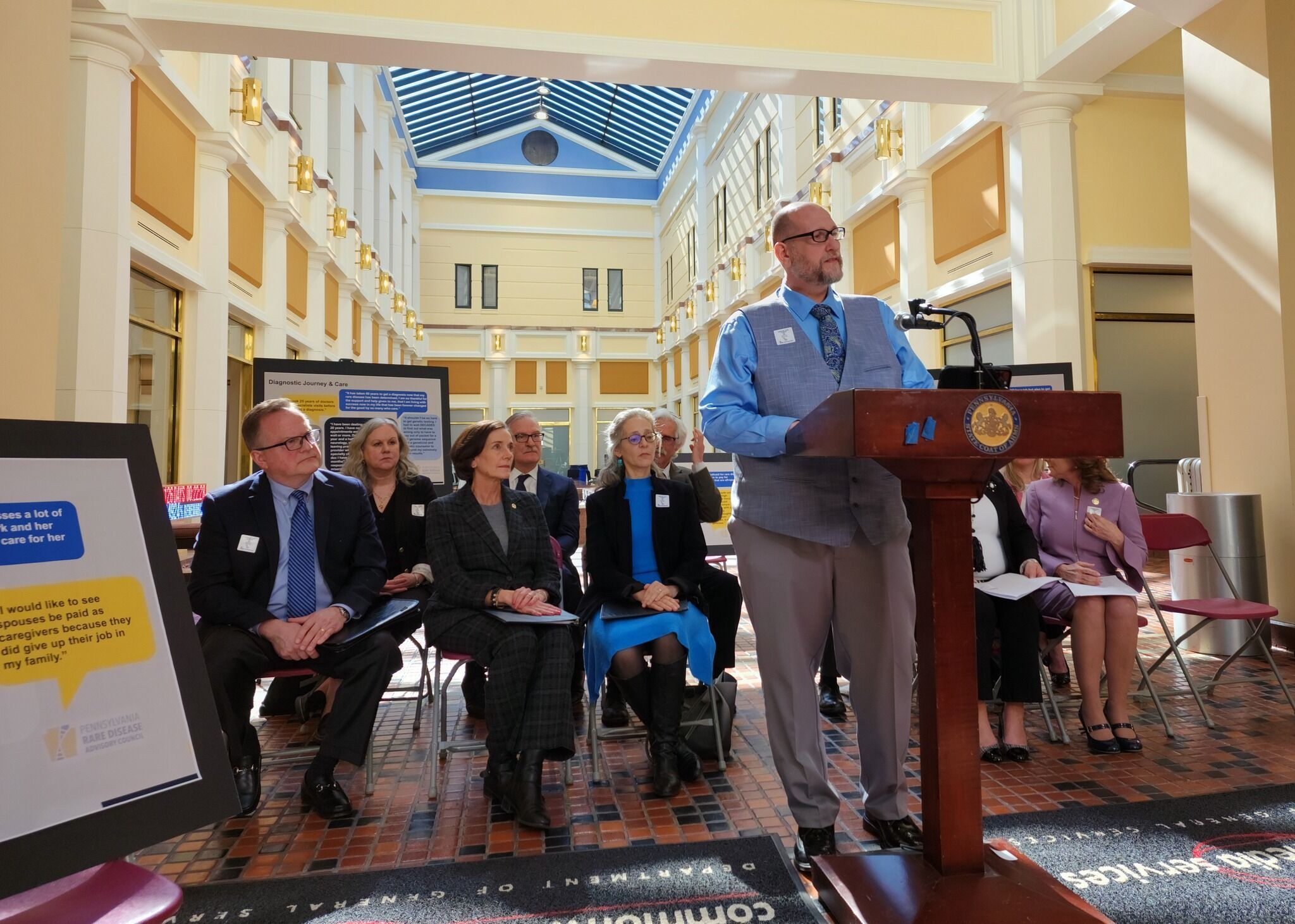
    Dawson saw his own struggles reflected in a recent survey of 1,214 rare disease patients in Pennsylvania that was spearheaded by the state’s Rare Disease Advisory Council, an advisory body to the General Assembly.

    The results, published last month in the medical journal Public Health Reports, painted a “concerning” picture of their lived experiences, said Dawson, the council’s secretary.

    For example, nearly half of the respondents waited more than two years for a diagnosis. Almost a third waited more than five years, and 37% received more than three incorrect diagnoses before their final diagnosis.

    Many respondents reported high annual spending on costs related to their disease, reduced work and school hours, and difficulty accessing medication or services after diagnosis.

    “There was a worse experience overall if there was a longer diagnosis [time],” said Jonathan Sussman, the lead author on the paper, who is working on his medical and doctoral degrees at the University of Pennsylvania’s Perelman School of Medicine.

    Misdiagnosed

    When Dawson’s symptoms progressed, doctors admitted him to the intensive care unit and started him on steroids.

    His vision returned a couple of days later, but he was still paralyzed.

    Imaging revealed that the majority of his thoracic spine — the middle section of the spine — was scarred, and his optic nerve was inflamed.

    Two weeks into his stay, a neurology fellow walked into his room, “all smiles,” Dawson recalled.

    The doctor said proudly they had figured out what he had, then leaned back on a red container on the wall, crossed his arms, and told Dawson that he had NMO.

    That meant his immune system was attacking his optic nerve and spinal cord, the doctor explained.

    He said Dawson would probably be completely blind in about five years.

    “A couple years after that, you’ll get a lesion high up on your spinal column or in your brain stem, you’ll be on a ventilator, and then pneumonia will probably kill you,” Dawson recalled him saying.

    The doctor concluded by telling him how many years he likely had left to live, and then walked out of the room.

    “The way I was told, it was horrendous,” said Dawson, who was then 42.

    Afterward, the hospital discharged him to a rehabilitation facility where he relearned how to walk for about two months.

    The next two years after that were a cycle of going on and off steroids with each relapse. He had recurring eye pain and blurriness, and pain in his legs that felt as though someone had poured searing hot coals inside them.

    “You grieve for the life that you had, grieve for the things you used to be able to do,” Dawson said.

    Dawson’s doctor put him on treatments like rituximab, an infusion meant to knock down his immune system, and gabapentin for nerve pain.

    Dawson’s doctor put him on treatments like rituximab, an infusion meant to knock down his immune system, and gabapentin for nerve pain.

    But nothing seemed to work.

    In one argument with his neurologist, he told her, “we’re doing something wrong.”

    In response, she said, “I don’t know what to do with you anymore,” he recalled.

    After that, she referred him to a neurologist at Johns Hopkins, who determined from new blood work that he didn’t have NMO.

    Almost three years after Dawson was misdiagnosed, the doctor gave him his correct diagnosis: MOGAD, or myelin oligodendrocyte glycoprotein antibody-associated disease. It was a rare autoimmune disease that was likely kicked off by the cold he had back in 2015.

    MOGAD had the same constellation of symptoms as NMO, but required different treatment. It also wasn’t thought to affect a person’s life expectancy.

    “This disease is not going to kill you. You’re going to grow old,” Dawson recalled the doctor saying.

    Advocacy

    Brian Dawson is a patient ambassador for the Sumaira Foundation and secretary of the Pennsylvania Rare Disease Advisory Council.

    The recently published survey was Dawson’s way of collecting data to substantiate trends he had heard of anecdotally.

    For example, 37% of survey respondents said they didn’t receive enough information at the time they were given a diagnosis, and 20.5% said they didn’t understand the information provided by their healthcare providers.

    As a patient ambassador for the Sumaira Foundation, a Massachusetts-based patient advocacy group for rare neuroinflammatory disorders, Dawson tries to help newly diagnosed patients navigate their own diagnoses, knowing that health literacy can be an added challenge.

    Another striking statistic to him was that half of the respondents spent more than $5,000 every year on their care, with others spending well over $10,000.

    A quarter of respondents were also unable to access medications because of co-pay costs or a lack of coverage.

    “Ninety-five percent of rare diseases don’t have an FDA-approved treatment. So a lot of times people are being treated off-label,” Dawson said.

    That means patients face barriers like prior authorizations and “flat out denials,” he added.

    Dawson himself just received a second denial from his insurance company for coverage of a medication he has been on for years, since it’s technically off-label for his condition.

    He hopes the results of the survey can inform policy to reduce barriers faced by rare disease patients.

    “There are people where it’s life or death for them dealing with some of the prior authorization stuff,” he said.

    Recovering

    When Dawson thought he only had five to seven years left to live, he “always heard the clock ticking,” he said.

    “Sometimes you could get distracted and focus on that, but if you’re focusing on that ticking clock, you’re missing everything else,” he added.

    He had hoped he could make his job as the acting state librarian into a permanent position, but with his health challenges, he had to let that dream go.

    Dawson went back to his previous role as the director of library development under the next state librarian.

    Dawson had hoped he could make his job as the acting state librarian into a permanent position.

    For the next few years, he tried to focus on making good memories for his family and minimizing the disease’s impact on them, but the effects inevitably spilled over.

    His oldest son quit a good job to move to Harrisburg to spend time with Dawson, thinking he only had a handful of years left.

    With Dawson’s new diagnosis, “our life had changed all over again,” he said.

    Now that he’s on the correct medication for his condition, Dawson is no longer experiencing the constant cycle of relapses.

    However, he still battles fatigue and brain fog from his condition, and has to be cautious about infections, since his immune system might react unpredictably.

    Brian Dawson, now 52, lives in Harrisburg.

    Even with his longer life expectancy, there’s always a chance he could relapse and become blind or paralyzed again.

    “I don’t hear the clock, but I know that reality is looming out there,” Dawson said.

  • What to know about symptoms and treatment for dehydration and heat exhaustion

    What to know about symptoms and treatment for dehydration and heat exhaustion

    Brace yourselves, Philadelphians. The region’s first prolonged heat wave of the summer is expected to hit in coming days, with temperatures nearing 100 degrees.

    On Friday evening, the city’s Department of Public Health declared a heat emergency beginning Sunday at noon through Wednesday at 8 p.m., though the timeframe may be extended if dangerously high temperatures persist. While the declaration is in effect, the city is expected to open centers where people can go to cool off, among other measures.

    Philadelphia hasn’t seen 100-degree heat in June since 1994, according to the National Weather Service.

    Meteorologists are also predicting oppressive humidity in our region, meaning it will feel even hotter and overnight temperatures will not offer much relief.

    Staying healthy during the heat wave comes down to two basic things: drinking water and cooling down as much as possible.

    Here is what you need to know about heat-related illnesses:

    What are the signs of dehydration?

    Water serves critical functions in the body, including cooling it down, maintaining blood volume, and balancing electrolytes.

    Dehydration happens when individuals lose more water than they are taking in. Even though it could happen to anyone, dehydration poses a specific risk to children, elderly, and people with chronic illnesses.

    The signs of dehydration are dark-colored urine, less frequent urination, fatigue, confusion, and dizziness. With babies, parents should monitor diapers to ensure that they are continuing to provide urine.

    Untreated dehydration can contribute to heat exhaustion or heatstroke, reduced blood pressure, fainting, and seizures.

    What are the symptoms of heat exhaustion?

    As the body remains overheated, it will continue to sweat and further lose liquids. If individuals’ skin becomes cold and pale, they complain of dizziness and headaches, and seem tired or weak, these are all signs they might be suffering from heat exhaustion.

    At this stage, consider calling 911 if a person is vomiting, the symptoms get worse, or last longer than one hour.

    What are the symptoms of heatstroke?

    Heatstroke is when the body can no longer regulate its temperature. People may stop sweating and spike a fever. The cold, pale skin could turn hot and red. In addition to the fever, people may be confused, pass out, and vomit.

    If someone is vomiting, unable to drink, or losing consciousness, medical attention is likely needed in an emergency department. Medical staff there can cool the person down and provide intravenous fluids. If you suspect that someone is suffering heatstroke, call 911.

    How to prevent and treat dehydration, heat exhaustion, and heatstroke

    Water is your best friend during the heat wave. As much as possible, keep hydrated. Adequate water intake for adults is about 11 to 15 cups a day. While water is not the only hydrating drink, avoid caffeinated and alcoholic drinks, which can contribute to dehydration.

    Cooling down is also critical. Look for shade, avoid the sun, and when possible, stay inside air-conditioned buildings. This will help the body regulate heat and preserve liquid, especially during the hottest hours of the day in the afternoon.

    There are open splash parks and pools throughout the city where people can go to cool down, though if you spend time in the sun, be sure to put on sunscreen to avoid sunburns.

    For people who are dehydrated, get them to a shaded and cooler area and have them drink water. If at any point they lose consciousness, vomit, or are unable to drink, seek medical attention immediately.

    How to treat heat rash and cramps

    Two other potential unpleasant outcomes of heat are rashes and cramps.

    When sweat is trapped in the skin, a potentially itchy heat rash can appear. It can be in the form of small blisters to larger lumps. Heat rashes usually resolve without treatment when the body cools down. The CDC recommends keeping the rash dry and using baby powder to soothe itchiness. Go see a healthcare provider if the rash doesn’t go away within a few days, gets worse, or if you develop additional symptoms or are concerned that other health issues are involved.

    Heat cramps are involuntary muscle spasms that can occur due to fluid and electrolyte loss, which is common when exercising on a hot day. If you have heat cramps, stop any physical activity, move to a cool place, and drink water. A sports drink with electrolytes can also help.

    Seek medical attention if the heat cramps last longer than an hour or if you have a heart condition.

  • How heat waves pose medical risks

    How heat waves pose medical risks

    Heat waves can be dangerous for people of all ages, especially older people and those with other health conditions. For those who don’t (or can’t) take proper precautions, there’s an increased risk of heat stroke, heat exhaustion, and even death.

    Extreme heat also can impact health indirectly. Hot weather can lessen the potency of medicines and even impair the sound quality from hearing aids.

    Here’s a rundown on how to stay safe and healthy.

    Preventing dehydration

    The signs of dehydration include dark-colored urine, less frequent urination, fatigue, confusion, and dizziness.

    The solution, of course, is to drink enough water. But beware: Older people may be less able to realize when they are thirsty.

    Extreme dehydration can contribute to heat exhaustion or heat stroke, reduced blood pressure, fainting, and seizures.

    The signs of heat exhaustion and heat stroke

    Possible signs of heat exhaustion include: the person’s skin is cold and pale, they complain of dizziness and headaches, and they seem tired or weak.

    If these symptoms persist or become worse, consider calling 911.

    A heat stroke means the body can no longer regulate its temperature. People may stop sweating and spike a fever. The cold, pale skin could turn hot and red. The person may be confused, pass out, and vomit.

    If someone is vomiting, unable to drink, or losing consciousness, seek immediate medical care.

    Tips for storing your meds

    Some medicines work less well after being stored at high temperatures. Liquid medicines, such as insulin, are particularly vulnerable to the heat.

    Try to store medicines in a cool, dry cabinet or drawer. If you keep them in the bathroom, stick with the original bottles, which generally have tight seals to prevent moisture damage from a hot shower.

    If you keep meds in the kitchen, don’t put them near the stove or microwave. And in any case, put drugs somewhere that children can’t reach them.

    What about hearing aids?

    Extreme heat and humidity can cause a hearing aid’s sound quality to become muffled or crackly.

    That’s simply because people sweat more in the heat, and that moisture sometimes finds its way inside the sophisticated electronic devices.

    Consider investing in some sort of drying device. Changing the wax guard is also a good idea.