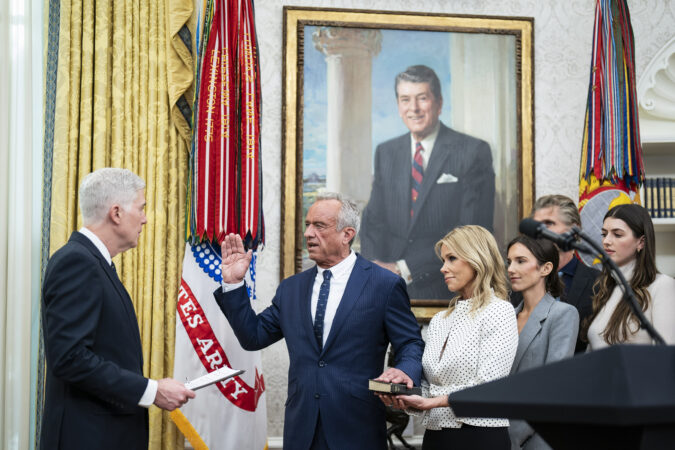
Category: Health

  • How RFK Jr. upended the public health system

    How RFK Jr. upended the public health system

    On his way to being confirmed as the nation’s top health official, Robert F. Kennedy Jr. promised lawmakers he would do nothing that “makes it difficult or discourages people from taking vaccines.”

    Almost 100 days into the job, amid rising measles outbreaks and congressional scrutiny of his messaging on vaccines, Kennedy made clear behind the scenes that he wanted to reshape the nation’s immunization system.

    Kennedy, the founder of a prominent anti-vaccine group, presented several top federal health officials with a new vision.

    “Bobby has asked for the following changes,” Kennedy’s deputy chief of staff for policy at the time, Hannah Anderson, wrote to the officials in a May 19 email later reviewed by the Washington Post.

    Among his requests was to replace the entire membership of an influential independent committee of experts that makes recommendations for how and when to vaccinate Americans. Kennedy also asked the panel to reconsider a long-standing recommendation that all newborns get a hepatitis B vaccine and to revisit the use of multidose flu shot vials, which contain a mercury-based preservative.

    Anti-vaccine activists have criticized those vaccines for years, claiming they unnecessarily endanger children. Career federal scientists who learned of Kennedy’s asks said they represented a sea change for shots that have been extensively studied and deemed safe.

    “At that point we were just bracing for upheaval,” said Demetre Daskalakis, who was then the CDC’s top respiratory diseases and immunization official.

    Kennedy would get what he wanted. The May 19 email reveals his previously undisclosed influence on some of these changes in a highly unusual way, according to legal experts and former and current health officials, showing how Kennedy has wielded government power to overhaul a public health system he has blasted as corrupt and ineffective.

    Andrew Nixon, a spokesperson for the Department of Health and Human Services, said of the email: “All this was was a suggestion.”

    “This was a newly reconstituted committee, and the secretary was providing a North Star to make sure suggestions were communicated to the members for consideration,” Nixon said.

    Over the course of the year, Kennedy’s actions have alarmed public health experts, medical associations, and current and former health officials, who say he is eroding trust in science and dismantling confidence in long-standing public health measures.

    “I do feel shocked by how quickly he has been able to implement these things that he has clearly been pretty passionate about for many years,” said Kerry Kennedy Meltzer, Kennedy’s niece and a physician who this year released email exchanges with her uncle in an attempt to foil his Senate confirmation to lead HHS.

    Kennedy has challenged years of public health messaging on vaccines, including instructing the CDC to contradict the long-settled scientific conclusion that vaccines do not cause autism. His once-fringe views have moved to the center of the nation’s health strategy amid a growing distrust in the medical establishment after the coronavirus pandemic.

    “It is now acceptable to talk about all these issues,” said Leslie Manookian, a leader in the “medical freedom” movement, which opposes vaccine mandates. “The person that we have most to thank for that is Bobby Kennedy, together with President Trump.”

    Kennedy has maintained the backing of the White House and a warm relationship with President Donald Trump, whom he speaks to often, as the two aligned on their Make America Healthy Again initiative to encourage better nutrition and address chronic disease and childhood illness, according to two people familiar with the matter.

    Besides his heavy focus on immunizations, Kennedy has also taken on the food industry. Next year will test, ahead of the midterms, whether he can deliver sweeping change on this more broadly popular agenda.

    This account of Kennedy’s ascent and leadership since becoming HHS secretary is based on interviews with almost 100 current and former federal health officials, Kennedy allies, public health experts, and others. Many spoke on the condition of anonymity to detail private conversations or internal deliberations, or out of fear of retaliation.

    In response to an interview request, Kennedy said in a text message: Wapo has been more consistently unfair, biased, and inaccurate, and it’s reporting about me than any other major outlet. Im not inclined to validate that bias with an interview.”

    He referred the request to Stefanie Spear, a top aide, who said Kennedy wanted to share a Substack article with a Post reporter that described the “invisibility of vaccine injury,” adding Kennedy could perhaps do an interview after the first of the year.

    The HHS media relations office did not answer detailed questions for this article but in a statement commented on the email from Anderson and identified what Kennedy has done so far.

    “Under Secretary Kennedy’s leadership, HHS is exercising its full authority to deliver results for the American people,” Nixon said.

    “In 2025, the Department confronted long-standing public health challenges with transparency, courage, and gold-standard science — eliminating petroleum-based food dyes from the nation’s food supply, removing the black box warning for many menopause hormone therapies, lowering drug prices, advancing [Organ Procurement and Transplantation Network] reform, streamlining prior authorization, investing in rural health, accelerating biosimilars, doubling funding for childhood cancer research, launching an agency-wide AI strategy, and increasing transparency in drug advertising,” Nixon added. “HHS will carry this momentum into 2026 to strengthen accountability, put patients first, and protect public health.”

    RFK Jr.’s rise to power

    In August 2024, Kennedy strode onto a stage in Arizona to suspend his long-shot independent presidential bid. Flanked by American flags, he explained why the scion of a famous Democratic family was endorsing a Republican, Trump.

    “I asked myself what choices must I make to maximize my chances to save America’s children and restore national health,” Kennedy said.

    Kennedy quickly became viewed as one of the campaign’s top surrogates, bringing along some voters who might not have backed Trump. Before winning the presidency, Trump promised to let Kennedy “go wild on health.”

    Although some Trump aides had weighed making Kennedy, a lawyer, a White House health czar, Kennedy told Trump he wanted to be considered as HHS secretary, according to three people familiar with the matter. Donald Trump Jr. and Charlie Kirk, the conservative activist who was fatally shot this year, advised Kennedy that he needed to be in charge of an actual bureaucracy to make lasting change and avoid being sidelined, one person said. Trump Jr. and Turning Point USA, Kirk’s organization, did not respond to requests for comment.

    Just over a week after Election Day, Trump tapped Kennedy to helm the nation’s sprawling health department, an almost $2 trillion portfolio responsible for administering health insurance, approving drugs and medical devices, and responding to infectious-disease outbreaks.

    The luxury Florida beach house of Mehmet Oz — a physician and former daytime television star who is now the nation’s Medicare and Medicaid chief — quickly became ground zero for pushing MAHA’s agenda and securing Kennedy’s position in Washington, according to multiple attendees. Those weeks forged an alliance among some who challenged the medical establishment, including Del Bigtree, head of the anti-vaccine group Informed Consent Action Network (ICAN), and Spear, a longtime ally to Kennedy in his environmental and anti-vaccine advocacy, and newer people in Kennedy’s orbit, such as Calley Means, a health entrepreneur.

    One night, several of those at the beach house bonded over listening to the Grateful Dead, according to Michael Caputo, who was Trump’s HHS spokesperson in 2020. They viewed the book Good Energy — a bestseller, written by now-surgeon general nominee Casey Means along with her brother Calley, that promotes healthy eating and exercise to optimize metabolic health — as MAHA’s bible, he said.

    “Food expanded the movement overnight,” Bigtree, who was Kennedy’s communications director during his presidential campaign, said in an interview.It was an easier topic to sell to moms across America.”

    On Capitol Hill, Kennedy’s messaging pushing for healthier, less-processed foods proved far more popular than his views on immunization.

    Kennedy’s confirmation largely hinged on Sen. Bill Cassidy (R., La.), a physician and chair of the Senate health committee, who begged Kennedy to disavow his false claims linking vaccines and autism and raised concerns about Kennedy’s involvement in vaccine safety litigation.

    “[Does a] 71-year-old man who has spent decades criticizing vaccines and who’s financially vested in finding fault with vaccines, can he change his attitudes and approach now that he’ll have the most important position influencing vaccine policy in the United States?” Cassidy asked during Kennedy’s confirmation hearing.

    As Cassidy vacillated, Vice President JD Vance stepped in to help negotiate his eventual support, according to two people familiar with the matter.

    In a speech on the Senate floor, Cassidy detailed the commitments he received from Kennedy in exchange for his vote, including to protect the nation’s vaccine infrastructure. All but one Republican voted yes: Sen. Mitch McConnell of Kentucky, a childhood polio survivor who said he would “not condone the re-litigation of proven cures.” A week later, McConnell announced he would not seek reelection.

    Cassidy’s doubts proved prescient. Within months, Kennedy found ways to bypass some of his pledges.

    A fierce critic becomes the boss

    Kennedy has called for the ouster of what he describes as “corrupt, industry-captured” federal health officials, arguing the health department had failed to keep Americans healthy.

    “I’m not scared to disrupt things,” Kennedy said at a recent event at George Washington University.

    Since February, health agencies have been inundated by continuous waves of departures involving more than 30 high-ranking senior career leaders — representing decades of experience on managing infectious-disease outbreaks, administering billions in research dollars, and overseeing the nation’s drug supply, according to a Post review.

    Thousands more staffers were laid off in what some called the “April Fools’ Day massacre,” a sweeping purge and proposed reorganization of the health agencies. Some including lead poisoning specialists and lab scientists were rehired, but many administrative support staff, communications staffers, and program officers are among those who remain laid off.

    As secretary, Kennedy brought in fierce critics of the public health COVID-19 response and federal health agencies more broadly. Bigtree told the Post that candidates for top health roles were questioned to see whether they agreed with some of Kennedy’s longtime vaccine safety priorities.

    Under Kennedy, prominent figures in the anti-vaccine movement have been working within the department on vaccine safety issues, including Lyn Redwood, a former leader of the anti-vaccine group Kennedy founded, Children’s Health Defense, and David Geier and Mark Blaxill, two longtime proponents of false claims that vaccines can cause autism. The three did not return requests for comment.

    In a statement, White House spokesperson Kush Desai said Kennedy and his team at HHS are restoring “Gold Standard Science and accountability to our public health bodies” after the medical establishment pushed “unscientific lockdowns and mask mandates” during the coronavirus pandemic.

    Kennedy has accused public health agencies of being dishonest during the pandemic. He repeated that criticism, arguing the government overreached on COVID vaccines, when a reporter asked how to avoid the violence the CDC witnessed in August, when a gunman incensed by coronavirus vaccines attacked the agency’s Atlanta campus.

    Public health and medical experts say the turnover in staff and leadership has hollowed out the federal government’s scientific capacity to anticipate and respond to health threats.

    “For people who are still left at the [CDC], there is chaos and confusion, and morale is at an all-time low,” Aryn Melton Backus said at a November rally in support of public health. She was a health communication specialist placed on administrative leave as part of pending layoffs from the CDC’s Office on Smoking and Health, which has funded state tobacco control programs.

    The reduction of CDC staff and programs is being felt across the country. In Georgia, where smoking is the leading cause of preventable death, state officials cut a tobacco control and prevention program. An online concussion training that many school youth sports coaches must complete will no longer be updated with the latest research. Local officials who want to fluoridate their drinking water to improve oral health no longer have access to technical experts who can help calibrate the proper levels.

    As Kennedy upended the public health workforce, he leaned into his more broadly popular messaging around overhauling the food industry. He has posted on social media more than twice as frequently about food than vaccines while in office, according to the Post’s analysis of his personal accounts and official HHS accounts. Last summer, almost 1 in 3 social media posts focused on food.

    He often highlights posts about companies pledging to remove artificial dyes from food products, which has been one of his signature efforts.

    Some in the food sector have been trying to accommodate Kennedy and downplay differences with his initiatives, in hopes of avoiding MAHA criticism, according to two people involved in the industry. That is a stark shift for an industry accustomed to viewing the GOP as an ally.

    “Wanting to eat simpler foods, more real foods, look at the ingredients, all of that is not a Democrat hippie thing anymore,” said Vani Hari, an author, activist, and Kennedy ally who also writes under the name of the Food Babe. “It’s a Republican thing, too, now.”

    Kennedy returns to his core issue: Vaccines

    As Kennedy sought senators’ support to become health secretary, he told them he supported the childhood immunization schedule, including the shot for measles, which he had previously described falsely as increasing the odds of spreading the virus.

    In the past, Kennedy had decried the “exploding vaccine schedule,” claiming that the series of vaccines recommended to children is linked to the rise of autism, chronic disease, and food allergies. Medical experts have argued that these purported links have no basis in evidence and that the increase in vaccinations has successfully combated more disease. He wrote a book in 2014 calling for removal of the mercury-based preservative thimerosal from vaccines. He questioned why newborns should get the hepatitis B vaccine, which health authorities say is safe, claiming on an online show that it “poisoned” kids.

    Kennedy faced his first big test on vaccines soon into his tenure. A measles surge had started in an under-vaccinated region of Texas, driving the country’s largest annual case tally in at least 33 years and threatening to end the nation’s measles elimination status.

    At first, Kennedy downplayed the severity of the outbreak and later, under pressure, acknowledged vaccines prevent the virus’ spread. But he muddled that message by also falsely claiming the vaccines were not safety-tested and contained aborted fetal debris — a stark contrast from the first Trump administration’s unequivocal support for vaccination during a 2019 outbreak.

    He repeatedly offered to send Texas doses of vitamin A, an unproven measles treatment in the U.S. embraced by vaccine skeptics as an alternative to immunization, even though the vitamin is primarily used for malnourished children abroad and public health workers and doctors said their focus was vaccination, according to a top state health official, Jennifer Shuford.

    In June, he fired every member of the Advisory Committee on Immunization Practices, which makes vaccine recommendations, setting in motion plans to remake the vaccine system. Kennedy argued the panel had become “little more than a rubber stamp for any vaccine” with members too closely tied to the pharmaceutical industry. He selected new members, some of whom had histories of criticizing vaccine guidance. The former CDC director, Susan Monarez, said she was fired in August for refusing to be a “rubber-stamp” to the new committee.

    The panel has voted on some of Kennedy’s requests detailed in the May email from Anderson, who is no longer with HHS and did not respond to requests for comment.

    The vaccine panel voted in June to remove thimerosal — which the CDC had concluded is safe but Kennedy and his allies have decried as unnecessarily exposing children to mercury — from the rare multidose flu shot vials that contain it. In that same meeting, they vowed to form a work group to look at vaccines that have not been subject to review in more than seven years, in line with Kennedy’s request.

    The panel over several months grappled with how to revise the guidance for all newborns to receive a hepatitis B vaccine. It ultimately voted in December to stop recommending the shot when the mother tests negative and instead to encourage those parents to consult doctors about whether and when to begin vaccination.

    José Romero, who began serving on ACIP in 2014 and chaired the panel from 2018 to mid-2021, described Kennedy’s asks to the committee as “extremely” unusual.

    “The secretary is within his legal rights to make these suggestions or requests, but it’s unheard of as far as I know,” said Romero, who was a top health official in Arkansas during the pandemic and then at the CDC. He now consults for the pharmaceutical industry on vaccines and is a member of the American Academy of Pediatrics infectious diseases committee.

    An HHS official, who spoke on the condition of anonymity because of legal concerns, said that the career CDC official who oversees ACIP sets its agenda and that members of the committee are ultimately responsible for writing the questions they vote on.

    In reference to the May email, the official said HHS officials worked with the CDC’s administrative officer for the vaccine panel to communicate the suggestions to the members, but those suggestions were not directives.

    Joseph Hibbeln, a neuroscientist who has become a dissenting voice on the vaccine panel, said committee members have not been given clear answers when they have asked who is determining which vaccines they are scrutinizing.

    Robert Malone, a prominent critic of coronavirus vaccines who is now the panel’s vice chair, said that he did not know how the agenda items were developed but that there would be nothing “nefarious” about Kennedy or other top Trump administration officials “contributing” to agenda items because the panel’s job is to provide advice.

    During the panel’s December meeting, Kirk Milhoan, chairman of the vaccine committee, was overheard telling another member that he felt “a little bit like puppets on a string as opposed to really being an independent advisory panel,” according to a transcript of the exchange captured by videoconferencing software and reviewed by the Post. He later told the Post he was referring to pressure from outside groups critical of changes to vaccine recommendations, not the administration.

    ‘Raise the risk, bury the benefits’

    Kennedy and his aides have repeatedly said the Trump administration is not limiting access to vaccines for those who want them, but is instead working to help people make informed decisions. Critics say they are exaggerating the downsides and obfuscating the value of immunization.

    “The secretary and his committee have stopped doing the hard job of balancing the risks and benefits of vaccines,” said Dan Jernigan, who oversaw the CDC’s vaccine safety office. He described their playbook as “raise the risk, bury the benefits, sow confusion, drive down use.”

    In the late summer, Jernigan and two other high-ranking officials resigned in protest over what they called an unscientific and politicized approach to vaccines.

    In one instance that alarmed career staff, Kennedy wanted Aaron Siri, a top lawyer for the anti-vaccine movement, and perhaps Paul Offit, a scientist at Children’s Hospital of Philadelphia who is a prominent proponent of vaccines and critic of Kennedy, to speak publicly during the June meeting of the new vaccine advisers, according to three former health officials familiar with a meeting where a CDC senior adviser relayed the secretary’s request. Siri has been involved in legal challenges to school vaccine mandates and petitioned the government to reconsider its approval of Sanofi’s stand-alone polio vaccine.

    But the plan to invite Siri fell apart after objections from career CDC staff and legal advisers who raised concerns about providing a platform to a man who has repeatedly sued the agency seeking data about vaccine safety on behalf of ICAN, the anti-vaccine group. Kennedy was informed of those concerns, one of the officials said.

    After almost six months and an exodus of CDC leaders, Siri was invited to the agency’s headquarters for the December meeting of the vaccine advisers and spent more than 90 minutes arguing that the history of childhood immunization in the U.S. is marred by insufficient research and improperly performed vaccine clinical trials. HHS did not answer questions from the Post about Siri’s appearance.

    Siri said he has a “significant knowledge base” about vaccines based on his legal work, including regularly suing health authorities and deposing and cross-examining leading vaccinologists. “If you were standing in my office with me right now, you would be looking at a bookshelf that is filled with medical textbooks on vaccinology, immunology, infectious disease, and pediatrics,” he said.

    Cassidy, the Republican senator, reacted with shock to Siri’s appearance at ACIP.

    It was his latest frustration with the health department’s handling of vaccine issues under Kennedy, including the revisions to the CDC website language on autism. The page includes an asterisk after the header “Vaccines do not cause Autism,” explaining that the header was not removed as part of an agreement with Cassidy. But the revised webpage also claims that the assertion that vaccines do not cause autism is not evidence-based and that health authorities ignored studies supporting a link.

    Cassidy’s office declined repeated requests for a formal interview. Approached at the Capitol and asked about Kennedy’s vaccine commitments, Cassidy said, “You can compare those actions to those commitments I enumerated in my floor speech, and I’ll let you draw your own conclusions.”

    But what were his conclusions? “I’ll leave it at that,” he said.

    The looming fight

    Kennedy has spent much of this year laying the groundwork for bigger changes to the nation’s vaccine and food policy.

    Findings from investigations Kennedy commissioned into the causes of autism, the safety of vaccines, and whether fluoridated water harms children are expected to be released.

    The Trump administration is weighing plans to shift the federal government away from directly recommending most vaccines for children and to more closely align with Denmark’s immunization model of suggesting fewer shots, according to two people familiar with the matter.

    Kennedy plans to release revised federal dietary guidelines for healthy eating habits early next year, which will be partly tied to when Americans are making New Year’s resolutions, according to a federal health official. Kennedy has said the guidelines will focus on eating whole foods.

    The health department is also hoping to finalize a plan as soon as next year to require labels on the front of food and drink packages to alert Americans about unhealthy foods. Under Kennedy, health officials are working internally to determine the best approach to the labels, which were first proposed in the Biden administration, according to two people familiar with the matter.

    Meanwhile, Kennedy has crisscrossed the country to support governors who have restricted using food stamps to buy soda and candy and signed bills to remove artificial dyes from school meals. Some MAHA proponents want to see another wave of policies next year that would promote nutrition education and also challenge long-standing public health practices such as vaccine mandates. The nonprofit advocacy group MAHA Action has met with almost 20 top state officials as it pushes for states to embrace the movement.

    “Bobby Kennedy is doing the work he was put on the planet to do,” said Tony Lyons, president of MAHA Action.

    Kennedy’s allies say he’s just getting started. They hope he will be secretary for eight years.

  • Here’s what Dry January does to your body

    Here’s what Dry January does to your body

    The booze-free month known as Dry January has surged in popularity, from just 4,000 participants when it launched in 2013 to millions of (at least short-term) teetotalers today. If you are considering giving up alcohol this January, you’ll be happy to hear that new research suggests it may bring you health benefits, including better mood and sleep, as well as lower blood sugar and blood pressure.

    A review of 16 studies on Dry January recently published in the journal Alcohol and Alcoholism found that even a short pause in alcohol use is linked to improvements in physical and psychological health.

    Dry January participants reported better mood, improved sleep, and weight loss, and had healthier blood pressure, blood sugar, and liver function. And several of the studies found participants experienced some benefits from simply reducing their drinking, also known as “Damp January,” rather than abstaining entirely.

    Health effects of giving up alcohol

    The tradition of abstaining from alcohol in January began in 2013 as a challenge by a charity, Alcohol Change UK, to reduce “alcohol harm.” In 2025, 21% of U.S. adults said they planned to participate in Dry January, a YouGov poll found.

    Fewer people in the United States are drinking in general. About 54% of U.S. adults say they drink alcohol, according to a 2025 Gallup poll, the lowest that number has been since Gallup started tracking drinking behavior in 1939.

    Alcohol use has been increasingly linked to health problems. In January, the U.S. surgeon general published an advisory report warning that alcohol can cause seven types of cancer, including breast and colorectal cancers.

    And a 2025 study in the journal BMJ Evidence-Based Medicine suggested that no amount of alcohol is safe in terms of dementia risk.

    “Alcohol affects far more aspects of our physical health beyond the commonly cited liver damage,” said Megan Strowger, a postdoctoral research associate at the University at Buffalo and lead author of the new review. (Strowger conducted this research during a postdoctoral fellowship at Brown University’s Center for Alcohol and Addiction Studies.) Strowger and her colleagues were surprised by the wide-ranging health effects of just a month without alcohol, including changes in blood pressure, insulin resistance, blood glucose, liver function, and even cancer-related growth factors.

    Even those who didn’t abstain for the full month reported health benefits such as better mental well-being a month later. They also had “decreased drinking frequency, reduced drunkenness, and lower alcohol consumption” six months later, two studies cited in the review found.

    “Given that there weren’t huge reductions in drinking … I thought it was impressive that they found some of those physical health benefits around lowered blood pressure and liver abnormalities,” said Daniel Blalock, a medical associate professor in the department of psychiatry and behavioral sciences at Duke University School of Medicine, who was not involved in the review.

    How to reduce your alcohol consumption

    Strowger sees Dry January as a helpful opportunity. “What really makes Dry January successful is its massive reach and unique, non-stigmatizing approach; it focuses on the positive, accessible health outcomes of taking a break, rather than dwelling on participants’ prior drinking habits or issues of addiction,” she said.

    Here are some ways you can limit your alcohol consumption:

    • Try Damp January: If you’re not quite ready to give up alcohol entirely this January (or for Dry July or Sober October), you might consider Damp January, “where the goal is to reduce consumption rather than attempt full abstinence, making the shift feel more manageable,” Strowger said.

    “It helps prevent what we call the ‘abstinence violation effect,’ where if you fall off the wagon, you say, ‘Forget it, I might as well just get really drunk since I haven’t met my goal of complete abstinence,’” said Blalock, also a clinical research psychologist at Durham Veterans Affairs Medical Center.

    • Track your progress: Write down when you drink and how it makes you feel in a notebook, said George F. Koob, director of the National Institute on Alcohol Abuse and Alcoholism, or the Notes app on your phone. There are also digital tools such as the Try Dry app that make tracking your alcohol use simple, Strowger said.
    • Create an environment to drink less: Try creating a social environment that supports your goal to drink less, Blalock said. For example, if you join a running club for a Saturday morning run, you might be less inclined to drink the night before so you can wake up feeling fresh.

    And while you certainly don’t have to join a running club, exercise is one of Koob’s go-to recommendations for drinking less. It can help you cope with stress, rather than relying on alcohol to take the edge off. “Taking a walk clears your brain, and you come back and you don’t need that drink in order to relax,” he said.

    The researchers noted there’s also little harm in trying Dry January if you’re at all sober-curious — it may even be easier than trying to cut back on drinking at other times of the year.

    Saying you’re participating in Dry January often reduces some of the stigma associated with wanting to drink less alcohol, because so many people do it and can relate to the desire to start the year off a little bit healthier, Blalock said.

    “Dry January really helps you evaluate your relationship with alcohol,” Koob said. It may prompt you to pay more attention to how much and when you’re drinking, and how you feel the next day. “If you feel better when you’re not drinking, you should listen to your body, because it’s telling you something,” he said.

  • The doctor is always in | Expert Opinion

    The doctor is always in | Expert Opinion

    It’s reassuring to have a doctor around when an unexpected medical emergency occurs.

    “Is there a doctor in the house?” is the infamous call when someone has chest pain on an aircraft, falls in the grocery store, faints in the theater, or experiences any sudden physical ailment or mishap. Recently, a physician colleague shared a story that illustrated the value of a foundational doctoring skill — empathetic communication — even in a situation that wouldn’t ordinarily call for a doctor’s expertise.

    My colleague was in a crowded pharmacy, and a number of customers were growing irritated by the slow progress at the photo station. A part required replacement, which slowed the processing of print orders. When one customer approached the store manager to air his frustration, the manager appeared to ignore him. Then the manager abruptly turned to the customer and shouted, “You can leave my store!”

    By now, lines were also getting longer at another checkout area, since the manager was too preoccupied with the photo problem to address the cashier’s issue. When he finally made it over, a customer expressed his frustration that so few checkout lanes were open.

    “You can leave my store!” the manager responded.

    My friend is a seasoned medical specialist who had been in line for a half hour himself. He observed the commotion and the manager’s dismissive retorts.

    He decided to approach the manager, but with a different opener. “You seem to be having a really awful day.”

    The manager looked up in surprise and replied, “You’re right. It’s been a horrendous day.”

    “You know,” my friend whispered with a half smile, “if you keep telling everyone to leave your store, that might not be so great for business.”

    They both chuckled a bit, and the tension in the room eased. The manager continued moving from task to task without much enthusiasm but my friend did not hear him invite anyone else to “leave my store.”

    Compassionate communication is not unique to medicine, but it is the skill that I consider most essential to ensuring that patients leave feeling relieved and reassured after a doctor’s visit.

    In the pharmacy, my friend never identified himself as a doctor, nor was he recognized as one. He didn’t need to. At the time, doctoring was not on his mind.

    As I listened to his story, it was clear that his ability to notice someone’s distress and convey empathy is now so professionally innate as to be just part of the way he exists in the world.

    Like the store manager, many of us may have been helped by a doctor in a nonclinical setting without realizing it. It’s nice to know those interpersonal skills don’t shut down at the conclusion of office hours.

    Jeffrey Millstein is an internist and regional medical director for Penn Primary and Specialty Care.

  • The Institute for Maternal Fetal Health at Nemours Children’s Hospital is set to open in early 2026

    The Institute for Maternal Fetal Health at Nemours Children’s Hospital is set to open in early 2026

    Nemours Children’s Hospital is launching a new maternal and fetal health program designed to help families with complex fetal diagnoses get specialized care closer to home.

    The Institute for Maternal Fetal Health will begin treating patients at Nemours’ flagship hospital in Wilmington in early 2026. The institute’s goal is to provide advanced care for mothers and babies with potentially life-threatening diagnoses, such as congenital heart disease, metabolic disorders, and genetic defects. They may otherwise have had to travel to farther-away hospitals in Philadelphia, Baltimore, Pittsburgh, or New York.

    The institute will provide in utero surgery — procedures that are done on a fetus before birth to correct certain debilitating birth defects, such as spina bifida, which is when the spinal column does not completely close and leaves the spinal cord exposed.

    It will also offer more education and resources for other family members, especially other children, to help them cope with a fetal diagnosis.

    “Our biggest impetus is to help families stay closer to home,” said Julie S. Moldenhauer, a maternal-fetal medicine specialist and the institute’s inaugural executive director.

    Julie S. Moldenhauer, a maternal-fetal medicine specialist and fetal interventionalist, is the inaugural executive director of the Institute for Maternal Fetal Health.

    Advanced prenatal care at Nemours

    The new maternal fetal health institute builds on Nemours growth in the area. The Delaware-based nonprofit health system in 2024 took over pediatric offices previously operated by Crozer Health, which closed under bankruptcy earlier this year.

    At its Wilmington hospital, Nemours is adding three new dedicated operating rooms for C-sections, complex deliveries, and fetal surgeries.

    The institute will also include more patient rooms and neonatal stabilization rooms for babies who need extra support after birth.

    A new wellness room will serve as a place for families to gather for a meal, play time, art therapy, or yoga.

    A rendering of a shared patient space planned for the Institute for Maternal Fetal Health at Nemours Children’s Hospital in Wilmington, where families will be able to gather for a meal, play time, or planned activities.

    Support for the whole family

    For parents, a fetal diagnosis can result in excitement about a new baby being replaced by fear for their child’s health.

    What’s more, getting the care they need may involve traveling from home for frequent appointments and procedures. That can be expensive for families who need to take time off work, pay for travel and hotel stays, and find childcare for any siblings remaining home.

    “All those hopes and dreams can feel like they’re a candle being blown out,” Moldenhauer said. “Building a beautiful nursery becomes — how are we going to get back and forth to all these appointments?”

    When families have to travel for advanced prenatal care, siblings who remain at home may feel left out or scared about whether their parents and the baby will be all right.

    At its new institute, Nemours will offer support groups for grandparents, and education for siblings to demystify the medical process.

    Psychologists can help couples who are struggling with their relationship during a complex pregnancy, or talk to children who are showing signs of being affected by their parents’ stress.

    “Until you see your child with all the tubes in a NICU, in an incubator, it doesn’t feel real,” said Moldenhauer. “We want to fortify the whole family.”

  • Overdose deaths in Philly on track to be the lowest in nearly 10 years. Pa. deaths are also declining dramatically.

    Overdose deaths in Philly on track to be the lowest in nearly 10 years. Pa. deaths are also declining dramatically.

    Philadelphia is on track to record the lowest number of fatal overdoses in nearly a decade in 2025, according to preliminary state data.

    State officials reported 747 overdose deaths in the city as of Dec. 23. The city last recorded fewer than 1,000 deaths in 2016, when 907 people died of overdoses.

    The dramatic decline mirrors national trends in overdose deaths, which peaked during the COVID-19 pandemic and have since been steadily falling.

    window.addEventListener(“message”,function(a){if(void 0!==a.data[“datawrapper-height”]){var e=document.querySelectorAll(“iframe”);for(var t in a.data[“datawrapper-height”])for(var r,i=0;r=e[i];i++)if(r.contentWindow===a.source){var d=a.data[“datawrapper-height”][t]+”px”;r.style.height=d}}});

    Likewise, overdose deaths are dropping in Pennsylvania, with a 29% decline in deaths reported statewide between 2023 and 2024, according to preliminary data from the state.

    Preliminary data for 2025 indicate that deaths are also on track to decline again across the state, with 2,178 overdoses reported as of Dec. 23, according to state data. In all of 2024, the state recorded 3,340 overdose deaths.

    window.addEventListener(“message”,function(a){if(void 0!==a.data[“datawrapper-height”]){var e=document.querySelectorAll(“iframe”);for(var t in a.data[“datawrapper-height”])for(var r,i=0;r=e[i];i++)if(r.contentWindow===a.source){var d=a.data[“datawrapper-height”][t]+”px”;r.style.height=d}}});

    City officials in Philadelphia said there are slight differences in how the state and the city report overdose data and could not comment extensively on the state figures. But the city’s own data also show dramatic drops in deaths in the last several years.

    As recently as 2022, deaths in the city had soared to their highest-ever rate. But they decreased slightly in 2023.

    Citing preliminary data from 2024, Philly Stat 360, a city-run database that tracks quality-of-life metrics, reported 1,064 overdose deaths — a 19% decrease in fatal overdoses from the year before. The city has not yet released its own statistics for 2025.

    “My first reaction to hearing these numbers is absolute joy,” said Keli McLoyd, the director of the Philadelphia Overdose Response Unit (ORU). “With that said, the number should be zero. Every overdose is preventable. Every single one of those lives lost is a person.”

    State officials said their work to expand overdose prevention efforts and ease entry to treatment has contributed to the dramatic drops in deaths. Still, they said, there is more work to be done.

    “Even with the overall decreases, we are still losing too many people — mothers, fathers, sons, daughters, grandparents, grandchildren — to overdose,” said Stephany Dugan, a spokesperson for the Pennsylvania Department of Drug and Alcohol Programs.

    She added that all Pennsylvanians “deserve equal and equitable access” to addiction treatment.

    Decreases in overdoses in Philadelphia

    Discerning the cause of the dramatic drops in overdose deaths can be difficult, city officials say.

    “We have to acknowledge that it’s a huge, huge change, and so we really are hopefully doing something right. But I think it’s going to be very hard, if not impossible, to say that one thing resulted in this massive reduction in fatal overdose deaths,” McLoyd said.

    Still, efforts at the state and local levels to increase access to naloxone, the overdose-reversing drug, likely made a difference, she said.

    A number of local advocates in the addiction medicine field have speculated that there is still much to learn about how the COVID-19 pandemic affected overdose rates, said Daniel Teixeira da Silva, the director of the Division of Substance Use Prevention and Harm Reduction at the Philadelphia Department of Public Health.

    “When we look at the [overdose] increases after 2016, leading up to COVID, we can tie that to the introduction of fentanyl to the [drug] supply,” he said Monday, referring to the synthetic opioid behind most of the city’s fatal overdoses.

    “When you look at the increases from 2020 to 2022 — this is where I just don’t think we know enough yet. It’s hard to say COVID didn’t impact [deaths]. We look at what was going on at the time, contributors to more risky substance use such as people losing employment, the isolation,” Teixeira da Silva said.

    Likewise, he said, policy changes that came about during the pandemic, such as easing some restrictions around opioid addiction medications, could be contributing to a drop in deaths now.

    “Maybe we’re seeing benefits of the policies enacted during COVID,” he said.

    A changing drug landscape

    On Philly Stat 360, city officials said fentanyl still drives nearly all of the opioid overdose deaths in the city.

    But about 70% of deaths involved a stimulant like cocaine or methamphetamine in 2024. And about half of the city’s fatal overdoses that year involved both stimulants and opioids.

    Taking stock of the drop in overdose deaths, city officials noted the success of a 2024 program at the ORU to deliver naloxone, the opioid overdose-reversing drug sold under the brand name Narcan, to households in neighborhoods seeing a high number of overdoses.

    They included neighborhoods in North Philadelphia, where overdose deaths had risen over the last several years. Across the city, Black and Hispanic communities had seen high rises in overdoses — but neighbors often reported receiving fewer resources to address them.

    Workers assigned to the naloxone initiative knocked on 100,000 doors offering the medication and access to addiction treatment. In some neighborhoods, up to 88% of neighbors who answered their doors accepted some kind of resource from staffers, according to a city report on the program. McLoyd also helmed an effort to ensure all city fire stations had naloxone on hand.

    “We’re sharing those messages that this is a tool for everyone, not just people who use drugs or people who love those who use drugs,” since some people may hide their addiction from others, she said.

    This year, the city launched another campaign to educate residents about the risk of heart disease from stimulant use. Eighty percent of overdose deaths among Black Philadelphians in 2023 involved a stimulant, and about half of the Black Philadelphians who died of an overdose between 2019 and 2022 had a history of cardiovascular disease.

    “We see opioid-stimulant [overdose deaths] decreasing, but stimulant-only [overdoses] being really persistent,” Teixeira da Silva said. “Stimulant overdoses are not reversed by Narcan,” so it is important to help vulnerable residents understand the specific harms caused by stimulants.

    As overdoses decrease in the general population, McLoyd said, it is crucial to maintain outreach efforts toward groups that have seen rising overdoses in recent years, like pregnant people and teens in the juvenile justice system.

    “Within certain populations, overdoses are still disproportionately high. We want to develop programs that speak specifically to those populations,” she said.

    City officials have also hailed the Riverview Wellness Center, a 234-bed recovery home that offers supportive services to people who have completed a 30-day stay in inpatient treatment.

    But Mayor Cherelle L. Parker’s administration has faced criticism from advocates for people in addiction over her decision last year to slash funding for syringe exchanges. Critics have also decried City Council legislation that regulates mobile medical services for people with addiction, requiring permits to offer care and limiting operating hours and locations in some neighborhoods.

    Teixeira da Silva said that the city is using the legislation to more effectively coordinate care for people with addiction. He said his division has been involved in the new permitting process for mobile services to “get them approved as fast as possible to ensure there isn’t a gap in access.”

    Statewide initiatives

    Across Pennsylvania, the state’s Overdose Prevention Program handed out more than 415,000 doses of naloxone in the first six months of 2025, said Dugan, the Pennsylvania Department of Drug and Alcohol Programs spokesperson.

    Those doses helped reverse more than 6,100 overdoses, Dugan said earlier this month.

    The state also distributed 437,000 test strips to help drug users detect fentanyl and xylazine. The animal tranquilizer contaminated much of Philadelphia’s illicit opioid supply starting at the beginning of the decade and can cause severe skin wounds that sometimes lead to amputation.

    Authorities credited efforts to increase access to treatment in rural counties and to decrease wait times for addiction treatment, implementing a “warm handoff” program that allows patients to transfer directly from hospitals to addiction treatment.

    More than 22,000 Pennsylvanians were offered addiction treatment from hospitals in the first 10 months of 2025. Nearly 60% of people who received referrals accepted them, state officials said.

    Advocates say that the state’s focus on programs to prevent overdoses has paid off.

    “I’m really impressed and grateful for the state and their investment in harm-reduction programs,” said Sarah Laurel, who heads the Philadelphia-based addiction outreach organization Savage Sisters.

    But as the drug supply changes, she said, it is vital for health officials to collect more data on other harms of drug use besides overdoses.

    For example, medetomidine, another powerful animal tranquilizer not approved for human use, has supplanted xylazine in Philadelphia’s illicit opioid supply.

    It causes intense withdrawal that has flooded emergency rooms with patients suffering from dangerous spikes in blood pressure and other heart complications. Some doctors have raised concerns that patients undergoing medetomidine withdrawal risk brain damage from high blood pressure.

    Medetomidine was detected in about 15% of all fatal overdoses in Philadelphia between May 2024 and May 2025, according to preliminary city data obtained by The Inquirer this fall.

    “It’s great they’re distributing naloxone at the rate they are. However, we have not really seen a ton of data on the complications that this polychemical substance wave is causing for people,” Laurel said.

    “It’s a big area where we can look into the people we’re serving and the way their lives are being impacted by drugs.”

    Teixeira da Silva said that city officials successfully pushed federal officials this fall to institute new medical billing codes for xylazine use and related amputations, a crucial step to allow hospitals to better track harms from the drug. They are hoping to do the same for medetomidine and its withdrawal symptoms.

    “I definitely agree that we need a broader perspective in terms of the harms caused by drug use beyond death,” he said. “Of course, death is the worst harm. That has to be a metric that we continue to monitor and work toward zero.”

  • Collingswood is sued after mayor voted on ambulance deal despite conflict-of-interest warning

    Collingswood is sued after mayor voted on ambulance deal despite conflict-of-interest warning

    A Collingswood commissioner has sued the South Jersey borough, asking a judge to nullify an ambulance-services contract with Virtua Health because the mayor’s husband works for the health system.

    James Maley is accusing Mayor Daniela Solano-Ward, who is a member of the three-person commissioners board, of voting in favor of the contract despite an opinion from the borough’s solicitor saying she should not vote, according to the complaint, filed in Camden County Superior Court.

    The lawsuit was filed two weeks after the Dec. 1 meeting in which the board approved the contract in a 2-1 vote. A draft contract has not been made publicly available, and there was a dispute between Maley and Solano-Ward during the meeting about the exact parameters of the arrangement with Virtua.

    “It’s absurd, it is wrong, it’s unethical,” Maley said during the meeting.

    Solano-Ward did not respond to a request for comment. The attorney representing Collingswood in the lawsuit, Alexandra Jacobs, declined to comment.

    The Camden County borough has 14,000 residents. It is governed by a three-person board whose members are elected every four years in nonpartisan elections. The board then appoints a member as mayor.

    Maley has been a commissioner since 1989 and served as mayor from 1997 until May, after his running mates to fill the two other board seats lost. Solano-Ward and Amy Henderson Riley, running under the Collingswood Forward slate, took the board’s majority.

    The catalyst for the dispute was concerns that Solano-Ward heard from the borough’s fire chief over his department’s lack of capacity to respond to the 4,000 calls it receives annually, the mayor said in the meeting. The emergency medical services generate $450,000 a year, the lawsuit says.

    The mayor held a meeting with Collingswood’s fire chief in August, the suit says, and brought her husband, a Virtua critical-care physician, Jared Ward.

    Ward does not hold a leadership position in the South Jersey healthcare system. A spokesperson for Virtua declined to comment on the lawsuit.

    Virtua was one of two entities that responded to a request for proposals to provide ambulance services for the borough.

    At the Dec. 1 meeting, Solano-Ward defended her husband’s involvement, saying the borough does not have a medical officer and she wanted to be sure no question went unasked.

    She also addressed the potential conflict of interest, saying she wanted to be forthcoming to prevent any appearance of impropriety. But she refused to recuse herself, despite the solicitor’s recommendation.

    “We reached out to our attorney and he agreed that there could be a conflict of interest,” the mayor said in the meeting. “To which I respectfully disagree and I will be voting on the matter.”

    The lawsuit says that Solano-Ward involved her husband in the process while shunning Maley and Henderson Riley, who is the borough’s public safety chief.

    Henderson Riley, who has a doctoral degree in public health, declined to comment on the dispute. She voted in favor of the contract at the Dec. 1 meeting, telling the public that her review of the data led her to support a one-year trial.

    “To be good stewards of taxpayer dollars, I believe in my role as director of public safety, it’s what I was elected to do,” Henderson Riley said.

    Maley’s lawsuit is asking a judge to find that there was a conflict of interest and nullify the vote. A hearing is scheduled for January.

  • Here’s what Dry January does to your body

    Here’s what Dry January does to your body

    The booze-free month known as Dry January has surged in popularity, from just 4,000 participants when it launched in 2013 to millions of (at least short-term) teetotalers today. If you are considering giving up alcohol this January, you’ll be happy to hear that new research suggests it may bring you health benefits, including better mood and sleep, as well as lower blood sugar and blood pressure.

    A review of 16 studies on Dry January recently published in the journal Alcohol and Alcoholism found that even a short pause in alcohol use is linked to improvements in physical and psychological health.

    Dry January participants reported better mood, improved sleep and weight loss, and had healthier blood pressure, blood sugar and liver function. And several of the studies found participants experienced some benefits from simply reducing their drinking, also known as “Damp January,” rather than abstaining entirely.

    Health effects of giving up alcohol

    The tradition of abstaining from alcohol in January began in 2013 as a challenge by a charity, Alcohol Change UK, to reduce “alcohol harm.” In 2025, 21 percent of U.S. adults said they planned to participate in Dry January, a YouGov poll found.

    Fewer people in the United States are drinking in general. About 54 percent of U.S. adults say they drink alcohol, according to a 2025 Gallup poll, the lowest that number has been since Gallup started tracking drinking behavior in 1939.

    Alcohol use has been increasingly linked to health problems. In January, the U.S. surgeon general published an advisory report warning that alcohol can cause seven types of cancer, including breast and colorectal cancers.

    And a 2025 study in the journal BMJ Evidence-Based Medicine suggested that no amount of alcohol is safe in terms of dementia risk.

    “Alcohol affects far more aspects of our physical health beyond the commonly cited liver damage,” said Megan Strowger, a postdoctoral research associate at the University at Buffalo and lead author of the new review. (Strowger conducted this research during a postdoctoral fellowship at Brown University’s Center for Alcohol and Addiction Studies.) Strowger and her colleagues were surprised by the wide-ranging health effects of just a month without alcohol, including changes in blood pressure, insulin resistance, blood glucose, liver function and even cancer-related growth factors.

    Even those who didn’t abstain for the full month reported health benefits such as better mental well-being a month later. They also had “decreased drinking frequency, reduced drunkenness, and lower alcohol consumption” six months later, two studies cited in the review found.

    “Given that there weren’t huge reductions in drinking … I thought it was impressive that they found some of those physical health benefits around lowered blood pressure and liver abnormalities,” said Daniel Blalock, a medical associate professor in the department of psychiatry and behavioral sciences at Duke University School of Medicine, who was not involved in the review.

    How to reduce your alcohol consumption

    Strowger sees Dry January as a helpful opportunity. “What really makes Dry January successful is its massive reach and unique, non-stigmatizing approach; it focuses on the positive, accessible health outcomes of taking a break, rather than dwelling on participants’ prior drinking habits or issues of addiction,” she said.

    Here are some ways you can limit your alcohol consumption:

    Try Damp January

    If you’re not quite ready to give up alcohol entirely this January (or for Dry July or Sober October), you might consider Damp January, “where the goal is to reduce consumption rather than attempt full abstinence, making the shift feel more manageable,” Strowger said.

    “It helps prevent what we call the ‘abstinence violation effect,’ where if you fall off the wagon, you say, ‘Forget it, I might as well just get really drunk since I haven’t met my goal of complete abstinence,’” said Blalock, also a clinical research psychologist at Durham Veterans Affairs Medical Center.

    Track your progress

    Write down when you drink and how it makes you feel in a notebook, said George F. Koob, director of the National Institute on Alcohol Abuse and Alcoholism, or the Notes app on your phone. There are also digital tools such as the Try Dry app that make tracking your alcohol use simple, Strowger said.

    Create an environment to drink less

    Try creating a social environment that supports your goal to drink less, Blalock said. For example, if you join a running club for a Saturday morning run, you might be less inclined to drink the night before so you can wake up feeling fresh.

    And while you certainly don’t have to join a running club, exercise is one of Koob’s go-to recommendations for drinking less. It can help you cope with stress, rather than relying on alcohol to take the edge off. “Taking a walk clears your brain, and you come back and you don’t need that drink in order to relax,” he said.

    The researchers noted there’s also little harm in trying Dry January if you’re at all sober-curious – it may even be easier than trying to cut back on drinking at other times of the year.

    Saying you’re participating in Dry January often reduces some of the stigma associated with wanting to drink less alcohol, because so many people do it and can relate to the desire to start the year off a little bit healthier, Blalock said.

    “Dry January really helps you evaluate your relationship with alcohol,” Koob said. It may prompt you to pay more attention to how much and when you’re drinking, and how you feel the next day. “If you feel better when you’re not drinking, you should listen to your body, because it’s telling you something,” he said.

  • This is your teen’s brain on phones and social media, according to science

    This is your teen’s brain on phones and social media, according to science

    University of Pennsylvania researcher Ran Barzilay is a father of three. His first two children received cellphones before they turned 12. But this summer, as early results from his own study on screens and teen health rolled in, he changed course. His youngest? Not getting one anytime soon.

    Barzilay’s analysis of more than 10,500 children across 21 U.S. sites found that those who received phones at age 12, compared with age 13, had a more than 60% higher risk of poor sleep and a more than 40% higher risk of obesity.

    “This is not something you can ignore for sure,” said Barzilay, a professor of psychiatry and a child-adolescent psychiatrist at the Children’s Hospital of Philadelphia.

    For years, the debate over teens and screens has been defined by uncertainty. Parents, teachers, doctors, and policymakers have argued over whether phones and social media were truly harming young people, but the evidence has often been thin, anecdotal, or contradictory.

    That picture shifted dramatically in the second half of 2025.

    A wave of large-scale studies is quantifying how early smartphone access and heavy screen use can harm adolescent minds — and the findings are aligning in a way earlier research rarely did.

    The numbers suggest screens are taking a broader, deeper toll on teens than many expected. Across multiple studies, high levels of screen use are linked to measurable declines in cognitive performance — slower processing speed, reduced attention, and weaker memory. Rates of depression and anxiety climb steadily with heavier social media engagement. Sleep quality deteriorates as screens encroach later into the night, and researchers are finding troubling associations between screen habits and rising adolescent weight gain.

    The debate is shifting from one about whether screens have an impact — to one about how far-reaching that impact might be and what society is willing to do about it.

    Australia this month became the first country in the world to ban social media for children younger than 16; the companies running TikTok, YouTube, Instagram, and Facebook were ordered to block access starting Dec. 10. Malaysian officials said a similar ban is starting next year, and the move is being watched by other countries that are considering adopting their own measures.

    In the United States, several states have passed laws restricting children’s access to social media. Rahm Emanuel, the former Chicago mayor who said he may seek the 2028 Democratic presidential nomination, has said he considers social media use among children a public health crisis and called for the country to follow Australia’s lead.

    Degrees of risk

    Since Steve Jobs marched onto a stage in San Francisco in his trademark black turtleneck and unveiled the first iPhone in 2007, arguments over what smartphones are doing to us — especially to children — have relied heavily on anecdotes. Teachers blame slipping grades on TikTok distractions; parents worry about video game binges; clinicians point to online bullying and rising rates of adolescent self-harm. Yet for all the cultural heat around screens, the science has been slower to coalesce.

    Part of the difficulty is methodological. Researchers can’t evaluate phones the way they might test a drug, in a controlled trial with clear exposures and outcomes. Most studies of teens and screens are observational, sifting through large data sets to detect associations between digital habits and health. These studies can’t prove causation. But they can, over time, illuminate patterns strong enough to be hard to ignore.

    For years, even these efforts were limited by data: small samples, short follow-ups, uneven measures of screen behavior. That began to change over the past few years with the release of data from the Adolescent Brain and Cognitive Development study, a National Institutes of Health initiative tracking almost 12,000 children born between 2005 and 2009. As the ABCD cohort ages, researchers are gaining an unprecedented longitudinal window into how today’s teens are developing — and how technology might be shaping them.

    One striking paper, published in June in JAMA and using that data set, distinguished between sheer screen time and what it called addictive use. The difference proved consequential. Total hours online did not predict suicide risk. But compulsive patterns — distress when separated from a device, difficulty cutting back — did. Teens whose addictive use increased over time had two to three times the risk of suicidal ideation and behaviors compared with those whose use remained low.

    Their work also found differences in the type of online activity and risk. Children who had high and increased use of video games had more internalized mental health challenges such as anxiety and depression, while those with high and increasing social media use tended to have more externalizing behaviors such as rule-breaking and aggression.

    Yunyu Xiao, a professor of population health sciences at Weill Cornell Medicine, said the results suggest that there are groups more susceptible to suicidal ideation and behaviors related to online platforms and that more work needs to be done to figure out what makes one child more vulnerable than another.

    “If kids come into a clinic at age 10, we want to be able to know who is at risk,” Xiao said.

    Cognition, memory, learning, and focus

    This December brought a wave of new analyses from the ABCD data, each probing a different facet of adolescent health.

    A research letter in JAMA examined social media use and cognitive performance in children ages 9 to 13. The authors identified three trajectories — little to no use, low but increasing use, and high and increasing use. Children in the latter two groups showed slightly poorer performance across a range of cognitive tasks, including oral reading recognition, picture-sequence memory, and vocabulary tests. The differences were modest, but consistent. The authors noted that social media might displace activities more directly tied to learning — an idea echoed in earlier work.

    Lead author Jason Nagata, an professor of pediatrics in the division of adolescent and young adult medicine at the University of California at San Francisco, said that while the differences accounted for only a few points on some tests, they can be thought of as similar to teen’s grade going from an A to a B.

    “What was surprising to me was even the low users — those with an hour of social media a day — had worse cognitive performance over time than those with no social media,” Nagata said.

    Another study, posted as a prepublication in Pediatrics, examined attention and found that social media use — unlike gaming or watching shows — was linked to increased symptoms of inattention.

    “Social media provides constant distractions,” said Torkel Klingberg, a co-author of the study and a cognitive neuroscience professor at Sweden’s Karolinska Institutet. “If it’s not the messages themselves, it’s the thought of whether you have a new one.”

    Klingberg noted that the findings align with the idea that cognitive abilities are malleable. “It depends on whether you’re training them or not,” he said. “If you’re constantly distracted, your ability to focus may gradually become impaired.”

    A fourth analysis, led by Barzilay and published online Dec. 1 in the journal Pediatrics, explored whether the age at which U.S. children receive their first smartphones influences later well-being. Its conclusions resonate with a large international study published in July in the Journal of Human Development and Capabilities, which found that receiving a smartphone before age 13 “is associated with poorer mind health outcomes in young adulthood, particularly among women, including suicidal thoughts, detachment from reality, poorer emotional regulation, and diminished self-worth.”

    Barzilay stresses that he and his co-authors “are not against technology.” It offers many benefits, he said, but parents should take the decision of when to give a child a smartphone seriously.

    Managing teen screen habits

    Morgan Cobuzzi first encountered the movement to delay children’s access to smartphones the way many parents do now: on Instagram. Cobuzzi, 40, a former English teacher in Leesburg, Va., and a mother of three, was already uneasy as her oldest daughter approached age 10, with middle school only a year away. She worried less about the device itself than about what came with it — the anxiety teenage girls absorb from social media feeds built on impossible standards.

    About half of her daughter’s fifth-grade classmates have phones, Cobuzzi estimates, and almost all have access to iPads, a dynamic that can leave screen-free children feeling socially excluded. Still, she has watched a quiet counterculture emerge. On snow days and other school-free afternoons, children have been rotating between houses, playing outside and baking cookies — passing the time offline.

    In October, Cobuzzi launched a local chapter of the Balance Project, a national group focused on helping families find a healthier relationship between digital life and the real world. About 40 families have contacted her since. What once might have seemed fringe, Cobuzzi said, is increasingly common — especially among millennials like herself unsettled by how different their children’s childhoods look from their own.

    “Ten years ago we didn’t realize the negative effects of smartphones. Now we do,” she said.

    Jennifer Katzenstein, a pediatric neuropsychologist at the Johns Hopkins University School of Medicine, said the most effective way for parents to manage teens’ screen use is not through bans, but through example. Children closely mirror their parents’ habits, she noted, particularly around nighttime phone use and sleep. Research suggests that gradual reductions — cutting daily screen time by even an hour — are more effective, and more sustainable, than going cold turkey, leading to better long-term well-being and quality of life.

    “The research suggests that just decreasing our device use by one hour per day has better long-term impact, and decreasing overall device use results in higher quality of life than trying to go cold turkey,” Katzenstein said.

    Megan Moreno, co-medical-director of the Center of Excellence on Social Media and Youth Mental Health at the American Academy of Pediatrics, said smartphone use is not a one-size-fits-all approach when it comes to outlining guidelines and rules for preteens and teens.

    “A huge piece of this is having early and ongoing communication, because one of the things that we hear from teens is that adults in their lives are often very reactive to their phone use.”

    In the wake of the recent studies, Barzilay said, friends and relatives around the world have been asking him for guidance. His two older children, now 18 and 14, received phones before they turned 12. But he recently explained to his 9-year-old why he will not be getting one yet.

    “This is to keep you healthy,” Barzilay recalled telling his son. “You have your whole life to use smartphones and technology. We want to introduce them in a responsible way that supports your well-being.”

    He emphasized that parents shouldn’t feel guilty about giving their children phones.

    “It’s very important to me that this isn’t about blaming parents,” he said. “Kids got smartphones at very young ages in the past because we didn’t know. Now we know.”

  • The moon and sun figure big in the new year’s lineup of cosmic wonders

    The moon and sun figure big in the new year’s lineup of cosmic wonders

    CAPE CANAVERAL, Fla. — The moon and sun share top billing in 2026.

    Kicking off the year’s cosmic wonders is the moon, drawing the first astronauts to visit in more than 50 years as well as a caravan of robotic lunar landers including Jeff Bezos’ new supersized Blue Moon. A supermoon looms on Jan. 3 and an astronomical blue moon is on the books for May.

    The sun will also generate buzz with a ring-of-fire eclipse at the bottom of the world in February and a total solar eclipse at the top of the world in August. Expect more auroras in unexpected places, though perhaps not as frequently as in the past couple years.

    And that comet that strayed into our turf from another star? While still visible with powerful backyard telescopes, the recently discovered comet known as 3I/Atlas is fading by the day after swinging past Earth in December. Jupiter is next on its dance card in March. Once the icy outsider departs our solar system a decade from now, it will be back where it belongs in interstellar space.

    It’s our third known interstellar visitor. Scientists anticipate more.

    “I can’t believe it’s taken this long to find three,” said NASA’s Paul Chodas, who’s been on the lookout since the 1980s. And with ever better technology, “the chance of catching another interstellar visitor will increase.”

    Here’s a rundown on what the universe has in store for us in 2026:

    Next stop, moon

    NASA’s upcoming moonshot commander Reid Wiseman said there’s a good chance he and his crew will be the first to lay eyeballs on large swaths of the lunar far side that were missed by the Apollo astronauts a half-century ago. Their observations could be a boon for geologists, he noted, and other experts picking future landing sites.

    Launching early in the year, the three Americans and one Canadian will zip past the moon, do a U-turn behind it, then hustle straight back to Earth to close out their 10-day mission. No stopping for a moonwalk — the boot prints will be left by the next crew in NASA’s Artemis lunar exploration program.

    More robotic moon landings are on the books by China as well as U.S. companies. Early in the year, Amazon founder Bezos is looking for his Blue Origin rocket company to launch a prototype of the lunar lander it’s designing for NASA’s astronauts. This Blue Moon demo will stand 26 feet, taller than the craft that delivered Apollo’s 12 moonwalkers to the lunar surface. The Blue Moon version for crew will be almost double that height.

    Back for another stab at the moon, Astrobotic Technology and Intuitive Machines are also targeting 2026 landings with scientific gear. The only private entity to nail a lunar landing, Firefly Aerospace, will aim for the moon’s far side in 2026.

    China is targeting the south polar region in the new year, sending a rover as well as a so-called hopper to jump into permanently shadowed craters in search of ice.

    Eclipses

    The cosmos pulls out all the stops with a total solar eclipse on Aug. 12 that will begin in the Arctic and cross over Greenland, Iceland, and Spain. Totality will last two minutes and 18 seconds as the moon moves directly between Earth and the sun to blot out the latter. By contrast, the total solar eclipse in 2027 will offer a whopping 6½ minutes of totality and pass over more countries.

    For 2026, the warm-up act will be a ring-of-fire eclipse in the Antarctic on Feb. 17, with only a few research stations in prime viewing position. South Africa and southernmost Chile and Argentina will have partial viewing. A total lunar eclipse will follow two weeks after February’s ring of fire, with a partial lunar eclipse closing out the action at the end of August.

    Parading planets

    Six of the solar system’s eight planets will prance across the sky in a must-see lineup around Feb. 28. A nearly full moon is even getting into the act, appearing alongside Jupiter. Uranus and Neptune will require binoculars or telescopes. But Mercury, Venus, Jupiter, and Saturn should be visible with the naked eye shortly after sunset, weather permitting, though Mercury and Venus will be low on the horizon.

    Mars will be the lone no-show. The good news is that the red planet will join a six-planet parade in August, with Venus the holdout.

    Supermoons

    Three supermoons will lighten up the night skies in 2026, the stunning result when a full moon inches closer to Earth than usual as it orbits in a not-quite-perfect circle. Appearing bigger and brighter, supermoons are a perennial crowd pleaser requiring no equipment, only your eyes.

    The year’s first supermoon in January coincides with a meteor shower, but the moonlight likely will obscure the dimmer fireballs. The second supermoon of 2026 won’t occur until Nov. 24, with the third — the year’s final and closest supermoon — occurring the night of Dec. 23 into Dec. 24. This Christmas Eve supermoon will pass within 221,668 miles of Earth.

    Northern and southern lights

    The sun is expected to churn out more eruptions in 2026 that could lead to geomagnetic storms here on Earth, giving rise to stunning aurora. Solar action should start to ease, however, with the 11-year solar cycle finally on the downslide.

    Space weather forecasters like Rob Steenburgh at the National Oceanic and Atmospheric Administration can’t wait to tap into all the solar wind measurements coming soon from an observatory launched in the fall.

    “2026 will be an exciting year for space weather enthusiasts,” he said in an email, with this new spacecraft and others helping scientists “better understand our nearest star and forecast its impacts.”

  • Want a younger, healthier brain? This type of exercise can help.

    Want a younger, healthier brain? This type of exercise can help.

    If you need another reason to visit the gym this winter, a new study of almost 1,200 healthy, middle-aged men and women found that those with more muscle mass tended to have younger brains than those with less muscle.

    The findings, which were presented in Chicago this month at the annual meeting of the Radiological Society of North America, add to growing evidence that building and maintaining muscle mass as we age could be key to building and maintaining brain health, too.

    The researchers also found that those with high levels of deep belly fat had older brains, raising questions about the potentially negative effects of some types of body fat on the brain and how important it may be to combine weight training with weight loss, if we would like our brains to stay youthful.

    Why exercise is good for brains

    The idea that exercise is good for our brains is hardly new. Past studies in rodents have shown that after exercise, the animals’ brains teem with a neurochemical called brain-derived neurotrophic factor, or BDNF. Sometimes referred to as “Miracle-Gro for the brain,” BDNF helps spark the creation of new neurons. So it’s not surprising that after exercise, mouse and rat brains typically sprout two or three times as many new brain cells as the brains of sedentary animals. The exercising animals also ace rodent intelligence tests.

    People who exercise also show large increases in BDNF in their bloodstreams afterward.

    Other studies have shown that as few as 25 minutes a week of walking, cycling, swimming, or similar exercise can be strongly linked to greater brain volume in older people, while taking as few as 3,000 steps a day helps slow cognitive decline in people at high risk for Alzheimer’s disease.

    But most of this research involved aerobic exercise and the brain effects of endurance. Fewer studies have looked at the role of muscle mass. Many questions also remain about the role of body fat on brain health, especially the deep, interior fat around our bellies known as visceral fat, which can increase inflammation throughout the body, including, potentially, in the brain.

    Is your brain young or old?

    For the new study, scientists at Washington University School of Medicine in St. Louis and other institutions decided to look deep inside people’s body tissues and brains with magnetic resonance imaging.

    They turned to existing whole-body scans of 1,164 healthy men and women in their 40s, 50s, or early 60s. “To understand dementia risk, we’ve got to focus on midlife,” said Cyrus Raji, an associate professor of radiology and neurology at Washington University School of Medicine and the study’s senior author. It’s in middle age that we typically start to develop — or avoid — most of the common risk factors for later dementia, he said, making it a critical time period to study.

    The scientists used artificial intelligence to analyze the scans and determine people’s total muscle mass and body fat. The body fat was characterized as either visceral or subcutaneous, a different type of fat found just beneath our skin.

    The researchers figured out the apparent age of people’s brains using algorithms based on scans of tens of thousands of other brains. These provided benchmarks of typical brain structure and volume for someone of any age. People’s brains could either match the benchmarks for their chronological age, or look like those of people younger or older. Older-looking brains face heightened risks for early cognitive decline.

    More muscle means younger brains

    The researchers found that the amounts of people’s muscle mass and their visceral fat were both strongly linked to their apparent brain age, though in opposing ways.

    “The larger the muscle bulk, the younger-looking the brain,” Raji said. “And the more visceral fat that was present, the older-looking the brain.” People whose ratio of visceral fat to muscle mass was especially high — meaning they had a relatively large level of visceral fat and low muscle mass — tended to have the oldest-looking brains. (Subcutaneous fat was not linked to brain age in any way.)

    The study didn’t look at how muscle and fat affect brains, but both tissues release a variety of biochemicals that can travel to the brain and jump-start various processes there, Raji said. The substances from muscles tend to promote the creation and integration of brain cells and neuronal connections; those from visceral fat do the reverse.

    On a practical level, the findings underscore that resistance exercise “is super important” for healthy brain aging, Raji said. Most of us begin losing muscle mass in middle age, but strength training can slow or even reverse that decline.

    Shedding visceral fat is likewise a good idea for our brains, he said. Both aerobic and resistance exercise will target visceral fat. Using weight-loss drugs such as Wegovy and other GLP-1 drugs can also substantially reduce visceral fat. But many people taking the drugs will drop muscle mass, Raji said — unless they also lift weights.

    The study has limitations. It hasn’t been published or peer-reviewed. Because it’s not an experiment, it also can’t show that more muscle and less belly fat cause brains to age more slowly — only that those conditions are all linked to each other.

    But its findings are plausible and align with those of a growing number of other studies, said Fang Yu, director of the Roybal Center for Older Adults Living Alone with Cognitive Decline at Arizona State University in Phoenix. She studies exercise and aging but was not involved with the new study.

    Essentially, the study’s message is simple, actionable and even rhymes: If you want a younger, healthier brain, Raji said, “strength train.”