Category: Health

  • Passional Boutique on South Street gets warning letter from FDA for selling breast binders for gender-affirming care

    Passional Boutique on South Street gets warning letter from FDA for selling breast binders for gender-affirming care

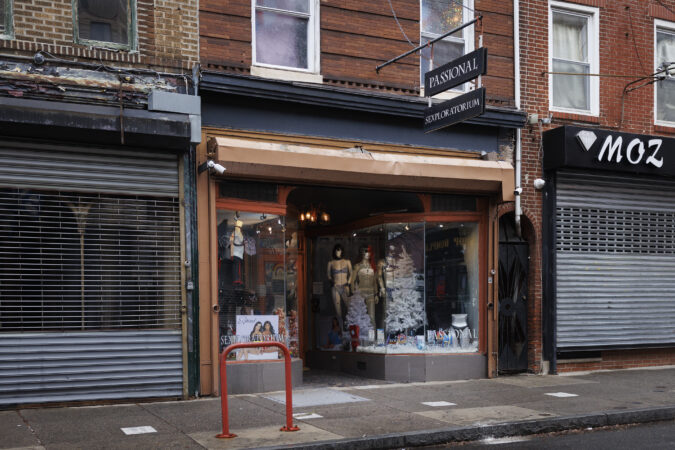
    Passional Boutique & Sexploratorium displays mannequins in leather handcuffs, vibrators, and posters of women in lingerie in its storefront windows along one of Philadelphia’s main shopping drags.

    But the adult store — a South Street staple of fetish and fantasy fashion and sex toys for about two decades — is now under scrutiny by President Donald Trump’s administration for selling an undergarment tucked away on the shop’s second floor: breast binders.

    On Dec. 16, the U.S. Food and Drug Administration sent a warning letter to Passional stating it was illegally selling breast binders. Most purchasers are trans men — individuals who are assigned female at birth but identify as male.

    The FDA classifies breast binders, which compress chest tissue, as a medical device. Businesses that distribute them in the United States must be registered with the FDA or face fines and other enforcement action.

    Passional’s operations manager, Ashly Booth, said it’s “a paperwork issue” that pertains to the overseas manufacturer, not to the Center City retailer. Passional will continue to sell those breast binders in its store but not online, she said.

    An employee at Passional Boutique displays a breast binder for sale at the South Street store. Breast binders are garments that compress chest tissue.

    The FDA’s warning sparked outrage within the region’s transgender community.

    Naiymah Sanchez, 42, who described herself as “a proud woman of transgender experience,” said she believes the Trump administration wants to ban gender-affirming care for everyone, not just children and teens.

    Breast binders can help treat gender dysphoria, a medical condition in which a person’s body does not match their gender identity.

    “This is an adult store, so now you’re attempting to restrict our access — adult access — to the things we need so that we can exist‚” said Sanchez, a senior organizer for the ACLU’s Pennsylvania chapter. “They are trying to double down on making it illegal to be trans in the United States.”

    Protecting ‘children’?

    Passional was one of only 12 businesses across the nation and overseas, including companies in Singapore and the Netherlands, that received a warning letter. All 12 companies sell, distribute, or manufacturer breast binders to buyers in the United States, primarily through online sales. They included Seattle-based Tomboyx, which uses the tagline “Be Exactly Who You Were Born to Be — No Apologies,” and Manhattan-based For Them, a queer and trans-owned company.

    The language in each FDA letter was largely boilerplate.

    During a Dec. 18 news conference, FDA Commissioner Martin Makary said the 12 companies were illegally marketing breast binders for children as treatment of gender dysphoria.

    “Pushing transgender ideology in children is predatory, it’s wrong, and it needs to stop,” Makary said.

    However, none of the violation letters specifically mention children or marketing of breast binders to minors. The FDA declined to comment Friday, referring a reporter to the letter sent to Passional.

    Passional employees said they do not market breast binders to minors. Customers must be 18 or older to shop there. A teen may enter and try on a breast binder, but only when accompanied by a parent or guardian, they said.

    Makary’s comments were part of a Trump administration announcement of proposed rules to cut off federal Medicaid and Medicare funding from hospitals that provide gender-affirming care to children. The administration wants to restrict the use of puberty blockers, hormone therapy, and surgical interventions for transgender people under the age of 18.

    “It’s based on a medical dogma, sadly, that the normal, sometimes stressful experiences of boys and girls growing up is a pathology that requires medical intervention,” Makary said.

    Several states have prohibited gender-affirming care for minors, but it remains legal in Pennsylvania, New Jersey, and Delaware. The American Academy of Pediatrics and other major medical associations, citing research, widely accept such care as safe, effective, and medically necessary for the patients’ mental health.

    Makary said breast binders are a “Class 1 medical device” designed to help women recover from cancer-related mastectomies.

    “These binders are not benign,” he said. “Long-term usage has been associated with pain and compromised lung functions.”

    ‘A paperwork issue’

    Passional carries a line of breast binders distributed by UNTAG, originally Trans-Missie B.V., a company based in the Netherlands. UNTAG says on its website that “chest binding plays a vital role in reducing gender dysphoria” and it offers “kids binders.” Passional does not sell child sizes.

    “We offer a selection of domestic and imported binders from sizes XS through 3XL,” Passional’s website says. “Whether you are binding for gender identity, cosplay, drag performance or nonsurgical body sculpting, we offer a range of styles and price points to help you achieve your desired expression.”

    Under FDA regulations, manufacturers and distributors of Class 1 — generally meaning low risk — medical devices must register annually with the government. The regulation is designed to help the FDA track devices and quickly respond to safety concerns or recalls.

    The FDA defines medical devices, including breast binders, as “intended for use in the diagnosis of disease or other conditions or in the cure, mitigation, treatment, or prevention of disease, or to affect the structure or any function of the body.”

    The FDA issued warning letters to both Passional and the Dutch company. The letters say separate government reviews of Passional and UNTAG’s websites found “various breast binders for sale” with claims to help “reduce gender dysphoria” in violation of the Federal Food, Drug, and Cosmetic Act.

    The letters gave each 15 business days to respond and provide corrective measures.

    In an email to The Inquirer on Wednesday, UNTAG, based in Amsterdam, replied that it would keep a reporter informed of any next steps.

    Booth, Passional’s operations manager, said the regulations do not apply to in-store retail sales. However, Passional will stop selling UNTAG breast binders on its website, she said.

    “One specific producer of the binders that we have here in Passional now did not register themselves as a medical device company,” Booth said. “It was more of a paperwork issue on the side of the manufacturer.”

    Passional, she added, would not pull breast binders from its brick-and-mortar store “for the simple fact that there is a need for them.”

    Teens need parental consent

    Passional customers must be 18 or older to enter the store. Employee Aizlyn Kraus said she will ask for identification if a patron looks under age.

    However, teens who want to get fitted for a breast binder and possibly purchase one may come in, but they must be accompanied by a parent or guardian. In those cases, Passional temporarily closes the store so the teen can quickly get upstairs, where there’s a dressing room. Typically, parents call or email ahead of time to set up an appointment, according to Kraus and Booth.

    “We can get them up there without them seeing anything they don’t need to see, without them knowing anything they don’t need to know, and they walk out with something that helps them in their lives,” Kraus said.

    Kraus, who is transgender and identifies as a woman, said “dysphoria affects everyone differently. Some people know at a really early age and when they begin to go through puberty, it’s really distressing. There are so many trans kids who either think about self-harm or engage in self-harm. It’s disheartening.”

    In the last six months, “two or three parents” have come in separately with their teens to try on breast binders, Booth said.

    Kraus said Passional does not market or advertise breast binders to minors, and the majority of purchasers are adults. Passional employees are trained how to properly fit people in breast binders, making sure they are not too tight and advising customers not to wear them for longer than eight hours a day.

    Kraus, 33, said breast binders offer an alternative to top surgery. “It’s a whole lot cheaper and easier to do, rather than just jump right into surgery,” Kraus said.

    Passional, known for its queer and trans inclusivity, sells many items to help people “feel better about their body,” including waist-tightening corsets, penis “extenders,” and “tucking” or “gaff” undergarments to minimize penile bulge — all forms of gender-affirming care, Kraus said.

    Kraus added that some men with gynecomastia, or an enlargement of breast tissue in males due to hormone imbalance, will buy breast binders.

    ‘It’s just insane’

    Prior to undergoing top surgery, 34-year-old Simon Parsons wore a breast binder for a flattened appearance, likening it to Spanx body-sculpting wear.

    Parsons, who identifies as a nonbinary transgender Philadelphian, said: “This is going to create a chilling effect for anyone who needs a breast binder. It’s all just to open the door to eventually say, ‘Trans people are not allowed to exist.’”

    Parsons said after breast-removal surgery, the hospital provided a chest compression vest to reduce swelling, but it looked nothing like the ones sold by Passional. It had a padded front zipper and Velcro shoulder straps for easy release.

    Passional’s breast binders look like sports bras or nylon crop tops.

    Parsons and others described the FDA action as a government overreach at best and erosion of civil rights at worst.

    “It’s just insane,” said Corie Bosman, 34, of Bensalem.

    Bosman, who is nonbinary transgender and whose stage name is “Mister Right,” has worn breast binders while performing as a drag king. Bosman was the 2025 winner of Mr. Philly Drag King, or Mr. PDK, a pageant-style competition organized by the Philly Dyke March.

    Corie Bosman, whose stage name is “Mister Right,” was the 2025 winner of the Mr. Philly Drag King (Mr. PDK) pageant competition, organized by Philly Dyke March. Bosman uses breast binders or special “trans tape” for chest flattening.

    Bosman and Parsons, who had purchased their breast binders online, said they are concerned that transgender people, especially minors, will resort to potentially harmful practices, like binding their chests with duct tape, if the Trump administration restricts access to breast binders.

    “It opens up the window for people to hurt themselves by just trying to be themselves,” Bosman said.

  • The Philadelphia area’s first baby of 2026 was born at the stroke of midnight

    The Philadelphia area’s first baby of 2026 was born at the stroke of midnight

    Henry Schamp came into the world with a bang.

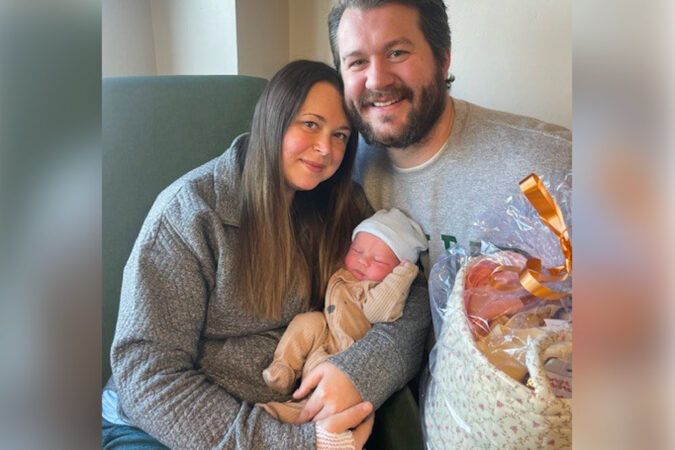
    The Philadelphia area’s first baby of 2026 was born at the stroke of midnight New Year’s Eve at Penn Medicine Doylestown Hospital, while fireworks lit up the sky outside their window.

    Parents Sarah and Ryan Schamp of Ambler described the moment as “surreal” and “picture perfect.”

    “I thought everyone was joking,” Sarah Schamp said of the perfectly timed fireworks display that was visible from their room moments after Henry’s birth.

    The family expected to return home later Friday, where they would be greeted by the couple’s 2-year-old daughter, Willow, and 5-year-old Australian shepherd, Winston.

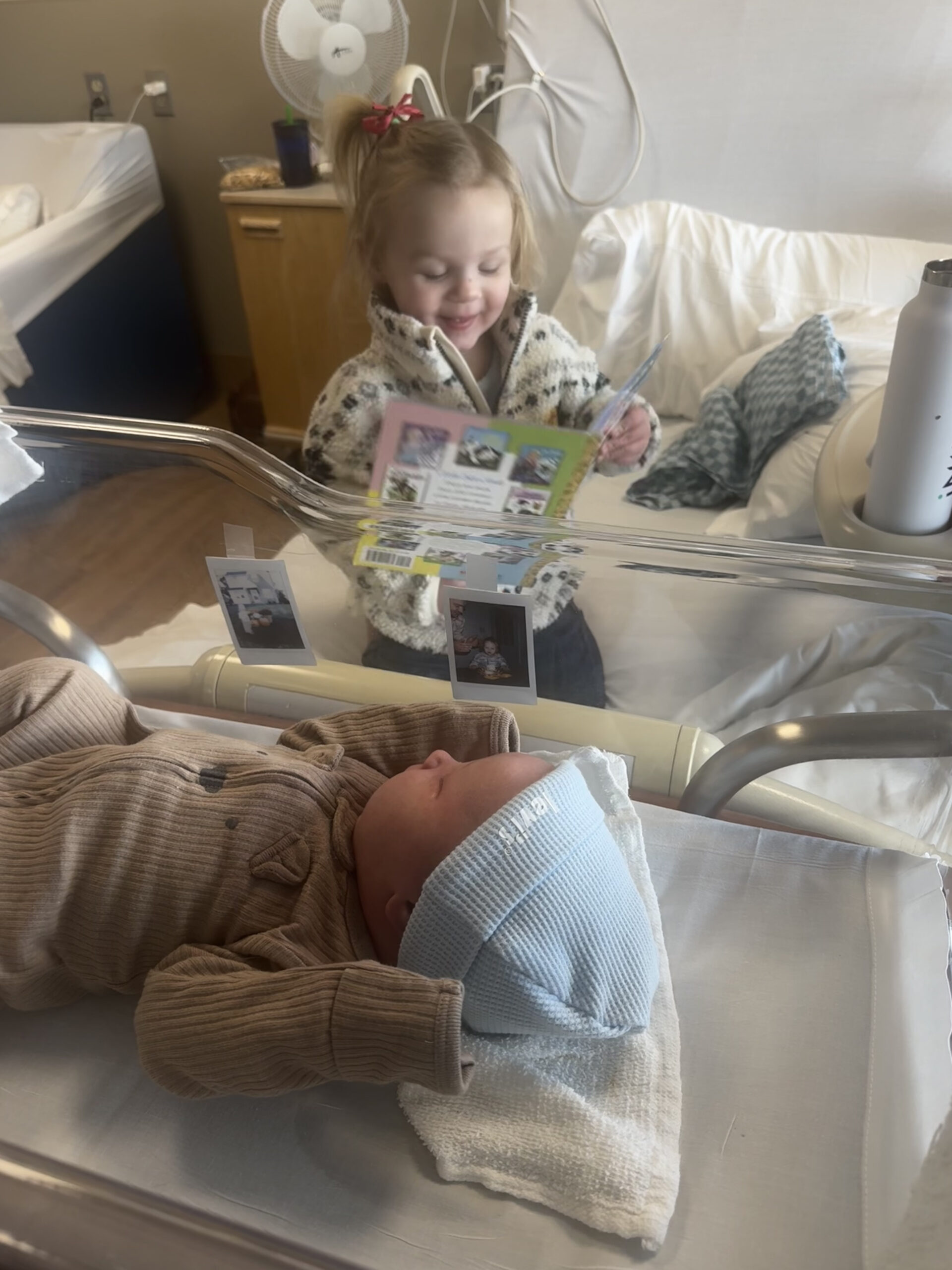
    Willow is already embracing her duties as a big sister, piling blankets on him and showing him pictures in her books during visits to the hospital, which was acquired by Penn Medicine in 2025. Henry’s hospital bassinet is lined with Polaroid snapshots of her.

    Willow Schamp, 2, shows baby brother Henry a book during a visit at Doylestown Hospital on New Year’s Day 2026.

    Henry was one of several babies born at Philadelphia-area hospitals in the first hour of the new year:

    • Temple Women & Families Hospital, the North Philadelphia facility where Temple moved its labor and delivery services in September, celebrated its first baby of the year at 12:10 a.m. — a boy, Ezekiel Hall, born to Natalie Rivera.
    • Elliott Sarnoff was born to parents Kim and Jason Sarnoff at Lankenau Medical Center at 12:22 a.m.
    • Virtua Voorhees Hospital’s first baby of the year was a boy named Landon, born at 12:29 a.m. to parents Caitlyn and Mark. Virtua declined to provide surnames to protect patient privacy.
    • Lindsay and Matthew Logan of Chalfont welcomed baby Dawson Logan at Jefferson Abington Hospital at 1:01 a.m.

    While Henry was born on his due date, the Schamps expected him to arrive early, after Sarah started having contractions on Dec. 30 and the couple headed to the hospital.

    “It wasn’t what we planned, but it’s a cool thing and will be a fun tradition,” Sarah Schamp said.

    Plus, they joked, he’ll have a fun fact for breaking the ice with new friends and coworkers for the rest of his life.

  • Pancreatic cancer is among the deadliest cancers. A new drug being tested at Penn is giving patients and doctors hope.

    Pancreatic cancer is among the deadliest cancers. A new drug being tested at Penn is giving patients and doctors hope.

    Irene Blair was expected to have another six to eight months to live in June, after her pancreatic cancer rapidly advanced to stage 4 less than a year after her initial diagnosis.

    A new drug being tested in clinical trials around the world, including at Penn Medicine’s Abramson Cancer Center, was the 59-year-old grandmother from Newark, Del.’s best hope for more time.

    The drug belongs to a class of pharmaceuticals long considered the holy grail of cancer research. It is a KRAS inhibitor, capable of blocking a protein that fuels an especially deadly cancer. Only 13% of pancreatic cancer patients are still alive five years after their diagnosis, the highest mortality rate of all cancers.

    Called daraxonrasib, the drug is not considered a cure. But the results emerging from clinical trials point to the first major advancement in decades for a devastating cancer usually caught in late stages. Former Nebraska Sen. Ben Sasse last week disclosed in a blunt social media post that he was recently diagnosed with metastasized, stage-four pancreatic cancer and is “gonna die.”

    In recent months, the federal government has sped up the review timeline for the drug made by California-based company Revolution Medicines, Inc., based on early clinical trial results.

    Across 38 patients in a phase 1 trial, the drug appeared to double the survival time for at least half of patients compared to standard chemotherapy, from roughly seven months to 15.6 months.

    “In pancreatic cancer, for too long, we haven’t had effective therapies beyond just chemotherapy,” said Mark O’Hara, Blair’s oncologist who leads multiple clinical trials testing KRAS inhibitors at Penn.

    Blair started the therapy through a phase 3 trial in July. Within three weeks, her cancer-associated pain went away.

    In October, her tumors looked stable or decreasing on scans. Her most recent December scan showed her cancer had not progressed.

    Aside from occasional facial rashes, she feels normal. It’s a big improvement from how she felt previously on chemotherapy, which caused her to lose 35 pounds and become so weak she couldn’t walk.

    The question now is how long the therapy can remain effective. Blair seeks extra time to “start living life.”

    She officially retired from her job in real estate in May and wants to travel, with trips planned to see family in California and Florida.

    Holidays have been especially hard for her.

    “You just wonder, ‘Will I be here next year?’” she said.

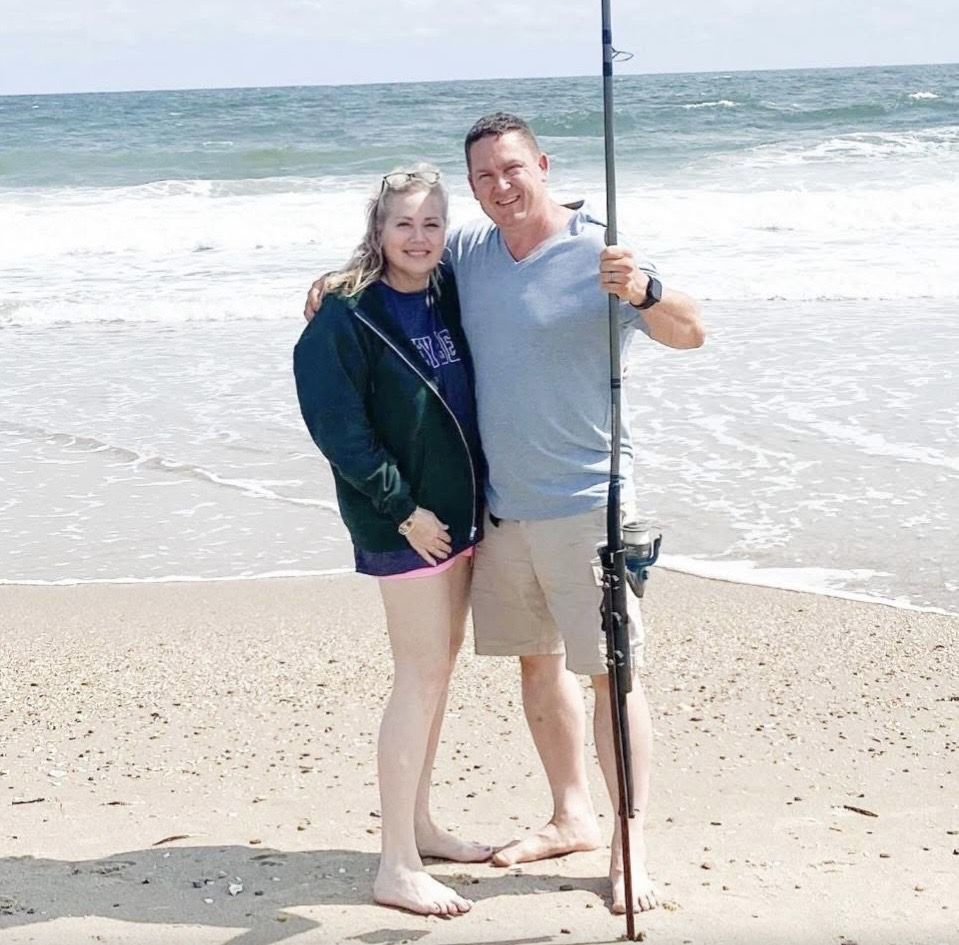
    Irene Blair and her husband, Charles, at a beach in Delaware.

    How does the therapy work?

    Cancer researchers have worked to design a drug targeting KRAS, a protein that acts like a “gas pedal” for cancer growth when mutated, since its discovery in 1982.

    The mutant protein is like a pedal stuck in the down position, driving uncontrolled proliferation — which tumors thrive on. These mutations are found in a quarter of human cancers, mostly aggressive cancers of the pancreas, lung, and colon.

    Scientists finally succeeded in 2021, when the first drugs capable of blocking KRAS were approved by the FDA for lung cancer. Dozens of KRAS inhibitors are now in various stages of development.

    Daraxonrasib is one of the first tested for pancreatic cancer, a tumor type where nearly 90% of cases have these mutations. Also called a ‘pan-RAS inhibitor,’ it not only targets KRAS, but two other related proteins that drive cancer when mutated, HRAS and NRAS.

    More than 90% of the 83 patients in a phase 1 trial saw their pancreatic cancer stall during treatment, and roughly 30% saw shrinkage.

    While taking the drug, at least half of patients gained more than eight months before the cancer started progressing again.

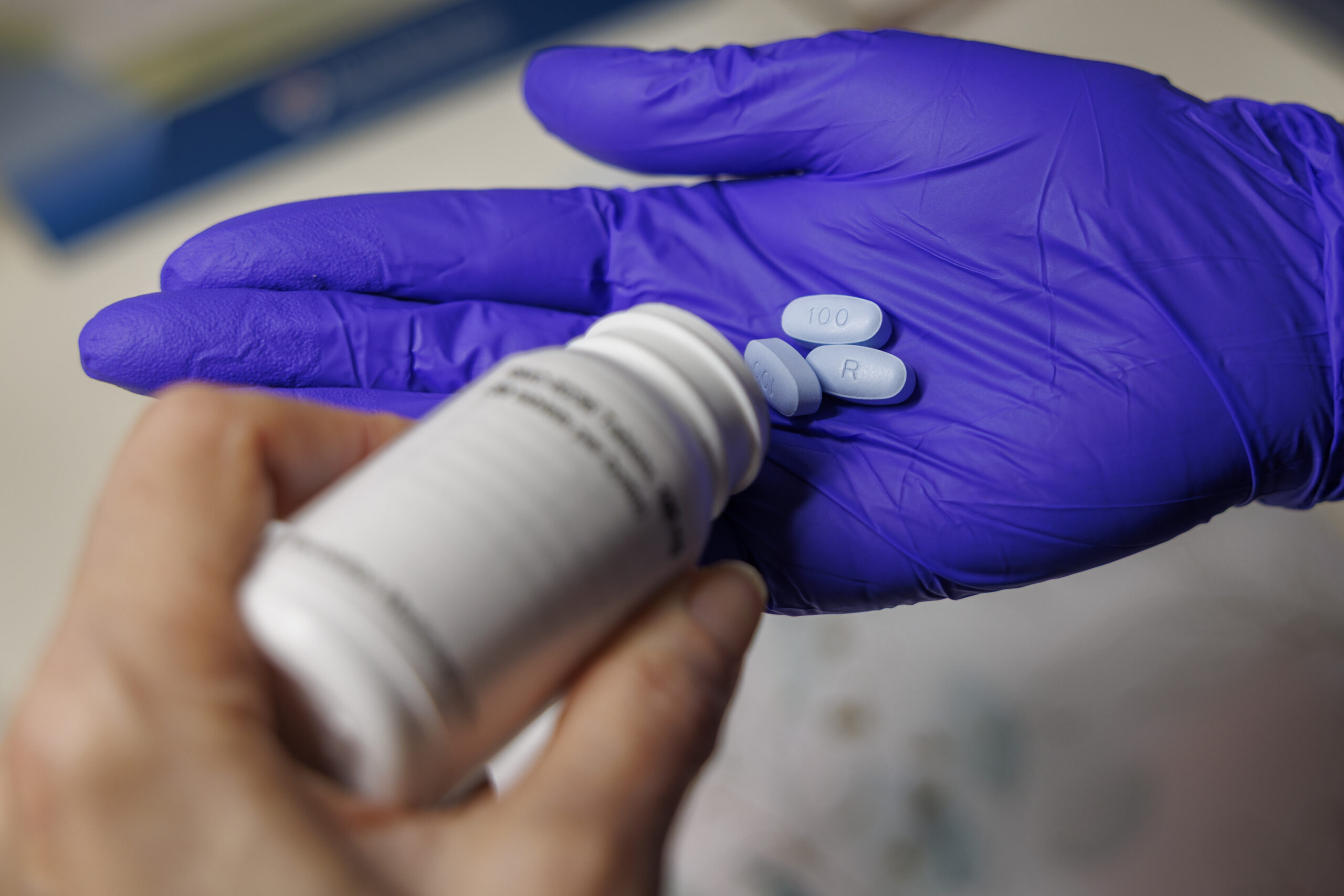
    The drug comes in pill form.

    The drug comes in the form of three pills, taken daily at home.

    The most prevalent side effect is a rash — 91% of patients in a phase 1 trial experienced this symptom, with 8% having severe cases. It often shows up on the face or scalp and is similar to acne, O’Hara said.

    Diarrhea, nausea, vomiting, and mouth sores are other common symptoms.

    O’Hara said these are manageable with medications for most patients and still allow them to have a better quality of life than chemotherapy.

    “I want to be able to give KRAS inhibitors to all my patients right now,” he said.

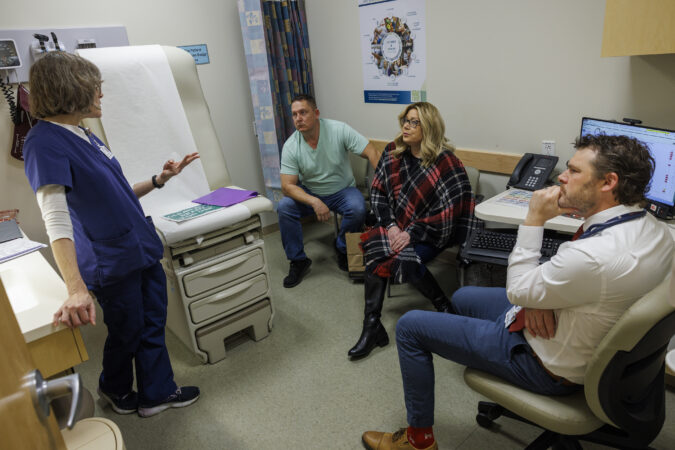
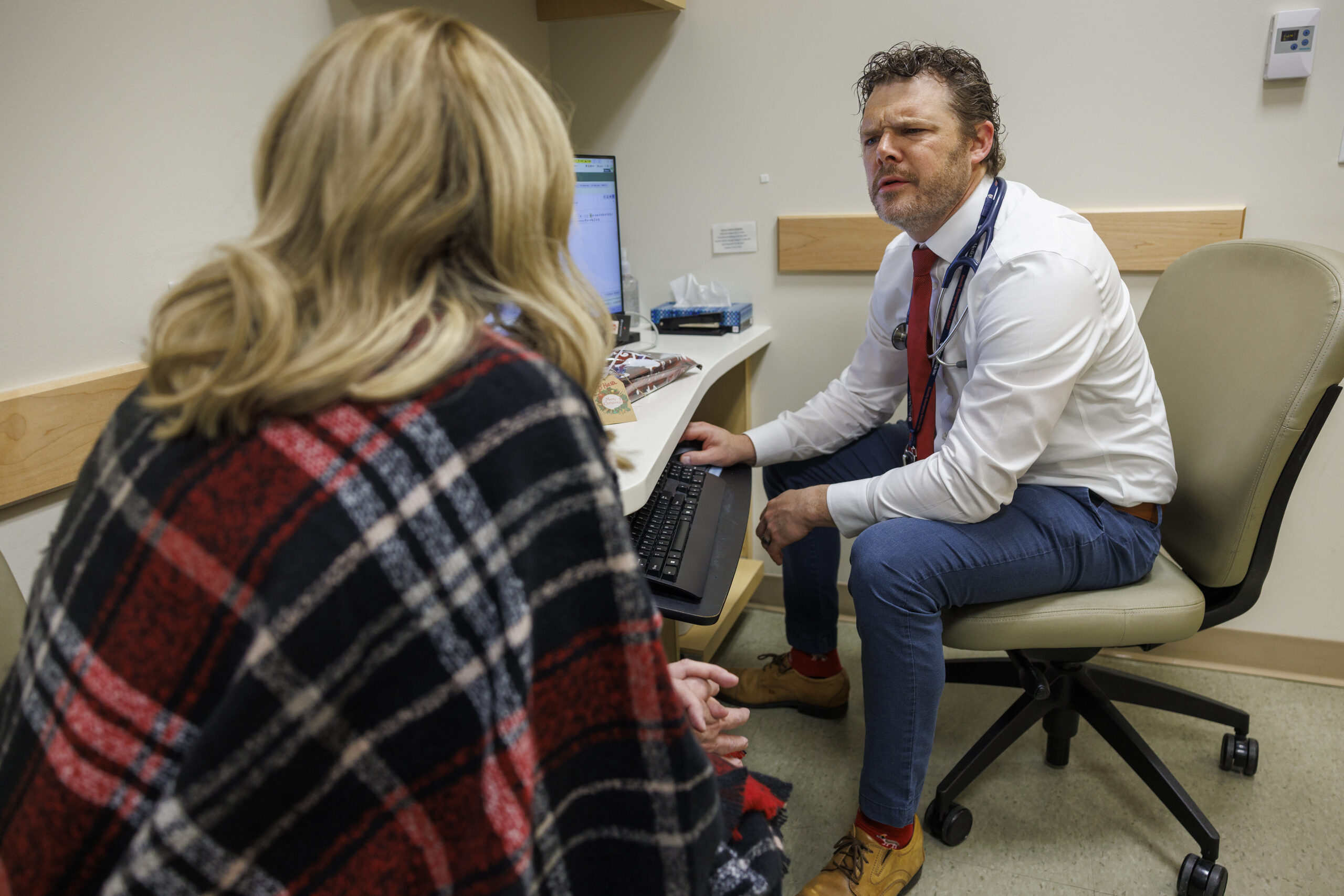
    Irene Blair of Newark, Del., meets with her doctor, Mark O’Hara, at her December appointment.

    Looking forward

    O’Hara runs multiple trials of KRAS inhibitors at Penn.

    Some of them are testing the inhibitor as a treatment for patients with metastatic cancer after other options have stopped working. Another is evaluating its use in combination with chemotherapy as an initial approach.

    “I’m looking for more tools to put in that toolbox, and I think this provides a new tool,” O’Hara said.

    Ben Stanger, a gastroenterologist and scientist at Penn, has led experiments in mice that showed combining a KRAS inhibitor with immunotherapy may be more effective than using the former alone.

    If this approach makes it into clinical trials as well, it could still take years to evaluate the safety and efficacy of the combination.

    He believes KRAS inhibitors could be “a game-changer” for pancreatic cancer if approved, particularly if paired with other anti-cancer drugs.

    “Goal number one would be to make pancreas cancer, instead of a death sentence, into a more ‘chronic’ disease that is treated over time,” he said.

    The federal government has granted the drug Breakthrough Therapy and Orphan Drug designations.

    In October, the drug was also one of the first selected for a new program that aims to accelerate review times for drugs from one year to as short as a month, potentially putting it on a faster path to approval.

    Daraxonrasib, also known as RMC-6236, earned Breakthrough Therapy and Orphan Drug designations in 2025.

    Limited options

    When Blair first started having back pain around May 2024, she thought it was a pulled muscle from kickboxing.

    She put a heating pad on the back of her chair and went on with life.

    After her father had a stroke that July, she got it checked out at the hospital where he was admitted.

    A day later, she was diagnosed with stage 2B pancreatic cancer.

    “My first thought is, ‘I’m dying,’” she said.

    Had she been diagnosed earlier, she would have retired early, instead of worrying about saving money.

    Instead, she spent her final working year undergoing surgery to remove part of her pancreas, spleen, and several lymph nodes, followed by 12 difficult sessions of chemotherapy.

    When she finished her last session in March, Blair’s scans showed no evidence of the cancer. But by late April, her back pain returned.

    Two months later, more scans showed that the cancer was now considered stage 4, as it had metastasized to her liver, forming 10 to 15 new tumors.

    Her best option was to enter a clinical trial of daraxonrasib at Penn.

    Much to her relief, she was chosen to receive the drug in July upon enrolling in a study in which half of patients are randomized to receive chemotherapy.

    “It’s enabled me to start living again,” she said, but knows eventually the therapy will likely stop working.

    In that case, doctors may try the standard chemotherapy — which usually works for three to four months — or test a different therapy based on her cancer’s genomic profile, O’Hara said.

    For now, she described herself as “living scan to scan,” seeking as much time as possible with her son, grandchildren, and husband.

    Irene Blair and her husband Charles, son Tom, daughter-in-law Kelsey, and two of her three grandchildren, Aidan and Madilynn.

    Blair’s next evaluation is in February. She hopes it shows her disease remains stable, and she can stay in the trial.

    “The alternative, honestly, is death,” she said.

  • How grandchildren are stepping up to fill the caregiver gap

    How grandchildren are stepping up to fill the caregiver gap

    One woman moved back across the country to care for her grandmother, giving up her dreams of sunshine and palm trees. A young mother, overwhelmed caring for two children and her ailing grandmother, finally asked family to help her juggle. And another woman assumed financial responsibility for her grandmother after her home fell into foreclosure.

    All three women belong to what aging experts call America’s unseen workforce — the 48 million family caregivers who provide unpaid support that allows millions of adults who are older, ill, or disabled to remain at home. It is a group that is expected to shoulder even more responsibility as the population ages and conditions such as dementia, cancer, and heart disease continue to rise. Within the already stretched community of caregiving, they belong to a group that is even more overlooked and undercounted: grandchildren.

    Research shows unpaid caregiving is valued at more than $1 trillion, said Nicole Jorwic, chief program officer at the nonprofit Caring Across Generations.

    “Right now, families filling in the gaps is the only option for a lot of people whether they’re grandchildren or not,” said Jorwic, who is in her 40s and helping care for three grandparents in their 90s.

    Research suggests race and ethnicity may be the “strongest predictors” of who becomes young adult caregivers, with about a third of caregivers in Asian, Black, or Latino families being 18 to 34 years old. And family caregivers generally are more likely to be women.

    Caring for an aging family member is already an emotional, financial, and physical gantlet. Add to that the inexperience of youth, and some aging researchers say the challenges for grandchildren who are caregivers become even harder to navigate.

    What this looks like in real life — the exhaustion, the sacrifice, the sense of purpose — comes through in the stories of three women shouldering the weight, not simply out of necessity but also devotion.

    A caregiver who built an online community

    The average caregiver is 51 years old. But five years ago, Elaine Goncalves stepped into the role at 28. She hadn’t imagined becoming her grandmother’s caregiver. Elaine’s high-paying tech job had just allowed her to relocate to San Diego.

    Her grandmother, Adelaide Goncalves, was 90 and living in Massachusetts with one of her daughters and a different grandchild, barely able to manage the stairs of her third-floor home. Before Elaine left for California, she tried in vain to relocate her grandmother, asking all six of Adelaide’s surviving children for help. Elaine’s parents, unsure if their work schedules would accommodate the need, agreed with her plan, and her grandmother did, too — until it was time to go.

    “Other family members were telling her not to,” Elaine said.

    When the pandemic hit, Elaine was forced to return home. The way she made peace with the move was by finding a way to care for her grandmother. She kept the plan quiet, afraid relatives would talk her grandmother out of it again, and mindful of how it might look for a granddaughter to take on a role traditionally expected of a daughter in her Cape Verdean family. When someone in the house got COVID, no one objected to Adelaide relocating.

    The first two years were “pretty humbling,” Elaine said. “I experienced crazy things like walking in my bathroom and it was covered in poop,” she said. “I basically went from ‘She’s so sweet!’ to praying — literally — every day for patience.”

    The experience also made Elaine realize she owed her aunt an apology for judging the care she had provided and the frustration her aunt expressed in taking on a formidable task.

    What the family didn’t know then was that Adelaide had dementia. Elaine said guilt set in. A caseworker who called unexpectedly to schedule her grandmother’s annual physical helped secure the diagnosis, she said, and connected Elaine with “resources I needed but didn’t know were available.” Home health aides now feed, bathe, and change her grandmother, who goes to an adult day program daily.

    In 2020 and 2025, about 18% of family caregivers ages 18 to 49 were caring for their grandparents, according to reports by AARP and the National Alliance for Caregiving. But researchers say it’s hard to know exactly how many young people provide care because the term “caregiver” can be defined in so many ways and national surveys count differently.

    Researchers say that many young people aren’t identified because unlike Elaine, they’re not the primary caregiver, but rather pitching in as part of a family network.

    “Most of them are disrupting parts of their life to engage in something they may not be counted as doing,” said Karen Fingerman, a professor at the University of Texas at Austin and director of the Texas Aging and Longevity Consortium.

    Last year, Adelaide’s heart briefly stopped, a scare that led to hospice care.

    “Emotionally, this has been a roller-coaster ride,” Elaine said. “Balancing the family dynamics and their help — or lack thereof — and their opinions and the emotions of her being hospitalized and me thinking she’s dying” forced tough family conversations.

    Elaine decided to reflect on her experiences a few months ago, and wound up sharing the lessons online, inadvertently building a community through the social media series. It has drawn 1.6 million views, thousands of comments and shares, and more messages than she can keep up with — and she had posted only 11 of the 15 lessons.

    “I didn’t know there were other people my age dealing with this,” she said.

    A caregiver who had to give up care

    Ramona Reynolds didn’t go away to college, opting instead to stay home and care for the grandmother who raised her. They had never spent more than a weekend apart, including after the 38-year-old got married and started having children. But eventually her 86-year-old grandmother’s health deteriorated beyond Reynolds’s capacity to provide care.

    “That was a hard pill to swallow,” she said of sending her grandmother, Thelma McDonald, to live with her aunt.

    For years, Reynolds watched dementia transform the woman who once commanded so much respect in their Brooklyn neighborhood that boys on the block carried her groceries upstairs unasked.

    Reynolds was in her 20s when her grandmother was first diagnosed with dementia. A friend noticed that her grandmother was repeating herself. A few years later, one of her great-uncles did, too. Even though McDonald has four living children and a host of brothers and sisters, Reynolds never thought to ask them for help.

    For years, things were manageable. Then, Reynolds got pregnant with her second child, and the family decided to relocate to Georgia for more space. As they prepared to move, Reynold’s family stayed with her in-laws and was to become a paid family caregiver. What she didn’t know was that moving someone with dementia out of a familiar environment can worsen their symptoms.

    “So, when we moved here, I’m like, ‘Oh my god. Why is it so much harder?’” she recalled of her grandmother, who worked as a paid caregiver after emigrating from Jamaica. Reynolds was chasing after a toddler, trying to make sure her son — who is autistic, has ADHD, and in virtual school – stayed on task, all while also caring for her grandmother. “We did everything for her. Cooking, bills, dealing with doctors, social workers, program directors, all that stuff.”

    Being a caregiver can be draining mentally, physically, and emotionally, experts say. What ultimately drives caregiver burnout and makes the role heavy is the lack of support, recognition, and resources, and the isolation, more so than the work itself, said Melinda S. Kavanaugh, a professor at the University of Wisconsin-Milwaukee whose research focuses on children and young adult caregivers.

    “You can only do something on your own without any support for so long before you break,” she said, noting that older caregivers “might be able to last a little bit longer” because they have life experience to draw on.

    Reynolds knew something had to give as her grandmother’s condition progressed and McDonald began unlocking doors trying to leave. She called a family meeting and asked for help. Her aunt stepped in, taking over her grandmother’s care.

    “It’s a hard balance,” Reynolds said. “On the one hand, I would be nothing without this woman. But on the other, now I have my own family, and these babies deserve a mother that’s whole, that is not filled with anxiety and grief and a little bit of resentment, too.”

    A caregiver shouldering financial responsibilities

    Sharita Payton, 45, stepped in to help her sister care for their grandmother about two years ago, when several crises hit at once. Their grandfather died, their grandmother became more forgetful, maintaining the house became unaffordable, and her sister was facing personal struggles.

    Payton’s mother was unable to take on the responsibility full time because she’s caring for a husband who has had multiple strokes. Neither could her grandmother’s other children, for different reasons: One is in jail, another struggles with addiction issues, and the third lives far from the family in South Carolina.

    “There’s a lot of different nuances involved,” she said. “To look around and see that after everything they have given, there’s really no one that’s available to pour back into her when she needs it. That’s been really hard to navigate. I just had to step up.”

    So, on and off for the past two years, Payton’s husband would drive her 89-year-old grandmother, Geneva Madison, between their house in Massachusetts and her mother’s house in Connecticut. Payton became her grandmother’s power of attorney, took over her finances, and began setting aside money for when a move was needed. That move came several months ago when she set her grandmother and sister up in a new apartment.

    Caregiving can be financially stressful for families because close to three-quarters of costs are out of pocket, said Sue Peschin, president and CEO of the Alliance for Aging Research. Often families don’t realize this “until they’re up against it,” she said, noting that people tend to think Medicare covers long-term care and it doesn’t.

    Part of the misconception is how “we think about retirement in the United States,” Peschin said. “Oftentimes the thinking is, ‘How do we want to live as fully functional human beings?’” But not what happens after a health crisis.

    Payton, who owns a hair salon, isn’t certain her grandmother will stay in Connecticut for good. She keeps a close watch in case she needs to bring Madison back to Massachusetts. She talks about the need for more resources often with clients who find themselves in similar situations. “A lot of us are navigating these new things for the first time, and we don’t even know what to do or how to do it,” Payton said. “We just put more on our plate than I think we need to.”

    Still, she said, “it’s kind of like a no-brainer. That’s my grandmother.” As a mother of five, Payton said she tries to involve her children in her grandmother’s care in small ways, teaching them to “treasure her because this is something that is not the norm, having your great-grandmother in your presence.”

  • The Boozy Mutt, a Fairmount dog-friendly bar, will be closing after two years in business

    The Boozy Mutt, a Fairmount dog-friendly bar, will be closing after two years in business

    Another Philadelphia bar has gone to the dogs.

    Fairmount’s pup-friendly pub the Boozy Mutt is closing its doors Jan. 3 after just over two years in business, co-owners Sam and Allison Mattiola announced via Instagram on Monday.

    “After much thought, we made the difficult decision to close the Boozy Mutt … What began as a dream became something truly special because of our community — our guests, our team, and all the good mutts who walked through our doors,” read the post, which has been shared over 1,400 times. Nearly every comment is from a dejected dog parent wishing for another round of beer and belly rubs.

    The Mattiolas, who are married, opened the Boozy Mutt at 2639 Poplar St. in December 2023, transforming former rock-and-roll dive the North Star into roughly 7,000 square feet for pooches and their people to roam across two floors and an outdoor patio. The venture was inspired by pandemic-era trips to a dog park with Bernadoodle Buba, where the couple would camp out with lawn chairs and a pack of beers to make friends.

    At the Mutt, as regulars called it, dogs are allowed to mingle off-leash under the supervision of aptly-named “Rufferees” who monitor and facilitate healthy play. All owners had to register their pet’s vaccinations before gaining access to the space, which includes a self-service dog wash room, outdoor TVs, a summertime-only puppy pool, and a menu of bite-sized “human grade” dog treats.

    Tess Bodden (left) and Jenn Maher pose with their pet shih tzus Hazel, Hendrix, and Kelce at the Boozy Mutt, a popular third space for dog parents in Fairmount.

    The bar felt like a version of Cheers for pet parents almost immediately, regulars told The Inquirer, thanks in part to a rotation of events that ranged from weekly quizzos to breed meetups and Pitch-A-Friend nights for singles. A monthly membership was $40, while an annual Mutt subscription cost $360.

    The bar had upward of 100 regular members, Sam Mattiola said, all of whom will receive prorated refunds in the coming days. “People would tell us that this was their third space, that they go home, they go to work, and they go to the Boozy Mutt,” he said. “We walk away with our heads held high knowing that we achieved our goal of creating a place that made people feel at home.”

    And yet, the Mattiolas said, running a bar that catered to dogs and their owners in equal measure proved increasingly challenging as the cost of rent, insurance, food, and alcohol continued to increase. While dog-friendly bars and beer gardens have taken off in the South, the concept has had mixed success in Philly: Manayunk dog bar Bark Social closed abruptly last year after its parent company declared bankruptcy. Its replacement, an outpost of the Atlanta-based company Fetch Park, opened in November.

    “It’s a pretty overhead-intensive business model that we have, and it’s just gotten pretty hard to make the math work after the last couple of years,” Sam Mattiola explained. “There was just always something new hitting [us] in the face.”

    Darby, a 5-year-old shih tzu, sits on a picnic table at the Boozy Mutt in Fairmount during an August 2025 breed meetup.

    The Boozy Mutt’s 26 employees were informed of the impending closure before the announcement went public Monday, Allison Mattiola said, and the couple has spent the last three days putting together job recommendations. Neither she or her husband had worked in hospitality prior, and the couple has no immediate plans to revive the business elsewhere.

    Where is Fido to go?

    Already, the Boozy Mutt’s impending closure has been ruff — pun intended — for Fairmount pet parents.

    “It’s a loss for us and a loss for the dogs,” said Sarah Kuwik, whose 2½-year-old pooch Willie “grew up at the Mutt.”

    Kuwik started taking what she described as her “50-pound mutt” to the bar almost immediately after it opened. It has given Willie a social life most adults would envy.

    Willie goes on dates at the Mutt with his girlfriend Bea, a 3-year-old golden retriever who clings to him like a magnet. And in June, Willie had a joint WrestleMania-themed birthday party with his best friend Levon, also a mutt with boundless energy.

    Willie (left) poses with his golden retriever girlfriend Bea (right) and his best pup friend Levon at the Boozy Mutt, where the trio first met.

    Kuwik doesn’t know how Willie will handle the news: “He’ll pull us toward [the Boozy Mutt] every time we’re on Poplar [Street] … it’s going to be very confusing.”

    The Boozy Mutt is also what drew Valerie Speare to Fairmount in the first place. Speare put an offer on her current rowhouse a mere four blocks from the bar after grabbing brunch there in between open houses last spring. Now she goes to the Mutt four times a week with her pugs Lily and Winston, who are both deeply playful (and deeply codependent).

    The Mutt “is exactly the kind of thing I want in a neighborhood,” said Speare, who has lived in the area for a year-and-a-half. “Where else can I go have a mimosa on a Saturday morning and have my dog sitting in my lap?”

    Valerie Speare, of Fairmount, and her pugs Winston and Lily lounge with Chihuahua pals at the Boozy Mutt. Speare takes her pugs to the bar four times a week, she estimates.

    For others, the bar has fostered connections that extend beyond puppy playdates. Katherine Ross has lived in Fairmount since 2004, but has seen the neighborhood — and the people in it — with new eyes, thanks to her 4-year-old pug Hoagie.

    At the Mutt, Hoagie likes to beg for bites of Old Bay and truffle-coated fries or splash in the puppy pool. Ross, meanwhile, has enjoyed getting to meet her neighbors.

    “I’ve lived in this neighborhood for over 20 years, and to be honest with you, I didn’t know all that many people until I got a dog,” Ross said. “Having a place like the Boozy Mutt brought a lot of friendships together.”

  • Amid conflicting vaccine recommendations, Americans are less likely to trust Trump’s CDC, a Penn study finds

    Amid conflicting vaccine recommendations, Americans are less likely to trust Trump’s CDC, a Penn study finds

    After a year of major shifts in the federal government’s policy toward vaccines, Americans are now more likely to trust the American Medical Association than the Centers for Disease Control and Prevention when the two conflict on vaccine guidance, a new survey shows.

    The survey, conducted by the University of Pennsylvania’s Annenberg Public Policy Center, is one of several released in December that assess how the public is navigating a chaotic year of public health policy under President Donald Trump’s administration.

    Trump’s secretary of health and human services, Robert F. Kennedy Jr., is a longtime anti-vaccine activist. Earlier in 2025, he fired a committee of outside experts who advise the CDC on vaccine policy, replacing the committee with a handpicked group that includes other vaccine critics.

    Soon after, the White House fired CDC Director Susan Monarez, in part because she had refused to unquestioningly sign off on the new committee’s recommendations.

    The reconstituted panel subsequently changed recommendations on who should receive COVID-19 vaccines, prompting states like Pennsylvania to change their own policies around vaccine distribution to ensure continued access. The panel also recommended delaying hepatitis B shots for newborns, prompting outrage from medical experts who said the move will increase cases of the serious liver disease.

    And in November, the CDC website, which for years had noted that decades of research showed no link between receiving vaccines and developing autism, was updated to state the opposite. The site now reads: “The claim ‘vaccines do not cause autism’ is not an evidence-based claim because studies have not ruled out the possibility that infant vaccines cause autism.”

    The move was decried by public health experts.

    In the wake of those decisions, it is crucial for medical providers and health communicators to understand how the public views vaccination, said Kathleen Hall Jamieson, Annenberg’s director.

    Kennedy’s guidance often encourages patients to make their own decisions with doctors about vaccines, she said. But that often puts the burden on Americans to process scientific research on their own — and makes them vulnerable to misinformation, she said.

    “The public doesn’t have time to do research on its own, on average, and in the process, they can get lost in a mire of misinformation and confusion very easily. It requires a skill set to navigate scholarly literature. And it’s easy to think one is doing one’s research when one is way down the rabbit hole,” Jamieson said.

    Autism, vaccines, and trust in the CDC

    Annenberg researchers wanted to understand where the public is turning for information on vaccines as trust in the CDC has fallen.

    Shortly after the CDC changed its website on vaccines and autism, Annenberg researchers asked 1,006 adults about what they would do if the CDC’s advice conflicted with that of a major medical professional organization like the AMA, which strongly condemned the website changes.

    While about half of the respondents said they believe the CDC provides trustworthy information on vaccine safety, the survey found that 35% of respondents said they would be more likely to accept recommendations from the AMA if they conflicted with the CDC. Just 16% of respondents said they would side with the CDC in that case.

    That preference held true across political parties and was particularly pronounced among older Americans. The only age group more likely to accept the CDC over the AMA was 18- to 29-year-olds: 24% said they would accept the CDC’s recommendations, and 19% said they would accept the AMA’s.

    “The fact that, as the CDC began to change statements, the public shifted its trust to other organizations on consequential issues — that’s a statement that says the public intelligence is real,” Jamieson said.

    “The public is paying enough attention to say, ‘I can’t necessarily go to the CDC on that topic.’ That’s a statement that says we’re in better shape than you might have guessed that we were.”

    Gauging public knowledge on vaccines

    In another series of surveys, Annenberg researchers gauged what Americans already know about common vaccines in order to help public health officials communicate with the public more effectively.

    “One of the goals of our surveying is to find what kinds of knowledge the public finds helpful and increase the likelihood that people make science-consistent decisions,” Jamieson said.

    A survey on whooping cough, also known as pertussis, was conducted in the fall in response to a national rise in cases. The disease is caused by a bacterial infection and can result in a severe cough that lasts for months. It is particularly dangerous for infants, especially those too young to be vaccinated against the disease.

    About 30% of 1,637 respondents said they were not sure whether pertussis was the same as whooping cough and 35% said they were not sure whether a vaccine exists for it. Annenberg had reported similar findings a year before — an alarming conclusion, researchers said, because health officials have blamed a rise in cases in part on decreasing vaccination rates.

    “Maybe we’re not doing the best possible job in communicating what we know about relative risks of the disease, the relative risks of vaccine, and the ways in which whooping cough is transmitted,” Jamieson said. “These are all questions designed to figure out the equation people are working through.”

    Support for measles, mumps, and rubella vaccine

    Likewise, a late-fall survey on attitudes toward the measles, mumps, and rubella vaccine (MMR) found that 86% of respondents said they would be likely to recommend that eligible people in their household get the MMR vaccine.

    That is a “small but significant” decline from last year, when 90% said they would recommend the vaccine, researchers said.

    Respondents are now also less likely to recommend vaccines for HPV and polio.

    That may be because the MMR vaccine has been so effective that the public can no longer remember what it was like to contract measles, Jamieson said.

    “I am elderly. I have gone through whole periods of my life in which these vaccines did not exist. I know what measles looks like — extraordinarily uncomfortable — with risks that are real and demonstrable,” Jamieson said. “And the vaccine has worked for people I care about in the subsequent generations.”

    Support for MMR vaccines is still overwhelmingly high, Jamieson said. But the threshold to maintain herd immunity for measles is also high — about 95% of people must be vaccinated in order to prevent the spread of the disease and protect people who cannot be vaccinated.

    And, if people live in communities where vaccines are less accepted, they could be at higher risk than the general population.

    “The state of Pennsylvania can be at 95%, but if my church isn’t at 95%, I can get measles if I’ve not been fully immunized or if I can’t be vaccinated,” Jamieson said.

  • I’m a couples therapist. Here’s how to have a better relationship.| Expert Opinion

    I’m a couples therapist. Here’s how to have a better relationship.| Expert Opinion

    Relationship advice is everywhere — much of it simplistic, contradictory, or disconnected from how partners actually function. After more than four decades as a couples therapist, I’ve found that lasting improvement rarely comes from grand gestures or clever techniques. It comes from a small set of habits that change how partners talk, listen, and take responsibility when things get hard.

    Here are some of the best ways to communicate with your partner — based on my own experience and the scientific research — to help you improve your relationship over time:

    Start with a positive comment.

    Conversations tend to end the way they begin. Starting with something positive about the other person increases the likelihood of a constructive outcome and signals that your goal is to improve the relationship — not to shame or criticize.

    Pick the right time to talk.

    Just because you’ve worked up the nerve to raise an issue doesn’t mean now is the best moment. Let your partner know you would like to work on something together and ask if this is a good time. If they say no, ask when that would be — within the next week. Unless there’s a genuine crisis, don’t accept indefinite postponement.

    Calibrate the intensity of your complaint.

    Rating your concern on a scale from 1 to 10 can help your partner hear you. A “1” says, “This isn’t a big deal, but I’d like us to address it.” A “10” communicates, “If this doesn’t change, I’m not sure I can stay in the relationship.” Giving your partner some context may help reduce their fear and ultimately defensiveness. It can also alert them that they may need to pay much closer attention than they have been in the past.

    Talk about their behavior, not character.

    Instead of saying, “You’re lazy, selfish, mean,” talk about how their behavior affects you. Say: “When you say you’ll be home by 7 and don’t show up till 8:30, and you don’t call to let me know, I feel hurt, resentful, taken for granted,” instead of, “You’re so self-centered and cruel that you didn’t even have the decency to let me know you’d be late!” The former is more effective because it centers the behavior on your reaction and not the other’s character traits.

    Be direct about what you want or need.

    If your partner asks what you would like for a birthday or holiday, don’t turn it into a test of their love. If you want roses instead of tulips, or a tool chest instead of a massage, say so. When they follow through, treat it as evidence of care — not a failure of their paying attention.

    Become more assertive and set limits around hurtful behavior.

    Healthy relationships require the ability to stand up for yourself without becoming aggressive. If assertiveness doesn’t come naturally, therapy, skills training, or targeted reading can help.

    Learn to take timeouts when emotions run high.

    Once conversations become flooded with emotion, productive communication shuts down. Taking a short break — with a clear agreement to return to the issue — can prevent arguments from becoming destructive. Whoever calls the timeout has to reinitiate the conversation within 24 hours. Use the timeout to calm down and figure out what the other person was trying to communicate, not to consider how you’ll prove them wrong when you reengage.

    Practice active listening.

    Feeling understood often matters more than being agreed with. Take turns talking about your perspective for no more than two minutes each. When you’re speaking, be careful in your language, and when it’s their turn, don’t interrupt or talk over them. When you’re listening, try to focus on understanding your partner, not defending yourself. Take a minute to repeat back what you heard to make sure you understood them correctly before giving your perspective.

    Don’t avoid conflict so completely that resentment builds.

    Keeping the peace by staying silent may feel safer in the moment, but over time it creates emotional distance and bitterness. Separations and divorces occur more commonly as a result of deaths by a thousand cuts rather than a huge, one-time blow-up.

    Don’t expect one person to meet all of your needs.

    Strong relationships are supported by friendships, interests, and sources of meaning outside the partnership. Overreliance on a romantic partner for all of your emotional or social needs creates pressure no one can sustain.

    Talk to your partner the way you did when you were dating.

    Many couples stop investing the time, attention, and affection that once came naturally. Courtesy, curiosity, and warmth shouldn’t disappear with familiarity.

    Catch your partner doing something right.

    People are far more motivated by appreciation than criticism. Rather than comment on when they mess up, compliment them when they get it right. Marital researcher John Gottman discovered that in successful couple relationships, there are five positive interactions for every negative one.

    Take more responsibility for the dynamics you help create.

    Conflict persists through feedback loops. Before insisting that you’re not being heard, consider how well you’re listening. Ask yourself how you may unintentionally bring out the worst in your partner. Responsibility isn’t self-blame — it’s seeing how you react in ways that increase the distance rather than the closeness.

    Don’t wait for your partner to change before you show up differently.

    Many people put their own maturity on hold, waiting for the other to become more communicative, less defensive, or more self-aware. But how you show up should reflect your values, not your partner’s limitations. Even if they struggle to communicate well, you don’t have to mirror their avoidance, silence, or reactivity.

    Don’t wait too long to get help.

    Many relationships that feel hopeless can improve with the right couples therapist. Waiting until resentment hardens makes repair harder.

    Most relationships don’t fail for lack of love; they fail from small, repeated moments of misunderstanding, defensiveness, and a failure to appreciate what the other is doing right. Paying attention to how you handle those moments — especially when things are hard — is often the difference between growing apart and finding your way back to each other.

    You can’t force your partner to grow, but you can decide how you speak, listen and take responsibility. Those choices shape not only the relationship’s future, but your own happiness and resilience.

    Joshua Coleman, PhD, is a clinical psychologist in the Bay Area, keynote speaker, author, and senior fellow with the Council on Contemporary Families. His newest book is “Rules of Estrangement: Why Adult Children Cut Ties and How to Heal the Conflict.” His Substack is Family Troubles.

  • Five Philly science wins of 2025: Big prizes, biotech moves, and global recognition for Baby KJ.

    Five Philly science wins of 2025: Big prizes, biotech moves, and global recognition for Baby KJ.

    Despite being one of the rockiest years yet for science — marked by millions of dollars in funding cuts and controversial shake-ups to the federal infrastructure — Philadelphia scientists still managed to celebrate many wins in 2025.

    Some institutions expanded their research with new centers dedicated to autoimmunity, HIV, Williams syndrome, and drug development. Others won big grants to develop better drugs for asthma and study the causes of autism.

    Local scientists published exciting research on treatments for type 1 diabetes and ovarian cancer, designed self-heating concrete, and proposed ways to turn toxic fungi, snake venom, and trees into medicine.

    They also won national and international honors for work in physics, cancer research, and drug repurposing. And although no local scientists won a Nobel Prize this year, two at Monell Chemical Senses Center were recognized by its satirical counterpart, the Ig Nobel Prize.

    Here are five notable Philly science wins from 2025:

    1. Baby KJ is successfully treated with personalized gene editing therapy

    Philadelphia-area child KJ Muldoon, now 16 months old, has already been called a “trailblazing baby” by the top scientific journal Nature and recognized by the publication as one of 10 people who helped shape science in 2025.

    This international recognition came after his life-threatening genetic condition was successfully treated with a personalized gene editing therapy earlier this year by doctors at Children’s Hospital of Philadelphia and the Hospital of the University of Pennsylvania.

    Baby KJ was born in August 2024 with a metabolic disorder that prevented his liver from being able to process protein. Called severe carbamoyl phosphate synthetase 1 (CPS1) deficiency, the disorder puts babies at risk of severe brain damage and is fatal more than half the time.

    With few options to treat him, the CHOP and Penn team — led by doctors Kiran Musunuru and Rebecca Ahrens-Nicklas — opted for a gene-editing technology known as CRISPR to create a customized drug for KJ that would fix the genetic mutation that was driving his disease.

    After receiving three doses, KJ was able to return home in June — ending his 307-day-long stay at the hospital. Though not a cure, the medication has dramatically improved his liver function and made the effects of his disease milder, doctors say.

    2. Penn physicists share the Breakthrough Prize in Fundamental Physics

    Penn particle physicists (from left) Joseph Kroll, Brig Williams, and Elliot Lipeles, pictured in 2011. They are part of the ATLAS research team that helped discover the Higgs boson, an elementary particle, and were honored with the 2025 Breakthrough Prize for their ongoing Higgs research.

    This year, Penn physicists shared one of science’s biggest honors: the Breakthrough Prize.

    They were among 13,000 scientists across more than 70 countries to be recognized for their involvement in particle physics experiments at the European Organization for Nuclear Research, known as CERN, in Switzerland.

    These decades-long research collaborations have explored the fundamental structure of particles that make up the universe, using CERN’s Large Hadron Collider, a 17-mile-long particle accelerator.

    The Penn team — consisting of more than two dozen scientists, including Joseph Kroll, Evelyn Thomson, Elliot Lipeles, Dylan Rankin, and Brig Williams — was specifically part of the ATLAS Experiment, which played a key role in the discovery of the Higgs boson particle, a critical particle in modern particle physics theory. The Higgs discovery helped confirm how fundamental particles acquire mass.

    3. David Fajgenbaum honored for drug repurposing research

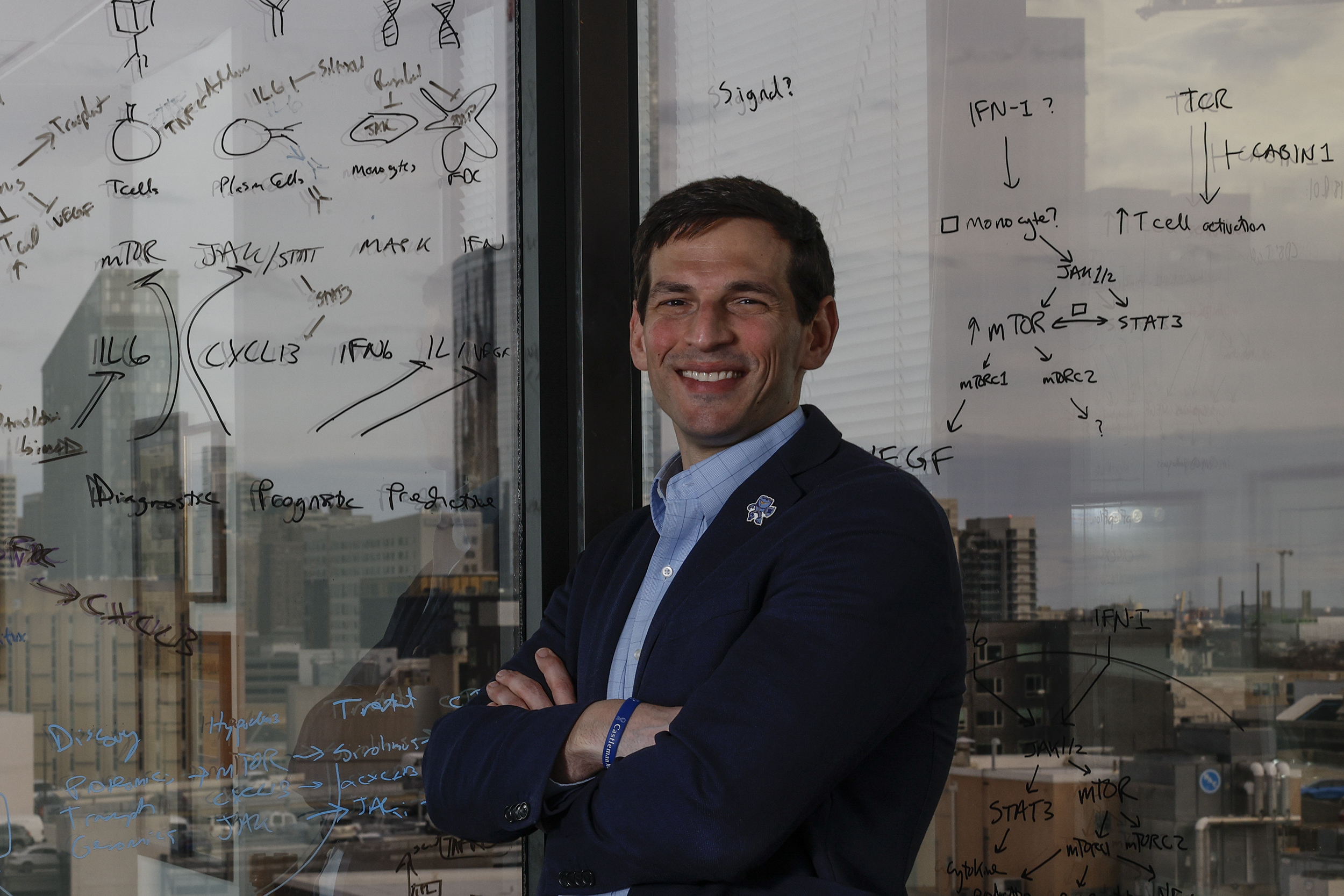
    David Fajgenbaum was diagnosed with Castleman disease, a rare lymph node disorder with limited treatment options. When chemotherapy didn’t work, the third-year medical student worked with his doctors to discover that a medication approved for preventing organ rejection in transplant patients could help him, too.

    Penn immunologist David Fajgenbaum received one of the nation’s oldest science prizes, the John Scott Award, this year for his pioneering work repurposing existing drugs for new uses.

    He entered this field 15 years ago after a rare and deadly diagnosis of idiopathic multicentric Castleman disease nearly killed him. The disease had no approved treatment nor any treatment guidelines at the time.

    Then a medical student at Penn, Fajgenbaum started collecting samples of his blood to test for abnormalities. The data helped him identify an existing drug called sirolimus — primarily given to organ transplant recipients — which has put him in remission for the last decade.

    Now through his nonprofit Every Cure, Fajgenbaum has made it his mission to use AI technology to match available medications with rare, hard-to-treat diseases.

    He published a case study in the New England Journal of Medicine in February, where his AI tool helped identify an off-label treatment for another patient with Castleman disease who, at the time, was entering hospice care after all available treatments had failed. As of that study’s publication, the patient has been in a yearslong remission.

    4. Lilly Gateway Labs biotech incubator coming to Philly

    Eli Lilly is opening a branch of Lilly Gateway Labs, an incubator for developing biotech companies, in Philadelphia, the Indianapolis company announced Wednesday. The site, in a new life sciences building at 2300 Market St. in Philadelphia, is the fifth in the United States for the pharmaceutical giant.

    Pharmaceutical giant Eli Lilly & Co announced in November its plans to open a Lilly Gateway Labs site — an incubator for early-stage biotech companies — in Center City.

    It was a positive sign for a biotech scene that otherwise lags behind other cities.

    The incubator, which will be Lilly’s fifth in the United States, will span 44,000 square feet on the first two levels of 2300 Market St. Since the program’s launch in 2019, companies at the other locations (in Boston, South San Francisco, and San Diego) have raised more than $3 billion from investors toward more than 50 therapeutic programs, according to Lilly.

    Lilly plans to house six to eight companies at the Philadelphia location, with the goal of welcoming the first startups in the first quarter of 2026.

    5. Carl June wins international honors for CAR-T research

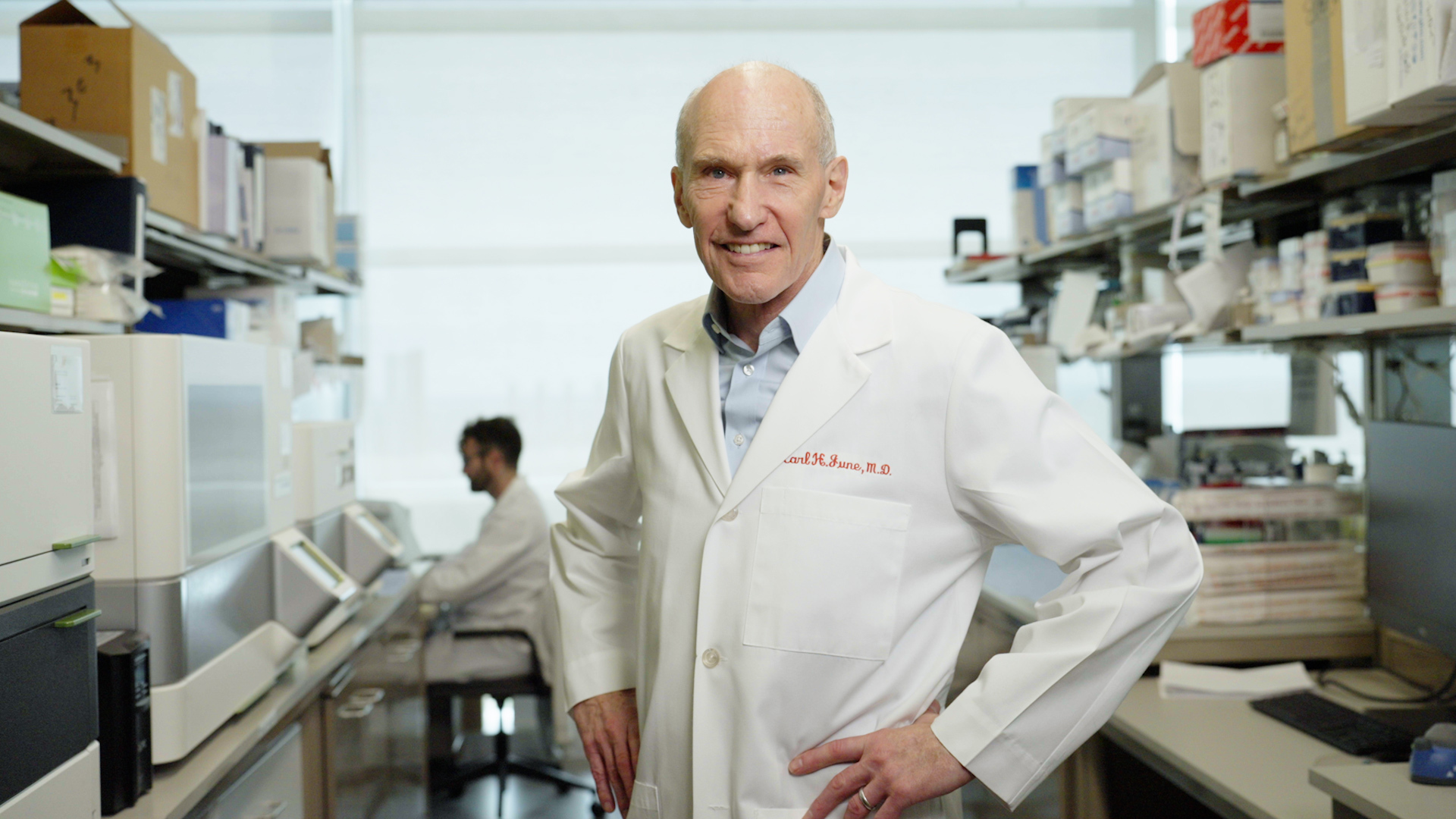
    Carl June won international prizes for his cancer research at the University of Pennsylvania.

    Penn cancer scientist Carl June added two more international prizes to his trophy case in September for his pioneering work engineering the body’s immune system to fight cancer.

    June is known for developing the first FDA-approved CAR-T therapy, an immunotherapy in which regular immune cells are genetically modified to become cancer-killing super soldiers. It has revolutionized treatment for blood cancers, saving tens of thousands of lives since its first use in a 2010 clinical trial he co-led at Penn.

    Though his past work is what won him the inaugural Broermann Medical Innovation Award and the 2025 Balzan Prize for Gene and Gene-Modified Cell Therapy this year, his lab has remained busy, working on ways to apply CAR-T to solid cancers, enhance the therapy for lymphoma, and even re-engineer cells inside the body.

    June has also made moves on the biotech front: A company he co-founded with the purpose of applying CAR-T to autoimmune diseases, Capstan Therapeutics, was bought by AbbVie this summer for $2.1 billion.

  • SNAP bans on soda, candy, and other foods take effect in five states Jan. 1

    SNAP bans on soda, candy, and other foods take effect in five states Jan. 1

    Starting Thursday, Americans in five states who get government help paying for groceries will see new restrictions on soda, candy, and other foods they can buy with those benefits.

    Indiana, Iowa, Nebraska, Utah, and West Virginia are the first of at least 18 states to enact waivers prohibiting the purchase of certain foods through the Supplemental Nutrition Assistance Program, or SNAP.

    It’s part of a push by Health Secretary Robert F. Kennedy Jr. and Agriculture Secretary Brooke Rollins to urge states to strip foods regarded as unhealthy from the $100 billion federal program — long known as food stamps — that serves 42 million Americans.

    “We cannot continue a system that forces taxpayers to fund programs that make people sick and then pay a second time to treat the illnesses those very programs help create,” Kennedy said in a statement in December.

    The efforts are aimed at reducing chronic diseases such as obesity and diabetes associated with sweetened drinks and other treats, a key goal of Kennedy’s Make America Healthy Again effort.

    But retail industry and health policy experts said state SNAP programs, already under pressure from steep budget cuts, are unprepared for the complex changes, with no complete lists of the foods affected and technical point-of-sale challenges that vary by state and store. And research remains mixed about whether restricting SNAP purchases improves diet quality and health.

    The National Retail Federation, a trade association, predicted longer checkout lines and more customer complaints as SNAP recipients learn which foods are affected by the new waivers.

    “It’s a disaster waiting to happen of people trying to buy food and being rejected,” said Kate Bauer, a nutrition science expert at the University of Michigan.

    A report by the National Grocers Association and other industry trade groups estimated that implementing SNAP restrictions would cost U.S. retailers $1.6 billion initially and $759 million each year going forward.

    “Punishing SNAP recipients means we all get to pay more at the grocery store,” said Gina Plata-Nino, SNAP director for the anti-hunger advocacy group Food Research and Action Center.

    The waivers are a departure from decades of federal policy first enacted in 1964 and later authorized by the Food and Nutrition Act of 2008, which said SNAP benefits can be used for “any food or food product intended for human consumption” except alcohol and ready-to-eat hot foods. The law also says SNAP cannot pay for tobacco.

    In the past, lawmakers have proposed stopping SNAP from paying for expensive meats like steak or so-called junk foods, such as chips and ice cream.

    But previous waiver requests were denied based on U.S. Department of Agriculture research concluding that restrictions would be costly and complicated to implement, and that they might not change recipients’ buying habits or reduce health problems such as obesity.

    Under the second Trump administration, however, states have been encouraged and even incentivized to seek waivers — and they responded.

    “This isn’t the usual top-down, one-size-fits-all public health agenda,” Indiana Gov. Mike Braun said when he announced his state’s request last spring. “We’re focused on root causes, transparent information, and real results.”

    The five state waivers that take effect Jan. 1 affect about 1.4 million people. Utah and West Virginia will ban the use of SNAP to buy soda and soft drinks, while Nebraska will prohibit soda and energy drinks. Indiana will target soft drinks and candy. In Iowa, which has the most restrictive rules to date, the SNAP limits affect taxable foods, including soda and candy, but also certain prepared foods.

    “The items list does not provide enough specific information to prepare a SNAP participant to go to the grocery store,” Plata-Nino wrote in a blog post. “Many additional items — including certain prepared foods — will also be disallowed, even though they are not clearly identified in the notice to households.”

    Marc Craig, 47, of Des Moines, said he has been living in his car since October. He said the new waivers will make it more difficult to determine how to use the $298 in SNAP benefits he receives each month, while also increasing the stigma he feels at the cash register.

    “They treat people that get food stamps like we’re not people,” Craig said.

    SNAP waivers enacted now and in the coming months will run for two years, with the option to extend them for an additional three, according to the USDA. Each state is required to assess the impact of the changes.

    Health experts worry that the waivers ignore larger factors affecting the health of SNAP recipients, said Anand Parekh, chief policy officer at the University of Michigan School of Public Health.

    “This doesn’t solve the two fundamental problems, which is healthy food in this country is not affordable and unhealthy food is cheap and ubiquitous,” he said.

  • How RFK Jr. upended the public health system

    How RFK Jr. upended the public health system

    On his way to being confirmed as the nation’s top health official, Robert F. Kennedy Jr. promised lawmakers he would do nothing that “makes it difficult or discourages people from taking vaccines.”

    Almost 100 days into the job, amid rising measles outbreaks and congressional scrutiny of his messaging on vaccines, Kennedy made clear behind the scenes that he wanted to reshape the nation’s immunization system.

    Kennedy, the founder of a prominent anti-vaccine group, presented several top federal health officials with a new vision.

    “Bobby has asked for the following changes,” Kennedy’s deputy chief of staff for policy at the time, Hannah Anderson, wrote to the officials in a May 19 email later reviewed by the Washington Post.

    Among his requests was to replace the entire membership of an influential independent committee of experts that makes recommendations for how and when to vaccinate Americans. Kennedy also asked the panel to reconsider a long-standing recommendation that all newborns get a hepatitis B vaccine and to revisit the use of multidose flu shot vials, which contain a mercury-based preservative.

    Anti-vaccine activists have criticized those vaccines for years, claiming they unnecessarily endanger children. Career federal scientists who learned of Kennedy’s asks said they represented a sea change for shots that have been extensively studied and deemed safe.

    “At that point we were just bracing for upheaval,” said Demetre Daskalakis, who was then the CDC’s top respiratory diseases and immunization official.

    Kennedy would get what he wanted. The May 19 email reveals his previously undisclosed influence on some of these changes in a highly unusual way, according to legal experts and former and current health officials, showing how Kennedy has wielded government power to overhaul a public health system he has blasted as corrupt and ineffective.

    Andrew Nixon, a spokesperson for the Department of Health and Human Services, said of the email: “All this was was a suggestion.”

    “This was a newly reconstituted committee, and the secretary was providing a North Star to make sure suggestions were communicated to the members for consideration,” Nixon said.

    Over the course of the year, Kennedy’s actions have alarmed public health experts, medical associations, and current and former health officials, who say he is eroding trust in science and dismantling confidence in long-standing public health measures.

    “I do feel shocked by how quickly he has been able to implement these things that he has clearly been pretty passionate about for many years,” said Kerry Kennedy Meltzer, Kennedy’s niece and a physician who this year released email exchanges with her uncle in an attempt to foil his Senate confirmation to lead HHS.

    Kennedy has challenged years of public health messaging on vaccines, including instructing the CDC to contradict the long-settled scientific conclusion that vaccines do not cause autism. His once-fringe views have moved to the center of the nation’s health strategy amid a growing distrust in the medical establishment after the coronavirus pandemic.

    “It is now acceptable to talk about all these issues,” said Leslie Manookian, a leader in the “medical freedom” movement, which opposes vaccine mandates. “The person that we have most to thank for that is Bobby Kennedy, together with President Trump.”

    Kennedy has maintained the backing of the White House and a warm relationship with President Donald Trump, whom he speaks to often, as the two aligned on their Make America Healthy Again initiative to encourage better nutrition and address chronic disease and childhood illness, according to two people familiar with the matter.

    Besides his heavy focus on immunizations, Kennedy has also taken on the food industry. Next year will test, ahead of the midterms, whether he can deliver sweeping change on this more broadly popular agenda.

    This account of Kennedy’s ascent and leadership since becoming HHS secretary is based on interviews with almost 100 current and former federal health officials, Kennedy allies, public health experts, and others. Many spoke on the condition of anonymity to detail private conversations or internal deliberations, or out of fear of retaliation.

    In response to an interview request, Kennedy said in a text message: Wapo has been more consistently unfair, biased, and inaccurate, and it’s reporting about me than any other major outlet. Im not inclined to validate that bias with an interview.”

    He referred the request to Stefanie Spear, a top aide, who said Kennedy wanted to share a Substack article with a Post reporter that described the “invisibility of vaccine injury,” adding Kennedy could perhaps do an interview after the first of the year.

    The HHS media relations office did not answer detailed questions for this article but in a statement commented on the email from Anderson and identified what Kennedy has done so far.

    “Under Secretary Kennedy’s leadership, HHS is exercising its full authority to deliver results for the American people,” Nixon said.

    “In 2025, the Department confronted long-standing public health challenges with transparency, courage, and gold-standard science — eliminating petroleum-based food dyes from the nation’s food supply, removing the black box warning for many menopause hormone therapies, lowering drug prices, advancing [Organ Procurement and Transplantation Network] reform, streamlining prior authorization, investing in rural health, accelerating biosimilars, doubling funding for childhood cancer research, launching an agency-wide AI strategy, and increasing transparency in drug advertising,” Nixon added. “HHS will carry this momentum into 2026 to strengthen accountability, put patients first, and protect public health.”

    RFK Jr.’s rise to power

    In August 2024, Kennedy strode onto a stage in Arizona to suspend his long-shot independent presidential bid. Flanked by American flags, he explained why the scion of a famous Democratic family was endorsing a Republican, Trump.

    “I asked myself what choices must I make to maximize my chances to save America’s children and restore national health,” Kennedy said.

    Kennedy quickly became viewed as one of the campaign’s top surrogates, bringing along some voters who might not have backed Trump. Before winning the presidency, Trump promised to let Kennedy “go wild on health.”

    Although some Trump aides had weighed making Kennedy, a lawyer, a White House health czar, Kennedy told Trump he wanted to be considered as HHS secretary, according to three people familiar with the matter. Donald Trump Jr. and Charlie Kirk, the conservative activist who was fatally shot this year, advised Kennedy that he needed to be in charge of an actual bureaucracy to make lasting change and avoid being sidelined, one person said. Trump Jr. and Turning Point USA, Kirk’s organization, did not respond to requests for comment.

    Just over a week after Election Day, Trump tapped Kennedy to helm the nation’s sprawling health department, an almost $2 trillion portfolio responsible for administering health insurance, approving drugs and medical devices, and responding to infectious-disease outbreaks.

    The luxury Florida beach house of Mehmet Oz — a physician and former daytime television star who is now the nation’s Medicare and Medicaid chief — quickly became ground zero for pushing MAHA’s agenda and securing Kennedy’s position in Washington, according to multiple attendees. Those weeks forged an alliance among some who challenged the medical establishment, including Del Bigtree, head of the anti-vaccine group Informed Consent Action Network (ICAN), and Spear, a longtime ally to Kennedy in his environmental and anti-vaccine advocacy, and newer people in Kennedy’s orbit, such as Calley Means, a health entrepreneur.

    One night, several of those at the beach house bonded over listening to the Grateful Dead, according to Michael Caputo, who was Trump’s HHS spokesperson in 2020. They viewed the book Good Energy — a bestseller, written by now-surgeon general nominee Casey Means along with her brother Calley, that promotes healthy eating and exercise to optimize metabolic health — as MAHA’s bible, he said.

    “Food expanded the movement overnight,” Bigtree, who was Kennedy’s communications director during his presidential campaign, said in an interview.It was an easier topic to sell to moms across America.”

    On Capitol Hill, Kennedy’s messaging pushing for healthier, less-processed foods proved far more popular than his views on immunization.

    Kennedy’s confirmation largely hinged on Sen. Bill Cassidy (R., La.), a physician and chair of the Senate health committee, who begged Kennedy to disavow his false claims linking vaccines and autism and raised concerns about Kennedy’s involvement in vaccine safety litigation.

    “[Does a] 71-year-old man who has spent decades criticizing vaccines and who’s financially vested in finding fault with vaccines, can he change his attitudes and approach now that he’ll have the most important position influencing vaccine policy in the United States?” Cassidy asked during Kennedy’s confirmation hearing.

    As Cassidy vacillated, Vice President JD Vance stepped in to help negotiate his eventual support, according to two people familiar with the matter.

    In a speech on the Senate floor, Cassidy detailed the commitments he received from Kennedy in exchange for his vote, including to protect the nation’s vaccine infrastructure. All but one Republican voted yes: Sen. Mitch McConnell of Kentucky, a childhood polio survivor who said he would “not condone the re-litigation of proven cures.” A week later, McConnell announced he would not seek reelection.

    Cassidy’s doubts proved prescient. Within months, Kennedy found ways to bypass some of his pledges.

    A fierce critic becomes the boss

    Kennedy has called for the ouster of what he describes as “corrupt, industry-captured” federal health officials, arguing the health department had failed to keep Americans healthy.

    “I’m not scared to disrupt things,” Kennedy said at a recent event at George Washington University.

    Since February, health agencies have been inundated by continuous waves of departures involving more than 30 high-ranking senior career leaders — representing decades of experience on managing infectious-disease outbreaks, administering billions in research dollars, and overseeing the nation’s drug supply, according to a Post review.

    Thousands more staffers were laid off in what some called the “April Fools’ Day massacre,” a sweeping purge and proposed reorganization of the health agencies. Some including lead poisoning specialists and lab scientists were rehired, but many administrative support staff, communications staffers, and program officers are among those who remain laid off.

    As secretary, Kennedy brought in fierce critics of the public health COVID-19 response and federal health agencies more broadly. Bigtree told the Post that candidates for top health roles were questioned to see whether they agreed with some of Kennedy’s longtime vaccine safety priorities.

    Under Kennedy, prominent figures in the anti-vaccine movement have been working within the department on vaccine safety issues, including Lyn Redwood, a former leader of the anti-vaccine group Kennedy founded, Children’s Health Defense, and David Geier and Mark Blaxill, two longtime proponents of false claims that vaccines can cause autism. The three did not return requests for comment.

    In a statement, White House spokesperson Kush Desai said Kennedy and his team at HHS are restoring “Gold Standard Science and accountability to our public health bodies” after the medical establishment pushed “unscientific lockdowns and mask mandates” during the coronavirus pandemic.

    Kennedy has accused public health agencies of being dishonest during the pandemic. He repeated that criticism, arguing the government overreached on COVID vaccines, when a reporter asked how to avoid the violence the CDC witnessed in August, when a gunman incensed by coronavirus vaccines attacked the agency’s Atlanta campus.

    Public health and medical experts say the turnover in staff and leadership has hollowed out the federal government’s scientific capacity to anticipate and respond to health threats.

    “For people who are still left at the [CDC], there is chaos and confusion, and morale is at an all-time low,” Aryn Melton Backus said at a November rally in support of public health. She was a health communication specialist placed on administrative leave as part of pending layoffs from the CDC’s Office on Smoking and Health, which has funded state tobacco control programs.

    The reduction of CDC staff and programs is being felt across the country. In Georgia, where smoking is the leading cause of preventable death, state officials cut a tobacco control and prevention program. An online concussion training that many school youth sports coaches must complete will no longer be updated with the latest research. Local officials who want to fluoridate their drinking water to improve oral health no longer have access to technical experts who can help calibrate the proper levels.

    As Kennedy upended the public health workforce, he leaned into his more broadly popular messaging around overhauling the food industry. He has posted on social media more than twice as frequently about food than vaccines while in office, according to the Post’s analysis of his personal accounts and official HHS accounts. Last summer, almost 1 in 3 social media posts focused on food.

    He often highlights posts about companies pledging to remove artificial dyes from food products, which has been one of his signature efforts.

    Some in the food sector have been trying to accommodate Kennedy and downplay differences with his initiatives, in hopes of avoiding MAHA criticism, according to two people involved in the industry. That is a stark shift for an industry accustomed to viewing the GOP as an ally.

    “Wanting to eat simpler foods, more real foods, look at the ingredients, all of that is not a Democrat hippie thing anymore,” said Vani Hari, an author, activist, and Kennedy ally who also writes under the name of the Food Babe. “It’s a Republican thing, too, now.”

    Kennedy returns to his core issue: Vaccines

    As Kennedy sought senators’ support to become health secretary, he told them he supported the childhood immunization schedule, including the shot for measles, which he had previously described falsely as increasing the odds of spreading the virus.

    In the past, Kennedy had decried the “exploding vaccine schedule,” claiming that the series of vaccines recommended to children is linked to the rise of autism, chronic disease, and food allergies. Medical experts have argued that these purported links have no basis in evidence and that the increase in vaccinations has successfully combated more disease. He wrote a book in 2014 calling for removal of the mercury-based preservative thimerosal from vaccines. He questioned why newborns should get the hepatitis B vaccine, which health authorities say is safe, claiming on an online show that it “poisoned” kids.

    Kennedy faced his first big test on vaccines soon into his tenure. A measles surge had started in an under-vaccinated region of Texas, driving the country’s largest annual case tally in at least 33 years and threatening to end the nation’s measles elimination status.

    At first, Kennedy downplayed the severity of the outbreak and later, under pressure, acknowledged vaccines prevent the virus’ spread. But he muddled that message by also falsely claiming the vaccines were not safety-tested and contained aborted fetal debris — a stark contrast from the first Trump administration’s unequivocal support for vaccination during a 2019 outbreak.

    He repeatedly offered to send Texas doses of vitamin A, an unproven measles treatment in the U.S. embraced by vaccine skeptics as an alternative to immunization, even though the vitamin is primarily used for malnourished children abroad and public health workers and doctors said their focus was vaccination, according to a top state health official, Jennifer Shuford.

    In June, he fired every member of the Advisory Committee on Immunization Practices, which makes vaccine recommendations, setting in motion plans to remake the vaccine system. Kennedy argued the panel had become “little more than a rubber stamp for any vaccine” with members too closely tied to the pharmaceutical industry. He selected new members, some of whom had histories of criticizing vaccine guidance. The former CDC director, Susan Monarez, said she was fired in August for refusing to be a “rubber-stamp” to the new committee.

    The panel has voted on some of Kennedy’s requests detailed in the May email from Anderson, who is no longer with HHS and did not respond to requests for comment.

    The vaccine panel voted in June to remove thimerosal — which the CDC had concluded is safe but Kennedy and his allies have decried as unnecessarily exposing children to mercury — from the rare multidose flu shot vials that contain it. In that same meeting, they vowed to form a work group to look at vaccines that have not been subject to review in more than seven years, in line with Kennedy’s request.

    The panel over several months grappled with how to revise the guidance for all newborns to receive a hepatitis B vaccine. It ultimately voted in December to stop recommending the shot when the mother tests negative and instead to encourage those parents to consult doctors about whether and when to begin vaccination.

    José Romero, who began serving on ACIP in 2014 and chaired the panel from 2018 to mid-2021, described Kennedy’s asks to the committee as “extremely” unusual.

    “The secretary is within his legal rights to make these suggestions or requests, but it’s unheard of as far as I know,” said Romero, who was a top health official in Arkansas during the pandemic and then at the CDC. He now consults for the pharmaceutical industry on vaccines and is a member of the American Academy of Pediatrics infectious diseases committee.

    An HHS official, who spoke on the condition of anonymity because of legal concerns, said that the career CDC official who oversees ACIP sets its agenda and that members of the committee are ultimately responsible for writing the questions they vote on.

    In reference to the May email, the official said HHS officials worked with the CDC’s administrative officer for the vaccine panel to communicate the suggestions to the members, but those suggestions were not directives.

    Joseph Hibbeln, a neuroscientist who has become a dissenting voice on the vaccine panel, said committee members have not been given clear answers when they have asked who is determining which vaccines they are scrutinizing.

    Robert Malone, a prominent critic of coronavirus vaccines who is now the panel’s vice chair, said that he did not know how the agenda items were developed but that there would be nothing “nefarious” about Kennedy or other top Trump administration officials “contributing” to agenda items because the panel’s job is to provide advice.

    During the panel’s December meeting, Kirk Milhoan, chairman of the vaccine committee, was overheard telling another member that he felt “a little bit like puppets on a string as opposed to really being an independent advisory panel,” according to a transcript of the exchange captured by videoconferencing software and reviewed by the Post. He later told the Post he was referring to pressure from outside groups critical of changes to vaccine recommendations, not the administration.

    ‘Raise the risk, bury the benefits’

    Kennedy and his aides have repeatedly said the Trump administration is not limiting access to vaccines for those who want them, but is instead working to help people make informed decisions. Critics say they are exaggerating the downsides and obfuscating the value of immunization.

    “The secretary and his committee have stopped doing the hard job of balancing the risks and benefits of vaccines,” said Dan Jernigan, who oversaw the CDC’s vaccine safety office. He described their playbook as “raise the risk, bury the benefits, sow confusion, drive down use.”

    In the late summer, Jernigan and two other high-ranking officials resigned in protest over what they called an unscientific and politicized approach to vaccines.

    In one instance that alarmed career staff, Kennedy wanted Aaron Siri, a top lawyer for the anti-vaccine movement, and perhaps Paul Offit, a scientist at Children’s Hospital of Philadelphia who is a prominent proponent of vaccines and critic of Kennedy, to speak publicly during the June meeting of the new vaccine advisers, according to three former health officials familiar with a meeting where a CDC senior adviser relayed the secretary’s request. Siri has been involved in legal challenges to school vaccine mandates and petitioned the government to reconsider its approval of Sanofi’s stand-alone polio vaccine.

    But the plan to invite Siri fell apart after objections from career CDC staff and legal advisers who raised concerns about providing a platform to a man who has repeatedly sued the agency seeking data about vaccine safety on behalf of ICAN, the anti-vaccine group. Kennedy was informed of those concerns, one of the officials said.

    After almost six months and an exodus of CDC leaders, Siri was invited to the agency’s headquarters for the December meeting of the vaccine advisers and spent more than 90 minutes arguing that the history of childhood immunization in the U.S. is marred by insufficient research and improperly performed vaccine clinical trials. HHS did not answer questions from the Post about Siri’s appearance.

    Siri said he has a “significant knowledge base” about vaccines based on his legal work, including regularly suing health authorities and deposing and cross-examining leading vaccinologists. “If you were standing in my office with me right now, you would be looking at a bookshelf that is filled with medical textbooks on vaccinology, immunology, infectious disease, and pediatrics,” he said.

    Cassidy, the Republican senator, reacted with shock to Siri’s appearance at ACIP.

    It was his latest frustration with the health department’s handling of vaccine issues under Kennedy, including the revisions to the CDC website language on autism. The page includes an asterisk after the header “Vaccines do not cause Autism,” explaining that the header was not removed as part of an agreement with Cassidy. But the revised webpage also claims that the assertion that vaccines do not cause autism is not evidence-based and that health authorities ignored studies supporting a link.

    Cassidy’s office declined repeated requests for a formal interview. Approached at the Capitol and asked about Kennedy’s vaccine commitments, Cassidy said, “You can compare those actions to those commitments I enumerated in my floor speech, and I’ll let you draw your own conclusions.”

    But what were his conclusions? “I’ll leave it at that,” he said.

    The looming fight

    Kennedy has spent much of this year laying the groundwork for bigger changes to the nation’s vaccine and food policy.

    Findings from investigations Kennedy commissioned into the causes of autism, the safety of vaccines, and whether fluoridated water harms children are expected to be released.

    The Trump administration is weighing plans to shift the federal government away from directly recommending most vaccines for children and to more closely align with Denmark’s immunization model of suggesting fewer shots, according to two people familiar with the matter.

    Kennedy plans to release revised federal dietary guidelines for healthy eating habits early next year, which will be partly tied to when Americans are making New Year’s resolutions, according to a federal health official. Kennedy has said the guidelines will focus on eating whole foods.

    The health department is also hoping to finalize a plan as soon as next year to require labels on the front of food and drink packages to alert Americans about unhealthy foods. Under Kennedy, health officials are working internally to determine the best approach to the labels, which were first proposed in the Biden administration, according to two people familiar with the matter.

    Meanwhile, Kennedy has crisscrossed the country to support governors who have restricted using food stamps to buy soda and candy and signed bills to remove artificial dyes from school meals. Some MAHA proponents want to see another wave of policies next year that would promote nutrition education and also challenge long-standing public health practices such as vaccine mandates. The nonprofit advocacy group MAHA Action has met with almost 20 top state officials as it pushes for states to embrace the movement.

    “Bobby Kennedy is doing the work he was put on the planet to do,” said Tony Lyons, president of MAHA Action.

    Kennedy’s allies say he’s just getting started. They hope he will be secretary for eight years.