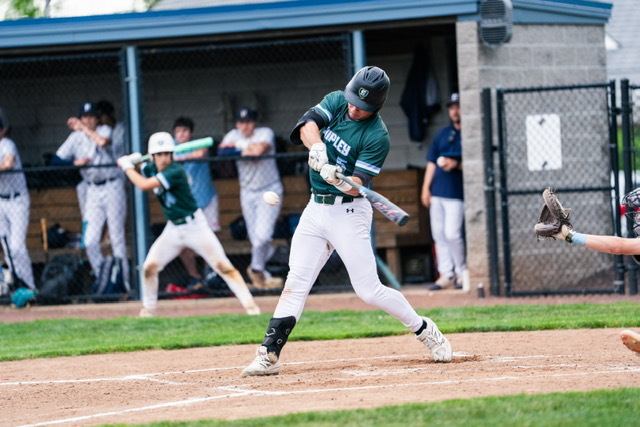
When Jimmy Amplo’s high school baseball coach told him the news, the 17-year-old couldn’t believe it. At the start of the week, Amplo was playing travel ball with the Philly Bandits. This weekend, he will be batting in his hometown team’s stadium, Citizens Bank Park.
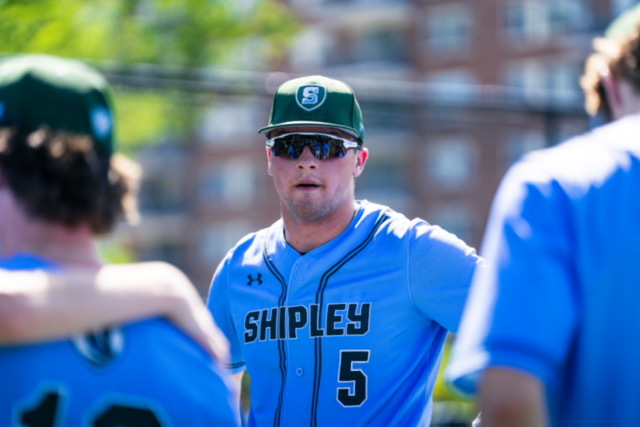
Amplo, a rising senior at The Shipley School from Norristown, was selected as one of eight high school players from across the nation to compete in the MLB All-Star High School Home Run Derby.
“I thought it was a joke almost,” Amplo said. “Later that day, when I found out that it was actually real and that they had a spot for me, I was so excited.”
The 14th annual High School Home Run Derby is Friday (2 p.m. MLB.com) and has featured future major leaguers. Past participants include Phillies prospect Aidan Miller and major league stars Jordan Walker, Riley Greene, and Bobby Witt Jr., who won the high school derby in 2018 and will play in his third All-Star Game on July 14.
The High School Home Run Derby returns to All-Star week this Friday at Citizens Bank Park! 💥
Amplo earned an invitation to the derby in June, after hitting a 106.9 mph max exit velocity at Prep Baseball’s Pennsylvania showcase last month. The left-handed hitter posted a 1.295 OPS and .750 slugging percentage while notching 35 hits and five homers this season. He also helped lead the Gators to their second consecutive Friends Schools League championship in May.
“Jimmy was a huge part of those wins,” said Shipley coach Bryan Bendowski. “He was our starting center fielder/right fielder, and he is somebody who was very instrumental in the success of those two seasons.”
Entering the derby, Amplo has been refining his swing by focusing on timing. Still, he knows he’ll be an underdog among the other seven competitors.
Amplo is the only player in the contest who is not committed to a college program, and many of the others are nationally ranked prospects.
The field includes Kinon Bastian (Winter Garden, Fla.), who is committed to Florida; Brady Cunningham (Mokena, Ill.), who is bound for Texas A&M; Tavis Honeycutt (Newberry, Fla.), also a Florida recruit; Graham Keen (Pittsburgh, Mt. Lebanon High School), a Vanderbilt pledge and ranked No. 10 nationally in the class of 2027 by Prep Baseball Report; Sullivan Reed (Meridian, Miss.), who is committed to Mississippi State; Lubin Rincon (Pearland, Texas), who is bound for Texas and is No. 7 in PBR’s class of 2027 rankings; and Grant Westphal (Leawood, Kan.), who’s ranked fourth and also is committed to Texas.
Amid the big names, Bendowski is working to bolster Amplo’s confidence.
Jimmy Amplo is a rising senior at the Shipley School.
“I’ve been sort of preaching the Rocky mentality to him,” Bendowski said. “The underdog can always come out on top, so give it your best effort and let it fly.”
Amplo added: “I’m definitely a bit nervous, but I’m really excited, too. I’ve been looking up to players like Bryce Harper. I definitely like that he’s a great left-handed hitter and generates a lot of power and bat speed.”
The lifelong Phillies fan said many of his teammates, family, and coaches will be in the stands to watch him on Friday.
“This is what I’ve worked for and why I’ve trained my swing,” Amplo said. “Just being able to play at a ballpark that you grew up going to feels pretty cool, and to actually be able to bat on that field is special.”
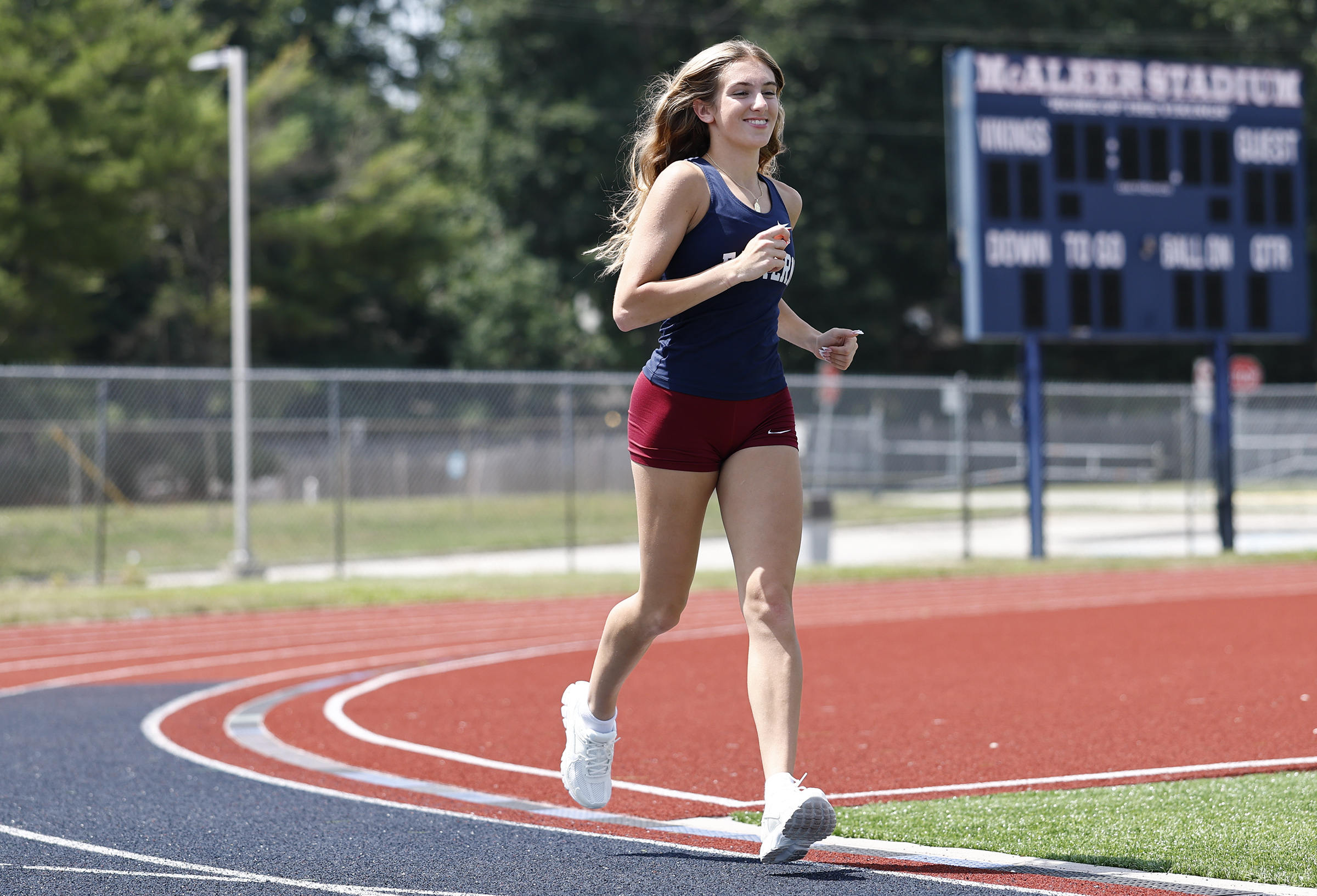
When Eastern Regional’s track and field coach Mike Tangeman is asked about star senior runner Natalie Dumas, he will not call attention to the more than 20 program records she’s broken. Instead, he will mention that she does not own any of the program’s freshman records.
Before becoming one of the most accomplished runners in New Jersey history, Dumas first got involved with the sport as a freshman to bond with her sister, Kadence, who was then a senior.
As a junior, at the NJSIAA Meet of Champions, Natalie became the first girl in state history to place first in three events — the 400 meters, 400-meter hurdles, and 800 meters. A few weeks later, she placed first in the same three events at the New Balance Nationals held at Penn’s Franklin Field. Her accomplishment at both meets made Dumas a prominent name in national track circles and won the attention of the University of Arkansas, where she will be running next year.
This past year was no different. At June’s Meet of Champions in Pennsauken, Dumas placed first again in three events to cap her outdoor scholastic season. She clocked in at 57.04 seconds in the 400-meter hurdles, 52.14 in the 400 meter, and 2 minutes, 03.46 seconds in the 800 meter.
“With track, you have to trust the process because you work up into becoming better time wise,” Dumas said. “Obviously, you’re really out of shape at the beginning, and then you get better and better.
“At the end of the day I’m not afraid to lose.”
A ‘minor celebrity’
Last month, Dumas flew to Eugene, Ore., to compete in the USATF U20s and the Nike Nationals. To combat potential jetlag and the difference in climate, she arrived on the West Coast a few days before she was slated to race at University of Oregon’s Hayward Field.
In the U20s, she won a spot on the U.S. World team after a first-place finish in the 400-meter hurdles, running a season-best 56.13. The next day, she returned to the same track to compete in the 400-meter dash at the Nike Nationals and placed first at 52.21 to claim her eighth national title.
“It was a lot of races,” Dumas said. “But honestly, I didn’t even mind racing that much.”
Dumas’ participation in the Nike Nationals was possible because of the event’s intentional geography and calendar proximity to the U20s. It was also a sign of the ever-evolving nature of high school sports. Dumas is one of 20 female high school track and field athletes signed to Nike Elite. The program, which includes a coveted name, image, and likeness deal with the world’s largest supplier of athletic attire, has increased Dumas’ national appeal. It has also improved her performance on the track.
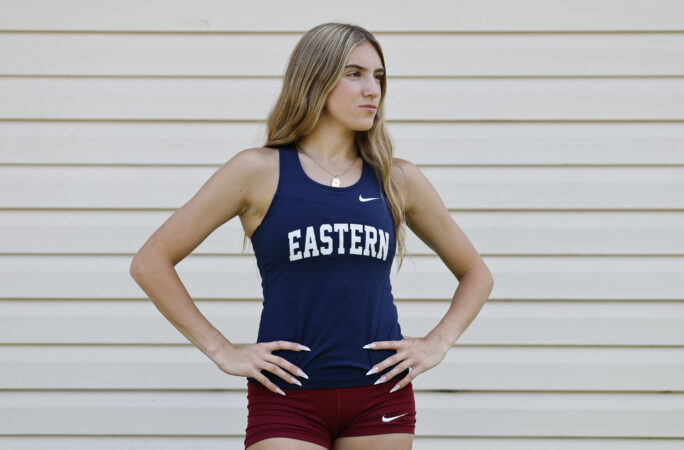
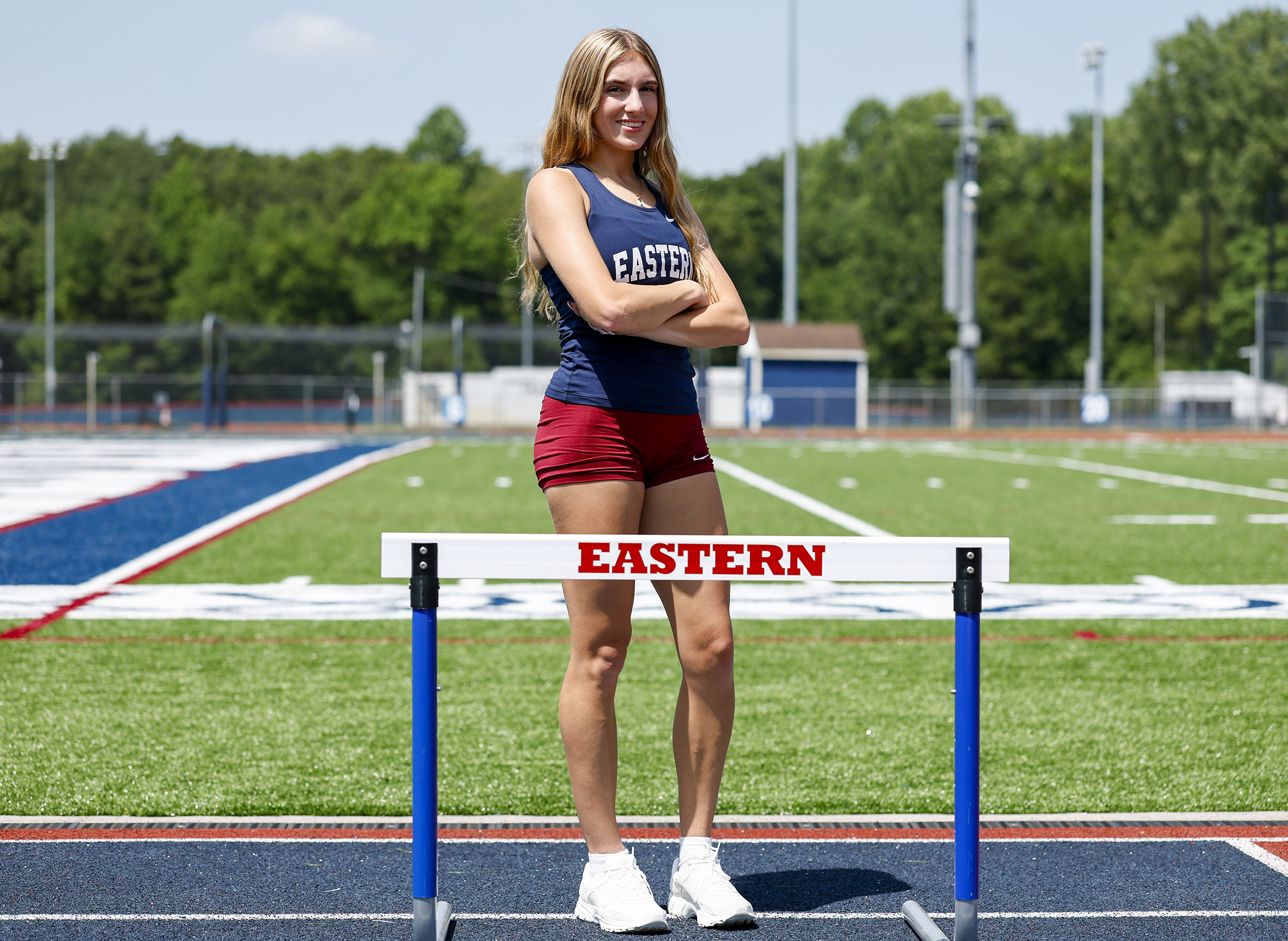
Natalie Dumas started running track as a freshman at Eastern Regional.
The partnership offers support from Nike’s team of trainers. Since signing with the company, Dumas has revamped her strength training regimen in line with Nike’s guidance and learned more about injury management. Through the program, she also connected with other Nike athletes and Nike Elite’s personal training staff.
“It’s just great overall,” Dumas said. “I feel like high school athletes tend to be more on the lazy side than everyone else, because they kind of don’t have anyone like kicking their butt into gear.”
“Sometimes being called out is embarrassing. [The Nike trainers] will say something like, ‘Hey, you didn’t finish this last set, go do it.’ But they definitely stay on top of you. … They all help us push to be our greatest.”
NIL is not the only change in Dumas’ life. After coming onto the national scene last year, Dumas’ popularity in the track world skyrocketed. The 17-year old currently has nearly 14,000 followers on Instagram.
“Coming into this year, she was a minor celebrity,” Tangeman said. “Dealing with all the attention and everyone knowing her. Other athletes from other schools saying hi to her, wanting to take pictures at meets and just all that other stuff. It was definitely a lot different.”
Dumas had to get used to the constant noise around her — which she admits has been “hard to handle” at times.
“At the end of the day, you shouldn’t worry about making sure everyone’s responded to and everyone’s answered to,” Dumas said. “If they’re closest to you and if they know you, they’ll kind of understand. [They will] be like, ‘Well, I know Natalie. I know the type of person she is, and she wouldn’t do that to me.’ It’s kind of just hard to keep up with it.”
‘Shape me into a better runner’
As one of the top talents in the country, Dumas had her pick of the upper-echelon of college programs, which was a blessing and a curse.
“It’s kind of like when you go to a restaurant and there’s a huge menu,” said Tangeman, laughing.
Dumas spent most of this past year scheduling and taking recruitment visits. In order to woo her, she said several programs pulled out all the stops. One treated her to an outing at Topgolf. Another pitched their school to her on a boat. Ultimately, it was the last school she visited that won her over.
Natalie Dumas runs the 400 meters, 800 meters, and 400-meter hurdles.
“[Arkansas] just set my goals in front of me,” Dumas recalled. “They said, ‘These are your goals, this is what you want to do. If that’s what you want to do, we will make an attempt to reach them.’
Arkansas has won three NCAA women’s outdoor track and field team titles since 2015, and another five in indoor track over that span.
“There’s not too much to be said about Arkansas. You look at the program, you look at the athletes that they have produced, and you see what they have done. I put my trust in them. I’m not afraid to run the workouts that they’re running, lift the workouts that they’re lifting. I’m not afraid to go out there and try something new, and I’m definitely excited for them to kind of just shape me into a better runner.”
While Dumas is looking forward to running at one of the best collegiate programs in the country, she is also mourning the end of her high school career. She graduated last month, cutting her Nike Nationals appearance a day early to make the ceremony. In the weeks since, she has found it “weird” to have a summer away from the track where she first learned to run.
“She brought a lot of positive attention our way,” Tangeman said. “Going forward, the kids coming up throughout our school system will say, ‘Hey, you know this Natalie Dumas? She ran track and field at Eastern, maybe that’s something I want to do too.’”
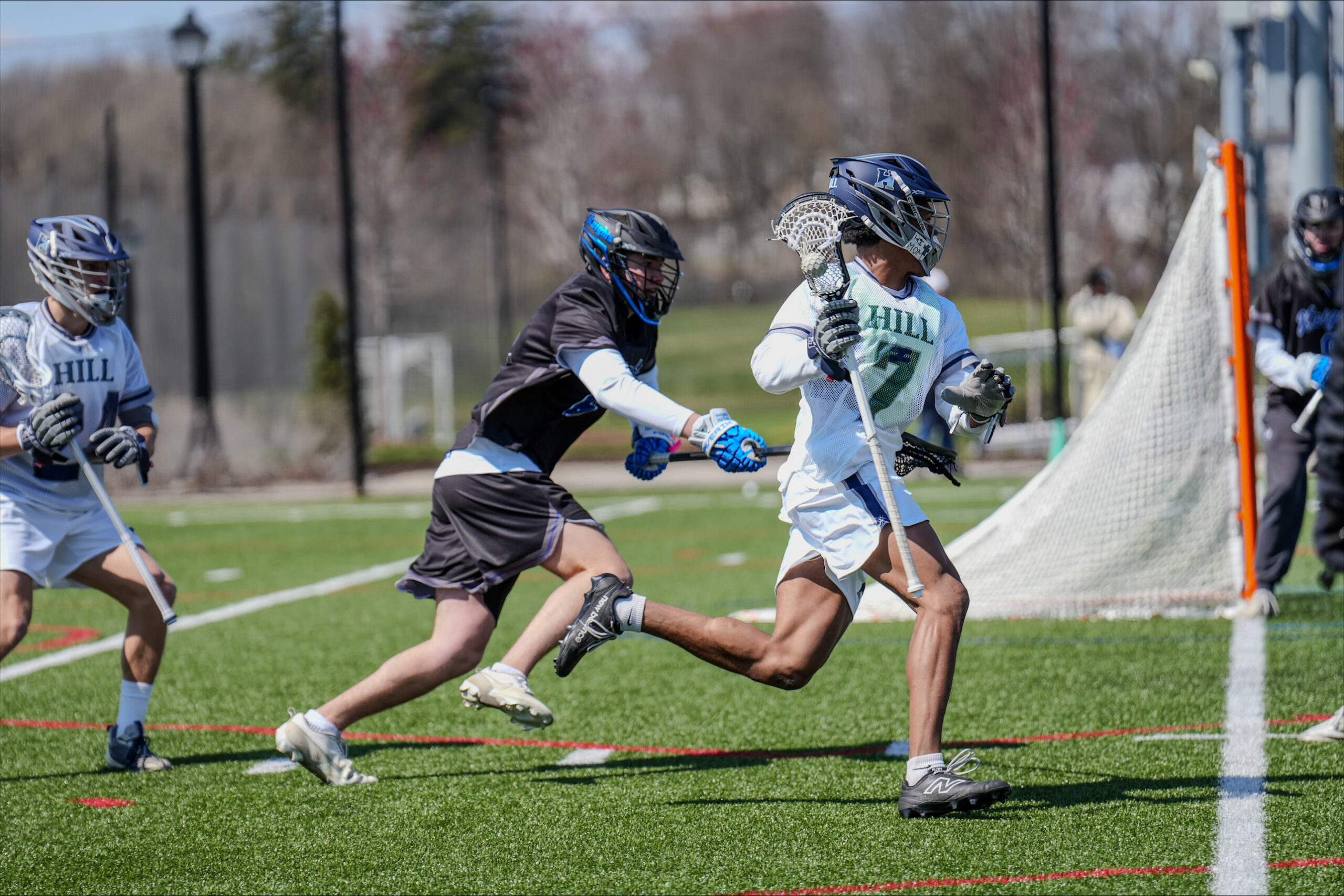
Jace Banks only started playing lacrosse six years ago, but he quickly emerged into a formidable force on the field.
The 19-year-old from Middletown, Del., who recently graduated from the Hill School, is ranked No. 6 in the country and the top player in Pennsylvania in the class of 2026, according to the National Lacrosse Federation.
Banks, an attacker and midfielder, finished his senior season with 45 goals and 17 assists. Now, he’s preparing to play at Notre Dame in 2027. While the game came easy, becoming a leader was a different battle.
“He’s a special kid,” said Dave Page, the Hill School’s head boys’ lacrosse coach. “He’s got a really quiet confidence and charisma about him and it made him a great leader, not just on the team, and in the locker room, but I think around the campus.”
Banks transferred to the private boarding school in Pottstown in 2023, after being recruited by Page during Banks’ freshman year at The Tatnall School in Wilmington. Once he began playing at Hill, Banks’ commitment to the sport changed.
“When I started, the [senior players] on the team had so much influence on my life.” Banks said. “I just remember you’d wake up in the morning and you’d see kids already coming back from the gym or like coming back from hitting the wall or the field. … little things like that every day really motivated me and it was a shock of culture almost.”
He began to focus on drills that utilized his 6-foot-2 frame, while building his strength and speed, two areas that have become the biggest asset in Banks’ game.
Page says that’s one of the benefits of having a boarding school program.
“I tell the kids, it’s called prep school, not get you into college school.” Page said. “The preparation piece is a big part of it. … There’s the athletic, the academic, and then I think the other big piece is the community piece, and that definitely does contribute to closeness and I think that’s something we try and lean into, the huddle is a brotherhood every time.”
It also taught Banks how to be a leader.
Jace Banks came to The Hill School in 2023. He emerged as the top lacrosse player in the state in the class of 2026.
“I remember my junior year, we had a kid named Kessy Cox [now at Villanova] come through,” Banks said. “He helped me with what a kid that has a high rank is supposed to look like and what we have to do for the team. He kind of showed me what I was lacking in.”
“Many people don’t understand what it’s like to have a name. You have to run a team and you have freshmen looking up to you, and you have to calm down emotions when emotions get too high and you have to run an offense and you have to pick the plays that you’re running in the sets that you’re running in. It’s just a lot.”
Banks played multiple sports at Hill, including junior varsity basketball and running the 4×200 meter boys’ relay on the track team. This past spring, while also playing lacrosse, he helped set a new school record in the event.
“We did a lot of practicing.” Banks said. “That helped 100%, and it was a weird balance because you’re getting stronger [with lacrosse training] but then you were getting more explosive with the track training. When we first stepped on the field, I remember, I felt amazing.”
Banks proved to be a weapon on the field, aiding the Rams to a 13-4 record last season.
“He’s an NFL athlete, truly.” Page said ”I don’t care how good you are as a high school defender. You haven’t covered someone who’s as explosive as Jace. …and then the other piece, too, is he is a really intensely competitive kid. And I think when you’re playing next to guys that are wired that way, it sort of ups the standard, and he did a really good job modeling it for the other guys.”
Banks is headed to one of college lacrosse’s premier programs. Notre Dame finished this past season ranked No. 2, after advancing to the NCAA Final Four, where the Fighting Irish fell to Princeton in the final. Notre Dame won back-to-back national titles in 2023 and 2024.
“I think I am ready,” said Banks. “I think the mindset and everything that I cultivated at Hill will definitely prepare me for getting to Notre Dame and hopefully playing, and playing good.”
Jett Harrison is following in his older brother Marvin Jr.’s footsteps.
On Wednesday, Jett announced his pledge to Ohio State on social media. Harrison, a rising junior at St. Joseph’s Prep, is ranked No. 4 by 247Sports’ composite rankings and is the top overall player nationally on the 2028 Rivals300 recruiting list.
Harrison finished with 15 receiving touchdowns as a sophomore for the Prep, which finished 5-5 last season and lost to La Salle College High in the Catholic League final.
He is the latest player to join the St. Joe’s Prep-to-Ohio State pipeline. Recently, his brother, Marvin, Kyle McCord, Maxwell Roy, and Isaiah West also chose to start their college careers with the Buckeyes after playing at the Prep.
Jett is the son of NFL Hall of Famer Marvin Harrison Sr., who played at Syracuse. Marvin Jr. was selected in the first round of the 2024 NFL draft by the Arizona Cardinals.
Jett Harrison joins defensive lineman Jameer Whyce (Dayton, Ohio) and running back Elijah Newman-Hall (Bradenton, Fla.) as Ohio State’s commitments so far in the class of 2028.
Two boats, two schools, two historic national championship wins.
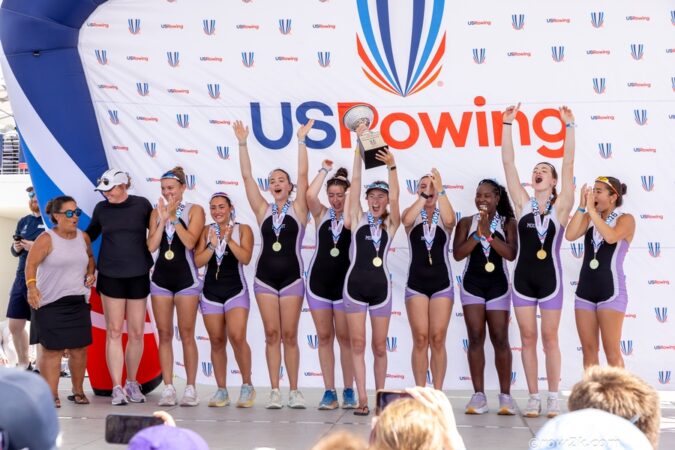
Malvern Prep and Mount St. Joseph Academy competed in the USRowing Youth National Championships from June 11-14 at Nathan Benderson Park in Sarasota, Fla., and brought home first-place trophies.
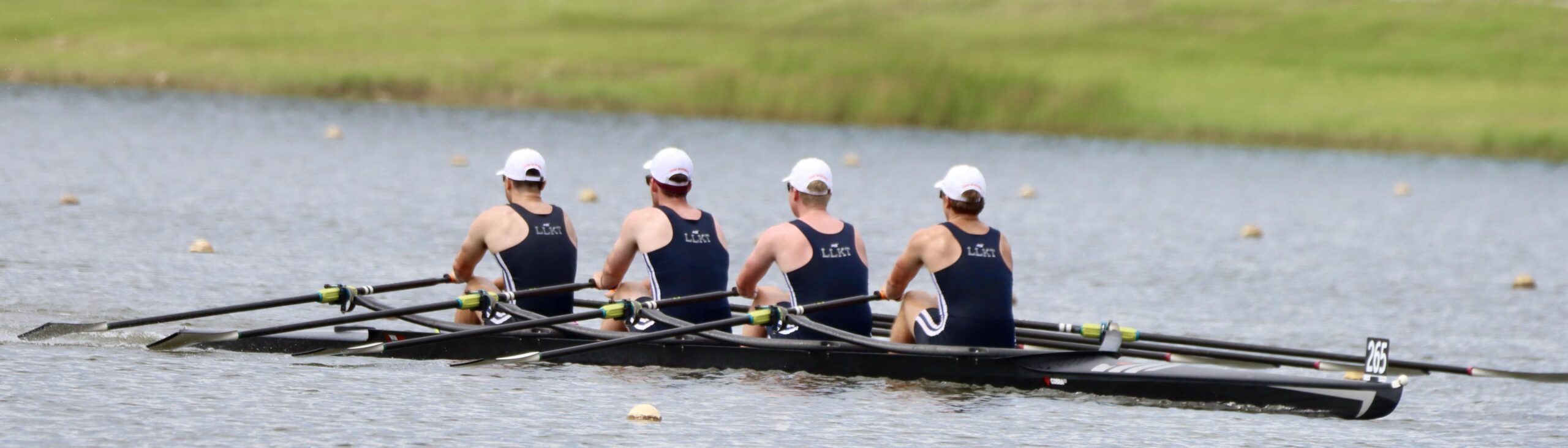
The regatta featured 235 of the top youth teams from around the nation. Malvern Prep’s youth quadruple sculls, which featured Will Bentley, Rory Coleman, Jack Arbogast, and Brendan Schuck, crossed the finish line in 5 minutes, 48.12 seconds to beat 28 other programs competing in the event.
Mount St. Joseph’s second varsity eight team won gold, with a time of 6:34.7. The championship boat included Kayleigh Costello, Ella Kurek, Addison Marques, Aubrey Sheehan, Megan Bell, Addison Ross, Christian Robinson, Ava Kristel, and Zoe Nguyen.
The last time these schools won at nationals was roughly two decades ago: Malvern in 2008, and Mount St. Joseph in 2006.
The two teams supported another from the sidelines. Malvern cheered on the Mount girls from shore, and vice versa when the boys were in the water.
“There’s only so many crews that are coming down from this area,” Mount St. Joseph coach Alanna McCoy said. “We all often are on the same stretch of water, so we took all the boats on one trailer and made it one trip — it was cool to come home with two trophies.”
‘Fueled the fire’
Malvern sent four boats to Nathan Benderson Park.
Beside from the youth quad boat, the youth double sculls, under-17 double sculls, and under-17 quadruple sculls also competed in the regatta.
Malvern’s spring has been filled with wins, including a first-place finish in the quadruple sculls at the Scholastic Rowing Association of America championship in May.
But placing second in a race at the Stotesbury Cup Regatta “unlocked this second gear,” Bentley said.
“That was hard for us,” he added. “This fueled the fire for our training going into nationals, so I think it really helped us.”
First-year head coach James Konopka helped cultivate that determination.
“It was the willingness from the guys to make changes, to do the work, to really push themselves into moments of discomfort,” Konopka said. “At times, I’d argue, we were maybe the hardest-working team on the river. These guys worked so hard for this win.”
Three Friars from the boat will move on to college rowing this fall.
Bentley will row at Holy Cross, Schuck at the University of San Diego, and Arbogast at Wesleyan University. Coleman will return next season as a senior and plans to row in college.
“It’s bittersweet to leave the program you spend so much time pouring hours and hours of effort into,” Schuck said. “But I know we left it in a place better than we found it.”
Malvern Prep sent four boats to Nathan Benderson Park for the USRowing Youth National Championships.
‘Doing it for our sisters’
For the Mount, inspiration and drive came from a more unconventional source.
“[Coach] gave us this book, The Little Engine That Could,” Sheehan said. “Before our races, we read it, and it was interesting to go into the unknown with the idea of, ‘I think I can, I think I can, I think I can,’ and that kind of pushed us through the race.”
With that mentality, the varsity eight boat crossed the finish line nearly two seconds ahead of the second-place boat. The group credited its teamwork and training for a successful final race of the season.
“We would come to the boathouse in the morning, row on the water for two hours, go home, and then come back and go again for a few hours, and then do it all again for the whole week,” said Ross, who will row at George Washington next season. “I think that extra training is a really big push, especially for this boat, because we came together so late.”
McCoy said the team shares a “unique bond,” despite nationals being the group’s first race competing together.
“They all spend a ton of time together,” she said. “They’re together at school, they’re together after school, they’re together at the boathouse. They also are very good friends and hang out with each other outside of the boathouse.”
Added Marques: “The main theme for our races is always to think about the legacy of the team. Doing it for the people who cheer us on, doing it for our siblings, doing it for our coaches, but the main thing is doing it for our sisters in the boat.”
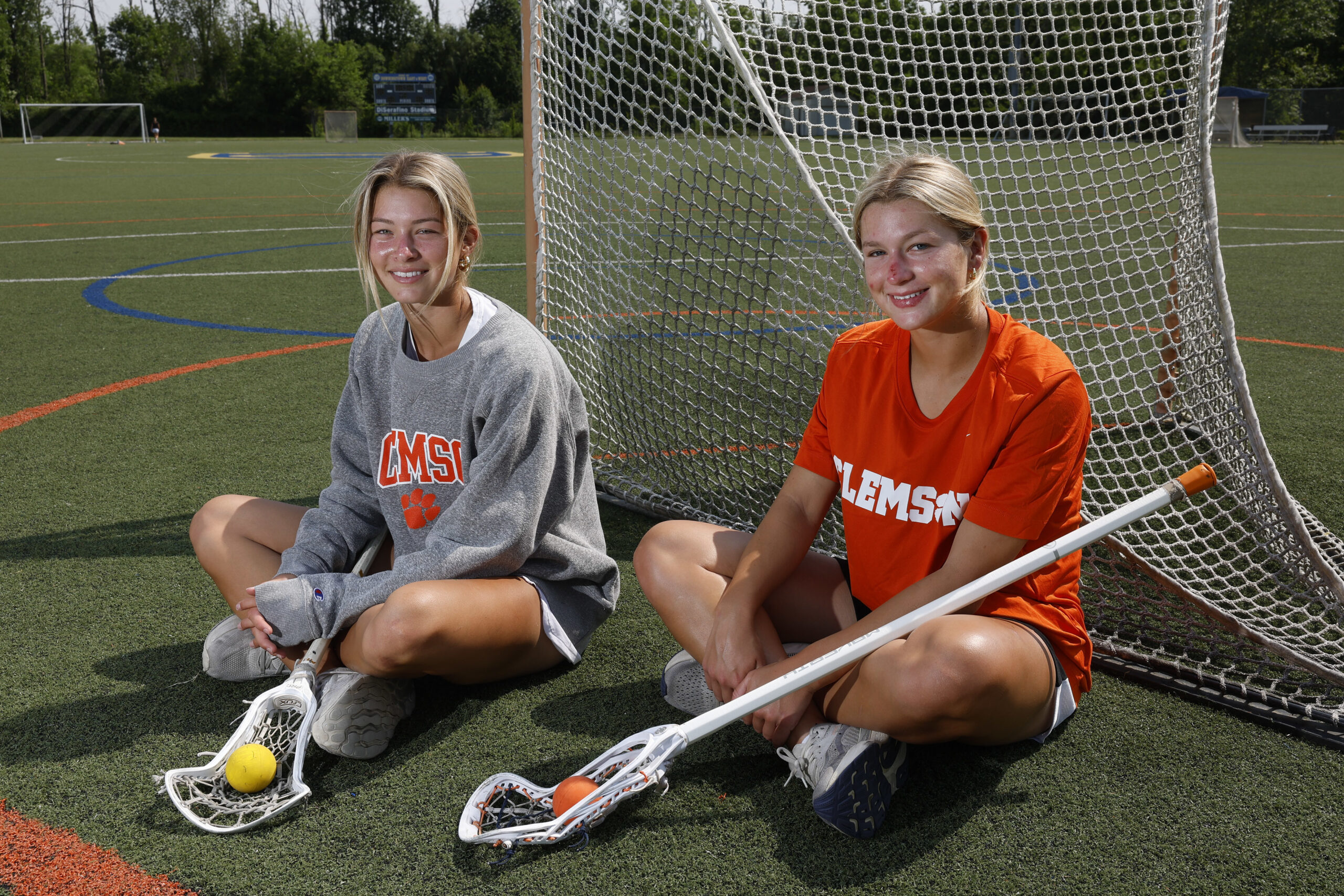
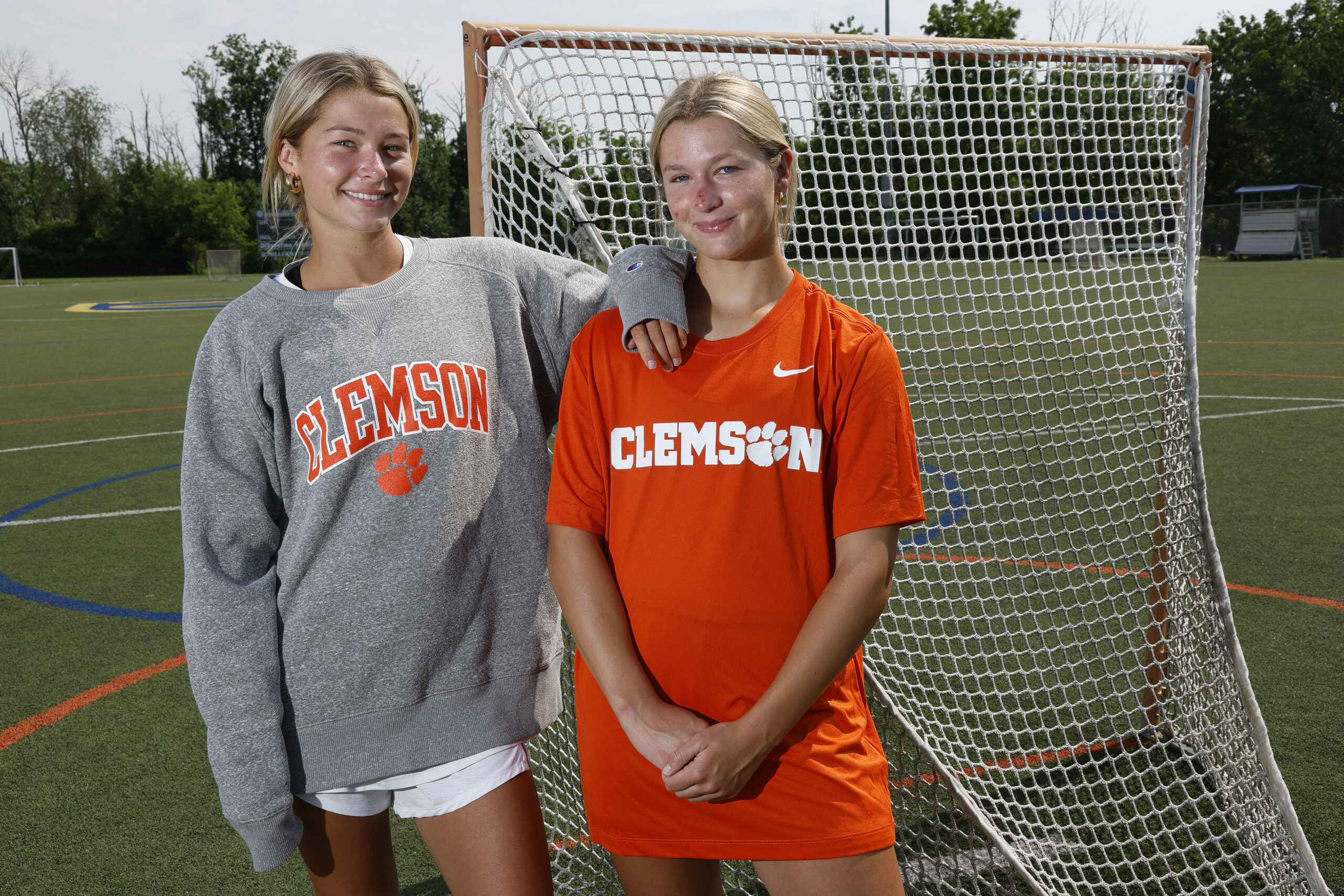
Twin lacrosse stars Brinn and Ava Findora are ready to don orange in the fall. It’s just going to be a different shade than they originally planned.
Brinn, the No. 8-ranked recruit in the class of 2026, and Ava, the No. 17-ranked recruit, according to InsideLacrosse, flipped their commitments from Virginia to Clemson on May 19.
“I chose Clemson because our original gut feeling loved Clemson,” Brinn said. “As we got closer to leaving, we felt we should go with our original connection and gut instinct, and make a change.”
They made the announcement following their senior high school season at Downingtown West, which ended in a 13-11 loss to Bishop Shanahan in the first round of District 1 playoffs.
With the Whippets, one of the top-ranked girls’ lacrosse programs in the state, Brinn was named first team all-Ches-Mont three times, while Ava received the same honor for all four years. Brinn also received a USA Lacrosse All-American nod in 2024 and 2025.
Brinn (left) was named first team all-Ches-Mont three times, while Ava received the same honor for all four years at Downingtown West.
The two grew up playing together: from their club team with NXT LC Girls, Downingtown West, and even for the 2024 USA U16 Selects Team. Playing together in college seemed like the natural next step.
Early in their recruitment process, Brinn and Ava discussed the possibility of a school recruiting one of them, but the hope was to go together.
The midfielders committed to Virginia in September 2024, early in their junior year. They were deciding among Virginia, Clemson, and then-reigning champions North Carolina.
“We were very obviously grateful for the opportunity we had [with Virginia], but we just were not feeling very good about it,” Ava said. “We just had a sense of uncomfortability with that, and then finally we made the decision very last minute to make that switch.”
Clemson qualified for this year’s NCAA Tournament for the second time in program history — with its first being last season — but fell to North Carolina in the second round.Virginia did not make the tournament for the first time since 1995.
Clemson beat Virginia, 12-10, when the two teams faced each other in March and finished the season ranked higher nationally than the Cavaliers.
During their initial decision, Ava and Brinn said the location of the school played a factor. Charlottesville, Va., is a about a four-hour drive from their home in Downingtown. Clemson is a plane ride or more than 10 hour drive.
Ava said that the comfort she feels in their decision to play for the Tigers makes the distance worth it. For Brinn, it brings new excitement.
Brinn and Ava will join a Clemson team that has made two NCAA Tournament appearances in program history.
“We have each other, so that’s so helpful,” Brinn said. “I feel like now is the time to go far and find what you love. Going that far and doing what we love is what we’re most excited for.”
Brinn said trusting their gut to make this change was the “best thing” they did, as they now prepare to leave home together. They will become the second set of twins on Clemson’s 2027 roster, joining rising seniors Regan and Blair Byrne.
While it took time to tune out, what Ava called, “outside factors,” and make the decision to change their commitment, she is sharing the same feelings as her sister.
“Leaving for school is obviously a difficult change, it’s a huge change in your life, but I’ve become really excited, and I can’t wait to get down to Clemson,” Ava said.
The college basketball season is officially over, which means it’s time for the transactional period to begin. Welcome to the 2026 transfer portal.
More than 1,500 men’s basketball players were in the portal in the first 24 hours after it officially opened on April 7. The portal is open for two weeks, but players do not need to make their commitment to a new school during that window. The next few weeks will be filled with salary negotiations during the yearly NCAA free agency process.
We’ll be tracking it all here, from players moving in and out of — or around — the Big 5 to keeping tabs on Philly-area players at other schools. We’ll also take a look at where some of the top local high school recruits from the Class of 2026 will be playing in the fall.
Big 5 portal entries
Here are the players who were at Big 5 schools during the 2025-26 season but have entered the transfer portal.
Villanova
Acaden Lewis (point guard) started for the Wildcats during his freshman year and averaged 12.2 points, 5.3 assists, and 3 rebounds. (Transferring to Miami.)
Bryce Lindsay (guard) was a redshirt sophomore and Villanova’s best scorer during its nonconference schedule. (Transferring to Indiana.)
Malachi Palmer (forward) was a solid contributor off the bench who started down the stretch after Matt Hodge went down. But Villanova recruited multiple forwards out of the portal. (Transferring to Minnesota.)
Chris Jeffrey (guard), a freshman backup point guard who missed time after knee surgery but had promising moments.
Braden Pierce (center), a redshirt freshman reserve who followed coach Kevin Willard from Maryland, played 6.5 minutes per game and averaged 1.2 points. (Transferring to College of Charleston.)
Zion Stanford (forward/West Catholic graduate) transferred to Villanova from Temple, left the team in March after playing in 10 games. (Transferring to Towson.)
Tafara Gapare (forward), a senior, left the program at midseason after playing in just nine games.
Aiden Tobiason (guard) averaged 15.3 points, second on the team, and led the Owls with 39 steals. He’ll have two years of eligibility left. (Transferring to Syracuse.)
Babatunde Durodola (forward), a sophomore, started as a freshman and was a key rotational player this season. (Transferring to Ball State.)
Jamai Felt (forward) started in 23 games and averaged 4.1 rebounds. (Transferring to Arkansas-Little Rock.)
AJ Smith (guard) averaged 7.8 points in eight games and had his season cut short by a shoulder injury.
Spencer Mahoney (forward) made 13 appearances as a redshirt sophomore. (Transferring to Denver.)
Ayuba Bryant Jr. (forward) appeared in 27 games, averaging 8.1 minutes.
Connor Gal (guard/Great Valley High graduate) played 12 minutes across five games and will have one year of eligibility left.
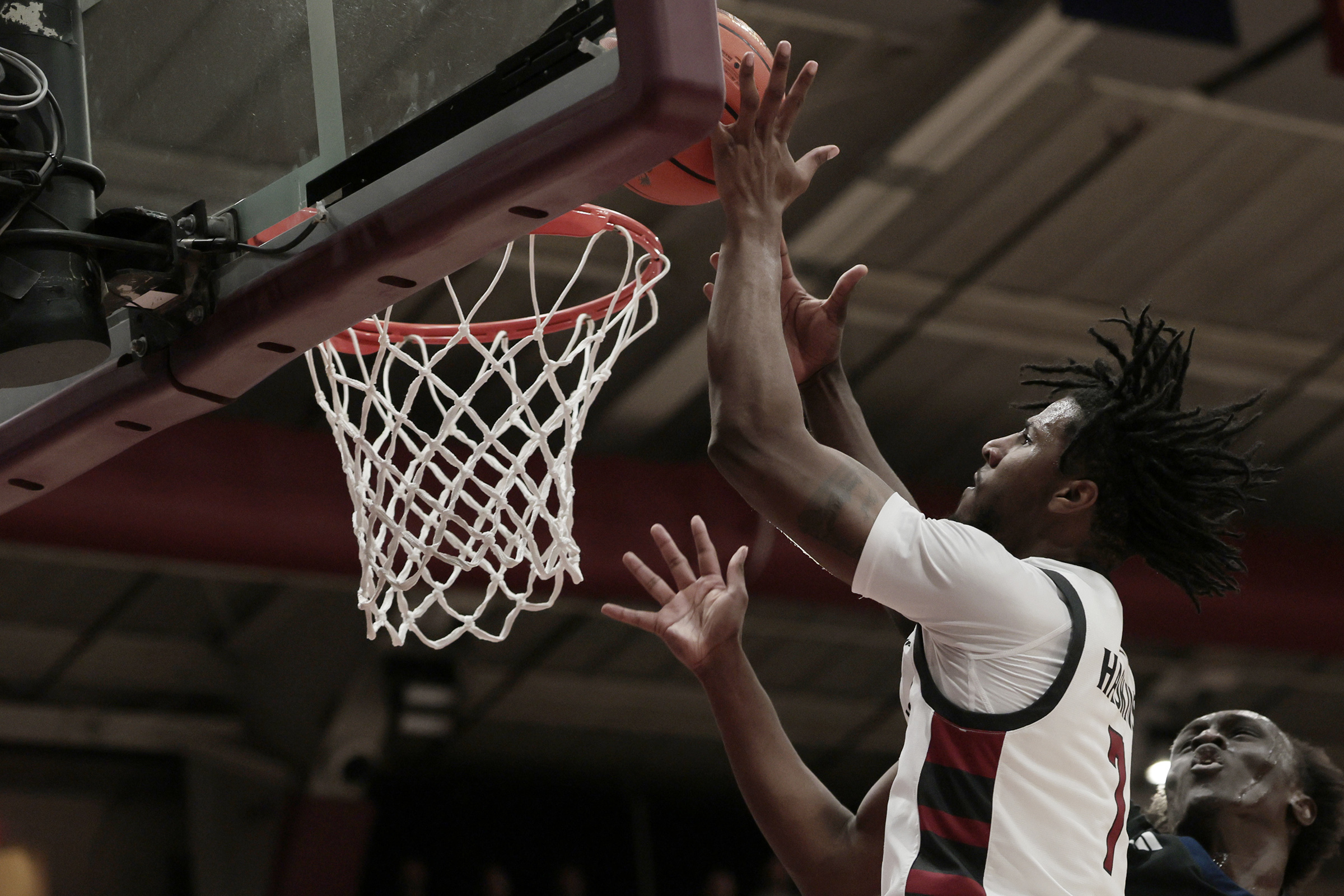
Dasear Haskins was a key starter for the Hawks this season.
St. Joseph’s
Deuce Jones (guard/La Salle), who led the Hawks in scoring during the first two months of the season, was dismissed from the team in December. (Transferring to Alabama-Birmingham.)
Dasear Haskins (guard/Camden High graduate) averaged 11.1 points and started for the Hawks as a redshirt sophomore. (Transferring to Ole Miss.)
Anthony Finkley (forward/Roman Catholic graduate), a junior, averaged 19 minutes in 35 games. (Transferring to La Salle.)
Kevin Kearney (forward) appeared in 14 games as a redshirt freshman. (Transferring to Manhattan.)
Jaden Smith (center) averaged 2.8 points and 1.8 rebounds in 9.1 minutes after transferring from Fordham. (Transferring to Ball State.)
Steven Solano (center), a redshirt freshman, played in eight games. (Transferring to Delaware.)
Al Amadou (center/Springside Chestnut Hill Academy graduate) transferred from Marquette and appeared in 11 games. (Transferring to Wisconsin-Milwaukee.)
Penn
Ethan Roberts (forward) has one year of eligibility remaining — the Ivy League prohibits graduate students from playing intercollegiate athletics — and was the Quakers’ leading scorer (16.9 points per game). (Transferring to Notre Dame.)
Cam Thrower (guard), a senior who spent four years at Penn, averaged 17 minutes in 27 games. (Transferring to Elon.)
Dylan Williams (guard) played in seven of Penn’s first 10 games before the senior missed the rest of the season with an injury. (Transferring to Northwestern)
Michelangelo Oberti (center) appeared in 12 games. (Transferring to Boston University)
Alex Massung (guard), who averaged 5.6 minutes in 10 games played. (Transferring to Saint Anselm.)
Bradyn Foster (forward) saw action in Penn’s season opener.
Drexel
Shane Blakeney (guard) was Drexel’s leading scorer, averaging 14.2 points in 33 games as a junior. (Transferring to South Carolina.)
Kevon Vanderhorst (guard) averaged 9.3 points and 2.9 assists while starting all 33 games for the Dragons. (Transferring to Iona.)
Villiam Garcia Adsten (guard), a junior, averaged 17.5 minutes in 32 games. (Transferring to Maine.)
Horace Simmons Jr. (forward/La Salle College High School graduate) appeared in 13 games.
La Salle
Ashton Walker (guard) started 21 games and averaged 8.2 points as a freshman. (Transferring to Monmouth.)
Eric Acker (guard), a junior, appeared in 26 games, starting 10, and averaged 18.9 minutes. (Transferring to Northern Kentucky.)
Nas Hart (forward) played in 20 games as a freshman. (Transferring to Quinnipiac.)
Edwin Daniel (forward) played 31 games (14.5 minutes) and averaged nearly four points and 3.5 rebounds. (Transferring to Stephen F. Austin.)
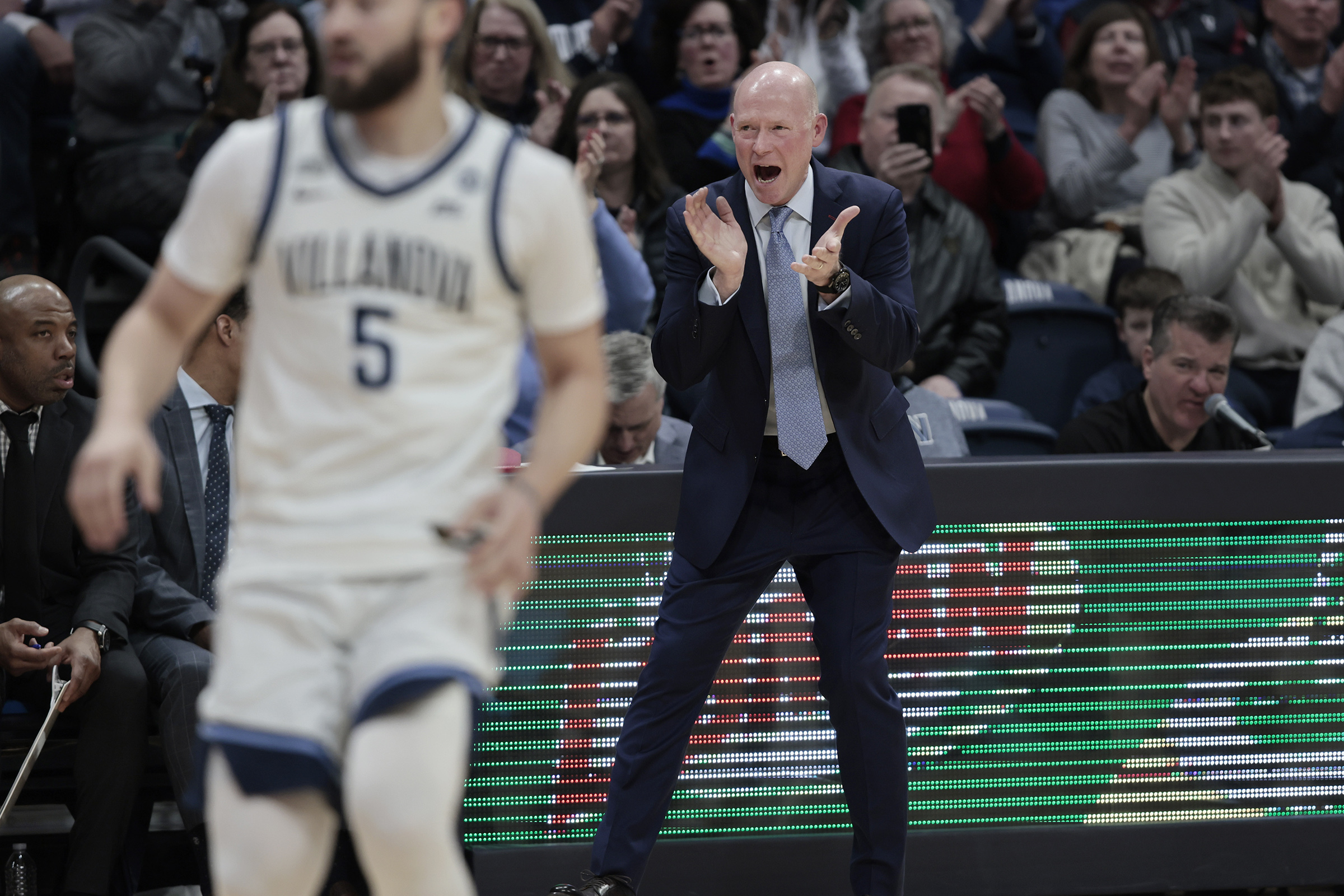
Villanova coach Kevin Willard directs his team against Butler on Feb. 25.
Big 5 portal additions
These are the players who are transferring to Big 5 schools.
Philadelphia Catholic League basketball was a fixture for Kevin Grugan — a mild obsession, even — throughout his childhood. Growing up in Rhawnhurst, he had deep and natural ties to Father Judge’s program in particular. His uncle, Ron Zawacki, was an assistant under legendary head coach Bill Fox, and Grugan competed in Judge’s summer basketball camps, went to the Crusaders’ games on Friday nights and Sunday afternoons in the winter, and graduated from the school in 1996.
“I would watch the games,” he said, “and be enthralled.”
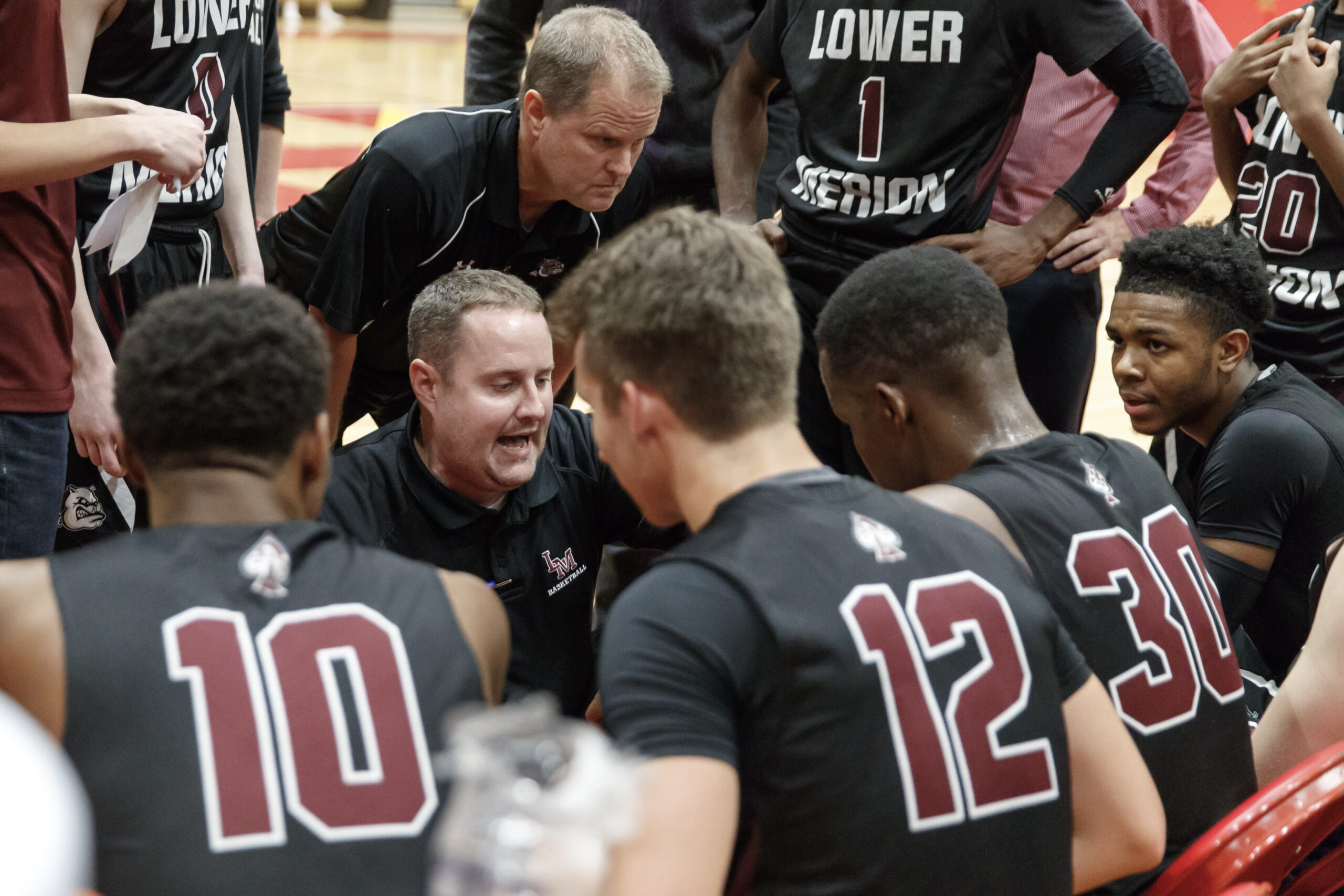
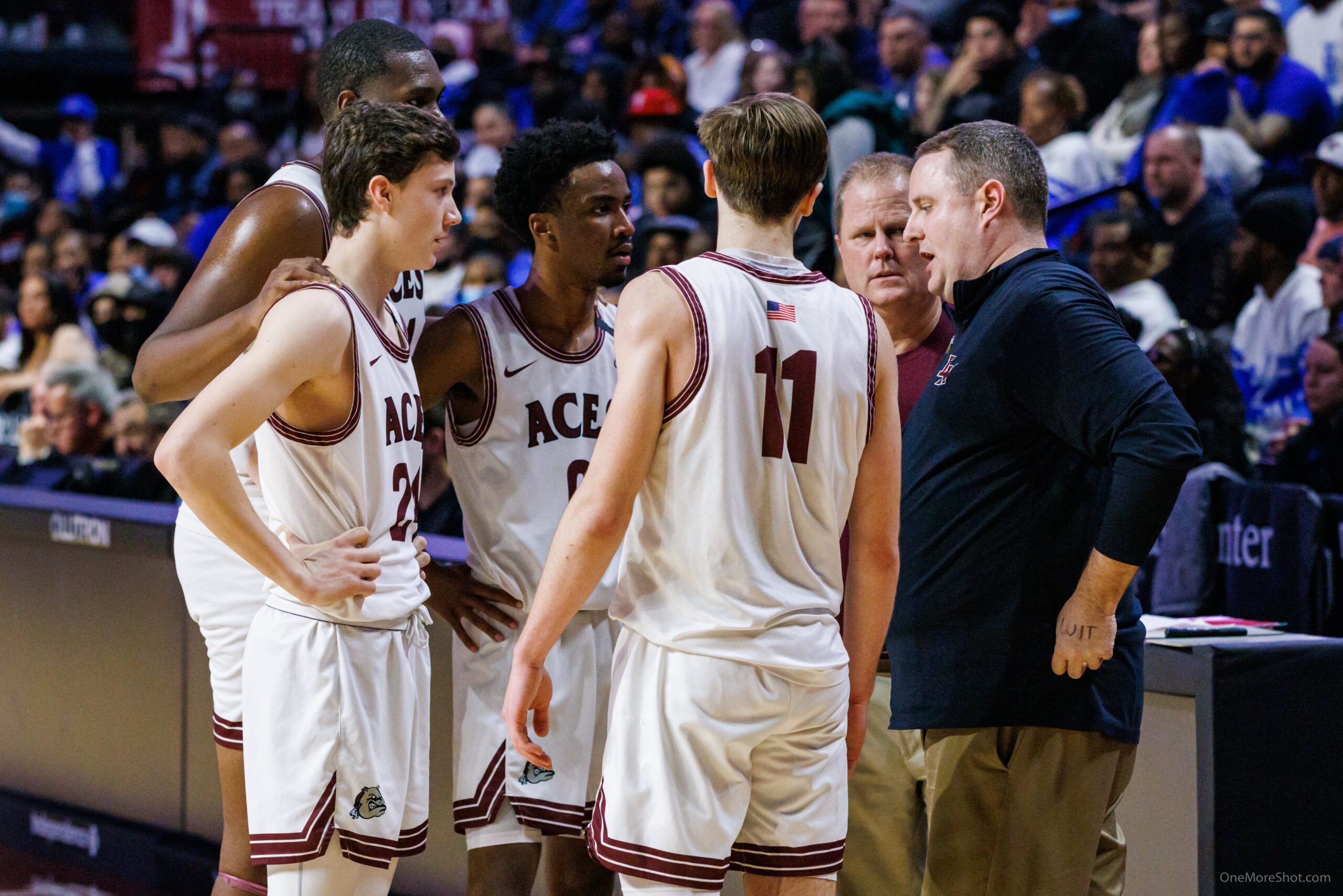
His fascination had faded by 2007, when Lower Merion High School’s administration hired him to teach math and assist Gregg Downer, the school’s longtime boys’ basketball coach. The subsequent years have not reignited his nostalgia for the old days of Northeast Philly hoops. In fact, in his role as a coach at a suburban public school, Grugan has come to resent what he perceives as an uneven playing field throughout Pennsylvania sports. Parochial, private, and charter schools, after all, don’t have borders; they can draw their students, and their student-athletes, from anywhere. Public schools can’t.
Kevin Grugan is a longtime boys’ basketball assistant at Lower Merion.He believes competing against private schools has presented an uneven playing field throughout Pennsylvania sports: “High school athletics is about building a team, building a culture.”
“High school athletics is about building a team, building a culture,” Grugan said recently. “You’re devising competition. You’re learning from that competition. You’re trying to improve on the next game. But you go into those events, and suddenly standing across from you are multiple if not five Division I athletes. You can’t watch enough film to find that very secret flaw that nobody else has found.”
Grugan’s complaints have become common among Pennsylvania’s public school coaches, administrators, parents, and players since the Catholic League and Public League moved under the jurisdictional umbrella of the PIAA in the fall of 2008. And that fierce debate about fairness could soon be cast in stark relief.
In April, the Pennsylvania State House of Representatives passed, by a 178-23 vote, House Bill No. 41, which would allow the PIAA to “establish separate playoffs and championships for athletics for boundary schools and non-boundary schools.” The Pennsylvania Senate can vote on the bill at any time but has not yet. A spokesperson for Gov. Josh Shapiro said that “the Shapiro administration is monitoring the bill as it moves through the legislative process” but did not have a position on it.
Shapiro and his aides might be the only people connected to Pennsylvania’s high school sports who don’t have a position on the bill or the public-private divide.
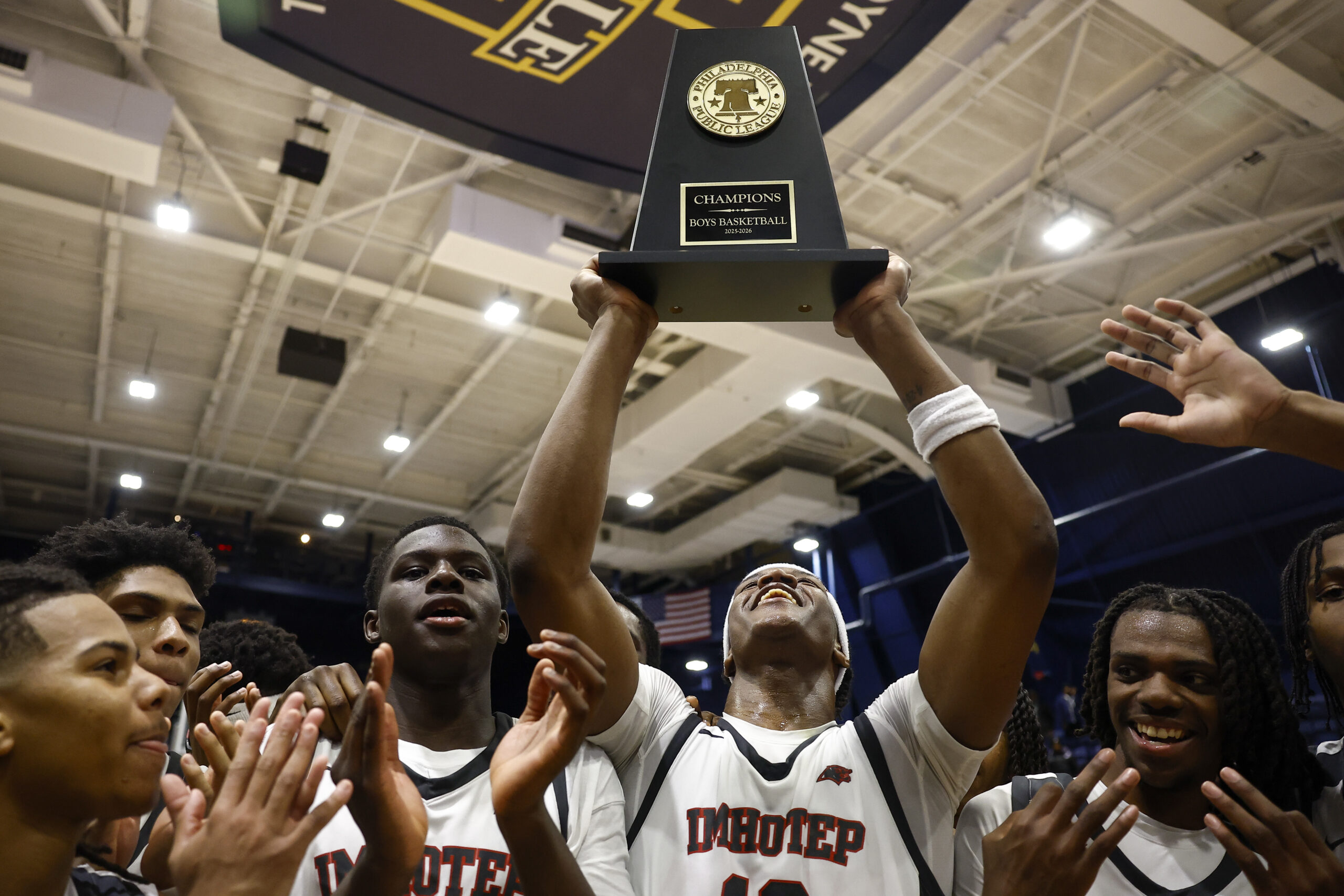
Imhotep Charter has won six consecutive Public League boys’ basketball titles.
It’s difficult to find a state issue that provokes such strong viewpoints and often-strident opinions. And this issue has plenty of big-picture and hyper-local tentacles, including the professionalization and commodification of high school sports, the question of athletics’ appropriate purpose and role in secondary education, and accusations that some non-boundary schools violate PIAA bylaws by recruiting student-athletes for the sole purpose of having them play sports.
“All we’re trying to do is say that part of high school sports is teaching kids how to play a fair game,” Rep. Scott Conklin (D), who introduced House Bill No. 41 and represents the 77th district, in State College, said in a phone interview. “It’s something they can use for the rest of their lives. We don’t want to teach them that there are two sets of rules: one set for a boundary school, one for a non-boundary school.”
The traditional city and neighborhood rivalries within the Catholic League mean more to some coaches, players, and fans than the district and state tournaments do.
Conklin cited player safety, particularly within football, as a primary reason for House Bill No. 41, arguing that non-public schools can attract more athletes — and more athletes who are bigger, stronger, and faster — than their public opponents can.
“The boundary school may have 18 really good players; they play offense and defense,” he said. “By the second quarter, those kids are tired, and that’s when children get hurt: when they’re gassed.”
He did not provide any statistical evidence to support this claim, and in a Dec. 3, 2024, memo he circulated to state House members to introduce the bill, he made it clear another factor was just as important, if not more so.
“When it comes to competition in team sports, especially football and basketball,” Conklin wrote, “the private, charter, and parochial schools have been dominant in state playoffs in recent years.”
Among the highest-profile sports, that dominance hasn’t been quite as severe as Conklin suggested. Consider these results since the beginning of the fall 2008 sports season:
Boundaryschools have won 54of the 92 football state championships.
Non-boundary schools have won 63 of the 86 boys’ basketball state championships, including 16 of the last 18.
Non-boundary schools have won49 of the 86 girls’ basketball state championships.
(function(){function e(){window.addEventListener(`message`,function(e){if(e.data[`datawrapper-height`]!==void 0){var t=document.querySelectorAll(`iframe`);for(var n in e.data[`datawrapper-height`])for(var r=0,i;i=t[r];r++)if(i.contentWindow===e.source){var a=e.data[`datawrapper-height`][n]+`px`;i.style.height=a}}})}e()})();
In an attempt to achieve and maintain competitive balance, the PIAA does use a formula, based on non-boundary schools’ success and the number of transfer students they accept, that can allow teams to move up in enrollment classification. Still, St. Joseph’s Prep, with an all-male enrollment of roughly 900 and without a football stadium on its North Philadelphia campus, has won seven PIAA Class 6A championships in the last 10 years while competing alongside the state’s biggest public schools, including North Penn, which has more than 3,000 students. What’s more, a recent donation of $74 million from Prep alumnus and billionaire entrepreneur Nick Howley is likely to help the Hawks separate themselves further from the 6A field.
“They’re just two different structures,” Prep president John Marinacci said. “All our student-athletes, whether it be football or anything else, come from the same geographic locations that our whole student body comes from. I know there are allegations out there that we have students from all over America. You know where the Prep is. It’s 15 minutes from Jersey. Do we have kids who play football who come from Jersey? We do. We also have a lot of kids who play other sports or don’t play sports who come from Jersey. The geographic reach of the school is what it is. We’re a regional school.”
St. Joe’s Prep has won seven PIAA Class 6A football championships in the last 10 years.
‘We’re coming’
Intrastate athletic competition among different types of Pennsylvania high schools is nothing new. In 1972, the state legislature amended the Public School Code to allow non-public schools to participate in postseason and championship events with public schools, and some private and parochial institutions have been members of PIAA leagues and conferences for years. When eight Delaware Valley schools came together to found the Pioneer Athletic Conference in 1985, for example, two of them were Lansdale Catholic and St. Pius X, and the members of the all-girls Catholic Academies League have long competed against suburban Philadelphia public schools within PIAA District One.
The issue took on increased salience both in the region and throughout Pennsylvania, though, when the Catholic and Public Leagues entered the PIAA 18 years ago. At the time, association members who might have raised questions about competitive fairness were cautioned against making any such case, according to a source who was directly involved in negotiating and implementing the expansion. If they did, the legislature would take steps to strip the PIAA of much of its power, oversight, and relevance.
The Public League has 73 member schools. But nearly half of them — 34 — are charters, including football and boys’ basketball powerhouse Imhotep.
“Almost every legislator’s child went to a non-public school,” the source said, “and everybody wants to have that state-championship medal. … They said, ‘Don’t try us, ’cause we’re coming.’”
So the Catholic and Public Leagues formed District 12, and the inclusion of the Public League counterbalanced the injection of private-school strength into the association only so much. The Public League today has 73 member schools. But nearly half of them — 34 — are charters, among them football and boys’ basketball powerhouse Imhotep, and the School District of Philadelphia’s open-enrollment policy can allow exceptional athletes to attend just about any high school and compete for any coaches or programs they want.
For the two leagues, the ostensible reasoning that justified joining the PIAA still stands up. It would lead to more fulfilling experiences for student-athletes: better (or at least more diverse) competition, travel outside the limits of the city and the suburbs that ring it, perhaps more exposure to and interaction with recruiters — and, of course, the opportunity to call themselves state champions.
(function(){function e(){window.addEventListener(`message`,function(e){if(e.data[`datawrapper-height`]!==void 0){var t=document.querySelectorAll(`iframe`);for(var n in e.data[`datawrapper-height`])for(var r=0,i;i=t[r];r++)if(i.contentWindow===e.source){var a=e.data[`datawrapper-height`][n]+`px`;i.style.height=a}}})}e()})();
“I’d go to college and hear somebody say, ‘We beat Neshaminy in a state championship game,’” said Father Judge basketball coach Chris Roantree, who won a Catholic League boys’ championship as a player with the Crusaders in 1997 before guiding them to back-to-back PCL titles and a PIAA Class 6A championship over the last two years. “I’d be like, ‘We played Neshaminy and beat them by 50. Are you really a state champion?’
“Here’s the thing: Philly is Philly. So if you want all the Philly kids to go to public schools, they’re still going to dominate. There’s so much talent in Philadelphia that it doesn’t matter where it goes. That’s a disadvantage for us. There are six, seven, eight, 10 good teams in the Catholic League. If they’re in the playoffs, they’re going to make some noise in the states. There’s a lot of good players spread out. I laugh at it sometimes, but we can only control what we can control.”
The Catholic and Public Leagues, loaded with student-athletes who have chosen to attend and play for their respective schools, have another advantage over the publics: They are in alignment with the generational shifts and trends throughout youth sports, as young athletes and their parents crave more freedom and place greater importance on AAU, club, and travel teams.
“We need to be looking at increasing the opportunities for kids,” District One chairman Mike Barber said. “If not, they’re going to find other places to play.”
It’s difficult to deny that, in this modern landscape, the PIAA benefits from the presence of private, parochial, and charter schools, that these programs infuse the association’s competition with more talent and prestige.
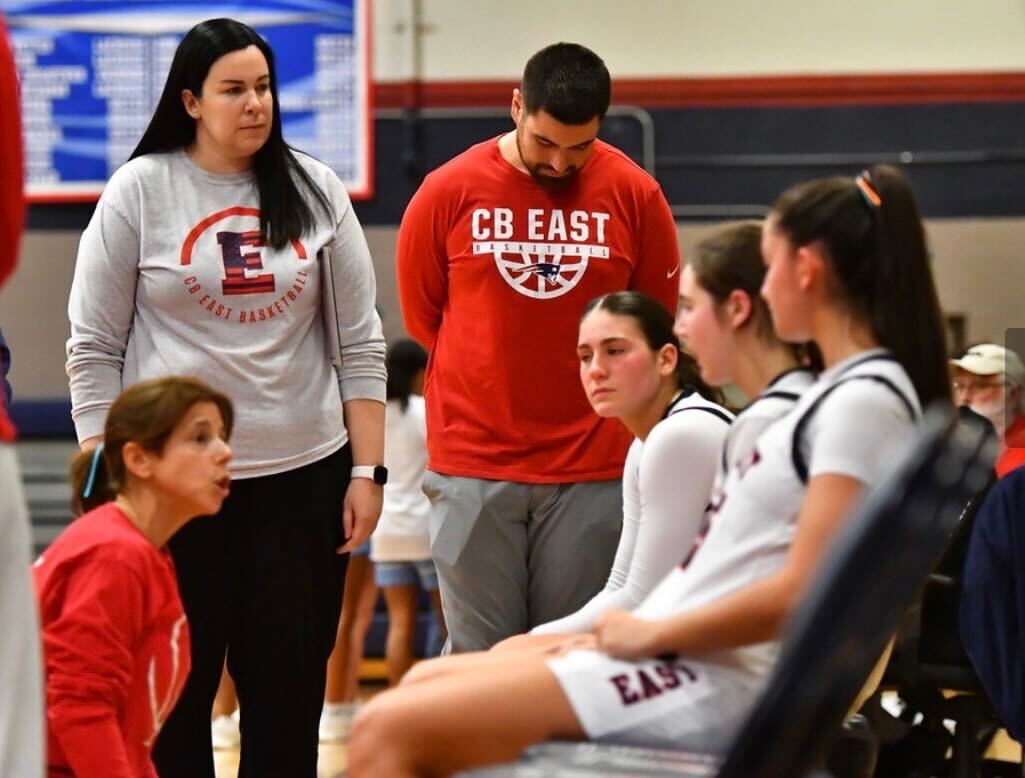
Liz Potash is the Central Bucks East girls’ basketball coach.She says “when I have to compete for the same championship [as a private school], there’s a disparity there, and I think obviously everyone is aware of that.”
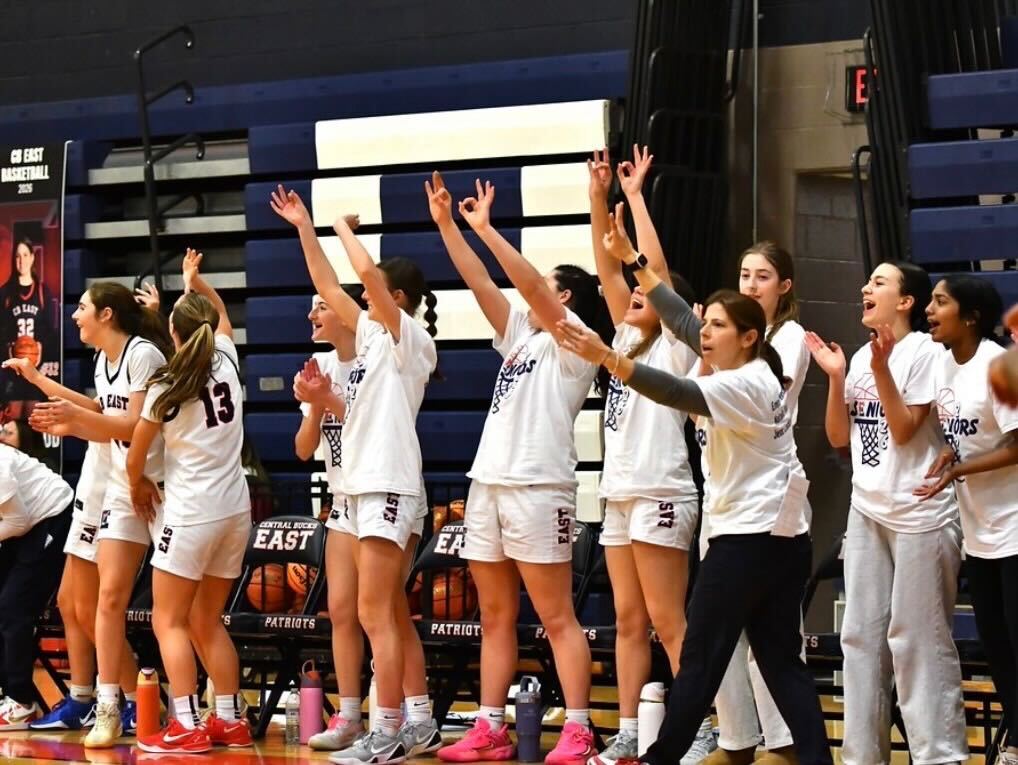
“What they do is unbelievable,” former Central Bucks East girls’ basketball coach Liz Potash said. “We played Archbishop Carroll in our Christmas tournament, and you watch that scout film, and you’re like, ‘Oh, my gosh! This is unbelievable.’ I have all the respect in the world for those programs. Where it gets me is in the postseason, when I have to compete for the same championship. Then it’s just not a level playing field. … I’ll play them in-season. I have no issue with that. But when I have to compete for the same championship, there’s a disparity there, and I think obviously everyone is aware of that.”
The reality that non-boundary schools can and do pull students from New Jersey, Delaware, and the suburbs that feed District One’s public schools has stoked plenty of us-vs.-them tension. Potash herself admitted to rooting for Perkiomen Valley during its run to the 2025 Class 6A girls’ hoops championship, and when CB East beat Germantown Academy — a private, non-PIAA program — last season, one of Potash’s fellow public school coaches called to tell her, Man, there’s nothing I like to see more than when one of us knocks off a team like that.
In 2025, Grace Galbavy, Quinn Boettinger, and Bella Bacani led Perkiomen Valley girls’ basketball to its first state title. The Vikings beat Archbishop Carroll to get there.
“District One and District 12 hate each other,” one area athletic director said, though Starr Davenport, the Philadelphia School District’s director of finance for athletics, tried to soften that assertion by drawing on a familiar rivalry as an analogy.
“You can compare it to almost Dallas vs. the Eagles,” she said. “We don’t really hate them. It’s a healthy, quasi-toxic athletic approach to, ‘We’re better than District One.’ It’s the proximity. It’s the ongoing battles that are close. It gets to the point where it’s one vs. the other, but I think there’s harmony and respect across both districts.”
The irony — and, for many public school coaches, the frustration — is that the traditional city and neighborhood rivalries within the Catholic and Public Leagues mean more to some coaches, players, and fans than the district and state tournaments do. The rollicking sellout crowds filling the Palestra every year for the PCL boys’ basketball semifinals and the boys’ and girls’ championship games have been just the most obvious example.
West Philadelphia coach Adrian Burke values the history of the Public League, and winning the title carries more weight compared to other championships.
“We want to win the Pub,” West Philly High boys’ basketball coach Adrian Burke said in February, before his team lost to Imhotep in this year’s Public League championship game. “It’s legendary. You’re talking about some of the greatest basketball players ever. You’re talking about Wilt Chamberlain, Gene Banks. I could [go] on and on and on. When you think about the Public League, you think about all those guys who paved the way for us to play.
“We don’t care too much about districts. States is good. But we want to win the Pub.”
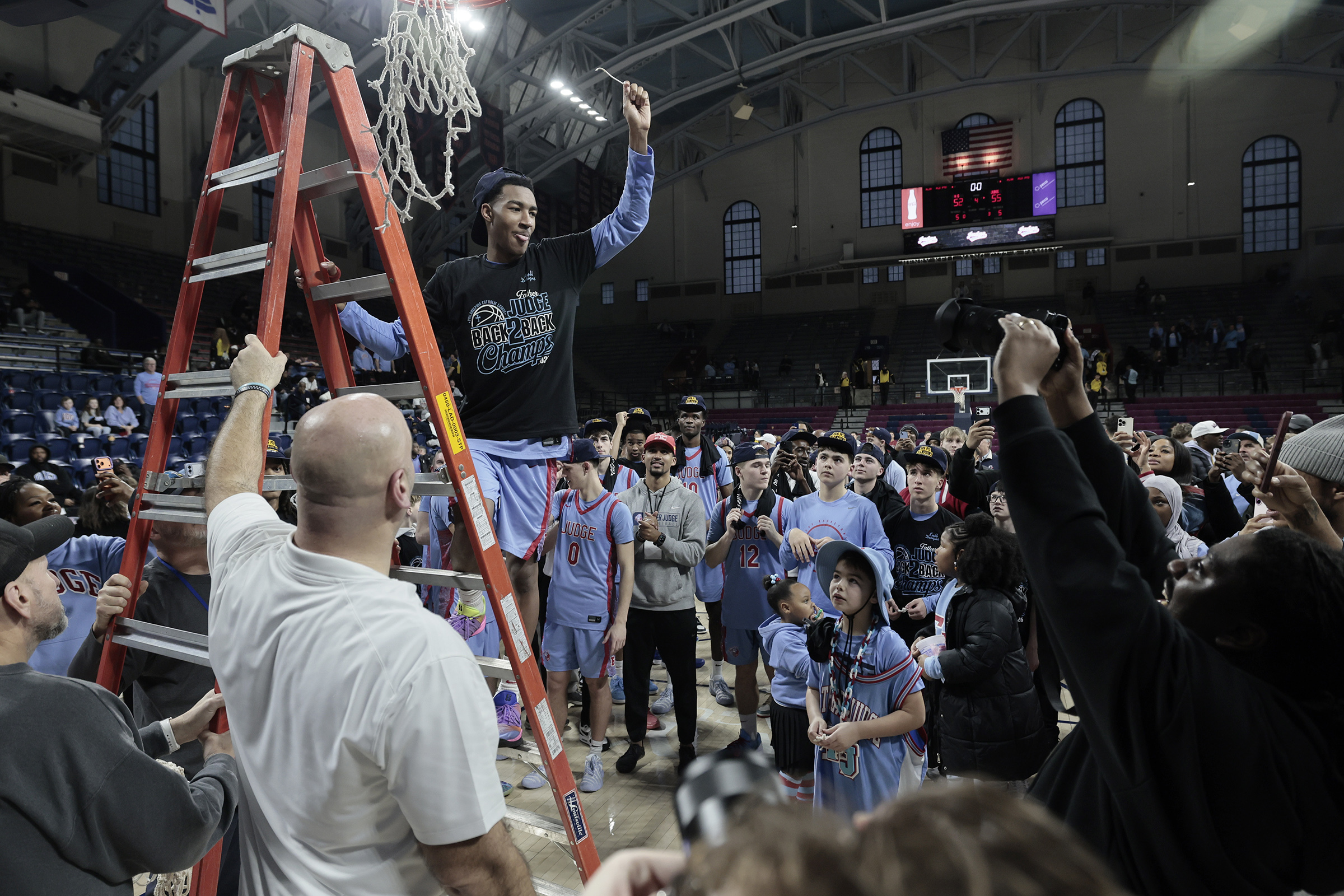
Father Judge won back-to-back PCL boys’ basketball titles and a PIAA Class 6A championship over the last two years.
A solution?
Splitting the PIAA playoffs into boundary and non-boundary brackets would not be unprecedented, but it would be unusual. New Jersey is one of four states that allows public and private schools to compete during regular seasons but keeps them separate for postseasons, according to a survey conducted earlier this year by the USA Today Network. Another four states, including Maryland, don’t permit boundary and non-boundary schools to play against each other.
Grugan wouldn’t mind such a measure, wouldn’t mind seeing House Bill No. 41 signed into law and put into effect. Lower Merion won its last state title in 2013, and in 2019 and every year from 2021 through 2025, it lost in the state playoffs to either Roman Catholic or Archbishop Wood. The question that he, Rep. Conklin, and everyone involved or interested in Pennsylvania high school sports has to ask and answer is this: Is it better to have lost to these non-boundary teams or never to have played them at all?
“We keep making these decisions based on the idea that all high school athletes are performing at this high Division I level,” Grugan said, “and my thing is, most of the high school athletes you’re coaching are going to have a high school basketball experience and that’s it. And by the way, that’s a great thing. That is going to teach them so many lessons, and they’ll be able to thrive in other situations in their lives with amazing memories. We still celebrate big games by getting pizza. That’s as good a moment as anything we’re going to produce on the court.”
Staff news developer Chris A. Williams contributed to this article.
Before games, Michael Pereira needs some time alone to visualize the moment.
“I’m thinking about what I’m going to do and also trying to feel the emotion that would come with doing that thing,” Pereira said. “I’ll think of me dunking, and then feel the jolt of energy you get after you dunk it.”
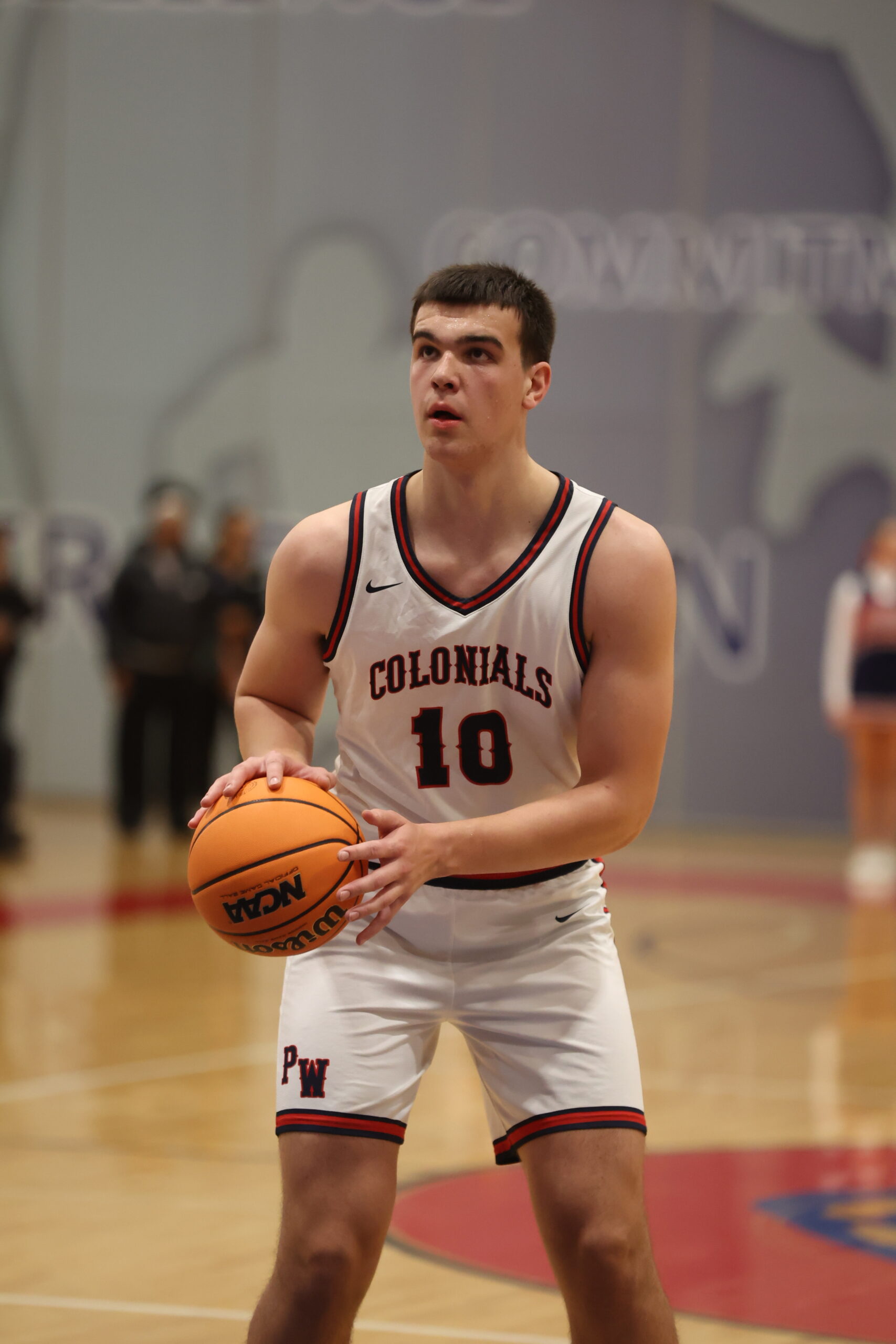
It’s a practice he learned from his mother, and being a visionary through his four years at Plymouth Whitemarsh High School has taken the 6-foot-10 center pretty far. After starring for the Colonials, Pereira has been playing internationally for Brazil, where his father was born.
In June, he missed his senior prom to help the country’s under-18 national team place third in the FIBA AmeriCup in Mexico. Come fall, Pereira will join Penn, where he’s a member of Fran McCaffery’s first recruiting class.
Pereira is hoping to bring what he learned from international play to Penn.
“[The AmeriCup] was a great learning opportunity, definitely,” Pereira said. “The pace of play, the physicality of the game was faster because everyone was higher level there compared to what I’m used to.”
After falling to the United States, 102-56, in the semifinals, Brazil faced Puerto Rico in the third-place game on June 7. At halftime, Puerto Rico led by 19. It seemed as if Brazil would end AmeriCup play with back-to-back blowout losses. Then, Brazil came storming back and took the lead in the closing minutes of the fourth quarter. From there, it was able to hold on to claim an 83-77 victory. Pereira notched 4 points, 11 rebounds, and 2 blocks.
Michael Pereira averaged 14.1 points, 7.6 rebounds, and 1.3 blocks this season with Plymouth Whitemarsh.
Three days later, he was back at Plymouth Whitemarsh for his graduation.
“He’s a serious student-athlete,” said Plymouth Whitemarsh coach Jim Donofrio. “Anyone that can get accepted into Wharton early admissions obviously has a good resumé academically. Michael is a very curious guy when it comes to learning; he is open-minded to learning anything, he has high standards to want to excel in anything he takes on.”
‘Something special’
Pereira’s curiosity drove him into his coach’s Honors Philosophy & Ethics course. In class, Pereira did not shy away from offering his thoughts on whatever topic Donofrio covered that day. But before interjecting, Pereira would always stop and take in the concept.
Donofrio said this quality has become rare in today’s “hyper impatient society.”
However, it did not surprise the longtime coach that his player was a diligent and thoughtful student. Pereira showed the same characteristics in practice.
“One thing in the coaching world that we should emphasize constantly is when I’m talking to you, I want pure eye contact,” Donofrio said. “Michael gives you nothing but eye contact, he almost looks through you. He takes the message and he absorbs it, and that’s mind training — for a young guy to have that kind of discipline to want to listen.”
Pereira picked up the sport relatively late, in sixth grade. His parents had Chuck and Ronald Moore, two former Plymouth Whitemarsh players who went on to play collegiate basketball, train Pereira and his older brother Will. When Pereira entered eighth grade, Ronald was his coach.
Then, in high school, Chuck oversaw Pereira’s development as Donofrio’s assistant.
After McCaffery was hired by Penn, he brought in three assistants. One of them was Ronald Moore, who played under him at Siena. It was Ronald who put Pereira on his former coach’s radar.
“Tons of respect for Jimmy [Donofrio] and the job that he’s done for so many years there,” McCaffery said. “Also aware of the quality of play in that conference, the teams they played against, and I felt very strongly that Mike would be ready when he got here.
“When I saw him his junior year, I thought he had a chance. When I saw him his senior year, I knew he was going to be something special.”
Pereira received offers to play at various high-level prep schools for his senior season, but he wanted to stay at Plymouth Whitemarsh. His decision paid off. Pereira averaged 14.1 points, 7.6 rebounds, and 1.3 blocks, while leading the Colonials to a PIAA District 1 Class 6A championship.
“Something I liked about Plymouth Whitemarsh was that I could do more stuff, I could try stuff that was out of my comfort zone,” Pereira said. “Since it wasn’t like insanely good competition, I would get away with some stuff.
“I’ve tried different footwork. I would shoot a three or two in a high school game. But just considering my role in international play, I wasn’t really doing any of that, I was more so just doing what got me on the team in the first place.”
Improving as a Quaker
The Colonials’ 2026 campaign ended with a loss to Father Judge in the PIAA Class 6A quarterfinals. Pereira, who logged a double-double, wanted to get his mind off the defeat.
Coincidentally, Penn was playing in the Ivy League championship against Yale the next day.
“I don’t want to be depressed after this loss. Let’s just drive up,” Pereira said.
The game, played at Cornell, offered much more than a distraction. Penn junior forward TJ Power poured in 44 points to lead the Quakers to an 88-84 overtime victory and a ticket to the NCAA Tournament.
“I still think it’s one of the best games I’ve ever watched in person,” Pereira said.
Penn is expecting eight newcomers on the roster next season. Going into his second season at the helm, McCaffery has valued acquiring size and flexibility.
In order to take advantage of his frame, Pereira will need to continue his rapid progression as a player. McCaffery does not believe this will be an issue, noting he expects his new center to develop a “year-round obsession” with improvement under his watch.
Meanwhile, Donofrio believes that Pereira’s game will translate to the next level if he can better balance his intellectual side.
“He has to use his humble ability to listen like crazy and his curiosity,” Donofrio said. “All that stuff is really important, but he’s then going to have to learn how to be as aggressive as he can with that body without fouling out, but I almost want him to foul out a few times.”
“I always said, ‘Mike, you’re like in professor mode, then there’s the Hulk mode, where you turn into the Hulk.’ If we can just get the professor and the Hulk merged together, you got a guy that might be making money at the game someday.”
Twins Blake and Austin Havertine used to spill out of their father Gary’s car at a local park in Radnor and break out into a pitch-and-catch game. One would pitch and the other would catch, and then they would switch. For young teenagers, they threw the ball pretty hard, too.
And sometimes umpires had to go by the color of their cleats to tell them apart. As they got a little older, their difference in height and width helped. Blake, younger by a minute, is slightly taller than his 6-foot-2, 210-pound older Austin, who was always thicker than his younger sibling.
Wherever they went, whatever they did, they did it together. Soccer, basketball, football, and baseball — when it came to sports, the Havertine twins were inseparable.
What they also did together was leave an indelible legacy for Radnor baseball that may never be surpassed by a pair of brother pitchers, winning a combined 30 games, throwing a combined 290 innings, and striking out a combined 402.
Austin carried the bulk of that load, winning a career school-record 22 games, striking out a career school-record 327, and throwing a career school-record 220 innings, while Blake over the last three years tossed 70 innings, won eight starts and struck out 75.
When Radnor captured the 2025 PIAA District 1 Class 5A championship, it was Austin who tossed the final pitch, a pop out that fell into Blake’s glove. Austin throws in the mid-90s, Blake in the high-80s to low-90s, with his special slurve ball, he calls it (a combination curveball and slider).
Now, for the first time in their lives, , they will be going their separate ways. Austin is heading to Lehigh on a baseball scholarship, and Blake will be going to Franklin & Marshall to play for the baseball team.
There are distinct differences between the brothers. For example, Blake says they are identical twins; Austin says they are fraternal (They’re fraternal). Though he’s only a minute older, Austin carries himself like he’s older by a few years, while Blake is more the needler of the two, teasing Austin if he spikes a pitch or makes a mistake.
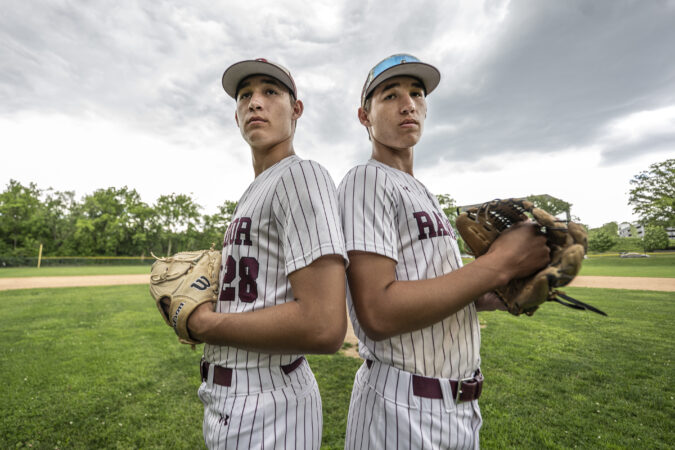
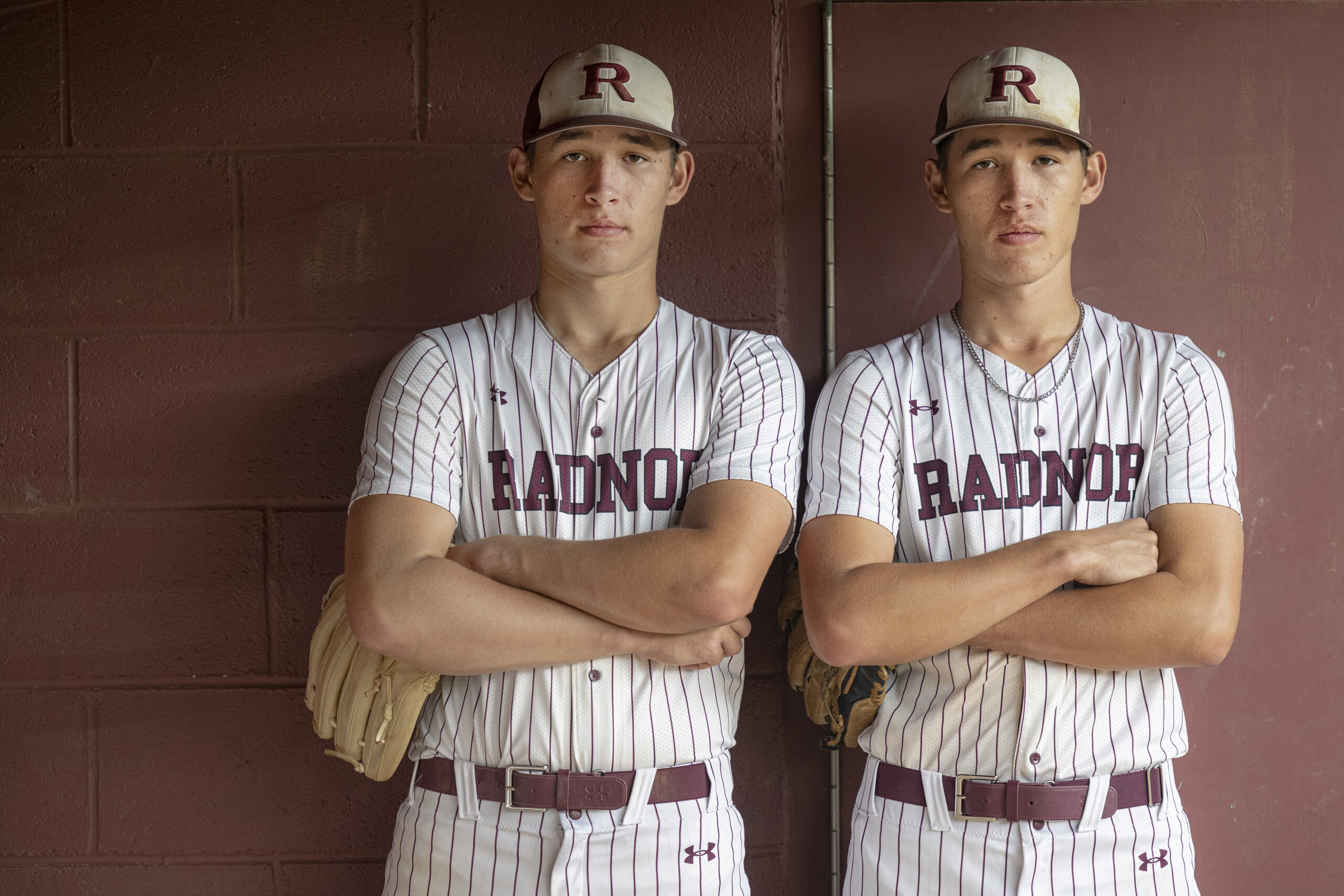
Twin pitchers Austin and Blake Havertine helped Radnor to a 2025 PIAA District 1 Class 5A championship.
They are best friends. Austin carries a slightly serious tone about him, while Blake is more on the jovial side. They don’t usually argue, say their father, Gary, and Radnor coach Mark Jordan.
“I’ve coached a ton of brothers and sisters, and a few twins in my time, and they would go at it like cats and dogs,” said Jordan, who just finished the eighth year of his second stint as baseball coach at Radnor and his 14th season overall. “I never saw Austin and Blake fight. I mean really fight. I go way back to coaching them in seventh grade at Wayne Junior Legion. You could tell even then that Austin was special, and he was our ace as soon as he started his freshman year. And Blake keeps improving. His best baseball is still ahead of him.
“But in six years of coaching them, that’s legion and high school, they never were at odds with one another. They may bust on each other a little, and Austin always supported Blake. They were captains this year for us and simply in tune with each other. It is kind of weird as twins, they are best friends, and you rarely see that. They leave an amazing legacy at Radnor. I’m always going to miss their commitment to the area and to the school, and this is a time when kids are bouncing from school to school, at the high school level and at the college level. They enjoyed where they were. … These guys grew up in Radnor, stayed in Radnor, and pitched and won in Radnor.”
Jordan says Major League Baseball has called about Daniel Kellis, a 6-foot-5, 230-pound right-handed pitcher/outfielder who threw 10 innings this season and is committed to Wake Forest. Kellis is projected to go in the 14th or 15th round, and Austin may get drafted in the late teens, though he seems committed to Lehigh.
The twins still have two months together pitching against grown men for the Wayne club in the Delco League. They’re soaking it in before leaving for college.
“It is great having a twin,” Blake said. “We do push ourselves, we always have. Austin was our ace freshman year, but he always supported and encouraged me..
“I think what I will miss the most is not having someone by me all the time, which we have done our whole lives. We still have the summer in the Delco League together, and then we’re gone.”
There may be an hour’s distance between Lehigh and Franklin & Marshall. But the twins are a FaceTime call or a text away. Gary and Betsy Havertine come from large families, where each was one of five siblings.
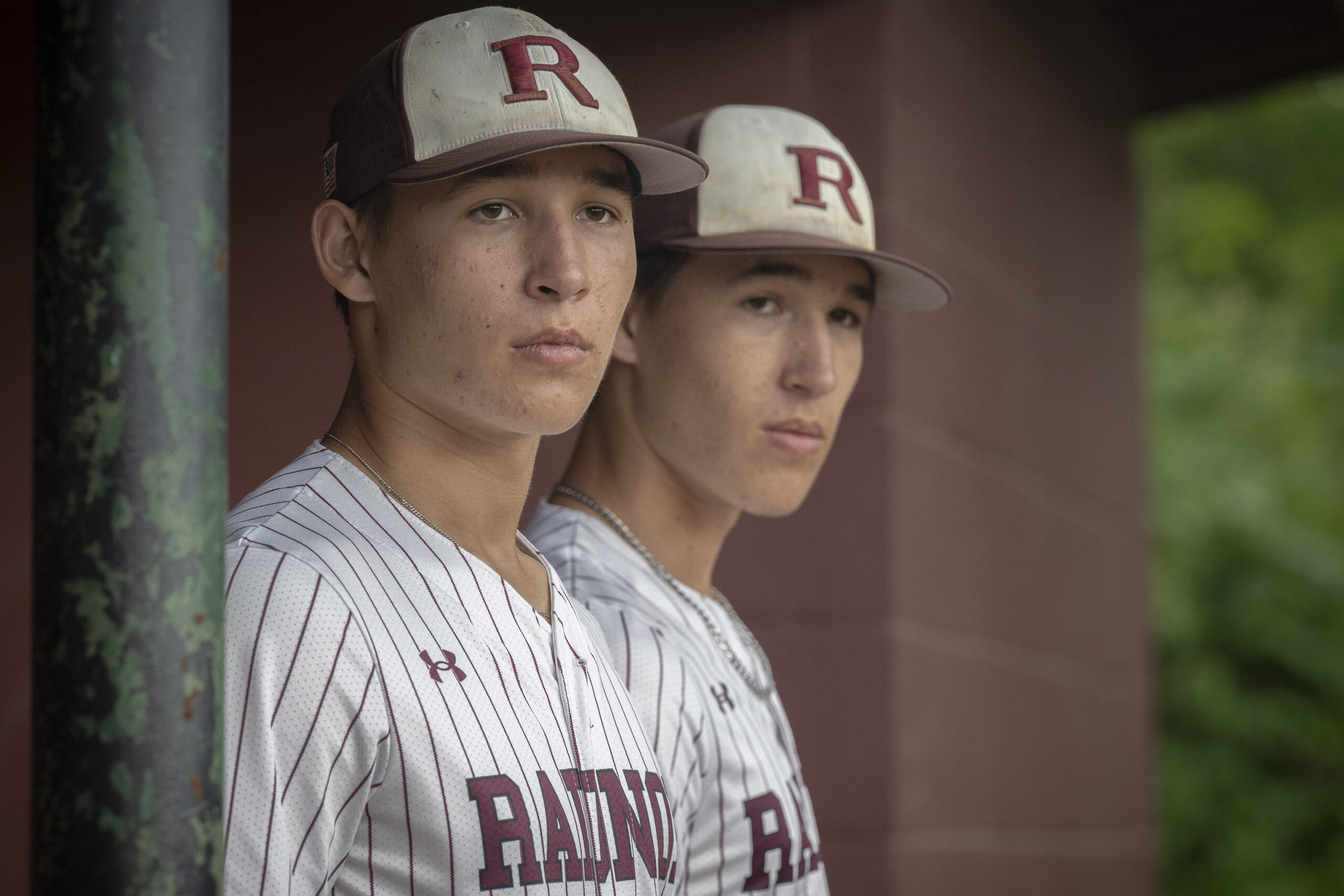
Austin Havertine is heading to Lehigh, while Blake Havertine will attend Franklin & Marshall College.
“We have good friends of ours who asked us one time how our boys get along, because they had twins, and I remember telling them, ‘Great,’” Gary said. “They were curious because their twins constantly fought. I never saw them get into a fight, which is crazy for two boys. When they leave, it won’t be easy for them, and it won’t be easy for me and my wife. They’ve always been around the last 18 years. They were apart for a couple of tournaments, but for the most part, they were always together. [This] step in their lives will be good.”
Austin agreed. This will be Austin’s second year in the Delco League and Blake’s first. They will be tested, and it will certainly help prepare them for college hitters.
The Radnor season did not end the way the Havertine twins or the Raptors wanted. Radnor was knocked out in the second round of the PIAA District 1 Class 5A playoffs by eventual district runner-up West Chester Rustin. Jordan traditionally has his seniors address the team after their final game, sharing their experiences and gratitude.
It was the most emotional Jordan ever saw the usually stoic Austin. He referred to his teammates as his “brothers,” and talked about how memorable his four years at Radnor was.
“I always remember the bonds we created, and it’s the last time I ever played with Blake,” Austin said. “We’re going our different ways in August, but we do have the summer together. It won’t be easy saying goodbye to him, because we have always been together. I know there is a minute between us, but I look out for him. We bust on each other, and every time I pitch, if there is one small detail I do wrong, he’ll be the first one to tell me, ‘You suck at this!’ I may miss hearing that.”