Carver Engineering and Science’s quest for its first Public League boys’ basketball title was halted after the Engineers were disqualified following a skirmish in Thursday’s quarterfinal game, where they were 71 seconds away from winning.
E&S led visiting Constitution by 12 points in the fourth quarter when a shoving match paused the game. Video reveals players from both benches staying on the sidelines before fans stormed the court and surrounded players.
The E&S players left the bench while the majority of Constitution’s reserve players remained on the sideline. No players from either team appeared to throw punches.
The game ended with E&S leading, 61-49, but they were later informed that Constitution would advance to Tuesday’s semifinal against Imhotep Charter. James Lynch, the president of the Public League, said the league reviewed the referee’s report and video footage before disqualifying E&S.
“Several players from Constitution have also been assessed suspensions due to their involvement in the incident,” Lynch wrote in an email. “However, the entire Carver E&S team leaving the bench is what resulted in the forfeit loss for that game according to the PPL Unsportsmanlike conduct policy.”
The league’s policy says, “if an entire team leaves their bench area and steps onto the field of play during an incident, the entire team will be ejected from the game, and will serve a one-game suspension for their next contest. The ejected team will be assessed a forfeit for the current contest, and will forfeit their next contest.”
Carver E&S has been disqualified and Constitution will play Imhotep Charter in the PPL final four.
E&S coach Dustin Hardy-Moore posted on social media that his team was disqualified despite “the opposing team and fans inciting a fight.” The coach, who could not be reached for comment, posted a screenshot that showed seven Constitution players on the court when the skirmish began.
“And our bench is still on the bench,” Hardy-Moore wrote.
The Inquirer also reached out to Constitution for comment on Friday, but did not receive a response.
In the 1980s, baseball scout John Young noticed a declining share of Black or Latino draft prospects in his hometown of Los Angeles. With funding from Major League Baseball, he started a youth program dubbed “Reviving Baseball in Inner Cities” (RBI) to address the disparity in 1989.
RBI has since spread across the country, including Philadelphia, as baseball’s preeminent youth outreach program. The Phillies say their RBI program serves more than 6,000 children in the city and the surrounding region by providing organized baseball and softball leagues, free equipment, and game tickets to youth participants.
But contrary to RBI’s founding mission, Philadelphia’s program mostly serves the city’s predominantly white, middle-class neighborhoods in the Northeast.
“The programs we have in North Philadelphia are programs that save at-risk kids,” said Dave Fisher, who runs Tioga United Baseball. “The programs that they have in the Northeast are programs to evaluate and elevate the talent of their kids.”
Neither the Phillies nor Major League Baseball returned requests for comment.
The distribution of RBI teams reflects Philadelphia’s unequal youth sports landscape, confirmed by a recent city-funded study that found neighborhoods with more white residents had more fields, amenities in better shape, and more youth sports programs compared to other areas. In Northeast Philadelphia, there is simply more baseball: The Philadelphia Parks & Recreation Baseball league reflects a similar disparity of Northeast teams as the Phillies’ RBI leagues.
Several North Philadelphia coaches are part of Phillies RBI and say they have benefited from the league’s free equipment and clinics. But they say the program is a better fit for well-established teams that already have foundational needs met. Teams working against the tide of economic inequality, lower parental involvement, and children not being exposed to baseball early cannot recruit enough to play in the RBI league.
“You’ll find more parents who are financially able and culturally able to give baseball to their children at such a younger age of 6, 7, or 8,” said Fisher, who participates in RBI. “Kids at that age are groomed through baseball to be able to have batting coaches, pitching coaches, hitting coaches, fielding coaches.”
Phillies RBI offers noncompetitive leagues that introduce children ages 5 to 12 to baseball and softball as well as competitive leagues for children 13 and older. The program’s website says teams “must be located in an area that serves children who are unable to afford to play in an organized baseball league without assistance.”
David Lisby, who coaches the North Philly Camelots in Strawberry Mansion, was part of Phillies RBI but withdrew after six years because of a lack of players on his team. This past season, he was able to recruit only 15 children from three age brackets to make a single team.
Children ages 7 to 12 played in the inaugural season of the Catto Youth Baseball League, an offshoot of Phillies RBI.
“With the Phillies RBI program, I wasn’t seeing them coming down to really get the kids involved,” Lisby said.
Amos Huron, the executive director of the Anderson Monarchs in South Philadelphia — which does not participate in Phillies RBI — said the RBI program is more focused on areas where baseball is already played rather than introducing the sport to new players.
“There’s such wide swaths of the city where kids are never getting exposed to the game, and there’s only one entity in the city that has the baseball credibility and financial capacity to create a system that spreads across the city, and I think it’s a shame that they are not doing that,” he said.
Running a community baseball or softball program in Philadelphia is a grind. Coaches — many of whom are volunteers — maintain their own fields, recruit players, and take care of all the logistics in running a nonprofit on top of their on-field duties.
They say the Phillies could help with that.
“I did a lot of stuff on my own, a lot of stuff. Field stuff, cutting trees down,” said Tyrone Young, who founded and leads the Heritage Baseball League in North Philadelphia. “Anybody that didn’t have the drive that I have will probably get frustrated and give up if they didn’t have more support. More support can help.”
Young, who endorses the Phillies RBI program, also said it could sponsor more events and clinics to teach children baseball in North Philadelphia.
Phillies RBI offers noncompetitive leagues that introduce children ages 5 to 12 to baseball and softball as well as competitive leagues for those 13 and older.
Josh Throckmorton, a coach with Give and Go Athletics in Brewerytown and director of program development with the Philadelphia Youth Sports Collaborative, said coaches at smaller programs could benefit from off-field support, such as help with securing insurance and background checks.
“I think administrative support would be huge,” he said. “I think providing some training to help coaches for these really small programs market their programs and manage registration, I think that could be huge.”
This year, a small group of teams in North and West Philadelphia, organized by Germantown’s Urban Youth Kings and Queens and supported by the Phillies, formed a separate RBI group aimed at children ages 7 to 12. The subleague benefited programs like Throckmorton’s, which withdrew from the larger RBI league after finding its first-time players mismatched against other teams, he said.
The four teams in the league played eight games in the spring and some of the teams continued practicing into the summer. This spring, league organizers are seeking to double the number of teams and serve an additional 100 or more children between the ages of 6 and 9.
“We’ve already gotten outreach from families asking us when baseball season is going to start again,” Throckmorton said. “It did exactly what we were hoping for.”
Playing Fields, Not Killing Fields is an Inquirer collaboration with Temple’s Claire Smith Center for Sports Media and the Logan Center for Urban Investigative Reporting, to produce a series examining the current state of Philadelphia’s youth recreation infrastructure and programs. The project will explore the challenges and solutions to sports serving as a viable response to gun violence and an engine to revitalize city neighborhoods.
In over three decades years of coaching basketball at Plymouth Whitemarsh High School, Jim Donofrio had to convince one player to take a day off.
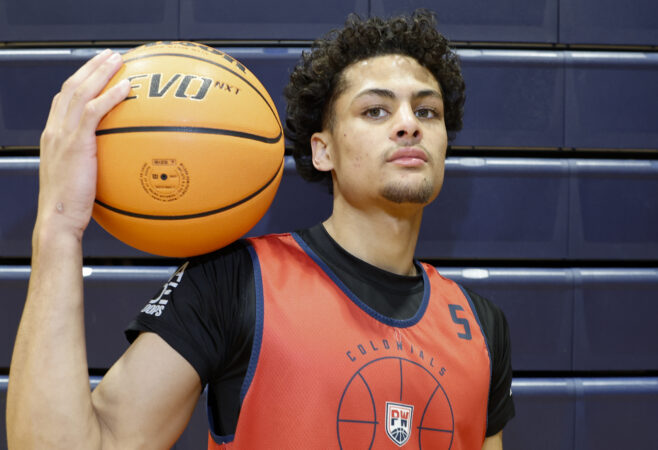
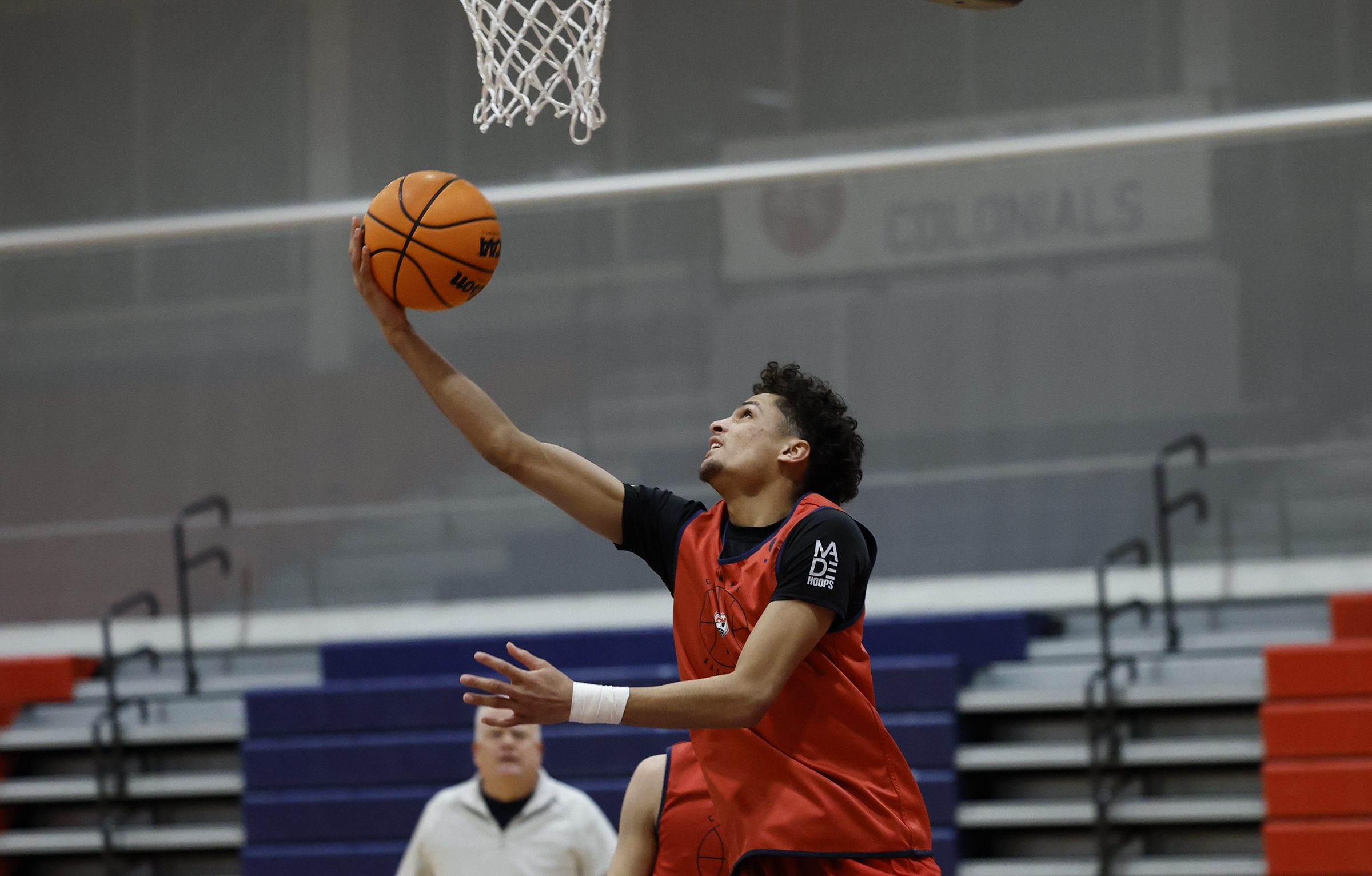
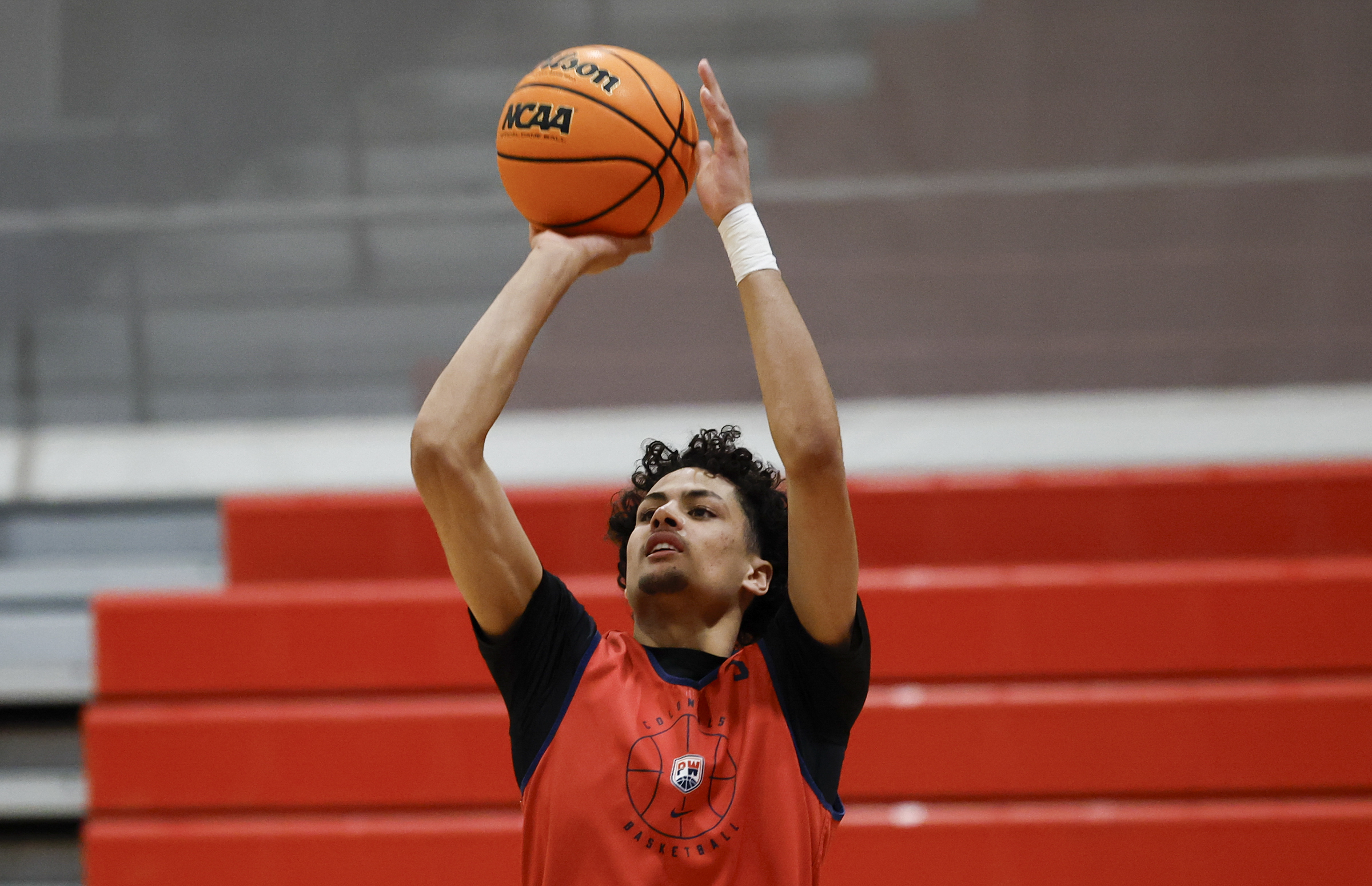
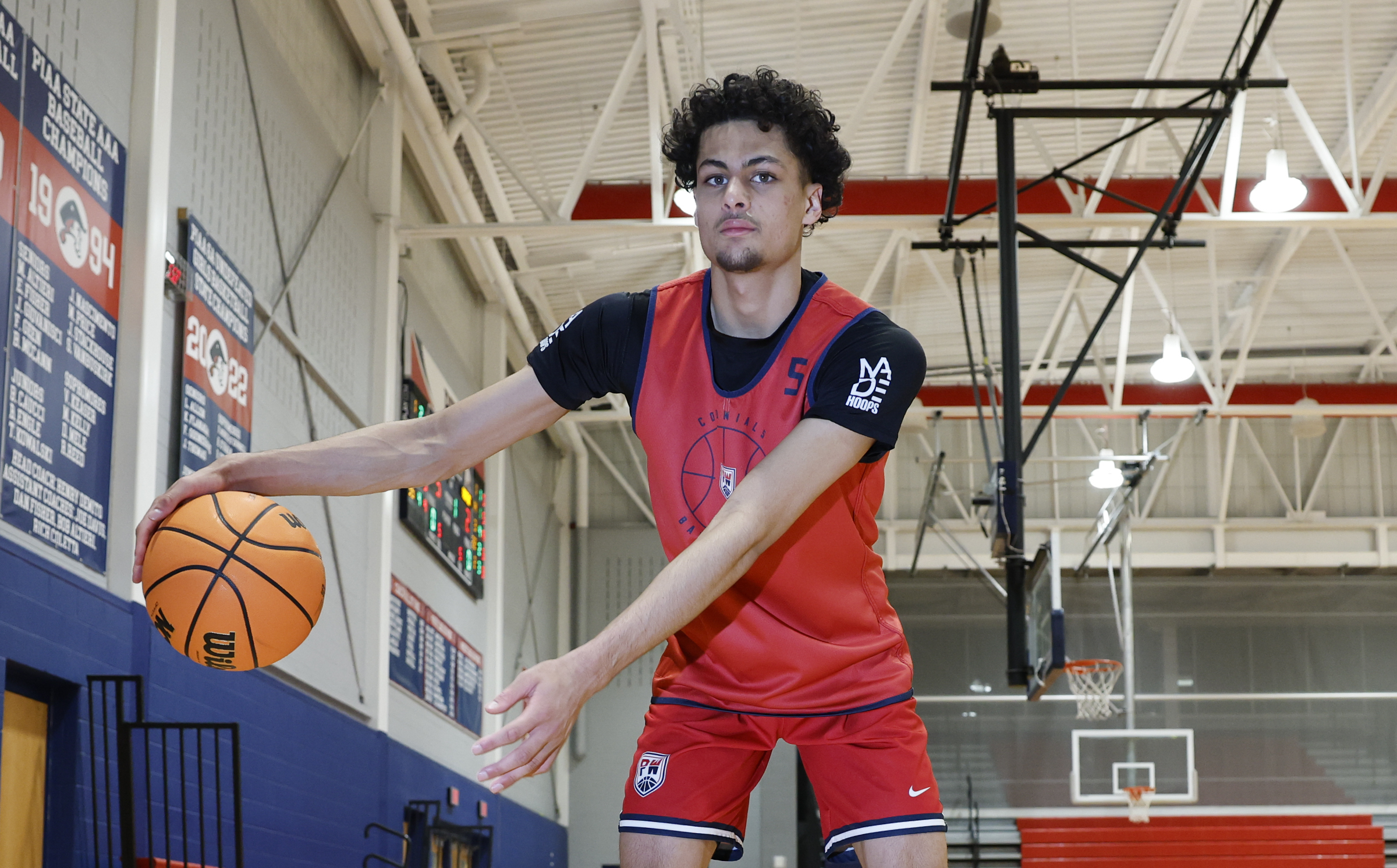
That’s Mani Sajid, now a 6-foot-4 senior shooting guard.
His resumé can attest to it. He has led the Colonials to an 19-5 record and the top seed in the District 1 Class 6A tournament. Plymouth Whitemarsh will host the winner of Friday’s game between Downingtown West and Central Bucks East on Tuesday.
Sajid also became Plymouth Whitemarsh’s all-time leading scorer, finishing with 1,686 points in the regular season, and is committed to play at Towson, where he will enroll early.
Donofrio said the coaches there will be lucky if they can get Sajid out of the gym.
“His natural work ethic is as high as any kid I’ve coached in 35 years,” Donofrio said. “His work ethic and drive is at that special level.”
Congratulations to @Manibuckets5 on becoming the all time leading scorer in PW Boys Basketball history tonight! 1649 and counting
Sajid recognizes that becoming the program’s all-time scoring leader is a great achievement, but he also wants to experience postseason success. The Colonials reached the district final last season, where they fell to Conestoga in overtime.
“I did have a chance for the scoring record, but that wasn’t my main goal,” Sajid said. “That just came as we played. [We are] just trying to win everything. Districts and state titles are our main goal as a team and the main goal for me.”
Plymouth Whitemarsh’s postseason did not start off as anticipated. The Colonials were upset, 45-43, by rival Upper Dublin in the semifinals of the Suburban One League tournament. But the Colonials were still the top-seeded team in the District 1 Class 6A bracket when it was revealed last Sunday.
The right ingredients
Chuck Moore Jr., an assistant with Plymouth Whitemarsh, has known Sajid since he was a middle schooler. Moore was a 1,500-point scorer at Plymouth Whitemarsh and graduated with Sajid’s father, Ayyaz, in 1997.
Moore, who runs an AAU program with his younger brother, Penn assistant Ronald Moore, would see Sajid’s father at tournaments and showcases. Every time the old classmates met, Ayyaz would try to convince Moore to train his son. Moore finally agreed the third time Ayyaz asked and arranged a session with Sajid at the Plymouth Whitemarsh gym.
“Right away, you could see the skill set,” Moore said. “He was already a long, lanky kid with long arms.”
He developed quickly in a year. By the time Sajid finished his eighth grade season and was entering high school, Moore knew his spot on PW’s scoring leaderboard was in jeopardy.
“I said, ‘Yeah, he’s going to be the all-time leading scorer one day,’” Moore said. “I could see it in him at that early age.”
Mani Sajid helped Plymouth Whitemarsh earn the No. 1 seed in the District 1 6A playoffs.
Donofrio confirmed that his assistant called Sajid’s ascent to the top.
“Chuck Moore, he predicted it when [Sajid] was a freshman,” Donofrio said. “He goes, ‘That’s the all-time leading scorer.’ I remember him saying it. Mani had the right stuff. He had the right ingredients.”
No time off
Those ingredients — a long, lanky frame and a natural shooting ability — do not guarantee success. They need to be combined with a solid work ethic. Sajid’s coaches say that the senior has that in abundance.
When Donofrio told Sajid to take a day off during the offseason, he ignored his coach’s order.
“I had to call his dad up a couple of summers ago and say, ‘He has to take a day off,” Donofrio said. “I said, ‘Please, take Sunday.’ It was in the summertime. And then I find out, not only did he not take Sunday off, he worked out twice that day.”
Sajid likes being in the gym as much as possible, which should benefit him as he transitions to Towson.
“It’s hard to get me out of the gym, man,” Sajid said. “I’m a guy that likes to go seven days a week, especially in the offseason. There really are no off days.”
Plymouth Whitemarsh assistant coach Chuck Moore Jr., said “right away” Mani Sajid had a strong skill set.
After last season’s run to the district final, Donofrio challenged Sajid to share the ball with his teammates more effectively.
“You’re going to score 26 points the hard way or the easy way,” Donofrio said. “If you get rid of the ball, you’re still scoring 26 points, only we’re going to win a lot more.”
It took Sajid some time to accept that piece of coaching, but once he did, he began to develop his skills as a passer.
“I think I just grew up more as a player, grew up more as a person,” Sajid said. “Just being able to trust those guys. I know that they always have my back, and I always have their backs. I trust them a lot.”
Transition to Towson
After emerging as a contributing piece for the Colonials as a sophomore, Sajid started to draw some attention from colleges. He fielded offers from Albany, St. Joseph’s, Temple, La Salle, East Carolina, Bryant, Penn State, and Towson before committing in July to play for the Tigers.
Sajid said he chose Towson for its coaching staff.
“They’ve just been really consistent,” he said. “They’ve been a great coaching staff. They hit me up often and always check up on me, and that’s what I like.”
Sajid, a three-star recruit, is the highest-ranked player of three signees in the Tigers’ class of 2026. Towson’s 2026 class also includes Neumann Goretti guard Stephon Ashley-Wright, the younger brother of BYU guard Robert Wright III.
Sajid hopes to see minutes early at Towson, which competes in the Coastal Athletic Association.
“That is my goal, to step on there freshman year and play,” Sajid said. “But I’ve got to work for that spot.”
Donofrio believes the most crucial part of Sajid’s college development is adding weight. He weighs about 170 pounds and will need to put on muscle to keep up with college players, especially on defense.
“He’s going to have to want to get more physical,” Donofrio said. “That’s his next challenge for this summer, into the fall. And he loves the weight room now, and he loves strength training and agility, conditioning. Hopefully he still loves Franzone’s pizza, because he should eat a lot of that to get about 8 to 10 more pounds on him.”
Mani Sajid looks to earn a district and state crown for Plymouth Whitemarsh.
His coach isn’t worried, though. Donofrio said Sajid could be a major talent at the next level.
“It would not surprise me at all if, by the end of his first college season, a lot of coaches are punching themselves in the head,” Donofrio said. “I’ve coached a lot of talented guys, and, trust me, the ceiling on him has got a ways to go.”
Amid the cacophony of whirling toddlers at a local YMCA in Oxford, Chester County, about 14 years ago, Jermaine Palmer caught a glimpse in the corner of his eye of what was to come. He had gotten his daughter, Jordyn, into basketball, taking her to his practices, letting her crawl around the court in diapers, and involving her in youth coed rec leagues with a tiny ball and hoop.
One afternoon, as a game was going on, he noticed, Jordyn and a little boy collided going after a rebound. They both fell. The boy went crying to his mother. Jordyn stood up, grabbed the ball, and scored a layup as if nothing happened, smiling back down the court. Jermaine just shook his head, he recalled.
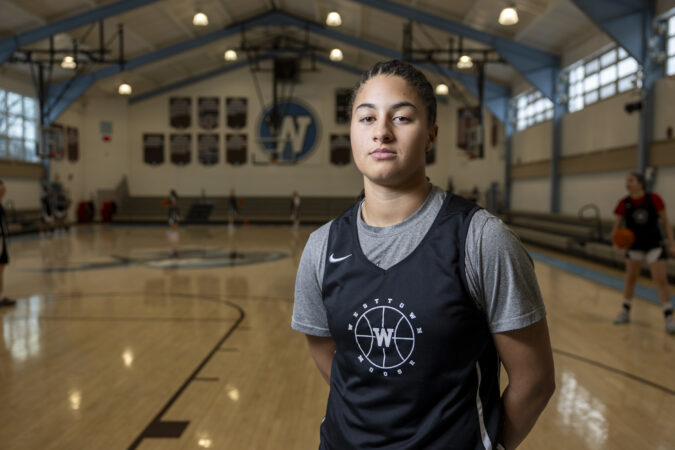
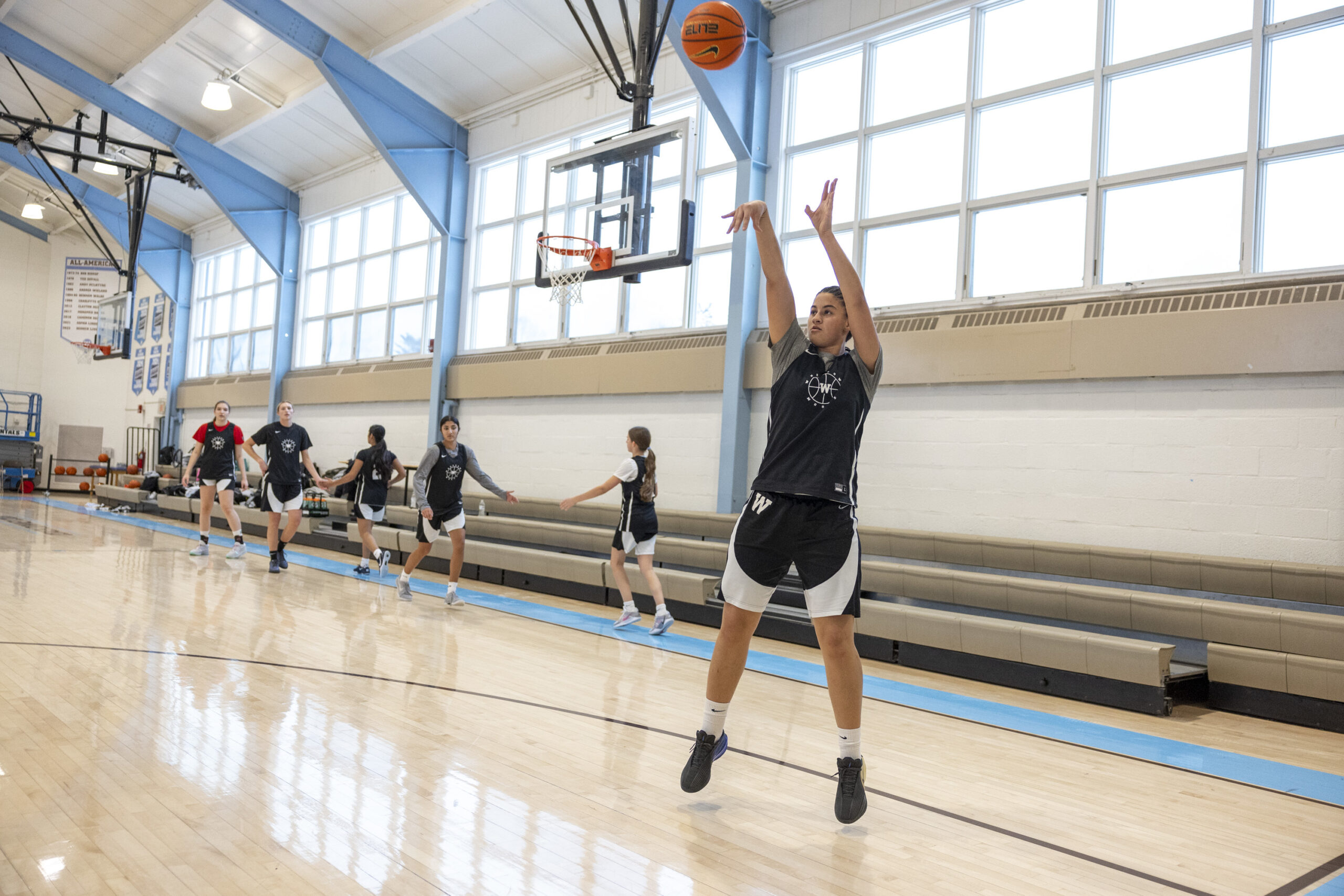
Jordyn Palmer, the gifted 6-foot-2 junior guard at Westtown School, tends to make a lot of people shake their heads in disbelief each time they see her play, especially the nation’s top college coaches. She is ranked as the No. 6 player in the country in the class of 2027 by ESPN’s SportsCenter NEXT — Super 60. She is averaging a humble 23 points and 12 rebounds for the Moose, who will be playing for their sixth straight Friends Schools League championship this Friday at 6:30 p.m. against archrival Friends’ Central at La Salle University.
As a junior, Palmer is on the threshold of 2,000 career points and is the leader of a star-studded team that has a/ 23-1 overall record this season and is ranked No. 7 in the country by ESPN.
What is so interesting about Palmer is that her best is yet to come. She’s always been tall for her age, and her parents, Jermaine and Kim, had to carry her birth certificate as proof of her age because of that. She has been playing varsity basketball since she was in eighth grade.
A dominant rebounder, ballhandler, and shooter, she can finish left- or right-handed and has added a more consistent perimeter game. She’s also a team player, making a point to get her teammates involved. She plays with poise, despite the constant attention she has had on her since she was 14.
She was 5-9 at age 12 playing for the Chester County Storm under-16 AAU team when Westtown coach Fran Burbidge first saw her in a summer tournament at the Spooky Nook complex in Manheim, Lancaster County. Burbidge, who coached women’s stars Elena Delle Donne and Breanna Stewart, quickly saw how much more advanced Palmer was than the teenage girls she was playing against.
“A friend of mine asked me if I ever saw her play. I remember going to one of the back courts and thinking, ‘There is no way that kid is in seventh grade,’” Burbidge said. “So, yeah, I had to convince myself she was that much better than everyone around her. If I didn’t know, I would have thought she was a high school junior.”
Palmer has evolved since then. The second-oldest of four, she’s 17 and may grow another inch.
She’s also a victim of her own success. Burbidge pulls her early in blowouts — and the Moose have many. She easily could score 40 points a game, but she plays with a pass-first, team-first mentality.
Last summer, she was playing in a league against a talented Imhotep Charter team when she dominated both ends of the court for 10 minutes. Then she turned back to being a facilitator again. She is by no means lazy, according to her coaches and her father, but she is so smooth that she can play at different levels.
Jordyn Palmer is averaging 23 points and 12 rebounds this season.
“I was raised around the game. I grew up with a basketball in my hands, my dad being a coach taking me to practice,” said Jordyn, who carries a 3.5 grade-point average. “I was pretty much crawling around a basketball court before I was walking. I was always the tallest kid, that was me. I grew up playing soccer, too, but basketball was definitively my first love. I would say I was around seventh, eighth grade, when I started to think I was pretty good at this. It really changed when I went to Westtown.”
And it really changed in 2023 when she was cut from the U.S. under-16 national team in Colorado Springs, Colo., when she was 14. It was the first and only time she was cut from something. She reached the second cuts. She sat in a conference room and was told that she did very well, but she would not make the team.
When Jordyn called her parents, tears were shed — fueling aheightened determination.
“A year later, I got invited back, and I made the team,” she said. “That was the first time I faced rejection, and I thought I dealt with it well. It made me work harder. Being cut didn’t make me angry because I was not too sure I would make it anyway, but it shocked me. I began working out in the morning, and I’m not a morning person. I hate waking up early. I began taking basketball more seriously than I ever did.”
A month after she was cut that summer, she led Philly Rise to an AAU national title.
Jermaine and Burbidge want her to play more intensely for sustained periods of time. Jordyn knows she will need to maintain those levels once she gets to college.
“Jordyn has not even scratched her full potential,” said Jermaine, the girls’ basketball coach at Oxford High School. “I’m proud of her. Jordyn is a great kid. Her upbringing keeps her humble. But she does not play with the urgency that I know she has. You see it in spurts, but when you see her playing national-level players, that comes out. I get on her all the time about dominating.
“The stuff people don’t see in the gym is someone who can outplay anyone. You can’t really guard her. When she tightens her shot off the dribble and her ballhandling, she is going to be terrifying. I’m her father and a coach — you see the way games are called. She’s so strong and so solid, refs look at her a different way than they do other players. She has gotten used to it. Refs don’t understand the body difference between Jordyn and everyone else.
“No one likes Goliath. It’s part of the game.”
Jordyn Palmer plans to make her college commitment next spring. She’s interested in South Carolina, LSU, Kentucky, Rutgers, Maryland, Notre Dame, and UCLA.
South Carolina, LSU, Kentucky, Rutgers, Maryland, Notre Dame, and UCLA are the schools in which she’s interested. She says she is looking to make her official visits over the summer and make a decision next spring. Jordyn and Jermaine said they want to take their time with the recruiting process.
She would get around 30 calls a day this time last year. That has been reduced to around five a day.
“It’s been a little bit of a pain,” she said. “There have been those times when I have cried by myself because it can sometimes be overwhelming. I spoke to my parents about it, and they have done a great job taking the pressure off me, telling these coaches I’m taking a break. I’m still a kid, and I’m grateful to my parents for allowing me to be a kid. They let me fish.”
Then, Jordyn went into her own “fish tale.” She got into fishing as a way to relax through her maternal grandfather. During summer vacations, she fishes with her family in northeast Maryland and the Outer Banks in North Carolina. She once hooked a baby shark when she was 7.
Andrew Kuhn dropped the final score of Ancillae-Assumpta Academy’s seventh- and eighth-grade basketball game into the family group chat last month. He wanted to make sure his 16-year-old son Cole knew that 13-year-old Gavin played well.
The older son responded with an update of his own: a video of him throwing a 101.7-mph fastball.
“New Year’s resolution,” Cole Kuhn texted the family.
Kuhn went to St. Joseph’s Prep on a partial music scholarship — he has played the double bass since the fourth grade — and failed to make the JV baseball team as a freshman. Now he was showing his family that he could throw a fastball harder than most major leaguers.
The teenager from Elkins Park is one of the nation’s top high school pitchers with a scholarship to Duke University and is already being scouted for the 2027 Major League Baseball draft. He’s pitched in just a few varsity high-school games but a triple-digit fastball is enough for scouts to dream on.
And it all happened so rapidly; about as fast as the pitches the 6-foot-6 teenager fires from his right hand.
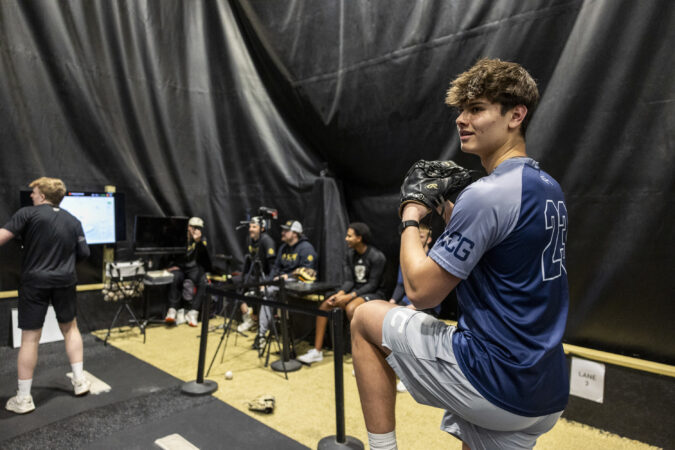
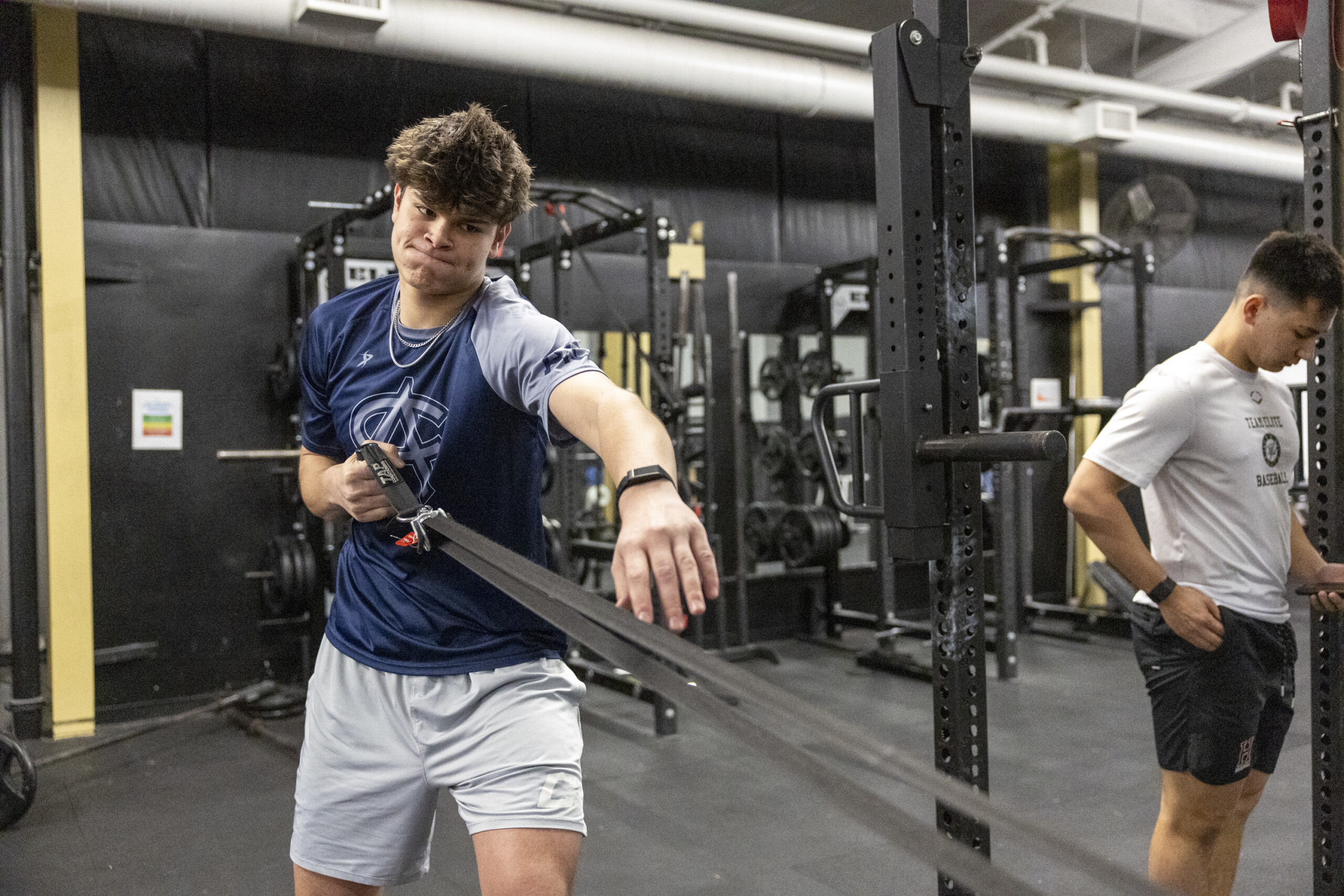
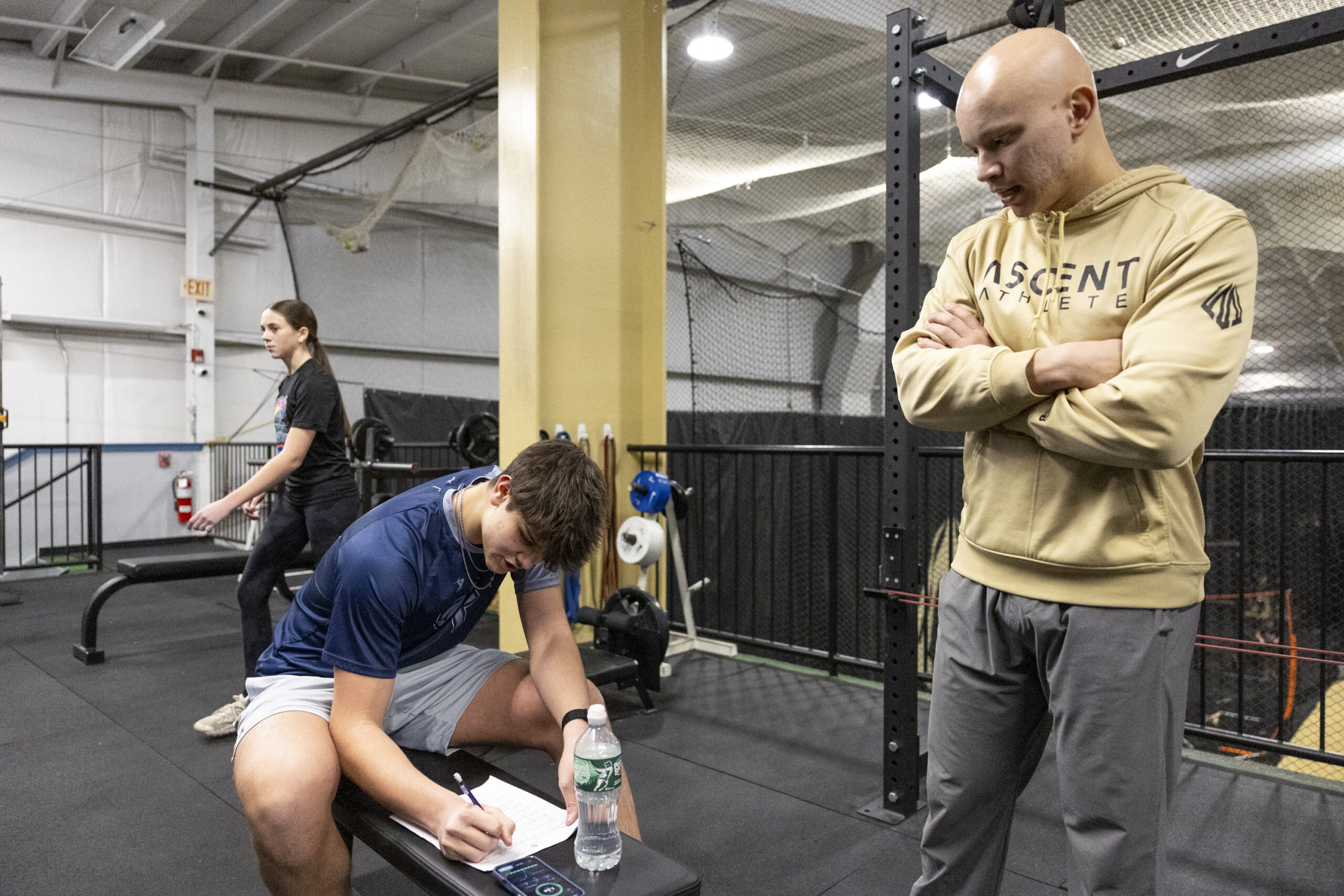
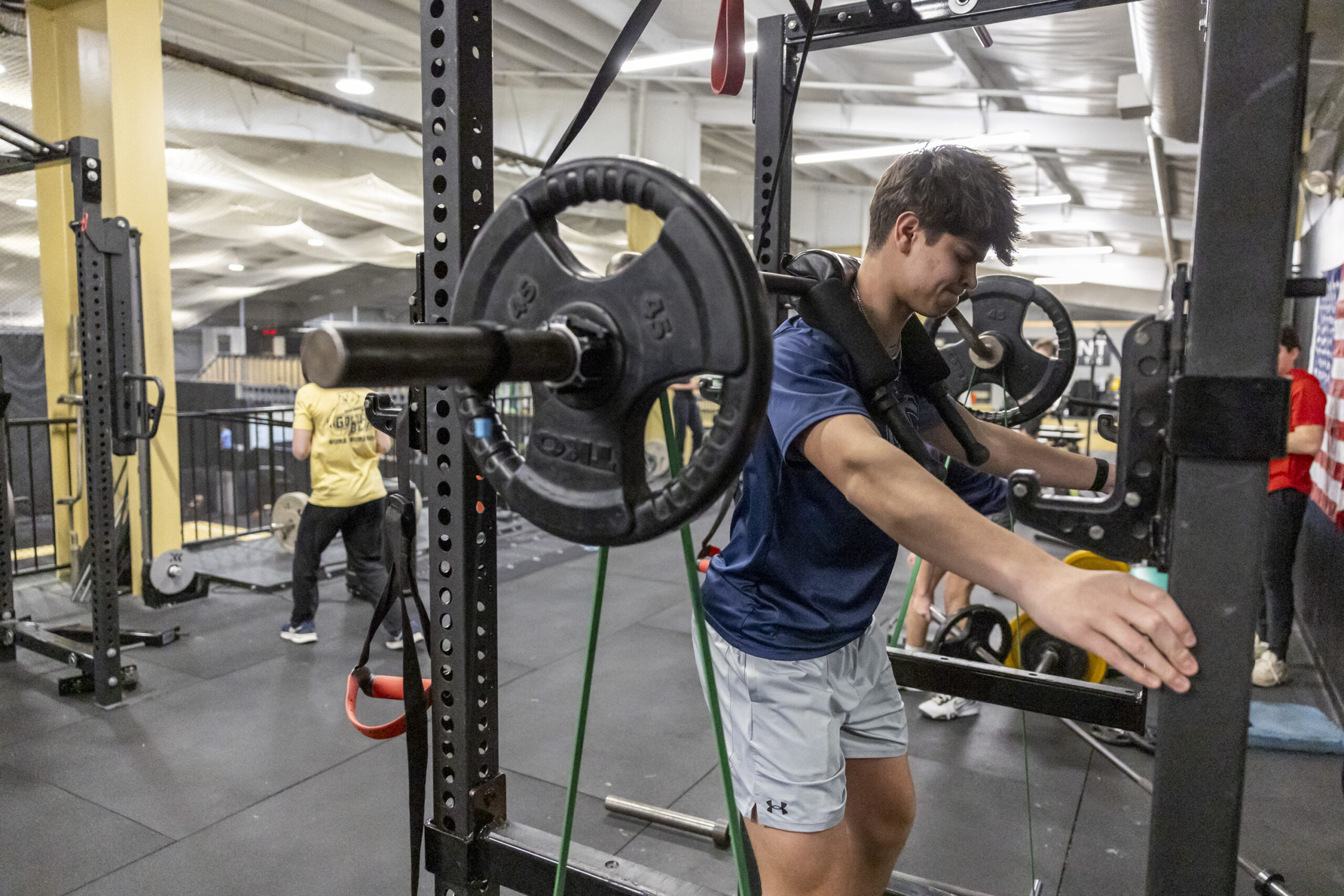
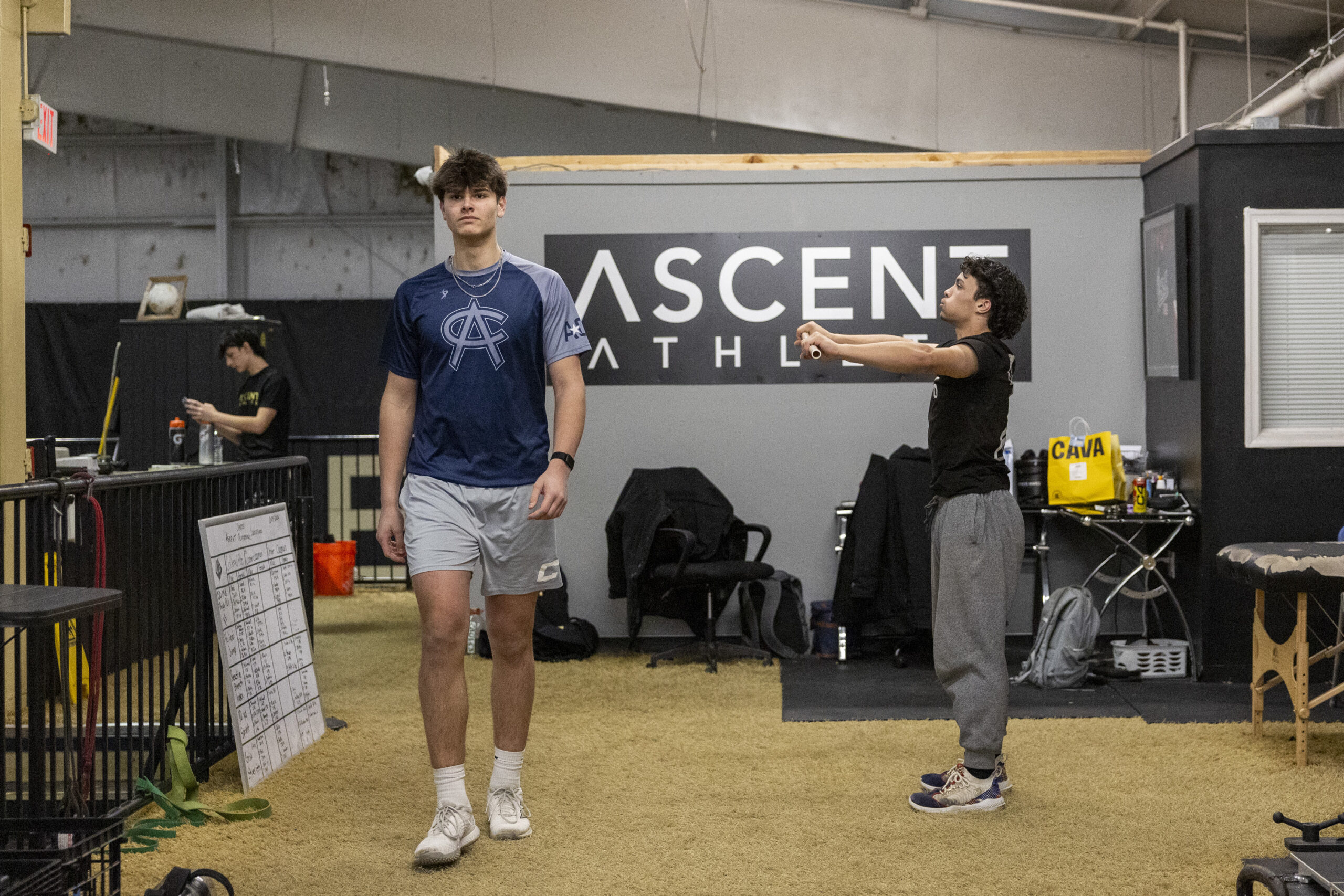
Kuhn was throwing 90 mph in January 2025 when he enrolled at Ascent Athlete, a training center in Garnet Valley that looks like a baseball laboratory. High-tech cameras measure Kuhn’s movements on the mound, a team of coaches studies his mechanics, and he learns in real time how many RPMs his fastball registers. Big league players work out in the morning before high schoolers filter in in the afternoon.
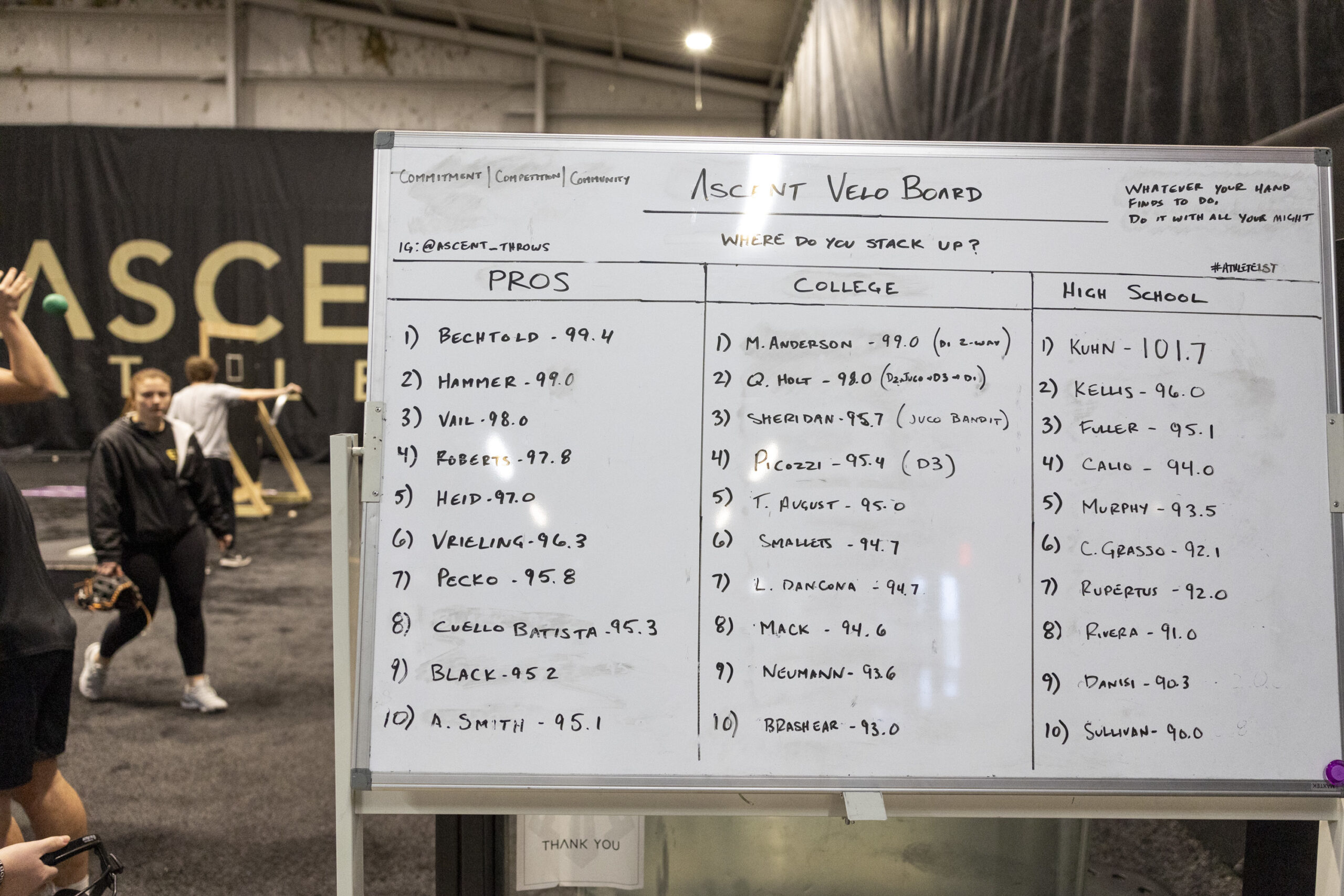
A fitness center upstairs is focused on plyometrics and a computer connected to the batting cages allows a hitter to see how his swings would fare in a big-league park. A dry-erase board near the entrance lists the fastest pitches thrown at Ascent divided into three categories: pro, college, and high school.
“Where do you stack up?” the board says.
A whiteboard shows the top pitching speeds at Ascent Athlete in Garnet Valley, with Cole Kuhn on top at 101.7.
Kuhn, first in the high school column by more than 5 mph, has the fastest pitch.
The facility is open six days a week and Kuhn is there nearly every day, often finding someone on Sundays to unlock the door when the lab is closed. His 101.7-mph fastball did not happen by accident.
“Without question, that place is the single biggest driving force behind his major jumps over the last eight months,” said Kuhn’s mother, Tonya Lawrence. “They’re comprehensive, they’re involved, and they know what they’re doing.”
Scott Lawler, the general manager of Ascent, called Kuhn “a unicorn.” Lawler, who played at Bishop Kenrick High in the 1990s, has never seen a high school arm like this. There is no denying the promise of Kuhn’s right arm, but he is also just a kid who does not yet have a driver’s license.
Andrew Kuhn picked his son up from a friend’s house after Cole threw that 101.7-mph fastball and shook his hand. Two years earlier, Kuhn was nervous to tell his father that he wanted to play winter baseball instead of freshman basketball at the Prep. His parents played college hoops and he thought he’d disappoint them if he didn’t play.
This was not their journey, Andrew told him. This was Cole’s. The son has led the way ever since as he charted his path to that fastball. Dad was proud.
“I said good job,” Andrewsaid. “Then that was about it. Then it’s get home, walk the dogs, have dinner. You’re not all that. You still have chores. Who knows? This whole thing might fall apart at some point. You have to be prepared. You’re not just a baseball player.”
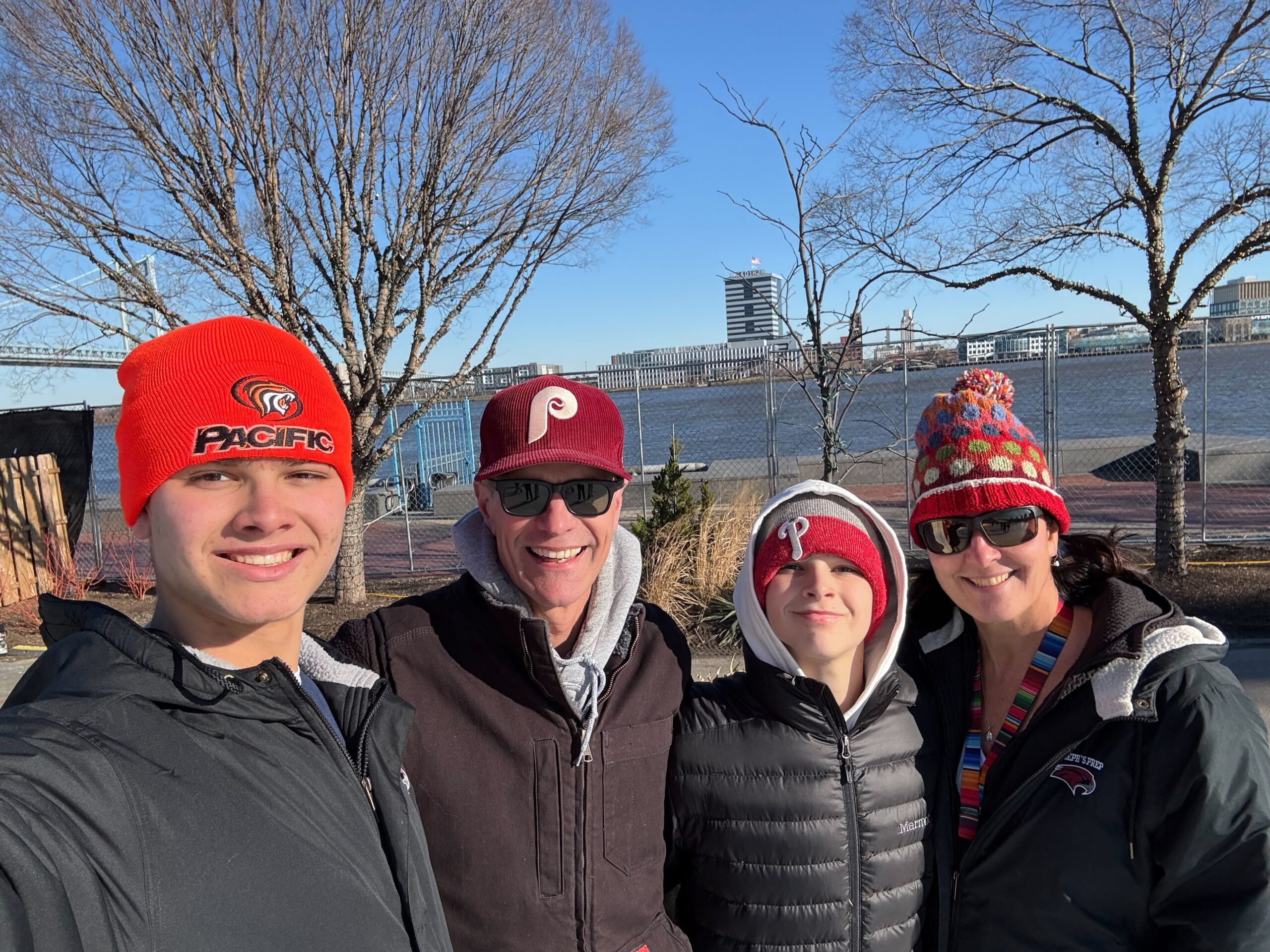
From left: Cole Kuhn with his father, Andrew, brother, Gavin, and mother, Tonya Lawrence.
Ballet to baseball
The letter in Cole Kuhn’s folder as a second grader at Myers Elementary School advertised a ballet class for boys in Jenkintown.
“He was always the kind of kid who if you said, ‘Do you want to try this?’ He would say, ‘Sure,’” Tonya said.
So they signed their son up for ballet at the Metropolitan Ballet Academy where the teachers were strict and timeliness was prudent.
“Six years later, it was clear that he benefited from it,” Tonya said. “Discipline, core strength, grace under pressure. This studio was serious. It was the real deal and we didn’t know that. It just came home in the afternoon packet.”
Kuhn started playing the piano in kindergarten, picked up the double bass in elementary school, and took six years of ballet. He played baseball in the spring, swam in the summer at a public pool, played soccer in the fall and basketball in the winter.
“We tried to get our kids to do everything and then decide what sticks,” Tonya said. “We believe that variety is good for the brain and the body and the mind.”
Andrew and Tonya never intended to build a baseball prodigy. But perhaps keeping him well-rounded — from ballet to baseball — helped Kuhn blossom into the pitcher he is now. He was 15 years old when his fastball reached 90 mph and Tonya said that moment was like an “epiphany” for her son. He now believed he could do this. Kuhn told his parents he wanted to focus solely on baseball.
“It’s not like we’ve been pushing him or somehow training him to hit 90 mph. It wasn’t even on our radar. It just happened,” Andrew said. “In the big picture, it’s really about exercise, friendship, and competition. Then, who knows? Hopefully it’s intriguing enough and interesting enough that kids want to stick with it. We want our kids to be well-rounded and respectful and to try their best.”
Cole Kuhn trains at Ascent Athlete.
Charting his path
Kuhn told his father last year that he wanted to train at Ascent after meeting Lawler at an event. Many of Kuhn’s Prep teammates were already there and the pitcher thought it was where he needed to be.
Lawler played minor-league ball and coached in college. Jeff Randazzo, Ascent’s owner, was a star at Cardinal O’Hara and is now an agent for major league ballplayers. They have a glistening facility and the connections a player needs to reach the next level.
“This whole world ties together between how you train, who you play for, and who you play in front of,” Lawler said.
Andrew said OK but told his son that he would have to inform his coach in Ambler that he was leaving.
“Ambler did so much for him so you can’t just send a text that you’re leaving,” Andrew said.
So Andrew stood with his son after the team’s final practice and listened to Cole break the news. Andrew played basketball at Franklin & Marshall and Tonya played hoops and lacrosse at Yale before playing basketball professionally overseas. They want their son to make his own decisions, which means working up the courage to explain to someone why you’re leaving.
“That was taking responsibility for the choices you’re making,” Andrew said. “He did it face-to-face. It was hard and emotional for him to leave, but he knew in his own mind that that was the path for him. Cole told him, ‘My dream is to get to MLB and I think the best path for me to get there is to switch to Ascent.’ I was like, ‘Oh, Cole. You sure you want to say all that to this?’”
Kuhn was paired at Ascent with David Keller, the facility’s director of pitching development. Keller pitched at Lock Haven University, where he delved into the data-driven methods that have overtaken baseball since the early 2000s. He put Kuhn on a throwing program and told him that his work upstairs in the weight room was just as important.
Cole Kuhn works with Francisco Taveras, the assistant director of Sports Performance at Ascent Athlete.
Kuhn gets a ride after school to Ascent from Prep senior Mihretu Rupertus — “I tell him, ‘You treat that dude to anything he wants at Wawa,’” Tonya said — and is given a checklist of exercises to do. He gained 35 pounds from working at Ascent, filling out his towering frame.
Kuhn’s fastball took off as he hit 95 mph last July at an event in Georgia. He pitched six innings, showing he could do more than just light up radar guns. The college coaches watching took notice. The pitcher who studied ballet was suddenly a can’t-miss prospect.
“That was for me when I said, ‘This kid is going to be really, really good,’” Lawler said.
Facing adversity
Kuhn’s phone buzzed exactly at midnight last summer when college coaches were first allowed to contact him. First was Miami. Then Texas Tech. More than 30 schools called that day. A few months earlier, Kuhn was hoping to play college ball at a small school with strong academics. Now the big programs were chasing him. It was a whirlwind.
He flew the next weekend with Tonya to California for the Area Code Games, a premier showcase event for the nation’s top players. It was Kuhn’s chance to show how special his arm was.
“He couldn’t get out of the first inning,” said Andrew, who watched from home on a livestream.
Kuhn, pitching in perhaps the biggest event of his career, struggled. The same coaches who contacted him days earlier were now backing off. Tonya told him afterward to forget about them.
“My line of work may be particularly suited to what was happening, but I am his mom,” said Tonya, who is a child psychiatrist. “It’s hard to watch, but it’s so much part of the game and part of life. I appreciate that that’s what happened. Maybe not at that moment, because seeing your kid struggle is hard. But I knew he was going to be fine. If people see an outing and say they’re no longer going to be behind the kid, then I don’t want my kid playing for that program. That was easy for me. In a weird way, I’m glad it happened. Not only for mental toughness but to kind of weed out people.”
Kuhn returned home, took a few days off, and then returned to Ascent. He kept working. There are going to be some bad days, his father reminded him.
“I always tell him that I’m happy for him when things go well,” Andrew said. “But really I’m only proud of the work that he does on a weekly basis. And because he’s such a grinder, it’s going to work out. And if it doesn’t at some point? Yeah, you can pivot. He has battled through tough things along the way.”
Cole Kuhn’s father, Andrew, says he’s “proud of the work that [Kuhn] does on a weekly basis. And because he’s such a grinder, it’s going to work out.”
Staying healthy
They didn’t measure launch angles or even know how hard an opposing pitcher was throwing when Lawler was playing at Kenrick.
“It was ‘I hit the ball hard. Everyone is swinging and missing against this guy who looks like he’s throwing hard,’” Lawler said. “But we didn’t know how hard it was or how far it went.”
The new ways of instruction are great, Lawler said, as the real-time information provides instant feedback and allows for coaches and players to make corrections in the moment. He can study the movement on Kuhn’s fastball and tell the catcher where to keep his glove. But there’s also a need to manage the information that players see.
“We have to train the kids to not obsess over it,” Lawler said.
Kuhn said he likes to know how many RPMs his fastball has so he knows if he’s generating enough spin on his pitches. But he doesn’t chase the numbers. On the day he threw 101.7, Kuhn was actually working on developing a cutter. The triple-digit fastball just happened. On the mound, he said, he’s focused on the batter and not the data.
Major league evaluators — including Phillies general manager Preston Mattingly — came to Ascent last month to watch Kuhn pitch. Kuhn said it was exciting but the attention didn’t faze him. He’s committed to Duke, but things could change before he’s eligible to be drafted in July 2027. He’ll likely have a choice to make: Go to college or turn pro. First, he has to stay healthy.
“I don’t want him to feel like he has this golden arm and that’s the only thing that matters,” Andrew said. “But it is concerning. The whole thing about how many Tommy John surgeries there are and using the technology input to throw faster and faster, it’s a little worrisome. But it’s just, ‘Slow down.’”
Randazzo said it was no surprise that Kuhn hit triple digits as he has the frame (6-6 and 230 pounds) and arm speed to do so. But it was a slight surprise that it all came together nearly two years before he could get drafted. Now what?
“It’s very common these days with Tommy John surgery and injury in general,” Randazzo said. “You do have to find that balance with still being a normal 16-year-old kid. You want to tread lightly with it, but you also don’t want to put him into a bubble. You just have to be methodical about it with arm care and rest. It’s not a carnival game that this kid is throwing hard. It’s real. There’s no crystal ball with it.”
Cole Kuhn has committed to Duke, but things could change before he’s eligible to be drafted in July 2027.
Kuhn’s fastball has spiked at Ascent, but he said the facility does not simply try to build velocity. The pitcher said it’s instead a result of everything else. He has a nutritionist, follows a workout regimen, and is already built like a major leaguer. The facility limits how often he can throw, knowing that overextending him as a teenager could hurt him in the future.
“You can never 100% prevent injury or setbacks,” Keller said. “But it is important that every day, everything we do contributes to his long-term health. We track all his volume, his intensity, his velocity, and how many times he throws. We want him to get to where he wants to be as safely as possible while also challenging him.”
Big-league dreams
A few days after Kuhn hit 101.7 mph, he marveled to his father how his fastball was nearly as fast as pitches thrown by Phillies closer Jhoan Duran.
“Yeah, it’s cool,” Andrew said. “But it’s not just a carnival trick. You have to make sure you’re doing everything to stay healthy.”
Three years ago, Kuhn failed to make the JV baseball team. And now he’s able to compare himself to big leaguers. It all happened so fast. He’ll pitch this spring for St. Joe’s Prep and spend the summer playing with Ascent’s travel team. He’ll have the chance to prove he can harness his triple-digit fastball. The attention, Kuhn said, has been fun.
“This is like the best part of my life, honestly,” Kuhn said. “It’s only up from here. I’m really excited.”
In just a few years, he could be pitching in the majors. Maybe they’ll even turn the lights off like they do for Duran when Kuhn comes to the mound with a triple-digit fastball. It’s easy to imagine it all when you’re throwing 101.7 mph. First, he has to get his driver’s license. And that will be something he can text the family group chat about.
“He has a lot of supporting characters helping him get to where he’s hoping to go,” Tonya said. “For many boys in the world, it’s MLB, the NBA, or the NFL. I can’t even believe that this might happen. I’m still in awe. I continue to just be incredibly proud of the kinds of things that he’s doing and setting goals and reaching them left and right.”
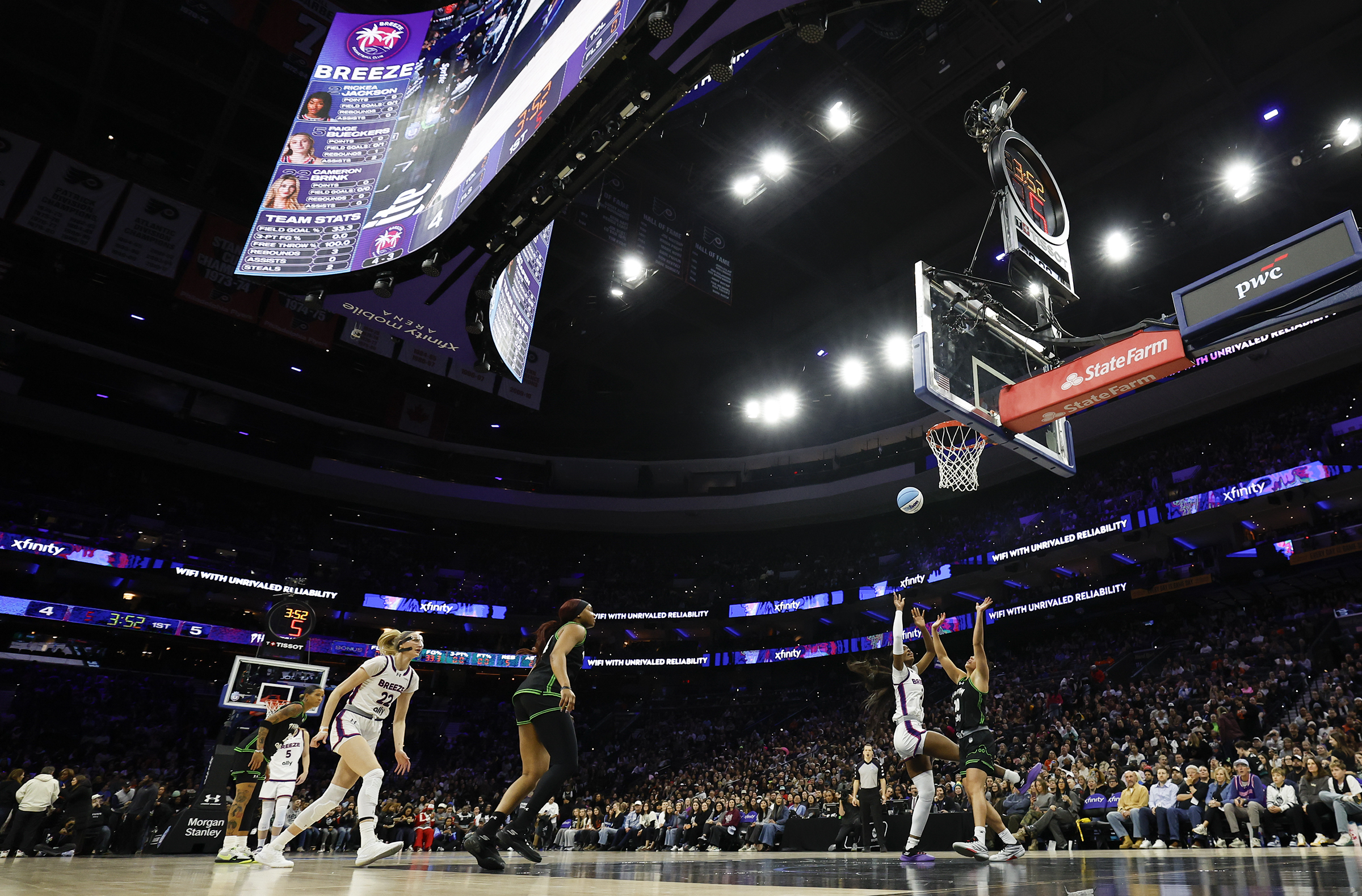
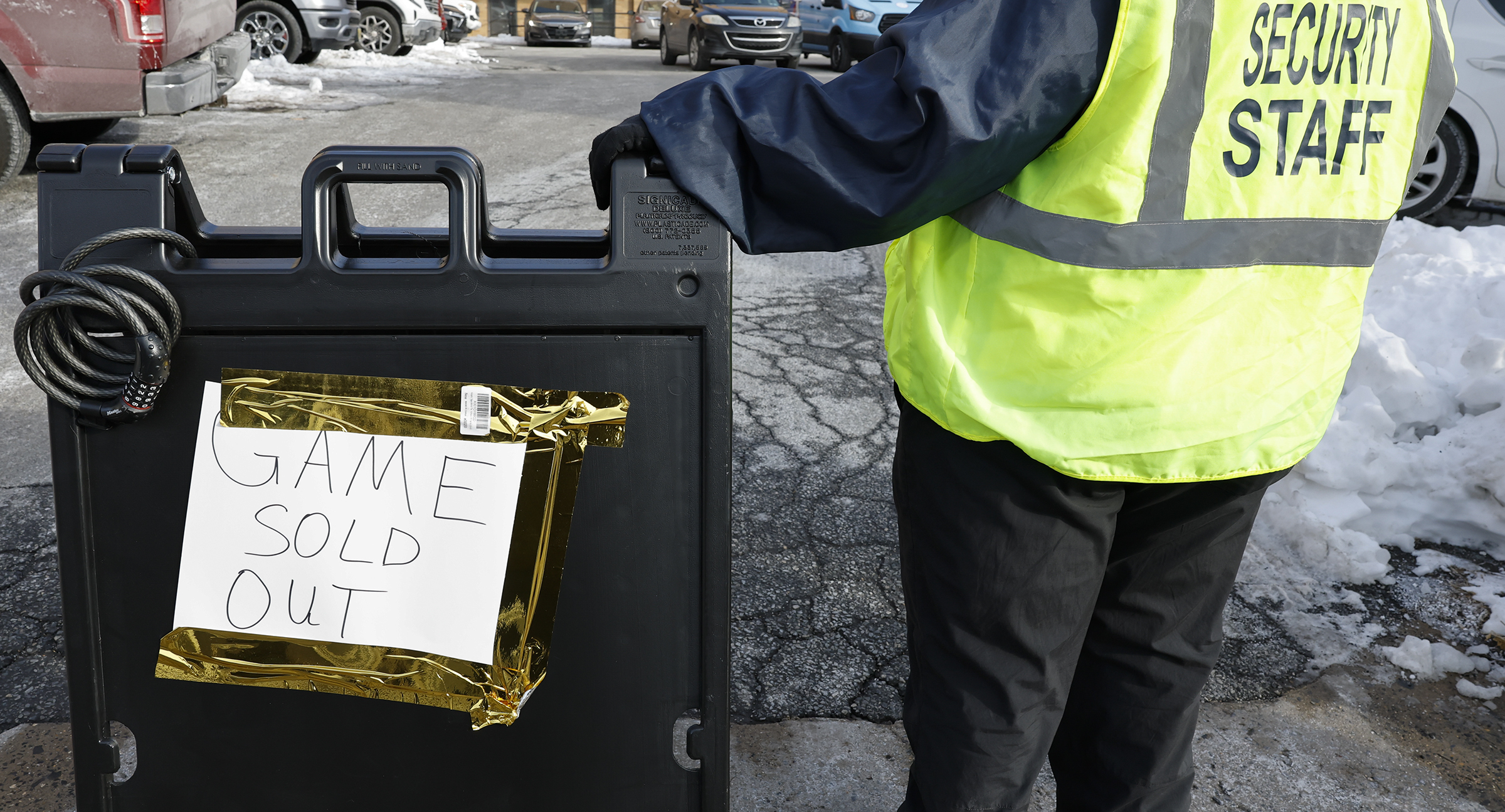
Each Friday, Inquirer photo editors pick the best Philly sports images from the last seven days. This week, we’re reaching all the way to last Friday night, when Unrivaled took over South Philly and brought a record crowd to Xfinity Mobile Arena. But that’s not all the basketball — we’ve also got the Sixers, some local college action, and a high school hoops showdown between two defending state champs, Father Judge (Class 6A) and Neumann Goretti (5A).
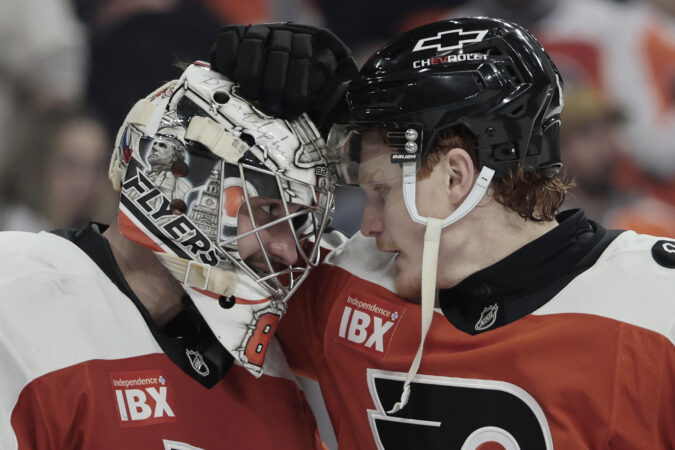
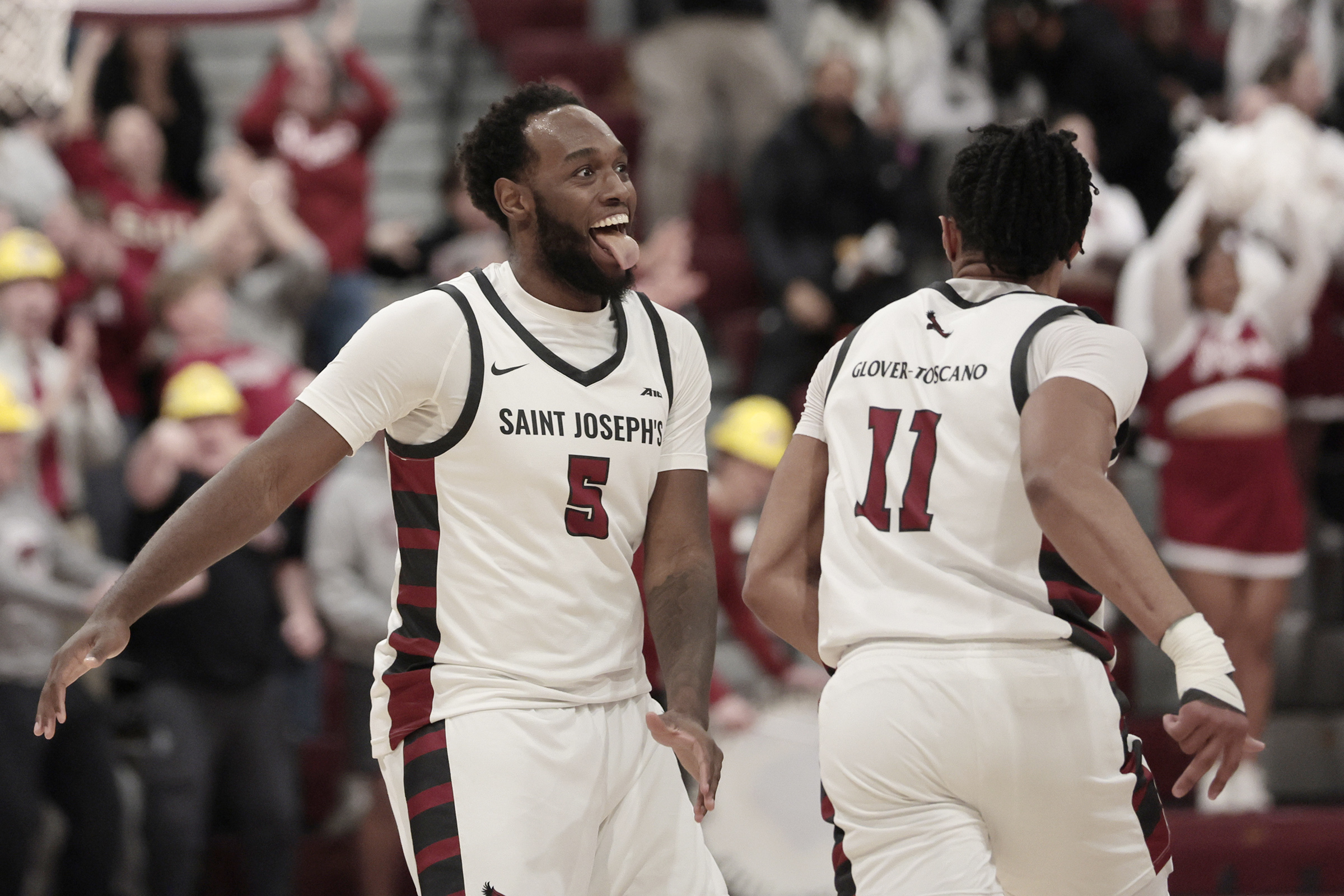
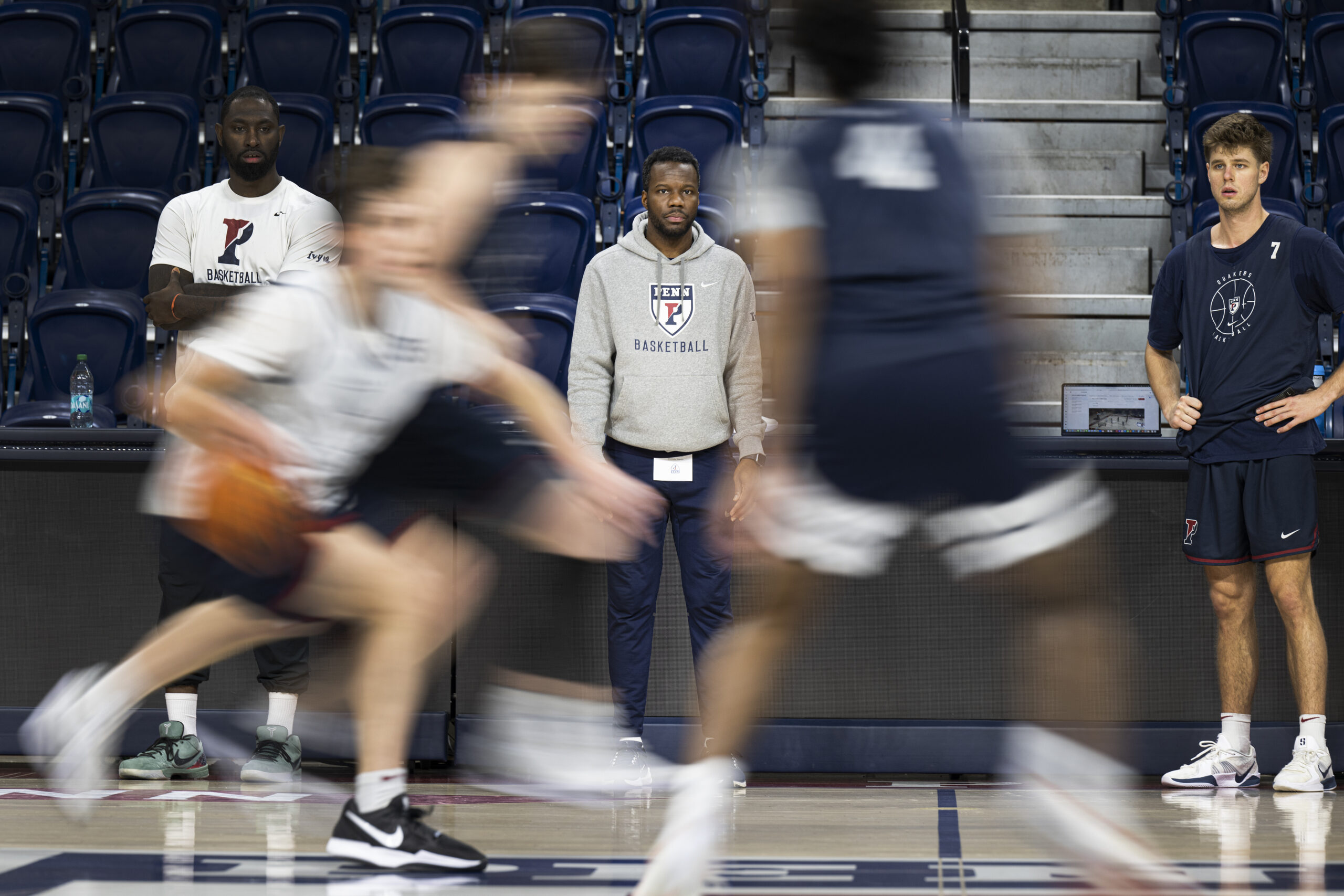
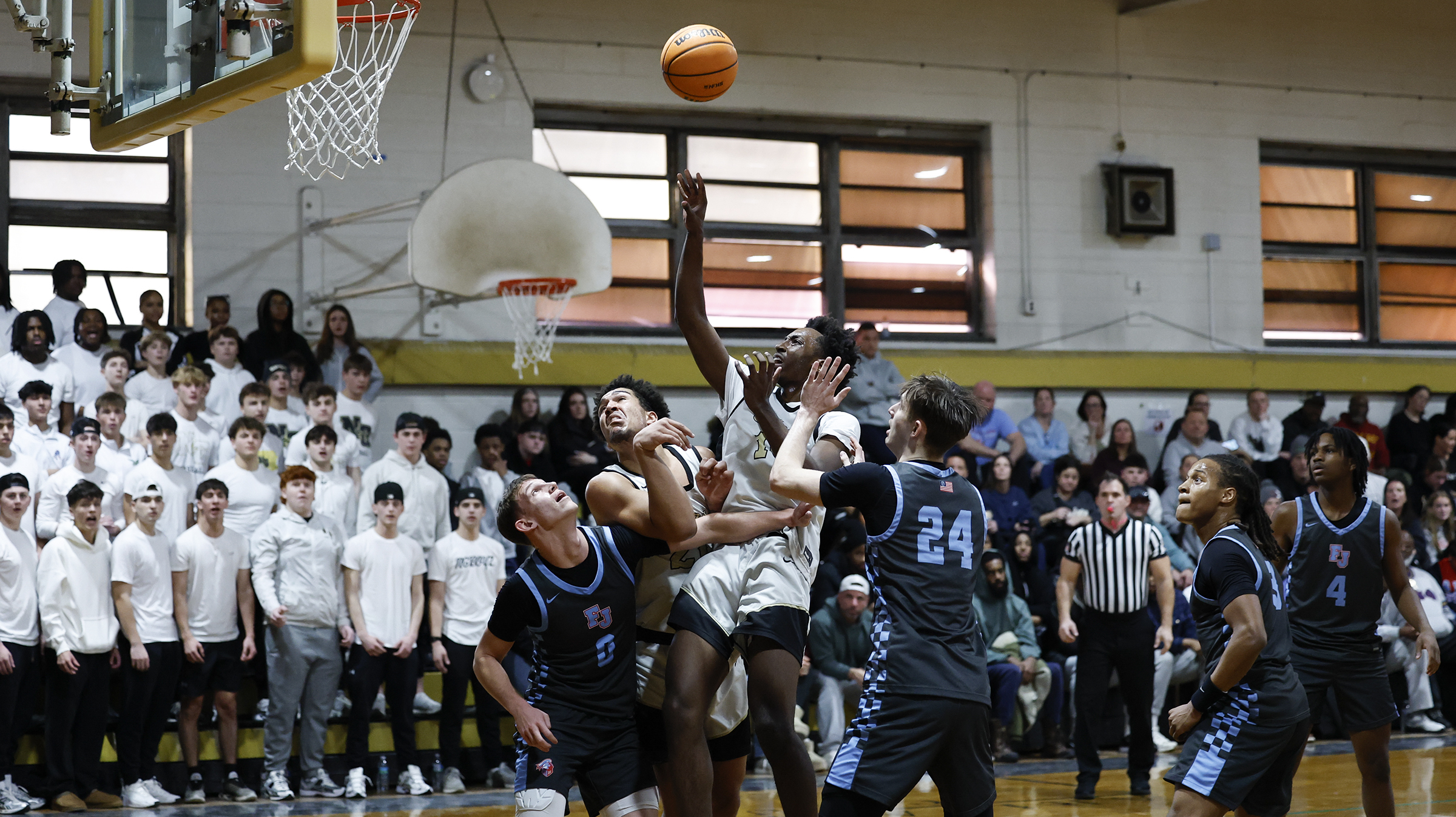
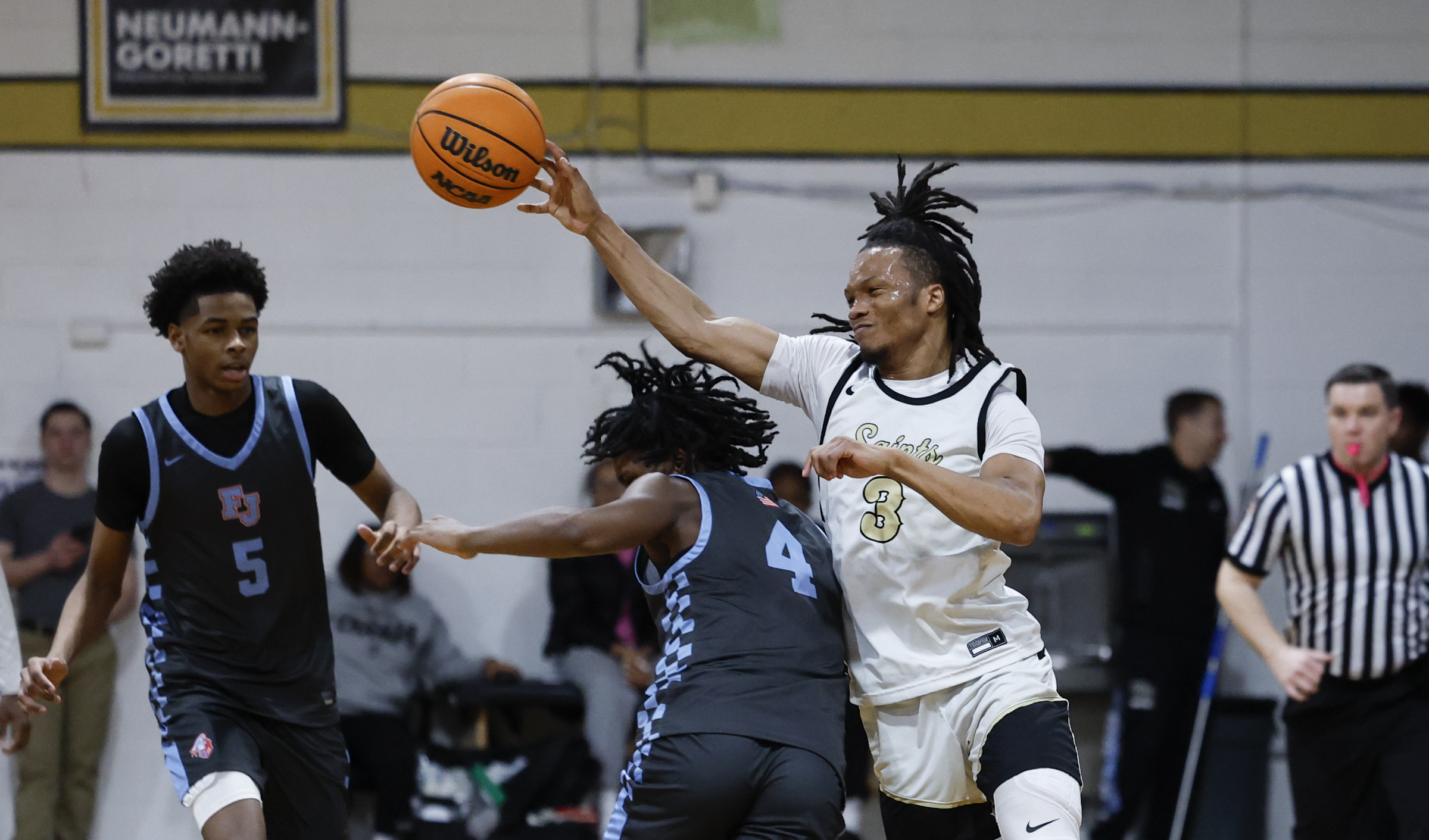
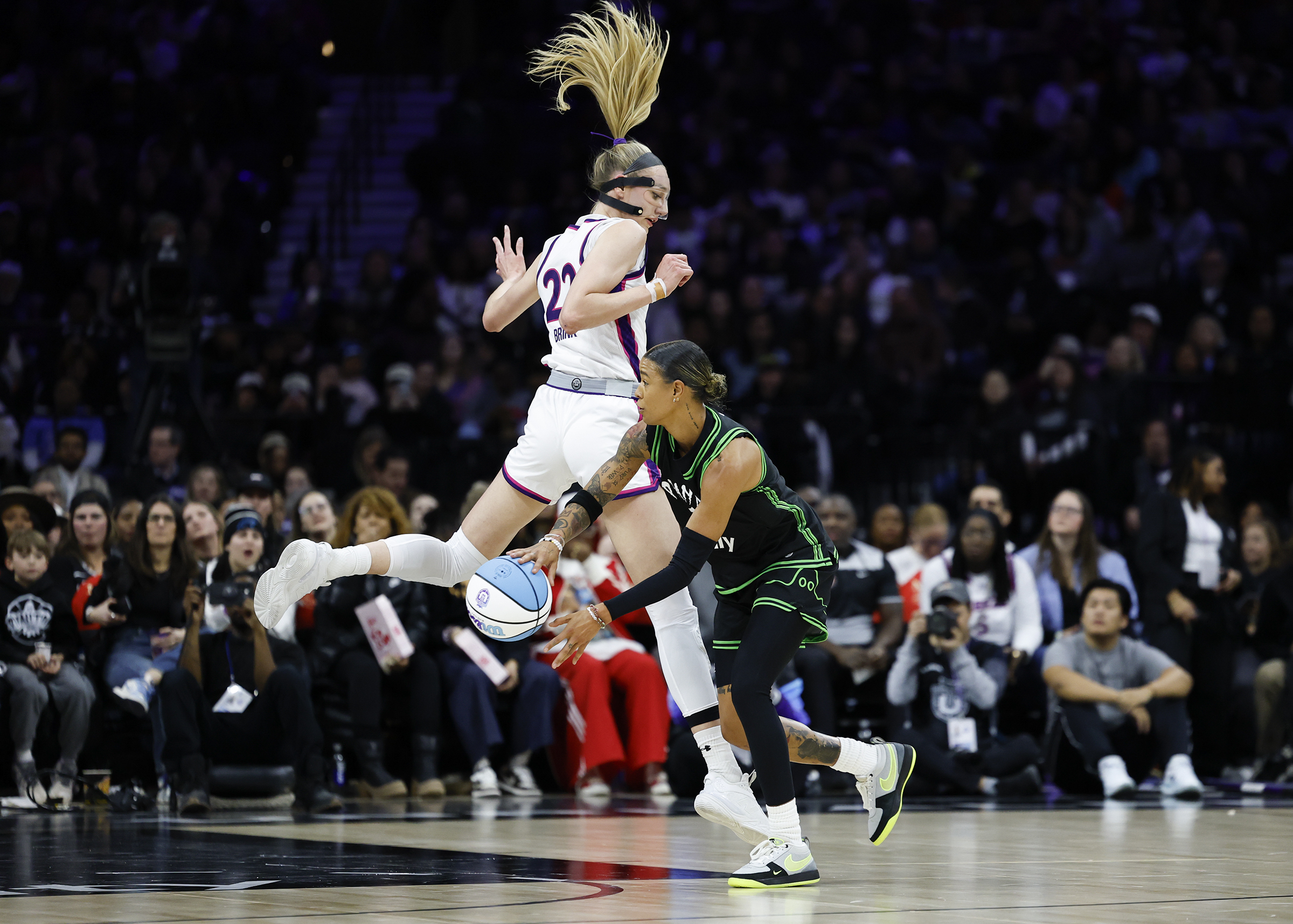
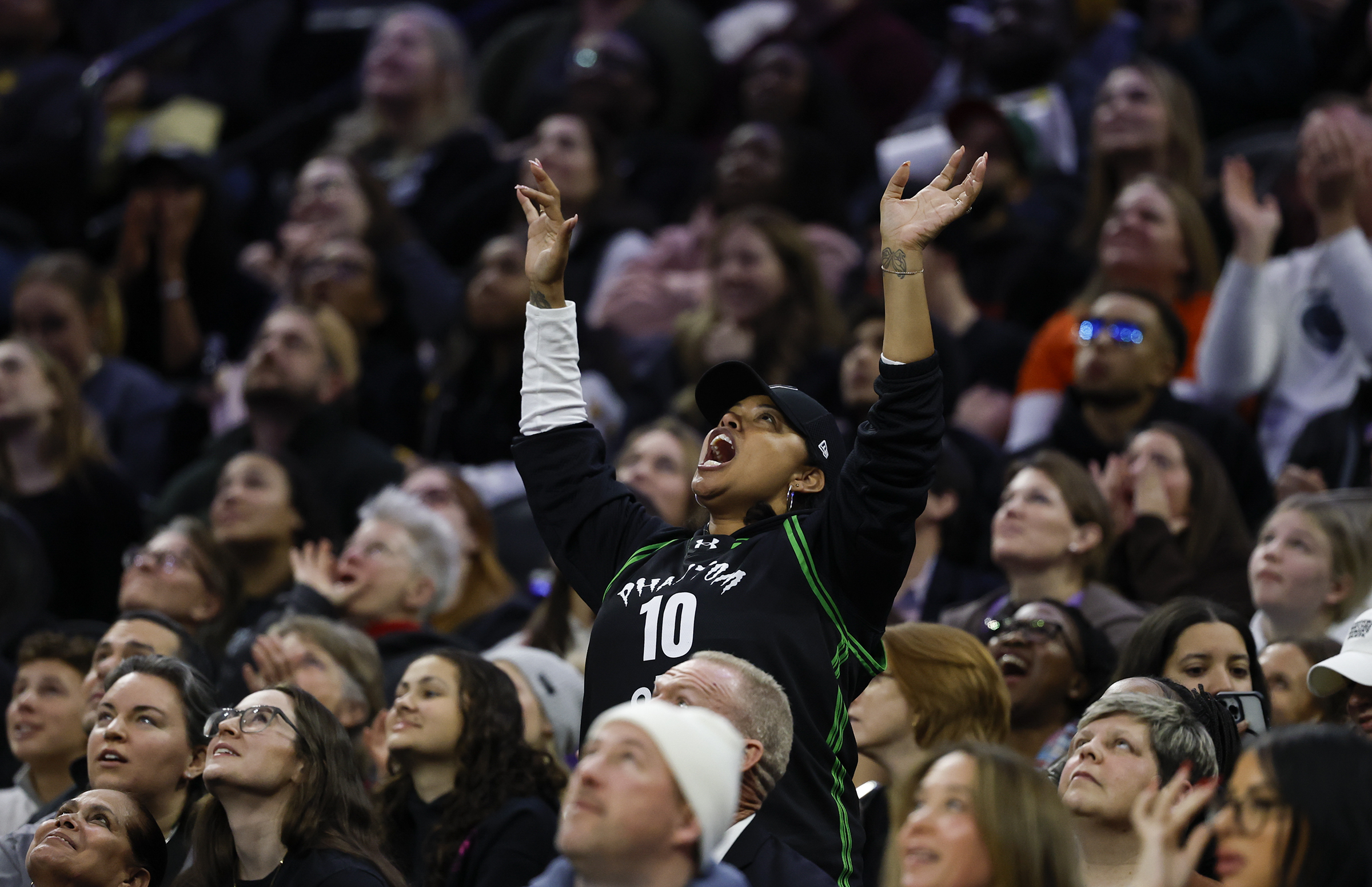
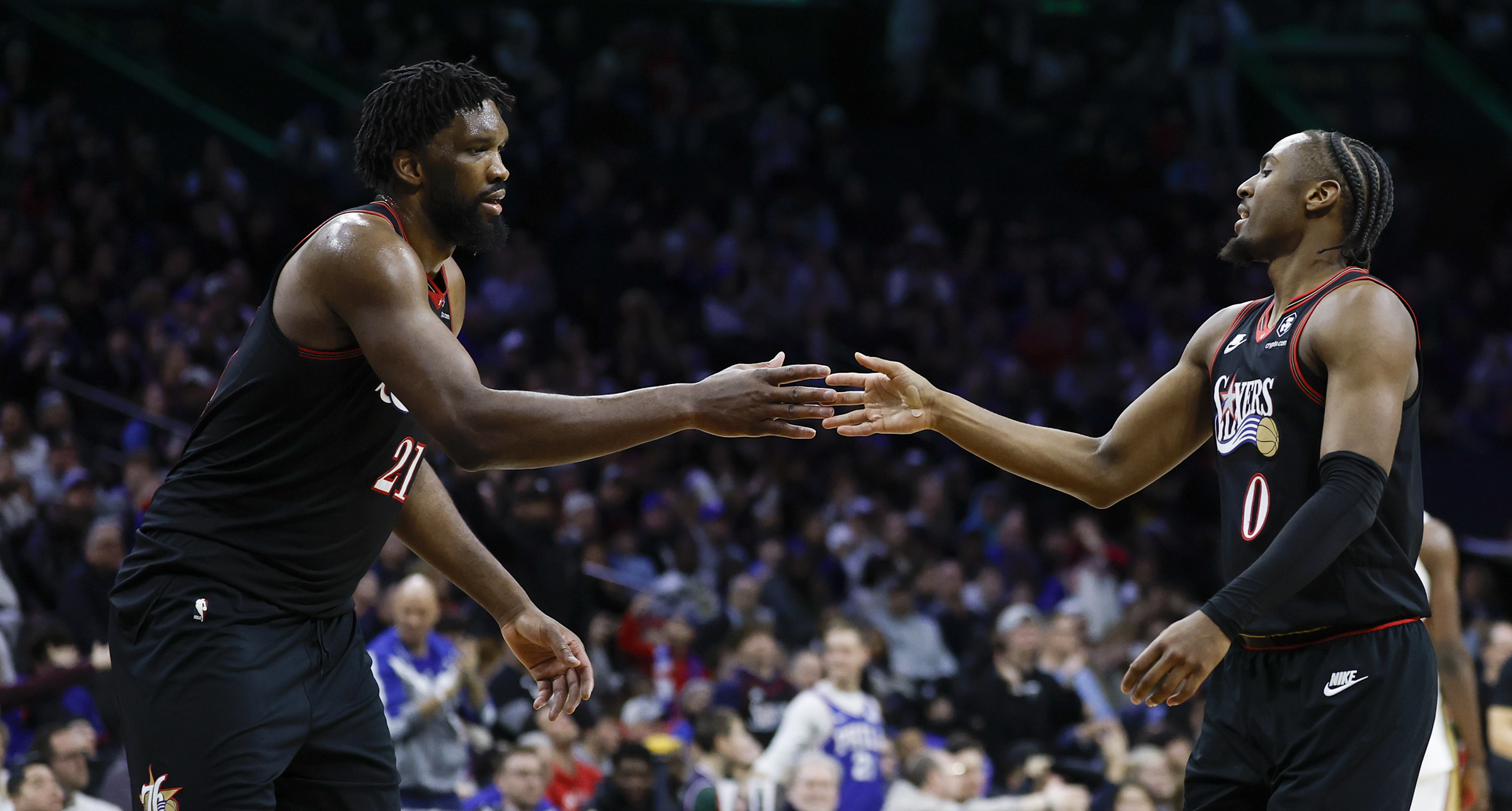
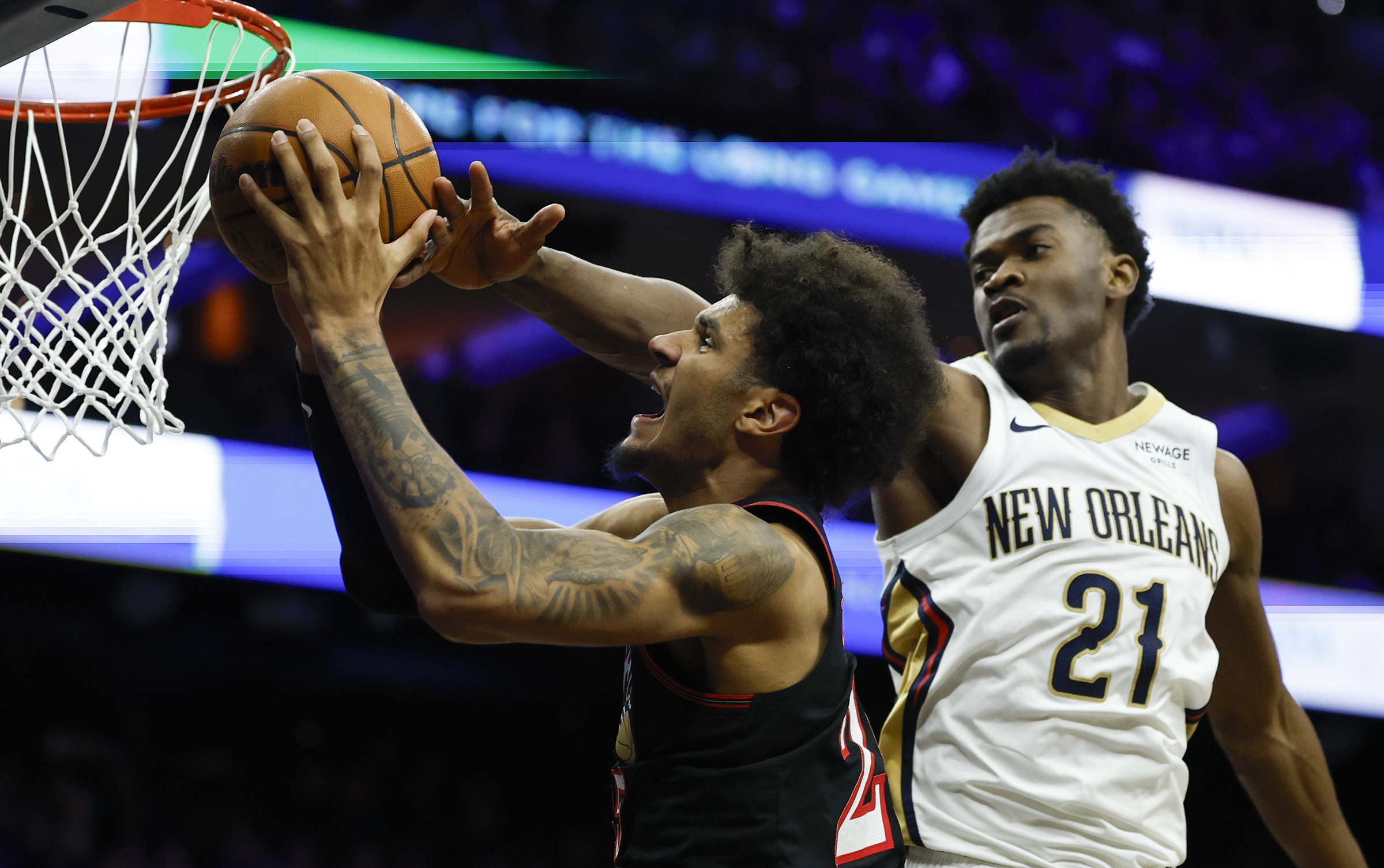
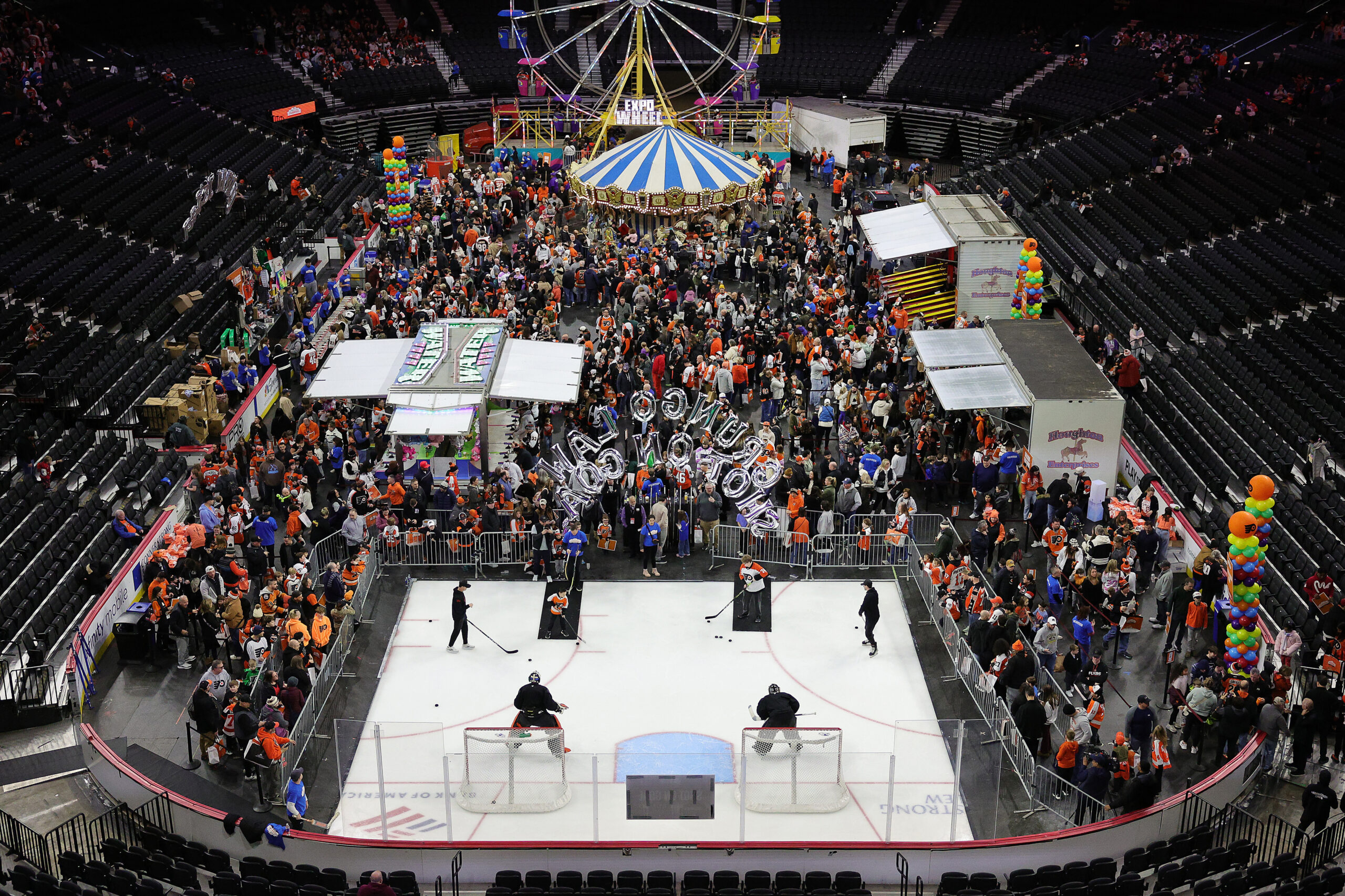
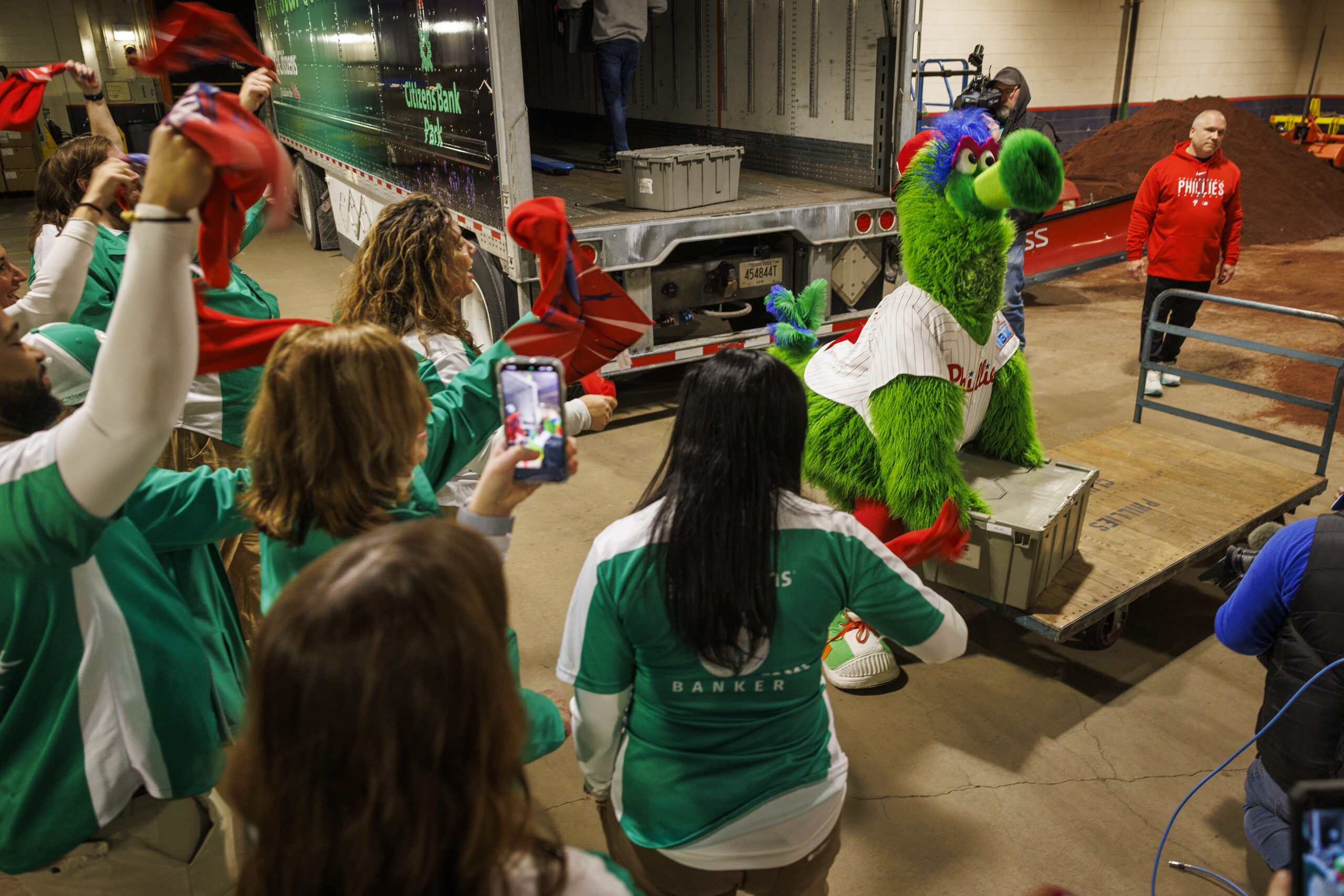
St. Joe’s forward Anthony Finkley (left) reacts after teammate Jaiden Glover-Toscano hits a three during the second half against George Washington. The Hawks’ 76-73 win was their fourth straight.Philly native Ronald Moore (center) was once an NCAA Tournament hero at Siena and now serves as an assistant coach for the Penn Quakers.Neumann Goretti’s Marquis Newson gets up a shot against Father Judge in the first quarter of the Saints’ 71-66 win over the Crusaders in South Philadelphia on Sunday.Neumann Goretti’s Kody Colson passes the ball past Father Judge’s Khory Copeland (4) and Rezon Harris. Unrivaled set a record for attendance at a regular season women’s basketball game during the three-on-three league’s stop in Philly on Friday night.Cameron Brink of the Breeze leaps past Broomall native Natasha Cloud of the Phantoms. Cloud celebrated her professional hoops homecoming on Friday.Friday’s Unrivaled doubleheader drew more than 21,000 fans and was sold out well in advance.Sixers guard Tyrese Maxey (right) said he was surprised to hear that teammate Jared McCain was traded this week. Before the deadline, center Joel Embiid (left) said he had hoped the team would stay intact. Sixers forward Dominick Barlow drives past New Orleans Pelicans center Yves Missi.Flyers forward Owen Tippett beats Capitals goalie Clay Stevenson to give the Flyers a 1-0 lead in the first period of Tuesday’s win over Washington.Flyers goalkeeper Samuel Ersson (left) talks with Samuel Hancock, who plays goalie for his youth league team, at the Flyers Charities Carnival on Sunday.Shawn Paul, 3, receives a little help from his dad, Zach, as they try one of the games at the Flyers Charities Carnival.The Flyers Charities Carnival featured a Ferris wheel, a merry-go-round, and other carnival favorites. Fans could also interact with players, coaches, and alumni.The Phillie Phanatic helps load cases of supplies onto the team truck before it leaves for spring training in Clearwater, Fla. Yes, he packed his hot dog launcher.Sunday’s boys’ basketball game between Neumann Goretti and Father Judge was sold out.
The youth coach used to hold 6 a.m. workouts inside a Baptist church on City Avenue, where Cloud first learned how to be disciplined in basketball and in life.
“I hope he sees this,” Cloud said Thursday afternoon, while facing a slew of television and phone cameras inside the Alan Horwitz “Sixth Man” Center. “… He set a standard. He set an expectation. And he set a work ethic for my skill set, my career.”
Cloud brings all of that back to Philly on Friday night for the Unrivaled offseason league’s two games at Xfinity Mobile Arena. The 33-year-old Broomall native called it a “dream come true” to help lead the return of professional women’s basketball to her city ahead of the WNBA’s arrival in 2030. Yet Cloud is most elated for “Young Tash,” who has blossomed into a WNBA champion, an 11-year professional, a dynamic personality, and an activist on and off the court.
“I carry this city everywhere I go,” Cloud said following practice for the Phantom, her Unrivaled team. “… I just never thought I would be here, so I think the most gratifying thing is just trusting God’s journey for my life. Doing it my way, too. Because I don’t think a lot of people get to do their careers their way.”
Before Mr. Ross, Cloud credits her Aunt Dawn as one of her first sports role models. A Delaware County basketball and softball star, she helped Cloud embrace being a tomboy — and a “powerful, badass woman.”
So Cloud honed that athleticism on the basketball hoop on the side of her home, which became a neighborhood gathering spot on school half-days. She played King — nah, Queen — of the Court against the boys. They lowered the rim so they could dunk. They idolized Allen Iverson and Dawn Staley.
When Linus McGinty, the legendary Cardinal O’Hara girls’ basketball coach, first watched Cloud play as an eighth grader, he believed she had WNBA potential because “she could do everything.” And Cloud wanted to play for that program because, in her words, “in Linus we trust.”
Cloud also appreciated O’Hara’s structure, from the nuns on campus to McGinty’s “strict” practices. She became an immediate starter on a talented team immersed in the competitive Philadelphia Catholic League.
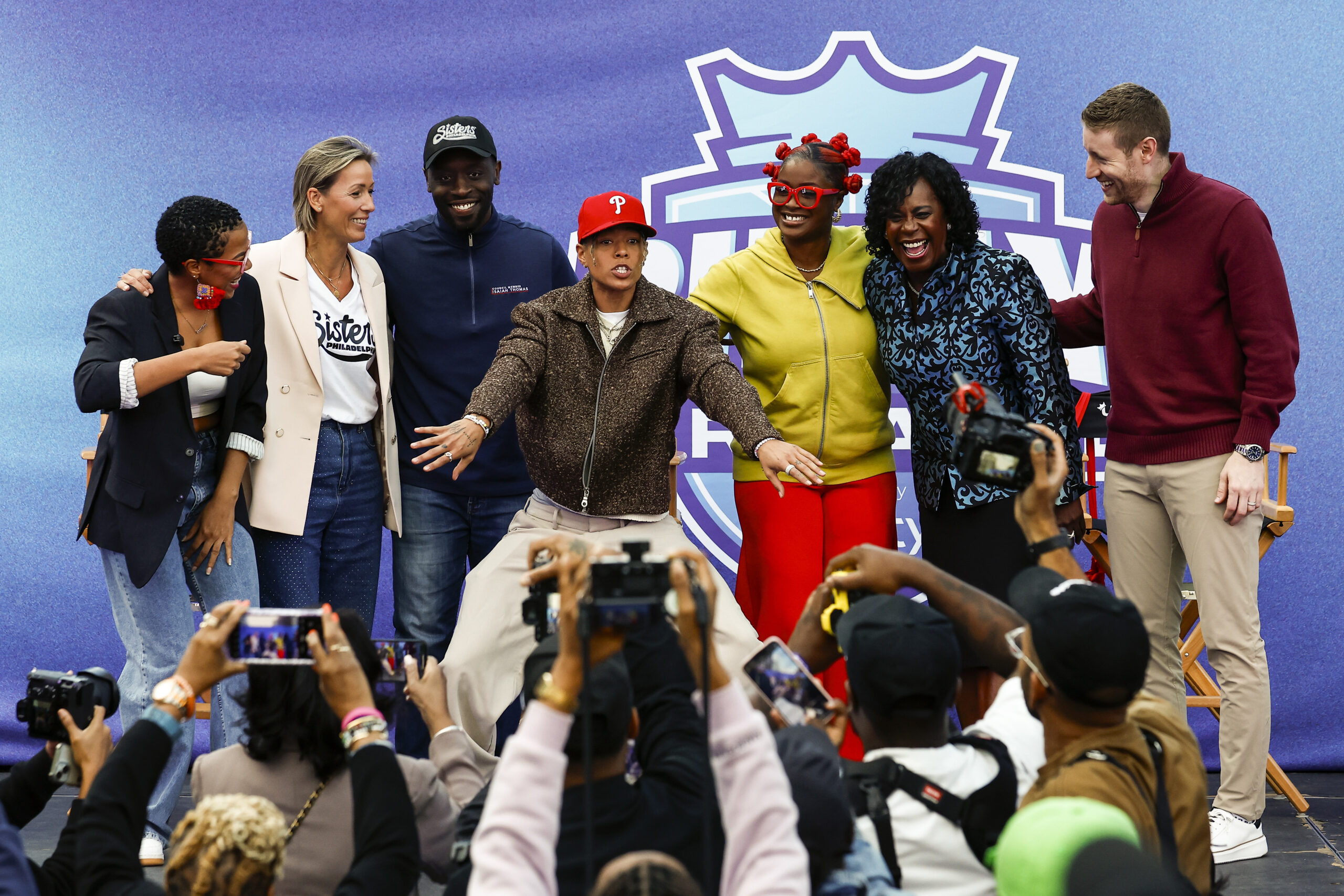
New York Liberty player Natasha Cloud dances while standing with other officials during an announcement about the Unrivaled Women’s Basketball League 2026 Philly tour stop.
McGinty’s one gripe about Cloud? She was almost too unselfish as the point guard.
“She never tried to score first,” the coach told The Inquirer by phone last week.
But Cloud made up for that in defensive prowess. The 5-foot-10 Cloud guarded the much more imposing Morgan Tuck and Elena Delle Donne, then elite recruits who became college and WNBA stars. Cloud preserved O’Hara’s 2008 PCL title victory by blocking a three-point attempt at the buzzer.
Then when Cloud was the only starter who returned her senior year, she finally carried more of O’Hara’s offensive load. She was an All-State selection after averaging 12.3 points, 7.9 rebounds, 5.2 assists, and four steals, before beginning her college career at Maryland in 2010-11.
After her freshman season, she transferred to St. Joseph’s to be closer to home. Her sister had been diagnosed with stomach cancer, and she was looking for a similar family atmosphere within her next college program.
“Tash is a very compassionate person,” St. Joe’s coach Cindy Griffin recently told The Inquirer by phone. “So if there’s anything going on at home, she feels that. She would have to learn how to manage that, and she did an unbelievable job doing that.”
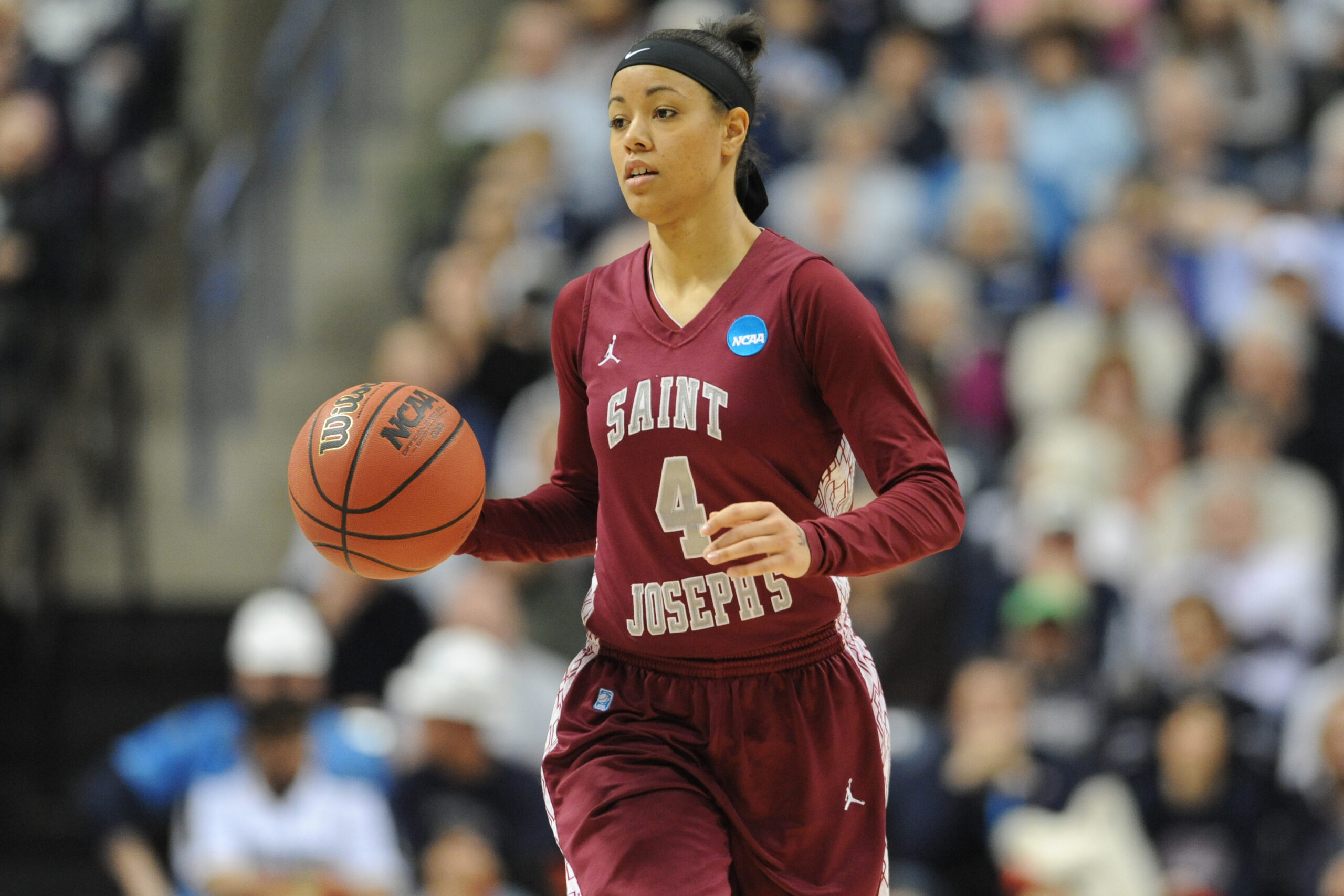
While sitting out the 2011-12 season because of NCAA transfer rules at the time, Cloud worked on refining her jumper. Her energy filtered to teammates and staff, Griffin said, even when she was playing on the scout team. That perhaps was most evident on defense, where she consistently covered ground (and others’ mistakes) while understanding how to rotate sharply and when to take risks on the ball. She was the Atlantic 10 Defensive Player of the Year in 2014.
“That just fueled fire for all of her teammates,” Griffin said, “and it just elevated everybody around her. … They really appreciated that, and they wanted to play hard for her and with her.”
Then when the Hawks needed more scoring punch from Cloud as her career progressed, she delivered.
Before her WNBA career, Natasha Cloud starred at St. Joe’s.
She totaled 15 points, six assists, and six rebounds in a comeback win over Fordham in the 2013 A-10 tournament championship game, and “looked like a pro out there, finishing in transition, taking and making tough shots,” the coach said. That carried over to the next season, when Cloud hit timely buckets to propel the ninth-seeded Hawks’ to upset eighth-seeded Georgia in the first round of the NCAA Tournament.
“Came down to a 1-5 ball screen,” Griffin said, “and [Cloud] being able to put us on her shoulders and win the game for us. … The answer is yes she can, and yes she will.”
Cloud’s impact has now stretched far beyond Philly.
She won the 2019 WNBA championship with the Washington Mystics and led the league in assists in 2022. She has made a WNBA All-Defensive team three times. She has played overseas in Turkey and Australia. She opted out of the 2020 WNBA “bubble” season to focus on social justice issues and remains outspoken on such topics.
But she has stayed connected to her roots.
She still has a house in town, meaning one might catch her during the offseason at the local Wawa or driving her truck. She regularly visits St. Joe’s to work out and chat with the team, reminding them how special college bonds can be. Unprompted, she told The Inquirer last week that she hopes to have her jersey number retired by St. Joe’s and O’Hara — preferably while her parents are still around to celebrate with her.
And now, she finally gets to play professional basketball in Philly. When she learned Unrivaled would be making a tour stop here, she knew fans would “show up and show out” for the showcase event. She stepped onstage wearing a Phillies cap for the October announcement at LOVE Park and pumped up the crowd. She hopes local kids getting to watch her play in person is a jolt of inspiration.
Among those in attendance Friday will be the Hawks, “shouting as loud as we can for Natasha Cloud and the Phantom,” Griffin said. An intrigued McGinty said he also might need to get down to South Philly. Mr. Ross surely is welcome, too. And it will be the first time Cloud plays in front of her family here since 2015.
They all helped develop “Young Tash.” And that is why she carries the city with her everywhere she goes — including back home.
“I’ve stayed true to myself,” Cloud said. “True to my character, my morals, my values through all of it. And that’s just a testament to, I feel like, being from Philly. We stand on our [stuff]. We’re going to talk our [stuff]. You can’t tell us otherwise. We know who we are.
“We’re confident in who we are, and a lot of people take it as arrogance. But it’s just, like, ‘Man, God has blessed me so abundantly. Who am I to not walk out in this light every single day?’”
FRISCO, Texas — Four days after a heartbreaking College Football Playoff national championship game loss, Levittown native David Blay was back in football pads.
Last week, Blay, whose five-year career spanned three schools and two levels of college football, practiced against some of the other draft-eligible prospects at the East-West Shrine Bowl.
His college career began locally at Division II West Chester, where he spent two years, then spanned two years at Louisiana Tech before he finished this past season with national runner-up Miami. Blay, a defensive lineman, played 22 snaps against Indiana in the College Football Playoff title game and finished with one tackle in the 27-21 loss.
Blay, a graduate of Harry S. Truman High School, gained a unique perspective in all three stops along the way, which included two years (his first at West Chester and first at Louisiana Tech) when he didn’t see the field much.
“For West Chester, time management, the process of doing things at certain times [at] the correct time, and doing the correct things,” Blay said about what he learned.
“And then for [Louisiana] Tech, they taught me the brotherhood aspect, because when I transferred into Louisiana Tech, about six or seven defensive linemen alone transferred in there at the same time. So it was like everybody had the same vision, the same goal. So it was easy to play against somebody I can call my brother.
“[With Miami], having camaraderie with the team wasn’t that hard. They’re outgoing guys, so bringing me in wasn’t that hard. Me, I’m more of — I guess you could say a quiet guy.”
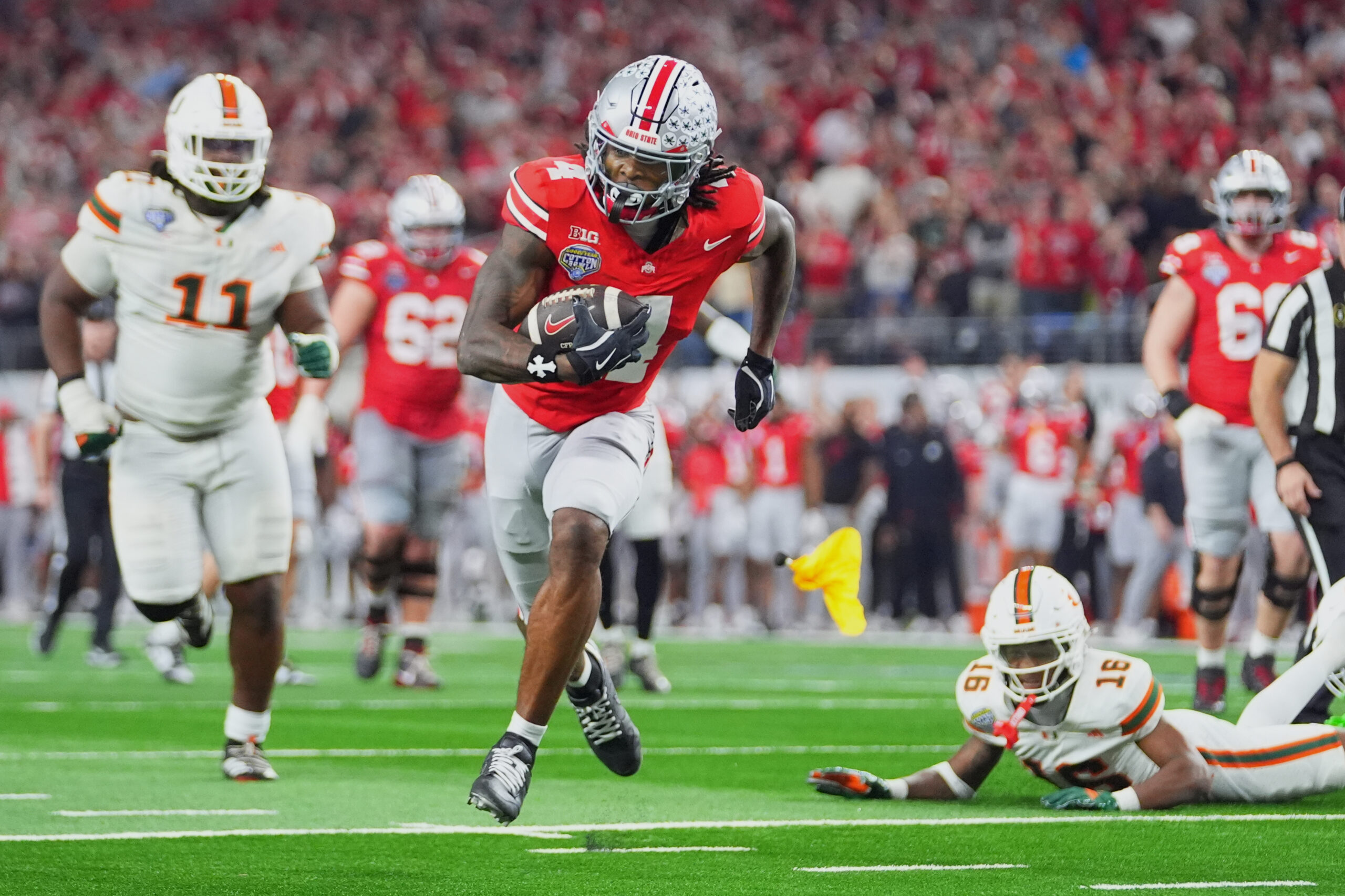
Miami and David Blay (11, at rear left) got past Jeremiah Smith (4) and Ohio State in the CFP quarterfinals on their way to an appearance in the title game.
At Miami, snaps weren’t easy to come by for Blay, with potential first-round NFL draft picks Rueben Bain and Akheem Mesidor manning the edge rusher positions and Ahmad Moten and Justin Scott starting in the interior.
Blay was on the field with Miami’s defense on 412 plays, according to Pro Football Focus. He played 443 defensive snaps in one fewer game in 2024 for Louisiana Tech.
But Blay, who amassed 95 tackles (23½ for losses) and 11½ sacks in four seasons at Louisiana Tech and West Chester, carved out a consistent rotational role on Miami’s D-line during a playoff run that Blay “will remember for the rest of my life.”
The 6-foot-2 and 302-pound lineman credits his discipline for refining his skills, which helped get him on the field at the Power Four level.
“In terms of getting on the field and playing, I just really had to be real technically sound,” said Blay, who had 28 tackles (2½ for losses) in 13 games with Miami. “Like I feel as if going to Miami, the big thing there was [to be] technical, technical, technical. That’s the difference between the levels in my head.”
Blay was joined by Indiana safety Louis Moore and Miami linebacker Wesley Bissainthe as players who appeared in the national championship game and also practiced at least one day at the Shrine Bowl. Indiana tight end Riley Nowakowski also traveled to Frisco to interview with NFL teams but did not practice.
Throughout his practice sessions at the Shrine Bowl, which wrapped up with the game on Tuesday night — the West won, 21-17, on a touchdown with 6 seconds left — Blay showed his strength capable of pushing the pocket as a pass rusher and standing his ground as a run defender against double-team blocks.
“I give those guys a lot of credit,” Shrine Bowl director Eric Galko said. “And Wesley [Bissainthe] and David [Blay] are coming in like everyone else, they’re banged up, but they just played 16 games, right? Not 12, like other guys have.
“And David’s done great, in the practice he had and in the interviews he has had, too. … I think David showed a lot of character — especially with the way the season ended, not on a victory, but on a loss — and he still said, ‘You know what? Now I’m on [to] the NFL.’ And to be focused here, I give the guy a lot of credit.”
Added Blay: “Just the aspect that we’re getting better every day [motivates me]. You’re never at your best; in a sense you can always get better. And I also say to my mom, I’m trying to get her to understand the aspects of the game and how it could change your life.”
Blay played his high school and the beginning of his college career about 30 miles from Lincoln Financial Field. An opportunity to play for his hometown Eagles would be “a dream scenario.”
“Being around the crib, I could go work out, go practice, go do my job, and then essentially come home to the people I’ve seen my whole entire life,” Blay said.
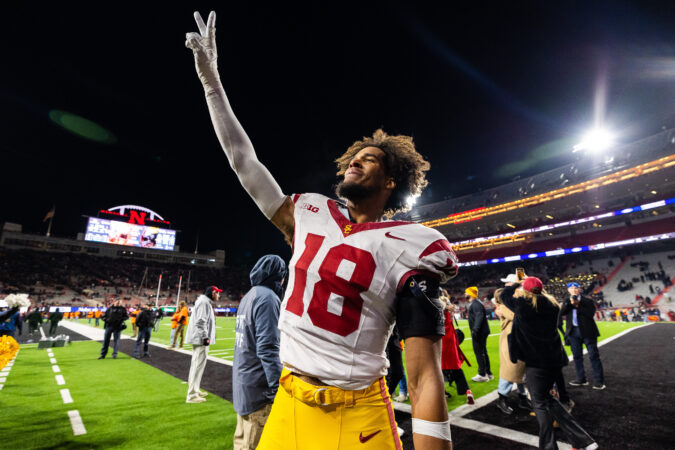
FRISCO, Texas — If there were any doubts about whether Eric Gentry belonged in the NFL with size that is often compared to an NBA wing player, he quelled those concerns by the second practice of East-West Shrine Bowl workouts, which are composed of the best draft-eligible players from across the country.
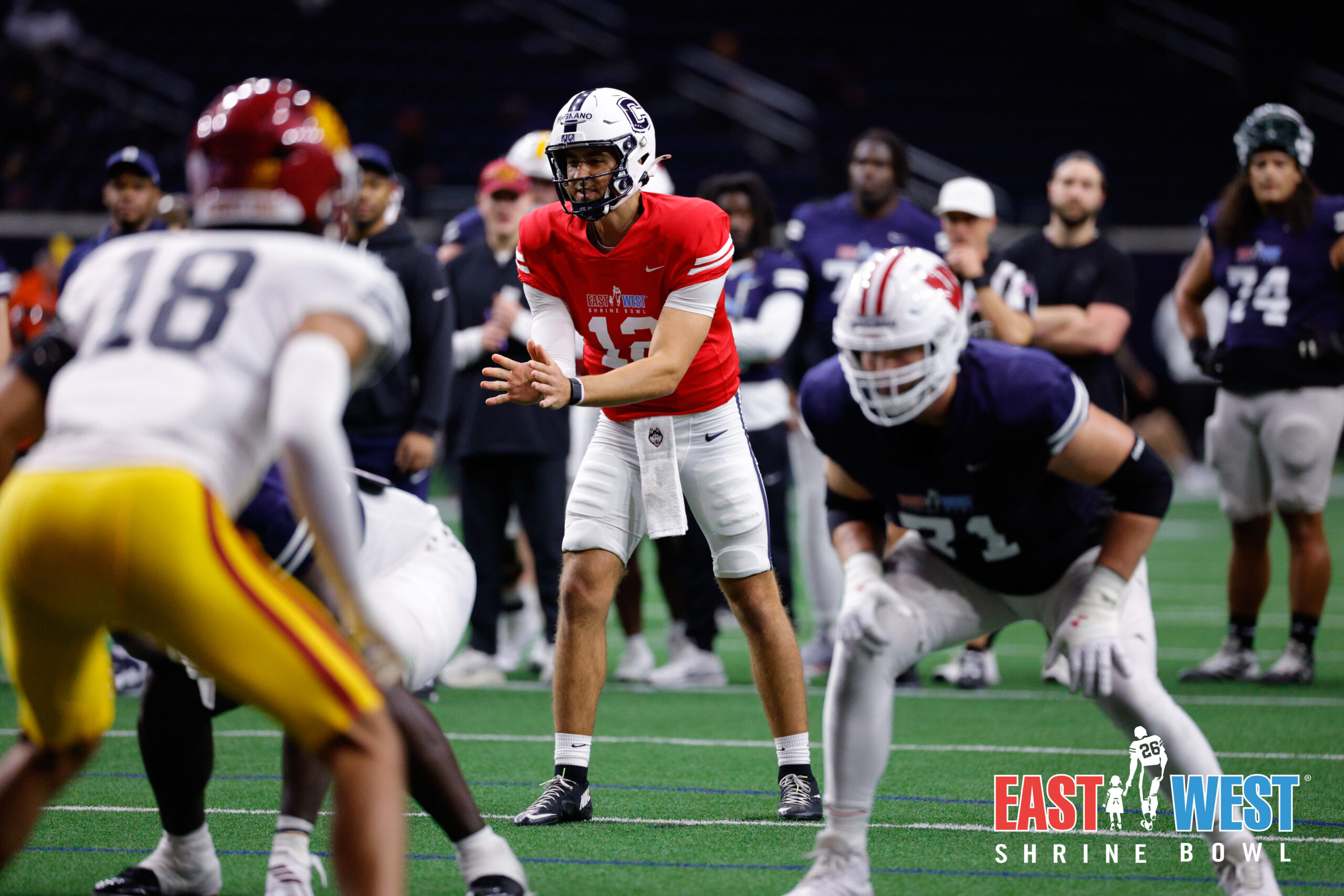
Gentry, who recently finished his college career at Southern California, sprinted downhill from his linebacker spot during the 11-on-11 period, hit the breaks two yards from the line of scrimmage when the offense ran play-action, and elevated to nearly intercept a Mark Gronowski pass over the middle of the field. The next play looked identical: Gentry flowed toward the line of scrimmage on a play-action pass, sank back a few feet, and elevated to again deflect a pass thrown his direction.
The Philadelphia native and Neumann Goretti alum used every bit of his 6-foot-6, 221-pound frame and long arms. His height and more than 35-inch arms are in the 99th percentile, while his weight is in the first percentile among linebackers. He’s a unique player who has intrigued nearly every NFL scout and media member during Shrine Bowl practices.
#USC LB Eric Gentry gets a pass deflections on back to back plays during the team session at the Shrine Bowl. pic.twitter.com/5FO98VxNHr
“We have a lot of value in guys that are really unique, and if their character matches their uniqueness on the field, those guys almost always hit the NFL,” Eric Galko, the Shrine Bowl director, told The Inquirer. “For Eric, we always saw that. He was one of our first invites at linebacker — we had no doubt he’ll play in the NFL. And I think what he’s showing this week in practice is that you can use him in a couple different ways. He can have a huge, huge impact because of how uniquely built he is.”
Gentry is used to the doubts by now, having experienced the criticism throughout his football career. Most think he’s too tall and too thin to play linebacker. Others question his durability playing such a physical position.
But through it all, he was focused on proving that the production and versatility he showed in college will follow him to the NFL. In one year at Arizona State and four at USC, he had nine forced fumbles, 26½ tackles for losses, nine sacks, and two interceptions.
“I think of just making these [scouts] come get at me, making these teams come get at me — I feel more like I am going to be in the moment and make it all happen,” Gentry said before practices began. “I feel so happy to be able to be out here and do what I’ve got to do. Every 10 years, it’s a new generation of athletes, type of athletes that come around. I know I’m one of them. So every day, just showing it, every day, having that intuition, knowing that can’t nobody tell me no but me. I’m always telling myself, ‘Yes, I can do it.’”
‘Always magical’
Football has been at the forefront for Gentry since he was 5 years old, but the journey to this weekend’s All-Star Game in Texas hasn’t been without its ups and downs.
Recently, Quan Luck, Gentry’s mother, was going through some old Pop Warner pictures from her son’s early playing days. Many of the players in those pictures with Gentry, she said, are either no longer alive or in prison.
First MVP trophy when he was 7… 😂🤣💪🏽🤷🏽♀️🤦🏽♀️✌🏽… Please leave me alone I’m from Philly and I’m clinically diagnosed Petty… You won’t win against me!! Just be a humbled fan!!! I don’t play about mine… Now #FightOnpic.twitter.com/6r75zBH7GL
The adversity that Gentry overcame to follow his dream of making the NFL still resonates with his mother.
“It’s always magical watching my son, because the things that he’s able to do, most football players are not able to do, but it’s hard,“ she said. ”He just has [faced] a lot of adversity because of his build. … Because of so many coaching changes, he’s had to prove himself over again. But every single coach that he ever played for always spoke very highly of him and stated how he was a unicorn.”
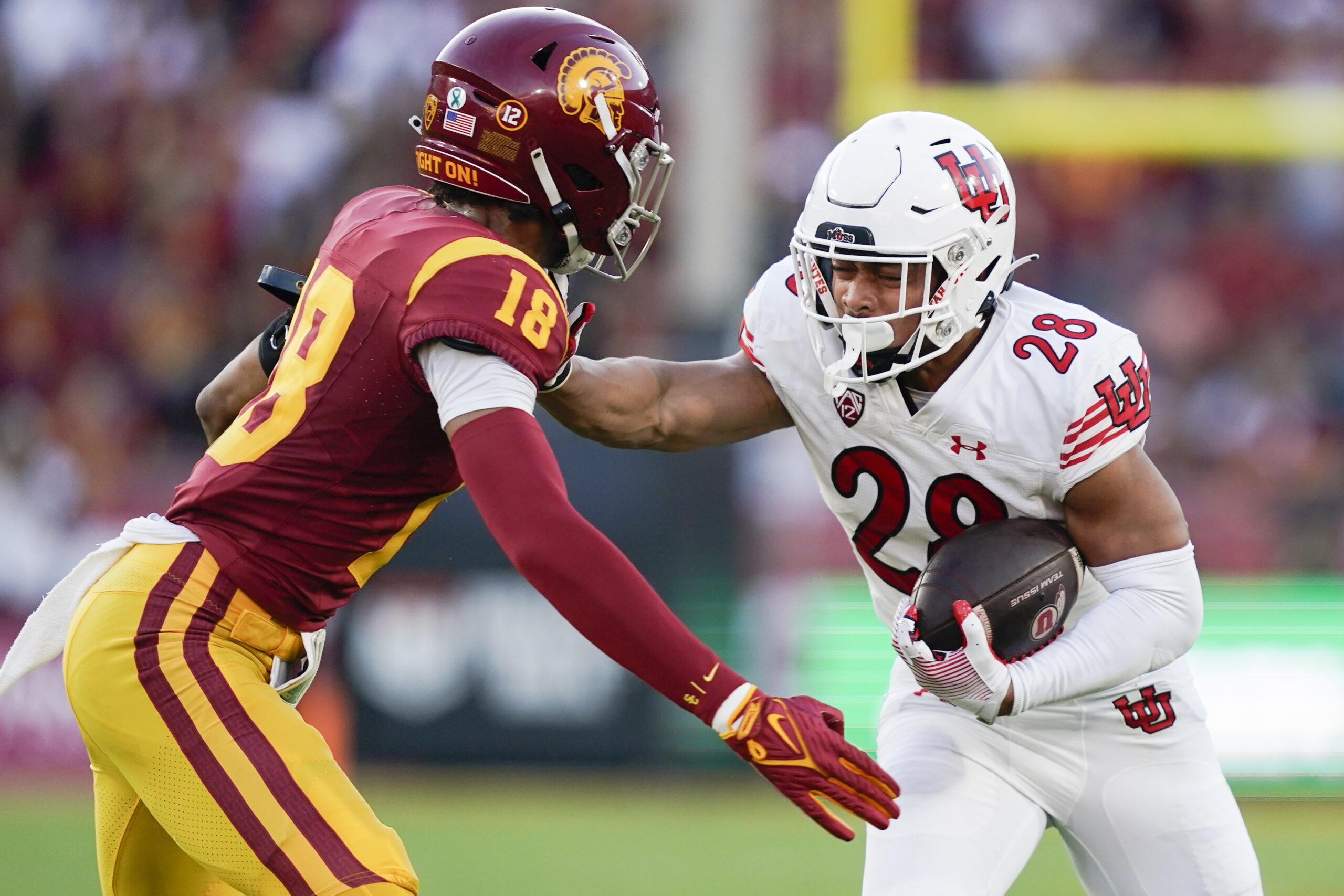
Southern California linebacker Eric Gentry prepares to rein in Utah running back Sione Vaki on Oct. 21, 2023.
His mother also noticed how Gentry was “a different character” on the football field over the years. She was a college basketball player at Rutgers-Camden and thought her son might follow in her footsteps on the court.
But Gentry wanted to be “something that nobody had ever seen” on the football field. Luck said Dwayne Thomas, Gentry’s former high school defensive coordinator, described his playing style as “playing basketball on the football field.”
“Sometimes it’s like he’s the underdog for whatever reason. I don’t know why, but he just always proves them wrong,” Luck said. “People have so many questions about him. Is he too thin? Will he not make it? Is he too weak? Is he going to get pushed back? And he just proved to them that anything he wants to do, he does his best.
“You can ask anybody from his team, they will always speak highly of him, that [football] is what he does every day.”
Before winter storms ravaged most of the country, Luck, Gentry’s father, Eric Sr., and Thomas were set to make the trip to Frisco to watch him compete at the Shrine Bowl.
Coming full circle
During his three days of participation in Shrine Bowl practices, Gentry was one of the standouts among all players. He consistently made plays in one-on-one coverage and in pass-rushing reps during the team periods.
An NFC scout, while watching Gentry, remarked that the Philly native “can be a good one” and would ideally want the linebacker to “get up to 240 pounds.” Another appreciated the “use of those long arms.”
Eric Gentry (left) during the East-West Shrine Bowl practice on Saturday
“I think Eric Gentry is kind of a choose-your-own-adventure player, like whatever he does in the draft process, whatever you care about as a team, you’re going to find value in as well,” Galko said. “I always tell NFL teams and guys, when you’re that big and long, you can make mistakes and still win the rep.
“And I think with a player like Gentry, he can make mistakes and still make that play on the running back in the B-gap, or he can make that mistake and still bat the pass down. I think his length, wingspan, his mental aptitude, can make him a guy that early on in the NFL can contribute before he’s even reached his full potential.”
One of Gentry’s agents is Chafie Fields, also a Philadelphia native, who has a close connection with his mother. Luck and Fields ran track and field together since they were 5 years old and the former Penn State and NFL wide receiver turned agent works for the Wasserman agency, which represents more than 100 NFL players.
The journey is coming full circle for Gentry, one that is coming closer to reality in a few short months. Wherever he ends up, Philly will be at the forefront of his identity.
USC Linebacker (Yes), Eric Gentry is 6'6", 221 LBs.
“To be away and have my journey go on and just hearing people support me from back home — like a mythic legend, in a sense, because nobody sees me anymore — but just hearing everything that’s going on with me,” Gentry said. “My homie texted me not that long ago, actually, and he was like, ‘You don’t [get] on social media a lot, you don’t do a lot, but you don’t realize how much you are motivation to the people in the city.’
“I never knew the true understanding of it, until you see, you hear people from back home. There’s so many people that know you back home and are talking about you. … I feel so great to be able to put on for the city and tell everybody and show everybody that Philly’s got it.”
Added his mother: “The city made him. Part of his aggression is because he was raised in the city of Philadelphia. It’s not easy. People don’t understand to make it out of Philly is an accomplishment by itself.”
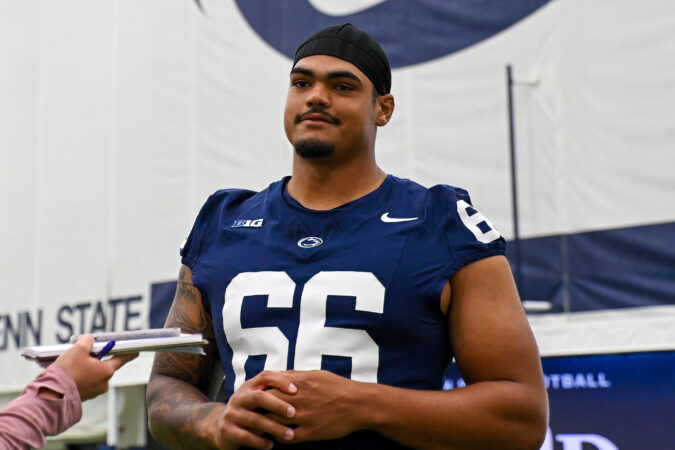
FRISCO, Texas — Pennsylvania has been Drew Shelton’s home for the majority of his life. The Downingtown native, who starred at Downingtown West and was Penn State’s starting left tackle the last two seasons, is adjusting to life down South.
Shelton, 22, recently relocated to the Dallas area as he prepares for the next phase of his life with the impending NFL Scouting Combine next month and April’s NFL draft looming.
“It’s been a big transition down here,” Shelton told The Inquirer in a Frisco hotel lobby. “I haven’t lived away from home in a really long time, been in Pennsylvania pretty much all my life. I’m being down here and learning how to be on my own.”
It has been quite the journey for Shelton, who was a tight end in high school until he made a position switch to offensive tackle, helping further his playing career. Shelton sat behind 2024 first-round pick Olu Fashanu, although he briefly filled in for an injured Fashanu for five games in 2022 as a freshman.
The 6-foot-5, 296-pound Shelton started all 16 games for Penn State’s College Football Playoff appearance in the 2024 season and started all 12 regular-season games in 2025 for the Nittany Lions, whose season didn’t go as expected. But Shelton still thinks of his college experience fondly.
“Coming from Downingtown and growing into the offensive lineman that I needed to be at Penn State, and continuing to grow to be the offensive tackle I need to be in the NFL, it’s been fun. It’s been a challenge,” Shelton said. “You’re never going to be the player that you want to be overnight. It’s just you’ve got to consistently put in the work. And that’s really hard to tell an 18-year-old kid that you’re not going to be the starting left tackle at Penn State on Day 1. I guess it’s hard to come to terms with, but once you really understand and have the patience, that’s a big part of who you are and what you’re going to be.”
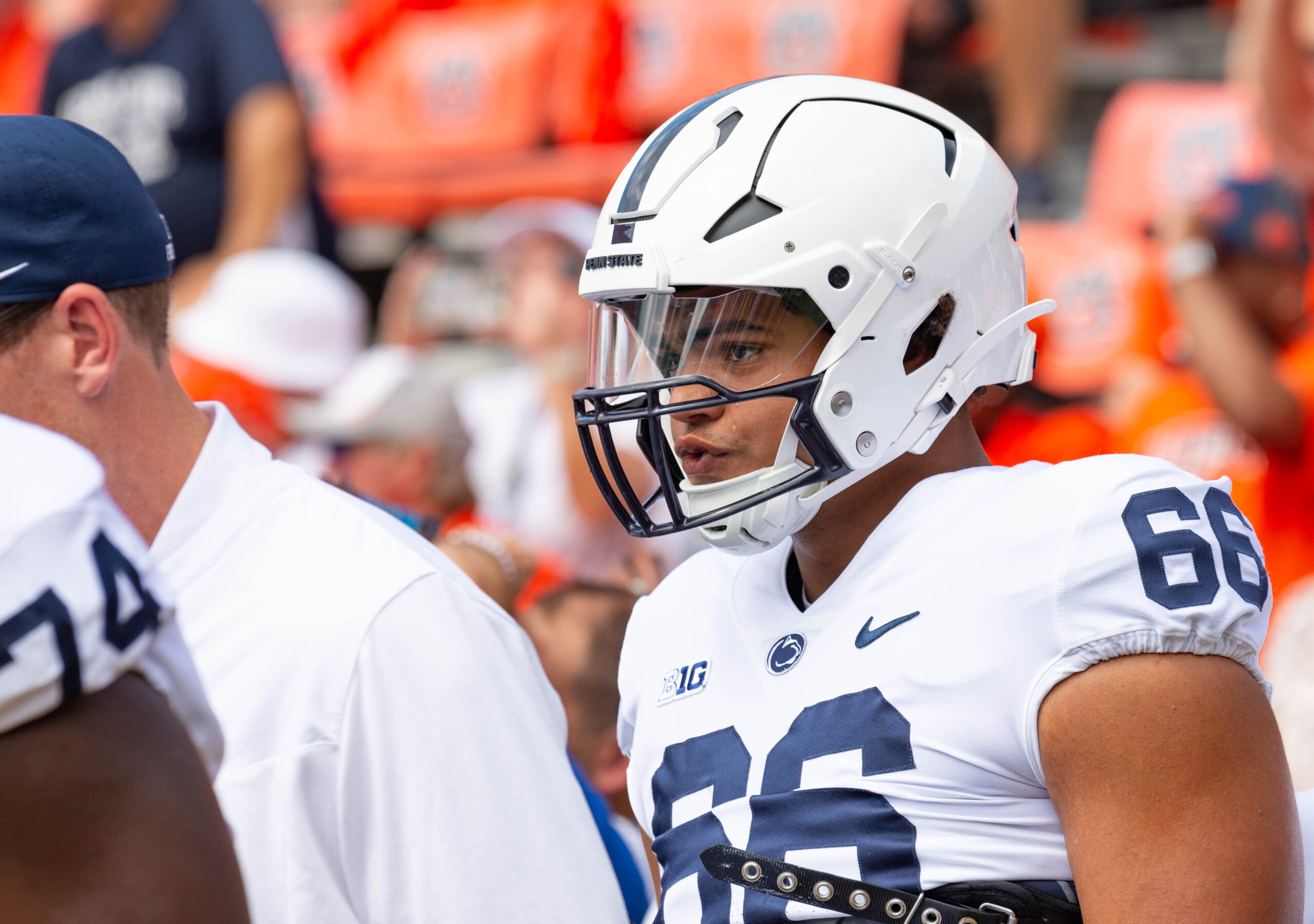
Drew Shelton will be joined by Penn State teammates Olaivavega Ioane and Nolan Rucci at the OL Masterminds workouts in Texas.
The next phase of Shelton’s life is in Texas because it’s where he is training for the combine, his pro day, and workouts with NFL teams. Shelton is working with Duke Manyweather, the cofounder of OL Masterminds, alongside Eagles right tackle Lane Johnson. Manyweather trains current and soon-to-be NFL offensive linemen at Sports Academy in Frisco.
And he won’t be alone. Former teammates Olaivavega Ioane, Penn State’s left guard, and Nolan Rucci, the Nittany Lions’ right tackle, are among the 15 draft-eligible offensive linemen working with the offensive line guru.
Manyweather’s “got some of the top offensive linemen in the league and in the draft,” said Shelton, who had meetings with NFL scouts and executives while they were in town for the East-West Shrine Bowl. “He puts a lot of work into us, builds us up, breaks us all the way down to stance to the fundamentals and all that kind of stuff, and builds us right back up.”
Shelton, who accepted his invite for the Senior Bowl in December, will not participate in the All-Star game to focus on his training and pre-draft process. Throughout his journey, Shelton has remained connected to former teammate Will Howard, whom he played with at Downingtown West and has been one of his closest friends for a long time.
Howard led Ohio State to a national championship and was selected in the sixth round of the 2025 NFL draft by the Pittsburgh Steelers. Shelton is hoping to follow in his footsteps, becoming the second Downingtown West alum to reach the NFL in as many years.
“Seeing someone that you know, and someone that you’ve played with … reach his goals, and obviously continuing to strive to for the next set of goals, that’s been cool,” Shelton said. “And for me personally, like, that’s a dream come true. Every kid dreams of being a professional athlete, and just to be have that be a reality here soon is pretty cool.”