Category: High School Sports

  • Frank Seravalli’s late cousin played hockey at Germantown Academy. Now the NHL insider is coaching the Patriots in his honor.

    Frank Seravalli’s late cousin played hockey at Germantown Academy. Now the NHL insider is coaching the Patriots in his honor.

    Frank Seravalli was standing behind the players’ bench at Bucks County Ice Sports Center when his phone buzzed. He didn’t reach for it — which is not his usual instinct.

    Seravalli, a former Daily News reporter, is one of only a handful of NHL insiders. His job is to talk to athletes and decision makers around the league. Missing a call or a text can mean missing a story, and in a competitive media environment, in which quick, accurate information comes at a premium, being “late” isn’t ideal.

    But on Jan. 12, in the midafternoon, Seravalli was busy. He was coaching Germantown Academy’s varsity hockey team. It was the third period and the Patriots were up, 6-2, in a rematch against Episcopal (5-2 on the aging scoreboard, which was missing a number).

    Despite their lead, Seravalli’s players didn’t relent. With 35.6 seconds remaining, sophomore Mick Tronoski fired another shot into the net. A smattering of fans cheered.

    After the two groups shook hands, Seravalli walked off the ice. He pulled his phone from his pocket, and read that the Columbus Blue Jackets had fired their head coach, Dean Evason.
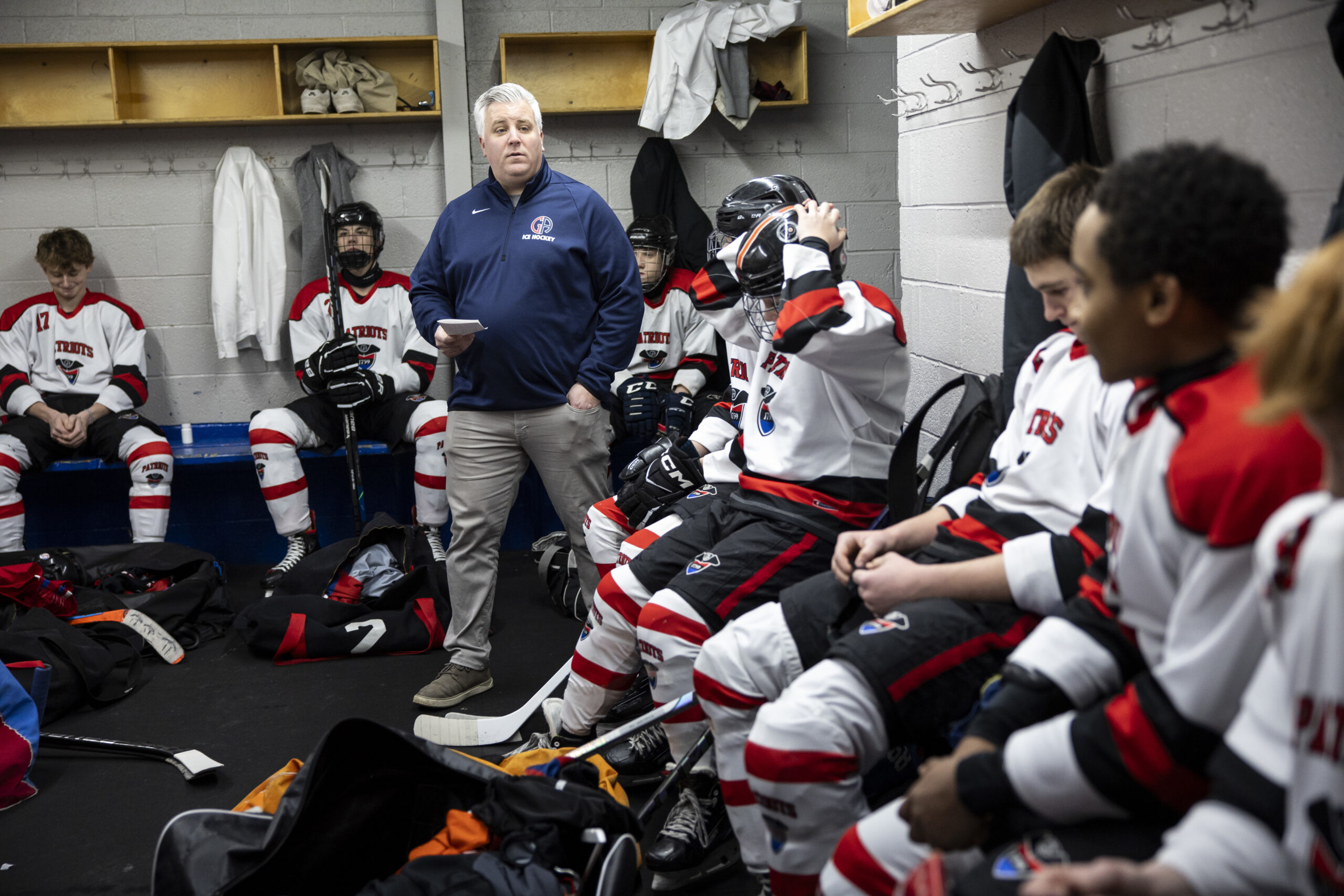
    Coach Frank Seravalli talks with his Germantown Academy team in the locker room at the Bucks County Ice Sports Center on Jan. 12.

    He retweeted a team statement, 27 minutes late. The NHL insider shrugged.

    “I mean, it’s just life, right?” he said. “What are you going to do?”

    Since July, Seravalli, 37, has served as GA’s head hockey coach. It is a daily commitment, one that he takes as seriously as his podcast and TV hits for various outlets. Five times a week, Seravalli oversees hourlong practices, and coaches hour-and-a-half games, with some 7 a.m. morning lifts mixed in.

    He is not above doing the grunt work, either, like ordering gear, setting the schedule, and keeping the team’s stats. He reviews film, plans workouts, and runs the middle school program, all while keeping an eye on promising players in the area.

    NHL insiders do not have an abundance of free time, so when Seravalli first told his family that he’d be coaching high school hockey, they thought the idea was absurd. And maybe it is a little absurd. Seravalli is not an alumnus of Germantown Academy. He is not doing this for the small stipend he gets halfway through the year.

    But he is doing it for a reason. Just over two years ago, Seravalli’s cousin, Anthony Seravalli, died unexpectedly. He was 41 and left behind a wife and three sons.

    Frank always looked up to him. Anthony was mature for his age, even as a teenager. He was a team captain and a star defenseman at Germantown Academy in the late-1990s, back when the school was winning Flyers Cups and producing NHL-caliber talent.

    GA hockey’s stature has diminished since then. New York Rangers goalie great Mike Richter once played for the Patriots, but for years, the program was essentially dormant. Local recruiting wasn’t a priority. It was unclear whether there would be enough players to field a team in 2025-26.

    Until Seravalli arrived. He has told the school he’s willing to make a five-to-10-year commitment to restore the program to what it was. In his mind, this is the best way to honor his late cousin.

    “I thought of him, and how big high school hockey was 25 to 30 years ago, and how I could help make that big again,” Seravalli said. “And I was like, ‘Maybe, this was supposed to happen.’”

    A ‘fixture’ of GA hockey

    Germantown Academy was an unlikely hockey powerhouse in the 1980s, ’90s, and 2000s. The coed school had an enrollment of only 1,200 students, from kindergarten through 12th grade. These numbers allowed the Patriots to fill only one varsity team most years.

    It paled in comparison to some of the bigger programs in the area, like La Salle College High School, which was able to fill four teams (one varsity and three junior varsity).

    Nevertheless, GA found success. Players took pride in its underdog identity, especially while playing local behemoths like Council Rock and Malvern Prep. Germantown Academy won two Flyers Cups — the hockey championship for eastern Pennsylvania high schools — in 1982 and again in 1983, and a state championship later that year.

    The team won three more Flyers Cups in 1991, 1994, and 1995, and went 100-0-6 in regular-season league play for over five seasons in the mid- to late-1990s.

    Anthony Seravalli was a key part of GA’s team. He joined the varsity as a freshman in 1996, and quickly established himself as a leader. Dan McDonald, a defenseman who was two years older, would drive him to school every morning.
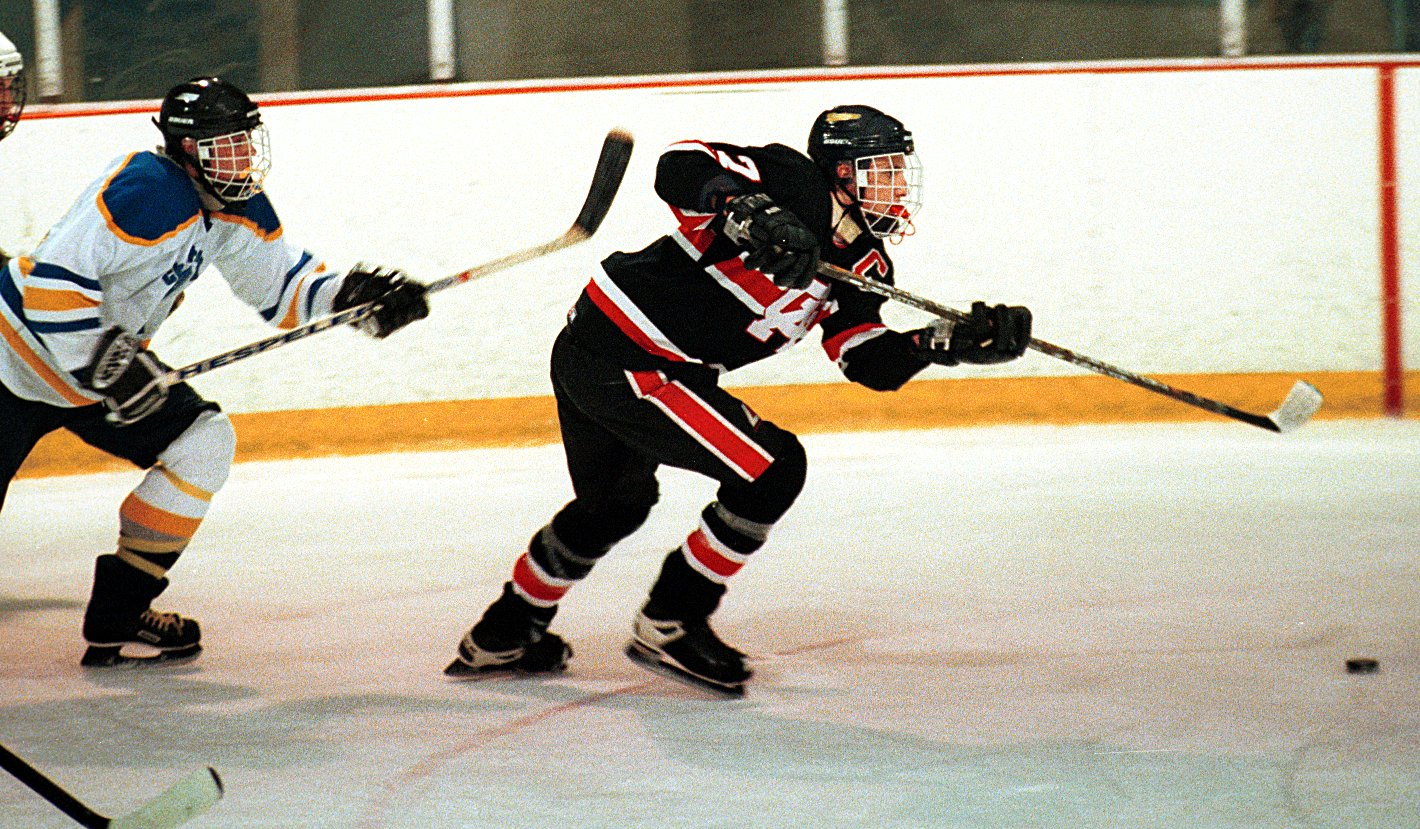
    Anthony Seravalli (right) was a critical part of GA’s program in the late 1990s.

    The underclassman would rarely — if ever — call out sick with an injury or illness. His teammates estimated that he’d be on the ice for about 70% of Germantown Academy’s games (a hefty workload for a young player). Seravalli was a physical presence, standing at 6-foot-2, with a big windup slap shot that was hard to miss.

    He carried no ego, despite his abilities. Anthony was inclusive with all of his teammates, including those who spent more time on the bench. In 1999, a few players got injured, and Seth Gershenson, a self-described “bench guy,” was asked to play some shifts.

    Before Gershenson took the ice, Seravalli pulled him aside to give a few words of encouragement.

    “He respected my effort and willingness to go out there and get beat up a little bit,” Gershenson said.

    Many local players also participated in club hockey. They saw it as a way to get noticed in eastern Pennsylvania, which was not exactly a hotbed for the sport. As a result, club teams often took precedence over high school teams.

    But this was not the case for Seravalli. GA always came first. Gershenson referred to him as a “fixture.”

    “He took being a captain really, really seriously,” Gershenson said, “and he took the success of GA really seriously. He took pride in our success much more than whatever his club team was doing.”

    Frank Seravalli grew up in Richboro, Bucks County, just a few minutes from the Face Off Circle, where Germantown Academy played at the time. By age 6, he was attending games and practices to watch Anthony and another cousin, Jason Jobba.

    The elementary school student would stand in the same spot, behind the net, with a fizzy Coke in hand, and his face pressed up close to the glass.

    “Watching your cousins who are a bit older, those are your heroes,” Seravalli said. “And for me, that’s part of where my love for the game came from.”

    The Seravallis were a big, tight-knit group. Almost everyone played hockey, and almost everyone went to work at the family construction business. This was the path Anthony took, but he also found time to give back to his alma mater.
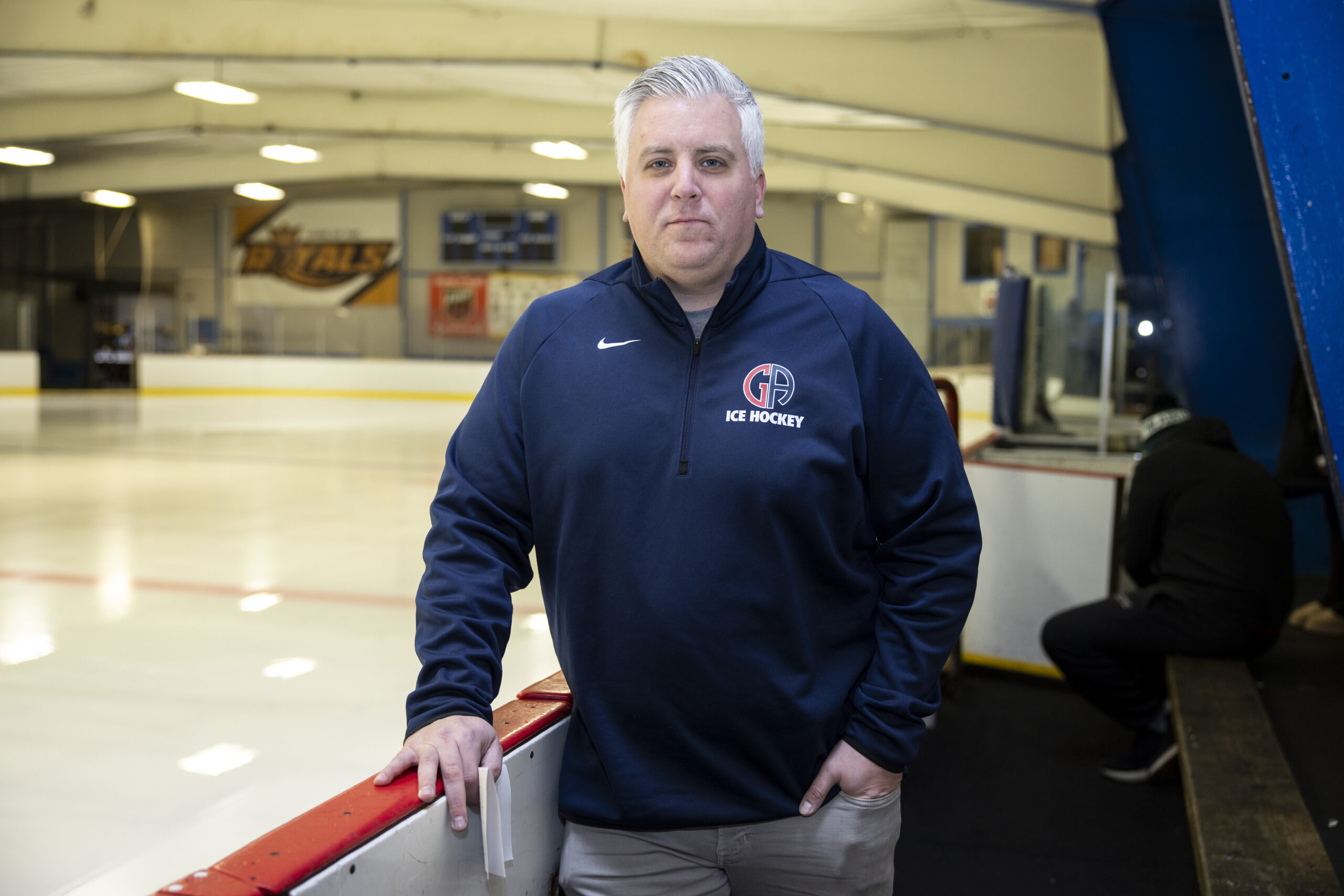
    Frank Seravalli fondly remembers watching his older cousins play hockey when he was a child.

    In 2004, while Frank was playing at Holy Ghost Prep, Anthony returned to GA as an assistant coach. He had a knack for connecting with the players, most of whom were familiar with his high school career.

    One example was Brian O’Neill, a GA alum and former U.S. Olympian who is now playing pro hockey in Sweden.

    O’Neill was a talented skater, but he lacked defensive fundamentals. This was one of Anthony’s strengths, and when O’Neill was moved to defense in his sophomore year, he began to work with the assistant coach.

    Seravalli constantly reminded him to keep “stick on puck.” It was a message that O’Neill had heard for years but never fully understood. That changed when the coach stepped in.

    “It was easy for him to sell me on what he was trying to teach, because I had a lot of respect for him as a player and a person,” O’Neill said. “He didn’t really have to earn my trust. That was already there.”

    The goal was to put pressure on his opponent, in a way that didn’t involve hitting or cross-checking. The coach ran drills in which O’Neill would hold a puck in his right hand, and the stick in his left, to focus on keeping the stick down.

    “It’s amazing,” O’Neill said. “You would think, ‘OK, I can’t grip the stick with my other hand, so I pretty much am playing with one hand,’ and all you can do with that is pretty much stick on puck.

    “You would think you would be way worse at defending, but it’s actually the opposite, because all you’re focused on is stick on puck. And you’re not focused on hitting.”

    The concept finally clicked. O’Neill, who went on to play in the NHL, still uses it to this day.

    “[Anthony] was the guy that gave me the most advice on defense,” he said, “and that definitely made a huge impact on my career.”
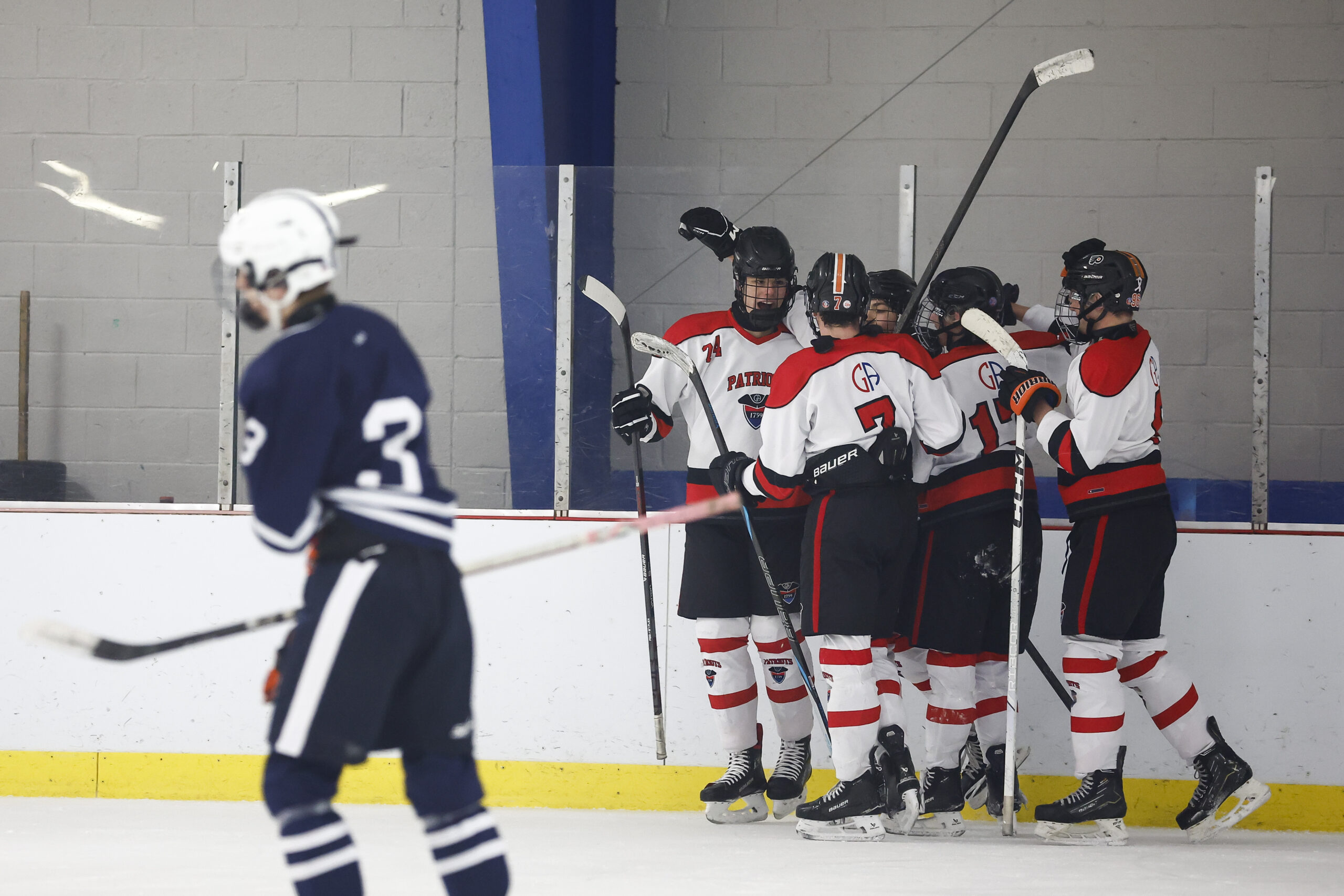
    Germantown Academy players celebrate after a goal against Episcopal Academy at Bucks County Ice Sports Center.

    ‘Please help save our program’

    When he was young, Frank Seravalli would visit his family’s construction business in Northeast Philadelphia. He’d often notice workers perusing thick copies of the Daily News over lunch, and dreamed about having a byline someday.

    In 2009, that dream became a reality, when the paper hired Seravalli out of Columbia University’s journalism school to cover the Flyers. He stayed for six years, before leaving for the Canadian television network TSN, where he worked as a senior writer and NHL insider.

    In 2021, Seravalli started his own business, the Daily Faceoff, which was sold to a media group in Denmark in 2024. He’s now building a hockey network at the streaming service Victory+.

    A typical day includes a radio interview in the morning, a podcast taping at noon, and more radio and television hits at night. Interspersed are hours spent texting and calling sources throughout the league.

    It is a frenetic lifestyle, one that requires Seravalli to be glued to his phone. Finding time to coach a high school hockey program seemed impractical, if not impossible. But Seravalli was drawn to the idea. So, when he saw the job opening last year, he decided to apply.

    The school’s athletic director, Tim Ginter, could only laugh when he read the insider’s resumé. Among his references were two NHL general managers, an executive with the league, and a former NHL head coach.

    “He’s like, ‘Call [former Anaheim Ducks head coach] Dallas Eakins,’” said Ginter. “And I’m like, ‘You’ve got to be kidding me.’”

    Seravalli interviewed for the position in the spring. He talked to two of the team’s captains, J.P. McGill and Joey Lonergan, who explained that their program was in jeopardy.
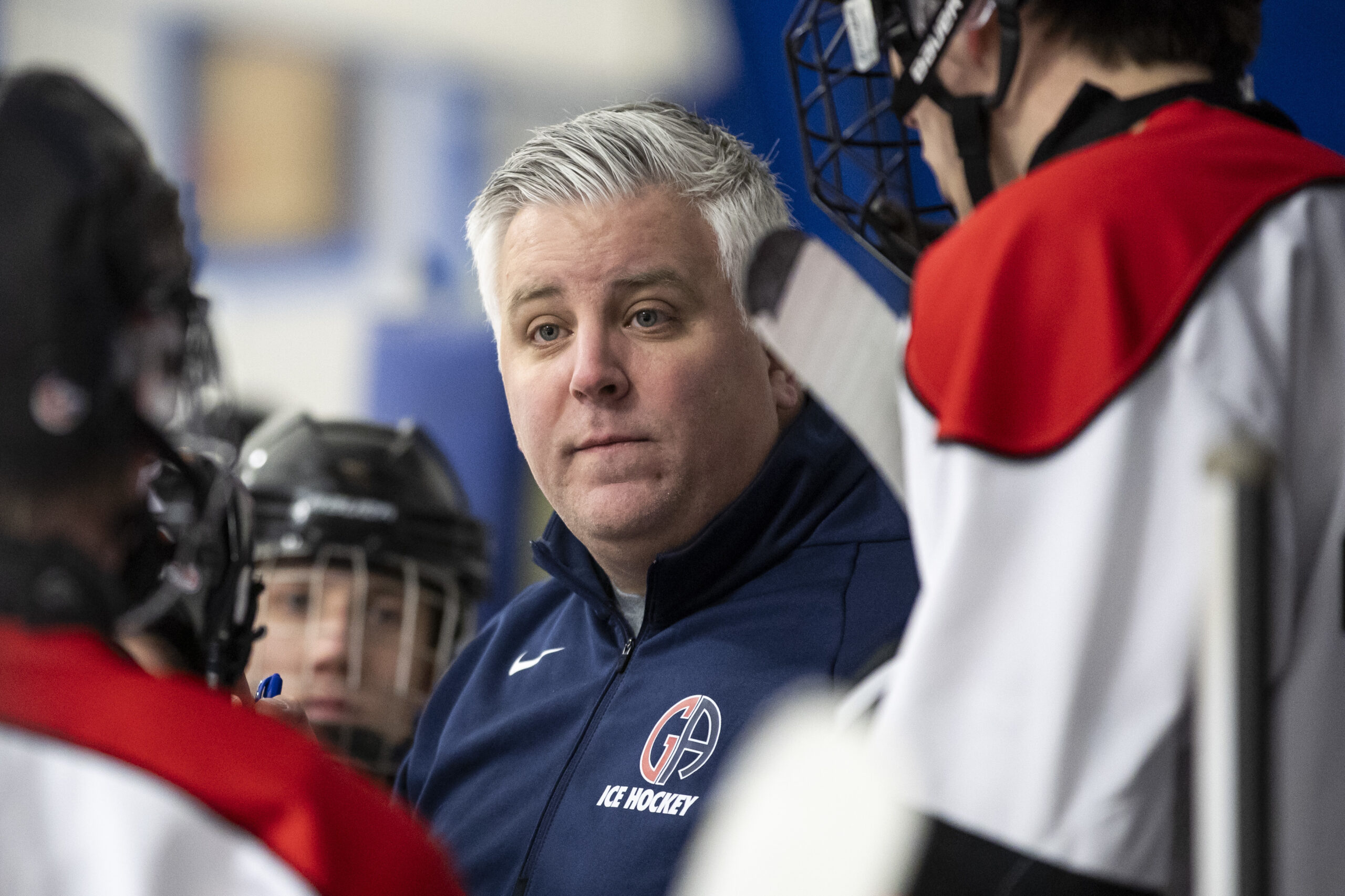
    Coach Frank Seravalli talks with his team during the game against Episcopal Academy.

    GA had lost five players in 2025. School officials didn’t know how they were going to fill those spots. McGill and Lonergan had heard stories about the 1990s and 2000s teams, but returning to that level seemed like a long shot.

    The Patriots hadn’t played in a Flyers Cup since 2009. After years of shrinking rosters and coaching changes, the team was moved for 2009-10 from the Suburban High School Hockey League to the lesser Independence Hockey League, which isn’t eligible for Flyers Cup entry.

    “Essentially their plea was, ‘Please, help save our program,’” Seravalli said. “‘We’re not even sure we’re going to have a team next year.’

    “I couldn’t say no at that point. I knew I was hooked.”

    Seravalli met with Ginter shortly after. He made a succinct but powerful pitch.

    “If you don’t have interest in changing your program, and really tearing it down and rebuilding it, I’m not your guy,” the insider told him. “But if you are interested, I’m willing to make a five-to-10-year commitment to build this the right way.”

    He was hired in July. Seravalli rarely mentioned his full-time job, but it didn’t take long for the teenagers to figure it out. One day, while McGill was “doomscrolling” on the internet, he spotted his high school coach on Bleacher Report Open Ice.

    His reaction: “Oh [expletive].”

    “I texted some of my teammates,” McGill said. “I’m like, ‘He’s the Adam Schefter of the NHL!’”
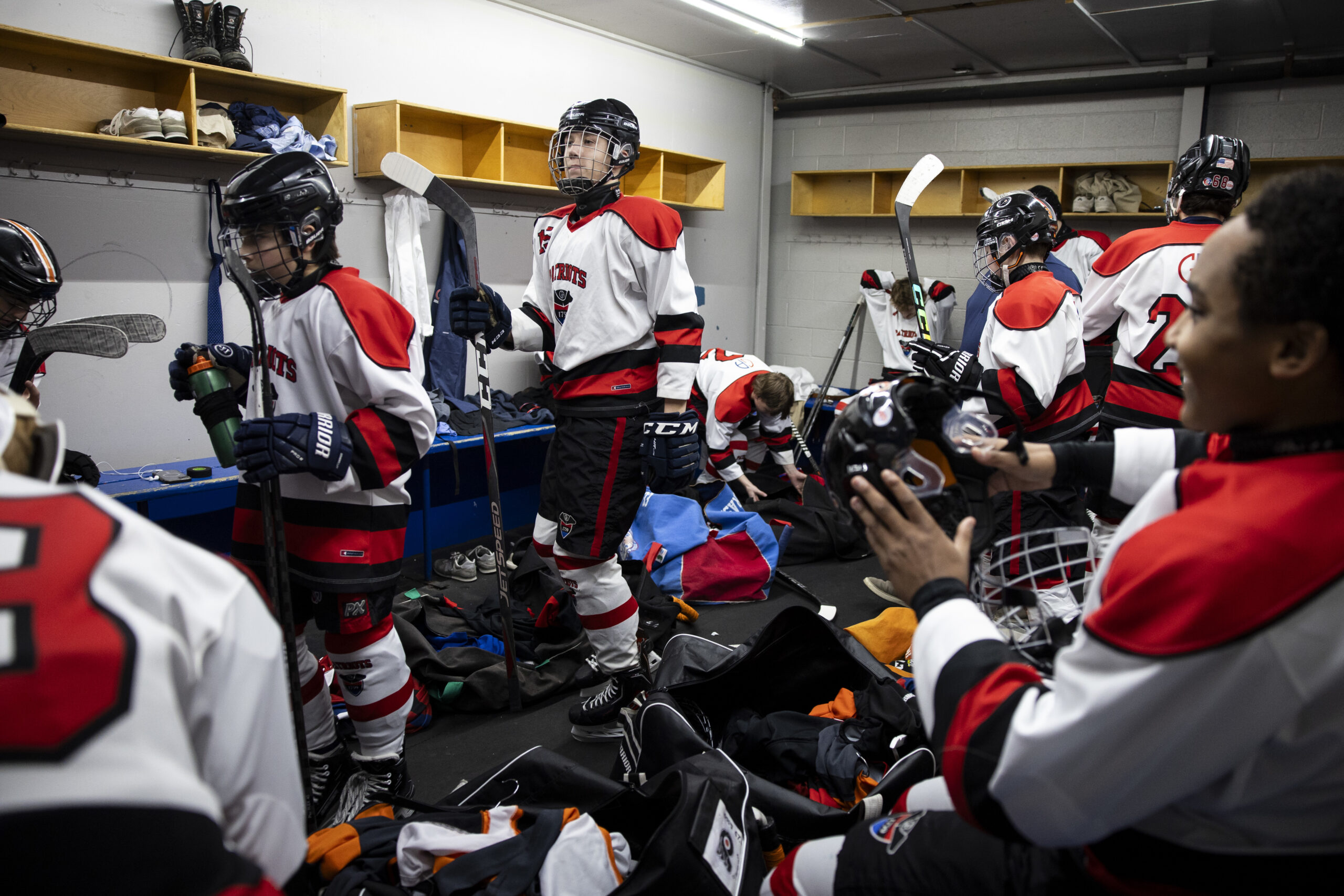
    Germantown Academy’s players were not aware at first that their new coach was an NHL insider.

    Added junior defenseman Jack Stone: “He’s a reporter, so obviously he knows what he’s talking about.”

    The insider started to use his connections behind the scenes. He’d ask current and former NHL head coaches for advice, among them Eakins, who now works for Adler Mannheim in Germany.

    Eakins encouraged Seravalli to model the behavior he wanted to see in his team. He emphasized how important it was to show not only that he cared about the program, but about the players as people.

    He also shared some mistakes he’d made in his own coaching career, with the hope that Seravalli could learn from them.

    “Sometimes people [will] say, ‘OK, I’m a coach, now I have to take on a different persona,’” Eakins said. “And I told him, don’t do that. Don’t go in there and pretend to be [Florida Panthers head coach] Paul Maurice.

    “You’ve got to go in there and be Frank Seravalli. Because as soon as you step outside of that, you’re cooked. You can only pretend to take on this other persona for so long.”

    The tenor of the program changed almost immediately. Before Seravalli’s arrival, on-ice practices and team lifts were optional. Sometimes, as few as two or three players would show up. Now, they were mandatory, and everyone was expected to arrive on time.

    The teenagers learned this the hard way. In October, during preseason workouts, Seravalli organized morning weightlifting. Two players — who will remain anonymous — slowly waltzed into the gym, 15 minutes late.
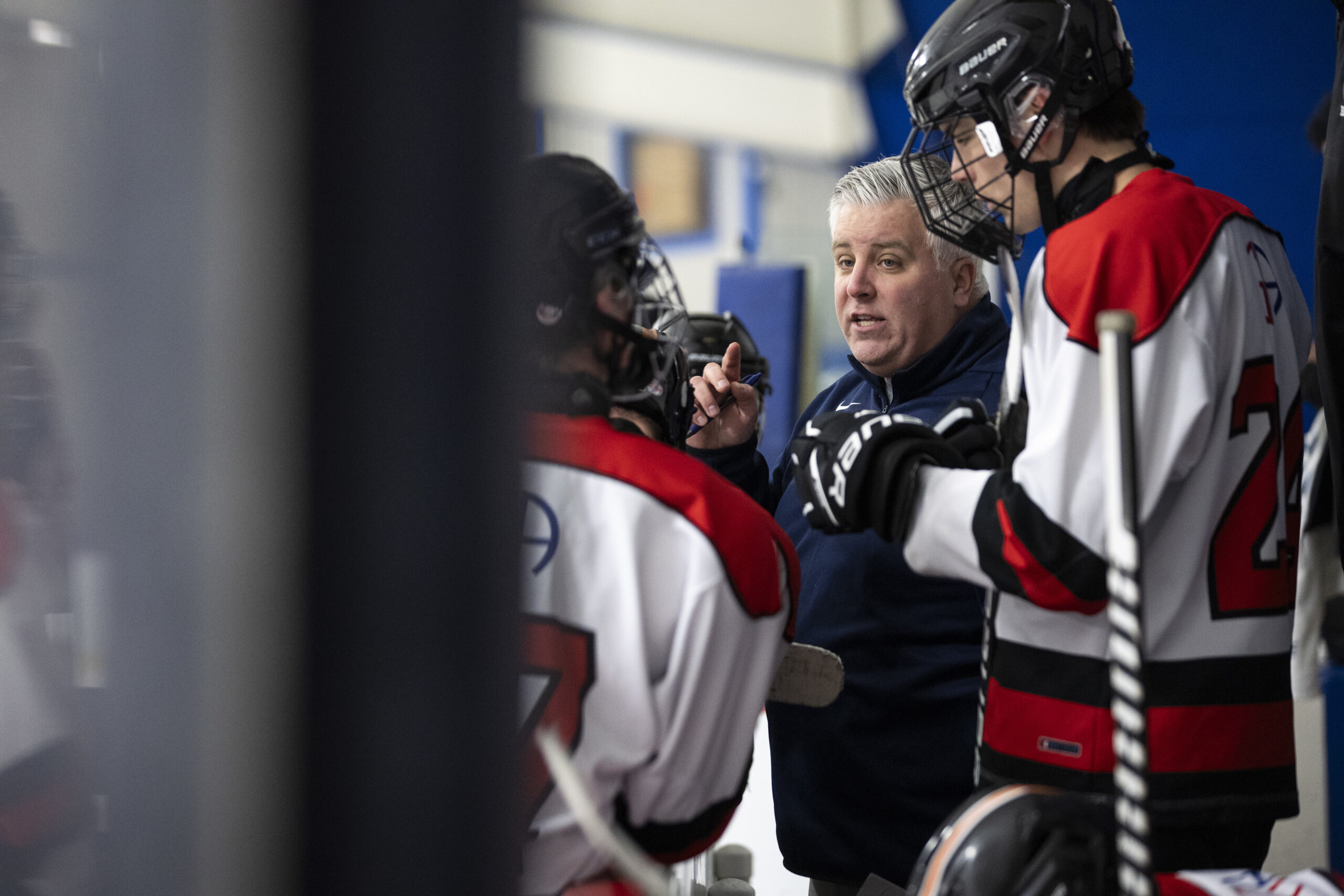
    Coach Frank Seravalli brought a disciplined approach to the Germantown Academy hockey team.

    Seravalli didn’t say anything in the moment. But after the workout, he brought the team down to the field house to run sprints. The two late arrivals were put on the sideline, so they could watch their peers suffer on their behalf.

    “And I just said, ‘Look, we have a standard here,’” said Seravalli. “‘You have to make the commitment that everyone else is to show up on time and be ready.’

    “And I’ll tell you what: Since then, no one’s been late.”

    The players have embraced the newfound discipline. Stone said it’s something that they didn’t realize they needed, but they’re grateful to have. McGill agreed.

    “He’s way more intense than what we’ve had in the past,” McGill said. “Which, to some people, can be intimidating. But if you want to play at a high level, that can’t be intimidating.

    “There’s no getting away with anything around here anymore. Frank has done a great job of holding us accountable to what the new standard needs to be.”

    A different type of connection

    Not long after he was hired, Seravalli moved the team from the Hatfield Ice Arena to the Bucks County Ice Sports Center (formerly known as the Face Off Circle). The building looks just like it did when Anthony was in high school.

    The white-and-blue paint is faded, but intact, and so is the thermostat, set to the coldest possible temperature. Five days a week, Seravalli walks past the spot where he stood as a child, watching his cousins with wide eyes, as they swept across the ice.

    Anthony’s death was a shock to the entire family. He no longer roams the halls of the construction firm. He is no longer behind the bench at the Face Off Circle.

    But when Frank is skating around that rink, with GA students spinning past him, he feels connected to his late cousin.

    “I can’t really explain how or why I ended up here,” he said. “I just know that it’s for a reason.”
  • The NBA journey of former Villanova star Collin Gillespie seems unlikely to everyone — except him

    The NBA journey of former Villanova star Collin Gillespie seems unlikely to everyone — except him

    Jay Wright saw enough of Collin Gillespie a few nights before to invite him to Villanova on a Monday in January 2017 and offer him a scholarship. But this was hardly a courtship. Wright told Gillespie that he would redshirt his freshman season, maybe play as a junior, and then have a complementary role as a fifth-year senior.

    “I thought he would get his master’s degree and be a great coach one day,” Wright said. “I was thinking ‘I would love to have this guy on my staff.’”

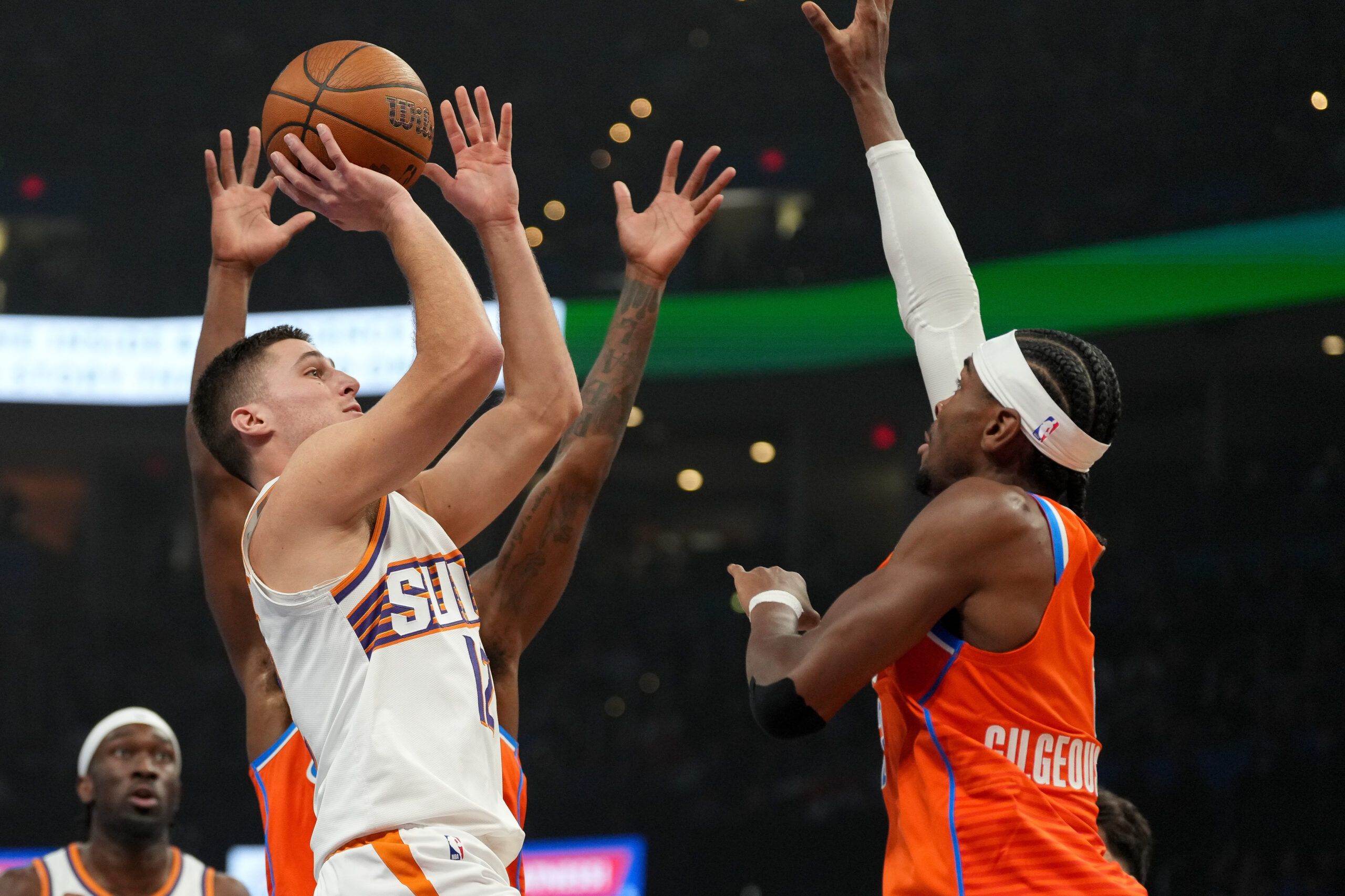
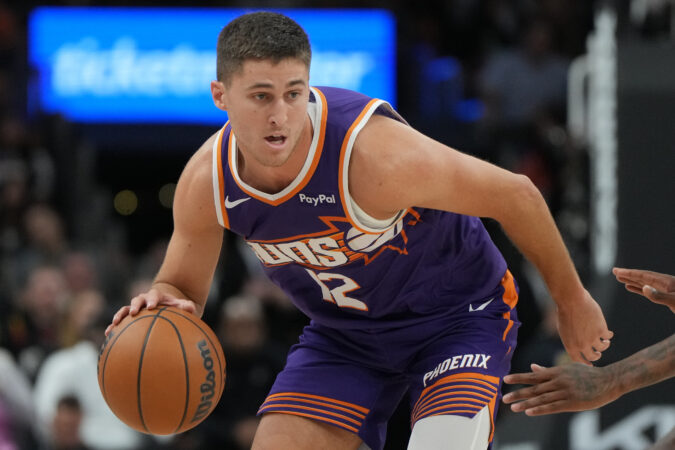
    Gillespie — who has molded himself into an NBA starter with the Phoenix Suns after going undrafted in 2022 — nodded along. He didn’t have a Division I scholarship before his senior year at Archbishop Wood and declined to visit Division II schools because he believed bigger programs would eventually see what he already knew: He could play. Redshirt? OK. Bench player? Sure. Coach? Yes, sir.

    “I didn’t really believe him,” said Gillespie, who will play against the 76ers on Tuesday night. “I believed in myself. I was just like, ‘Whatever he says, I’ll take it and then prove him wrong.’”

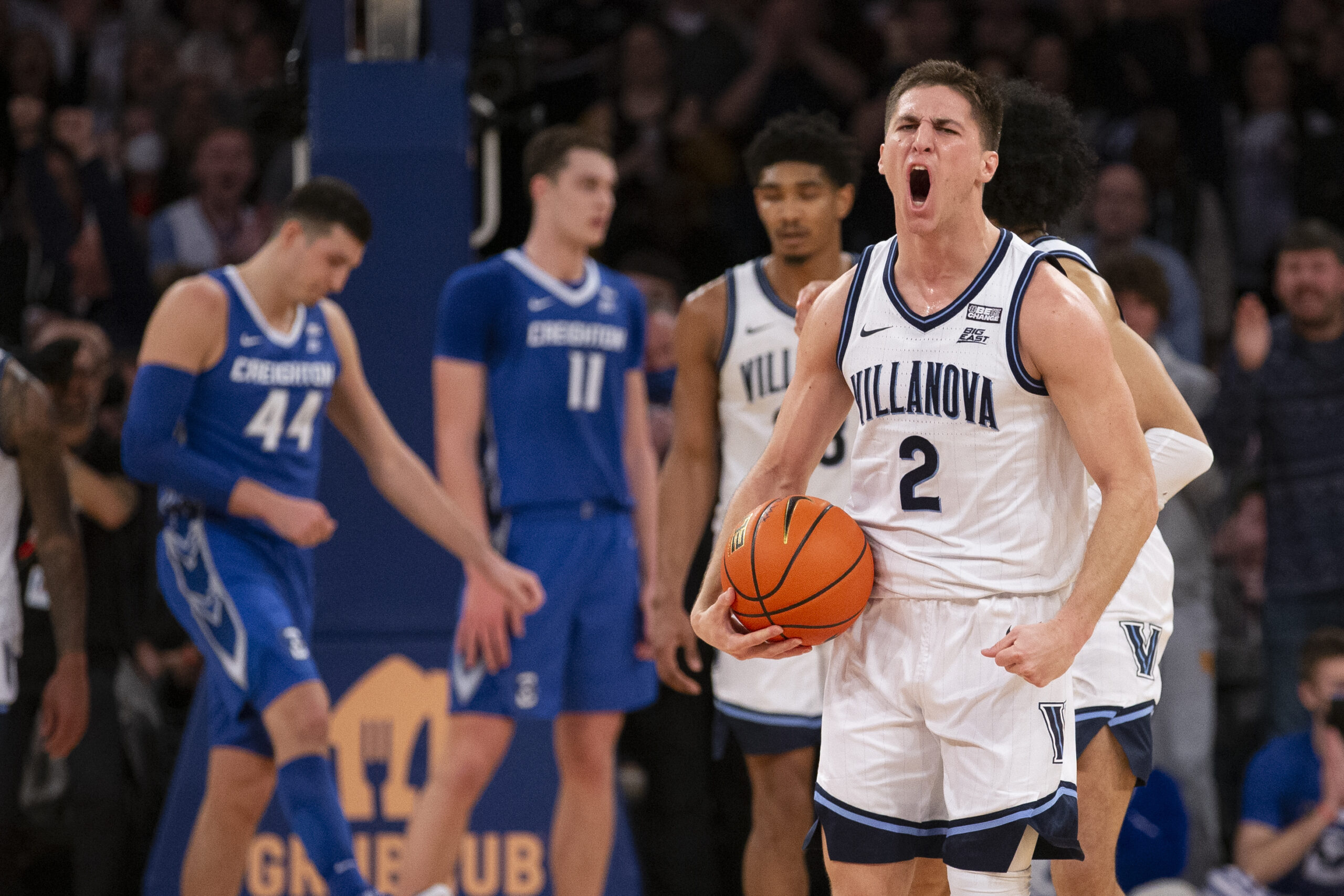
    There was Gillespie 15 months later on the court for Wright in the national championship game, taking a charge against Michigan and looking the part. In his fifth year, the kid who had to wait for college scholarships was named the nation’s top point guard in 2022. He went undrafted that June but landed a non-guaranteed contract in July with the Denver Nuggets. He was on track.

    Three weeks later, Gillespie suffered a broken right leg while playing in a pickup game at Villanova.

    His NBA career — the one that is now flourishing — seemed unlikely then to nearly everyone except the guy who nodded along that day in Wright’s office.

    “Everyone has their own journey,” Gillespie, 26, said. “Everyone runs their own race. You just have to stick to what you do, put your head down, and work hard. Don’t compare yourself to anyone else. If you work hard enough, you can probably achieve anything you want to.”

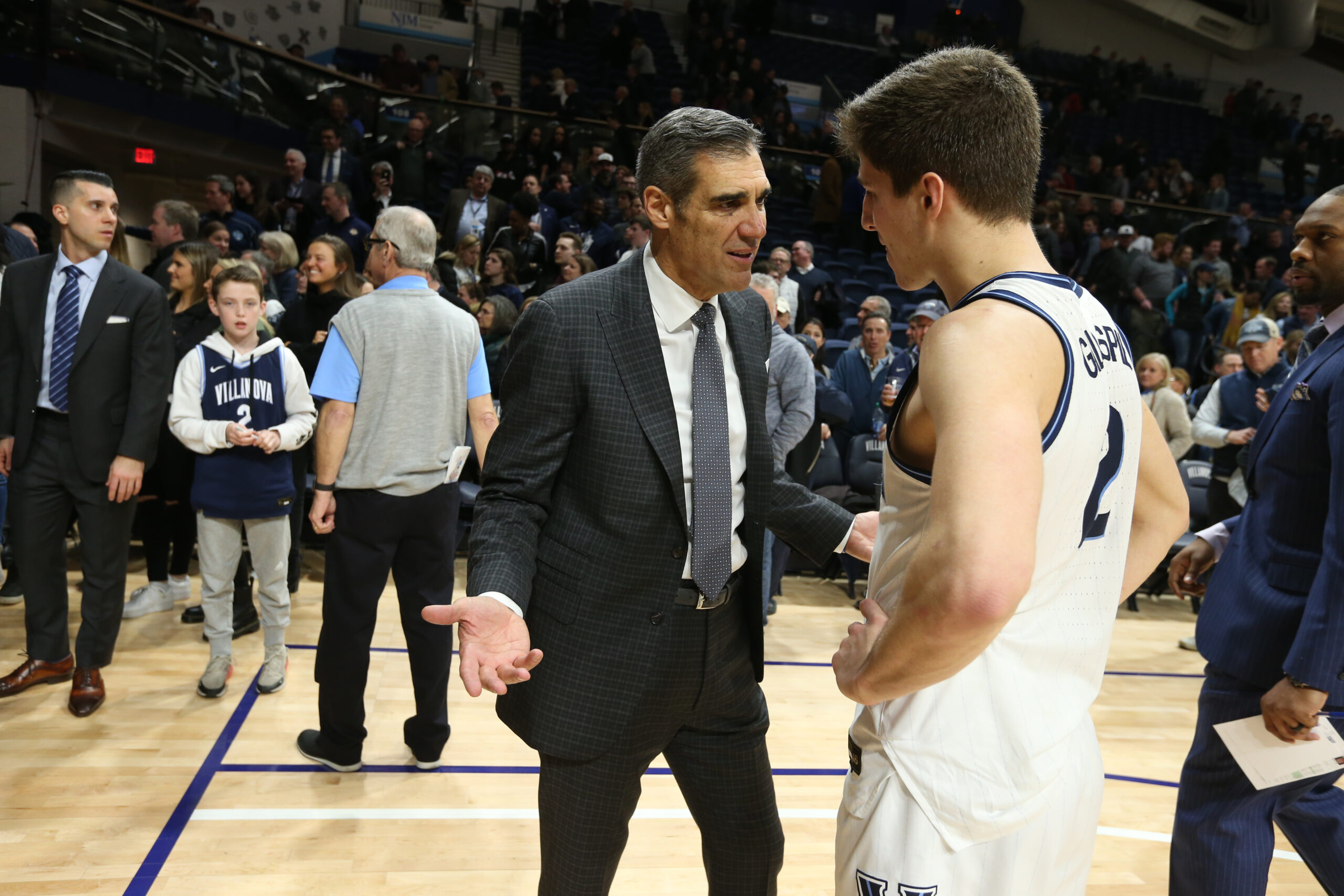
    Collin Gillespie (right) became much more than a fifth-year senior role player first envisioned by Villanova coach Jay Wright.

    G League to the league

    Andre Miller often learned via text messages which players would be flying nearly three hours from Denver to join his G League team that night. He coached the Grand Rapids Gold, the Nuggets’ minor-league affiliate in Michigan that played 1,100 miles from Denver. Those morning flights gave Gillespie a chance to get on the court.

    “It wasn’t a good recipe for these guys to be successful, but when he did show up, he didn’t want to come out of the game,” said Miller, who played three of his 17 NBA seasons with the Sixers. “We knew we had to leave him out there because he didn’t have an opportunity with the other team and he took great advantage of it.”

    Gillespie feared that the Nuggets would void his contract after he suffered that injury playing at Villanova. That’s the first thing he said to his father, who was in the gym when it happened. But they didn’t. They kept him around that first season while he rehabbed and then split his time the next season between Denver and Grand Rapids.

    “There was no ego,” Miller said. “One thing that’s tough to deal with is when your career is in the hands of other people. Some people felt like he wasn’t an NBA player and some people felt like he was an NBA player. The one thing that stood out about him to me is that he’s a competitor. He’s a dog. He’s a guy who enjoys playing basketball. He’s a leader. He plays with a chip on his shoulder.

    “I wish I could have coached him more in the G League, but he was an NBA player. I knew that from the first time I saw him on the court with the G League players. I was like, ‘He probably won’t be here much.’”

    Gillespie signed before last season with the Suns, again splitting time between the NBA and the G League. The 6-foot-1 guard earned a full-time role this season, starting for the Suns and fitting in with pesky defense and a three-point shot. Just like college, it took time before Gillespie’s game was appreciated.

    “You just don’t see it initially. He doesn’t wow you,” Wright said. “But when you see him play over time and you realize this guy is getting to the rim and finishing, he’s elevating on his jumper and shooting over bigger guys, and he’s not getting backed down. You almost need to have time to believe what you’re watching.”

    Collin Gillespie is shooting 41.4% from three-point range for the Suns.

    Gillespie entered Monday’s game against Brooklyn averaging 13.2 points, 4.9 assists, and shooting 41.4% from three-point range. He hit a game-winner at the buzzer in November, regularly finds ways to create his own shot, and has proved that his game fits in the NBA.

    Kevin Durant called him “a dog” and Anthony Edwards said after a loss to the Suns last season that “No. 12 is pretty good at basketball.” Two NBA superstars could see what Gillespie always believed: He belongs.

    “He has more heart than talent,” said his father, Jim. “The kid just doesn’t want to lose. When he sets his mind to something, he just does it. And ultimately, he’s a winner. Wherever he’s gone, he’s won. At every level.”

    Jay Wright says Collin Gillespie came to Villanova with a “killer mentality and stone face that we try to teach.”

    Change of plans

    Gillespie was in the stands for a Villanova game as a senior in high school, seated behind the La Salle bench at the Palestra. The Explorers invited him and Gillespie thought a scholarship offer was near.

    “But they never offered,” Jim Gillespie said.

    Gillespie eventually landed smaller Division I offers as a senior, but he was hopeful a Big 5 school would have a spot for him. None of them did until January when Villanova assistant Ashley Howard urged Wright to watch Gillespie play a game against five-star recruit Quade Green’s Neumann Goretti squad at Archbishop Ryan.

    The Northeast Philly gym was packed and the coach couldn’t stay long as he was being hounded. Howard called Wright while he was driving home and told the coach that one kid scored 42 and the other kid scored 31. Wright figured the 42 points belonged to Green, who was already committed to Kentucky. It was Gillespie, the assistant said. Wright was sold.

    “Nothing was spectacular, and he’s not bringing any attention to himself,” Wright said. “He just makes the right plays.”

    Wright called Gillespie’s father and told him he needed his son at Villanova on Monday. The coach gave Gillespie his pitch that day without any guarantees.

    “We left and we were like, ‘What are you going to do?’” his mother, Therese, said. “He said, ‘I’m going to play out my senior [year].’ I said, ‘Collin, it’s Jay Wright.’ He said, ‘Mom, I know what I’m doing.’”

    Gillespie committed a week later, simply deciding after a game at Bonner-Prendergast that he had enough of the recruiting trail. He was headed to ’Nova and told a Wood coach without first running it by his parents. Gillespie knew what he was doing.

    “He always said, ‘I’ll bet on myself,’” Jim Gillespie said. “He put the work in and the effort in and that’s what he’s always done.”

    It took Gillespie just a few weeks to force Wright to rethink the plan that he would redshirt. Every day in practice that June he went up against Jalen Brunson and held his own.

    Collin Gillespie (left) got to play in practice against future NBA players Donte DiVincenzo (center) and Jalen Brunson (right) at Villanova.

    “He came in with that killer mentality and stone face that we try to teach,” Wright said. “But he came in with that. Then he spent every day with Jalen Brunson and it just became reinforced. It was so obvious. The coaching staff, behind closed doors, was going, ‘This kid is going against Brunson every day. He’s pretty good.’”

    Gillespie suffered a minor injury that month and Wright checked with athletic trainer Jeff Pierce to see how the freshman was feeling. He was fine, the trainer said.

    “The trainer said, ‘You’re not redshirting this kid,’” Wright said. “I said, ‘Is it that obvious?’ He said ‘Yeah, everyone knows.’ Yeah, it was.”

    The guy who nodded along in Wright’s office proved that he belonged. Now, he’s doing it again in the NBA.

    “It’s the way I was raised and where I come from,” said Gillespie, who grew up in Pine Valley before moving to Huntington Valley. “My brother is a year older, so I always played a year up. I had to play against older guys and was always smaller. I always had to prove myself and had a chip on my shoulder. My parents always believed in me and my family always believed in me and taught me to believe in myself.”

  • Bears receiver DJ Moore is having his winningest season since playing at Imhotep

    Bears receiver DJ Moore is having his winningest season since playing at Imhotep

    Albie Crosby has come across several talented athletes over his two decades as a high school football coach. But DJ Moore was “always one of the elites in that group.”

    It makes sense, considering the success the 28-year-old is having in his eighth NFL season.

    The Chicago Bears receiver, who graduated from Imhotep Charter in 2015, has been a critical part of the passing game since his arrival in 2023, while etching his name into franchise history.

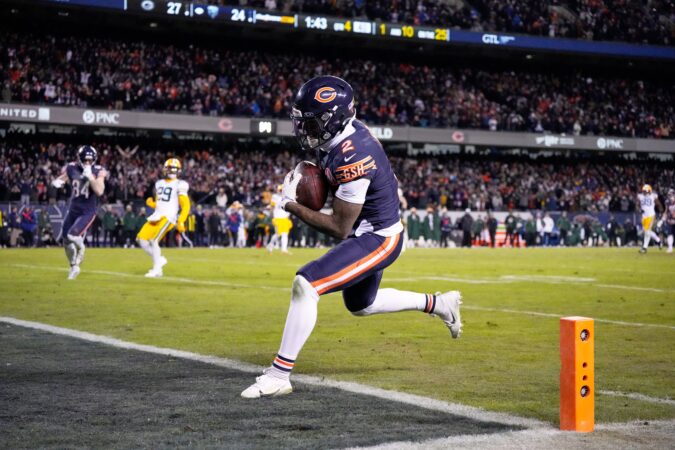
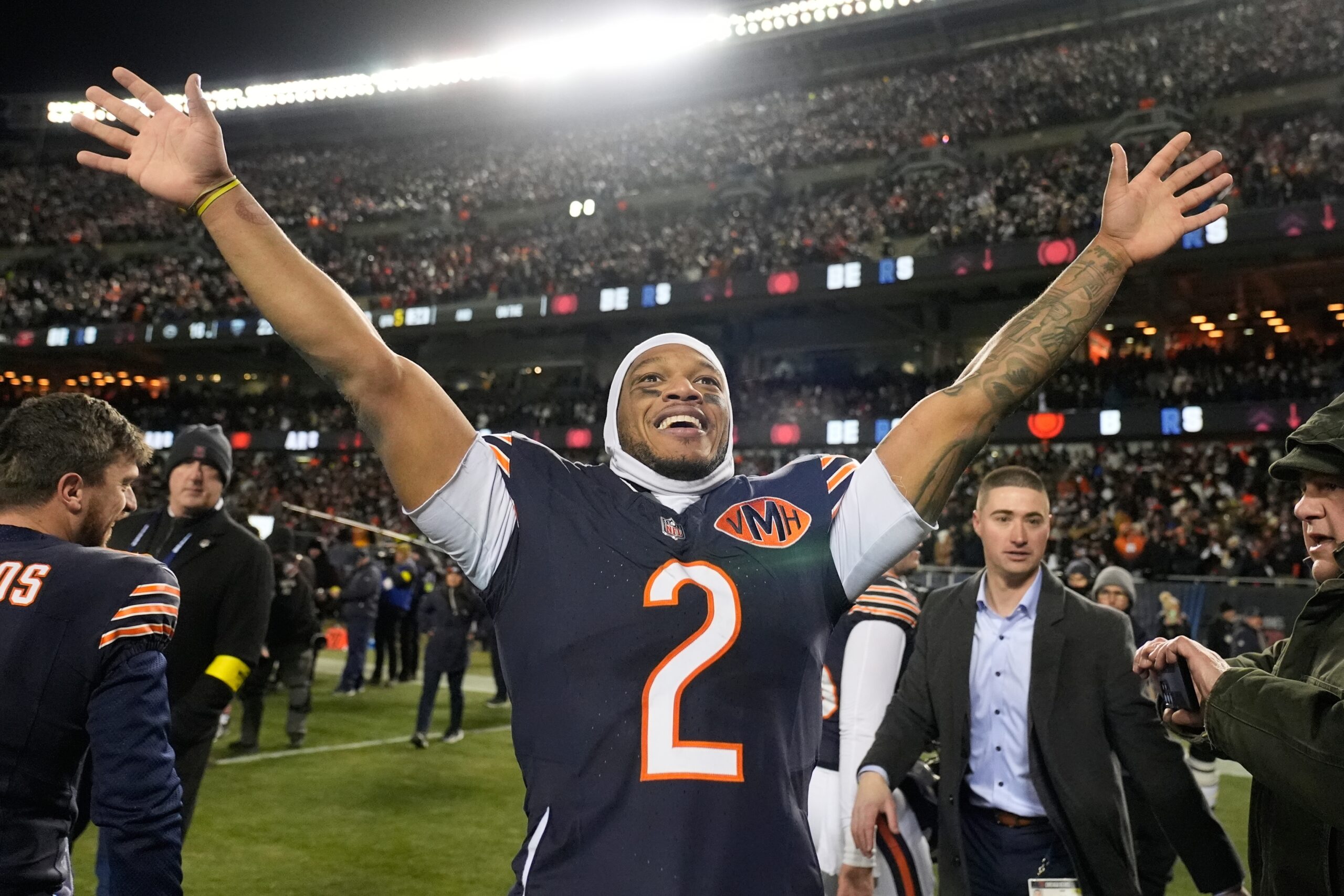
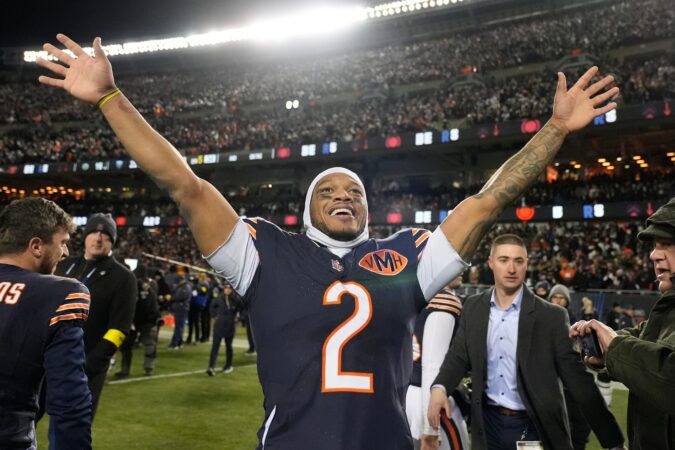
    The Bears won the NFC North for the first time since 2018, and Moore caught a 25-yard game-winning touchdown to seal a thrilling 31-27 comeback victory over the Packers in the wild-card round. St. Joseph’s Prep graduates D’Andre Swift and Olamide Zaccheaus also scored as the Bears (12-6) advanced to the divisional round for the first time since 2011 and will face the Los Angeles Rams on Sunday (6:30 p.m., NBC10).

    The wild-card matchup was Moore’s first NFL playoff game, and he’s experiencing his first winning season since his senior year at Imhotep.

    “When you look at it, no winning seasons since high school. It’s crazy,” Moore told Marquee Sports Network ahead of the Bears-Packers game. “This is my first time in this thing, too, so I’m just going with the flow and working hard.”

    That aspect of Moore has never changed.

    He always wanted to be the best, Crosby said, who took over at Simon Gratz in late December after spending nine season at Neumann Goretti. Moore was the talk of the area. His skills caught the attention of coaches while he was in grade school, Crosby among them.

    When Crosby became the head coach at Imhotep in 2012, Moore was in his sophomore season and played receiver, running back, and was the team’s kicker. He still holds the Philadelphia Public League record for most kicked points.

    As a junior, he helped ignite Imhotep’s run to its first-ever state championship appearance. However, the Panthers got trounced, 41-0, in the PIAA Class 2A championship game by South Fayette of Allegheny County. That didn’t matter to Crosby, because his players had the experience of a lifetime at Hersheypark.

    Imhotep finished 12-2 during Moore’s senior campaign. While it lost to Archbishop Wood in the first round of Class 3A playoffs, moments from that year have stuck with Crosby.

    Former Imhotep star DJ Moore, who now plays for the Chicago Bears, caught a game-winning touchdown in his first NFL playoff game.

    “We played Trinity High School, and into the third quarter, our kids started cramping up,” Crosby said. “Injuries started happening. We lost our quarterback. So the next week, we played Boys’ Latin of Philadelphia, and I had to put DJ in at quarterback.

    “Then, we had another national game where we played against Friendship Collegiate Academy outside of D.C., they thought they got the team with DJ at quarterback. … First play, quarterback’s back, and DJ’s at wide receiver. We throw a little screen to DJ, and he takes it 80 yards.”

    Moore finished with 35 receptions for 1,012 yards and 16 touchdowns in 2014 and was the No. 12 player in Pennsylvania, according to 247Sports.com’s recruiting rankings.

    Despite the accolades, he’s a “private young person” off the field. He also had a strong support system, and his mother, Cookie Ridley, used to attend every game, Crosby recalled.

    “He had an advantage when he turned to the sideline, he knew that there was loved ones looking out for him,” Crosby said. “His mom was one of the team moms, and she made sure that all the kids felt loved. He was a special kid because he embraced that. There was never no jealousy. He loved that his mom loved everybody. It speaks volumes of a young person that can share their parents.”

    Crosby often brings up Moore’s journey when he’s coaching his high school or seven-on-seven team. But when he thinks about the impact he may have had on Moore, Crosby hopes he offered more lessons about life than football.

    “I’m super proud of him,” Crosby said. “To be the father that he is, be the husband that he is, to be the son and brother that he is. All that is what makes me extremely proud.”

    During his three seasons at Maryland and five with the Carolina Panthers — who drafted Moore in the first round with the 24th overall pick in 2018 — his teams compiled 13-24 and 29-53 records, respectively. With the Bears, he’s having career highlights.

    In his first season, Moore finished with a career-high 1,364 receiving yards and eight touchdowns. Last year, he had a career-best in receptions with 98. He hauled in six touchdowns and had 682 receiving yards in 2025.

    Moore will have the crowd behind him on Sunday, and his former coach also will be cheering for him and the Bears back in his hometown.

    “I’ll be rooting for him like crazy,” Crosby said. “Rooting for him, rooting for Olamide, and Swift.”

  • Cheltenham High football ‘toxic’ culture led to hazing, investigation concludes; team may not play in 2026

    Cheltenham High football ‘toxic’ culture led to hazing, investigation concludes; team may not play in 2026

    Nearly 20 people witnessed an assault in the Cheltenham High football team’s locker room last fall, according to an external investigation commissioned by the school district.

    No one tried to stop it, “and several participated freely in it,” Superintendent Brian Scriven told the Cheltenham community in an e-mailed message Thursday. “Several students also filmed the assault.”

    The assault — which happened Sept. 3 — ultimately resulted in the cancellation of the team’s season in October and led to the hazing investigation, for which Scriven released the results Thursday night. His message did not include additional details about the assault.

    Though a pattern of hazing was “not fully substantiated,” Scriven wrote, other troubling findings include: inadequate student supervision in the locker room, “a failure to prioritize student safety by the coaching staff and/or adult volunteers,” no anti-bullying or anti-hazing education for team members, and “a toxic and negative culture within the current football program.”

    The team’s head coach, according to a 2025 Cheltenham news release, had been Terence Tolbert, a business teacher at the school and a former semi-professional football player. When reached Thursday, Tolbert declined to comment.

    Cheltenham’s football program will be rebuilt eventually, Scriven said, and the district will adopt investigators’ recommendations, including identifying, hiring, and training a “new coaching staff with strong commitment to leading student-athletes in a positive and responsible manner,” and strengthening team supervision.

    But, Scriven said, fielding a team in 2026 is not a given for the district.

    The superintendent alluded to “a general lack of credibility on the part of many of those interviewed during the investigatory process” and said parent, student, and staff cooperation going forward is crucial.

    “Those students who were not involved in this situation are especially important to rebuilding the culture of our program,” Scriven said. “If all of these conditions are met, the district will stand up a football team for the 2026 season.”

    It is not yet clear whether the students involved could face punishment or criminal charges. Multiple students have ongoing Title IX and disciplinary matters, which could affect their eligibility to play football. Cheltenham Township police and the Montgomery County District Attorney’s Office are both still investigating the incident, according to the district’s message Thursday.

    Staff writer Robert Moran contributed to this article.

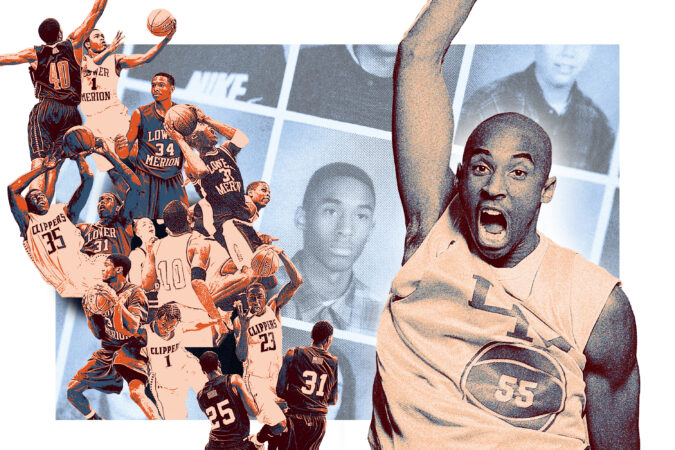
  • Kobe Bryant turned Chester-Lower Merion into a decades-long basketball rivalry: ‘The history will never fade’

    Kobe Bryant turned Chester-Lower Merion into a decades-long basketball rivalry: ‘The history will never fade’

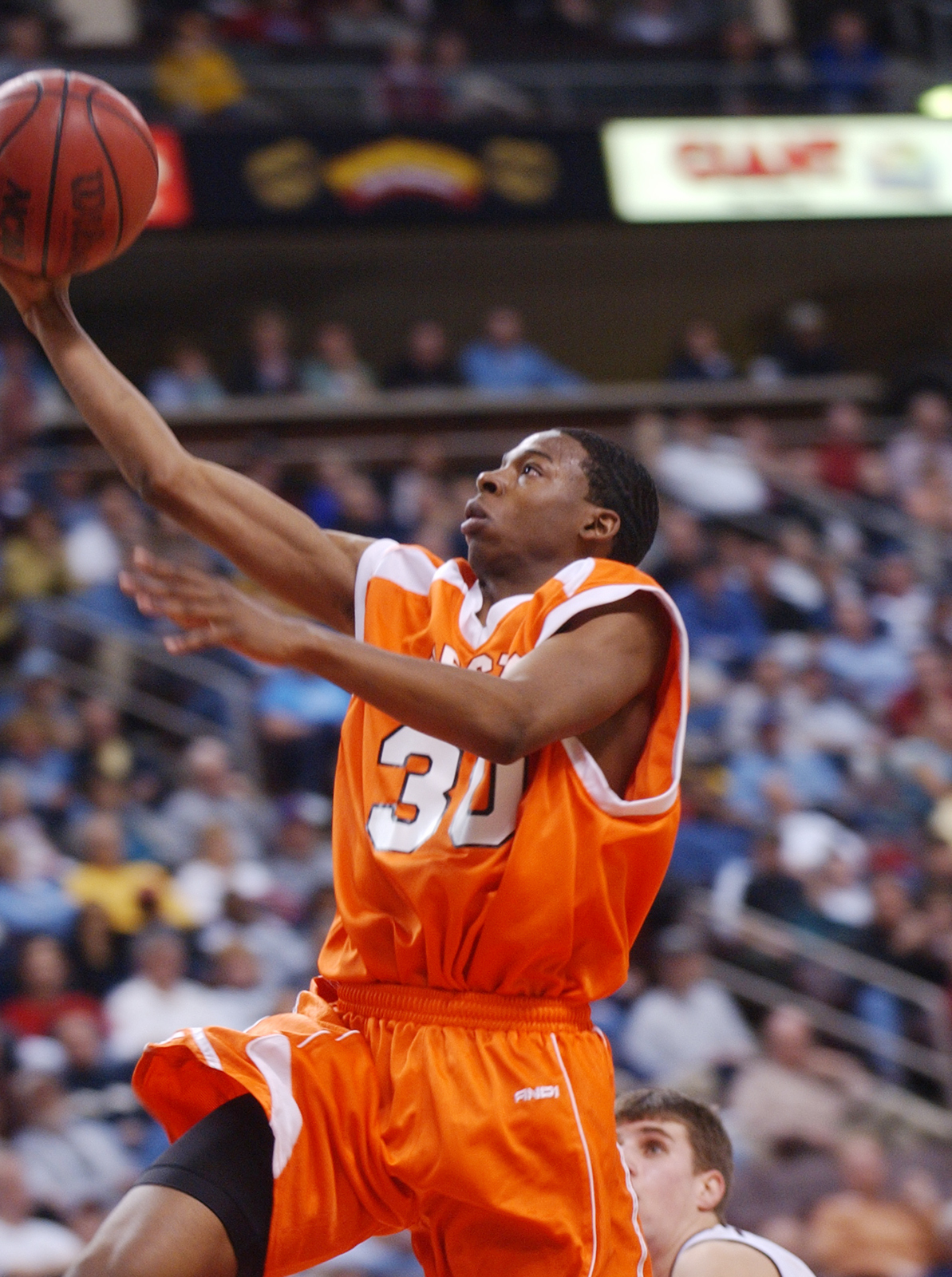
    John Linehan and Kobe Bryant used to talk. A lot. This would not have been unusual for other AAU teammates, but these two were fierce high school rivals.

    Linehan was a scrappy point guard for Chester. Bryant was a relentless shooting guard for Lower Merion. Both were competitive, almost to a fault, and in the days leading up to big games, they’d get chippy.

    The week before the 1996 PIAA Class AAAA District 1 title game, for example, the players talked every day on bulky landline phones, with Bryant often calling Linehan at his home in Chester.

    “I just said, ‘You know, John, I haven’t won a championship yet, and you have,’” Bryant told The Inquirer in 1996.

    Linehan knew what his friend was doing. The future NBA star did the same thing a few weeks later, on March 19, a day before the teams met again in the state semifinal.

    “He was trying to get me to trash talk,” Linehan said. “I think he needed a little edge. I didn’t want to give him too much. I was like, ‘Man, you crazy.’”

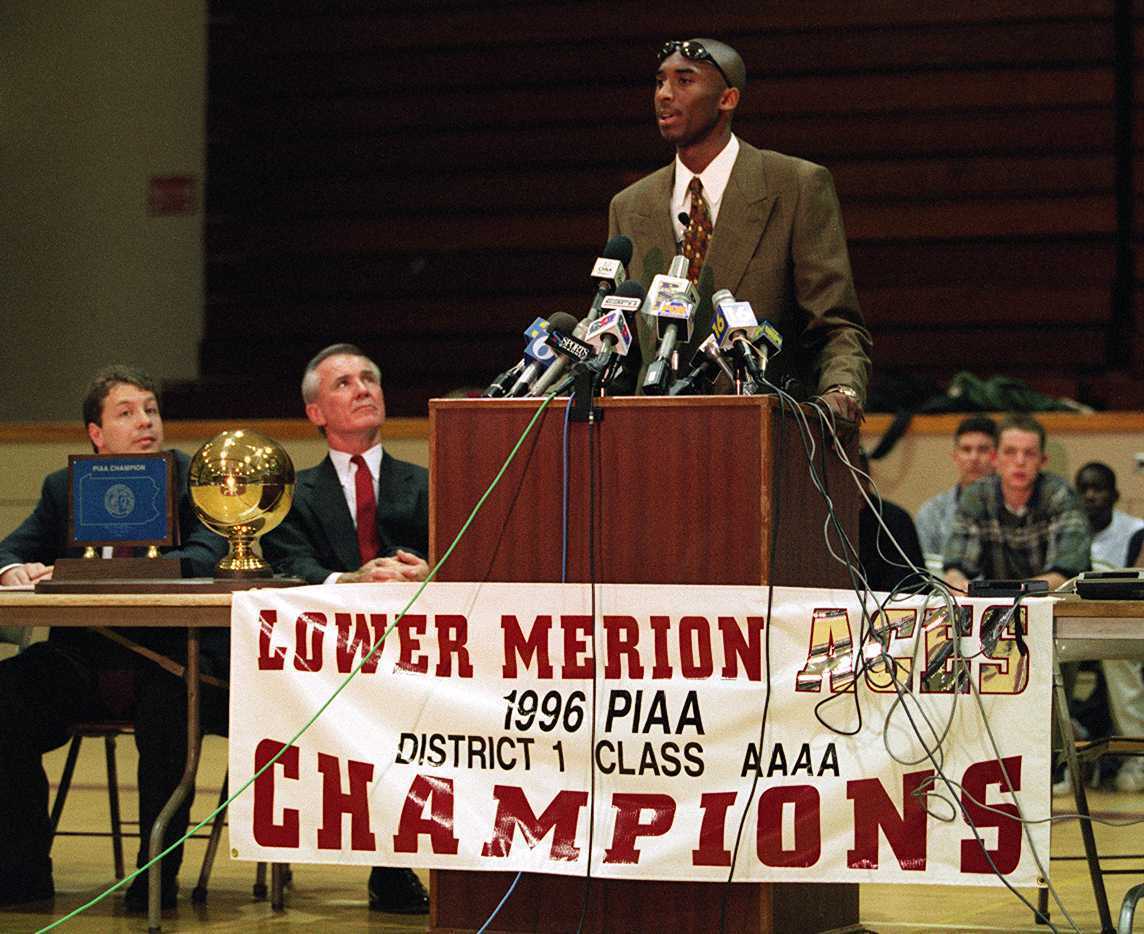
    The late Kobe Bryant, a former Lower Merion basketball star, announcing he will go directly into the NBA draft out of high school.

    Lower Merion wasn’t a basketball school when Bryant arrived in the fall of 1992. It paled in comparison to the local powerhouses like Simon Gratz, Coatesville, and Chester.

    But Bryant changed that. Even in his freshman year, a season in which the Aces went 4-20, he brought a new standard, working out before class and introducing a level of toughness that was foreign to his teammates.

    By the mid-1990s, Lower Merion was among the best high school teams in the Philadelphia area. Its players were more confident, celebrating after big shots, and talking loud on the court.

    The Aces didn’t play as many games against Coatesville, a rising power led by Rip Hamilton. They couldn’t consistently measure themselves against Gratz, which didn’t participate in the PIAA playoffs until the 2004-05 season.

    But they could against Chester. And so, a decades-long rivalry was born.

    From 1996 through the mid-2010s, Chester and Lower Merion put on some of the greatest high school basketball games in the area. They’d often sell out venues like the Palestra and Villanova’s Pavilion. Some fans would even scalp tickets.

    Their communities were almost diametrically opposed. Chester was predominantly Black; Lower Merion was predominantly white. Chester was plagued by poverty; Lower Merion was considered affluent.

    Chester, with its Biddy League, had a legacy of basketball greatness, and a steady pipeline of talent. Lower Merion had nothing comparable. But these differences melted away on the court.

    And while the rivalry is not what it once was, it lives on today.

    “The pride and the intensity and the history will never fade,” said Lower Merion coach Gregg Downer. “I mean, if we played them tomorrow night, that would be an intense game.”

    The Bryant-Linehan era

    When Downer was named head coach in 1990, he already was well-aware of Chester’s tradition. He’d played youth basketball growing up in Media and had heard about the stars who’d come out of the Biddy League.

    It was obvious that his team would have to go through the Clippers to win any sort of accolade. But it wasn’t until Bryant’s arrival that Downer’s aspirations became a real possibility.

    The shooting guard, who was the son of former 76er Joe “Jelly Bean” Bryant, was mature for his age. He’d demand more, mentally and physically, of older teammates. Doug Young, a former Lower Merion forward, remembered seeing Bryant leaving the locker room at 7 o’clock one September morning in 1993.

    He’d been at the high school gym since 5 a.m., working out by himself. To the Lower Merion basketball team, this was a “crazy” concept, so Young and his cohorts decided to join him.

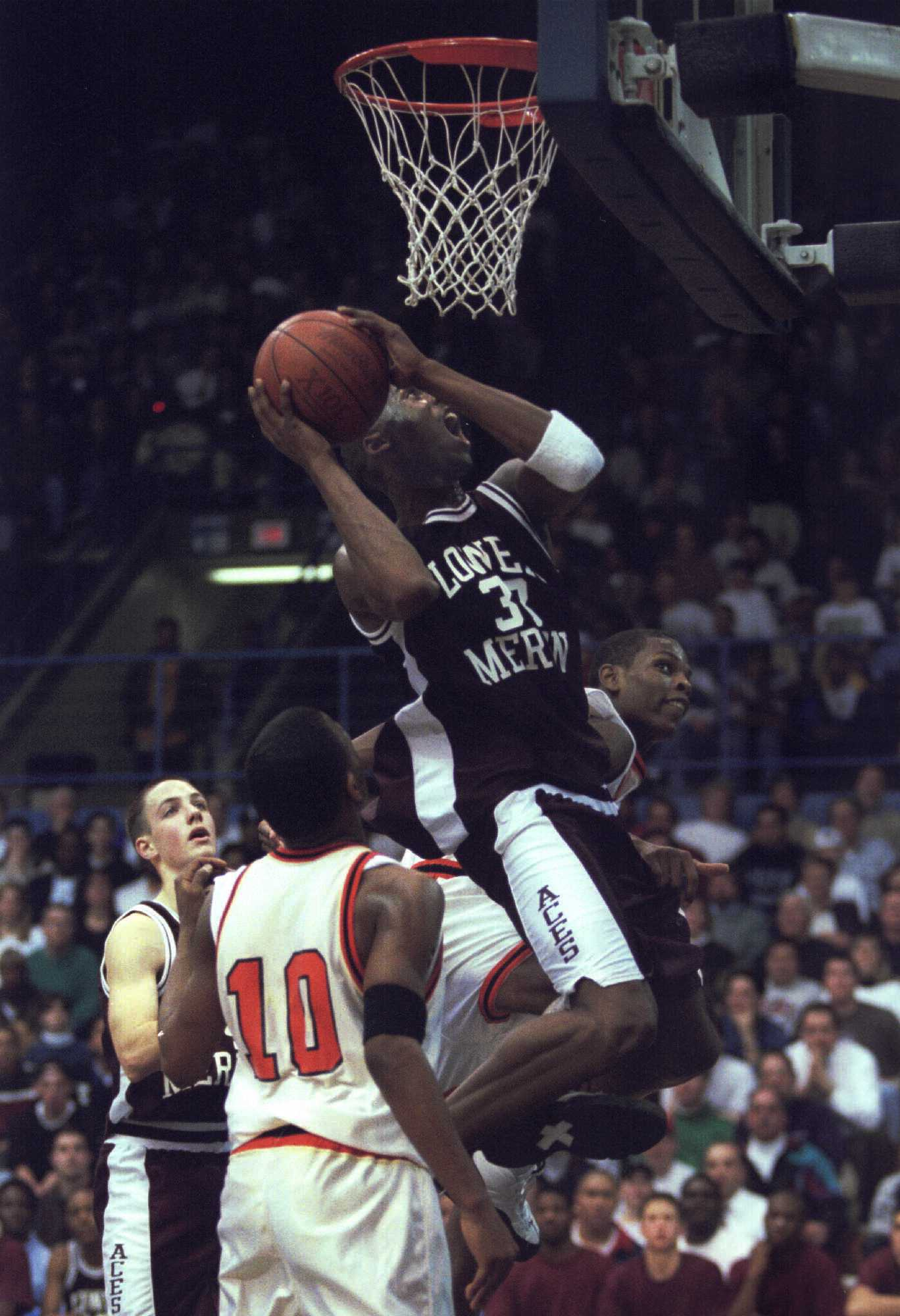
    In the District 1 championship game against Chester, Kobe Bryant goes to the hoop over the Clippers’ John Linehan.

    They arrived the next day at 5:06 a.m. The players knocked on the door. Bryant didn’t answer.

    “He wouldn’t open it,” said Young, who graduated in 1995. “You’re either there or you’re not. We were six minutes late.”

    His teammates waited outside until 6:30 a.m., when the school opened. They made sure to show up before 5 a.m. from that day on.

    Downer was wired the same way. The coach — and his NBA-bound pupil — would push the team in practice. Losses were particularly tough. The players would go through endless sprints and rebounding drills that sent them running to the trash can.

    It wasn’t fun. But over time, the method created a newfound tenacity.

    “No one walked into high school saying, ‘Oh, yeah, I want to win a state championship,’” Young said. “But [Kobe] knew what that was. He was like, ‘I don’t know any other way. If we’re not going to win a championship, what the heck are we playing for?’”

    Chester was always going to be an obstacle, so Downer tried to play into the battle. He’d use analogies for the tough, hard-nosed team, comparing it to an animal stalking its prey.

    The coach began to screen movies to underscore this point. Together, in a Lower Merion classroom, Downer’s players watched Jaws and other tales of survival, like The Edge, a 1997 thriller about a plane that crashes in the Alaskan wilderness.

    “This bear is stalking them, and the couple is saying, ’What are we going to do about this bear?’” Downer said. “And one of them says, ‘The only thing we can do is kill the bear.’

    “And I remember being like, ‘We can do this.’ But the only solution is to — not to be overly graphic — but to kill them.”

    (The bear in this analogy was Chester.)

    He added: “We tried everything humanly possible to get through to this team.”

    The first few games were ugly. In 1995, Lower Merion met the Clippers in the District 1 championship, only to lose by 27 points. But they came back with a renewed focus the following year, in 1995-96, going 25-3 in the regular season to earn a district final rematch against Chester.

    The Aces showed up at the arena with “27″ printed on their warmup shirts. Bryant, armed with fresh bulletin board material from Linehan, dropped 34 points against the Clippers en route to a 60-53 Aces win.

    The shooting guard scored 39 points later that month — with a broken nose — in a 77-69 state semifinal win over Chester. Lower Merion went on to beat Erie Cathedral Prep, 48-43, to win its first state championship since 1943.

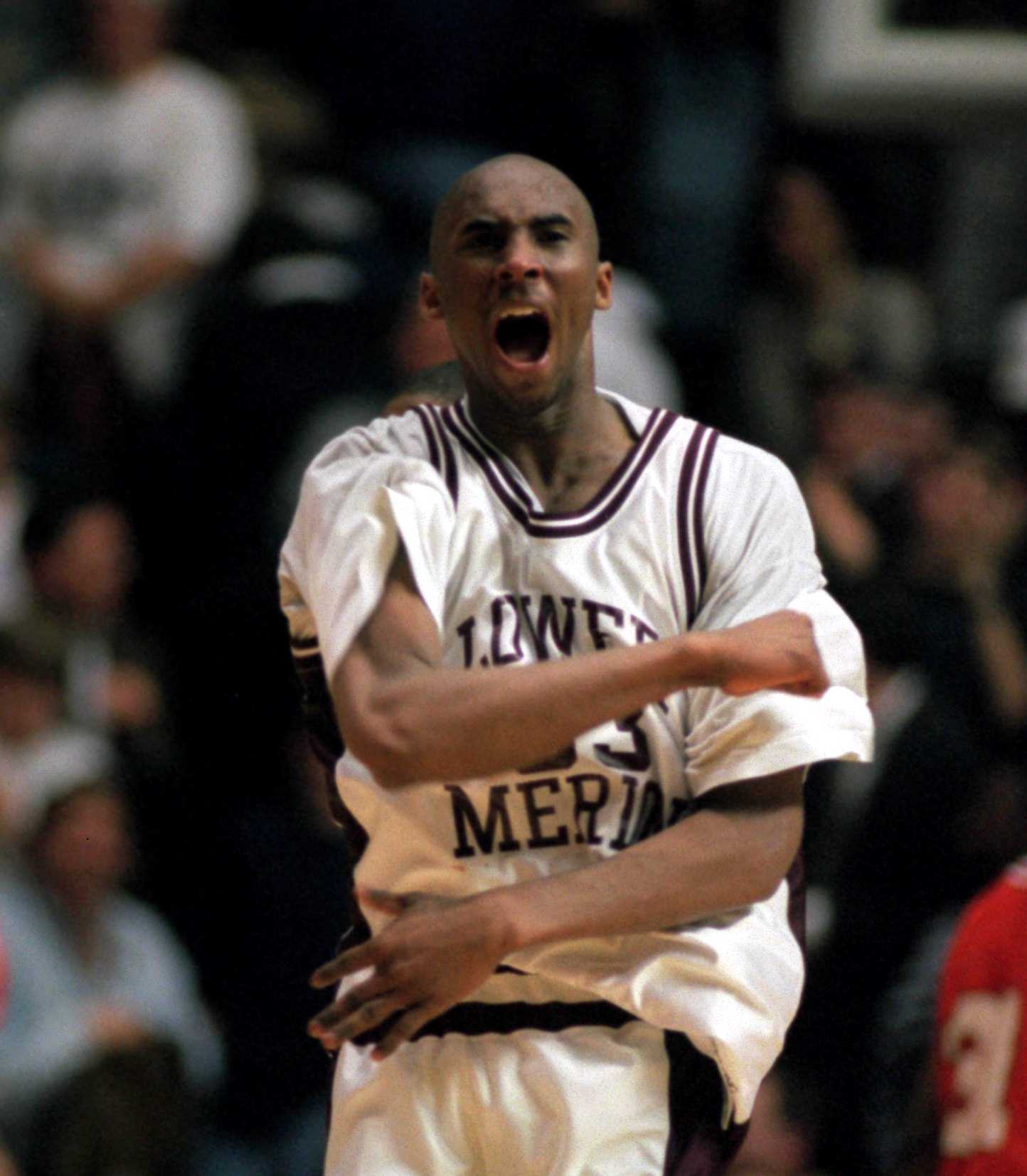
    Kobe Bryant celebrates after defeating Chester at the Palestra in 1996 to advance to the state final.

    To Linehan, the difference Bryant made was obvious. He joked that he’d “never heard of Lower Merion” before his friend arrived. But once he did, Chester realized it would have to go to great lengths to prepare for the phenom.

    Ahead of a big game against Lower Merion in the mid-1990s, the coaching staff reached out to Clippers alumnus Zain Shaw. He played at West Virginia and in Europe and possessed some of the same characteristics as Bryant — a tall frame and an athletic build with strong ballhandling skills.

    The Clippers invited Shaw to practice, where he played the role of Bryant (to the best of his ability).

    “Kobe was so special, we had to bring in a pro to help us prepare,” said Linehan, who later starred at Providence.

    But there was another impact the future Lakers star had, one that had nothing to do with his own prowess. Linehan noticed that Bryant’s Lower Merion teammates started to take on some of his qualities. Suddenly, they were playing brash, confident basketball.

    “We didn’t have reason to believe, until Kobe got there, that we belonged on the court with Chester,” Young said. “The fear was real. Teams were afraid of Chester because they’d run you out of the building.

    “The idea of Lower Merion being on the court in a meaningful game against [them] was such a crazy thought. But then, you started to believe.”

    The buzzer-beater heard ’round Chester

    Bryant never got over the rivalry, even after he embarked on his Hall of Fame NBA career in 1996. Sometimes, he’d call the coaching staff before big games against Chester, leaving expletive-laden voicemails to use as motivation.

    The Lakers shooting guard also created an incentive structure for his former team.

    “You couldn’t get a pair of Nike sneakers unless you qualified for the playoffs,” Young said. “If you don’t earn it, you don’t get it.”

    He became especially involved in 2005-06. After a lull in the early 2000s, Chester and Lower Merion found themselves neck-and-neck again. The Aces were led by the duo of Ryan Brooks and Garrett Williamson, and the Clippers boasted a deep roster, headlined by Darrin Govens. All of them eventually played in the Big 5.

    (Chester was so stacked that it brought a 1,000-point scorer off the bench in Noel Wilmore.)

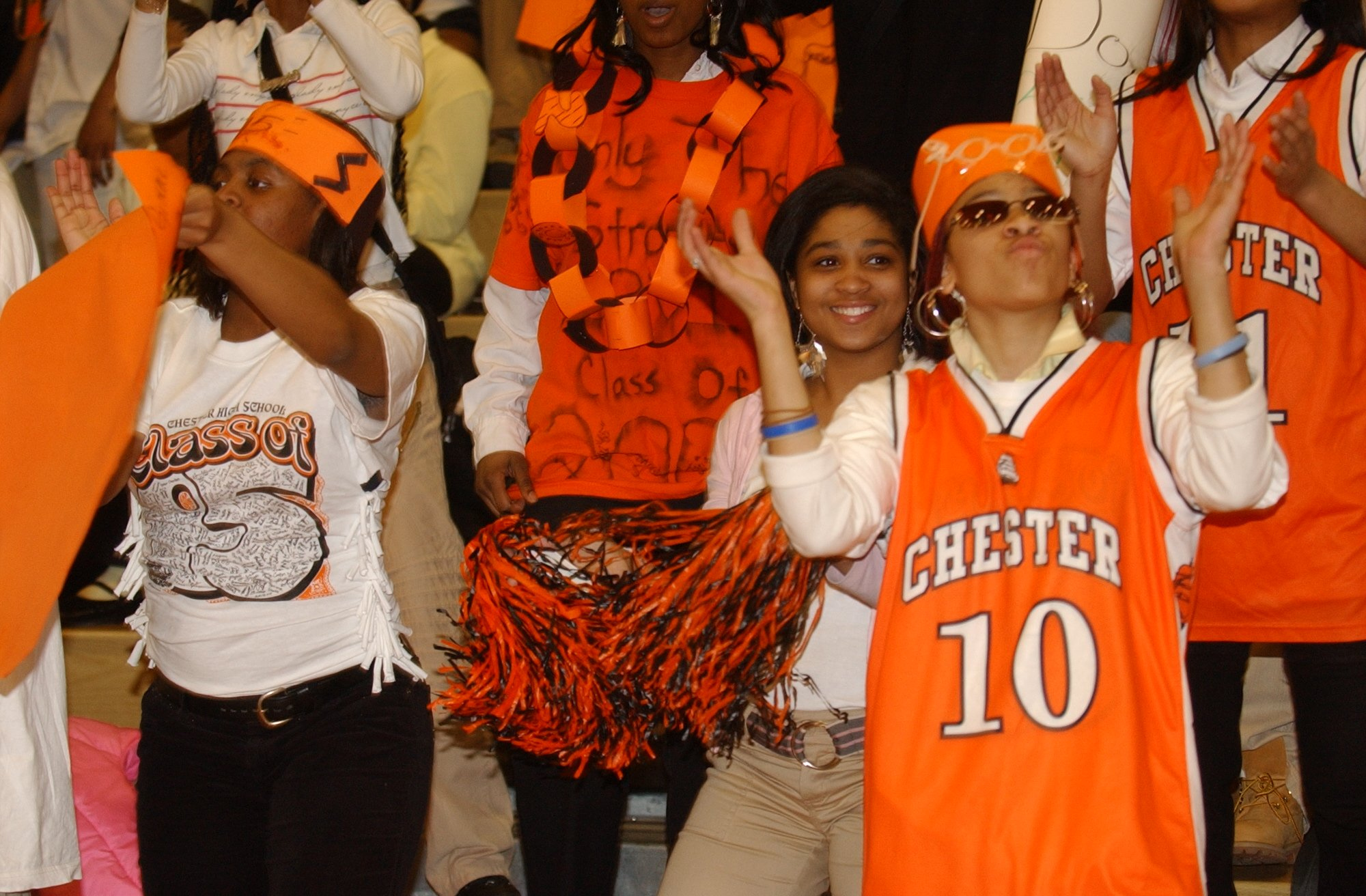
    Students from the class of 2005 show their support as Chester and Lower Merion play in the state final.

    The rivals met in the state championship on March 19, 2005. Despite strong performances from Williamson and Brooks, the Clippers pulled away in the second half thanks to a dominant third quarter from Govens. Chester won, 74-61.

    The teams reconvened the following season with their competitive spark fully reignited. They faced each other three times that year. Chester took Round 1, a one-point regular-season victory on Dec. 27.

    Round 2 was in the district final on March 3. Before the game, in front of a packed crowd at the Pavilion, Chester sophomore Karon Burton walked up to the layup line.

    Lower Merion’s student section caught his ear with a chant about coach Fred Pickett’s stout stature.

    “Hey Karon,” said one group.

    “Hey Karon,” responded the other.

    “Fred’s gonna eat you! Fred’s gonna eat you! Fred’s gonna eat you!”

    The dig didn’t intimidate Burton. If anything, it fueled him. He grew up playing street ball in Chester and always loved trash talk.

    Instead of cowering, like the crowd hoped, the sophomore delivered an unforgettable outing. The game went into overtime, and was tied at 80 with only a few seconds remaining. During a timeout, assistant coach Keith Taylor pulled Burton aside.

    “He was like, ‘Hey, listen,’” Burton said. “They’re going to double Darrin. If you get that ball, do your thing.’”

    Taylor’s words proved prescient. As Lower Merion’s defenders swarmed Govens, the Clippers inbounded the ball to Burton.

    He took a pull-up jumper from beyond the arc and drilled it for an 83-80 win. The Chester fans stormed the court. Burton, who later joined Wilmore in the 1,000-point club, said he felt like a celebrity in his hometown.

    “It was like watching a buzzer-beater in the NBA,” he said. “I just ran to my teammates, they picked me up. It was a crazy feeling.

    “I’m a big Kobe fan, too. Kobe’s my favorite player ever. So when I came and I hit the game-winner on that team …”

    Round 3 took place a few weeks later, in a state semifinal rematch at the Palestra on March 22. Bryant called Lower Merion’s coaches before the game.

    “I don’t remember specifically what he said, but I’m sure there were a lot of [expletives] dropped,” said Young. “Like, ‘Don’t call me back if you don’t beat those [expletives].’ That was a line we heard from him a couple times.”

    This one didn’t go Chester’s way. After trailing the Clippers, 47-37, at the end of the third quarter, the Aces came roaring back in the fourth and put up 33 points to eke out a 70-65 win.

    The celebration in the locker room was cathartic. Water sprayed into the air. Players sat atop each other’s shoulders and turned the showers into a slip ‘n slide. Bryant called in, again, as other members of the 1996 team filtered through.

    Darrin Govens scored his 1,000th point for Chester against Lower Merion in the state championship in 2005.

    This was not how Govens wanted to end his high school career. And a few months later, when he arrived at St. Joseph’s on a basketball scholarship, he saw a familiar foe.

    It was Williamson, his new Hawks teammate.

    “We were sitting on the opposite side of the bench,” Govens said. “I didn’t want to sit next to him; he didn’t want to sit next to me. We’d kind of avoid each other and just head nod.

    “Even in running drills, it was a competition. He looked to the left. I looked to the right. We tried to beat each other in sprints. But then we realized, ‘All right bro, we’re teammates now.’”

    ‘Hero status’

    Chester had always rallied around its high school basketball team. Linehan said it was akin to playing for the Sixers. The teenagers were treated like professional athletes — especially those who had been a part of big wins.

    The Clippers’ public address announcer, James Howard, called this “hero status.”

    “All of a sudden, your money’s no good,” he said. “Barbers take care of you, make sure your hair looks nice before games. Free food. Little kids look up to you and ask for your autograph. That’s how it is.”

    In Chester, there were plenty of heroes to draw from. There was Linehan, but also Jameer Nelson, who met a young Burton in the late 1990s. Nelson, a friend of Burton’s cousin, gave the aspiring basketball player a gift before he left for St. Joe’s: his MVP medal from the Chester summer league.

    “He was one of the biggest guys in our city,” Burton said, “so it’s definitely something that I’ll always remember.”

    By the early 2010s, when the rivalry was reignited for a third time, Lower Merion had built more of a basketball tradition. Aces guard Justin McFadden said he’d get stopped in Wawa before big games against the Clippers.

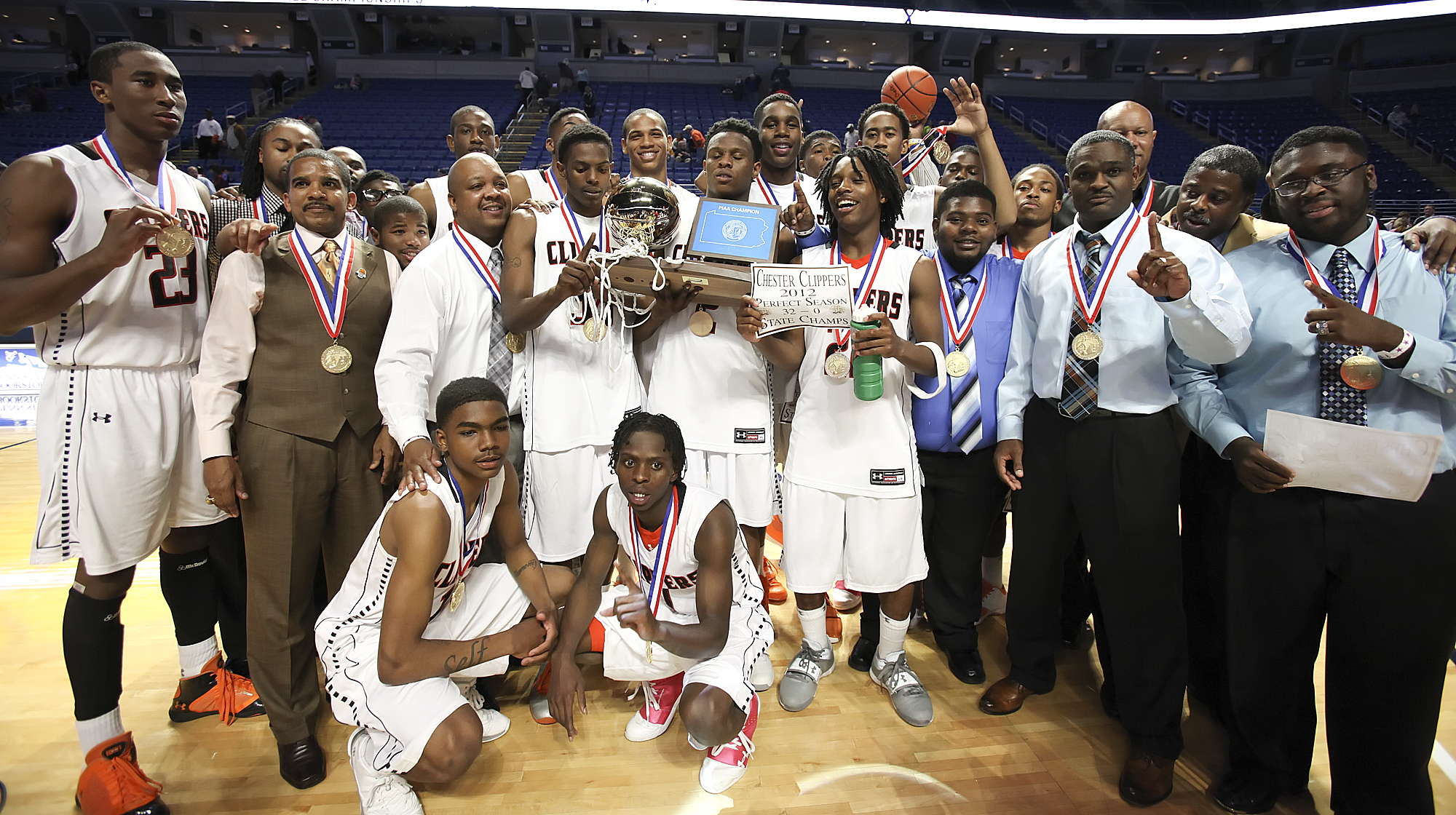
    Chester celebrates its win over Lower Merion for the state championship in 2012.

    “It became a community thing,” he said. “People would be asking, ‘What do you guys think about Chester? Do you think we can get it done?’”

    In 2012, the schools met in the state championship for the first time since 2005. Junior forward and future NBA starter Rondae Hollis-Jefferson put up a double-double to lead the Clippers to a resounding 59-33 win over the Aces. It was their second straight title and their 58th straight victory.

    A year later, after going 17-0 in the Central League, the Aces met the Clippers in the state final again. Chester had won 78 straight games against in-state opponents. Snapping that streak would be daunting, but Downer had a plethora of motivational tactics at his disposal.

    Just as they had in the 1990s, The Aces again spent pockets of the season watching Jaws, The Edge, as well as an addition: Al Pacino’s “Inch by Inch” speech in Any Given Sunday.

    “He would have that fired up on YouTube, ready to go,” McFadden said. “Looking back, [your reaction] is a chuckle, but in the moment, it worked. We knew that this was the hill that needed to be climbed.

    “And every time they played that speech, we got goose bumps. We were ready to fire.”

    Chester got out to an early lead, but Lower Merion rallied behind a 22-point, 11-rebound performance from B.J. Johnson, who later starred at La Salle. The Aces snapped the streak and won their seventh state title with a 63-47 victory.

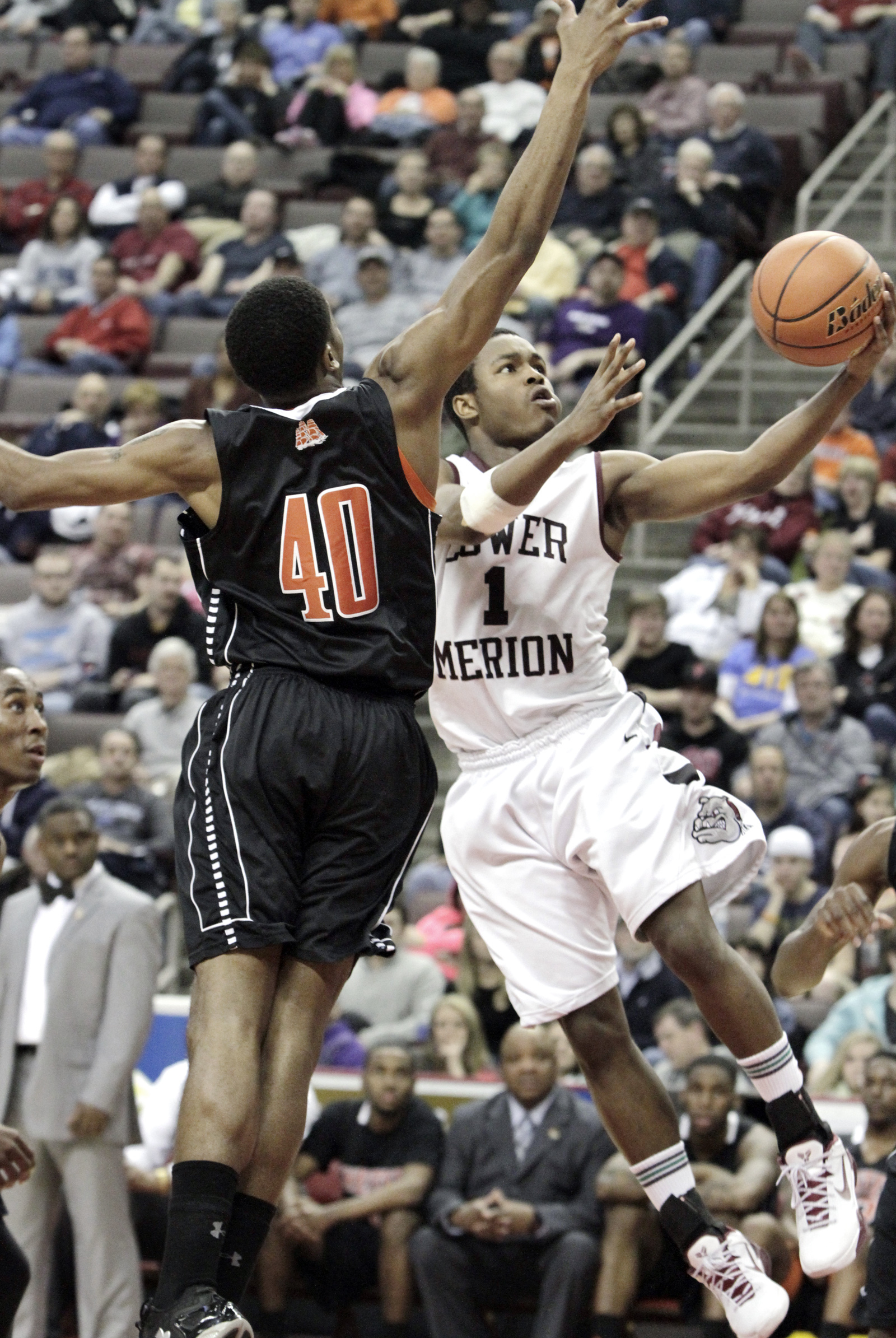
    Lower Merion’s Jaquan Johnson goes to the net as Diamonte Reason guards him in the Chester-Lower Merion state championship game in 2013.

    The Clippers then were coached by Larry Yarbray. Pickett, who was diagnosed with cancer in 2010, was in declining health. Just before he died in 2014, Downer decided to say goodbye.

    He and his former assistant coach Jeremy Treatman drove out to Pickett’s home in Chester. They went to his bedside.

    “And we talked,” Downer said. “And we held hands. It was a really touching moment for me. This is a man that carried Chester on his back. That tried to carry Lower Merion on his back. And I knew it was the last time I was going to see Fred.

    “We walked out the door, and we told each other that we loved each other. And I never thought he would say that to me, or vice versa. But it was just kind of like, ‘You know what? We’ve had some amazing battles, and there’s a lot of respect there.’”

    Keeping the tradition alive

    In recent years, the Chester-Lower Merion rivalry has diminished.

    There was a brief period when the teams were in different classifications. Both programs have lost players to private schools that can recruit, and the addition of the Philadelphia Catholic League to the PIAA has made the state playoffs more competitive.

    One place the Aces and Clippers could meet is in the district tournament, where they reunited in 2024. But they haven’t played each other since. And Howard says the contests don’t have the same feel.

    “Both teams have lost D-I talent,” he said. “It’s not as high-flying, above the rim, as it was in the past. But still a great game. Sold out at Lower Merion, and at Chester, same thing.”

    The history will always be there, though, and Burton is doing his best to keep it alive. His 8-year-old son, Karon Burton Jr., is playing in the Biddy League. His father is his coach.

    Sometimes, they go on YouTube and watch old Clippers games. Junior’s favorite, of course, is the 2006 district final.

    Burton believes that his son has a promising future, but isn’t sure of where he’ll go to high school yet. He doesn’t want Karon Jr. to feel obligated to follow his father’s path.

    But if it worked out that way, what a story that would be.

    “I’d love to be the first father and son to have 1,000 points,” Burton said. “With the same name? That would be crazy.”

  • Sizing up the area’s top high school boys’ basketball teams in the 2025-26 season

    Sizing up the area’s top high school boys’ basketball teams in the 2025-26 season

    Since the PIAA basketball championships were canceled because of the COVID-19 pandemic in 2020, District 12 boys’ basketball teams, comprised of the Catholic and Public Leagues, have won 11 state titles and appeared in 20 of the 30 state finals. No other district across the state has come close to matching that.

    District 12 is the only area to ever four-peat in the state championships, doing it twice: once in 2022 (Class 6A Roman Catholic, 5A Imhotep Charter, 4A Neumann Goretti, and 3A Devon Prep), and again last year, when the Catholic League became the first league to win four state titles in one season (6A Father Judge, 5A Neumann Goretti, 4A Devon Prep, and 3A West Catholic).

    It shows the dominance the Philadelphia area has on high school basketball.

    This season should be no different, even though there are stark differences for several marquee programs. Roman Catholic and West Catholic have new coaches. Imhotep will be competing for the second straight year as a Class 6A school, while two-time defending state champion Devon Prep and two-time defending Inter-Ac League champ Penn Charter have seen most of their impact players graduate.

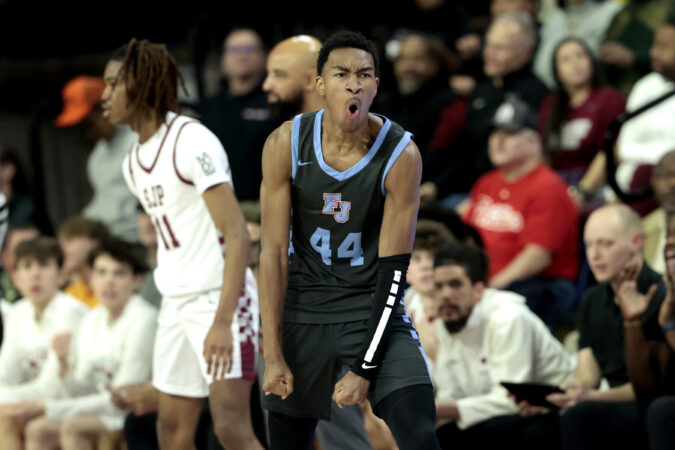
    Some prominent players have changed schools. Former Imhotep guard RJ Smith, who’s committed to La Salle, is now at Roman Catholic. Academy of the New Church’s Marquis Newson is now at Neumann Goretti, and Germantown Friends’ all-time leading scorer Jordan Dill now calls Imhotep home.

    In the Catholic League, Judge will be challenged by Roman, Archbishop Wood, Neumann Goretti, and a sleeper, Bonner-Prendergast, while Imhotep appears to be the clear favorite to win another Public League title. Academy of the New Church has enough back to three-peat in the Friends Schools League, with a challenge coming from Westtown, while Coatesville, Central Bucks East, Penn Wood, Garnet Valley, and Plymouth Whitemarsh look strong in District 1 Class 6A, and Penncrest, Springfield (Delco), Holy Ghost Prep, and Upper Dublin battle for supremacy in District 1 Class 5A.

    Here are some of the area’s top boys’ basketball teams to watch during the 2025-26 season.

    Academy of the New Church

    The Lions went 15-9 overall and 6-2 in the Friends Schools League last year. ANC returns 6-foot-7 senior forwards Ryan Warren and Cam Smith, 6-4 senior guard Dior Carter, and 6-foot senior point guard Bryce Rollerson. With a senior-laden team, the Lions are looking for their first Pennsylvania Independent School Athletic Association (PAISAA) state championship since they repeated as PAISAA winners in 2009. The Lions were knocked out of last year’s PAISAA semifinals by eventual champion Phelps School.

    Archbishop Wood

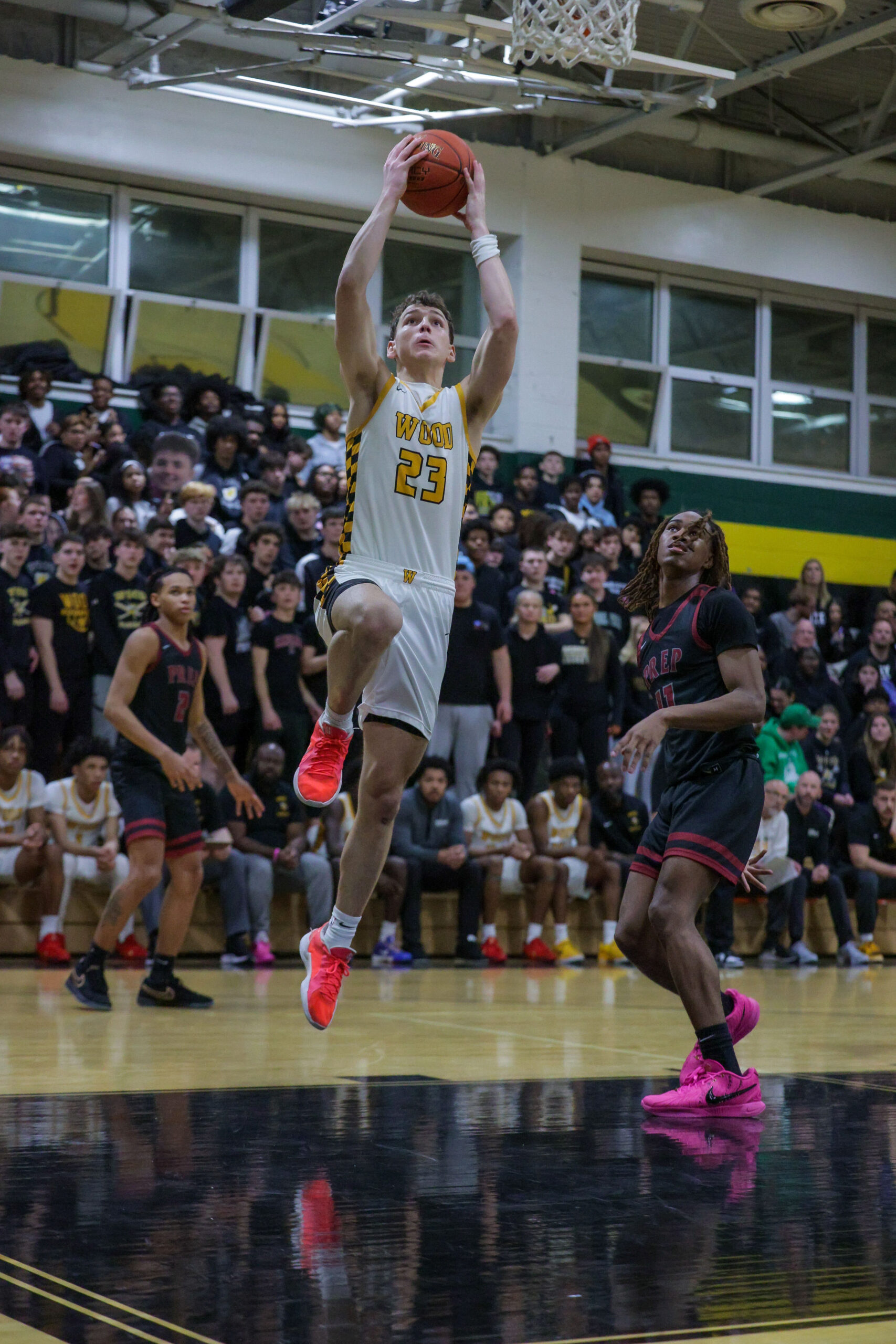
    The Vikings had a rare down year last season, finishing 11-13 overall and 5-8 in the Catholic League. Under coach John Mosco, Wood has been a perennial Catholic League contender. It looks like the Vikings are back, buoyed by a core group of 6-3 senior guard Brady MacAdams, 6-4 junior guard Caleb Lundy, and 6-11 junior center Jaydn Jenkins, who is on the radar of major college programs. The addition of Dylan Powell, an athletic 6-2 sophomore guard, makes the Vikings even stronger.

    Brady MacAdams will look to be one of the leaders this season for Archbishop Wood.

    Bonner-Prendergast

    The Friars are small and fast, possibly the fastest team in the Catholic League, the deepest league in the state. They finished 18-11 overall and 7-6 in the PCL last season, including a buzzer-beating victory over league champion Father Judge. Bonner-Prendie is a guard-oriented team, centered on juniors Korey Francis — who recently received a scholarship offer to La Salle — Kam Jackson, and Jakeem Carroll. Size inside will be provided by 6-7 senior Aydin Scott. The Friars reached last year’s Class 5A state quarterfinals, where they were upset by Upper Moreland in overtime.

    Coatesville

    The Red Raiders feature 6-6 sophomore Colton Hiller, who is rated as the top sophomore in the state by 247 Sports. Hiller will be joined by 6-7 senior forwards Larry Brown and Jonas Chester and junior guards Jahmaad Williams and Chris Allegra. Coatesville went 24-7 last season and is looking to three-peat as Ches-Mont champion, beating its opponents by an average of 25 points in the league tournament last year. The Red Raiders lost in the District 1 6A semifinals to eventual champ Conestoga and reached the state quarterfinals, where they lost to eventual state finalist Roman Catholic. Coatesville is a favorite in District 1 and last won district and state titles (under the Class 4A system) in 2001, when current Coatesville coach John Allen was the star of the team.

    Father Judge

    The Crusaders experienced their best season in program history last year, going 24-7 overall and 10-3 in the Catholic League, winning the PIAA 6A state championship for the first time, and the first Catholic League title since 1998. Judge returns three prominent players from that team: Temple-bound Derrick Morton-Rivera, Merrimack-bound Rocco Westfield, and Iona-bound Max Moshinski. The Crusaders have size, though they are untested, in 6-6 sophomore Rezon Harris, a transfer from Imhotep; 7-foot junior Jamal Hamidu, a transfer from New York; and 6-7 junior Jeremiah Adedeji, who played sparingly last year for Judge.

    Imhotep

    The Panthers could be the best team in the city. They finished 26-6 last year and reached the PIAA Class 6A state semifinals, where they lost to Judge, breaking a 35-game state playoff winning streak. The Panthers’ legendary coach Andre Noble has won 10 PIAA state and 12 Public League championships. The Panthers are the five-time defending Public League champions, only the second school to win five straight titles since the legendary Gene Banks and West Philly’s five-peat (1974-78). Imhotep is looking to break that mark this season as a Class 6A school. Everything will revolve around 6-7 junior forward Zaahir Muhammad-Gray, who missed last season with a knee injury. He will be joined by Drexel-bound 6-5 senior Latief Lorenzano-White, 6-4 junior guard Kevin Benson III, 6-foot sophomore point guard Ian Smith, and 6-1 senior guard Dill.

    Malvern Prep

    The Friars return a strong nucleus that includes junior forward Nick Harken, junior point guard Marvin Reed, and 6-10 sophomore center Logan Chwastyk for a team that went 17-10 overall and 5-5 in the Inter-Ac, which has been ruled by two-time defending league champion Penn Charter. The Quakers lost most key players to graduation, leaving Malvern, under coach Paul Romanczuk, an open invitation to challenge for the Inter-Ac crown this season.

    Neumann Goretti

    The defending PIAA Class 5A state champion enters this season with vengeance, after going 18-11 (7-6 PCL) and being ousted in the Catholic League quarterfinals last season by Father Judge. Coach Carl Arrigale, who holds the all-time mark of 12 Catholic League titles and nine state titles, returns a loaded team with four starters back from Neumann Goretti’s first PIAA Class 5A state title team: Stephon “Munchie” Ashley-Wright, DeShawn Yates, Kody Colson, and 6-6 East Stroudsburg-bound Alassan N’Diaye. Add in exciting, above-the-rim 6-5 junior guard Newson, and the Saints could arguably be the best team in the city.

    Penncrest

    Why are the Lions on this list? They had eventual state champion Neumann Goretti down, 63-58, with 31 seconds left in last season’s state quarterfinals before Yates saved the Saints. Penncrest finished 23-4 last season and has one of the best coaches in the area, Mike Doyle, plus everyone back from a team that is a favorite in District 1 Class 5A. Everything will go through Carnegie Mellon-bound 6-7 senior star Mikey Mita, complemented by seniors Sean Benson, Will Stanton, Ryan McKee, and Connor Cahill, who scored 19 points in last year’s state quarterfinals.

    Roman Catholic

    The Cahillites reached the Catholic League and state finals last season, losing both times to Father Judge. Brad Wanamaker takes over for Chris McNesby after Roman went 25-6. Roman will be led by VCU-bound Sammy Jackson, the son of former Temple star Marc Jackson, along with Smith, the former Imhotep point guard, and seniors Semaj Robinson, Bryce Presley, and Al Jalil-Bey Moore. Roman won consecutive Catholic League titles in 2023 and 2024 and last won a state title in 2022. This senior-loaded team wants to leave its mark.

  • Breaking down the area’s top high school girls’ basketball teams this season

    Breaking down the area’s top high school girls’ basketball teams this season

    Over the past two years, the area has produced some of the best girls’ basketball talent in the nation. This season will be no different.

    Other than Westtown School, which competes in the non-Pennsylvania Interscholastic Athletic Association-affiliated Friends Schools League, no team is dominant. In the Catholic League, the deepest, most talented league in the state, defending champion Neumann Goretti, will face challenges from Archbishop Carroll and a young, maturing Cardinal O’Hara team. In District 1, defending PIAA Class 6A champion Perkiomen Valley was hit hard by graduation, leaving the door open this season to Suburban One League powers Upper Dublin and Central Bucks East, along with Ches-Mont League stalwart Downingtown East.

    In the Public League, rivals Universal Audenried Charter and Imhotep Charter will again be contenders. The Friends Schools League features two teams, Westtown and Friends Central, with national-level talent.

    Here are some of the area’s top girls’ basketball teams to watch this season.

    Archbishop Carroll

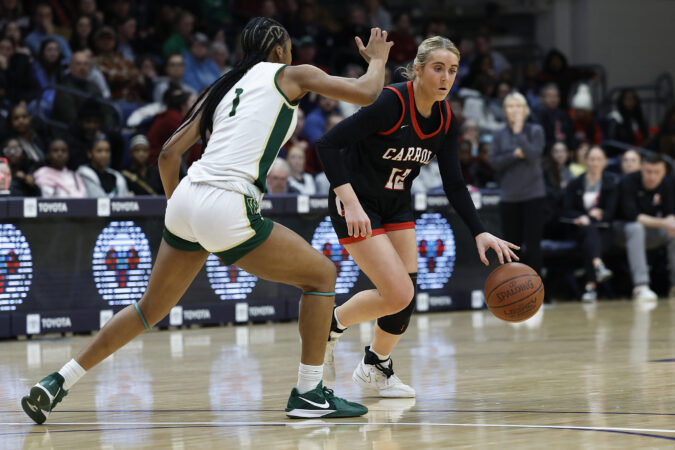
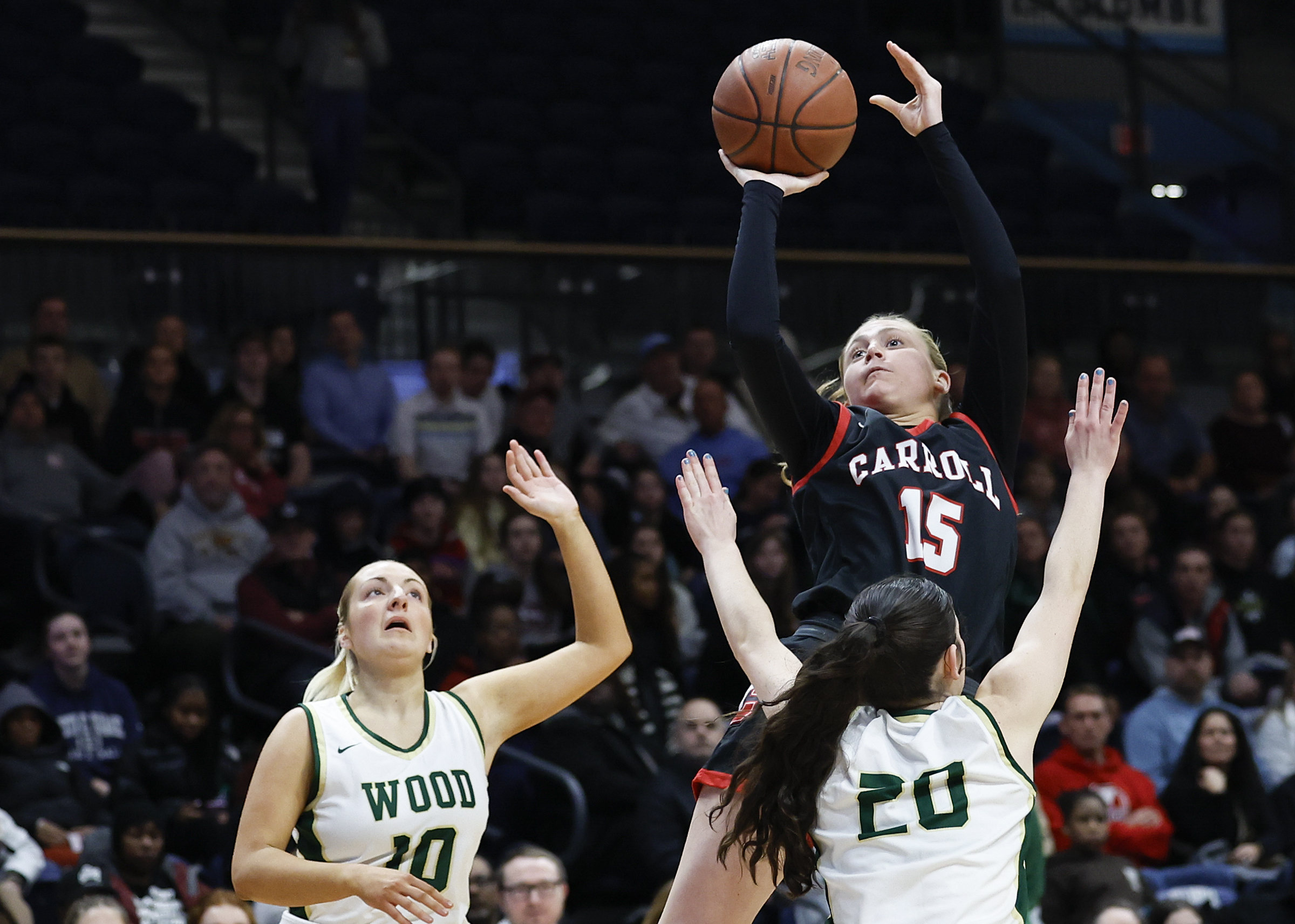
    The Patriots finished 20-10 last season and return a loaded team that has been to the Philadelphia Catholic League championship the last two years. The last time Carroll won the PCL was 2019. Carroll is one of the best shooting teams in the area, with a nucleus led by Villanova-bound senior guard Alexis Eberz and her sophomore twin sisters. Kelsey Eberz is recovering from a season-ending knee injury suffered in December 2024, and Kayla Eberz is arguably one of the best players in the PCL. Carroll, which also features 6-foot senior Bridget Grant and junior guard Abbie McFillin, last won the PIAA Class 6A championship in 2023, and reached the state semifinals last year, losing to eventual state champion Perkiomen Valley.

    Archbishop Carroll’s Abby McFillin shoots against Archbishop Wood in the Catholic League semifinals on Feb. 17.

    Audenried

    The Rockets will look to move forward without generational star Shayla Smith, now at Penn State after becoming the all-time scoring leader in the city, finishing with 2,690 points. Audenried ended last season 23-8, one game away from making history as the first girls’ Public League team to reach and win a state final. The three-time defending Public League champion Rockets were stopped by eventual PIAA Class 4A champion Neumann Goretti in the state semifinal. They return one of the nation’s top players in 6-foot-3 junior forward Nasiaah Russell, along with seniors Heaven Reese, Aniyah Cheesboro, and Raven Robinson.

    Cardinal O’Hara

    The traditional Catholic League powerhouse went 17-9 last season and reached the Catholic League semifinals along with the PIAA Class 6A state quarterfinals. The Lions are a young, evolving team centered on Drexel-bound Megan Rullo, a 5-8 point guard. Junior guards Brigidanne Donohue and Leah Hudak give the Lions depth and outside shooting, while 5-11 junior Carly Wakefield is an athletic inside presence. The Lions will be looking for the maturation of 6-3 freshman forward Olivia Craft, along with 6-1 sophomore guard Catie Doogan. Expect the Lions to be more dangerous in February.

    Central Bucks East

    The Patriots have four of five starters from last season’s team that went 22-8 overall, won the Suburban One League Colonial Division, and reached the District 1 Class 6A semifinals, where they lost to eventual state champion Perkiomen Valley. Seniors Jess Lockwood, Natalie Berndt, and Emma Penecale, and junior point guard Haley Moran lead CB East, which lost to O’Hara in the first round of the PIAA 6A playoffs.

    Downingtown East

    This is a team that coach Darren Domsohn has been cultivating for the last few years. The Cougars went 24-6 last season and return every significant player from a team that reached the District 1 6A quarterfinals and the second round of the state playoffs. With a core group consisting of seniors in UTEP-bound Charlotte Aldridge, point guard Chloe Hunold, sharpshooter Grace Hodges, and talented 5-9 junior guard Kendall Chiavelli, the Cougars may be good enough to play into March.

    Friends’ Central

    The Phoenix are one of the best teams in the state, led by two national-level juniors in Zya Small, a 6-1 guard/forward, and Ryan Carter, a gifted 5-11 guard who transferred from Archbishop Wood after averaging 17 points last season. The problem Friends’ Central faces is that it also happens to be in the same Friends Schools League as Westtown, the best team in the state and among the top teams in the country. The Phoenix finished 21-9 last season and reached the Pennsylvania Independent Schools Athletic Association (PAISAA) state championship, where they lost to rival Westtown.

    Imhotep Charter

    The Panthers went 23-7 overall before losing in the state semifinals, 65-46, to eventual PIAA Class 3A champion Loyalsock. Like Audenried, they, too, are aiming for history this season as the first girls’ Public League team to reach and win a state championship. They have some talent to do it in 5-11 senior twins Geren and Crystal Hawthorne and 5-7 sophomore guard Taylor Linton. Imhotep has been to the Public League finals the last 13 years — the last 10 under coach David Hargrove — with its last league title coming in 2022.

    Neumann Goretti

    The Saints are the defending Catholic League and PIAA Class 4A champions. They went 26-3 last season and will be moving forward without two generational players in four-year starters Carryn Easley (Fordham) and Amya Scott (Delaware State). Neumann Goretti does have a talented group back for coach Andrea Peterson, who has won six state titles and three Catholic League championships in 11 years. In 5-8 junior guard Reginna Baker, Peterson has one of the best players in the PCL, back with senior guards Kamora Berry and Zion Coston. The Saints also feature 6-foot sophomore forward Chrisette King, and 5-7 freshman guard Azzure O’Connor, the daughter of former Simon Gratz star Marvin O’Connor.

    Neumann Goretti’s Kamora Berry shoots during the ’ Catholic League semifinal against Cardinal O’Hara on Feb. 17, 2025.

    Upper Dublin

    The Cardinals are one of the more dynamic teams to watch in District 1 6A. They finished 24-6 overall last season, reaching the district semifinals, before they were ousted in the opening round of the state playoffs. Upper Dublin is led by 5-4 Fairleigh Dickinson-bound Megan Ngo, La Salle-bound Emilia Coleman, and stellar 5-9 junior guard Tamia Clark. The Cardinals are among the favorites in District 1 and may arguably be the fastest team in the area.

    Westtown School

    The Moose are the area’s most dominant team, going 27-4 last year and winners of five straight Friends Schools League titles and four straight PAISAA championships. They are riding a five-year winning streak in the Friends Schools League. It is a fun, star-studded team led by Jordyn Palmer, a 6-1 junior guard, 6-foot Ohio State-bound point guard Atlee Vanesko, and 6-foot junior guard Jada Lynch. Inside help comes from a pair of 6-2 forwards, Lara Csaplár-Nagy, a junior, and senior Venessa Kaukenas.

  • South Jersey’s Frank Cairone, a Brewers pitching prospect, hospitalized after serious car accident

    South Jersey’s Frank Cairone, a Brewers pitching prospect, hospitalized after serious car accident

    South Jersey’s Frank Cairone, an 18-year-old pitching prospect with the Milwaukee Brewers, remains hospitalized after a serious car accident Friday night in Gloucester County.

    According to the Franklin Township police, the Delsea Regional High graduate and a 20-year-old female passenger were injured following a vehicle crash at 10:15 p.m. Police said the crash happened when an 18-year-old female driver from Millville was traveling east at the intersection of Williamstown and Fries Mill Roads in Franklin and failed to stop at a stop sign. The car struck Cairone’s vehicle, which was traveling south.

    Cairone was flown to Atlantic City Medical Center and remained hospitalized as of Tuesday. No information has been given about his condition or when he would be released. The female passenger, who suffered injuries to her lower extremities, was driven to Cooper University Hospital in Camden.

    The driver of the other car was also taken to Cooper University Hospital with lower extremity injuries. According to police, she is expected to be charged with reckless driving and disregarding a stop sign. Alcohol and drugs did not play a role in the crash, police said.

    Brewers president of baseball operations Matt Arnold said Monday that Cairone was “progressing positively. The reports we’ve gotten are good.”

    The 6-foot-3 pitcher was selected 68th overall in the MLB draft in July and was considered one of the top lefties available. He withdrew a commitment to Coastal Carolina to sign with Milwaukee and spent part of the summer and fall at the Brewers’ facility in Arizona in hopes of making his professional debut this year.

    With Delsea last season, Cairone was clocked throwing as high as 94 mph and kept an 88- to 90-mph pace in later innings. He struck out 94 batters in 44 innings and helped the Crusaders to an NJSIAA Group 3 quarterfinal appearance.

  • Philly’s DJ Moore catches game-winning touchdown to propel Bears into NFC’s No. 2 seed

    Philly’s DJ Moore catches game-winning touchdown to propel Bears into NFC’s No. 2 seed

    After overcoming a 16-6 deficit late in the fourth quarter Saturday night, the Chicago Bears beat the Green Bay Packers, in overtime, 22-16, thanks to a 46-yard touchdown reception from Philly native DJ Moore.

    Three plays after the Bears stopped Green Bay on its drive in overtime, quarterback Caleb Williams found Moore, an Imhotep Charter graduate, off a play-action post route to score the walk-off touchdown, his sixth touchdown reception of the season.

    “I just had to run, run like I did in practice and connect like we did at practice,” Moore said of his winning reception. ”It was really a practice rep but we did it in a game. Like I said, it was just amazing that we did it against the Packers.”

    The victory moved Chicago to the NFC’s No. 2 seed and put the Bears in the driver’s seat to win the NFC North for the first time since 2018. The Bears haven’t made the playoffs since 2020.

    Moore is the Bears’ leading receiver this year with 664 yards and is tied for the team lead in touchdowns with Rome Odunze.

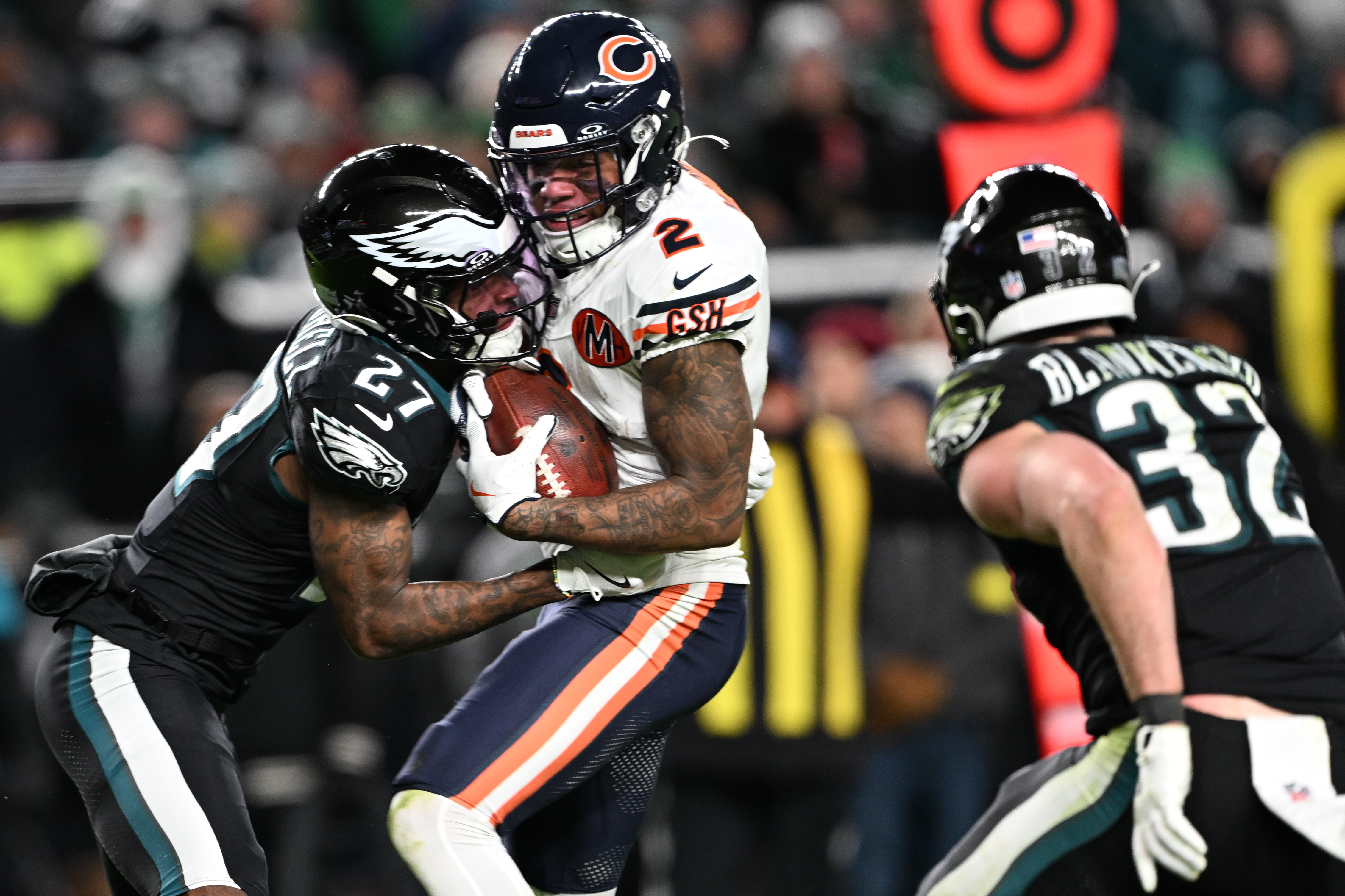
    Eagles cornerback Quinyon Mitchell tackles the Bears’ DJ Moore on Nov. 28.

    Now in his eighth season in the NFL after a standout career at Maryland, Moore has scored three of his touchdowns in the last two games. This is his third year in Chicago after getting traded from the Carolina Panthers after the 2022 season and he has led the team in receiving each of the last three years.

    After Saturday’s game, Moore wore a cheese grater hat, a reference to the Packers’ cheesehead hats that fans are known for wearing.

    Moore and the Bears face the San Francisco 49ers next week and end the regular season by hosting the Detroit Lions. Chicago controls its destiny to win the division and clinch a playoff spot.

  • How two Father Judge graduates are leading the way for Merrimack men’s basketball

    How two Father Judge graduates are leading the way for Merrimack men’s basketball

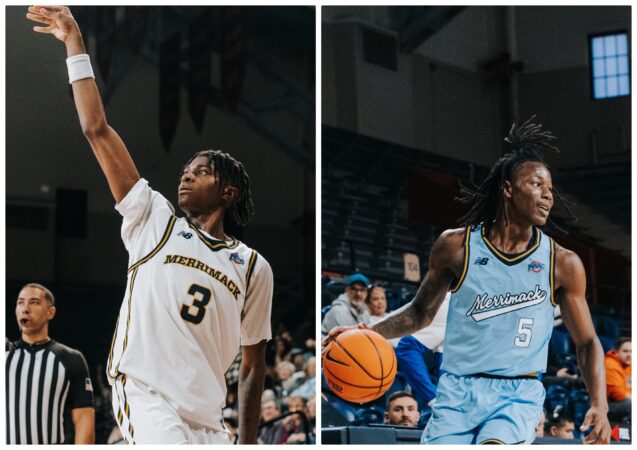
    When Kevair Kennedy saw Ernest Shelton enter his name in the transfer portal after spending two years at Division II Gannon University in Erie, Pa., the Merrimack College pledge texted his former Father Judge teammate about joining him in Massachusetts.

    “I was just telling him, if me and him team up again, we could cause so much damage,” said Kennedy, now a 6-foot-2 freshman point guard. “He’s familiar with my game, I’m familiar with his game. He knows that I like to drive, he like to shoot, so we got a good one-two punch. I also was reminding him about all the good times that we had at Father Judge, and he bought into it.”

    That he did. Shelton, a 6-5 junior shooting guard who led Gannon with 17.4 points last season, didn’t have any Division I scholarship offers in high school. But after proving himself in the PSAC, Shelton wanted to move up a level.

    His name and background — being a Father Judge product coached by Chris Roantree — stood out to Merrimack head coach Joe Gallo, who heavily recruits the Philadelphia area and has built a relationship with Roantree. So with the push of a former teammate and the familiar ties to his hometown, Shelton landed with the Warriors, where he and Kennedy are the team’s leading scorers, averaging 14.6 and 15.2 points, respectively, for the 6-7 team.

    The two have quickly emerged as impact players, and their addition to the program, which lost its top scorer last season in former West Catholic standout Adam “Budd” Clark, now at Seton Hall, has filled a large void.

    “I knew Kev would probably have to carry a big load with us losing Budd, and we’re a pretty point guard heavy program,” Gallo said. “We always have a great guard, so I knew he’d have the opportunity to do it. He’s definitely exceeded expectations, and Ern the same thing. You never know when a player goes from Division II and transfers up a level if it’s going to translate. But they both hit the floor running right from the summer.”

    Here’s a glimpse of their contributions so far: Shelton tied the single-season program record with 9 three-pointers against Boston on Nov. 15, where he finished with a career-high 33 points and was named MAAC Player of the Week. Kennedy also had his first career double-double (16 points, 11 rebounds) against the Terriers. He’s been selected as Rookie of the Week twice.

    A familiar face played a major part in their success. Shelton and Kennedy met while playing AAU together on Philly Triple Threat. Shelton spent his first two years of high school at Bishop McDevitt in Wyncote, before it closed down at the end of the 2020-21 academic year.

    He considered going to Archbishop Wood, where Roantree was a longtime assistant under John Mosco. But once Roantree landed the head job at Father Judge, Shelton decided to follow his coach there. He was reconnected with Kennedy, then a freshman who saw minutes. He later became a stater on the varsity team.

    The team took some bumps in those first two years as the program underwent a rebuild under a new coach. The Crusaders finished 4-9 in the Catholic League in 2021-22. They were 6-7 in 2022-23. But last season Father Judge made school history, earning a Catholic League and state championship.

    Kennedy played a large role in that achievement.

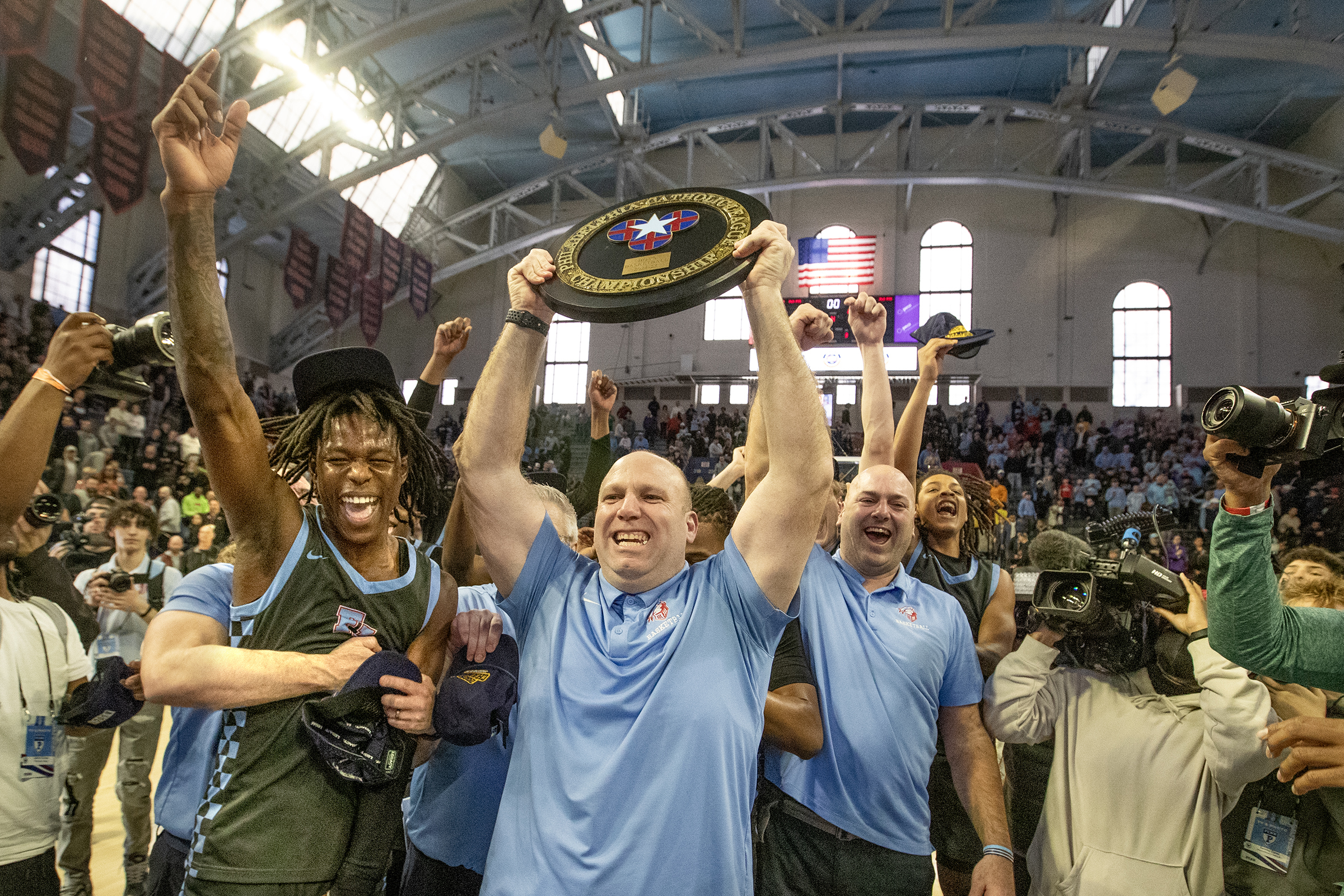
    Coach Chris Roantree of Father Judge raises the trophy after his team defeated Roman Catholic in the Catholic League championship. Kevair Kennedy is on the left.

    “I feel like I grew a lot in leadership there,” Kennedy said. ”Somebody had to be the leader, be the voice, and get us going on days when they didn’t feel like it. I feel like [Roantree] trusting me at an early age helped me with my accountability, not just hold others accountable, but hold myself accountable too.”

    Kennedy, who held one other scholarship offer from Wagner, had the chance to play at the Plaestra as a college player when Merrimack competed in the Cathedral Classic from Nov. 28 to Nov. 30. It wasn’t the same as playing in front of 10,000 fans for the Catholic League championship, but it was “a special moment” as the current Father Judge staff and team attended some of the games.

    The Warriors were riding a four-game winning streak before falling to Vermont on Dec. 14, thanks in part because of Shelton and Kennedy. The two would consider themselves to be more reserved, but on the court, they always seem to know where each other are.

    “It’s a lot more eye contact then words,” Gallo said. “Kev gets Ern a lot of unscripted three-point shots in transition, where we don’t even have to call a play, because [Kennedy] knows where [Shelton] is.”

    They aren’t the only Philly-area players on the team, either. Graduate student Jaylen Stinson is a former Archbishop Wood guard, senior forward Brandon Legris attended Perkiomen School, and next year, Rocco Westfield, a senior at Father Judge, intends to play for Merrimack.

    Gallo likes to recruit the area because of the the high-level competition in the Catholic League, and earlier in the season, when Merrimack faced Auburn and Florida, Kennedy and Shelton looked unfazed.

    “They’ve just been Philadelphia battle tested,” Gallo said. “Neither one of them blink at any of the competition we played against. I think that’s just going to continue to pay dividends.”

    So would Shelton and Kennedy say their time at Father Judge is helping them now?

    “For sure, definitely,” Shelton said. “It means a lot to have someone that you grew up with in college.”

    Kennedy added: “Having him here, it made me break through the ice even easier than it would have been if he wasn’t here. It was easier for me to get out of my shell, knowing that if I don’t know anybody at least I have Ern.”