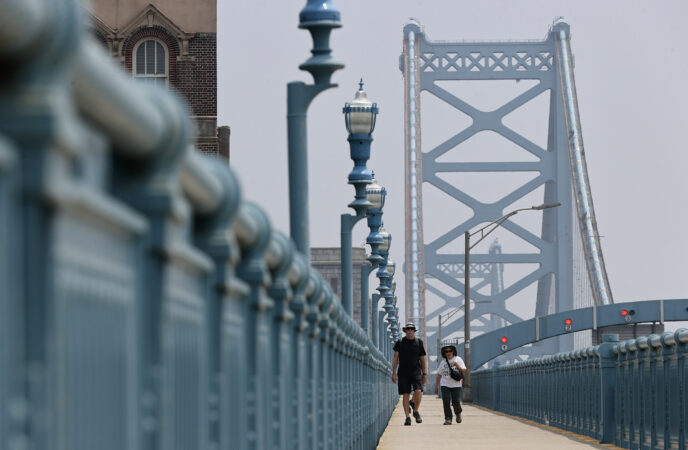
I’ve driven across the Ben Franklin Bridge countless times but until last week I’d never walked across it, and I walked across the Brooklyn Bridge once, so I’ve quietly carried that shame with me for years.
When I received a news release about the bridge turning 100 on July 1 and a subsequent anniversary party on July 11 that will close it to vehicles for public use for the first time since Pope Francis’ visit in 2015, I wanted to finally check walking across it off my Philly bucket list before the event.
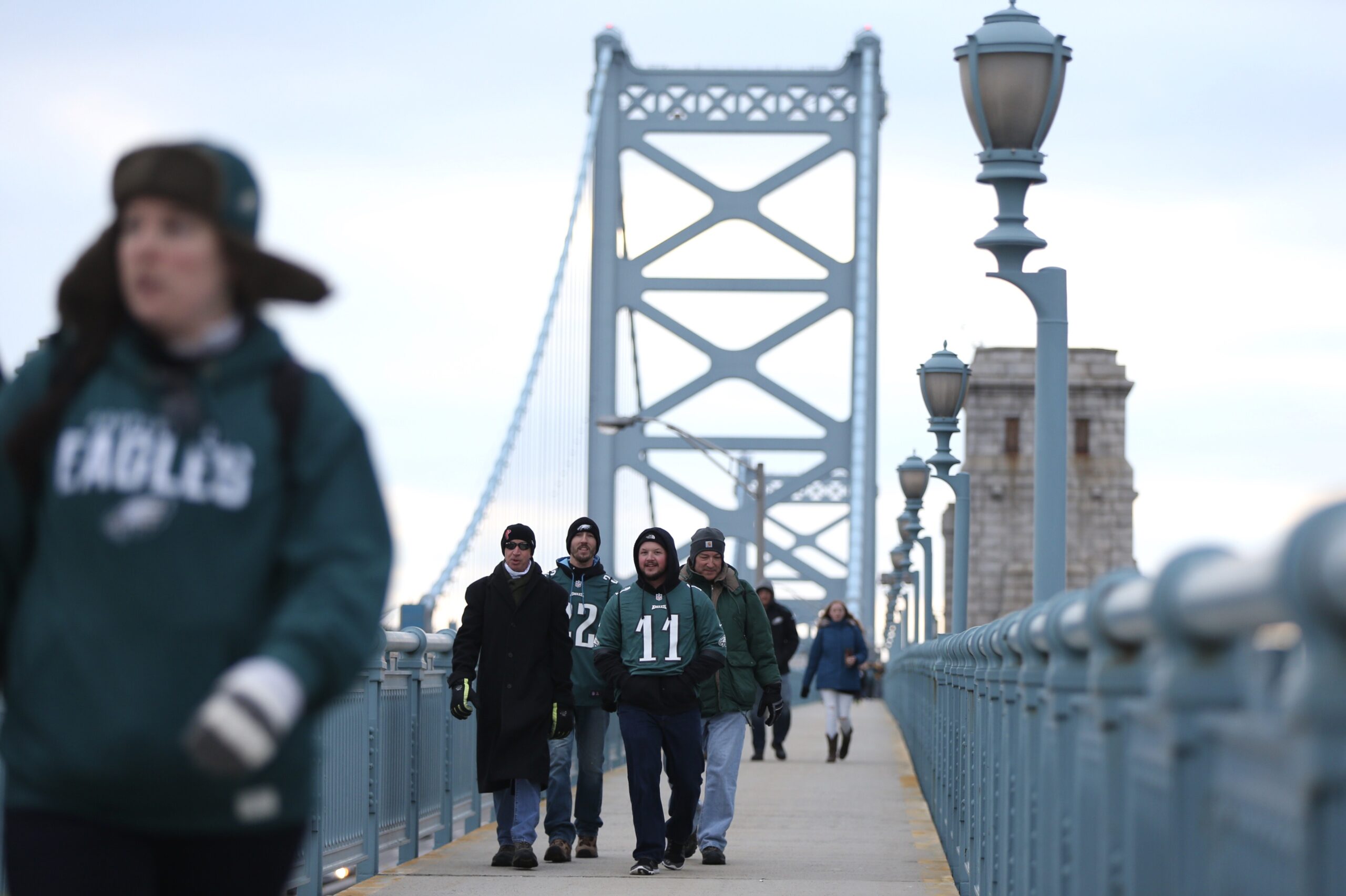
Fans cross the Ben Franklin Bridge into Philadelphia on the morning of the Eagles’ Super Bowl parade in 2018.
I was going to go it alone, but I decided to reach out to Mike Williams, spokesperson for the Delaware River Port Authority (DRPA), which manages the bridge, and he offered to schedule a walkway tour of it for me with DRPA principal engineer Michael Howard.
I met both men at Fifth and Race Streets at the base of the bridge on the Philly side, but as luck would have it, we showed up on opposite sides of the heavily-trafficked span. We waved at each other across the cars and as I tried to figure out how to Frogger my way over to them, Howard and Williams disappeared.
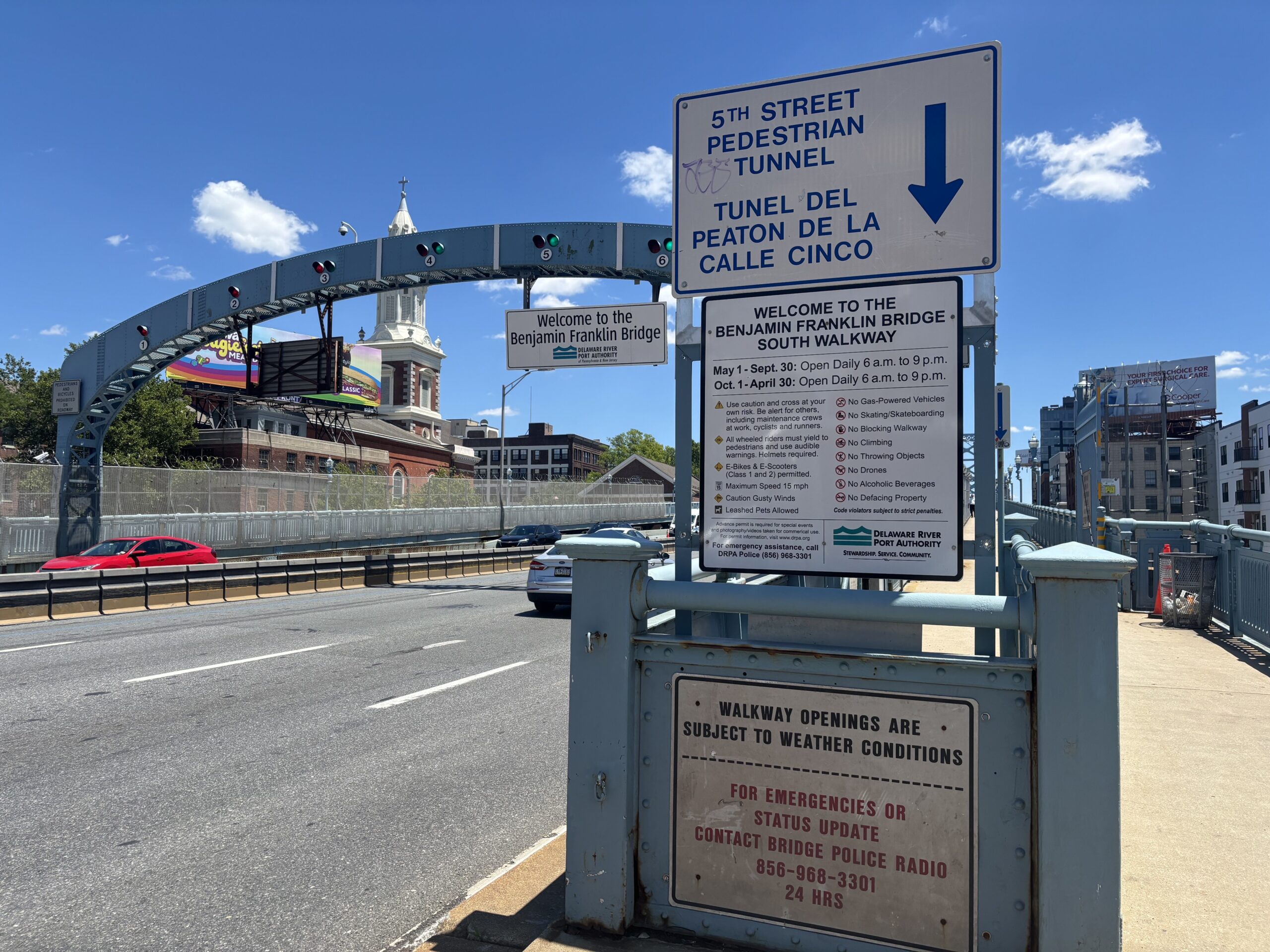
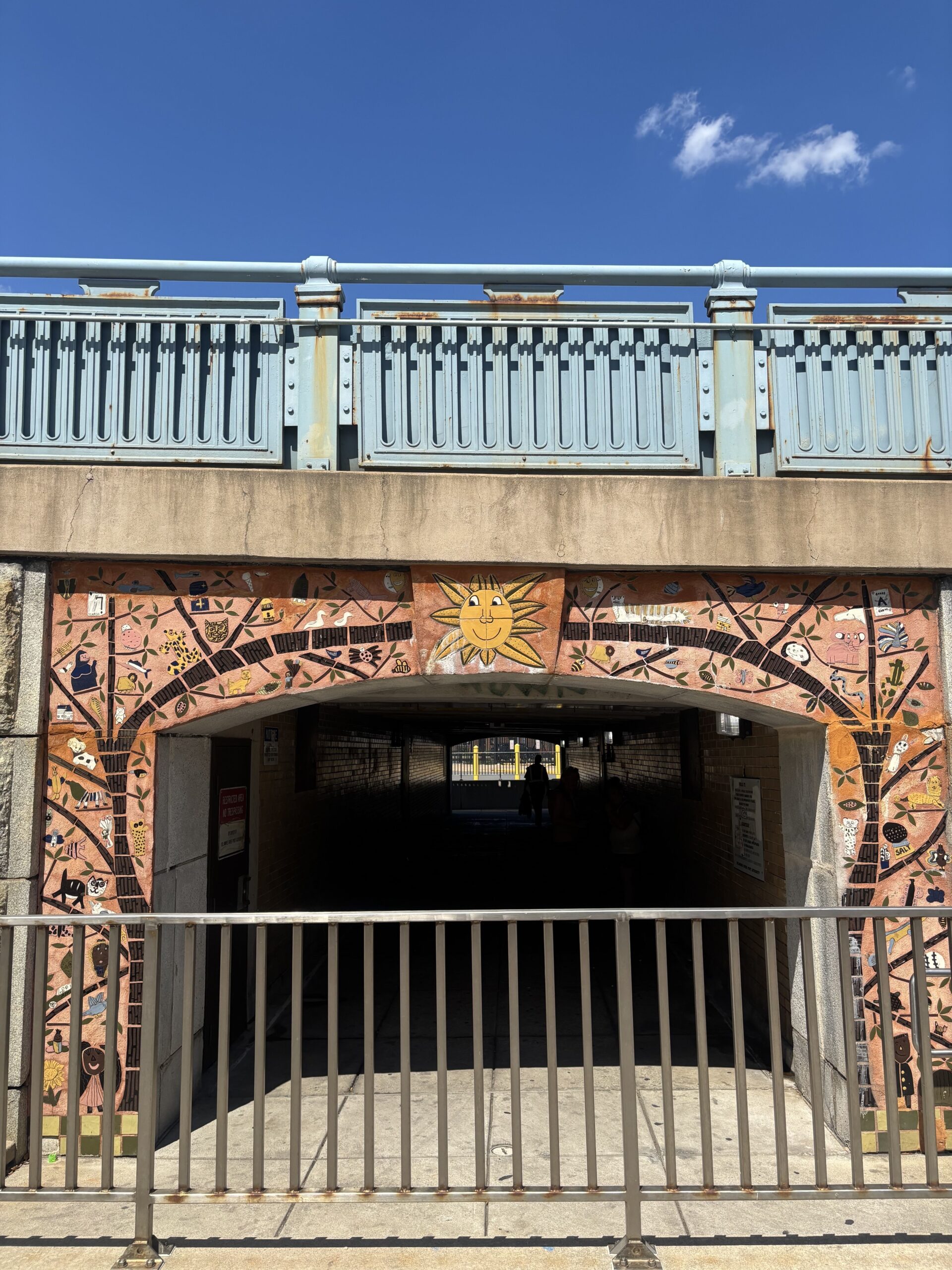
The men popped up out of a stairwell right next to me, having used the Fifth Street pedestrian tunnel under the bridge.
The entrance to the Fifth Street pedestrian tunnel on the south side of the Ben Franklin Bridge in Philadelphia.
“This was one of the original things that we incorporated into the bridge because we didn’t want people to try to walk across the traffic — because they would, you know,” Howard said, and I agreed.
Obviously, it was the first place I wanted to check out.
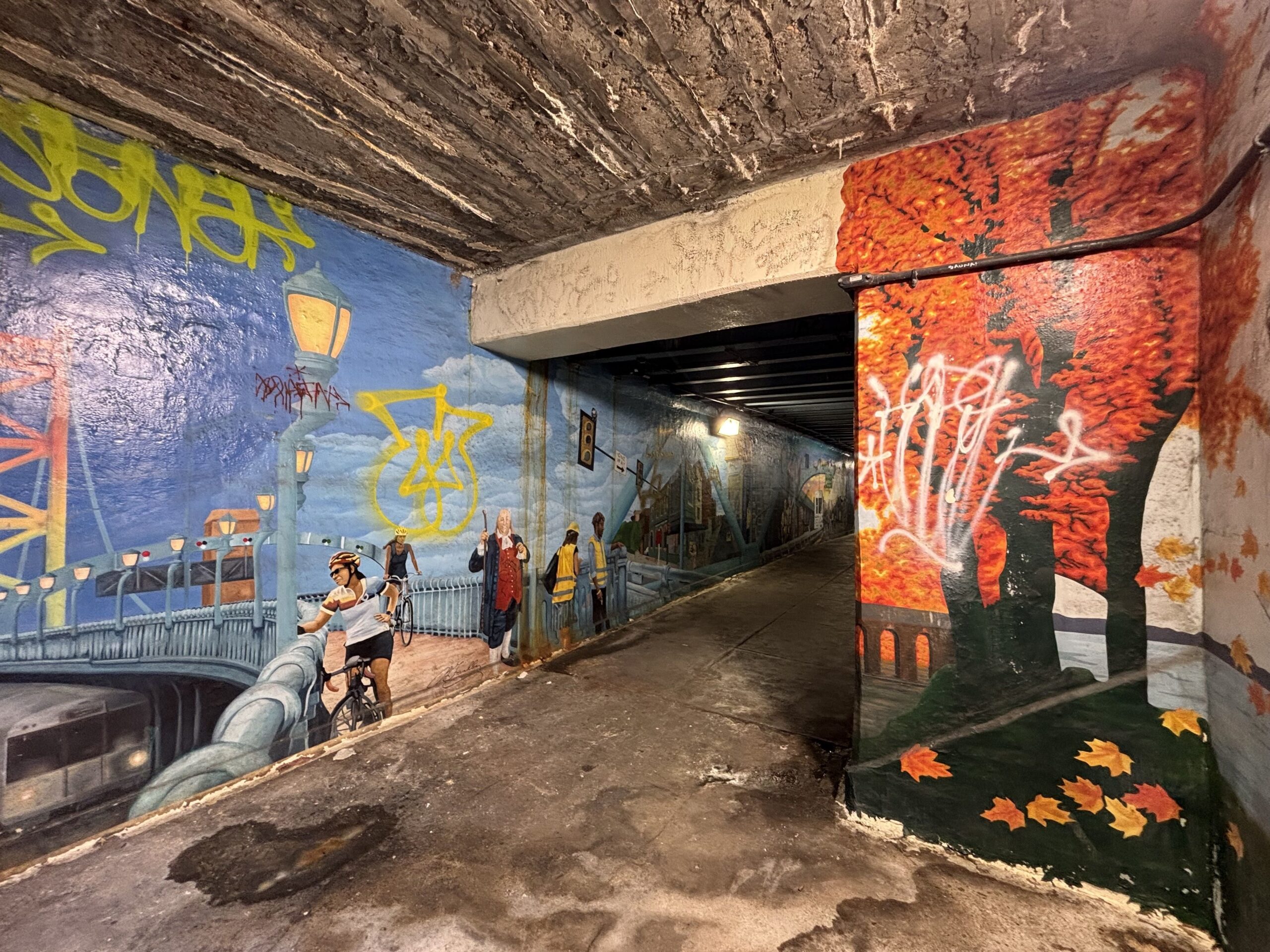
The “Building Connections through Time” mural inside of the Fifth Street pedestrian tunnel on the Philadelphia side of the Ben Franklin Bridge.
The entire length of the 91-foot-long tunnel was painted with a vibrant Mural Arts Philadelphia work by Brad Carney and Melissa Mandel. Created in 2018, Building Connections through Time shows people using the bridge, the building of it, and images of its early years. There are also paintings of Independence Hall, Benjamin Franklin, and other bridges that span the Delaware River.
Finding one of the city’s most secluded murals felt like finding one of those wonderful Philly secrets the city gives sometimes, if you never stop exploring it.
Come along with me as I explore one of Philly’s most secluded murals.
Back on the surface, Howard said that while the bridge has two pedestrian walkways, for operational reasons, only one side is open at a time and it’s usually the south side. The walkway has restricted hours, so be sure to check the signs (currently, it’s open from 6 a.m. to 9 p.m.).
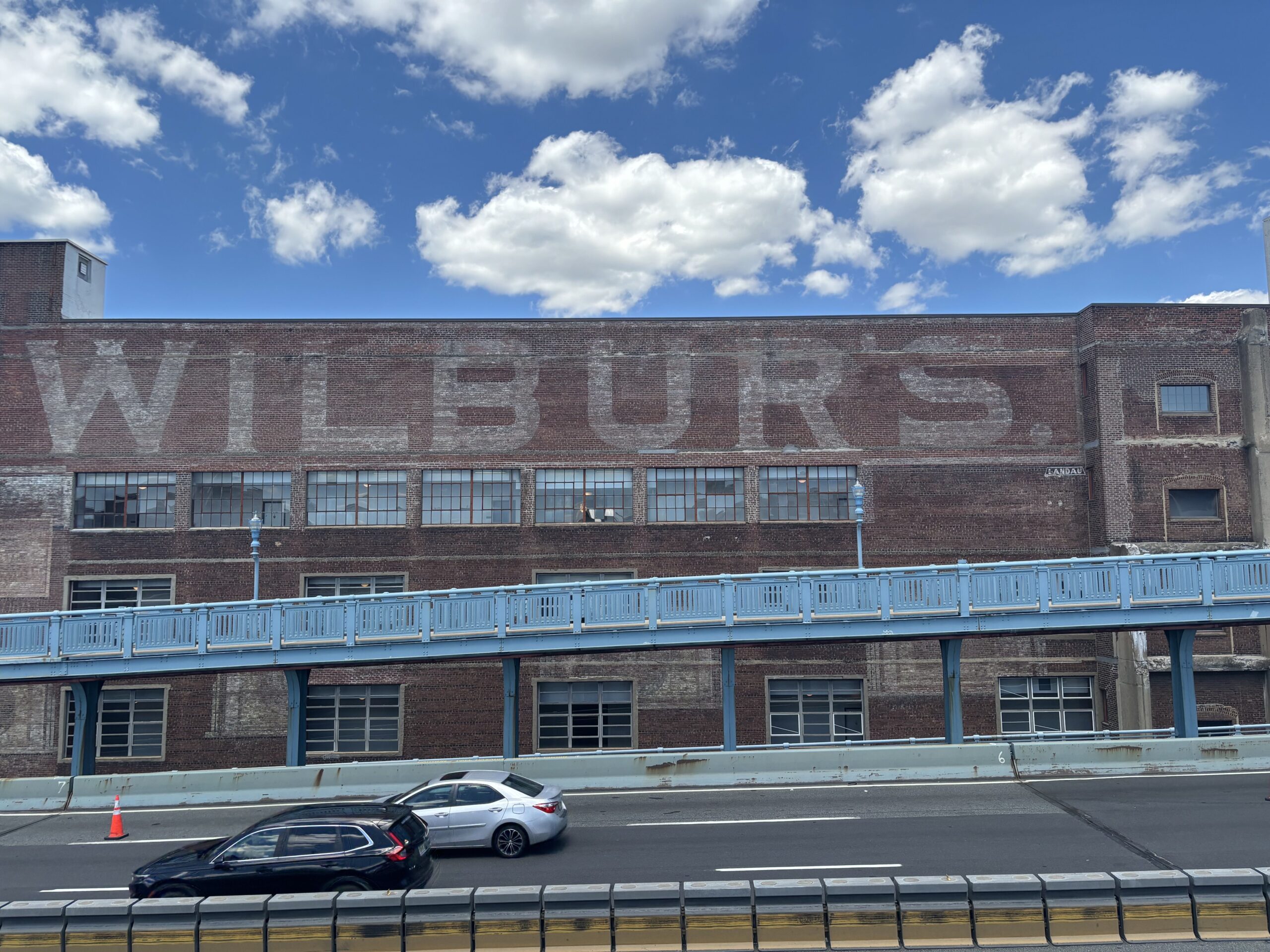
Howard pointed out the old Wilbur Chocolate factory on Third Street and explained that a part was sliced off to make way for the bridge.
“One of the things that we had to do when we were constructing was kind of take a surgeon’s scalpel to the area because you know with Old City, everything’s tightly packed and we wanted to make sure we took the bare minimum of structures,” he said.
A piece of the former Wilbur’s Chocolate Factory had to be sliced off to make way for the Benjamin Franklin Bridge.
Also under threat when the bridge was built was nearby St. George’s United Methodist Church on Fourth Street. Opened in 1769, it’s the country’s oldest Methodist church in continuous service.
“Luckily, the engineers were able to just adjust the angle of the approach ever so slightly to avoid encountering the building,” Howard said.
I marveled as I looked at the mere 14 feet that still separates St. George’s from Philly’s big Ben. The engineers left just enough room for the Holy Spirit.
‘Bridge angels’
As we began our journey across the bridge, Howard said it took about four-and-a-half years to build and it was designed by architect Paul Philippe Cret, who also designed Philly’s Rodin Museum. The bridge was constructed with eight lanes — six for traffic and two for trolleys, as well as two tracks for heavy rail.
But in the time it took to build it, trolleys went out of fashion and buses came in. The trolley tracks sat unused until the 1940s, when they were paved over. A vast, empty space for a never-opened trolley station remains under the Bolt of Lightning sculpture near the base of the bridge.
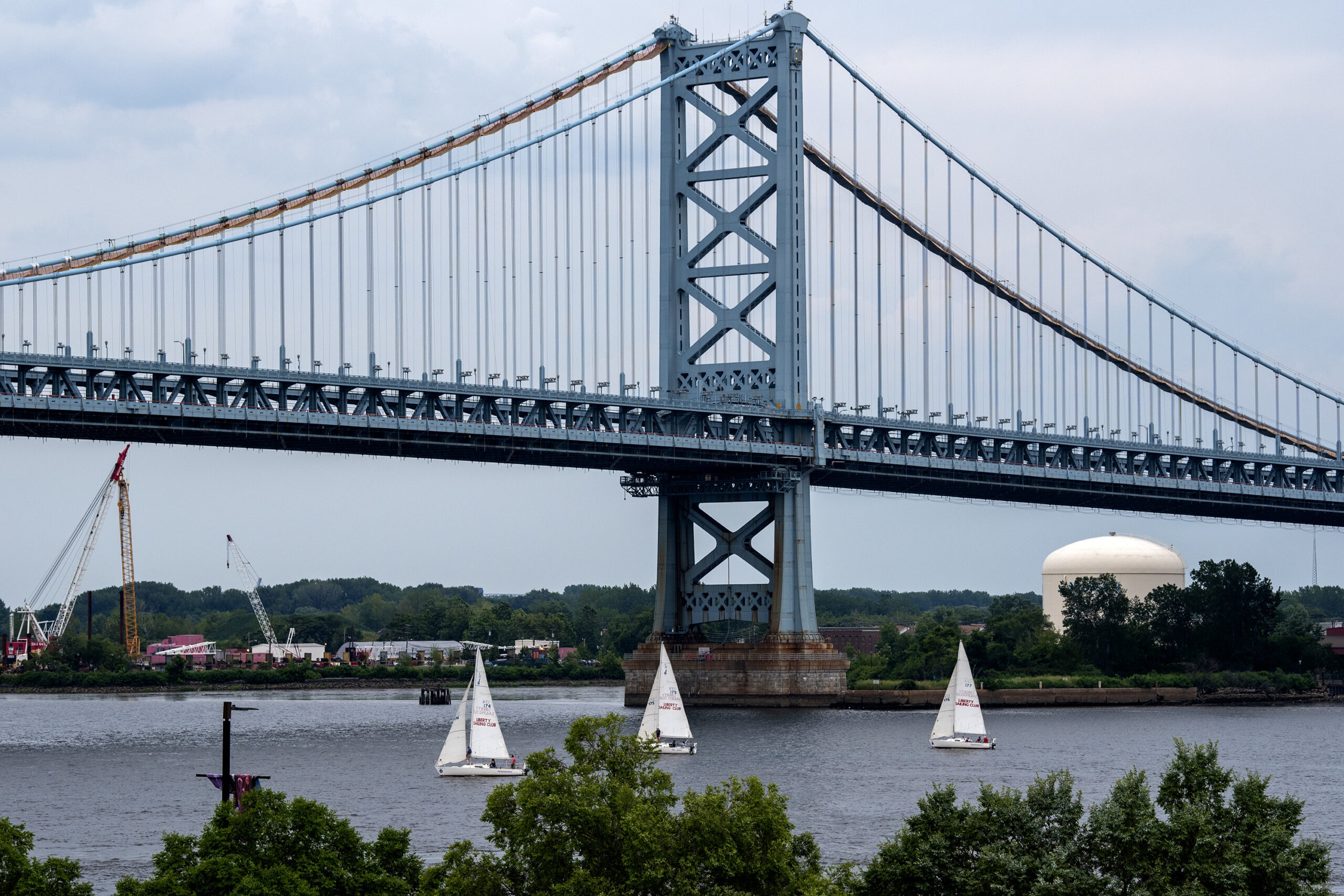
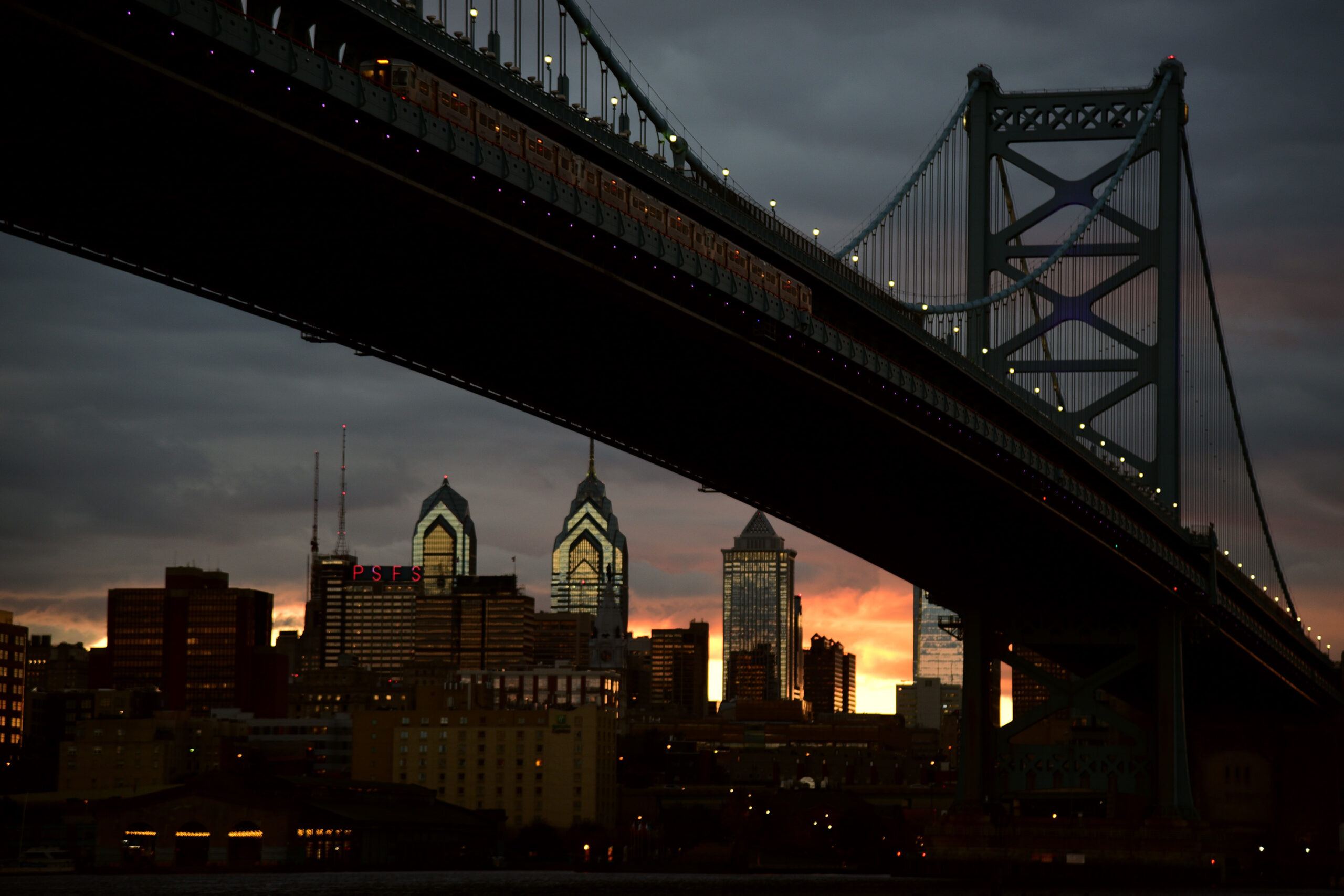
Sailboats pass under the Ben Franklin Bridge in 2020.
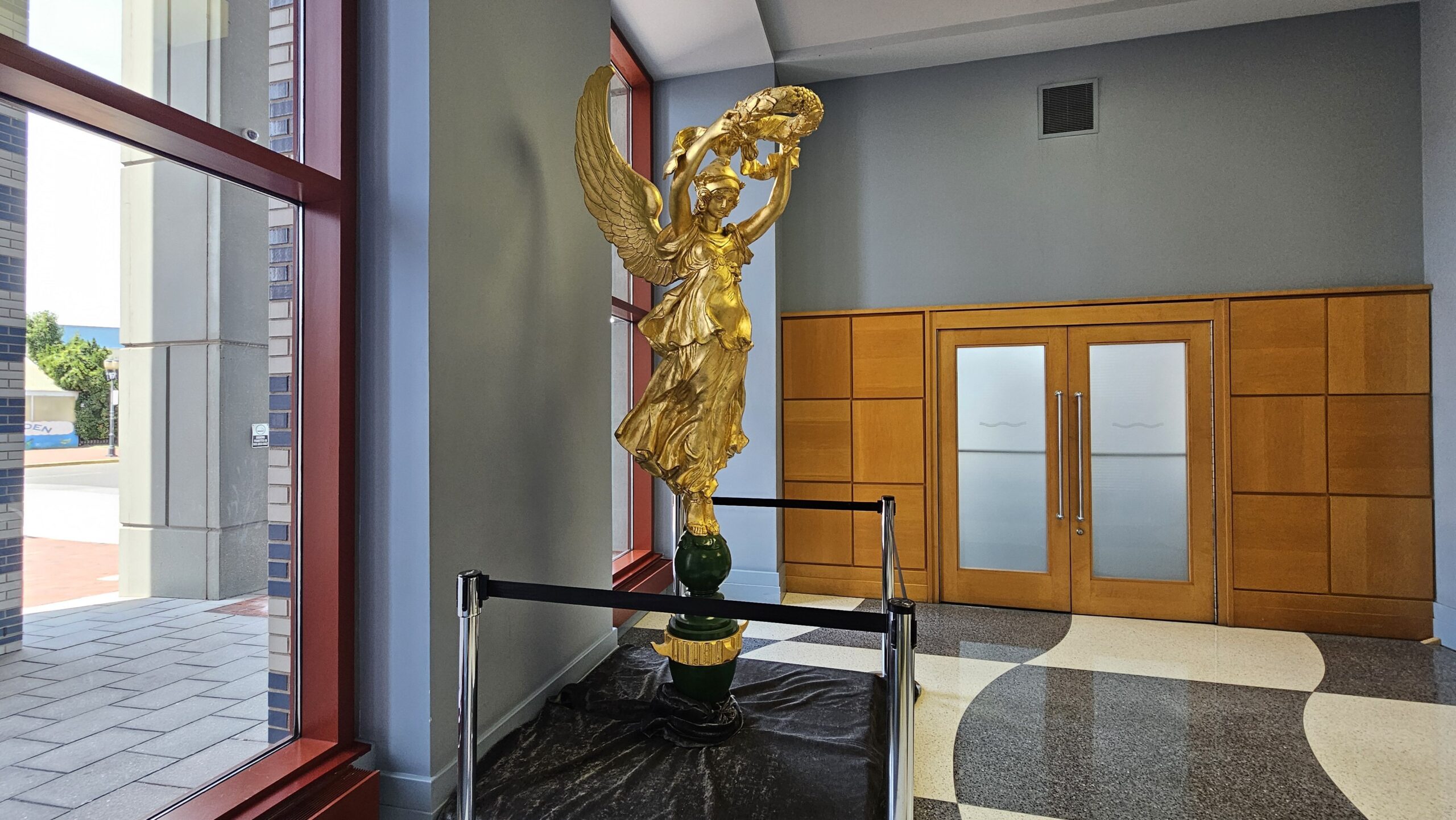
Another original component lost when the trolley tracks were paved over were four 75-foot-tall pylons — two on either side of the bridge — that were topped with bronze angel statues called Winged Victory.
One of the angel statues is in the lobby of DRPA’s headquarters and three are in storage, but one will be displayed at the upcoming 100th anniversary celebration, according to Williams.
One of the four “Winged Victory” statues that used to decorate the Ben Franklin Bridge is now on display at the Delaware River Port Authority’s headquarters.
‘A living beast’
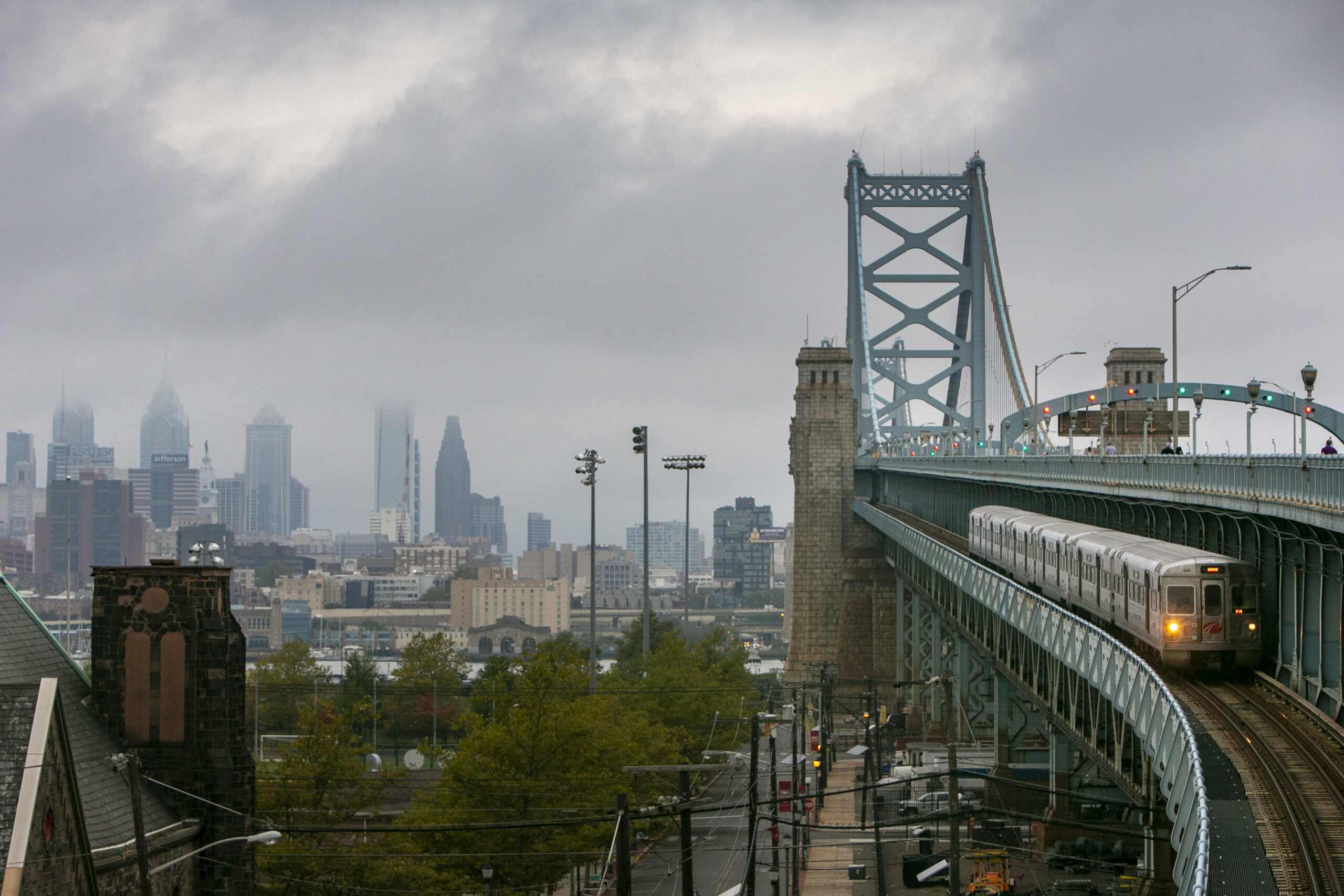
Shortly after we began our trek on the 1.3-mile walkway, I felt a PATCO train speeding beneath my feet and the bridge move ever so slightly.
“The bridge is dynamic, almost like a living beast because the steel expands when it gets warm out and with traffic, it bounces,” Howard said.
A PATCO train travels from Philadelphia to Camden underneath the pedestrian walkway of the Ben Franklin Bridge.
I got used to the sensations within minutes. That being said, I’m not afraid of heights. It could be unnerving if you are.
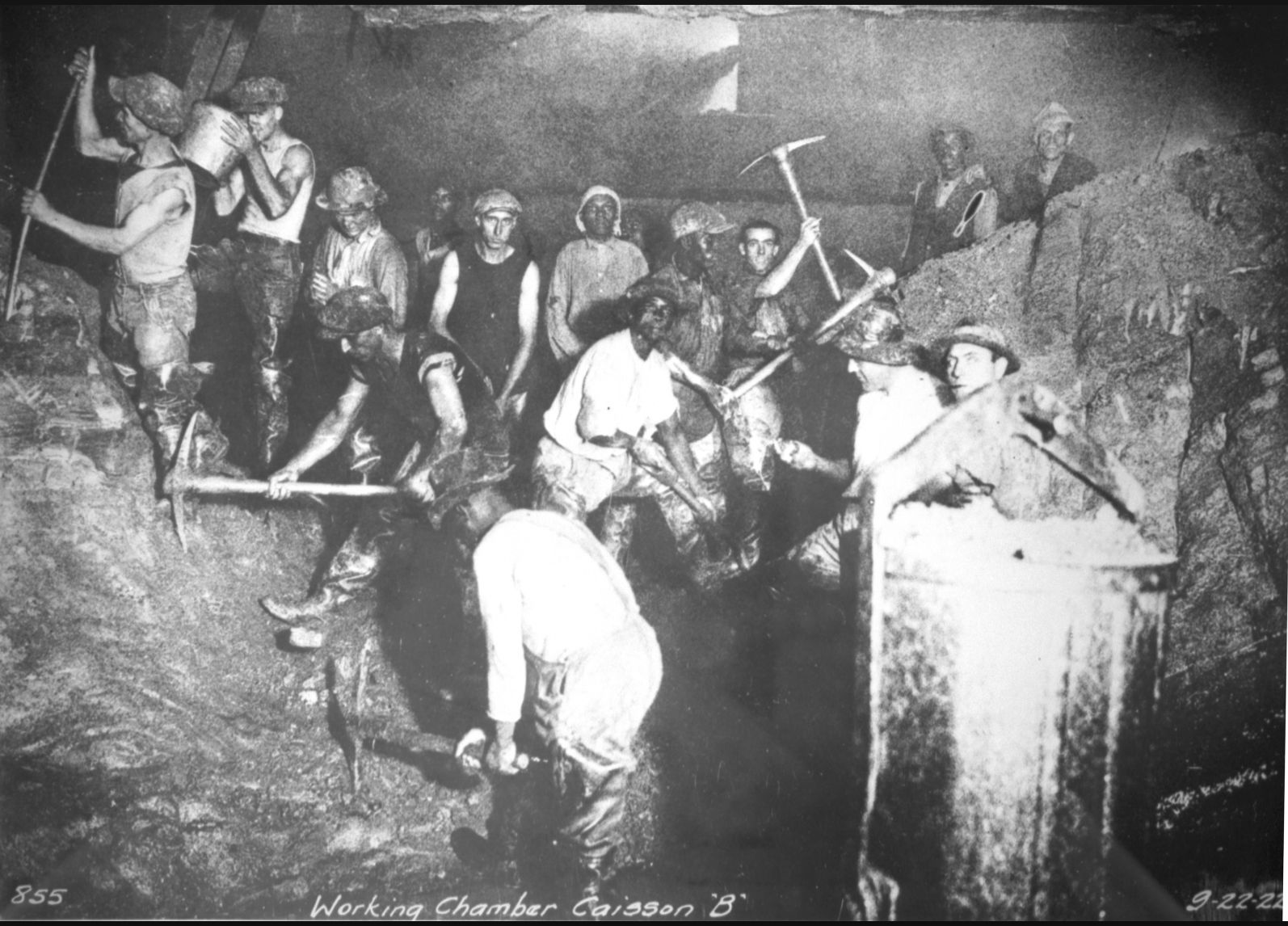
It took $36 million and 1,300 people to build the 376-foot-tall bridge that extends an additional 100 feet or so below the river, Howard said. Guys known as “sand hogs” worked in submerged watertight structures called caissons where temps sweltered into the 90s, even in winter, to dig down to the bedrock of the Delaware River.
In a photo dated 1922, men known as “sand hogs” work in a submerged watertight structure called a caisson to dig down to the bedrock of the Delaware River during the construction of the Benjamin Franklin Bridge.
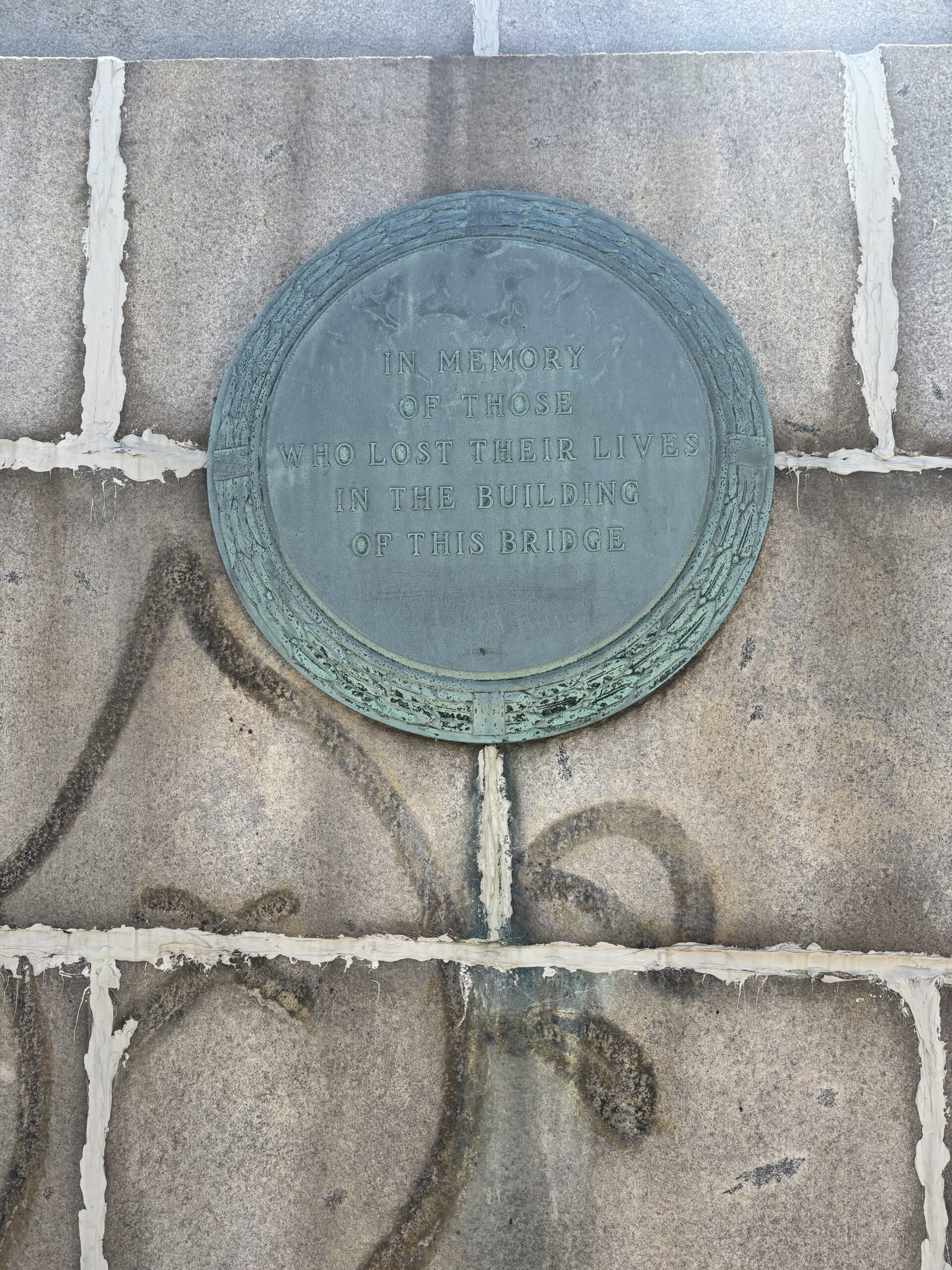
Fifteen workers died in the construction of the bridge. We passed a circular plaque in their memory as we walked. I wondered who they were, how they died, and how they lived.
“Unfortunately, the rule of thumb at the time was for every million dollars you’re spending, you expect to lose a life … so by that rationale you could have had 36 fatalities.” Howard said. “Nowadays, you know, one injury is unacceptable.”
A plaque on the Benjamin Franklin Bridge is dedicated in memory of those who lost their lives while building it.
Unique elements
Our pace was a steady stroll, so we were often passed by runners, walkers, and cyclists. Some appeared to be having a good time, and others looked like they were going through tough times. Some talked to themselves and some stopped to take photos. It was a microcosm of Philly and Camden, suspended high above the river.
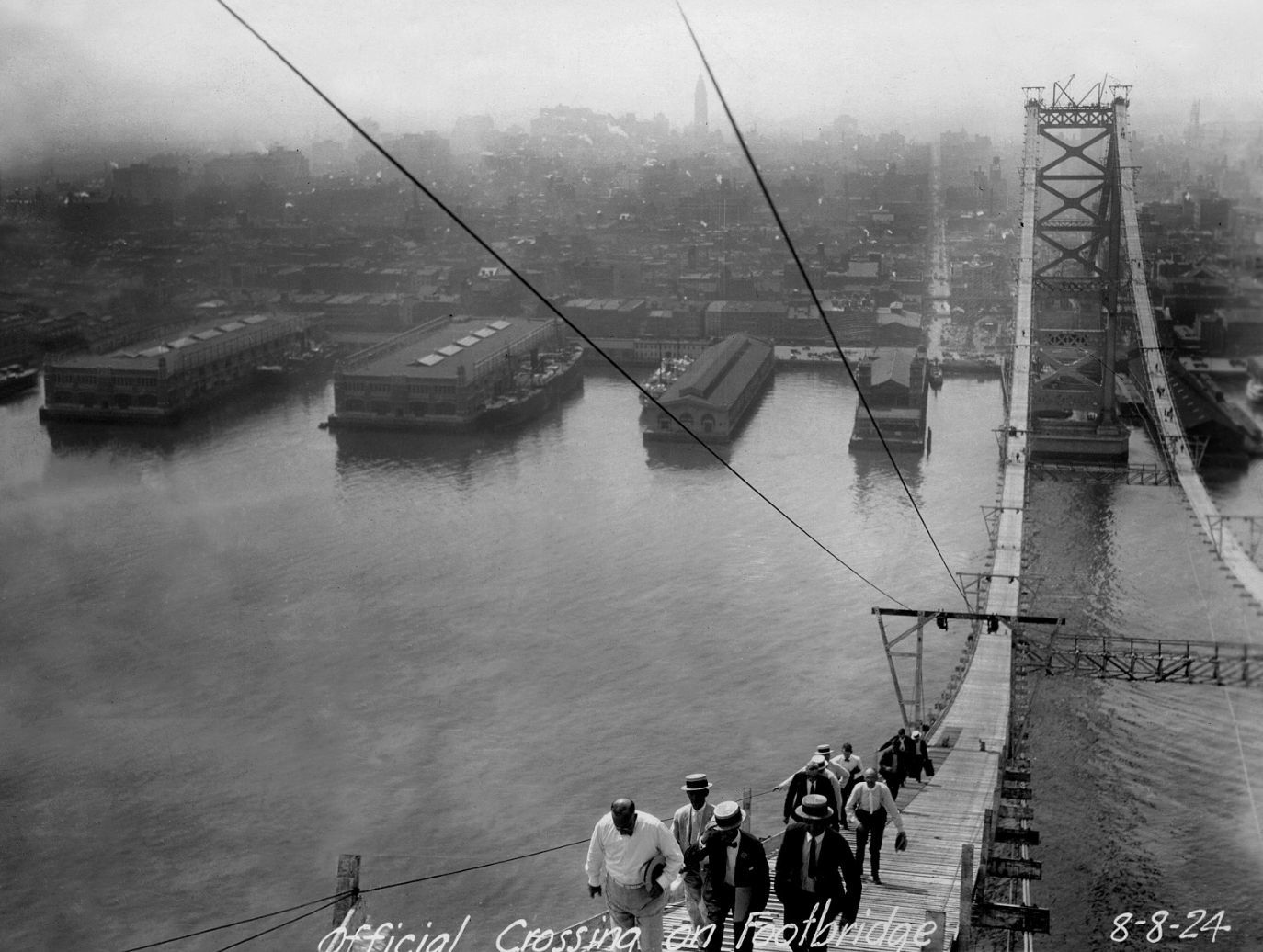
Howard said when the bridge was built, its chief engineer believed the walkways wouldn’t be used “in an increasingly or completely motorized age.”
A photo dating from 1924 shows the first official crossing of the Benjamin Franklin Bridge’s pedestrian walkway prior to the 1926 opening of the bridge.
“But you see today the amount of people that are using this walkway and it’s one of the unique elements of this bridge,” he said.
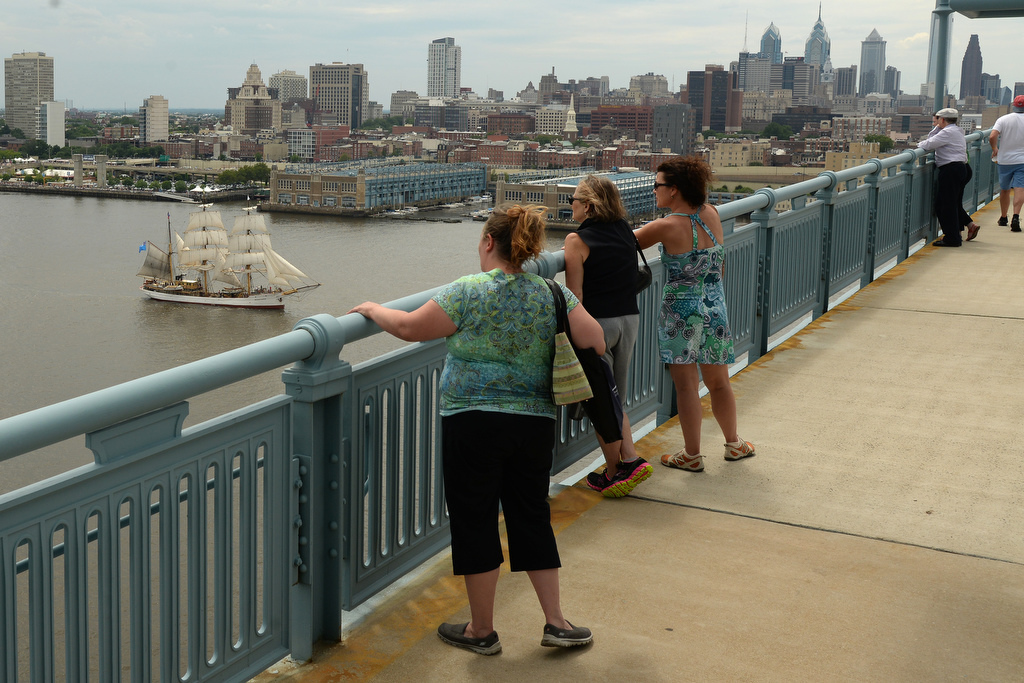
I looked ahead to Camden and then back to Philly. I was so grateful for this walkway and this view. I couldn’t imagine not having it and I couldn’t believe it took me so long to see the city from this new perspective.
Spectators watch from the Ben Franklin Bridge pedestrian walkway as the Picton Castle sails up the Delaware River in 2015 during the Parade of Tall Ships.
The only thing I found worrisome and the thing that kept all three of us looking over our shoulders, were the e-bike and e-scooter riders we didn’t always hear zooming behind us. Skateboards and rollerblades aren’t allowed, but certain classes of e-bikes and e-scooters are. Gas-powered vehicles are also prohibited on the walkway, but a guy on a dirt bike definitely zoomed by at one point.
In the bridge’s early days, horses and carriages were allowed on the main span alongside cars, according to Howard, but their slow pace proved dangerous and their excrement, troublesome, so they were banned in the 1940s.
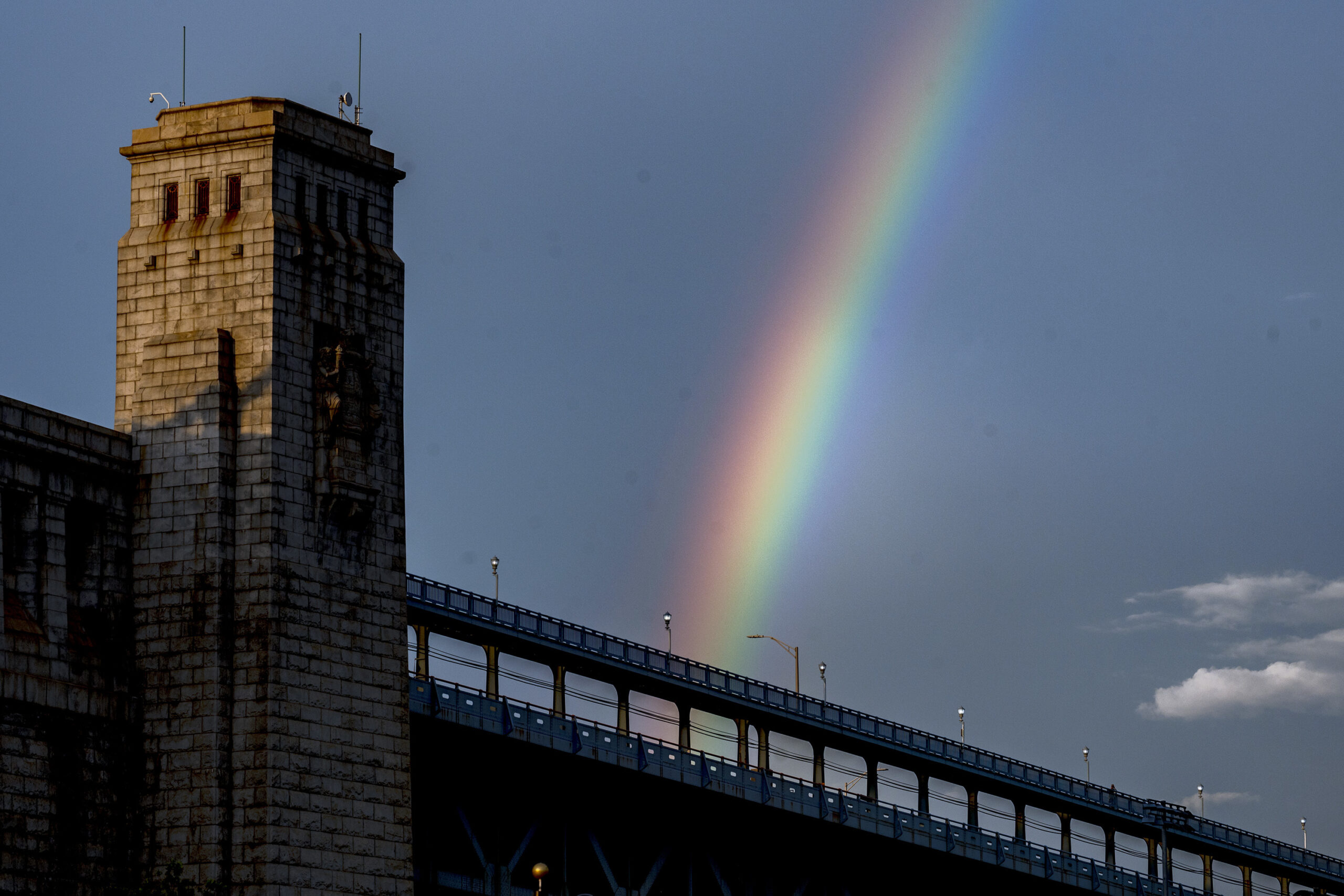
A rainbow appears behind the Camden anchorage of the Ben Franklin Bridge after an early evening rainstorm passes through.
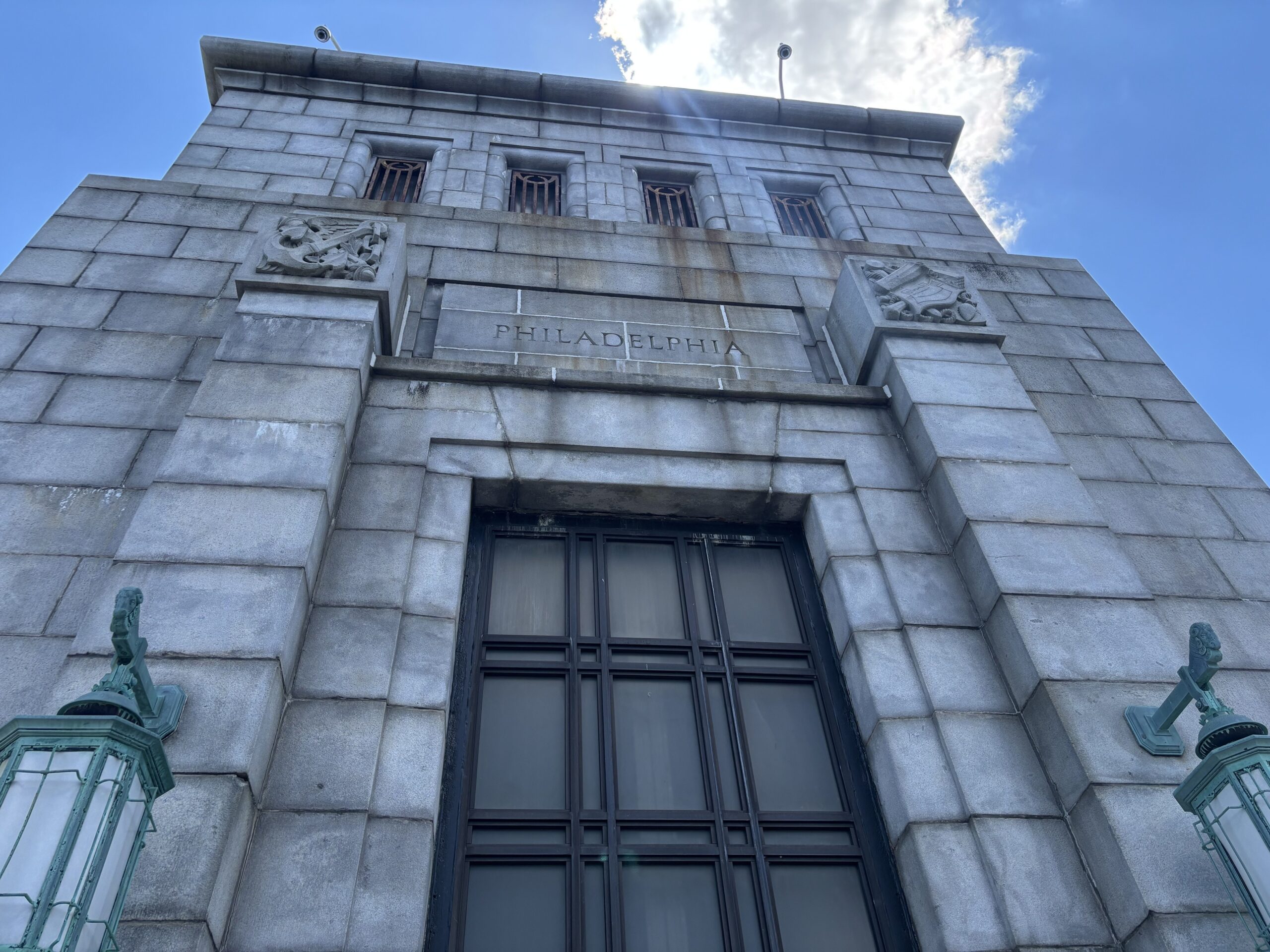
We stopped at one of the Philadelphia anchorages, the massive concrete-and-granite structures where the bridge’s cables are anchored.
These structures were made to house elevators for the trolleys. Alas, the anchorages are off-limits spaces, but Howard told me that each of the four have the same seven artistic tiles inside commemorating milestones in transportation, from one of a Conestoga wagon to one of the USS Shenandoah, the ill-fated dirigible that crashed before the bridge even opened.
One of the anchorages on the Philadelphia side of the Benjamin Franklin Bridge as seen from the pedestrian walkway.
Another name
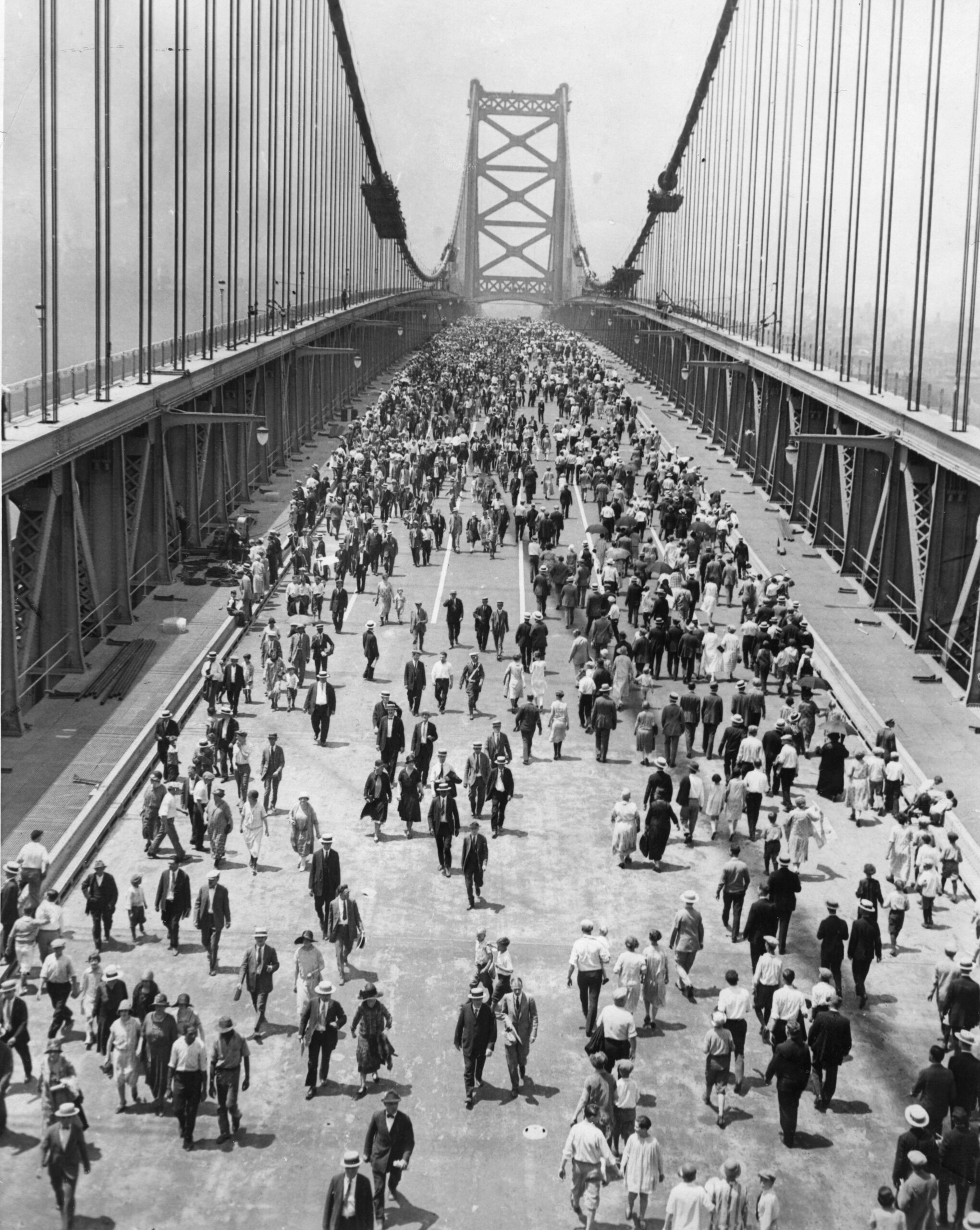
The Ben Franklin Bridge was the longest suspension span in the world, with a distance of 1,750 feet between the two towers, when it opened on July 1, 1926.
In a front-page Inquirer report, journalist Richard J. Beamish noted 250,000 people crossed the bridge on foot opening day and that the structure was “beautiful as gossamer web and seemingly as frail.”
Pedestrian cross the Delaware River Bridge on its opening day in 1926.
Howard, who quoted that report to me, then asked: “When do you think our first accident was?”
I guessed July 2, 1926. I guessed wrong.
“It was the day it opened,” he said. “People were jockeying to be one of the first to cross the bridge, and over in Camden, you had a fender bender.”
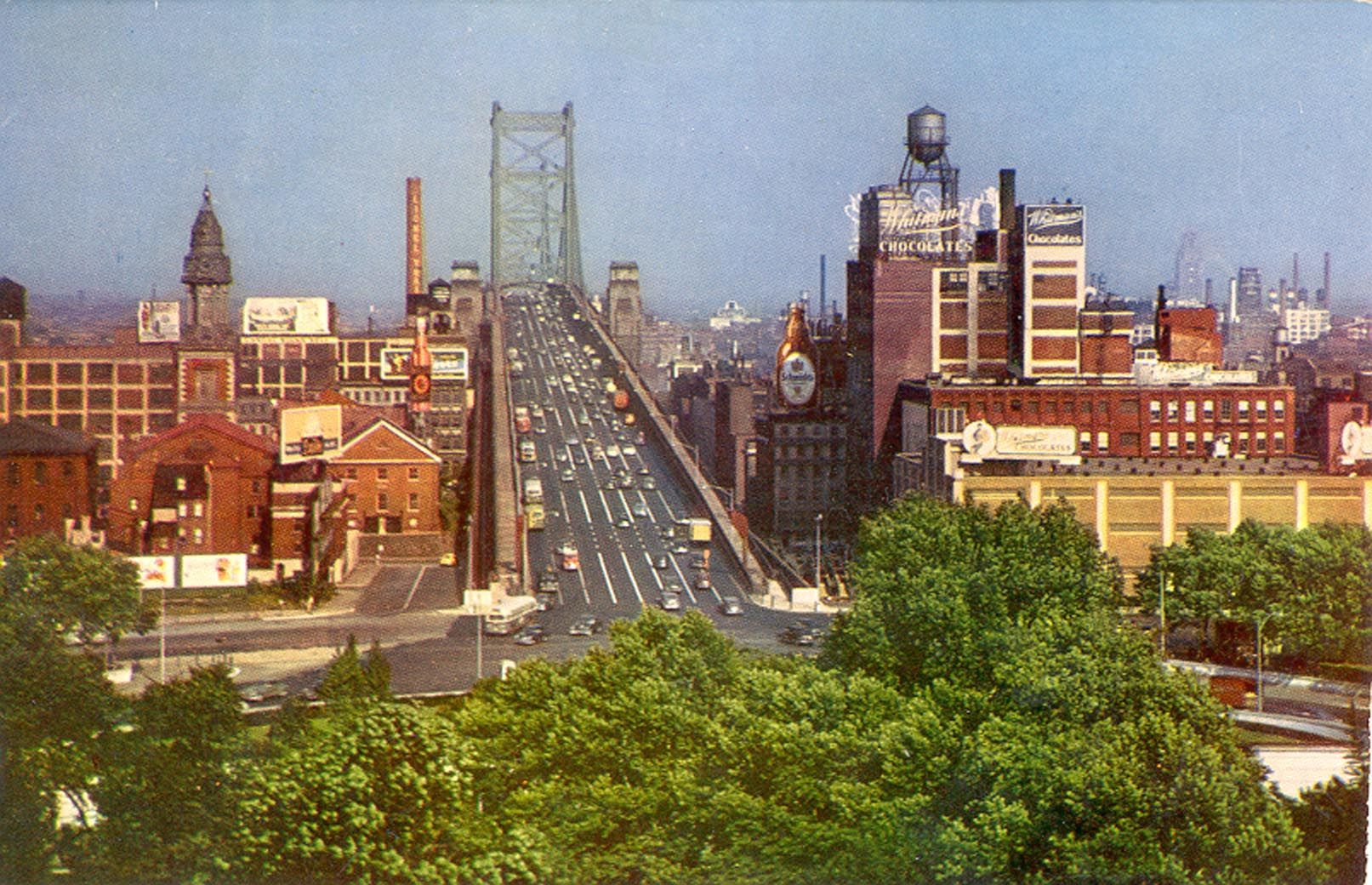
Back then, the span also had a different name — the Delaware River Bridge. It was rechristened in 1956 to avoid confusion when the Walt Whitman Bridge was also built over the Delaware River.
A view of the Benjamin Franklin Bridge in the 1950s.
The Ben Franklin Bridge wasn’t always blue, either. It was originally gray and was repainted to its current color just ahead of the Bicentennial, Howard said.
‘Calm and serene’
As we stood talking, a man jogging by in Rocky Run T-shirt asked if we’d take a photo of him with the Philly skyline.
Jim Bach of Voorhees works in Camden and likes to run the bridge during his lunch break.
“It’s fantastic. I mean the views that you get when you’re up here, it’s just calm and serene,” he said.
I too felt serene. It was quiet and peaceful on the bridge and being atop it helped me see the city I love in a new way.
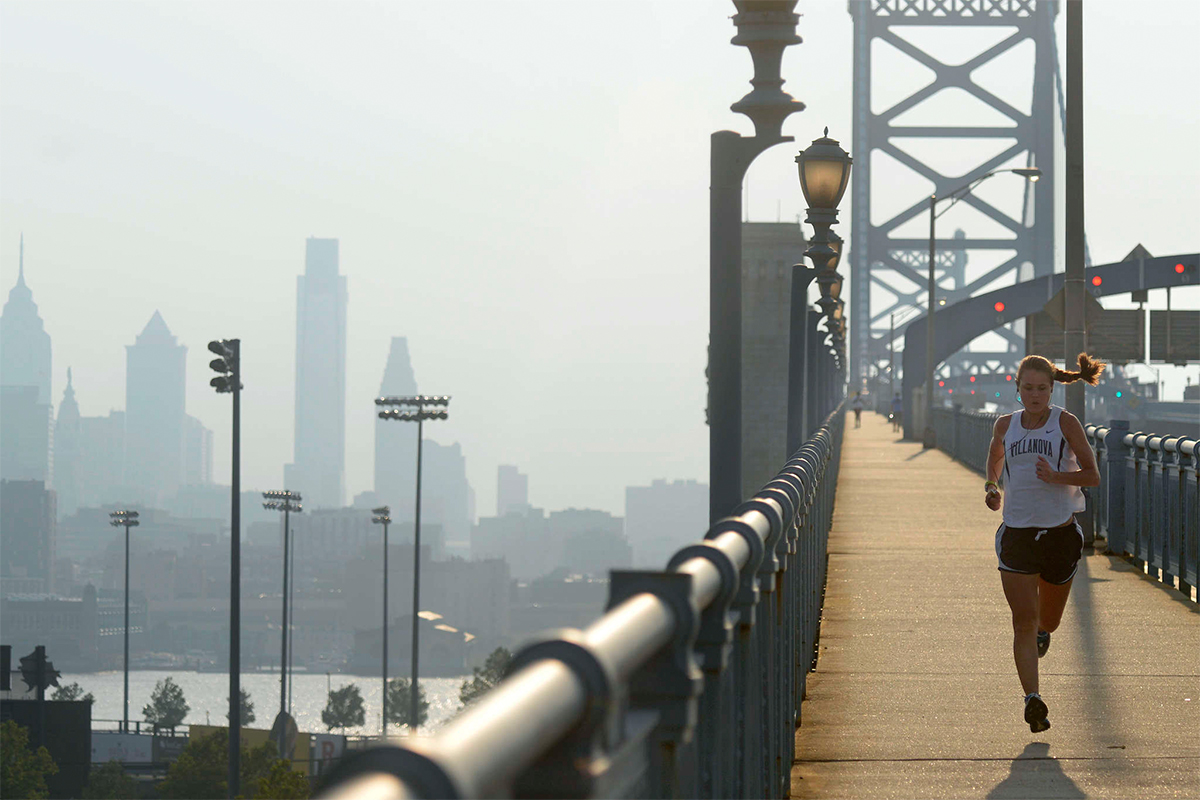
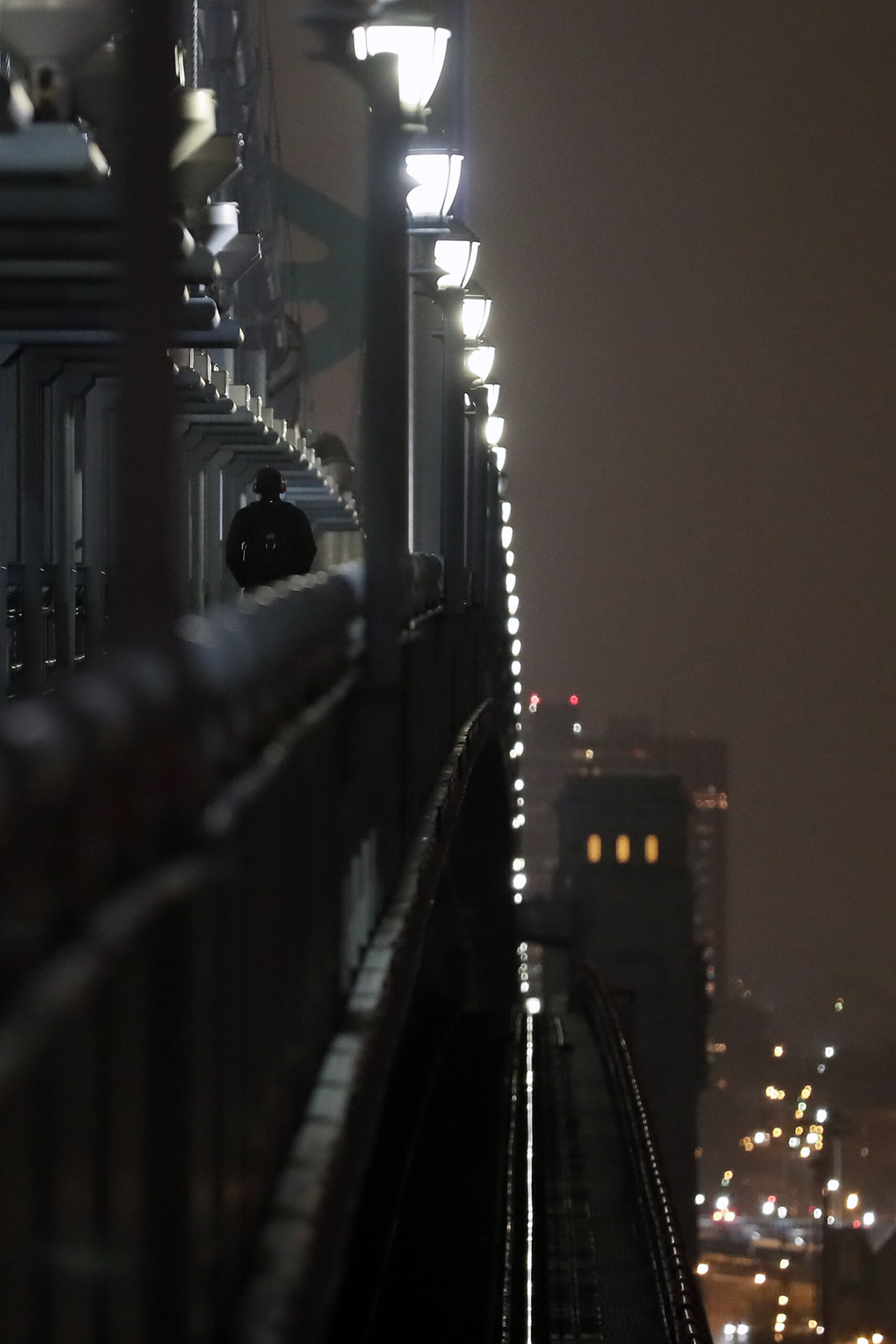
A jogger runs across the Ben Franklin Bridge in an Inquirer file photo.
Howard also helped me to see something else — the Betsy Ross, Walt Whitman, and Commodore Barry Bridges are all visible from the top of the Ben Franklin.
“All bridges essentially become monuments to the area,” he said. This was most true of the one we were standing on.
We talked about the Ben Franklin’s many appearances in television and movies, from Blow Out to 12 Monkeys.
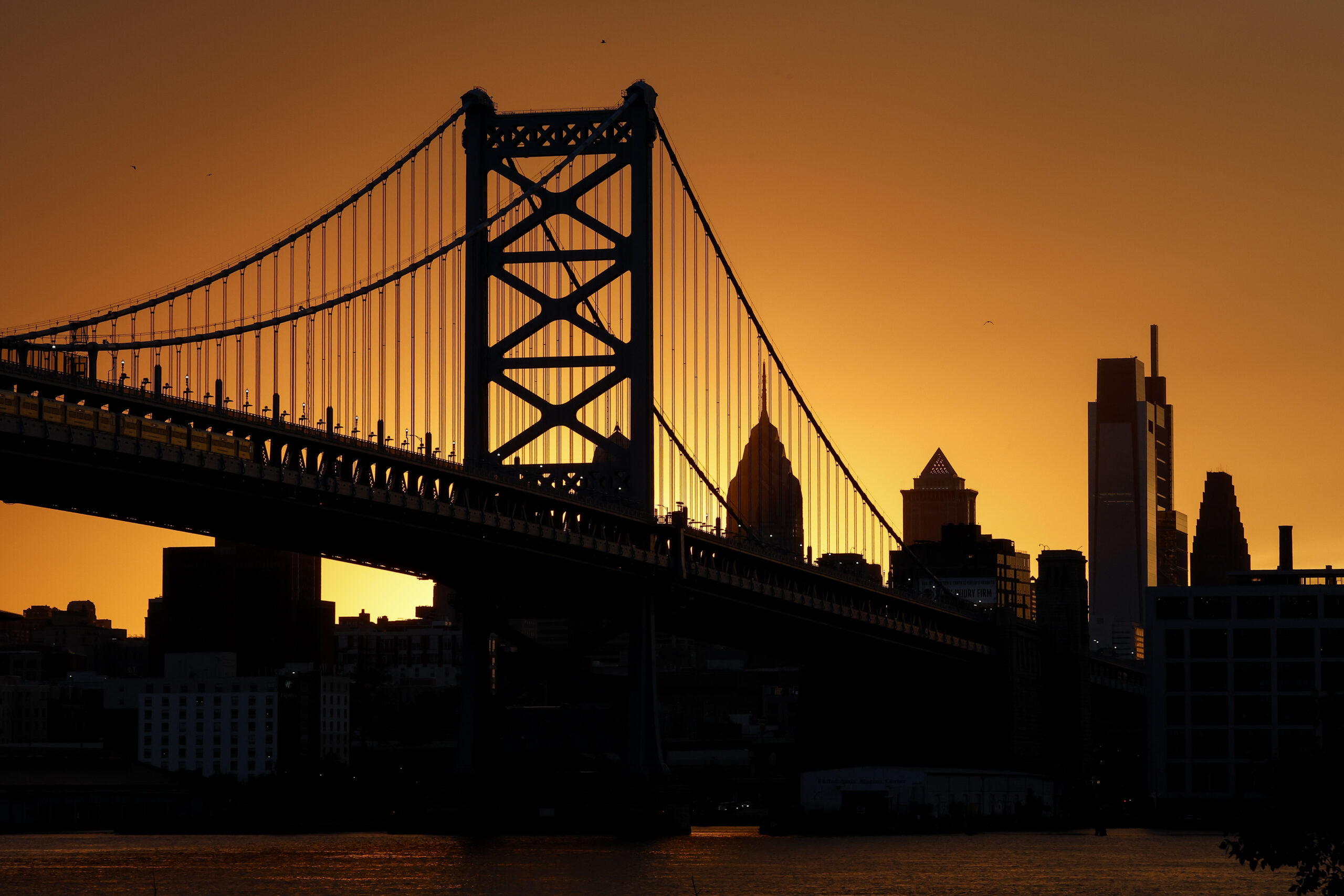
The sun sets behind the Ben Franklin Bridge, seen from Cooper’s Poynt Park on Tuesday, Sept. 30, 2025 in Camden, NJ.
“Last year they kept coming back from commercial breaks during Monday Night Football and they showed one of three things — the Liberty Bell, someone making cheesesteaks, or the bridge,” Howard said.
In its 100 years, the bridge has become a visual touchstone for the region. You see it and you know you’re in Philly, whether you’re watching a movie or coming back from a road trip. It’s given Philly its sense of place as much as the LOVE sculpture or Independence Hall.
A great connector
When we got to Camden, we walked through the pedestrian tunnel on that end, too. It doesn’t have a mural, but the exterior is decorated with a bright mosaic of birds and animals created by Camden schoolchildren in the early 2000s.
A mosaic created by Camden schoolchildren decorates the exterior of the pedestrian tunnel on the Camden side of the Benjamin Franklin Bridge.
On our return walk, I asked Howard if he had a moment on the bridge that’s stuck with him. He said a few years ago, while he was leading a tour, there was a commotion on the Philly side. A kitten found its way onto the bridge and police were called. The feline then crawled into the engine compartment of a police cruiser, which had to be taken apart to get it freed.
“I was like, ‘Yeah, so I gotta go adopt it,’” Howard said.
And so he did, and he named the furry little girl Beanie.
I thought of a poignant moment I had once on the bridge. I was a passenger in a vehicle years ago, when I looked over and saw that the car I was in was traveling at relatively the same speed as the PATCO train next to us.
The sun sets over the Philadelphia Skyline behind the Benjamin Franklin Bridge looking southwest from Cooper’s Point Waterfront Park in Camden in this Inquirer file photo.
I locked eyes with a woman on the train, who looked a lot like me. We smiled at each other and I waved and she waved back. It’s a brief moment that’s always stuck with me. Maybe it’s because I felt like I could have been her in another life, or she could have been me.
Walking the bridge and hearing its stories, I realized that it connects so much more than just Camden and Philly. It connects all of us to each other — in big and small ways — and it connects our future with our history.
Today, I have a new story about the Benjamin Franklin Bridge, the day I walked across it. If you haven’t done so yet, I encourage you to walk it, too, and make a new memory with one of Philadelphia’s great old structures.
A man walks across the Ben Franklin Bridge towards Camden in an Inquirer file photo.
The anniversary celebration for the Ben Franklin Bridge will take place from 10 a.m. to 2:30 p.m. July 11. Details can be found at drpa.org/bfb100/.
DEAR ABBY: When I was 16 and my sister “Daisy” was 18, I found out she was in a sexual relationship with my boyfriend, “Tyler” (also 18). I broke it off. She then asked if I minded her dating him. I’m sure I said I didn’t, but I thought, “Why ask? You were already having sex with him.” (He and I hadn’t.) Tyler and I remained friends through the years. He was my first love.
That episode shaped my dating relationships going forward. It took years for me to learn to trust again. Years later, I asked Daisy why she’d done that, and her response was because she could. We enjoy each other’s company as long as I don’t let the past into my consciousness.
How do I let this go? Saying anything may make things worse — but it really hurts that she betrayed me and never once offered an indication of an apology.
— STILL MATTERS IN NORTH CAROLINA
DEAR STILL MATTERS: Daisy and Tyler both betrayed you. What they did showed a distinct lack of character on both their parts. But this is who they are. You and your sister may enjoy each other’s company, but do not think that the core of her — her character — has changed. That she hasn’t apologized for hurting you, and her answering you in such a flip manner, should serve as a warning about how selfish and insensitive she is to this day.
** ** **
DEAR ABBY: I don’t live in the same state as my sister, so I used to call her at the same time each week so we could catch up. Her husband, “Dale,” was usually at work on the day I called. Then, Dale got a new job, so he is now home whenever I call.
My problem is that Dale enters the room and talks to her while she is on the phone. She answers him immediately, even if I am in the middle of a sentence. Because this is confusing and annoying, I told her it would probably be better if she called me when she was free to talk. (At no time did I specifically say anything about Dale’s interruptions.) She said, “Fine!” — and that was the last time I heard from her, and it’s been more than five months.
If I reach out to her, I’m sure nothing will change. If I say it’s annoying to allow Dale to interrupt phone calls, she’ll probably get angrier and defend him. I love my sister and miss talking to her. Must I resign myself to never hearing from her again?
— SIS INTERRUPTED
DEAR SIS: Call your sister and apologize for letting the silence go on so long. It doesn’t matter how rude she and Dale have been; you need to start communicating again if you want to fix this.
Then, instead of placing all of the responsibility on your sister, why not show her you’re willing to compromise? Now that Dale’s work schedule is predictable, ask your sister to suggest a time for the weekly call when she knows he won’t be around. If that’s not possible, you’ll have to decide whether Dale’s interruptions are annoying enough to lose a sister over.
There are lots of air conditioned spaces you can go to for relief. Organizations like the Pennsylvania Department of Health have always recommended going to air-conditioned spaces — like a mall or library — to protect yourself from heat-related problems.
“With extreme heat, it is always important to remain cool, possibly in air-conditioned atmospheres,” state health department of health press secretary Maggi Mumma said in 2020.
There are, however, some things you can do at home to keep a little cooler if you are AC-less this summer. Here is what you need to know:
How to cool your body down
Let’s start with the basics: One key way to fight heat-related discomfort is to drink lots of cool water, which can both keep you hydrated and help cool you down. Sugary or alcoholic beverages can cause you to lose more body fluids. Dr. Joseph Teel, an associate professor of family medicine and community health at Penn Medicine, says you should drink water frequently.
How much? There is no one-size-fits-all answer. How much you need to drink can vary if you have health conditions such as congestive heart failure, Teel says, or be exacerbated by your environment, level of exercise, and overall health. One tip: Don’t wait until you are thirsty to drink, the state health department says.
When someone suffers heat exhaustion on a sports field, Teel says an ice bath can help bring down their temperature. You can take the same approach. A cold bath or shower, he says, can help but is not a permanent solution because “you can’t stay in the shower all summer.”
You can use cool compresses, Mumma says, to help cool down. Making one is simple: Just wet a washcloth or towel in cold water, and put it on your body. Where should you put it? Some of the most effective areas, Teel says, are around your neck and on your groin, and if you’re at home, you can try using them with minimal clothing on to hit a few areas at once.
You can step up that technique by using fans to make it an “evaporative process,” Teel says. “If we have water on our skin and it evaporates, it takes with it some heat,” he says. Put on your cold compress and use a fan to blow air across your skin, which Teel says can “cool you down a little faster than just a cold cloth itself.”
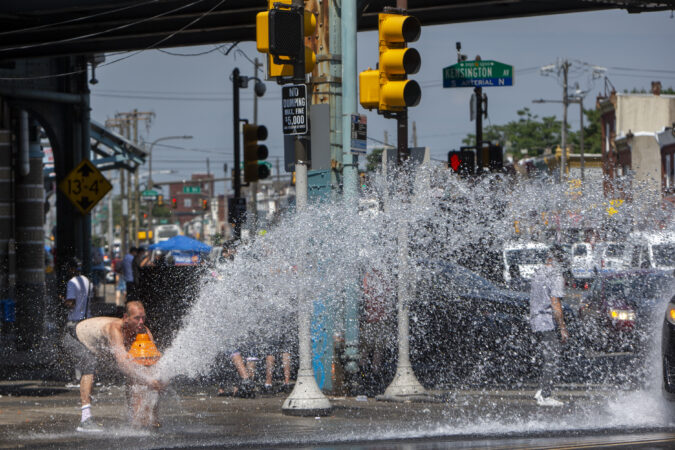
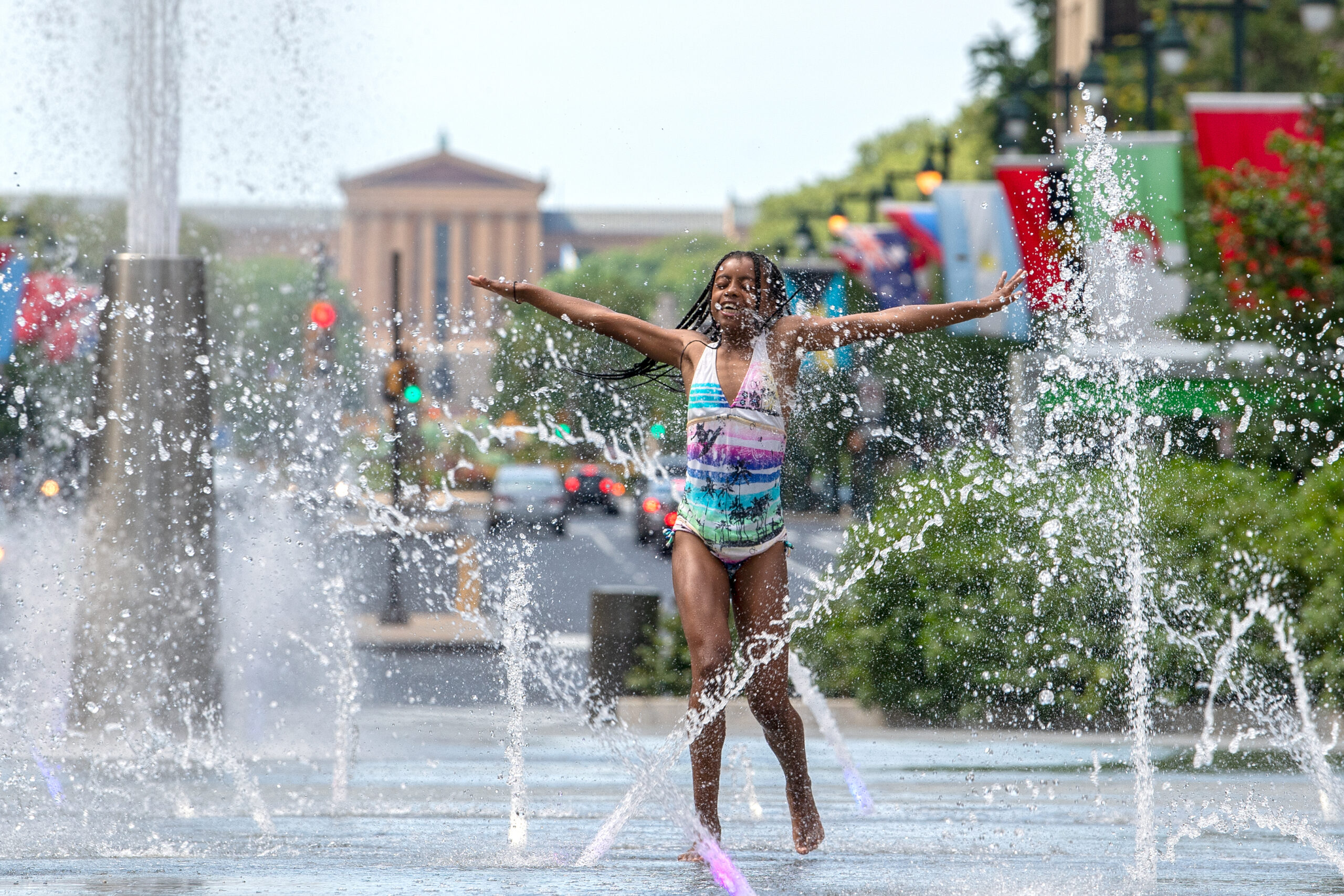
Beating the heat in Love Park fountain, during a hot summer day in Philadelphia.
How to cool down your house
Use fans wisely. Fans can be one of the best ways to keep cool — but there are right and wrong ways to use them. The city, for example, says you should never use a fan with your windows closed, which can create an “oven effect” by circulating hot air inside your home.
Fans can be more effective when the heat of the day is over, and you can open your windows to allow the cool night air in, Teel says. One of the best ways to create airflow is to put a box fan in an open window at one end of your space blowing air in, and another fan in a window blowing air out at the other end.
And if your home has ceiling fans, make sure the blades are rotating counterclockwise during hot weather. That way, the fan will push air down into your space to create a breeze. (Many ceiling fans have a directional switch on their motor that controls the direction in which they spin.)
There are more ways to keep your home cool.
Think about when you use your appliances.The Pennsylvania Utility Commission, for example, says that you should wait to use any appliances that generate heat — such as dryers, dishwashers, and ovens — until after 7 p.m. to avoid heating up your home unnecessarily. Turning off other nonessential appliances and lights is also a good idea.
Keep your blinds closed during the day. The sun, Teel says, can heat up your home faster, like a greenhouse. The PUC recommends spending time in rooms that are not hit with direct sunlight during the day.
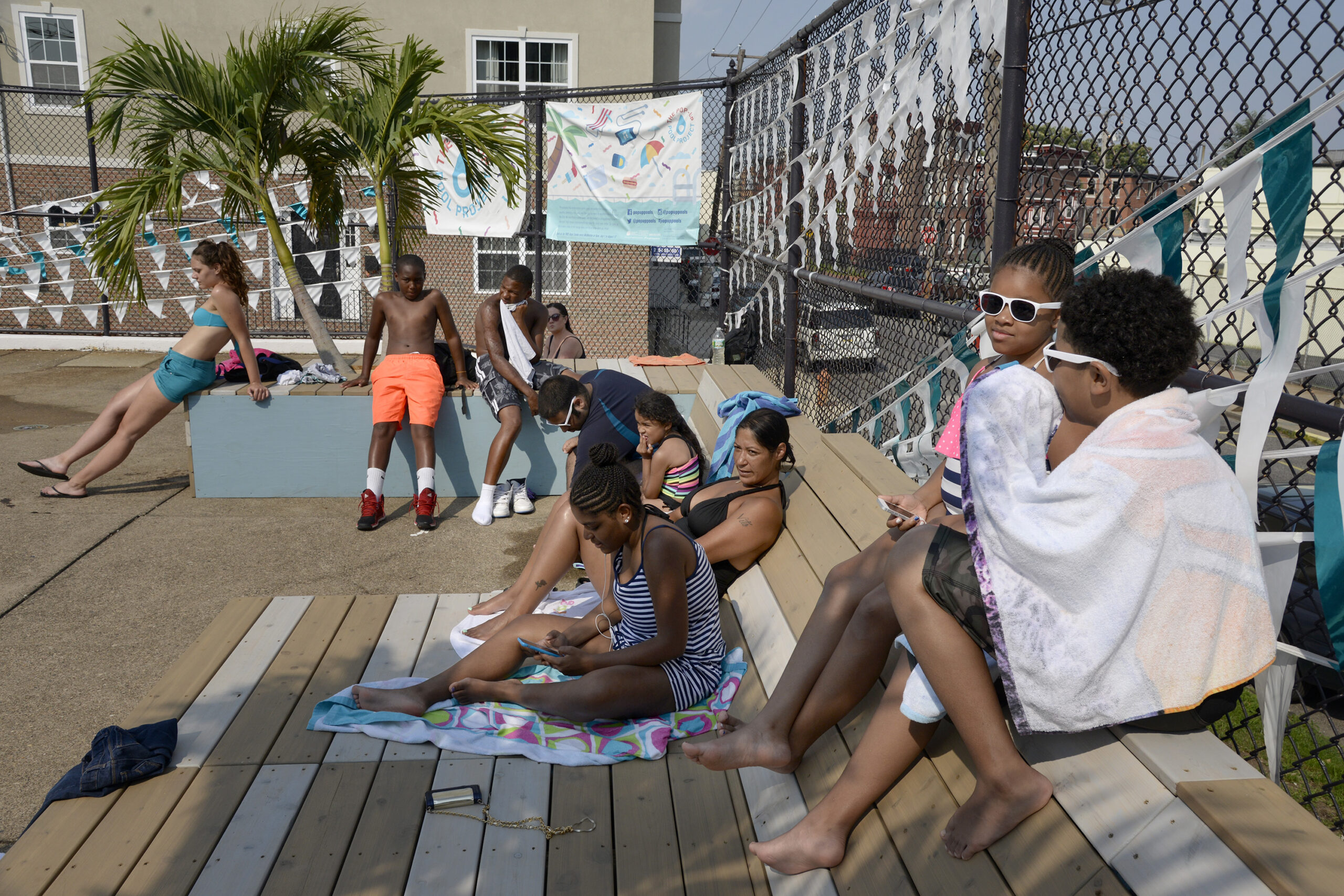
City pools were closed in 2020, but will reopen for the 2021 summer.
If you’re going to buy an AC
Window air conditioners are much cheaper and more convenient to install than central air, and if you can afford one, it may be a good time. However, there are some things to consider when buying a window unit.
As Consumer Reports points out, you will want to get an AC that is appropriately sized for the room you are trying to cool. If it’s too small, it will have trouble cooling the room; if it’s too big, it will cool the room quickly but leave too much moisture behind. A good rule of thumb is for the unit to have 20 BTUs (British Thermal Units) of cooling power for every square foot of space in the room.
And if you need help with utility costs this summer, funding from the Low Income Home Energy Assistance Program is available for qualified residents, a city spokesperson says.
Think about when you go out
The health department recommends staying indoors as much as possible and limiting exercise during the hottest parts of the day, Mumma says. However, if you have to go out, stay in the shade as much as possible and wear sunscreen, a ventilated hat, and sunglasses.
If you need to go shopping, Teel says, “look ahead in the week, and pick a cooler day. Avoid the time when you will be subjected to midday heat.”
At home, Teel says, wear as little clothing as possible. When out and about, consider using light-colored, loose-fitting clothes made of breathable, light materials like cotton that let air to circulate around you.
Like many, I’m big fan of Nicolas Cage’s work. How big? On my bachelorette party to New Orleans a few years ago I requested we tour St. Louis Cemetery No. 1 so I could get a pic of me and my girls with Cage’s nine-foot pyramid tomb.
Not only can the man seriously act, he can also seriously overact. As a writer who loves puns ( especially bad ones), I appreciate someone who has fun with their art form to the point it causes eye rolls.
And so, when I learned about Uncaged in Jenkintown: A Nic Cage cocktail crawl that happened on Sunday, I wanted to check it out. In some ways, it turned out to be like a lot of Cage movies — not a blockbuster, but still quirky and fun.
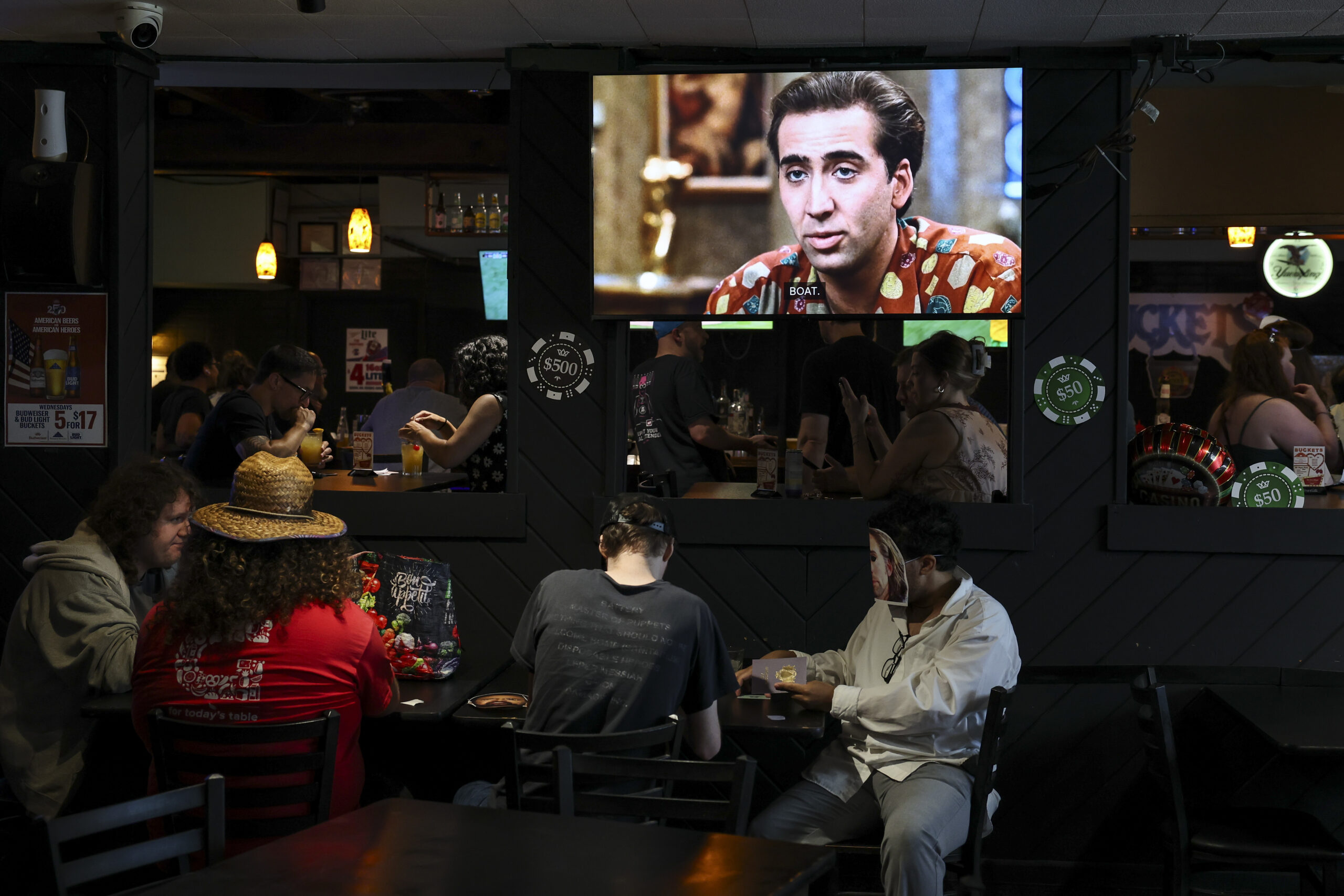
“Honeymoon in Vegas” plays at Buckets Bar during the Nic Cage cocktail crawl on Sunday in Jenkintown.
The crawl was spread across four Jenkintown bars — the Keep Easy, the Drake Tavern, Buckets Bar, and King’s Corner. Each one featured Cage-themed cocktails and hosted a “Cage match,” where participants went head-to-head in challenges based on Cage films.
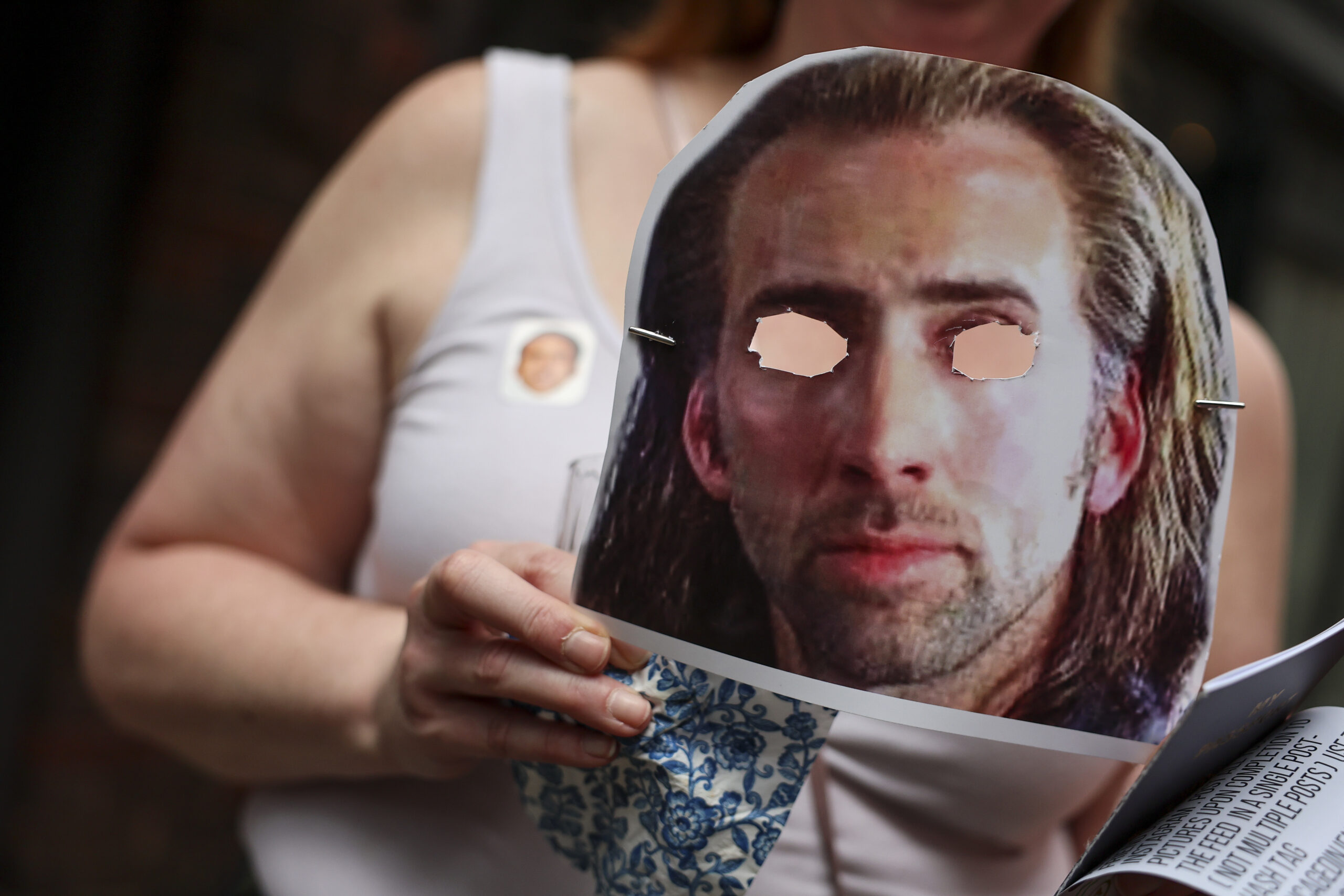
Organizer Mel Hager, an owner of the Keep Easy, said she sold out of the 50 Uncaged kits she’d prepared for $15 a pop. While the crawl was free to attend, those who bought a kit — including yours truly — received a passport book, which got you a free Cage match at each establishment (otherwise they were $2 to play); a piece of Cage cash, which was good for one shot at any of the bars (it’s a tiny dollar bill with Nic Cage’s face on it, I’m never spending that); and one of a variety of Cage masks (I felt like I won the lottery when I got the Con-Air Cage).
While I didn’t drink, I hopped around to the bars, tried my hand at the Cage matches, and talked with fellow Cage fans about what brought them out to the event. Here are five of the wackiest things I saw at the Nic Cage bar crawl.
1. H.I. fashion
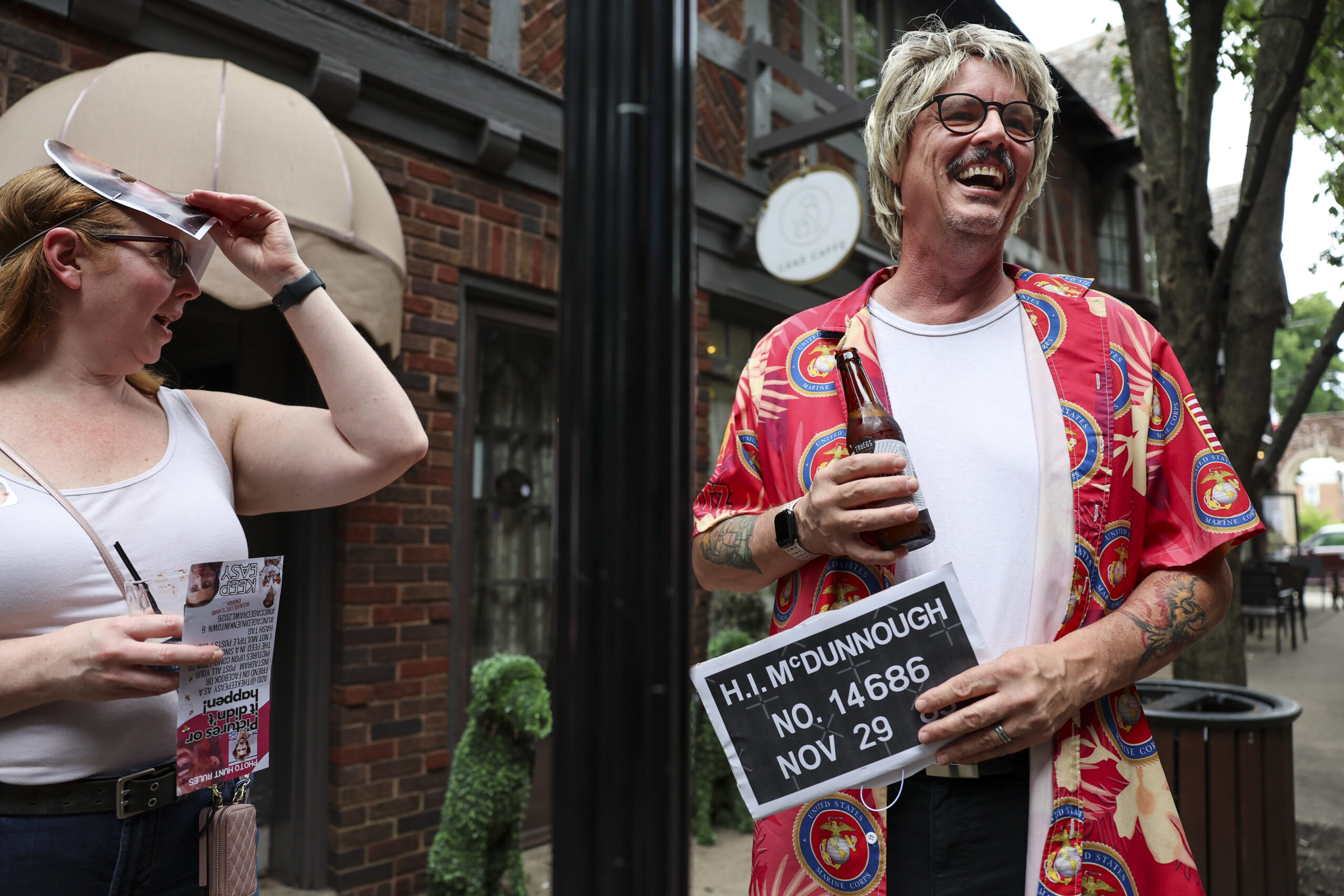
Vicky and Mike Hutz, of Huntington Valley, at the Keep Easy during the Nic Cage cocktail crawl on Sunday in Jenkintown. Mike Hutz is dressed as Cage’s character from “Raising Arizona,” H.I. McDunnough.
When H.I. McDunnough kidnaps one of the Arizona quintuplet babies in the 1987 Cohen Brothers classic, Raising Arizona, he proclaims to his wife: “I think I got the best one.”
Of the few Cage character costumes I saw Sunday — which included Ronny from Moonstruck, Cameron Poe from Con Air, and someone portraying Cage’s first role as an unnamed burger shop worker in Fast Times at Ridgemont High — Mike Hutz’s H.I. McDunnough costume was undoubtedly the best one. Hutz, of Huntingdon Valley, had the open Hawaiian shirt, a wig, and McDunnough’s mugshot board.
“What else are you going to do on a Sunday afternoon when you have a Nicolas Cage crawl option?” he said. “There’s nothing he can’t do and he does it with maximum cheesiness, which is just perfect for people who love cheesy.”
2. The faces
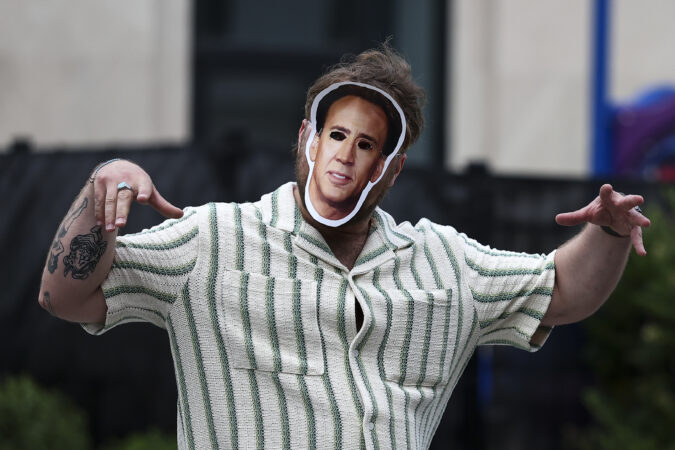
Seeing people at bars and walking the streets of Jenkintown wearing Cage face masks was both highly amusing and mildly unsettling, mainly because the eye holes were cut out wonkily, giving them a ragged, creepy edge.
Masks included Face/Off Cage, Con Air Cage, red carpet Cage, and Dracula Cage (from the movie Renfield).
Vicky Hutz, of Huntington Valley, holds a “Con-Air” Nic Cage mask at the Keep Easy during the Nic Cage cocktail crawl on Sunday.
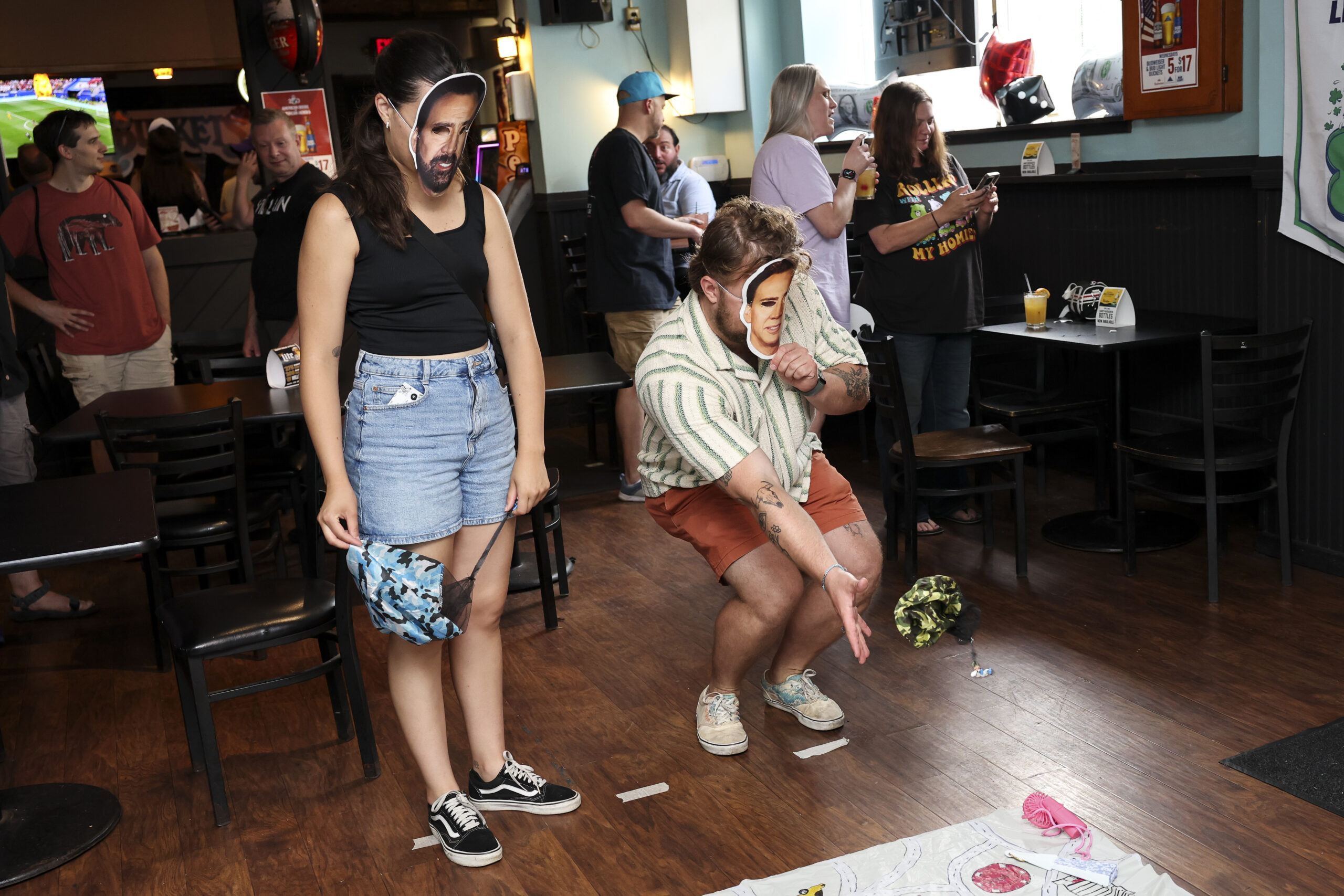
Julia Sousa and Josh Douglas traveled to the crawl from Roxborough because they love Cage and Jenkintown. Douglas walked from bar to bar with his Cage face mask on, which seemed to startle some passing motorists.
“I’m pretty sure they thought I was Michael Myers,” he said.
3. The Cage matches
The games based on Cage films, while homespun, were clever and fun. At Buckets, the game was inspired by the scene in Honeymoon in Vegas where Cage skydives with a bunch of Elvis impersonators. Contestants had to throw toy parachute soldiers that were painted to look like Elvis onto particular spots of a mock-up of the Vegas strip for points.
Julia Sousa and Josh Douglas, both of Roxborough, compete in the “Flying Elvis Cage Match,” at Buckets Bar during the Nic Cage cocktail crawl on Sunday in Jenkintown.
At King’s Corner, where the challenge was based on the movie National Treasure, participants had to solve little metal mind-bender puzzles.
For the Spider-Noir Cage match at the Drake, you had to keep a balloon bouncing in the air while putting on a cape, mask, and fedora.
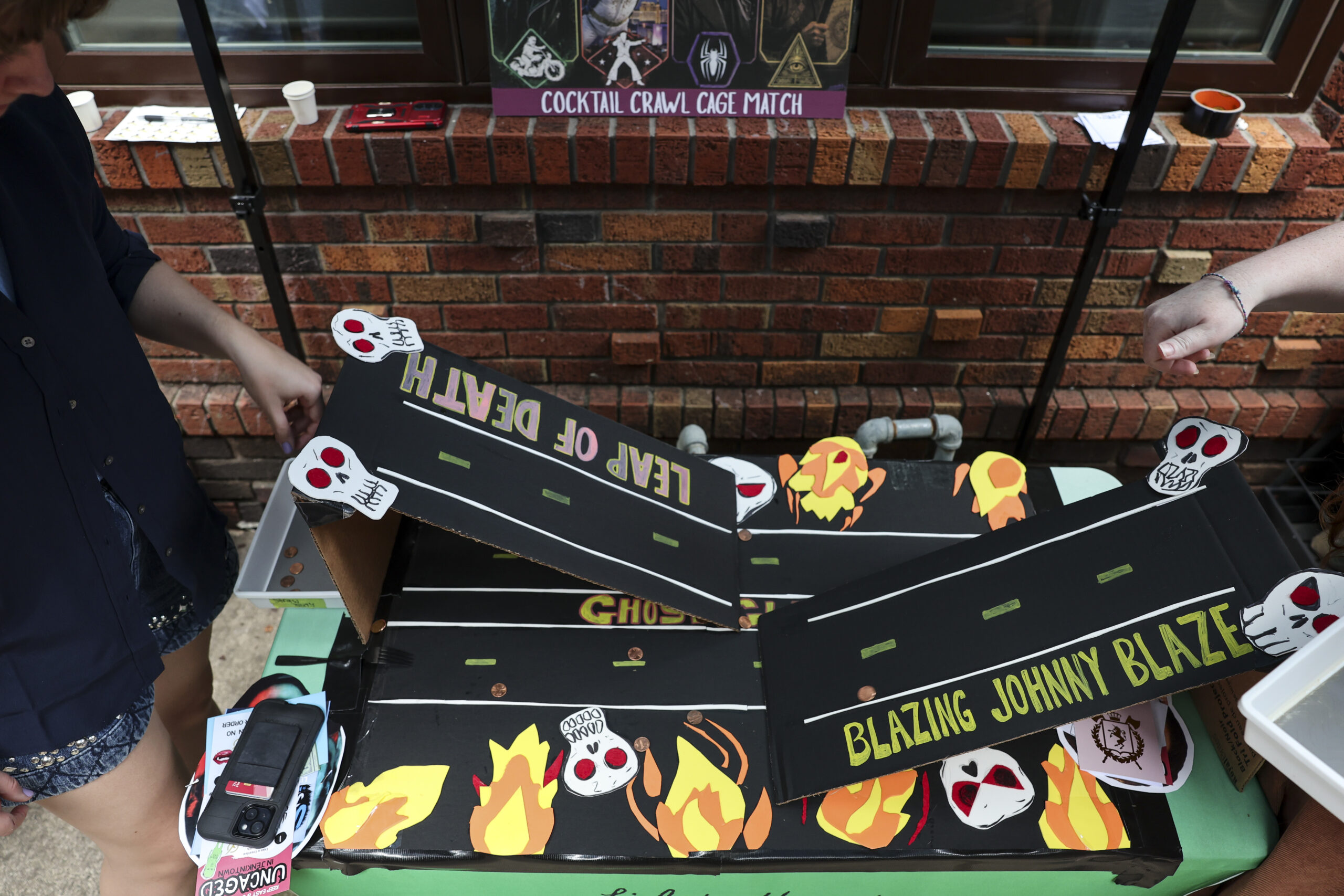
I failed spectacularly at all three of those challenges — and I was completely sober! The only one I did succeed at was called Ghost Glider. Based on the film Ghost Rider, the challenge was to to roll a penny down an inclined surface made to look like a road and into the tongs of a fork at the other end.
The “Ghost Glider” Cage match at the Keep Easy during the Nic Cage cocktail crawl on Sunday in Jenkintown.
4. Stickers and sage
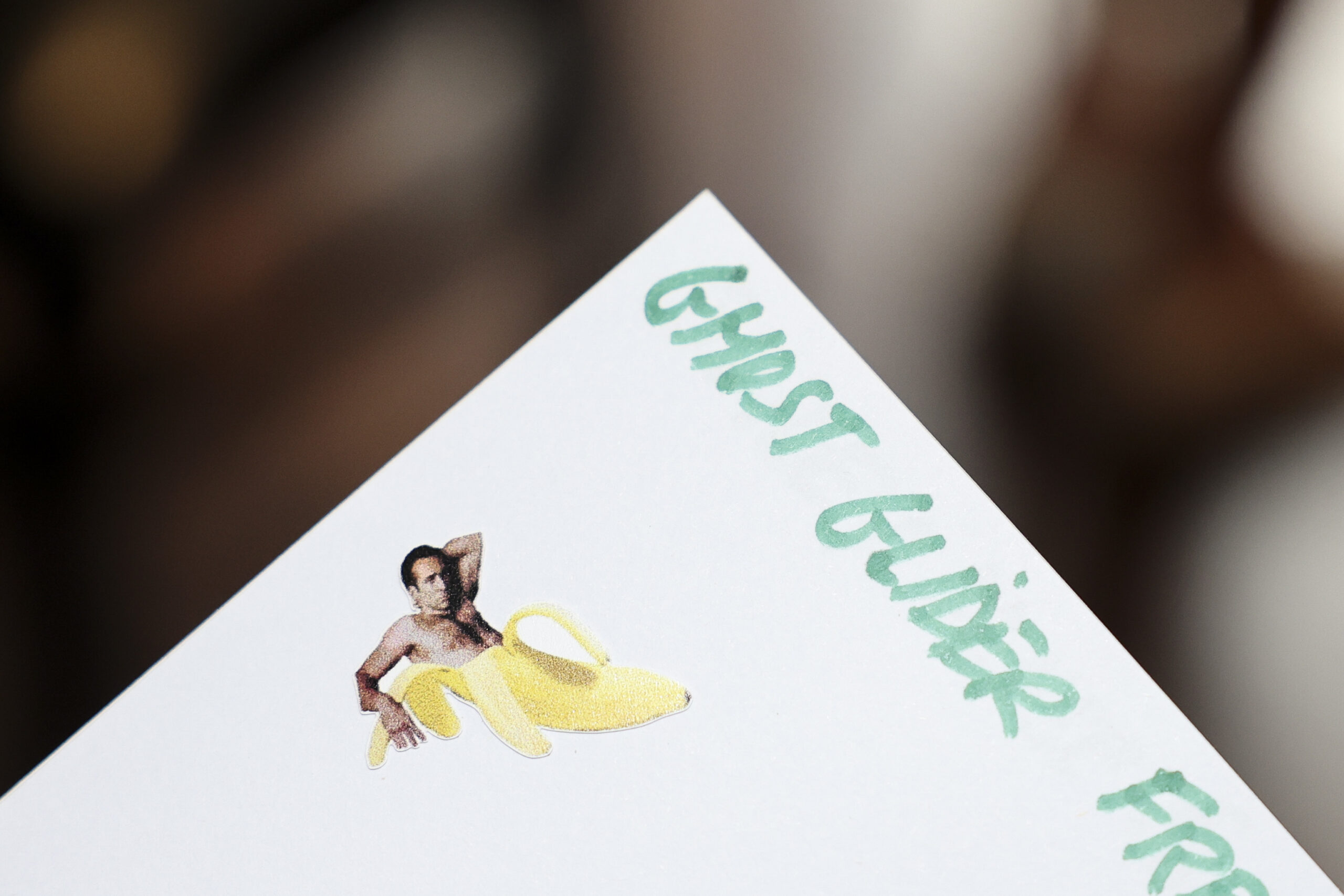
For winning the Ghost Glider challenge, I received a bundle of sage and a sticker for my passport book of a shirtless, reclining Cage coming out of a banana.
Let’s address the sage first: Nobody could tell me why this was my prize for winning the challenge, which somehow makes it even better. I have two theories — it could be because sage rhymes with Cage, or maybe it’s because you light sage and in Ghost Rider, Cage lights on fire.
Whatever the reason, I’m gonna smudge some stuff up this weekend.
An a-peeling sticker columnist Stephanie Farr received for winning a Cage match challenge at the Keep Easy during the Nic Cage bar crawl in Jenkintown Sunday.
Now onto this banana sticker — I don’t know why it exists, but I am so happy it does. Each bar gave a different sticker if you won a challenge, but this banana-Cage split one was, by far, the most a-peeling.
Later at the Drake, I met Erica Adams of Bensalem and “her only friend of whimsy,” Amanda Knop, who’d driven from Baltimore to attend the Cage crawl with her. Adams had her own stickers of Cage’s head she was handing out like friendship bracelets at a Taylor Swift concert.
“I just love his movies and doing silly, fun things,” Adams said. “Nicolas Cage himself is very unserious. He’s lived a million different lives in a short span already.”
5. Picolas Cage
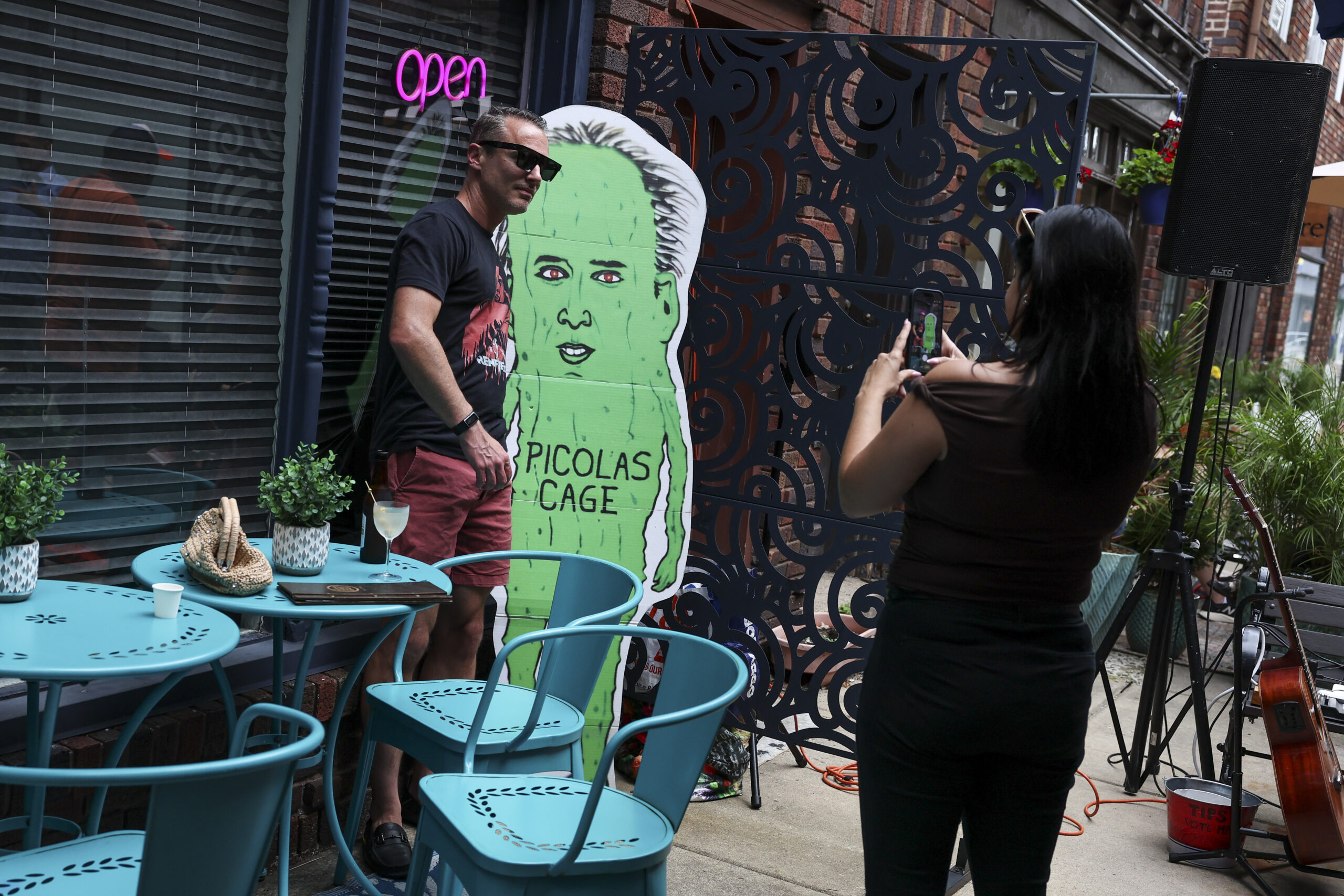
Justin Walsh poses for a photo with “Picolas Cage” as Jessica Lopez takes the photo at the Keep Easy during the Nic Cage cocktail crawl on Sunday in Jenkintown.
A giant cut-out of Cage as a pickle, aka Picolas Cage, was stationed outside of the Keep Easy during the crawl. As someone who likes Cage and cucumbers — but hates pickles — it was a jarring experience. But I saw others relishing the photo op so I didn’t make a big dill out of it.
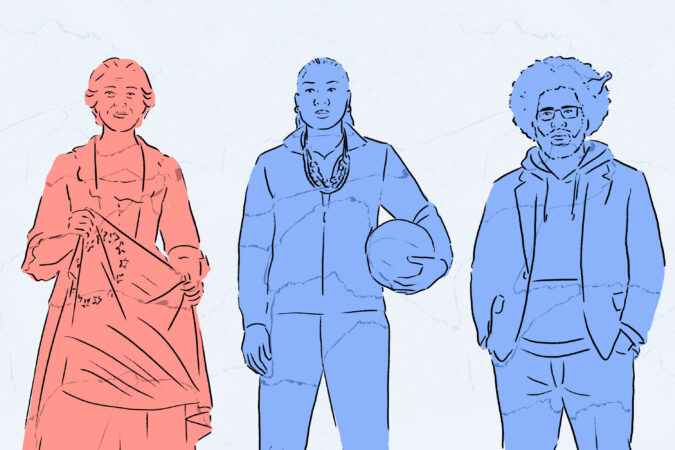
Philadelphia now has three Rocky statues. That is three statues celebrating a fictional Philadelphian. And while many great Philadelphians already have statues, there are so many who don't.
Who do you think should be Philadelphia’s Next Top Statue?
To decide, we’ll present you with two random Philadelphians from our list of just 26. For each matchup, you choose who deserves to be honored more. The winner will move on to the next round to face another Philadelphian.
You’ll keep going until we end up with your definitive Philadelphia’s Next Top Statue.
story continues after advertisement
story continues after advertisement
story continues after advertisement
If you're happy with , you can skip the remaining challengers, and lock them in as your choice.
story continues after advertisement
You think Philadelphia should build a statue of winner and percentageWinner of Inquirer readers agree with you. The most popular winning statues, so far, are popularWinners.
You stuck with longest for the longest, picking them over longestLength other statues.
(()=>{var be=(e,t)=>()=>(t||e((t={exports:{}}).exports,t),t.exports);var U=be(s=>{var Ae={0:”Jan.”,1:”Feb.”,2:”March”,3:”April”,4:”May”,5:”June”,6:”July”,7:”Aug.”,8:”Sept.”,9:”Oct.”,10:”Nov.”,11:”Dec.”};function $(e){return e===void 0&&(e=new Date),Ae[e.getMonth()]}var Ce={0:”Jan”,1:”Feb”,2:”Mar”,3:”Apr”,4:”May”,5:”Jun”,6:”Jul”,7:”Aug”,8:”Sep”,9:”Oct”,10:”Nov”,11:”Dec”};function O(e){return e===void 0&&(e=new Date),Ce[e.getMonth()]}function u(e){return e==null}function G(e){return typeof e==”number”&&isFinite(e)}function A(e){return G(e)&&Math.floor(e)===e}var Le=[“one”,”two”,”three”,”four”,”five”,”six”,”seven”,”eight”,”nine”],Pe=[“million”,”billion”,”trillion”,”quadrillion”,”quintillion”,”sextillion”,”septillion”,”octillion”,”nonillion”,”decillion”],z=[“th”,”st”,”nd”,”rd”,”th”,”th”,”th”,”th”,”th”,”th”],xe=[11,12,13];function _(e){if(u(e))return””;var t=+e;return A(t)?xe.indexOf(t%100)>-1?z[0]:z[t%10]:””}var Be=[“first”,”second”,”third”,”fourth”,”fifth”,”sixth”,”seventh”,”eighth”,”ninth”],je=new RegExp(/s+([^s]*)s*$/);s.apdate=function(e){return e===void 0&&(e=new Date),$(e)+” “+e.getDate()+”, “+e.getFullYear()},s.apdatetab=function(e){return e===void 0&&(e=new Date),O(e)+” “+e.getDate()+”, “+e.getFullYear()},s.apmonth=$,s.apmonthtab=O,s.apnumber=function(e){if(u(e))return””;var t=+e;return A(t)?t=10?e.toString():Le[t-1]:e.toString()},s.aptime=function(e){e===void 0&&(e=new Date);var t,o,n=e.getHours(),i=e.getMinutes(),a=i===0;if(a){if(n===0)return”midnight”;if(n===12)return”noon”}return n0?n:12):(t=”p.m.”,o=n===12?n:n-12),a?o+” “+t:o+”:”+(i<10?"0"+i:i)+" "+t},s.capfirst=function(e){if(u(e))return"";var t=String(e);return""+t.charAt(0).toUpperCase()+t.slice(1)},s.intcomma=function(e){if(u(e))return"";var t,o=+e;return G(o)?((t=o.toString().split("."))[0]=t[0].replace(/B(?=(d{3})+(?!d))/g,","),t.join(".")):e.toString()},s.intword=function(e){if(u(e))return"";var t=+e;if(!A(t))return e.toString();var o=Math.abs(t);if(o<1e6)return e.toString();var n=Math.ceil(Math.log(o+1)/Math.LN10)-1,i=n-n%3,a=t/Math.pow(10,i);return(a=Math.round(10*a)/10)+" "+Pe[Math.floor(i/3)-2]},s.ordinal=function(e,t){if(t===void 0&&(t=!1),u(e))return"";var o=+e;return A(o)?t&&o{let t=document.querySelector(`.js-reveal[data-id=”${e}”]`);t?t.classList.add(“is-hidden”):console.log(“No reveal component found with the id”,e)},Se=e=>{let t=document.querySelector(`.js-reveal[data-id=”${e}”]`);t?t.classList.remove(“is-hidden”):console.log(“No reveal component found with the id”,e)},T={init:()=>{},show:Se,hide:ve};var M,ke=(e,t)=>{M=M||window.PMNdataLayer,M?M.push({event:”misc_event”,eventAction:e,eventLabel:t}):window.location.hostname.includes(“localhost”)?console.log(“Analytics event:”,e,t,”(not actually being sent due to localhost)”):console.log(“Failed to push analytics event”,e,t)},b={event:(e,t)=>{ke(e,t)}};var p,J,Ne=()=>{p=document.getElementById(“js-inno-toast”)},Te=e=>{if(!p)return;p.innerHTML=e,p.classList.add(“is-active”);let t=()=>{p.addEventListener(“transitionend”,Me,{once:!0}),p.classList.remove(“is-active”)};clearTimeout(J),J=setTimeout(t,5e3)},Me=()=>{p.innerHTML=””},c={init:()=>{Ne()},showToast:Te};var gt=U();var y=e=>{if(e)return e.trim().toLowerCase().normalize(“NFD”).replace(/[u0300-u036f]/g,””).replace(/[^A-Z0-9 ]/gi,””).trim().replace(/ /g,”-“).replace(/–/g,”-“)};var C=()=>/Android|webOS|iPhone|iPad|iPod|BlackBerry|IEMobile|Opera Mini/i.test(navigator.userAgent);var x=(e,t=null,o=null)=>{o||(o=document.querySelector(“head”));let n=document.createElement(“script”);n.type=”text/javascript”,n.src=e,t&&(n.onload=t),o.appendChild(n)},K=()=>(window.PMNdataLayer?.[0]!==void 0&&window.PMNdataLayer[0])?.analytics?.user?.state===”Subscribed”,V=()=>{let t=(window.PMNdataLayer?.[0]!==void 0&&window.PMNdataLayer[0])?.analytics?.user?.state;return window.location.host.includes(“zzz-systest”)||window.location.host.includes(“pmn.arcpublishing.com”)||window.location.host.includes(“stage.fusion.inquirer.com”)||typeof t>”u”},Y=()=>{let t=(window.PMNdataLayer?.[0]!==void 0&&window.PMNdataLayer[0])?.analytics?.user?.hasAdsFreeReading;return!!(t&&t==1)},B=()=>window.location.host.includes(“localhost”),Z=(e,t=””)=>{let o=document.querySelector(`template#${e}`);if(!o||!(o instanceof HTMLTemplateElement))return console.log(`Couldn’t find .`),null;let n=o.content.cloneNode(!0).childNodes;if(n.length==0)return console.log(`Template ${o} has no children, returning null.`),null;n.length>1&&console.log(`Template ${o} has multiple children, only returning the first.`);let i=n[0];return i.setAttribute(“data-id”,t),i},j=(e,t)=>{let o=[…e.querySelectorAll(“[data-populate]”)];e.dataset.populate&&o.unshift(e);let n=o.filter(i=>{let a=i.closest(“[data-populate-context]”);return!a||a==e});for(let i of n){let N=i.dataset.populate.trim().split(/s*,s*/).map(w=>w.split(/s*:s*/));for(let[w,m]of N){let f=w.split(“.”).reduce((d,we)=>d?.[we],t),F=f==null||f==null,ge=m?.split(/s+/)||[“innerHTML”];for(let d of ge)d.startsWith(“.”)&&i.classList.toggle(d.substring(1),F?!1:f),!F&&(d==”innerHTML”?i.innerHTML=f:d.startsWith(“@”)?i.setAttribute(d.substring(1),f):d.startsWith(“–“)&&i.style.setProperty(d,f))}}};var Q=e=>{for(let t=e.length-1;t>0;t–){let o=Math.floor(Math.random()*(t+1));[e[t],e[o]]=[e[o],e[t]]}return e};var Ee=()=>{document.querySelectorAll(“.js-share”).forEach(e=>{e.addEventListener(“click”,()=>{qe(e)})})},De=()=>{document.querySelectorAll(“.js-share”).forEach(e=>{let t=e.dataset.url||[location.protocol,”//”,location.host,location.pathname].join(“”);e.dataset.url=t})},He=(e,t)=>{navigator.clipboard.writeText([e,t].join(” “)),b.event(“click”,`copied share text to clipboard | ${[e,t].join(” “)}`)},qe=async e=>{let t=e.dataset.text,o=e.dataset.url;if(!navigator.canShare||!C())He(t,o),c.showToast(“Copied to clipboard!”);else try{await navigator.share({text:t,url:o})}catch(n){console.log(n),c.showToast(“Hmm, something went wrong…”)}},Ie=(e,t,o)=>{let n=document.querySelector(e);n?n.classList.contains(“inno-share__button”)?(n.dataset.text=t,o&&(n.dataset.url=o)):console.warn(`${e} is not a share button`):console.warn(`${e} not found`)},L={init:()=>{Ee(),De()},updateTextToCopy:(e,t,o)=>{Ie(e,t,o)}};var X=async(e,t)=>(await fetch(`https://inq-junto.herokuapp.com/${e}`,{method:”POST”,headers:{“Content-Type”:”application/json”},mode:”cors”,body:JSON.stringify(t)})).json(),E=()=>{let t=document.querySelector(“.js-inno”).dataset.junto;if(t)return t;throw new Error(“no junto id found”)},v={getDefaultId:()=>E(),vote:(e,t=E())=>{X(“vote”,{poll:t,ballot:e})},results:async(e=E())=>await X(“results”,{poll:e})};var ee=[{name:”Betsy Ross”,category:”Civil”,born:”1752″,died:”1836″,placement:”Betsy Ross House”,bio:”She may not have actually made the first U.S. flag (according to the Smithsonian), but she did make U.S. flags for 50 years and is a Philly and national icon.”},{name:”Boyz II Men”,category:”Music”,born:”1985″,died:””,placement:”CAPA (where they formed)”,bio:’These “Motownphilly” icons started in 1985, when the Boyz met at Philadelphia High School for the Creative and Performing Arts (CAPA).’},{name:”Cecil B. Moore”,category:”Civil”,born:”1915″,died:”1979″,placement:”21st Street & Cecil B. Moore Avenue”,bio:”A leader in Philadelphiau2019s Civil Rights Movement in the 1960s who successfully campaigned to desegregate the cityu2019s building trades unions and expanded opportunities for Black workers.”},{name:”Chase Utley”,category:”Sports”,born:”1978″,died:””,placement:”Citizens Bank Park”,bio:`”The Man” helped the Phillies win it all in 2008, played in six All-Star Games, and is an important plot point in an episode of It’s Always Sunny in Philadelphia.`},{name:”Chubby Checker”,category:”Music”,born:”1941″,died:””,placement:”Italian Market”,bio:`Before the “Twist” icon made it big, the South Philly-raised musician worked at a produce stand in the Italian Market. He’s now in the Rock & Roll Hall of Fame.`},{name:”Dawn Staley”,category:”Sports”,born:”1970″,died:””,placement:”Murrell Dobbins Vocational High School”,bio:”Raised in North Philly, she transformed the University of South Carolina into a womenu2019s basketball powerhouse, winning multiple NCAA championships while also earning Olympic gold medals as both a player and coach.”},{name:”Dr. Drew Weissman & Dr. Katalin KarikxF3″,category:”Science”,born:”1959, 1955″,died:””,placement:”James G. Kaskey Memorial Park”,bio:”These Penn researchers won the Nobel Prize for Physiology or Medicine in 2023 for their work that made the mRNA COVID-19 vaccines possible. Those vaccines saved an estimated 2.5 million lives, according to a JAMA study.”},{name:”Gamble & Huff”,category:”Music”,born:”1943, 1942″,died:””,placement:”309 S. Broad St. (where Philadelphia International Records was located)”,bio:”The songwriting and production duo created the Philly sound and built Philadelphia International Records, which produced a string of hit records that helped define 1970s R&B and soul.”},{name:”Guion Bluford”,category:”Science”,born:”1942″,died:””,placement:”Overbrook High School (which he attended)”,bio:”The Overbrook High grad was an Air Force officer and pilot before becoming the first Black astronaut in space, flying aboard the space shuttle Challenger in 1983. He logged more than 688 hours in space.”},{name:”Daryl Hall & John Oates”,category:”Music”,born:”1970″,died:””,placement:’The steps of Mitten Hall at Temple: “If I had a picture of Temple, it is hanging outside of Mitten Hall and singing … hanging on those steps with friends, street corner singing.” — Daryl Hall’,bio:”They may be in the midst of a feud, but these maneating, dream-making Philly icons who have delighted the city, and the world, started at Temple University.”},{name:”Hercules Posey”,category:”Civil”,born:”1748″,died:”1812″,placement:”The President’s House Site (where he was enslaved)”,bio:”The enslaved chef who ran President George Washingtonu2019s household kitchen, both in Mount Vernon and at the President’s House in Philadelphia, later escaped to freedom.”},{name:”Isaiah Zagar”,category:”Art & Culture”,born:”1939″,died:”2026″,placement:”Palumbo Rec Center (a park near Magic Gardens)”,bio:”Philadelphia would suddenly look naked without Zagar’s tile-junk-and-mirror murals. His masterwork, Magic Gardens, is rightfully beloved, but he was also a great champion of South Street, the city, and Philadelphians.”},{name:”Jason Kelce”,category:”Sports”,born:”1987″,died:””,placement:”Philadelphia Museum of Art steps or Lincoln Financial Field”,bio:”It is only a matter of time before this Super Bowl champ is honored with a metal likeness. The question is: Do you put it next to the Linc or atop the Art Museum steps in his Mummer-celebration attire?”},{name:”Jill Scott”,category:”Music”,born:”1972″,died:””,placement:”Reyburn Park (near her childhood home)”,bio:”The Grammy winner helped define the neo-soul movement of the early 2000s with her blend of soul, hip-hop, jazz, R&B, and spoken word.”},{name:”Jim Gardner”,category:”Civil”,born:”1948″,died:””,placement:”Jim Gardner Way”,bio:”He was Philadelphiau2019s leading news anchor for more than four decades and became one of the most trusted and recognizable figures in the city.”,Notes:’for category, maybe something like “Media” or “News”?’},{name:”John Coltrane”,category:”Music”,born:”1926″,died:”1967″,placement:”The Yard on John Coltrane Street”,bio:”He developed his groundbreaking style while living and performing in Philly during the 1940s and 1950s, before becoming one of the most influential musicians in jazz history.”},{name:”K. Barry Sharpless”,category:”Science”,born:”1941″,died:””,placement:”Outside the Science History Institute”,bio:”A pioneer of u201Cclick chemistry,u201D a revolutionary method for quickly and reliably joining molecules together, he has earned not one but two Nobel Prizes in chemistry.”},{name:”Kevin Bacon”,category:”Art & Culture”,born:”1958″,died:””,placement:”Rittenhouse Square (two blocks from his childhood home)”,bio:’The Philly-grown actor is beloved for hits like “Footloose,” “A Few Good Men,” and “Apollo 13.” His father, Edmund Bacon, is referred to as “the father of Modern Philadelphia,” making Kevin true Philly royalty.’},{name:”M. Night Shyamalan”,category:”Art & Culture”,born:”1970″,died:””,placement:”Avenue of the Arts”,bio:’The king of plot twists directed many Philly-based movies, including “The Sixth Sense,” “Unbreakable,” and “Split.” He is not a favorite to win this competition, but what if … he pulled it off at the last second?’},{name:”Oscar Hammerstein II”,category:”Art & Culture”,born:”1895″,died:”1960″,placement:”Avenue of the Arts”,bio:’The Doylestown-raised songwriter composed the lyrics to classic Broadway musicals such as “Oklahoma!,” “Carousel,” and “The Sound of Music,” helping redefine the American musical. His father built the Met.’},{name:”Patti LaBelle “,category:”Music”,born:”1944″,died:””,placement:”John Bartram High School (her high school)”,bio:’The u201CGodmother of Soulu201D is known for her powerhouse vocals, hits like “Lady Marmalade,” and her famous sweet potato pie.’,Notes:’maybe add “and her famed sweet potato pie” to the bio?’},{name:”Questlove”,category:”Music”,born:”1971″,died:””,placement:”CAPA (where the Roots were formed)”,bio:”The drummer and cofounder of the Roots helped redefine hip-hop with live instrumentation while building a celebrated career as a producer, filmmaker, and cultural historian.”},{name:”Sheryl Lee Ralph”,category:”Art & Culture”,born:”1956″,died:””,placement:”Avenue of the Arts”,bio:’The actress, who has adopted Philly as her home when she is not filming, originated the role of Deena Jones in “Dreamgirls” and won an Emmy for her performance on “Abbott Elementary.”‘},{name:”The Delfonics”,category:”Music”,born:”1965″,died:””,placement:”Overbrook High School (where they met)”,bio:”The Delfonics are known for their lush harmonies and romantic hits like u201CLa-La Means I Love Youu201D and u201CDidnu2019t I (Blow Your Mind This Time),u201D which helped define the Philadelphia soul sound.”},{name:”Wanda Sykes”,category:”Music”,born:”1964″,died:””,placement:`2000 block of Sansom Street (“Philly’s Funniest Blocku201D)`,bio:”The comedy legend is known for her sharp standup and her Emmy-winning work as a writer, actor, and comedian. She was also instrumental in bringing the WNBA to Philly.”},{name:”Will Smith”,category:”Art & Culture”,born:”1968″,died:””,placement:”Tustin Recreation Center (where he shot some b-ball outside of his school)”,bio:’The Oscar- and Grammy-winning actor and rapper was, famously, born and raised in West Philadelphia. The Fresh Prince is known as much for “Men in Black” as he is for “Miami.”‘}];var We=[1,5,10],l=new Array,r=new Object,h=new Array,S=null,D=0,q,te,Fe=async()=>{l=Je(),q=await $e(),te=Oe(3),r.red=l.shift(),r.red.side=”red”,r.blue=l.shift(),r.blue.side=”blue”,H()},Je=()=>{for(let e of ee){let t={…e,id:y(e.name),marbleBaseSrc:`https://interactives.inquirer.com/projects/2026/06/statues/1782400824702/assets/_resized/statues/${y(e.name)}–marble–1200px.webp`,marbleColorSrc:{red:`https://interactives.inquirer.com/projects/2026/06/statues/1782400824702/assets/_resized/statues/${y(e.name)}–marble–red–1200px.webp`,blue:`https://interactives.inquirer.com/projects/2026/06/statues/1782400824702/assets/_resized/statues/${y(e.name)}–marble–blue–1200px.webp`},outlineSrc:`https://interactives.inquirer.com/projects/2026/06/statues/1782400824702/assets/_resized/statues/${y(e.name)}–outline–1200px.webp`,chosenCount:0};l.push(t)}return l=Q(l),l},$e=async()=>{let t=(await v.results()).ballotAsPercentages.winner;return Object.entries(t).map(([i,a])=>({id:i,count:a})).sort((i,a)=>a.count-i.count)},Oe=e=>{let t=q.slice(0,e);return t=t.map(n=>{let i=l.find(a=>a.id==n.id);if(i)return i.name}),new Intl.ListFormat(“en”).format(t)},H=()=>{let e=Z(“js-picker-stub”);return j(e,{…r,index:D,readableIndex:D+1}),D++,e.querySelectorAll(“.js-picker-button”).forEach(o=>{o.addEventListener(“click”,()=>{ze(e,o.dataset.side)},{once:!0})}),document.querySelector(“.js-pickers”).appendChild(e),e},ze=(e,t)=>{let o=t==”red”?”blue”:”red”;e.classList.add(“is-complete”),e.querySelector(`.js-picker-side[data-side=”${t}”]`).classList.add(“is-selected”),e.querySelector(`.js-picker-side[data-side=”${o}”]`).classList.add(“is-unselected”),r[t].chosenCount++;let a=r[t],N=r[o],w=[a.id,N.id].sort((m,W)=>m.localeCompare(W)).join(“-“);if(v.vote({[`${w}`]:a.id}),v.vote({side:t,[`${a.id}-streak`]:a.chosenCount},”2026-statues–FULL”),b.event(“click”,`Voted | ${a.name}`),h.push(N),l.length>0){r[o]=l.shift();let m;We.includes(h.length)?(m=_e(),H()):m=H(),document.querySelector(“.js-pickers-left”).textContent=l.length,document.querySelector(“.js-pickers-current”).textContent=a.name.trim(),h.length>12&&document.querySelector(“.js-picker-skip”).classList.add(“is-visible”),ne(m,3e3)}else oe()},oe=()=>{document.querySelector(“.js-picker-skip”).classList.remove(“is-visible”);let e=r.red.chosenCount>r.blue.chosenCount?r.red:r.blue;h.push(e),h=h.sort((i,a)=>a.chosenCount-i.chosenCount);let t=q.find(i=>i.id==e.id),o=t?Math.round(t.count):0,n=document.querySelector(‘.js-reveal[data-id=”post”]’);j(n,{winner:e.name,longest:h[0].name,longestLength:h[0].chosenCount,percentageWinner:o,popularWinners:te}),L.updateTextToCopy(“.js-share”,`I think Philadelphia should build a statue of ${e.name}. Choose your Philadelphia’s Next Top Statue.`),v.vote({winner:e.id}),T.show(“post”),ne(n,50)},_e=()=>{let e=document.querySelector(“.js-pickers”),t=e.querySelector(“.js-adbox:not(.is-visible)”);return t&&(e.appendChild(t),t.classList.add(“is-visible”)),t},ne=(e,t)=>{S&&clearTimeout(S),S=setTimeout(()=>{e.scrollIntoView({behavior:”smooth”,block:”start”})},t),window.addEventListener(“scroll”,()=>{S&&clearTimeout(S)},{once:!0})},Ge=()=>{window.addEventListener(“scroll”,()=>{Ue()}),document.querySelector(“.js-picker-skip-button”).addEventListener(“click”,()=>{b.event(“click”,`Skipped | ${l.length} candidates left`),oe()})},Ue=()=>{let e=document.querySelectorAll(“.js-picker:not(.is-in-view)”);e&&e.forEach(t=>{t.getBoundingClientRect().top{Fe(),Ge()}};var Ke=()=>{Y()&&document.querySelectorAll(“.js-adbox”).forEach(t=>{t.classList.add(“is-hidden”)})},ae={init:()=>{Ke()}};var P,se=!1,Ve=async()=>new Promise(e=>{setTimeout(()=>{console.log(“simulating createShareLink for localhost”),e(“https://inquirer.com/interactives”),Ye()},100)}),Ye=()=>{let e=document.querySelector(“.js-gift-toast-receiver”);!e||!(e instanceof HTMLElement)||setTimeout(()=>{let t=e?.querySelector(“span”);t&&(t.innerHTML=”Gift link copied to clipboard“)},20)},Ze=()=>{let e=window.services?.createShareLink;e&&(P=e),B()&&(P=Ve),P&&Xe()},Qe=async e=>{let t=”text/plain”,o=async()=>{try{return await P(window.location.pathname)}catch{e.dataset.state=”error”,c.showToast(“Hmm, we couldn’t generate a gift link…”)}},n=new ClipboardItem({[t]:o()});await navigator.clipboard.write([n]).catch(i=>{console.log(i),c.showToast(“Couldn’t copy to clipboard, try again?”),e.dataset.state=”error”}),c.showToast(“Gift link copied to clipboard!”),e.dataset.state=”complete”},Xe=()=>{document.querySelectorAll(“.js-gift”).forEach(t=>{(K()||B()||V())&&t.classList.add(“is-available”)}),document.querySelectorAll(“.js-gift-button”).forEach(t=>{t instanceof HTMLButtonElement&&t.addEventListener(“click”,()=>{t.classList.contains(“disabled”)||(t.dataset.state=”loading”,se=!0,Qe(t),setTimeout(()=>{t.dataset.state=”ready”},2e3))})});let e=document.querySelector(“.js-gift-toast-receiver”);!e||!(e instanceof HTMLElement)||et(e)},et=e=>{new MutationObserver(o=>{for(let n of o){let i=[…n.addedNodes].at(0);if(!(i instanceof HTMLElement))return;se&&c.showToast(i.outerHTML)}}).observe(e,{subtree:!0,childList:!0})},re={init:()=>{Ze()}};var tt=()=>{window.addEventListener(“message”,e=>{if(e.data[“datawrapper-height”]){let t=e.data[“datawrapper-height”];for(let o in t)document.querySelector(`#datawrapper-chart-${o}`).setAttribute(“height”,t[o])}})},ot=()=>{document.querySelectorAll(“.js-datawrapper-graphic”).forEach(e=>{x(`https://datawrapper.dwcdn.net/${e.dataset.id}/embed.js`,null,e)})},nt=()=>{window.addEventListener(“message”,e=>{let t=e.data;document.querySelectorAll(`iframe[src*=”${t.id}”]`).forEach(n=>{n.style.height=`${t.height}px`})},!1)},it=()=>{document.querySelectorAll(“.js-pym-graphic”).forEach(e=>{if(typeof window{new window.pym.Parent(e.id,e.dataset.iframe)};typeof window.pym>”u”?x(“https://pym.nprapps.org/pym.v1.min.js”,t):t()}})},le={init:()=>{tt(),ot(),it(),nt()}};var k,at=()=>{document.querySelectorAll(“.js-hover”).forEach(e=>{e.addEventListener(“click”,()=>{ce(e)}),e.addEventListener(“mouseenter”,()=>{ce(e)}),e.addEventListener(“mouseout”,()=>{de(e)})}),window.addEventListener(“scroll”,()=>{k!==null&&st()})},st=()=>{(k>window.scrollY+100||k{de(e)})},ce=e=>{e.classList.add(“is-visible”),k=window.scrollY},de=e=>{e.classList.remove(“is-visible”),k=null},ue={init:()=>{at()}};var g,I,R=!0,rt=()=>{g=document.querySelectorAll(“.js-video-autoplay”)},lt=()=>{window.addEventListener(“resize”,()=>{he()}),window.addEventListener(“scroll”,()=>{he()}),g.forEach(e=>{e.addEventListener(“volumechange”,t=>{e.muted!==R&&!C()&&(R=e.muted,ct())})})},he=()=>{let e;g.forEach((t,o)=>{let n=t.getBoundingClientRect(),i=n.height/2;n.y-i&&(e=t)}),e!==I&&(I=e,g.forEach(t=>{t.pause()}),e?e.play():I=null)},ct=()=>{g.forEach(e=>{e.muted=R})},me={init:()=>{rt(),g&<()}};var pe={init:()=>{ie.init?.(),ae.init?.(),re.init?.(),le.init?.(),ue.init?.(),T.init?.(),L.init?.(),me.init?.(),c.init?.()}};var dt=()=>{},fe={init:()=>{dt()}};var ut=document.querySelector(“.js-inno”),ye=()=>{pe.init(),fe.init()};ut?ye():new MutationObserver((t,o)=>{if(document.querySelector(“.js-inno”)){o.disconnect(),ye();return}}).observe(document,{attributes:!0,childList:!0,subtree:!0});})();
DEAR ABBY: I don’t care for my son’s girlfriend, “Trish,” and he knows it. He seems to date needy women. It may boost his ego, but it doesn’t reflect well on the young lady.
Our initial encounter with Trish wasn’t a good one. We found her to be rude and disrespectful. He claims she was “nervous.” It’s common courtesy to acknowledge those in a room when you enter if they’re the only ones in the room.
I don’t know if my son plans to marry Trish, but this isn’t the relationship I assumed I’d have with my son’s wife. I don’t want to just tolerate my daughter-in-law; I want to love her. Trish has made no effort to know my son’s family, not even his brother. She doesn’t view us as factors in his life at all. How do I get him to launch his net into the deep end and find a good wife?
— ANXIOUS MOM IN VIRGINIA
DEAR MOM: I don’t know whether your son intends to marry this young woman either, and you could be worried for no reason. But one thing I do know is how important it is for you to extend yourself and try to make a friend out of Trish rather than an enemy. Without being nosy, get to know her background. Does she have a healthy relationship with her own mother? Does she know any of the rules of etiquette? (She may never have been taught.) If you reach out and make the attempt, you may wind up having a daughter-in-law you can love rather than one you have to tolerate. I wish you luck.
** ** **
DEAR ABBY: A year and a half ago, I met someone online who I’ll call “Drew.” We immediately hit it off and have talked every day since then, often multiple times a day, with near-constant texting, etc. Drew quickly became my best friend. After a while, I realized that I don’t just love him, I am IN LOVE with him. Deeply.
We’ve met in person a few times, and that has only served to confirm my feelings. I feel safe, happy and cared for in his company, and there is nothing in the world I wouldn’t do for him if he asked. Yet he asks nothing of me. Drew has a partner, and I assume the feelings I have for him are not mutual, although I know he considers me a very good friend. I wish I knew how to proceed. Telling him how I feel is not an option, nor is ending the friendship I rely on. Is it possible to continue as we are? How am I supposed to deal with these feelings?
— HIS NON-BOYFRIEND IN CANADA
DEAR NON-BOYFRIEND: Here’s how: Recognize that you and Drew are overdue for an honest conversation about what has been going on. Ask if his partner knows about you. When someone spends as much time as you two have on the phone and texting, there is usually more going on than just friendship. If there isn’t on Drew’s part, you need to know that. However, if your feelings are mutual, then you and Drew have some serious thinking and planning to do.
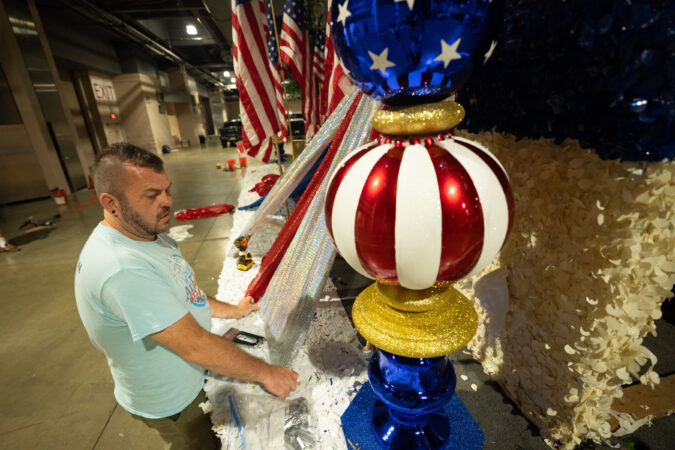
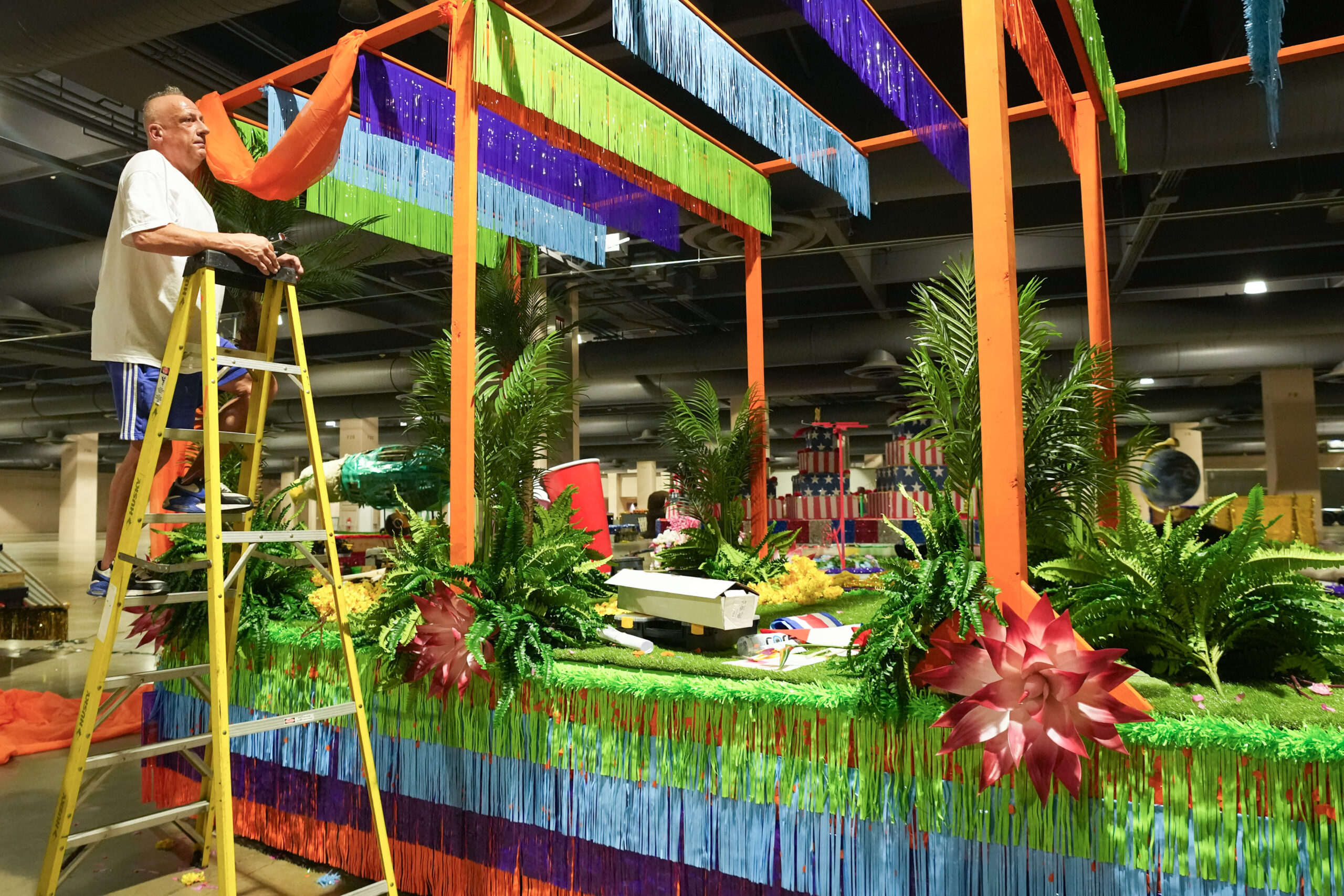
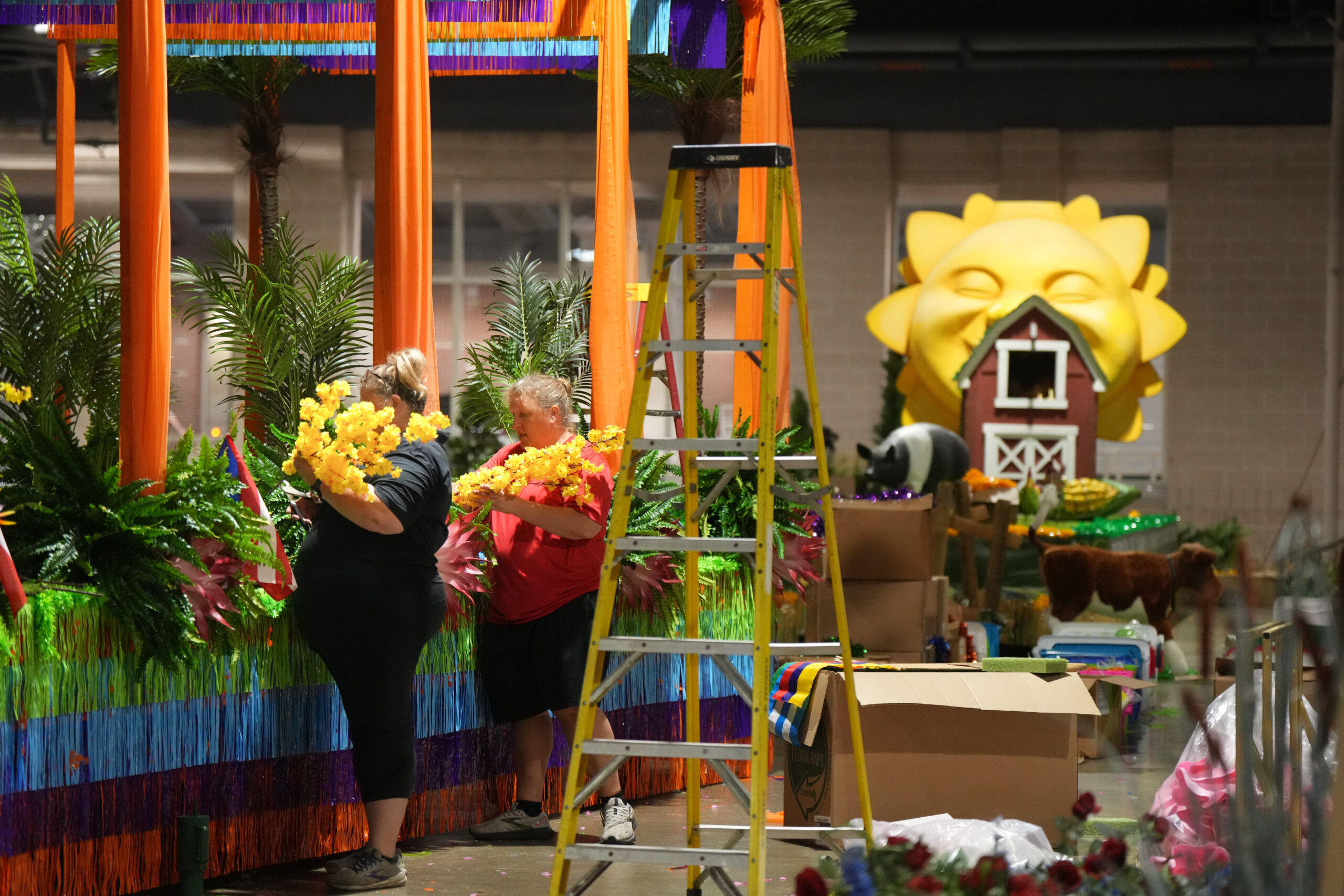
In the dull glow of the overhead Convention Center lights, Todd Marcocci and a band of craftspeople stood next to large wheeled platforms, some housing floral gazebos, others a recreation of a Pennsylvania farm. Sweat dripping from his brow, Marcocci intently drilled palm tree crowns into the base of a platform dedicated to Central and South America.
With just days until Philadelphia’s Semiquincentennial parade, Marcocci, alongside his crew and John Shaw of Shaw Parades, is assembling 19 parade floats to commemorate the United States’ 250th birthday.
Todd Marcocci works on a float back stage with the crews of Friday’s parade and festival.
The “Salute to Independence” Semiquincentennial Parade is scheduled to begin at noon Friday nearwhere the Declaration of Independence was signed in 1776, which Marcocci reminded himself of while he designed a historical parade.
“I told all the groups who signed on for the parade that we’ll be lining up in the footsteps of the Founding Fathers,” Marcocci said. “We’ll walk through history.”
In the halls of the Pennsylvania Convention Center, where float builders worked on Monday, larger-than-life recreations of Martin Luther King Jr. and Harriet Tubman awaited placement on a platform celebrating the Civil Rights movement.
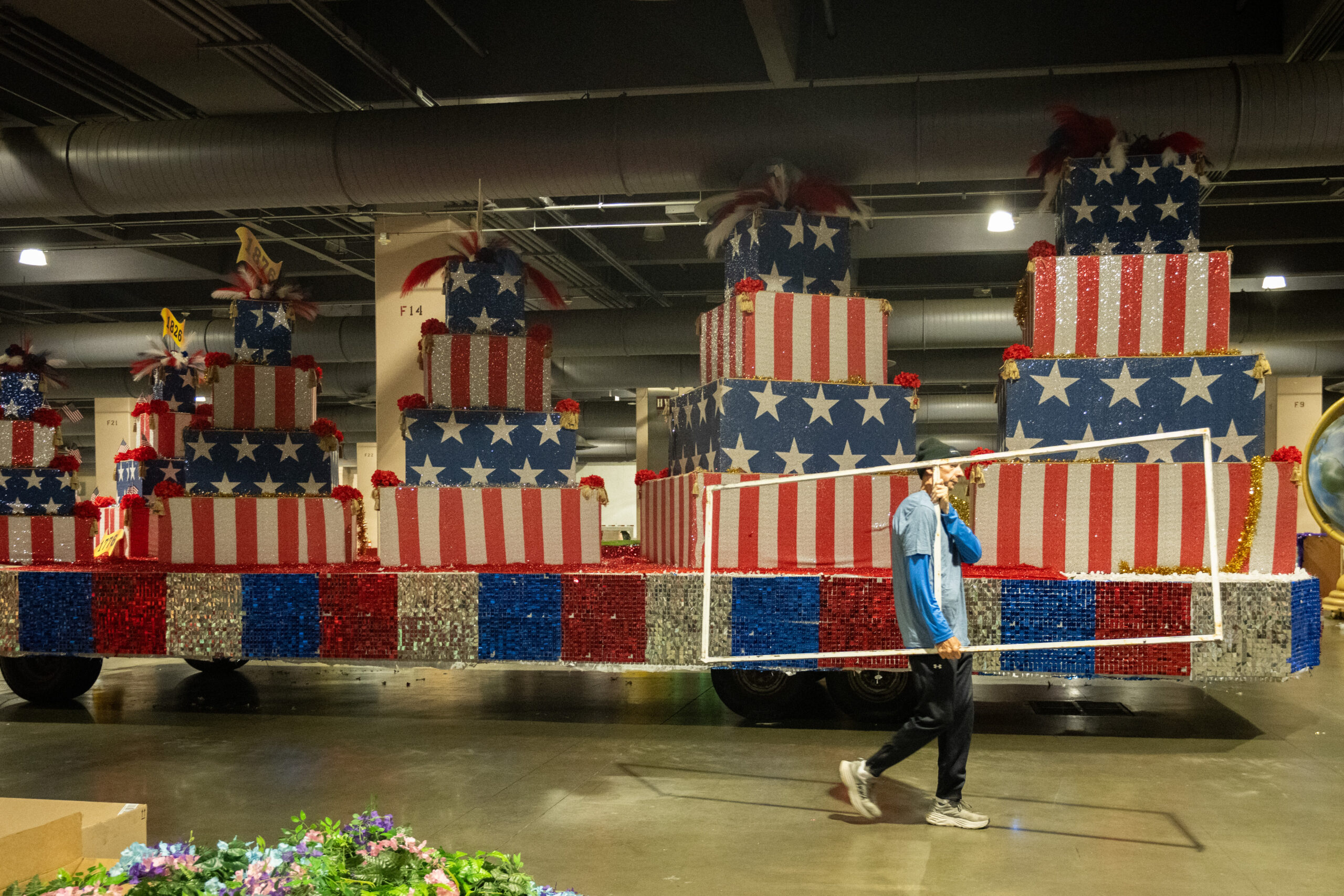
Mike Oyer works backstage on the floats.
The next float over was bathed in white sequins, where a giant “peace dove” sculpture accompanied by a globe would rest. A few paces over sat a 6-foot-tall Wawa smoothie and coffee cups, and right by that were multiple United States-themed layered birthday cakes marking the various anniversaries of the country.
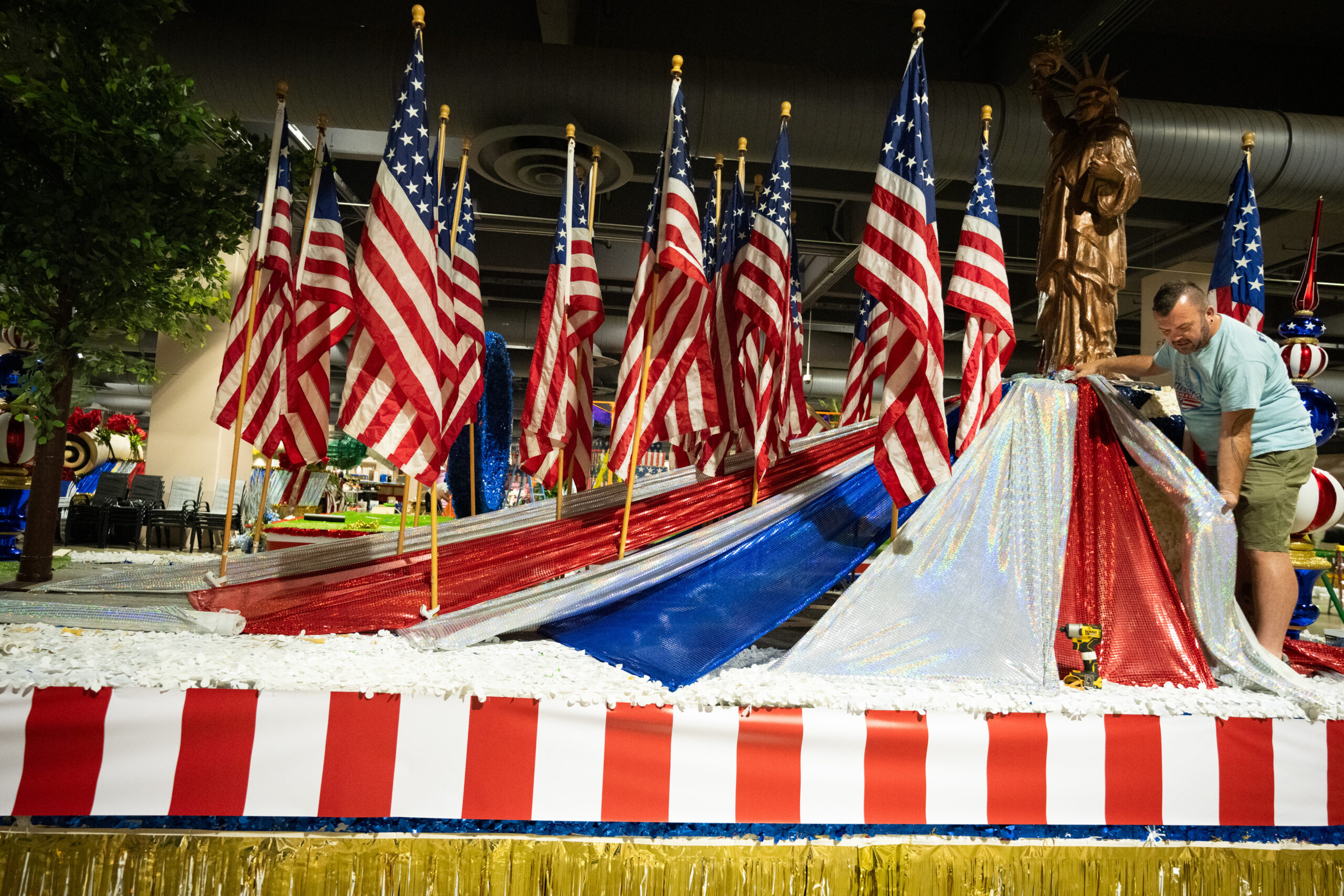
Shaw worked a blade saw, slicing through two-by-fours to construct the float frames that Marcocci and Co. were painstakingly deciding the minutiae of, such as how many American flags or sequins can be threaded through a float.
Annie Woods (left) and Johanna Gelber working on the floats.
Shaw, whose parade float company has passed down through four generations, said Philly Fourth of July parades usually average seven floats. “This year it’s almost tripled,” he said. “Todd designs everything in his head, and then we collaborate back and forth to come up with the plan to actually make these ideas work.”
Mayor Cherelle L. Parker will be on board the “One Philly — A United City” float, which features a large sculpture in the shape of the number 1 and a butterfly-and-floral gazebo symbolizing the city’s commitment to a clean and green city, Marcocci said.
Jeremy Williams, works on a float back stage.
A Liberty Bell float will commemorate some of the Founding Fathers and Betsy Ross with an Independence Hall backdrop. Another celebrates Philadelphia Pride with prominent LGBTQ figures and pride flags atop a vibrant rainbow platform.
“The most important thing for me is that people, whether they’re watching on TV at home across the nation or here in person, is that they see themselves in our parade,” Marcocci said of representing the diversity of America’s history.
Philadelphia’s Semiquincentennial Parade on Friday starts at noon at Fifth and Chestnut Streets, passing such historical landmarks as Independence Hall before heading to Sixth and Market Streets and then west on Market to circle City Hall before ending at Broad and Chestnut Streets after a heat emergency was declared, cutting short the route that was to continue to Logan Circle and loop around before heading back to City Hall.
Fan zones are at Sixth and Market Streets , 11th and Market, and the northeast side of City Hall, where a bar is available for those 21 and over.
DEAR ABBY: My 20-year-old nephew, “Conrad,” has anger issues. His girlfriend recently broke up with him. He was upset and went to see his grandma, my mom. When Conrad pulled into her driveway, my mom’s boyfriend, “Rob,” was standing outside. Conrad told Rob to “stay out of the house.”
Conrad’s girlfriend was there talking to my mom. Conrad was visibly upset and went in, yelling and screaming. Watching from outside, Rob saw Conrad push Mom down. She fell on her hand and her bottom. Rob immediately ran into the house to make sure my mom was OK. Conrad then began yelling and screaming at Rob, calling him terrible names.
My sister, Conrad’s mother, knows what happened. I haven’t spoken to her about the incident. My mom has confided in me. I listened to her and tried to remain calm and rational. She wants to protect Conrad. What do I do? Do I mind my own business? Keep my nose out of it? This is my mom and my kids’ grandma.
— SICK TO MY STOMACH
DEAR SICK: It’s no wonder that Conrad’s girlfriend ended their relationship. Heaven only knows how many times he has abused her. If your mother thinks she is helping her troubled grandson by remaining silent about the abuse she suffered at his hands, she is making a huge mistake. Conrad’s temper is out of control. He needs professional help before he hurts someone seriously. That said, there is nothing that can be done about this unless Mom decides to file a police report about the assault.
** ** **
DEAR ABBY: I’m a single 48-year-old male. I come from a close-knit family of four. I am my disabled nephew’s personal home caregiver, taking care of him 24/7, 365 days a year. I live a normal, happy life with no interference.
Lately, I’ve been stuck in a rut of sorts, and I can’t figure it out. I am a Type 2 diabetic who maintains and watches my health very carefully. I eat right and walk a mile or two every other day. I go to my doctor appointments when needed and stay on top of everything else that’s important for me and my family.
I have been feeling down and sluggish lately. I don’t know if I am having a midlife crisis or something else. I never married and don’t have children, so I am not sure what this could be. I don’t have any outbursts or PTSD. All I’m feeling is like life is slowing me down and I don’t know why. Please give me your thoughts.
— NOT MYSELF IN NEW MEXICO
DEAR N.M.I.N.M.: My thought is this: You appear to be admirably in touch with your physical self. You are doing everything you can in that department. However, because you are so concerned about your change in mental health that you would write to me, this is something you should discuss with your doctor. If there is nothing physically wrong and your feelings of sluggishness and mild depression persist, it may be time to discuss them with a licensed psychotherapist.
DEAR ABBY: My husband and I have been married for 35 years. The week we were to celebrate our 34th anniversary, he invited a female friend to our vacation home for an overnight rendezvous. He was unaware that our adult children had placed a trail cam in the woods — and he was caught red-handed. He was called out for his behavior, forcing him to tell me.
I was shocked but not surprised at this. I believe they’d been having an emotional affair for many years. I had warned him that he was getting sucked in and that it could be costly to his career, but he did it anyway. After it happened, I asked him to go to marriage counseling with me and to apologize to our children. He did neither. I went to counseling for six months. We are still married and live under the same roof. What the affair did was open my eyes wide to the person he is — a liar, cheater and betrayer. I see all of his faults, and I don’t like him. He isn’t a nice person. He also blamed me for his cheating.
I’m not sure I can be married to him any longer. Cheaters think they are only cheating on their spouse. Actually, they cheat on the whole family. I don’t think he is sorry for his behavior. I have much invested in the marriage and I’m retired. I am not sure I can start over. I’m also not sure I can live being so desperately unhappy. Any suggestions would be greatly appreciated. I have suffered mental anguish for too long.
— DESTROYED IN WISCONSIN
DEAR DESTROYED: You have a lot to figure out. That’s why it’s time for you to go back to your therapist (or find a new one) for help in determining how you want to live the rest of your life. From what you have written, you now live with a nasty man you no longer trust or respect who blames you for his cheating.
As you enter therapy, please line up appointments with several attorneys who specialize in family law. These individuals can educate you about what your rights are as a wife of 35 years in Wisconsin which, I believe, is a community property state. Once you know where you stand financially, starting over again may not seem so frightening.
P.S. Normally under these circumstances, I would advise the cheated-upon spouse to make an appointment to be checked for STDs, but because the relationship you have with your husband since he strayed is so frosty, it may not be necessary in your case.
** ** **
DEAR ABBY: I love my wife. We’ve been married for 34 years. She watches more sports events than I do, no matter who is playing. I only like to watch the teams I like. I couldn’t care less about other teams. What can I do for a little peace besides having to leave the room? I am the only one working — and I work more than 50 hours a week. All I want sometimes is some peace and QUIET.
— GAMED OUT IN ARIZONA
DEAR GAMED OUT: If you need peace and quiet during your off time, buy a second television set and put it in another room of the house. That way, your wife can enjoy her sporting events, and you can have the peace and quiet you need in order to recharge.
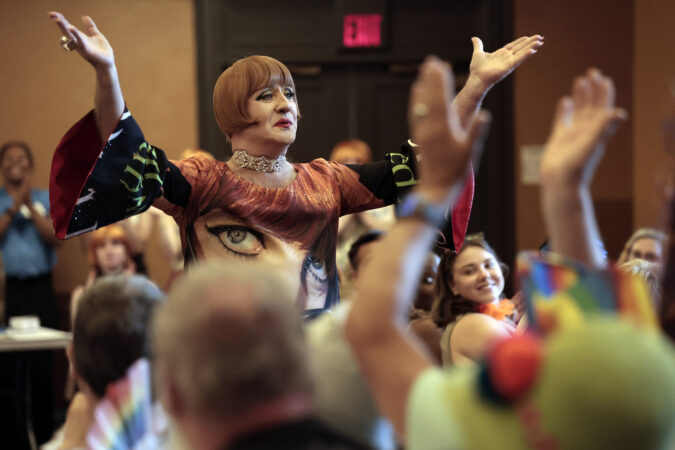
The legendary redheaded drag queen Carlota Ttendant donned a baby-blue Eva Gabor-inspired gown — its plunging neckline revealing tasteful chest hair — and sensible black heels.
At 65, arthritis stifles her strut in stilettos.
“Drag is a young girl’s game,” she said.
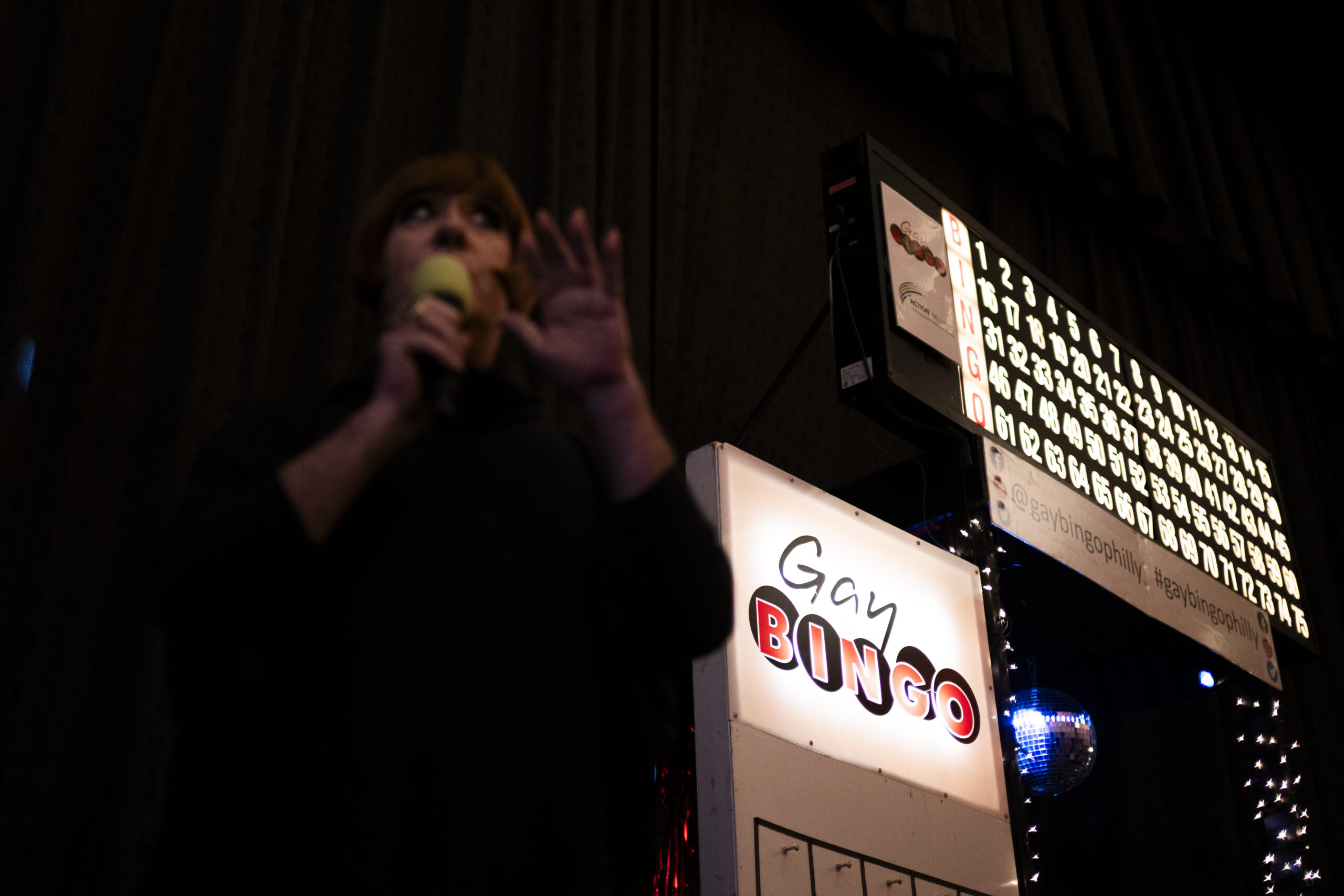
This was her swan song. At the close of its 30th season this Pride Month, the man behind the makeup, Michael Byrne, hung up his heels and bid adieu to his drag persona and his longtime gig hosting Gay Bingo, the camp, irreverent, slightly profane, and undoubtedly silly monthly HIV/AIDS fundraiser.
“I know it’s time,” Byrne said. And, “I’m excited to never wear Spanx ever again.”
Across three decades, Carlota Ttendant has called hundreds of games and elicited endless laughs, all while raising millions for people living with HIV/AIDS across the Delaware Valley. She helped steer a community through crisis, providing a respite to those experiencing immense loss and stigma. Even as medicine has advanced and HIV/AIDS has become manageable, she’s crafted a safe space for queer Philadelphians. For one night each month, she’s been an entertainer and an equalizer, responsible for uniting people — gay and straight, from Haddonfield to Phoenixville — around a common goal.
And since Carlota came into Byrne’s life, she’s taught him to lead with courage, practice gratitude, and be unabashedly unafraid. He’s gone from being the “worst waiter ever” and selling cosmetics, to being a performer, licensed clinical social worker counseling older LGBTQ+ folks through their own next phases of life, and president of Philly AIDS Thrift’s board.
“None of it would have been possible without all of you,” Carlota told the 400-person crowd — the biggest turnout in years — at her last Gay Bingo on June 13 in the basement ballroom at Congregation Rodeph Shalom. “In the ’90s there was horror happening, and today there is horror happening.
“But please, let’s do some laughing,” Carlota said.
“Let’s play bingo!”
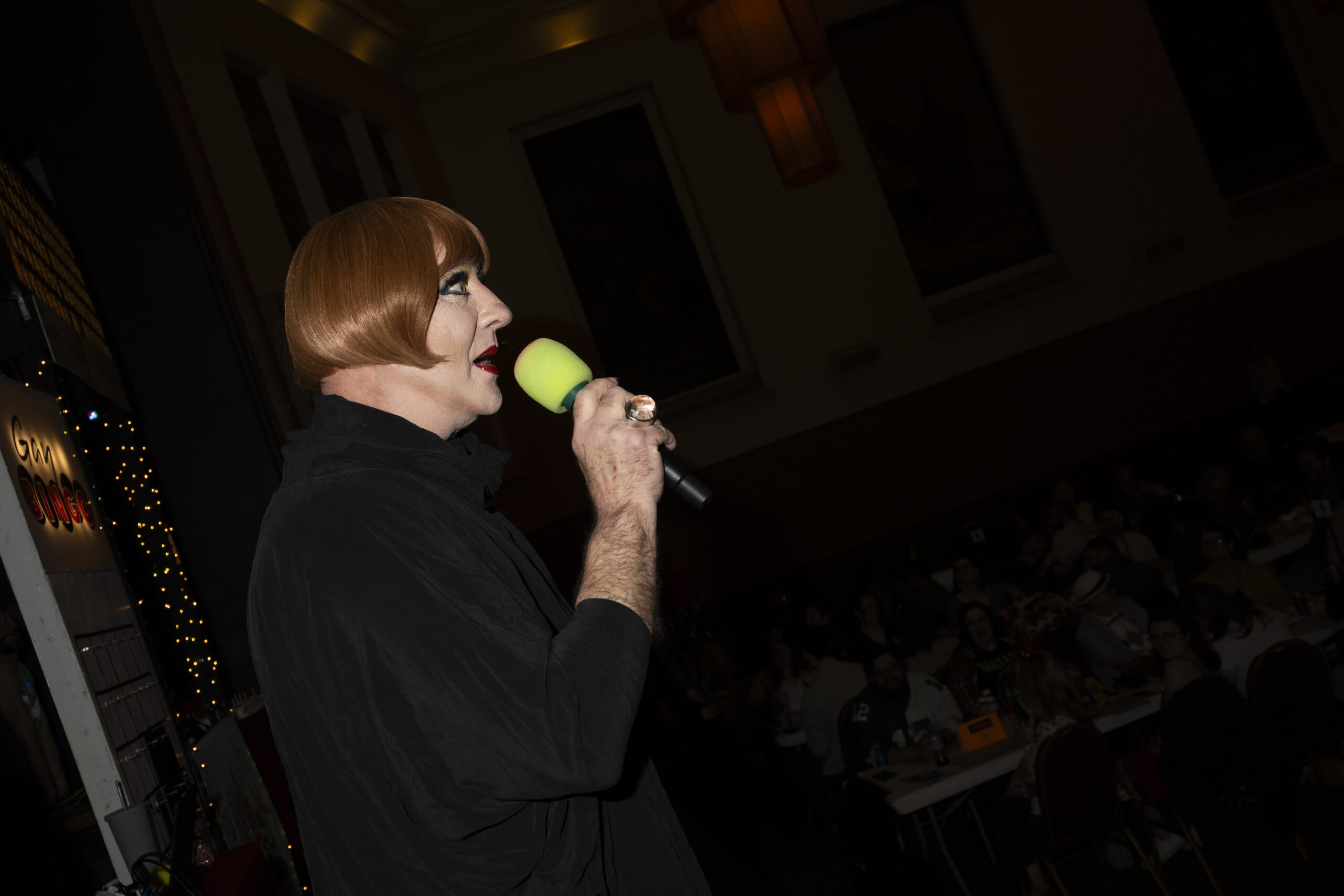
Michael Byrne, as his drag persona Carlota Ttendant, during Gay Bingo on Saturday, May 9, 2026, at Congregation Rodeph Shalom in Philadelphia.
Act I
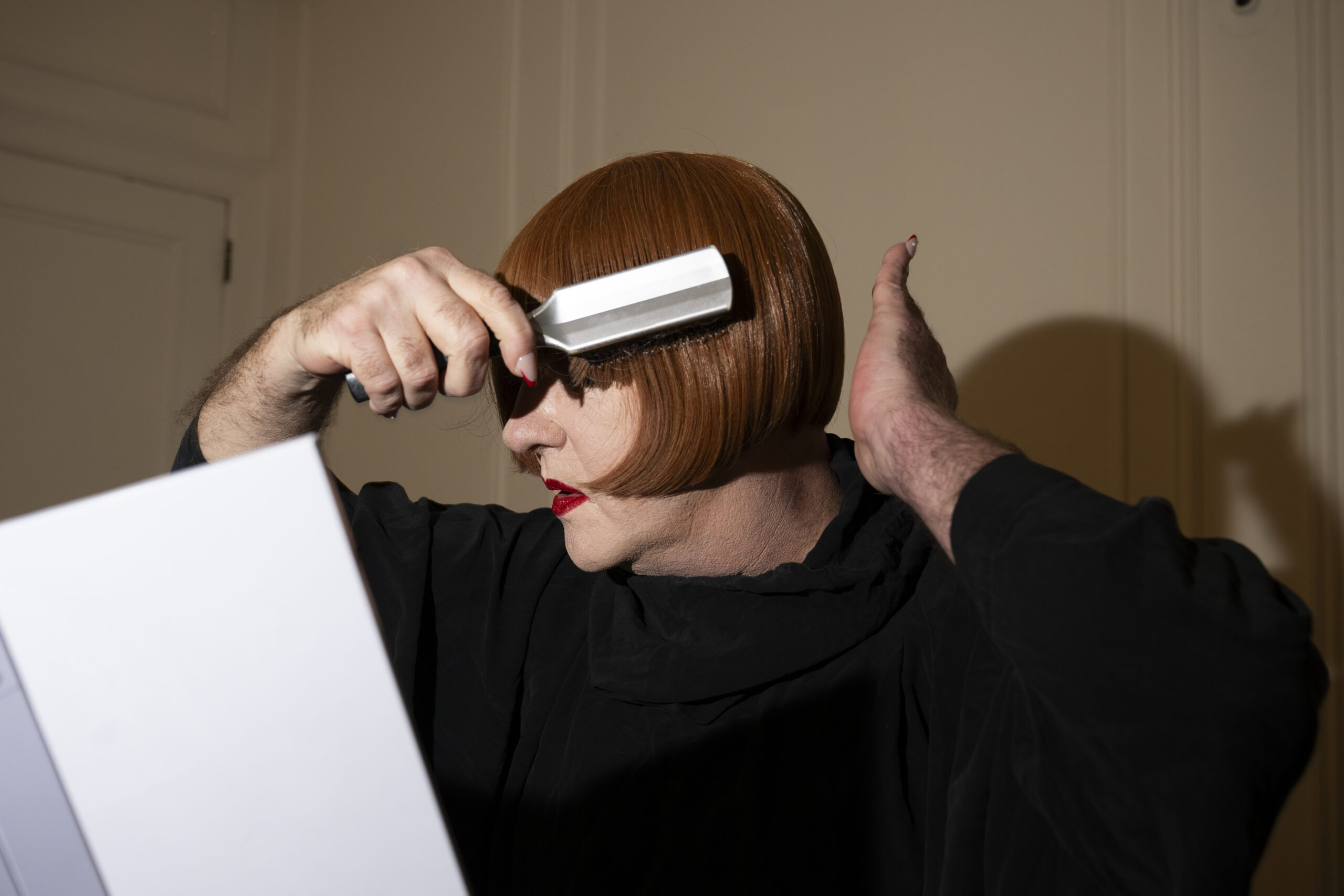
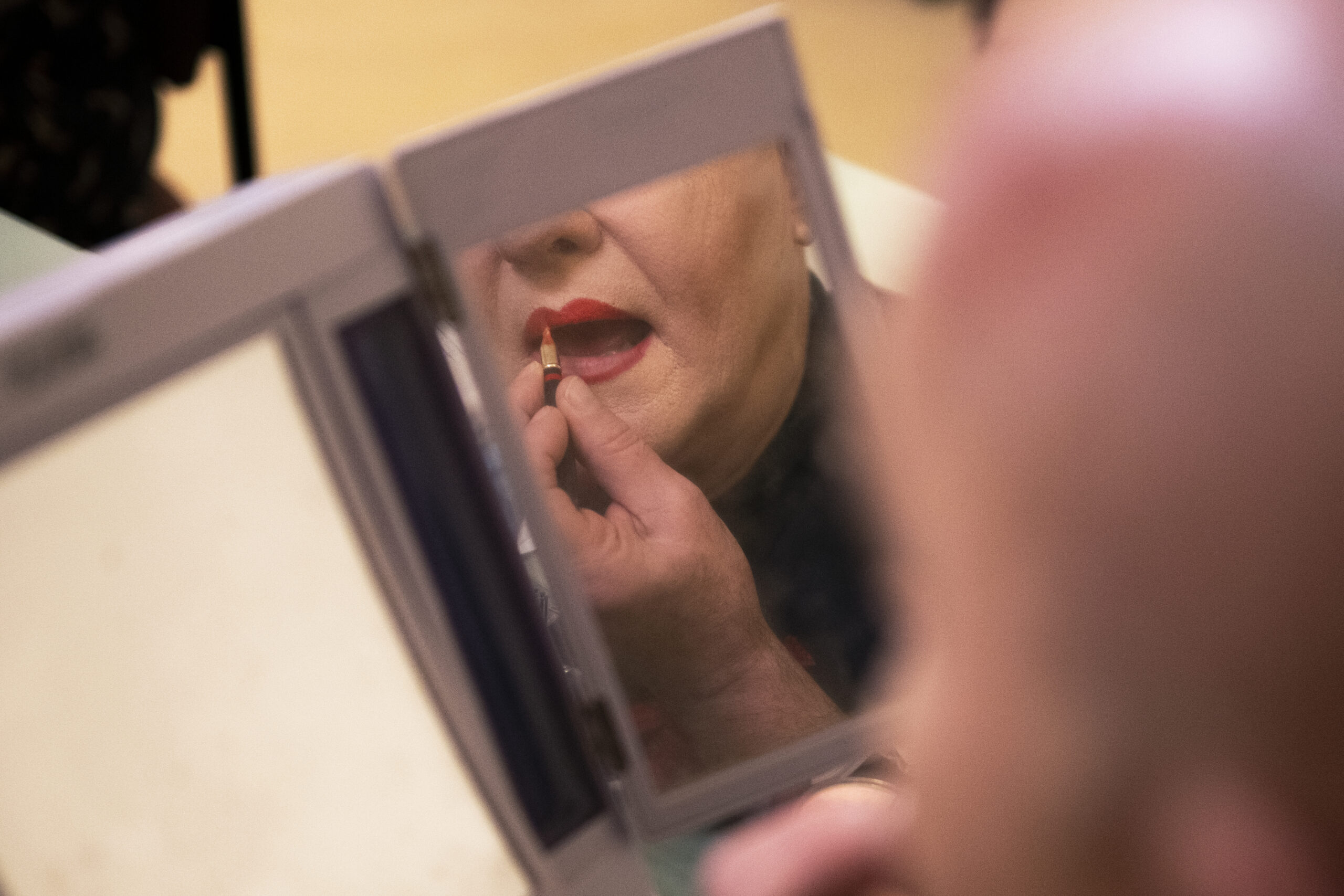
Like so many Saturdays before, Byrne, on June 13, slathered his face with foundation, carved out his cheeks, deepened his eyes, and painted on his red lip. There was haze — from the dusting of loose setting powder, bronzer, and blush — and musk — from sweat and heat and hairspray — in a Rodeph Shalom classroom, which moonlights as a bridal suite and a boudoir for the Bingo Verifying Divas or BVDs. At 10 minutes till curtain, he futzed with his press-on nails, shimmied into a mod swing dress, straightened the back seams of his tights, and dabbed on some glitter. With each gender-bending step, he transformed into his “twin sister,” Carlota.
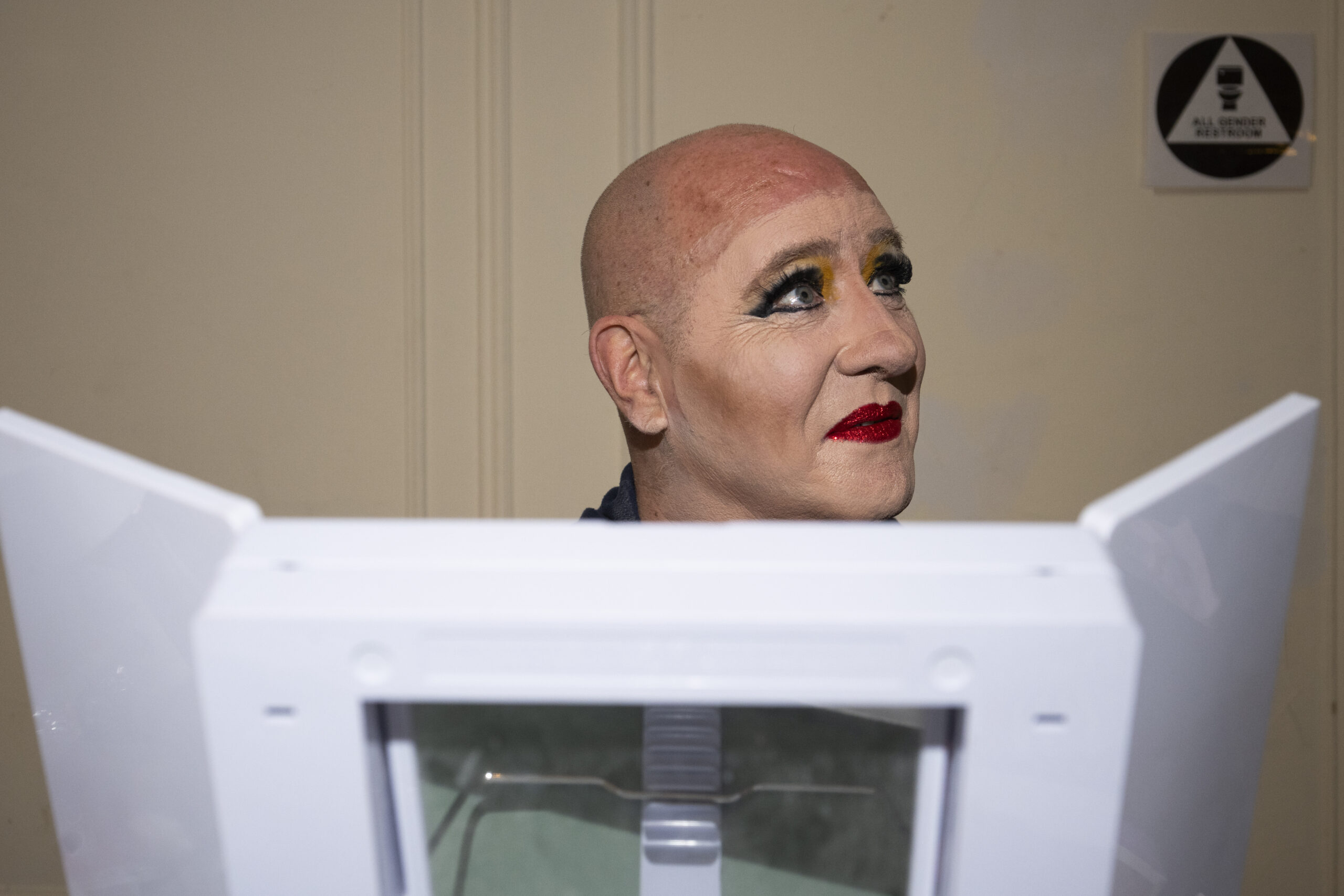
Michael Byrne transforms into his drag persona Carlota Tendant ahead of Gay Bingo on May 9 at Congregation Rodeph Shalom in Philadelphia.
Like all classy ladies, Carlota’s exact age is lost to time. In the 1990s, Byrne was organizing a fundraiser for Big Mess Theatre, an avant-garde troupe that he helped establish as the spinning axis of Philadelphia’s alternative performance scene, complete with vaudeville acts, an oompah orchestra, and live auction with a striptease routine. Byrne was to host and make his drag debut, and Carlota Ttendant (read as car lot attendant) was conjured up over bourbon and blackjack. (He learned, years later, that there was a ’60s stripper at the famed Trocadero Theatre with the same name.)
Byrne never aimed to create a perfect, feminine illusion with Carlota. He left his chest unshaven and unstuffed, but short, thrifted dresses showed off his long and feminine legs. Carlota’s makeup was an extension of the exaggerated theater paint Byrne, who has been on stages since he was 10, knew; cheap wigs hid his sideburns. Nothing could mask his deep, raspy, anything-but-ladylike voice.
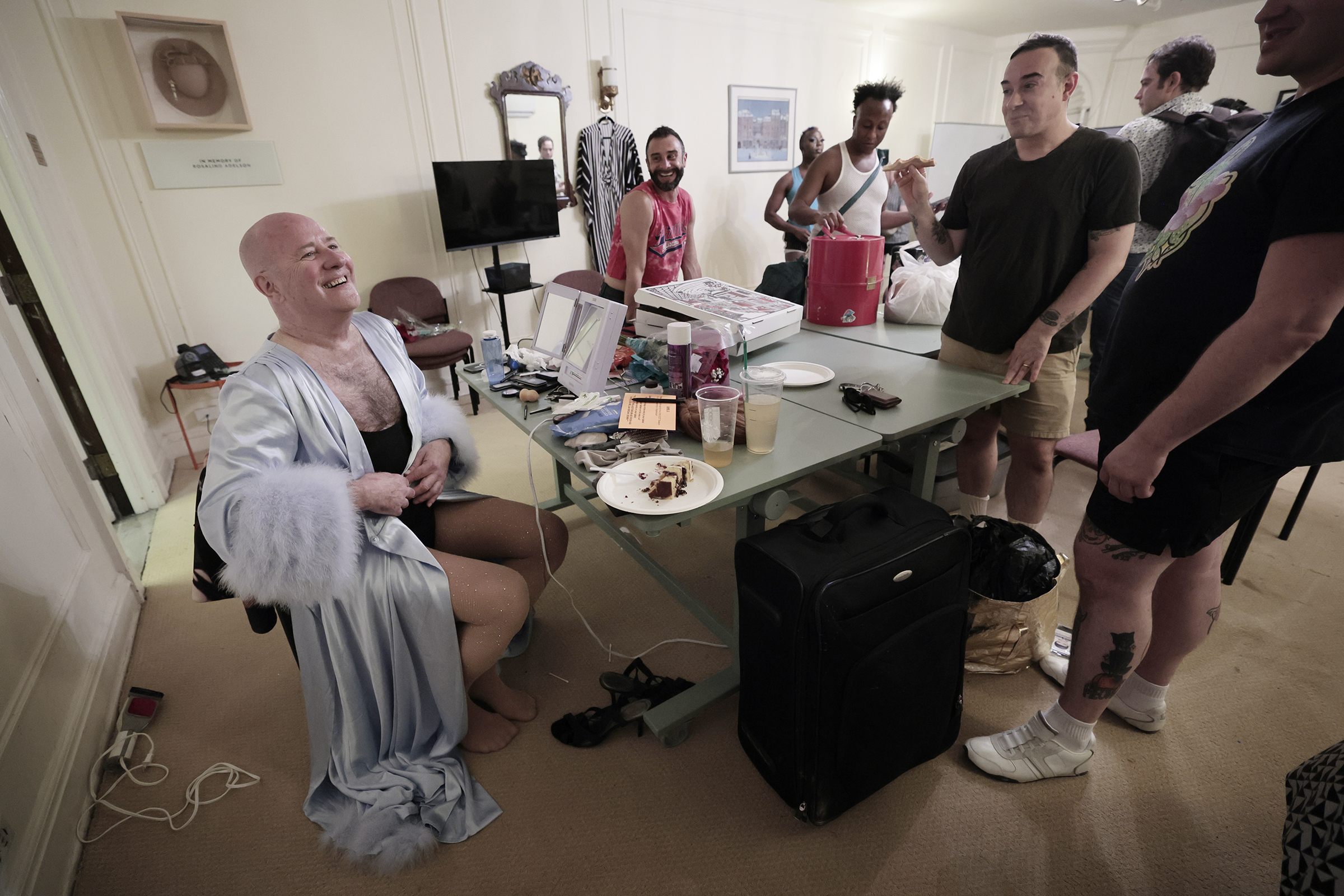
Carlota Ttendant (Michael Byrne) (at left) laughs with friends and fellow performers after Carlota’s final evening cohosting Gay Bingo at Congregation Rodeph Shalom in Philadelphia on June 13. Michael Byrne transforms into his drag persona Carlota Ttendant ahead of Gay Bingo on May 9 at Congregation Rodeph Shalom in Philadelphia.
Carlota could be bossy and profane but never vulgar; she could poke fun at audiences without being cruel. She became the “drag queen you could bring your grandma to,” Byrne said.
Around the time Carlota came to be, the number of new AIDS diagnoses and deaths peaked in Philadelphia. In 1992, new AIDS cases surpassed 1,500; in 1994, AIDS deaths topped 900, according to city data.
(function(){function e(){window.addEventListener(`message`,function(e){if(e.data[`datawrapper-height`]!==void 0){var t=document.querySelectorAll(`iframe`);for(var n in e.data[`datawrapper-height`])for(var r=0,i;i=t[r];r++)if(i.contentWindow===e.source){var a=e.data[`datawrapper-height`][n]+`px`;i.style.height=a}}})}e()})();
Misinformation about the disease, which strips the body of its natural defenses and leaves it vulnerable to life-threatening infections and ailments, was rampant. People alienated gay men, wrongly fearing HIV/AIDS could be transmitted through a handshake, a hug, or across a dinner table, The Inquirer and Philadelphia Daily News wrote. Diagnostic testing took weeks; what rudimentary treatments were available sometimes made people sicker; and HIV often progressed to AIDS within a few years.
“It was not unusual to have people dying every month,” said Kevin Burns, who as a case manager with the nonprofit ActionAIDS (now called Action Wellness) connected clients to hospice care. Burns later served as Action Wellness’ executive director.
The need for resources was rife, and in 1996, Philly’s nonprofit AIDS Fund set out to supplement the money it made from its annual AIDS Walk, according to Sandra Thompson, former chair of its board of directors. An article in City Paper about an irreverent bingo-drag night sweeping Seattle — which, by one report in the Seattle Times, raised $10,000 a night — caught the attention of Mark “Chumley” Singer, then a fledgling events producer, who pitched the idea to the AIDS Fund. (The fund folded in 2024 due to the decrease in new AIDS cases, and turned ownership of Gay Bingo over to Action Wellness.)
Singer recalled thinking at the time: “I’ve been doing sad, mopey, candlelight vigil fundraisers. … Why can’t we raise money and have fun?”
Singer and Byrne had never met before the latter was tapped to host Gay Bingo, but their chemistry was kismet.
“There was never a show where we weren’t having more fun than everybody,” said Singer, who cohosted until the early aughts. Byrne and Singer left Gay Bingo around that time, but Byrne later returned.
Byrne remembers the magic of those early years of Gay Bingo. He remembers when 600 seats would sell out in 10 minutes, and he remembers doing his glittered red lip from the floor of the Gershman Y’s mirrored dance studio. He remembers two-show Saturdays and how six hours in heels would make him catatonic on Sunday. He remembers riffing with and ribbing Singer and the laughs their off-color jokes and mild profanity elicited. He remembers the constant movement of the bold and bawdy BVDs, on Rollerblades, or the electricity when O-69 was called and hundreds stood up, shaking and shouting with the fervor of their libidos.
But Byrne also remembers the solemn moments: the steelworker who told a documentarian about watching his bodybuilder son become emaciated; the families who sponsored games on the anniversary of their loved one’s death; the pharmacist who learned all he could about HIV drugs; Byrne’s own friends who were infected.
“Our community was in crisis,” Byrne said, “while we focused on it, we also focused on being fun and laughing.
“And we all needed that at that point.”
Act II
The “Rainbow Bombshell” Gay Bingo on June 13 doubled as a Pride extravaganza and an homage to all things Carlota. Her first outfit of the night was crafted from a promotional banner from her years hosting the Philadelphia Orchestra’s Halloween Concert. Alongside her, the BVDs dressed as Big Mess-era Carlota, Norma Kamali-inspired Carlota, Phillies Carlota, and fuzzy caftan-wearing Carlota. Attendees, ushers, volunteers, and even the American Sign Language interpreter wore that signature red bob — wigs that Action Wellness bought in bulk. One wore a T-shirt that read, “Dibs on the ginger.”
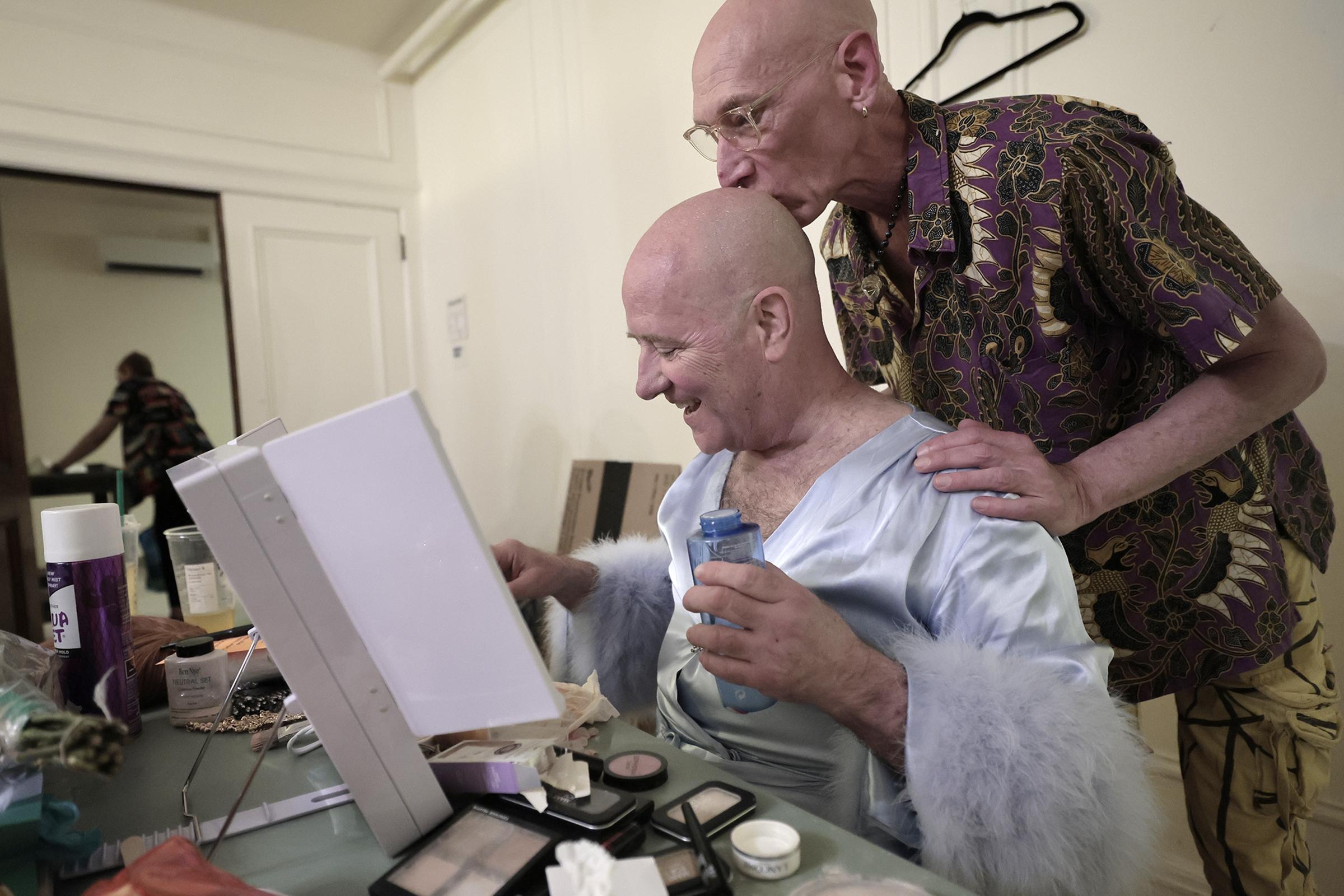
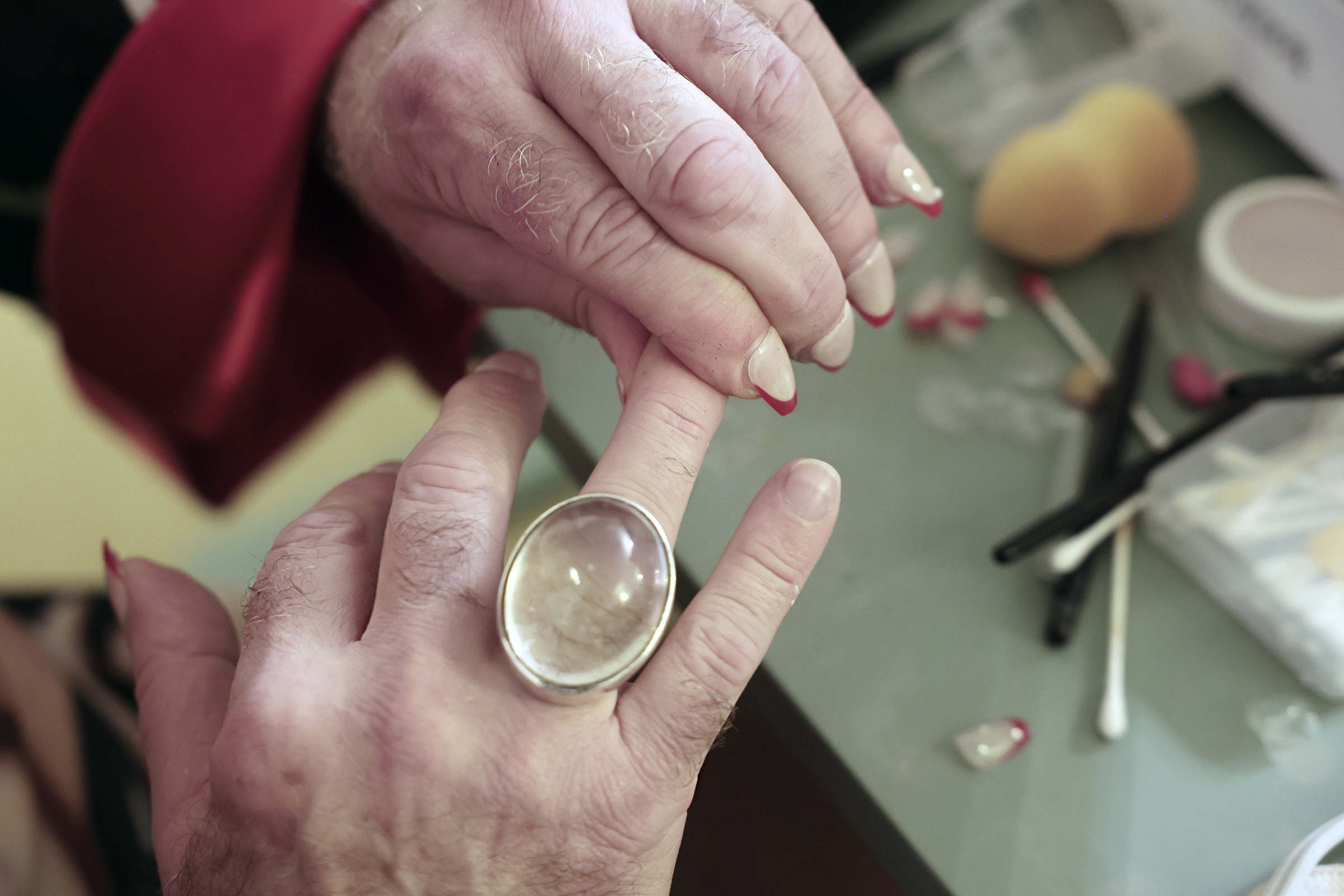
In the dressing room, Tess Tickle (Paul Struck) kisses Carlota Ttendant (Michael Byrne) on the head after Rainbow Bombshell Gay Bingo at Congregation Rodeph Shalom in Philadelphia on Saturday, June 13, 2026. “I love him” said Struck as he walked out of the dressing room.Carlota Ttendant (Michael Byrne) puts on a favorite crystal ring and fake nails before cohosting Rainbow Bombshell Gay Bingo on June 13.
“Are we ready to win some money?” Carlota said, hyping up the crowd before the first of 12 rounds of bingo. Councilmember Rue Landau, the Philadelphia City Council’s first openly LGBTQ+ member, called the first game:
I-28.
I-26.
G-52.
B-14.
O-63.
B-3.
“Bingo!” someone cried out, as the audience let out an audible wave of disappointment, exasperation, and defeat, and the BVDs rushed over to authenticate.
“Did you just get bingo, girl?” Carlota wisecracked.
For 30 years, these Gay Bingo players have pledged each month to “keep on playing Gay Bingo until this crisis is over.” And today, HIV/AIDS deaths and new diagnoses have stagnated, according to the most recently available health department data, and drug cocktails have made it so people with HIV can live long, healthy lives and may never pass the disease onto others or have their illness advance to AIDS. Preventative medications, like PrEP, can also dramatically decrease the risk of becoming infected.
Michael Byrne, as his drag persona Carlota Ttendant, on May 9 at Congregation Rodeph Shalom in Philadelphia.
But there are still obstacles to ending the epidemic. HIV/AIDS disproportionately affects Black and brown communities and low-income people who experience barriers to healthcare, according to Action Wellness executive director Mary Evelyn Torres. The geographic disparities are also stark: Current drug regimens may be readily available in well-resourced countries, like the United States, but access is scarce in the world’s vulnerable pockets. These problems have only been exacerbated by President Donald Trump’s proposed cuts to domestic and foreign HIV/AIDS programs. The withdrawal of American dollars overseas, United Nations officials warned, could lead to more than 4 million AIDS-related deaths and 6 million more HIV infections by 2029.
(function(){function e(){window.addEventListener(`message`,function(e){if(e.data[`datawrapper-height`]!==void 0){var t=document.querySelectorAll(`iframe`);for(var n in e.data[`datawrapper-height`])for(var r=0,i;i=t[r];r++)if(i.contentWindow===e.source){var a=e.data[`datawrapper-height`][n]+`px`;i.style.height=a}}})}e()})();
“We’ve come a long way, but there’s still work to be done,” Torres said, “and that work is being threatened by this administration.”
As the epidemic has changed, so has Gay Bingo: The money raised — more than $5 million since its inception — now goes toward Action Wellness’ social services and programming. The BVDs ditched their roller skates at the Gershman Y (because of the new, carpeted venue). Tickets cost $50-$60, compared to $10-$12 in May 1996, and these days, attendance averages between 150 and 200 a month.
Drag has evolved, too. Spending centuries on the periphery as proto-punk-beatniks and after-midnight acts, queens disrupted and challenged the mainstream with wit and wonder. Then, the exploding popularity of RuPaul’s Drag Race, a drag reality-TV competition, seismically changed the culture, snubbing scrappiness for silicon and kitsch for couture. The show ushered drag into the zeitgeist: Its lingo became commonplace and its contestants turned into social media stars, with businesses, makeup brands, books, and podcasts, as the art form continues to face political bans and threats nationwide.
The show “has taken everything to a whole other planet,” Byrne said, “and that’s amazing and that’s really great.
“That’s also not what I do.”
Carlota was never concerned with “affecting female mannerisms” or “trying to be this woman or this drag queen,” Singer said. To Byrne, she’s come to embody the fiercest, most unafraid, and righteous versions of himself. But “Michael was never far from Carlota,” Singer said.
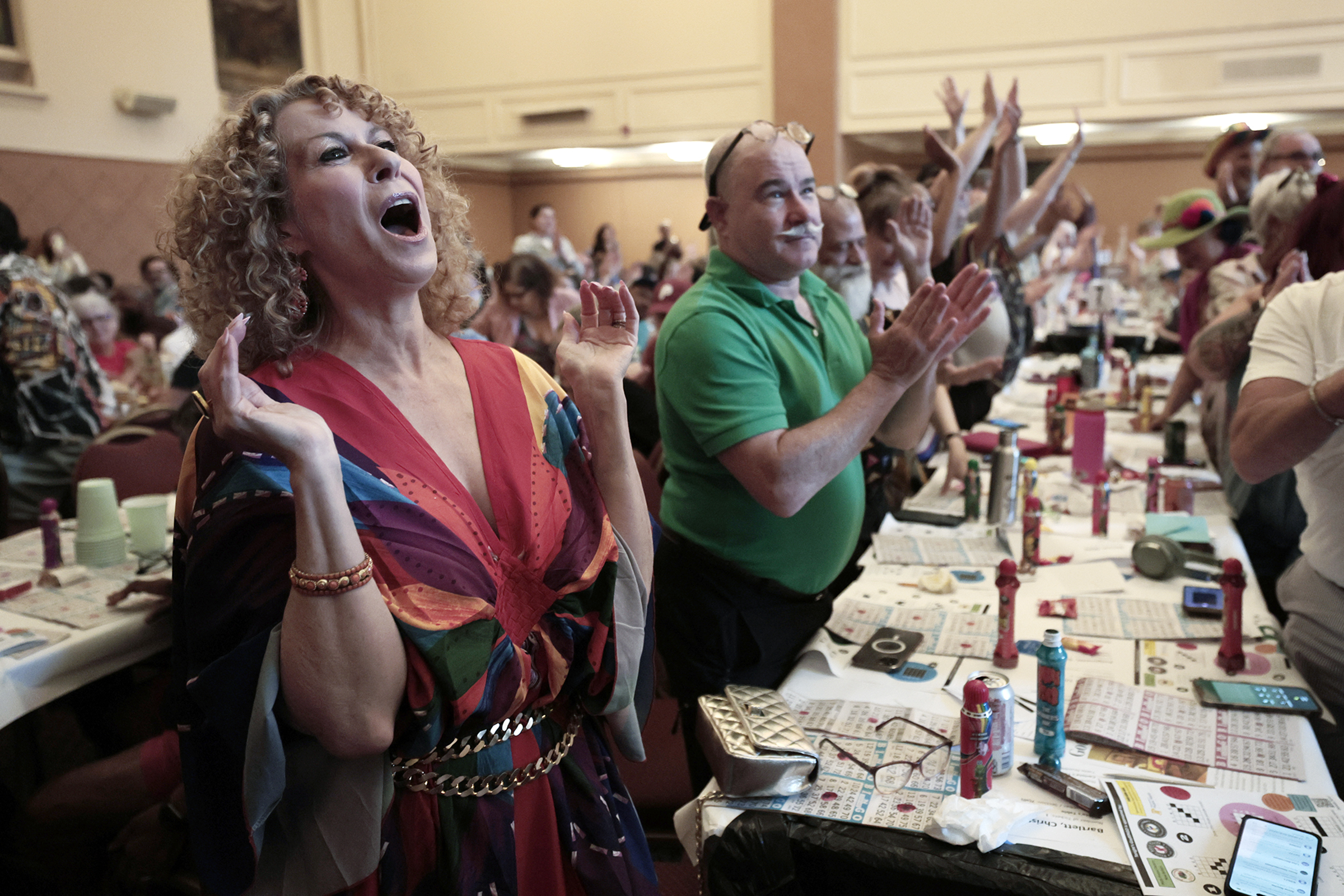
Janie Lopez of Philadelphia cheers for her friend Carlota Ttendant during Gay Bingo at Congregation Rodeph Shalom.
To those who know Byrne, Carlota’s come to represent someone purer and more singular, a testament to what joyful resistance and defiant resilience can achieve amid tragedy. Her ingenuity and authenticity have made her synonymous with Gay Bingo, according to Action Wellness event planner and cohost Tim Johnson (otherwise known as Stella D’Oro); her playfulness is what’s engaging, Burns said; the safe space she’s cultivated for the queer community is what keeps people coming back season after season, said regulars Cat Johnson, 47, and Katie Dickerson, 38, of Roxborough.
“It’s going to be really different without Carlota,” Johnson said. “No one’s going to fill her shoes, but I think that the vibe and the energy is going to live on.”
“It’s a lot easier to raise money when everyone is having fun,” said Amber Schlesman, 38, of Point Breeze, who’s been coming to Gay Bingo since its Gershman Y days. “And for the shoes, I’m guessing it’s a size 12.”
All those shoes will be donated to Philly AIDS Thrift soon enough, Byrne said.
Byrne’s voice cracked as he thought of the people who made Carlota’s run possible: the AIDS Fund organizers, Singer, the original cast of BVDs, the volunteers, those who came back monthly, the victims, their families. Many sent her off June 13 with a trove of well wishes, notes that read, “thanks for the memories,” and “so proud of all you’ve done.” They told her, “I love you,” and “hang up those high heels, baby.”
At the end of the night, Byrne’s best friend gifted him a throw pillow.
“Don’t be a lady,” it said. “Be a legend.”
Michael Byrne transforms into his drag persona Carlota Ttendant ahead of Gay Bingo on Saturday, May 9, 2026, at Congregation Rodeph Shalom in Philadelphia.