Category: Nation & World

  • U.S. allies and adversaries use U.N. meeting to critique Venezuela intervention as America defends it

    U.S. allies and adversaries use U.N. meeting to critique Venezuela intervention as America defends it

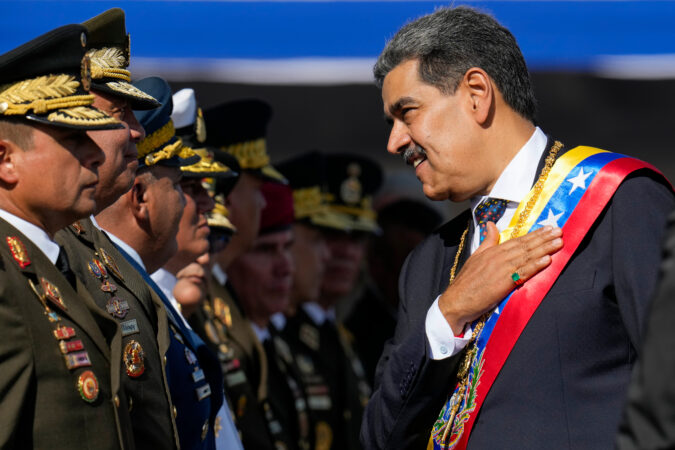
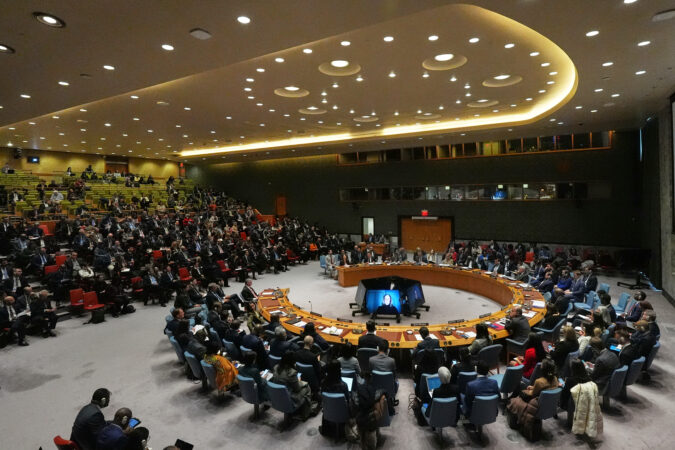
    UNITED NATIONS — Both allies and adversaries of the United States on Monday used an emergency meeting of the U.N. Security Council to voice opposition to the audacious U.S. military operation in Venezuela that captured leader Nicolás Maduro.

    Before the U.N.’s most powerful body, countries critiqued — if sometimes obliquely — President Donald Trump’s intervention in the South American country and his recent comments signaling the possibility of expanding military action to countries like Colombia and Mexico over drug trafficking accusations. The Republican president also has reupped his threat to take over the Danish territory of Greenland for the sake of U.S. security interests.

    Denmark, which has jurisdiction over the mineral-rich island, carefully denounced U.S. prospects for taking over Greenland without mentioning its NATO ally by name.

    “The inviolability of borders is not up for negotiation,” said Christina Markus Lassen, Danish ambassador to the U.N.

    She also defended Venezuela’s sovereignty, saying “no state should seek to influence political outcomes in Venezuela through the use of threat of force or through other means inconsistent with international law.”

    U.S. allies push back on Venezuela

    While French President Emmanuel Macron recently endorsed Maduro’s capture, its U.N. envoy was slightly more critical Monday, saying any violations of international law by the five permanent members of the U.N. Security Council, which include the U.S., erodes “the very foundation of the international order.”

    “The military operation that has led to the capture of Maduro runs counter to the principle of peace dispute resolution and runs counter to the principle of nonuse of force,” said Jay Dharmadhikari, deputy French ambassador to the U.N.

    U.S. envoy Mike Waltz defended the operation in Venezuela as a justified and “surgical law enforcement operation,” calling out the 15-member council for criticizing the targeting of Maduro.

    “If the United Nations in this body confers legitimacy on an illegitimate narco-terrorist with the same treatment in this charter of a democratically elected president or head of state, what kind of organization is this?” said Waltz, who is Trump’s former national security adviser.

    Maduro’s 2024 reelection was widely disputed.

    U.N. Secretary-General Antonio Guterres said in a statement that he is “deeply concerned that rules of international law have not been respected with regard to the 3 January military action.” He said the “grave” action by the U.S. could set a precedent for how future relations between nations unfold.

    Venezuela calls on the U.N. to take action

    Even with the strong support for Venezuela’s sovereignty, its envoy called on the U.N. to go beyond veiled comments and condemnation. Ambassador Samuel Moncada urged the Security Council to demand that Washington release Maduro and his wife.

    “If the kidnapping of a head of state, the bombing of a sovereign country, and the open threat of further armed action are tolerated or downplayed, the message sent to the world is a devastating one: namely that the law is optional, and that force is the true arbiter of international relations,” Moncada said.

    He warned that other countries can’t afford to look away: “Accepting such a logic would mean to open the door to a deeply unstable world.”

    Neighboring Colombia described the raid as reminiscent of “the worst interference in our area in the past.”

    “Democracy cannot be defended or promoted through violence and coercion, and it cannot be superseded, either, by economic interests,” Ambassador Leonor Zalabata said.

    China, Russia are expectedly critical

    The biggest critics of U.S. foreign policy, China and Russia, which are also permanent members of the Security Council, called for the U.N. body to unite in rejecting America turning back to an “era of lawlessness.”

    Maduro, like his predecessor, forged a close relationship with Russia, while China was the main destination for most Venezuelan oil.

    “We cannot allow the United States to proclaim itself as some kind of a supreme judge, which alone bears the right to invade any country, to label culprits, to hand down and to enforce punishments irrespective of notions of international law, sovereignty, and nonintervention,” Russian ambassador Vassily Nebenzia said.

    His own country’s 2022 invasion of Ukraine has drawn widespread condemnation within the U.N. and from the U.S., although the Trump administration is engaging with Russia in hopes of brokering an end to the fighting.

    The U.S. seized Maduro and his wife early Saturday from their home on a military base and put them aboard a U.S. warship to face prosecution in New York in a Justice Department indictment accusing them of participating in a narco-terrorism conspiracy. Maduro declared his innocence during his first appearance in a Manhattan courthouse Monday.

    His stunning removal came after months of the U.S. amassing a military presence off Venezuela’s coast and blowing up alleged drug trafficking boats. Trump has insisted that the U.S. would run Venezuela at least temporarily and tap its vast oil reserves to sell to other nations.

    Secretary of State Marco Rubio, however, says the U.S. would enforce an oil quarantine that was already in place on sanctioned tankers and use that leverage to press policy changes in Venezuela.
  • Jury selection begins in trial for ex-officer accused in police response to Uvalde school shooting

    Jury selection begins in trial for ex-officer accused in police response to Uvalde school shooting

    CORPUS CHRISTI, Texas — A former school police officer in Uvalde, Texas, who was part of the slow law enforcement response to one of the worst school shootings in U.S. history went on trial Monday on charges that he failed to protect children from the gunman.

    Adrian Gonzales, one of the first officers to respond to the 2022 attack, is charged with 29 counts of child abandonment or endangerment in a rare prosecution of an officer accused of not doing more to save lives. Authorities waited more than an hour to confront the teenage shooter who killed 19 students and two teachers at Robb Elementary.

    Gonzales has pleaded not guilty, and his attorney has said the officer tried to save children that day.

    Jury selection began Monday at a Texas courthouse where a long line of prospective jurors stretched outside the building before the proceedings got underway.

    Potential jurors were given a list of questions asking what they knew about the law enforcement response and their impressions of what happened, as well as whether they contributed money to Uvalde victims.

    Judge Sid Harle told several hundred potential jurors that the court was not looking for jurors who know nothing about the shooting but wants those who can be impartial. The trial was expected to last about two weeks, he said.

    Among the potential witnesses are FBI agents, rangers with the Texas Department of Public Safety, school employees, and family members of the victims.

    Nearly 400 officers from state, local, and federal law enforcement agencies responded to the school, but 77 minutes passed from the time authorities arrived until a tactical team breached the classroom and killed the shooter, Salvador Ramos. An investigation later showed that Ramos was obsessed with violence and notoriety in the months leading up to the attack.

    Gonzales and former Uvalde schools police chief Pete Arredondo were among the first on the scene, and they are the only two officers to face criminal charges over the response. Arredondo’s trial has not been scheduled.

    The charges against Gonzales carry up to two years in prison if he is convicted.

    Police and Texas Gov. Greg Abbott initially said swift law enforcement action killed Ramos and saved lives. But that version quickly unraveled as families described begging police to go into the building and 911 calls emerged from students pleading for help.

    The indictment alleges Gonzales placed children in “imminent danger” of injury or death by failing to engage, distract, or delay the shooter and by not following his active shooter training. The allegations also say he did not advance toward the gunfire despite hearing shots and being told where the shooter was.

    State and federal reviews of the shooting cited cascading problems in law enforcement training, communication, leadership, and technology, and questioned why officers waited so long.

    According to the state review, Gonzales told investigators that once police realized there were students still sitting in other classrooms, he helped evacuate them.

    Some family members of the victims have said more officers should be indicted.

    “They all waited and allowed children and teachers to die,” said Velma Lisa Duran, whose sister Irma Garcia was one of the two teachers who were killed.

    Prosecutors will likely face a high bar to win a conviction. Juries are often reluctant to convict law enforcement officers for inaction, as seen after the Parkland, Fla., school massacre in 2018.

    Sheriff’s deputy Scot Peterson was charged with failing to confront the shooter in that attack. It was the first such prosecution in the U.S. for an on-campus shooting, and Peterson was acquitted by a jury in 2023.

    At the request of Gonzales’ attorneys, the trial was moved about 200 miles southeast to Corpus Christi. They argued Gonzales could not receive a fair trial in Uvalde, and prosecutors did not object.

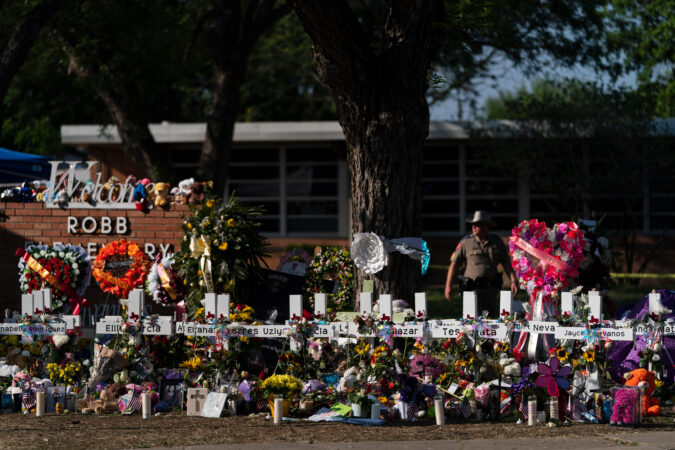
    Uvalde, a town of 15,000, still has several prominent reminders of the shooting. Robb Elementary is closed but still stands, and a memorial of 21 crosses and flowers sits near the school sign. Murals depicting several victims can still be seen on the walls of several buildings.

    Jesse Rizo, whose 9-year-old niece Jackie was one of the students killed, said even with a three-hour drive to Corpus Christi, the family would like to have someone attend the trial every day.

    “It’s important that the jury see that Jackie had a big, strong family,” Rizo said.

  • Man who broke windows at Vance’s Ohio home is detained, the Secret Service says

    Man who broke windows at Vance’s Ohio home is detained, the Secret Service says

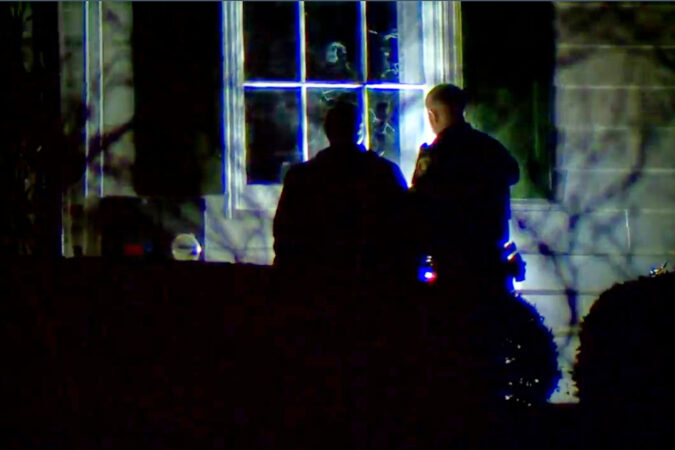
    A man who broke windows at Vice President JD Vance’s Ohio home and caused other property damage was detained early Monday, the U.S. Secret Service said.

    The man was detained shortly after midnight by Secret Service agents assigned to Vance’s home, east of downtown Cincinnati, agency spokesperson Anthony Guglielmi said in a statement emailed to the Associated Press. The vice president and his family were not at home, having returned to Washington on Sunday after a weekend there, his office said.

    The Secret Service heard a loud noise at the house around midnight and found a person who had broken a window with a hammer and was trying to get in, according to two law enforcement officials who were not publicly authorized to discuss the investigation into what happened and spoke on the condition of anonymity. The man had also vandalized a Secret Service vehicle on his way up the home’s driveway, one of the officials said.

    A law enforcement official identified the suspect as William Defoor, 26, who public records list as living in Cincinnati. Calls to the listings for possible relatives and an attorney who previously represented Defoor were not immediately returned.

    Defoor is set to be arraigned Tuesday on misdemeanor charges of vandalism, criminal trespass, criminal damaging, and obstruction of official business, court records show.

    Vance expressed gratitude to the Secret Service and Cincinnati police for responding quickly to the incident in a post on the social platform X.

    “I appreciate everyone’s well wishes about the attack at our home,” Vance tweeted. “As far as I can tell, a crazy person tried to break in by hammering the windows.”

    Court records show that Defoor faced an earlier charge of vandalism in 2024 and agreed to treatment under the county’s Mental Health Court system.

    The Secret Service is coordinating with the Cincinnati Police Department and the U.S. attorney’s office as charging decisions are reviewed, Guglielmi said.

    The Vance home is located in one of the city’s oldest neighborhoods, on hills overlooking the city. Throughout Vance’s vice presidency, protesters have often gathered outside the home — clashing at one point last spring with Vance himself.

    Vance, a Republican, was a U.S. senator representing Ohio before becoming vice president. He moved to Cincinnati after a stint in Silicon Valley following law school, and his half brother ran unsuccessfully for mayor there last year. Vance was raised in nearby Middletown, which figured heavily in his best-selling memoir, Hillbilly Elegy.

    Associated Press writers Mike Balsamo, Sarah Brumfield and Julie Carr Smyth contributed to this article.

  • Flu season surged in U.S. over the holidays and already rivals last winter’s harsh epidemic

    Flu season surged in U.S. over the holidays and already rivals last winter’s harsh epidemic

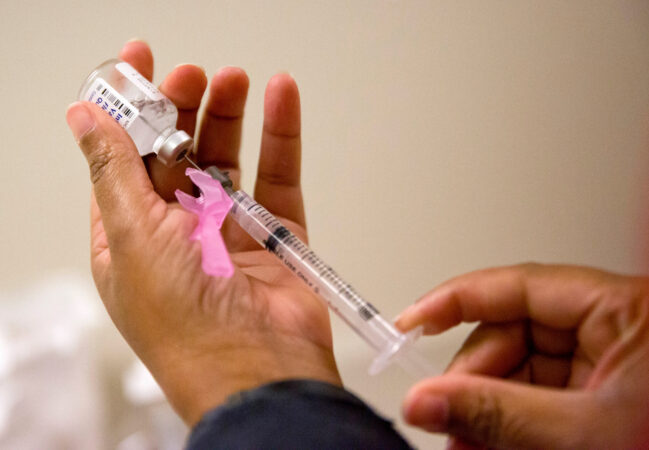
    NEW YORK — U.S. flu infections surged over the holidays, and health officials are calling it a severe season that is likely to get worse.

    New government data posted Monday — for flu activity through the week of Christmas — showed that by some measures this season is already surpassing the flu epidemic of last winter, one of the harshest in recent history.

    The data was released the same day that the Trump administration said it will no longer recommend flu shots and some other types of vaccines for all children.

    Forty-five states were reporting high or very high flu activity during the week of Christmas, up from 30 states the week before.

    The higher numbers appear to be driven by the type of flu that’s been spreading, public health experts say.

    One type of flu virus, called A H3N2, historically has caused the most hospitalizations and deaths in older people. So far this season, that’s the type most frequently reported. Even more concerning, more than 90% of the H3N2 infections analyzed were a new version — known as the subclade K variant — that differs from the strain in this year’s flu shots.

    Flu seasons often don’t peak until January or February, so it’s too early to know how big a problem that mismatch will be.

    “The fact that we’ve seen steady increases over the last several weeks without much of a decline or even a flattening would suggest to me that we’ve got the peak ahead of us,” said Robert Hopkins, medical director of the National Foundation for Infectious Diseases.

    The second bad flu season in a row

    Last flu season was bad, with the overall flu hospitalization rate the highest since the H1N1 flu pandemic 15 years ago. Child flu deaths reached 288, the worst recorded for regular U.S. flu season.

    Nine pediatric flu deaths have been reported so far this season. For children, the percentage of emergency department visits due to flu has already surpassed the highest mark seen during the 2024-2025 season.

    Hopkins said H3N2 typically hits older adults hardest, and rising rates among children and young adults suggest a severe flu season across all age groups.

    Another ominous sign: The percentage of doctor’s office and medical clinic visits that were due to flulike illness also was higher late last month than at any point during the previous flu season.

    Deaths and hospitalizations have not reached last year’s levels, but those are lagging indicators, Hopkins noted.

    The U.S. Centers for Disease Control and Prevention estimates at least 11 million illnesses, 120,000 hospitalizations, and 5,000 deaths from flu have already occurred this season.

    U.S. government dials back vaccine recommendations

    Public health experts have recommended that everyone 6 months and older get an annual influenza vaccine.

    But federal health officials on Monday announced they will no longer recommend flu vaccinations for U.S. children, saying it’s a decision parents and patients should make in consultation with their doctors.

    However, flu vaccine will continue to be fully covered by private insurers and federal programs, including Medicaid, the Children’s Health Insurance Program, and the Vaccines for Children program, a U.S. Department of Health and Human Services spokesperson said.

    COVID-19 infections also have been rising, other federal data show, though so far this winter they remain less common than flu. The Trump administration stopped recommending COVID-19 shots for healthy children last year.

    U.S. will stop collecting Medicaid data

    Hopkins voiced concern about a federal notice posted last week that said government Medicaid programs, which pay for medical services for low-income families, will no longer have to report on immunization rates.

    CDC survey data suggests that U.S. flu vaccination rates are about the same as last year. But the Medicaid data — for flu as well as measles and other bugs — is a more comprehensive look at children who are at higher risk for many diseases, he said.

    Federal health officials framed the move as part of an effort to distance how Medicaid doctors are rated and paid from how often they provided childhood vaccinations.

    “Government bureaucracies should never coerce doctors or families into accepting vaccines or penalize physicians for respecting patient choice,” wrote Health Secretary Robert F. Kennedy Jr., who was a leading voice in the anti-vaccine community before President Donald Trump put him in charge of federal health agencies.

    “That practice ends now,” Kennedy wrote on social media last week.

    But Hopkins said the move will “eliminate a major source of data” that allows communities to assess efforts to protect children from vaccine-preventable diseases.

    “This is a disastrous plan,” he added.

  • What to know about the Trump administration’s latest moves on childcare funding

    What to know about the Trump administration’s latest moves on childcare funding

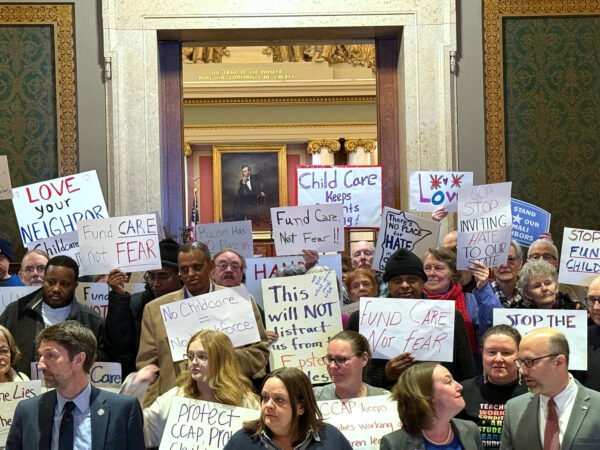
    President Donald Trump’s administration said Monday that it’s planning to tighten rules for federal childcare funds after a series of alleged fraud schemes at Minnesota daycare centers run by Somali residents.

    A Department of Health and Human Services spokesperson also reiterated the funding is on hold to all states until they provide more verification about the programs.

    The plans to change the policies came the same day that Minnesota Gov. Tim Walz, the 2024 Democratic vice presidential nominee who has said the Trump administration is politicizing the issue, announced he’s ending his reelection campaign.

    Here are some things to know about these moves:

    Rule change plans announced

    Health and Human Services announced Monday that it plans to change federal rules around the program, which serves lower-income families. As of last year, it was subsidizing care for about 1.3 million children.

    Among the proposed changes: It would allow states to pay providers based on attendance rather than merely enrollment and to pay providers after care is delivered rather than in advance.

    “Paying providers upfront based on paper enrollment instead of actual attendance invites abuse,” Health and Human Services Deputy Secretary Jim O’Neill said in a statement.

    When advanced payments were required in a 2024 rule change, officials said it would make childcare centers more likely to serve families that use the subsidies.

    Most states received waivers to delay implementing parts of the 2024 rules and many did not start the advance payments immediately.

    Rule changes usually take at least several months to make and include a public comment period.

    More verification needed for all states

    All 50 states will have to provide additional levels of verification and administrative data before they receive more funding from the Child Care and Development Fund, according to an HHS spokesperson.

    Minnesota will have to provide even more verification for childcare centers that are suspected of fraud, such as attendance and licensing records, past enforcement actions, and inspection reports.

    In his social media post last week, O’Neill said all Administration for Children and Families payments nationwide would require “justification and a receipt or photo evidence” before money is sent.

    That announcement came after a right-wing influencer posted a video last month claiming he had found that daycare centers operated by Somali residents in Minneapolis had committed up to $100 million in fraud.

    The departments that administer the programs in California, Iowa, and Oregon all said Monday that they have not received guidance on how to comply with the requirements O’Neill announced.

    Cindy Lenhoff, director of National Child Care Association, warned Monday that pausing payments to providers could cause some to close, and keep parents from being able to work.

    “Withholding funds from complaint providers will not fix fraud,” she said. “It will only destabilize an already fragile system.”

    Walz says Trump is politicizing the issue

    Several Democrats including Walz accused Republicans of playing political games, and Walz doubled down Monday when he announced he would end his reelection campaign.

    “Even as we make progress in the fight against the fraudsters, we now see an organized group of political actors seeking to take advantage of a crisis,” he said.

    Walz touted the state’s efforts to crack down on fraud over the last several years, including with the help of the federal government. But now, he said, the Trump administration’s move to withhold childcare funding from the state shows “they’re willing to hurt our people to score cheap points.”

    “They and their allies have no intention of helping us solve this problem, and every intention of trying to profit off of it,” Walz said.

    Minnesota childcare centers alarmed

    Maria Snider, director of the Rainbow Child Development Center and vice president of advocacy group Minnesota Child Care Association, said last week that fear is rising among families — many of which are living paycheck to paycheck — and childcare centers that rely on the federal funding. Without childcare system tuition, centers may have to lay off teachers and shut down classrooms, she said.

    The Administration for Children and Families provides $185 million in childcare funds annually to Minnesota, according to Assistant Secretary Alex Adams.

    Ahmed Hasan, director of the ABC Learning Center that was one of those featured in the video by the influencer, said on Wednesday that there were 56 children enrolled at the center. Since the video was posted, Hasan, who is Somali, said his center has received harassing phone calls making staff members and parents feel unsafe.

    He said the center is routinely subject to checks by state regulators to ensure they remain in compliance with their license.

    “There’s no fraud happening here,” Hasan told the Associated Press. “We are open every day, and we have our records to show that this place is open.”

  • Hegseth censures Kelly after Democrats’ video warning about following unlawful orders

    Hegseth censures Kelly after Democrats’ video warning about following unlawful orders

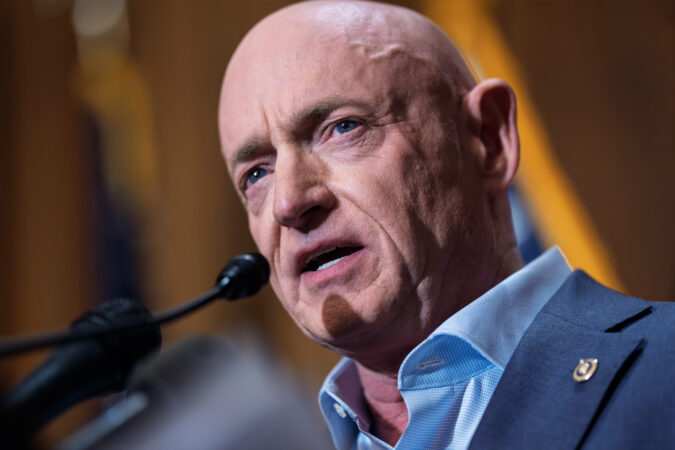
    WASHINGTON — Defense Secretary Pete Hegseth on Monday announced that he is issuing a letter of censure to Democratic Sen. Mark Kelly of Arizona over the lawmaker’s participation in a video that called on troops to resist unlawful orders.

    Hegseth said that the censure was “a necessary process step” to proceedings that could result in a demotion from Kelly’s retired rank of captain in the U.S. Navy. Kelly’s office had no immediate comment.

    The move comes more than a month after Kelly participated in a video with five other Democratic lawmakers in which they called on troops to defy “illegal orders.” President Donald Trump accused the lawmakers of sedition “punishable by DEATH” in a social media post days later. Senate Democratic leader Chuck Schumer of New York called Hegseth’s action against Kelly “a despicable act of political retribution.”

    “Mark Kelly is a hero and a patriot committed to serving the American people,” Schumer said on social media. “Pete Hegseth is a lap dog committed to serving one man – Donald Trump.”

    In November, Kelly and the other lawmakers — all veterans of the armed services and intelligence community — called on U.S. military members to uphold the Constitution and defy “illegal orders.”

    The 90-second video was first posted from Sen. Elissa Slotkin’s X account. In it, the six lawmakers — Slotkin, Kelly and Reps. Jason Crow, Chris Deluzio, Maggie Goodlander and Chrissy Houlahan — speak directly to U.S. service members, whom Slotkin acknowledges are “under enormous stress and pressure right now.”

    The Pentagon announced that it began an investigation of Kelly late in November while citing a federal law that allows retired service members to be recalled to active duty on orders of the defense secretary for possible court martial or other measures.

    While all six lawmakers served in the military or the intelligence community, Hegseth made clear in previous remarks that Kelly was the only one facing investigation because he is the only one of the lawmakers who formally retired from the military and is still under the Pentagon’s jurisdiction.

    Kelly said that the investigation was part of an effort to silence dissent within the military.

    “This is just about sending a message to retired service members, active duty service members, government employees — do not speak out against this president or there will be consequences,” Kelly told reporters in mid-December.

    In his post Monday, Hegseth charged that Kelly’s remarks in the video and afterward violated the Uniform Code of Military Justice provisions against conduct unbecoming an officer and violating good order and discipline.

    Kelly, along with some of the other Democrats in the initial video, have also sent out fundraising messages based off the Republican president’s reaction to their comments, efforts that have gone toward filling their own campaign coffers and further elevating their national-level profiles.

    In recent months, Kelly — whose name has frequently been mentioned as a potential 2028 Democratic presidential contender — has made several trips to South Carolina, traditionally an early primary state that kicked off its party’s nominating calendar in 2024. Appearing with his wife, former Rep. Gabby Giffords, at events calling for stricter gun control measures, Kelly met during those trips with local lawmakers, stakeholders whose early support can be critical as national-level hopefuls attempt to make inroads in the critical state.

    Hegseth said Monday that “Captain Kelly’s status as a sitting United States Senator does not exempt him from accountability, and further violations could result in further action.”

    Todd Huntley, a retired Navy captain and judge advocate general, said that this is a “novel” situation that raises legal questions.

    One issue, according to Huntley, is whether Kelly’s comments fall under the constitutional protections of the speech or debate clause.

    The clause is intended to protect members of Congress from questioning about official legislative acts, and a 1968 Supreme Court decision wrote that the provision’s intent was “to prevent legislative intimidation by and accountability to the other branches of government.”

    Huntley also said that while the type of process Hegseth is using here, known as a retirement grade determination, is fairly routine, “as far as I know, they’ve always been based on conduct during the individual’s active duty service, even if it only came to light after retirement.”

    “So, I don’t know if conduct totally after retirement would fit the requirement for such a determination,” he added.

    According to Hegseth, Kelly now has 30 days to submit a response to the proceedings that will decide if he is demoted. The decision will be made within 45 days, Hegseth’s post added.

  • A man who broke windows at JD Vance’s home in Ohio has been detained, the Secret Service said

    A man who broke windows at JD Vance’s home in Ohio has been detained, the Secret Service said

    A man who broke windows at Vice President JD Vance’s Ohio home and caused other property damage was detained early Monday, the U.S. Secret Service said.

    The man was detained shortly after midnight by Secret Service agents assigned to Vance’s home, east of downtown Cincinnati, agency spokesperson Anthony Guglielmi said in a statement emailed to The Associated Press. He has not been named.

    The Secret Service heard a loud noise at the home around midnight and found a person who had broken a window with a hammer and was trying to get into the house, according to two law enforcement officials who were not publicly authorized to discuss the investigation into what happened and spoke on the condition of anonymity. The man had also vandalized a Secret Service vehicle on his way up the home’s driveway, one of the officials said.

    The home, in the Walnut Hills neighborhood, on hills overlooking the city, was unoccupied at the time, and Vance and his family were not in Ohio, Guglielmi said.

    The Secret Service is coordinating with the Cincinnati Police Department and the U.S. attorney’s office as charging decisions are reviewed, he said.

    Vance, a Republican, was a U.S. senator representing Ohio before becoming vice president. His office said his family was already back in Washington and directed questions to the Secret Service.

    Walnut Hills is one of the city’s oldest neighborhoods and is home to historic sites, including the Harriet Beecher Stowe House.

  • Tim Walz, Democrats’ 2024 candidate for vice president, ends his bid for a third term as Minnesota governor

    Tim Walz, Democrats’ 2024 candidate for vice president, ends his bid for a third term as Minnesota governor

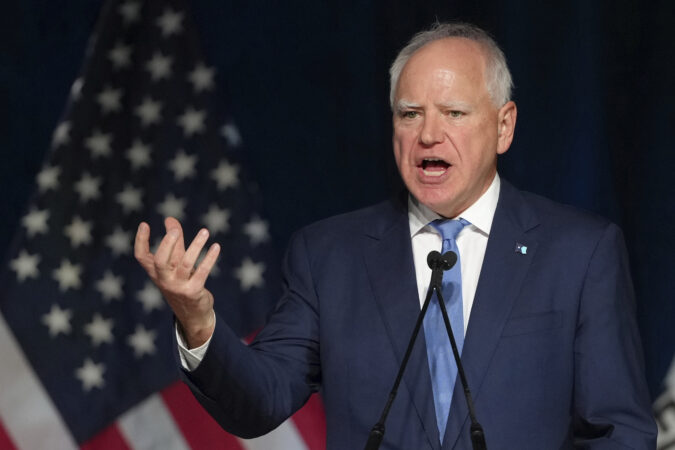
    ST PAUL, Minn. — Minnesota Gov. Tim Walz, Democrats’ 2024 candidate for vice president, is ending his bid for a third term as governor amid President Donald Trump’s relentless focus on a fraud investigation into child care programs in the state.

    Less than four months after announcing his reelection campaign, Walz said Monday that he could no longer devote the energy necessary to win another term, even as he expressed confidence that he could win.

    Walz said in a statement Monday that he “can’t give a political campaign my all” after what he described as an “extraordinarily difficult year for our state.”

    “Donald Trump and his allies – in Washington, in St. Paul, and online – want to make our state a colder, meaner place,” Walz said, referring to the Trump administration withholding funds for the programs. “They want to poison our people against each other by attacking our neighbors. And, ultimately, they want to take away much of what makes Minnesota the best place in America to raise a family.”

    Democratic Sen. Amy Klobuchar of Minnesota is considering running for governor, according to a person close to her. The person, who wasn’t authorized to speak publicly and spoke on the condition of anonymity, said Klobuchar has not made a final decision.

    Around a dozen Republicans are already in the race. They include MyPillow founder and chief executive Mike Lindell, an election denier who is close to Trump. They also include Minnesota House Speaker Lisa Demuth, of Cold Spring; Dr. Scott Jensen, a former state senator from Chaska who was the party’s 2022 candidate; state Rep. Kristin Robbins, of Maple Grove; defense lawyer and former federal prosecutor Chris Madel; former executive Kendall Qualls; and former Minnesota GOP Chair David Hann.

    Walz is a military veteran and union supporter who helped enact an ambitious Democratic agenda for his state, including sweeping protections for abortion rights and generous aid to families.

    Vice President Kamala Harris picked Walz as her running mate after his attack line against Trump and his running mate, then-Ohio Sen. JD Vance — “These guys are just weird” — spread widely.

    Walz had been building up his national profile since his and Harris’ defeat in November. He was a sharp critic of Trump as he toured early caucus and primary states. In May, he called on Democrats in South Carolina to stand up to the Republican president, saying, “Maybe it’s time for us to be a little meaner.”

  • Maduro appears in court, says ‘I was captured’

    Maduro appears in court, says ‘I was captured’

    NEW YORK — Deposed Venezuelan leader Nicolas Maduro declared himself “innocent” and a “decent man” as he pleaded not guilty to federal drug trafficking charges in a U.S. courtroom on Monday.

    “I’m innocent. I am not guilty. I am a decent man, the president of my country,” Maduro told a judge.

    Maduro was making his first appearance in an American courtroom Monday on the narco-terrorism charges the Trump administration used to justify capturing him and bringing him to New York.

    Maduro, wearing a blue jail uniform, and his wife were led into court around noon for a brief, but required, legal proceeding that will likely kick off a prolonged legal fight over whether he can be put on trial in the U.S. Both put on headsets to hear the English-language proceeding as it was translated into Spanish.

    The couple were transported under armed guard early Monday from the Brooklyn jail where they’ve been detained to a Manhattan courthouse.

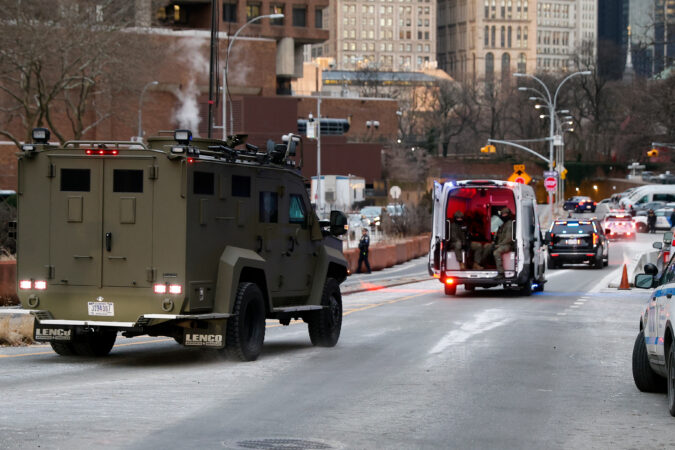
    The trip was swift. A motorcade carrying Maduro left the jail around 7:15 a.m. and made its way to a nearby athletic field, where Maduro slowly made his way to a waiting helicopter. The chopper flew across New York harbor and landed at a Manhattan heliport, where Maduro, limping, was loaded into an armored vehicle.

    A few minutes later, the law enforcement caravan was inside a garage at the courthouse complex, just around the corner from the one where Donald Trump was convicted in 2024 of falsifying business records. Across the street from the courthouse, the police separated a small but growing group of protesters from about a dozen pro-intervention demonstrators, including one man who pulled a Venezuelan flag away from those protesting the U.S. action.

    As a criminal defendant in the U.S. legal system, Maduro will have the same rights as any other person accused of a crime — including the right to a trial by a jury of regular New Yorkers. But he’ll also be nearly — but not quite — unique.

    Maduro’s lawyers are expected to contest the legality of his arrest, arguing that he is immune from prosecution as a sovereign head of state.

    Panamanian strongman Manuel Noriega unsuccessfully tried the same defense after the U.S. captured him in a similar military invasion in 1990. But the U.S. doesn’t recognize Maduro as Venezuela’s legitimate head of state — particularly after a much-disputed 2024 reelection.

    Venezuela’s new interim president, Delcy Rodríguez, has demanded that the U.S. return Maduro, who long denied any involvement in drug trafficking — although late Sunday she also struck a more conciliatory tone in a social media post, inviting collaboration with President Trump and “respectful relations” with the U.S.

    Before his capture, Maduro and his allies claimed U.S. hostility was motivated by lust for Venezuela’s rich oil and mineral resources.

    The U.S. seized Maduro and his wife in a military operation Saturday, capturing them in their home on a military base. Trump said the U.S. would “run” Venezuela temporarily, but Secretary of State Marco Rubio said Sunday that it would not govern the country day to day other than enforcing an existing ” oil quarantine.”

    Trump suggested Sunday that he wants to extend American power farther in the Western Hemisphere.

    Speaking aboard Air Force One, he called Colombia’s president, Gustavo Petro, “a sick man who likes making cocaine and selling it to the United States. And he’s not going to be doing it very long.”

    He called on Venezuela’s Rodriguez to provide “total access” to her country, or else face consequences.

    Trump has suggested that removing Maduro would enable more oil to flow out of Venezuela, but oil prices rose a bit more than 1% in Monday morning trading to roughly $58 a barrel. There are uncertainties about how fast oil production can be ramped up in Venezuela after years of neglect and needed investments, as well as questions about governance and oversight of the sector.

    A 25-page indictment made public Saturday accuses Maduro and others of working with drug cartels to facilitate the shipment of thousands of tons of cocaine into the U.S. They could face life in prison if convicted.

    Maduro has retained Barry J. Pollack, a Washington, D.C.-based lawyer known for securing WikiLeaks founder Julian Assange’s release from prison and winning an acquittal for former Enron accountant Michael Krautz.

    Pollack, a partner at the law firm Harris, St. Laurent & Wechsler, negotiated Assange’s 2024 plea agreement — allowing him to go free immediately after he pleaded guilty to an Espionage Act charge for obtaining and publishing U.S. military secrets.

    Krautz, acquitted of federal fraud charges in 2006 after a hung jury the year before, was one of the only Enron executives whose case ended in a not-guilty verdict. Nearly two dozen other executives were convicted of wrongdoing in connection with the energy trading giant’s collapse.

    Maduro and his wife, Cilia Flores, have been under U.S. sanctions for years, making it illegal for any American to take money from them without first securing a license from the Treasury Department.

    While the indictment against Maduro says Venezuelan officials worked directly with the Tren de Aragua gang, a U.S. intelligence assessment published in April, drawing on input from the intelligence community’s 18 agencies, found no coordination between Tren de Aragua and the Venezuelan government.

    Maduro, his wife, and his son — who remains free — are charged along with Venezuela’s interior and justice minister, a former interior and justice minister, and Hector Rusthenford Guerrero Flores, an alleged Tren de Aragua leader who has been criminally charged in another case and remains at large.

    Among other things, the indictment accuses Maduro and his wife of ordering kidnappings, beatings, and murders of those who owed them drug money or undermined their drug trafficking operation. That included a local drug boss’ killing in Caracas, the indictment said.

    Maduro’s wife is also accused of accepting hundreds of thousands of dollars in bribes in 2007 to arrange a meeting between “a large-scale drug trafficker” and the director of Venezuela’s National Anti-Drug Office, resulting in additional monthly bribes, with some of the money going to Maduro’s wife, according to the indictment.

  • Maduro’s case will revive a legal debate over immunity for foreign leaders tested in Noriega trial

    Maduro’s case will revive a legal debate over immunity for foreign leaders tested in Noriega trial

    MIAMI — When deposed Venezuelan leader Nicolás Maduro makes his first appearance in a New York courtroom Monday to face U.S. drug charges, he will likely follow the path taken by another Latin American strongman toppled by U.S. forces: Panama’s Manuel Noriega.

    Maduro was captured Saturday, 36 years to the day after Noriega was removed by American forces. And as was the case with the Panamanian leader, lawyers for Maduro are expected to contest the legality of his arrest, arguing that he is immune from prosecution as a sovereign head of foreign state, which is a bedrock principle of international and U.S. law.

    It’s an argument that is unlikely to succeed and was largely settled as a matter of law in Noriega’s trial, legal experts said. Although Trump’s ordering of the operation in Venezuela raises constitutional concerns because it wasn’t authorized by Congress, now that Maduro is in the U.S., courts will likely bless his prosecution because, as was the case with Noriega, the U.S. doesn’t recognize him as Venezuela’s legitimate leader.

    “There’s no claim to sovereign immunity if we don’t recognize him as head of state,” said Dick Gregorie, a retired federal prosecutor who indicted Noriega and later went on to investigate corruption inside Maduro’s government. “Several U.S. administrations, both Republican and Democrat, have called his election fraudulent and withheld U.S. recognition. Sadly, for Maduro, it means he’s stuck with it.”

    Noriega died in 2017 after nearly three decades in prison, first in the U.S., then France, and finally Panama. In his first trial, his lawyers argued that his arrest as a result of a U.S. invasion was so “shocking to the conscience” that it rendered the government’s case an illegal violation of his due process rights.

    Justice Department opinion allows ‘forcible abductions’ abroad

    In ordering Noriega’s removal, the White House relied on a 1989 legal opinion by then-Assistant Attorney General Bill Barr, issued six months before the invasion. That opinion said the U.N. Charter’s prohibition on the use of force in international relations does not bar the U.S. from carrying out “forcible abductions” abroad to enforce domestic laws.

    Supreme Court decisions dating to the 1800s also have upheld America’s jurisdiction to prosecute foreigners regardless of whether their presence in the United States was lawfully secured.

    Barr’s opinion is likely to feature in Maduro’s prosecution as well, experts said.

    Drawing parallels to the Noriega case, Barr on Sunday pushed aside criticisms that the U.S. was pursuing a change of government in Venezuela instead of enforcing domestic laws. As attorney general during the first Trump administration, Barr oversaw Maduro’s indictment.

    “Going after them and dismantling them inherently involves regime change,” Barr said in a Fox News Sunday interview. “The object here is not just to get Maduro. We indicted a whole slew of his lieutenants. It’s to clean that place out of this criminal organization.”

    Key differences between Noriega and Maduro

    There are differences between the two cases.

    Noriega never held the title of president during his six-year de facto rule, leaving a string of puppets to fill that role. By contrast, Maduro claims to have won a popular mandate three times. Although the results of his 2024 reelection are disputed, a number of governments — China, Russia, and Egypt among them — recognized his victory.

    “Before you ever get to guilt or innocence, there are serious questions about whether a U.S. court can proceed at all,” said David Oscar Markus, a defense lawyer in Miami who has handled several high-profile criminal cases, including some involving Venezuela. ”Maduro has a much stronger sovereign immunity defense than did Noriega, who was not actually the sitting president of Panama at the time.”

    For U.S. courts, however, the only opinion that matters is that of the State Department, which considers Maduro a fugitive and has for months been offering a $50 million reward for his arrest.

    The first Trump administration closed the U.S. Embassy in Caracas, the capital of Venezuela, and broke diplomatic relations with Maduro’s government in 2019 after he cruised to reelection by outlawing most rival candidates. The administration then recognized the opposition head of the National Assembly as the country’s legitimate leader.

    The Biden administration mostly stuck to that policy, allowing an opposition-appointed board to run Citgo, a subsidiary of Venezuela’s state-owned oil company, even as the U.S. engaged in direct talks with Maduro’s government that were aimed at paving the way for free elections.

    “Courts are so deferential to the executive in matters of foreign policy that I find it difficult for the judiciary to engage in this sort of hairsplitting,” said Clark Neily, a senior vice president for criminal justice at the Cato Institute in Washington.

    U.S. sanctions are a hurdle for Maduro’s defense

    Another challenge that Maduro faces is hiring a lawyer. He and his wife, Cilia Flores, who also was captured, have been under U.S. sanctions for years, making it illegal for any American to take money from them without first securing a license from the Treasury Department.

    The government in Caracas now led by Maduro’s vice president, Delcy Rodríguez, may want to foot the bill, but it is similarly restricted from doing business in the United States.

    The U.S. has indicted other foreign leaders on corruption and drug trafficking charges while in office. Among the most noteworthy is Juan Orlando Hernández, former president of Honduras, who was convicted in 2024 for drug trafficking and weapons charges and sentenced to 45 years in prison.

    Trump pardoned Hernández in November, a move that drew criticism from even some Republicans who viewed it as undercutting the White House’s aggressive counternarcotics strategy centered against Maduro.

    The U.S. had requested Hernández’s extradition from Honduras a few weeks after he left office. After the arrest of Noriega, who had been a CIA asset before becoming a drug-running dictator, the Justice Department implemented a new policy requiring the attorney general to personally sign off on charging of any sitting foreign president, due to its implications for U.S. foreign policy.

    Maduro may have a slightly stronger argument that he is entitled to a more limited form of immunity for official acts he undertook as at least a de facto leader, since that question would not turn on whether he is a head of state recognized by the U.S.

    But even that defense faces significant challenges, said Curtis Bradley, a University of Chicago Law School professor who previously served as a counselor of international law at the State Department.

    The indictment accuses Maduro and five other co-defendants, including Flores and his lawmaker son, of facilitating the shipment of thousands of tons of cocaine into the U.S. by providing law enforcement cover, logistical support, and partnering with “some of the most violent and prolific drug traffickers and narco-terrorists in the world.”

    “The government will argue that running a big narcotrafficking operation … should not count as an official act,” Bradley said.