Category: Nation & World

  • Secret Service plans unprecedented staff surge with anxious eye on 2028

    Secret Service plans unprecedented staff surge with anxious eye on 2028

    The Secret Service has launched one of the most ambitious hiring efforts in its history, seeking to bring on thousands of agents and officers to ease strain on its overstretched workforce and prepare for multiple major events in 2028, including the presidential election and the Olympics.

    Service leaders say they want to hire 4,000 new employees by 2028 — a surge that law enforcement experts say has no clear precedent and reflects mounting concerns about staff burnout, a loss of experienced agents, and a relentless operational tempo. The added staff would make up for expected retirements and increase the size of the agency by about 20%, to more than 10,000 for the first time.

    Under a plan led by Deputy Director Matthew Quinn, the service aims to expand its special agent ranks from about 3,500 to about 5,000. Officials also want to add hundreds of officers to the Uniformed Division, for a total of about 2,000, and hire additional support staff. The figures have not been previously reported.

    The agency faces serious obstacles, however, including a shortage of qualified candidates; competition with other law enforcement agencies, especially in immigration enforcement; and bottlenecks in hiring and training, according to former service officials.

    A previous attempt to reach 10,000 employees over a roughly 10-year period ending in 2025 failed as the agency struggled with leadership turnover and disruptions from the coronavirus pandemic, among other issues. The service fell far short of recruitment and retention goals despite offering some of the biggest financial incentives of any federal law enforcement agency.

    “Our mindset is, we aren’t going to pay our way out of this,” said Quinn, a longtime Secret Service official who returned to the agency in May after several years in the private sector. “We can’t create enough incentives to negate the fact that we’re working our people very, very hard.”

    Quinn said he and Secret Service Director Sean Curran, the former head of President Donald Trump’s protective detail, have set out to make hiring a top priority, second only to protection. Senior administration officials have backed them, he said.

    “The protective mission has expanded,” he said. “Our numbers are low to meet those needs. We have to achieve what we said we were going to do 10 years ago. We’ve got to achieve it now.”

    Agency officials want to improve the quality of life in the service by shortening hours and reducing time on the road for officers and agents, many of whom spend months each year traveling on protective assignments.

    A larger staff could also allow the Secret Service to lean less on other law enforcement agencies for help securing high-profile events, giving it tighter control over venues. Poor communication with other agencies played a major role in the service’s most publicized failure in recent years, the attempted assassination of Trump in 2024 at a campaign rally in Butler, Pa.

    Some former officials questioned whether the service can achieve its goal.

    “They are going to have to eliminate all the management and red-tape barriers,” said Janet Napolitano, a former secretary of the Department of Homeland Security, the service’s parent agency. “They have to be able to swiftly recruit, maintain quality, and train that number of new agents. They’re going to have to turn headquarters into a hiring machine.”

    In 2024, Napolitano helped lead a bipartisan investigation of the Secret Service failures that led up the Butler assassination attempt, the first time a president or former president had been fired upon since 1981.

    Others said even more modest hiring targets could be a stretch on such a short timeline. Getting hired and trained for a job in the Secret Service is a long, strenuous, and heavily bureaucratic process, even by federal government standards. It involves multiple rounds of interviews, an intensive background check, and a notoriously tough polygraph test that officials say screens out some otherwise strong candidates.

    All of those steps place heavy demands on already understaffed field offices, according to a former Secret Service executive familiar with the process, who like others spoke on the condition of anonymity due to concerns about retaliation. The former executive said it was difficult to see how the agency could clear those hurdles while significantly expanding the workforce.

    “I hope they have success in getting those numbers as much as anybody, but it’s not realistic,” said another former senior official, who retired recently. “There’s no part of law enforcement that’s not struggling to hire.”

    Service leaders are adamant that they are not lowering standards to meet their goals.

    Some service officials had floated the possibility of curtailing or suspending the investigative portion of agent training, focusing only on the protective portion of the service’s mission, according to people familiar with the discussions. But Quinn said that was out of the question. “Investigations are the lifeblood of this organization,” he said.

    Instead, officials say, they have found ways to speed the process.

    In November, the service held the first of what officials expect to be multiple accelerated hiring events in which candidates complete assessments over several days, including a physical fitness test, a security interview, and a full polygraph.

    Historically, those assessments have taken months, according to Delisa Hall, the Secret Service’s chief human capital officer. About 350 candidates out of nearly 800 who attended the first event advanced to the next phase, she said.

    “It’s becoming evident that this may be our new normal to push applicants through,” she said.

    Agency officials say they have compressed the timeline for a job offer down to less than a year from the previous 18 months or more and hope to cut the timeline by roughly another four months. The long wait in the past has led some candidates to withdraw or take positions with other agencies that moved more quickly.

    Hall said the agency is recruiting from the military, college athletes, and law enforcement, and it’s staying more engaged with applicants to keep from losing people along the way.

    Getting new hires trained and field-ready on time could also present challenges as the Secret Service races to staff up.

    Officials say the service has secured 42 classes at the federal government’s main training center for law enforcement agents in Glynco, Ga., for the 2026 fiscal year. All the service’s new agents and officers must undergo basic criminal investigator training at the facility, known as FLETC, for about three months alongside recruits from other agencies.

    The campus is expected to remain packed for the foreseeable future with recruits from Immigration and Customs Enforcement and other immigration agencies hired as part of the Trump administration’s crackdown. Secret Service leaders say they have not had to compete for space. But several former officials said they worry the service’s recruits could take a back seat to training for ICE or the Border Patrol, both of which are hiring aggressively.

    The pressure on the agency will only mount as 2028 approaches. Some in the Secret Service have privately referred to the year as “Armageddon” because of the extraordinary security demands posed by the election and other major gatherings, including the Los Angeles Olympics, the first Summer Games in the United States since Atlanta in 1996.

    The workforce carrying out the mission could look dramatically different from the last election cycle. Many experienced agents have departed for other agencies or jobs in the private sector in recent years. Others from a large cohort hired in the years surrounding the Sept. 11, 2001, terrorist attacks may not stay for another breakneck campaign.

    “About a third of the workforce will be retirement-eligible before the start of 2028,” said Derek Mayer, a former deputy special agent in charge of the Secret Service’s Chicago field office. “That’s definitely a cause for concern. There were periods during hiring freezes in the 2010s when we didn’t hire anyone. When that happens, it does hurt, but it hurts five or 10 years later.”

    With Trump term-limited, both major parties are expected to have competitive primaries, raising the number of people the service will have to protect. The eventual nominees, their running mates and their spouses will receive full-time Secret Service details.

    The agency is also tasked with coordinating protection around the 2028 Summer Olympics and Paralympics, scheduled during the last two weeks of July and the last two weeks of August, respectively.

    “No matter what, I don’t care how successful we are,” Quinn said, “it’s still going to be a rough summer.”
  • In Venezuela raid, the specter of U.S. regime change returns to Latin America

    In Venezuela raid, the specter of U.S. regime change returns to Latin America

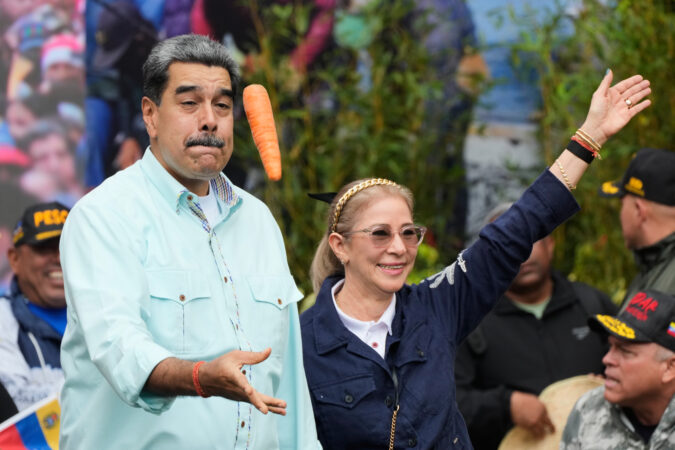
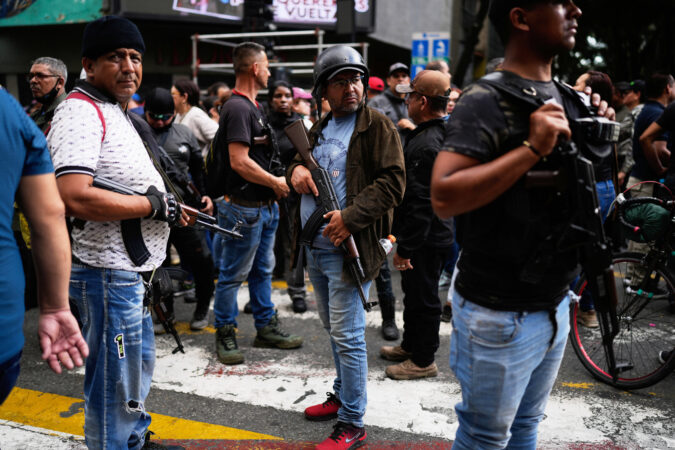
    The United States will “run” Venezuela — a country of 30 million people spread over hundreds of thousands of square miles — for the foreseeable future, President Donald Trump said Saturday just hours after the shocking, early morning U.S. military assault that captured its head of state and left Latin America and much of the rest of the world reeling.

    “We’re going to stay until … the proper transition takes place,” Trump said in a Florida news conference that glanced past details of how exactly that would be done.

    Two side benefits, he indicated, were that hundreds of thousands of Venezuelans who had fled to the United States would now go home and that the U.S. would now be able to take over the Venezuelan oil industry.

    On social media, Trump posted a photograph of shackled and blindfolded Venezuelan President Nicolás Maduro aboard the amphibious assault ship USS Iwo Jima. Maduro and his wife, both under U.S. indictment for drug trafficking and corruption, were snatched from a safe house by U.S. Special Operations forces in what senior administration officials insisted was not regime change but a law enforcement operation for which the military provided security.

    The Maduros, officials said, were read their rights by an FBI official on the ground before being whisked away in a helicopter. Asked if U.S. forces were prepared to kill Maduro if he resisted, Trump said, “It could have happened.”

    Trump made no distinction between law enforcement and overthrow, seeming to exult in what he called a “spectacular” operation, the likes of which had not been seen “since World War II … one of the most stunning, effective, and powerful displays of American military might and competence in American history.”

    “American dominance in the Western Hemisphere will never be questioned again,” Trump said. “Under the Trump administration we are reasserting American power in a very powerful way in our home region.”

    Asked who would run Venezuela, Trump said, “largely the people behind me,” pointing to Secretary of State Marco Rubio and Defense Secretary Pete Hegseth. “They’re going to be a team that’s working with Venezuela to make sure it’s working right,” he said.

    The vagueness of what happens next recalls the 2003 U.S. takeover of Iraq after the invasion ousting Saddam Hussein. Trump initially supported the Iraq operation, before saying he was against it as it stretched into a yearslong battle with disaffected Iraqis, gave rise to the Islamic State, and left thousands of American troops dead before the formal U.S. withdrawal in 2011.

    Trump made no commitment to María Corina Machado, the leader of the Venezuelan opposition and Nobel Peace Prize laureate, or to Edmundo González, whom the United States and others recognized as the legitimate president after an election last year that Maduro was widely believed to have stolen. Rubio, he said, had spoken by phone with Venezuelan Vice President Delcy Rodríguez, who “said ‘we’ll do whatever you need.’ I think she was quite gracious.”

    Trump said Rodríguez had been sworn in as interim president, although she told Venezuela’s state television Saturday night that “There is only one president here, and his name is Nicolás Maduro.”

    The 20th century was marked with numerous U.S. military interventions and occupations in Central America and the Caribbean, but Saturday’s assault on Venezuela was Washington’s first direct and openly acknowledged military strike in history against a South American government. A strategic gamble with an unpredictable outcome in a deeply divided region, it dramatically alters the security dynamic across the continent.

    In a flash, to both American foe and ally alike, the strikes have made the threat of U.S. military power indisputably real.

    “This is one of the most dramatic moments in modern South America history,” said Oliver Stuenkel, an analyst of international affairs at the Brazilian university, the Getulio Vargas Foundation. “The United States now represents the biggest security threat for the simple fact that it just militarily attacked a South American country with an unclear rationale.”

    Others were more direct. “For most Latin Americans, it’s insulting,” said a senior South American diplomat who spoke on the condition of anonymity so as not to draw Trump’s ire to his own country.

    “Of course we understand that the might of the United States is that it can intervene in any Latin American countries in any way they want,” the diplomat said. “But this will lead to complete destruction of any kind of international law, and to a growing antipathy toward the United States” throughout the Western Hemisphere.

    By Saturday morning, reaction to the strikes was already breaking along ideological lines in a region deeply polarized over security, crime, and corruption. Many on the right cheered the intervention, calling the removal of the self-described socialist Latin American strongman an advancement for liberty and a blow against drug trafficking.

    Argentine President Javier Milei, whose government has received a $20 billion currency swap from the United States to stabilize his country’s troubled economy, lauded the strikes. So did Ecuadorian President Daniel Noboa Azin, who has allied himself with Trump and offered to reopen a U.S. air base closed by one of his predecessors.

    “For all narco-Chavista criminals, your time has come,” Noboa wrote on social media, referring to Maduro’s predecessor, Hugo Chávez. “Your structure will end up falling across the entire continent.”

    Those on the left decried what they called an illegal act of military aggression. Few came directly to the defense of Maduro, who had been left increasingly isolated as his authoritarian and illiberal practices have bankrupted Venezuela, unleashed a refugee crisis, and given drug traffickers increasingly free rein. But they said the unilateral strikes and his removal set a new and dangerous precedent for the region.

    “The bombing of Venezuelan territory and the capture of its president crosses an unacceptable line,” Brazilian President Luiz Inácio Lula da Silva said. “The action recalls the worst moments of interference in Latin American and Caribbean politics and threatens the regional preservation as a zone of peace.”

    Some analysts, however, said it would be a mistake to interpret the strikes as the continuation of U.S. military actions in other Latin American nations, whether the CIA-sponsored overthrow of Guatemala’s government in 1954, the 1983 U.S. invasion of Grenada, or the 1989 capture of Panama leader Manuel Antonio Noriega following a 25,000-troop invasion.

    “This is not going to be a unified Latin American rejection of the action, like you may have seen in the ‘60s or the ‘70s,” when interventions were often influenced by the Cold War, said Eric Farnsworth, a senior associate at the Center for Strategic and International Studies think tank. “This is happening in a divided region, where nobody wanted this to happen, but where many recognized that there was no alternative to this unless you were ready to live with Maduro forever.”

    Several governments and leaders in the region already have an affinity with the Trump administration — ties the White House has sought to expand and exploit over the past year.

    The Trump administration has solidified relations with El Salvador’s president, Nayib Bukele, who accepted millions of dollars to imprison U.S. deportees and whom Trump called a “great friend” and “one hell of a president.” It has promised new trade and security cooperation with Ecuador and Paraguay, whose leaders are also Trump admirers. And it threw an economic lifeline to Milei, whom U.S. Treasury Secretary Scott Bessent called a “beacon” for South America.

    But few disagreed over the significance of the strikes. For decades, the United States has focused its military might elsewhere, in theaters much further away. The attacks have returned Washington to a policy of unabashed interventionism in the region.

    “The reaction in the rest of Latin America will be mixed between euphoria, anger, and fear,” said Brian Winter, an analyst with the Americas Society and Council of the Americas.

    Those in the region who condemn the strikes — most notably Lula, Mexican President Claudia Sheinbaum and Colombian President Gustavo Petro — will have to watch their backs. While Trump last year had what he called a productive meeting with Lula, he repeated at the news conference an earlier warning that Petro, whose country is a major producer of cocaine, had better “watch his ass.”

    In the case of Mexico, “the fact of the matter is that large swaths of the country are under the control of narco-terror organizations,” a senior administration official said, speaking on the condition of anonymity under rules imposed by the White House.

    “This is not a president that just talks,” the official said. “He will take action eventually. … I think the president always retains the option to take action against threats to our national security.’’

    While Petro has called Trump a “murderer” for U.S. military strikes against alleged drug boats in the Caribbean and eastern Pacific, it’s unlikely that either Lula or Sheinbaum will want to risk a lengthy diplomatic dispute with the White House, said Matias Spektor, a Brazilian political scientist at the Getulio Vargas Foundation.

    Referring to Cuba, which has depended on Venezuela for energy supplies and economic and security backing, Rubio said at the news conference Saturday, “If I lived in Havana now and I was in the government, I’d be concerned.” Venezuelan oil, he said, would not be allowed to go there.

    Since he began ratcheting up public threats against Maduro last summer, Trump has offered an evolving list of charges to justify his removal through exile or force, from allowing China, Russia, and Iran to gain a toehold in the hemisphere, to illegal U.S. immigrants that he charged Maduro had released from Venezuelan prisons and “insane asylums,” while asserting Venezuelan “terrorist” drug gangs were engaged in “armed conflict” with the United States.

    Most recently, he has charged that Venezuela “stole” oil and land belonging to the United States when it, like many other countries, nationalized its petroleum resources decades ago.

    In his news conference, Trump said he now plans to take back those assets. Asked how long he planned to run Venezuela, Trump said, “I’d like to do it quickly, but it takes a period of time.”

  • North Korea launches ballistic missiles toward sea ahead of South Korean leader’s visit to China

    North Korea launches ballistic missiles toward sea ahead of South Korean leader’s visit to China

    SEOUL, South Korea — North Korea launched multiple ballistic missiles toward its eastern waters Sunday, its neighbors said, just hours before South Korea’s president left for China for talks expected to cover North Korea’s nuclear program.

    South Korea’s Joint Chiefs of Staff said in a statement it detected several ballistic missile launches from North Korea’s capital region around 7:50 a.m. It said the missiles flew about 560 miles and that South Korea and U.S. authorities were analyzing details of the launches.

    South Korea’s Defense Ministry noted the launches violated U.N. Security Council resolutions that ban any ballistic activities by North Korea. It urged North Korea to cease provocative actions immediately and respond to South Korea’s push to restart talks and restore peace on the Korean Peninsula.

    Japanese Defense Minister Shinjiro Koizumi said that at least two missile launches by North Korea have been confirmed. “They are a serious problem, threatening the peace and security of our nation, the region, and the world,” Koizumi told reporters.

    The U.S. military said in a statement on social media that the missile launches did not “pose an immediate threat to U.S. personnel or territory, or to our allies.”

    “The United States remains committed to the defense of the U.S. homeland and our allies in the region,” the military said.

    North Korea ramps up weapons display

    The launches were the latest weapons demonstration by North Korea in recent weeks. Experts say North Korea is aiming to show off or review its achievements in the defense sector ahead of its upcoming ruling party congress, the first of its kind in five years. Observers are watching the Workers Party congress to see whether North Korea will set a new policy on the U.S. and resume long-stalled talks between the two countries.

    North Korea has been focusing on testing activities to enlarge its nuclear arsenal since its leader Kim Jong Un’s summitry with U.S. President Donald Trump fell apart in 2019. Kim has also boosted his diplomatic credentials by aligning with Russia over its war in Ukraine and tightening relations with China. Observers say Kim would believe his leverage has sharply increased to wrest concessions from Trump if they sit down for talks again.

    North Korea hasn’t announced when it will hold the congress, but South Korea’s spy service said it will likely occur in January or February.

    Launches comes before South Korean leader’s trip

    Sunday’s launches also came hours before South Korean President Lee Jae Myung departed for China for a summit with President Xi Jinping. During the four-day trip, Lee’s office said, he would request China, North Korea’s major ally and biggest trading partner, to take “a constructive role” in efforts to promote peace on the Korean Peninsula.

    South Korea and the U.S. have long asked China to exercise its influence on North Korea to persuade it to return to talks or give up its nuclear program. But there are questions on how much leverage China has on its socialist neighbor. China, together with Russia, has also repeatedly blocked the U.S.‘s and others’ attempts to toughen economic sanctions on North Korea in recent years.

    Later Sunday, South Korea convened an emergency national security council meeting to discuss the North Korean missile launches. The council reported details of the launches and unspecified South Korean steps to Lee, according to the presidential office.

    North Korea condemns U.S. operation in Venezuela

    The launches followed Saturday’s dramatic U.S. military operation that ousted Venezuelan leader Nicolás Maduro from power and brought him to the U.S. to face narco-terrorism conspiracy charges. It represented America’s most assertive action to achieve regime change in a country since the nation’s 2003 invasion of Iraq.

    North Korea’s Foreign Ministry on Sunday slammed the U.S. operation, saying it again shows “the rogue and brutal nature of the U.S.” A ministry statement said it denounces the U.S. act as “the most serious form of encroachment of sovereignty.”

    “Kim Jong Un may feel vindicated about his efforts to build a nuclear deterrent, as he likely did after Trump’s strikes on Iran,” said Leif-Eric Easley, professor of international studies at Ewha Womans University in Seoul. “However, leaders of hostile regimes will probably live with greater paranoia after seeing how quickly Maduro was extracted from his country to stand trial in the United States.”

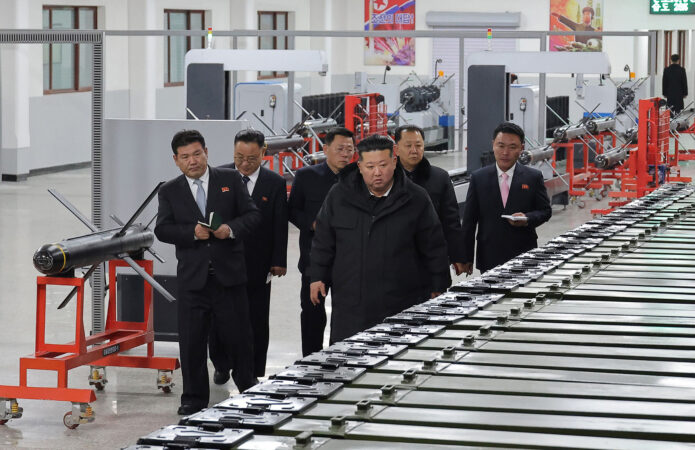
    The official Korean Central News Agency said Sunday Kim visited a weapons factory on Saturday to review multipurpose precision guided weapons produced there. KCNA cited Kim as ordering officials to expand the current production capacity by about 2.5 times.

    Last Sunday, North Korea test-fired what it called long-range strategic cruise missiles. On Dec. 25, North Korea released photos showing apparent progress in the construction of its first nuclear-powered submarine.

  • Gunmen kill at least 30 villagers and abduct others during raid in northern Nigeria

    Gunmen kill at least 30 villagers and abduct others during raid in northern Nigeria

    MINNA, Nigeria — At least 30 villagers have been killed and several others are missing after gunmen raided a village in northern Nigeria’s Niger state, police said Sunday, the latest in a cycle of deadly violence in the conflict-hit region.

    The gunmen stormed the Kasuwan-Daji village in the Borgu local government area on Saturday evening and opened fire on residents. They also razed the local market and several houses, state police spokesperson Wasiu Abiodun said in a statement.

    At least two residents put the death toll at 37 and said it could be much higher as some people remained missing as of Sunday. Locals also said the security forces are yet to arrive in the area, contradicting a police claim that they have deployed officers to search for those kidnapped.

    Stephen Kabirat, a spokesperson for the Catholic Church of Kontagora Diocese where the attack happened, told local media that the gunmen killed more than 40 people and abducted several others, including children.

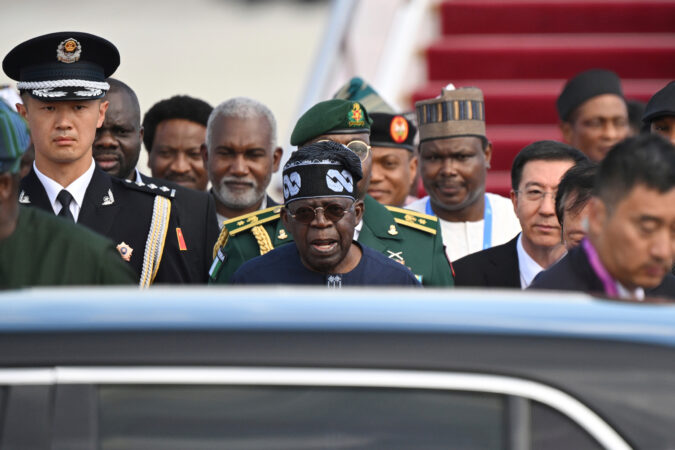
    Nigeria’s President Bola Tinubu condemned the attack and said he has directed security officials to hunt down the gunmen and rescue the hostages.

    “These terrorists have tested the resolve of our country and its people,” Tinubu said in a statement. “They must face the full consequences of their criminal actions. No matter who they are or what their intent is, they must be hunted down. In addition, those who aid, abet, or enable them will also be brought to justice.”

    The gunmen had been lurking around nearby communities for about a week before the attack, according to one resident who asked not to be named for fear of his safety. Now survivors are too afraid to go recover the bodies.

    “The bodies are there (in Kasuwan-Daji village). If we don’t see any security, how can we go there?” the resident said, adding that the attack lasted for up to three hours.

    Such attacks are common in Nigeria, Africa’s most populous country, where dozens of rogue gangs seeking control often target remote communities with limited security and government presence.

    The attack on Kasuwan-Daji village happened near the Papiri community, where more than 300 schoolchildren and their teachers were kidnapped from a Catholic school in November.

    The attackers who raided Kasuwan-Daji arrived from the National Park Forest along Kabe district, according to the police, pointing to a usual trend where abandoned expansive forest reserves act as hideouts for armed gangs.

  • Officers who defended the Capitol on Jan. 6 say their struggles linger, 5 years after the riot

    Officers who defended the Capitol on Jan. 6 say their struggles linger, 5 years after the riot

    WASHINGTON — As Donald Trump was inaugurated for the second time on Jan. 20, 2025, former Capitol Police Sgt. Aquilino Gonell put his phone on “do not disturb” and left it on his nightstand to take a break from the news.

    That evening, after Gonell spent time with family and took his dog on a long walk, his phone started to blow up with calls. He had messages from federal prosecutors, FBI agents, and the federal Bureau of Prisons — all letting him know that the new president had just pardoned about 1,500 people who had been convicted for their actions at the Capitol on Jan. 6, 2021. The pardons included rioters who had injured Gonell as he and other officers tried to protect the building.

    “They told me that people I testified against were being released from prison,” Gonell said. “And to be mindful.”

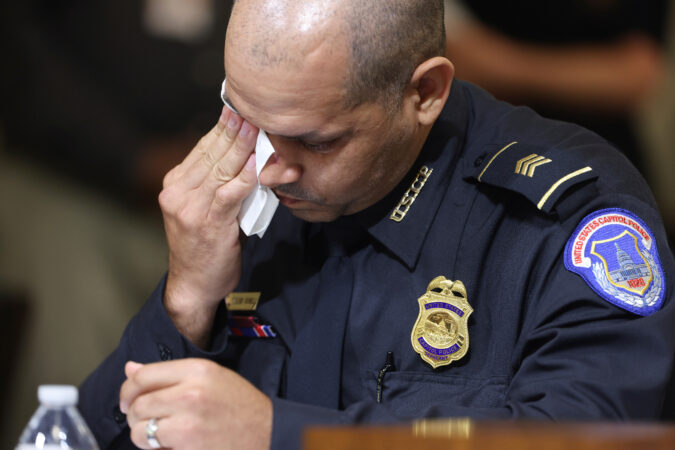
    Gonell was one of the officers who defended the central West Front entrance to the Capitol that day as Congress was certifying Democrat Joe Biden’s victory and hundreds of Trump’s supporters broke into the building, echoing his false claims of a stolen election. Gonell was dragged into the crowd by his shoulder straps as he tried to fight people off. He almost suffocated. In court, he testified about injuries to his shoulder and foot that still bother him to this day.

    “They have tried to erase what I did” with the pardons and other attempts to play down the violent attack, Gonell said. “I lost my career, my health, and I’ve been trying to get my life back.”

    Five years after the siege, Gonell and some of the other police officers who fought off the rioters are still coming to terms with what happened, especially after Trump was decisively elected to a second term last year and granted those pardons. Their struggle has been compounded by statements from the Republican president and some GOP lawmakers in Congress minimizing the violence that the officers encountered.

    “It’s been a difficult year,” said Officer Daniel Hodges, a Metropolitan Police Department officer who was also injured as he fought near Gonell in a tunnel on the West Front. Hodges was attacked several times, crushed by the rioters between heavy doors, and beaten in the head as he screamed for help.

    “A lot of things are getting worse,” Hodges said.

    An evolving narrative

    More than 140 police officers were injured during the fighting on Jan. 6, which turned increasingly brutal as the hours wore on.

    Former Capitol Police Chief Thomas Manger took over the department six months after the riot. He said in a recent interview that many of his officers were angry when he first arrived, not only because of injuries they suffered but also “they resented the fact that they didn’t have the equipment they needed, the training they needed ” to deal with the unexpectedly violent crowd.

    Several officers who fought the rioters told the Associated Press that the hardest thing to deal with has been the effort by many to play down the violence, despite a massive trove of video and photographic evidence documenting the carnage.

    Trump has called the rioters he pardoned, including those who were most violent toward the police, “patriots” and “hostages.” He called their convictions for harming the officers and breaking into the building “a grave national injustice.”

    “I think that was wrong,” Adam Eveland, a former District of Columbia police officer, said of Trump’s pardons. If there were to be pardons, Eveland said, Trump’s administration should have reviewed every case.

    “I’ve had a hard time processing that,” said Eveland, who fought the rioters and helped to push them off the Capitol grounds.

    The pardons “erased what little justice there was,” said former Capitol Police Officer Winston Pingeon, who was part of the force’s Civil Disturbance Unit on Jan. 6. He left the force several months afterward.

    Pushback from lawmakers and the public

    Hodges and Gonell have been speaking out about their experiences since July 2021, when they testified before the Democratic-led House committee that investigated Jan 6. Since then, they have received support but also backlash.

    At a Republican-led Senate hearing in October on political violence, Hodges testified again as a witness called by Democrats. After Hodges spoke about his experience on Jan. 6, Sen. Peter Welch (D., Vt.) asked the other witnesses whether they supported Trump’s pardons of the rioters, including for those who injured Hodges. Three of the witnesses, all called by Republicans, raised their hands.

    “I don’t know how you would say it wasn’t violent,” says Hodges, who is still a Washington police officer.

    It has not just been politicians or the rioters who have doubted the police. It also is friends and family.

    “My biggest struggle through the years has been the public perception of it,” Eveland said, and navigating conversations with people close to him, including some fellow police officers, who do not think it was a big deal.

    “It’s hard for me to wrap my head around that, but ideology is a pretty powerful thing,” he said.

    Improvements in safety and support

    As police officers struggled in the aftermath, Manger, the former Capitol Police chief, said the department had to figure out how to better support them. There were no wellness or counseling services when he arrived, he said, and they were put in to place.

    “The officers who were there and were in the fight — we needed to make sure that they got the help that they needed,” Manger said.

    Manger, who retired in May, also oversaw major improvements to the department’s training, equipment, operational planning, and intelligence. He said the Capitol is now “a great deal safer” than it was when he arrived.

    “If that exact same thing happened again, they would have never breached the building, they would have never gotten inside, they would have never disrupted the electoral count,” Manger said.

    Pingeon, the former Capitol Police officer, said he believes the department is in many ways “unrecognizable” from what it was on Jan. 6 and when he left several months later.

    “It was a wake-up call,” he said.

    Pressing on

    Pingeon, who was attacked and knocked to the ground as he tried to prevent people from entering the Capitol, said Jan. 6 was part of the reason he left the department and moved home to Massachusetts. He has dealt with his experience by painting images of the Capitol and his time there, as well as advocating for nonviolence. He said he now feels ready to forgive.

    “The real trauma and heartache and everything I endured because of these events, I want to move past it,” he said.

    Gonell left the Capitol Police because of his injuries. He has not returned to service, though he hopes to work again. He wrote a book about his experience, and he said he still has post-traumatic stress disorder related to the attack.

    While many of the officers who were there have stayed quiet about their experiences, Eveland said he decided that it was important to talk publicly about Jan. 6 to try to reach people and “come at it from a logical standpoint.”

    Still, he said, “I’ve had to come to terms with the fact that just because something happened to me and was a major part of my world doesn’t mean that everyone else has to understand that or even be sympathetic to that.”

    He added: “The only thing I can do is tell my story, and hopefully the people who respect me will eventually listen.”

  • Hundreds march in silence to honor victims of Swiss bar fire that left 40 dead

    Hundreds march in silence to honor victims of Swiss bar fire that left 40 dead

    CRANS-MONTANA, Switzerland — Hundreds marched in silence Sunday to honor the victims of the New Year’s Eve fire at a bar in the Swiss Alpine resort of Crans-Montana, which left 40 dead and many severely injured.

    Somber mourners, many with reddened eyes, filed silently out of the chapel to organ music after the hourlong Mass at the Chapelle Saint-Christophe in Crans-Montana. Some exchanged hugs before marching up a hill to Le Constellation bar.

    Many hundreds of people walked in the dense snaking procession in the bright sunlight past shuttered stores. Up on the mountain overlooking the town, snow machines sent plumes of white flakes into the air.

    At the top of the street, in front of Le Constellation — which is still largely shielded from view by white screens — the swelling crowd stood in near total silence, some weeping.

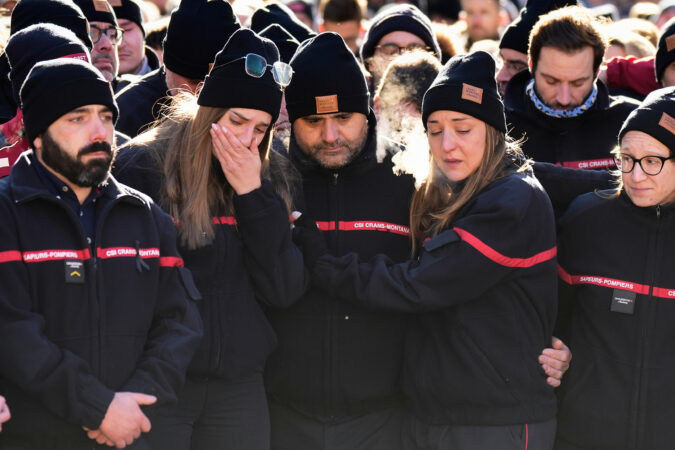
    Then they broke out into sustained applause for the rescue teams and police who rushed to the scene of horror, their hands in gloves and mittens against the cold. Mourners and well-wishers deposited bouquets at a makeshift memorial piled with flowers, cuddly toys, and other tributes. Some firefighters wiped their eyes too.

    “They went there to party”

    “Through this tragic event, I believe we must all remember that we are all brothers and sisters in humanity,” Véronique Barras, a local resident who knows grieving families, said. “It’s important to support each other, to hug each other, and to move forward towards light.”

    Cathy Premer said her daughter was out celebrating her 17th birthday on New Year’s Eve when she called in the early hours of the morning to say she was stuck because Le Constellation was cordoned off.

    “For the young — but even for adults — it’s hard to understand things that seem inexplicable,” she said. “They went there to party, it’s a destination for Dec. 31, it’s very festive, there were people of many nationalities … and it all turned into a tragedy.”

    In the crowd, Paola Ponti Greppi, an 80-year-old Italian who has a house in Crans-Montana, called for safety checks in bars. “We need more safety in these places because it’s not the only place like this. Why didn’t the town do the proper checks? For me that’s terrible.”

    A Mass for the victims

    During the Mass, the Rev. Gilles Cavin spoke of the “terrible uncertainty” for families unsure if their loved ones are among the dead or still alive among the injured.

    “There are no words strong enough to express the dismay, anguish, and anger of those who are affected in their lives today. And yet, we are here, gathered because silence alone is not enough,” he said.

    In the crowded pews, a grieving woman listened intently, her hands sometimes clasping rosary beads, as speakers delivered readings in German, French, and Italian.

    Forty people died and 119 were injured in the blaze that broke out around 1:30 a.m. on Thursday at Le Constellation bar. Police have said many of the victims were in their teens to mid-20s.

    By Sunday morning, Swiss authorities identified 24 out of the 40 fatalities. They include 18 Swiss citizens — aged as young as 14 — two Italians 16 years old, one dual citizen of Italy and the United Arab Emirates also 16 years old, an 18-year-old Romanian, a 39-year-old French person, and a Turkish citizen, 18.

    A grieving mother

    One of the victims was 16-year-old Arthur Brodard, whose mother had been frantically searching for him.

    “Our Arthur has now left to party in paradise,” a visibly shaken Laetitia Brodard said in a Facebook story posted on Saturday night, speaking to a camera. “We can start our mourning, knowing that he is in peace and in the light.”

    Brodard’s frenzied search for her son reflected the desperation of families of the young people who disappeared during the fire, who did not know whether their loved ones were dead or in the hospital.

    Swiss authorities said the process of identifying victims was particularly hard because of the advanced degree of the burns, requiring the use of DNA samples. Brodard also had given her DNA sample to help in the identification process.

    In her Facebook post, she thanked those who “testified their compassion, their love” and to those who shared information as she anxiously searched and waited for news of her son. Other parents and siblings are still waiting in anguish.

    Bar managers face a criminal investigation

    Swiss authorities have opened a criminal investigation of the bar managers.

    The two are suspected of involuntary homicide, involuntary bodily harm, and involuntarily causing a fire, the Valais region’s chief prosecutor, Beatrice Pilloud, told reporters Saturday. The announcement of the investigation did not name the managers.

    Regional police said Sunday there were no legal grounds so far that would require the managers to be held pending the legal process. They have not been deemed to be a flight risk.

    Investigators have said they believe festive sparkling candles atop Champagne bottles ignited the fire when they came too close to the ceiling of the crowded bar.

    Authorities are looking into whether sound-dampening material on the ceiling conformed with regulations and whether the candles were permitted for use in the bar. The investigation also centers on other safety measures on the premises, including fire extinguishers and escape routes, and whether previous work at the site was up to code.

    “Initial witness accounts cited a fire that spread quickly, generating a lot of smoke and a huge wave of heat,” the police statement Sunday said. “Everything happened very fast.”

    Swiss President Guy Parmelin announced a national day of mourning for the victims on Jan. 9.

    France’s Health Minister Stéphanie Rist said 17 patients have received care in France, out of a total of 35 transferred from Switzerland to five European countries. Other patients were planned to be transferred to Germany, Italy, and Belgium.

  • Maduro, wife to face drug charges, court appearance in coming days

    Maduro, wife to face drug charges, court appearance in coming days

    Venezuelan President Nicolás Maduro and his wife could appear in federal court in Manhattan within days to face narco-terrorism charges, which, if accepted by a jury, could put them behind bars on American soil for decades.

    A plane carrying Maduro arrived at a suburban airport outside New York on Saturday evening. He was expected to be processed by Drug Enforcement Administration officials and will be held at the Metropolitan Detention Center in Brooklyn until a court appearance, most likely on Monday, according to people familiar with the plans who spoke on the condition of anonymity because they were not authorized to speak on the record.

    Maduro’s capture and indictment have drawn protests from some lawmakers and scholars, who say international law does not allow President Donald Trump to unilaterally attack a foreign country and bring its leader to the U.S. to face charges.

    Even those critics, however, concede that under Supreme Court precedent, those arguments are unlikely to have much impact on federal legal proceedings once Maduro gets to U.S. court.

    Trump and his top aides defended the decision to capture Maduro. They noted that the U.S. and many other countries have long viewed Maduro as an illegitimate leader who has remained in power despite losing the country’s most recent election. Officials sought to portray the extraordinary military action against Venezuela as a straightforward law enforcement operation, with the military backing up the Justice Department as they sought to bring someone to U.S. court.

    “At its core, this was an arrest of two indicted fugitives of American justice,” Secretary of State Marco Rubio said at a news conference with Trump on Saturday.

    A sweeping four-count indictment against Maduro was unsealed in the Southern District of New York on Saturday. It alleged that he, his wife, Cilia Flores, and members of their inner circle illegally enriched themselves as they conspired to flood the United States with cocaine. Among the charges: narco-terrorism conspiracy, cocaine importation conspiracy, and possession of machine guns and destructive devices.

    “The defendants, and other corrupt members of the regime facilitated the empowerment and growth of violent narco-terrorist groups fueling their organizations with cocaine profits,” the indictment reads. “These narco-terrorist organizations not only worked directly with and sent profits to high-ranking Venezuelan officials, but also reaped the benefits of the increased value of that cocaine at each transshipment point along the way to the United States, where demand and thus the price of cocaine is highest.”

    The remarkable prosecution of a foreign leader in American federal court was the result of Trump’s deployment of the U.S. military to strike Venezuela overnight and capture Maduro and his wife, bringing them to New York to face charges.

    Trump at the Saturday news conference gave reporters a more expansive set of reasons for Maduro’s capture, saying that the U.S. attack was justified, in part, because Venezuela stole U.S. oil — claims that are not included in the indictment. He also said the United States will “run” the South American country until a succession plan is determined.

    Critics said Trump’s arguments raised more legal questions.

    “If the United States asserts the right to use military force to invade and capture foreign leaders it accuses of criminal conduct, what prevents China from claiming the same authority over Taiwan’s leadership?” Sen. Mark R. Warner (Va.), the top Democrat on the Senate Select Committee on Intelligence, said in a statement. “What stops Vladimir Putin from asserting similar justification to abduct Ukraine’s president? Once this line is crossed, the rules that restrain global chaos begin to collapse, and authoritarian regimes will be the first to exploit it.”

    International law experts, however, said that while those issues may be debated in Congress and international bodies, they are unlikely to affect the legal proceedings against Maduro and his co-defendants in U.S. court.

    A line of Supreme Court cases starting in the late 19th century makes clear that “you can’t claim that you were abducted and therefore the court should not be allowed to assert authority over you,” said Geoffrey Corn, who heads the Center for Military Law and Policy at Texas Tech University and is a former top legal adviser to the U.S. Army.

    “Maduro is not going to be able to avoid being brought to trial because he was abducted so to speak, even if he can establish it violated International law.” Corn said, adding that in his view the administration’s overnight military operation lacked any “plausible legal basis.”

    Jack Goldsmith, a Harvard Law professor who previously headed the Justice Department’s Office of Legal Counsel in the George W. Bush administration, noted on Substack that similar arguments were raised after U.S. forces deposed Panamanian leader Manuel Antonio Noriega on Jan. 3, 1990. Courts upheld the government’s right to try Noriega, who was convicted on drug charges in 1992 and sentenced to 40 years in federal prison.

    The charging document against Maduro unsealed Saturday — known as a superseding indictment — is an update to charges filed against him and his associates during the first Trump administration in 2020. At the time, U.S. leaders conceded that they couldn’t go into Venezuela and arrest Maduro. The charges essentially made him an international fugitive, who risked arrest if he traveled outside his country.

    The superseding indictment contains the same four charges as the original 2020 indictment. But the new indictment also names Flores, who was not a co-defendant in the 2020 case. Some of the other co-defendants — all part of Maduro’s inner circle — are also different, including Maduro’s son, Nicolás Ernesto Maduro.

    The younger Maduro does not appear to have been captured.

    U.S. authorities have alleged that Maduro and his inner circle worked with international drug trafficking groups to transform Venezuela into a transshipment hub for moving massive amounts of cocaine to the United States. Maduro and his associates created a culture of corruption in which the Venezuelan elite made themselves rich through drug trafficking, the indictment alleged. Drug traffickers, the document said, gave these leaders a portion of their profits in exchange for protection and aid.

    “In turn, these politicians used the cocaine fueled payments to maintain and augment their political power,” the indictment states.

    Jeremy Paul, a law professor at Northeastern University, said the Trump administration had no legal authority to stage the military intervention, but he agreed that it probably would not derail Maduro’s prosecution.

    The administration’s justification is “a terrifying theory, because, as I have been saying to people, you’re basically saying that U.S. prosecutors and a grand jury is all you need as justification for sending the military into another country,” Paul said. “That can’t be the law.”

    Trump also faced criticism Saturday from Democratic lawmakers for striking Venezuela and capturing Maduro just a month after he pardoned former Honduran president Juan Orlando Hernández, who was convicted in a U.S. court last year on drug trafficking charges.

    Maduro’s case in the Southern District of New York was randomly assigned to U.S. District Judge Alvin Hellerstein, a 92-year-old jurist appointed by President Bill Clinton and who last year was among a group of judges who prohibited the Trump administration from using the Alien Enemies Act to deport Venezuelan immigrants. Those findings are under appeal.

    Hellerstein did not take any action in the case against Maduro on Saturday, and an appearance in court has not yet been publicly announced. But public officials, including New York Mayor Zohran Mamdani, have said that officials are arranging this weekend to transport Maduro and his wife to New York.

  • China condemns U.S. strike in Venezuela after top diplomat met with Maduro

    China condemns U.S. strike in Venezuela after top diplomat met with Maduro

    China strongly condemned the overnight U.S. strike on Venezuela and the capture of President Nicolás Maduro, which came just hours after a Chinese special envoy met with the Venezuelan leader to reaffirm Beijing’s support for the imperiled regime, calling the action “deeply shocking” and a serious violation of international law.

    Shortly before the surprise U.S. attack unfolded, a delegation of Chinese officials arrived in Caracas, led by Beijing’s special envoy for Latin American and Caribbean affairs, Qiu Xiaoqi, and met with Maduro to discuss the rising tensions with the United States. It was Maduro’s last publicly reported official meeting before he and his wife were captured by U.S. forces and flown out of the country.

    President Donald Trump on Saturday said that the United States will now “run” Venezuela for an unspecified amount of time, following the operation that saw over 150 U.S. military aircraft marshal for a spectacular extraction mission.

    Maduro’s exit marked an abrupt end to a monthslong effort by China to support the embattled leader, as fears grew in Beijing that the United States would soon attempt to seize Chinese-flagged oil tankers as part of its blockade of the country. Beijing has been the regime’s most influential global ally and Venezuela’s primary financial lifeline through loans and oil purchases, accounting for around 80% of the country’s total oil exports.

    At 7:30 p.m. Friday, Maduro shared a final message on his Telegram channel, lauding his meeting with Qiu as reaffirming “the strong bonds of brotherhood and friendship between China and Venezuela. A relationship that stands the test of time!” It was accompanied by a video set to triumphant music showing Qiu — a vice-minister level diplomat — and his team walking through what appeared to be the hallways of the presidential palace and shaking hands with Maduro.

    Just 6½ hours later, Chinese officials in Caracas were stunned when the U.S. strike began, setting off a furious string of missives back to Beijing, according to one Chinese diplomat familiar with the situation. “It was completely shocking,” the official said, speaking on the condition of anonymity because they are not authorized to speak to media.

    On Saturday, China’s Foreign Ministry issued a sharp rebuke, strongly condemning the U.S. raid. “Such hegemonic acts of the U.S. seriously violate international law and Venezuela’s sovereignty, and threaten peace and security in Latin America,” it said in a statement. Separately, the Foreign Ministry and China’s embassy in Venezuela warned citizens to avoid traveling to the country.

    “China employed rare, forceful language previously reserved for political assassinations and mass casualty events,” sail Neil Thomas, a fellow at Asia Society Policy Institute’s Center for China Analysis.

    According to Venezuelan reports and the Chinese official, Qiu met with Maduro to review the roughly 600 political and economic agreements between the two countries and address concerns over the rising threat of a U.S. military intervention and potential threats to Chinese oil tankers.

    Chinese leader Xi Jinping met with Maduro in May last year on the sidelines of Russia’s Victory Day celebrations. According to the Chinese readout of the meeting, Xi described the two countries’ relationship as an “all-weather strategic partnership” and reaffirmed China’s support for Venezuela’s sovereignty.

    Asked on Saturday how the takeover would affect U.S. relations with major oil buyers including China, Trump said that “in terms of other countries that want oil, we’re in the oil business, we’re going to sell it to them. We’re not going to say we’re not going to sell it to them.”

    China has long viewed Venezuela as a key political ally in Latin America as it seeks to expand its influence in the region. This month, Beijing released its first major Latin America strategy update in nearly a decade, more explicitly incorporating security cooperation — including military exchanges — into its framework and reaffirming support for the sovereignty of regional partners.

    Republican lawmakers focused on China policy welcomed the move Saturday, saying it curtailed Chinese influence in the region. “The Trump Administration’s decisive action against Nicolás Maduro removes a Chinese ally from power and makes the world a safer place. China’s partnership with Maduro propped up an authoritarian ruler who worked with our nation’s adversaries and hurt the American people,” said Rep. John Moolenaar (R., Mich.), chairperson of the House Select Committee on China.

    Analysts say that the potential seizure of Venezuela’s government by the United States is unlikely to seriously undercut Beijing’s broader efforts to expand its regional presence.

    “Left-leaning governments in the region will likely lean further toward Beijing as a preferred economic partner and diplomatic alternative to Washington. This strike is unlikely to dissuade China’s regional trade and investment; Beijing requires booming exports to sustain growth, and Washington currently lacks a competitive economic diplomacy strategy to match its security presence,” said Thomas.

    Trump on Saturday lambasted Maduro’s regime for facilitating the growing influence of U.S. adversaries in the region, but stopped short of naming China explicitly. “Venezuela was increasingly hosting foreign adversaries in our region and acquiring menacing offensive weapons that could threaten us,” said Trump. “They used those weapons last night.”

    In recent months, Maduro has called on China, as well as Russia and Iran, to provide weapons and other assistance amid rising U.S. pressure. According to documents obtained by the Washington Post, Maduro drafted a letter appealing to Xi for “expanded military cooperation” in the face of U.S. escalation, including a request to expedite the production of radar detection systems by Chinese companies.

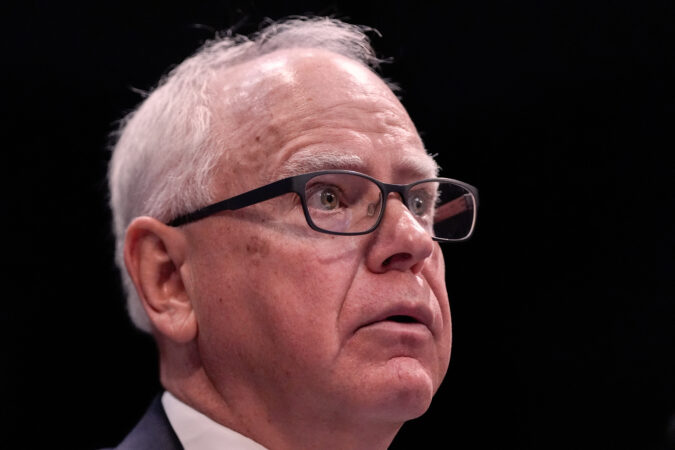
  • Tim Walz was a Democratic hopeful. Now, he’s a Republican punching bag.

    Tim Walz was a Democratic hopeful. Now, he’s a Republican punching bag.

    MINNEAPOLIS — Just a few months ago, Larissa Laramee would have encouraged Minnesota Gov. Tim Walz to run for president. She admired the man who helped lead the Democratic presidential ticket in 2024 — and who once taught her social studies.

    But Laramee’s feelings have changed as a yearslong welfare fraud probe in Minnesota becomes a national maelstrom. Prosecutors say scammers stole brazenly from safety net programs, taking hundreds of millions of dollars in government funding — potentially billions — for services they never provided while Walz led the state.

    “I like him as a person. He’s fantastic,” said Laramee, 40, who works at a Minnesota nonprofit for people with disabilities. Walz, as her high school teacher, helped inspire her career, she said. “But with all of this that’s happened, I’m struggling with seeing a path forward for him.”

    Laramee’s doubts show how the sprawling fraud cases in Minnesota now hang over Walz — even as it’s too soon to tell how they will ultimately affect his political future. A year and a half after he vaulted onto the national stage as Kamala Harris’ running mate, Walz is back in the spotlight, this time for a controversy that Republicans around the country view as political gold.

    Republicans are betting the fraud saga will hurt Walz, a staunch liberal and potential 2028 presidential candidate who is seeking a third term as governor this year. GOP officials say it will be one of their top campaign issues in Minnesota as they try to reverse many years of statewide losses and navigate through tough national headwinds in the midterms.

    But many of the attacks on Walz are geared just as much toward riling the GOP’s national base, using the issue and Walz’s prominence to validate broader anger within the party over immigration and a social welfare system that President Donald Trump and others have long argued is out of control.

    How much blame Walz should bear for the state’s response to the fraud is a matter of a debate. He has said that, as state executive, he takes ultimate responsibility. Walz has said officials have “made systematic changes to state government” over the past few years as prosecutions were underway. The governor’s critics say the changes were insufficient and came too late.

    Democrats say Republicans are risking a backlash by fixating on the fraudsters’ nationality — most people charged in the schemes are of Somali descent — and by freezing some federal childcare funding in response. Trump has lobbed broad attacks on Somali immigrants that Walz denounced as “racist lies,” and many on the right have called for deportations, even though officials say most of the fraud defendants are U.S. citizens.

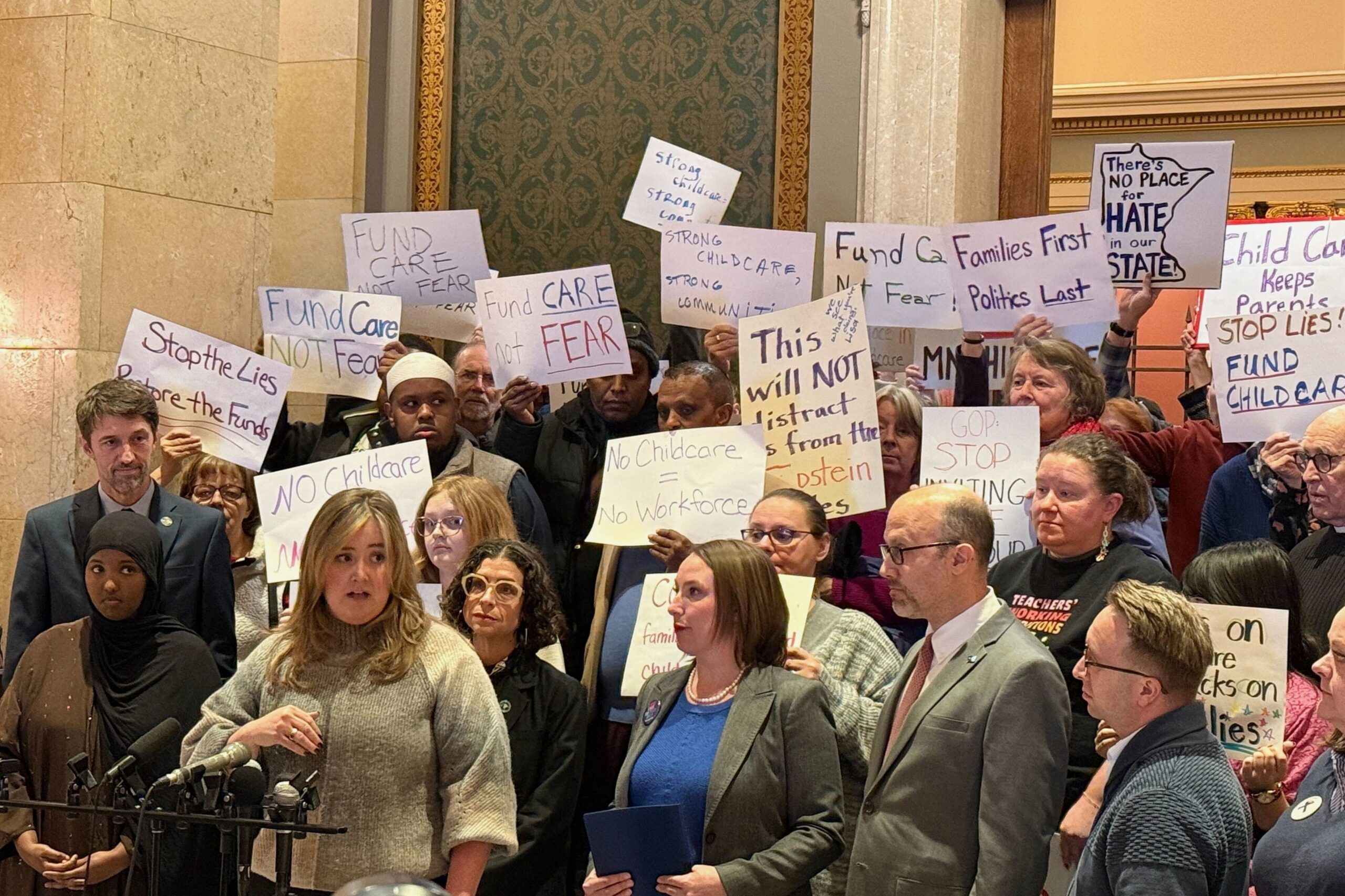
    Maria Snider, director of the Rainbow Development Center and vice president of advocacy group Minnesota Child Care Association, speaks as people gather for a news conference at the state Capitol on Wednesday in St. Paul.

    Democrats are favored to win the governor’s race in 2026; Republicans have not won a statewide election in Minnesota since 2006. Walz won reelection by about 8 percentage points in 2022, when some of the fraud cases had already surfaced, and it’s not clear that the new attention to the issue has affected his approval in the state. There are no clear recent shifts in available surveys.

    Some Democrats remain worried the fallout threatens to blunt Walz’s attacks on Trump, as well as the economic issues the party has sought to highlight.

    “The anti-fraud message is going to be very strong. … I fear that message will dominate or drown out the affordability message,” said Ember Reichgott Junge, a former Minnesota state senator who is now a Democratic political analyst.

    Junge said she’s heard many Democrats express concern about Walz’s reelection campaign and noted that his performance could affect lower-profile races on the ballot. Democrats are defending a one-vote majority in the state Senate and trying to retake the House, where Republicans hold a two-seat advantage amid two vacancies.

    “He is a riskier candidate than any other Democrat” would have been, she said of Walz, who has not drawn primary challengers so far.

    Walz has accused Trump of politicizing the probes. Walz appointed a statewide “director of program integrity” to prevent fraud in mid-December, among other changes, and the state shut down one fraud-plagued housing program this fall.

    “We have made significant progress. We have much more to do. And it’s my responsibility to fix it,” Walz wrote in a recent op-ed for the Minnesota Star Tribune.

    His office did not make him available for an interview.

    Other Democrats dismissed Republicans’ chances in the governor’s race, said the GOP response to the fraud has overreached and accused Trump — who has pardoned people convicted on fraud charges — of hypocrisy. Trump and others on the right have also attacked Walz in highly personal terms that many call cruel; Trump recently called Walz “seriously retarded,” and videos of people yelling “retard” outside Walz’s house have circulated online. (Walz has spoken about his son’s learning disability).

    “Republicans are overplaying their hand, and this is what’s going to turn off a lot of voters,” said Abou Amara, a former adviser to Democratic leadership in the state legislature. “They have made this not just about fraud, but they’ve made it about xenophobia.”

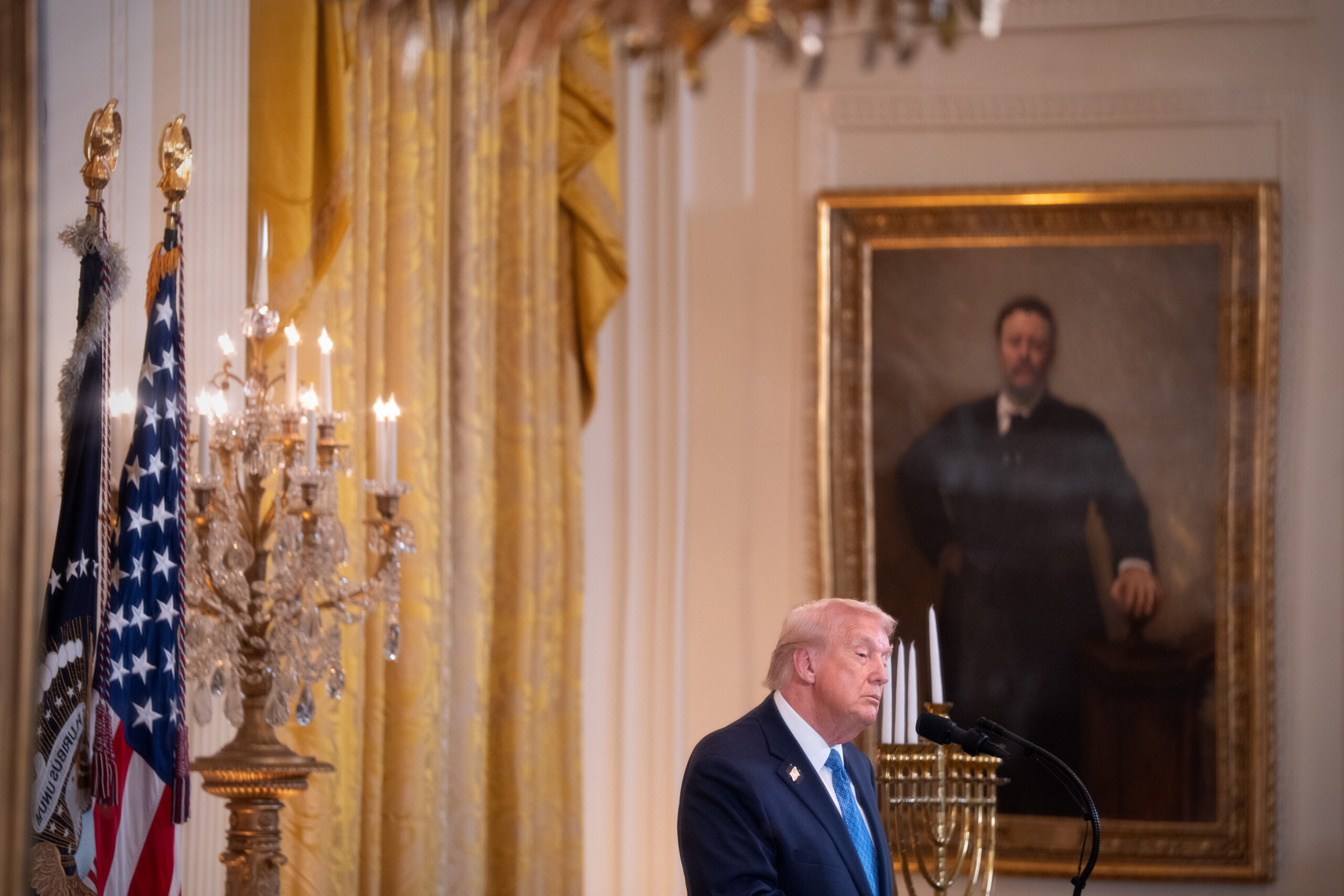
    President Donald Trump on Dec. 16 at the White House.

    Federal authorities in Minnesota have been investigating the sweeping abuse of safety net programs for years and brought many of the charges in 2022, accusing 47 people of misusing $250 million — meant to feed children during the pandemic — on luxury cars and property as far away as Kenya and Turkey.

    News reports, a viral video and a flood of criticism from right-wing influencers and politicians have drawn new national attention to the issue in recent weeks. Federal investigators also suggested last month that the problem could be much bigger than previously known.

    Joe Thompson, a prosecutor with the U.S. Attorney’s Office in Minnesota, said at a news conference last month that authorities have identified “significant fraud” in 14 state Medicaid programs — and said fraud may account for more than half of the $18 billion that went to those programs since 2018.

    “Every day we look under a rock and find a new $50 million fraud scheme,” Thompson said.

    Republican leaders including Vice President JD Vance and House Speaker Mike Johnson (R., La.) have weighed in this past week, sharing a video posted on social media on Dec. 26 by a 23-year-old YouTuber, Nick Shirley, who joined a roundtable with Trump last year. In the 42-minute video, Shirley claimed daycare centers were not caring for children because he could not see them on-site. Regulators, however, saw children on their visits within the last 10 months, according to officials and records.

    Shirley’s video has accumulated more than 130 million views on X and triggered a flood of GOP interest — and criticism of Walz. House Republicans said they would call Walz to testify before Congress next month. Right-leaning billionaire Elon Musk, who owns X, suggested Walz should go to prison.

    “Minnesotans are finally much more aware of the extent of the fraud and how deep it is and how it’s gone unchecked, and it is going to play favorably for Republicans on every level of government in the ’26 election,” said state House speaker Lisa Demuth, one of many candidates seeking the GOP nomination to challenge Walz.

    Another GOP gubernatorial candidate, Minnesota Rep. Kristin Robbins — who chairs a House committee on fraud — called it the top issue in the race. “We are still, sadly, at the tip of the iceberg,” she said.

    A 2024 report from the nonpartisan Minnesota Legislative Auditor found that the state education department, which administered nutrition programs at the center of many fraud cases, “failed to act on warning signs” and “created opportunities for fraud.” It did not point specifically at Walz.

    Michael Brodkorb, a former deputy chair of the Minnesota GOP who has crossed the aisle in the past to vote for Walz, said he isn’t sure how he’ll vote in the coming gubernatorial race, and argued that the Walz administration could have been more responsive. Voters, he said, will have to decide if state officials “have the credibility to be a part of the solution when maybe a lot of Minnesotans think they’re part of the problem.”

    But he also warned that Trump’s rhetoric isn’t helping local Republicans. The president railed against Somali immigrants in a cabinet meeting last month, saying “they contribute nothing” and declaring, “Their country stinks, and we don’t want them in our country.”

    Some Republicans in Minnesota want to leave race out of the debate — though they argue sensitivities about racism helped enable the fraud. (A nonprofit behind much of the fraud once accused a state agency of racial discrimination while pushing back on skepticism).

    “We want to stay focused on the fraud and just the act itself, not on the culture or the people behind it,” Minnesota GOP chair Alex Plechash said in an interview, adding later, “I’m not at all into dividing the people by race or by socioeconomic status or any other way.”

    At a Somali mall in Minneapolis, Kadar Abdi, a student at a nearby mosque, said he believes Trump is trying to turn attention away from his own political challenges. “Because of these failures, as a distraction tactic, you want to blame a marginalized group” he said. “It’s as old as American society.”

    An hour away in Owatonna, an exurb of the Twin Cities, diners at the Kernel represented the full gamut of opinions. Trump voter Michael Haag, 54, said Walz “should be in prison” and that he plans to leave the state if Walz is reelected.

    He “should resign, and I also think he should be charged, because he’s for the Somalis,” Haag said. “He should have been looking out for us, vs. them.”

    Another patron wearing a pink Carhartt hat and sipping coffee disagreed.

    “I find him honest,” said Joan Trandem, who is retired. “He cares about the small guy.”

    Given the drama that’s surrounded Walz, Trandem said she’s surprised he wants to run for a third term. But if he continues with the campaign, she plans to vote for him. In the rural part of Minnesota where Trandem lives, the fraud probe doesn’t get much play anymore, she said. “I’m tired of talking about it.”

  • Philadelphia reacts to the capture of President Nicolás Maduro and Trump’s plan to take control of Venezuela

    Philadelphia reacts to the capture of President Nicolás Maduro and Trump’s plan to take control of Venezuela

    Venezuela native Gil Arends was unwinding at his South Philadelphia apartment Saturday when an X notification came through: “There’s no power in Caracas and we are hearing some explosions.” A panoramic video showed smoke rising from the capital city.

    “I was immediately scared; even with all the military, I did not think Caracas was going to get bombed,” Arends, 40, said. Then, the news came through: Venezuelan President Nicolás Maduro was in custody.

    A U.S.military operation ousted Maduro from power early Saturday, capturing him and his wife, Cilia Flores. The couple were extracted from their home on a military base and taken to New York, where they face prosecution for their alleged participation in a narco-terrorism conspiracy. The dramatic ground offensive capped a monthslong pressure campaign by President Donald Trump against the Venezuelan leader.

    Arends, who owns Puyero Venezuelan Flavor with locations in Center City and University City, left Venezuela 15 years ago. He woke up his mother, sister, and wife when he learned the news. No one could believe it.

    “Some people just began noticing the bombings in the Caribbean, but we have been living this our entire lives,” Arends said. “No one wants to see their country getting bombed, but they gave us no alternative. I am grateful for the help.”

    In the wake of the raid, Trump said the United States would “run Venezuela” until a transition of power could be arranged. Speaking from Mar-a-Lago, Trump offered few details on what American intervention would look like — or how long it could take — but revealed he plans to “fix” the country’s oil infrastructure and sell “large amounts” of oil to other countries.

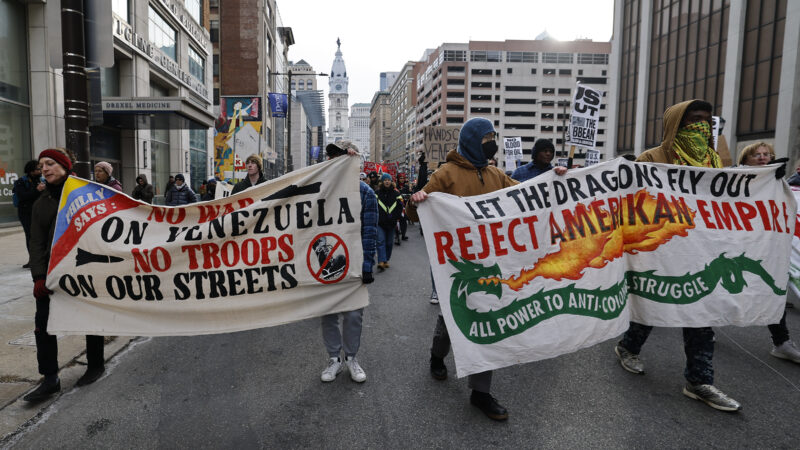
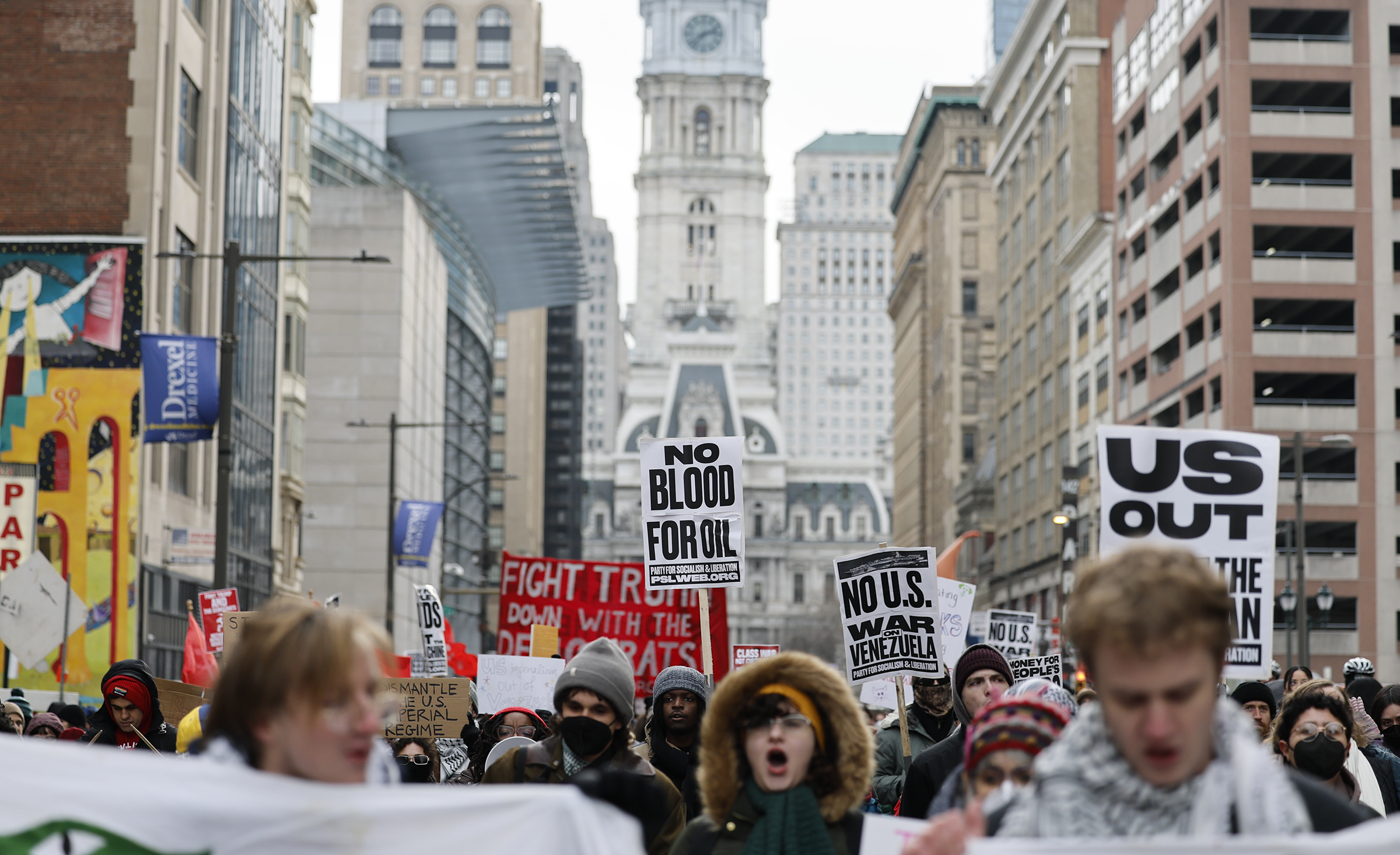
    The military operation and takeover Saturday elicited reactions from Philadelphia’s Venezuelan community and a cohort of area politicians who denounced Trump’s plan to run the country and capitalize off its oil reserves.

    Philadelphia Democrat U.S. Rep. Brendan Boyle took to X, writing, “The American people want affordable housing and health care. The last thing they want is another costly forever war.”

    U.S. Rep. Brian Fitzpatrick said in a statement that Venezuela’s future “belongs to the Venezuelan people alone.”

    “The only country that the United States of America should be ‘running’ is the United States of America,” the Bucks County Republican said.

    The legal authority for the raid on Maduro and airstrikes in Caracas were not immediately known, but area lawmakers said Trump did not seek congressional authorization to capture Maduro. Decrying the attack, a spokesperson for U.S. Rep. Dwight Evans of Philadelphia noted that the president’s chief of staff Susie Wiles told Vanity Fair in November that ground operations in Venezuela would require the approval of Congress.

    In a social media post, Sen. Andy Kim accused Secretary of State Marco Rubio and Defense Secretary Pete Hegseth of “blatantly” lying when the administration told congressional leaders its objective was not a regime change. Kim — a New Jersey Democrat and former national security official in the Obama administration — argued the raid may further isolate the U.S. from its allies.

    “This strike doesn’t represent strength. It’s not sound foreign policy,” Kim wrote. “It puts Americans at risk in Venezuela and the region, and it sends a horrible and disturbing signal to other powerful leaders across the globe that targeting a head of state is an acceptable policy for the U.S. government.”

    Delaware Democratic U.S. Sen. Chris Coons echoed Kim in a news release: According to Coons, senior Trump administration officials said in briefings to Congress that they were focused on combating drug trafficking.

    “President Trump put American service members in harm’s way to capture Maduro, but the president lacks a clear plan for what comes next,” Coons said. “This raid risks creating more instability in the region, putting U.S. service members and civilians in the hemisphere at risk, and dividing us further from our regional partners.”

    While condemning Trump, Sen. Cory Booker, a New Jersey Democrat, also upbraided the Republican-led Congress for its “ongoing abdication of its constitutional duty” and choosing “spineless complicity over its sworn responsibilities.”

    “Again and again, the president has exceeded his authority, defied congressional intent, trampled the separation of powers, and broken the law — while Congress looked away in cowardice and submission,” Booker said in a news release. “Congress must act now. It must reassert its constitutional authority, restore the rule of law, and stop this president before further injury is done to our democracy and our republic.”

    State Sen. Nikil Saval (D., Philadelphia) called for his federal counterparts to impeach Trump.

    “Trump’s attack on Venezuela and abduction of its President are criminal acts of terror. They follow in the darkest traditions of American history: a violent, reckless flex of military power to gain control over foreign resources,” Saval posted on Instagram. “It is incumbent on every American of conscience to rise against these actions.”

    Bill Burke-White, an international lawyer and law professor at the University of Pennsylvania Carey Law School, said the United States’ unsanctioned attack on another sovereign state opens the doors for other military superpowers to oust opposing heads of states.

    “Many countries in the world are going to look at this and say … that the United States has fundamentally abandoned the basic principles that kept us safe for the last 70 years. We’re going to be reverting to a world that looks more like regional powers that can do whatever they want,” he said, “a world governed, not by law, but by the whims of powerful autocrats in countries with nuclear weapons.”

    The U.S. government does not recognize Maduro as a legitimate leader of Venezuela, and Trump repeated rhetoric Saturday that Maduro had effectively exploited the nation for cocaine trafficking and criminal enterprises. American presence in waters off South America has swelled in recent months as the U.S. attacked boats allegedly carrying drugs.

    The number of known boat strikes was 35 and the number of people killed at least 115 as of Friday, according to the Trump administration. Trump has said that the U.S. is engaged in an “armed conflict” with drug cartels and has justified the boat strikes as necessary to curb the flow of drugs.

    In social media posts, Pennsylvania U.S. Sens. Dave McCormick , a Republican, and Democrat John Fetterman applauded American military personnel who carried out the mission under the cover of darkness.

    “For years Maduro’s regime killed our children by flooding America’s streets with poison, threatened our borders, and undermined U.S. national security,” McCormick wrote. “I urge what’s left of the Maduro regime to honor the will of the Venezuelan people and transition peacefully to rightfully elected leadership.”

    Demonstrators march along North Broad Street reacting to U.S. strikes on Venezuela on Saturday.

    There are about 7,000 people of Venezuelan origin in the Philly metro area, according to the latest census data, out of a total metro area Latino population of 681,000. By comparison, there are 135,000 people of Mexican origin, and 74,000 people of Dominican origin in the metro area.

    Three local Venezuelan organizations — Casa de Venezuela Philadelphia, Casa de Venezuela Delaware, and Gente de Venezuela Philadelphia — rallied for peace and unity among the diaspora.

    “In moments of heightened emotional sensitivity and rapid information circulation, we urge our community in exile to act with serenity, caution, and a sense of collective responsibility,” a joint statement read.

    A vigil for Venezuela’s future is scheduled for noon Sunday at the Cathedral Basilica of SS. Peter and Paul.

    “We firmly believe that no process of change will be sustainable if built on hatred, confrontation, or suffering,” the statement said.

    After the news began to sink in, Arends, the restaurateur, checked in with his employees, asking about their family members in Caracas. Overall everyone was OK, he said, although some were startled and concerned by the bombing sounds.

    “There is so much uncertainty in every single level and we have been through so much; we have seen bad things become worse so it’s very difficult to just be happy without fearing what that might lead to,” Arends said. “I’m hopeful but it doesn’t feel like we are at the point where this is over.”

    As the first day of a post-Maduro Venezuela came to a close, Venus Lucini, 28, said she felt like there was a difference in the air.

    “There are too many emotions, too much uncertainty, but for the first time, there is possibility,” Lucini said, as she held her daughter Sofi’s hand.

    For the young mother this is a chance for younger generations to recover a sense of the future.

    “I already had to emigrate, but this is her chance to see a new Venezuela,” Lucini said, longing to visit with family members who have never seen her 6-year-old in person.

    “Can we go to Venezuela now, Mami?” Sofi asked.

    “Not yet, baby, but soon you will get to see all the places Mami grew up in,” Lucini replied.

    Graphics editor John Duchneskie and the Associated Press contributed to this article.