Category: Nation & World

  • Former Democratic presidents remember the late Rev. Jesse Jackson during final public tribute

    Former Democratic presidents remember the late Rev. Jesse Jackson during final public tribute

    CHICAGO — From former presidents to an NBA Hall of Famer to prominent church pastors, stories of the Rev. Jesse Jackson Sr.’s influence on politics, corporate boardrooms, and picket lines loomed large Friday at a celebration honoring the late civil rights leader.

    Thousands of people gathered at a church on Chicago’s South Side to pay a final public tribute to Jackson.

    The celebration — with appearances by Grammy-winning gospel singers and Jennifer Hudson — felt at times like a church service and others like a political rally. Many, from former President Bill Clinton to the Rev. Al Sharpton, a civil rights leader and founder of the National Action Network, likened Jackson’s death to a call to action, from speaking out against justice to voting in the midterms.

    Former President Barack Obama said Jackson’s presidential runs in the 1980s set the stage for other Black leaders, including his own successful 2009 presidency and re-election.

    “The message he sent to a 22-year-old child of a single mother with a funny name, an outsider, was that maybe there wasn’t any place or any room where we didn’t belong,” Obama said. “He paved the road for so many others to follow.”

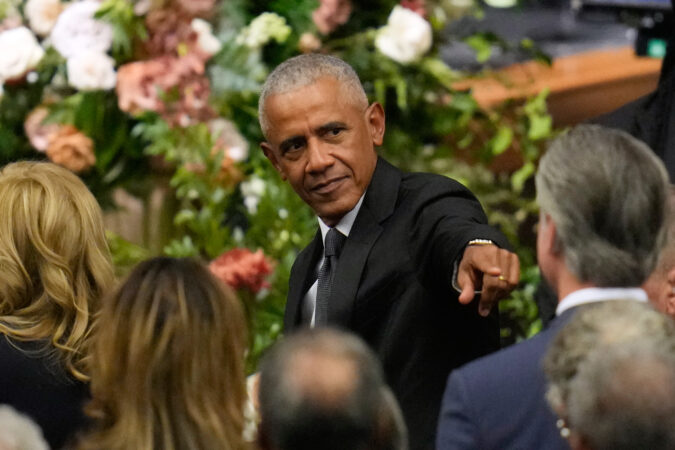
    Obama, joined by Clinton and former Democratic president Joe Biden at a celebration of life for Jackson, received the loudest round of applause as the three entered the chamber.

    “We are living in a time when it can be hard to hope,” Obama said. “Each day we wake up to some new assault to our democratic institutions. Another setback to the idea of the rule of law, an offense to common decency. Every day you wake up to things you just didn’t think were possible.”

    “Each day we are told by folks in high office to fear each other,” said Obama, referring to the current Republican leadership in Washington.

    Clinton said Jackson made him a better president, while former Democratic Vice President Kamala Harris talked about Jackson’s inspiring 1980s presidential runs and showed off campaign memorabilia she had kept from them. Former President Joe Biden also spoke during the service.

    President Donald Trump, who praised Jackson on social media after he died and also shared photos of the two of them together, did not attend.

    Thousands attend Jackson memorial service

    The event honors the protégé of the Rev. Dr. Martin Luther King Jr. and two-time presidential candidate and follows memorial services that drew large crowds in Chicago and South Carolina, where Jackson was born. Friday’s celebration — at an influential Black church with a 10,000-seat arena — was expected to be the largest.

    Crowds of attendees waited in long lines outside the church as television screens played excerpts of some of Jackson’s most famous speeches. Inside, vendors sold pins with his 1984 presidential slogan and hoodies with his “I Am Somebody” mantra.

    Along with a slew of Illinois elected leaders, notable attendees included actor and producer Tyler Perry, California Gov. Gavin Newsom, and political activist and theologian Cornel West. Detroit Pistons great and Chicago native Isiah Thomas was one of the speakers.

    Marketing professional Chelsia Bryan said Friday that she decided to attend the memorial service because it was “a chance to be part of something historic.”

    “As a Black woman, knowing that someone pretty much gave their life, dedicated their life to make sure I can do the things that I can do now, he’s worth honoring,” Bryan said.

    Jackson Jr.: Everyone welcome

    Jackson died last month at age 84 after battling a rare neurological disorder that affected his mobility and ability to speak. Family members say he continued coming into the office until last year and communicated through hand signals. His final public appearances included the 2024 Democratic National Convention in Chicago.

    “Every single person in here has a Jesse Jackson story,” his eldest son, Jesse Jackson Jr., said Friday. “The time he shook your hand, the time he prayed for you, the time he held you up, the time he prayed the funeral for somebody you know … and he prayed you to a new course of existence.”

    Sitting in the crowd was 90-year-old Mary Lovett. She said Jackson’s advocacy inspired her many times, from when she moved from Mississippi to Chicago in the 1960s, taught elementary school and became a mom. She twice voted for Jackson during both of his presidential runs and appreciated how he always spoke up for underrepresented people. “He’s gone, but I hope his legacy lives,” she said. “I hope we can remember what he tried to teach us.”

    Jackson’s service was to the poor, underrepresented

    Jackson’s pursuits were countless, taking him to all corners of the globe: Advocating for the poor and underrepresented on issues including voting rights, healthcare, job opportunities, and education. He scored diplomatic victories with world leaders, and through Rainbow PUSH Coalition, he channeled cries for Black pride and self-determination into corporate boardrooms, pressuring executives to make America a more open and equitable society.

    Another son, Yusef Jackson, who runs the Rainbow PUSH Coalition, recalled how his father carried a well-worn Bible but also showed his faith by showing up to picket lines.

    “He lived a revolutionary Christian faith rooted in justice, nonviolence and the moral righteousness,” Yusef Jackson said Friday. “He was deeply involved in the political struggles of his time, but his gift was that he could rise above them. It’s not about the left wing or the right wing. It takes two wings to fly. For him, the goal was always the moral center.”

    Jackson’s services in Chicago and South Carolina drew civic leaders, school groups, and everyday people who said they were touched by Jackson’s work, from scholarship programs to advocating for inmates. Several states flew flags at half-staff in his honor.

    Services in Washington, D.C., were tabled after a request to allow Jackson to lie in honor in the United States Capitol rotunda was denied by House Speaker Mike Johnson, who said the space is typically reserved for select officials, including former presidents. Details on a future event have not been made public.
  • Democrats join legal challenge to Trump’s planned 250-foot arch

    Democrats join legal challenge to Trump’s planned 250-foot arch

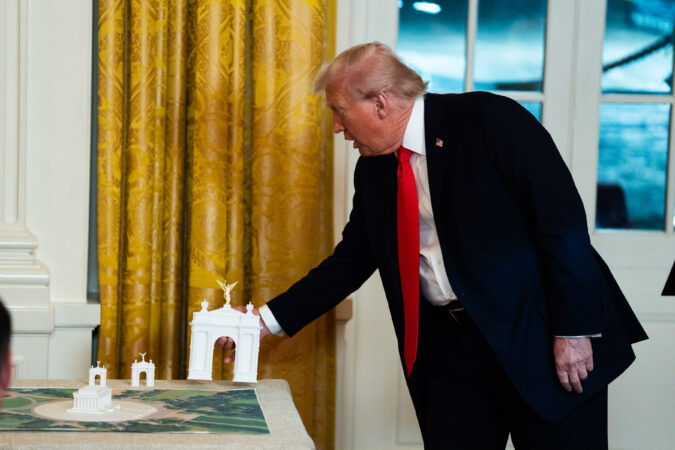
    Congressional Democrats have joined a legal challenge to President Donald Trump’s planned 250-foot triumphal arch, arguing in U.S. District Court that the project must receive congressional approval before moving forward.

    The top Democrats on committees overseeing federal lands and natural resources filed an amicus brief Friday, citing the Commemorative Works Act, a 40-year-old federal law that governs the design and placement of memorials in Washington. Under the law, certain parts of the city — including Memorial Circle, a traffic roundabout near Arlington National Cemetery, which Trump is eyeing for his planned arch — are considered protected land, and monuments built there would require congressional authorization. The circle sits narrowly inside the boundaries of Washington.

    “Washington D.C. is not the President’s backyard to renovate, relandscape, and build in as he sees fit,” Sens. Martin Heinrich of New Mexico, Angus King of Maine, and Jeff Merkley of Oregon and Reps. Jared Huffman of California, Yassamin Ansari of Arizona, and Maxine Dexter of Oregon wrote in their brief. King is an independent who caucuses with the Democrats.

    King also requested a review from the Congressional Research Service, the nonpartisan think tank that serves lawmakers, which independently concluded that an arch built in Memorial Circle would require congressional authorization. King’s office shared the review with the Washington Post.

    “This is a straightforward issue of who’s in charge,” King said in an interview Friday. “The law is clear that any structure in this zone — of which Memorial Circle is certainly part — has to have the express approval of Congress.”

    Huffman said the president’s plans raise “moral and political” questions, including whether the arch is a “vanity project” rather than a necessary monument.

    “This is not Pyongyang,” Huffman said, invoking the capital of North Korea. “Most Americans want to be able to appreciate the view of Arlington Cemetery without a massive eyesore.”

    The White House criticized Democrats’ legal challenge, saying that the party is “opposed to anything that celebrates the greatness of our Country” and mocking them as “America Last losers.”

    “The Triumphal Arch in Memorial Circle is going to be one of the most iconic landmarks not only in Washington, D.C., but throughout the world,” spokesman Davis Ingle said in a statement. “It will enhance the visitor experience at Arlington National Cemetery for veterans, the families of the fallen, and all Americans alike, serving as a visual reminder of the noble sacrifices borne by so many American heroes throughout our 250 year history so we can enjoy our freedoms today.”

    The White House did not respond to questions about whether officials would seek congressional approval of their planned arch.

    Military veterans and a historic preservationist sued the Trump administration last month, arguing that Trump’s planned arch would obstruct key views when visiting Arlington National Cemetery and interfere with the intent of nearby monuments. Public Citizen, a government watchdog organization, is seeking to halt the project until the administration secures approval from Congress and federal review panels.

    The White House has yet to formally propose its arch or seek those approvals, but Trump has repeatedly said that construction will soon begin. He has also tied the arch to the nation’s 250th anniversary, with Freedom 250 — a Trump-aligned group helping plan commemorative activities this year — helping guide the project’s development.

    “We’re doing one that will be more magnificent and larger than the Arc de Triomphe in Paris,” the president said in an interview last month with NBC News, invoking the famous 164-foot-tall arch in France. Trump said that his planned arch would be “about” 250 feet high.

  • Russia is providing Iran intelligence to target U.S. forces, officials say

    Russia is providing Iran intelligence to target U.S. forces, officials say

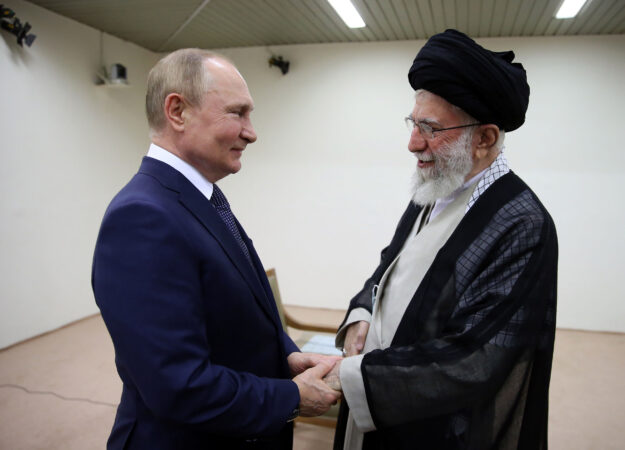
    Russia is providing Iran with targeting information to attack American forces in the Middle East, the first indication that another major U.S. adversary is participating — even indirectly — in the war, according to three officials familiar with the intelligence.

    The assistance, which has not been previously reported, signals that the rapidly expanding conflict now features one of America’s chief nuclear-armed competitors with exquisite intelligence capabilities.

    Since the war began Saturday, Russia has passed Iran the locations of U.S. military assets, including warships and aircraft, said the three officials, who spoke on the condition of anonymity because of the matter’s sensitivity.

    “It does seem like it’s a pretty comprehensive effort,” one of the people said.

    Reached by The Washington Post on Friday, Dmitry Peskov, the Kremlin spokesman, declined to comment on the intelligence findings. Moscow has called for an end to the war, which it labeled an “unprovoked act of armed aggression.”

    The extent of Russia’s targeting assistance to Iran was not entirely clear. The Iranian military’s own ability to locate U.S. forces has been degraded less than a week into the fighting, the officials said.

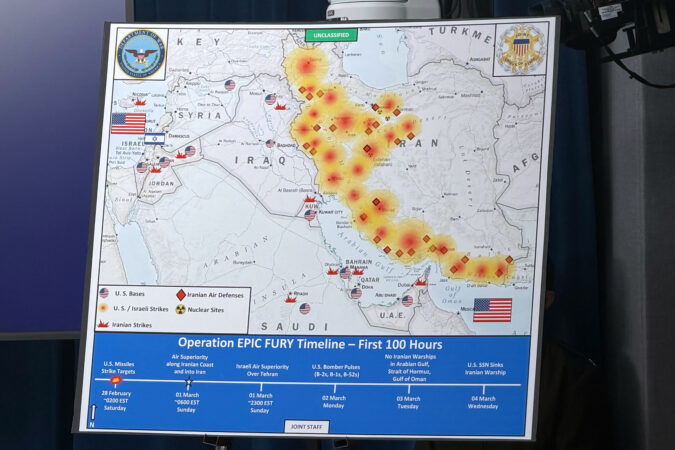
    Six U.S. troops were killed and several others were injured by an Iranian drone attack Sunday in Kuwait. Iran has fired thousands of one-way attack drones and hundreds of missiles at U.S. military positions, embassies and civilians, even as the joint American-Israeli campaign has hit more than 2,000 Iranian targets — including ballistic missile sites, naval assets, and the country’s leadership.

    “The Iranian regime is being absolutely crushed,” said a White House spokeswoman, Anna Kelly, without commenting on any Russian aid to Iran. “Their ballistic missile retaliation is decreasing every day, their navy is being wiped out, their production capacity is being demolished, and proxies are hardly putting up a fight.”

    The CIA and the Pentagon declined to comment.

    When asked this week about his message to Russia and China, which are among Iran’s most powerful backers, Defense Secretary Pete Hegseth said that he didn’t have one and that “they’re not really a factor here.”

    Two of the officials familiar with Russia’s support for Iran said that China did not appear to be aiding Iran’s defense, despite close ties between the two countries.

    In a statement, the Chinese Embassy in Washington referred to Beijing’s diplomatic efforts to engage with partners in the region since the war began and said that the conflict should be “immediately ceased.”

    Analysts said that the sharing of intelligence would fit the pattern of Iran’s strikes against U.S. forces, including command and control infrastructure, radars and temporary structures, like the one in Kuwait where six service members were killed.

    Iran is “making very precise hits on early warning radars or over-the-horizon radars,” said Dara Massicot, an expert on the Russian military at the Carnegie Endowment for International Peace. “They’re doing this in a very targeted way. They’re going after command and control,” she added.

    Iran possesses only a handful of military-grade satellites, and no satellite constellation of its own, which would make imagery provided by Russia’s much more advanced space capabilities highly valuable — particularly as the Kremlin has honed its own targeting after years of war in Ukraine, Massicot said.

    Nicole Grajewski, who studies Iran’s cooperation with Russia at the Harvard Kennedy School’s Belfer Center, said that there had been a high level of “sophistication” in the Iranian retaliatory strikes, both in what Tehran has targeted and in its ability in some cases to overwhelm U.S. and allied defenses.

    “They’re getting through air defenses,” she said, noting that the quality of Iran’s strikes appeared to have improved even from its 12-day war with Israel last summer.

    The Pentagon is quickly burning through its supply of precision arms and air defense interceptors, people familiar with the matter have told the Post, underscoring concerns raised by Gen. Dan Caine, chairman of the Joint Chiefs of Staff, as President Donald Trump deliberated whether to approve the operation. The administration has sought to downplay Caine’s assessment.

    Russia’s assistance reshuffles how various countries have engaged in a proxy war since Russia’s 2022 full-scale invasion of Ukraine. Throughout that conflict, U.S. adversaries including Iran, China and North Korea have provided Russia with either direct military aid or material support for Moscow’s vast defense industry. The United States has given Ukraine tens of billions of dollars’ worth of military equipment and shared intelligence on Russian positions to improve Kyiv’s targeting.

    On Thursday, Ukrainian President Volodymyr Zelensky posted on X that the Trump administration had requested assistance in helping protect against Iranian drones and that Kyiv would provide “specialists” in response.

    Iran has been one of Russia’s chief backers during the Ukraine war, sharing the technology to produce cheap one-way attack drones that have repeatedly been used to overwhelm Kyiv’s air defenses and exhaust Western stocks of interceptors donated to protect Ukrainian cities.

    “The Russians are more than aware of the assistance that we’re giving the Ukrainians,” said one of the officials familiar with Moscow’s support for Tehran. “I think they were very happy to try to get some payback.”

    The quality of Russia’s intelligence collection is not on a par with America’s but still ranks among the world’s best, this person continued.

    The Post has previously reported that despite the blow to one of its closest partners, the Kremlin sees possible advantages in a prolonged war between the U.S. and Iran, including higher oil revenue and an acute crisis that distracts America and Europe from the war in Ukraine.

    Iran, whose supreme leader was killed early in the conflict, could become the latest country to lose a pro-Russian government in recent years, following a Syrian uprising in late 2024 that ousted longtime dictator Bashar Assad and the U.S. military raid to seize Venezuelan President Nicolás Maduro in January.

    Still, the lack of direct military involvement from Moscow is in part a sign of its need to focus elsewhere, Massicot said.

    The Kremlin, she said, is “very much considering this is not their problem and not their war. From a strategic calculus perspective, Ukraine is still far and away the number one priority.”

  • Justice Department targets Cuban officials, aims for indictments

    Justice Department targets Cuban officials, aims for indictments

    The Justice Department has formed a working group to examine possible federal charges against officials or entities within Cuba’s government, according to an official familiar with the group.

    The formation of the group could be a significant step in the Trump administration’s public push to topple the regime in Cuba.

    Officials from government agencies including the Treasury Department will be part of the recently formed group. Treasury’s involvement could mean the Trump administration is considering further sanctions against Cuba, already the subject of intense U.S. economic sanctions.

    The working group is exploring potential crimes related to immigration, economics, and more. Another person familiar with the working group said federal prosecutors in Florida are also working with local partners in the state to bring potential charges against Cuban officials.

    The effort to bring charges against Cuban officials coincides with President Donald Trump saying that his administration is eyeing Cuba as the next country whose government might be overthrown, following the capture of Venezuela’s Nicolás Maduro in early January and the killing of Iran’s supreme leader last Saturday.

    “We want to finish this one first,” Trump said Thursday, referring to the current attack on Iran. It “will be just a question of time” before Cuba’s government falls, and “you and a lot of unbelievable people are going to be going back to Cuba, hopefully not to stay,” he told a White House audience that included a large number of Republicans from South Florida, many of Cuban descent.

    “I just want to wait a couple of weeks,” he added. On Friday, in an interview with CNN, he repeated that Cuba “is going to fall very soon.”

    The U.S. Attorney’s Office in the Southern District of Florida — which includes Miami, the center of the Cuban exile community — will be overseeing the prosecution group, according to the official familiar with the matter, who, like others in this article, spoke on the condition of anonymity to discuss an internal plan that has not yet been made public.

    Jason Reding Quiñones, who heads the office, is also overseeing a probe aimed at former officials of the Joe Biden and Barack Obama administrations whom Trump accuses of bringing politically motivated investigations against him.

    “Federal prosecutors from across the country work every day to pursue justice, which includes efforts to combat transnational crime,” a Justice Department spokesperson said in a statement.

    The Cuba prosecution effort could, in part, follow the model the administration used to remove Maduro from power. The Justice Department indicted Maduro in 2020, although the leader was not extradited at the time. In January, the administration launched an attack on Venezuela, capturing Maduro and bringing him to New York to face charges.

    Several former prosecutors from the Miami U.S. attorney’s office told the Washington Post that they were not surprised that the office would be leading an effort specifically focused on Cuba-related prosecutions. The Miami office has a long history of handling high-profile cases involving wrongdoing tied to the Cuban regime.

    The U.S. has, for example, long charged that GAESA, a military business conglomerate that controls vast portions of the Cuban economy, including tourism, foreign imports, and currency flows, is a center of state corruption.

    In 2024, the office secured the conviction of Victor Manuel Rocha, a former U.S. diplomat who admitted to gathering intelligence for Cuba for more than four decades while holding sensitive roles in the U.S. State Department and National Security Council.

    Attorneys in the office also led a significant prosecution in the early 2000s against five Cuban intelligence officers who were arrested in the United States and accused of seeking to infiltrate anti-Castro Cuban American groups. The group, known as the Cuban Five, was convicted at trial. President Barack Obama released several of its members in a 2014 prisoner exchange as part of his administration’s efforts to establish more normalized relations with Cuba.

    Last month, several Republican members of Florida’s congressional delegation urged Attorney General Pam Bondi to reopen an investigation into a 1996 incident, in which Cuban forces shot down two unarmed civilian planes operated by a Miami-based Cuban exile group called Brothers to the Rescue. Four people were killed.

    The group was scouring nearby waters for refugees seeking to escape to the U.S. at the time.

    The U.S. lawmakers, in a Feb. 13 letter, alleged that Raúl Castro, Cuba’s former president and brother of Fidel Castro, ordered the attack while serving as the head of the nation’s military.

    They pushed Trump administration officials to indict him and cited audio recordings of Raúl Castro discussing the incident that they said could help build a case.

    “We believe unequivocally that Raul Castro is responsible for this heinous crime,” read the letter signed by Reps. Mario Diaz-Balart, María Elvira Salazar, Carlos A. Gimenez, and Nicole Malliotakis. “It is time for him to be brought to justice.”

    Last week, the Supreme Court heard arguments on the efforts of two U.S. companies seeking compensation for assets seized by Cuba 65 years ago. Success in those efforts could open the door to a large number of additional lawsuits.

    Officials from South Florida have also urged the Justice Department to take action against the Cuban regime over a recent incident in which Cuban soldiers opened fire on a speedboat registered in Florida as it approached the island. The gunfire killed four of the boat’s armed passengers, including a U.S. citizen, and wounded another six.

    Cuban officials charged the survivors this week, alleging that they and those killed were Cubans living in the United States intent on infiltrating the island to commit acts of terrorism.

    The U.S. attorney for the Southern District of Florida, Reding Quiñones, expressed skepticism about that conclusion in a statement shortly after the shooting, saying: “The facts remain unclear and conflicting.”

    He vowed a thorough investigation.

    “We will follow the facts wherever they lead and pursue answers through every legal and diplomatic channel available,” he said. “We owe that to the victims, their families, and to the rule of law. More to come as we learn more.”

  • Justice Dept. releases missing Epstein documents with Trump allegations

    Justice Dept. releases missing Epstein documents with Trump allegations

    The Justice Department on Thursday publicly posted additional records related to convicted sex offender Jeffrey Epstein, including some that include allegations against President Donald Trump, following sharp criticism of the agency’s handling of the issue.

    The agency said the files, which include details from FBI interviews with a woman who told authorities she had been sexually assaulted by Trump and Epstein, had not been previously released because they were incorrectly determined to be duplicates of other records. The Justice Department has posted millions of pages of Epstein-related records online, including investigative materials, following the passage of a law last year mandating their release.

    The woman, who was interviewed by the FBI in 2019, accused Trump of sexually assaulting her decades earlier when she was a minor. No evidence has emerged publicly to corroborate that accusation. The White House called the allegations against Trump “completely baseless accusations, backed by zero credible evidence.”

    The additional records were posted as Trump and his administration have struggled to combat controversies involving the release of files connected to Epstein, who died in federal custody in 2019 while facing charges of sex-trafficking and abusing girls.

    The Justice Department has faced particular criticism over its response to the Epstein Files Transparency Act, a measure passed by Congress last year that demanded the agency make public a wide array of records by mid-December. While the agency did release more than 100,000 pages by that point, it did not make public most of its files until weeks later, well after the deadline.

    Lawmakers have faulted the Justice Department for missing the deadline, failing to redact some information related to victims’ identities and redacting other information. Last month, after multiple media outlets reported that summaries of the woman’s account had not been included, the Justice Department said it was examining whether it wrongly withheld records containing allegations against Trump, who had been friends with Epstein for years before they had a falling out.

    On Thursday, the Justice Department said in a social media post that it had discovered that “15 documents were incorrectly coded as duplicative.” Among these records were notes from multiple FBI interviews with the woman, who spoke to authorities following Epstein’s arrest in 2019.

    According to the interview notes, the woman told investigators that she had been sexually assaulted by Epstein and Trump during separate incidents in the 1980s, when she was a minor. The Washington Post has been unable to corroborate these allegations or reach the woman.

    Though summary reports of three of her FBI interviews were not included in files previously released by the administration, the Justice Department had already posted a report on one of the interviews as well as a summary file referencing the woman’s allegations against Trump.

    Karoline Leavitt, the White House press secretary, pushed back against the allegations in a statement Friday.

    “The total baselessness of these accusations is also supported by the obvious fact that Joe Biden’s [Justice Department] knew about them for four years and did nothing with them — because they knew President Trump did absolutely nothing wrong,” Leavitt said. “As we have said countless times, President Trump has been totally exonerated by the release of the Epstein Files.”

    The Justice Department this week said it had “not deleted any files from the library,” and a spokeswoman called it “the most transparent Department of Justice in history.”

    In addition to the FBI interviews, the Justice Department said Thursday that federal officials in South Florida had separately concluded that five prosecution memos “initially marked as privileged could be released while still protecting the privileged materials.” Those were also released, the agency said.

    The release of the FBI interviews and other documents came a day after the House Oversight and Government Reform Committee voted to subpoena Attorney General Pam Bondi, escalating tensions between Congress and the administration.

    Bondi, testifying last month before Congress, said the Justice Department “spent thousands of hours painstakingly reviewing millions of pages to comply with Congress’s law.”

    It was not clear how Bondi intends to respond to the subpoena, which compels her to appear before the committee for a closed-door deposition about the Justice Department’s release of the Epstein records.

  • Evidence suggests the deadly blast at an Iranian school was likely a U.S. airstrike

    Evidence suggests the deadly blast at an Iranian school was likely a U.S. airstrike

    JERUSALEM — Satellite images, expert analysis, a U.S. official and public information released by the U.S. and Israeli militaries suggest an explosion that killed scores of Iranian students at a school was likely caused by U.S. airstrikes that also hit an adjacent compound associated with the regime’s Revolutionary Guard.

    The Feb. 28 strike, which had the highest reported civilian death toll since the war began, has come under staunch criticism from the United Nations and human rights monitors. More than 165 people were killed, most of them of children, in the blast during school hours at Shajareh Tayyebeh Elementary School, according to Iranian state media.

    Satellite images taken Wednesday and reviewed by the the Associated Press show most of the school in the city of Minab, about 680 miles southeast of Tehran, reduced to rubble, a crescent shape punched into its roof. Experts say the tight pattern of the damage visible on the satellite photos is consistent with a targeted airstrike.

    Iran has blamed Israel and the United States for the blast. Neither country has accepted responsibility. Asked about the strike at the school at a Pentagon press briefing Wednesday, Defense Secretary Pete Hegseth said, “All I can say is that we’re investigating that. We, of course, never target civilian targets. But we’re taking a look and investigating that.”

    Several factors point to a U.S. strike.

    One is the launching of an assessment of the incident by the U.S. military. According to the Pentagon’s instructions on processes for mitigating civilian harm, an assessment is launched after a group of investigators make an initial determination that the U.S. military may bear culpability. A U.S. official told the AP that the strike was likely U.S. The official spoke anonymously because they were not authorized to comment publicly on the sensitive matter.

    Another is the location of the school — next to a base of the Revolutionary Guard in Hormozgan Province and close to a barracks for its naval brigade. The U.S. military has focused on naval targets and acknowledged strikes in the province, including one in the vicinity of the school.

    Israel, which has denied conducting the strike, has focused on areas of Iran closer to Israel and hasn’t reported conducting any strikes south of Isfahan, 500 miles away. The U.S. is operating warships in the Arabian Sea, including the USS Abraham Lincoln aircraft carrier, within range of the school.

    When asked by the AP about its findings, U.S. military Central Command spokesperson Capt. Tim Hawkins said, “It would be inappropriate to comment given the incident is under investigation.”

    White House press secretary Karoline Leavitt told reporters Friday that she had no updates on the investigation and did not directly answer a question about whether Trump was satisfied with the pace of the probe.

    “My assumption is that probably there were some activities recently there and they detected and tracked them, but … they weren’t aware or didn’t have an up-to-date database that a girls school was there and they bombed it,” said Farzin Nadimi, a senior fellow at the Washington Institute for Near East Policy who studies Iran’s military.

    Satellite images show damage

    The school is adjacent to a walled compound labeled on maps as the Seyyed Al-Shohada Cultural Complex of the Guard, which included a pharmacy, gym, and sports field.

    In addition to the school, satellite photos show that blasts struck at least five buildings in the Guard compound, leaving the area pocked with craters, charred holes in roofs, and piles of rubble. Historical satellite imagery shows the school building was not separated from the Guard compound until about a decade ago when a wall was built between them.

    Iranian online map applications show a living quarters for the Assef Brigades about 165 yards from the school, inside the Revolutionary Guard compound. The 16th Assef Coastal Missile Group is part of the Guard’s navy, Nadimi said. The 1st Naval District, which the Assef Brigades belong to, is responsible for the Strait of Hormuz, the narrow mouth of the Persian Gulf through which a fifth of all oil and natural gas traded passes. The strait has been a particular point of conflict in the war.

    In the aftermath of the strike, video from Iran’s state broadcaster verified by the AP using satellite imagery showed dozens of fresh graves dug at a nearby cemetery. Nadimi said it is likely the school taught daughters of Guard personnel.

    The strike has drawn wide condemnation from the secretary-general of the United Nations and international human rights groups. The criticism comes amid reports that airstrikes have also hit other schools in Iran.

    The London-based conflict monitoring organization Airwars is reviewing three other school strikes that caused casualties. In addition to those, in the last 48 hours the U.S.-based Human Rights Activists News Agency reported at least two more schools were struck.

    Targeting schools would be a clear violation of international laws governing armed conflict, said Elise Baker, a senior staff lawyer at the Atlantic Council, a Washington-based nonprofit think tank.

    “Strikes can only legally target military objectives and combatants, but the school was a civilian object and the students and teachers were civilians,” Baker said. “The school’s proximity to [Guard] facilities and the attendance of children of [Guard] members at the school does not change that conclusion: It was a civilian object.”

    Pattern of damage suggests targeted strike

    Three experts told the AP the satellite imagery and videos from the scene strongly suggested multiple munitions hit the compound. Complicating any assessment is the lack of images of bomb fragments from the blast. No independent agency has reached the site during the war to investigate, either.

    There are no craters or evidence of bombs hitting in the surrounding neighborhood, suggesting a great degree of accuracy, said Corey Scher, a researcher who uses satellite imagery and radar data to study landscape changes in armed conflict zones.

    “All the strikes are clustered within the walled-off compound,” Scher said. ”That’s one level of precision at the block level. And then most of the strikes are basically leading to direct hits on buildings. That’s another level of precision.”

    Scher said the school and the other buildings struck in the compound showed damage consistent with the use of air-to-surface munitions.

    “They didn’t explode in the air above the building,” he said. “It looks like the explosion happened at the time they hit the surface, whether it was the building or the ground.”

    Sean Moorhouse, a former British Army officer and explosive ordnance disposal expert, said the available satellite imagery was insufficient to determine exactly what type of munitions were used in the strike, but he said the visible damage was consistent with what would be expected with impacts from multiple 2,000-pound high-explosive warheads. He said the multiple precise impacts would undercut any suggestion that a malfunctioning Iranian missile hit the school.

    N.R. Jenzen-Jones, the director of Armament Research Services, said the school and Guard compound were targeted with “multiple simultaneous or near-simultaneous strikes.” He said in videos of the school taken immediately after the strike, smoke can be seen rising from the Guard compound. There were also impacts on multiple buildings visible in satellite images and media reports citing witnesses who said they heard multiple explosions.

    “If indeed it is confirmed that an American or Israeli strike hit the school, there are several potential points of failure in the targeting cycle,” Jenzen-Jones said. “We might be seeing an intelligence failure, likely rather early in the process, which misidentified the target or failed to update a targeting list following the building’s change in use.”

  • Florida Bar walks back statement on investigation into Halligan, now says there is none

    Florida Bar walks back statement on investigation into Halligan, now says there is none

    FORT LAUDERDALE, Fla. — The Florida Bar on Friday walked back what it said was an erroneous earlier statement its representatives had made indicating that it had an open investigation into Lindsey Halligan, a former top federal prosecutor in Virginia.

    A letter from a bar association representative to an advocacy group that had requested an inquiry into Halligan said that there was an “investigation pending” in response to the group’s complaint.

    Jennifer Krell Davis, a spokeswoman for the Florida Bar, also said Thursday that there was an “open file” but declined to comment further “as active Florida discipline cases are confidential.”

    On Friday, however, Davis issued a new statement saying, “The Florida Bar wrote a letter to the complainant erroneously stating that there is a pending Bar investigation of member Lindsay Halligan. There is no such pending Bar investigation of Lindsay Halligan.”

    She said the Florida Bar had received a complaint and was monitoring the “ongoing legal proceedings” but did not explain the discrepancy.

    Halligan, a former White House aide for President Donald Trump, pursued cases against the president’s opponents but ultimately left the job after her appointment was deemed unlawful.

    The Campaign for Accountability, a nonprofit watchdog that had sought the bar inquiry, published a letter on its website in which a representative of the Florida Bar confirmed that the organization had an investigation pending.

    A spokesperson for the Florida Bar had told the Associated Press on Thursday that there was an open file on Halligan but declined to comment further because disciplinary cases are confidential.

    On Friday, Michelle Kuppersmith, the executive director of CfA, said the Florida Bar had not directly told them that the Feb. 4 letter contained an erroneous mention of a pending investigation. She said it’s “hard to reconcile” the Bar’s latest statement.

    “If there is no longer an investigation into Halligan, the question is why not, given that three judges indicated she engaged in conduct that appears to violate ethics rules,” Kuppersmith said in a statement.

    Halligan did not immediately respond to several email requests for comment about the investigation.

    The complaint centers on Halligan’s brief but turbulent time as the acting U.S. attorney for the Eastern District of Virginia, historically one of the Justice Department’s most elite and prestigious prosecution offices.

    Halligan, who had served as one of Trump’s attorneys but had no prior experience as a federal prosecutor, was installed in September after the Trump administration effectively forced out her predecessor, Erik Siebert, amid pressure to bring charges against a pair of Trump’s political opponents: former FBI Director James Comey and New York Attorney General Letitia James.

    Halligan secured both indictments but ran into difficulty right away as lawyers for Comey raised questions about a series of what they said were irregularities in the grand jury presentation of the case, including legal and factual errors that tainted the process. A judge in November scolded Halligan for “fundamental misstatements of the law,” including what he said was her suggestion to the grand jury that Comey did not have a Fifth Amendment right to not testify in the case.

    A different judge subsequently dismissed both the Comey and James prosecutions after concluding that Halligan’s appointment by the Justice Department had been unlawful. Halligan left the position in January.

    The complaint rehashes that chronology and also suggests that Halligan may have violated rules of professional conduct by continuing to hold herself out in court filings as acting U.S. attorney for the district after a judge had ruled that she was serving in the position illegally.

    “In this way, Ms. Halligan appears to have issued false or misleading communications regarding herself and her services,” the complaint said.

  • Doctor-senator who backed RFK Jr. fights for his job, and his legacy

    Doctor-senator who backed RFK Jr. fights for his job, and his legacy

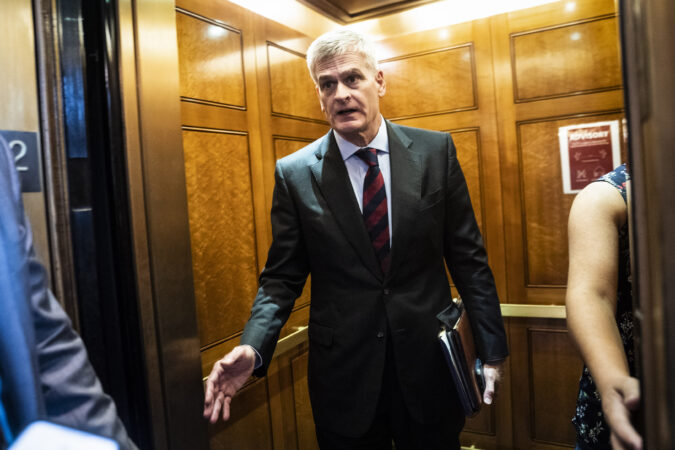
    BATON ROUGE, La. — The ambitious liver doctor would go just about anywhere in his home state to give people the hepatitis B vaccine.

    Bill Cassidy offered jabs to thousands of inmates at Louisiana’s maximum-security prison in the early 2000s. A decade before that, he set up vaccine clinics in middle schools, a model hailed nationally as a success.

    “He got that whole generation immunized in East Baton Rouge,” said Holley Galland, a retired doctor who worked with Cassidy vaccinating schoolchildren.

    About the same time, a lawyer and environmental activist with a famous last name was starting to build the loyal anti-vaccine coalition that, two decades later, would move President Donald Trump to nominate him as the nation’s top health official.

    Today, a year after now-Sen. Cassidy warily cast the vote that ensured Robert F. Kennedy Jr.’s ascension to that role, the Louisiana Republican’s life’s work — in medicine and in politics — is unraveling.

    Newborn hepatitis B vaccination rates in the U.S. had plunged to 73% as of August, down 10 percentage points since a February 2023 high, according to research published in JAMA last month. In December, the Centers for Disease Control and Prevention’s Advisory Committee for Immunization Practices — remade by Kennedy — voted to revoke a two-decade-old recommendation that all newborns get the shot.

    The next month, Trump endorsed U.S. Rep. Julia Letlow, a Cassidy challenger in what’s shaping up to be a competitive Republican Senate primary. Letlow’s foray into politics began in 2021 when she took the seat won by her husband, left vacant after he died from COVID.

    KFF Health News made multiple requests for comment from Cassidy over three months. His staff declined to make him available for an interview or provide comment. Letlow’s campaign did not respond to requests for comment.

    Rise of the skeptics

    As the May primary nears, some Louisiana doctors are worried they’ve begun a long trek down a dark road when it comes to vaccine-preventable diseases.

    Last year, on the day Kennedy was sworn in a thousand miles away in Washington, Louisiana’s health department stopped promoting vaccines, halting its clinics and advertising. Its communications about an ongoing whooping cough outbreak in the state have nearly ceased. It took months for the state to announce last year that two infants had died from the illness. A Louisiana child’s death from the flu was confirmed this January, and a couple of cases of measles were reported last year.

    Spokespeople for the Louisiana Department of Health did not respond to questions.

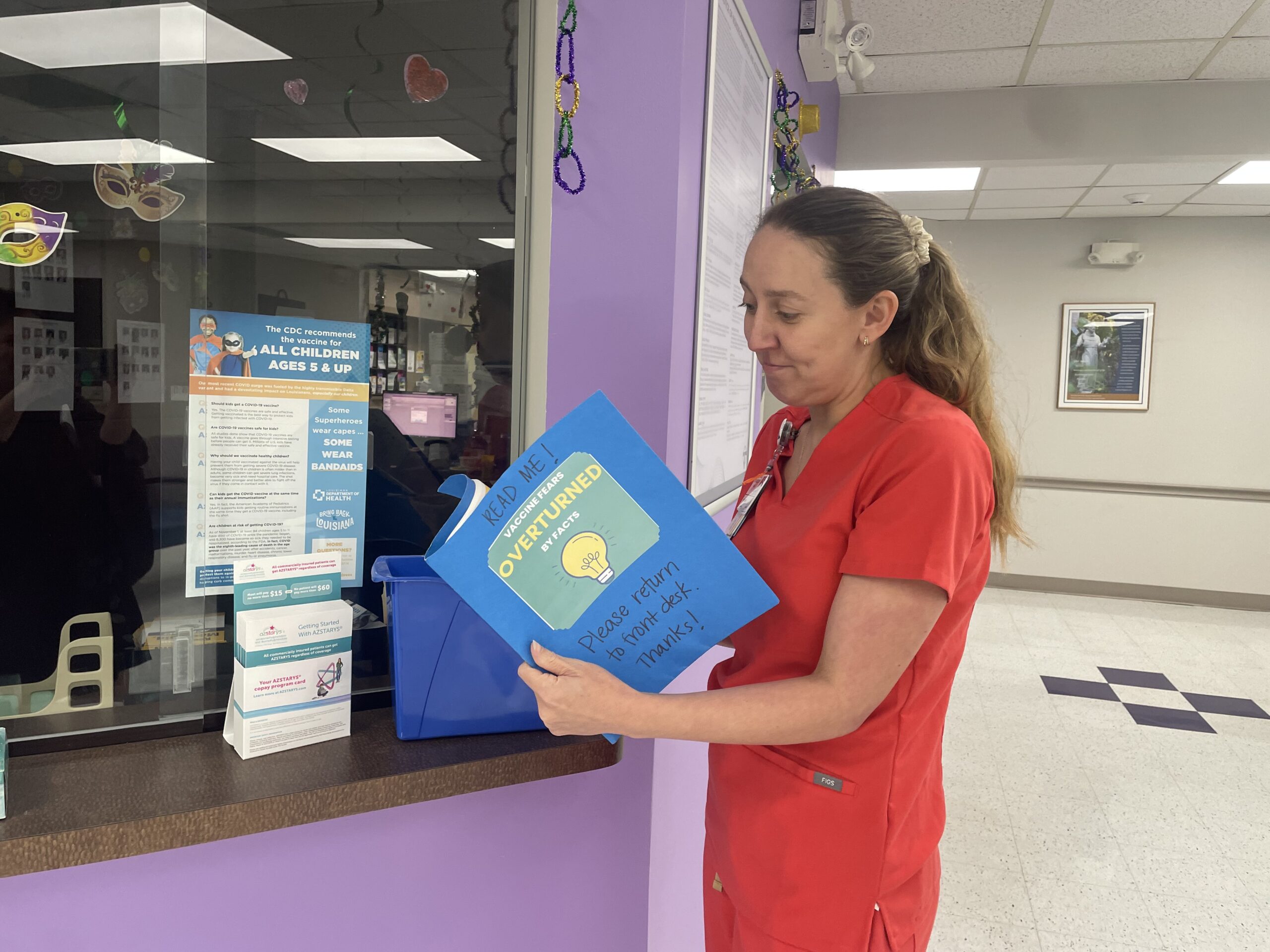
    When parents have concerns about vaccines, pediatrician Mikki Bouquet of Baton Rouge, La., offers them a handmade folder she created that addresses common misconceptions or fears about vaccines.

    “It’s so hard to see children get sick from illnesses that they should have never gotten in the first place,” said Mikki Bouquet, a pediatrician in Baton Rouge. “You want to just scream into the void of this community over how they failed this child.”

    As anti-vaccine forces have taken hold of the state and federal health departments, Cassidy has lamented the consequences.

    “Families are getting sick and people are dying from vaccine-preventable deaths, and that tragedy needs to stop,” he wrote on social media last fall.

    But while it is Cassidy’s duty as chairman of the Senate’s Health, Education, Labor, and Pensions Committee to conduct oversight of the health department, Kennedy has appeared before the committee just once since he was confirmed.

    The secretary speaks at a “regular clip” with Cassidy, said Department of Health and Human Services spokesperson Andrew Nixon.

    Kennedy’s department has elevated Louisiana vaccine skeptics. The state surgeon general who terminated Louisiana’s vaccine campaign, Ralph Abraham, was named deputy director of the CDC. (He left the role in February.) And Kennedy handpicked Evelyn Griffin, a Baton Rouge OB-GYN who later replaced Abraham as the state surgeon general, for an appointment to ACIP. Griffin has suggested the COVID vaccine had dangerous side effects for young patients.

    Research has shown that serious side effects from the vaccinations are rare and that the shots saved millions of lives during the pandemic.

    Cassidy “has really not had an outspoken chorus of policy supporters” when it comes to inoculating people, said Michael Henderson, a professor of political communication at Louisiana State University. “There’s not a lot of political stakes in doing that in Louisiana if you’re a Republican.”

    Louisiana Gov. Jeff Landry reprimanded Cassidy after the senator called for the state’s health department to ease access to COVID shots.

    “Why don’t you just leave a prescription for the dangerous COVID shot at your district office and anyone can swing by and get one!” the Republican quipped on X in September.

    On ‘eggshells’ in the exam room

    On a sunny February afternoon, as Carnival floats were readied to parade the streets of New Orleans, pediatrician Katie Brown approached a basement apartment on a well-child visit. Cowboy boot pendants dangled from her ears, and a pack of diapers were clutched tightly in her arms.

    The patient, a toddler who waved at the sight of visitors, was up to date on her immunizations. But when Brown suggested a COVID vaccine, the girl’s mother quickly declined, noting she had never gotten the shot either.

    Many of Brown’s young patients — seen through Nest Health, which offers in-home visits covered by Louisiana’s Medicaid program — are current with their vaccines. Brown said home visits make parents more comfortable immunizing their children, but she’s still spending more time these days explaining what they’re getting in those shots.

    “After COVID vaccines, that’s when some people just decided, ‘I don’t know if I trust vaccines, period,’” she said.

    Across the state, vaccination rates have declined since the pandemic, falling short of the levels scientists say are required to achieve herd immunity for some deadly diseases, including measles. About 92% of Louisiana’s kindergartners have had the recommended two doses of the measles, mumps, and rubella vaccine.

    The New Orleans Health Department has tried to step up with a $100,000 immunization campaign of its own, with clinics and billboards, during this year’s flu season, said Jennifer Avegno, the department’s director.

    But the state’s absence is felt. Other parishes across Louisiana have not taken similar action, leaving doctors largely on their own to promote immunizations.

    “I’ll say that with certainty,” Avegno said. “It’s been a blow to not have a statewide coordination.”

    A day after Brown’s home visit, a mother in Baton Rouge shook her head when Bouquet offered a flu shot for her 10-year-old daughter in an exam room.

    In the waiting room, parents could thumb through a handmade book that offers scientific facts to counter fears about vaccines. A laminated guide placed in each exam room explained the benefits of each recommended immunization.

    Bouquet said she’s experimenting with ways to educate parents about vaccines without seeming overbearing. She still hasn’t figured out a surefire formula. Some parents now shut down any vaccine talk, and she worries others skip scheduling appointments to avoid the topic entirely.

    “We’re having to walk on eggshells a bit to determine how to get that trust back,” Bouquet said. “And maybe these discussions can come up in future visits.”

    Pro-Vax, pro-anti-Vaxxer

    Children’s Health Defense, the nonprofit that Kennedy helmed, worked to erode vaccine trust during the pandemic — falsely claiming, for instance, that COVID shots cause organ damage and that polio vaccines were at fault for a rise in the disease. The organization also sued the federal government over the mRNA-based COVID shots, hoping to get their emergency authorizations from the Food and Drug Administration revoked.

    When Kennedy came before Cassidy’s committee in January 2025 as Trump’s nominee for health secretary, the senator-doctor saw risks if the prominent anti-vaccine lawyer was confirmed.

    Cassidy described a time years ago when he loaded an 18-year-old onto a helicopter to get an emergency liver transplant. The young woman had acute hepatitis B, an incurable disease that is spread primarily through blood or bodily fluids and can lead to liver failure.

    It was “the worst day of my medical career,” he said, addressing Kennedy at the witness table in front of him. “Because I thought, $50 of vaccines could have prevented this all.”

    Cassidy started in politics in 2006 as a state senator, winning election to the U.S. House two years later. When he first ran for the U.S. Senate, in 2014, he charmed Louisiana voters with campaign ads showing him dressed in scrubs and a white lab coat, talking about his work with Hurricane Katrina evacuees and patients at Baton Rouge’s public hospital.

    But some Republicans soured on Cassidy after he voted to convict Trump on an article of impeachment charging him with inciting the Jan. 6, 2021, insurrection at the U.S. Capitol.

    The impeachment vote has hampered Cassidy’s reelection bid this year in a state where Trump captured 60% of the vote in 2024.

    “Cassidy has things that are associated with his name: the impeachment vote in 2021,” Henderson said.

    Cassidy’s loyalty to Trump was tested again with Kennedy’s nomination. Cassidy said he endorsed Kennedy after extracting pledges that he wouldn’t tinker with the nation’s vaccination program.

    But since taking office, Kennedy has largely ignored those promises, and Cassidy hasn’t publicly rebuked him.

    Former Texas congressman Michael Burgess served for years with Cassidy in the House, where they were founding members of the GOP Doctors Caucus, started in 2009. He said Cassidy’s discomfort with some of Kennedy’s actions is palpable.

    “You could hear some of the pain in Sen. Cassidy’s voice when he was addressing that the secretary wanted to drop the birth dose of hepatitis B,” Burgess said. “You got cases to nearly zero on hepatitis B. It was painful to him to think about taking this away from the population.”

    Retired Baton Rouge nurse-practitioner Elizabeth Britton has switched her party affiliation so she can vote in the closed Republican primary for Cassidy, with whom she vaccinated inmates decades ago.

    She doesn’t quite understand the “mess” in Washington that resulted in the senator voting to confirm a vaccine critic.

    Watching Kennedy and others promulgate doubts about shots she once administered has made her “profoundly sad” and “angry,” she said, but most of all worried.

    “It puts a pit in my stomach, because I know the consequences of people not getting the vaccine,” she said.

    KFF Health News is a national newsroom that produces in-depth journalism about health issues and is one of the core operating programs at KFF — the independent source for health policy research, polling, and journalism.

  • Army unit’s moves trigger speculation as U.S. plots next steps in Iran war

    Army unit’s moves trigger speculation as U.S. plots next steps in Iran war

    The Army in recent days abruptly canceled a major training exercise for the headquarters element of an elite paratrooper unit, officials said, fueling speculation within the Defense Department that soldiers specializing in ground combat and a range of other missions may be sent to the Middle East as the conflict with Iran widens.

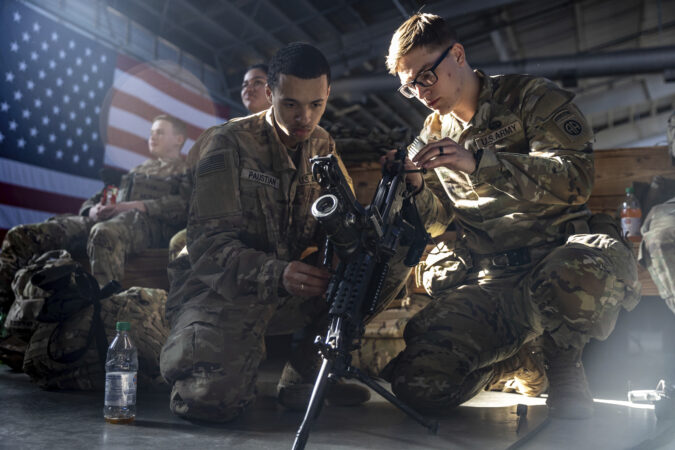
    The 82nd Airborne Division at Fort Bragg in North Carolina includes a brigade combat team of about 4,000 to 5,000 soldiers ready to deploy on 18 hours notice for missions as varied as seizing airfields and other critical infrastructure, reinforcing U.S. embassies, and enabling emergency evacuations. Its headquarters element is responsible for coordinating how those operations are planned and executed.

    No deployment orders had been issued as of Friday, officials said, speaking like some others on the condition of anonymity to discuss the situation. They noted that the Army is expected to announce soon a previously scheduled Middle East deployment for a helicopter unit with the 82nd, but that won’t happen until later in the spring.

    But the unexpected change of plans — the unit’s headquarters staff was told to stay put in North Carolina instead of joining the training event at Fort Polk in Louisiana — and the 82nd’s high-profile role in past conflicts has heightened expectations that the division’s Immediate Response Force could be called upon.

    “We’re all preparing for something — just in case,” said one official familiar with the issue.

    Army officials referred questions to the Pentagon, which issued a brief statement declining to provide details. “Due to operations security we do not discuss future or hypothetical movements,” the statement said.

    Officials with U.S. Central Command, which oversees operations in the Middle East, declined to comment.

    President Donald Trump has offered shifting explanations for his decision to start the conflict with Iran — and said publicly that U.S. ground troops “probably” would not be needed as part of the ongoing campaign. He and his top aides have repeatedly declined to rule out that possibility, however.

    The Immediate Response Force has been called upon in recent years to reinforce security at the U.S. Embassy in Baghdad just ahead of the military’s killing in 2020 of Qasem Soleimani, the Iranian Quds Force commander blamed for hundreds of deadly attacks on American personnel in the Middle East. It was central also to the evacuation of Afghanistan in 2021 and the show of U.S. force in Eastern Europe as Russia prepared to invade Ukraine in 2022.

    Since hostilities began nearly a week ago, U.S. commanders have relied on airstrikes and naval strikes to target military sites and Tehran’s arsenal of missiles, attack drones and navy vessels. As many Iranian defenses have crumbled, U.S. forces increasingly are flying directly over Iran, dropping munitions with fighter jets, bombers and other aircraft.

    White House press secretary Karoline Leavitt told reporters Wednesday that sending American ground troops into Iran was “not part of the current plan, but I’m not going to remove an option for the president that is on the table.”

    At a Pentagon news briefing earlier in the day, Gen. Dan Caine, the chairman of the Joint Chiefs of Staff, declined to comment when asked about “U.S. boots on the ground,” saying that’s a “question for policymakers.”

    “I don’t make policy,” Caine added. “I execute policy.”

    As the Post reported last week, Caine had warned the White House that munitions shortfalls and a lack of broad military support from other U.S. allies would add considerable risk to any operation in Iran and to the personnel put in harm’s way. The Trump administration has sought to downplay those concerns.

    Caine appeared at Wednesday’s news conference alongside Defense Secretary Pete Hegseth, who earlier in the week also refused to rule out the possibility that ground combat troops could be sent into Iran.

    Adm. Charles “Brad” Cooper, who oversees the campaign as head of Central Command, said in a news conference Thursday in Tampa, Fla., that U.S. combat power in the region is still building as Iran’s declines. Fewer and fewer Iranian missiles and drones have been launched in the past few days, he said.

    By flying directly over Iran, Cooper said, U.S. forces are hitting its “center of gravity directly with overwhelming power and reach.” That includes, he said, B-2 bombers dropping 2,000-pound bombs on underground ballistic missile launchers.

    More than 50,000 U.S. troops are involved in the operation and six U.S. soldiers have been killed as Iran has mounted a ferocious counterattack targeting American positions and interests throughout the Middle East. Trump has said there will “likely be more” U.S. military fatalities before the campaign concludes, adding: “That’s the way it is.”

    The president and his top aides have been noncommittal on a timeline for ending the conflict. Trump has said it could last four to five weeks but “we have the capability to go far longer than that.”

    One prevailing concern, officials say, is the military’s limited stockpile of certain key weapons. The Pentagon is rapidly burning through its supply of precision arms and air-defense interceptors, people familiar with the matter have said. Senior Pentagon officials have denied there are any problems, noting that with Iranian defenses crumbling, U.S. forces are shifting heavily to strikes from manned aircraft with munitions that are plentiful.

    “We’ve got no shortages of munitions,” Hegseth said Thursday, speaking alongside Cooper. “Our stockpiles of defensive and offensive weapons allow us to sustain this campaign as long as we need to.”

    If the administration elects to send ground forces into Iran, one early target, analysts have said, could be Kharg Island. Located about 15 miles from the mainland in the Persian Gulf, the island is home to some of Tehran’s most significant oil infrastructure, with about 90% of the country’s oil exports moving through facilities there.

    A U.S. seizure of Kharg Island would give the Trump administration control of a centerpiece of the Iranian economy but leave U.S. troops vulnerable to attack.

    Michael Rubin, a senior fellow at the conservative American Enterprise Institute, called securing Kharg Island a “no-brainer” and said it appears that the Trump administration appears to be “coming around to the idea that Iran is a much greater problem set than perhaps they went in thinking.”

    While U.S. troops could take incoming fire if deployed there, Rubin said, capturing the island would give the United States significant strategic advantages, including potentially choking off Tehran’s ability to pay its military.

    Securing Iran’s most significant oil infrastructure also would follow a pattern for Trump, who has previously sought to secure oil wealth for the United States through the capture of Venezuelan President Nicolás Maduro in January and intervention in Syria during his first term in office.

    Still, deploying ground forces into Iran could pose significant political risk for the president, who is facing anti-war opposition from Democrats and a wing of his own Republican Party.

    A poll by CNN published Sunday found that 12% of respondents favor sending ground troops to Iran, while 60% oppose it and 28% are unsure.

  • U.S. national security offices, weakened by firings, confront Mideast war

    U.S. national security offices, weakened by firings, confront Mideast war

    Last week, FBI Director Kash Patel fired roughly a dozen agents and staff members who once had ties to an investigation of Donald Trump. Among them were agents who specialized in addressing threats from Iran and its proxies.

    Three days after the firings began, the United States was bombarding Iran.

    The fighting abroad poses a major test for a Justice Department and FBI reeling from mass firings, reassignments, and departures during Trump’s 14 months in office for his second term, according to current and former officials familiar with the matter, most of whom spoke on the condition of anonymity either out of concern about retaliation or to discuss continuing investigations.

    The FBI and Justice Department still have skilled leaders in many key national security positions, the people said, but they warned that the bench of expertise has significantly thinned over the past year, and the number of leaders with deep expertise in handling domestic threats has diminished.

    Thinner ranks, especially of experienced staff members, can matter in multiple ways, the current and former officials said.

    When the U.S. is engaged in conflict abroad, domestic law enforcement goes into high alert. FBI agents with national security experience sift through scores of possible threats, determining which are worth investigating further, which may be tied to terrorist groups — and which do not need to be followed up on.

    For serious threats, FBI agents often coordinate with Justice Department prosecutors to determine whether and how to execute warrants to surveil and arrest people before any possible violence occurs.

    Today, experienced agents and prosecutors are more scarce. At the FBI, the recent terminations came on top of scores of firings of agents and field-office leaders that Patel has ordered during his tenure, often without explanation.

    One former prosecutor, who spoke on the condition of anonymity to broadly discuss an investigation that has not been made public, said he worked last year with more than a half-dozen FBI agents to surveil a man who officials feared may have been planning a violent attack.

    FBI agents surveilled the man 24-7, the former prosecutor said. But Patel reassigned those agents to work on immigration, and the FBI’s capabilities to trail that suspect around-the-clock waned, the prosecutor said.

    As of October, roughly 25% of FBI agents had been assigned to immigration enforcement, stretching thin an already busy workforce.

    Each termination of an experienced agent also rids the bureau of years of source building, the current and former officials said.

    It’s impossible to know for sure what impact such departures have on the ability to track threats, they said. But, they said, each of the Iranian experts the FBI has lost probably had sources in and around Iranian American communities that they used to help monitor specific threats and people. Such source relationships, which are built on trust, cannot easily be transferred and are typically severed when agents leave.

    FBI spokesman Ben Williamson defended the bureau on social media. The recent firing of agents happened because “they acted unethically and violated the mission,” he said, adding that three agents with Iran expertise were ousted. The bureau did not answer questions about how the agents acted unethically or violated the FBI’s mission.

    “While we do not comment on personnel matters, the FBI maintains a robust counterintelligence operation, with personnel all over the country, who delivered record results in 2025 — including a 35% increase in counterintelligence arrests, six of the Ten Most Wanted Fugitives captured, and multiple foiled terrorism plots just in December alone,” Williamson said in a statement. “Our teams remain fully engaged across the country and prepared to mobilize any security assets needed to assist federal partners — as well as state and local law enforcement.”

    There’s no question, however, that the administration’s firings across the Justice Department and FBI have created big gaps in expertise across the law enforcement agency. The staffing losses have been widespread, hitting U.S. attorneys offices, FBI field offices and critical divisions at headquarters in Washington. The Justice Department has struggled to fill many of these slots with qualified people, the Washington Post has reported.

    The firings started on Day One of the Trump administration. Top Justice Department leaders pushed out Bruce Swartz, the deputy for international affairs in the criminal division, who had worked at the department for decades. Michael Nordwall, who headed the FBI’s criminal and cyber investigations division, and Robert Wells, whose portfolio included all of national security for the FBI, were also pushed out.

    At the time, The Post reported that Brian Driscoll — the acting FBI director while Patel was awaiting Senate confirmation — fought to keep Nordwall and Wells, saying their expertise was needed. Driscoll lost that fight. He subsequently was also pushed out by Patel.

    George Toscas — a veteran national security prosecutor who, in previous administrations, would have been overseeing the threats cases — was also ousted.

    Some of the removed leaders have been replaced with others who have years of experience in the department, the people interviewed said. In many cases, however, talented employees were promoted before they otherwise would have been, cutting short their training for senior positions. Others, they said, are unqualified for their jobs.

    Further stretching the national security leadership, Matthew Blue — the chief of the Justice Department’s counterterrorism section — is an Air Force veteran who has been serving in the D.C. National Guard since August. Trump deployed the D.C. National Guard to tackle “out of control” crime in the nation’s capital.

    One of Blue’s deputy chiefs, a longtime Justice Department prosecutor, has been serving as acting chief in his absence.

    Firings in other parts of the Justice Department can also have a ripple effect. Kyle Boynton — a former Civil Rights Division prosecutor and FBI agent who left the Justice Department in 2025 — noted that prosecutors who have reason to fear a person is planning a violent act can sometimes bring charges of an attempt to commit a hate crime before they carry out a violent attack. That can be a critical tool in preventing attacks, he said.

    As a prosecutor in the Civil Rights Division, Boynton said he would receive calls from FBI agents when they were tracking a threat against a synagogue, for example. He would help determine what search warrants or surveillance measures they could legally request. Boynton said he fears that few people remain in the division’s criminal section who have handled such investigations.

    The entire leadership of the criminal section of the Civil Rights Division has departed or been ousted in recent months, two people familiar with staffing in the division said.

    “It requires an enormous amount of manpower to track people before they commit a crime,” Boynton said. “What you are looking for is evidence of intent and evidence that they have taken substantial steps in furtherance of intent. That requires an enormous amount of attention and scrutiny by FBI agents and DOJ prosecutors.”

    Current and former Justice Department attorneys said they are frustrated that the Trump administration, including Patel and Attorney General Pam Bondi, did not appear to carefully consider the long-term ramifications of their staffing decisions.

    “We are now in a heightened-threat situation, not just in the Mideast but also here in the U.S. Iran, acting through its proxies, has long sought to carry out a terrorist attack or assassination inside the country,” said one longtime former senior National Security official.

    “The danger today is that we have lost so much of our capability to uncover and stop such an attack,” the official said. “We have let down our guard at the worst time.”