Category: Nation & World

  • Gulf allies complain U.S. didn’t notify them of Iran attacks and ignored their warnings, sources say

    Gulf allies complain U.S. didn’t notify them of Iran attacks and ignored their warnings, sources say

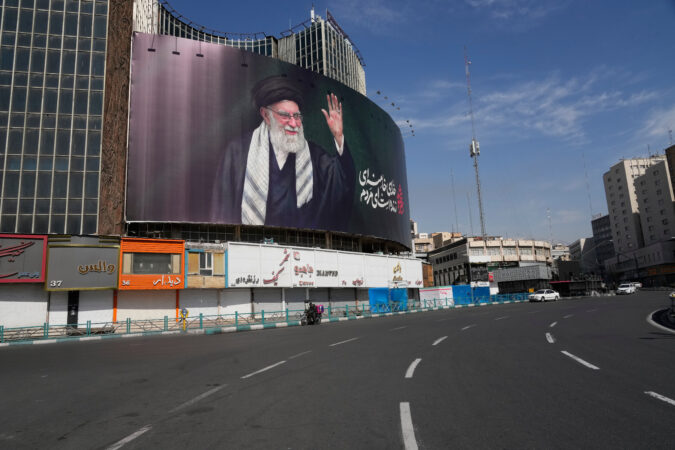
    CAIRO — The Trump administration is confronting mounting discontent from allies in the Persian Gulf who have complained they were not given adequate time to prepare for the torrent of Iranian drones and missiles bombarding their countries in retaliation for strikes launched by the U.S. and Israel.

    Officials from two Gulf countries said their governments were disappointed in the way the U.S. has handled the war, particularly the initial attack on Iran on Feb. 28. They said their countries were not given advance notice of the U.S.-Israeli attack and complained the U.S. had ignored their warnings that the war would have devastating consequences for the entire region.

    One of the officials said that Gulf countries were frustrated and even angry that the U.S. military has not defended them enough. He said there is belief in the region that the operation has focused on defending Israel and American troops, while leaving Gulf countries to protect themselves, and said that his country’s stock of interceptors was “rapidly depleting.”

    Like others in this story, the Gulf officials spoke on the condition of anonymity because they were discussing a confidential diplomatic matter.

    The governments of Bahrain, Kuwait, Oman, Qatar, Saudi Arabia, and the United Arab Emirates did not respond to requests for comment.

    White House spokeswoman Anna Kelly said in response: “Iran’s retaliatory ballistic missile attacks have decreased by 90% because Operation Epic Fury is crushing their ability to shoot these weapons or produce more. President Trump is in close contact with all of our regional partners, and the terrorist Iranian regime’s attacks on its neighbors prove how imperative it was that President Trump eliminate this threat to our country and our allies.”

    The Pentagon did not respond.

    Official reactions by the Gulf Arab countries have been muted, but public figures with close ties to their governments have been openly critical of the U.S., suggesting that Israeli Prime Minister Benjamin Netanyahu dragged President Donald Trump into a needless war.

    “This is Netanyahu’s war,” Prince Turki al-Faisal, the former Saudi intelligence chief, told CNN on Wednesday. “He somehow convinced the president [Trump] to support his views.”

    Pentagon officials conceded this week in closed-door briefings with lawmakers they are struggling to stop waves of drones launched by Iran, leaving some U.S. targets in the Gulf region, including troops, vulnerable.

    The Gulf countries have emerged as valuable targets for Iran, well within the range of Iran’s short-range missiles and filled with targets, including American troops, high-profile business and tourist locations and energy facilities, disrupting the world’s flow of oil.

    Since the start of the war, Iran has fired at least 380 missiles and over 1,480 drones targeting the five Arab Gulf countries, according to an AP tally based on official statements. At least 13 people have been killed in those countries, according to local officials.

    In addition, six U.S. soldiers were killed in Kuwait on Sunday when an Iranian drone strike hit an operations center in a civilian port, more than 10 miles from the main Army base. The husband of one of the slain soldiers, who was part of a supply and logistics unit based in Iowa, said the operations center was a shipping container-style building and had no defenses.

    In briefings for members of Congress on Tuesday, U.S. Defense Secretary Pete Hegseth and Gen. Dan Caine, chairman of the Joint Chiefs of Staff, told lawmakers that the U.S. will not be able to intercept many of the incoming UAVs, especially the Shaheds, according to three people familiar with the briefings.

    In one of the briefings, Caine and Hegseth did not offer any details when pressed by lawmakers why the U.S. did not seem prepared for Iran to launch waves of drones at U.S. targets in the region, according to one of the people.

    That person, a U.S. official who is familiar with the U.S. security posture in Gulf region, said that the U.S. did not have widespread capabilities throughout the Gulf region to effectively counter waves of the one-way drones coming to places outside conventional targets or bases outside of Iraq and Syria.

    Drone attacks this week at the embassy in Saudi Arabia caused a limited fire at the embassy in Riyadh, and another drone attack the United Arab Emirates sparked a small fire outside the U.S. consulate in Dubai.

    The U.S. and its allies in the Middle East on Thursday even sought help from Ukraine, which has expertise in countering Iran’s Shahed drones, according to Ukrainian President Volodymyr Zelensky. When asked about Zelensky’s comments, Trump told Reuters on Thursday, “Certainly, I’ll take, you know, any assistance from any country.”

    Bader Mousa Al-Saif, a Kuwait-based analyst with Chatham House, said the U.S. appeared to have underestimated the risk to its Gulf Arab allies, believing American troops and Israel would be the primary targets of Iranian retaliation.

    “I don’t think they saw that there would be as much exposure to the Gulf,” he said, saying the lack of a plan to protect the Gulf countries “speaks to U.S. short-sightedness.”

    The frustration in some of the Gulf nations is driven in part by the relative success that Israel has had knocking down drones and missiles compared to some of their neighbors, according to a person familiar with the sensitive diplomatic matter who was not authorized to comment publicly.

    Their air defense systems are hardly as robust as Israel’s, but according to the person, U.S. officials have been somewhat perplexed that the Gulf countries are still not showing an appetite for delivering a counteroffensive by launching missiles at Iranian targets.

    Elliott Abrams, who served as a special representative for Iran and Venezuela at the end of Trump’s first term, said that U.S. national security officials and their Gulf allies were aware that Iran had the capability to carry out significant strikes.

    “And the neighbors knew it and were afraid of it. But it was never clear that Iran would actually do it, because they have a lot to lose,” Abrams said. “These attacks will leave long-term enmity, and if they keep up, the Gulf Arabs may start attacking Iran.”

    Michael Ratney, a former U.S. ambassador to Saudi Arabia, said that while the Gulf countries have an interest in seeing Iran weakened, they also have key concerns about the ongoing war — including the economic damage and instability it is causing and its open-ended nature.

    Ratney, who is now a senior adviser in the Middle East program of the Center for Strategic and International Studies, said: “What comes next? The countries of the Gulf will have to bear the brunt of whatever that is.”

  • Dow drops 900 after oil prices jump to highest in nearly 2 years amid Iran conflict

    Dow drops 900 after oil prices jump to highest in nearly 2 years amid Iran conflict

    NEW YORK — U.S. stocks are falling sharply Friday after getting a whiff of a worst-case scenario for financial markets: a weakening economy combined with high inflation.

    The S&P 500 dropped 1.6% after a report showed U.S. employers cut more jobs last month than they created and after oil prices jumped to their highest level in nearly two years because of the Iran war. It’s a combination that investors hate because no one in the world has a good tool to fix both a weak economy and high inflation at the same time.

    The Dow Jones Industrial Average was down 909 points, or 1.9%, as of 9:35 a.m. Eastern time, and the Nasdaq composite was 1.6% lower.

    “You can’t sugarcoat this report,” according to Brian Jacobsen, chief economic strategist at Annex Wealth Management. “A negative payrolls number combined with a big jump in oil prices will have traders worrying about stagflation risks.”

    Stagflation is what economists call a stagnating economy combined with high inflation, and a separate report released Friday added to the sour mix after showing that U.S. retailers made less money last month than economists expected. It raised the possibility that spending by U.S. households, the main engine of the economy, may be stretched near its maximum.

    Usually when the economy is unsteady and the job market is weakening, the Federal Reserve cuts interest rates to give things a boost. Lower rates can make it more affordable for borrowers to get mortgages or to raise money to build factories, while also helping prices for stocks and other investments. The Fed cut its main interest rate several times last year and had indicated more were to come this year.

    But lower interest rates can also make inflation worse. And the Fed’s hands may be increasingly tied because oil prices are spiking and pushing inflation higher due to disruptions for the energy industry because of the war.

    The price for a barrel of Brent crude, the international standard, jumped another 5.7% to $90.25. A barrel of benchmark U.S. crude climbed 8.9% to $88.20.

    Oil prices have surged, with Brent up from near $70 late last week, as the war has expanded and targeted areas critical to the production and movement of energy in the Middle East. Much will depend on what happens with the Strait of Hormuz. Roughly a fifth of the world’s oil typically sails through the narrow waterway off Iran’s coast.

    The conflict also halted exports of Iranian gas to much of Asia. If that stoppage is drawn out, it will likely lead to a bidding war between Europe and Asia that would send energy prices even higher, said Fatih Birol, chief of the International Energy Agency.

    If oil prices spike further, like to $100 per barrel, and stay there, some analysts and investors say it could be too much for the global economy to withstand.

    To be sure, the U.S. stock market has a history of bouncing back relatively quickly following conflicts in the Middle East and elsewhere, as long as oil prices don’t jump too high for too long. The uncertainty about what will happen has caused frenetic swings across financial markets this week, sometimes hour by hour.

    President Donald Trump’s most recent signal was that he wants an “unconditional surrender” of Iran, apparently ruling out negotiations.

    In the bond market, Treasury yields rose further as the jump in oil prices pushed harder on upward inflation pressures. More traders are betting on the possibility that the Fed will cut interest rates just once this year, instead of at least twice, according to data from CME Group.

    The yield on the 10-year Treasury climbed to 4.17% from 4.13% late Thursday and from just 3.97% before the war with Iran started.

    In stock markets abroad, indexes slumped in Europe following a better finish in Asia. France’s CAC 40 fell 1.6%, and Germany’s DAX lost 1.8%, while Hong Kong’s Hang Seng jumped 1.7% and Japan’s Nikkei 225 added 0.6%.

  • Russia sees chance it may benefit from Middle East war

    Russia sees chance it may benefit from Middle East war

    For Russia, the assassination of Iran’s supreme leader, Ayatollah Ali Khamenei, was the latest blow to President Vladimir Putin’s network of anti-Western partners, and it exposed Moscow’s diminished influence on the world stage, from the Middle East to Latin America.

    Yet amid the dismay over Russia’s inability to challenge President Donald Trump’s global reach, there is hope in the Kremlin that the United States becoming ensnared in a prolonged Middle East campaign would work to Moscow’s favor — above all, in its war on Ukraine, Putin’s top priority.

    For about 15 months, Moscow watched idly as three friendly leaders were ousted — in Syria, Venezuela, and now Iran, the latter two as a direct result of U.S. military action.

    “It’s clear Russia and China were not able to do anything,” said a Russian academic close to senior Moscow diplomats, who spoke on the condition of anonymity to speak candidly about the Russian government. “This could impact Moscow’s position in relation to other partners.”

    Russian officials have also voiced growing alarm over Trump’s suggestions of a “friendly takeover” of Cuba through economic pressure, but similarly seem to have little ability to do anything.

    Still, there are potential benefits Moscow is weighing.

    A prolonged focus on Iran and the Middle East could leave Washington with less bandwidth for Ukraine and ramp up pressure on European allies to fill the gap.

    Weapons systems, particularly air defenses, could be rerouted to the Middle East and away from Kyiv, which Russia pummels almost nightly.

    Perhaps most welcome is that the attacks on Iran and Tehran’s retaliatory strikes, including attacks on oil refineries in Persian Gulf nations, have sent oil prices surging at a time when Russia’s wartime budget is under severe strain.

    Kirill Dmitriev, the Kremlin’s special economic envoy, predicted prices would spike beyond $100 per barrel. In a sign Putin was already seeking to leverage climbing energy prices, the Russian president threatened on Wednesday to reroute Russian gas supplies away from Europe.

    Russian oil supplies to China and India would not be affected by a blockade of the Strait of Hormuz, a key shipping route for crude — though analysts cautioned that only a sustained price hike or prolonged disruption of Gulf supplies would provide Moscow with meaningful relief for its war effort in Ukraine.

    “It’s clear Russia is interested in a long war that will cause the Strait of Hormuz to be blocked,” said one European official, who spoke on the condition of anonymity to discuss sensitive matters.

    The invasion of Ukraine, which has now entered its fifth year, has sapped much of Moscow’s resources and attention, pushing countries once firmly in its orbit — particularly former Soviet republics in the Caucasus and Central Asia — to forge new alliances, with some turning to Turkey, China, the U.S., or the European Union.

    One of the starkest testaments to Russia’s limits has come from state television pundits and pro-invasion bloggers, who watched the campaign against Iran since last summer and the swift capture of Venezuelan President Nicolás Maduro in January with a mix of concern and grudging awe.

    “They are looking at this very effective campaign, and Russian commentators are emerging to almost suggest — why can’t we, Russia, be like that?” Hanna Notte, a foreign policy expert, said in an analysis for the Kennan Institute. “So almost looking at it with the element of jealousy.”

    Senior officials in Ukraine and Europe were quick to suggest that Khamenei’s killing further exposed the limits of Russia’s powers and its inability to defend its friends.

    “Putin has lost three of his closest pals in little more than a year. He has also not helped any of them,” Ukrainian Foreign Minister Andrii Sybiha said in a post on X. “Russia is not a reliable ally even for those who rely heavily on it. … While Russia is stuck in its senseless war against Ukraine … its influence across the world is dramatically falling.”

    Andras Racz, a senior fellow at the German Council on Foreign Relations’ Center for Security and Defense, said Russian military thinking put the focus on “one big war” — the war against Ukraine, which subordinated all other allies and considerations.

    “Everything else is just collateral damage,” Racz said.

    Russia and Iran deepened their relationship during the Syrian civil war, in which Russia intervened by providing air power to support President Bashar Assad, while Iran supplied forces through proxy militias. Assad, ousted last year, now lives in Russia.

    Since Russia’s full-scale invasion of Ukraine in 2022, ties between Moscow and Tehran grew even closer as they each sought to overcome heavy economic restrictions imposed by the West. Iran came to Moscow’s aid by providing Shahed drone technology, a crucial weapon against Ukraine.

    Still, the friendship has always had limits. A 20-year strategic partnership agreement signed by the two countries last year did not include a mutual defense clause that would oblige either party to come to the other’s aid in time of military aggression.

    A person familiar with back-channel negotiations between Russia and the U.S. said the Kremlin had indicated to the U.S. during talks over the past year that it would not stand in the way of any American attempts to topple the current Iranian regime.

    Khamenei’s killing possibly served as a chilling reminder of Putin’s own potential vulnerability. The Russian leader has expressed outrage over the footage of a mob killing Libyan dictator Moammar Gadhafi in a 2011 civil war, and was said to be shaken by Gadhafi’s death.

    Analysts said the Russian president was likely relying on Russia’s status as a nuclear power as providing the ultimate protection against being targeted in a similar manner.

    “Russia can’t do much about the situation, but they are applying it to themselves — they would never admit this, and they probably tell themselves that they are a nuclear state and it would not go down so easily with them,” said Nikita Smagin, an expert on Russian-Iranian relations.

    “Nevertheless, they see an authoritarian leader dying in a strike and they are unnerved by the transformation of international norms,” Smagin continued, “where states not only do as they please but can also eliminate a head of state. Russia naturally does not like this.”

    Other analysts said Moscow may hope that any regime change in Iran follows a pattern set in Venezuela, where the toppling of Maduro did not produce a clean break with Russia. His successor, Delcy Rodríguez, has maintained ties with Moscow.

    “Many believed that the U.S. had set the task of regime change, but as a result the regime remains,” the Russian academic said of the situation in Venezuela. “At least at the current stage it is too early to say that Trump is dismantling Chavism.”

    A similar situation has unfolded in Syria, where Russia has fared better than expected in the year since Assad’s fall. Despite losing its most reliable regional ally, Moscow avoided being evicted from its military bases, the new Syrian president has visited Moscow twice, and Russia has preserved enough leverage to remain a player — diminished but hardly eliminated.

    “If there is a continuation of the clerical rule or the IRGC will have a more prominent role, I think Russia will be able to preserve its partnership with Iran,” said Notte, the foreign policy analyst, referring to Iran’s Islamic Revolutionary Guard Corps.

    “But,” Notte added, “if we see different forces coming to power in Iran, which want to mend ties with the West, or a more pragmatic foreign policy toward the West — and I am not saying this is necessary likely — but this is a scenario that Russia has long feared.”

    About a year ago, Putin offered Trump help mediating between the U.S. and Iran, at a time when Moscow was trying to keep Trump engaged in talks with Russia. The offer was rebuked, with Trump saying that he had told Putin to focus on finding an endgame to his own war with Ukraine.

    Since the strikes began Saturday, Putin has held a flurry of calls with Gulf leaders — telling King Hamad bin Isa al-Khalifa of Bahrain that Moscow is “ready to use all opportunities to stabilize the situation” and Emir Tamim bin Hamad Al Thani of Qatar that Russia hopes Iranian retaliation would spare civilian infrastructure — once again seeming to try to position himself as a potential mediator between Washington and what remains of Iran’s leadership.

    “Russia is fairly limited in what it can do,” Notte added. “Russia will try to play a mediator role, but I don’t think Russia would be a main factor here.”

  • Trump says he wants to be involved in picking Iran’s next leader as war ripples across the region

    Trump says he wants to be involved in picking Iran’s next leader as war ripples across the region

    DUBAI, United Arab Emirates — President Donald Trump said Thursday he should be involved in choosing Iran’s next supreme leader as the U.S. and Israel hammered the country for a sixth day. Iran kept up retaliatory attacks on Israel, American bases, and countries around the region.

    Trump ruled out Mojtaba Khamenei, a front-runner to replace his father, Ayatollah Ali Khamenei, who was killed in the opening strikes of the war. Trump’s comments to the American news website Axios were likely to renew questions about whether the U.S. and Israel seek the overthrow of the Islamic Republic or just a change in its policies, as the conflict has appeared increasingly open-ended.

    The war has escalated each day, affecting an additional 14 countries across the Middle East and beyond. On Thursday, Azerbaijan accused Iran of drone attacks, which Tehran denied. Iran said the U.S. would “bitterly regret” torpedoing an Iranian warship near Sri Lanka a day earlier.

    Israel issued a mass evacuation warning for Beirut’s southern suburbs as the fighting escalated with Iran-allied Hezbollah militants. U.N. peacekeepers reported ground combat in southern Lebanon as more Israeli troops crossed the border.

    All the while, the U.S. and Israel have battered Iran with nationwide strikes, targeting their military capabilities, leadership and nuclear program.

    Iran’s attacks have targeted their Arab neighbors, disrupted oil supplies, and snarled global air travel. The war has killed at least 1,230 people in Iran, more than 120 in Lebanon and around a dozen in Israel, according to officials in those countries. Six U.S. troops have been killed.

    Trump’s decision to strike Iran won enough support from Republican lawmakers in the U.S. House on Thursday to defeat a resolution to halt the bombardment. The Senate voted down a similar measure a day earlier.

    Trump again urges Iranians to ‘take back’ their country

    In brief remarks at the White House, Trump again urged the Iranian people to “help take back your country.” This time he promised the U.S. would grant them “immunity” amid the war and ongoing dangers under the current Iranian regime.

    “So you’ll be perfectly safe with total immunity,” Trump said, without giving any details about what that meant. “Or you’ll face absolutely guaranteed death.”

    In the Axios interview, Trump derided the 56-year-old Mojtaba Khamenei, who has never been elected or appointed to a government position, as “a lightweight.”

    “We want someone that will bring harmony and peace to Iran,” Trump said.

    “I have to be involved in the appointment, like with Delcy in Venezuela,” Trump said, referring to the acting president in the South American country. Delcy Rodríguez took power in January after a U.S. military operation captured Nicolás Maduro and whisked him to the U.S. to face federal drug conspiracy charges.

    Israel’s defense minister, Israel Katz, said this week that Iran’s next supreme leader — if he continues to threaten Israel, the U.S. and others — “will be a target for elimination.”

    Iran remains defiant

    Iran is not engaged in any direct or indirect communication with the United States to bring an end to the widening war, Iran’s ambassador to Egypt told the Associated Press on Thursday. Ambassador Mojtaba Ferdousi Pour said comments by Trump that Iran wants to negotiate aren’t true.

    He blamed a lack trust after the U.S. twice attacked Iran amid negotiations of a possible nuclear deal.

    “There will be no trust in Trump,” Ferdousi Pour said.

    Meanwhile, Iranian Foreign Minister Abbas Araghchi accused the U.S. Navy of committing “an atrocity at sea” for sinking the Iranian frigate IRIS Dena in the Indian Ocean, killing at least 87 people. He said on social media the U.S. “will come to bitterly regret” its action.

    The Iranian ship was returning from an exercise hosted by the Indian navy that the U.S. also joined. Sri Lankan authorities said 32 crew members were rescued. Araghchi said it had been carrying “almost 130” crew.

    An Iranian cleric later called on state television for the shedding of both Israeli and “Trump’s blood.”

    The statement from Ayatollah Abdollah Javadi Amoli represented a rare call for violence by an ayatollah, one of Shiite Islam’s highest clerical ranks. There are dozens in Iran.

    Sri Lanka said more than 200 sailors aboard another Iranian warship near its coast were being escorted to a naval base outside the capital, Colombo. The ship will be taken to a Sri Lankan port, said Sri Lankan President Anura Kumara Dissanayake.

    The war keeps expanding

    Adm. Brad Cooper, head of U.S. Central Command, said Thursday that U.S. forces have sunk more than 30 of Iran’s ships, including “an Iranian drone carrier ship roughly the size of a World War II aircraft carrier.”

    “And as we speak, it’s on fire,” Cooper said.

    The Israeli military carried out a wave of strikes on Iran’s ballistic missile launch sites, and its top general said that 80% of Iran’s air defenses and 60% of its missile launchers had been destroyed.

    Still, Lt. Gen. Eyal Zamir said: “The threat has not yet been removed.”

    Gulf countries also reported coming under fire. The U.S. State Department announced it was closing the U.S. Embassy in Kuwait, which activated air defense systems in response to incoming missiles.

    Iran has fired waves of missiles and drones at American-allied Kuwait, where a drone strike Sunday killed six American soldiers.

    In the United Arab Emirates, a drone was shot down near the Al Dhafra Air Base, which hosts U.S. forces. Shrapnel fell to the ground, authorities said, and six people were wounded.

    Qatar evacuated residents near the U.S. Embassy in Doha as a temporary precaution and later reported a missile attack. Saudi Arabia said it destroyed a drone in a province bordering Jordan.

    Bahrain said an Iranian missile hit a state-run oil refinery Thursday, sparking a fire that was extinguished. It said there were no reports of casualties.

    Azerbaijan’s President Ilham Aliyev accused Iran of carrying out “a groundless act of terror and aggression” after a drone crashed Thursday near an airport. Another drone fell near a school. Authorities said four airport workers were wounded.

    Iran denied it launched drones toward Azerbaijan. Iran has also repeatedly denied targeting oil infrastructure and other civilian targets, even as its missiles and drones have hit such sites.

    Since the war began Saturday, ships have been attacked in the Gulf of Oman and the Strait of Hormuz, through which about a fifth of the world’s oil is shipped. That has caused oil prices to soar and U.S. stock prices to sink.

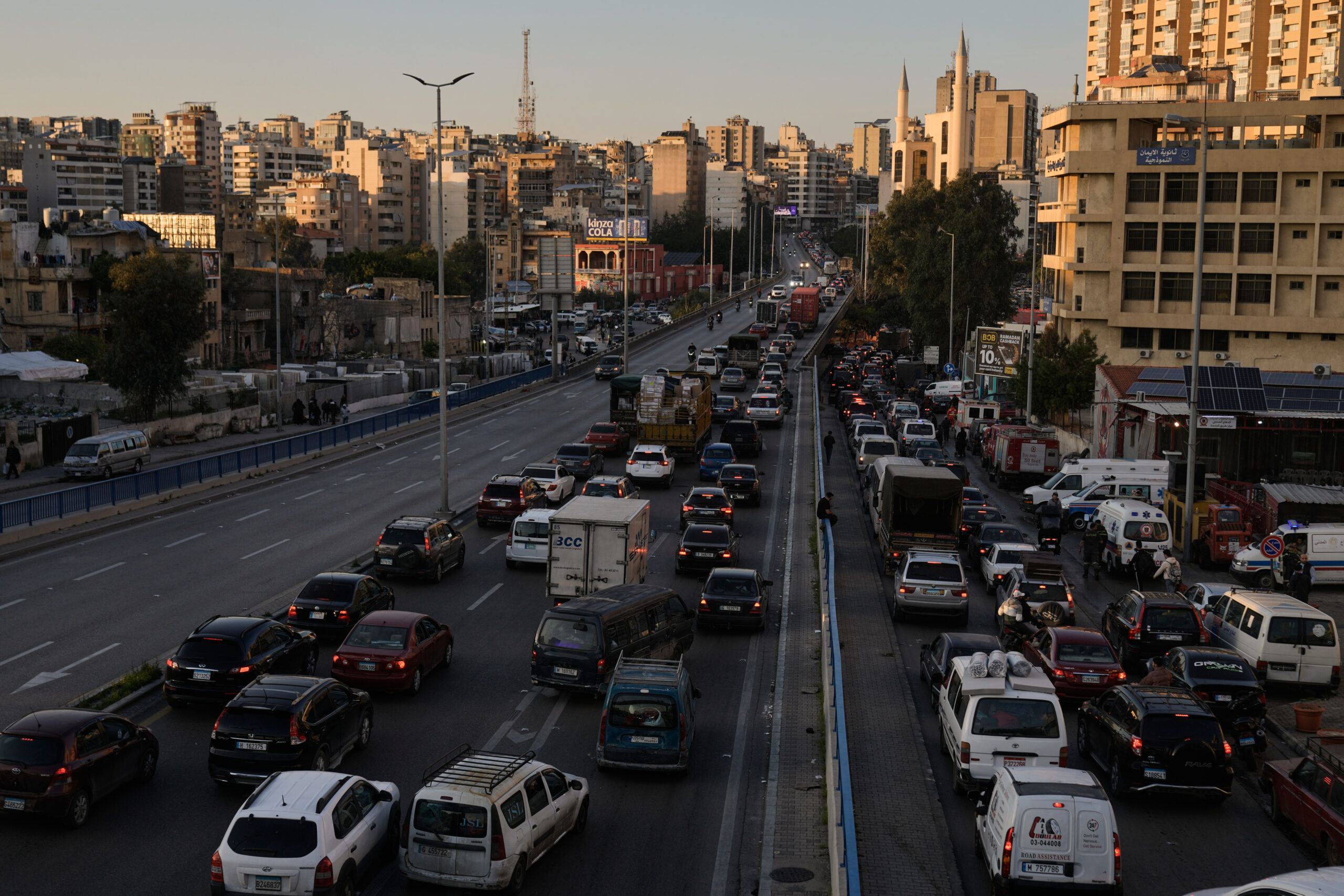
    Cars sit in traffic on a highway Thursday as residents flee Israeli airstrikes in Dahiyeh, Beirut’s southern suburbs.

    Israel issues evacuation warning for Beirut suburbs

    Israel struck Beirut’s southern suburbs Thursday evening after urging residents to “save your lives and evacuate your homes immediately.” Two hospitals evacuated patients and staff.

    The Lebanese health ministry said the death toll has risen to 123 since the resurgence of hostilities between Israel and Hezbollah, which struck Israel in the opening days of the war.

    A spokesperson for the U.N. peacekeeping force in southern Lebanon, Tilak Pokharel, said Thursday that peacekeepers had seen and heard clashes, including ground combat, in southern Lebanon as more Israeli forces have moved across the border.

  • House narrowly rejects Iran war powers resolution in early test of Trump’s strategy

    House narrowly rejects Iran war powers resolution in early test of Trump’s strategy

    WASHINGTON — The House narrowly rejected a war powers resolution Thursday to halt President Donald Trump’s attacks on Iran, an early sign of unease in Congress over the rapidly widening conflict that is reordering U.S. priorities at home and abroad.

    It’s the second vote in as many days, after the Senate defeated a similar measure along party lines. Lawmakers are confronting the sudden reality of representing wary Americans in wartime and all that entails — with lives lost, dollars spent, and alliances tested by a president’s unilateral decision to go to war with Iran.

    While the tally in the House, 212-219, was expected to be tight, the outcome provided a clarifying snapshot of political support for, and opposition to, the U.S.-Israel military operation and Trump’s rationale for bypassing Congress, which alone has the power to declare war. At the Capitol, the conflict has quickly carried echoes of the long wars in Afghanistan and Iraq, and many Sept. 11-era veterans now serve in Congress.

    “Donald Trump is not a king, and if he believes the war with Iran is in our national interest, then he must come to Congress and make the case,” said Rep. Gregory Meeks, the top Democrat on the House Foreign Affairs Committee.

    The House also approved a separate measure affirming that Iran is the largest state sponsor of terrorism.

    Republicans largely back Trump, and most Democrats oppose the war

    Trump’s Republican Party, which narrowly controls the House and Senate, largely sees the conflict with Iran not as the start of a new war, but the end of a government that has long menaced the West. The operation has killed Iran’s Supreme Leader Ayatollah Ali Khamenei, which some view as an opportunity for regime change, though others warn of a chaotic power vacuum.

    Republican Rep. Brian Mast of Florida, chairman of the House Foreign Affairs Committee, publicly thanked Trump for taking action against Iran, saying the president is using his own constitutional authority to defend the U.S. against the “imminent threat” the country posed.

    Mast, an Army veteran who worked as a bomb disposal expert in Afghanistan, said the war powers resolution was effectively asking “that the president do nothing.”

    For Democrats, Trump’s attack on Iran, influenced by Israeli Prime Minister Benjamin Netanyahu, is a war of choice that is testing the balance of powers in the Constitution.

    “The framers weren’t fooling around,” said Rep. Jamie Raskin (D., Md.), arguing that the Constitution is clear that only Congress can decide matters of war. “It’s up to us.”

    While views in Congress are largely falling along party lines, there are crossover coalitions. The war powers resolution, if signed into law, would have immediately halted Trump’s ability to conduct the war unless Congress approved the military action. The president would likely veto it.

    Trump officials provide shifting rationale for war

    After launching a surprise attack against Iran on Saturday, Trump has scrambled to win support for a conflict that Americans of all political persuasions were already wary of entering. Trump administration officials spent hours behind closed doors on Capitol Hill this week trying to reassure lawmakers that they have the situation under control.

    Six U.S. military members were killed over the weekend in a drone strike in Kuwait, and Trump has said more Americans could die. Thousands of Americans abroad have scrambled for flights, many lighting up phone lines at congressional offices as they sought help trying to flee the Middle East.

    Trump said Thursday he must be involved in choosing Iran’s new leader. Yet House Speaker Mike Johnson (R., La.) said this week that America has enough problems at home and is not about to be in the “nation-building business.”

    Defense Secretary Pete Hegseth said that the war could extend eight weeks, twice as long as the president first estimated. Trump has left open the possibility of sending U.S. troops into what has largely been a bombing campaign by air. More than 1,230 people in Iran have died.

    The administration said the goal is to destroy Iran’s ballistic missiles that it believes are shielding its nuclear program. It has also said Israel was ready to act, and American bases would face retaliation if the U.S. did not strike Iran first. On Wednesday, the U.S. said it torpedoed an Iranian warship near Sri Lanka.

    “This administration can’t even give us a straight answer of as to why we launched this preemptive war,” said Rep. Thomas Massie, the Republican from Kentucky, an outlier in his party.

    Massie and Rep. Ro Khanna (D., Calif.), who had teamed up to force the release the Jeffrey Epstein files, also pushed the war powers resolution to the floor, past objections from Johnson’s GOP leadership. Another Republican, Rep. Warren Davidson of Ohio, a former Army Ranger, was also expected to back the war powers resolution.

    Johnson has warned that it would be “dangerous” to limit the president’s authority while the U.S. military is already in conflict.

    “Congress must stand with the president to finally close, once and for all, this dark chapter of history,” Rep. Michael McCaul (R., Texas) said.

    Rep. Yassamin Ansari (D., Ariz.) said that as the daughter of Iranian immigrants who fled their homeland, she celebrates Khamenei’s death. But she warned that a democratic transition for the people of Iran never seems to a priority for Trump and his officials who briefed lawmakers.

    “War carries profound and deadly consequences for our troops, for the American people and for the entire world,” she said. “It’s the most serious decision that a nation can make and the American people deserve debate, transparency and accountability before that decision is made.”

    Other Democrats have proposed an alternative resolution that would allow the president to continue the war for 30 days before he must seek congressional approval. It is not expected yet for a vote.

    Senators sit in their desks for solemn vote

    In the Senate, Republican leaders have successfully, though narrowly, defeated a series of war powers resolutions pertaining to several other conflicts during Trump’s second term. This one, however, was different.

    Underscoring the gravity of the moment Wednesday, Democratic senators filled the chamber and sat at their desks as the voting got underway.

    Senate Democratic leader Chuck Schumer of New York said before the vote that every senator will pick a side. “Do you stand with the American people who are exhausted with forever wars in the Middle East or stand with Donald Trump and Pete Hegseth as they bumble us headfirst into another war?”

    Sen. John Barrasso, second in Senate Republican leadership, said “Democrats would rather obstruct Donald Trump than obliterate Iran’s national nuclear program.”

    The legislation failed on a 47-53 tally mostly along party lines, with Sen. Rand Paul (R., Ky.) in favor and Sen. John Fetterman (D., Pa.) against it.

  • Trump allies expand role in planning America’s 250th anniversary

    Trump allies expand role in planning America’s 250th anniversary

    Two groups — one with the imprimatur of Congress, the other with President Donald Trump’s blessing — are jockeying to host celebrations marking America’s 250th anniversary, sparking confusion, muddled messages, and new scrutiny from Democrats who ask why the Trump-aligned group is receiving federal money.

    America250, led by a bipartisan board created by Congress a decade ago to mark the nation’s Semiquincentennial, has overseen events such as the Army’s 250th anniversary last year. It has also issued grants to state commissions and sponsored initiatives such as a float in this year’s Rose Parade.

    Freedom 250, a public-private partnership launched by the White House in December, has emerged as the more publicized and prolific group, with a flurry of high-profile announcements, including some from the Oval Office.

    “Freedom Trucks,” six customized semitrucks backed by $10 million in federal funds and with educational content crafted by conservative educators, have begun crisscrossing red states. A “Freedom Plane” took flight from Washington this week, beginning a National Archives-led nationwide tour in which the Boeing 737 will ferry an original engraving of the Declaration of Independence and other historic documents. The group is also planning a national prayer event on the National Mall, an IndyCar race around D.C., and a UFC fight hosted outside the White House on Trump’s birthday. The organization is led by Keith Krach, who served in the first Trump administration.

    Both groups are drawing on private funds for their programming, with sponsors such as Exiger, Oracle, and Palantir contributing to both organizations. The groups are also set to share in $150 million appropriated by Congress last year and managed by the Interior Department.

    The rapid rise of Freedom 250, with its Trump-tailored programming, has unnerved some liberals and watchdog organizations, who question whether it is wrongly tapping into funds intended for nationwide anniversary celebrations and promising access to the president at a price. Twelve Senate Democrats on Tuesday pressed the Interior Department to provide a “clear accounting” of money routed to Freedom 250, in a letter sent to the Trump administration and shared with the Washington Post.

    “The Trump administration’s latest venture, Freedom 250, continues to raise serious and troubling questions about whether access to the president or official government events is for sale to the highest bidders,” Sen. Adam Schiff (D., Calif.), who led the letter, said in a statement to the Post. “And if the administration is commingling taxpayer dollars with other funds in an unaccountable private entity run by the president’s allies, it is an open invitation for corruption. We need answers.”

    Public Citizen, a consumer advocacy organization, also has called for congressional investigations, citing a recent New York Times report that donors to Freedom 250 were offered access to Trump if they gave $1 million or more.

    Freedom 250 spokeswoman Rachel Reisner referred questions about its federal funding to the Interior Department. Trump “is deeply grateful for the support of his donors, but unlike the politicians of the past, he can’t be bought,” she said in a statement.

    She added that the organization has reached out to all 50 governors and partnered with a range of organizations, including PragerU and MyAmerica2026.

    “As we approach this historic milestone in our nation’s founding, we will not be deterred by any partisan outrage or political theater,” Reisner said.

    The Trump administration also has touted its approach, and Trump has repeatedly celebrated that he will be the president to oversee the nation’s 250th anniversary — an idea he embraced on the campaign trail.

    Asked about its plans to distribute the $150 million provided by Congress and what share would go toward Freedom 250, the Interior Department declined to comment.

    “The Department of the Interior looks forward to celebrating Freedom 250 and saluting 250 years of American greatness alongside President Donald J. Trump — the most iconic and accomplished President in the history of our great nation,” the department said in a statement.

    America250 and Freedom 250 have publicly touted their shared commitment to the nation’s Semiquincentennial.

    Rosie Rios, the Democrat leading America 250, has repeatedly praised her counterparts in interviews and statements, saying that Freedom 250 will focus on Washington-area events while her group tackles nationwide programming.

    The bipartisan commission “has taken every possible step” to support the Trump administration’s activities, the group said in its report to Congress in January.

    But the tensions between the organizations have grown, according to five people who spoke on the condition of anonymity to describe private conversations. Freedom 250 officials have bristled at the pace of America250’s work and output, and argued that the bipartisan group has been overly bureaucratic and politically correct. They also argue that America250 — which has received more than $100 million in federal funding since 2019 — has little to show for those contributions.

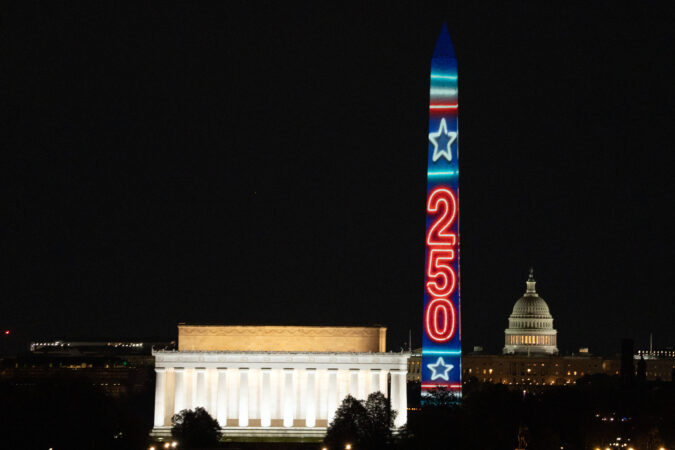
    In comparison, one person familiar with the matter said, Freedom 250 drew on $3 million in federal funds last year to quickly produce a New Year’s Eve light display on the Washington Monument.

    America250 said in a statement that it continues to actively collaborate with the White House task force, Freedom 250 and the full executive branch to plan the celebrations.

    The group has been running a nationwide contest for students to submit perspectives on what America means to them and has been to eight states so far with a storytelling program on identity, service, community, and personal legacy.

    Meanwhile, America250 officials and allies have questioned whether the Trump-backed group is too focused on activities that please the president and say the group threatens to siphon money that could be used for nationwide activities. America250 has received $25 million of the $150 million apportioned by Congress last year for anniversary activities, according to a person familiar with its finances.

    The friction between the groups reached a breaking point in the planning for the Army’s 250th birthday last summer — a military parade in Washington that coincided with Trump’s birthday, said one person familiar with the plans. America250 wanted the celebration to focus on the military, not the president. Freedom 250 wanted Trump, as the commander in chief, to be front and center, the person said.

    Some programming has shifted between the two groups. America250 originally applied for and received a grant from the Institute of Museum and Library Services for the Freedom Trucks, mobile museums inspired by the American Freedom Train that crisscrossed the country from 1975-1976. The institute is a federal agency that provides financial support for museums and libraries. The $10 million grant was later voluntarily transferred to Freedom 250, according to an official of the agency.

    “These mobile museums, which tell the incredible story of our nation’s founding, will be a cherished memory for an entire generation,” Keith Sonderling, a Trump appointee who leads the museum and library agency, said in a statement.

    Marissa Streit, chief executive of PragerU, a conservative media organization, said her company volunteered to produce all video and educational content for the Freedom Trucks after White House officials came up with the vision and worked with Hillsdale College to develop the displays.

    Streit insisted that despite the uniformly conservative credentials of the people involved, the exhibits showed a balanced view of history.

    “I believe we need to teach and talk about both the negative things that have happened in our country as well as the positive,” she said.

    The tensions are a departure from the approach taken during the bicentennial under President Gerald Ford, who sought to make sure the celebrations did not raise questions of impropriety in the wake of the Watergate scandal, said Richard Painter, the chief White House ethics lawyer in the George W. Bush administration.

    “The one thing our taxpayer funds should not be used for is politicizing the 250th anniversary of the founding of the country,” said Painter, co-author of The U.S. Presidency: Power, Responsibility, and Accountability. “One of the things [the founders] were most afraid of is faction and political parties destroying our democracy. The celebrations here shouldn’t be owned by one political party or another.”

  • Trump says he’s replacing Homeland Security Secretary Noem with GOP Sen. Markwayne Mullin

    Trump says he’s replacing Homeland Security Secretary Noem with GOP Sen. Markwayne Mullin

    WASHINGTON — President Donald Trump on Thursday fired his embattled Homeland Security Secretary Kristi Noem, after mounting criticism over her leadership of the department, including the handling of the administration’s immigration crackdown and disaster response.

    Trump, who said he would nominate Oklahoma Republican Sen. Markwayne Mullin in her place, made the announcement on social media after Noem faced a two-day grilling on Capitol Hill this week from GOP members as well as Democrats.

    Noem’s departure marks a stunning turnaround for a close ally to the president who was tasked with steering his centerpiece policy of mass deportations. But she appeared to increasingly become a liability for Trump, with questions arising over her spending at her department and over her conduct in the aftermath of the shooting deaths of two protesters in Minneapolis earlier this year.

    Trump said Noem “has served us well, and has had numerous and spectacular results (especially on the Border!).” He said he was making her a “Special Envoy for The Shield of the Americas,” a new security initiative that he said would focus on the Western Hemisphere.

    Noem, who appeared at a law enforcement event in Nashville, moments after Trump’s announcement, did not address her ouster there. She read from prepared remarks and was not asked by attendees about the development.

    Later, in a social media post, she thanked Trump for the new appointment and touted her accomplishments as secretary.

    “We have made historic accomplishments at the Department of Homeland Security to make America safe again,” she wrote.

    White House press secretary Karoline Leavitt said the administration will work with the GOP-led Senate to get Mullin, whom she called “extraordinarily qualified,” confirmed to lead DHS “as soon as possible.”

    The administration’s immigration crackdown faced criticism, especially in Minnesota

    Noem is the first cabinet secretary to leave during Trump’s second term. Her tenure looked increasingly short-lived after hearings in Congress this week where she faced rare but blistering criticism from Republican lawmakers. One particular point of scrutiny was a $220 million ad campaign featuring Noem that encouraged people in the country illegally to leave voluntarily.

    Noem told lawmakers that Trump was aware of the campaign in advance, but Trump disputed that in an interview Thursday with Reuters, saying he did not sign off on the ad campaign.

    Noem has faced waves of criticism as she’s overseen Trump’s immigration crackdown, especially since the shooting deaths of the two protesters in Minneapolis at the hands of immigration enforcement officers. In the immediate aftermath of the deaths of Renee Good and Alex Pretti, Noem portrayed both of them as aggressors, contradicting widely viewed videos and descriptions of their deaths from bystanders. She declined to apologize for her description over two days of congressional testimony.

    The former South Dakota governor was also criticized over the way her department has spent billions of dollars allocated to it by Congress.

    Her department, DHS, has been at the center of a funding battle in Congress over immigration enforcement tactics and has been shut down for 20 days, although many of the employees are continuing to work, often without pay.

    Even before Noem’s appearance before key congressional committees this week, Republican lawmakers had been anticipating the secretary’s eventual ouster, particularly after her handling of the immigration enforcement crackdown in Minneapolis.

    As they tried to end the ongoing Homeland Security shutdown, Senate Republicans had noted privately to Democratic senators that Noem was likely on her way out and that that should prompt Democrats to move forward with agreeing to fund the department again, according to two people familiar with the discussions.

    Democrats did not see that as an actual concession by Republicans, considering Noem was becoming a political liability for the GOP, said the people, who spoke on condition of anonymity to discuss private negotiations.

    Aside from immigration, Noem also faced criticism — including from Republicans — over the pace of emergency funding approved through the Federal Emergency Management Agency and for the Trump administration’s response to disasters.

    Critics welcomed Noem’s departure. Minneapolis Mayor Jacob Frey wrote “good riddance” on social media, a sentiment echoed by Senate Democratic Leader Chuck Schumer.

    Some immigration activists questioned whether her departure would change the execution of an immigration agenda that they fundamentally disagree with.

    “This is not accountability, just a reshuffling of the enablers of the agenda of President Trump,” said Vanessa Cárdenas, executive director of America’s Voice, an advocacy group. She said Noem’s tenure was “marked by cruelty.”

    Gregory Bovino, a Border Patrol official who was elevated under Noem’s watch to lead immigration crackdowns in cities including Los Angeles, Chicago and Minneapolis, was one of the few who applauded Noem’s tenure.

    “She is the best Secretary I ever worked for, period. The others weren’t even close. Noem is the ultimate patriot,” Bovino told the Associated Press.

    Sen. Markwayne Mullin (center) arrives at Philadelphia International Airport to attend the NCAA Division 1 men’s wrestling championships at the Wells Fargo Center on March 22, 2025.

    DHS leadership changes come at a pivotal time

    Mullin would need to be confirmed by the Senate, but under a federal law governing executive branch vacancies, he would be allowed to serve as an acting Homeland Security secretary as long as his nomination is formally pending.

    Voting in the Senate just after Trump’s announcement, Mullin said he has “no idea” how quickly his nomination will move.

    “The president and I are good friends. So we look forward to working closer with the White House, and obviously I’m gonna be over there a lot more,” he said.

    Mullin would take over the third-largest department in government that has responsibility for carrying out Trump’s hard-line immigration agenda. And he would assume the role at a pivotal time for that agenda.

    Immigration enforcement during the first year of Trump’s administration was largely defined by high-profile, made-for-social-media operations with flashy names, often led by Bovino, who reported directly to Noem. Noem herself often went out on those operations, riding along with officers when they went out to make arrests.

    But those high-profile operations in places like Los Angeles, Chicago and Minneapolis often led to clashes with activists and protesters that were captured on video and drove opposition to the president’s immigration agenda.

    That culminated with the shooting deaths in Minneapolis after which Trump shuffled leadership of the operation. The number of officers there was drawn down shortly after.

  • U.S. and Mideast countries seek Kyiv’s drone expertise as Russia-Ukraine talks put on ice

    U.S. and Mideast countries seek Kyiv’s drone expertise as Russia-Ukraine talks put on ice

    KYIV, Ukraine — The United States and its allies in the Middle East are seeking Ukraine’s expertise in countering Iran’s Shahed drones, according to Ukrainian President Volodymyr Zelensky.

    Various countries, including the United States, have approached Ukraine for help in defending against the Iranian drones, Zelensky said late Wednesday. He said he has spoken in recent days with the leaders of the United Arab Emirates, Qatar, Bahrain, Jordan, and Kuwait about possible cooperation.

    Russia has fired tens of thousands of Shaheds at Ukraine since it invaded its neighbor just over four years ago, launching a swarm of more than 800 drones and decoys in its biggest nighttime barrage. Iran has responded to joint U.S.-Israeli strikes by launching the same type of drones at countries in the Middle East.

    Ukrainian assistance in countering Iranian drones will be provided only if it does not weaken Ukraine’s own defenses, and if it adds leverage to Kyiv’s diplomatic efforts to stop the Russian invasion, according to the Ukrainian leader.

    “We help to defend from war those who help us, Ukraine, bring a just end to the war” with Russia, Zelensky said. Later Thursday, Zelensky said he had received a U.S. request for support to defend against the drones in the Middle East and had given the order for equipment to be provided along with Ukrainian experts without providing further details.

    “Ukraine helps partners who help our security and the protection of our people’s lives,” he added in a social media post.

    Trump, in an interview Thursday with Reuters, said, “Certainly I’ll take, you know, any assistance from any country.”

    Ukraine has battle-tested drone defenses

    Ukraine has pioneered the development of cut-price drone killers that cost as little as $1,000, rewriting the air defense rule book and making other countries take notice.

    European countries got a wake-up call last September on the changed nature of air defense when Poland scrambled multimillion-dollar military assets, including F-35 and F-16 fighter jets and Black Hawk helicopters, in response to airspace violations by cheap drones.

    Ukrainian manufacturers have developed low-cost interceptor drones specifically designed to hunt and destroy Shaheds, and its rapidly expanding drone industry is producing excess capacity.

    Zelensky announced earlier this year that Ukraine would begin exporting the battle-tested systems.

    The European Union’s top diplomat, Kaja Kallas, said before chairing a meeting of EU and Gulf foreign ministers via video link Thursday that the talks would look at how Ukraine’s experience can help countries counter Iranian drones.

    Middle East war delays Russia-Ukraine talks

    The Iran war, now in its sixth day, has drawn international attention away from Europe’s biggest conflict since World War II, and forced the postponement of a new round of U.S.-brokered talks between Russia and Ukraine planned for this week, Zelensky said.

    Western governments and analysts say the Russia-Ukraine war has killed hundreds of thousands of people, while there is no sign that yearlong U.S.-led peace efforts will stop the fighting any time soon.

    “Right now, because of the situation around Iran, there are not yet the necessary signals for a trilateral meeting,” Zelensky said. “But as soon as the security situation and the overall political context allow us to resume that trilateral diplomatic work, it will be done.”

    Zelensky thanked the United States for the return from Russia on Thursday of 200 Ukrainian prisoners of war. Russia’s Defense Ministry also said it received the same number of prisoners from Ukraine and thanked the U.S. and United Arab Emirates for mediating.

    Prisoner swaps have been one of the few tangible results of the talks. Vladimir Medinsky, a Russian negotiator, said on social media that a total of 500 prisoners from each side would be exchanged between Thursday and Friday.

    Oleksandr Merezhko, the head of Ukraine’s parliamentary foreign affairs committee, said Russian President Vladimir Putin is trying to drag out the negotiations so that he can press on with Russia’s invasion while escaping further U.S. sanctions.

    He urged the U.S. administration to look at the Russia-Ukraine war and the war in the Middle East as linked.

    “In reality, Russia and Iran are close allies that act in concert — Iran supplies weapons and Russia helps Iran develop its defense industry. These are interconnected conflicts,” Merezhko told the Associated Press.

    Ukraine’s army has recently pushed back Russian forces at some points along the roughly 750-mile front line, according to the Institute for the Study of War.

    Localized Ukrainian counterattacks liberated more territory than Ukrainian forces lost in the last two weeks of February, the Washington-based think tank said this week, estimating the recovered land at about 100 square miles since Jan. 1.

  • Immigrant living in Philadelphia illegally voted in 2024 federal election, authorities say

    Immigrant living in Philadelphia illegally voted in 2024 federal election, authorities say

    An undocumented West African immigrant who federal authorities say has been living in Philadelphia for more than two decades cast a ballot in the 2024 federal election — and may have voted in at least six other elections, federal authorities said.

    Mahady Sacko was charged with fraudulent voting, according to the affidavit of probable cause for his arrest. If convicted, he could face up to five years in federal prison.

    Investigators said Sacko registered to vote in 2005, affirming on the registration form that he was a U.S. citizen. According to the affidavit, he went on to vote in five federal general elections and two primary elections over the next two decades.

    Prosecutors charged him only with casting a ballot in the 2024 election.

    Sacko had been ordered deported to Mauritania, in Northwest Africa, by an immigration judge in 2000, the affidavit said. But federal authorities never carried out the order because Sacko did not have a valid Mauritanian passport. Instead, immigration officials placed him under supervision, requiring him to regularly report to Immigration and Customs Enforcement.

    The charges against him come amid political attention on allegations that people who are not U.S. citizens are voting rampantly in American elections — a frequent talking point among conservative politicians and commentators. President Donald Trump has pushed federal officials to amp up efforts to prosecute undocumented immigrants who vote.

    But election experts and government investigations have consistently found that such cases are rare. Studies examining tens of millions of ballots have identified only a handful of suspected instances of such voting — a fraction of a percent of votes cast, according to research by the Brennan Center for Justice.

    Only U.S. citizens may vote in federal elections. Voters must attest to their citizenship when registering, and falsely claiming citizenship can lead to criminal prosecution and deportation.

    Voting records show that Sacko registered as a Democrat, though the affidavit does not specify which candidates he supported in the elections in which investigators say he voted.

    A spokesperson for the U.S. Attorney’s Office said Sacko had been released on bail after an initial appearance on Thursday. She did not provide the bail amount.

  • Iran’s regime maintains its grip, despite devastating losses

    Iran’s regime maintains its grip, despite devastating losses

    The U.S. and Israeli air campaign against Iran has decimated the highest ranks of political and military leadership, destroyed critical military command-and-control infrastructure and fighting capability, and damaged civilian buildings across the country.

    In Tehran, the expanding conflict appears to be frustrating the succession process after Supreme Leader Ayatollah Ali Khamenei was killed. Khamenei’s funeral was postponed after the group charged with choosing his successor was targeted by Israeli strikes. Following that attack, Iranian state media announced that voting for the next supreme leader would be conducted remotely.

    But so far, some six days into a war that has now touched 12 countries across the Middle East, major military operations have not threatened the Iranian regime’s grip on power, according to European and Arab officials briefed on assessments of the regime’s standing since the conflict began.

    Iran, the officials say, was prepared for this conflict. The command structures built to survive a decapitation strike appear to remain substantially intact, allowing Iranian retaliatory strikes against Israel, Qatar, and Bahrain to begin within hours of the initial attacks. And inside the country since the conflict started, Iranians have reported a heavier security presence in city streets, with Basij paramilitary forces patrolling on motorbikes.

    “Iran’s senior leaders are dead; the so-called governing council that might have selected a successor, dead, missing or cowering in bunkers, too terrified to even occupy the same room,” Defense Secretary Pete Hegseth said in a briefing Wednesday touting successes as he outlined how operations would expand.

    President Donald Trump said Tuesday that the strikes killed “most of the people” the United States favored to replace the recently killed regime members.

    But despite the intensity of the strikes and the broad nature of the destruction, so far there are no reports of significant defections within regime ranks or of popular uprisings, according to European and Arab assessments described to the Washington Post by officials from those countries. U.S. intelligence also saw no signs of uprisings or defections in the first days of the campaign, according to a person familiar with the situation who spoke on the condition on anonymity to describe an ongoing operation.

    “There’s not a single sign of anything in the system breaking or defecting. Nothing. Zero,” said a senior European official, speaking on the condition of anonymity to describe government briefings on the latest assessments of the strength of the Iranian regime. “The control is complete,” he said. The official said he was aware of reports of regime security forces failing to show up for duty, but believed that could be because of orders to no longer congregate in compounds and barracks, for fear of being targeted.

    The officials said Iran’s military and political command has proved durable because of the “layered system” the regime built to withstand a crisis, decentralizing leadership by appointing multiple individuals to immediately replace any key figure who might be killed.

    After Iranian Defense Minister Aziz Nasirzadeh was killed in strikes Saturday, Majid Ebnelreza was appointed as the caretaker minister on Monday by Iranian President Masoud Pezeshkian, who himself was rumored to have been targeted in the attack’s initial waves. Since then, media reports have speculated that Ebnelreza was killed in subsequent attacks, but Iranian state media has not responded to the allegations.

    In the lead-up to the conflict, a senior Arab official said, U.S. allies in the Persian Gulf thought that Iran would be more vulnerable to outside military pressure and that the potential killing of the supreme leader would be an early turning point, triggering a mass mobilization against the regime.

    “We were looking for the demonstrations in the streets, but we were surprised by their unity,” he said, speaking on the condition of anonymity to describe sensitive internal planning.

    In January, as the regime buckled under massive anti-government protests across the country and responded with a brutal crackdown, many of Iran’s neighbors assessed a deep weakness within the political and security leadership structures.

    But amid an unrelenting bombing campaign, the governance structure has largely stayed intact and continues to exert unilateral control, surprising seasoned Iran watchers in the region. The European and the Arab officials both cautioned that the Iranian regime remains opaque and regime collapse can be almost impossible to anticipate from the outside.

    Information on the impact of the U.S. and Israeli attacks against Iran is sporadic. The country is under a near-total internet blackout. But initial visual analysis by the Washington Post has revealed extensive damage to military targets, government buildings, and internal security structures. Israel has also recently claimed strikes targeting Iran’s clerical establishment.

    In total, U.S. Central Command says, more than 2,000 targets were hit inside Iran in the space of over four days. The Israel Defense Forces said its planes have dropped more than 4,000 munitions on Iran since Saturday.

    “Undoubtably, Iran has been considerably weakened,” said Gregory Brew, an Iran analyst with the Eurasia Group. Considering Iran’s military losses alone, the United States and Israel destroyed most of the country’s navy, a significant portion of its missile stockpile and its means of producing more missiles, he said.

    “They’re blowing up a lot of buildings, but most of these buildings are probably empty. They’re annihilating the physical edifice of the Islamic republic,” Brew said.

    Meanwhile, Iran’s police force and the Basij have continued to function, according to Iranians inside the country, said the European official. Brew said that’s because these forces don’t operate heavy weaponry and can quickly disperse from buildings easily targeted from the air and then reemerge once the fighting ceases.

    After the 12-day war in June, Iran structured its armed forces in anticipation of further decapitation strikes. Iranian Foreign Minister Abbas Araghchi appeared to reference the reorganization in an interview with Al Jazeera on Sunday, in which he described Iranian military units as “isolated” and acting on “general instructions given to them in advance.”

    It is unclear how long Iran will be able to hold out in the face of U.S. and Israeli attacks. Earlier this week, the tempo of Iranian retaliation dropped, suggesting that Iran is running low on munitions or is unable to access buried stockpiles. However, Thursday saw heavy bursts of Iranian retaliatory attacks against Bahrain, Qatar, and the United Arab Emirates. As the conflict progresses and Iran’s armed forces are forced to adapt and draft new plans, the country’s leadership losses could become more serious.

    But Iranian officials have signaled that they are prepared for a long fight against militarily superior adversaries. Tehran believes that the only way it can prevail is if it can outlast the United States and Israel, according to a second European official briefed on assessments of Iranian regime strength since the outset of the war.

    “They understand that they will not be able to defeat the most powerful army in the world, but with asymmetric warfare they can try to inject as much damage as possible, to make the U.S. seek de-escalation,” he said. This is why Iran has prioritized retaliation against Persian Gulf nations and countries that could begin to pressure the United States to seek an off-ramp, the official said.

    The official said Iran has wagered that its system and its people are more capable of enduring prolonged hardship than those of the Persian Gulf and the United States, but he cautioned that the longer the conflict lasts, the more deadly it is likely to become on all sides.

    “This regime is built to last, and they aren’t going to go quietly,” he said.