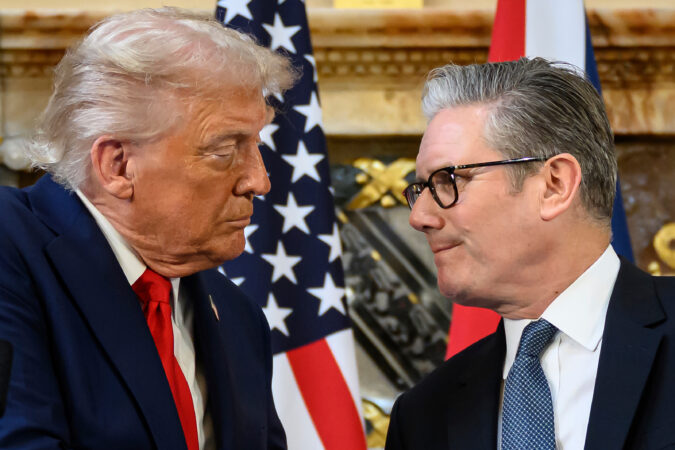
That is not being reciprocated now as the American president lambasts the British prime minister over his reluctance to join the U.S.-Israeli strikes on Iran.
“This is not Winston Churchill that we’re dealing with,” Trump said Tuesday at the White House, blasting Britain’s reluctance to let U.S. warplanes use its bases.
The dispute is roiling a relationship that Starmer worked hard to forge, and further straining trans-Atlantic ties frayed by Trump’s “America first” foreign policy and transactional approach to international relations.
Britain is in Trump’s bad books
“This was the most solid relationship of all. And now we have very strong relationships with other countries in Europe,” Trump told British tabloid the Sun in an interview published Tuesday.
“I mean, France has been great. They’ve all been great,” Trump said. “The U.K. has been much different from others.”
“It’s very sad to see that the relationship is obviously not what it was,” he said.
Starmer initially blocked American planes from using British bases for the attacks on Iran that started on Saturday. He later agreed to let the United States use bases in England and on Diego Garcia in the Indian Ocean to strike Iran’s ballistic missiles and their storage sites, but not to hit other targets.
Even after the British base at Akrotiri in Cyprus was hit by an Iran-made drone over the weekend, Starmer said that the United Kingdom “will not join offensive action.” He said Tuesday that a Royal Navy destroyer, HMS Dragon, and Wildcat helicopters with counter-drone capabilities were being sent to the region as part of “defensive operations.” British forces have also shot down drones in Jordanian and Iraqi airspace, the government said.
Starmer has offered a rare, though implicit, rebuke of the U.S. president, saying Monday that the U.K. government doesn’t believe in “regime change from the skies.”
“Any U.K. actions must always have a lawful basis and a viable, thought-through plan,” Starmer told lawmakers in the House of Commons on Monday.
“President Trump has expressed his disagreement with our decision not to get involved in the initial strikes, but it is my duty to judge what is in Britain’s national interest,” Starmer added.
The Financial Times called it Starmer’s “Love Actually moment” — a reference to the 2003 movie scene in which a British prime minister played by Hugh Grant stands up to a bullying U.S. president played by Billy Bob Thornton.
Friction has grown over Greenland and Diego Garcia
Friction between the two leaders has been building for months. Trump’s threat to take over Greenland was denounced by Starmer and other European leaders earlier this year. Recently, Trump has condemned Britain’s agreement to hand over the Chagos Islands, home to the Diego Garcia base, to Mauritius, despite his administration earlier backing the deal.
Peter Ricketts, a former head of the U.K. Foreign Office, told the Observer newspaper that under Trump, “the Americans have effectively given up on any effort to be consistent with international law.”
That is a red line for the law-abiding Starmer, a barrister and former chief prosecutor for England and Wales.
The spat is a setback for Starmer’s efforts to woo Trump since the president’s return to office in 2025. The British government rolled out the red carpet to the president for a state visit as the guest of King Charles III, and Starmer consistently has praised Trump’s efforts — so far unsuccessful — to broker an end to the Russia-Ukraine war.
The Iran war has also divided European leaders, who fall along a spectrum from condemnation to support.
NATO Secretary-General Mark Rutte said that he unreservedly approves of Trump’s decision to attack Iran and kill its supreme leader, and called the war crucial for Europe’s security.
The U.K., France, and Germany jointly said that they weren’t involved in the strikes, but were prepared to enable “necessary and proportionate defensive action to destroy Iran’s capability to fire missiles and drones at their source.”
Spanish Prime Minister Pedro Sánchez condemned the strikes as “unjustifiable” and “dangerous.”
Polling suggests many Britons are skeptical of the U.S. justification for war. But politicians to the right of Starmer’s Labour Party slammed the prime minister for not joining the offensive. Conservative leader Kemi Badenoch said that her party “stands behind America taking this necessary action against state-sponsored terror.”
Foreign Office Minister Stephen Doughty denied the U.S.-U.K. “special relationship” was on the ropes.
“Our relationship with the United States is strong,” he said Tuesday in the House of Commons. “It has endured, it continues to endure, and it will endure into the future on both the economic and the security fronts.”
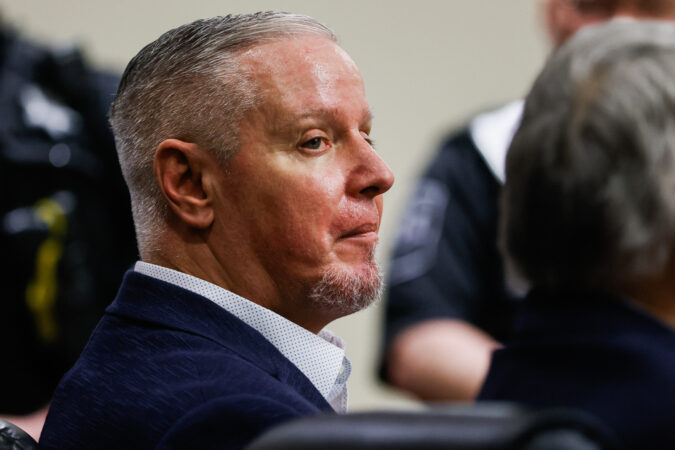
Jurors took less than two hours to find Colin Gray guilty of all charges in the September 2024 shooting at Apalachee High School in Winder, northeast of Atlanta. Gray now joins a growing number of parents being held responsible in court after their children were accused in shootings.
Colin Gray was found guilty of second-degree murder in the deaths of two 14-year-old students, Mason Schermerhorn and Christian Angulo. Georgia law defines second-degree murder as causing the death of a child by committing the crime of cruelty to children. Gray was found guilty of involuntary manslaughter in the killings of teachers Richard Aspinwall, 39, and Cristina Irimie, 53.
Another teacher and eight other students were wounded. Gray was also convicted of multiple counts of reckless conduct and cruelty to children.
Reactions to the verdict
Gray showed little emotion as the verdict was read and each juror was polled by the judge. Deputies then cuffed his hands behind his back as he stood at the defense table, speaking with his lawyer. He will be sentenced at a later date. Second-degree murder is punishable by at least 10 but no more than 30 years in prison, while involuntary manslaughter carries a penalty of one to 10 years in prison.
Some relatives of victims wept as the verdicts were read. They declined to comment after court. Gray’s defense lawyers left without speaking to reporters.
“We talk a lot about rights in our country,” Barrow County District Attorney Brad Smith said after the verdict. “But God gave us a duty to protect our children, and I hope that we remember that, as parents, as community members, to protect our children because that is our God-given duty.”
The teen’s mother, Marcee Gray, wasn’t charged. She testified that she had urged her estranged husband to take any guns and lock them inside his truck so they would not be accessible to their son. She and Colin Gray were separated in the months leading up to the shooting, and Colt Gray lived mostly with his father during that time. She declined to comment when reached by phone after the verdict.
The shooting
Prosecutors said Gray gave his son the gun as a Christmas gift and allowed him access to it along with ammunition despite the boy’s deteriorating mental health. They said he had “sufficient warning that Colt Gray would harm and endanger” other people.
Fourteen at the time of the shooting, Colt Gray has pleaded not guilty to a total of 55 counts, including murder. A judge has set a status hearing for mid-March.
Investigators said Colt Gray carefully planned the Sept. 4, 2024, shooting at the school attended by 1,900 students.
He boarded the school bus with a semiautomatic, assault-style rifle in his book bag, the barrel sticking out and wrapped in poster board, investigators said. He left his second-period class and emerged from a bathroom with the gun and shot people in a classroom and hallways, investigators said.
Parents’ responsibility
Colin Gray knew his son was obsessed with school shooters, even having a shrine in his bedroom to Nikolas Cruz, the shooter in the 2018 massacre at Florida’s Marjory Stoneman Douglas High School, prosecutors said.
“It wasn’t like one parent missed one warning,” Smith told reporters. “This was multiple warnings over a lengthy period of time and, like we said, you just had to do one thing — take that rifle away and this would have been prevented.”
Jennifer and James Crumbley, the first U.S. parents held criminally responsible for a mass school shooting committed by a child, are serving 10-year prison terms for involuntary manslaughter after their son Ethan killed four students and wounded others in Michigan in 2021.
Colin Gray was the first such parent to be charged in Georgia. Smith said Marcee Gray had seen what happened in Michigan and asked her husband to remove the weapons as a result. “So Michigan was able to move the needle to the point that it almost stopped this tragedy,” he said. “We hope we’ve moved the needle a little further.”
Legislative changes
Georgia lawmakers last year passed a school safety bill in response to the shooting. It directs state officials to create an alert system, including the names of students who an investigation has found threatened violence or committed violence at schools.
It also requires law enforcement to notify schools when officers learn a child has threatened death or injury to someone at a school, the implementation of mobile panic alert buttons at schools, quicker transfers of records when students switch schools and mental health coordinators in each of the state’s 180 school districts.
Legislators also approved a request by Gov. Brian Kemp to spend an extra $50 million on school safety.
The Trump administration said Tuesday that it still wanted to defend President Donald Trump’s executive orders sanctioning several law firms, abruptly reversing course from its position a day earlier.
Judges last year blocked Trump’s orders aimed at the firms, which had hired his perceived foes or took on cases he disliked. The Justice Department was appealing those rulings and trying to restore the orders, which demanded that the firms lose access to government contracts and buildings.
On Monday evening, the agency said in a filing that it wanted to abandon the appeals, essentially admitting defeat. The law firms hailed that decision, with one saying the administration “capitulated.”
But in a startling turnaround less than 24 hours later, the administration wrote in a brief filing in the U.S. Court of Appeals for the D.C. Circuit that it was seeking to withdraw its motion from a day earlier.
The Justice Department did not explain in the filing why it was backpedaling, stating only that it was its prerogative to keep appealing and adding that the court had not yet granted its request to dismiss the case. The White House declined to comment, referring questions to the Justice Department. A spokeswoman for the agency also declined to comment.
The four law firms involved — WilmerHale, Jenner & Block, Perkins Coie and Susman Godfrey — had all filed lawsuits challenging Trump’s sanctions, saying they could devastate their businesses.
Judges sided with all four firms last year, issuing often scathing rulings that rebuked the president’s orders as retaliatory and unconstitutional.
“The order shouts through a bullhorn: If you take on causes disfavored by President Trump, you will be punished!” U.S. District Judge Richard J. Leon, who was appointed by President George W. Bush, wrote while blocking sanctions for WilmerHale.
The administration has repeatedly defended the orders as lawful and criticized judges who ruled against them. In court papers and during hearings, the Justice Department has said the orders were not meant as punishment and suggested that the firms’ lawsuits infringed on Trump’s speech.
The government’s contradictory filings this week came ahead of a looming deadline in its appeals. The Justice Department’s opening brief in the case is due Friday, while the firms have briefs due in late March.
The firms criticized Trump’s executive orders and his administration’s reversal alike on Tuesday. The Justice Department “offered no explanation to either the parties or the court for its reversal,” Perkins Coie said in a statement.
“Yesterday evening, the Administration told the Court that it gave up and wouldn’t even try to defend its unconstitutional executive orders,” Susman Godfrey said in a statement. “Today, it reversed course. Regardless, Susman Godfrey will defend itself and the rule of law — without equivocation.”
In its filing on Tuesday, the Justice Department said the administration contacted attorneys for the firms and that they all opposed the move.
The filing included a statement attributed to the firms that said they “oppose the government’s unexplained request to withdraw yesterday’s voluntary dismissal, to which all parties had agreed. Under no circumstances should the government’s unexplained about-face provide a basis for an extension of its brief.”
The New York Times first reported Tuesday that the government would try to continue defending the executive orders.
While the firms involved in the appeals had fought Trump’s orders, other legal practices instead sought to avoid such battles. Nine firms struck deals with him to lift or avoid similar penalties, leading to intense upheaval and outrage across the legal industry.
The first firm to strike an agreement, Paul Weiss, pledged $40 million in pro bono work on issues that included assisting veterans. Eight more firms, including some of the country’s wealthiest, struck deals for increasingly large amounts as well, with combined pledges of pro bono work reaching nearly $1 billion.
These deals sent shock waves across the legal industry. The firms that reached the agreements defended them as needed to keep their businesses afloat, and their leaders vowed that the deals would not change their work.
But many attorneys were deeply skeptical of these pledges, expressing outrage internally as well as publicly. Lawyers at some firms resigned in protest following deals with Trump, while others left places that made deals and joined offices that were fighting his executive orders.
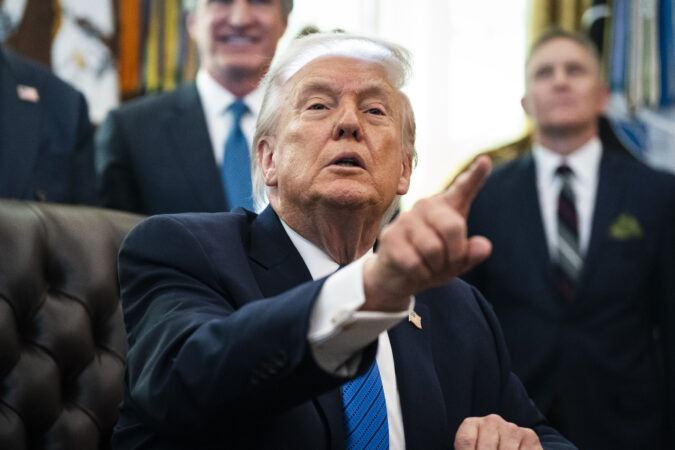
As an expanding Middle East war entered its fourth day, the Trump administration gave shifting rationales for its decision to attack Iran, even as U.S. officials with access to intelligence reports said they saw no sign the country had posed an imminent threat to the United States.
President Donald Trump and his top national security aides, defending a conflict that has tepid public backing and is incurring escalating risks, emphasized Iran’s arsenal of ballistic missiles rather than its nuclear program as the principal threat. But they provided different descriptions of the danger.
At his first public event since the attack began, Trump on Monday never mentioned a key part of his original rationale for the war: deposing Iran’s theocratic regime.
Instead, he emphasized thatIran would “soon” have missiles that could hit targets inside the United States.
What Trump had outlined over the weekend as an effort to devastate Tehran’s rulers so that the Iranian people could take over was, by Monday, “not a so-called regime change war,” in the words of Defense Secretary Pete Hegseth.
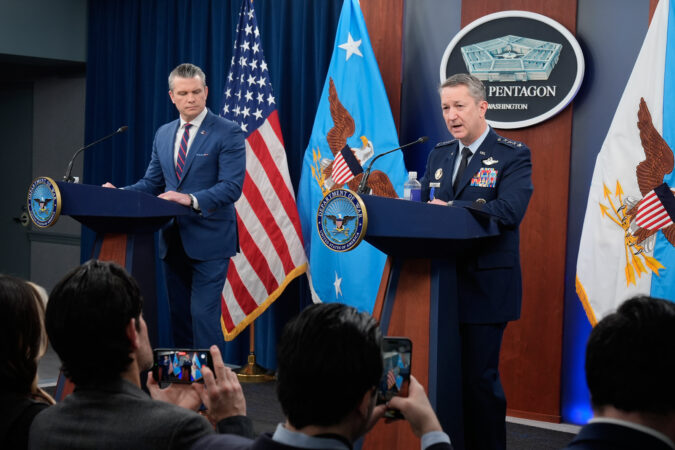
Hegseth told reporters at the Pentagon that the Islamic Republic was building sophisticated missiles and other conventional weapons to shield its plans for a nuclear bomb. “Iran had a conventional gun to our head as they tried to lie their way to a nuclear bomb,” he said.
Secretary of State Marco Rubio offered a third line of reasoning. The United States, he said, knew Israel was going to strike Iran, which would lead to counterattacks against U.S. forces and potential casualties, and decided to strike first to minimize the risk.
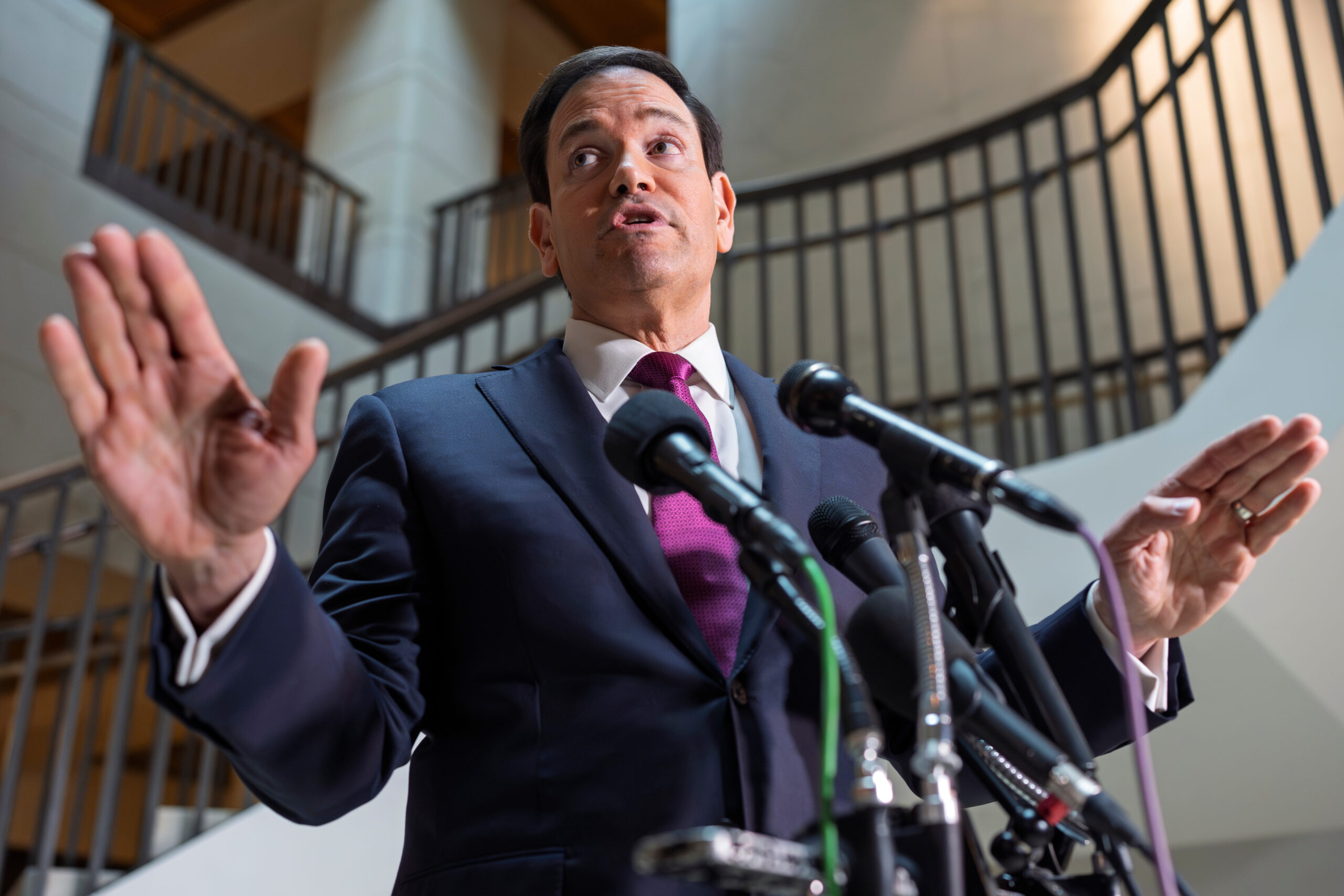
Secretary of State Marco Rubio speaks to reporters as he arrives for an intelligence briefing with top lawmakers on Iran, at the Capitol in Washington, Monday, March 2, 2026. (AP Photo/J. Scott Applewhite)
Iran’s voluminous missile arsenal, which was thinned by U.S.-Israeli strikes last June but still considered dangerous, consists mostly of short-range missiles threatening U.S. bases and allies in the Middle East. Over the last two years, Iran has fired those missiles in response to attacks on its territory or interests, but not preemptively.
As for an intercontinental ballistic missile capable of directly reaching the United States, the Pentagon’s Defense Intelligence Agency reported last year that Iran could have that weapon by 2035 “should Tehran decide to pursue the capability.”
Meanwhile, more than three days into the conflict and after more than a thousandairstrikes, U.S. and Israeli weapons so far have largely left Iran’s main nuclear installations untouched, suggesting those sites — significantly damaged last June — are not currently seen as a priority threat.
The White House’s shifting public goals for the war, and questions about the intelligence behind them, have contributed to a lack of clarity about when Trump might declare an end to the largest military operation since the 2003 invasion of Iraq.
As the war widened across the Middle East, Trump said operations against Iran could go on for four to five weeks, or longer. In an interview with the New York Post, the president said he would not rule out sending in U.S. ground troops, but added that they are “probably” not needed.
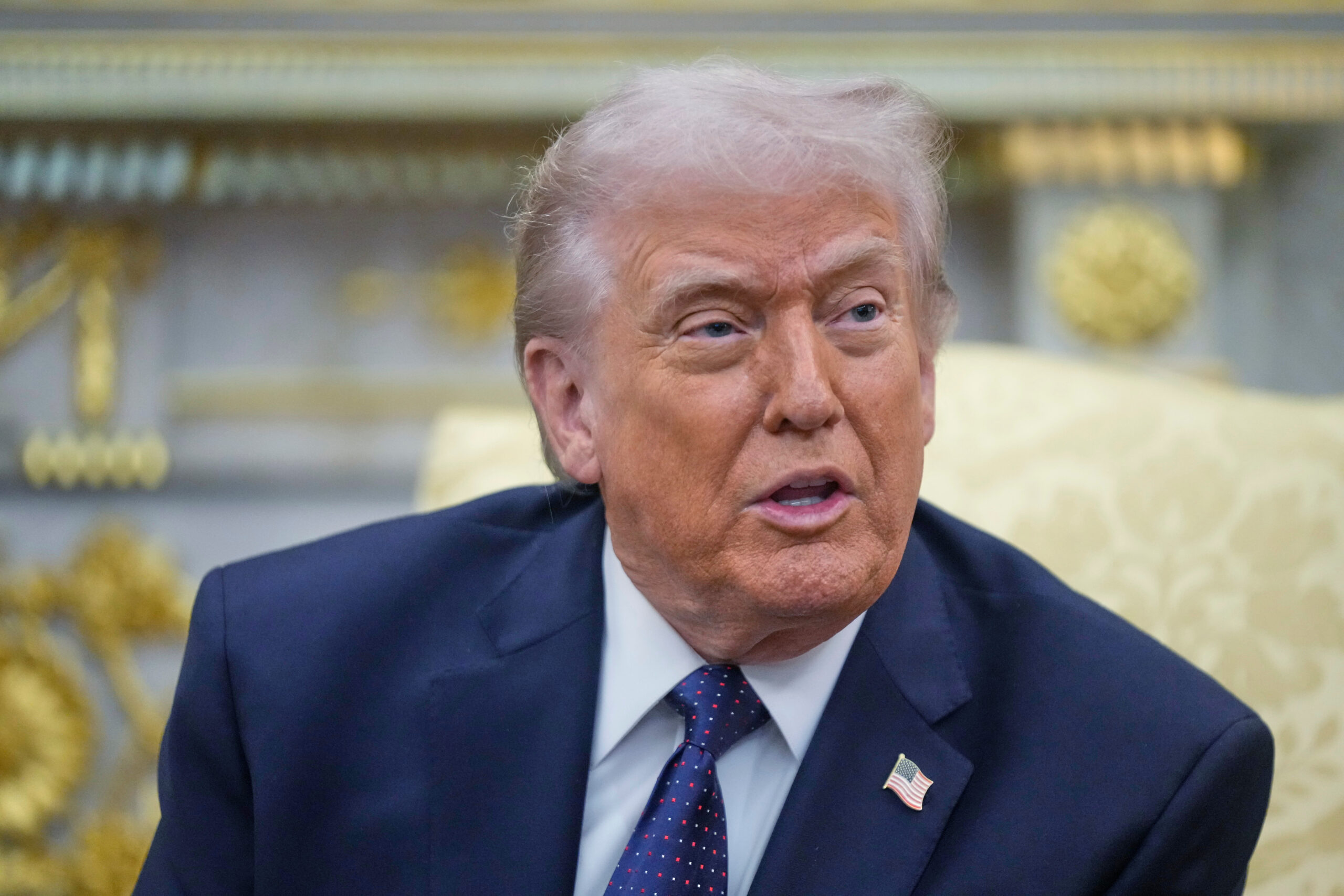
President Donald Trump speaks during a meeting with German Chancellor Friedrich Merz in the Oval Office at the White House, Tuesday, March 3, 2026, in Washington. (AP Photo/Mark Schiefelbein)
Republican lawmakers have largely backed Trump’s decision to strike Iran, citing its long record of terrorism against the United States and its allies, and its nuclear ambitions.
But Rubio’s decision to pin the justification for the attack on Israel angered prominent MAGA commentators and conservative pundits, who said an operation of this magnitude should be done squarely in the interests of the United States.
“My own feeling is no one should have to die for a foreign country. I don’t think those four service members died for the United States,” said Trump advocate and podcast host Megyn Kelly, referring to the first four acknowledged U.S. deaths in the war, a toll that later rose to six. “I think they died for Iran or for Israel.”
In a social media post Monday night, Iranian Foreign Minister Abbas Araghchi piled on. “Mr. Rubio admitted what we all knew: U.S. has entered a war of choice on behalf of Israel. There was never any so-called Iranian ‘threat,’” he wrote.
This week, the House and Senate are poised to vote on measures that would attempt to halt further military attacks in Iran without lawmakers’ approval, as Democrats frame the conflict as an “illegal war” launched without a clear rationale or an authorization from Congress.
A Washington Post flash poll found that 52% of Americans oppose the strikes “strongly” or “somewhat,” while 39% support them.
Even as the administration’s public case for war shifted, several U.S. officials with access to classified intelligence assessments said there was no information before the strikes began indicating Iran has made sudden, worrisome progress in its missile or nuclear programs.
“There was no imminent threat to the United States of America by the Iranians. There was a threat to Israel,” Sen. Mark Warner (D., Va.), the vice chair of the Senate Intelligence Committee, told reporters Monday.
Others said Iran’s weakness, amid severe economic problems and protests that challenged the regime, provided an opportunity to strike.
A former U.S. intelligence official said American spy agencies were concerned by the speed with which Iran reconstituted its missile program after the 12-day war in June. “If you wait a year from now, maybe the regime will have stabilized, the missile program will be more populated and federated,” said the former official, who spoke before the strikes began and requested anonymity to discuss a sensitive subject.
With Trump a potentially lame duck president in a year’s time, “Right now is the sweet spot,” he said.
Multiple legal experts argued that none of the administration’s public explanations for the attacks appeared to constitute a legitimate rationale to enter into such a major conflict, especially without authorization from Congress.
“Having a weapons capacity is not the same thing as presenting an imminent threat of an armed attack,” said Tess Bridgeman, a former senior lawyer on the National Security Council during the Obama administration.
The first days of U.S. and Israeli airstrikes appeared focused on decapitating Iran’s leadership and blunting its ability to retaliate by destroying missile infrastructure and disrupting its military command network.
Rafael Grossi, head of the International Atomic Energy Agency, said Monday that the U.N. nuclear watchdog agency has seen no “major military activity targeting the nuclear facilities” in Iran since the U.S.-Israeli attacks began early Saturday. That assessment, he said, is based on information from Iran as well as multiple satellite images, including those provided “by the U.S. and others.”
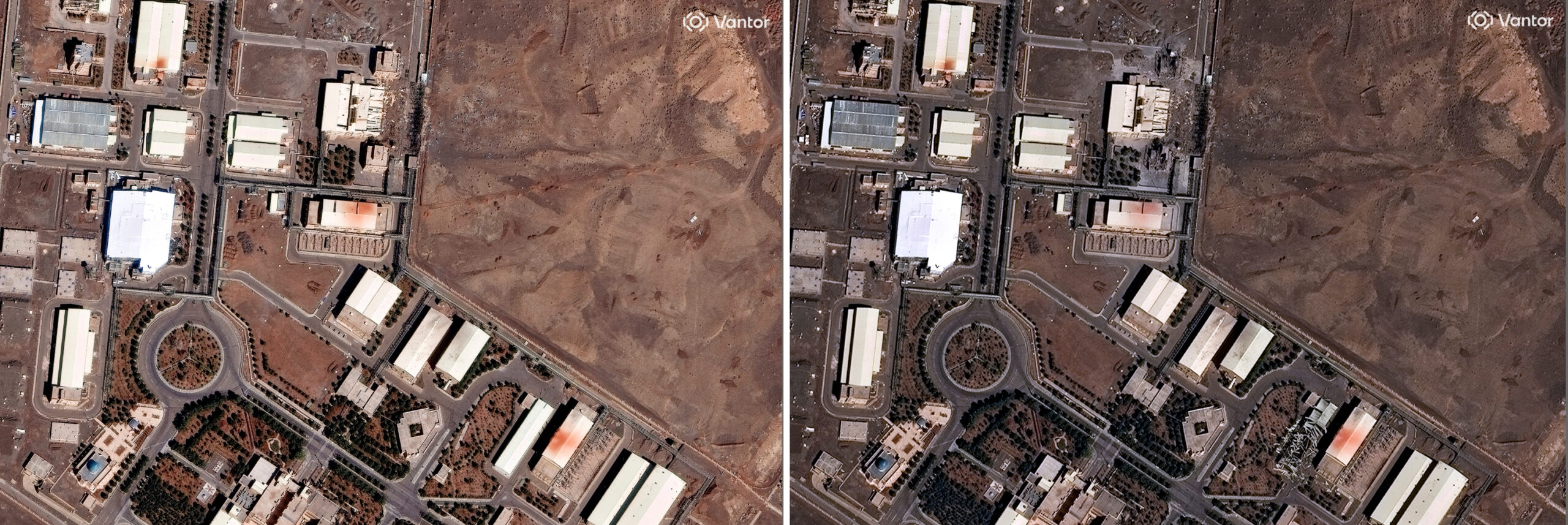
Grossi’s assessment came as Tehran charged there was an attack on its Natanz enrichment facility and as Israel warned civilians to evacuate areas around Isfahan, a major center of Iran’s nuclear program.
Satellite imagery of Natanz captured Monday showed damage to three buildings on the site, damage that Grossi indicated was fairly minor. Vehicle and personnel entrances to underground portions of the facility where centrifuges are kept appear to have been hit, according to the imagery.
The United States and Israel have long accused Iran of seeking to build a nuclear weapon under the cover of enriching uranium for civilian purposes. Last year’s strikes targeting Iran’s uranium enrichment facilities and other sites significantly delayed the program, U.S., Israeli, and IAEA officials said. Trump and Hegseth said Iran’s nuclear ambitions had been “obliterated.”
The Defense Intelligence Agency in a report produced before those strikes assessed that since 2019, in the wake of Trump leaving a nuclear deal with Iran that limited its nuclear program, the Islamic Republic had boosted uranium enrichment and expanded its stockpiles to the point that the time required to produce sufficient weapons-grade uranium for a first nuclear device had fallen to “probably less than one week.”
The actual time to produce a weapon ranged from two to four months, the agency estimated, according to people familiar with the assessments who spoke on the condition of anonymity because of the matter’s sensitivity.
The June strikes targeted Iran’s main enrichment plants at Natanz and Fordow. But the Iranians had been manufacturing centrifuge cascades long before the strikes and likely were storing them at other locations, the people said. “So their ability to do a breakout may or may not have been dependent at all” on the sites that were bombed, one person said.
Post-strike, the DIA and other U.S. intelligence agencies determined that the time Iran now needed to produce enough weapons-grade uranium to build a warhead in extremis — without rebuilding the damaged sites — had lengthened to between four and eight months, people familiar with the matter said.
Uncertainties about Iran’s nuclear program are heightened by the fact that IAEA inspectors left the country last July and haven’t returned.
“The return of the IAEA inspectors will be further delayed as a result of the renewed conflict, and without effective IAEA monitoring, the whereabouts and security of Iran’s highly enriched uranium will now become even more uncertain,” said Daryl Kimball, executive director of the Arms Control Association think tank.
In the meantime, Kimball said, “There hasn’t been any sign that Iran is rebuilding anything.”
The Republican-led House Oversight and Government Reform Committee released videos Monday of the closed-door depositions of former President Bill Clinton and former Secretary of State Hillary Clinton, part of its investigation into convicted sex offender Jeffrey Epstein.
Bill Clinton appeared before the committee on Friday, marking the first time a former president had been compelled to testify before Congress under a subpoena. During his lengthy deposition, the former president sought to distance himself from Epstein, saying he had no knowledge of Epstein’s crimes and stopped associating with him years before his first guilty plea, in 2008.
“There was nothing that I saw when I was around him that made me realize that he was trafficking women,” Clinton told the committee. “I saw nothing, and I did nothing wrong.”
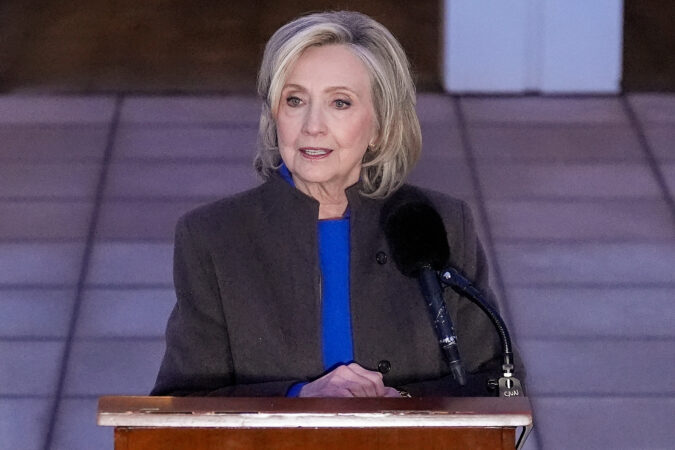
In her hours-long deposition Thursday, Hillary Clinton said she had no recollection of ever meeting Epstein and had known Epstein associate Ghislaine Maxwell only “casually, as an acquaintance.” Hillary Clinton derided the deposition as “political theater” and sharply questioned why she was being deposed.
House Republicans have issued subpoenas to several people — mostly Democrats — mentioned in the millions of files related to the federal government’s Epstein investigation that have been released by the Justice Department.
They have not called in President Donald Trump, who had a long-standing friendship with Epstein. The president has said that he knew Epstein socially in Palm Beach, Fla., and that they had a falling out in the mid-2000s. Trump has maintained that he did not know about Epstein’s criminal behavior.
Here are some of the highlights of the depositions:
Bill Clinton says Larry Summers connected him with Epstein
In his deposition, Bill Clinton said his former treasury secretary Larry Summers, then the president of Harvard University, first recommended that he strike up an acquaintance with Jeffrey Epstein.
As Clinton recalled, Summers — who recently resigned his positions at Harvard because of his association with Epstein — called Clinton shortly after he left office, in late 2001 or early 2002, when Clinton was setting up a charitable foundation.
Summers told him of “a man named Jeffrey Epstein” who had made a multimillion-dollar contribution to brain research, Clinton said, and described Epstein as an “information-hungry person” who owned a “massive airplane” and “wanted to spend some time talking to me about economics and politics.”
Clinton said he saw the plane as an economical means of doing international travel for his foundation.
After taking about a half-dozen trips aboard Epstein’s jet over a couple of years, Clinton said, he quit doing so because his foundation had launched and he had offers of transportation from people he knew better.
Clinton said he considered Epstein “an interesting man, but I didn’t think he was really interested in what I was doing.”
Clinton told the committee that he first learned of Epstein’s crimes “in 2008, when he was prosecuted. There was nothing that I saw when I was around him that made me realize that he was trafficking women.”
At another point, he told the committee, “I don’t believe any law enforcement agency has ever asked me [about Epstein], and I don’t know enough to volunteer anything.”
Hillary Clinton says she ‘knew nothing about’ Epstein
Hillary Clinton repeatedly testified that she did not know Epstein. She characterized him as not being on her “radar,” but was told in preparation for the deposition that she and Epstein both attended an event at the White House that was put on by the White House Historical Association.
“I have no recollection, in any way, of ever having any conversation at the White House or in any other place or on any kind of device of any sort. I knew nothing about him,” Hillary Clinton said when asked if she had any communication with Epstein.
She testified that she knew Maxwell “casually” as someone who dated an acquaintance of hers — Ted Waitt, a software developer.
Waitt, Clinton said, brought Maxwell as a guest to the wedding of the Clintons’ daughter, Chelsea, in 2010.
Clinton said that she did not consider Maxwell a friend and that her daughter would have been “friendlier” with Maxwell, but that she “had no idea” how often they interacted.
Clinton declined to characterize the relationship between Maxwell and Bill Clinton.
“He’ll have to answer that,” she said when asked if Bill Clinton and Maxwell were friends.
Bill Clinton reacts to hot tub photo during Asia trip
Bill Clinton was shown a photo of himself in a hot tub that was among the Epstein files and that has generated much attention.
He recalled that it was taken while he was in Brunei at the end of a long leg of one of his Asia trips.
He and his party, including Epstein, were guests at a hotel owned by the sultan of Brunei, with whom Clinton had established a warm relationship while he was president, and spent time in the hot tub and pool, which were located on the same floor as some of their suites.
“I swam around. I sat in the hot tub for five minutes or whatever it was. I got up and went to bed,” Clinton said.
Bill Clinton denies having visited Epstein’s island
A Democrat on the committee, Rep. Melanie Stansbury of New Mexico, grilled Bill Clinton on reports that he had been on Epstein’s island.
Clinton repeatedly denied he had ever visited the island. He also denied a report, cited by Stansbury, that he had visited Epstein’s home while he was president.
Bill Clinton says he’s not been in touch with Maxwell for a decade
Bill Clinton said his first recollection of meeting Maxwell was on his first flight aboard Epstein’s plane, when she was working for the financier.
Clinton’s relationship with her “lasted longer and was more extensive than my relationship with Mr. Epstein,” he said, because she started “going with” Waitt, the tech billionaire, who became a major donor to the Clinton Foundation.
Clinton said that, by his recollection, he has not been in contact with her for a decade or more.
He said he did not learn about her participation in Epstein’s sexual abuse of minor girls until “the first evidence against her came out in 2019.”
Hillary Clinton’s deposition was paused after photos were shared
Nearly 80 minutes into the deposition, Hillary Clinton’s lawyer interrupted Republican questioning, saying pictures of the former secretary of state testifying had been posted online.
The attorney argued that the pictures, which had been shared by Rep. Lauren Boebert (R., Colo.), violated the committee’s rules — and noted that the Clintons had repeatedly asked that the depositions be held in public.
Visibly frustrated, Hillary Clinton told Republicans that if they were going to be sharing pictures of the interview, she was “done.”
“You can hold me in contempt from now until the cows come home. This is just typical behavior,” she said. “We all are abiding by the same rules.”
The hearing was then paused. When the interview resumed, Rep. James Comer (R., Ky.), the committee’s chairman, said he advised Republicans that no pictures or videos of the deposition could be released.
The Clintons were accompanied by trusted lawyers
The Clintons were accompanied by two lawyers who for decades have been among the most trusted and protective allies in their orbit.
David Kendall is the Clintons’ longtime personal attorney, and Cheryl Mills was deputy White House counsel during Bill Clinton’s presidency and chief of staff to Hillary Clinton at the State Department. Both are known for their discretion and were part of the legal team that defended Bill Clinton in his 1999 Senate impeachment trial, in which he was acquitted.
Americans could start paying more at the gas pump, following the U.S.-Israel strikes on Iran.
West Texas Intermediate crude, an oil produced in the United States, surged 6.2% on Monday to $71.19 per barrel. As of Tuesday, it has spiked another 8%, hovering at around $77. It marks the oil’s highest point in over a year. But that’s just the beginning.
Experts say those surges reflect similar spikes in natural gas and at the gas station.
Here’s what we know.
Why are gas prices going up?
Known as the “crude oil effect,” when oil prices go up, so does the price of the fuel it makes. Crude oil must be processed at refineries to be turned into gasoline.
The conflict in the Middle East, which President Donald Trump said he anticipates could take longer than a few weeks, means the global supply of oil is disrupted, and, in turn, the price of a barrel of oil goes up. This causes the price of fuel to also rise.
“Whatever the time is, it’s OK,” Trump said. “Right from the beginning, we projected four to five weeks, but we have capability to go far longer than that. We’ll do it.”
Oil prices were already on the rise, up 17% this year. Experts say the increase is a direct effect of Trump’s rhetoric against Iran, along with his administration’s recent sanctions against the country.
And, as noted by John Quigley, a senior fellow at the University of Pennsylvania’s Kleinman Center for Energy Policy, it’s not just oil and gasoline; natural gas is also seeing a price increase.
And U.S. consumers will be hit hard, he says.
“It’s disrupting global oil and gas markets,” he said. “The war is quickly widening into a regional conflict, with the production capacity of multiple oil- and gas-producing nations being attacked by Iran in retaliatory strikes. This has already disrupted global oil and natural gas shipments.”
How much have gas prices increased since the strike on Iran?
As oil prices surged Monday, the impacts already started to trickle down to gas stations. This week, the national average of gas per gallon surpassed $3 for the first time since November.
Some states, including Illinois, Michigan, and Texas have already reported increases of about 5 cents per gallon.
As of Tuesday morning, the national average hit $3.11, marking the largest single-day increase since 2022, according to GasBuddy, a gas price tracking service.
Quigley says those increases could be just the beginning.
“Prices for natural gas in European and Asian markets have already spiked 50%. U.S. natural gas exporters will rush to take advantage of that, diverting domestic supplies to exports and pushing up domestic natural gas prices,” he said. “That will raise costs for home heating, and worsen already surging electricity costs, because over 40% of electricity generation in PJM, the nation’s largest grid, is fueled by natural gas.”
Do gas prices always rise during war?
Gas prices historically surge when conflicts happen because of a mix of supply disruptions, geopolitical uncertainty, and oil infrastructure attacks.
As detailed by NPR, major price surges occurred during the Gulf War, the 2003 Iraq invasion, and the 2022 Russia-Ukraine war.
How high could gas prices get?
GasBuddy petroleum analyst Patrick De Haan told multiple news outlets he believes some gas stations could charge as much as 30 cents more per gallon by the end of the week.
He estimated prices would be around $3.10 or $3.20 per gallon by the end of the week and anticipated they would hit $3.30 to $3.35 “in time.”
Based on the numbers at this moment (3/3/26, 945am ET), the average price of gasoline would likely climb to about $3.30-$3.35/gal in time. Any further changes in markets will change this, but if everything held still, that's where we'd likely be. Diesel closer to $4.25-$4.45.
What are the average gas prices in the Philadelphia region? How does that compare to the national average?
As of Tuesday morning:
The national average gas price: $3.11
The Pennsylvania average gas price: $3.21
The Philadelphia average gas price: $3.12
Which areas in the Philly region have the lowest gas prices?
The average price of gas in Philly is $3.12 per gallon as of Tuesday morning. Still, there are some spots with lower prices, according to GasBuddy.
Among the lowest appears to be an Eastcoast station in Fairmount (801 N. Broad St.) with gas going for $2.79 as of Monday evening. A Marathon in Southwest Philly (2450 Island Ave.) listed gas at $2.74 within the last 24 hours.
Among the highest appears to be a Gulf station in Kingsessing (5200 Woodland Ave.), priced at $3.29 as of Monday evening.
Who sets gas prices?
No one person sets gas prices. In reality, the price you see at pumps is the result of a combination of oil prices, supply and demand, oil refining costs, distribution, and competition.
NEW YORK — A worldwide sell-off for stocks is slamming onto Wall Street Tuesday, and oil prices are leaping even higher as worries rise that the war with Iran is widening and may do more sustained damage to the global economy than feared.
The S&P 500 dropped 1.8% in early trading. The Dow Jones Industrial Average was down 907 points, or 1.9%, as of 9:35 a.m. Eastern time, and the Nasdaq composite was 2.1% lower.
It was just a day ago that U.S. stocks opened with sharp losses, only to recover all of them and end the day with slight gains. But that was with the caveat that oil prices did not jump too high, like to more than $100 per barrel.
On Tuesday, oil prices got closer to that mark and raised more alarms. The price for a barrel of Brent crude, the international standard, leaped another 8.2% to $84.14. It was sitting near $70 less than a week ago. A barrel of benchmark U.S. crude, meanwhile, rose 8% to $76.92.
Oil prices made the leap as Iran struck the U.S. Embassy in Saudi Arabia, part of a widening of targets that also includes areas critical to the world’s oil and natural gas production. Worries are particularly high about what will happen to the Strait of Hormuz off the coast of Iran, a narrow passageway where roughly a fifth of the world’s oil passes.
Making things uncertain for markets are rising questions about how long this war may continue.
Strikes by the United States and Israel have already killed Iranian Supreme Leader Ayatollah Ali Khamenei, but President Donald Trump has suggested that fighting may continue for weeks.
Late Monday night, Trump said on his social media network, “Wars can be fought ‘forever,’ and very successfully” with the supply of munitions that the United States possesses.
The jump for oil prices will worsen inflation, which is already too high for nearly everyone, and put more pressure on U.S. households and businesses by raising bills for gasoline and to ship products. The average price for a gallon of gasoline in the U.S. jumped 11 cents overnight to about $3.11, according to data from motor club AAA.
That has the damage in stock markets so far centering on companies and countries that use a lot of oil, natural gas and other petroleum-based fuels.
In South Korea, a big energy importer, the Kospi stock index plunged 7.2% for its worst day since two summers ago as markets reopened after a holiday on Monday. It had been setting records recently.
Japan’s Nikkei 225 dropped 3.1%, even as analysts say Japan has a sizable stockpile of energy lasting more than 200 days.
On Wall Street, airlines continued to sink on worries about rising fuel bills. The war has also led to canceled flights and stranded passengers.
United Airlines fell 4.1%, American Airlines sank 4% and Delta Air Lines dropped 3%.
In the bond market, Treasury yields climbed more as worries rose further about inflation worsening. The yield on the 10-year Treasury jumped to 4.10% from 4.05% late Monday and from just 3.97% on Friday.
Higher yields can mean more expensive loans for U.S. households and businesses, for everything from mortgages to bond issuances.
NEW YORK — The average price for a gallon of gasoline jumped 11 cents overnight to about $3.11 in the U.S., according to motor club AAA.
Gas prices were already rising before the U.S. launched strikes on Iran as refiners switch over to summer blends of fuel, but crude futures have risen sharply this week because of the war.
On Tuesday, oil futures soared to levels not seen in more than a year as Iran launched a series of retaliatory attacks, including a drone strike on the U.S. Embassy in Saudi Arabia.
Benchmark U.S. crude jumped 8.6% to $77.36 a barrel.
Brent crude, the international standard, added 6.7% to $81.29 a barrel. Global oil prices jumped to start the week over concerns that the war will clog the global flow of crude.
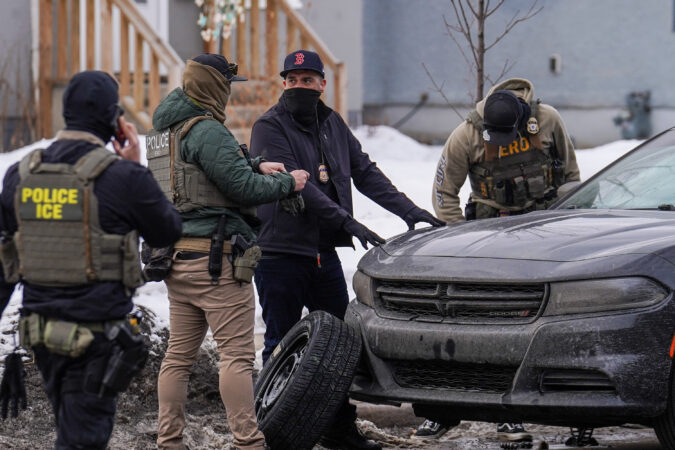
Immigration and Customs Enforcement dramatically cut its basic training program amid a hiring spree meant to speed up the Trump administration’s deportation efforts, records obtained by the Washington Post show, corroborating a whistleblower’s claim.
After former ICE instructor Ryan Schwank testified during a congressional hearing last week, the Department of Homeland Security (DHS) denied any reduction in the amount or quality of training provided to ICE recruits. The previously undisclosed records obtained by the Post show that, as the whistleblower said, ICE last year removed about240 hours from its basic training program, or more than 40% of instructional time.
The documents also offer new insight into how and when the training program was reduced. The vast majority of the cuts occurred in August, the records show, as the Trump administration pushed ICE to double the number of officers in the field by the end of 2025.
The initial cuts eliminated more than 100 hours dedicated tohands-on instruction and practice scenarios, including half the 56 hours once spent on firearms training, the records show.Fitness training time was almost entirely cut.Also eliminated were dozens of hours of classroom learning on such topics as case processing and deportation officers’ legal authority.
With further cuts later that fall, the records show, ICE had eliminated three-quarters of thehours once dedicated to evaluating recruits’ practical skills, including firearms handling. The agency eliminated time for driving tests and cut all 26 hours previously allotted for evaluating recruits’ grasp of skills specific to immigration enforcement and deportation operations.
As of Jan. 1, records show, more than 900 ICE officers had completed a shortened version of basic training and were destined for field offices across the country. That is more than three times the total number of graduates in the 12 months before August, when the program was first cut.
Asked about the Post’s findings, ICE acknowledged that the program has been accelerated by increasing the daily training time and adding an extra day of training each week but insisted that there had been nocuts to overall training hours, requirements, or subject matter.
“ICE officers go through a rigorous on-the-job training and mentorship,” the agency said in a statement. It said new officers take what they learn at the academy and “apply it to real-life scenarios while on duty, preserving ICE’s reputation as one of the most elite law enforcement agencies not only in the U.S., but the entire world.”
Concerns about the quality of immigration officers’ training have been mounting for months amid reports of violent arrests and heavy-handed crowd-control tactics, along with two high-profile killings of U.S. citizens by federal immigration agents during protests in Minneapolis this year.
On Feb. 23, Schwank, a lawyer who recently resigned from his teaching position at the ICE academy, testified that the agency had removed so many essential courses from the program that “even in the final days of training, the cadets cannot demonstrate a solid grasp of the tactics or the law required to perform their jobs.”
That same day, congressional Democrats made public DHS documents indicating that ICE last year removed courses that were once part of its basic training program. The records obtained by the Post were not among those released by the Democrats and did not come from the same source.
The records obtained by the Post include four trainingprogram outlines, dated between July 2025 and January 2026, that break down the hours allocated to instructional topics. The records also track student outcomes and time at the academy. They reveal a steep decline in the graduation rate as DHS ramped up recruitment, part of President Donald Trump’s goal to double the number of ICE officers to 20,000 and deport an unprecedented 1 million people each year.
“Students must meet all requirements, otherwise they will not be made law enforcement officers,” ICE told the Post, citingthe lower graduation rate as evidence that the academy has not lowered standards.
ICE made slight adjustments to the basic training program after the sweeping cuts last year, the records show. After initially cutting the training time dedicated to use of force by three hours, for instance, ICE later added five hours on that subject. Asked about the change, ICE told the Post that the agency “increased de-escalation training for recruits to ensure they are prepared for attacks from ICE agitators.”
Before the changes last summer, ICE basic training was a 72-day program held at the headquarters of the Federal Law Enforcement Training Centers, a sprawling campus in southeastern Georgia. ICE never formally announced changes to the program but told reporters on a media tour in August that it had been streamlined to eight weeks.
Pushed for specifics at the time, the agency said it had eliminated a Spanish-language requirement. But Spanish instruction was not part of the ICE basic training program. It was a separate course for recruits who could not pass a Spanish fluency test. The records obtained by the Post show cutting the language requirement eliminated only four hours from the basic training program — the time previously set aside for that test.
Since the August media tour, officials have given conflicting accounts about training time. In the past month, they have stated at different timesthat the basic training last 47 days, 42 days, and 56 days.
The DHS records obtained and analyzed by the Post show that the program was first cut to 47 days in August and further reduced in September to 42 days. Since then, all trainings have been on a 42-day schedule, the records show.
DHS and ICE officials have repeatedly said that no training time has been lost, in part because the academy increased daily instruction from eight hours to 12 hours. The Post’s analysis of the records shows that as recently as January, students were receiving about eight hours of daily instruction. That hadn’t changed as of February, according to a DHS official who spoke on the condition of anonymity because they were not authorized to talk to the media.
Asked about the discrepancy, ICE repeated the claim about 12-hour days and added that those hours include “personalized independent training.” The statement emphasized in bold: “It’s the same hours of training officers have always received.”
ICE also said graduates of the academy go on to receive “an average of 28 days of on-the-job training.”
Policing expert Marc Brown, an instructor at the University of South Carolina’s law school, told the Post that “training on the job doesn’t replace training at the academy, especially in a law enforcement career.”
From 2019 to 2024, Brown taught physical techniques, including the use of handcuffs and defensive tactics, at the ICE basic training program. Incoming deportation officers need time to practice their new skills in safe, controlled environments before going into the field, Brown said, “so that if mistakes are made or there are things you could do better, you have a chance to make that mental correction.”
Slightly more than 230 new deportation officers beganICE basic training in 2024, records show. In 2025, that same number had started at the ICE academy by the beginning of August. This followeda midsummer recruitment boom spurred by the passage of Trump’s sweeping tax-and-spending legislation, which tripled the agency’s enforcement and deportation budget to about $30 billion.
To boost the number of applicants, ICE lifted age restrictions, offered student loan forgiveness and $50,000 signing bonuses, and held recruitment events where some prospective agents were told they could receive tentative offer letters on the spot. By the end of September, cohorts of up to 48 trainees were arriving at the facility in Georgiaalmost daily, records show.
In the past, all new deportation officers were required to attend the academy. Now,only recruits who have no law enforcement experience are sent to the academy. Recruits withlaw enforcement experience, including “arrest authorities,” are instead required to take an online course, and then they, too, “receive in-person on the job training,” ICE said.
The records obtained by the Post show that more than 1,400 ICE recruits attended a shortened version of basic training in Georgia between August and Jan. 1. Those students failed or dropped out at high rates, and the 2025 graduation rateplummeted from around 80% among recruits who went through the full-length training to around 60% for those in shortened versions.
One in every four recruits destined for field offices by the end of the year flunked out of the shortened training program, records show. Among those who fell short, the majority failed written exams. Most of the remainder failed the physical abilities assessment, which requires recruits to complete a timed run and an obstacle course. Only three people failed that test in the first half of 2025 before ICE loosened certain enrollment standards and slashed more than 40 hours of preparation time.
Brown attributed the low graduation rate in part to the reduced hours of instruction, which he said don’t provide new officers enough time to absorb material or practice difficult skills one-on-one with instructors in remedial workshops. He said it also appeared ICE’s hiring spree pulled in more than the usual number of recruits who weren’t suited for or capable of the job.
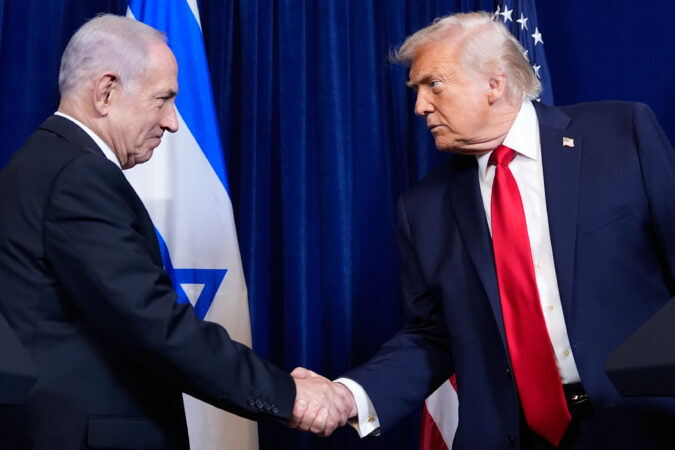
Throughout his political career, Israeli Prime Minister Benjamin Netanyahu has steered his country along two pillars of foreign policy: an ironclad partnership with the United States and a relentless diplomatic and covert battle against the rulers of the Islamic Republic of Iran.
Now, with Israel and the U.S. in a joint war against Iran’s leadership, those two strategic paths risk clashing with each other. By enlisting the U.S. in what he views as Israel’s existential battle against Iran, Netanyahu is taking a gamble that could open up the relationship to the strain of a war with far-reaching consequences.
To be sure, persuading U.S. President Donald Trump to join the war was a coup for Netanyahu and highlights the strong ties between the two leaders. If they are successful, they could quickly realize their shared goal of toppling the Iranian government and spare the region a protracted conflict.
“A large part of the American public will view it as the Israeli tail wagging the American dog and that it is dragging the United States to a war in the Middle East that isn’t theirs,” said Ofer Shelah, a research fellow at the Institute for National Security Studies, a Tel Aviv, Israel-based think tank. The drop in public support that might unleash “will be very harmful for Israel in the medium and long term,” he said.
But, he added, in a nod to the Israeli leader’s political ambitions: “Netanyahu is not interested in the medium and long term.”
US public opinion has been evolving
For Netanyahu, successfully persuading Trump to strike Iran together is the apex of decades of proximity between the Israeli leader and Washington. Netanyahu, Israel’s longest-serving leader, speaks flawless English after having spent part of his youth in the U.S. and has always portrayed himself as Israel’s bridge to America.
Although he boasts about his tight relationships with multiple American presidents and members of Congress, Netanyahu over the past two years has seen support for Israel among the American public drop. According to Gallup polling, American sympathies in the Middle East have shifted dramatically toward the Palestinians.
That shift in sentiment has been driven in large part by Democrats. But some Republicans, and even Trump’s own backers, have been more outspoken against the diplomatic and financial support the U.S. has continued to grant Israel throughout the past two and a half years, when it has been embroiled in a war on multiple fronts sparked by Hamas’ Oct. 7, 2023, attacks. The devastating images from the war in Gaza deepened Israel’s international isolation.
With a new war against Iran — the second in less than a year — Netanyahu is tackling an enemy that he and many Israelis view as an existential threat, citing its support for anti-Israeli militias across the region, its ballistic missile arsenal, and its nuclear program. He has led the crusade against Iran on the world stage for much of his career.
Netanyahu said Sunday in a statement that the U.S. involvement “allows us to do what I have been hoping to do for 40 years — to deliver a crushing blow to the terror regime.” Netanyahu’s office did not immediately respond to an Associated Press request for comment.
The conflict could spiral
Days into the war, Israel and the U.S. military appear to be working hand in glove to strike targets — from the initial attack that killed top Iranian leaders, including Supreme Leader Ayatollah Ali Khamenei, to assaults that allowed the forces free rein in Iranian skies.
But the conflict has already set off aftershocks that could reverberate in the American heartland. At least six U.S. troops have been killed. Travel was disrupted across the region, leaving hundreds of thousands of travelers stranded. Oil prices surged, raising the prospect of costlier gasoline for U.S. drivers as well as increased prices for other goods at a time when people have been stung by a rising cost of living.
Questions remain about the direction and aim of the war. It’s unclear whether the air power will be enough to topple Iran’s leadership, who or what should replace that leadership, and what role Israel or the U.S. will have in either. Every day presents new potential land mines.
“Many people will blame Israel if things go badly wrong,” wrote Nadav Eyal, a commentator with the Israeli Yediot Ahronoth daily newspaper. “Israel cannot afford to lose the American public’s support under any circumstances. That is more important than striking any individual military facility.”
Still, Aaron David Miller, who served as an adviser on Middle East issues to Democratic and Republican administrations over two decades, said that Netanyahu has little to lose from the war.
With elections scheduled for the fall, Netanyahu can use the war in Iran to divert attention away from the failures of the Oct. 7, 2023, attacks, the worst in Israel’s history. Instead, Netanyahu can set himself up as a brave wartime leader who fulfilled a pledge he has made much of his life to confront Iran.
He can say he did so with support from the American president, who Miller said can pull the breaks on the war whenever he pleases.
“If Trump feels as if it’s going south, he’ll find a way to de-escalate,” he said, “and his good friend Benjamin Netanyahu will follow.”