Category: Nation & World

  • Homeland Security officials voice concerns about looming shutdown

    Homeland Security officials voice concerns about looming shutdown

    WASHINGTON — A disruption in reimbursements to states for disaster relief costs. Delays in cybersecurity response and training. And missed paychecks for the agents who screen passengers and bags at the nation’s airports, which could lead to unscheduled absences and longer wait times for travelers.

    Those were just some of the potential ramifications of a looming funding lapse at the Department of Homeland Security, according to officials who testified before a House panel on Wednesday.

    Congress has approved full-year funding for the vast majority of the federal government, but it only passed a short-term funding patch for the Department of Homeland Security that extends through Friday. In response to the killing of two American citizens in Minneapolis and other incidents, Democrats have insisted that any funding bill for the department come with changes to immigration enforcement operations.

    Finding agreement on the issue of immigration enforcement will be exceedingly difficult. But even though lawmakers in both parties were skeptical, a White House official said that the administration was having constructive talks with both Republicans and Democrats. The official, granted anonymity to speak about ongoing deliberations, stressed that President Donald Trump wanted the government to remain open and for Homeland Security services to be funded.

    Meanwhile, Republicans are emphasizing that a Homeland Security shutdown would not curtail the work of the agencies Democrats are most concerned about. Trump’s tax and spending cut bill passed last year gave Immigration and Customs Enforcement about $75 billion to expand detention capacity and beef up enforcement operations.

    “Removal operations will continue. Wall construction will continue,” said Rep. Mark Amodei, the Republican chairman of the House Appropriations subcommittee on Homeland Security.

    Rather, agencies such as the Transportation Security Administration, the Secret Service, Coast Guard, and Federal Emergency Management Agency would take the biggest hit, he said. Officials from those agencies appeared before the House subcommittee to explain the potential impact of a Homeland Security shutdown.

    Rep. Henry Cuellar, the ranking Democrat on the panel, said the tragic loss of two American citizens in Minneapolis — Renee Good and Alex Pretti — should concern every lawmaker. He said that strong borders and a respect for human life are not competing values.

    “When enforcement actions lead to outcomes like that, we have an obligation to ask the hard question and to make sure our laws and policies are working as intended,” Cuellar said.

    He said on Homeland Security funding that “we were almost there. We were there, Democrats and Republicans and everybody, but the second shooting brought different dynamics. I think we can get there to address that.”

    Essential work continues

    About 90% of the department’s employees would continue working in a shutdown, but they would do so without pay. Vice Admiral Thomas Allan of the U.S. Coast Guard said law enforcement and emergency response missions continue during a shutdown, but that the possibility of missed paychecks creates significant financial hardships.

    “Shutdowns cripple morale and directly harm our ability to recruit and retain the talented Americans we need to meet growing demands,” Allan said.

    Ha Nguyen McNeill, of the Transportation Security Administration, shared a similar concern. She estimated about 95% of the agency’s 61,000 workers would continue to work, but potentially go without a paycheck depending upon the length of a shutdown. She noted that they just went through a lengthy shutdown last fall.

    “We heard reports of officers sleeping in their cars at airports to save money on gas, selling their blood and plasma and taking on second jobs to make ends meet,” she said. “…Some are just recovering from the financial impact of the 43-day shutdown. Many are still reeling from it. We cannot put them through another such experience.”

    Homeland Security also includes the agency charged with working to protect the public and private sector from a broad range of cyber threats. Madhu Gottumukkala, acting director of that agency, said a shutdown would “degrade our capacity to provide timely and actionable guidance to help partners defend their networks.”

    “I want to be clear, when the government shuts down, cyber threats do not,” he said.

    Long-term impact

    Gregg Phillips, an associated administrator at FEMA, said its disaster relief fund has sufficient balances to continue emergency response activities during a shutdown, but would become seriously strained in the event of a catastrophic disaster. He said that while the agency continues to respond to threats like flooding and winter storms, long-term planning and coordination with state and local partners is “irrevocably impacted.”

    For example, he said a lapse would disrupt training for first responders at the National Disaster & Emergency Management University in Maryland.

    “The import of these trainings cannot be measured,” Phillips said. “And their absence will be felt in our local communities.”

    At the Secret Service, “the casual observer will see no difference,” said Matthew Quinn, the agency’s deputy director. But he said reform efforts taking place at the Secret Service are affected.

    “Delayed contracts, diminished hiring and halted new programs will be the result,” Quinn said.
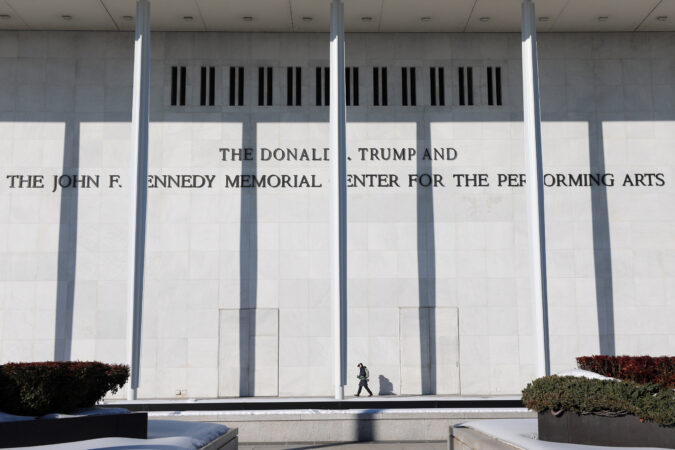
  • Kennedy Center head warns staff of cuts and ‘skeletal’ staffing during renovation closure

    Kennedy Center head warns staff of cuts and ‘skeletal’ staffing during renovation closure

    As the Trump administration prepares to close the Kennedy Center for a two-year renovation, the head of Washington’s performing arts center has warned its staff about impending cuts that will leave “skeletal teams.”

    In a Tuesday memo obtained by The Associated Press, Kennedy Center president Richard Grenell told staff that “departments will obviously function on a much smaller scale with some units totally reduced or on hold until we begin preparations to reopen in 2028,” promising “permanent or temporary adjustments for most everyone.”

    A Kennedy Center spokesperson declined comment Wednesday.

    Over the next few months, he wrote, department heads would be “evaluating the needs and making the decisions as to what these skeletal teams left in place during the facility and closure and construction phase will look like.” Grenell said leadership would “provide as much clarity and advance notice as possible.”

    The Kennedy Center is slated to close in early July. Few details about what the renovations will look like have been released since President Donald Trump announced his plan at the beginning of February. Neither Trump nor Grenell have provided evidence to support claims about the building being in disrepair, and last October, Trump had pledged it would remain open during renovations.

    It’s unclear exactly how many employees the center currently has, but a 2025 tax filing said nearly 2,500 people were employed during the 2023 calendar year. A request for comment sent to Kennedy Center Arts Workers United, which represents artists and arts professionals affiliated with the center — wasn’t immediately returned.

    Leading performers and groups have left or canceled appearances since Trump ousted the center’s leadership a year ago and added his own name to the building in December. The Washington Post, which first reported about Grenell’s memo, has also cited significant drops in ticket revenue that — along with private philanthropy — comprises the center’s operating budget. Officials have yet to say whether such long-running traditions as the Mark Twain Award for comedy or the honors ceremony for lifetime contributions to the arts will continue while the center is closed.

    The Kennedy Center was first conceived as a national cultural facility during the Eisenhower administration, in the 1950s. President John F. Kennedy led a fundraising initiative, and the yet-to-be-built center was named in his honor following his assassination. It opened in 1971 and has become a preeminent showcase for theater, music and dramatic performances, enjoying bipartisan backing until Trump’s return to office last year.

    “This renovation represents a generational investment in our future,” Grenell wrote. “When we reopen, we will do so as a stronger organization — one that honors our legacy while expanding our impact.”

  • She bounced a $25 check in 2014. ICE tried to deport her.

    She bounced a $25 check in 2014. ICE tried to deport her.

    One evening last summer, Donna Hughes-Brown was handcuffed and led into a filthy holding cell somewhere in Kentucky, where insects crawled out of a drain and feces streaked the walls.

    The Missouri grandmother’s life had taken an unrecognizable turn days earlier, when federal agents pulled her off an arriving flight at Chicago’s O’Hare International Airport, arrested her and told her she would be deported.

    Her crime? Writing two bad checks, for a combined total of less than $75, more than a decade earlier.

    Hughes-Brown, a lawful permanent resident of the United States since she was a child, would go on to spend 143 days — nearly five months — in detention. She was only released at the end of last year after an immigration judge granted an application to stop her removal. Her story underscores just how far the Trump administration is willing to go in its quest to boost deportations, extending its dragnet to people who are legally present in the country with minor offenses from years earlier.

    For those swept up in the expanding deportation drive, it is also increasingly difficult to win release, resulting in lengthy detentions such as the one Hughes-Brown experienced. In November, the number of people released from Immigration and Customs Enforcement detention into the U.S. fell about 70 percent from a year earlier, according to a recent report from the American Immigration Council.

    When asked about Hughes-Brown, Tricia McLaughlin, assistant secretary at the Department of Homeland Security, defended her agency’s handling of the case. A conviction for passing bad checks does “not make for an upstanding lawful permanent resident,” McLaughlin said in an email. A spokesperson for ICE did not respond to a request for comment.

    Hughes-Brown, 59, is an Irish citizen and green-card holder who immigrated to the U.S. with her parents in 1978. Before last year, she never imagined she would become a target of the administration’s clampdown on immigration, she said, and she believed that everyone should come to the country legally, like she did.

    Now back home in small-town Missouri, Hughes-Brown said she thinks constantly of the women she left behind in detention: Jeimy, a 25-year-old from Guatemala who is married to an American citizen; Grace, a woman from Venezuela with a congenital heart condition; Beata, a Polish green-card holder with two convictions for minor retail theft more than a decade ago, her story an echo of Hughes-Brown’s.

    “It was the intent for this to happen to so many people,” Hughes-Brown said. “It doesn’t really matter how you got here, the end result is the same.”

    A $25 mistake

    Hughes-Brown’s ordeal began last July, when she made her first overseas trip in almost a decade. Her aunt had died, so Donna and her husband, Jim Brown, traveled to Ireland, gathering with family at a lighthouse overlooking an estuary as they spread her aunt’s ashes.

    At the airport in Dublin, Donna and Jim precleared U.S. Customs and Immigration. Officers pulled Donna aside and asked questions about her travel history. Then they let her proceed to her flight, she said.

    As the plane was approaching Chicago’s O’Hare airport, the flight attendant announced that all passengers would be required to show their passports as they exited. That’s odd, Donna thought. Exiting the plane, she saw armed officers waiting on the jet bridge. They were there for her.

    After a night in a cell at O’Hare, Donna received paperwork explaining why she had been apprehended. She was flummoxed. Back in 2015, she pleaded guilty to passing a bad check the previous year, a misdemeanor. The check was for $25, court records show, and made out to Krazy Korner, a gas station, and convenience store.

    She was living paycheck to paycheck and didn’t realize the check would bounce, Donna says. After it did, court records show, she paid restitution of $80 plus court fees of $117 and served a year of probation. She stabilized her finances, building a career as a home health care aide. She was certain that chapter was closed.

    The government also cited a separate 2012 misdemeanor conviction for passing a bad check. Records from that case are not available to the public because the case was either dismissed or expunged, a county official in Missouri said. Donna barely remembered it; she believes it was for less than $50 at a grocery store.

    While lawful permanent residents have considerably more protection from deportation than visa holders, the government can seek to deport green-card holders for certain nonviolent offenses. One such situation: crimes of “moral turpitude,” which include offenses with an intent to steal or defraud.

    But the government has an “immense amount of discretion” in deciding whether to exercise such powers and whether to detain someone, said César Cuauhtémoc García Hernández, a law professor and immigration expert at Ohio State University. In the past, he said, he would have expected DHS to exercise its discretion favorably in Donna’s case, given her “half a century in the United States with only one or two extremely minor hiccups.”

    To assert that passing a bad check more than a decade ago “makes you unworthy of living in the U.S. — that’s a policy decision,” García Hernández said. What’s more, detaining someone for months is “neither easy nor cheap.”

    The average cost to house an ICE detainee per day was $187, according to the most recent figures available. At that rate, detaining Hughes-Brown cost taxpayers about $27,000.

    ‘Hell from both sides’

    In early August, Donna and several other detainees were handcuffed and loaded into a van for the six-hour drive from Illinois to Campbell County Detention Center, a local jail in Kentucky that also houses ICE detainees. Four hundred miles from home, she lived in a pod with dozens of other women, she says, sleeping on metal bunks with only a thin mat and toilets that were clogged for days.

    One of the women was Beata Siemionkowicz, a lawful permanent resident from outside of Chicago who has lived in the U.S. since 1995. Federal agents arrested her at her daughter’s house in August, her lawyer, George Gomez, said, and told her they were launching deportation proceedings. The reason: two misdemeanor cases for retail theft in 2005 and 2011.

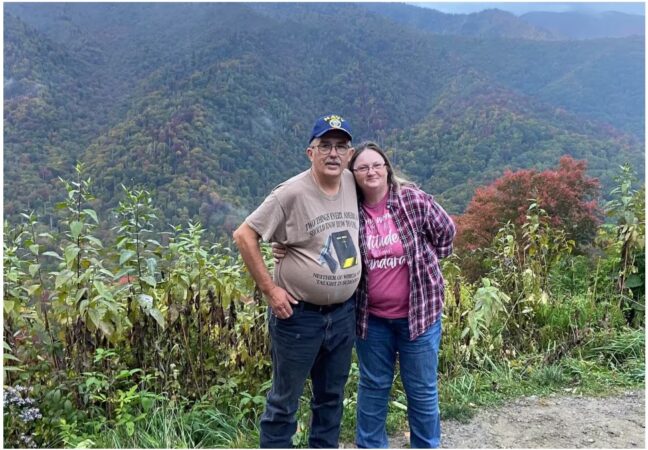
    Meanwhile, Donna’s husband, Jim, was doing everything he could think of to get her released. They’d met online and married seven years before, building a life in Cyrene, a tiny town south of Bowling Green, where they keep three horses and are active in their church. After Hurricane Helene, they twice filled a 30-foot horse trailer with supplies and drove it to North Carolina to help disaster victims.

    A combat veteran turned CT technologist, Jim describes himself as a conservative Christian and voted for Trump in 2024. He’s not against immigration: He grew up around migrant workers in Texas, hard-working people who paid taxes into the system.

    When Donna was detained, Jim wrote to every member of Missouri’s congressional delegation. He struck out, but then help came from an unexpected place: Rep. Seth Magaziner, a Democrat who represents Rhode Island. Magaziner brought Jim to Washington to speak at a panel on Trump’s immigration crackdown. At the event, Jim was asked why he had voted for Trump. He paused. “Because I was an idiot,” he answered.

    The partisan backlash has been swift, he said. Longtime friends in the ruby-red county where the couple lives have turned their back on him because he criticized Trump. Meanwhile, more liberal neighbors have said his wife’s ordeal is a fitting consequence of his vote.

    “My family and I have got hell from both sides,” Jim said.

    In December, Magaziner also asked Homeland Security Secretary Kristi L. Noem about Donna’s case during a hearing on Capitol Hill. “The Trump Administration claimed it would target the ‘worst of the worst,’ but no one understands how false that promise was more than Jim and Donna Brown,” Magaziner said in a statement.

    As the months rolled by, Donna spent two stints in an isolation cell, where the only book allowed was the Bible and she was permitted an hour outside every other day. Her requests to be released on bond were rejected by an immigration judge. But on Dec. 18, after a hearing during which family members talked about how devastating her deportation would be, the judge granted her application to cancel removal proceedings. DHS declined to appeal the decision.

    Still, Donna doesn’t intend to take chances. Her passport and green card were finally returned to her last week after the Irish consulate intervened. “I’m not even getting close to the border,” she said.

    These days, she senses an awkwardness with some friends. They’re sorry for what happened to her but still support the administration’s efforts. That’s their right, she says, and she’s not interested in cutting people off because they disagree with her.

    But she does want to talk to them. About how helpless she felt in her darkest moments in detention – labeled a criminal, locked away and unsure if she would ever return to her life in Missouri. She’s determined to fight for the women she met there.

    “I’m going to keep on keepin’ on,” Donna said. “Because it is not right. It is not right.”

  • IRS improperly disclosed confidential immigrant tax data to DHS

    IRS improperly disclosed confidential immigrant tax data to DHS

    The Internal Revenue Service improperly shared confidential tax information of thousands of individuals with immigration enforcement officials, according to three people familiar with the situation, appearing to breach a legal firewall intended to protect taxpayer data.

    The erroneous disclosure was only recently discovered, the people said. The IRS is working with officials from the Treasury Department, Justice Department, and Department of Homeland Security on the administration’s response.

    The IRS confirmed the Washington Post’s reporting in a court filing Wednesday afternoon. Dottie Romo, the tax agency’s chief risk and control officer, wrote in a sworn declaration that the IRS provided confidential taxpayer information even when DHS officials could not provide sufficient data to positively identify a specific individual.

    But in a controversial decision, Treasury, which oversees the IRS, in April agreed to provide DHS with the names and addresses of individuals the Trump administration believed to be in the country illegally, pursuant to DHS requests.

    Federal courts have since blocked the data-sharing arrangement, holding that it violates taxpayers’ rights, though the government appealed those rulings.

    Before the agreement was struck down, DHS requested the addresses of 1.2 million individuals from the IRS. The tax agency responded with data on 47,000 individuals, according to court records.

    When the IRS shared the addresses with DHS, it also inadvertently disclosed private information for thousands of taxpayers erroneously, a mistake only recently discovered, said the people familiar, who spoke on the condition of anonymity for fear of retribution.

    Romo, in her declaration, did not state when the IRS learned of its error. She said the agency notified DHS on Jan. 23, to begin taking steps to “prevent the disclosure or dissemination, and to ensure appropriate disposal, of any data provided to ICE by IRS based on incomplete or insufficient address information.”

    She declined to state if the IRS would inform people whose data was illegally disclosed to immigration officials, and said DHS and ICE had agreed to “not inspect, view, use, copy, distribute, rely on, or otherwise act on any return information that has been obtained from or disclosed by IRS” because of the pending litigation.

    The affected individuals could be entitled to financial compensation for each time their information was improperly shared. And government officials can personally face stiff civil and criminal penalties for sharing confidential tax information.

    Charles Littlejohn, an IRS contractor, pleaded guilty in 2023 to leaking the tax returns of President Donald Trump and other wealthy individuals.

    Littlejohn was sentenced to five years in prison. Trump in January sued the IRS for $10 billion in damages related to the Littlejohn leak.

    In a statement, a DHS spokesperson said that under the data-sharing agreement, “the government is finally doing what it should have all along.”

    “Information sharing across agencies is essential to identify who is in our country, including violent criminals, determine what public safety and terror threats may exist so we can neutralize them, scrub these individuals from voter rolls, and identify what public benefits these aliens are using at taxpayer expense,” the spokesperson said.

    There is little evidence that undocumented immigrants have attempted to participate in U.S. elections, nor is there a link between undocumented immigrants and higher levels of crime.

    “With the IRS information specifically, DHS plans to focus on enforcing long-neglected criminal laws that apply to illegal aliens,” the DHS spokesperson said.

    Treasury and Justice Department spokespeople declined to comment, citing agency policies not to comment on active litigation. The Office of the Deputy Attorney General is monitoring the ongoing litigation, but the office is not making any decisions on the matter, according to a person familiar with the matter who was not authorized to comment publicly.

    When the IRS began conversations with DHS over data sharing shortly after Trump returned to the White House, senior IRS employees warned administration officials that the program was likely illegal and could sweep up misidentified people, the Post has reported.

    During early meetings on the project, one agency staffer asked immigration authorities how many people with the same name may live in the same state, according to one of the people, illustrating how easy it would be for the Trump administration to inadvertently breach taxpayers’ privacy, including those who are not targets of immigration investigations.

    The IRS’s privacy department was largely sidelined from the talks, two of the people said, and its IT department took over implementing the data sharing. That team had largely been taken over by officials from Trump’s U.S. DOGE Service, the White House’s “efficiency” office charged with shrinking the federal government.

    Treasury officials justified the data-sharing agreement by arguing immigration enforcement was pursuing individuals who had violated criminal statutes, though immigration violations are generally civil, not criminal.

    Under the arrangement, DHS would provide the IRS with the name and address of a taxpayer. The IRS would then cross-reference that information with its confidential databases and confirm the taxpayers’ last known address.

    Immigration officials said the procedure was necessary because DHS lacked reliable information to locate individuals the Trump administration wanted to detain and deport, according to numerous IRS and DHS officials, who spoke on the condition of anonymity because they were not authorized to publicly discuss the matter.

    “This allegedly unauthorized viewing involves personal information that taxpayers provided to the IRS pursuant to a promise that the IRS would prioritize keeping the information confidential,” Judge Colleen Kollar-Kotelly of the U.S. District Court for the District of Columbia wrote in a November order. “A reasonable taxpayer would likely find it highly offensive to discover that the IRS now intends to share that information permissively because it has replaced its promise of confidentiality with a policy of disclosure.”

  • Grand jury refuses to indict Democratic lawmakers in connection with illegal military orders video

    Grand jury refuses to indict Democratic lawmakers in connection with illegal military orders video

    WASHINGTON — A grand jury in Washington refused Tuesday to indict Democratic lawmakers in connection with a video in which they urged U.S. military members to resist “illegal orders,” according to a person familiar with the matter.

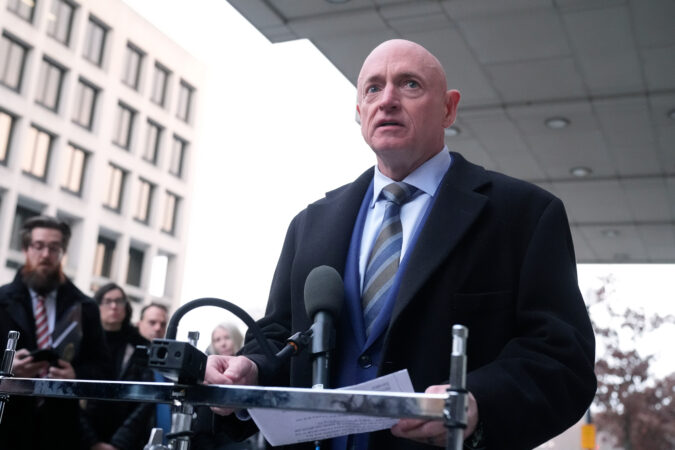
    The Justice Department opened an investigation into the video featuring Democratic Sens. Mark Kelly and Elissa Slotkin and four other Democratic lawmakers urging U.S. service members to follow established military protocols and reject orders they believe to be unlawful. All the lawmakers previously served in the military or at intelligence agencies.

    Grand jurors in Washington declined to sign off on charges in the latest of a series of rebukes of prosecutors by citizens in the nation’s capital, according to the person, who spoke on the condition of anonymity because they were not authorized to publicly discuss the matter. It wasn’t immediately clear whether prosecutors had sought indictments against all six lawmakers or what charge or charges prosecutors attempted to bring.

    Grand jury rejections are extraordinarily unusual, but have happened repeatedly in recent months in Washington as citizens who have heard the government’s evidence have come away underwhelmed in a number of cases. Prosecutors could try again to secure an indictment.

    Spokespeople for the U.S. attorney’s office and the Justice Department didn’t immediately respond to requests for comment Tuesday.

    The FBI in November began contacting the lawmakers to schedule interviews, outreach that came against the backdrop of broader Justice Department efforts to punish political opponents of the president. President Donald Trump and his aides labeled the lawmakers’ video as “seditious” — and Trump said on his social media account that the offense was “punishable by death.”

    Besides Slotkin and Kelly, the other Democrats who appeared in the video include Reps. Jason Crow of Colorado, Chrissy Houlahan of Pennsylvania, Maggie Goodlander of New Hampshire and Chris Deluzio of Pennsylvania.

    Slotkin, a former CIA analyst who represents Michigan, said late Tuesday that she hopes this ends the Justice Department’s probe.

    “Tonight we can score one for the Constitution, our freedom of speech, and the rule of law,” Slotkin said in a statement. “But today wasn’t just an embarrassing day for the Administration. It was another sad day for our country,” she said.

    Kelly, a former Navy pilot who represents Arizona, called the attempt to bring charges an “outrageous abuse of power by Donald Trump and his lackies.”

    “Donald Trump wants every American to be too scared to speak out against him,” Kelly said in a post on X. “The most patriotic thing any of us can do is not back down.”

    In November, the Pentagon opened an investigation into Kelly, citing a federal law that allows retired service members to be recalled to active duty on orders of the defense secretary for possible court-martial or other punishment. Defense Secretary Pete Hegseth has censured Kelly for participating in the video and is trying to retroactively demote Kelly from his retired rank of captain.

    The senator is suing Hegseth to block those proceedings, calling them an unconstitutional act of retribution. During a hearing last week, the judge appeared to be skeptical of key arguments that a government attorney made in defense of Kelly’s Jan. 5 censure by Hegseth.

  • Shooter in British Columbia, Canada, killed 9 people at a school and home, police say

    VANCOUVER, British Columbia — A shooting at a school in remote northern British Columbia left seven people dead, while two more were found dead at a nearby home, Canadian authorities said Tuesday. A woman believed by police to be the shooter was also found dead, apparently from a self-inflicted wound.

    The Royal Canadian Mounted Police said more than 25 people were wounded, including two who were airlifted to hospital with life-threatening injuries, after the shooting at Tumbler Ridge Secondary School.

    School shootings are rare in Canada, which has strict gun control laws.

    The town of Tumbler Ridge in the Canadian Rockies is more than 1,000 kilometers (600 miles) northeast of Vancouver, near the provincial border with Alberta. The provincial government website lists Tumbler Ridge Secondary School as having 175 students from Grades 7 to 12.

    British Columbia Premier David Eby told reporters that police officers reached the school within two minutes.

    A video showed students walking out of the school with their hands raised as police vehicles surrounded the building and a helicopter circled overhead.

    Police found six people dead, a statement said. A seventh person died while being transported to a hospital, and two more were found dead at a residence the authorities believe was connected to the attack. A suspect appeared to have died of a “self-inflicted injury.”

    RCMP Superintendent Ken Floyd told reporters that investigators had identified a female suspect but would not release a name, and that the shooter’s motive remained unclear. He added that police are still investigating the connection between the shooter and the victims.

    Tumbler Ridge Mayor Darryl Krakowka said the whole community is grieving.

    “I broke down,” he said, saying it was “devastating” to learn how many had died in the community of 2,700, which he called a “big family.”

    “I have lived here for 18 years,” Krakowka said. “I probably know every one of the victims.”

    The Rev. George Rowe of the Tumbler Ridge Fellowship Baptist Church went to the recreation center where the victims’ families were awaiting more information.

    “It was not a pretty sight. Families are still waiting to hear if it’s their child that’s deceased and because of protocol and procedure, the investigating team is very careful in releasing names,” Rowe said. “The big thing tonight was my having to walk away and the families still waiting to find out. It is so difficult. Other pastors and counselors are there, so they are not alone.”

    Rowe once taught at the high school and his three children graduated from there.

    “To walk through the corridors of that school will never be the same again,” he said.

    Canadian Prime Minister Mark Carney said in a social media post that he was devastated by the shooting.

    “I join Canadians in grieving with those whose lives have been changed irreversibly today, and in gratitude for the courage and selflessness of the first responders who risked their lives to protect their fellow citizens,” he wrote.

    Carney’s office said he is suspending a planned trip to Halifax, Nova Scotia and Munich, Germany. He was set to announce a long-awaited defense industrial strategy in Halifax on Wednesday before heading to Europe for the Munich Security Conference.

    Eby, the province’s premier, told reporters he had spoken to Carney after what he called the “unimaginable tragedy.”

    “I know it’s causing us all to hug our kids a little bit tighter tonight,” he said. “I’m asking the people of British Columbia to look after the people of Tumbler Ridge tonight.”

    Canada’s government has responded to previous mass shootings with gun control measures, including a recently broadened ban on all guns it considers assault weapons.

    Tuesday’s shootings were Canada’s deadliest rampage since 2020, when a gunman in Nova Scotia killed 13 people and set fires that left another nine dead.

  • A person has been detained for questioning in the disappearance of Nancy Guthrie, AP sources say

    A person has been detained for questioning in the disappearance of Nancy Guthrie, AP sources say

    TUCSON, Ariz. — A person has been detained for questioning in the disappearance of Nancy Guthrie, according to two people familiar with the matter.

    The people said the person was detained in an area south of Tucson on Tuesday. They did not immediately provide additional details, and it wasn’t clear if the person being questioned is the person captured on surveillance video from outside Guthrie’s house released earlier Tuesday.

    The people were not authorized to discuss details of an ongoing investigation and spoke to The Associated Press on condition of anonymity.

    The FBI released surveillance images of a masked person with a handgun holster outside Guthrie’s front door the night she vanished, offering the first major break in a case that has gripped the nation for more than a week.

    The person wearing a backpack and a ski mask can be seen in one of the videos tilting their head down and away from a doorbell camera while nearing an archway at the home of the mother of “Today” show host Savannah Guthrie.

    The footage shows the person holding a flashlight in their mouth and trying to cover the camera with a gloved hand and part of a plant ripped from Nancy Guthrie’s yard.

    The videos — less than a combined minute in length — gave investigators and the public their first glimpse of who was outside Nancy Guthrie’s home just outside Tucson, but the images did not show what happened to her or help determine whether the 84-year-old is still alive.

    FBI Director Kash Patel said the “armed individual” appeared to “have tampered with the camera.” It was not entirely clear whether there was a gun in the holster.

    The videos were pulled from data on “back-end systems” after investigators spent days trying to find lost, corrupted or inaccessible images, Patel said.

    “This will get the phone ringing for lots of potential leads,” said former FBI agent Katherine Schweit. “Even when you have a person who appears to be completely covered, they’re really not. You can see their girth, the shape of their face, potentially their eyes or mouth.”

    By Tuesday afternoon, authorities were back near Nancy Guthrie’s neighborhood, using vehicles to block her driveway. A few miles away, law enforcement was going door-to-door in the area where daughter Annie Guthrie lives, talking with neighbors as well as walking through a drainage area and examining the inside of a culvert with a flashlight.

    Investigators have said for more than a week that they believe Nancy Guthrie was taken against her will. She was last seen at home Jan. 31 and reported missing the next day. DNA tests showed blood on her porch was hers, authorities said.

    She has high blood pressure and issues with mobility and her heart, and she needs daily medication, officials have said.

    This image provided by the FBI shows surveillance images at the home of Nancy Guthrie the night she went missing in Tucson, Ariz. (FBI via AP)

    Authorities initially could not pull images from camera

    Until now, authorities have released few details, leaving it unclear if ransom notes demanding money with deadlines already passed were authentic, and whether the Guthrie family has had any contact with whoever took Nancy Guthrie.

    Savannah Guthrie posted the new surveillance images on social media Tuesday, saying the family believes Nancy Guthrie is still alive and offering phone numbers for the FBI and county sheriff. Within minutes, the post had thousands of comments.

    Investigators had hoped cameras would turn up evidence right away about how Nancy Guthrie disappeared from her home in an secluded neighborhood.

    But the doorbell camera was disconnected early on Feb. 1. While software recorded movement at the home minutes later, Nancy Guthrie did not have an active subscription, so Pima County Sheriff Chris Nanos had initially said none of the footage could be recovered. Officials continued working to get the footage.

    Savannah Guthrie expressed desperation a day ago

    Heartbreaking messages by Savannah Guthrie and her family shifted from hopeful to bleak as they made pleas for whoever took Nancy Guthrie. In a video just ahead of a purported ransom deadline Monday, Savannah Guthrie appeared alone and spoke directly to the public.

    “We are at an hour of desperation,” she said. “We need your help.”

    Much of the nation is closely following the case involving the longtime anchor of NBC’s morning show.

    White House press secretary Karoline Leavitt said President Donald Trump watched the new surveillance footage and was in “pure disgust,” encouraging anyone with information to call the FBI.

    The FBI this week began posting digital billboards about the case in major cities from Texas to California.

    Connor Hagan, a spokesperson for the FBI, said Monday that the agency was not aware of ongoing communication between Guthrie’s family and any suspected kidnappers. Authorities also had not identified any suspects, he said.

    Videos from Guthrie siblings appealed directly to whoever took their mom

    Three days after the search began, Savannah Guthrie and her two siblings sent their first public appeal to whoever took their mother, saying, “We want to hear from you, and we are ready to listen.”

    In the recorded video, Guthrie said her family was aware of media reports about a ransom letter, but they first wanted proof their mother was alive. “Please reach out to us,” they said.

    The next day, Savannah Guthrie’s brother again made a plea, saying, “Whoever is out there holding our mother, we want to hear from you. We haven’t heard anything directly.”

    Then over the past weekend, the family posted another video — one that was more cryptic and generated even more speculation about Nancy Guthrie’s fate.

    “We received your message, and we understand. We beg you now to return our mother to us so that we can celebrate with her,” said Savannah Guthrie, flanked by her siblings. “This is the only way we will have peace. This is very valuable to us, and we will pay.”

  • Gov. Tim Walz says federal immigration crackdown in Minnesota could end within days

    Gov. Tim Walz says federal immigration crackdown in Minnesota could end within days

    MINNEAPOLIS — Gov. Tim Walz said Tuesday that he expects the federal immigration crackdown in Minnesota will end in “days, not weeks and months,” based on his recent conversations with top Trump administration officials.

    The Democratic governor said at a news conference that he spoke Monday with border czar Tom Homan and with White House chief of staff Susie Wiles on Tuesday morning. Homan took over the Minnesota operation in late January after the second fatal shooting by federal officers and amid growing political backlash and questions about how the operation was being run.

    “We’re very much in a trust but verify mode,” Walz said. He added that he expected to hear more from the administration “in the next day or so” about the future of what he said has been an “occupation” and a “retribution campaign” against the state.

    While Walz said he’s hopeful at the moment because “every indication I have is that this thing is winding up,” he added that things could change.

    “It would be my hope that Mr. Homan goes out before Friday and announces that this thing is done, and they’re bringing her down and they’re bringing her down in days,” Walz said. “That would be my expectation.”

    Officials with the Department of Homeland Security did not immediately reply to a request for comment on the governor’s remarks.

    Walz said he has no reason not to believe Homan’s statement last week that 700 federal officers would leave Minnesota immediately, but the governor added that still left 2,300 on Minnesota’s streets. Homan at the time cited an “increase in unprecedented collaboration” resulting in the need for fewer federal officers in Minnesota, including help from jails that hold inmates who could be deported.

    The governor also indicated that he expects the state will get “cooperation on joint investigations” into the shooting deaths of Renee Good and Alex Pretti by federal officers, but gave no details. That’s been a point of friction between federal authorities and state investigators, who complain that they have been frozen out of those cases so far with no access to evidence.

    Walz called the news conference primarily to denounce the economic impact of the enforcement surge. He spoke at The Market at Malcolm Yards, a food hall where owner Patty Wall said the entire restaurant sector of the local economy has become “collateral damage” from the surge.

    Matt Varilek, the governor’s employment and economic development commissioner, said Malcolm Yards would normally be bustling, but is now struggling because employees and customers are afraid to come due to the crackdown.

    “So it is great news, of course, that the posture seems to have changed at the federal level toward their activities here in Minnesota,” Varilek said. “But, as the governor said, it’s a trust-but-verify situation. And frankly, the fear that has been sown, I haven’t really noticed any reduction in that.”

    Even as Walz was expressing optimism that the crackdown would end soon, federal officers made a highly visible arrest inside the lobby of the main county building in downtown Minneapolis.

    After a short foot chase, ICE officers grabbed a man who had arrived for a court appearance on charges of possessing over 50 pounds of methamphetamine.

    The county’s top prosecutor, Hennepin County Attorney Mary Moriarty, protested that the arrest was “disruptive and disturbing to many” and left staffers in the building afraid to leave their offices for fear of being racially profiled.

    The man could go unpunished on the state drug charges if he’s deported first.

    “Using local government courthouses for federal civil immigration enforcement interferes with the administration of justice, prevents witnesses from testifying and robs victims of their opportunity to seek justice,” Moriarty said in a statement. She has also objected to earlier arrests by ICE officers of people making court appearances there.

  • Trump administration takes down a rainbow flag at the Stonewall National Monument

    Trump administration takes down a rainbow flag at the Stonewall National Monument

    NEW YORK — The Trump administration has stopped flying a rainbow flag at the Stonewall National Monument, angering activists who see the change as a symbolic swipe at the country’s first national monument to LGBTQ+ history.

    The multicolored flag, one of the world’s most well known emblems of LGBTQ+ rights, was quietly removed in recent days from a flagpole on the National Park Service-run site, which centers on a tiny park in Manhattan’s Greenwich Village. It’s across the street from the Stonewall Inn, the gay bar where patrons’ rebellion against a police raid helped catalyze the modern LGBTQ+ rights movement.

    The park service said it’s simply complying with recent guidance that clarifies longstanding flag policies and applies them consistently. A Jan. 21 park service memo largely restricts the agency to flying the flags of the United States, the Department of the Interior and the POW/MIA flag.

    LGBTQ+ rights activists including Ann Northrop don’t buy the explanation.

    “It’s just a disgusting slap in the face,” she said by phone Tuesday as advocates planned a rally and some city and state officials vowed to raise the flag again.

    One of them, Manhattan Borough President Brad Hoylman-Sigal, called the removal “petty and vindictive.”

    “On one level, removing a flag seems extremely, I guess, pedestrian. But the symbolism of doing it here at Stonewall is what is so profoundly disappointing and frightening,” said Hoylman-Sigal, a Democrat and the first openly LGBTQ+ person to hold his office.

    A rainbow flag still appears on a city-owned pole just outside the park, and smaller ones wave along its fence. But advocates fought for years to see the banner fly high every day on federal property, and they saw it as an important gesture of recognition when the flag first went up in 2019.

    “That’s why we have those flag-raisings — because we wanted the national sanction to make it a national park,” said Northrop, who co-hosts a weekly cable news program called “GAY USA.” She spoke at a flag-related ceremony at the monument in 2017.

    The flag is the latest point of contention between LGBTQ+ activists and President Donald Trump’s administrations over the Stonewall monument, which Democratic former President Barack Obama created in 2016. Activists were irritated when, during the Republican Trump’s first administration, the park service kept a bureaucratic distance from the raising of the rainbow flag on the city’s pole.

    Then, soon after Trump returned to office last year and declared that his administration would recognize only two genders, the government scrubbed verbal references to transgender people from the park service website for the Stonewall monument.

    The park service didn’t answer specific questions Tuesday about the Stonewall site and the flag policy, including whether any flags had been removed from other parks.

    “Stonewall National Monument continues to preserve and interpret the site’s historic significance through exhibits and programs,” the agency said in a statement.

  • Wasserman fallout, explained: Musicians speak out after talent agency’s CEO named in Epstein files

    Wasserman fallout, explained: Musicians speak out after talent agency’s CEO named in Epstein files

    A growing number of musicians — including most recently Chappell Roan — are leaving their management company after its founder’s emails were uncovered in the latest release of the Epstein files.

    Wasserman, a major talent management company based out of Los Angeles, represents stars ranging from Billie Eilish and Kendrick Lamar to Phish, Bon Iver, Turnstile, and Kacey Musgraves.

    The company has been in hot water since the Department of Justice dropped over 3 million pages of documents related to Jeffrey Epstein, the disgraced financier and sex offender, and his associate, convicted sex offender Ghislaine Maxwell.

    Those released files included emails between the agency’s founder, Casey Wasserman, and Maxwell. Now, musicians signed to Wasserman Group are speaking out and cutting ties.

    Here’s what you need to know.

    Who is Casey Wasserman?

    Wasserman is a successful entertainment agent and the founder and CEO of the Wasserman Group, which represents sports talent, musicians, artists, and content creators.

    He is the grandson of media mogul and talent agent Lew Wasserman. He is also the chairperson of the organizing committee for the Los Angeles 2028 Olympic and Paralympic Games.

    What did Casey Wasserman’s emails to Ghislaine Maxwell say?

    Wasserman’s emails, which were released by the Justice Department in January, reveal an exchange between him and Maxwell from 2003.

    In the emails, Maxwell offers to give Wasserman a massage that would “drive a man wild.” Later, Wasserman tells Maxwell that he thinks about her “all the time” and asks what he has to do to see her in “a tight leather outfit.”

    The Justice Department has not accused Wasserman of wrongdoing.

    What kind of talent does the Wasserman Group represent?

    Wasserman is regarded as one of the top talent agencies. The company represents hundreds of the world’s biggest touring acts and oversees artists who perform across a range of musical genres.

    The company’s artist roster includes Coldplay; Ed Sheeran; Joni Mitchell; Tyler, the Creator; Kendrick Lamar; Lorde; and many more.

    Wasserman’s artist roster is no longer available on its website.

    How are artists signed to Wasserman reacting?

    Many have spoken out against the Wasserman CEO, calling for him to leave the agency. Some artists have gone as far as leaving the agency.

    Bethany Cosentino, the front woman of Best Coast, was among the first to speak out, posting an open letter on Instagram last week calling for the founder to step down.

    “As an artist represented by Wasserman, I did not consent to having my name or my career tied to someone with this kind of association to exploitation,” Cosentino said. “Staying quiet isn’t something I can do in good conscience — especially in a moment when men in power are so often protected, excused, or allowed to move on without consequence. Pretending this isn’t a big deal is not an option for me.”

    Irish punk band the Dropkick Murphys announced over the weekend that they were also leaving Wasserman.

    “It saddens us to part ways with [our agents], but the namesake of the agency is in the Epstein files so … we GONE,” the band wrote on Instagram.

    Other bands, including Wednesday, Water From Your Eyes, and Beach Bunny, have made statements on social media about their concerns or their intentions to start the process of leaving the agency.

    On Monday, Chappell Roan announced her exit.

    “As of today, I am no longer represented by Wasserman, the talent agency led by Casey Wasserman,” Roan posted on Instagram. “I hold my teams to the highest standards and have a duty to protect them as well. No artist, agent or employee should ever be expected to defend or overlook actions that conflict so deeply with our own moral values. I have deep respect and appreciation for the agents and staff who work tirelessly for their artists and I refuse to passively stand by.”

    In addition to artist pressure, Los Angeles politicians are calling for Wasserman to give up his role on the Olympics committee. The Hollywood Reporter also reported that agents who work at Wasserman are considering spinning off a new firm.

    Still, not all artists believe they can make a clean break like Chappell Roan or the Dropkick Murphys.

    Why can’t every artist leave the agency?

    Wasserman client Alexis Krauss, of the group Sleigh Bells, released a lengthy statement condemning the CEO and detailing why she could not leave the company entirely, citing the financial impact it would cause.

    “Do I wish I could burn it all down, boycott and divest? Sure I do. But to be totally honest, I can’t afford to,” Krauss said.

    Krauss continued, “Would I love to just leave Wasserman Music? Yes I would. Can we? No, because I love and respect our agent and I trust him to make the decision that is best for himself, his family and his artists. The agents at Wasserman are not the villains.”

    Several artists, including Krauss, emphasized that they do not work directly with — and in most cases have never met — Casey Wasserman.

    Krauss added that her income allows her to pay her and her child’s health insurance, saying, “let’s remember that there’s no such thing as healthcare for working musicians. Call me spineless, but this is my truth. This is the hypocrisy of our realities as we try to do the least harm in an unscrupulous system.”

    Are any Philadelphia-area artists managed by Wasserman?

    Yes. Some include: Aaron West and the Roaring Twenties, the A’s, the Bacon Brothers, Diplo, the Disco Biscuits, Dr. Dog, G. Love & Special Sauce, the Menzingers, the Wonder Years, and Spaga.

    As of publication time, none of these artists have made statements about Wasserman. This story will be updated if they do.

    Has Casey Wasserman made a statement?

    Yes. In a statement sent to the New York Times, Wasserman said he “deeply regrets” his correspondence with Maxwell, “which took place over two decades ago, long before her horrific crimes came to light.”

    Wasserman added that he never had a “personal or business relationship” with Epstein.