America faces a serious housing shortage, one that Moody’s estimates would take more than 2 million new homes to resolve.
But over at Goldman Sachs, analysts put the number at 3 million. Zillow’s estimate tops 4 million, while Brookings projects 5 million, and McKinsey says 8 million. Meanwhile, congressional Republicans insist the shortfall is closer to 20 million.
Then there are the economists who contend there’s no shortage at all.
The disparate projections reflect the challenge of quantifying the nation’s housing needs, a puzzle that rests on assumptions about how much a home should cost, how many people it should hold, and how big a footprint it should have.
With housing affordability a crucial political issue and increasingly out of reach for many Americans, determining the nation’s needs is not merely an academic exercise but is key to devising policies that will solve the problem.
Vacancy rates and missing households
The U.S. has 146 million homes, Census Bureau data show. Of those, 8.1 million are “doubled up” households, meaning people are sharing space with nonrelatives. Zillow’s housing estimate assumes most of those people would prefer having their own place. There also are 3.4 million vacant homes available to rent or buy, the real estate website says. So Zillow economists subtracted the number of available homes from the number of doubled-up households and concluded that the nation needs 4.7 million more homes.
Several analyses zeroed in on two questions: How many homes should be vacant, and how many consumers have delayed striking out on their own because of the cost.
Though it might seem counterintuitive, a healthy housing market needs vacancies. An empty property could signal it’s between tenants or buyers, for example, or under renovation. Or it could mean the owner is splitting time between properties; according to the National Association of Home Builders, more than 6 million homes — about 1 in 20 — are secondary residences.
What constitutes a healthy level of vacancies is harder to define, as experts put it anywhere from 3% to 13%. After home construction cratered following the 2008 housing crash, vacancy rates slumped to the lowest level in nearly two decades, falling to less than 1% of owner-occupied dwellings and 5% of rental units. They have yet to fully recover.
The optimal home number could be as simple as one for every household, plus a certain number of vacancies. But what if we don’t have an accurate count of households?
When housing costs are prohibitive, adult children tend to reside with their parents longer; in 2023, 18% of adults 25 to 34 were living in a parent’s home, compared with 8% in the 1970s, according to a Pew Research Center report.
For many economists, that suggests the equation should be: the number of existing households, plus the number of homes that should be vacant, plus the number of households that would naturally come into being if there was enough inventory to lower prices.
Yet different researchers using this framework still came up with different answers for the housing shortage.
Moody’s Analytics and PolicyMap say it would take 800,000 homes to reach the equilibrium of the U.S. housing market between 1985 and 2000. Add 1.2 million “pent up households,” those that haven’t formed yet, and the conclusion is the U.S. needs an additional 2 million homes.
Brookings’s calculation aims to get back to the 2006 vacancy rate of more than 12%, when it was near its historic peak. It used a complex statistical model to tease out how much of the decline in household formation since then is due to home prices instead of other factors, such as young people having trouble finding jobs or marrying later. As a result, it concluded the U.S. needed 4.9 million more houses.
Other analyses along these lines include Freddie Mac’s, which calls for 3.7 million more homes. Goldman Sachs analysts tried the “vacancies plus pent-up demand” approach, as well as a mathematical model to determine how many homes it would take to make ownership as affordable relative to income as it was in the 1990s. Both equations worked out to between 3 million and 4 million homes. McKinsey added up new households and vacancies, plus enough housing to address homelessness and replace overcrowded homes with more than one person to a bedroom, to get to 8.2 million.
Envisioning an unconstrained market
A 2022 congressional report took a different tack. Most analyses attempt to re-create some semblance of the housing market two, three or four decades ago. But Republicans on the Joint Economic Committee argued that the correct number is equal to the number of homes that developers would build had they had no regulatory constraints — no permitting or zoning rules that prohibit them from building what customers want.
The Republicans’ estimate relied on the reasoning that the value of the land should be about 20% of the home cost. Anything higher would mean the market is artificially constrained; land becomes pricier when it is harder to build something on it. To bring prices in line with that in every U.S. county, they concluded the home shortage stood at 20 million.
By their math, North Dakota and West Virginia have almost no housing shortage, while California is short 4.5 million homes. Eliminating zoning and building restrictions across the country’s hundreds of jurisdictions might be unfeasible, but they project that any substantial effort would lower prices. For example, they contend that building an additional 2.7 million homes could reduce prices enough to make ownership economically viable for nearly 5 million more consumers.
“If we relaxed all regulations that concerned supply in every single market in the United States, this is how many homes you would have … . I do think this is the right way to think about how many homes we should have,” said Kevin Corinth, an economist who co-authored the report while he was a Senate staffer and now works at the American Enterprise Institute, a libertarian think tank. “If you really want to bring down home prices to the point where people can actually afford them, you’re going to have to build a lot more houses than people are suggesting.”
Per capita spending
Housing analyst Kevin Erdmann did some eye-popping math recently. Adjusted for inflation, per capita spending on housing construction has been falling as a fraction of personal consumption, dropping 23% since 1990. If such spending held to 1990 levels, he said, the U.S. would have an additional 40 million houses. “Almost all professional estimates of the housing shortage are ridiculously low,” Erdmann, who has written two books about the housing market, wrote on his Substack.
He said the slowdown in construction spending indicates that people are living in smaller homes than they’d prefer because they had no choice, but he shies away from actually saying the country is 40 million homes short. Instead, based on aggressive assumptions about missing households and necessary vacancies, he says the country needs 15 million to 20 million.
Maybe there’s no shortage at all
Urban planning professors Kirk McClure and Alex Schwartz examined 900 U.S. metropolitan areas and found that only 19 had added more population than housing since 2000. Before the 2008 recession, they argued, developers built far too many houses, leaving room for underbuilding in some years since.
“Yes, we have a shortage of units in the low-income price points, but not overall,” McClure said. He contends it would be far less costly for the government to help poor households rent or buy existing units than to build new ones. “The best housing program right now would be an increase in the minimum wage. You get people up to $20 an hour and suddenly life gets better — we can’t build our way out of this problem.”
This view of the current housing supply transcends partisan lines, with some of the highest and the lowest estimates of the shortage coming from the right. Economists at the libertarian Cato Institute contend that housing production has kept up with population growth. Just because people want to live in big houses in expensive, densely populated areas, they assert, doesn’t mean there’s a shortage.
“A shortage is literally people don’t have anywhere to live. That’s not what we have,” Norbert Michel, one of the Cato writers, said in an interview.
In the end, the dispute doesn’t just come down to the choice of mathematical models, but varying interpretations of what a housing shortage even means.
“If I have a hard time finding an apartment in the area of Washington, D.C., that I like, I can still move to Maryland and find something,” Michel said. “The idea that I’m just completely shut out of all my options and I can’t find any place to live, that’s what a shortage evokes. And the data doesn’t support that.”
Erdmann views it differently: “There are 28-year-olds living with their parents that wouldn’t be if there were a house. If that’s not a shortage, I don’t know when you could use the word.”
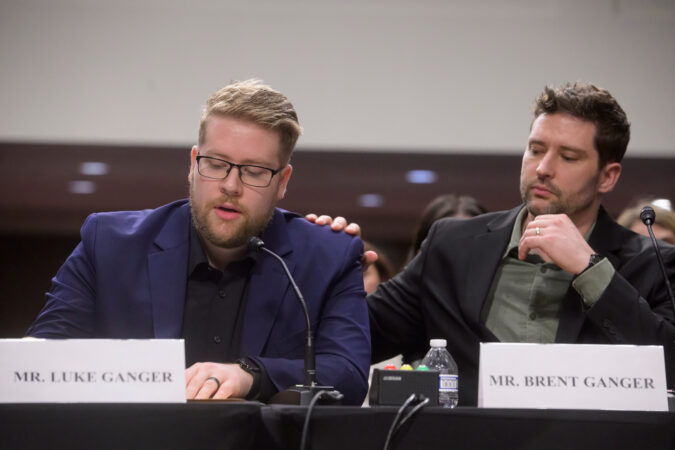
WASHINGTON — The brothers of Renee Good, one of two U.S. citizens killed by federal immigration officers in Minneapolis, called on Congress to do something about the violence on American streets as a result of immigration operations, warning Tuesday that the scenes playing out are “changing many lives, including ours, forever.”
Good, a 37-year-old mother of three, was shot and killed Jan. 7. Her death and that of another protester, Alex Pretti, just weeks later have sparked outrage across the country and calls to rein in immigration enforcement.
Brothers Luke and Brett Ganger spoke during a hearing held Tuesday by congressional Democrats to highlight use-of-force incidents by officers from the Department of Homeland Security as they arrest and deport immigrants. The mood was somber as the brothers spoke, often comforting each other as they talked and listened to others speaking.
Luke Ganger, speaking of the “deep distress” the family felt at losing their sister in “such a violent and unnecessary way,” didn’t specify what they wanted from Congress but painted his sister’s death as a turning point that should inspire change in operations such as those going on in Minneapolis.
“The completely surreal scenes taking place on the streets of Minneapolis are beyond explanation. This is not just a bad day, or a rough week, or isolated incidents,” he said. “These encounters with federal agents are changing the community and changing many lives, including ours, forever.”
The forum was put on by Sen. Richard Blumenthal (D., Conn.) and Rep. Robert Garcia (D., Calif.) to spotlight use-of-force complaints against Homeland Security officers tasked with carrying out President Donald Trump’s mass deportation agenda.
Trump administration officials said Good tried to run over an officer with her vehicle. State and local officials in Minneapolis, as well as protesters, have rejected that characterization.
The two brothers didn’t delve into the details of their sister’s death or what the administration has said about her. Instead, they spoke about her life.
Luke Ganger said the most important thing the brothers could do was to explain to those listening “what a beautiful American we have lost. A sister. A daughter. A mother. A partner and a friend.”
Brett Ganger shared some of the eulogy he had written for his sister’s funeral service. He compared her to dandelions that grow and bring beauty in unexpected places.
“She believed tomorrow could be better than today. She believed that kindness mattered. And she lived that belief,” he said.
The panel also heard from three other U.S. citizens who detailed their treatment by Homeland Security officers.
President Donald Trump is planning to install a statue of Christopher Columbus on White House grounds, according to three people with knowledge of the pending move,in his latest effort to remake the presidential campus and celebrate the famed and controversial explorer.
The statue is set to be located on the south side of the grounds, by E Street and north of the Ellipse, two of the people said, although they cautioned that plans could change. The three people spoke on the condition of anonymity to speak on private discussions. The piece is a reconstruction of a statue unveiled in Baltimore by then-President Ronald Reagan and dumped in the city’s harbor by protestersin 2020 as a racial reckoning swept the country.
A group of Italian American businessmen and politicians, working with local sculptors, obtained the destroyed pieces and rebuilt the statue with financial support from local charities and federal grant funding.
Bill Martin, an Italian American businessman who helped recover the remnants of the original sculpture and organize a campaign to rebuild it, said the statue is expected to be transferred from a warehouse on Maryland’s Eastern Shore to the Trump administration in coming weeks.
The White House declined to comment on its plans but praised the 15th-century explorer.
“In this White House, Christopher Columbus is a hero,” spokesman Davis Ingle said in a statement. “And he will continue to be honored as such by President Trump.”
As Columbus statues became something of a battleground in the broader tug-of-war over the nation’s history, Trump has repeatedly positioned himself as a staunch defender of a legacy he says has been dishonored by “left-wing arsonists.”
Trump included Columbus in a 2021 executive order of historical figures for his proposed National Garden of American Heroes, showcasing those who embody “the American spirit of daring and defiance, excellence and adventure, courage and confidence, loyalty and love.”
The Italian explorer is long celebrated for hisvoyage in 1492 to the Americas, opening up trade routes with Europe and setting the stage for colonization and enslavement. Some U.S. states now recognize Indigenous Peoples’ Day instead of Columbus Day; Joe Biden in 2021 became the first president to mark the holiday.
Trump campaigned in 2024 on promises to celebrate Columbus Day, and in October he signed a presidential proclamation to recognize Columbus as “the original American hero” and mark the annual holiday.
“We’re back, Italians. Okay? We love the Italians,” Trump said after signing the proclamation. He later said the move should help the Republican Party in the upcoming midterm elections.
“The Italian people are very happy about it. Remember when you go to the voting booths, I reinstated Columbus Day,” Trump told reporters at the White House last month.
Meanwhile, his administration pushes to scrub federal institutions of “corrosive ideology” recognizing historical sexism and racism and to leave its mark on the nation’s capital in a sweeping effort that has drawn complaints and lawsuits. The president rapidly demolished the East Wing annex last year to build his planned $400 million ballroom; paved over the Rose Garden to make room for a patio; and has imposed his vision on numerous internal fixtures and rooms, including the Lincoln Bathroom.
Historic preservationists have called on Trump to go through federal review panels before making further changes to the White House grounds.
In his first term, Trump decried the destruction of Columbus statues across the country. After administration officials learned about efforts in 2020 to rescue and preserve Baltimore’s statue, they asked to obtain it for possible installation on federal grounds, but the statue was not yet ready, said Martin, the businessman.
Martin estimated that he and his allies raised and spent more than $100,000 for their recovery and restoration efforts, which he said represented inspiration to the Italian American community.
“It’s not about Columbus ‘discovering America’ … it’s about the Italian immigrants who came here and looked to Columbus as a hero,” Martin said.
Nino Mangione, a Republican member of the Maryland House of Delegates, also was involved in efforts to recover the statue, and he praised Trump’s plan to install it at the White House.
“It is such an honor for the Italian American community,” Mangione wrote in an email. “This proves that gangs, thugs, and people of that ilk don’t control things by mob rule. … in America the people rule and our voices are heard.”
Columbus’s planned D.C. arrival comes on the heels of the administration’s reinstallation last October of a Confederate general that protesters had toppled and torched five years prior.
Albert Pike is now back on his plinth in a small federal park about a mile east of the White House, the only Confederate leader memorialized with an outdoor statue in Washington.
Pennsylvania Secretary of State Al Schmidt on Wednesday rejected President Donald Trump’s false claims about voter fraud in the stateas Trump targeted Philadelphia in his push to nationalize elections.
The state’s top election official said Trump’s proposal would violate the Constitution, which he noted clearly gives states exclusive authority to administer elections.
“Pennsylvania elections have never been more safe and secure,” said Schmidt, who served as Philadelphia’s Republican city commissioner in 2020, when the city was at the center of Trump’s conspiracy theories.
“Thousands of election officials — Democrats, Republicans, and Independents alike — across the Commonwealth’s 67 counties will continue to ensure we have free, fair, safe, and secure elections for the people of Pennsylvania,” he said in a statement.
Speaking to reporters Tuesday in the Oval Office, Trump cited Philadelphia, Detroit, and Atlanta as examples of where the federal government should run elections. He singled out three predominantly Black cities in swing states but offered no evidence of voter fraud or corruption to support his claims of a “rigged election.”
“Take a look at Detroit. Take a look at Pennsylvania, take a look at Philadelphia. You go take a look at Atlanta,” Trump said.“The federal government should get involved.”
Philadelphia has been a frequent target of Trump’s false claims of election fraud for several years, going back to his efforts to overturn his loss in the 2020 election. City and state officials have persistently pushed back on those claims, and there is no evidence that elections in the city have been anything but free and fair.
Trump is advocating for taking control of elections in 15 states, though his administration has not named which ones.
“The Republicans should say, ‘We want to take over,’” Trump said in December. “We should take over the voting, the voting in at least many — 15 places. The Republicans ought to nationalize the voting.”
But, Pennsylvania officials and experts noted, he lacks the power to do so unilaterally.
“The president has zero authority to order anything about elections,” said Marian Schneider, an election attorney who was Pennsylvania’s deputy secretary of elections during the 2016 election.
White House press secretary Karoline Leavitt claimed to reporters early Tuesday the president was referring to the SAVE Act, legislation proposed by House Republicans require citizens to show documents like a passport or driver’s license to register to vote.
But Trump didn’t mention the legislationTuesday.
Trump will face an uphill battle in nationalizing elections as even some Republicans in Congress are already pushing back. Senate Majority Leader John Thune (R., S.D.) told reporters Tuesday he disagreed with Trump on any attempt to nationalize elections, calling it “a constitutional issue.”
“I’m not in favor of federalizing elections,” Thune said.
Still, Trump’s comments raised alarm as his administration continues to sow doubt in the nation’s elections.
“This is clearly a case of Trump trying to push the boundaries of federal involvement in election administration because he has a problem with any checks on his power, democracy being one of them,” said Montgomery County Commissioner Neil Makhija, an attorney and a Democrat who chairs the Montgomery County Board of Elections.
Trump’s comments came a week after the FBI seized ballots and voting records from the 2020 election from the Fulton County election hub in Georgia. In a statement, Fulton County Commissioner Marvin Arrington Jr. said the countywill file a motion in the Northern District of Georgia challenging “the legality of the warrant and the seizure of sensitive election records, and force the government to return the ballots taken.”
Lisa Deeley, a Democratic member of the Philadelphia city commissioners, who oversee elections, accused Trump of trying to distract from federal agents killing two civilians in Minnesota last month.
“We all know the President’s playbook by now. His remarks on elections are an effort to change the conversation from the fact that the Federal Government is killing American citizens in Minneapolis,” Deeley said in a statement.
Trump has been making similar claims since 2016, when he erroneously blamed fraud for costing him the popular vote.During a debate with his 2020 opponent, Joe Biden, Trump said, “Bad things happen in Philadelphia, bad things,” viewed at the time as an attempt to sow doubt about the election results and mail voting during the peak of the COVID-19 pandemic.
Despite losing to Biden in Pennsylvania in 2020 by a little more than 80,000 votes, Trump has repeatedly claimed he actually won, lying about mail-in votes “created out of thin air” and falsely stating there were more votes than voters.
“Every single review of every single county in the commonwealth has come back within a very small difference, if any, of the results reported back in 2020,” Kathy Boockvar, who served as Pennsylvania’s secretary of state during the 2020 election, told The Inquirer in 2024.
Now, attorneys for the man charged in Kirk’s killing want a state judge to block such videos from being shown during a hearing scheduled for Tuesday. Defense attorneys also want to oust TV and still cameras from the courtroom, arguing that “highly biased” news outlets risk tainting the case.
Prosecutors, attorneys for news organizations, and Kirk’s widow urged state District Judge Tony Graf to keep the proceedings open.
“In the absence of transparency, speculation, misinformation, and conspiracy theories are likely to proliferate, eroding public confidence in the judicial process,” Erika Kirk’s attorney wrote in a Monday court filing. “Such an outcome serves neither the interests of justice nor those of Ms. Kirk.”
But legal experts say the defense team’s worries are real: Media coverage in high-profile cases such as Tyler Robinson’s can have a direct “biasing effect” on potential jurors, said Cornell Law School Professor Valerie Hans.
“There were videos about the killing, and pictures and analysis (and) the entire saga of how this particular defendant came to turn himself in,” said Hans, a leading expert on the jury system. “When jurors come to a trial with this kind of background information from the media, it shapes how they see the evidence that is presented in the courtroom.”
Prosecutors intend to seek the death penalty for Robinson, 22, who is charged with aggravated murder in the Sept. 10 shooting of Kirk on the Utah Valley University campus in Orem. An estimated 3,000 people attended the outdoor rally to hear Kirk, a co-founder of Turning Point USA, who helped mobilize young people to vote for President Donald Trump.
To secure a death sentence in Utah, prosecutors must demonstrate aggravating circumstances, such as that the crime was especially heinous or atrocious. That’s where the graphic videos could come into play.
Watching those videos might make people think, “’Yeah, this was especially heinous, atrocious or cruel,’” Hans said.
Further complicating efforts to ensure a fair trial is the political rhetoric swirling around Kirk, stemming from the role his organization played in Trump’s 2024 election. Even before Robinson’s arrest, people had jumped to conclusions about who the shooter could be and what kind of politics he espoused, said University of Utah law professor Teneille Brown.
“People are just projecting a lot of their own sense of what they think was going on, and that really creates concerns about whether they can be open to hearing the actual evidence that’s presented,” she said.
Robinson’s attorneys have ramped up claims of bias as the case has advanced, even accusing news outlets of using lip readers to deduce what the defendant is whispering to his attorneys during court hearings.
Fueling those concerns was a television camera operator who zoomed in on Robinson’s face as he talked to his attorneys during a Jan. 16 hearing. That violated courtroom orders, prompting the judge to stop filming of Robinson for the remainder of the hearing.
“Rather than being a beacon for truth and openness, the News Media have simply become a financial investor in this case,” defense attorneys wrote in a request for the court to seal some of their accusations of media bias. Unsealing those records, they added, “will simply generate even more views of the offending coverage, and more revenue for the News Media.”
Prosecutors acknowledged the intense public interest surrounding the case but said that does not permit the court to compromise on openness. They said the need for transparency transcends Robinson’s case.
“This case arose, and will remain, in the public eye. That reality favors greater transparency of case proceedings, not less,” Utah County prosecutors wrote in a court filing.
Defense attorneys are seeking to disqualify local prosecutors because the daughter of a deputy county attorney involved in the case attended the rally where Kirk was shot. The defense alleges that the relationship represents a conflict of interest.
In response, prosecutors said in a court filing that they could present videos at Tuesday’s hearing to demonstrate that the daughter was not a necessary witness since numerous other people recorded the shooting.
Among the videos, prosecutors wrote, is one that shows the bullet hitting Kirk, blood coming from his neck and Kirk falling from his chair.
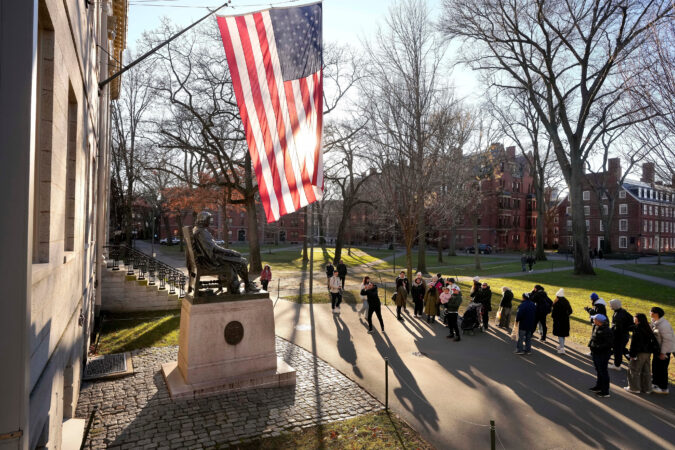
WASHINGTON — President Donald Trump is demanding a $1 billion payment from Harvard University to end his prolonged standoff with the Ivy League campus, doubling the amount he sought previously as both sides appear to move further from reaching a deal.
The president raised the stakes on social media Monday night, saying Harvard has been “behaving very badly.” He said the university must pay the government directly as part of any deal — something Harvard has opposed — and that his administration wants “nothing further to do” with Harvard in the future.
Trump’s comments on Truth Social came in response to a New York Times report saying the president had dropped his demand for a financial payment, lowering the bar for a deal. Trump denied he was backing down.
Harvard officials did not immediately comment.
Trump’s outburst appears to leave both sides firmly entrenched in a conflict that Trump previously said was nearing an end.
Last June, Trump said a deal was just days away and that Harvard had acted “extremely appropriately” during negotiations. He later said an agreement was being finalized that would require Harvard to put $500 million toward the creation of a “series of trade schools” rather than a payment to the government.
That deal appears to have fallen apart entirely. In his social media post, Trump said the trade school proposal had been turned down because it was “convoluted” and “wholly inadequate.”
Harvard has long been Trump’s top target in his administration’s campaign to bring the nation’s most prestigious universities to heel. His officials have cut billions of dollars in Harvard’s federal research funding and attempted to block it from enrolling foreign students after the campus rebuffed a series of government demands last April.
The White House has said it’s punishing Harvard for tolerating anti-Jewish bias on campus.
In a pair of lawsuits, Harvard said it’s being unfairly penalized for refusing to adopt the administration’s views. A federal judge agreed in December, reversing the funding cuts and calling the antisemitism argument a “smokescreen.”
Trump’s latest escalation comes as other parts of his higher education campaign are teetering.
Last fall, the White House invited nine universities to join a “compact” that offered funding priority in exchange for adopting Trump’s agenda. None of the schools accepted. In January, the administration abandoned its legal defense of an Education Department document threatening to cut schools’ funding over diversity, equity, and inclusion policies.
When he took office for his second term, Trump made it a priority to go after elite universities that he said had been overrun by liberal thinking and anti-Jewish bias. His officials have frozen huge sums of research funding, which colleges have come to rely on for scientific and medical research.
Several universities have reached agreements with the White House to restore funding. Some deals have included direct payments to the government, including $200 million from Columbia University. Brown University agreed to pay $50 million toward state workforce development groups.
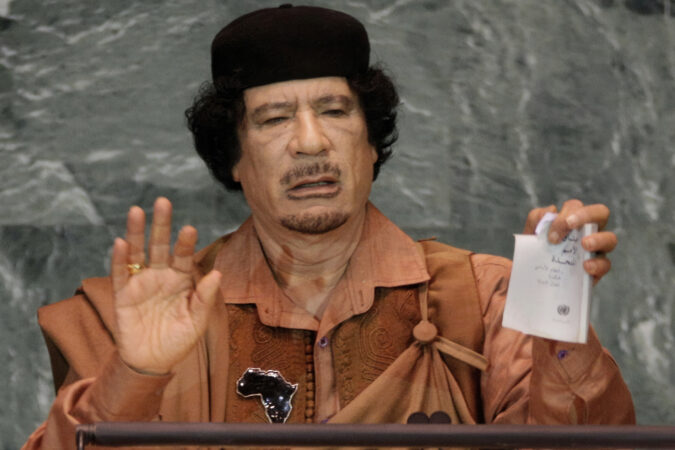
CAIRO — Seif al-Islam Gadhafi, the son and one-time heir apparent of Libya’s late dictator Moammar Gadhafi, was killed in the northern African country, Libyan officials said Tuesday.
The 53-year-old was killed in the town of Zintan, 85 miles southwest of the capital, Tripoli, according to two Libyan security officials in western Libya. The officials spoke on condition of anonymity because they were not authorized to brief the media.
Khaled al-Zaidi, a lawyer for Seif al-Islam, confirmed his death on Facebook, without providing details.
Abdullah Othman Abdurrahim, who represented Gadhafi in the U.N.-brokered political dialogue which aimed to resolve Libya’s long-running conflict, also announced his death on Facebook.
Abdurrahim, who leads his political team, didn’t provide further details, but Libyan news outlet Fawasel Media cited him as saying that armed men killed Seif al-Islam in his home. The outlet reported that prosecutors were investigating the killing.
Seif al-Islam’s political team later released a statement, saying that “four masked men” stormed his house and killed him in a “cowardly and treacherous assassination.” The statement said that he clashed with the assailants, who closed the CCTV cameras at the house “in a desperate attempt to conceal traces of their heinous crimes.”
Born in June 1972 in Tripoli, Seif al-Islam was the second-born son of the longtime dictator. He studied for a Ph.D. at the London School of Economics and was seen as the reformist face of the Gadhafi regime.
Moammar Gadhafi was toppled in a NATO-backed popular uprising in 2011 after more than 40 years in power. He was killed in October 2011 amid the ensuing fighting that would turn into a civil war. The country has since plunged into chaos and divided between rival armed groups and militias.
Seif al-Islam was captured by fighters in Zintan late in 2011 while attempting to flee to neighboring Niger. The fighters released him in June 2017 after one of Libya’s rival governments granted him amnesty. He had since lived in Zintan.
A Libyan court convicted him of inciting violence and murdering protesters and sentenced him to death in absentia in 2015. He was also wanted by the International Criminal Court on charges of crimes against humanity related to the 2011 uprising.
In November 2021, Seif al-Islam announced his candidacy in the country’s presidential election in a controversial move that was met with outcry from anti-Gadhafi political forces in western and eastern Libya.
The country’s High National Elections Committee disqualified him, but the election wasn’t held over disputes between rival administrations and armed groups that have ruled Libya since the bloody ouster of Moammar Gadhafi.
The U.S. House of Representatives Tuesday voted 217-214 to end the partial government shutdown on its fourth day, avoiding a repeat of last year’s 43-day standoff.
The House passed a five-bill package that includes funding the Departments of Defense, State, Transportation, Education, Labor, Treasury, Health and Human Services, and Housing and Urban Development.
Every House Democrat from Pennsylvania opposed the package. U.S. Rep. Scott Perry (R., York) was the lone Republican from the delegation to vote against it.
Among New Jersey Democrats, U.S. Rep. Josh Gottheimer (D., N.J.) was among the 21 members of the party who crossed the aisle to support the bill.
As part of the deal, the House also passed 10 days of funding for the Department of Homeland Security as negotiations for longer-term will continue amid national uproar over President Donald Trump’s immigration crackdown.
Funding for DHS has been the core reason behind the government shutdown after Democrats said they would not vote for an allocation to the department without reforms to federal immigration agents’ conduct after agents fatally shot two Americans in Minnesota last month.
U.S. Rep. Ryan Mackenzie (R., Lehigh), who voted for the deal, said he will participate in “ongoing conversations about achieving commonsense, bipartisan reforms of DHS operations.”
In the House, only a handful of Republicans voted against the package, providing House Speaker Mike Johnson with the support he needed from the party to pass the package in the narrowly divided chamber.
Meanwhile, the vast majority of Democrats voted against the bill, with immigration enforcement remaining a top issue.
"We are in a dangerous and deadly place," U.S. Rep. Madeleine Dean (D, Montgomery) said in a statement. Adding that with DHS receiving funding until Feb. 13, "ICE agents can continue their grotesque and thuggish behavior. Meaning Congress has only ten days to agree on reform,” she said.
Now that Trump has signed the bill, Republicans and Democrats still need to hammer out a long-term deal on DHS, which oversees ICE and the Border Patrol.
Retiring U.S. Rep. Dwight Evans (D., Philadelphia) said in a statement that he would “need to see much-needed guardrails and protections being put into law” before he can support more funding for the agencies.
DHS also oversees TSA and an extended funding lapse could affect air travel.
U.S. Rep. Brian Fitzpatrick, a moderate Republican from Bucks County, voted for the government funding package Tuesday and plans to work with Democrats in the bipartisan Problem Solvers Caucus on reforms to ICE, his spokesperson said.
Staff Contributors
Design, Development and Data: Sam Morris
Reporting: Fallon Roth
Editing: Bryan Lowry
(()=>{var te=(e,t)=>()=>(t||e((t={exports:{}}).exports,t),t.exports);var I=te(r=>{var ue={0:”Jan.”,1:”Feb.”,2:”March”,3:”April”,4:”May”,5:”June”,6:”July”,7:”Aug.”,8:”Sept.”,9:”Oct.”,10:”Nov.”,11:”Dec.”};function E(e){return e===void 0&&(e=new Date),ue[e.getMonth()]}var pe={0:”Jan”,1:”Feb”,2:”Mar”,3:”Apr”,4:”May”,5:”Jun”,6:”Jul”,7:”Aug”,8:”Sep”,9:”Oct”,10:”Nov”,11:”Dec”};function N(e){return e===void 0&&(e=new Date),pe[e.getMonth()]}function s(e){return e==null}function D(e){return typeof e==”number”&&isFinite(e)}function m(e){return D(e)&&Math.floor(e)===e}var fe=[“one”,”two”,”three”,”four”,”five”,”six”,”seven”,”eight”,”nine”],me=[“million”,”billion”,”trillion”,”quadrillion”,”quintillion”,”sextillion”,”septillion”,”octillion”,”nonillion”,”decillion”],$=[“th”,”st”,”nd”,”rd”,”th”,”th”,”th”,”th”,”th”,”th”],he=[11,12,13];function H(e){if(s(e))return””;var t=+e;return m(t)?he.indexOf(t%100)>-1?$[0]:$[t%10]:””}var ve=[“first”,”second”,”third”,”fourth”,”fifth”,”sixth”,”seventh”,”eighth”,”ninth”],ge=new RegExp(/s+([^s]*)s*$/);r.apdate=function(e){return e===void 0&&(e=new Date),E(e)+” “+e.getDate()+”, “+e.getFullYear()},r.apdatetab=function(e){return e===void 0&&(e=new Date),N(e)+” “+e.getDate()+”, “+e.getFullYear()},r.apmonth=E,r.apmonthtab=N,r.apnumber=function(e){if(s(e))return””;var t=+e;return m(t)?t=10?e.toString():fe[t-1]:e.toString()},r.aptime=function(e){e===void 0&&(e=new Date);var t,o,n=e.getHours(),i=e.getMinutes(),l=i===0;if(l){if(n===0)return”midnight”;if(n===12)return”noon”}return n0?n:12):(t=”p.m.”,o=n===12?n:n-12),l?o+” “+t:o+”:”+(i<10?"0"+i:i)+" "+t},r.capfirst=function(e){if(s(e))return"";var t=String(e);return""+t.charAt(0).toUpperCase()+t.slice(1)},r.intcomma=function(e){if(s(e))return"";var t,o=+e;return D(o)?((t=o.toString().split("."))[0]=t[0].replace(/B(?=(d{3})+(?!d))/g,","),t.join(".")):e.toString()},r.intword=function(e){if(s(e))return"";var t=+e;if(!m(t))return e.toString();var o=Math.abs(t);if(o<1e6)return e.toString();var n=Math.ceil(Math.log(o+1)/Math.LN10)-1,i=n-n%3,l=t/Math.pow(10,i);return(l=Math.round(10*l)/10)+" "+me[Math.floor(i/3)-2]},r.ordinal=function(e,t){if(t===void 0&&(t=!1),s(e))return"";var o=+e;return m(o)?t&&o{document.querySelectorAll(“.js-hover”).forEach(e=>{e.addEventListener(“click”,()=>{A(e)}),e.addEventListener(“mouseenter”,()=>{A(e)}),e.addEventListener(“mouseout”,()=>{M(e)})}),window.addEventListener(“scroll”,()=>{u!==null&&ne()})},ne=()=>{(u>window.scrollY+100||u{M(e)})},A=e=>{e.classList.add(“is-visible”),u=window.scrollY},M=e=>{e.classList.remove(“is-visible”),u=null},j={init:()=>{oe()}};var p,ie=(e,t)=>{p=p||window.PMNdataLayer,p?p.push({event:”misc_event”,eventAction:e,eventLabel:t}):window.location.hostname.includes(“localhost”)?console.log(“Analytics event:”,e,t,”(not actually being sent due to localhost)”):console.log(“Failed to push analytics event”,e,t)},f={event:(e,t)=>{ie(e,t)}};var re=!1,se=()=>{document.querySelectorAll(“.js-location”).forEach(e=>{e.querySelector(“.js-location-form”).addEventListener(“submit”,t=>{t.preventDefault(),ae(e)}),e.querySelector(“.js-location-street”).addEventListener(“keyup”,t=>{x(e)}),e.querySelector(“.js-location-street”).addEventListener(“change”,()=>{x(e)})})},ae=e=>{let t=new URLSearchParams;t.set(“street”,e.querySelector(“.js-location-street”).value),t.set(“city”,e.querySelector(“.js-location-city”).value||”Philadelphia”),t.set(“state”,e.querySelector(“.js-location-state”).value||”PA”),f.event(“search”,`submit | ${t.get(“street”)} ${t.get(“city”)}`),e.classList.remove(“is-inactive”,”is-error”,”is-found”),e.classList.add(“is-loading”),fetch(`https://inq-holme.herokuapp.com/geocode?${t.toString()}&fields=cd`).then(o=>{if(o.status>=200&&o.status{console.log(o),o.error?g(“Something has gone wrong. Please try again.”):ce(e,o)})},ce=(e,t)=>{let o=t.results[0].fields.congressional_districts,n=t.results[0].address_components;if(re=!0,t.results[0]&&t.results[0].accuracy>.9&&typeof o!==null&&n.number&&n.formatted_street){e.querySelector(“.js-location-street”).value=`${n.number} ${n.formatted_street}`,e.querySelector(“.js-location-city”).value=n.city;let K=t.results[0].fields.congressional_districts[0].district_number,Q=`${n.state.toLowerCase()}-${K}`,L=document.querySelector(`.js-politicans-member[data-id=”${Q}”]`),v=document.querySelector(“.js-politicans-with-location”),X=v.querySelector(`.js-politicians-members[data-id=”${L.dataset.voteCast.toLowerCase()}”]`),q=v.querySelectorAll(“.js-politicans-member”);q.length>0&&q.forEach(ee=>{ee.remove()}),X.append(L.cloneNode(!0)),v.classList.remove(“is-hidden”),T()}else g(“Address not found. Please try a different one.”)},x=e=>{e.querySelector(“.js-location-street”).value.length>3?e.classList.add(“is-valid”):e.classList.remove(“is-valid”)},T=()=>{document.querySelector(“.js-location”).classList.remove(“is-loading”)},g=e=>{let t=document.querySelector(“.js-location”);t.classList.remove(“is-loading”),t.classList.add(“is-error”),t.querySelector(“.js-error”).textContent=e,document.querySelector(“.js-politicans-with-location”).classList.add(“is-hidden”),T()},k={init:()=>{se()}};var le=()=>{document.querySelectorAll(“.js-politicans-expand”).forEach(e=>{e.addEventListener(“click”,()=>{de(e)})})},de=e=>{f.event(“click”,”open group”),e.closest(“.js-politicans-content”).classList.remove(“is-collapsed”),setTimeout(()=>{e.closest(“.js-politicans-content”).classList.add(“is-open”)},1e3)},P={init:()=>{le()}};var Ve=I();var C=()=>/Android|webOS|iPhone|iPad|iPod|BlackBerry|IEMobile|Opera Mini/i.test(navigator.userAgent);var y=(e,t=null,o=null)=>{o||(o=document.querySelector(“head”));let n=document.createElement(“script”);n.type=”text/javascript”,n.src=e,t&&(n.onload=t),o.appendChild(n)},F=()=>(window.PMNdataLayer?.[0]!==void 0&&window.PMNdataLayer[0])?.analytics?.user?.state===”Subscribed”,O=()=>{let t=(window.PMNdataLayer?.[0]!==void 0&&window.PMNdataLayer[0])?.analytics?.user?.state;return window.location.host.includes(“zzz-systest”)||window.location.host.includes(“pmn.arcpublishing.com”)||window.location.host.includes(“stage.fusion.inquirer.com”)||typeof t>”u”},z=()=>{let t=(window.PMNdataLayer?.[0]!==void 0&&window.PMNdataLayer[0])?.analytics?.user?.hasAdsFreeReading;return!!(t&&t==1)},w=()=>window.location.host.includes(“localhost”);var ye=()=>{z()&&document.querySelectorAll(“.js-ad”).forEach(t=>{t.classList.add(“is-hidden”)})},B={init:()=>{ye()}};var a,_,we=()=>{a=document.getElementById(“js-inno-toast”)},Se=e=>{if(!a)return;a.innerHTML=e,a.classList.add(“inno-toast–active”);let t=()=>{a.addEventListener(“transitionend”,be,{once:!0}),a.classList.remove(“inno-toast–active”)};clearTimeout(_),_=setTimeout(t,5e3)},be=()=>{a.innerHTML=””},c={init:()=>{we()},showToast:Se};var h,Le=async()=>new Promise(e=>{setTimeout(()=>{console.log(“simulating createShareLink for localhost”),e(“https://inquirer.com/interactives”),qe()},100)}),qe=()=>{let e=document.querySelector(“.js-gift-toast-receiver”);!e||!(e instanceof HTMLElement)||setTimeout(()=>{let t=e?.querySelector(“span”);t&&(t.innerHTML=”Gift link copied to clipboard“)},20)},Ae=()=>{let e=window.services?.createShareLink;e&&(h=e),w()&&(h=Le),h&&je()},Me=async e=>{let t=”text/plain”,o=async()=>{try{return await h(window.location.pathname)}catch{e.dataset.state=”error”,c.showToast(“Hmm, we couldn’t generate a gift link…”)}},n=new ClipboardItem({[t]:o()});await navigator.clipboard.write([n]).catch(i=>{console.log(i),c.showToast(“Couldn’t copy to clipboard, try again?”),e.dataset.state=”error”}),c.showToast(“Gift link copied to clipboard!”),e.dataset.state=”complete”},je=()=>{document.querySelectorAll(“.js-gift”).forEach(t=>{(F()||w()||O())&&t.classList.add(“is-available”)}),document.querySelectorAll(“.js-gift-button”).forEach(t=>{t instanceof HTMLButtonElement&&t.addEventListener(“click”,()=>{t.classList.contains(“disabled”)||(t.dataset.state=”loading”,Me(t),setTimeout(()=>{t.dataset.state=”ready”},2e3))})});let e=document.querySelector(“.js-gift-toast-receiver”);!e||!(e instanceof HTMLElement)||xe(e)},xe=e=>{new MutationObserver(o=>{for(let n of o){let i=[…n.addedNodes].at(0);if(!(i instanceof HTMLElement))return;c.showToast(i.outerHTML)}}).observe(e,{subtree:!0,childList:!0})},G={init:()=>{Ae()}};var Te=()=>{window.addEventListener(“message”,e=>{if(e.data[“datawrapper-height”]){let t=e.data[“datawrapper-height”];for(let o in t)document.querySelector(`#datawrapper-chart-${o}`).setAttribute(“height”,t[o])}})},ke=()=>{document.querySelectorAll(“.js-datawrapper-graphic”).forEach(e=>{y(`https://datawrapper.dwcdn.net/${e.dataset.id}/embed.js`,null,e)})},Pe=()=>{window.addEventListener(“message”,e=>{let t=e.data;document.querySelectorAll(`iframe[src*=”${t.id}”]`).forEach(n=>{n.style.height=`${t.height}px`})},!1)},Ee=()=>{document.querySelectorAll(“.js-pym-graphic”).forEach(e=>{if(typeof window{new window.pym.Parent(e.id,e.dataset.iframe)};typeof window.pym>”u”?y(“https://pym.nprapps.org/pym.v1.min.js”,t):t()}})},R={init:()=>{Te(),ke(),Ee(),Pe()}};var Ne=()=>{},J={init:()=>{Ne()}};var d,S,b=!0,$e=()=>{d=document.querySelectorAll(“.js-video-autoplay”)},He=()=>{window.addEventListener(“resize”,()=>{V()}),window.addEventListener(“scroll”,()=>{V()}),d.forEach(e=>{e.addEventListener(“volumechange”,t=>{e.muted!==b&&!C()&&(b=e.muted,De())})})},V=()=>{let e;d.forEach((t,o)=>{let n=t.getBoundingClientRect(),i=n.height/2;n.y-i&&(e=t)}),e!==S&&(S=e,d.forEach(t=>{t.pause()}),e?e.play():S=null)},De=()=>{d.forEach(e=>{e.muted=b})},W={init:()=>{$e(),d&&He()}};var Y={init:()=>{j.init?.(),k.init?.(),P.init?.(),B.init?.(),G.init?.(),R.init?.(),J.init?.(),W.init?.(),c.init?.()}};var Ie=()=>{},U={init:()=>{Ie()}};var Ce=document.querySelector(“.js-inno”),Z=()=>{Y.init(),U.init()};Ce?Z():new MutationObserver((t,o)=>{if(document.querySelector(“.js-inno”)){o.disconnect(),Z();return}}).observe(document,{attributes:!0,childList:!0,subtree:!0});})();
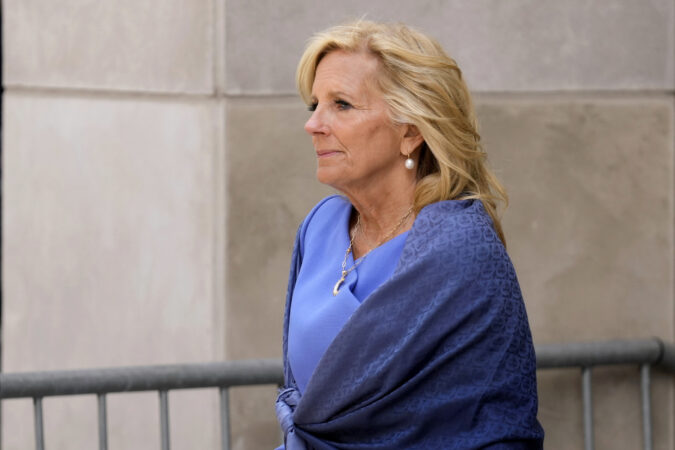
WILMINGTON — The first husband of former first lady Jill Biden has been charged with killing his wife at their Delaware home in late December, authorities announced in a news release Tuesday.
William Stevenson, 77, of Wilmington was married to Jill Biden from 1970 to 1975.
Caroline Harrison, the Delaware Attorney General’s spokesperson, confirmed in a phone call that Stevenson is the former husband of Jill Biden.
Jill Biden declined to comment, according to an e-mailed response from a spokesperson at the former president and first lady’s office.
Stevenson remains in jail after failing to post $500,000 bail after his arrest Monday on first-degree murder charges. He is charged with killing Linda Stevenson, 64, on Dec. 28.
Police were called to the home for a reported domestic dispute after 11 p.m. and found a woman unresponsive in the living room, according to a prior news release. Life-saving measures were unsuccessful.
She ran a bookkeeping business and was described as a family-oriented mother and grandmother and a Philadelphia Eagles fan, according to her obituary, which does not mention her husband.
Stevenson was charged in a grand jury indictment after a weekslong investigation by detectives in the Delaware Department of Justice.
It was not immediately clear if Stevenson has a lawyer. He founded a popular music venue in Newark called the Stone Balloon in the early 1970s.
Jill Biden married U.S. Sen. Joe Biden in 1977. He served as U.S. president from January 2021 to January 2025.
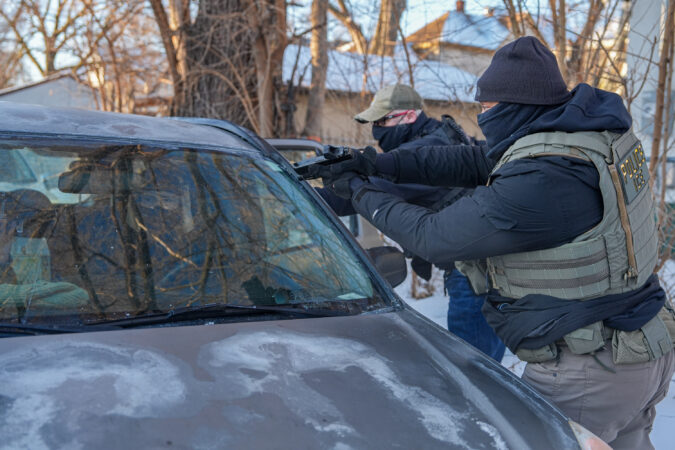
MINNEAPOLIS — Immigration officers with guns drawn arrested some activists who were trailing their vehicles on Tuesday in Minneapolis, a sign that tensions have not eased since the departure last week of a high-profile commander.
At least one person who had an anti-ICE message on clothing was handcuffed while face-down on the ground. An Associated Press photographer witnessed the arrests.
Meanwhile, Tuesday was the deadline for the Minnesota governor, state attorney general and the mayors of Minneapolis and St. Paul to produce documents to a federal grand jury in response to a Justice Department request for records of any effort to stifle the Trump administration’s immigration crackdown. Officials have denounced it as a bullying tactic.
Federal agents in the Twin Cities lately have been conducting more targeted immigration arrests at homes and neighborhoods, rather than staging in parking lots. The convoys have been harder to find and less aggressive. Alerts in activist group chats have been more about sightings than immigration-related detainments.
Several cars followed officers through south Minneapolis after there were reports of them knocking at homes. Officers stopped their vehicles and ordered activists to come out of a car at gunpoint. Agents told reporters at the scene to stay back and threatened to use pepper spray.
There was no immediate response to a request for comment from the Department of Homeland Security and Immigration and Customs Enforcement.
A federal judge last month put limits on how officers treat motorists who are following them but not obstructing their operations. Safely following agents “at an appropriate distance does not, by itself, create reasonable suspicion to justify a vehicle stop,” the judge said. An appeals court, however, set the order aside.
Border Patrol commander Greg Bovino, who was leading an immigration crackdown in Minneapolis and other big U.S. cities, left town last week, shortly after the fatal shooting of Alex Pretti, the second local killing of a U.S. citizen in January.
Trump administration border czar Tom Homan was dispatched to Minnesota instead. He warned that protesters could face consequences if they interfere with officers.
Grand jury seeks communications, records
Minneapolis Mayor Jacob Frey’s office said it was complying with a grand jury subpoena requesting documents about the city’s response to Operation Metro Surge, but it released no other details.
“We have done nothing wrong and have nothing to hide, but when the federal government weaponizes the criminal justice system against political opponents, it’s important to stand up and fight back,” spokesperson Ally Peters said.
Other state and local offices run by Democrats were given similar requests. People familiar with the matter have told the AP that the subpoenas are related to an investigation into whether Minnesota officials obstructed enforcement through public statements.
No bond for man in Omar incident
Elsewhere, a man charged with squirting apple cider vinegar on Democratic U.S. Rep. Ilhan Omar will remain in jail. U.S. Magistrate Judge David Schultz granted a federal prosecutor’s request to deny bond to Anthony Kazmierczak.
“We simply cannot have protesters and people — whatever side of the aisle they’re on — running up to representatives who are conducting official business, and holding town halls, and assaulting them,” Assistant U.S. Attorney Benjamin Bejar said Tuesday.
Defense attorney John Fossum said the vinegar posed a low risk to Omar. He said Kazmierczak’s health problems weren’t being properly addressed in jail and that his release would be appropriate.