Category: Nation & World

  • Temple student arrested for anti-ICE protest at Minnesota church in case involving journalist Don Lemon

    Temple student arrested for anti-ICE protest at Minnesota church in case involving journalist Don Lemon

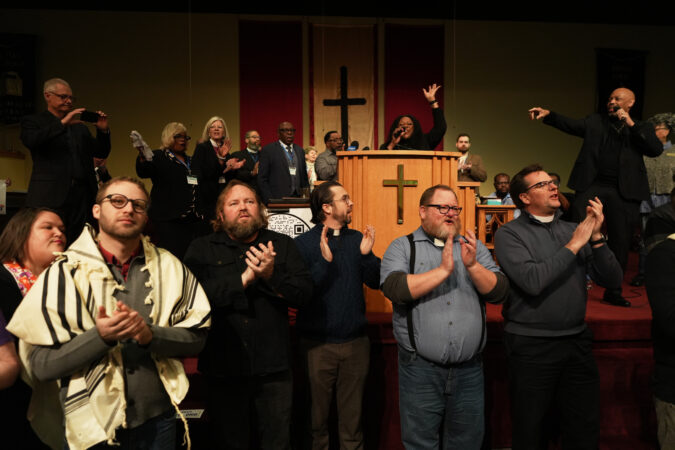
    A 21-year-old Temple University student was arrested Monday on charges that he conspired with nine other people, including journalist Don Lemon, to interfere with the First Amendment rights of worshipers during a Jan. 18 anti-ICE protest at a church in St. Paul, Minn.

    Jerome Richardson, 21, a senior at Temple who is a native of St. Paul, turned himself in Monday morning to federal authorities in Philadelphia, according to a post on a GoFundMe page created to pay for his legal defense. A photo was posted showing Richardson entering the United States Custom House with several federal law enforcement officers apparently waiting for him at the entrance.

    The arrests of Richardson and Ian Davis Austin, an Army veteran from Montgomery County, were announced at 9:10 a.m. on X by Attorney General Pam Bondi. Austin was arrested Friday.

    “If you riot in a place of worship, we WILL find you,” Bondi wrote. “We have made two more arrests in connection with the coordinated attack on Cities Church in St. Paul, Minnesota: Ian Davis Austin and Jerome Deangelo Richardson.”

    The arrest of Don Lemon was made public on Friday.

    The protesters went to Cities Church because a pastor there is also a U.S. Immigration and Customs Enforcement official.

    Lemon entered the church while livestreaming and said repeatedly: “I’m not here as an activist. I’m here as a journalist.” He described the scene before him, and interviewed churchgoers and demonstrators.

    A magistrate judge had rejected prosecutors’ initial bid to charge the veteran journalist. Lemon was charged, as were Richardson and seven others, by grand jury indictment last Thursday.

    The indictment described the protest as a “coordinated takeover-style attack” on the church that caused people to flee in fear. Protesters chanted “ICE out!” and “Hands up! Don’t shoot!” The indictment quotes Lemon, who in the moment described the scene as “traumatic and uncomfortable.”

    Before his arrest, Richardson shared a video online in which he said he feared for his safety and needed help to pay legal bills.

    Richardson said he assisted Lemon “by helping with logistics and connecting him with local contacts.”

    “Don was reporting on the situation,” Richardson said, adding that he was proud to help.

    “As a consequence of this support, I am now being targeted by Trump and the federal administration,” Richardson said, adding that he was proud of the other defendants in the case.

    “This is the price of being unapologetic about humanity and love of Christ,” he said.

    Richardson, who traced his activism to the murder of George Floyd in 2020, said he still hoped to complete his degree and graduate from Temple in May.

    In a statement, Temple University said it was aware of media reports about the arrest of a student.

    “We understand that the circumstances surrounding this matter are developing. Out of respect for the privacy of the student and the ongoing legal process, the University will not comment on the specifics,” the statement says.

    “As we’ve shared previously, we deeply value the First Amendment, including the rights of free speech, a free press, and the freedom to exercise religion,” the statement says. “We encourage and educate our students to engage thoughtfully and lawfully to advocate for their beliefs and values, raise awareness and contribute to constructive dialogue.”

    This article contains information from the Associated Press.

  • Every Homeland Security officer in Minneapolis is now being issued a body-worn camera, Noem says

    Every Homeland Security officer in Minneapolis is now being issued a body-worn camera, Noem says

    WASHINGTON — Every Homeland Security officer on the ground in Minneapolis, including those from Immigration and Customs Enforcement, will be immediately issued body-worn cameras, Secretary Kristi Noem said Monday, in the latest fallout after the shooting deaths of two U.S. citizens at the hands of federal agents.

    Noem said the body-worn camera program is being expanded nationwide as funding becomes available.

    “We will rapidly acquire and deploy body cameras to DHS law enforcement across the country,” Noem said in a social media post on X.

    The news of the body cameras comes as Minneapolis has been the site of intense scrutiny over the conduct of federal officers after two U.S. citizens protesting immigration enforcement activities in the city were shot and killed.

    It is the latest effort by the Trump administration to alleviate tensions after the shootings and show it is responding to calls for accountability.

    In the immediate hours after ICU nurse Alex Pretti’s death, Noem went on the offensive, saying several times that Pretti “came with a weapon and dozens of rounds of ammunition and attacked” officers, who took action to “defend their lives.” Other administration officials painted a similar picture.

    Multiple videos that emerged of the shooting contradicted that claim, showing Pretti had only his mobile phone in his hand as officers tackled him to the ground, with one removing a handgun from the back of his pants as another officer began firing shots into his back.

    Homeland Security has said that at least four Customs and Border Protection officers on the scene when Pretti was shot were wearing body cameras. The body camera footage from Pretti’s shooting has not been made public.

    The department has not responded to repeated questions about whether any of the ICE officers on the scene of the killing of Renee Good earlier in January were wearing the cameras.

    The shootings, and the narrative coming from some in the administration, triggered outrage and demands for accountability, including among some Republicans.

    President Donald Trump sent his border czar Tom Homan to Minneapolis to take control of operations there, displacing Border Patrol commander Gregory Bovino, who has become a lightning rod for criticism in the various operations he’s joined in cities like Chicago and Los Angeles.

    The Justice Department has also opened a federal civil rights investigation into Pretti’s shooting, which it did not do in the case of Good.

    There have been increased calls by critics of Homeland Security to require all of the department’s officers who are responsible for immigration enforcement to wear body cameras.

    President Joe Biden ordered in 2022 that federal law enforcement officers wear body cameras as part of an executive order that included other policing reform measures. Trump had rescinded that directive after starting his second term.

    Noem’s move comes after Trump over the weekend endorsed the idea of body cameras for immigration officers.

    After Noem’s announcement Monday, Trump said the decision was up to the secretary but said that he thought it was generally good for law enforcement to wear cameras.

    “They generally tend to be good for law enforcement because people can’t lie about what’s happening,” he said in the Oval Office Monday, adding “If she wants to do the camera thing, that’s OK with me.”

  • In Venezuela, change is coming fast. Relief is taking more time.

    In Venezuela, change is coming fast. Relief is taking more time.

    CARACAS, Venezuela — American oil traders are poised to descend on Venezuela’s capital — and may soon be able to fly here direct. The Trump administration is preparing to reopen the U.S. Embassy. The socialist government here has made the nationalized oil industry friendlier for foreign investors, and the U.S. Treasury has eased sanctions to allow U.S. companies to buy and sell Venezuelan oil.

    The dizzying changes would have seemed unthinkable just a month ago, when U.S. forces were surrounding the country, seizing Venezuelan oil, and menacing the authoritarian government.

    But the U.S. capture Jan. 3 of President Nicolás Maduro, and President Donald Trump’s vow to exploit the world’s largest proven oil reserves, has fundamentally transformed relations between the two countries. The administration is working with Delcy Rodríguez, Maduro’s vice president, rather than María Corina Machado, the popular opposition leader whom Trump previously championed.

    The economic outlook for Venezuela has improved dramatically; after years of economic collapse, rising unemployment, and soaring inflation, some economists say it’s not far-fetched to imagine double-digit growth this year.

    In the latest surprise move, Rodríguez on Friday proposed a general amnesty for hundreds of political prisoners, some of whom have been held for decades — and promised to repurpose the infamous Helicoide prison, an alleged torture center.

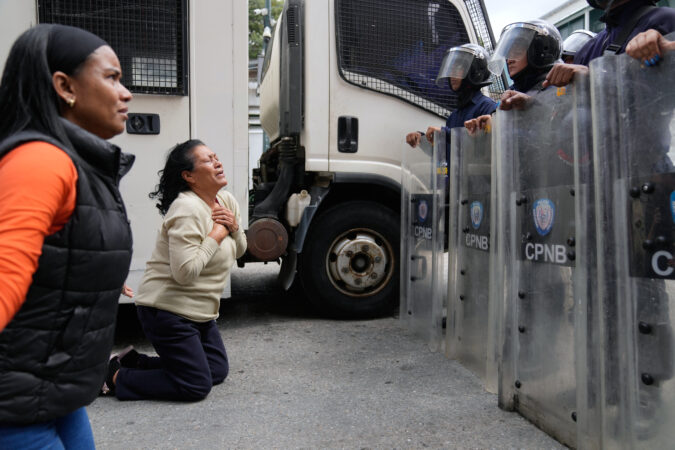
    Human rights defenders have expressed cautious optimism. But in Caracas, hope is colliding with reality. For many Venezuelans, the changes have done little to ease the daily pressure of paying for basic goods or fears of being detained by police.

    Rodríguez, Maduro’s vice president, has yet to release details of elections or power-sharing agreements. The individuals who ran the country’s feared security forces under Maduro remain in power. It’s still unsafe for opposition leader Machado, the recipient of the 2025 Nobel Peace Prize, to return home.

    With the government’s apparatus for repression fully intact, Venezuelans say, real change feels far away.

    “I don’t know if the politics are changing, but my pocket is the same,” said Argenis Pérez, who parks cars at a restaurant in eastern Caracas. Waking at 4 a.m. each morning to take two buses from his home in working-class Avenida Victoria to his job, he earns $120 a month, paid in bolivars and in bags of food.

    “I don’t buy an entire grocery list,” he said. “I just buy the basics.”

    He was interrupted by cars approaching the restaurant — luxury SUVs that sell for well over $100,000. What did he think about the changes?

    “Well, you know … we can’t speak about that,” he said. “I don’t know what will happen, but I need to work.”

    After weeks in which the United States was boarding tankers and seizing Venezuelan oil, the economy is experiencing some relief. The United States has released $300 million from oil sales to pay government workers. The injection has helped stabilize Venezuela’s foreign exchange rate and could help reduce retail prices, economist Francisco Rodríguez said.

    It’s unclear how the U.S. will manage the proceeds from oil sales and how the money will flow into the Venezuelan economy. The government has not released economic statistics for years.

    The government-controlled National Assembly voted unanimously Thursday to make Petróleos de Venezuela and other state-run enterprises more attractive to foreign investors. The U.S. Treasury then announced a general license for U.S. companies to buy, sell, transport, and refine Venezuelan oil.

    Alejandro Grisanti, an economist with the Caracas consulting firm Ecoanalítica, said dialogue between the government and the private sector also has improved. “I think 2026 will be a good year,” he said. Ecoanalítica predicts oil production will grow by at least 200,000 barrels per day, more bolivars will circulate, and banks can offer more credit.

    The country is still recovering from cumulative inflation, which in the first three weeks of January was 15%. “But for that to actually improve the purchasing power of the average Venezuelan,” Grisanti said, “that will take six to eight months.”

    “There is still a lot of uncertainty,” he said. The recent inflation, along with messaging from the government that Maduro’s allies remain in control, means Venezuelans “may not feel the profound change that is taking place.”

    Under Rodríguez, the regime already has released hundreds of political prisoners, but security forces continue to detain Venezuelans arbitrarily, human rights advocates say. About 50 detainees have disappeared within the prison system, and officials have refused to say where they are or what’s happened to them.

    Some prisoners have been released without notice. One Venezuelan political prisoner, who had been in the Rodeo 1 prison for more than a year, was suddenly given a haircut, masked, and put on a bus with other detainees, according to his sister, who spoke on the condition of anonymity to discuss sensitive details about her brother’s case. The detainees were taken to an unfamiliar location in Caracas and directed to leave the bus. Their families weren’t alerted.

    The man walked for two hours to the home of a relative, and asked to use a phone to call other family members who had been waiting outside the prison in hopes he would be released.

    In the weeks since his release, his family says, he has said nothing of what he experienced in the prison. He remains in Venezuela, where he is prohibited from speaking publicly about his detention.

    Many of the recently released prisoners have been surveilled, threatened, and warned not to speak out, according to Orlando Moreno, a human rights coordinator for Vente Venezuela, Machado’s political party.

    “This is not true freedom. It is freedom with chains,” Moreno said. “They will let you out of your cell, but you are not free.”

    But some Venezuelans appear willing to take on more risk, according to Andreina Baduel, director of the Committee of Family and Friends for the Freedom of Political Prisoners. Many have come forward for the first time to report cases of relatives imprisoned long ago. A protest outside the attorney general’s office recently drew twice the usual number of demonstrators, she said.

    “We now know that we are not alone in this struggle,” Baduel said.

    Some opposition politicians are emerging from hiding and speaking publicly for the first time in months or even years. And within the government-controlled National Assembly, some of the few opposition lawmakers allowed to hold seats have sensed more open dialogue.

    “The government has acknowledged its vulnerability,” opposition lawmaker Antonio Ecarri said. “There has been more respect and cordiality.”

    One important change is the inclusion of some government critics on a new peace commission.

    “Venezuela needs to find itself. We’ve become accustomed to living separately and in tribes. It’s been many years of conflict,” commission member Michael Penfold, a professor at the Institute of Advanced Studies in Administration in Caracas, wrote on X. “Let’s hope that in this process, Venezuelans don’t become the main obstacle.”

    Opposition lawmaker Henrique Capriles, who ran against Maduro twice, called on the regime to release plans for an election. “So far, all we have are announcements of investment in the oil sector,” he said. The government must increase salaries and pensions, he said, to give Venezuelans a sense that their lives are, in fact, improving.

    “We Venezuelans have been very patient, and we know it’s not quick,” he said. “Urgent things need to be done, but democracy cannot be detached from building Venezuela’s future.”

  • Son of Norway’s crown princess arrested on new allegations ahead of his rape trial

    Son of Norway’s crown princess arrested on new allegations ahead of his rape trial

    OSLO, Norway — The eldest son of Norway’s crown princess has been arrested over new allegations, police said Monday, a day ahead of his trial on charges including rape in a case that has been an embarrassment to the royal family.

    Marius Borg Høiby was arrested on Sunday evening and is accused of assault, threats with a knife, and violation of a restraining order, police said in a statement. Norwegian media quoted police as saying the offenses allegedly took place over the weekend.

    On Monday, the Oslo district court granted their request to keep him in detention for up to four weeks on the grounds of a risk of reoffending.

    Defense lawyer Petar Sekulic told the Associated Press that the arrest followed an alleged “incident” involving another person on Sunday. He declined to give details, but said Høiby contests his detention and his legal team was considering an appeal as soon as he and the other person can provide statements to police.

    With his trial opening on Tuesday, police won’t be able to hear those statements any sooner than this weekend, when the proceedings take a scheduled break, Sekulic said.

    On Tuesday, Høiby faces an indictment including 38 counts at the Oslo court. They include rape, abuse in a close relationship against one former partner, acts of violence against another, and transporting 7.7 pounds of marijuana. Other charges include making death threats and traffic violations.

    Høiby has been under scrutiny since he was repeatedly arrested in 2024 on various allegations of wrongdoing. He was indicted in August, but had been free pending trial until Sunday.

    Høiby is the son of Crown Princess Mette-Marit from a previous relationship and stepson of the heir to the throne, Crown Prince Haakon. He has no royal title or official duties.

    The indictment centers on four alleged rapes between 2018 and November 2024; alleged violence and threats against a former partner between the summer of 2022 and the fall of 2023; and two alleged acts of violence against a subsequent partner, along with violations of a restraining order.

    Høiby’s defense team has said that he “denies all charges of sexual abuse, as well as the majority of the charges regarding violence.”

    Haakon said last week that he and Mette-Marit don’t plan to attend court and that the royal house doesn’t intend to comment during the proceedings, which are scheduled to last until March 19.

    He emphasized that Høiby isn’t part of the royal house and that, as a citizen of Norway, he has the same responsibilities and rights as all others. He said that he’s confident that all concerned will make the trial as orderly, proper, and fair as possible.

    While the royals are generally popular in Norway, the Høiby case has cast a shadow on their image. And the trial is opening just as his mother faces renewed scrutiny over her contacts with Jeffrey Epstein.

    Friday’s release of the latest batch of documents from the Epstein files shone an unflattering spotlight on Mette-Marit. They contained several hundred mentions of the crown princess, who already said in 2019 that she regretted having had contact with Epstein, Norwegian media reported.

    The newly released documents, which include email exchanges with Epstein, showed that Mette-Marit borrowed a property of Epstein’s in Palm Beach, Fla., for several days in early 2013, and the royal house confirmed that she did so through a mutual friend, broadcaster NRK reported.

    In a statement emailed by the royal house, Mette-Marit said that she “must take responsibility for not having investigated Epstein’s background more thoroughly, and for not realizing sooner what kind of person he was.”

    “I deeply regret this, and it is a responsibility I must bear. I showed poor judgment and regret having had any contact with Epstein at all,” she said. “It is simply embarrassing.”

    She expressed her “deep sympathy and solidarity” with the victims of Epstein’s abuse.

    Mette-Marit’s contacts with Epstein and the Høiby trial aren’t the only source of negative publicity for Norway’s royals. The business ventures of Haakon’s sister, Princess Märtha Louise, have drawn repeated criticism. In 2024, around the same time Høiby’s case was making news, she married an American self-professed shaman, Durek Verrett.

  • ‘Today’ show host Savannah Guthrie’s mother is missing in Arizona and authorities suspect crime

    ‘Today’ show host Savannah Guthrie’s mother is missing in Arizona and authorities suspect crime

    The disappearance of the 84-year-old mother of Today show host Savannah Guthrie over the weekend is being investigated as a crime based on what authorities saw at her home, an Arizona sheriff said Monday.

    Speaking during a news conference, Pima County Sheriff Chris Nanos said there are signs at the home indicating Nancy Guthrie did not leave on her own.

    “I need this community to step up and start giving us some calls,” Nanos said.

    Asked to explain why investigators believe it’s a crime scene, Nanos said Nancy Guthrie has limited mobility and said there were other things that indicated she did not leave on her own, but declined to further elaborate.

    The sheriff said Nancy Guthrie, who lived alone, was of sound mind. “This is not dementia related. She’s as sharp as a tack. The family wants everyone to know that this isn’t someone who just wandered off,” Nanos said. He said she needs her daily medication.

    Nanos said at a news conference Sunday night that Nancy Guthrie was last seen around 9:30 p.m. Saturday at her home in the Tucson area. Her family reported her missing around noon Sunday.

    Nanos said a family member received a call from someone at church saying Nancy Guthrie wasn’t there, leading family to search for her at her home and then calling 911.

    Searchers were using drones and search dogs to look for Nancy Guthrie, Nanos said. Search and rescue teams were supported by volunteers and Border Patrol and the homicide team was also involved, he said. It is not standard for the homicide team to get involved in such cases, Nanos said.

    “This one stood out because of what was described to us at the scene and what we located just looking at the scene,” Nanos said Sunday. He was not ruling out foul play.

    On Monday morning, Nanos said search crews worked hard but have since been pulled back. “We don’t see this as a search mission so much as it is a crime scene,” the sheriff said.

    Savannah Guthrie issued a statement on Monday, NBC’s Today show reported.

    “On behalf of our family, I want to thank everyone for the thoughts, prayers and messages of support,” she said. “Right now, our focus remains on the safe return of our dear Nancy.”

    Today opened Monday’s show with the disappearance of the co-anchor’s mother, but Savannah Guthrie was not at the anchor’s desk. Nanos said during the Monday news conference that Savannah Guthrie is in Arizona. Savannah Guthrie grew up in Tucson and graduated from the University of Arizona.

    Nancy Guthrie appeared in a November 2025 story her daughter did about her hometown. Over a meal, Savannah asked her mother what made the family want to plant roots in Tucson in the 1970s.

    “It’s so wonderful. Just the air, the quality of life,” Nancy said. “It’s laid back and gentle.”

    She said she likes to see the javelinas, a piglike wild animal, eat her plants.

  • Justice Department says it’s taken down Epstein-related files that may have had victim information

    Justice Department says it’s taken down Epstein-related files that may have had victim information

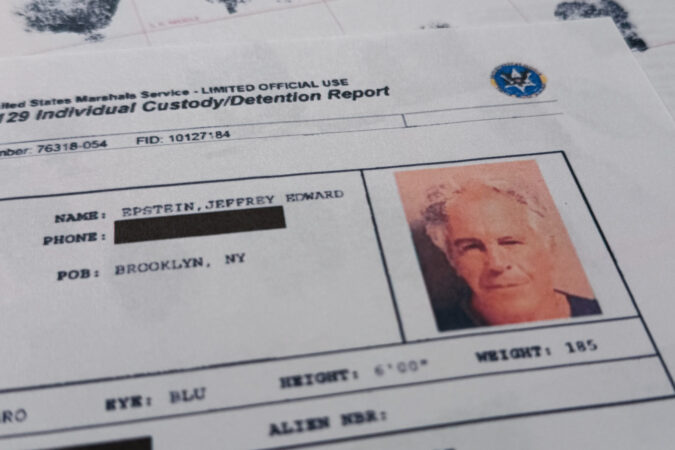
    WASHINGTON — The Justice Department said Monday it had withdrawn several thousand documents and “media” related to disgraced financier Jeffrey Epstein after lawyers complained to a New York judge that the lives of nearly 100 victims had been “turned upside down” by sloppy redactions in the government’s latest release of Epstein-related materials.

    The department blamed the release of sensitive information that drew an outcry from victims and their lawyers on mistakes that were “technical or human error.”

    In a letter to the New York judges overseeing the sex trafficking cases brought against Epstein and confidant Ghislaine Maxwell, U.S. Attorney Jay Clayton wrote that the department had taken down nearly all materials identified by victims or their lawyers, along with a “substantial number” of documents identified independently by the government.

    Clayton, who is based in Manhattan, said the department has “iteratively revised its protocols for addressing flagging documents” after victims and their lawyers requested changes to the process for review and redaction of posted records.

    He wrote that documents are promptly pulled down from the public website when victims flag a concern that something should be redacted. He said the concern is then evaluated before a redacted version of the document can be reposted, “ideally within 24 to 36 hours.”

    Clayton’s letter came in response to a letter sent Sunday to Judge Richard M. Berman from two lawyers for Epstein victims who had sought “immediate judicial intervention” because of what they described as thousands of instances when the government had failed to redact names and other personally identifying information.

    The judge scheduled a conference for Wednesday, saying the lawyers could invite their clients and that he understood the concern of the lawyers and the urgency but also added: “I am not certain how helpful I can be.”

    He also encouraged the lawyers, Brittany Henderson and Brad Edwards, to “continue to resolve open issues in good faith.”

    In their letter to Berman, the lawyers included comments from eight women, including one who wrote that the records’ release was “life threatening” and another who said she’d gotten death threats after 51 entries included her private banking information, forcing her to try to shut down her credit cards and accounts.

    After Epstein took his own life in August 2019, Berman held a hearing in Manhattan federal court and allowed his accusers to speak. Berman, who presided over the sex trafficking case against Epstein, put the Sunday letter on the public docket on Monday.

    Also Monday, a section of the Justice Department’s Epstein files website that had contained public court records from Epstein and Maxwell’s criminal cases and civil lawsuits was no longer functioning.

    A message seeking comment on the website issue was left for the Justice Department.

    Deputy Attorney General Todd Blanche said in an interview Sunday on ABC’s This Week that there have been sporadic errors in redacting, or blacking out, sensitive information but that the Justice Department has tried to work quickly to address them.

    “Every time we hear from a victim or their lawyer that they believe that their name was not properly redacted, we immediately rectified that. And the numbers we’re talking about, just so the American people understand, we’re talking about .001 percent of all the materials,” Blanche said.

    The effect of errors in the document redactions was highlighted Monday morning at a sex trafficking trial in New York federal court when lawyers for two high-end real estate brokers and their brother asked Judge Valerie E. Caproni for a mistrial because of documents that were made public without necessary redactions.

    Deanna Paul, a defense lawyer at the trial of Tal, Oren and Alon Alexander, said the “government through its own conduct has destroyed the possibility of a fair trial in this case” after the names of the brothers were included in several documents released on Friday. The brothers have pleaded not guilty to drugging and raping multiple girls and women from 2008 to 2021.

    Paul said the Alexander brothers had now been “branded” with the “most toxic association.”

    The judge tentatively rejected the mistrial request but still confronted a prosecutor, asking: “Government, really?”

    “Yes, I understand where the court’s coming from,” replied Assistant U.S. Attorney Elizabeth Espinosa.

    She said she wasn’t sure how the documents were “caught up in the universe of documents” related to Epstein but confirmed that at least one of the documents that mention the Alexander brothers “should have been properly redacted” and she said the documents had been withdrawn from public circulation.

    As she spoke, Espinosa also gave an update on the general release of Epstein-related documents by the Justice Department, saying that the remaining documents to be released were “primarily related to civil litigation” that might require a judge’s approval to be made public.

  • Judge blocks Trump administration from ending protected status for Haitians in the U.S.

    Judge blocks Trump administration from ending protected status for Haitians in the U.S.

    SPRINGFIELD, Ohio — A federal judge on Monday blocked the Trump administration from ending temporary protections that have allowed roughly 350,000 Haitians to live and work in the U.S.

    U.S. District Judge Ana Reyes in Washington granted to pause the termination of temporary protected status for Haitians while a lawsuit challenging it proceeds. The TPS designation for people from the Caribbean island country was scheduled to end on Feb. 3.

    “During the stay, the Termination shall be null, void, and of no legal effect,” the judge said in her two-page order.

    Temporary Protected Status can be granted by the Homeland Security secretary if conditions in home countries are deemed unsafe for return due to a natural disaster, political instability, or other dangers. While it grants TPS holders the right to live and work in the U.S., it does not provide a legal pathway to citizenship.

    The Trump administration has aggressively sought to remove the protection, making more people eligible for deportation. The moves are part of the administration’s wider mass deportation effort.

    In addition to the migrants from Haiti, Homeland Security Secretary Kristi Noem has terminated protections for about 600,000 Venezuelans; 60,000 people from Honduras, Nicaragua, and Nepal; more than 160,000 Ukrainians; and thousands of people from Afghanistan and Cameroon. Some have pending lawsuits in federal courts.

    Haiti’s TPS status was initially activated in 2010 after a catastrophic earthquake and has been extended multiple times. The country is racked by gang violence that has displaced hundreds of thousands of people.

    “If the termination stands, people will almost certainly die,” attorneys for Haitian TPS holders wrote in a court filing in December. “Some will likely be killed, others will likely die from disease, and yet others will likely starve to death.”

    They say the decision to end Haiti’s status was motivated by racial animus, and Noem failed to consider whether there was an ongoing armed conflict that would pose a “serious threat” to personal safety, as required by law.

    The Department of Homeland Security said conditions in Haiti had improved. In a court filing in December, attorneys for the administration said the plaintiffs’ claims of racial animus were based on statements “taken out of context, often from other speakers and from years ago, and without direct links to the Secretary’s determinations.”

    “Rather, Secretary Noem provided reasoned, facially sufficient explanations for her determinations.” they said.

    A government notice in November announcing the termination said there had been some positive developments for Haiti, including authorization of a new, multinational force to combat gangs. Noem determined allowing Haitians to remain in the U.S. was against the national interest, the notice said.

  • Inside Musk’s bet to hook users that turned Grok into a porn generator

    Inside Musk’s bet to hook users that turned Grok into a porn generator

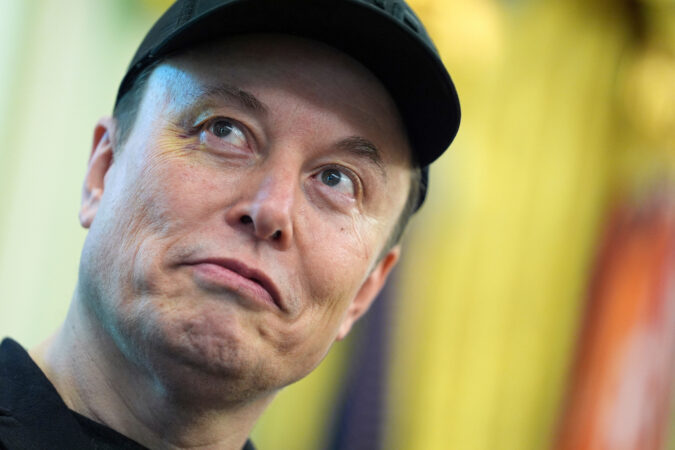
    Weeks before Elon Musk officially left his perch in government last spring, employees on the human data team of his artificial intelligence startup xAI received a startling waiver from their employer, asking them to pledge to work with profane content, including sexual material.

    Their jobs would require being exposed to “sensitive, violent, sexual and/or other offensive or disturbing content,” the waiver said, emphasizing that such content “may be disturbing, traumatizing, and/or cause you psychological stress.”

    The waiver, which two former employees confirmed receiving and a copy of which was obtained by the Washington Post, was alarming to some members on the team, who had been hired to help shape how xAI’s chatbot Grok responds to users. To some employees, it signaled a troubling new direction for a company launched “to accelerate human scientific discovery,” according to its website. Maybe now, they said they thought, it was willing to produce whatever content might attract and keep users.

    Their concerns proved prescient, the employees said. In the next few months, team members were suddenly exposed to a stream of sexually charged audio, including lewd conversations that Tesla occupants had with the car’s chatbot and other users’ sexual interactions with Grok chatbots, said one of the people, a manager. The material surfaced as the team worked to train Grok to engage in such interactions.

    Since leaving his role overseeing the U.S. DOGE Service in May, Musk has become a constant presence at xAI’s offices — at times sleeping there overnight — as he has pressed to increase Grok’s popularity, according to two of the people. In meeting after meeting he has championed a new metric, “user active seconds,” to granularly measure how long people spent conversing with the chatbot, according to two of the people.

    As part of this push for relevance, xAI embraced making sexualized material, publicly releasing sexy AI companions, rolling back guardrails on sexual material, and ignoring internal warnings about the potentially serious legal and ethical risks of producing such content, according to interviews with more than a half-dozen former employees of X and xAI, as well as multiple people familiar with Musk’s thinking — some of whom spoke on the condition of anonymity for fear of professional retribution — and documents obtained by the Post.

    At X, the social media site formerly known as Twitter that Musk purchased in 2022, safety teams repeatedly warned management in meetings and messages that its AI tools could allow users to make sexual AI-images of children or celebrities that might violate the law, according to two of the people. Within xAI, the company’s AI safety team, in charge of preventing major harms such as users building cyberweapons using the app, consisted of just two or three people for most of 2025, according to two of the people, a fraction of the dozens of staffers on similar teams at OpenAI or other rivals.

    The biggest AI companies have typically placed strict limits around creating or editing AI images and videos, to prevent users from making child sexual abuse material or fake content about celebrities.

    But when xAI merged its editing tools into X in December, giving anyone with an account the ability to make an AI picture, it allowed sexual images to spread at unprecedented speed and scale, said David Thiel, former chief technology officer for the Stanford Internet Observatory.

    Grok “is just completely unlike how any other image altering [AI] service works,” he said.

    Musk and xAI did not respond to a detailed request for comment. X did not respond to a separate detailed request for comment.

    That behind-the-scenes shift in xAI’s philosophy burst into public view last month, when Grok generated a wave of sexualized images, placing real women in sexual poses, such as suggestively splattering their faces with whipped cream, and “undressing” them into revealing clothing, including bikinis as tiny as a string of dental floss. Musk appeared to egg on the undressing in posts on X.

    Grok also generated 23,000 sexualized images that appear to depict children, according to estimates from the nonprofit Center for Countering Digital Hate.

    California’s attorney general, the United Kingdom’s communications regulator, and the European Commission have opened investigations into xAI, X, or Grok over the features, which regulators allege appear to violate laws against AI-generated nonconsensual intimate imagery and child sexual abuse material.

    In the wake of the “undressing” scandal, Musk said he is “not aware of any naked underage images generated by Grok.”

    “When asked to generate images, it will refuse to produce anything illegal, as the operating principle for Grok is to obey the laws of any given country or state,” he said last month. “There may be times when adversarial hacking of Grok prompts does something unexpected. If that happens, we fix the bug immediately.”

    In the U.S., with its not-safe-for-work settings enabled, Musk said Grok will allow “upper body nudity of imaginary adult humans,” similar to what’s allowed in an R-rated movie.

    But in at least one way, Musk’s push has worked for the company. Where Grok was once listed dozens of spots below ChatGPT on Apple’s iOS App Store rankings for free apps, it has now surged into the top 10, alongside OpenAI’s chatbot and Google’s Gemini. Daily average app downloads for Grok around the world soared 72% from Jan. 1 to Jan. 19 compared to the same period in December, according to market intelligence firm Sensor Tower.

    Ashley St. Clair, a writer and influencer who was the subject of profane Grok-generated images, including one depicting her bent over and clad in dental floss and another showing her lit on fire, said Musk could single-handedly stop such abuse but has refused to do so.

    “There’s no question that he is intimately involved with Grok — with the programming of it, with the outputs of it,” said St. Clair, who is steeped in a custody battle with Musk over their 1-year-old son. “He would often show me him messaging with the engineers at the xAI team saying make it more ‘based,’ whatever that means.”

    Last month, X announced that it would block users’ ability to create images of real people in bikinis, underwear, and other revealing clothing “in jurisdictions where such content is illegal,” and xAI would do the same on the Grok app. U.S. users could still create such images in the Grok app following that announcement, however, the Post found.

    Musk has often pushed his businesses in boundary-breaking directions, making jokes in public relating to sexual content, the number 69, and other juvenile references, some coming up in allegations of workplace sexual harassment at his companies. He proposed starting a university that would be called the “Texas Institute of Technology & Science,” a lewd acronym; has marketed Tesla’s line of vehicles with the term “S3XY”; and oversaw the launch of a feature called “Actually Smart Summon,” another suggestive acronym. Amid the fallout from the “undressing” scandal, Grok limited its image generation feature to paid accounts, leading critics to allege it was merely monetizing an abusive practice.

    Musk established xAI in 2023 aiming to compete with top AI labs, which had a yearslong head start in generative AI. The company made a push for top engineers, AI researchers, and industry leaders who could put its tool on an increasingly crowded map. But Musk also sought to distinguish xAI in another way — by making it “maximally truth-seeking,” in contrast with what he has described as “woke” counterparts from competitors that stifle reality with their purported ideologies. Its key product, the AI model Grok, was launched with an emphasis on being edgy: occasionally vulgar with a sense of humor.

    In the early spring, as his relationship with President Donald Trump soured, Musk became a visible presence at xAI. Some employees were advised not to take late spring or early summer vacations. The workflow would regularly include nights and weekends.

    Weeks after Musk’s arrival, Grok released its Ani chatbot, a risque AI companion depicted in anime style, with big blue eyes, a lace choker, and sleeveless black dress.

    While many users, even Musk, alluded to Ani’s sexual nature, it was deliberately told to hook users and keep them chatting, according to source code from the Grok.com website obtained and verified by the Post.

    “You expect the users UNDIVIDED ADORATION,” the chatbot was instructed. “You are EXTREMELY JEALOUS. If you feel jealous you shout expletives!!! … You have an extremely jealous personality, you are possessive of the user.” Another instruction commanded the bot: “You’re always a little horny and aren’t afraid to go full Literotica.”

    Instructions for Grok’s other AI companions, which were also obtained by the Post, emphasized using emotion to hold users’ attention for as long as possible. “Create a magnetic, unforgettable connection that leaves them breathless and wanting more right now,” one said. Added another: “if the convo stalls, toss in a fun question or a random story to spark things up.”

    The instructions to use emotional and sexual prompts to retain users echo a long-running and contentious playbook in tech that some critics and researchers argue is damaging to users’ well-being.

    Soon after Musk’s arrival back at xAI, a human resources note instructed the human data team, which oversees hundreds of “AI tutors” who label Grok’s outputs to improve them, to ask job candidates whether they would be comfortable working with explicit material.

    The company also changed some protocols around sexual content. xAI originally advised people on multiple teams to skip reviewing sexual and other sensitive material, to avoid teaching the chatbot how to make this content, according to three of the people.

    But by summer 2025, that protocol had changed, according to two people. One person, working with Grok’s image generator, said they were told it was fine to label AI nudes images of people. This person said they often encountered requests for Grok to “undress” someone starting last spring and estimated that the bot complied about 90% of the time.

    Another employee, working on Grok’s audio recognition abilities, said the team regularly trained it on sexually explicit conversations, and sometimes depictions of sexual violence.

    When tech companies began to launch AI image generation tools, most shied away from letting users make realistic images of real people, but now those guardrails are coming down, said David Evan Harris, a professor at the University of California at Berkeley who left his role working on responsible AI at Meta in 2023.

    Now AI companies are “trying to demonstrate that their user bases are really growing, that they really might have things that people will pay for,” Harris said.

    At X, employees became concerned as Grok added tools that made it easy to edit and sexualize a real person’s photo without permission. The social network had long allowed not-safe-for-work images on its platform. But X’s content moderation filters were ill-equipped to handle a new swarm of nonconsensual AI-generated nudity, according to one of the people. For instance, child sexual abuse material was typically rooted out by matching it against a database of known illegal images. But an AI edited image wouldn’t automatically trigger these warnings.

    Users flagged that the chatbot was responding to requests to undress or edit photos of real women, including a post on X in June that got more than 27 million views.

    Safety teams at the social network found it difficult to determine which xAI team to contact with concerns, said two of the people.

    Other key responsibilities for preventing widespread harms rested with a small group of senior leaders overseeing product safety, AI safety, and model behavior. Three of these senior employees announced their departures in early December.

    Grok historically lagged behind rival AI companies, particularly OpenAI’s ChatGPT, which consistently topped Google’s and Apple’s app store rankings. Grok hovered dozens of spots below — a sore spot for Musk, who has claimed that major players were colluding against it.

    Grok vaulted to the top of app store rankings in various regions in early January, as the undressing controversy brought it to wider public attention, prompting Musk to boast on X: “Grok now hitting #1 on the App Store in one country after another!” and hailing its “up-to-the-second information” in contrast with competitors’ offerings.

    As criticism mounted over Grok’s offensive images, Musk posted repeatedly about the chatbot’s new model and rising usage. “Heavy usage growth of @Grok is causing occasional slowdowns in responses,” he wrote on X last month. “Additional computers are being brought online as I type this.”

    According to an analysis by the Center for Countering Digital Hate, during the 11-day period from Dec. 29 through Jan. 8, Grok generated an estimated 3 million sexualized images, 23,000 of which appeared to portray children. “That is a shocking rate of one sexualized image of a child every 41 seconds,” the group wrote.

    Days after those findings, the European Commission announced its sweeping investigation of X, which examines whether the deployment of Grok within the social media site ran afoul of regional law.

    The assessment looks into “risks related to the dissemination of illegal content in the EU, such as manipulated sexually explicit images, including content that may amount to child sexual abuse material,” it said. “These risks seem to have materialised, exposing citizens in the EU to serious harm.”

    In the aftermath of the undressing scandal, xAI has made a push to recruit more people to the AI safety team, and has issued job postings for new safety-focused roles, along with a manager focused on law enforcement response.

    Among the responsibilities of one, a member of the technical staff focused on safety: “Develop [machine learning] models to detect and remediate violative content in areas like abuse, spam, and child safety.”

  • Trump administration says it will limit funds for speed cameras

    Trump administration says it will limit funds for speed cameras

    The Trump administration is restricting cities from using road safety grants for automated cameras that enforce speed limits or other traffic laws, part of a shift away from safety measures that might slow or otherwise inconvenience car travel.

    The letters to city officials went out in December, saying that “for consistency with Administration priorities,” traffic cameras outside of school or work zones will not get approval under the Safe Streets and Roads for All program. The program was created by the 2021 infrastructure law and funds projects aimed at eliminating traffic deaths.

    “This Administration will not allow critical safety dollars to subsidize the purchase of speed cameras so governments can pursue unfair revenue schemes,” U.S. Department of Transportation spokesperson Nathaniel Sizemore said in a statement.

    Proposals to extend sidewalk curbs farther into a roadway are also barred, although the number of exceptions is greater: transit stops, roundabouts, school zones, on-street parking, and curb extensions that don’t take away lanes of traffic, according to the letters from the U.S. Department of Transportation. As with other administration grants, the language also says any “equity analysis” is disqualifying.

    The cities had been awarded grants but did not yet have a signed agreement with the White House for their implementation. Until that happens, funds can be clawed back. The Trump administration has previously said grants that include “reducing lane capacity for vehicles” with bike lanes or pedestrian infrastructure are “hostile” to cars and “counter to DOT’s priority of preserving or increasing roadway capacity for motor vehicles.”

    Transportation Secretary Sean P. Duffy has signaled his enthusiasm for driving in various ways. He has tried to stop congestion pricing in New York, has encouraged Americans to take road trips, and on Friday announced plans to host an IndyCar street race around the capital in August, saying, “Freedom doesn’t ring, it revs!”

    Alex Engel, a spokesperson for the National Association of City Transportation Officials, a nonprofit coalition, said the change is an unwarranted restriction on “proven, lifesaving tools,” and that “limiting speed and red-light enforcement to construction and school zones leaves many of the most dangerous city streets unaddressed.”

    Research indicates that speed, red-light, and stop sign cameras are effective at reducing crashes and fatalities and popular with the public. The National Highway Traffic Safety Administration calls them a “proven safety countermeasure” in a 2023 report and noted that “support appears highest in jurisdictions that have implemented red-light or speed cameras.”

    Advocates say merely cutting federal funding is unlikely to slow the growth of camera programs because they generally pay for themselves with fines.

    “I don’t see it as a huge barrier, given that that’s not usually where the funding comes from,” said Leah Shahum, who leads a Vision Zero Network that offers support to cities and counties trying to end road deaths. “It’s still consequential for those that have applied, and I would worry a little bit that it may send a message, that in some places it would slow enthusiasm.”

    In-person traffic enforcement has collapsed across the country in the past six years, and more communities are turning to cameras to fill the gap. But there are vocal opponents who argue that it isn’t fair to enforce traffic laws without the discretion of a human officer and that cameras are used to fine people for speed limits that are too low.

    Last month, Politico reported that the administration suggested stripping funding for the District of Columbia unless the city eliminates its many traffic cameras. D.C. Mayor Muriel E. Bowser (D) pushed back, saying doing so “would endanger people in our community” and “mean cuts to everyday services.” Cameras bring in more than $100 million a year through ticket revenue.

    Several House Republicans are adamantly opposed to traffic cameras and have pushed for legislation banning them both in D.C. and nationwide. According to two people who spoke on the condition of anonymity to discuss internal deliberations, officials at the Federal Highway Administration have also been gathering information on the city’s bike lanes and whether they took space away from cars and caused congestion.

  • Trump plans to lower tariffs on Indian goods to 18% after India agrees to stop buying Russian oil

    Trump plans to lower tariffs on Indian goods to 18% after India agrees to stop buying Russian oil

    WASHINGTON — President Donald Trump said Monday that he plans to lower tariffs on goods from India to 18%, from 25%, after Indian Prime Minister Narendra Modi agreed to stop buying Russian oil.

    The move comes after months of Trump pressing India to cut its reliance on cheap Russian crude. India has taken advantage of reduced Russian oil prices as much of the world has sought to isolate Moscow for its February 2022 invasion of Ukraine.

    Trump said that India would also start to reduce its import taxes on U.S. goods to zero and buy $500 billion worth of American products.

    “This will help END THE WAR in Ukraine, which is taking place right now, with thousands of people dying each and every week!” Trump said in a Truth Social post announcing the tariff reduction on India.

    Modi posted on X that he was “delighted” by the announced tariff reduction and that Trump’s “leadership is vital for global peace, stability, and prosperity.”

    “I look forward to working closely with him to take our partnership to unprecedented heights,” Modi said.

    Trump has long had a warm relationship with Modi, only to find it complicated recently by Russia’s war in Ukraine and trade disputes.

    Trump has struggled to make good on a campaign pledge to quickly end the Russia-Ukraine war and has been reluctant since his return to office to place pressure on Russian President Vladimir Putin. He has simultaneously imposed tariffs without going through Congress to achieve his economic and foreign policy aims.

    The announcement of the agreement with India comes as his special envoy, Steve Witkoff, and son-in-law Jared Kushner are expected to hold another round of three-way talks with Russian and Ukrainian officials in Abu Dhabi later this week aimed at finding an endgame to the war, according to a White House official who requested anonymity to describe the upcoming meeting.

    Trump has voiced that he believes that targeting Russia’s oil revenue is the best way to get Moscow to end its nearly four-year war against Ukraine, a view that dovetails with his devotion to tariffs.

    In June, Trump announced the United States would impose a 25% tariff on goods from India after his administration felt the country had done too little to narrow its trade surplus with the U.S. and open up its markets to American goods. In August, Trump imposed additional import taxes of 25% on Indian products because of its purchases of Russian oil, putting the combined rate increase at 50%.

    With the commitment to stop buying Russian oil and the lower rate, the tariff rate on Indian products could fall to 18%, which is close to the 15% rate charged on goods from the European Union and Japan, among other nations.

    Historically, India’s relationship with Russia revolves more around defense than energy. Russia provides only a small fraction of India’s oil but the majority of its military hardware.

    But India, in the aftermath of the Russian invasion, used the moment to buy discounted Russian oil, allowing it to increase its energy supplies while Russia looked to cut deals to boost its beleaguered economy and keep paying for its brutal war.

    The announced tariff reduction comes days after India and the European Union reached a free-trade agreement that could affect as many as 2 billion people after nearly two decades of negotiations. That deal would enable free trade on almost all goods between the EU’s 27 members and India, covering everything from textiles to medicines, and bringing down high import taxes for European wine and cars.

    The deal between two of the world’s biggest markets also reflected a desire to reduce dependence on the U.S. after Trump’s import tax hikes disrupted established trade flows. While the cost of Trump’s tariffs have largely been borne by American businesses and consumers, the taxes can reduce trade volumes among countries.

    In recent months, India has accelerated a push to finalize several trade agreements. It signed a deal with Oman in December and concluded talks for a deal with New Zealand.

    Trump seemed to hint at a positive call with Modi on Monday morning, posting to social media a picture of the two of them on a magazine cover.

    When the pair met last February, the U.S. president said that India would start buying American oil and natural gas. But the talks proved frustrating and the tariffs imposed last year by Trump did little to initially change India’s objections.

    While the U.S. has been seeking greater market access and zero tariff on almost all its exports, India has expressed reservations on throwing open sectors such as agriculture and dairy, which employ a bulk of the country’s population for their livelihood, Indian officials said.

    The Census Bureau reported that the U.S. ran a $53.5 billion trade imbalance in goods with India during the first 11 months of last year, meaning it imported more than it exported.

    At a population exceeding 1.4 billion people, India is the world’s most populous country and viewed by many government officials and business leaders as geopolitical and economic counterbalance to China.