Category: Nation & World

  • Russia offers cash bonuses, frees prisoners, and lures foreigners to replenish its troops in Ukraine

    Russia offers cash bonuses, frees prisoners, and lures foreigners to replenish its troops in Ukraine

    For average wage earners in Russia, it’s a big payday. For criminals seeking to escape the harsh conditions and abuse in prison, it’s a chance at freedom. For immigrants hoping for a better life, it’s a simplified path to citizenship.

    All they have to do is sign a contract to fight in Ukraine.

    As Russia seeks to replenish its forces in nearly four years of war — and avoid an unpopular nationwide mobilization — it’s pulling out all the stops to find new troops to send into the battlefield.

    Some come from abroad to fight in what has become a bloody war of attrition. After signing a mutual defense treaty with Moscow in 2024, North Korea sent thousands of soldiers to help Russia defend its Kursk region from a Ukrainian incursion.

    Men from South Asian countries, including India, Nepal, and Bangladesh, complain of being duped into signing up to fight by recruiters promising jobs. Officials in Kenya, South Africa, and Iraq say the same has happened to citizens from their countries.

    Russian numbers in Ukraine

    President Vladimir Putin told his annual news conference in December that 700,000 Russian troops are fighting in Ukraine. He gave the same number in 2024, and a slightly lower figure — 617,000 — in December 2023. It’s unclear if those numbers are accurate.

    Still hidden are the numbers of military casualties, with Moscow having released limited official figures. The British Defense Ministry said last summer that more than 1 million Russian troops may have been killed or wounded.

    Independent Russian news site Mediazona, together with the BBC and a team of volunteers, scoured news reports, social media and government websites, and collected the names of over 160,000 troops killed. More than 550 of those were foreigners from over two dozen countries.

    How Russia gets new soldiers

    Unlike Ukraine, where martial law and nationwide mobilization has been in place since the start of Russia’s full-scale invasion in February 2022, Putin has resisted ordering a broad call-up.

    When a limited mobilization of 300,000 men was tried later that year, tens of thousands of people fled abroad. The effort stopped after a few weeks when the target was met, but a Putin decree left the door open for another call-up. It also made all military contracts effectively open-ended and barred soldiers from quitting service or being discharged, unless they reached certain age limits or were incapacitated by injuries.

    Since then, Moscow has largely relied on what it describes as voluntary enlistment.

    The flow of voluntary enlistees signing military contracts has remained strong, topping 400,000 last year, Putin said in December. It was not possible to independently verify the claim. Similar numbers were announced in 2024 and 2023.

    Activists say these contracts often stipulate a fixed term of service, such as one year, leading some potential enlistees to believe the commitment is temporary. But contracts are automatically extended indefinitely, they say.

    The incentives

    The government offers high pay and extensive benefits to enlistees. Regional authorities offer various enlistment bonuses, sometimes amounting to tens of thousands of dollars.

    In the Khanty-Mansi region of central Russia, for example, an enlistee would get about $50,000 in various bonuses, according to the local government. That’s more than twice the average annual income in the region, where monthly salaries in the first 10 months of 2025 were reported to be just over $1,600.

    There also are tax breaks, debt relief, and other perks.

    Despite Kremlin claims of relying on voluntary enlistment, media reports and rights groups say conscripts — men aged 18-30 performing fixed-term mandatory military service and exempted from being sent to Ukraine — are often coerced by superiors into signing contracts that send them into battle.

    Recruitment also extends to prisoners and those in pretrial detention centers, a practice led early in the war by the late mercenary chief Yevgeny Prigozhin and adopted by the Defense Ministry. Laws now allow recruitment of both convicts and suspects in criminal cases.

    Targeting foreigners

    Foreigners also are recruiting targets, both inside Russia and abroad.

    Laws were adopted offering accelerated Russian citizenship for enlistees. Russian media and activists also report that raids in areas where migrants typically live or work lead to them being pressuring into military service, with new citizens sent to enlistment offices to determine if they’re eligible for mandatory service.

    In November, Putin decreed that military service was mandatory for certain foreigners seeking permanent residency.

    Some reportedly are lured to Russia by trafficking rings promising jobs, then duping them into signing military contracts. Cuban authorities in 2023 identified and sought to dismantle one such ring operating from Russia.

    Nepal’s Foreign Minister Narayan Prakash Saud told the Associated Press in 2024 that his country asked Russia to return hundreds of Nepali nationals who were recruited to fight in Ukraine, as well as to repatriate the remains of those killed in the war. Nepal has since barred citizens from traveling to Russia or Ukraine for work, citing recruitment efforts.

    Also in 2024, India’s federal investigation agency said it broke up a network that lured at least 35 of its citizens to Russia under the pretext of employment. The men were trained for combat and deployed to Ukraine against their will, with some “grievously injured,” the agency said.

    When Putin hosted Indian Prime Minister Narendra Modi for talks in 2024, New Delhi said its nationals who were “misled” into joining the Russian army would be discharged.

    Iraqi officials say about 5,000 of its citizens have joined the Russian military along with an unspecified number who are fighting alongside Ukrainian forces. Officials in Baghdad cracked down on such recruiting networks, with one man convicted last year of human trafficking and sentenced to life in prison.

    An unknown number of Iraqis have been killed or gone missing while fighting in Ukraine. Some families have reported that relatives were lured to Russia under false pretenses and forced to enlist; in other cases, Iraqis have joined voluntarily for the salary and Russian citizenship.

    Foreigners duped into fighting are especially vulnerable because they don’t speak Russian, have no military experience and are deemed “dispensable, to put it bluntly,” by military commanders, said Anton Gorbatsevich of the activist group Idite Lesom, or “Get Lost,” which helps men desert from the army.

    A drain on a slowing economy

    This month, a Ukrainian agency for the treatment of prisoners of war said over 18,000 foreign nationals had fought or are fighting on the Russian side. Almost 3,400 have been killed, and hundreds of citizens of 40 countries are held in Ukraine as POWs.

    If true, that represents a fraction of the 700,000 troops that Putin said are fighting for Russia in Ukraine.

    Using foreigners is only one way to meet the constant demand, said Artyom Klyga, head of the legal department at the Movement of Conscientious Objectors, noting Russian recruitment efforts appear to be stable. Most of those seeking help from the group, which assists men in avoiding military service, are Russian citizens, he said.

    Kateryna Stepanenko, a Russia researcher at the Washington-based Institute for the Study of War, said the Kremlin has gotten more “creative” in the last two years with attracting enlistees, including foreigners.

    But recruitment efforts are becoming “extremely expensive” for Russia, which faces a slowing economy, she added.
  • 2 federal officers fired shots during encounter that killed Alex Pretti, DHS tells Congress

    2 federal officers fired shots during encounter that killed Alex Pretti, DHS tells Congress

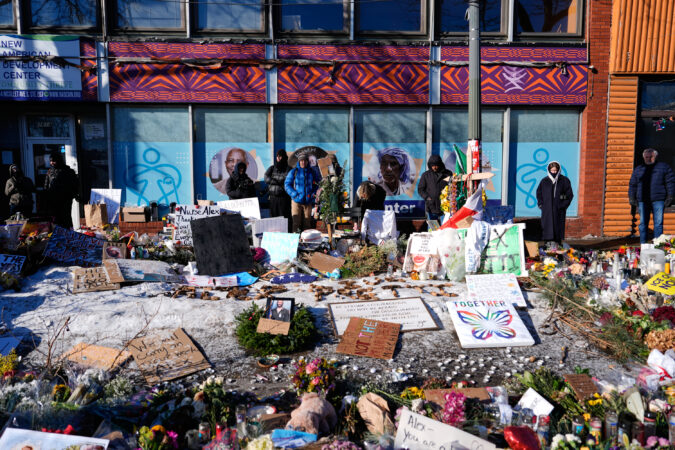
    WASHINGTON — Two federal officers fired shots during an encounter that killed ICU nurse Alex Pretti in Minneapolis, a Customs and Border Protection official told Congress in a notice sent Tuesday.

    The notice said one Border Patrol officer fired his Glock and a CBP officer fired his, according to a notification to Congress obtained by The Associated Press.

    Investigators from CBP’s Office of Professional Responsibility conducted the analysis based on a review of body-worn camera footage and agency documentation, the notice said. The agency is required to report in-custody and certain other deaths involving its agents and officers to Congress.

    A Customs and Border Protection official said in the notice that officers tried to take Pretti into custody and he resisted, leading to a struggle. During the struggle, a Border Patrol agent yelled, “He’s got a gun!” multiple times, the official said.

  • ICE tactics in Minneapolis set off political firestorm from Philadelphia City Hall to Washington

    ICE tactics in Minneapolis set off political firestorm from Philadelphia City Hall to Washington

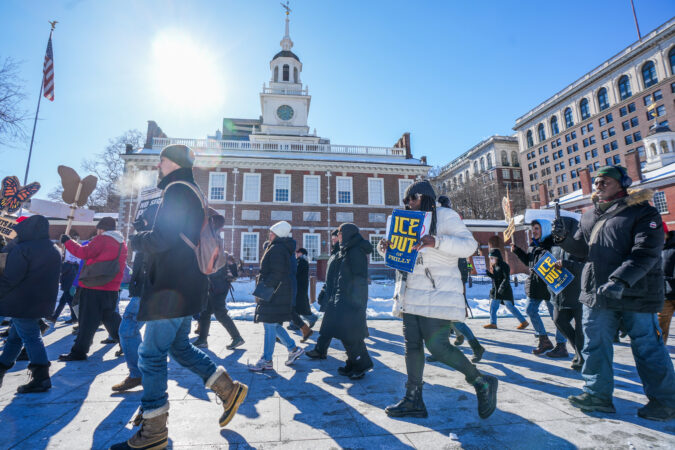
    In Philadelphia, lawmakers on Tuesday unveiled legislation that would institute some of the nation’s toughest limits on federal immigration-enforcement operations.

    In Harrisburg, a top Democrat floated making Pennsylvania a so-called sanctuary state to protect undocumented immigrants.

    And in Washington, senators faced mounting pressure to hold up funding for the Department of Homeland Security, an effort that could result in a government shutdown by the end of the week.

    Across the nation, lawmakers are fielding calls to rein in U.S. Immigration and Customs Enforcement after President Donald Trump’s administration surged forces into Minneapolis as part of his aggressive nationwide deportation campaign. Frustration with the agency reached new heights Saturday after agents fatally shot protester Alex Pretti, the second killing of a U.S. citizen there this month.

    Democrats nationwide slammed ICE and called on Trump to pull the forces out of Minnesota. Sen. John Fetterman, the Pennsylvania Democrat who has at times sided with Trump on immigration matters, said DHS Secretary Kristi Noem should be fired.

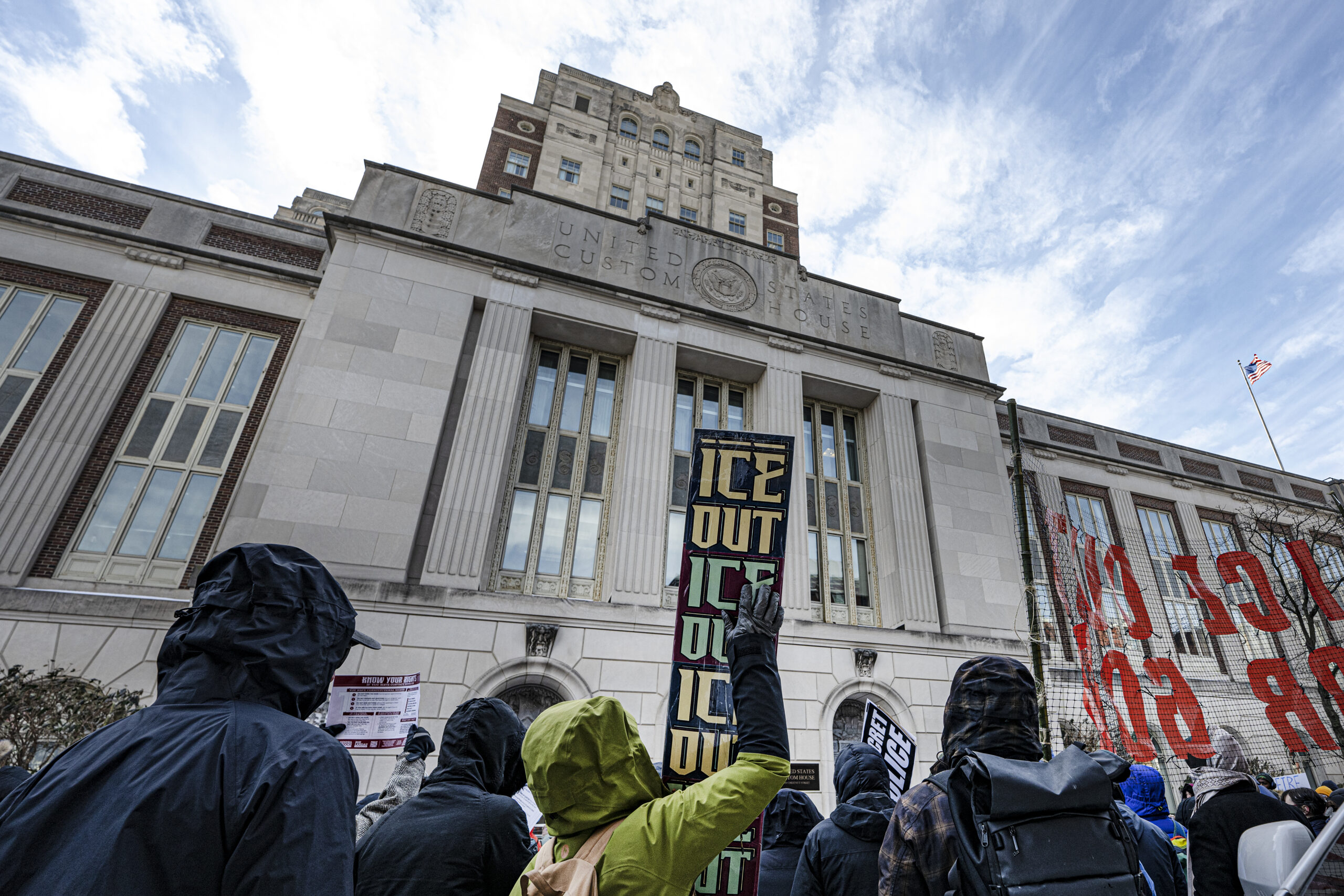
    Anti-ICE activists demonstrate outside U.S. Sen. John Fetterman’s Philadelphia office on Monday, calling for an end to federal immigration enforcement policies.

    But Fetterman has also said he will not vote to shut down the government. That angered protesters, who rallied on Tuesday outside his Philadelphia office. Some of the senator’s fellow Democrats, including members of Pennsylvania’s U.S. House delegation, urged him to vote against a bill to fund DHS.

    A growing number of Republicans have also signaled their discomfort with the Minneapolis operation, including Trump allies who called on members of the administration to testify before Congress. Sen. Dave McCormick, a Pennsylvania Republican, has called for an independent investigation into Pretti’s killing.

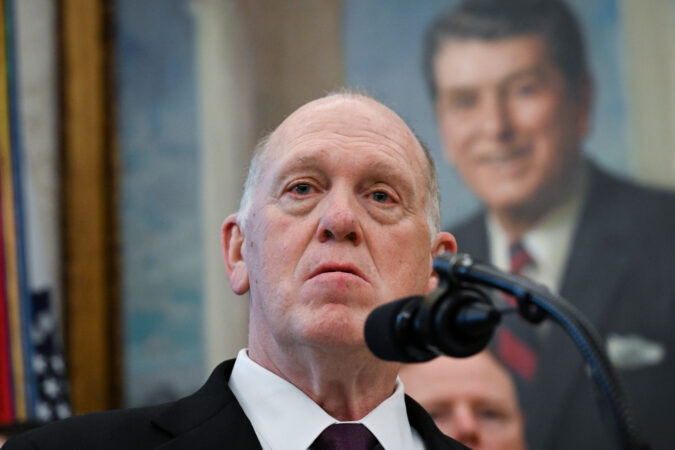
    Trump, for his part, showed some willingness to change course, sending border czar Tom Homan to Minneapolis to meet with Democratic leaders there. The president on Tuesday called Pretti’s death a “very sad situation.”

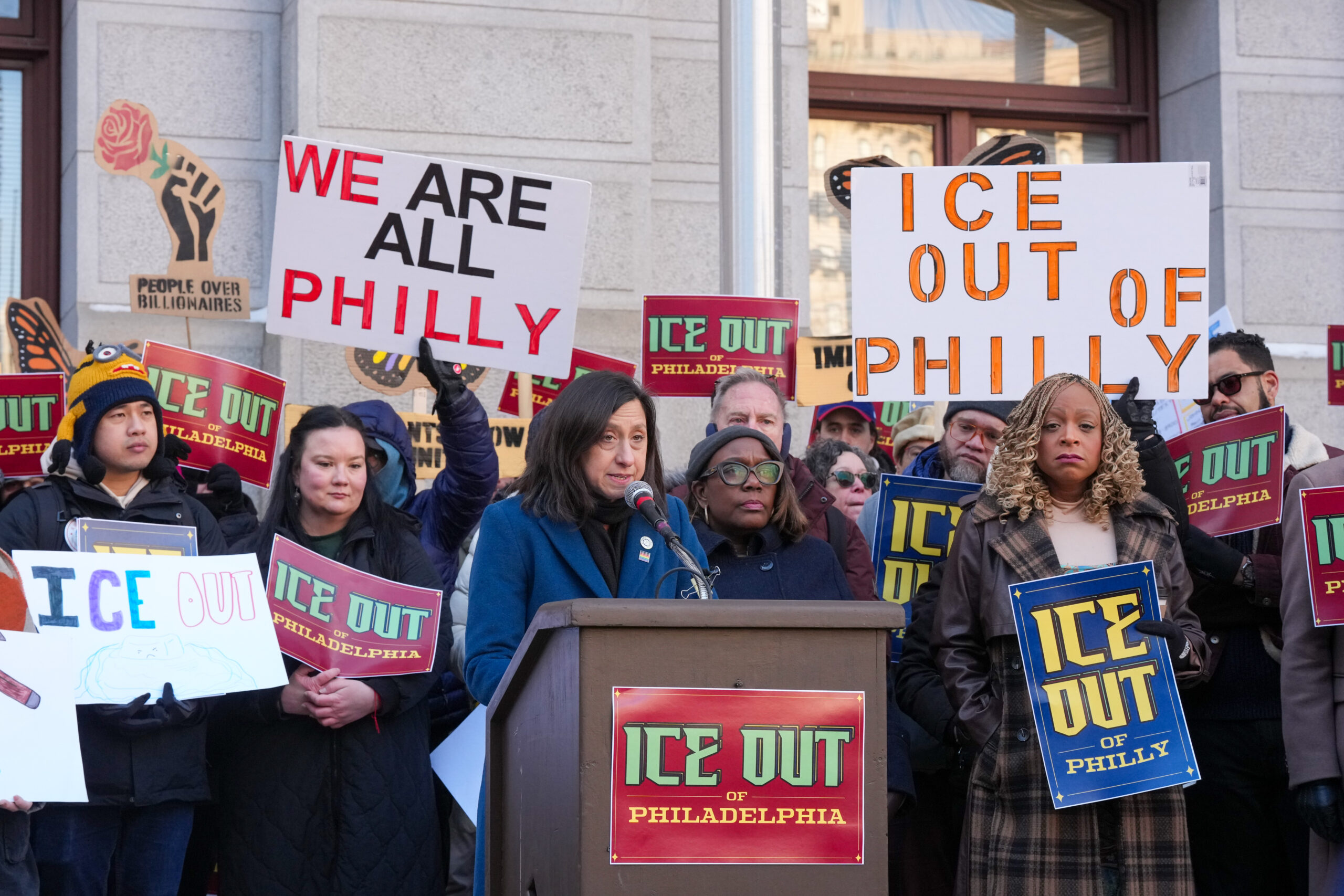
    Rue Landau shown here during a press conference at City Hall to announce a package of bills aimed at pushing back against ICE enforcement in Philadelphia on Tuesday.

    However, a chorus of Democrats and activists said Tuesday that the agency needs to change its tactics and be held accountable for missteps. And local leaders said they are laying out plans in case a surge of immigration enforcement comes to Philadelphia, home to an estimated 76,000 undocumented immigrants.

    “We have spent hours and hours and hours doing tabletop exercises to prepare for it,” Gov. Josh Shapiro, a Democrat, said during a Monday night interview on The Late Show with Stephen Colbert.

    Shapiro, who is running for reelection and is a rumored presidential contender, added: “I want the good people of Pennsylvania to know — I want the American people to know — that we will do everything in our power to protect them from the federal overreach.”

    Codifying sanctuary policies

    Philadelphia officials said the best way they can prepare is by limiting the city’s cooperation with federal immigration enforcement.

    City Councilmember Kendra Brooks, of the progressive Working Families Party, and Councilmember Rue Landau, a Democrat, were joined by dozens of activists and other elected officials during a news conference Tuesday to unveil a package of legislation aimed at codifying into law the city’s existing “sanctuary city” practices.

    Those policies, which are currently executive orders, bar city officials from holding undocumented immigrants in custody at ICE’s request without a judicial warrant.

    Landau and Brooks’ legislative package, expected to be introduced in Council on Thursday, goes further, preventing ICE agents from wearing masks, using city-owned property for staging raids, or accessing city databases.

    Erika Guadalupe Núñez, executive director of immigrant advocacy organization Juntos, said the legislation “goes beyond just ‘We don’t collaborate.’”

    Juntos gets regular calls about ICE staging operations at public locations in and around Philadelphia, and people have been worried, despite official assurances, whether personal information held by the city will be secure from government prying.

    “We deserve a city that has elected leadership that’s willing to step forward with clear and stronger protections,” Núñez said.

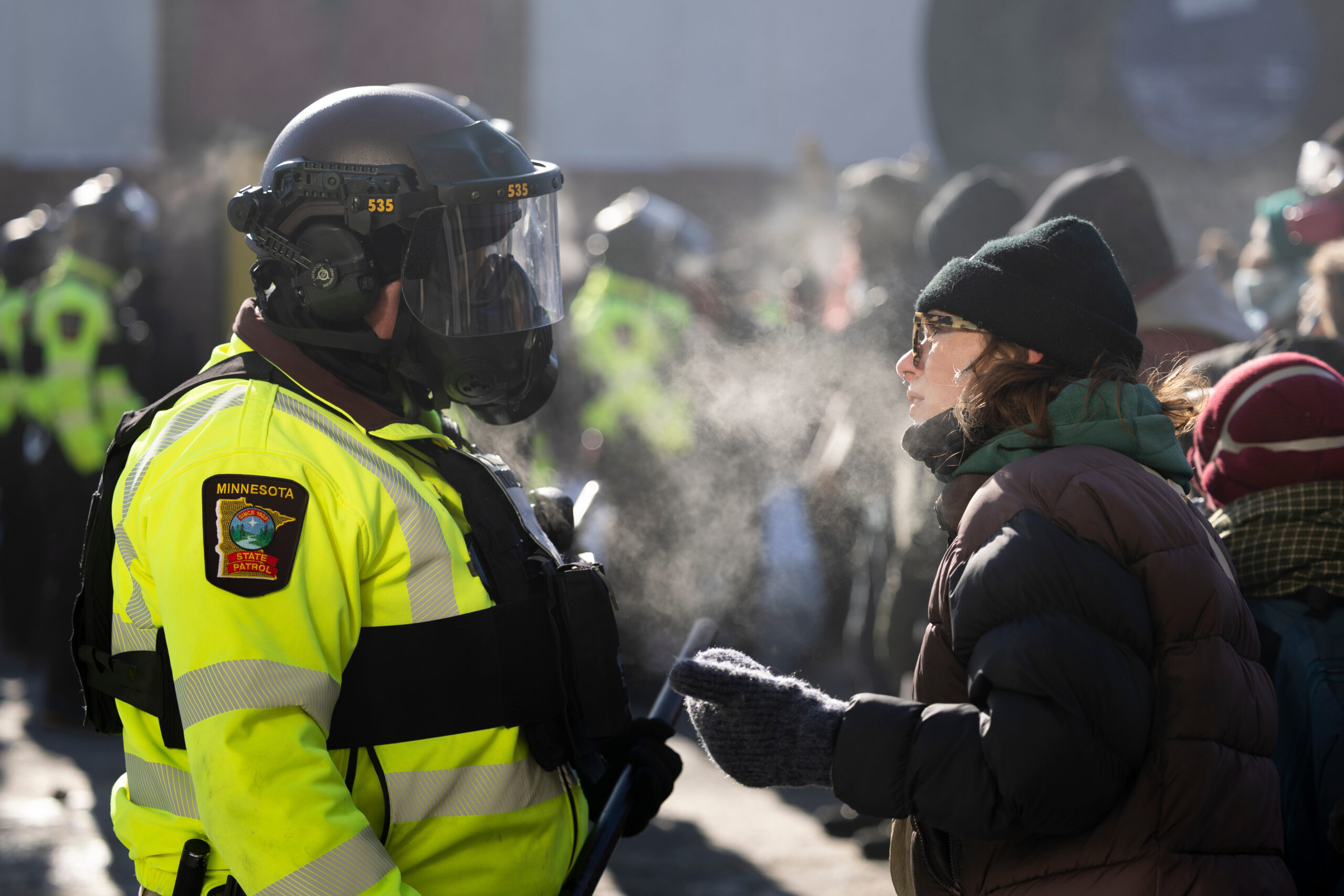
    A protester speaks to a Minnesota State Patrol officer near the site of the fatal shooting of 37-year-old Alex Pretti by federal agents in Minneapolis on Saturday.

    If the legislation is approved, Philadelphia would have some of the most stringent protections for immigrants in the country.

    Oregon has especially strong restrictions against cooperation with federal immigration authorities, including barring local law enforcement from detaining people or collecting information on a person’s immigration status without a judicial warrant.

    In Illinois, local officers “may not participate, support, or assist in any capacity with an immigration agent’s enforcement operations.” They are also barred from granting immigration agents access to electronic databases or to anyone in custody.

    California, New York, Colorado, Vermont — and individual jurisdictions in those states — also provide strong protections for immigrants.

    In New Jersey, Gov. Mikie Sherrill, a Democrat who was sworn in last week, has kept the state’s sanctuary directive in place as lawmakers seek to expand and codify the policy into law. Legislators came close in the final days of former Gov. Phil Murphy’s administration, but he killed a related bill that had won approval in Trenton, saying he worried that enacting a law that included changes to the state’s current policy would invite new lawsuits.

    Meanwhile, some conservatives say bolstering sanctuary policies risks community safety.

    “If an illegal immigrant breaks the law, they should be dealt with and handed over to federal law enforcement, not be released back into our neighborhoods to terrorize more victims and commit more crime,” said James Markley, a spokesperson for the Pennsylvania Republican Party.

    He added: “Sanctuary policies don’t protect communities, they endanger all of us by shielding criminals from accountability for their crimes.”

    Democrats are taking varying approaches

    The widespread outrage over ICE’s tactics in Minneapolis has exposed sharp divisions in elected Democrats’ responses.

    On one end of the party’s ideological spectrum is Fetterman, who has said often that he will not bow to activist demands and strongly opposes shutting down the federal government, even if it means funding DHS.

    On the other end is District Attorney Larry Krasner, Philadelphia’s most prominent progressive, who has on several occasions threatened to file criminal charges against ICE agents who commit crimes in the city.

    “There will be accountability now. There will be accountability in the future. There will be accountability after [Trump] is out of office,” Krasner said Tuesday. “If we have to hunt you down the way they hunted down Nazis for decades, we will find your identities.”

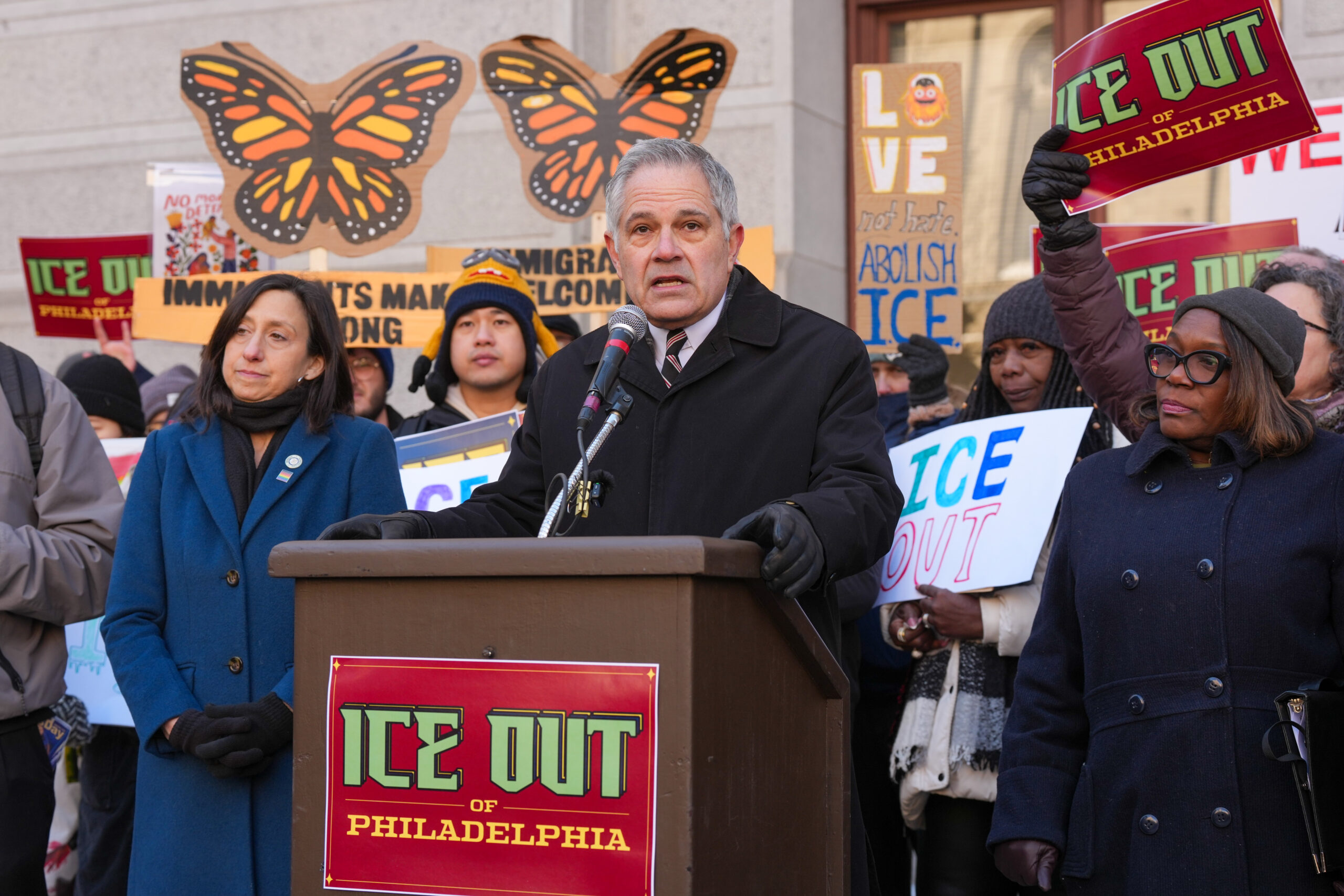
    District Attorney Larry Krasner speaks during a news conference at City Hall on Tuesday to announce a package of bills aimed at pushing back against ICE enforcement in Philadelphia.

    Somewhere in the middle is State Sen. Sharif Street, a Philadelphia Democrat and former head of the state party who is running for Congress.

    Street does not have Krasner’s bombast, but this week he announced plans to introduce legislation to prevent state dollars from funding federal immigration enforcement. The bill has less of a chance of becoming law in Pennsylvania’s divided state legislature than similar measures would in Philadelphia, where City Council is controlled by a supermajority of Democrats.

    “Who knows the amount of money that the state could incur because of Trump’s reckless immigration policies?” Street said in an interview Tuesday. “I don’t think state taxpayers should be paying for Donald Trump’s racist, reckless policies.”

    The city’s most prominent Democrat — Mayor Cherelle L. Parker — has perhaps said the least.

    The centrist Democrat has largely avoided outwardly criticizing Trump or his administration, saying often that she is focused on carrying out her own agenda.

    The mayor’s critics have said her approach is not responsive to the city’s overwhelmingly Democratic residents.

    “To the people of Philadelphia, I want to say: I hear you. You want ICE out of our city, and you want your local government to take action,” Brooks, the Council member, said Tuesday. “Some people believe that silence is the best policy when dealing with a bully, but that’s never been an option for me.”

    Kendra Brooks shown here during a news conference at City Hall on Tuesday to announce a package of bills aimed at pushing back against ICE enforcement in Philadelphia.

    Others say Parker’s conflict-averse strategy is appropriate.

    “All of us have different roles to play,” Street said. “The mayor has to manage the city. She’s got to command law enforcement forces. … As a state legislator, we make policy.”

    Rafael Mangual, a fellow who studies urban crime and justice at the right-leaning Manhattan Institute in New York City, said legislative efforts to erect barriers between federal and local law enforcement could backfire.

    “If you don’t engage at all, and you do something that seems to actively frustrate the federal government,” Mangual said, “that would seem to be an invitation for the federal government to prioritize a city like Philadelphia.”

    Staff writers Alfred Lubrano, Aliya Schneider, and Gillian McGoldrick contributed to this article.

  • Trump visits Iowa trying to focus on affordability during fallout over nurse’s Minneapolis shooting

    Trump visits Iowa trying to focus on affordability during fallout over nurse’s Minneapolis shooting

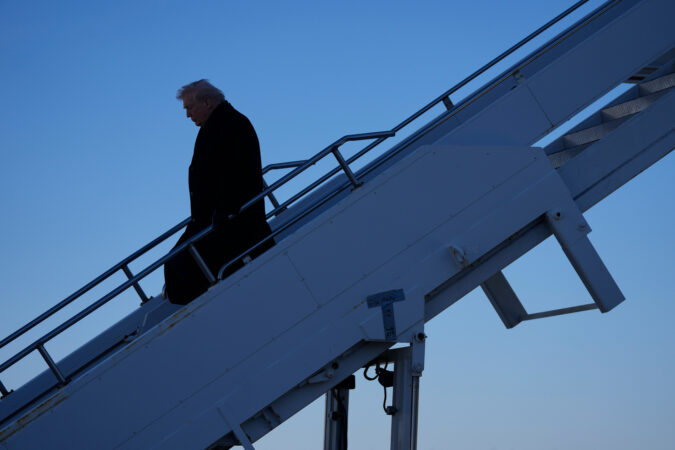
    CLIVE, Iowa — President Donald Trump arrived in Iowa on Tuesday as part of the White House’s midterm-year pivot toward affordability, even as his administration remains mired in the fallout in Minneapolis over a second fatal shooting by federal immigration officers this month.

    The Republican president first made a stop at a local restaurant, where he met some locals and sat for an interview with Fox News Channel — in which he said he was attempting to “de-escalate a little bit” in Minnesota. Afterwards, he was scheduled to deliver a speech on affordability at the Horizon Events Center in Clive, a suburb of Des Moines.

    The trip is expected to also highlight energy policy, White House chief of staff Susie Wiles said last week. It’s part of the White House’s strategy to have Trump travel out of Washington once a week ahead of the midterm elections to focus on affordability issues facing everyday Americans — an effort that keeps getting diverted by crisis.

    The latest comes as the Trump administration is grappling with the weekend shooting death of Alex Pretti, an ICU nurse killed by federal agents in the neighboring state of Minnesota. Pretti had participated in protests following the Jan. 7 killing of Renee Good by an Immigration and Customs Enforcement officer. Even as some top administration officials moved quickly to malign Pretti, Trump said he was waiting until an investigation into the shooting was complete.

    Trump calls Pretti killing ‘sad situation’

    As Trump left the White House on Tuesday to head to Iowa, he was repeatedly questioned by reporters about Pretti’s killing. Trump disputed language used by his own deputy chief of staff, Stephen Miller, who on social media described Pretti as an “assassin” who “tried to murder federal agents.” Vice President JD Vance shared the post.

    Trump, when asked Tuesday if he believed Pretti was an assassin, said, “No.”

    When asked if he thought Pretti’s killing was justified, Trump called it “a very sad situation” and said a “big investigation” was underway.

    “I’m going to be watching over it, and I want a very honorable and honest investigation. I have to see it myself,” he said.

    He also said Homeland Security Secretary Kristi Noem, who was quick to cast Pretti as a violent instigator, would not be resigning.

    Later, as he greeted diners at an Iowa restaurant, Trump weighed in further with comments that were likely to exacerbate frustration among some of his backers who are also strong Second Amendment proponents.

    “He certainly shouldn’t have been carrying a gun,” Trump said of Pretti.

    He called it a “very, very unfortunate incident but said, ”I don’t like that he had a gun. I don’t like that he had two fully loaded magazines. That’s a lot of bad stuff.”

    Republicans want to switch the subject to affordability

    Trump was last in Iowa ahead of the July 4 holiday to kick off the United States’ upcoming 250th anniversary, which morphed largely into a celebration of his major spending and tax cut package hours after Congress had approved it.

    Republicans are hoping that Trump’s visit to the state on Tuesday draws focus back to that tax bill, which will be a key part of their pitch as they ask voters to keep them in power in November.

    “I invited President Trump back to Iowa to highlight the real progress we’ve made: delivering tax relief for working families, securing the border, and growing our economy,” Rep. Zach Nunn, R-Iowa, said in a statement in advance of his trip. “Now we’ve got to keep that momentum going and pass my affordable housing bill, deliver for Iowa’s energy producers, and bring down costs for working families.”

    Trump’s affordability tour has taken him to Michigan, Pennsylvania and North Carolina as the White House tries to marshal the president’s political power to appeal to voters in key swing states.

    But Trump’s penchant for going off-script has sometimes taken the focus off cost-of-living issues and his administration’s plans for how to combat it. In Mount Pocono, Pennsylvania, Trump insisted that inflation was no longer a problem and that Democrats were using the term affordability as a “hoax” to hurt him. At that event, Trump also griped that immigrants arriving to the U.S. from “filthy” countries got more attention than his pledges to fight inflation.

    Competitive races in Iowa

    Although it was a swing state just a little more than a decade ago, Iowa in recent years has been reliably Republican in national and statewide elections. Trump won Iowa by 13 percentage points in 2024 against Democrat Kamala Harris.

    Still, two of Iowa’s four congressional districts have been among the most competitive in the country and are expected to be again in this year’s midterm elections. Trump already has endorsed Republican Reps. Nunn and Mariannette Miller-Meeks. Democrats, who landed three of Iowa’s four House seats in the 2018 midterm elections during Trump’s first term, see a prime opportunity to unseat Iowa incumbents.

    This election will be the first since 1968 with open seats for both governor and U.S. senator at the top of the ticket after Republican Gov. Kim Reynolds and Republican U.S. Sen. Joni Ernst opted out of reelection bids. The political shake-ups have rippled throughout the state, with Republican Reps. Randy Feenstra and Ashley Hinson seeking new offices for governor and for U.S. senator, respectively.

    Democrats hope Rob Sand, the lone Democrat in statewide office who is running for governor, will make the entire state more competitive with his appeal to moderate and conservative voters and his $13 million in cash on hand.

  • Trump sends border czar to Minneapolis as Alex Pretti’s sister speaks out

    Trump sends border czar to Minneapolis as Alex Pretti’s sister speaks out

    The Trump administration deployed border czar Tom Homan to Minneapolis on Tuesday, the day after a lengthy meeting at the White House in which the president expressed frustration with the situation in Minnesota since Alex Pretti was fatally shot by Border Patrol.

    President Donald Trump said Monday he would send Homan to replace Border Patrol Commander Gregory Bovino, who has been the face of the operation in Minneapolis and previous ones in Los Angeles and Chicago.

    Pretti’s sister issued a statement memorializing her brother and condemning “disgusting lies” she said had been told about him since his death on Saturday. Video footage of Pretti’s killing has raised questions about Department of Homeland Security officials’ immediate account of the incident.

    U.S. Border Patrol Cmdr. Gregory Bovino shouts at protesters, Sunday, Jan. 11, 2026, in Minneapolis. (AP Photo/Jen Golbeck)

    The day Pretti was shot, Bovino suggested he had wanted to “massacre” officers. A Washington Post analysis of the incident’s footage found that agents secured a handgun from Pretti before he was shot multiple times. Local authorities said he was carrying the weapon lawfully.

    The White House in the last 24 hours has adopted a more measured tone in its response to the shooting. Trump showed his dissatisfaction with the situation in Minnesota during an extended meeting with Homeland Security Secretary Kristi L. Noem late on Monday, according to a personal familiar with the meeting who spoke on the condition of anonymity to discuss a private conversation.

    Homan is set to meet with local officials in Minneapolis when he arrives there Tuesday.

    Pretti’s sister, Micayla Pretti, in the statement shared by an Associated Press reporter late Monday, described her grief as “a pain no words can fully capture” and expressed a sense of exasperation. “When does this end? How many more innocent lives must be lost before we say enough?” she wrote. It was not immediately clear what falsehoods she was referring to.

    Alex Pretti, a 37-year-old ICU nurse, was the third person to be shot by federal immigration authorities in Minneapolis this month, and the second to be killed.

    In a remarkable filing late Monday, Minnesota’s chief federal judge demanded that Todd M. Lyons, the acting head of Immigration and Customs Enforcement, personally appear in court on Friday to explain what he said were repeated failures to comply with court orders amid ICE’s enforcement efforts in the state.

    The order threatened possible contempt proceedings against Lyons and sets up another potential showdown between federal judges and Trump officials.

    It was not clear Tuesday how Lyons would respond or whether Justice Department attorneys would seek to block the order in court.

    Minneapolis Mayor Jacob Frey (D) said late Monday, after speaking to Trump, that some federal troops would begin leaving the area on Tuesday. Minnesota Gov. Tim Walz (D) said separately that Trump had agreed in a phone call Monday “to look into reducing the number of federal agents” in the state. DHS did not immediately respond to an early Tuesday request for comment. Both Frey and Trump said Homan would speak with the mayor Tuesday.

    First lady Melania Trump called for unity in Minneapolis in a Fox & Friends interview Tuesday morning, saying: “I know that my husband, the president, had a great call yesterday with the governor and the mayor. And they are working together to make it peaceful and without riots. I’m against the violence. So please, if you protest, protest in peace. We need to unify in these times.”

    “Nobody in the White House, including President Trump, wants to see people getting hurt or killed in America’s streets,” White House press secretary Karoline Leavitt said Monday. “It is President Trump’s hope and wish and demand for the resistance and chaos to end today.”

  • Families of 2 men killed in boat strike sue Trump administration over attack they call ‘unlawful’

    Families of 2 men killed in boat strike sue Trump administration over attack they call ‘unlawful’

    WASHINGTON — Families of two Trinidadian nationals killed in a Trump administration boat strike last October sued the federal government on Tuesday, calling the attack a war crime and part of an “unprecedented and manifestly unlawful U.S. military campaign.”

    The lawsuit is thought to be the first wrongful death case arising from the three dozen strikes that the administration has launched since September on boats in the Caribbean Sea and eastern Pacific Ocean. The complaint will test the legal justification of the Trump administration attacks; government officials have defended them as necessary to stem the flow of drugs into the United States, but many legal experts say they amount to a brazen violation of the laws of armed conflict.

    The complaint echoes many of the frequently articulated concerns about the boat strikes, noting for instance that they have been carried out without congressional authorization and at a time when there is no military conflict between the United States and drug cartels that under the laws of war could justify the lethal attacks.

    “These premeditated and intentional killings lack any plausible legal justification. Thus, they were simply murders, ordered by individuals at the highest levels of government and obeyed by military officers in the chain of command,” the lawsuit says.

    White House Deputy Press Secretary Anna Kelly said in a statement that the Oct. 14 strike “was conducted against designated narcoterrorists bringing deadly poison to our shores.”

    “President Trump used his lawful authority to take decisive action against the scourge of illicit narcotics that has resulted in the needless deaths of innocent Americans,” Kelly stated.

    The lawsuit was filed by the mother of Chad Joseph and the sister of Rishi Samaroo, two Trinidadian nationals who were among six people killed in the Oct. 14 missile strike on a boat traveling from Venezuela to Trinidad. The men were not members of any drug cartel, the lawsuit says, but had instead been fishing in the waters off the Venezuelan coast and were returning to their homes in Trinidad and Tobago.

    The two had caught a ride home to Las Cuervas, a fishing community where they were from, on a small boat targeted in a strike announced on Truth Social by President Donald Trump. All six people aboard the boat were killed.

    “These killings were wrongful because they took place outside of armed conflict and in circumstances in which Mr. Joseph and Mr. Samaroo were not engaged in activities that presented a concrete, specific, and imminent threat of death or serious physical injury, and where there were means other than lethal force that could have reasonably been employed to neutralize any such threat,” the lawsuit says.

    The lawsuit is the first to challenge the legality of the boat strikes in court, according to Jen Nessel, a spokesperson for the Center for Constitutional Rights, which filed the lawsuit in federal court in Massachusetts on behalf of the families, along with the ACLU and others.

    Nessel said in an email that the center also has a Freedom of Information Act lawsuit seeking the release of the legal justification for the strikes.

    Jeffrey Stein, an American Civil Liberties Union attorney, told reporters over Zoom that the lawsuit seeks compensatory and punitive damages that can be determined after a trial.

    “We don’t think that it’s something that we could put a precise dollar amount on,” Stein said. “But we’re seeking damages that can go some way toward bringing justice for these really heinous abuses of power.”

    The lawsuit also aims to prevent more boat strikes, Stein said, with the hope that a U.S. court rejects the Trump administration’s “frankly absurd claims about its authority to engage in these illegal strikes.”

    The lawsuit was filed in federal court in Massachusetts. It cites the Death on the High Seas Act, which the lawyers say permits wrongful death cases in situations like this, as well as the Alien Tort Statute, which permits foreign nationals to sue in federal court for alleged human rights violations.

    The death toll from the boat strikes is now up to at least 126 people, with the inclusion of those presumed dead after being lost at sea, the U.S. military confirmed Monday. The figure includes 116 people who were killed immediately in at least 36 attacks carried out since early September, with 10 others believed dead because searchers did not locate them following a strike.

  • Man wounded after exchanging gunfire with Border Patrol agents near US-Mexico border

    Man wounded after exchanging gunfire with Border Patrol agents near US-Mexico border

    ARIVACA, Ariz. — A man who authorities say was involved in a smuggling operation was shot Tuesday in an exchange of gunfire with the U.S. Border Patrol and after firing at a federal helicopter near the U.S.-Mexico border, authorities said.

    Federal agents were attempting to apprehend the 34-year-old Arizona man near Arivaca, Ariz., when he shot at a Border Patrol helicopter and at agents, the FBI said. Agents returned fire, striking the man and wounding him, the FBI said.

    The man was transported to a hospital and was recovering from surgery Tuesday evening, authorities said.

    The Pima County Sheriff’s Department said the FBI asked it to lead a use-of-force investigation of the Border Patrol. It noted that such investigations are standard when a federal agency is involved in a shooting in the county.

    FBI special agent Heith Janke said suspect Patrick Gary Schlegel has a criminal history that includes a 2025 warrant for escape stemming from a smuggling conviction.

    Hagle was in federal custody and is expected to be charged with a criminal complaint, Janke said.

    Arivaca is a community about 10 miles from the border. The area is a common path for drug smugglers and migrants who illegally cross the border, so agents regularly patrol there.

    The Santa Rita Fire District said it responded to the shooting and the person who was wounded was in custody.

    “Patient care was transferred to a local medical helicopter for rapid transport to a regional trauma center,” the fire district said.

    One level-one trauma center hospital in Tucson declined to release information, and the AP was waiting on a response from another.

    The shooting comes in a month that has seen three shootings — two fatal — by immigration officers involved in the massive Department of Homeland Security enforcement operation in Minnesota.

    While there were numerous videos of those shootings taken by residents monitoring the enforcement operations in the Minneapolis area, the latest shooting in Arizona happened in a community of about 500 people apparently without any bystander video of the incident.

    The sheriff department said its involvement in the investigation was the result of “long standing relationships” built over time in the border area to promote transparency.

    Sheriff Chris Nanos, a Democrat, has previously said his agency will not enforce federal immigration law amid President Donald Trump’s crackdown and that he will use his limited resources to focus on local crime and other public safety issues.

    U.S. Customs and Border Protection did not immediately respond to emails and telephone calls seeking more information.

    Border Patrol agents fired weapons in eight incidents during the 12-month period through September 2025, 14 times during the year before that and 13 times the year before that.

  • Texas sues Delaware nurse practitioner accused of mailing abortion pills

    Texas sues Delaware nurse practitioner accused of mailing abortion pills

    Texas’s attorney general sued an out-of-state nurse practitioner Monday for allegedly mailing abortion pills to women in Texas, where the drugs are illegal — the latest in a string of similar lawsuits by conservative officials seeking to limit access to the pills.

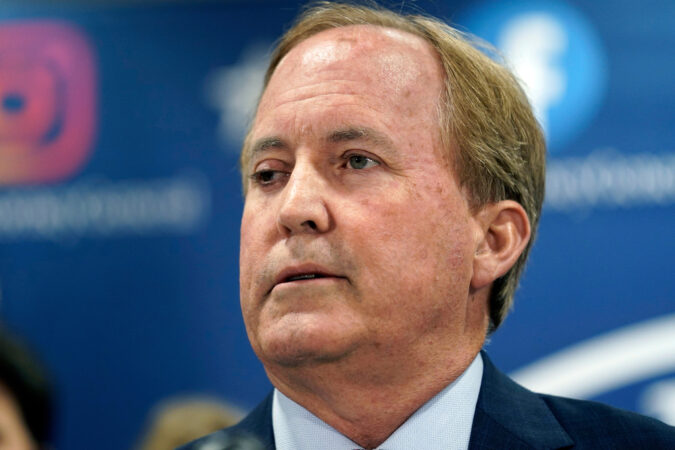
    Attorney General Ken Paxton (R) filed a lawsuit against Debra Lynch, who runs Her Safe Harbor, a Delaware-based service that remotely prescribes and mails abortion pills to women across the country. Paxton’s court filing suggests that he learned about Lynch’s operations from news interviews she’d done over the last year, including with the Austin American-Statesman and the New York Times.

    In those interviews, Lynch “boasted” about mailing abortion drugs to Texas, the court filing says.

    “The day of reckoning for this radical out-of-state abortion drug trafficker is here,” Paxton said in a statement Tuesday. “No one, regardless of where they live, will be freely allowed to aid in the murder of unborn children in Texas.”

    Lynch and Her Safe Harbor did not immediately respond to requests for comment Tuesday afternoon.

    She and her group join a growing list of out-of-state abortion providers and groups that Texas has sought to punish. All so far have worked out of states with “shield laws” enacted after the Supreme Court threw out the constitutional right to an abortion, to protect abortion providers from out-of-state prosecution.

    That legal strategy has come under fire from officials in states with abortion bans, with Texas leading the way. Paxton, his allies at the Texas Capitol, and antiabortion advocates and attorneys have for months worked to thwart access to the abortion pills that are still flowing into their state.

    Last year, Paxton sued a doctor in New York for sending abortion pills to Texas. This year, he sent cease-and-desist letters to a California doctor, along with Her Safe Harbor — Lynch’s group, which prescribes and mails pills — and another organization that provides information on where to access pills. Louisiana has indicted the same New York and California doctors, also accusing them of illegally sending mailing abortion pills.

    New York and California have declined to cooperate with the actions by the red states.

    When she spoke with the American-Statesman and the Times this year, Lynch let reporters and photographers shadow her work, allowing them to chronicle her process of taking patient phone calls and packaging the pills alongside her husband.

    Across the country, there are eight states that explicitly protect abortion providers that mail pills to patients in states with abortion bans, but that group does not include Delaware, where Her Safe Harbor began providing services in June 2024. Delaware is one of more than a dozen states that offer varying levels of protection for telehealth providers of abortion and gender transition care.

    The New York Times reported in June that Lynch had decided to move to one of the eight states with the strongest shield laws. It is not clear whether she did so.

  • Trump administration uses ICE to pressure blue states

    Trump administration uses ICE to pressure blue states

    For months, President Donald Trump’s administration has been trying to force Minnesota’s Democratic leaders to turn over detailed information about the state’s voters, including driver’s license numbers and partial Social Security numbers.

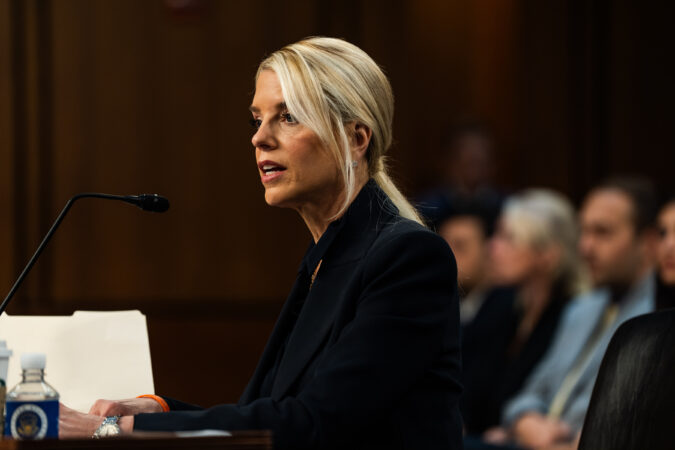
    State officials have said no. Now, Attorney General Pam Bondi is repeating those demands in a letter that also references the federal government’s aggressive deployment of immigration agents to the streets of Minneapolis.

    Her letter, dated Saturday, presses the state on sharing the voter information, turning over public assistance data and assisting the federal government with immigration enforcement. It was sent the same day border agents fatally shot Alex Pretti, an intensive care nurse, in Minneapolis.

    Bondi’s approach has led Democrats in Minnesota and other states to accuse the administration of blackmailing and bullying them into ceding more power to the administration. It comes as she tries to extract similar data from dozens of other states.

    “The states have power,” Minnesota Attorney General Keith Ellison (D) said. “And Trump is saying, ‘No you don’t, not while I’m president. We’ll run you over. We’ll kill your people. We’ll shoot pepper balls at you. We’ll invade your city. We’ll terrorize everyone. We’ll kill citizens.’”

    The Department of Homeland Security launched Operation Metro Surge last month and has sent thousands of agents to Minnesota since then. Pretti’s death came 2½ weeks after another agent killed Renée Good in her vehicle. Both victims were 37.

    The federal government has sweeping authority to enforce immigration laws, as a federal judge made clear Monday as she repeatedly expressed skepticism in response to Minnesota’s arguments in a lawsuit seeking to halt the surge of immigration agents to the state. The administration has far less power when it comes to elections because the Constitution gives states the primary responsibility for voting policies.

    Bondi’s letter to Minnesota Gov. Tim Walz (D) appeared to try to leverage immigration enforcement to get the state’s voter list. Minnesota officials rejected the demand and said Bondi was trying to force them to give up sensitive voter data that the Justice Department is not entitled to have.

    “This was never about immigration,” Ellison said. “It was never about fraud. It’s about coercion and bullying.”

    The Justice Department recently launched an investigation into whether Walz and others were impeding immigration enforcement. Trump on Monday struck a new tone, writing on social media that he had talked to Walz and believed they were “on a similar wavelength.” He said he expected them to talk again soon.

    But in court, the two sides clashed at a hearing over the surge of Immigration and Customs Enforcement agents. U.S. District Judge Katherine Menendez asked a Justice Department attorney whether Bondi with her letter to Walz was trying to “achieve a goal through force, which it can’t achieve through the courts.” Justice Department attorney Brantley Mayers waved off the possibility the enforcement activities were linked to what Bondi sought in her letter.

    “I have all of these quotes in the record,” Menendez said. “You’re telling me that I’m reading them wrong?”

    Throughout the hearing, the judge expressed skepticism that she has the power to curtail the administration’s immigration enforcement and said she would rule soon.

    In a statement, White House spokesperson Abigail Jackson said Trump “wants to work with local leaders to remove the worst of the worst from American streets.” The Justice Department declined to comment on the record.

    Georgetown University law professor Stephen I. Vladeck said Minnesota officials, in their lawsuit trying to stop the federal immigration surge, were testing a legal theory about the limits of the federal government’s power that is “designed for novel times.”

    “Our existing legal doctrines were not designed for rampant lawlessness on the part of the executive,” he said.

    Ahead of the hearing, Maine Gov. Janet Mills (D) said she was watching the case closely, particularly now that immigration agents have flooded into her state. Mills, a former state attorney general, said Republicans were acting hypocritically, given the party’s historical support of states’ rights, which are granted in the 10th Amendment of the Constitution.

    “Republicans have always loved the 10th Amendment,” she said. “Suddenly, they’re against it.”

    Kansas Attorney General Kris Kobach (R) said he has a “long-standing pro-states’ rights, pro-10th Amendment point of view.” But the federal government has clear authority over immigration, he said.

    He said Bondi was making a “policy recommendation” to Minnesota when she urged the state to change how it cooperates with immigration authorities. He said he didn’t think she was linking the request to the surge of agents in the state.

    “She’s not threatening to do something,” he said. “I don’t think it’s coercive.”

    The federal government has a right to data on public assistance programs because it funds them, he argued. The request for the voter rolls may be “tangential” to what is happening in Minnesota, Kobach said, but he believes the federal government has a right to that data, which he supports using in an effort to find illegal voters.

    The dispute over the connection between voter rolls and immigration enforcement has played out over social media in recent days. Rep. Ilhan Omar (D., Minn.) said online that Bondi’s letter showed the surge of immigration agents “was always about rigging elections.”

    Vice President JD Vance responded to her on Monday by stating that Democrats are effectively saying, “We really want illegal aliens to vote in elections and will riot to ensure that it is so.”

    Democratic-led states have brought dozens of lawsuits against the Trump administration over the past year. California Attorney General Rob Bonta (D) said litigation has been an essential check on a federal government intent on pushing the limits of its power.

    “The check of the Congress is completely absent,” he said. “A Republican-led Congress is completely supine, ready to jump when asked to jump by the Trump administration, and they ask how high it is.”

    The Justice Department’s demand for Minnesota’s voter rolls comes after the agency spent months suing states to get personal information on voters, including their dates of birth, driver’s license numbers and partial Social Security numbers.

    In all, the Justice Department has sued two dozen states for their voter lists, but judges have not ruled in most of the cases. A federal judge this month threw out the lawsuit against California, saying the Justice Department is not entitled to the information. That case could sway how other courts look at the issue.

    Justice Department officials have said they want the lists so they can check whether states are properly maintaining them. It has been sharing data it has received from some states with the Department of Homeland Security, which oversees immigration enforcement.

    Under the Constitution, states, rather than the federal government, are responsible for running elections. Congress has not given the administration the authority to “centralize the private information of all Americans within the Executive Branch,” U.S. District Judge David O. Carter for the Central District of California wrote in his recent decision rejecting the Justice Department’s attempts to get that state’s voter rolls.

    Allowing the Justice Department to get the list “would inevitably lead to decreasing voter turnout as voters fear that their information is being used for some inappropriate or unlawful purpose,” the judge wrote.

    Minnesota Secretary of State Steve Simon (D), who oversees the state’s voter rolls, rejected Bondi’s latest demand and noted that most states have taken a similar stance.

    “This isn’t a defiant Minnesota on its own,” he said. “A large majority of states that have been asked for this information have said no on a similar basis to ours.”

    Maine Secretary of State Shenna Bellows (D) has fought the Justice Department’s demand for the voter list in her state.

    “I think what Bondi’s letter makes clear is that ICE invading Minnesota and Maine was never about immigration, but rather about inflicting violence and creating chaos to try to control our states and our elections,” she said.

    If the administration gathers state voter rolls, it can use them to challenge the ability of people to vote, said Uzoma Nkwonta, an attorney who represents Democratic voters who have intervened in the litigation over voter lists.

    “This is how you steal elections,” he said. “This is the path — taking these lists and then submitting them either to prevent people from voting or after the fact in order to reject the results of an election.”

  • Federal Reserve cuts rates again, signals one more cut amid uncertain outlook

    Federal Reserve cuts rates again, signals one more cut amid uncertain outlook

    The Federal Reserve cut interest rates by a quarter of a percentage point on Wednesday for the third time this year, seeking to shore up a softening labor market even as inflation builds and leaving the prospect of more cuts next year unclear.

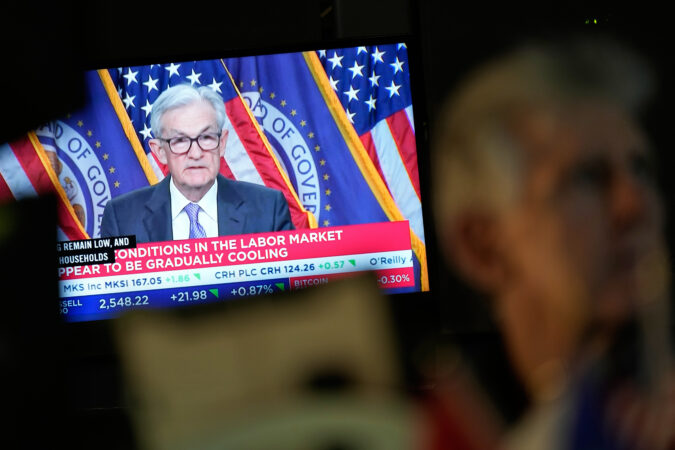
    “It’s a labor market that seems to have significant downside risks,” Fed Chair Jerome Powell said at a news conference following the meeting.

    Although Fed officials tentatively penciled in at least one more rate cut before the end of next year, estimates about where the economy is heading varied significantly and Powell suggested the central bank might wait before returning to any additional cuts.

    “We are well positioned to wait and see how the economy evolves from here,” he said.

    Wednesday’s widely expected move lowers the Fed’s benchmark rate to a range of 3.5 to 3.75 percent, the lowest level in about three years. But officials remain sharply divided over how to respond to an economy sending mixed signals: Inflation remains above the Fed’s target, which would typically argue for holding rates steady, while slower hiring and a modest uptick in unemployment suggest a case for easing.

    Investors cheered the news, with major financial indexes ending the day higher on Wednesday afternoon.

    Nine Federal Reserve officials backed Wednesday’s cut while three dissented. Two officials — Chicago Fed President Austan Goolsbee and Kansas City Fed President Jeffrey Schmid — favored no rate reduction, while Fed governor Stephen Miran preferred a larger, half-point cut. It was the most dissent since September 2019.

    In another sign of division among top Fed officials, the latest economic projections also released on Wednesday showed seven officials penciled in no additional cuts next year, while 12 favored at least one or more.

    Fed policies influence what households and businesses pay for mortgages, credit cards and other loans, and investors are watching closely for guidance on the central bank’s next steps.

    The Fed’s job is to keep prices stable and to maximize employment, but it is split on how to navigate what some describe as a light version of stagflation — elevated inflation alongside a labor market that is slowing but far from collapsing. Those divides were exposed at the Fed’s last gathering in October, where officials expressed “strongly differing views about what policy decision would most likely be appropriate,” according to the meeting minutes.

    Further complicating the decision, the Fed received far less official data about the health of the economy, because of the government shutdown that delayed or canceled the release of reports on the jobs market and consumer prices. Some Fed officials, relying on alternative data or surveys of the business community, argued that progress on inflation had stalled and warned that cuts risked undermining hard-won gains. Others countered that rising unemployment and weakening consumer demand suggested a need for action.

    Powell defended cutting rates now rather than waiting for the Fed’s next meeting in late January, when officials will finally have a better sense of the status of economy thanks to a trove of upcoming official reports. Wednesday’s call reflected mounting evidence of a cooling job market, he noted, saying that after readjustments and revisions, job growth may have been slightly negative since spring.

    “I think you can say that the labor market has continued to cool gradually, maybe just a touch more gradually than we thought,” Powell said.

    With unemployment rising to 4.4 percent in September, the Fed no longer characterized that rate as “low,” in a statement announcing the rate cut.

    Former Philadelphia Fed president Patrick Harker said this week that Wednesday’s move is shaping up to be a “hawkish cut” — a rate reduction paired with a signal that policymakers may soon pause further easing. Harker said the Fed’s internal divergence reflects an unusual degree of economic “fog,” with inflation not worsening as much as feared, unemployment claims relatively stable, and labor-market signals increasingly difficult to interpret. He noted that monthly job gains below 100,000 would normally be a red flag, but demographic trends and uncertain immigration patterns complicate the baseline.

    Those disagreements are unfolding amid unprecedented political pressure from President Donald Trump, who has repeatedly criticized the Fed for not moving quickly enough to lower rates and has threatened to fire Powell. Trump renewed those attacks ahead of this week’s meeting, telling Politico that support for aggressive rate cuts is a litmus test for whoever he taps to succeed Powell, whose term as chair expires in May. The president plans to nominate a successor early next year, though he has already signaled he knows who he is likely to pick.

    Former Pennsylvania Sen. Pat Toomey, who was top Republican on the Senate Banking Committee, said he is perplexed by Trump’s push for cuts, because inflation remains above target and the broader economy continues to expand. The data shows cooling — not collapsing — labor conditions, which wouldn’t normally justify an urgent push for easing rates, Toomey said.

    Toomey warned that the president is taking a much bigger political gamble than he appears to realize. If inflation were to spike again, he said, Trump would “completely own” the fallout after pressuring the Fed when “there’s no obvious need to ease.” That makes the campaign for faster rate cuts “surprising,” Toomey said.

    Although Powell secured enough board support to approve Wednesday’s cut, future easing would depend on keeping that alliance.

    The split appears to pit a “hawkish” coalition of regional Fed presidents focused on preventing inflation from resurging against a group of governors in Washington who see the greater risk in a softening economy. Officials such as Cleveland Fed President Beth Hammack, who said she would have preferred not to cut rates in October, have argued that inflation remains stubbornly above the bank’s 2 percent target and warned that reducing rates too soon could keep prices rising.

    Meanwhile, other officials continue to emphasize that a cooling labor market and softening consumer demand call for cuts, to ensure the economy does not slip further.