Category: Nation & World

  • Judge orders ICE chief to appear in court to explain why detainees have been denied due process

    Judge orders ICE chief to appear in court to explain why detainees have been denied due process

    MINNEAPOLIS, Minn. — Federal immigration authorities have released an Ecuadorian man whose detention led the chief federal judge in Minnesota to order the head of Immigration and Customs Enforcement to appear in his courtroom, the man’s attorney said Tuesday.

    Attorney Graham Ojala-Barbour said the man, who is identified in court documents as “Juan T.R.,” was released in Texas. The lawyer said in an email to The Associated Press that he was notified in an email from the U.S. attorneys office in Minneapolis shortly after 1 p.m. CT that his client had been freed.

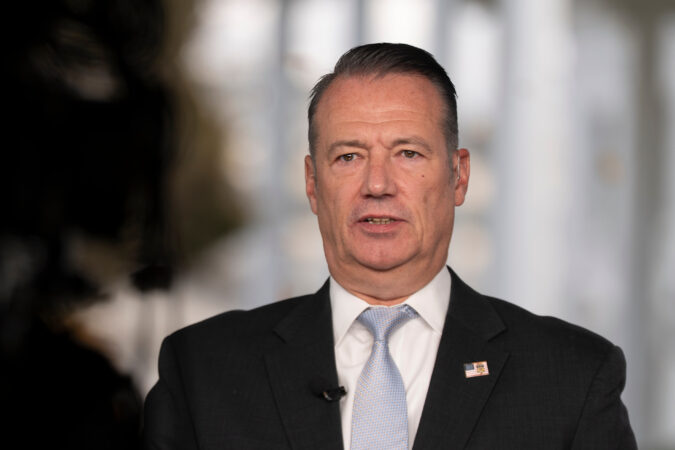
    In an order dated Monday, Chief Judge Patrick J. Schiltz expressed frustration with the Trump administration’s handling of Juan’s and other immigration cases. He took the extraordinary step of ordering Todd Lyons, the acting director of ICE, to personally appear in his courtroom Friday.

    Schiltz had said in his order that he would cancel Lyons’ appearance if the man was released from custody.

    “This Court has been extremely patient with respondents, even though respondents decided to send thousands of agents to Minnesota to detain aliens without making any provision for dealing with the hundreds of habeas petitions and other lawsuits that were sure to result,” he wrote.

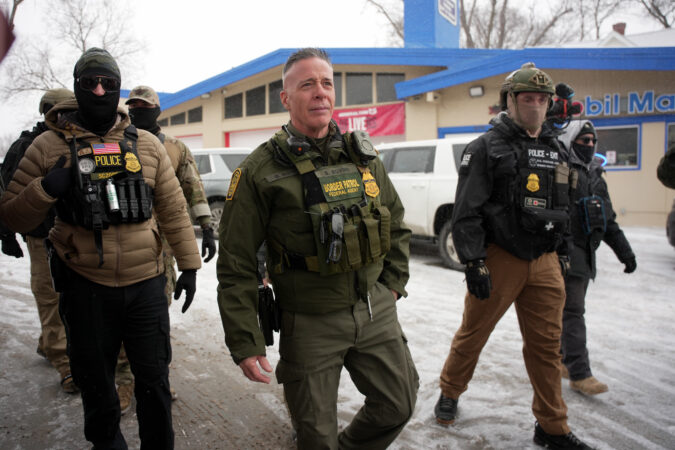
    The order comes a day after President Donald Trump ordered border czar Tom Homan to take over his administration’s immigration crackdown in Minnesota following the second death this month of a person at the hands of an immigration law enforcement officer.

    Trump said in an interview broadcast Tuesday that he had “great calls” with Minnesota Gov. Tim Walz and Minneapolis Mayor Jacob Frey on Monday, mirroring comments he made immediately after the calls.

    As he left the White House, the president was asked whether Alex Pretti’s killing by a Border Patrol officer Saturday was justified. He responded by saying that a “big investigation” was underway. In the hours after Pretti’s death, some administration officials sought to blame the shooting on the 37-year-old intensive care nurse.

    The seemingly softer tone emerged as immigration agents were still active across the Twin Cities region, and it was unclear if officials had changed tactics following the shift by the White House.

    Walz’s office said Tuesday that the Democratic governor met with Homan and called for impartial investigations into the shootings involving federal officers. They agreed on the need to continue to talk, according to the governor.

    Frey and Minneapolis Police Chief Brian O’Hara said they also met with Homan and had a “productive conversation.” The mayor added that city leaders would stay in discussion with the border czar.

    The White House had tried to blame Democratic leaders for the protests of immigration raids. But after the killing of Pretti on Saturday and videos suggesting he was not an active threat, the administration tapped Homan to take charge of the Minnesota operation from Border Patrol commander Gregory Bovino.

    The streets appeared largely quiet in many south Minneapolis neighborhoods where unmarked convoys of immigration agents have been sighted regularly in recent weeks, including the neighborhoods where the two deaths occurred. But Associated Press staff saw carloads of agents in northeast Minneapolis, as well as the northern suburb of Little Canada.

    Schiltz’s order also follows a federal court hearing Monday on a request by the state and the mayors of Minneapolis and St. Paul for a judge to halt the immigration enforcement surge. The judge in that case said she would prioritize the ruling but did not give a timeline for a decision.

    Schiltz wrote that he recognizes ordering the head of a federal agency to appear personally is extraordinary. “But the extent of ICE’s violation of court orders is likewise extraordinary, and lesser measures have been tried and failed,” he said.

    “Respondents have continually assured the Court that they recognize their obligation to comply with Court orders, and that they have taken steps to ensure that those orders will be honored going forward,” he wrote. “Unfortunately, though, the violations continue.”

    The Associated Press left messages Tuesday with ICE and a DHS spokesperson seeking a response.

  • Israel recovers remains of the last hostage in Gaza. Ceasefire moves into tricky new phase

    Israel recovers remains of the last hostage in Gaza. Ceasefire moves into tricky new phase

    JERUSALEM — Israel brought home the remains of the last hostage in Gaza on Monday, closing a painful chapter for the country and clearing the way for the next and more challenging phase of its ceasefire with Hamas.

    The next step is likely to be the reopening of Gaza’s border with Egypt, enabling Palestinians to travel in both directions and eventually allowing more aid to enter the territory devastated by two years of war. The ceasefire’s second phase also calls for deploying an international security force, disarming Hamas, pulling back Israeli soldiers, and rebuilding Gaza.

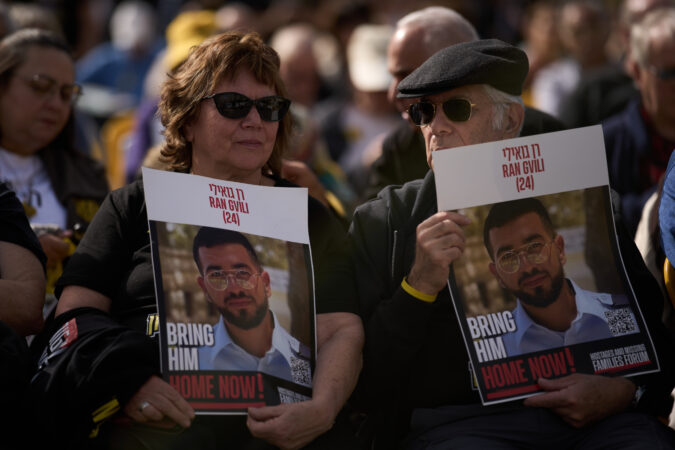
    The remains of police officer Ran Gvili were found in a cemetery in northern Gaza.

    Prime Minister Benjamin Netanyahu called it “an incredible achievement” for Israel and its soldiers. He said Gvili, who was killed during the Hamas-led attack on Oct. 7, 2023, that sparked the war, was among the first to be taken into Gaza.

    Dozens of people, including relatives, military officials, and friends from Gvili’s police unit, received his coffin at an army post on the Israeli side of the border with Gaza.

    Many more Israelis lined nearby roads to pay their respects as a convoy carrying the coffin made its way to Tel Aviv, where it arrived Monday night.

    “You should see the honor you’re receiving here,” Gvili’s father, Itzik, said, kissing his son’s coffin, which was draped in an Israeli flag. “The entire police is here with you, the entire army is with you, the entire people. I’m proud of you.”

    The return of all remaining hostages, living or dead, had been a key part of the Gaza ceasefire’s first phase. Hamas said it now has met those terms.

    Netanyahu’s office said Sunday that once the search for Gvili was finished, Israel would open the Rafah crossing between Gaza and Egypt, which Palestinians see as their lifeline to the world. It has been largely shut since May 2024, except for a short period early last year.

    The ceasefire’s next phase will confront thornier issues, including transitioning to a new governance structure in Gaza and disarming Hamas, which has ruled the territory for nearly two decades.

    “The next phase is disarming Hamas and demilitarizing the Gaza Strip. The next phase is not reconstruction,” Netanyahu said Monday while addressing the Israeli parliament.

    Palestinians react to recovery of remains

    Palestinians in Gaza were optimistic that opening the Rafah crossing will allow travel to and from the enclave along with the evacuation of people needing medical care.

    “We hope this will close off Israel’s pretexts and open the crossing,” said Abdel-Rahman Radwan, a Gaza City resident whose mother has cancer and requires treatment outside Gaza.

    Ahmed Ruqab, a father who lives with his family of six in a tent in the Nuseirat refugee camp, called for mediators and the U.S. to pressure Israel to allow more aid.

    “We need to turn this page and restart,” he said over the phone.

    An official with the United Nation’s children’s agency said Monday that there is backlog of supplies in Egypt ready to move into Gaza whenever the crossing opens to aid traffic.

    The next phase needs to include bringing not only more humanitarian and commercial supplies but also permanent shelter materials and items to repair infrastructure, said Ted Chaiban, UNICEF’s deputy executive director.

    Gvili’s relatives last week repeated calls for Israel’s government and U.S. President Donald Trump to ensure the release of his remains.

    “Most thought of it as an impossible thing to do,” Trump posted on social media.

    Gvili’s mother, Talik, thanked the Israeli government and security forces as well as Trump for allowing the family to “achieve closure.”

    Israel had repeatedly accused Hamas of dragging its feet in the search while Hamas said it had provided all the information it had, accusing Israel of obstructing the efforts.

    How remains of last hostage were found

    Gvili’s remains were found right along the “yellow line” dividing Gaza just on the Israeli side, according to a military official, speaking anonymously under army protocol.

    The October 2023 attack on Israel that launched the war killed about 1,200 people and saw 251 taken hostage. Gvili, a 24-year-old police officer known affectionately as “Rani,” was killed while fighting Hamas militants.

    On a call with reporters Monday, two U.S. officials credited Egypt, Qatar, and Turkey with helping to get Hamas to release Gvili’s body, and said Hamas was very cooperative in making it happen.

    The officials, who insisted on anonymity per the rules of a call set up by the White House, said they now expect Israel to help both sides move forward into phase two of the ceasefire and they want Hamas to disarm in accordance with the agreement and believe they will.

    Before Gvili’s remains were recovered, 20 living hostages and the remains of 27 others had been returned to Israel since the ceasefire, most recently in early December.

    Israel has released roughly 2,000 Palestinian prisoners under the ceasefire deal, many who were seized by Israeli troops during the two-year war and held without charge. It also has released the bodies of more than 300 Palestinians back to Gaza, where officials have struggled to identify them.

    In a symbolic act, Israeli President Isaac Herzog on Monday removed a yellow pin worn by many to show solidarity with the hostages and their families.

    Hundreds of Palestinians killed since ceasefire

    Palestinians in Gaza who spoke to the Associated Press in recent weeks questioned whether the ceasefire’s next steps will improve conditions, pointing to ongoing bloodshed and challenges securing basic necessities.

    Israeli forces on Monday fatally shot two people in Gaza, according to hospitals that received the bodies. One man was close to the area where the military was searching for Gvili, according to Shifa Hospital.

    Israel’s offensive has killed at least 71,660 Palestinians since 2023, according to Gaza’s Health Ministry — with more than 480 Palestinians killed by Israeli fire since the latest ceasefire began. The ministry, which is part of the Hamas-led government, maintains detailed casualty records that are seen as generally reliable by U.N. agencies and independent experts.

    Top court considers petition to open Gaza for journalists

    The Foreign Press Association on Monday asked Israel’s Supreme Court to allow journalists to enter Gaza freely and independently.

    The FPA represents dozens of global news organizations and has been pushing for independent media access to Gaza. Israel has barred reporters from entering Gaza independently since the 2023 attacks by Hamas, saying entry could put journalists and soldiers at risk.

    FPA lawyers told the court that the restrictions are not justified and that with aid workers moving in and out of Gaza, journalists should be allowed in. They said tightly controlled visits under strict military supervision are no substitute for independent access. The judges are expected to rule soon.

  • Border Patrol commander Bovino and some agents expected to leave Minneapolis

    Border Patrol commander Bovino and some agents expected to leave Minneapolis

    MINNEAPOLIS — Minneapolis Mayor Jacob Frey said he spoke to President Donald Trump about the immigration crackdown in his city and that some federal officers will begin leaving.

    Frey said he asked Trump in a phone call to end the immigration enforcement surge and that Trump agreed the present situation cannot continue.

    Frey said some agents will begin leaving Tuesday. The mayor said he would keep pushing for others involved in Operation Metro Surge to go.

    Trump posted on social media that he had a good conversation with Frey. “Lots of progress is being made!” he wrote.

    A senior Border Patrol commander and some agents are expected to leave Minneapolis as early as Tuesday, a person familiar with the matter told the Associated Press.

    The expected departure of Border Patrol commander Greg Bovino, who has been at the center of the Trump administration’s aggressive immigration enforcement surge in cities nationwide, comes as President Donald Trump dispatched border czar Tom Homan to Minnesota to take charge of Immigration and Customs Enforcement operations.

    The person familiar with the matter was not authorized to publicly discuss details of the operation and spoke to AP on condition of anonymity.

    Bovino’s departure marks a significant public shift in federal law enforcement posture amid mounting outrage over the fatal shooting of 37-year-old ICU nurse Alex Pretti by Border Patrol agents.

    His leadership of highly visible federal crackdowns, including operations that sparked mass demonstrations in Los Angeles, Chicago, Charlotte, and Minneapolis, has drawn fierce criticism from local officials, civil rights advocates, and congressional Democrats.

    Criticism has increased around Bovino in the last few days after his public defense of the Pretti shooting and disputed claims about the confrontation that led to his death.

  • New evidence shows how discrimination shortens lives in Black communities

    New evidence shows how discrimination shortens lives in Black communities

    Nearly half of the mortality gap between Black and white adults can be traced to the cumulative toll of a lifetime of stress and heightened inflammation, a new study published Monday shows.

    The study, published in JAMA Network Open, bolsters the body of evidence showing that chronic stress takes a biological toll that shortens lives.

    “It’s important to be empirically demonstrated,” said Ryan Bogdan, the study’s senior author and a professor of psychological and brain sciences at Washington University in St. Louis. Researchers tracked the prevalence of two proteins linked to inflammation in the body and tied it to enduring discrimination and related social challenges. The measurement captures more comprehensively “the aftermath” of stressful events, he said.

    Researchers analyzed the proteins in the blood in more than 1,500 Black and white adults who were part of an aging study in the St. Louis area spanning 17 years. They found that decades of stress — childhood adversity, trauma, discrimination, and economic hardship — were associated with higher levels of inflammation later in life, which correlated with earlier death.

    Epidemiologists say the two biomarkers — C-reactive protein and interleukin-6 — tend to linger in the blood after the body’s fight-or-flight system has been repeatedly triggered, allowing them to capture what’s accumulated over time.

    The study, which was largely driven by Washington University in St. Louis graduate student Isaiah Spears, supports the “weathering hypothesis,” which posits that biological wear and tear is caused by striving to overcome hardships in an unequal society.

    Over the course of the study, 25% of Black participants died compared with about 12% of white participants, the study found, meaning Black participants were more likely to die at younger ages. Researchers found that 49.3% of this gap was explained by stress and inflammation.

    A likely undercount

    Arline T. Geronimus, a professor and population health equity researcher at the University of Michigan who began conceptualizing the weathering hypothesis 40 years ago and was not involved in this study, said the data likely represents an undercount. Study participants, on average, were in their late 50s when the study began and were then followed into their 70s and 80s.

    “The most-weathered have already died,” Geronimus said, noting that age span 35 to 60 is “the hardest, most stressful period of life for marginalized groups.”

    She added that another limitation of the study was that the researchers used the “neon lights” of stress events, capturing major traumas or overt discrimination, while overlooking a quieter and important aspect of weathering — the daily stress of resilience. That includes microaggressions, or routine slights, and code-switching, the constant effort to adjust speech or behavior to fit into predominantly white workplaces. Over time, she said, suppressing anger or frustration to avoid reinforcing stereotypes can take a real physiological toll.

    “It’s not just about trauma or severe deprivation, but kind of everyday fists in the face,” she said. It’s a limitation the study acknowledged.

    Black Americans have among the shortest life spans in the United States with a life expectancy of 74 years in 2023, according to federal figures. White Americans live longer on average, but still fewer years than Asian Americans, who have the highest life expectancy — about 85 years, federal data shows.

    Linda Sprague Martinez, a professor and health equity researcher who was not involved in the study, said people tend to misunderstand the type of stress that weathers a body and the interventions needed for relief.

    “Stress management class is not going to solve this problem,” said Sprague Martinez, who runs the Health Disparities Institute at UConn Health in Connecticut. She called the new study’s core finding, that nearly 50% of the mortality gap is linked to stress, “striking.”

    “This is important evidence that continues to contribute to what we know about the fact that racism drives racial inequities,” she said.

    She added that this type of research has been targeted for elimination by the Trump administration because it is associated with diversity, equity, and inclusion, or DEI.

    “There are people who’d be happy if we stopped doing our work, but no,” she said. “We still have to keep doing the work.”

    Health equity experts said the paper is unlikely to influence policy, in part because it does not pinpoint specific forms of structural racism — such as redlining, police violence, income inequality, school segregation, or historical racial terror such as lynching and cross-burning — that drive health disparities.

    “Concentrated poverty, the wealth gap, homeownership — they didn’t talk about any of these and how it affects folks who are aging,” said Derek M. Griffith, university professor of health equity and population health at the University of Pennsylvania’s nursing and medical schools, who was not involved in the study.

    The field of health equity has found collectively that analyzing biomarkers that signal inflammation is one accurate way of measuring the effects of stress on the body.

    “The fact that they’ve found a big relationship with that combination of those measures is novel,” he said. “The fact that they found that relationship, is not.”

  • Investigators will detail causes of midair collision over Washington, D.C., and recommend changes

    Investigators will detail causes of midair collision over Washington, D.C., and recommend changes

    So many things went wrong last Jan. 29 to contribute to the deadliest plane crash on American soil since 2001 that the National Transportation Safety Board isn’t likely to identify a single cause of the collision between an airliner and an Army helicopter near Washington, D.C., that killed 67 people at its hearing Tuesday.

    Instead, their investigators will detail what they found that played a role in the crash, and the board will recommend changes to help prevent a similar tragedy. Last week, the Federal Aviation Administration already took the temporary restrictions it imposed after the crash and made them permanent to ensure planes and helicopters won’t share the same airspace again around Reagan National Airport.

    Family members of victims hope those suggestions won’t be ignored the same way many past NTSB recommendations have been. Tim Lilley, whose son Sam was the first officer on the American Airlines plane, said he hopes officials in Congress and the administration will make changes now instead of waiting until another disaster.

    “Instead of writing aviation regulation in blood, let’s start writing it in data,” said Lilley, who is a pilot himself and earlier in his career flew Black Hawk helicopters in the Washington area. “Because all the data was there to show this accident was going to happen. This accident was completely preventable.”

    Over the past year, the NTSB has already highlighted a number of the factors that contributed to the crash including a poorly designed helicopter route past Reagan Airport, the fact that the Black Hawk was flying 78 feet higher than it should have been, the warnings that the FAA ignored in the years beforehand, and the Army’s move to turn off a key system that would have broadcast the helicopter’s location more clearly.

    The D.C. plane crash was the first in a number of high-profile crashes and close calls throughout 2025 that alarmed the public, but the total number of crashes last year was actually the lowest since the COVID-19 pandemic hit in 2020 with 1,405 crashes nationwide.

    Experts say flying remains the safest way to travel because of all the overlapping layers of precautions built into the system, but too many of those safety measures failed at the same time last Jan. 29.

    Here is some of what we have learned about the crash:

    Helicopter route didn’t ensure enough separation

    The route along the Potomac River the Black Hawk was following that night allowed for helicopters and planes to come within 75 feet of each other when a plane was landing on the airport’s secondary runway that typically handles less than 5% of the flights landing at Reagan. And that distance was only ensured when the helicopter stuck to flying along the bank of the river, but the official route didn’t require that.

    Normally, air traffic controllers work to keep aircraft at least 500 feet apart to keep them safe, so the scant separation on Route 4 posed what NTSB chairperson Jennifer Homendy called “an intolerable risk to flight safety.”

    The controllers at Reagan also had been in the habit of asking pilots to watch out for other aircraft themselves and maintain visual separation as they tried to squeeze in more planes to land on what the Metropolitan Washington Airport Authority has called the busiest runway in the country. The FAA halted that practice after the crash.

    That night a controller twice asked the helicopter pilots whether they had the jet in sight, and the pilots said they did and asked for visual separation approval so they could use their own eyes to maintain distance. But at the investigative hearings last summer, board members questioned how well the crew could spot the plane while wearing night vision goggles and whether the pilots were even looking in the right spot.

    The Black Hawk was flying too high

    The American Airlines plane flying from Wichita, Kan., collided with the helicopter 278 feet above the river, but the Black Hawk was never supposed to fly above 200 feet as it passed by the airport, according to the official route.

    Before investigators revealed how high the helicopter was flying, Tim Lilley was asking tough questions about it at some of the first meetings NTSB officials had with the families. His background as a pilot gave him detailed knowledge of the issues.

    “We had a moral mandate because we had such an in-depth insight into what happened. We didn’t want to become advocates, but we could not shirk the responsibility,” said Lilley, who started meeting with top lawmakers in Congress, Transportation Secretary Sean Duffy, and Army officials not long after the crash to push for changes.

    The NTSB has said the Black Hawk pilots may not have realized how high the helicopter was because the barometric altimeter they were relying on was reading 80 to 100 feet lower than the altitude registered by the flight data recorder.

    Investigators tested out the altimeters of three other Black Hawks of the same model from the same Army unit and found similar discrepancies.

    Past warnings and alarming data were ignored

    FAA controllers were warning about the risks all the helicopter traffic around Reagan airport created at least since 2022.

    And the NTSB found there had been 85 near misses between planes and helicopters around the airport in the three years before the crash along with more than 15,000 close proximity events. Pilots reported collision alarms going off in their cockpits at least once a month.

    Officials refused to add a warning to helicopter charts urging pilots to the crash that killed her cousin Peter Livingston and his wife, Donna, and two young daughters, Everly and Alydia, who were both promising figure skaters.

    “It became very quickly clear that this crash should never have happened,” Feres said. “And as someone who is not particularly familiar with aviation and how our aviation system works, we were just hearing things over and over again that I think really, really shocked people, really surprised people.”

  • NATO chief wishes ‘good luck’ to those who think Europe can defend itself without U.S. help

    NATO chief wishes ‘good luck’ to those who think Europe can defend itself without U.S. help

    BRUSSELS — NATO Secretary-General Mark Rutte insisted on Monday that Europe is incapable of defending itself without U.S. military support and would have to more than double current military spending targets to be able to do so.

    “If anyone thinks here … that the European Union or Europe as a whole can defend itself without the U.S., keep on dreaming. You can’t,” Rutte told EU lawmakers in Brussels. Europe and the United States “need each other,” he said.

    Tensions are festering within NATO over U.S. President Donald Trump’s renewed threats in recent weeks to annex Greenland, which is a semiautonomous territory of NATO ally Denmark.

    Trump also said that he was slapping new tariffs on Greenland’s European backers, but later dropped his threats after a “framework” for a deal over the mineral-rich island was reached, with Rutte’s help. Few details of the agreement have emerged.

    The 32-nation military organization is bound together by a mutual defense clause, Article 5 of NATO’s founding Washington treaty, which commits every country to come to the defense of an ally whose territory is under threat.

    At NATO’s summit in The Hague in July, European allies — with the exception of Spain — plus Canada agreed to Trump’s demand that they invest the same percentage of their economic output on defense as the United States within a decade.

    They pledged to spend 3.5% of gross domestic product on core defense, and a further 1.5% on security-related infrastructure — a total of 5% of GDP — by 2035.

    “If you really want to go it alone,” Rutte said, “forget that you can ever get there with 5%. It will be 10%. You have to build up your own nuclear capability. That costs billions and billions of euros.”

    France has led calls for Europe to build its “strategic autonomy,” and support for its stance has grown since the Trump administration warned last year that its security priorities lie elsewhere and that the Europeans would have to fend for themselves.

    Rutte told the lawmakers that without the United States, Europe “would lose the ultimate guarantor of our freedom, which is the U.S. nuclear umbrella. So, hey, good luck!”

  • Users say TikTok stifled political posts about ICE shooting as platform faltered

    Users say TikTok stifled political posts about ICE shooting as platform faltered

    Throngs of TikTok users say the social media platform suppressed or delayed videos about the fatal shooting of a Minneapolis man by federal immigration agents, charging that posts tied to the incident drew few views or were stalled amid broader technical issues on the site.

    Some said their posts about the deadly encounter stalled, while others complained their videos received a fraction of their normal viewership. Many accused the tech company of silencing them under a #TikTokCensorship hashtag on X, Bluesky, and Facebook.

    One TikTok user with the username @necie28 accused the platform of “full-on censorship” after videos she uploaded that were critical of Immigration and Customs Enforcement logged zero views, despite her having 35,700 followers. Her post about the alleged censorship had 15 views on Monday morning, compared with 1.1 million views for her pinned post.

    But the problems on TikTok appeared to extend beyond political content focusing on ICE’s Minneapolis encounter. Thousands of TikTok users reported outages Sunday on the viral video-sharing site, including trouble posting videos, not being able to see follower-count changes, and videos showing no views, according to Downdetector, which tracks outages based on user input.

    The complaints about TikTok, which ramped up over the weekend, arrive days after the company announced it had finalized a deal to spin off its U.S. business to non-Chinese investors to avoid a ban in the country. TikTok has some 200 million U.S. users.

    Tech companies such as TikTok, Meta, and YouTube often face scrutiny over how platforms surface content during moments of heightened political division or make major changes to their algorithms. Content is sometimes throttled, blocked, or removed for a wide variety of unanticipated reasons. Automated moderation systems can make mistakes as they filter violent or hateful content, and algorithms sometimes flag users who make sudden changes to the type of content they post. This latest incident illustrates how TikTok will likely face skepticism under new ownership from its large, younger user base over how it treats dicey political content.

    TikTok said on Thursday that it has finalized its deal to spin off its U.S. business to non-Chinese investors, just before the deadline of President Donald Trump’s suspension of a ban on the platform if it didn’t change ownership. The new U.S. company, TikTok USDS Joint Venture LLC, is controlled by a consortium of U.S. businesses that include Trump allies such as Oracle, whose executive chairperson, Larry Ellison, has assembled an array of media properties friendly to Trump.

    TikTok said in a post on X that it has “been working to restore our services following a power outage at a U.S. data center impacting TikTok and other apps we operate.” The company added that it’s working with the data center “to stabilize our service.”

    A White House spokesperson said in a statement that the “White House is not involved in, nor has it made requests related to, TikTok’s content moderation”

    Steve Vladeck, a Georgetown law professor, said in a Bluesky post Sunday that a video he uploaded to TikTok criticizing the Department of Homeland Security had been “under review” for nine hours and still couldn’t be shared. Vladeck said he argued in the video that DHS’s recent assertions that its officers had the authority to enter homes without judicial warrants in immigration cases were “bunk.”

    “I know it’s hard to track all the threats to democracy out there right now, but this is at the top of the list,” Sen. Chris Murphy (D., Conn.) said on X.

    Other U.S.-based tech companies have faced similar complaints. Last year, after Meta announced it was ending its fact-checking program, among several other Republican-friendly content rules, abortion pill providers complained after Instagram suspended their accounts, some of which were later restored by the company, which said it was not related to the new policies.

    In 2023, thousands of supporters of Palestinians complained that their posts were being suppressed by Meta’s social networks — an incident the company blamed on an internal bug. In the United States, Republicans have long accused TikTok of overemphasizing liberal-leaning content on the platform, especially videos about the Israel-Gaza war and Trump.

  • European Union opens investigation into Musk’s AI chatbot Grok over sexual deepfakes

    European Union opens investigation into Musk’s AI chatbot Grok over sexual deepfakes

    LONDON — The European Union opened a formal investigation into Elon Musk’s social media platform X on Monday after his artificial intelligence chatbot Grok spewed nonconsensual sexualized deepfake images on the platform.

    European regulators also widened a separate, ongoing investigation into X’s recommendation systems after the platform said it would switch to Grok’s AI system to choose which posts users see.

    The scrutiny from Brussels comes after Grok sparked a global backlash by allowing users through its AI image generation and editing capabilities to undress people, putting females in transparent bikinis or revealing clothing. Researchers said some images appeared to include children. Some governments banned the service or issued warnings.

    The 27-nation EU’s executive said it was looking into whether X has done enough as required by the bloc’s digital regulations to contain the risks of spreading illegal content such as “manipulated sexually explicit images.”

    That includes content that “may amount to child sexual abuse material,” the European Commission said. These risks have now “materialized,” the commission said, exposing the bloc’s citizens to “serious harm.”

    Regulators will examine whether Grok is living up to its obligations under the Digital Services Act, the bloc’s wide-ranging rule book for keeping internet users safe from harmful content and products.

    In response to a request for comment, an X spokesperson directed the Associated Press to an earlier statement that the company remains “committed to making X a safe platform for everyone” and that it has “zero tolerance” for child sexual exploitation, nonconsensual nudity, and unwanted sexual content.

    The X statement from Jan. 14 also said it would stop allowing users to depict people in “bikinis, underwear or other revealing attire,” but only in places where it has been deemed illegal.

    “Non-consensual sexual deepfakes of women and children are a violent, unacceptable form of degradation,” Henna Virkkunen, an executive vice president at the commission, said in a statement.

    “With this investigation, we will determine whether X has met its legal obligations under the DSA, or whether it treated rights of European citizens — including those of women and children — as collateral damage of its service,” said Virkkunen, who oversees tech sovereignty, security, and democracy.

    Musk’s artificial intelligence company xAI launched Grok’s image tool last summer. But the problem began snowballing only late last month when Grok seemingly granted a large number of user requests to modify images posted by others. The problem was amplified both because Musk pitches his chatbot as an edgier alternative with fewer safeguards than rivals, and because Grok’s responses on X are publicly visible, and can therefore be easily spread.

    The EU investigation covers only Grok’s service on X, and not Grok’s website and standalone app. That’s because the DSA applies only to the biggest online platforms.

    There’s no deadline for the bloc to resolve the case, which could end in either X pledging to change its behavior or a hefty fine.

    In December Brussels issued X with a 120-million euro (then-$140 million) fine as part of the earlier ongoing DSA investigation, for shortcomings including blue checkmarks that broke the rules on “deceptive design practices” that risked exposing users to scams and manipulation.

    The bloc has also been scrutinizing X over allegations that Grok generated antisemitic material and has asked the site for more information.

    Malaysia and Indonesia blocked access to Grok earlier this month in response to the controversy, becoming the first countries to do so.

    On Friday, Malaysian authorities said they lifted the temporary restriction after the company implemented additional security and preventive measures, without giving further details. Malaysian regulators said they met last week with X’s representatives and would continue to monitor the situation.

  • Federal Aviation Administration says 6 killed in jet crash in snow in Bangor, Maine

    Federal Aviation Administration says 6 killed in jet crash in snow in Bangor, Maine

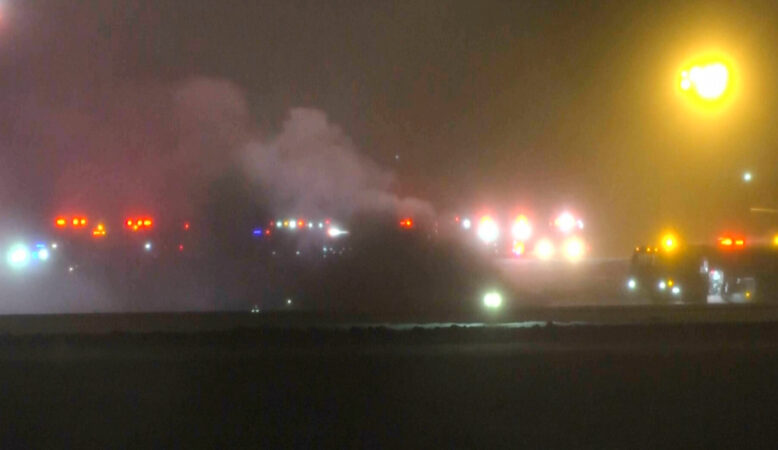
    PORTLAND, Maine — Six people died when a business jet crashed during takeoff as a snowstorm moved in and visibility diminished in Maine Sunday night.

    The Bombardier Challenger 600 flipped over and burned on takeoff at Bangor International Airport around 7:45 p.m. Sunday night as the nation’s massive winter storm was beginning to reach the area.

    An audio recording of air traffic controllers posted by www.LiveATC.net includes someone saying “Aircraft upside down. We have a passenger aircraft upside down,” about 45 seconds after a plane was cleared for takeoff. First responders arrived less than a minute later, airport director Jose Saavedra said.

    Experts say the weather and questions about whether ice accumulating on the wings kept the plane from getting airborne — as has happened at least twice before on that plane model — will likely be an initial focus by the National Transportation Safety Board. However, the agency will consider all possible factors.

    “You can count on the fact that NTSB is going to look very closely at this,” said John Cox, who is CEO of Safety Operating Systems.

    The airport said Monday afternoon that there were six people aboard, according to the flight manifest, and all of them died. Earlier in the day, the Federal Aviation Administration said seven people died and one member of the crew survived, but a spokesperson said those numbers were preliminary and subject to change. The airport said no one was taken to a hospital.

    Snowfall was heavy elsewhere at the time of the crash, but accumulation had just started in Bangor. Other planes had been taking off safely. But about half an hour before the crash, the pilot of a Florida-bound Allegiant plane radioed the tower to abort his takeoff.

    “One, our deice fluid has failed and two, I don’t think the visibility is good enough for us to go, so we’re going to have to taxi back to the gate here,” the Allegiant pilot radioed. The controller responded by saying he was just getting ready to warn the pilot that visibility had dropped to about three-quarters of a mile.

    At about the same time, the pilot of the Bombardier had taxied over to the deicing pad and was radioing in a request to get his plane’s wings and tail treated, according to audio posted by www.LiveATC.net. The plane remained at the deicing pad for about 20 minutes before taxiing to the runway.

    The Bombardier Challenger 600 model “has a history of problems with icing on takeoff” that caused previous deadly crashes in Birmingham, England; and Montrose, Colo., more than 20 years ago, aviation safety consultant Jeff Guzzetti said. Even a little bit of ice on the wings can cause serious problems, so careful inspections and de-icing are a crucial step before takeoff, the former federal crash investigator said. And there is a time limit on how long de-icing remains effective. It could last only about 20 minutes.

    The identities of those onboard won’t be released publicly until they can be confirmed, officials said.

    The jet was registered to a corporation that shares the same address in Houston as the personal injury law firm Arnold and Itkin Trial Lawyers, and one of the law firm’s founding partners is listed as the registered agent for the company that owns the plane.

    The international airport in Bangor, about 200 miles north of Boston, is one of the closest in the U.S. to Europe and is often used to refuel private jets flying overseas. The Bombardier was headed for France when it crashed.

    The airport shut down after the crash and will remain closed at least until Wednesday so the FAA and National Transportation Safety Board investigators can examine and remove the wreckage.

    A preliminary report outlining the facts of the crash should be released in about a month, but the final version likely won’t be published for more than a year.

  • Israel says the remains of the final hostage in Gaza have been recovered, a key step for the ceasefire’s next phase

    Israel says the remains of the final hostage in Gaza have been recovered, a key step for the ceasefire’s next phase

    JERUSALEM — The remains of the final hostage in Gaza have been recovered, Israel’s military said Monday, clearing the way for the next phase of the ceasefire that paused the Israel-Hamas war.

    The announcement that the remains of Ran Gvili had been found and identified came a day after Israel’s government said the military was conducting a “large-scale operation” in a cemetery in northern Gaza to locate them.

    Prime Minister Benjamin Netanyahu called it “an incredible achievement” for Israel and its soldiers, telling Israeli media that “I promised we would bring everyone home and we have brought everyone home.” He said Gvili, who was killed during the Hamas-led attack on Oct. 7, 2023, that sparked the war, was among the first to be taken into Gaza.

    The return of all remaining hostages, living or dead, has been a key part of the Gaza ceasefire’s first phase, and Gvili’s family had urged Israel’s government not to enter the second phase until his remains were recovered and returned.

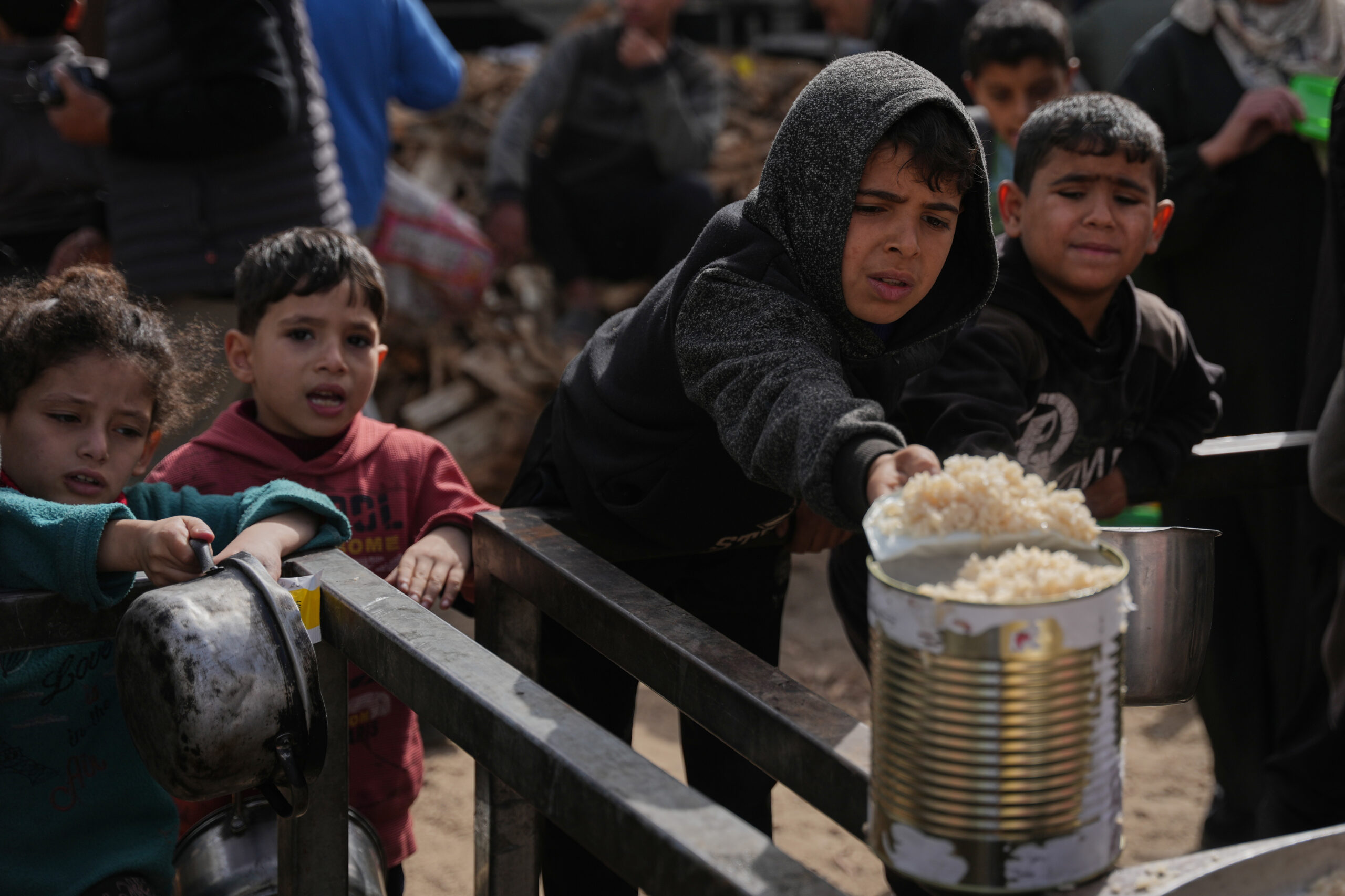
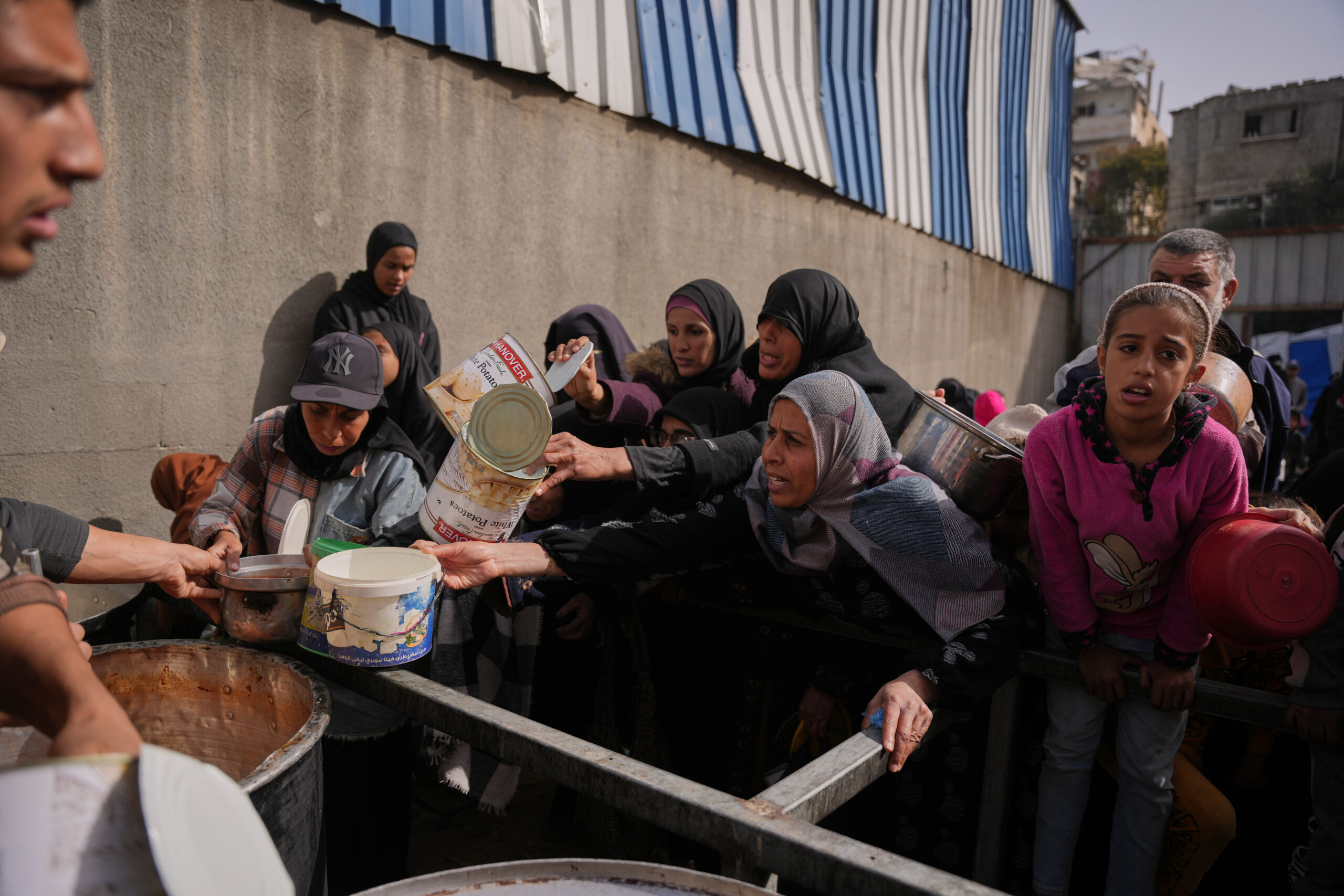
    Palestinian children receive donated food at a community kitchen in Nuseirat, in central Gaza Strip, on Saturday, Jan. 24.

    Netanyahu’s office said Sunday that Israel would open the Rafah crossing between Gaza and Egypt, which Palestinians see as their lifeline to the world, once the search for Gvili was finished. It has been largely shut since May 2024, except for a small period in early 2025.

    Israel and Hamas had been under pressure from ceasefire mediators including Washington to move into the second phase of the U.S.-brokered truce, which took effect on Oct. 10.

    Israel had repeatedly accused Hamas of dragging its feet in the recovery of the final hostage. Hamas said it had provided all the information it had about Gvili’s remains, and accused Israel of obstructing efforts to search for them in areas of Gaza under Israeli military control.

    Israel’s military had said the large-scale operation to locate Gvili’s remains was “in the area of the Yellow Line” that divides the territory.

    The Oct. 7, 2023 attack killed about 1,200 people and saw 251 taken hostage. Gvili, a 24-year-old police officer known affectionately as “Rani,” was killed while fighting Hamas militants.

    Palestinians receive donated food at a community kitchen in Nuseirat, in central Gaza Strip, on Saturday, Jan. 24.

    Before Gvili’s remains were recovered, 20 living hostages and the remains of 27 others had been returned to Israel since the ceasefire, most recently in early December. Israel in exchange has released the bodies of hundreds Palestinians to Gaza.

    The next phase of the 20-point ceasefire plan has called for creating an international stabilization force, forming a technocratic Palestinian government and disarming Hamas.

    Palestinians killed in Gaza

    Israeli forces on Monday fatally shot a man in Gaza City’s Tuffah neighborhood, according to Shifa Hospital, which received the body. The man was close to an area where the military has launched the search operation for Gvili, the hospital said.

    Another man was killed in the eastern side of Bureij refugee camp in central Gaza, according to Al-Aqsa Martyrs hospital, which received his body. The circumstances of his death were not immediately clear.

    More than 480 Palestinians were killed by Israeli fire since Oct. 10, according to Gaza’s Health Ministry. The ministry, which is part of the Hamas-led government, maintains detailed casualty records that are seen as generally reliable by U.N. agencies and independent experts.

    Israel’s top court considers petition to open Gaza for international journalists

    The Foreign Press Association on Monday asked Israel’s Supreme Court to allow journalists to enter Gaza freely and independently.

    The FPA, which represents dozens of global news organizations, has been fighting for more than two years for independent media access to Gaza. Israel has barred reporters from entering Gaza independently since the Oct. 7, 2023, attacks by Hamas, which triggered the war, saying entry could put both journalists and soldiers at risk.

    The army has offered journalists brief, occasional visits under strict military supervision.

    FPA lawyers told the three judge panel that the restrictions are not justified and that with aid workers moving in and out of Gaza, journalists should be allowed in as well. They also said the tightly controlled embeds with the military are no substitute for independent access. The judges are expected to rule in the coming days.