Category: Nation & World

  • Venezuela opens debate on an oil sector overhaul as Trump seeks role for U.S. firms

    Venezuela opens debate on an oil sector overhaul as Trump seeks role for U.S. firms

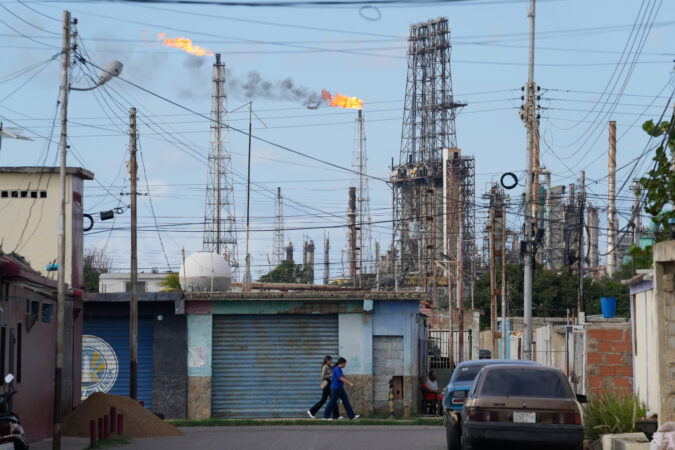
    CARACAS, Venezuela — Venezuela’s legislature opened debate Thursday on a bill to loosen state control over the country’s vast oil sector in the first major overhaul since the late socialist leader Hugo Chávez nationalized parts of the industry in 2007.

    The legislation would create new opportunities for private companies to invest in the oil industry and establish international arbitration for investment disputes.

    Following the U.S. capture of former President Nicolás Maduro earlier this month, the Trump administration has ramped up pressure on acting President Delcy Rodríguez and other allies of the ousted leader to invite greater investment from U.S. energy companies in Venezuela’s flagging oil industry.

    A draft of the proposed legislation, a copy of which was seen by The Associated Press, represents a sharp turn away from the resource nationalism of Chávez, who accused multinationals of colonial exploitation and considered the country’s oil wealth to be state property.

    In apparent response to demands from U.S. oil executives, the proposed legislation would allow private companies to independently operate oil fields, market their own crude output and collect the cash revenues despite remaining, on paper, minority partners to the state oil company.

    “The operating company shall assume the comprehensive management of the execution of the activities, at its sole cost, expense and risk,” the draft says, adding that portions of production volumes “may be directly commercialized by the operating company, once governmental obligations have been fulfilled.”

    Crucially, the bill also would let companies settle legal disputes through arbitration in international courts rather than only local courts.

    The legislation also would keep the current 30% royalty rate, but let the government cut royalties and taxes to as low as 15% for expensive or hard-to-develop oil projects, so that companies would be more willing to invest.

    The president of Venezuela’s National Assembly and the acting president’s brother, Jorge Rodríguez, told lawmakers at the start of Thursday’s debate that the bill aims to “allow an accelerated increase in production” of oil in Venezuela.

    “Oil under the ground is useless,” he said, referring to the need to boost oil production and open up new exploration opportunities.

    Pushed by Delcy Rodríguez, the bill is expected to advance swiftly through the ruling party-dominated legislature. Lawmakers concluded the initial discussion of the bill on Thursday after around two hours and advanced the legislation to a second round of debate, yet to be scheduled.

    During the session, Orlando Camacho, a lawmaker and head of Venezuela’s national Fedeindustria business association, told the assembly that the bill would ensure that Venezuela’s oil industry “remains the engine of the country.”

    The proposed legal guarantees — ensuring that foreign companies can bring claims against Venezuela before international bodies — are necessary to attract private investment, he said.

    Even as President Donald Trump looks to lure American companies to reboot Venezuela’s oil sector, many remain concerned about the financial and legal risks of pouring billions of dollars into the country.

    Plenty of investors have been burned before, their assets seized as Chávez nationalized parts of Venezuela’s lucrative oil industry in 2007. Firms like Exxon have been trying to get the Venezuelan government to compensate them for their billions of dollars in losses ever since, to no avail.

    The current political uncertainty also worries investors. There is no timeline for holding democratic elections in Venezuela after Maduro’s ouster as Rodríguez, long Maduro’s loyal second in command, seeks to consolidate control. The Trump administration also hasn’t said when it will lift the crippling sanctions imposed to weaken Maduro’s government, which further restrict foreign operations in the country’s oil sector.

  • 3 people involved in a Minnesota church protest are arrested

    3 people involved in a Minnesota church protest are arrested

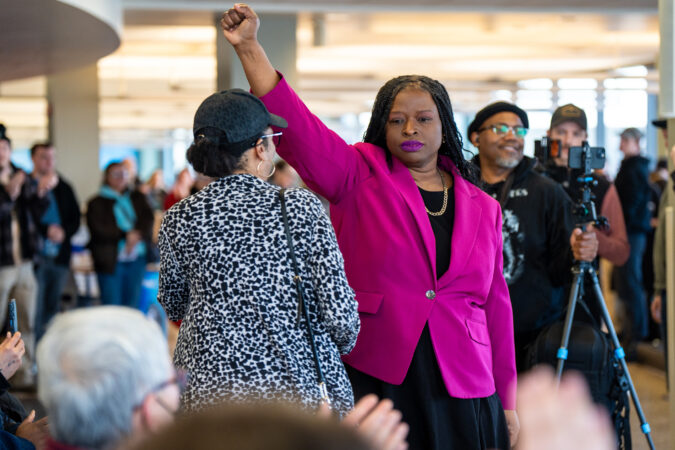
    MINNEAPOLIS — A prominent civil rights attorney and at least two other people involved in an anti-immigration enforcement protest that disrupted a service at a Minnesota church have been arrested, Trump administration officials said Thursday, even as a judge rebuffed related charges against journalist Don Lemon.

    The developments unfolded as Vice President JD Vance arrived in the state.

    Attorney General Pam Bondi announced the arrest of Nekima Levy Armstrong in a post on X. On Sunday, protesters entered the Cities Church in St. Paul, where a local official with U.S. Immigration and Customs Enforcement serves as a pastor. Bondi later posted on X that a second person had been arrested, followed by a third arrested announced by FBI Director Kash Patel.

    The Justice Department quickly opened a civil rights investigation after the group interrupted services by chanting “ICE out” and “Justice for Renee Good,” referring to the 37-year-old mother of three who was fatally shot by an ICE officer in Minneapolis earlier this month.

    “Listen loud and clear: WE DO NOT TOLERATE ATTACKS ON PLACES OF WORSHIP,” the attorney general wrote on X.

    Cities Church belongs to the Southern Baptist Convention and lists one of its pastors as David Easterwood, who leads the local ICE field office. Many Baptist churches have pastors who also work other jobs.

    Attorneys representing the church hailed the arrests.

    “The U.S. Department of Justice acted decisively by arresting those who coordinated and carried out the terrible crime,” said Doug Wardlow, director of litigation for True North Legal, which calls itself a public interest civil rights firm, in a statement.

    Meanwhile, a magistrate judge rejected federal prosecutors’ bid to charge Lemon related to the church protest, a person familiar with the matter said Thursday.

    The person spoke on the condition of anonymity because they were not authorized to publicly discuss the ongoing investigation.

    Lemon, a former NBC10 reporter and anchor, was among those on who entered the church. Lemon has said he is not affiliated with the protest organizers and was there chronicling as a journalist.

    “Once the protest started in the church we did an act of journalism which was report on it and talk to the people involved, including the pastor, members of the church and members of the organization,” Lemon said in a video posted on social media. “That’s it. That’s called journalism.”

    It wasn’t immediately clear what the Justice Department would do after the judge’s decision. Authorities could return to a magistrate judge to again seek a criminal complaint or an indictment against Lemon before a grand jury.

    CNN, which fired Lemon in 2023, first reported the ruling.

    Vance threatens the protesters with prison

    Levy Armstrong, a civil rights attorney and prominent local activist, had called for the pastor affiliated with ICE to resign, saying his dual role poses a “fundamental moral conflict.”

    “You cannot lead a congregation while directing an agency whose actions have cost lives and inflicted fear in our communities,” she said Tuesday. “When officials protect armed agents, repeatedly refuse meaningful investigation into killings like Renee Good’s, and signal they may pursue peaceful protesters and journalists, that is not justice — it is intimidation.”

    Prominent leaders of the Southern Baptist Convention have come to the church’s defense, arguing that compassion for migrant families affected by the crackdown cannot justify violating a sacred space during worship.

    Vance, speaking in Toledo ahead of his Minnesota visit, warned the church protesters: “Those people are going to be sent to prison so long as we have the power to do so. We’re going to do everything we can to enforce the law.”

    Arrests follow DOJ civil rights investigation

    A longtime activist in the Twin Cities metropolitan area, Levy Armstrong has helped lead local protests after the high-profile police-involved killings of Black Americans, including George Floyd, Philando Castile and Jamar Clark. She is a former president of the NAACP’s Minneapolis branch.

    Homeland Security Secretary Kristi Noem posted a photo on X of Levy Armstrong with her arms behind her back next to a person wearing a badge. Noem said she faces a charge under a statute that bars threatening or intimidating someone exercising a right.

    FBI Director Kash Patel posted on X that Chauntyll Louisa Allen, the second person Bondi said was arrested, is charged under the Freedom of Access to Clinic Entrances Act, which prohibits physically obstructing or using the threat of force to intimidate or interfere with a person seeking reproductive health services or seeking to participate in a service at a house of worship. Patel said William Kelly has also been arrested.

    It’s unclear which attorneys would represent Allen and Kelly.

    Saint Paul Public Schools, where Allen is a member of the board of education, is aware of her arrest but will not comment on pending legal matters, according to district spokesperson Erica Wacker.

    Allen and Levy Armstrong are part of a community of Black Minnesota activists who have protested the deaths of African Americans at the hands of police.

    Kelly defended the protest during a news conference Tuesday, criticizing the church for its association with a pastor who works for ICE.

    The Justice Department’s swift investigation into the church protest stands in contrast to its decision not to open a civil rights investigation into the killing of Good. Deputy Attorney General Todd Blanche said last week there was “no basis” for a civil rights investigation into her death.

    Administration officials have said the officer acted in self-defense and that the driver of the Honda was engaging in “an act of domestic terrorism” when she pulled toward him. But the decision not to have the department’s Civil Rights Division investigate marked a sharp departure from past administrations, which have moved quickly to probe shootings of civilians by law enforcement officials.

    The Justice Department has separately opened an investigation into whether Minnesota officials impeded or obstructed federal immigration enforcement though their public statements. Prosecutors this week sent subpoenas to the offices of Gov. Tim Walz, Attorney General Keith Ellison, Minneapolis Mayor Jacob Frey, St. Paul Mayor Kaohly Her and officials in Ramsey and Hennepin counties, according to a person familiar with the matter.

    VP visits Minnesota

    Vance, a Republican, arrived amid tense interactions between federal immigration law enforcement authorities and residents. State and local elected officials have opposed the crackdown that has become a major focus of Department of Homeland Security sweeps.

    His visit comes less than a month after Good was killed. He has called Good’s death a “tragedy of her own making.”

    Vance said early Thursday that the “far left” has decided the U.S. shouldn’t have a border.

    “If you want to turn down the chaos in Minneapolis, stop fighting immigration enforcement and accept that we have to have a border in this country. It’s not that hard,” Vance said.

    A federal appeals court this week suspended a decision that barred immigration officers from using tear gas or pepper spray against peaceful protesters in Minnesota. The 8th U.S. Circuit Court of Appeals froze the ruling that had barred retaliation, including detaining people who follow agents in cars.

    After the court’s stay, U.S. Border Patrol official Greg Bovino, who has commanded the administration’s big-city immigration campaign, was seen on video repeatedly warning protesters on a snowy Minneapolis street “Gas is coming!” before tossing a canister that released green smoke into the crowd.

    Bovino, speaking Thursday during a news conference, urged better cooperation from local and state officials in Minnesota, and blamed an “influx of anarchists” for the anti-ICE sentiment.

    “The current climate confronting law enforcement … is not very favorable right now in Minneapolis,” he said. The Associated Press left messages for the Minneapolis Police Department requesting its response to Bovino’s comments.
  • Jack Smith defends his Trump investigations at a public congressional hearing

    Jack Smith defends his Trump investigations at a public congressional hearing

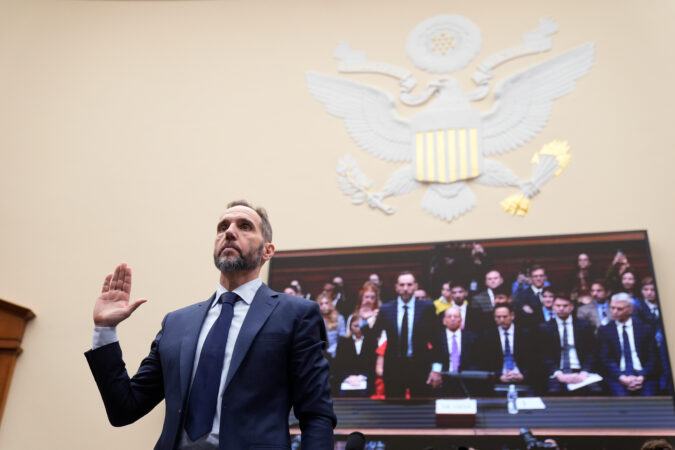
    WASHINGTON — Former Justice Department special counsel Jack Smith on Thursday defended his investigations of Donald Trump at a public congressional hearing in which he insisted that he had acted without regard to politics and had no second thoughts about the criminal charges he brought.

    “No one should be above the law in our country, and the law required that he be held to account. So that is what I did,” Smith said of Trump.

    Smith testified behind closed doors last month but returned to the House Judiciary Committee for a public hearing that provided the prosecutor with a forum to address Congress and the country more generally about the breadth of evidence he collected during investigations that shadowed Trump during the 2024 presidential campaign and resulted in indictments. The hourslong hearing immediately split along partisan lines as Republican lawmakers sought to undermine the former Justice Department official while Democrats tried to elicit damaging testimony about Trump’s conduct and accused their GOP counterparts of attempting to rewrite history.

    “It was always about politics,” said Rep. Jim Jordan of Ohio, the committee’s Republican chairman.

    “Maybe for them,” retorted Rep. Jamie Raskin, the panel’s top Democrat, during his own opening statement. “But, for us, it’s all about the rule of law.”

    The hearing was on the mind of Trump himself as he traveled back from the World Economic Forum in Davos, Switzerland, with the president posting on his Truth Social account that Smith was being “DECIMATED before Congress” — presumably reference to the Republican attacks he faced. Trump said Smith had “destroyed many lives under the guise of legitimacy.”

    Smith told lawmakers that he stood behind his decisions as special counsel to bring charges against Trump in separate cases that accused the Republican of conspiring to overturn the 2020 presidential election after he lost to Democrat Joe Biden and hoarding classified documents at his Mar-a-Lago estate in Palm Beach, Fla., after he left the White House.

    “Our investigation developed proof beyond a reasonable doubt that President Trump engaged in criminal activity,” Smith said. “If asked whether to prosecute a former president based on the same facts today, I would do so regardless of whether that president was a Republican or a Democrat.”

    Republicans, Smith spar over phone records

    Republicans from the outset sought to portray Smith as an overly aggressive, hard-charging prosecutor who had to be “reined in” by higher-ups and the courts as he investigated Trump. They also seized on revelations that the Smith team had collected and analyzed phone records of more than a half-dozen Republican lawmakers who were in contact with Trump on Jan. 6, 2021, as his supporters stormed the Capitol in a bid to halt the certification of his 2020 election loss.

    The records revealed the length and time of the calls but not the content of the communications, but Rep. Brandon Gill, a Texas Republican, said the episode showed how Smith had “walked all over the Constitution.”

    “My office didn’t spy on anyone,” Smith said, explaining that collecting phone records is a common prosecutorial tactic and necessary in this instance to help prosecutors understand the scope of the conspiracy.

    Smith describes a wide-ranging conspiracy on 2020

    Under questioning, Smith described what he said was a wide-ranging conspiracy to overturn the results of the election that Trump lost to Democrat Joe Biden and alleged how the Republican refused to listen to advisers who told him that the contest had in fact not been stolen. After he was charged, Smith said, Trump tried to silence and intimidate witnesses.

    Smith said one reason he felt confident in the strength of the case that prosecutors had prepared to take to trial was the extent to which it relied on Republican supporters of Trump.

    “Some of the most powerful witnesses were witnesses who, in fact, were fellow Republicans who had voted for Donald Trump, who had campaigned for him and who wanted him to win the election,” Smith said.

    The hearing unfolded against the backdrop of an ongoing Trump administration retribution campaign targeting the investigators who scrutinized the Republican president and amid mounting alarm that the Justice Department’s institutional independence is eroding under the sway of the president.

    In a nod to those concerns, Smith said: “I believe that if we don’t call people to account when they commit crimes in this context, it can endanger our election process, it can endanger election workers and, ultimately, our democracy.”

    Smith was appointed in 2022 by Biden’s Justice Department to oversee investigations into Trump, who has denied any wrongdoing. Both investigations produced indictments against Trump, but the cases were abandoned by Smith and his team after Trump won back the White House because of longstanding Justice Department legal opinions that say sitting presidents cannot be indicted.

    GOP says Smith wanted to wreck Trump’s White House bid

    Republicans for their part repeatedly denounced Smith, with California Rep. Kevin Kiley accusing him of seeking “maximum litigation advantage at every turn” and “circumventing constitutional limitations to the point that you had to be reined in again and again throughout the process.”

    Another Republican lawmaker, Rep. Ben Cline of Virginia, challenged Smith on his efforts to bar Trump from making incendiary comments about witnesses. Smith said the order was necessary because of Trump’s efforts to intimidate witness, but Cline asserted that it was meant to silence Trump in the heat of the presidential campaign.

    And Jordan, the committee chairman, advanced a frequent Trump talking point that the investigation was driven by a desire to derail Trump’s candidacy.

    “We should never forget what took place, what they did to the guy we the people elected twice,” Jordan said.

    Smith vigorously rejected those suggestions and said the evidence placed Trump’s actions squarely at the heart of a criminal conspiracy to undo the 2020 election.

    “The evidence here made clear that President Trump was by a large measure the most culpable and most responsible person in this conspiracy,” Smith said. “These crimes were committed for his benefit. The attack that happened at the Capitol, part of this case, does not happen without him. The other co-conspirators were doing this for his benefit.”

  • The decision to move ISIS prisoners from Syria to Iraq came at the request of Baghdad, officials say

    The decision to move ISIS prisoners from Syria to Iraq came at the request of Baghdad, officials say

    BAGHDAD — The decision to move prisoners of the Islamic State group from northeast Syria to detention centers in Iraq came after a request by officials in Baghdad that was welcomed by the U.S.-led coalition and the Syrian government, officials said Thursday.

    American and Iraqi officials told The Associated Press about the Iraqi request, a day after the U.S. military said that it started transferring some of the 9,000 IS detainees held in more than a dozen detention centers in northeast Syria controlled by the Kurdish-led Syrian Democratic Forces, or SDF, in northeast Syria.

    The move to start transferring the detainees came after Syrian government forces took control of the sprawling al-Hol camp — which houses thousands of mostly women and children — from the SDF, which withdrew as part of a ceasefire. Troops on Monday seized a prison in the northeastern town of Shaddadeh, where some IS detainees escaped and many were recaptured, state media reported.

    The SDF said on Thursday that government forces shelled al-Aqtan prison near the northern Syrian city of Raqqa with heavy weapons, while simultaneously imposing a siege around the prison using tanks and deploying fighters.

    Al-Aqtan prison, where some IS prisoners are held, was surrounded by government forces earlier this week and negotiations were ongoing on the future of the detention facility.

    Concerns about escapes

    With the push by government forces into northeast Syria along the border with Iraq, Baghdad became concerned that some of the detainees might become a danger to Iraq’s security, if they managed to flee from the detention centers amid the chaos.

    An Iraqi security official said that the decision to transfer the prisoners from Syria to Iraq was an Iraqi decision, welcomed by the U.S.-led coalition and the Syrian government. The official said that it was in Iraq’s security interest to detain them in Iraqi prisons rather than leaving them in Syria.

    Also Thursday, a senior U.S. military official confirmed to the AP that Iraq “offered proactively” to take the IS prisoners rather than the U.S. requesting it of them.

    A Syrian foreign ministry official said that the plan to transfer IS prisoners from Syria to Iraq had been under discussion for months before the recent clashes with the SDF.

    All three officials spoke on condition of anonymity because they weren’t authorized to comment publicly.

    Over the past several years, the SDF has handed over to Iraqi authorities foreign fighters, including French citizens, who were put on trial and received sentences.

    The SDF still controls more than a dozen detention facilities holding around 9,000 IS members, but is slated to hand the prisons over to government control under a peace process that also is supposed to eventually merge the SDF with government forces.

    U.S. Central Command said that the first transfer on Wednesday involved 150 IS members, who were taken from Syria’s northeastern province of Hassakeh to “secure locations” in Iraq. The statement said that up to 7,000 detainees could be transferred to Iraqi-controlled facilities.

    Iraq has beefed up patrols along its border with Syria. On Thursday, tanks lined up along the frontier in the northern province of Sinjar.

    Members of the Yazidi minority in Sinjar have been particularly fearful of a repeat of 2014 when IS militants overran the area and launched particularly brutal attacks on Yazidis, considered by the extremist group to be heretics. Militants killed Yazidi men and boys and sold women into sexual slavery or forced them to convert and marry militants.

    Stark warning

    IS declared a caliphate in 2014 in large parts of Syria and Iraq, attracting large numbers of fighters from around the world.

    The militant group was defeated in Iraq in 2017, and in Syria two years later, but IS sleeper cells still carry out deadly attacks in both countries. As a key U.S. ally in the region, the SDF played a major role in defeating IS.

    Also Thursday, the SDF accused the government of violating a four-day truce declared on Tuesday. It said Syrian government forces pounded the southern outskirts of the northern town of Kobani, which recently became besieged after the government’s push in the northeast over the past two weeks.

    A commander with the Kurdish women’s militia in Syria, speaking from inside Kobani, told reporters during an online news conference that living conditions there are deteriorating.

    Nesrin Abdullah of the Women’s Protection Units, or YPJ, said that if the fighting around Kobani continues, thousands of people “will be massacred.”

    She said that there was no electricity or running water in the town, which a decade ago became the symbol of resistance against IS. The militants at the time besieged it for months before being pushed back.

    “The people here are facing a genocide,” she said. “We have many people in hospitals, and hospitals cannot continue if there is no electricity.”

    U.N. Assistant Secretary-General Khaled Khiari told the U.N. Security Council Thursday that clashes were taking place in parts of Hassakeh province and also on the outskirts of Kobani, an enclave controlled by the SDF, and that the situation on the ground elsewhere was “very tense.”

  • Trump rolls out his Board of Peace, but many top U.S. allies aren’t participating

    Trump rolls out his Board of Peace, but many top U.S. allies aren’t participating

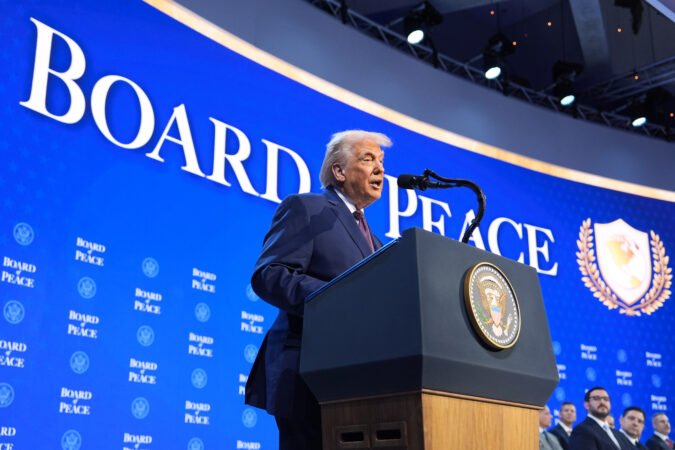
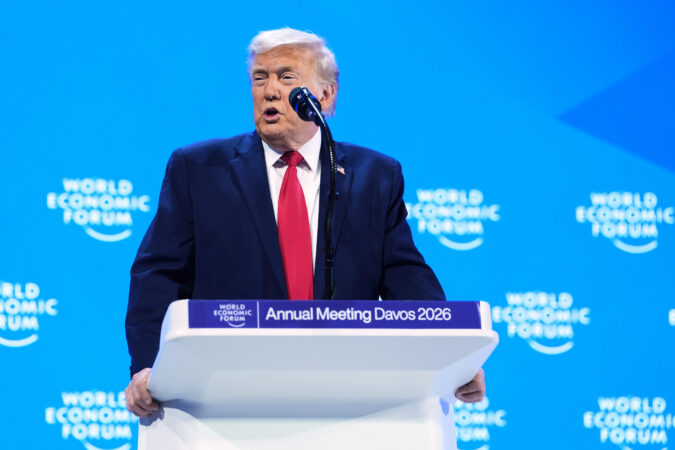
    DAVOS, Switzerland — President Donald Trump on Thursday inaugurated his Board of Peace to lead efforts at maintaining a ceasefire in Israel’s war with Hamas, insisting that “everyone wants to be a part” of the body he said could eventually rival the United Nations — despite many U.S. allies opting not to participate.

    In a speech at the World Economic Forum, Trump sought to create momentum for a project to map out a future of the war-torn Gaza Strip that has been overshadowed this week, first by his threats to seize Greenland, then by a dramatic retreat from that push.

    “This isn’t the United States, this is for the world,” he said, adding, “I think we can spread it out to other things as we succeed in Gaza.”

    The event featured Ali Shaath, the head of a new, future technocratic government in Gaza, announcing that the Rafah border crossing will open in both directions next week. But there was no confirmation of that from Israel, which said only that it would consider the matter next week.

    The Gaza side of the crossing, which runs between Gaza and Egypt, is currently under Israeli military control. Shaath, an engineer and former Palestinian Authority official from Gaza, is overseeing the Palestinian committee set to govern the territory under U.S. supervision.

    The new peace board was initially envisioned as a small group of world leaders overseeing the ceasefire, but it has morphed into something far more ambitious — and skepticism about its membership and mandate has led some countries usually closest to Washington to take a pass.

    Trump tried not to let those not participating ruin his unveiling party, saying 59 countries had signed onto the board — even though heads of state, top diplomats and other officials from only 19 countries plus the U.S. actually attended the event. He told the group, ranging from Azerbaijan to Paraguay to Hungary, “You’re the most powerful people in the world.”

    Trump has spoken about the board replacing some U.N. functions and perhaps even making that entire body obsolete one day. But he was more conciliatory in his remarks on the sidelines of the forum in the Swiss alps.

    “We’ll do it in conjunction with the United Nations,” Trump said, even as he denigrated the U.N. for doing what he said wasn’t enough to calm some conflicts around the globe.

    Secretary of State Marco Rubio said some countries’ leaders have indicated they plan to join but still require approval from their parliaments.

    Why some countries aren’t participating

    Big questions remain, however, about what the eventual board will look like.

    Russian President Vladimir Putin said his country is still consulting with Moscow’s “strategic partners” before deciding to commit. The Russian was hosting Palestinian President Mahmoud Abbas on Thursday in Moscow.

    Others are asking why Putin and other authoritarian leaders had even been invited to join. Britain’s foreign secretary, Yvette Cooper, said her country wasn’t signing on “because this is about a legal treaty that raises much broader issues.”

    “And we do also have concerns about President Putin being part of something which is talking about peace, when we have still not seen any signs from Putin that there will be a commitment to peace in Ukraine,” she told the BBC.

    Norway and Sweden have indicated they won’t participate. France declined after its officials stressed that while they support the Gaza peace plan, they were concerned the board could seek to replace the U.N.

    Canada, Ukraine, China, and the executive arm of the European Union also haven’t committed. Trump calling off the steep tariffs he threatened over Greenland could ease some allies’ reluctance, but the issue is still far from settled.

    The Kremlin said Thursday that Putin plans to discuss his proposal to send $1 billion to the Board of Peace and use it for humanitarian purposes during his talks with Abbas — if Russia can use of those assets the U.S. had previously blocked.

    Others voice reservations

    The idea for the Board of Peace was first laid out in Trump’s 20-point Gaza ceasefire plan and even was endorsed by the U.N. Security Council.

    But an Arab diplomat in a European capital said that Middle Eastern governments coordinated their response to Trump’s invitation to join the Board of Peace and that it was crafted to limit the acceptance to the Gaza plan as mandated by the U.N. Security Council.

    Speaking on the condition of anonymity to discuss the matter more freely, the diplomat said the announced acceptance is “preliminary” and that the charter presented by the U.S. administration contradicts in some parts the United Nations’ mission. The diplomat also said that other major powers are unlikely to support the board in its current form.

    Months into the ceasefire, Gaza’s more than 2 million Palestinians continue to suffer the humanitarian crisis unleashed by more than two years of war. And violence in Gaza continues.

    Key to the truce continuing to hold is the disarming of Hamas, something that the militant group that has controlled the Palestinian territory since 2007 has refused to do, despite Israel seeing it as non-negotiable. Trump on Thursday repeated his frequent warnings that the group will have to disarm or face dire consequences.

    He also said the war in Gaza “is really coming to an end” while conceding, “We have little fires that we’ll put out. But they’re little,” and they had been “giant, giant, massive fires.”

    Iran looms large

    Trump’s push for peace also comes after he threatened military action this month against Iran as it carried out a violent crackdown against some of the largest street protests in years, killing thousands of people.

    Trump, for the time being, has signaled he won’t carry out any new strikes on Iran after he said he received assurances that the Islamic government would not carry out the planned hangings of more than 800 protesters.

    But Trump also made the case that his tough approach to Tehran — including strikes on Iran’s nuclear facilities in June last year — was critical to the Israel-Hamas ceasefire deal coalescing.

    Meanwhile, Trump also spoke behind closed doors for about an hour with Ukrainian President Volodymyr Zelensky and called the discussion “very good” without mentioning major breakthroughs. Trump’s special envoy Steve Witkoff and his son-in-law Jared Kushner are expected in Moscow for talks aimed at ending Russia’s nearly 4-year-old war in Ukraine.

    Zelensky later addressed the Davos forum and said there would be two days of trilateral meetings involving the U.S., Ukraine and Russia in the United Arab Emirates starting Friday — following the U.S. talks in Moscow.

    “Russians have to be ready for compromises because, you know, everybody has to be ready, not only Ukraine, and this is important for us,” Zelensky said.

  • After ‘good’ Trump meeting, Zelensky pushes Europe hard to do more

    After ‘good’ Trump meeting, Zelensky pushes Europe hard to do more

    KYIV — Ukrainian President Volodymyr Zelensky aimed a blistering speech at Europe during the World Economic Forum on Thursday after a last-minute meeting with President Donald Trump, which both leaders described as “good,” saying framework documents between the two countries — in hopes of ending the conflict — were nearing the final stages.

    After nearly four years of full-scale war, Zelensky described how life in Ukraine felt like the movie Groundhog Day with ramped-up attacks coming amid a brutally cold winter. All the while Europe is still unequipped to defend itself against Russia, he said, which has not slowed its assault since 2022.

    In the face of European weakness, Zelensky said, “the backstop of Trump is needed” with no security guarantees functioning without the United States. He emphasized that Europe needed to be a united force: “Europe should not be a salad of small and middle powers.”

    “Europe loves to discuss the future but avoids taking action today, action that defines what kind of future we will have,” Zelensky said in his speech in Davos, Switzerland, following the hourlong meeting with Trump. “If [Russian President Vladimir] Putin decides to take Lithuania or strike Poland, who will respond? … Tomorrow you may have to defend your way of life.”

    The speech, which received a standing ovation, didn’t appear to have been originally scheduled. Zelensky scrambled to get to Switzerland after Trump on Wednesday unexpectedly said that he planned to meet with Zelensky that very day, adding that he might even “be in the audience.”

    In fact, Zelensky was still in Kyiv. He had told reporters on Tuesday — as the forum was already underway — that he would likely remain in the capital, “choosing Ukraine, not an economic forum,” as millions of Ukrainians froze in their homes and workers rushed to fix an electrical grid battered by Russian drones and missiles.

    Some had hoped a bilateral meeting might lead to the inking of frameworks for security guarantees and postwar economic recovery, with officials hinting the two countries were close to the finish line. But a senior Ukrainian official on Thursday said that no documents had been prepared for signing in Davos, and a key priority of the meeting was to discuss additional air defense systems.

    In his speech, however, Zelensky did say that the documents to end the war “are nearly ready and that really matters.” He added, however, that more pressure needed to be put on Russia to make it agree to end the war and Ukraine couldn’t be the only country making compromises.

    The meeting in the Swiss Alps was closed to the press and there were no statements at its conclusion. On his way out, however, Trump told reporters that “the meeting was good with President Zelensky, we still have a ways to go” — stepping back from his message on Wednesday, that both sides were “reasonably close” and “at a point now where they can come together and get a deal done. And if they don’t, they’re stupid.”

    He added that the message his envoys would take to Putin Thursday night in Moscow would be “the war needed to end.”

    At a question-and-answer session following his speech Thursday, Zelensky acknowledged that “this last mile is very difficult” and “Russians have to be ready for compromises, not just Ukraine.”

    Despite the optimism expressed by the White House, the two sides still appear to be far apart in negotiations. In a news conference Tuesday, Russian Foreign Minister Sergei Lavrov called into question any deal that allowed the continuing existence of the current Ukrainian government.

    “Any settlement proposal founded on the primary goal of preserving the current Nazi regime in what remains of the Ukrainian state is, naturally, completely unacceptable to us,” he said.

    White House envoy Steve Witkoff and Trump’s son-in-law Jared Kushner — who met with lead Ukrainian negotiator Rustem Umerov on the sidelines of the forum — will meet with Putin late on Thursday. Speaking at the forum’s Ukrainian Breakfast on Thursday morning, Witkoff said that he felt “encouraged” and described the Ukrainian people as “so courageous in this fight … under some real difficult conditions.”

    “I think we’ve got it down to one issue, and we have discussed iterations of that issue,” Witkoff said, appearing to gesture at territorial concessions, one of the most contentious aspects of the negotiations and a red line for Ukraine. “That means it’s solvable. So if both sides want to solve this, we are going to get this solved; that’s my view.”

    Previous meetings between Witkoff and Putin have lasted hours and will likely continue into early Friday morning, though Witkoff said he will not be spending the night and will continue on to Abu Dhabi, capital of the United Arab Emirates, afterward. Two days of trilateral meetings will be held there between Ukraine, the United States and Russia.

    Kremlin spokesman Dmitry Peskov declined to comment on whether the Kremlin shared Witkoff’s optimism that a deal was close. At a news conference, Putin said he would also discuss Russia’s contribution to Trump’s Board of Peace with Witkoff and Kushner.

    As world leaders congregated in Davos, enjoying mountain views, plush lodges and crackling fireplaces, Ukraine’s power grid remained crippled during one of the coldest winters in years. Without electricity, many Ukrainians sought refuge in restaurants and coffee shops, kept running by generators. Outside, inches of ice slicked the streets and sidewalks. The windows of thousands of apartments remained dark.

    Concluding his speech, Zelensky said, “Let’s end this Groundhog Day.”

  • Former Uvalde officer acquitted for response to 2022 school shooting

    Former Uvalde officer acquitted for response to 2022 school shooting

    A Texas jury on Wednesday acquitted a former Uvalde school police officer on 29 counts of child endangerment after he remained outside Robb Elementary School instead of immediately confronting the gunman who killed 19 children and two teachers in their classrooms in 2022.

    The verdict is a major setback for prosecutors, who portrayed the case against Adrian Gonzales as a way to deliver justice and accountability for one of the deadliest school shootings in U.S. history.

    Instead, jurors appeared to agree with Gonzales’ lawyers, who described him as unfairly singled out among the hundreds of law enforcement officers who arrived on the scene — a response that investigators said was marked by significant communication failures and poor decision-making.

    Had he been convicted, Gonzales, 52, faced up to two years in prison.

    The former officer of the six-member Uvalde Consolidated Independent School District Police Department was one of the first law enforcement personnel to respond on that sunny May day, when a teenage shooter walked into Robb Elementary through an unlocked door and opened fire inside two adjoining fourth-grade classrooms.

    Prosecutors argued that Gonzales bore particular responsibility for the tragedy. They focused on his initial encounter with a frantic woman fleeing the school, who pointed toward the general location of the shooter as gunfire was heard inside, and his subsequent decision not to immediately rush in, which they said went against his active-shooter training.

    However, defense lawyers noted that four other officers got to the school at almost the same time but also did not enter right away to confront the gunman. Unlike Gonzales, three of them were in a position to see the assailant, his lawyers said. One thought he spotted the shooter outside the school and asked for permission to fire, his superior officer testified.

    Minutes after he arrived, Gonzales did go into the school with several other officers. Gunman Salvador Ramos, armed with an AR-style rifle, shot at them, grazing two, and the group retreated.

    Nearly 400 officers ultimately converged on the school but did not breach the classroom where Ramos was located until more than an hour after he’d entered the building. A tactical unit shot and killed him.

    Emotions ran high during the three-week trial, which featured wrenching testimony from teachers who survived the shooting and parents whose children were among the murdered and wounded.

    The prosecution is “trying to hijack your emotion to circumvent your reason,” defense attorney Nico LaHood told jurors. Gonzales was “easy pickings,” he said. “The man at the bottom of the totem pole.”

    Both of Gonzales’ lawyers repeatedly acknowledged the grief of families and the community. “There’s nothing that’s going to bring these kids back,” Jason Goss said during closing arguments Wednesday. “Nothing is ever going to solve that pain.”

    But, he added, “You do not honor their memory by doing an injustice in their name.”

    Gonzales is one of two former officers to be charged in connection with the mass killing. Pete Arredondo, the former chief of Uvalde’s school district police, is also set to stand trial on charges of child endangerment. Arredondo has pleaded not guilty.

    Wednesday’s verdict marks the second time that a jury has declined to convict a school police officer for failing to stop a school shooting. In 2023, Scot Peterson, a sheriff’s deputy who worked as a security officer at Marjory Stoneman Douglas High School in Parkland, Fla., was acquitted of similar charges. Five years earlier, a gunman had killed 17 students, teachers and staff members at the school.

    Gonzales’ trial took place before Judge Sid Harle in Corpus Christi, more than 200 miles from Uvalde, after the defense argued that a change of venue was necessary to obtain an impartial verdict. Jurors began deliberating early afternoon Wednesday.

    Gonzales, in a blue suit and a tie patterned with crosses, wept and hugged one of his lawyers after the verdict was read. He had not testified in his own defense, but prosecutors played an hour-long video, recorded not long after the shooting, in which he recounted his actions at the school.

    Christina Mitchell, the district attorney for Uvalde County, had told jurors that returning a guilty verdict would send a message to all law enforcement officers about their duties to members of the public and children in particular.

    The children inside Robb Elementary had followed their lockdown training, staying quiet and hidden, she said, while Gonzales did not run to confront the shooter, as his training suggested.

    “We’re not going to continue to teach children to rehearse their own death and not hold [officers] to the training that’s mandated by the law,” Mitchell said. “We cannot let 19 children die in vain.”

    Mothers of several of the children killed in the massacre cried together outside the Nueces County courthouse Wednesday night. Relatives of another victim, 9-year-old Jacklyn Cazares, reacted with fury immediately after the verdict.

    “I’m angry,” said her father, Javier Cazares, in video provided by local television station KSAT. “We had a little hope, but it wasn’t enough.”

  • Washington Post seeks court order for government to return electronics seized from reporter’s home

    Washington Post seeks court order for government to return electronics seized from reporter’s home

    WASHINGTON — The Washington Post asked a federal court on Wednesday for an order requiring federal authorities to return electronic devices that they seized from a Post reporter’s Virginia home last week, accusing the government of trampling on the reporter’s free speech rights and legal safeguards for journalists.

    A magistrate judge in Alexandria, Va., temporarily barred the government from reviewing any material from the devices seized from Post reporter Hannah Natanson’s home. The judge also scheduled a Feb. 6 hearing on the newspaper’s request.

    Federal agents seized a phone, two laptops, a recorder, a portable hard drive, and a Garmin smart watch when they searched Natanson’s home last Wednesday, according to a court filing. The search was part of an investigation of a Pentagon contractor accused of illegally handling classified information.

    “The outrageous seizure of our reporter’s confidential newsgathering materials chills speech, cripples reporting, and inflicts irreparable harm every day the government keeps its hands on these materials,” the Post said in a statement.

    The seized material spanned years of Natanson’s reporting across hundreds of stories, including communications with confidential sources, the Post said. The newspaper asked the court in Virginia to order the immediate return of all seized materials and to bar the government from using any of it.

    “Anything less would license future newsroom raids and normalize censorship by search warrant,” the Post’s court filing says.

    The Pentagon contractor, Aurelio Luis Perez-Lugones, was arrested earlier this month on a charge of unauthorized removal and retention of classified documents. A warrant said the search of Natanson’s home was related to the investigation of Perez-Lugones, the Post reported.

    Natanson has been covering Republican President Donald Trump’s transformation of the federal government, The Post recently published a piece in which she described gaining hundreds of new sources from the federal workforce, leading one colleague to call her “the federal government whisperer.”

    Attorney General Pam Bondi said that the search was done at the request of the Defense Department and that the journalist was “obtaining and reporting classified and illegally leaked information from a Pentagon contractor.”

    Perez-Lugones, a U.S. Navy veteran who resides in Laurel, Md., has not been charged with sharing classified information or accused in court papers of leaking.

    The Justice Department has internal guidelines governing its response to news media leaks. In April, Bondi issued new guidelines restoring prosecutors’ authority to use subpoenas, court orders and search warrants to hunt for government officials who make “unauthorized disclosures” to journalists.

    The new guidelines rescinded a policy from Democratic President Joe Biden’s administration that protected journalists from having their phone records secretly seized during leak investigations.

    Reporters Committee for Freedom of the Press president Bruce Brown said the unprecedented search of the reporter’s home, “imperils public interest reporting and will have ramifications far beyond this specific case.”

    “It is critical that the court blocks the government from searching through this material until it can address the profound threat to the First Amendment posed by the raid,” Brown said in a statement Wednesday.

  • Immigration officers assert sweeping power to enter homes without a judge’s warrant, memo says

    Immigration officers assert sweeping power to enter homes without a judge’s warrant, memo says

    WASHINGTON — Federal immigration officers are asserting sweeping power to forcibly enter people’s homes without a judge’s warrant, according to an internal Immigration and Customs Enforcement memo obtained by The Associated Press, marking a sharp reversal of longstanding guidance meant to respect constitutional limits on government searches.

    The memo authorizes ICE officers to use force to enter a residence based solely on a more narrow administrative warrant to arrest someone with a final order of removal, a move that advocates say collides with Fourth Amendment protections and upends years of advice given to immigrant communities.

    The shift comes as the Trump administration dramatically expands immigration arrests nationwide, deploying thousands of officers under a mass deportation campaign that is already reshaping enforcement tactics in cities such as Minneapolis.

    For years, immigrant advocates, legal aid groups and local governments have urged people not to open their doors to immigration agents unless they are shown a warrant signed by a judge. That guidance is rooted in Supreme Court rulings that generally prohibit law enforcement from entering a home without judicial approval. The ICE directive directly undercuts that advice at a time when arrests are accelerating under the administration’s immigration crackdown.

    The memo itself has not been widely shared within the agency, according to a whistleblower complaint, but its contents have been used to train new ICE officers who are being deployed into cities and towns to implement the president’s immigration crackdown. New ICE hires and those still in training are being told to follow the memo’s guidance instead of written training materials that actually contradict the memo, according to the whistleblower disclosure.

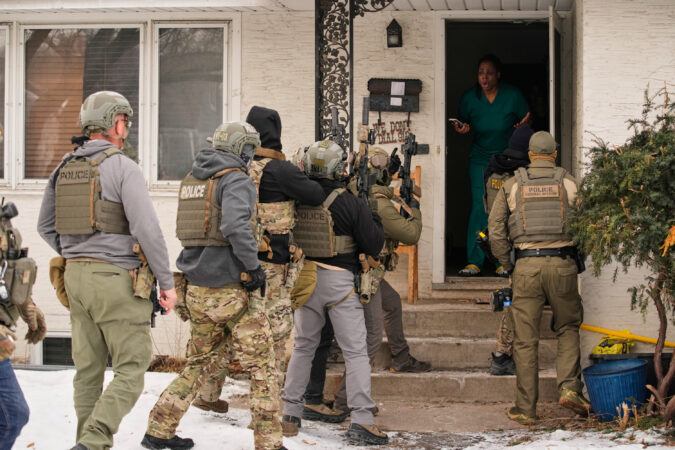
    It is unclear how broadly the directive has been applied in immigration enforcement operations. The Associated Press witnessed ICE officers ramming through the front door of the home of a Liberian man in Minneapolis on Jan. 11 with only an administrative warrant, wearing heavy tactical gear and with their rifles drawn.

    The change is almost certain to meet legal challenges and stiff criticism from advocacy groups and immigrant-friendly state and local governments that have spent years successfully urging people not to open their doors unless ICE shows them a warrant signed by a judge.

    The Associated Press obtained the memo and whistleblower complaint from an official in Congress, who shared it on condition of anonymity to discuss sensitive documents. The AP verified the authenticity of the accounts in the complaint.

    The memo, signed by the acting director of ICE, Todd Lyons, and dated May 12, 2025, says: “Although the U.S. Department of Homeland Security (DHS) has not historically relied on administrative warrants alone to arrest aliens subject to final orders of removal in their place of residence, the DHS Office of the General Counsel has recently determined that the U.S. Constitution, the Immigration and Nationality Act, and the immigration regulations do not prohibit relying on administrative warrants for this purpose.”

    The memo does not detail how that determination was made nor what its legal repercussions might be.

    When asked about the memo, Homeland Security spokeswoman Tricia McLaughlin said in an emailed statement to the AP that everyone the department serves with an administrative warrant has already had “full due process and a final order of removal.”

    She said the officers issuing those warrants have also found probable cause for the person’s arrest. She said the Supreme Court and Congress have “recognized the propriety of administrative warrants in cases of immigration enforcement,” without elaborating. McLaughlin did not respond to questions about whether ICE officers entered a person’s home since the memo was issued relying solely on an administrative warrant and if so, how often.

    Recent arrests shine a light on tactics

    Whistleblower Aid, a nonprofit legal organization that assists workers exposing wrongdoings, said in the whistleblower complaint obtained by The Associated Press that it represents two anonymous U.S. government officials “disclosing a secretive — and seemingly unconstitutional – policy directive.”

    A wave of recent high-profile arrests, many unfolding at private homes and businesses and captured on video, has shined a spotlight on immigration arrest tactics, including officers’ use of proper warrants.

    Most immigration arrests are carried out under administrative warrants, internal documents issued by immigration authorities that authorize the arrest of a specific individual but do not permit officers to forcibly enter private homes or other non-public spaces without consent. Only warrants signed by judges carry that authority.

    All law enforcement operations — including those conducted by ICE and Customs and Border Protection — are governed by the Fourth Amendment of the Constitution, which protects all people in the country from unreasonable searches and seizures.

    People can legally refuse federal immigration agents entry into private property if the agents only have an administrative warrant, with some limited exceptions.

    Federal agents this month rammed the door of the Minneapolis home of a Liberian man with a deportation order from 2023, who was then arrested. Documents reviewed by The AP revealed that the agents only had an administrative warrant — meaning there was no judge who authorized the raid on private property.

    Memo shown to ‘select’ officials

    The memo says ICE officers can forcibly enter homes and arrest immigrants using just a signed administrative warrant known as an I-205 if they have a final order of removal issued by an immigration judge, the Board of Immigration Appeals or a district judge or magistrate judge.

    The memo says officers must first knock on the door and share who they are and why they’re at the residence. They’re limited in the hours they can go into the home — after 6 a.m. and before 10 p.m. The people inside must be given a “reasonable chance to act lawfully.” But if that doesn’t work, the memo says, they can use force to go in.

    “Should the alien refuse admittance, ICE officers and agents should use only a necessary and reasonable amount of force to enter the alien’s residence, following proper notification of the officer or agent’s authority and intent to enter,” the memo reads.

    The memo is addressed to all ICE personnel. But it has been shown only to “select DHS officials” who then shared it with some employees who were told to read it and return it, Whistleblower Aid wrote in the disclosure.

    One of the two whistleblowers was allowed to view the memo only in the presence of a supervisor and then had to give it back. That person was not allowed to take notes. A whistleblower was able to access the document and lawfully disclose to Congress, Whistleblower Aid said.

    Although the memo was issued in May, David Kligerman, senior vice president and special counsel at Whistleblower Aid, said it took time for its clients to find a “safe and legal path to disclose it to lawmakers and the American people.”

    ICE told to rely on administrative warrants, memo says

    ICE has been rapidly hiring thousands of new deportation officers to carry out the president’s mass deportation agenda. They’re trained at the Federal Law Enforcement Training Center in Brunswick, Georgia.

    During a visit there by The Associated Press in August, ICE officials said repeatedly that new officers were being trained to follow the Fourth Amendment.

    But according to the whistleblowers’ account, newly hired ICE officers are being told they can rely solely on administrative warrants to enter homes to make arrests even though that conflicts with written Homeland Security training materials.

    ICE officers often wait for hours for the person they’re hoping to arrest to come outside so they can make the arrest on the sidewalk or at the person’s work — public places where they are allowed to operate without the risk of infringing on the person’s Fourth Amendment rights.

    Whistleblower Aid called the new policy a “complete break from the law” and said it undercuts the “Fourth Amendment and the rights it protects.”

  • Trump cancels tariff threat over Greenland, says NATO agreed to ‘framework’ of future Arctic deal

    Trump cancels tariff threat over Greenland, says NATO agreed to ‘framework’ of future Arctic deal

    DAVOS, Switzerland — DAVOS, Switzerland — President Donald Trump on Wednesday scrapped the tariffs that he threatened to impose on eight European nations to press for U.S. control over Greenland, pulling a dramatic reversal shortly after insisting he wanted to get the island “including right, title and ownership.”

    In a post on his social media site, Trump said he had agreed with the head of NATO on a “framework of a future deal” on Arctic security, potentially defusing tension that had far-reaching geopolitical implications.

    He said “additional discussions” on Greenland were being held concerning the Golden Dome missile defense program, a multilayered, $175 billion system that for the first time will put U.S. weapons in space.

    Trump offered few details, saying they were still being worked out. But one idea NATO members have discussed as part of a compromise with Trump was that Denmark and the alliance would work with the U.S. to build more U.S. military bases on Greenland.

    That’s according to a European official familiar with the matter but not authorized to comment publicly. The official, who spoke on condition of anonymity, said it was not immediately clear if that idea was included in the framework Trump announced.

    Trump has backed off tariffs before

    The president has threatened tariffs before only to back away. In April, after first saying he would slap massive import levies on nations from around the world, which prompted a sharp negative market reaction, Trump eased off.

    But his change of heart this time came only after he used his speech at the World Economic Forum in the Swiss Alps to focus on Greenland and threatened to upend NATO, an alliance that has been among the globe’s most unshakable since the early days of the Cold War.

    In his address, Trump said he was asking for territory that was “cold and poorly located” and that the U.S. had effectively saved Europe during World War II while declaring of NATO: “It’s a very small ask compared to what we have given them for many, many decades.”

    “We probably won’t get anything unless I decide to use excessive strength and force, where we would be frankly unstoppable. But I won’t do that, OK?” Trump said.

    But Trump has also said repeatedly that, while the U.S. will defend NATO, he wasn’t convinced the alliance will backup Washington, if needed, and suggested that was at least part of the reason for his aggressive stance toward Greenland. That prompted NATO Secretary General Mark Rutte, in a post-speech event with Trump, to say that the alliance would stand with the U.S. if it is attacked.

    “You can be assured, absolutely,” Rutte said. A short time later came Trump’s post canceling the tariffs.

    Danish Foreign Minister Lars Løkke Rasmussen said he welcomed Trump ruling out taking “Greenland by force” and pausing ”the trade war with Europe.”

    “Now, let’s sit down and find out how we can address the American security concerns in the Arctic while respecting the red lines of the Kingdom of Denmark,” he said in a statement.

    President cites national security

    Trump argues that the U.S. needs Greenland for national security and to counter threats from Russia and China in the Arctic region, despite America already having a large military base there. He threatened to impose steep U.S. import taxes on Denmark and seven other allies unless they negotiate a transfer of the semi-autonomous territory.

    The tariffs were to have started at 10% next month and climb to 25% in June.

    Trump often tries to increase pressure on the other side when he believes it can lead to a favorable agreement. His threats at Davos appeared on the verge of rupturing NATO, which was founded by leading European nations, the U.S. and Canada to counter the Soviet Union.

    The alliance’s other members were steadfast in saying Greenland is not for sale and cannot be wrested from Denmark, while angrily rejecting Trump’s promised tariffs.

    A Danish government official told The Associated Press after Trump’s speech that Copenhagen was ready to discuss U.S. security concerns. But the official, who was not authorized to comment publicly and spoke on condition of anonymity, underscored the government’s position that “red lines”— namely Denmark’s sovereignty — must be respected.

    It was not immediately clear how Trump’s canceling of tariffs might change such calculations.

    Greenland tells citizens to prepare

    In the meantime, Greenland’s government responded by telling its citizens to be prepared. It has published a handbook in English and Greenlandic on what to do in a crisis that urges residents to ensure they have sufficient food, water, fuel and supplies at home to survive for five days.

    “We just went to the grocery store and bought the supplies,” said Tony Jakobsen in Greenland’s capital Nuuk said, showing off the contents of bags that included candles, snacks and toilet paper.

    Jakobsen said he thought Trump’s rhetoric toward Greenland was “just threats… but it’s better to be ready than not ready.”

    Before backing down, Trump had urged Denmark and the rest of NATO to stand aside, adding an ominous warning.

    “We want a piece of ice for world protection, and they won’t give it,” Trump said. “You can say yes, and we will be very appreciative. Or you can say no, and we will remember.”

    He also called for opening “immediate negotiations” for the U.S. to acquire Greenland. In subsequent comments to reporters, he declined to name a price that might be paid, saying only, “There’s a bigger price, and that’s the price of safety and security and national security and international security.”

    His arrival in Davos was delayed after a minor electrical problem on Air Force One forced a return to Washington to switch aircraft. As Trump’s motorcade headed down a narrow road to the speech site, onlookers — including some skiers — lined the route, some making obscene gestures.

    Financial markets that had fallen sharply on Trump’s threatened tariffs bounced back Wednesday. Also breathing a sigh of relief were a number of U.S. officials who had also been concerned that Trump’s hard-line stance and bellicose rhetoric toward Greenland, Denmark and other NATO allies could harm other foreign policy goals.

    Trump’s Davos speech was originally supposed to focus on how to lower U.S. housing prices — part of a larger effort to bring down the cost of living. Greenland instead carried the day, though Trump mistakenly referred to it as Iceland four times during his speech.

    “This enormous unsecured island is actually part of North America,” Trump said. “That’s our territory.”

    When he finally did mention housing, Trump suggested he did not support a measure to encourage affordability. He said bringing down rising home prices hurts property values and makes homeowners who once felt wealthy because of the equity in their houses feel poorer.

    ‘Now there’s another threat’

    Before Trump announced that he was abandoning the tariffs and potentially easing international pressure, his speech left people in Nuuk preparing for the worst.

    Resident Johnny Hedemann said it was “insulting” that Trump “talks about the Greenlandic people and the Greenlandic nation as just an ice cube.” He spoke while heading out to buy a camping stove and instant mashed potatoes.

    “Living in this nature, you have to be prepared for almost anything. And now there’s another threat — and that’s Trump,” Hedemann said.