Category: Nation & World

  • She helped him flee a rally, then learned he was a right-wing provocateur

    She helped him flee a rally, then learned he was a right-wing provocateur

    Daye Gottsche let the stranger into the car without knowing he was a right-wing provocateur who had been leading a march to support President Donald Trump’s immigration crackdown.

    She didn’t realize that the demonstrators she saw on her drive had gathered at Minneapolis City Hall on Saturday to counterprotest — and were chasing him away, throwing punches at him. Gottsche did not recognize that this man was Jake Lang, who had been accused of beating police officers with a baseball bat during the Jan. 6, 2021, attack on the U.S. Capitol and was jailed for four years before Trump pardoned him.

    She saw only a man in need of rescue.

    “Please help me,” Lang said, standing outside her friend’s car door, Gottsche told the Washington Post. “They hurt me bad.”

    Gottsche saw a cut on his lip and scrapes on his face. From the driver’s side, her friend unlocked the doors. Lang jumped in the back seat.

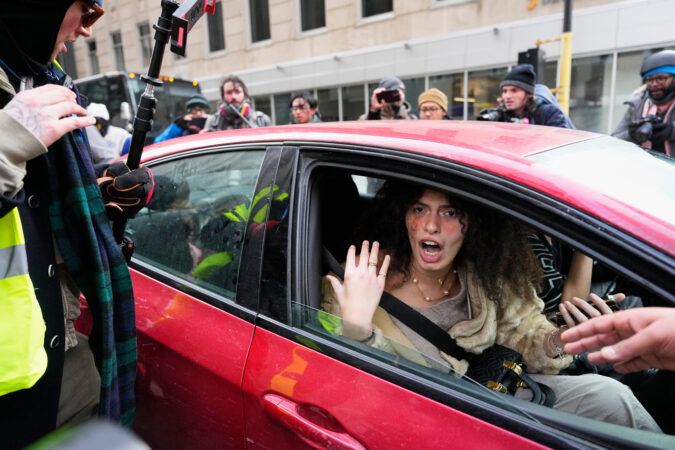
    As they waited for the stoplight to turn green, protesters swarmed them, shouting “That’s him!” according to video of the incident and interviews with Gottsche and Lang. People pried open the doors and kicked Lang. Some hit the car itself. Finally, Lang, Gottsche, and her friend sped away.

    Within minutes, footage of the moment surfaced online. It fueled speculation about how Lang had escaped the reach of counterprotesters and who had helped him pull it off. The reality was simpler — and in some ways, more complicated — than what most guessed.

    Inside the car was Gottsche, a 22-year-old transgender woman and singer-songwriter who said the choice to help Lang felt easy. She thought he might have been hurt by ICE officers, carrying with him the same fear that she and her neighbors have felt for weeks.

    But minutes before Lang was begging for help outside the car, he had been blasting “Ice Ice Baby” to support federal immigration agents and yelling about how immigrants were “replacing” white Americans. After facing attacks from the crowd, he was seen bleeding from the back of his head.

    Gottsche said if she had to relive the encounter, she would make the same decision to help Lang.

    “I don’t necessarily know if he deserved our kindness, but I would not change anything that happened,” she said.

    Afraid for her own safety, Gottsche had sat out the anti-ICE protests roiling Minneapolis. But, she said, she opposes the presence of the thousands of federal officers who have spent their days stopping people to ask for paperwork, pepper-spraying protesters and door-knocking in search of undocumented immigrants. Now, Gottsche sees her decision to rescue Lang as a sort of ironic intervention.

    “I feel like it was meant to happen, because who knows — had we not stopped, he might have died,” she said. “He was really hurt, and I would hate to have something like that on my conscience.”

    To Lang, receiving help from people who disagreed with him presented “a powerful kind of imagery,” a reminder of a higher power at play. He said he wanted to believe that had they known his beliefs, they still would have helped — but he doubts it, given public social media posts he saw from Gottsche afterward. He referenced one video in which she said, “We’re letting the wolves have you next time.”

    “That’s very sad and disappointing,” he told the Post. “And I pray God checks their heart on that.”

    Asked about the video, Gottsche said she had made it just minutes after Lang left the car and before she had even begun to process what had transpired. She said she may have taken her remarks too far.

    But, Gottsche said, she wondered whether, if the roles had been reversed, Lang would have helped her. In the 48 hours since the interaction, Gottsche said she and her friend have been the target of derogatory, threatening messages and posts with false information from right-wing social media accounts.

    Since an ICE officer shot and killed 37-year-old Renée Good on Jan. 7, protests have spilled into the streets of Minneapolis daily. In a different world, Gottsche might have joined them.

    After a police officer murdered George Floyd in 2020, Gottsche, then a high school student, joined thousands in Minnesota to protest police brutality. Gottsche, who is half Black, marched with a sign reading, “Stop killing us.”

    But she doesn’t feel safe anymore, she said. She had seen videos of the shooting of Good, a white woman who had been in her car, blocks away from home. She had watched Vice President JD Vance say the ICE officer who killed Good had “absolute immunity.”

    “I felt like that was my warning to just not” protest, Gottsche said. “That’s not normal.”

    So she chose to keep her support of the Minneapolis demonstrations subtle. She honked when driving by protesters. Then she went about her day.

    On Saturday, Gottsche and her friend decided to grab drinks. The bar they wanted to try was blocks away from Minneapolis’ city hall and federal courthouse, where Lang planned to hold an anti-immigration protest. He had been preparing to protest for months as part of a series of anti-Muslim rallies he has held across America. He said his desire to demonstrate in Minneapolis only grew after he heard Trump blame Somali immigrants for a yearslong welfare fraud probe in the state and saw that residents there were clashing with ICE officers.

    As he was chased by the crowd of counterprotesters Saturday, Lang ran into a hotel and left through a side door. He said he took off the military-style vest he had been wearing with patches reading “Infidel” and “47,” a reference to Trump.

    Then Lang approached the red sedan where Gottsche and her friend, Aleigha, were sitting at a traffic light. Gottsche said that she rolled down her window as she saw Lang running toward them, and that he asked for help. She and her friend looked at each other, trying to figure out whether to let him inside the car.

    Suddenly, the car was surrounded. From the passenger’s side, with the window still down, Gottsche panicked, trying to explain to the people outside that she did not know the man and was just trying to help.

    “Drive!” Lang shouted, according to video and an interview with him. “Drive! Drive!”

    Soon after, they tore away from the crowd.

    Gottsche turned to face Lang and asked him what had happened. It was then that she realized “that we had someone that’s not on our side in our car.” Lang said he recognized that Gottsche was trans and her friend was also a woman of color, and he thought to himself that “they probably are not sympathetic to my stance as a pro-ICE supporter.”

    Lang thanked Gottsche and her friend but did not directly answer their questions about what had led him to their car, Gottsche said. He identified himself only as “Jake” and as a Christian who loves God. He offered to pay for the damage to the car and shared a phone number, Gottsche said. She texted the number and confirmed that the message had gone through.

    The ride was short. They reached the bar, and Lang got out of the car.

    Gottsche still didn’t know who exactly he was.

    Then friends and social media followers who had started to see videos of Lang’s escape sent her messages: Did she know she had just saved an anti-immigrant influencer? They sent videos of the rally he had just held and links to his social media pages, where he had repeatedly made incendiary posts about immigrants and Muslims. Some people seeing the photos and videos of the moment assumed Gottsche was a fan of Lang.

    She took to TikTok to clarify how she had ended up in the now-viral exchange. In one video, she lip-synced to “No Good Deed” from Wicked, with the caption: “When you try to help an injured man in the street but it turns out he was Jake Lang.”

    In the hours that followed, Gottsche still felt it was a “right place, right time” moment — a twist of fate that landed two people otherwise unlikely to talk to one another in the same car. She told Lang in a text message that she hopes the interaction sparks a reconsideration of his stances.

    “I also wanna add while i do not whatsoever support you or ur ideals, im happy to see that you are gonna be okay, and i hope this has some sort of impact on you,” Gottsche wrote to the number Lang had shared with her.

    “Because the fear and urgency you felt trying to escape that crowd is what people here feel everyday. America was never ours to begin with, so how does it make sense that we cant share, especially with people seeking safety and shelter?”

    By Monday afternoon, a reply had not come.
  • New protest art on National Mall takes aim at Trump and Epstein files

    New protest art on National Mall takes aim at Trump and Epstein files

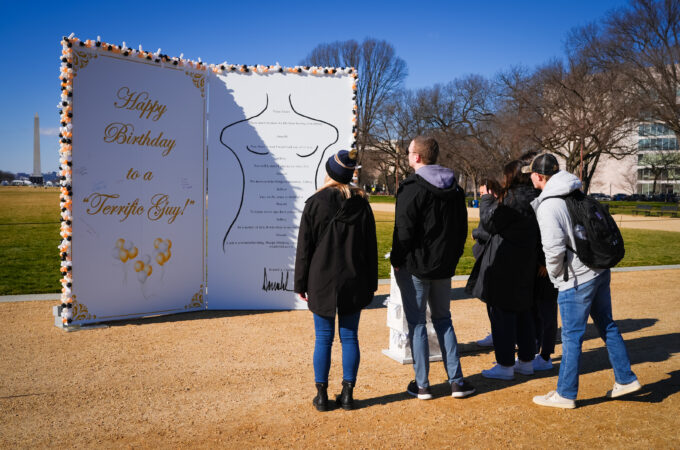
    A massive replica of a birthday note and crude drawing signed with the typed name “Donald J. Trump” and a “Donald” signature that was part of a 2003 book of birthday wishes for the deceased convicted sex offender Jeffrey Epstein was placed on the National Mall early Monday morning, the latest installation of artwork critical of the president by a group that identifies itself as “The Secret Handshake.”

    The group, whose members are anonymous, has previously placed installations at the same location, including a statue of Trump and Epstein holding hands and skipping, a mock tribute to Trump from the world’s authoritarian leaders, and a replica of the desk of former House Speaker Nancy Pelosi (D., Calif.) with a pile of fake excrement on it that ridiculed the Jan. 6, 2021, rioters who sought to overturn the 2020 election.

    The new installation, located on the Mall on Third Street NW between Jefferson and Madison drives, stands 10 feet high by 12 feet wide. A National Park Service permit will allow the work to remain at that location through Friday.

    Trump has denied writing the note and has told reporters that the signature is not his. The White House did not immediately respond to a request for comment on the new installation.

    In front of the replica card is a stack of marble blocks made to resemble a filing cabinet, with each drawer labeled “The Files” and overflowing with hundreds of strips of paper. Atop the files is a box of Sharpies and an invitation for visitors to sign the card with a message to the administration. It notes, “Please refrain from any promotional, violent or hateful speech or it will be removed.”

    The towering placard replicates the message found in a “birthday book” given to Epstein for his 50th birthday by friends and acquaintances. It was one of a tranche of documents released in September by the House Oversight Committee that it had received from Epstein’s estate.

    The sketch is of a woman’s nude form and includes a dialogue between “Donald” and Epstein, ending with a handwritten signature and the typed words “Donald J. Trump” above it.

    The exchange between “Donald” and “Jeffrey” appears inside the contours of a woman’s body. “We have certain things in common, Jeffrey,” “Donald” says. “Enigmas never age, have you noticed that?”

    “Happy birthday — and may every day be another wonderful secret,” “Donald” ends the note.

    Last year, Trump sued the Wall Street Journal and others at the news organization, alleging defamation after the newspaper published its story revealing the letter. The case is pending in federal court in Miami.

    On its permit application, the artists wrote that the purpose of the work was “to use creative and artistic free speech about one of the most relevant political issues of this moment, and to highlight the conversation about President Donald Trump’s friendship and relationship with Jeffrey Epstein using his own reported language and correspondence. As well, to highlight the heavily redacted files that have been released and those that haven’t.”

    The Mall was quiet Monday morning as the nation took a day off to honor Martin Luther King Jr. By midmorning, there were just a few messages written on the giant card, all with negative sentiments toward the president.

    “Looking forward to your jail sentence, DJT!”

    “The people will rise. We already are.”

    D.C. resident Susan Fritz, 61, stopped to take a look during her morning run. “What I really like about it is that they didn’t have to make anything up. They just had to blow it up and put it out here.”

    But she was pretty sure the installation’s message would not be received well by the administration.

    “I’ll be surprised if it stays up,” she said.

    “I think everyone should see it,” said Anders Williams, 45, who stopped in front of card on his way to the Air and Space Museum with his wife and young child. “It shows that someone lived in a very different world from the rest of us at some point. It’s just weird.”

    Ying Yong, 33, also from the District, said he spotted the card from a distance and came over to check it out.

    “It’s great, it’s hilarious,” he said. “Nothing more to be said.”

    A woman bundled up against the morning cold said she was a federal worker and declined to provide her name. But she wanted to comment on the new installation, so she picked up a Sharpie and approached the card.

    On it she quoted King. “Darkness cannot drive out darkness, only light can do that.”

  • How EPA ethics officials cleared former industry insiders for regulatory roles

    How EPA ethics officials cleared former industry insiders for regulatory roles

    Environmental Protection Agency ethics officials have interpreted impartiality guidelines in a way that has allowed several former industry insiders to oversee dramatic changes to chemical regulations, documents obtained under the Freedom of Information Act show.

    Those ethics decisions have cleared the way for a former agriculture lobbyist to help reinstate a pesticide that had been banned twice by federal courts, as well as for two former chemical industry executives to help reassess the agency’s stance on the dangers of formaldehyde.

    Internal emails and documents obtained by the Center for Biological Diversity and shared with the Washington Post show EPA ethics officials determined that Kyle Kunkler’s recent lobbying on behalf of the American Soybean Association did not require his recusal from pesticide regulation, including decisions about dicamba, a pesticide that soybean farmers have wanted to see reinstated.

    According to federal loss-of-impartiality regulations, new government employees are supposed to have a yearlong “cooling-off period” on matters that directly involve their previous employer, unless given written authorization by the ethics office.

    Emails show that before Kunkler started as EPA’s top official on pesticides in late June, ethics officials began prepping him on recusal strategies and answered questions about his ability to work on pesticide regulations given his previous role.

    An email exchange from after his first week shows officials knew he had helped develop his association’s comments to the EPA on dicamba. In light of that, he should not “participate in any meetings, discussions or decisions about ASA’s specific comments,” one ethics office lawyer wrote in a July 3 email, but “he could still work on comments submitted by other parties about dicamba, including those that may overlap with ASA’s comments.”

    On July 23, the EPA announced plans to bring back dicamba. The agency is slated to make reregistration official in the coming weeks.

    In a statement, EPA ethics office director Justina Fugh said “a federal employee’s ‘previous lobbying efforts’ do not constitute any conflict of interest as defined by existing federal ethics laws or regulations” and that only Kunkler’s direct interaction with his former employer would violate loss-of-impartiality rules.

    “The federal ethics rules simply do not preclude him from working as part of his EPA duties on general issues or topics,” Fugh said. “He is therefore permitted under the federal ethics rules to work on pesticide registrations generally, including EPA actions on dicamba, even though he previously worked on that same topic.”

    The ethics decision is legally correct but still raises concerns about bias in regulatory decision-making, said Richard Briffault, a professor of legislation at Columbia Law School.

    “There is a legitimate concern that people who have made a career out of representing or advocating for an industry that has a stake in regulation will be predisposed to favor that industry’s position when they make decisions as regulators – that they will be biased and not impartial,” Briffault said.

    The federal impartially standards are designed to ensure government decisions are not made on the basis of personal bias, personal connection, or loyalty to a former employer, said Kathleen Clark, a government ethics lawyer and a law professor at Washington University in St. Louis. Clark said barring Kunkler from comments and meetings is “relatively unimportant” given his ability to participate in the government approval of pesticides he once lobbied for.

    “It seems strange to me that they would say that it would be inappropriate for him to respond to comments but, on the other hand, he can absolutely participate in what presumably is something extremely important to his former employer,” said Clark, who reviewed some of the documents at the Post’s request.

    “It’s sort of like hiring the fox to guard the hen house,” she said.

    The American Soybean Association did not respond to request for comment.

    The EPA originally approved dicamba in 2016 for use on soybeans and cotton that had been genetically modified to withstand what would otherwise be a damaging dose. But in 2020, a federal court vacated that approval over concern that the pesticide was drifting to and damaging other crops and wild plants. The EPA reapproved dicamba months later with additional application restrictions, but a court revoked that approval in 2024, saying drift damage remained a problem.

    Kunkler had been among those lobbying for dicamba’s reinstatement. Calendar records show he had a virtual meeting in March with officials from the office he would later join, the Post reported last year.

    He once likened the dicamba dispute to the “legal and regulatory equivalent of a Wimbledon court littered with land mines.” He told his association’s members: “ASA knows just how vital it is for your operations to have choices in the crop protection tools available to you, and we will continue to advocate strategically and vigorously to defend your access to them.”

    Nathan Donley, a senior scientist at the Center for Biological Diversity, said it’s not surprising that the new registration plans for dicamba closely mirror proposals from ASA.

    “I don’t see any limitations on what he can or cannot do based on his past work,” said Donley, whose organization has sued the EPA three times over dicamba. “It assures that industry interests are going to be considered above what’s in the public interest.”

    Kunkler’s role in the reinstatement of dicamba in some ways parallels the involvement of two former chemical industry executives who helped drive the EPA’s reassessment of formaldehyde, a cancer-causing chemical used in furniture, wood adhesives, and body preservation at funeral homes.

    Toxicologist Nancy Beck heads the EPA’s Office of Chemical Safety and Pollution Prevention. Lynn Dekleva, an environmental engineer, serves as her deputy.

    Both fought to roll back chemical regulations as part of the first Trump administration. Afterward, Beck joined the chemicals practice at law firm Hunton Andrews Kurth, where her clients included top industry trade groups. Dekleva signed on with the American Chemistry Council trade group as a senior director. Both criticized the EPA’s risk assessment model, and Dekleva directly pressed the agency to reassess the model in relation to formaldehyde.

    But when they joined the second Trump administration, both Beck and Dekleva received written approval from the agency’s ethics office to work on chemical regulation, as reported by E & E News last year.

    “I conclude that the interest of the United States Government in your participation outweighs any concerns about your impartiality,” Fugh wrote in March.

    She told the Post that while federal ethics guidelines proscribe engaging with former employers or clients in activities such as grant-making and enforcement actions, matters with “general applicability” — such as rule- or policymaking — aren’t prohibited.

    The new approach to formaldehyde announced by the EPA last month is the one favored by the industry. It assumes there can be a safe threshold of exposure, and that some carcinogens pose no health risk at lower levels. Under the Biden administration, the agency took the position that even small exposures could pose risks.

    The proposed revisions nearly double the amount of formaldehyde considered safe to inhale.

    Briffault said the real issue may be less about ethical interpretations and than about political decisions — namely, the administration’s pick of proindustry people for top regulatory appointments.

    Asked whether Beck and Dekleva’s appointments influenced the EPA’s shift, agency spokesperson Brigit Hirsch said EPA Administrator Lee Zeldin made the decision and it was based on “the most advanced, gold standard scientific methods.”

    “EPA’s move to a threshold approach for formaldehyde does not at all mean the agency is relaxing its standards or giving industry a pass,” Hirsch said. “By using this science, EPA can set limits that are more protective, not less, because they are based on the most sensitive biological changes that occur before serious health effects develop.”

    In a statement to the Post, the American Chemistry Council said the EPA’s revised approach was recommended by their own peer reviewers and is consistent with other international authorities. “ACC supports risk evaluation approaches that are grounded in sound science and protective of public health, consistent with [Toxic Substances Control Act] requirements.”

  • Trial opens in Prince Harry’s case alleging illegal acts by Daily Mail

    Trial opens in Prince Harry’s case alleging illegal acts by Daily Mail

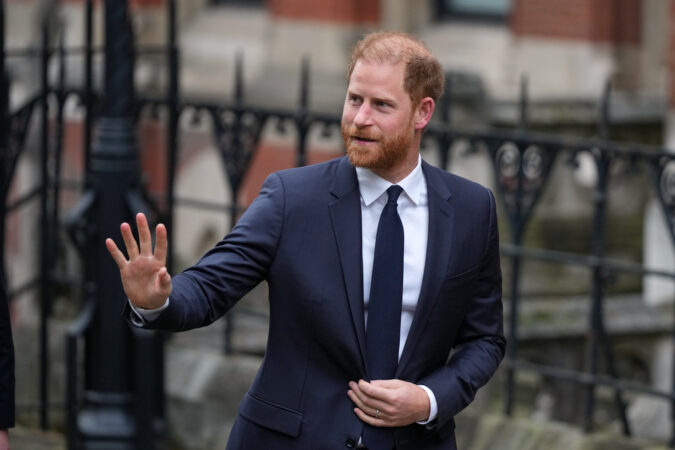
    LONDON — Prince Harry’s third, and perhaps final, major legal showdown with Britain’s tabloid press opened in a London courtroom on Monday, as a closely watched trial began examining claims of widespread illegal information-gathering by the company that owns the Daily Mail and the Mail on Sunday newspapers.

    The company, Associated Newspapers, is one of Britain’s largest newspaper publishers. Harry, who appeared in court wearing a dark suit and tie, is one of seven plaintiffs in the case who are alleging “habitual and widespread” legal violations that collectively span at least two decades — including hiring private investigators to bug phones and plant listening devices in homes and cars; unlawfully obtaining medical records and banking records; and hacking voicemail messages.

    David Sherborne, the lawyer representing Harry and the other plaintiffs, said in his opening remarks that he would prove there was “clear, systematic and sustained use” of unlawful activity at the Daily Mail and Mail on Sunday. He named several private investigators allegedly used by journalists, including one described as a “talented voice actor” who specialized in “blagging,” the impersonation of others to gain private information.

    Court documents show Harry alleges that 14 articles, published between 2001 and 2013, relied on unlawfully obtained information, including flight details of his then girlfriend, Chelsy Davy, and what Harry’s lawyers described as “intimate conversations” with Prince William, his brother, related to images of their dying mother that appeared in the press.

    Harry, who was seated behind Sherborne in the courtroom, stared attentively at a monitor as he followed the proceedings.

    Associated Newspapers has strongly denied the allegations, calling them “preposterous smears.”

    In its written submissions, Associated argued the allegations were unsupported by credible evidence and it can explain legitimate sourcing of its articles. The publisher also contends the claims should be dismissed because they were brought too late — more than six years after the plaintiffs became aware of an allegation. In some cases, Associated said, information came from “leaky” social circles rather than unlawful intrusion.

    The trial’s significance extends beyond the plaintiffs themselves, said Mark Stephens, a media lawyer at the firm Howard Kennedy. “This case is about whether the last untouchable corner of Fleet Street was quietly doing the same things everyone else was caught doing,” he said in an email.

    For the first time, Stephens added, a court will examine the Daily Mail’s historic newsgathering practices “to see whether it genuinely stood apart during the phone-hacking era — or whether it simply avoided scrutiny.”

    In addition to Harry, who is King Charles III’s younger son, plaintiffs in the case include musician Elton John and his husband, David Furnish; actor and model Elizabeth Hurley; and Doreen Lawrence, whose 18-year-old son, Stephen, was murdered in a racist attack in 1993. Lawrence’s decision to join the case came as a surprise, given the Daily Mail publicly supported her campaign to bring her son’s killers to justice. Lawrence has described being stunned when Harry contacted her and informed her that allegedly she had been subject to phone hacking and other illegal information-gathering techniques.

    The case marks the latest chapter in Harry’s long-running crusade against Britain’s tabloids. He has said he is on a mission to reform the news media and curb what he views are its excesses. Harry has repeatedly criticized the British news media, arguing that his mother, Princess Diana, was relentlessly harassed, and that his wife, Meghan, Duchess of Sussex, was vilified by the British press. Diana died in a car crash in Paris in 1997 after being chased by paparazzi.

    Harry has secured judgments and settlements against major publishers. In 2023, Harry became the first senior British royal in more than a century to testify in court, during his case against the publisher of the Daily Mirror. A judge concluded that the prince, also known as the Duke of Sussex, was a victim of “widespread” phone hacking and awarded him 140,600 pounds in damages.

    Last year, Harry secured a last-minute settlement with Rupert Murdoch’s News Group Newspapers. The company apologized for the “serious intrusion” into his private life and Harry reportedly received an eight-figure sum.

    A spokesperson for the prince said there were no additional media-related court cases planned.

    The trial comes amid media reports that the British government is considering whether to reinstate Harry’s full personal security protection while he is in the United Kingdom. The U.K. government is also scrutinizing a high-profile bid by the Daily Mail and General Trust — the parent company of Associated Newspapers — to acquire the Daily Telegraph under competition and media plurality rules.

    The trial, at London’s Royal Courts of Justice, is expected to last about nine weeks, with testimony from plaintiffs and witnesses including Harry and Elton John, as well as current and former journalists and executives from the Daily Mail.

  • Russian court jails U.S. Navy veteran for 5 years for illegally transporting weapons

    Russian court jails U.S. Navy veteran for 5 years for illegally transporting weapons

    MOSCOW — A Russian court has convicted and sentenced an American on charges of illegally transporting weapons, court officials revealed Monday.

    Chuck Zimmerman, 58, was handed a 5-year sentence by a court in Russia’s Black Sea resort of Sochi after a firearm was found on his yacht in June, the Krasnodar regional courts’ press service said in a statement. Russian authorities found the weapon while inspecting it upon arrival in Sochi, the statement said.

    A website set up in support of Zimmerman describes him as a U.S. Navy veteran, a father of two, and an electrician. His family has rejected the charges against him as a “setup” for a future prisoner exchange.

    Court records seen by the Associated Press showed that Zimmerman was convicted in October, and the Sochi court verdict was upheld two months later by the Krasnodar regional court.

    Zimmerman told the court that he traveled to Russia to meet a woman he had previously contacted online and that he had the gun for self-defense, unaware of Russian laws, according to the court’ press service statement. He has fully admitted guilt, the statement said.

    Zimmerman’s sister Robin Stultz said her brother was intercepted while sailing in international waters with “absolutely no intention to enter Russia.”

    “He was sailing from the U.S. to New Zealand, so of course he had a firearm on board,” she told the AP in a statement. ”You can’t just call 911 if something goes wrong out at sea. He voluntarily disclosed it to them and they charged him with arms smuggling. This is an obvious setup to get another American they can trade. He needs to be declared wrongfully detained,” Stultz said.

    She added: “I wouldn’t trust any ‘confession’ the Russians claim he’s given. He hasn’t been able to meet with anyone from the U.S. Embassy since his arrest.”

    There was no immediate comment from U.S. officials.

    Zimmerman is one of a few Americans who remain in Russian custody after a series of high-profile prisoner exchanges with the United States in recent years. Arrests of Americans in Russia and subsequent prisoner swaps have become increasingly common as relations between Moscow and Washington have sunk to Cold War lows.

  • Bulgaria’s left-leaning president Rumen Radev says he is stepping down

    Bulgaria’s left-leaning president Rumen Radev says he is stepping down

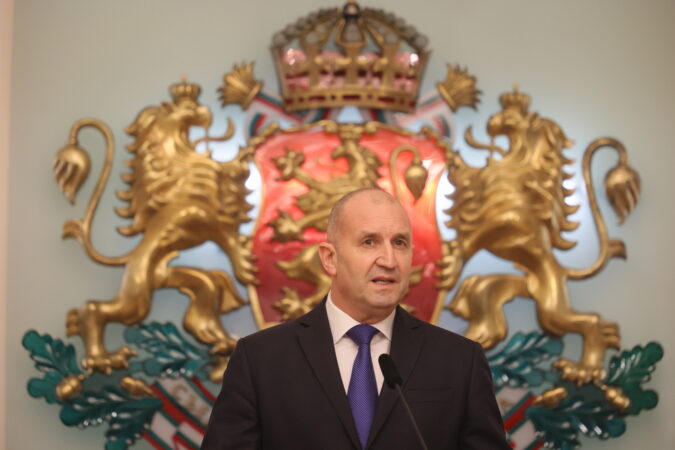
    SOFIA, Bulgaria — Bulgaria’s left-leaning president Rumen Radev announced on Monday that he is stepping down.

    In a televised address, Radev said that he will formally submit his resignation to the Constitutional Court Tuesday.

    Under the constitution, the current vice president, Iliana Yotova, must be sworn in by parliament to take the post until the end of the presidential mandate.

    “The battle for the future of our homeland lies ahead, and I believe we will face it together with all of you — the worthy, the inspired, and the unyielding! We are ready. We can, and we will succeed!” Radev said in his address.

    Radev’s decision comes amid public expectation that he will form a new political party.

    His resignation, the first by a head of state in Bulgaria’s post-communist history, comes as the country — which is a member of the European Union and NATO — struggles to overcome a prolonged political crisis.

    Large anti-corruption protests last month forced the resignation of the governing coalition, led by the center-right GERB party. Attempts to form a new government within the current parliament have subsequently failed, and the country is headed towards its eighth parliamentary election since 2021.

    Radev, whose second mandate ends this year, has repeatedly indicated he may take part in new elections. The 62-year-old former Air Force general has been a vocal opponent of the leader of the GERB party, Boyko Borissov, and of politician and oligarch Delyan Peevski, who has been under U.S. and U.K. sanctions, and whose MRF New Beginning party has repeatedly backed the outgoing GERB-led coalition.

    Radev did not mention on Monday what his plans are. Asked recently about forming a new party, he said there was a need for a party that “unites all democrats — left and right — regardless of where they belong or whether they are politically active at all, because we all need fair elections and democratic, free development.”

  • ICE says immigrant who died in sprawling Texas detention facility killed himself

    ICE says immigrant who died in sprawling Texas detention facility killed himself

    EL PASO, Texas — An immigrant from Nicaragua was found dead at a Texas immigration detention facility last week, federal officials said.

    Victor Manuel Diaz appears to have killed himself Wednesday at the sprawling tent complex at the U.S. Army’s Fort Bill base in El Paso, Immigration and Customs Enforcement said in a statement. The federal investigation into his death continues.

    It’s the same facility where ICE said another detainee died earlier this month as staff members tried to keep him from killing himself. But a fellow detainee said at least five officers were restraining the handcuffed inmate and at least one had an arm around his neck.

    (Editor’s note — This story includes discussion of suicide. If you or someone you know needs help, the national suicide and crisis lifeline in the U.S. is available by calling or texting 988.)

    Diaz was swept up on Jan. 6 in the federal crackdown on immigration in Minnesota and sent to Texas, ICE said.

    Diaz entered the United States in March 2024 and Border Patrol officers took him into custody. He was released on parole pending a court date and a judge ordered him to leave the U.S. in an August hearing that Diaz did not attend, ICE said.

    Diaz was given a final order for removal on Jan. 12, two days before he was found unconscious in his room, authorities said.

    ICE did not release any other details on Diaz’s death. The agency notifies Congress and releases a statement on its website of all in-custody deaths.

    Diaz, 36, was being held at Camp Montana East where ICE said another detainee, Geraldo Lunas Campos, died as staff members tried to prevent him from killing himself.

    But a preliminary investigation by the El Paso County Medical Examiner’s Office found Lunas Campos, 55, died from asphyxia from chest and neck compression and said the death would likely be classified a homicide.

    A fellow detainee told the AP that Lunas Campos was handcuffed and refused to go back into his cell when at least five guards pinned him to the floor. The detainee said at least one of the guards squeezed an arm around Lunas Campos’ neck.

    ICE said it is still investigating that death.

  • AP Source: Fed Chair Powell to attend Supreme Court argument on Cook case

    AP Source: Fed Chair Powell to attend Supreme Court argument on Cook case

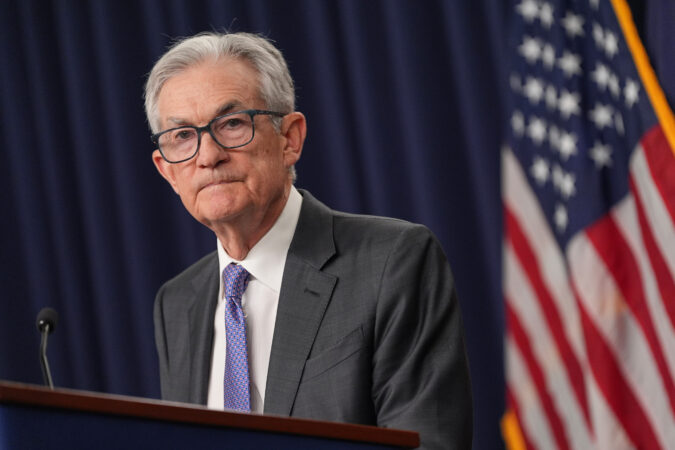
    WASHINGTON — Federal Reserve Chair Jerome Powell will attend the Supreme Court’s oral argument Wednesday in a case involving the attempted firing of Fed governor Lisa Cook, an unusual show of support by the central bank chair.

    The high court is considering whether President Donald Trump can fire Cook, as he said he would do in late August, in an unprecedented attempt to remove one of the seven members of the Fed’s governing board. Powell plans to attend the high court’s Wednesday session, according to a person familiar with the matter, who spoke on condition of anonymity.

    It’s a much more public show of support than the Fed chair has previously shown Cook. But it follows Powell’s announcement last week that the Trump administration has sent subpoenas to the Fed, threatening an unprecedented criminal indictment of the Fed Chair. Powell — appointed to the position by Trump in 2018 — appears to be casting off last year’s more subdued response to Trump’s repeated attacks on the central bank in favor of a more public confrontation.

    Powell issued a video statement Jan. 11 condemning the subpoenas as “pretexts” for Trump’s efforts to force him to sharply cut the Fed’s key interest rate. Powell oversaw three rate cuts late last year, lowering the rate to about 3.6%, but Trump has argued it should be as low as 1%, a position few economists support.

    The Trump administration has accused Cook of mortgage fraud, an allegation that Cook has denied. No charges have been made against Cook. She sued to keep her job, and the Supreme Court Oct. 1 issued a brief order allowing her to stay on the board while they consider her case.

    If Trump succeeds in removing Cook, he could appoint another person to fill her slot, which would give his appointees a majority on the Fed’s board and greater influence over the central bank’s decisions on interest rates and bank regulation.

  • Gunmen abduct over 150 worshippers from 3 churches in Nigeria

    Gunmen abduct over 150 worshippers from 3 churches in Nigeria

    ABUJA, Nigeria — Gunmen abducted more than 150 worshipers in simultaneous attacks on three separate churches in northwest Nigeria, a state lawmaker told the Associated Press on Monday.

    The attack occurred on Sunday in Kurmin Wali, a community in the Kajuru area of Kaduna state, while services and a Mass were underway at the Evangelical Church Winning All, at another church belonging to the denomination Cherubim and Seraphim, and a Catholic church, according to Usman Danlami Stingo, a lawmaker representing the area at the state parliament.

    “As of yesterday, 177 people were missing, and 11 came back. So we have 168 still missing,” he said.

    Police in Kaduna state have not commented.

    No group has taken responsibility. Such attacks are common in Nigeria, Africa’s most populous country, where multiple gangs and religious armed groups attack remote communities with limited security and government presence.

    The northern region of the country has been hit hardest.

    Similar attacks on churches have sparked allegations of the persecution of Christians by U.S. President Donald Trump and some American lawmakers. The U.S. government launched military strikes in Sokoto on Dec. 25, allegedly targeting an Islamic State group in the region.

    The Nigerian government has rejected the characterization of the country’s escalating security crises as a “Christian genocide.”

  • Christian leaders urge the protection of worshippers’ rights after protesters interrupt service

    Christian leaders urge the protection of worshippers’ rights after protesters interrupt service

    Several faith leaders called urgently for protecting the rights of worshipers while also expressing compassion for migrants after anti-immigration enforcement protesters disrupted a service at a Southern Baptist church in Minnesota.

    About three dozen protesters entered the church during Sunday service at the Cities Church in St. Paul, some walking right up to the pulpit, others loudly chanting “ICE out” and “Renee Good,” referring to a woman who was fatally shot on Jan. 7 by an ICE agent in Minneapolis during an immigration enforcement operation.

    One of the church’s pastors, David Easterwood, leads the local field office for Immigration and Customs Enforcement.

    One of the leaders of the protest, prominent local activist Nekima Levy Armstrong, said she’s also an ordained reverend.

    In a statement, the Minnesota-Wisconsin Baptist Convention called what happened “an unacceptable trauma.”

    “I believe we must be resolute in two areas: encouraging our churches to provide compassionate pastoral care to these (migrant) families and standing firm for the sanctity of our houses of worship,” Trey Turner, who leads the convention, wrote to the Associated Press on Monday. Cities Church belongs to the convention.

    “The interference was so significant that services were forced to end prematurely. Video footage captured by the protesters themselves and others show them shouting insults and accusations at youth, children, and families,” the statement said.

    The U.S. Department of Justice said Sunday it has opened a civil rights investigation.

    The recent surge in operations in Minnesota has pitted more than 2,000 federal immigration officers against a mobilized network of community activists and protesters. The Trump Administration and Minnesota officials have traded blame for the heightened tensions.

    “No cause — political or otherwise — justifies the desecration of a sacred space or the intimidation and trauma inflicted on families gathered peacefully in the house of God,” Kevin Ezell, president of the North American Mission Board, said in a statement. “What occurred was not protest; it was lawless harassment.”

    Ezell said his organization fully supports Jonathan Parnell, the pastor who was leading the disrupted service. Parnell is a missionary with Ezell’s group and serves dozens of Southern Baptist churches in the area. Cities Church did not return the AP’s requests for comment.

    U.S. Christians divided on immigration enforcement

    Christian voters and faith leaders in the United States are divided on the moral and legal dilemmas raised by immigration, including the presence of an estimated 11 million people who are in the country illegally and the spike in illegal border crossings and asylum requests during the Biden administration.

    There are divergent opinions among and within Christian denominations on whether the imperative is to care for the stranger and the neighbor or to obey laws and emphasize security. Broadly, white evangelical churches have supported stronger enforcement, while the Catholic hierarchy has spoken strongly in favor of migrant rights.

    The Southern Baptist Convention is the largest Protestant denomination in the U.S. and has a conservative evangelical theology.

    Miles Mullin, who leads the Ethics and Religious Liberty Commission of the Southern Baptist Convention, said faith leaders can and often have led protests on social issues but that he urges a firm “red line” on actions keeping others from worshipping.

    “This is something that just shouldn’t happen in America,” Mullin said. “For Baptists, our worship services are sacred.”

    Federal protections for houses of worship

    Many faith leaders were dismayed when the Trump administration announced last January that federal immigration agencies could make arrests at churches, schools, and hospitals, ending broader policies that protected sensitive spaces.

    While no immigration raids during church services have been reported, some churches, including in the Twin Cities, have posted notices on their doors saying no ICE or Border Patrol agents are allowed inside. Others have reported a drop in attendance, particularly during enforcement surges.

    Following the protest in Cities Church, Harmeet Dhillon, the assistant attorney general for civil rights at the U.S. Department of Justice, posted on social media that there “is zero tolerance for this kind of illegal behavior & we will not stand for it.”

    Dhillon posted on X that her office was investigating “potential violations of the federal FACE Act,” calling the incident “un-American and outrageous.”

    The federal 1994 Freedom of Access to Clinic Entrances Act prohibits interference or intimidation of “any person by force, threat of force, or physical obstruction exercising or seeking to exercise the First Amendment right of religious freedom at a place of religious worship.”

    White House press secretary Karoline Leavitt called the protest despicable, warning in a social media post that “President Trump will not tolerate the intimidation and harassment of Christians in their sacred places of worship.”

    Several pastors commented on the need to have better security at churches in today’s volatile political environment.

    The Rev. Joe Rigney, who was one of the founding pastors at Cities Church in 2015 and served there until 2023, said safety would have been his first concern had a group disrupted service, especially after the fatal shooting at a Minneapolis Catholic school Mass last summer.

    Legal developments, protests in Twin Cities

    Also Monday, the Department of Justice notified a federal appeals court that it will appeal a ruling that federal officers in the Minneapolis area cannot detain or tear gas peaceful protesters who aren’t obstructing authorities. The case was filed in December on behalf of six Minnesota activists who are among thousands of people observing the activities of federal immigration officers in the area.

    Yet more protesters braved temperatures that dipped below zero Monday to honor Martin Luther King, Jr. Day in St. Paul. Some waved signs from vehicles bearing messages including, “What did you do while your neighbors were being kidnapped?” and “We love our Somali neighbors.”

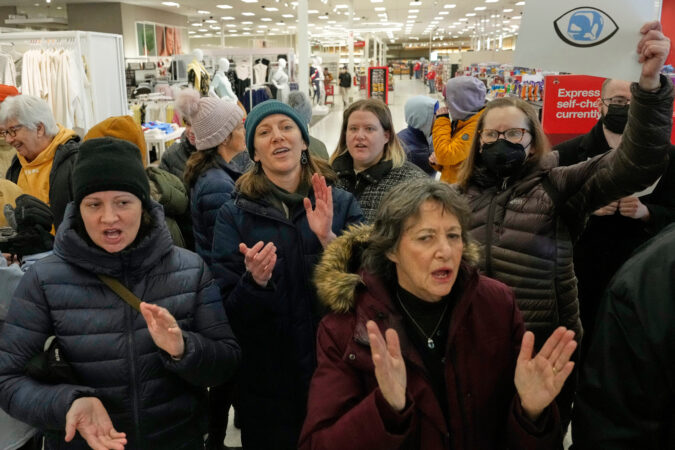
    Dozens of protesters also staged a brief sit-in at a Target store in St. Paul demanding that the retailer bar entry to federal agents. Target, headquartered in Minneapolis, has been criticized by activists after a video showed federal agents, detain two employees at a store in Richfield, Minnesota.