Category: Nation & World

  • Trump’s promised manufacturing boom is a bust so far

    Trump’s promised manufacturing boom is a bust so far

    Introducing the highest U.S. tariffs since the Great Depression, President Donald Trump made a clear promise in the spring: “Jobs and factories will come roaring back into our country.”

    They haven’t.

    Manufacturing employment has declined every month since what Trump dubbed “Liberation Day” in April, saying his widespread tariffs would begin to rebalance global trade in favor of American workers. U.S. factories employ 12.7 million people today, 72,000 fewer than when Trump made his Rose Garden announcement.

    The trade measures that the president said would spur manufacturing have instead hampered it, according to most mainstream economists. That’s because roughly half of U.S. imports are “intermediate” goods that American companies use to make finished products, like aluminum that is shaped into soup cans or circuit boards that are inserted into computers.

    So while tariffs have protected American manufacturers like steel mills from foreign competition, they have raised costs for many others. Auto and auto parts employment, for example, has dipped by about 20,000 jobs since April.

    “2025 should have been a good year for manufacturing employment, and that didn’t happen. I think you really have to indict tariffs for that,” said economist Michael Hicks, director of the Center for Business and Economic Research at Ball State in Muncie, Indiana.

    Small- and midsize businesses have found Trump’s on-again, off-again tariffs especially vexing. Fifty-seven percent of midsize manufacturers and 40 percent of small producers said they had no certainty about their input costs in a November survey by the Federal Reserve Bank of Richmond. Only 23 percent of large manufacturers shared that complaint.

    Smaller companies also were more than twice as likely to respond to tariffs by delaying investments in new plants and equipment, the survey found. One reason could be that taxes on imports raise the price of goods used in production much more than they do with typical consumer items, according to a study by the San Francisco Fed.

    Industries producing more technologically complex goods such as aircraft and semiconductors also are paying an outsize price, according to Gary Winslett, director of the international politics and economics program at Middlebury College. Makers of semiconductors, for example, shed more than 13,000 jobs since April.

    “They’re the ones who need the imported inputs. Really advanced manufacturing is actually what’s getting hit the hardest,” he said.

    Trump’s tariffs, however, are not the industrial sector’s only headache. Factory payrolls began their post-pandemic decline in early 2023, almost two years before Trump returned to the White House.

    High interest rates and a shift in consumer spending patterns are hurting the nation’s manufacturers, economists said. Business loans are more than twice as expensive as they were four years ago, with banks charging their most creditworthy borrowers interest rates of 6.75 percent. That discourages businesses from expanding operations and hiring additional workers.

    After bingeing during the height of the pandemic on durable goods, consumers have gradually redirected their spending to in-person services. Money that once went to makers of furniture, televisions and exercise machines now goes instead to restaurants and entertainment venues.

    In Indiana, the spending switch can be glimpsed in the fortunes of the recreational vehicle industry, a local mainstay. RV shipments soared to a record 600,400 in 2021 as consumers trapped at home by the pandemic hit the road. But by 2024, the work-from-home era was over, and sales fell by nearly half. Thor Industries, the largest RV manufacturer, laid off several hundred workers last year, as demand flagged.

    Once Trump returned to the White House, manufacturers responded by over-ordering imports to beat the anticipated tariffs. That’s left many producers with more inventory than they need, suggesting cuts lie ahead, according to Hicks.

    “The manufacturing job losses that we see now are really just the beginning of what will be a pretty grim couple of quarters as manufacturing adjusts to a new lower level of demand,” he said.

    Modest numbers of manufacturing jobs have been trimmed throughout the economy. In December, Westlake Corp., a Houston-based producer of industrial chemicals, said it would idle four production lines at facilities in Louisiana and Mississippi, putting 295 employees out of work. Speaking on an investor call, company executives blamed excess global capacity and weak demand for the move.

    While the jobs that Trump promised have not materialized, factory output rose in 2025, reaching its highest mark in almost three years, according to Federal Reserve data, and administration officials said it is only a matter of time before the full benefits of the president’s plan are felt.

    Trump’s tariffs and jawboning encourage CEOs to invest in new U.S. plants. Provisions in the president’s signature fiscal legislation permitting companies to quickly write off the full expense of new investments in equipment and research and development expenses will spur modern manufacturing, they said.

    “It also encourages the build-out of high-precision manufacturing here at home, which will lead to high-paying construction and factory jobs,” Treasury Secretary Scott Bessent said in a speech this month.

    Companies are spending more than three times as much on constructing new factories as they did when Trump was first inaugurated, though less than during the Biden-era peak. The White House last fall hailed recent investment announcements by companies such as Stellantis and Whirlpool. Last month, T. RAD North America, a subsidiary of a Japanese manufacturer, announced plans for a new auto parts plant in Clarksville, Tennessee, which would employ 928 workers.

    Nick Iacovella, a spokesman for the Coalition for a Prosperous America, which backs Trump’s manufacturing policies, said the roughly 1 percent shrinkage in factory employment last year was less significant than the uptick in business investment.

    “We saw a significant increase in capital expenditures, which is the earliest signal that reindustrialization is taking hold. Those investments take time to permit, build and staff before they show up in employment data,” he said.

    The president’s hopes of increasing manufacturing employment defy decades of experience in the United States and other advanced economies. American factory jobs peaked at 19.5 million in the summer of 1979 and have been sliding ever since, largely because of the introduction of machinery that can do the job of several workers.

    As two presidents sought to revive domestic production over the past decade, manufacturing employment rode a roller coaster. Factory jobs increased by 421,000 during Trump’s first term before sinking by more than 1 million during the pandemic. President Joe Biden used government subsidies to encourage hiring, especially for green energy projects, and manufacturing payrolls rose more than 100,000 above Trump’s highest mark.

    But those gains evaporated by the end of 2024.

    On Tuesday, the president addressed the Detroit Economic Club, touting “the strongest and fastest economic turnaround in our country’s history.” He boasted about growth, productivity, investment, incomes, inflation and the stock market.

    “The Trump economic boom is officially begun,” the president said.

    All that’s missing now are the jobs.

    GRAPHIC

  • Lawmakers propose $2.5B agency to boost production of rare earths and other critical minerals

    Lawmakers propose $2.5B agency to boost production of rare earths and other critical minerals

    WASHINGTON — A bipartisan group of lawmakers have proposed creating a new agency with $2.5 billion to spur production of rare earths and the other critical minerals, while the Trump administration has already taken aggressive actions to break China’s grip on the market for these materials that are crucial to high-tech products, including cellphones, electric vehicles, jet fighters and missiles.

    It’s too early to tell how the bill, if passed, could align with the White House’s policy, but whatever the approach, the U.S. is in a crunch to drastically reduce its reliance on China, after Beijing used its dominance of the critical minerals market to gain leverage in the trade war with Washington. President Donald Trump and Chinese President Xi Jinping agreed to a one-year truce in October, by which Beijing would continue to export critical minerals while the U.S. would ease its export controls of U.S. technology on China.

    The Pentagon has shelled out nearly $5 billion over the past year to help ensure its access to the materials after the trade war laid bare just how beholden the U.S. is to China, which processes more than 90% of the world’s critical minerals. To break Beijing’s chokehold, the U.S. government is taking equity stakes in a handful of critical mineral companies and in some cases guaranteeing the price of some commodities using an approach that seems more likely to come out of China’s playbook instead of a Republican administration.

    The bill that Sen. Jeanne Shaheen (D., N.H.) and Sen. Todd Young (R., Ind.) introduced Thursday would favor a more market-based approach by setting up the independent body charged with building a stockpile of critical minerals and related products, stabilizing prices, and encouraging domestic and allied production to help ensure stable supply not only for the military but also the broader economy and manufacturers.

    Shaheen called the legislation “a historic investment” to make the U.S. economy more resilient against China’s dominance that she said has left the U.S. vulnerable to economic coercion. Young said creating the new reserve is “a much-needed, aggressive step to protect our national and economic security.”

    Rep. Rob Wittman (R., Va.) introduced the House version of the bill.

    New sense of urgency

    When Trump imposed widespread tariffs last spring, Beijing fought back not only with tit-for-tat tariffs but severe restrictions on the export of critical minerals, forcing Washington to back down and eventually agree to the truce when the leaders met in South Korea.

    On Monday, in his speech at SpaceX, Defense Secretary Pete Hegseth revealed that the Pentagon has in the past five months alone “deployed over $4.5 billion in capital commitments” to close six critical minerals deals that will “help free the United States from market manipulation.”

    One of the deals involves a $150 million of preferred equity by the Pentagon in Atlantic Alumina Co. to save the country’s last alumina refinery and build its first large-scale gallium production facility in Louisiana.

    Last year, the Pentagon announced it would buy $400 million of preferred stock in MP Materials, which owns the country’s only operational rare earths mine at Mountain Pass, California, and entered into a $1.4-billion joint partnership with ReElement Technologies Corp. to build up a domestic supply chain for rare earth magnets.

    On Wednesday, Trump announced in a proclamation that the U.S. is “too reliant” on foreign-sourced critical minerals and directed his administration to negotiate better deals. He said possible remedies would include minimum import prices for certain critical minerals.

    “Reshoring manufacturing that’s critical to our national and economic security is a top priority for the Trump administration,” said Kush Desai, a White House spokesperson.

    The drastic move by the U.S. government to take equity stakes has prompted some analysts to observe that Washington is pivoting to some form of state capitalism to compete with Beijing.

    “Despite the dangers of political interference, the strategic logic is compelling,” wrote Elly Rostoum, a senior fellow at the Washington-based research institute Center for European Policy Analysis. She suggested that the new model could be “a prudent way for the U.S. to ensure strategic autonomy and industrial sovereignty.”

    Companies across the industry are welcoming the intervention from Trump’s administration.

    “He is playing three-dimensional chess on critical minerals like no previous president has done. It’s about time too, given the military and strategic vulnerability we face by having to import so many of these fundamental building blocks of technology and national defense,” NioCorp’s Chief Communications Officer Jim Sims said. That company is trying to finish raising the money it needs to build a mine in southeast Nebraska.

    Relying on allies for help

    In addition to trying to boost domestic production, the Trump administration has sought to secure some of these crucial elements through allies. In October, Trump signed an $8.5 billion agreement with Australia to invest in mining there, and the president is now aggressively trying to take over Greenland in the hope of being able to one day extract rare earths from there.

    On Monday, finance ministers from the G7 nations huddled in Washington over their vulnerability in the critical mineral supply chains.

    Treasury Secretary Scott Bessent, who has led several rounds of trade negotiations with Beijing, urged attendees to increase their supply chain resiliency and thanked them for their willingness to work together “toward decisive action and lasting solutions,” according to a Treasury statement.

    The bill introduced on Thursday by Shaheen and Young would encourage production with both domestic and allied producers.

    Past efforts to bolster rare earths production

    Congress in the past several years has pushed for legislation to protect the U.S. military and civilian industry from Beijing’s chokehold. The issue became a pressing concern every time China turned to its proven tactics of either restricting the supply or turned to dumping extra critical minerals on the market to depress prices and drive any potential competitors out of business.

    The Biden administration sought to increase demand for critical minerals domestically by pushing for more electric vehicle and windmill production. But the Trump administration largely eliminated the incentives for those products and instead chose to focus on increasing critical minerals production directly.

    Most of those past efforts were on a much more limited scale than what the government has done in the past year, and they were largely abandoned after China relented and eased access to critical minerals.

  • Public mistrust linked to drop in deceased donor organ donations and kidney transplants

    Public mistrust linked to drop in deceased donor organ donations and kidney transplants

    WASHINGTON — Organ donations from the recently deceased dropped last year for the first time in over a decade, resulting in fewer kidney transplants, according to an analysis issued Wednesday that pointed to signs of public mistrust in the lifesaving system.

    More than 100,000 people in the U.S. are on the list for an organ transplant. The vast majority of them need a kidney, and thousands die waiting every year.

    The nonprofit Kidney Transplant Collaborative analyzed federal data and found 116 fewer kidney transplants were performed last year than in 2024. That small difference is a red flag because the analysis traced the decline to some rare but scary reports of patients prepared for organ retrieval despite showing signs of life.

    Those planned retrievals were stopped and the U.S. is developing additional safeguards for the transplant system, which saves tens of thousands of lives each year. But it shook public confidence, prompting some people to remove their names from donor lists.

    Andrew Howard, who leads the Kidney Transplant Collaborative, said last year’s dip in kidney transplants would have been larger except for a small increase — about 100 — in transplants from living donors, when a healthy person donates one of their kidneys to someone in need. The collaborative advocates for increased living donations, which make up a fraction of the roughly 28,000 yearly kidney transplants.

    With the exception of 2020, when the COVID-19 pandemic was raging, organ transplants have been rising year-to-year. Last year’s decline in deceased donors didn’t translate into fewer transplants overall: There were just over 49,000 compared with 48,150 in 2024. Transplants of hearts, livers and lungs continued to see gains, according to federal data. Howard said that was likely due to differences in how various organs are evaluated and allocated for transplant.

    The Association of Organ Procurement Organizations wasn’t involved in Wednesday’s analysis but expressed alarm, calling on its members, hospitals and federal regulators “to unite in restoring public trust and strengthening this critical system.”

  • Moscow agrees with Trump that Ukraine is holding up a peace deal, the Kremlin says

    Moscow agrees with Trump that Ukraine is holding up a peace deal, the Kremlin says

    Moscow agrees with President Donald Trump’s view that Ukraine is holding up a peace deal to end the almost four years of fighting since Russia invaded its neighbor, a Kremlin official said Thursday.

    Kremlin spokesperson Dmitry Peskov said, “Yes, we can agree with it, it’s indeed so.” His comments came after Trump said in published remarks Wednesday that Ukrainian President Volodymyr Zelensky is an obstacle in U.S.-led peace talks.

    That assessment is at odds with the sentiment of European officials, who have repeatedly accused Russian President Vladimir Putin of stalling in negotiations while his bigger army tries to push deeper into Ukraine and Russia relentlessly bombards Ukrainian cities.

    Kyiv and Moscow still appear publicly far apart on their terms for a peace deal.

    “I think he’s ready to make a deal,” Trump was quoted as saying of the Russian president in an interview with Reuters. “I think Ukraine is less ready to make a deal,” he said, naming Zelensky as obstructing a settlement.

    Polish Prime Minister Donald Tusk, who along with many European and NATO member nations has strongly backed Ukraine, pushed back on Trump’s reported comments.

    “It is Russia who rejected the peace plan prepared by the U.S.,” not Zelensky, Tusk posted on X on Thursday. “The only Russian response (was) further missile attacks on Ukrainian cities. This is why the only solution is to strengthen pressure on Russia. And you all know it.”

    Putin said Thursday that Moscow, like Ukraine, demands security guarantees as part of a prospective peace deal.

    “We must proceed from the premise that security must be truly universal, and therefore equal and indivisible, and it cannot be ensured for some at the expense of the security of others,” Putin said after receiving credentials from foreign ambassadors in the Kremlin.

    “In the absence of it, Russia will continue to consistently pursue the goals it has set,” Putin added.

    Trump’s position appeared to deviate from recent comments by U.S. officials that the American president is running out of patience with Putin.

    U.S. Sen. Lindsey Graham (R., S.C.) said last week that Trump is on board with a tough sanctions package intended to economically cripple Russia.

    “This will be well-timed, as Ukraine is making concessions for peace and Putin is all talk, continuing to kill the innocent,” Graham said in a statement.

    Also, the United States accused Russia on Monday of a “dangerous and inexplicable escalation” of its war at a time when the Trump administration is trying to advance negotiations toward peace.

    The Institute for the Study of War, a Washington think tank, said late Wednesday that “the Kremlin has been delaying the peace process for months in order to protract the war and achieve Russia’s original war aims through military means.”

    A Russian drone struck a playground in the western city of Lviv overnight, according to the head of the regional military administration Maksym Kozytskyi. The blast shattered over a hundred windows in the area, though nobody was injured, he said.

    Peskov, the Kremlin spokesman, said that no date has been agreed for U.S. presidential envoy Steve Witkoff to make another visit to Moscow for further peace talks.

  • Native Americans are being swept up by ICE in Minneapolis, tribes say

    Native Americans are being swept up by ICE in Minneapolis, tribes say

    For hours, Raelyn Duffy searched for any information that could lead to the whereabouts of her son, Jose Roberto “Beto” Ramirez, who that morning had been forcibly removed from his aunt’s car and detained by masked federal immigration officers in Robbinsdale, Minn.

    Ramirez, 20, is Native American — and a U.S. citizen. But video of his arrest last Thursday shows that the officers were unmoved by his aunt’s panicked screams informing them of his legal status. They yanked Ramirez from the passenger’s seat, slammed him on the hood of another car, handcuffed him and took him away.

    Friends identified Ramirez from a Facebook Live video of the arrest and alerted Duffy, who rushed home, grabbed her son’s birth certificate and called Immigration and Customs Enforcement.

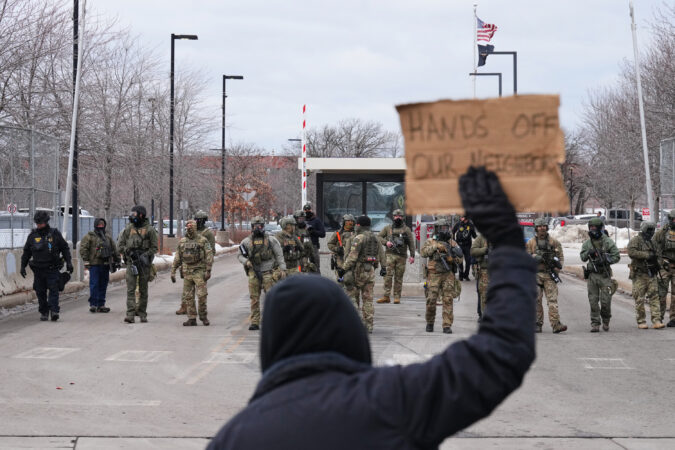
    Ramirez, a descendant of the Red Lake Nation, a federally recognized Ojibwe tribe in northern Minnesota, was held in custody for about 10 hours, his mother said in an interview. He is among several Native Americans who have allegedly been swept up in the Trump administration’s surge in immigration enforcement operations in the Minneapolis area that began late last month and has escalated since a U.S. citizen was fatally shot by an ICE agent last week.

    Despite widespread protests over the killing of Renée Good, Trump administration officials say they are surging hundreds more immigration officers into the city and surrounding areas.

    Tribal leaders and members who live in the greater Minneapolis area say Indigenous family members, friends and neighbors have been stopped, questioned, harassed and, in some cases, detained solely on the basis of their skin color or their names. Some immigration experts suggested ICE officers might have racially profiled them and mistaken them for being Hispanic.

    Like Ramirez, four members of the Oglala Sioux Tribe were detained by ICE officers soon after the Minneapolis operation began, according to tribal president Frank Star Comes Out. Tribal leaders for days unsuccessfully sought information about their status before learning that one man had been released, he said in a statement Tuesday.

    The other three remain in custody at the B.H. Whipple Federal Building in Fort Snelling, on the outskirts of Minneapolis, where ICE has detained people arrested in the enforcement operation, he said.

    “Members of the Oglala Sioux Tribe are United States citizens,” Star Comes Out said. “We are the first Americans. We are not undocumented immigrants, and we are not subject to unlawful immigration enforcement actions by ICE or Homeland Security.”

    Star Comes Out did not identify the men; he said he is basing his accounts of their arrests on information offered by the tribal community. The Washington Post was unable to independently verify the men’s names or confirm their arrests.

    The Whipple Building stands on the site of a military fort that, during the Dakota War of 1862 between Native American and white settlers, was used to imprison Indigenous people. Two Dakota leaders were executed at Fort Snelling in 1865.

    “The irony is not lost on us,” Star Comes Out said in the statement. “Lakota citizens who are reported to be held at Fort Snelling … underscores why treaty obligations and federal accountability matter today, not just in history.”

    The Department of Homeland Security disputed the tribe’s allegations, saying it has no record of its immigration officers detaining the tribe members.

    “We have not uncovered any claims by individuals in our detention centers that they are members of the Oglala Sioux tribe,” a spokesperson said in response to questions from the Post.

    In Ramirez’s case, Duffy said she heard from him only after he had been held for hours at the Whipple Building. Upon his release, Ramirez regained access to his phone and called her to tell her what had happened.

    “The upper part of his back, back of his neck, you could just see all of it — scratches, or like marks from being hit,” Duffy said, describing injuries she said resulted from his arrest. “He was all marked up. His hands had cuts from the handcuffs.”

    She added: “It’s racial profiling. It’s crazy.”

    The DHS spokesperson did not respond to the Post’s question about Ramirez.

    Elizabeth Hidalgo Reese, Yunpoví, a scholar of American Indian tribal law at Stanford Law School who was born in the Nambé Pueblo, a Tewa-speaking tribe in northern New Mexico, noted that Minnesota has 11 federally recognized tribes and suggested that Native Americans are “getting caught up in this search for Brown people who look a certain way.”

    Some Democratic state lawmakers are speaking out. State Sen. Mary Kunesh and state Reps. Heather Keeler and Liish Kozlowski, members of the Native American Caucus, expressed concerns in recent days that “countless” Native American community members in Minnesota have reported “being harassed, stopped without cause, and interrogated for documentation.”

    The Oglala Sioux Tribe’s leaders said they notified federal officials that detaining tribal members under federal immigration authority is not only unlawful but also violates binding treaties between the federal government and the tribe.

    “These are sovereign nations,” Kunesh said in an interview. “Using members of the tribe as pawns in micromanaging or emotionally manipulating tribes is just abhorrent.”

    Star Comes Out said that federal authorities said they would provide more information on the detained tribe members only if tribal leaders entered into an agreement with ICE that would empower the leaders to help make immigration arrests.

    The Trump administration has pressured localities across the country into what are known as “287(g) agreements,” which deputize local law enforcement to assist in federal immigration enforcement. More than 1,300 jurisdictions across 40 states have entered the agreements, according to ICE. That is up from 135 at the end of fiscal 2024, according to a study by the Migration Policy Institute.

    In a letter to several Trump administration officers, including Homeland Security Secretary Kristi Noem and Interior Secretary Doug Burgum, Star Comes Out said the tribe would not entertain such an agreement.

    “We will not enter an agreement that would authorize, or make it easier, for ICE or Homeland Security to come onto our tribal homeland to arrest or detain our tribal members,” he wrote.

    Kathleen Bush-Joseph, an analyst with the Migration Policy Institute, said the idea that DHS would leverage information on detainees to pressure tribes to enter 287(g) pacts raises “very real concerns.”

    Asked about the allegations, the DHS spokesperson said: “ICE did NOT ask the tribe for any kind of agreement. We have simply asked for basic information on the individuals, such as names and date of birth so that we can run a proper check to provide them with the facts.”

    Kozlowski, who is of Anishinaabe Ojibwe and Mexican American descent, said the situation highlights the imperative for Native Americans in Minnesota to remain outspoken and vigilant about defending their rights.

    “Trump [is] saying: If you don’t come along with our agenda and enter into agreements and your places of business and lands don’t support us, then we will crush you,” Kozlowski said. “But the thing is that they’ve never been able to crush our spirits — ever.”

  • Two Pa. lawmakers were in a video critical of Trump. Now, they say, they are under federal investigation.

    Two Pa. lawmakers were in a video critical of Trump. Now, they say, they are under federal investigation.

    U.S. Reps. Chrissy Houlahan of Chester County and Chris Deluzio of Allegheny County are among the Democrats who say they are being investigated by President Donald Trump’s administration for appearing in a video that calls on service members not to follow “illegal orders.”

    Deluzio, a Navy veteran, said in a Thursday interview that the investigation is “part of a harassment or intimidation campaign against me and my colleagues.”

    “The fact that you’ve got members of Congress, all who’ve served the country, being targeted in this way because we stated the law shouldn’t just worry but terrify the American people, and I’m not going to be intimidated or back down in the face of that,” he told The Inquirer.

    The Democratic lawmakers who appeared in the Nov. 18 video were contacted late last year by the FBI for interviews. They say they have now been contacted by the U.S. Attorney’s Office for the District of Columbia, a significant escalation in the investigation.

    “The six of us are being targeted not because we said something untrue, but because we said something President Trump and Secretary [of Defense Pete] Hegseth didn’t want anyone to hear,” Houlahan, a former Air Force officer, said in a statement Wednesday.

    “This investigation is ridiculous on any day but especially so on a day the President is considering launching airstrikes against Iran in retaliation for their crackdown on free speech,” Houlahan said.

    The four representatives and two senators, all of whom served in the military or intelligence agencies, said in the video that the Trump administration is “pitting uniformed military and intelligence community professionals against American citizens.”

    In response, Trump posted on social media two days later that the lawmakers were engaging in “SEDITIOUS BEHAVIOR, punishable by DEATH!” along with a string of hostile messages toward the lawmakers.

    Houlahan said at the time she was disappointed in a lack of support from her GOP colleagues.

    U.S. Sen. Elissa Slotkin (D., Mich.), a former CIA analyst who appeared in the video, said Wednesday that representatives for U.S. Attorney Jeanine Pirro, the top federal prosecutor in Washington, had contacted her last week requesting an interview.

    Houlahan told reporters that prosecutors want to “sit down” with all the lawmakers who were involved in the video.

    U.S. Reps. Jason Crow (D., Colo.), a former paratrooper and Army Ranger, and Maggie Goodlander (D., N.H.), a former intelligence officer, also appeared in the video, as did U.S. Sen. Mark Kelly (D., Ariz.), a former Navy captain.

    Sen. Mark Kelly sues the Pentagon

    Kelly filed a lawsuit Monday against the Pentagon and Hegseth over the defense secretary’s attempts to punish Kelly in particular for his participation in the November video.

    Kelly claims the Trump administration is violating his constitutional rights to free speech after Hegseth censured the Arizona senator. Hegseth said the Jan. 5 censure was “a necessary process step” to proceedings that could result in a demotion from Kelly’s retired rank of captain and subsequent reduction in retirement pay.

    “The First Amendment forbids the government and its officials from punishing disfavored expression or retaliating against protected speech,” Kelly’s lawsuit says. “That prohibition applies with particular force to legislators speaking on matters of public policy.”

    Although all six lawmakers served in the military or intelligence agencies, only Kelly served long enough to formally retire from the military, which means the senator still falls under the Pentagon’s jurisdiction. The Pentagon opened its own investigation into Kelly in November after he appeared in the video.

    Deluzio said that Trump and Hegseth’s pursuit of Kelly is about more than just the senator.

    “They are trying to intimidate retired service members to signal to them that if you speak up and say something that the Trump administration or Pete Hegseth doesn’t like, that they’re going to target your retirement and your pension that you’ve earned after 20 years of service,” he said.

    A 2016 video circulated last month of Hegseth citing the same military law the legislators refer to in their video: Don’t follow unlawful orders. As a member of Trump’s administration, Hegseth has pointed to other aspects of military law that emphasize following orders and that say orders should be presumed lawful.

    When asked whether he also would sue the Trump administration over how officials have handled the lawmakers’ video, Deluzio said he was “not going to detail my legal strategy in all of this.”

    “But I will just be crystal clear that I am not intimidated by what they’re trying to do,” he added.

    This article contains information from the Associated Press.

  • A part that broke on a UPS plane that crashed in Kentucky failed 4 times on other planes years ago

    A part that broke on a UPS plane that crashed in Kentucky failed 4 times on other planes years ago

    Boeing warned plane owners in 2011 about a broken part that contributed to a UPS plane crash that killed 15 last year but at that point the plane manufacturer didn’t believe it threatened safety, the National Transportation Safety Board said Wednesday.

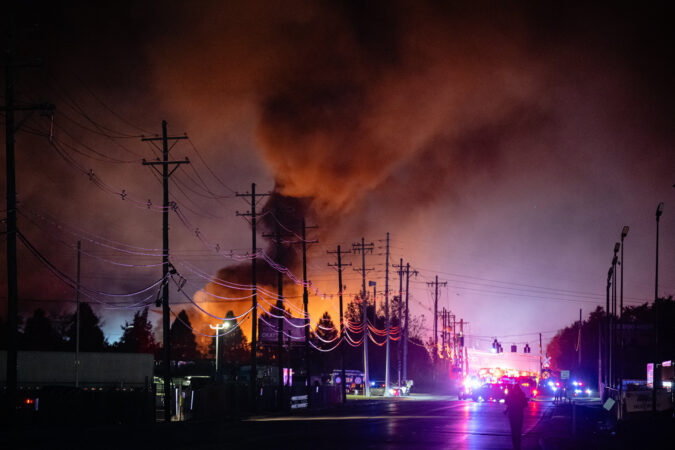
    The UPS plane crashed in November 2025 shortly after taking off in Louisville, Kentucky, when the left engine flew off the wing as the plane rolled down the runway. Three pilots on the plane that was headed for Hawaii were killed along with 12 more people on the ground near Louisville’s Muhammad Ali International Airport.

    The NTSB said Wednesday that Boeing had documented in 2011 there were four previous failures of a part that helps secure the MD-11’s engines to the wings on three different planes, but at that point the plane manufacturer “determined it would not result in a safety of flight condition.” These planes were actually built by McDonnell Douglas, which was later bought by Boeing.

    The NTSB previously said investigators found cracks in some of the parts that held the engine to the wing. Those cracks hadn’t been caught in regular maintenance done on the plane, which raised questions about the adequacy of the maintenance schedule. The last time those key engine mount parts were examined closely was in October 2021, and the plane wasn’t due for another detailed inspection for roughly 7,000 more takeoffs and landings.

    2015 crash brings up issues from 1979 crash

    It’s not clear when the cracks started to develop in the parts that helped hold the engine on the wing, but this crash is reminiscent of a 1979 crash in Chicago when the left engine flew off an American Airlines DC-10 during takeoff, killing 273 people. The DC-10 was the predecessor of the MD-11.

    That previous crash led to the worldwide grounding of 274 DC-10s. The airline workhorse was allowed to return to the skies because the NTSB determined that maintenance workers damaged the plane that crashed while improperly using a forklift to reattach the engine. That meant the crash wasn’t caused by a fatal design flaw even though there had already been a number of accidents involving DC-10s.

    But former FAA and NTSB crash investigator Jeff Guzzetti said that a service bulletin McDonnell Douglas issued in 1980 did identify failures of the spherical bearing race as a “safety of flight condition” so it’s surprising that Boeing didn’t call it that in 2011. He said that American had removed the engine of that plane so it could inspect that bearing.

    “I just think it raises questions regarding the adequacy of the severity of the 2011 service letter, and it also raises questions about how UPS incorporated that information and acted upon it,” Guzzetti said.

    Repairs weren’t required by FAA

    The service bulletin that Boeing issued didn’t require plane owners to make repairs like an FAA airworthiness directive would, and the agency didn’t issue such a directive.

    Former federal crash investigator Alan Diehl said the notice from Boeing recommended replacing the bearings with a redesigned part that was less likely to fail, but it still allowed operators to replace defective bearings with another older bearing that had demonstrated it was prone to failing.

    “As the investigation continues, the NTSB will have to address whether this service bulletin was an adequate solution to a known problem which could have had catastrophic results,” Diehl said. “The UPS crash highlights the need for increased maintenance measures on older airframes.”

    NTSB didn’t say whether there had been additional documented failures of the spherical bearing race since 2011. Investigators found that part broken into two pieces after the UPS crash, and the lugs that held that part were cracked.

    Photos released by the NTSB of the Nov. 4 crash show flames erupting as the rear of the engine starting to detach before it flew up and over the wing. Then the wing was engulfed by fire as the burning engine flew above it.

    Investigators search for reason why engine flew off

    The factual report released Wednesday doesn’t state what caused the engine to fly off, but it’s clear that investigators are focused on the failure of this bearing. The ultimate conclusion won’t come though until the NTSB’s final report, which usually doesn’t come until more than a year after a crash.

    But the report will undoubtedly be cited in the first lawsuit over the crash, filed last month, and subsequent ones. They will be investigating what Boeing knew at the time and what UPS did in response to this 2011 bulletin.

    “I think that this even further demonstrates that there was warning signs that predated the crash that any reasonable organization should have utilized to make sure that the Louisville crash didn’t happen,” said attorney Brad Cosgrove of the Clifford Law firm, which filed the first lawsuit.

    The report does make clear that neither of the plane’s two other engines were on fire before the crash. Some experts had previously speculated that debris from the left engine might have damaged the engine on the tail.

    Boeing, UPS and the Federal Aviation Administration are limited on what they can say while the NTSB investigation is ongoing, so they all declined to comment on Wednesday’s report. Boeing and UPS both expressed condolences to the families that lost loved ones in the crash.

    “We remain profoundly saddened by the Flight 2976 accident,” UPS spokesperson Jim Mayer said. “Our thoughts continue to be with the families and Louisville community who are grieving, and we remain focused on the recovery effort,” Mayer said.

    Plane involved in the crash was an older model

    The 34-year-old MD-11 plane only got 30 feet (9.1 meters) off the ground before crashing into several industrial buildings just past the runway and generating a massive fireball that could be seen for miles. Dramatic videos of the crash showed the plane on fire as it plowed into buildings and released a massive plume of smoke.

    Airlines quit flying this type of plane commercially years ago because it isn’t as efficient as newer models, but they had continued to fly for cargo carriers like UPS and FedEx and a few of these planes were also modified for use in firefighting. All the MD-11s that had been in use and 10 related DC-10s have been grounded since the crash.

    Cosgrove said he thinks it will eventually become clear that these MD-11s “probably should have been retired and that they had exceeded their shelf life.”

  • Federal officer shoots person in leg after being attacked during Minneapolis arrest, officials say

    Federal officer shoots person in leg after being attacked during Minneapolis arrest, officials say

    A federal officer shot a person in the leg in Minneapolis after being attacked with a shovel and broom handle while trying to make an arrest Wednesday, federal officials said.

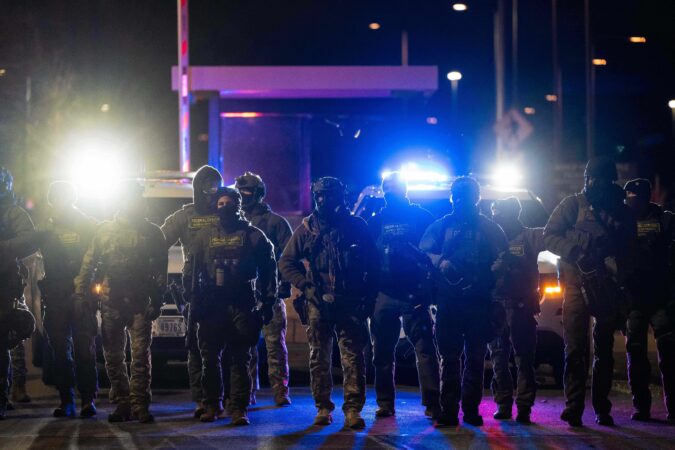
    Smoke filled the street near the site of the shooting as federal officers and protesters squared off. A group of officers wearing gas masks and helmets fired tear gas and grenades into a small crowd while protesters threw snowballs and chanted, “Our streets.”

    Such scenes have become common on the streets of Minneapolis since an immigration agent fatally shot Renee Good on Jan. 7. Agents have yanked people from cars and homes and been confronted by angry bystanders who bare demanding that officers pack up and leave.

    The Department of Homeland Security said in a statement on the social media platform X that federal law enforcement officers stopped a person from Venezuela who was in the U.S. illegally. The person drove away and crashed into a parked car before taking off on foot, DHS said.

    After officers reached the person, two other people arrived from a nearby apartment and all three started attacking the officer, according to DHS.

    “Fearing for his life and safety as he was being ambushed by three individuals, the officer fired a defensive shot to defend his life,” DHS said.

    The two people who came out of the apartment are in custody, it said.

    The shooting took place about 4.5 miles (7.2 kilometers) north of where Good was killed.

    Clashes in court as well

    Earlier Wednesday, a judge gave the Trump administration time to respond to a request to suspend its immigration crackdown in Minnesota, while the Pentagon looked for military lawyers to join what has become a chaotic law enforcement effort in the state.

    “What we need most of all right now is a pause. The temperature needs to be lowered,” state Assistant Attorney General Brian Carter said during the first hearing in a lawsuit filed by Minnesota and the cities of Minneapolis and St. Paul.

    Local leaders say the government is violating free speech and other constitutional rights with the surge of law enforcement. U.S. District Judge Katherine Menendez promised to keep the case “on the front burner” and gave the U.S. Justice Department until Monday to file a response to a request for a restraining order.

    The judge said these are “grave and important matters,” and that there are few legal precedents to apply to some of the key points in the case.

    Justice Department attorney Andrew Warden suggested the approach set by Menendez was appropriate.

    The judge is also handling a separate lawsuit challenging the tactics used by Immigration and Customs Enforcement and other federal officers when they encounter protesters and observers. A decision could be released this week.

    During a televised speech Wednesday evening, Gov. Tim Walz described Minnesota as being in chaos, saying what’s happening in the state “defies belief.”

    “Let’s be very, very clear, this long ago stopped being a matter of immigration enforcement,” he said. ”Instead, it’s a campaign of organized brutality against the people of Minnesota by our own federal government.”

    Walz added that “accountability” will be coming through the courts.

    Military lawyers may join the surge

    The Department of Homeland Security says it has made more than 2,000 arrests in the state since early December and is vowing to not back down. The Pentagon is preparing to send military lawyers to Minneapolis to assist.

    CNN, citing an email circulating in the military, says Defense Secretary Pete Hegseth is asking the branches to identify 40 lawyers known as judge advocate general officers or JAGs, and 25 of them will serve as special assistant U.S. attorneys in Minneapolis.

    Pentagon spokesperson Kingsley Wilson appeared to confirm the CNN report by posting it on X with a comment that the military “is proud to support” the Justice Department.

    The Pentagon did not immediately respond to emails from The Associated Press seeking more details.

    It’s the latest step by the Trump administration to dispatch military and civilian attorneys to areas where federal immigration operations are taking place. The Pentagon last week sent 20 lawyers to Memphis, U.S. Attorney D. Michael Dunavant said.

    Mark Nevitt, an associate professor at Emory University School of Law and a former Navy JAG, said there’s concern that the assignments are taking lawyers away from the military justice system.

    “There are not many JAGs but there are over one million members of the military, and they all need legal support,” he said.

    An official says the agent who killed Good was injured

    Jonathan Ross, the Immigration and Customs Enforcement officer who killed Good, suffered internal bleeding to his torso during the encounter, a Homeland Security official told The Associated Press.

    The official spoke to AP on condition of anonymity in order to discuss Ross’ medical condition. The official did not provide details about the severity of the injuries, and the agency did not respond to questions about the extent of the bleeding, exactly how he suffered the injury, when it was diagnosed or his medical treatment.

    There are many causes of internal bleeding, and they vary in severity from bruising to significant blood loss. Video from the scene showed Ross and other officers walking without obvious difficulty after Good was shot and her Honda Pilot crashed into other vehicles.

    She was killed after three ICE officers surrounded her SUV on a snowy street a few blocks from her home.

    Bystander video shows one officer ordering Good to open the door and grabbing the handle. As the vehicle begins to move forward, Ross, standing in front, raises his weapon and fires at least three shots at close range. He steps back as the SUV advances and turns.

    Homeland Security Secretary Kristi Noem has said Ross was struck by the vehicle and that Good was using her SUV as a weapon — a self-defense claim that has been deeply criticized by Minnesota officials.

    Chris Madel, an attorney for Ross, declined to comment on any injuries.

    ‘An agent of peace’

    Good’s family, meanwhile, has hired a law firm, Romanucci & Blandin, that represented George Floyd’s family in a $27 million settlement with Minneapolis. Floyd, who was Black, died after a white police officer pinned his neck to the ground in the street in May 2020.

    The firm said Good was following orders to move her car when she was shot. It said it would conduct its own investigation and publicly share what it learns.

    “They do not want her used as a political pawn,” the firm said, referring to Good and her family, “but rather as an agent of peace for all.”

    Students march against ICE

    Waving signs reading “Love Melts ICE” and “DE-ICE MN,” hundreds of teenagers left school in St. Paul and marched in freezing temperatures to the state Capitol for a protest and rally.

    The University of Minnesota, meanwhile, informed its 50,000-plus students that there could be online options for some classes when the new term starts next week. President Rebecca Cunningham noted that “violence and protests have come to our doorstep.” The campus sits next to the main Somali neighborhood in Minneapolis.

  • U.S. will suspend immigrant visa processing from 75 countries over public assistance concerns

    U.S. will suspend immigrant visa processing from 75 countries over public assistance concerns

    WASHINGTON — The State Department said Wednesday it will suspend the processing of immigrant visas for citizens of 75 countries, including Afghanistan, Iran, Russia and Somalia, whose nationals the Trump administration has deemed likely to require public assistance while living in the United States.

    The State Department, led by Secretary of State Marco Rubio, said it had instructed consular officers to halt immigrant visa applications from the countries affected in accordance with a broader order issued in November that tightened rules around potential immigrants who might become “public charges” in the U.S.

    The step builds on earlier immigration and travel bans by the administration on nearly 40 countries and is part of President Donald Trump’s ongoing efforts to tighten U.S. entry standards for foreigners.

    “The Trump administration is bringing an end to the abuse of America’s immigration system by those who would extract wealth from the American people,” the department said in a statement. “Immigrant visa processing from these 75 countries will be paused while the State Department reassess immigration processing procedures to prevent the entry of foreign nationals who would take welfare and public benefits.”

    The suspension, which will begin Jan. 21, will not apply to applicants seeking non-immigrant visas, or temporary tourist or business visas, who make up the vast majority of visa seekers. Demand for non-immigrant visas is expected to rise dramatically in the coming months and years due to the upcoming 2026 World Cup and 2028 Olympics both of which the U.S. will host or co-host.

    Cable calls for screening of non-immigrant visa applicants

    A separate notice sent to all U.S. embassies and consulates said that non-immigrant visa applicants should be screened for the possibility that they might seek public benefits in the United States.

    “With the uncovering of massive public benefits fraud across the United States, the Trump administration is laser-focused on eliminating and preventing fraud in public benefits programs,” said the cable that referred specifically to most non-immigrant visa applications and was sent on Monday.

    The cable, a copy of which was obtained by The Associated Press, urged consular officers to ensure that foreigners wanting to travel to the U.S. “have been fully vetted and screened” for whether they may rely on public services before they are issued a visa.

    The cable noted several times that it is up to the applicant to prove that they would not apply for public benefits while in the U.S. and said consular officers who suspect the applicant might apply should require them to fill out a form proving their financial bona fides.

    President Donald Trump’s administration has already severely restricted immigrant and non-immigrant visa processing for citizens of dozens of countries, many of them in Africa, Asia and Latin America.

    Consular officials must consider a range of personal details

    The November guidance on which Wednesday’s decision is based directed U.S. Embassy and consulate officials to comprehensively and thoroughly vet visa applicants to demonstrate that they will not need to rely on public benefits from the government any time after their admission in the U.S.

    While federal law already required those seeking permanent residency or legal status to prove they wouldn’t be a public charge, Trump in his first term widened the range of benefit programs that could disqualify applicants, and the guidelines in the cable appear to go further in scope.

    Immigrants seeking entry into the U.S. already undergo a medical exam by a physician who’s been approved by a U.S. Embassy. They are screened for communicable diseases, like tuberculosis, and asked to disclose any history of drug or alcohol use, mental health conditions or violence. They’re also required to have a number of vaccinations.

    The new directive expanded those with more specific requirements. It said consular officials must consider a range of specific details about people seeking visas, including their age, health, family status, finances, education, skills and any past use of public assistance regardless of the country. It also said they should assess applicants’ English proficiency and can do so by conducting interviews in English.

    Experts said at the time it could further limit who gets to enter the country at a time when the Republican administration is already tightening those rules.

    The countries affected by the suspension announced on Wednesday are:

    Afghanistan, Albania, Algeria, Antigua and Barbuda, Armenia, Azerbaijan, Bahamas, Bangladesh, Barbados, Belarus, Belize, Bhutan, Bosnia, Brazil, Burma, Cambodia, Cameroon, Cape Verde, Colombia, Congo, Cuba, Dominica, Egypt, Eritrea, Ethiopia, Fiji, Gambia, Georgia, Ghana, Grenada, Guatemala, Guinea, Haiti, Iran, Iraq, Ivory Coast, Jamaica, Jordan, Kazakhstan, Kosovo, Kuwait, Kyrgyzstan, Laos, Lebanon, Liberia, Libya, Macedonia, Moldova, Mongolia, Montenegro, Morocco, Nepal, Nicaragua, Nigeria, Pakistan, Republic of the Congo, Russia, Rwanda, Saint Kitts and Nevis, Saint Lucia, Saint Vincent and the Grenadines, Senegal, Sierra Leone, Somalia, South Sudan, Sudan, Syria, Tanzania, Thailand, Togo, Tunisia, Uganda, Uruguay, Uzbekistan and Yemen.

  • Venezuela war powers resolution fails in Senate as two Republicans bow to Trump pressure

    Venezuela war powers resolution fails in Senate as two Republicans bow to Trump pressure

    WASHINGTON — Senate Republicans voted to dismiss a war powers resolution Wednesday that would have limited President Donald Trump’s ability to conduct further attacks on Venezuela after two GOP senators reversed course on supporting the legislation.

    Trump put intense pressure on five Republican senators who joined with Democrats to advance the resolution last week and ultimately prevailed in heading off passage of the legislation. Two of the Republicans — Sens. Josh Hawley of Missouri and Todd Young of Indiana — flipped under the pressure.

    Vice President JD Vance had to break the 50-50 deadlock in the Senate on a Republican motion to dismiss the bill.

    The outcome of the high-profile vote demonstrated how Trump still has command over much of the Republican conference, yet the razor-thin vote tally also showed the growing concern on Capitol Hill over the president’s aggressive foreign policy ambitions.

    Democrats forced the debate after U.S. troops captured Venezuelan leader Nicolás Maduro in a surprise nighttime raid earlier this month

    “Here we have one of the most successful attacks ever and they find a way to be against it. It’s pretty amazing. And it’s a shame,” Trump said at a speech in Michigan Tuesday. He also hurled insults at several of the Republicans who advanced the legislation, calling Sen. Rand Paul of Kentucky a “stone cold loser” and Sens. Lisa Murkowski of Alaska and Susan Collins of Maine “disasters.” Those three Republicans stuck to their support for the legislation.

    Trump’s latest comments followed earlier phone calls with the senators, which they described as terse. The president’s fury underscored how the war powers vote had taken on new political significance as Trump also threatens military action to accomplish his goal of possessing Greenland.

    The legislation, even if it had cleared the Senate, had virtually no chance of becoming law because it would eventually need to be signed by Trump himself. But it represented both a test of GOP loyalty to the president and a marker for how much leeway the Republican-controlled Senate is willing to give Trump to use the military abroad. Republican angst over his recent foreign policy moves — especially threats of using military force to seize Greenland from a NATO ally — is still running high in Congress.

    Two Republicans reconsider

    Hawley, who helped advance the war powers resolution last week, said Trump’s message during a phone call was that the legislation “really ties my hands.” The senator said he had a follow-up phone call with Secretary of State Marco Rubio Monday and was told “point blank, we’re not going to do ground troops.”

    The senator added that he also received assurances that the Trump administration will follow constitutional requirements if it becomes necessary to deploy troops again to the South American country.

    “We’re getting along very well with Venezuela,” Trump told reporters at a ceremony for the signing of an unrelated bill Wednesday.

    As senators went to the floor for the vote Wednesday evening, Young also told reporters he was no longer in support. He said that he had extensive conversations with Rubio and received assurances that the secretary of state will appear at a public hearing before the Senate Foreign Relations Committee.

    Young also shared a letter from Rubio that stated the president will “seek congressional authorization in advance (circumstances permitting)” if he engaged in “major military operations” in Venezuela.

    The senators also said his efforts were also instrumental in pushing the administration to release Wednesday a 22-page Justice Department memo laying out the legal justification for the snatch-and-grab operation against Maduro.

    That memo, which was heavily redacted, indicates that the administration, for now, has no plans to ramp up military operations in Venezuela.

    “We were assured that there is no contingency plan to engage in any substantial and sustained operation that would amount to a constitutional war,” according to the memo signed by Assistant Attorney General Elliot Gaiser.

    Trump’s shifting rationale for military intervention

    Trump has used a series of legal arguments for his campaign against Maduro.

    As he built up a naval force in the Caribbean and destroyed vessels that were allegedly carrying drugs from Venezuela, the Trump administration tapped wartime powers under the global war on terror by designating drug cartels as terrorist organizations.

    The administration has claimed the capture of Maduro himself was actually a law enforcement operation, essentially to extradite the Venezuelan president to stand trial for charges in the U.S. that were filed in 2020.

    Paul criticized the administration for first describing its military build-up in Caribbean as a counternarcotics operation but now floating Venezuela’s vast oil reserves as a reason for maintaining pressure.

    “The bait and switch has already happened,” he said.

    Trump’s foreign policy worries Congress

    Lawmakers, including a significant number of Republicans, have been alarmed by Trump’s recent foreign policy talk. In recent weeks, he has pledged that the U.S. will “run” Venezuela for years to come, threatened military action to take possession of Greenland and told Iranians protesting their government that ” help is on its way.”

    Senior Republicans have tried to massage the relationship between Trump and Denmark, a NATO ally that holds Greenland as a semi-autonomous territory. But Danish officials emerged from a meeting with Vance and Rubio Wednesday saying a “fundamental disagreement” over Greenland remains.

    “What happened tonight is a roadmap to another endless war,” Senate Democratic leader Chuck Schumer said at a news conference following the vote.

    More than half of U.S. adults believe President Donald Trump has “gone too far” in using the U.S. military to intervene in other countries, according to a new AP-NORC poll.

    How Republican leaders dismissed the bill

    Last week’s procedural vote on the war powers resolution was supposed to set up hours of debate and a vote on final passage. But Republican leaders began searching for a way to defuse the conflict between their members and Trump as well as move on quickly to other business.

    Once Hawley and Young changed their support for the bill, Republicans were able to successfully challenge whether it was appropriate when the Trump administration has said U.S. troops are not currently deployed in Venezuela.

    “We’re not currently conducting military operations there,” said Senate Majority Leader John Thune in a floor speech. “But Democrats are taking up this bill because their anti-Trump hysteria knows no bounds.”

    Democratic Sen. Tim Kaine, who has brought a series of war powers resolutions this year, accused Republicans of burying a debate about the merits of an ongoing campaign of attacks and threats against Venezuela.

    “If this cause and if this legal basis were so righteous, the administration and its supporters would not be afraid to have this debate before the public and the United States Senate,” he said in a floor speech.

    Kaine vowed to force votes on war powers resolutions that would apply to a number of potential military conflicts, including Greenland. House Democrats have also filed a similar war powers resolution and can force a vote on it as soon as next week.