Category: Nation & World

  • Danish official says there’s a “fundamental disagreement” with Trump over Greenland

    Danish official says there’s a “fundamental disagreement” with Trump over Greenland

    WASHINGTON — A top Danish official said Wednesday that a “fundamental disagreement” over Greenland remains with President Donald Trump after talks in Washington with Vice President JD Vance and Secretary of State Marco Rubio.

    The two sides, however, agreed to create a working group to discuss ways to work through differences as Trump continues to call for a U.S. takeover of the Denmark’s Arctic territory of Greenland.

    “The group, in our view, should focus on how to address the American security concerns, while at the same time respecting the red lines of the Kingdom of Denmark,” Danish Foreign Minister Lars Løkke Rasmussen told reporters after joining Greenland’s foreign minister, Vivian Motzfeldt, for the talks.

    Trump is trying to make the case that NATO should help the U.S. acquire the world’s largest island and says anything less than it being under American control is unacceptable.

    Denmark has announced plans to boost the country’s military presence in the Arctic and North Atlantic as Trump tries to justify his calls for a U.S. takeover of the vast territory by repeatedly claiming that China and Russia have their designs on Greenland.

    Vance and Rubio met with Løkke Rasmussen and Greenlandic Foreign Minister Vivian Motzfeldt for roughly an hour to discuss Greenland, a semiautonomous territory of NATO ally Denmark.

    But a few hours before the officials sat down, Trump reiterated on his social media site that the U.S. “needs Greenland for the purpose of National Security.” He added that “NATO should be leading the way for us to get it” and that otherwise Russia or China would — “AND THAT IS NOT GOING TO HAPPEN!”

    “NATO becomes far more formidable and effective with Greenland in the hands of the UNITED STATES,” Trump wrote. “Anything less than that is unacceptable.”

    Løkke Rasmussen told reporters that it remains “clear that the president has this wish of conquering over Greenland.”

    “And we made it very, very clear that this is not in the interest of the kingdom,” he said after the meeting, citing a “fundamental disagreement” with the Trump administration but willing to keep talking.

    Both Løkke Rasmussen and Motzfeldt offered measured hope that the talks were beginning a conversation that would lead to Trump dropping his demand of acquiring the territory and create a path for tighter cooperation with the U.S.

    “We have shown where our limits are and from there, I think that it will be very good to look forward,” Motzfeldt said.

    Denmark bolstering presence in Arctic

    In Copenhagen, Danish Defense Minister Troels Lund Poulsen announced an increase in Denmark’s “military presence and exercise activity” in the Arctic and the North Atlantic, “in close cooperation with our allies”.

    Poulsen said at a news conference the stepped-up military presence was necessary in a security environment in which “no one can predict what will happen tomorrow.”

    “This means that from today and in the coming time there will be an increased military presence in and around Greenland of aircraft, ships and soldiers, including from other NATO allies,” Poulsen said.

    Other NATO allies were arriving in Greenland along with Danish personnel, he said. Poulsen declined to name the other countries contributing to increased Arctic presence, saying that it is up to the allies to announce their own participation.

    Earlier, Swedish Prime Minister Ulf Kristersson wrote on X that “some officers from the Swedish Armed Forces are arriving in Greenland today” as part of a group from several allied countries. “Together, they will prepare events within the framework of the Danish exercise Operation Arctic Endurance,” Kristersson said. Two Norwegian military personnel also will be sent to Greenland to map out further cooperation with allies, the country’s Defense Minister Tore O. Sandvik told newspaper VG.

    Greenlanders want the U.S. to back off

    Greenland’s prime minister, Jens-Frederik Nielsen, said Tuesday that “if we have to choose between the United States and Denmark here and now, we choose Denmark. We choose NATO. We choose the Kingdom of Denmark. We choose the EU.”

    Asked about those comments, Trump replied: “I disagree with him. I don’t know who he is. I don’t know anything about him. But, that’s going to be a big problem for him.”

    Greenland is strategically important because, as climate change causes the ice to melt, it opens up the possibility of shorter trade routes to Asia. That also could make it easier to extract and transport untapped deposits of critical minerals which are needed for computers and phones.

    Trump says Greenland is also “vital” to the United States’ Golden Dome missile defense program. He also has said he wants the island to expand America’s security and has repeatedly cited what he says is the threat from Russian and Chinese ships as a reason to control it.

    But experts and Greenlanders question that claim.

    “The only Chinese I see is when I go to the fast food market,” heating engineer Lars Vintner said. He said he frequently goes sailing and hunting and has never seen Russian or Chinese ships.

    His friend, Hans Nørgaard, agreed, adding “what has come out of the mouth of Donald Trump about all these ships is just fantasy.”

    Denmark has said the U.S, which already has a military presence, can boost its bases on Greenland. The U.S. is party to a 1951 treaty that gives it broad rights to set up military bases there with the consent of Denmark and Greenland.

    For that reason, “security is just a cover,” Vintner said, suggesting Trump actually wants to own the island to make money from its untapped natural resources.

    Mikaelsen, the student, said Greenlanders benefit from being part of Denmark, which provides free health care, education and payments during study, and “I don’t want the U.S. to take that away from us.”

    Løkke Rasmussen and Motzfeldt, along with Denmark’s ambassador to the U.S., met Wednesday with senators from the Arctic Caucus, a bipartisan delegation of U.S. lawmakers is also heading to Copenhagen this week to see Danish and Greenlandic officials.

  • These prosecutors spent years on cases. Then Trump granted pardons.

    These prosecutors spent years on cases. Then Trump granted pardons.

    Melanie Smith pulled grueling hours alongside FBI agents and other prosecutors as she prepped dozens of witnesses to prove that a Virginia sheriff had accepted $75,000 in bribes from wealthy business owners and undercover agents. Just over a year ago, the jury returned a guilty verdict against former Culpeper County sheriff Scott Jenkins in an astounding 90 minutes.

    V. Grady O’Malley built one of the most complicated cases of his 47-year Justice Department career to prove that a New York businessman who owned a chain of nursing homes had failed to pay more than $38 million in employment taxes, then laundered the money by bouncing it from account to account. The defendant, Joseph Schwartz, pleaded guilty.

    Just months after the defendants were sentenced, President Donald Trump pardoned them as he wielded his executive power to grant clemency to a host of convicts — many of them politically connected — outside of the traditional pardon-application process.

    Jenkins was pardoned the day before he was set to begin his prison sentence, his entire punishment erased and the restitution he owed taxpayers wiped out.

    “The president has the authority to grant a pardon, but when you have a strong case, and it is a good case, and you are holding elected officials accountable for wrongdoing, it is frustrating,” Smith said in an interview. “You put a lot of time and energy into these cases. It was a righteous case. The fact that the pardon happened before he went to prison, it undermines one of the purposes of the criminal justice system.”

    White-collar and public corruption cases are among the most resource-intensive for the Justice Department to pursue. Prosecutors, FBI agents, and other specialists often work for years to build such cases, following money trails and interviewing scores of witnesses before they even file an indictment.

    More than half a dozen experienced prosecutors interviewed for this story, some of whom spoke on the condition of anonymity because they feared retaliation, said Trump’s clemency acts have eroded faith among current and former Justice Department employees that the cases they devote years to prosecuting will lead to accountability.

    Calculating the amount of government resources poured into prosecuting a single case is next to impossible. But the cost can often run to millions of dollars when factoring in salaries and travel expenses, prosecutors said. On top of that, witnesses might require transportation to court and accommodation for the duration of the trial, paid for by taxpayers, the prosecutors noted.

    Some complex cases can take years to investigate before charges are filed, with prosecutors interviewing dozens of witnesses before grand juries to build their cases. Years typically pass before those cases reach a trial date.

    And once the trial arrives, prosecutors can spend upward of 80 hours a week preparing witnesses and getting exhibits ready. A long trial can involve more than 1,000 exhibits that need to be prepped and reviewed.

    “To bring a case to trial is just an incredible effort and use of department resources,” said John Keller, the former acting head of the Justice Department’s Public Integrity Section. “There’s an intensity of experience and effort and emotion that doesn’t come at any other stage of the case. It’s the pinnacle of the practice.”

    During Trump’s two terms, multiple defendants whose cases Keller has tried and supervised have received pardons. He said the pardons sting, but prosecutors are focused on their cases and trials, and do not allow a potential presidential act of clemency to influence how they approach a case.

    “There’s a feeling that, if a jury or judge has reached a verdict after hearing all the evidence, it’s even more of a slap in the face to have clemency handed down,” he said.

    During the first year of his second term, Trump has pardoned some of the most high-profile public corruption and white-collar defendants prosecuted during President Joe Biden’s administration, as well as some prosecuted during his own first term and some under earlier administrations.

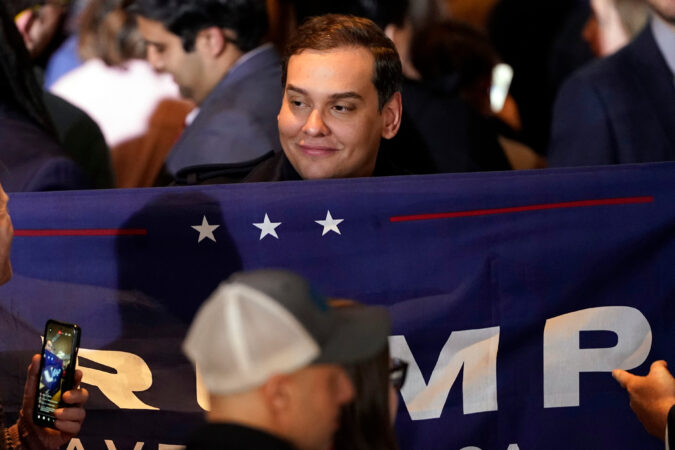
    Among them: former Republican congressman George Santos of New York, Democratic Rep. Henry Cuellar of Texas, former Tennessee state senator Brian Kelsey, and Trevor Milton, the former executive chairman of electric trucking company Nikola. One of the defining acts of Trump’s return to office has been his sweeping pardons of more than 1,500 people convicted in connection with the riot at the U.S. Capitol on Jan. 6, 2021, including those who assaulted police officers.

    Trump has defended his use of the pardons, saying the people to whom he granted clemency had been pursued by what he considers a corrupt and overzealous Justice Department under Biden. But the attorneys interviewed said they investigated each case scrupulously and apolitically to ensure a fair prosecution.

    “It’s personally upsetting because of how much time I invested in this case — the time traveling, the late nights looking through documents and prepping for witness interviews,” said Jacob Steiner, a former Justice Department employee who prosecuted the Santos case. “Beyond and more important than the personal aspect, it’s really disheartening that someone who lied to the public and stole a lot of money just gets to walk free and not have to pay back his victims.”

    Reality television star Todd Chrisley speaks as his daughter Savannah Chrisley looks on during a news conference on May 30, 2025, in Nashville. Todd Chrisley and his wife, Julie, were pardoned in May after being convicted in 2022 of bank fraud and tax evasion.

    In Atlanta, prosecutors and federal agents spent years investigating reality stars Todd and Julie Chrisley. The couple were found guilty of bank fraud and tax evasion in 2022 after a nearly three-week jury trial. The Justice Department then defended the conviction during appeals. But after a public campaign from the Chrisleys’ daughter, who spoke at the Republican National Convention and socialized at Trump’s Mar-a-Lago Club, the president granted the reality stars a pardon in May.

    In New York, prosecutors and federal agents spent roughly two years investigating the online black market Silk Road before indicting its creator, Ross Ulbricht, on charges related to the sale of drugs and other illegal goods on the platform. It took another two years before the case went to trial in 2015, resulting in convictions on seven counts and a sentence of life in prison. Trump pardoned Ulbricht on his first full day in office.

    “I couldn’t believe it was a complete and total pardon,” said one law enforcement official who worked on the Silk Road case.

    Santos, the Chrisleys, Ulbricht, and others who received pardons from Trump have said they deserved forgiveness because they were prosecuted at the hands of a corrupt Justice Department or were innocent and wrongly convicted.

    Every recent president has exercised the pardon power to benefit his allies, but legal experts say that Trump’s use of clemency has bucked every norm of a largely undefined process. Typically, Justice Department employees vet tens of thousands of applications, only recommending to the president people who have completed their sentences and showed contrition. Trump, however, has pardoned criminals without any such vetting, people familiar with the process said, sometimes granting clemency to convicts who have not started their sentences or admitted wrongdoing. Trump and his allies have pointed to Biden’s pardoning of his son Hunter as an example of how Trump’s predecessors politicized the pardon.

    O’Malley, who retired in 2023 and described himself as a supporter of the president, said he was flummoxed over Trump’s pardoning of Schwartz, the nursing home magnate. He said that sifting through the more than 100 accounts Schwartz set up to evade taxes had required a lot of effort, and that the prosecutors and agents assigned to the case did “yeoman’s work.”

    The Washington Post reported that Schwartz paid two lobbyists, right-wing provocateurs Jack Burkman and Jacob Wohl, $960,000 to help secure a pardon from Trump. (Schwartz must still complete a sentence on state charges in an Arkansas prison.)

    “I think the president was misled as to the reasons why [Schwartz] should be pardoned,” O’Malley said. “I can’t see anyone accepting an application and alleging that he somehow deserves to be pardoned unconditionally and completely in this case. Something had to be said to the president. Whether he was paying attention to it or not, I don’t know.”

    O’Malley continued: “I was stunned and angered. The $5 million in restitution was vacated. It was a strong case. I do not indict cases on a wing and a prayer.”

    In December — less than a month after Trump pardoned Schwartz — the Internal Revenue Service decided to present O’Malley with an award for his work on the Schwartz case. O’Malley said he declined to attend.

  • She made a Facebook comment about her mayor. Then the police arrived.

    She made a Facebook comment about her mayor. Then the police arrived.

    Raquel Pacheco began recording on her phone Monday as she opened her front door to the pair of police officers standing outside.

    They told her they had questions about a Facebook comment she had written.

    “Is that your account?” one officer asked. The other held out his phone, showing a message Pacheco had written days earlier about the mayor of Miami Beach, where she lives.

    Pacheco had left the comment about a post from Mayor Steven Meiner, calling his city a “safe haven for everyone.” Meiner, who is Jewish, contrasted Miami Beach with “places like New York City,” where he accused officials of discriminating against Jews and “promoting boycotts” of Jewish and Israeli-owned businesses.

    In a series of replies, Pacheco called him racist and criticized his actions toward a number of communities, including Palestinians and LGBTQ people. She said she felt his words of welcome were superficial.

    At her door, the officers told Pacheco they were looking for the commenter because that person’s words could “probably incite somebody to do something bad,” her video shows. Pacheco refused to answer their questions without an attorney present, and the officers left within minutes.

    Heart racing, Pacheco shut her door and texted her recording of the exchange to three friends who practice law. She struggled to comprehend why the officers were sent to question her – a private citizen who once ran for elected office, knew the mayor and other local officials, and had deep faith in American values. Where the officers saw a comment that could incite violence, Pacheco saw an expression of her right to free speech, she said.

    “If we can’t hold this line, we are screwed,” Pacheco, 51, told The Washington Post.

    The Miami Beach Police Department on Tuesday evening told The Post that detectives had “conducted a brief, consensual encounter” to make sure there was no safety threat to the mayor or the community. They assessed the social media posting, the department said, to be cautious, citing “recent national concerns regarding antisemitism.”

    Meiner said in a statement Tuesday evening that the situation was “a police matter,” adding that he was “a strong supporter of the State of Israel” and its “right to defend its citizens.”

    “Others might have a different view and that is their right,” Meiner wrote. “In this situation, our police department believed that inflammatory language that is false and without any factual basis was justification for follow-up to assess the level of threat and to protect the safety of all involved.”

    The now-public tussle over Pacheco’s Facebook comment, which was first reported by the Miami Herald, is another salvo in a battle between activists across the country and authorities whom they accuse of stifling speech about divisive political topics, all against the backdrop of political violence that has rocked the country. In recent years, people have faced suspensions, firings and other punishments for social media posts about the Israel-Gaza war, the assassination attempts against President Donald Trump and the killing of Charlie Kirk.

    Pacheco, who has lived in Miami Beach since 2004 and has run for local elected office three times as a Democrat, said she voted for Meiner in 2023. But she started speaking out against the mayor when he began addressing issues such as crime and homelessness by taking a page from “the Trump playbook,” using measures that she saw as laden with cruelty, Pacheco said. Her criticism often took the form of Facebook posts and comments, alongside advocacy work in the community.

    Miami Beach voters elected Meiner to his office, which is nonpartisan, a month after the Oct. 7, 2023, Hamas-led attack on Israel in which about 1,200 people were killed. Since then, the city has experienced a deepening rift among residents, including between Meiner and his constituents.

    In March, the mayor tried to end the lease of a local cinema after it screened “No Other Land,” a movie made by Palestinian and Israeli filmmakers that shows Israelis bulldozing a town in the West Bank. Meiner described the documentary at the time as a “false one-sided propaganda attack on the Jewish people.” He backpedaled his efforts against the theater after a fraught, nine-hour city commission meeting.

    Pacheco referenced the incident in the comment that led police to her doorstep.

    On Jan. 6, Meiner’s official Facebook account published the post about Miami Beach being a welcoming place. It featured a photo of the mayor with the following text: “Miami Beach is a safe haven for everyone. We will always stand firm against any discrimination.”

    Pacheco replied: “‘We will stand firm against any discrimination’ – unless you’re Palestinian, or Muslim or you think those people have a right to live.” She added: “Careful your racism is showing.”

    The next day, the mayor’s post was shared on a community Facebook page, where Pacheco again responded.

    “The guy who consistently calls for the death of all Palestinians, tried to shut down a theater for showing a movie that hurt his feelings, and REFUSES to stand up for the LGBTQ community in any way (even leaves the room when they vote on related matters) wants you to know that you’re all welcome here,” she wrote, alongside three clown emojis.

    It was this comment that police showed her when she opened her door Monday, Pacheco said.

    “This is freedom of speech, this is America, right? I’m a veteran,” she told the officers, according to her recording of the two-minute conversation.

    “And I agree with you 100 percent,” one officer responded. “We’re just trying to see if it’s you, because if we’re not talking to the right person, we want to go see who the right person is.”

    Pacheco, who said she served in Connecticut’s Army National Guard from 1993 to 1999, said the officers told her she was not going to jail and that they were “just here to have a conversation.” Later in the video, an officer tells Pacheco: “I would think to refrain from posting things like that, because that can get something incited.”

    After the brief exchange, Pacheco sat in disbelief.

    “There were cops at my door because of something I said,” Pacheco told The Post on Tuesday. “It felt like such a foreign, alien feeling.”

    In the day since the officers’ visit, she has retained an attorney and made public records requests about the situation. Should it escalate, she said she was “prepared to sue.” While she described herself as progressive, she said she is “conservative when it comes to the Constitution,” a document she had come to revere since moving to the United States from Portugal in the 1980s. She said she strongly sees Monday’s interaction at her home as a violation of the rights guaranteed by it.

    “I’m not one to stand down,” Pacheco said. “I don’t do well with bullies.”

    And the next time she sees a social media post from her mayor, or other elected officials for that matter, Pacheco said she knows what she will do: open the comment section, type her thoughts and hit send.

  • Trump threatens to halt federal money next month not only to sanctuary cities but also their states

    Trump threatens to halt federal money next month not only to sanctuary cities but also their states

    President Donald Trump said Tuesday that starting Feb. 1 he will deny federal funding to any states that are home to local governments resisting his administration’s immigration policies, expanding on previous threats to cut off resources to the so-called sanctuary cities themselves.

    Such an action could have far-reaching impacts across the U.S., potentially even in places that aren’t particularly friendly to noncitizens.

    Two previous efforts by Trump to cut off some funding for sanctuary jurisdictions were shut down by courts.

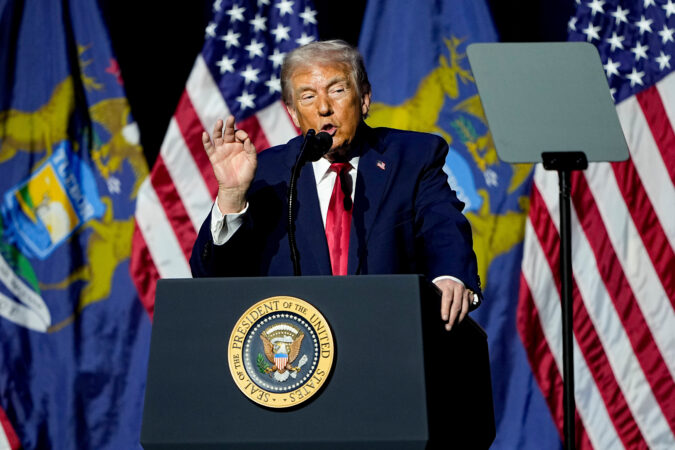
    Trump unveiled the concept this time late in a speech Tuesday at the Detroit Economic Club, without offering specifics.

    “Starting Feb. 1, we’re not making any payments to sanctuary cities or states having sanctuary cities, because they do everything possible to protect criminals at the expense of American citizens and it breeds fraud and crime and all of the other problems that come,” he said. “So we’re not making any payment to anybody that supports sanctuary cities.”

    Back in Washington, Trump was asked by reporters what kind of funding would be affected on Feb. 1: “You’ll see,” he said. “It’ll be significant.”

    There is no strict definition for sanctuary policies or sanctuary cities, but the terms generally describe limited cooperation with Immigration and Customs Enforcement.

    Courts have rejected the idea before

    In an executive orders last year, the president directed federal officials to withhold money from sanctuary jurisdictions that seek to shield people in the country illegally from deportation.

    A California-based federal judge struck it down despite government lawyers saying it was too early to stop the plan when no action had been taken and no specific conditions had been laid out.

    In Trump’s first term in office, in 2017, courts struck down his effort to cut funding to the cities.

    Some of the details are tricky

    The Justice Department last year published a list of three dozen states, cities and counties that it considers to be sanctuary jurisdictions.

    The list is overwhelmingly made up of places where the governments are controlled by Democrats, including the states of California, Connecticut and New York, cities such as Boston and New York and counties including Baltimore County, Maryland, and Cook County, Illinois.

    That list replaced an earlier, longer one that was met with pushback from officials who said it wasn’t clear why their jurisdictions were on it.

    The administration has been threatening funding in specific places

    The federal government has moved to halt funding for a variety of programs in recent weeks and is already facing legal challenges.

    The U.S. Department of Agriculture has warned states that have refused to provide data on recipients of Supplemental Nutrition Assistance Program money that they’ll be docked administrative funds. A court fight over the request for information was already underway before the threat came. Money hasn’t been stopped yet.

    The U.S. Department of Health and Social Services said last week that it was halting money from five Democratic-led states for daycare subsidies and other aid to low-income families with children over unspecified suspicions about fraud. A court put that on hold

    The administration has tried to use additional financial pressure against Minnesota, a state where it has also sent a wave of federal officers in an immigration crackdown. The Agriculture Department has said it’s freezing funding in the state — but without laying out many details.

    The Centers for Medicare and Medicaid Services also told Minnesota last week that it intends to withhold $515 million every three months from 14 Medicaid programs that were deemed “high risk” after rejecting a corrective action plan it demanded because of fraud allegations. The amount is equivalent to one-fourth of the federal money for those programs. State officials said Tuesday that they’re appealing.

  • Tensions flare in Minnesota as protesters and federal agents repeatedly square off

    Tensions flare in Minnesota as protesters and federal agents repeatedly square off

    MINNEAPOLIS — Federal officers dropped tear gas and sprayed eye irritant at activists Tuesday during another day of confrontations in Minneapolis, while students miles away walked out of a suburban school to protest the Trump administration’s bold immigration sweeps.

    Meanwhile, the fallout from the fatal shooting of a Minneapolis woman by an immigration agent reached the local U.S. Attorney’s Office: At least five prosecutors have resigned amid controversy over how the U.S. Justice Department is handling the investigation, according to people familiar with the matter.

    Separately, a Justice Department official said Wednesday there’s no basis for a criminal civil rights investigation. An FBI probe of Renee Good’s death is ongoing.

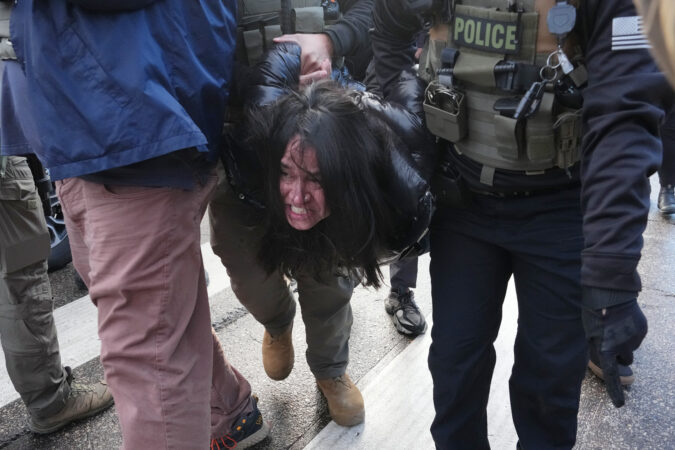
    Strife between federal agents and the public continues to boil, six days since Good was shot in the head while driving off in her Honda Pilot. At one scene, gas clouds filled a Minneapolis street near where she died. A man scrubbed his eyes with snow and screamed for help after agents in a Jeep sprayed an orange irritant and drove off.

    It’s common for people to boo, taunt and blow orange whistles when they spot heavily armed immigration agents passing through in unmarked vehicles or walking the streets, all part of a grassroots effort to warn the neighborhood and remind the government that they’re watching.

    “Who doesn’t have a whistle?” a man with a bag of them yelled.

    Brita Anderson, who lives nearby and came to support neighborhood friends, said she was “incensed” to see agents in tactical gear and gas masks, and wondered about their purpose.

    “It felt like the only reason they’d come here is to harass people,” Anderson said.

    In Brooklyn Park, Minn., students protesting the immigration enforcement operation walked out of school, as students in other communities have done this week.

    Good’s death has ripple effect

    The departures in the U.S. Attorney’s Office include First Assistant U.S. Attorney Joe Thompson, who had been leading the sprawling prosecution of public fraud schemes in the state, according to people who spoke to The Associated Press on the condition of anonymity to discuss personnel matters.

    With the Department of Homeland Security pledging to send more than 2,000 immigration officers into Minnesota, the state, joined by Minneapolis and St. Paul, sued President Donald Trump’s administration Monday to halt or limit the surge.

    The lawsuit says Homeland Security is violating the First Amendment and other constitutional protections by focusing on a progressive state that favors Democrats and welcomes immigrants.

    “What we are seeing is thousands — plural — thousands of federal agents coming into our city. And, yeah, they’re having a tremendous impact on day-to-day life,” Minneapolis Mayor Jacob Frey said.

    A judge set a status conference for Wednesday.

    Homeland Security says it has made more than 2,000 arrests in the state since early December and is vowing to not back down. Spokesperson Tricia McLaughlin, responding to the lawsuit, accused Minnesota officials of ignoring public safety.

    Trump defiant

    In a social media post, Trump defended the aggressive immigration enforcement actions being carried out across Minneapolis as part of his deportation agenda.

    The president asserted in the post that the anti-ICE activity is also shifting the spotlight away from alleged fraud in the state and said, “FEAR NOT, GREAT PEOPLE OF MINNESOTA, THE DAY OF RECKONING & RETRIBUTION IS COMING!”

    Trump blames what he calls “professional agitators” for the widespread protests. He has not provided evidence to support his claims.

    In response, Minnesota Gov. Tim Walz posted on X: “Trump admits that this is nothing but political retribution. Minnesota voted against him three times and now he’s punishing us – putting lives at risk and wasting enormous resources in the process.”

    ICE tactics on docket

    In a different lawsuit, a judge said she would rule by Thursday or Friday on a request to restrict the use of force, such as chemical irritants, on people who are observing and recording agents’ activities. Government attorneys argued that officers must protect themselves.

    The Trump administration has repeatedly defended the immigration agent who shot Good, a 37-year-old mother of three, saying he acted in self-defense. But that explanation has been widely panned by Frey, Walz, and others based on videos of the confrontation.

    State and local authorities are urging the public to share video and any other evidence as they seek to separately investigate Good’s death after federal authorities insisted they would approach it alone and not share information.

    In Wisconsin, Lt. Gov. Sara Rodriguez is proposing that the state ban civil immigration enforcement around courthouses, hospitals, health clinics, schools, churches and other places. She is hoping to succeed Gov. Tony Evers, a fellow Democrat, who is not running for a third term.

    “We can take a look at that, but I think banning things absolutely will ramp up the actions of our folks in Washington, D.C.,” Evers said, referring to the Trump administration. “They don’t tend to approach those things appropriately.”

  • Claudette Colvin, who refused to move seats on a bus at start of civil rights movement, dies at 86

    Claudette Colvin, who refused to move seats on a bus at start of civil rights movement, dies at 86

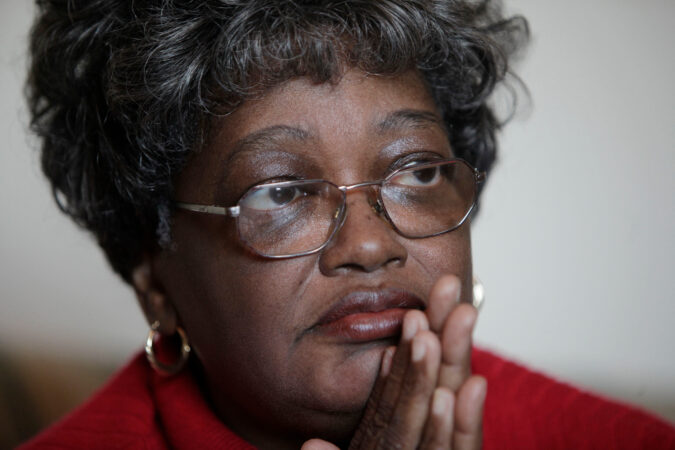
    On March 2, 1955, a 15-year-old Black high school junior named Claudette Colvin boarded a segregated city bus in Montgomery, Ala., taking a window seat near the back. When the driver ordered her to give up her seat so a white woman could be more comfortable, Ms. Colvin — who had been studying Black history in class, learning about abolitionists like Harriet Tubman and Sojourner Truth — did not budge.

    “History had me glued to the seat,” she said later, recalling how it felt as though Tubman and Truth had their hands on her shoulders, giving her “the courage to remain seated.”

    History would record that it was Rosa Parks, the longtime secretary of the local NAACP, who helped kick-start the modern civil rights movement by refusing to give up her seat on a crowded Montgomery bus.

    Yet it was Ms. Colvin, nine months earlier, who engaged in one of the first defiant challenges to the city’s Jim Crow transit system, remaining in her seat until police dragged her backward off the bus.

    While Parks’ stand proved far more consequential, leading to a year-long bus boycott that thrust the Rev. Dr. Martin Luther King Jr. to national prominence, Ms. Colvin’s arrest inaugurated what King described as a pivotal period for Black people in Montgomery. Community leaders formed a committee to meet with city and bus company officials, calling for improved treatment for Black passengers. Those discussions proved fruitless, King recalled in a memoir, but “fear and apathy” gradually gave way to “a new spirit of courage and self-respect.”

    Historian David Garrow said in an interview for this obituary that “Colvin’s experience proved a major motivating force for adult Black activists” including Jo Ann Robinson, who helped launch and sustain the bus boycott. Another leading figure in the boycott, lawyer Fred Gray, brought the federal lawsuit that overturned bus segregation, with Ms. Colvin serving as a plaintiff and star witness.

    “I don’t mean to take anything away from Mrs. Parks,” Gray said, “but Claudette gave all of us the moral courage to do what we did.”

    Ms. Colvin, who died Jan. 13 at 86, was almost forgotten in the annals of civil rights. Overshadowed by Parks and other activists, she spent decades in obscurity, caring for elderly patients as a nurse’s aide before gaining late-in-life recognition through the efforts of historians and writers such as Phillip Hoose, whose 2009 biography, Claudette Colvin: Twice Toward Justice, won the National Book Award for young people’s literature.

    “Young people think Rosa Parks just sat down on a bus and ended segregation, but that wasn’t the case at all,” Ms. Colvin told the New York Times in 2009. “Maybe by telling my story — something I was afraid to do for a long time — kids will have a better understanding about what the civil rights movement was about.”

    A movie based on her life, Spark, was announced in 2022, with actor Anthony Mackie lined up to make his directorial debut, and Saniyya Sidney slated to star.

    In the days after Ms. Colvin’s arrest, civil rights leaders in Montgomery wondered if her case might offer a chance to put segregation itself on trial. But, as Robinson later wrote in a memoir, “opinions differed where Claudette was concerned.”

    Some deemed her too young and immature, saying she was prone to profane outbursts. (Ms. Colvin said she never cursed.) There were also concerns about her class and background: She was looked down upon, Montgomery activist Gwen Patton once recalled with frustration, because she “lived in a little shack.”

    The deciding factor was the discovery by labor organizer E.D. Nixon, the local NAACP president, that Ms. Colvin was expecting a child. She later said that she became pregnant in the months after the bus standoff as a result of an encounter with a married man, which she described as statutory rape.

    “Even if Montgomery Negroes were willing to rally behind an unwed pregnant teenager — which they were not — her circumstances would make her an extremely vulnerable standard-bearer,” author Taylor Branch observed in Parting the Waters, a Pulitzer Prize-winning civil rights history.

    Ms. Colvin often said Nixon and other organizers were right to rally around Parks, who exuded a quiet authority, was familiar to activists from her work in the NAACP, and had an appeal that crossed class divisions through her job as a department-store seamstress.

    But Ms. Colvin remained frustrated by what she described as a lack of support and recognition in the years after she was arrested, when she struggled as a single mother to find work and eventually left Alabama for New York.

    “They wanted someone, I believe, who would be impressive to white people. … You know what I mean? Like the main star,” she told the Guardian in 2021. “And they didn’t think that a dark-skinned teenager, low income without a degree, could contribute. It’s like reading an old English novel when you’re the peasant, and you’re not recognized.”

    ‘I had had enough’

    Claudette Austin, as she was then known, was born in Birmingham, Ala., on Sept. 5, 1939. Her father, C.P. Austin, left the family when she was young.

    Her mother, Mary Jane Gadson, was unable to support Ms. Colvin and her younger sister by herself, and turned the children over to her aunt and uncle, Mary Ann and Q.P. Colvin. The older couple lived on a farm in Pine Level — the rural Alabama community where, by chance, Parks had gone to elementary school — and gave the girls their last name.

    When Ms. Colvin was 8, the family moved to nearby Montgomery, where her adoptive parents were hired by white families to do home and yard work. Her sister died of polio in 1952, shortly before Ms. Colvin started her first year at Booker T. Washington High School.

    Ms. Colvin was still grieving her sister’s death when her neighbor Jeremiah Reeves, an older schoolmate, was arrested and charged with raping a white woman. Following a confession he gave under duress and later retracted, he was convicted by an all-white jury, sentenced to death, and executed in 1958, at age 22.

    His arrest “was the turning point of my life,” Ms. Colvin said. As she saw it, the case embodied the hypocrisies of the legal system: Reeves was sent to death row as a juvenile because of a false confession, but when a white man raped a Black girl, “it was just his word against hers, and no one would ever believe her.”

    Ms. Colvin told Hoose that on the day the bus driver asked her to give up her seat, “rebellion was on my mind.”

    She was sitting in a row near the rear exit, joined by three schoolmates as the bus started filling up, and passengers stood in the aisle. Before long, a white woman was standing over Ms. Colvin and her peers. The driver asked for all four of their seats, so that the woman wouldn’t have to sit in the same row as a Black passenger.

    “I might have considered getting up if the woman had been elderly, but she wasn’t,” Ms. Colvin recalled. “She looked about 40. The other three girls in my row got up and moved back, but I didn’t. I just couldn’t.”

    Ms. Colvin remained seated as the driver grew exasperated — “Gimme that seat! Get up, gal!” — and hailed a transit policeman, who in turn summoned a squad car. Ms. Colvin said that as the police arrived, she began crying but remained defiant, telling the officers, “It’s my constitutional right to sit here as much as that lady. I paid my fare, it’s my constitutional right!”

    By her account, one of the officers kicked her as she was pulled off the bus. (One of the officers alleged that it was the other way around.) She was placed in handcuffs and put in a squad car, where, according to Ms. Colvin, the officers took turns trying to guess her bra size.

    Bailed out of jail by her minister, she returned home to fears of retaliation. Her adoptive father didn’t sleep that night, staying awake with a shotgun in case the Ku Klux Klan arrived. At school, classmates began to consider her a troublemaker, describing her as “that crazy girl off the bus.”

    Ms. Colvin was charged with assault and disorderly conduct in addition to violating the segregation law. Tried in juvenile court because of her age, she was found guilty of assault (a judge dismissed the other two charges), placed on indefinite probation and ordered to pay a small fine.

    Over the next few months, other Black women defied Montgomery’s segregated bus policy. The group included Lucille Times, who staged a one-woman boycott after an altercation with a driver, and 18-year-old Mary Louise Smith, who was arrested, convicted and fined after refusing to give up her seat.

    As with Ms. Colvin, organizers worried that Smith wasn’t right for a marquee case: Her father was said to be an alcoholic, and the family was deemed too low-class. It wasn’t until Parks’s arrest on Dec. 1, 1955, that a citywide bus boycott was organized.

    As the boycott progressed, Ms. Colvin became one of several plaintiffs in Browder v. Gayle, a federal lawsuit brought by Gray that challenged the city and state laws enforcing bus segregation in Montgomery. The case reached the U.S. Supreme Court, which ordered an end to bus segregation in late 1956.

    Ms. Colvin gave birth to her first son, Raymond, earlier that year. She never publicly identified the father and said she was expelled from high school as a result of her pregnancy.

    After passing a high school equivalency exam, she briefly attended Alabama State College in Montgomery and then moved in 1958 to New York, where she got a job as a live-in caregiver.

    She had a second son in 1960 and moved back and forth between New York and Montgomery — where her adoptive mother helped care for her children — before settling in New York City in 1968 and receiving training as a nurse’s aide.

    “The only thing I am still angry about is that I should have seen a psychiatrist,” she told The Washington Post in 1998, reflecting on her life after the movement. “I needed help. I didn’t get any support. I had to get well on my own.”

    Ms. Colvin’s death was confirmed by Ashley D. Roseboro, a spokesman for the family and for the Claudette Colvin Foundation. He said she died in hospice in Texas but did not share additional details.

    Her son Raymond died in 1993. Her younger son, Randy, worked as an accountant. He survives her, as do several sisters and grandchildren.

    In 2021, Ms. Colvin successfully petitioned to have her juvenile arrest record expunged, a symbolic act recognizing the injustice of the segregation laws.

    “I’m not doing it for me, I’m 82 years old,” she explained to the Times. “But I wanted my grandchildren and my great-grandchildren to understand that their grandmother stood up for something very important, and that it changed our lives a lot, changed attitudes.”

  • Trump is ending protected immigration status for Somalis, long a target of his anti-immigrant barbs

    Trump is ending protected immigration status for Somalis, long a target of his anti-immigrant barbs

    Donald Trump’s administration said Tuesday it will end temporary protected status for immigrants from Somalia, the latest move in the president’s mass deportation agenda.

    The move affects hundreds of people who are a small subset of immigrants with TPS protections in the United States. It comes during Trump’s immigration crackdown in Minneapolis, where many native Somalis live and where street protests have intensified since a U.S. Immigration and Customs Enforcement agent killed a U.S citizen who was demonstrating against federal presence in the city.

    The Department of Homeland Security said in a statement that affected Somalis must leave the U.S. by March 17, when existing protections, last extended by former President Joe Biden, will expire.

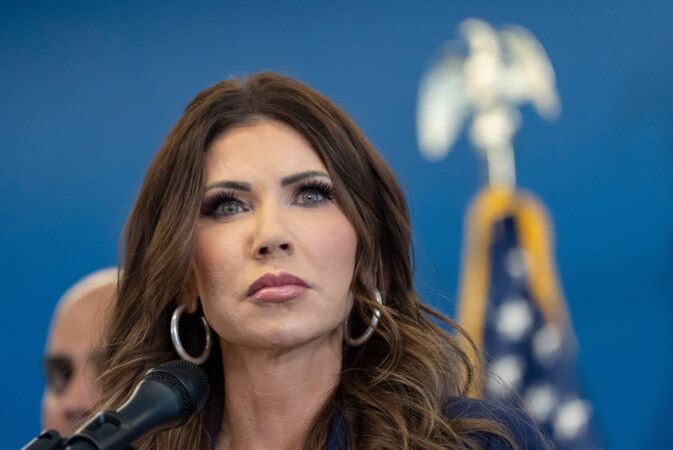
    “Temporary means temporary,” said Homeland Security Secretary Kristi Noem, adding that the decision puts “Americans first.”

    The Congressional Research Service last spring said the Somali TPS population was 705 out of nearly 1.3 million TPS immigrants. But Trump has rolled back protections across multiple countries in his second presidency.

    Congress established the Temporary Protected Status program in 1990 to help foreign nationals attempting to leave unstable, threatening conditions in their home countries. It allows the executive branch to designate a country so that its citizens are eligible to enter the U.S. and receive status.

    Somalia first received the designation under President George H.W. Bush amid a civil war in 1991. The status has been extended for decades, most recently by Biden in July 2024.

    Noem insisted circumstances in Somalia “have improved to the point that it no longer meets the law’s requirement for Temporary Protected Status.”

    Located in the horn of Africa, Somalia is one of the world’s poorest nations and has for decades been beset by chronic strife exacerbated by multiple natural disasters, including severe droughts.

    The 2025 congressional report stated that Somalis had received more than two dozen extensions because of perpetual “insecurity and ongoing armed conflict that present serious threats to the safety of returnees.”

    Trump has targeted Somali immigrants with racist rhetoric and accused those in Minneapolis of massively defrauding federal programs.

    In December, Trump said he did not want Somalis in the U.S., saying they “come from hell” and “contribute nothing.” He made no distinction between citizens and non-citizens or offered any opinion on immigration status.

    He has had especially harsh words for Rep. Ilhan Omar, a Minnesota Democrat who emigrated from Somalia as a child. Trump has repeatedly suggested she should be deported, despite her being a U.S. citizen, and in his rant last fall he called her “garbage.”

    Omar, who has been an outspoken critic of the ICE deployment in Minneapolis, has called Trump’s “obsession” with her and Somali-Americans “creepy and unhealthy.”

  • Trump visits a Ford pickup truck factory, aiming to promote his efforts to boost manufacturing

    Trump visits a Ford pickup truck factory, aiming to promote his efforts to boost manufacturing

    DETROIT — President Donald Trump offered a full-throated defense of his sweeping tariffs on Tuesday, traveling to swing-state Michigan to push the case that he’s boosted domestic manufacturing in hopes of countering fears about a weakening job market and still-rising prices that have squeezed American pocketbooks.

    Trump visited the factory floor of a Ford plant in Dearborn, where he viewed F-150s — the bestselling domestic vehicle in the U.S. — at various stages of production. That included seeing how gas and hybrid models were built, as well as the all-gas Raptor model, designed for off-road use.

    The president chatted with assembly line workers as well as the automaker’s executive chairman, Bill Ford, a descendent of Henry Ford. “All U.S. automakers are doing great,” Trump said.

    He later gave a speech to the Detroit Economic Club that was meant to be focused on his economic policies but veered heavily to other topics as well. Those included falsely claiming to have won Michigan three times (he lost the state in 2020 to Joe Biden) and recalling the snakes that felled workers during U.S. efforts to build the Panama Canal more than a century ago.

    “The results are in, and the Trump economic boom has officially begun,” the president said at the MotorCity Casino. He argued that “one of the biggest reasons for this unbelievable success has been our historic use of tariffs.”

    Trump insists tariffs haven’t increased costs

    The president said that tariffs were “overwhelmingly” paid by “foreign nations and middlemen” — even as economists say steep import taxes are simply passed from overseas manufactures to U.S. consumers, helping exacerbate fears about the rising cost of living.

    “It’s tariffs that are making money for Michigan and the entire country,” the president said, insisting that “every prediction the critics made about our tariff policy has failed to materialize.”

    But voters remain worried about the state of the economy. Tuesday’s visit — his third trip to a swing state since last month to talk about his economic policies — followed a poor showing for Republicans in November’s off-year elections in Virginia, New Jersey, and elsewhere amid persistent concerns about kitchen table issues.

    The White House pledged after Election Day that Trump would hit the road more frequently to talk directly to the public about what he is doing to ease their financial fears. The president tried to drive that home on Tuesday, but only amid lengthy asides.

    “I go off teleprompter about 80% of the time, but isn’t it nice to have a president who can go off teleprompter?” he said, before mocking Biden, suggesting his predecessor gave short speeches and doing an impression that included a dramatic clearing of his throat.

    Trump promised to unveil a new “health care affordability framework” later this week that he promised would lower the cost of care. He also pledged to soon offer more plans to help with affordability nationwide — even as he blamed Democrats for hyping up the issue.

    “One of our top priorities of this mission is promoting greater affordability. Now, that’s a word used by the Democrats,” Trump said. “They’re the ones who caused the problem.”

    Trump eased some auto tariffs

    Despite cheering tariffs, Trump has actually backed off the import taxes when it comes to the automobile sector. The president originally announced 25% tariffs on automobiles and auto parts, only to later relax those, seeking to provide domestic automakers some relief from seeing their production costs rise.

    Ford nonetheless announced in December that it was scrapping plans to make an electric F-150, despite pouring billions of dollars into broader electrification. That followed the Trump administration slashing targets to have half of all new vehicle sales be electric by 2030, eliminated EV tax credits and proposed weakening the emissions and gas mileage rules.

    While touring the assembly line, Trump suggested that a major North American trade agreement he negotiated during his first term, the United States-Mexico-Canada trade pact, was irrelevant and no longer necessary for the United States — though he provided few details.

    The pact, known as the USMCA, is up for review this year.

    Trump largely sidesteps Powell probe

    The president’s attempt to shift national attention to his efforts to spur the economy comes as his Department of Justice has launched a criminal investigation into Federal Reserve Chair Jerome Powell, a move that Powell says is a blatant endeavor to undermine the central bank’s independence in setting interest rates.

    Critics of the move include former Fed chairs, economic officials and even some Republican lawmakers. During the Michigan visit, Trump lobbed his often-repeated criticisms of Powell but offered little mention of the investigation.

    Some good economic news for Trump arrived, though, before he left Washington, with new data from December showing inflation declined a bit last month as prices for gas and used cars fell — a sign that cost pressures are slowly easing. Consumer prices rose 0.3% in December from the prior month, the Labor Department said, the same as in November.

    “We have quickly achieved the exact opposite of stagflation, almost no inflation and super-high growth,” he said in his speech.

    Other economic policy speeches

    The Michigan stop follows speeches Trump gave last month in Pennsylvania — where his gripes about immigrants arriving to the U.S. from “filthy” countries got more attention than his pledges to fight inflation — and North Carolina, where he also insisted his tariffs have spurred the economy, despite residents noting the sting of higher prices.

    Like in Michigan, Trump also used a casino as a backdrop to talk about the economy in Pennsylvania, giving his speech there at Mount Airy Casino Resort in Mount Pocono.

    Trump carried Michigan in 2016 and 2024, after it swung Democratic and backed Biden in 2020. He marked his first 100 days in office with a rally-style April speech outside Detroit, where he focused more on past campaign grudges than his administration’s economic or policy plans.

    Democrats seized on Trump’s latest visit to the state to recall his visit in October 2024, when Trump, then also addressing the Detroit Economic Club, said that Democrats’ retaining the White House would mean “our whole country will end up being like Detroit.”

    “You’re going to have a mess on your hands,” Trump said during a campaign stop back then.

    Michigan Democratic Party Curtis Hertel said in a statement that “Trump’s speech showed just how out-of-touch he is with reality, claiming that affordability is ‘fake’ as Michiganders have less money in their pocketbooks because of the Republicans’ price-hiking agenda.”

  • NYC Council employee’s arrest sparks protests and a dispute over his immigration status

    NYC Council employee’s arrest sparks protests and a dispute over his immigration status

    NEW YORK — A New York City Council employee detained in the Trump administration’s immigration crackdown is an asylum-seeker from Venezuela, according to a court petition seeking his release.

    Rafael Andres Rubio Bohorquez was arrested Monday at a scheduled immigration check-in, enraging city leaders and drawing protesters Tuesday to the Manhattan federal building where he is being held.

    U.S. Immigration and Customs Enforcement said Rubio Bohorquez had long overstayed a tourist visa, had once been arrested for assault and “had no legal right to be in the United States.”

    City Council Speaker Julie Menin disputed that, telling reporters that Rubio Bohorquez, a data analyst for the city legislative body, was legally authorized to work in the U.S. until October.

    Menin, a Democrat, said the Council employee signed a document as part of his employment confirming that he had never been arrested and cleared the standard background check conducted for all applicants.

    The court petition, reviewed Tuesday by The Associated Press, said Rubio Bohorquez — identified in the document as R.A.R.B. — had always been seeking asylum and was arrested at a U.S. Citizenship and Immigration Services asylum office in Bethpage, on Long Island.

    Menin called it a regular check-in that “quickly went awry.”

    The document, known as a petition for writ of habeas corpus, said Rubio Bohorquez has no criminal record — no arrests, charges or convictions. A hearing on the petition is scheduled for Friday.

    ICE confirmed Rubio Bohorquez’s name. Menin said she wanted to protect his identity and referred to him only as a Council employee.

    “We are doing everything we can to secure his immediate release,” Menin told reporters Monday. She decried the arrest as “egregious government overreach.”

    New York City Mayor Zohran Mamdani, a Democrat, said he was “outraged” by what he called “an assault on our democracy, on our city, and our values.”

    New York Gov. Kathy Hochul, a Democrat, referenced Rubio Bohorquez’s arrest in her state of the state speech on Tuesday, asking: “Is this person really one of the baddest of the bad? Is this person really a threat?”

    Hochul added: “I will do whatever it takes to protect New Yorkers from criminals, but people of all political beliefs are saying the same thing about what we’ve seen lately: Enough is enough.”

    Menin said officials were attempting to reach Rubio Bohorquez’s family and obtain contact information for his immigration lawyer.

    The nonprofit New York Legal Assistance Group filed the habeas petition on Rubio Bohorquez’s behalf. The organization’s president and CEO, Lisa Rivera, said it represents dozens of people who have been wrongfully detained by ICE and hundreds who are following immigration procedures in hopes of staying in the U.S.

    “This staffer, who chose to work for the city and contribute his expertise to the community, did everything right by appearing at a scheduled interview, and yet ICE unlawfully detained him,” Rivera said in a statement.

    According to ICE, Rubio Bohorquez entered the U.S. in 2017 on a B2 tourist visa and was required to leave the country by Oct. 22, 2017. He has been employed by the City Council for about a year, Menin said. His position pays about $129,315 per year, according to city payroll data.

    “He had no work authorization,” ICE said in a statement confirming Rubio Bohorquez’s arrest. The agency, part of the Department of Homeland Security, said that under Secretary Kristi Noem “criminal illegal aliens are not welcome in the United States. If you come to our country illegally and break our law, we will find you and we will arrest you.”

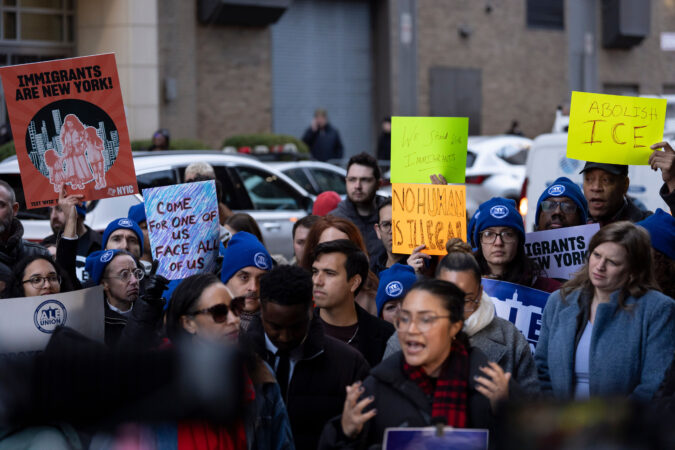
    Several dozen people protested Tuesday outside the Greater New York Federal Building, where Rubio Bohorquez was being held. Some carried signs that said “Abolish ICE” and “No Human Is Illegal.”’

    Venezuela, whose former President Nicolás Maduro was seized Jan. 3 by U.S. forces, has been roiled for years by violence and economic instability. Nearly 8 million people have fled the South American nation since 2014, according to the United Nations refugee agency.

    Last year, President Donald Trump’s administration ended Temporary Protected Status that had been allowing hundreds of thousands of Venezuelan refugees to live and work in the U.S. without fear of deportation. It wasn’t clear from court papers whether Rubio Bohorquez had been a part of that program.

    Disputes over an immigrant’s work authorization have arisen before, in part because many employers rely on E-Verify. The system compares information provided by employees with records available to the government but doesn’t automatically notify an employer if an employee’s right to work is later revoked.

  • Top prosecutors in D.C., Minneapolis leave amid turmoil over shooting probe

    Top prosecutors in D.C., Minneapolis leave amid turmoil over shooting probe

    Multiple senior prosecutors in Washington and Minnesota are leaving their jobs amid turmoil over the Trump administration’s handling of the shooting death of a Minneapolis woman.

    The departures include at least five prosecutors from the U.S. Attorney’s Office in Minneapolis, including the office’s second-in-command, according to emails obtained by The Washington Post and people familiar with the matter.

    Their resignations followed demands by Justice Department leaders to investigate the widow of Renée Good, the 37-year-old woman killed last week by an Immigration and Customs Enforcement officer who shot into her car, according to a person familiar with the resignations who spoke on the condition of anonymity out of concern for retaliation. Good’s wife was protesting ICE officers in the moments before the shooting.

    Five senior prosecutors in the criminal section of the Justice Department’s Civil Rights Division also said they are leaving, according to four people familiar with the personnel moves, who spoke on the condition of anonymity to discuss personnel matters.

    In another development, Deputy Attorney General Todd Blanche said in a statement that “there is currently no basis for a criminal civil rights investigation.” The statement, first reported by CNN, did not elaborate on how the department had reached a conclusion that no investigation was warranted.

    Federal officials have said that the officer acted in self-defense and that the driver of the Honda was engaging in “an act of domestic terrorism” when she pulled forward toward him.

    The departures wipe both the Civil Rights Division’s criminal section and U.S. Attorney’s Office in Minnesota of its most experienced prosecutors. The moves are widely seen as a major vote of no-confidence by career prosecutors at a moment when the department is under extreme scrutiny.

    The criminal section of the Civil Rights Division is the sole office that handles criminal violations of the nation’s civil rights laws. For years, the Justice Department has relied on the section to prosecute major cases of alleged police brutality and hate crimes. The departures followed the administration’s highly unusual decision to not include the Civil Rights Division in the initial investigation of the shooting.

    The Civil Rights Division departures include the criminal section’s longtime chief and deputy — Jim Felte and Paige Fitzgerald — career attorneys who served in their positions during President Donald Trump’s first administration and through President Joe Biden’s administration. Three other supervisors and senior litigators are also leaving.

    The prosecutors in Minnesota did not immediately respond to requests for comment. Felte and Fitzgerald also did not immediately respond to requests for comment Monday evening.

    The Civil Rights prosecutors informed their colleagues of their resignations Monday. People familiar with the section, who spoke on the condition of anonymity to discuss personnel matters, said the lawyers who are leaving did not attribute their decisions to the Minnesota investigation.

    The department has been offering voluntary early retirement packages to certain sections, and some of the departing civil rights prosecutors qualified for that option. Some indicated to their colleagues before the Minnesota shooting that they were considering the retirement packages.

    “Although we typically don’t comment on personnel matters, we can confirm that the Criminal Section Leadership gave notice to depart the Civil Rights Division and requested to participate in the Department of Justice’s Early Retirement Program well before the events in Minnesota. Any suggestion to the contrary is false,” a Justice Department official said in a statement.

    Deputy Attorney General Todd Blanche released a statement saying: “There is currently no basis for a criminal civil rights investigation” into the shooting.

    Trump’s appointees at the Justice Department pushed out and transferred many of the section heads and deputies in the Civil Rights Division in the early days of the administration. But the leadership of the criminal section was largely left intact.

    For months, however, frustration has been growing within the section, according to people familiar with the division who said that further resignations are likely. Many lawyers in the office have said they feel the administration has prevented prosecutors from doing their work. The administration has repeatedly reversed positions on cases that the section has spent years litigating.

    In July, for example, the Civil Rights Division told a judge that the Biden administration should not have prosecuted the Louisville police officer convicted in connection with a raid that resulted in Breonna Taylor’s death — and asked that the officer receive one day in jail. In November, the administration successfully pushed to dismiss a police brutality case in Tennessee, which was set to go to trial that month. The Civil Rights Division had been litigating that case for more than two years.

    Within the Justice Department, the Civil Rights Division typically experiences the sharpest swings in priorities between Republican and Democratic administrations. But several former officials interviewed by The Washington Post described the shifts implemented so far under the Trump administration as more intense than anticipated.

    In the first Trump administration, former Justice Department officials said, the division was largely left intact. The section did not pursue actions against police departments in the way that Democratic administrations had, but it prosecuted police brutality cases and continued to focus on prosecuting hate crimes, protecting disability rights and enforcing employment laws.

    During the current administration, the division has dramatically changed its mission. A majority of its nearly 400 attorneys left in 2025 as a result. The head of the Civil Rights Division, Harmeet Dhillon, changed mission statements across the sections to focus less on racial discrimination and more on fighting diversity initiatives. The division has also aggressively pursued cases alleging antisemitism and anti-Christian bias.

    After conservative activist Charlie Kirk was killed in September at a public event at Utah Valley University, the Civil Rights Division launched a hate-crime probe. The investigation is examining whether hate-crime charges can be pursued against the suspect because of anti-Christian bias, according to a person familiar with the probe.

    Prosecutors have also explored whether it would be possible to pursue hate-crime charges against the suspect, Tyler Robinson, if evidence shows motivation because of Kirk’s stance on transgender individuals — a move that would be a novel use of hate-crime laws. Robinson’s romantic partner was undergoing a gender transition at the time of the shooting, his mother told police.

    Dhillon has said she welcomes people to leave if they do not agree with the new direction for the department. Dhillon told conservative podcaster Glenn Beck in April that she intended to send a new message to her staff.

    “These are the president’s priorities,” Dhillon said on the podcast. “This is what we will be focusing on. Govern yourself accordingly.”

    MS NOW reported the civil rights resignations late Monday night.

    Dhillon has also said that her office is being flooded with applicants to fill vacant roles. But people familiar with the division said that just a fraction of the open roles have been filled, a process impeded by a lack of qualified candidates and bureaucratic delays. Some of the sections within the division are so understaffed that they cannot effectively complete their workloads.

    “This exodus is a huge blow signaling the disrespect and sidelining of the finest and most experienced civil rights prosecutors,” said Vanita Gupta, the head of the division during the Obama administration and the associate attorney general during the Biden administration. “It means cases won’t be brought, unique expertise will be lost, and the top career attorneys who may be a backstop to some of the worst impulses of this administration will have left.”

    The Civil Rights Division was established in 1957 as part of that year’s Civil Rights Act, which focused on fighting racial discrimination. Since its launch, the division has been tasked with upholding “the civil and constitutional rights of all people in the United States, particularly some of the most vulnerable members of our society,” according to the Justice Department’s website.

    The office has 12 sections that aim to combat discrimination in educational opportunities, housing, employment, voting and more.

    A Justice Department official also said that ICE has been conducting its own investigation of the Minnesota shooting.

    “As with any officer-involved shooting, each law enforcement agency has an internal investigation protocol, including DHS. As such, ICE OPR has its own investigation underway. This runs parallel to any FBI investigation,” the official said, referring to the Office of Professional Responsibility.

    This article includes information from the Associated Press.