A South Jersey man was charged with impersonating law enforcement after he showed up at a police investigation claiming to work for the U.S. Department of Homeland Security, police in Gloucester County said Friday.
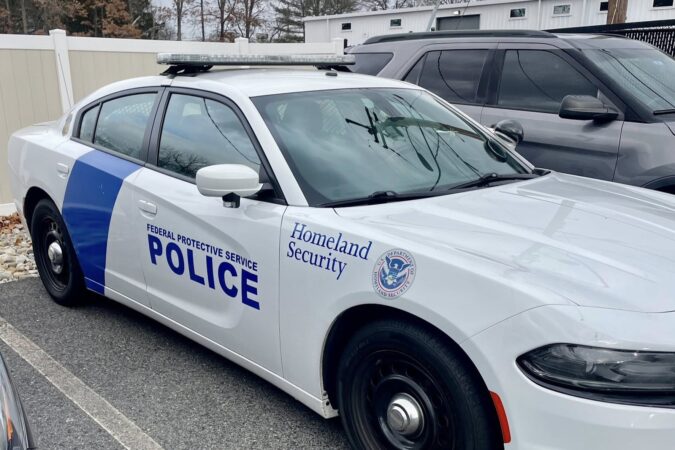
Nicholas M. Cabral, 32, of Sewell, drove in his wife’s marked Homeland Security police vehicle Wednesday afternoon to the scene of a Washington Township police call on the 200 block of Strand Avenue and said he was a Homeland Security police officer, the Washington Township Police Department said.
The police call was for a report that a home under construction had a front door open. The caller was later identified as Cabral, the police department said.
Cabral allegedly attempted to assist officers in clearing the property while holding a handgun. Cabral had a permit to carry the firearm, but the follow-up investigation determined he did not work for any law enforcement agency, the police department said.
The investigation found that the marked Homeland Security vehicle was used by Cabral’s wife, who did work for the agency as a police officer and was out of state on assignment, the township police department said.
The Department of Homeland Security was notified and took possession of the vehicle.
The investigation, using data from automated license plate readers, found that Cabral allegedly had driven the vehicle with its emergency lights activated and also went to a Wendy’s restaurant.
Cabral was charged with impersonating a police officer and possession of a weapon for an unlawful purpose.
The Washington Township Police Department said Cabral was transferred to the Salem County jail and his gun was taken as evidence. Online court records indicated that Cabral was released from custody Friday.
A woman answering the phone at his residence, which is a block from the scene of the police call on Strand Avenue, said Cabral was unavailable and hung up.
Cabral’s attorney could not be reached for comment.
A spokesperson for the Department of Homeland Security also could not be reached for comment.
The odds are almost always stacked against a white Christmas around here, but it is looks like the region will experience a white Dec. 14.
The National Weather Service on Friday said Philadelphia was all but certain to get at least an inch of snow during the weekend, with a general 2 to 4 inches expected, said Joe DeSilva, a meteorologist in the Mount Holly office.
The weather service issued a winter-weather advisory for the entire region from 7 p.m. Saturday through 1 p.m. Sunday.
A storm forming along an Arctic front combined with a strung idsturbance in the upper atmosphere were forecast to begin shaking out snowflakes very late Saturday night or early Sunday. It’s possible that the snow may be mixed with rain, at least at the outset, especially south and east of the city.
And while this may be shocking, computer models continue to tweak outcomes, leaving “still a little bit of uncertainty how this low is going to track,” said DeSilva’s colleague Eric Hoeflich.
However, recent model runs overall have been a shade more bullish on snow amounts than they had been, and the U.S. model has bumped up amounts slightly, said DeSilva.
Timing and duration issues remained to be resolved, and snow could cause commuting issues in the morning. In addition to church-goers, tail-gaters will be commuting commuting to the Eagles game at Lincoln Financial Field in South Philly, and supermarkets typically experience brisk traffic in the run-up to Eagles’s games.
The snow, however, is forecast to end well before kickoff at the Linc, scheduled for 1:15 p.m., DeSilva said.
Some flakes were evident Thursday in the region, with Philadelphia International Airport, where winds gusted past 30 mph, reporting its third “trace” of the season.
The renegade flakes were flying from lake-effect snows, said Bill Deger, senior meteorologist with AccuWeather Inc.
The winds have shut off, and both Friday and Saturday were expected to be tranquil with daytime temperatures mostly in the 30s.
And this time, that holiday least-favorite, the “wintry mix,” wouldn’t be in the mix.
How much snow for Philly?
AccuWeather Inc. was calling for up to 3 inches.
If the storm is a quick mover, expect the inch, but if slows down and ripens a bit, it could be as much as 3, said AccuWeather senior meteorologist Bill Deger.
The weather service was pretty much on board with that estimate.
It painted 3 nches for Philly on its Friday morning snow map.
One near-certainty: This will change.
What time would the snow start?
It is likely to begin very late Saturday night or very early Sunday and continue until mid- or late morning, forecasters say.
Temperatures throughout the day are not expected to get past 30, with wind chills in the teens.
It might feel even colder if the Eagles lose to the lowly Las Vegas Raiders.
Regardless, everyone should be able to make it home.
“We’re not talking a major snowstorm,” Hoeflich said.
But this would be something a little bit different compared with recent local snow history.
Hoeflich noted that, as happened last winter, generous snow has fallen to the north, south, and west, leaving “a giant snow hole” over the Philadelphia area.
But bills proposed in the House by U.S. Rep. Chuck Fleischmann (R., Tenn.) and in the Senate by U.S. Sen. John Kennedy (R., La.) appear to still fall woefully short of what is needed, a coastal advocacy group says. U.S. House Rep. Jeff Van Drew, however, believes there will be adequate funding.
Dan Ginolfi, executive director of the American Coastal Coalition, an advocacy group for coastal communities and beaches, said the current best case would be the Senate bill, which proposes to spend $62.2 million. The House bill proposes $23 million.
However, both proposals fall short of the approximately $200 million needed to fund approved projects in various states that received no money last year, he said.
Any approvedmoney would go to the U.S. Army Corps of Engineers, which would choose which beach erosion projects to manage.
In New Jersey, projects set for Cape May, Stone Harbor, Avalon, Sea Isle, Strathmere, Ocean City, and Long Beach Island have been stalled because of the lack of funding. So, too, have projects in Maryland, Delaware, Georgia, and Florida.
That means “the level of risk in New Jersey right now is unacceptable,” Ginolfi said.
He noted that it’s not only beaches at risk, but homes, businesses, public property, and infrastructure.
“It really is imperative that the federal and state government work together to achieve a solution,” he said.
Ginolfi noted that coastal communities in the U.S. generate $36 billion in federal and state tax revenue. So he sees $200 million as a good return on investment.
He said his numbers for potential beach replenishment projects in the bills were confirmed with appropriations committees in both the House and Senate.
However, the office of Van Drew, a Republican who represents many New Jersey beach communities, said the coalition’s numbers “misrepresent the true amount of funding available.”
Paxton Antonucci, a spokesperson for Van Drew, said there is actually $166 million available in the House bill “for costs associated with shore protection like beach replenishment, which is the typical amount.”
He said that number will come close to $200 million “after we compromise with the Senate.”
In reality, Van Drew said, most beach replenishment funding comes from outside the regular budget process. He has actively sought such money.
In October, Van Drew wrote to the Army Corps, requesting that it “activate disaster recovery authorities … to repair shore protection projects at the Jersey Shore, in response to damages caused by Hurricane Erin and by the recent nor’easter over the weekend of Oct. 10-12.”
And he wrote to Gov. Phil Murphy and Gov.-elect Mikie Sherrill this week urging that New Jersey declare a state of emergency to secure federal money “for the severe coastal erosion and storm damage affecting the Jersey Shore.”
Van Drew said the Shore has been battered since July by “intense wind, wave, and water impacts from storm events including Hurricane Erin, Hurricane Imelda, offshore Hurricane Humberto, and a succession of destructive nor’easters.”
He said the result has been “significant dune loss, beach profile collapse, and damage to public infrastructure in multiple municipalities.”
The American Coastal Coalition has faulted Murphy’s office for failing to request disaster repair projects from the Army Corps in the wake of the storms.
However, Murphy’s office said the storms this year did not meet financial thresholds needed to qualify for major federal disaster declarations.
In addition, the office said that, even if they did, replenishment projects at Army Corps-engineered beaches are not routinely eligible for Federal Emergency Management Agency reimbursement.
Rather, the office blamed Congress for putting forth a budget that cut beach replenishment projects, and said that blue states are a target of the Trump administration.
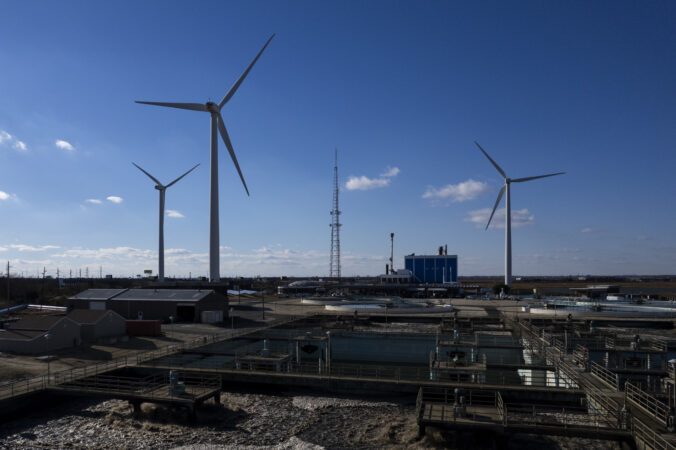
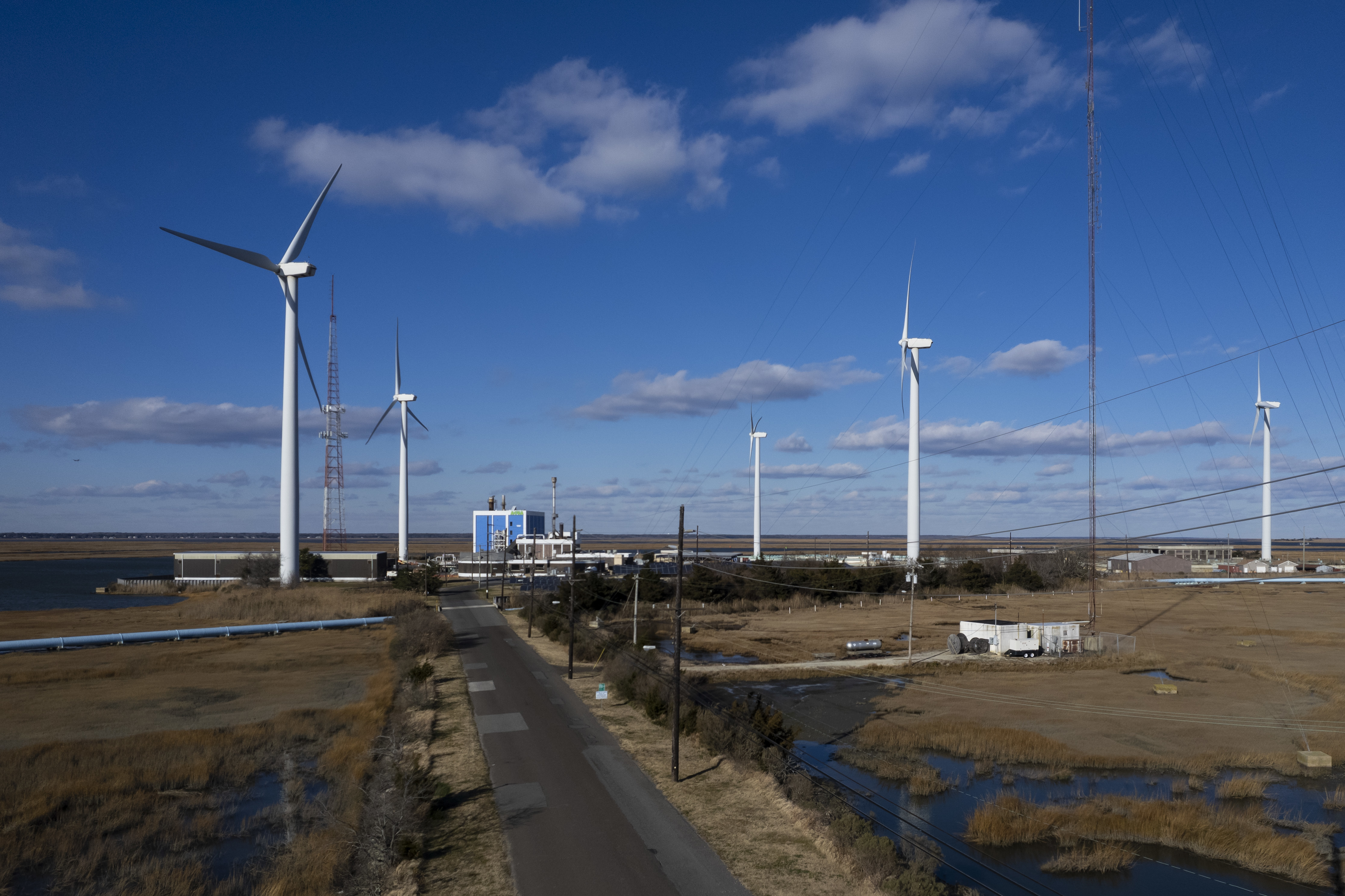
Blustery winds propelled the giant blades of five turbines at the Jersey-Atlantic Wind Farmon a recent day. Set on a back bay island, they were once contested over fears of noise, aesthetics, and worries of threats to Shore birds.
But two decades later, they have emerged as a spinning landmark to Atlantic City.
The 380-foot turbines silently rotate in clear view of motorists streaming to casinos. Some visitors have even requested hotel rooms facing the structures, which are taller than the Statue of Liberty.
The embrace of the land-based wind farm contrasts sharply with the more recently divisive battle over offshore wind projects, an effort stalled by economics and the Trump administration.
Together, the Jersey-Atlantic Wind Farm turbines produce 63% of the energy for the Atlantic County Utilities Authority’s wastewater treatment plant, which serves 14 municipalities. Officials calculate the farm has saved ratepayers $8.8 million since its grand opening on Dec. 12, 2005.
It is one of only two wind farms operating in New Jersey. The other is a much smaller farm in Bayonne.
“This was a total home run for everybody involved,” said Richard Dovey, president of the ACUA at the time it was built. “It’s been nothing but successful, environmentally and economically … [an] inspiration for many other entities, whether they’re public or private.”
How the wind farm came to be
The idea for a wind farm near Atlantic City came from a worker in the energy industry who passed the idea onto Dovey in the early 2000s. With Dovey’s help, it picked up support in former Gov. Jim McGreevey’s administration.
Dovey believed in renewable energy and thought it could power the ACUA’s regional wastewater treatment plant on City Island in Absecon Bay, about two miles from the Atlantic Ocean. He thought Atlantic City’s ample breezes from land and seawould make it an ideal location.
Atlantic City’s ample breezes from land and sea made an ideal location for a wind farm.
Community Energy Inc., a developer of wind power based in the Philadelphia suburbs, played a significant role in the project’s development and received a $1.7 million grant from the New Jersey Board of Public Utilities.
The New Jersey Sierra Club backed the project.
Construction began in mid-2005. The project cost $12 million and included driving pilings into an island of upland surrounded by wetlands and installing intricate concrete bases to support the turbines made by GE.
Currently, the wind farm is owned by Texas-based Leeward Energy. Leeward rents the land for the wind farm from ACUA.
In return, ACUA has a 20-year agreement to purchase the power produced by the turbines from Leeward for 7.9 cents a kilowatt-hour, which was cheap even then. Now, the rate is about half the market rate for energy.
It has helped ACUA keep some of the lowest sewer rates in the state.
However, that agreement is expiring, and the two sides are in negotiations to renew a contract, which could change the rate the ACUA pays for its wind power.
window.addEventListener(“message”,function(a){if(void 0!==a.data[“datawrapper-height”]){var e=document.querySelectorAll(“iframe”);for(var t in a.data[“datawrapper-height”])for(var r,i=0;r=e[i];i++)if(r.contentWindow===a.source){var d=a.data[“datawrapper-height”][t]+”px”;r.style.height=d}}});
Community concerns
Initially, the wind farm faced resistance. Residents in the neighboring Venice Park section of Atlantic City were concerned primarily about potential noise from the turbines.
To allay their fears, Dovey organized a bus trip that took residents to visit a wind farm in Somerset County in Pennsylvania.
“Their major concern was noise,” Dovey, now 73, recalls. “We drove literally underneath the turbine. One neighborhood leader took one step out and said my air conditioner is louder than this; let’s go home. They thought the turbines were beautiful, even inspiring.”
In addition, there were apprehensions regarding how the turbines would affect birds and marine life. The wind farm is just below the Edwin B. Forsythe National Wildlife Refuge, a 48,000-acre area of coastal habitat. New Jersey Audubon agreed to monitor the impact on the bird population as part of its support for the project.
According to the ACUA, a three-year study by NJ Audubon found “a small number of bird deaths which could be attributed to collisions with turbines.” It found more fatalities were caused by raccoons, feral cats, and collisions with wires and trucks.
People were also concerned about the visual impact, fearing they might spoil scenic views, affect property taxes, and hurt tourism. However, the wind farm has since become an iconic part of the landscape.
The concerns were part of a broader debate at the time regarding the emerging push among some New Jersey leaders for offshore wind farms, which had faced a moratorium by the state.
Even though the moratorium was lifted, and Gov. Phil Murphy backed a large offshore wind program that would have powered millions of homes, the debate continued. This year, President Donald Trump issued an executive order to stop offshore wind, making any project in the near future unlikely.
However, a federal judge recently ruled that Trump exceeded his authority with the order, a ruling the administration is likely to challenge. It is unclear whether renewable energy companies still have the political will for a renewed push to build an offshore wind farm off the coast of New Jersey.
Taking advantage of wind
The Jersey-Atlantic Wind Farm is an example of how wind power can work, even if on a smaller scale. The farm is ideally located because of consistent land and ocean breezes. If winds exceed 45 mph, the turbines, each equipped with a weather station, switch off to protect the machinery. That happens only a few times a year.
Matt DeNafo, current president of the ACUA, says the wind farm has been a “huge project” for his organization. The ACUA is operating a pilot project that would store energy captured by the turbines in a battery. A solar array on site also provides about 3% of the facility’s power.
DeNafo said the arrangement with Leeward brought significant economic stability through the 20-year fixed rate. He said it allows the agency to offer the lowest wastewater rates in the region.
At the same time, the ACUA does not have to pay for maintenance of the turbines, while still collecting rent from Leeward.
If winds exceed 45 mph, the turbines, each equipped with a weather station, switch off to protect the machinery.
“It’s really been a great partnership for us. It’s been a beacon for our organization,” DeNafo said. One casino was “getting a lot of requests for windmill-view rooms because it’s got a calming effect.”
Harrah’s, MGM, and Borgata casino hotels all are in view of the windmills.
Amy Menzel, a spokesperson for the ACUA, said summer tours of the wind farm and treatment plant are popular.
“We give open house tours in the summer on Wednesdays,” Menzel said. “People can just drop in. We have a lot of curious people who are visiting the Shore. The tours are really a mix of locals and out-of-town visitors, people who just want to get a little closer and learn more.”
Editor’s note: This article has been corrected to note that the wind farm is on an upland, not a wetland.
With the region in the grips of bitter cold, New Jersey Gov. Phil Murphy on Thursday declared a state of emergency due to “anticipated impacts on the delivery of propane” for homes and businesses because of a service disruption at a Delaware County distribution facility.
The declaration allows operators of commercial vehicles transporting propane to drive for 14 hours instead of the normal limit of 11 hours before taking the mandatory 10 hours of off-duty after a shift.
“I am declaring a State of Emergency to ensure that the approximately 186,000 New Jerseyans who rely on propane for home heating purposes can receive it without interruption. This Executive Order expands delivery capabilities to keep homes heated and families secure,” Murphy said in a statement.
The declaration, which takes effect 9 a.m. Friday, will remain in effect until Murphy determines that the emergency no longer exists, according to the governor’s executive order containing the declaration.
The rules for commercial truck driving are governed by the Federal Motor Carrier Safety Administration, but a federal waiver is available during a declared state of emergency, according to the executive order.
The National Propane Gas Association said on its website that an electric transformer at the Marcus Hook Terminal on Nov. 19 “suffered an incident which disabled the propane truck-loading rack for three days, and created lingering problems at the terminal.”
Energy Transfer Partners, which operates the terminal, has been unable to pump propane from its storage cavern, the association said.
“Wait times at the terminal have been increasing, and given that the terminal is loading directly from the pipeline, the time to load is taking longer than normal,” the association said, adding later that the timing for repairs is uncertain.
A representative for Energy Transfer could not be reached for comment Thursday evening.
Bancroft, a South Jersey nonprofit provider of services for people with intellectual and developmental disabilities, has hired Gregory Passanante to succeed Toni Pergolin as president and CEO.
Passanante, who will be the 10th president in the organization’s 143-year history, is scheduled to start Jan. 7.
Since 2023, Passanante has been northeast market administrator for Shriners Children’s Hospital Philadelphia. Before that, he was chief nursing officer at Wills Eye Hospital.
Passanante will take over a Cherry-Hill-based organization that is in solid financial condition, especially compared to 2004 when Pergolin arrived as chief financial officer and had to worry about making payroll because the organization was so weak financially.
In the 12 months that ended June 30, the nonprofit had operating income of $13 million on $284 million in revenue, according to its audited financial statement. Bancroft had 1,642 clients and employed 2,853 people on a full-time basis at the end of the fiscal year.
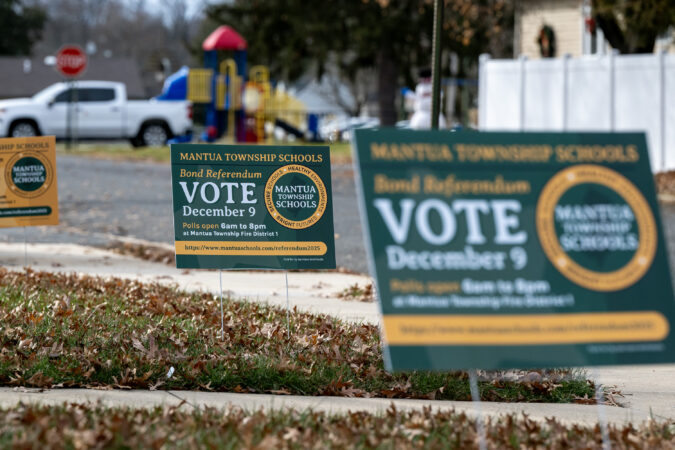
Voters in Shamong handily rejected a $25 million school bond question that would have raised property taxes, while a referendum in Mantua was too close to call, officials said Wednesday.
Shamong voters rejected the bond question 797-271, according to unofficial results from Tuesday’s election in the Burlington County school system.
If approved, the bond issue would have meant a $408 annual property tax increase on a home assessed at the township average of $309,500.
The district had said funding was needed for projects at the Indian Mills and Indian Mills Memorial schools that need immediate action. They included roofing and HVAC work.
Superintendent Mayreni Fermin-Cannon did not respond to a message seeking comment on next steps for the district.
Shamong Mayor Michael Di Croce, who tried unsuccessfully to block Tuesday’s election, hailed the results. Shamong residents make up 90% of the town’s tax base and could not afford an increase, he said.
Di Croce, an attorney, filed a complaint last week on behalf of several residents that contended school officials provided incorrect or misleading information about state funding for the project.
The complaint also alleged the district has refused to disclose why it could not earmark $4 million in capital reserves for renovations prior to seeking a bond referendum.
At a hearing Monday, Superior Court Judge John E. Harrington refused to invalidate the referendum.
“I’m very happy with the way things played out,” Di Croce said Wednesday. “Their whole sky is falling just was not credible and voters didn’t buy it.”
Mantua results too close to call
Meanwhile, the outcome of Tuesday’s vote in Mantua Township on a $39.1 million school bond referendum was too close to call Wednesday.
In preliminary results, there were 1,097 votes opposed and 1,074 votes in favor, the Gloucester County district said. The totals are expected to change over the next few days as officials count mail ballots and verify provisional ballots.
“Regardless of the result, our mission remains the same — to prepare our students for lifelong success through comprehensive academics, community partnerships, and character education,” Superintendent Christine Trampe said in a statement.
The bond issue would fund improvements at all three schools in the kindergarten-through-sixth-grade district, including renovations, roof repairs, and new classrooms.
Trampe called the renovations “true necessities.” Without the funding, the district may need to cut programs, she said.
If approved, the bond issue would increase property taxes about $336 annually on a home assessed at the township average of $311,993.
Elsewhere in the region, voters in Woodbine in Cape May County and Cumberland Regional district in Cumberland County approved bond questions, according to the New Jersey School Boards Association.
Tuesday was one of five times during the year that school boards may ask voters to approve a bond issue or special question. Bond referendums allow districts to pay for projects that cannot readily be funded through their annual operating budget.
New Jersey is among the 10 states that allow physicians to assist terminally ill patients in ending their own lives, under certain conditions. But those patients must be New Jersey residents, a federal appeals court ruled.
The U.S. Court of Appeals for the Third Circuit said last week that New Jersey’s limit of the aid-in-dying law to state residents is constitutional, keeping on the books a significant hurdle for people from neighboring states — including Pennsylvania and Delaware — where the practice is not permitted.
“In our federal system, states are free to experiment with policies as grave as letting doctors assist suicide. Other states are free to keep it a crime,” U.S. Circuit Judge Stephanos Bibas wrote in the opinion. “This novel option does not appear to be a fundamental privilege, let alone a fundamental right, that states must accord visitors.”
Jess Pezley, a staff attorney at the legal arm of Compassion and Choices, a nonprofit advocacy organization that brought the lawsuit challenging the residency requirement, said aid in dying “remains a critically important option for all terminally ill people who wish to receive healthcare in the state of New Jersey.”
The “ruling means that terminally ill patients who do not live in an authorized jurisdiction will continue to have to travel”to states like Oregon and Vermont that permit the practice for nonresidents, Pezley said in a statement.
Aid in dying is a controversial concept. While some argue the law creates a pathway for empowerment over end of life, others worry that it can lead to coercion and expansion beyond the terminally ill in a country that has a dark history in how it treats people with disabilities.
The residency requirement is meant to protect physicians from liability in states where assisting in suicide is a criminal offense, proponents of the restriction argue, and to prevent medical tourism in states with the option.
The law does not specify how long a person must live in New Jersey but sets other qualifying requirements: A patient must have a New Jersey driver’s license, be registered to vote in the state, have filed income taxes as a New Jersey resident in the last year, or have another official government record that confirms residency.
The law allows adults who are residents of New Jersey and are expected to die within six months to obtain a prescription for a lethal drug cocktail. They must be able to make their own decisions and administer the medication by themselves.
The ruling is the latest development in a lawsuit filed in August 2023 by a Camden County physician, Paul Bryman, who assists terminally ill patients in ending their lives on their own terms. He challenged the residency requirement, saying the law prohibits him from treating all patients equally because of where they live.
Bryman’s suit originally included another New Jersey physician, Deborah Pasik, and two cancer patients, Judith Govatos of Delaware and Andy Sealy of South Philadelphia. Pasik has since retired, and Govatos, 81, and Sealy, 44, died before the court made its ruling.
The lawsuit argued the prohibition “discriminates” againstpatients like Govatos and Sealy by not allowing them to receive “specific medical care after crossing State lines into New Jersey, even though they would otherwise qualify for this care.”
New Jersey officials asked a federal district judge to dismiss the case, arguing that no court has recognized aid in dying as a constitutional right. The state further said that the residency requirement was among the “safeguards” in a policy that has “extraordinarily high stakes.”
The judge tossed out the lawsuit in 2024.
“And the residence requirement makes sense: While medical aid in dying is permitted in New Jersey, it is indistinguishable from the criminal act of assisted suicide in neighboring states,” District Judge Renee Marie Bumb wrote in her opinion. “By limiting the pool of eligible patients to State residents, the requirement is rationally related to the legitimate objective of protecting from out-of-state liability providers and advocates who assist terminally ill patients in seeking medical aid in dying.”
Compassion and Choices appealed the ruling to the Third Circuit, where the plea met a similar fate.
“The Constitution leaves moral questions like these to the states,” Bibas wrote. “New Jersey has answered them carefully.”
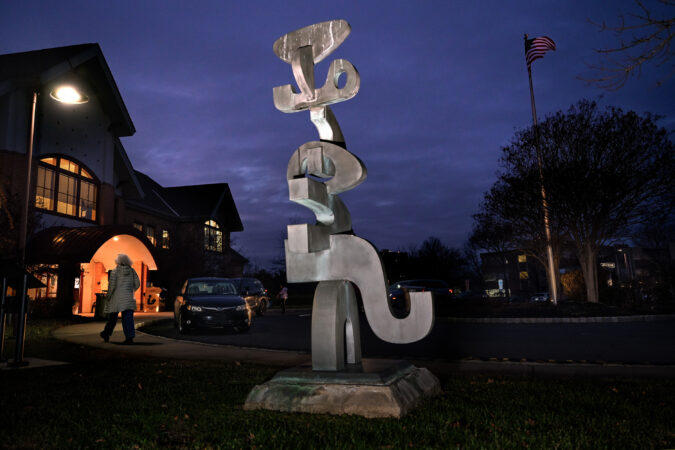
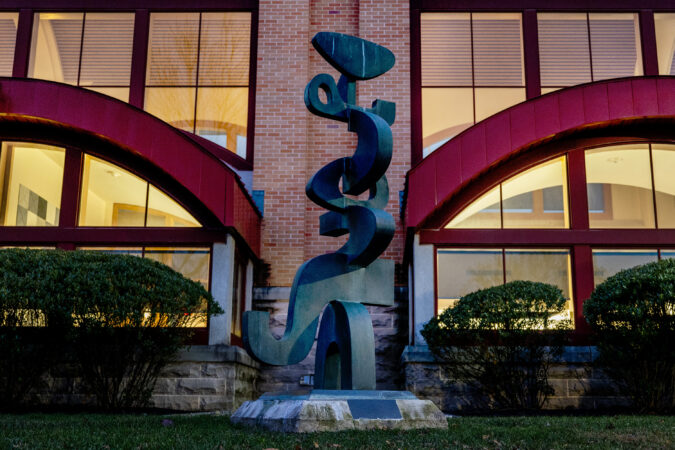
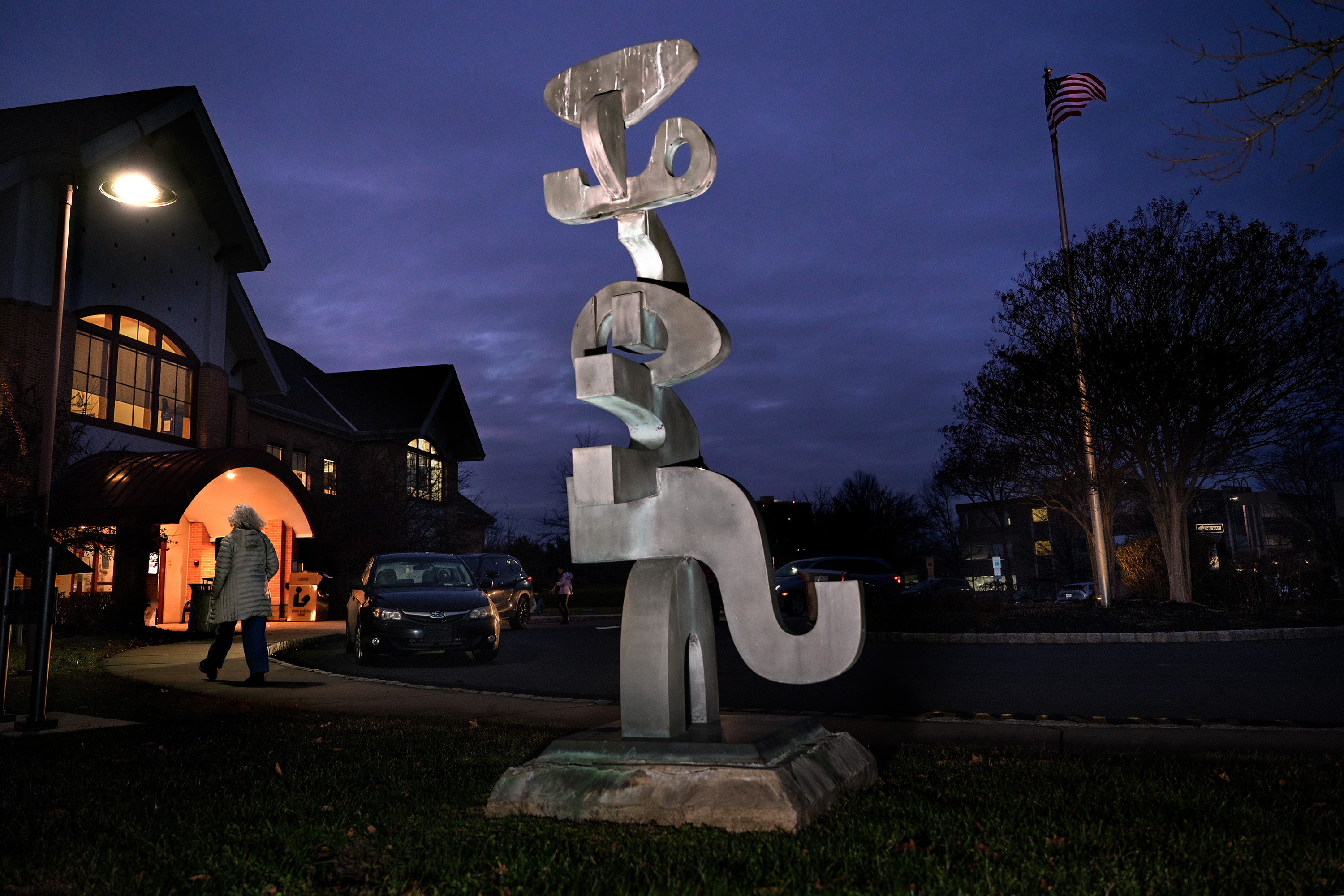
David Ascalon’s sculpture, called “Totem,” is located near the entrance to the Cherry Hill Public Library.
The Cherry Hill Public Library brims with more than just books. It also houses an impressive collection of art, both within and outside its walls. One such work, an 8-foot-tall bronze statue, has long caught the eye of township resident David Jastrow.
His daughters even came up with a nickname for it: The “mixed-up elephant.”
Wondering about its meaning, Jastrow reached out to Curious Cherry Hill, where Inquirer reporters set out to answer reader questions from around town.
This week, The Inquirer’s Henry Savage found out how the abstract piece came to reside near the library’s entrance and how its creator wants it to be interpreted.
Gerald S. Yashinsky, a 51-year-old Cherry Hill man, died after being hit by a car Monday night when crossing Haddonfield Road near Yale Avenue. The driver is cooperating with investigators.
The cost of collecting and disposing trash for Cherry Hill will jump $1.4 million in January. Mayor Dave Fleisher said the township has accounted for the increase — about $12.4 million over the next five years — in its proposed municipal budget for 2026. Residents can share their thoughts on the budget at council’s next scheduled meeting on Dec. 22. (South Jersey Media)
The former Fulton Bank at 1460 Route 70 East could becomea Dunkin’. On Monday, the township’s Planning Board will consider variance requests from South Jersey Management, LLC to convert the former 2,300-square-foot bank into a 2,100-square-foot coffee shop. Changes call for removing the existing drive-through and making the western driveway along Frontage Road into an entrance only.
The AMC Cherry Hill 24 will be one of 500 movie theaters across the U.S. and Canada screening the finale of Stranger Things on New Year’s Eve as it makes its global debut. Fans can reserve seats now for screenings of the feature-length finale.
A Powerball ticket purchased at the Wegmans on Route 70 for last Saturday’s jackpot matched four of the five white balls called, meaning whoever purchased the ticket won $50,000. (Patch)
The Plaza at Cherry Hill has undergone several changes recently, including the opening of swimming lesson chain Big Blue Swim School and thrift store Savers, as well as the relocation of Pure Hockey. The shifts come as part of the shopping center undergoes a makeover. (42 Freeway)
New Jersey officials have declared a drought warning for many parts of the state, including Camden County, which has experienced about four inches below average precipitation over the past 90 days and is down six inches for the past year.
Cherry Hill East and West’s girls basketball teams both have a number of Big North Conference stat leaders returning to their rosters this year.Kirsten Gibson of West had the second-most points per game in the conference last year, according to NJ.com data. Her teammates Jizel Dowling and Lilly Legato will also return. East’s Dylan Kratchman, who averaged 11 points per game, will sport the Cougar colors again, along with Maya Morgan, Michelle Le, Jessie Atlas, and Lily Shubach.
Reminder for families: There are early dismissals for preschool, elementary, and middle schools today and tomorrow as parent/teacher conferences continue. There’s a districtwide early dismissal Friday. See the district’s full calendar here.
🍽️ On our Plate
Indian restaurant Bombay Express is opening at its new location at 219 Haddonfield-Berlin Rd. tomorrow. The eatery, known for its traditional and vegan halal dishes, as well as its naan tacos, closed its Marlton storefront in late October. Its new spot will be open daily from 11 a.m. to 9 p.m.
Italian restaurant Caffe Aldo Lamberti is hosting Christmas carolers during dinner service this Sunday and again next weekend. Students from East will perform this Sunday and next Friday, while students from West will sing tunes next Saturday and Sunday. Caroling will take place from about 6 to 9 p.m. each night.
Cherry Hill is home to three of the 99 greatest restaurants in New Jersey, according to NJ.com. The outlet ranked Nan Xiang Xiao Long Bao, which is known for its soup dumplings, the top restaurant in town, coming in at No. 42. It’s followed by Sichuan joint Han Dynasty at No. 81, and Korean barbecue eatery Dolsot House at No. 94.
🎳 Things to Do
⛸️ Skate and Decorate: Hit the ice at the Winterfest Ice Skating Rink and decorate holiday cookies. ⏰ Sunday, Dec. 14, noon-4 p.m. 💵 Cookie decorating is free, skating admission is $6-$9 📍 Cooper River Park
🕎 Menorah Motorcade: Now in its 16th year, cars adorned with menorahs will parade from Chabad in Cherry Hill to Barclay Farm Shopping Center, where the giant menorah will be lit. ⏰ Sunday, Dec. 14, parade starts at 4 p.m., giant menorah lighting is at 5 p.m. 💵 Free 📍Chabad of Camden and Burlington Counties
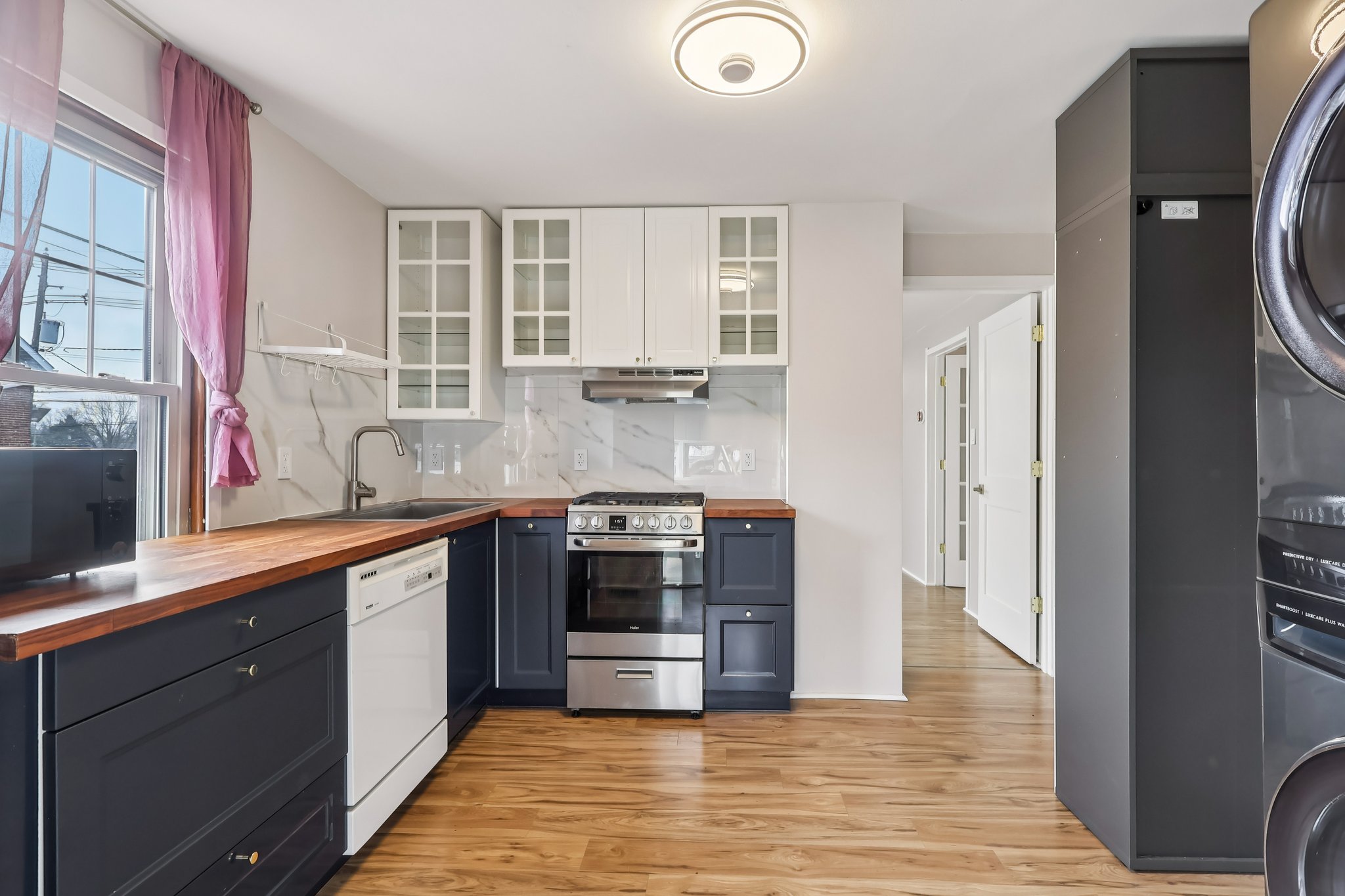
The kitchen on the first floor has been recently updated.
Located on a corner lot, the first-floor unit of this duplex was recently renovated, including new flooring, lighting, and paint. It features two bedrooms, a kitchen with black and white cabinetry, a living room, an updated full bathroom, and a bonus room. It also has exclusive access to the basement and the front porch. The second floor is currently occupied by long-term tenants, providing passive income for a new owner.
Is your home a Haven? The Inquirer is seeking homeowners and renters for a weekly feature on how people make their houses, apartments, and condos into homes they love. Email details and a few photos to properties@inquirer.com.
🗞️ What other Cherry Hill residents are reading this week:
By submitting your written, visual, and/or audio contributions, you agree to The Inquirer’s Terms of Use, including the grant of rights in Section 10.
This suburban content is produced with support from the Leslie Miller and Richard Worley Foundation and The Lenfest Institute for Journalism. Editorial content is created independently of the project donors. Gifts to support The Inquirer’s high-impact journalism can be made at inquirer.com/donate. A list of Lenfest Institute donors can be found at lenfestinstitute.org/supporters.
Taking his daughters to the Cherry Hill Public Library was a weekend ritual for David Jastrow, andone intricate sculpture out front always gave his family pause.
“For whatever reason, that sculpture always caught the attention of my daughters. When they were younger, they used to call it the ‘mixed-up elephant,’ which I always thought was funny,” said Jastrow, 51, a township resident who still frequents the library to pick up biographies and mystery novels.
The Cherry Hill Public Library hasupward of 50 works of art inside its halls, in addition to numerous sculptures outside, including the “mixed-up elephant” on the front lawn.That spurred Jastrow to write in to Curious Cherry Hill, The Inquirer’s forum for answering your questions.
“It’s a very abstract piece of artwork. You can kind of see the trunk coming out at one part,” Jastrow said. “I thought maybe it was designed with the elephant in mind in some way, but I doubt it.”
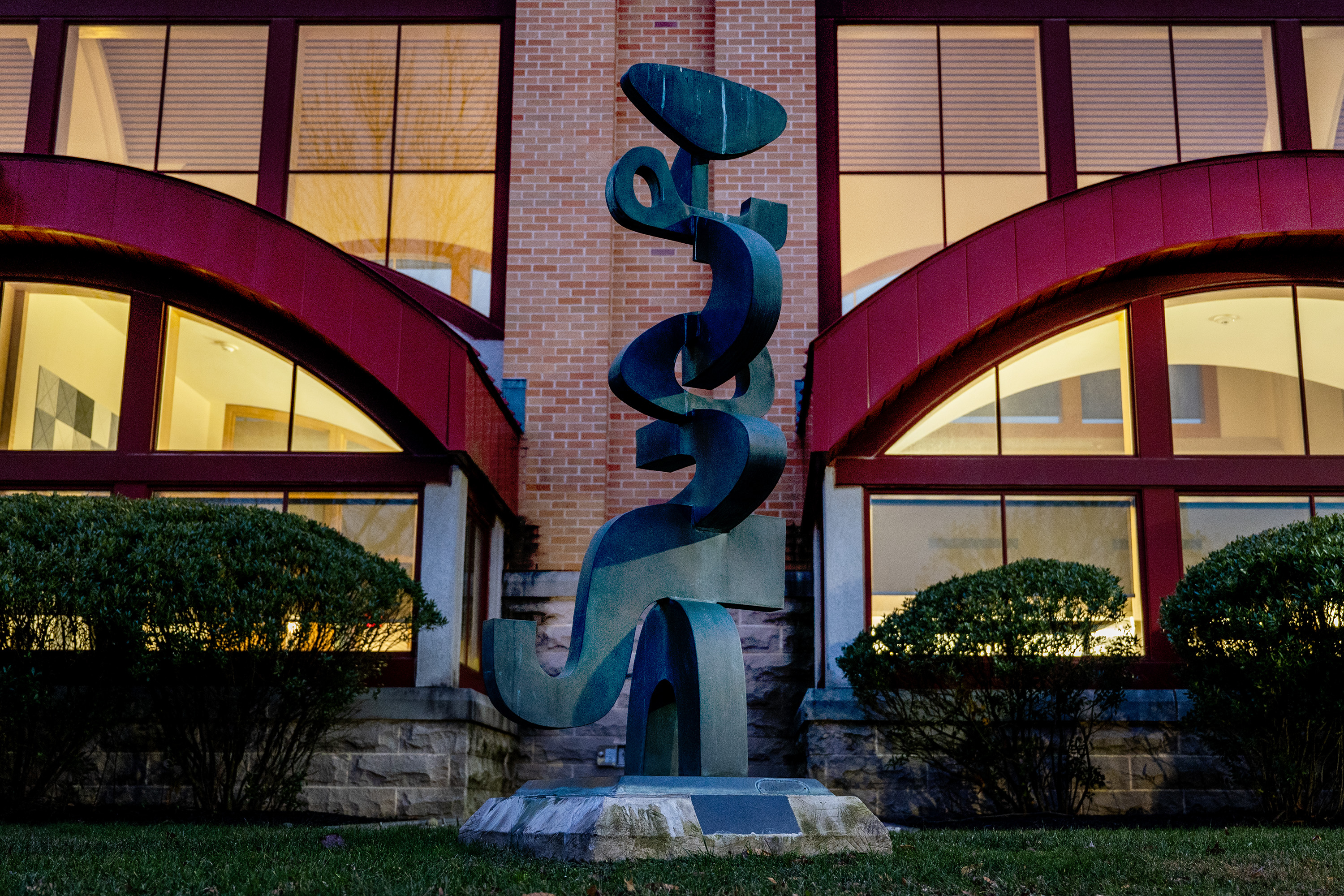
And Jastrow would be right. “Totem” is an 8-foot-tall bronze sculpture that twists into an elaborate structure reaching toward the sky. Sitting to the left of the library’s main entrance since 2009, visitors can’t help but try to decipher its meaning.
Eric Ascalon, the son of award-winning sculptor and stained-glass artist David Ascalon, who crafted “Totem,” said that the different interpretations are exactly what his father intended.
“The sculpture just came from a natural place within his psyche,” Eric Ascalon said. “He feels abstract art is put out there by the artist, but it’s designed to be interpreted in any whatever it means to the viewer.”
Sculpture often takes long periods of time to conceptualize and design. In David Ascalon’s abstract work, he would swiftly sketch a design on a loose piece of paper and lock that design in. Despite a quick conceptualization, the statue took months to build.
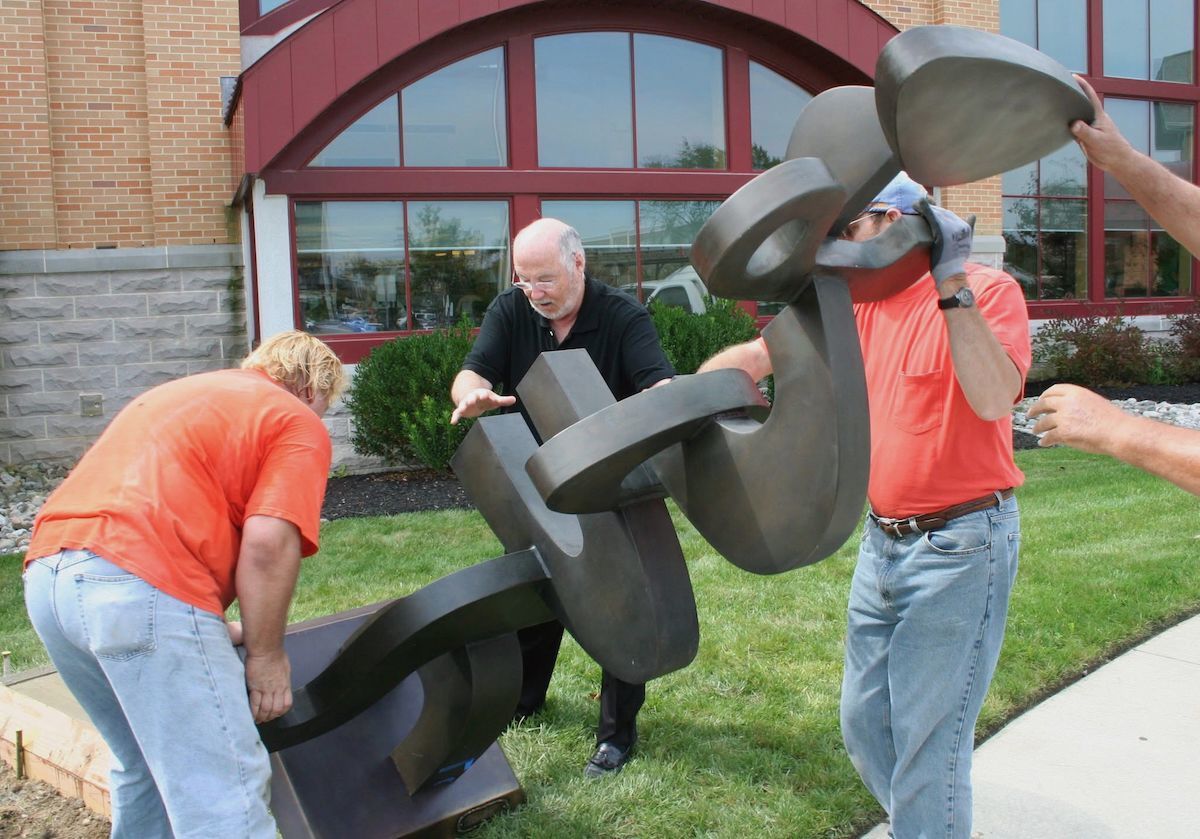
David Ascalon, center, the creator of the 8-foot-tall bronze sculpture, “Totem,” installing the statue outside of the Cherry Hill Public Library in 2009. The sculpture stands today at the library, enticing visitors to interpret its abstract form.
“I would say ‘Totem’ is kind of a reflection of his subconscious and just his creative spirit,” Eric Ascalon said.
For David Ascalon, dipping his toes into abstract art was a way to clear his mind from the painstakingly detailed work of his stained-glass windows, saidhis son, who worked alongside his father and the rest of the family at their now-closed West Berlin firm, Ascalon Studios.
After forming Ascalon Studios in 1977, with his father, Maurice, David Ascalon would go on to craft some of the finest stained-glass windows in synagogues and public spaces across the region. His work can be seen in the stained-glass windows in nearby Temple Beth Shalom, and all the way in Harrisburg, where his 15-foot Holocaust Memorial overlooks the Susquehanna River.
It’s not only Ascalon’s work that draws people into Cherry Hill’s library, either.
Walking up to the three-acre property, guests are greeted by what looks like a real couple reading the newspaper on the library lawn — perhaps unusual in 2025 — but step a little closer, and see that they’re not human, but a hyperrealistic sculpture of a man and woman lounging in the grass.
Another abstract sculpture, created in memory of Valerie Porter, a Cherry Hill resident who loved to read but died unexpectedly in 1966 after a neurological condition, sits outside the library. David Ascalon helped restore it in 2016.
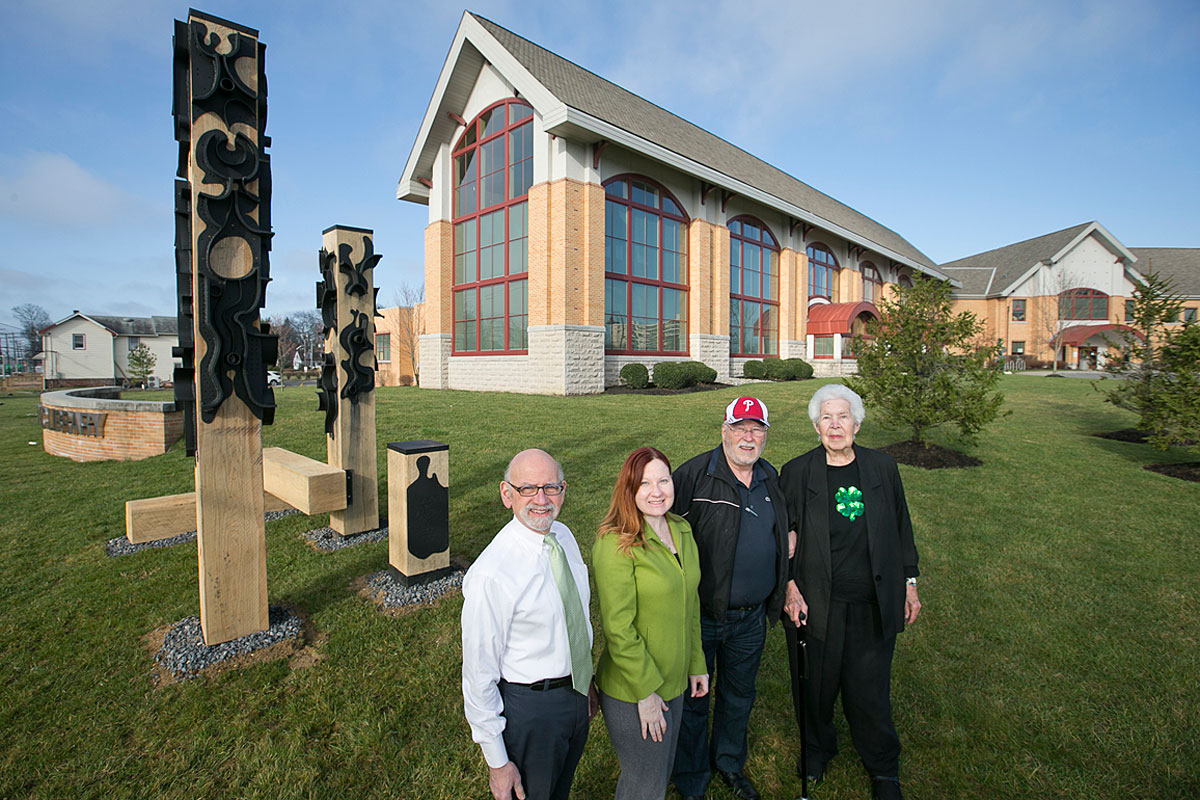
Fred Adelson, sculpture committee, Laverne Mann, director of Library, artist David Ascalon of Cherry Hill and Sally Callaghan also of sculpture committee, left to right, outside the Cherry Hill Library.
Inside, several walls are adorned with public art, many created by Cherry Hill residents. Downstairs is a year-round art gallery that promotes a new local artist every month, said library director Tierney Miller.
Such works amount to small glints in human creativity, something that the library continually fosters through its programming, said Miller.
The monthly showcase is so popular among local artists that the gallery space is booked years in advance, “2026 is already full, and we’re booking for 2027 now,” Miller said.
While only Cherry Hill residents can get a free library card — there are paid options for others — anyone can attend its free events.
The sculpture “Totem” by David Ascalon. It was installed in 2009 on the grounds of the newly opened Cherry Hill Public Library.
This suburban content is produced with support from the Leslie Miller and Richard Worley Foundation and The Lenfest Institute for Journalism. Editorial content is created independently of the project donors. Gifts to support The Inquirer’s high-impact journalism can be made at inquirer.com/donate. A list of Lenfest Institute donors can be found at lenfestinstitute.org/supporters.