Category: News

Latest breaking news and updates

  • Members-only Philly cop bar has been linked to two DUIs — and a third crash kept secret, until now

    Members-only Philly cop bar has been linked to two DUIs — and a third crash kept secret, until now

    Raymond and Anna Wakeman had returned from dinner early on a Saturday night and were relaxing on the couch with their two rescue dogs in their Northeast Philadelphia home. Cricket, a pit bull, rested his head on Raymond’s shoulder. Jax, a miniature pinscher, was curled up next to Anna.

    In an instant, a 2014 Dodge Dart exploded through the front of the Wakemans’ home and into their living room.

    Firefighters arrived to find Anna in another room, pinned under the silver Dodge and gravely injured. Rescuers worked feverishly to free her from the wreckage and rush her to the hospital. Jax was dead. Cricket underwent emergency surgery, but died soon after.
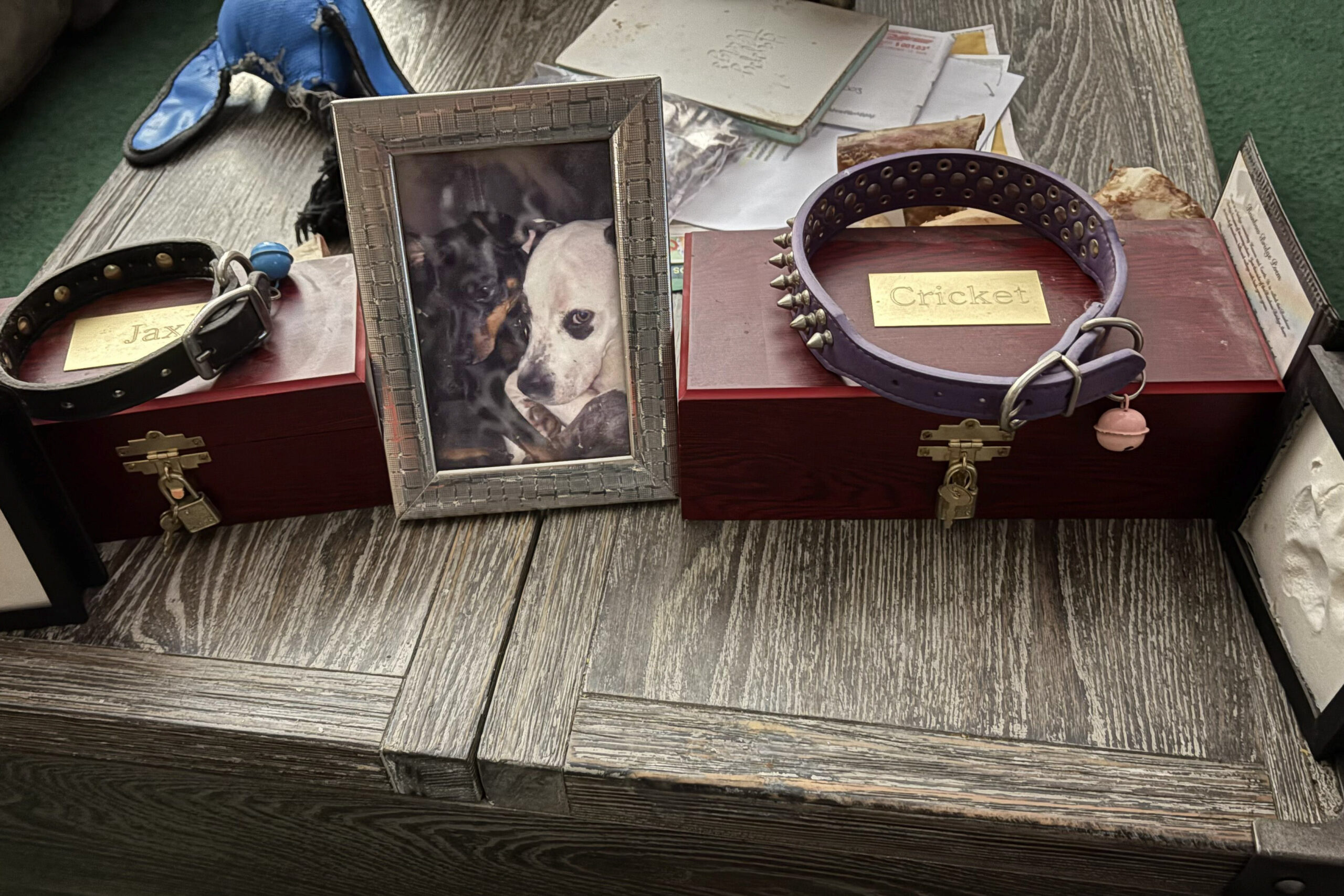
    Anna Wakeman assembled a memorial to the family’s two rescue dogs, Jax and Cricket, who were killed by Gregory Campbell, a Philadelphia police officer who crashed his car into her home in 2021. Campbell spent hours consuming alcohol at a bar operated by the Fraternal Order of Police Lodge 5.

    The driver, off-duty Philadelphia Police Officer Gregory Campbell, had been drinking since midafternoon on Feb. 6, 2021, and a lawsuit would later allege he had consumed as many as 20 alcoholic beverages. He had most of them where he ended his evening, at the 7C Lounge, a members-only club for active and retired cops operated by the Fraternal Order of Police Lodge 5, inside the union’s headquarters.

    Campbell was arrested and fired from the police force after the crash. In June 2022, a Common Pleas Court judge sentenced him to 11½ to 23 months in prison.

    “I am so sorry,” Campbell told the Wakemans in court, “for everything I’ve put you and your family through.”

    Campbell’s accident and subsequent trial were widely covered at the time. But an Inquirer investigation has found troubling new details about that crash and the aftermath that were never made public, and identified two additional auto accidents tied to the 7C Lounge. The findings raise questions about how drunken-driving cases are investigated when they involve a powerful police union operating its own bar.

    Records show that after crashing into the Wakeman house — and while it was still unclear whether Anna Wakeman had survived — Campbell was allowed to confer with FOP representatives and delay a blood-alcohol test for nearly six hours.
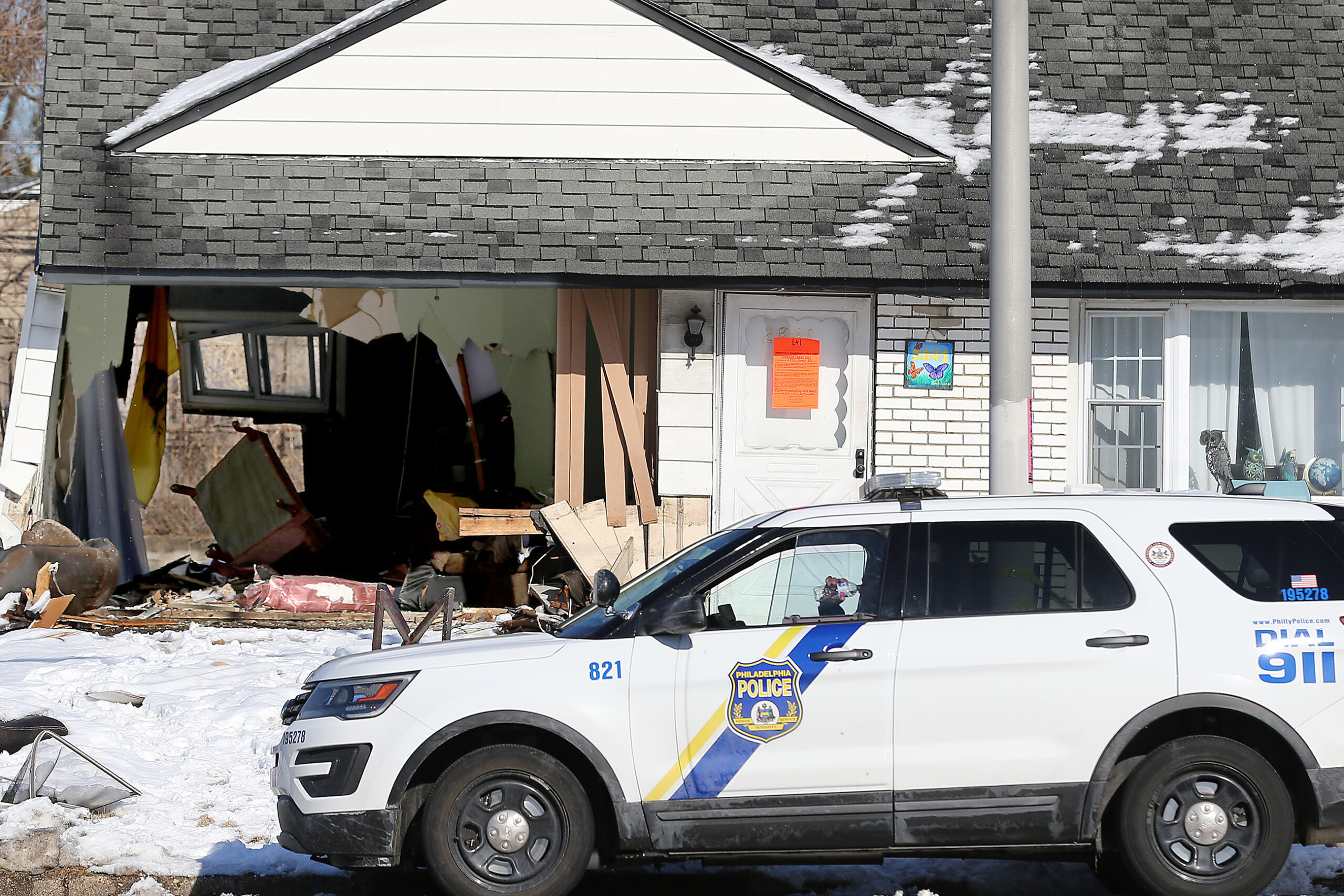
    Gregory Campbell’s Dodge Dart sped from the parking lot outside the FOP’s 7C Lounge into the Wakemans’ home, killing the family’s two dogs and almost killing Anna Wakeman.

    The delay was an apparent violation of Pennsylvania law, which requires suspected drunk drivers to undergo testing within two hours of being behind the wheel unless good cause is given. The records include no explanation for the delay.

    An officer in the police department’s Crash Investigation District later testified in a deposition that he had never before encountered a person accused of driving under the influence who was allowed to seek guidance from his labor union before undergoing blood testing.

    When Campbell’s blood was finally tested, his alcohol level registered at 0.23%, almost three times the 0.08 legal threshold for drunken driving. A toxicologist later estimated Campbell’s blood-alcohol content at the time of the accident was as high as 0.351%, more than four times the legal limit.

    The Wakemans filed a lawsuit in Philadelphia Common Pleas Court against Campbell, the 7C Lounge, and Lodge 5. The couple’s attorney hired a liquor liability expert — a former police officer who had been an investigator for the New Jersey Division of Alcoholic Beverage Control for 11 years — who concluded that there was “overwhelming evidence” that the 7C Lounge had overserved Campbell and failed to monitor him or intervene.

    The “actions and inactions were negligent and reckless” and “contributed directly to the accident, damages and injuries sustained by the Wakeman family,” the expert, Donald J. Simonini, wrote in his 23-page report.

    On the night of the crash, a Philadelphia police accident investigator attempted to interview employees working at the 7C Lounge but was unable to do so because the bar had closed hours earlier than scheduled. The investigator said subsequent attempts to obtain information from the employees were also unsuccessful.

    A manager later testified that he was “following orders” when he shut down the bar early.
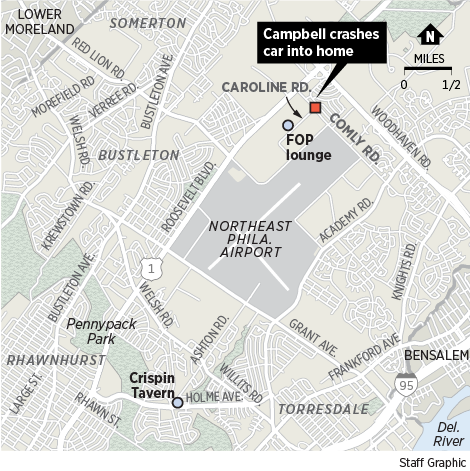
    An aerial view of Lodge 5’s headquarters, the 7C Lounge, and Anna and Raymond Wakeman’s home.

    At that time, Lodge 5 was led by its longtime president, John McNesby. His chief of staff, Roosevelt Poplar, was vice president of the union’s Home Association, a nonprofit that operates the 7C Lounge.

    McNesby resigned in 2023, and was succeeded by Poplar, who last year won a contentious reelection battle.

    Neither McNesby nor Poplar responded to requests for comment.

    State law grants regulators broad authority to crack down on bars found to have overserved customers, with sanctions ranging from fines to suspension or revocation of a liquor license. Yet the FOP’s bar has faced no regulatory repercussions during the 16 years it has operated at its Northeast Philadelphia headquarters.

    Paul Herron, a Philadelphia lawyer who specializes in liquor licenses and enforcement, said that the Pennsylvania State Police Bureau of Liquor Control Enforcement (BLCE) has “very stringent requirements” and that most establishments tend to have at least minor violations, such as improper recordkeeping. He said it is “very unusual” that the 7C Lounge has a clean slate given the severity of the Campbell case.

    Campbell “had consumed monumental amounts of liquor, and for that to just not show up anywhere is awfully strange,” Herron said. “I would expect that if this happened to another place, that this would come to light, to the knowledge of the bureau, and they would ultimately issue a citation.”

    In another incident tied to the 7C Lounge, regulators did not open an investigation because the union did not report what had happened.

    The Inquirer viewed two minutes and 40 seconds of surveillance footage of the 7C Lounge parking lot from the evening of Nov. 22, 2021. The recordings come from three separate cameras and show a patron walking out of the 7C Lounge and getting into the driver’s seat of a compact SUV. At 11:21 p.m., the driver backs up, then accelerates forward into a parked truck, hitting it hard enough to slam the truck into the front bumper of an SUV parked behind it.

    The motorist pauses a few seconds, reverses, then accelerates past the damaged vehicles and runs over two orange cones. The driver then plows through the FOP’s fence on Caroline Road, destroying a section of it, before disappearing from the camera’s view.

    A source with firsthand knowledge of the incident said Poplar reviewed the footage of the parking lot crashes and took notes, including “4 cars hit” and “fence,” with the time each object was hit.

    Roosevelt Poplar won a heated reelection battle for the FOP’s presidency in 2025. He previously served as the vice president of the union’s Home Association, a nonprofit that operates the 7C Lounge.

    A police spokesperson said there is no record that the crashes in the 7C Lounge parking lot had ever been reported to authorities.

    Herron said a typical bar would have almost certainly reported that type of incident.

    “It’s just not something that would have happened maybe if it didn’t involve the police or the FOP,” he said.

    ‘I was dizzy’

    There are potential conflicts of interest if law enforcement officers with arresting powers own establishments that serve alcohol. In fact, state law prohibits police officers from holding liquor licenses because they are responsible for enforcing liquor laws.

    But that restriction does not extend to the FOP’s Home Association because it is considered part of a fraternal, nonprofit organization. State law defines such entities as “catering clubs” — much like a VFW post or an Elks Lodge — and permits them liquor licenses.

    It’s a loophole in the law that Anna Wakeman, who barely survived the accident with Campbell’s Dodge, doesn’t understand.

    “The cops can drink as much as they want there,” Wakeman, now 58, said. “The bartenders serve them till they’re blackout drunk and let them leave.”

    When Campbell crashed into the Wakemans’ home, it was the second time the family’s property had been damaged by a patron who left the FOP’s bar impaired. Less than two years earlier, a former Philly cop had left the 7C Lounge, got into his car, and smashed into Anna Wakeman’s SUV, which was parked in her driveway.

    Anna Wakeman and her husband couldn’t stomach the idea of returning to their Northeast Philadelphia home after the 2021 car crash, fearing it could happen again. They moved instead to West Virginia.

    On a Sunday night in April 2019, an ex-Philly cop named Damien Walto worked as a DJ at the 7C Lounge, which has an expansive bar with gleaming dark wood and big-screen TVs. Walto was no longer an active member of Lodge 5: He had been fired from the police force in 2010 for allegedly assaulting a woman while off duty, and was later sentenced to three to six months in prison.

    Walto left the bar just after 10 p.m. in his GMC Envoy. Rain was falling, the roads were slick, and Walto told a reporter that he lost control of his SUV when he tried to steer past a tractor-trailer on Caroline Road. He careered through the intersection at Comly Road and smashed into Anna Wakeman’s Chevrolet Equinox, which was sitting in her driveway.

    The force of the impact crumpled the rear of the Equinox like an accordion and propelled it into Raymond Wakeman’s parked Chevrolet Silverado.

    The Wakemans watched Walto stumble out of his Envoy, dazed and disoriented, then stagger along the sidewalk while clutching an Easter basket.

    In a recent interview with The Inquirer, Walto said he does not remember if he drank any alcohol at the party, perhaps because he struck his head hard against the steering wheel.

    “I was dizzy and messed up,” he said. “I didn’t know what was going on.”

    Walto returned to his GMC and fumbled with a screwdriver in an attempt to remove an FOP-marked license plate from his SUV, the Wakemans said. He toppled over and the license plate remained in place, they said.

    Walto said he was not trying to hide his link to the police union. “My tag fell off and I was trying to put it back on,” he said.

    Police officers arrived at the scene and noted that Walto appeared to be under the influence of drugs or alcohol. They arrested him, and medics transported him to the hospital for chest pain, according to a police report. There is no mention in the report of Walto having suffered a head injury.

    At the time of crash, Walto was also facing DUI charges in Montgomery County, court records show. In August 2019, he pleaded guilty there to driving under the influence and was sentenced to up to six months in prison; he spent 72 hours behind bars, he says.

    His Philadelphia case was later dismissed.

    The fact that the 7C Lounge has been connected to multiple drunken-driving incidents is troubling, experts say.
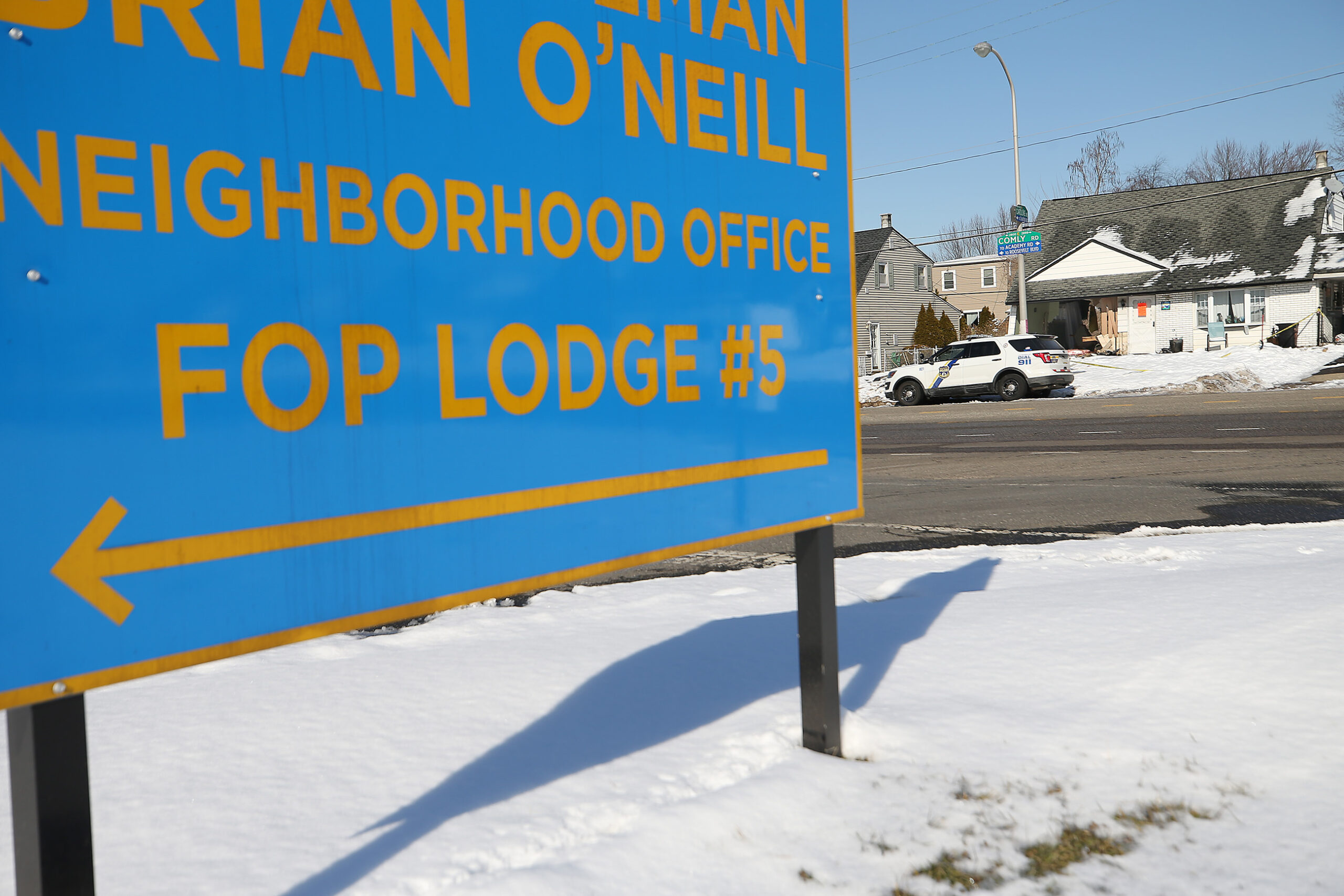
    The 7C Lounge closed for business early the night Campbell crashed into the Wakemans’ house.

    “The more accidents that result from serving alcohol at any bar, owned by the police union or anyone else, the more the public would be ordinarily concerned about the continuing operations of that establishment,” said Mark Carter, a longtime employer-side labor attorney and a member of the U.S. Chamber of Commerce’s Labor Relations Committee.

    “Here, you’ve articulated a pattern of behavior that would create a legitimate interest by the city or the prosecutor’s office about the continuing operations of that establishment.”

    The state BLCE, which has the authority to issue sanctions, would not confirm or deny the existence of any investigation.

    ‘Watch our boy’

    Hours before the Wakemans were nearly killed in their home in 2021, off-duty Philly cops had gathered for what was supposed to have been a somber affair: paying tribute to James O’Connor IV, a police corporal who had been shot and killed in the line of duty in March 2020.

    The Crispin Tavern, a small bar on Holme Avenue in Northeast Philadelphia, staged a beef-and-beer fundraiser for O’Connor’s family that afternoon. Among the bar’s patrons was Campbell, who recalled drinking about six beers there before he climbed into his car and drove to the 7C Lounge, court records would later show.

    He arrived at the FOP’s bar just after 5:20 p.m. His next three hours inside the establishment are detailed in a report written by Simonini, the liquor liability expert, who watched video footage from the bar’s security feed.

    Campbell, who had been on the police force since March 2018, joined a table of five. Nearby, a man in a white shirt had trouble standing and nearly fell several times as he struggled to get his jacket on. He took a swing at another customer who tried to steady him.

    Simonini noted that a server walked by the stumbling man four times but did not once ask if he was OK.

    During a deposition, an attorney representing the Wakemans asked the 7C Lounge’s bar manager, Ernie Gallagher, about the stumbling man’s apparent intoxication.

    Gallagher theorized that instead of being drunk, the man might have suffered from a neurological disorder.

    “A lot of times we have a lot of people come in who don’t even drink, and, you know, they have [multiple sclerosis],” Gallagher said. “They fall and they go, ‘He wasn’t even drinking.’”

    When reached for comment recently, Gallagher said: “I have no recollection. I have no comment. I have nothing.”

    Simonini wrote that Campbell was drinking what appeared to be bottled beer, Twisted Tea, and mixed drinks out of plastic cups. In one 36-minute period, Campbell downed both his own drinks and others served to people at the table.

    This consumption went unnoticed by 7C staff, Simonini wrote.

    Gallagher said in his deposition that he considers “two drinks an hour” a safe amount to serve a patron.

    “Clearly, Campbell and his party were served far more than ‘two drinks an hour,’” Simonini wrote.

    At 7:40 p.m., Campbell returned to the bar, where it appeared Gallagher waved him off. Gallagher said in his deposition that he told Campbell, “Yo, you’ve had enough,” and he thought he told a bartender, “Watch our boy, Greg.” That bartender said in a deposition that he had no recollection of Gallagher’s comment.

    Simonini wrote in his report that the 7C bartenders “served Campbell and his party 6-7 drinks at a time, and never watched where the drinks were going and to whom.”

    Around 8:10 p.m., Campbell finished a bottle of beer and drank from a plastic cup at the bar. He headed to a bathroom but appeared unsteady, Simonini wrote.

    Campbell then went outside. Surveillance video appears to show him losing his balance while walking around a snow bank toward his Dodge Dart.

    Lawyers showed Campbell footage from the nearly three hours he spent at the 7C Lounge. Asked in his deposition whether he should have been refused alcohol, he answered, “Yes, based on my blood level of intoxication, yes.”

    “Could you safely operate a motor vehicle when you left that bar?” the Wakemans’ lawyer asked.

    “No,” he replied.

    ‘Gurgling on blood’

    Campbell got behind the wheel at 8:17 p.m. He pulled onto Caroline Road and drove north toward Comly Road.

    The posted speed limit in the area is 30 mph.

    Campbell’s Dodge rocketed to 82 mph.

    He zoomed past a stop sign, then crossed four lanes of traffic before striking a curb at 70 mph. The Dart thundered over the Wakemans’ snow-covered front yard.

    As smoke and dust filled his home, Raymond Wakeman stood up, in shock at the devastation that surrounded him. Shards of crushed glass cut his bare feet.

    “The car went right by my face and took my dog,” Raymond recalled. “It took Anna and Jax.”

    Campbell climbed out of his car, but didn’t seem to “know where he was or what happened,” Raymond said.

    Raymond couldn’t find his wife. But he heard faint sounds coming from the undercarriage of the car, which had come to rest in their son’s bedroom.

    “She was gurgling, breathing, but gurgling on blood or something,” he said.

    Raymond ripped vinyl siding off his house and used it to shovel rubble and debris from the front of Campbell’s car.

    Finally, he saw her battered face.

    “There was blood coming out of her ears, nose, and mouth,” he said. “Her leg was hanging off. She was barely breathing.”

    Medics transported the Wakemans to Jefferson Torresdale Hospital. When the couple’s 17-year-old son, Patrick, arrived at the hospital, a doctor told him his mother was unlikely to survive the night.

    “Honestly, I thought that was going to be the last time I’d ever see my mom,” he said.

    Police arrested Campbell outside the splintered remains of the Wakemans’ house and transported him to Jefferson Torresdale, where he was handcuffed to a bed and treated for a cut to his forehead. He was dazed and there was a stench of alcohol on his breath, the police report said.

    Then he received special visitors at his bedside, according to court records: unnamed FOP representatives.

    Poplar, in his deposition for the Wakemans’ lawsuit against the FOP, was asked how the union is notified after an officer is arrested.
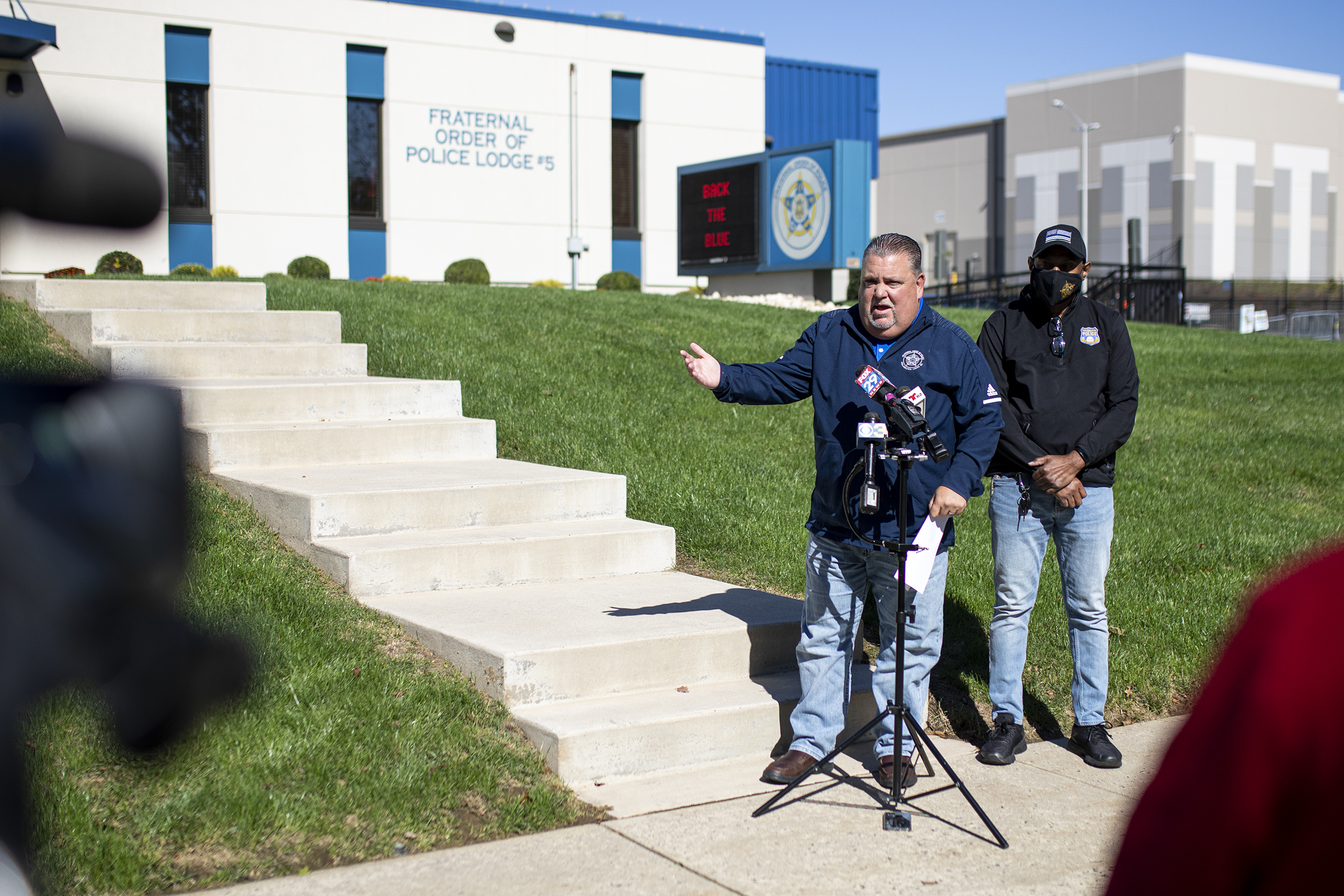
    FOP President Roosevelt Poplar (right) said in a deposition that the union was contacted shortly after Gregory Campbell crashed into the Wakemans’ home.

    “So, this is just like an extra benefit that if you’re a cop that gets locked up, they call your union rep, 911 actually does?” the Wakemans’ lawyer asked.

    “Yeah, that’s the only way we could get notified,” Poplar replied.

    “I mean, look. There’s a lot of unions out there. Is there a 911 call going to the Teamsters if they get locked up to their union rep?” the lawyer asked.

    “I don’t know,” Poplar replied. “I doubt it.”

    Shortly after Campbell’s car bulldozed into the Wakemans’ home, a union representative called the 7C Lounge and told the staff to close for the night — even though closing time was not until 3 a.m. — because an officer had been involved in an accident after drinking there.

    “I was following orders,” 7C Lounge bartender Andrew Reardon said in a deposition.

    A.J. Thomson, the Wakemans’ attorney, alleged in court documents that the bar was closed to “prevent an investigation by Philadelphia Police and for any witnesses to be allowed to disperse prior to interviews. This was a possible homicide investigation that the FOP actively worked to torpedo.”

    The FOP denied those allegations in a response to the Wakemans’ lawsuit, and its attorneys argued that bartenders did not serve Campbell while he was visibly intoxicated and did not cause the crash. The union vehemently denied allegations of negligence, recklessness, or carelessness.

    At Jefferson Torresdale, Campbell conferred with Lodge 5 representatives and refused to take a blood-alcohol concentration (BAC) test.

    Accident investigators obtained a warrant to draw Campbell’s blood, a process that took four hours. His blood was finally drawn and tested at 2:34 a.m., nearly six hours after his arrest.

    Even with that delay, Campbell’s blood-alcohol level was almost three times the 0.08 legal threshold.

    Those with a level between 0.25% and 0.40% are considered in a “stupor,” meaning they may be unable to stand or walk, and could be in an impaired state of consciousness and possibly die, according to Michael J. McCabe Jr., a toxicologist and expert on the effects of alcohol, who filed a report in the Wakeman lawsuit.

    Herron, the liquor license lawyer, said in a case like this, he would expect the State Police Bureau of Liquor Control Enforcement to investigate and issue a citation. An administrative law judge would subsequently hear the case and decide what sanctions to impose.

    The minimum fine for serving a visibly intoxicated person is $1,000.

    “For more serious cases, if someone is injured, the administrative law judge has the discretion to impose larger fines or suspensions,” Herron said. “The problem with this case is that any investigation was sort of thwarted. It never really got to the point where there was an investigation.”

    ‘I should have died’

    Anna Wakeman spent more than two months in a coma.

    She had suffered a collapsed lung, a brain bleed, and a badly bruised heart muscle. Her spleen and her kidney were lacerated. Her sternum, thoracic vertebrae, collarbone, and 13 ribs were broken, along with her left leg.

    She remained hospitalized for several weeks, then needed physical therapy.
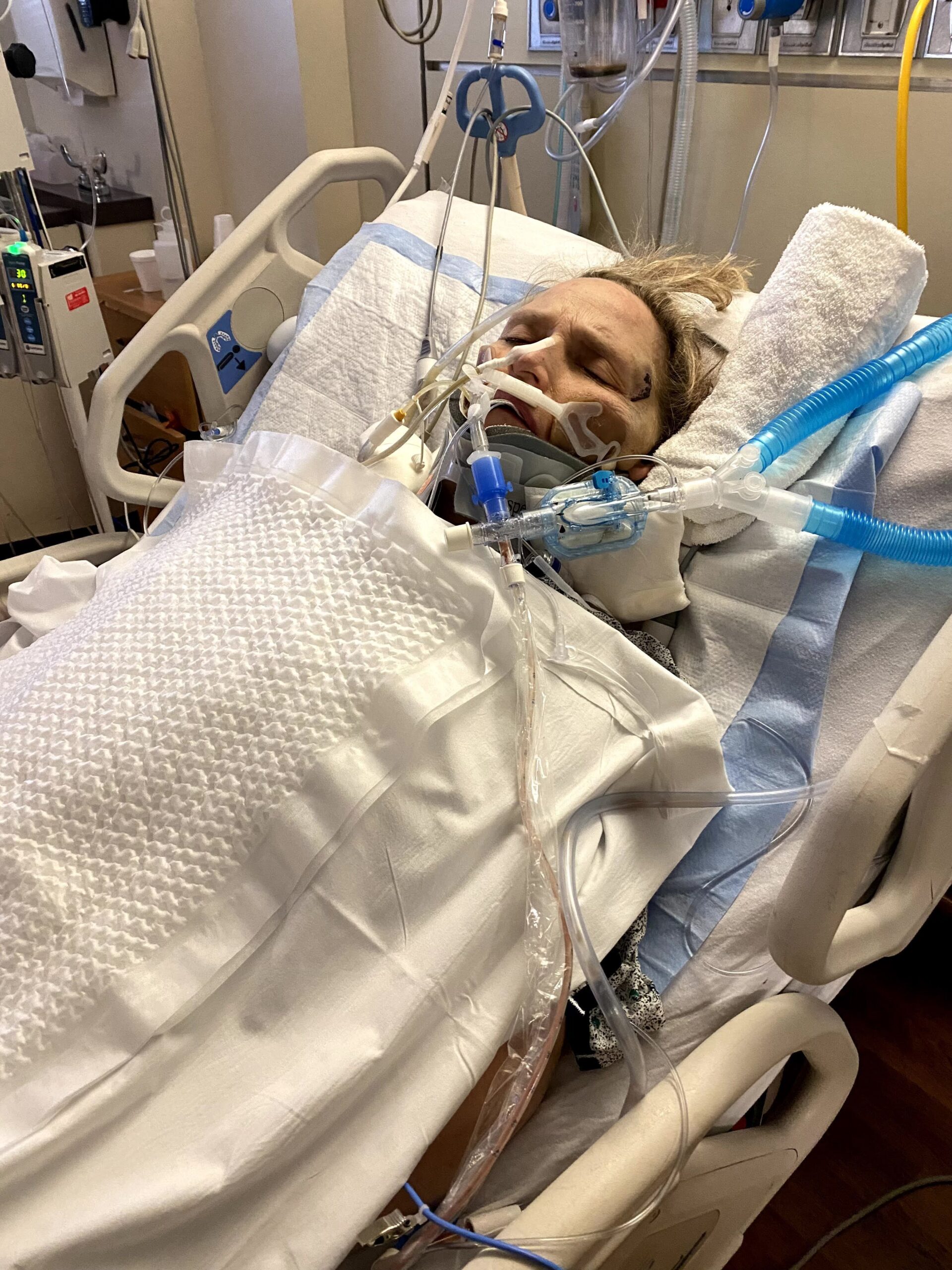
    Anna Wakeman spent more than two months in a coma after she was struck and dragged by Campbell’s car.

    “I should have died,” she said. “The only reason I’m here is God was breathing for me.”

    The Wakemans’ insurance company paid off the mortgage on their severely damaged home. The couple couldn’t stomach the idea of ever setting foot again inside, so they sold the property to a developer and moved to West Virginia.

    They each spoke at Campbell’s sentencing hearing in June 2022.

    “I was normal before this,” Anna said through tears, telling the judge she still suffers from a traumatic brain injury and lives in constant pain.

    Campbell spent about a year in prison, and then was placed on house arrest.

    “The man who did this to me walks free,” Anna Wakeman said in a recent interview “But I don’t have peace. We lost everything. I’m in pain all the time every single day. I’m in prison in my own body.”

    The Wakemans sued the FOP under Pennsylvania’s Dram Shop Law, which holds bars liable if they serve alcohol to a drunk patron and that decision leads to injuries or damages.

    In 2024, the case was settled for an undisclosed amount.

    Records the Home Association filed as a 501(c) nonprofit do not require the kind of specificity that would show how the organization paid the Campbell settlement, or whether any payments were made related to the 2019 Walto crash or the unreported 2021 parking lot incident. An August investigation by The Inquirer found that while the union controls an array of nonprofits — including the Survivors’ Fund, Lodge 5, and the Home Association — its finances are opaque and difficult to track, in part because large amounts of cash move through the organizations.

    Nearly five years after the accident that upended her life, Anna Wakeman still questions why 7C Lounge bartenders didn’t stop serving Campbell, or at least call him a cab, that evening.

    “They let him leave knowing he was going to get behind the wheel,” she said. “These are officers of the law. They should hold the law sacred. There shouldn’t be different rules for them.”

  • State police ID teen killed in Montgomery County crash while allegedly fleeing in stolen vehicle

    State police ID teen killed in Montgomery County crash while allegedly fleeing in stolen vehicle

    Pennsylvania State Police identified the teen who died in a crash while allegedly fleeing from troopers in a stolen vehicle in Montgomery County early Saturday.

    Zachery Carbo, 18, of Norristown, was pronounced dead at the scene of the crash, which happened around 12:10 a.m. on Route 422 eastbound at Route 202 in Upper Merion Township, state police said.

    Two 19-year-old men and one 20-year-old man who were passengers in the Kia Soul, which had been reported stolen in West Norriton Township, were transported to Paoli Hospital for treatment, state police said.

    Troopers had attempted to stop the Kia for traffic violations on eastbound 422 near Lewis Road in Limerick Township.

    The vehicle did not stop and a pursuit ensued, state police said.

    The pursuit ended when the Kia hit a concrete barrier on the right side of the road.

    State police said Wednesday that no charges had been filed and the investigation was continuing.

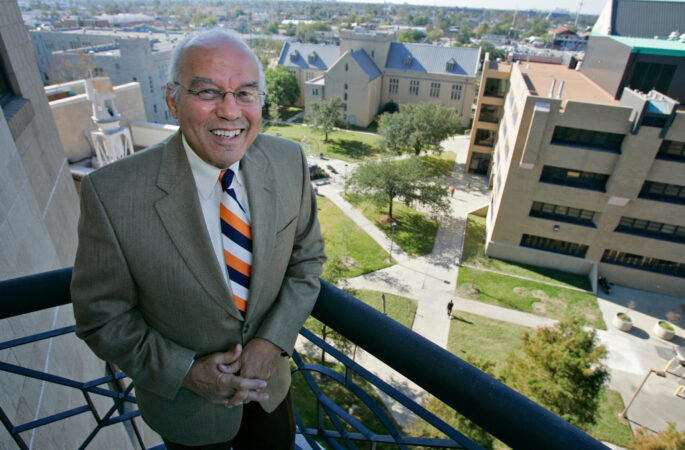
  • Norman C. Francis, civil rights champion and recipient of Presidential Medal of Freedom, dies at 94

    Norman C. Francis, civil rights champion and recipient of Presidential Medal of Freedom, dies at 94

    Norman C. Francis, a civil rights pioneer and champion of education who played a pivotal role in helping rebuild New Orleans after Hurricane Katrina, died Wednesday. He was 94.

    Community members, activists, and leaders across Louisiana celebrated the life and accomplishments of Mr. Francis.

    “The nation is better and richer for his having lived among us,” said Reynold Verret, the president of Xavier University, which confirmed Mr. Francis’ death Wednesday in a statement.

    Mr. Francis took a high-profile role in the state’s response to Katrina, heading the Louisiana Recovery Authority, which was tasked with overseeing the multibillion-dollar rebuilding effort.

    Former New Orleans Mayor Mitch Landrieu said that after Katrina, Mr. Francis “stood in the breach.” Landrieu, who served as lieutenant governor when Katrina decimated New Orleans in 2005, said he often turned to Mr. Francis for advice and counsel — including in “his toughest moments.”

    “The most defining part of his character is that he treats every human being with dignity and respect,” Landrieu posted on X on Wednesday.

    Mr. Francis was well-known for his role as president of Xavier University in New Orleans, the nation’s only predominantly Black Catholic university. Mr. Francis held the position for 47 years beginning in 1968.

    During his tenure, enrollment more than doubled, the endowment mushroomed and the campus expanded. The small school gained a national reputation for preparing Black undergraduates for medical professions and for producing graduates in fields such as biology, chemistry, physics, and pharmacy.

    In the aftermath of Hurricane Katrina, when parts of the school’s campus were submerged under 8 feet of water, Mr. Francis vowed that the college would return.

    Multiple civil rights groups, including the American Civil Liberties Union, honored Mr. Francis as one of the nation’s top college presidents. In 2006, then-President George W. Bush awarded Mr. Francis with the Presidential Medal of Freedom.

    “Dr. Francis was more than an administrator. He was an institution builder, a civil rights champion, and a man of quiet generosity,” Louisiana U.S. Rep. Troy Carter posted on social media. “He believed education was the pathway to justice. He believed lifting one student could lift an entire family.”

    Mr. Francis, the son of a barber, grew up in Lafayette, Louisiana. He received his bachelor’s degree from Xavier in 1952. He became the first Black student at Loyola University’s law school — integrating the school and earning his law degree in 1955.

    He went on to spend two years in the Army, then joined the U.S. Attorney General’s office to help integrate federal agencies.

    Even then, he still couldn’t use the front door to enter many New Orleans hotels, restaurants, or department stores because of his race.

    “Some people say to me, ‘My God! How did you take that?’” Mr. Francis said during a 2008 interview with the Associated Press. “Well, you took that because you had to believe that one day, the words that your parents said to you ‘You’re good enough to be president of the United States’ yes, we held onto that.”

    In 1957, he joined Xavier in the role of Dean of Men, beginning his decades-long career at the university.

    Mr. Francis’ wife, Blanche, died in 2015. The couple had six children and multiple grandchildren.

  • Billionaire Les Wexner says he was ‘duped’ by adviser Jeffrey Epstein, ‘a world-class con man’

    Billionaire Les Wexner says he was ‘duped’ by adviser Jeffrey Epstein, ‘a world-class con man’

    NEW ALBANY, Ohio — The billionaire behind the retail empire that once blanketed shopping malls with names such as Victoria’s Secret and Abercrombie & Fitch told members of Congress on Wednesday that he was “duped by a world-class con man” — close financial adviser Jeffrey Epstein. Les Wexner also denied knowing about the late sex offender’s crimes or participating in Epstein’s abuse of girls and young women.

    “I was naive, foolish, and gullible to put any trust in Jeffrey Epstein. He was a con man. And while I was conned, I have done nothing wrong and have nothing to hide,” the 88-year-old retired founder of L Brands said in a statement to the House Oversight and Reform Committee released before his interview.

    The panel’s Democrats had subpoenaed him after the latest Justice Department release of Epstein-related documents revealed new details about Wexner’s relationship with the well-connected financier. Ranking member Rep. James Comer, a Kentucky Republican, said that Wexner “answered every question asked of him” during the six-hour proceeding and that a video and transcript would be released soon.

    Wexner described himself to the lawmakers as a philanthropist, community builder and grandfather who always strove “to live my life in an ethical manner in line with my moral compass,” according to the statement. He said he was eager “to set the record straight” about his ties with Epstein. Their relation ended bitterly in 2007, after the Wexners discovered he’d been stealing from them.

    As one of Epstein’s most prominent former friends, Wexner has spent years answering for their decades-long association and he sought to use the proceeding to dispel what he called “outrageous untrue statements and hurtful rumor, innuendo, and speculation” that have shadowed him.

    Rep. Robert Garcia, a California Democrat who sat in on Wednesday’s interview, expressed skepticism in comments to reporters gathered near the proceeding.

    “There is no single person that was more involved in providing Jeffrey Epstein with the financial support to commit his crimes than Les Wexner,” he said.

    In response to allegations by the prominent late Epstein victim Virginia Giuffre, who claimed in court documents that Wexner was among men Epstein trafficked her to, Wexner testified to utter devotion to his wife of 33 years, Abigail. He said he’d never once been unfaithful “in any way, shape, or form. Never. Any suggestion to the contrary is absolutely and entirely false.”

    Wexner’s name appears more than 1,000 times in the Epstein files, which does not imply guilt and Wexner has never been charged with any crimes. His spokesperson said the number of mentions is not unexpected given their long-running ties.

    ‘A most loyal friend’

    Epstein first met Leslie Wexner through a business associate around 1986.

    It was an opportune time for Wexner’s finances. The Ohio business owner had grown a single Limited store in Columbus into a suite of 1980s mall staples: The Limited, Limited Express, Lane Bryant and Victoria’s Secret. Bath & Body Works, Abercrombie & Fitch, Lerner, White Barn Candle Co., and Henri Bendel would follow.

    Wexner told lawmakers that it was several years before he turned over management of his vast fortune to Epstein, after the “master manipulator” connived to gain his trust. He gave Epstein power of attorney in 1991, allowing Epstein to make investments and do business deals and to purchase property and help Wexner as he developed New Albany from a small rural city to a thriving upscale Columbus suburb.

    Epstein had “excellent judgment and unusually high standards,” Wexner told Vanity Fair in a 2003 interview, and he was “always a most loyal friend.”

    On Wednesday, the billionaire said he didn’t circulate in Epstein’s social circle, but often heard accounts of his encounters with other wealthy people.

    Epstein “carefully used his acquaintance with important individuals to curate an aura of legitimacy,” Wexner said. He said he visited Epstein’s infamous island only once, stopping for a few hours one morning with his wife and young children while they were cruising on their boat.

    “It is interesting that Mr Wexner has already begun to clarify in his mind that somehow he and Mr. Epstein weren’t even friends,” Garcia told reporters. “We should be very clear that the two were very close, per reporting. They spent a lot of time together.”

    Epstein recalls ‘gang stuff’

    In one of the newly released documents, Epstein sent rough notes to himself about Wexner saying: “never ever, did anything without informing les” and “I would never give him up.” Another document, an apparent draft letter to Wexner, said the two “had ‘gang stuff’ for over 15 years” and were mutually indebted to each other — as Wexner helped make Epstein rich and Epstein helped make Wexner richer.

    Wexner spokesperson Tom Davies said Wexner never received the letter, characterizing it as fitting “a pattern of untrue, outlandish, and delusional statements made by Epstein in desperate attempts to perpetuate his lies and justify his misconduct.”

    Wexner told the congressional representatives that Epstein “lived a double life,” presenting himself to his wealthy clients as a financial guru with steady girlfriends while “most carefully and fully” hiding his misdeeds with underage girls. “He knew that I never would have tolerated his horrible behavior. Not any of it,” he said.

    Exploiting a sexy brand

    Some accusers said Epstein touted his ties to Wexner and claimed that he could help get them jobs modeling for the Victoria’s Secret catalog.

    One woman, an aspiring actor and model, told the FBI that Epstein said he was best friends with the longtime Victoria’s Secret owner and that she’d have to learn to be comfortable in her underwear and not be a prude, according to recently released grand jury testimony. Another woman said she reported Epstein to police in 1997 after he groped her during what she thought was a modeling interview for the Victoria’s Secret catalog. After Epstein’s 2019 arrest, Wexner’s lawyers told investigators that the business owner had heard a rumor that Epstein might be holding himself out as connected to Victoria’s Secret, prosecutors wrote in a recently disclosed memorandum summarizing the probe. When Wexner asked Epstein about it, Epstein denied doing so, the lawyers said, according to the memo.

    Wexner did not address the specific issue in his statement Wednesday, but repeatedly lamented being deceived by Epstein — “an abuser, a crook, and a liar.” L Brands sold off Victoria’s Secret in 2020, in one of Wexner’s final acts as chair.

    A relationship unravels

    Wexner did not publicly reveal until after Epstein’s arrest on federal sex trafficking charges in July 2019 that he had severed their relationship. In a Wexner Foundation letter that August, he said that happened in 2007. But the Justice Department’s newly released records show the two were in touch after that.

    Wexner emailed Epstein on June 26, 2008, after a plea deal was announced that would require him to serve 18 months in a Florida jail on a state charge of soliciting prostitution from a minor in order to avoid federal prosecution. He wound up serving 13 months.

    “Abigail told me the result … all I can say is I feel sorry. You violated your own number 1 rule … always be careful,” Wexner wrote. Epstein replied: “no excuse.”

    Davies said the 2007 date Wexner cited in 2019 applied to firing Epstein as financial adviser, revoking his power of attorney, and removing his name from Wexner’s bank accounts.

    Wexner also said in the 2019 letter that Epstein had misappropriated “vast sums” of his and his family’s fortune while overseeing his finances. An investigative memo from the latest document release says that Wexner’s attorneys told investigators in 2008 that Epstein had repaid him $100 million. Wexner said in Wednesday’s statement that Epstein returned “a substantial amount” of the undisclosed total.

    Garcia said that congressional investigators have identified more than $1 billion that was “either transferred, provided in stocks or given directly” by Wexner to Epstein — though Wexner “appears to be unaware” of much of it.

    Continuing fallout for Wexner

    On Wednesday, Wexner testified that he had never seen Epstein with any young girls and acknowledged the “unfathomable” pain he inflicted, even as discoveries in the Epstein files have placed new pressure on him.

    One survivor, Maria Farmer, said a redacted FBI report contained in the document release vindicated her longstanding claim that she filed one of the earliest complaints against Epstein while she was under his employ in 1996 working on an art project at the Wexners’ estate.

    Meanwhile, survivors of a sweeping sexual abuse scandal at the Ohio State University are citing Wexner’s association with Epstein to try to get his name removed from a campus football complex and university nurses also want his name scrubbed from the Wexner Medical Center.

  • Mark Zuckerberg quizzed on kids’ Instagram use in social media trial

    Mark Zuckerberg quizzed on kids’ Instagram use in social media trial

    LOS ANGELES — Mark Zuckerberg and opposing lawyers dueled in a Los Angeles courtroom on Wednesday, where the Meta CEO answered questions about young people’s use of Instagram, his congressional testimony and internal advice he’s received about being “authentic” and not “robotic.”

    Zuckerberg’s testimony is part of an unprecedented social media trial that questions whether Meta’s platforms deliberately addict and harm children.

    As of early afternoon, Zuckerberg has not directly answered the central question of the case: whether Instagram is addictive. The plaintiff’s attorney, Mark Lanier, asked if people tend to use something more if it’s addictive.

    “I’m not sure what to say to that,” Zuckerberg said. “I don’t think that applies here.”

    Attorneys representing the plaintiff, a now 20-year-old woman identified by the initials KGM, claim her early use of social media addicted her to the technology and exacerbated depression and suicidal thoughts. Meta Platforms and Google’s YouTube are the two remaining defendants in the case, which TikTok and Snap have settled.

    Beginning his questioning, Lanier laid out three options of what people can do regarding vulnerable people: help them, ignore them, or “prey upon them and use them for our own ends.” Zuckerberg said he agrees the last option is not what a reasonable company should do, saying, “I think a reasonable company should try to help the people that use its services.”

    When he was asked about his compensation, Zuckerberg said he has pledged to give “almost all” of his money to charity, focusing on scientific research. Lanier asked him how much money he has pledged to victims impacted by social media, to which Zuckerberg replied, “I disagree with the characterization of your question.”

    Lanier questioned the Meta CEO extensively about a comment he made during a past congressional hearing, where he said Instagram employees are not given goals to increase amount of time people spent on the platform.

    Lanier presented internal documents that seemed to contradict that statement. Zuckerberg replied that they previously had goals associated with time, but said he and the company made the conscious decision to move away from those goals, focusing instead on utility. He said he believes in the “basic assumption” that “if something is valuable, people will use it more because it’s useful to them.”

    Lanier also asked Zuckerberg about what he characterized as extensive media training, including for testimonies like the one he was giving in court. Lanier pointed to an internal document about feedback on Zuckerberg’s tone of voice on his own social media, imploring him to come off as “authentic, direct, human, insightful and real,” and instructing him to “not try hard, fake, robotic, corporate or cheesy” in his communication.

    Zuckerberg pushed back against the idea that he’s been coached on how to respond to questions or present himself, saying those offering the advice were “just giving feedback.”

    Regarding his media appearances and public speaking, Zuckerberg said, “I think I’m actually well known to be sort of bad at this.”

    The Meta CEO has long been mocked online for appearing robotic and, when he was younger, nervous when speaking publicly. In 2010, during an interview with renowned tech journalists Kara Swisher and Walt Mossberg, he was sweating so profusely that Swisher asked him if he wanted to “take off the hoodie” that was his uniform at the time.

    Lanier spent a considerable stretch of his limited time with Zuckerberg asking about the company’s age verification policies.

    “I don’t see why this is so complicated,” Zuckerberg said after a lengthy back-and-forth, reiterating that the company’s policy restricts users under the age of 13 and that they work to detect users who have lied about their ages to bypass restrictions.

    Zuckerberg mostly stuck to his talking points, referencing his goal of building a platform that is valuable to users and, on multiple occasions, saying he disagreed with Lanier’s “characterization” of his questions or of Zuckerberg’s own comments.

    Zuckerberg has testified in other trials and answered questions from Congress about youth safety on Meta’s platforms. During his 2024 congressional testimony, he apologized to families whose lives had been upended by tragedies they believed were caused by social media. But while he told parents he was “sorry for everything you have all been through,” he stopped short of taking direct responsibility for it. This trial marks the first time Zuckerberg stands before a jury. Once again, bereaved parents are sitting in the courtroom audience.

    The case, along with two others, has been selected as a bellwether trial, meaning its outcome could impact how thousands of similar lawsuits against social media companies are likely to play out.

    A Meta spokesperson said the company strongly disagrees with the allegations in the lawsuit and said they are “confident the evidence will show our longstanding commitment to supporting young people.”

    One of Meta’s attorneys, Paul Schmidt, said in his opening statement that the company is not disputing that KGM experienced mental health struggles, but rather disputing that Instagram played a substantial factor in those struggles. He pointed to medical records that showed a turbulent home life, and both he and an attorney representing YouTube argue she turned to their platforms as a coping mechanism or a means of escaping her mental health struggles.

    Zuckerberg’s testimony comes a week after that of Adam Mosseri, the head of Meta’s Instagram, who said in the courtroom that he disagrees with the idea that people can be clinically addicted to social media platforms. Mosseri maintained that Instagram works hard to protect young people using the service, and said it’s “not good for the company, over the long run, to make decisions that profit for us but are poor for people’s well-being.”

    Much of Mosseri’s questioning from the plaintiff’s lawyer centered on cosmetic filters on Instagram that changed people’s appearance — a topic that Lanier is sure to revisit with Zuckerberg. He is also expected to face questions about Instagram’s algorithm, the infinite nature of Meta’s feeds and other features the plaintiffs argue are designed to get users hooked.

    Meta is also facing a separate trial in New Mexico that began last week.

  • Judge sentences Bucks man who killed his mother and hid body beneath drugs and money to decades in prison

    Judge sentences Bucks man who killed his mother and hid body beneath drugs and money to decades in prison

    Northampton police went to the first-floor condominium on Beacon Hill Drive for a welfare check on Dolores Ingram, an 82-year-old grandmother of three known for gifting her sewn and crocheted creations to family, friends, and those in need.

    Inside, officers found the living room in disarray, a heap of household items stacked haphazardly. They moved the things aside — a flipped-over futon, glass plates, a shattered aquarium that once housed two lizards — until they uncovered a bare foot. It was cold to the touch.

    The body was that of Dolores Ingram, who authorities say died from blunt-force trauma, asphyxiation, and lacerations inflicted by her son, William Ingram, before he fled in her car.

    On Wednesday, nearly two years later, a Bucks County judge sentenced William Ingram, 51, to 30 to 64 years in prison for killing her inside the home they shared.

    Ingram pleaded guilty in December to third-degree murder in the June 2024 killing of his mother, as well as abuse of a corpse and related crimes. He also pleaded guilty to a string of drug offenses, including possession with intent to distribute.

    Investigators said that as they continued searching the pile atop Dolores Ingram that day, they found approximately six pounds of marijuana and more than $53,000 in cash — proceeds, prosecutors said, from a marijuana and psilocybin distribution business that William Ingram ran from the home.

    They also found the family’s pet reptiles dead on the floor.

    “The money you threw on top of her was more than most people make in a year in this country,” said Bucks County Court Judge Stephen Corr, adding that it illustrated Ingram’s “disrespect” for his mother.

    In court on Wednesday, Dolores Ingram’s two daughters described their mother as “generous” and “kind, a “good example of how to treat people.” She loved yard sales and thrift stores, they said. She also had “lifelong anxiety,” including over her son, who suffered from mental illness, they said.

    Authorities initially charged Ingram with first-degree murder, which carries a potential life sentence. In exchange for a guilty plea to the lesser charge of third-degree murder, Bucks County prosecutors agreed to a sentence of 26 to 54 years in state prison.

    Corr used his discretion when he sentenced Ingram to four to 10 years in prison for the drug crimes. He also sentenced Ingram to consecutive terms, calling the move “necessary” given the circumstances of the crimes and the need to “protect the community” from Ingram.

    Defense attorney Riley Downs argued that Ingram has been diagnosed with schizoaffective disorder, which went untreated in the days before the slaying.

    At the sentencing hearing, Downs asked Ingram if he missed his mother. “Yeah,” Ingram replied. He added: “I didn’t mean for this to happen. It doesn’t even seem real to me.”

    Ingram denied hitting his mother and said he did not remember piling things on top of her. However, in an affidavit of probable cause for Ingram’s arrest, Northampton Township police said he confessed to hitting his mother in the head during an argument, then throwing “all this stuff” on top of her body.

    Then, police said, Ingram stole his mother’s Honda Civic and drove to Washington. There, authorities said, he assaulted a local police officer while naked and was taken into custody about a day after the killing.

    Downs asked the judge to sentence Ingram to 26 years, arguing that he would be 75 years old at his first chance at parole — an amount of time he called “significant” for a man Ingram’s age.

    Prosecutor Monica Furber pressed for consecutive sentences. While she acknowledged Ingram’s mental illness, she countered that it “did not stop him in any way from running a criminal enterprise” or covering his mother’s body “in the drugs and proceeds.”

    Before announcing the sentence, Corr said Ingram had “turned” on “the one person who was trying to help him.”

    He added: “I hope you have an opportunity to grow while you spend what is likely the rest of your life in prison.”

  • Philadelphia has spent $59 million on its snow response so far. Here’s how it breaks down.

    Philadelphia has spent $59 million on its snow response so far. Here’s how it breaks down.

    With the arrival of above-freezing temperatures, Philadelphia is declaring an end to an emergency response that lasted 26 days, closing the chapter on an all-hands-on-deck mobilization of various city departments that navigated the biggest snowfall in a decade and the persistent cold snap that followed.

    The city’s “enhanced code blue” response began the Friday before a winter storm that blanketed Philadelphia with 9.3 inches of snow and sleet on Jan. 25. The designation allowed the city to deploy support services across departments for some of the city’s most vulnerable, living on the streets.

    A preliminary estimate by the city puts the cost of the storm response at about $59 million, which officials said reflects the intensity of the storm and conditions that followed.

    “A tremendous City workforce, outreach teams, first responders, nonprofit partners, and community stakeholders came together without hesitation,” Mayor Cherelle L. Parker said in a statement Tuesday. “Because of their coordination, compassion, and commitment, lives were protected during some of the harshest conditions we have faced this winter.”

    Amid a bitter cold that hampered snow-removal efforts, the city embarked on a cleanup operation that lasted more than two weeks and combined heavy machinery and old-fashioned manual digging.

    Here are some key numbers highlighting how various city departments mobilized and the costs they accrued.

    Heavy machinery and dump trucks collecting piles of snow from Germantown and Thompson Street, Philadelphia, Wednesday, Jan. 28, 2026.

    $46,021,516 in snow removal

    The city crafted its $4.1 million snow operations budget for fiscal year 2026 using a rolling-year average of prior costs.

    But the storm brought about a slew of unanticipated expenses and challenges, including snow removal, ice control, and other emergency operations.

    The city looked to contractors to bolster its workforce as it launched a massive effort to treat and plow streets.

    Contractor plowing and salting operations during the storm cost $13.9 million, while the post-storm contractor cleaning and lifting operations cost $31.8 million. The remainder of the expenses came from snow-related operations across departments, such as the activation of warming centers.

    Part of what made the storm so costly was the uncooperative temperatures.

    Amid complaints from residents over what was perceived as a slow cleanup, the city noted that the below-freezing temperatures created increasingly tightly packed ice that had nowhere to go.

    The city even brought in a snow melter from Chicago, which eliminated 4.7 million pounds of snow in the first two days after the snowfall. The costs of melting, which is considered a specialized service, ran more than $139,000.

    After the initial snow removal, the city moved to what it called its lifting operations.

    Snowplows, compactors, front-end loaders, and backhoes took part in an intricate operation where snow was placed in dumpsters before being shipped off to more than 30 dumping sites.

    The Philadelphia Streets Department mobilized up to 300 pieces of equipment on any given day in an effort to leave no street untreated.

    The city went through 15,000 tons of salt through the three-week cleanup amid other challenges, such as an icy Delaware River that temporarily blocked additional salt orders, and the rising cost of salt post-storm.

    The cost of salt was more than $1.2 million.

    Emily Street is still covered in snow near Furness High School (top left) on Wednesday, Jan. 28, 2026 in South Philadelphia.

    18,340 ramps cleared

    The massive cleanup had the city looking at creative ways to boost the number of workers clearing streets.

    The streets department tapped participants in its Future Track Program for snow-removal efforts early on. These are trainees, typically at-risk young adults, who are not enrolled in higher education and are unemployed. They get job experience, as well as other services, and they help in beautification projects.

    The trainees cleared hundreds of ADA ramps across Philadelphia.

    But more than a week after the storm, the city was still being flooded with complaints about inaccessible crosswalks and SEPTA stops piled with ice.

    That’s when officials tapped into a city program that pays people the same day for their work, deploying 300 people to help chip and sweep away the hardened ice with shovels and brooms.

    The city assembled a more than 1,000-person workforce for cleanup efforts this way, deploying a mix of city employees, contractors, and participants from the same-day pay program.

    In all, the city said, the crews worked nearly 2,300 intersections, clearing 18,340 ADA ramps and about 2,800 SEPTA stops.

    The use of contractors, however, was met with pushback from American Federation of State, County and Municipal Employees District Council 33, the city’s largest municipal workers union, which said the decision was made without consulting the union.

    “Our members are the trained, dedicated workforce responsible for this work, and it is disheartening to see the administration move forward without even a discussion on how best to manage these challenges,” DC 33 president Greg Boulware said in a statement in early February.

    (function() { var l = function() { new pym.Parent( ‘phillysnowcosts__graphic’, ‘https://media.inquirer.com/storage/inquirer/ai2html/phillysnowcosts/index.html’); }; if(typeof(pym) === ‘undefined’) { var h = document.getElementsByTagName(‘head’)[0], s = document.createElement(‘script’); s.type = ‘text/javascript’; s.src = ‘https://pym.nprapps.org/pym.v1.min.js’; s.onload = l; h.appendChild(s); } else { l(); } })();

    22 warming centers

    The cold snap presented another life-or-death challenge for the city: how to get people living on the streets indoors.

    Between Jan. 20 and Feb. 14, homeless outreach teams worked nonstop distributing more than 2,800 warming kits, 4,000 fleece blankets, 700 cases of water, and 35,000 food items while trying to get people to take a shelter bed or go to one of the city’s 22 so-called warming centers.

    The code blue designation allowed the city to activate some libraries and recreation centers as hubs for people looking to escape the cold.

    The warming center operation was seen as lifesaving, largely supported by library staff. Between Jan. 19 and Feb. 11, New York City recorded at least 18 cold-related deaths; Philadelphia had three over a similar time frame.

    Still, after 20 days of 12-hour operations, staff at the daytime centers described a lack of support from the city when it came to dealing with people who had medically complex issues requiring behavioral health support and wound care. (One library staffer said more city-assigned support staff showed up at the daytime centers after The Inquirer published a report about workers’ concerns.)

    Philadelphia officials said more than 100 people from more than 20 city and partner organizations helped support the warming centers.

    Nighttime warming centers had about 4,400 overnight guests, according to the city.

    Mount Market Street at 7th Street, Center City Philadelphia, Tuesday, Jan. 27, 2026. Large pile of snow on northeast corner of Market and 7th.

    $50 million from general fund

    Because snow operations exceeded the initial amount allotted in the budget, the city plans to transfer $50 million from its general fund to its transportation fund.

    Even so, the city said its general fund remains higher than projected in its five-year plan because of a larger-than-anticipated general fund balance in the previous fiscal year.

  • Chester County man pleads guilty to killing a 9-month-old baby

    Chester County man pleads guilty to killing a 9-month-old baby

    A Chester County man pleaded guilty to murder and related crimes earlier this month after he punched a 9-month-old infant and did not seek medical care for the child, prosecutors said Wednesday.

    Enrique Lopez-Gomez, 32, of West Grove, pleaded guilty to third-degree murder and endangering the welfare of a child on Feb. 11, according to prosecutors.

    He remains incarcerated in the Chester County Prison and awaits sentencing.

    Announcing the charges, Chester County District Attorney Christopher de Barrena-Sarobe called the crime “unthinkable.”

    Prosecutors say Lopez-Gomez was the child’s caregiver at the time of the 2024 incident, when he fell on the infant at a residence in Kennett Square. As the baby began to cry in pain, Lopez-Gomez punched the child in the abdomen, prosecutors said.

    He did not seek help or tell anyone about the child’s injuries, according to prosecutors, nor did he offer medical care as the child’s condition worsened that evening.

    First responders who were later called to the scene removed the baby from the home, and the child was pronounced dead at Nemours/A.I. DuPont Hospital for Children.

    Medical examiners determined that the child had died from blunt force trauma, leading to an intestinal rupture and soft tissue bleeding, prosecutors said.

    The baby had also suffered large bruises around the abdomen.

    Prosecutors have yet to set a date for Lopez-Gomez’s sentencing. He is being held on $10 million bail.

  • Dozens more drug, gun cases tied to cops who defenders say ‘lied’ are thrown out. Some sent people to prison for years.

    Dozens more drug, gun cases tied to cops who defenders say ‘lied’ are thrown out. Some sent people to prison for years.

    More than 40 drug and gun convictions were vacated Wednesday, the latest batch in what could grow to 1,000 cases tied to three narcotics officers who prosecutors say repeatedly gave false testimony in court.

    Common Pleas Court Judge Rose Marie DeFino-Nastasi dismissed 47 cases — most involving defendants jailed because of their convictions — after prosecutors conceded that the testimony of three officers on the Philadelphia Police Department’s Narcotics Strike Force could no longer be trusted.

    In December, the district attorney’s office said that Officers Ricardo Rosa, Eugene Roher, and Jeffrey Holden were found to have repeatedly given false statements in drug-related cases after attorneys with the Defender Association of Philadelphia uncovered video evidence that contradicted their accounts.

    The defenders said the officers regularly watched live surveillance footage to monitor suspects in drug investigations, then did not disclose it to prosecutors or defense attorneys in court. The video footage showed they also testified to things that did not happen or that they could not have seen from where they were positioned, according to court filings.

    Prosecutors later said that they could no longer vouch for the officers’ credibility and are expected to dismiss scores of cases built on their testimony in the coming months.

    Nearly all the defendants at the center of the cases dismissed Wednesday were in custody, including several serving years in prison tied to their drug convictions.

    Among them is Hamid Yillah, 34, serving four to nine years in state prison, plus two years’ probation, on gun and drug charges based on the testimony of Roher and Rosa, prosecutors said.

    And Juan Lopez, 38, serving five to 10 years in prison on drug possession and conspiracy charges.

    DeFino-Nastasi vacated their convictions and sentences.

    Not everyone whose conviction was overturned will walk free. Some are also serving time for unrelated serious crimes, including murder and aggravated assault.

    But many without additional arrests could be released as a result of Wednesday’s ruling.

    The dismissals follow more than 130 convictions that were thrown out in December after prosecutors and defenders identified more than 900 cases built almost entirely on the officers’ word. Approximately 200 cases have been resolved so far.

    The officers at the center of the case remain on active duty, but have been temporarily reassigned from narcotics amid an ongoing internal affairs investigation, said police spokesperson Sgt. Eric Gripp.

    That investigation, which began in early 2024, remains incomplete because the district attorney’s office has not provided the department with the information necessary to complete it, he said.

    The district attorney’s office previously said it provided internal affairs with details of the officers’ false statements last March. But Gripp said the records and evidence offered did not appear to show wrongdoing.

    (Paula Sen, of the Defender Association’s Police Accountability Unit, said she and her colleagues have also provided internal affairs with a few dozen cases where the officers’ testimony did not match surveillance footage.)

    Since the first batch of cases was thrown out in December, Gripp said, the department has followed up with the district attorney’s office for more information about the alleged wrongdoing, including the nine cases identified in court records in which the officers were said to have given false statements.

    “To date, we have not been provided with those cases,” he said.

    Gripp said that some of the cases discharged Wednesday involved dangerous drug dealers carrying weapons, and that narcotics officers risk their lives to make arrests.

    “This work matters, and repeated dismissals without providing the department the information necessary to review and address the concerns does not advance officer accountability or public safety,” he said. “We continue to expect good faith cooperation from all partners in the criminal justice system. We remain ready to act immediately upon receipt of any substantiated information.”

    The district attorney’s office did not immediately respond to a request for comment.

    Prosecutors have stopped short of accusing the officers of lying, but said “there’s enough of a pattern of inconsistencies across testimony that we can’t rely on them as critical witnesses in court.”

    Michael Mellon and Paula Sen work in the Police Accountability Unit for the Defender Association.

    Sen and Michael Mellon, of the defenders’ Police Accountability Unit, disagreed, and said the officers “straight up lied.”

    Sen and Mellon said they first spotted a pattern of testimony discrepancies in 2019 while reviewing surveillance footage that conflicted with statements Rosa had made in drug cases. Over time, they said, they continued scrutinizing his narcotics squad and identified similar issues with testimony from Holden and Roher.

    According to the defenders, the officers relied on the city’s surveillance camera network to watch suspected drug activity in real time but did not disclose that investigative method — withholding evidence that should have been turned over to the defense.

    In court, Mellon said, the officers denied using the cameras and frequently testified that they personally observed hand-to-hand drug transactions. Video later showed those exchanges either did not occur or would have been impossible for the officers to see because the suspects were out of view.

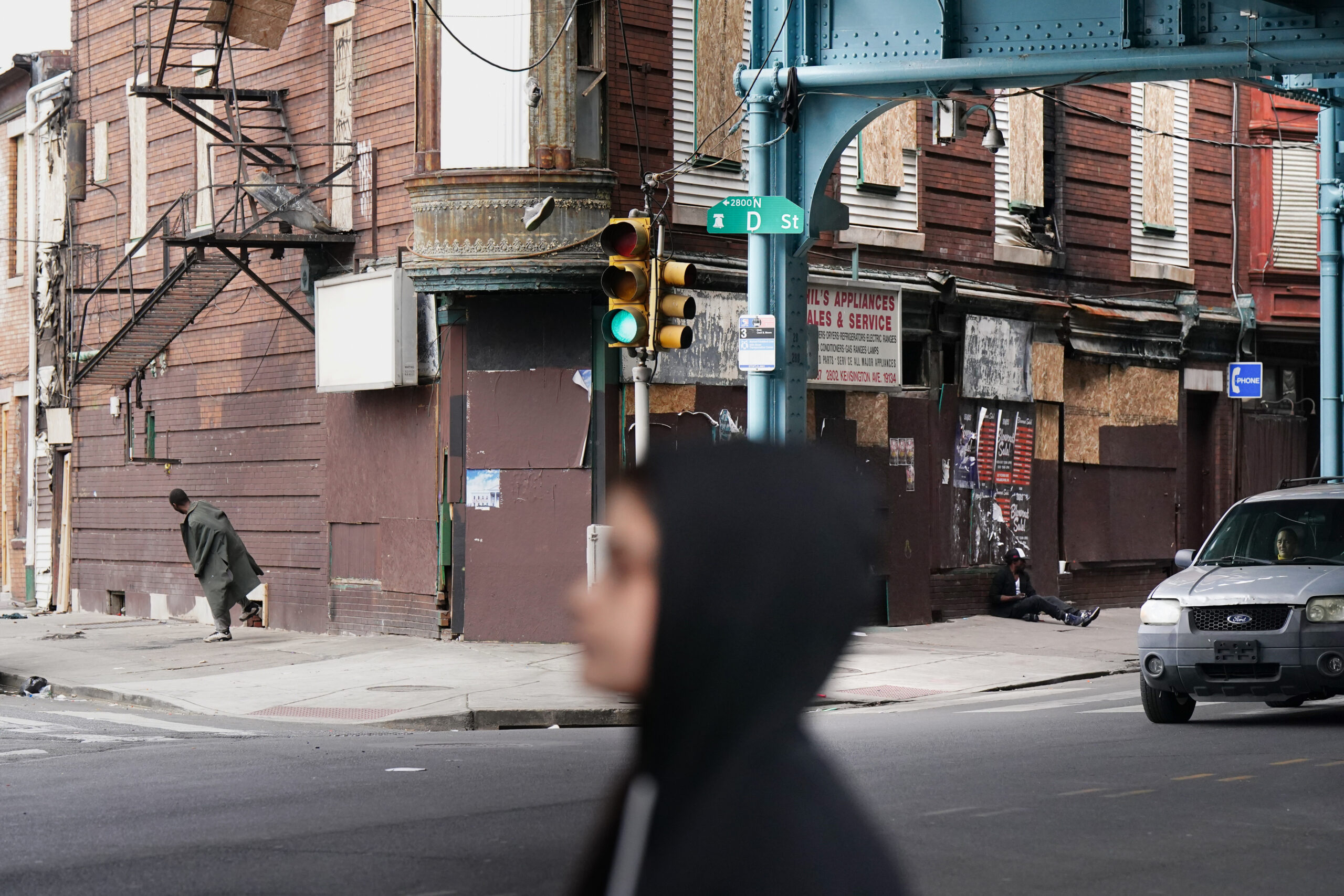
    A video camera used by Philadelphia police is positioned at the corner of D Street and Kensington Avenue.

    Sen said her office sent letters to all of the defendants whose cases were being reviewed to let them know they might be eligible for relief.

    Still, she said, the convictions often resulted in years of peoples’ lives spent incarcerated and on court supervision — time they cannot get back.

    “We are not talking about big drug busts. We are talking about the lowest of the low cases, hand-to-hand drug sales … within a quarter of a mile radius of Kensington,” she said. “That’s what makes this especially egregious.”

  • Judge gives Trump administration a deadline to restore President’s House exhibits

    Judge gives Trump administration a deadline to restore President’s House exhibits

    President Donald Trump’s administration now has a hard deadline to restore slavery exhibits to the President’s House.

    The Department of Interior and National Park Service must restore the President’s House to its condition before the exhibits were removed by 5 p.m. Friday, according to a new order from District Judge Cynthia M. Rufe. In a blistering 40-page opinion Monday, the judge had ordered the exhibits to be restored “immediately,” but without a specific time frame.

    Rufe wrote that the deadline follows the agencies’ “failure to comply” with the injunction’s instruction to take action “forthwith,” which is often defined in law to mean as soon as possible or within 24 hours.

    While the federal government appealed the injunction to the Third Circuit Court of Appeals, the judge noted, the Trump administration did not ask for a stay.

    “Absent a stay granted by this Court or the Third Circuit, this Court must enforce its own order,” Rufe wrote.

    The U.S. Attorney’s Office for the Eastern District of Pennsylvania did not respond to a request for comment. The city declined to comment.

    The National Park Service last month removed exhibits telling the story of the nine enslaved people who lived in George Washington’s Philadelphia home. The city sued the federal government in turn, and following a tense hearing and the judge’s inspection of the exhibits and site, secured an injunction on Monday that required the federal agencies to restore the interpretive panels.

    National Park Service staff were at the President’s House site on Wednesday morning to hose down the walls, which are covered with protest signs in lieu of the exhibits, and place barricades around them.

    The National Park Service did not respond to questions about the activity.

    A spokesperson for the White House, Taylor Rogers, said in a statement Wednesday that the lawsuit brought by Philadelphia was “premature” because the removal of the exhibits from the President’s House and other national parks is not final.

    “The Department of the Interior is engaged in an ongoing review of our nation’s American history exhibits in accordance with the President’s executive order to eliminate corrosive ideology, restore sanity, and reinstate the truth,” Rogers said.

    Staff writer Fallon Roth contributed to this article.