Category: News

Latest breaking news and updates

  • Trump is ending protected immigration status for Somalis, long a target of his anti-immigrant barbs

    Trump is ending protected immigration status for Somalis, long a target of his anti-immigrant barbs

    Donald Trump’s administration said Tuesday it will end temporary protected status for immigrants from Somalia, the latest move in the president’s mass deportation agenda.

    The move affects hundreds of people who are a small subset of immigrants with TPS protections in the United States. It comes during Trump’s immigration crackdown in Minneapolis, where many native Somalis live and where street protests have intensified since a U.S. Immigration and Customs Enforcement agent killed a U.S citizen who was demonstrating against federal presence in the city.

    The Department of Homeland Security said in a statement that affected Somalis must leave the U.S. by March 17, when existing protections, last extended by former President Joe Biden, will expire.

    “Temporary means temporary,” said Homeland Security Secretary Kristi Noem, adding that the decision puts “Americans first.”

    The Congressional Research Service last spring said the Somali TPS population was 705 out of nearly 1.3 million TPS immigrants. But Trump has rolled back protections across multiple countries in his second presidency.

    Congress established the Temporary Protected Status program in 1990 to help foreign nationals attempting to leave unstable, threatening conditions in their home countries. It allows the executive branch to designate a country so that its citizens are eligible to enter the U.S. and receive status.

    Somalia first received the designation under President George H.W. Bush amid a civil war in 1991. The status has been extended for decades, most recently by Biden in July 2024.

    Noem insisted circumstances in Somalia “have improved to the point that it no longer meets the law’s requirement for Temporary Protected Status.”

    Located in the horn of Africa, Somalia is one of the world’s poorest nations and has for decades been beset by chronic strife exacerbated by multiple natural disasters, including severe droughts.

    The 2025 congressional report stated that Somalis had received more than two dozen extensions because of perpetual “insecurity and ongoing armed conflict that present serious threats to the safety of returnees.”

    Trump has targeted Somali immigrants with racist rhetoric and accused those in Minneapolis of massively defrauding federal programs.

    In December, Trump said he did not want Somalis in the U.S., saying they “come from hell” and “contribute nothing.” He made no distinction between citizens and non-citizens or offered any opinion on immigration status.

    He has had especially harsh words for Rep. Ilhan Omar, a Minnesota Democrat who emigrated from Somalia as a child. Trump has repeatedly suggested she should be deported, despite her being a U.S. citizen, and in his rant last fall he called her “garbage.”

    Omar, who has been an outspoken critic of the ICE deployment in Minneapolis, has called Trump’s “obsession” with her and Somali-Americans “creepy and unhealthy.”

  • Trump visits a Ford pickup truck factory, aiming to promote his efforts to boost manufacturing

    Trump visits a Ford pickup truck factory, aiming to promote his efforts to boost manufacturing

    DETROIT — President Donald Trump offered a full-throated defense of his sweeping tariffs on Tuesday, traveling to swing-state Michigan to push the case that he’s boosted domestic manufacturing in hopes of countering fears about a weakening job market and still-rising prices that have squeezed American pocketbooks.

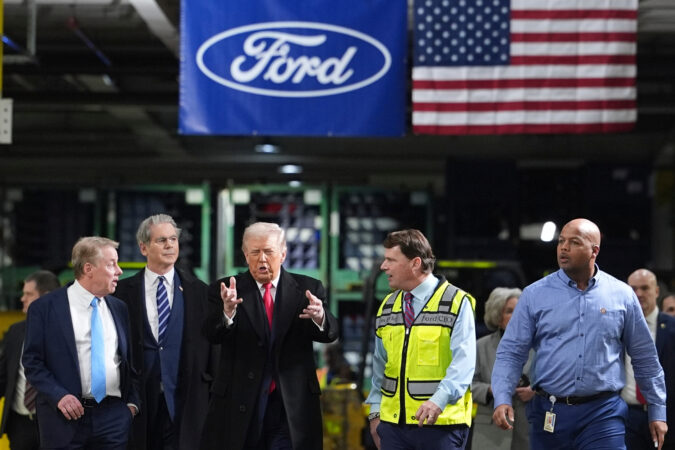
    Trump visited the factory floor of a Ford plant in Dearborn, where he viewed F-150s — the bestselling domestic vehicle in the U.S. — at various stages of production. That included seeing how gas and hybrid models were built, as well as the all-gas Raptor model, designed for off-road use.

    The president chatted with assembly line workers as well as the automaker’s executive chairman, Bill Ford, a descendent of Henry Ford. “All U.S. automakers are doing great,” Trump said.

    He later gave a speech to the Detroit Economic Club that was meant to be focused on his economic policies but veered heavily to other topics as well. Those included falsely claiming to have won Michigan three times (he lost the state in 2020 to Joe Biden) and recalling the snakes that felled workers during U.S. efforts to build the Panama Canal more than a century ago.

    “The results are in, and the Trump economic boom has officially begun,” the president said at the MotorCity Casino. He argued that “one of the biggest reasons for this unbelievable success has been our historic use of tariffs.”

    Trump insists tariffs haven’t increased costs

    The president said that tariffs were “overwhelmingly” paid by “foreign nations and middlemen” — even as economists say steep import taxes are simply passed from overseas manufactures to U.S. consumers, helping exacerbate fears about the rising cost of living.

    “It’s tariffs that are making money for Michigan and the entire country,” the president said, insisting that “every prediction the critics made about our tariff policy has failed to materialize.”

    But voters remain worried about the state of the economy. Tuesday’s visit — his third trip to a swing state since last month to talk about his economic policies — followed a poor showing for Republicans in November’s off-year elections in Virginia, New Jersey, and elsewhere amid persistent concerns about kitchen table issues.

    The White House pledged after Election Day that Trump would hit the road more frequently to talk directly to the public about what he is doing to ease their financial fears. The president tried to drive that home on Tuesday, but only amid lengthy asides.

    “I go off teleprompter about 80% of the time, but isn’t it nice to have a president who can go off teleprompter?” he said, before mocking Biden, suggesting his predecessor gave short speeches and doing an impression that included a dramatic clearing of his throat.

    Trump promised to unveil a new “health care affordability framework” later this week that he promised would lower the cost of care. He also pledged to soon offer more plans to help with affordability nationwide — even as he blamed Democrats for hyping up the issue.

    “One of our top priorities of this mission is promoting greater affordability. Now, that’s a word used by the Democrats,” Trump said. “They’re the ones who caused the problem.”

    Trump eased some auto tariffs

    Despite cheering tariffs, Trump has actually backed off the import taxes when it comes to the automobile sector. The president originally announced 25% tariffs on automobiles and auto parts, only to later relax those, seeking to provide domestic automakers some relief from seeing their production costs rise.

    Ford nonetheless announced in December that it was scrapping plans to make an electric F-150, despite pouring billions of dollars into broader electrification. That followed the Trump administration slashing targets to have half of all new vehicle sales be electric by 2030, eliminated EV tax credits and proposed weakening the emissions and gas mileage rules.

    While touring the assembly line, Trump suggested that a major North American trade agreement he negotiated during his first term, the United States-Mexico-Canada trade pact, was irrelevant and no longer necessary for the United States — though he provided few details.

    The pact, known as the USMCA, is up for review this year.

    Trump largely sidesteps Powell probe

    The president’s attempt to shift national attention to his efforts to spur the economy comes as his Department of Justice has launched a criminal investigation into Federal Reserve Chair Jerome Powell, a move that Powell says is a blatant endeavor to undermine the central bank’s independence in setting interest rates.

    Critics of the move include former Fed chairs, economic officials and even some Republican lawmakers. During the Michigan visit, Trump lobbed his often-repeated criticisms of Powell but offered little mention of the investigation.

    Some good economic news for Trump arrived, though, before he left Washington, with new data from December showing inflation declined a bit last month as prices for gas and used cars fell — a sign that cost pressures are slowly easing. Consumer prices rose 0.3% in December from the prior month, the Labor Department said, the same as in November.

    “We have quickly achieved the exact opposite of stagflation, almost no inflation and super-high growth,” he said in his speech.

    Other economic policy speeches

    The Michigan stop follows speeches Trump gave last month in Pennsylvania — where his gripes about immigrants arriving to the U.S. from “filthy” countries got more attention than his pledges to fight inflation — and North Carolina, where he also insisted his tariffs have spurred the economy, despite residents noting the sting of higher prices.

    Like in Michigan, Trump also used a casino as a backdrop to talk about the economy in Pennsylvania, giving his speech there at Mount Airy Casino Resort in Mount Pocono.

    Trump carried Michigan in 2016 and 2024, after it swung Democratic and backed Biden in 2020. He marked his first 100 days in office with a rally-style April speech outside Detroit, where he focused more on past campaign grudges than his administration’s economic or policy plans.

    Democrats seized on Trump’s latest visit to the state to recall his visit in October 2024, when Trump, then also addressing the Detroit Economic Club, said that Democrats’ retaining the White House would mean “our whole country will end up being like Detroit.”

    “You’re going to have a mess on your hands,” Trump said during a campaign stop back then.

    Michigan Democratic Party Curtis Hertel said in a statement that “Trump’s speech showed just how out-of-touch he is with reality, claiming that affordability is ‘fake’ as Michiganders have less money in their pocketbooks because of the Republicans’ price-hiking agenda.”

  • NYC Council employee’s arrest sparks protests and a dispute over his immigration status

    NYC Council employee’s arrest sparks protests and a dispute over his immigration status

    NEW YORK — A New York City Council employee detained in the Trump administration’s immigration crackdown is an asylum-seeker from Venezuela, according to a court petition seeking his release.

    Rafael Andres Rubio Bohorquez was arrested Monday at a scheduled immigration check-in, enraging city leaders and drawing protesters Tuesday to the Manhattan federal building where he is being held.

    U.S. Immigration and Customs Enforcement said Rubio Bohorquez had long overstayed a tourist visa, had once been arrested for assault and “had no legal right to be in the United States.”

    City Council Speaker Julie Menin disputed that, telling reporters that Rubio Bohorquez, a data analyst for the city legislative body, was legally authorized to work in the U.S. until October.

    Menin, a Democrat, said the Council employee signed a document as part of his employment confirming that he had never been arrested and cleared the standard background check conducted for all applicants.

    The court petition, reviewed Tuesday by The Associated Press, said Rubio Bohorquez — identified in the document as R.A.R.B. — had always been seeking asylum and was arrested at a U.S. Citizenship and Immigration Services asylum office in Bethpage, on Long Island.

    Menin called it a regular check-in that “quickly went awry.”

    The document, known as a petition for writ of habeas corpus, said Rubio Bohorquez has no criminal record — no arrests, charges or convictions. A hearing on the petition is scheduled for Friday.

    ICE confirmed Rubio Bohorquez’s name. Menin said she wanted to protect his identity and referred to him only as a Council employee.

    “We are doing everything we can to secure his immediate release,” Menin told reporters Monday. She decried the arrest as “egregious government overreach.”

    New York City Mayor Zohran Mamdani, a Democrat, said he was “outraged” by what he called “an assault on our democracy, on our city, and our values.”

    New York Gov. Kathy Hochul, a Democrat, referenced Rubio Bohorquez’s arrest in her state of the state speech on Tuesday, asking: “Is this person really one of the baddest of the bad? Is this person really a threat?”

    Hochul added: “I will do whatever it takes to protect New Yorkers from criminals, but people of all political beliefs are saying the same thing about what we’ve seen lately: Enough is enough.”

    Menin said officials were attempting to reach Rubio Bohorquez’s family and obtain contact information for his immigration lawyer.

    The nonprofit New York Legal Assistance Group filed the habeas petition on Rubio Bohorquez’s behalf. The organization’s president and CEO, Lisa Rivera, said it represents dozens of people who have been wrongfully detained by ICE and hundreds who are following immigration procedures in hopes of staying in the U.S.

    “This staffer, who chose to work for the city and contribute his expertise to the community, did everything right by appearing at a scheduled interview, and yet ICE unlawfully detained him,” Rivera said in a statement.

    According to ICE, Rubio Bohorquez entered the U.S. in 2017 on a B2 tourist visa and was required to leave the country by Oct. 22, 2017. He has been employed by the City Council for about a year, Menin said. His position pays about $129,315 per year, according to city payroll data.

    “He had no work authorization,” ICE said in a statement confirming Rubio Bohorquez’s arrest. The agency, part of the Department of Homeland Security, said that under Secretary Kristi Noem “criminal illegal aliens are not welcome in the United States. If you come to our country illegally and break our law, we will find you and we will arrest you.”

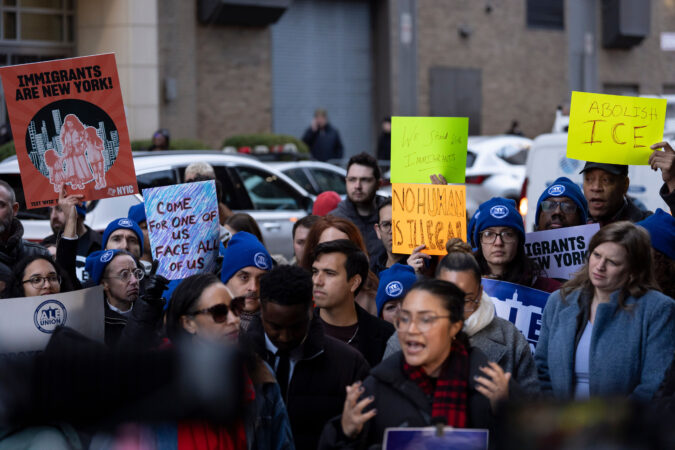
    Several dozen people protested Tuesday outside the Greater New York Federal Building, where Rubio Bohorquez was being held. Some carried signs that said “Abolish ICE” and “No Human Is Illegal.”’

    Venezuela, whose former President Nicolás Maduro was seized Jan. 3 by U.S. forces, has been roiled for years by violence and economic instability. Nearly 8 million people have fled the South American nation since 2014, according to the United Nations refugee agency.

    Last year, President Donald Trump’s administration ended Temporary Protected Status that had been allowing hundreds of thousands of Venezuelan refugees to live and work in the U.S. without fear of deportation. It wasn’t clear from court papers whether Rubio Bohorquez had been a part of that program.

    Disputes over an immigrant’s work authorization have arisen before, in part because many employers rely on E-Verify. The system compares information provided by employees with records available to the government but doesn’t automatically notify an employer if an employee’s right to work is later revoked.

  • Top prosecutors in D.C., Minneapolis leave amid turmoil over shooting probe

    Top prosecutors in D.C., Minneapolis leave amid turmoil over shooting probe

    Multiple senior prosecutors in Washington and Minnesota are leaving their jobs amid turmoil over the Trump administration’s handling of the shooting death of a Minneapolis woman.

    The departures include at least five prosecutors from the U.S. Attorney’s Office in Minneapolis, including the office’s second-in-command, according to emails obtained by The Washington Post and people familiar with the matter.

    Their resignations followed demands by Justice Department leaders to investigate the widow of Renée Good, the 37-year-old woman killed last week by an Immigration and Customs Enforcement officer who shot into her car, according to a person familiar with the resignations who spoke on the condition of anonymity out of concern for retaliation. Good’s wife was protesting ICE officers in the moments before the shooting.

    Five senior prosecutors in the criminal section of the Justice Department’s Civil Rights Division also said they are leaving, according to four people familiar with the personnel moves, who spoke on the condition of anonymity to discuss personnel matters.

    In another development, Deputy Attorney General Todd Blanche said in a statement that “there is currently no basis for a criminal civil rights investigation.” The statement, first reported by CNN, did not elaborate on how the department had reached a conclusion that no investigation was warranted.

    Federal officials have said that the officer acted in self-defense and that the driver of the Honda was engaging in “an act of domestic terrorism” when she pulled forward toward him.

    The departures wipe both the Civil Rights Division’s criminal section and U.S. Attorney’s Office in Minnesota of its most experienced prosecutors. The moves are widely seen as a major vote of no-confidence by career prosecutors at a moment when the department is under extreme scrutiny.

    The criminal section of the Civil Rights Division is the sole office that handles criminal violations of the nation’s civil rights laws. For years, the Justice Department has relied on the section to prosecute major cases of alleged police brutality and hate crimes. The departures followed the administration’s highly unusual decision to not include the Civil Rights Division in the initial investigation of the shooting.

    The Civil Rights Division departures include the criminal section’s longtime chief and deputy — Jim Felte and Paige Fitzgerald — career attorneys who served in their positions during President Donald Trump’s first administration and through President Joe Biden’s administration. Three other supervisors and senior litigators are also leaving.

    The prosecutors in Minnesota did not immediately respond to requests for comment. Felte and Fitzgerald also did not immediately respond to requests for comment Monday evening.

    The Civil Rights prosecutors informed their colleagues of their resignations Monday. People familiar with the section, who spoke on the condition of anonymity to discuss personnel matters, said the lawyers who are leaving did not attribute their decisions to the Minnesota investigation.

    The department has been offering voluntary early retirement packages to certain sections, and some of the departing civil rights prosecutors qualified for that option. Some indicated to their colleagues before the Minnesota shooting that they were considering the retirement packages.

    “Although we typically don’t comment on personnel matters, we can confirm that the Criminal Section Leadership gave notice to depart the Civil Rights Division and requested to participate in the Department of Justice’s Early Retirement Program well before the events in Minnesota. Any suggestion to the contrary is false,” a Justice Department official said in a statement.

    Deputy Attorney General Todd Blanche released a statement saying: “There is currently no basis for a criminal civil rights investigation” into the shooting.

    Trump’s appointees at the Justice Department pushed out and transferred many of the section heads and deputies in the Civil Rights Division in the early days of the administration. But the leadership of the criminal section was largely left intact.

    For months, however, frustration has been growing within the section, according to people familiar with the division who said that further resignations are likely. Many lawyers in the office have said they feel the administration has prevented prosecutors from doing their work. The administration has repeatedly reversed positions on cases that the section has spent years litigating.

    In July, for example, the Civil Rights Division told a judge that the Biden administration should not have prosecuted the Louisville police officer convicted in connection with a raid that resulted in Breonna Taylor’s death — and asked that the officer receive one day in jail. In November, the administration successfully pushed to dismiss a police brutality case in Tennessee, which was set to go to trial that month. The Civil Rights Division had been litigating that case for more than two years.

    Within the Justice Department, the Civil Rights Division typically experiences the sharpest swings in priorities between Republican and Democratic administrations. But several former officials interviewed by The Washington Post described the shifts implemented so far under the Trump administration as more intense than anticipated.

    In the first Trump administration, former Justice Department officials said, the division was largely left intact. The section did not pursue actions against police departments in the way that Democratic administrations had, but it prosecuted police brutality cases and continued to focus on prosecuting hate crimes, protecting disability rights and enforcing employment laws.

    During the current administration, the division has dramatically changed its mission. A majority of its nearly 400 attorneys left in 2025 as a result. The head of the Civil Rights Division, Harmeet Dhillon, changed mission statements across the sections to focus less on racial discrimination and more on fighting diversity initiatives. The division has also aggressively pursued cases alleging antisemitism and anti-Christian bias.

    After conservative activist Charlie Kirk was killed in September at a public event at Utah Valley University, the Civil Rights Division launched a hate-crime probe. The investigation is examining whether hate-crime charges can be pursued against the suspect because of anti-Christian bias, according to a person familiar with the probe.

    Prosecutors have also explored whether it would be possible to pursue hate-crime charges against the suspect, Tyler Robinson, if evidence shows motivation because of Kirk’s stance on transgender individuals — a move that would be a novel use of hate-crime laws. Robinson’s romantic partner was undergoing a gender transition at the time of the shooting, his mother told police.

    Dhillon has said she welcomes people to leave if they do not agree with the new direction for the department. Dhillon told conservative podcaster Glenn Beck in April that she intended to send a new message to her staff.

    “These are the president’s priorities,” Dhillon said on the podcast. “This is what we will be focusing on. Govern yourself accordingly.”

    MS NOW reported the civil rights resignations late Monday night.

    Dhillon has also said that her office is being flooded with applicants to fill vacant roles. But people familiar with the division said that just a fraction of the open roles have been filled, a process impeded by a lack of qualified candidates and bureaucratic delays. Some of the sections within the division are so understaffed that they cannot effectively complete their workloads.

    “This exodus is a huge blow signaling the disrespect and sidelining of the finest and most experienced civil rights prosecutors,” said Vanita Gupta, the head of the division during the Obama administration and the associate attorney general during the Biden administration. “It means cases won’t be brought, unique expertise will be lost, and the top career attorneys who may be a backstop to some of the worst impulses of this administration will have left.”

    The Civil Rights Division was established in 1957 as part of that year’s Civil Rights Act, which focused on fighting racial discrimination. Since its launch, the division has been tasked with upholding “the civil and constitutional rights of all people in the United States, particularly some of the most vulnerable members of our society,” according to the Justice Department’s website.

    The office has 12 sections that aim to combat discrimination in educational opportunities, housing, employment, voting and more.

    A Justice Department official also said that ICE has been conducting its own investigation of the Minnesota shooting.

    “As with any officer-involved shooting, each law enforcement agency has an internal investigation protocol, including DHS. As such, ICE OPR has its own investigation underway. This runs parallel to any FBI investigation,” the official said, referring to the Office of Professional Responsibility.

    This article includes information from the Associated Press.
  • Russia launches another major strike on Ukraine’s power grid in freezing temperatures

    Russia launches another major strike on Ukraine’s power grid in freezing temperatures

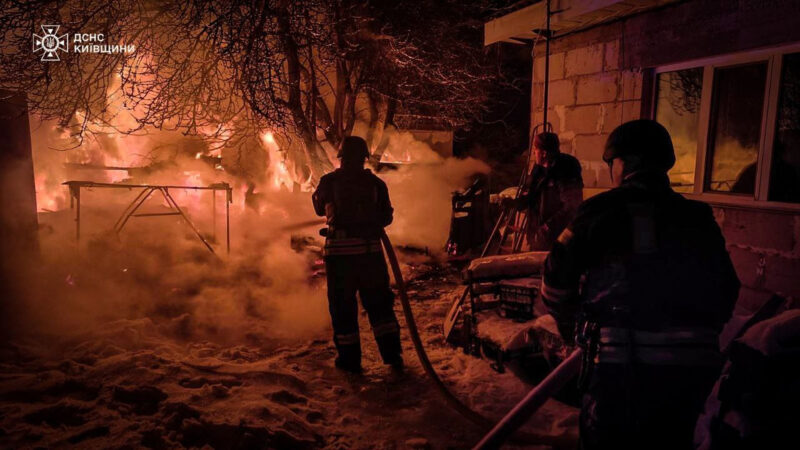
    KYIV, Ukraine — Russia launched a second major drone and missile bombardment of Ukraine in four days, officials said Tuesday, aiming again at the power grid amid freezing temperatures in an apparent snub to U.S.-led peace efforts as Moscow’s invasion of its neighbor approaches the four-year mark.

    Russia fired almost 300 drones, 18 ballistic missiles and seven cruise missiles at eight regions overnight, Ukrainian President Volodymyr Zelensky said on social media.

    One strike in the northeastern Kharkiv region killed four people at a mail depot, and several hundred thousand households were without power in the Kyiv region, Zelensky said.

    The daytime temperature in Kyiv, which has endured freezing temperatures for more than two weeks, was about 10 degrees, with streets covered in ice and the rumble of generators heard throughout the capital.

    Kyiv has grappled with severe power shortages for days, although Mayor Vitali Klitschko said Monday night’s strikes caused the biggest electrical outage the city has faced so far.

    Kyiv residents huddle for warmth

    More than 500 residential buildings remained without central heating Tuesday. Throughout the city, bare trees were weighed down with icicles and snow was piled up next to sidewalks.

    Olena Davydova, 30, charged her phone at what is called a “Point of Invincibility” shelter in Kyiv’s Dniprovskyi district. The government-built temporary installations, often large tents on the sidewalk, provide food, drinks, warmth and electricity.

    Davydova said she had been without power for nearly 50 hours. That forced her to adopt some new routines: sleeping in one bed with her child and two cats, storing fresh food on the balcony, and using candles after dark.

    She says she is taking the changes in stride. “I still have enough patience. I’m not reacting to this in a very emotional way,” she told The Associated Press.

    Elsewhere, friends and relatives gathered in apartments still with power or hot water, at least temporarily, to charge their phones, take showers, or share a warm drink.

    Klitschko ordered the city to provide one hot meal per day to needy residents. He also announced that workers in the city’s water, heating and road maintenance services would receive bonuses for working “day and night” to restore critical infrastructure.

    U.S. calls out ‘inexplicable’ Russian escalation

    Four days earlier, Russia also sent hundreds of drones and dozens of missiles in a large-scale overnight attack and, for only the second time in the war, it used a powerful new hypersonic missile that struck western Ukraine in what appeared to be a clear warning to Kyiv’s NATO allies that it won’t back down.

    On Monday, the U.S. accused Russia of a “dangerous and inexplicable escalation ” of the fighting at a time when the Trump administration is trying to advance peace negotiations.

    Tammy Bruce, the U.S. deputy ambassador to the United Nations, told an emergency meeting of the U.N. Security Council that Washington deplores “the staggering number of casualties” in the conflict and condemns Russia’s intensifying attacks on energy and other infrastructure.

    Russia has sought to deny Ukrainian civilians heat and running water over the course of the war, hoping to wear down public resistance to Moscow’s full-scale invasion, which began on Feb. 24, 2022. Ukrainian officials describe the strategy as “weaponizing winter.”

    The attack in Ukraine’s Kharkiv region also wounded 10 people, local authorities said.

    In the southern city of Odesa, six people were wounded in the attack, said Oleh Kiper, the head of the regional military administration. The strikes damaged energy infrastructure, a hospital, a kindergarten, an educational facility and a number of residential buildings, he said.

    2025 deadliest year for Ukrainian civilians

    Last year was the deadliest for civilians in Ukraine since 2022 as Russia intensified its aerial barrages behind the front line, according to the U.N. Human Rights Monitoring Mission in the country.

    The war killed 2,514 civilians and injured 12,142 in Ukraine — 31% higher than in 2024, it said.

    “The sharp increase in long-range attacks and the targeting of Ukraine’s national energy infrastructure mean that the consequences of the war are now felt by civilians far beyond the front line,” Danielle Bell, the agency’s head, said in a statement Monday.

    Zelensky said Ukraine is counting on quicker deliveries of agreed upon air defense systems from the U.S. and Europe, as well as new pledges of aid to counter Russia’s latest onslaught.

    Meanwhile, Russian air defenses shot down 11 Ukrainian drones overnight, Russia’s Defese Ministry said Tuesday. Seven were reportedly destroyed over Russia’s Rostov region, where Gov. Yuri Slyusar confirmed an attack on the coastal city of Taganrog, about 24 miles east of the Ukrainian border, in Kyiv’s latest long-range attack on Russian war-related facilities.

    Ukraine’s military said its drones hit a drone manufacturing facility in Taganrog. The Atlant Aero plant designs, manufactures and tests Molniya drones and components for Orion unmanned aerial vehicles, according to the General Staff of the Armed Forces of Ukraine. Explosions and a fire were reported at the site, with damage to production buildings confirmed, the General Staff said.

    It wasn’t possible to independently verify the reports.

  • Hundreds more Venezuelans come forward to register relatives as ‘political prisoners’

    Hundreds more Venezuelans come forward to register relatives as ‘political prisoners’

    GUANARE, Venezuela — Freedom came too late for Edilson Torres.

    The police officer was set to be buried Tuesday in his humble, rural hometown following his death in a Venezuelan prison, where he was held incommunicado since his December detention on what his family said were politically motivated accusations. Hours ahead of the ceremony, his children, neighbors, police officers, friends and dozens others gathered to pay their respects.

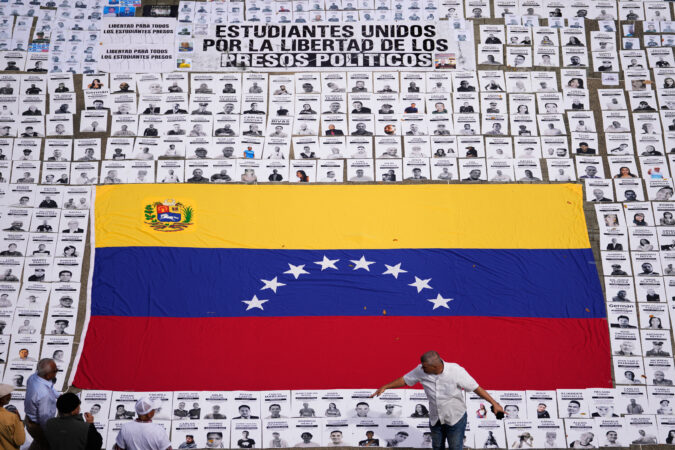
    Torres, 51, died of a heart attack on Saturday, just as his family awaited the government’s promised release of prisoners following the U.S. capture of then-President Nicolás Maduro. His death comes as scores of families like his — who once hesitated to approach advocacy groups — are now coming forward to register their loved ones as “political prisoners.”

    Alfredo Romero, director of the organization Foro Penal, a non-governmental organization that tracks and advocates for Venezuelan prisoners, said the group has received a “flood of messages” since last week from families.

    “They didn’t report it out of fear, and now they’re doing it because, in a way, they feel that there is this possibility that their families will be freed,” Romero said. “They see it as hope, but more importantly, as an opportunity.”

    The head of Venezuela’s national assembly, Jorge Rodríguez, said last week that a “significant number” of Venezuelan and foreigners imprisoned in the country would be released as a gesture to “seek peace” following the explosions that rocked the South American nation in the early hours of Jan. 3.

    The U.S. and Venezuela’s opposition have long demanded the widespread release of detained opposition figures, activists and journalists, whom they claim are used as a political tool by the ruling party.

    Venezuela’s government denies that there are prisoners unjustly detained, accusing them of plotting to destabilize Maduro’s government.

    ‘Pure and real kidnapping’

    Following Torres’ death, Venezuela’s Attorney General Tarek William Saab said in a statement that the case had been assigned to a terrorism unit and “was linked to criminal activities detected by state security agencies.” He did not offer any details, but the vague language tracks with past accusations leveled against real or perceived government critics.

    Romero explained that of the roughly 300 families who reached out, about 100 cases so far have been confirmed as politically motivated. Most of those reported over the past few days, he said, once worked for Venezuela’s military. That is on top of more than 800 people that the organization says continue to be detained for political reasons in Venezuela.

    As of Tuesday morning, Foro Penal had confirmed the release of 56 prisoners. While Venezuela’s government reported a higher figure of 116, it did not identify them, making it impossible to determine whether those freed were behind bars for political or other reasons.

    “My little brother, my little brother,” Emelyn Torres said between sobs after his casket, cloaked in Venezuela’s flag, arrived at her home for the wake. A few feet away, their grandmother nearly fainted as dozens of people crammed into the living room to pay their respects.

    Hours earlier, as a minivan transported the body of her brother 267 miles from the capital, Caracas, to Guanare, Torres learned that other men linked to the WhatsApp group that led to her brother’s arrest had just been released from prison. She wailed. He did not live long enough to walk free.

    Among those who have been released are: human rights attorney Rocío San Miguel, who immediately relocated to Spain; Biagio Pilieri, an opposition leader who was part of Nobel Peace Prize winner María Corina Machado’s 2024 presidential campaign; and Enrique Márquez, a former electoral authority and presidential candidate.

    Italian businessman Marco Burlò, who was released from prison Monday, told reporters outside an international airport in Rome Tuesday that he was kept isolated throughout his detention, which he characterized as a “pure and real kidnapping.”

    “I can’t say that I was physically abused, but without being able to talk to our children, without the right to defense, without being able to speak to the lawyer, completely isolated, here they thought that I might have died,” he said.

    A rare moment of hope

    The small set of releases over the past few days continues to fuel criticisms by families, human rights watchdogs at the United Nations and U.S. politicians, who have accused the government of not following through on their word of a wider release.

    But the rapid political shifts in the Latin American nation and the distant possibility of release simultaneously marked a rare moment of hope for many families who have spent years wondering if their loved ones would ever be freed.

    Part of the reason that Romero said he believed so many people had not come forward is the government’s ongoing crackdown on dissent since Venezuela’s tumultuous 2024 election, which Maduro claimed to have won despite ample credible evidence to the contrary.

    As mass street protests broke out, authorities said they detained more than 2,000 people. In the month after July elections, Venezuela’s government passed a law – dubbed the “anti-NGO law” by critics – making it easier for the government to criminalize human rights groups.

    That had a chilling effect, Romero said, making families hesitant to come forward — until now.

  • The fatal shooting of a 16-year-old inside Chipotle bathroom may have been unintentional, sources say

    The fatal shooting of a 16-year-old inside Chipotle bathroom may have been unintentional, sources say

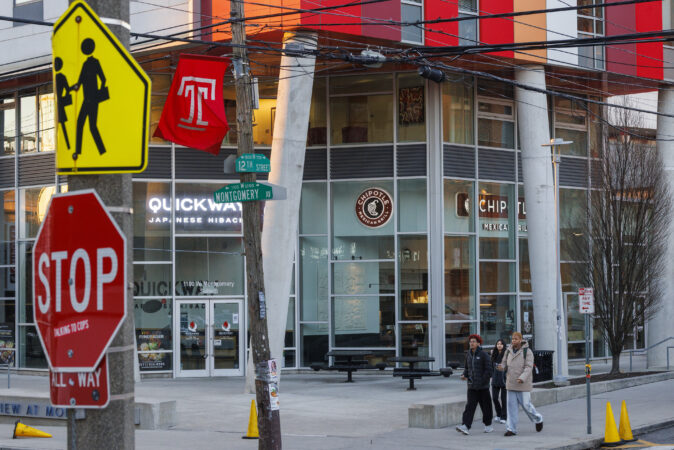
    A 16-year-old was found shot to death inside the bathroom of a Chipotle near Temple University’s campus Monday night in what investigators believe may have been an unintentional shooting, according to police and a law enforcement source.

    Khyon Smith-Tate and three of his friends were inside the Chipotle on the ground floor of The View at Montgomery apartments at 12th Street and Montgomery Avenue around 5 p.m. Monday, police said. Smith-Tate and one friend went into one bathroom, while the two other teens went into the second bathroom, said Deputy Commissioner Frank Vanore.

    According to surveillance video, the teen with Smith-Tate left the restroom alone a short time later, and then walked out of the restaurant with the other teens, Vanore said.

    About 15 minutes later, a restaurant employee found Smith-Tate suffering from a gunshot wound to the chest, he said. Police and medics responded, and pronounced him dead at the scene, officials said.

    No gun was recovered, though officers found one spent shell casing from a 9mm handgun in the trash can, Vanore said.

    Smith-Tate was a student at Imhotep Institute Charter High School. His mother, overwhelmed with grief, declined to speak Monday at her North Philadelphia home.

    In a written statement, school officials described Smith-Tate as “caring, energetic, filled with school pride and comical.”

    “He was filled with light and love,” the statement, signed by Imhotep Chief Executive Officer Andre Noble and Principal Jury Segers, said. “We will always remember his smile.”

    Police have identified the three teens involved, Vanore said, and are poring over cell phone data and interviewing witnesses to try to learn what happened inside the bathroom.

    A law enforcement source with knowledge of the investigation said detectives are looking into whether the teens may have been filming a social media video or playing with a gun when it fired and unintentionally struck Smith-Tate.

    The source, who asked not to be identified to discuss an ongoing investigation, said the teens are all close friends. Still, they did not call for help, the source said, and left him to die on the bathroom floor.

    “As one can imagine, we are struggling today,” Noble and Segers said. Our collective hearts are hurting. But this community is resilient.”

    District Attorney Larry Krasner said that trauma-care professionals and victim advocates from his office visited the school on Tuesday to lead “multiple grief trauma healing circles” for students and staff.

    “The trauma and grief our young people experience as a result of shootings is unacceptable,” he said. “We will not accept this as normal for our kids and babies.”

    Smith-Tate is the first child under 18 to be shot and killed in Philadelphia this year, and his death comes after homicides in the city reached near-historic lows last year.

    If it is confirmed that the shooting was unintentional, Smith-Tate would be the latest in a growing list of children shot by a mishandled gun in Philadelphia.

    Dozens of kids have been wounded in accidental shootings in recent years, often the result of other children finding unsecured guns in their homes. Just last month, a 14-year-old was seriously wounded when another teen playing with a gun shot him in the stomach, police said.

    Last year, 12-year-old Ethan Parker was shot and killed after police said his 17-year-old neighbor was playing with a gun while recording a song and accidentally fired it. Other victims have been even younger: like 3-year-old Kayden Barnes, who police said shot herself with her father’s gun in 2024, and 2-year-old Diora Porter-Brown, who was fatally shot by a cousin with an intellectual disability who found his grandmother’s firearm in 2023.

  • Israel’s recognition of breakaway Somaliland brings uproar and threats to a volatile region

    Israel’s recognition of breakaway Somaliland brings uproar and threats to a volatile region

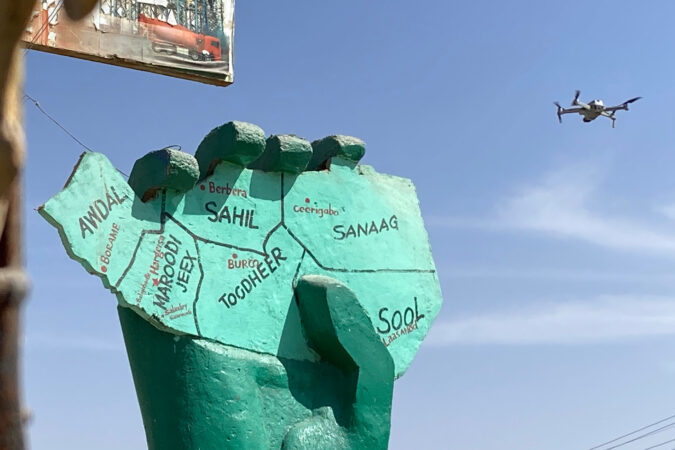
    JERUSALEM — Israel’s recognition of Somaliland has thrust the breakaway territory into the international spotlight, causing an uproar in the Horn of Africa and the Middle East as a surprise new factor in regional power struggles.

    For Israel, the decision reignites questions about the contentious proposal raised last year by American and Israeli officials for Somaliland to take in Palestinians displaced from Gaza. Israel also could use Somaliland as a base to more closely respond to attacks from Iran-backed Houthis rebels in Yemen, just across the Gulf of Aden.

    Israel also would get a diplomatic win. Somaliland’s foreign minister told The Associated Press that it aims to join the Abraham Accords, bilateral agreements between Israel and Arab and Muslim-majority countries.

    “It is a mutually beneficial friendship,” Abdirahman Dahir Adan said in an interview. In return, “Somaliland gains open cooperation with Israel in trade, investment and technology.”

    But the first international recognition of Somaliland as an independent nation also could make it a target. Analysts warn that its ties with Israel could become a rallying cry for Islamic extremists, destabilizing an already volatile region in which Somaliland has prided itself as an oasis of relative calm.

    Al-Qaeda affiliate al-Shabab, based in Somalia and the key challenge to that country’s stability, is already making threats. The group has rarely carried out attacks in Somaliland, which broke away in 1991 as Somalia collapsed into conflict.

    “Members of the movement reject Israel’s attempt to claim or use parts of our land. We will not accept this, and we will fight against it,” al-Shabab spokesperson Sheikh Ali Mohamud Rageal said in an audio message posted on one of the group’s sites.

    Strategic location

    Somaliland sits along one of the world’s busiest maritime corridors. It has drawn interest from foreign investors and military powers who see it as a potential alternative to neighboring Djibouti, which is home to the premier African bases for the American and Chinese militaries, and those of several other nations.

    Somaliland lies fewer than 100 miles from Yemen, where the Houthis have been targeting commercial and other ships in response to the Israel-Hamas war. The attacks have upended shipping in the Red Sea, through which about $1 trillion of goods pass annually. The Houthis also fired scores of missiles and drones at Israel during the war in Gaza, triggering long-range strikes by Israel’s air force.

    “If you are trying to watch, deter or disrupt Houthi maritime activity, a small footprint (in Somaliland) can provide disproportionate utility,” said Andreas Krieg, a military analyst at King’s College London.

    Shortly after Israel’s recognition, the Houthis threatened Somaliland.

    ‘No limits’ to cooperation

    Israeli Foreign Minister Gideon Saar visited Somaliland last week, and Somaliland’s president is expected to visit Israel soon.

    “This is a natural connection between democratic countries — both in challenging regions,” Saar said in defending Israel’s recognition.

    Israel and Somaliland have said their new ties would include defense cooperation, but officials declined to elaborate. Somaliland’s foreign minister said that details would follow his president’s visit to Israel.

    “There are no limits as to what areas we can work with,” Adan said.

    He expressed hope that Israel’s recognition would bestow new legitimacy on Somaliland and prompt others to recognize its sovereignty, even as Somalia has angrily rejected it.

    “Before Israel’s recognition, we were worried so much that other powers like Turkey and China would squeeze us,” Adan said, mentioning two of Somalia’s top benefactors. “I’m very hopeful that in the near future there will be many other countries that will follow Israel.”

    But the foreign minister insisted there has been no discussion with Israel about taking in Palestinians from Gaza. U.S. and Israeli officials told the AP last year that Israel had approached Somaliland about the proposal.

    Warnings of violence

    Israeli recognition of Somaliland has pushed the region into uncharted waters, said Mahad Wasuge, director of Somali Public Agenda, a think tank.

    “It could increase violence or bring proxy wars, particularly if the Israelis want to have a presence in the port of Berbera to counter threats in the Red Sea,” he said, referring to Somaliland’s largest port.

    The 57-nation Organization of Islamic Cooperation, and the African Union continental body, have condemned Israel’s recognition.

    Somali President Hassan Sheikh Mohamud has said it threatens his country’s sovereignty. He said that Somalis wouldn’t accept their nation being used by a foreign power accused of harming civilians — meaning Palestinians in Gaza — and warned that the establishment of foreign military bases would further destabilize the region.

    Somali territory “cannot be divided by a piece of paper written by Israel and signed by (Israeli Prime Minister Benjamin) Netanyahu,” Mohamud said in a televised address.

    Adan dismissed the criticism from Mogadishu, calling Somalia a “failed state.”

    Great power rivalries

    Already, Israel’s recognition has rocked the balance of powers in a region where rich Gulf countries and others have a growing interest.

    On Monday, Somalia annulled its security and defense agreements with the United Arab Emirates, a key regional ally of Israel that has long invested in Somaliland’s Berbera port, saying it was meant to safeguard “unity, territorial integrity, and constitutional order.”

    For the UAE, the area is important for its proximity to Sudan, where it has been accused of funding and arming the paramilitary Rapid Support Forces in that country’s civil war. And last week, Saudi Arabia accused the UAE of using Somaliland as a transit point to smuggle the leader of a separatist group out of southern Yemen.

    Asher Lubotzky, an analyst with Israel’s Institute for National Security Studies, said that Somaliland is one of several examples of the emerging alliance between Israel and the UAE, which have sought to align with U.S. foreign policy and shown a willingness to eschew international norms while countering extremist groups.

    “We know the Israeli interest is with the Houthis, but Somaliland also has an interest in some kind of an external protection,” he said.

    Others put on alert by Israel’s recognition are Turkey, Somalia’s largest investor and a rival to Israel, and China, which has long viewed Somaliland with suspicion over its ties with Taiwan. A rare visit to Somalia by China’s foreign minister, Wang Yi, set for last week did not occur as the Chinese embassy cited “scheduling reasons.”

    Closer to home, landlocked Ethiopia, Africa’s second-most populous country, sees Somaliland next door as a key route to the sea. It has remained silent on Israel’s recognition — perhaps scrambling, like many other countries, to understand what might come next.

  • The Art Commission is weighing the fate of the Rocky statue. It’s been controversial for decades.

    The Art Commission is weighing the fate of the Rocky statue. It’s been controversial for decades.

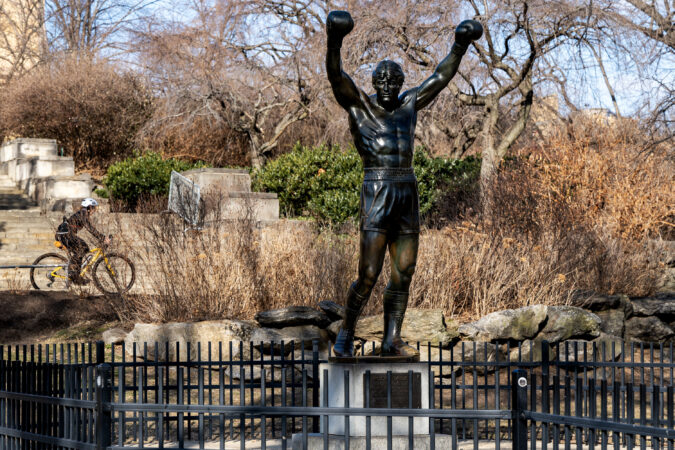
    Our famed Rocky statue could soon be a permanent fixture atop the steps of the Philadelphia Art Museum — again.

    The Philadelphia Art Commission on Wednesday is slated to vote on a plan that, if approved, would affix the original statue — commissioned by Sylvester Stallone for 1982’s Rocky III — at the top of the museum’s East entrance steps later this year. Recently proposed by Creative Philadelphia, the city’s office for the creative sector, the move stands to place the iconic statue in one of the city’s most prominent locations for the umpteenth time since it arrived here more than 40 years ago.

    In fact, Philly’s original Rocky statue has been shuttled back and forth between the museum and the stadium complex in South Philly — another site that was pitched as its permanent home — at least six times, according to Inquirer and Daily News reports. But since 2006, it has sat at the base of the museum’s famed stair set, its most permanent location to date.

    Somehow, though, it always seems to end up overlooking the Benjamin Franklin Parkway from on high, however temporarily. And every so often, debate over the statue seems to reignite, regardless of where the statue sits — a cycle that has been repeating itself since the dawn of the 1980s.

    Here is how The Inquirer and Daily News covered the early days of Philly’s famed Rocky statue:

    https://www.newspapers.com/article/philadelphia-daily-news/188853911/

    Article from Dec 11, 1980 Philadelphia Daily News (Philadelphia, Pennsylvania) <!— –>

    An ‘unnecessarily strident’ monument

    The statue’s roots can be traced back to December 1980, when Stallone proposed the temporary installation of his own bronze visage atop the museum steps for the filming of Rocky III. From the start, the star proposed giving the statue to the city following filming as a “way of reaching the common man and perhaps beginning an interest in fine art,” production manager Jim Brubaker told the Daily News.

    In Budapest, you don’t always see generals and politicians,” Brubaker said. “You see working men with picks and shovels and that relates to the working class.”

    That month, Brubaker and sculptor A. Thomas Schomberg presented a model of the proposed statue to the Art Commission, the Fairmount Park Commission, and the museum’s board. The commission voted 6-2 in favor of letting the statue stay at the museum for the duration of filming, with the two “no” votes indicating that they didn’t want the statue near the museum ever, for any reason, The Inquirer reported.

    “There is a difference between size and greatness,” said local artist and commission member Joseph Brown. “This is unnecessarily strident. I appreciated Rocky, but I don’t think it put our museum and our city on the map.”

    https://www.newspapers.com/article/philadelphia-daily-news/188853847/

    Article from May 9, 1981 Philadelphia Daily News (Philadelphia, Pennsylvania) <!— –>

    Rocky arrives

    The Rocky statue that Philly knows today officially arrived on May 8, 1981, and was unveiled in front of the Philadelphia Art Museum that afternoon — three hours later than expected because the truck that was carrying it got stuck in traffic on the way from West Philly, according to a Daily News report.

    The plan was for the statue to return to California following filming, but Stallone himself was already admittedly embarrassed by the controversy that had quickly cropped up.

    “I’m sorry that got blown out of proportion,” Stallone said, according to a Daily News report. “It’s essentially a prop for the movie. I really don’t want to ruffle anyone’s feathers.”

    After a few days, the Rocky statue was dismantled with the conclusion of filming, and was set to be on its way back to the Golden State. City Representative Dick Doran, however, urged Stallone to reconsider the statue’s relocation, noting that it could be relocated to the Spectrum in South Philly, or placed outside the Philadelphia Tourist Center on JFK Plaza.

    https://www.newspapers.com/article/the-philadelphia-inquirer/188854136/

    Article from May 25, 1982 The Philadelphia Inquirer (Philadelphia, Pennsylvania) <!— –>

    Philly’s ‘Rocky III’ premiere

    In May 1982, Rocky III made its premiere in Philadelphia with a screening at the Sameric Theater at 19th and Chestnut in a star-studded affair that began with a reception at the Art Museum in which Stallone himself presented the Rocky statue to Philadelphia, almost exactly a year to the day that it first arrived in town. It was, The Inquirer reported, a 300th birthday gift to the city.

    On May 24, 1982, the statue was officially unveiled to the city, with Stallone himself pulling the cord on a canvas cover to reveal the sculpture at the top of the museum’s steps as the Lincoln High School band played the Rocky theme, The Inquirer reported. Stallone had “done more for this city than anyone since Benjamin Franklin,” said Doran, then the city’s commerce director.

    “I owe everything to the city of Philadelphia,” Stallone said at the unveiling. “If you could cut up the character of Rocky into a million pieces, each of you would be a part of it.”

    https://www.newspapers.com/article/the-philadelphia-inquirer/188854084/

    Article from May 24, 1982 The Philadelphia Inquirer (Philadelphia, Pennsylvania) <!— –>

    ‘Schlock, chutzpah, and mediocrity’

    Though the statue was displayed prominently, it was not exactly well-received. The Daily News’ Kitty Caparella, for example, called it “only a movie prop.”

    Inquirer columnist Tom Fox, meanwhile, called the statue a “monument to schlock, chutzpah, and mediocrity.” Art Commission member Joe Brown, a local painter, meanwhile, told Fox the statue “violates the spirit of the museum and its environment,” and that the city would be better served by the creation of a statue depicting Tug McGraw, Pete Rose, or Dr. J instead.

    Still, a museum spokesperson said, attendance had increased since the statue’s installation, though they believed it was because of a new exhibit featuring the work of artist Thomas Eakins. Those arriving at the museum to see Rocky, the spokesperson told the Daily News, “don’t even come inside.”

    https://www.newspapers.com/article/philadelphia-daily-news/188854219/

    Article from Aug 3, 1982 Philadelphia Daily News (Philadelphia, Pennsylvania) <!— –>

    Goodbye, Rocky

    Though the statue was only supposed to initially be installed at the Art Museum through mid-July 1982, it remained there through early August that year, Daily News reports from the time indicate. In fact, it wasn’t moved to the Spectrum until Aug. 3, 1982.

    At the time, no one was willing to foot a reported $25,000 bill to get the statue to the Spectrum, and the issue was only settled after negotiations led to splitting the cost between the Spectrum and distributor United Artists, according to a Daily News report from the time. The city, a Commerce Department staffer told The Inquirer, flatly refused to pay.

    But on a hot day, the statue’s run atop the Art Museum’s steps came to an end. Despite encountering difficulties with removal due to the concrete base upon which it had been installed, workers were ultimately able to send the statue on its way to the Spectrum — the spot where it would largely remain until it saw a high-profile move back to the Art Museum for the filming of Rocky V.

    “People are going to miss him,” said onlooker Marcy Landesburg, of Wyncote, amid the statue’s 1982 removal. “They’re having a hard time dislodging him. He doesn’t want to go.”

  • Trump administration labels 3 Muslim Brotherhood branches as terrorist organizations

    Trump administration labels 3 Muslim Brotherhood branches as terrorist organizations

    WASHINGTON — President Donald Trump’s administration has made good on its pledge to label three Middle Eastern branches of the Muslim Brotherhood as terrorist organizations, imposing sanctions on them and their members in a decision that could have implications for U.S. relationships with allies in the region.

    The Treasury and State departments announced the actions Tuesday against the Lebanese, Jordanian and Egyptian chapters of the Muslim Brotherhood, which they said pose a risk to the United States and American interests.

    The State Department designated the Lebanese branch a foreign terrorist organization, the most severe of the labels, which makes it a criminal offense to provide material support to the group. The Jordanian and Egyptian branches were listed by Treasury as specially designated global terrorists for providing support to Hamas.

    “These designations reflect the opening actions of an ongoing, sustained effort to thwart Muslim Brotherhood chapters’ violence and destabilization wherever it occurs,” Secretary of State Marco Rubio said in a statement. “The United States will use all available tools to deprive these Muslim Brotherhood chapters of the resources to engage in or support terrorism.”

    Rubio and Treasury Secretary Scott Bessent were mandated last year under an executive order signed by Trump to determine the most appropriate way to impose sanctions on the groups, which U.S. officials say engage in or support violence and destabilization campaigns that harm the United States and other regions.

    Bessent wrote in a post on X that the Muslim Brotherhood “has a longstanding record of perpetrating acts of terror, and we are working aggressively to cut them off from the financial system.” He added that the Trump administration will “deploy the full scope of its authorities to disrupt, dismantle, and defeat terrorist networks wherever they operate in order to keep Americans safe.”

    Muslim Brotherhood leaders have said they renounce violence, and the Muslim Brotherhood branches in Egypt and Lebanon denounced their inclusion.

    “The Egyptian Muslim Brotherhood categorically rejects this designation and will pursue all legal avenues to challenge this decision which harms millions of Muslims worldwide,” it said in a statement, denying any involvement in or support for terrorism.

    The Lebanese branch of the Muslim Brotherhood, known as al-Jamaa al-Islamiya (the Islamic Group), said in a statement that it is “a licensed Lebanese political and social entity that operates openly and within the bounds of the law” and that the U.S. decision “has no legal effect within Lebanon.”

    Trump’s executive order had singled out the chapters in Lebanon, Jordan and Egypt, noting that a wing of the Lebanese chapter had launched rockets on Israel after Hamas’ Oct. 7, 2023, attack in Israel that set off the war in Gaza. Leaders of the group in Jordan have provided support to Hamas, the order said.

    The Muslim Brotherhood was founded in Egypt in 1928 but was banned in that country in 2013. Jordan announced a sweeping ban on the Muslim Brotherhood in April.

    Nathan Brown, a professor of political science and international affairs at George Washington University, said some allies of the U.S., including the United Arab Emirates and Egypt, would likely be pleased with the designation.

    “For other governments where the brotherhood is tolerated, it would be a thorn in bilateral relations,” including in Qatar and Turkey, he said. While the Turkish ruling party has been associated with members of the Muslim Brotherhood in the past, the government of Qatar has denied any relationship with it.

    Brown also said a designation on the chapters may have effects on visa and asylum claims for people entering not just the U.S. but also Western European countries and Canada.

    “I think this would give immigration officials a stronger basis for suspicion, and it might make courts less likely to question any kind of official action against Brotherhood members who are seeking to stay in this country, seeking political asylum,” he said.

    Trump, a Republican, weighed whether to designate the Muslim Brotherhood a terrorist organization in 2019 during his first term in office. Some prominent Trump supporters, including right-wing influencer Laura Loomer, have pushed his administration to take aggressive action against the group.

    Two Republican-led state governments — Florida and Texas — designated the group as a terrorist organization this year.