Category: News

Latest breaking news and updates

  • The Pittsburgh Post-Gazette is shutting down

    The Pittsburgh Post-Gazette is shutting down

    The Pittsburgh Post-Gazette will fold after nearly a century. The paper will cease operations entirely — both its digital and physical versions — on May 3.

    The announcement comes on the heels of years of declining ad revenue and internal strife within the newsroom, including a yearslong labor strike.

    With the paper’s closure, there are concerns that Pittsburgh could become a news desert, leaving locals without a range of diverse and credible outlets to turn to in an age of increasing misinformation.

    The Post-Gazette was led by former Inquirer senior vice president and executive editor Stan Wischnowski. He resigned from The Inquirer in 2020 after a controversy following a headline after the murder of George Floyd.

    Block Communications, the paper’s owners, released a statement Wednesday about the shutdown, citing “continued cash losses” that were “no longer sustainable.” About 150 union, nonunion, and management employees are impacted.

    The owners added that the paper has lost more than $350 million in operational funds over the last 20 years.

    The paper’s union, meanwhile, said the closure was a result of “losing a nearly decade-long attempt to bust unions at the paper.”

    Andrew Goldstein, current president of the Newspaper Guild of Pittsburgh, said in a statement that “instead of simply following the law, the owners chose to punish local journalists and the city of Pittsburgh.”

    A Zoom announcement

    Post-Gazette staff said they found out about the paper’s closure via a companywide prerecorded Zoom announcement just moments before the news went public. Multiple reporters told The Inquirer that no company representatives spoke live during the video and that there was no opportunity provided for follow-up questions or discussion.

    In a leaked recording of the Zoom announcement obtained by Pittsburgh’s KDKA Radio, a spokesperson asked staff to continue to publish under “business-as-usual conditions” for the paper’s remaining months. The spokesperson added that Block Communications would “of course” give the Post-Gazette the opportunity to break the news of the closure first.

    News desert concerns

    Block Communications, the family-owned multimedia company based in Toledo, Ohio, owns several broadcast news stations, the Post-Gazette, and the Toledo Blade, the Post-Gazette’s sister newspaper. The Blade is unaffected by the shutdown, owners said.

    Earlier this week, the company also announced the closure of City Paper, the Pittsburgh alt-weekly that first published in 1991, “effective immediately.”

    The closure will leave the Pittsburgh Tribune-Review as the region’s last major newspaper. The Tribune-Review is a digital-only publication. Other specialized publications, including the New Pittsburgh Courier and Pittsburgh Business Times, also remain.

    Tim Franklin, the founding director of the Medill Local News Initiative, a research and development project designed to bolster local news sustainability, said the closure was “startling,” given the paper’s size and the region’s market size. Pittsburgh is considered a competitive news market.

    “Even in this economic climate, it’s unusual to see a metro daily newspaper shutter,” he said. “This may be the first metro newspaper closure since the Tampa Tribune in 2016,” which was acquired by the Tampa Bay Times on May 3, 2016, and ceased publication.

    Franklin says the Post-Gazette’s closure symbolized a deepening crisis in local news nationwide, which has led to almost 150 newspaper closures in the past year, according to Medill data, or an average of more than two closures a week.

    According to the Medill State of Local News Report, the country has lost nearly 40% of its newspapers in the past 20 years.

    “Today’s news, though, is especially troubling because it highlights a newer, growing trend — the loss of independent, largely family-owned local newspapers,” Franklin said.

    In the past, the bulk of newspaper closures were attributed to large chains closing clusters of outlets. Now, Franklin says, there’s a rising trend in independently owned papers closing. “If even longtime independent owners are hanging it up, that shows the seriousness of the challenges facing the industry.”

    Allegheny County Executive Sara Innamorato said in a statement that she was troubled by the Post-Gazette’s closure, calling it “devastating” for the region.

    “This is a major loss to the people of Pittsburgh when it comes to transparency in government, accountability from our institutions, and learning about what is happening in our communities,” she said.

    Innamorato added that she wasn’t sure if Block Communications pursued other pathways for buyers or alternatives to shutting down both the Post-Gazette and City Paper entirely.

    “But destroying two legacy papers in a week leaves a gaping hole in our local news environment,” she said.

    Block Communications could not be reached for comment as of publication time.

    On social media, readers expressed contempt toward ownership for the decision and concern regarding whom to turn to for local news.

    “This is a huge loss,” one user commented on a Reddit thread about the closure. “Who will do the work of journalism? … Will we all be going off rumors on Reddit and Nextdoor?”

    A complicated past

    The Pittsburgh Gazette Times, a weekly publication, was founded in 1786. It’s regarded as the oldest newspaper published west of the Allegheny Mountains. The paper took on its current form as the Post-Gazette in 1927 as part of a merger between the Gazette Times and the Pittsburgh Post.

    The newspaper’s shutdown comes on the heels of several internal challenges in recent years.

    In 2019, tension grew between the newsroom staff and Post-Gazette publisher and co-owner John Robinson Block regarding his “bizarre” and “violent” behavior toward employees.

    At the time, according to multiple accounts, Block entered the newsroom in an agitated state with his 12-year-old daughter on a weekend night and appeared out of control as he ranted about the newspaper’s union and its employees.

    That year, the paper cut its print edition from daily to three days a week, citing declining ad revenue.

    Then came the monumental labor strike.

    In 2022, the Post-Gazette saw significant labor disputes, leading to a Guild-approved strike that lasted three years. During the strike, many of the employees impacted established the Pittsburgh Union Progress, a strike paper that published over 4,000 stories covering community news, the strike, and more.

    In November, a federal appeals court ordered the newspaper to reinstate its 2014 union contract, forcing the return of the striking journalists. The U.S. Third Circuit of Appeals ruled that the paper had illegally removed benefits and would need to restore conditions and return to bargaining.

    Block Communications in its statement about the paper’s closure said that those recent court decisions legally requiring it to follow its 2014 labor contract would make it impossible to keep the paper running.

    Union leaders say it’s a cheap excuse after years of attempted union-busting from company owners.

    “The Pittsburgh Post-Gazette and Blocks spent millions on lawyers to fight union workers, fight journalists, and break federal labor law,” said NewsGuild-CWA President Jon Schleuss. “They lost at every level, including now at the Supreme Court. Pittsburgh deserves better and we will continue to fight to make sure all news companies follow the law and serve our communities.”

    Franklin, with the Medill Local News initiative, says it’s inevitable that some people will say the Post-Gazette’s closure is a “special case” because of its extended labor dispute that threw the paper into turmoil for years.

    “And certainly, that standoff played a role in today’s news,” he said. “But the fact that the Post-Gazette owners saw no other option but closure is chilling.”

    The company’s statement went on to say it regretted how the decision would affect Pittsburgh and its surrounding coverage area.

    The Block family said it was “proud of the service the Post-Gazette has provided to Pittsburgh for nearly a century.”

    As for what’s next, Goldstein with the local guild says readers should stay tuned for more from its journalists.

    “Post-Gazette journalists have done award-winning work for decades and we’re going to pursue all options to make sure that Pittsburgh continues to have the caliber of journalism it deserves,” he said.


  • Ardmore Lululemon burglarized for second time in two years

    Ardmore Lululemon burglarized for second time in two years

    Two burglars broke into Lululemon at Ardmore’s Suburban Square shopping center early Tuesday morning, according to the Lower Merion Police Department.

    In surveillance footage shared by 6abc, two masked suspects are seen using a sledgehammer to smash one of the storefront’s glass doors. The men grabbed an unknown amount of merchandise from the men’s section, including coats, Lower Merion Police Sgt. Ian Thornton said. One man ran out of the store before coming back in to grab more merchandise.

    Authorities told reporters the men loaded the merchandise into a U-Haul, which was last seen on Bryn Mawr and Woodbine Avenues.

    An investigation is underway.

    Lululemon is a high-end athletic-wear retailer with eight stores in the Philadelphia region. The company did not respond to written questions about the Tuesday morning burglary.

    Lower Merion Police Superintendent Andy Block told 6abc that Lululemon merchandise is a “highly sought-after item.”

    The Suburban Square store was targeted in May 2024 during a string of robberies at Lululemon locations in Ardmore and Center City.

    This suburban content is produced with support from the Leslie Miller and Richard Worley Foundation and The Lenfest Institute for Journalism. Editorial content is created independently of the project donors. Gifts to support The Inquirer’s high-impact journalism can be made at inquirer.com/donate. A list of Lenfest Institute donors can be found at lenfestinstitute.org/supporters.

  • Iran army chief threatens preemptive attack over ‘rhetoric’ targeting country after Trump’s comments

    Iran army chief threatens preemptive attack over ‘rhetoric’ targeting country after Trump’s comments

    DUBAI, United Arab Emirates — Iran’s army chief threatened preemptive military action Wednesday over the “rhetoric” targeting the Islamic Republic, likely referring to President Donald Trump’s warning that if Tehran “violently kills peaceful protesters,” the United States “will come to their rescue.”

    The comments by Maj. Gen. Amir Hatami come as Iran tries to respond to what it sees as a dual threat posed by Israel and the United States, as well as the protests sparked by its economic woes that have grown into a direct challenge to its theocracy.

    Seeking to halt the anger, Iran’s government began Wednesday paying the equivalent of $7 a month to subsidize rising costs for dinner table essentials like rice, meat and pastas. Shopkeepers warn prices for items as basic as cooking oil likely will triple under pressure from the collapse of Iran’s rial currency and the end of a preferential subsidized dollar-rial exchange rate for importers and manufacturers — likely fueling further popular anger.

    “More than a week of protests in Iran reflects not only worsening economic conditions, but longstanding anger at government repression and regime policies that have led to Iran’s global isolation,” the New York-based Soufan Center think tank said.

    Army chief’s threat

    Hatami spoke to military academy students. He took over as commander in chief of Iran’s army, known by the Farsi word “Artesh,” after Israel killed a number of the country’s top military commanders in June’s 12-day war. He is the first regular military officer in decades to hold a position long controlled by Iran’s paramilitary Revolutionary Guard.

    “The Islamic Republic considers the intensification of such rhetoric against the Iranian nation as a threat and will not leave its continuation without a response,” Hatami said, according to the state-run IRNA news agency.

    He added, “I can say with confidence that today the readiness of Iran’s armed forces is far greater than before the war. If the enemy commits an error, it will face a more decisive response, and we will cut off the hand of any aggressor.”

    Iranian officials, including Supreme Leader Ayatollah Ali Khamenei, have been responding to Trump’s comments, which took on more significance after the U.S. military raid that seized Venezuelan President Nicolás Maduro, a longtime ally of Tehran, over the weekend. But there’s been no immediate public sign of Iran preparing for an attack in the region.

    New subsidy payment begins

    Iranian state television reported on the start of a new subsidy of the equivalent of $7, put into the bank accounts of heads of households across the country. More than 71 million people will receive the benefit, which is 10 million Iranian rials, it reported. The rial now trades at more than 1.4 million to $1 and continues to depreciate.

    The subsidy is more than double than the 4.5 million rial people previously received. But already, Iranian media report sharp rises in the cost of basic goods, including cooking oil, poultry and cheese, placing additional strain on households already burdened by international sanctions targeting the country and inflation.

    Iran’s vice president in charge of executive affairs, Mohammad Jafar Ghaempanah, told reporters on Wednesday that the country was in a “full-fledged economic war.” He called for “economic surgery” to eliminate rentier policies and corruption within the country.

    More protests

    Iran has faced rounds of nationwide protests in recent years. As sanctions tightened and Iran struggled after the June war with Israel, its rial currency sharply fell in December. Protests began soon after on Dec. 28. They reached their 11th day on Wednesday and didn’t appear to be stopping.

    Social media videos purported to show new cities like Bojnourd, Kerman, Rasht, Shiraz, and Tabriz, as well some smaller towns, joining the demonstrations on Wednesday.

    The U.S.-based Human Rights Activists News Agency offered the latest death toll of 36 for the demonstrations. It said 30 protesters, four children and two members of Iran’s security forces have been killed. Demonstrations have reached over 310 locations in 28 of Iran’s 31 provinces. More than 2,100 people have been arrested, it said.

    The group, which relies on an activist network inside of Iran for its reporting, has been accurate in past unrest.

  • The New York Times lists Philly as the top travel destination for 2026

    The New York Times lists Philly as the top travel destination for 2026

    With the nation’s 250th birthday fast approaching, the New York Times named Philadelphia as the number one travel destination in the world for 2026.

    While noting that there will be no shortage of celebrations for the Semiquincentennial, as the national milestone is known, Philly landed the top spot on the paper’s annual “52 Places to Go” list published each January. Because where else would you want to be this year than the birthplace of the Declaration of Independence?

    “Celebrate the Semiquincentennial with fireworks and themed balls,” the paper wrote, before mentioning just a few of the slew of major events Philly has planned for America’s yearlong birthday bash, including a Red, White & Blue To-Do Pomp & Parade, two new galleries at the National Constitution Center, a grand exhibition at the Philadelphia Museum of Art, and a World Cup match on Independence Day.

    That’s not to mention other big-ticket events coming our way in 2026, like the MLB All-Star Game, a pumped Fourth of July concert with soon-to-be-announced special guests, and TED Democracy talks, plus a host of neighborhood programming.

    With its unmatched Revolutionary bona fides, Philly edged out global travel destinations for the top spot. Like Warsaw, with its gleaming new Museum of Modern Art, and a greener-than-ever Bangkok. Costa Rica’s Osa Peninsula and India’s Bandhavgarh Tiger Reserve rounded out the paper’s top global spots worth visiting in 2026.

    Compiled yearly by Times editors and reporters, the exhaustive list noted that other original colonies — Massachusetts, Virginia, New York, and New Jersey — will also have stacked Semiquincentennial calendars.

    Whatever.

  • Police release video of Roxborough High School vandalism suspect

    Police release video of Roxborough High School vandalism suspect

    Philadelphia police seek to identify the suspect responsible for recent vandalism at Roxborough High School.

    A person painted racist and antisemitic slogans across the exterior walls of the school building Sunday, which included a swastika and racial epithets.

    Surveillance video caught the suspect vandalizing the walls around 5:25 a.m. Police describe the suspect as a white male, wearing an orange scarf, a green and black winter hat, a gray hooded jacket, gray pants, and a gray and black backpack.

    Cameras captured the person on Jan. 4 approaching the school on foot, coming eastbound from Fountain Street toward Pechin Street. The suspect was last seen heading toward Ridge Avenue

    Police asked people to call 911 if the suspect is seen. Information about this crime or suspect can also be shared with Northwest Detective Division by calling 215-686-3353

    The public can also submit tips by calling 215-686-8477 or using the online form. All tips remain confidential.

    Members of the Roxborough High community chalked positive messages outside the school on Ridge Avenue after racist and antisemitic graffiti was scrawled at the school.

    After officials painted over the vandalism over the weekend, Roxborough High School countered the hateful messaging with peaceful messages of their own, written in chalk.

    Principal Kristin Williams Smalley said the act of hate didn’t represent the school body.

    “We are deeply disappointed by these actions,” Williams Smalley wrote in a letter to the community. “We wish to remind everyone that we have a zero-tolerance policy for harassment or hate speech of any kind, and we will investigate all matters involving racist remarks and other hate speech.”

    On Wednesday, the Pennsylvania Human Relations Commission condemned the “acts of hate and discrimination” and praised Roxborough’s respons as a testament to the community’s dignity, respect, and shared values.

    “Racism and antisemitism are not isolated acts. These acts harm entire communities,” commission executive director Chad Dion Lassiter said. “The response at Roxborough High School shows what is possible when people refuse to be divided and instead stand together to affirm humanity, belonging, and respect. That solidarity is a powerful counter to hate.”

  • 30.7 inches of snow fell in Philly on this week in 1996. Don’t bet against an encore some winter soon.

    30.7 inches of snow fell in Philly on this week in 1996. Don’t bet against an encore some winter soon.

    The plows and shovels haven’t had a whole lot of action in the region in recent winters, and it looks like the rulers will be at rest at least for a while. It may even hit 60 degrees Friday.

    Perhaps the atmosphere over the I-95 corridor is still catching its breath and awaiting a second wind after an unprecedented sequence of megastorms that began 30 years ago.

    It was on Jan. 7-8, 1996, that an unreal 30.7 inches of snow fell officially* (we’ll come back to that asterisk) at Philadelphia International Airport, the biggest snowfall on record, and a total so astounding it precipitated a federal investigation. The region wasn’t shut down so much as entombed in road-closing heaps of snow.

    Philly snow records date to the winter of 1884-85, and in the first 100 years, the city would experience a single snowfall of 20 inches or more only twice.

    In the 20-winter period that began in 1996, it happened four times. Three of those winters rank in the top three snowiest.

    This, during a time when planetary warming was picking up steam. Rather than paradox, some atmospheric scientists see symmetry.

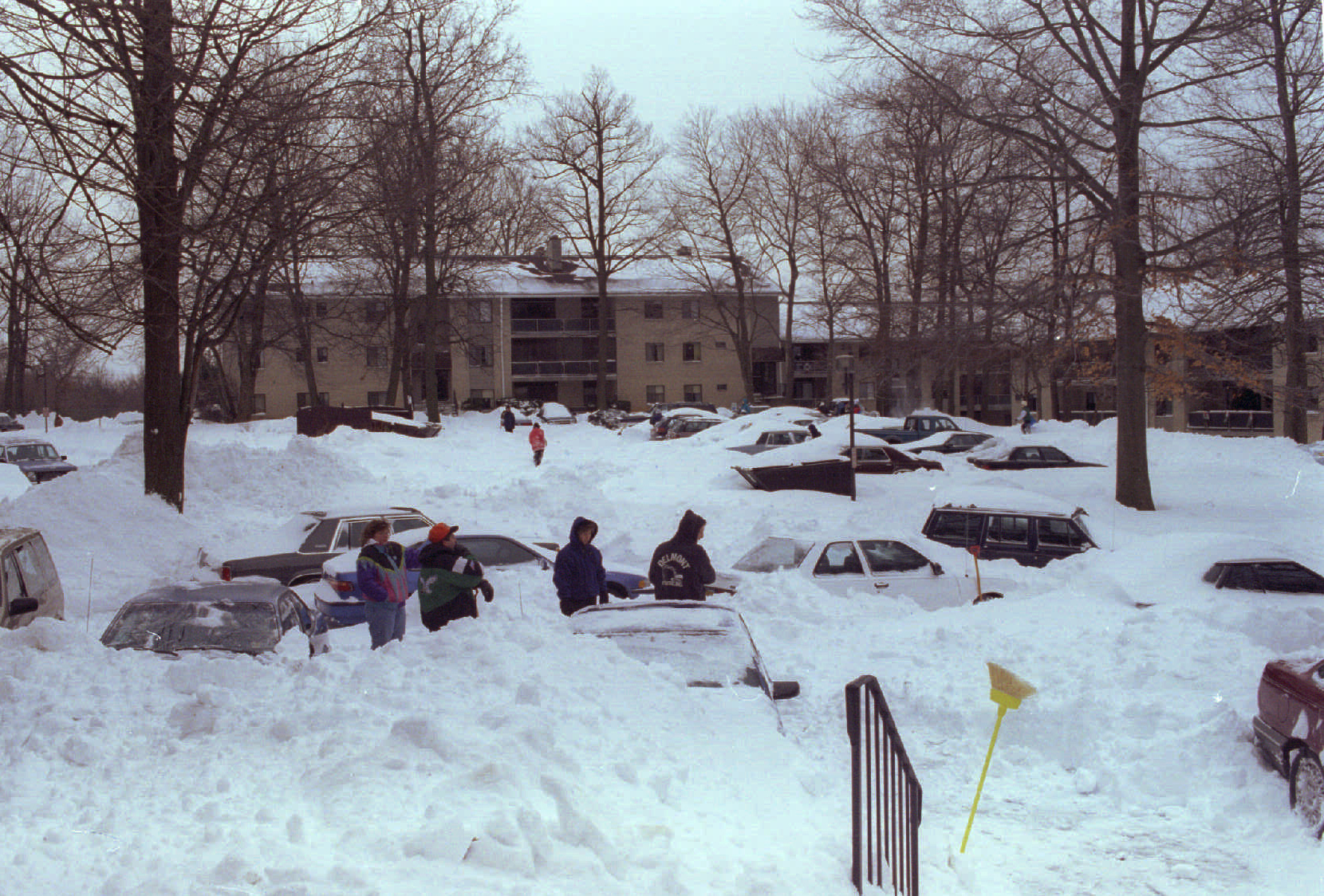
    A view looking out over the snow covered parking lot in Malvern.

    How warming may be affecting snowstorms

    Warming has resulted in more evaporation, filling the air with more moisture, “and the potential for more extreme precipitation,” said Kyle Imhoff, a Pennsylvania State University professor who is the state climatologist.

    Said Louis Uccellini, former head of the National Weather Service and one of the nation’s most prominent storm experts, “if conditions are right … that would include the potential for more snowfall within an individual storm.”

    Proximity to bodies of water, primary sources of moisture, may be making a difference, said Imhoff. In Erie, in recent decades warming appears to be prolonging the lake-effect snow season as waters have been less prone to freezing.

    In recent decades, snowfall from coastal lows has “become more frequent,” he said. Philly’s biggest snows typically are generated by nor’easters that import moist air from the Atlantic, where sea-surface temperatures have been above normal consistently. That warmth may be giving a jolt to coastal storms, according to a paper published in July by a group of researchers, including the University of Pennsylvania’s Michael E. Mann.

    It ain’t necessarily snow

    That wouldn’t necessarily mean more snow. Ocean temperatures typically are several degrees above freezing in winter, and onshore winds often have turned snow to rain in Philly.

    “The trick is getting enough cold air for snowfall,” said Imhoff.

    Snowfalls of a foot or more require a highly unlikely alignment of circumstances, a meeting of opposites: Cold air that holds its ground near the surface, forcing warm moist air to rise and generate snowflakes.

    Philly’s normal seasonal snowfall is 23.1 inches, but a “normal” season is hardly the norm. The totals have varied from nothing (1972-73) to 78.7 (2009-10). The region has experienced decades of robust snow totals, and snow scarcity.

    Sarah Johnson, the warning coordination meteorologist in Mount Holly says she hasn’t yet seen the fingerprints of climate change on snowfall patterns.

    “My hypothesis: It’s probably just the luck of the draw,” she said.

    Tony Gigi, retired weather service meteorologist, said he wondered if some overarching pattern might explain the decadal variability of snowfall in the region.

    About the 1996 storm

    Gigi was working the overnight on the morning of Jan. 7, a Sunday, when the snow began. He somehow made it to his Mount Laurel home after work, only to be called back Monday to relieve stranded colleagues.

    Overall, the storm was a forecasting triumph, but Gigi said the European model well outperformed its U.S. counterpart. But no one was predicting 30 inches for Philly.

    It was an astounding total for a variety of reasons, including the fact that it predated the region’s peak snow season by about three weeks. Of the total, 27 inches fell on the 7th; the previous record for the date was 5 inches.

    The 30.7 total became a source of controversy. The reason: “The snow wasn’t measured,” said Gigi.

    The total was inferred from a formula using the melted liquid equivalent of the snow and the air temperatures, which were in the teens and 20s during the snowfall. “It was in the realm of possibility,” said Gigi.

    But that’s not quite the standard method, said Johnson. Ideally, she said, snow should be measured once with a ruler (or yardstick) at the point that the snow stops.

    In this case, the total was so suspect that it wasn’t entered into the climate record for four years. The weather service commissioned then-Franklin Institute meteorologist Jon Nese and New Jersey state climatologist Dave Robinson, an international snow expert, to conduct a forensic investigation. They concluded the total was legitimate, given similar nearby snow reports.

    It remains unclear whether it was truly an all-time record, since no official measurements are available before 1884. The late weather historian David Ludlum quoted a visiting Swedish author as having witnessed snow “a yard deep” in Philadelphia in March 1705. However, Ludlum pointed out that it was unclear whether that was the result of a single snowfall.

    The future of snow

    As of Wednesday, at 4.8 inches, Philly’s official seasonal snowfall total is exactly “normal.”

    Highs are expected to climb into the 50s through Saturday, perhaps reaching 60 on Friday before a cool-down early next week. Not a flake sighting is in the extended outlooks.

    One factor in the lack of snow in recent years has been consistently cool waters in the tropical Pacific that tend to affect west-to-east upper-air patterns that are unfavorable to East Coast storms.

    For the Philly region, “The pattern has not been kind to snow lovers,” he said.

    Of note, the 1995-96 winter came at the end one of the most snowless 10-year periods in Philly on record.

  • A Malvern teen is launching free art classes for kids | Inquirer Chester County

    A Malvern teen is launching free art classes for kids | Inquirer Chester County

    Hi, Chester County! 👋

    Welcome to the first full week of 2026. We’re kicking off the new year with the story of a Malvern teen who’s helping kids find joy in art. Also this week, four new county officials have been sworn in, West Bradford Township’s property taxes are being slashed, plus the search is on for a new tenant at the former Iron Hill in West Chester.

    We want your feedback! Tell us what you think of the newsletter by taking our survey or emailing us at chestercounty@inquirer.com.

    If someone forwarded you this email, sign up for free here.

    A 15-year-old’s nonprofit looks to spread the joy of art

    Faridah Ismaila launched nonprofit A Paint-full of Promise to connect younger students with free monthly art classes.

    A Great Valley High School sophomore will soon be bringing her passion for art to young students in the district.

    Inspired by the phrase “Do what makes you happy,” Faridah Ismaila recently launched nonprofit A Paint-full of Promise to provide free monthly art classes for kindergarteners through sixth graders, The Inquirer’s Brooke Schultz reports.

    The program is slated to kick off this month with a winter wonderland-themed class. Ismaila is working with district educators to offer the workshops where students can learn new skills and express themselves.

    Read more about what inspired A Paint-full of Promise.

    📍 Countywide News

    💡 Community News

    • Erica Deuso was sworn in Monday as mayor of Downingtown, making her the first openly transgender mayor in the state.
    • A person on a trail on Warwick Furnace Road in Warwick Township was recently injured by a coyote, prompting the Chester County Health Department to look for the animal. It’s unknown if the coyote is rabid.
    • Residents of West Bradford Township will see a decrease in their property taxes this year, bucking a trend in the region. The 50% reduction is due in part to a mix of savings during the pandemic and more revenue from long-term leases.
    • The community is mourning the death of photographer, filmmaker, and Kennett Square resident Robert Caputo, who died Dec. 18 at a voluntary assisted dying center in Switzerland. Throughout his career, Mr. Caputo traveled the world, producing stories, films, and photographs for National Geographic magazine, Time, PBS, and TNT. The 76-year-old was diagnosed with Alzheimer’s disease last year.
    • A Malvern office building at 52 Swedesford Rd. is poised for demolition to make way for a mixed-use development with 250 apartments and retail space, including a market and cafe. (Philadelphia Business Journal)
    • The 33,000-square-foot Acme-anchored shopping center at 785 Starr St. in Phoenixville recently sold for nearly $7.4 million. The sale didn’t include Acme’s space.
    • The state’s Department of Environmental Protection is expected to evaluate surface and well water at the Bishop Tube HSCA Site in East Whiteland Township this month for contaminants such as PFAS, volatile organic compounds, and inorganics, as well as fluoride.
    • The Paoli Memorial Association in Malvern has been awarded a $325,000 grant, which will help fund construction of the Paoli-Malvern Heritage Center. The center, which will be adjacent to the Paoli Battlefield, will preserve an 1817 obelisk and offer interpretive exhibits.
    • Several Chester County communities have received funding from the state’s Green Light-Go Program aimed at improving traffic safety and mobility. Upper Uwchlan Township has been awarded over $920,000 to upgrade detection and controller equipment at Route 100 and Graphite Mine Road. West Whiteland Township is getting nearly $390,000 to upgrade multiple intersections along Route 100 and Commerce Drive. And East Whiteland Township will get almost $192,000 to modernize Lancaster Avenue and Conestoga Road.
    • Heads up for drivers: Asplundh will be pruning trees along Goshen Road between Pottstown Pike and Hillside Drive in West Chester throughout the first quarter of 2026.
    • Paoli Hospital is among Forbes Top Hospitals for 2026 and is the sole Chester County institution on the list.
    • Two new gyms are now open: CrossFit Reckoning opened this week at 199 Reeceville Rd. in Coatesville and Planet Fitness has opened at 270 Swedesford Rd. in Berwyn.
    • On Monday, Coatesville-based Presence Bank became part of Norwood Financial Corp.’s Wayne Bank after being acquired for $54.9 million. Presence has two Chester County branches, in Coatesville and Oxford.
    • Kennett Area Senior Center, the nonprofit helping older adults, took on a new name at the start of the year. It’s now known as The Gathering Place at Kennett.
    • Looking to dispose of your Christmas tree? Upper Uwchlan will collect trees curbside on Jan. 15; Spring City residents can place trees curbside daily through Jan. 30 for pickup; East Pikeland residents can place trees curbside on Wednesdays in January or drop them off at the township yard waste recycling facility; West Vincent residents can drop them off at the township building through Jan. 23; and Phoenixville residents can place them curbside with trash through Feb. 28. Trees can also be dropped off at the compost site at 18 S. 2nd Ave.
    • It’s the last chance for residents in Easttown (through Jan. 12) and Upper Uwchlan (through Jan. 15) to recycle old holiday lights.

    🏫 Schools Briefing

    • Tredyffrin/Easttown School District is hosting its elementary new student registration window for next school year from Jan. 20-26. Learn more here.
    • West Chester Area School District has an opening on its school board following Alex Christy’s resignation ahead of his term’s expiration next December. Applications to fill the vacancy are open until noon on Jan. 21.
    • Coatesville offensive lineman Maxwell Hiller was named to Sporting News’ 2025 High School Football All-America Team. The junior is rated the top interior offensive line in his class.

    🍽️ On our Plate

    • The search is on for someone to take over the former Iron Hill Brewery in West Chester. Over the holidays, building owner John Barry acquired the liquor license and all assets inside the space, which he said will help him “to get a better tenant in there.”
    • In case you missed it, The Inquirer’s Michael Klein reflected on the most notable restaurant openings of 2025. They include Bao Nine in Malvern, The Borough in Downingtown, Jolene’s in West Chester, L’Olivo Trattoria in Exton, The Local in Phoenixville, and Stubborn Goat Brewing in West Grove. See the full list here. The Borough also made Klein’s roundup of the best new pizza restaurants to open in the region last year.
    • As for the best things Inquirer food writers ate last year, the Caramelia at Longwood Gardens’ 1906 restaurant was up there. Paying homage to Kennett Square’s mushroom industry, the red-topped mushroom-shaped dessert features chocolate mousse with espresso and caramel flavors.

    🎳 Things to Do

    🎨 An Ancestral Journey: Moore College of Art grad Roe Murray’s works will be on display for the next few weeks. She will also participate in an artist talk on Jan. 28. ⏰ Thursday, Jan. 8-Thursday, Jan. 29, times vary 💵 Free 📍 Chester County Art Association West Chester Galleries

    🎶 A Grand Night For Singing: This rendition will celebrate the wide-ranging works of Rodgers & Hammerstein with singing, dancing, and a live orchestra. ⏰ Friday, Jan. 9-Sunday, Jan. 18, select days and times 💵 $31.60-$36.70 📍 SALT Performing Arts, Chester Springs

    🧁 Pinkalicious the Musical: The musical adaptation of the book follows a pink-loving heroine who inadvertently turns herself into her favorite color by eating too many cupcakes. ⏰ Friday, Jan. 9-Sunday, Jan. 18, select days and times 💵 $21-$30 📍 Uptown! Knauer Performing Arts Center, West Chester

    🏡 On the Market

    An airy four-bedroom Kennett Square carriage home

    The carriage home has a two-car garage and a screened-in porch that leads to a deck.

    Located in the Villages at Northridge, this Kennett Square carriage home is just a few years old. The great room, which has a fireplace, opens to the kitchen, where there’s two-toned cabinetry, an island with a farmhouse sink, a pantry, and a dining area with a built-in beverage station complete with a bar refrigerator and ice maker. The great room also has access to the screened-in porch, which leads to the deck. There are three bedrooms upstairs, including a primary suite with a walk-in closet and a bathroom with a double sink vanity. The finished lower level walk-out has another bedroom, a full bathroom, and a living room.

    See more photos of the property here.

    Price: $975,000 | Size: 3,544 SF | Acreage: 0.06

    🗞️ What other Chester County residents are reading this week:

    By submitting your written, visual, and/or audio contributions, you agree to The Inquirer’s Terms of Use, including the grant of rights in Section 10.

    This suburban content is produced with support from the Leslie Miller and Richard Worley Foundation and The Lenfest Institute for Journalism. Editorial content is created independently of the project donors. Gifts to support The Inquirer’s high-impact journalism can be made at inquirer.com/donate. A list of Lenfest Institute donors can be found at lenfestinstitute.org/supporters.

  • The story behind a colonial-era Woodcrest cemetery | Inquirer Cherry Hill

    The story behind a colonial-era Woodcrest cemetery | Inquirer Cherry Hill

    Hello, Cherry Hill! 👋

    Did you know one of South Jersey’s first colonial families is laid to rest in Woodcrest? Learn more about the cemetery tucked into a residential part of town. Also this week, a new Inquirer analysis shows how Cherry Hill voters shifted toward Democrats in the last election, plus work is still underway to update H Mart.

    We want your feedback! Tell us what you think about the newsletter by taking our survey or emailing us at cherryhill@inquirer.com.

    If someone forwarded you this email, sign up for free here.

    The story behind a colonial-era gravesite in Woodcrest

    The Matlack Family Cemetery is located at 535 Balsam Rd.

    The residential street of Balsam Road in Woodcrest is an unlikely spot for a gravesite, but tucked among the houses and sassafras trees, there’s a small cemetery that dates back nearly 300 years.

    The site is the final resting place for the Matlacks, one of South Jersey’s first colonial families, as well as an unknown number of servants and enslaved people.

    A township resident, curious about how the gravesite came to be, posed his question to Curious Cherry Hill. The Inquirer’s Denali Sagner set out to learn more about the family and its patriarch, who moved to New Jersey in 1677 from England as an indentured servant and ultimately began one of the largest colonial-era families in the region.

    Here’s what she uncovered.

    Have a question about town you want answered? Submit it to Curious Cherry Hill here.

    💡 Community News

    • There was a 3.9% shift among Cherry Hill voters to Democrats in 2024-25, with about 68% voting for Gov.-elect Mikie Sherrill in November’s election. The Inquirer recently analyzed Sherrill’s path to victory, finding that the largest shift within Cherry Hill took place in District 10, encompassing Brookfield, where there was a 10.3% shift, followed by District 8 (9.4%), which includes Kenilworth, and District 2 (8.2%), which spans Cooper Park Village, Kingsway Village, and Waterford Park. See a map of how districts shifted.
    • Cherry Hill Township Council held its reorganization meeting on Monday night, where William Carter was reelected council president and Michele Golkow was elected vice president.
    • The new season of King of Collectibles began streaming late last month on Netflix, where Cherry Hill native Ken Goldin takes viewers inside his South Jersey auction house. One of the highlights of Season 3 is a jersey used by soccer legend Lionel Messi when he was a child. In a video by The Inquirer, Goldin gives viewers a glimpse. He also shows off some of the Philly sports gems in his possession.
    • The Eagles are heading into the NFC Wild Card playoffs as the No. 3 seed, taking on the 49ers at 4:30 p.m. on Sunday. As the team gears up for the postseason, the Road to Victory Bus Tour is stopping in town Thursday, where you can shop for gear and enter for a chance to score playoff game tickets. It’ll be at the P.J. Whelihan’s on Marlton Pike from 5:30 to 6:30 p.m.
    • Work is still underway to overhaul the H Mart on Route 70. The popular chain Asian grocery store closed in July for renovations, including an expansion of the second floor and the addition of an open-concept food court. The Cherry Hill location, which was expected to reopen in October, remains closed as work on the entire complex continues. (42 Freeway)
    • Some retail shakeups are happening around town. The New Balance at Tuscany Marketplace closed its doors indefinitely on Dec. 27. At the mall, plus-size women’s apparel brand Torrid is closing on Jan. 19, athleisure brand Lululemon Athletica is relocating to a larger space, and jeweler Pandora is expanding next door. And on Route 70, Appliances Outlet will be taking over the space occupied by Whole Hog Cafe and part of Wine Legend. (A View From Evesham)
    • Fox29’s Bob Kelly recently dropped by D&Q Skate, Snow, and Surf shop in Cherry Hill to chat about trending gear for those heading to the slopes. Catch the segment here starting around the 5-minute mark.

    🏫 Schools Briefing

    • There’s a board of education meeting Tuesday at 6:30 p.m.
    • Teachers in Cherry Hill Public Schools made a median salary of $102,148 last school year, according to an NJ.com analysis. It is one of 30 districts statewide with a median salary greater than $100,000. The district’s median salary last year marked a 4.1% increase over the previous year and was nearly $20,000 higher than the statewide median.

    🍽️ On our Plate

    🎳 Things to Do

    😂 All Laughs, No Hate: Latin comedy and culture take center stage during this comedy night. ⏰ Friday, Jan. 9, 6:30-8:30 p.m. 💵 $36.09 📍Vera

    🌱 Winter Sowing: This workshop will teach you how to get a jump on your spring gardening. ⏰ Saturday, Jan. 10, 10 a.m.-noon 💵 $15 📍Camden County Environmental Center

    💡 Panoply: Test your knowledge of pop culture, sports, music, history, and more in this out-of-the-box game night. The event is 21 and older. ⏰ Saturday, Jan. 10, 7-9:45 p.m. 💵 $36 📍Katz JCC

    🍷 January Wine Down Wednesday: Sip five, two-ounce pours and enjoy appetizers at this event. ⏰ Wednesday, Jan. 14, reservations available from 6 to 8 p.m. 💵 $25 📍Randall’s Restaurant

    🏡 On the Market

    An updated five-bedroom Woodcrest ranch

    The home has an open-concept living and dining room.

    This Woodcrest ranch was recently remodeled to give its interior and exterior a modern makeover. It features an open-concept dining and living room, a sunroom, and an eat-in kitchen with quartz countertops and a gray-and-white herringbone backsplash. It has five bedrooms and three bathrooms, including a primary suite with a walk-in closet and its own bathroom. There’s also a finished basement.

    See more photos of the property here.

    Price: $759,900 | Size: 2,592 SF | Acreage: 0.29

    🗞️ What other Cherry Hill residents are reading this week:

    By submitting your written, visual, and/or audio contributions, you agree to The Inquirer’s Terms of Use, including the grant of rights in Section 10.

    This suburban content is produced with support from the Leslie Miller and Richard Worley Foundation and The Lenfest Institute for Journalism. Editorial content is created independently of the project donors. Gifts to support The Inquirer’s high-impact journalism can be made at inquirer.com/donate. A list of Lenfest Institute donors can be found at lenfestinstitute.org/supporters.

  • The story behind a colonial-era grave site hidden in residential Cherry Hill

    The story behind a colonial-era grave site hidden in residential Cherry Hill

    Giancarlo Brugnolo moved to Cherry Hill’s Woodcrest neighborhood in 2014, but it wasn’t until last year that he heard about the centuries-old cemetery just a stone’s throw away from his house. When friends first mentioned it, he assumed they were joking.

    “I was like, ‘What are you talking about? What graveyard?’” he remembers saying. “We live in a residential neighborhood, there’s no way there’s a graveyard.”

    Yet tucked away under sassafras trees and in the shade of neighboring houses, members of one of South Jersey’s first colonial families are laid to rest.

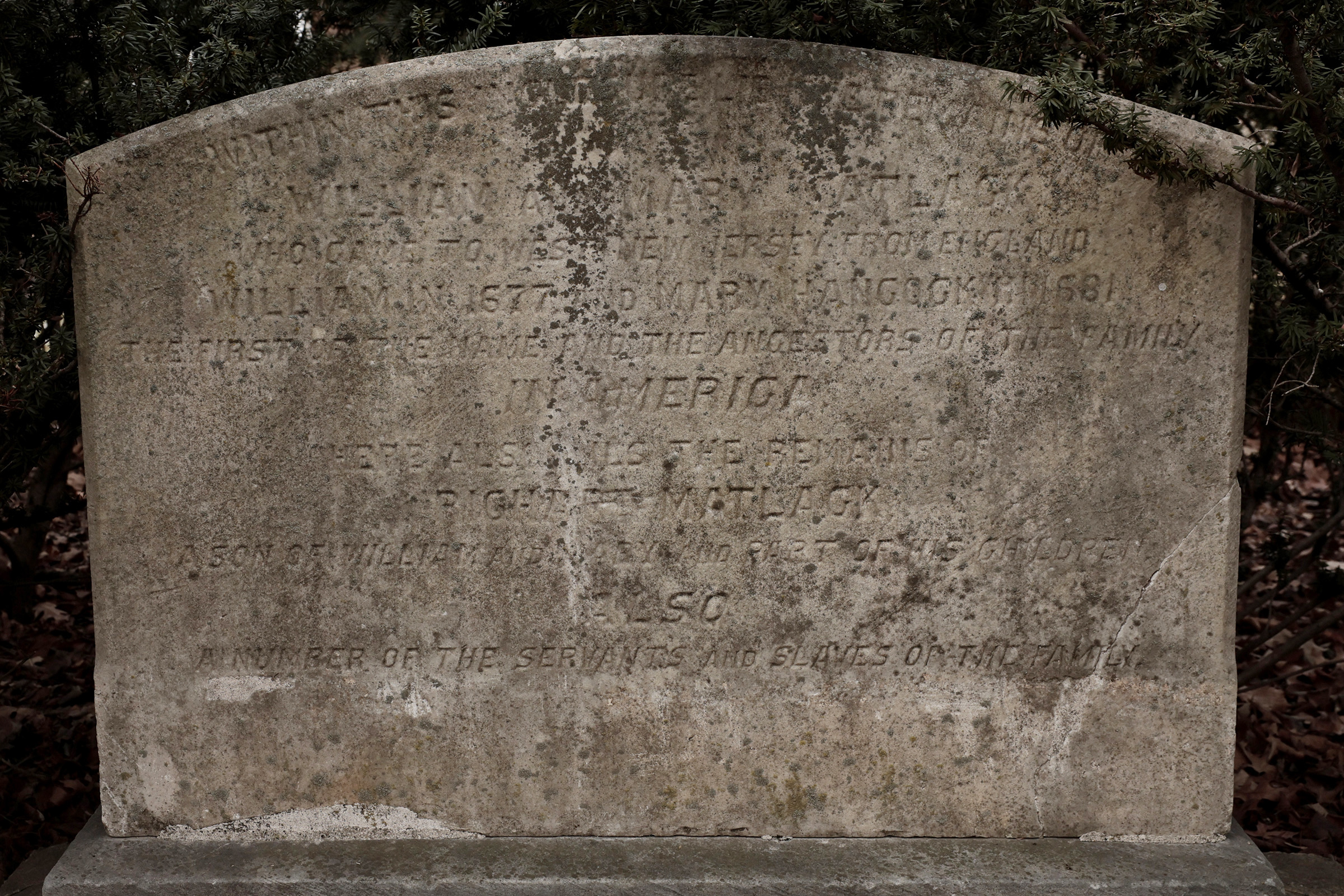
    The Matlack Family Cemetery is located on the 500 block of Cherry Hill’s Balsam Road. At the small grave site lie the remains of William and Mary Matlack, some of their descendants, and an unspecified number of servants and enslaved people. William Matlack is believed to have died in 1738, at around age 90, and Mary Matlack in 1728, at around age 62.

    Wanting to know more about the cemetery, Brugnolo took his question to Curious Cherry Hill, The Inquirer’s forum for answering local questions. Who was the Matlack family, and how did their grave site end up in a residential neighborhood?

    » ASK US: Have something you’re wondering about in Cherry Hill? Submit your Curious Cherry Hill question here.

    William Matlack, a carpenter, came to New Jersey in 1677 from Cropwell Bishop in Nottinghamshire, England. He traveled to the Americas on a ship named the Kent as an indentured servant to Thomas Ollive and Daniel Wills. Wills was appointed as the commissioner of West Jersey and sent to make deals with the Lenni-Lenape people who had long lived on the land. Many of the Kent’s travelers, including Matlack, were Quakers. The ship traversed the Atlantic Ocean from England, ultimately heading up the Delaware River to present-day Burlington County. Matlack is said to have been the first European settler to put his foot on the shore of what is now the city of Burlington (however some historians believe Swedes settled there a half-century earlier).

    At the time Matlack and Wills arrived in South Jersey, the spot was “a bleak haven” from their English homes, covered in dense forest and impenetrable at night, according to a 1970 article in the Courier-Post. Yet South Jersey stood out as a “long-sought destination thousands of miles from the brutality of bigots” in England who persecuted them for their Quaker practices.

    Matlack owed Wills four years of servitude and, in 1681, was granted 100 acres of land in return. While working for Wills, Matlack helped build two of the first houses and the first corn mill in the area.

    The headstone in the Matlack Family Cemetery on the 500 block of Balsam Road in Cherry Hill.

    Matlack would become the patriarch to one of the largest families in colonial South Jersey. In the early 1680s he married Mary Hancock, who had recently come to New Jersey from England with her brother, Timothy. At the time of their marriage, William Matlack was 34 and Mary Matlack was 16. The Matlacks lived between two branches of Pennsauken Creek in present-day Maple Shade. William Matlack would come to own around 1,500 acres of land across South Jersey. The couple had six sons, three daughters, and an estimated 40 grandchildren.

    Though Quakers became one of the first religious movements to reject slavery, many Quakers in early America, including the Matlacks, enslaved people. Research turned up little information about the enslaved people buried at the Matlack grave site. Birth and death records for enslaved people were often poorly kept in the age of chattel slavery, making it difficult to conduct genealogical research and historical inquiries into the lives of people held in slavery.

    We do know, however, that slavery was pervasive in Philadelphia’s suburbs during and after the colonial era. Despite abolitionist activism, much of which was driven by Quakers in the Philadelphia region, thousands of people remained enslaved in New Jersey through the turn of the nineteenth century. New Jersey was the last Northern state to officially abolish slavery in 1866, when Gov. Marcus Ward signed a state constitutional amendment outlawing the institution. The amendment followed the 1865 ratification of the 13th Amendment to the U.S. Constitution, which New Jersey had initially rejected.

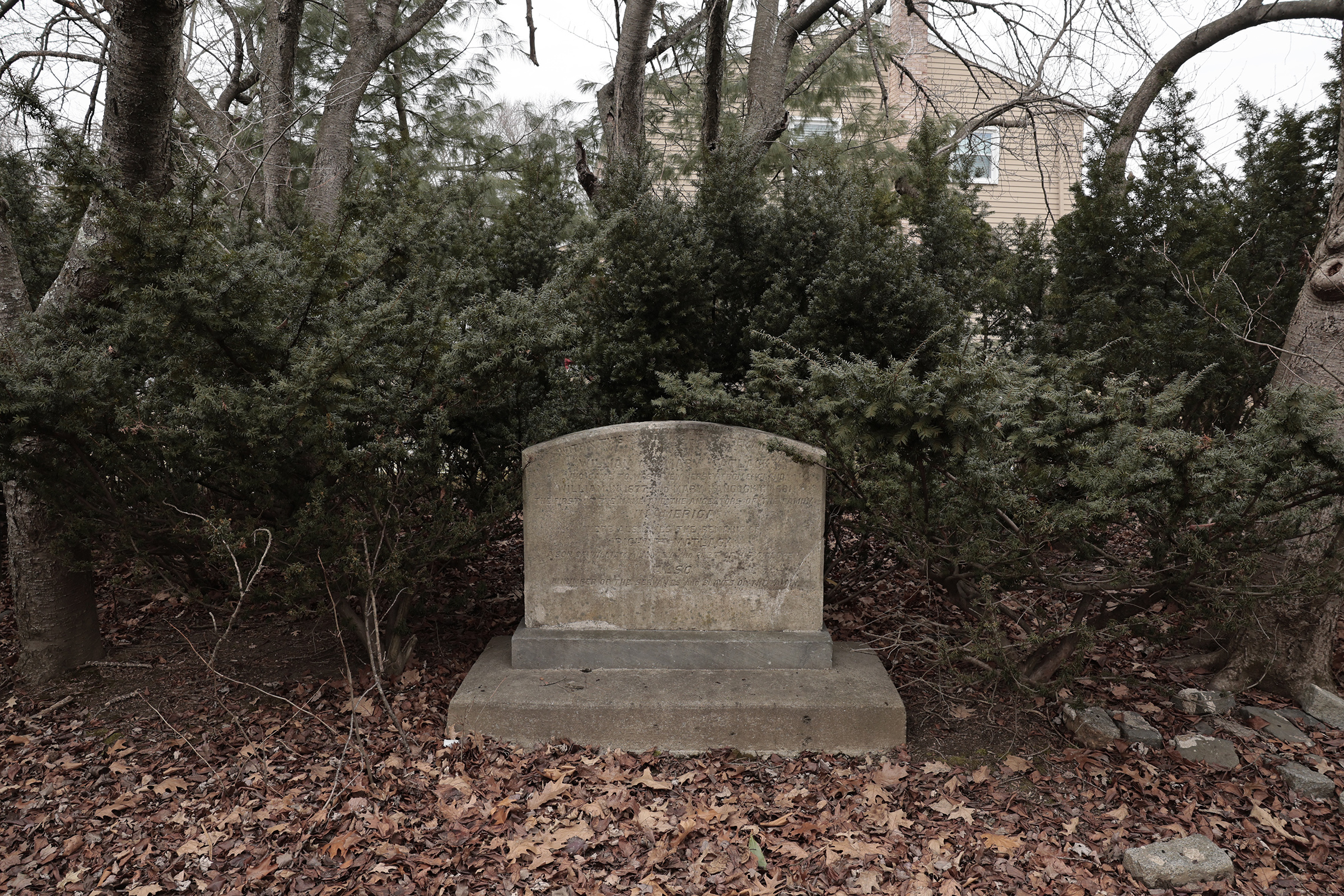
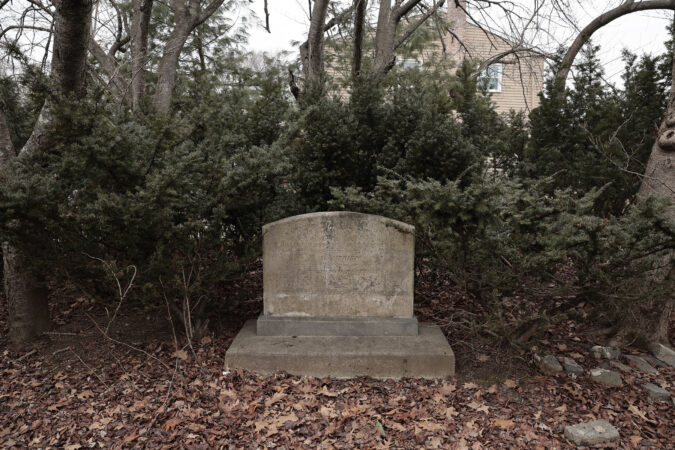
    The Matlack Family Cemetery is a small graveyard in a residential neighborhood.

    One well-known descendant of the Matlacks was Timothy Matlack, a politician and delegate to the Second Continental Congress who inscribed the Declaration of Independence. In Facebook groups and blog posts, dozens of residents of the Mid-Atlantic region say they are descendants of the first New Jersey Matlacks — likely claims given the expansive Matlack family tree, but difficult to prove.

    William and Mary Matlack were not originally buried at the Balsam Road site, according to archival materials from the Rancocas Valley Chapter of the National Society of The Colonial Dames of America. They were initially buried on their son Richard’s farm near Springdale and Evesham Roads and were moved to the Balsam Road grave site in the late 1800s.

    The grave was discovered by a Girl Scout troop on a camping trip in what was then an apple orchard, according to a Courier-Post article from 1990. The housing development surrounding the grave site went up in 1972, but the graveyard was left in tact due to its historical value. Today, it’s owned and maintained by the township.

    This suburban content is produced with support from the Leslie Miller and Richard Worley Foundation and The Lenfest Institute for Journalism. Editorial content is created independently of the project donors. Gifts to support The Inquirer’s high-impact journalism can be made at inquirer.com/donate. A list of Lenfest Institute donors can be found at lenfestinstitute.org/supporters.

  • Emails outline potential cuts affecting thousands of FEMA disaster responders

    Emails outline potential cuts affecting thousands of FEMA disaster responders

    The Department of Homeland Security has drafted plans to drastically cut the Federal Emergency Management Agency workforce in 2026, according to documents obtained by the Washington Post that detail potential reductions to thousands of disaster response and recovery roles.

    The terminations are likely to come in waves, according to three people familiar with the plans who, like some others interviewed for this report, spoke on the condition of anonymity for fear of retribution. They said the cuts began on New Year’s Eve with the elimination of about 65 positions that were part of FEMA’s largest workforce, known as the Cadre of On-Call Response and Recovery (CORE) — staffers who are among the first on the ground after a disaster and often stick around for years to help communities recover.

    Independent journalist Marisa Kabas and CNN earlier reported a portion of the New Year’s Eve cuts.

    Emails sent to senior agency leadership in late December include detailed tables identifying roles that can be cut from the agency’s divisions. These tables include a 41% reduction in CORE disaster roles, amounting to more than 4,300 positions. They also list reductions in surge staffing, standby workers who are often the first on the ground when a disaster strikes, by 85%, or nearly 6,500 roles.

    In a statement, FEMA spokesperson Daniel Llargués said the agency has “not issued and is not implementing a percentage-based workforce reduction.”

    “The materials referenced from the leaked documentation stem from a routine, pre-decisional workforce planning exercise conducted in line with OMB and OPM guidance,” Llargués added. “The email outlining that exercise did not direct staffing cuts or establish reduction targets.”

    Homeland Security Secretary Kristi L. Noem has long wanted to cut back on CORE staffing, according to two former senior officials.

    Losing a large number of disaster-specific workers over a short period “would mean greater delays in processing and survivors not being dealt with as quickly as they had been before,” said Cameron Hamilton, who led FEMA as acting administrator in the early months of President Donald Trump’s second term.

    Internal agency emails and documents, as well as people familiar with the plans, suggest Noem is spearheading the drastic reductions, which may impede FEMA’s ability to fulfill its legal obligation to help the nation respond to disasters, according to three FEMA officials.

    Noem, who has exercised a tight grip over FEMA since taking over its parent department, has repeatedly expressed a desire to shrink or eliminate the agency. The Post reported that she previously made recommendations to cut agency staffing by about half.

    Although the documents call the staffing reduction an “exercise” and say “no staffing actions or personnel decisions are being directed or implemented as part of this request,” two officials familiar with the situation said the tables reflect Noem’s targets for the agency.

    An email describes the tables, which list total reduction counts and percentages for most of the agency’s divisions, as a “planning document.”

    Llargués said in FEMA’s statement that the “accompanying spreadsheet was an internal working tool used to collect planning inputs.”

    The emails show that there have been “deliberate” discussions regarding workforce reductions, said a person familiar with them, who added that the documents request “senior leadership to review and ensure that whatever staff is retained is absolutely necessary.”

    DHS has said publicly that it terminated 50 people in early January and that the cuts were “a routine staff adjustment of 50 staff out of 8000.”

    Two officials with knowledge of the process said that number is closer to 65. The officials had been told to expect that hundreds more people would lose their jobs by the end of January. CORE staffers whose jobs were supposed to be renewed this week still have not heard anything about their status, officials said.

    Llargués said the New Year’s Eve cuts were unrelated to the “planning exercise described in the leaked email.”

    The potential for additional cuts come less than a year after a wave of FEMA terminations, including of hundreds of probationary employees. FEMA officials are also awaiting a final draft of a report by a Trump-appointed review council on the agency’s future, which was supposed to be released last month. The Post previously reported that a version of that report recommended making FEMA leaner but also more independent — findings that countered recommendations from Noem, the council’s co-chair.

    Three FEMA officials raised concerns about the rapid and drastic dismantling of the agency workforce.

    Under the Post-Katrina Emergency Management Reform Act, the homeland security secretary is prohibited from taking actions that “substantially or significantly reduce the authorities, responsibilities, or functions” of FEMA.

    “It’s not just unprecedented — it directly contradicts the law,” said a veteran FEMA official who has also worked within DHS.

    Having the head of DHS determine the fate of disaster response roles “strips FEMA leadership of its statutory authority and puts control of the nation’s disaster workforce in the hands of a department that Congress explicitly told to step back after Katrina,” that person added.

    Emergency management historian Scott Robinson said cutting FEMA’s staffing at these levels “would [undo] an act of Congress without an act of Congress.”

    “The president is using a lot of administrative tools to try and do things we would have traditionally expected legislation to do,” Robinson said.

    There are about 17,500 CORE employees spread across the country — the majority of FEMA’s workforce of 22,316, an agency official said. Under the Stafford Act, FEMA hires these staffers for multiyear terms using the disaster relief fund.

    CORE teams partner directly with state and local officials to support ongoing response and recovery after a hurricane strikes or a fire tears through a town. They may move resources from warehouses to hard-hit communities; they process grants and conduct trainings. Some staffers were working on long-term projects related to Hurricanes Sandy, Maria, and Fiona. CORE teams also include lawyers, IT experts, and others who may help oversee nuclear plant operations or help in hazard reduction for earthquakes.

    For example, in a region that includes Texas, Louisiana and more than 60 tribal nations, about 80% of the FEMA staffers deployed in support roles are CORE employees, a former senior official said.

    Ongoing discussions to downsize FEMA also underscore how much autonomy the nation’s emergency management agency has lost since the start of Trump’s second term. FEMA has been without a congressionally appointed leader for nearly a year, cycling through temporary officials who have lacked disaster management experience, which is required by law to lead the agency. After David Richardson resigned in November, DHS tapped its chief of staff at the time, Karen Evans, to act as the agency’s interim administrator.

    An agency official familiar with the discussions said Evans has been part of conversations about the future of this disaster-specific workforce for the past few weeks, including about whether to extend positions for a month or two until the agency has had enough time to review the need for the roles. But the official said it seemed that Noem was making the final decision.

    As documents detailing workforce cuts made rounds within the agency over the past week, FEMA officials were stunned and pointed out that getting rid of nearly half of the nation’s disaster workforce would greatly harm communities in various stages of disaster recovery. States would need much more time to prepare and bolster their own disaster capabilities before the federal government significantly pulled back resources such as CORE employees.

    “The entire framework of a reduction should be built on stronger state partnerships, not knee-jerk reactions from the federal government,” Hamilton said.

    CORE appointments are typically renewed every two to four years. When the end of an employee’s contracted term approaches, their supervisors submit paperwork to renew those roles and send it up the chain. Most of the positions are usually reinstated, according to four current and former FEMA officials, in part because recovery work is long and complex.

    In mid-December, DHS took away FEMA’s authority to independently renew these positions, and it instituted a hiring process that requires Noem to review all CORE positions and help decide whether they should continue to exist, according to emails and a person familiar with a meeting where these new requirements were discussed.

    An email from Dec. 17 described how Noem — often referred to as “S1” in internal DHS and FEMA conversations and documents — created parameters for keeping the CORE employees.

    “To improve DHS review outcomes, each CORE term renewal justification must be written to fit what the S1 verification form is designed to capture,” it said.

    Noem overseeing hiring for disaster-specific employees “is completely outside the norm,” said the veteran FEMA official who also served within DHS. “CORE renewals have always been handled inside FEMA, as Congress intended under the Post-Katrina Emergency Management Reform Act.”

    The new system created year-end confusion as supervisors scrambled to send in detailed letters justifying a variety of positions.

    For example, in one region with 40 CORE employees whose jobs were to be renewed in January, supervisors sent lengthy justification notes for about 35 of those workers. That same day, they were told to trim the letters and send them again.

    They heard nothing in response, until they learned on Dec. 31 that they would lose nine employees “regardless of the recommendations of emergency management experts,” one official familiar with the situation said. The fate of the rest is unknown, a supervisor said. He said he was also told “there was no plan” to extend any other CORE employees whose jobs were supposed to be renewed this month.

    It is unclear whether FEMA or DHS took the justification memos into account.

    In the last weeks of December, the office was inundated with hundreds of these justification memos, including statistics and data meant to explain why specific roles were crucial to FEMA’s mission to help communities recover from disasters.

    Then, on New Year’s Eve, human resources staffers were told to inform people they had lost their jobs, according to a person familiar with the situation and memos obtained by the Post. Some CORE staffers learned they were fired on New Year’s Day while on vacation, and they were asked to send in their equipment by Jan. 2.

    Several agency officials who supervise CORE team members were shocked when they learned that numerous employees had suddenly lost their jobs, emails show.

    “This must be a mistake,” one supervisor wrote to FEMA’s HR services and other officials, explaining that they had approved their employee’s renewal and sent the paperwork through the proper channels.

    Another supervisor overseeing recovery work for Hurricane Helene expressed concern and confusion over losing a staffer, stating in a New Year’s Eve note to human resources that “based on the attached emails and form,” the worker’s “appointment should be renewed.”

    “I would like to resolve this ASAP, as this is a disappointing and confusing email to get right before a holiday,” the supervisor said.

    In response, a top human resources official said the situation was essentially out of their hands.