A woman was killed in front of her three children reportedly by their father who then shot himself during a custody transfer early Friday afternoon in Upper Darby.
Shortly after 1 p.m., Upper Darby police posted on social media that a man and woman had been found shot. Just after 6 p.m., Upper Darby police posted an update that the double shooting at Copley Road and Locust Street was “another senseless act of domestic violence.”
Officers responded to a 911 call for a shooting at the location and found the woman seated in the driver’s seat of a vehicle with a gunshot wound. Lifesaving measures were attempted but unsuccessful for the woman, police said.
The man was transported to Penn Presbyterian Medical Center, where he was listed in critical condition on life support, police said.
Police Superintendent Timothy M. Bernhardt told the Delaware County Daily Times that the woman was 34 and the man is 45. Their identities have not yet been made public.
Bernhardt told the Daily Times: “What we know through investigation so far is that the female was there picking up children. There’s a custody order in place. The male had the children for Christmas, he walked up to the car with the children, the children got into the vehicle, there was some type of an argument, exchange of words, he pulled out a handgun and shot her … got out of the vehicle and then shot himself.”
Three children inside the vehicle at the time of gunfire were not injured, Upper Darby police said.
“Yesterday’s incident was a brutal act of domestic violence,“ Bernhardt said in a statement to The Inquirer. ”A mother was killed in front of her children. Those children will live with this trauma for the rest of their lives. There is no excuse for this kind of violence, and the damage it causes is permanent.”
Staff writer Maggie Prosser contributed to this article.
The story behind New Jersey Gov.-elect Mikie Sherrill’s landslide victory last month can be understood by looking at her strong performance in the city of Camden.
The young, diverse,and working-class city exemplifies trends that played out across the state as Sherrill reversed rightward shifts among the voter groups Democrats desperately need to rebound with nationally.
An Inquirer analysis of municipal-level data shows that Sherrill outperformed both former Vice President Kamala Harris in 2024 andoutgoing Democratic Gov. Phil Murphy in 2021 across New Jersey’s 564 cities, boroughs, and townships, winning 300 — about 53% — of them as compared with Harris’ 252 last year and Murphy’s 210 four years ago.
window.addEventListener(“message”,function(a){if(void 0!==a.data[“datawrapper-height”]){var e=document.querySelectorAll(“iframe”);for(var t in a.data[“datawrapper-height”])for(var r,i=0;r=e[i];i++)if(r.contentWindow===a.source){var d=a.data[“datawrapper-height”][t]+”px”;r.style.height=d}}});
Camden’s population is more than 54% Hispanic and nearly 38% Black — Democratic-leaning voter groups that had shifted toward Trump nationally in 2024. Sherrill’s campaign had outreach operations geared toward both Black and Hispanic voters.
Every demographic group in the state swung toward Democrats this year, butSherrill’s most striking improvement over Murphy and Harris seemed to be among Hispanic people, who make up more than half of Camden’s population.
She similarly made gains in areas across the state that have high populations of young voters, lower-income voters, and voters without college degrees — like Camden.
Voters in Camden turned out for Sherrill resoundingly with 92% of the vote, more than 10 percentage points better than Harris performed in the city during her presidential run last year, and Sherrill outperformed the former vice president in every one of the city’s 40 precincts. The larger the Hispanic share of the voting district, the larger it shifted toward Sherrill.
This was reflected statewide, with the state’s 10 largest Hispanic-majority cities moving an average of 18 points to the left while other New Jersey municipalities moved just about four points toward the Democrat.
Latino outreach in Camden fueled Hispanic support
window.addEventListener(“message”,function(a){if(void 0!==a.data[“datawrapper-height”]){var e=document.querySelectorAll(“iframe”);for(var t in a.data[“datawrapper-height”])for(var r,i=0;r=e[i];i++)if(r.contentWindow===a.source){var d=a.data[“datawrapper-height”][t]+”px”;r.style.height=d}}});
Outreach to Hispanic voters was driven by a coordinated campaign between Sherrill’s campaign and the state Democratic Party, as well as independent expenditure groups. It seemed to pay off.
In Camden’s most heavily Hispanic precinct, for example, voters gave Sherrill 92% of the vote, 12 points more than they gave to Harris.
Sherrill’s campaign and its backers knew how important it was to win over these voters who had felt taken for granted by the Democratic Party.
UnidosUS Action PAC experienced that unfamiliarity with Sherrill when its canvassers first started knocking on doors in Camden in September, said Rafael Collazo, the executive director of the PAC.
“The question that Latino voters and voters that we spoke to had wasn’t if they were going to vote for Ciattarelli or not, because they were clearly against anyone associated with Trump,” Collazo said. “But they honestly weren’t sure if they were going to vote for Sherrill, because they didn’t feel like they knew her.”
Sherrill’s campaign and backers tapped local leaders like pastors, nonprofit executives, and elected officials, and held events specifically catered to Latinos, said Vereliz Santana, the coordinated campaign’s Latino base vote director, who grew up in Camden.
They spread the message through Spanish-speaking door knockers and Spanish-language ads, which Camden City Councilman Falio Leyba-Martinez, a Democrat, called “beyond impactful.”
“She made it normal for people to understand that you don’t speak English,” he said.
That was not always the case for New Jersey Democrats, according to Patricia Campos-Medina, a vice chair of Sherrill’s campaign and senior adviser for Sherrill’s Latino and progressive outreach. Democratic operatives in the statejustified saving money on bilingual messaging over the last decade since most Latinos speak English, she said.
“But the problem is that Latinos have to hear that you are talking to them … otherwise they feel like you’re just ignoring them,” she added.
And it’s not just speaking Spanish. Showing cultural competency — such as using Puerto Rican slang or phrases like “reproductive healthcare” instead of “abortion rights” — is also critical, she said.
window.addEventListener(“message”,function(a){if(void 0!==a.data[“datawrapper-height”]){var e=document.querySelectorAll(“iframe”);for(var t in a.data[“datawrapper-height”])for(var r,i=0;r=e[i];i++)if(r.contentWindow===a.source){var d=a.data[“datawrapper-height”][t]+”px”;r.style.height=d}}});
Latino organizers in Camden said that community members who supported Trump or did not vote in 2024 have become frustrated by the high cost of living, slashed federal funding, and Immigration and Customs Enforcement’s tactics. Even those for whom immigration was not a top priority or who supported Trump’s plan to deport people who committed crimes have been dismayed, they said.
Camden City Council President Angel Fuentes said videos circulating of immigrants being detained locally have been particularly resonant.
“You can see the tears of these individuals,” he said. “You know, it’s so inhumane. I mean, I really want to use the f-word, but it’s so inhumane how they’re treated. Latinos … we are all family. We should not be treated like this.”
Turnout increased compared to last race for governor
Turnout is typically lower in cities with large numbers of lower-income voters and voters without college degrees, like Camden. But Democratic investments in the city seemed to make a difference this year.
Camden saw a 63% increase in turnout compared with 2021. The jump in the city is more than double the 28% turnout increase statewide compared with the last race for governor.
The city still has relatively low turnout compared with the full state, however, with only 26% of voters casting ballots in Camden compared with 51% statewide.
Camden County as a whole was closer to the statewide turnout rate at 50%, butthe county’s increase of 32% from 2021 was smaller than the city’s growth.
Sherrill visited the city of Camden in July — early in her general election campaign — for a visit to CAMcare, a federally qualified health center that treats underserved communities, and went on to discuss it on a national podcast the next day.
She did not return until October, at which point she visited the city three times in the lead-up to Election Day. Her campaign also held a rally outside city lines at the Camden County Democratic Party headquarters in Cherry Hill that Santana said was planned to feel “authentically Latino.”
As part of their “scientific” strategy, Sherrill visited less-Democratic areas in the summer and early fall to try to win over swing voters before pivoting to bluer places like Camden, where they needed to motivate already-registered Democrats to cast their ballots, said Om Savargaonkar, the coordinated campaign director for Sherrill’s campaign and the New Jersey Democratic State Committee.
As Sherrill zigzagged the state, a massive coordinated effort was underway to draw a strong Democratic turnout, bolstered by national fundingfrom the Democratic National Committee.
Sherrill’s coordinated campaign — the state party operation that worked with the campaign — made at least19.5 million phone calls, door knocks, and text messages statewide, which was roughly 13 times more than the 1.5 million made for Murphy’s coordinated campaign in 2021, Savargaonkar said.
Out of a roughly $12 million statewide investment, about $2 million to $3 million went directly to county parties to supplement the statewide turnout efforts, Savargaonkar said of the coordinated campaign.
Sherrill did even better than previous Democrats in lower-income municipalities
Democrats routinely score landslide wins in New Jersey’s working-class municipalities.
Both Murphy and Harris posted double-digit margins in these communities, but Sherrill took that strong base and supercharged it. She won nearly two-thirds of the vote in the lowest-income municipalities and in places where fewer voters have college degrees — improving on Murphy’s and Harris’ performances by as much as eight percentage points.
In Camden, fewer than one in 10 adults have a college degree and the typical household has an annual income of $40,000. That’s in a state where nearly 45% of residents are college-educated and with a median income of about $100,000.
Sherrill’s campaign reached Latinos in Camden who voted for Trump last year because they believed he would make life more affordable but were having buyer’s remorse,organizers said.
Her campaign spoke with locals about the negative impacts of Trump’s tariffs, engaging with everyone from distributors and manufacturers to local business groups, Santana said. Local surrogates also discussed Trump’s cuts to benefits and programs that help the community, said Camden Mayor Victor Carstarphen.
And Sherrill’s focus on affordability and Trump resonated more broadly.
She also won among voters in wealthier places, including the middle 50% of towns by median household income — places where Ciattarelli won four years ago and where Trump fought Harris to a near-draw last year. Like Harris before her, she managed to win the very wealthiest areas comfortably.
While the city of Camden saw Sherrill’s biggest improvement over Harris in the county, her second-largest improvement came in nearby Runnemede, a borough in Camden County, where the typical household’s income is virtually identical to that of the state.
Sherrill reversed losses among the youngest voters
Trump made gains last year among younger voters across the country, and New Jersey was no different. The president won about 37% of the vote in the state’s youngest 25% of municipalities, beating Ciattarelli’s 2021 performance with that group by more than three percentage points even as he lost the state by nearly double Ciattarelli’s 2021 margin.
This year, Sherrill reversed those inroads, improving on Harris’ performance by nearly eight points in places, including Camden, where the median age is 33. (New Jersey’s median age is 40.)
Sherrill’s campaign made partnering with social media influencers a key part of her strategy as more young people focus their attention online. She appeared on national podcasts and in TikTok videos, on Substack, Reddit, and Instagram — often with Democratic-friendly hosts. Her team provided special access to influencers and held briefings with them.
Sherrill appeared on 18 podcasts from January to October 2025, according to Edison Research, while Harris appeared on only eight during her campaign from July to November 2024.
Her coordinated campaign’s statewide Latino effort also had its own social media, spearheaded by Frank Santos, a 33-year-old Camden resident of Puerto Rican and Nicaraguan descent. Santos and other staffers on the Latino outreach team represented different sub-demographics of “the larger Latino monolith,”Santana said.
Organizers also catered their conversations to different sub-demographics through smaller and more “organic” events, she said, noting that younger voters were generally more progressive.
“If you’re trying to connect with a community, knowing that you yourself reflect and represent that community, I think it makes the world of a difference,” she said.
window.addEventListener(“message”,function(a){if(void 0!==a.data[“datawrapper-height”]){var e=document.querySelectorAll(“iframe”);for(var t in a.data[“datawrapper-height”])for(var r,i=0;r=e[i];i++)if(r.contentWindow===a.source){var d=a.data[“datawrapper-height”][t]+”px”;r.style.height=d}}});
I set out deliberately this week to make an astronomical event photo for this space. I’ve done Santa and a menorah already this winter so I wanted to give props to the solstice.
The same pond on Dec. 14, just after the first significant snowfall of the season.
With the days getting shorter leading up Dec. 21, I first thought of sunset occurring earlier. But I worked nights for many years and photographed many of those.
Then I thought of all the time I’ve spent in our city’s historic district. (I love history, as the following paragraphs will attest, and I expect I’ll be there even more in 2026 as we celebrate the Semiquincentennial.)
I recalled a Chippendale armchair in the Assembly Room of Independence Hall made by Philadelphia cabinetmaker John Folwell in the years after our country was born. George Washington sat in the mahogany chair with a gilded sun carved into it for three months in 1787 as he presided over the Constitutional Convention.
A replica of George Washington’s chair in the Independence Visitor Center.
Benjamin Franklin is credited with immortalizing the chair at the close of the convention, expressing his optimism for the future of the new nation while looking at the design.
”Often and often … I have looked at that {sun} … without being able to tell whether it was rising or setting, but now at length, I have the happiness to know that it is a rising and not a setting sun.”
That’s why I decided to get out early this week to find a photo at sunrise, as I look ahead to the future.
However, speaking of history, there is also an established tradition of news organizations looking back at the end of the year.
So here is the Inquirer photo staff’s “Year in Review.” A visual record of the challenges, achievements, and the everyday moments of a year lived in full.
Since 1998 a black-and-white photo has appeared every Monday in staff photographer Tom Gralish’s “Scene Through the Lens” photo column in the print editions of The Inquirer’s local news section. Here are the most recent, in color:
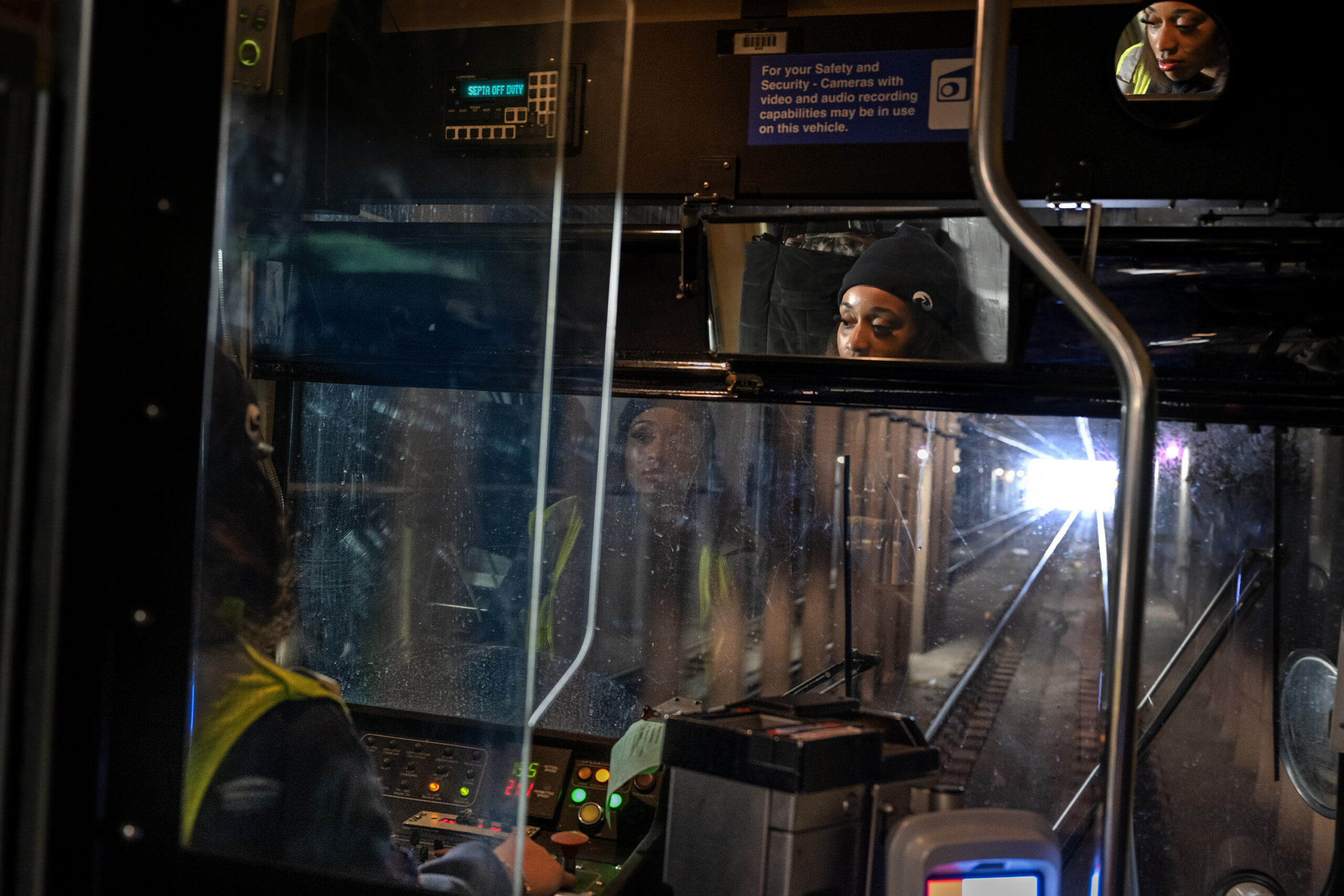
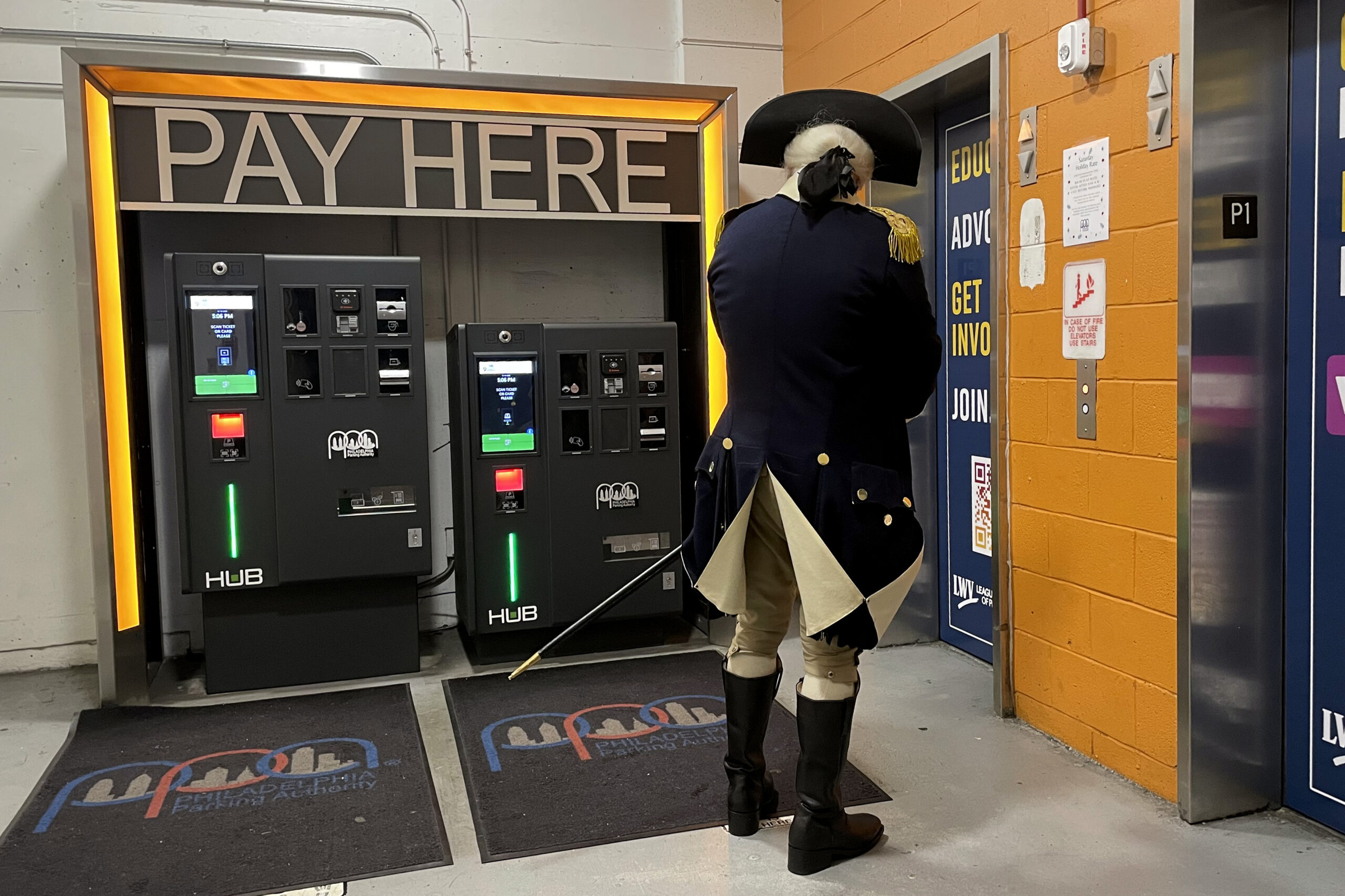
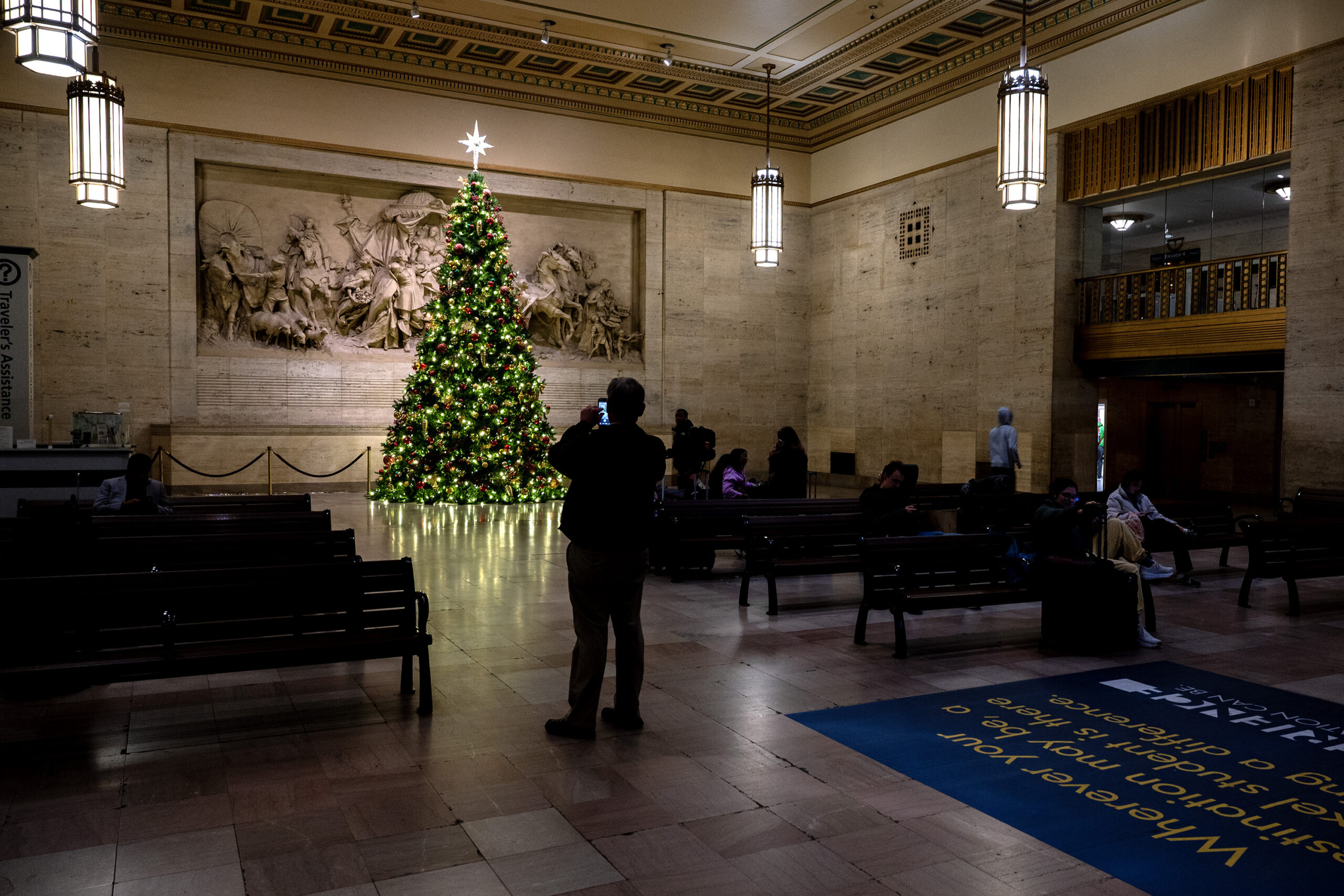
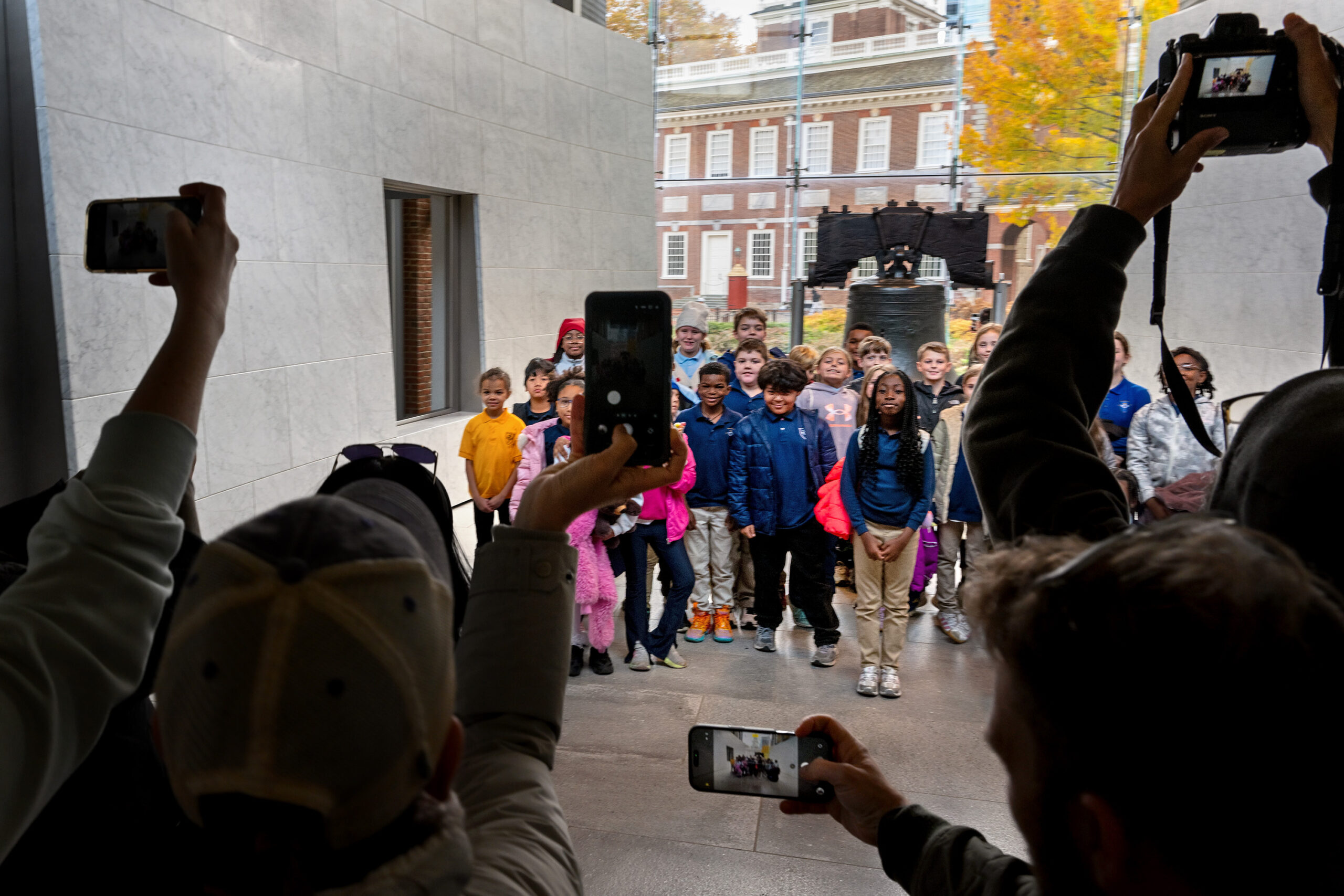
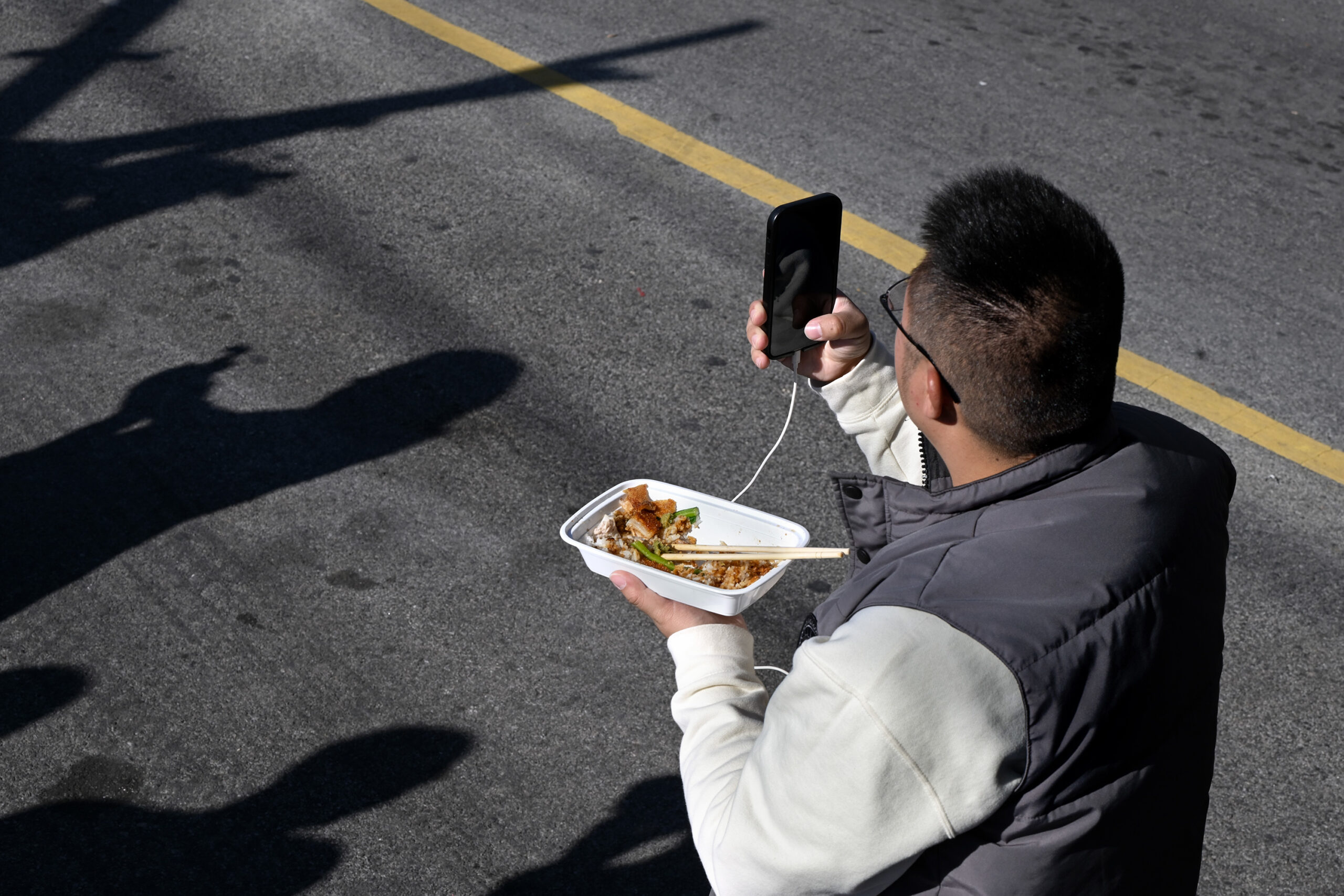
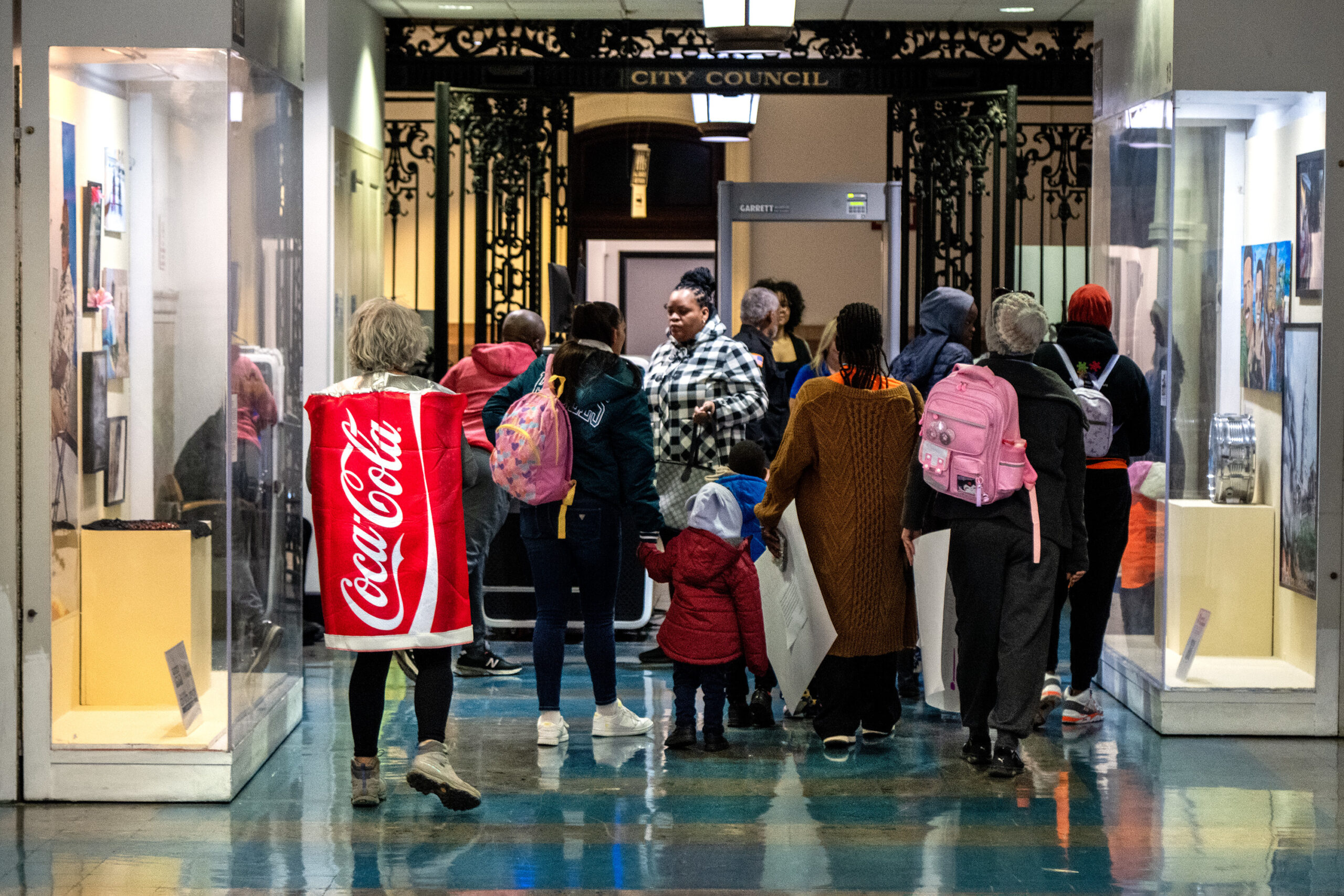
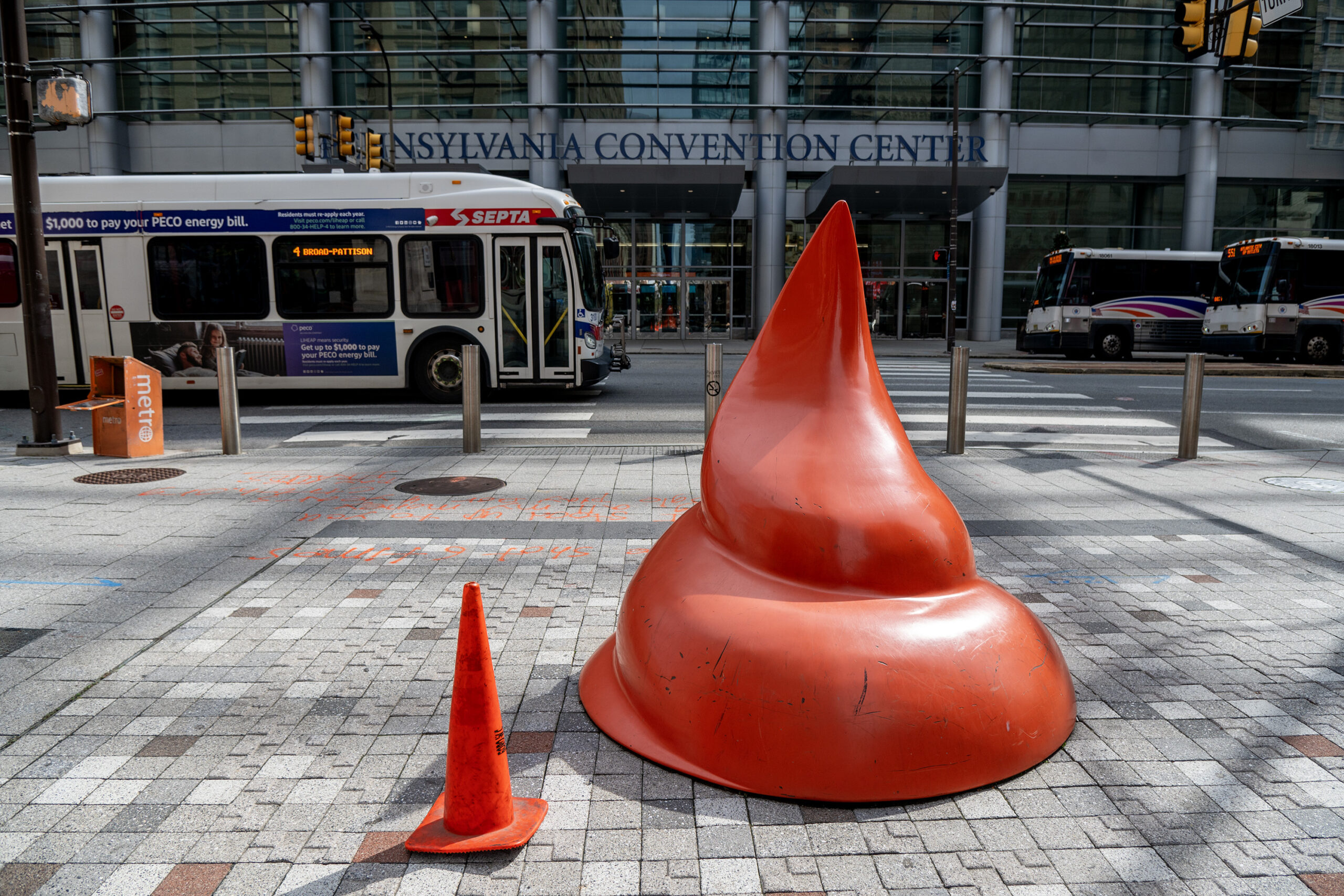
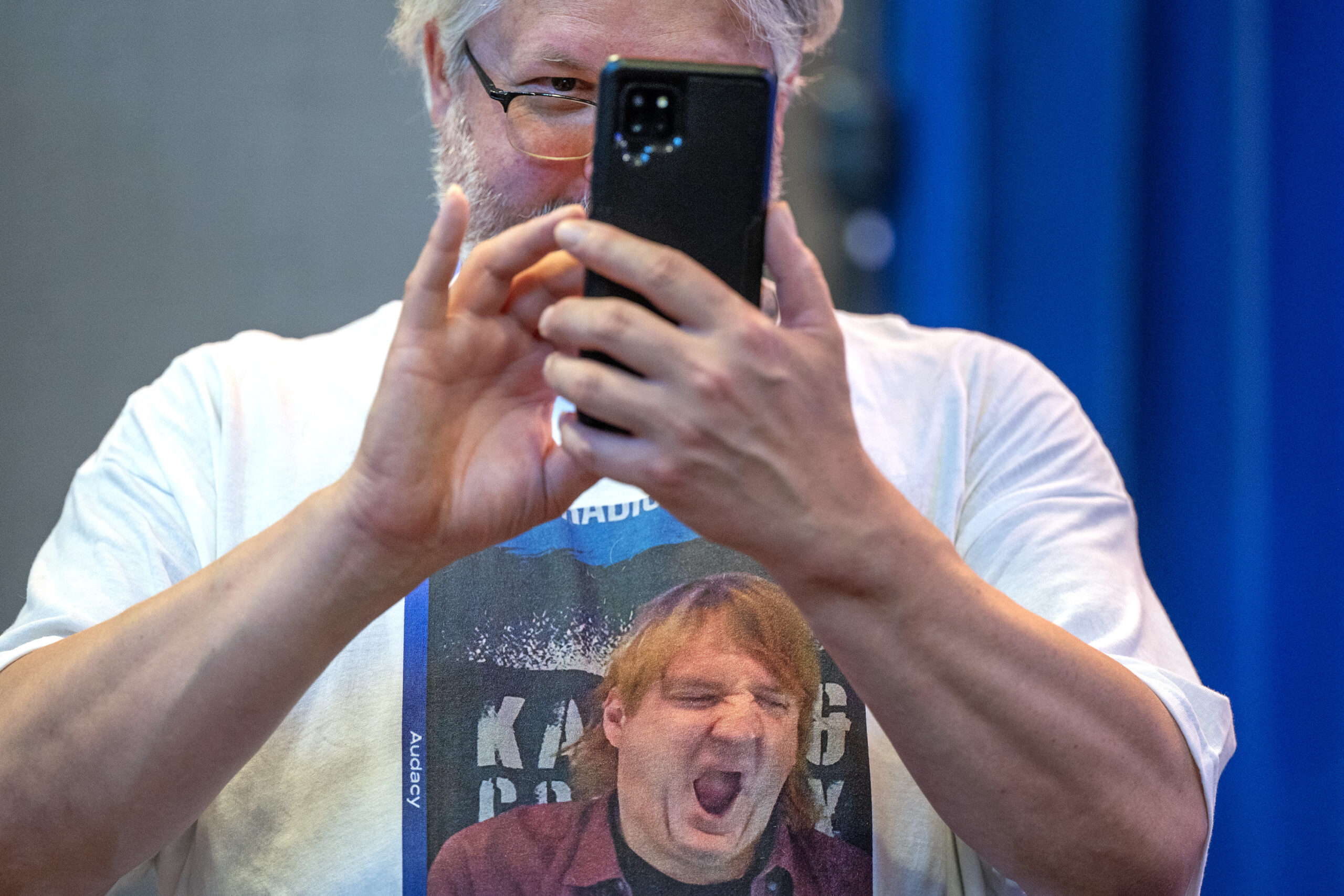
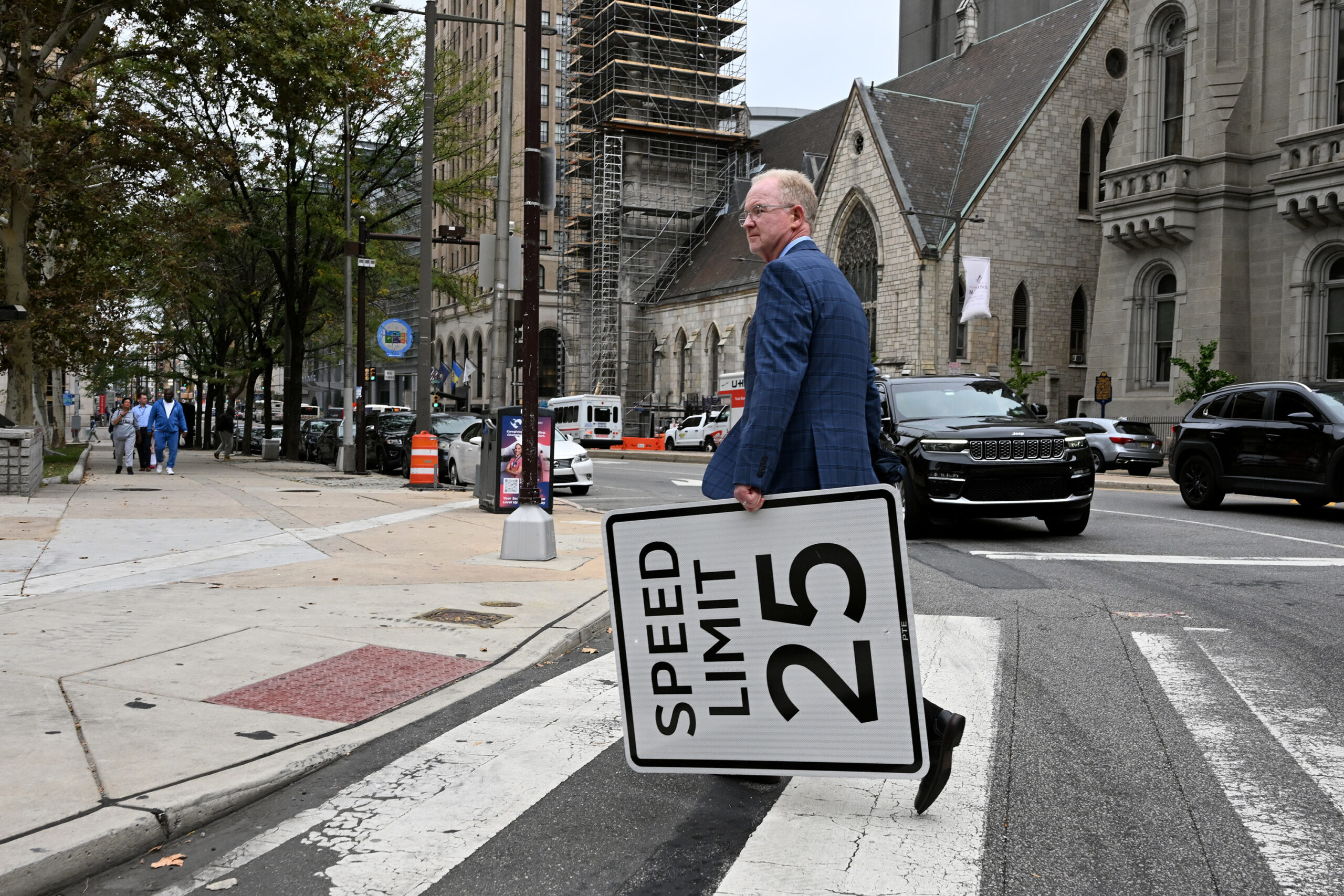
December 22, 2025: SEPTA trolley operator Victoria Daniels approaches the end of the Center City Tunnel, heading toward the 40th Street trolley portal after a tour to update the news media on overhead wire repairs in the closed tunnel due to unexpected issues from new slider parts.December 15, 2025: A historical interpreter waits at the parking garage elevators headed not to a December crossing of the Delaware River, but an event at the National Constitution Center. General George Washington was on his way to an unveiling of the U.S. Mint’s new 2026 coins for the Semiquincentennial, December 8, 2025: The Benjamin Franklin Bridge and pedestrians on the Delaware River Trail are reflected in mirrored spheres of the “Weaver’s Knot: Sheet Bend” public artwork on Columbus Boulevard. The site-specific stainless steel piece located between the Cherry Street and Race Street Piers was commissioned by the City’s Public Art Office and the Delaware River Waterfront Corporation and created and installed in 2022 by the design and fabrication group Ball-Nogues Studio. The name recalls a history that dominated the region for hundreds of years. “Weaver’s knot” derives from use in textile mills and the “Sheet bend” or “sheet knot” was used on sailing vessels for bending ropes to sails. November 29, 2025: t’s ginkgo time in our region again when the distinctive fan-shaped leaves turn yellow and then, on one day, lose all their leaves at the same time laying a carpet on city streets and sidewalks. A squirrel leaps over leaves in the 18th Century Garden in Independence National Historical Park Nov. 25, 2025. The ginkgo (Ginkgo biloba) is considered a living fossil as it’s the only surviving species of a group of trees that existed before dinosaurs. Genetically, it has remained unchanged over the past 200 million years. William Hamilton, owner the Woodlands in SW Phila (no relation to Alexander Hamilton) brought the first ginkgo trees to North America in 1785.November 24, 2025: The old waiting room at 30th Street Station that most people only pass through on their way to the restrooms has been spiffed up with benches – and a Christmas tree. It was placed there this year in front of the 30-foot frieze, “The Spirit of Transportation” while the lobby of Amtrak’s $550 million station restoration is underway. The 1895 relief sculpture by Karl Bitter was originally hung in the Broad Street Station by City Hall, but was moved in 1933. It depicts travel from ancient to modern and even futuristic times. November 17, 2025: Students on a field trip from the Christian Academy in Brookhaven, Delaware County, pose for a group photo in front of the Liberty Bell in Independence National Historical Park on Thursday. The trip was planned weeks earlier, before they knew it would be on the day park buildings were reopening after the government shutdown ended. “We got so lucky,” a teacher said. Then corrected herself. “It’s because we prayed for it.” November 8, 2025: Multitasking during the Festival de Día de Muertos – Day of the Dead – in South Philadelphia.November 1, 2025: Marcy Boroff is at City Hall dressed as a Coke can, along with preschoolers and their caregivers, in support of former Mayor Jim Kenney’s 2017 tax on sweetened beverages. City Council is considering repealing the tax, which funds the city’s pre-K programs. October 25, 2025: Austin Gabauer, paint and production assistant at the Johnson Atelier, in Hamilton Twp, N.J. as the finished “O” letter awaits the return to Philadelphia. The “Y” part of the OY/YO sculpture is inside the painting booth. The well-known sculpture outside the Weitzman National Museum of American Jewish History was removed in May while construction continues on Market Street and has been undergoing refurbishment at the Atelier at the Grounds for Sculpture outside of Trenton.October 20, 2025:The yellow shipping container next to City Hall attracted a line of over 300 people that stretched around a corner of Dilworth Park. Bystanders wondered as they watched devotees reaching the front take their selfies inside a retro Philly diner-esque booth tableau. Followers on social media had been invited to “Climb on to immerse yourself in the worlds of Pleasing Fragrance, Big Lip, and exclusive treasures,” including a spin of the “Freebie Wheel,” for products of the unisex lifestyle brand Pleasing, created by former One Direction singer Harry Styles.October 11, 2025: Can you find the Phillie Phanatic, as he leaves a “Rally for Red October Bus Tour” stop in downtown Westmont, N.J. just before the start of the NLDS? There’s always next year and he’ll be back. The 2026 Spring Training schedule has yet to be announced by Major League Baseball, but Phillies pitchers and catchers generally first report to Clearwater, Florida in mid-February.October 6. 2025: Fluorescent orange safety cone, 28 in, Poly Ethylene. Right: Paint Torch (detail) Claes Oldenburg, 2011, Steel, Fiberglass Reinforced Plastic, Gelcoat and Polyurethane. (Gob of paint, 6 ft. Main sculpture, 51 ft.). Lenfest Plaza at the Pennsylvania Academy of the Fine Arts on North Broad Street, across from the Convention Center.September 29, 2025: A concerned resident who follows Bucks County politics, Kevin Puls records the scene before a campaign rally for State Treasurer Stacy Garrity, the GOP candidate for governor. His T-shirt is “personal clickbait” with a url to direct people to the website for The Travis Manion Foundation created to empower veterans and families of fallen heroes. The image on the shirts is of Greg Stocker, one of the hosts of Kayal and Company, “A fun and entertaining conservative spin on Politics, News, and Sports,” mornings on Talk Radio 1210 WPHT.September 22, 2025: A shadow is cast by “The Cock’s Comb,” created by Alexander “Sandy” Calder in 1960, is the first work seen by visitors arriving at Calder Gardens, the new sanctuary on the Ben Franklin Parkway. The indoor and outdoor spaces feature the mobiles, stabiles, and paintings of Calder, who was born in Philadelphia in 1898, the third generation of the family’s artistic legacy in the city.September 15, 2025: Department of Streets Director of Operations Thomas Buck leaves City Hall following a news conference marking the activation of Automated Speed Enforcement (ASE) cameras on the Broad Street corridor – one the city’s busiest and most dangerous roads. The speed limit on the street, also named PA Route 611, is 25 mph.
We’ll show you a photo taken in the Philly-area, you drop a pin where you think it was taken. Closer to the location results in a better score. This week’s theme is all about the Mummers Parade. Good luck!
Round #13
Question 1
Where were these people?
Loading…
ClickTap on map to guess the location in the photo
ClickTap again to change your guess and hit submit when you're happy
You will be scored at the end. The closer to the location the better the score
Elizabeth Robertson / Staff Photographer
Pretty good/Not bad/Way off! Your guess was from the location.Spot on! Your guess was exactly at the location. Here's also where a random selection of Inquirer readers guessed.
People danced in front of the Engine 1 Ladder 5 firehouse on South Broad Street to celebrate the new year during the Mummers Parade on Jan. 1, 2025.
Quiz continues after ad
Question 2
Where is this museum?
Loading…
Jose F. Moreno / Staff Photographer
Pretty good/Not bad/Way off! Your guess was from the location.Spot on! Your guess was exactly at the location. Here's also where a random selection of Inquirer readers guessed.
This is the Mummers Museum on South Second Street, which chronicles the history of the annual New Year’s Day parade since 1976.
Quiz continues after ad
Question 3
Where was this band?
Loading…
David Maialetti / Staff Photographer
Pretty good/Not bad/Way off! Your guess was from the location.Spot on! Your guess was exactly at the location. Here's also where a random selection of Inquirer readers guessed.
The Duffy String Band was practicing at TipTop Playground in Northern Liberties in December 2021.
Your Score
ARank
Amazing work. Your score is full of glitter and shines brightly!
BRank
Good stuff. You’ve marched impressively down Broad Street.
CRank
C is a passing grade, because we judges are giving you a generous score. Turn up your real performance!
DRank
D isn’t great. Your performance was like sneaking into the parade without a costume!
FRank
We don’t want to say you failed, but you didn’t not fail.
You beat % of other Inquirer readers.
We’ll be back next Saturday for another round of Citywide Quest.
The Wall Street Journal crowns Philly the best place to visit in 2026: A
Congratulations to Philadelphia, which has officially been named the world’s best place to visit in 2026 — a sentence that still feels fake even after you say it out loud.
The Wall Street Journal says it’s because of America’s 250th birthday, the World Cup, March Madness, the MLB All-Star Game, and a stretch of months where Philly will be hosting basically every major event short of the Olympics.
But let’s be clear: Big events don’t make a city great. They just expose whether it already is.
Philly works as a destination because it can handle the chaos. This is a city that treats historic milestones and sports meltdowns with the same emotional intensity. Where strangers will give you directions, opinions, and a life story within 30 seconds. Where the best part of your trip will almost certainly be something you didn’t plan: a bar you ducked into, a neighborhood you wandered through, a crowd you got absorbed into without realizing it.
So why not an A+? Because Philly being crowned “best place to visit” comes with consequences we know all too well. Inflated hotel prices, SEPTA stress tests, streets that were never designed for this many people, and locals being asked, again, to carry the weight of a global party while still getting to work on time.
And because, frankly, Philly doesn’t need outside validation. This city didn’t suddenly get interesting because the Wall Street Journal noticed. We’ve been loud about this for years, from barstools, stoops, and comment sections, and now the rest of the world is finally catching up (and booking flights).
Still, credit where it’s due. This is a huge moment, and a deserved one. Philly is about to have the kind of year cities dream about, even if we’ll spend most of it grumbling, redirecting tourists, and muttering “we told you so.”
We’ll host the world. We’ll complain the entire time. And somehow, we’ll still prove them right.
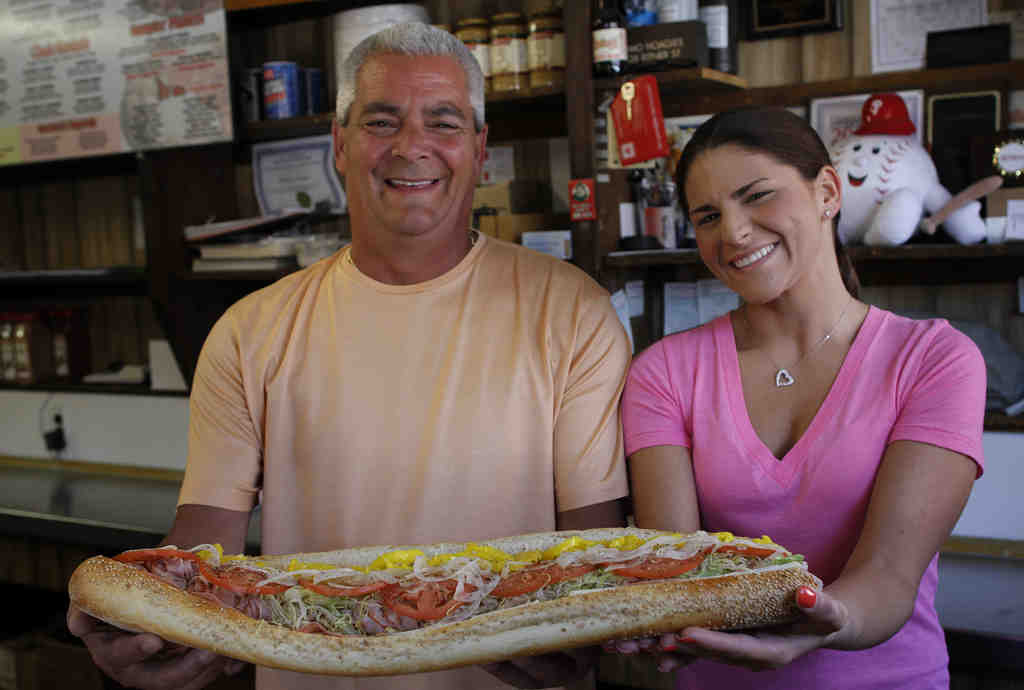
Primo’s founder Rich Neigre and Audrey Neigre, his daughter, hold a whole Italian hoagie in 2011.
Primo Hoagies covering big-dog adoption fees: A+
This is what “using your powers for good” looks like.
As PhillyVoice reported, Primo Hoagies quietly covering adoption fees for large dogs at a South Jersey shelter is the kind of move that cuts straight through the holiday noise. No brand stunt. No overexplaining. Just: These dogs keep getting passed over, that’s not right, let’s fix one part of it.
Big dogs are the last ones out the door. Everyone wants the tiny, apartment-friendly, Instagram-ready pup. Meanwhile, the 70-pound sweethearts sit there, year after year, wondering what they did wrong (answer: nothing). Removing the fee doesn’t solve everything, but it removes one very real excuse, and sometimes that’s all it takes.
Also, this is extremely on-brand Philly energy. Feed people. Love dogs. Don’t make a big deal about it. Just do the thing.
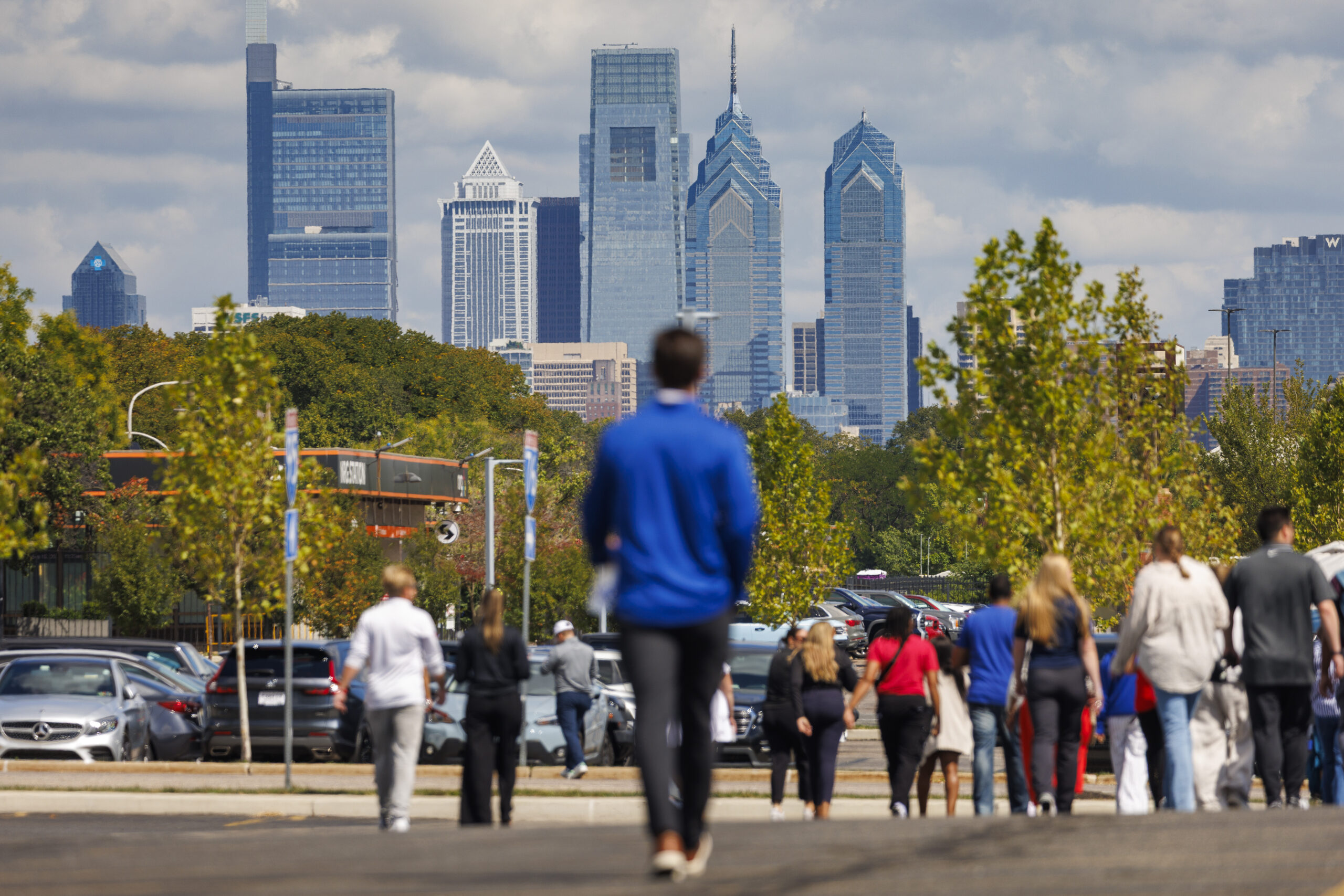
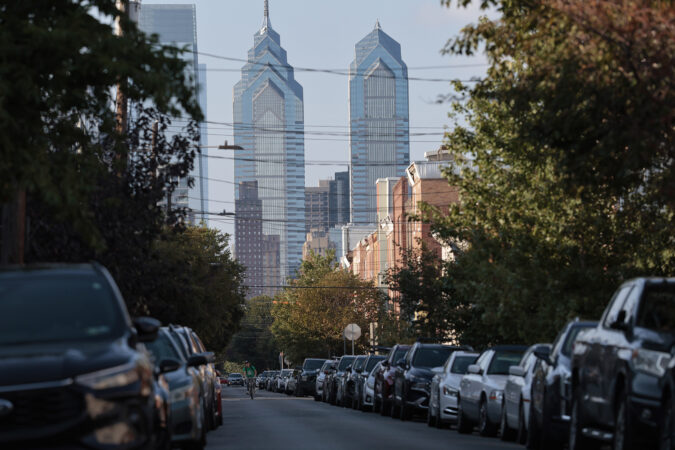
City skyline with people present for the unveiling of the new logo for Xfinity Mobile Arena the former Wells Fargo Center on Tuesday, September 2, 2025.
Philly making Zillow’s hottest housing markets list: B (with side-eye)
Zillow’s takeaway is that Philly is “affordable,” centrally located, and culturally desirable. Which is true. It’s also the most polite way possible to say: People are moving here because they’ve been priced out of everywhere else. Welcome! Please enjoy our rowhouses, strong opinions, and streets that were absolutely not designed for this many buyers.
The median home value sitting around $230,000 looks great on a national list. On the ground, it translates to open houses packed like an Eagles tailgate and starter homes disappearing in 48 hours with cash offers that make lifelong renters quietly spiral. Philly didn’t suddenly become hot. It became relatively attainable, which in 2025 is the real flex.
But let’s acknowledge that there is tension baked into this moment. Being desirable is good. Being affordable is better. Staying both at the same time? That’s the hard part.
Jason Kelce with the Hank Suace cofounders (from left): Matt Pittaluga, Brian “Hank” Ruxton, and Josh Jaspan. Hank Sauce was founded in 2011 and is based in Sea Isle City. Kelce announced a partnership with the local brand and his family’s Winnie Capital.
Jason Kelce investing in Hank Sauce: A+ (this was inevitable)
There are celebrity investments, and then there are ones so perfectly aligned they feel less like a business move and more like destiny. Jason Kelce backing Hank Sauce, a Sea Isle City staple sold in surf shops, Shore houses, and Philly-area grocery stores, is very much the latter.
Sea Isle is so Jason Kelce. He’s there constantly. He bartends there. He fundraises there. He rips his shirt off there. He eats there. At this point, investing in a Sea Isle brand feels less like branching out and more like protecting his natural habitat.
And Hank Sauce? Also a perfect match. It’s not about pain tolerance or macho heat levels. It’s a hot sauce for people who want flavor without suffering, which somehow mirrors Kelce’s whole deal: loud, intense energy paired with surprising warmth and accessibility.
This doesn’t feel like a celebrity slapping his name on a product he just met. Kelce was already a customer. Already a fan. Already drinking beers with the founders in the back room years ago. Philly and the Shore can smell authenticity a mile away, and this one passes immediately.
Will this help Hank Sauce grow further nationally? Almost certainly. But more importantly, it feels earned. It’s a local guy with local roots putting money behind something that already belonged to the place — and to him.
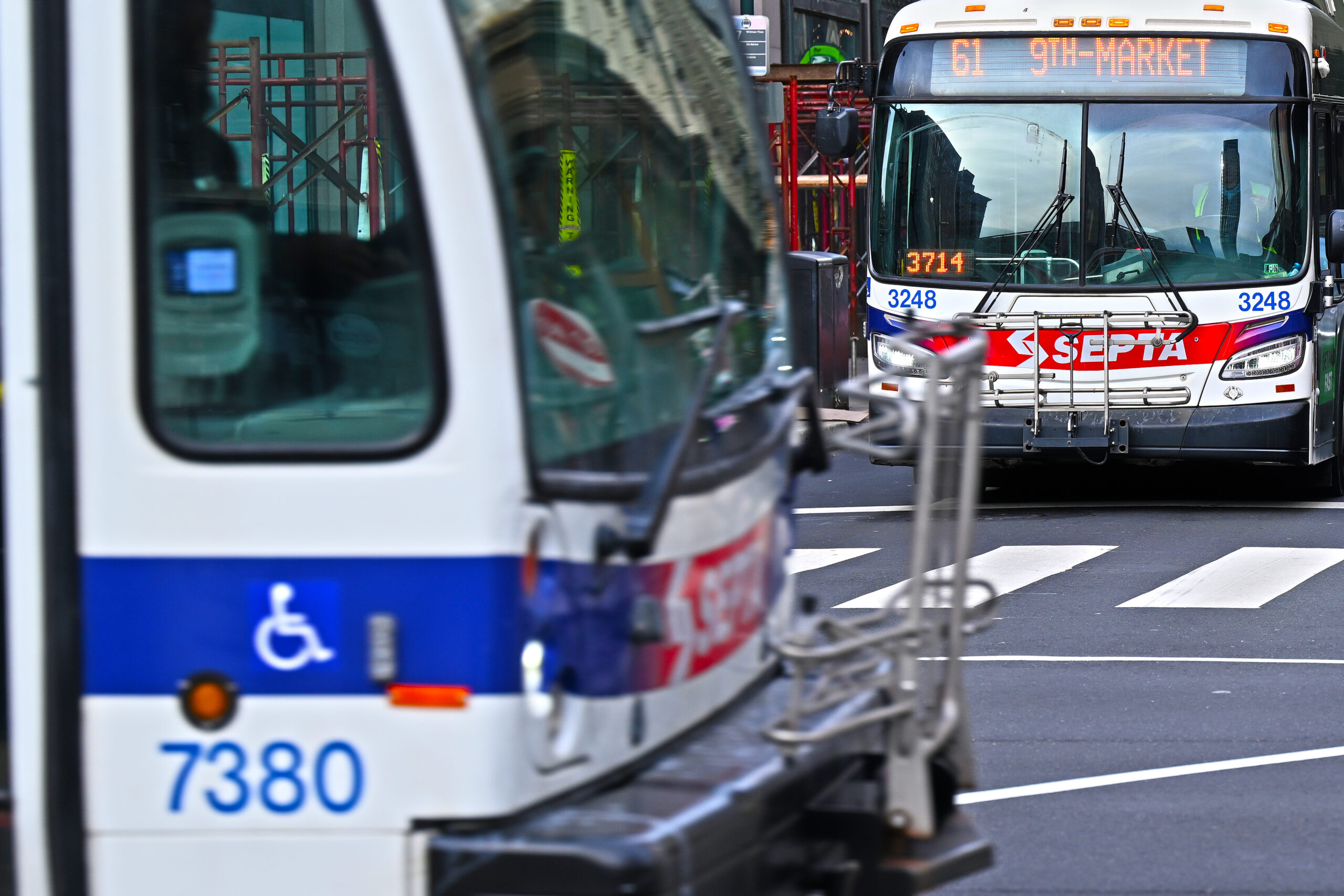
SEPTA buses travel along Market Street on Dec. 8, 2025, in Philadelphia.
Philly’s ever-lengthening commute: C-
Nothing bonds Philadelphians quite like the shared understanding that getting to work will take longer than it should, feel more chaotic than advertised, and somehow still be your fault for not “leaving earlier.”
A new report confirms what everyone stuck on the Schuylkill, the El, or a delayed Regional Rail train already knows: Philly’s average commute is longer than most big cities — and it got worse last year. Thirty-three minutes doesn’t sound brutal until you remember that’s a one-way trip, on a good day, assuming nothing’s on fire (which, this year, was not a safe assumption).
Yes, return-to-office mandates are part of it. Yes, traffic is bad everywhere. But Philly commuters have been playing on hard mode: SEPTA funding drama, service cuts that almost happened, service cuts that did happen, train inspections, near-strikes, and the ever-present question of whether your bus is late or just gone.
The most Philly part is that it’s still technically better than 2019. Which feels less like a victory and more like saying, “Hey, at least it’s not the worst version of this misery.”
New York’s commute is longer. Congrats to them. But Philly’s special talent is making 33 minutes feel like an emotional journey. You leave your house hopeful. You arrive at work already needing a break.
An Eagles fan holds up a sign supporting the Tush Push as the Eagles faced the Green Bay Packers at Lambeau Field last month.
The Tush Push is officially losing its magic: C
Let us be honest with each other, because denial is unbecoming. The Tush Push is no longer a cheat code. It’s a memory. A beautiful, violent, once-automatic memory.
Three tries. Three failures. False starts, no gain, another flag, and then Nick Sirianni punting like a man quietly admitting something he didn’t want to say out loud. When the Eagles chose not to run it on fourth-and-1, that was the tell. Not the stats. Not the penalties. The vibes. Coaches don’t abandon unstoppable plays. They abandon plays that might get them booed.
For a while, the Tush Push was everything Philly loves: blunt, physical, a little rude, and wildly effective. It turned short-yardage into theater. It broke opponents’ spirits. It sent NFL discourse into absolute hysterics. It won games. It won a Super Bowl. It made grown men scream about “nonfootball plays” like the Eagles had discovered witchcraft.
And now? Teams figured it out. Officials started staring at it like it personally offended them. Hurts clearly got tired of being a human battering ram. What was once inevitable is now… work. And unreliable work at that.
This grade isn’t a condemnation. It’s grief. The Tush Push didn’t die because it failed once. It died because it stopped being feared. It went from “automatic” to “ugh, here we go,” and that’s not good enough in January.
The Eagles will be fine. They have Saquon Barkley, creativity, and other ways to move the ball. But the era of lining up and daring the defense to stop you, knowing they couldn’t, is over.
Raise a glass. Pour one out. Say something nice. Then move on.
In a global survey that asked residents of 65 large cities how satisfied they were with where they lived, Philadelphia came in almost dead last, according to the Gensler Research Institute. Only about 59% of Philly respondents said they were “satisfied” or “very satisfied” about living here.
And among U.S. cities, Philly ranked 26th out of 27, with peers like New York City at nearly 70% satisfaction andDetroit and Columbus, Ohio, at 66%.
But satisfaction is subjective, and surveys are not gospel. As a tumultuous year comes to a close, here is what a handful of neighborhood leaders across the city had to say about living in Philly today, the issues that matter most to their communities, and what still makes them excited to be Philadelphians.
Life feels harder and more expensive
“Things just feel a lot harder and a little bit more expensive,” said Jamila Harris-Morrison, the executive director of ACHIEVEability, a West Philly anti-poverty nonprofit focusing on single-parent and homeless families.
This year, ACHIEVEability has received more requests for assistance than ever before, she said. Inflation has created financial pressure. “We’re talking about people who are working full-time jobs or maybe two jobs and feeling like they can’t make ends meet,” she said.
That pressure has led West Philly’s young people to pick up any side hustle they can, like photography and sneaker cleaning. Some dismiss the idea of going to college or trade school, Harris-Morrison said, because they need money and resources now, not years down the line.
Latisha White gathers at a balloon Release in memory of her nephew Maurice White, 19, at Level Up, in Philadelphia, July 10, 2024. White was killed in a drive-by shooting that injured eight others at a July 4th gathering in Southwest Philadelphia.
Harris-Morrison hears them talk about aspirations to get out of their neighborhoods one day, but not necessarily out of Philly. And their adult counterparts still hold some optimism, despite recent struggles.
She said that Mayor Cherelle L. Parker’s H.O.M.E. initiative especially has people energized and looking forward to how it might ease their housing burdens.
“There’s still a level of hope,” she said.
Community problem-solving
Affordability is a major issue in West Mount Airy, too, according to Josephine Gasiewski Winter, executive director of the West Mount Airy Neighbors nonprofit. She said it has become more difficult for people who have lived in the area to stay, and for younger families to buy homes.
But in general, people are pretty happy to be living in the neighborhood and the city, she said. Her organization was founded in 1959 to make the area one of the first intentionally integrated neighborhoods, and she said people today still value its diversity, plus its access to green spaces and the rest of the city.
“It is a very magical little corner of Philadelphia,” she said.
A strong sense of community is a key component of making people feel more satisfied, according to Winter. Recently, neighbors have come together for anti-immigration-raid trainings, and for mutual aid activations when SNAP benefits were paused.
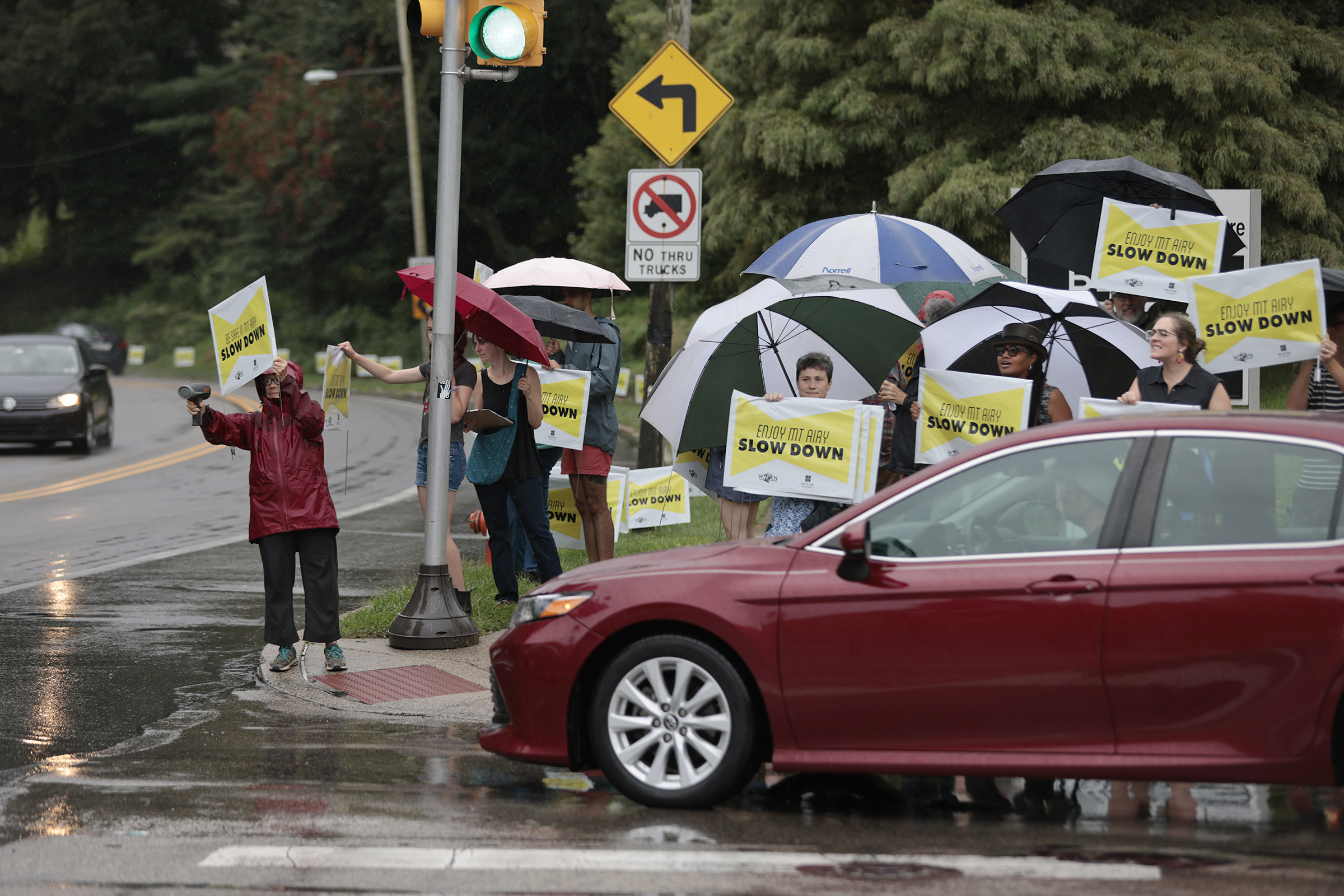
Local resident Carol Bates (far left) aims a speed gun at passing motorists as members of the West Mt. Airy Neighbors (WMAN), East Mt. Airy Neighbors (EMAN) and other community members hold a Protest Traffic Violence rally at Emlen Circle on Lincoln Drive Lincoln Drive in Phila., Pa. on Sept. 11, 2022.
“So when it feels like there’s not much you can do, there are people around that are doing things, and they’re united toward that common goal. That is a reason I think why people love living here,” Winter said.
In South Philly, trash and litter are always top of mind for residents, according to Jimmy Gastner, board vice president of the Passyunk Square Civic Association.
The problem persists even going into year two of the Parker administration’s twice-weekly trash pickup program in South Philly, so Gastner’s block has a contract with Glitter, a popular sidewalk and street-cleaning business. Gastner said litter in the area is a multifaceted problem that requires improvements to infrastructure but also personal responsibility.
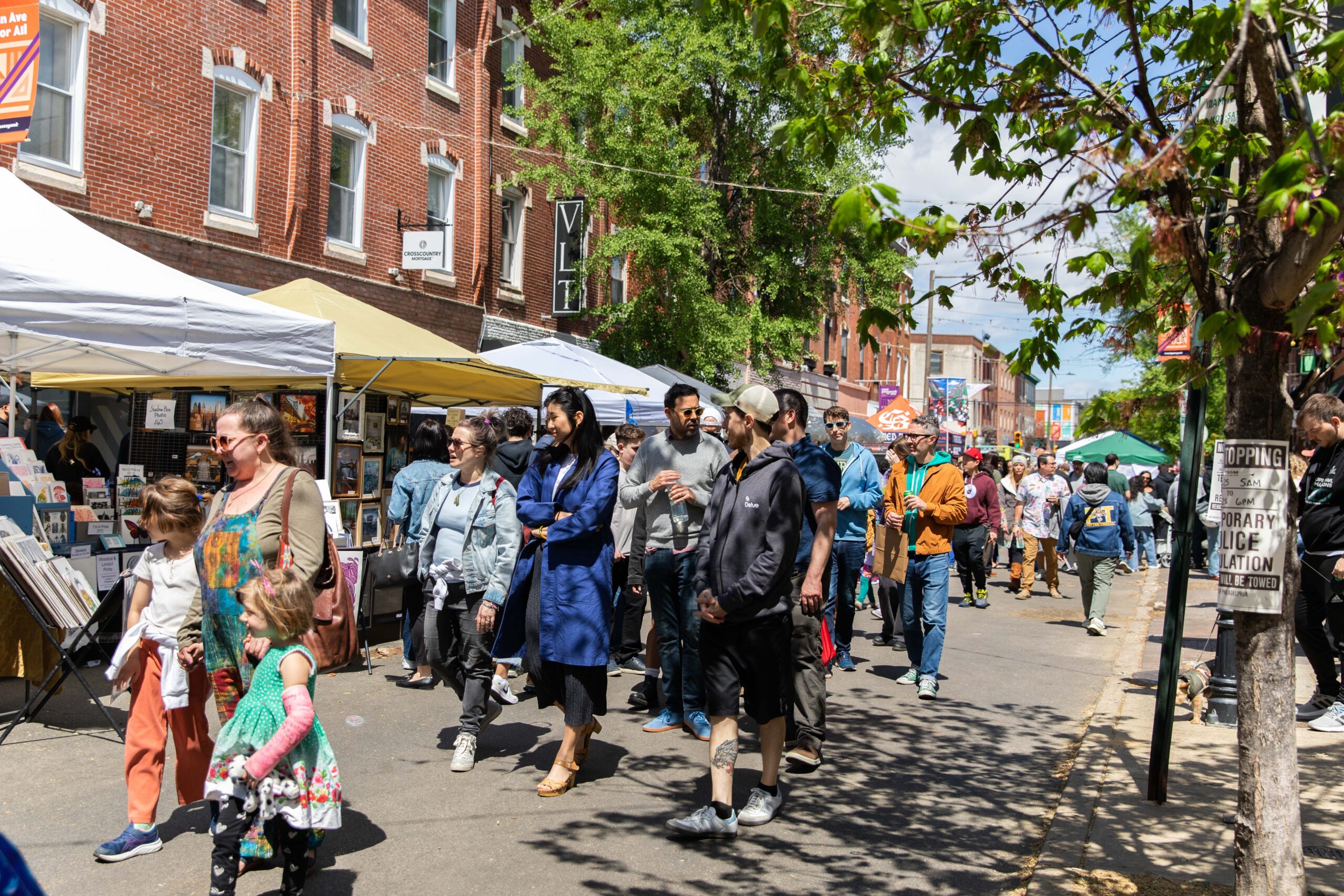
Attendees pass vendors at the 2025 Flavors of the Avenue Festival, hosted by the East Passyunk Business Corporation, on East Passyunk Avenue.
He said residents have also shared concerns about maintaining safe, accessible options for transit.
Gastner still sees people positive and optimistic about their slice of South Philly, boosted particularly by neighborhood schools, parks, and resident groups. People value the restaurants and small businesses, and together it makes residents feel connected to where they live.
“Particularly coming out of COVID, I think we’re all looking to get that sense of community,” he said
Uncertainty moving forward
While Kensington may have a certain reputation to those living outside the neighborhood, lately residents have shared mostly mixed feelings about living there, said New Kensington Community Development Corp. executive director Bill McKinney.
Their ambivalence is driven strongly by uncertainty. McKinney said people feel unsure about what is coming next from the federal government.
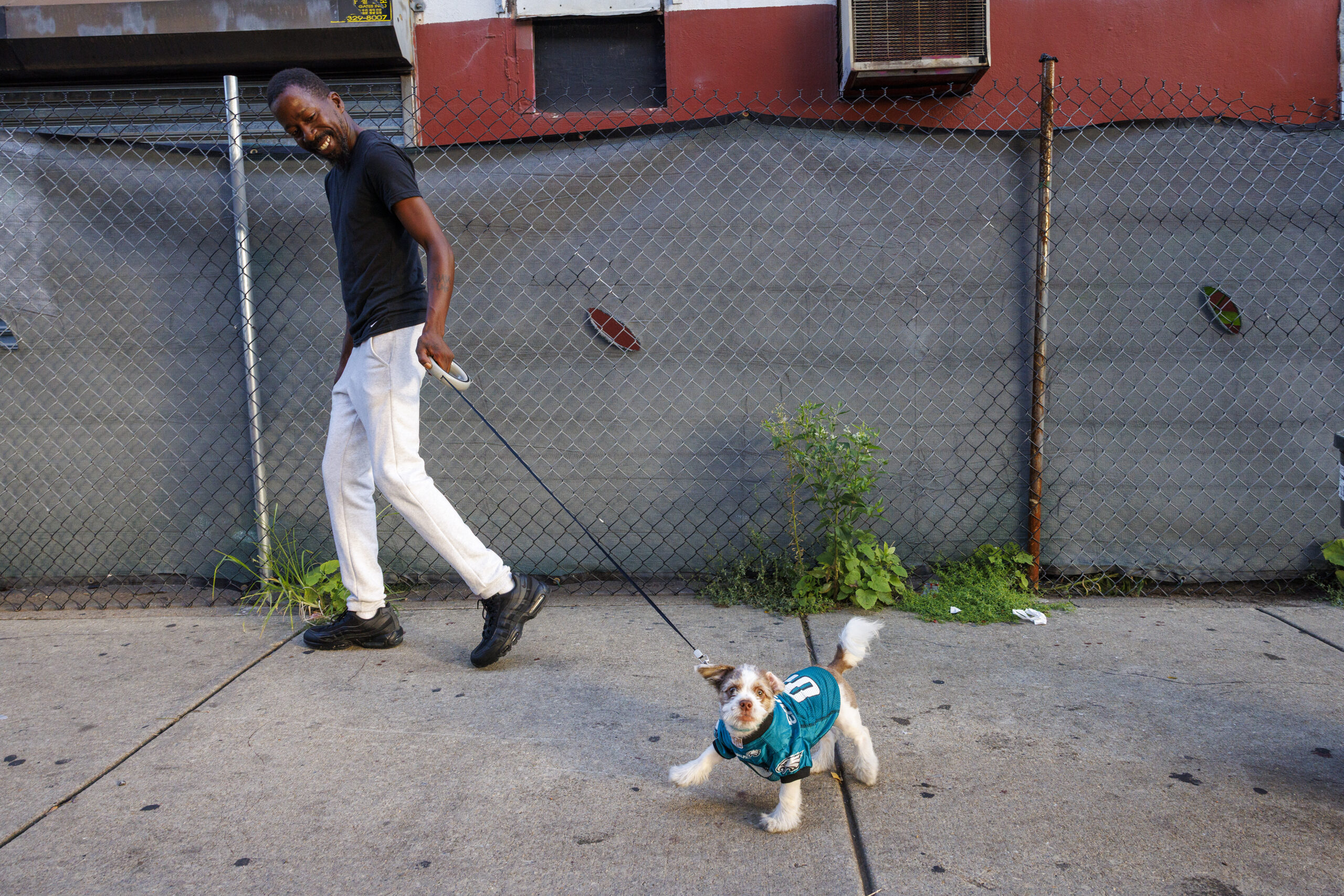
Theo Caraway of Philadelphia walking his dog Cooper, 6 months, Shitzu/Poodle wearing his Eagles jersey along Kensington at Ontario Street on Philadelphia, Friday, September 5, 2025.
What the city’s latest plan is for the neighborhood’s unhoused population, its open-air drug market, and those suffering from substance abuse is also unclear to residents.
“There’s constant movement but not a lot of clarity,” McKinney said. “You’re kind of just waiting for the other shoe to drop because you know the larger thing wasn’t solved.”
Yet McKinney said there is plenty of positivity around, and it often goes overlooked. Whether or not that adds up to people being satisfied with living there, McKinney said he clearly sees the ways community members are invested in their neighborhood, like reclaiming open spaces to create Kensington’s thriving community gardens.
His agency hosted a workshop series on housing over the last few months, with hundreds of people coming to learn about housing policies work and how coming plans may affect them.
At a packedyouth town hall cohostedwith the nonprofit FAB Youth Philly, many questioned whether Philly was a place where they could see a future for themselves, McKinney said. He hopes that changes — for young people to envision a home here, a family, a job, and a community that they love. It will take major changes and investment, but McKinney thinks it’s possible.
“I’m here because I love Kensington. I can live anywhere … I believe in it. I believe in the people here,” he said.
A Powerball ticket purchased in Northeast Pennsylvania netted a $1 million prize in the lottery’s Christmas Eve drawing.
The ticket — which matched all five of the white ball numbers, 04, 25, 31, 52, and 59, but not the Powerball number, 19 — was sold at Pittston Candy & Cigar Co. in Luzerne County, the Pennsylvania Lottery announced Friday in a news release.
Pittston Candy & Cigar Co. could not immediately be reached by phone Friday evening.
The lottery game’s three-month stretch ended Wednesday, after a ticket matching all six numbers was sold outside Little Rock, Ark. The $1.817 billion, or $834.9 million cash, jackpot was the second-largest in U.S. history and the largest Powerball prize of 2025, according towww.powerball.com.
Two other big-winnings tickets, worth $100,000 each, were sold in Jefferson County, Pennsylvania, and Morris County, New Jersey.
Nearly 335,000 Powerball tickets purchased in the commonwealth won varying dollar amounts, and 10 New Jersey players won $50,000 prizes, according to the respective lottery commissions.
The prize followed 46 consecutive drawings in which no one matched all six numbers. Powerball’s odds of 1 in 292.2 million are designed to generate big jackpots, with prizes growing as they roll over when no one wins.
Another $20 million, or $9.2 million cash, will be up for grabs at Powerball’s Saturday drawing.
LOUISVILLE, Ky. — A Cuban immigrant who had built a new life working at a Kentucky scrapyard died on Christmas Day from severe burns suffered in last month’s UPS cargo plane crash, raising the death toll to 15, officials said.
Alain Rodriguez Colina was on the ground when the plane, fully loaded with fuel for a flight to Hawaii, plowed into businesses after departing Louisville’s airport, exploding in a massive fireball. Gov. Andy Beshear and Louisville Mayor Craig Greenberg confirmed his death via social media.
“May Alain’s memory be a blessing,” the mayor said late Thursday.
Three pilots and multiple people died after the plane’s left engine detached during takeoff on Nov. 4, and cracks were later found where the engine connected to the wing, the National Transportation Safety Board said. Louisville’s Muhammad Ali International Airport is home to the largest UPS package delivery hub.
Colina had worked since 2023 at the nearby Grade A Auto Parts & Recycling, moving up rapidly to the position of metal buyer, said owner and CEO Sean Garber in a phone interview Friday. Colina embraced the company’s culture and life in Louisville, even becoming a University of Kentucky fan. His mother and siblings lived in the area and he had a daughter in Cuba, he said.
Workers at the scrapyard have described the scramble to help survivors after the crash. Colina had been with a customer and a coworker who died, Garber said. Colina got out but was burned over 50% of his body, and doctors didn’t have much hope for a recovery.
He was in an induced coma, never regaining consciousness. His family visited often. It seemed like he was starting to heal, Garber said, but on Thursday he took a turn for the worse.
Colina was a good man, Garber said, with a big heart who cared about the business, customers, and his family.
“He believed in the opportunity he got in the United States and really made the most of it,” Garber said. “He should still be with us.”
Earlier this month, a lawyer filed two wrongful death lawsuits that allege that the company kept flying older aircrafts without increasing maintenance beyond what’s regularly scheduled. The lawsuit also names General Electric, which made the plane’s engine. Both UPS and GE have said they don’t comment on pending lawsuits but safety remains their top priority as they assist the federal investigation. That litigation does not include Colina.
Local businesses and more than 90 people affected by the crash, including Colina, plan to file another lawsuit in the coming weeks, said attorney Masten Childers III, whose firm is one of two representing those plaintiffs.
“Alain fought hard,” Childers said. “Alain’s passing must be honored by holding those responsible for his death accountable.”
The Federal Aviation Administration has grounded all MD-11s, the type of plane involved in the crash, which have been used only for hauling cargo for more than a decade.
The Trump administration is widening efforts to screen visa applicants for online speech considered dangerous and “anti-American” as the government moves to restrict legal migration and remove people from places the president has called “garbage.”
The State Department earlier this month expanded new regulations requiring foreign students and people on academic and cultural exchange programs to disclose five years of their social media histories and make all of their posts public. All applicants for H-1B employment visas and their dependents will now also be subject to the more rigorous online review.
“A U.S. visa is a privilege, not a right,” officials said in announcing the expansion.
The administration is also considering a similar rule for visitors from countries whose citizens are allowed to enter the United States for up to 90 days without a visa, including France, Germany, the United Kingdom and Japan.
The increased online screening began with the administration’s crackdown on antisemitism on college campuses and has accelerated in a way that immigrant rights advocates say is chilling public discourse. In September, authorities announced plans to review more than 55 million U.S. visa holders for potential violations that could lead to deportations, raising concerns that the government is leveraging speech for visa approval or denial.
“You never think you would have this here” in the United States, said Suresh Naidu, an economics professor at Columbia University. He said he reduced his own public profile while applying to become a naturalized citizen this year. “The idea that this country would start to think of its visa systems as a privilege that could be revoked arbitrarily — this is supposed to be a democracy.”
Despite a federal judge’s ruling in September that immigrants in the country lawfully are protected by the First Amendment, federal authorities have continued to revoke visas from foreign visitors over statements the administration has called dangerous and un-American. They included six foreigners who the administration said “celebrated” the fatal shooting in September of conservative activist Charlie Kirk and a British news commentator critical of Israel’s war in Gaza whose visa was revoked in late October.
In October, several major labor unions — the United Auto Workers (UAW), the American Federation of Teachers (AFT), and the Communications Workers of America — filed a lawsuit alleging the government is deploying a “vast surveillance apparatus” powered by artificial intelligence and other emerging technology that has stifled participation in public life among noncitizens.
Union members who fear adverse immigration actions have chosen to refrain from expressing “views remotely related to the topics the government disfavors,” according to the lawsuit, which said unions are experiencing a reduction in online organizing activity. The unions cited internal surveys that found many noncitizens have taken steps to reduce their online speech, including erasing posts, hiding their identities and eliminating social media accounts.
“We’re trying to make sure that people still have the right to speak and to engage and to do what America’s known for, which is freedom,” AFT President Randi Weingarten said in an interview.
Trump administration officials said they are acting to protect public safety against terrorist sympathizers and those who wish harm upon Americans. In a statement, Department of Homeland Security assistant secretary Tricia McLaughlin disputed the suggestion that the administration is stifling free speech.
“DHS takes its role in addressing threats to the public and our communities seriously, and the idea that enforcing federal law in that regard constitutes some kind of prior restraint on speech is laughable,” she said.
A federal judge disagreed. In September, U.S. District Judge William G. Young of Massachusetts ruled that the Trump administration had misused its sweeping powers in a manner “that continues unconstitutionally to chill freedom of speech to this day.”
That case centers on claims by the American Association of University Professors that the targeting of pro-Palestinian campus organizers in the spring left noncitizen students and faculty fearful of attending protests, posting on social media and voicing opinions in class. Young has set a hearing for January to determine remedial measures.
The plaintiffs are asking Young to enjoin the administration from revoking more visas or making “coercive threats” based on pro-Palestinian advocacy; set aside the administration’s policy of arresting and detaining noncitizens “based on pro-Palestinian or anti-Israel speech or association”; and require the State Department to notify individuals if visa revocations are based in part on speech- or protest-related activity.
“Since the start of this litigation, the government has vigorously maintained a willful ability to deport noncitizens over their political expression, and they have doubled down on their legal claims since the court ruling,” said Ramya Krishnan, a lawyer for the plaintiffs who serves as a senior staff attorney at the Knight First Amendment Institute at Columbia University.
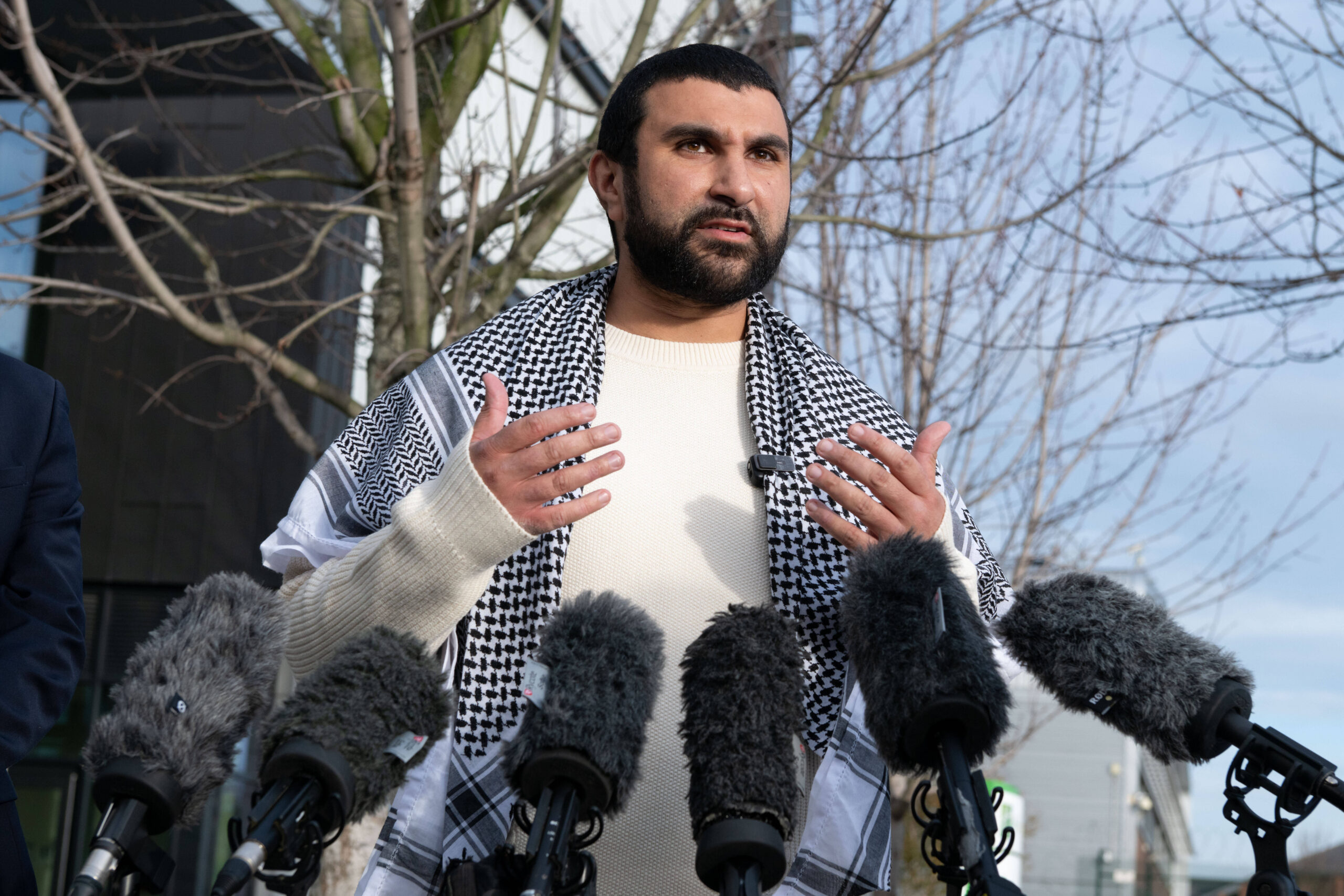
British political commentator Sami Hamdi on Nov. 13, upon his return to the United Kingdom after he was arrested by U.S. Immigration and Customs Enforcement on Oct. 26 while on a speaking tour.
She pointed to the 18-day detention of British commentator Sami Hamdi, a target of far-right Trump supporters for his criticism of Israel. His nonimmigrant visa was revoked by the State Department on Oct. 26 while he was on a U.S. speaking tour.
In a phone interview from his home in London, Hamdi said he entered the country on a 10-year business and tourism visa that he had obtained in 2018. After speaking at a Council on American-Islamic Relations gala in Sacramento, he said, he was detained by federal immigration officers at San Francisco International Airport. They told him he had overstayed his visa, which had been canceled two days earlier, unbeknownst to him.
On their social media accounts, the State Department and DHS accused Hamdi — who maintains that Israel committed genocide in Gaza — of supporting terrorism and “undermining the safety of Americans.” But he was not charged with any crime, such as abetting terrorism, before striking an agreement with the State Department to return home, Hamdi’s lawyers said.
Hamdi believes he was arrested because of pressure from far-right activists, including prominent Trump supporters Dinesh D’Souza, who called him a “Muslim Brotherhood jihadi,” and Laura Loomer and Amy Mek, who posted on social media demanding his removal and celebrating his arrest.
“I did nothing illegal in the U.S.,” said Hamdi, who was released by Immigration and Customs Enforcement on Nov. 13 after he voluntarily agreed to return to London. “My visa was revoked because of my advocacy for Palestine. It was revoked because an extremist group went to the State Department and leveraged whatever influence it had to specifically target me.”
The State Department declined to comment.
McLaughlin called Hamdi an “illegal alien and terrorist sympathizer” who requested voluntary departure. She said that Homeland Security Secretary Kristi L. Noem “has made it clear that anyone who thinks they can come to America and hide behind the First Amendment to advocate for anti-American and anti-Semitic violence and terrorism — think again.”
Trump signed an executive action in January aimed at combating antisemitism on college campuses, but free speech advocates say the campaign is rapidly expanding into broader surveillance.
In August, U.S. Citizenship and Immigration Services said immigrants seeking to become naturalized U.S. citizens would be subject to a “good moral character” review that includes an assessment of their “behavior, adherence to societal norms, and positive contributions.” Also that month, that agency said it would begin considering “anti-American” views in determining whether to provide immigrants benefits.
“People are free to make whatever statements they want on social media or anywhere else, and anyone who does not support the same candidate that I support, that’s not what we’re talking about here,” the agency’s director, Joseph Edlow, told CBS News in October. “We’re talking about beyond the pale. We’re talking about people actively supporting the violent overthrow of this country or otherwise providing material support to terrorist organizations across the world.”
Edlow spoke a day after the State Department revoked the visas of a half-dozen foreign nationals — from Argentina, Brazil, Germany, Mexico, Paraguay, and South Africa — who purportedly “celebrated” Kirk’s death. The department said that “the United States has no obligation to host foreigners who wish death on Americans.”
Nhlamulo Baloyi, a South African music executive, was among them. He wrote on X that “Charlie Kirk won’t be remembered as a hero” and said Kirk led a “movement of white nationalist trailer trash.”
Baloyi, 35, who once worked for a Sony Music subsidiary based in New York, has been outspoken online about anti-Black racism and his country’s history of racial apartheid. In a phone interview, he said right-wing Afrikaners have flagged and reported his posts in an effort to get him banned from X and other social media platforms.
Baloyi suggested that noncitizens in the United States must seriously “consider holding their tongues” or risk being expelled and losing their right to live and work in this country. But he also pointed to virulent online criticism from U.S. citizens aimed at former vice president Dick Cheney after his death this month and suggested foreigners are being held to a double standard.
“I don’t think anything I might have said about Charlie Kirk is remotely equated to the attacks Dick Cheney has faced,” Baloyi said.
Naidu, the Columbia professor, is from Canada and is married to an American. He had been active on X, sharing his thoughts on a range of economic and political topics with more than 16,000 followers. He deleted his account after Trump was elected last year over concerns that discussing political issues could adversely affect his citizenship application. It was approved in July, but he has not rejoined X.
“I’m less nervous about it. But just overall being at Columbia and Columbia being in the crosshairs — my content would not be the most offensive to the administration, but why risk it?” Naidu said.
Nicole M. Bennett, a researcher at Indiana University who studies the federal government’s approach to data governance and digital technologies, called social media the “new front line” in immigration enforcement — one that is expanding into around-the-clock monitoring. Powered by artificial intelligence, new search tools have the potential to vastly expand investigations beyond an immediate target and surveil people around them who had not been suspected of wrongdoing, including family members, friends or co-workers, she said.
“If you’re in a video, you could be pulled into that dragnet, and maybe they find something because they are looking,” Bennett said. “The biggest change is that instead of an investigation being based on evidence, the investigation is based on correlated data.”
Hamdi said his agreement with the State Department to leave the country voluntarily does not prohibit him from applying for reentry to the United States, and he is determined to give it a try. But he acknowledged that other foreigners might think twice. Pointing to soccer’s World Cup in U.S. cities next summer, Hamdi expressed concern for fans who come to root for their teams.
“What happens if a fan waves a Palestinian flag at a stadium — does that mean they will have their visa revoked?” he said. “And if their visa is revoked without notifying the individual, does that mean they could wind up in detention, too?”
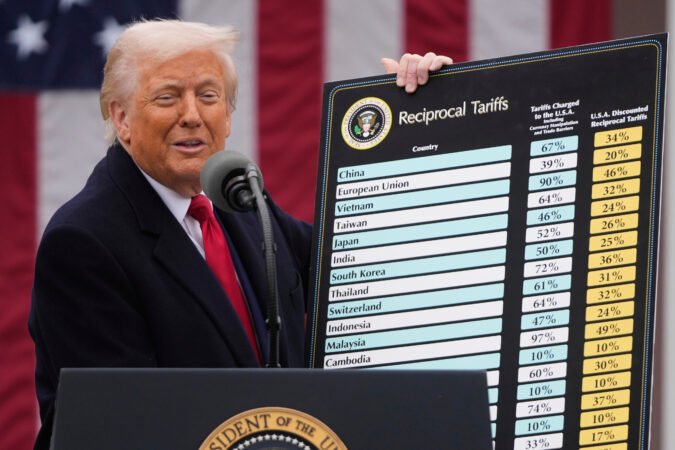
Since returning to the White House in January, President Donald Trump has overturned decades of U.S. trade policy — building a wall of tariffs around what used to be a wide open economy.
His double-digit taxes on imports from almost every country have disrupted global commerce and strained the budgets of consumers and businesses worldwide. They have also raised tens of billions of dollars for the U.S. Treasury.
Trump has argued that his steep new import taxes are necessary to bring back wealth that was “stolen” from the U.S. He says they will narrow America’s decades-old trade deficit and bring manufacturing back to the country. But upending the global supply chain has proven costly for households facing rising prices. The taxes are paid by importers who typically attempt to pass along the higher costs to their customers. That includes businesses and ultimately, U.S. households.
And the erratic way the president rolled out his tariffs — announcing them, then suspending or altering them before conjuring up new ones — made 2025 one of the most turbulent economic years in recent memory.
Here’s a look at the impact of Trump’s tariffs over the last year, in four charts.
Effective U.S. tariff rate
A key number for the overall impact of tariffs on U.S. consumers and businesses is the “effective” tariff rate — which, unlike headline figures imposed by Trump for specific trade actions, provides an average based on the actual imports coming into the country.
In 2025, per data from the Yale Budget Lab, the effective U.S. tariff rate peaked in April. But it’s still far higher than the average seen at the start of the year. Before finalizing shifts in consumption, November’s effective tariff rate was nearly 17% — seven times greater than January’s average and the highest seen since 1935.
Tariff revenue vs America’s trade deficit
Among selling points to justify his tariffs, Trump has repeatedly said they would reduce America’s longstanding trade deficit and bring revenue into the Treasury.
Trump’s higher tariffs are certainly raising money. They’ve raked in more than $236 billion this year through November — much more than in years past. But they still account for just a fraction of the federal government’s total revenue. And they haven’t raised nearly enough to justify the president’s claim that tariff revenue could replace federal income taxes — or allow for windfall dividend checks for Americans.
The U.S. trade deficit, meanwhile, has fallen significantly since the start of the year. The trade gap peaked to a monthly record of $136.4 billion in March, as consumers and businesses hurried to import foreign products before Trump could impose his tariffs on them. The trade gap narrowed to $52.8 billion in September, the latest month for which data is available. But the year-to-date deficit was still running 17% ahead of January-September 2024.
Import shifts with America’s biggest trading partners
Trump’s 2025 tariffs hit nearly every country in the world — including America’s biggest trading partners. But his policies have had the biggest impact on U.S. trade with China, once the biggest source of American imports and now No. 3 behind Canada and Mexico. U.S. tariffs on Chinese imports now come to 47.5%, according to calculations by Chad Bown of the Peterson Institute for International Economics.
The value of goods coming into the U.S. from China fell nearly 25% during the first three-quarters of the year. Imports from Canada also dropped. But the value of products from Mexico, Vietnam, and Taiwan grew year-to-date.
Market swings
For investors, the most volatile moments on the stock market this year arrived amid some of the most volatile moments for Trump’s tariffs.
The S&P 500, an index for the biggest public companies in the U.S., saw its biggest daily and weekly swings in April — and largest monthly losses and gains in March and June, respectively.