Category: News

Latest breaking news and updates

  • Trump’s border czar announces 700 immigration officers to immediately leave Minnesota

    Trump’s border czar announces 700 immigration officers to immediately leave Minnesota

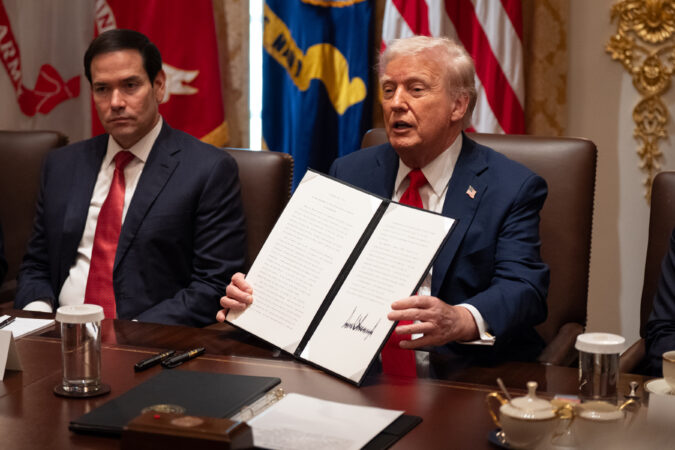
    The Trump administration is reducing the number of immigration officers in Minnesota but will continue its enforcement operation that has sparked weeks of tensions and deadly confrontations, border czar Tom Homan said Wednesday.

    About 700 federal officers — roughly a quarter of the total deployed to Minnesota — will be withdrawn immediately after state and local officials agreed over the past week to cooperate by turning over arrested immigrants, Homan said.

    But he did not provide a timeline for when the administration might end the operation that has become a flashpoint in the debate over President Donald Trump’s mass deportation efforts since the fatal shootings of U.S. citizens Renee Good and Alex Pretti in Minneapolis.

    About 2,000 officers will remain in the state after this week’s drawdown, Homan said. That’s roughly the same number sent to Minnesota in early January when the surge ramped up, kicking off what the Department of Homeland Security called its ” largest immigration enforcement operation ever.”

    Since then, masked, heavily armed officers have been met by resistance from residents who are upset with their aggressive tactics.

    A widespread pullout, Homan said, will occur only after protesters stop interfering with federal agents carrying out arrests and setting up roadblocks to impede the operations.

    Gov. Tim Walz and Minneapolis Mayor Jacob Frey, both Democrats who have heavily criticized the surge, said pulling back 700 officers was a good first step but that the entire operation should end quickly.

    “We need a faster and larger drawdown of forces, state-led investigations into the killings of Alex Pretti and Renee Good, and an end to this campaign of retribution,” Walz posted on social media.

    Vice President JD Vance said the officers being sent home were mainly in Minneapolis to protect those carrying out arrests. “We’re not drawing down the immigration enforcement,” Vance said in an interview on The Megyn Kelly Show.

    Trump administration has pushed for cooperation in Minnesota

    Trump’s border czar took over the Minnesota operation in late January after the second fatal shooting by federal officers and amid growing political backlash and questions about how the operation was being run.

    Homan said right away that federal officials could reduce the number of agents in Minnesota, but only with the cooperation of state and local officials. He pushed for jails to alert Immigration and Customs Enforcement about inmates who could be deported, saying transferring those inmates to ICE is safer because it means fewer officers have to be out looking for people in the country illegally.

    Homan said during a news conference Wednesday that there has been an “increase in unprecedented collaboration” resulting in the need for fewer public safety officers in Minnesota and a safer environment, allowing for the withdrawal of the 700 officers.

    He didn’t say which jurisdictions have been cooperating with DHS

    The Trump administration has long complained that places known as sanctuary jurisdictions — a term applied to local governments that limit law enforcement cooperation with the department — hinder the arrest of criminal immigrants.

    Minnesota officials say its state prisons and nearly all of the county sheriffs already cooperate with immigration authorities.

    But the two county jails that serve Minneapolis and St. Paul and take in the most inmates had not previously met ICE’s standard of full cooperation, although they both hand over inmates to federal authorities if an arrest warrant has been signed by a judge.

    The Hennepin County Sheriff’s Office, which serves Minneapolis and several suburbs, said its policies have not changed. The Ramsey County Sheriff’s Office in neighboring St. Paul did not immediately respond to a request for comment.

    Border czar calls Minnesota operation a success

    Homan said he thinks the ICE operation in Minnesota has been a success, checking off a list of people wanted for violent crimes who were taken off the streets.

    “I think it’s very effective as far as public safety goes,” he said Wednesday. “Was it a perfect operation? No.”

    He also made clear that pulling a chunk of federal officers out of Minnesota isn’t a sign that the administration is backing down. “We are not surrendering the president’s mission on a mass deportation operation,” Homan said.

    “You’re not going to stop ICE. You’re not going to stop Border Patrol,” Homan said of the ongoing protests. “The only thing you’re doing is irritating your community”

    Schools ask court to block immigration operations

    Two Minnesota school districts and a teachers union filed a lawsuit Wednesday to block federal authorities from conducting immigration enforcement at or around schools.

    The lawsuit says actions by DHS and its ICE officers have disrupted classes, endangered students and driven families away from schools.

    It also argues that Operation Metro Surge has marked a shift in policy that removed long-standing limits on enforcement activity in “sensitive locations,” including schools.

    Homeland Security officials have not responded to a request for comment.
  • Trump and Xi discuss Iran in wide-ranging call as U.S. presses China and others to break from Tehran

    Trump and Xi discuss Iran in wide-ranging call as U.S. presses China and others to break from Tehran

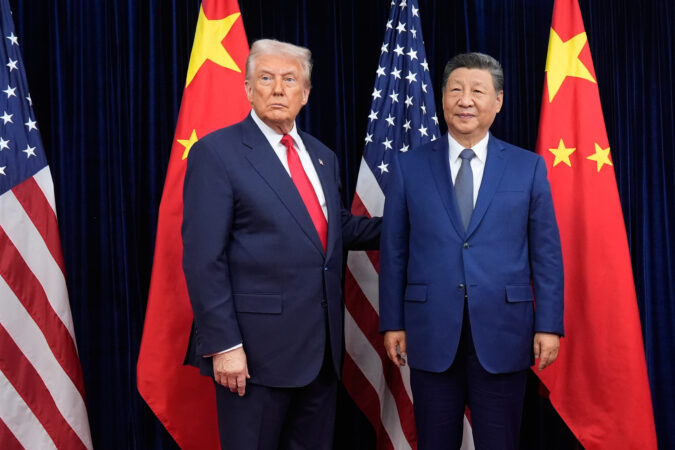
    WASHINGTON — President Donald Trump said Wednesday that he and Chinese President Xi Jinping discussed the situation in Iran in a wide-ranging call that comes as the U.S. administration pushes Beijing and others to isolate Tehran.

    Trump said the two leaders also discussed a broad range of other critical issues in the U.S.-China relationship, including trade and Taiwan and his plans to visit Beijing in April.

    “The relationship with China, and my personal relationship with President Xi, is an extremely good one, and we both realize how important it is to keep it that way,” Trump said in a social media posting about the call.

    The Chinese government, in a readout of the call, said the two leaders discussed major summits that both nations will host in the coming year and opportunities for the two leaders to meet. The Chinese statement, however, made no mention of Trump’s expected April visit to Beijing.

    China also made clear that it has no intention of stepping away from it’s long-term plans of reunification with Taiwan, a self-governing, democratic island operating independently from mainland China, though Beijing claims it as its own territory.

    “Taiwan will never be allowed to separate from China,” the Chinese government statement said.

    Trump and Xi discussed Iran as tensions remain high between Washington and Tehran after the Middle East country’s bloody crackdown on nationwide protests last month.

    Trump is now also pressing Iran to make concessions over its nuclear program, which his Republican administration says was already set back by the U.S. bombing of three Iranian nuclear sites during the 12-day war Israel launched against Iran in June.

    The White House says that special envoy Steve Witkoff is slated to take part in talks with Iranian officials later this week.

    Trump announced last month that the U.S. would impose a 25% tax on imports to the United States from countries that do business with Iran.

    Years of sanctions aimed at stopping Iran’s nuclear program have left the country isolated. But Tehran still did nearly $125 billion in international trade in 2024, including $32 billion with China, $28 billion with the United Arab Emirates and $17 billion with Turkey, the World Trade Organization says.

    Separately, Xi also spoke on Wednesday with Russian President Vladimir Putin.

    Xi’s engagement with Trump and Putin comes as the last remaining nuclear arms pact, known as the New START treaty, between Russia and the United States is set to expire Thursday, removing any caps on the two largest atomic arsenals for the first time in more than a half-century.

    Trump has indicated he would like to keep limits on nuclear weapons but wants to involve China in a potential new treaty.

    “I actually feel strongly that if we’re going to do it, I think China should be a member of the extension,” Trump told The New York Times last month. “China should be a part of the agreement.”

    The call with Xi also coincided with a ministerial meeting that the Trump administration convened in Washington with several dozen European, Asian and African nations to discuss how to rebuild global supply chains of critical minerals without Beijing.

    Critical minerals are needed for everything from jet engines to smartphones. China dominates the market for those ingredients crucial to high-tech products.

    “What is before all of us is an opportunity at self-reliance that we never have to rely on anybody else except for each other, for the critical minerals necessary to sustain our industries and to sustain growth,” Vice President JD Vance said at the gathering.

    Xi has recently held a series of meetings with Western leaders who have sought to boost ties with China amid growing concerns about Trump’s tariff policies and calls for the U.S. to take over Greenland, a Danish territory.

    The disruption to global trade under Trump has made expanding trade and investment more imperative for many U.S. economic partners. Vietnam and the European Union upgraded ties to a comprehensive strategic partnership last month, two days after the EU and India announced a free-trade agreement.

  • Barges with road salt for Philadelphia temporarily blocked by frozen Delaware River

    Barges with road salt for Philadelphia temporarily blocked by frozen Delaware River

    In a bit of winter irony, two barges carrying 21,000 tons of salt reinforcements for Philadelphia couldn’t get through the frozen Delaware River, according to city officials.

    At the Pelbano Recreation Center in Bustleton on Wednesday, Director of Clean and Green Initiatives Carlton Williams said the city had used more than 30,000 tons in January, which was highlighted by the 9.3 inches of snow and icy sleet on the 25th. The Arctic cold that followed has kept a whole lot of it in place.

    The city still has 15,000 tons on reserve, but Williams said officials are watching salt levels closely and using judgment when dispersing what’s left. He said inspectors are being sent to sites where salting has been requested through 311 to determine whether treatment is warranted, and to ensure the city has enough salt until reinforcements arrive.

    “We definitely need to make sure our salt levels are at a sufficient amount so that if we get another storm like this, we can be out there prepared to fight,” he said.

    By Wednesday afternoon, a city spokesperson confirmed that a barge carrying 15,000 tons of salt was able to redirect and dock in Paulsboro, N.J. That load is slated to reach Philly by truck Thursday.

    The fate of the second barge, with 6,000 tons, meant to go to Philadelphia, remains unclear.

    The delivery is ultimately slated to head to Fairless Hills, which is currently “iced in,” according to Office of Emergency Management Director Dominick Mireles.

    How long the barge has been stuck wasn’t immediately clear, but Mireles said the U.S. Coast Guard continues to perform ice-cutting operations on the river.

    The city uses about 15,000 tons of salt for a significant winter storm, according to a city spokesperson. It tries to keep 45,000 tons on hand.

    City officials noted the frozen sections of the river offer a reminder of how the elements have not done plows and snow cleanup crews any favors in breaking up what have now become dirty, hardened, sometimes rock-solid chunks of ice across the city.

    Mayor Cherelle L. Parker’s administration, like those in other East Coast cities, has received no shortage of criticism for inaccessible crosswalks and SEPTA bus stations that remained icy days after the biggest snowstorm in a decade.

    In the snow cleanup update at Pelbano, Parker assured the public that the city was working nonstop to help it return to normal.

    Still, she said, as seen with the frozen barge, that work isn’t always in the spotlight.

    As for the salt, Parker said the administration is “investigating alternate methods of resupply” as they wait.

    Clarification: This story has been updated to reflect updated information from the city.

  • Why nobody really knows the scale of the U.S. housing crisis

    Why nobody really knows the scale of the U.S. housing crisis

    America faces a serious housing shortage, one that Moody’s estimates would take more than 2 million new homes to resolve.

    But over at Goldman Sachs, analysts put the number at 3 million. Zillow’s estimate tops 4 million, while Brookings projects 5 million, and McKinsey says 8 million. Meanwhile, congressional Republicans insist the shortfall is closer to 20 million.

    Then there are the economists who contend there’s no shortage at all.

    The disparate projections reflect the challenge of quantifying the nation’s housing needs, a puzzle that rests on assumptions about how much a home should cost, how many people it should hold, and how big a footprint it should have.

    With housing affordability a crucial political issue and increasingly out of reach for many Americans, determining the nation’s needs is not merely an academic exercise but is key to devising policies that will solve the problem.

    Vacancy rates and missing households

    The U.S. has 146 million homes, Census Bureau data show. Of those, 8.1 million are “doubled up” households, meaning people are sharing space with nonrelatives. Zillow’s housing estimate assumes most of those people would prefer having their own place. There also are 3.4 million vacant homes available to rent or buy, the real estate website says. So Zillow economists subtracted the number of available homes from the number of doubled-up households and concluded that the nation needs 4.7 million more homes.

    Several analyses zeroed in on two questions: How many homes should be vacant, and how many consumers have delayed striking out on their own because of the cost.

    Though it might seem counterintuitive, a healthy housing market needs vacancies. An empty property could signal it’s between tenants or buyers, for example, or under renovation. Or it could mean the owner is splitting time between properties; according to the National Association of Home Builders, more than 6 million homes — about 1 in 20 — are secondary residences.

    What constitutes a healthy level of vacancies is harder to define, as experts put it anywhere from 3% to 13%. After home construction cratered following the 2008 housing crash, vacancy rates slumped to the lowest level in nearly two decades, falling to less than 1% of owner-occupied dwellings and 5% of rental units. They have yet to fully recover.

    The optimal home number could be as simple as one for every household, plus a certain number of vacancies. But what if we don’t have an accurate count of households?

    When housing costs are prohibitive, adult children tend to reside with their parents longer; in 2023, 18% of adults 25 to 34 were living in a parent’s home, compared with 8% in the 1970s, according to a Pew Research Center report.

    For many economists, that suggests the equation should be: the number of existing households, plus the number of homes that should be vacant, plus the number of households that would naturally come into being if there was enough inventory to lower prices.

    Yet different researchers using this framework still came up with different answers for the housing shortage.

    Moody’s Analytics and PolicyMap say it would take 800,000 homes to reach the equilibrium of the U.S. housing market between 1985 and 2000. Add 1.2 million “pent up households,” those that haven’t formed yet, and the conclusion is the U.S. needs an additional 2 million homes.

    Brookings’s calculation aims to get back to the 2006 vacancy rate of more than 12%, when it was near its historic peak. It used a complex statistical model to tease out how much of the decline in household formation since then is due to home prices instead of other factors, such as young people having trouble finding jobs or marrying later. As a result, it concluded the U.S. needed 4.9 million more houses.

    Other analyses along these lines include Freddie Mac’s, which calls for 3.7 million more homes. Goldman Sachs analysts tried the “vacancies plus pent-up demand” approach, as well as a mathematical model to determine how many homes it would take to make ownership as affordable relative to income as it was in the 1990s. Both equations worked out to between 3 million and 4 million homes. McKinsey added up new households and vacancies, plus enough housing to address homelessness and replace overcrowded homes with more than one person to a bedroom, to get to 8.2 million.

    Envisioning an unconstrained market

    A 2022 congressional report took a different tack. Most analyses attempt to re-create some semblance of the housing market two, three or four decades ago. But Republicans on the Joint Economic Committee argued that the correct number is equal to the number of homes that developers would build had they had no regulatory constraints — no permitting or zoning rules that prohibit them from building what customers want.

    The Republicans’ estimate relied on the reasoning that the value of the land should be about 20% of the home cost. Anything higher would mean the market is artificially constrained; land becomes pricier when it is harder to build something on it. To bring prices in line with that in every U.S. county, they concluded the home shortage stood at 20 million.

    By their math, North Dakota and West Virginia have almost no housing shortage, while California is short 4.5 million homes. Eliminating zoning and building restrictions across the country’s hundreds of jurisdictions might be unfeasible, but they project that any substantial effort would lower prices. For example, they contend that building an additional 2.7 million homes could reduce prices enough to make ownership economically viable for nearly 5 million more consumers.

    “If we relaxed all regulations that concerned supply in every single market in the United States, this is how many homes you would have … . I do think this is the right way to think about how many homes we should have,” said Kevin Corinth, an economist who co-authored the report while he was a Senate staffer and now works at the American Enterprise Institute, a libertarian think tank. “If you really want to bring down home prices to the point where people can actually afford them, you’re going to have to build a lot more houses than people are suggesting.”

    Per capita spending

    Housing analyst Kevin Erdmann did some eye-popping math recently. Adjusted for inflation, per capita spending on housing construction has been falling as a fraction of personal consumption, dropping 23% since 1990. If such spending held to 1990 levels, he said, the U.S. would have an additional 40 million houses. “Almost all professional estimates of the housing shortage are ridiculously low,” Erdmann, who has written two books about the housing market, wrote on his Substack.

    He said the slowdown in construction spending indicates that people are living in smaller homes than they’d prefer because they had no choice, but he shies away from actually saying the country is 40 million homes short. Instead, based on aggressive assumptions about missing households and necessary vacancies, he says the country needs 15 million to 20 million.

    Maybe there’s no shortage at all

    Urban planning professors Kirk McClure and Alex Schwartz examined 900 U.S. metropolitan areas and found that only 19 had added more population than housing since 2000. Before the 2008 recession, they argued, developers built far too many houses, leaving room for underbuilding in some years since.

    “Yes, we have a shortage of units in the low-income price points, but not overall,” McClure said. He contends it would be far less costly for the government to help poor households rent or buy existing units than to build new ones. “The best housing program right now would be an increase in the minimum wage. You get people up to $20 an hour and suddenly life gets better — we can’t build our way out of this problem.”

    This view of the current housing supply transcends partisan lines, with some of the highest and the lowest estimates of the shortage coming from the right. Economists at the libertarian Cato Institute contend that housing production has kept up with population growth. Just because people want to live in big houses in expensive, densely populated areas, they assert, doesn’t mean there’s a shortage.

    “A shortage is literally people don’t have anywhere to live. That’s not what we have,” Norbert Michel, one of the Cato writers, said in an interview.

    In the end, the dispute doesn’t just come down to the choice of mathematical models, but varying interpretations of what a housing shortage even means.

    “If I have a hard time finding an apartment in the area of Washington, D.C., that I like, I can still move to Maryland and find something,” Michel said. “The idea that I’m just completely shut out of all my options and I can’t find any place to live, that’s what a shortage evokes. And the data doesn’t support that.”

    Erdmann views it differently: “There are 28-year-olds living with their parents that wouldn’t be if there were a house. If that’s not a shortage, I don’t know when you could use the word.”

  • Brothers of Renee Good, woman killed by immigration officer, call for action in Congress

    Brothers of Renee Good, woman killed by immigration officer, call for action in Congress

    WASHINGTON — The brothers of Renee Good, one of two U.S. citizens killed by federal immigration officers in Minneapolis, called on Congress to do something about the violence on American streets as a result of immigration operations, warning Tuesday that the scenes playing out are “changing many lives, including ours, forever.”

    Good, a 37-year-old mother of three, was shot and killed Jan. 7. Her death and that of another protester, Alex Pretti, just weeks later have sparked outrage across the country and calls to rein in immigration enforcement.

    Brothers Luke and Brett Ganger spoke during a hearing held Tuesday by congressional Democrats to highlight use-of-force incidents by officers from the Department of Homeland Security as they arrest and deport immigrants. The mood was somber as the brothers spoke, often comforting each other as they talked and listened to others speaking.

    Luke Ganger, speaking of the “deep distress” the family felt at losing their sister in “such a violent and unnecessary way,” didn’t specify what they wanted from Congress but painted his sister’s death as a turning point that should inspire change in operations such as those going on in Minneapolis.

    “The completely surreal scenes taking place on the streets of Minneapolis are beyond explanation. This is not just a bad day, or a rough week, or isolated incidents,” he said. “These encounters with federal agents are changing the community and changing many lives, including ours, forever.”

    The forum was put on by Sen. Richard Blumenthal (D., Conn.) and Rep. Robert Garcia (D., Calif.) to spotlight use-of-force complaints against Homeland Security officers tasked with carrying out President Donald Trump’s mass deportation agenda.

    Trump administration officials said Good tried to run over an officer with her vehicle. State and local officials in Minneapolis, as well as protesters, have rejected that characterization.

    The two brothers didn’t delve into the details of their sister’s death or what the administration has said about her. Instead, they spoke about her life.

    Luke Ganger said the most important thing the brothers could do was to explain to those listening “what a beautiful American we have lost. A sister. A daughter. A mother. A partner and a friend.”

    Brett Ganger shared some of the eulogy he had written for his sister’s funeral service. He compared her to dandelions that grow and bring beauty in unexpected places.

    “She believed tomorrow could be better than today. She believed that kindness mattered. And she lived that belief,” he said.

    The panel also heard from three other U.S. citizens who detailed their treatment by Homeland Security officers.

  • Police searching for ‘armed and dangerous’ suspect in killings of two men in city’s towing industry

    Police searching for ‘armed and dangerous’ suspect in killings of two men in city’s towing industry

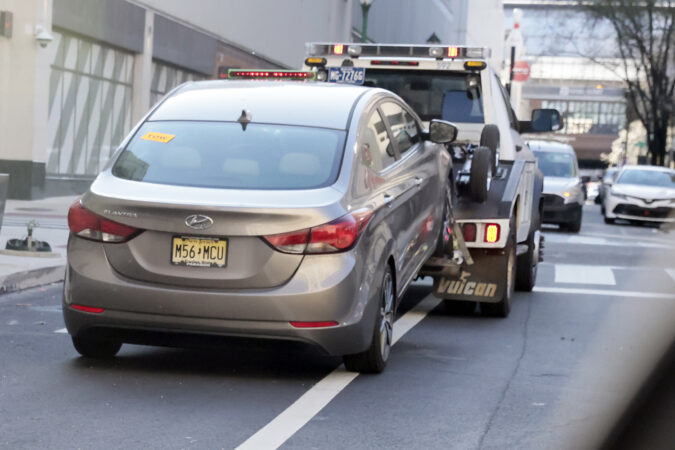
    Philadelphia police are searching for a suspect in connection with the shooting deaths of two tow truck drivers, department officials said Wednesday.

    Najee Williams, 27, is considered armed and dangerous, police said. Homicide investigators say Williams is connected to the fatal shootings of 20-year-old David Garcia-Morales in December and 25-year-old Aaron Whitfield in January.

    Williams faces charges of murder, conspiracy, and related crimes. There is a $20,000 reward for information that leads to his arrest and conviction.

    The killings of Garcia-Morales and Whitfield, who police say worked for the Jenkintown-based towing company 448 Towing and Recovery, rattled the city and put a focus on the competitive business of towing.

    Williams is the owner and operator of N.K.W Towing and Recovery, of North Philadelphia, according to a police source who asked not to be identified to discuss an ongoing investigation.

    A Facebook page for N.K.W features photos of car accidents and messages urging potential customers to call the company.

    “INVOLVED IN A ACCIDENT OR SEE ONE CALL ME” one message says.

    Another post from 2024 says: “Left the streets in a patty wagon, came back home and got right to it! Been home for 2 years now & as I sit here and think how bless I’m to have my freedom back.”

    It was not immediately clear who made the post.

    Staff Inspector Ernest Ransom, commanding officer of the homicide unit, said forensic evidence collected from a stolen Honda used in the shooting of Whitfield led investigators to Williams.

    The department’s fugitive task force and U.S. Marshals are assisting in the search for Williams, whose last known whereabouts were in Montgomery County, authorities say.

    On Dec. 22, police were called to 4200 Torresdale Avenue to find Garcia-Morales shot and injured inside a Ford F-450 towing vehicle. He was struck in the neck and thigh, and died four days later at Temple University Hospital.

    The second shooting, which took place on Jan. 11 on the 2100 block of Knorr Street, left Whitfield dead at the scene after he was struck by gunfire in the head and body.

    Whitfield had also been sitting in a tow truck, according to police. His 21-year-old girlfriend was shot in the leg and survived her injuries.

    Philadelphia’s towing industry is competitive and drivers often traverse the city in search of car accidents, hoping to be the first to arrive at the scene.

    That practice persists despite a city policy that requires police and dispatchers to cycle through a list of approved towing companies to contact when responding to accidents.

  • ‘Jeopardy!’ champ from New Jersey struggled to pronounce Schuylkill

    ‘Jeopardy!’ champ from New Jersey struggled to pronounce Schuylkill

    On Jeopardy!, contestants give their answers in the form of a question. Scott Riccardi’s should’ve been, “How do you pronounce Schuylkill?”

    During Tuesday’s episode, the New Jersey native and his two competitors were given a U.S. geography clue close to home: “Pottsville & Reading both lie on this river that enters the Delaware at Philadelphia.”

    Riccardi answered the clue correctly, but only after host Ken Jennings paused to determine if his pronunciation — “Skol-kull” — was close enough to award him $1,600.

    As least he got the correct river. TJ Fisher, a marketing specialist from San Francisco, guessed “Lackawanna,” nailing the pronunciation but missing the answer by more than 100 miles.

    Paolo Pasco, a puzzle writer originally from San Diego, Calif., didn’t buzz in.

    For the record, it’s pronounced “Skoo-kl.” One 15th century mapmaker just cut to the chase and labeled it the “Scool Kill River,” which would’ve been much easier to say and spell.

    According to Francis Vincent’s 1870 history of Delaware, “Schuylkill” was named by the Dutch; it loosely translates to “hidden creek.” Before Europeans set foot in the region, the native Lenape people called it “Ganshowe-hánne,” meaning “roaring stream,” as recorded by missionary John Heckewelder.

    Viewers should be thankful Riccardi and his competitors weren’t confronted with how to pronounce “Passyunk,” which continues to divide longtime Philly residents (and married couples).

    Jeopardy! is in the finals of its annual Tournament of Champions, which featured the show’s most recent top contestants. Pasco won Monday and Tuesday, and needs just one more victory to win the tournament and collect its $250,000 prize.

    Riccardi, an engineer and Rutgers University graduate born and raised in South Plainfield, Middlesex County, won 16 games during his 2025 run. That was good enough to tie for 10th most in the show’s history, matching Philly rideshare driver Ryan Long’s 2022 run. Riccardi also amassed $455,000 in earnings, the eighth most in regular-season play in the show’s history.

  • ‘The first step’: Chester County commissioners present poll book investigation to voters

    ‘The first step’: Chester County commissioners present poll book investigation to voters

    Chester County residents called for accountability after a poll book error led to thousands of voters being left off the rolls in November’s election, and said the recent investigation solicited by the county fell short of addressing problems they fear could happen again.

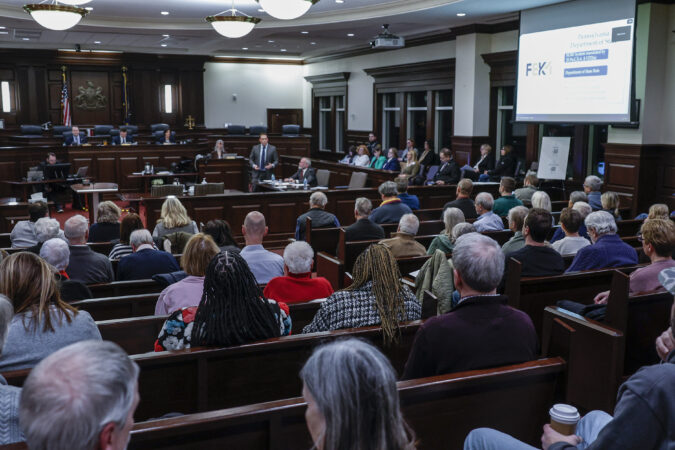
    Tuesday’s public meeting was the first time community members — and the county commissioners themselves — were able to respond to an independent firm’s investigation and report, which found that insufficient training, poor oversight, and staffing challenges in the county’s elections office forced more than 12,000 voters to cast provisional ballots in the general election. The poll book error occurred as the 25-person department has faced unusually high turnover in recent years, and as the director faces allegations of fostering a toxic workplace.

    “This is the first step, this is not the last step … to rebuilding trust with the public and improving elections in a way that ensures this never happens again,” Josh Maxwell, chairman of the county commissioners, told the attendees.

    The 24-page report, prepared by West Chester law firm Fleck, Eckert, Klein & McGarry LLC and published last month, found that two employees mistakenly included only registered Democrats and Republicans when using the statewide voter roll to create the poll book, omitting more than 75,000 registered independent and unaffiliated voters from the rolls.

    The employees, inexperienced and never formally trained, lacked direct supervision, the report said. No one in the county’s department checked the books until a poll worker noticed the omissions before polls opened on Election Day.

    There was no evidence of malfeasance, the report said. County officials said previously that everyone who wanted to vote could cast a ballot, despite the issue.

    Still, the error rocked Election Day in the county, with officials scrambling to print supplemental poll books and poll workers staying late to address the challenges. Republican Commissioner Eric Roe broke with his Democratic peers by voting against the certification of the election results in December, saying his conscience would not allow it.

    Community members said Tuesday the error further eroded trust in voting security.

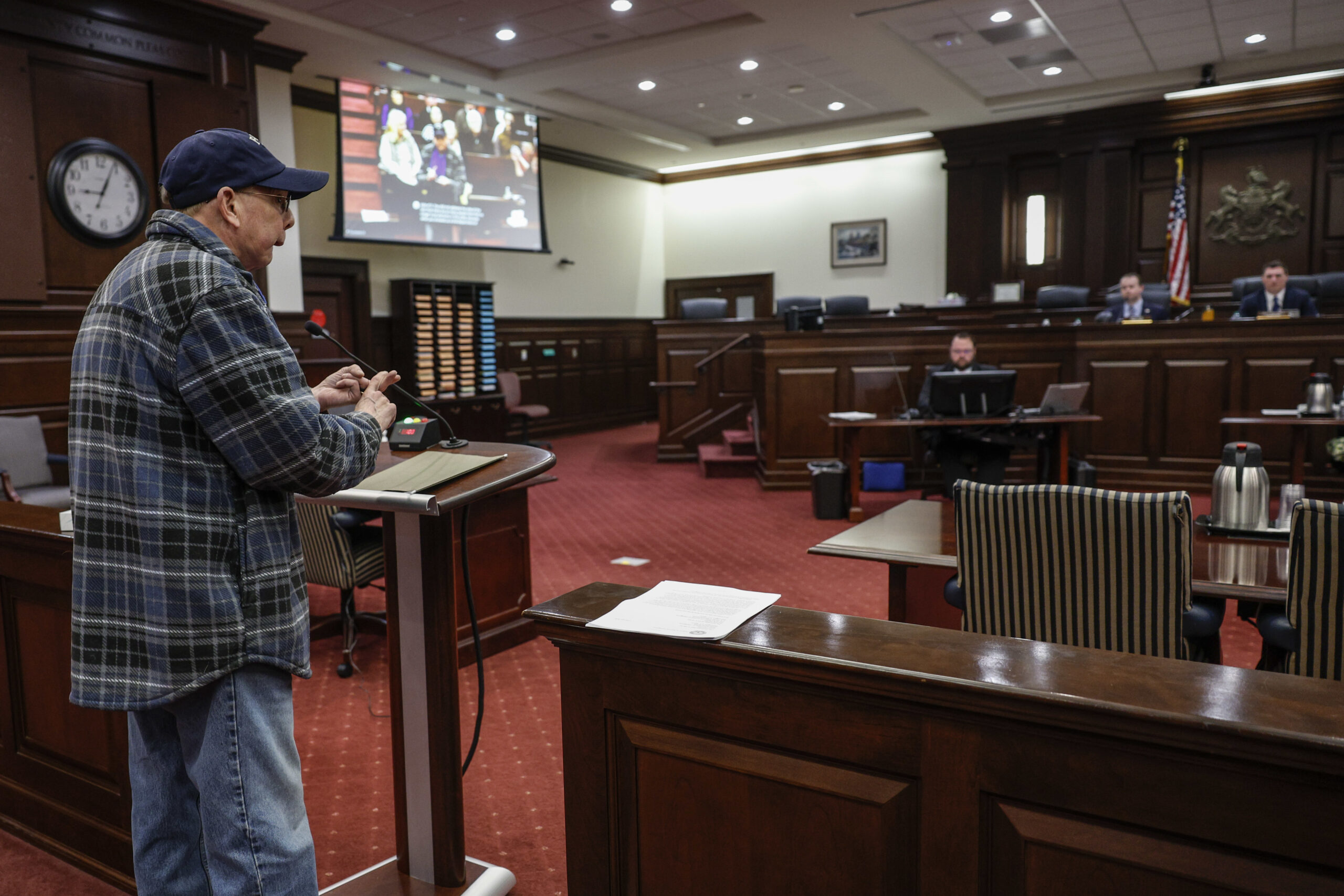
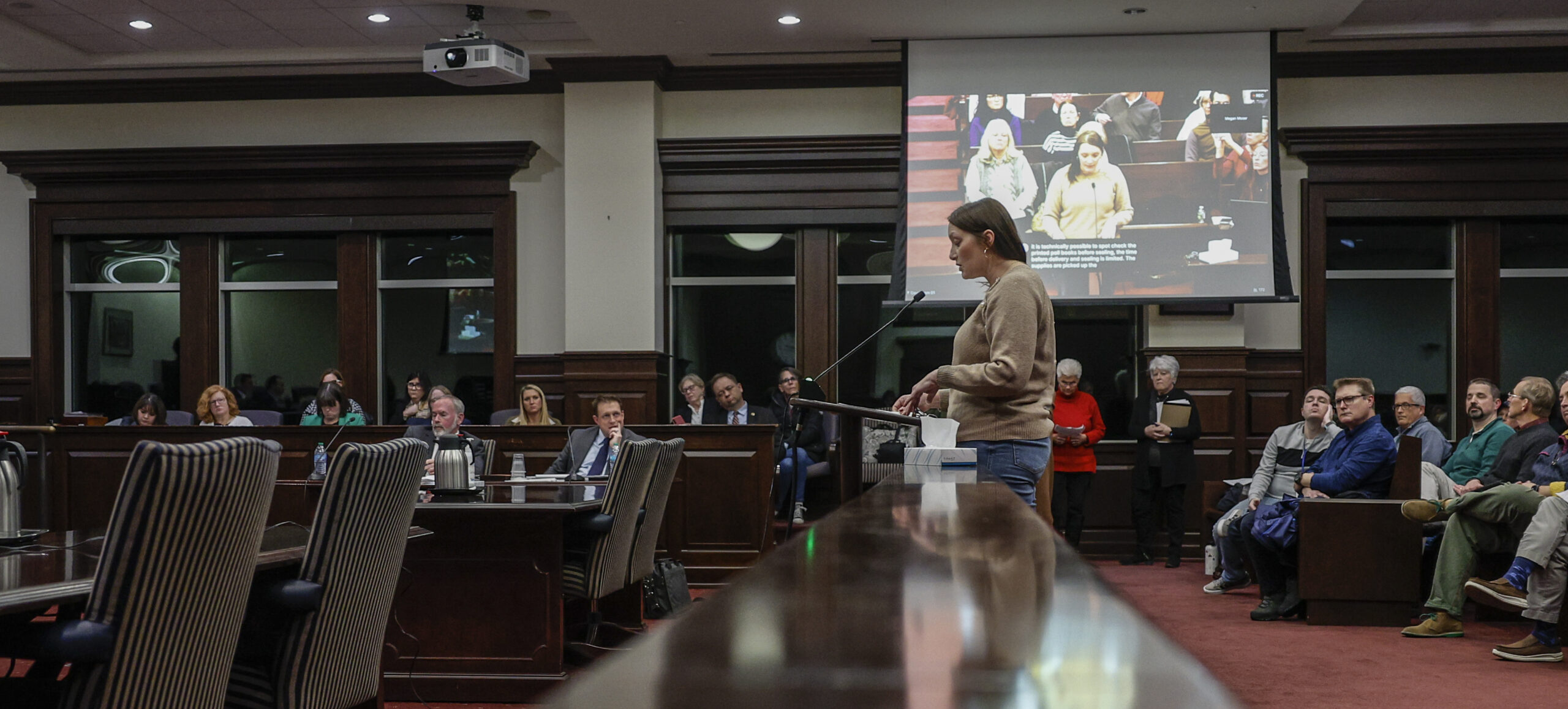
    John Luther addresses the Chester County Commissioners as they hold a public meeting to discuss the errors they had in the pole books during the November election. West Chester. Tuesday, February 3, 2026

    “How many voters were disenfranchised and did not vote?” resident John Luther asked the commissioners. “That is the most important thing. You guys can fix all the rest, but you can’t fix what you messed up in the front.”

    Kadida Kenner — who leads the New Pennsylvania Project, an organization dedicated to voter registration — said she rushed on Election Day to West Chester University, where the organization had helped students register to vote, to make sure they were not disenfranchised.

    “I see the impact of this mistake, this opportunity for change and growth,” she said. “The events of Election Day really did not help our efforts to be able to overcome feelings of individuals, as it relates to the electoral process, here in the commonwealth and across the country.”

    The report recommended more than a dozen changes for the county to prevent future errors, including improved training, reviewing processes and policies, and evaluating staff levels and pay. The county rolled out a plan to address the recommendations and intends to make monthly reports on its progress, saying some recommendations would be in place ahead of May’s primary.

    “Everyone in this room knows that a grievous error was made, and everyone is upset about it,” resident Marian Schneider said. “We can stop the browbeating and focus on the path forward.”

    The report stopped short of recommending personnel changes. Maxwell said the commissioners would not discuss personnel actions.

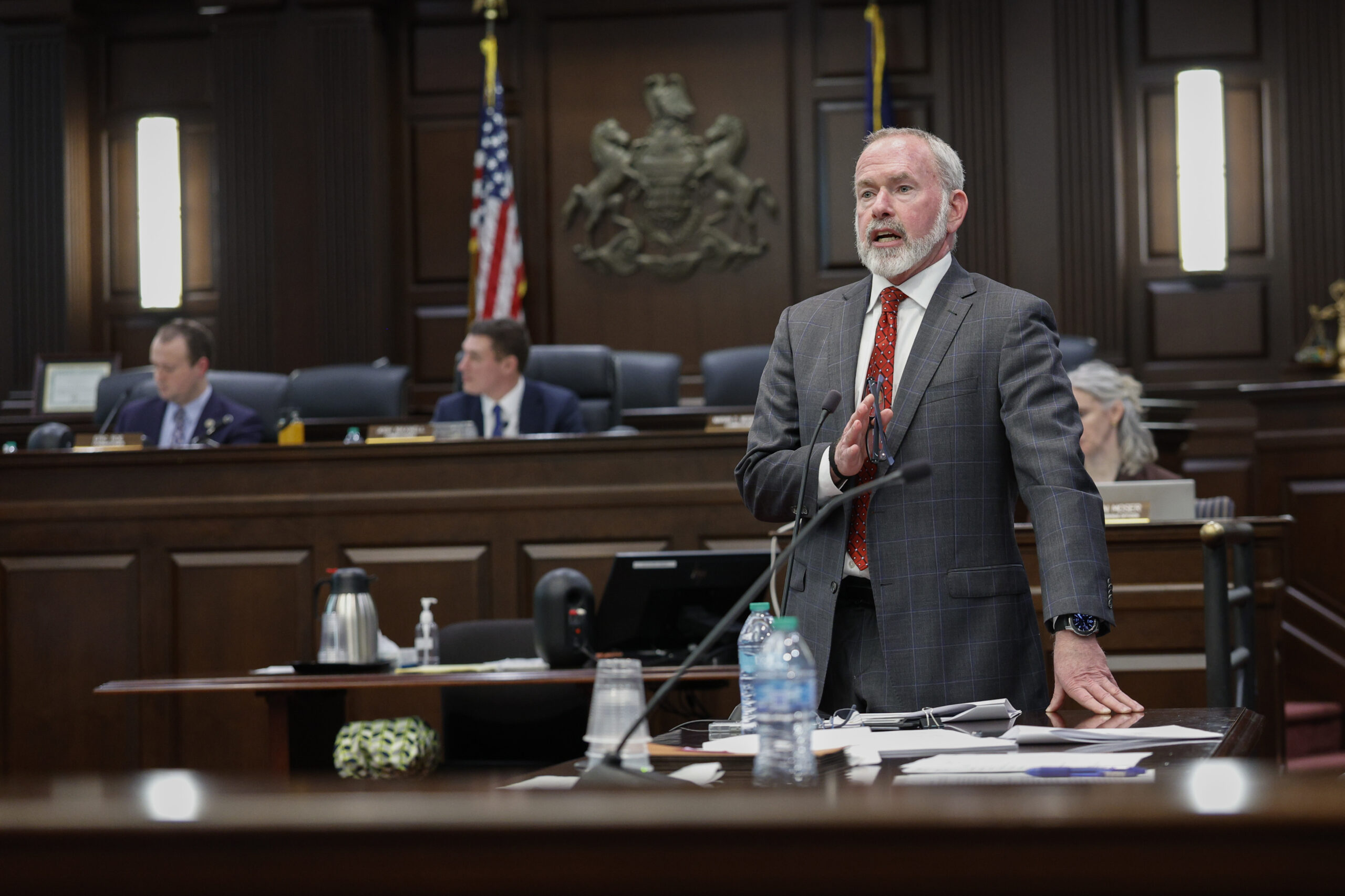
    Attorney Sigmund Fleck addresses the Chester County Commissioners as they hold a public meeting to discuss the errors they had in the pole books during the November election. West Chester. Tuesday, February 3, 2026

    “Bottom line, this appears to be a human error — clicking the wrong box,” said Sigmund Fleck, one of the attorneys who oversaw the report.

    Residents worried that those errors were symptoms of a deeper problem, and that the report’s scope did not fully address issues within voter services.

    “Yes, human error is a factor here,” Elizabeth Sieb told the commissioners. “This goes far beyond that. Mistakes of this magnitude require consequences.”

    Fleck pointed to larger issues with the state’s election system that culminated in the error, such as tight turnaround times for publishing the poll books, lack of statewide training, and a fairly old-school online voting roll system.

    Elizabeth Sieb addresses the Chester county commissioners as they hold a public meeting to discuss the errors they had in the pole books during the November election. West Chester. Tuesday, February 3, 2026

    But other counties deal with those same complications, some community members argued. November’s error came after the county omitted the office of the prothonotary on the ballot in May’s primary. The report found that error was due to the county solicitor’s office misinterpreting state law.

    “Sixty-seven counties face the same exact issues, except for one: management,” said Nathan Prospero Fox, a former voter services employee.

    Roe acknowledged the anger directed at county staff, but said: “The truth is, the buck doesn’t stop with staff. It stops with us.”

    “I am so sorry,” he continued. “This is not the end; there’s still time for accountability and improvement.”

    This suburban content is produced with support from the Leslie Miller and Richard Worley Foundation and The Lenfest Institute for Journalism. Editorial content is created independently of the project donors. Gifts to support The Inquirer’s high-impact journalism can be made at inquirer.com/donate. A list of Lenfest Institute donors can be found at lenfestinstitute.org/supporters.

  • Housing ban on former Hahnemann campus is on hold in City Council as concerns mount

    Housing ban on former Hahnemann campus is on hold in City Council as concerns mount

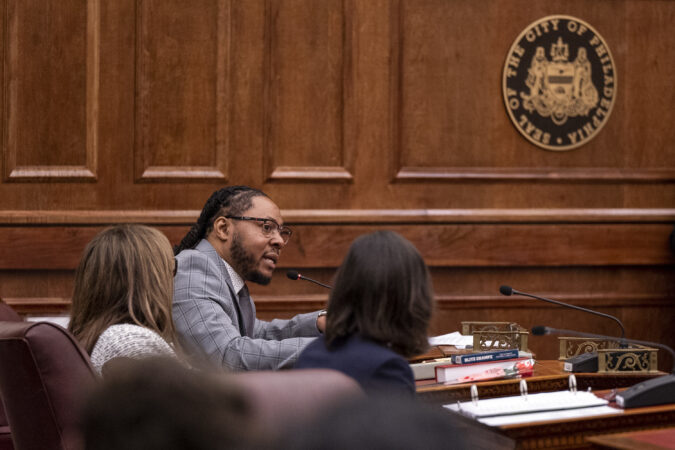
    Councilmember Jeffery Young pushed pause Tuesday on his highly controversial housing ban for the former Hahnemann hospital campus.

    Young has proposed a “Vine Street Expressway” zoning overlay that would cover the shuttered medical center and its surroundings and block residential development from its largely empty buildings and lots.

    Although developers have struggled to find new office or healthcare tenants for the area, Young initially described his legislation as a means to preserve the former campus as a jobs hub.

    However, an apartment development is proposed in the former Hahnemann patient towers by New York-based developer Dwight City Group — which is why most observers were stunned when Young introduced his last-minute bill banning all housing development from the area.

    Then in a sudden reversal at a City Council hearing Tuesday, Young said he was not advancing the bill.

    “We’re holding it so we can further [communicate] with all the community stakeholders that are involved,” Young said in an interview after the hearing. “We want to make sure that this project represents the best interest of the city of Philadelphia, and by continuing dialogue, we’ll achieve that goal.”

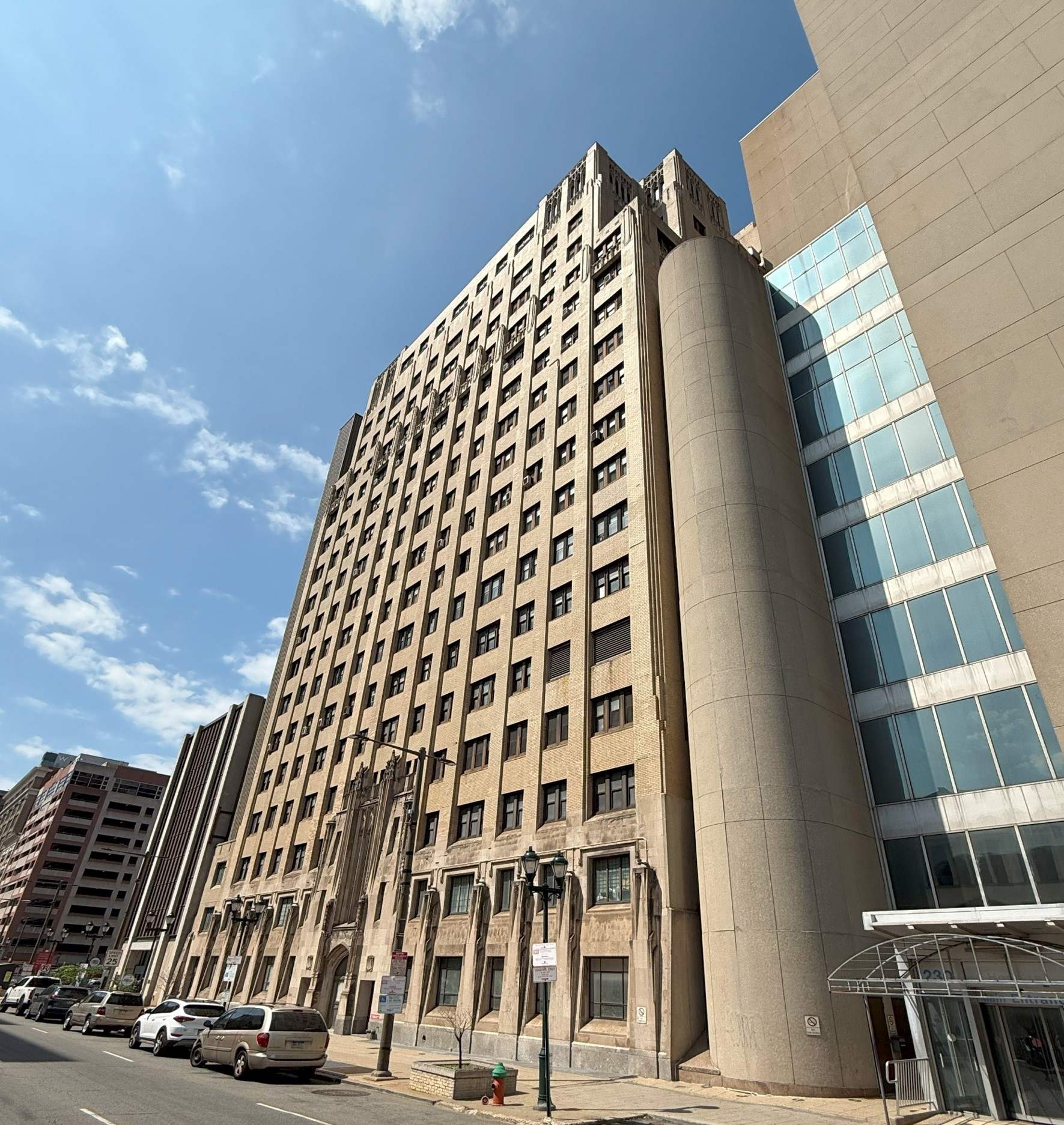
    The art-deco style South Tower of the former for Hahnemann hospital complex, which is almost 100 years old.

    No interest groups have officially come out in favor of the legislation. Pro-housing groups, the Logan Square Neighborhood Association, and the building trades unions have all expressed concerns about it.

    Property owners who would be affected include influential local institutions including Brandywine Realty Trust and Drexel University. Mayor Cherelle L. Parker’s administration was also concerned, especially as the administration pushes to get 30,000 units of housing built or repaired during her term through the Housing Opportunities Made Easy (H.O.M.E.) plan.

    “This bill conflicts with the goals of the comprehensive plan and the goals of the H.O.M.E. plan to support residential development,” said testimony prepared for Paula Brumbelow Burns of the City Planning Commission.

    Ironically, as a result of Young’s anti-housing legislation, permits have been secured for 824 units of housing on the former hospital site, as property owners rushed to secure the right to develop apartments before the feared ban would be enacted.

    With the exception of Dwight City Group’s proposal, it is not clear that many of those permits will quickly result in housing.

    The application for 300 units at Martinelli Park and 163 units at the Brandywine-owned Bellet building do not appear to signify new projects in the immediate future, but instead an effort to preserve value and flexibility of use.

    Young argued that the legislation has been successful in that it compelled property owners to talk with his office about their plans.

    “People need to understand what’s happening when you have large properties where potentially thousands of units will be developed there,” Young said. “We have properties that as a former hospital that’s filled with asbestos and other types of issues, no one knows what’s going on.”

  • Trump plans to install a Christopher Columbus statue outside of the White House

    Trump plans to install a Christopher Columbus statue outside of the White House

    President Donald Trump is planning to install a statue of Christopher Columbus on White House grounds, according to three people with knowledge of the pending move, in his latest effort to remake the presidential campus and celebrate the famed and controversial explorer.

    The statue is set to be located on the south side of the grounds, by E Street and north of the Ellipse, two of the people said, although they cautioned that plans could change. The three people spoke on the condition of anonymity to speak on private discussions. The piece is a reconstruction of a statue unveiled in Baltimore by then-President Ronald Reagan and dumped in the city’s harbor by protesters in 2020 as a racial reckoning swept the country.

    A group of Italian American businessmen and politicians, working with local sculptors, obtained the destroyed pieces and rebuilt the statue with financial support from local charities and federal grant funding.

    Bill Martin, an Italian American businessman who helped recover the remnants of the original sculpture and organize a campaign to rebuild it, said the statue is expected to be transferred from a warehouse on Maryland’s Eastern Shore to the Trump administration in coming weeks.

    The White House declined to comment on its plans but praised the 15th-century explorer.

    “In this White House, Christopher Columbus is a hero,” spokesman Davis Ingle said in a statement. “And he will continue to be honored as such by President Trump.”

    As Columbus statues became something of a battleground in the broader tug-of-war over the nation’s history, Trump has repeatedly positioned himself as a staunch defender of a legacy he says has been dishonored by “left-wing arsonists.”

    Trump included Columbus in a 2021 executive order of historical figures for his proposed National Garden of American Heroes, showcasing those who embody “the American spirit of daring and defiance, excellence and adventure, courage and confidence, loyalty and love.”

    The Italian explorer is long celebrated for his voyage in 1492 to the Americas, opening up trade routes with Europe and setting the stage for colonization and enslavement. Some U.S. states now recognize Indigenous Peoples’ Day instead of Columbus Day; Joe Biden in 2021 became the first president to mark the holiday.

    Trump campaigned in 2024 on promises to celebrate Columbus Day, and in October he signed a presidential proclamation to recognize Columbus as “the original American hero” and mark the annual holiday.

    “We’re back, Italians. Okay? We love the Italians,” Trump said after signing the proclamation. He later said the move should help the Republican Party in the upcoming midterm elections.

    “The Italian people are very happy about it. Remember when you go to the voting booths, I reinstated Columbus Day,” Trump told reporters at the White House last month.

    Meanwhile, his administration pushes to scrub federal institutions of “corrosive ideology” recognizing historical sexism and racism and to leave its mark on the nation’s capital in a sweeping effort that has drawn complaints and lawsuits. The president rapidly demolished the East Wing annex last year to build his planned $400 million ballroom; paved over the Rose Garden to make room for a patio; and has imposed his vision on numerous internal fixtures and rooms, including the Lincoln Bathroom.

    Historic preservationists have called on Trump to go through federal review panels before making further changes to the White House grounds.

    In his first term, Trump decried the destruction of Columbus statues across the country. After administration officials learned about efforts in 2020 to rescue and preserve Baltimore’s statue, they asked to obtain it for possible installation on federal grounds, but the statue was not yet ready, said Martin, the businessman.

    Martin estimated that he and his allies raised and spent more than $100,000 for their recovery and restoration efforts, which he said represented inspiration to the Italian American community.

    “It’s not about Columbus ‘discovering America’ … it’s about the Italian immigrants who came here and looked to Columbus as a hero,” Martin said.

    Nino Mangione, a Republican member of the Maryland House of Delegates, also was involved in efforts to recover the statue, and he praised Trump’s plan to install it at the White House.

    “It is such an honor for the Italian American community,” Mangione wrote in an email. “This proves that gangs, thugs, and people of that ilk don’t control things by mob rule. … in America the people rule and our voices are heard.”

    Columbus’s planned D.C. arrival comes on the heels of the administration’s reinstallation last October of a Confederate general that protesters had toppled and torched five years prior.

    Albert Pike is now back on his plinth in a small federal park about a mile east of the White House, the only Confederate leader memorialized with an outdoor statue in Washington.