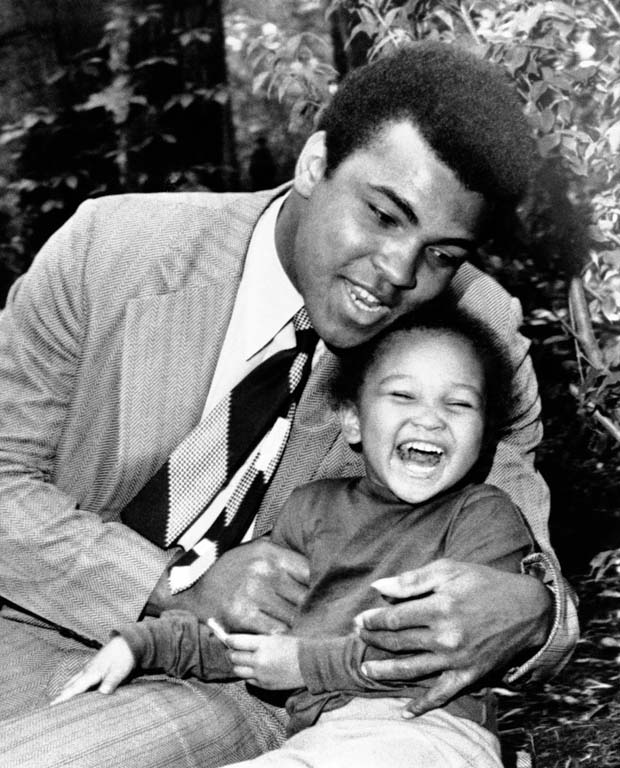
Muhammad Ali plays with his 3-year-old daughter Maryum at his home in Cherry Hill, N.J., on Monday, June 14, 1971.
Sitting on 1.5 acres, the six-bedroom, five-bathroom estate features a kitchen with a large center island and custom cabinetry, a sun-filled greenhouse room, a spacious living area, and an in-ground pool and hot tub, with adjacent basketball and tennis courts. On the lower level of the home is a personal gym and a 12-foot wet bar.
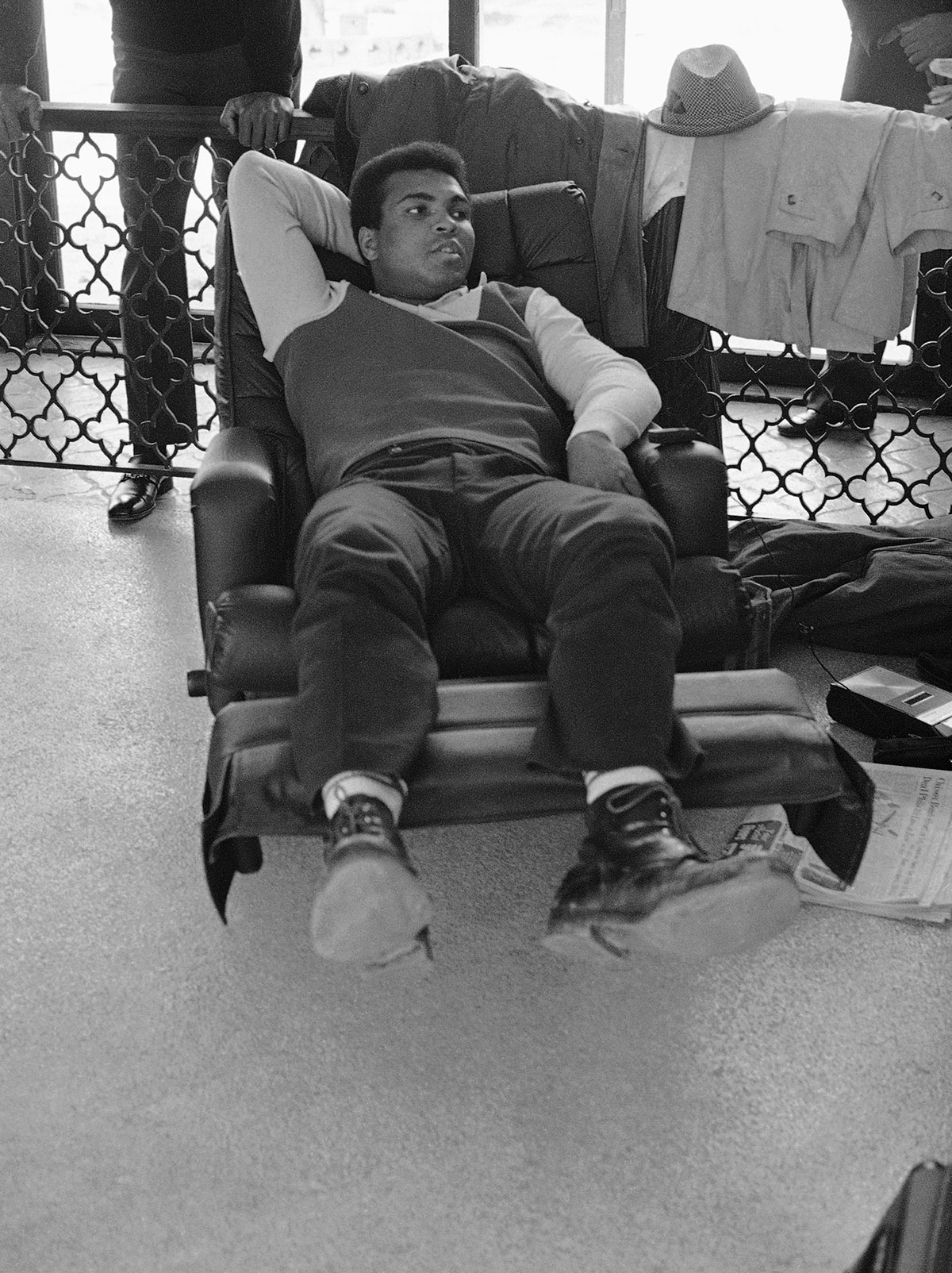
Muhammad Ali, who was defeated by heavyweight champion Joe Frazier, leans back in a reclining chair in his new home in Cherry Hill, N.J., March 10, 1971, as he answered Frazier’s promise to fight Ali again. “Good, we got a rematch, maybe in seven months, might be sooner,” Ali said.
The Champion bought the home for $103,000 in 1971. He moved to Chicago a few years later, according to the New York Times, after his friend, Camden power broker Major Coxson, was shot and killed in his home down the road from Ali’s. A major franchisee of local McDonald’s bought the home from Ali for $175,000.
The backyard and pool area of 1121 Winding Dr. in Cherry Hill, the former home of prizefighter Muhammad Ali from 1970 to 1973. It’s now up for sale for $1.9 million in 2026.
The current owners, who purchased the Cherry Hill homein 2014, traded in the 1970s decor and design for a modern look, converting Ali’s koi pond intoacenterpiece courtyard and fire pit. However, the home retains Ali’s prayer room, which can be found in the lower level, lined with bookshelves.
The main draw is the ample entertainment spaces, includingthe basement bar.
The downstairs bar area at 1121 Winding Dr. in Cherry Hill, the former home of Muhammad Ali from 1970 to 1973. It’s now up for sale for $1.9 million in 2026.
“There’s a spiral staircase from the main level to downstairs and you walk right into this large bar area, with tables, chairs, and a large TV setup,” Nicholas Alvini of Keller Williams said. “It really is a great entertaining house.”
The kitchen, including a large island, at 1121 Winding Dr. in Cherry Hill, the former home of prizefighter Muhammad Ali from 1970 to 1973. It’s now up for sale for $1.9 million.
In recent years, the home has been used for short-term rentals, and“wild parties” led police to visit the home 97 timesbetween 2018 and 2019, according to an Inquirer report. In response, Cherry Hill township councilalmost adopted a ban on Airbnb rentals before eventually tabling the idea after community members spoke against it.
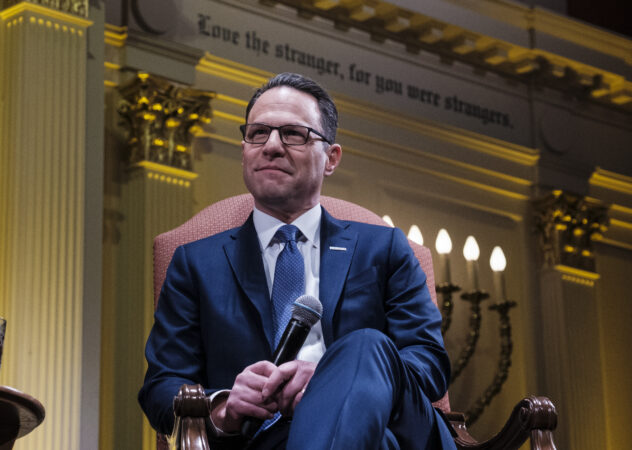
Gov. Josh Shapiro is backing a proposal to ban cell phones from Pennsylvania classrooms, joining a growing chorus of parents, teachers, and officials seeking to curb school disruptions and detach kids from addictive devices.
“It’s time for us to get distractions out of the classroom and create a healthier environment in our schools,” Shapiro said in a post on X on Thursday.
He called on Pennsylvania lawmakers to pass a bill that would require schools to ban the use of cell phones during the school day, “from the time they start class until the time they leave for home.”
The endorsement from the Democratic governor — who could promote the issue during his budget address Tuesday — comes as school cell phone bans have increasingly become the norm: 31 states have restrictions of some kind on phones, including 23 states with “bell-to-bell” bans barring the use of phones the entire school day, according to Education Week.
Pennsylvania currently lets schools set their own cell phone policies — and districts have taken a patchwork of approaches. Pennsylvania in 2024 implemented a pilot program allowing schools to access funding for lockable pouches that students could place their phones in during the day, but few districts took the state up on the money.
Some schools have banned cell phones during classes, including by asking students to place their phones in hanging shoe organizers on the backs of classroom doors.
Advocates for entirely phone-free school days say such measures aren’t sufficient. Phones are still buzzing, and if class ends early, “kids are constantly looking at it,” said Kristen Beddard, a parent from the Pittsburgh suburb of Sewickley and leader in the PA Unplugged coalition seeking to curb children’s reliance on phones and screens, in and out of school.
Barring phones only during class time is “not enough to truly break the dopamine feedback loop these kids are exposed to, and inundated with constantly,” Beddard said.
Since PA Unplugged began advocating for a bell-to-bell ban a year ago, “the landscape has changed so much,” including more states moving to restrict phones, Beddard said.
In Pennsylvania, the state’s largest teachers’ union came out in favor of a ban, and legislation that would require school districts to adopt bell-to-bell cell phone policies was unanimously approved in December by the Senate Education Committee. The bill would grant exceptions for students with special needs.
The Pennsylvania State Education Association “supports legislation like Senate Bill 1014 that would establish a consistent, statewide expectation that public schools will restrict the possession and prohibit use of mobile devices for all students during the school day,” said spokesperson Chris Lilienthal.
“Think about how disruptive those notifications are during the course of the school day when students should be focused on learning,” Lilienthal said.
In a divided Harrisburg, the proposal has bipartisan support. Beddard called banning cell phones in schools “maybe one of the few bipartisan issues left.”
In the Philadelphia area, groups of parents have mobilized against cell phone use, circulating pledges such as a commitment to not give children phones before eighth grade. Delco Unplugged, an offshoot of PA Unplugged, has advocated for cell phone bans in school districts and encourages parents to not give children access to phones before high school.
There has been opposition to strict bans, including from school leaders who think kids need to learn how to live with technology, rather than avoid it. Some administrators have also questioned the logistics, and some parents say they want their children to have phones in the case of emergencies, like a school shooting.
Advocates like Beddard say kids are safer during emergencies if they pay attention to the adults in their school, rather than their phones. They also argue that the logistics aren’t so daunting and that there are many ways to enact a ban besides lockable pouches.
Some schools require kids to put their phones in a locker or simply keep them in their backpacks, Beddard said, noting that the legislation advancing in Harrisburg would allow districts to decide how to enact a ban.
Schools that have implemented bans “describe the experience as transformational,” going beyond academic improvements to better socializing among kids, Beddard said. “Awkward conversations in the lunchroom make you a better human being,” she said.
At this point, “Pennsylvania isn’t a pioneer on the issue,” Beddard said. “We need to get with the program.”
A crypto company run by President Donald Trump’s family members sold a large stake to investors tied to the United Arab Emirates just days before Trump’s inauguration, linking a Trump family business to a prominent memberof the UAE’s governing elite.
The investment, worth a reported $500 million, gave Emirati-backed investors a 49% stake in World Liberty Financial, a crypto company that counts all three of Trump’s sons as cofounders and is also closely tied with Steve Witkoff, a longtime Trump ally who is among his most prominent advisers.
Sheikh Tahnoon bin Zayed al-Nahyan, the UAE’s national security adviser and a member of the royal family, was involved in the purchase, according to an arrangement first reported by the Wall Street Journal.
David Wachsman, a spokesperson for World Liberty Financial, defended the parameters of the agreement.
“We made the deal in question because we strongly believe that it was what was best for our company as we continue to grow,” he said. “The idea that, when raising capital, a privately held American company should be held to some unique standard that no other similar company would be held is both ridiculous and un-American.”
Wachsman said Trump and Witkoff had no role in the deal and also have not been involved in the company since taking office. White House officials stressed that he turned his businesses over to his children.
“President Trump only acts in the best interests of the American public — which is why they overwhelmingly reelected him to this office, despite years of lies and false accusations against him and his businesses from the fake news media,” Anna Kelly, a White House spokesperson, said in a statement. “President Trump’s assets are in a trust managed by his children. There are no conflicts of interest.”
Sheikh Tahnoon, a senior member of the Emirati royal family, oversees a powerful investment empire and chairs both the country’s sovereign wealth fund and G42, the UAE’s artificial intelligence powerhouse. A brother of the president of the United Arab Emirates, he serves as the government’s national security adviser and is known as the “spy sheikh.”
For years, Sheikh Tahnoon has served as a key foreign policy intermediary with the United States. When the UAE announced $1.4 trillion in investment in the United States, it was Sheikh Tahnoon who met with Trump at the White House last year to deliver the news.
Several months after the investment in World Liberty Financial, the UAE was granted access to advanced chips made in the United States that can help power artificial intelligence. The Trump administration scrapped rules imposed under President Joe Biden, paving the way for G42 to purchase advanced American-made chips.
Critics have long raised questions about potential conflicts stemming from Trump’s extensive financial interests, including whether he could benefit as a private citizen from decisions made while in public office.
A person close to Witkoff, speaking on the condition of anonymity because of the sensitivity of the matter, said he was not involved in G42negotiations but was briefed on them in his role as special envoy to the Middle East.
Sen. Elizabeth Warren (Mass.), the top Democrat on the Senate Banking Committee, called on several top Trump administration officials, including Witkoff, to testify before Congress about whether they have profited from the deal.
“This is corruption, plain and simple,” she said, pointing to the administration’s decision to approve sales of sensitive AI chips to the UAE.
“Congress needs to grow a spine and put a stop to Trump’s crypto corruption,” she added.
The White House on Sundaydenied any connection between the UAE investment in the company Trump’s family helps run and the administration’s decision to approve sales of advanced chips.
“The President has no involvement in business deals that would implicate his constitutional responsibilities,” David Warrington, the White House counsel, said in a statement. “President Trump performs his constitutional duties in an ethically sound manner and to suggest so otherwise is either ill-informed or malicious.”
Warrington said Witkoff complies with government ethics rules and does not participate in any official matters that could affect his financial interests. The person close to Witkoff said that his children run World Liberty Financial and that he “has nothing to do with it.”
World Liberty Financial was launched in 2024, with Trump explaining that he had come to support cryptocurrency after conversations with his sons. “Barron knows so much about this,” he said of his youngest son. The company lists Trump’s three sons among the co-founders, as well as two of Witkoff’s sons. Trump and Witkoff are each listed as “co-founder emeritus,” a designation reflecting that they stepped away after Trump returned to the White House.
The business has become one of the most lucrative parts of the president’s portfolio. The financial disclosure forms he filed last year list an income of $57.3 million from token sales, among his largest single sources of revenue.
Wachsman, the spokesperson for World Liberty Financial, said, “Any claim that this deal had anything to do with the Administration’s actions on chips is 100% false.
“As a private business, we operate by the same rules and regulations as any other company in our space, do not want or receive any special treatment, and reject the fact-free suggestions to the contrary,” he said.
Lydia Romero strained to hear her husband’s feeble voice through the phone.
A week earlier, immigration agents had grabbed Julio César Peña from his front yard in Glendale, Calif. Now, he was in a hospital after suffering a ministroke. He was shackled to the bed by his hand and foot, he told Romero, and agents were in the room, listening to the call. He was scared he would die and wanted his wife there.
“What hospital are you at?” Romero asked.
“I can’t tell you,” he replied.
Viridiana Chabolla, Peña’s attorney, couldn’t get an answer to that question, either. Peña’s deportation officer and the medical contractor at the Adelanto ICE Processing Center refused to tell her. Exasperated, she tried calling a nearby hospital, Providence St. Mary Medical Center.
“They said even if they had a person in ICE custody under their care, they wouldn’t be able to confirm whether he’s there or not, that only ICE can give me the information,” Chabolla said. The hospital confirmed this policy to KFF Health News.
Family members and attorneys for patients hospitalized after being detained by federal immigration officials said they are facing extreme difficulty trying to locate patients, get information about their well-being, and provide them emotional and legal support. They say many hospitals refuse to provide information or allow contact with these patients. Instead, hospitals allow immigration officers to call the shots on how much — if any — contact is allowed, which can deprive patients of their constitutional right to seek legal advice and leave them vulnerable to abuse, attorneys said.
Hospitals say they are trying to protect the safety and privacy of patients, staff, and law enforcement officials, even while hospital employees in Los Angeles, Minneapolis, and Portland, Ore., cities where Immigration and Customs Enforcement has conducted immigration raids, say it’s made their jobs difficult. Hospitals have used what are sometimes called blackout procedures, which can include registering a patient under a pseudonym, removing their name from the hospital directory, or prohibiting staff from even confirming that a patient is in the hospital.
“We’ve heard incidences of this blackout process being used at multiple hospitals across the state, and it’s very concerning,” said Shiu-Ming Cheer, the deputy director of immigrant and racial justice at the California Immigrant Policy Center, an advocacy group.
Some Democratic-led states, including California, Colorado, and Maryland, have enacted legislation that seeks to protect patients from immigration enforcement in hospitals. However, those policies do not address protections for people already in ICE custody.
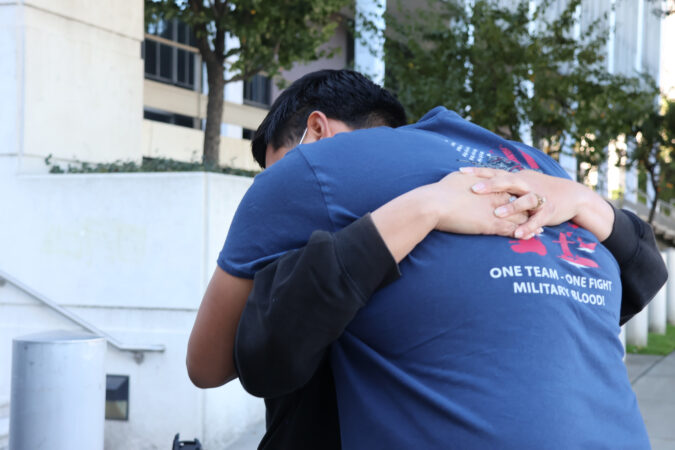
Julio Cesar Peña, who has terminal kidney disease, sits on his bike in the backyard of his home in Glendale, Calif. His family had a hard time locating him when he was hospitalized after being detained by Immigration and Customs Enforcement.
More detainees hospitalized
Peña is among more than 350,000 people arrested by federal immigration authorities since President Donald Trump returned to the White House. As arrests and detentions have climbed, so too have reports of people taken to hospitals by immigration agents because of illness or injury — due to preexisting conditions or problems stemming from their arrest or detention.
ICE has faced criticism for using aggressive and deadly tactics, as well as for reports of mistreatment and inadequate medical care at its facilities. Sen. Adam Schiff (D., Calif.) told reporters at a Jan. 20 news conference outside a detention center he visited in California City that he spoke to a diabetic woman held there who had not received treatment in two months.
While there are no publicly available statistics on the number of people sick or injured in ICE detention, the agency’s news releases point to 32 people who died in immigration custody in 2025. Six more have died this year.
The Department of Homeland Security, which oversees ICE, did not respond to a request for information about its policies or Peña’s case.
According to ICE’s guidelines, people in custody should be given access to a telephone, visits from family and friends, and private consultation with legal counsel. The agency can make administrative decisions, including about visitation, when a patient is in the hospital, but should defer to hospital policies on contacting next of kin when a patient is seriously ill, the guidelines state.
Asked in detail about hospital practices related to patients in immigration custody and whether there are best practices that hospitals should follow, Ben Teicher, a spokesperson for the American Hospital Association, declined to comment.
David Simon, a spokesperson for the California Hospital Association, said that “there are times when hospitals will — at the request of law enforcement — maintain confidentiality of patients’ names and other identifying characteristics.”
Although policies vary, members of the public can typically call a hospital and ask for a patient by name to find out whether they’re there, and often be transferred to the patient’s room, said William Weber, an emergency physician in Minneapolis and medical director for the Medical Justice Alliance, which advocates for the medical needs of people in law enforcement custody. Family members and others authorized by the patient can visit. And medical staff routinely call relatives to let them know a loved one is in the hospital, or to ask for information that could help with their care.
But when a patient is in law enforcement custody, hospitals frequently agree to restrict this kind of information sharing and access, Weber said. The rationale is that these measures prevent unauthorized outsiders from threatening the patient or law enforcement personnel, given that hospitals lack the security infrastructure of a prison or detention center. High-profile patients such as celebrities sometimes also request this type of protection.
Several attorneys and healthcare providers questioned the need for such restrictions. Immigration detention is civil, not criminal, detention. The Trump administration says it’s focused on arresting and deporting criminals, yet most of those arrested have no criminal conviction, according to data compiled by the Transactional Records Access Clearinghouse and several news outlets.
Taken outside his home
According to Peña’s wife, Romero, he has no criminal record. Peña came to the United States from Mexico in sixth grade and has an adult son in the U.S. military. The 43-year-old has terminal kidney disease and survived a heart attack in November. He has trouble walking and is partially blind, his wife said. He was detained Dec. 8 while resting outside after coming home from dialysis treatment.
Initially, Romero was able to find her husband through the ICE Online Detainee Locator System. She visited him at a temporary holding facility in downtown Los Angeles, bringing him his medicines and a sweater. She then saw he’d been moved to the Adelanto detention center. But the locator did not show where he was after he was hospitalized.
When she and other relatives drove to the detention facility to find him, they were turned away, she said. Romero received occasional calls from her husband in the hospital but said they were less than 10 minutes long and took place under ICE surveillance. She wanted to know where he was so she could be at the hospital to hold his hand, make sure he was well cared for, and encourage him to stay strong, she said.
Shackling him and preventing him from seeing his family was unfair and unnecessary, she said.
“He’s weak,” Romero said. “It’s not like he’s going to run away.”
ICE guidelines say contact and visits from family and friends should be allowed “within security and operational constraints.” Detainees have a constitutional right to speak confidentially with an attorney. Weber said immigration authorities should tell attorneys where their clients are and allow them to talk in person or use an unmonitored phone line.
Hospitals, though, fall into a gray area on enforcing these rights, since they are primarily focused on treating medical needs, Weber said. Still, he added, hospitals should ensure their policies align with the law.
Family denied access
Numerous immigration attorneys have spent weeks trying to locate clients detained by ICE, with their efforts sometimes thwarted by hospitals.
Nicolas Thompson-Lleras, a Los Angeles attorney who counsels immigrants facing deportation, said two of his clients were registered under aliases at different hospitals in Los Angeles County last year. Initially, the hospitals denied the clients were there and refused to let Thompson-Lleras meet with them, he said. Family members were also denied access, he said.
One of his clients was Bayron Rovidio Marin, a car wash worker injured during a raid in August. Immigration agents surveilled him for over a month at Harbor-UCLA Medical Center, a county-run facility, without charging him.
In November, the Los Angeles County Board of Supervisors voted to curb the use of blackout policies for patients under civil immigration custody at county-run hospitals. In a statement, Arun Patel, the chief patient safety and clinical risk management officer for the Los Angeles County Department of Health Services, said the policies are designed to reduce safety risks for patients, doctors, nurses, and custody officers.
“In some situations, there may be concerns about threats to the patient, attempts to interfere with medical care, unauthorized visitors, or the introduction of contraband,” Patel said. “Our goal is not to restrict care but to allow care to happen safely and without disruption.”
Leaving patients vulnerable
Thompson-Lleras said he’s concerned that hospitals are cooperating with federal immigration authorities at the expense of patients and their families and leaving patients vulnerable to abuse.
“It allows people to be treated suboptimally,” Thompson-Lleras said. “It allows people to be treated on abbreviated timelines, without supervision, without family intervention or advocacy. These people are alone, disoriented, being interrogated, at least in Bayron’s case, under pain and influence of medication.”
Such incidents are alarming to hospital workers. In Los Angeles, two healthcare professionals who asked not to be identified by KFF Health News, out of concern for their livelihoods, said that ICE and hospital administrators, at public and private hospitals, frequently block staff from contacting family members for people in custody, even to find out about their health conditions or what medications they’re on. That violates medical ethics, they said.
Blackout procedures are another concern.
“They help facilitate, whether intentionally or not, the disappearance of patients,” said one worker, a physician for the county’s Department of Health Services and part of a coalition of concerned health workers from across the region.
At Legacy Emanuel Medical Center in Portland, nurses publicly expressed outrage over what they saw as hospital cooperation with ICE and the flouting of patient rights. Legacy Health has sent a cease and desist letter to the nurses’ union, accusing it of making “false or misleading statements.”
“I was really disgusted,” said Blaire Glennon, a nurse who quit her job at the hospital in December. She said numerous patients were brought to the hospital by ICE with serious injuries they sustained while being detained. “I felt like Legacy was doing massive human rights violations.”
Handcuffed while unconscious
Two days before Christmas, Chabolla, Peña’s attorney, received a call from ICE with the answer she and Romero had been waiting for. Peña was at Victor Valley Global Medical Center, about 10 miles from Adelanto, and about to be released.
Excited, Romero and her family made the two-hour-plus drive from Glendale to the hospital to take him home.
When they got there, they found Peña intubated and unconscious, his arm and leg still handcuffed to the hospital bed. He’d had a severe seizure on Dec. 20, but no one had told his family or legal team, his attorney said.
Tim Lineberger, a spokesperson for Victor Valley Global Medical Center’s parent company, KPC Health, said he could not comment on specific patient cases, because of privacy protections. He said the hospital’s policies on patient information disclosure comply with state and federal law.
Peña was finally cleared to go home on Jan. 5. No court date has been set, and his family is filing a petition to adjust his legal status based on his son’s military service. For now, he still faces deportation proceedings.
KFF Health News is a national newsroom that produces in-depth journalism about health issues and is one of the core operating programs at KFF — the independent source for health policy research, polling, and journalism.
TUCSON, Ariz. — An Arizona sheriff said Monday that “we do in fact have a crime scene” as authorities search for the 84-year-old mother of “Today” show host Savannah Guthrie, who was reported missing over the weekend.
Speaking during a news conference, Pima County Sheriff Chris Nanos said there are signs at the home indicating Nancy Guthrie did not leave on her own.
“I need this community to step up and start giving us some calls,” Nanos said.
Asked to explain why investigators believe it’s a crime scene, Nanos said Guthrie has limited mobility and said there were other things indicated she didn’t leave on her own.
Nanos said at a news conference Sunday night that Nancy Guthrie was last seen around 9:30 p.m. Saturday at her home in the Tucson area. Her family reported her missing around noon Sunday. Nancy Guthrie has some physical ailments, but no cognitive issues, he said.
Searchers were using drones and search dogs to look for Nancy Guthrie, Nanos said. Search and rescue teams were supported by volunteers and Border Patrol and the homicide team was also involved, he said. It is not standard for the homicide team to get involved in such cases, Nanos said.
“This one stood out because of what was described to us at the scene and what we located just looking at the scene,” Nanos said. He was not ruling out foul play.
“On behalf of our family, I want to thank everyone for the thoughts, prayers and messages of support,” she said. “Right now, our focus remains on the safe return of our dear Nancy.”
“Today” opened Monday’s show with the disappearance of the co-anchor’s mother, but Savannah Guthrie was not at the anchor’s desk. Nanos said during the Monday news conference that Savannah Guthrie is in Arizona.
President Donald Trump has said the “only thing” he worries about is losing Republican control of Congress in the November elections. The latest campaign finance filings show he’s built an unprecedented war chest to help keep that from happening.
Trump’s political committees and the Republican National Committee amassed $483 million through the end of December, according to documents filed with the Federal Election Commission. That’s nearly triple the $167 million collectively held by the Democratic National Committee and its Senate and House party committees and super PACs.
The haul comes from tapping Trump’s wealthiest donors with events like “MAGA Inc. dinners” at his Florida and New Jersey resorts as well as relentless appeals via text and email to small-dollar contributors who constitute the Make America Great Again base.
Since returning to the White House, MAGA Inc. has gotten eight-figure contributions from pipeline billionaire Kelcy Warren and his company Energy Transfer LP; quant trader Jeff Yass; OpenAI co-founder Greg Brockman; and Crypto.com exchange operator Foris DAX Inc. In total, MAGA Inc. alone has raked in $313 million since Trump’s 2024 election victory.
Targeting the other end of the donor spectrum, Trump’s Never Surrender leadership PAC recently asked potential contributors to make a “small, sustaining contribution so we can complete the MAGA agenda.” It asked for as little as $33.
Whether all that financial armor is enough to buck history – incumbent presidents almost always lose ground in midterms – isn’t so clear, and Trump knows it.
“Even presidents, whether it’s Republican or Democrat, when they win, it doesn’t make any difference – they seem to lose the midterms,” Trump said in a Jan. 27 interview on Fox News. “So, that’s the only thing I worry about.”
Only twice since 1938 has the party in control of the White House gained House seats in a midterm election. During Trump’s first presidency, in 2018, Republicans lost 40 seats. In the two midterms that took place during Barack Obama’s presidency, in 2010 and 2014, Republicans netted 63 seats and 13 seats, respectively.
– – –
Growing Frustration
This year, momentum and history seem to be on the Democrats’ side – they only need to swing a handful of seats to take control of the House.
Working in their favor, national polls show a majority of voters disapprove of Trump’s handling of the economy, as well as growing frustration with the administration’s approach to deportations and foreign policy. Parts of the coalition that swept him back to office – including independents and young voters as well as Black and Hispanic males – are fraying.
That handicap for Republicans has been evident in elections over the past three months in which Democrats have outperformed expectations, in part by tapping into voter frustration over cost-of-living concerns.
“House Republicans are running scared,” said Viet Shelton, a spokesman for the Democratic Congressional Campaign Committee. He added that “with better candidates, a better message, and the public souring on Republicans, Democrats are poised to take back the majority.”
Reflecting the shifting mood, the non-partisan Cook Political Report last month moved 18 House races toward Democrats, bringing the number of seats considered solidly blue to 189, compared to 186 for Republicans. A party needs 218 seats to win the majority.
In the latest example of the headwinds Republicans face, this past weekend in Texas a Democratic candidate for a state Senate seat, Taylor Rehmet, defeated a Republican in a district Trump won in 2024 by 17 percentage points over Kamala Harris.
As the GOP’s fund raiser-in-chief, Trump isn’t waiting until November to put his cash to work. The president intends to use the money he’s amassed to play the role of kingmaker in the midterms, according to people familiar with the strategy.
That involves doling out money to loyalists, or chosen candidates in competitive primaries or congressional races and punishing lawmakers who’ve crossed him over the past year on everything from the passage of his signature tax bill to the release of the Epstein files.
Trump allies also expect to tap their stockpile for specific districts in the final two months in the states and races where it’s most needed, flooding the zone to try to ensure victory.
“MAGA Inc. will have the resources to help candidates who support President Trump’s America First agenda,” Alex Pfeiffer, a spokesperson for the super-PAC, said.
MAGA Inc. has already intervened in one election: it spent $1.7 million backing Tennessee Republican Matt Van Epps in a special election to fill a vacant House seat. Van Epps won by about 9 points – but that margin was narrower than the cushion of more than 21 points his Republican predecessor enjoyed in 2024.
Privately, many Trump allies are resigned to the idea the party could lose control of the House. Trump has warned he could be impeached for a third time if that happens, and his signaled he thinks his party’s lawmakers would be to blame.
House Speaker Mike Johnson, a perennial optimist in his public remarks, said on Sunday that he remains “very bullish on the midterms” and cited the party’s fund-raising prowess as one reason.
“We’re going to have a war chest to run on,” Johnson said on Fox News Sunday. “I think we’re going to defy history.”
Trump says his first year as president shows he deserves reelection. Pressed in Iowa last week about why voters may perennially pick the opposition party in midterms, Trump mused about the electorate wanting “fences” or “guardrails” on presidents.
But, he quickly added, “I don’t need guardrails. I don’t want guardrails.”
CAIRO — The first medical evacuees from Gaza entered Egypt on Monday as the Rafah border crossing reopened. It marked a key step in the Israel-Hamas ceasefire but a mostly symbolic one, as few people will be allowed to travel in either direction and no goods will pass through.
Ambulances waited for hours at the border before ferrying patients across after sunset, Egypt’s state-run Al-Qahera News satellite television channel showed. The crossing had been closed since Israeli troops seized it in May 2024.
About 20,000 Palestinian children and adults needing medical care hope to leave the devastated territory via the crossing, according to Gaza health officials. Thousands of other Palestinians outside the territory hope to enter and return home.
The number of travelers is expected to increase over time if the system is successful. Israel has said it and Egypt will vet people for exit and entry.
The office of the North Sinai governor confirmed that the first Palestinian patient crossed into Egypt.
Before the war, Rafah was the main crossing for people moving in and out of Gaza. The territory’s handful of other crossings are all shared with Israel. Under the terms of the ceasefire, which went into effect in October, Israel’s military controls the area between the Rafah crossing and the zone where most Palestinians live.
Violence continued across the coastal territory Monday, and Gaza hospital officials said an Israeli navy ship had fired on a tent camp, killing a 3-year-old Palestinian boy. Israel’s military said it was looking into the incident.
Egypt prepares to receive the wounded
Rajaa Abu Mustafa stood Monday outside a Gaza hospital where her 17-year-old son Mohamed was awaiting evacuation. He was blinded by a shot to the eye last year as he joined desperate Palestinians seeking food from aid trucks east of the southern city of Khan Younis.
“We have been waiting for the crossing to open,” she said. “Now it’s opened and the health ministry called and told us that we will travel to Egypt for (his) treatment.”
About 150 hospitals across Egypt are ready to receive Palestinian patients evacuated from Gaza through Rafah, authorities said. The Egyptian Red Crescent said it has readied “safe spaces” on the Egyptian side of the crossing to support those evacuated from Gaza.
Israel has banned sending patients to hospitals in the Israeli-occupied West Bank and east Jerusalem since the war began, cutting off what was previously the main outlet for Palestinians needing medical treatment unavailable in Gaza.
The Rafah crossing will be supervised by European Union border patrol agents with a small Palestinian presence.
Historically, Israel and Egypt have vetted Palestinians applying to cross. Fearing that Israel could use the crossing to push Palestinians out of the enclave, Egypt has repeatedly said it must be open for them to enter and exit Gaza.
Palestinian toddler killed by Israeli fire
A 3-year-old Palestinian was killed when Israel’s navy hit tents sheltering displaced people in Khan Younis, Palestinian hospital authorities said.
According to Nasser hospital, which received the body, the attack happened in Muwasi, a tent camp area on Gaza’s coast.
More than 520 Palestinians have been killed by Israeli fire since the ceasefire went into effect on Oct. 10, according to Gaza’s health ministry. The casualties since the ceasefire are among the over 71,800 Palestinians killed since the start of Israel’s offensive, according to ministry, which does not say how many were fighters or civilians.
The ministry, which is part of Gaza’s Hamas-led government, keeps detailed casualty records that are seen as generally reliable by U.N. agencies and independent experts.
Rafah’s opening represents ceasefire progress
Israeli troops seized the Rafah crossing in May 2024, calling it part of efforts to combat arms smuggling for the militant Hamas group. The crossing was briefly opened for the evacuation of medical patients during a ceasefire in early 2025.
Israel had resisted reopening the Rafah crossing, but the recovery of the remains of the last hostage in Gaza cleared the way to move forward.
The reopening is seen as a key step as the U.S.-brokered ceasefire agreement moves into its second phase.
The truce halted more than two years of war between Israel and Hamas that began with the Hamas-led attack on southern Israel on Oct. 7, 2023. Its first phase called for the exchange of all hostages held in Gaza for hundreds of Palestinians held by Israel, an increase in badly needed humanitarian aid, and a partial pullback of Israeli troops.
The second phase of the ceasefire deal is more complicated. It calls for installing the new Palestinian committee to govern Gaza, deploying an international security force, disarming Hamas and taking steps to begin rebuilding.
As Train 9710 pulled out of the Trenton Transit Center at 7:25 a.m. Monday, something looked out of place.
Five passenger coaches in the Philadelphia-bound Regional Rail train bore foreign “MARC” logos and orange-and-blue markings, all pulled by a properly labeled SEPTA electric locomotive.
The substitute cars initially will be running on the Trenton and West Trenton lines, where riders for months have endured packed trains due to a shortage of available 50-year-old Silverliner IVs.
The transit agency is paying $2.6 million to lease the new coaches for a year.
SEPTA’s records show it canceled at least 2,544 Regional Rail trips in the last three months of 2025. Delays and skipped stops also have plagued commuters for months.
SEPTA is using its ACS-64 electric locomotives, which it bought in 2019, to pull the MARC coaches and its own fleet of 45 coaches.
Silverliner cars do double duty; they carry passengers and have motors that provide their own locomotion through electricity drawn from overhead wires.
SEPTA said in a statement that the schedules will add trips on the Wilmington, Trenton, and Chestnut Hill East lines and increase the frequency of service from Wayne Junction directly to the Philadelphia International Airport on the Airport line.
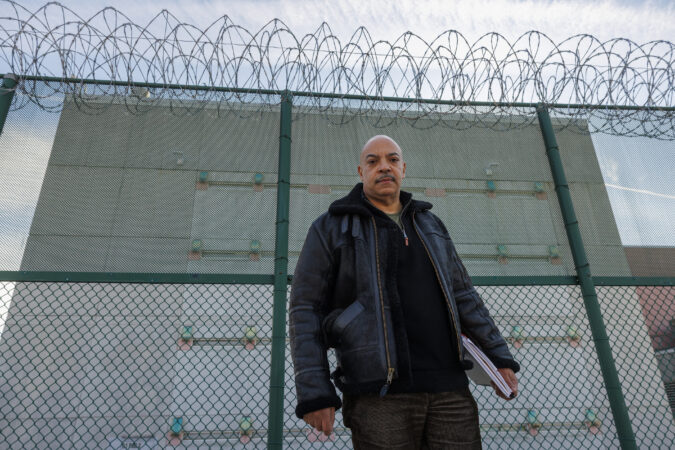
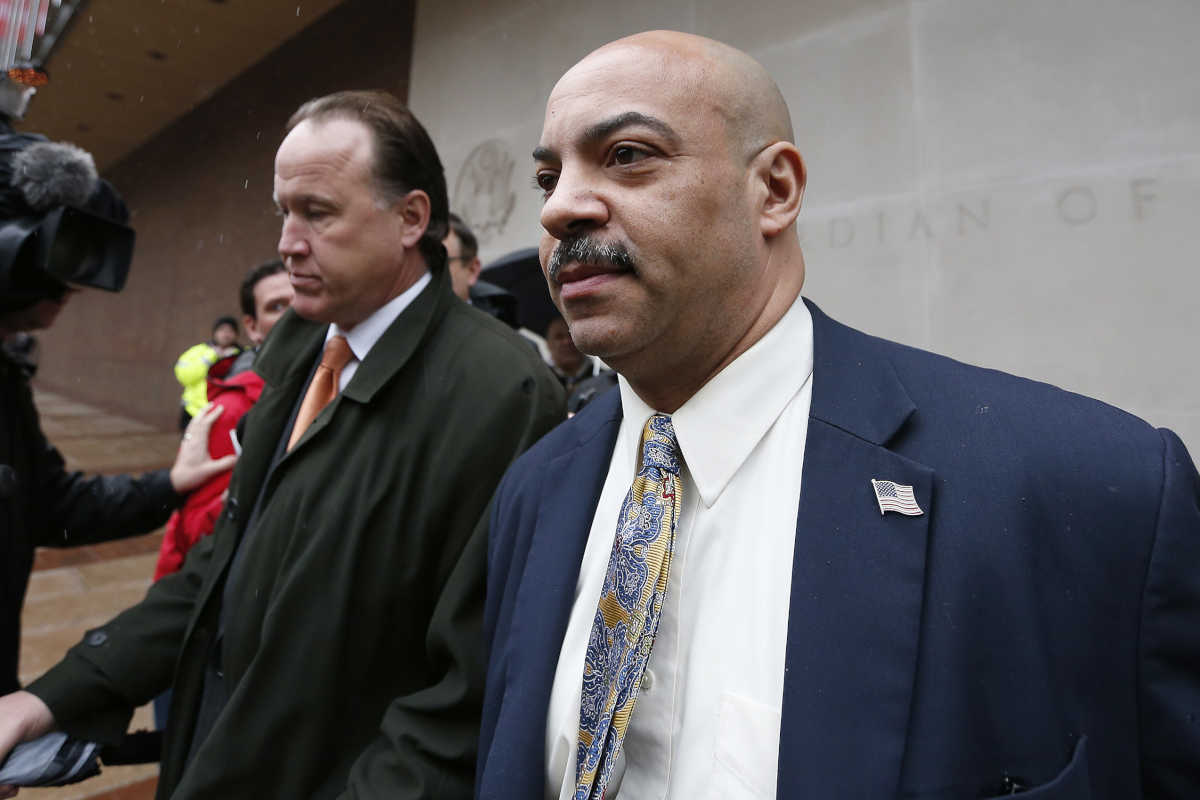
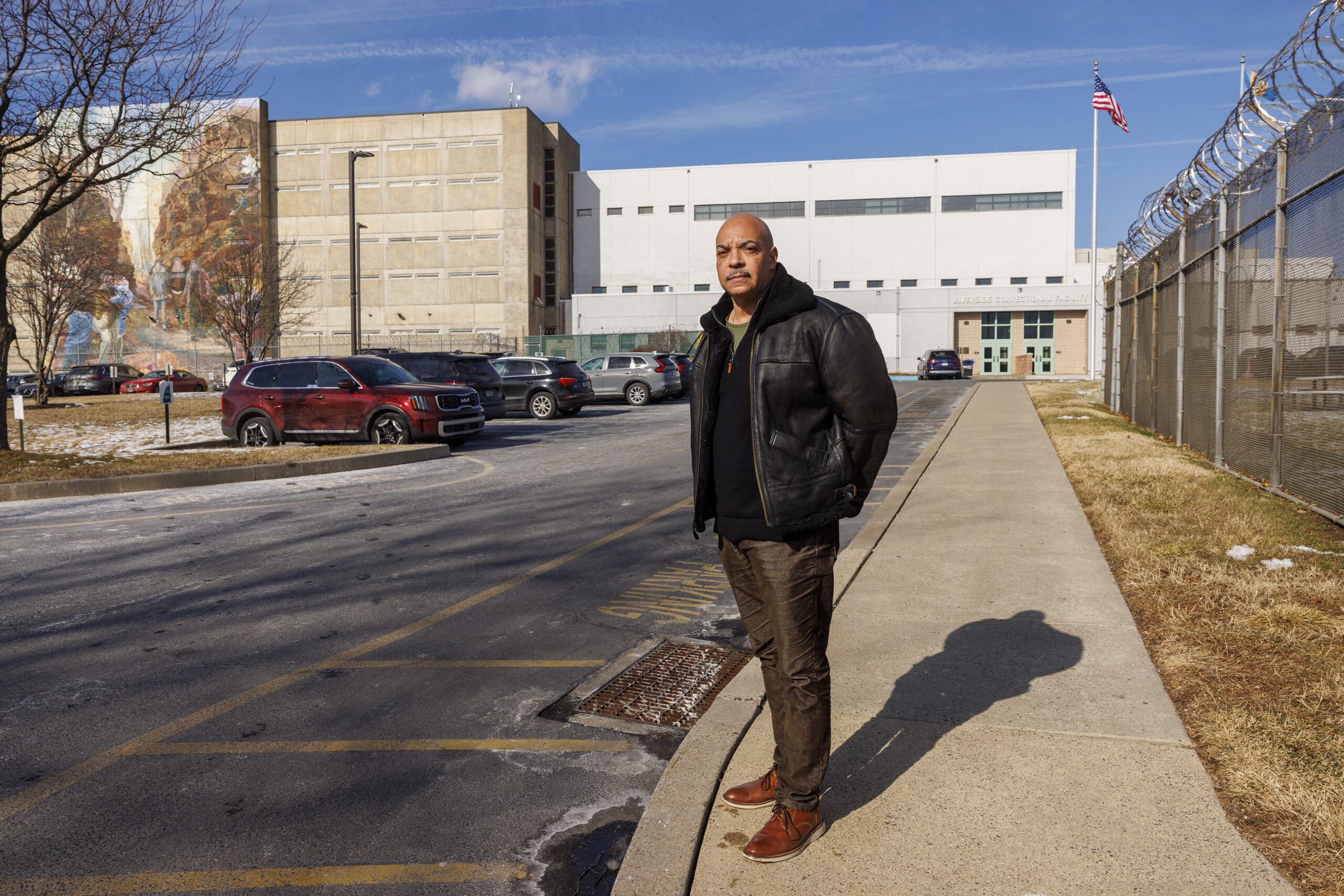
He walked toward the cellblock in Riverside Correctional Facility, pulling a cart of books behind him.
For a moment, it was quiet. The only sounds that echoed off the jail’s cinder block walls were the squeaks of his cart’s wheels.
But as a heavy door to a busy unit swung open, Seth Williams’ work was set to begin.
“Chaplain up!” one of the inmates inside yelled.
Williams smiled at the crowd of prisoners who began walking toward him and his squeaky cart, which was filled with Bibles, Qurans, and other religious texts.
“Step into my office,” he said, placing his hand on an inmate’s shoulder.
The role’s expectations are modest. He offers spiritual counseling and religious programming to the 600 or so prisoners held at Riverside. It is part-time and pays about $21 per hour.
Still, for Williams, the position was uniquely appealing. After putting people in jail as the city’s top prosecutor, then spending five years in federal prison as an inmate himself, he believes he can use what he learned from that journey to help young men avoid committing crimes in the future.
“I can be a better advocate, a better vessel, to help prevent crime and reduce recidivism … by helping people learn the skills they need to keep jobs and de-escalate conflict,” Williams said. “The best use of my experience … is helping people who are incarcerated the way I was.”
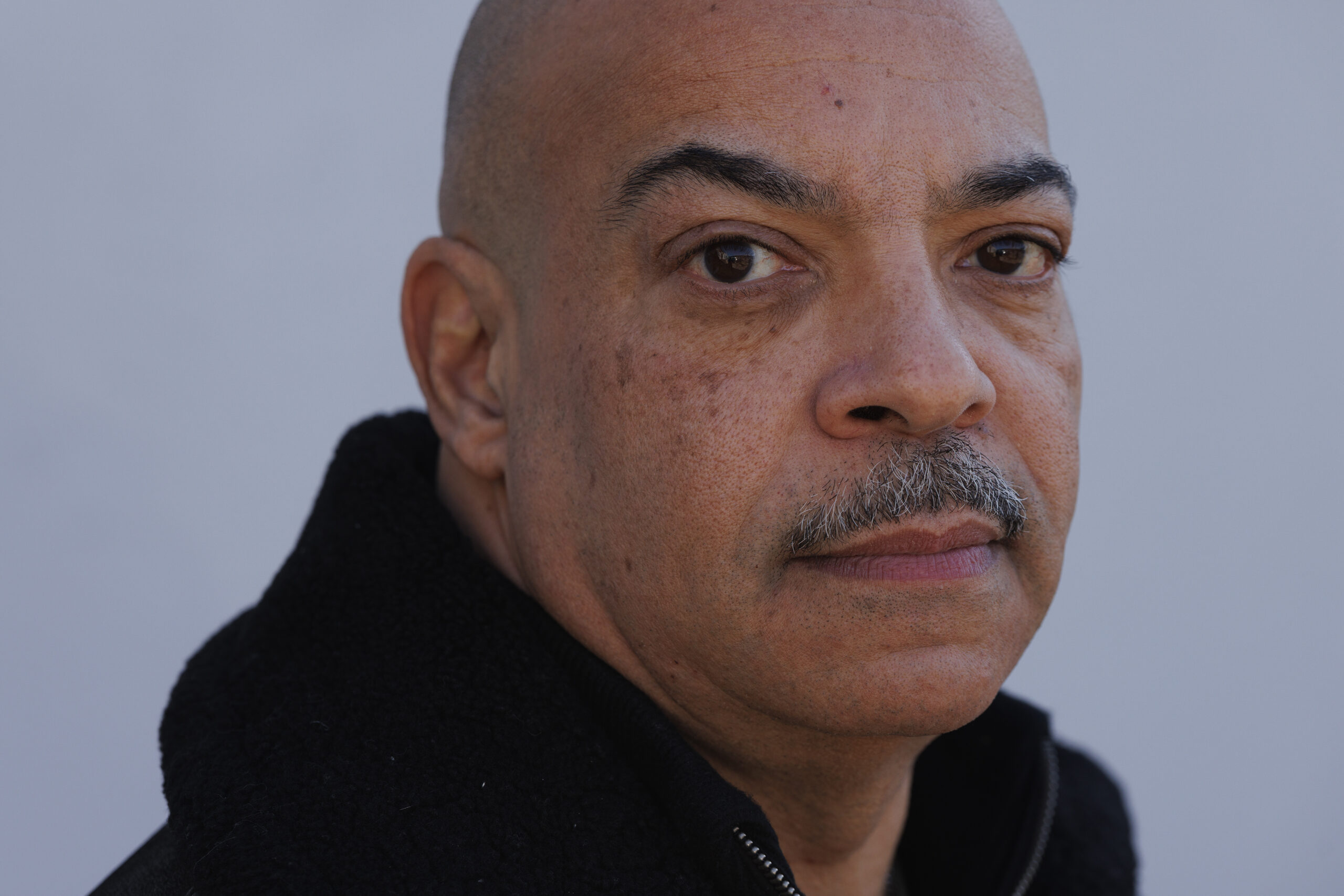
Williams believes his efforts now can help reduce recidivism among young men in jail.
It is a long way from the halls of power that Williams once inhabited as the city’s first Black district attorney — and from his standing as a politician who was viewed as a possible future mayor.
Still, Williams says, he is fulfilled by this more humble form of service. And becoming chaplain is not the only role he has taken up behind bars: For the last two years, he has also volunteered at Curran-Fromhold Correctional Facility, teaching weekly classes on career preparedness and poetry, and at State Correctional Institute Phoenix, where he directs a volunteer program about Christianity.
Last month, Williams agreed to allow an Inquirer reporter to join him inside the city’s jails as he counseled inmates. He shared stories about his time in prison, delivered socks and toothpaste to indigent inmates, gathered a group to recite the rosary, and gave books to men who expressed interest in spiritual counseling.
He was energetic, open, and passionate. He spoke openly about his past misdeeds, but remained defiant about his federal prosecution — saying he was wrong for not reporting gifts he received as DA, but insisting that he did not sell his office to his benefactors, as the U.S. Attorney’s Office alleged.
Williams acknowledged that his path to becoming a jailhouse chaplain and volunteer has been unusual. He pointed out, for instance, that the room where he teaches his Career Keepers course is just down the hall from the jail’s print shop — which once printed the DA’s letterhead with his name at the top.
Prisons Commissioner Michael Resnick said Williams’ transformation is one of the key attributes he brings to the job.
“He just has a passion for this work, to get people on the right path,” Resnick said.
And Williams said he feels as if he is doing more to help people now than he ever has.
“What if the worst thing that happens in your life,” he said, “could be used for good?”
From rising star to ‘criminal’
To understand where Williams is now, it helps to recall where he came from.
After he was elected district attorney in 2009, Williams, then 42, promised to reform the office where he had spent a decade working as a line prosecutor. He said he would assign lawyers to handle cases by neighborhood, place greater emphasis on charging crimes correctly at the outset, and divert minor offenses into community-based treatment programs.
His policy positions were part of his appeal, but he also leaned into a compelling personal story: Abandoned in an orphanage at birth, Williams was adopted at age 2 and raised in Cobbs Creek. He went on to graduate from Central High School, Pennsylvania State University, and Georgetown University’s law school before returning to his hometown to work as an assistant district attorney.
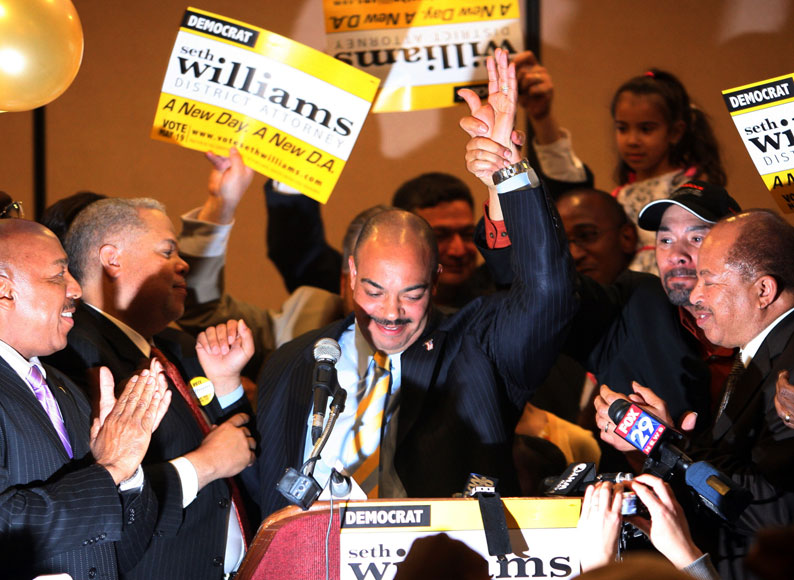
When he ran to become the city’s top prosecutor in 2009 — his second attempt after a narrow loss four years earlier — he had a campaign slogan that matched his aspirations: “A new day, a new D.A.”
Williams thanks supporters after winning the Democratic primary for district attorney in 2009.
And for a while, some political observers said, he was living up to that mantra. In addition to engineering an ambitious restructuring of the office, he made headlines during his first term by charging West Philadelphia doctor Kermit Gosnell with killing babies during illegal late-term abortions, and by charging Msgr. William Lynn, a top official in the Archdiocese of Philadelphia, with shielding sexually abusive Catholic priests.
Charismatic and camera-friendly, Williams was easily reelected to a second term in 2013, and homicides began falling to their lowest levels in decades. Some began wondering if he might leverage his success as DA into a run for City Hall.
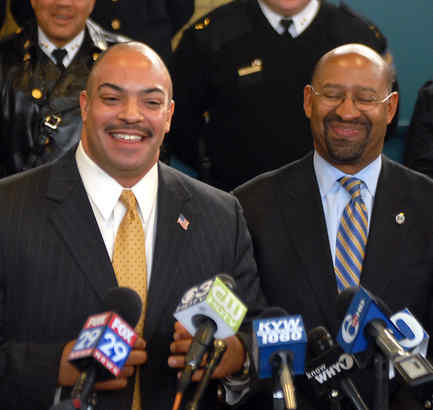
Williams and then-Mayor Michael Nutter at a press conference in 2010.
Beneath the surface, though, challenges in Williams’ personal life began to mount.
He now admits he was also drinking too much, “numbing myself from the daily trauma with too much Jack Daniel’s and martinis and Yuenglings.”
By 2015, the FBI was investigating whether he had been misusing campaign funds to live beyond his means. And two years after that, he was indicted on charges of wire fraud, honest services fraud, and bribery-related crimes.
Federal prosecutors said he not only misspent political money but also sold the influence of his office to wealthy allies who showered him with vacations, clothing, and a used Jaguar convertible.
Williams outside of federal court, where he was charged with bribery and related crimes.
Williams insisted he was not guilty and took his case to trial. But midway through the proceedings, he accepted an offer from prosecutors to plead guilty to a single count of violating the Travel Act.
U.S. District Judge Paul Diamond showed no mercy — jailing Williams immediately, then imposing a five-year prison term, the maximum allowed by law. The judge called Williams a “criminal” who surrounded himself with “parasites” and “fed his face at the trough” of public money.
A mentor in solitary
During the first five months of Williams’ incarceration, he was held in solitary confinement at Philadelphia’s Federal Detention Center. That was intended to protect him — former law enforcement officers can become targets behind bars — but it left him confined to a cell for 23 hours a day.
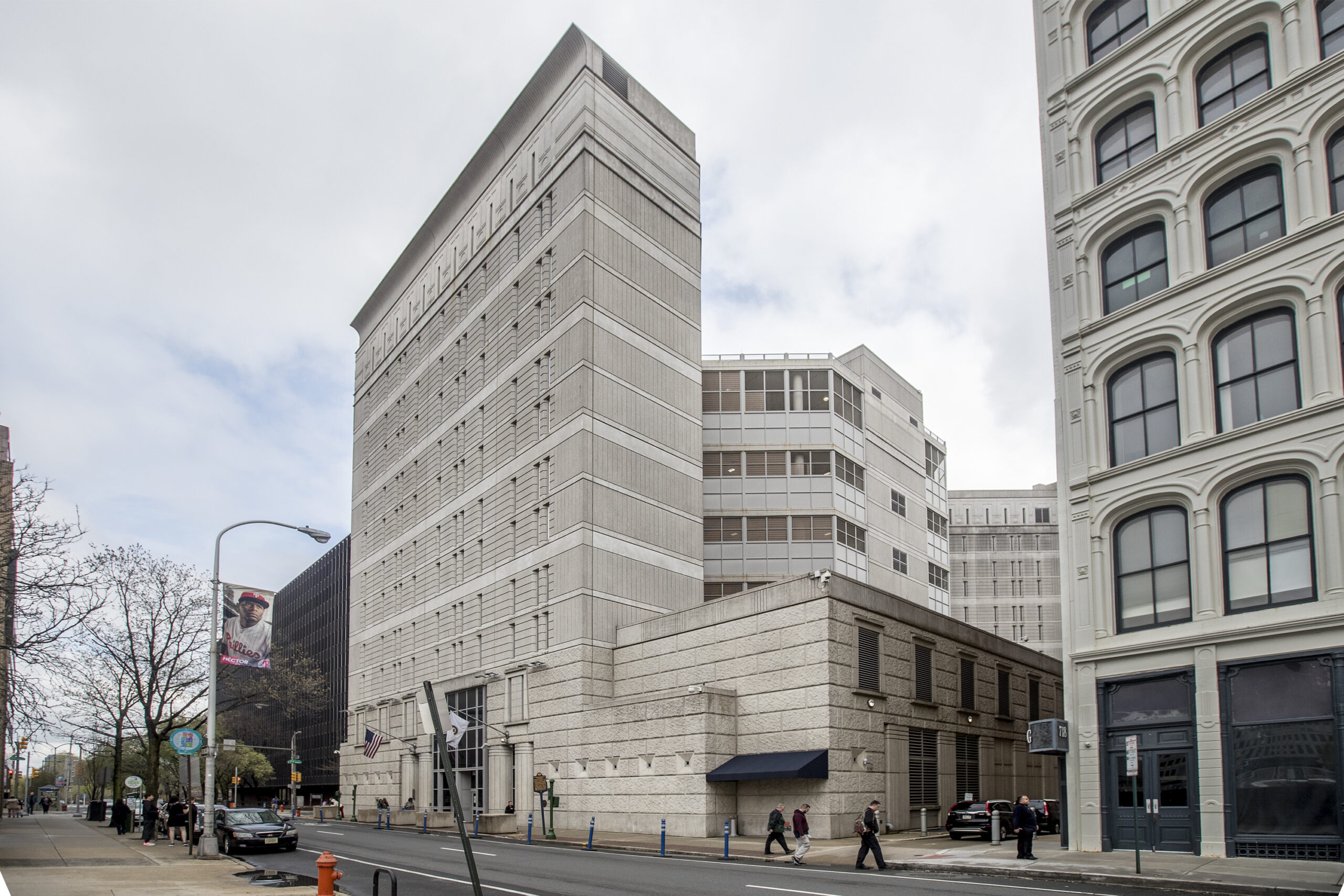
The Federal Detention Center, at 7th and Arch Streets.
Beyond the once-monthly 15-minute phone call he was allowed to make to his daughters, Williams said, there was one thing that helped him endure isolation: Friar Ben Regotti.
Regotti, then a resident at Center City’s St. John the Evangelist Catholic Church, served as the detention center’s chaplain. And when Williams was in solitary, he said, Regotti came to his cell every day and offered an escape: praying with him through a slit in the thick steel door, hearing his confession, and offering him books, including the Bible, which Williams — who was raised Catholic — said he finally read cover-to-cover for the first time.
“I’d lost everything,” Williams recalled. “But Father Regotti was the kindest person to me.”
When he was transferred to a prison camp in Morgantown, W.Va., Williams continued his spiritual journey by attending weekly Masses, Bible studies, and services for other religions. He also completed substance abuse classes, taught classes to help prisoners get high school diplomas, and learned how to play the saxophone.
He made some unlikely friends while he was locked up, including Michael Vandergrift of Delaware County, who is serving a life sentence plus 20 years for killing a rival drug dealer as part of a hired hit; and Bright Ogodo of Brooklyn, N.Y., who was sentenced to more than six years in prison for running a sophisticated identity-theft ring out of TD Bank branches.
Williams said Ogodo later told him he was considering taking his own life — he had even written a letter to his family, convinced they would be better off without him. But when Ogodo saw that Philadelphia’s former DA was in jail, too, Williams said, Ogodo changed his mind.
“He said, ‘I saw you walking with your head up, and [thought], if you can survive, so shall I,’” Williams said.
Three years ago today, I walked out of prison. My friend Bill, picked me up in Morgantown, WV and drove me home. In many ways being incarcerated was less difficult than Re-Entry. I am grateful for all that I have learned. Thank you God. 🙏🏽 pic.twitter.com/393p8KQXmg
Williams was released from prison in 2020, but said almost no one was willing to help him get back on his feet. Before he was incarcerated, he said, he had visited the governor’s mansion and taken his daughters to the Easter egg roll on the White House lawn. But afterward, few people would even take his calls.
“Nobody would hire me,” he said, describing people’s default position toward him as “the Heisman,” the college football statue with an arm extended to keep opponents away.
So Williams — whose law license was suspended when he was convicted — found work at a Lowe’s Home Improvement store in Havertown, unloading trucks and fulfilling online orders from 7 p.m. until 5:30 a.m.
Most of his coworkers, he said, had also recently been released from prison. And while working, he said, he was “kind of providing pastoral care [to them] daily,” similar to his teaching of GED courses in prison, or participating in Bible studies.
In time, he said, he began developing his ideas about self-improvement into formal programs for nonprofits, providing ways for recently incarcerated people to learn the skills needed to maintain consistent employment — developing a resumé, for instance, but also focusing on topics like conflict de-escalation.
Much of his motivation for doing that work, he said, came from research showing that recidivism is greatly reduced among people who receive substance abuse counseling, career coaching, and regular spiritual practice.
“What all three have in common,” Williams said, “is changing the hearts and minds of people.”
Federal Supervised Release ended Friday. First time at the beach since 2016. First time going outside of the Eastern District of Pennsylvania WITHOUT having to ask for permission since ‘17 made me cry! If you want to know my thoughts on Judge Diamond or federal prosecution ask me pic.twitter.com/pwzb9Qa0IR
In 2023, he ran into Terrell Bagby, then a deputy commissioner in Philadelphia’s jail system, and the two discussed the possibility of bringing Williams’ teachings into the jails. That’s how he ended up bringing his volunteer courses — Career Keepers and Prison Poets — into Curran-Fromhold, the city’s largest jail, he said.
In a recent session of Career Keepers, Williams was at the head of the class as nine prisoners sat at a U-shaped table around the room. They took turns practicing public speaking by delivering updates on the weather, sports, and news, then discussed topics including how to reward positive behavior — rather than linger on bad choices — and how to display gratitude.
In the moments after the prisoners were escorted back to their blocks, Williams said the men he has taught over the years have often been more open and vulnerable than he expected. Some have shared stories about traumatic experiences — such as being shot or sexually abused — and then discussed how those experiences affected their lives.
“I spent all this time trying to get out of prison,” he said, “and then I found myself loving being there, trying to help the inmates themselves.”
Becoming a presence
Inside his spare chaplain’s office at the jail, Williams has a desk, a few shelves, and scores of religious books. He keeps packs of white T-shirts, socks, and toothpaste to put into care packages for prisoners and, before making his rounds, keeps a list of people he wants to see.
His time on the cellblocks can be brief. During his rounds on a recent day, his presence did not always seem to have much of an impact. As he passed through each unit’s main expanse, where dozens of prisoners have cells overlooking a bustling common area, some prisoners were more interested in getting their lunch or hanging out by the phones than in checking out what Williams had to offer.
But other times, during several different stops, Williams sat and prayed with prisoners. And the care packages he hands out have become a frequent request, he said.
He wound down his shift in a room near the law library, reciting the rosary with a half-dozen men who had expressed interest in praying with him.
Williams’ chaplaincy is centered at the Riverside Correctional Facility in Northeast Philadelphia.
Regotti, the chaplain Williams had encountered in solitary, said in an interview that even though they first met while the former DA was behind a thick steel door, Regotti could immediately sense his curiosity, intellect, and desire to better himself.
“Going from feeling absolutely desperate to finding ways to cope, it was kind of a mark of his own personal resilience,” Regotti said. “He really developed into somebody that was in touch with God’s grace.”
Williams said he now aspires to be for people what Regotti was for him — a comforting presence in a dark place, and someone who, he hopes, can help provide guidance that can last well beyond someone’s time in confinement.
“The cheapest way to do that is by spreading the gospel,” he said. “People don’t want you to preach to them. They just want your presence — they want you to be there.”
WASHINGTON — President Donald Trump says he will move to close Washington’s Kennedy Center performing arts venue for two years starting in July for construction.
Trump’s announcement on social media Sunday night follows a wave of cancellations since Trump ousted the previous leadership and added his name to the building.
Trump announced his plan days after the premier of Melania, a documentary about the first lady, was shown at the storied venue. The proposal, he said, is subject to approval by the board of the Kennedy Center, which has been stocked with his hand-picked allies.
Leading performing arts groups have pulled out of appearances, most recently composer Philip Glass, who announced his decision to withdraw his Symphony No. 15 “Lincoln” because he said the values of the center today are in “direct conflict” with the message of the piece.
“This important decision, based on input from many Highly Respected Experts, will take a tired, broken, and dilapidated Center, one that has been in bad condition, both financially and structurally for many years, and turn it into a World Class Bastion of Arts, Music, and Entertainment,” Trump wrote in his post.