Category: News

Latest breaking news and updates

  • Oscar-nominated screenwriter of Iranian drama ‘It Was Just an Accident’ arrested in Tehran

    Oscar-nominated screenwriter of Iranian drama ‘It Was Just an Accident’ arrested in Tehran

    One of the Oscar-nominated screenwriters of the Iranian drama It Was Just an Accident has been arrested in Tehran just weeks before the Academy Awards.

    Representatives for the film on Sunday said that Mehdi Mahmoudian was arrested Saturday. No details on the charges against Mahmoudian were available. But his arrest came just days after Mahmoudian and 16 others signed a statement condemning Islamic Republic leader Ayatollah Ali Khamenei and the regime’s violent crackdown on demonstrators.

    Two other signatories, Vida Rabbani and Abdullah Momeni, were also arrested.

    Jafar Panahi, the prize-winning director of It Was Just an Accident, issued a statement Sunday decrying his co-writer’s arrest.

    “Mehdi Mahmoudian is not just a human-rights activist and a prisoner of conscience; he is a witness, a listener, and a rare moral presence — a presence whose absence is immediately felt, both inside prison walls and beyond them,” Panahi said.

    Panahi was also a signatory on the Jan. 28 statement. It reads in part: “The mass and systematic killing of citizens who bravely took to the streets to bring an end to an illegitimate regime constitutes an organized state crime against humanity.”

    It Was Just an Accident is nominated for best screenplay and best international film at the March 15 Oscars. The film, made covertly in Iran, was France’s nominee for best international film.

    Panahi, one of the most acclaimed international filmmakers, has made films through various states of imprisonment, house arrest, and travel ban. It Was Just an Accident, a revenge drama and the Palme d’Or-winner at last year’s Cannes Film Festival, was inspired by Panahi’s most recent stint in prison. It was there that he met Mahmoudian. Panahi called him “a pillar” to other prisoners.

    It Was Just An Accident was written by Panahi, Mahmoudian, Nader Saeiver, and Shadhmer Rastin.

    Last fall, Panahi was again sentenced to a year in prison and given a two-year ban on leaving Iran after being convicted on charges of “propaganda activities against the system.” Panahi, who has been traveling internationally with the film, has said he will return to Iran despite the sentence.

    The U.S.-based Human Rights Activists New Agency, which relies on a network inside Iran to verify its information, says that more than 6,713 people have been killed and 49,500 people have been detained in the recent government crackdown. The Associated Press has been unable to independently assess the death toll and arrest figures, given that authorities have cut Iran’s internet off from the rest of the world.

    Panahi has repeatedly spoken out against the crackdown.

    “As we stand here, the state of Iran is gunning down protesters and a savage massacre continues blatantly on the streets of Iran,” Panahi said last month at the National Board of Review Awards in New York. “Today the real scene is not on screens but on the streets of Iran. The Islamic Republic has caused a bloodbath to delay its collapse.”

  • More winter weather leads to heavy snow, canceled flights and, in Florida, falling iguanas

    More winter weather leads to heavy snow, canceled flights and, in Florida, falling iguanas

    MEMPHIS, Tenn. — A huge swath of the U.S. from the Gulf Coast into New England was mired in extra-cold temperatures Sunday after a bomb cyclone brought heavy snow and hundreds of flight cancellations to North Carolina, flurries and falling iguanas in Florida, and more misery for thousands who are still without power from last weekend’s ice storm in the South.

    About 150 million people were under cold weather advisories and extreme cold warnings in the eastern portion of the U.S., with wind chills near zero to single digits in the South and the coldest air mass seen in South Florida since December 1989, said Peter Mullinax, a meteorologist with weather prediction center in College Park, Md.

    The Tampa-St. Petersburg area in Florida saw snow flurries. and temperatures dropped into the 20s in the Panhandle and 30s in South Florida on Sunday morning, Mullinax said. That left cold-stunned iguanas lying motionless on the ground. Iguanas in South Florida go dormant in the cold and, though they usually wake when temperatures warm, the reptiles can die after more than a day of extreme cold.

    The cold also left ice on strawberries and oranges in the state. Farmers in Florida sometimes spray water on fruit trees and berry plants to protect them from the cold.

    Meanwhile, the bomb cyclone, known to meteorologists as an intense, rapidly strengthening weather system, contributed to nearly a foot of snow in and around Charlotte, North Carolina’s largest city. The snowfall represented a top-five snow event all time there, Mullinax said.

    Flight cancellations exceeded 2,800 in the U.S. on Saturday, with another 1,500 on Sunday, according to FlightAware, a flight tracking and data company. About 800 of those Sunday cancellations were for flights departing or arriving at Charlotte Douglas International Airport.

    The storm caused an hourslong mess on Interstate 85 northeast of the city, after a crash left dozens of semitractors and other vehicles backed up into the evening, according to the State Highway Patrol. More than 1,000 traffic collisions and two road deaths were reported, North Carolina Gov. Josh Stein said Sunday.

    “It’s an impressive cold shot, for sure, and there are daily records that are being seen down in the South,” Mullinax said.

    Snow blanketed the neighborhood of Lee Harrison, an insurance agent in a town outside of Greenville, N.C., and he planned to take his three daughters sledding in the backyard.

    “We’re not going to drive anywhere,” Harrison said. “It’s thick enough that I would not feel comfortable driving with our family.”

    More than 110 deaths connected to the wintry weather and storms have been reported around the U.S. since late January. In Tennessee and Mississippi, two states struck last weekend by a storm carrying snow and ice, more than 97,000 customers were still without electricity on Sunday, according to the outage tracking website poweroutage.us. Another 29,000 didn’t have power on Sunday in Florida.

    Nashville Electric Service said it expects 90% of its customers to have power restored Tuesday, with 99% getting electricity back by next Sunday, two weeks after the ice and snowstorm hit.

    Gov. Bill Lee said he shared “strong concerns” with leadership of the utility, which has defended its response and said the storm was unprecedented.

    Mississippi officials said it was the state’s worst winter storm since 1994. About 80 warming centers were opened and National Guard troops delivered supplies by truck and helicopter.

    Mullinax said parts of the Carolinas are going to be “digging out” for several days as they contend with gusty winds and bitterly cold wind chills. Heading into Tuesday and Wednesday, light snow could fall in the Ohio Valley and the mid-Atlantic, from Washington, D.C., and possibly into New York City, he said.

  • In Texas, Democrats narrow GOP’s U.S. House majority, win upset in state Senate

    In Texas, Democrats narrow GOP’s U.S. House majority, win upset in state Senate

    Democrats narrowed Republicans’ U.S. House majority and flipped a state Senate seat on conservative terrain in a pair of Saturday special election runoffs in Texas with national implications.

    Democrat Christian Menefee won the special election runoff Saturday for Texas’ 18th Congressional District, paring House Republicans’ slim advantage by securing a long-vacant seat in a heavily Democratic area. In a second election runoff in Tarrant County, which includes Fort Worth, Democrats won a notable upset, with Taylor Rehmet defeating Republican Leigh Wambsganss in a district where President Donald Trump won by 17 points in 2024.

    In special elections and other local races over the past year, Democrats have largely outperformed Republicans. National Democratic leaders have pointed to the results, including Rehmet’s win, along with sweeping victories in last fall’s elections, as reasons for optimism headed into this fall’s midterms. Democrats are hoping in November to capitalize on anger at Trump’s agenda. Republicans will try to defy recent political trends and hold on to their control of Congress.

    The House majority is the marquee prize in the November midterms. Republicans have been clinging to a narrow edge in the chamber, at times complicating their agenda. Because the competition in the Texas House race was down to two Democrats, the effect on the balance of power has been long anticipated. Special elections coming later this year to fill vacancies in Georgia, New Jersey, and California could further alter the partisan breakdown of the chamber.

    Menefee defeated fellow Democrat Amanda Edwards, the Associated Press reported, winning a Houston-area district briefly held by Democrat Sylvester Turner before his death in March. When Menefee is sworn in, Democrats will have 214 House seats. Republicans hold 218, giving House Speaker Mike Johnson (R., La.) a razor-thin margin. To pass legislation, Johnson can lose only one Republican vote if all members are present and otherwise vote along party lines.

    In Texas, the midterms are set to be contested under a new House map backed by Trump that state GOP leaders enacted last year. Both Menefee, a former Harris County attorney, and Edwards, an attorney and former Houston City Council member, will immediately move to an unusual intraparty contest in a newly redrawn district against longtime Rep. Al Green (D). Texas will hold its primaries on March 3.

    Residents of Texas’ 18th District are now set to have representation in the House through the end of Turner’s term after nearly a year of vacancy. For months, Texas Democrats had accused Gov. Greg Abbott (R) of deliberately delaying the special election to fill the vacant seat to help Republicans maintain a slim majority. Abbott blamed Harris County for election administration issues, saying he had to schedule the election for late last year to give officials there time to prepare.

    The 18th District, which covers much of central Harris County, has a predominantly Black and Latino population. The district has been a Democratic stronghold for decades and has been represented by civil rights leaders such as Sheila Jackson Lee and Barbara Jordan.

    Throughout his campaign, Menefee touted himself as a fighter with a record of suing the Trump administration, focusing heavily on healthcare, voting rights, and federal funding to the district.

    Saturday’s runoff took place because no candidate won a majority of the vote in the November special election. Menefee was the top vote getter then, with roughly 29%, while Edwards finished second with roughly 26%.

    The state Senate special election was to replace Republican Kelly Hancock, who became the state’s acting comptroller. With most of the vote in Saturday’s election tallied, Rehmet was ahead by more than 14 percentage points.

    Rehmet, an Air Force veteran and union leader, won nearly 48% of the vote in the November special election to face Wambsganss in the runoff. Wambsganss is an executive at Patriot Mobile, which describes itself as “America’s only Christian conservative wireless provider.”

    Rehmet’s victory is largely symbolic because candidates will have to run for the seat again in November, before the Texas legislature begins its next session in January 2027.

    But strategists and analysts look at special elections as one barometer for measuring the national political mood and voter attitudes. Democrats have tended to do better than Republicans in special elections and other lower-profile races in recent years, while the GOP was successful in 2024 with Trump at the top of the ballot.

    “Senator-elect Rehmet ran an exceptional campaign focused on solutions to the issues that families care most about, from the rising cost of groceries and utilities to the healthcare crisis,” DNC Chairperson Ken Martin said in a statement, adding that this win is “a warning sign to Republicans across the country.”

  • Judge ordered 5-year-old released, but data shows ICE is detaining more kids

    Judge ordered 5-year-old released, but data shows ICE is detaining more kids

    SAN ANTONIO — The 5-year-old boy, in a blue knit bunny hat and Spider-Man backpack, was returning from preschool when immigration officers detained him late last month in Minneapolis. A few days later, officers there took custody of a 2-year-old girl after breaking her family’s car window.

    Liam Conejo Ramos and Chloe Renata Tipan Villacis, along with their fathers, were flown to a family immigration detention center in Dilley, Texas, an hour south of San Antonio, where detainees face long lines for basic supplies and inadequate medical care, according to people who have been housed there. They are among an escalating number of children swept up in the Trump administration’s enforcement dragnet, which has drawn mounting public outrage over its aggressive tactics and increasingly indiscriminate ramifications.

    The U.S. government does not provide direct information about children in immigration custody. But federal data on family detention, and independent analyses of child detentions, suggest immigration authorities are increasingly ensnaring the youngest and most vulnerable lives in President Donald Trump’s effort to deport massive numbers of undocumented immigrants.

    “There are other options, regardless of what you believe about immigrants, but you do not have to put children in detention,” said Dianne Garcia, a pastor at a San Antonio church that serves an immigrant population. She said authorities are trying to instill fear in families so they choose to leave the country voluntarily.

    On Saturday, a federal judge agreed that Liam should not be in federal custody. U.S. District Judge Fred Biery ordered him and his father released and lambasted the Trump administration’s “ill-conceived and incompetently-implemented government pursuit of daily deportation quotas, apparently even if it requires traumatizing children.”

    By Sunday morning, Liam and his father, Adrian Alexander Conejo Arias, had been released and flown home to Minnesota.

    But the numbers of those held are rising quickly. Over the past four months, the average number of people, including children and adults, held each month in family detention has nearly tripled, from 425 in October to 1,304 in January, according to Department of Homeland Security data.

    An independent analysis by the Marshall Project, a nonprofit news organization, concluded that at least 3,800 minors under 18, including 20 infants, were detained in 2025. And ProPublica found that Immigration and Customs Enforcement last year sent approximately 600 children arrested inside the country to federal shelters built to house minors detained at the border. That is more than the entire number of children detained in federal shelters during the four years of the Biden administration.

    Advocates and attorneys contend that hundreds more youth have been affected in cases where authorities have separated families, which are not comprehensively tracked. Those include instances in which parents have been deported but their children remain in the United States in government custody.

    Over decades, the federal government has relied on a patchwork of laws, court rulings, and policies meant to ensure that minors are held in the least restrictive setting possible and released as quickly and safely as possible. Trump aides have instead prioritized his deportation goals and treated children as collateral damage, said Wendy Young, president of the immigrant rights group Kids in Need of Defense.

    “In this past year, we’ve seen a lot of [the protections] dismantled and transformed again into a system that’s really more punitive and aligned with law enforcement goals than it is with child protection,” Young said.

    DHS did not respond directly to questions from the Washington Post asking about the number of children in federal detention and the conditions described by some migrants and their attorneys. In an email, assistant secretary Tricia McLaughlin said the Dilley facility has been retrofitted for families and provides for their safety, security, and medical needs.

    “All detainees are provided with 3 meals a day, clean water, clothing, bedding, showers, soap, and toiletries,” she said.

    Authorities do not separate families, McLaughlin said, as parents are asked if they want to be removed with their children or have them placed with someone the parent designates. In the cases of Liam and Chloe, authorities said they took custody because relatives abandoned or refused to take them. Chloe, like Liam, has been released, returned to her mother in Minneapolis, after the Trump administration belatedly complied with another judge’s order.

    For years, most children in federal custody were those detained at the U.S.-Mexico border. As the administration succeeded in dramatically reducing border crossings, it has ramped up enforcement inside the country and detained more families who have lived here for years — including those whose children attend U.S. schools. Some families were awaiting immigration court decisions on their appeals to remain in the country when they were detained, lawyers said.

    The impact is “just really, really damaging and catastrophic because of how sudden and swift and violent it is,” said Zain Lakhani, director of migrant rights and justice at the Women’s Refugee Commission, “and because it’s targeting a population that is just not prepared for this.”

    Family shelters closed, then reopened

    The South Texas Family Detention Center in Dilley, opened by the Obama administration in 2014 with a capacity of 2,400 detainees, ceased operations during President Joe Biden’s tenure. The Trump administration reopened the facility after authorities began detaining families in spring of last year.

    A second facility, in Karnes City, Texas, has been used to temporarily hold families but has primarily detained single adults in recent months, according to DHS detention data and attorneys representing people in both facilities.

    The administration is moving to purchase and convert up to 23 industrial warehouses into large-scale detention centers, and authorities indicated in a draft document reviewed by the Post that some will include family housing.

    The federal government has long struggled to comply with legal requirements for families and unaccompanied children. Many who are detained at the border seek asylum protections, and a federal court settlement does not permit minors to be held for longer than 20 days.

    Families are buffeted by political winds, with their conditions shifting depending on the administration, said Elissa Steglich, a clinical professor at the University of Texas School of Law.

    “Family detention has always been more a political device to make a statement about either border policy or the asylum system writ large,” she said.

    Amid a border crisis in 2014, the Obama administration scrambled to hold tens of thousands of unaccompanied minors at crowded facilities on military bases, warehouses, and chain-link enclosures. A public backlash prompted federal officials to move to other methods, including releasing the families and using electronic monitoring.

    In his first administration, Trump implemented a zero-tolerance policy in which authorities separated thousands of children from their family members when they arrived at the border and prosecuted parents in an effort to deter more migration. But the administration reversed course amid public outrage.

    The Biden administration closed three of the family detention centers. As the number of migrants crossing the border soared after the COVID-19 pandemic, however, children and families were huddled into cramped tent facilities or housed in hotels at or near the border. The vast majority were released into the United States pending their immigration court proceedings.

    In his second term, Trump has pushed to deport a record number of migrants, and authorities ramped up efforts to arrest families in the spring in Texas after they reported for immigration court hearings or mandatory check-ins at ICE offices. A few months later, immigration advocates said, the administration began detaining families in San Antonio and other major cities.

    The population at the detention facility in Dilley swelled. Immigration lawyers have said children have been held well beyond the 20-day legal threshold established in 1997 under a legal settlement known as the Flores agreement. Many children have been detained at routine immigration check-ins, immigration lawyers said.

    Longing for home

    Most of what is known about the day-to-day conditions inside the federal detention center comes from accounts provided by those who have been held there. In interviews with the Post, migrants and their attorneys described a facility that includes a chapel, library, commissary, infirmary, and pharmacy.

    There are also recreational spaces and a school where children can watch educational videos, said Edward, an immigrant from Colombia who, like others who provided firsthand accounts, spoke on the condition that only their first names be used out of fear of reprisals from the government. He and his two sons, ages 11 and 10, spent 47 days in the facility after being detained during an ICE check-in in December.

    He said the living spaces consist of several corridors labeled by color and animal names and reserved for different kinds of families: the brown bear hall for two parents with their children; the yellow frog hall for single mothers and young children; and the green turtle hall for single fathers and sons.

    Edward, who has an active asylum case, said he slept in a room with 12 bunk beds where the lights stayed on and the tap water tasted like chlorine.

    Two immigration judges held hearings for asylum-seekers to accelerate their proceedings, but they often did not result in a conclusion to their cases. Every Monday, ICE agents reviewed cases with detainees, pressuring them to sign deportation papers, according to recently released detainees.

    Some said they were told that if they refused, the could end up being sent to another country where they had never been.

    “I kept telling them I wasn’t interested,” Edward said.

    His sons had been rehearsing for roles in a Christmas play at their San Antonio-area church and a folkloric dance at school, he said, but instead they spent the holiday lining up for roll calls in the detention center.

    Edward’s lawyer was preparing to challenge his detention in court, but authorities released him and his sons without explanation in January.

    Aury, 25, who also was released in January with her three young children, said she remains in shock over their 50 days in detention. They applied for asylum after entering the country in 2023 and were living in an apartment in San Antonio, as the kids attended school and Aury awaited a resolution to her immigration case.

    “I love my Texas home. Why are they doing this to me?” Aury’s 10-year-old daughter wrote in letters she placed on her mother’s bunk. Authorities offered families a $5,000 payment to sign a voluntary deportation form, Aury said.

    “They wanted us to believe none of us will ever leave that place,” she said.

    Attorney Eric Lee said he saw children all over the facility during a recent visit, some as young as 3 or 4. “What is happening in these detention centers is worse than anybody thinks,” he said. One of his clients, who is 9, drew a picture with crayons of the house she dreams of returning to one day.

    In recent weeks, federal officials have released hundreds of families to a border shelter to make space at the Dilley facility for new arrivals from Minnesota, immigration lawyers said.

    Kristin Etter, an attorney for some of the new families, recently met with an Ecuadorian mother and her 11-year-old daughter who were arrested in Minneapolis while on their way to school. The fourth-grader spends most of her time in the Dilley facility without opportunities for intellectual stimulation, Etter said.

    “We are not talking about jailing criminals or jailing public safety threats,” she said. “It’s cruelty.”

    Yuli, an asylum-seeker from Venezuela, said she got close to agreeing to leave the country after being held in mid-November with her 3-year-old son. She described inadequate medical care for herself and her toddler, who suffered diarrhea, and for the other detainees, who had to wait hours for treatment, even for serious illnesses.

    She and her son were released in mid-January after her attorney sued the government in federal court. Yuli now wears an ankle monitor, and ICE conducts visits to her home.

    “There is a better way,” she said. “This was inhumane.”

  • House speaker ‘confident’ partial shutdown will end by Tuesday

    House speaker ‘confident’ partial shutdown will end by Tuesday

    House Speaker Mike Johnson (R., La.) said Sunday that he is “confident” he will have enough support from Republicans in the House conference to end the partial government shutdown by Tuesday.

    In an interview with NBC News’ Meet the Press, Johnson said the House will vote to reopen the government “at least by Tuesday.”

    “We have a logistical challenge of getting everyone in town, and because of the conversation I had with Hakeem Jeffries, I know that we’ve got to pass a rule and probably do this mostly on our own,” Johnson said, referring to the minority leader as he looked to blame Democrats for the second shutdown of President Donald Trump’s second administration, which began early Saturday.

    After the Trump administration’s aggressive immigration enforcement operation in Minneapolis left two U.S. citizens dead, Democrats have said they would not advance government funding measures unless changes were made to a funding bill for the agencies driving the Trump administration’s immigration policies, including the Department of Homeland Security. The department houses U.S. Customs and Border Protection, Immigration and Customs Enforcement, and the Federal Emergency Management Agency.

    On Friday, Congress missed a midnight deadline to approve six new spending bills because the Senate changed DHS funding measures after the House passed them. The Senate, however, quickly approved a bipartisan agreement backed by Trump to pass five major appropriations bills and a temporary two-week funding extension for DHS to buy time for additional policy negotiations.

    Over the weekend, Johnson remained adamant that the House will move quickly to pass those measures when it returns to Washington on Monday, despite frustrations from conservative members of the Republican caucus and skepticism from House Democrats.

    “We’ll have a lot of conversations to have with individual Republican members over the next 24 hours or so. We’ll get all this done by Tuesday,” Johnson said on Fox News Sunday. “I don’t understand why anybody would have a problem with this, though. Remember, these bills are bills that have already been passed.”

    Johnson will need nearly all of the House GOP majority to pass the bills if Democrats refuse to support DHS funding. The speaker said he believed he could get the backing of his members, emphasizing that Trump “is leading this” and that it “is his play call to do it this way.”

    The president, Johnson added, “has already conceded that he wants to turn down the volume” in the immigration enforcement operations, a change punctuated by his decision to send border czar Tom Homan to Minneapolis last week to take control of the situation.

    Johnson said the Trump administration has acknowledged to Senate Minority Leader Charles E. Schumer (D., N.Y.) that some of the changes and processes that Democrats are demanding “are fine with them,” including a requirement for ICE agents to wear body cameras.

    Johnson, however, said that while some of the proposed DHS revamps are “obviously reasonable,” he doesn’t think House Republicans will support Democrats’ demands that federal agents remove their masks and wear an ID while conducting immigration operations.

    “There’s a lot of details in this, we could get deep in the weeds, but we will do that over the next two weeks,” he said on Meet the Press.

    House Democrats have not committed to supporting the bipartisan agreement struck in the Senate, although they plan to support the other five funding bills. Jeffries (D., N.Y.) told ABC News’ This Week that Democrats would meet Sunday afternoon to discuss “what we believe is the best path.”

    “What is clear is that the Department of Homeland Security needs to be dramatically reformed,” Jeffries said. “Body cameras should be mandatory. Masks should come off. Judicial warrants should absolutely be required consistent with the Constitution, in our view, before DHS agents or ICE agents are breaking into the homes of the American people or ripping people out of their cars.”

    When asked if he believes the administration will enforce the changes if they pass, Jeffries said that this is “an untrustworthy administration” but that the American people are strongly rejecting the violent immigration enforcement actions they’ve seen out of Minneapolis.

  • Trump says feds won’t intervene during protests in Democratic-led cities unless asked to do so

    Trump says feds won’t intervene during protests in Democratic-led cities unless asked to do so

    ABOARD AIR FORCE ONE — President Donald Trump said Saturday that he has instructed Homeland Security Secretary Kristi Noem not to intervene in protests occurring in cities led by Democrats unless local authorities ask for federal help amid mounting criticism of his administration’s immigration crackdown.

    On his social media site, Trump posted that “under no circumstances are we going to participate in various poorly run Democrat Cities with regard to their Protests and/or Riots unless, and until, they ask us for help.”

    He provided no further details on how his order would affect operations by U.S. Immigration and Customs Enforcement and DHS personnel, or other federal agencies, but added: “We will, however, guard, and very powerfully so, any and all Federal Buildings that are being attacked by these highly paid Lunatics, Agitators, and Insurrectionists.”

    Trump said that in addition to his instructions to Noem he had directed “ICE and/or Border Patrol to be very forceful in this protection of Federal Government Property.”

    Later Saturday night, Trump said to reporters as he flew to Florida for the weekend that he felt Democratic cities are “always complaining.”

    “If they want help, they have to ask for it. Because if we go in, all they do is complain,” Trump said.

    He predicted that those cities would need help, but said if the leaders of those cities seek it from the federal government, “They have to say, ‘Please.’”

    The Trump administration has already deployed the National Guard, or federal law enforcement officials, in a number of Democratic areas, including Washington, Los Angeles, Chicago, and Portland, Ore. But Saturday’s order comes as opposition to such tactics has grown, particularly in Minnesota’s Twin Cities region.

    Trump said Saturday night that protesters who “do anything bad” to immigration officers and other federal law enforcement “will have to suffer” and “will get taken care of in at least an equal way.”

    “You see it, the way they treat our people. And I said, you’re allowed, if somebody does that, you can do something back. You’re not going to stand there and take it if somebody spits in your face,” Trump said.

    Minnesota Attorney General Keith Ellison and the mayors of Minneapolis and St. Paul have challenged a federal immigration enforcement surge in those cities, arguing that DHS is violating constitutional protections.

    A federal judge says she won’t halt enforcement operations as the lawsuit proceeds. State and local officials had sought a quick order to halt the enforcement action or limit its scope. Justice Department lawyers have called the lawsuit “legally frivolous.”

    The state, particularly Minneapolis, has been on edge after federal officers fatally shot two people in the city: Renee Good on Jan. 7 and Alex Pretti on Jan. 24. Thousands of people have taken to the streets to protest the federal action in Minnesota and across the country.

    Trump’s border czar, Tom Homan, has suggested the administration could reduce the number of immigration enforcement officers in Minnesota — but only if state and local officials cooperate. Trump sent Homan to Minneapolis following the killings of Good and Pretti, seeming to signal a willingness to ease tensions in Minnesota.

    The president on Saturday night said he intended to speak to Homan and Noem on Sunday and he seemed to endorse the idea of immigration agents wearing body cameras or having their interactions filmed.

    Trump was asked by a reporter if he thought it was a good thing having lots of cameras capturing incidents with law enforcement.

    “I think it would help law enforcement but I’d have to talk to them,” Trump said.

    He went on and added: “That works both ways. But overall, I think it’s 80% in favor of law enforcement.”

  • 5-year-old Liam Conejo Ramos and father return to Minnesota from Texas detention facility

    5-year-old Liam Conejo Ramos and father return to Minnesota from Texas detention facility

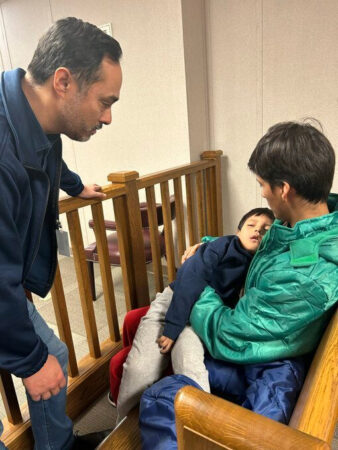
    A 5-year-old boy and his father detained by immigration officers in Minnesota and held in Texas have been released following a judge’s order. They have returned to Minnesota, according to the office of Texas Rep. Joaquin Castro.

    The two were detained in a Minneapolis suburb on Jan. 20. They were taken to a detention facility in Dilley, Texas.

    Katherine Schneider, a spokesperson for the Democratic congressman, confirmed Adrian Alexander Conejo Arias and his son had arrived home.

    Images of the young boy wearing a bunny hat and Spider-Man backpack and surrounded by immigration officers drew outrage about the Trump administration’s crackdown in Minneapolis.

    Neighbors and school officials say that federal immigration officers used the preschooler as “bait” by telling him to knock on the door to his house so that his mother would answer. The Department of Homeland Security has called that description of events an “abject lie.” It said the father fled on foot and left the boy in a running vehicle in their driveway.

  • America’s oldest warship, sunk in 1776, is getting a 250th-birthday makeover

    America’s oldest warship, sunk in 1776, is getting a 250th-birthday makeover

    Conservator Angela Paola is lying on her back under the 16-ton gunboat, picking debris from between its nearly 250-year-old planks. She is wearing blue surgical gloves, grimy white coveralls, and a half-face respirator.

    Dust floats in the beam of her headlamp, and the light reveals bits of the original oakum and pitch used to seal the bottom of the Philadelphia before it was sunk in battle by the British in 1776.

    As she pokes a tool between the planks, clumps of hardened sediment fall on her. “It’s dirty,” she says. “But it is really satisfying work. And it’s really exciting to see it slowly start to show itself through all the mud and the years.”

    Texas A&M University research assistant Marissa Agerton works on the project to preserve the gunboat Philadelphia at the Smithsonian National Museum of American History in Washington on Jan. 13.

    The Philadelphia is the country’s oldest surviving intact warship, according to the Smithsonian Institution. It was launched on July 30, 1776, a few weeks after the Declaration of Independence was adopted. And as the nation prepares for its 250th birthday this summer, experts are grooming the old vessel for its place in the celebration.

    “It’s one of the most important objects — movable objects — of the Revolution, flat out,” Anthea M. Hartig, director of the Smithsonian’s National Museum of American History, said in an interview at the museum this month.

    The gnarled boat has survived battle, sinking, the elements, wood-eating bacteria, rodents, misguided attempts at preservation, tourists, and almost 250 years in the country it helped found.

    It’s “one in a million,” Paola, the conservator from Texas A&M University, said through her respirator last week.

    The 53-foot-long boat, hastily built of green oak, was sunk by British cannon on Oct. 11, 1776 at the Battle of Valcour Island, on Lake Champlain. But historians say the small fleet it was part of helped thwart British plans to invade the colonies from the north, and furthered the cause of independence.

    The boat, powered by oars and sails, spent 159 years sitting upright in 60 feet of water at the bottom of the lake until it was raised in 1935. It then became a tourist attraction: admission 50 cents, according to an old advertising poster, and was carried from place to place on a barge.

    After almost 30 years, it came to Washington in 1961 as one of the early arrivals at what was then the National Museum of History and Technology. It was hoisted inside while the building was still under construction and has been there ever since.

    Since July, the museum has had the Philadelphia partially cordoned off in a special conservation lab on the third floor of the East Wing.

    There, experts from the Smithsonian and Texas A&M are working with vacuums, brushes and dental tools to give it a state-of-the art cleaning and look for lost artifacts in areas they said have never been probed before. Visitors can watch the work through a large viewing window.

    A portion of the Philadelphia.

    The vessel rests in a huge cradle. Arrayed around it are its lower mast, rudder, two anchors, three big cast-iron guns, gun carriages, swivel guns, and the 24-pound British cannon ball that helped sink it.

    The Philadelphia’s biggest weapon was an 8-foot-long, 3,800-pound cannon made in Sweden. It sat on a wooden rail at the front of the boat and fired a 12-pound iron ball. The gun still had a projectile in its mouth when it was discovered.

    The boat was raised on Aug. 9, 1935 by history enthusiast and salvage engineer Lorenzo F. Hagglund and yachtsman J. Ruppert Schalk. When it came up, it contained a trove of more than 700 artifacts, according to John R. Bratten’s 2002 book, The Gondola Philadelphia & the Battle of Lake Champlain.

    It also had a handful of human bones.

    According to salvage reports, “there were a couple of arm bones … some teeth and a partial skull that were found on board the boat itself,” said Jennifer L. Jones, director of the museum’s Philadelphia gunboat preservation project.

    “We know there were a lot of injuries,” she said in an interview at the museum this month.

    Angela Paola goes through debris as she works on the Philadelphia.

    The Oct. 11 battle was a daylong shootout with both sides firing iron cannon balls that could sink a ship or tear off a limb.

    Less than two years after the start of the Revolutionary War, the British had been planning an attack from Canada south along the lake between New York and Vermont to try to split the colonies.

    They quickly assembled a fleet of about two dozen vessels near the lake in Canada for the task.

    The Americans countered, building and gathering a fleet of 16 vessels, including the flat-bottom Philadelphia and seven others like it, said Peter D. Fix, of Texas A&M, the lead conservator on the gunboat preservation project.

    The two sides met in a narrow channel of the lake between the New York shore and Valcour Island, about five miles south of Plattsburgh, N.Y.

    “It was a very bloody battle,” Jones said.

    From the American hospital ship, “Enterprise,” crewman Jahiel Stewart wrote in his journal: “The battel was verryey hot [and] the Cannon balls & grape Shot flew verrey thick.”

    “I believe we had a great many [killed] … Doctors Cut off great many legs and arm and … Seven men [were thrown] overbord that died with their wounds while I was abord,” he wrote.

    Each side suffered about 60 men killed and wounded, Bratten wrote.

    Jones said it is possible the limbs found on the ship had been amputated. Their whereabouts are unknown, she said.

    The Philadelphia was commanded by a young Pennsylvania army officer, Benjamin Rue. He had 43 men from many walks of life under him.

    “We have a wretched, motley crew in the fleet,” American Gen. Benedict Arnold wrote before the battle. “The refuse of every regiment, and the seamen, few of them, ever wet with salt water.”

    Texas A&M University research assistant Alyssa Carpenter works on the Philadelphia this month in D.C.

    Arnold, who commanded the patriot fleet, later deserted the American cause and went to fight for the British in 1780. He died in England in 1801. One of the crewmen on the Philadelphia, Joseph Bettys, also switched sides. He was later captured and hanged.

    The Oct. 11 battle was a stalemate. The British withdrew; the Americans, bottled up in the channel, escaped that night. But two days later, the British force tracked down the Americans and destroyed most of their fleet.

    Only a handful of American ships survived the fight. The Philadelphia was not one of them.

    The ship is now “heavily degraded,” said Fix, the lead conservator,

    The hull still bears three holes made by British cannon balls. A wooden cross piece near where the mast stood is charred, probably from the ship’s brick fireplace. The hull planks have lost about three-quarters of an inch in thickness to bacteria, Fix said.

    Care of the boat “is a huge undertaking, of which the conservation is one part,” he said. “The conservation, the preservation, is kind of the avenue to learn all this other extra stuff, which has been great.”

    “Our main task, as we were assigned, was ‘let’s make sure we make it last for another 250 years,’ ” he said.

    Back under the vessel recently, conservator Paola put chunks of fallen debris in an orange bucket, to be sifted for artifacts later. She said it was amazing that the Philadelphia had survived.

    “She lasted,” she said. “We’re really lucky.”

    Texas A&M University research assistants Alyssa Carpenter, Marissa Agerton, and Angela Paola work on the gunboat Philadelphia, preparing it for the United States’ 250th birthday celebration this summer.
  • In frigid temperatures, service providers work to get Philadelphians out of the cold

    In frigid temperatures, service providers work to get Philadelphians out of the cold

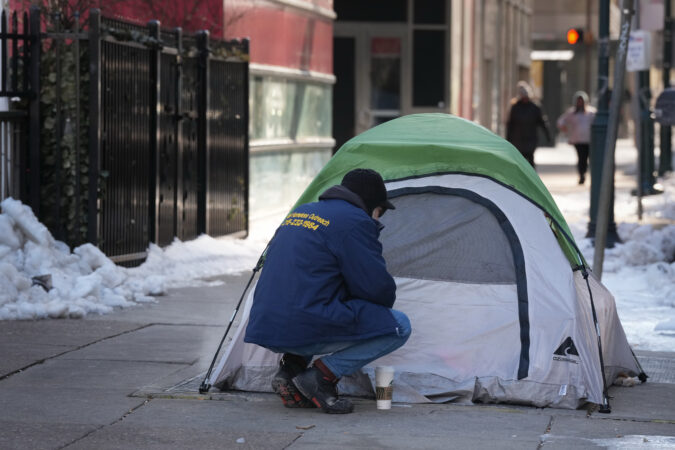
    As Philadelphia endured another day of historically frigid temperatures, outreach workers on Friday fielded hundreds of calls for shelter as warming centers filled with people seeking respite from the cold.

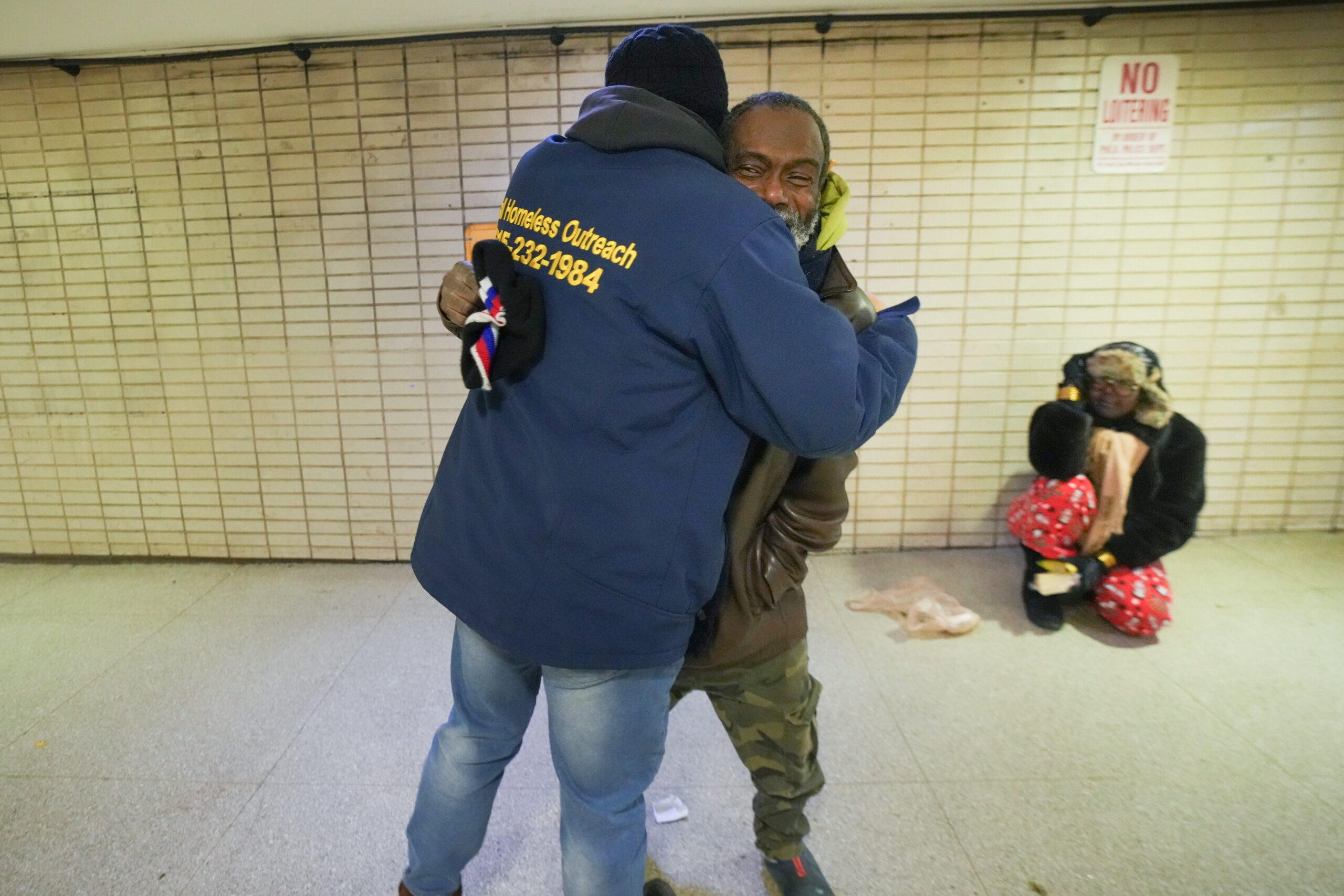
    In the mazelike concourse at Suburban Station, a Project HOME outreach worker hugged clients and encouraged them to head inside.

    At the Hub of Hope, the nonprofit’s drop-in center in the concourse for people experiencing homelessness, dozens lined up for hot meals. Later that night, as they had for the last several days, staff would set up cots for up to 80 people with nowhere else to go.

    Typically, the Hub closes in the early evening. But amid the ongoing freeze, it’s open 24-7 as city officials and homeless services providers work to keep vulnerable Philadelphians safe.

    Last month, the city declared a “Code Blue,” a designation that opens additional shelter beds and other resources. Ever since, the nonprofit’s hotline has fielded more than 6,000 calls, an average of more than 500 a day.

    Normally, it receives about 140 a day.

    “Many calls are concerned citizens who see someone who is homeless and want a team to go and check on them. Some are people who are literally homeless right now and need a place to go. Some are facing eviction and scared, reaching out for their options,” said Candice Player, the nonprofit’s vice president of advocacy, public policy, and street outreach.

    “The extreme cold challenges us and pushes us even harder.”

    City officials navigate a lengthy cold snap

    When the wind chill makes it feel like it’s 20 degrees outside or lower for more than three days, the city can declare what is called an enhanced Code Blue. The distinction opens up further resources, including daytime and nighttime warming centers.

    Cheryl Hill, executive director of the Philadelphia Office of Homeless Services, describes these periods as an all-hands-on-deck situation. Hill said that “every city entity can be outreach” during this time, and that work can also be aided by members of the public, who have been quick to call for help.

    “We are all basically helping our neighbor, in essence — we see them out on the street, we want to help,” Hill said. “As a result, outreach is getting a lot more calls to go and check on those individuals.”

    Philadelphia declared an initial Code Blue on Jan. 18 and an enhanced Code Blue on Jan. 20.

    The city has about 3,500 shelter beds, which can become open as people get placed in longer-term housing.

    If the beds reach capacity, the city has additional overnight spaces at warming centers, primarily in recreation centers. People who spend the day at warming centers that close overnight can receive transportation to a nighttime center.

    People who need a ride to a warming center can ask for transportation at their local police district, city officials said.

    On average, the overnight warming centers have provided shelter to about 300 to 400 people across the city per night. Last Monday night, after 9.3 inches of snow had blanketed Philly, warming centers sheltered just shy of 450 people.

    Last year, peak usage of warming centers hovered around 150 people, Hill said.

    Still, helping the city’s most vulnerable off the streets can be difficult even in the best of circumstances.

    On Friday afternoon, a sign posted at the South Philadelphia Library informed people visiting to get out of the cold that they could eat and sleep in a section designated as a warming center. Librarians and community support groups collect and provide snacks, along with hand-warmers and other essentials, for those who need them.

    Even so, only a handful of people sat in the area. A woman yelped in pain as she rubbed a blackened toe. Children played with blocks in another corner of the library as others checked out books.

    The homeless services office tries to have medical staff at warming sites, but more serious cases get sent to the hospital.

    In extreme cold, as a last resort, people with serious mental illnesses who refuse to come inside and are underdressed could be involuntarily committed.

    Homeless services providers said they are working around the clock to care for clients exhausted by the struggle of simply staying warm.

    “The experience of being homeless in this brutal cold is awful, and the folks who come in are just worn down,” Player said.

    At shelters run by the Bethesda Project, staff are trying to keep residents’ spirits up and encouraging them to stay inside as much as possible, said director of shelter Kharisma Goldston. “One of our guests was doing haircuts last night,” she said. “We try to do a lot so guys don’t feel like they’re trapped inside.”

    Staffers set up additional beds to accommodate more clients, she said.

    “We do our best to set up however many beds we can,” she said. “When it’s this cold, it takes a very short amount of time for hypothermia to set in.”

    Rachel Beilgard, Project HOME’s senior program manager for outreach, said that outreach teams have encountered several people suffering from frostbite who were involuntarily committed. Some, she said, risked limb amputations if they had stayed outside any longer.

    But many people who typically refuse offers for shelter from outreach teams are now accepting help, Beilgard said. “We’ve had a lot of folks this winter who say, ‘Once it starts snowing, come find me,’” she said.

    Tim Neumann works with people experiencing housing instability, in Philadelphia.

    New data show rise in homelessness

    Amid the cold snap, the city released new data from its annual point-in-time count that suggest homelessness rose between 2024 and 2025, even as the New York Times reported homelessness had dropped in several other major cities.

    The count, taken every year at the behest of federal housing officials, happens over one night in January; city workers and volunteers fan out across the city to physically count people sleeping on the street and those in shelters. Federal officials use the count to gauge funding allocations, and city officials look to it to understand the needs on the streets.

    The Jan. 22, 2025, count was also taken during a Code Blue, although temperatures were not as frigid as they were last week. It found that homelessness rose by about 9% between 2024 and 2025, after a 38% jump the year before. In Kensington, the number of homeless, unsheltered people dropped by about 17%.

    The number of people experiencing chronic homelessness rose by 49%. This is a designation tightly defined by the federal government as a homeless person with a disability who lives in a shelter or in a place that is not meant for habitation, and who has been homeless for a full year, or homeless at least four times in the last three years for a total of 12 months.

    The category also includes people who fit these criteria but have entered jail, rehab, or another care facility in the last three months. Most of Philadelphia’s chronically homeless residents were living in emergency shelters.

    City officials and providers said a number of factors likely contributed to the increase.

    People with substance use disorder and mental health issues are vulnerable to becoming chronically homeless, especially in Philadelphia, where a toxic drug supply causes wounds and intense withdrawal that keep many from seeking shelter. But a lack of affordable housing, low wages, job loss, or a major health issue can also put residents at high risk for homelessness, stressed Crystal Yates-Gale, the city’s deputy managing director for health and human services.

    Hill also said that in recent years, Philadelphia has lost bids to receive competitive housing funds from the federal government.

    “We’ve been working really intentionally to make sure that our programs will get funded” in the future, Hill said.

    Yates-Gale also pointed to Mayor Cherelle L. Parker’s December executive order directing city officials to add 1,000 beds to the shelter system by the end of January. As of last week, the city had added 600 winter shelter beds that are crucial during the enhanced Code Blue and will eventually become available year-round, she said.

    Anecdotally, neighborhoods have reported decreases in homelessness since last year, Hill said, although officials will have to wait until February to conduct the count this year.

    The count had originally been set for Wednesday, but the city canceled it due to the cold — and because too many outreach staffers were at work getting people inside.

    Editor’s note: This article has been updated to reflect that library staff and supporters provide people using daytime warming centers with snacks.

  • The cost of housing in Pa. is too high. Here’s what Josh Shapiro will need to overcome to fix it.

    The cost of housing in Pa. is too high. Here’s what Josh Shapiro will need to overcome to fix it.

    Spotlight PA is an independent, nonpartisan, and nonprofit newsroom producing investigative and public-service journalism that holds power to account and drives positive change in Pennsylvania. Sign up for our free newsletters.

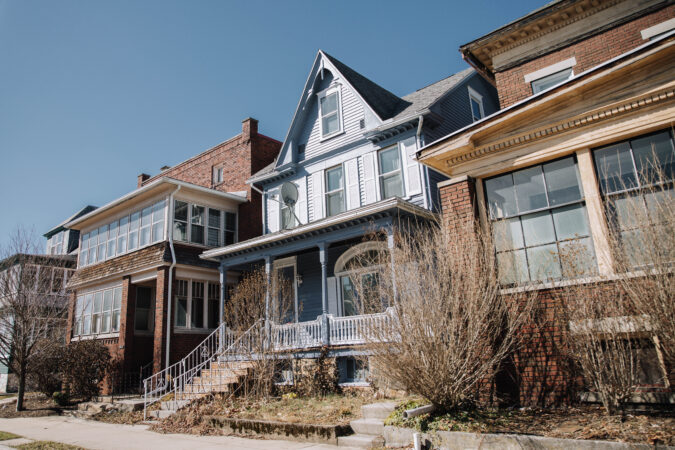
    HARRISBURG — Rents are soaring, homelessness is rising, and homeownership is out of reach for many families in Pennsylvania. As the state grapples with a serious housing shortage and affordability dominates the national political conversation, Gov. Josh Shapiro is preparing to release a long-awaited plan to tackle the crisis.

    The plan, first announced in late 2024, will draw on months of outreach to advocates, developers, and local officials. Supporters hope it will offer a clear path forward and build momentum around proposals that can win support in Pennsylvania’s politically divided legislature. But significant obstacles stand in the way.

    “The housing crisis has risen to the level such that none of the four caucuses can ignore it,” said Deanna Dyer, director of policy at Regional Housing Legal Services, a nonprofit law firm.

    The housing shortage is a nationwide problem, but Pennsylvania has been particularly slow to build new units. The shortfall leaves families squeezed by rising costs, pushes recent graduates to take jobs in other states, and makes it harder for companies to expand.

    Other states are passing laws to loosen local zoning restrictions and encourage new development — despite often fierce opposition from groups representing local governments.

    Similar efforts in Harrisburg have not yet gained traction, although more lawmakers are exploring solutions, said State Rep. Lindsay Powell, a Democrat representing Pittsburgh who cochairs the House Housing Caucus.

    “Pennsylvania has an opportunity to really push itself forward here.”

    Falling behind

    Underlying Pennsylvania’s housing crunch is the law of supply and demand.

    Between 2017 and 2023, the number of households in Pennsylvania grew by 5%, according to a recent report from Pew Charitable Trusts, a think tank. Over the same period, local governments issued only enough building permits to increase the state’s housing stock by 3.4%.

    That left Pennsylvania ranked 44th out of 50 states on the rate of housing built.

    “The most important driver of affordability is whether there are enough homes for everyone,” said Alex Horowitz, Pew’s director of housing policy.

    High demand for existing units, combined with a lack of new supply, gives landlords more leverage to raise rents and drives up house prices, Horowitz said.

    “The shortage is what is causing housing to get so expensive right now.”

    The problem is not spread evenly across the state. Costs have risen the most in areas with growing populations that have not added enough housing, including the Philadelphia suburbs, Northeastern Pennsylvania, and cities like Harrisburg, York, and Lancaster.

    To keep up with the demand, state officials estimate, Pennsylvania needs to build 450,000 units by 2035 — a 70% increase in new construction.

    In September 2024, Shapiro signed an executive order directing the Pennsylvania Department of Community and Economic Development to create a statewide plan to increase the supply of housing, and to review the effectiveness of existing programs. The executive order also requires the Pennsylvania Department of Human Services to conduct a separate review of policies to address homelessness.

    “We don’t have enough housing, the cost of housing is going up, and the housing we do have is getting older and is in need of more repairs,” Shapiro said, announcing the plan.

    Since then, DCED has received feedback from almost 2,500 people and organizations, and held 15 listening sessions across the state, a spokesperson said.

    A draft was due to be submitted to the governor’s office in September, according to the executive order, but the details have not yet been made public.

    Zoning headaches

    In roundtables and written feedback, state officials heard about problems small and sweeping. One issue came up repeatedly, according to interviews with participants and a review of hundreds of pages of written recommendations obtained through the state Right-to-Know law: To build more housing, Pennsylvania needs to change local zoning rules that stifle new construction.

    There are a number of ways the state could approach this. Many municipalities reserve most of their land zoned residential for single-family homes. Pennsylvania could allow apartment buildings on land currently zoned for commercial use, or near public transit, or legalize accessory dwelling units, like backyard cottages and granny flats.

    Changes like these would require revising the municipal planning code, the state law that gives local governments authority over land-use decisions.

    These changes would also make it easier to address rising demand for smaller units, as the average household size falls and more people live alone.

    Any attempt to change zoning laws, however, will likely face strong opposition from groups representing Pennsylvania’s municipalities. They argue that local governments know their communities best and should retain control over decisions about land use. They also say the focus on zoning overlooks other factors contributing to the housing shortage, like the rising cost of construction materials and supply-chain disruptions.

    Municipal zoning laws are “often scapegoated” as the culprit for a lack of affordable housing, Logan Stover, director of policy and legislative affairs at the Pennsylvania State Association of Boroughs, told Spotlight PA in a statement.

    In October, a senior Shapiro staffer working on the housing plan told a local group in Lancaster the plan would focus on “incentives rather than mandates,” with a points-based system to give communities that adopt pro-housing policies priority for state funding. Communities with policies that restrict new development could be disqualified, he said.

    At least six states — including California, Massachusetts, and New York — have already created incentive programs, which vary in design and enforcement mechanisms.

    These efforts have not proven as effective as broader statewide zoning changes, said Horowitz, the Pew researcher.

    “States that tried that early on didn’t see the supply response,” he said.

    The state plan will also likely focus on how to simplify and speed up local permitting processes, which can delay construction with time-consuming paperwork and unpredictable outcomes. Streamlining state permitting has already been a major focus for Shapiro.

    Focus on preservation

    Pennsylvania doesn’t just need to build more housing — it also needs to help people stay in their current homes, state officials heard.

    Groups that provide free legal services to low-income residents say there has been a dramatic increase in the number of people seeking help with evictions, foreclosures, and similar problems. In 2024, legal aid providers said, housing made up a third of all their cases — the single largest category.

    They also urged state officials to keep pushing to seal eviction records in some cases, which Shapiro has said he supports but would require changing state law.

    Another common thread was the need for a permanent source of funding to help low-income homeowners with repair costs. The state has some of the oldest housing stock in the U.S.; more than 60% of houses were built before 1970.

    Investing in home repairs is broadly popular but has proven politically challenging.

    In 2022, the state legislature agreed to spend $125 million in federal pandemic aid to create a new home repair program.

    Demand was overwhelming: Some counties were able to take applications only for a few days and thousands of homeowners ended up on wait lists. The program was widely praised for its flexibility, which allowed administrators to help homeowners who would not have been able to get help from other programs, although some counties ran into administrative difficulties.

    The program was created with bipartisan support, but efforts to continue it with state funding in 2023 and 2024 were unsuccessful. Last year, Shapiro proposed $50 million for a new, rebranded repair program, but the money didn’t make it into the final budget deal.

    Looking ahead

    Although Shapiro could make some changes through executive action, many of the suggested policy goals would require legislation.

    Housing has proven to be an issue that can cut through political divides in Harrisburg, where Democrats control the state House and the governor’s mansion while Republicans hold a majority in the state Senate.

    In recent years, lawmakers have agreed to a series of funding increases for a grant program to build and repair affordable housing. They also supported Shapiro’s proposal for a major expansion of a program that gives older and disabled residents a partial refund on their rent and property tax payments. The changes, which took effect in 2024, made more Pennsylvanians eligible and boosted the value of the rebates.

    Between July 2024 and June 2025, more than 25 states passed legislation aimed at increasing the supply of housing, according to an analysis by the Mercatus Center, a libertarian think tank. Pennsylvania was not one of them, although lawmakers in both chambers have unsuccessfully introduced bills to loosen zoning requirements.

    More recently, lawmakers from both parties have circulated proposals that echo some of the recommendations floated during the outreach for Shapiro’s housing plan. Republicans who control the state Senate say addressing the housing shortage will be a “key focus” for their caucus this year.

    State Sen. Joe Picozzi (R., Philadelphia), chair of his chamber’s Urban Affairs and Housing Committee, plans to introduce legislation that would offer grants to local governments that work with developers to build housing near centers of employment. “To qualify, communities must show they are committed to smart housing policies — like updating zoning, faster permitting processes, or preparing development-ready land,” according to a legislative memo.

    Picozzi and other Republican senators also want to extend property tax abatements for new development and create a “pre-vetting” system for housing plans to simplify local approvals.

    This year represents a real opportunity to make progress on the housing shortage, said State Rep. Jared Solomon, a Democrat representing Northeast Philadelphi,a who has sponsored several pieces of legislation aimed at adding more housing.

    “We’re all seeing the same thing in our neighborhoods — we all know we have to be proactive about it,” Solomon said.

    BEFORE YOU GO… If you learned something from this article, pay it forward and contribute to Spotlight PA at spotlightpa.org/donate. Spotlight PA is funded by foundations and readers like you who are committed to accountability journalism that gets results.