Category: News

Latest breaking news and updates

  • A paralyzed New Hope man’s $1 billion verdict against Mitsubishi was erased by an appeals court

    A paralyzed New Hope man’s $1 billion verdict against Mitsubishi was erased by an appeals court

    A Pennsylvania appeals court vacated a $1 billion verdict against Japanese car manufacturer Mitsubishi Motors that was handed down by a Philadelphia jury in 2023.

    The whopping verdict was in favor of Francis Amagasu, a New Hope man who lost control of his car, which hit three trees and rolled over. Amagasu’s body was tossed in the car, though he was wearing a seat belt, and he was rendered quadriplegic. His attorneys alleged throughout the litigation that a defect in his 1992 Mitsubishi 3000GT’s seat belt caused the severe injuries.

    Through his wife, Amagasu sued Mitsubishi in 2018, and in fall 2023 a jury returned a verdict that included $800 million in punitive damages.

    The Superior Court did not assess whether the verdict was excessive, as it has been asked to do with other large verdicts. Instead the three-judge panel ordered a new trial because it said the jury was not instructed correctly by Common Pleas Court Judge Sierra Thomas Street.

    The issue at the crux of the appeal is that the seat belt defect did not cause Amagasu’s car to crash. Ahead of trial, attorneys for Mitsubishi asked Thomas Street to instruct the jury to assess what injuries Amagasu would have suffered if the seat belt was not defective, based on a legal doctrine for scenarios in which a vehicle’s defect didn’t cause the crash itself.

    The doctrine also requires proof there was a safer alternative to the defective product.

    Thomas Street, however, declined to provide those instructions. The judge told jurors that if they found that the seat belt was defective from when it was originally sold, Mitsubishi was “liable for all the harm caused by the occupant restraint system.”

    Superior Court Judge Judith Olson, who wrote the court’s opinion, said Amagasu’s attorneys never argued that a defect within the Mitsubishi 3000GT caused the crash itself.

    The appeal’s court opinion chastises Thomas Street, saying the trial court “abdicated its duty” to instruct the jury on correct legal principles.

    And the judge’s decision to deny Mitsubishi’s proposed jury instructions “was not a logical and dispassionate determination” based on the law and evidence, Olson said.

    Chip Becker, a Kline & Specter attorney who led Amagasu’s representation throughout the appeal, said in a statement that the court’s decision to vacate the verdict and order a new trial was wrong for multiple reasons.

    The jury instructions were consistent with past Pennsylvania Supreme Court precedent, Becker said. Plus, the jury found that Mitsubishi was liable because the car manufacturer failed to warn of the defect, making any other issue with the jury’s instructions “harmless.”

    “The Superior Court’s sharp criticism of Judge Street was unwarranted,” Becker said. “Mr. and Mrs. Amagasu look forward to vindicating Judge Street’s decisions in the appellate courts.”

    The car manufacturer, on the other hand, celebrated the decision.

    “Mitsubishi has always believed that the jury was not properly instructed on the applicable law,” Jeremy Barnes, a spokesperson for Mitsubishi Motors North America, said in a statement.

    Maureen McBride of Lamb McErlane and John Hare of Marshall Dennehey, who represented Mitsubishi throughout the appeal, declined to comment further.

  • Justice Dept. sues D.C. over ban of AR-15s and other semiautomatic guns

    Justice Dept. sues D.C. over ban of AR-15s and other semiautomatic guns

    The Justice Department is suing D.C. police, calling the District’s ban on AR-15s and other weapons unconstitutional.

    In a lawsuit filed Monday, government attorneys chastised the city for its code that bans most semiautomatic rifles and certain firearms from being registered with the police department, ultimately making any possession of those weapons illegal. Among the prohibited weapons are AK-47s and AR-15s.

    Without registration, people who own these firearms for lawful purposes are subject to misdemeanor charges and fines, prosecutors said.

    “Their decisions to deny certificates of registration for commonly possessed semiautomatic firearms runs afoul of binding Supreme Court precedent,” prosecutors said in the filing, “and therefore trample the Second Amendment rights of law-abiding citizens.”

    Prosecutors cited a 2008 Supreme Court ruling that held that people may possess firearms in their homes for purposes such as self-defense, invalidating a handgun ban that the District had in place at the time.

    A D.C. police spokesperson declined to comment, citing active litigation.

    In August, the Justice Department instructed federal prosecutors in D.C. not to seek felony charges against people who are carrying rifles or shotguns in the nation’s capital, regardless of the strength of the evidence. U.S. Attorney Jeanine Pirro defended the policy in a statement to the Washington Post in August, saying that D.C.’s blanket prohibition on carrying shotguns or rifles “is clearly a violation of the Supreme Court’s holdings.”

    The lawsuit comes as the White House has heralded gun seizures in D.C. as proof that the federal law enforcement surge ordered by President Donald Trump has been a success. A page titled “Achievements” on the White House website says that Trump’s D.C. crime crackdown resulted in the seizure of hundreds of firearms. And the Post reported that illegal gun possession was the most common charge among arrests involving federal agents during the crackdown. In the first four weeks of the surge, the Post found that one in four of those arrests involved gun charges.

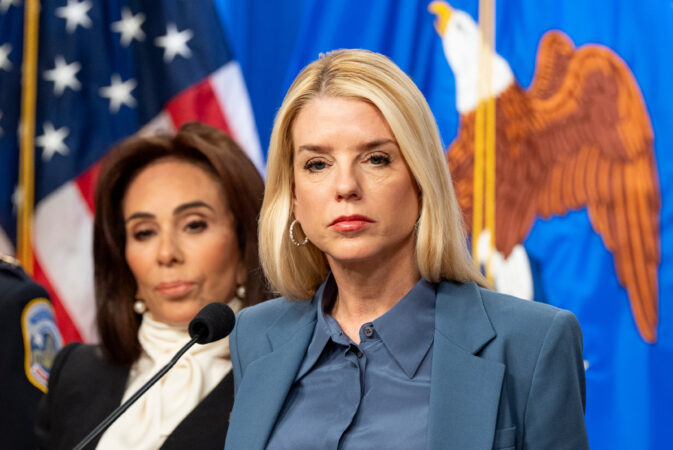
    Attorney General Pam Bondi posted near-daily tallies of gun seizures in the early days of the law enforcement surge and has touted Washington gun arrests as positive as recently as last week.

    “Our federal surge in DC has saved countless lives, removed hundreds of illegal guns off the streets, and led to a dramatic drop in crime in our nation’s capital city,” she posted on X on Wednesday.

    In a news release announcing the lawsuit Monday, Bondi emphasized her “ironclad commitment” to Second Amendment rights. “Washington, DC’s ban on some of America’s most popular firearms is an unconstitutional infringement on the Second Amendment — living in our nation’s capital should not preclude law-abiding citizens from exercising their fundamental constitutional right to keep and bear arms.”

    The Justice Department wants city police to admit that they violated the Second Amendment, according to the lawsuit, and asks a judge to permanently ban D.C. police from arresting or fining law-abiding people for possessing assault weapons.

  • NSA employee sues Trump administration over transgender rights and ‘immutable’ genders

    NSA employee sues Trump administration over transgender rights and ‘immutable’ genders

    A transgender employee of the National Security Agency is suing the Trump administration and trying to block enforcement of a presidential executive order and other policies the employee says violate federal civil rights law.

    Sarah O’Neill, an NSA data scientist who is transgender, disputes the legality of President Donald Trump’s Inauguration Day executive order that required the federal government, in all operations and printed materials, to recognize only two “immutable” sexes: male and female.

    The lawsuit filed Monday says Trump’s order “declares that it is the policy of the United States government to deny Ms. O’Neill’s very existence.”

    The suit was filed in U.S. District Court in Maryland.

    The White House did not immediately respond to a request for comment.

    The order, which reflected Trump’s 2024 campaign rhetoric, spurred policies that O’Neill is challenging, as well.

    Since Trump initial executive action, O’Neill asserts the NSA has canceled its policy recognizing her transgender identity and “right to a workplace free of unlawful harassment,” while “prohibiting her from identifying her pronouns as female in written communications” and “barring her from using the women’s restroom at work.”

    O’Neill contends those policies and the orders behind them create a hostile work environment and violate Section VII of the Civil Rights Act.

    The U.S. Supreme Court ruled in 2020 that Section VII’s prohibition on discrimination based on sex applied to gender identity.

    “We agree that homosexuality and transgender status are distinct concepts from sex,” the court’s majority opinion stated. “But, as we’ve seen, discrimination based on homosexuality or transgender status necessarily entails discrimination based on sex; the first cannot happen without the second.”

    O’Neill’s complaint argues, “The Executive Order rejects the existence of gender identity altogether, let alone the possibility that someone’s gender identity can differ from their sex, which it characterizes as ‘gender ideology.’”

    In addition to restoring her workplace rights and protections, O’Neill is seeking financial damages.

    Trump’s order was among a flurry of executive actions he took hours after taking office. He has continued using executive action aggressively in his second presidency, prompting many legal challenges that are still working their way through the federal judiciary.

    __

  • Ted Cruz weighs another presidential run, setting up clash with Vance

    Ted Cruz weighs another presidential run, setting up clash with Vance

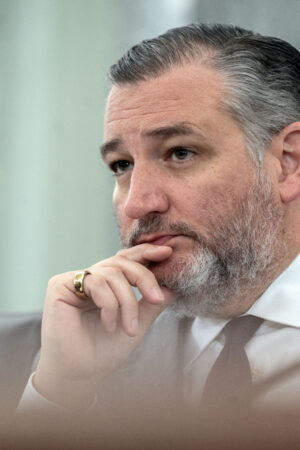
    Sen. Ted Cruz sat down with a longtime ally in November at an office near D.C.’s Union Station to discuss the future of the Republican Party. Before long, the discussion touched on his own future.

    His friend Morton Klein, president of the Zionist Organization for America, told Cruz he believed that “Jew hatred and Israel bashing” was on the rise on the right — and that something had to be done about it. Cruz, who had begun a series of speeches decrying antisemitism in the GOP, told Klein he had been fielding requests from people urging him to run for president in 2028.

    Cruz came across as someone “seriously” considering such a run, Klein recalled.

    With the future of the party up for grabs in a Donald Trump-less 2028 primary, Cruz has in recent months positioned himself as a loud voice for a more traditional, hawkish Republican foreign policy. He’s also urging the GOP to rid itself of popular MAGA pundit Tucker Carlson, whom he argues is injecting the “poison” of antisemitism into the movement with his broadsides against Israel. Carlson has rejected that characterization.

    As he feuds with Carlson, Cruz is weighing a second presidential bid, according to a person close to the senator and another briefed on his thinking, who spoke like others on the condition of anonymity to disclose internal conversations. A White House run would be politically risky for Cruz, 55, putting him on course to collide with Vice President JD Vance, whom many Republicans expect to enter the 2028 race.

    Friction is already evident behind the scenes: Cruz has criticized Vance, a close ally of Carlson, to Republican donors, according to two people familiar with the comments. The senator has warned that Vance’s foreign policy views are dangerously isolationist, the people said. (Vance has been one of the GOP’s most prominent skeptics of U.S. intervention abroad.)

    The emerging rivalry shows how much the party has changed under Trump’s leadership since Cruz arrived in the Senate in 2013. After rising to prominence as a rebel against the establishment, Cruz is now a vocal champion of some longtime orthodox GOP positions, as a new generation of conservatives is ascending with a different vision.

    Some political observers are skeptical that another Cruz run would gain much traction. He can no longer run as an outsider and alienated some conservatives with his fight against Trump in the 2016 campaign. Still, Cruz has built name recognition and relationships with plenty of activists and donors across the country in recent years, and it’s far from clear what will animate the base in the next GOP primary.

    “Can Ted help craft or meld together the traditional Republican approach with the new reality of what the Republican Party is now?” asked Daron Shaw, a political science professor at the University of Texas who overlapped with Cruz as a staffer on George W. Bush’s presidential campaign. “It’s a heavy lift.”

    The day after his chat with Klein, Cruz called Carlson “a coward” during a speech before a group supporting Jewish conservatives in Las Vegas, again denouncing the “poisonous lies” of antisemitism. He said they were “blessed” to have Trump, who “loves the Jewish people,” in the White House right now.

    “When Trump is not in the White House, what then?” he asked in his booming voice.

    “Ted Cruz!” an audience member shouted.

    The senator just smiled, then continued his speech.

    “All of us hate Ted Cruz”

    Anyone considering a run for the GOP nomination in 2028 faces a big obstacle: Vance.

    The 41-year-old vice president leads early polls and is seen as a loyal lieutenant to Trump, who maintains high support from the party base even as the president’s approval ratings have plummeted.

    But Trump has been noncommittal about endorsing his running mate as heir to his Make America Great Again movement, leaving an opening for an ambitious conservative with a different vision for the party.

    “The Republicans will be fighting for their identity,” Rep. Marjorie Taylor Greene (R., Ga.) said of the 2028 primary. Greene, a close ally of Carlson who represents the populist and isolationist wing of the party, added: “There’ll be Ted Cruz, I’m sure, running against JD Vance. All of us hate Ted Cruz.”

    Cruz has adapted to changes in his party over several decades in politics. Following a stretch in the establishment during Bush’s 2000 campaign, he became solicitor general of Texas in 2003 and launched a Senate campaign in 2011 as a tea-party-infused change agent, defeating the lieutenant governor in the GOP primary.

    “The best thing to happen to the Republican Party was to get its teeth kicked in in 2008,” Cruz said during a 2012 campaign event with the libertarian Ron Paul.

    When he arrived in Washington, Cruz picked fights over spending and President Barack Obama’s healthcare law, sparking a government shutdown in 2013. Not everyone in his party liked his style. “If you killed Ted Cruz on the floor of the Senate, and the trial was in the Senate, nobody could convict you,” Sen. Lindsey Graham (R., S.C.) joked at a 2016 press dinner.

    Cruz brought his insurgent pitch into the 2016 presidential race, but Trump caught fire with an antiestablishment campaign that dramatically eclipsed the senator’s. After bowing out of the GOP race as the last major Trump opponent standing, Cruz told delegates at the Republican National Convention that year to “vote your conscience,” instead of throwing his support behind Trump, who had branded him as “Lyin’ Ted.” He returned to the Senate, where he is now chair of the Commerce Committee and has refashioned himself into a bipartisan dealmaker on aviation safety and other issues.

    The Texas senator, who has called himself a “noninterventionist hawk” and has long been a vocal ally of Israel, argues that an anti-Israel foreign policy could embolden terrorists. And he is a defender of the benefits of traditional capitalism at a time when some in the New Right are calling for a more populist turn.

    “Those who are anti-Israel quickly become anti-capitalist and anti-American,” Cruz said in a brief interview about his decision to speak out against Carlson. “Tucker’s obsession is unhealthy and dangerous.”

    By targeting Carlson and growing anti-Israel sentiment within the party, Cruz has hit upon a division within the GOP base that some believe could animate the 2028 primaries. Carlson is closely allied with Vance, a onetime Trump critic who is now an America First populist, embracing skepticism of some big-business interests and rejecting the U.S. foreign policy status quo.

    Cruz is staking out positions against isolationism and antisemitism at a time when explicitly antisemitic figures such as white supremacist commentator Nick Fuentes are gaining an audience on the right.

    Vance, by contrast, has rejected the suggestion that the right has a problem with antisemitism after Carlson hosted Fuentes for a friendly interview. (The vice president disavowed Fuentes months before the interview and has not explicitly weighed in on Carlson hosting him.)

    It’s “kind of slanderous to say that the Republican Party, the conservative movement, is extremely antisemitic,” Vance said in a recent interview with NBC News. In a social media post last week, Vance criticized a news article claiming antisemitism was rising among young people.

    “I would say there’s a difference between not liking Israel (or disagreeing with a given Israeli policy) and antisemitism,” he replied to one user.

    Asked to respond to Vance’s comment, Cruz said he is not in agreement with “people who are anti-Israel or people who are antisemitic.”

    “Every Hamas or Hezbollah or IRGC terrorist that Israel took out makes Americans safer,” Cruz said, referencing militants in Gaza, Lebanon, and Iran that the United States designates as terrorist groups. “And those who don’t see that are not acting in accordance with American national security interests.”

    The feud

    In early July, Cruz sat down in Washington with Israel’s prime minister and delivered a dire warning. Over cigars at Blair House, Cruz told Benjamin Netanyahu that antisemitism on the right was rising to a level he had never seen before.

    “No, Ted,” Netanyahu responded, according to Cruz, who recounted the conversation in a speech. “That’s Qatar, that’s Iran, that’s astroturf, that’s paid for.”

    But Cruz said he was not placated. Replies to his social media posts were flooded with anti-Jewish bigotry from what looked to him like ordinary, real people. He began to fear that what he saw as antisemitism on the left was beginning to infect the right, he said.

    In June, Cruz sat for an interview with Carlson that grew heated over the topic of Israel. Cruz suggested that Carlson criticizes Israel more than other countries because of bigotry toward Jews. Carlson said he has many Jewish friends who have the same questions as him and grilled Cruz with factual questions on the Middle East. In an uncharacteristic lapse, Cruz failed to identify the population of Iran. “You don’t know the population of the country you seek to topple?” Carlson asked.

    Since then, the two have savaged each other in increasingly personal terms. Carlson has called Cruz “vulgar and dumb and reckless” for connecting U.S. military support for Israel to a biblical responsibility to defend the Holy Land and God’s chosen people. After Carlson hosted Fuentes on his podcast this fall, Cruz called on Republicans to repudiate the pundit.

    Carlson “decided Jews are the source of all evil in the world,” Cruz said in a recent podcast. The senator also posted a digitally altered sexually suggestive photo of Carlson to critique his friendly stance toward Qatar, a U.S. ally with which Israel has clashed.

    Since the killing of conservative influencer Charlie Kirk, internal battles about the future of the GOP have spilled into the open, many centering on the true meaning of “America First” as Trump spends time and political capital on Ukraine, Israel, and Venezuela. Carlson criticized Trump’s decision to strike Iran’s nuclear sites in June and has warned the president against pursuing regime change in Venezuela, a goal Cruz shares.

    “What Ted is trying to do is say, this is where our voters are,” said one person close to the senator. “Trump and Ted are much more aligned on foreign policy than Trump and Tucker are.”

    Few Republicans have publicly rallied to Cruz’s side.

    “I can tell you, my colleagues, almost to a person, think what is happening is horrifying,” Cruz said in one speech on Carlson. “But a great many of them are frightened because he has one hell of a big megaphone.”

    Rep. Dan Crenshaw (R., Texas) said he “applauds” Cruz for speaking out against Carlson. But others declined to weigh in.

    Sen. Tommy Tuberville (R., Ala.), a close Trump ally, said he believes the back-and-forth is personal. “Sometimes when you get embarrassed, you get mad, get your feelings hurt,” he said.

    Sen. Richard Blumenthal (D., Conn.) said he is surprised but happy that Cruz has the “courage” to challenge such a powerful figure on the right. “To give Senator Cruz due credit, it requires some guts and gumption to stand up against Tucker Carlson,” he said.

    As Carlson and Cruz have attacked each other, Trump has declined to take sides, calling Carlson a “nice guy” and Cruz a “good friend” in recent months.

    Carlson has said he thinks “antisemitism is immoral, and I am against it.” He argues the feud is just politics. “All [Cruz] wants is to be president. That’s all he’s ever wanted,” Carlson said in an interview. “As a political matter, he somehow thinks that calling me a Nazi is going to get him the nomination because it’s going to hurt JD Vance.” (Cruz has not publicly used that word to described Carlson.)

    Rep. Ryan Zinke (R., Mont.), who argued that Cruz damaged his credibility with conservatives after spurning Trump in 2016 but later recovered his standing, said Cruz “always has an eye on running.”

    “Ted stakes out his position pretty well, and so were he to run, we know where he is,” Zinke said.

    So far, there are few signs that Cruz is gaining an advantage. Hal Lambert, a major GOP donor who helped organize a super PAC to support Cruz when he ran for president in 2016, said he thinks a 2028 bid would be tricky for the senator.

    “If JD Vance is running, I’m going to be supporting JD Vance,” Lambert said.

    “I just don’t understand what the platform would be,” he said of Cruz’s potential run. “The platform would be, I’m Ted, and that’s JD?”

  • Teen girl arrested, charged with manslaughter in Roxborough man’s stabbing death

    Teen girl arrested, charged with manslaughter in Roxborough man’s stabbing death

    Philadelphia police have arrested a 16-year-old girl and charged her with voluntary manslaughter, after they said she stabbed a man Sunday morning in Roxborough.

    Officers who were called to the 500 block of Wartman Street found the 57-year-old man. He had been stabbed multiple timesin between his ribs, police said.

    The man, whose name has not been released, was transported to Jefferson-Einstein Hospital, where he died shortly after 10 a.m., police said.

    Deputy Police Commissioner Frank Vanore said the girl and her mother lived with the man, a family friend, in the Wartman Street home. He said that there was an altercation between the teen and the man, and that the girl then stabbed him multiple times. The teen, he said, also suffered injuries to her face.

    Officers took the girl into custody Sunday. In addition to voluntary manslaughter, she has been charged with possessing an instrument of crime. She is being charged as a juvenile.

    Vanore said investigators are looking into whether the teen and man may have used drugs together.

  • Some Center City blocks will no longer get sidewalk cleaning

    Some Center City blocks will no longer get sidewalk cleaning

    Philly aspires to be the cleanest city in the nation. Does that include the sidewalks?

    The Center City Residents Association will not renew its contract with Center City District for sidewalk cleaning that is up at the end of this month, the group said in an email to its members.

    The City of Philadelphia does not regularly perform sidewalk cleanings, though recently it has conducted occasional sweeps.

    The residents association said its board made the decision because of rising costs charged by the Center City District. The new rate would have doubled the proportion of the association’s budget going toward sidewalk cleaning in 2026, from 20% to 41%. The association paid $39,600 for sidewalk cleaning in the most recent fiscal year, according to tax forms.

    “We were losing money. It was like, are we going to clean the sidewalks for another year and a half and be dead as an organization?” said association president Nathaniel Margolies.

    Hundreds of city workers set out immediately following the Eagles’ four-hour-long victory parade on Feb. 14, cleaning up the mess a million plus fans left behind. Most of the streets and sidewalks along the route were spotless by the next morning.

    The residents association had a long-standing agreement with the Center City District to extend the district’s sidewalk cleaning operations to cover the entire CCRA catchment area — from John F. Kennedy Boulevard to South Street and from the Schuylkill to South Broad Street — at a favorable rate. The cleanings came the day after trash collection.

    Things changed coming out of the pandemic. The Center City District could no longer offer a subsidized rate and its prices climbed.

    “We presented a proposal to the CCRA that reflects the cost of the program, and they chose not to renew. Much of CCRA’s membership is located outside of our district’s boundaries; within CCD’s boundaries, sidewalks are cleaned three times a day and power washed during warmer months,” CCD spokesperson JoAnn Loviglio said in a statement.

    There were other reasons for CCRA to move on. The cleaning wasn’t making a significant difference on some blocks that already had good trash hygiene, Margolies said, and it didn’t make sense to continue asking half of the association to essentially pay twice for sidewalk cleaning, since they’re covered by CCD regardless.

    The residents association has established a Cleanliness Committee to explore other service providers, like Glitter. The popular service positions itself as an affordable option for blocks or neighborhood groups dealing with the same dirty sidewalk problem. Glitter currently cleans 350 blocks that are directly funded by neighbors, typically at $200 per month for weekly cleanings, and another 720 through violence prevention and neighborhood beautification grants, according to its CEO, Brandon Pousley.

    Margolies said it was frustrating that so much of the financial responsibility for keeping clean sidewalks falls upon neighborhood groups and individuals, not the city.

    In Mayor Cherelle L. Parker’s campaign to make Philadelphia the cleanest big city in the nation, her administration has directed resources toward trash collection and curbing illegal dumping. A signature policy has been the introduction of twice-weekly trash pickup, which began in South Philly and Center City last year, and is about to expand to North Philly.

    The extra collection day has been met with a mixed response. Some residents have appreciated holding onto less trash and the city said it’s made a difference on illegal dumping and litter. But other residents have complained that the program has put even more trash on the street.

    Mayor Cherelle L. Parker poses for a photo opportunity on a sanitation truck at the Intersection of 1300 block of S. 21st St. and Point Breeze Avenue after a 2024 news conference to announce twice-weekly trash pickups.

    “If you’re gonna add a second trash day without fixing the functional problems of the system, you’re going to create more litter,” said Nic Esposito, the former director of Mayor Jim Kenney’s Zero Waste and Litter Cabinet.

    The city’s Office of Clean and Green Initiatives did not respond to a request for comment.

    Esposito said ideally, there would be a balance of responsibility between the city and its residents to making Philly cleaner. He said he believes that when people see the city government demonstrating care, it motivates residents to get more involved.

    “That’s what makes Philly so amazing. But it really wears on people when you’re trying to do that and before you can even do it, your street’s filthy … why are we expending our hard-earned money to have to do something as basic as cleaning streets?” he said.

    As CCRA weighs what to do about its sidewalks, its cleanliness committee will also advocate with the city, landlords, businesses, and other residents to build better habits and rule enforcement. Margolies said he’s had positive experiences working with the city’s Office of Clean and Green Initiatives, and they have been responsive to residents’ needs.

    Residents have expressed disappointment at the sidewalk cleaning service going away, but once he explains the financial situation, they usually understand, he said. But it’s unclear how long their patience will last if litter piles up.

    “When you look at the quality-of-life [issues] in the neighborhood, they change as time goes on … the real consistent one over time is trash and cleanliness. It really grates people,” Margolies said.

  • Bondi Beach shooting suspect conducted firearms training with his father, Australian police say

    Bondi Beach shooting suspect conducted firearms training with his father, Australian police say

    MELBOURNE, Australia — A man accused of killing 15 people at Sydney’s Bondi Beach conducted firearms training in an area of New South Wales state outside of Sydney with his father, according to Australian police documents released on Monday.

    The documents, made public following Naveed Akram’s video court appearance from a Sydney hospital where he has been treated for an abdominal injury, said the two men recorded footage justifying the meticulously planned attack.

    Officers wounded Akram at the scene of the Dec. 14 shooting and killed his father, 50-year-old Sajid Akram.

    The state government confirmed Naveed Akram was transferred Monday from a hospital to a prison. Authorities identified neither facility.

    The 24-year-old and his father began their attack by throwing four improvised explosive devices toward a crowd celebrating an annual Jewish event at Bondi Beach, but the devices failed to explode, the documents said.

    Police described the devices as three aluminum pipe bombs and a tennis ball bomb containing an explosive, gunpowder, and steel ball bearings. None detonated, but police described them as “viable” IEDs.

    The pair had rented a room in the Sydney suburb of Campsie for three weeks before they left at 2:16 a.m. on the day of the attack. CCTV recorded them carrying what police allege were two shotguns, a rifle, five IEDs, and two homemade Islamic State group flags wrapped in blankets.

    Police also released images of the gunmen shooting from a footbridge, providing them with an elevated vantage point and the protection of waist-high concrete walls.

    The largest IED was found after the gun battle near the footbridge in the trunk of the son’s car, which had been left draped with the flags.

    Authorities have charged Akram with 59 offenses, including 15 counts of murder, 40 counts of causing harm with intent to murder in relation to the wounded survivors, and one count of committing a terrorist act.

    The antisemitic attack at the start of the eight-day Hanukkah celebration was Australia’s worst mass shooting since a lone gunman killed 35 people in Tasmania state in 1996.

    The New South Wales government introduced draft laws to Parliament on Monday that Premier Chris Minns said would become the toughest in Australia.

    The new restrictions would include making Australian citizenship a condition of qualifying for a firearms license. That would have excluded Sajid Akram, who was an Indian citizen with a permanent resident visa.

    Sajid Akram also legally owned six rifles and shotguns. A new legal limit for recreational shooters would be a maximum of four guns.

    Police said a video found on Naveed Akram’s phone shows him with his father as they express “their political and religious views and appear to summarize their justification for the Bondi terrorist attack.”

    The men are seen in the video “condemning the acts of Zionists” while they also “adhere to a religiously motivated ideology linked to Islamic State,” police said.

    Video shot in October shows them “firing shotguns and moving in a tactical manner” on grassland surrounded by trees, police said.

    “There is evidence that the Accused and his father meticulously planned this terrorist attack for many months,” police allege.

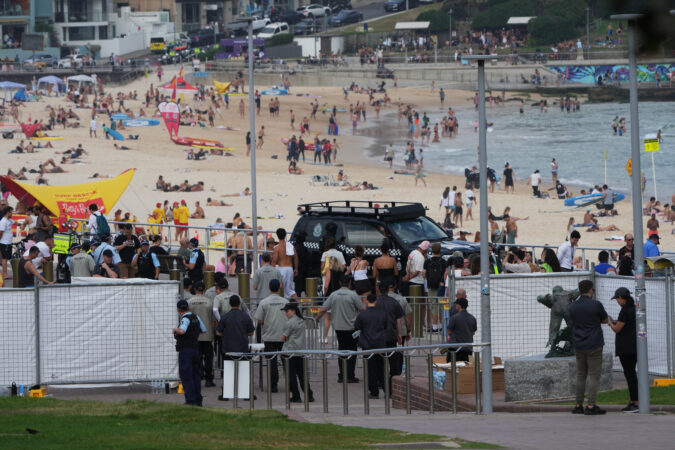
    An impromptu memorial that grew near the Bondi Pavilion after the massacre, as thousands of mourners brought flowers and heartfelt cards, was removed Monday as the beachfront returned to more normal activity. The Sydney Jewish Museum will preserve part of the memorial.

    Victims’ funerals continued Monday with French national Dan Elkayam’s service held in the nearby suburb of Woollahra, at the heart of Sydney’s Jewish life. The 27-year-old moved from Paris to Sydney a year ago.

    The health department said 12 people wounded in the attack remained in hospitals on Monday.

  • Police want to question man with history of domestic violence in the shooting of a baby and her mother in West Philly

    Police want to question man with history of domestic violence in the shooting of a baby and her mother in West Philly

    Philadelphia police are looking to question a 39-year-old man in connection with the shooting of a mother and her 5-month-old baby inside their West Philadelphia home over the weekend, according to a law enforcement source.

    Investigators have identified Faheem Weaver as a suspect in the shooting of his daughter and her mother early Sunday morning, said the source, who spoke on the condition of anonymity to discuss an ongoing investigation.

    The woman and baby — identified by family members as Alayiah Hill and Yuri Weaver — were asleep inside their home on the 1500 block of North Robinson Street when, around 4 a.m., someone approached the door and sprayed black paint over their Ring camera, said Deputy Police Commissioner Frank Vanore.

    Police believe the gunman who shot a mother and her baby in West Philadelphia Sunday morning spray-painted the home’s ring camera before entering the home.

    The gunman then entered the rowhouse and shot Hill multiple times in the stomach, and the baby once in the leg, Vanore said. Both were expected to survive, he said, but the mother remained hospitalized in critical condition Monday morning.

    A warrant has not been issued for anyone’s arrest in the shooting, Vanore said, and the investigation continues.

    Hill’s family could not be reached Monday.

    Court records show that Weaver, of East Norriton in Montgomery County, has a history of domestic violence, and is currently out on bail after he was charged in October with aggravated assault with a deadly weapon, making terroristic threats, and related crimes.

    In that incident, Weaver is accused of attacking Hill inside of her Robinson Street home in late August. Hill told police that around 7 a.m., her ex-boyfriend kicked her down the stairs, and when she grabbed a two-by-four piece of wood to defend herself, he overpowered her, grabbed the wooden panel, and beat her legs with it, causing multiple lacerations, according to the affidavit of probable cause for his arrest.

    A warrant was issued for Weaver’s arrest on Oct. 2, and he was taken into custody and charged Oct. 14. (It was not immediately clear why the warrant for the August incident was not issued until October.)

    Bail magistrate Patrick Stack set bail at $75,000, and Weaver immediately posted the necessary $7,500 cash to be released, court records show.

    The shooting comes as violence across Philadelphia has declined considerably in the last two years, with the city on track to record the fewest homicides since the 1960s. Still, shootings continue to occur in pockets of the city that have long experienced violence — and seen higher rates of poverty, unemployment, and other health issues.

    Domestic-related attacks continue to be of concern to law enforcement officials.

    Staff writer Jillian Kramer contributed to this reporting.

  • Judge allows Kilmar Abrego Garcia to remain free while she considers immigration issues

    Judge allows Kilmar Abrego Garcia to remain free while she considers immigration issues

    GREENBELT, Md. — A federal judge on Monday questioned whether government officials could be trusted to follow orders barring them from taking Kilmar Abrego Garcia into immigration custody or deporting him.

    U.S. District Judge Paula Xinis noted that Abrego Garcia was already deported without legal authority once and said she was “growing beyond impatient” with government misrepresentations in her court. “Why should I give the respondents the benefit of the doubt?” she asked, referring to the government attorneys.

    Abrego Garcia’s mistaken deportation and imprisonment in El Salvador in March has galvanized both sides of the immigration debate. The Trump administration initially fought efforts to bring him back to the U.S. but eventually complied after the U.S. Supreme Court weighed in. He returned to the U.S. in June, only to face an arrest warrant on human smuggling charges in Tennessee.

    Xinis ordered Abrego Garcia released from immigration custody on Dec. 11 after determining that the government had no viable plan for deporting him. She followed that with a temporary restraining order the next day barring Immigration and Customs Enforcement from immediately taking him back into custody. The Monday hearing was to determine if the temporary restraining order should be dissolved.

    The hearing was a glimpse into the complexity of immigration proceedings as Xinis tried to get information on the status of Abrego Garcia’s case. “I am trying to get to the bottom of whether there are going to be any removal proceedings,” she said as she questioned the government’s lawyer. “You haven’t told me what you’re going to do next.”

    Xinis said she would leave the restraining order in place for now while she considers the issue.

    “This is an extremely irregular and extraordinary situation,” Xinis told attorneys.

    Abrego Garcia, his wife, and legal team were welcomed to the federal court building in Maryland by a boisterous reception that included a choir, bullhorn, and drum as scores of supporters cheered. Inside the courtroom Abrego Garcia sat with at least half a dozen defense team members while a lone government attorney sat across from them.

    Before his release, Abrego Garcia had been in immigration detention since August. In that time, the government has said it planned to deport him to Uganda, Eswatini, Ghana, and, most recently, Liberia. However, officials have made no effort to deport him to the one country he has agreed to go to — Costa Rica. Xinis has even accused the government of misleading her by falsely claiming that Costa Rica was unwilling to take him.

    The government’s “persistent refusal to acknowledge Costa Rica as a viable removal option, their threats to send Abrego Garcia to African countries that never agreed to take him, and their misrepresentation to the Court that Liberia is now the only country available to Abrego Garcia, all reflect that whatever purpose was behind his detention, it was not for the ‘basic purpose’ of timely third-country removal,” she wrote.

    In court on Monday, Abrego Garcia’s attorneys reiterated that he is prepared to go to Costa Rica “today.”

    Abrego Garcia has an American wife and child and has lived in Maryland for years, but he immigrated to the U.S. illegally from El Salvador as a teenager. In 2019, an immigration judge granted him protection from being deported back to his home country, finding he faced danger there from a gang that had targeted his family. Although he is back in the U.S. now, Department of Homeland Security officials have said he cannot stay and have vowed to deport him to a third country.

    In addition to the Maryland case, Abrego Garcia is fighting the human smuggling charges in Tennessee. His attorneys in that case on Friday asked the judge for sanctions after Border Patrol’s Gregory Bovino made disparaging comments about their client on national news. The judge previously ordered Justice Department and Homeland Security officials to cease making comments that could prejudice Abrego Garcia’s right to a fair trial.

  • Spread of famine in Gaza Strip averted but Palestinians there still face starvation, experts say

    Spread of famine in Gaza Strip averted but Palestinians there still face starvation, experts say

    TEL AVIV, Israel — The spread of famine has been averted in the Gaza Strip, but the situation remains critical with the entire Palestinian territory still facing starvation, the world’s leading authority on food crises said Friday.

    The new report by the Integrated Food Security Phase Classification, or IPC, comes months after the group said famine was occurring in Gaza City and likely to spread across the territory without a ceasefire and an end to humanitarian aid restrictions.

    There were “notable improvements” in food security and nutrition following an October ceasefire in the Israel-Hamas war and no famine has been detected, the report said. Still, the IPC warned that the situation remains “highly fragile” and the entire Gaza Strip is in danger of starvation with nearly 2,000 people facing catastrophic levels of hunger through April.

    In the worst-case scenario, including renewed conflict and a halt of aid, the whole Gaza Strip is at risk of famine. Needs remain immense, and sustained, expanded, and unhindered aid is required, the IPC said.

    The Israeli military agency in charge of coordinating aid to Gaza, known as COGAT, said Friday that it strongly rejected the findings.

    The agency adheres to the ceasefire and allows the agreed amount of aid to reach the strip, COGAT said, noting the aid quantities “significantly exceed the nutritional requirements of the population” in Gaza according to accepted international methodologies, including the United Nations.

    The Israeli Foreign Ministry said Friday that it also rejects the findings, saying the IPC’s report doesn’t reflect reality in Gaza and more than the required amount of aid was reaching the territory. The ministry said the IPC ignores the vast volume of aid entering Gaza, because the group relies primarily on data related to U.N. trucks, which account for only 20% of all aid trucks.

    The IPC said that the report totals include commercial and U.N. trucks and its information is based on U.N. and COGAT data.

    Israel’s government has rejected the IPC’s past findings, with Israeli Prime Minister Benjamin Netanyahu calling the previous report an “outright lie.”

    Ceasefire offsets famine

    The report’s findings come as the shaky U.S.-brokered ceasefire between Israel and Hamas reaches a pivotal point as Phase 1 nears completion, with the remains of one hostage still in Gaza. The more challenging second phase has yet to be implemented and both sides have accused the other of violating the truce.

    The IPC in August confirmed the grim milestone of famine for the first time in the Middle East and warned it could spread south to Deir al-Balah and Khan Younis. More than 500,000 people in Gaza, about a quarter of its population, faced catastrophic levels of hunger, with many at risk of dying from malnutrition-related causes, the August report said.

    Friday’s report said that the spread of famine had been offset by a significant reduction in conflict, a proposed peace plan, and improved access for humanitarian and commercial food deliveries.

    There is more food on the ground and people now have two meals daily, up from one meal each day in July. That situation “is clearly a reversal of what had been one of the most dire situations where we were during the summer,” Antoine Renard, the World Food Program’s director for the Palestinian territories, told U.N. reporters in a video briefing from Gaza City Thursday.

    Food access has “significantly improved,” he said, warning that the greatest challenge now is adequate shelter for Palestinians, many of whom are soaked and living in water-logged tents. Aid groups say nearly 1.3 million Palestinians need emergency shelter as winter sets in.

    Aid is still not enough

    Displacement is one of the key drivers behind the food insecurity, with more than 70% of Gaza’s population living in makeshift shelters and relying on assistance. Other factors such as poor hygiene and sanitation as well as restricted access to food are also exacerbating the hunger crisis, the IPC said.

    While humanitarian access has improved compared with previous analysis periods, that access fluctuates daily and is limited and uneven across the Gaza Strip, the IPC said.

    To prevent further loss of life, expanded humanitarian assistance including food, fuel, shelter, and healthcare is urgently needed, according to the group’s experts, who warned that over the next 12 months, more than 100,000 children between the ages of 6 months and 5 years are expected to suffer from acute malnutrition and require treatment.

    Figures recently released by Israel’s military suggest that it hasn’t met the ceasefire stipulation of allowing 600 trucks of aid into Gaza each day, though Israel disputes that finding. American officials with the U.S.-led center coordinating aid shipments into Gaza also say deliveries have reached the agreed upon levels.

    U.N. Secretary-General António Guterres said the U.N. and its partners are preparing 1.5 million hot meals every day and delivering food packages throughout Gaza but that “needs are growing faster than aid can get in.”

    Aid groups say despite an increase of assistance, aid still isn’t reaching everyone in need after suffering two years of war.

    “This is not a debate about truck numbers or calories on paper. It’s about whether people can actually access food, clean water, shelter, and healthcare safely and consistently. Right now, they cannot,” said Bushra Khalidi, Oxfam’s policy lead for Israel and the occupied Palestinian territory.

    People must be able to rebuild their homes, grow food, and recover, and the conditions for that are still being denied, she said.

    Even with more products in the markets, Palestinians say they can’t afford it. “There is food and meat, but no one has money,” said Hany al-Shamali, who was displaced from Gaza City.

    “How can we live?”