Category: News

Latest breaking news and updates

  • Amid uncertain future, the President’s House Site celebrates 15th anniversary

    Amid uncertain future, the President’s House Site celebrates 15th anniversary

    Just a few months ago, the future of the President’s House Site on Independence Mall seemed ill-fated: By presidential executive order, contents deemed disparaging by federal officials were to be removed.

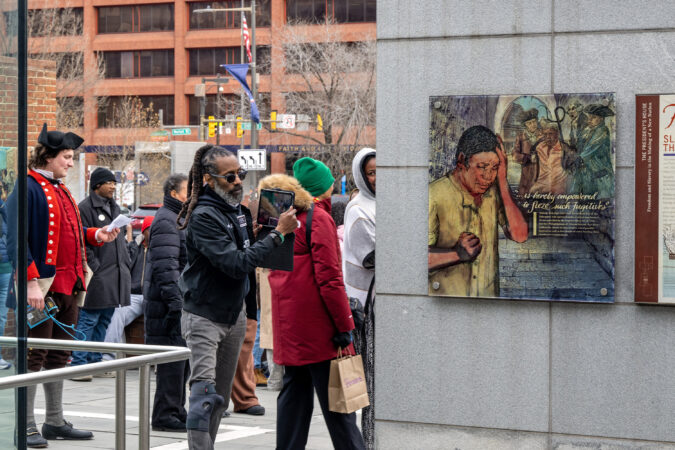
    But as of Sunday, the outdoor exhibit at the corner of Sixth and Market Streets, memorializing the nine people enslaved there by President George Washington — and capturing the somber paradox of a young America that exalted freedom for some, while depriving it for others — remains unaltered. Instead, the President’s House Site surpassed a milestone last week: the 15th anniversary of its opening.

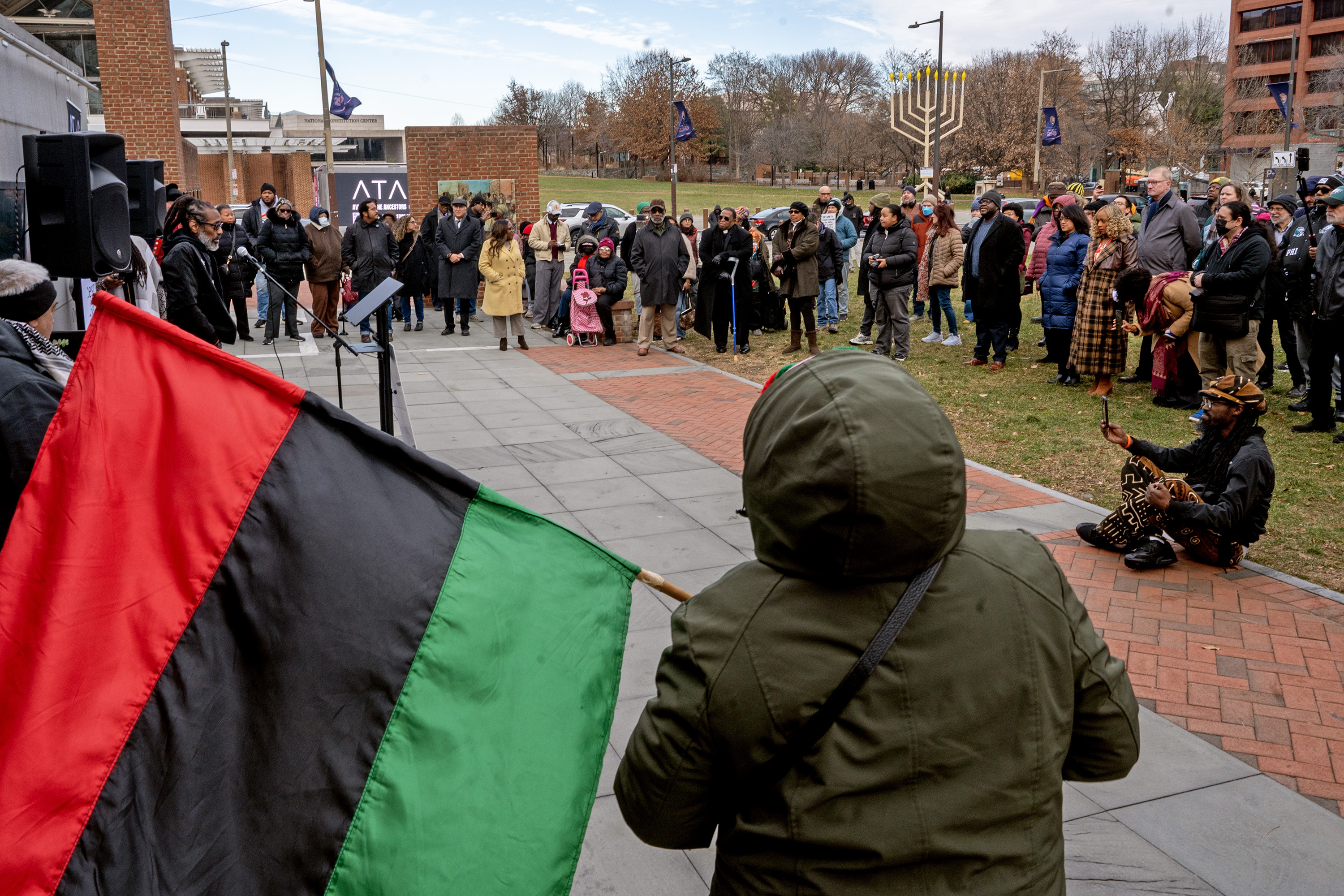
    More than 75 activists, preservationists, historians, and public officials gathered at the site Sunday afternoon to commemorate the occasion and mobilize resistance amid its uncertain future. (The event was initially scheduled for Dec. 15, the date of the site’s opening in 2010, but was rescheduled due to snow and subfreezing temperatures.)

    The President’s House Site has become a lightning rod for President Donald Trump, who seeks to remove content from national parks that his administration says “inappropriately disparages Americans past or living” — what activists have said is an effort to sanitize history by omitting slavery from the narrative.

    Starting in 2002, Black leaders and the Avenging the Ancestors Coalition (ATAC) fought to put slavery at the forefront of the exhibit built around the remnants of the country’s original White House. It was a chapter of history the National Park Service was initially hesitant to put on display.

    Michael Coard (left) with the Avenging the Ancestors Coalition speaks on the site as the 15th anniversary of the President’s House exhibit in Independence National Historical Park is celebrated Sunday, Dec. 21, 2025.

    “America is a great country today because they enslaved us yesterday,” Michael Coard, an attorney and founding member of ATAC, said.

    Over the summer, 13 items across six displays at the President’s House were flagged for review as part of Trump’s executive order, and federal authorities set a Sept. 17 deadline to change or remove the disputed content at national parks nationwide. Ninety-five days after the deadline, the President’s House is unchanged, but the exhibit could be seemingly upended any time.

    In an email Friday, a spokesperson for the National Park Service said all “interpretive signage” is under review in accordance with the executive order.

    “As we carry out this directive, we’ll be evaluating all signage in the park along with the public feedback we’ve received,” the statement reads. “This effort reinforces our commitment to telling the full and accurate story of our nation’s past.”

    The turmoil comes ahead of the nation’s semiquincentennial, when its birthplace, Philadelphia, will be in the spotlight. The fate of these displays is poised to be a larger battle over who gets to tell America’s history.

    “We cannot allow [Trump] to erase our history,” said State Sen. Sharif Street, who was among more than a dozen public officials at Sunday’s event. Speakers included seven Philadelphia City Council members, District Attorney Larry Krasner, and fourth, fifth, and sixth graders from the Jubilee School in West Philadelphia.

    Street’s father, former Philadelphia Mayor John F. Street, legitimized ATAC and Coard’s efforts decades ago as the first elected official to start funding their project.

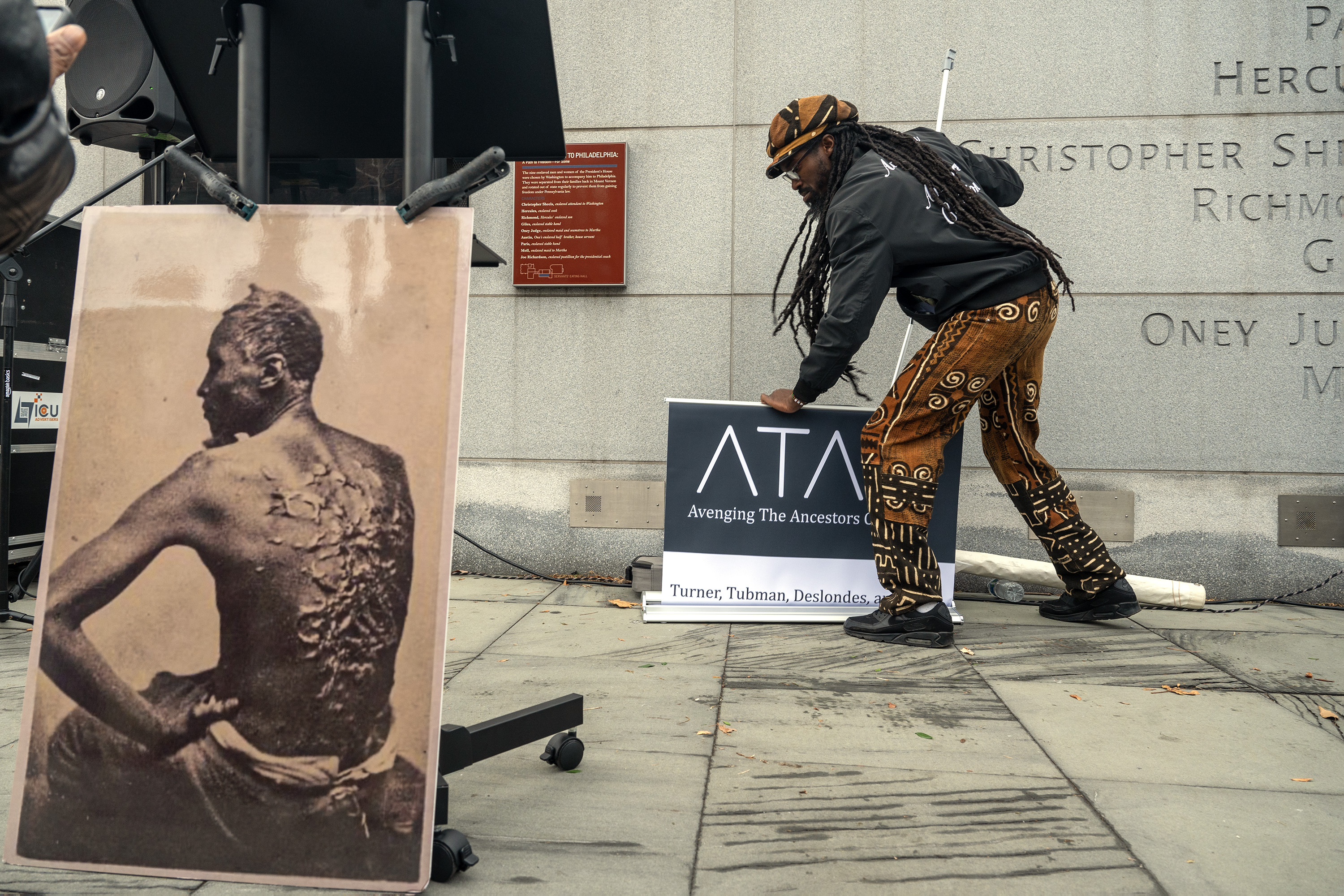
    Farugh Maat of the Avenging the Ancestors Coalition takes down signs at the President’s House Site exhibit in Independence National Historical Park after a 15th anniversary ceremony Sunday, Dec. 21, 2025.

    “America is a great country because we overcame those things, not because they never happened,” Sharif Street said. “We’ve always marched towards progress, not backwards. But the progress we have [made] will only remain if we are willing to fight to preserve it.”

    The message Sunday was clear: Activists will continue to fight for the integrity of the site.

    “You cannot erase, you cannot take away,” said the Rev. Carolyn Cavaness, of the historic Mother Bethel A.M.E. Church, “you cannot delete, you cannot attempt to distract or detour.”

  • Turning Point showcases discord that Republicans like Vance will need to navigate

    Turning Point showcases discord that Republicans like Vance will need to navigate

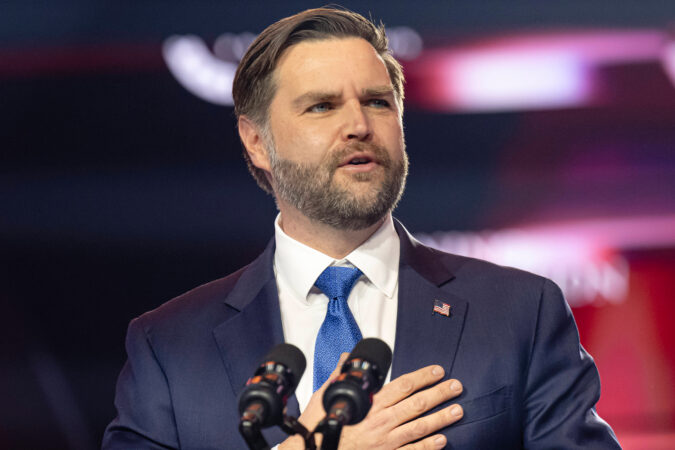
    PHOENIX — Vice President JD Vance said Sunday the conservative movement should be open to everyone as long as they “love America,” declining to condemn a streak of antisemitism that has divided the Republican Party and roiled the opening days of Turning Point USA’s annual convention.

    After a long weekend of debates about whether the movement should exclude figures such as bigoted podcaster Nick Fuentes, Vance came down firmly against “purity tests.”

    “I didn’t bring a list of conservatives to denounce or to deplatform,” Vance said during the convention’s closing speech.

    Turning Point leader Erika Kirk, who took the helm after the assassination of her husband, Charlie Kirk, has endorsed Vance as a potential successor to President Donald Trump, a helpful nod from an influential group with an army of volunteers.

    But the tension on display at the four-day gathering foreshadowed the treacherous political waters that Vance, or anyone else who seeks the next Republican presidential nomination, will need to navigate in the coming years. Top voices in the “Make America Great Again” movement are jockeying for influence as Republicans begin considering a future without Trump, and there is no clear path to holding his coalition together.

    Defining a post-Trump GOP

    The Republican Party’s identity has been intertwined with Trump’s for a decade, but he’s constitutionally ineligible to run for reelection despite his musings about serving a third term. Tucker Carlson said people are wondering, “Who gets the machinery when the president exits the scene?”

    So far, it looks like settling that question will come with a lot of fighting among conservatives. The Turning Point conference featured arguments about antisemitism, Israel, and environmental regulations, not to mention rivalries between leading commentators.

    Ben Shapiro, co-founder of the conservative media outlet Daily Wire, used his speech on the conference’s opening night to denounce “charlatans who claim to speak in the name of principle but actually traffic in conspiracism and dishonesty.”

    “These people are frauds and they are grifters and they do not deserve your time,” Shapiro said. He specifically called out Carlson for hosting Fuentes for a friendly interview on his podcast.

    Carlson brushed off the criticism when he took the stage barely an hour later, and he said the idea of a Republican “civil war” was “totally fake.”

    “There are people who are mad at JD Vance, and they’re stirring up a lot of this in order to make sure he doesn’t get the nomination,” he said. Carlson described Vance as “the one person” who subscribes to the “core idea of the Trump coalition,” which Carlson said was “America first.”

    Turning Point spokesperson Andrew Kolvet framed the discord as a healthy debate about the future of the movement, an uncomfortable but necessary process of finding consensus.

    “We’re not hive-minded commies,” he wrote on social media. “Let it play out.”

    If you love America, you’re welcome, Vance says

    Vance acknowledged the controversies that dominated the Turning Point conference, but he did not define any boundaries for the conservative movement besides patriotism.

    “We don’t care if you’re white or black, rich or poor, young or old, rural or urban, controversial or a little bit boring, or somewhere in between,” he said.

    Vance didn’t name anyone, but his comments came in the midst of an increasingly contentious debate over whether the right should give a platform to commentators espousing antisemitic views, particularly Fuentes, whose followers see themselves as working to preserve America’s white, Christian identity. Fuentes has a growing audience, as does top-rated podcaster Candace Owens, who routinely shares antisemitic conspiracy theories.

    “We have far more important work to do than canceling each other,” he said.

    Vance ticked off what he said were the accomplishments of the administration as it approaches the one-year mark, noting its efforts at the border and on the economy. He emphasized efforts to end diversity, equity, and inclusion policies, drawing applause by saying they had been relegated to the “dustbin of history.”

    “In the United States of America, you don’t have to apologize for being white anymore,” he said.

    Vance also said the U.S. “always will be a Christian nation,” adding that “Christianity is America’s creed, the shared moral language from the Revolution to the Civil War and beyond.”

    Those comments resonated with Isaiah White-Diller, an 18 year-old from Yuma, Ariz., who said he would support Vance if he runs for president.

    “I have my right to be Christian here, I have my right to say whatever I want,” White-Diller said.

    Turning Point backs Vance for president

    Vance hasn’t disclosed his future plans, but Erika Kirk said Thursday that Turning Point wanted Vance “elected for 48 in the most resounding way possible.” The next president will be the 48th in U.S. history.

    Turning Point is a major force on the right, with a nationwide volunteer network that can be especially helpful in early primary states, when candidates rely on grassroots energy to build momentum. In a surprise appearance, rapper Nicki Minaj spoke effusively about Trump and Vance.

    Vance was close to Charlie Kirk, and they supported each other over the years. After Kirk’s assassination on a college campus in Utah, the vice president flew out on Air Force Two to collect Kirk’s remains and bring them home to Arizona. The vice president helped uniformed service members carry the casket to the plane.

    Emily Meck, 18, from Pine City, N.Y., said she appreciated Vance making space for a wide variety of views.

    “We are freethinkers, we’re going to have these disagreements, we’re going to have our own thoughts,” Meck said.

    Trump has spoken highly of both Vance and Secretary of State Marco Rubio as potential successors, even suggesting they could form a future Republican ticket. Rubio has said he would support Vance.

    Asked in August whether Vance was the “heir apparent,” Trump said “most likely.”

    “It’s too early, obviously, to talk about it, but certainly he’s doing a great job, and he would be probably favorite at this point,” he said.

  • Police: The Special Victims Unit is investigating after a 2-year-old boy died in Point Breeze

    Police: The Special Victims Unit is investigating after a 2-year-old boy died in Point Breeze

    Philadelphia Police say the Special Victims Unit is investigating after a 2-year-old boy died Sunday morning in Point Breeze.

    Officers in the 17th District responded to what police described as “a hospital-related radio call involving a two-year-old child reported not breathing” around 5 a.m. at a home on the 2100 block of Titan Street, police said.

    A medic conducted CPR, police said, and the child was taken to Children’s Hospital of Philadelphia, where he was pronounced dead at 5:31 a.m.

    Police said Sunday afternoon that the cause of death had not been determined. “The investigation is ongoing with the Special Victims Unit,” police said.

  • U.S. pursuing third tanker off Venezuelan coast, official says

    U.S. pursuing third tanker off Venezuelan coast, official says

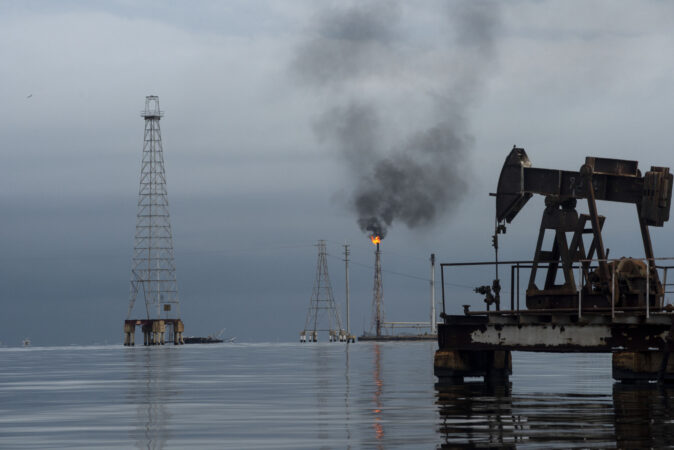
    The United States Coast Guard is pursuing a tanker off the coast of Venezuela, a U.S. official said Sunday, in what would mark the third interception of a tanker in the waters off that country this month.

    The official described that tanker as “a sanctioned dark fleet vessel that is part of Venezuela’s illegal sanctions evasion. It is flying a false flag and under a judicial seizure order.” The official shared the statement on the condition of anonymity under ground rules set by the administration.

    President Donald Trump on Tuesday ordered a “total and complete blockade” on all oil tankers under sanctions entering or leaving Venezuela. He called the Venezuelan regime a foreign terrorist organization and said it was using oil to finance “drug terrorism.”

    If intercepted, this would be the second tanker the U.S. stopped this weekend after seizing the oil tanker Skipper off Venezuela’s coast on Dec. 10. The U.S. attorney’s office for the District of Columbia issued the seizure warrant for the Skipper, alleging it was used in an “oil shipping network” supporting the Lebanese militant group Hezbollah and Iran’s Islamic Revolutionary Guard Corps-Qods Force.

    Venezuela’s government has called the actions “theft” and “hijacking.”

    Early Saturday, U.S. forces boarded a different commercial vessel, the Panamanian-flagged Centuries owned by Centuries Shipping in Hong Kong, off Venezuela. Homeland Security Secretary Kristi L. Noem posted a video on X showing service members rappelling down from military helicopters onto the vessel, which her department said was suspected of carrying oil subject to U.S. sanctions.

    The U.S. has not imposed sanctions on Venezuelan oil. And neither the Centuries nor its company is under any sanctions, according to the International Maritime Organization, a U.N. agency.

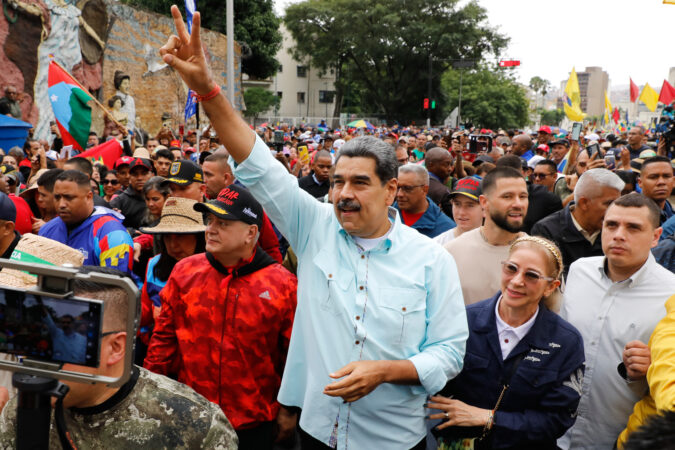
    These actions come as part of the United States’ monthslong pressure campaign against the government of President Nicolás Maduro, whom the administration wants to force from office. The tanker blockade could impact Venezuela’s already struggling economy, which heavily depends on overseas oil sales.

    The U.S. has launched more than two dozen military strikes on boats it claimed had crews who were smuggling drugs into the United States. Officials have said that more than 100 people connected to drug cartels have been killed.

    Sen. Rand Paul (R., Ky.) said on ABC’s This Week that he considers the seizing of the second oil tanker a “provocation” and “prelude to war.”

    “Look, at any point in time, there are 20, 30 governments around the world that we don’t like, that are either socialist or communist, or have human rights violations … but it isn’t the job of the American soldier to be the policeman of the world,” Paul said.

    By contrast, Sen. Lindsey Graham (R., S.C.) said on Meet the Press on Sunday, “I am all in the camp for regime change. … Maduro’s days are numbered.”

    Jim Foggo, a retired U.S. Navy admiral, said the administration’s plan for Venezuela appears to constitute a “targeted blockade” or “embargo” operation, in which certain ships are stopped and others are allowed through.

    “If you want to pick something to go after — an Achilles’ heel — of the Venezuelan regime, it’s oil exports,” Foggo said.

    Venezuela has the world’s largest proven oil reserves. Output has plummeted amid sanctions, poor infrastructure, and mismanagement, but oil still represents the vast majority of the country’s exports. “So this is really going to hurt, and Maduro is going to have to do some serious thinking,” Foggo said.

    Foggo, dean of the Center for Maritime Strategy outside Washington, said boarding operations can be unpredictable and dangerous for U.S. troops involved, citing a boarding operation in the Arabian Sea in January 2024 in which two Navy SEALs drowned.

    “This is serious business,” Foggo said, noting that Maduro has said that Venezuelan naval forces will accompany vessels. “The danger is that it could go kinetic and someone could get hurt, but we seem to be willing to take that risk.”

  • Power restored to most in San Francisco after massive outage

    Power restored to most in San Francisco after massive outage

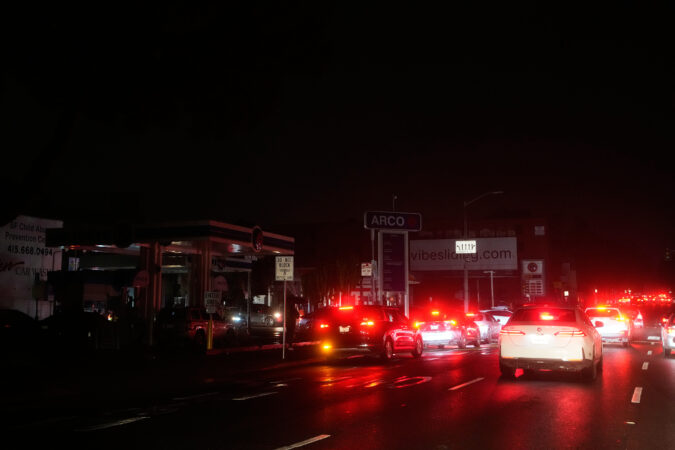
    Power was restored Sunday morning to the bulk of the 130,000 homes and businesses in San Francisco impacted by a massive outage a day earlier that caused major disruptions in the city.

    The Pacific Gas and Electric Co.’s outage map showed more than 16,000 customers remained without power as of 12 p.m. PST. PG&E said earlier its crews were working Sunday to restore electricity in several neighborhoods and small areas of downtown San Francisco following Saturday’s outage.

    PG&E said it could not provide a precise timeframe for when the power would be fully restored.

    “The damage from the fire in our substation was significant and extensive, and the repairs and safe restoration will be complex,” the utility said, referring to the substation at 8th and Mission streets. That fire has been blamed for some of the blackouts. The outage remains under investigation.

    PG&E said it has mobilized additional engineers and electricians to help with restoration efforts.

    “This is a very complex work plan and will require the highest amount of safety focus to ensure safe work actions,” PG&E said. No injuries have been reported.

    The outage, which occurred shortly after 1 p.m. on Saturday, left a large swath of the northern part of the city without power that began to grow in size. At its peak, the outage represented roughly one-third of the utility company’s customers in the city.

    At about 4 p.m. on Saturday, PG&E posted on X that it had stabilized the grid and no further outages were expected.

    Social media posts and local media reported mass closures of restaurants and shops and darkened street lights and Christmas decorations on Saturday, one of the busiest shopping days of the year.

    The San Francisco Department of Emergency Management said on X there were “significant transit disruptions” happening citywide and urged residents to avoid nonessential travel and treat down traffic signals as four-way stops. Waymo, the operator of driverless ride-hailing vehicles, suspended its services. At least one video posted on social media appeared to show a Waymo vehicle stopped in the middle of an intersection.

  • Norman Podhoretz, 95, contentious and influential neo-conservative

    Norman Podhoretz, 95, contentious and influential neo-conservative

    NEW YORK — Norman Podhoretz, the boastful, hard-line editor and author whose books, essays, and stewardship of Commentary magazine marked a political and deeply personal break from the left and made him a leader of the neoconservative movement, has died. He was 95.

    Mr. Podhoretz died “peacefully and without pain” on Dec. 16, his son John Podhoretz confirmed in a statement on Commentary’s website. His cause of death was not immediately released.

    “He was a man of great wit and a man of deep wisdom and he lived an astonishing and uniquely American life,” John Podhoretz said.

    Norman Podhoretz was among the last of the so-called “New York intellectuals” of the mid-20th century, a famously contentious circle that at various times included Norman Mailer, Hannah Arendt, Susan Sontag, and Lionel Trilling. As a young man, Mr. Podhoretz longed to join them. In middle age, he departed. Like Irving Kristol, Gertrude Himmelfarb, and other founding neoconservatives, Podhoretz began turning from the liberal politics he shared with so many peers and helped reshape the national dialogue in the 1960s and after.

    The son of Jewish immigrants, Mr. Podhoretz was 30 when he was named editor-in-chief of Commentary in 1960, and years later transformed the once-liberal magazine into an essential forum for conservatives. Two future U.S. ambassadors to the United Nations, Daniel Patrick Moynihan and Jeane Kirkpatrick, received their appointments in part because of essays they published in Commentary that called for a more assertive foreign policy.

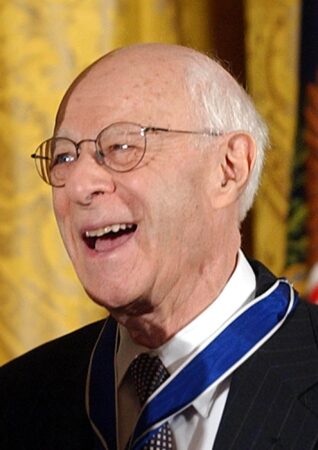
    Despised by former allies, Mr. Podhoretz found new friends all the way to the White House, from President Ronald Reagan, a reader of Commentary; to President George W. Bush, who in 2004 awarded Mr. Podhoretz the Presidential Medal of Freedom, the nation’s highest civilian honor, and praised him as a “man of “fierce intellect” who never “tailored his opinion to please others.”

    Mr. Podhoretz, who stepped down as editor-in-chief in 1995, had long welcomed argument. The titles of his books were often direct and provocative: Making It, The Present Danger, World War IV, Ex-Friends: Falling Out with Allen Ginsberg, Lionel and Diana Trilling, Lillian Hellman, Hannah Arendt, and Norman Mailer. He pressed for confrontation everywhere from El Salvador to Iran, and even disparaged Reagan for talking to Soviet leaders, calling such actions “the Reagan road to detente.” For decades, he rejected criticism of Israel, once writing that “hostility toward Israel” is not only rooted in antisemitism but a betrayal of “the virtues and values of Western civilization.”

    Meanwhile, Mr. Podhoretz became a choice target for disparagement and creative license. New York Times reviewer Michiko Kakutani called World War IV an “illogical screed based on cherry-picked facts and blustering assertions.” Ginsberg, once a fellow student at Columbia University, would mock the heavy-set editor for having “a great ridiculous fat-bellied mind which he pats too often.” Joseph Heller used Mr. Podhoretz as the model for the crass Maxwell Lieberman in his novel Good as Gold. Woody Allen cited Podhoretz’s magazine in Annie Hall, joking that Commentary and the leftist Dissent had merged and renamed themselves Dysentery.

    Born to succeed

    Mr. Podhoretz never doubted he would be famous. Born and raised in a working-class neighborhood in Brooklyn, he would credit the adoration of his family with giving him a sense of destiny. By his own account, Mr. Podhoretz was “the smartest kid in the class,” brash and competitive, a natural striver who believed that “one of the longest journeys in the world is the journey from Brooklyn to Manhattan.”

    He would indeed arrive in the great borough, and beyond, thriving as an English major at Columbia University, from which he graduated in 1950, and receiving a master’s degree in England from Cambridge University. By his mid-20s, he was publishing reviews in all the best magazines, from the New Yorker to Partisan Review, and socializing with Mailer, Hellman, and others.

    He was named associate editor of Commentary in 1956, and given the top job four years later. Around the same time, he married the writer and editor Midge Decter, another future neoconservative, and remained with her until her death in 2022.

    In childhood, Norman Podhoretz’s world was so liberal that he later claimed he never met a Republican until high school. When Mr. Podhoretz took over Commentary, founded in 1945 by the American Jewish Committee, the magazine was a small, anti-Communist publication. Mr. Podhoretz’s initial goal was to move it to the left — he serialized Paul Goodman’s Growing Up Absurd, published articles advocating unilateral disarmament — and make it more intellectual, with James Baldwin, Alfred Kazin, and Irving Howe among the contributors. Subscriptions increased dramatically.

    But signs of the conservative future also appeared, and of his own confusion over a world in transition. He was a prominent critic of Ginsberg, Jack Kerouac, and other Beat writers, dismissing the upstart movement in 1958 as a “revolt of the spiritually underprivileged” and branding Kerouac a “know-nothing.” In a 1963 essay, Mr. Podhoretz admitted to being terrified of Black people as a child, agonized over “his own twisted feelings,” wondered whether he, or anyone, could change and concluded that “the wholesale merging of the two races is the most desirable alternative for everyone concerned.”

    Liberal no more

    Making It, released in 1967, was a final turning point. A blunt embrace of status seeking, the book was shunned and mocked by the audience Mr. Podhoretz cared about most: New York intellectuals. Mr. Podhoretz would look back on his early years and conclude that to advance in the world one had to make a “brutal bargain” with the upper classes, in part by acknowledging they were the upper classes. Friends urged him not to publish Making It, his agent wanted nothing to do with it and his original publisher, Farrar, Straus & Giroux, refused to promote it (Mr. Podhoretz gave back his advance and switched to Random House). Even worse, he was no longer welcome at literary parties, a deep wound for an author who had confessed that “at the precocious age of 35 I experienced an astonishing revelation: It is better to be a success than a failure.”

    By the end of the decade, Mr. Podhoretz was sympathizing less with the young leftists of the 1960s than with the way of life they were opposing. Like other neoconservatives, he remained supportive of Democrats into the 1970s, but allied himself with more traditional politicians such as Edmund Muskie rather than the anti-Vietnam War candidate George McGovern. He would accuse the left of hostility to Israel and tolerance of antisemitism at home, with Gore Vidal (who called Mr. Podhoretz a “publicist for Israel”) a prime target. Echoing the opinions of Decter, he also rejected the feminist and gay rights movements as symptoms of a “plague” among “the kind of women who do not wish to be women and among those men who do not wish to be men.”

    “Tact is unknown to the Podhoretzes,” Vidal wrote of Mr. Podhoretz and Decter in 1986. “Joyously they revel in the politics of hate.”

    Mr. Podhoretz was close to Moynihan, and he worked on the New York Democrat’s successful Senate run in 1976, when in the primary Moynihan narrowly defeated the more liberal Bella Abzug. From 1981 to 1987, during the Reagan administration, Mr. Podhoretz served as an adviser to the United States Information Agency and helped write Kirkpatrick’s widely quoted 1984 convention speech that chastised those who “blame America first.” He was a foreign policy adviser for Republican Rudolph Giuliani’s brief presidential run in 2008 and, late in life, broke again with onetime allies when he differed with other conservatives and backed Donald Trump.

    “I began to be bothered by the hatred against Trump that was building up from my soon to be new set of ex-friends,” he told the Claremont Review of Books in 2019. “You could think he was unfit for office — I could understand that — but my ex-friends’ revulsion was always accompanied by attacks on the people who supported him. They called them dishonorable, or opportunists or cowards — and this was done by people like Bret Stephens, Bill Kristol, various others.

    “And I took offense at that. So that inclined me to what I then became: anti-anti-Trump.”

  • Gil Gerard, 82, TV’s ‘Buck Rogers’ star

    Gil Gerard, 82, TV’s ‘Buck Rogers’ star

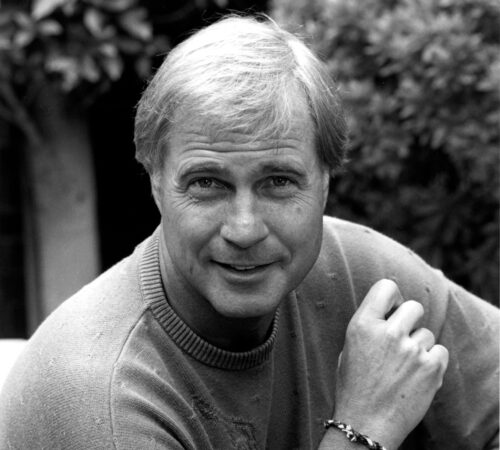
    Gil Gerard, who played television’s hunky sci-fi hero William “Buck” Rogers soon after the Star Wars franchise took hold in the late 1970s, has died. He was 82.

    Mr. Gerard died Tuesday in hospice as a result of a rare, aggressive form of cancer, said his manager, Tina Presley Borek. His wife, Janet Gerard, posted a posthumous Facebook message he left behind for fans that read in part:

    “Don’t waste your time on anything that doesn’t thrill you or bring you love. See you out somewhere in the cosmos.”

    Mr. Gerard starred in NBC’s campy Buck Rogers in the 25th Century, which ran for two seasons from 1979 to 1981. A theatrical film based on the series also delighted youngsters and their parents alike. It was Buck Rogers’ second turn on TV after a show in the 1950s, a radio series, and a 1939 film serial.

    The story was based on Philip Francis Nowlan’s serialized 1928 pulp novella Armageddon 2419 A.D. Nowlan’s character was named Anthony Rogers. The name was changed when the story began running in newspapers as a comic strip.

    “My life has been an amazing journey,” Mr. Gerard wrote in his social media post. “The opportunities I’ve had, the people I’ve met and the love I have given and received have made my 82 years on the planet deeply satisfying.”

    As the TV story goes, Rogers was a 20th century NASA pilot who was placed in frozen animation when his ship was hit by a meteor storm. He pops awake 500 years later in the year 2491. He gazes upon a futuristic, domed Earth with all its threats, including aliens, space pilots, and the evil Draconians.

    He had helpers: the robot sidekick Twiki and a beautiful space pilot, Wilma Deering, played by Erin Gray.

    A native of Little Rock, Arkansas, Mr. Gerard worked steadily in TV commercials. He was featured in a number of other TV shows and movies, including starring roles in the 1982 TV movie Hear No Evil as Dragon and the short-lived Sidekicks in 1986.

    In 1992, he hosted the reality series Code 3, following firefighters responding to emergency calls around the U.S. There were many guest appearances in the 1990s, including on Days of Our Lives.

    Mr. Gerard and Gray were together again in 2007 for the TV film Nuclear Hurricane. They also returned to the Buck Rogers universe as Rogers’ parents in the pilot episode of James Cawley’s Buck Rogers Begins internet video series in 2009.

    Mr. Gerard spoke openly about addictions to drugs, alcohol, and compulsive overeating. He was the subject of a one-hour documentary, Action Hero Makeover, in 2007 after his weight ballooned to 350 pounds.

    Done by Adrienne Crow, then a longtime companion, for the Discovery Health Channel, the film documented his progress after gastric bypass surgery.

    Mr. Gerard was married and divorced four times before Janet. He had a son, actor Gilbert Vincent Gerard, with model and actor Connie Sellecca. Their divorce included a bitter custody battle for “Gib,” who was born in 1981. Sellecca was granted main custody.

    “My journey has taken me from Arkansas to New York to Los Angeles, and finally, to my home in North Georgia with my amazing wife, Janet, of 18 years,” Mr. Gerard wrote in the post put on Facebook after his death.

    “It’s been a great ride, but inevitably one that comes to a close as mine has.”

  • Ira ‘Ike’ Schab, 105, one of last remaining Pearl Harbor survivors

    Ira ‘Ike’ Schab, 105, one of last remaining Pearl Harbor survivors

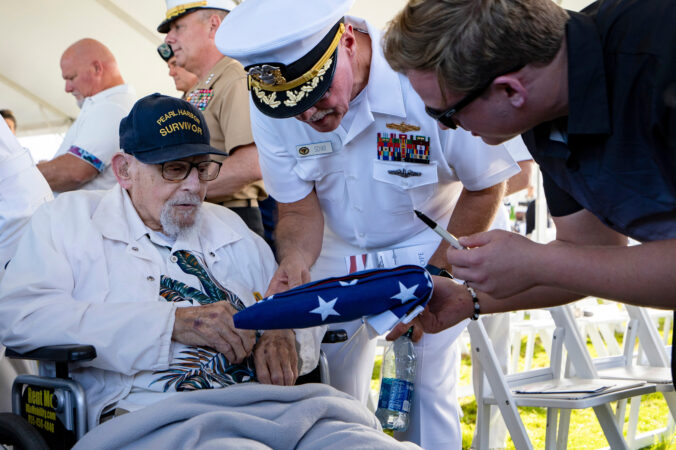
    World War II Navy veteran Ira “Ike” Schab, one of the dwindling number of survivors of the 1941 Japanese bombing of Pearl Harbor, has died. He was 105.

    Daughter Kimberlee Heinrichs told the Associated Press that Mr. Schab died at home early Saturday in the presence of her and her husband.

    With his passing, there remain only about a dozen survivors of the surprise attack, which killed just over 2,400 troops and propelled the United States into the war.

    Mr. Schab was a sailor of just 21 at the time of the attack, and for decades he rarely spoke about the experience.

    But in recent years, aware that the corps of survivors was dwindling, the centenarian made a point of traveling from his home in Beaverton, Ore., to the annual observance at the Hawaii military base.

    “To pay honor to the guys that didn’t make it,” he said in 2023.

    For last year’s commemoration, Mr. Schab spent weeks building up the strength to be able to stand and salute.

    But this year he did not feel well enough to attend, and less than three weeks later, he passed away.

    Born on Independence Day in 1920 in Chicago, Mr. Schab was the eldest of three brothers.

    He joined the Navy at 18, following in the footsteps of his father, he said in a February interview for Pacific Historic Parks.

    On what began as a peaceful Sunday, Dec. 7, 1941, Mr. Schab, who played the tuba in the USS Dobbin’s band, was expecting a visit from his brother, a fellow service member assigned to a nearby naval radio station. Mr. Schab had just showered and donned a clean uniform when he heard a call for fire rescue.

    He went topside and saw another ship, the USS Utah, capsizing. Japanese planes roared through the air.

    “We were pretty startled. Startled and scared to death,” Mr. Schab recalled in 2023. “We didn’t know what to expect, and we knew that if anything happened to us, that would be it.”

    He scurried back below deck to grab boxes of ammunition and joined a daisy chain of sailors feeding shells to an anti-aircraft gun above.

    His ship lost three sailors, according to Navy records. One was killed in action, and two died later of fragment wounds from a bomb that struck the stern. All had been manning an anti-aircraft gun.

    Mr. Schab spent most of the war with the Navy in the Pacific, going to the New Hebrides, now known as Vanuatu, and then the Mariana Islands and Okinawa, Japan.

    After the war he studied aerospace engineering and worked on the Apollo spaceflight program as an electrical engineer for General Dynamics, helping send astronauts to the moon.

    Mr. Schab’s son also joined the Navy and is a retired commander.

    Speaking at a 2022 ceremony, Mr. Schab asked people to honor those who served at Pearl Harbor.

    “Remember what they’re here for. Remember and honor those that are left. They did a hell of a job,” he said. “Those who are still here, dead or alive.”

  • U.S. envoy says talks with Russia ’productive and constructive’

    U.S. envoy says talks with Russia ’productive and constructive’

    A White House envoy said Sunday he held “productive and constructive” talks in Florida with Ukrainian and European representatives to end the nearly four-year war between Russia and Ukraine.

    Posting on social media, Steve Witkoff said the talks aimed at aligning on a shared strategic approach among Ukraine, the United States, and Europe.

    “Our shared priority is to stop the killing, ensure guaranteed security, and create conditions for Ukraine’s recovery, stability, and long-term prosperity. Peace must be not only a cessation of hostilities, but also a dignified foundation for a stable future,” U.S. President Donald Trump’s envoy said.

    The talks are part of the Trump administration’s monthslong push for peace. Trump has unleashed an extensive diplomatic push to end the war, but his efforts have run into sharply conflicting demands by Moscow and Kyiv. Putin has recently signaled he is digging in on his maximalist demands on Ukraine, as Moscow’s troops inch forward on the battlefield despite huge losses.

    Florida talks press on

    “The discussions are proceeding constructively. They began earlier and will continue today, and will also continue tomorrow,” Kirill Dmitriev told reporters in Miami on Saturday.

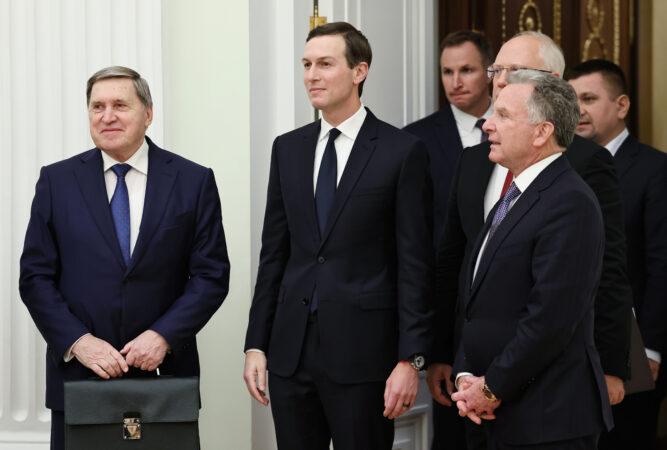
    Dmitriev met with U.S. President Donald Trump’s envoy Steve Witkoff and Trump’s son-in-law Jared Kushner, Russian state news agency RIA Novosti reported.

    Ukrainian President Volodymyr Zelensky wrote on Telegram Sunday that diplomatic efforts were “moving forward quite quickly, and our team in Florida has been working with the American side.” This came after Ukraine’s chief negotiator said Friday his delegation had completed separate meetings in the United States with American and European partners.

    The Kremlin denied Sunday that trilateral talks involving Ukraine, Russia, and the U.S. were under discussion, after Zelensky said Saturday that Washington had proposed the idea of three-way discussions.

    “At present, no one has seriously discussed this initiative, and to my knowledge it is not being prepared,” Russian President Vladimir Putin’s foreign affairs adviser Yuri Ushakov said, according to Russian state news agencies.

    Trump has unleashed an extensive diplomatic push to end the war, but his efforts have run into sharply conflicting demands by Moscow and Kyiv. Putin has recently signaled he is digging in on his maximalist demands on Ukraine, as Moscow’s troops inch forward on the battlefield despite huge losses.

    On Friday, Putin expressed confidence that the Kremlin would achieve its military goals if Kyiv didn’t agree to Russia’s conditions in peace talks.

    Possible French-Russian talks

    The French presidency on Sunday welcomed Putin’s willingness to speak with President Emmanuel Macron, saying it would decide how to proceed “in the coming days.”

    “As soon as the prospect of a ceasefire and peace negotiations becomes clearer, it becomes useful again to speak with Putin,” Macron’s office said in a statement. “It is welcome that the Kremlin publicly agrees to this approach.”

    The statement came after reports that Putin was open to holding talks with the French president if there was mutual political will.

    Macron’s office said any dialogue would aim “to contribute to a solid and lasting peace for Ukraine and Europe, in full transparency with President Zelensky and our European partners.”

    European Union leaders agreed on Friday to provide 90 billion euros ($106 billion) to Ukraine to meet its military and economic needs for the next two years, although they failed to bridge differences with Belgium that would have allowed them to use frozen Russian assets to raise the funds. Instead, they were borrowed from capital markets.

    Ukrainian civilians moved to Russia

    In Ukraine, the country’s human rights ombudsman, Dmytro Lubinets, on Sunday accused Russian forces of forcibly removing about 50 Ukrainian civilians from the Ukrainian Sumy border region to Russian territory.

    Writing on Telegram, he said that Russian forces illegally detained the residents in the village of Hrabovske on Thursday, before moving them to Russia on Saturday.

    Lubinets said he contacted Russia’s human rights commissioner, requesting information on the civilians’ whereabouts and conditions, and demanding their immediate return to Ukraine.

  • Trump faces narrowing options on Venezuela action

    Trump faces narrowing options on Venezuela action

    The day after President Donald Trump declared he had ended 94% of all seaborne drug trafficking to the United States and reduced illegal migrant border crossings to “zero,” he announced an entirely new rationale for his escalating campaign against Venezuelan President Nicolás Maduro.

    Venezuela had stolen “Oil, Land and other Assets” from the United States to finance those criminal activities, Trump said Tuesday in a social media post, an apparent reference to decades-old expropriations and the breaking of contracts with U.S. oil companies when Caracas began nationalizing the industry.

    Unless what he alleged was U.S. property was returned “IMMEDIATELY,” Trump said, the military juggernaut he has assembled in the Caribbean to blow up alleged traffickers and seize tankers transporting Venezuelan oil “will only get bigger, and the shock to them will be like nothing they have ever seen before.”

    As Trump continues the boat strikes — now numbering 28, with at least 104 killed — and with the declaration of a “blockade” of all sanctioned vessels transporting Venezuelan oil, he has all but abandoned the public pretense that his goal is simply stopping migrants and drugs, rather than Maduro’s removal.

    His “days are numbered,” Trump told Politico in an interview published Dec. 9. Asked Thursday whether he was leaving open the possibility of war with Venezuela, Trump told NBC: “I don’t rule it out, no.”

    Maduro is the “indicted head of a cartel, now designated as a foreign terrorist organization,” said a person familiar with administration thinking, one of several individuals and former U.S. officials who spoke on the condition of anonymity to talk about internal deliberations. The administration named Maduro, already facing a 2020 U.S. indictment for drug trafficking, as the head of the designated Cartel de los Soles, a network of senior Venezuelan political and security officials it says is involved in human and drug trafficking to finance terrorist attacks in the United States.

    “At the end of the day, that person is either going to stand trial or be given a chance to negotiate exile … in a third country,” the person said of the Venezuelan leader.

    But with Maduro still sitting tight, Trump’s options seem to be narrowing rapidly.

    In an emailed response to questions, White House deputy spokesperson Anna Kelly said, “Nothing is ‘narrowing.’” Trump, she said, “has already taken decisive action to stop the illegal migrant invasion, deport violent criminals, and defend our homeland against evil narcoterrorists — which is saving countless lives across the country. President Trump retains all options to keep Americans safe.”

    Airstrikes on land, which U.S. officials have said would probably target isolated encampments associated with cocaine trafficking or selected military assets and installations, are “going to start” happening, Trump said last week.

    If that doesn’t work in persuading Maduro to flee, regional experts and former officials say, there are only two U.S. choices left — withdrawal or regime change by force.

    The prospect of invasion and a military ground operation with the possibility of American deaths, however, may be unpalatable to a president who has vowed “no more wars” and has thus far limited overseas military involvement to standoff strikes by air and sea.

    “It’s conceivable to me that in a month, two months, the president … declares victory on grounds that maritime drug trafficking is way down,” Elliot Abrams, Trump’s first-term special envoy on Venezuela, said Tuesday on the School of War podcast. But “if Maduro survives and Trump walks away, it’s a defeat.”

    While some in Congress have sharply opposed ongoing U.S. military action in the Caribbean and eastern Pacific without legislative approval, let alone a ground invasion of Venezuela, others have called on Trump to move more decisively.

    “You cannot allow this man to remain standing after this show of force,” Sen. Lindsey Graham (R., S.C.) said of Trump’s Caribbean deployment of 15,000 troops and dozens of warships and aircraft. Graham, a retired Air Force legal officer, spoke after a closed briefing Tuesday for Senators by Defense Secretary Pete Hegseth and Secretary of State Marco Rubio on a controversial Sept. 2 airstrike that killed 11 people aboard an alleged trafficking boat — including two who initially survived and were hit again while flailing amid the wreckage.

    “Is the goal to take him out?” Graham asked about Maduro, saying he hadn’t received answers from the administration. “If it’s not the goal … I think it’s a mistake.”

    But as lawmakers continue to argue and the administration ups the ante, “the most interesting question is why is [Trump] doing all this at all,” Abrams said in an interview with the Washington Post.

    Trump’s fixation on Venezuela melds a number of his own domestic political aims and the priorities of senior officials around him. The administration’s new National Security Strategy, which shifts U.S. focus to the Western Hemisphere, promises to reward countries that comply with “America First” policies and punish those that do not.

    For Rubio — the son of Cuban immigrants who fled the island several years before the 1959 takeover by Fidel Castro and who made his political career in the anti-Castro cauldron of South Florida — the collapse of Cuba’s communist government has long been a prime goal.

    Cuba’s economy has been propped up by Venezuela under Maduro and his predecessor, Hugo Chávez, through a steady supply of oil despite heavy U.S. sanctions. In addition to economic ties and ideological affinity, Maduro’s personal safety is said to be provided by elite Cuban security forces. Many think that the end of Venezuelan aid would be a death knell for the government in Havana.

    “Rubio is the driving force behind the military buildup in Venezuela policy in the last several months, but he has not convinced the president yet to use military force,” said a second former official. Others, however, say it is Trump who wants to escalate.

    For White House Deputy Chief of Staff Stephen Miller, the architect of Trump’s draconian anti-immigrant policy, the hundreds of thousands of Venezuelans who fled to the United States, during Trump’s first term and the Biden administration, provide an easy target. Miller has echoed Trump’s charges that most of the Venezuelans in the U.S. were sent by Maduro from prisons and mental institutions to terrorize and kill Americans.

    Those sentiments contrast with Trump’s first term, when the flow of what eventually would be millions of fleeing Venezuelans spread across the hemisphere was viewed more sympathetically. Then-Secretary of State Mike Pompeo, who traveled to the Venezuela-Colombia border to greet them in the spring of 2019, said they were escaping what he called the political and economic “horror” of Maduro’s corrupt and failing socialist economy and demanded they be allowed to leave.

    At the time, Trump also said that “all options” were on the table to oust Maduro, charging that in addition to abusing his own people, he had stolen the 2018 election that gave him a second term in office and had formed U.S.-threatening alliances with Russia, China, and Iran. Trump stepped up sanctions, sent U.S. warships to the Caribbean — although fewer than the current armada — and recognized legislative assembly leader Juan Guaidó as Venezuela’s legitimate president.

    With Guaidó as his guest, Trump told Congress during his 2020 State of the Union address that Maduro was “a socialist dictator” and a “tyrant who brutalizes his people.” The amount of deadly fentanyl entering the country, primarily from China and Mexico, had begun to soar even before Trump took office, reaching its peak as the COVID pandemic waned and beginning an ongoing decline, along with overdose deaths, in 2024, according to U.S. government figures.

    During first-term debates in the Trump White House over what to do about Maduro, some advocated the use of military force to oust him, according to subsequent books by then-Defense Secretary Mark T. Esper, who opposed it, and national security adviser John Bolton, who supported it.

    With his time in office winding down and Gen. Mark A. Milley, then chairman of the Joint Chiefs of Staff, and CIA Director Gina Haspel also advising against the use of force, according to Esper and others, Trump backed off.

    The number of arriving Venezuelans, many crossing the border illegally, increased sharply under the Biden administration. Many were allowed to stay legally under a temporary protected status that recognized the economic and political hardships Trump himself had said were the reason for their flight.

    Maduro, who reneged on agreements with the Biden administration to allow a fair election in 2024, was inaugurated for his third term in January, only 10 days before Trump was sworn in again. By then, Guaidó had long since faded from memory. A new opposition figure, María Corina Machado, came to the fore and — though barred by Maduro from running against him — led her party to a landslide win that was widely acknowledged to have been stolen.

    Trump lost little time moving on his campaign promise to expel migrants and end opioid deaths, touting crime statistics he wildly inflated and blamed on Biden. In one of his first second-term acts, he ordered the end of protected status for Venezuelans and other migrants, and began widespread deportations. Trump charged that Maduro controlled a Venezuelan gang, Tren de Aragua, and had sent it to the United States to wreak criminal havoc, allegations that were not supported by U.S. intelligence assessments.

    Tren de Aragua and Cartel de los Soles are among roughly two dozen foreign organizations that the administration has designated, under a February Trump executive order, as “narcoterrorists.”

    By summer, despite some early attempts at negotiations with Maduro that included an offer to expand U.S. oil operations in Venezuela, Trump had opted for a military path. Though Venezuela is not a source of fentanyl and is a trafficker but not a producer of cocaine, according to U.S. law enforcement, pressure against Maduro was seen as a visible reminder to drug-producing countries such as Mexico and Colombia of the consequences of noncooperation.

    Miller, current and former U.S. officials said, had first proposed striking Mexican cartels and traffickers as a way to stop drugs and migrants. But as the administration surged thousands of U.S. troops to the southern border and increased intelligence cooperation, Mexico began to curb cartel action. Miller and his team were left looking for another target.

    The administration sent warships to the Caribbean, and on Sept. 2, Special Operations forces struck an alleged drug-smuggling boat carrying 11 men with missiles. It had come from Venezuela, Trump said without providing evidence, and was carrying “bags” of fentanyl and cocaine for Tren de Aragua. The United States, he told Congress that month, was in an “armed conflict” with terrorists.

    On Dec. 10, U.S. forces in the Caribbean seized an oil tanker, the Skipper, that had just filled up in Venezuela and was headed to Asia. The ship, already under U.S. sanctions for carrying illegal Iranian oil, was to be hauled to a Texas port. Asked by reporters what would happen to the oil, Trump said, “Well, we keep it, I guess.”

    On Saturday, the Department of Homeland Security said a second vessel carrying Venezuelan oil in the Caribbean had been “seized” in a joint operation by the Coast Guard and Defense Department. That ship, the Centuries, was not under U.S. sanctions and it was unclear whether it had merely been boarded by U.S. forces or taken under their control.