Category: News

Latest breaking news and updates

  • What Philadelphians want Santa Claus to bring the city this Christmas

    What Philadelphians want Santa Claus to bring the city this Christmas

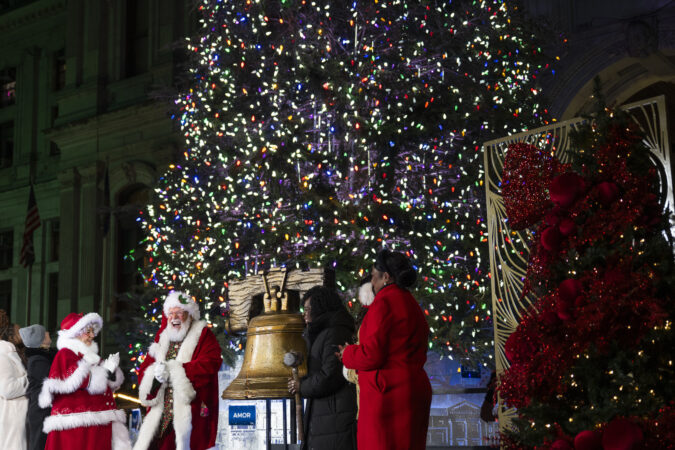
    Turkeys are about to start getting roasted and Philadelphia City Hall’s Christmas Village will soon be packing up. But the magic of the holiday season is never complete without a letter to Santa.

    With Christmas Day around the corner, we asked Philadelphians if they could ask Santa for anything on behalf of the city, what would it be? (Spoiler alert: Mr. Claus might need to talk with SEPTA.)

    Here’s what we heard:

    More housing and less PPA

    Sharon Wood, 68, and Alexis Rollins, 46, were all smiles and warmth, collecting donations for the Salvation Army at City Hall. But when it came time to ask Santa for a gift, things got serious.

    Wood, a North Philly resident, took one look around before declaring: “More housing for the homeless. … Everyone deserves help.”

    Despite Philly recently leaving behind its title as the “poorest big city in America,” the number of unsheltered people increased by 20% compared with 2024, a reality Wood said can be felt citywide.

    Mayor Cherelle L. Parker announced Friday in her State of the City speech that 1,000 new beds will be added to the existing shelter system by Jan. 31. But to Wood, more needs to be done.

    Sharon Wood (right) and Alexis Rollins want more housing and less PPA.

    “There are so many buildings [in Center City] and they could use those spaces,” Wood said. “But it’s so much work and [Parker] is only one person — give her some grace, help her. And that falls on City Council.”

    Rollins, on the other hand, set aside the power struggles for Santa. Instead, she asked for St. Nick to soften the Philadelphia Parking Authority’s heart.

    “No more ticketing: That’s my wish,” Rollins said. “Pricing is too much and people need a break in this economy.”

    Crime reduction

    Halfway through 2025, Philly hit its lowest homicide rate in recent history. But to healthcare worker Paulette Franklin, 56, reducing homicides is only one leg of a table that could also benefit from providing access to mental healthcare and aiding unsheltered people, she said.

    A few months ago, one of her coworkers was chased by an unsheltered man outside a subway station on the Market-Frankford Line, Franklin said. The situation left the South Philly resident wondering if one day she too would have to run for her life.
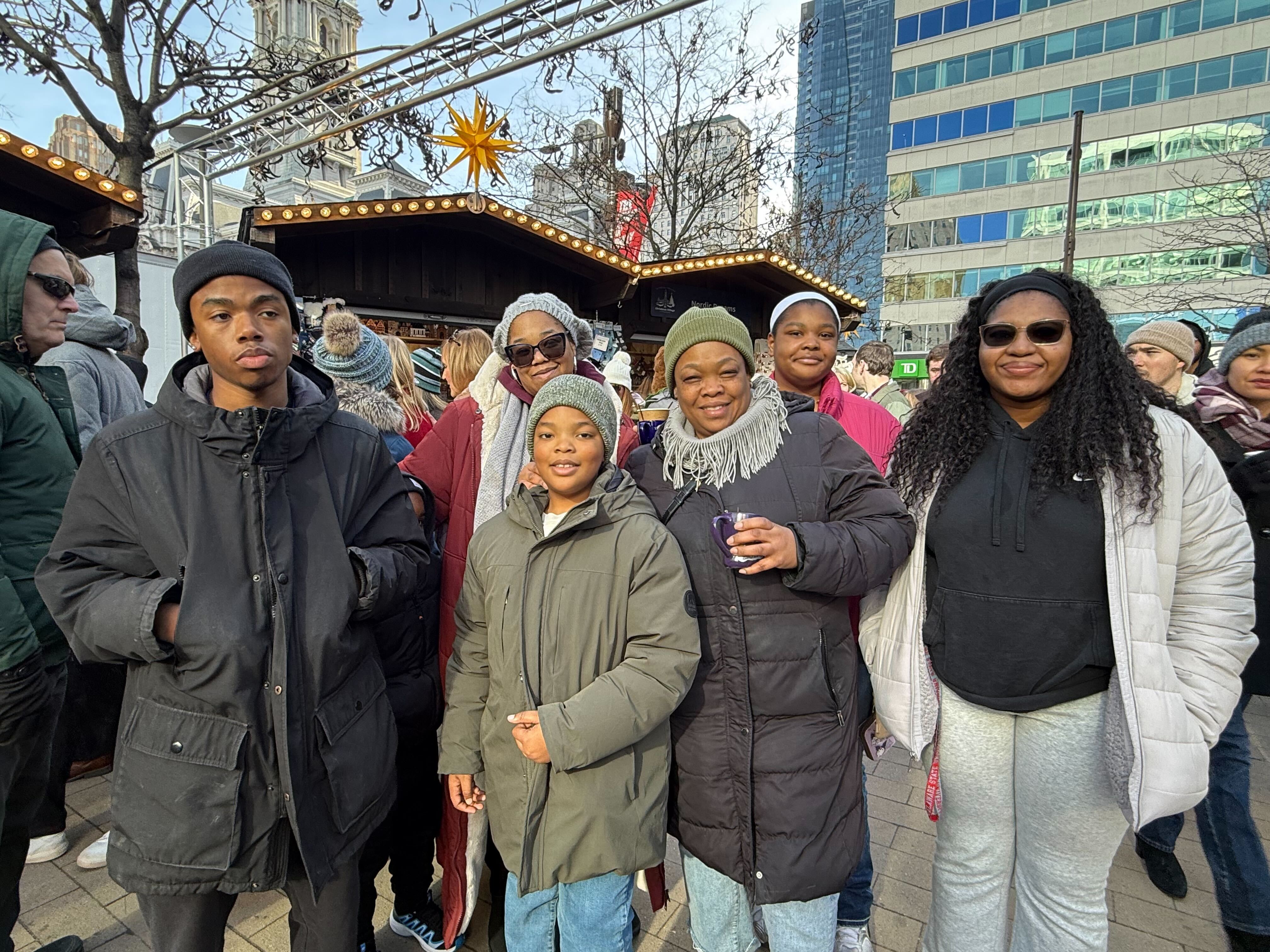
    Paulette Franklin, 56, and her grandson, 10-year-old Nathan Dockett with their family at Christmas Village

    “You don’t know what can happen and I feel like I always have to be alert. I would like for everyone to be safe; we need safety and they need help,” Franklin said. “Since COVID things got worse and it hasn’t gotten better, helping them would benefit the city.”

    Franklin isn’t the only one asking Santa for crime reduction this year. Her grandson Nathan Dockett may only be 10 years old, but hearing his mom and grandma talk about the safety of the city has already made him ask Santa for the end of gun violence in Philadelphia.

    “Too many people get killed or hurt around the city, it makes me frightened,” the fifth grader said. “I just want Santa to make all peace around the world.”

    Funding SEPTA and accessibility

    For J.van Kuilenburg, 25, who survived SEPTA cuts in August that left many Philadelphians scrambling, it was a no-brainer what to ask Santa for.

    “Santa, please fund SEPTA, give us clean trains, and let our operators be paid a living wage,” Kuilenburg said.

    Public transportation was one of the main reasons the museum curator moved to Philly from central Pennsylvania in 2023.

    “I hope that we can get funding so we don’t have to keep wondering every two years what’s going to happen to our transportation,” Kuilenburg said.
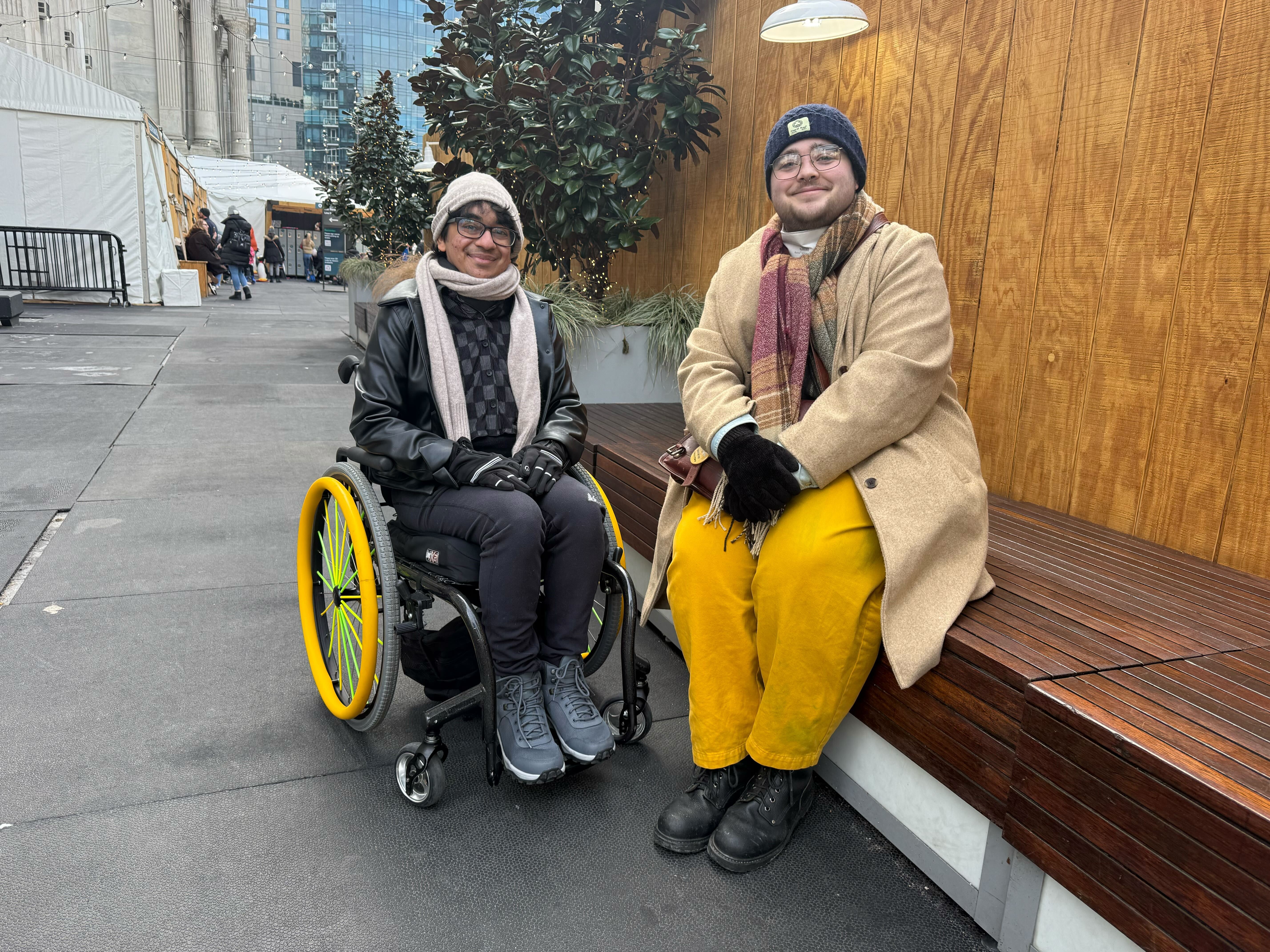
    J.van Kuilenburg (right) would ask Santa for a SEPTA that didn’t have budget issues; while Nush Agarwal wants more ramps in the city.

    For his friend Nush Agarwal, 24, the gift would be a more accessible city for people using wheelchairs.

    “Philadelphia is more accessible than other places I have been to. It’s easier to roll, most of the subway stops have elevators, but there is still a lot I can’t do that I would love to do,” Agarwal said, pointing out how even going inside a Christmas Village stall is impossible for him due to the lack of ramps.

    He would ask Santa for a city grant or program to help with the installation of ramps to have a Philadelphia everyone can better enjoy.

    “It’s really important because that’s how you include people: It gives social and mental happiness,” Agarwal said.

    A more efficient SEPTA

    Being teenagers, Raphael Wimmer, 15, and Ayden Devine, 14, aren’t really into Santa these days. Nevertheless, they would be happy to believe if Santa were to help them stop getting in trouble at school due to SEPTA delays.
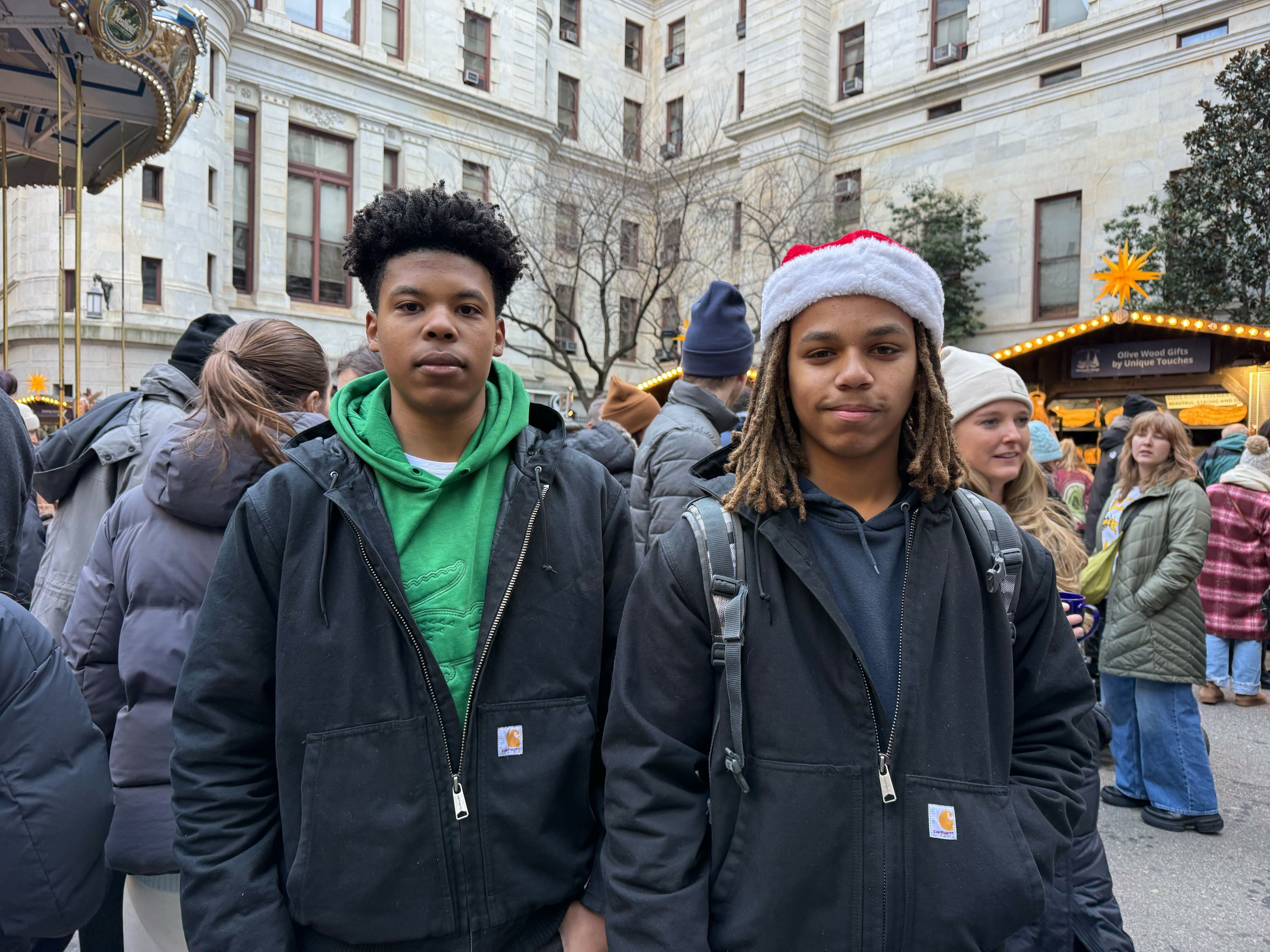
    Raphael Wimmer (right) and Ayden Devine want SEPTA to stop making them late to school.

    The pair have trouble getting from North Philly and Mount Airy, respectively, to school in South Philadelphia, and SEPTA delays affect their attendance.

    “We have a science teacher that grades you zero if you are not on time,” Wimmer said. “It makes our grades go down for something we can’t control. School should give kids that take SEPTA a grace period,” Devine pitched.

    A safer SEPTA

    Playing Christmas carols on the north side of City Hall, a white-bearded man dressed in red, hat and all, was surprised to hear our request.

    “I can’t answer that: I’m Santa Claus,” Matthew Anthony, 59, said as he laughed like Santa himself. “But I will ask for the state to fund SEPTA’s horrible infrastructure.”
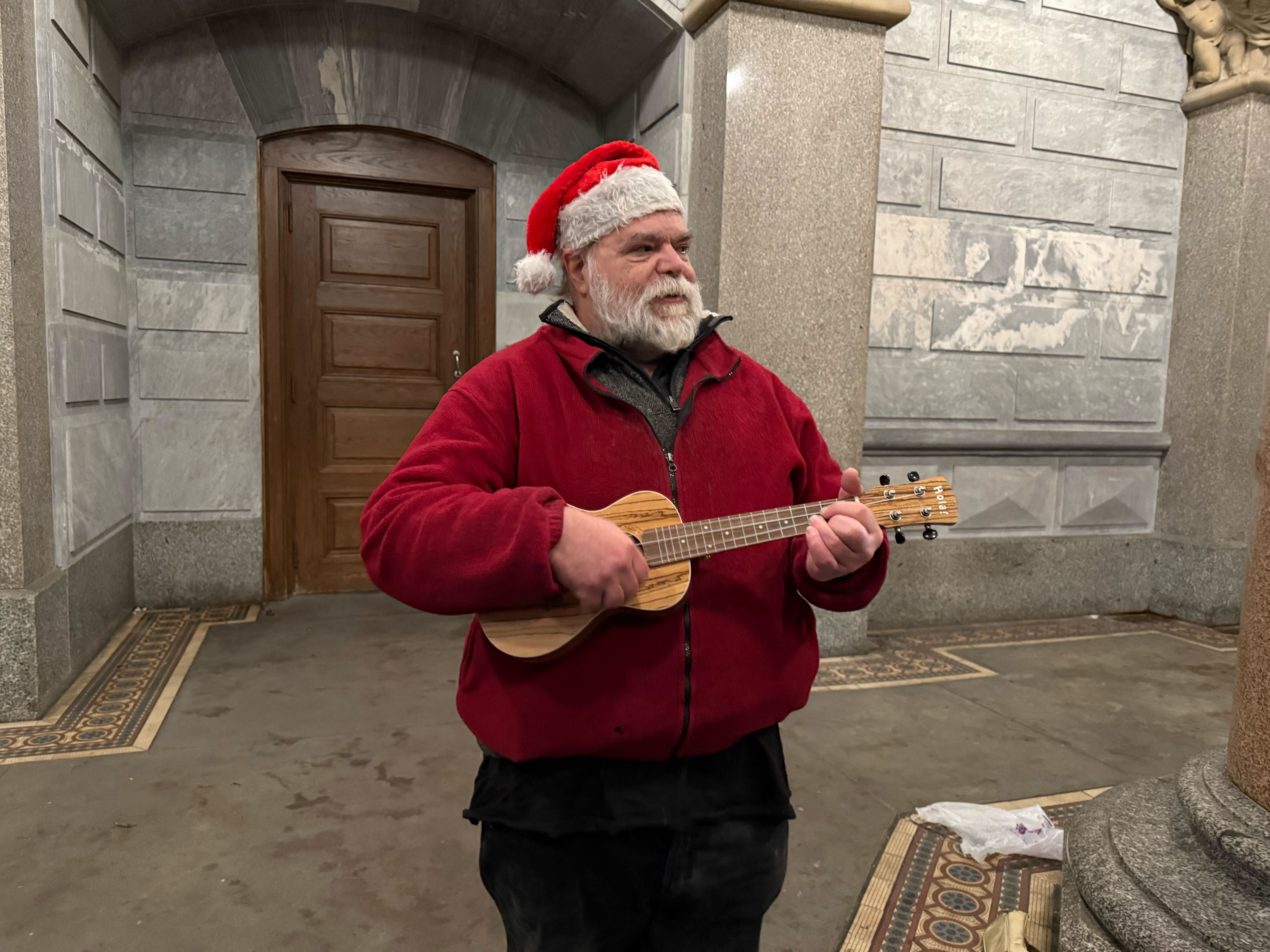
    Matthew Anthony, 59, hopes for funding for a safer SEPTA.

    The musician feels like the lack of a budget is not only affecting public transportation access, but also the safety of riders.

    “Every time you walk inside the system is a nightmare, there is no feeling safe there, but prices are going up,” Anthony said. “We gotta get money from the state to help. Until then, go Birds!”

  • A woman and baby were shot in West Philadelphia, police said

    A woman and baby were shot in West Philadelphia, police said

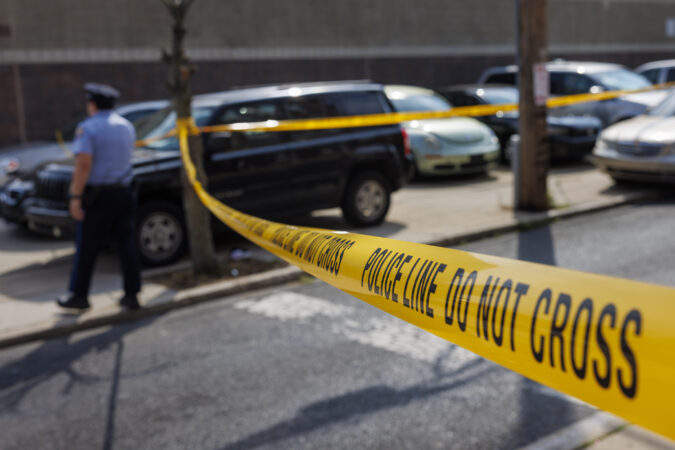
    A woman and an infant were shot in West Philadelphia’s Carroll Park neighborhood early Sunday, according to police.

    The shooting happened in the 1500 block of North Robinson Street at 4:05 a.m. Sunday, police said.

    The woman was shot “multiple times throughout her body” and was taken to Penn-Presbyterian Medical Center, where she was in critical condition, police said.

    A baby girl was shot once in her left leg, was taken to the Children’s Hospital of Philadelphia, and was in stable condition, police said.

    Police said the shooter was unknown and the Shooting Investigation Group is investigating.

  • About that ‘White Christmas’ dream, and other snowy thoughts at the solstice

    About that ‘White Christmas’ dream, and other snowy thoughts at the solstice

    With a predictable precision that may forever elude meteorology, at 10:03 a.m. Philadelphia time Sunday, the sun will beam its most direct light of the year on the Tropic of Capricorn and the astronomical winter will begin in the Northern Hemisphere.

    Sunday indeed is going to be the shortest day of 2025, with just over nine hours and 23 minutes between sunrise and sunset.

    On the bright side for those who have about had their quotas of premature darkness, the day length would be a mere one second shorter than Saturday’s, and on Monday, we gain two more seconds. On the dark side, Sunday’s sunset is a full three minutes earlier than that of Dec. 12. (And don’t ask about sunrise.)

    Plus, in two weeks the night skies will become considerably brighter with the rising of the last of four consecutive “super moons,” which will peak on Jan. 3.

    Whether the brightness would be enhanced by snow cover is another matter: Meteorology has a long way to go to catch up to astronomy in terms of predictability.

    In the early going, Philly is more than halfway to last winter — with 4.2 inches of snow, vs. 8.1 for the entire winter of 2024-25.

    In the short term, this is a peak time for a perennial question.

    Is it going to be a white Christmas?

    “No” almost always is a safe answer in Philly, and all along the Northeast Corridor from Washington to Boston. And “no” it is this year, says Bob Larsen, senior meteorologist at AccuWeather Inc.

    With a white Christmas defined as an inch of snow on the ground at Philadelphia International Airport on Dec. 25, the National Oceanic and Atmospheric Administration officially posts about a 1-in-10 chance that it will happen in any given year in Philly.

    So why the fascination? Blame Irving Berlin, composer of “White Christmas,” and Bing Crosby, who crooned the most famous version, but probably a bigger impetus was the poem “A Visit from St. Nicholas,” published in 1823 and credited to Clement Moore.

    The poem cast Santa Claus as personally delivering gifts via his sleigh. This predated Amazon Prime. That pretty well cemented the Christmas/snow relationship.

    Philly gets most of its major bigger snowstorms from nor’easters, which tap the moisture of the Atlantic Ocean. The onshore winds can also import warm air from the ocean, and this time of year ocean temperatures still are well into the 40s. That’s why snow changes to rain so often around here early in the winter. It takes time for the ocean and the snow-making upper atmosphere to cool, and the snow season peaks in late January into February.

    That doesn’t mean a storm can’t pop before then.

    A very snowy anniversary

    It so happens that next month is the 30th anniversary of Philly’s record 30.7-inch snowfall of Jan. 7-8.

    It was so unbelievable that the record wasn’t verified officially until four years later, after NOAA commissioned a federal investigation. It turned out that the snow was not actually measured, but inferred from the liquid content of the melted snow and the air temperatures.

    The investigators — David Robinson, the Rutgers University professor who is the longtime New Jersey state climatologist and an international snow authority, and Jon Nese, who then was the Franklin Institute meteorologist — affirmed the total.

    They concluded that the snow reports in neighboring towns were close enough to support PHL’s.

    Snow is a weighty matter

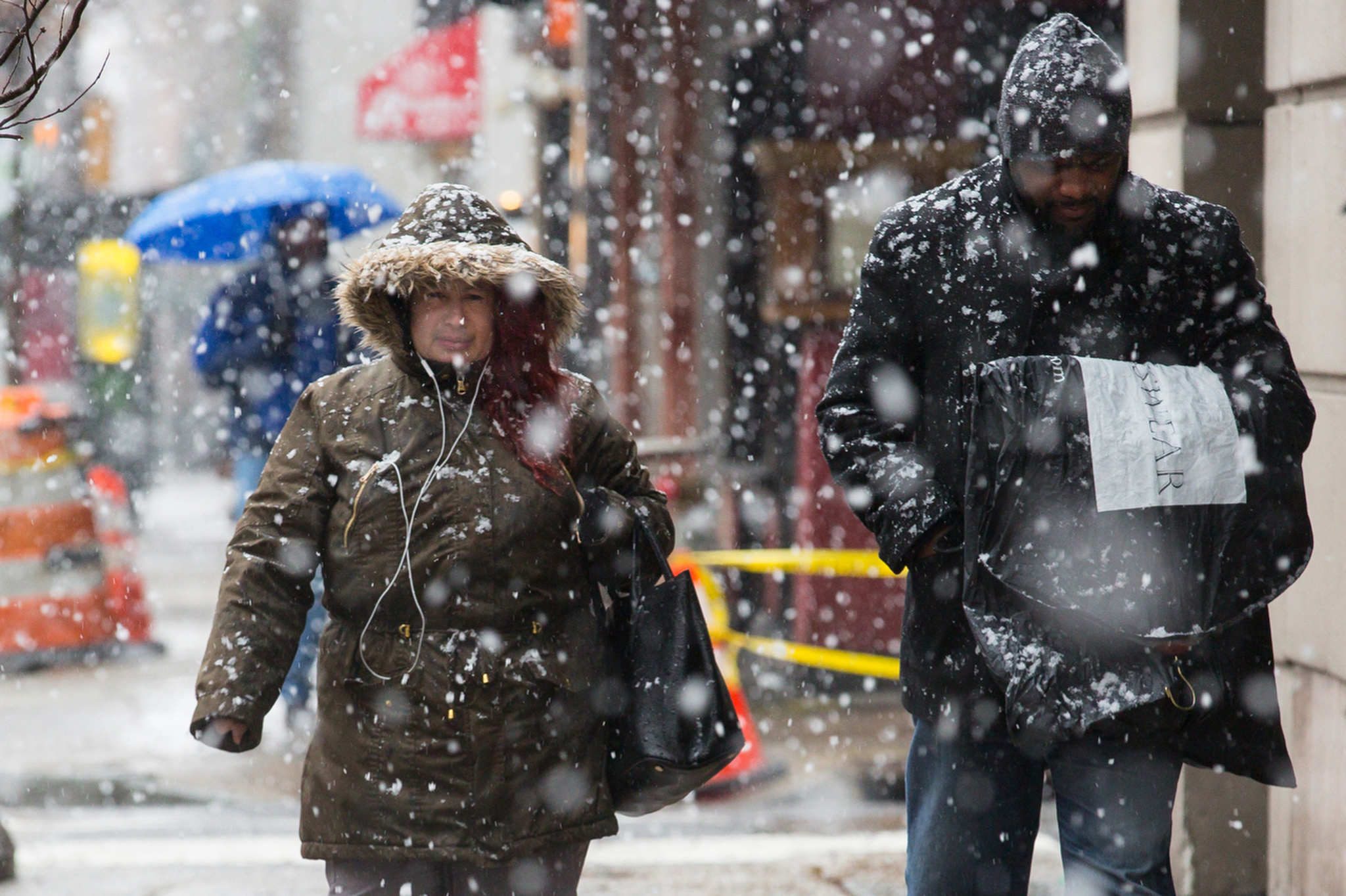
    Large snowflakes fall as pedestrians make their way in Center City. Flakes come various shapes and sizes … and weights.

    In the standard language used by the National Weather Service and commercial outfits, that certainly qualified as a “heavy” snowfall.

    But it was the antithesis of “heavy,” at least in terms of relative weight. Snow comes not only in different shapes, but also in very different weights, depending on the snow-to-liquid ratios. On average around here, an inch of liquid yields about a foot of snow, a 12-1 ratio.

    However, when temperatures are close to freezing as they were last Sunday, the snow has a higher liquid content and is thus heavier. On Sunday, 5 inches may have felt more like 8 to the average shovel. That’s heavy snow.

    When it’s cold, as it was on Jan. 7, 1996 — temperatures were in the teens during the day — the flakes are way drier. The ratio for the storm was closer to 20-1, and overall the flakes were a whole lot lighter.

    “Heavy” snow “applies to visibility ratios,” said Jim Eberwine, longtime meteorologist with the National Weather Service local offices, adding it might be time to reconsider the use of that adjective.

    “Some things should be updated,” he said.

    How about: Snowfall rates can be intense at times?

    Snow: It’s a Northern Hemisphere thing

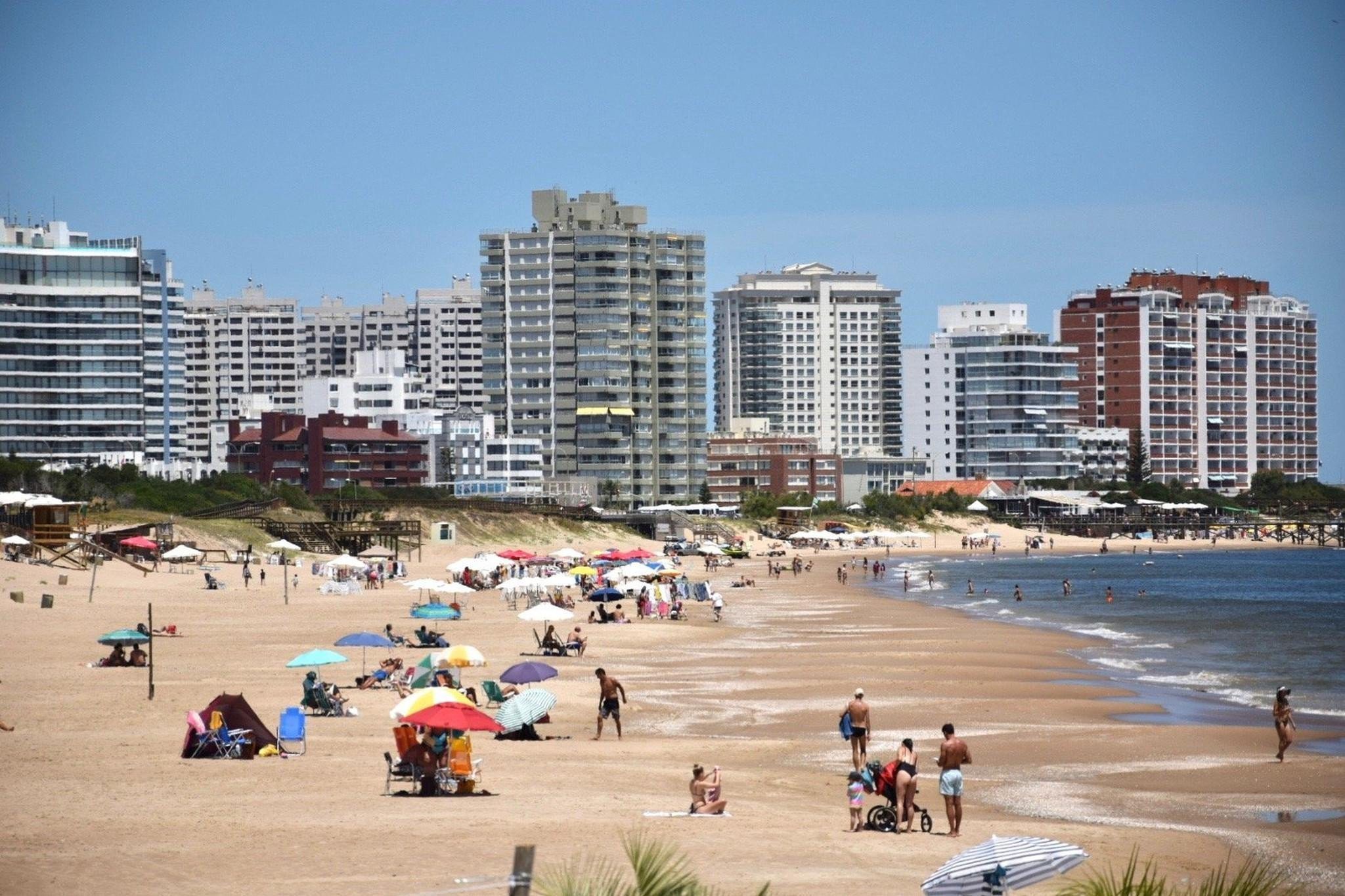
    It’s Janaury in the Miami of South America, Punta del Este, Uruguay. It doesn’t snow much there in their winter either.

    The solstice also marks the beginning of the astronomical summer in the Southern Hemisphere, so residents south of the equator probably won’t be using snowblowers for the next several months.

    In fact, they won’t be seeing a whole lot of snow there during the winter. It snows robustly in the Andes and other mountain regions, but not in major population centers, the AccuWeather people note.

    NOAA’s National Center for Environmental Information doesn’t bother to track snow cover in the Southern Hemisphere, for a couple of reasons, including that it’s 80% covered by climate-moderating water.

    Plus its major cities are located at latitudes where snow is scarce.

    How much for Philly this winter?

    The Butler family finds a (small) hill to sled on in Wallworth Park in Cherry Hill after last Sunday’s snowfall. The 4.2 inches meashred in Philly was more than half of what fell all last winter.

    By contrast, the Northern Hemisphere has a plentiful supply of metropolitan areas that experience ruler-worthy snowfalls, including Philadelphia.

    Making seasonal snow forecasts in this region isn’t quite like picking lottery numbers, but reasonably close. Seasonal totals have varied from 78.7 inches in 2009-10 to nothing in 1972-73. NOAA’s Climate Prediction Center doesn’t touch the stuff.

    The guesses for this year are in, and here is a partial list with what’s out there: The “normal” season total is 23.1 inches.

    Fox29 — 16 inches

    AccuWeather/6abc — 14 to 18 inches

    CBS3 — 18 to 24 inches

    Arcfield Weather — 22 to 26 inches

    WeatherBell Analytics — 22 inches

    One prediction they all have in common: The winter of 2025-26 will out-snow that of 2024-25.

    That won’t be hard.

  • One killed, seven others injured in Upper Darby apartment fire Saturday

    One killed, seven others injured in Upper Darby apartment fire Saturday

    One person was killed and at least seven others, including a firefighter, were injured as a fire tore through an Upper Darby apartment Saturday, officials said.

    Firefighters were called about 10:30 a.m. to a three-story building on the 3200 block of Township Line Road, in the Drexel Hill neighborhood, where the blaze had broken out in a second-floor apartment. The flames were contained to the apartment, but the heat, smoke, and water damaged nearby units, Upper Darby Township Fire Chief Nicholas Martin said in a news release.

    Martin said one person died from their injuries after being hospitalized, and another was critically injured. Their identities have not been made public.

    A firefighter was also hospitalized, but later released, for burn injuries sustained while rescuing two people from the apartment. At least five others suffered injuries that were not life-threatening, and about 75 people were displaced from their homes, the news release said.

    “Our thoughts are with the victims of this fire and their families during this tremendously difficult time,” Martin said in the statement.

    The cause of the fire is under investigation.

  • Google app hiccup jumps the gun before the Eagles-Commanders game with AI-generated victory post

    Google app hiccup jumps the gun before the Eagles-Commanders game with AI-generated victory post

    Hours before kickoff in Saturday’s Eagles-Commanders matchup, a Google app jumped the gun with an AI-generated post that the Birds had won the game.

    The artificial intelligence hiccup, known as a hallucination, had the Eagles winning 27-17 and clinching the NFC East title. It even included made-up game highlights — Jalen Hurts throwing for over 200 yards and Saquon Barkley scoring a key touchdown. (Here in the real world, Hurts threw for 185 yards in a 29-18 Eagles win; Barkley did in fact run for a TD as the Birds became the champs of the NFC East.)

    The false information was easily identified because the game had not started, but that is not always the case with AI hallucinations in legal cases and financial reporting, said Subodha Kumar, a professor of statistics, operations, and data science at Temple University’s Fox School of Business.

    “Sometimes it is so wrong that you can detect it,” Kumar said in an interview Saturday. “Sometimes you cannot.”

    The fake post was captured by Reddit Philadelphia users. Such erroneous AI-generated posts are user-specific and often deleted. A line at the bottom of the post cautioned: “Generated with AI, which can make mistakes.”

    The post linked to an accurately reported 6abc game preview story noting that the Eagles could become the first NFC East team since 2004 to win back-to-back division titles.

    Kumar said the hallucinations typically link to a news article or published reference to give the false information the appearance of legitimacy.

    Eagles fans commented on the error on Reddit. Some immediately recognized it as an AI mistake; others worried that it could be a jinx for the Eagles.

    “Crossing my fingers but jeepers Google kind of jumped the gun this morning,” one wrote.

    “I saw this and thought — did I miss a game?” another commented.

    Another wrote: “‘Generated with AI, which can make mistakes’ is the understatement of the year.”

    Hallucinations occur when a generative AI model confidently presents false or misleading information as a fact, rather than a prediction, Kumar said.

    They are most common in big sporting events, like the 2024 Super Bowl, when two AI chatbots made up statistics when questioned about the game between the Kansas City Chiefs and the San Francisco 49ers. (The Chiefs won in overtime.)

    There have also been false AI-generated election results, financial reports, and legal decisions, Kumar said. The biggest impact may be false financial reports, which can affect the stock market, he said.

    “Clearly, this is a big problem,” Kumar said. “We have to be careful using the results for critical decision-making.”

    Kumar said guardrails currently are not properly designed to prevent such errors, but the technology has improved in recent years.

    More companies have added fact-checking technology to alert the algorithm before it generates erroneous content, he said.

    Asked Saturday afternoon to predict the Eagles game, Kumar quipped: “I will leave it to AI.”

  • White House threatens Smithsonian funds in sweeping content review

    White House threatens Smithsonian funds in sweeping content review

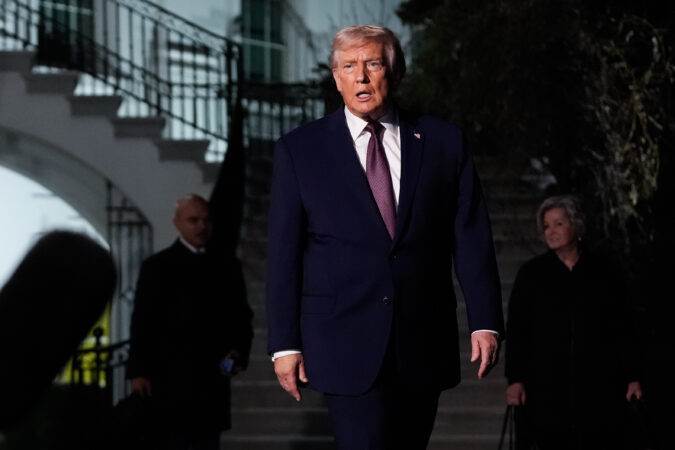
    The Trump administration escalated pressure on the Smithsonian last week, threatening to withhold federal funds if it does not submit extensive documentation for a sweeping content review. President Donald Trump earlier this year set out to purge what he called “improper ideology” from the nation’s most prestigious museum system, efforts that are expected to intensify as his administration tries to shape the country’s 250th anniversary celebrations next year.

    In a staff email obtained by the Washington Post, sent Friday evening after the funding threat, Smithsonian Secretary Lonnie G. Bunch III said the Smithsonian had sent information to the White House in September and intended to submit more that day. He asserted that “all content, programming, and curatorial decisions are made by the Smithsonian.”

    The previous day, Domestic Policy Council director Vince Haley and White House budget director Russell Vought wrote to Bunch that the Smithsonian’s initial submissions “fell far short of what was requested.” Among the solicited documents are current exhibition descriptions, comprehensive America 250 programming files, draft plans for upcoming shows, and internal guidelines used in exhibition development. The White House gave the Smithsonian until Jan. 13 to meet the request.

    “Funds apportioned for the Smithsonian Institution are only available for use in a manner consistent with Executive Order 14253 ‘Restoring Truth and Sanity to American History,’ and the fulfillment of the requests set forth in our Aug. 12, 2025 letter,” Haley and Vought wrote. The letter specifically referenced the Museum of American History, the Museum of Natural History, the Air and Space Museum, the Museum of African American History and Culture, the Museum of the American Indian, the Smithsonian American Art Museum, the Museum of African Art, and the National Portrait Gallery.

    It was not immediately clear how much money the White House might try to withhold, from which parts of the Smithsonian, or on what authority. The institution is about 62% federally funded by a combination of congressional appropriation, federal grants, and contracts.

    An earlier letter, in August, called for an aggressive review of eight museums to ensure they align with the president’s directive to “celebrate American exceptionalism” and asked the Smithsonian to submit all requested materials within 75 days and “begin implementing content corrections” within 120.

    Amid scrutiny from Trump, the institution had already planned its own content review, with the Smithsonian’s Board of Regents instructing Bunch in June “to ensure unbiased content” across the institution and report back on “any needed personnel changes.”

    The Smithsonian declined to comment on the latest development. In Friday’s email, Bunch told staff that the institution had provided the White House with information in September about their public exhibitions and displays, policies, and procedures, and had planned to send more documents related to their mission, organization, and public exhibitions and displays.

    But, Bunch added, “some aspects of the White House request are not readily available and will require a significant amount of time, labor, and coordination from various departments across the Smithsonian” and as they collect documents, they would “continue to evaluate the scope of our response.”

    He stressed that the Smithsonian is “committed to transparency” and has for nearly 180 years “served our country as an independent and nonpartisan institution.”

    In September, Bunch wrote in a letter to staff that the institution had assembled a small, internal team to advise on what it can provide to the White House and said it was undergoing “our own review of content to ensure our programming is factual and nonpartisan.”

    The heightened demands arrive at the end of a tumultuous year for the Smithsonian — the self-described “world’s largest museum, education, and research complex” — which normally operates independently. Historians have broadly criticized Trump for attempting to sanitize the country’s past by demanding that cultural institutions espouse “American exceptionalism” and focus less on slavery, among other historical sins.

    In June, the director of the Smithsonian’s National Portrait Gallery, Kim Sajet, resigned after Trump attempted to fire her, and months later, artist Amy Sherald pulled her solo show from the same museum, after a disagreement with the institution over how a portrait of a transgender woman as the Statue of Liberty would be displayed.

    The Trump administration amplified its rhetoric over the summer, with the president posting on social media that the nation’s museums are “essentially, the last remaining segment of ‘WOKE’” and that the Smithsonian is too focused on “how bad Slavery was.” The White House later released a list of exhibits and materials at the Smithsonian of which it disapproves, specifically targeting works and content mentioning race, slavery, transgender identity, and immigration.

    A unique public-private partnership that is a “trust instrumentality” created by Congress, the Smithsonian puts its public funds toward conserving national collections, basic research, public education, and administrative and support services to maintain large museum and research complexes. Its private funds are used to endow positions, build new facilities, and open new exhibitions, among other uses, according to the Smithsonian website.

    “We wish to be assured that none of the leadership of the Smithsonian museums is confused about the fact that the United States has been among the greatest forces for good in the history of the world” leading up to the nation’s 250th anniversary, Haley and Vought wrote in Thursday’s letter. “The American people will have no patience” for any museum that is “uncomfortable conveying a positive view of American history.”

    The Organization of American Historians wrote in an August statement that Trump’s content review “will undoubtedly be in service of authoritarian control over the national narrative, collective memory, and national collections.”

    James Millward, a history professor at Georgetown who studies Chinese history and is one of the founders and leaders of Citizen Historians for the Smithsonian — a volunteer effort to document everything on display at the institution — said that he suspects the request for digital files means “they’re looking for trigger words.” The Post reported in February that National Science Foundation staff members were combing through research projects looking for words such as “diversity” and “gender.”

    “We’ve seen, of course, this across websites, across agencies, across the United States, and they want to apply that kind of sledgehammer, chauvinistic, brute force, and frankly, bigoted approach to the Smithsonian as well,” Millward told the Post.

    The rhetoric from the Trump administration on how to discuss the past is “very similar to Chinese Communist Party propaganda,” he said. “Only positive stories, only positive energy, no negative energy allowed when you’re talking about history.”

  • U.S. anniversary coins won’t feature any Black Americans or notable women

    U.S. anniversary coins won’t feature any Black Americans or notable women

    Over three years, the U.S. Citizens Coinage Advisory Committee sifted through hundreds of ideas for commemorative coins to celebrate the 250th anniversary of America’s founding.

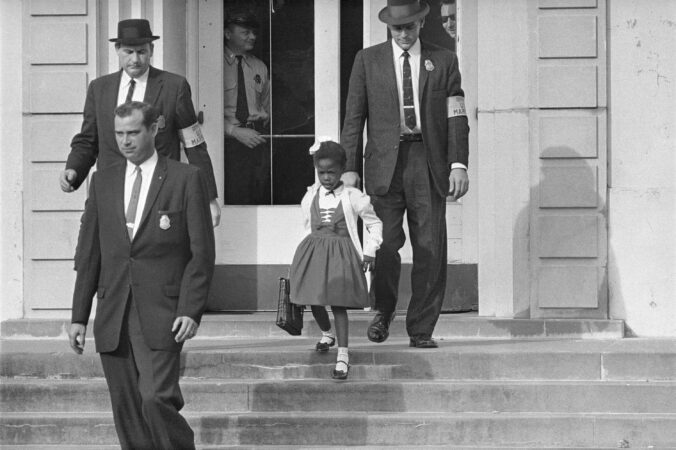
    The group settled on five options, including quarters honoring abolitionist Frederick Douglass; Ruby Bridges, a 6-year-old girl who helped integrate public schools in New Orleans; and the women’s suffrage movement.

    “The question was do we focus only on what happened in 1776 and the years around that or do we also talk about everything that has happened since then,” said Lawrence Brown, a retired New York City doctor who served on the committee from 2019 to 2024.

    “To me, the latter is just as important if not more important because it gives us answers to the questions of how did we maintain that Constitution? How did we maintain our independence?”

    In a preview of the Trump administration’s approach to celebrating the country’s 250th birthday, Treasury Department officials announced this month that the agency would ignore the committee’s recommendation and produce quarters that are far less diverse and more traditional. Instead of addressing the country’s racial history, the five coins will feature images of former presidents George Washington, Thomas Jefferson, James Madison, and Abraham Lincoln, as well as a Pilgrim couple.

    The Biden administration was focused on diversity, equity and inclusion, and critical race theory, U.S. Treasurer Brandon Beach told Fox News, but the “Trump administration is dedicated to fostering prosperity and patriotism.”

    “The designs on these historic coins depict the story of America’s journey toward a ‘more perfect union,’ and celebrate America’s defining ideals of liberty,” Kristie McNally, acting director of the U.S. Mint, said in a statement.

    The administration is also considering a commemorative dollar with President Donald Trump’s face on one side and his raised fist with the words “FIGHT FIGHT FIGHT” on the other, a reference to the widely circulated image of the president following an assassination attempt in 2024. Democratic senators have decried the idea as “un-American” and introduced legislation to prohibit “the likeness of a living or sitting president” from appearing on American currency.

    The nation’s semiquincentennial offers Trump a rare, high-profile opportunity to shape how Americans understand the country’s history. In addition to the coins, the Post Office is expected to announce commemorative stamps, and the National Endowment for the Humanities is offering up to $200,000 to fund new statues of historical figures.

    The new coin designs reflect the Trump Administration’s focus on exalting the country’s pre-civil rights history and depicting idealized images of American life. It is part of an effort to rewrite the past with an exclusionary view of American history, some historians said.

    The White House is working with PragerU, a nonprofit that produces educational videos and is known for taking a conservative view of American history, to organize educational initiatives and “freedom trucks,” mobile museums that will be driven across the country during semiquincentennial celebrations.

    In September, the administration announced the opening of the Founders Museum in Washington, which has been criticized by historians for its use of AI-generated material and its exclusion of nonwhite voices from the nation’s past. The administration is encouraging educators to re-create the exhibit at their schools with printable versions of the portraits and labels.

    “The goal is to instill a sense of patriotism in young Americans,” said Allen Estrin, co-founder of PragerU. “If we don’t have an appreciation of our past, it’s going to be very difficult to imagine a bright future.”

    Andrew Rudalevige, a professor of government at Bowdoin College, said that it is not unusual for presidents to put their stamp on historical events and tie them to their agendas. But by working so closely with ideological groups and focusing on issues like DEI, Trump is risking infusing partisan politics into the semiquincentennial and turning off half the country, he said.

    “I’d be very happy for more people to read the founding documents and seriously engage with the arguments that founders were making,” Rudalevige said. “But I think unfortunately it’s likely that the celebration is going to be pushed into the same culture wars and the same polarization that seems to affect so much of the country right now when it ought to be a time when we could rise above that.”

    Dean Kotlowski, a historian who served on the Citizens Coinage Advisory Committee from 2018 to 2023, said the new coins are part of the administration’s efforts to derail a campaign to diversify the faces on America’s money. “The whole idea was to get away from this kind of presidential history but these coins are very, very traditional,” Kotlowski said.

    The committee, which was established by Congress in 2003, began working on coins to celebrate the country’s 250th birthday after Trump signed the Circulating Collectible Coin Redesign Act during the waning days of his first term. The law called for the creation of five quarters, including at least one featuring a woman.

    The 11-member committee worked with the National Archives, National Park Service, and historians to develop themes and designs for the coins. They conducted online polls and solicited public comment. The process culminated in a two-day public hearing in October 2024 before the panel submitted its final recommendations to then-Treasury Secretary Janet L. Yellen.

    Among the designs recommended for the quarter featuring Bridge is an image immortalized in Norman Rockwell’s 1964 painting of her being escorted to school by U.S. marshals with the words “We Shall Overcome.” The committee chose a portrait of Frederick Douglass that, it said, “conveys his strength as a symbol of the abolition movement.” A third coin celebrating the women’s suffrage movement included a protester carrying a “Votes for Women” flag.

    The remaining two quarters would feature images of the Declaration of Independence and the U.S. Constitution.

    “The process, as it was supposed to happen, is very well-informed, very public, and taken very seriously,” said Dennis Tucker, who took part in the deliberations during his tenure on the committee from 2016 to 2024. “It’s not clear what went into this decision.”

    Trump has been on a campaign to restore what he calls “patriotic education” to the country’s national parks, monuments, and museums. Signs and exhibits related to slavery have been removed from multiple national parks with Trump arguing that they overemphasize the negative aspects of American history. The administration cut funding to small archives and museums across the country but later restored grants to those aligned with Trump’s vision for the celebration of the 250th anniversary.

    During his first term, his administration halted efforts to put Harriet Tubman on the $20 bill, with Trump criticizing the Obama-era decision as “pure political correctness.”

    David Ekbladh, a professor of history at Tufts University, said Trump’s focus on advancing a traditional version of history has intensified since his first term. “During his first administration, Trump pardoned Susan B. Anthony,” Ekbladh said. In 1872, nearly 50 years before women gained the right to vote, Anthony was arrested for wrongfully and willfully voting.

    “But now, even the suffragists are seen as outside the pale of what they want as part of our remembered past.”

  • At least 16 files have disappeared from the DOJ webpage for documents related to Jeffrey Epstein

    At least 16 files have disappeared from the DOJ webpage for documents related to Jeffrey Epstein

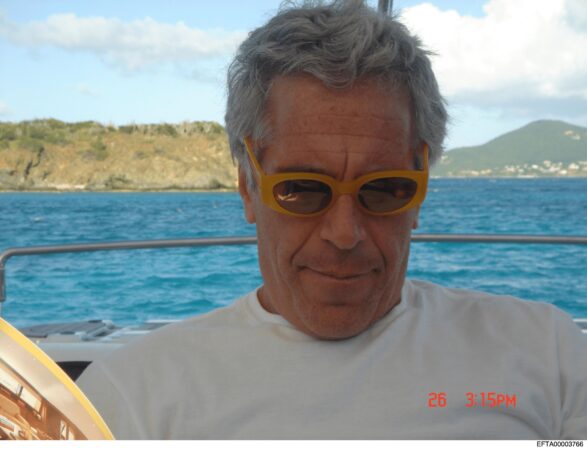
    NEW YORK — At least 16 files disappeared from the Justice Department’s public webpage for documents related to Jeffrey Epstein — including a photograph showing President Donald Trump — less than a day after they were posted, with no explanation from the government and no notice to the public.

    The missing files, which were available Friday and no longer accessible by Saturday, included images of paintings depicting nude women, and one showing a series of photographs along a credenza and in drawers. In that image, inside a drawer among other photos, was a photograph of Trump, alongside Epstein, Melania Trump, and Epstein’s longtime associate Ghislaine Maxwell.

    The Justice Department did not say why the files were removed or whether their disappearance was intentional. A spokesperson for the department did not immediately respond to a request for comment.

    Online, the unexplained missing files fueled speculation about what was taken down and why the public was not notified, compounding long-standing intrigue about Epstein and the powerful figures who surrounded him. Democrats on the House Oversight Committee pointed to the missing image featuring a Trump photo in a post on X, writing: “What else is being covered up? We need transparency for the American public.”

    The episode deepened concerns that had already emerged from the Justice Department’s much-anticipated document release. The tens of thousands of pages made public offered little new insight into Epstein’s crimes or the prosecutorial decisions that allowed him to avoid serious federal charges for years, while omitting some of the most closely watched materials, including FBI interviews with victims and internal Justice Department memos on charging decisions.

    Scant new insight in initial disclosures

    Some of the most consequential records expected about Epstein are nowhere to be found in the Justice Department’s initial disclosures, which span tens of thousands of pages.

    Missing are FBI interviews with survivors and internal Justice Department memos examining charging decisions — records that could have helped explain how investigators viewed the case and why Epstein was allowed in 2008 to plead guilty to a relatively minor state-level prostitution charge.

    The gaps go further.

    The records, required to be released under a recent law passed by Congress, hardly reference several powerful figures long associated with Epstein, including Britain’s former Prince Andrew, renewing questions about who was scrutinized, who was not, and how much the disclosures truly advance public accountability

    Among the fresh nuggets: insight into the Justice Department’s decision to abandon an investigation into Epstein in the 2000s, which enabled him to plead guilty to that state-level charge, and a previously unseen 1996 complaint accusing Epstein of stealing photographs of children.

    The releases so far have been heavy on images of Epstein’s homes in New York City and the U.S. Virgin Islands, with some photos of celebrities and politicians.

    There was a series of never-before-seen photos of former President Bill Clinton but fleetingly few of Trump. Both have been associated with Epstein, but both have since disowned those friendships. Neither has been accused of any wrongdoing in connection with Epstein and there was no indication the photos played a role in the criminal cases brought against him.

    Despite a Friday deadline set by Congress to make everything public, the Justice Department said it plans to release records on a rolling basis. It blamed the delay on the time-consuming process of obscuring survivors’ names and other identifying information. The department has not given any notice of when more records might arrive.

    That approach angered some Epstein accusers and members of Congress who fought to pass the law that forced the department to act. Instead of marking the end of a yearslong battle for transparency, the document release Friday was merely the beginning of an indefinite wait for a complete picture of Epstein’s crimes and the steps taken to investigate them.

    “I feel like again the DOJ, the justice system is failing us,” said Marina Lacerda, who alleges Epstein started sexually abusing her at his New York City mansion when she was 14.

    Many records were redacted or lacked context

    Federal prosecutors in New York brought sex trafficking charges against Epstein in 2019, but he killed himself in jail after his arrest.

    The documents just made public were a sliver of potentially millions of pages of records in the department’s possession. In one example, Deputy Attorney General Todd Blanche said Manhattan federal prosecutors had more than 3.6 million records from sex trafficking investigations into Epstein and Maxwell, though many duplicated material already turned over by the FBI.

    Many of the records released so far had been made public in court filings, congressional releases, or freedom of information requests, though, for the first time, they were all in one place and available for the public to search for free.

    Records that were new were often lacking necessary context or heavily blacked out. A 119-page document marked “Grand Jury-NY,” likely from one of the federal sex trafficking investigations that led to the charges against Epstein in 2019 or Maxwell in 2021, was entirely blacked out.

    Trump’s Republican allies seized on the Clinton images, including photos of the Democrat with singers Michael Jackson and Diana Ross. There were also photos of Epstein with actors Chris Tucker and Kevin Spacey, and even Epstein with TV newscaster Walter Cronkite. But none of the photos had captions and no explanation was given for why any of them were together.

    The meatiest records released so far showed that federal prosecutors had what appeared to be a strong case against Epstein in 2007 yet never charged him.

    Transcripts of grand jury proceedings, released publicly for the first time, included testimony from FBI agents who described interviews they had with several girls and young women who described being paid to perform sex acts for Epstein. The youngest was 14 and in ninth grade.

    One had told investigators about being sexually assaulted by Epstein when she initially resisted his advances during a massage.

    Another, then 21, testified before the grand jury about how Epstein had hired her when she was 16 to perform a sexual massage and how she had gone on to recruit other girls to do the same.

    “For every girl that I brought to the table he would give me $200,” she said. They were mostly people she knew from high school, she said. “I also told them that if they are under age, just lie about it and tell him that you are 18.”

    The documents also contain a transcript of an interview Justice Department lawyers did more than a decade later with the U.S. attorney who oversaw the case, Alexander Acosta, about his ultimate decision not to bring federal charges.

    Acosta, who was labor secretary during Trump’s first term, cited concerns about whether a jury would believe Epstein’s accusers.

    He also said the Justice Department might have been more reluctant to make a federal prosecution out of a case that straddled the legal border between sex trafficking and soliciting prostitution, something more commonly handled by state prosecutors.

    “I’m not saying it was the right view,” Acosta added. He also said that the public today would likely view the survivors differently.

    “There’s been a lot of changes in victim shaming,” Acosta said.

  • Philadelphia police investigating 2 fatal hit-and-run crashes

    Philadelphia police investigating 2 fatal hit-and-run crashes

    Philadelphia police are investigating two hit-and-run crashes that left a pedestrian and bicyclist dead.

    At 3:44 a.m. Saturday, a bicyclist was struck by an SUV as he turned on to North 56th Street from Lancaster Avenue, police said.

    Following the impact, the SUV appeared to swerve and continued on Lancaster Avenue, police said.

    Philadelphia Fire Department medics responded to the scene and took the bicyclist, a 54-year-old man, to Lankenau Hospital. He was pronounced dead at 4:47 a.m., police said.

    At approximately 8:56 p.m. Friday, a 63-year-old woman was struck by a car headed northbound on Whitaker Avenue as she crossed in a crosswalk at Wyoming Avenue, police said.

    Police said the driver of the car, a white 2012 Infiniti M37, briefly looked at the victim and then fled the scene, continuing northbound on Whitaker Avenue.

    The woman was taken by a medic unit to Temple University Hospital, where she was pronounced dead at 9:34 p.m.

    The car was later found unoccupied in the area of A and Loudon streets and will be seized for further investigation, police said.

    The police Crash Investigation Division is conducting ongoing investigations into both incidents.

    The victims’ identities were not immediately available Saturday.

  • U.S. forces stop second merchant vessel off the coast of Venezuela, American officials say

    U.S. forces stop second merchant vessel off the coast of Venezuela, American officials say

    WASHINGTON — U.S. forces on Saturday stopped a vessel off the coast of Venezuela for the second time in less than two weeks as President Donald Trump continues to ramp up pressure on Venezuelan President Nicolás Maduro.

    The move, which was confirmed by two U.S. officials familiar with matter, comes days after Trump announced a “blockade” of all sanctioned oil tankers coming in and out of the South American country and follows the Dec. 10 seizure by American forces of an oil tanker off Venezuela’s coast.

    Homeland Security Secretary Kristi Noem confirmed that the U.S. Coast Guard with help from the Defense Department stopped the oil tanker that was last docked in Venezuela. She also posted on social media an unclassified video of a U.S helicopter landing personnel on a vessel called Centuries.

    A crude oil tanker flying under the flag of Panama operates under the name and was recently spotted near the Venezuelan coast, according to MarineTraffic, a project that tracks the movement of vessels around the globe using publicly available data. It was not immediately clear if the vessel was under U.S. sanctions.

    “The United States will continue to pursue the illicit movement of sanctioned oil that is used to fund narco terrorism in the region,” Noem wrote on X. “We will find you, and we will stop you.”

    The action was described as a “consented boarding,” with the tanker stopping voluntarily and allowing U.S. forces to board it, one official said.

    The Pentagon and White House officials did not immediately respond to requests for comment.

    Trump earlier this month announced that the Coast Guard had seized an oil tanker in the Caribbean Sea and vowed that the U.S. would carry out a blockade of Venezuela. It all comes as Trump has ratcheted up his rhetoric toward Maduro and warned that the longtime Venezuelan leader’s days in power are numbered.

    Trump this week demanded that Venezuela return assets that it seized from U.S. oil companies years ago, justifying anew his announcement of a “blockade” against oil tankers traveling to or from the South American country that face American sanctions.

    Trump cited the lost U.S. investments in Venezuela when asked about his newest tactic in a pressure campaign against Maduro, suggesting the Republican administration’s moves are at least somewhat motivated by disputes over oil investments, along with accusations of drug trafficking. Some sanctioned tankers already are diverting away from Venezuela.

    “We’re not going to be letting anybody going through who shouldn’t be going through,” Trump told reporters. “You remember they took all of our energy rights. They took all of our oil not that long ago. And we want it back. They took it — they illegally took it.”

    U.S. oil companies dominated Venezuela’s petroleum industry until the country’s leaders moved to nationalize the sector, first in the 1970s and again in the 21st century under Maduro and his predecessor, Hugo Chávez. Compensation offered by Venezuela was deemed insufficient, and in 2014 an international arbitration panel ordered the country’s socialist government to pay $1.6 billion to ExxonMobil.

    The targeting of tankers comes as Trump has ordered the Defense Department to carry out a series of attacks on vessels in the Caribbean and eastern Pacific Ocean that his administration alleges are smuggling fentanyl and other illegal drugs into the United States and beyond.

    At least 104 people have been killed in 28 known strikes since early September.

    The strikes have faced scrutiny from U.S. lawmakers and human rights activists, who say the administration has offered scant evidence that its targets are indeed drug smugglers and that the fatal strikes amount to extrajudicial killings.

    The Coast Guard, sometimes with help from the Navy, had typically interdicted boats suspected of smuggling drugs in the Caribbean Sea, searched for illicit cargo, and arrested the people aboard for prosecution.

    The administration has justified the strikes as necessary, asserting it is in “armed conflict” with drug cartels aimed at halting the flow of narcotics into the United States. Maduro faces federal charges of narcoterrorism in the U.S.

    The U.S. in recent months has sent a fleet of warships to the region, the largest buildup of forces in generations, and Trump has stated repeatedly that land attacks are coming soon.

    Maduro has insisted the real purpose of the U.S. military operations is to force him from power.

    White House chief of staff Susie Wiles said in an interview with Vanity Fair published this week that Trump “wants to keep on blowing boats up until Maduro cries uncle.”