Category: News

Latest breaking news and updates

  • Some Native Americans draw shocked response over contract to design immigration detention centers

    Some Native Americans draw shocked response over contract to design immigration detention centers

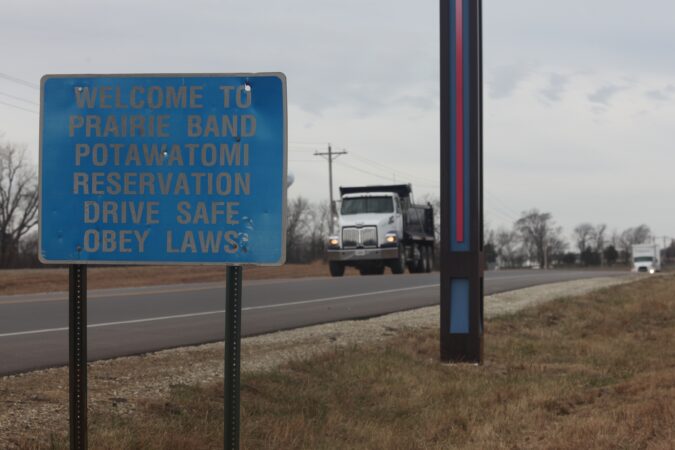
    MAYETTA, Kan. — The Prairie Band Potawatomi Nation, whose ancestors were uprooted by the U.S. from the Great Lakes region in the 1830s, are facing outrage from fellow Native Americans over plans to profit from another forced removal: President Donald Trump’s mass deportation campaign.

    A newly established tribal business entity quietly signed a nearly $30 million federal contract in October to come up with an early design for immigrant detention centers across the U.S. Amid the backlash, the tribe says it’s trying to get out of it.

    Tribal leaders and the U.S. Department of Homeland Security haven’t responded to detailed questions about why the firm was selected for such a big contract without having to compete for the work as federal contracting normally requires. A former naval officer — who markets himself as the “go-to” adviser for tribes and affiliated companies seeking to land federal contracts — established the affiliate, KPB Services LLC, in April.

    The criticism has been so intense that the 4,500-member tribe said it fired the economic development leaders who brokered the deal.

    “We are known across the nation now as traitors and treasonous to another race of people,” said Ray Rice, a 74-year-old who said he and other tribal members were blindsided. “We are brown and they’re brown.”

    ICE deals with tribes generate scrutiny

    Tribal Chairperson Joseph “Zeke” Rupnick promised “full transparency” about what he described as an “evolving situation.” In a video message to tribal members Friday, he said the tribe is talking with legal counsel about ways to end the contract.

    He alluded to the time when federal agents forcibly removed hundreds of Prairie Band Potawatomi families from their homes and ultimately corralled them on a reservation just north of Topeka.

    “We know our Indian reservations were the government’s first attempts at detention centers,” Rupnick said in the video message. “We were placed here because we were prisoners of war. So we must ask ourselves why we would ever participate in something that mirrors the harm and the trauma once done to our people.”

    The U.S. Supreme Court cleared the way in September for federal agents to conduct sweeping immigration raids and use apparent ethnicity as a relevant factor for a stop. With some Native Americans being swept up and detained in recent raids, U.S. Immigration and Customs Enforcement’s overtures to tribes and even longstanding deals are generating extra scrutiny.

    An LLC owned by the Poarch Band of Creek Indians in Alabama also has a multimillion-dollar contract with ICE to provide financial and administrative services. Meanwhile, some shareholders of an Alaska Native corporation say their values don’t align with the corporation’s federal contracting division, Akima, to provide security at several ICE detention facilities.

    “I’m shocked that there is any tribal nation that’s willing to assist the U.S. government in that,” said Brittany McKane, a 29-year-old Muscogee Nation citizen who attends the tribe’s college in Oklahoma.

    Some tribal nations have advised their citizens to carry tribal IDs.

    Last month, actor Elaine Miles (Northern Exposure) said she was stopped by ICE agents who alleged her ID from the Confederated Tribes of the Umatilla Indian Reservation in Oregon was fake.

    Economic pressure increases as federal funding decreases

    The economic arms of tribes, which can be run by non-Natives, are under increasing pressure to generate revenue because of decreased federal funding, high inflation, and competition from online gambling, said Gabe Galanda, an Indigenous rights attorney based in Seattle.

    But the economic opportunities presented to tribes don’t always align with their values, said Galanda, a member of the Round Valley Indian Tribes in northern California.

    The Prairie Band Potawatomi has a range of businesses that provide healthcare management staffing, general contracting, and even interior design.

    The tribal offshoot hired by ICE — KPB Services LLC — was established in Holton, Kan., and is not listed on the tribe’s website. It previously qualified along with dozens of other companies to provide logistical support to the U.S. Navy although, to date, it hasn’t performed any work for the federal government.

    The ICE contract initially was awarded in October for $19 million for unspecified “due diligence and concept designs” for processing centers and detention centers throughout the U.S., according to a one-sentence description of the work on the federal government’s real time contracting database. It was modified a month later to increase the payout ceiling to $29.9 million. Sole-source contracts above $30 million require additional justification under federal contracting rules.

    The contract raises a number of questions and seems to go against the Trump administration’s stated goal of cleaning up waste, fraud, and abuse, said attorney Joshua Schnell, who specializes in federal contracting law.

    “The public’s trust in the federal procurement system depends on transparency and competition,” said Schnell. “Although there is a role within this system for multimillion dollar sole-source contracts, these contracts are an exception to statutory competition requirements, and taxpayers are entitled to know how the government is spending their money.”

    Backlash swift as news about ICE contract spread

    It’s unclear what the Tribal Council knew about the contract. A spokesperson for the Tribal Council did not respond to repeated requests from the AP for details, including who was terminated.

    What is known is that KPB was registered by Ernest C. Woodward Jr., a retired U.S. naval officer with degrees in engineering and business who is a member of the Miami Tribe of Oklahoma, according to a website for his one-time consulting firm, Burton Woodward Partners LLC.

    The website described Woodward as a serial entrepreneur and tribal adviser on mergers and acquisitions, accessing capital, and landing federal contracts. The consulting firm was registered to an office park in Sarasota, Fla., in 2017 but was delisted two years later after it failed to file an annual report.

    The Prairie Band Potawatomi Nation in a 2017 news release said Woodward’s firm advised it on its acquisition of another government contractor, Mill Creek LLC, which specializes in outfitting federal buildings and the military with office furniture and medical equipment.

    Woodward also is listed as the chief operating officer of the Florida branch of Prairie Band Construction Inc., which was registered in September.

    Attempts to locate Woodward were unsuccessful. The phone number listed on Burton Woodward Partners was disconnected, and he did not respond to an email sent to another consulting firm he’s affiliated with, Virginia-based Chinkapin Partners LLC.

    Carole Cadue-Blackwood, who has Prairie Band Potawatomi ancestry and is an enrolled member of the Kickapoo Tribe in Kansas, hopes the contract dies. She has been part of the fight against an ICE detention center opening in Leavenworth, Kan., and works for a social service agency for Native Americans.

    “I’m in just utter disbelief that this has happened,” she said.

  • Joe Biden has raised little of what he needs to build his presidential library, a new report finds

    Joe Biden has raised little of what he needs to build his presidential library, a new report finds

    When it comes to funding his presidential library, former President Joe Biden is far behind on funds, the New York Times reported Saturday.

    The report cites recent Internal Revenue Service filings from Biden’s library foundation, finding that the organization had not raised any money in 2024, the last year Biden was in office.

    The fund contains just $4 million in leftover funds from Biden’s 2021 inauguration, according to the Times. The former president’s aides have suggested their vision for a library could cost $200 million.

    The library foundation declined to say what it had raised in 2025. Biden is holding his first public event for potential library donors on Monday, the Times reported.

    Should it ramp up fundraising, Biden’s team still anticipates raising a little more than $11 million by the end of 2027, according to the filings viewed by Times reporters.

    Biden, who turned 83 this fall and is being treated for prostate cancer, has kept a low public profile since stepping back from his official duties.

    Some of the former president’s loyal donors told the Times they had not been contacted for library contributions; other Democratic donors said they were not likely to give even if they are asked, saying they had soured on Biden’s legacy or were focused on projects to combat President Donald Trump.

    Biden’s aides declined to make him available for an interview with the Times, though there are signs he has begun to step up his fundraising effort.

    The former president and his wife, Jill Biden, penned a letter to donors in September asking them to schedule interviews with a private firm hired to assess financials for a future library, according to the newspaper.

    Former presidents must raise their own money to fund their libraries, which have evolved from modest spaces to sprawling complexes complete with museums and other extras.

    Former President Barack Obama’s still-unfinished “presidential center” in Chicago is expected to cost hundreds of millions of dollars and will include a basketball court and vegetable garden in addition to a city library branch. Trump plans to raise nearly $1 billion for a library in downtown Miami, tax documents show.

    Biden has said he would like his library to be built in his home state of Delaware. That decision comes as recent reporting found the University of Pennsylvania, where the former president has familial ties, did not express interest in hosting the library in Philadelphia.

    Coupled with a lagging fundraising effort, Biden’s desire to keep his library near his home has spurred discussions among those close to him that he could merge his presidential library with the preexisting Biden institutions at the University of Delaware, according to the Times. The Newark-based university is the former president’s alma matter.

    With the help of the Delaware state government, the university has already raised more than $20 million for a forthcoming “Biden Hall,” an extension of the Joseph R. Biden Jr. School of Public Policy and Administration.

    Merging the library with the hall would be far cheaper — and modest — than other modern presidential libraries, though the Times reported that both projects currently remain separate.

    Few details surrounding the library appear set in stone, however.

    Asked about the prospect of a merger, a Biden spokesperson declined to comment to the Times, saying the former president’s team continues to be in an “exploratory and planning phase.”

  • Snow is a near certainty in Philly this weekend, and it won’t melt quickly

    Snow is a near certainty in Philly this weekend, and it won’t melt quickly

    The first measurable snowfall of the winter of 2025-26 evidently is all but a done deal for Philly this weekend, and it has a chance to be the biggest in two winters — not that the bar is ultra-high in a period when snow has been mightily lacking.

    The National Weather Service has issued a winter storm warning for 3 to 5 inches of snow across the region, with a near 100% likelihood of at least an inch of snow.

    That was in line with the AccuWeather Inc. outlook.

    The weather service has a 76% chance of at least 4 inches and 43% of 6 or more.

    With the caveat that timing and duration of precipitation aren’t in the wheelhouse of atmospheric science, the weather service is expecting snow or snow mixed with rain to start late Saturday night.

    If it’s a mix at the outset it would quickly become all snow as temperatures fall below freezing, and continue into midmorning.

    The snow would be generated primarily by an upper-air disturbance, said Matt Benz, senior meteorologist for AccuWeather. It’s possible that the storm may regroup off the coast, however, that “probably will form too late to have any impact.”

    In a forecast discussion, the weather service said inch-an-hour snowfall rates are possible early Sunday.

    “There is a potential for a concentrated area of 4-5 inches of snowfall somewhere near the I-95 corridor and immediately south and east,” the forecasters said.

    They noted a 20% to 30% chance that some places get over 5 inches.

    And the snow is likely to stick around until at least midweek, with high temperatures Sunday, Monday, and Tuesday expected to be around freezing or lower and the sun angles about as low as they get.

    After that February storm, the temperature climbed to near 50 a day later, and the strengthening sun made quick work of the snow cover.

    That February snow turned out to be the biggest of a season in which the 8.1-inch total at Philadelphia International Airport barely bested the 8 inches of New Orleans. That winter, the I-95 corridor found itself in a snow hole, and Philly a snow hole within a snow hole. The highest total in the winter of 2023-24 was 4.6 inches during a snowy January week.

    Snow fell to the north, west, and south, and that trend has continued in the early going. With 6 inches so far this winter, Richmond, Va., now has measured 22.8 inches since last December, nearly triple the Philly total.

    Official totals at Philadelphia International Airport have been less than half of normal for four consecutive winters. The normal for a season is 23.2 inches.

    The meteorological winter, which began Dec. 1, certainly is off to a wintry start, with temperatures averaging more than 6 degrees below normal.

    It is not off to a particularly wet start, however, and whatever falls this weekend isn’t expected to exceed a half inch of liquid.

    In its long-term outlooks through Dec. 26, NOAA’s Climate Prediction Center is on the fence regarding whether precipitation will be above or below normal.

    With high confidence it is calling for a national warm-up.

    In any given year, the odds are greatly against Christmas snow in Philly or elsewhere along the I-95 corridor.

    But it does look like the region is about get a white Sunday.

  • National Guardsman shot in D.C. making ‘extraordinary progress,’ doctor says

    National Guardsman shot in D.C. making ‘extraordinary progress,’ doctor says

    The National Guard member who was ambushed while patrolling near the White House on Thanksgiving eve is now breathing on his own and can stand with assistance, his neurosurgeon said Friday.

    Staff Sgt. Andrew Wolfe, 24, was hospitalized Nov. 26 after a gunman opened fire on him and his colleague, Spc. Sarah Beckstrom, 20, who died of her injuries the following day. The attack left Wolfe with a “critical” gunshot wound to his head, and he was airlifted to MedStar Washington Hospital Center, Jeffrey Mai said in a statement.

    Mai credited quick-acting first responders and the actions of trauma and neurosurgery teams for saving Wolfe’s life by controlling the serviceman’s bleeding and pressure on his brain. Mai called Wolfe’s recent recovery developments “important milestones that reflect his strength and determination.”

    “Staff Sgt. Wolfe has made extraordinary progress,” the doctor said. “Based on these improvements, he is now ready to transition from acute care to inpatient rehabilitation as the next step in his recovery journey.”

    Wolfe’s family, including his father, Jason, and mother, Melody, have chosen not to disclose the location of his rehabilitation, Mai added.

    Wolfe, who joined the West Virginia National Guard in 2019, and Beckstrom were among more than 2,000 Guard members deployed to D.C. after President Donald Trump’s announcement of a “crime emergency” in the city in August. Following the attack, Trump ordered an additional 500 troops to the District.

    The suspect in the attack, Rahmanullah Lakanwal, an Afghan national who served in the CIA’s “Zero Units” that seized or killed suspected terrorists, has been charged with first-degree murder.

    Prosecutors have not given a motive for the shooting. Charging documents say Lakanwal, who settled in Washington state after the 2021 U.S. withdrawal from Afghanistan, drove across the country to carry out the attack and allegedly shouted “Allahu akbar!” as he shot Beckstrom and Wolfe in their heads with a .357-caliber revolver outside the Farragut West Metro station. The phrase is Arabic for “God is great.” A Washington Post investigation found that Lakanwal slipped deeper into isolation as he struggled to adapt with his wife and five children in the United States.

    Lakanwal, who was also shot during the attack, pleaded not guilty through an attorney at the hearing Dec. 2. He spoke through an interpreter to give brief responses and appeared remotely by video from a hospital bed.

    There had been earlier signs that Wolfe’s recovery was trending positively. On Dec. 5, West Virginia Gov. Patrick Morrisey (R) shared publicly that Wolfe’s “parents report that his head wound is slowly healing and that he’s beginning to ‘look more like himself.’”

    Jordan Butler, a local pastor and friend of the Wolfe family, coled a vigil last week at the high school Wolfe attended in Inwood, a tight-knit West Virginia community where vigil attendees prayed and lit candles for Wolfe.

    “It’s amazing watching what’s happening,” Butler told the Post on Wednesday. “It’s almost miraculous.”

    On Friday, Wolfe’s parents said in a statement released by MedStar that they hope their son will be able to return to work in the West Virginia National Guard “and his new mission of being a light into this world.”

    “Please continue to lift Andy up in prayer as he begins a long and tough rehabilitation,” Jason and Melody Wolfe said. “We know he will continue to improve at a rapid pace.”

  • Fighting rages on Thai-Cambodian border despite Trump’s ceasefire claim

    Fighting rages on Thai-Cambodian border despite Trump’s ceasefire claim

    SURIN, Thailand — Fighting raged Saturday morning along the border of Thailand and Cambodia, even after U.S. President Donald Trump, acting as a mediator, declared that he had won agreement from both countries for a new ceasefire.

    Thai officials said they did not agree to a ceasefire. Cambodia has not commented directly on Trump’s claim, but its defense ministry said Thai jets carried out airstrikes Saturday morning.

    Thai Foreign Minister Sihasak Phuangketkeow said Saturday that some of Trump’s remarks didn’t “reflect an accurate understanding of the situation.”

    He said Trump’s characterization of a land mine explosion that wounded Thai soldiers as a “roadside accident” was inaccurate, and did not reflect Thailand’s position that it was a deliberate act of aggression.

    Sihasak said that Trump’s willingness to credit what may be “information from sources that deliberately distorted the facts” instead of believing Thailand hurt the feelings of the Thai people “because we consider ourselves — we are proud, in fact — to be the oldest treaty ally of the United States in the region.”

    The latest large-scale fighting was set off by a skirmish on Dec. 7 that wounded two Thai soldiers and derailed a ceasefire promoted by Trump that ended five days of earlier combat in July over longstanding territorial disputes.

    The July ceasefire was brokered by Malaysia and pushed through by pressure from Trump, who threatened to withhold trade privileges unless Thailand and Cambodia agreed. It was formalized in more detail in October at a regional meeting in Malaysia that Trump attended.

    Number of displaced tops half a million

    More than two dozen people on both sides of the border have officially been reported killed in this past week’s fighting, while more than half a million have been displaced.

    The Thai military acknowledged 15 of its troops died during the fighting and estimated earlier this week that there have been 165 fatalities among Cambodian soldiers. Cambodia has not announced military casualties, but has said at least 11 civilians have been killed and more than six dozen wounded.

    Trump, after speaking to Thai Prime Minister Anutin Charnvirakul and Cambodian Prime Minister Hun Manet, announced on Friday an agreement to restart the ceasefire.

    “They have agreed to CEASE all shooting effective this evening, and go back to the original Peace Accord made with me, and them, with the help of the Great Prime Minister of Malaysia, Anwar Ibrahim,” Trump wrote in his Truth Social post.

    Trump’s claim came after midnight in Bangkok. Thai Prime Minister Anutin had, after his call with Trump, said he had explained Thailand’s reasons for fighting and said peace would depend on Cambodia ceasing its attacks first.

    The Thai foreign ministry later explicitly disputed Trump’s claim that a ceasefire had been reached. Anutin’s busy day on Friday included dissolving Parliament, so new elections could be held early next year.

    Cambodian Prime Minister Hun Manet, in comments posted early Saturday morning, also made no mention of a ceasefire.

    Leaders held Friday night phone talks with Trump

    Hun Manet said he held phone conversations on Friday night with Trump, and a night earlier with Malaysia’s Anwar, and thanked both “for their continuous efforts to achieve a long-lasting peace between Cambodia and Thailand.”

    “Cambodia is ready to cooperate in any way that is needed,” Hun Manet wrote.

    Anwar later posted on social media that he was urging the two sides to implement a ceasefire on Saturday night. Cambodia’s prime minister, also posting online, endorsed the initiative, which included having Malaysia and the United States help monitor it. However, Thai Prime Minister Anutin denied that his country was even in negotiations over the proposal.

    Thailand has been carrying out airstrikes on what it says are strictly military targets, while Cambodia has been firing thousands of medium-range BM-21 rockets that have caused havoc but relatively few casualties.

    BM-21 rocket launchers can fire up to 40 rockets at a time with a range of 19-25 miles. These rockets cannot be precisely targeted and have landed largely in areas from where most people have already been evacuated.

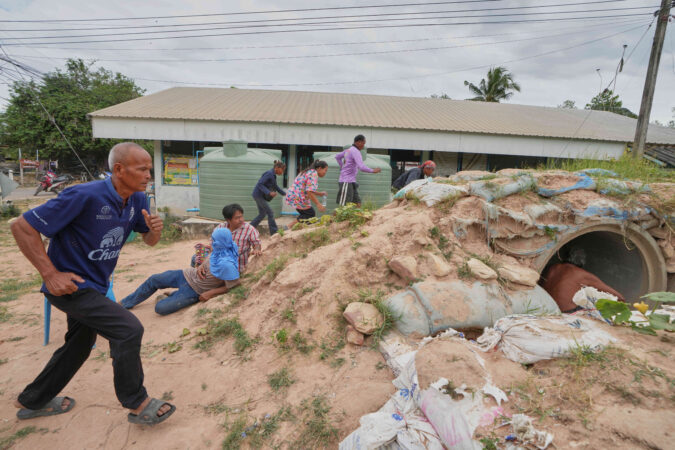
    However, the Thai army announced Saturday that BM-21 rockets had hit a civilian area in Sisaket province, seriously injuring two civilians who had heard warning sirens and had been running toward a bunker for safety.

    Thailand’s navy was also reported by both sides’ militaries to have joined the fighting on Saturday morning, with a warship in the Gulf of Thailand shelling Cambodia’s southwestern province of Koh Kong. Each side said the other opened fire first.

  • Speaker Johnson unveils healthcare plan as divided Republicans scramble for alternative

    Speaker Johnson unveils healthcare plan as divided Republicans scramble for alternative

    WASHINGTON — The Senate failed to get anywhere on the healthcare issue this week. Now it’s the House’s turn to show what it can do.

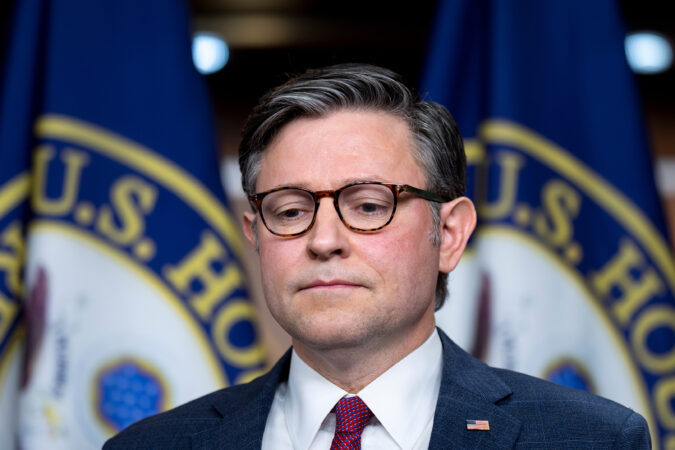
    Speaker Mike Johnson unveiled a Republican alternative late Friday, a last-minute sprint as his party refuses to extend the enhanced tax subsidies for those who buy policies through the Affordable Care Act, also called Obamacare, which are expiring at the end of the year. Those subsidies help lower the cost of coverage.

    Johnson (R., La.) huddled behind closed doors in the morning — as he did days earlier this week — working to assemble the package for consideration as the House focuses the final days of its 2025 work on healthcare.

    “House Republicans are tackling the real drivers of health care costs to provide affordable care,” Johnson said in a statement announcing the package. He said it would be voted on next week.

    Later Friday, though, House Democratic Leader Hakeem Jeffries said: “House Republicans have introduced toxic legislation that is completely unserious, hurts hardworking America taxpayers, and is not designed to secure bipartisan support. If the bill reaches the House floor, I will strongly oppose it.”

    Time is running out for Congress to act. Democrats engineered the longest federal government shutdown ever this fall in a failed effort to force Republicans to the negotiating table on healthcare. But after promising votes, the Senate failed this week to advance both a Republican healthcare plan and the Democratic-offered bill to extend the tax credits for three years.

    Now, with just days to go, Congress is about to wrap up its work with no consensus solution in sight.

    What Republicans are proposing

    The House Republicans offered a 100-plus-page package that focuses on long-sought GOP proposals to enhance access to employer-sponsored health insurance plans and clamp down on so-called pharmacy benefit managers.

    Republicans propose expanding access to what’s referred to as association health plans, which would allow more small businesses and self-employed individuals to band together and purchase health coverage.

    Proponents say such plans increase the leverage businesses have to negotiate a lower rate. But critics say the plans provide skimpier coverage than what is required under the Affordable Care Act.

    The Republicans’ proposal would also require more data from pharmacy benefit managers, or PBMs, as a way to help control drug costs. Critics say PBMs have padded their bottom line and made it more difficult for independent pharmacists to survive.

    Additionally, the GOP plan includes mention of cost-sharing reductions for some lower-income people who rely on Obamacare, but those would not take effect until January 2027.

    The emerging package from the House Republicans does not include an extension of an enhanced tax credit for millions of Americans who get insurance coverage through the Affordable Care Act. Put in place during the COVID-19 crisis, that enhanced subsidy expires Dec. 31, leaving most families in the program facing more than double their current out-of-pocket premiums, and in some cases, much more.

    What Trump wants

    President Donald Trump has said he believes Republicans are going to figure out a better plan than Obamacare — something he has promised for years — but offered few details beyond his idea for providing Americans with stipends to help buy insurance.

    “I want to see the billions of dollars go to people, not to the insurance companies,” Trump said late Friday during an event at the White House. “And I want to see the people go out and buy themselves great healthcare.”

    The president did not comment directly on the House’s new plan. He has repeatedly touted his idea of sending money directly to Americans to help offset the costs of healthcare policies, rather than extending the tax credits for those buying policies through Obamacare. It’s unclear how much money Trump envisions. The Senate GOP proposal that failed to advance would have provided payments to new health savings accounts of $1,000 a year for adult enrollees, or $1,500 for those ages 50 to 64.

    It appeared there were no such health savings accounts in the new House GOP plan.

    Political pressure is building for many

    Going Johnson’s route has left vulnerable House Republicans representing key battleground districts in a tough spot.

    Frustrated with the delays, a group of more centrist GOP lawmakers is aligning with Democrats to push their own proposals for continuing the tax credits, for now, so that Americans don’t face rising healthcare costs.

    They are pursuing several paths for passing a temporary ACA subsidy extension, co-sponsoring a handful of bills. They are also signing on to so-called discharge petitions that could force a floor vote if a majority of the House signs on.

    Such petitions are designed to get around the majority’s control and are rarely successful, but this year has proven to be an exception. Lawmakers, for example, were able to use a discharge petition to force a vote on the release of the Jeffrey Epstein files held by the Department of Justice.

    One petition, filed by Rep. Brian Fitzpatrick (R., Pa.), had signatures from 12 Republicans and 12 Democrats as of Friday afternoon. It would force a vote on a bill that includes a two-year subsidy extension and contains provisions designed to combat fraud in the ACA marketplace. There are also restrictions for PBMs, among other things.

    Another petition from Rep. Josh Gottheimer (D., N.J.) has 39 signatures and is broadly bipartisan. It’s a simpler proposal that would force a vote on a one-year ACA enhanced subsidy extension and would include new income caps limiting who qualifies for the enhanced credit.

    Both discharge petitions have enough Republicans’ support that they would likely succeed if Jeffries encouraged his caucus to jump on board. So far, he’s not tipping his hand.

    “We’re actively reviewing those two discharge petitions and we’ll have more to say about it early next week,” Jeffries said.

    Meanwhile, Jeffries is pushing Democrats’ own discharge petition, which has 214 signatures and would provide for a clean three-year subsidy extension. No Republicans have signed on to that one.

    And as Republicans made clear in the Senate this week, a three-year extension without changes to the program has no chance of passing their chamber.

  • Israel says it has killed a top Hamas commander in Gaza

    Israel says it has killed a top Hamas commander in Gaza

    JERUSALEM — Israel on Saturday said it killed a top Hamas commander in Gaza after an explosive device detonated and wounded two soldiers in the territory’s south.

    Hamas in a statement did not confirm the death of Raed Saad. It said a civilian vehicle had been struck outside Gaza City and asserted it was a violation of the ceasefire that took effect on Oct. 10.

    Saad served as the Hamas official in charge of manufacturing and previously led the militant group’s operations division. The Israeli statement described him as one of the architects of the Oct. 7, 2023, attack that sparked the war, and said that he had been “engaged in rebuilding the terrorist organization” in a violation of the ceasefire.

    The Israeli strike west of Gaza City killed four people, according to an Associated Press journalist who saw their bodies arrive at Shifa Hospital. Another three were wounded, according to Al-Awda hospital.

    Israel and Hamas have repeatedly accused each other of truce violations.

    Israeli airstrikes and shootings in Gaza have killed at least 386 Palestinians since the ceasefire took hold, according to Palestinian health officials. Israel has said recent strikes are in retaliation for militant attacks against its soldiers, and that troops have fired on Palestinians who approached the Yellow Line between the Israeli-controlled majority of Gaza and the rest of the territory.

    Israel has demanded that Palestinian militants return the remains of the final hostage, Ran Gvili, from Gaza and called it a condition of moving to the second and more complicated phase of the ceasefire. That lays out a vision for ending Hamas’ rule and seeing the rebuilding of a demilitarized Gaza under international supervision.

    The initial Hamas-led 2023 attack on southern Israel killed around 1,200 people and took 251 hostages. Almost all hostages or their remains have been returned in ceasefires or other deals.

    Israel’s two-year campaign in Gaza has killed more than 70,650 Palestinians, roughly half of them women and children, according to the territory’s Health Ministry, which does not distinguish between militants and civilians in its count. The ministry, which operates under the Hamas-run government, is staffed by medical professionals and maintains detailed records viewed as generally reliable by the international community.

    Much of Gaza has been destroyed and most of the population of over 2 million has been displaced. Humanitarian aid entry into the territory continues to be below the level set by ceasefire terms, and Palestinians who lost limbs in the war face a shortage of prosthetic limbs and long delays in medical evacuations.

  • VA plans to abruptly eliminate tens of thousands of healthcare jobs

    VA plans to abruptly eliminate tens of thousands of healthcare jobs

    The Department of Veterans Affairs plans to abruptly eliminate as many as 35,000 healthcare positions this month, mostly unfilled jobs including doctors, nurses, and support staff, according to an internal memo, VA staffers, and congressional aides.

    The cuts come after a massive reorganization effort already resulted in the loss of almost 30,000 employees this year.

    Agency leaders have instructed managers across the Veterans Health Administration, the agency’s healthcare arm, to identify thousands of openings that can be canceled. Employees warn that the contraction will add pressure to an already stretched system, contributing to longer wait times for care.

    The decision comes after Veterans Affairs Secretary Douglas A. Collins, under political pressure from Congress, backed away from a plan to slash 15% of the agency’s workforce through mass firings. Instead, VA lost almost 30,000 employees this year from buyout offers and attrition.

    The agency hopes that the cuts will reduce the healthcare workforce to as little as 372,000 employees, a 10% reduction from last year, according to a memo shared with regional leaders last month and obtained by the Washington Post. Details of the cuts came into focus in recent days, according to 17 staffers at VA and congressional aides who spoke on the condition of anonymity because they didn’t have permission to share plans.

    VA spokesperson Pete Kasperowicz confirmed the planned cuts for unfilled positions. He said the healthcare system is eliminating about 26,400 of its open jobs, which he described as “mostly COVID-era roles that are no longer necessary.”

    “The vast majority of these positions have not been filled for more than a year, underscoring how they are no longer needed,” he wrote in response to questions. “This move will have no effect on VA operations or the way the department delivers care to Veterans, as we are simply eliminating open and unfilled positions that are no longer needed.”

    The nation’s largest government-run healthcare system has struggled to fill vacancies amid a broader national shortage of healthcare workers and a strained federal workforce. Job applications to the agency have also fallen 57% from last year, according to the agency’s workforce report last month.

    This reorganization comes in advance of an expected announcement next week that Collins plans to also shrink the network of 18 regional offices that administer the nation’s VA hospitals and medical centers, according to four people familiar with the plan. Staff at those regional offices help determine policies and manage staffing. Collins and others have been critical of the agency’s top-heavy administrative offices, arguing that staffing cuts there will free up more resources for healthcare.

    The health system grew by tens of thousands of employees under the Biden administration as more veterans enrolled in VA healthcare after passage of the PACT Act, which expanded benefits for veterans exposed to toxic burn pits. Then-secretary Denis McDonough urged veterans to be seen by VA doctors rather than request referrals to private practitioners outside the system.

    But the Trump administration has said it wants more veterans to seek treatment outside the government system. Political appointees at VA and their allies have also said they favor a leaner healthcare workforce because they think physicians and other healthcare providers could be more productive, said one former appointee who is close to the Trump team.

    Collins stood down from planned mass firings this year after a bipartisan mix of lawmakers expressed concerns about cuts affecting patient care. The agency said mission-critical positions were exempted from the buyouts and retirement offers.

    Since then, lawmakers have sought greater oversight of the agency’s staffing plans. In the agreement to reopen the government last month, lawmakers allocated $133 billion in discretionary funding for the VA with conditions, including that the agency could not reduce staffing for suicide prevention programs, would provide updates on staffing counts, and would maintain the staff necessary to meet certain thresholds for processing benefits and providing healthcare.

    The House also approved a measure Thursday overturning President Donald Trump’s executive order eliminating union rights at federal agencies, including VA, where the union had said it was harder to protect jobs without collective bargaining.

    Thomas Dargon Jr., deputy general counsel of the American Federation of Government Employees, which represents more than 320,000 VA employees, said the union has not been consulted by the agency about the cuts but has heard about concerns from its members.

    “The VA has been chronically understaffed for years, and employees are obviously going to be facing the brunt of any further job cuts or reorganization that results in employees having to do more work with less,” Dargon said.

    Sharda Fornnarino, a VA nurse in Colorado and local head of her nurses’ union, said her facility continues to lack the necessary staff to keep up with demand, and she urged lawmakers to restore collective bargaining so nurses could advocate for safer working conditions. The measure is unlikely to pass the Republican-held Senate.

    “We’re going to continue to do more with less,” Fornnarino said. “We’re going to continue to be overworked.”

    Meanwhile, at the VA’s regional offices, leadership is determining which roles they would need to cancel, and several healthcare workers said they had been warned their hospitals would be affected. Regional leaders were told to ensure their organizational charts are updated by next week, according to the memo reviewed by the Post.

    In Phoenix, 358 openings will be eliminated, including nurses and doctors, according to a nurse who said the losses will hit as they are already behind in scheduling doctors appointments.

    “They specifically said no department would be spared,” she said.

    In another Mountain West hospital, healthcare workers were told at a town hall last week that no current employees would lose their jobs, though if anyone leaves, they would need to determine whether they could keep those jobs, according to a recording of the meeting.

    The bad news arrived last Friday for employees of the VA San Diego healthcare system, in an exclamation mark-filled email from director Frank Pearson.

    He wrote that he’d been expecting this year to fill 734 job vacancies with new nurses, doctors, and other staff, to help care for the almost 90,000 veterans that the San Diego system regularly serves. But sometime this fall, he wrote, higher-ups decided to “do some housekeeping and cleanup of the books” — informing the San Diego system that it only had the budget to retain 4,429 employees going into fiscal year 2026.

    That meant, Pearson wrote in bold, all-caps, underlined letters, that “322 VACANT POSITIONS need to be eliminated.”

    One of the VA employees who received the email said that, in the mental health section alone, there were 78 open positions as of this month — about half of which will now go away. Currently, the employee noted, veterans in the San Diego area are waiting between 60 and 90 days to access VA mental health services.

    Staff are already strained and exhausted after a difficult year, the employee said, and were counting on reinforcements.

    “We are all doing the work of others to compensate,” she said. “The idea that relief isn’t coming is really, really disappointing.”

  • 2 U.S. service members, one American civilian killed in ambush in Syria, U.S. Central Command says

    2 U.S. service members, one American civilian killed in ambush in Syria, U.S. Central Command says

    DAMASCUS, Syria — President Donald Trump said Saturday that “there will be very serious retaliation” after two U.S. service members and one American civilian were killed in an attack in Syria that the United States blames on the Islamic State group.

    “This was an ISIS attack against the U.S., and Syria, in a very dangerous part of Syria, that is not fully controlled by them,” he said in a social media post.

    The American president told reporters at the White House that Syria’s president, Ahmed al-Sharaa, was “devastated by what happened” and stressed that Syria was fighting alongside U.S. troops. Trump, in his post, said al-Sharaa was “extremely angry and disturbed by this attack.”

    The two service members killed were members of the Iowa National Guard, according to a person briefed on the situation who was granted anonymity because they did not have permission to speak publicly.

    U.S. Central Command said three service members were also wounded in an ambush Saturday by a lone IS member in central Syria. Trump said the three “seem to be doing pretty well.” The U.S. military said the gunman was killed.

    The attack on U.S. troops in Syria was the first with fatalities since the fall of President Bashar Assad a year ago.

    “There will be very serious retaliation,” Trump said on his Truth Social platform.

    The Pentagon’s chief spokesperson, Sean Parnell, said the civilian killed was a U.S. interpreter. Parnell said the attack targeted soldiers involved in the ongoing counterterrorism operations in the region and is under active investigation.

    The shooting took place near historic Palmyra, according to the state-run SANA news agency, which earlier said two members of Syria’s security force and several U.S. service members had been wounded. The casualties were taken by helicopter to the al-Tanf garrison near the border with Iraq and Jordan.

    The Britain-based Syrian Observatory for Human Rights said the attacker was a member of the Syrian security force.

    Syria’s Interior Ministry spokesperson Nour al-Din al-Baba said a gunman linked to IS opened fire at the gate of a military post. He added that Syrian authorities are looking into whether the gunman was an IS member or only carried its extreme ideology. He denied reports that suggested that the attacker was a security member.

    Later al-Baba clarified that the attacker was a member of the Internal Security force in the desert, adding that he “did not have any command post” within the forces nor was he a bodyguard for the force commander.

    Al-Baba added in an interview with state TV that some 5,000 members have joined Internal Security forces in the desert and they are evaluated on a weekly basis. He added that three days ago, an evaluation was made of the attacker and it turned out that he might have extreme ideology. A decision was expected to be issued regarding him on Sunday but “the attack occurred on a Saturday which is a day off for state institutions.”

    U.S. Defense Secretary Pete Hegseth posted on X: “Let it be known, if you target Americans — anywhere in the world — you will spend the rest of your brief, anxious life knowing the United States will hunt you, find you, and ruthlessly kill you.”

    The U.S. has hundreds of troops deployed in eastern Syria as part of a coalition fighting IS.

    The U.S. had no diplomatic relations with Syria under Assad, but ties have warmed since the fall of the five-decade Assad family rule. Al-Sharaa made a historic visit to Washington last month where he held talks with Trump. It was the first White House visit by a Syrian head of state since the Middle Eastern country gained independence from France in 1946 and came after the U.S. lifted sanctions imposed on Syria during the Assads’ rule.

    Al-Sharaa led the rebel forces that toppled Bashar Assad in December 2024 and was named the country’s interim leader in January. Al-Sharaa once had ties to al-Qaida and had a $10 million U.S. bounty on his head.

    Last month, Syria joined the international coalition fighting against the IS as Damascus improves its relations with Western countries following the ouster of Assad when insurgents captured his seat of power in Damascus.

    IS was defeated on the battlefield in Syria in 2019 but the group’s sleeper cells still carry out deadly attacks in the country. The United Nations says the group still has between 5,000 and 7,000 fighters in Syria and Iraq.

    U.S. troops, which have maintained a presence in different parts of Syria — including Al-Tanf garrison in the central province of Homs — to train other forces as part of a broad campaign against IS, have been targeted in the past. One of the deadliest attacks occurred in 2019 in the northern town of Manbij when a blast killed two U.S. service members and two American civilians as well as others from Syria while conducting a patrol.

  • Belarus frees Nobel Prize laureate Bialiatski, opposition figure Kolesnikova as U.S. lifts sanctions

    Belarus frees Nobel Prize laureate Bialiatski, opposition figure Kolesnikova as U.S. lifts sanctions

    VILNIUS, Lithuania — Belarus freed Nobel Peace Prize laureate Ales Bialiatski, key opposition figure Maria Kolesnikova, and dozens of other prisoners on Saturday, capping two days of talks with Washington aimed at improving ties and getting crippling U.S. sanctions lifted on a key Belarusian agricultural export.

    The U.S. announced earlier Saturday that it was lifting sanctions on Belarus’ potash sector. In exchange, President Alexander Lukashenko pardoned 123 prisoners, Belarus’ state news agency, Belta, reported.

    A close ally of Russia, Minsk has faced Western isolation and sanctions for years. Lukashenko has ruled the nation of 9.5 million with an iron fist for more than three decades, and the country has been repeatedly sanctioned by the West for its crackdown on human rights and for allowing Moscow to use its territory in the 2022 invasion of Ukraine. Belarus has released hundreds of prisoners since July 2024.

    John Coale, the U.S. special envoy for Belarus who met with Lukashenko in Minsk on Friday and Saturday, described the talks to reporters as “very productive” and said normalizing relations between Washington and Minsk was “our goal,” Belta reported.

    “We’re lifting sanctions, releasing prisoners. We’re constantly talking to each other,” Coale said, adding that the relationship between the U.S. and Belarus was moving from “baby steps to more confident steps” as they increased dialogue, according to the Belarusian news agency.

    Among the 123 prisoners were a U.S. citizen, six citizens of U.S. allied countries, and five Ukrainian citizens, a U.S. official told the Associated Press in an email. The official, who spoke on condition of anonymity to discuss private diplomatic negotiations, described the release as “a significant milestone in U.S.-Belarus engagement” and “yet another diplomatic victory” for U.S. President Donald Trump.

    The official said Trump’s engagement so far “has led to the release of over 200 political prisoners in Belarus, including six unjustly detained U.S. citizens and over 60 citizens of U.S. Allies and partners.”

    Bialiatski, Kolesnikova among those freed

    Pavel Sapelka, an advocate with the Viasna rights group, confirmed to the AP that Bialiatski and Kolesnikova were among those released.

    Bialiatski, a human rights advocate who founded Viasna, was in jail when he was awarded the Nobel Peace Prize in 2022 along with the prominent Russian rights group Memorial and Ukraine’s Center for Civil Liberties. He was later convicted of smuggling and financing actions that violated public order — charges that were widely denounced as politically motivated — and sentenced to 10 years in 2023.

    Bialiatski told the AP by phone Saturday that his release after 1,613 days behind bars came as a surprise — in the morning, he was still in an overcrowded prison cell.

    “It feels like I jumped out of icy water into a normal, warm room, so I have to adapt. After isolation, I need to get information about what’s going on,” said Bialiatski, who seemed energetic but pale and emaciated in post-release videos and photos.

    He vowed to continue his work, stressing that “more than a thousand political prisoners in Belarus remain behind bars simply because they chose freedom. And, of course, I am their voice.”

    Kolesnikova, meanwhile, was a key figure in the mass protests that rocked Belarus in 2020, and is a close ally of an opposition leader in exile, Sviatlana Tsikhanouskaya.

    Known for her close-cropped hair and trademark gesture of forming a heart with her hands, Kolesnikova became an even greater symbol of resistance when Belarusian authorities tried to deport her in September 2020. Driven to the Ukrainian border, she briefly broke away from security forces at the frontier, tore up her passport and walked back into Belarus.

    The 43-year-old professional flutist was convicted in 2021 on charges including conspiracy to seize power and sentenced to 11 years in prison.

    Others who were freed

    Among the others who were released, according to Viasna, was Viktar Babaryka — an opposition figure who had sought to challenge Lukashenko in the 2020 presidential election, widely seen as rigged, before being convicted and sentenced to 14 years in prison on charges he rejected as political.

    Viasna reported that the group’s imprisoned advocates, Valiantsin Stefanovic and Uladzimir Labkovich, and prominent opposition figure Maxim Znak were also freed. But it later said it was clarifying its report about Stefanovic’s release, and Bialiatski told the AP that Stefanovic had not been freed, though he hopes he will be soon.

    Most of those released were sent to Ukraine, Franak Viachorka, Tsikhanouskaya’s senior adviser, told the AP.

    “I think Lukashenko decided to deport people to Ukraine to show that he is in control of the situation,” Viachorka said.

    Eight or nine others, including Bialiatski, were being sent to Lithuania on Saturday, and more prisoners will be taken to the Baltic country in the next few days, Viachorka said.

    Ukrainian authorities confirmed that Belarus had handed over 114 civilians. Ukrainian President Volodymyr Zelensky confirmed that five of them are Ukrainian nationals.

    Freed Belarusian nationals “at their request” and “after being given necessary medical treatment” will be taken to Poland and Lithuania, Ukrainian authorities said.

    Lukashenko wants rapprochement with the West

    When U.S. officials last met with Lukashenko in September, Washington said it was easing some of the sanctions on Belarus. Minsk, meanwhile, released more than 50 political prisoners into Lithuania, pushing the number of prisoners it had freed since July 2024 past the 430 mark.

    “The freeing of political prisoners means that Lukashenko understands the pain of Western sanctions and is seeking to ease them,” Tsikhanouskaya, the opposition leader in exile, told the AP on Saturday.

    She added: “But let’s not be naive: Lukashenko hasn’t changed his policies, his crackdown continues and he keeps on supporting Russia’s war against Ukraine. That’s why we need to be extremely cautious with any talk of sanctions relief, so that we don’t reinforce Russia’s war machine and encourage continued repressions.”

    Tsikhanouskaya also described European Union sanctions against Belarusian potash fertilizers as far more painful for Minsk that the U.S. ones, saying that while easing U.S. sanctions could lead to the release of political prisoners, European sanctions should be used to push for long-term, systemic changes in Belarus and the end of the war in Ukraine.

    Sanctions have hit key export hard

    Belarus, which previously accounted for about 20% of global potash fertilizer exports, has faced sharply reduced shipments since Western sanctions targeted state producer Belaruskali and cut off transit through Lithuania’s port in Klaipeda, the country’s main export route.

    “Sanctions by the U.S., EU and their allies have significantly weakened Belarus’ potash industry, depriving the country of a key source of foreign exchange earnings and access to key markets,” Anastasiya Luzgina, an analyst at the Belarusian Economic Research Center BEROC, told the AP.

    “Minsk hopes that lifting U.S. sanctions on potash will pave the way for easing more painful European sanctions; at the very least, U.S. actions will allow discussions to begin,” she said.

    The latest round of U.S.-Belarus talks also touched on Venezuela, as well as Russia’s ongoing invasion of Ukraine, Belta reported.

    Coale told reporters that Lukashenko had given “good advice” on how to address the Russia-Ukraine war, saying that Lukashenko and Russian President Vladimir Putin were “longtime friends” with “the necessary level of relationship to discuss such issues.”

    “Naturally, President Putin may accept some advice and not others,” Coale said.

    The U.S. official told the AP that “continued progress in U.S.-Belarus relations” also requires steps to resolve tensions between Belarus and neighboring Lithuania, which is a member of the EU and NATO.

    The Lithuanian government this week declared a national emergency over security risks posed by meteorological balloons sent from Belarus.

    The balloons forced Lithuania to repeatedly shut down its main airport, stranding thousands of people. Earlier this year, Lithuania temporarily closed its border with Belarus, and Belarusian authorities responded by threatening to seize up to 1,200 Lithuanian trucks they said were stuck in Belarus.

    The U.S. official said improving ties between U.S. and Belarus will require “positive action to stop the release of smuggling balloons from Belarus that affect Lithuanian airspace and resolve the impoundment of Lithuanian trucks.”