LONDON — Sophie Kinsella, the author of Confessions of a Shopaholic and a series of millions-selling sequels died Monday, her family said. She was 55 and had been diagnosed with brain cancer.
The family said in a statement on Ms. Kinsella’s Instagram account: “We are heartbroken to announce the passing this morning of our beloved Sophie (aka Maddy, aka Mummy). She died peacefully, with her final days filled with her true loves: family and music and warmth and Christmas and joy.
“We can’t imagine what life will be like without her radiance and love of life.”
Ms. Kinsella, who also published under her real name, Madeleine Wickham, announced in April 2024 that she had been diagnosed in late 2022 with glioblastoma, an aggressive form of brain cancer.
“I did not share this before because I wanted to make sure that my children were able to hear and process the news in privacy and adapt to our ’new normal,’” she said at the time.
Starting in 2000 with The Secret Dreamworld of a Shopaholic,(titled Confessions of a Shopaholic in the United States), about a financial journalist who writes about money matters but fails miserably at managing her own, Ms. Kinsella published 10 “Shopaholic” novels, along with other fiction. Her books have sold more than 45 million copies worldwide and have been translated into dozens of languages.
The first two “Shopaholic” books were adapted into the 2009 film Confessions of a Shopaholic, starring Isla Fisher.
From journalism to fiction
Ms. Kinsella did not grow up intending to be a writer. One of three girls born to teachers in London, she played piano and violin as a child and also composed music.
She told author-publisher Zibby Owens on her podcast, Moms Don’t Have Time to Read Books, that the idea of writing never crossed her mind. “It wasn’t my childhood ambition. I wasn’t the child walking around saying, ‘I’m going to write a novel one day.’”
Ms. Kinsella enrolled at Oxford University to study music but switched to the politics, philosophy and economics program after one year.
While at college, she met musician Henry Wickham and fell in love. The couple had four sons and a daughter.
After graduating, Ms. Kinsella began working as a financial journalist and spent her commute reading. The idea to write fiction herself began to take shape on the train, and she worked on her first novel during her lunch hours.
She published her first novel, The Tennis Party, in 1995, as Madeleine Wickham. Soon after, she left her journalism job to focus on writing. Six other books, including The Gatecrasher and Sleeping Arrangements, followed.
‘Shopaholic’ success
An otherwise normal shopping excursion sparked the idea for writing her first “Shopaholic” novel
“I remember looking around me and thinking… “We all shop… We talk about it. We do it. We rejoice in it. We make bad decisions. Why hasn’t anybody written about this?” Ms. Kinsella said in 2019 on The Sunday Salon with Alice-Azania Jarvis podcast.
Ms. Kinsella created a story about Becky Bloomwood, a 20-something financial journalist in debt from a shopping habit she can’t (or won’t) kick. The novel contained hilarious back-and-forth correspondence with bill collectors and banks, where she would make excuses for late payments. Ms. Kinsella said those letters were one of the most fun bits to write.
There was also a love story with a handsome businessman whom Becky met while on assignment. She went on to marry and have a mini-shopaholic daughter in future books.
The humorous tone of Confessions of a Shopaholic was a change from her earlier books, so she decided to submit it to her publishers under a pen name. Her middle name was Sophie and Ms. Kinsella was her mother’s maiden name.
The publishers said yes, and “Shopaholic” was published in 2000 under her pseudonym. The novel, blending humor with a cautionary tale about getting in over your head with debt, was an immediate success.
Ms. Kinsella said Becky was a modern everywoman whose behavior was “what you wouldn’t do yourself, but maybe you would if you were in absolute extreme circumstances. And that’s what she finds herself in all the time.”
Bloomwood’s further adventures followed in books including Shopaholic Takes Manhattan, Shopaholic Ties the Knot, and Shopaholic & Sister.
Along with Bridget Jones author Helen Fielding and others, Ms. Kinsella’s work was often branded “chick lit” by the media. She told the AP in 2004 she didn’t mind the label, interpreting it as signaling a book that is “fun, entertaining and might just have a happy ending.”
“Just because you are interested in frivolous things doesn’t mean that you can’t be bright and have great ideas and the rest of it,” she said.
The first two “Shopaholic” books were adapted into the 2009 film “Confessions of a Shopaholic,” starring Isla Fisher and Hugh Dancy.
Her novel Can You Keep a Secret? was adapted into a 2019 film starring Alexandra Daddario and Tyler Hoechlin. Her last novel was The Burnout, released in 2023.
Illness and hope
In November 2022, after experiencing symptoms including memory loss, headaches and balance troubles, Ms. Kinsella was diagnosed with glioblastoma, for which there is no cure. She kept the news private until April 2024. In an interview with TV personality Robin Roberts aired a few months later, Ms. Kinsella said she was focused on living in the moment.
“I’ve already lasted more than the average. That’s how we get through. We hope,” she said.
After her diagnosis, she wrote a novella, What Does It Feel Like, about a woman with five children who has brain cancer.
“I thought people might be curious to know what it’s like to go through this,” Ms. Kinsella told Roberts. “I hope it’s full of optimism and love most of all.”
Araminta Whitley and Marina de Pass, Ms. Kinsella’s agents at The Soho Agency, said the writer “had a rare gift for creating emotionally resonant protagonists and stories that spoke to, and entertained, readers wherever they were in the world and whatever challenges they faced.”
Bill Scott-Kerr, her publisher at Transworld, said Ms. Kinsella leaves behind “a unique voice, an unquenchable spirit, a goodness of intent and a body of work that will continue to inspire us to reach higher and be better, just like so many of her characters.”
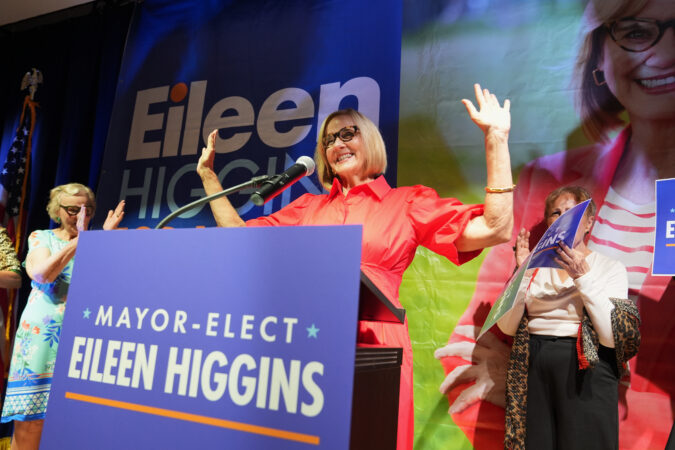
MIAMI — Democrat Eileen Higgins won the Miami mayor’s race on Tuesday, defeating a Republican endorsed by President Donald Trump to end her party’s nearly three-decade losing streak and give Democrats a boost in one of the last electoral battles ahead of the 2026 midterms.
Higgins, 61, will be the first woman to lead the city of Miami. She spoke frequently in the Hispanic-majority city about Trump’s immigration crackdown, saying she has heard of many people in Miami who were worried about family members being detained. She campaigned as a proud Democrat despite the race being officially nonpartisan and beat Trump-backed candidate Emilio Gonzalez, a former city manager, who said he called Higgins to congratulate her.
“We are facing rhetoric from elected officials that is so dehumanizing and cruel, especially against immigrant populations,” Higgins told The Associated Press after her victory speech. “The residents of Miami were ready to be done with that.”
With nearly all votes counted Tuesday, Higgins led the Republican by about 19 percentage points.
The local race is not predictive of what may happen at the polls next year. But it drew attention from the two major national political parties and their leaders. The victory provides Democrats with some momentum heading into a high-stakes midterm election when the GOP is looking to keep its grip in Florida, including in a Hispanic-majority district in Miami-Dade County. The area has shifted increasingly rightward politically in recent years, and the city may become the home of Trump’s presidential library.
“Tonight’s result is yet another warning sign to Republicans that voters are fed up with their out-of-touch agenda that is raising costs,” said Ken Martin, the chair of the Democratic National Committee, in a statement.
Some nationally recognized Democrats supported Higgins, including former Transportation Secretary Pete Buttigieg. U.S. Sen. Ruben Gallego and former Chicago Mayor Rahm Emanuel traveled to Miami on Sunday and Monday to rally voters for the Democrat who served as a Miami-Dade county commissioner for seven years.
Higgins, who speaks Spanish, represented a district that leans conservative and includes the Cuban neighborhood of Little Havana. When she first entered politics in 2018, she chose to present herself to voters as “La Gringa,” a term Spanish speakers use for white Americans, because many people did not known how to pronounce her name.
“It just helps people understand who I am, and you know what? I am a ‘gringa,’ so, what am I going to do, deny it?” she told the AP.
Republicans’ anxiety grows
Republicans in Florida have found strong support from voters with heritage from Cuba, Venezuela and Nicaragua, because they likened some members of the Democratic party’s progressive wing with politicians from the governments they fled. Trump and other GOP members have tapped into those sentiments over the past eight years.
However, some local Republicans are growing increasingly frustrated since November’s elections when Democrats scored wins in New Jersey and Virginia, where both winning gubernatorial candidates performed strongly with nonwhite voters.
The results from those races were perceived as a reflection of concerns over rising prices and the Trump administration’s aggressive immigration policies.
U.S. Rep. Maria Elvira Salazar, a Republican whose district is being targeted by Democrats and includes the city of Miami, called the elections elsewhere a “wake-up call.” She said Hispanics also want a secure border and a healthy economy but some relief for “those who have been here for years and do not have a criminal record.”
“The Hispanic vote is not guaranteed,” Salazar said in a video posted on X last month. “Hispanics married President Trump, but they are only dating the GOP.”
David Jolly, who is running to represent Democrats in the Florida governor’s race next year, said the mayoral election was good news for Democrats in what used to be a battleground state.
“Change is here. It’s sweeping the nation, and it’s sweeping Florida,” Jolly said.
Miami mayor-elect gains national platform
The mayoral position in Miami is more ceremonial, but Higgins promised to execute it like a full-time job.
The city is part of Miami-Dade County, which Trump flipped last year, a dramatic improvement from his 30 percentage point loss to Democrat Hillary Clinton in 2016.
As Florida’s second-largest city, Miami is considered the gateway to Latin America and attracts millions of tourists. Its global prominence gives Higgins a significant stage as mayor.
Her pitch to voters included finding city-owned land that could be turned into affordable housing and cutting unnecessary spending.
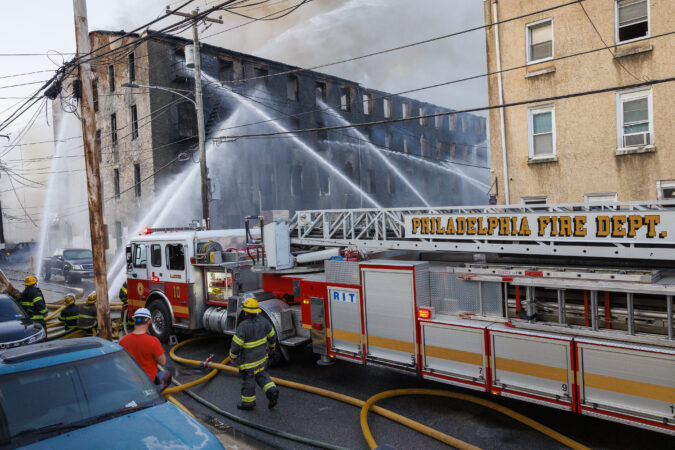
A former top-ranking deputy with the Philadelphia Fire Department has been demoted amid two ongoing investigations into sexual harassment and overtime abuse, The Inquirer has learned.
Former Deputy Commissioner for Operations Anthony Hudgins — who had been the second-highest ranking official in the 2,800-member department — was recently downgraded to deputy fire chief and reassigned to the Incident Safety Office, according to spokespeople with the city and fire department. The demotion cut his annual salary by nearly 25%, from $202,550 to $155,106, payroll records show.
Hudgins was the subject of an array of sexual harassment allegations, which led the city to hire an outside law firm to investigate the claims and interview department personnel. In a May interview with The Inquirer, Hudgins called the probe baseless and claimed he was targeted with false allegations after uncovering rampant overtime fraud. He acknowledged that as fewer than10 employees had lodged complaints against him. The city inked a $35,000 contract with the law firm Campbell Durrant to investigate the allegations.
Hudgins, a 31-year department veteran, did not immediately respond to a request for comment. After publication, Hudgins’ attorney, Amanda N. Martinez, sent a statement saying that Hudgins“remains committed to assisting the City with any legitimate investigation into the overtime fraud that he brought to light.”
She added that Hudgins is “reviewing the details surrounding the City’s actions and all defamatory statements made against him by individuals” and will “pursue all available legal remedies under the law necessary to protect Mr. Hudgins’ reputation and employment rights.”
The fire department has for decades faced allegations of pervasive sexual misconduct, and yet the Hudgins probe is significant in that it targeted a top-ranking department official. Although they acknowledged that Hudgins had been demoted, spokespeople for the city and fire department declined to confirm whether any of the allegations against him had been substantiated, citing the city’s policy to not discuss personnel issues.
Fire department leadership did not elaborate on the results of the investigation. A request for comment from Mayor Cherelle L. Parker resulted in a prepared statement from City Solicitor Renee Garcia, who said the city “takes any allegations of sexual harassment or fraud, including overtime fraud, very seriously.”
“We investigate any such allegations thoroughly and, if misconduct is found, we will take appropriate action to implement any warranted discipline expeditiously,” Garcia said.
The city has also declined to reveal whether any fire department employees have faced discipline as a result of the related investigation into alleged overtime abuse. Inspector General Alexander DeSantis — who as far back as January launched a probe into the overtime fraud claims — said his office’s investigation is “still ongoing and may be for some time.” He described the probe as “active” but declined to elaborate.
City officials have declined to release public records that would shed light on some of the fire department’s top overtime earners — and are taking The Inquirer to court in an effort to keep those records hidden.
In an affidavit submitted to the Office of Open Records, the agency that enforces state open-records laws, DeSantis argued that releasing the records to The Inquirer would jeopardize his office’s investigation and that it could not release the files “without identifying or implying who may be directly involved in this investigation.” Records related to noncriminal investigations are exempt from release under Pennsylvania’s Right-to-Know Law.
The Office of Open Records ruled in May that The Inquirer is entitled to receive the records, which cannot be withheld simply because the OIG opened an investigation.
The city again declined to release the overtime sheets and instead appealed the OOR ruling to the Court of Common Pleas. In a 21-page brief filed in that case, attorneys for the city urged the court to vacate the OOR’s ruling on the grounds that releasing the records would raise questions about “the efficacy of investigations, witness confidentiality, and harm to reputation.”
The OIG probe has yet to publicly reveal any findings. DeSantis offered no timeline for its conclusion, and the results may not be made public even after the investigation ends.
The OIG’s stated mission is to “keep City government free from fraud, corruption, and misconduct,” but the office rarely releases specifics related to the outcome of its fraud investigations. Instead, it publishes an annual report summarizing the office’s work from the previous year.
The OIG has yet to release that report for 2024.
Staff writers Samantha Melamed and Ryan W. Briggs contributed to this article.
Correction: A previous version of this story incorrectly characterized the total number of employees that Hudgins said may have filed complaints against him.
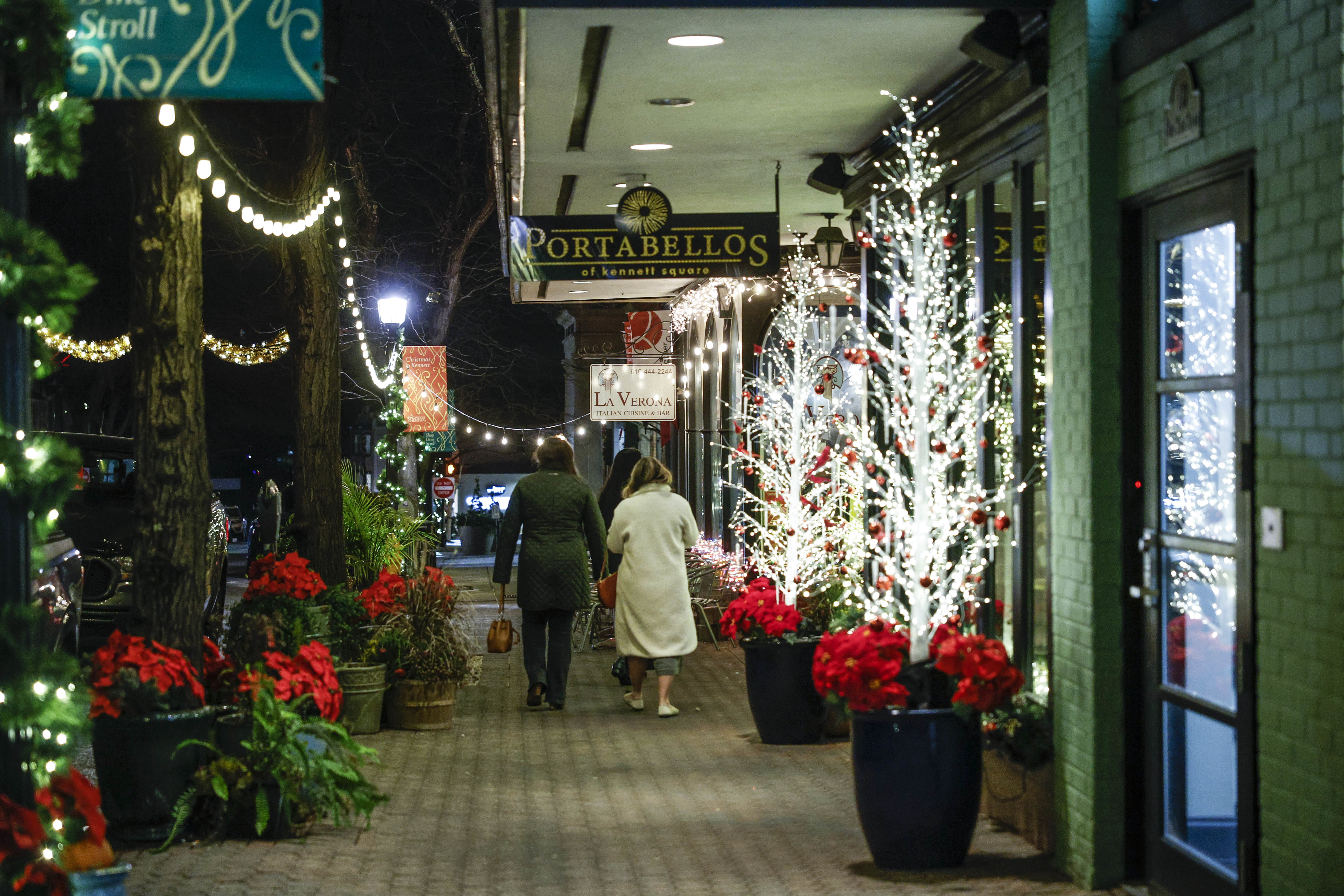
State Street in Kennett Square sees lots of additional visitors during the holiday season.
Kennett Square is buzzing thanks to a holiday swell of visitors in town for the annual Longwood Gardens holiday display.
To capitalize on the “economic engine” that is “A Longwood Christmas,” merchants kicked off the holiday season a little early this year, including with a festive parade a week ahead of its usual schedule. That decision was a boon for businesses, which reported “record-breaking” sales during Thanksgiving week, something they plan to replicate next year.
The Longwood effect isn’t just great for the gardens or area shops — it also means increased hotel bookings and full restaurant dining rooms.
The county’s Board of Elections certified November’s general election results on Friday as it continues to investigate why third-party voters weren’t included in poll books. (WHYY)
The Chester County Economic Development Council launched a new program last week aimed at helping startups and entrepreneurs throughout southeastern Pennsylvania. The investment group, i2n Angels, will fund promising early-stage companies with between $50,00 and $500,000, as well as provide coaching and advice.
The Chester County Department of Community Development was recently recognized by community solutions organization Built for Zero for its efforts in reducing homelessness. County CEO David Byerman said there was a 33% decrease in first-time homelessness in 2024 compared to 2022 and that the number of people entering emergency shelters was slashed by nearly half over the past five years.
SEPTA missed Friday’s federally imposed deadline to finish repairs to the heat-detection system on its Regional Rail cars. The agency said the lapse was due to a shortage of the thermal wire required to make the repairs. Installation of the backordered wire for 30 of SEPTA’s remaining trains is expected to be completed next week.
💡 Community News
Philanthropist MacKenzie Scott has made another donation to Lincoln University, this time for $25 million. The no-strings-attached gift to the historically Black college will support scholarships and other initiatives.
Last week, PennDot outlined its updated plans for the busy intersection at Old Baltimore Pike and Newark Road in New Garden Township, a project that is expected to cost upward of $11 million and has already been pushed from its original timeline. In 2022, the agency projected work would get underway in 2025, but plans now call for the three-phase project to begin in 2028 and is expected to take several years to complete. (Daily Local)
South CoatesvilleBorough has been awarded a $200,000 grant from the Pennsylvania Department of Community and Economic Development to hire a full-time municipal manager. There’s no timeline yet for when the hiring process will begin.
After 45 years, Brandywine Conservancy announced last week that 2026 will be its last year as the sole operator and beneficiary of the Radnor Hunt Races. The popular Malvern steeplechase event is looking for a new operator going forward. The 2026 races will take place May 16.
Still in search of a fresh-cut Christmas tree? Wiggins Farm, which has locations in Cochranville and West Chester, is one of a number of area farms offering delivery this year. The service runs about $50 near West Chester and jumps to $75 for deliveries more than 30 minutes away.
Residents in West Bradford Township are expressing concern over skyrocketing sewer bills after being switched to a metered rate for running water rather than the previous flat rate. The change doesn’t differentiate between interior and exterior water use, causing some residents to say they’re now being charged for a service that isn’t being provided. (CBS News Philadelphia)
NBC10 recently profiled The Barn at Spring Brook Farm in West Chester, a nonprofit that connects children and teens with disabilities to nature- and animal-based programming. The organization launched in 2005 and served 477 children last year alone. See the segment here.
Gadaleto’s Seafood Market in West Chester will continue providing family meals for free to those in need throughout the holiday season. (6abc)
Santa is making a stop in Spring City and East Vincent Township this weekend. At 11 a.m. on Sunday, Santa, Mrs. Claus, and Rudolph will hop aboard one of Liberty Fire Company’s trucks and travel around town.
🏫 Schools Briefing
New student registration for kindergarten through 12th grade is now open for the 2026-27 school year at Downingtown Area School District.
Last Friday, several school districts throughout the county held reorganization meetings, swearing in new members as well as voting on leadership. In Tredyffrin/Easttown School District, Sue Tiede was elected president and Kenneth Hong as vice president. In the Unionville-Chadds Ford School District, the board reelected Victoria Baratta and Erin Talbert as president and vice president, respectively. And Avon Grove School District’sboard reelected Dorothy Linn as president, and elected Ruchira Singh as vice president.
Some local high school football players have signed on to play college ball. Last week, Malvern Prep edge rusher Jackson Ford committed to playing with Penn State next year. Fellow Prep teammates Max Mohring, a linebacker, will head to Northwestern University, and running back Ezekiel Bates will play for Minnesota. Kennett Square kicker Shay Barker is headed to Syracuse University and West Chester East offensive tackle Tyler Duell is off to Rutgers.
🍽️ On our Plate
The former Lotus Inn in Berwyn has gotten new life. Karthic Venkatachalam and Gopal Dhandpani of Nalal Indian Cuisine in Downingtown and Adyar Cafe in Exton opened Vibe Haus Indian Plates & Taps there last week. The restaurant, at 402 Swedesford Rd., features Indian-meets-American pub food, with plans to add a brewery in the coming months.
Our Deli Café expanded to its second location on Monday, opening at 498 Nutt Rd. in Phoenixville. The Paoli-based eatery serves breakfast, lunch, and dinner, including staples like burgers, sandwiches, wraps, and milkshakes.
After nearly two years in business, Bookstore Bakery in West Chester has announced it will close at the end of the year. Located at 145 W. Gay St., the shop was known for its selection of both books and baked goods, including customized cakes.
🎳 Things to Do
🎁 There are more holiday markets and events taking place this weekend, including the Downingtown Good Neighbor Christmas Parade on Saturday. That same day, Christkindlmarkt takes over part of Gay Street in West Chester, and on Sunday, shoppers can browse vendors at the Berwyn Holiday Market at Bronze Plaza. On Saturday and Sunday, the Kennett SquareHoliday Village Market returns for its second weekend at The Creamery, while in Phoenixville, Fitzwater Station’s Christmas Villagecontinues. On Sunday evening, Congregation B’nai Jacob in Phoenixville will host its Hanukkah Celebration with a menorah lighting, jelly donuts, and games of dreidel.
Here’s what else is happening around Chester County:
🎭Anastasia:It’s the final weekend to catch SALT Performing Arts’ stage performance of the lost Romanov. ⏰ Saturday, Dec. 13 and Sunday, Dec. 14, times vary 💵 $31.60-$36.70 📍 SALT Performing Arts, Chester Springs
🏡Home Alone: Catch a screening of the beloved holiday classic, which celebrates its 35th anniversary this year. ⏰ Saturday, Dec. 13, 12:15, 4:30 and 7 p.m. 💵 $10-$15 📍 The Colonial Theatre, Phoenixville
🐦🔥 Phoenixville Firebird Festival: Now in its 22nd year, the festival inspired by ancient mythology and the symbols of resurrection and renewal returns to Phoenixville, where a 20-foot phoenix will be burned. There will also be a Festival Village. ⏰ Saturday, Dec. 13, 4 p.m. 💵 Pay as you go 📍 Reservoir Park, Phoenixville
Part of the family room’s ceiling reaches two stories, while another part has a stone fireplace.
Located just outside the borough, this West Goshen Township home recently underwent a full update, with over $560,000 in improvements. The sprawling home features an office, dining and living rooms, and an open-concept kitchen on the first floor. A sunny family room, part of which spans two stories, features a stone fireplace. There are four bedrooms upstairs, including a primary suite with two vanities, a soaking tub, and dressing area with a wardrobe and separate walk-in closets. Other features include a finished walk-out basement and a new deck overlooking the pool.
By submitting your written, visual, and/or audio contributions, you agree to The Inquirer’s Terms of Use, including the grant of rights in Section 10.
This suburban content is produced with support from the Leslie Miller and Richard Worley Foundation and The Lenfest Institute for Journalism. Editorial content is created independently of the project donors. Gifts to support The Inquirer’s high-impact journalism can be made at inquirer.com/donate. A list of Lenfest Institute donors can be found at lenfestinstitute.org/supporters.
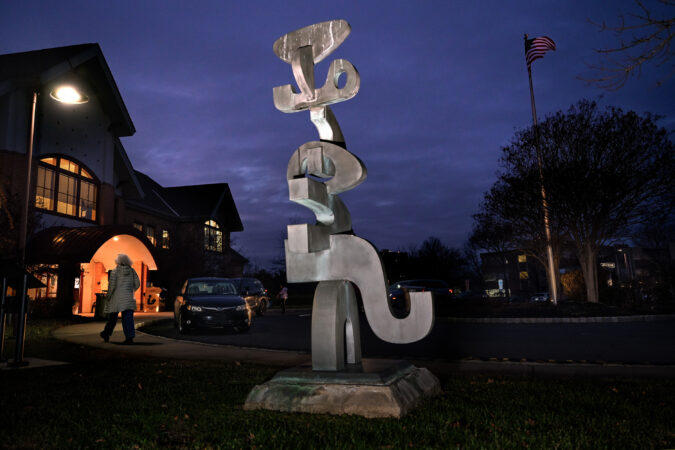
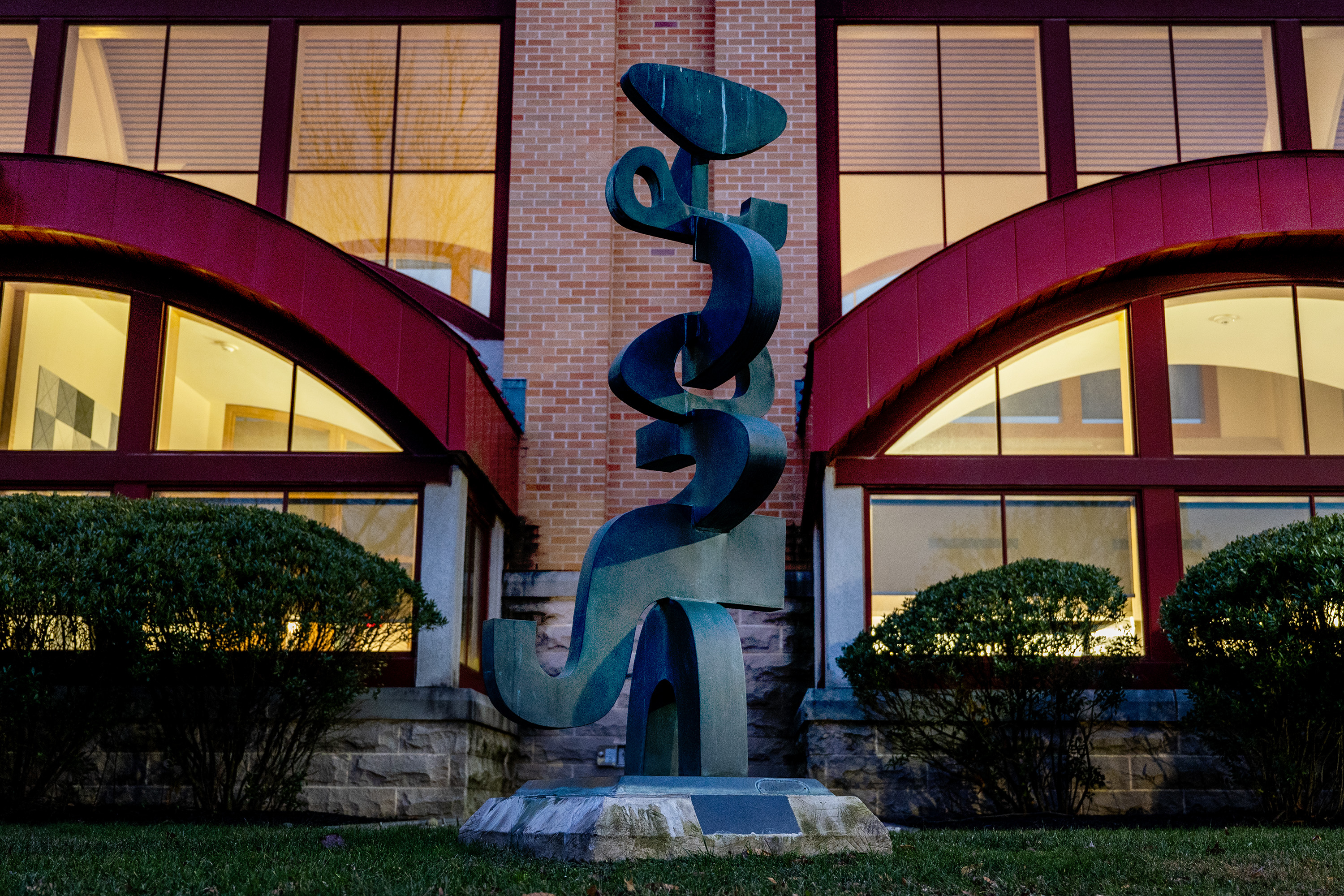
David Ascalon’s sculpture, called “Totem,” is located near the entrance to the Cherry Hill Public Library.
The Cherry Hill Public Library brims with more than just books. It also houses an impressive collection of art, both within and outside its walls. One such work, an 8-foot-tall bronze statue, has long caught the eye of township resident David Jastrow.
His daughters even came up with a nickname for it: The “mixed-up elephant.”
Wondering about its meaning, Jastrow reached out to Curious Cherry Hill, where Inquirer reporters set out to answer reader questions from around town.
This week, The Inquirer’s Henry Savage found out how the abstract piece came to reside near the library’s entrance and how its creator wants it to be interpreted.
Gerald S. Yashinsky, a 51-year-old Cherry Hill man, died after being hit by a car Monday night when crossing Haddonfield Road near Yale Avenue. The driver is cooperating with investigators.
The cost of collecting and disposing trash for Cherry Hill will jump $1.4 million in January. Mayor Dave Fleisher said the township has accounted for the increase — about $12.4 million over the next five years — in its proposed municipal budget for 2026. Residents can share their thoughts on the budget at council’s next scheduled meeting on Dec. 22. (South Jersey Media)
The former Fulton Bank at 1460 Route 70 East could becomea Dunkin’. On Monday, the township’s Planning Board will consider variance requests from South Jersey Management, LLC to convert the former 2,300-square-foot bank into a 2,100-square-foot coffee shop. Changes call for removing the existing drive-through and making the western driveway along Frontage Road into an entrance only.
The AMC Cherry Hill 24 will be one of 500 movie theaters across the U.S. and Canada screening the finale of Stranger Things on New Year’s Eve as it makes its global debut. Fans can reserve seats now for screenings of the feature-length finale.
A Powerball ticket purchased at the Wegmans on Route 70 for last Saturday’s jackpot matched four of the five white balls called, meaning whoever purchased the ticket won $50,000. (Patch)
The Plaza at Cherry Hill has undergone several changes recently, including the opening of swimming lesson chain Big Blue Swim School and thrift store Savers, as well as the relocation of Pure Hockey. The shifts come as part of the shopping center undergoes a makeover. (42 Freeway)
New Jersey officials have declared a drought warning for many parts of the state, including Camden County, which has experienced about four inches below average precipitation over the past 90 days and is down six inches for the past year.
Cherry Hill East and West’s girls basketball teams both have a number of Big North Conference stat leaders returning to their rosters this year.Kirsten Gibson of West had the second-most points per game in the conference last year, according to NJ.com data. Her teammates Jizel Dowling and Lilly Legato will also return. East’s Dylan Kratchman, who averaged 11 points per game, will sport the Cougar colors again, along with Maya Morgan, Michelle Le, Jessie Atlas, and Lily Shubach.
Reminder for families: There are early dismissals for preschool, elementary, and middle schools today and tomorrow as parent/teacher conferences continue. There’s a districtwide early dismissal Friday. See the district’s full calendar here.
🍽️ On our Plate
Indian restaurant Bombay Express is opening at its new location at 219 Haddonfield-Berlin Rd. tomorrow. The eatery, known for its traditional and vegan halal dishes, as well as its naan tacos, closed its Marlton storefront in late October. Its new spot will be open daily from 11 a.m. to 9 p.m.
Italian restaurant Caffe Aldo Lamberti is hosting Christmas carolers during dinner service this Sunday and again next weekend. Students from East will perform this Sunday and next Friday, while students from West will sing tunes next Saturday and Sunday. Caroling will take place from about 6 to 9 p.m. each night.
Cherry Hill is home to three of the 99 greatest restaurants in New Jersey, according to NJ.com. The outlet ranked Nan Xiang Xiao Long Bao, which is known for its soup dumplings, the top restaurant in town, coming in at No. 42. It’s followed by Sichuan joint Han Dynasty at No. 81, and Korean barbecue eatery Dolsot House at No. 94.
🎳 Things to Do
⛸️ Skate and Decorate: Hit the ice at the Winterfest Ice Skating Rink and decorate holiday cookies. ⏰ Sunday, Dec. 14, noon-4 p.m. 💵 Cookie decorating is free, skating admission is $6-$9 📍 Cooper River Park
🕎 Menorah Motorcade: Now in its 16th year, cars adorned with menorahs will parade from Chabad in Cherry Hill to Barclay Farm Shopping Center, where the giant menorah will be lit. ⏰ Sunday, Dec. 14, parade starts at 4 p.m., giant menorah lighting is at 5 p.m. 💵 Free 📍Chabad of Camden and Burlington Counties
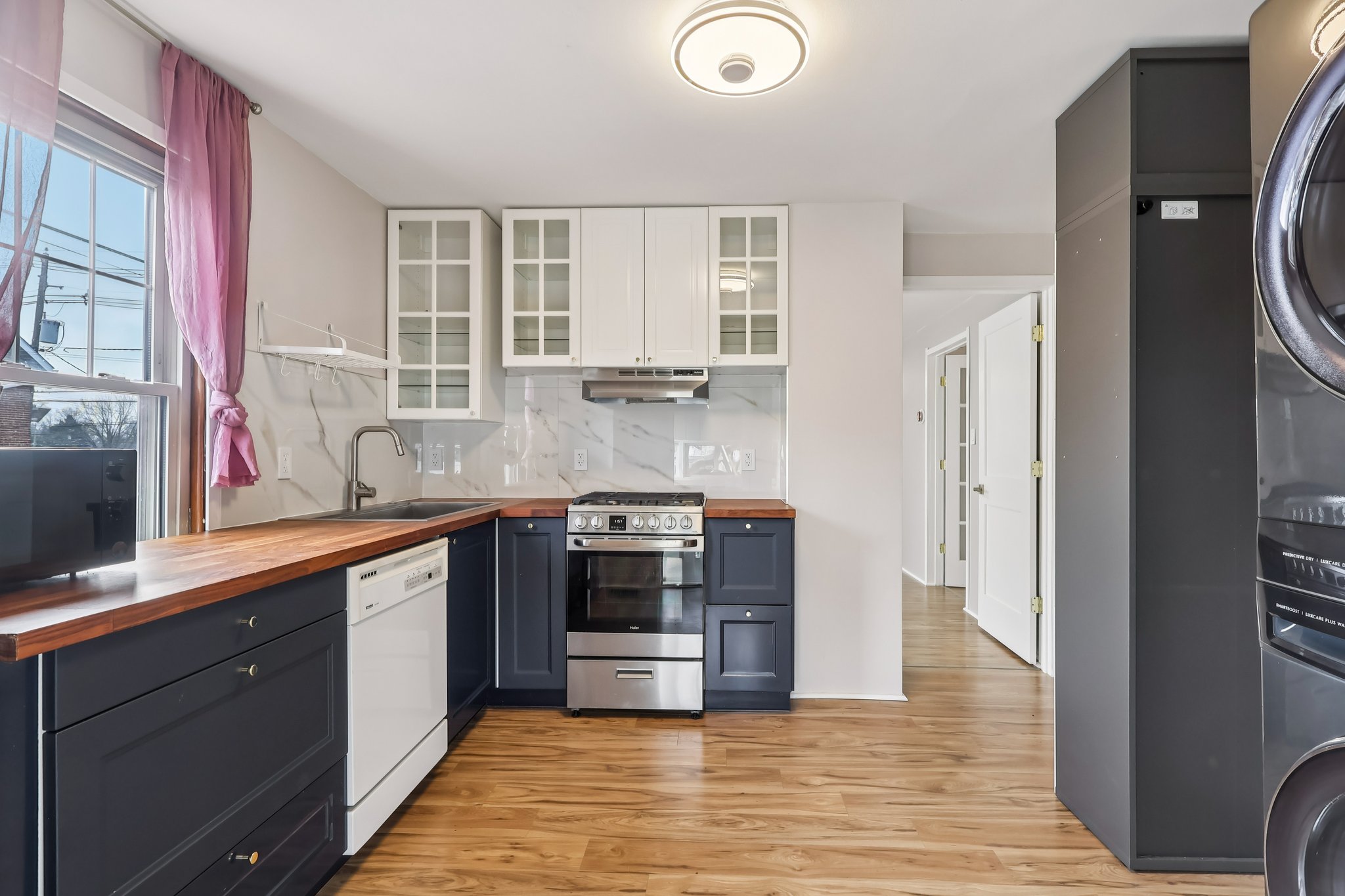
The kitchen on the first floor has been recently updated.
Located on a corner lot, the first-floor unit of this duplex was recently renovated, including new flooring, lighting, and paint. It features two bedrooms, a kitchen with black and white cabinetry, a living room, an updated full bathroom, and a bonus room. It also has exclusive access to the basement and the front porch. The second floor is currently occupied by long-term tenants, providing passive income for a new owner.
Is your home a Haven? The Inquirer is seeking homeowners and renters for a weekly feature on how people make their houses, apartments, and condos into homes they love. Email details and a few photos to properties@inquirer.com.
🗞️ What other Cherry Hill residents are reading this week:
By submitting your written, visual, and/or audio contributions, you agree to The Inquirer’s Terms of Use, including the grant of rights in Section 10.
This suburban content is produced with support from the Leslie Miller and Richard Worley Foundation and The Lenfest Institute for Journalism. Editorial content is created independently of the project donors. Gifts to support The Inquirer’s high-impact journalism can be made at inquirer.com/donate. A list of Lenfest Institute donors can be found at lenfestinstitute.org/supporters.
Taking his daughters to the Cherry Hill Public Library was a weekend ritual for David Jastrow, andone intricate sculpture out front always gave his family pause.
“For whatever reason, that sculpture always caught the attention of my daughters. When they were younger, they used to call it the ‘mixed-up elephant,’ which I always thought was funny,” said Jastrow, 51, a township resident who still frequents the library to pick up biographies and mystery novels.
The Cherry Hill Public Library hasupward of 50 works of art inside its halls, in addition to numerous sculptures outside, including the “mixed-up elephant” on the front lawn.That spurred Jastrow to write in to Curious Cherry Hill, The Inquirer’s forum for answering your questions.
“It’s a very abstract piece of artwork. You can kind of see the trunk coming out at one part,” Jastrow said. “I thought maybe it was designed with the elephant in mind in some way, but I doubt it.”
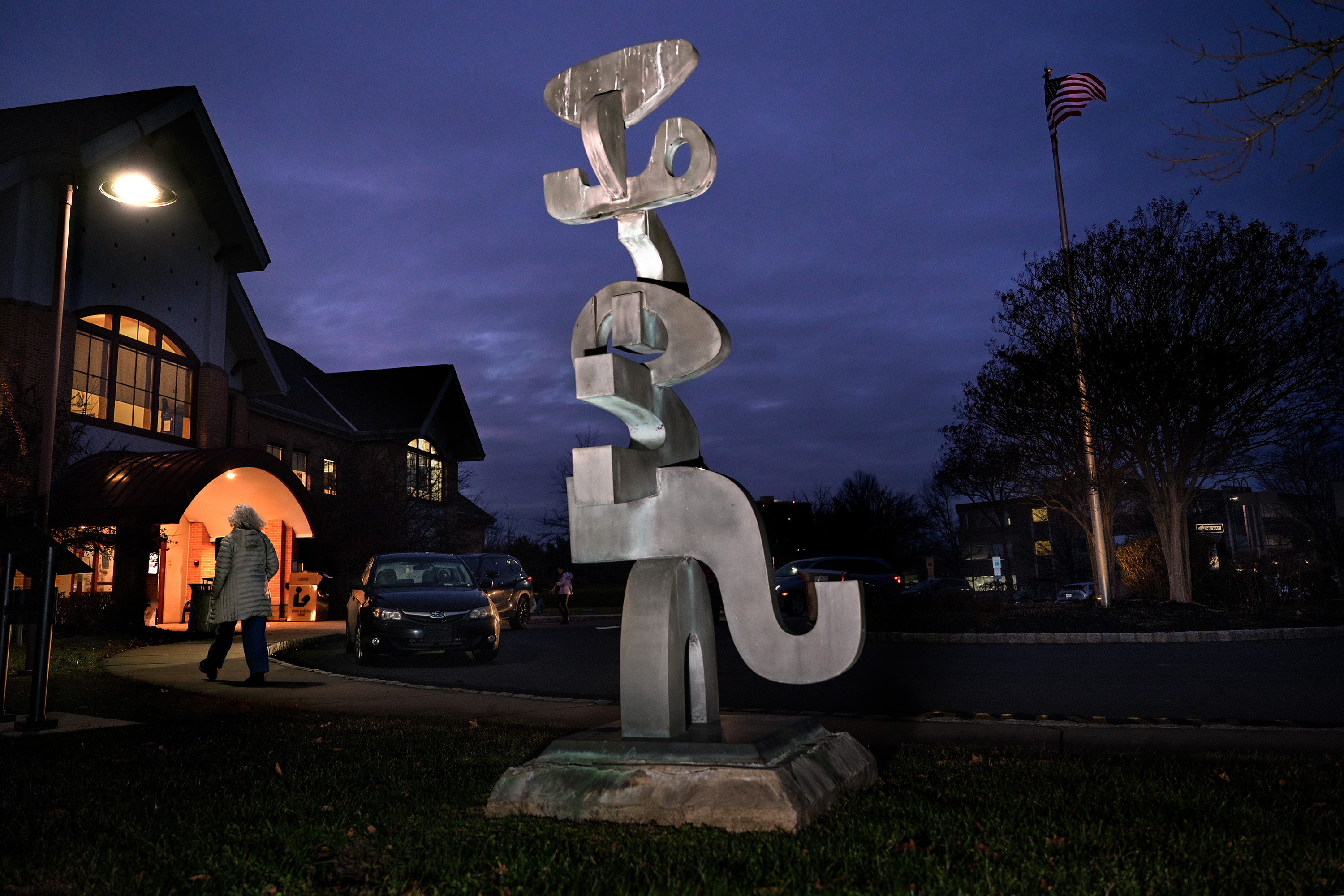
And Jastrow would be right. “Totem” is an 8-foot-tall bronze sculpture that twists into an elaborate structure reaching toward the sky. Sitting to the left of the library’s main entrance since 2009, visitors can’t help but try to decipher its meaning.
Eric Ascalon, the son of award-winning sculptor and stained-glass artist David Ascalon, who crafted “Totem,” said that the different interpretations are exactly what his father intended.
“The sculpture just came from a natural place within his psyche,” Eric Ascalon said. “He feels abstract art is put out there by the artist, but it’s designed to be interpreted in any whatever it means to the viewer.”
Sculpture often takes long periods of time to conceptualize and design. In David Ascalon’s abstract work, he would swiftly sketch a design on a loose piece of paper and lock that design in. Despite a quick conceptualization, the statue took months to build.
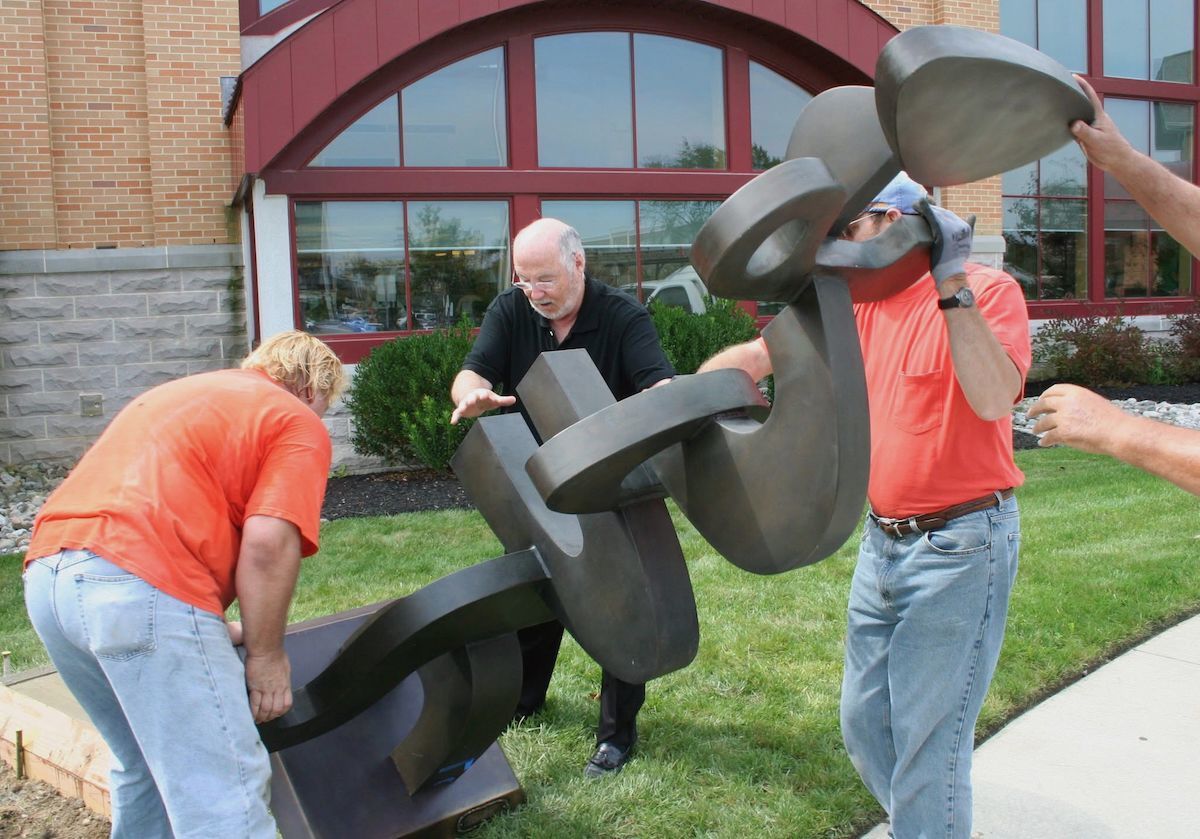
David Ascalon, center, the creator of the 8-foot-tall bronze sculpture, “Totem,” installing the statue outside of the Cherry Hill Public Library in 2009. The sculpture stands today at the library, enticing visitors to interpret its abstract form.
“I would say ‘Totem’ is kind of a reflection of his subconscious and just his creative spirit,” Eric Ascalon said.
For David Ascalon, dipping his toes into abstract art was a way to clear his mind from the painstakingly detailed work of his stained-glass windows, saidhis son, who worked alongside his father and the rest of the family at their now-closed West Berlin firm, Ascalon Studios.
After forming Ascalon Studios in 1977, with his father, Maurice, David Ascalon would go on to craft some of the finest stained-glass windows in synagogues and public spaces across the region. His work can be seen in the stained-glass windows in nearby Temple Beth Shalom, and all the way in Harrisburg, where his 15-foot Holocaust Memorial overlooks the Susquehanna River.
It’s not only Ascalon’s work that draws people into Cherry Hill’s library, either.
Walking up to the three-acre property, guests are greeted by what looks like a real couple reading the newspaper on the library lawn — perhaps unusual in 2025 — but step a little closer, and see that they’re not human, but a hyperrealistic sculpture of a man and woman lounging in the grass.
Another abstract sculpture, created in memory of Valerie Porter, a Cherry Hill resident who loved to read but died unexpectedly in 1966 after a neurological condition, sits outside the library. David Ascalon helped restore it in 2016.
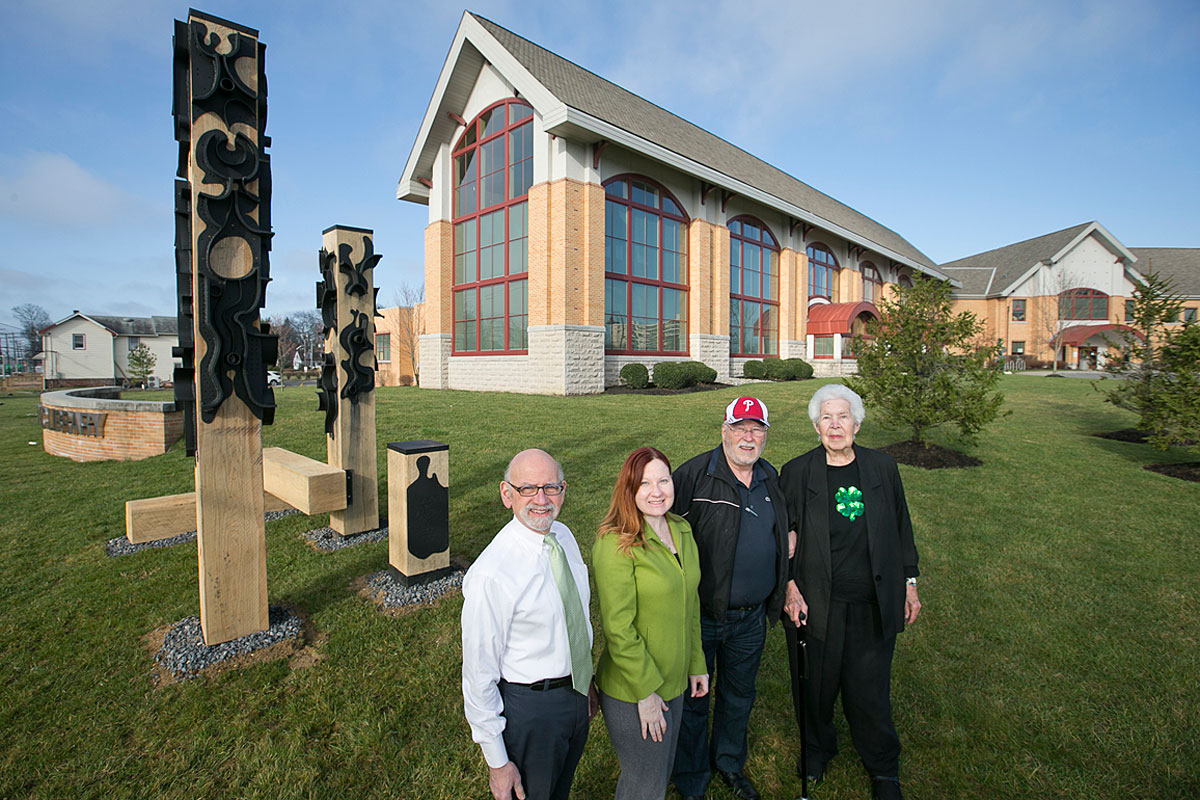
Fred Adelson, sculpture committee, Laverne Mann, director of Library, artist David Ascalon of Cherry Hill and Sally Callaghan also of sculpture committee, left to right, outside the Cherry Hill Library.
Inside, several walls are adorned with public art, many created by Cherry Hill residents. Downstairs is a year-round art gallery that promotes a new local artist every month, said library director Tierney Miller.
Such works amount to small glints in human creativity, something that the library continually fosters through its programming, said Miller.
The monthly showcase is so popular among local artists that the gallery space is booked years in advance, “2026 is already full, and we’re booking for 2027 now,” Miller said.
While only Cherry Hill residents can get a free library card — there are paid options for others — anyone can attend its free events.
The sculpture “Totem” by David Ascalon. It was installed in 2009 on the grounds of the newly opened Cherry Hill Public Library.
This suburban content is produced with support from the Leslie Miller and Richard Worley Foundation and The Lenfest Institute for Journalism. Editorial content is created independently of the project donors. Gifts to support The Inquirer’s high-impact journalism can be made at inquirer.com/donate. A list of Lenfest Institute donors can be found at lenfestinstitute.org/supporters.
It’s December, by far the coldest week of the season to date and due to get colder, but to Jeff Hulbert, the Brandywine Valley these days evoke July — July at the Jersey Shore, that is.
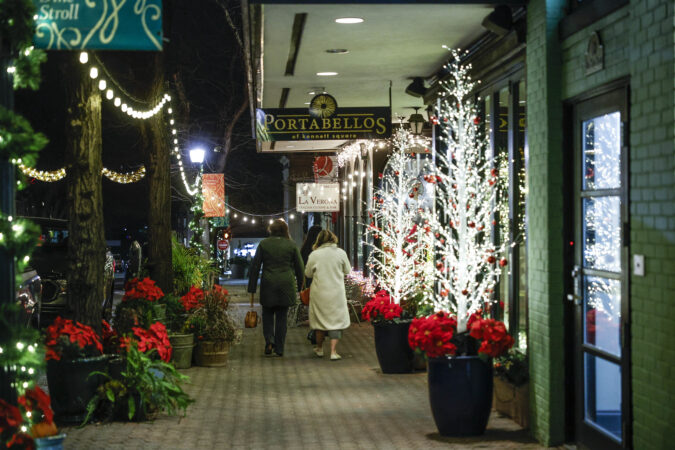
Business has been brisk, and the human traffic thick along State Street, where he and partner Sandra Morris own and operate the popular Portabello’s of Kennett Square restaurant.
Like the peak summer weeks at the Shore, where Hulbert used to work in Atlantic City, this time of year, the Kennett Square area “is twice as busy.” The reason, in a word, is “Longwood.”
Specifically, the annual “Longwood Christmas” festival, an “economic engine” not only for Kennett but for other towns in the region, said Cheryl B. Kuhn, CEO of the Southern Chester County Chamber of Commerce.
Longwood has played a “significant role in the area’s growth,” said Nancy Toltain, director of hotel operations at the Hilton Garden Inn in Kennett. Some guests book their reservations a year in advance, she said.
This year, the merchants on Kennett Street got a jump on the season by turning on the holiday lights and staging the July Fourth-style parade — complete with Mummers and a marching band — on Nov. 22, a week earlier than usual.
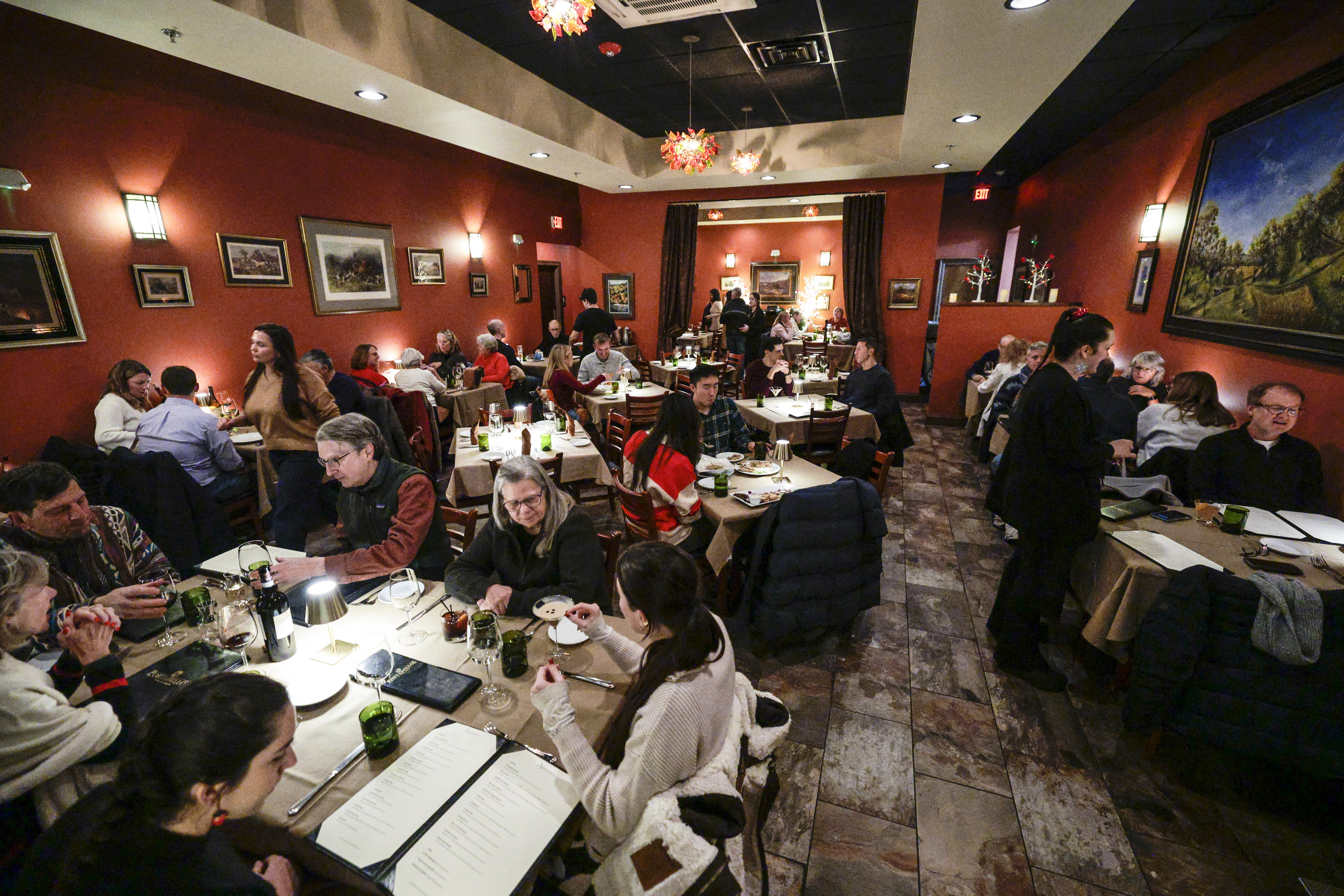
Diners at Portabello’s on Friday evening.
It was no coincidence that the event coincided with the first weekend that Longwood, four miles to the northeast and about twice the size of the borough, was throwing the switch to illuminate about 500,000 lights for its annual “Longwood Christmas” festival.
The exuberance is understandable. The Longwood light show is a cause for celebration among the merchants in downtown Kennett Square, a time when business, shall we say, mushrooms in the so-called Mushroom Capital of the World.
Longwood Christmas is a huge draw — 650,000 people visited last season, which ran from Nov. 22, 2024, to Jan. 11, 2025 — one-third of the annual total. And a whole lot of those who bonded with the plants and the lights ended up in downtown Kennett eating or shopping.
Moving up the Kennett fest paid immediate dividends, said Daniel Embree, executive director of the Kennett Collaborative, a nonprofit development group that works with Kennett businesses.
Downtown merchants reported “record-breaking” sales Thanksgiving week, he said, and it gave them five pre-Christmas weekends to make hay, rather than four. They’re planning an encore early start next year.
Sandra Morris said she and Hulbert will be ready, that in the run-up to the Longwood Christmas, “We know that we need to be staffed up and ready.”
Local business people and tourism officials say the region’s diverse population and attractions, in addition to Longwood, are tourist draws.
The Brandywine Museum in Chadds Ford, famous for its Wyeth family paintings, not to mention its elaborate toy train set, and northern Delaware’s Winterthur, with a museum renowned for its Americana collection and its walking paths winding through 1,000 pastoral acres, have long lured holiday crowds.
But if the area could be likened to a decorated room, Longwood would be the lighted tree with the star on top.
“If there were no Longwood Gardens, there would be no Portabello’s,” said Hulbert.
About the Gardens and the Longwood effect
The theme for Longwood Christmas in 2021 was Fire and Ice, a study in contrasts.
Longwood Gardens, located on land that Pierre DuPont opened to the public in 1921, is one of the nation’s preeminent horticultural attractions.
It covers about 1,100 acres, the majority of which is in East Marlborough Township, with the rest in Kennett and Pennsbury Townships. (It has a Kennett Square postal address, but none of it is in the borough, popular perception notwithstanding.)
About 1.78 million people visited in the fiscal year that ended Sept. 30, said spokesperson Patricia Evans, more than double the total of 15 years ago. According to its tax filing for the previous fiscal year, it generated about $35 million in admission and restaurant revenue.
Longwood’s $250 million investment in new buildings and landscaping, part of the “Longwood Reimagined” project, was completed just before last season’s Longwood Christmas, and that likely contributed to a 7% increase in the holiday traffic, compared with last season, Evans said.
All the land and its building are worth about $160 million, according to Chester County tax records.
Close to 90% of that is tax exempt, Longwood having won a landmark case in the late 1990s, but local officials and business people say the region has reaped significant economic benefits from the gardens.
“Longwood is an excellent regional partner,” said Chester County Tourism’s Nina Kelly.
While the biggest impacts have been on local tourism and hotels, the presence of Longwood probably has given a boost to property values in the area, at least indirectly, said Geoffrey Bosley owner of the local real estate concern LGB Properties & The Market at Liberty Place, a food court and event space on State Street.
In Kennett Square, aggregate commercial property values have increased nearly 30% in the last 20 years, adjusting for inflation,state tax records show.
Longwood and Kennett Square
Portabello’s Restaurant with the owners, Sandra Morris and Brett Hulbert.
Kennett Square, literally a square mile, is home to many of those who work in the local mushroom industry. Latino residents constitute about half the borough’s population.
Its median household income, about $75,000, according to Census figures, is among the lowest in Chester County and about half that of some of its wealthier neighboring towns.
Tourism, particularly Longwood-related, has been a huge boon to the businesses by any measure.
While the town has just under 6,000 residents, it has a total restaurant seating capacity of 2,000, said Hulbert.
In all, the downtown has about 150 businesses, said Embree. Part of the allure is Kennett Square’s quaintness and unaffected small-town atmosphere, but Longwood is a huge factor. “That’s why they want to be here,” he said.
Said Hulbert, “When Longwood Gardens is slow, we are slow. When they are busy, we are busy.”
While moving up the Kennett Square’s holiday parade gave sales a healthy boost, “I don’t want to overstate the significance of the date,” Embree said.
Longwood has supported the Kennett Collaborative financially and in other ways, said Embree. The illuminated decorative bunting on State Street was donated by Longwood, a highlight in the conservatory during the 2023 display.
Said Geoffrey Bosley, “I don’t think you would have as robust a town if we didn’t have a Longwood that would drive so much traffic, especially during the holiday season.”
Mental health professionals at Rogers Behavioral Health in West Philadelphia have formed a union, citing increased workloads and business changes that diminished patient care.
The nonprofit mental healthcare provider last year transitioned from individual patient sessions to a group care model, said Tiffany Murphy, a licensed professional counselor and therapist at the facility. Some workers there were also moved from salaried to hourly positions then forced to reduce hours, their union has said.
Some patients and workers have left amid the changes, says Murphy, estimating that 22 of her colleagues have quit in the past year.
“A lot of us sort of put our jobs on the line by [unionizing], because we believe in the organization, but more so, we believe in our patients. We wanted to provide the best patient care that we possibly could for them,” said Murphy.
The 19 West Philadelphia Rogers employees, including therapists and behavioral specialists, filed their petition last month to unionize with the National Union of Healthcare Workers. Rogers voluntarily recognized the union, according to NUHW, marking the union’s first unit in Pennsylvania.
NUHW represents some 19,000 healthcare workers, primarily in California.
Sal Rosselli, NUHW president emeritus, said the union is pleased that Rogers accepted the petition. “All too often, employers do the opposite and put together very anti-union campaigns, spending all kinds of patient care dollars to prevent their workers from organizing,” he said.
A spokesperson for Rogers declined to comment on employees’ organizing efforts and remarks on workplace changes.
Rogers provides addiction treatment and mental healthcare with facilities in 10 states. In Philadelphia, the nonprofit offers outpatient treatment and partial hospitalization, treating patients with depression, anxiety, and obsessive-compulsive disorder.
In recent years, Rogers workers in California also unionized with NUHW. Their recently forged union contract includes caseload limits and a cap on how many newly admitted patients can be assigned to each therapist or nurse.
Thousands of healthcare workers in the Philadelphia area have moved to unionize in recent years.
The organizing push means that about 81% of the city’s resident physicians are unionized.
What do workers want?
When Murphy first started working at the Rogers facility in Philadelphia 4½ years ago, she said there was “a really good work-life balance.”
At the time, clinicians had four patients per day, provided individualized care, and led group sessions. As the organization moved toward group counseling, she said, caseloads have grown, with up to 12 patients in each group.
The organization hired behavioral specialists to support therapists, said Murphy, but “it was difficult to provide the patients with the care that they really needed and deserved with the new structure.”
Some patients and staff left because of the new model, said Murphy.
This year, some salaried workers were switched to hourly, and Rogers started sending workers home due to low patient demand, leaving the rest with larger workloads, according to the union. That meant some used paid time off to avoid going without pay, said Murphy.
When Philadelphia Rogers employees heard their colleagues in California were unionizing, “That became a bit enticing to us,” said Murphy, noting the workplace had become challenging and sometimes “unbearable.”
Now, she says, the union members want more manageable caseloads — or pay increases to account for the larger caseloads — and a return to the old pay model for those who were switched to hourly work.
“We are unionizing to have a voice at work that will allow us to promote a healthier work-life balance as well as high-quality sustainable patient care,” therapist Sara Deichman said in a union news release.
“The industry is forcing fewer providers to care for more and more patients because the focus is on the bottom line,” said Rosselli.
Staffing concerns plague the healthcare industry generally, said Rebecca Givan, an associate professor at Rutgers University’s School of Management and Labor Relations.
“If the facility wants to hold down costs, it tries to keep staffing levels as low as possible,” said Givan. “In the case of mental health providers, it can be about shortening appointment times or increasing caseloads so that each provider has a very large number of cases or clients.”
She says there’s not “a huge amount of union representation” in stand-alone behavioral health facilities, but some public hospitals are unionized.
Private practice mental health workers can’t unionize because they’re self employed, Givan noted, but “one could argue that they might benefit from collectively negotiating, for example, with the insurance companies that determine their reimbursement rates.”
NUHW is leading efforts to organize independent providers. The goal, Rosselli says, is to “establish an employer for them so that they can have leverage against insurance companies to increase pay and increase access to patient care issues.”
The union has already done this in the home care industry in California, Rosselli noted.
Staff reporter Aubrey Whelan contributed to this article.
Philly is getting ready to dress itself up — with Liberty Bells. Lots of Liberty Bells.
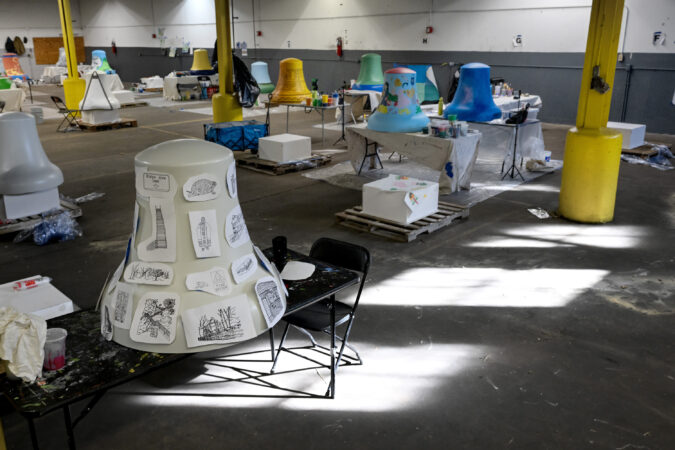
Organizers of Philadelphia’s yearlong celebrations for America’s 250th anniversary in 2026 gathered in a frigid Philadelphia School District warehouse in Logan on Tuesday, offering a special preview of the 20 large replica Liberty Bells that will decorate Philly neighborhoods for the national milestone.
Designed by 16 local artists selected through Mural Arts Philadelphia — and planned for commercial corridors and public parks everywhere from Chinatown and South Philly to West Philly and Wynnefield — the painted bells depict the histories, heroes, cultures, and traditions of Philly neighborhoods.
As part of the state nonprofit America250PA’s “Bells Across PA” program, more than 100 painted bells will be installed across Pennsylvania throughout the national milestone, also known as the Semiquincentennial. Local planners and Mural Arts Philadelphia helped coordinate the Philly bells.
“As Philadelphia’s own Liberty Bell served as inspiration for this statewide program, it makes sense that Philly would take it to the next level and bring these bells to as many neighborhoods as possible,” Mayor Cherelle L. Parker said in a statement. “We are a proud, diverse city of neighborhoods with many stories to tell.”
Kathryn Ott Lovell, president and CEO of Philadelphia250, the city’s planning partner for the Semiquincentennial, said the bells are a key part of the local planners’ efforts to bring the party to every Philly neighborhood.
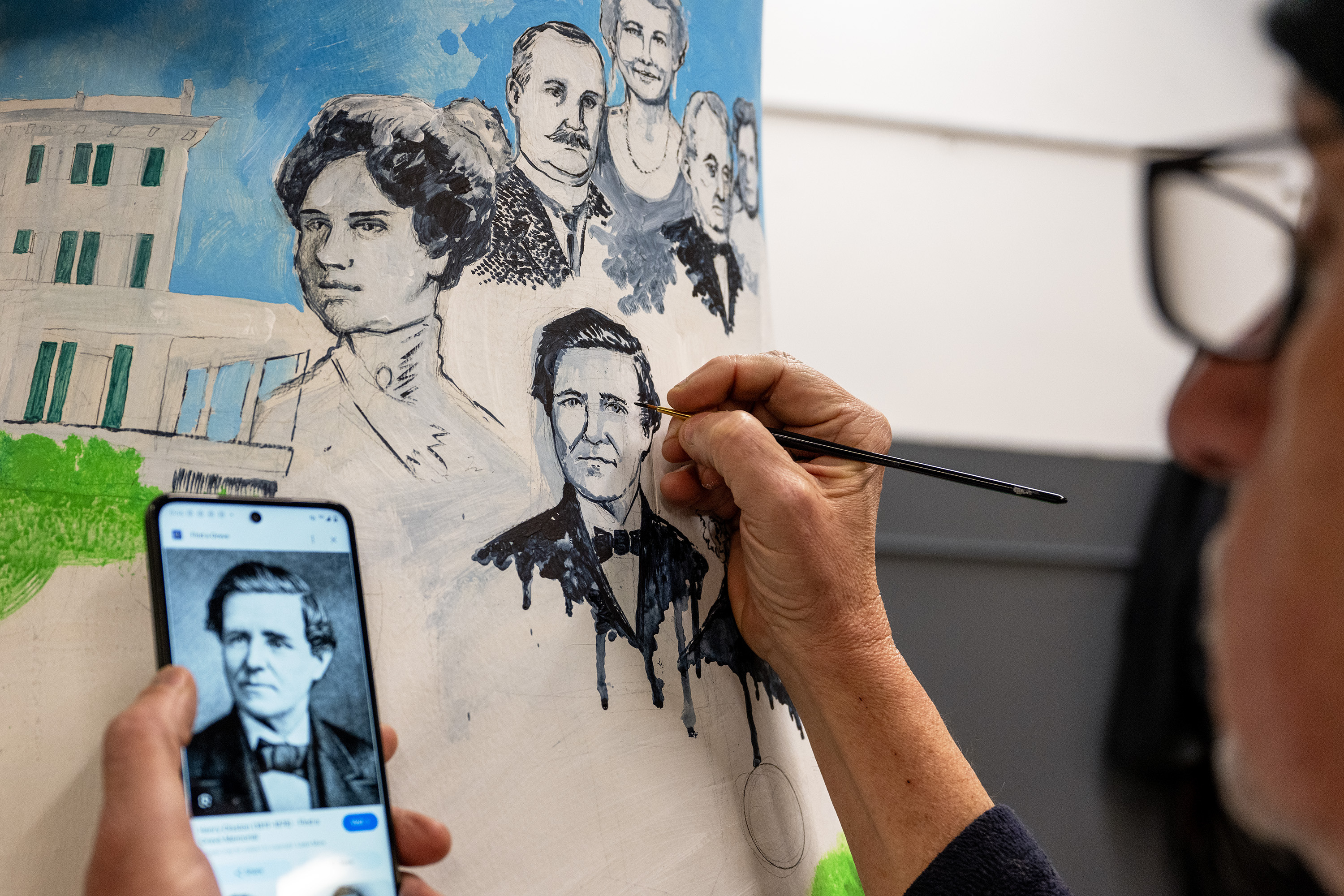
Local artist Bob Dix paints a portrait of industrialist Henry Disston on his bell.
“The personalities of the neighborhoods are coming out in the bells,” she said, adding that the completed bells will be dedicated in January, then installed in early spring, in time for Philly’s big-ticket events next summer, including six FIFA World Cup matches, the MLB All-Star Game, and a pumped-up Fourth of July concert.
Planners released a full list of neighborhoods where the bells will be placed, but said exact locations will be announced in January. Each of the nearly 3-foot bells — which will be perched on heavy black pedestals — was designed in collaboration with community members, Ott Lovell said.
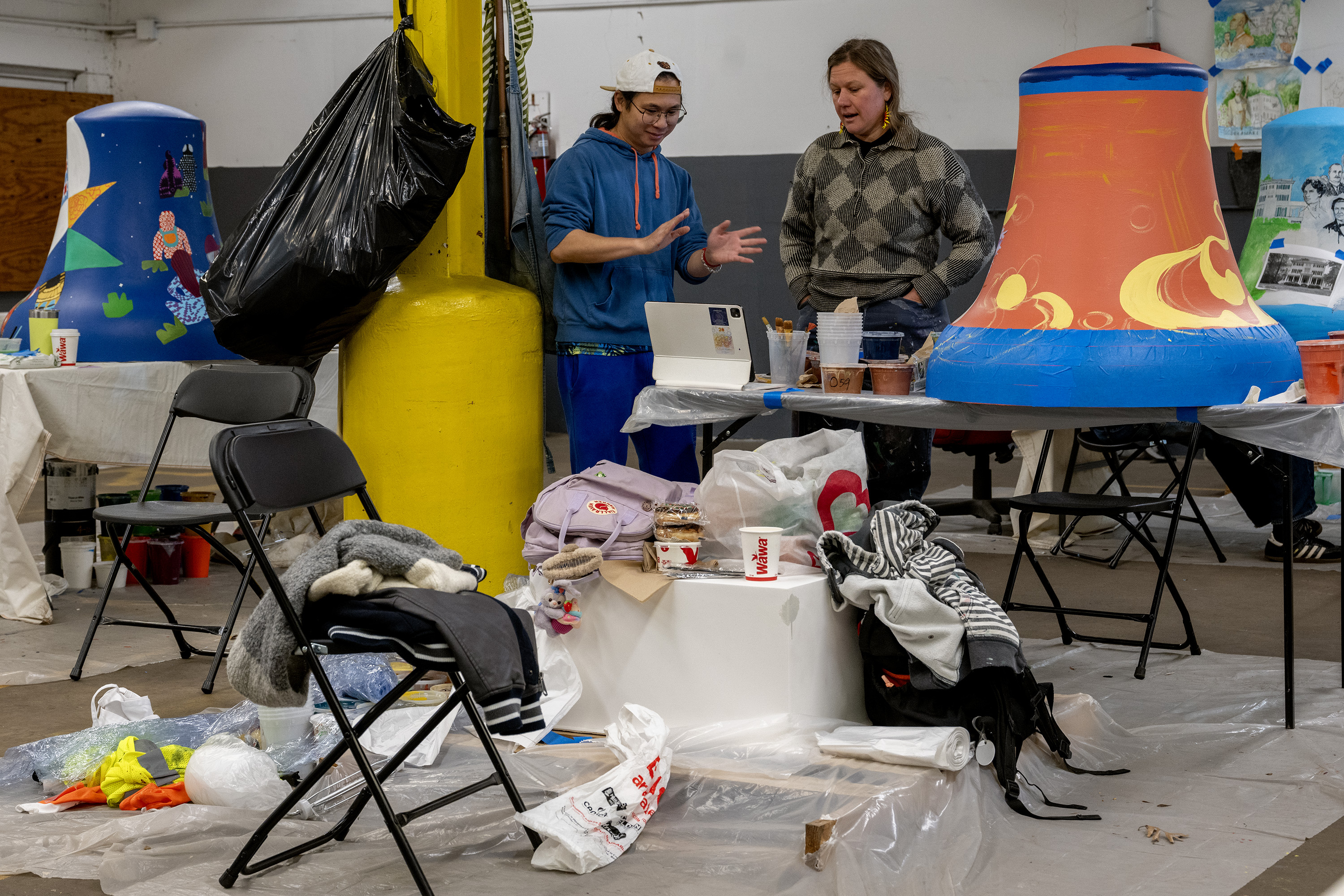
Inside the massive, makeshift studio behind the Widener Memorial School on Tuesday, artists worked in the chill on their bells. Each bell told a different story of neighborhood pride.
Chenlin Cai (left) talks with fellow artist Emily Busch (right) about his bell, showing her concepts on his tablet.
Cindy Lozito, 33, a muralist and illustrator who lives in Bella Vista, didn’t have to look for inspiration for her bell on the Italian Market. She lives just a block away from Ninth Street and is a market regular.
After talking with merchants, she strove to capture the market’s iconic sites, history, and diversity. Titled Always Open, her bell includes painted scenes of the market’s bustling produce stands and flickering fire barrels, the smiling faces of old-school merchants and newer immigrant vendors, and the joy of the street’s annual Procession of Saints and Day of the Dead festivities. Also, of course, the greased pole.
“It’s a place where I can walk outside my house and get everything that I need, and also a place where people know your name and care about you,” she said, painting her bell.
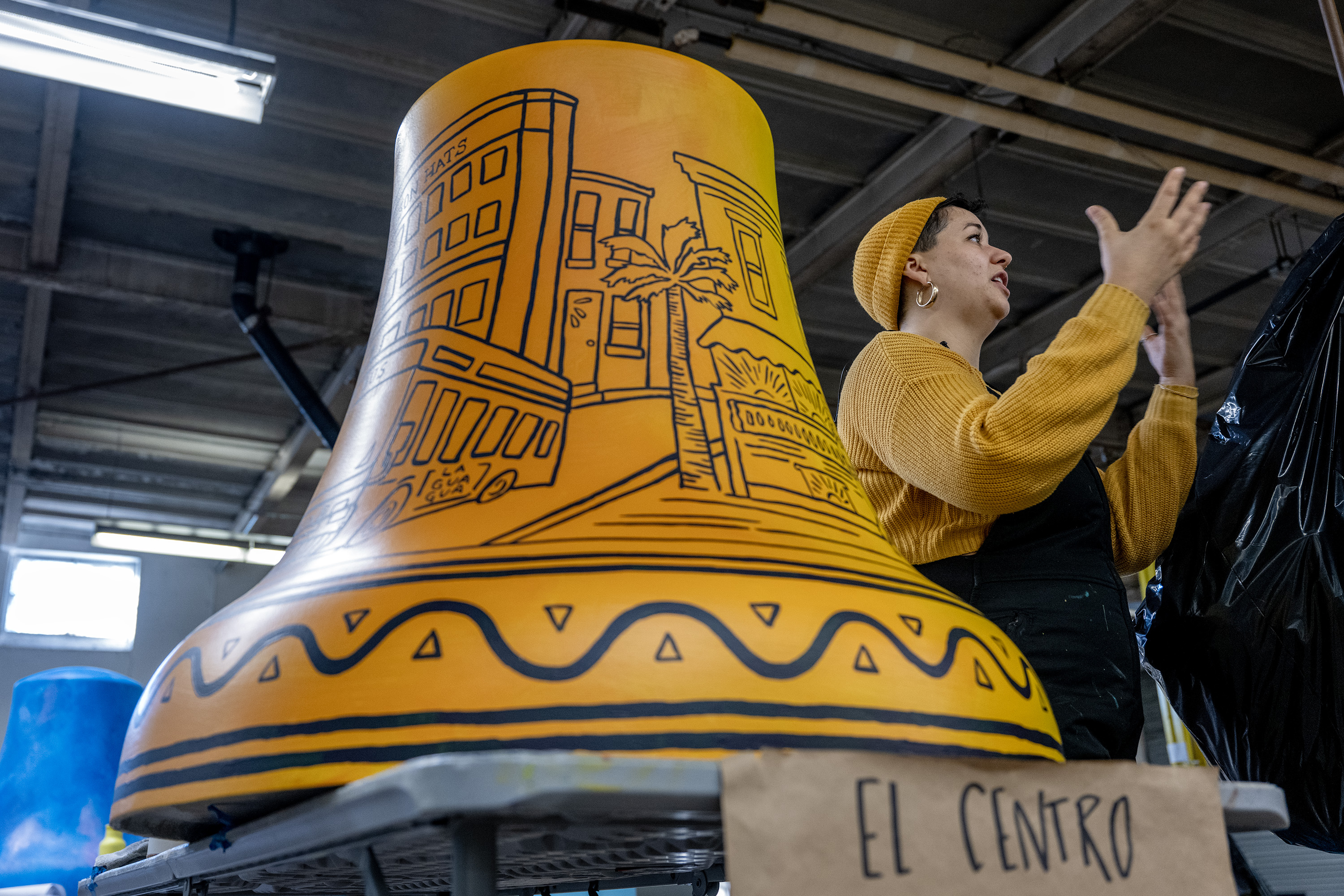
For her bell on El Centro de Oro, artist and educator Symone Salib, 32, met twice with 30 community members from North Fifth Street and Lehigh Avenue, asking them for ideas.
“From there, I had a very long list,” she said. “People really liked telling me what they wanted to see and what they did not.”
Local artist Symone Salib talks with a visitor as she works on her bell.
Titled The Golden Block, the striking yellow-and-black bell depicts the neighborhood’s historic Stetson Hats factory, the long-standing Latin music shop Centro Musical, and popular iron palm tree sculptures.
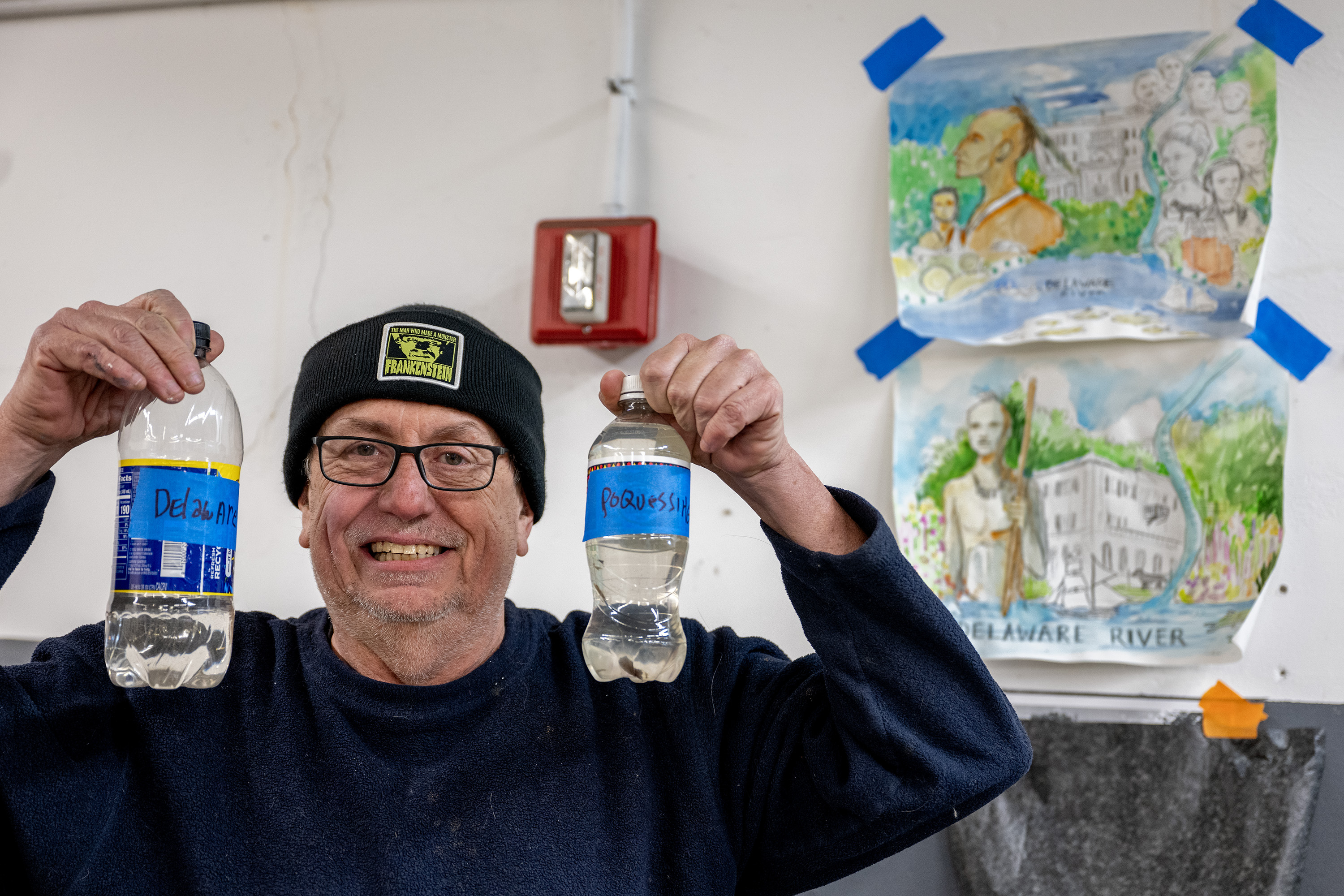
To add that extra bit of authenticity to his bell depicting Glen Foerd, artist Bob Dix, 62, mixed his paints with water bottled from the Delaware River, near where the historic mansion and estate sits perched in Torresdale, overlooking the mouth of Poquessing Creek.
“I like to incorporate the spirit of the area,” he said, dabbing his brush in the river water. “I think it’s important to bring in the natural materials.”
Local artist Bob Dix displays waters he collected from the Delaware River and Poquessing Creek to use in his painting of one of 20 replica Liberty Bells representing different neighborhoods Tuesday, Dec. 9, 2025.
Planners say they expect the bells to draw interest and curiosity similar to the painted donkeys that dotted Philadelphia neighborhoods during the 2016 Democratic National Convention.
Ott Lovell said organizers will install the bells around March to protect them from the worst of the winter weather.
“I don’t want any weather on them,” she said with a smile. “I want them looking perfect for 2026.”
One man, buried under $20,000 in online gambling debt, became homeless. A woman lost $13,000 and missed her last five mortgage payments. A mother gambled away her son’s college tuition, piling up over $100,000 in debt.
Such dire stories — shared with gambling helplines in Pennsylvania and New Jersey in recent years — are on the rise. And for the growing number of people, the problem isn’t the casino, but the apps on their phones that let them gamble anywhere, 24-7.
“My family is hosting fundraisers for my son who had a stroke, and here I am, gambling on my phone,” one caller said. “What’s wrong with me?”
The Philadelphia media market — which encompasses the city, Southeastern Pennsylvania, and central and southern New Jersey — has become an epicenter of online gambling in the United States. In 2024, internet gaming and sports wagering revenues alone topped $6 billion in Pennsylvania and New Jersey, up from about $3.6 billion in 2021.
In the same period, the number of calls and texts to 1-800-GAMBLER rose in both Pennsylvania and New Jersey, two of only six states in the U.S. where both sports betting and online casino games are legal. But calls about online gambling problems rose significantly more — 180% in Pennsylvania and 160% in New Jersey in that period. In 2019, only about one in 10 Pennsylvania callers said online gambling was the main issue. By 2024, it was every other caller.
window.addEventListener(“message”,function(a){if(void 0!==a.data[“datawrapper-height”]){var e=document.querySelectorAll(“iframe”);for(var t in a.data[“datawrapper-height”])for(var r,i=0;r=e[i];i++)if(r.contentWindow===a.source){var d=a.data[“datawrapper-height”][t]+”px”;r.style.height=d}}});
The Inquirer analyzed anonymized helpline call logs, state revenue reports, and advertising data to shed light on how the Philadelphia-area market has become a hub for the online gambling industry. An increasing volume of gamblers face financial devastation as they struggle to get off the apps.
As of this fall, the Philadelphia media market outpaced New York City and Las Vegas as the No. 1 market for internet gambling advertisement, with companies spending more than $37 million on ads between January and September, according to data provided by Nielsen Ad Intel.
As many as 30% of Pennsylvania adults now gamble on online sports with some regularity, according to researchers at Pennsylvania State University who conduct an annual, state-funded survey of online gambling. And as many as 6% of Pennsylvanians, or 785,000 people, are estimated to be problem gamblers, according to the most recent survey, which is not yet published.
While problem gambling has a range of severity, the American Psychiatric Association recognizes it as a mental health condition. A gambling disorder is defined by a persistent pattern of problematic betting with an inability to limit or stop, leading to emotional, financial, and or relational distress.
For many, the losses are crushing. In New Jersey, helpline callers reported a combined $28 million in debt at least among people who disclosed this financial information, averaging about $34,000 for each of these callers. In Pennsylvania, 60% of those people willing to share said they owed money, though the state does not track totals.
Across both states, callers reported they had drained entire retirement accounts, lost homes to bank foreclosure, or blown through entire paychecks. One anonymous caller in New Jersey reported losing $400,000 in a single night — his life savings.
“We [also] have people who call us and say, ‘I think I’m doing this too much. I think I need a little bit of help,’” said Josh Ercole, executive director of the Council on Compulsive Gambling of Pennsylvania, the state-funded nonprofit that runs the hotline for the commonwealth’s residents.
Four calls made in New Jersey between 2023 and 2024 were about children under the age of 12 struggling with gambling problems, according to the state’s fiscal year report. Ten other calls were about children under the age of 18. In Pennsylvania, 10 calls involved children between the ages of 13 and 17.
Experts say the explosion of sports betting and casino apps has fueled what is increasingly seen as a public health crisis, as gambling profits and state tax revenues derived from them have soared since sports betting’s legalization in 2018. And Philadelphia is now viewed as something of a promised land for e-gambling boosters.
window.addEventListener(“message”,function(a){if(void 0!==a.data[“datawrapper-height”]){var e=document.querySelectorAll(“iframe”);for(var t in a.data[“datawrapper-height”])for(var r,i=0;r=e[i];i++)if(r.contentWindow===a.source){var d=a.data[“datawrapper-height”][t]+”px”;r.style.height=d}}});
Uttara Madurai Ananthakrishnan, an economics professor at the University of Washington who has studied the psychology of gambling, said lawmakers have struggled to keep pace with the industry’s meteoric growth.
“I don’t think people expected it to explode at this level,” said Madurai Ananthakrishnan, who previously worked in Pennsylvania. “All of this is going to slowly add up and cause a ton of issues downstream.”
Harrisburg also benefited handsomely from the high rollers, drawing $165 million last year in gambling taxes, up from $46 million five years prior. About $10 million was earmarked for gambling addiction helplines and treatment programs, which came directly from industry profits.
Online betting now accounts for nearly half of all gambling revenue in Pennsylvania, according to an Inquirer analysis of state reports. Pennsylvanians wagered a staggering $8.3 billion during the 2024-25 fiscal year in online sports betting alone, making it by far the most popular gambling method. Total revenue for sportsbook and iGaming sites rose past $2.9 billion last year.
window.addEventListener(“message”,function(a){if(void 0!==a.data[“datawrapper-height”]){var e=document.querySelectorAll(“iframe”);for(var t in a.data[“datawrapper-height”])for(var r,i=0;r=e[i];i++)if(r.contentWindow===a.source){var d=a.data[“datawrapper-height”][t]+”px”;r.style.height=d}}});
In New Jersey gaming revenue was nearly $6.3 billion in 2024 — $3.3 billion of which came from internet gaming and sports wagering, according to the state’s Casino Control Commission’s annual report.
Yet the amount spent online is almost certainly higher than what states can track — as is the number of people who have developed online problems.
Caron Treatment Center, a Pennsylvania-based substance use treatment facility, said 160 people in their inpatient treatment problem were struggling with gambling this year — a 162% increase from five years ago.
“I’ve been getting call after call about gambling,” said Eric Webber, a behavioral health specialist and gambling counselor at Caron. “It’s a national crisis that doesn’t have a national solution.”
Fewer than two dozen gambling sites are technically legal in Pennsylvania. But thanks to pervasive online advertising, many gamblers now use so-called offshore gambling sites that are not regulated by the state.
As of last year, more than 20% of online gamblers were using these illegal or unregulated sites, according to the 2024 Penn State report. Such sites often lack state-mandated guardrails like easily allowing users to set weekly betting limits or request a “self-exclusion” — avoluntary ban from licensed casinos, internet-based gambling, video gaming terminals, and fantasy sports wagering.
Self-exclusions in Pennsylvania are higher this year than last year — 8,315 people have already opted out compared with the 7,489 people who requested a ban through Dec. 31 of last year.
Major online sportsbooks say they are going above and beyond.
Beyond self-imposed spending limits, FanDuel, one of the largest sports betting advertisers in the Philadelphia market, introduced a dashboard to allow gamblers to track their spending habits. The company also began tracking betting patterns on its platform and alerting customers when they bet more than their normal wager.
“When users attempt to deposit significantly more than their predicted amount, we surface that information to them and prompt them to reduce their deposit or to set a go-forward deposit limit,” a FanDuel spokesperson said.
DraftKings, in a statement, said it works closely with a gambling company alliance to support responsible betting, “leveraging technology to help detect signs of potentially problematic behavior.”
Some lawmakers want to see more regulation.State Rep. Tarik Khan, a Democrat who represents parts of Montgomery County and Philadelphia, has called for hearings to examine best practices to rein in an industry that he said heavily targets youth.
“More and more people, especially young people, are getting addicted to it, and blowing large portions of their paychecks on feeding this addiction,” Khan said. “It’s already pervasive, and it’s going to get worse.”
‘I’ve gambled everything away on FanDuel’
In New Jersey, more than half of the callers to gambling hotlines who disclosed their age were under 35. In Pennsylvania, people under 35 accounted for 41% of callers.
“Things have shifted to a younger crowd,” said Ercole, of the Council on Compulsive Gambling of Pennsylvania. “Typically our highest call volume used to be in the 35 to 55 ranges.”
People from all professions are affected — nurses, construction workers, software engineers, chefs, attorneys, postal workers, microbiologists, and tattoo artists. Some are students, retirees, or unemployed.
Regardless of one’s income level, online gambling can put serious strain on personal and professional lives. Some people told of losing contact with their parents, getting divorced, or being cut off from friends.
Others lost jobs or had their homes and cars repossessed.
“I have nothing,” a 30-year-old caller told a New Jersey helpline operator in 2023. “I’ve gambled everything away on FanDuel.”
Most people are calling about their own gambling problems. But dozens of family members called to ask for help with their loved ones’ betting. In one case, a woman asked if she could use her father’s Social Security number to ban him from online betting apps.
Many gamblers do not call the hotlines or seek professional help until they face financial ruin or they are confronted by family members.
At the height of his problem, one man from New Jersey started gambling on Russian table tennis matches and Australian basketball games. His wife, who spoke to The Inquirer on condition of anonymity to discuss a sensitive family matter, said his compulsion had grown so severe that he needed a fix to hold him over between sports seasons.
“He was betting $1,000 on a sport he knows nothing about, played by people he’s never heard of before,” his wife said.
The husband kept his gambling hidden for her years, until she found his secret bank account — along with two dozen maxed-out credit cards and records of tribal loans he had taken out, one of them with a 300% interest rate. She also learned that, in 2021, he had quietly lost $70,000 while the newlyweds were on their honeymoon in France.
“It’s horrifying,” she said.
FanDuel, DraftKings and other online gambling apps are displayed on a phone. (AP Photo/Jeff Chiu, File)
The casino-to-app pipeline
Across Pennsylvania, as of 2024, people sought help for addiction to internet games more than any other type of gambling, especially in the suburbs.
In Montgomery County, the most common type of gambling problem cited was internet slots — with 47 calls. In Bucks, internet sports had the highest volume with 34 calls.
In Philadelphia, home to both Live! Casino and Rivers Casino, in-person games remain the largest reported problem for struggling gamblers, according to call center logs.
Some brick-and-mortar casinos, however, have seen business drop as bettors migrate to their phones. At Rivers Casino Philadelphia, sports-betting revenue fell from $29 million in fiscal 2019 — the first full year of legal wagering — to $11 million in 2024, according to state records.
But even in Philadelphia, a county with two casinos, the number of calls and texts for online gambling shot up in recent years. And experts say that people who gamble exclusively online show heightened risk.
“You can get cut off at the casino. You could walk away from the machine,” said Gillian Russell, an assistant Penn State professor who works on the annual online gambling survey. “Those things that maybe cause breaks, a lot of those things are removed.”
About 13% of people who gamble both online and in person were classified as problem or pathological gamblers, according to the 2024 Penn State survey. Online-only gamblers, though just 3% of the total gambling population, showed even greater risk: 37% fell into problem categories.
Prop bets, the practice of betting on various occurrences within a game rather than just the outcome, are a pointed concern. Such wagers have come under scrutiny as bet-fixing schemes ensnare athletes from the NBA, MLB, the NCAA, and even niche sports like table tennis.
Among normal gamblers, however, prop bettors are far more likely to develop problems, Russell said. Webber, the gambling counselor, likened in-game prop betting to a constant stream of small dopamine hits, which create a kind of withdrawal.
And with gambling sites offering bonus cash and rewards points, he said, the temptation can feel constant.
“DraftKings says, ‘Hey, I haven’t seen you in a couple weeks, here’s $50.’ The local beer distributor doesn’t say, ‘Hey, you haven’t been here in a while, here’s a cold six-pack,’” he said. “That doesn’t help somebody who’s struggling.”