Category: News

Latest breaking news and updates

  • Trump strays from script at Poconos rally, calling affordability a ‘hoax’ and Pa. a ‘dumping ground’ for immigrants

    Trump strays from script at Poconos rally, calling affordability a ‘hoax’ and Pa. a ‘dumping ground’ for immigrants

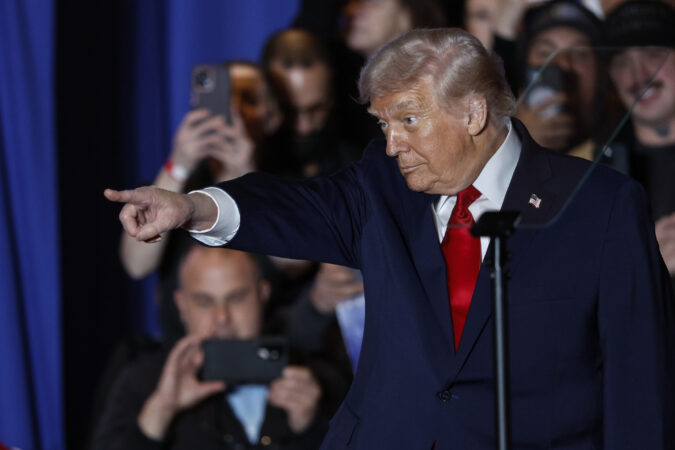
    President Donald Trump’s raucous rally Tuesday night in Pennsylvania was billed as the launch of a national tour focused on easing voters’ economic anxieties that threaten Republicans’ hold in Washington with the 2026 midterms looming.

    But the economy couldn’t maintain the president’s interest for the duration of the speech.

    Instead, he rallied the crowd at the Mount Airy Casino Resort in Mount Pocono by fomenting anger at Democratic U.S. Rep. Ilhan Omar and other Somali immigrants who live in Minnesota and teasing a 2028 run, despite constitutional limits on a third term.

    Employing a method he calls “the weave,” Trump darted back and forth between cost-of-living issues and entirely unrelated material, such as claiming credit for the use of the phrase “Merry Christmas” during the holiday season.

    “If I read what’s on the teleprompter, you’d all be falling asleep right now,” Trump said.

    It was Trump’s third trip to Pennsylvania since he began his second term, following a campaign in which he spent a considerable amount of time in the Keystone State, winning it back in part by promising to cure a beleaguered economy. It’s the president’s first return to Northeast Pennsylvania, where he saw his biggest gains in the region during the last election, and which will be a crucial battleground in next year’s election, when the GOP’s razor-thin House majority is on the line.

    “America is winning again. Pennsylvania is prospering again. And I will not rest until this commonwealth is wealthier and stronger than ever before,” Trump proclaimed at the large casino and hotel complex tucked in between ski resorts in the Pocono Mountains.

    The speech comes as many Americans lament the cost of living, workers have lost power in the job market and with their employers, and people are bracing for Affordable Care Act tax credits to expire at the end of the year.

    The casino stayed open Tuesday and gamblers played slots and card games on the floor upstairs as Trump spoke in the ballroom below.

    Trump, in a speech that stretched over an hour, blamed high prices on his Democratic predecessor, former President Joe Biden. He argued gas prices are down and car prices are dropping thanks to relaxed fuel-efficiency standards. The stock market is up this year and overall growth for the third quarter is strong. Trump also has signed agreements to reduce list prices on prescription drugs.

    While Trump again called concerns about affordability a “hoax,” the event itself was at least an acknowledgment that frustrations with the economy are damaging the Republican brand ahead of the midterms. He spoke in front of a large “lower prices, bigger paychecks,” banner.

    “Democrats talking about affordability is like Bonnie and Clyde preaching about public safety,” he said.

    The most compelling part of the evening came more than an hour in, when the president called up members of the local community, including a waiter and an EMT to share personal stories about how no taxes on tips or overtime would benefit their families when tax returns are filed next year.

    Trump played to the Pennsylvania crowd, noting his connections to the state as a graduate of the University of Pennsylvania’s Wharton School. “I love Philadelphia. It’s gotten a little rougher, but we will take it,” he quipped.

    He then reminisced about hosting the Philadelphia Eagles at the White House earlier this year following their Super Bowl win. He hailed coach Nick Sirianni as a “real leader” and marveled at running back Saquon Barkley’s muscles.

    “It’s like I hit a piece of steel. … He’s so strong,” Trump said about patting the Eagles player on the back.

    But despite these light-hearted moments, Trump repeatedly went after Omar and the Somali immigrant community.

    Trump asked if anyone from the crowd was from Somalia and asked them to raise their hands before tearing into Omar, the progressive Minnesota Democrat who left the African country as a refugee.

    “She comes from a country where, I mean, it’s considered about the worst country in the world, right?”

    Later in the speech, Trump complained about immigration from Somalia, Afghanistan and Haiti — instead of countries like Norway and Denmark — as he recounted and affirmed his use of the phrase “shithole countries” during his first term, something he denied at the time.

    He also accused Democrats of making Pennsylvania a “dumping ground” for immigrants.

    Despite this incendiary rhetoric, Trump also celebrated his performance with Black and Latino voters in the last election. He put up the strongest Republican performance with these demographic groups in decades, though a majority both went for Vice President Kamala Harris.

    “Black people love Trump,” Trump said. “I got the biggest vote with Black people. They know a scam better than anybody. They know what it is to be scammed.”

    ‘Everyone’s paying a lot more’

    Nationwide, prices and inflation have increased this year — with many experts saying that the president’s tariff policies have contributed.

    In his speech, Trump touted his tariffs as bringing in “hundreds of billions of dollars,” and noted his administration would be steering $12 billion to farmers through that revenue. The money is meant to help agriculture producers cope with retaliatory measures taken by China and other trading partners in response to Trump’s tariffs, which Trump did not mention in his remarks.

    “We gave the farmers a little help … and they are so happy.” Trump said.

    Poll after poll shows Americans see rising home prices, groceries, education, and electricity costing more. Gallup’s Economic Confidence Index found a 17-month low in terms of trust in the economy, and the survey found Americans’ views of the job market are at their most negative since the end of Trump’s first term during the height of the pandemic.

    For the average Pennsylvanian, there is a “financial struggle” with higher prices on food, childcare, healthcare, and electricity, among other expenses, said Mark Zandi, chief economist at Moody’s Analytics.

    He attributes it to Trump’s tariffs and immigration policies, including deportation, which he said limits the number of people working and has “hurt growth and raised inflation.”

    “Everyone’s paying a lot more for basic necessities, most everything,” Zandi said.

    Zandi noted Trump’s economic policies include a few positives for workers and employers, including tax breaks for businesses from Trump’s Big Beautiful Bill Act, as well as the tax cuts on tips and overtime.

    “But net, I think the policies have contributed to the financial hardship of the typical Pennsylvanian,” Zandi said.

    Pennsylvania, however, is the only growing economy in the Northeast, according to Moody’s Analytics. The state has secured $31.6 billion in private-sector investments since Democratic Gov. Josh Shapiro took office in 2023, according to his administration.

    Shapiro has been quick to argue the state’s relative fiscal health has come in spite of federal policies he argued are hurting Pennsylvanians. He called Trump “a president who seems to want to blame everybody else, whose economic policies are failing,” in an interview Monday night on MS NOW.

    “I mean, if he comes to Pennsylvania and spews more B.S. … I think what you’re ultimately going to find are people tuning him out,” Shapiro, a potential contender for the presidency in 2028, said ahead of Trump’s visit.

    Sen. John Fetterman (D., Pa.) told MS NOW in a separate interview on Tuesday that polling shows the president, “he’s really kind of losing the plot with a part of his own voters now front and center.”

    A key battleground

    The setting for Trump’s speech is also one of the most closely watched battlegrounds in the state, home to freshman Republican U.S. Rep. Rob Bresnahan’s district, which Democrats are targeting to flip. Bresnahan won by 1.5 percentage points last year.

    Bresnahan was more on message in brief remarks. He said he and Trump have heard the call for relief.

    “The message is the same everywhere we go: Lower the cost, higher-paying jobs, keep our community safe, and listen to the people during the work,” he told the crowd in Mount Pocono.

    He argued policies authored by Trump and passed by the Republican-led Congress, like tax credits for working families and seniors, are already helping people.

    The Democratic Congressional Campaign Committee seized on the visit to blast Bresnahan in ads on the Wilkes-Barre Times Leader website, highlighting his penchant for stock trading. And Scranton Mayor Paige Cognetti, a Democrat running to unseat Bresnahan, took the moment to call him “the exact kind of self-serving politician that Northeastern Pennsylvanians … all agree we need to get rid of.”

    Whether Trump’s message resonates in this part of the country will be telling. Monroe County, home to Mount Pocono, flipped to Trump in the 2024 election after backing Biden in 2020.

    The region is home to a large number of New York City transplants who have moved here seeking more-affordable housing in a region that largely relies on Pocono Mountains tourism as the main source of jobs.

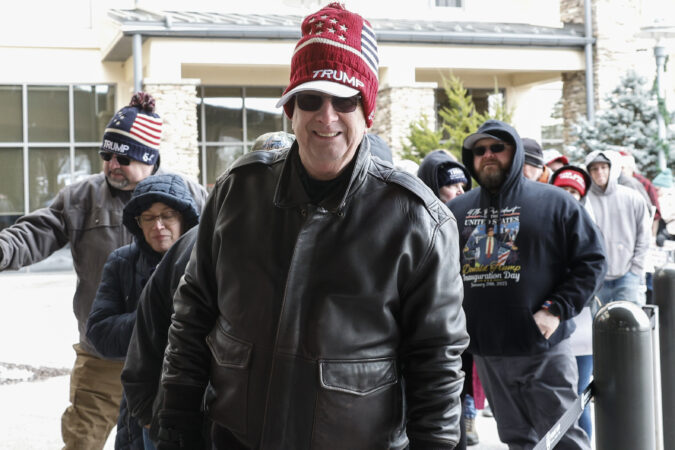
    While views on the economy were mixed on the casino floor, attendees in the ballroom gave the president a warm welcome back to the state. The Secret Service had to turn people away, and many who got in had waited more than four hours outside on an 18-degree day.

    Trump’s ongoing response to affordability woes could have major implications for other vulnerable Republicans hoping to be reelected in the state. In last month’s election, Democrats successfully ran on affordability in the New Jersey and Virginia gubernatorial races — and picked up a slew of local seats in Pennsylvania.

    The DCCC has its sights on the seats of three other Pennsylvania Republicans, along with Bresnahan: U.S. Rep. Brian Fitzpatrick of Bucks County; U.S. Rep. Ryan Mackenzie of Lehigh County; and U.S. Rep. Scott Perry of York County.

    Attendees in the crowd Tuesday night held “Keep the House, Keep the Country,” posters.

    Trump told the crowd he’d be back on the trail for Republicans in the midterms, and reflected, that like his off-the-cuff speech, he enjoys stumping.

    Whether the current state of the economy affects Republicans’ chances in 2026 could depend on how those future appearances go and how willing the party will be to keep acknowledging that many Americans are struggling.

    Marc Stier, executive director of the Pennsylvania Policy Center, who was a leading advocate for the establishment of the ACA, argued that “voters are not fools, particularly when it comes to their pocketbook.”

    “How they talk about it will determine in some ways how badly they get hurt,” Stier said. “If they acknowledge a problem and, say, come up with ideas to deal with it, they will probably be hurt less. If they followed Trump’s line … I think they’re gonna get clobbered.”

  • Man and teen boy killed in Germantown shooting

    Man and teen boy killed in Germantown shooting

    A 30-year-old man and 16-year-old boy were killed after a meeting for a possible transaction escalated into gunfire early Tuesday evening in the city’s Germantown section, police said.

    Officers responded shortly after 5 p.m. to multiple reports of a shooting at the intersection of West Queen Lane and Laurens Street and found the man and the teen lying on the ground unresponsive with multiple gunshot wounds to their upper bodies, said Chief Inspector Scott Small.

    They were both transported by police to Temple University Hospital, where they were pronounced dead around 5:30 p.m. A handgun was found on the body of the man.

    At the shooting scene, police found 11 spent shell casings from a handgun and a rifle, Small said.

    A Nissan registered to the deceased man was found at the scene with a bullet hole and the driver’s side door still open, Small said.

    A witness said the 30-year-old arrived at the location for a transaction that was reportedly not related to drugs, and the teen was with another man who apparently had the rifle, Small said. The man who arrived with the teen fled the scene.

    Police were checking for video from cameras in the area that may have recorded what happened, Small said.

  • Philly wants to keep the Rocky statue atop the Art Museum steps

    Philly wants to keep the Rocky statue atop the Art Museum steps

    » UPDATE: Plan to keep a Rocky statue at the top of the Art Museum steps moves forward

    The Rocky statue sitting atop of Philadelphia Art Museum’s famed steps could soon be there permanently — and the one at the bottom may be going back to the Italian Stallion himself, Sylvester Stallone.

    That’s according to a recent proposal from Creative Philadelphia, the city’s office for the creative sector, which is slated to present its proposal at an Art Commission meeting for a concept review Wednesday. The plan, the proposal notes, is endorsed by Mayor Cherelle L. Parker and Art Museum officials, as well as leaders in the Parks and Recreation department and at the Philadelphia Visitor Center, all of whom filed letters of support.

    “This project is about more than relocating a sculpture,” chief cultural officer Valerie V. Gay and public art director Marguerite Anglin wrote in a letter to the Art Commission. “It’s about elevating an artwork that, for decades, has symbolized perseverance, aspiration, and the resilience of the human spirit.”

    The statue at the top of the Art Museum’s steps was set there last December as part of the city’s inaugural RockyFest, which celebrates the Rocky franchise. Initially intended to be a temporary installation, that statue — a replica of sculptor A. Thomas Schomberg’s original, made by the artist himself — was lent to the city by Stallone, who purchased it for about $403,000 at an auction in 2017, The Inquirer previously reported.

    The statue at the foot of the steps, meanwhile, is owned by the city, and has sat there since 2006, arriving after years of controversy and moves since it appeared in 1982’s Rocky III. Stallone commissioned that statue for the film, and later gave it to the city.

    As part of the city’s plan, Philly would swap ownership of the two statues, taking ownership of the statue at the top of the steps, and returning the statue at the bottom “to the original donor’s private collection” following its exhibition inside the Art Museum this spring, the proposal notes.

    The city would then “install another City-owned statue at the bottom of the Art Museum steps,” and move the statue at the top back several feet for its permanent installation.

    The project would cost an estimated $150,000, the proposal notes. It was not immediately clear what statue would be relocated to the bottom of the steps, or what prompted the exchange of statues.

    An Art Commission agenda notes that in its concept review Wednesday, the proposal could receive final approval if it is found to be “sufficiently developed.”

    A history of moves

    The proposed move marks yet another chapter in the Rocky statue’s storied history in town. It arrived for the filming of Rocky III, but when the shoot wrapped in 1981, a permanent location had not been approved, causing it to be shipped back to Los Angeles. It ultimately came back and was temporarily exhibited again at the top of the Art Museum steps before being moved to an area outside the Spectrum at the stadium complex in South Philly, where it was supposed to permanently stay.

    But in 1990, the statue was again temporarily installed at the museum for the filming of Rocky V, reigniting public debate about whether it should remain there. The statue was returned to the stadium complex before being moved in 2006 back to the bottom of the museum’s steps, where it has sat ever since.

    Gay and Anglin seem to reference the statue’s history in their letter, noting that a permanent installation at the top of the museum’s steps could be an “an opportunity to lean into the evolving conversation about what is considered ‘art’ and what deserves a place in our most treasured civic spaces.”

    “The Rocky statue is a clear example of this evolution,” they wrote. “Its artistic significance has not been shaped by institutions, but by the millions of people who engage with it year after year.”

    A third statue

    Philadelphia, incidentally, has a third Rocky statue made by Schomberg. That one is located at Philadelphia International Airport, where it was unveiled late last month in Terminal A-West.

    “Rocky is the DNA of this great city of Philadelphia,” Schomberg said in a statement released with the airport statue’s unveiling. “There’s a little bit of Rocky in all of us. Rocky is not just known here in Philadelphia but is known across this country and the world.”

  • Approximately 2.7 million state agency letters were never mailed to Pennsylvania residents last month, officials say

    Approximately 2.7 million state agency letters were never mailed to Pennsylvania residents last month, officials say

    HARRISBURG — Approximately 2.7 million pieces of state agency mail never reached Pennsylvania residents last month after a state-contracted vendor failed to send them, affecting outgoing correspondence from the state Department of Human Services and the Department of Transportation, officials said Tuesday.

    From Nov. 3 through Dec. 3, officials said, the affected state agency mail was never presorted and delivered by the vendor to the U.S. Postal Service, resulting in a backlog of millions of unsent state communications.

    Late last week, Pennsylvania state officials discovered that a month’s worth of mail had never been sent to residents by the outside vendor, Harrisburg-based Capitol Presort Services LLC. Once the issue was discovered, the state fired the vendor for failing to fulfill its contract and hired another vendor to work through the backlog.

    The state Department of Human Services, which oversees the care of the state’s most vulnerable residents and children, is still determining “the exact volume and categories of delayed mail,” said Paul Vezzetti, a spokesperson for the state Department of General Services. However, DHS was able to confirm that some services were not interrupted: residents waiting on Electronic Benefit Transfer (EBT) cards for receiving food assistance, mail sent by county assistance offices, and notices about suspended benefits during the federal government shutdown were not affected, Vezzetti added.

    PennDot driver’s license and vehicle registration renewal invitations, driver’s license camera cards, vehicle registration cards, and address update cards are all among the routine correspondences that were never sent to residents over the last month, Vezzetti said. Driver’s license suspensions were not impacted by the stalled mail. Vehicle registration and license renewal registrations are sent three months in advance, so anyone who was due to receive one at the start of November will have until February to submit it, the agency said.

    It was not clear on Tuesday which other state agencies’ mail had been impacted by the lapse in service.

    All of the recently discovered unsent state agency mail was transported to USPS on Monday by the state’s new vendor and will be promptly delivered to residents by the Postal Service, officials said. PennDot customers should receive any expected mail from the time period of Nov. 3 to Dec. 3 within the next 7-10 days, Vezzetti added.

    On Friday, the state secured a $1 million emergency contract with another mail presorting company, Pitney Bowes, to handle the multimillion-letter backlog.

    The state had contracted with Capitol Presort Services since May 1, 2021. The company filed for bankruptcy in 2022, but had continued its work for the state until last week, when the agency mail pileup was uncovered.

    It remained unclear Tuesday why it took a full month for officials to determine that 2.7 million pieces of state agency mail had not been reaching residents. It was also unclear how the issue was discovered by officials last week.

    The unsent mail may prove to be a major headache for Gov. Josh Shapiro’s administration, depending on which state communications were not delivered to residents. The backlog could include critical correspondence relating to state services, such as health benefits or food assistance, among others.

    State agencies regularly send communications by mail about an individual’s eligibility for services or benefits, renewals and appeals, and whether a person is due to appear at a hearing about that eligibility, and more.

    “Agencies across the Commonwealth continue to evaluate any potential negative effects of this mail delay and are taking proactive steps to mitigate potential impacts on Pennsylvanians,” Vezzetti added.

    A spokesperson for Gov. Josh Shapiro declined to comment.

    According to the state’s contract with Capitol Presort Services from 2021, the vendor was responsible for delivering more than 16 million pieces of state agency mail each year. Almost all of this mail was to be for the delivery of the state’s First Class and Next-Day mail, which are among the U.S. Postal Services’ fastest delivery options.

    Philip Gray, the president and owner of Capitol Presort Services, did not immediately respond to questions about his company’s bankruptcy and how the backlog of mail came about.

    Capitol Presort Services advertises itself as a way for “companies to maximize postal discounts while improving their mail delivery,” according to its website. Mail presorting allows organizations to prepare mail with the proper bar codes and trays needed for easy delivery by USPS, which USPS offers to companies at a discounted rate.

  • Trump came to a Pa. casino to promise prosperity. Gamblers here had a mixed view of the economy.

    Trump came to a Pa. casino to promise prosperity. Gamblers here had a mixed view of the economy.

    A smattering of people pushed their luck Tuesday at the Mount Airy Casino Resort, tapping neon slot buttons, flipping dice onto felt craps tables, and wandering the rows of glowing, dinging machines.

    A floor below, President Donald Trump was set to speak in a sprawling ballroom, where event staff hung a huge blue banner: LOWER PRICES, BIGGER PAYCHECKS.

    Trump picked this casino in the Pocono Mountains to deliver the first big economic speech of his presidency as polls show Americans are feeling the pain of high prices — and many are blaming him.

    Politically, the setting made sense. This northeastern corner of the state is where Trump saw the largest swing from 2020 to 2024, and it will be a key congressional battleground next year. It’s also a region home to a large population of aging, non-college-educated voters — the core of Trump’s comeback coalition.

    But the contrast at the casino was hard to miss: the steady slot machine chimes of financial risk and uncertainty above and a president’s promises of stability and revival on the floor below.

    How’s the economy working for Rosemary Migli?

    “It could be better,” said the 73-year-old retired bartender from Tobyhanna, taking a puff of a cigarette before winning 35 cents on a spin.

    Despite a frenzy of police and Secret Service, many gamblers, focused on their own troubles or celebrations, did not realize the president was coming. An older retired couple enjoyed an afternoon together with no obligations. Nearby, a recently widowed woman said the monotony of the slots helps her cope with her loss.

    Peter Jean-Baptiste celebrated his 33rd birthday at the casino with his fiancee. The Philadelphia-based couple are saving for a wedding next year.

    “It’s tough for everyone just trying to make a living, honest people trying to make a living,” Jean-Baptiste said. “One day you feel like [Trump’s] got your back, the next day he doesn’t.”

    Jean-Baptiste, who works in property insurance, said he has also seen housing prices rise. And, as a child of Haitian immigrant parents, he is struggling with how Trump’s anti-Haitian verbal attacks and immigration crackdowns have affected his family.

    “He does a bunch of hot takes and causes division between American citizens,” Jean-Baptiste said. “When, I feel, we really all just want to get along and get by.”

    Mount Pocono is a region with mixed fortunes: Wealthy retirees have second vacation homes here, while lower-income workers are employed in warehouses and hold up the tourism industry. The area is also a hub for New York City commuters who moved here for more affordable housing.

    “We live on a fixed income. We watch what we spend,” said Julie Dietz, sitting beside her husband, Glenn, as she played a buffalo-themed slot game. The Toms River, N.J., couple gamble for a few hours every now and then. She was a paralegal and he worked evaluating industrial facilities for safety before they retired.

    “We know what our limitations are,” Dietz, 71, said. “Yes, food prices have gone up, but I’ve also seen some things come down — gas prices in our area. And the economy took so many years to get to this point.”

    Dietz, who supported Trump in the last election, thinks an economic rebound is just going to take more time.

    “He’s been in office 11 months. Eleven months. So I feel full confidence that he is going to do what he said he’s going to do. Everybody wants things immediately.”

    Kathy F., who didn’t want to give her last name talking about politics and gambling, joined her husband at the casino Tuesday, despite her misgivings about losing money at a time when prices are going up.

    “I go to Costco and everything is $5 more than it used to be. That’s a lot,” she said, bundled in a puffy black coat as her husband gambled nearby.

    “I really don’t understand politics,” said the retired New York City civil servant, who voted for then-Vice President Kamala Harris last year. “It seems like they just fight with each other nonstop when all people want is to be able to afford to live.”

    As he stretched his legs between games, Stephen Miller — “not that Stephen Miller,” he clarified — laughed off the notion of going to see Trump in person a floor below.

    “If I want to see him, all I have to do is turn on the TV. He’s on at 12, he’s on at 3, he’s on at 5, seven days a week.”

    The 75-year-old retired contractor supports Trump, though, and called the economy “half-decent.” He said food prices are high but eggs have gone down.

    “The economy is glacial, so it moves slow. Democrats are definitely locked onto the affordability. But affordability means, what? It means whatever you want it to mean.”

    Miller glanced down at a few vouchers in his hand to set off for the next set of machines.

    “I’m not winning yet, but I will be and the Donald will be,” he said. “Give it time.”

  • ‘I didn’t want to get hit’: A.C. mayor’s teen daughter testifies against him in child abuse trial

    ‘I didn’t want to get hit’: A.C. mayor’s teen daughter testifies against him in child abuse trial

    MAYS LANDING, N.J. — The daughter of Atlantic City Mayor Marty Small Sr. took the stand in an Atlantic County courtroom Tuesday morning to testify against him at trial as he stands accused of physically abusing her.

    As a Superior Court judge looked on, the teen told jurors her father had beaten and punched her and struck her with a broom.

    “He put his hands on me,” she said.

    Small, a Democrat, faces charges of child endangerment, aggravated assault, and witness tampering in connection with a series of incidents in which prosecutors say he punched, beat, and threatened his then-15-year-old daughter, largely over his disapproval of her relationship with her boyfriend. He has denied any wrongdoing, and his lawyers have challenged his daughter’s credibility.

    The girl, now 17, recounted the abuse in a soft voice, calmly answering prosecutors’ questions — and rejecting suggestions by an attorney for her father that she had lied about key details.

    “My dad came home and he was like, upset,” the girl said as prosecutors asked her about crimes they allege took place in the Small family home in January 2024.

    She said her mother had recently gone through her phone and learned that she had sneaked her boyfriend into the house. Her father, she testified, was “mad and disappointed.” As she sat in a chair that she recalled as having a Philadelphia Flyers theme, she told the jury, he hit her with a belt and punched her in the legs.

    Louis Barbone, an attorney for Small, maintained that there were inconsistencies in statements the girl gave to investigators, and he disputed her account of the incident with the broom.

    Earlier in the day, prosecutors played video footage they say the teen recorded at home.

    Though the camera did not show images of Small or others, it captured the sound of the girl and her parents screaming amid what prosecutors described as the chaos that descended on the home after the teen started a relationship they did not approve of.

    Prosecutors also showed Instagram messages the girl exchanged with her boyfriend about the alleged abuse, including one in which she told him, ”I’m scared to get in the shower because my bruise is gonna burn.”

    Small’s daughter told jurors that as her father was rousing his family one January morning to attend the Atlantic City Peace Walk, she did not have her hair done and didn’t want to go. She said she and her father argued and he pushed her, so she splashed him with laundry detergent.

    Small, she said, then got a broom and struck her multiple times in the forehead. She testified that she passed out, and the next thing she remembered was her father telling her brother to get her some water.

    On cross examination, Barbone returned to a theme he struck in his opening statement to the jury on Monday — that Small was a caring father who, watching his daughter’s life veer off course because of a relationship he believed to be manipulative and inappropriate, had legally disciplined a disobedient child.

    He told jurors prosecutors did not have a recording of the incident involving a broom, and he said the girl had been wielding a butter knife and the injuries she sustained that day happened when she fell as the two wrestled for the broom.

    Barbone said the teen had exaggerated her injuries, and he noted that when initially questioned by investigators, she told them she felt safe at home.

    “I didn’t want to get taken away,” the girl said, “so I said, ‘yes.’”

    The trial is expected to continue through the end of the week.

  • Twin brothers in Absecon charged with posting online threats against ICE

    Twin brothers in Absecon charged with posting online threats against ICE

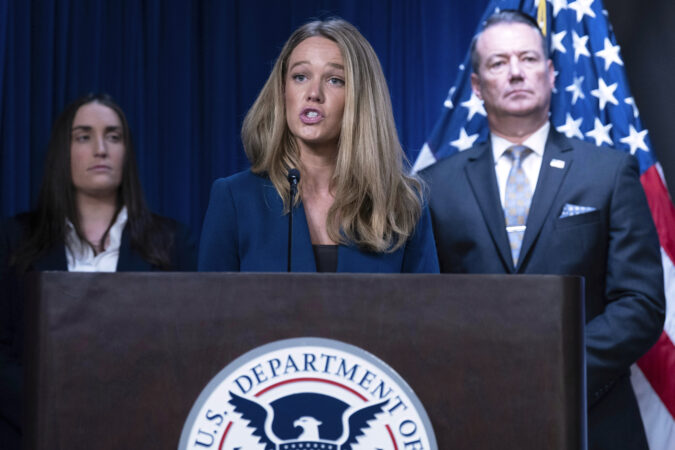
    Twin brothers from Absecon, N.J., were arrested and charged Tuesday with allegedly writing threats on social media against ICE agents and Tricia McLaughlin, the spokesperson for Department of Homeland Security Secretary Kristi Noem, DHS announced.

    Emilio Roman-Flores and Ricardo Antonio Roman-Flores are accused of writing on social media that McLaughlin should be hanged and declaring, “Shoot ICE on sight.”

    The Absecon Police Department SWAT team and DHS executed a search and arrest warrant Tuesday morning for the brothers. DHS said both were U.S. citizens.

    DHS posted a photo on the agency’s website showing a shotgun and a semiautomatic rifle and ammunition that was allegedly taken as evidence during the raid.

    Emilio Roman-Flores was charged with unlawful possession of an assault weapon, possession of prohibited weapons, conspiracy-terroristic threats, criminal coercion, threats, and cyber harassment, the department said.

    Ricardo Antonio Roman-Flores was charged with conspiracy-terroristic threats, DHS said.

    According to public records, the brothers are 26 years old.

    “If you threaten our law enforcement or DHS officials, we will hunt you down and you will be prosecuted to the fullest extent of the law,” Todd Lyons, acting director of U.S. Immigration and Customs Enforcement, said in a statement.

    According to a Fox News story that DHS promoted on social media, one of the brothers allegedly wrote in reply to something McLaughlin posted: “[The Second] Amendment is in place for moments like this. Shoot ICE on sight.”

    One of the brothers also allegedly wrote in response to McLaughlin, according to Fox News: “We Americans should find you, tar you, feather you, and hang you as we did to anyone serving tyrants before the Revolutionary War.”

    Neither the Fox News report nor the DHS announcement specified which brother made the statements.

  • University of Delaware appoints interim president to the permanent post

    University of Delaware appoints interim president to the permanent post

    The University of Delaware on Tuesday appointed Laura A. Carlson, who had been serving as interim president, to the permanent post, effective Jan. 1.

    Carlson came to the school in 2022 as provost after spending 25 years at the University of Notre Dame. She stepped into the interim presidency in July after former president Dennis Assanis announced he was stepping down last June with less than two months notice.

    The university did not conduct a national search but rather engaged a consultant to help the school evaluate the qualities needed for the next president and assess Carlson’s ability to fit the role.

    “Dr. Carlson has demonstrated a deep commitment to the advancement of our university and a clear passion for the success and wellbeing of our students, faculty, staff and alumni,” Terri Kelly, board of trustees’ chair, said in a statement.

    As provost, Carlson, whose specialty is psychology, expanded courses offered in winter and summer sessions to give students the ability to graduate more quickly and prioritized bringing ideas from faculty and staff to fruition, the university said.

    She’s a cum laude graduate of Dartmouth, where she got her bachelor’s in psychology of language and obtained her master’s from Michigan State University and her doctorate from the University of Illinois, Urbana-Champaign.

    “I have fallen in love with UD, and I am deeply committed to its purpose and people,” Carlson, 60, said in a statement. “Together we can make the University of Delaware a place where we inquire with impact, create with connections, innovate with intention, grow with purpose, welcome with promise, educate with outcomes, work with trust, and belong with joy.”

  • The Frankford Arsenal once housed Philly’s narcotics unit. The site gave officers brain cancer, lawsuits say.

    The Frankford Arsenal once housed Philly’s narcotics unit. The site gave officers brain cancer, lawsuits say.

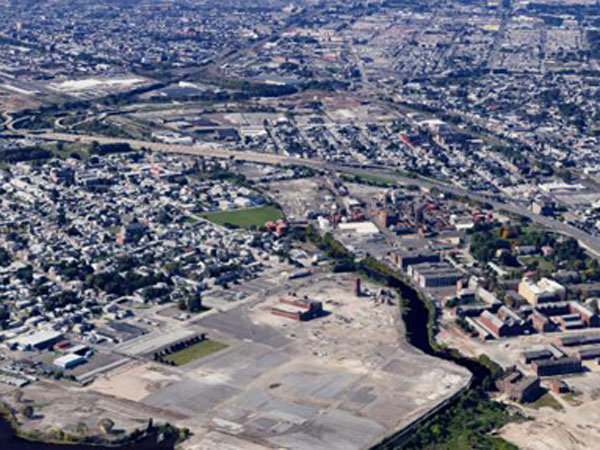
    Joseph Cooney joined the Philadelphia Police Department’s narcotics unit in 1998. For eight years, the officer began and finished each workday at the unit’s headquarters on the site of the old Frankford Arsenal in Philadelphia’s Bridesburg section, where munitions were manufactured and tested from the Civil War through the Vietnam War.

    Cooney, 53, said he would joke with his colleagues that “we’ll all be glowing in the dark someday” because of the materials left behind in the ground and the chemical plants across the Frankford Creek. In 2024, that joke became a dark reality for Cooney when he was diagnosed with glioblastoma, an aggressive and incurable brain cancer.

    In a lawsuit, filed along with lawsuits by the families of two narcotics officers who died of the disease, Cooney links his cancer to radioactive and toxic materials that had not been properly remediated when the munitions factory shut down and the site was converted to a business park.

    The lawsuit, filed Monday in Common Pleas Court, accuses the Philadelphia Authority for Industrial Development, developer Mark Hankin, and Hankin’s businesses of having known about risks of exposure but failing to warn those working in the location or properly remediate the harm.

    “This type of cancer, at the end of the day, it’s a death sentence,” Cooney said. “When you go to work every day, you don’t expect to be dealing with this.”

    The Philadelphia Authority for Industrial Development declined to comment. Hankin did not respond to requests for comment.

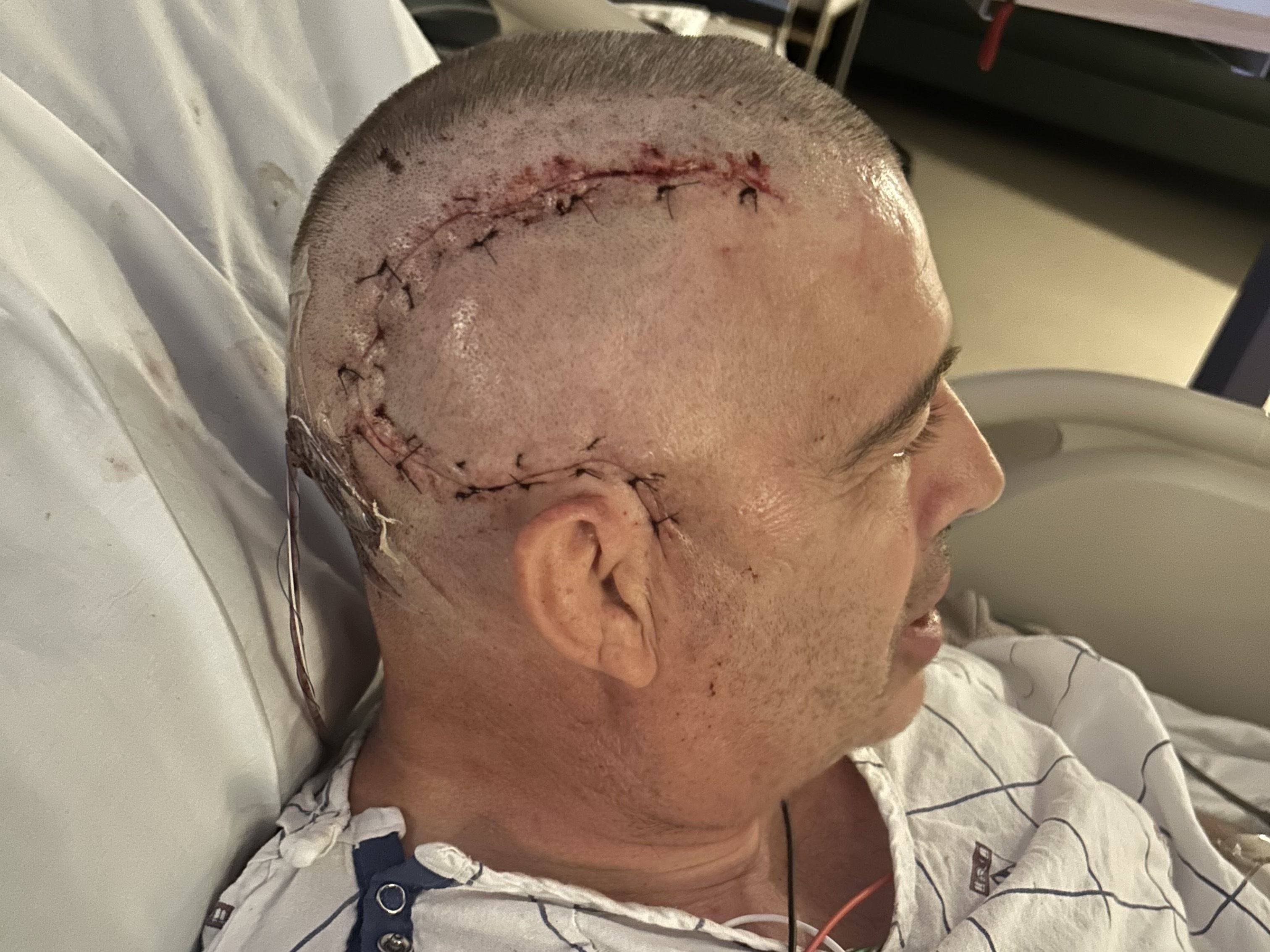
    Joseph Cooney, a police officer who was diagnosed with glioblastoma in 2024, seen after his third surgery in July 2025.

    ‘The street that beat Hitler’

    The Frankford Arsenal opened in 1816 as a weapons storage and repair shop for the U.S. Army, and in 1849 became the country’s largest developer and manufacturer of small arms and artillery shells. The arsenal’s campus grew over the years, including a massive expansion during World War II. By the end of the war, workers fondly referred to it as “the street that beat Hitler.”

    Each war throughout the century-plus of the arsenal’s existence brought its own challenges, and the complex between Bridge Street, Tacony Street, and the Frankford Creek adapted to support the nation’s military needs.

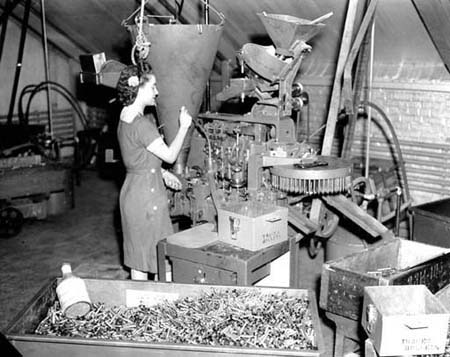
    This woman is loading powder into cartridges of .30 caliber tracer bullets in the assembly division of the Frankford Arsenal in Philadelphia, Penn., on July 27, 1940 during World War II. (AP Photo)

    The arsenal closed in 1977 and the authority for industrial development, an agency with a mayor-appointed board, became the campus’ steward. Hankin, a Montgomery County developer, bought the campus in the 1980s and transformed it into a business park, which included the narcotics unit headquarters from the early 1990s until 2015.

    As soon as the arsenal closed, decontamination needs were discussed, newspaper articles from the time show. An official report found the existence of dangerous materials in buildings in 1981, before the property was converted to civilian use, the lawsuits say.

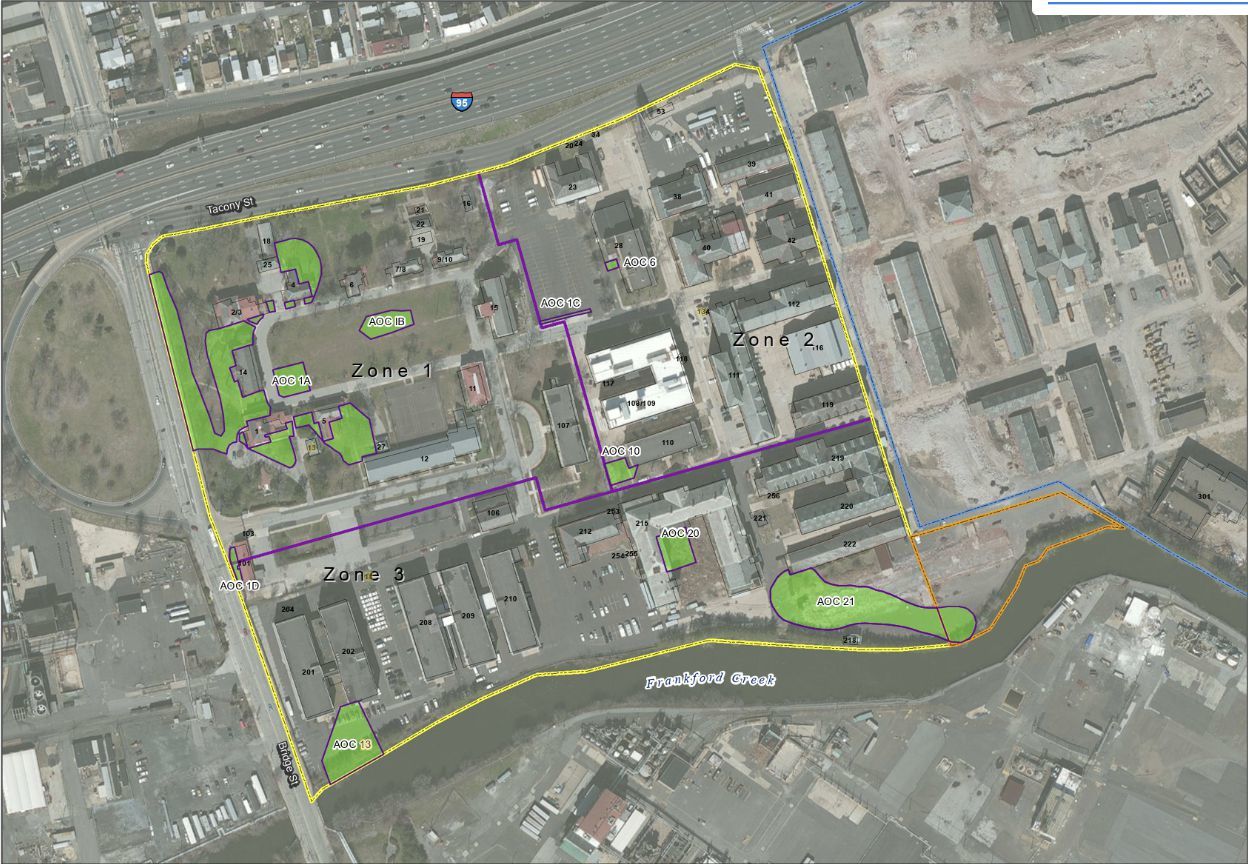
    Throughout the 2000s, the U.S. Army Corps of Engineers, in a series of reports, flagged concerns over dangers in the old arsenal’s ground. A 2016 report found elevated concentrations of lead and potentially cancer-causing substances in six areas that posed “unacceptable risk or potential concerns to future human receptors.”

    One of the areas of concern noted in the report sits atop building 202 — the narcotics unit’s former home.

    A map showing areas of concern for hazardous materials at the Frankford Arsenal site, from a 2016 report on a feasibility study conducted by the U.S. Army Corp of Engineers.

    The common denominator

    Cooney has been hearing over the past decades about colleagues from his narcotics unit days who have gotten sick.

    Michael Deal, who spent 37 years on the police force and joined the narcotics unit in 1994, was diagnosed with glioblastoma in 2018 and died the next year at age 64. Then, in 2023, Andrew Schafer, a 20-year veteran who worked at narcotics from 2002 to 2015, also was diagnosed with the brain cancer. He died in March at age 51.

    The families of Deal and Schafer also filed lawsuits similar to Cooney’s.

    Cooney heard through the grapevine about other cases. And then he was diagnosed.

    “Everyone sat down, started talking,” Cooney said. “The only common denominator was everybody worked in the same building.”

    Adding to their concern were the adjacent chemical plants, Cooney said.

    Fifty-four employees of the Rohm & Haas chemical plant, right across the Frankford Creek from the arsenal, died of lung cancer in the 1960s and early ’70s, the Philadelphia Daily News reported in 1981.

    The current suits allege that the contaminants in the arsenal ground were not properly cleaned up, and that those working at the site were not warned despite a series of reports.

    “The remediation was not done to the extent that it eliminated the risk,“ said William Davis, the attorney who filed the suits. ”Up until now we have no evidence that there was any warning to any tenants.”

    Cooney still works as a police officer, with a desk job supporting the city’s SWAT team. He has lost much of his independence to the disease, which can be slowed but not cured. He can no longer drive or coach youth sports, and relies on a cane to walk.

    “It’s tough now,” Cooney said. “You feel like you’re getting robbed.”

    The officer is concerned about who will take care of his wife and their seven children once he is gone, and Cooney is especially worried for the health of one of his daughters — a biology teacher at Franklin Towne Charter High School, which sits on the arsenal’s old site.

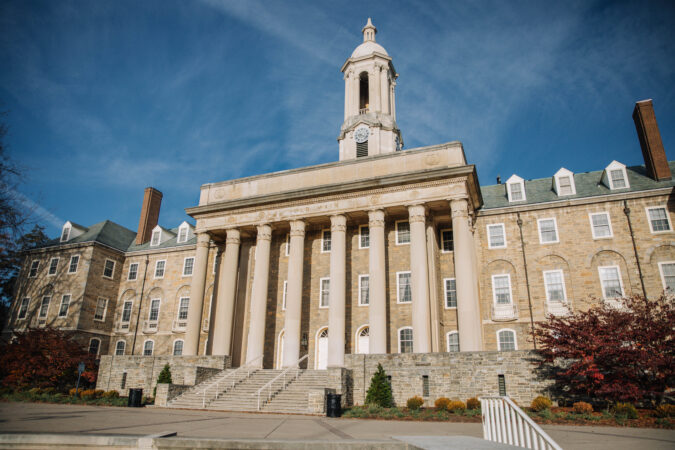
  • Penn State faculty say they will vote on forming a union

    Penn State faculty say they will vote on forming a union

    A Pennsylvania State University faculty group has taken the next step to form a union across the system’s campuses, which eventually could represent some 6,000 faculty.

    Officials from the Penn State Faculty Alliance and the Service Employees International Union said they had filed Tuesday with the Pennsylvania Department of Labor after having obtained at least the required signatures of 30% of eligible faculty.

    The next step would be an election, and if approved by a majority, a union would be formed and contract negotiations could begin. How long it takes to schedule an election depends on whether the university opposes the move.

    “It would be the largest single union election in the public sector in the history of the Commonwealth if not the last 50 years,” Steve Cantanese, president of SEIU 668 said at a news conference held at the Capitol building Tuesday in Harrisburg.

    The announcement comes about a month after graduate student workers at Penn State voted to unionize, with 90% in favor. That vote came nearly a year after the Coalition of Graduate Employees at Penn State filed the required signature cards with the labor board. Their vote came amid a wave of graduate union workers’ efforts to unionize.

    Penn State is the only state-related university of the four in the Commonwealth without a faculty union. Faculty concern about the university’s decisions began to accelerate during the pandemic and have continued to mount amid budget cuts and the decision in May to announce the closure of seven of the school’s Commonwealth campuses. A seeming lack of shared governance, salary, and workload inequities across campuses, and transparency are among other concerns cited by faculty involved in the effort.

    “Penn State faculty are filing for a union election to bring transparency to their workplace, to bring job security to their workplace, to have an opportunity to have a greater voice at their workplace, to have some economic security at their workplace,” Cantanese said.

    Julio Palma, associate professor of chemistry at Fayette, one of the campuses selected for closure, said faculty tried to fight the Commonwealth campus closure plan but didn’t have enough power.

    “We organized,” he said. “We held rallies on campus. We talked to our elected officials. Nothing moved the needle.

    “If we had a faculty union, we wouldn’t be in this situation… We need a faculty union now.”

    Cantanese said SEIU reached out to the university in the hope that it will welcome faculty’s efforts to unionize.

    Penn State in a statement said it would review the petition when it is received.

    “Penn State deeply values the teaching, research, and service of our faculty, who play a critical role in fueling the success of our students and advancing our mission,” the school said.

    Faculty at the press conference said a union is needed.

    “As a teacher, I know that my working conditions are my students’ learning conditions,” said Kate Ragon, an assistant clinical professor of labor and employment relations at University Park, Penn State’s main campus. “We want a voice in the decision-making that affects us, affects our students, and affects our work.”

    The three other state-related universities in Pennsylvania ― Temple, the University of Pittsburgh, and Lincoln ― already have faculty unions. Temple’s has existed for more than 50 years, and its graduate student workers have been unionized for about 25 years. Lincoln’s formed in 1972. Pitt’s is more recent. It was established in 2021.

    Faculty at Rutgers, New Jersey’s flagship university, are unionized, too. So are the 10 universities in the Pennsylvania State System of Higher Education.

    Faculty in the alliance have said they hope to secure better wages and benefits, job security protections, and a greater role in decision-making. When they announced plans to form a union last March, they said they wanted full and part-time, tenure, and nontenure faculty to be included as members and believed all campuses would be involved except for the medical school faculty at Hershey.