NEW YORK — Paramount has gone hostile bid for Warner Bros. Discovery, challenging Netflix which reached a $72 billion takeover deal with the company just days ago.
Paramount said Monday that it is going straight to Warner Bros. shareholders with a $30 per share cash bid for the entirety of the company including its Global Networks business, asking them to reject the deal with Netflix.
That is the same bid that Warner Brothers rejected in favor of the offer from Netflix in a merger that would alter the U.S. entertainment landscape.
Paramount criticized the Netflix offer, saying it “exposes WBD shareholders to a protracted multi-jurisdictional regulatory clearance process with an uncertain outcome along with a complex and volatile mix of equity and cash.”
Paramount said it had submitted six proposals to Warner Bros. Discovery over a 12 week period.
“We believe our offer will create a stronger Hollywood. It is in the best interests of the creative community, consumers and the movie theater industry,” Paramount Chairman and CEO David Ellison said in a statement. ”We believe they will benefit from the enhanced competition, higher content spend and theatrical release output, and a greater number of movies in theaters as a result of our proposed transaction,”
On Friday Netflix struck a deal to buy Warner Bros. Discovery, the Hollywood giant behind “Harry Potter” and HBO Max. The cash and stock deal is valued at $27.75 per Warner share, giving it a total enterprise value of $82.7 billion, including debt. The transaction is expected to close in the next 12 to 18 months, after Warner completes its previously announced separation of its cable operations. Not included in the deal are networks such as CNN and Discovery.
The massive construction project rose outside Room 221, where 22 curious second graders peered outside their classroom daily, noting daily progress with great interest.
Sometimes, the kids at Fanny Jackson Coppin School, on South 12th Street in South Philadelphia, cheered for the workers, spurring them on as the summer heat gave way to chillier temperatures.
But they had so many questions: “What colors are for the building, and how many colors are you going to use? Red or pink?” and “How does the building not fall down?” and “When will you stop making it taller and taller?”
Teacher Kate Atkins collected the 7- and 8-year-olds’ queries, compiling them in a letter she left at the job site with her phone number. “We think you should come and tell us about construction because it is getting better and better,” the kids wrote.
Jack Delaney, the project manager on the job site, found the letter. He was charmed; he reached out to Atkins.
Zach Winters, cofounder and partner at 3rd Story Philly, second grade teacher Kate Atkins, center, and Jack Delaney, right, Project Manager at 3rd Story Philly, talk with students at Fanny Jackson Coppin School, in Philadelphia, December 05, 2025.
And on a frigid Friday, Delaney and Zach Winters, construction manager and a cofounder of 3rd Story Philly, the development and construction company working on the house project, walked into Room 221 with tools to show and energy appropriate for a roomful of enthusiastic second graders.
For 50 minutes — a long time for second-grade attention spans — the students talked about tools and examined pictures of the project in progress. They donned their own hard hats. But mostly, they gleaned information.
Zach Winters, cofounder and partner at 3rd Story Philly, left, and Jack Delaney, Project Manager at 3rd Story Philly, right, talk with students at Fanny Jackson Coppin School, in Philadelphia, December 05, 2025.
Here are some of Room 221’s greatest hits:
Question: Why did you decide to make the house bigger by making it taller instead of making it wider?
Answer: “We build additions on top of existing homes or sometimes behind existing homes, because there’s not a lot of space in the city,” Winters said. “We make the house bigger by going up.”
Q: Do you ever worry that you’re going to fall off the building?
A: “Yes, I do,” Winters said. “You should always be worried that you’re going to fall off something high. We try to be very careful. We try to stay away from the edge of the building. If we’re close to the edge of the building, we put on safety harnesses, so if we were to fall, that could catch us. But, yes, I’m worried, and my wife worries, and my mother worries.”
Students Landon Watkins, center, and Leo Horn, right, try on hard hats at Fanny Jackson Coppin School, in Philadelphia, December 05, 2025.
Q: How much will the house cost to build?
A: The project is a full remodel, with third- and fourth-story additions, basement excavation, and two roof decks.
“Often today, we are building a new construction at around $200 to $250 a square foot,” Winters said. “And it depends on how fancy the building is. A project like this is close to a half-million dollars. That’s a lot of money — but it’s a lot of house.”
Q: How long will it take to finish the house?
A: “Eight months to a year,” Delaney said.
“That depends on how many problems we have. Sometimes, it rains for a week, and we have to get the roof done,” Winters said. “Sometimes, it gets really cold, and the masons can’t work.”
The Coppin kids did not let Delaney and Winters off easy.
“Will it be done by Christmas?” one student said. No, Delaney and Winters said. The job started in March. It won’t finish until next year.
“Maybe you should try to finish it by Hanukkah,” another student said.
Q: (To Delaney) Do you do any drywall?
A: “I don’t, but the drywallers do,” Delaney said. “They are very strong. They hold up giant sheets of drywall.”
Winters interjected: Delaney knows how to drywall, but that’s not his job right now.
Delaney smiled.
“I get to say, ‘Hey, you go do the drywall,’ and then I run away,” he said.
The kids loved the level Delaney showed them. They had excellent guesses about how many bricks were used on the project.
“Four thousand million,” one girl shouted.
(Close — it’s 17,500.)
At the end of the visit, Atkins had a question for the kids.
“Who might want to work in construction someday?” she asked.
Nearly every hand shot up.
Delaney and Winters looked triumphant.
“We’ve got a labor shortage now,” Winters said. “Let’s go!”
Zach Winters, cofounder and partner at 3rd Story Philly, talks with students at Fanny Jackson Coppin School, in Philadelphia, December 05, 2025.
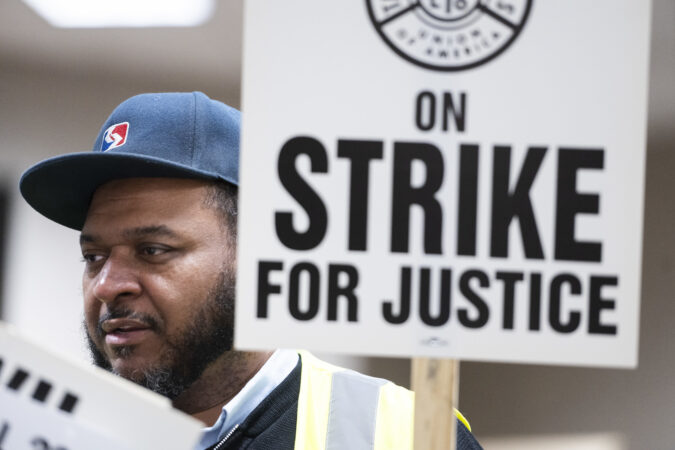
Beginning in late afternoon, members of Gov. Josh Shapiro’s staff met with union leaders and SEPTA senior managers at the governor’s Philadelphia office. The goal was to unstick talks that had faltered, seeing if compromise was possible.
The union’s push for an increase in pensions and SEPTA’s proposal for union members to pay a greater share of the cost of their healthcare coverage emerged over the last week as the biggest obstacles to an agreement, according to both union and transit authority sources.
“Gov. Shapiro’s office brought the parties together and they made progress,” SEPTA spokesperson Andrew Busch said. “It was significant.”
In a statement, the union said “significant progress” was made.
“Gov. Shapiro was instrumental in preventing a strike that could have started as soon as Monday morning. We’re grateful for his close involvement,” said TWU Local 234 President Will Vera.
A work stoppage would have brought chaos to a mass transit system that carries a weekday average of 790,000 riders.
TWU Local 234 represents 5,000 bus, subway, elevated train and trolley operators, as well as mechanics, cashiers, maintenance people and custodians, primarily in the city.
Their one-year labor contract expired Nov. 7, but members stayed at their posts. On Nov. 16, they authorized Local 234’s leaders to call a strike if needed. The vote was unanimous.
SEPTA and the union were not far apart on salary and both wanted a two-year deal after a series of one-year pacts during a time of financial crisis for the transit agency, sources said.
Management wanted to hike what union members pay for health coverage and increase co-pays for doctor and hospital visits.
The union pushed for an enhancement to the formula that determines retirees’ monthly pensions, based on years of service. It was last increased in 2016.
SEPTA officials calculated that TWU’s proposed changes would have created an annual unfunded liability of about $6 million for an undetermined length of time. The union says the pension plan books showed a bump was affordable.
Because TWU Local 234 is the largest SEPTA union, its contracts are used as a template for the other locals working for the transit system, which could boost costs.
Regional Rail was a concern to SEPTA because commuter railroad workers, like others, receive a federal pension that has tended to be less generous. Those unions would have wanted a SEPTA sweetener to their retirement benefits too.
TWU Local 234 also wanted changes to work rules involving sick time benefits and the length of time it takes new members to qualify for dental and vision benefits — currently 15 months.
The local also represents several hundred suburban workers, primarily operators, in SEPTA’s Frontier district, which runs 24 bus routes in Montgomery County, Lower Bucks County, and part of Chester County.
The Victory district has a similar number of employees, who are represented by SMART Local 1594. They run Delaware County’s two trolley lines, the Norristown High Speed Line, and 20 bus routes in the suburbs.
Unions for both the Frontier and Victory districts could choose to strike alongside TWU Local 234. If that happened, Regional Rail, already plagued by delays and cancellations due to federally-mandated repairs on train cars, would be the only public transit running.
TWU last struck in 2016. It lasted for six days and ended the day before the general election. Democrat Hillary Clinton’s presidential campaign was worried about voter turnout, and the city sought an injunction to end the strike. That proved unnecessary.
Regional Rail would operate during a TWU strike. Locomotive engineers and conductors on the commuter service are represented by different unions than transit employees, and are working under current contracts.
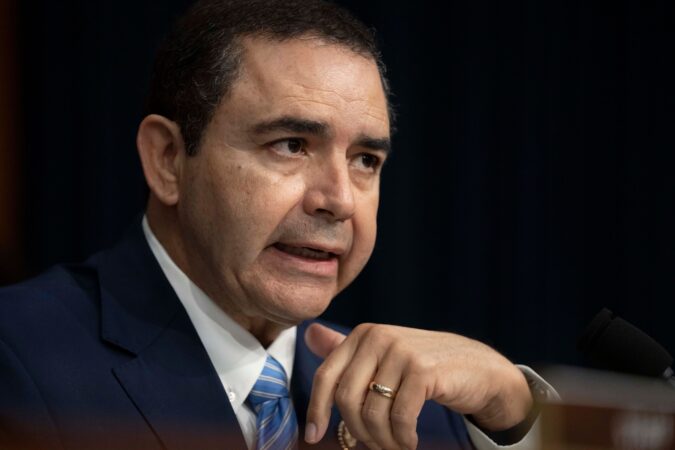
Trump blasted Cuellar for “Such a lack of LOYALTY,” suggesting the Republican president might have expected the clemency to bolster the GOP’s narrow House majority heading into the 2026 midterm elections.
Cuellar, in a television interview Sunday after Trump’s social media post, said he was a conservative Democrat willing to work with the administration “to see where we can find common ground.” The congressman said he had prayed for the president and the presidency at church that morning “because if the president succeeds, the country succeeds.”
Citing a fellow Texas politician, the late President Lyndon Johnson, Cuellar said he was an American, Texan, and Democrat, in that order. “I think anybody that puts party before their country is doing a disservice to their country,” he told Fox News Channel’s Sunday Morning Futures.
Trump noted on his Truth Social platform that the Democratic President Joe Biden’s administration had brought the charges against Cuellar and that the congressman, by running once more as a Democrat, was continuing to work with “the same RADICAL LEFT” that wanted him and his wife in prison — “And probably still do!”
“Such a lack of LOYALTY, something that Texas Voters, and Henry’s daughters, will not like. Oh’ well, next time, no more Mr. Nice guy!” Trump said. Cuellar’s two daughters, Christina and Catherine, had sent Trump a letter in November asking that he pardon their parents.
Trump explained the pardon he announced Wednesday as a matter of stopping a “weaponized” prosecution. Cuellar was an outspoken critic of Biden’s immigration policy, a position that Trump saw as a key alignment with the lawmaker.
Cuellar said he has good relationships within his party. “I think the general Democrat Caucus and I, we get along. But they know that I’m an independent voice,” he said.
A party switch would have been an unexpected bonus for Republicans after the GOP-run Legislature redrew the state’s congressional districts this year at Trump’s behest. The Texas maneuver started a mid-decade gerrymandering scramble playing out across multiple states. Trump is trying to defend Republicans’ House majority and avoid a repeat of his first term, when Democrats dominated the House midterms and used a new majority to stymie the administration, launch investigations, and twice impeach Trump.
Yet Cuellar’s South Texas district, which includes parts of metro San Antonio, was not one of the Democratic districts that Republicans changed substantially, and Cuellar believes he remains well-positioned to win reelection.
Federal authorities had charged Cuellar and his wife with accepting thousands of dollars in exchange for the congressman advancing the interests of an Azerbaijan-controlled energy company and a bank in Mexico. Cuellar was accused of agreeing to influence legislation favorable to Azerbaijan and deliver a pro-Azerbaijan speech on the floor of the U.S. House.
Cuellar has said he and his wife were innocent. The couple’s trial had been set to begin in April.
In the Fox interview, Cuellar insisted that federal authorities tried to entrap him with “a sting operation to try to bribe me, and that failed.”
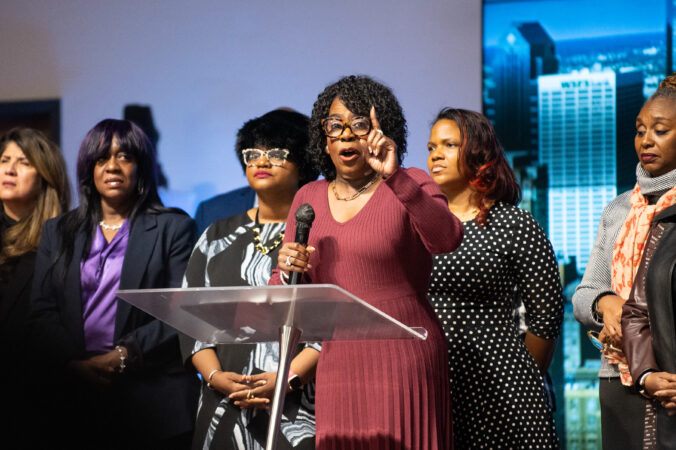
Mayor Cherelle L. Parker traversed pulpits across West and North Philadelphia on Sunday, promoting her vision for her signature housing initiative that’s heightening tensions in City Hall.
Parker, who wants to ensure the initiative helps those with varying incomes, largely opposes the changes, which has caused one of the most notable standoffs between the city’s executive and legislative branches during her mayoralty. From West Philly’s Church of Christian Compassion on Sunday morning, she lobbied her constituents, saying her vision for the housing plan is to avoid “trying to pit the ‘have-nots’ against those who have just a little bit.”
“We should be about addition, not subtraction,” she said to a packed sanctuary, as she sought to reclaim the narrative surrounding H.O.M.E. Her rousing 10-minute address was met with acclaim and applause, bringing some in the crowd to their feet.
“We’ve got to take care of the people who are most in need, but we can’t penalize the people who are going to work every day, pay their taxes, contribute to the city, and they can’t benefit from home improvement programs.”
The H.O.M.E. initiative calls for spending $800 million across dozens of existing programs. The bulk of the funding would go to affordable-housing preservation, the Turn the Key program, the Basic Systems Repair Program, affordable housing production, and One Philly Mortgage, which would provide loans to low income households.
Councilmember Jamie Gauthier, chair of the Committee on Housing, Neighborhood Development, and the Homeless, and whose district includes Church of Christian Compassion, called Council’s proposal reasonable and compromised and a fiscally responsible response to “Philadelphians who need our help the most in this moment.”
“The mayor has every right to get out into the public, to tell her side, to talk about her vision,” Gauthier said in an interview, “but I will say there was plenty of time to negotiate with Council on this, and plenty of attempts made from the Council’s side.”
Despite the disagreement over eligibility rules, Parker and Council are on the same page about the broad strokes of the housing plan; critical pieces of legislation Parker proposed as part of H.O.M.E. were approved by Council earlier this year. The changes last week did not alter the fundamentals of the program, which Parker hopes will achieve her goal of creating or preserving 30,000 units of housing in her first term.
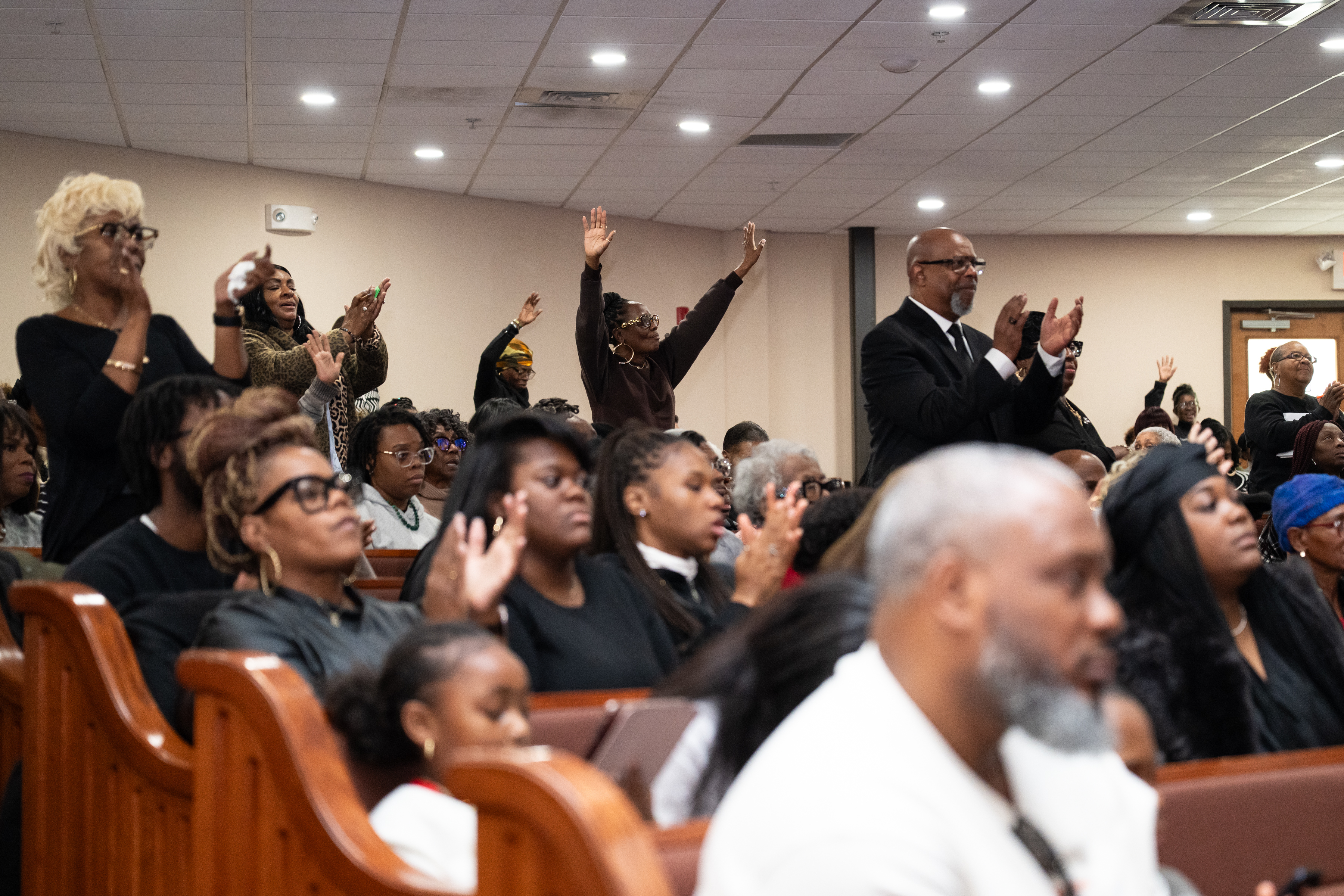
Congregants at the Church of Christian Compassion cheer as Mayor Cherelle L. Parker addresses the crowd before service in the Cobbs Creek neighborhood of West Philadelphia on Sunday, Dec. 7, 2025.
The main sticking point in recent negotiations has been eligibility criteria for several programs: Parker, for instance, had proposed that H.O.M.E. funding for the Basic Systems Repair Program — which subsidizes critical home improvements — is open to any homeowner who makes Philadelphia’s area median income, about $119,400 for a family of four. Council’s amendments, however, require 90% of the new funding to go to families making 60% of the area median income or less, about $71,640 for a family of four.
Gauthier likened what’s in dispute to an emergency room: “The person who’s having a heart attack is going to be seen before the person with a broken leg, because that person who’s experiencing a heart attack might not make it if they don’t get immediate assistance.”
The squabble has given way to the most significant public dustup between Parker and Council President Kenyatta Johnson. In an uncharacteristically blunt statement last week, Johnson broke from his usual alignment with the mayor and defied her administration’s analysis of the situation.
In a statement Sunday, Johnson’s spokesperson Vincent Thompson said “Johnson heard clearly and directly from Councilmembers and housing organizations in Philadelphia about critical issues they want addressed in the first-year H.O.M.E. Plan spending. Those concerns center on accountability, neighborhood equity, and — most importantly — making sure that the deepest investments reach the poorest and most vulnerable Philadelphians.”
The amended budget could be up for a final vote as soon as Thursday, Dec. 11, Council’s last meeting before its winter break, according to Johnson’s office.
Craig Romanczuk’s voice barely gets above a whisper these days.
But speaking at all feels like a miracle, he said.
Five months ago, the retired Philadelphia police officer, a Philadelphia School District safety officer of nearly 20 years, was shot 11 times while driving in a marked patrol car. He almost died.
Life is crowded with medical appointments, surgeries and therapies now. But Romanczuk takes it in stride, with the kind of gruff and jovial banter born of his one-of-nine-kids-growing-up-in-Kensington roots and the near-death experience that still feels very close.
After almost dying, “you appreciate your family, your brothers and your sisters,“ said Romanczuk, pausing. ”Even though they’re still jerks. Now you get a chance to tell them that they’re jerks and you still love them.”
‘Officer, can you help me?’
It was two hours past midnight, a warm June evening, when Romanczuk wrapped up his patrol assignment, checking on a Kensington high school building just before 2 a.m.
It was a night like many others — after graduating from North CatholicHigh School, Romanczuk joined the police force at 19, spending his career in the 3rd district, in South Philadelphia, and finishing it in the 19th, in West Philadelphia. After he retired in 2004, his sister encouraged him to take the school police officer test. He spent years as an officer in schools, then took a patrol job in 2017, driving around the city to check on school buildings between 10 p.m. and 8:30 a.m.
On June 29, Romanczuk took Front Street to North Columbus Avenue on his way back to a district garage after theKensington High School for the Creative and Performing Arts job. He was stopped for a red light near the Dave and Buster’s when a car pulled up to him.
“The man said, ‘Officer, can you help me?’” Romanczuk remembered. A driver exhibiting road rage had been following the man since they were both driving on I-95, he told Romanczuk, who agreed to assist.
District safety officers are not armed; Romanczuk said he planned “to say, ‘Yo guy, knock it off, go the other way.’“
He opened his car door, stepping out onto the street. He didn’t even have time to say a word; bullets started flying immediately.
Romanczuk was shot 11 times — in the shoulder, in the armpit, through the bicep. One bullet cut across his chest, striking the cell phone in his pocket. One pierced his neck, breaking his collarbone, damaging his Adams apple and his vocal cord. One exited out of the left side of his face, breaking his jawbone and taking nearly all of his upper teeth with it. One hit the side of his face, going through the roof of his mouth and coming out of his nose.
He was wearing a bulletproof vest, but was still injured enough to nearly bleed out.
“It isn’t like a movie,” said Romanczuk. “You feel the bullets break your bones, you feel them going through your body. That’s the pain I felt. I thought, ‘I hurt too much, I’m not going to live through this.’”
Somehow, Romanczuk managed to get back into his car, an attempt to elude the shooter.
“I put the car in drive and I felt more bullets hitting the car seat. I was thinking, ‘Why am I being shot? I didn’t do anything. He’s not mad at me,’” he said. “It’s like the Hallmark movie – you think of your kids. I thought, ‘Tell them that I love them.’”
His car hit a tree. His last memory is staggering out of his patrol car.
‘This ain’t heaven’
A Philadelphia Parking Authority tow truck sat across the street, its operator watching the whole scene unfold. The tow truck driver called 911 and a buddy of his who was a school police lieutenant. City police responded, ready to scoop Romanczuk and take him to the hospital, when a fire department paramedic unit drove by.
The paramedics got Romanczuk to Jefferson. He remained unconscious for two weeks.
When he eventually woke up, he thought he was dead.
“I’m looking around, I’m on the ninth floor in a dark room. I said, well this ain’t heaven. This must be purgatory. A nurse leaned over and I went, ‘Lucifer?’ I went, ‘Where am I?’ He said, ‘Jefferson.’ I said, ‘is that hell?’”
It turns out it wasn’t hell. Romanczuk remained in Jefferson until the end of July, then spent a month at Jefferson Moss-Magee Rehabilitation Hospital in Center City, astonishing staff with his progress. He received a hero’s send-off on his release.
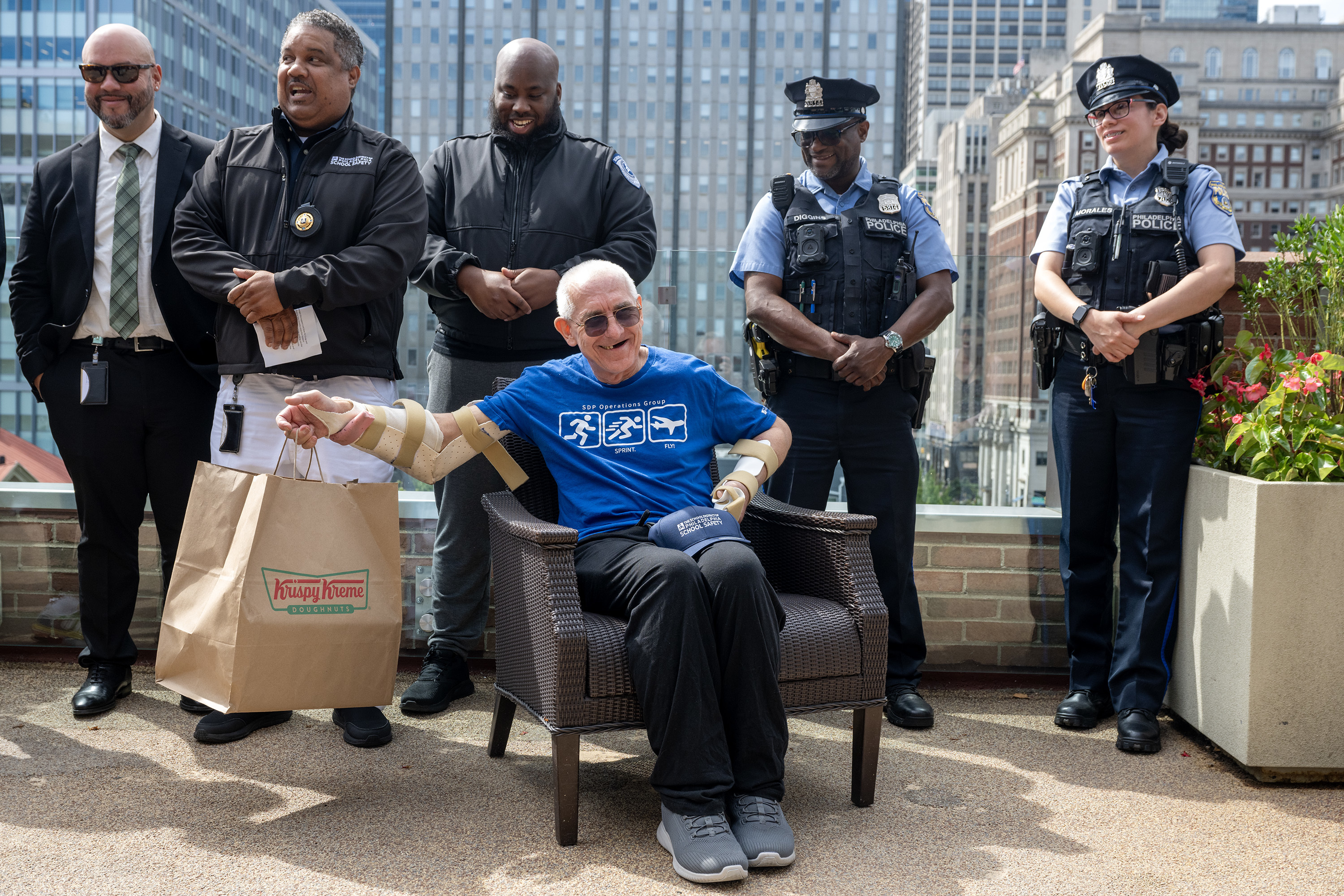
School Safety Officer Craig Romanczuk displays the donuts brought by son Erik Romanczuk as he is celebrated by fellow safety officers, school district officials, his care team and hospital staff Thursday, Aug. 28, 2025 as he leaves Jefferson Moss-Magee Rehabilitation Hospital. Romanczuk has been undergoing since June, when he was shot 11 times after a road rage incident when he stopped to offer assistance while heading home following an assignment. Romanczuk served close to 30 years as a Philadelphia police officer before joining the district’s Office of School Safety almost 20 years ago. He has served both as a patrol officer and been assigned to schools. Erik is a Philadelphia police sergeant.
Romanczuk is full of effusive praise for the staff at Jefferson. He’s not a hero, he said.
“The doctors and God are,” he said. “I think God was working through the doctors. They were so skillful.”
Politicians like to take credit for improving homicide rates, Romanczuk said.
“But it’s not the politicians, it’s the doctors,” he said. “They’re so good at saving people.”
‘He will do this again’
Romanczuk could not speak at all for weeks. Now that extensive therapy has allowed him to regain a quiet voice, he wants to use it.
“I think he should spend the rest of his life in prison,” said Romanczuk. “I believe if they let him out, he will do this again somewhere.”
Romanczuk worries that prosecutors leading the case against Giansteban and other alleged criminals do not think enough about the victims of violence.
He will continue to show up at Giansteban’s court appearanceswhen he can, Romanczuk said, to make his voice heard and remind people what he has suffered.
And he’ll continue to be grateful for being around to crack jokes.
Romanczuk is able to live alone at his house in the Northeast, “with my sister yelling at me, and my son,” he joked. (His son is also a city police officer.)
Until the shooting, Romanczuk had no plans to retire, but his massive injuries forced his hand. The steady stream of visits from his colleagues and his family and friends buoyed him, he said.
“I love my co-workers and my family,” he said, “and I got 20 more years to tell them so.”
WASHINGTON — After the arrest of a man charged with placing two pipe bombs outside the headquarters of the Republican and Democratic national parties on Jan. 5, 2021, the warning from the Trump administration was clear: If you come to the nation’s capital to attack citizens and institutions of democracy, you will be held accountable.
Yet Justice Department leaders who announced the arrest were silent about the violence that had taken place when supporters of President Donald Trump stormed the Capitol and clashed with police one day after those bombs were discovered.
It was the latest example of the Trump’s administration’s efforts to rewrite the history of the riot, through pardons and the firings of lawyers who prosecuted the participants of the siege, and of the disconnect for a government that prides itself for cracking down on violent crime and supporting law enforcement but has papered over the brutality of the Jan. 6 attacks on police officers.
“The administration has ignored and attempted to whitewash the violence committed by rioters on Jan. 6 because they were the president’s supporters. They were trying to install him a second time against the will of the voters in 2020,” said Michael Romano, who prosecuted the rioters before leaving the Justice Department this year. “And it feels like the effort to ignore that is purely transactional.”
The White House referred comment to the Justice Department, which referred comment to the FBI. The bureau did not immediately respond to an email from the Associated Press on Friday.
Bongino once suggested pipe bomb incident was ‘inside job’
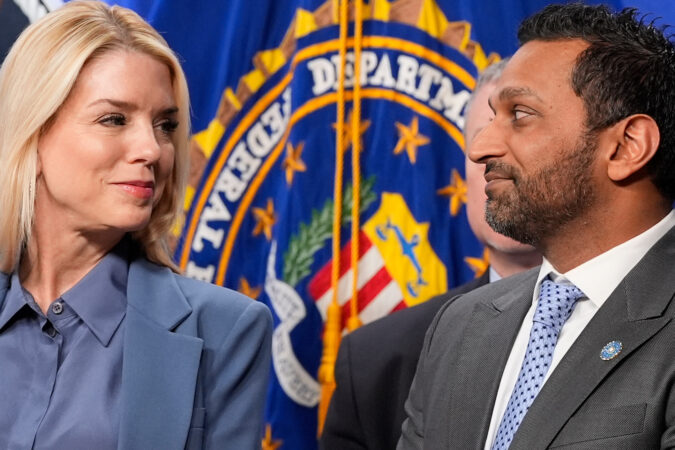
FBI Director Kash Patel, as a conservative podcast host during the Biden administration, had called the Jan. 6 rioters “political prisoners” and offered to represent them for free. But on Thursday, he said the arrest of the pipe bomb suspect, 30-year-old Brian Cole Jr., was in keeping with Trump’s commitment to “secure our nation’s capital.”
“When you attack American citizens, when you attack our institutions of legislation, when you attack the nation’s capital, you attack the very being of our way of life,” Patel said. “And this FBI and this Department of Justice stand here to tell you that we will always combat it.”
Patel’s deputy, Dan Bongino, had suggested before joining the FBI that federal law enforcement had wasted time investigating Jan. 6 rioters and anti-abortion activists.
“These are threats to the United States?” he said on a podcast last year. “Grandma is in the gulag for a trespassing charge on January 6th.”
Bongino indicated last year he believed the pipe bomb incident was an “inside job” that involved a “massive cover-up.” After joining the FBI, Bongino repeatedly described the investigation as a top priority that was receiving significant resources and attention.
“We were going to track this person to the end of the earth. There was no way he was getting away,” he said Thursday.
No public link has emerged between the pipe bombs and the riot, and Cole’s arrest was a significant development in a long-running investigation that had confounded authorities, who are now are assembling a portrait of Cole. People familiar with the matter told the Associated Press that among the statements Cole made to investigators is that he believed conspiracy theories about the 2020 election, which Trump has insisted was stolen from him in favor of Democrat Joe Biden. The people were not authorized to discuss the ongoing investigation publicly and spoke on condition of anonymity.
There was no widespread fraud in that election, which a range of election officials across the country, including Trump’s former attorney general, William Barr, have confirmed. Republican governors in key states crucial to Biden’s victory have also vouched for the integrity of the elections in their states. Nearly all the legal challenges from Trump and his allies were dismissed by the courts.
Administration played down Jan. 6 and aftermath
The tough-on-crime words heard during Thursday’s announcement about Cole’s arrest were at odds with the Republican administration’s repeated efforts to play down the violence of Jan. 6, absolve those charged in the insurrection, and target those who investigated and prosecuted the rioters.
Trump’s clemency action on his first day back in the White House in January applied to all 1,500-plus people charged with participating in the attack on the foundations of American democracy. That included defendants seen on camera violently attacking police with makeshift weapons such as flagpoles, a crutch, and a hockey stick. More than 100 police officers were injured, including some who have described being scared for their lives as they were dragged into the crowd and beaten.
Earlier this year, the Justice Department asked the FBI for the names of agents who participated in Jan. 6 investigations, a demand feared within the bureau as a possible precursor to mass firings. In August, Patel fired Brian Driscoll, who as the FBI’s acting director in the early days of the Trump administration resisted handing over those names.
Trump’s administration, meanwhile, has fired or demoted numerous prosecutors who worked on Jan. 6 cases, including more than two dozen lawyers who had been hired for temporary assignments to support the investigation but were moved into permanent roles after Trump won the 2024 election.
In October, two federal prosecutors were locked out of their government devices and told they were being put on leave after filing court papers that described those who attacked the Capitol as a “mob of rioters.” The Justice Department later submitted a new court filing that stripped mentions of the Jan. 6 riot.
One man whose case was dismissed because of Trump’s pardons was accused of hurling an explosive device and a large piece of wood at a group of officers who trying to defend an entrance to the Capitol. Some officers later said they had “believed they were going to die,” prosecutors wrote in court papers, and several reported suffering temporary hearing loss.
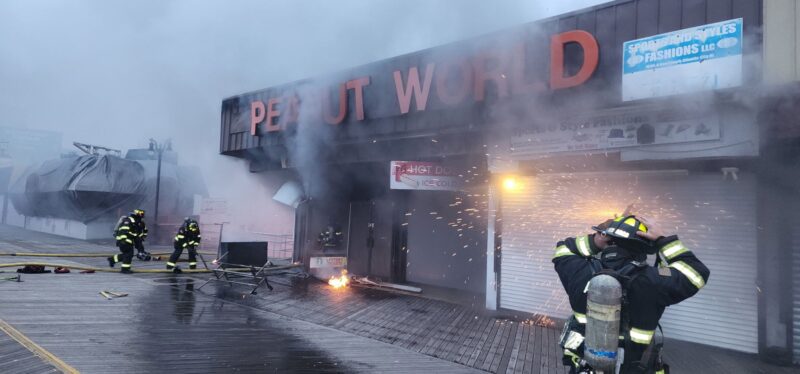
A fire Friday tore through the Atlantic City Boardwalk’s Peanut World souvenir shop, according to authorities.
Atlantic City firefighters battled the blaze that erupted about 4 p.m. at the business off Martin Luther King Boulevard. Heavy smoke billowed out onto the Boardwalk and damaged three other buildings, according to a news release.
The businesses were closed, and no injuries were reported.
While the buildings are salvageable, Peanut World’s interior will have to be rehabbed, according to city public safety spokesperson Matt Duffy. City officials will assess the damage next week, he said.
“We have many buildings of historical significance here in Atlantic City and we really try to keep their integrity whenever possible,” Atlantic City Fire Chief Scott Evans said in a statement.
Peanut World could not be reached by phone early Saturday.
MacKenzie Scott, one of the world’s richest women through her Amazon shares, has donated $25 million to Lincoln University, the college announced Friday.
The money — part of the billionaire philanthropist’s series of multimillion-dollar, unrestricted donations to historically Black colleges and universities — will support scholarships and initiatives, according to a news release.
Lincoln University officials said the no-strings-attached gift “exemplifies her confidence in the university’s mission, vision, and leadership.”
“Lincoln University was founded to break barriers and create pathways for African Americans to thrive,” president Brenda A. Allen said in a statement. “This investment honors that legacy and propels us forward, enabling us to build on 171 years of excellence and innovation.
“It is a powerful affirmation of the enduring value of Historically Black Colleges and Universities.”
A spokesperson for the university and the board of trustees could not immediately be reached Saturday for additional comment.
This is Scott’s second donation to the southern Chester County university, the first degree-granting HBCU in the nation. The ex-wife of Amazon founder Jeff Bezos gave $20 million in 2020 — then the school’s largest gift from a single donor in its history. As of June 2023, the school’s endowment was $54 million.
A number of other historically Black colleges also received money from Scott in recent weeks, including Maryland’s Bowie State and Morgan State Universities and University of Maryland Eastern Shore. Scott’s total donations to higher education institutions this year have topped $1 billion, Forbes reported.
Listen — Philly has a reputation. We know this. We wear it like a badge. We boo Santa, we heckle refs, we meltdown on WIP like it’s an Olympic sport. But there’s passion, there’s unhinged, and then there’s driving to Moorestown at 3 a.m. to egg the offensive coordinator’s house because the Eagles lost to the Bears.
That’s not passion. That’s just loser behavior.
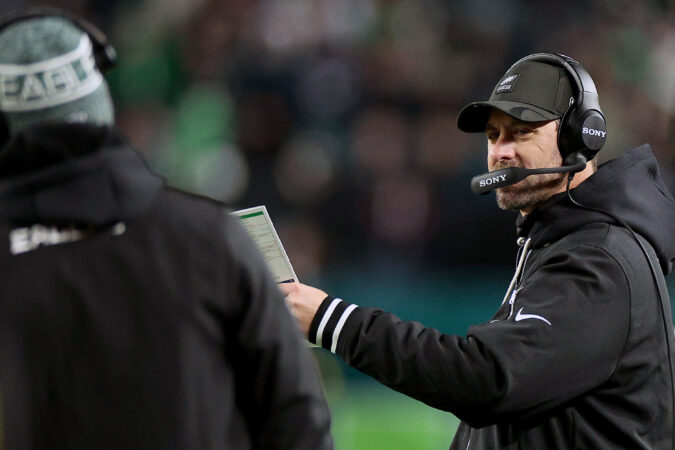
Patullo said all the right things this week. That criticism is part of the job, that he’s been here five years, that he loves the city and the fans. But he also made it clear: When it involves your family, the line isn’t just crossed… it’s obliterated. And he’s right. Yell at the TV, tweet about it, call WIP at 6 a.m. pretending to be “Bryce from Bridesburg.” But families are off-limits.
The good news? Neighbors rallied, the community reached out, and Patullo isn’t going anywhere — not from his home, and not from the sidelines (despite Nick Foles’ dream of him coaching from the booth like it’s Madden franchise mode).
Philly can take a joke, a hit, and a heartbreak season. What we can’t take is letting a few clowns make us look like we egg coaches every time the offense ranks 24th in yards.
Save the eggs for tailgates. Or better yet, breakfast.
A cheesesteak from Dalessandro’s in Philadelphia, on Friday, Nov. 21, 2025. Michelin recently recognized the restaurant with a Bib Gourmand. Cheesesteak restaurants Angelo’s and Del Rossi’s were also recognized by Michelin.
Philly is America’s No. 1 foodcation destination: A (obviously)
All because of one thing: the cheesesteak, which topped the national list with 27% of Americans saying it’s their dream domestic “foodcation.” Translation: People are now booking vacations around a sandwich we buy at 1 a.m. like it’s no big deal.
Food & Wine says Americans spend about $910 on their typical food-focused trip and would nearly double that budget if the bite was bucket-list–worthy. So somewhere out there is a family justifying a $2,000 vacation to stand outside Angelo’s at 10 a.m. behind 70 locals who think they have “a system.”
Meanwhile, New York tied us at 27% for pizza — but let’s be serious. A cheesesteak beating out an entire city’s worth of pizza is so Philly-coded it should count as a parade.
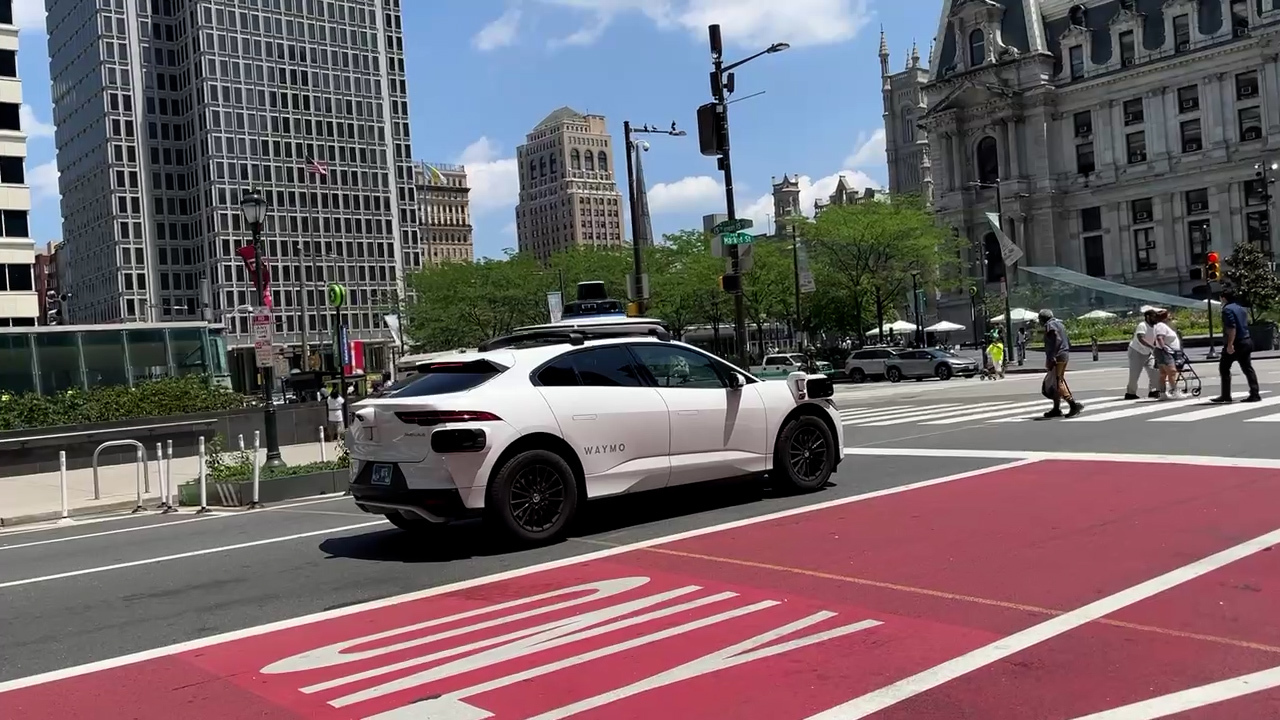
A Waymo car drives down Market Street Tuesday, July 8, 2025, in Philadelphia.
The company says its cars are now driving autonomously (with a human babysitter for now), mapping our neighborhoods and “laying the groundwork” to eventually chauffeur actual Philadelphians around.
Bold. Truly bold. Because sure, a driverless car can operate in Phoenix. But can it:
Identify a pothole before it becomes a crater?
Handle a double-parked Amazon van, a food truck, and a guy pushing a sofa on a hand truck… all in the same block?
Not get stolen? (It’s Philly. We have statistics.)
City officials say they’re “monitoring the situation,” which is Philly-speak for: If this thing blocks a SEPTA bus, there will be consequences. Meanwhile, Waymo has been chatting with local groups — the Bicycle Coalition, Best Buddies — which is smart, because they’ll need all the friends they can get once these cars try to merge on I-95.
Delco Donny turning Wawa parking lots into concert venues: A
Only in the Greater Philadelphia region could a man with a guitar, a thick Delco accent, and a dream turn random Wawa parking lots into 100-person pop-up concerts — and somehow it feels… correct.
“Delco Donny,” the alter ego of musician Jake Dillon, started as a joke for his girlfriend’s Delco mom, reported Philly Voice. Now he’s pulling six-figure TikTok views by belting out Oasis, the Killers, and “Creep” between parked Hyundais and people sprinting inside for Sizzlis. At his Boothwyn Wawa show, fans were literally acting like he was Noah Kahan, except with more vowels flattened and more hoodies with paint stains.
The shtick is simple: He shows up, leans into the Delco accent America learned during Mare of Easttown, and sings like he’s headlining the Spectrum in 1996. And people eat it up. Wawa corporate even started sending him merch, which is basically the Delco version of getting knighted.
There’s something kind of pure about it: a Northeast Philly native channeling a fictional Boothwyn legend who meditates in a cluttered van, reviews local pizza joints, and humbly accepts Marlboro Reds as offerings from the people. The man is doing character work in a gas-station parking lot, and somehow it feels like local folklore in the making.
Opera Philadelphia hosted “Home for the Holidays” at the Wanamaker Building’s Grand Court on Tuesday, Dec. 2, 2025.
The Wanamaker Christmas comeback: A
In the most Philadelphia plot twist imaginable, the Wanamaker Grand Court took what could’ve been a gut punch — Macy’s closing, holiday traditions dangling by a thread — and turned it into a full-blown victory lap complete with a wreath-wearing Wanamaker Eagle, opera singers, dinosaur dancers, and an organ flex so powerful it could rattle the Market-Frankford Line.
“Home for the Holidays,” Opera Philadelphia’s one-night takeover, wasn’t just a concert, it was a statement. Philly looked at a soon-to-be shuttered space and said, Fine, then we’re going out in style. The whole night doubled as a nostalgia bomb: marching-toy projections for anyone who remembers buying Christmas presents in the old store, an audience gasping at the tree like it was 1978 again, and the ground-shaking Wanamaker Organ.
But the real Philly heart came from the subtext: This was also a campaign to keep the space public, alive, and musical long after renovations. You don’t raise $1 million for a Pipe Up! series unless you’re gearing up for a fight.
Philly is getting a cruise terminal again (!!): A-
PhilaPort struck a deal with Norwegian Cruise Line, building a new terminal in Tinicum Township with 41 voyages already on the books over the next two years, reported 6ABC. Norwegian’s locked in through 2033, sending thousands to Bermuda, the Bahamas, Canada, and New England, all sailing straight out of the airport’s backyard.
It’s a major comeback for a region that hasn’t had a real cruise hub in more than a decade, and the timing couldn’t be better with the 250th, the World Cup, and the All-Star Game all landing next year. Economic impact? Around $300 million annually. Jobs? More than 2,100.
And yes, it’s a six-hour ride down the Delaware before you hit the Atlantic. Philly’s response: New York isn’t much faster, Baltimore is way slower. So grab a drink and enjoy the shoreline.
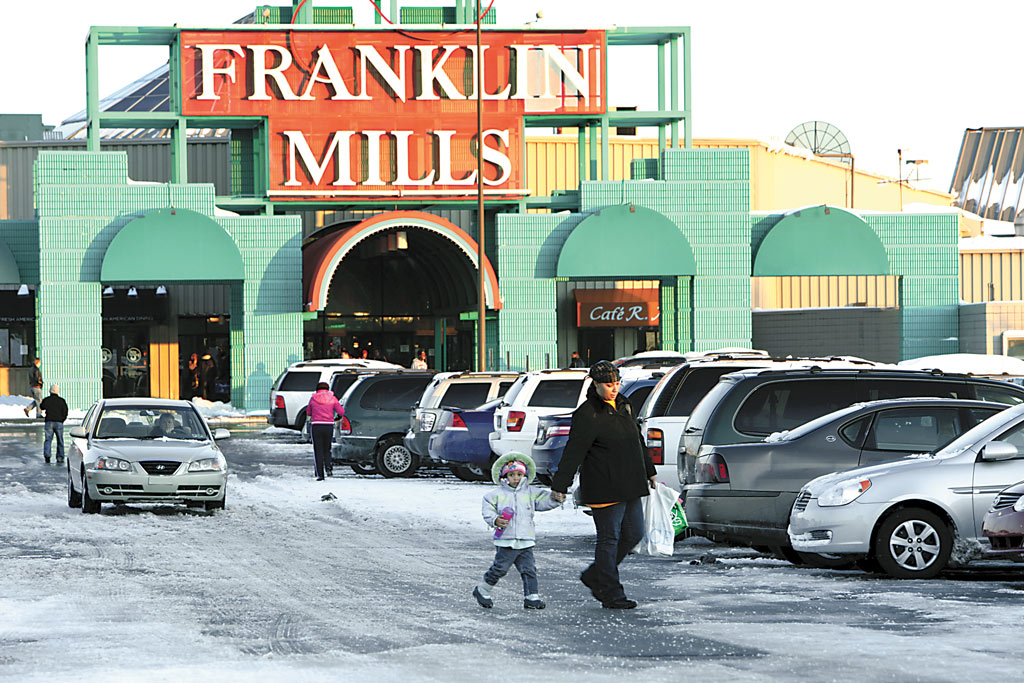
Franklin Mall, previously known as Franklin Mills, is for sale again.
Franklin Mills (sorry, “Franklin Mall”) is officially for sale: C
Franklin Mills, the place where Northeast Philly teens found Hot Topic, freedom, and an alarming amount of Orange Julius, is officially on the market. Again. After years of falling occupancy, collapsing value, and visitor counts dropping from 20 million a year in the ’90s to 5.6 million today, it’s basically being lilsted as: “137 acres… willing to become literally anything.”
Industrial redevelopment? Sure. Warehousing? Probably. Housing? Maybe, if City Council blesses it. A mall again? As one architect put it: “Unlikely.” (Philly translation: absolutely not.)
This place is 1.8 million square feet (second only to King of Prussia), but while KOP is still the superstar of malls, Franklin Mills slowly slid into its “legacy act” phase. The valuation dropped from $370 million in 2007 to $76 million last year. Even the name had to be changed back because Simon Property Group kept the Mills trademark, which feels like getting your hoodie taken in a breakup.
Real talk: The building is basically a demolition project waiting for a permit. But to its credit, 65% occupancy means it isn’t a ghost town yet — just a mall trying to remember who it used to be.
It might become warehouses, apartments, or over a million square feet of “don’t worry, it’ll create jobs.” But one thing’s for sure: If Northeast Philly wakes up to find a sea of Amazon vans where Franklin Mills once stood, people will still call it Franklin Mills.